
250 and Counting
660 episodes — Page 9 of 14
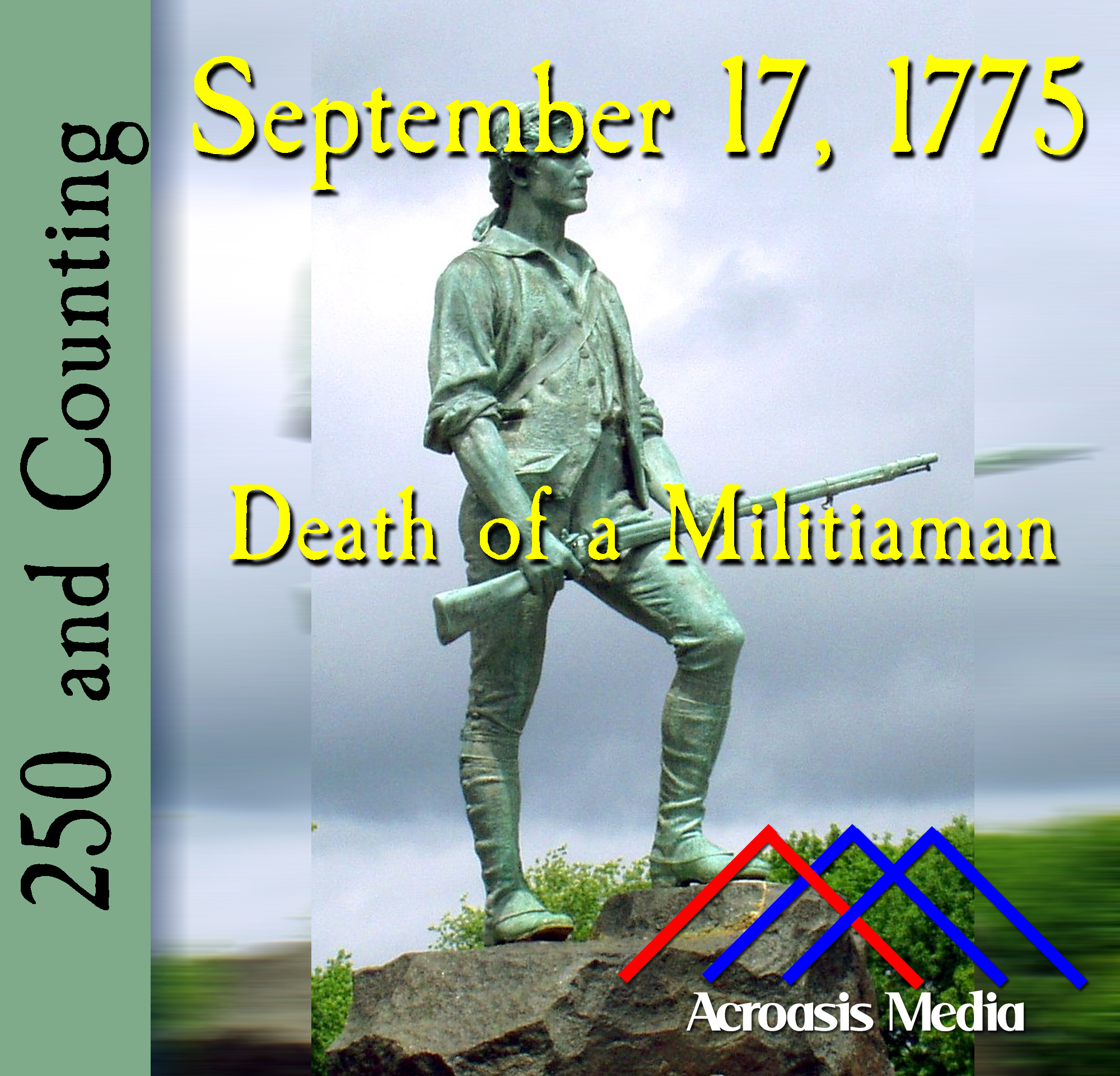
September 17, 1775: Death of a Militiaman
The Minuteman statue in Lexington, Massachusetts is said to represent Captain John Parker, who died on this day. Except Parker wasn’t a minuteman. He also probably didn’t look like the man in the statue, given his age and what other small details we know about him. But as usual, nobody lets the facts get in the way of a good story, so just roll with it, hm? (We’re guessing he probably wasn’t green, either. ) The post September 17, 1775: Death of a Militiaman appeared first on 250 and Counting.
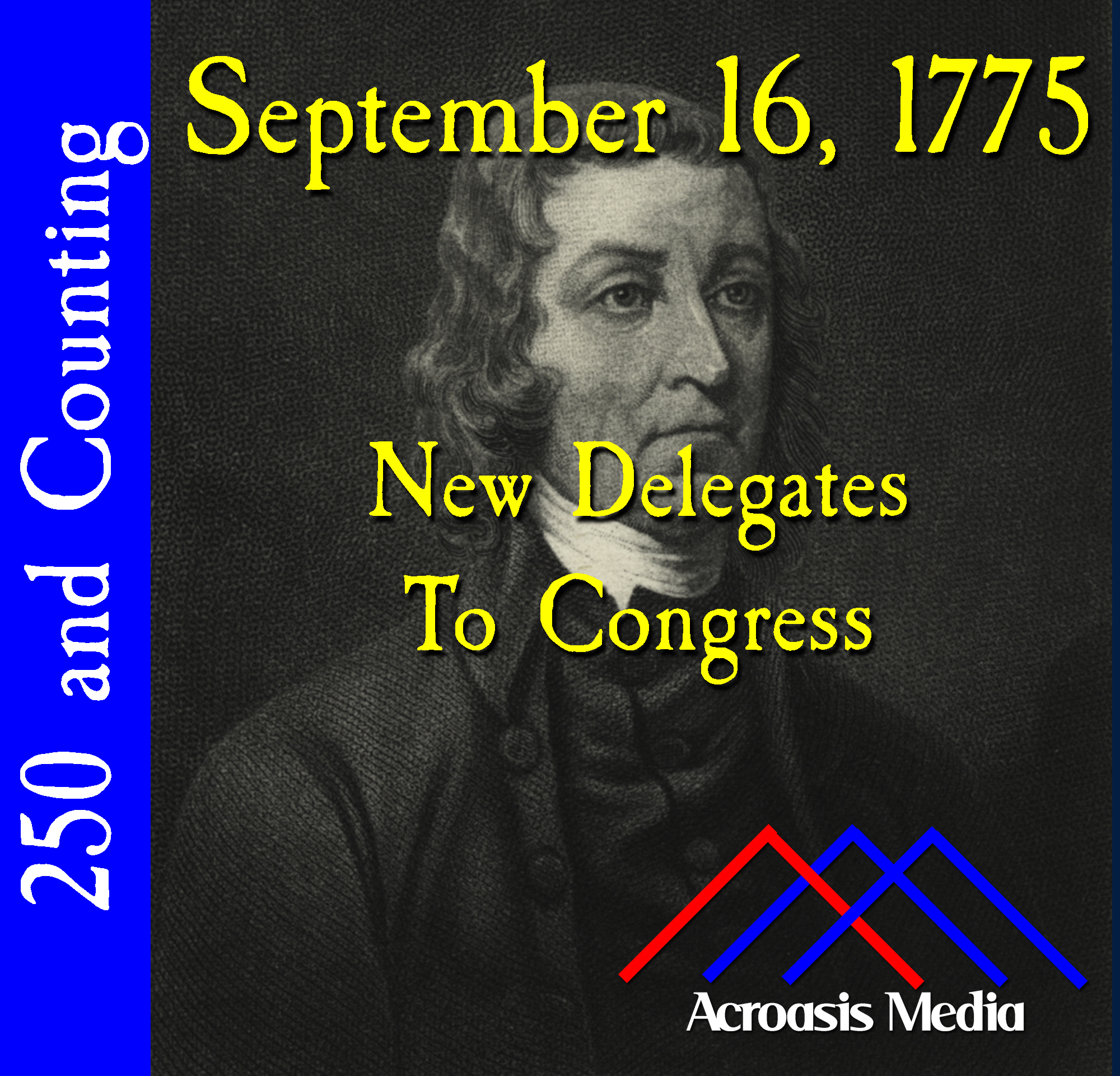
September 16, 1775: New Delegates to Congress
So obviously this Josiah Bartlett isn’t the guy on The West Wing, in part because President Bartlet is fictional. (Okay, maybe entirely because of that.) But he is supposed to be a direct descendant of the Founding Father. Why, and when, the terminal T dropped off was never explained. Anyway, Josiah Bartlett and John Langdon both arrived in Philadelphia from New Hampshire as delegates to the Continental Congress, and they both fought in the war, plus they were around for the Constitutional Convention—so there’s a lot of history between them. The post September 16, 1775: New Delegates to Congress appeared first on 250 and Counting.
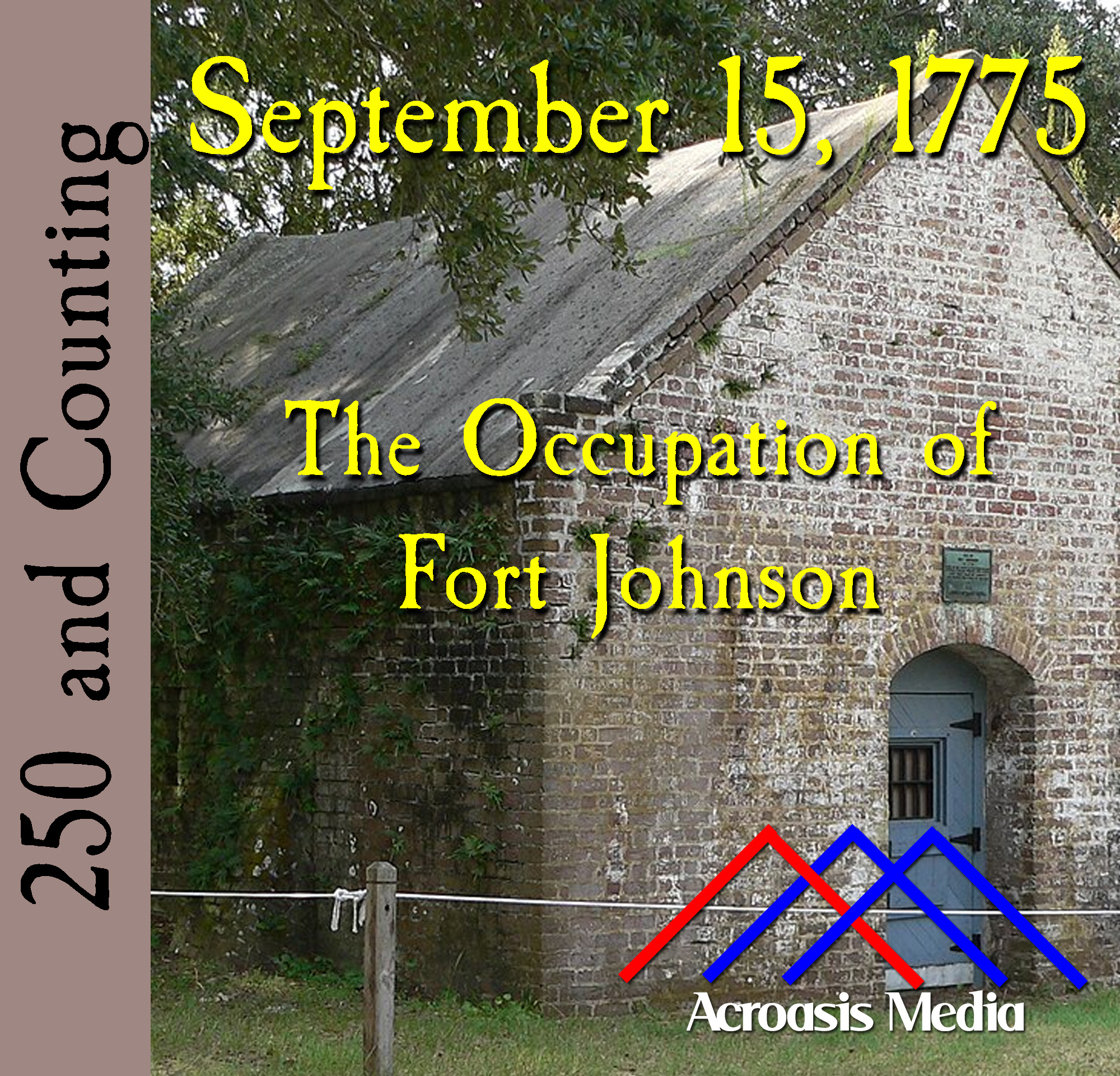
September 15, 1775: The Occupation of Fort Johnson
Since the early 1700s there have been several Fort Johnsons on James Island in the Charleston Bay. The curious thing is that few people know what happened to each fort as it was destroyed, with the exception of the third one, which was definitely damaged in a storm. But the first two? Who knows. Today’s episode focuses on the second version of the fort, which still has a few vestiges of the old walls around. But it’s much like visiting Fort McHenry in Baltimore, where the location of the barracks are marked off by the presence of some bricks in the ground rather than some actual walls. The fort was taken on this day in 1775 and remained occupied until 1780, when the British came back for it and found it abandoned. Today the island hosts a marine research center operated by the state in partnership with several federal and state agencies, all of which have already stood longer than any fort (though the powder magazine from its third incarnation–see the photo–still remains). The post September 15, 1775: The Occupation of Fort Johnson appeared first on 250 and Counting.
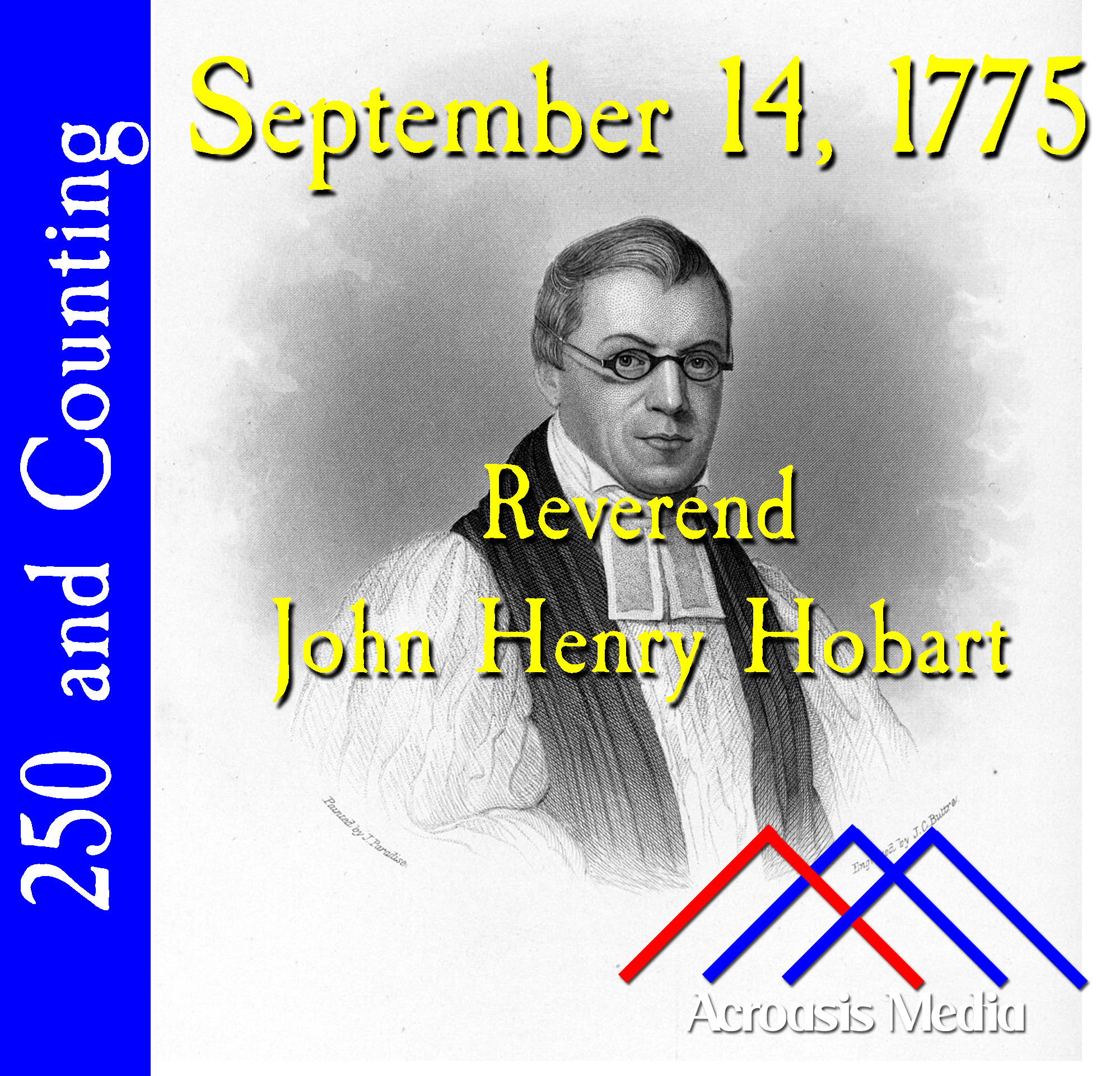
September 14, 1775: John Henry Hobart
John Henry Hobart was born on this day in 1775, and he came that close to dying on the same day in 1830, on September 12. We read once that, statistically, men tend to die before “big” dates, e.g. birthdays and major holidays, while women tend to die afterwards. In Claude’s family anyway, it does have a ring of general truth to it. Go figure. Although Hobart was an Episcopalian minister (and later Bishop), he was the pastor to Elizabeth Ann Seton, our first American saint. (Seton converted to Catholicism in 1805.) While Hobart was quite active in the New York City area, he also felt the need for higher education in the western reaches of the state, and established Geneva College (later Hobart College) in the Finger Lakes region. By the time he died, he’d established a church in most major towns in New York and begun missionary work among the Oneida Indians. It’s not 100% clear what caused his death, but it was likely a chronic intestinal infection that affected his health in later years. The post September 14, 1775: John Henry Hobart appeared first on 250 and Counting.
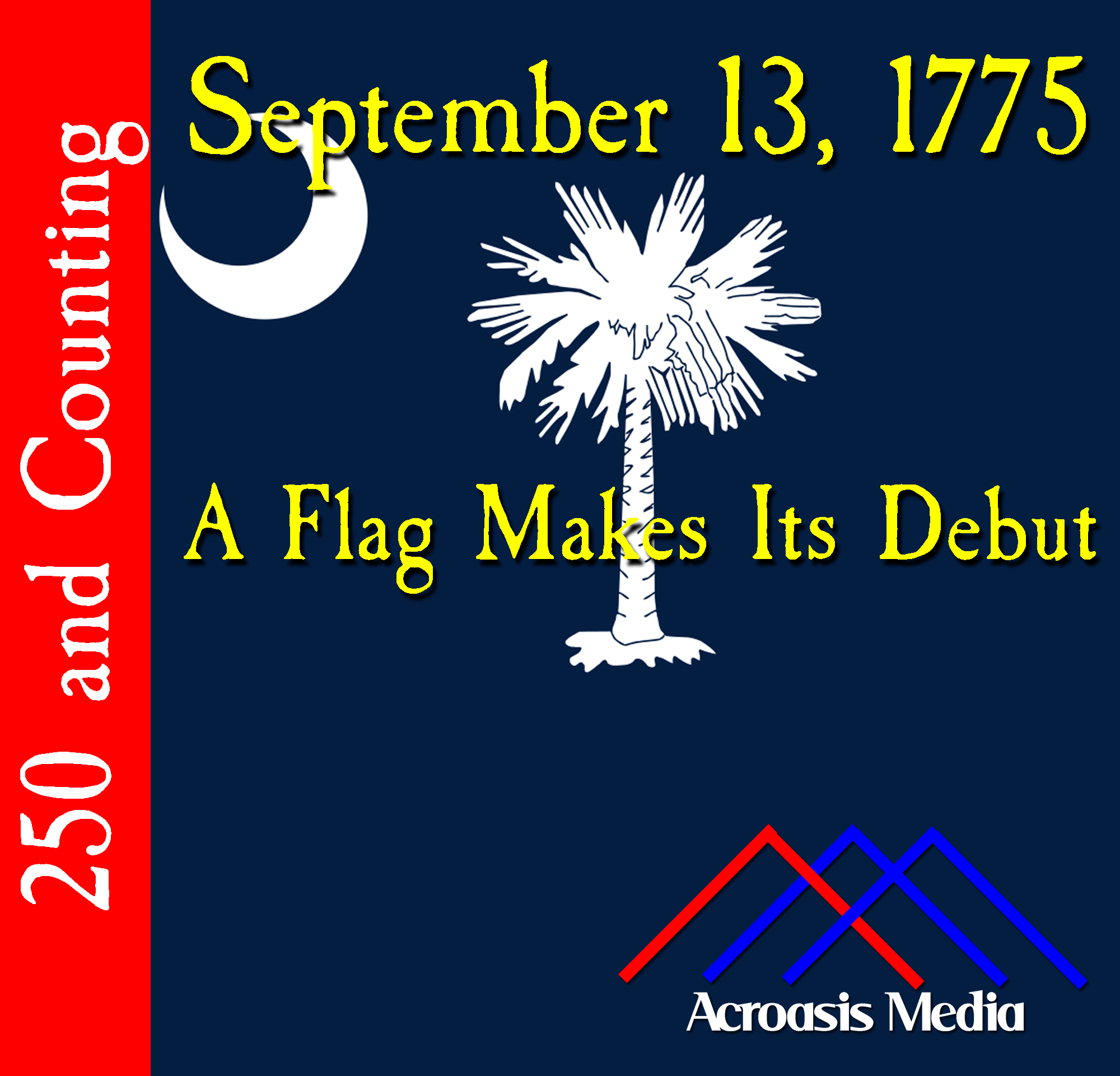
September 13, 1775: A Flag Makes Its Debut
Let’s talk state vexillology. Believe it or not, there are people who are very passionate about state flags. (Not me, he said, about to go into a mini-rant.) Most states have a very utilitarian purpose. They kind of lean in, announce themselves, and lean out again. Some flags are weirdly cluttered (New York, New Jersey, West Virginia, Delaware). Some flags are rather boring (Alabama, Minnesota). Some have heavy symbolism but it’s lost on most viewers (Arkansas, Utah) I’ve lived in Maryland almost 25 years and I don’t think I’ve seen a people more obsessed with their state flag: Colorado’s flag is all over that state so they must be kind of obsessed, too: South Carolina’s flag has symbolism and simplicity going for it, and I have to agree with people who put it in the top tier of state flags. Here’s the story of the South Carolina flag and how it got that way. The post September 13, 1775: A Flag Makes Its Debut appeared first on 250 and Counting.
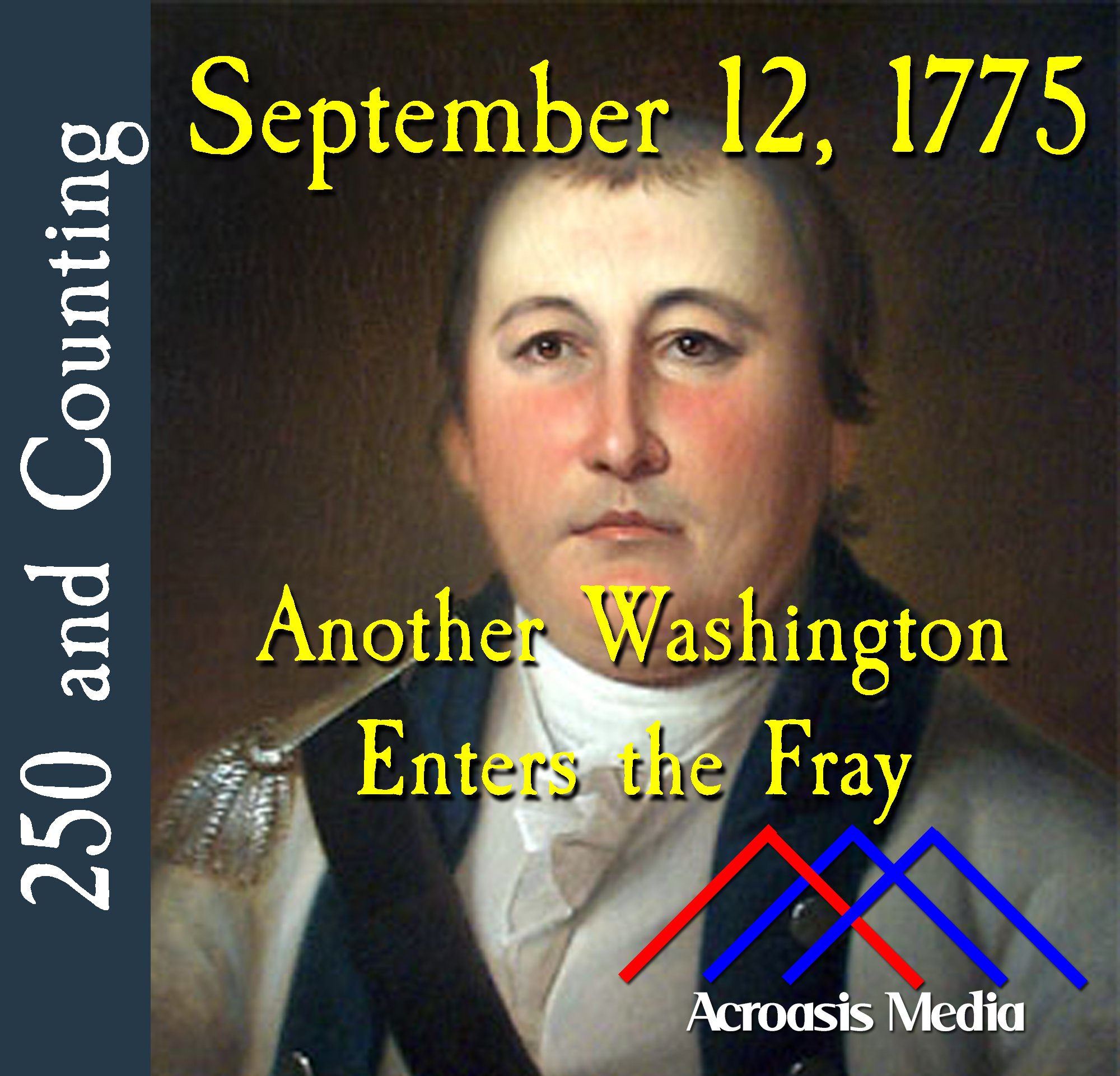
September 12, 1775: Another Washington Enters the Fray
We mentioned a while back that John Adams had siblings, as did George Washington. This wasn’t one of them, and as far as anyone can tell, it’s more of a cousin-type relationship. William Washington essentially won a bet with his brothers, and his prize was the ability to join the militia in Virginia to fight for independence. From this day in 1775 until 1781 he was engaged in multiple battles against the British in Virginia and the Carolinas. It was in 1781 that his horse was shot out from under him. The fallen animal pinned him down. He was bayoneted and captured, and spent the rest of the war under house arrest in Charleston, SC. After the war he remained in South Carolina where he spent some time in the state legislature, but declined to run for governor because, as the story goes, he wasn’t a native Carolinian. The post September 12, 1775: Another Washington Enters the Fray appeared first on 250 and Counting.
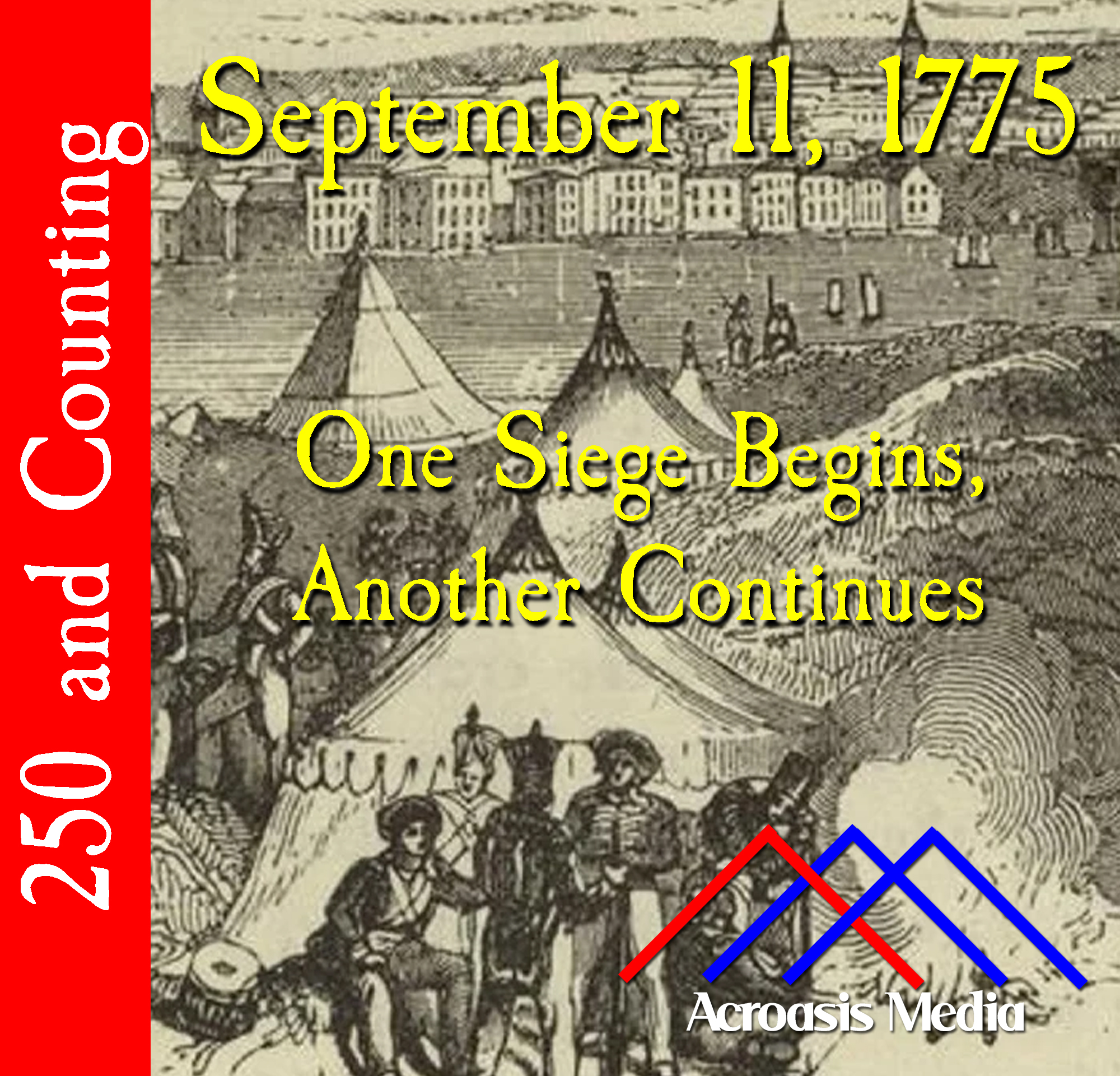
September 11, 1775: One Siege Begins, Another Continues
As the winter of 1775 approached, George Washington had to think about the state of the siege of Boston. In short, housing and clothing thousands of men in a New England winter is a very different proposition than doing it in the summer. So Washington convened his War Council to discuss the possibility of breaking the siege by attacking the city from a different direction. Meanwhile up in Canada, General Philip Schuyler takes another run at Fort St. Jean. The post September 11, 1775: One Siege Begins, Another Continues appeared first on 250 and Counting.
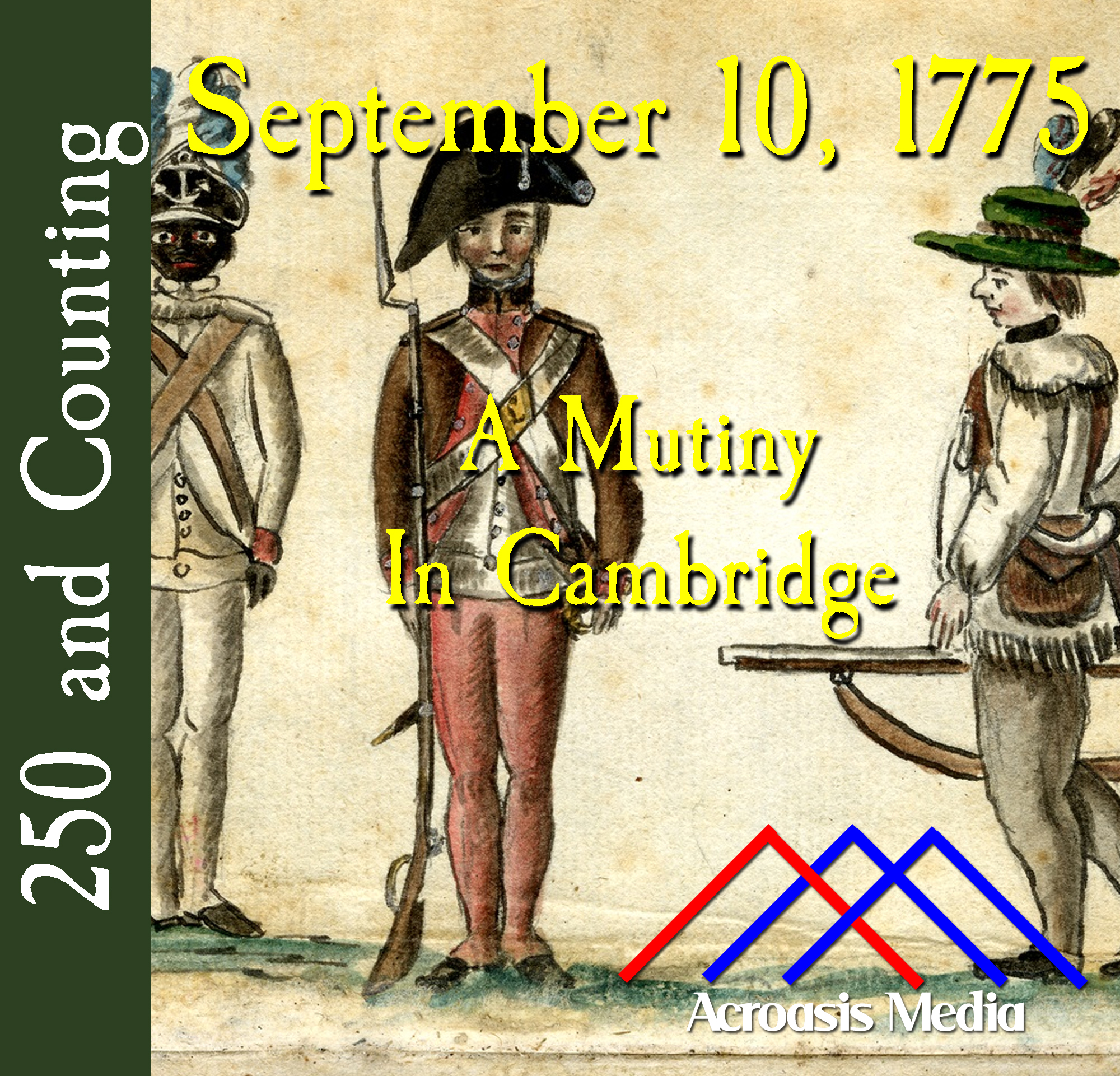
September 10, 1775: A Mutiny in Cambridge
The riflemen in the Continental Army were a special breed of soldier. They weren’t subject to all the drudge work that most of the other soldiers had to endure. The downside to this is, they knew it and they took advantage of it. So when one rifleman got himself in trouble, word got out and suddenly a relatively small problem turns into a relatively big one. And while George Washington kinda-sorta recognized this stratification of soldiers, he didn’t do much to discourage it. He did, however, demonstrate more patience with the infantrymen than most people would give him credit for. The post September 10, 1775: A Mutiny in Cambridge appeared first on 250 and Counting.
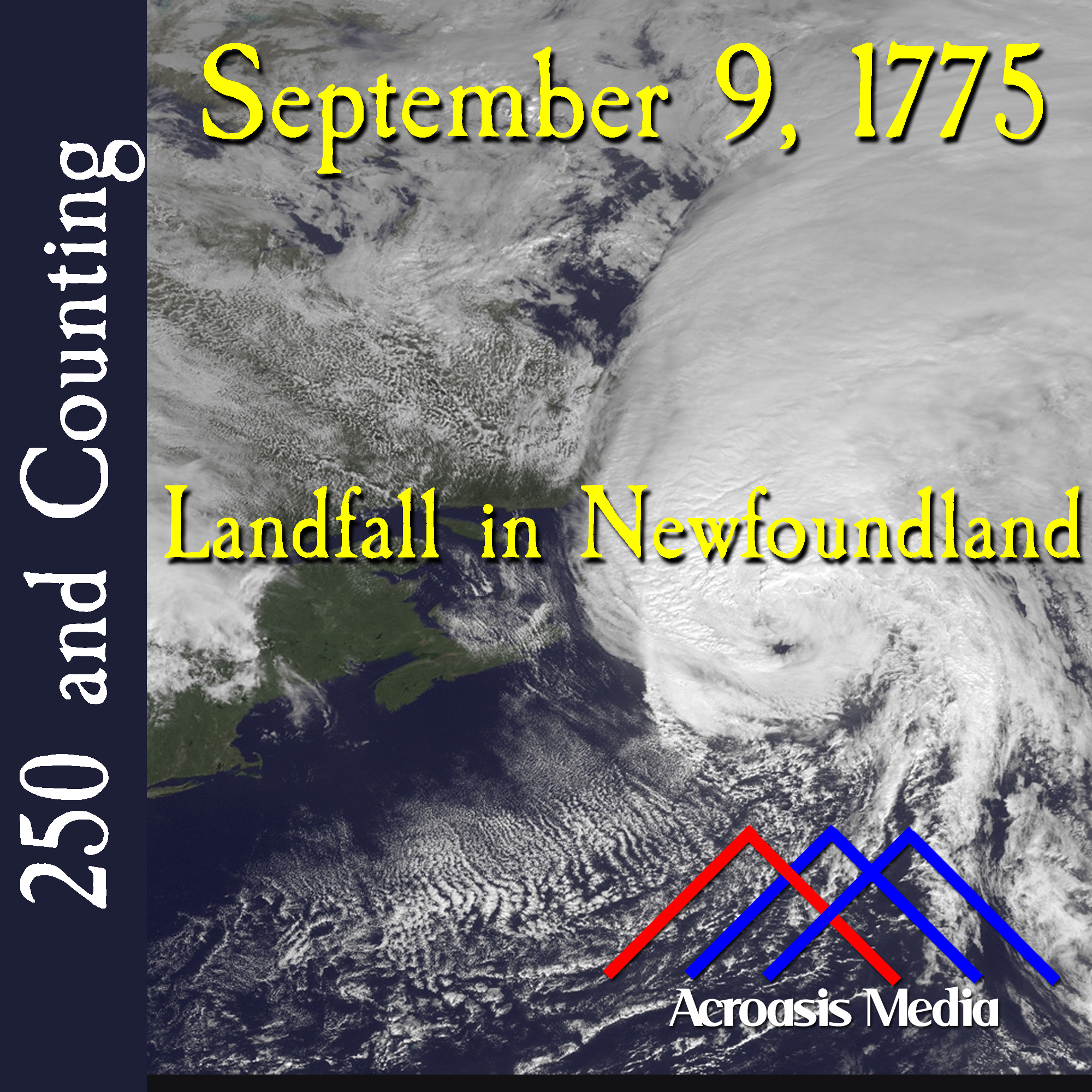
September 9, 1775: Landfall in Newfoundland
The Independence Hurricane from September 2 is still going strong, and on this day it made landfall again, this time in Newfoundland, Canada. The devastation was immense, and perhaps would have been worse had it happened in modern times (we get it, there are satellites and stuff now). It remains Canada’s worst natural disaster and it’s still in the Top Ten chart for North Atlantic hurricanes. The post September 9, 1775: Landfall in Newfoundland appeared first on 250 and Counting.

September 8, 1775: Daniel Boone Moves to Kentucky
As late as the 1970s, pioneers like Davy Crockett and Daniel Boone had achieved a kind of mythical status, largely because of fictionalized stories created about them by the folks at Disney. Sometimes it gets tough to determine what’s fiction and what isn’t, since they tend to embellish things that may have actually happened for the sake of a story. (Not a knock on Disney, so don’t sue us; that’s a typical practice when it comes to stuff like this.) So these folks became larger than life for a while, and it’s not to say that they didn’t hold any importance in American history, but sometimes we have to temper those stories with the fact that these men were, after all, just men with real-life concerns, such as “how am I going to feed my family?” which was pretty much the calculus for the event we discuss today. (P.S. the story about Washington and the cherry tree was written long after he died, so don’t count on that one either.) The post September 8, 1775: Daniel Boone Moves to Kentucky appeared first on 250 and Counting.
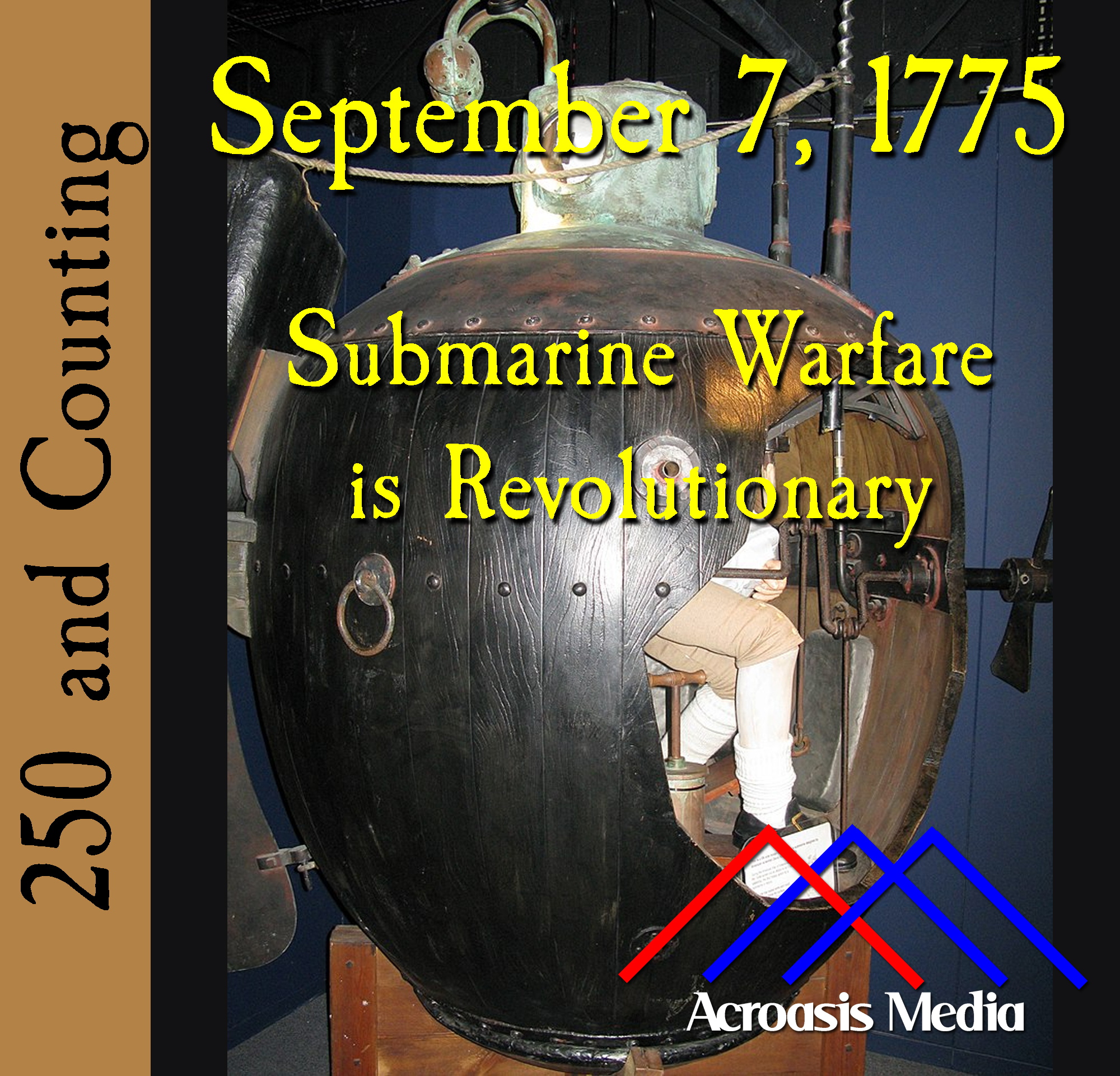
September 7, 1775: Submarine Warfare is Revolutionary
The Turtle, or the American Turtle as it’s often called, was invented by a man who thought it should be possible to stealthily attach a bomb to a ship and then detonate it shortly thereafter, by approaching the ship from under the waterline. The Turtle was a brilliant idea in concept, if not in execution. There were just too many things that had to go exactly right for the turtle to successfully execute its design purpose, and when it was first tried in genuine combat on this day in 1775, unfortunately it was not successful. But every failure is one step closer to success, right? The post September 7, 1775: Submarine Warfare is Revolutionary appeared first on 250 and Counting.
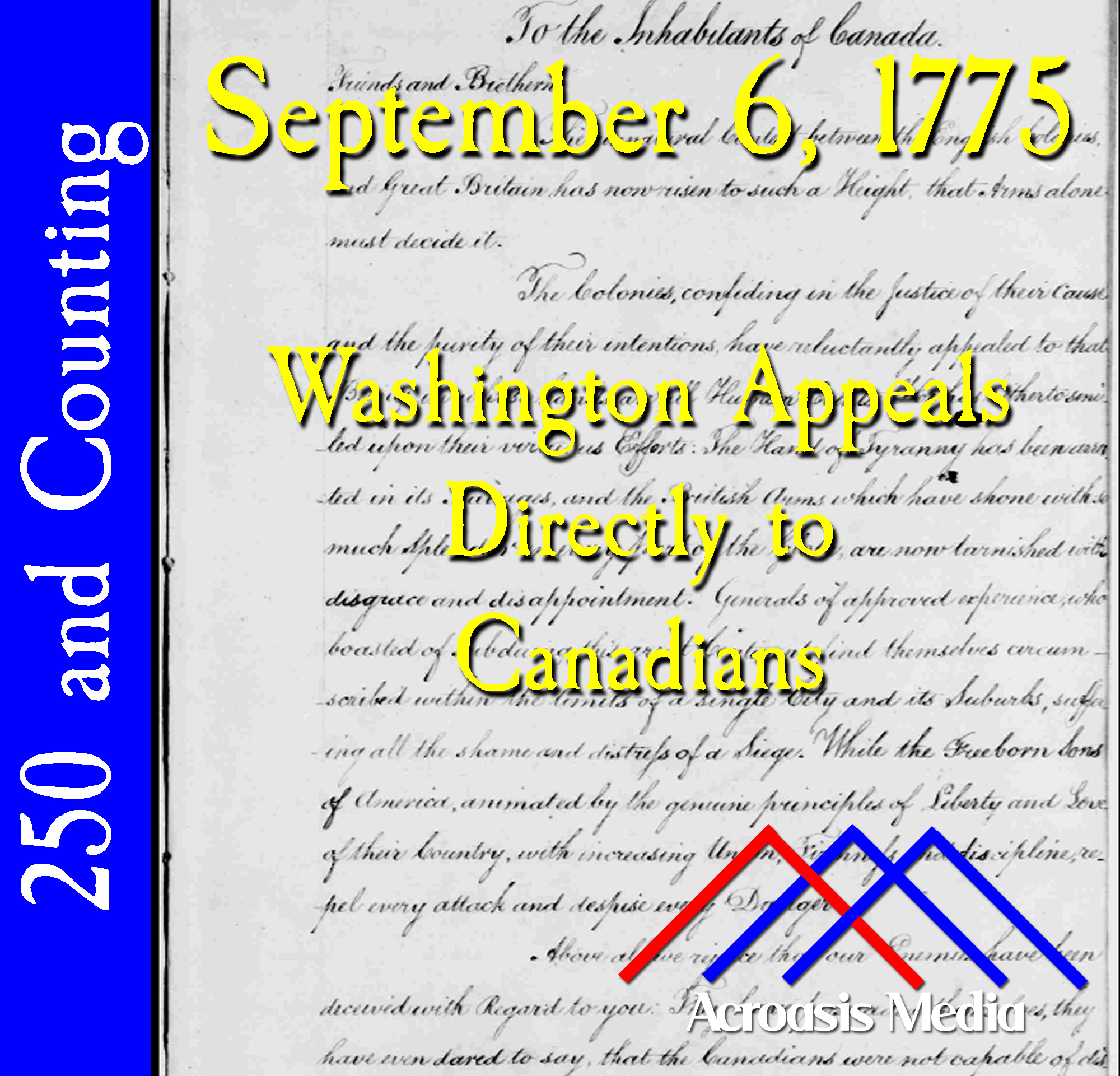
September 6, 1775: Washington Appeals Directly to Canadians
The Second Continental Congress tried appealing to the Canadian leadership in order to get support for the Independence cause, but they apparently weren’t biting. So George Washington tried a different tack: write to the Canadian people themselves. He reasoned that the folks in charge were mostly wealthy landowners who were doing all right financially under British rule. Maybe, he thought, the ordinary Canadian folks weren’t quite so happy with the King. He was not, unfortunately, correct in that assessment and nobody was swayed by his argument. The post September 6, 1775: Washington Appeals Directly to Canadians appeared first on 250 and Counting.
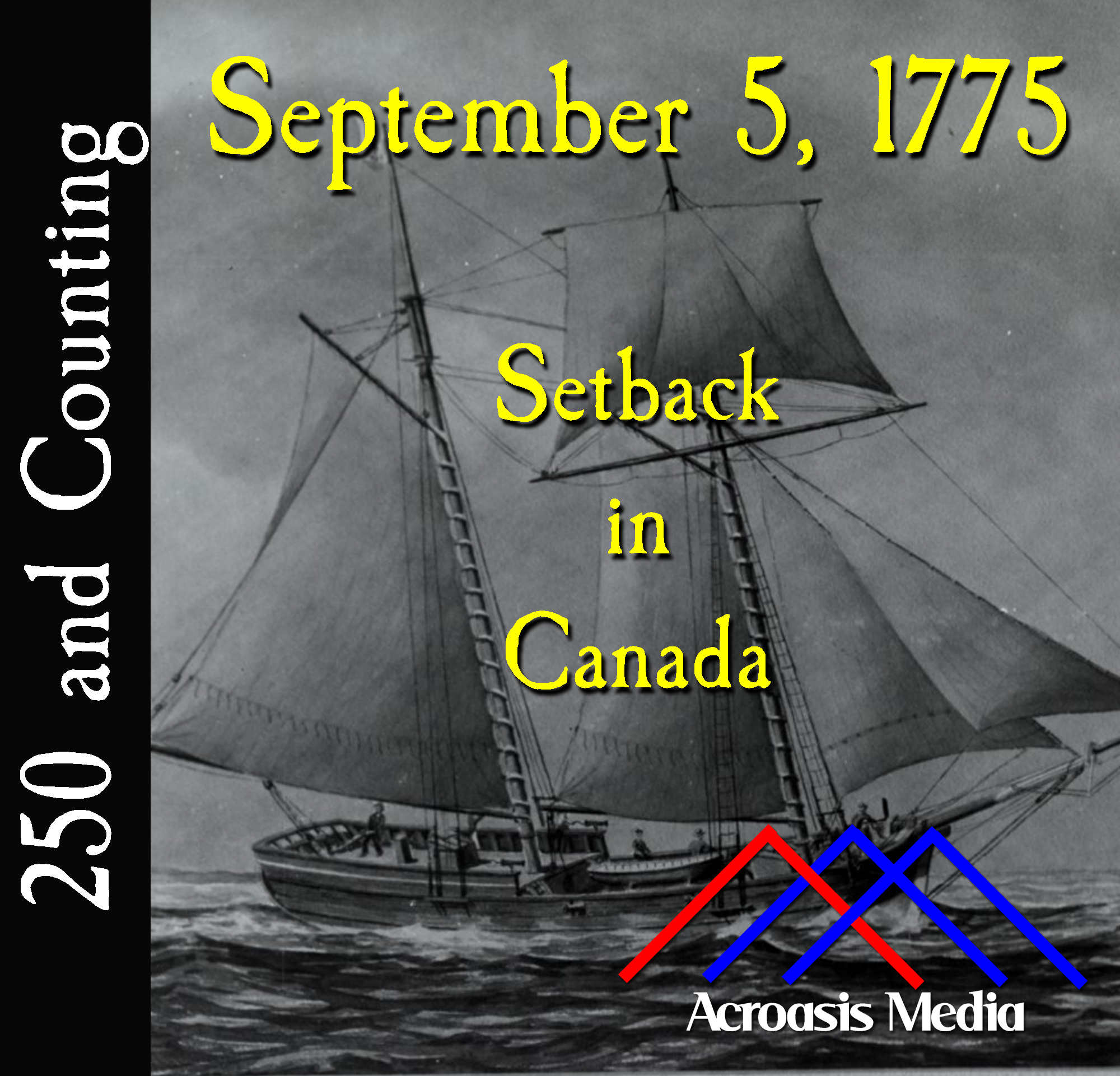
September 5, 1775: Setback in Canada
American forces began to move on Fort St. Jean in Canada. Unfortunately they ran into a couple of unexpected obstacles on the way, so they had to adjust their approach. This led to a six-week siege of the fort. The post September 5, 1775: Setback in Canada appeared first on 250 and Counting.
September 4, 1775: The Offensive in Canada Grows
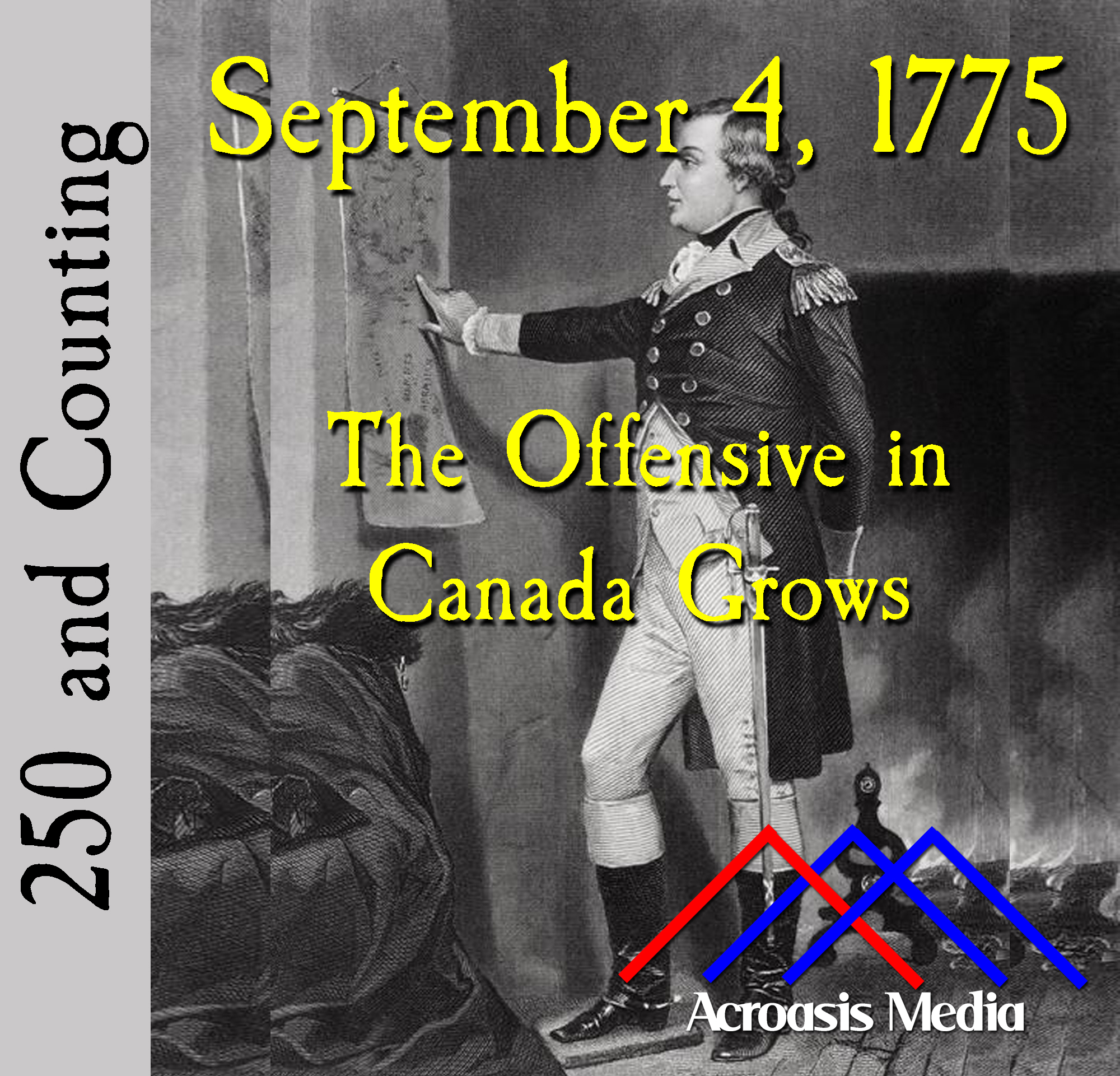
An invasion of Canada seems a little absurd on its face, but when you think about it in the context of the Revolution, it actually starts to make sense. After all, Canada was also a few British colonies in the North American continent, but they were a little more obedient to the whims of Parliament and they had Loyalist leanings. So the Patriots had a choice between bringing them over ideologically toward Independence, or ignoring them. Neither of these were likely to work, so they set about on the next best thing. Invade and then occupy Canada. But as we’ll learn in upcoming episodes, it’s not as easy as you’d think. The post September 4, 1775: The Offensive in Canada Grows appeared first on 250 and Counting.
September 3, 1775: The British Move To Break the Siege
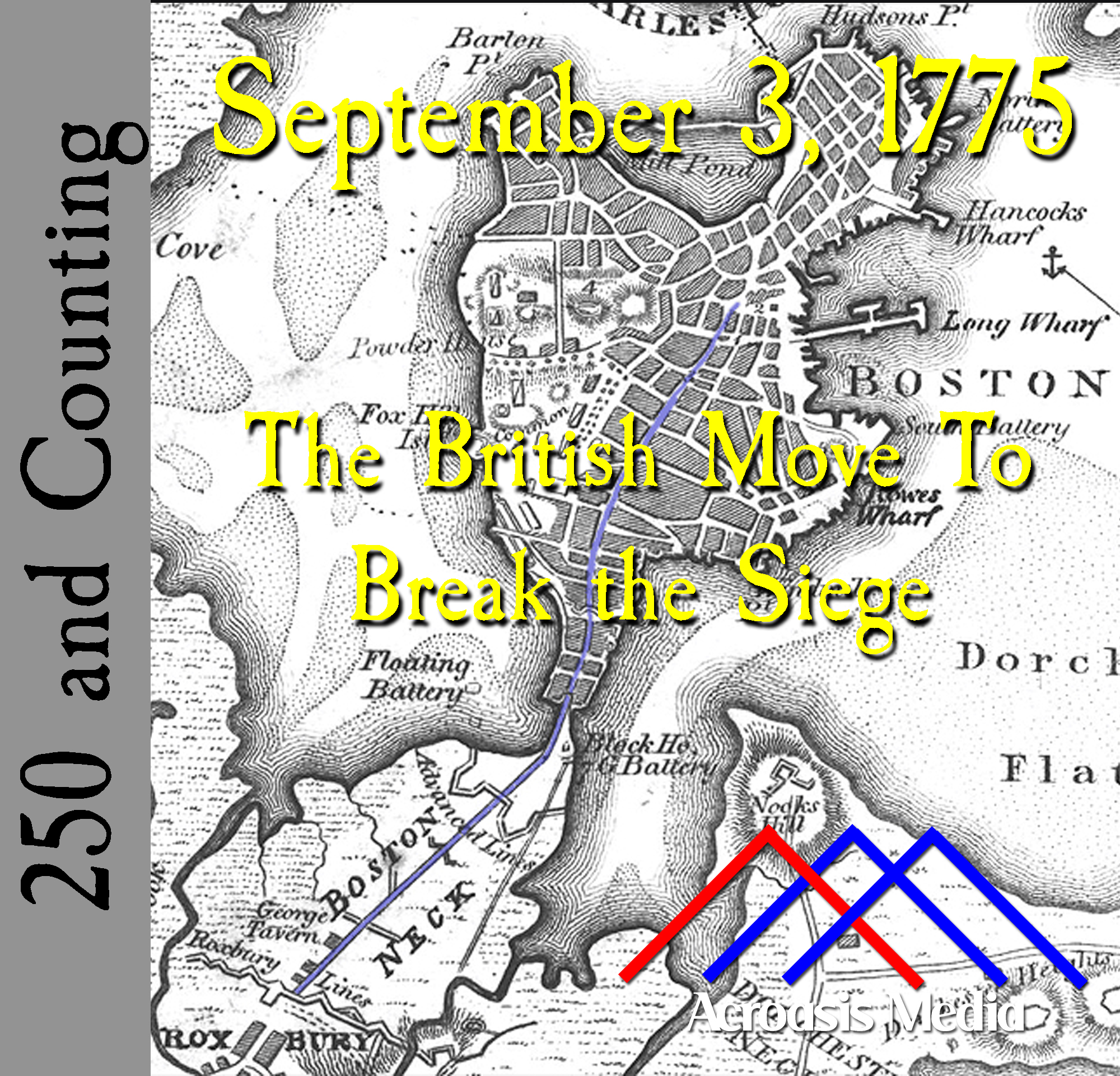
Anyone who’s been to Boston in the modern day has a hard time recognizing that the city of Boston was just the segment in the top center of the map. The area called Boston Neck is clearly marked at the bottom left, and wasn’t part of the city. The Continental Army’s line ran about where the blue line ends. (The blue line is modern-day Washington Street.) It was the city having that kind of geography that made the Siege of Boston relatively easy for the Patriots. Unfortunately for them, the British were still able to use the surrounding waterways. This made the siege not the battle of attrition that it could have been, since supplies were able to get in via water. Consequently it was an ongoing battle of wits, as we learn today. The post September 3, 1775: The British Move To Break the Siege appeared first on 250 and Counting.
September 2, 1775: Independence Hurricane
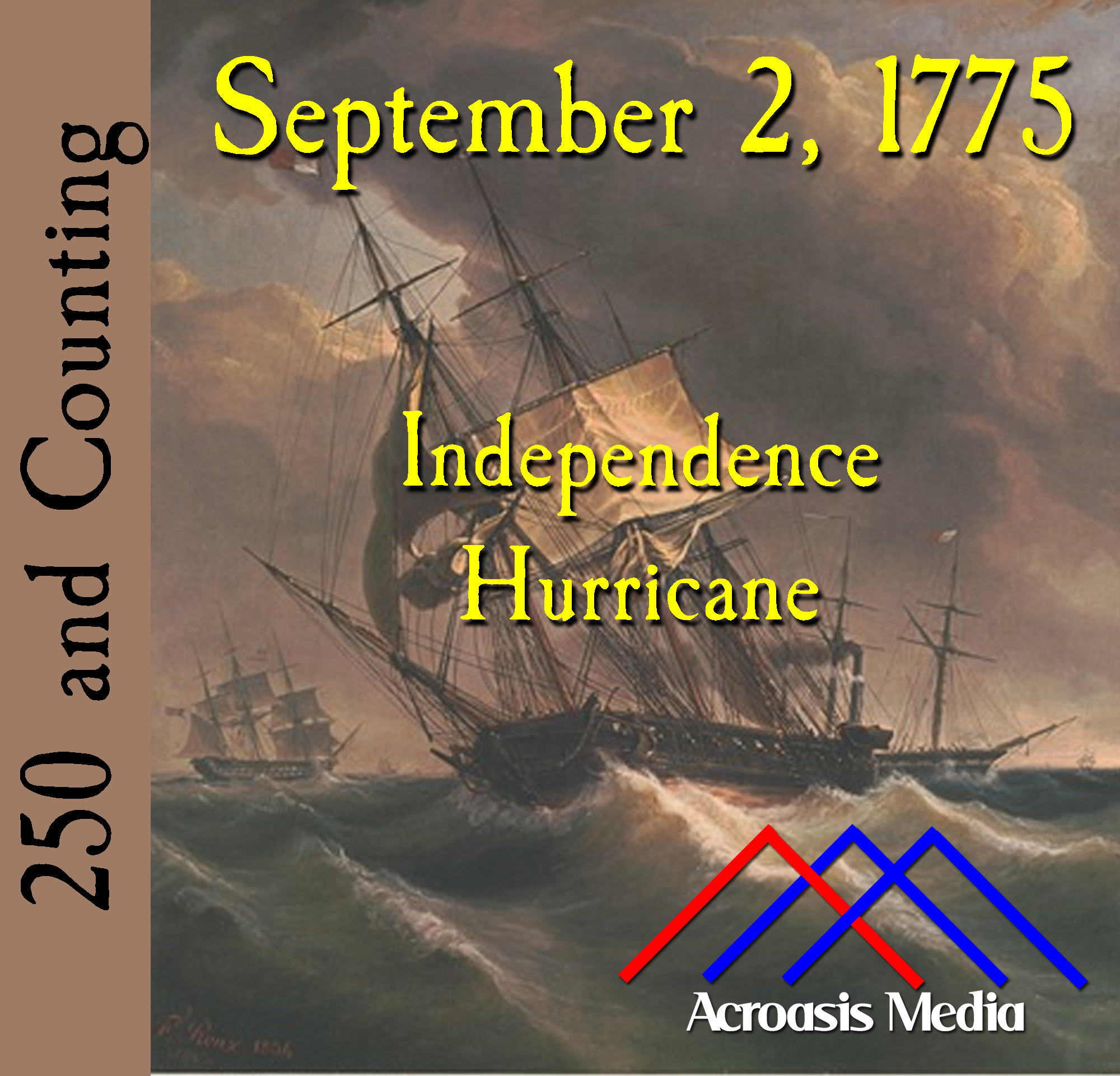
Sometimes when we research these shows we learn stuff that doesn’t have a lot to do with history—not directly—but is interesting nonetheless, and does have some historical impact. Hurricanes would be one of those things. On the east coast of the US, we pretty much take them for granted as a weather phenomenon. They’re definitely scary and destructive, and oftentimes the damage comes after the storm, when all that rain that came down starts looking for somewhere to go. Now, I (Claude) knew that the west coast doesn’t get hurricanes, though they often get the remnants of tropical storms. That’s because the water is shallower in general. The Atlantic Ocean is very deep, and even near the shore it gets deep quickly. The water warms up a little more near the coast and that gives the storm extra power. In Europe, hurricanes are a genuine rarity, because the water is both deep and colder (Europe is farther north than you probably think), and I’m sure they came as a big surprise to the first mariners making their way westward to the New World. But the Independence Hurricane was huge, even for a hurricane, and it did a bunch of damage in the Colonies before weakening, then it picked up strength again and did huge, lasting damage further north in Canada. The post September 2, 1775: Independence Hurricane appeared first on 250 and Counting.
September 1, 1775: Virginia Gazette Headlines
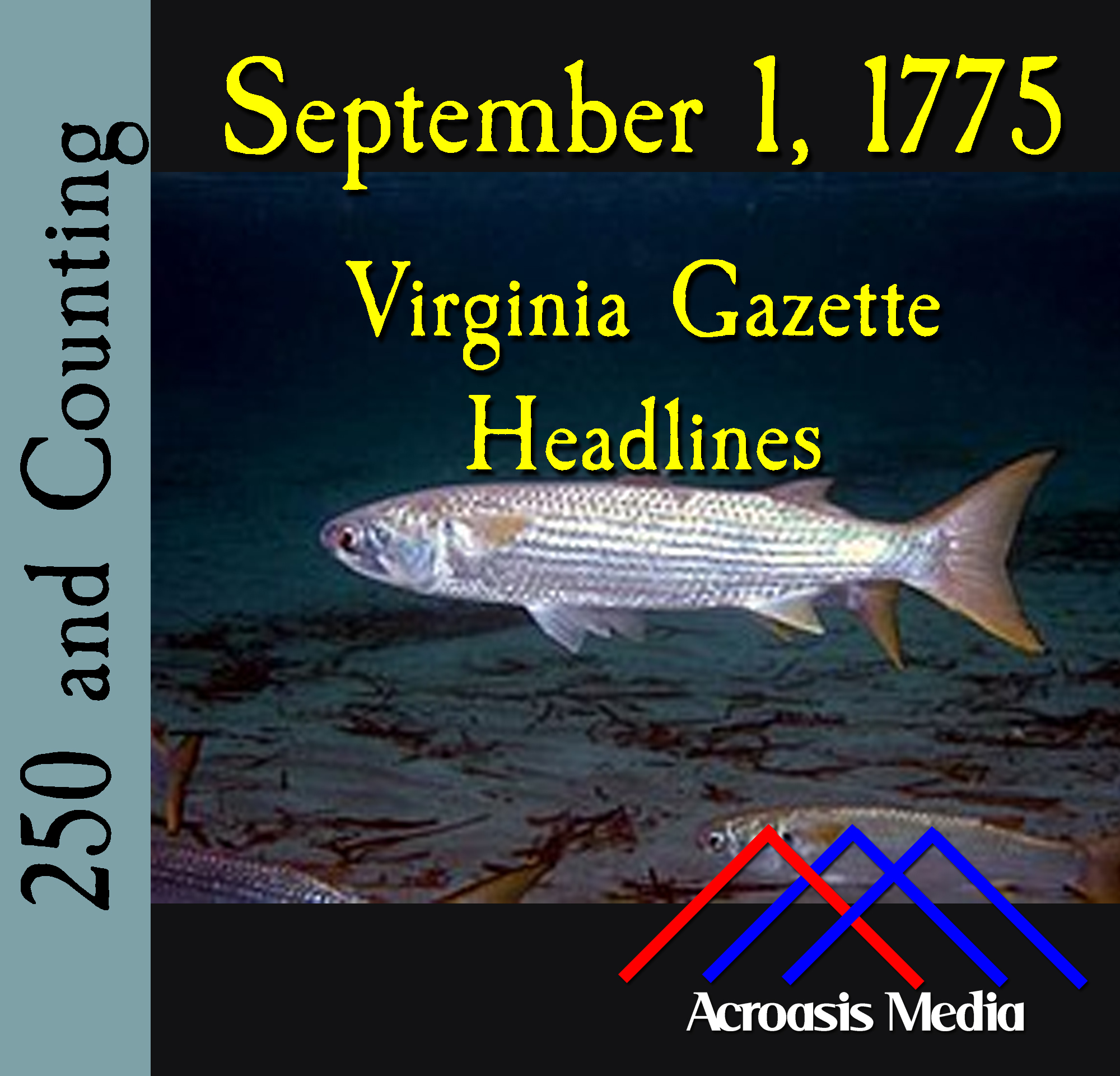
Nothing beats the speed of gossip, and apparently the Virginia Gazette on this day had plenty of it to share. A few of the stories were quite serious, relating to events in both Virginia and Massachusetts. They closed out with a local story that had a more humorous edge to it…though it’s likely that the people involved had a hard time seeing the humor in it all. PS Why is there a picture of a fish in today’s cover art? Well…mullet over a little and see if it comes to you. The post September 1, 1775: Virginia Gazette Headlines appeared first on 250 and Counting.
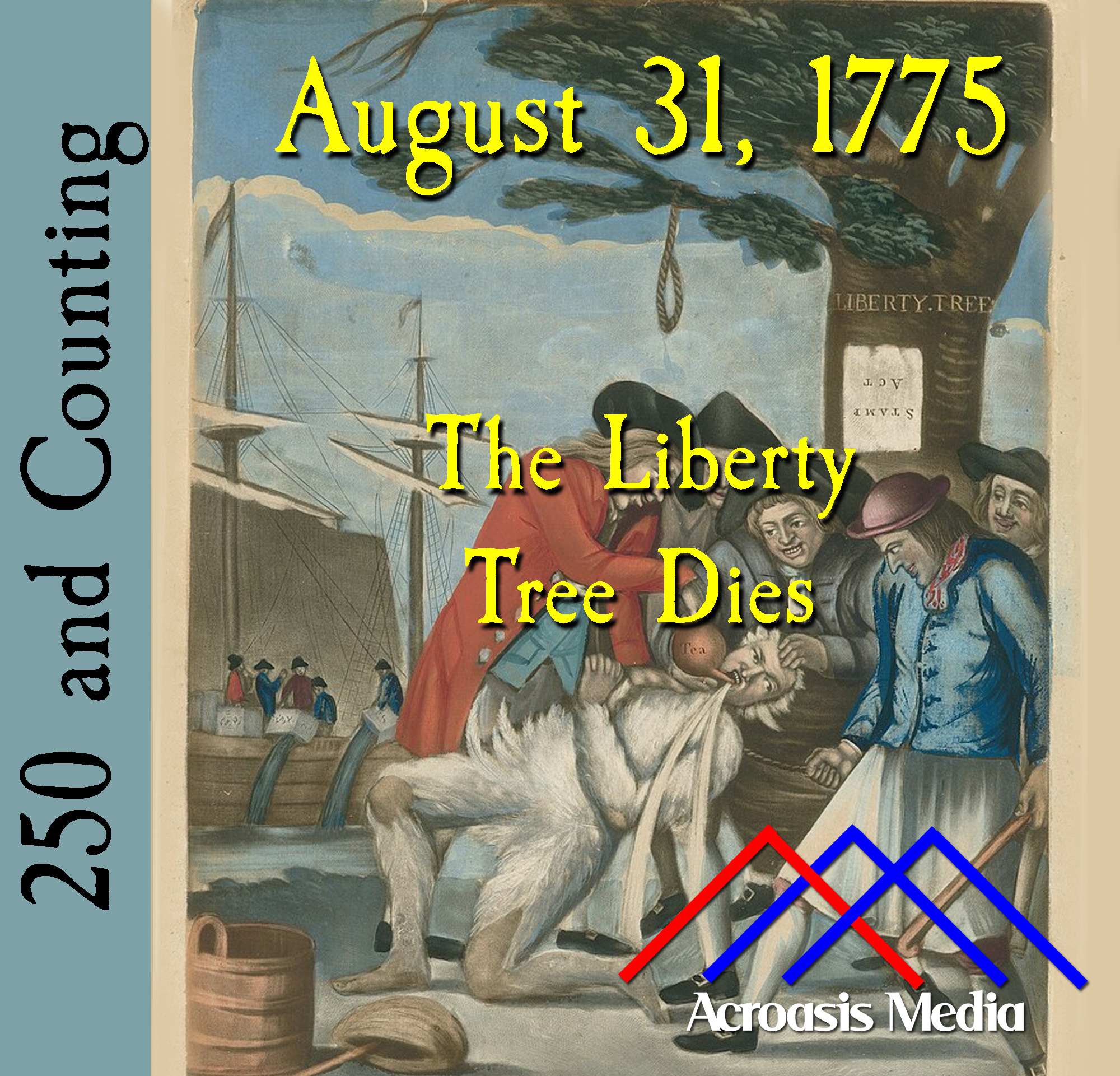
August 31, 1775: The Liberty Tree Dies
The cover art for today’s episode may be one of the most famous art pieces depicting an event of the American Revolution, and it happened under the Liberty Tree, which is clearly marked here. This event, the tarring and feathering of Loyalist John Malcolm, took place about 18 months earlier and shows Malcolm already tarred and feathered, and now he’s having (also marked) tea poured into his mouth. The Stamp Act is nailed to the tree, upside down. Really, there’s a lot to unpack in this picture. So it makes sense that people were upset that the tree had been cut down. The post August 31, 1775: The Liberty Tree Dies appeared first on 250 and Counting.

August 30, 1775: Your Cows or Your Life
The HMS Rose was a 20-gun ship of the Royal Navy, built in 1757. When hostilities broke out between the Colonies and the Crown, the Rose was tasked with preventing smuggling off the coast of Connecticut and (especially) Rhode Island. She spent the first few years of the Revolution in Narragansett Bay, in the Long Island Sound, in the Hudson River and down to the Chesapeake Bay in Maryland. The Rose’s last action as a British naval ship was in Savannah, Georgia. She was no longer fit for battle not was she seaworthy, so she was scuttled in a channel of the Savannah River, essentially blocking it off and preventing other naval forces from reaching the city. This meant that Savannah remained in British hands until the war ended. In 1971 a replica was built (see the cover art), originally as a “dockside attraction.” Eventually she was purchased by Fox Studios and redressed for the film Master and Commander. Afterward she was renamed the Surprise and regained her status as a dockside attraction in San Diego, if you’re inclined to visit. The post August 30, 1775: Your Cows or Your Life appeared first on 250 and Counting.
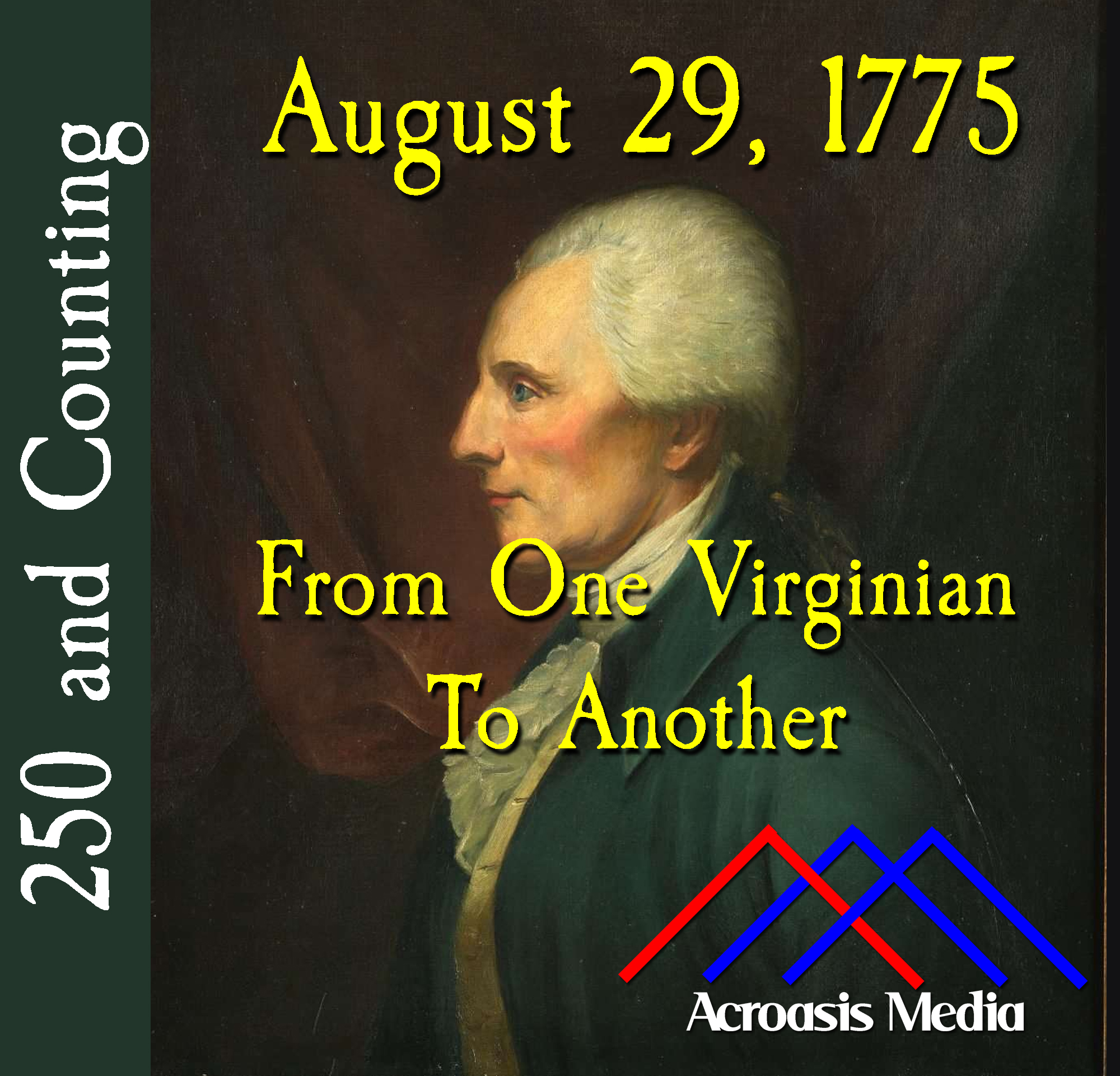
August 29, 1775: From One Virginian To Another
George Washington was a very good general and a disciplined soldier, but the fact that his men weren’t…well, that worried him a lot. He had a huge number of soldiers with him at Cambridge for the Siege of Boston. But since the British were so bottled up in the city, there weren’t many things for them to do other than patrol and keep an eye open for any possible moves the British made. Fortunately (or unfortunately, depending on whom you ask), Washington was typically forthcoming with this information and he’d tell it to anyone relevant. In today’s case, his concerns fell on someone who was actually paying attention. The post August 29, 1775: From One Virginian To Another appeared first on 250 and Counting.
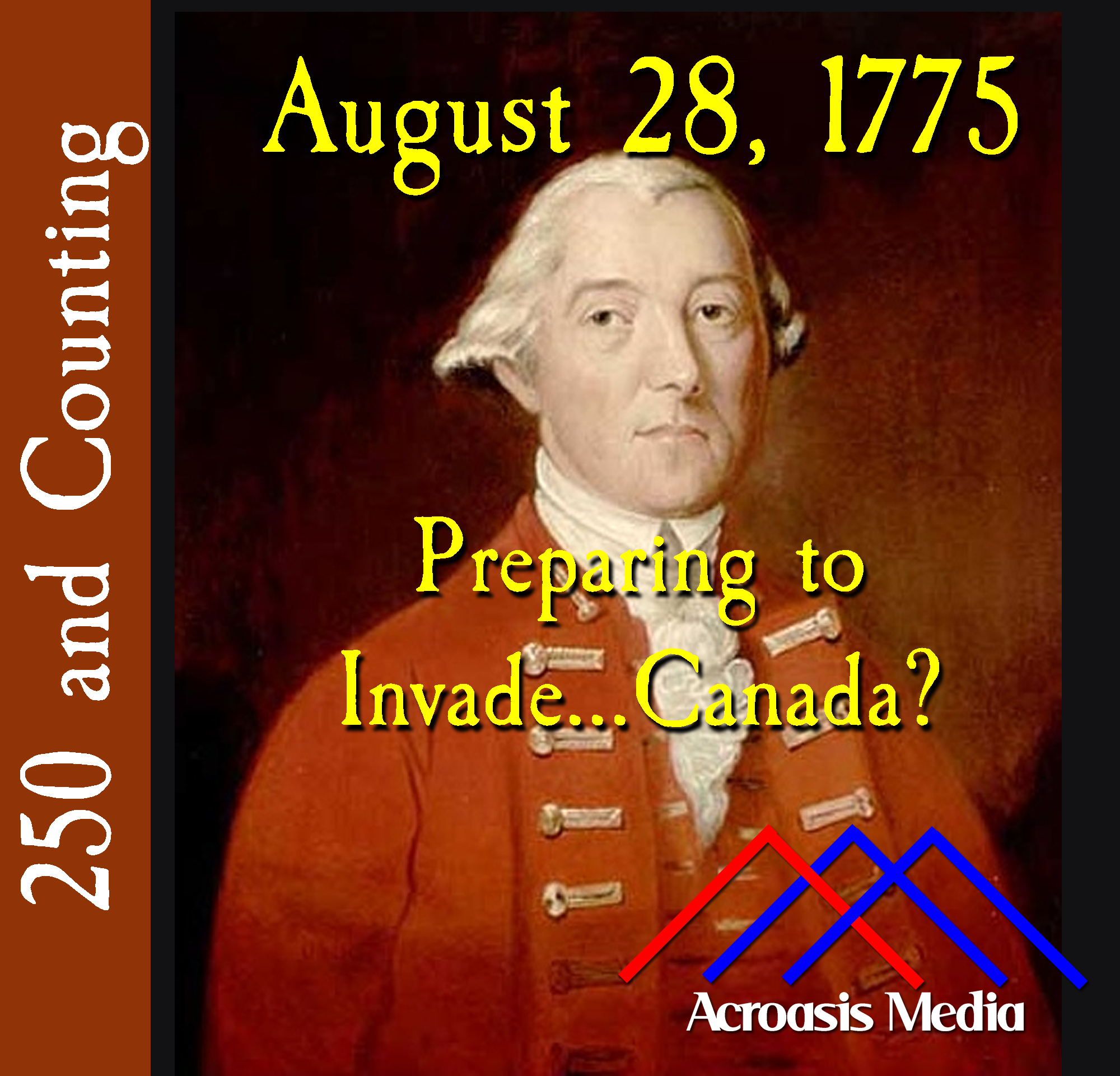
August 28, 1775: Preparing to Invade…Canada?
As farfetched as it sounds today, considering the need to invade and occupy Canadian territory was considered important early in the war effort, largely because the colonies in the Great White North had been treated a little more favorably by Parliament. Therefore they were more likely to lean on the Loyalist side of things. In making the decision to do so, however, there were lots of things to consider that (in retrospect) seem not to have been considered. But as time goes on and we get closer to the end of the year, we’ll be discussing that in future episodes. At this point, the plans are mostly just getting started. The post August 28, 1775: Preparing to Invade…Canada? appeared first on 250 and Counting.
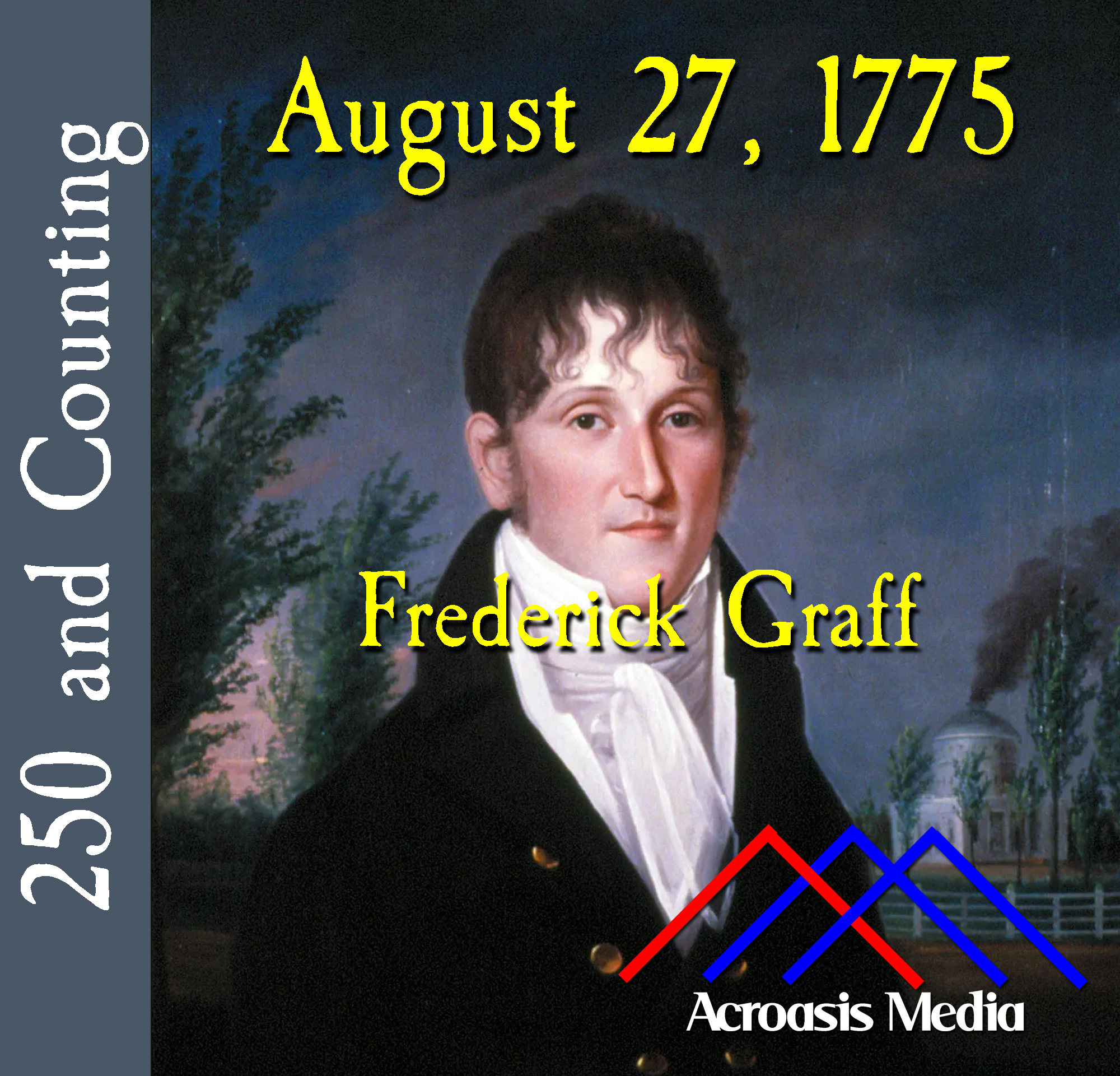
August 27, 1775: Frederick Graff
Frederick Graff feels like one of those guys who gets so little credit for what he did, you wind up feeling pretty badly for him. But the fact is, if not for him, over three dozen cities in the US wouldn’t have adequate water systems. So good on Frederick! Hoist your favorite beverage in his honor! (Though, in this case, it really should be water.) The post August 27, 1775: Frederick Graff appeared first on 250 and Counting.
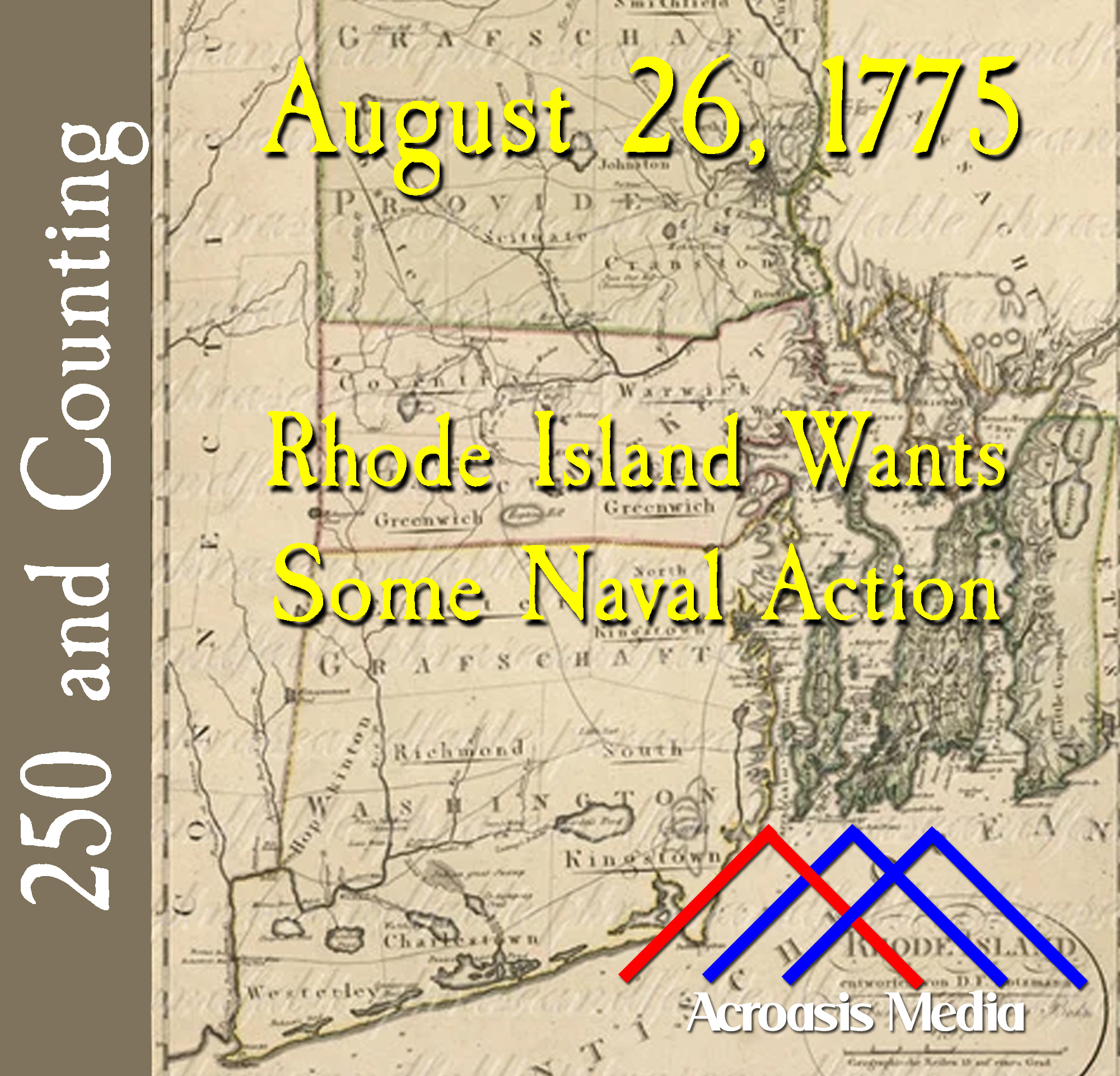
August 26, 1775: Rhode Island Wants Some Naval Action
Rhode Island has been proactive about the war effort ever since the events at Lexington and Concord. And one thing you’re going to learn today is just how much coastline there is to Rhode Island, and why having a navy was important to them. But it’s important to get an outsider’s view of things, and this wasn’t necessarily the Continental Congress’ viewpoint. It took a long while before any real action was taken. The post August 26, 1775: Rhode Island Wants Some Naval Action appeared first on 250 and Counting.
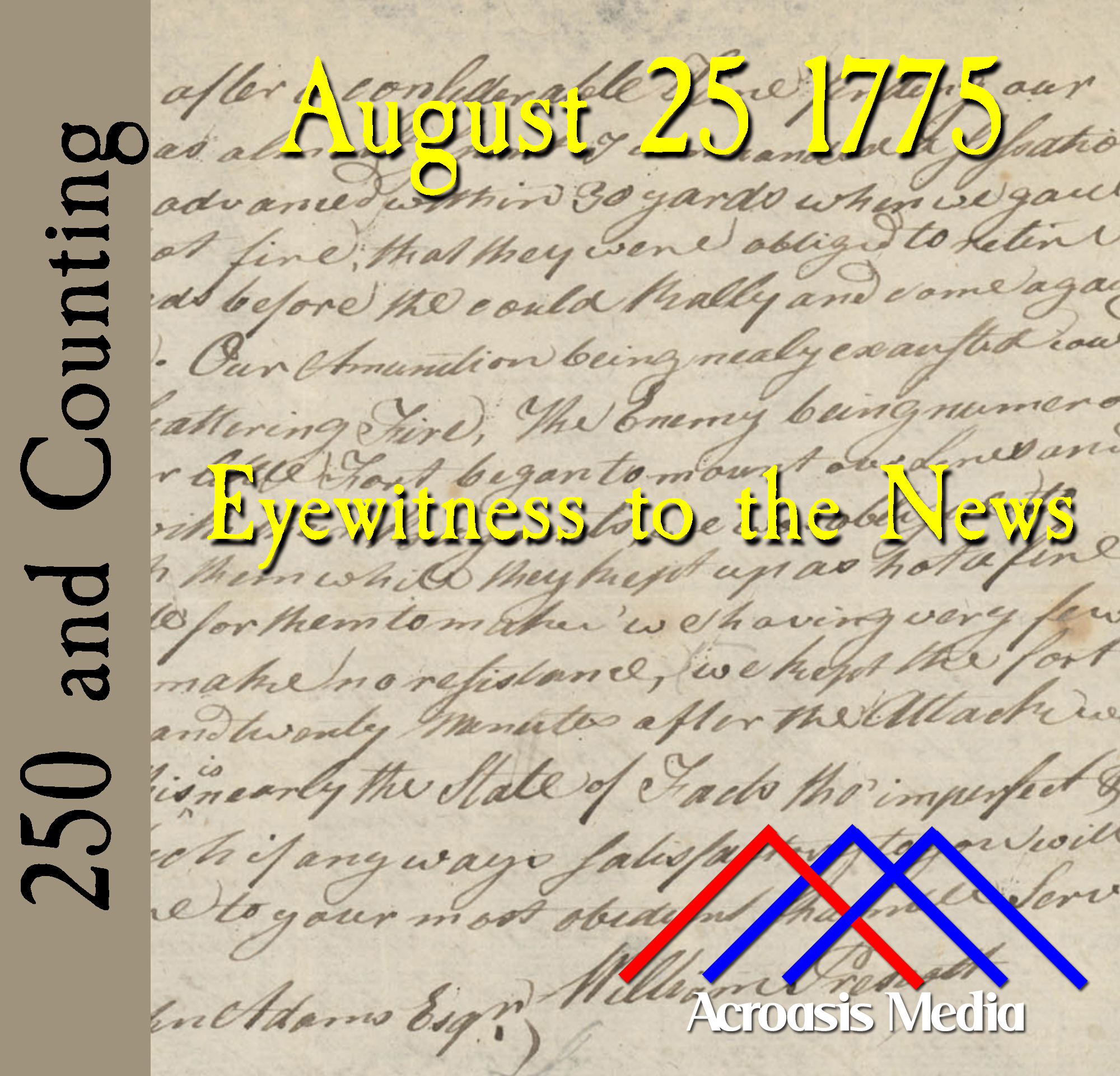
August 25, 1775: Eyewitness To The News
Today we take a look at two letters composed today: The first was an account of the activities around the Battle of Bunker Hill, from the time they were assigned to protect the hill, to the time they were finally defeated by the British—because they were out of ammunition. In the other letter, Thomas Jefferson composes a letter to a fellow Virginia politician in which he writes very specific prose, knowing that sooner or later it will fall into British hands. The intent was that the letter go public and let people who weren’t politicians that their leaders might not be telling the whole truth. The post August 25, 1775: Eyewitness To The News appeared first on 250 and Counting.
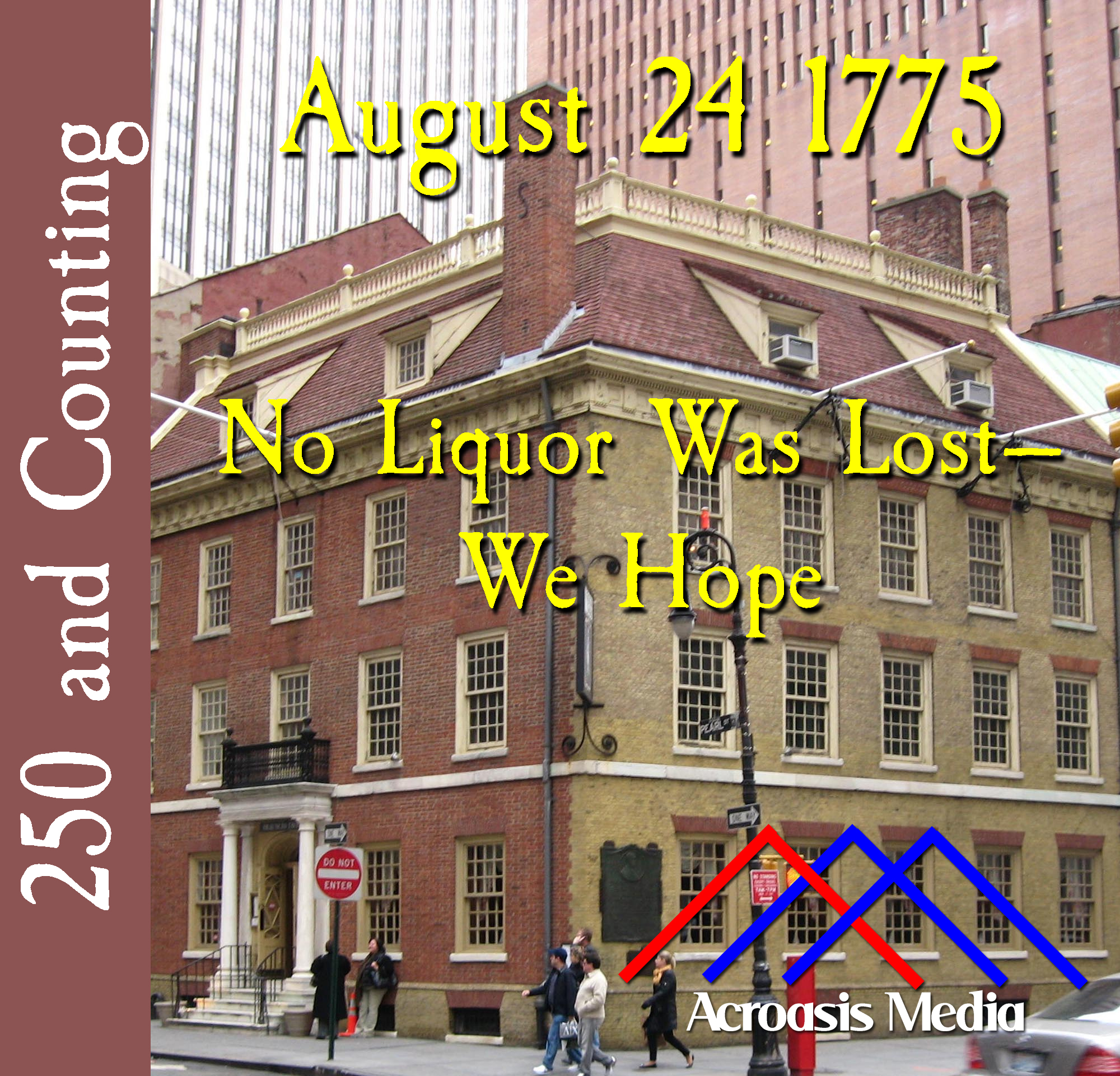
August 24, 1775: No Liquor Was Lost—We Hope
Fraunces Tavern is an historic landmark and the oldest and most historic bar in New York City. That’s what it says on their website, so. At various points in its history, Fraunces Tavern served as a headquarters for George Washington, a venue for peace negotiations with the British, and housing federal offices in the Early Republic. The building is still open to the public (there’s a museum there that’s open on weekends), though reservations are recommended if you want to eat in the restaurant. It’s a little on the pricey side but then again it’s not way out of line for New York City. Here’s the dirty secret: the building has fallen victim to fires a couple of times and been rebuilt, plus the top two floors were added in the late 1800s. So it’s not 100% clear that the building looks the way it did when George Washington was getting his drink on. But swing by anyway, you’ll have some fun. The post August 24, 1775: No Liquor Was Lost—We Hope appeared first on 250 and Counting.
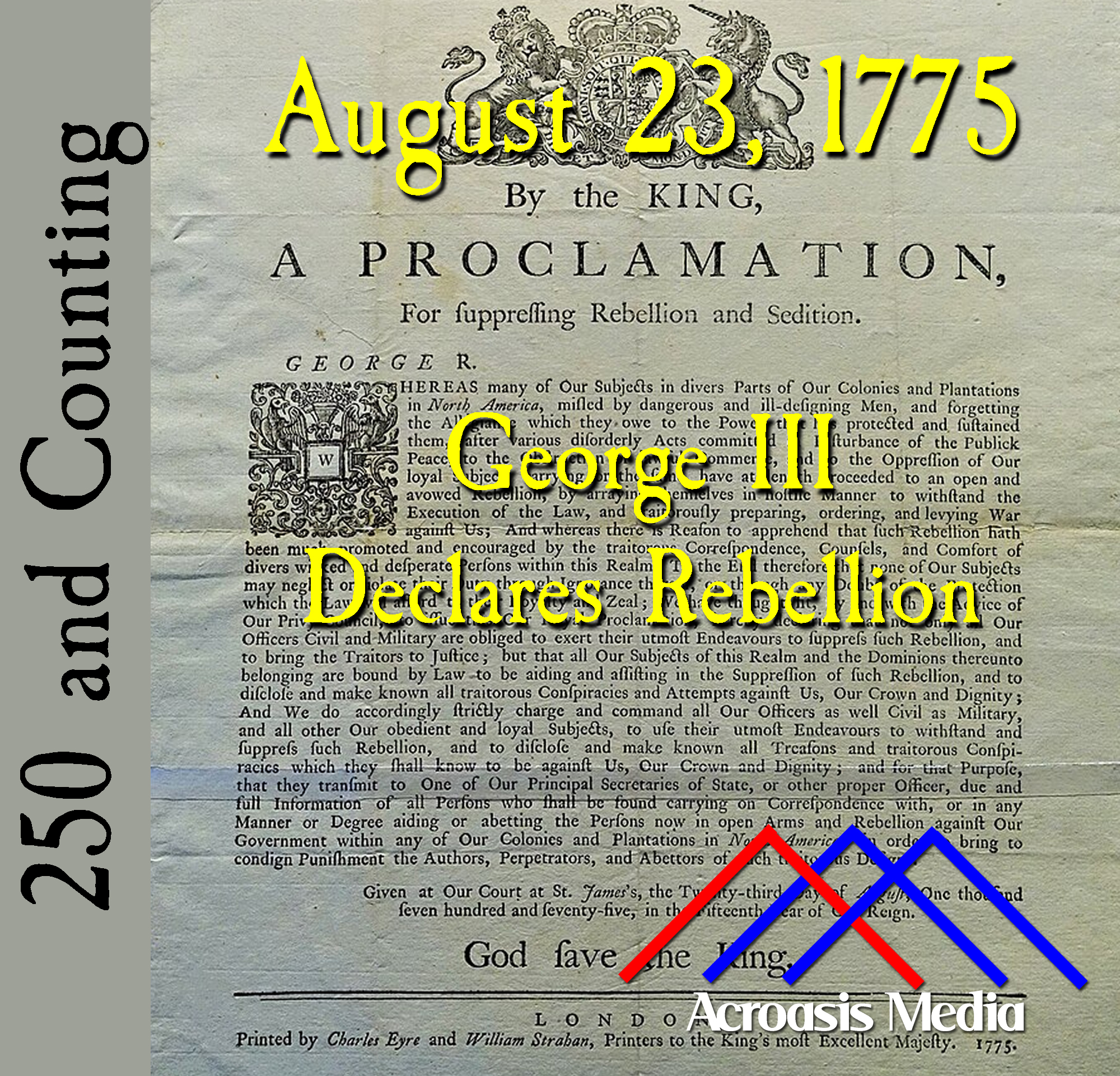
August 23, 1775: George III Declares Rebellion
When the Olive Branch Petition arrived in England, its contents hardly even mattered. There were elements of Parliament who were strongly disposed toward punishing the Colonies, and punishing them hard. The folks who were still pro-American were dwindling in number, because of the way it could affect their political futures. In short, the King had decided what he thought, and how he was going to handle it, and everyone else either bowed to it or faced losing their position. And it didn’t matter that he was a little bit crazy; he was the King and what he says, goes. Presumably we’ve learned the lesson behind that kind of thinking. The post August 23, 1775: George III Declares Rebellion appeared first on 250 and Counting.
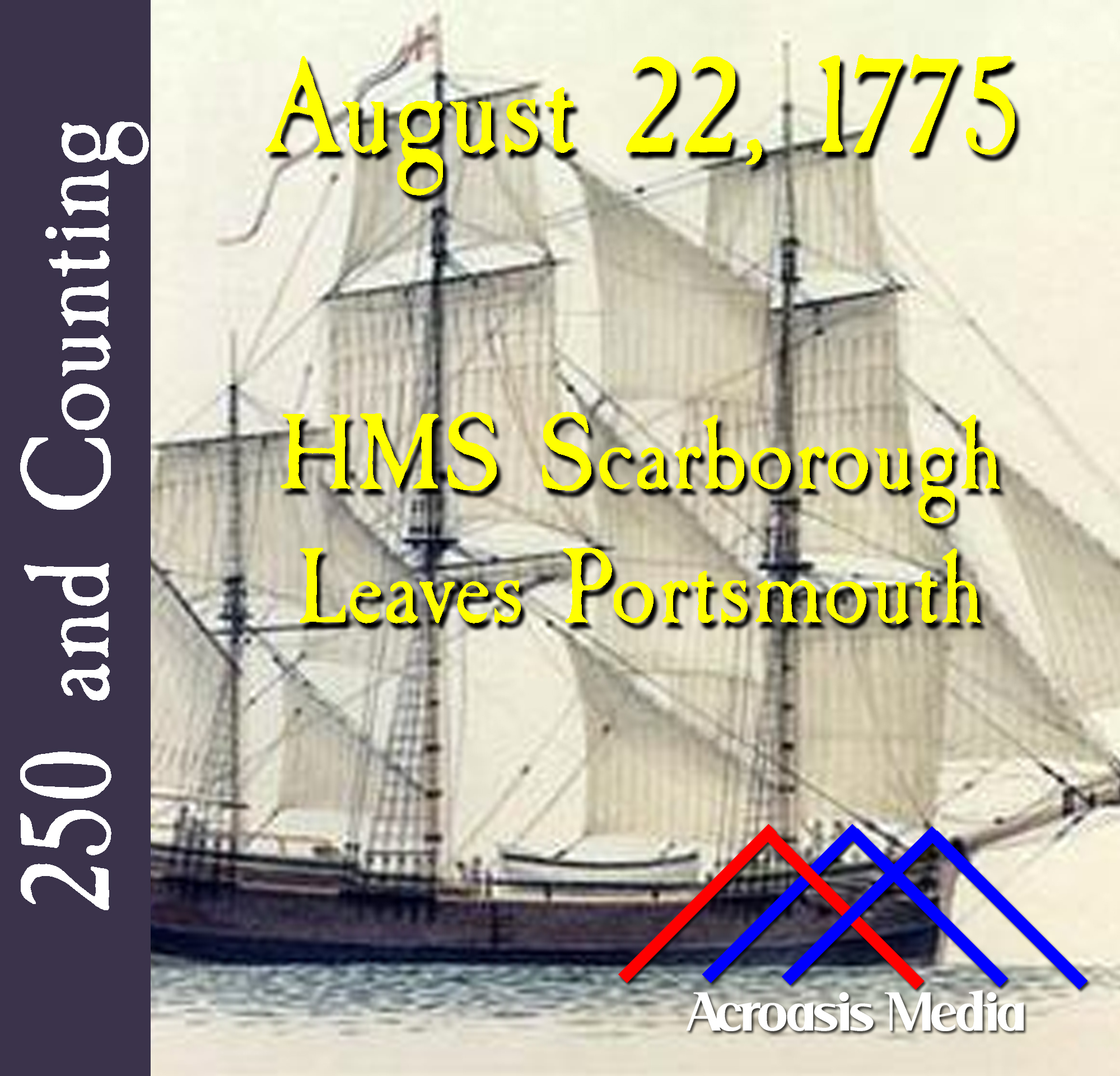
August 22, 1775: HMS Scarborough Leaves Portsmouth
Things were heating up all over, but it was still especially prevalent in the northeast. This time around, problems are cropping up in New Hampshire. The HMS Scarborough was designated to keep the peace by patrolling the mouth of the Piscataqua River, but when relations broke down between the British and the colonists there (and with good reason), when the ship ran out of supplies they had to re-locate. So naturally they headed to…um, Boston. The post August 22, 1775: HMS Scarborough Leaves Portsmouth appeared first on 250 and Counting.
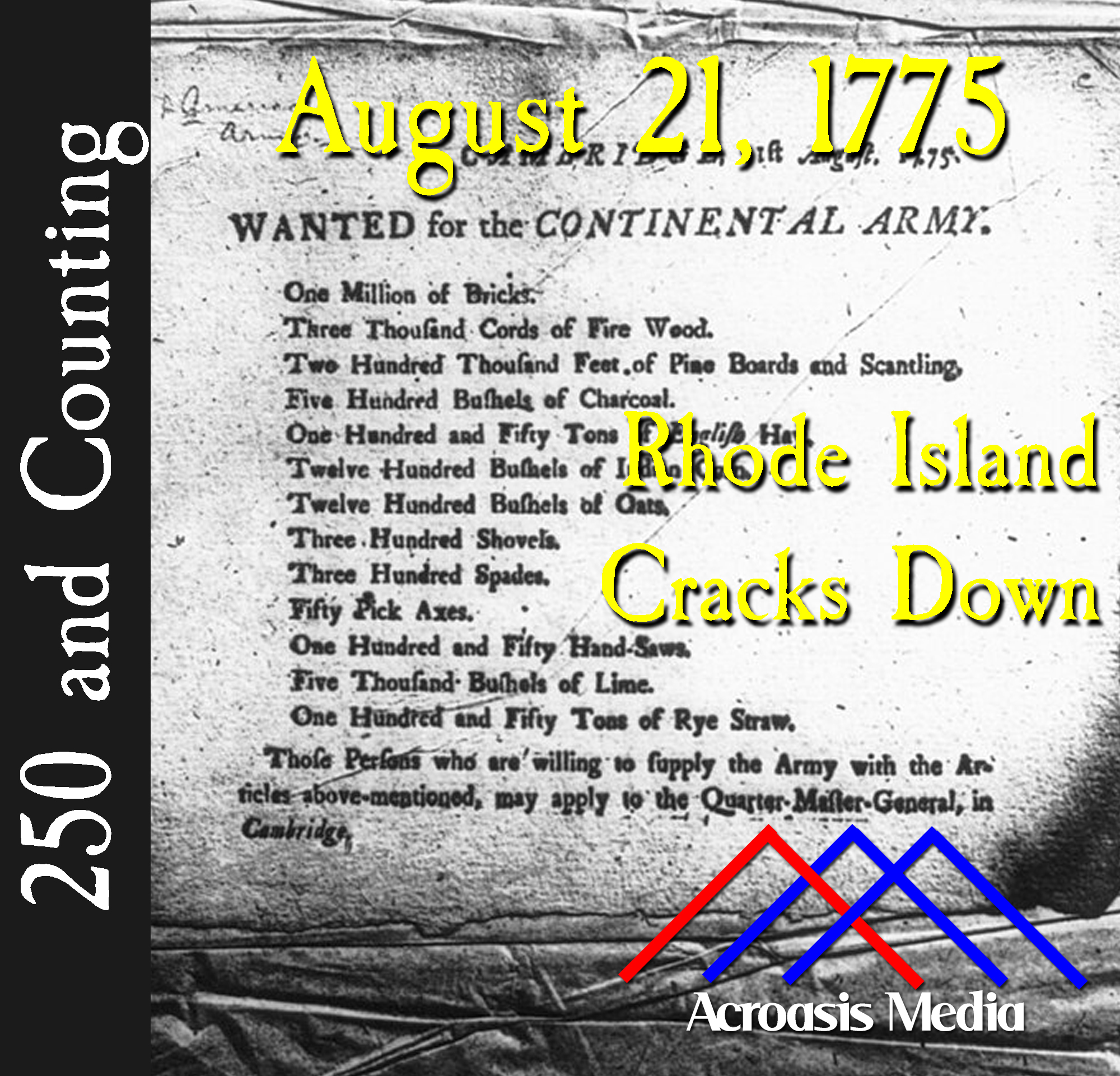
August 21, 1775: Rhode Island Cracks Down
We have two events taking place on this day. First, Rhode Island allows the death penalty for certain activities at sea. Next, word goes out that the Continental Army is in need of supplies…lots of supplies. It’s looking like General Washington isn’t seeing an end to the Siege of Boston anytime soon. The post August 21, 1775: Rhode Island Cracks Down appeared first on 250 and Counting.
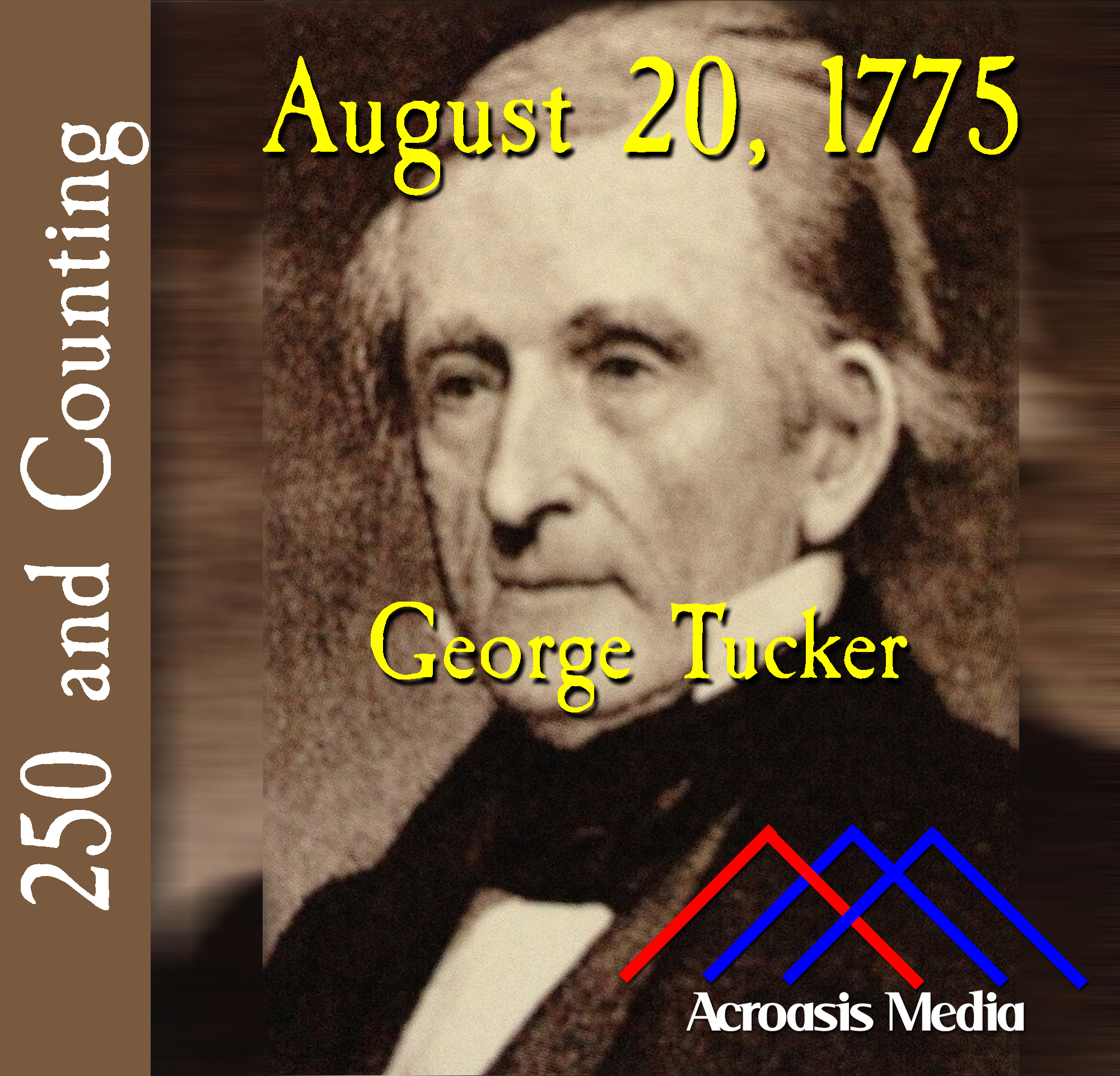
August 20, 1775: George Tucker
Lots of prominent early Americans weren’t Americans to begin with. For instance, the first President of the United States who was actually born in the United States would be Martin Van Buren, our eight president. But while most of these folks were born on the North American continent, the subject of today’s episode was not. He was born in Bermuda. So while George Tucker was still a British citizen by birth, he didn’t come to America until he was twenty years old, making him an honest-to-goodness immigrant. But let’s not hold that against him. As you’ll learn today, Tucker had a long and varied career as a politician, an educator and an author. The post August 20, 1775: George Tucker appeared first on 250 and Counting.
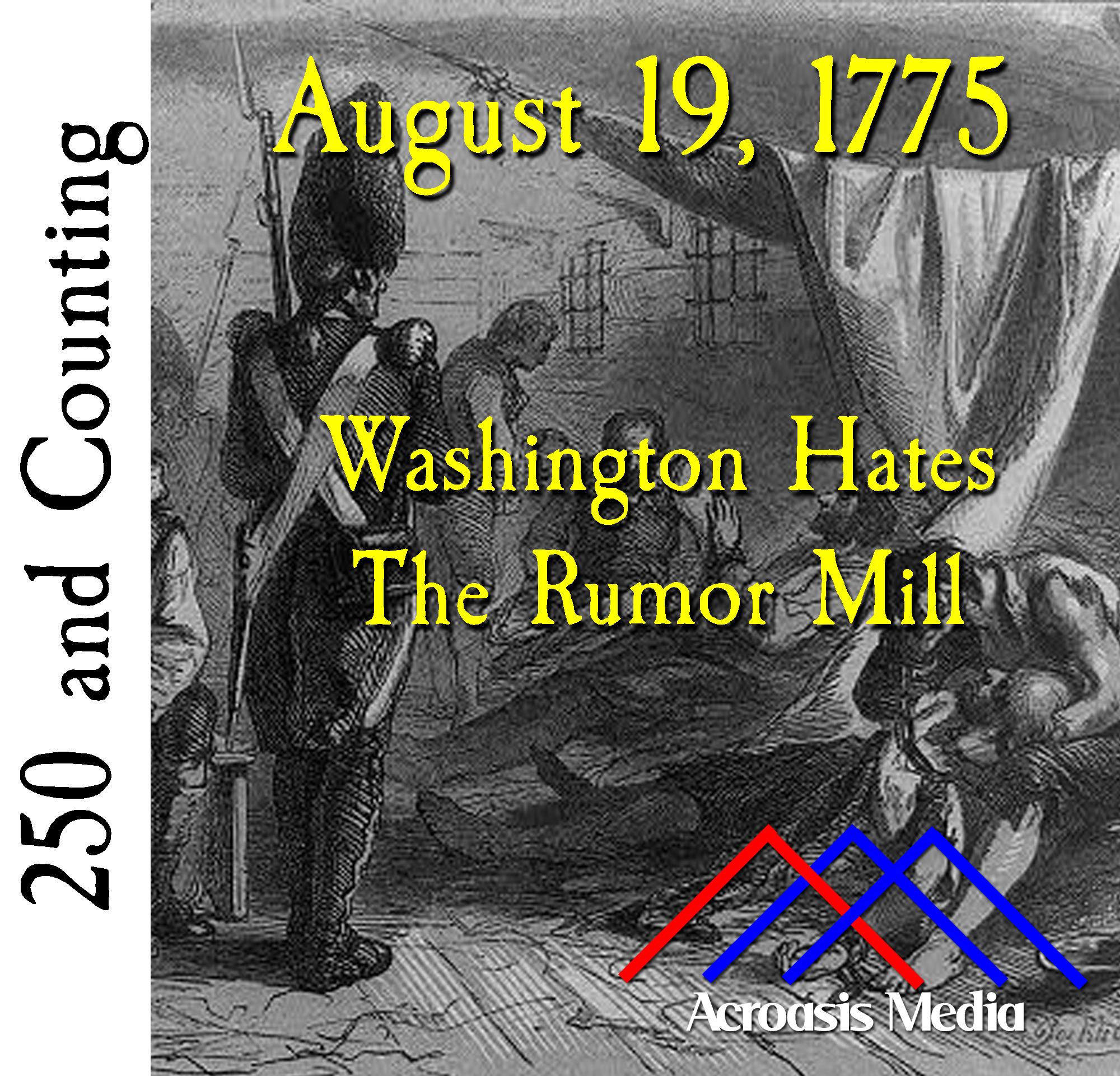
August 19, 1775: Washington Hates the Rumor Mill
In 1681, John Dryden said in his poem “Absalom and Achitophel”: Beware the fury of the patient man. I hear ya, Dryden, because that’s how I operate. And apparently George Washington operated the same way, because he initially took the high road, assuming that rumors about how American prisoners were being treated were just that, and giving General Gage the benefit of the doubt. But when the rumors began that Washington was mistreating his prisoners…oh, that didn’t sit well with the General at all. The post August 19, 1775: Washington Hates the Rumor Mill appeared first on 250 and Counting.

August 18, 1775: James Elliot
James Elliot was born in 1839 (like the stone says over there), in Massachusetts. Later on he became a legislator for the state of Vermont, which was neither a state nor even a colony when he was born; it was still disputed territory between New York and New Hampshire. Although Elliot was too young to participate in the American Revolution, his political fortunes waxed and waned…but mostly waxed. The post August 18, 1775: James Elliot appeared first on 250 and Counting.
August 17, 1775: The Six Nations Summit
Philip Schuyler served as a delegate from New York to the Continental Congress until June 1775 when he was appointed a major general to the Continental Army. We’ll hear more about him as we start to delve into the Invasion of Quebec later this year. Schuyler was on his way to Saratoga, NY when he got word that the tribes of the Six Nations—the Mohawks, Oneidas, Tusscaroras, Onondagas, Cayugas, and the Senekas (spelled that way then)—had taken Congress up on its offer of a summit and were on their way to Albany. What’s more, he was needed for the summit. What happened next came as a surprise to…well, nobody, really. But at least everyone knew where everyone else stood. And if that was the locals’ attitude, it wasn’t their fault; the Speech to the Six Nations laid out their argument for them. The post August 17, 1775: The Six Nations Summit appeared first on 250 and Counting.

August 16: John Adams Gets Extralegal
Just a couple of days ago we told you about the efforts on the part of the Continental Congress to get around its own rules in order to provide Washington’s army with the materials they needed to maintain the Siege of Boston. This time around, John Adams takes steps to do what he needs to do without running afoul of the Intolerable Acts. It’s like the legal equivalent of the obnoxious game your siblings played with you: “I’m not touching you…I’m not touching you…” The post August 16: John Adams Gets Extralegal appeared first on 250 and Counting.
August 15, 1775: Washington Makes Some Appointments
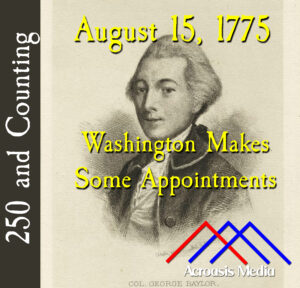
We do seem to be spending a lot of time with George Washington this week. It stands to reason, though: Washington was a very busy guy at this time, what with getting his army organized. That meant finding the men who were smart and reliable, to get the ones who weren’t into fighting shape. It also meant figuring out what resources he had and what he needed. What we’re learning is that the men that he did promote would eventually go on to prosper, whether in the military or in politics or just their personal lives after the war. There were only a few who did not, and oftentimes there was a reason. Not all of them didn’t prosper out of incompetence; some of them simply had to deal with things like illness or lingering effects of injuries inflicted during the conflict. The post August 15, 1775: Washington Makes Some Appointments appeared first on 250 and Counting.
August 14, 1775: “Stolen” Goods From Bermuda
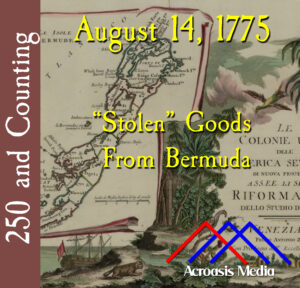
There’s an episode of The West Wing in which Leo McGarry explains how, several years earlier, the President wanted to meet the Dalai Lama. The problem was that China was strongly opposed to such a meeting, so they arranged for an “accidental” meeting between the two: Set up a low-level meeting with someone else and leave the door open. The President wanders by, “Hey, how ya doing, Dalai Lama?” The point is, diplomacy can be weird. And when the Continental Army, needed gunpowder from Bermuda, it was arranged to have the gunpowder be “stolen” from their armory and somehow make its way into American hands. Who knew! The post August 14, 1775: “Stolen” Goods From Bermuda appeared first on 250 and Counting.

August 13, 1775: The Olive Branch Petition Arrives in England
As you may recall, several months ago some members of the Continental Congress thought it was important to make one last effort to reconcile with Britain before things got worse. So they composed the Olive Branch Petition and sent it off to England. Transit times being what they were then, the petition took several weeks to get to its destination. In the meantime, things got worse. So when the Olive Branch Petition arrived, nobody really cared. But there were two other documents that made matters worse. Plus, you know, all the shooting that went on in April. And in June. The post August 13, 1775: The Olive Branch Petition Arrives in England appeared first on 250 and Counting.
August 12, 1775: George Washington Writes a “Dear John” Letter
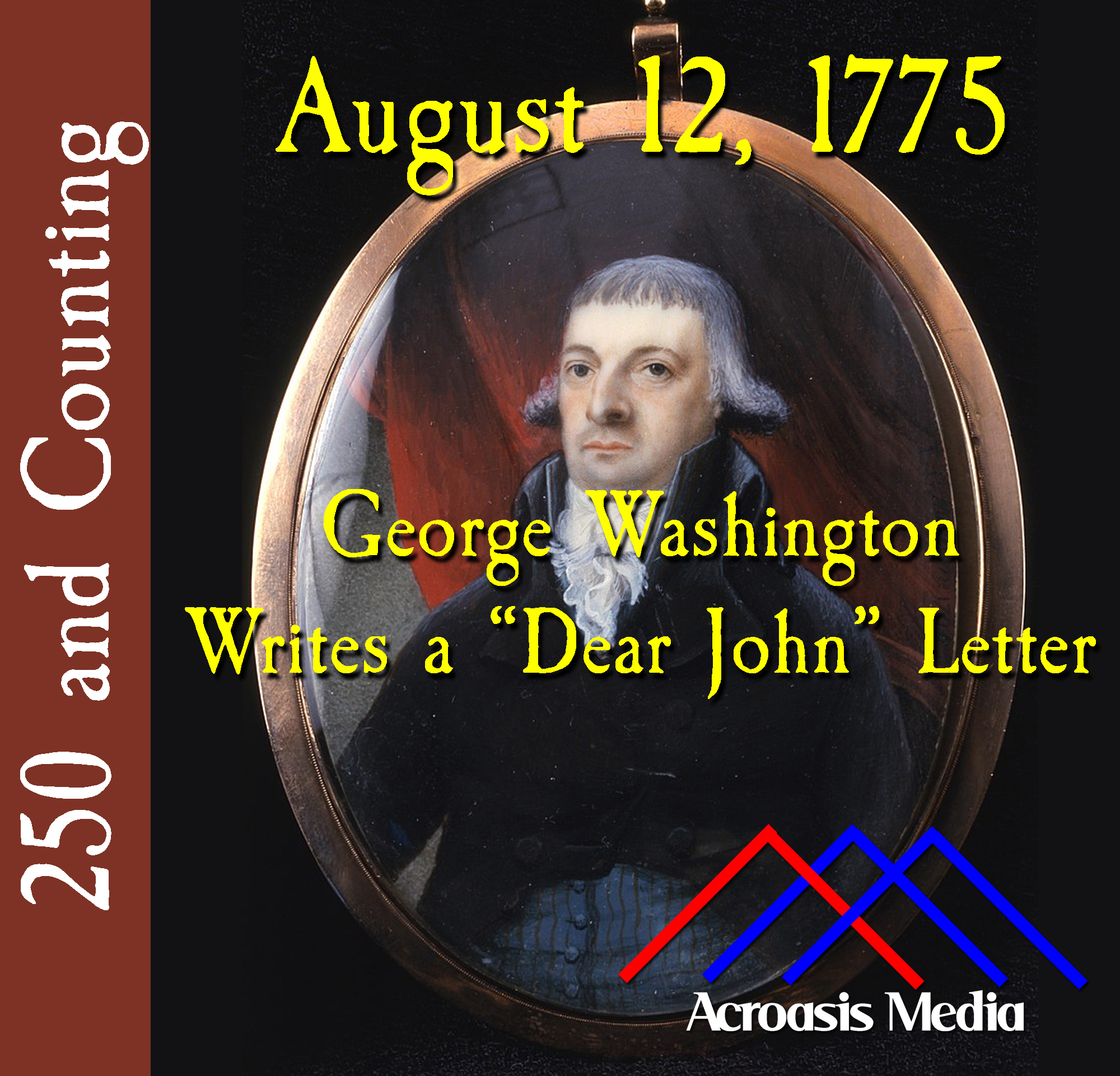
One thing that you can’t say about George Washington is that he was a slacker. He was constantly communicating with people, whether it was the orders of the day, making plans to organize his army, or writing letters. And Washington was absolutely prolific at writing letters. In this case, he’s writing to a Rhode Island merchant, thanking him for the advance notice of an incoming shipment, and reassuring him that the shipment will reach its destination safely, at least to the extent that he had any control over the matter. The post August 12, 1775: George Washington Writes a “Dear John” Letter appeared first on 250 and Counting.
August 11, 1775: Washington Gets Serious About POWs
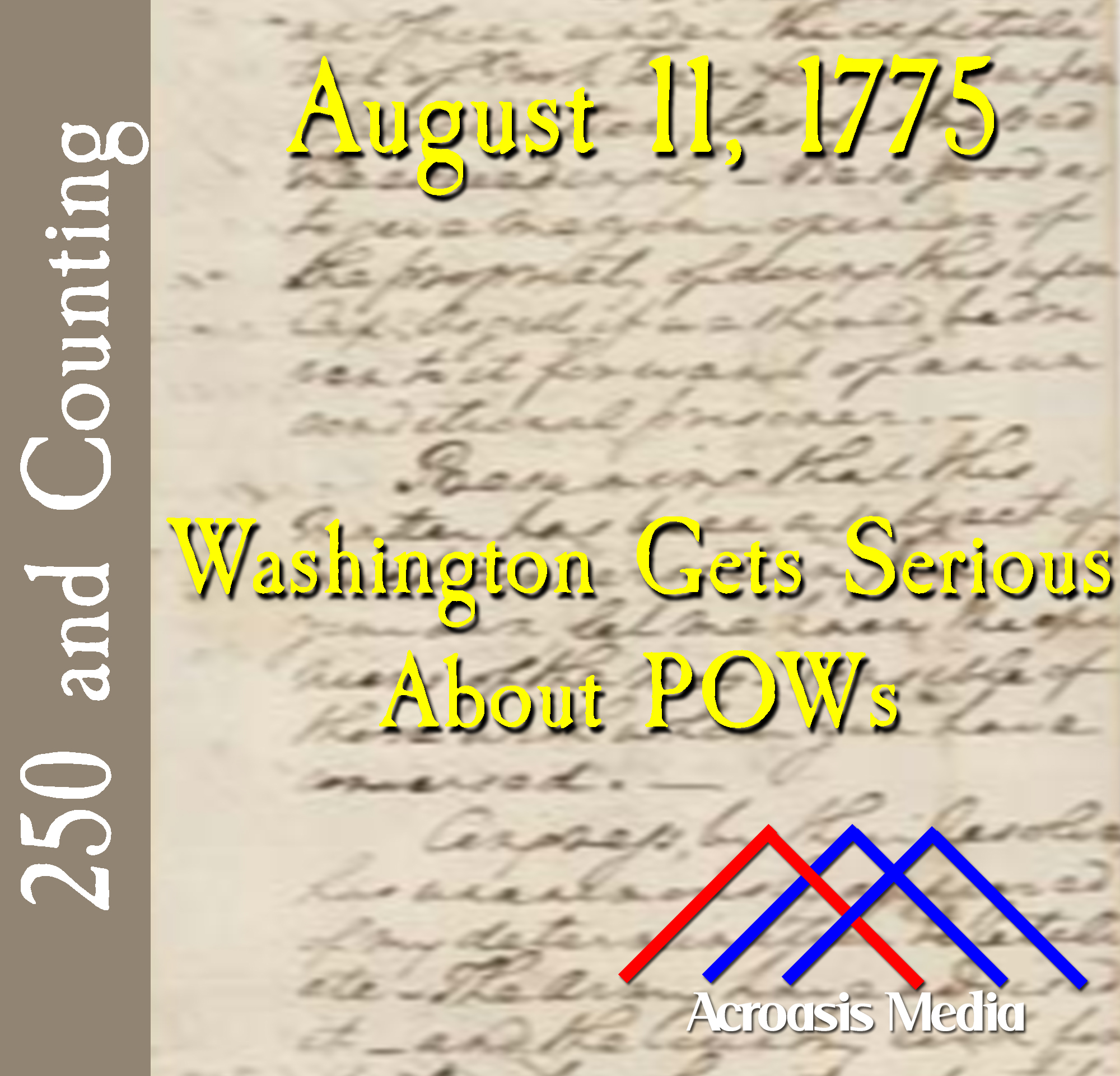
While today is perhaps the earliest documented instance of George Washington expressing concern for his captured troops, it certainly wouldn’t be the last. For years he worried about this, largely because the British didn’t always consider the Continental Army to be a genuine army, nor did they consider themselves to be “at war” with America; instead this was some kind of petty grievance that needed to be put down. As a result, Washington was in frequent communication with his counterparts on the British side, and several people on the Colonial side, expressing his worry that his men were being treated poorly…or worse. The post August 11, 1775: Washington Gets Serious About POWs appeared first on 250 and Counting.
August 10, 1775: John Adams Loses A Brother
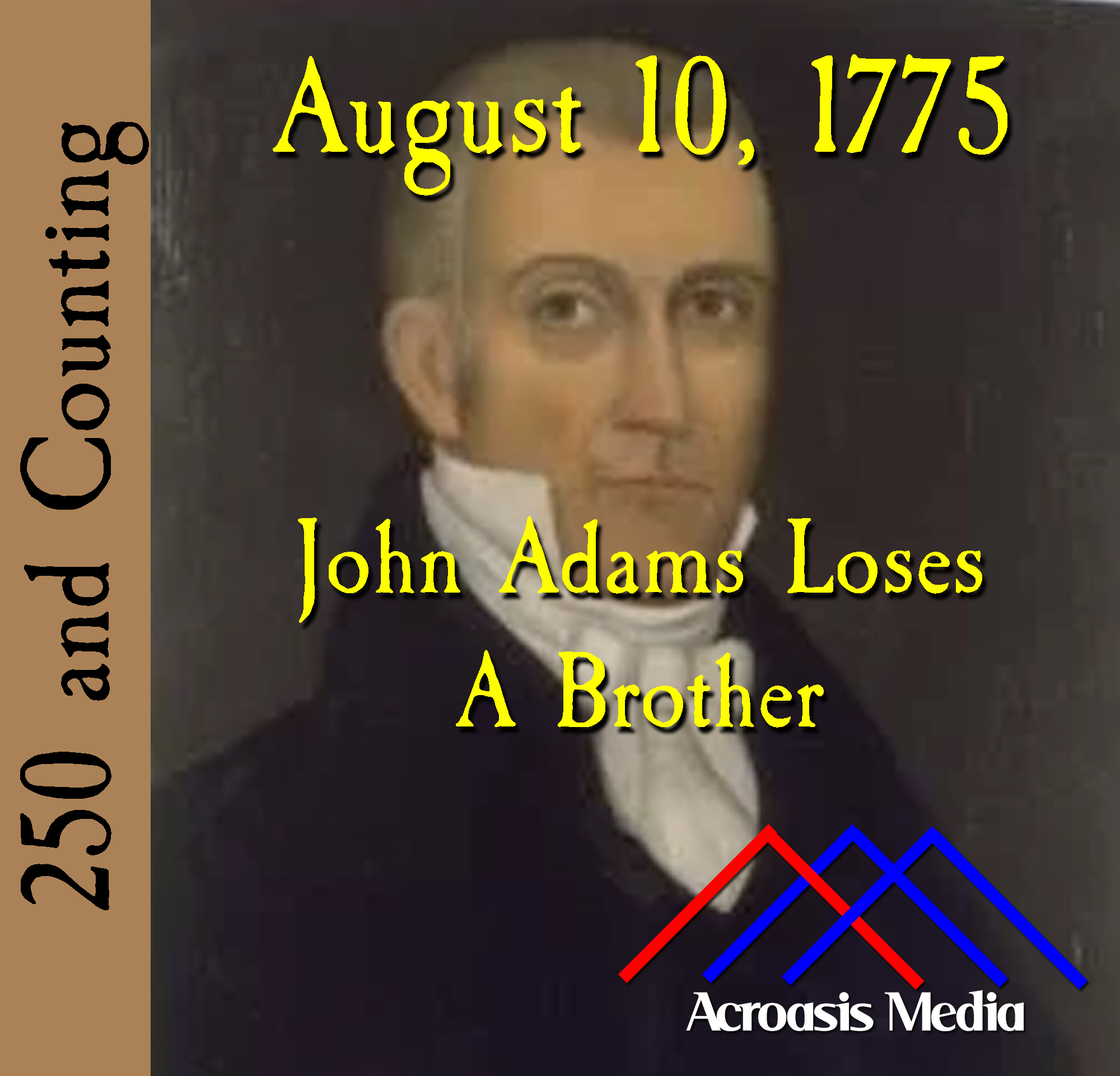
It’s peculiar, sometimes, how we know a lot of stuff about famous people, but we don’t often know much about their relatives. Sometimes we don’t realize that they even existed, John Adams had two brothers, one of whom died on this day in 1775. He wasn’t famous, but he did have some involvement with the Siege of Boston until illness struck. Something like that must have made the loss just that much more worse for John, and the war effort that much more personal. The post August 10, 1775: John Adams Loses A Brother appeared first on 250 and Counting.
August 9, 1775: An Appeal for Supplies
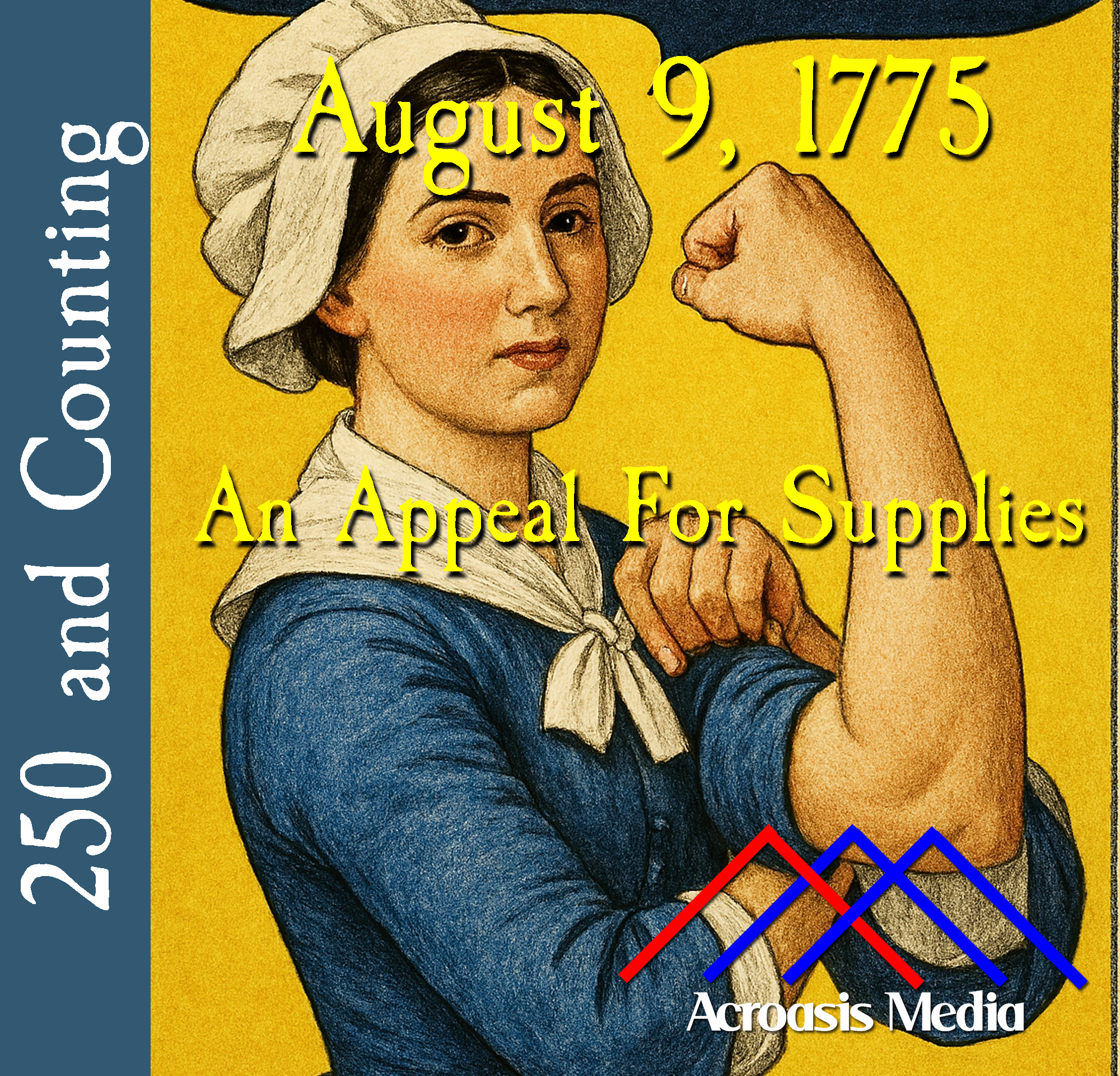
This. This artwork right here is why I’m reluctant to use A.I. to generate cover art. But this one came out too hilarious for me not to use, am I right? George Washington worried about supplies for his troops pretty much throughout the Revolutionary War. Sometimes it was ammunition, as we discussed a couple of days ago, other times it was basic things like clothing and blankets. Fortunately, there were people who heard his concerns and took action on behalf of the soldiers who were working to break us away from England. The post August 9, 1775: An Appeal for Supplies appeared first on 250 and Counting.
August 8, 1775: The Battle of Gloucester
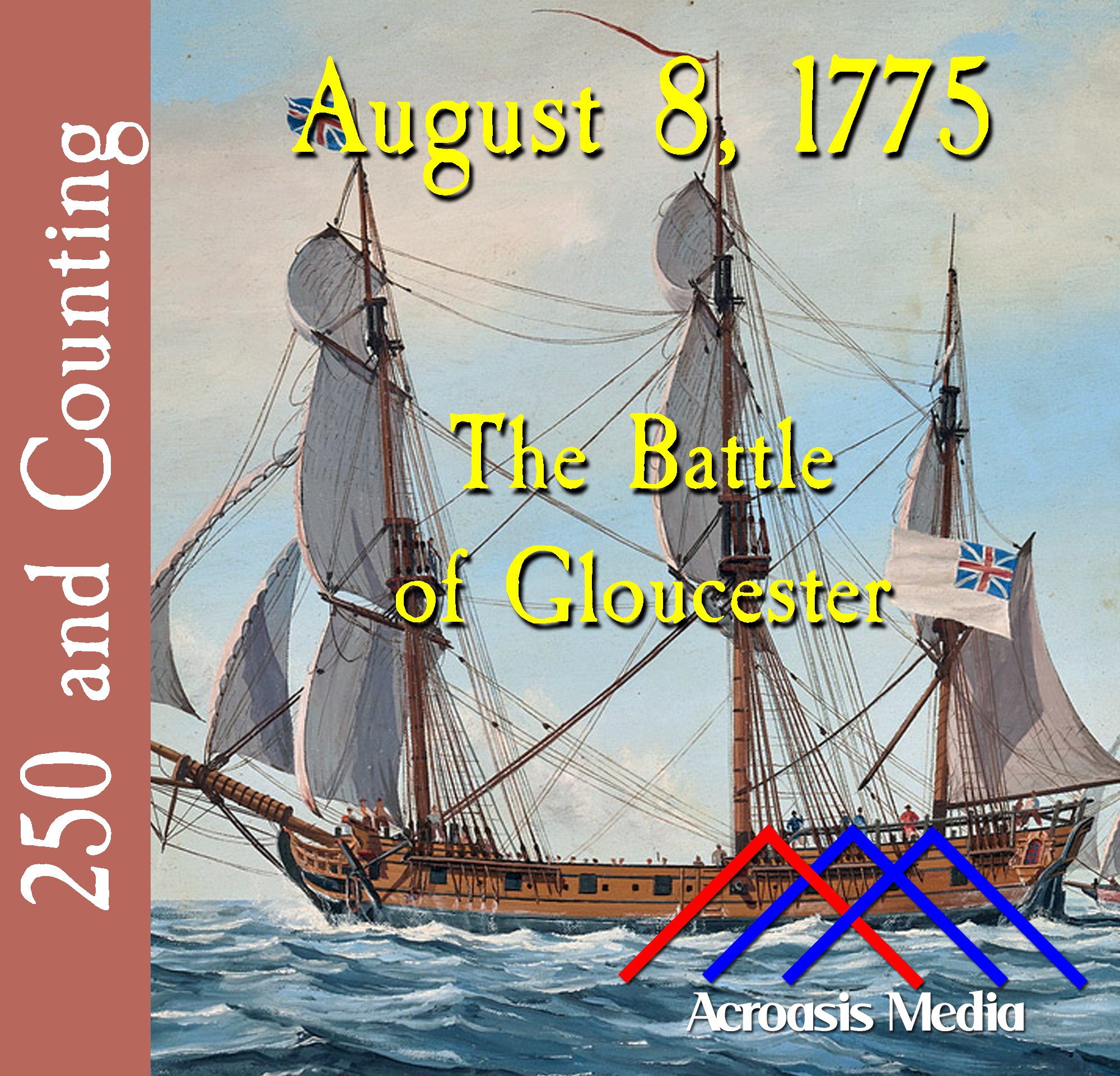
It was another net win for the Americans as the HMS Falcon, which had originally been assigned to the Colonies to enforce the Intolerable Acts, took a run at stealing livestock in order to provision the British who were stuck in Boston during the siege. Unfortunately for them, the Colonists were wise to their moves and took appropriate action…more than once. The post August 8, 1775: The Battle of Gloucester appeared first on 250 and Counting.
August 7, 1775: A Victory in Failure
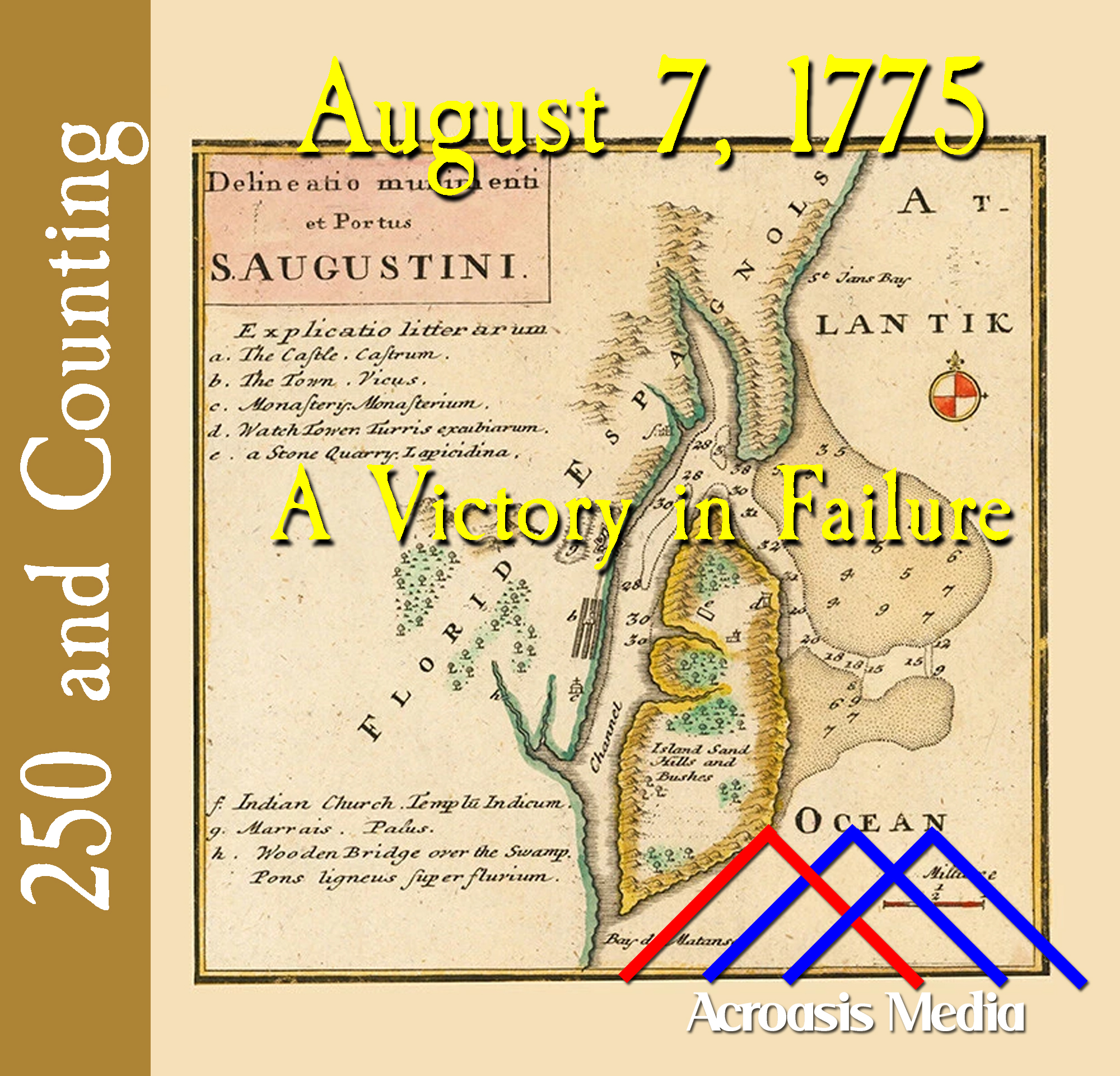
Once again, complacency wins the day. An American ship heads to Florida to raid the British ammunition stores there, and instead stumbles on a ship carrying literal tons of gunpowder. And it’s easily captured because the crew was asleep. Wasn’t anyone on watch? Apparently not, or they still managed to allow the American ship to get close enough that they could get on board. EIther way, American ships weren’t worth considering, and there wasn’t any American Navy…yet. But events over the next few days could change all that. The post August 7, 1775: A Victory in Failure appeared first on 250 and Counting.
August 6, 1775: A Long March in August
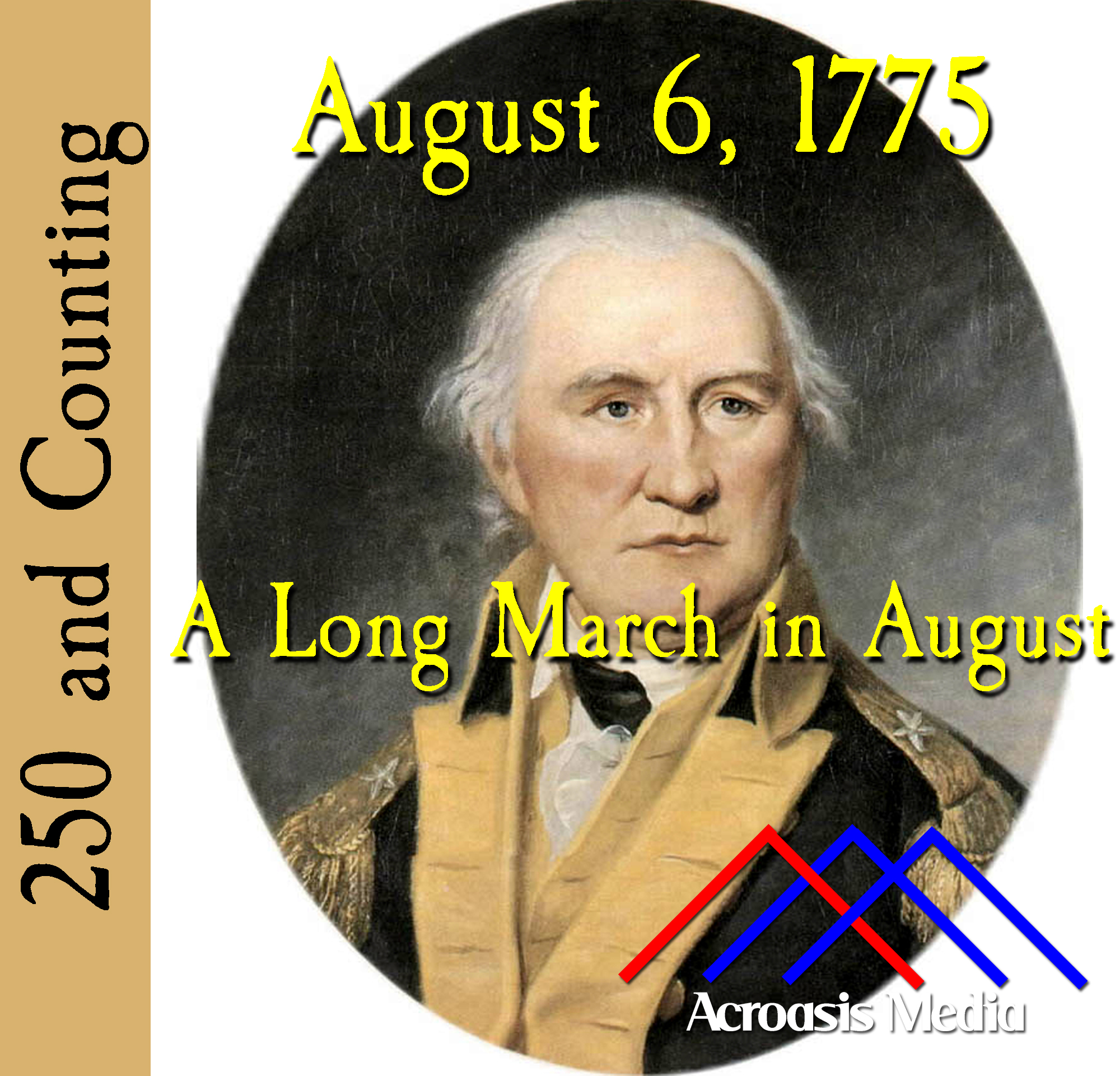
I’m the first to admit that my math didn’t work out during yesterday’s episode. I have no excuse other than I’m on vacation this week and perhaps not as detail-oriented as usual. You may remember a couple of days ago when we mentioned that one of the things that broke in George Washington’s favor was the timely arrival of a company of riflemen. These were the men in question. Rifles have different barrels from the typical guns that Colonial forces used, and were therefore more accurate. In addition, riflemen were specially trained for improved accuracy. Daniel Morgan’s crew was one of the reasons that Washington’s ruse against the British worked out well: with these men around, the British were less likely to attack, and Washington was able to replenish his ammunition stores within a couple of weeks. The post August 6, 1775: A Long March in August appeared first on 250 and Counting.
August 5, 1775: Open Up That Golden Gate
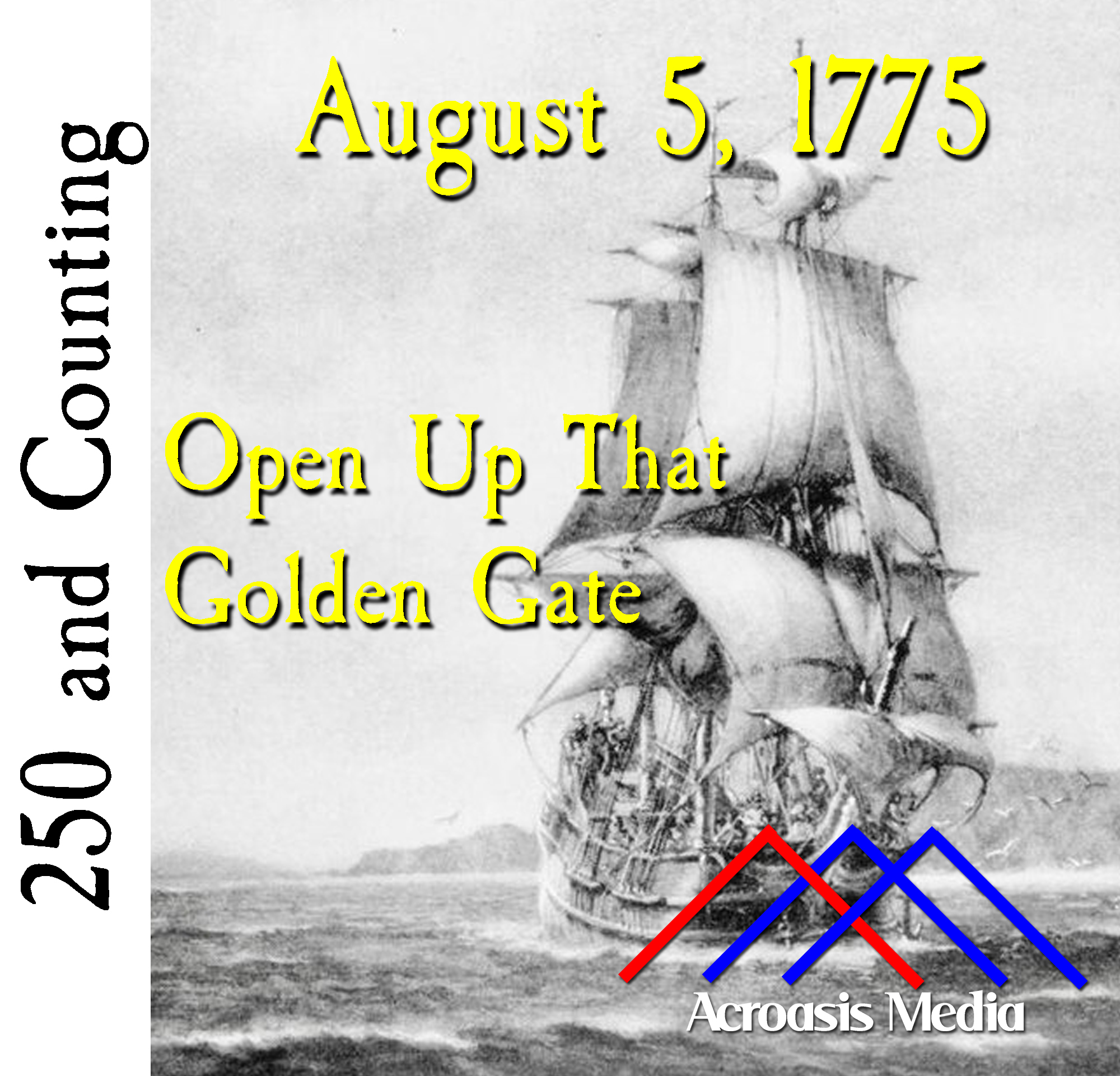
Meanwhile, three thousand miles away from the action… …the Spanish were exploring the West Coast and claiming a lot of territory in their name. It was largely exploration and planting flags, although there were some colonies established as well. But what’s interesting about the bit of exploration we’ll be looking at today is that, even though the Spanish had been up and down the coast for a couple of hundred years, it wasn’t until 1769 that they realized that the strait leading into San Francisco Bay was even there. Possibly because it was frequently fogged in, possibly because the area was considered hazardous to navigate. The post August 5, 1775: Open Up That Golden Gate appeared first on 250 and Counting.
August 4, 1775: A Letter of Dissatisfaction
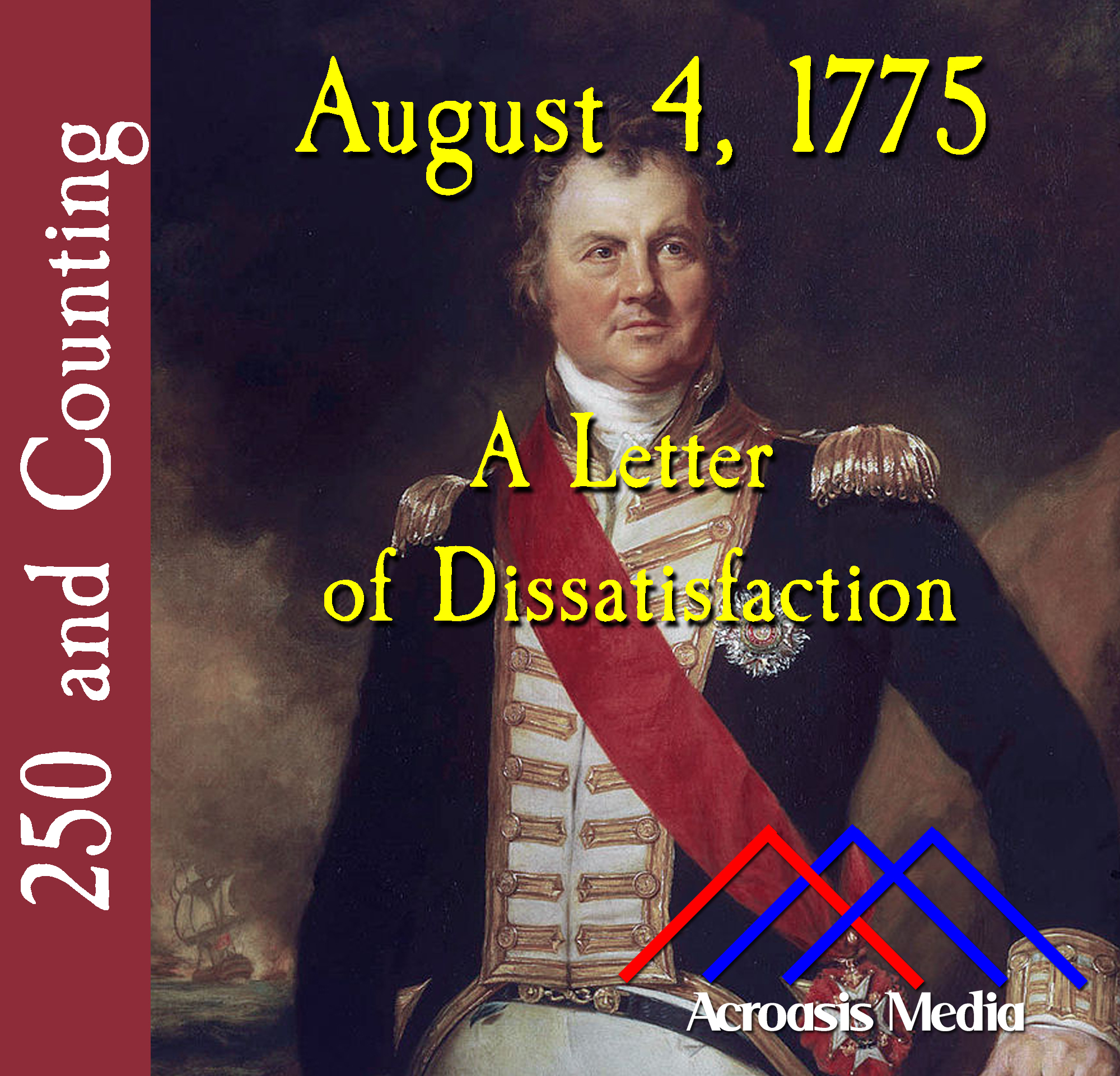
One of the reasons (we think) that the Colonial forces were able to gain small advantages over the British forces is that the Colonial Army was relatively untrained, and sometimes succeeded through dumb luck. They attempted things that “everyone knows” wouldn’t work, and surprise! It did work because nobody thought they’d be dumb enough to try it. The Colonies also didn’t have a lot of Navy going on just yet, and it may have been because of this that they were able to succeed at sea, as well. British ships would sail past American fishing vessels, thinking them of no consequence, and suddenly they’d find themselves outwitted by a whaling ship. Some British captains did manage to catch on to American tactics, though. Edward Thornborough was one of them, and he made his concerns clear in a letter written on this day in 1775. The post August 4, 1775: A Letter of Dissatisfaction appeared first on 250 and Counting.
August 3, 1775: The Ammunition Crisis, Part 2
As noted, two days ago we told you about how George Washington got the bad news that he didn’t have nearly as much gunpowder and ammunition as he thought he did. It was on this day in history that he and his team of generals put their heads together and came up with some rather solutions. Some of them depended on deception while others depended on dumb luck. Fortunately things worked out quite well. The post August 3, 1775: The Ammunition Crisis, Part 2 appeared first on 250 and Counting.
August 2, 1775: Congress Takes A Break
Since May 10, the Second Continental Congress had been working for six days a week. And on any given day, depending on the committee to which they were attached, they’d work from anywhere between eight and twelve hours. And remember: this was in the height of summer in Philadelphia, where the temperatures were in the 90s and chances are, so was the humidity most of the time. Now, as Mike will attest in today’s episode, they got a LOT of stuff done in those ten weeks. And considering how thoughtfully they took every subject they tackled, it was a definite feat on their part. It was a well-deserved break. The post August 2, 1775: Congress Takes A Break appeared first on 250 and Counting.
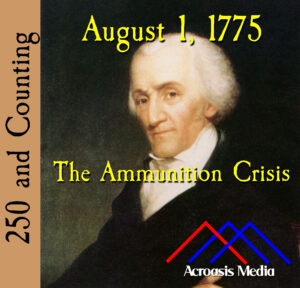
August 1, 1775: The Ammunition Crisis
For those of you who are coming here from Hamilton Radio for the first time: welcome to 250 and Counting! Each day we spend just a couple of minutes telling you about some event that took place exactly 250 years ago today, to give you an idea of some of the events leading up to, and then beyond, our nation’s 250th birthday next year. For those of you who aren’t new to the show, you may remember a couple of days ago, when the British tried to break out of the Siege of Boston by launching an attack at Charlestown Neck. Their attempt failed, but George Washington and the Continental Army got very lucky, because they had no idea that they were low on gunpowder and the raw materials needed to make ammunition. In a couple of days we’ll learn what they did to address the problem. The post August 1, 1775: The Ammunition Crisis appeared first on 250 and Counting.
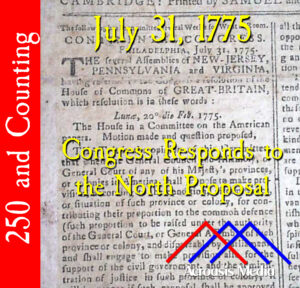
July 31, 1775: Congress Responds to the North Proposal
It’s not entirely Lord North’s fault that his proposal for securing peace took so long to get to the Colonies; messages took a long time to get across the ocean. It is his fault that he sent it to individual people across the Colonies, thinking he could demonstrate that the Colonies are divided and aren’t on board with the revolution. It’s also his fault for not counting on someone from the New Jersey delegation (in this case; it could have been any delegate) bringing the proposal to the Second Continental Congress. Unfortunately, before anyone on this side of the Atlantic saw it, fighting had broken out at Lexington and Concord, and the document was seen as far too little, far too late. The post July 31, 1775: Congress Responds to the North Proposal appeared first on 250 and Counting.
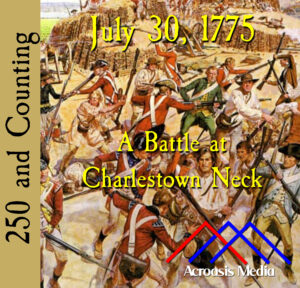
July 30, 1775: A Battle at Charlestown Neck
Boston had been under siege since Lexington and Concord. Of course the British felt that they needed to break out of it from time to time, and today was one of those attempts. Now, this was a success for the Continental Army, but the fact is, few people realized at that time just how close they were to losing that battle, and badly. But that’s for a couple of days from now, on August 1st. Coincidentally, August 1st is the day that this podcast begins airing on Hamilton Radio! Tune in to HamiltonRadio.net to hear our show, and a bunch of others. We’re in good company over there. The post July 30, 1775: A Battle at Charlestown Neck appeared first on 250 and Counting.