
250 and Counting
660 episodes — Page 7 of 14

Sam Adams Has Thoughts–December 26, 1775
Portrait of Samuel Adams, 1772. by John Singleton Copley – Museum of Fine Arts, Boston, and Wikimedia Commons Most of us have a pop culture view of the American Revolution period, and some of us go so far as to have some idea of what happened via the 1970 film 1776. Oddly enough, that movie has both a ton of accuracy with its facts (but not necessarily in the right order), and a ton of dramatic license. One thing the film gets right is that John Adams was a bit of a nudge, constantly pushing the other delegates toward the Indepency movement. He wasn’t considered exactly obnoxious, but maybe a bit zealous. At the same time, his cousin Samuel Adams wasn’t represented at all in the movie. And that’s a shame, because while he was the quieter one overall, he was instrumental in shaping the debate. As far as historians can tell (and it’s tough, because Congress worked under a secrecy rule–their notes tell you what happened but not necessarily who did what), Samuel Adams acted as a kind of parliamentary whip, schmoozing with delegates and getting them to see his side of things. He was on most of the military committees, and in fact was the man who first proposed that George Washington become the Continental Army’s Commander-in-Chief. See? It’s not about the beer. The post Sam Adams Has Thoughts–December 26, 1775 appeared first on 250 and Counting.
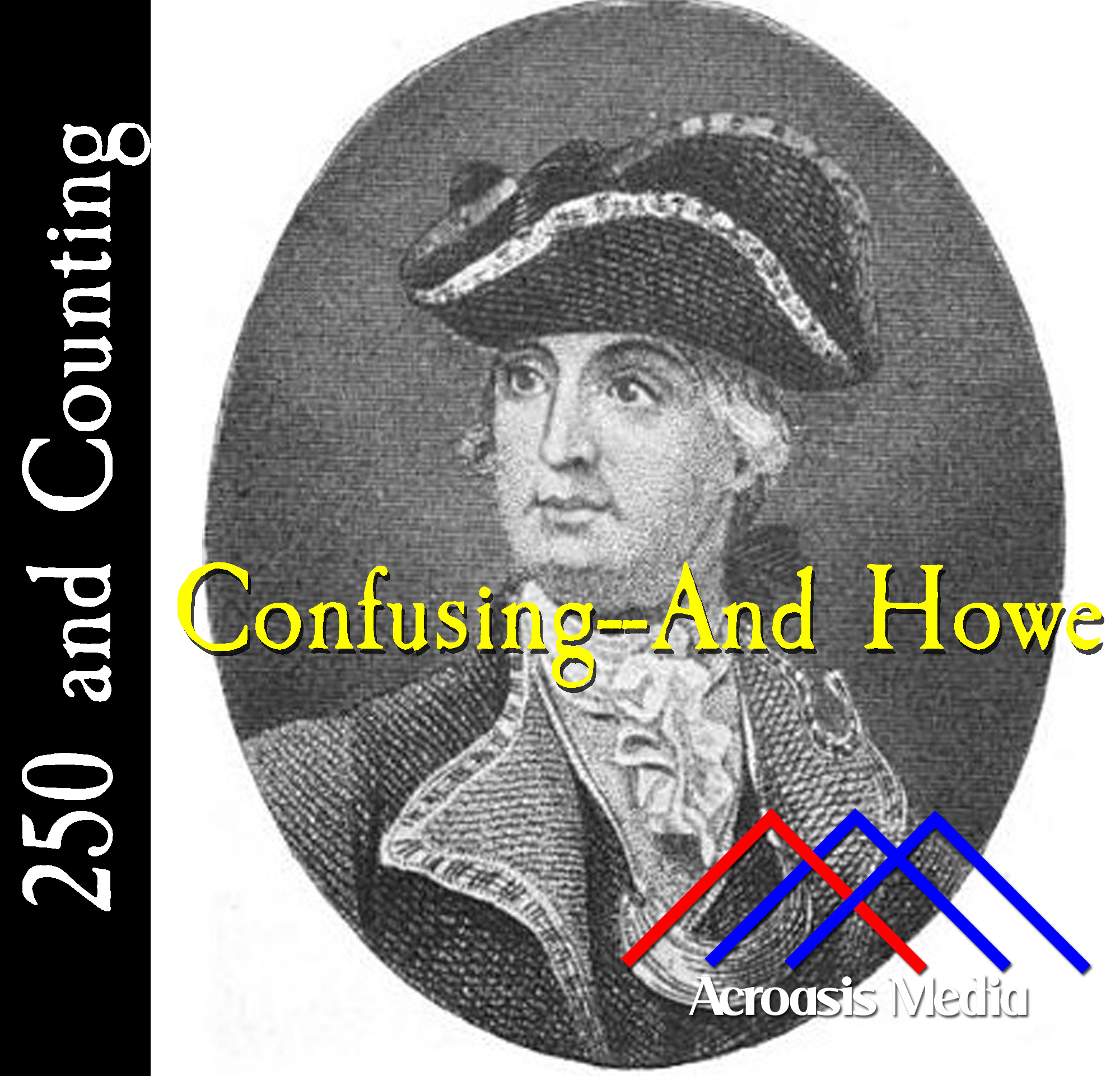
Confusing–And Howe–December 25, 1775
Cover art for December 25, 1775: A portrait of Major General Howe, artist unknown. From the book A brief history of the North Carolina troops on the Continental establishment, by: Charles Lukens Davis & Henry Hobart Bellas, published 1896. The Battle of Great Bridge may be over, but its effects linger on. Lord Dunmore, the former Royal Governor of South Carolina, communicated to General Robert Howe that he’d like to effect a prisoner exchange. It’s not clear whether Howe was playing hard-to-get, or playing dumb, or something else. He and Dunmore exchanged several letters over the next couple of days, and apparently didn’t end in a prisoner exchange. It did, however, end in violence. We’ll be talking about that as we get into the new year. The post Confusing–And Howe–December 25, 1775 appeared first on 250 and Counting.

Merry Christmas, Indeed–December 24, 1775
Joseph Warren conferring with Israel Putnam before the battle at Bunker Hill, at which Warren was killed. Mike’s pretty much covered the story of the capture of a British ship in the episode, so I’m going to tell you a little bit about Joseph Warren, who (you may recall) was killed at the battle of Bunker Hill. Warren became a doctor early in his career, and he also became a Patriot before it was fashionable. He was a powerful speaker, and for several years in a row he would deliver a speech commemorating the anniversary of the Boston Massacre. In the fall of 1774, he composed the Suffolk Reserves, which urged armed resistance to the British and a boycott of British goods. So by the time 1775 rolled around, he was one of the most influential men in Massachusetts; in fact he was the president of the Provincial Congress, which by then was the body actually running things there. In addition, he was on the Safety Committee, ensuring that gunpowder and ammunition was available to militiamen who needed it. We’ve been talking about the Siege of Boston since April. That was his doing; he’d organized the siege in the first place. George Washington took over a while later. He then organized the building of the earthworks at Bunker Hill before that battle started. And when the British began to overrun the Patriots, he was instrumental in giving them an opportunity to escape. But that’s where his luck ran out: a British soldier recognized him and shot him in the head, killing him instantly. The Brits then stripped his body and stabbed it several times, then buried him in a shallow grave with another Patriot who’d been killed. Later on, Paul Revere had to identify the body. The point to all of this is that, had he survived the battle, Joseph Warren would almost certainly have been a much larger figure in the American mythos; maybe he’d even have been our first President instead of Washington. Ponder that! The post Merry Christmas, Indeed–December 24, 1775 appeared first on 250 and Counting.
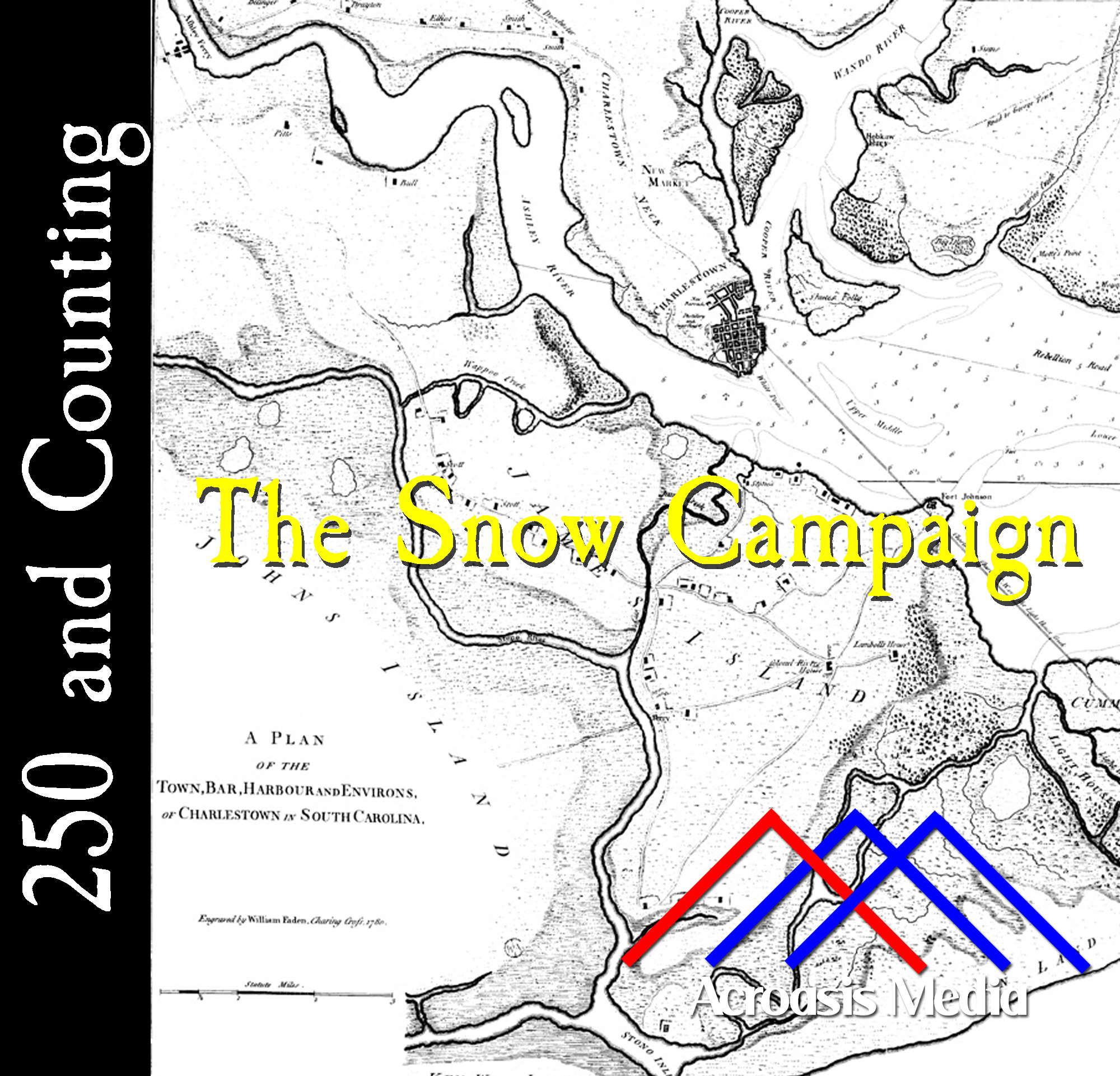
The Snow Campaign–December 23, 1775
A 1775 map of Charleston and surrounding areas, owned by Henry Laurens. Charleston is the small dark patch above the first ‘a’ in “Campaign”. As important as some of the action in the southern colonies was—and make no mistake, Colonel Richard Richardson’s campaign to sniff out the Loyalist leaders in the western part of the state wound up being very important—other events were important in different ways. One such event would be the Snow Campaign. There came a point where Richardson decided that he’d done about as much as he could, so he started to head back to the Low Country, where Charleston is located. On the way back his men, who were ill-prepared for poor weather, ran into snow. Lots of snow. Fifteen inches of snow. Before very long the troop had disbanded and about 130 prisoners had to be escorted to Charleston, after which a few were set free as a conciliatory move. So no, not everything took place during the snow; in fact the snow was really the very ending of the Snow Campaign. The post The Snow Campaign–December 23, 1775 appeared first on 250 and Counting.
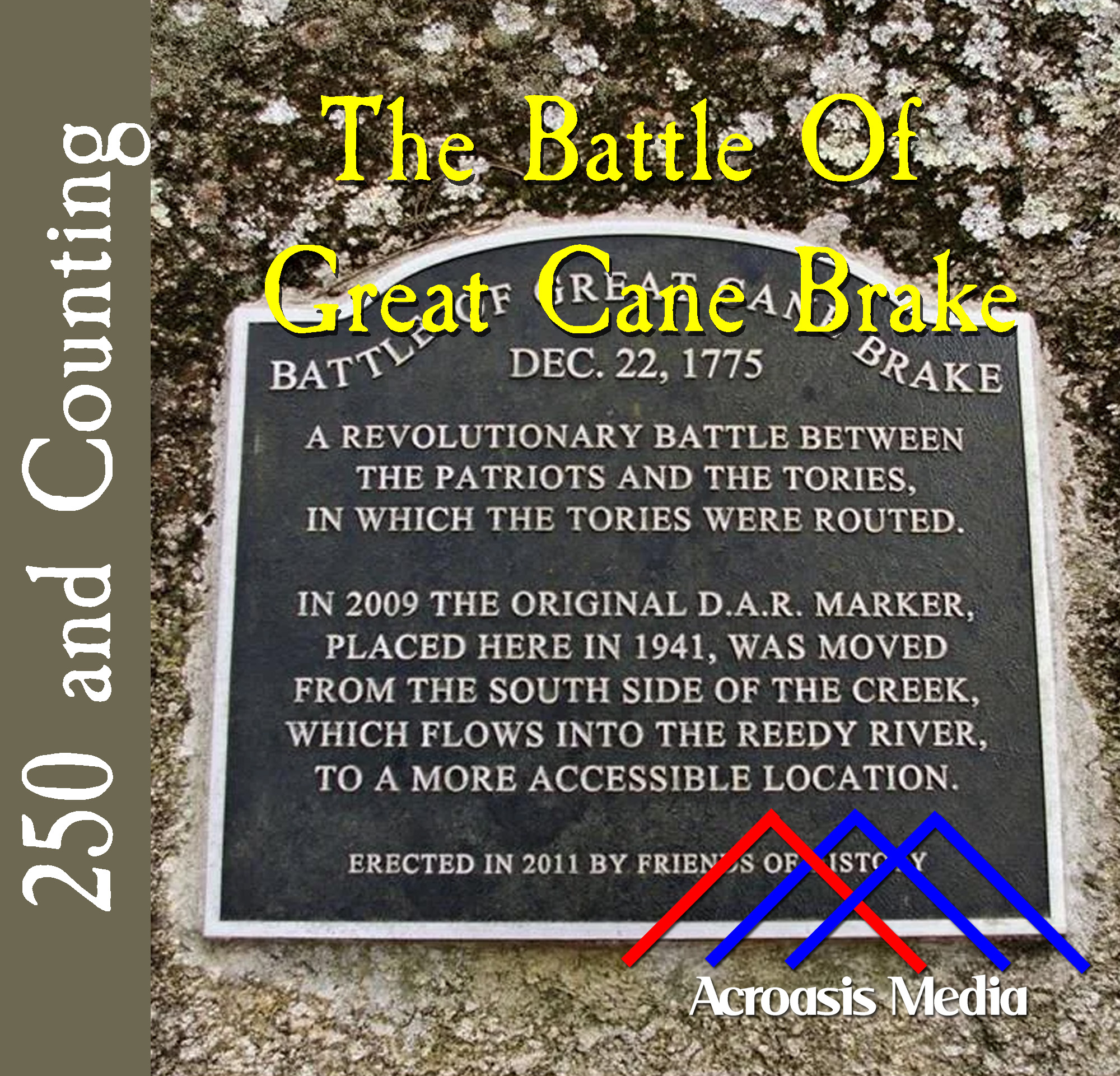
The Battle of Great Cane Brake–December 22, 1775
Historical marker placed at the site of the Battle of Great Cane Brake, explaining where another historical marker is located. The Battle of Great Cane Brake took place near modern-day Simpsonville, South Carolina. That’s a few miles southeast of Greenville. A “Brake of Canes” is pretty much what it sounds like. The cane stalks in question are a kind of bamboo that grows in the area, and a “Cane Brake” is a large thicket of these stalks. It would probably be a good place to hide, if the Loyalists weren’t also cutting and burning the stalks to keep warm, and because they were wet, they were popping quite loudly. It’s like sending up an audio flare. While the Battle of Great Cane Brake was a victory for the Patriots, before very long the weather would turn it into a bigger problem for the troops involved. The post The Battle of Great Cane Brake–December 22, 1775 appeared first on 250 and Counting.

One Thing Ends, Another One Begins–December 21, 1775
Undated portrait of Richard Richardson, attributed to Jeremiah Theus. General Richard Richardson was a delegate to the Provincial Congresses in South Carolina in 1775 and 1776, and he served in both the South Carolina Militia and the Continental Army during the Revolution. He was instrumental in the Americans winning the Battle of Charleston in 1776, but doesn’t get much else attention, perhaps because he was captured a few years later and then sent home, essentially to die. But the fact that he spent time driving Loyalists out of the western areas of South Carolina led directly to that province getting on board with the Independence movement more quickly. He also left behind a legacy of descendants who would affect the state well into the twentieth century. Incidentally, I have no idea if there’s any truth to the rumor that Richard Richardson was so poor as a child that he couldn’t afford a different last name. Largely because I made that rumor up just now. The post One Thing Ends, Another One Begins–December 21, 1775 appeared first on 250 and Counting.
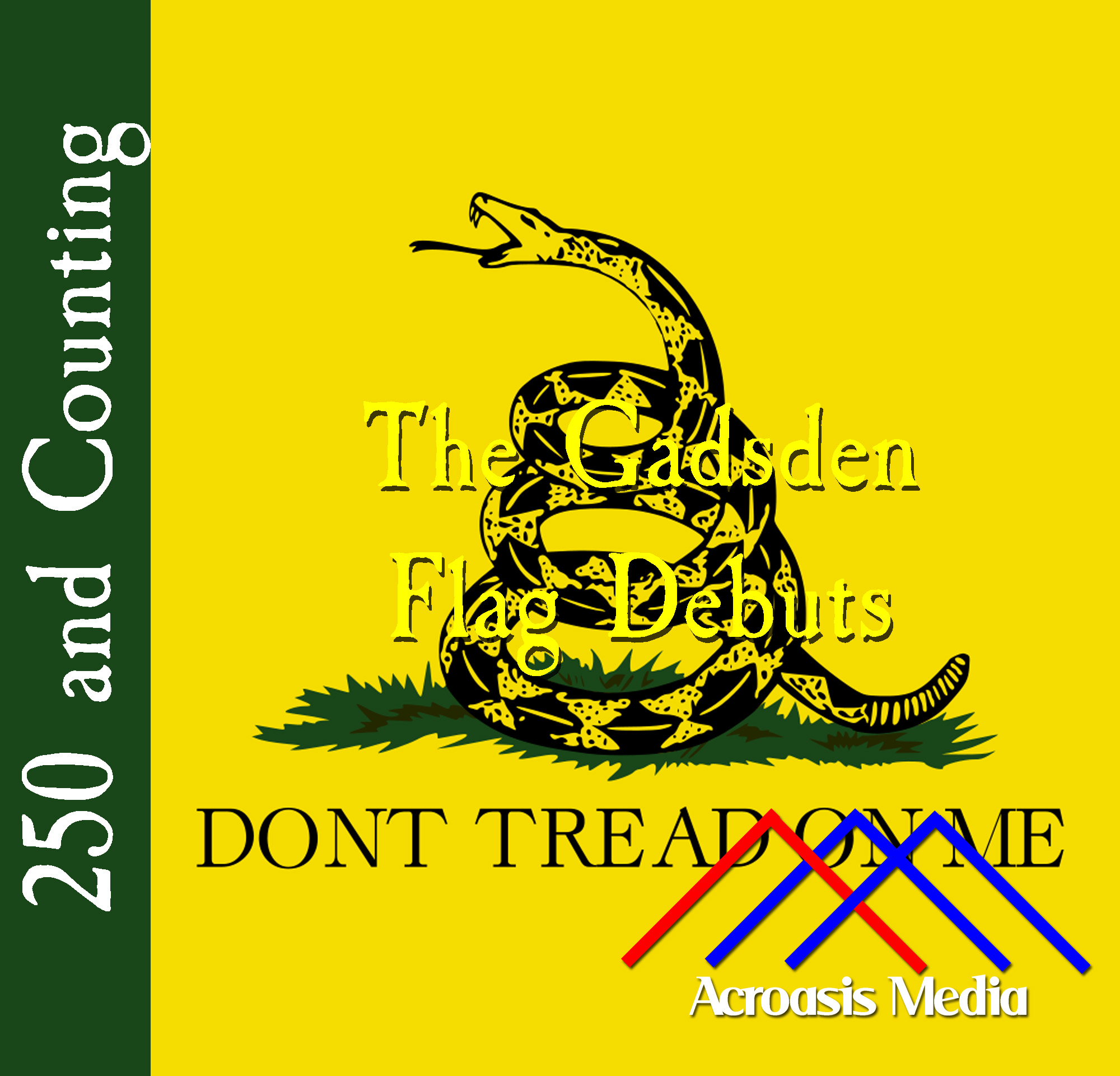
The Gadsden Flag Debuts–December 20, 1775
One variation of the flag. Some of them have an apostrophe in “DONT”, some use a non-serifed font, some don’t have any greenery under the snake. A few have the snake facing right. It’s arguably the most recognizable and popular symbol of the Revolutionary Era, and its debut turns 250 years old today. Ladies and Gentlemen, it’s the Gadsden Flag. The concept of the snake image representing the Colonies is a little older than this by about twenty years, with the “JOIN OR DIE” image of the snake broken into nine pieces, each representing some portion of the colonies. In either case it’s a means of using a uniquely American species of snake to represent the Colonies. Not only did Christopher Gadsden design the flag, he did it on his own, without anyone prompting him to do it. While the Join or Die snake was probably a little more generic, Gadsden specifically chose a rattlesnake largely because he was from South Carolina, and the rattlesnakes in the Charleston area had the good grace to warn you before taking a bite out of you. To that end, the rattlesnake was considered an honorable, “glorious” creature. The post The Gadsden Flag Debuts–December 20, 1775 appeared first on 250 and Counting.

Protecting the Chesapeake–December 19, 1775
The Fry-Jefferson Map of the Chesapeake Bay area, commissioned in 1750 and completed in 1753. This was also one of the first maps of the area that had the “North is Up” orientation. The Great Chesapeake Bay, which is protected by the Delmarva Peninsula (DELaware, MARyland, VirginiA, get it?) is a watershed area that is hugely important for these three states, plus New York, Pennsylvania and New Jersey. Because of its importance, there are sensor buoys all over the place, measuring water temperature, salinity levels, turbidity (how clear the water is), air pressure and maybe a dozen other factors. They’re connected to NOAA (National Oceanic and Atmospheric Administration), and you can actually get the data for your own research here. I’ve actually used it in the classroom to demonstrate how bad weather can affect things like salinity, or how fertilizer-laden water runoff from farms can lead to algae blooms. It’s been called “Chesapeake” for so long that historians and etymologists aren’t quite sure where it derives from. It could be a corruption of the Algonquin word Chesepiooc; it could refer to the Chesepian people a tribe from the modern-day Hampton Roads area of Virginia. According to Wikipedia it’s the seventh-oldest place name in the US, but they weren’t telling what #1 through #6 are. It’s also—especially in the 18th Century—rather hard to defend. And while the Continental Congress dragged its feet a little bit to get the Navy raised, the more-nimble Virginia Convention commissioned a few ships of their own. Their first was a ship aptly named the Patriot. The post Protecting the Chesapeake–December 19, 1775 appeared first on 250 and Counting.
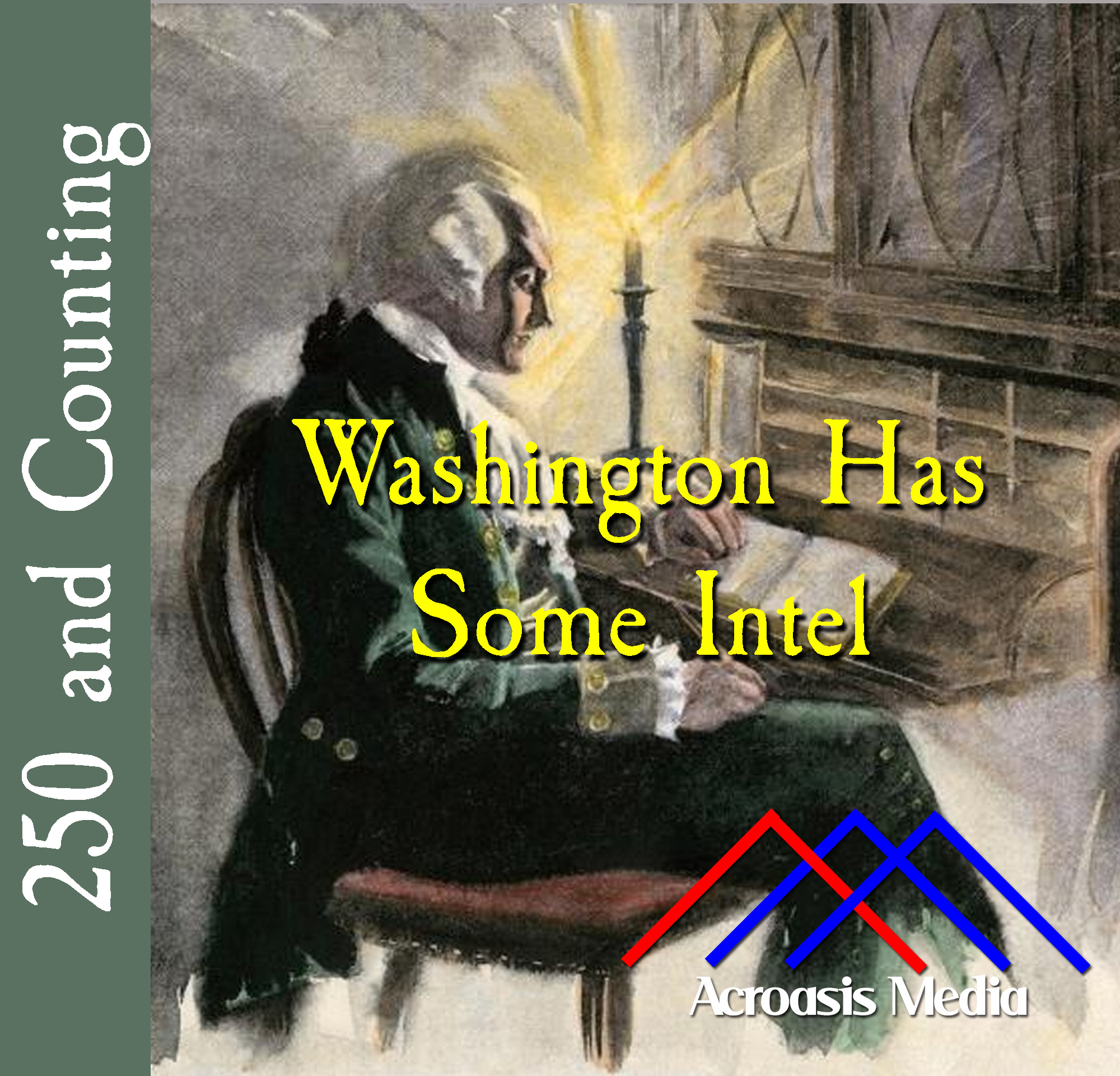
Washington Has Some Intel–December 18, 1775
A hand-colored printed halftone of a 19th-century illustration of George Washington writing at his desk. Military Intelligence is a peculiar thing, if only because you never know where it’s going to come from, and/or what it’s going to affect. And that’s where today’s episode comes in, because Congress received a letter written today which detailed some plans for British military activity in Virginia. What’s surprising is that the intelligence came from…George Washington, in Cambridge, Massachusetts. Washington was the lucky recipient of food that had been intercepted on its way to the British folks under siege in Boston. He also received several documents outlining plans that were afoot in Virginia, and he dutifully passed them along. Most of it was related to Great Bridge, which had already seen some action, but it still put Congress wise to the fact that the war wasn’t only taking place in the northeast, and that military intelligence can come from anywhere. The post Washington Has Some Intel–December 18, 1775 appeared first on 250 and Counting.

The Noble Train Of Artillery–December 17, 1775
One of many, MANY images mistakenly showing the Ticonderoga artillery being transported on ox-drawn sleds. Author unknown, National Archive Collection number 111-SC-100815. Colonel Henry Knox was just about ready to begin moving the Noble Train of Artillery (a phrase he coined, incidentally). He’d have everything he needed to move by the 20th or 21st of December, and then just seventeen days later, he’d be marching into Cambridge. As we all know, he was wrong about how long it would take. But that sort of thing happened frequently. What we don’t know is why he said he had the animals he needed to transport the materiel when he didn’t. And even though there are numerous images of the Noble Train of Artillery involving oxen, there weren’t any at all: everything was moved using horses. On a personal note: today would have been my grandmother’s 103rd birthday. A lot of things have changed since I was born, but a lot more things changed from the time she was born. The mind boggles. The post The Noble Train Of Artillery–December 17, 1775 appeared first on 250 and Counting.

The Delaware Who Came To Congress–December 16, 1775
Historical Marker on Ohio Highway 93, just south of US 36, commemorating Chief White Eyes’ founding of a Delaware Tribe-based town not far from this place. Image via remarkableohio.org. I rather dislike using historical markers back-to-back for the cover art, but there are no images of Chief White Eyes, and I’d about run out of images of Great Bridge yesterday, so here we are. Also—and I admit I only know this because there’s a town not far from where I grew up with this name—I’m pretty sure that Mike mispronounced the word “Sachem,” though I suppose it’s possible that there’s a West Coast variant. But he’s a nice guy so we’re letting it slide. Especially since I made him re-record when he mispronounced “Narragansett” the other day. Yes, I am in a mood. Why do you ask? Koquethagechton was the given name of Chief White Eyes. and you may see it spelled differently elsewhere. The Lenape did not have a standardized written language, so everyone was making do with the Roman alphabet and doing their best to transliterate. As Mike notes during the episode, he later became a guide for an expedition in the Ohio Territory. He died during that trip, reportedly from smallpox, but questions have been raised regarding whether this actually happened. After his death, the Americans had no interest in a territory under Lenape control, and whatever deal he’d worked out completely unraveled. The post The Delaware Who Came To Congress–December 16, 1775 appeared first on 250 and Counting.

Colonel Woodford’s View–December 15, 1775
Historical marker commemorating the Battle of Great Bridge. We’ve done several episodes about the Battle of Great Bridge, and there’s a reason for that. Bunker Hill gets all the press, but remember we LOST that battle. Great Bridge was the first real Patriot victory, it was the first major battle in Virginia, and therefore it poked the Virginia Convention into adopting the first public declaration expressing a spirit of independence. Also of note is that, according to the Great Bridge Battlefield Museum, the last Patriot to retreat before the battle began in earnest was named Billy Flora, a free black man. He came under heavy fire but he managed to remove a plank from near the end of the bridge, thus slowing the British advance. The shorter version of all this is that Great Bridge gave us the possibility of actually winning this thing. And oddly enough, Independence still really wasn’t on the table. The post Colonel Woodford’s View–December 15, 1775 appeared first on 250 and Counting.

Thomas Cochrane–December 14, 1775
Engraving of Thomas Cochrane, Lord Dundonald. Original painting by James Ramsay, engraving by John Cook, published 1866. Thomas Cochrane had quite the colorful, storied life, and it’s too bad that we can only cram so much into a twenty-minute podcast episode. For instance, it’s entirely possible that he was involved in a stock fraud scheme based on false rumors of Napoleon’s death. Fortunately for him, he was elected back into the House of Commons about a month after his conviction. Even today, his guilt is in question by historians. Cochrane also spent several years serving in the Chilean Navy and spent time as that nation’s first Vice Admiral, reorganizing the structure and assisting with the independence of Peru. At any rate, if you dig naval history, take a look at Thomas Cochrane’s career. The post Thomas Cochrane–December 14, 1775 appeared first on 250 and Counting.
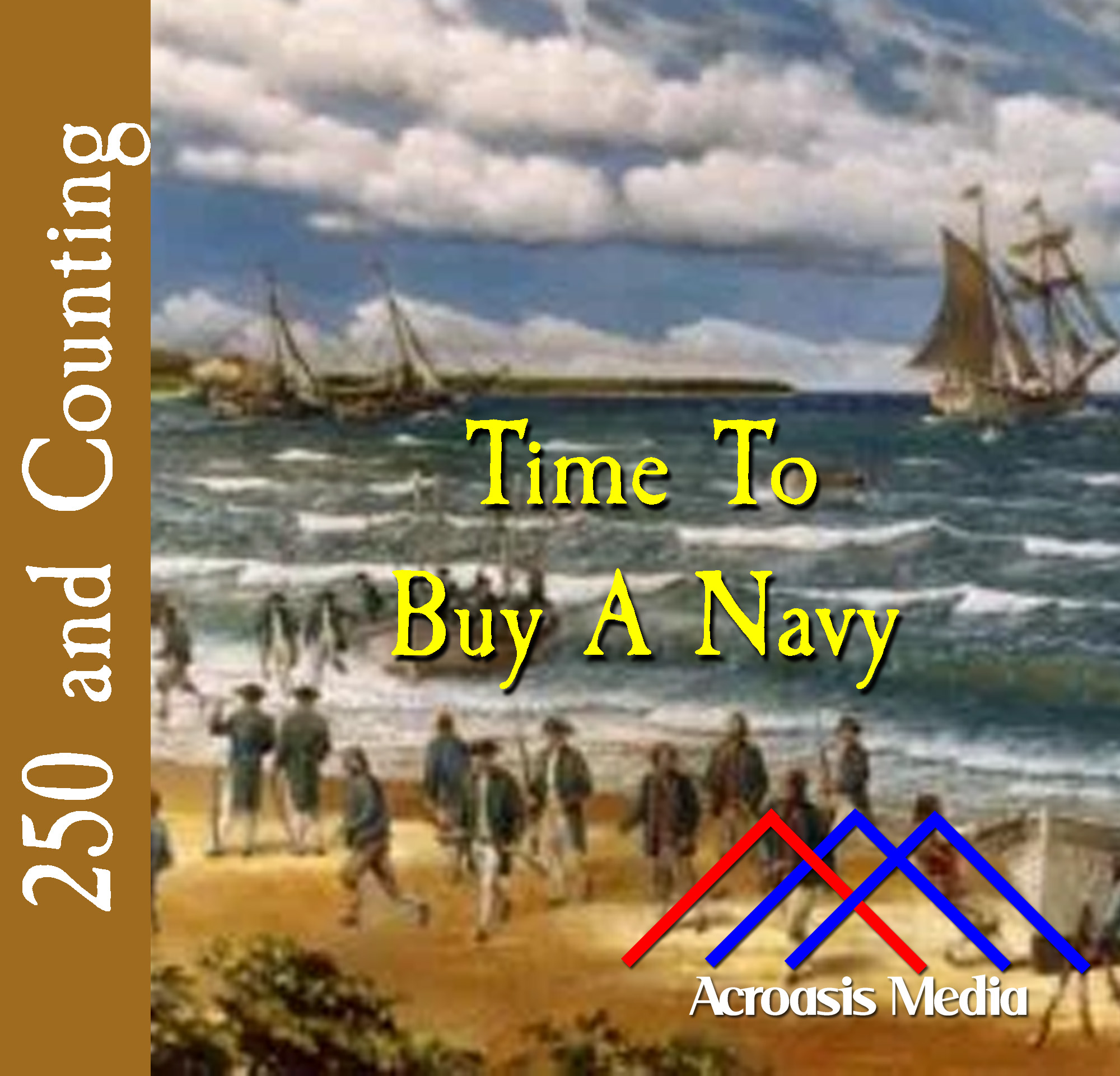
Time To Buy A Navy–December 13, 1775
This image depicts the Battle of Nassau, one of the first major battles won by the Continental Navy in March of 1776. Oil painting on canvas by V. Zveg. If you’re going to build a navy, you’ve got to get serious about it. Congress established the need for a Navy back in October, but they were kind of sloppy about executing the plan. For the last several weeks, the Congress has been purchasing existing ships and retrofitting them to make them battle-worthy. That’s great if you’re maintaining status quo, but if you’re trying to overthrow the government, you’re going to need some new hardware. So the Congress agreed to build thirteen ships from the ground up, each with sufficient firepower to do some real damage. And they want all thirteen of them by March. The post Time To Buy A Navy–December 13, 1775 appeared first on 250 and Counting.

Ben Franklin Wants A Friend–December 12, 1775
Ben Franklin and Gabriel de Borbón had corresponded with one another previously, so while the letter that is the subject of today’s episode has a very specific (and relevant) ask in it, it was also just another in a chain of correspondence between the two. For his part, Prince Gabriel was probably receptive to Franklin’s suggestions, but he wasn’t likely to be in a position to act on them in the way that Franklin hoped. As the fourth son of Charles III, the throne was a long way off, though he was considered the heir apparent for some time. When Spain provided assistance the following year, they did so because Spain and France were allies and France was providing assistance to the Americans; furthermore they had their own bone to pick with the British, so Two Birds and all that. So they sent over lots of assistance, mostly in the form of money so that the Continental Army could purchase cannons, mortars, gun carriages and other ordinance. It’s possible that Prince Gabriel had some influence on his father, but more likely is that Charles III was simply maintaining existing alliances. The post Ben Franklin Wants A Friend–December 12, 1775 appeared first on 250 and Counting.
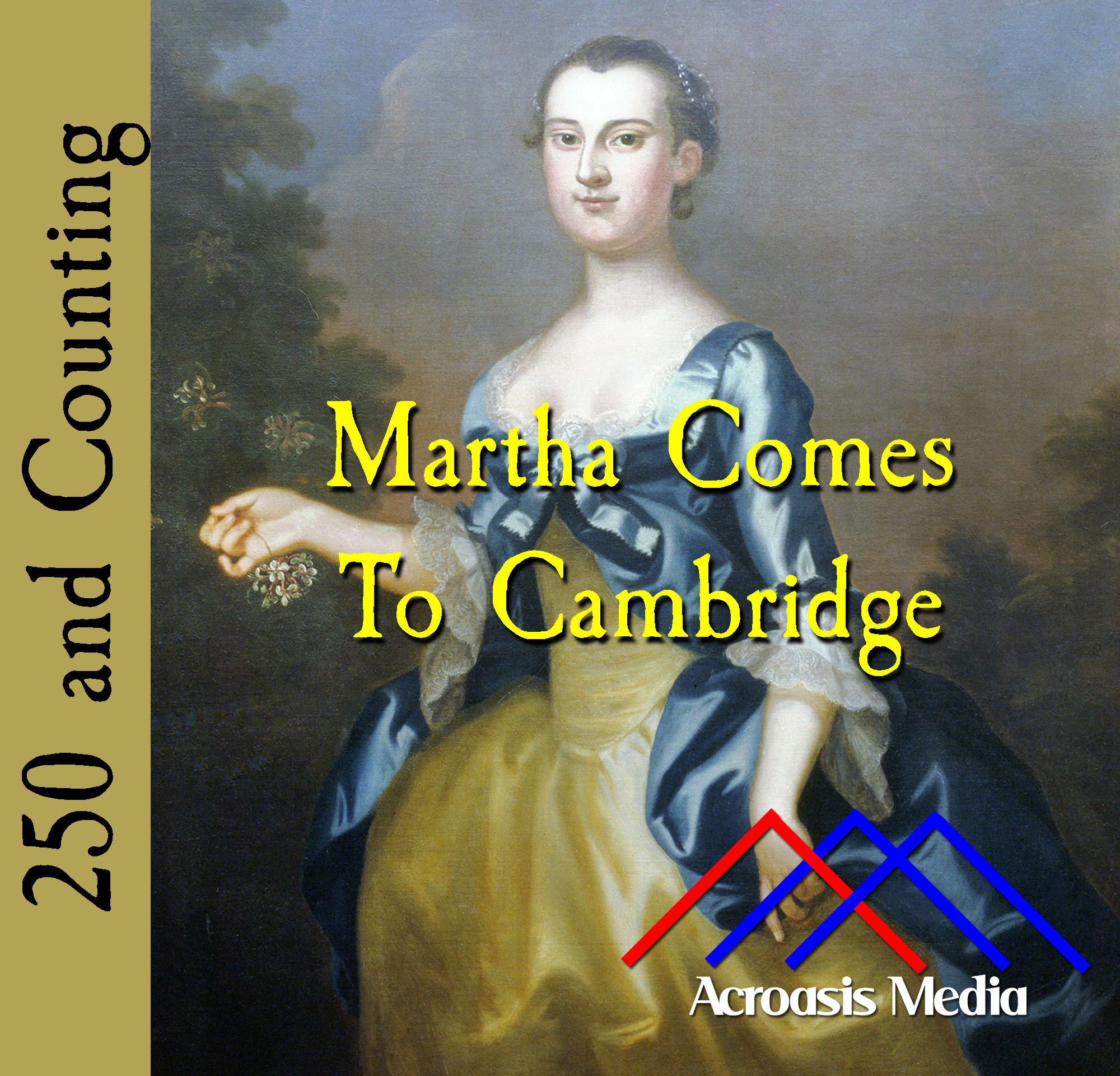
Martha Comes to Cambridge–December 11, 1775
Most of the portraits we see of Martha Washington were made when she was older, so we have (I think) this image of her as a bit of a crabby old frump. And maybe she was, by the time her husband got to be President. She didn’t really love the life of the public spouse and charming party hostess. But it turned out she was good at it, and if it made her crabby, nobody who mattered knew about it on a firsthand basis. In fact, Martha Washington was known to be fashionable, calm, outgoing and easy to get along with. And because Boston was rather straitlaced compared to Virginia, she gave off a bit of an exotic air during her time in Cambridge. Frump, indeed. The post Martha Comes to Cambridge–December 11, 1775 appeared first on 250 and Counting.
Raid on Conanicut–December 10, 1775
Conanicut Island isn’t much of an island to look at, but they had supplies of some kind, and the British were looking. Admiral Graves had the task of finding supplies for the British who were under siege in Boston, and he decided to move beyond the local waters, and went into Narragansett Bay. In some towns (such as Newport, which was Loyalist) he was able to just buy supplies. But if the locals resisted, that’s when he broke out the guns. Conanicut Island looked like a vulnerable place to get supplies. He was able to get some of what he needed, but it wasn’t the cake walk he thought it would be. The post Raid on Conanicut–December 10, 1775 appeared first on 250 and Counting.

The Battle of Great Bridge–December 9, 1775
Note once again that the map is drawn with North on the bottom. Hover to get the guide to the markers. The Battle of Great Bridge is a little bit overlooked these days, and more’s the pity. It was the first battle in Virginia, it was a big victory for Patriot troops, the Royal Governor and his crowd got pushed out altogether, and nobody died on the Patriot side. On the British side, about 100 soldiers were dead. The last time the British lost a substantial number of troops, it was at Bunker Hill, which they won. (The vocabulary word you seek is “Pyrrhic Victory.”) Best of all, it fueled Virginia’s moves toward independence. The post The Battle of Great Bridge–December 9, 1775 appeared first on 250 and Counting.
The Siege of Quebec–December 8, 1775
The siege of Quebec was an event that was months in the making, and it was still just the penultimate act of the play. Benedict Arnold and his troops thought they could get to the American side of the St. Lawrence River within 21 days; instead it took several weeks. Along the way they lost about a third of their troop strength. Some of the men died of illness en route, but most of them finally gave up altogether and headed home. When they finally arrived they realized they didn’t have nearly what they needed to effect a decent attack on the city, so they had to hunker down and wait for supports to arrive. They were able to institute a couple of blockades, but that wasn’t nearly enough. Finally General Montgomery showed up, and after an attempt at getting the city to surrender, they began the shooting. Unfortunately that didn’t do a lot of good, so the Continental Army had to settle for placing the city under siege. At this point, however, the clock was ticking because a big chunk of the Colonial soldiers were due to have their enlistments end on December 31. Something had to give, and soon. The post The Siege of Quebec–December 8, 1775 appeared first on 250 and Counting.
Tensions Rise At Great Bridge–December 7, 1775
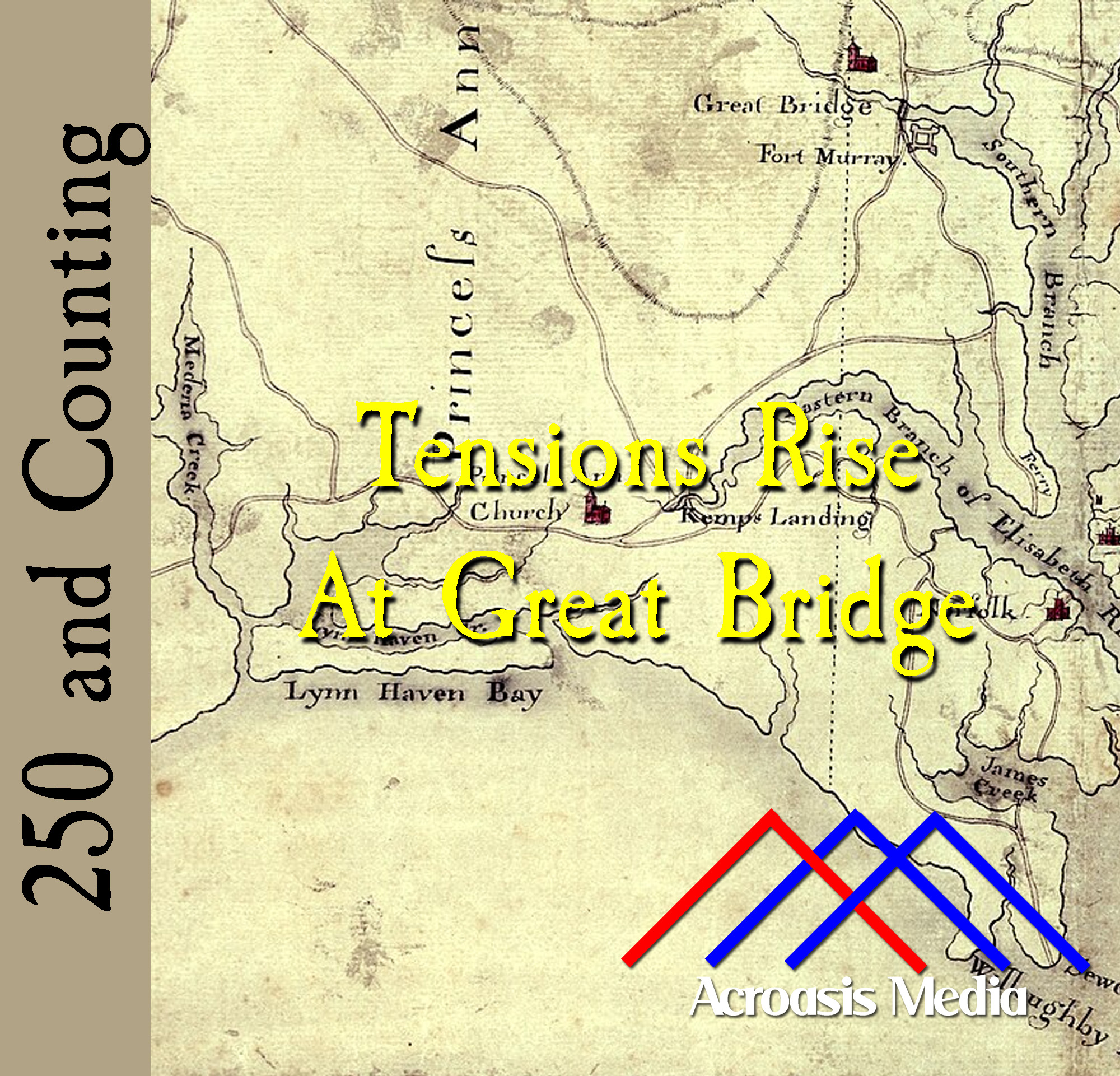
The map in today’s cover art might be a little confusing to people who live and work in the modern-day Norfolk area. That’s because it’s oriented with North at the bottom. What’s not known is why this was done in this particular case. North/Up South/Down is, of course, the usual convention, and there are arguments that there’s a psychological component to this (e.g. north/up is somehow “better” than south/down). From a cartography standpoint, there isn’t much difference between a map oriented one way and a map oriented any other way. In fact, most cartographers consider the matter trivial in nature. The bodies are gathering at Great Bridge; in a couple of days the battle begins. The post Tensions Rise At Great Bridge–December 7, 1775 appeared first on 250 and Counting.
Congress Responds to King George–December 6, 1775
There are a couple of things that it’s kind of important to remember about American history. First, by this point Independence was still NOT on the table for the Continental Congress. That’s not to say that there wasn’t talk about it, but little of it was in earnest. Americans were fighting the British because of all the business that was going on in Boston. If everybody just settled down then the decision to politically separate wouldn’t have been made. Second, once the war did start, it was by no means a foregone conclusion that the Americans would win. In fact, they didn’t have a snowball’s chance of winning. It took several years of effort and the help of at least a couple of other nations to get the job done. (And not to get too political, but current events have some of these same nations glancing at us askance, after all this time. ) The Continental Congress’ Committee of Proclamations studied King George’s announcement that the Colonies were in rebellion, and prepared a very careful response, including the suggestion that “rebellion” has no legal definition and is therefore semantically null. And for all that, it still holds out some hope that things can get back to normal, maybe. The post Congress Responds to King George–December 6, 1775 appeared first on 250 and Counting.
The Raid On Yarmouth–December 5, 1775
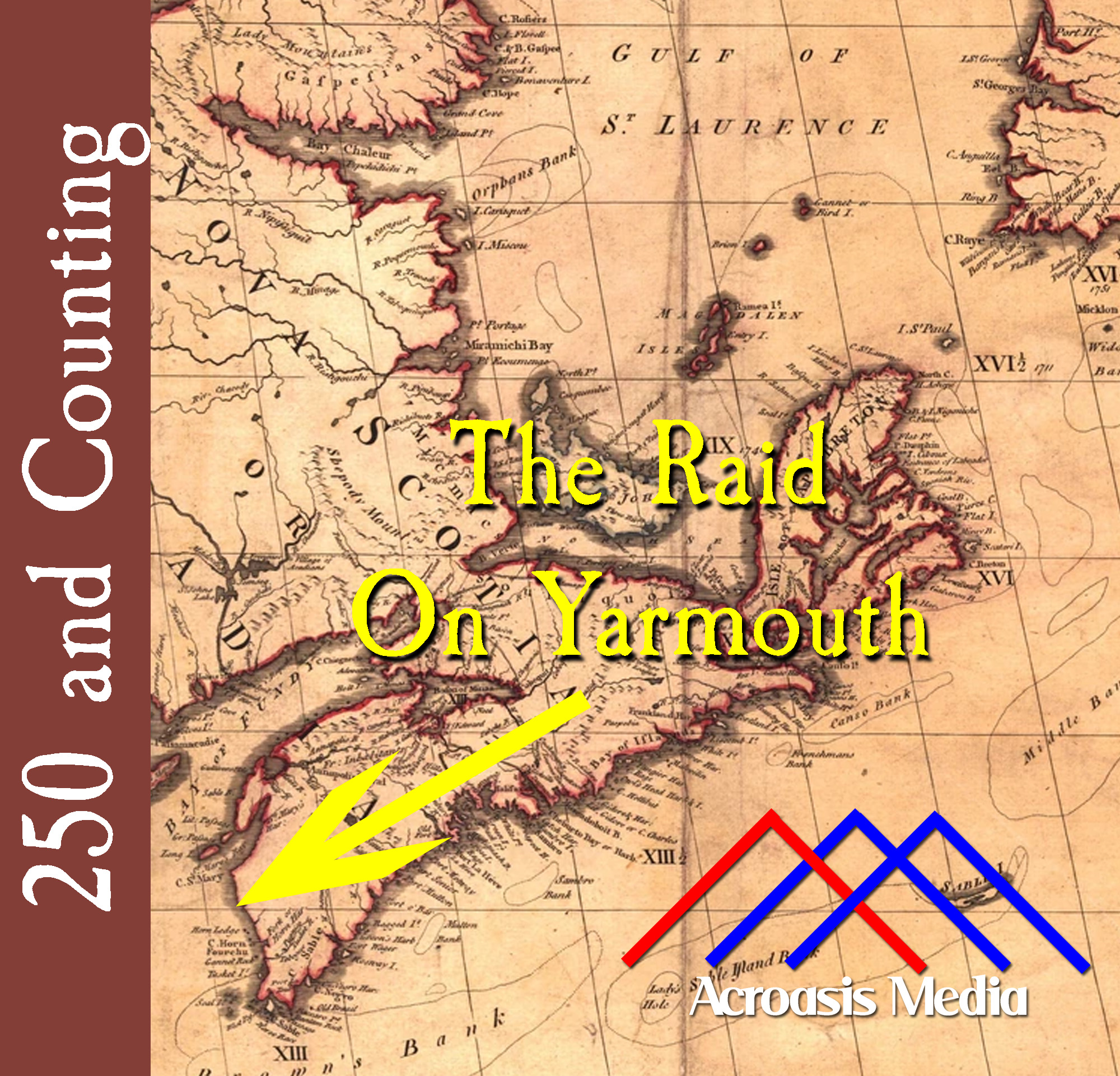
Yarmouth, Nova Scotia was a frequent target of raids throughout the Revolution. Indeed, most of Nova Scotia was harassed from both land and sea by Americans. This had a huge impact on the maritime economy there. But all those attacks—mostly by American (and probably some French) privateers—inflicted lots of disruption on British supply lines the entire time. On the downside, all these attacks pretty much put an end to any trade between America and Nova Scotia. But the Raid on Yarmouth, as the event came to be known, was especially egregious both for its intensity and the lasting effect it had on its inhabitants. The post The Raid On Yarmouth–December 5, 1775 appeared first on 250 and Counting.
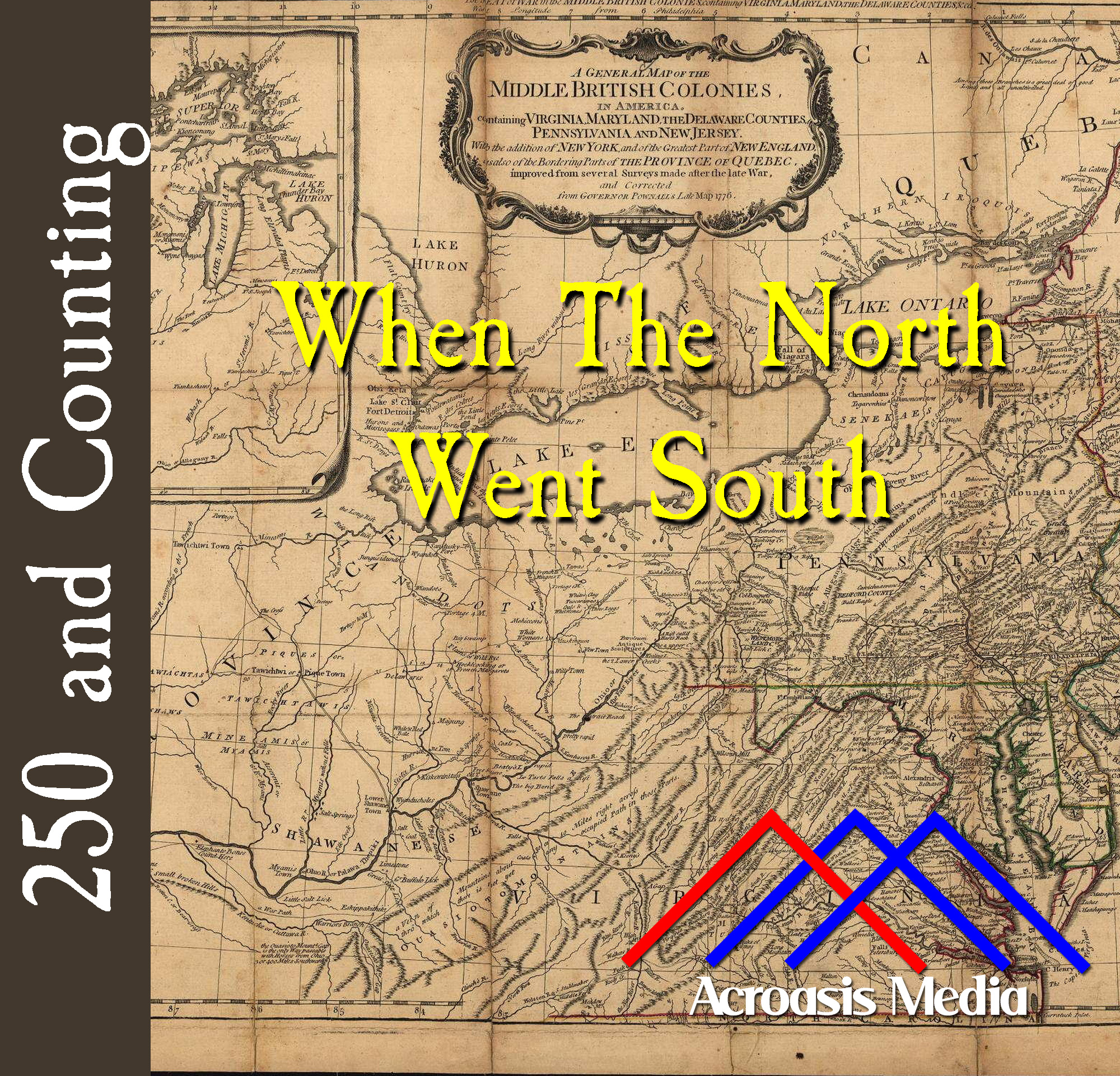
When The North Went South–December 4, 1775
While the premise of today’s episode seems a little far-fetched, if you look closely at the map in today’s cover art, you’ll see it makes a lot of sense. In the mid-1700s, neither Pennsylvania nor Virginia had well-defined western borders. In fact, Virginia was occasionally thought to continue northward all the way to Lake Erie. Some maps even have a Pennsylvania boundary somewhere east of Pittsburgh. The point is, there have been times when the borders have been blurry, and others where they’ve overlapped, and still others (before West Virginia was a thing) when the two colonies had well-defined borders AND were neighbors. And now we’ve brought the South into the realm of mutual commitment. The post When The North Went South–December 4, 1775 appeared first on 250 and Counting.
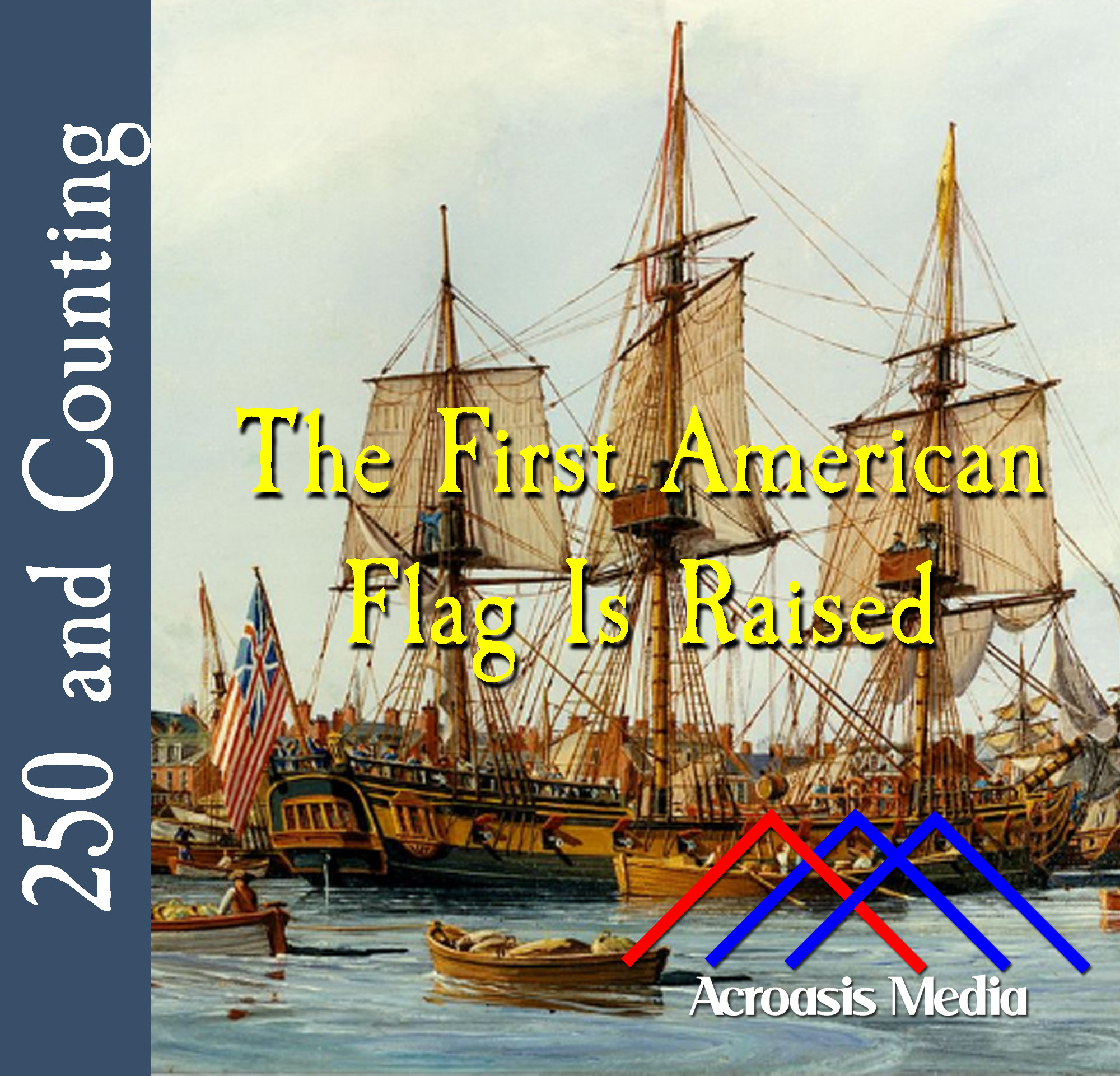
The First American Flag Is Raised–December 3, 1775
John Paul Jones was born in Scotland as John Paul and began his maritime career at 13 when he was hired as an apprentice. In 1770 he was involved in an incident wherein a crew member was flogged after a failed mutiny. The crew member later died, and it was clear that his reputation had taken a big hit. So John Paul left Scotland and took command of a British vessel. Again, however, he put down a mutinous sailor, this time killing him with a sword in Tobago. Before he could be tried, however, he fled the area and essentially disappeared for 18 months. In the meantime his brother, who lived in the Fredericksburg, Virginia, area, died. John Paul went to America to settle his brother’s affairs. It was at this time that he appended the last name “Jones” to his name. Shortly thereafter he joined the American Navy. During his time as an American naval officer, it doesn’t appear that he killed anyone, but in his later years, he sailed for the Russian Navy, where he was derailed by the accusation of rape of a ten-year-old Russian girl. It was only because of the murkiness of some of the details that gave the Empress Catherine some leeway to have him exiled rather than beheaded. But as an American sailor, he did shine. And he shone for the first time on this day in 1775. The post The First American Flag Is Raised–December 3, 1775 appeared first on 250 and Counting.
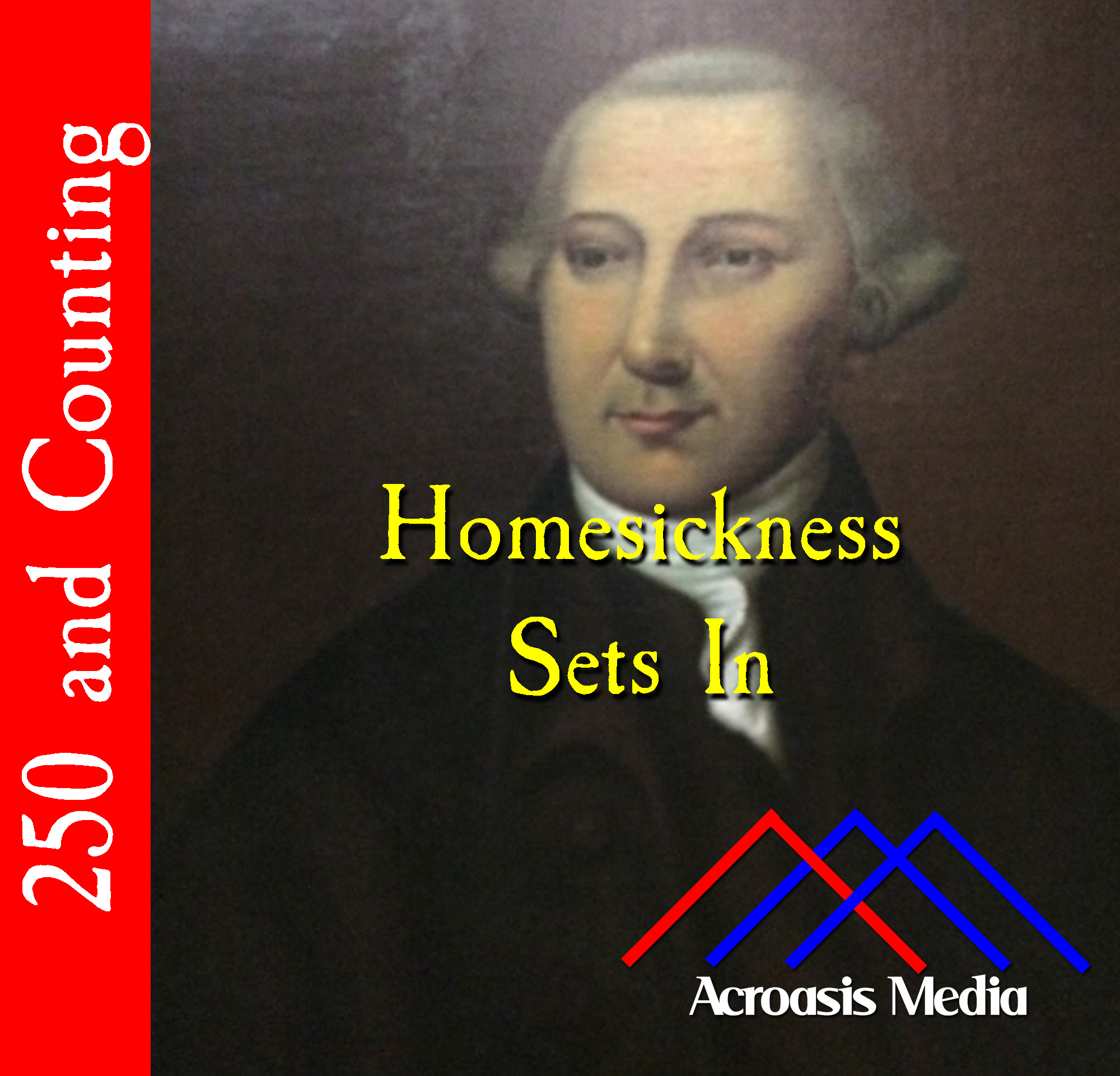
Homesickness Sets In–December 2, 1775
All of the men who were part of the Second Continental Congress were serious men who had businesses of their own back at home. So spending so much time in Philadelphia had to have been taxing on them, especially since the days were so long. Of course many of them were going to be homesick. Read the letters between John and Abigail Adams as an excellent example. And remember: to go home to, say, Boston could take about a week in 1775. So they’d be away for two weeks at a minimum, and that’s entirely traveling time. Taking care of whatever they needed to only added to the absence. We do know that many of them did go home from time to time, but they were obliged to return and continue the business of running a country while simultaneously ducking interference from the British. Joseph Hewes’ letter to Samuel Johnston has a special poignancy about it. The post Homesickness Sets In–December 2, 1775 appeared first on 250 and Counting.
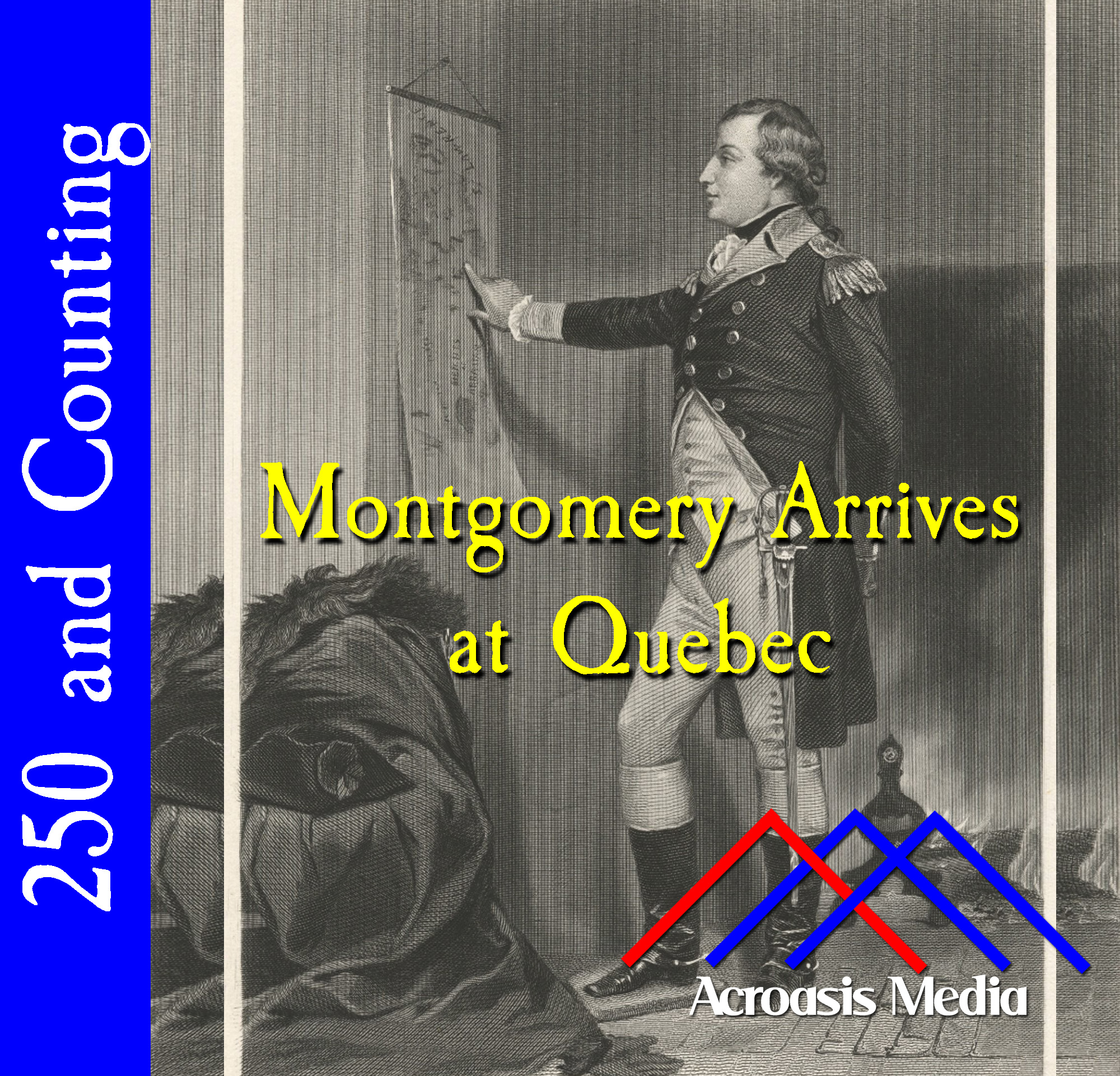
Montgomery Arrives at Quebec–December 1, 1775
The events at Lexington and Concord were only about a month in the rear-view mirror when it occurred to both the Americans and the British that the Canadian provinces were colonies, too, and that they might have some kind of interest in the activities going on further south. Quebec, being perhaps the largest city close to the border, was the natural target for everyone involved. So it was always in the back of minds in the Thirteen Colonies, and in England. And slowly, each side began to think about either converting Canada to the American side, or defending Canada from American invasion. And on this day in history, everyone moved a giant step closer to what eventually became the Battle of Quebec. The post Montgomery Arrives at Quebec–December 1, 1775 appeared first on 250 and Counting.

Dunmore Assembles Two Regiments–November 30, 1775
Back on November 14 we told you about the Royal Ethiopian Regiment, which was assembled following Lord Dunmore’s Proclamation. The proclamation offered freedom to slaves belonging to Patriot owners who chose to fight on the British side in the Revolution. Dunmore was putting together another band of soldiers at the same time, called “The Queen’s Own Loyal Virginia Regiment,” which suggests that he knew something about George III that wasn’t common knowledge. (Heh, kidding.) They both fought in the Battle of Kemp’s Landing, which went very well for the British, but Dunmore took the win as a sign that the Patriots were weak, so he went in to the Battle of Great Bridge, as we’ll see in just a few days. The post Dunmore Assembles Two Regiments–November 30, 1775 appeared first on 250 and Counting.
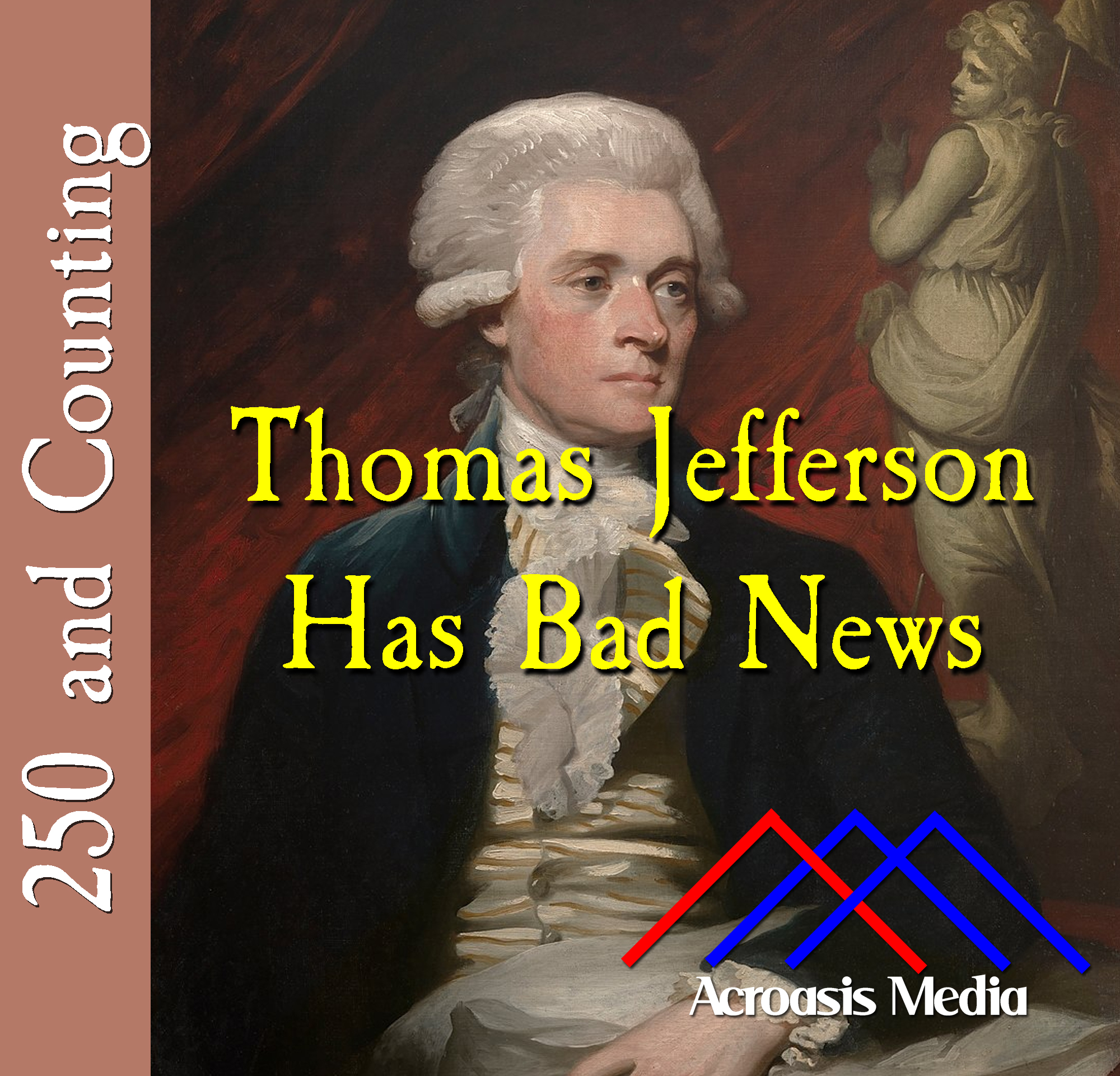
Thomas Jefferson Has Bad News–November 29, 1775
Thomas Jefferson wasn’t as prolific with the letters as John Adams was with his own wife (over ten thousand letters between them during the course of the Revolution!), nor as much as George Washington, but he was still a deep thinker and he did write well and with purpose. In today’s example he has to convey some unfortunate news to a political rival; specifically that the rival’s brother had died unexpectedly. His letter to John Randolph about Peyton’s death was rather brief and matter-of-fact. He also wrote Randolph his analysis of the battle at Hampton and the overall effect he thought it was having on attitudes in general toward Loyalists and the British. Most of this he pins on King George III, whose behavior he felt was inappropriate and is only going to push the Colonies farther away from England. The post Thomas Jefferson Has Bad News–November 29, 1775 appeared first on 250 and Counting.
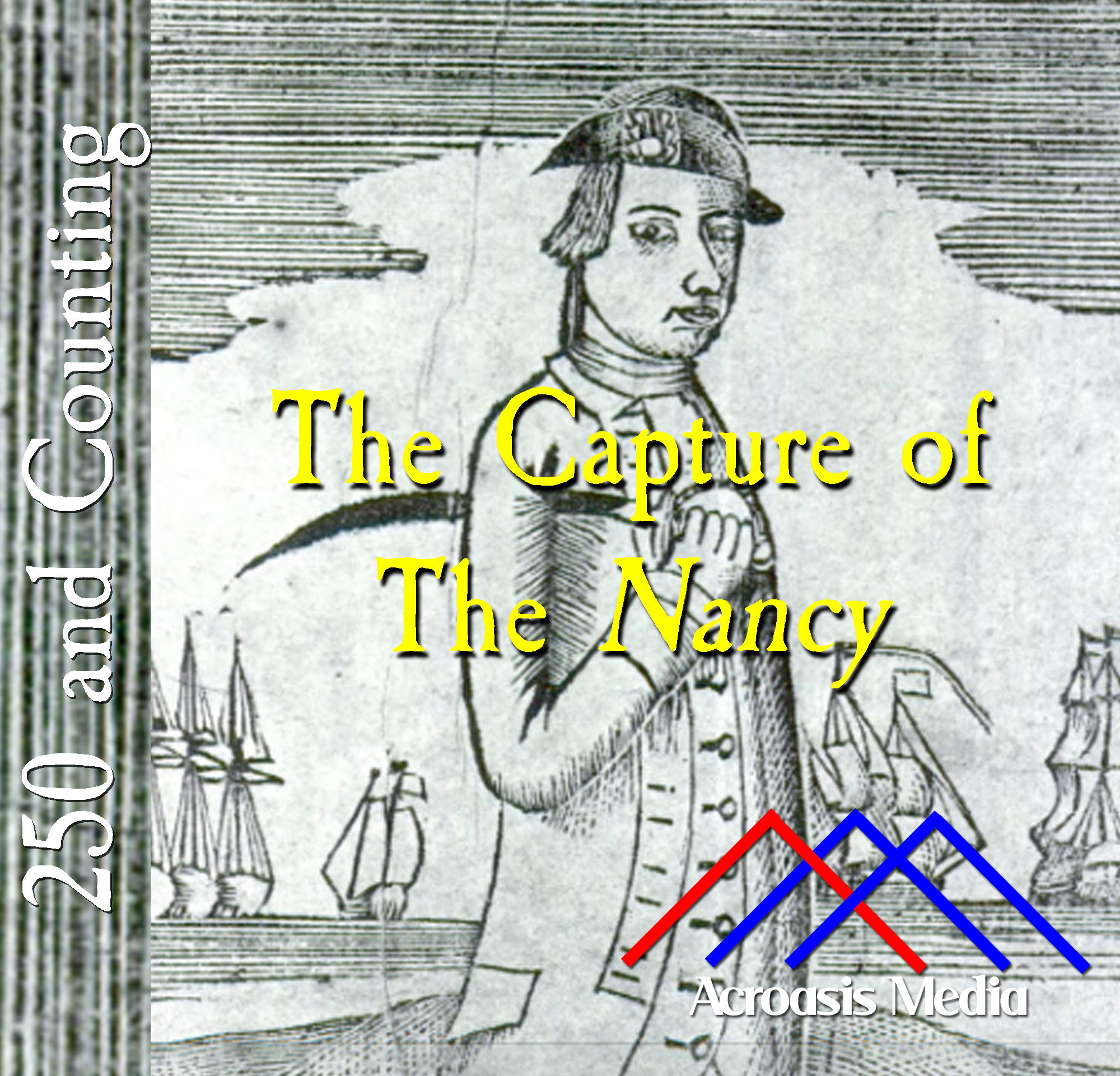
The Capture of the Nancy–November 28, 1775
The capture of the British brigantine Nancy wasn’t Captain John Manley’s first (it was perhaps his third), but it was probably one of his most significant, considering the cargo. It was also probably the first British ship of any real consequence to be captured by any American. Overall, Manley’s effectiveness as a Navy captain was rather variable. He was a big risk/big reward kind of sailor, and so when he was successful, he was very successful, and when he wasn’t, he wound up imprisoned. And frankly, there were a few times he wasn’t successful. But that doesn’t take away from his successes. Between 1775 and 1783 Manley was the sole ship captain for the capture of ten ships, and was an active participant in the capture of five others. The US Navy has named three ships after him, the most recent a Forrest Sherman-class destroyer which was decommissioned in 1983 after 26 years of service. The post The Capture of the Nancy–November 28, 1775 appeared first on 250 and Counting.
Prelude To Battle–November 27, 1775
Happy Thanksgiving! Many people celebrate the day by watching the parade, or some football, or some special episodes of television shows, or Thanksgiving-themed movies. Personally I like a combination: I’ll watch the parade, then play an episode or two of The West Wing (there are two Thanksgiving episodes), and then get in a little football. I live in Baltimore and the Ravens are playing tonight, so I’ll be parked in front of the TV for that. For the last few years I’ve hosted Thanksgiving, so all of this is going on while I’m cooking during the day, so this is the first time in a bit that I’ll actually be paying attention to what’s on the tube. Meanwhile, back in the Revolution, we have the events that precipitated what is probably one of the most overlooked battles of the Revolution, which is a shame because many future events hinged on this happening, and Colonel William Woodford (later a General) is also rather overlooked these days. The post Prelude To Battle–November 27, 1775 appeared first on 250 and Counting.
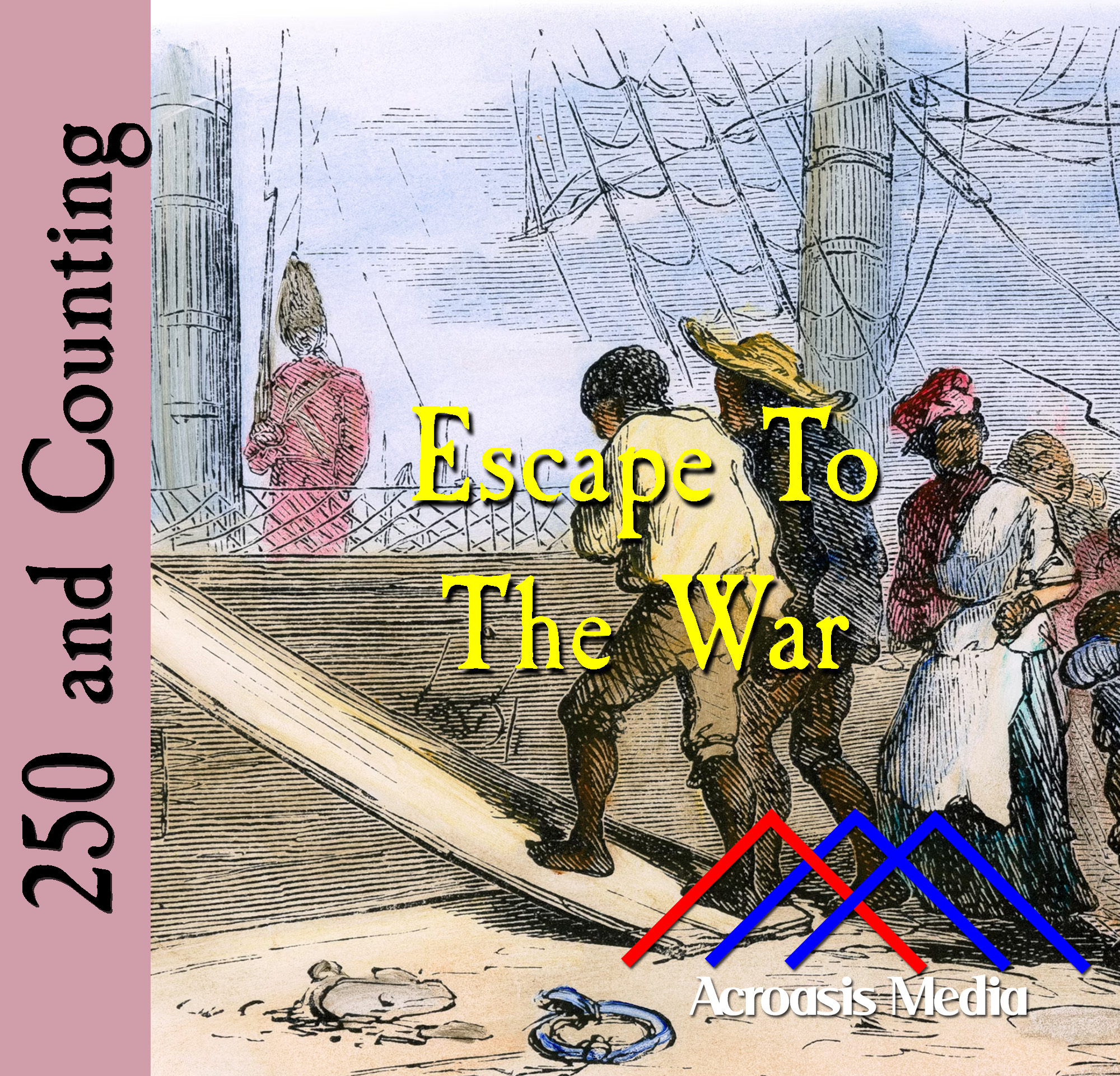
Escape To The War–November 26, 1775
As we’ve mentioned a couple of times before, Lord Dunmore’s Proclamation offering freedom to Patriot-owned slaves who fought for the British created a stir that was felt in all thirteen colonies. Huge numbers of people showed up, not just men, but women and children as well. And of course, because most of them had escaped to join the British forces, that meant that the slave-hunting business experienced a huge boom. And, of course, the company formed by these escapees only fought in one battle of any note; many of the soldiers died of illness, some were sent back to their plantations of origin. Very few of them remained free. The post Escape To The War–November 26, 1775 appeared first on 250 and Counting.
The Fate of War and Some Refugees–November 25, 1775
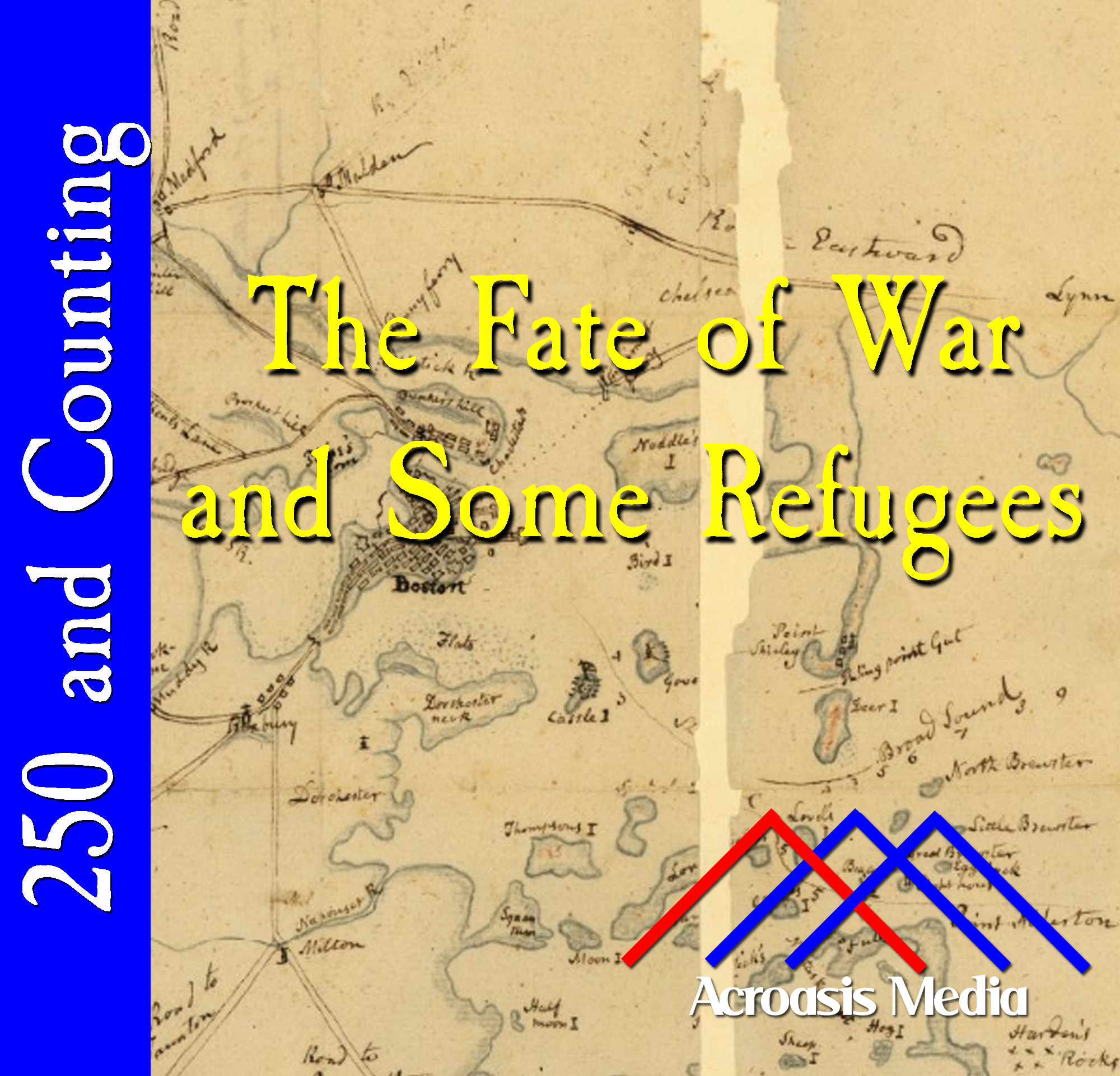
It’s hard to emphasize just how remote Point Shirley is compared to the Boston. Let me try anyway. On most maps of Boston, Point Shirley isn’t even on the map. It’s so far to the east that it’s nearly in the ocean. I’m not sure it’s even possible to see Boston from Point Shirley. And given Point Shirley’s location at a place between the bay and the ocean, and the fact that it’s November, and you’ve got a cold, windy place where you’ve just dumped 300 sick, destitute people without provisions or a means of getting warm. Here’s a weird coincidence: if you look closely at this “manuscript” map from 1775, Point Shirley is at the center right. Need another hint? It’s just under the “fu” in the word “Refugees.” And if anyone got a big FU from the British, it was this group. The post The Fate of War and Some Refugees–November 25, 1775 appeared first on 250 and Counting.
Considering North Carolina–November 24, 1775
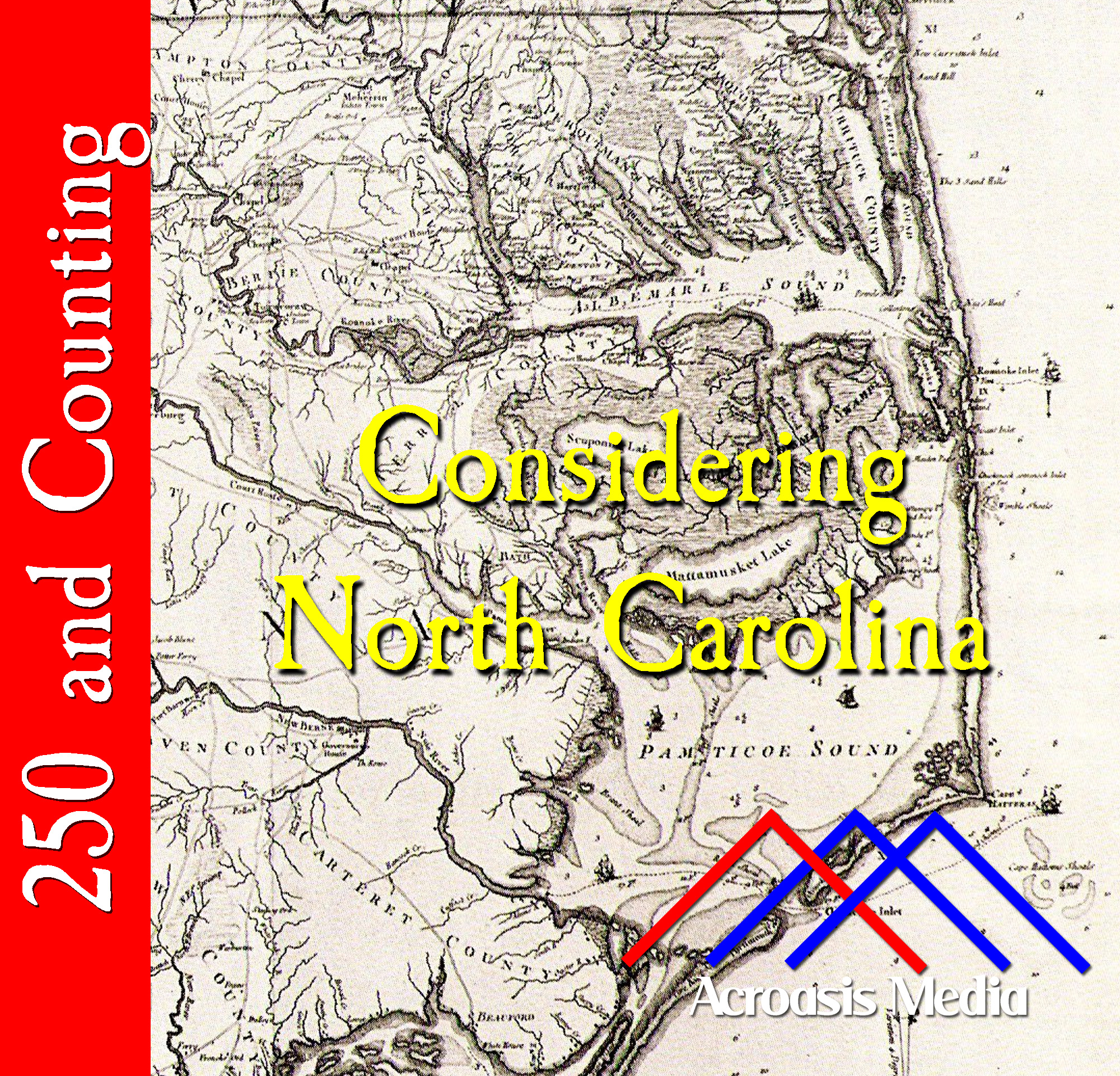
Two days ago, Mike had a case of the Martian Flu or something, so I needed to record in his place. today he sounds as good as ever. Since I could never bounce back from anything affecting my voice that quickly, I think it’s necessary to hurl invective his way. But I won’t ’cause I’m classy. Where were we? Oh yeah. One of the interesting things about the American Revolution is that even though there were major, busy ports up and down the coast, only a few of them captured Britain’s attention. Boston MA and Portsmouth NH caught a lot of grief. New York wasn’t much of a shipping powerhouse yet. New Jersey, ditto. And most of the Jersey coast wasn’t conducive to shipping anyway. But Delaware and Maryland had some deep-water ports but were largely overlooked during the war. Virginia caught a little bit, Georgia was ignored, South Carolina…well, we’ve already talked about that quite a bit, haven’t we? But North Carolina, which had bays and sounds protected by barrier islands, had a great deal of attractive waterways, but it seemed like nobody really thought about it, until today. That’s when the Second Continental Congress decided that there were too many governments replacing the British one originally there, and therefore everyone needed to get their boats steered in the same direction, you should excuse the expression. The post Considering North Carolina–November 24, 1775 appeared first on 250 and Counting.
A Day of Thanksgiving–November 23, 1775
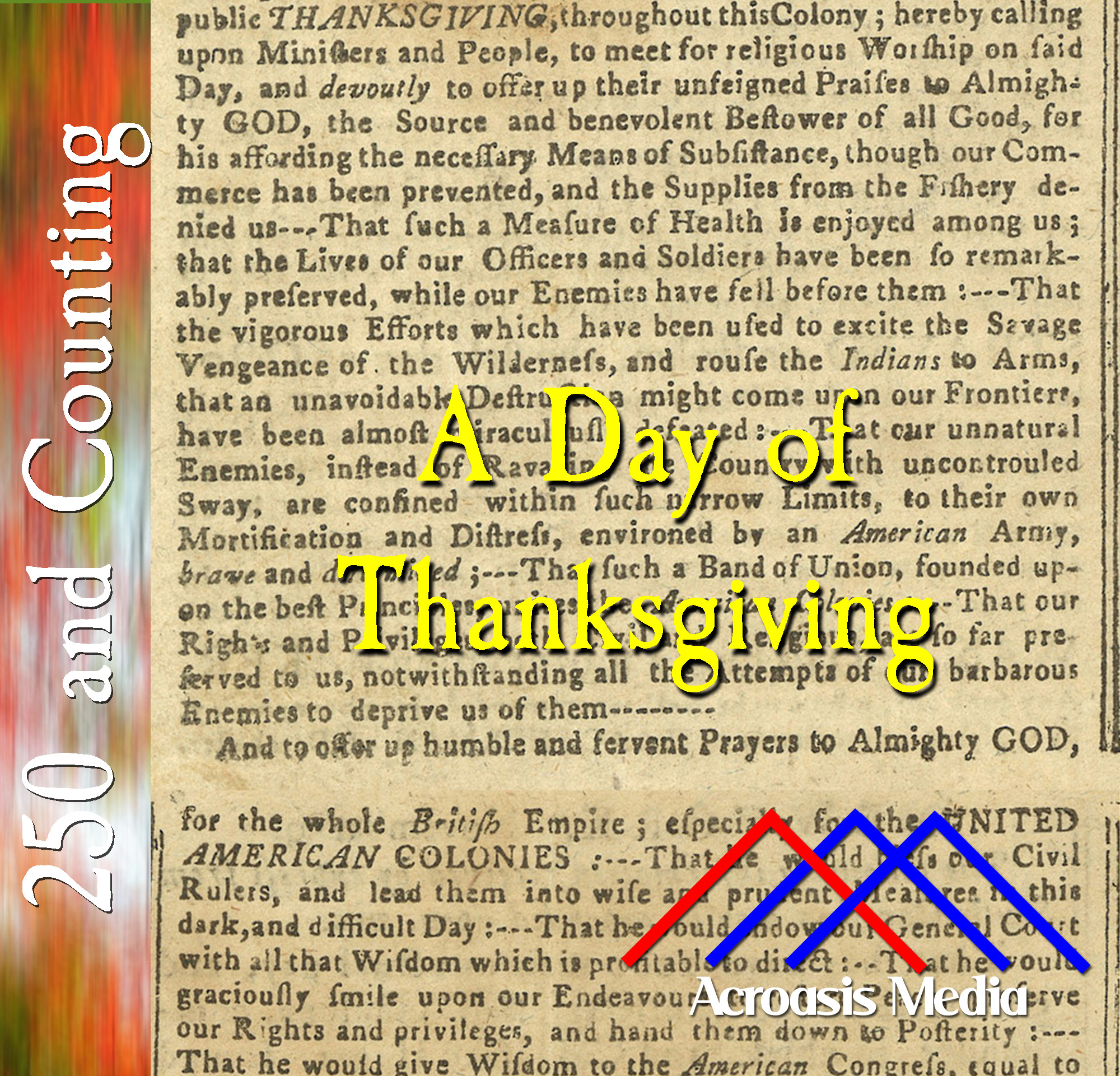
November 23, 1775 was at least the fifth time that a day of Thanksgiving was declared in North America. It might be the sixth, but the documentation for one of them is kind of thin, It might be the first Thanksgiving held on a Thursday, but again it’s tough to know for sure. It’s certainly the third held in New England. This is my first Thanksgiving in a few years in which I’m not the person cooking the meal, so I’m a little bit at loose ends this weekend; usually I’m already in pre-game mode. But I get to do Christmas, so I’ll save Family Madness Preparation for that week instead. If you’re the one preparing for Thanksgiving, don’t forget to take a moment now and then to relax a bit and take in the day. And the parade, of course. Watch the parade. And a couple of episodes of The West Wing (you know the ones, if you’re a fan like Mike and I are). The post A Day of Thanksgiving–November 23, 1775 appeared first on 250 and Counting.
The End of the First Siege at Ninety Six–November 22, 1775
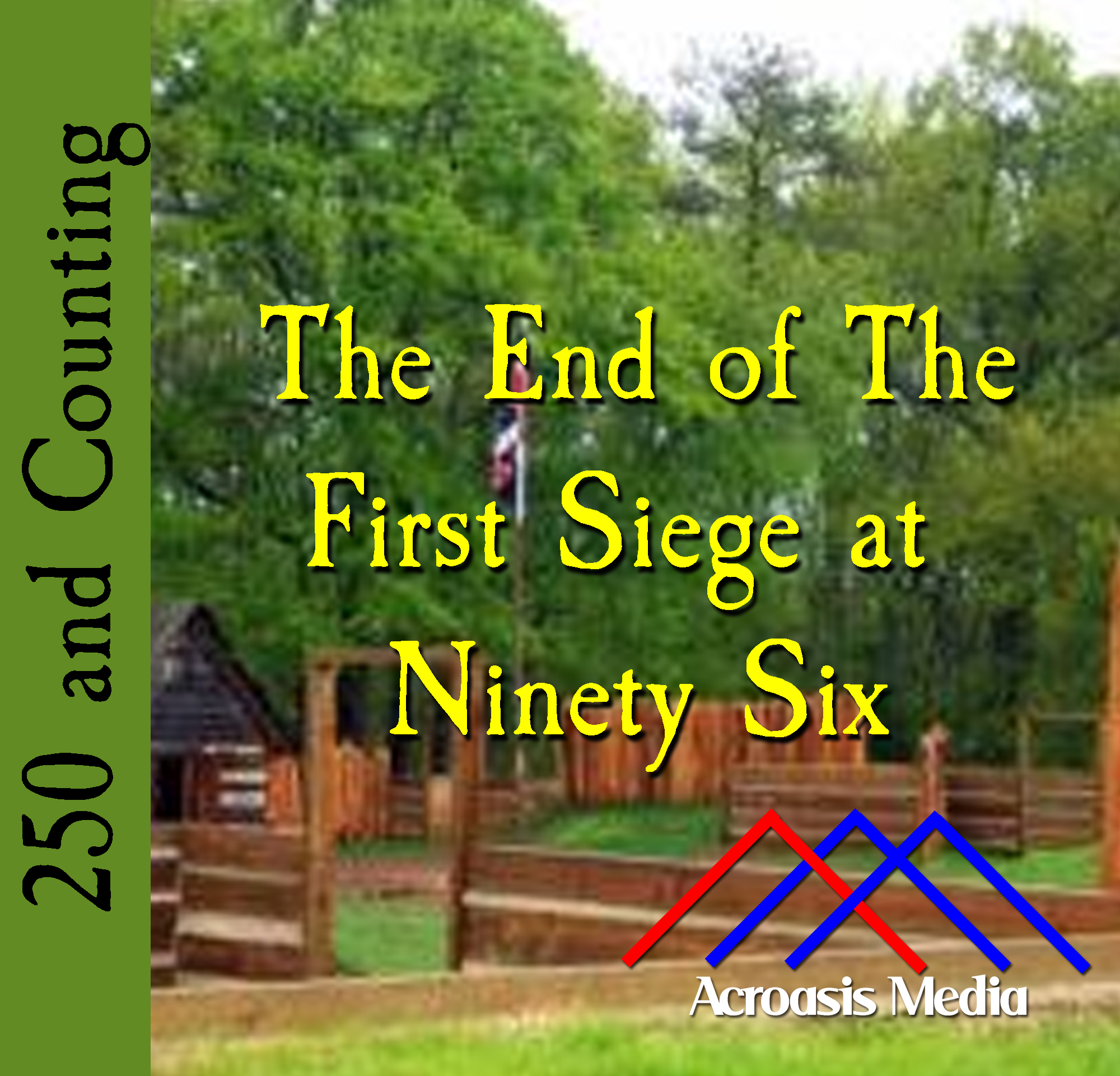
The siege and battle at Ninety Six managed to end abruptly, largely because the leaders on both sides were convinced that something was about to happen the would benefit the other side. What a gentlemanly way to go out! For all that shooting, hardly anyone was seriously hurt. There was one death on each side, and most of the others who were injured had the ability to get treated right away. But for the second important battle of the Revolution in South Carolina, and the first one to get someone killed in the name of Independence there. The post The End of the First Siege at Ninety Six–November 22, 1775 appeared first on 250 and Counting.

George Kremer–November 21, 1775
While George Kremer is depicted in today’s artwork as a sophisticated “man of the people”, it’s thought that the artwork was meant to be sarcastic, since Kremer’s colleagues didn’t respect him very much, thinking he was a kind of bumpkin back-bencher. And indeed, George Kremer’s political legacy, at both the state and Congressional level, is fairly thin, with the exception of the allegations he made against Henry Clay. At that time, if there was no clear majority winner of the presidential election, the House of Representatives chose the winner. Clay backed John Quincy Adams, who came in second to Andrew Jackson in the vote count. When Adams won and Clay became Secretary of State, that got a few people suspicious. It’s actually not unlike what was thought to have happened in the 1970s when Richard Nixon resigned, Gerald Ford became President and then pardoned Nixon. When Ford became Vice President, the Watergate scandal was already brewing, so it was thought that perhaps Ford cut a deal with Nixon: “appoint me VP, and if you resign I’ll pardon you.” This probably didn’t happen, however, since Congressional leaders gave Nixon almost no choice in the matter. The post George Kremer–November 21, 1775 appeared first on 250 and Counting.
The 1st Canadian Regiment–November 20, 2025
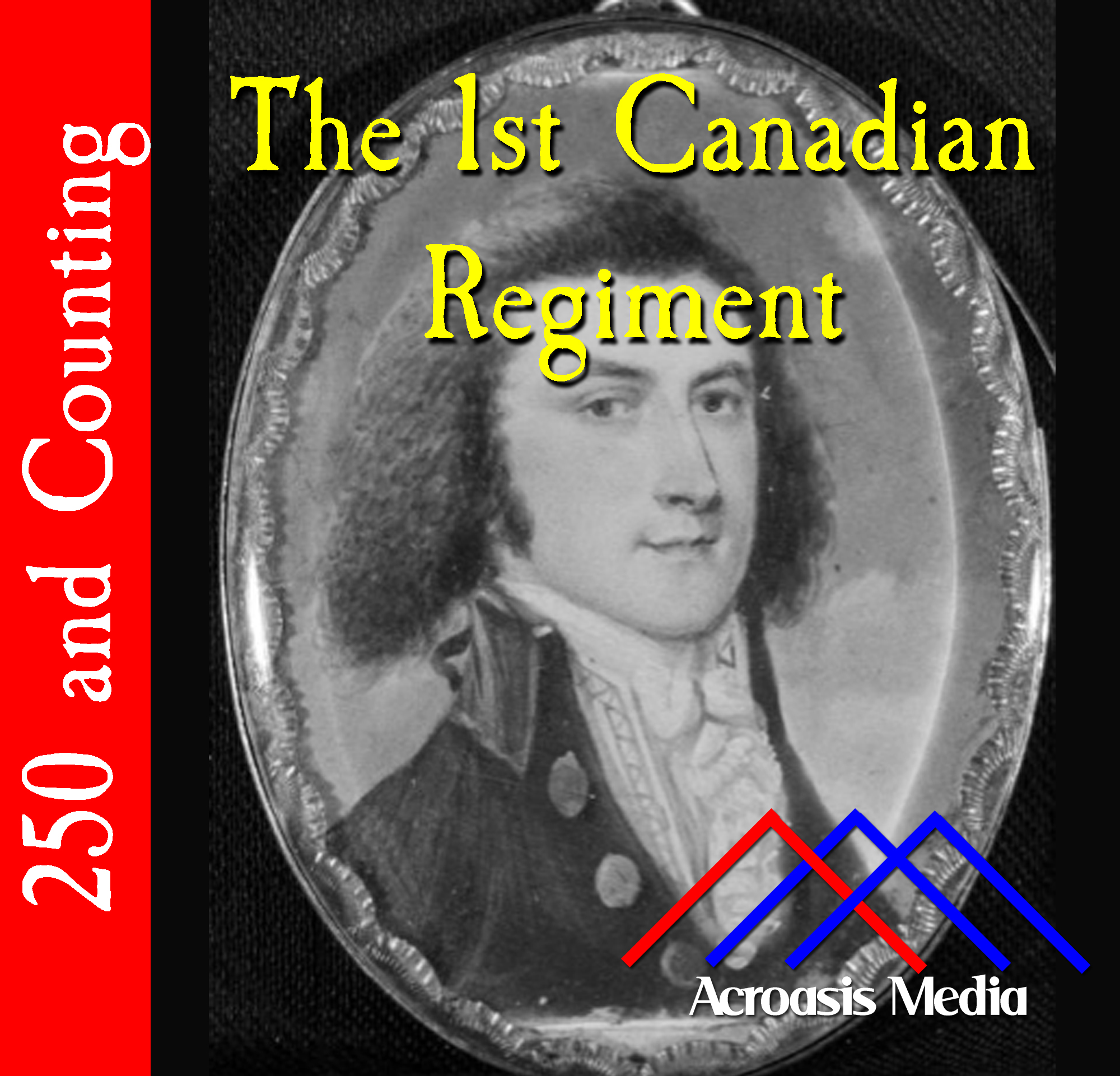
Robert Livingston now enters the picture in the broad tapestry of the American Revolution. Given that the cover art today comes from an image from twenty years after the war; we can assume that he was quite young during the war, plus he held up pretty well in the interim. At any rate, this isn’t the last we’ll hear from Robert Livingston; we’ll be back to visit him next month. The post The 1st Canadian Regiment–November 20, 2025 appeared first on 250 and Counting.
The Siege of Ninety Six–November 19, 1775
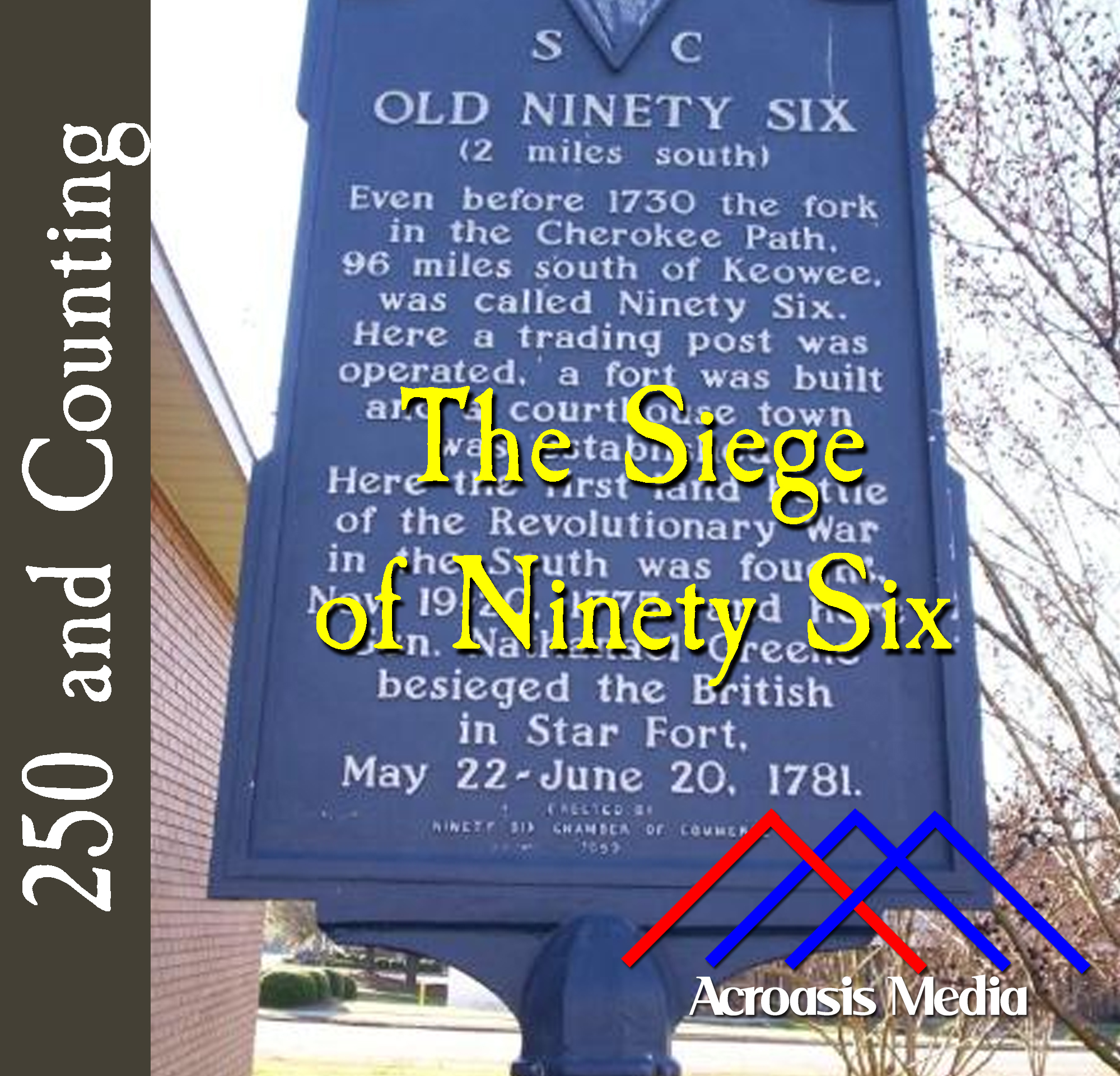
The Siege of Ninety-Six is considered to be the first land battle of the Revolution in the South. And believe it or not, we might be talking about this town again in fairly short order. This past Saturday, Governor McMaster officially proclaimed today through Thursday the 250th Anniversary of the battle. And while this battle lasted three days before mutual cessation of hostilities, it was just the beginning of a series of skirmishes between the two factions for for about six years. The post The Siege of Ninety Six–November 19, 1775 appeared first on 250 and Counting.
SC Troops Get Organized–November 18, 1775
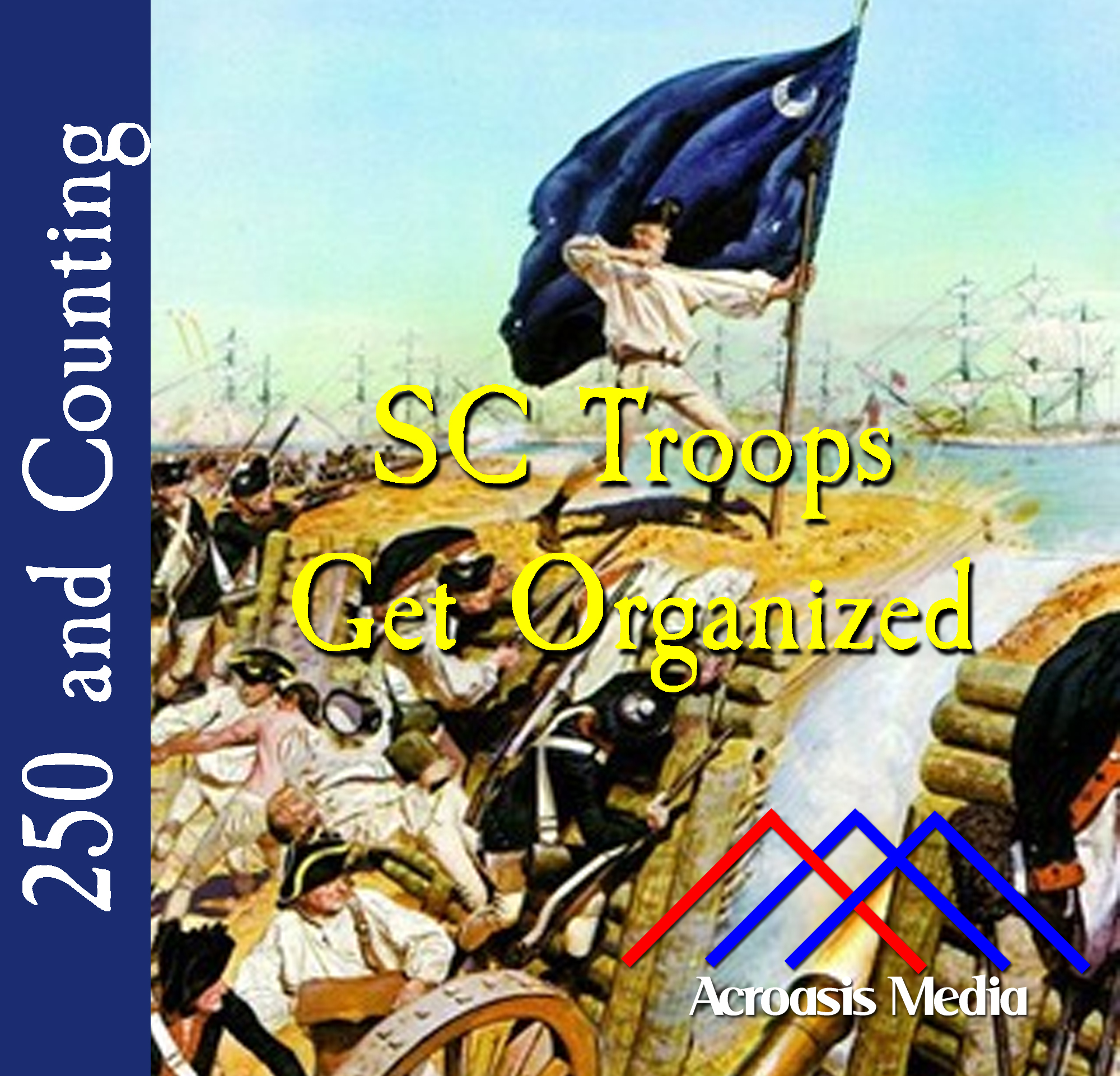
In retrospect, it appears that most of the action in the early days of the Revolution took place in Massachusetts and South Carolina. What was so important about South Carolina? New York wasn’t a big city yet, nor was it strategically important (yet). Baltimore was a small-time port at the time; so was Norfolk. Georgia was deeply divided. North Carolina and New Hampshire didn’t have any strategic advantage. Pennsylvania was inland. Neither Delaware nor New Jersey nor Connecticut were especially important yet. Rhode Island saw some action but not as much as the others. But Charleston was a huge port city, as was Boston. The Charleston Bay was ideal for moving materials in and out of the area, which made it fiscally and strategically important. The South Carolina Provincial Congress figured this out, and also realized that they had about thirteen militia groups moving in about thirteen different directions. It was time to get everyone moving in the same direction. The post SC Troops Get Organized–November 18, 1775 appeared first on 250 and Counting.
The Prize Court Committee–November 17, 1775
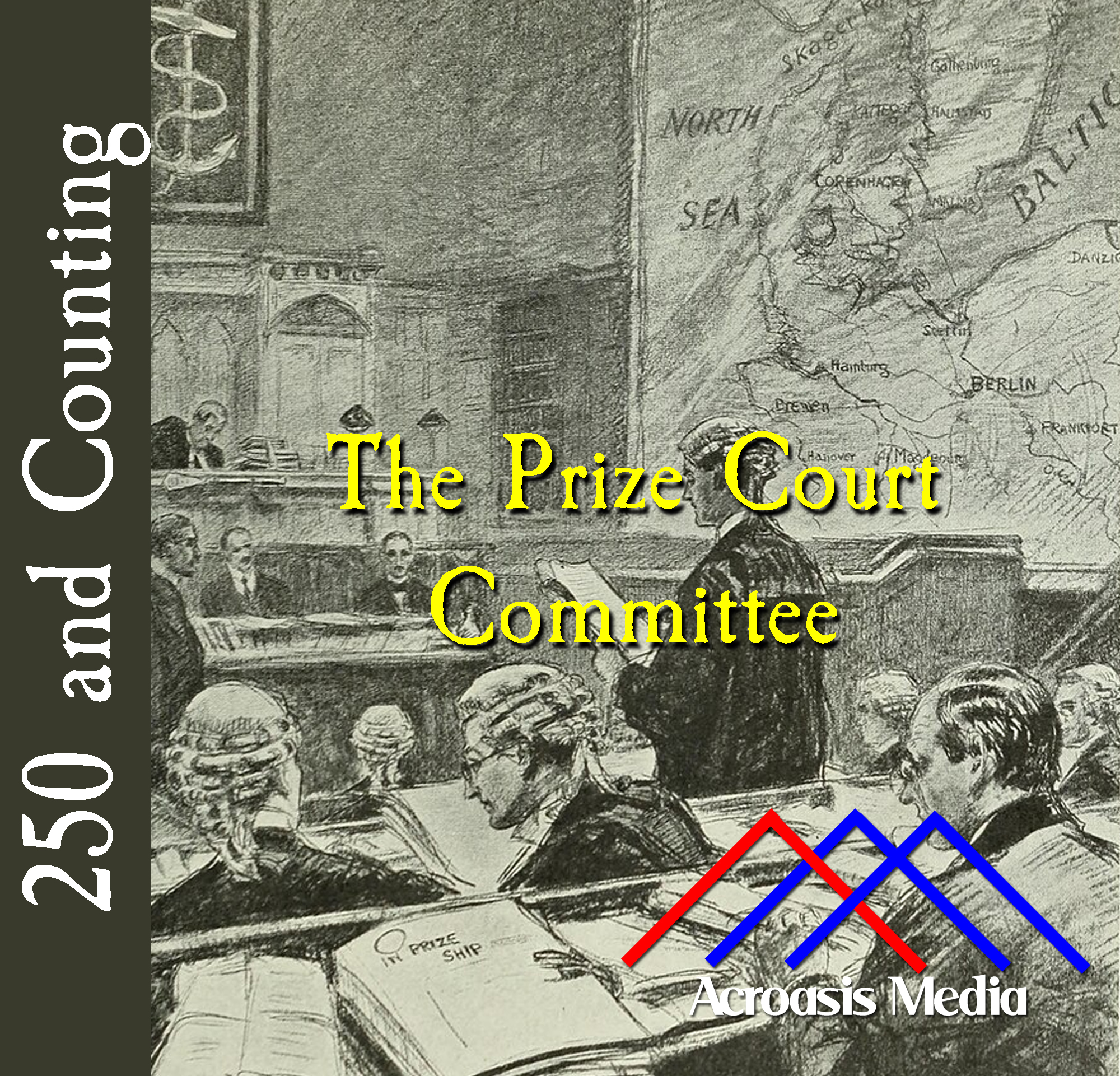
A Prize Court is a formal organization dedicated to the disposition of items captured from an enemy. Because the Colonies were more or less building it all from the ground up, much of what they adopted came directly from the British. As a result the Prize Court and its structure is a British institution that made its way over here. This doesn’t happen anywhere else in the world, though in the early 20th Century an International Prize Court was proposed and established, but it was never ratified or implemented. So it’s still just the British, which maintains a formal court, and the United States, which largely followed the original committee recommendation by largely leaving it up to the individual states. The post The Prize Court Committee–November 17, 1775 appeared first on 250 and Counting.
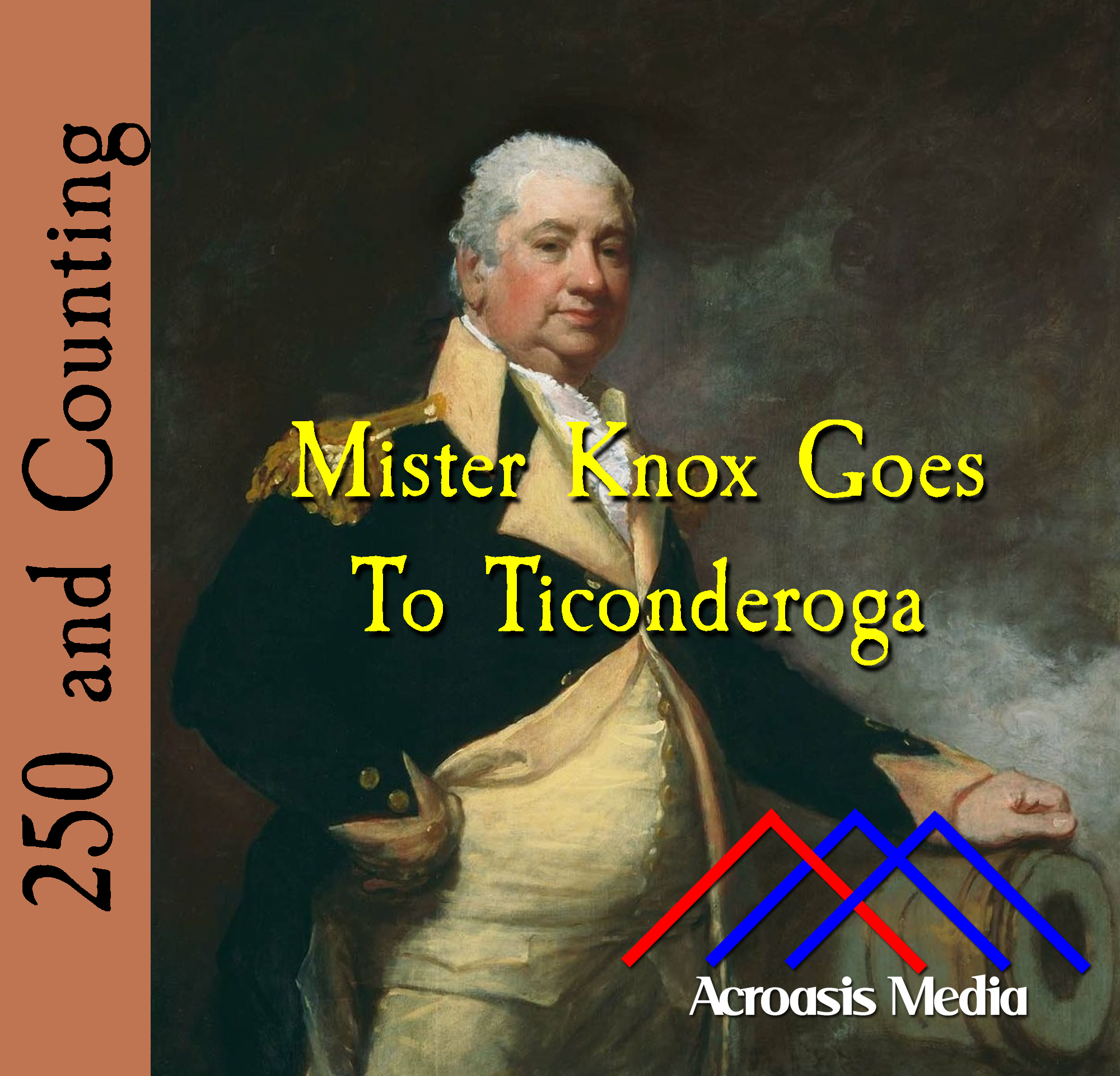
Mister Knox Goes to Ticonderoga–November 16, 1775
It’s a little bit unfair using this portrait to represent Henry Knox, because it was painted many years after his involvement in the Revolution, which began when Knox was 25 years old. As it turns out, this painting is from 1806, the year Knox died. Henry Knox ran a bookstore in Boston as a young man, and he was on-hand for the carnage of the Boston Massacre in 1770. So by the time the war officially broke out, Knox was fully radicalized and ready for action. Because of his actions at Ticonderoga, he rose quickly through the ranks and became the Chief Artillery Officer of the Continental Army, and later the Secretary of War under George Washington, though at that point he was mostly dealing with Indian affairs. Fort Knox in Kentucky is named after him, but we’re talking about the military installation, not the national depository which is practically next door. The post Mister Knox Goes to Ticonderoga–November 16, 1775 appeared first on 250 and Counting.
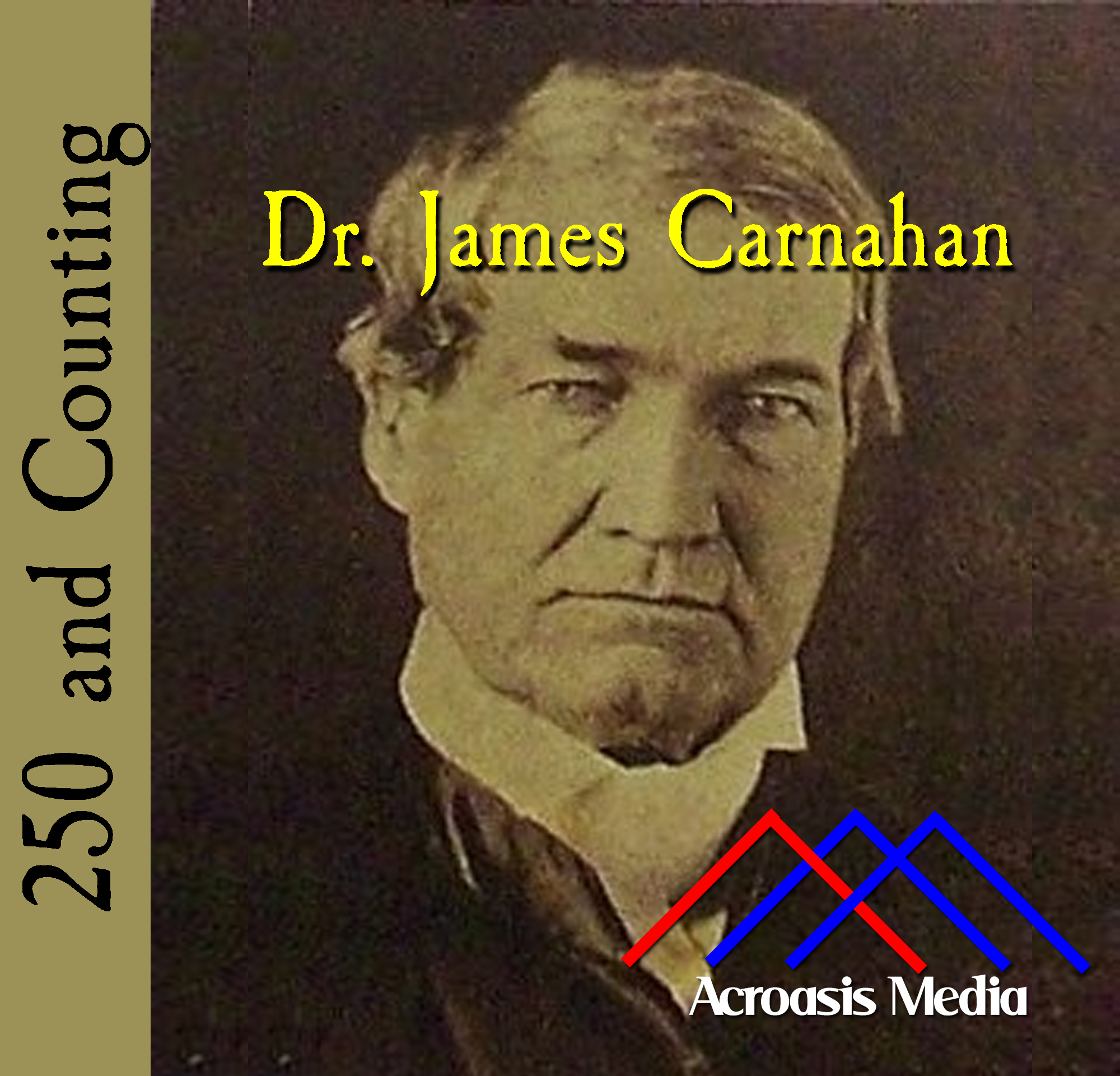
Dr. James Carnahan–November 15, 1775
As noted during the episode, James Carnahan was the president of what was later known as Princeton University, the ninth man to hold that title since the school’s founding nearly 90 years earlier. Carnahan held that position for over 30 years, making him the longest tenured president of that school to that date, a record that remains to this day. Carnahan was buried in the University President’s Plot at Princeton Cemetery. Curiously, he specified in his will that none of his lectures, manuscripts or other writings be published, even though he was held in high esteem as a writer. This may account for his relative obscurity despite his enormous tenure. The post Dr. James Carnahan–November 15, 1775 appeared first on 250 and Counting.
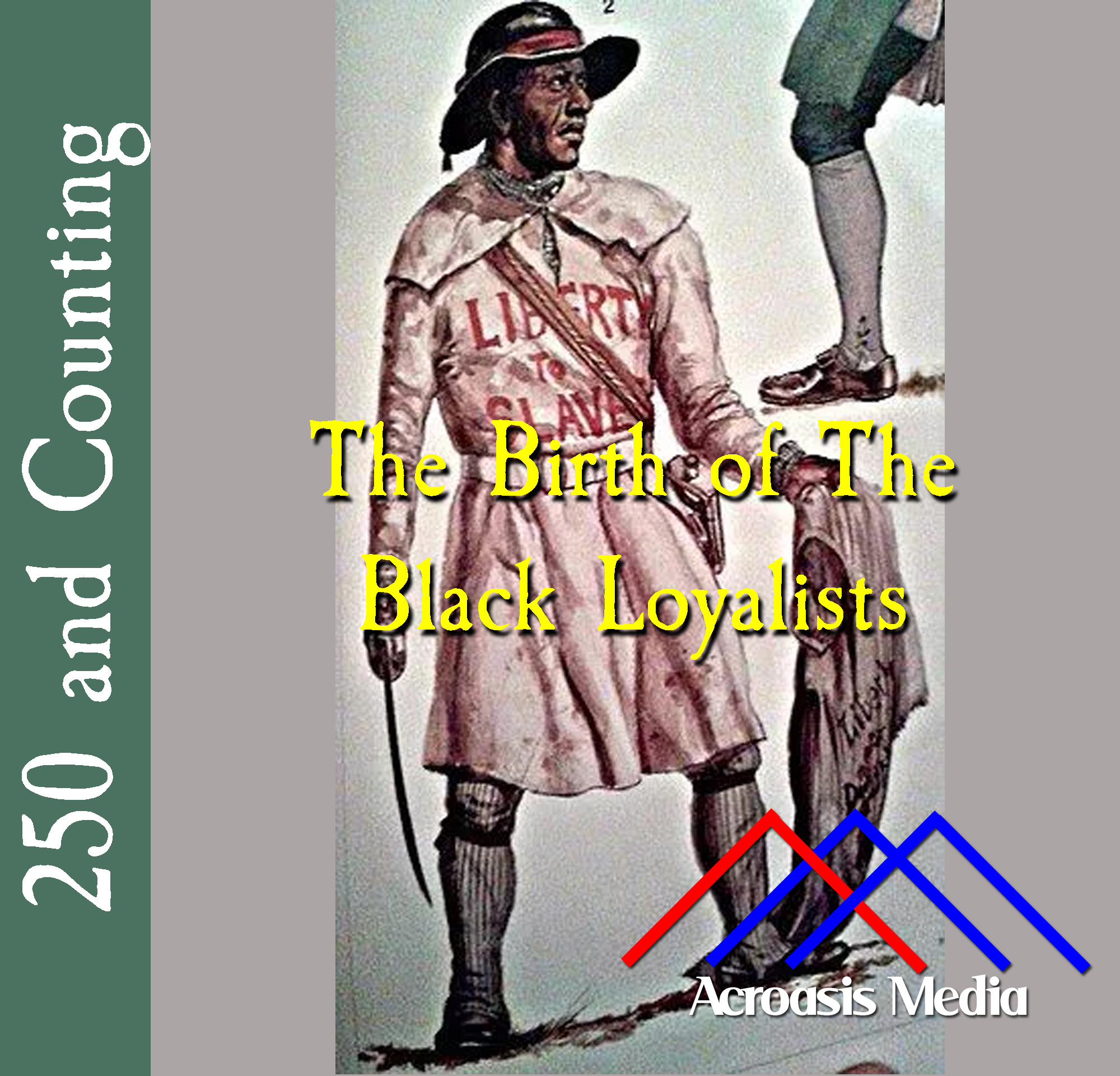
The Birth of the Black Loyalists–November 14, 1775
Lord Dunmore issued his Proclamation just a week earlier, but the response was much stronger than anticipated, probably because—who knew!—people hate being slaves. While the Proclamation only applied to the Virginia colony, because Dunmore had no authority conferred upon him anywhere else, a huge number of slaves and otherwise indentured servants from throughout the thirteen colonies fled to the British side of the lines. (We have to say “throughout” because slavery was a thing in the north at this point; it just wasn’t nearly as common as in the south.) This led to thousands of “American” blacks living ex-patriate lives throughout the British Empire after the Revolution. The post The Birth of the Black Loyalists–November 14, 1775 appeared first on 250 and Counting.
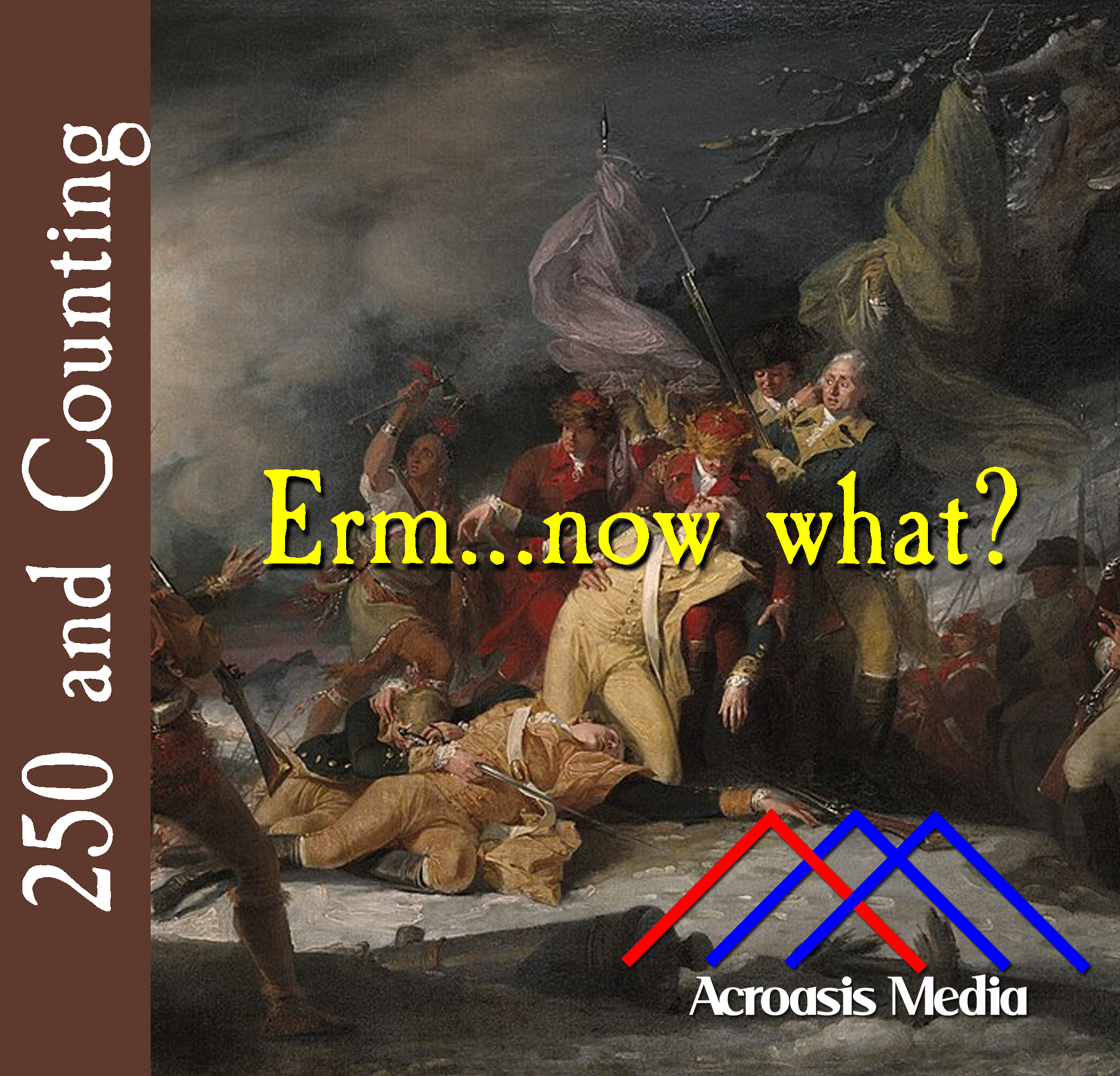
Erm…now what?–November 13, 1775
Montgomery had done his thing at Fort St. Jean. Benedict Arnold had finally made it through the Maine (heh.) Now it was time to move in on Montreal. What the Canadians didn’t count on was the possibility that Americans weren’t moving on Quebec, but Montreal. Americans can walk and chew gum at the same time, though, so they moved on Montreal, taking the city, and moved on Quebec at the same time, with less result. But the city was besieged just a few weeks later. The post Erm…now what?–November 13, 1775 appeared first on 250 and Counting.
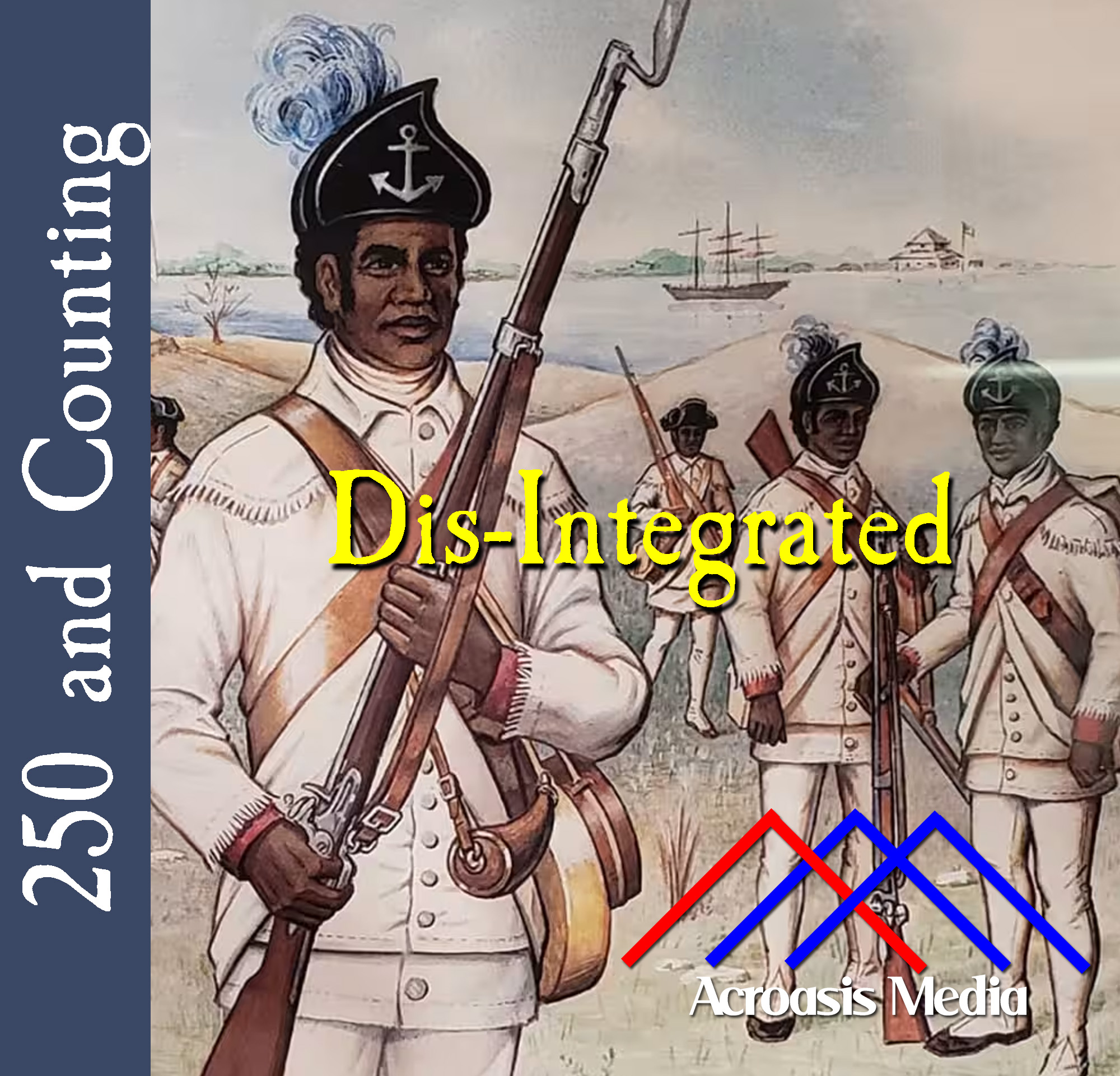
Dis-Integrated–November 12, 1775
It should come as a surprise to nobody that America has a troubled relationship with its past when it comes to race relations. It may come as surprise to you that our Founding Fathers had a complex relationship with their present when it comes to race relations. Yes, many of them owned slaves, but a significant percentage of those men had committed to freeing them at some point. The problem was, that point was rather nebulous. And there was a lot of ambiguity when it came to the question of how to deal with both slaves and free Blacks at that time. As we noted a couple of days ago, Lord Dunmore had a pretty good idea to free any Blacks who chose to fight on the British side. Unfortunately it was rather poorly executed and soldiers were killed, died of smallpox, or returned to their masters. Very few of them remained free. It also never occurred to Dunmore that women and children might be interested in the deal, too. The idea crossed George Washington’s mind, too. Until it un-crossed it, then crossed it again. The post Dis-Integrated–November 12, 1775 appeared first on 250 and Counting.
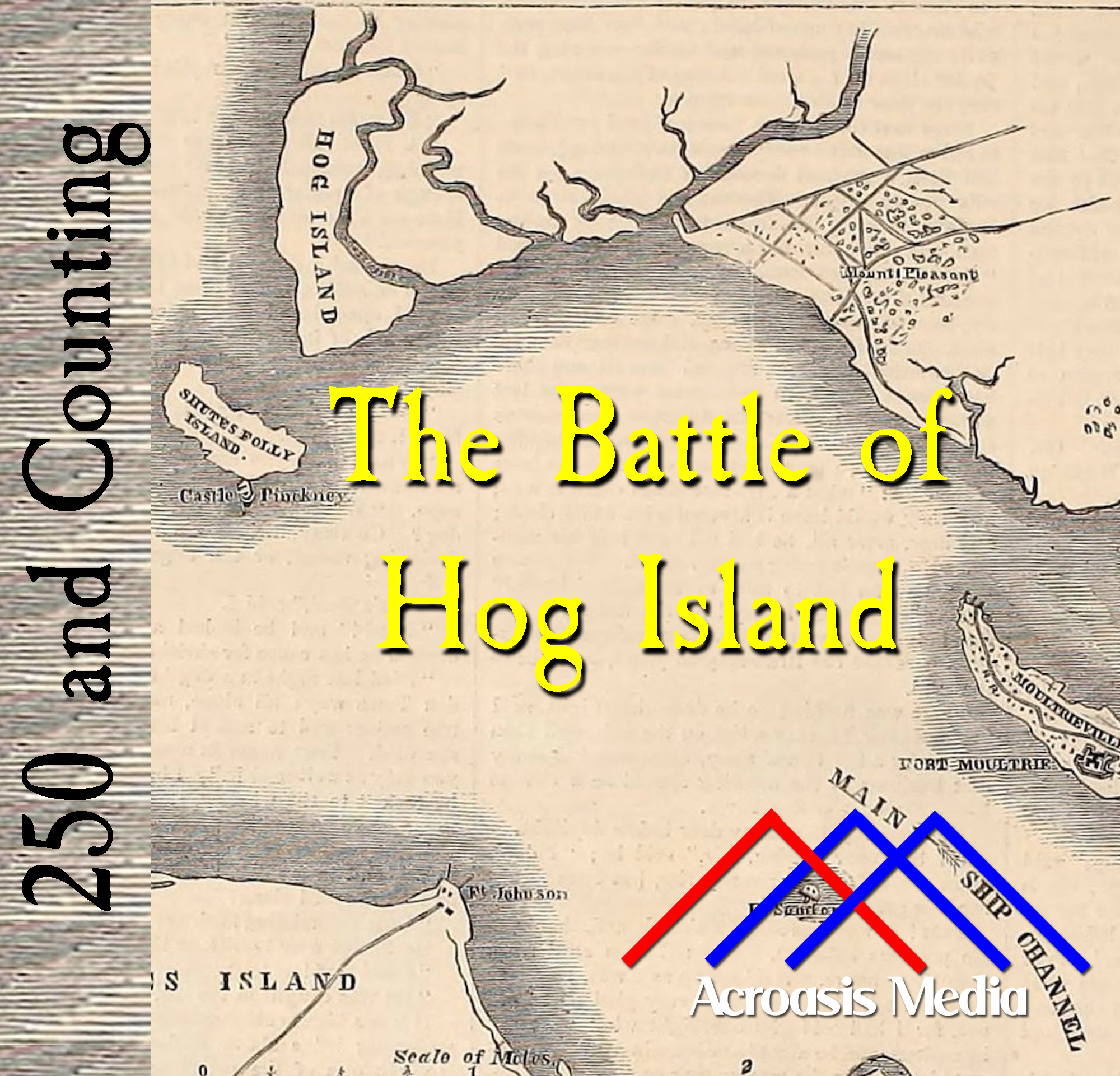
The Battle Of Hog Island–November 11, 1775
The Battle of Hog Island was the first of two major events early in the Revolution that got South Carolina firmly on board with the Independence cause. Hog Island caused the South Carolina Committee of Safety to expand their navy; in this respect they were way ahead of the Continental Congress. But when King George III approved the American Prohibitory Act in December, that really irritated South Carolinians. The Act act declared that any vessels captured by the Royal Navy after January 1, 1776, would now be considered lawful prizes. When this news reached Charleston, it was taken as an act of war. And sure enough, it wouldn’t be long before another confrontation took place that would help to shape the overall look of the war. The post The Battle Of Hog Island–November 11, 1775 appeared first on 250 and Counting.
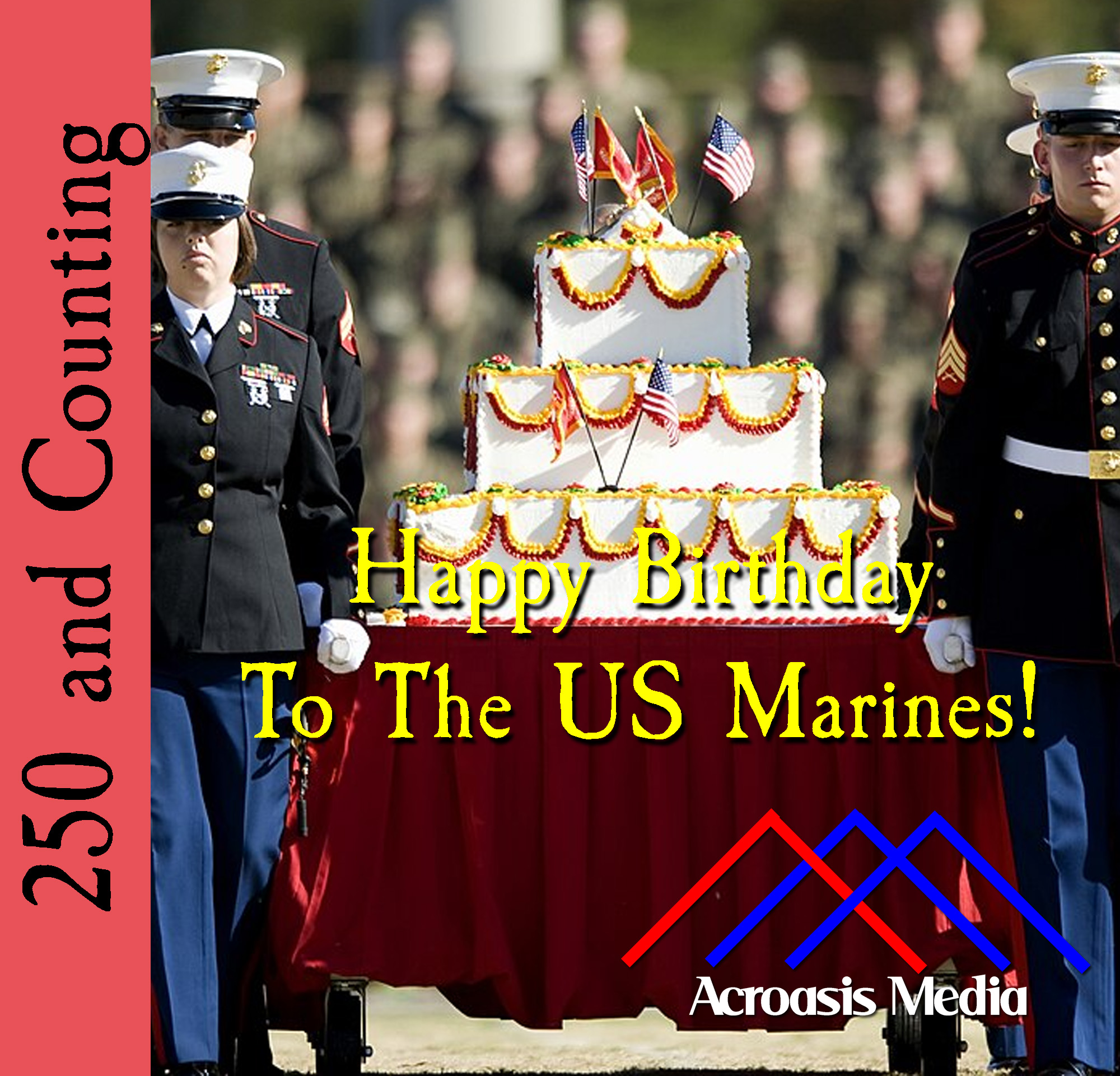
Happy Birthday To The US Marines!–November 10, 1775
The United States Marine Corps celebrates its birthday every year on this day, usually with a ball (the dancing kind) and a cake-cutting ceremony. The cover art today is from their 233rd birthday celebration. Until 1921, the Marines marked the occasion on July 11, which was the date of the re-establishment of the Corps, since they were disbanded after the Revolution. But John Adams (again) came to the rescue and signed an act to re-organize the Corps. However, July 11 didn’t get a lot of attention. But when Commandant John Lejeune (the guy after whom the camp was named) was asked to draft an order to celebrate the Corps, he wrote Marine Corps Order 47, establishing the original November 10 date as the Marines’ birthday. Also, for what it’s worth, the “halls of Montezuma” refers to Chapultepec Castle in Mexico City (left). So yes, it really is a thing, and it’s still standing. The post Happy Birthday To The US Marines!–November 10, 1775 appeared first on 250 and Counting.

Arnold’s March to Canada Ends–November 9, 1775
We gotta give Benedict Arnold this: he set a goal and he stuck to it. Given the opportunity to take men and help invade Quebec through a kind of pincer move with General Montgomery, Benedict Arnold took 1100 men through the wilds of Maine to the St. Lawrence River, a trip that he thought would take 20 days over 180 miles. But they ran into problems almost immediately involving weather, leaky boats, bad maps, bad terrain, illness and almost half the men turning back. But make it he did, still with 600 men in tow, and with the help of the locals he got the sick ones healthy, the hungry ones fed, and established a base of operations for the next step, which we’ll talk about in just a few days. The post Arnold’s March to Canada Ends–November 9, 1775 appeared first on 250 and Counting.
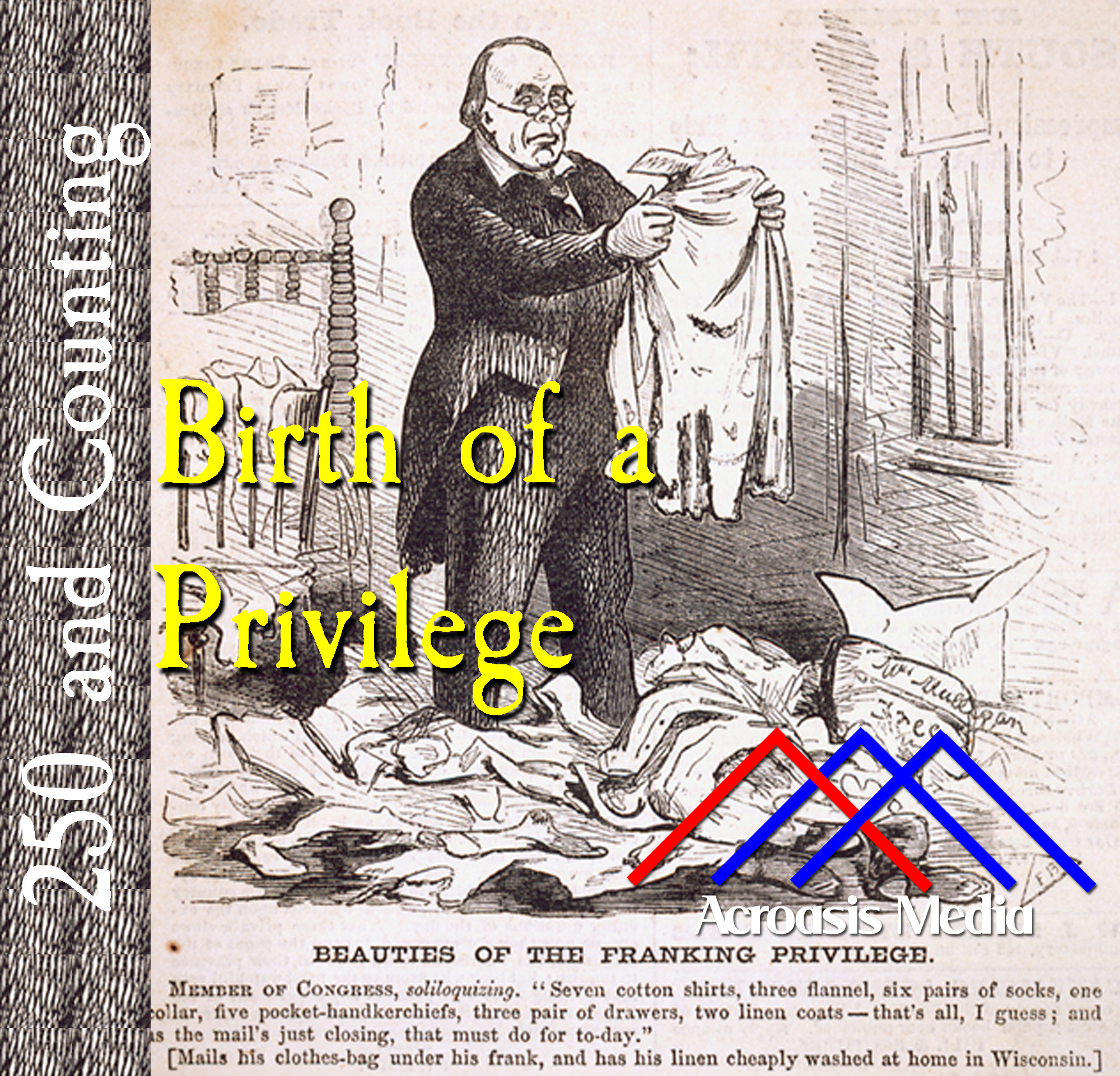
Birth of a Privilege–November 8, 1775
When we talk about Franking, we typically use it in the context of the Franking Privilege, something that members of Congress, ex-presidents, and a few others get to use. In short, if they put their name on the envelope, they can mail stuff without cost to themselves. (The Congressional budget reimburses the US Postal Service.) But Franking isn’t limited to the franking privilege. “Franking” refers to any kind of device, mark, or combination of the two that makes something eligible for mailing. Put a postage stamp on a letter, that’s franking. Run it through a meter, that’s franking. Business Reply Mail is franking, too. And many of the rules are international in nature; any disputes are handled by an agency that answers to the United Nations. For what it’s worth, the franking privilege is intended solely for typical communication with constituents: newsletters or “what’s going on” letters. It can also be used for official business. However: the use of the privilege for political purposes is a big no-no. In addition, there are blackout periods, such as 60 days before an election, or 90 days if the congress member is on the ballot. See that? You’ve learned from me, now go learn from Mike. The post Birth of a Privilege–November 8, 1775 appeared first on 250 and Counting.

Dunmore Has A Tempting Offer–November 7, 1775
Lord Dunmore was driven from the Governor’s Mansion back in June, but he never went far. That same day he took refuge on a British ship near Williamsburg and continued playing the role of Governor, even though the House of Burgesses was already doing quite nicely, thank you. Slave revolts were a constant concern in the slave states, and Dunmore was almost certainly inspired by an incident just a couple of days earlier during the Battle of Kemps Landing. An enslaved man, serving alongside the British regulars, came face to face with his former enslaver, Joseph Hutchings, a local militia commander. Hutchings fired at him point blank and missed. In retaliation, the black soldier wounded him with a sword. Dunmore and his British compatriots, who were clearly already aware of the power of a general revolt, saw this event as an opportunity. The post Dunmore Has A Tempting Offer–November 7, 1775 appeared first on 250 and Counting.