
Write Medicine
312 episodes — Page 5 of 7
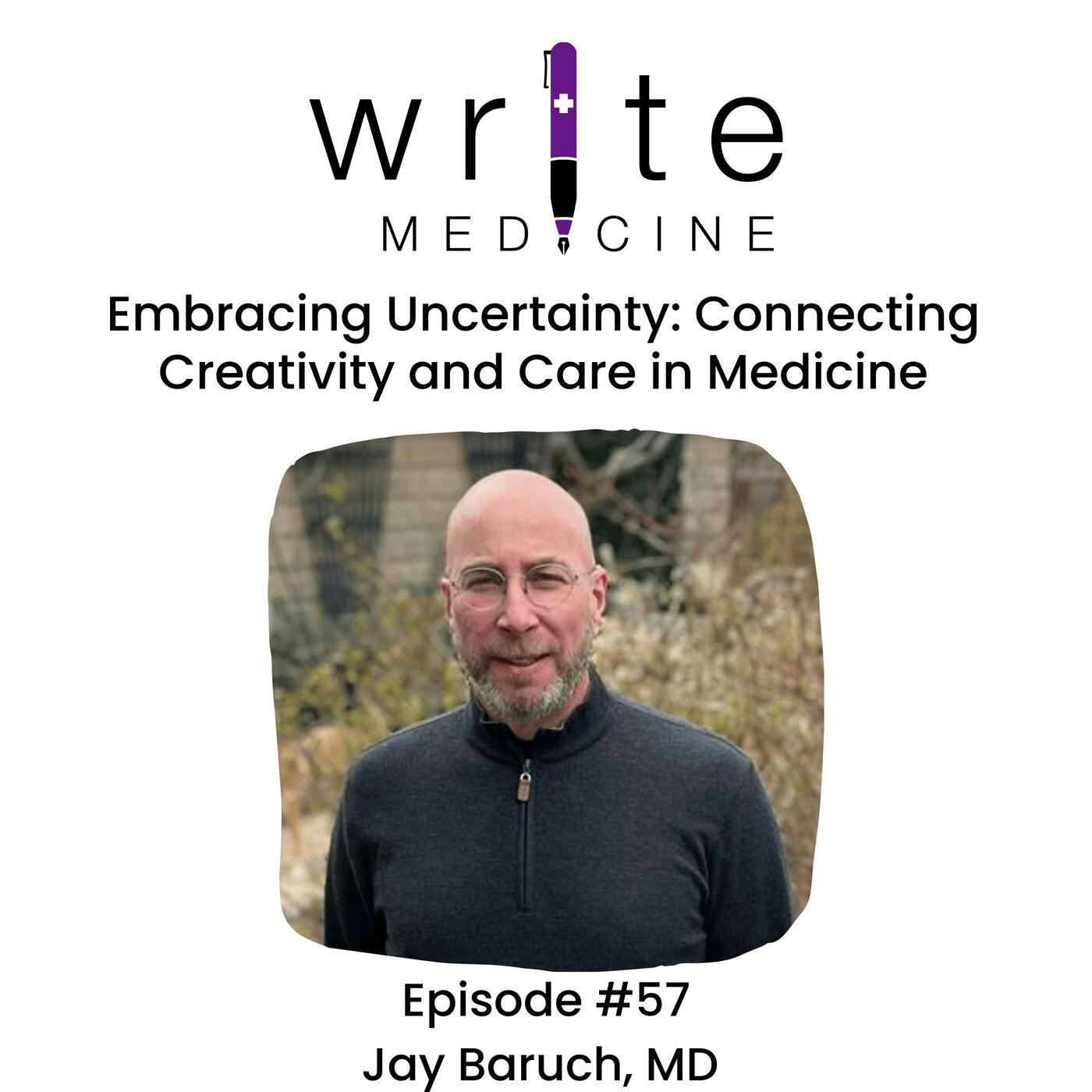
S5 Ep 57Embracing Uncertainty: Connecting Creativity and Care in Medicine
Recently I read Tornado of Life: A Doctor’s Journey Through Constraints and Creativity in the ER by Jay Baruch, MD. It's a collection of linked essays, so you can dip into the book in small, snatched moments without losing momentum. If you need an introduction to the always challenging, sometimes messy, but ultimately humanizing work that clinicians do at the acute end of care, this is a great start. Jay is a physician and writer who explores how creativity in medicine supports empathy, the cornerstone of clinical care. He is a practicing emergency room physician, Professor of Emergency Medicine at Brown University’s Alpert Medical School, and the author of two award-winning short fiction collections. In his latest book, Jay interrogates the messy spaces of clinical practice and the art of caring for patients. Today we are talking about connections between writing, healing, and clinical care. We discussed Jay's experience of writing the book, the experiences that led to writing the book, and the ways that writing can help us figure out who we are and what we think and feel. Alan Bleakley, Emeritus Professor of Medical Education and Medical Humanities at the University of Plymouth calls Tornado of Life the best medical memoir he's read. I can only agree and encourage you to read the book, too. Why? Because it'll expand your concept of the healthcare team to include "the regular players already there, humanity scholars, writers, artists, and designers." And it'll expand your idea of what CME can do too. ResourcesBaruch J. Tornado of Life: A Doctor’s Journey through Constraints and Creativity in the ER. Cambridge, MA: The MIT Press. 2022. Baruch J, Springs S, Poterack A, Ganz Blythe S. What Cy Twombly’s Art Can Teach Us About Patients’ Stories. AMA J Ethics. 2020;22(5):E430-436. Baruch J. Doctors as Makers. Acad Med. 2017;92(1): 40-44. Deavere Smith A. Talk to Me. Travels in Media and Politics. Anchor. 2001. Scarry E. The Body in Pain. Oxford: OUP, 1987. Schulz K. Being Wrong: Adventures in the Margins of Error. Harper Collins. 2011. Support the show📍Grab the WriteCME Roadmap⭐ Review the podcast🗞️ Biweekly Newsletter with tips and resources to enrich your CME content niche➡️ Join WriteCME Pro for ongoing professional development 🌐 Podcast website🎙️ Share the podcast Mentioned in this episode:Root Cause Analysis Practice LabReady to write needs assessments that go deeper than "clinicians need more education"? Join our Root Cause Analysis Practice Lab on February 19th. You'll learn systems thinking, defensible frameworks, and grant-ready language in 3 hands-on hours. $297 | Applies to WriteCME Pro membership [CTA Button] Save My Spot → https://community.writecmepro.com/root-cause-analysisRoot Case Analysis Practice LabThis podcast uses the following third-party services for analysis: Podtrac - https://analytics.podtrac.com/privacy-policy-gdrp
Embracing Uncertainty: Connecting Creativity and Care in Medicine

S5 Ep 56Assessing Readiness for Change in Clinical and Community Education Interventions
Transforming our own habits is notoriously challenging and changing clinical practice habits even more so. But my guest today shares strategies that CME practitioners can apply to education design and implementation based on understanding clinician readiness to change. Sara Johnson PhD is a leading expert in behavior change science. Along with Dr. Kerry Evers, she is co-President and CEO of Pro-Change Behavior Solutions, a behavior-change consulting firm and solution provider that empowers people to experience life-changing breakthroughs in health and well-being. Sara also co-edits the American Journal of Health Promotion (AJHP) and contributes to the Knowing Well, Being Well practitioner-focused section focusing on emerging trends in health promotion and well-being. Sara's been refining the Transtheoretical Model (TTM) of change for over two decades and in our conversation she explains how to apply the five stages of change (pre-contemplation, contemplation, preparation, action, and maintenance) to understand readiness for change as a foundation for clinician-focused education as well as multi-level community-based education. To this end, Sara shares insights from the Communities United Together for Health enterprise, a multi-level initiative addressing health disparities around diabetes in Black communities, inspired by a collaboration with Dr. Stephen Thomas from the University of Maryland Center for Health Equity. Connect with SaraProChange Behavior SolutionsLinkedInSupport the show📍Grab the WriteCME Roadmap⭐ Review the podcast🗞️ Biweekly Newsletter with tips and resources to enrich your CME content niche➡️ Join WriteCME Pro for ongoing professional development 🌐 Podcast website🎙️ Share the podcast Mentioned in this episode:Root Cause Analysis Practice LabReady to write needs assessments that go deeper than "clinicians need more education"? Join our Root Cause Analysis Practice Lab on February 19th. You'll learn systems thinking, defensible frameworks, and grant-ready language in 3 hands-on hours. $297 | Applies to WriteCME Pro membership [CTA Button] Save My Spot → https://community.writecmepro.com/root-cause-analysisRoot Case Analysis Practice LabThis podcast uses the following third-party services for analysis: Podtrac - https://analytics.podtrac.com/privacy-policy-gdrp
Assessing Readiness for Change in Clinical and Community Education Interventions
East Meets West: Exploring the European CME Landscape
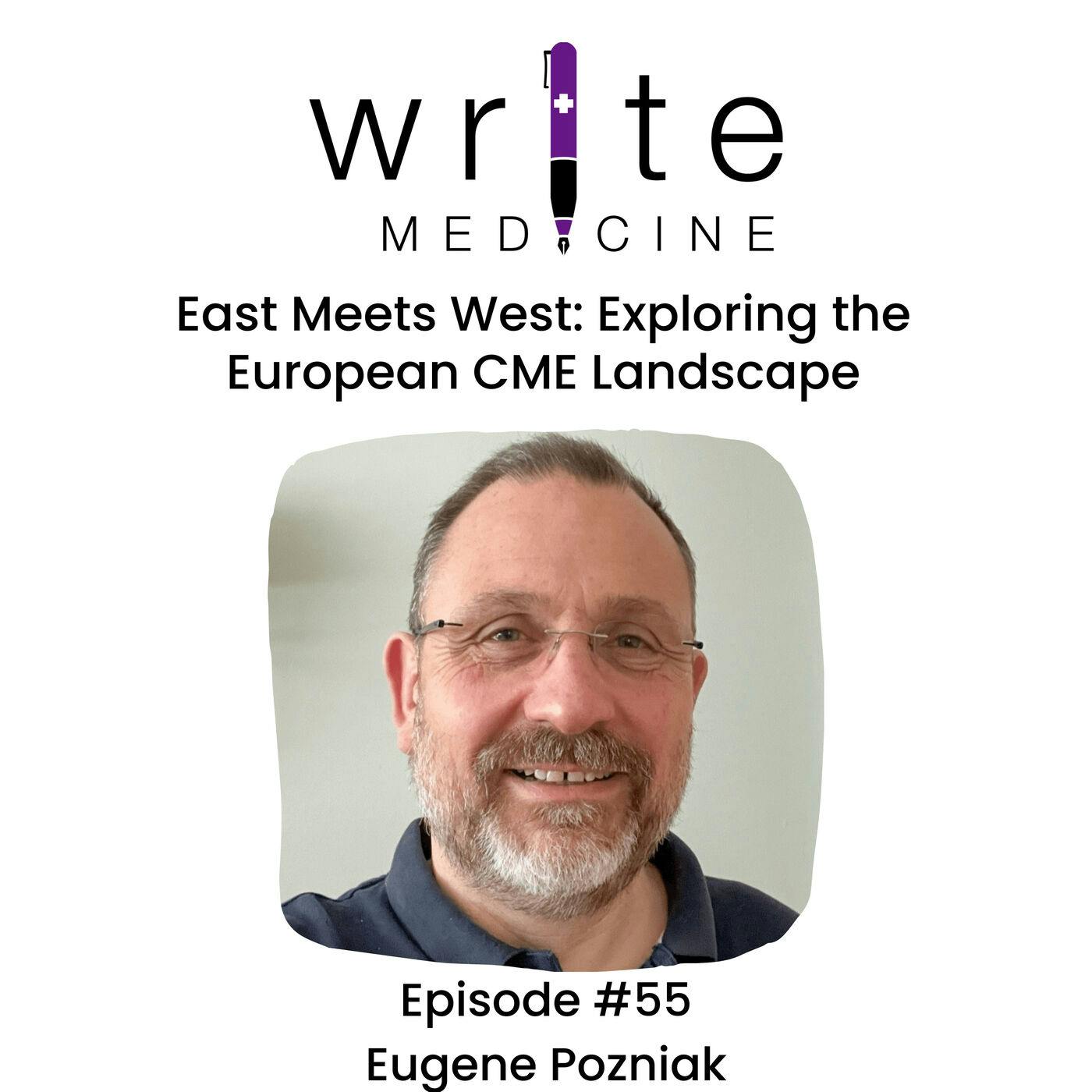
S5 Ep 55East Meets West: Exploring the European CME Landscape
Ready for a tour of the European Continuing Medical Education environment?Eugene Pozniak is Managing Director and CEO of Siyemi Learning, an independent medical education provider established in 2006. In fact, Siyemi Learning is the first non-US organization to be accredited by the Accreditation Council for Continuing Medical Education (ACCME) and is uniquely also accredited on the other side of the Atlantic by the European Board for Accreditation of Continuing Education for Health Professionals (EBAC).Eugene left the promotional sector in 2000 and has since worked exclusively in CME-CPD, initially devising, and delivering e-learning for the European Society of Cardiology and the Federation of European Cancer Societies. He was Director of Global CME (ex-US) at Wolters Kluwer Health, before setting up Siyemi Learning and the European CME Forum. Eugene describes a disparate European CME landscape, driven by national requirements and split by specialties within countries. We explore accreditation similarities and differences between Europe and the US. For example, while European activity-based accreditation systems embrace a granular, structured approach focusing on the format and organization of the educational activity, US accreditation allows comparatively more flexibility to deliver innovative education.We also discuss the European CME Forum, cofounded by Eugene alongside Peter Llewellyn in 2008, which facilitates open discussion amongst all stakeholder groups and promotes a high standard of CME in Europe. Eugene also set up the Journal of CME (JCME), an open-access, peer-reviewed journal with a global focus on all aspects of CME-CPD, and is a founding member of the Good CME Practice Group.CME Practice and Accreditation Stakeholders in Europe The European Accreditation Council of CME (EACCME) of the European Union of Medical Specialists (UEMS). EACCME is run by UEMS. The European Board for Accreditation of Continuing Education for Health Professionals (EBAC) The European CME Forum The Good CME Practice group (gCMEp) The International Academy for CPD Accreditation ResourcesJournal of CMEGood CME Practice groupEuropean CME ForumConnect with Eugeneemail: [email protected] LinkedInSiyemi LearningSupport the show📍Grab the WriteCME Roadmap⭐ Review the podcast🗞️ Biweekly Newsletter with tips and resources to enrich your CME content niche➡️ Join WriteCME Pro for ongoing professional development 🌐 Podcast website🎙️ Share the podcast Mentioned in this episode:Root Cause Analysis Practice LabReady to write needs assessments that go deeper than "clinicians need more education"? Join our Root Cause Analysis Practice Lab on February 19th. You'll learn systems thinking, defensible frameworks, and grant-ready language in 3 hands-on hours. $297 | Applies to WriteCME Pro membership [CTA Button] Save My Spot → https://community.writecmepro.com/root-cause-analysisRoot Case Analysis Practice LabThis podcast uses the following third-party services for analysis: Podtrac - https://analytics.podtrac.com/privacy-policy-gdrp

Ep 54Crafting Rich Learning Experiences to Optimize Education
Instructional designers are the architects of learning experiences. In this episode, Parker Grant PhD, the co-founder of IDLance, an instructional design freelance agency, discusses the learning process, how to use learners’ experiences to optimize education, and where instructional designers go for their story inspiration. Parker advises, “In adult learning, what's really important to know, is that all learning is experiential. What makes learning better is having a multifaceted approach, meaning you don't look at just any one mode of learning as the optimum, but the combination of many facets.”To these ends, Parker uses concept maps to create learning experiences. He finds that mental models help individuals to visualize other perspectives and shift mental models, thus encouraging consistent performance and improving outcomes. Parker describes the core characteristics of well-designed learning activities that allow us to deliver rich learning experiences for healthcare professionals and we discuss how simulations and case studies can enhance the learning experience through feedback and building consequences into the virtual experience. ResourcesGenter D. Holyoak KJ, Kokinov BN. (eds) The Analogical Mind: Perspectives from Cognitive Science. The MIT Press. 2001. Stevens AL, Gentner D. Mental Models. NY: Psychology Press. 2014. 7taps Microlearning PlatformArist Connect with ParkerEmail: [email protected] the show📍Grab the WriteCME Roadmap⭐ Review the podcast🗞️ Biweekly Newsletter with tips and resources to enrich your CME content niche➡️ Join WriteCME Pro for ongoing professional development 🌐 Podcast website🎙️ Share the podcast Mentioned in this episode:Root Cause Analysis Practice LabReady to write needs assessments that go deeper than "clinicians need more education"? Join our Root Cause Analysis Practice Lab on February 19th. You'll learn systems thinking, defensible frameworks, and grant-ready language in 3 hands-on hours. $297 | Applies to WriteCME Pro membership [CTA Button] Save My Spot → https://community.writecmepro.com/root-cause-analysisRoot Case Analysis Practice LabThis podcast uses the following third-party services for analysis: Podtrac - https://analytics.podtrac.com/privacy-policy-gdrp
Crafting Rich Learning Experiences to Optimize Education

S5 Ep 53Navigating the World of Medical Writing
What qualities do medical writers need? This is a question I'm frequently asked. In this episode, expect to hear some robust answers—whatever your niche, specialty, or area of focus.Holly Hagan MSc, Success Coach for Medical Writers, believes that all medical writers require diplomacy, intellectualism, inquisitiveness, and resourcefulness as fundamental qualities to thrive. Authentically embodying moral and civic character lies central to her approach to medical writing. In addition, Holly maintains that personal branding goes deeper than your background banner, understanding personal brand to encompass the experience of your every interaction with colleagues and customers.She advocates that employees and freelancers would benefit from adopting a service mindset. Shifting to a service mindset also allows writers to reframe the taboo surrounding sales into one where we understand and fulfill the customer's needs. Holly advises beginner writers to remain vigilant about opinions versus facts when considering what is possible and recommends using visualizations to stay focused on achieving your goals. Holly suggests, "I find that it can be really powerful to separate the facts from opinions when it comes to your job search. That core belief will then change what sort of things you see in the visible world."Connect with HollyEmail: [email protected] Medical WriterLinkedInHolly is presenting at the AMWA Carolinas spring conference: Learn more ResourcesClifton Strengths Support the show📍Grab the WriteCME Roadmap⭐ Review the podcast🗞️ Biweekly Newsletter with tips and resources to enrich your CME content niche➡️ Join WriteCME Pro for ongoing professional development 🌐 Podcast website🎙️ Share the podcast Mentioned in this episode:Root Cause Analysis Practice LabReady to write needs assessments that go deeper than "clinicians need more education"? Join our Root Cause Analysis Practice Lab on February 19th. You'll learn systems thinking, defensible frameworks, and grant-ready language in 3 hands-on hours. $297 | Applies to WriteCME Pro membership [CTA Button] Save My Spot → https://community.writecmepro.com/root-cause-analysisRoot Case Analysis Practice LabThis podcast uses the following third-party services for analysis: Podtrac - https://analytics.podtrac.com/privacy-policy-gdrp
Navigating the World of Medical Writing

S5 Ep 52Turning the Tables: My Personal Journey into CME Writing
In this episode of Write Medicine, the tables are turned as I’m interviewed by guest host Holly Hagan. We talk about my own personal journey into CME writing, including how joining the Alliance for Continuing Education in the Health Professions was a turning point in my business. Being a part of this community has given me the opportunity to learn about new developments in the field and connect with education providers.We discuss how I’ve integrated my previous experience and interests into my work, some key learnings when it comes to running my own business, and I share some of my favorite recommendations for academics or medical professionals who want to explore a career in CME writing. And on May 5, 2023, I’ll return the favor and interview Holly about her expertise in medical marketing and copywriting. Connect with AlexLinkedInWebsiteCourses, Community, CoachingConnect with HollyLinkedInHolly is presenting at the AMWA Carolinas spring conference: Learn more Support the show📍Grab the WriteCME Roadmap⭐ Review the podcast🗞️ Biweekly Newsletter with tips and resources to enrich your CME content niche➡️ Join WriteCME Pro for ongoing professional development 🌐 Podcast website🎙️ Share the podcast Mentioned in this episode:Root Cause Analysis Practice LabReady to write needs assessments that go deeper than "clinicians need more education"? Join our Root Cause Analysis Practice Lab on February 19th. You'll learn systems thinking, defensible frameworks, and grant-ready language in 3 hands-on hours. $297 | Applies to WriteCME Pro membership [CTA Button] Save My Spot → https://community.writecmepro.com/root-cause-analysisRoot Case Analysis Practice LabThis podcast uses the following third-party services for analysis: Podtrac - https://analytics.podtrac.com/privacy-policy-gdrp
Turning the Tables: My Personal Journey into CME Writing
The Vital Role of Integrity and Trust in CME
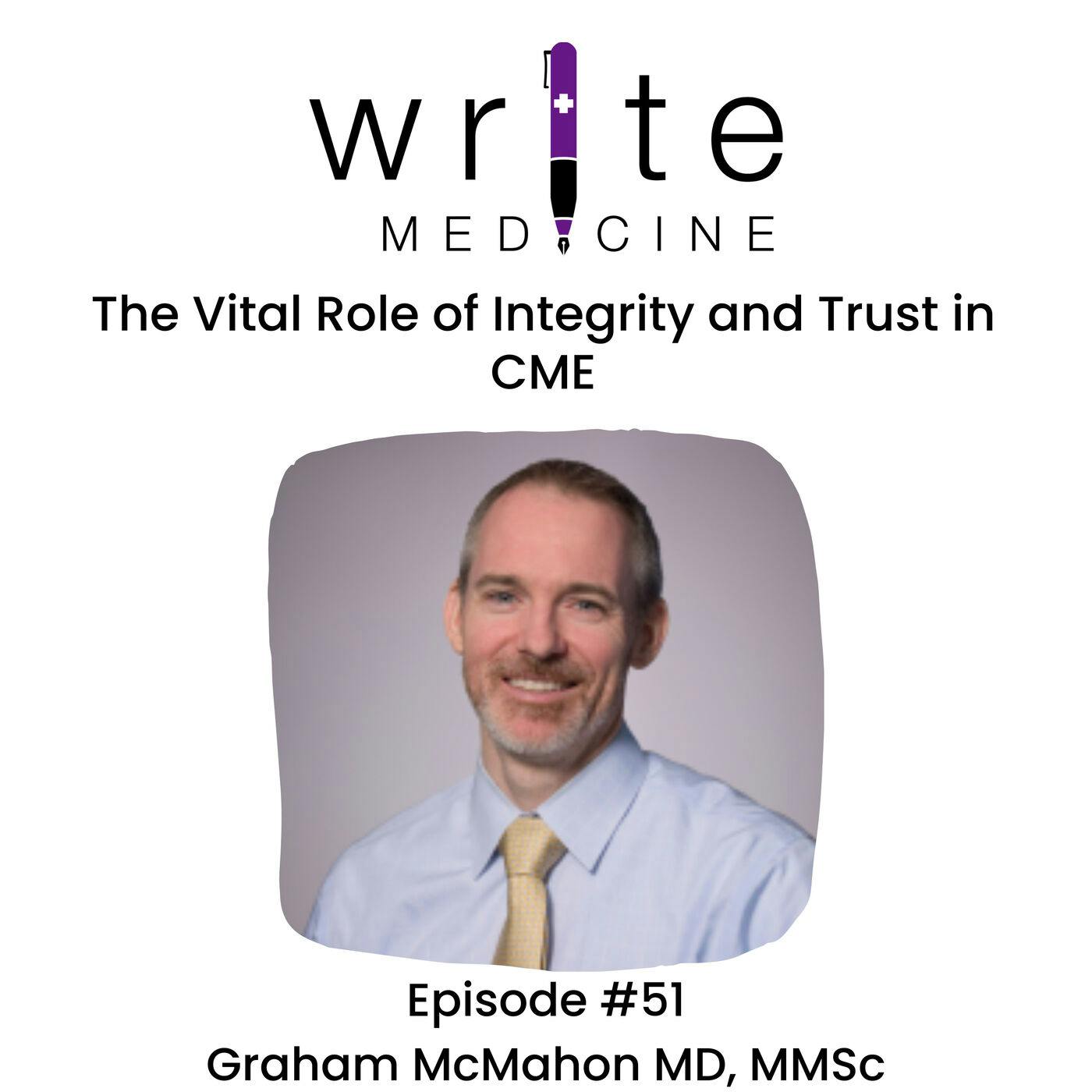
S5 Ep 51The Vital Role of Integrity and Trust in CME
If you've been in the CME field for more than a hot minute, you'll know that Graham McMahon MD, MMSc is a medical educator, researcher, and practicing endocrinologist. He is the President and Chief Executive Officer of the Accreditation Council for Continuing Medical Education (ACCME®) and an Adjunct Professor of Medicine and Medical Education at Northwestern University.Today, we're talking about integrity and trust in CME. We dig into the factors that prompted the publication in 2020 of ACCME's report on standards for integrity and independence in CME, especially the emergence of potential threats to content credibility. Graham emphasizes the importance of nurturing innovation and retaining balance in education and points to the role of content validity as a core part of ACCME's standards and promise to the community of physician learners. We also talk about the centrality of trust in the process of teaching and learning, how the concept of an educational home fosters trust among physician learners and the work to be done in the CME community to ensure safe learning spaces and create education that is diverse in focus, content, and faculty contribution. ResourcesAccreditation Council for Continuing Medical Education (ACCME®). Standards for Integrity and Independence in Accredited Continuing Education. 2020. McMahon GT. Changes to the Standards for Integrity and Independence in Continuing Medical Education. JAMA. 2021 Sklar DP, McMahon GT. Trust between teachers and learners. JAMA. 2019;321(22): 2157-2158Connect with GrahamAccreditation Council for Continuing Medical Education Support the show📍Grab the WriteCME Roadmap⭐ Review the podcast🗞️ Biweekly Newsletter with tips and resources to enrich your CME content niche➡️ Join WriteCME Pro for ongoing professional development 🌐 Podcast website🎙️ Share the podcast Mentioned in this episode:Root Cause Analysis Practice LabReady to write needs assessments that go deeper than "clinicians need more education"? Join our Root Cause Analysis Practice Lab on February 19th. You'll learn systems thinking, defensible frameworks, and grant-ready language in 3 hands-on hours. $297 | Applies to WriteCME Pro membership [CTA Button] Save My Spot → https://community.writecmepro.com/root-cause-analysisRoot Case Analysis Practice LabThis podcast uses the following third-party services for analysis: Podtrac - https://analytics.podtrac.com/privacy-policy-gdrp
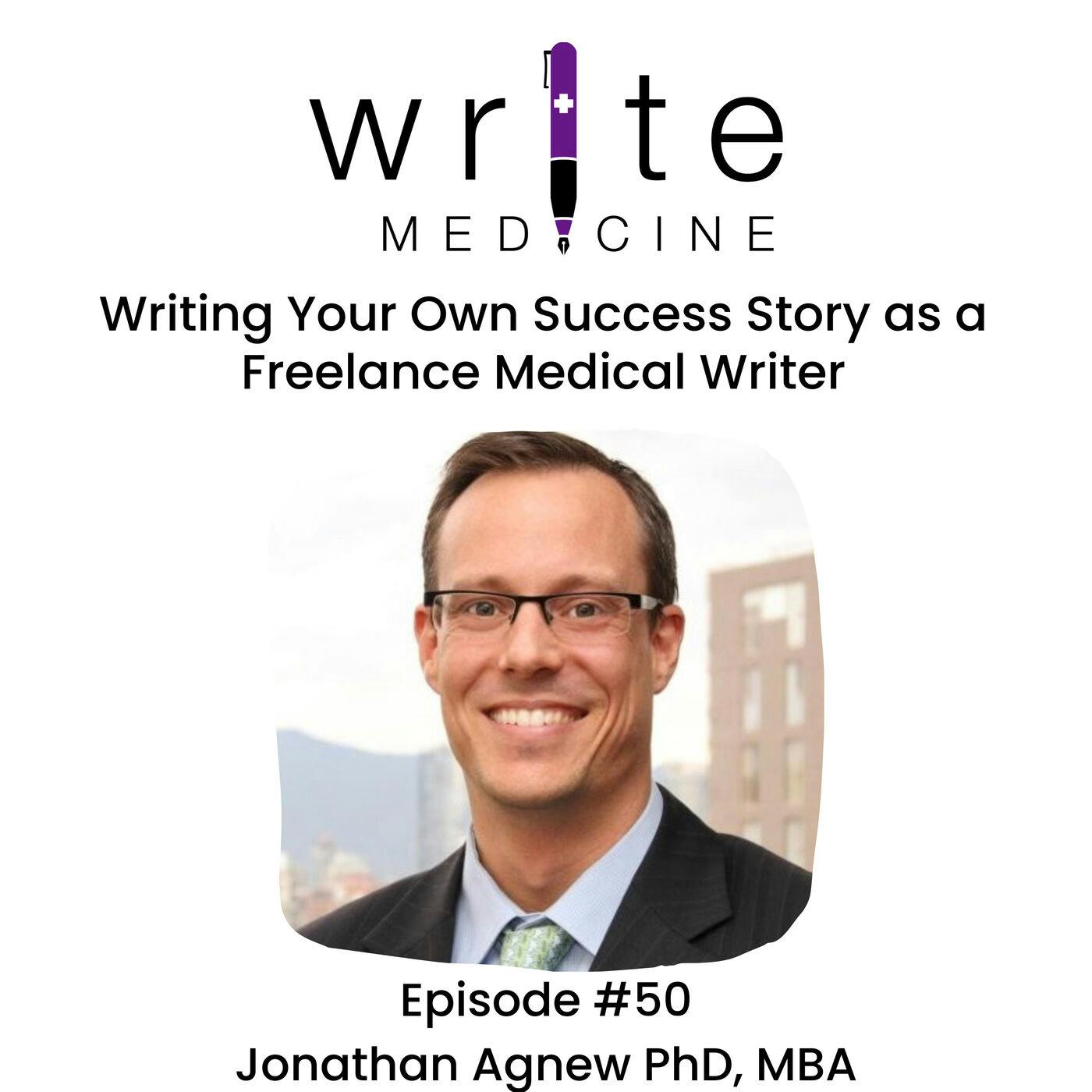
S5 Ep 50Writing Your Own Success Story as a Freelance Medical Writer
Clinicians, academics, or researchers transitioning into freelance medical writing—whether it's CME-focused or not—often worry about whether it’s the right move to make and whether there will be enough work to support their goals. In today’s episode, long-time freelance medical writer Jonathan Agnew PhD, MBA brings a sense of reassurance to these questions and emphasizes the potential for abundantly available work. In addition, he shares tools and techniques to facilitate the freelance process. Notably, Jonathon’s mantra is “your mindset underpins your success.” He recommends that you avoid the perfectionist mindset many clinicians and academics are prone to and instead strive for excellence and quality. These goals will give you permission to take risks and enjoy the benefits of autonomy. And Jonathan recommends defining quality simply. he says the best metric of success as a freelancer is getting paid and learning to value yourself fairly is a vital business mindset. Connect with Jonathanemail: [email protected] the show📍Grab the WriteCME Roadmap⭐ Review the podcast🗞️ Biweekly Newsletter with tips and resources to enrich your CME content niche➡️ Join WriteCME Pro for ongoing professional development 🌐 Podcast website🎙️ Share the podcast Mentioned in this episode:Root Cause Analysis Practice LabReady to write needs assessments that go deeper than "clinicians need more education"? Join our Root Cause Analysis Practice Lab on February 19th. You'll learn systems thinking, defensible frameworks, and grant-ready language in 3 hands-on hours. $297 | Applies to WriteCME Pro membership [CTA Button] Save My Spot → https://community.writecmepro.com/root-cause-analysisRoot Case Analysis Practice LabThis podcast uses the following third-party services for analysis: Podtrac - https://analytics.podtrac.com/privacy-policy-gdrp
Writing Your Own Success Story as a Freelance Medical Writer
Power Up Your CME/CE Writing Strategy with the Art of Negotiation
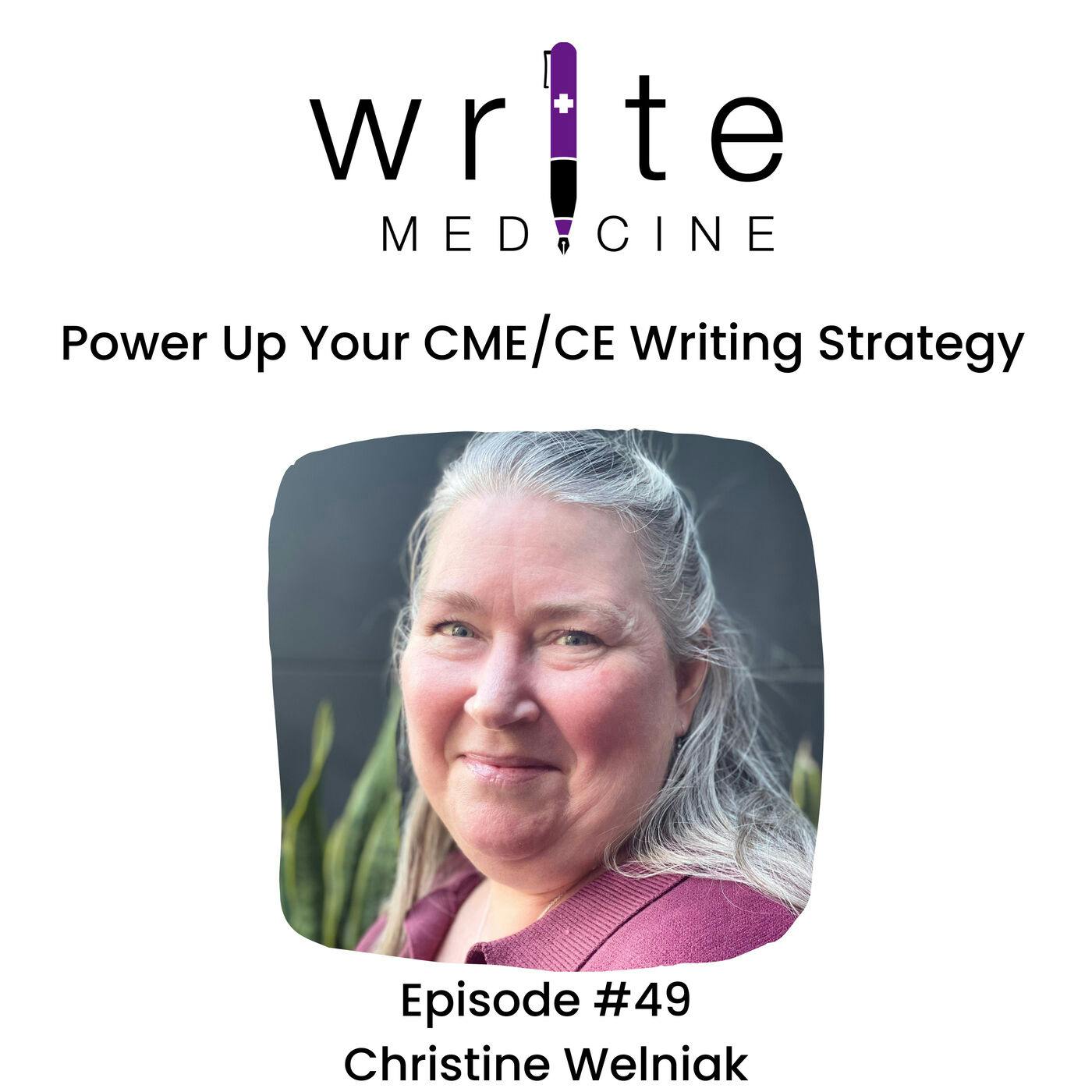
Ep 49Power Up Your CME/CE Writing Strategy with the Art of Negotiation
Christine Welniak is an independent medical writer who specializes in cardiology and diabetes. She values opportunities to develop content that helps healthcare providers learn about new treatments that could improve patient outcomes. Christine contends that "content is king" and is central to producing high-quality CME/CE writing. Learning the art of the pitch in her previous life on Wall Street, Christine is well-equipped to discuss why CME/CE medical writers require skills in negotiation and strategy. Although CME/CE writers are sometimes undervalued in terms of remuneration, it's possible to achieve above-average market rates. Christine observes that writers who do so demonstrate skills above and beyond excellent writing, such as strategy, analysis, or comfort in talking with faculty members. To this end, Christine highlights her top tips for approaching negotiation and empowering yourself to talk about money with ease. Be honest, direct, and listening Define your non-negotiables upfront Learn the language suitable for money conversations Practice getting comfortable talking about money Connect with ChristineLinkedInSupport the show📍Grab the WriteCME Roadmap⭐ Review the podcast🗞️ Biweekly Newsletter with tips and resources to enrich your CME content niche➡️ Join WriteCME Pro for ongoing professional development 🌐 Podcast website🎙️ Share the podcast Mentioned in this episode:Root Cause Analysis Practice LabReady to write needs assessments that go deeper than "clinicians need more education"? Join our Root Cause Analysis Practice Lab on February 19th. You'll learn systems thinking, defensible frameworks, and grant-ready language in 3 hands-on hours. $297 | Applies to WriteCME Pro membership [CTA Button] Save My Spot → https://community.writecmepro.com/root-cause-analysisRoot Case Analysis Practice LabThis podcast uses the following third-party services for analysis: Podtrac - https://analytics.podtrac.com/privacy-policy-gdrp

S5 Ep 48Should You Go Down the Rabbit Hole?
The medical and CME writers I teach often worry about how to rein in a tendency to burrow into the rabbit hole.If you're a medical writer, I'm sure you know what I mean. That tendency to get led into or follow the delicious temptations of information, data, and stories that bear a family resemblance to the project you're working on, but are not quite on track.The stories that are fascinating and feed your mind, but don't necessarily move your project any closer to a conclusion. Like you, I’m up against the challenge of the rabbit hole too. But instead of seeing rabbit holes as something that derails us, perhaps it's possible to view them as gifts. In today's episode, I share a process that accommodates the pleasure of following where the rabbit hole leads and supports the time frame you typically have to do your work. ResourcesThe shape of notesApps to match your note-taking styleReferencing software reviewedConnect with AlexLinkedInWebsiteWatch the podcast on YouTubeSupport the show📍Grab the WriteCME Roadmap⭐ Review the podcast🗞️ Biweekly Newsletter with tips and resources to enrich your CME content niche➡️ Join WriteCME Pro for ongoing professional development 🌐 Podcast website🎙️ Share the podcast Mentioned in this episode:Root Cause Analysis Practice LabReady to write needs assessments that go deeper than "clinicians need more education"? Join our Root Cause Analysis Practice Lab on February 19th. You'll learn systems thinking, defensible frameworks, and grant-ready language in 3 hands-on hours. $297 | Applies to WriteCME Pro membership [CTA Button] Save My Spot → https://community.writecmepro.com/root-cause-analysisRoot Case Analysis Practice LabThis podcast uses the following third-party services for analysis: Podtrac - https://analytics.podtrac.com/privacy-policy-gdrp
Should You Go Down the Rabbit Hole?
Robust Outcomes Frameworks for Effective CME/CE
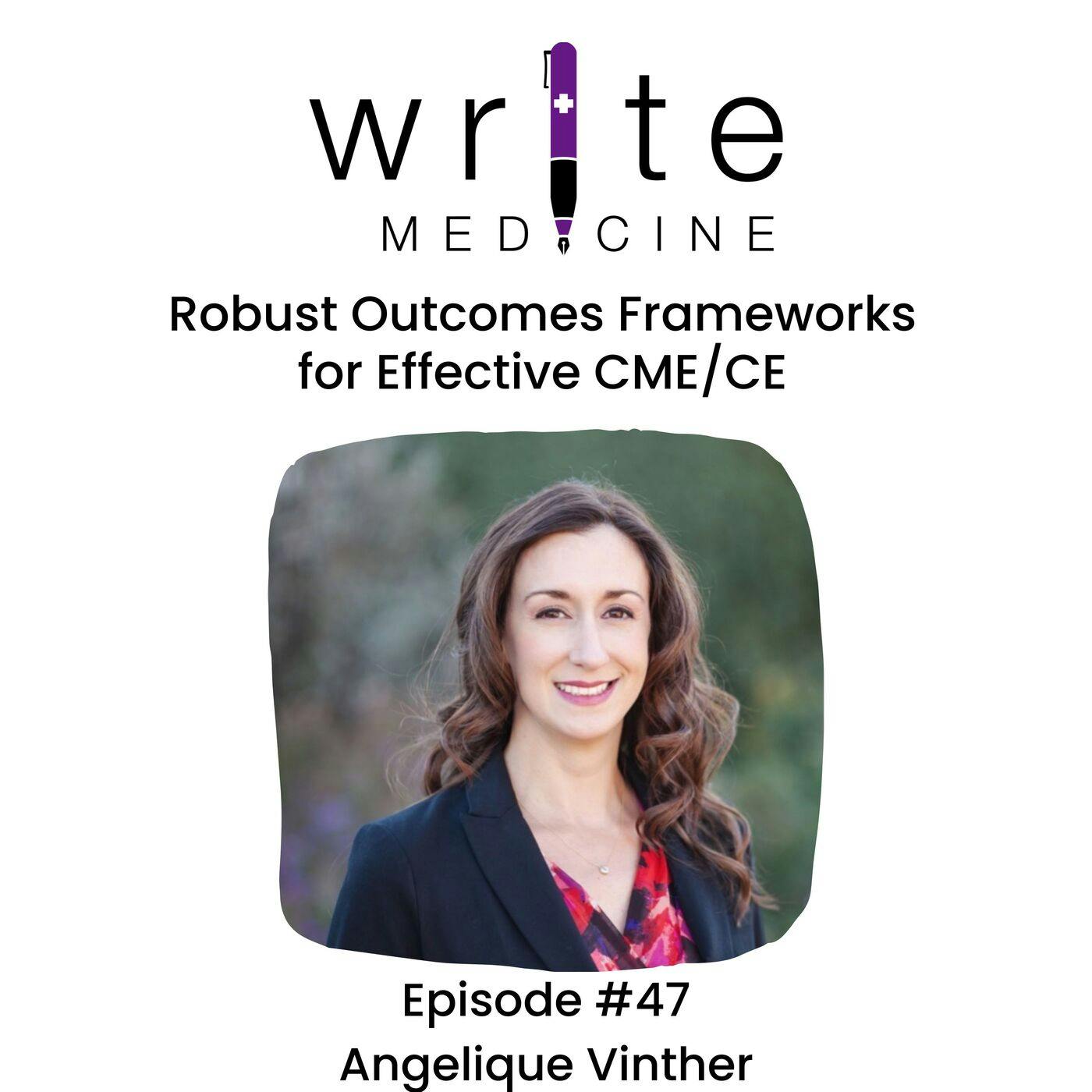
S5 Ep 47Robust Outcomes Frameworks for Effective CME/CE
The CME/CE field has increased its focus on outcomes over the last decade. As a result, outcomes reports now involve a more bespoke process, showcasing more detailed targeted data presented in a visually appealing way. Angelique Vinther CHCP is an independent data and outcomes consultant who has specialized in IME reporting for 14 years. She focuses primarily on data collection and analysis methodologies, test question-writing best practices, and reports that communicate clear messaging and data transparency. In today’s episode of Write Medicine, we discuss best practices that education providers can use to evaluate the effectiveness of their CME/CE programs and how to use outcomes to inform decision-making. We explore solutions to education providers' main challenges in developing robust outcomes frameworks, like establishing an efficient process that allows time to evaluate the quality of feedback and think creatively about activity design. Connect with AngeliqueLinkedInFamiliarity with outcomes is core to writing needs assessments. Next Level Needs Assessments is open for enrollment. You’ll learn how to write lean, agile needs assessments with the help of deliberate practice, peer-to-peer discussion, and expert feedback.Runs April 3-May 12, 2023Ready to level up your needs assessment writing strategy? Learn more. Support the show📍Grab the WriteCME Roadmap⭐ Review the podcast🗞️ Biweekly Newsletter with tips and resources to enrich your CME content niche➡️ Join WriteCME Pro for ongoing professional development 🌐 Podcast website🎙️ Share the podcast Mentioned in this episode:Root Cause Analysis Practice LabReady to write needs assessments that go deeper than "clinicians need more education"? Join our Root Cause Analysis Practice Lab on February 19th. You'll learn systems thinking, defensible frameworks, and grant-ready language in 3 hands-on hours. $297 | Applies to WriteCME Pro membership [CTA Button] Save My Spot → https://community.writecmepro.com/root-cause-analysisRoot Case Analysis Practice LabThis podcast uses the following third-party services for analysis: Podtrac - https://analytics.podtrac.com/privacy-policy-gdrp
How Clinicians Can Pivot to a Fulfilling Career in Medical Writing

S5 Ep 46How Clinicians Can Pivot to a Fulfilling Career in Medical Writing
The content creation process in continuing education for health professionals (CEHP) combines both art and science. As a result, creating content for continuing education attracts people who are synthesizers, information seekers, and creators—like academics, researchers, or health professionals looking for a career change. In EP 46 we explore taking the leap from clinical work to medical writing with Esther Langmack, MD, a medical writer and CME consultant. Esther deliberately practiced her newly acquired skills while working as a clinician and medical director of the CME unit at an academic medical center. Tapping into her natural curiosity, she fostered connections and honed her skills by being open to feedback from experienced colleagues. We talk about the creativity, flexibility, and autonomy that creating education content for health professionals offers and discuss clinicians' specific strengths in CME/CEHP medical writing. Support the show📍Grab the WriteCME Roadmap⭐ Review the podcast🗞️ Biweekly Newsletter with tips and resources to enrich your CME content niche➡️ Join WriteCME Pro for ongoing professional development 🌐 Podcast website🎙️ Share the podcast Mentioned in this episode:Root Cause Analysis Practice LabReady to write needs assessments that go deeper than "clinicians need more education"? Join our Root Cause Analysis Practice Lab on February 19th. You'll learn systems thinking, defensible frameworks, and grant-ready language in 3 hands-on hours. $297 | Applies to WriteCME Pro membership [CTA Button] Save My Spot → https://community.writecmepro.com/root-cause-analysisRoot Case Analysis Practice LabThis podcast uses the following third-party services for analysis: Podtrac - https://analytics.podtrac.com/privacy-policy-gdrp

S5 Ep 45Joint Accreditation: Evolving Best Practices in IPCE
Diana Durham PhD, FACEHP is an accreditation strategist who has worked in CME/CPD since the 1990s. Diana has served in many leadership roles, including for the Veterans Health Administration, U.S. Department of Veterans Affairs. We talk about the accreditation process in general and the evolution of joint accreditation in interprofessional continuing education (IPCE). And we consider how IPCE is evolving and the trends and impacts of accreditation bodies giving hospitals, healthcare systems, specialty societies, and medical schools a mechanism for joint accreditation. Diana shares her perspectives on creative methods of educating all members of the healthcare team such as Schwartz rounds, Project ECHO (Extension for Community Health Outcomes), and simulations. ResourcesVolponeACCMEACCME Standards for Integrity and Independence in Accredited Continuing EducationJoint AccreditationAmerican Council for Pharmacy EducationAmerican Nurses Credentialing CenterAmerican Academy of Physician Assistants Council on Optometric Practitioner Education American Dental AssociationBoard of Certification for the Athletic Trainer Connect with [email protected] with AlexPodcastLinkedInYouTubeSupport the show📍Grab the WriteCME Roadmap⭐ Review the podcast🗞️ Biweekly Newsletter with tips and resources to enrich your CME content niche➡️ Join WriteCME Pro for ongoing professional development 🌐 Podcast website🎙️ Share the podcast Mentioned in this episode:Root Cause Analysis Practice LabReady to write needs assessments that go deeper than "clinicians need more education"? Join our Root Cause Analysis Practice Lab on February 19th. You'll learn systems thinking, defensible frameworks, and grant-ready language in 3 hands-on hours. $297 | Applies to WriteCME Pro membership [CTA Button] Save My Spot → https://community.writecmepro.com/root-cause-analysisRoot Case Analysis Practice LabThis podcast uses the following third-party services for analysis: Podtrac - https://analytics.podtrac.com/privacy-policy-gdrp
Joint Accreditation: Evolving Best Practices in IPCE
Rapid Publishing in a Era of Transparency

S5 Ep 44Rapid Publishing in a Era of Transparency
Medical research has the potential for far-reaching implications for individuals and society. Peer review remains the gold standard to ensure high-quality information. However, traditional journal submission involves an extensive process that is often costly, and time-consuming process. Mark Riotto is the founder and president of The Research Post, a peer-reviewed, open-access publishing channel. Mark shares his insights on medical publishing and his campaign to promote a more visual experience for disseminating clinical data in a timely fashion. Mark considers the barriers to accessible, digestible information and we explore the advantages of the visual medium in an increasingly transparent publishing process.ResourcesThe Nelson Memo: Ensuring Free, Immediate, and Equitable Access to Federally Funded ResearchConnect with MarkTheResearchPost LinkedInFacebook: @theresearchpostConnect with Alex PodcastLinkedInYouTubeSupport the show📍Grab the WriteCME Roadmap⭐ Review the podcast🗞️ Biweekly Newsletter with tips and resources to enrich your CME content niche➡️ Join WriteCME Pro for ongoing professional development 🌐 Podcast website🎙️ Share the podcast Mentioned in this episode:Root Cause Analysis Practice LabReady to write needs assessments that go deeper than "clinicians need more education"? Join our Root Cause Analysis Practice Lab on February 19th. You'll learn systems thinking, defensible frameworks, and grant-ready language in 3 hands-on hours. $297 | Applies to WriteCME Pro membership [CTA Button] Save My Spot → https://community.writecmepro.com/root-cause-analysisRoot Case Analysis Practice LabThis podcast uses the following third-party services for analysis: Podtrac - https://analytics.podtrac.com/privacy-policy-gdrp
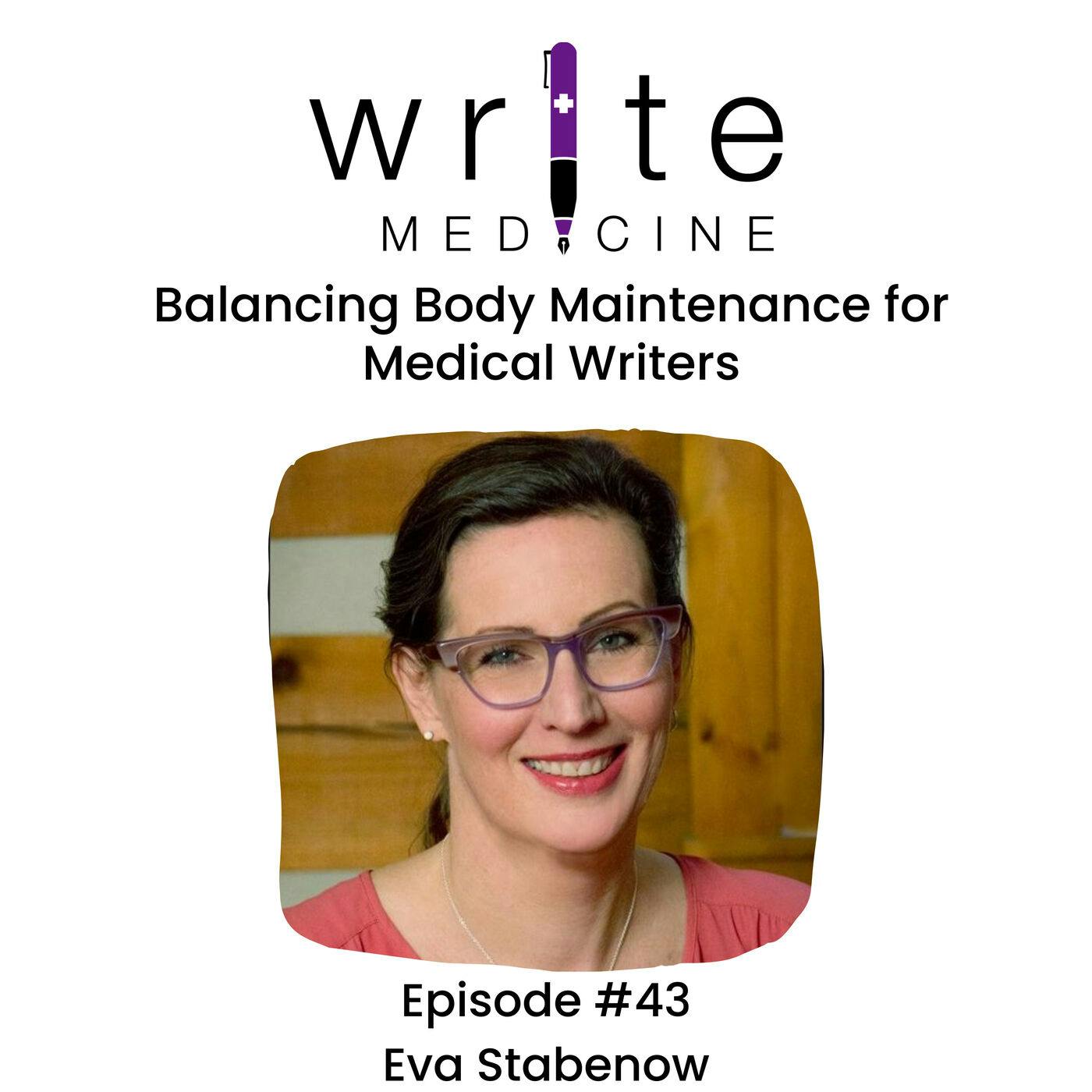
Ep 43Balancing Body Maintenance for Medical Writers
Sedentary lifestyles pose significant well-being challenges to western cultures. For example, prolonged periods at a desk affect posture, mental and physical health, and stress levels. Those of us working in continuing medical education and continuing education for health professionals are no exception to these risks and we can all benefit from a proactive approach to injury prevention. Eva Stabenow, a medical writer and German translator specializing in health and wellness communication, shares her insights with us today. After years of searching Eva found relief from chronic work-related pain by re-patterning her movements with Pilates. When she realized many of her fellow desk workers were facing the same challenges, she set out to help them. Today, in addition to keeping a full-ish writing and translation schedule, she empowers people of all ages and abilities to move better, feel better and live better through targeted 1-1 sessions and affordable online group classes. In addition to helping people understand complex health content using plain language, Eva physically conveys her passion for health and health communication by teaching Pilates—a low-impact activity that balances strength with mobility and flexibility, so that you can move more freely and with more power. We discuss the following topics:✔️ Who benefits from Pilates, and what are those benefits ✔️ Preconceptions of flexibility, mobility, and strength training ✔️ What to look for in a Pilates instructor✔️ Pilates role in bridging the gap between physical therapy and return to regular workoutsResources Is Pilates as Good as Everyone Says? Pilates Method Alliance Pilates Anytime 5 Pilates Exercises for Fibromyalgia Symptoms Connect with EvaYou can find and follow her at Sunroom Pilates. email: [email protected] Eva and mention this podcast to try a free class!Support the show📍Grab the WriteCME Roadmap⭐ Review the podcast🗞️ Biweekly Newsletter with tips and resources to enrich your CME content niche➡️ Join WriteCME Pro for ongoing professional development 🌐 Podcast website🎙️ Share the podcast Mentioned in this episode:Root Cause Analysis Practice LabReady to write needs assessments that go deeper than "clinicians need more education"? Join our Root Cause Analysis Practice Lab on February 19th. You'll learn systems thinking, defensible frameworks, and grant-ready language in 3 hands-on hours. $297 | Applies to WriteCME Pro membership [CTA Button] Save My Spot → https://community.writecmepro.com/root-cause-analysisRoot Case Analysis Practice LabThis podcast uses the following third-party services for analysis: Podtrac - https://analytics.podtrac.com/privacy-policy-gdrp
Balancing Body Maintenance for Medical Writers
Nurture Connection: Tell Them a Story

Ep 41Nurture Connection: Tell Them a Story
Storytelling cultivates authentic connections and inspires curiosity in our audiences. At the same time, arousing emotions can enhance the learning experience in professional development and continuing education scenarios, like continuing medical education/continuing education in the health professions (CME/CEHP). Today with Ben Riggs, author, writing coach, and Senior Communication Specialist for Kettering Health, Write Medicine considers how to use storytelling in the health professional education field. We focus on the importance of understanding the constituent parts of the writing process and understanding audience needs by first defining who they are. Connect with BenLinkedInResourcesRiggs B. Tell Them a Story. Using narrative nonfiction in your everyday writing. NY: Editorial Freelancers Association. WordRake: Writing Professionals on LinkedIn to FollowPepper Content:15 Freelance Writers You Should Follow on Linkedin for Inspiration Clear Writing Q&A Get Started on Your Writing Journey The Importance of Powerful Storytelling in Writing When we were talking about ideas/"leafmold," Ben mentioned an essay he wrote about walking his dog, Lewie. Here's the essay. Ben's recommendations for d books on writing: Elements of Style (Strunk &White) Writing Tools and Help! for Writers (Roy Peter Clark) On Writing Well and Writing to Learn (William Zinsser) The Reader, the Text, the Poem (Louise Rosenblatt) Support the show📍Grab the WriteCME Roadmap⭐ Review the podcast🗞️ Biweekly Newsletter with tips and resources to enrich your CME content niche➡️ Join WriteCME Pro for ongoing professional development 🌐 Podcast website🎙️ Share the podcast Mentioned in this episode:Root Cause Analysis Practice LabReady to write needs assessments that go deeper than "clinicians need more education"? Join our Root Cause Analysis Practice Lab on February 19th. You'll learn systems thinking, defensible frameworks, and grant-ready language in 3 hands-on hours. $297 | Applies to WriteCME Pro membership [CTA Button] Save My Spot → https://community.writecmepro.com/root-cause-analysisRoot Case Analysis Practice LabThis podcast uses the following third-party services for analysis: Podtrac - https://analytics.podtrac.com/privacy-policy-gdrp
Find Your Writing Voice: BONUS Episode

Ep 42Find Your Writing Voice: BONUS Episode
bonusIn this bonus episode of Write Medicine I talk with Ben Riggs about writing voice. Ben is Senior Communication Specialist for Kettering Health and author of Tell Them A Story. He shares insights on three components that contribute to writing voice: level of formality, syntax and use of metaphor.Connect with BenLinkedInResourcesRiggs B. Tell Them a Story. Using narrative nonfiction in your everyday writing. NY: Editorial Freelancers Association. WordRake: Writing Professionals on LinkedIn to FollowPepper Content:15 Freelance Writers You Should Follow on Linkedin for InspirationClear Writing Q&A Get Started on Your Writing JourneyThe Importance of Powerful Storytelling in WritingWhen we were talking about ideas/"leafmold," Ben mentioned an essay he wrote about walking his dog, Lewie. Here's the essay. Ben's recommendations for d books on writing: Elements of Style (Strunk &White) Writing Tools and Help! for Writers (Roy Peter Clark) On Writing Well and Writing to Learn (William Zinsser) The Reader, the Text, the Poem (Louise Rosenblatt) Support the show📍Grab the WriteCME Roadmap⭐ Review the podcast🗞️ Biweekly Newsletter with tips and resources to enrich your CME content niche➡️ Join WriteCME Pro for ongoing professional development 🌐 Podcast website🎙️ Share the podcast Mentioned in this episode:Root Cause Analysis Practice LabReady to write needs assessments that go deeper than "clinicians need more education"? Join our Root Cause Analysis Practice Lab on February 19th. You'll learn systems thinking, defensible frameworks, and grant-ready language in 3 hands-on hours. $297 | Applies to WriteCME Pro membership [CTA Button] Save My Spot → https://community.writecmepro.com/root-cause-analysisRoot Case Analysis Practice LabThis podcast uses the following third-party services for analysis: Podtrac - https://analytics.podtrac.com/privacy-policy-gdrp
Multifaceted Dynamic Patient Cases in CME/CE

S5 Ep 40Multifaceted Dynamic Patient Cases in CME/CE
The Accreditation Council for Continuing Medical Education (ACCME) encourages the inclusion of the patient perspective within CME activities. And patient cases are a great way to meet this recommendation.Allison Armagan, Pharm.D. a content and education director specializing in creating interactive patient cases, joins me in this episode to talk about how to create multifaceted, dynamic patient cases for education activities. She talks about how targeted patient cases provide ways for clinicians to experience a "real-life" scenario, allow them to practice their skills in a consequence-free environment, address patient needs, and identify gaps in their knowledge and skills.Designing patient cases involves a LOT of research, starting with patient advocacy websites, clinical guidelines, and recent literature. Allison emphasizes the importance of understanding the patient's voice, in addition to the disease state information, and of the power of the narrative. to engage audiences by telling a memorable and enjoyable story. DisclaimerThe opinions expressed within the content are solely the author's and do not reflect the opinions and beliefs of Pfizer.ResourcesEpisode 4 of Write Medicine focuses on writing patient cases with Scott Kober. Allison mentioned I’m Aware That I’m Rare, a podcast on pulmonary hypertension.Connect with AllisonLinkedInConnect with AlexLinkedInWebsiteSupport the show📍Grab the WriteCME Roadmap⭐ Review the podcast🗞️ Biweekly Newsletter with tips and resources to enrich your CME content niche➡️ Join WriteCME Pro for ongoing professional development 🌐 Podcast website🎙️ Share the podcast Mentioned in this episode:Root Cause Analysis Practice LabReady to write needs assessments that go deeper than "clinicians need more education"? Join our Root Cause Analysis Practice Lab on February 19th. You'll learn systems thinking, defensible frameworks, and grant-ready language in 3 hands-on hours. $297 | Applies to WriteCME Pro membership [CTA Button] Save My Spot → https://community.writecmepro.com/root-cause-analysisRoot Case Analysis Practice LabThis podcast uses the following third-party services for analysis: Podtrac - https://analytics.podtrac.com/privacy-policy-gdrp
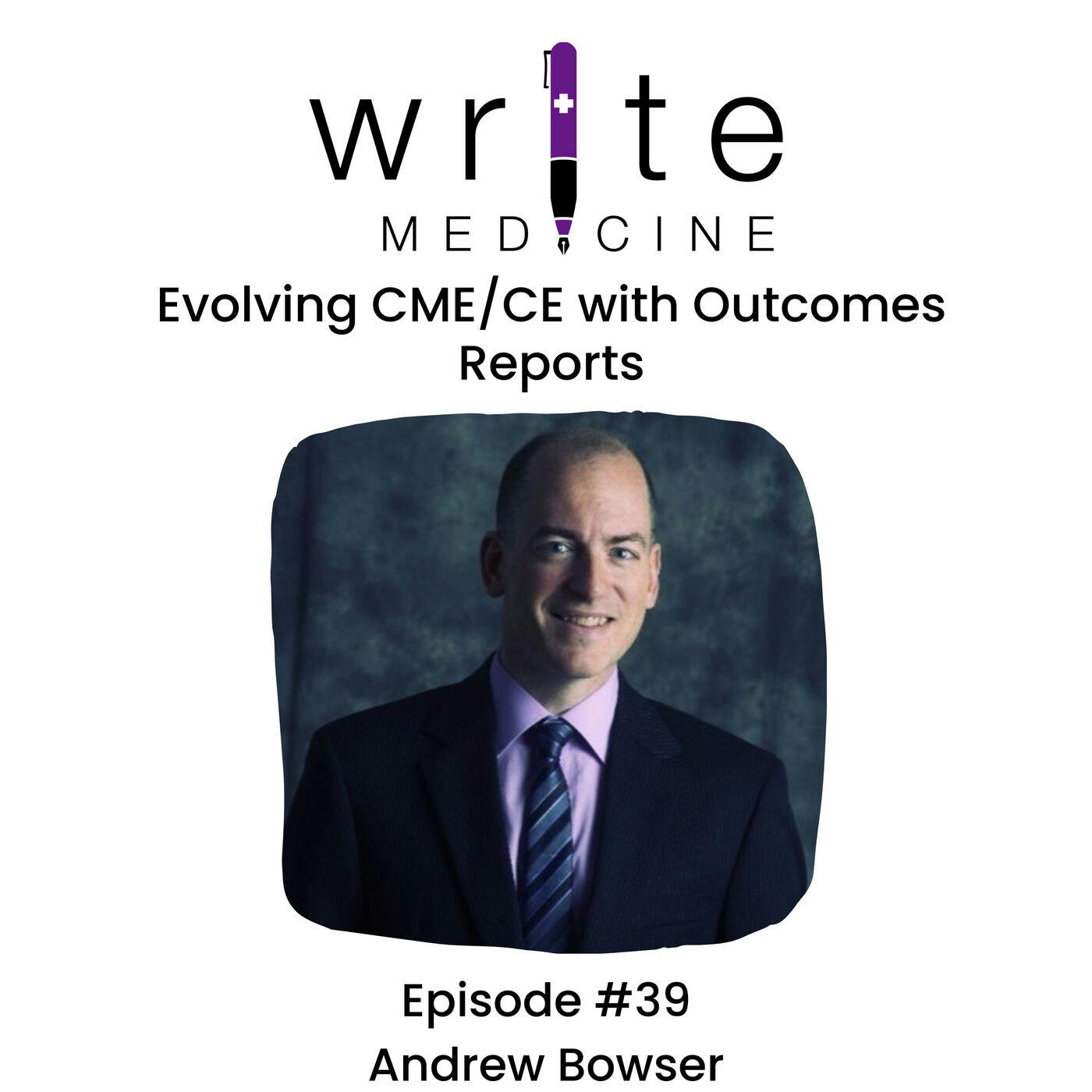
S5 Ep 39Evolving CME/CE with Outcomes Reports
Providers of accredited education for health professionals need to demonstrate that education activities have changed learner behavior and healthcare quality for the better. One of the best ways to show positive change is via outcomes reports. In episode 39 of Write Medicine, Medical Writer and Certified CME Professional Andrew Bowser ELS, CHCP talks about outcomes. Andy is the owner and lead developer with IconCME, a content development and consulting firm in Philadelphia. We discuss the format of reports, who the audiences are for outcomes reports, and how the results can help education evolve and improve. Andy describes the evolution of CME, outlines Moore’s Outcomes Framework for evaluating outcomes, and explores the increasing oversight of what constitutes accredited CME. We discuss the importance of narrative and telling a story within outcomes reporting and he recommends using visual cues to simplify the design and improve comprehension. He says, “there's a lot of interesting and creative ways you can portray the data and help people comprehend the outcomes of an activity.”The following acronyms are mentioned in our conversation. CME = Continuing Medical Education CE = Continuing Education CPD = Continuing Professional Development Connect with AndyIconCMELinkedInConnect with AlexLinkedInWebsiteSupport the show📍Grab the WriteCME Roadmap⭐ Review the podcast🗞️ Biweekly Newsletter with tips and resources to enrich your CME content niche➡️ Join WriteCME Pro for ongoing professional development 🌐 Podcast website🎙️ Share the podcast Mentioned in this episode:Root Cause Analysis Practice LabReady to write needs assessments that go deeper than "clinicians need more education"? Join our Root Cause Analysis Practice Lab on February 19th. You'll learn systems thinking, defensible frameworks, and grant-ready language in 3 hands-on hours. $297 | Applies to WriteCME Pro membership [CTA Button] Save My Spot → https://community.writecmepro.com/root-cause-analysisRoot Case Analysis Practice LabThis podcast uses the following third-party services for analysis: Podtrac - https://analytics.podtrac.com/privacy-policy-gdrp
Evolving CME/CE with Outcomes Reports
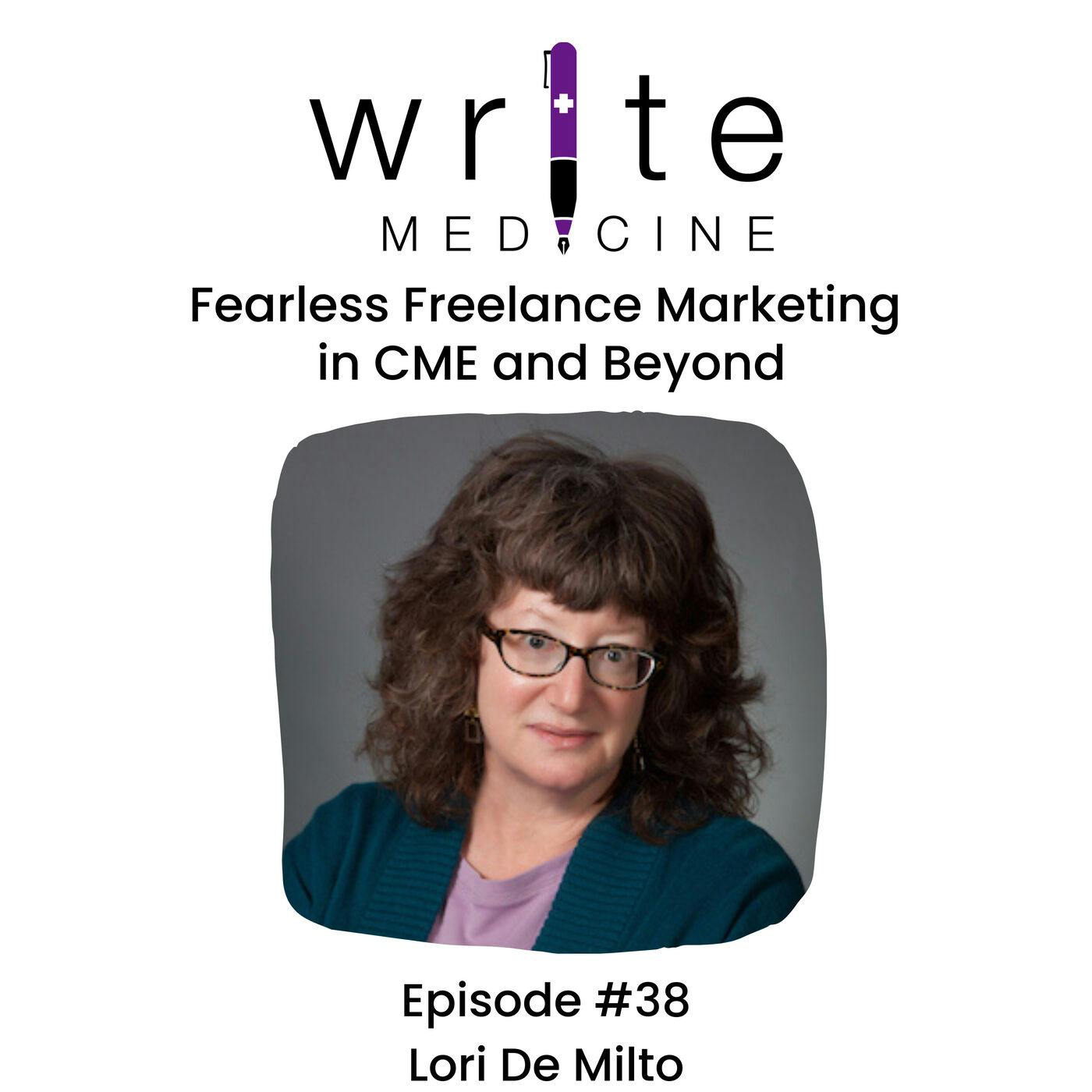
S5 Ep 38Fearless Freelance Marketing in CME Writing and Beyond
Are you fearless in your marketing? If not, I got good news for you. Lori De Milto, author of The fearless Freelancer is talking with me on this episode of Write Medicine. We explore effective marketing for freelance writers and others working in medical communications, the importance of cultivating a freelance mindset, and how to embody grit, resilience, and confidence in your marketing. Wherever you are on your marketing journey, Lori will reassure you that you have the power to make your freelance future brighter by building relationships through networking. If you're in a marketing slump, or you don't know where to start, listen to the podcast, buy the book, and you will feel like and be in actuality, a fearless freelancer. Lori highlights the importance of strategic networking to create work opportunities and stay front of mind for prospective clients. As we all know, LinkedIn is key to strategic networking. Lori explains the value of an optimized LinkedIn account as a networking tool and for researching potential clients.We touch on the importance of adopting a growth mindset approach that includes grit, resilience, and confidence. Lori reassures us we all have the power to make our freelance future brighter by building relationships through networking.Connect with Lorie: [email protected] MarketerLori De Milto Writer for Rent LLCLinkedIn Ready to level up your needs assessment writing strategy?In Next Level Needs Assessments you’ll learn how to write lean, agile needs assessments with the help of deliberate practice, peer-to-peer discussion, and expert feedback.Doors close January 31, 2023.✴️ Grab your spot.✴️Support the show📍Grab the WriteCME Roadmap⭐ Review the podcast🗞️ Biweekly Newsletter with tips and resources to enrich your CME content niche➡️ Join WriteCME Pro for ongoing professional development 🌐 Podcast website🎙️ Share the podcast Mentioned in this episode:Root Cause Analysis Practice LabReady to write needs assessments that go deeper than "clinicians need more education"? Join our Root Cause Analysis Practice Lab on February 19th. You'll learn systems thinking, defensible frameworks, and grant-ready language in 3 hands-on hours. $297 | Applies to WriteCME Pro membership [CTA Button] Save My Spot → https://community.writecmepro.com/root-cause-analysisRoot Case Analysis Practice LabThis podcast uses the following third-party services for analysis: Podtrac - https://analytics.podtrac.com/privacy-policy-gdrp
Fearless Freelance Marketing in CME Writing and Beyond
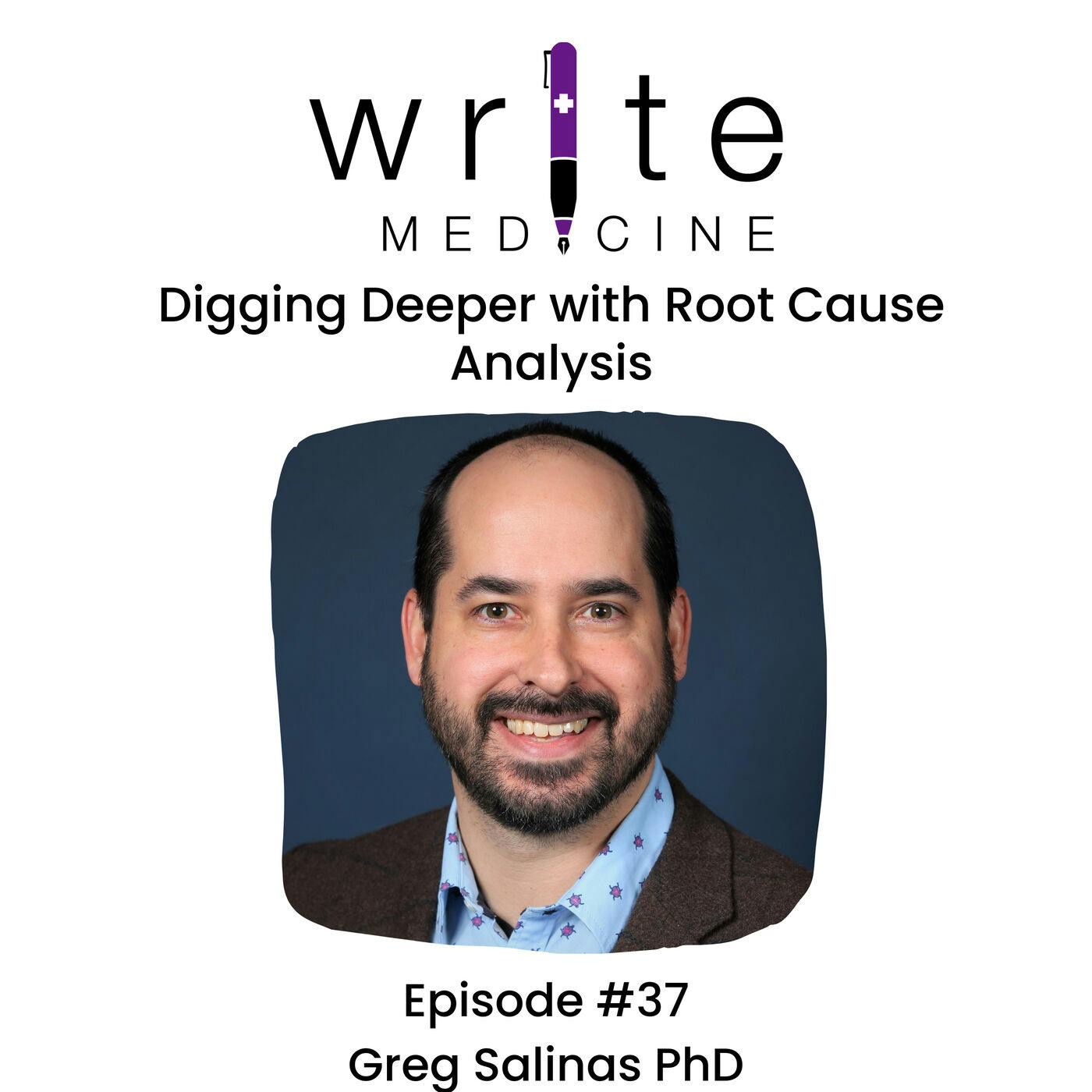
S5 Ep 37Digging Deeper with Root Cause Analysis
Continuing medical education planning usually includes a needs assessment. But sometimes it’s pretty challenging to get to the root cause of clinical or professional practice gaps, because they are often multifactorial.That’s where root cause analysis comes in.In episode 37 of Write Medicine, Greg Salinas, PhD, President of CE Outcomes, discusses his unique approach to needs assessments using root cause analysis. He emphasizes that the literature tells us that practice gaps exist (the what), but that we learn more about why gaps exist through direct outreach to clinicians and other stakeholders.We explore what root cause analysis involves, its benefits for CME needs assessments, and how to approach it using conversational interviews and qualitative analysis.Support the show📍Grab the WriteCME Roadmap⭐ Review the podcast🗞️ Biweekly Newsletter with tips and resources to enrich your CME content niche➡️ Join WriteCME Pro for ongoing professional development 🌐 Podcast website🎙️ Share the podcast Mentioned in this episode:Root Cause Analysis Practice LabReady to write needs assessments that go deeper than "clinicians need more education"? Join our Root Cause Analysis Practice Lab on February 19th. You'll learn systems thinking, defensible frameworks, and grant-ready language in 3 hands-on hours. $297 | Applies to WriteCME Pro membership [CTA Button] Save My Spot → https://community.writecmepro.com/root-cause-analysisRoot Case Analysis Practice LabThis podcast uses the following third-party services for analysis: Podtrac - https://analytics.podtrac.com/privacy-policy-gdrp
Digging Deeper with Root Cause Analysis
Conscious Communication in CME Content Creation

S5 Ep 36Conscious Communication in CME Content Creation
Crystal Herron, PhD, ELS founder of Redwood Ink, is an editor, educator and coach. In this episode, she shares her insights into building relationships through supportive, mindful collaboration. Crystal explains how cultivating a gentle and informative manner for feedback promotes longevity with clients. This mindful approach is evident in her informative website resources and newsletter, which are well worth checking out. Crystal advises cultivating a communication skills mindset, with self-awareness and self-regulation at the center through the following: Slowing down when gathering information Allowing for curiosity Meditation Journaling, using the 5-minute morning and evening feedback practice (here's how Tim Ferriss uses this practice) Crystal also counsels us to consider the emotions behind our writing and content creation. Understanding how our audience feels, not just their interests or knowledge base, allows us to form stronger connections with readers (and learners). Achieving this connection requires going beyond the text and cultivating direct interactions with readers and learners. Resources for Developing Communication Skills Emotional Intelligence by Daniel Goleman Nonviolent Communication: A language of life by Marshall Rosenberg The 15 Commitments of Conscious Leadership by Jim Dethmer Mindset by Carol Dweck Difficult Conversations by Douglas Stone, Bruce Patton and Sheila Heen Atlas of the Heart by Brené Brown Connect with CrystalLinkedInWebsiteNewsletterFreebies Crystal is offering a 5% discount for her Scientific Writing Masterclass . Next session starts January 30. Registration closes January 23. The code does not expire.Get the CodeEditing Software Text Expander Shortcuts: save time with snippetsAutotext is built into Microsoft WordSponsorsCMEpaloozaWriteCME ProProduction TeamHost: Alexandra Howson PhDShow notes: Rhona Fraser BSc BVMSManagement: Golden Goose CreativeSupport the show📍Grab the WriteCME Roadmap⭐ Review the podcast🗞️ Biweekly Newsletter with tips and resources to enrich your CME content niche➡️ Join WriteCME Pro for ongoing professional development 🌐 Podcast website🎙️ Share the podcast Mentioned in this episode:Root Cause Analysis Practice LabReady to write needs assessments that go deeper than "clinicians need more education"? Join our Root Cause Analysis Practice Lab on February 19th. You'll learn systems thinking, defensible frameworks, and grant-ready language in 3 hands-on hours. $297 | Applies to WriteCME Pro membership [CTA Button] Save My Spot → https://community.writecmepro.com/root-cause-analysisRoot Case Analysis Practice LabThis podcast uses the following third-party services for analysis: Podtrac - https://analytics.podtrac.com/privacy-policy-gdrp
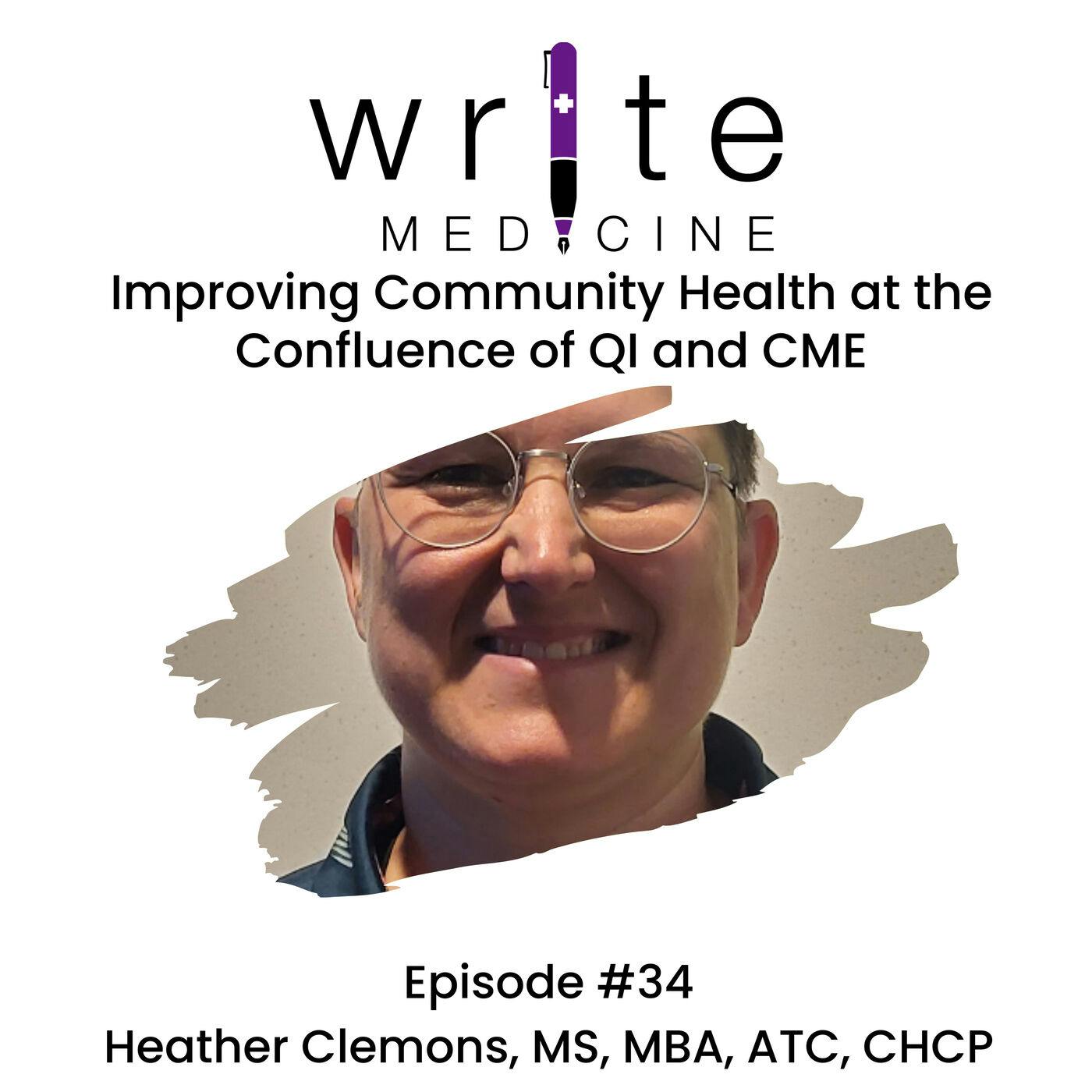
S4 Ep 33Improving Community Health at the Confluence of QI and CME
Community health improvement and improving healthcare quality are both Accreditation Council for Continuing Medical Education (ACCME) Accreditation with Commendation criteria.In this episode of Write Medicine, Heather Clemons, MS, MBA, ATC, CHCP shared how she and her colleagues at Sharp Grossmont Hospital, Mesa, California, mobilized quality improvement (QI), a community needs assessment, and continuing medical education (CME) to improve community health and clinical care.As Heather describes, there are many facets to QI, including clinical analytics at the system level, performance improvement CME, and patient safety, which involves specialists to determine root cause analysis—which we’ll be exploring in Season 5 of the podcast.We discuss how diversity, equality, and equity emerged as goals for Sharp Healthcare via a combination of an employee grassroots movement, California legislation, and a health system culture underpinned by an awareness of the social determinants of health and unconscious bias or stigma.The confluence of these factors allowed Heather and her colleagues to build a unique CME and QI process, that included: Regular discussions in different formats to create a safe learning space A tri-annual community needs assessment An established process to validate gap analyses Proactively addressing community and clinician education needs through CME As Heather says, improving community health and clinical care involves,meeting people where they’re at, seeing them for who they are, meeting their needs the way they need them met. And that’s different for everybody.Resources U.S. Household Food Security Survey Module California Medical Association resources on Cultural & Linguistic Competency (AB1195) and Implicit Bias (AB241) California Dignity in Pregnancy and Childbirth Act (SB 464): resources on implicit bias and reproductive justice Community Health Needs Assessments Sharp HealthCare/San Diego Challenges and Opportunities in Healthcare Leadership (chapter: Sharp HealthCare Food Insecurity Education Initiative, Raine Arndt-Couch, Heather L. Clemons, Jeonathan Rodriguez Roman, and Jillian Warriner) AbbreviationsERAS: Enhanced recovery after surgery protocolsABIM: American Board of Internal MedicinePI-CME: Performance improvement continuing medical educationSupport the show📍Grab the WriteCME Roadmap⭐ Review the podcast🗞️ Biweekly Newsletter with tips and resources to enrich your CME content niche➡️ Join WriteCME Pro for ongoing professional development 🌐 Podcast website🎙️ Share the podcast Mentioned in this episode:Root Cause Analysis Practice LabReady to write needs assessments that go deeper than "clinicians need more education"? Join our Root Cause Analysis Practice Lab on February 19th. You'll learn systems thinking, defensible frameworks, and grant-ready language in 3 hands-on hours. $297 | Applies to WriteCME Pro membership [CTA Button] Save My Spot → https://community.writecmepro.com/root-cause-analysisRoot Case Analysis Practice LabThis podcast uses the following third-party services for analysis: Podtrac - https://analytics.podtrac.com/privacy-policy-gdrp
Improving Community Health at the Confluence of QI and CME
The Future of Learning is Sound: Podcasts in Continuing Healthcare Education

S4 Ep 32The Future of Learning is Sound: Podcasts in Continuing Healthcare Education
We're getting a little meta here on Write Medicine—this is a podcast episode on the value of podcasts 😉Did you know that podcasts are increasing in popularity in continuing healthcare education?As I was researching this episode, I was astounded to see the enormous growth in the number of continuing education podcasts, and the number of clinicians using podcasts as part of their formal and informal learning. As of 2019, the last year for which I could find figures, there were 200 medical podcasts available online covering 19 specialties and almost 14,000 episodes. And while many podcasts now offer CME and maintenance of certification credits through organizations like the American College of Physicians and the Society of Hospital Medicine, they are still relatively under-used as a CME format.On this episode of Write Medicine I talk with Mike Donoghue, an enthusiastic podcast consumer who co-founded ConveyMED after recognizing that podcasts offer a great way to learn. As he put it (paraphrasing , when your eyes are busy, your mind is free. We talk about how the ConveyMED platform delivers a novel podcast experience combining visual images alongside an audio experience, and touch on the challenges in setting up a podcast. ConveyMED partners with medical associations to provide content expertise and guides the design process to ensure a self-directed experience that includes: Conversational style discussions between experts Problem-centered content Material that is framed into short, accessible modules As Mike explains, This is how the mobile generation wants their content. So if you're an association, an academic medical centre, or another content creator and you're not doing podcasts, I would highly encourage you to think about it. Connect with Mike: [email protected] the show📍Grab the WriteCME Roadmap⭐ Review the podcast🗞️ Biweekly Newsletter with tips and resources to enrich your CME content niche➡️ Join WriteCME Pro for ongoing professional development 🌐 Podcast website🎙️ Share the podcast Mentioned in this episode:Root Cause Analysis Practice LabReady to write needs assessments that go deeper than "clinicians need more education"? Join our Root Cause Analysis Practice Lab on February 19th. You'll learn systems thinking, defensible frameworks, and grant-ready language in 3 hands-on hours. $297 | Applies to WriteCME Pro membership [CTA Button] Save My Spot → https://community.writecmepro.com/root-cause-analysisRoot Case Analysis Practice LabThis podcast uses the following third-party services for analysis: Podtrac - https://analytics.podtrac.com/privacy-policy-gdrp
Cultivating a Visual Mindset: Infographics in Continuing Healthcare Education
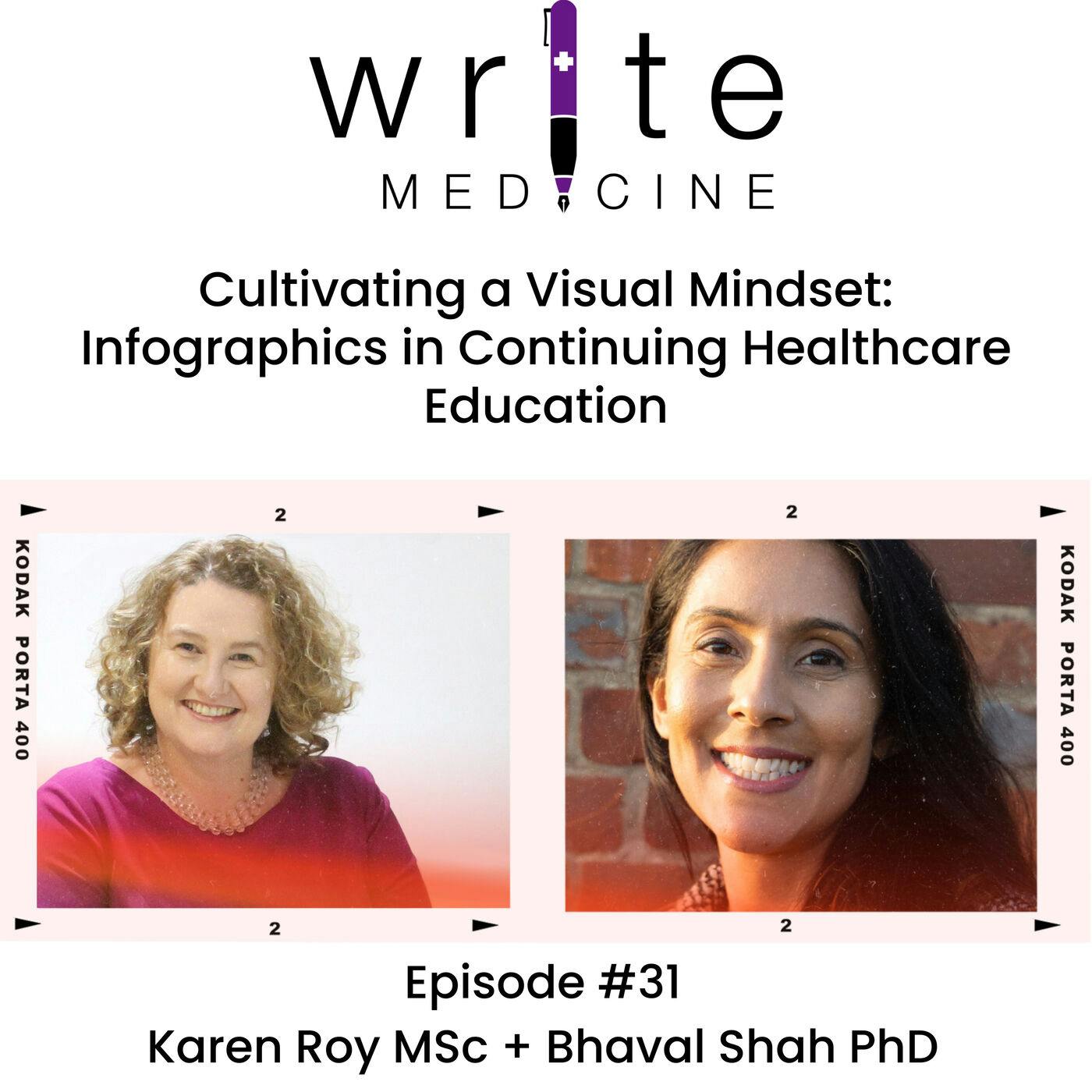
S4 Ep 31Cultivating a Visual Mindset: Infographics in Continuing Healthcare Education
Infographics offer a powerful tool in our education armamentarium. We process images much faster than we do text, so visual communication saves time and allows more effective data retention. On this episode of Write Medicine, I'm joined by Bhaval Shah PhD and Karen Roy MSc—co-founders of Infograph-Ed, a company delivering engaging visual communications in healthcare. We talk about the power of visual communications in continuing healthcare education, how to develop a visual mindset and current trends in visual communications. We also discuss the design process and how to create effective visual communication through the following strategies: Communicate a value proposition Identify what your audience is looking for Deliver accessible member-driven content Evaluate your resources Analyze feedback to focus content on the audience's requirements. Resources from Infograph-Ed and Others4-step plan: Designing Information with ImpactBetter Ways to Present Information and DataColor toolNightingale viz McCandless D. Information is Beautiful. 2000. Collins. Kirk A. Visualizing DatawebsiteConnect with Infograph-EdKaren Roy, CEO and Co-Founder: [email protected] the show📍Grab the WriteCME Roadmap⭐ Review the podcast🗞️ Biweekly Newsletter with tips and resources to enrich your CME content niche➡️ Join WriteCME Pro for ongoing professional development 🌐 Podcast website🎙️ Share the podcast Mentioned in this episode:Root Cause Analysis Practice LabReady to write needs assessments that go deeper than "clinicians need more education"? Join our Root Cause Analysis Practice Lab on February 19th. You'll learn systems thinking, defensible frameworks, and grant-ready language in 3 hands-on hours. $297 | Applies to WriteCME Pro membership [CTA Button] Save My Spot → https://community.writecmepro.com/root-cause-analysisRoot Case Analysis Practice LabThis podcast uses the following third-party services for analysis: Podtrac - https://analytics.podtrac.com/privacy-policy-gdrp