
Write Medicine
312 episodes — Page 4 of 7

S6 Ep 83Pawsitive Penmanship: How Veterinarians Can Thrive in the World of Medical Writing
Show NotesWhat existing skills and competencies do you know you have for sure? How can you put those skills to use to find new professional opportunities? Understanding and acknowledging your skills is crucial for building confidence and pursuing new professional opportunities. My guest today is JoAnna Pendergrass DVM, a veterinarian turned medical writer who has built a successful solo business creating content focused on pet health and educating pet parents. If you have participated in the freelance panel offered by the University of Chicago Professional Certificate Program in Medical Writing, you’ll recognize JoAnna. Today she shares the catalysts that triggered her transition from veterinary practice to medical writing, the challenges she faced in making this shift, and how she found solutions to those challenges.If you are a vet thinking of medical writing as a side hustle or alternative career, you’re going to want to listen to this episode. It’s jam-packed with tips and resources to support your medical writing journey. We talk about the importance of doing the internal work to clarify what brings you joy and to identify your current skills and competencies, how to build your business in a way that works for your life, and the importance of finding other vets who have made the shift into medical writing—people who speak your language.Time Stamps:(03:39) - Introducing JoAnna(07:40) - Her next steps and the challenges she navigated in shifting into medical writing(12:22) - JoAnna’s perspective on the field itself as she moved from a postdoc context into medical writing(14:02) - Her experience with agency work(17:29) - How JoAnna faced challenges(22:34) - How she found community with other veterinary medical writers(24:18) The impact of finding a community who spoke her language(24:50) The skills she brought from veterinary training to medical writing(27:59) What has surprised her about medical writing(31:50) JoAnna’s advice for vets thinking about shifting into medical writing(37:52) Her final thoughts on building a successful and effective business that works for your lifeClick Here for the TranscriptResourcesSCOREAbout JoAnnaJoAnna Pendergrass, DVM, is a veterinarian and freelance medical writer. She has been a medical writer for over 10 years and started her freelance medical communication company, JPen Communications, in 2016. JoAnna is passionate about pet owner education. Through her writing, she seeks to fill in the gap between what the veterinarian says and what the pet parent understands.Connect with JoAnnaLinkedInJPen CommunicationsAbout Write MedicineHosted by Alexandra Howson PhD, CHCPProduced by Golden Goose Creative📰 Want more tips and tools from Alex and podcast guests? Subscribe to the newsletter. Twice a month from me to you. Biweekly Newsletter📍 Grab your WriteCME Roadmap! Get access to this complimentary ebook, designed to help you break into CME, find clients, and hone your craft.➡️ Ready for skills, scaffolding, and support? Join WriteCME Pro🎙️ Know someone who would love this podcast? Share the podcast☕ Want to say thanks? Buy me a Coffee Mentioned in this episode:Root Cause Analysis Practice LabReady to write needs assessments that go deeper than "clinicians need more education"? Join our Root Cause Analysis Practice Lab on February 19th. You'll learn systems thinking, defensible frameworks, and grant-ready language in 3 hands-on hours. $297 | Applies to WriteCME Pro membership [CTA Button] Save My Spot → https://community.writecmepro.com/root-cause-analysisRoot Case Analysis Practice LabThis podcast uses the following third-party services for analysis: Podtrac - https://analytics.podtrac.com/privacy-policy-gdrp
Pawsitive Penmanship: How Veterinarians Can Thrive in the World of Medical Writing

S6 Ep 82The AI Revolution: How Generative Models are Transforming CME/CPD Content Creation
Show NotesAre you angsting over the potential impact of generative AI on your work? Are you hyper-dialed into ethical considerations around the potential for copyright infringement, data ownership, and authorship when using generative AI tools like ChatGPT? Whatever your questions or concerns are about generative AI, this technology is poised to transform how we create continuing education content for health professionals. Today’s episode is the first in a 2-part series of episodes that focus on writing, reasoning, and the ethical considerations surrounding generative AI. My guest is Núria Negrao PhD, a medical writer specializing in CME/CPD and a generative AI enthusiast who's been playing with ChatGPT since it burst onto the horizon in 2022.We review different ways to use gen-AI tools like Bing and Bard for tasks like summarization and identifying key points, and touch on copyright issues, using OpenAI's API, and how to use gen-AI to create formulas that support scientific writing. And we also explore the value of bringing a human perspective and cultural knowledge into the writing and content creation process and the potential benefits and legal challenges of using AI tools, like ChatGPT. Time Stamps:(03:30) - Introducing Núria(07:06) - The questions she was tinkering with and asking in the early phases of Generative AI(10:10) - Her thoughts on navigating the GenAI landscape for beginners(12:50) - Practical use cases of Generative AI implementation(17:18) - Handling the client conversation around using GenAI(22:50) - Listener Question: Around legal and ethical implications for submitting your own text for analysis by generative AI(29:11) - Exploring the dangers of using Generative AI as our collaborators Click Here for the TranscriptResourcesAPI = application programming interfaceAbout GuestNúria is a medical writer in the continuing education field. Núria brings her scientific training as well as her vast experience in teaching effective science and medical communication to every project, helping craft engaging and effective educational experiences that support, inspire, and motivate learners.Connect with NúriaLinkedInGrab Your Gen-AI CheatsheetAbout Write MedicineHosted by Alexandra Howson PhD, CHCPProduced by Golden Goose Creative📰 Want more tips and tools from Alex and podcast guests? Subscribe to the newsletter. Twice a month from me to you. Biweekly Newsletter📍 Grab your WriteCME Roadmap! Get access to this complimentary ebook, designed to help you break into CME, find clients, and hone your craft.➡️ Ready for skills, scaffolding, and support? Join WriteCME Pro🎙️ Know someone who would love this podcast? Share the podcast☕ Want to say thanks? Buy me a Coffee Mentioned in this episode:Root Cause Analysis Practice LabReady to write needs assessments that go deeper than "clinicians need more education"? Join our Root Cause Analysis Practice Lab on February 19th. You'll learn systems thinking, defensible frameworks, and grant-ready language in 3 hands-on hours. $297 | Applies to WriteCME Pro membership [CTA Button] Save My Spot → https://community.writecmepro.com/root-cause-analysisRoot Case Analysis Practice LabThis podcast uses the following third-party services for analysis: Podtrac - https://analytics.podtrac.com/privacy-policy-gdrp
The AI Revolution: How Generative Models are Transforming CME/CPD Content Creation

S6 Ep 81The Power of Reinforcement in CME/CE: Understanding Knowledge Competence and Self-efficacy in Learning
Show NotesAre you running correlation analysis in your education activity and program evaluation? Are you having conversations with your colleagues, as listener Natalie Goldberg is, about how access to practice data is potentially redefining how we think about Moores outcomes at levels 5, 6, and 7?In part 1 of this 2-part series of conversations with Katie Lucero Ph.D., Vice President, Audience, Analytics, Outcomes & Insights at Medscape we began to open up the black box that houses the relationship between self-efficacy, commitment to change, and intent to change.In part 2, we focus on how access to health data is evolving and what this means for measuring outcomes, the power of reinforcement and what that looks like, and tips for enhancing outcomes measures and strategies for measuring the impact of education programs.Time Stamps:(02:26) - The relationship between self-efficacy and commitment to change(05:37) - Unpacking the concept of commitment to change(10:09) - Listener Question: Are the definitions of what constitutes Moore’s Levels changing or evolving(12:28) - The research Katie has been doing with Don Moore(16:26) - Her sense of how much correlation people are doing in this field(18:23) - Practical steps to optimize available resources for enhanced outcome measurement in education programs(22:02) - What she is seeing in the future that excites her in terms of outcomes(23:55) - How to stay in touch with Katie and her workClick Here for the Transcript ResourcesLucero KS, Williams B, Moore DE Jr PhD. The Emerging Role of Reinforcement in the Clinician's Path from Continuing Education to Practice. J Cont Ed Health Prof. Nov 14, 2023.Alliance Podcast. ‘Assessing Assessments.’ Jim Morgante, PhDAssessing Assessments: Are your questions any good? Alliance Annual Conference, 2023. Jason Olivieri, MPH, Jim Morgante, PhDAbout KatieAs Vice President at Medscape, Katie leads content marketing, analytics, outcomes & insights. Katie previously was PI and lead evaluator on federal grants and local contracts, directed QI-CME and health outcomes studies, and evaluated public health programs at the CDC. Katie was named 2020 Brian P. Russell CME Professional of the Year. She earned a PhD at Auburn University in Human Development.Connect with Katieemail: [email protected]💥 Black Friday Blowout: Details HereAbout Write MedicineHosted by Alexandra Howson PhD, CHCPProduced by Golden Goose Creative📍Grab the WriteCME Roadmap📰 Want more tips and tools from Alex and podcast guests? Subscribe to the newsletter. Twice a month from me to you. Biweekly Newsletter➡️ Grab your WriteCME Roadmap! Get access to this complimentary ebook, designed to help you break into CME, find clients, and hone your craft.➡️ Ready for skills, scaffolding, and support? Join WriteCME Pro🎙️ Know someone who would love this podcast? Share the podcast☕ Want to say thanks? Buy me a Coffee Mentioned in this episode:Root Cause Analysis Practice LabReady to write needs assessments that go deeper than "clinicians need more education"? Join our Root Cause Analysis Practice Lab on February 19th. You'll learn systems thinking, defensible frameworks, and grant-ready language in 3 hands-on hours. $297 | Applies to WriteCME Pro membership [CTA Button] Save My Spot → https://community.writecmepro.com/root-cause-analysisRoot Case Analysis Practice LabThis podcast uses the following third-party services for analysis: Podtrac - https://analytics.podtrac.com/privacy-policy-gdrp
The Power of Reinforcement in CME/CE: Understanding Knowledge Competence and Self-efficacy in Learning

S6 Ep 80Self-Efficacy and Confidence in Behavior-Driven CME/CE Outcomes
Show NotesIf you’re a continuing medical education provider, do you ever feel as though your approach to outcomes measures could use some spice? Do you wonder what are we missing when we don't include process measures in outcomes evaluation? Or when you are working on outcomes measurement, analysis, and crucially, writing that outcomes report, do you find yourself wondering how to use confidence as an indicator of behavior change, or where self-efficacy fits into the outcomes mix?That’s our focus today with Katie Lucero PhD, Vice President, Audience, Analytics, Outcomes & Insights at Medscape. We’re also talking about frameworks for behavior change, user experience in learning, and the meaning of confidence and self-efficacy as education outcome measures. Today’s episode is the first in a 2-part series of episodes that focus on outcomes evaluation that dig into questions like the significance of self-reported confidence, competence, intent or commitment to change, the value of using claims data and digital footprint to study practice change at scale, and asking open-ended questions for qualitative data.Time Stamps:(02:44) - Introducing Katie(06:36) - Digging into process and outcomes evaluation in program evaluation(08:03) - Exploring process measures in outcomes evaluation(09:20) - What kind of checks and markers to be thinking about(11:05) - Katie’s thoughts on success metrics with pre and post-test scores(15:30) - Importance of user experience when thinking about outcomes(19:07) - Self-efficacy important for behavior change(23:03) - Considerations for measuring confidenceClick Here for the Transcript ResourcesLucero KS, Williams B, Moore DE Jr PhD. The Emerging Role of Reinforcement in the Clinician's Path from Continuing Education to Practice. J Cont Ed Health Prof. Nov 14, 2023.Alliance Podcast. ‘Assessing Assessments.’ Jim Morgante, PhDAssessing Assessments: Are your questions any good? Alliance Annual Conference, 2023. Jason Olivieri, MPH, Jim Morgante, PhDAbout KatieAs Vice President at Medscape, Katie leads content marketing, analytics, outcomes & insights. Katie previously was PI and lead evaluator on federal grants and local contracts, directed QI-CME and health outcomes studies, and evaluated public health programs at the CDC. Katie was named 2020 Brian P. Russell CME Professional of the Year. She earned a PhD at Auburn University in Human Development.Connect with Katieemail: [email protected]💥 Black Friday Blowout: Details HereAbout Write MedicineHosted by Alexandra Howson PhD, CHCPProduced by Golden Goose Creative📍Grab the WriteCME Roadmap📰 Want more tips and tools from Alex and podcast guests? Subscribe to the newsletter. Twice a month from me to you. Biweekly Newsletter➡️ Grab your WriteCME Roadmap! Get access to this complimentary ebook, designed to help you break into CME, find clients, and hone your craft.➡️ Ready for skills, scaffolding, and support? Join WriteCME Pro🎙️ Know someone who would love this podcast? Share the podcast☕ Want to say thanks? Buy me a Coffee Mentioned in this episode:Root Cause Analysis Practice LabReady to write needs assessments that go deeper than "clinicians need more education"? Join our Root Cause Analysis Practice Lab on February 19th. You'll learn systems thinking, defensible frameworks, and grant-ready language in 3 hands-on hours. $297 | Applies to WriteCME Pro membership [CTA Button] Save My Spot → https://community.writecmepro.com/root-cause-analysisRoot Case Analysis Practice LabThis podcast uses the following third-party services for analysis: Podtrac - https://analytics.podtrac.com/privacy-policy-gdrp
Self-Efficacy and Confidence in Behavior-Driven CME/CE Outcomes

S6 Ep 79From Inspiration to Innovation: Mary Lasker and the Birth of the American Cancer Society
If you work in CME, especially in oncology, then sooner or later you’re going to consult American Cancer Society resources. But how much do you know about the history of this organization? And how much do you know about Mary Lasker and her contributions to cancer research?Hello, hello, and welcome back to Write Medicine, the podcast that explores best practices in creating continuing education content for health professionals. I'm your host, Alex Howson, and in today's episode, we explore a story that shaped the field of medicine and cancer research in particular. My guest is Judy Pearson, an author, cancer survivor, and catalyst for change who shares her extensive research on Mary Lasker, a woman whose name may not be widely known, but whose impact on cancer research and treatment is immeasurable. We explore how Mary's partnership with her husband Albert played a pivotal role in transforming the American Society for the Control of Cancer into what is now known as the American Cancer Society. Mary believed in the power of research and was determined to use her life, her money, and her social connections to make a difference and was dedicated to education, civic-mindedness, and relentlessly pursuing change, even when it meant challenging the status quo. So grab your pens and notebooks, as Judy Pearson takes us on a journey through the extraordinary life of Mary Lasker, a fascinating woman who shaped the world of medicine, right here on Write Medicine.Time Stamps:(3:25) - Introducing Judy(6:58) - Exploring the life of Mary Lasker(12:21) - Where Mary and Margaret Sanger’s crossed paths(14:19) - The contributions of the Lasker's(17:03) - Mary's belief in research(27:34) - Judy’s writing and research process(32:21) - When to stop going down the rabbit hole(35:38) - Obstacles Mary faced and how she overcame themClick Here for the Transcript ResourcesJudy Pearson. Crusade to Heal America: The Remarkable Life of Mary Lasker. 2023. [affiliate link]Emma Donahue. The Pull of the Stars: A Novel. 2020 [affiliate link]About JudyJudy Pearson is a writer and cancer survivor who discovered her passion for writing at the age of twelve. Sitting in a tree in her parents' backyard, she began to express her preteen angst through words. Although she initially pursued a career as a French teacher, she later transitioned into advertising and marketing. Around 20 years ago, Judy started writing for publication, and her journey as a cancer survivor led her to explore the history of cancer treatment and health. Her latest book, Crusade to Heal America, focuses on the biography of the cancer survivorship movement, showcasing her dedication to raising awareness and understanding the heroines and heroes who have faced cancer. Writing has become Judy's favorite activity, allowing her to share her personal experiences and make a significant impact on others' lives. Her previous books include From Shadows to Life: A Biography of the Cancer Survivorship Movement (which won the 2022 Nautilus Gold Award), Wolves at the Door: The True Story of America’s Greatest Female Spy, and Belly of the Beast: A POW’s Story of Faith, Courage, and Survival Aboard a WWII Hell Ship.About Write MedicineHosted by Alexandra Howson PhD, CHCPProduced by Golden Goose Creative📍Grab the WriteCME Roadmap📰 Want more tips and tools from Alex and podcast guests? Subscribe to the newsletter. Twice a month from me to you. Biweekly Newsletter➡️ Grab your WriteCME Roadmap! Get access to this complimentary ebook, designed to help you break into CME, find clients, and hone your craft.➡️ Ready for skills, scaffolding, and support? Join WriteCME Pro🎙️ Know someone who would love this podcast? Share the podcast☕ Want to say thanks? Buy me a Coffee Mentioned in this episode:Root Cause Analysis Practice LabReady to write needs assessments that go deeper than "clinicians need more education"? Join our Root Cause Analysis Practice Lab on February 19th. You'll learn systems thinking, defensible frameworks, and grant-ready language in 3 hands-on hours. $297 | Applies to WriteCME Pro membership [CTA Button] Save My Spot → https://community.writecmepro.com/root-cause-analysisRoot Case Analysis Practice LabThis podcast uses the following third-party services for analysis: Podtrac - https://analytics.podtrac.com/privacy-policy-gdrp
From Inspiration to Innovation: Mary Lasker and the Birth of the American Cancer Society
The Art of Serendipity: Luck, Preparation, and Career Transitions for PhDs
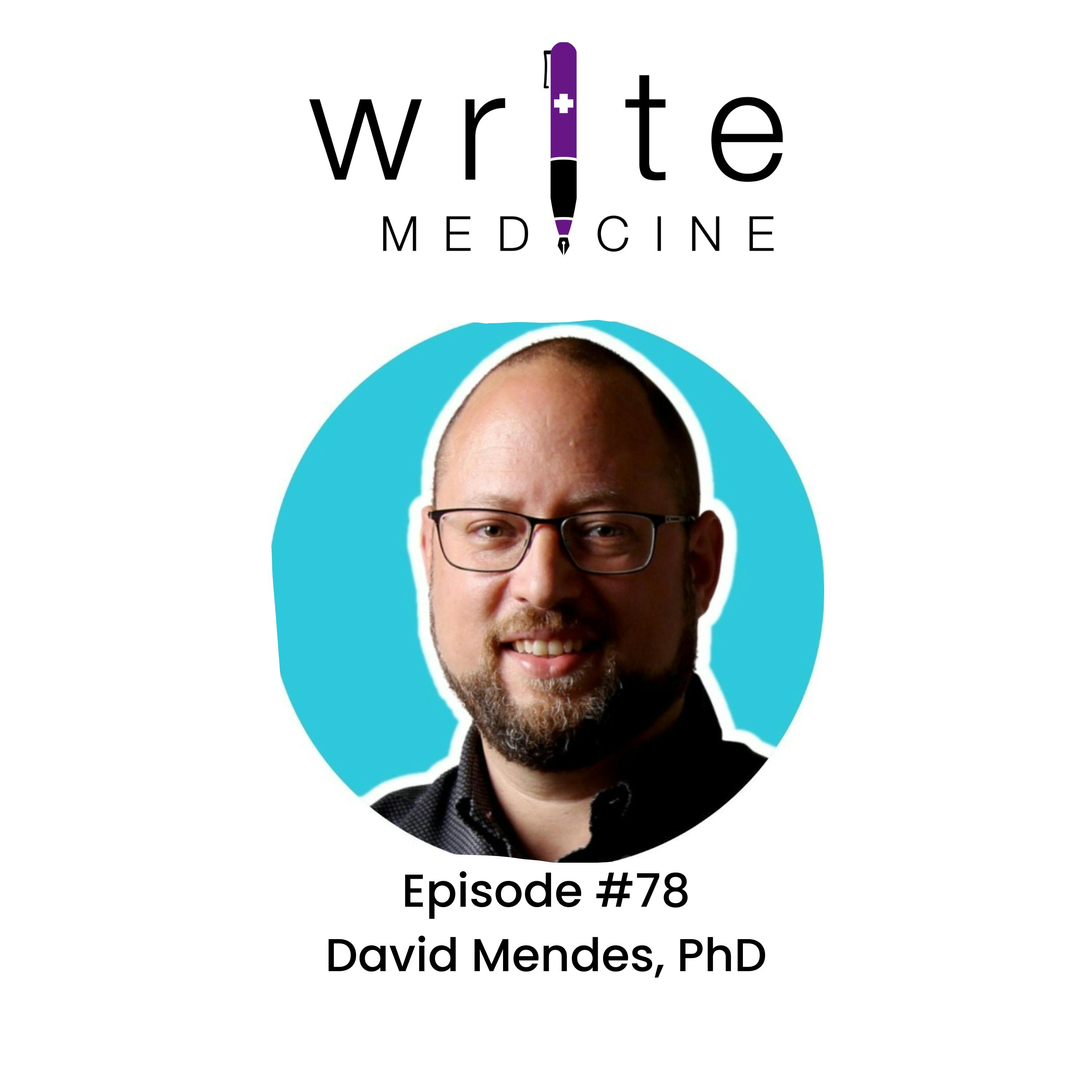
S6 Ep 78The Art of Serendipity: Luck, Preparation, and Career Transitions for PhDs
If you are a Write Medicine listener and are tuning into our First Friday Feature, you are likely a medical writer who is curious about medical writing in the specialized world of CME and I think you'll enjoy this conversation with Dr. David Mendes, who shares insights from his journey transitioning out of academia and into a career in medical writing. David completed his PhD in neuroscience at McGill University in Montreal. During his graduate studies, he realized that landing a professorship was unlikely, so he started exploring alternative careers. After finishing his PhD, he secured his first role as a medical writer at an agency and has since worked as a freelance medical writer and translator. In today's episode, David reflects on the skills he developed during his PhD that helped him move into medical writing. Key Takeaways: Only around 10-20% of PhDs end up in academic positions. So it's important for graduate students to explore alternative careers early in their graduate training. Resilience, communication skills, project management, and data analysis are only some of the skills that PhDs and academics can use in medical writing and in CME. But you’ve got to do the work to figure out what those skills are. And treat networking and informational interviews as a long game rather than expecting immediate jobs. Time Stamps:(4:21) - Introducing David(09:55) - David’s transition from academia to teaching writing and how that informs the work that he does(15:16) - The prevalence of failure discourse for academics transitioning in or out of a PhD program(19:51) - What helped David find work that works for him outside an academic context(24:31) - Evaluating skillset for a transition into medical writing(31:00) - Key skills to help successfully transition from academia into something else(40:50) - His actionable advice for PhD students considering alternative career paths(47:33) - Where to connect with DavidClick Here for the Transcript About DavidIn 2019, David started a podcast called Beyond the Thesis, where he interviews PhDs about the fulfilling careers they have built outside of academia. Through these conversations, David aims to inspire current graduate students to start exploring non-academic career options much earlier in their studies.Website and podcast Beyond the ThesisLinkedInAbout Write MedicineHosted by Alexandra Howson PhD, CHCPProduced by Golden Goose Creative📍Grab the WriteCME Roadmap⭐ What's on your mind? What would you like to hear about on the podcast? Share your thoughts in a written or voice review. Review the podcast📰 Want more tips and tools from Alex and podcast guests? Subscribe to the newsletter. Twice a month from me to you. Biweekly Newsletter➡️ Grab your WriteCME Roadmap! Get access to this complimentary 5-episode private podcast + ebook, designed to help you break into CME, find clients, and hone your craft.➡️ Ready for skills, scaffolding, and support? Join WriteCME Pro🎙️ Know someone who would love this podcast? Share the podcast☕ Want to say thanks? Buy me a Coffee Mentioned in this episode:Root Cause Analysis Practice LabReady to write needs assessments that go deeper than "clinicians need more education"? Join our Root Cause Analysis Practice Lab on February 19th. You'll learn systems thinking, defensible frameworks, and grant-ready language in 3 hands-on hours. $297 | Applies to WriteCME Pro membership [CTA Button] Save My Spot → https://community.writecmepro.com/root-cause-analysisRoot Case Analysis Practice LabThis podcast uses the following third-party services for analysis: Podtrac - https://analytics.podtrac.com/privacy-policy-gdrp
The Checklist Revolution: Streamlining Healthcare Content for Better Understanding

S6 Ep 77The Checklist Revolution: Streamlining Healthcare Content for Better Understanding
Plain language is a communication style that aims to simplify complex information and make it more accessible to a wider audience. It involves using clear, concise, and jargon-free language to convey information in a way that is easily understood by the intended audience. The goal of plain language is to eliminate confusion, improve comprehension, and enhance communication between the sender and receiver.In this episode, I speak with Ahava Leibtag, an expert in plain language and digital content strategy. Ahava is a 2020 inductee into the Healthcare Internet Hall of Fame as an Innovative Individual and has 20+ years of experience in content development. She is the president and owner of Aha Media Group, LLC, a copywriting, content strategy and content marketing consultancy. She is also the author of The Digital Crown: Winning at Content on the Web.Today we're talking strategies for writing clear, understandable content for online education and digital platforms. Key Takeaways Plain language focuses on questions like: Can people find what they're looking for? Can they understand it? Can they act on it? Break up content into small chunks with headings, bullet points, short paragraphs and plenty of white space. This makes digital content more scannable. Limit sentences to no more than 14 words. Long, complex sentences are harder for readers to process. Plain language does not mean "dumbing down" - you can still communicate sophisticated ideas clearly. Writing should have cadence and rhythm, not just simplicity. Read content aloud to check flow. Complexity does not equal authority. Clear communication better builds trust and credibility. Stories and analogies are powerful tools for explaining complex medical concepts plainly. Do keyword research to understand what terminology your audience uses and link plain language to those search terms. Timestamps(3:13) - Introducing Ahava(7:50) - Definition and importance of plain language(13:00) - Introduction to her Building Blocks: What they are and how they work(18:32) - Ahava's perspective on all writing is rewriting(22:56) - Simplifying digital content(33:14) - How to still have authority and expertise with simplicity(37:27) - Where to connect with AhavaResourcesFree ebook. How to Write About Complex, How to Write About Sensitive and Difficult TopicsAmerican Medical Writers Association Plain Language Checklist. Connect with AhavaAha Media GroupLinkedInSupport the show📍Grab the WriteCME Roadmap⭐ Review the podcast🗞️ Biweekly Newsletter with tips and resources to enrich your CME content niche➡️ Join WriteCME Pro for ongoing professional development🌐 Podcast website🎙️ Share the podcast Mentioned in this episode:Root Cause Analysis Practice LabReady to write needs assessments that go deeper than "clinicians need more education"? Join our Root Cause Analysis Practice Lab on February 19th. You'll learn systems thinking, defensible frameworks, and grant-ready language in 3 hands-on hours. $297 | Applies to WriteCME Pro membership [CTA Button] Save My Spot → https://community.writecmepro.com/root-cause-analysisRoot Case Analysis Practice LabThis podcast uses the following third-party services for analysis: Podtrac - https://analytics.podtrac.com/privacy-policy-gdrp

S6 Ep 76Audience-Centric Content: How to Boost Engagement and Impact
As we know, the COVID-19 pandemic forced many in-person events to go virtual. While platforms like Zoom made the transition possible, “Zoom fatigue” quickly set in. Audiences have tuned out of long presentations and passive learning formats that are also typical of in-person conferences. To combat Zoom fatigue, virtual event organizers need to completely rethink their approach. So to get some ideas on how to do this, I spoke with Chris Elmitt, an expert facilitator and CEO of the virtual event platform Livve, to get his tips on engaging audiences in the virtual environment.As Chris notes, virtual platforms also have their limitations. “It’s more boring being in a virtual meeting than in a face-to-face meeting,” he says. With less social pressure to remain focused, audiences can easily check out. To keep audience attention, break content into smaller chunks, limit speaker monologues to 9 minutes maximum, and structure overall sessions to 30 minutes or less. Key Takeaways: Design virtual events for shorter attention spans - content should be in small chunks rather than long monologues. Keep presentations under 9 minutes. Don't expect networking to happen organically in virtual events. Intentionally build in discussion activities. Leverage the convenience of virtual events by spacing out content over multiple shorter sessions vs one long session. Have presenters share information through dialogue and conversation rather than PowerPoint slides. Let the audience choose topics on the fly that they want to be covered rather than sticking to a pre-planned agenda. I love StreamAlive for this. Take advantage of simple equipment like mics and lighting to improve the audio and video quality for virtual presenters. Rethink presentation style for the realities of virtual events rather than transposing what works for in-person events. Connect with ChrisLinkedInLivvee: [email protected] the show📍Grab the WriteCME Roadmap⭐ Review the podcast🗞️ Biweekly Newsletter with tips and resources to enrich your CME content niche➡️ Join WriteCME Pro for ongoing professional development🌐 Podcast website🎙️ Share the podcast Mentioned in this episode:Root Cause Analysis Practice LabReady to write needs assessments that go deeper than "clinicians need more education"? Join our Root Cause Analysis Practice Lab on February 19th. You'll learn systems thinking, defensible frameworks, and grant-ready language in 3 hands-on hours. $297 | Applies to WriteCME Pro membership [CTA Button] Save My Spot → https://community.writecmepro.com/root-cause-analysisRoot Case Analysis Practice LabThis podcast uses the following third-party services for analysis: Podtrac - https://analytics.podtrac.com/privacy-policy-gdrp
Audience-Centric Content: How to Boost Engagement and Impact
Escape the Ordinary: Unlocking Engagement with Escape Rooms
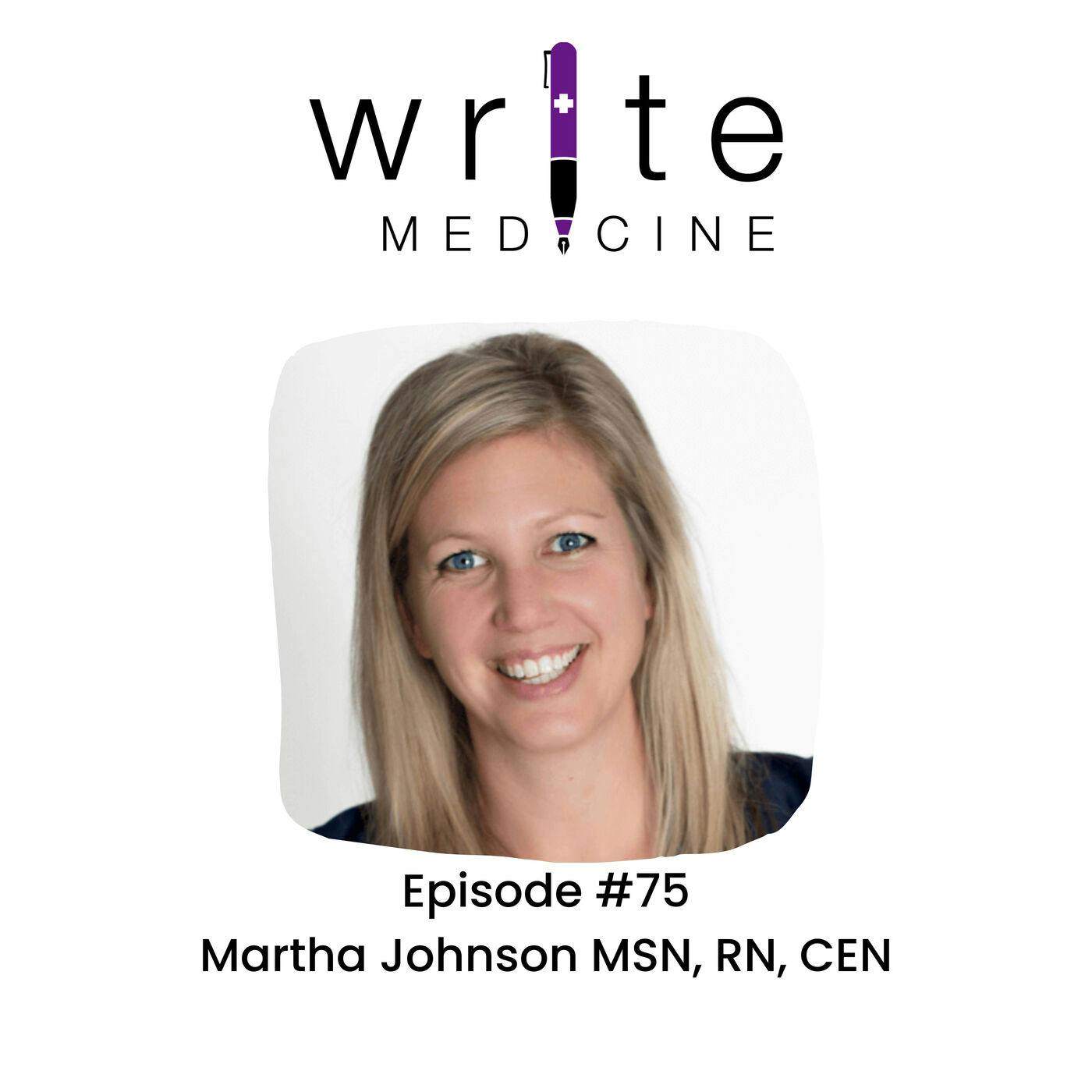
S6 Ep 75Escape the Ordinary: Unlocking Engagement with Escape Rooms
In today’s episode, I speak with nurse educator Martha Johnson MSN, RN, CEN, otherwise known as Breakout RN, about using active learning strategies to engage nursing students for whom it is also often challenging to connect theory to bedside practice, especially in the context of unique patient scenarios. As a new educator, Martha's first theory course was PowerPoint-heavy with a scripted lecture. She started BreakoutRN to develop a learner-centered model and saw firsthand the improvements in student engagement and their ability to apply what they were learning to a clinical scenario. She encourages all nurse educators to embrace active learning while emphasizing that you don’t have to do it all at once, just take it one activity at a time. Key Takeaways:1. Active Learning: Martha emphasizes that traditional lectures are not enough. Active learning strategies like escape rooms and card decks engage learners mentally, physically, and emotionally, enhancing both understanding and retention.2. The Nursing Process: This systematic approach to patient care involves assessment, problem identification, intervention planning, and evaluation. Martha's card decks are designed to guide students through this process in a simulated environment.3. Educational Escape Rooms: Unlike entertainment escape rooms, educational ones have clear objectives and are meant to apply previously learned knowledge. They also offer opportunities to practice skills and professional behaviors like teamwork and communication.4. Storytelling: Storytelling helps make learning stick in both in escape rooms and card decks. Real-world settings, clinical data, and even social determinants of health can add depth to the learning experience.6. Interdisciplinary Learning: Martha mentions that some simulations involve interdisciplinary teams, including law enforcement and paramedic students, to mimic real-world scenarios.Connect with MarthaLinkedInBreakout RNResourcesHrach S. Minding Bodies. Inclusive, low-tech, low-cost strategies that deepen embodied learning and the development of disciplinary knowledge and skills. [Use this affiliate link to support the podcast at no cost to you.]Support the show📍Grab the WriteCME Roadmap⭐ Review the podcast🗞️ Biweekly Newsletter with tips and resources to enrich your CME content niche➡️ Join WriteCME Pro for ongoing professional development 🌐 Podcast website🎙️ Share the podcast Mentioned in this episode:Root Cause Analysis Practice LabReady to write needs assessments that go deeper than "clinicians need more education"? Join our Root Cause Analysis Practice Lab on February 19th. You'll learn systems thinking, defensible frameworks, and grant-ready language in 3 hands-on hours. $297 | Applies to WriteCME Pro membership [CTA Button] Save My Spot → https://community.writecmepro.com/root-cause-analysisRoot Case Analysis Practice LabThis podcast uses the following third-party services for analysis: Podtrac - https://analytics.podtrac.com/privacy-policy-gdrp

S6 Ep 74Creating Value in CME/CE Content with Generative-AI
In this episode, I spoke with Sean Sodha, founder of medical content platform Grafi AI, about the promise and pitfalls of generative AI for healthcare content creators. Sean shared his unique perspective on navigating this emerging technology. We take a comprehensive look at the role of generative AI in medical content creation and explore its promise for augmenting human skills and improving productivity in the medical writing space.Key Takeaways Generative AI can greatly accelerate drafting and ideation, but always requires human review. Gen-AI creates a first draft, not a final product. Prompt engineering could become less necessary as platforms improve at inferring users' needs and styles. Still, thoughtful prompts produce better results. Look for gen-AI providers focused specifically on healthcare to address nuances around compliance, accuracy, empathy, and privacy. Thoroughly vet platforms on explainability, recency, relevance, and uncertainty to ensure responsible AI practices. When testing generative AI, use fake data rather than real person information to safeguard privacy. Steps for Educators Consider gen-AI to streamline early phases of content creation like outlining. Remain mindful of how use of AI is communicated to learners. Focus on intended benefits. Advocate for transparent AI practices by creators to build trust. Connect with SeanGrafi.aiLinkedInResourcesBioGPT: a useful tool or cause for concern? The Publication Plan. July 2023. Support the show📍Grab the WriteCME Roadmap⭐ Review the podcast🗞️ Biweekly Newsletter with tips and resources to enrich your CME content niche➡️ Join WriteCME Pro for ongoing professional development 🌐 Podcast website🎙️ Share the podcast Mentioned in this episode:Root Cause Analysis Practice LabReady to write needs assessments that go deeper than "clinicians need more education"? Join our Root Cause Analysis Practice Lab on February 19th. You'll learn systems thinking, defensible frameworks, and grant-ready language in 3 hands-on hours. $297 | Applies to WriteCME Pro membership [CTA Button] Save My Spot → https://community.writecmepro.com/root-cause-analysisRoot Case Analysis Practice LabThis podcast uses the following third-party services for analysis: Podtrac - https://analytics.podtrac.com/privacy-policy-gdrp
Creating Value in CME/CE Content with Generative-AI

S6 Ep 73Mastering the Self-Edit: Tips and Tricks from Michelle Rizzo
In today's episode, I had the pleasure of speaking with Michelle Rizzo, a trained journalist who turned her curiosity and life-long interest in medicine into a thriving career as a CME writer. Michelle currently works as an associate medical director and senior writer at a boutique CME content company, where she often finds herself writing and researching about rare diseases. She was kind enough to give us a glimpse into her writing process and share some actionable tips for getting into the field without a clinical background. Here are three key takeaways from the episode. Lead with the patient perspective: The ultimate goal of all CME content is to improve patient outcomes. So put your energy and effort into understanding how conditions impact the daily lives and trajectories of patients, beyond what the data alone may tell you. Write with empathy: Behind every study are stories of clinicians and patients, and once you tell them, those stories will be read by others. So put intention into making content that’s clear and takes into consideration your subjects’ points of view and the audience’s needs. Don’t be afraid to over-research: Time constraints are always a concern, but if you’re writing about a rare condition or a subject you’re not familiar with, strive to learn as much as you can before putting pen to paper. This episode has nuggets of wisdom for everyone, whether you’re only thinking about getting into CME or have been in the industry for decades. Share your thoughts and CME career stories in the comments below!Connect with MichelleAssociate Medical Director, Integrity Continuing [email protected] the show📍Grab the WriteCME Roadmap⭐ Review the podcast🗞️ Biweekly Newsletter with tips and resources to enrich your CME content niche➡️ Join WriteCME Pro for ongoing professional development 🌐 Podcast website🎙️ Share the podcast Mentioned in this episode:Root Cause Analysis Practice LabReady to write needs assessments that go deeper than "clinicians need more education"? Join our Root Cause Analysis Practice Lab on February 19th. You'll learn systems thinking, defensible frameworks, and grant-ready language in 3 hands-on hours. $297 | Applies to WriteCME Pro membership [CTA Button] Save My Spot → https://community.writecmepro.com/root-cause-analysisRoot Case Analysis Practice LabThis podcast uses the following third-party services for analysis: Podtrac - https://analytics.podtrac.com/privacy-policy-gdrp
Mastering the Self-Edit: Tips and Tricks from Michelle Rizzo
Accelerating Change: A Call to Action on Gender Equity in Medicine

S6 Ep 72Accelerating Change: A Call to Action on Gender Equity in Medicine
If you are at all interested in the status of women in medicine and the role of education in addressing gender inequities in the health professions, then you’re going to love today’s episode. I’m speaking with Rebecca Ortega about improving gender equity in cardiology. Rebecca is the Founding and executive director of Women as One, a nonprofit organization dedicated to promoting talent in medicine by offering professional opportunities to women cardiologists through several different programs. 1. Rapid Evolution in Cardiology: Rebecca discusses her experience at SCAI, where she was in charge of education. 2. The Art of Grant Writing: Needs assessment in grant writing. Get clear on why a program is necessary and how it will solve a problem. 3. Challenges in Procedural Training: It might be straightforward to offer training for new procedures but gender equity is a more complex challenge that requires a different educational approach.4. Women as One Initiative: This organization promotes gender equity in cardiology through various programs like CLIMB, Escalator Awards, and a talent directory to help diversify clinical trial leadership.5. Future of Gender Equity in Cardiology: Focus on improving the quality of experience for women in the field rather than just numerical representation.Resources🌐 Women as OneYouTube channelAAMC Gender Inequity Initiative Connect with RebeccaLinkedInSupport the show📍Grab the WriteCME Roadmap⭐ Review the podcast🗞️ Biweekly Newsletter with tips and resources to enrich your CME content niche➡️ Join WriteCME Pro for ongoing professional development 🌐 Podcast website🎙️ Share the podcast Mentioned in this episode:Root Cause Analysis Practice LabReady to write needs assessments that go deeper than "clinicians need more education"? Join our Root Cause Analysis Practice Lab on February 19th. You'll learn systems thinking, defensible frameworks, and grant-ready language in 3 hands-on hours. $297 | Applies to WriteCME Pro membership [CTA Button] Save My Spot → https://community.writecmepro.com/root-cause-analysisRoot Case Analysis Practice LabThis podcast uses the following third-party services for analysis: Podtrac - https://analytics.podtrac.com/privacy-policy-gdrp

S6 Ep 71Breaking Up the Lecture: The Power of Active Learning
I’m really excited to have today’s conversation with Dr. Barbie Honeycutt, a faculty development consultant and host of the podcast Lecture Breakers. Barbi is an expert in the field of active learning and is known for her work on creating engaging and effective learning experiences for students. She is the founder of FLIP It® and Interactive Lectures, two popular strategies for incorporating active learning in the classroom.Here’s what you’ll learn in today’s episode. 1. Start with the learner's experience and where they are in their learning journey. Note their preferences for engaging with learning materials.2. There’s a continuum of active learning strategies to engage learners from low to high intensity, from think-pair-share at one end of the continuum to project-based assignments at the other. 3. As we know in CME/CE, it’s vital to align activities to learning outcomes. For example: If critical thinking is a key outcome, use case studies.4. Consider developing your content via inclusive course design principles that use Universal Design for Learning, draw on a diversity of voices, and offer learners choices about which content is most relevant and how to access that content. 5. Finally, mobile and microlearning are expanding in CME/CE. These are terrific tools for creating bite-sized content for busy professionals to learn as needed. An example might be 2-minute lessons that health professionals can complete on their phones and apply right away.Resources➡️ Bucklin B et al. Making it stick: use of active learning strategies in continuing medical education. BMC Medical Education. 2021, 21(44). ➡️ Universal Design for Learning guidelines➡️ Six Thinking Hats from the de Bono group➡️ Quick tips to break up lecturesConnect with BarbiBarbi's website: barbihoneycutt.comThe Lecture Breakers podcast LinkedIn Connect with AlexLinkedInWebsiteWant tips and tricks to level up your CME/CE content writing practice? Subscribe to the biweekly newsletter.Support the show📍Grab the WriteCME Roadmap⭐ Review the podcast🗞️ Biweekly Newsletter with tips and resources to enrich your CME content niche➡️ Join WriteCME Pro for ongoing professional development 🌐 Podcast website🎙️ Share the podcast Mentioned in this episode:Root Cause Analysis Practice LabReady to write needs assessments that go deeper than "clinicians need more education"? Join our Root Cause Analysis Practice Lab on February 19th. You'll learn systems thinking, defensible frameworks, and grant-ready language in 3 hands-on hours. $297 | Applies to WriteCME Pro membership [CTA Button] Save My Spot → https://community.writecmepro.com/root-cause-analysisRoot Case Analysis Practice LabThis podcast uses the following third-party services for analysis: Podtrac - https://analytics.podtrac.com/privacy-policy-gdrp
Breaking Up the Lecture: The Power of Active Learning
Human-Centered Instructional Design: A Catalyst for Effective Learning in CME/CE

S6 Ep 70Human-Centered Instructional Design: A Catalyst for Effective Learning in CME/CE
Instructional design for online courses is a crucial aspect of modern CME/CE. And as online learning has grown over the last 15 years or so, especially so since 2020, instructional designers play a vital role in creating effective and engaging CME/CE content for learners.In today’s podcast episode, I’m speaking with Mark Hagerty, an expert in effective instructional design in the context of CME/CE with a passion for behavioral and life sciences. 🩺💡Mark shares insights from his three-decade-long career in education and his background in psychology, biology, and organizational behavior.Key highlights include: The importance of involving multiple senses and humanizing content to boost engagement and retention. Dry text alone is an ineffective way to learn. Strategies like storytelling and relatable narratives help learners emotionally connect with and absorb information more readily. Building scenarios with realistic conflicts and frustrations clinicians experience makes the content more applicable and impactful. Following core instructional design models like ADDIE (analyze, design, develop, implement, evaluate) leads to higher-quality education activities. Tools like Articulate Storyline, Captivate, Snagit, and Camtasia enable interactive simulations, videos, and other multimedia elements to engage different learning styles. Networking, reading, and continuous learning help instructional designers stay current on best practices in their field. Mark's advice for anyone looking to improve their instructional design skills? Learn the ADDIE framework, get familiar with key software tools, play around with new ideas, and above all, have fun!Whether you're a seasoned medical writer or just starting out, Mark's insights around empathy-driven content and immersive learning experiences are indispensable. Implementing strong instructional design principles can elevate any CME or medical writing to better educate and empower healthcare professionals.Support the show📍Grab the WriteCME Roadmap⭐ Review the podcast🗞️ Biweekly Newsletter with tips and resources to enrich your CME content niche➡️ Join WriteCME Pro for ongoing professional development 🌐 Podcast website🎙️ Share the podcast Mentioned in this episode:Root Cause Analysis Practice LabReady to write needs assessments that go deeper than "clinicians need more education"? Join our Root Cause Analysis Practice Lab on February 19th. You'll learn systems thinking, defensible frameworks, and grant-ready language in 3 hands-on hours. $297 | Applies to WriteCME Pro membership [CTA Button] Save My Spot → https://community.writecmepro.com/root-cause-analysisRoot Case Analysis Practice LabThis podcast uses the following third-party services for analysis: Podtrac - https://analytics.podtrac.com/privacy-policy-gdrp
An Anesthesiologist's Wisdom on Life, Death, and Empathy

S6 Ep 69An Anesthesiologist's Wisdom on Life, Death, and Empathy
Even those of us who’ve had surgery probably haven’t given much thought to the person who put us under and carefully monitored us while the surgeon did their work. I’m here today with anesthesiologist, author, and test pilot Dr. David Alfery to discuss his book, Saving Grace: What Patients Teach Their Doctors About Life, Death, and the Balance in Between, which was published by Wipf and Stock earlier in 2023. David was a cardiac anesthesiologist for over 30 years, taking patients to the brink of death and back during surgery.A cardiac anesthesiologist, Dr. Alfery reveals to readers of his book the critical role of the “total stranger [who] would take them closer to death than they would ever come in this life, then bring them safely back."David’s book explores the highs and lows of being an anesthesiologist, including his personal experience during his own daughter’s surgery. In this episode, we explore fears, aspirations, and motivations of health professionals and how to create and maintain sacred trust between physicians and their patients. David shared 3 powerful takeaways: 1️⃣ Human connection is key: The doctor-patient relationship is a unique space that amplifies all the things that make us human and connect us. Empathy, gratitude, and perspective are the vital keys in our interactions with others.2️⃣ Corporate medicine has negatively impacted teamwork in the OR by pressuring faster case turnover and high staff turnover. Teams that know each other work more smoothly together. 3️⃣ Trust and touch: Trust is at the core of the physician-patient relationship, and touch plays a crucial role in building that trust. Yet, there has been a shift in the reception of touch by patients. Personal space and boundaries are more important than ever, and it's essential for healthcare professionals to be respectful and mindful of this.David D. Alfery. Saving Grace: What Patients Teach their Doctors about Life, Death, and the Balance in Between. Resource Publications. 2023. [this affiliate link earns the podcast a small commission at no additional cost to you] Support the show📍Grab the WriteCME Roadmap⭐ Review the podcast🗞️ Biweekly Newsletter with tips and resources to enrich your CME content niche➡️ Join WriteCME Pro for ongoing professional development 🌐 Podcast website🎙️ Share the podcast Mentioned in this episode:Root Cause Analysis Practice LabReady to write needs assessments that go deeper than "clinicians need more education"? Join our Root Cause Analysis Practice Lab on February 19th. You'll learn systems thinking, defensible frameworks, and grant-ready language in 3 hands-on hours. $297 | Applies to WriteCME Pro membership [CTA Button] Save My Spot → https://community.writecmepro.com/root-cause-analysisRoot Case Analysis Practice LabThis podcast uses the following third-party services for analysis: Podtrac - https://analytics.podtrac.com/privacy-policy-gdrp
Breakthrough CME/CE: Transform Online Learning with the Art of Facilitation

S6 Ep 68Breakthrough CME/CE: Transform Online Learning with the Art of Facilitation
If you are an education provider tasked with designing virtual education, or you work with providers involved in online group learning and experiences, today's episode is a must-listen. Gwyn Wansbrough is a facilitator who designs and leads interactive online sessions. Gwyn shares how to run effective and engaging live online sessions and guide a group to achieve a specific outcome. The more we talked, the more I realized that the preparation process for facilitation is akin to conducting a needs assessment and designing an education activity. We need to get to know our audience of learners, identify their gaps in knowledge or practice, and find out what they need to know and be able to do in order to make that education as concrete and meaningful as possible. Here’s what we cover:✔️ It’s the job of a facilitator to make it easy for a group to achieve an outcome. Facilitators can design an effective process by focusing on the purpose, audience, and desired transformation for the group.✔️ How psychological safety encourages participants to actively contribute versus passively receive content.✔️ How using an "ask then tell" approach taps into what adult learning research tells us about the power of connecting content to experience.✔️ If you are new to the facilitation process, build your confidence by starting small with low-risk experiments—like sprinkling facilitation into content delivery. Resources➡️ Exceptional Virtual Facilitator Workshop on September 7, 2023. Registration details here. ➡️ The Quest: Subscribe for weekly facilitation tips and tricks➡️ Breakthrough Facilitation: A cohort-based course designed to teach the art of facilitation, September 26th to October 26th. This affiliate link earns the Write Medicine podcast a small commission at no extra cost to you. Experiential/transformative learning theorists➡️ Here’s a great overview of John Dewey’s education philosophy➡️ Background to Jack Mesirow’s work on transformational learning➡️ Background to David Kolb’s work on experiential learningSupport the show📍Grab the WriteCME Roadmap⭐ Review the podcast🗞️ Biweekly Newsletter with tips and resources to enrich your CME content niche➡️ Join WriteCME Pro for ongoing professional development 🌐 Podcast website🎙️ Share the podcast Mentioned in this episode:Root Cause Analysis Practice LabReady to write needs assessments that go deeper than "clinicians need more education"? Join our Root Cause Analysis Practice Lab on February 19th. You'll learn systems thinking, defensible frameworks, and grant-ready language in 3 hands-on hours. $297 | Applies to WriteCME Pro membership [CTA Button] Save My Spot → https://community.writecmepro.com/root-cause-analysisRoot Case Analysis Practice LabThis podcast uses the following third-party services for analysis: Podtrac - https://analytics.podtrac.com/privacy-policy-gdrp
Grab Your Green Pen: Medical Writing Insights From Sarah Nelson

S6 Ep 67Grab Your Green Pen: Medical Writing Insights From Sarah Nelson
bonusSarah Nelson PhD is a medical writer and founder of Green Pen Solutions Ltd. She is a leading mentor and trainer for medical writers all over the world. Her mission is to encourage more medical writers into Medcomms and help them create a sustainable career path that builds on their personal strengths.Sarah's wide-ranging knowledge comes from over 17 years as a medical writer, her experience leading large editorial teams, and from mentoring writers in over 20 agencies across the medcomms industry.In today’s episode, we focus on the importance of training for medical writers, medical writing tests, Sarah’s five pillars of medical writing, and the impact of artificial intelligence in medcomms. We also touch on the differences between Medcomms in general and the specific requirements of accredited CME/CE, at least in the United States. ResourcesGreen Pen SolutionsGreen Pen Solutions YouTube ChannelMedComms networking For more specific information on how CME/CE is changing in Europe and in the UK, check out episode 55 with Eugene Poznak of the European CME forum. Training and Mentorship➡️ Sarah is hosting a brand new medical writing course with coaching. Now you can elevate your medical writing career with Sarah's industry-leading expertise through the exclusive Agency Ready program. Courses include comprehensive training and coaching packages, all designed to get you ready to launch the next phase of your medical writing career.➡️ Take advantage of a special offer in September, saving you over £300 on the cost of enrolment on the Foundations of Excellence training course plus one of only 8 spots in the last Agency Ready coaching group of 2023.Support the show📍Grab the WriteCME Roadmap⭐ Review the podcast🗞️ Biweekly Newsletter with tips and resources to enrich your CME content niche➡️ Join WriteCME Pro for ongoing professional development 🌐 Podcast website🎙️ Share the podcast Mentioned in this episode:Root Cause Analysis Practice LabReady to write needs assessments that go deeper than "clinicians need more education"? Join our Root Cause Analysis Practice Lab on February 19th. You'll learn systems thinking, defensible frameworks, and grant-ready language in 3 hands-on hours. $297 | Applies to WriteCME Pro membership [CTA Button] Save My Spot → https://community.writecmepro.com/root-cause-analysisRoot Case Analysis Practice LabThis podcast uses the following third-party services for analysis: Podtrac - https://analytics.podtrac.com/privacy-policy-gdrp
Learning in/from Libraries: The Power of Experience in CME/CE
S6 Ep 66Learning in/from Libraries: The Power of Experience in CME/CE
Welcome back to the Write Medicine podcast! Before we get into today’s topic on the power of experience in learning, I wanted to share with you a message from Mallory Kane. Mallory is a fourth-year medical student at the University of Connecticut who is creating an anthology of essays based on testimonies from people whose lives have been impacted by cancer. Whether you are a patient or survivor, a family member or caretaker, she wants to hear from you. She is using this anthology to highlight the experience of living with this disease.Mallory’s looking for 1–3-page essays (max 1500 words) answering the following prompt:What lesson have you learned from your experience with cancer that you want others to know?You can send your submissions to Mallory via email to [email protected] or via this form.Adult learning is a complex process and we all want to think our CME/CE content measures up to the challenge. So today’s episode focuses on learning by doing and learning through experience. But first, let's talk about building libraries and the American philosopher John Dewey. ResourcesRead a version of this episode here.Ready to turbocharge your facilitation skills?Next week my guest is Gwyn Wansbrough, who hosts Breakthrough Facilitation, an online course that provides personalized coaching, support, and feedback to fast-track your journey to becoming an exceptional virtual facilitator.If you are interested in learning more about Breakthrough Facilitation, Gwyn is hosting a demo on Sept 7th. Learn more here. But if you're ready to jump in, you can save $300 by using my affiliate link. Join the Breakthrough Facilitation by clicking here (affiliate link).Support the show📍Grab the WriteCME Roadmap⭐ Review the podcast🗞️ Biweekly Newsletter with tips and resources to enrich your CME content niche➡️ Join WriteCME Pro for ongoing professional development 🌐 Podcast website🎙️ Share the podcast Mentioned in this episode:Root Cause Analysis Practice LabReady to write needs assessments that go deeper than "clinicians need more education"? Join our Root Cause Analysis Practice Lab on February 19th. You'll learn systems thinking, defensible frameworks, and grant-ready language in 3 hands-on hours. $297 | Applies to WriteCME Pro membership [CTA Button] Save My Spot → https://community.writecmepro.com/root-cause-analysisRoot Case Analysis Practice LabThis podcast uses the following third-party services for analysis: Podtrac - https://analytics.podtrac.com/privacy-policy-gdrp
Season 5 Finale: 3 Steps to Boost Your Foundational CME Knowledge

S5 Ep 65Season 5 Finale: 3 Steps to Boost Your Foundational CME Knowledge
Welcome to the season finale of the Write Medicine podcast!Today's episode was supposed to be live on LinkedIn, but we encountered some tech hiccups linking Riverside.fm to LinkedIn Live. Fret not! We recorded the episode for you, and it's available right here and on your favorite podcast platforms. We're looking forward to our first live episode, which we've rescheduled for the opening of Season 6 on August 30.Launched 2 1/2 years ago, Write Medicine has evolved into the go-to podcast for professionals in the continuing medical education/continuing education for health professionals (CME/CE) field, packed with insightful interviews about the intricacies of designing and delivering health professional education. Thanks to listeners like you, Listen Score ranks Write Medicine as one of the top 10% most popular shows out of over 3 million podcasts worldwide. Season 5 was packed with interviews featuring professionals from diverse backgrounds, to explore topics such as outcomes analysis, needs assessments, and diversity. Expect an exciting lineup in Season 6, including experts from online learning, instructional design, and niche topics such as the climate impact of digital content creation.Season 5 has been a joy, and we're excited about the road ahead. Don’t forget to grab our WriteCME Roadmap bundle, specially crafted for medical writers. And if you have questions or topics you'd love us to cover in Season 6, reach out using the survey below. RESOURCES AND LINKS WriteCME Roadmap What questions do you want the show to answer? Ask here. Howson A. Practical Strategies for Creating CME/CE Content: Insights From Adult Learning Scholarship. AMWA Journal. 2023, 38(2). Support the show📍Grab the WriteCME Roadmap⭐ Review the podcast🗞️ Biweekly Newsletter with tips and resources to enrich your CME content niche➡️ Join WriteCME Pro for ongoing professional development 🌐 Podcast website🎙️ Share the podcast Mentioned in this episode:Root Cause Analysis Practice LabReady to write needs assessments that go deeper than "clinicians need more education"? Join our Root Cause Analysis Practice Lab on February 19th. You'll learn systems thinking, defensible frameworks, and grant-ready language in 3 hands-on hours. $297 | Applies to WriteCME Pro membership [CTA Button] Save My Spot → https://community.writecmepro.com/root-cause-analysisRoot Case Analysis Practice LabThis podcast uses the following third-party services for analysis: Podtrac - https://analytics.podtrac.com/privacy-policy-gdrp
Enhancing CME with ChatGPT
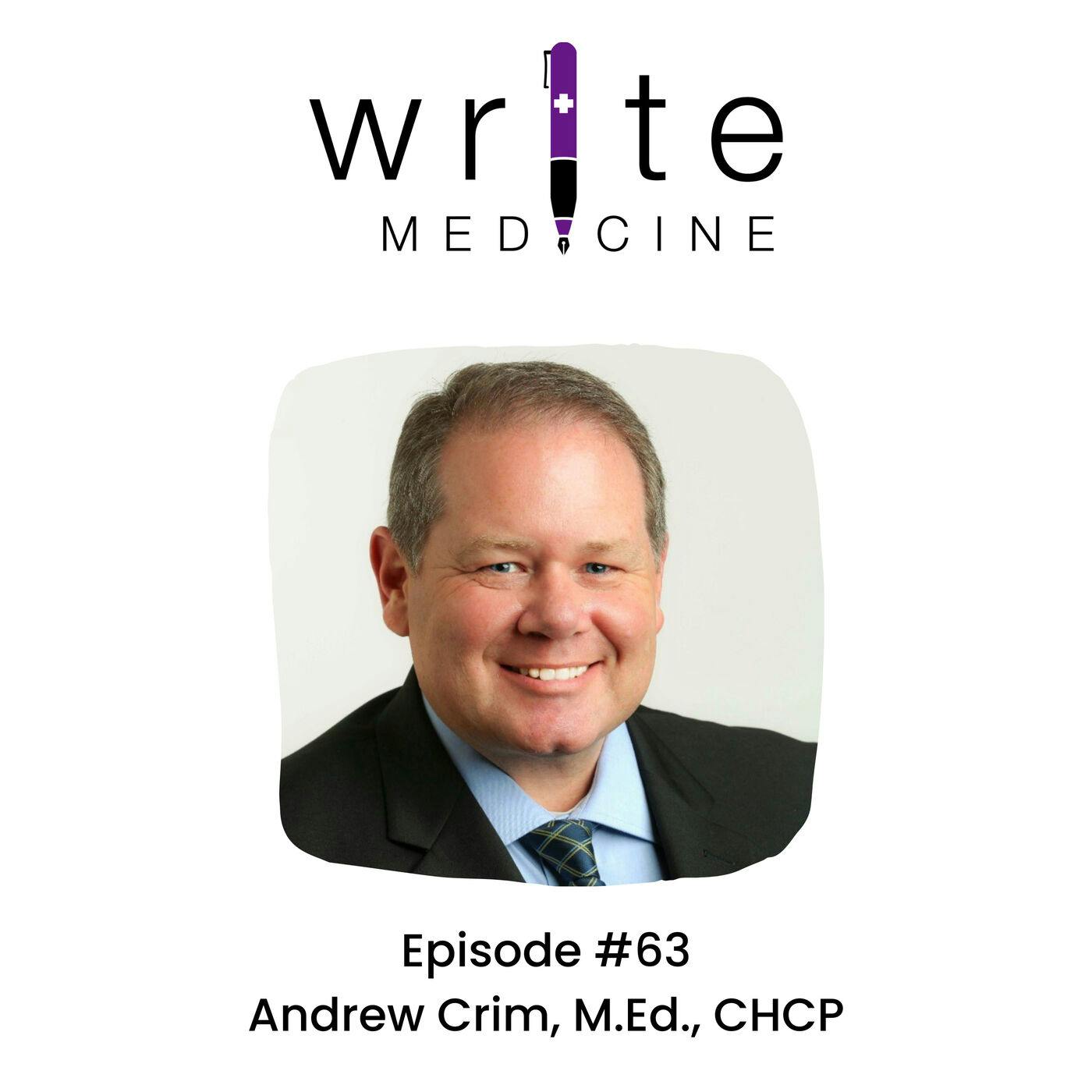
S5 Ep 63Enhancing CME with ChatGPT
As an accidental educator, Andrew Crim MEd, CHCP is a seasoned expert in designing educational programs for healthcare professionals. He’s the Director of Education and Professional Development at the American College of Osteopathic Obstetricians and Gynecologists and is deeply passionate about the effect that high-quality education can have on patient outcomes. As an early adopter of Chat GPT, Andrew recognizes the potential of this technology to transform the way healthcare professionals access and engage with CME content. So in this episode, we’re exploring the potential of generative artificial intelligence (AI) like ChatGPT to revolutionize CME—from writing entire grant proposals to chatbots providing practice and feedback to learners. And of course, we talk about the limitations of generative AI.💡 Idea to tryCheck out Chat GPT and experiment with its capabilities🧭 Resource to exploreVisit the American College of Osteopathic Obstetricians and Gynecologists website for more information on their education and professional development programs.📱Follow Andrew Crim on LinkedIn for updates and insights on the latest developments in CME and AI.93ad1e279a661b5d2bd2225eb51908c71728b333Support the show📍Grab the WriteCME Roadmap⭐ Review the podcast🗞️ Biweekly Newsletter with tips and resources to enrich your CME content niche➡️ Join WriteCME Pro for ongoing professional development 🌐 Podcast website🎙️ Share the podcast Mentioned in this episode:Root Cause Analysis Practice LabReady to write needs assessments that go deeper than "clinicians need more education"? Join our Root Cause Analysis Practice Lab on February 19th. You'll learn systems thinking, defensible frameworks, and grant-ready language in 3 hands-on hours. $297 | Applies to WriteCME Pro membership [CTA Button] Save My Spot → https://community.writecmepro.com/root-cause-analysisRoot Case Analysis Practice LabThis podcast uses the following third-party services for analysis: Podtrac - https://analytics.podtrac.com/privacy-policy-gdrp

S5 Ep 62Exploring Intersectionality and Equity in CME
"There's great potential and power in acknowledging this. It's self to self, self to others single, self to others plural, and self to others at the macro level. You begin to appreciate how beautiful it can be all around you, how much we all need help, and how very related we are in our own ways." In episode 62, Dr. Leigh Boehmer emphasizes the crucial role of self-awareness in understanding and practicing intersectionality, which goes beyond recognizing one's own complexities and involves acknowledging the unique layers of others. Leigh is the Chief Medical Officer for the Association of Community Cancer Centers (ACCC) and is responsible for assessing educational needs and designing interventions for multidisciplinary cancer care teams serving patients in community oncology programs and practices. He also serves as a liaison with external stakeholders, including patient advocacy organizations, policy experts, and governmental agencies, to advance the objectives of the ACCC membership and projects.Leigh describes how ACCC responded to health disparities that were exacerbated by the pandemic, and how it acted as a convener to connect individual community needs with the mechanisms necessary to address inequities. Finding ways to enhance human connection and practice empathy becomes even more crucial as technology continues to advance, with the rise of big data, AI, and machine learning. Leigh highlights ACCC initiatives that foster connection and build equity such as the ACCC-ASCO implicit bias training program, which, combined with a clinical trial site self-assessment tool increased knowledge among participants of health disparities and strategies to address implicit bias and diversity in cancer clinical trials. The FDA requirement for the pharmaceutical industry to develop Diversity Action Plans from July 2023 is an additional, granular step toward addressing diversity and the broader social, political, and economic issues affecting cancer care. Join us for a conversation about how continuing education, professional development, and the oncology community can give form to intersectionality and equity by asking the right questions, bringing the right people to the table, and listening.Connect with LeighEmail: [email protected] of Community Cancer CentersLinkedInResourcesBarret N, et al. An Assessment of the Feasibility and Utility of an ACCC-ASCO Implicit Bias Training Program to Enhance Racial and Ethnic Diversity in Cancer Clinical Trials. JCO Oncol Pract. 2023 Apr;19(4):e570-e580. Guerra C et al. Increasing Racial and Ethnic Equity, Diversity, and Inclusion in Cancer Treatment Trials: Evaluation of an ASCO-Association of Community Cancer Centers Site Self-Assessment. JCO Oncol.Pract. 2023;19(4): e581-e588.Support the show📍Grab the WriteCME Roadmap⭐ Review the podcast🗞️ Biweekly Newsletter with tips and resources to enrich your CME content niche➡️ Join WriteCME Pro for ongoing professional development 🌐 Podcast website🎙️ Share the podcast Mentioned in this episode:Root Cause Analysis Practice LabReady to write needs assessments that go deeper than "clinicians need more education"? Join our Root Cause Analysis Practice Lab on February 19th. You'll learn systems thinking, defensible frameworks, and grant-ready language in 3 hands-on hours. $297 | Applies to WriteCME Pro membership [CTA Button] Save My Spot → https://community.writecmepro.com/root-cause-analysisRoot Case Analysis Practice LabThis podcast uses the following third-party services for analysis: Podtrac - https://analytics.podtrac.com/privacy-policy-gdrp
Exploring Intersectionality and Equity in CME
Awareness to Action: Integrating DEI into CME
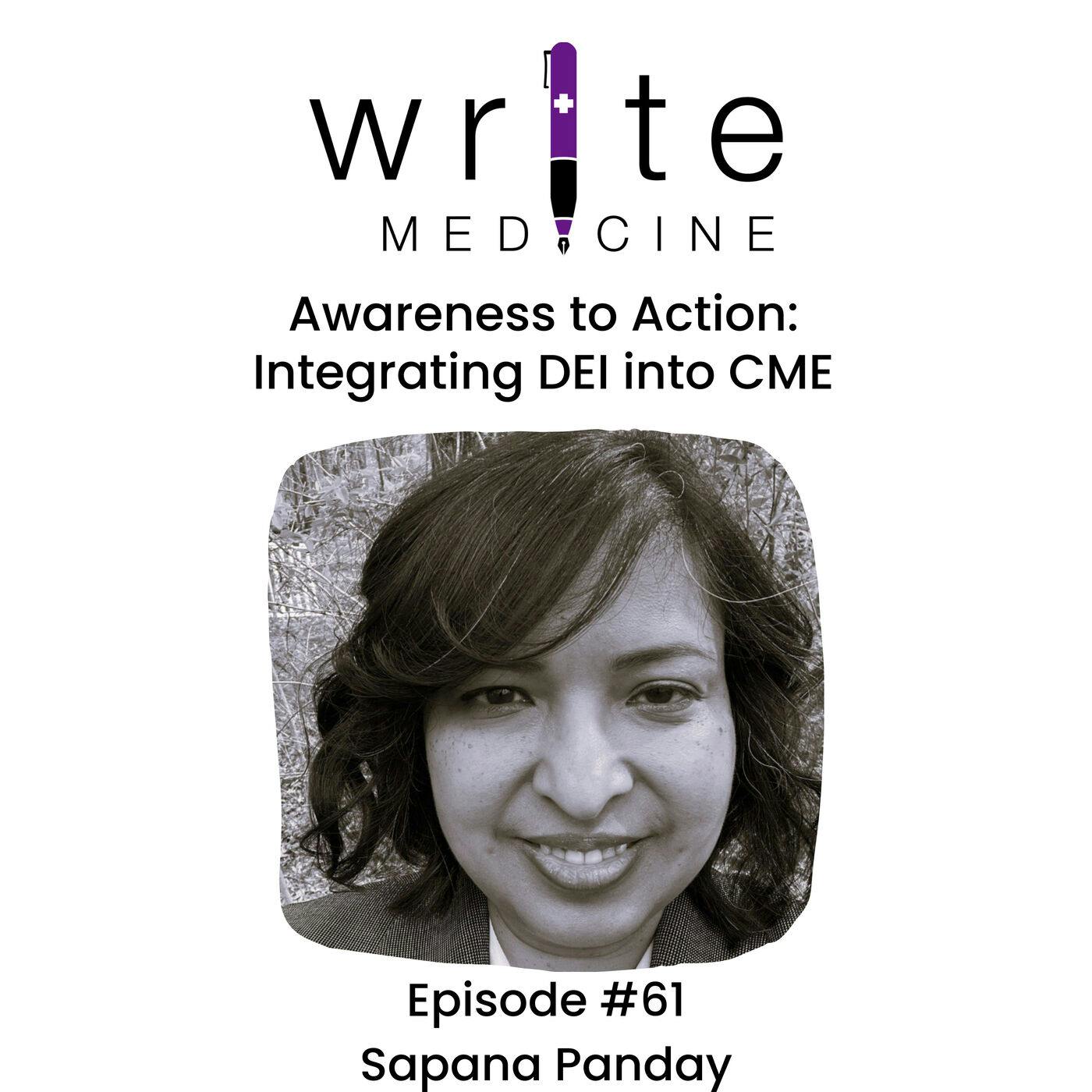
S5 Ep 61Awareness to Action: Integrating DEI into CME
In today's episode, I have a conversation with Sapana Panday, a medical education specialist with over two decades of experience. Sapana shares how her background in public health and evaluation research led her to work in medical education, particularly in areas of diversity, equity, and inclusion (DEI).About SapanaSapana earned a bachelor's degree in biochemistry from Mount Holyoke College and a Master’s in Public Health, Socio-Medical Sciences, from Columbia University. She brings a unique perspective from her upbringing in the developing nation of Nepal where education was a privilege afforded by the few, to her days as a health educator in the troubled schools of New York City. Over the years, she’s designed innovative educational formats, often leading the charge in introducing new concepts to medical education. She is a frequent speaker at many conferences and an advocate for integrating DEI efforts in CME. Integrate DEI Sapana emphasizes the importance of integrating DEO policies into both continuing education for health professionals and continuing education workplaces.Start with FacultyFor instance, faculty policies represent one core area that can benefit from an integrated DEI approach that considers the characteristics of the people contributing expertise to the design and development of content. A simple statement that outlines the organization's commitment to DEI sets a foundation for ensuring that faculty members reflect diverse backgrounds and experiences.Avoid Performative Allyship We also explore how to avoid performative allyship and how self-evaluation and internal reflection are important crucial steps toward creating a more diverse and inclusive environment in continuing healthcare education. Cultivate Communication ChannelsAnd in that context, Sapana cautions on how to avoid making the assumption that individuals from diverse backgrounds can speak for an entire group in general. She emphasizes instead, the value of cultivating channels to share diverse voices and opinions.Connect with SapanaEmail: [email protected] Lancet Group’s commitments to gender equity and diversityTen steps to gender equity: The BMJ’s resolutionsUnconscious Bias Drives Your Decision-Making. Here's How to Take ControlProduced by Golden Goose CreativeSupport the show📍Grab the WriteCME Roadmap⭐ Review the podcast🗞️ Biweekly Newsletter with tips and resources to enrich your CME content niche➡️ Join WriteCME Pro for ongoing professional development 🌐 Podcast website🎙️ Share the podcast Mentioned in this episode:Root Cause Analysis Practice LabReady to write needs assessments that go deeper than "clinicians need more education"? Join our Root Cause Analysis Practice Lab on February 19th. You'll learn systems thinking, defensible frameworks, and grant-ready language in 3 hands-on hours. $297 | Applies to WriteCME Pro membership [CTA Button] Save My Spot → https://community.writecmepro.com/root-cause-analysisRoot Case Analysis Practice LabThis podcast uses the following third-party services for analysis: Podtrac - https://analytics.podtrac.com/privacy-policy-gdrp
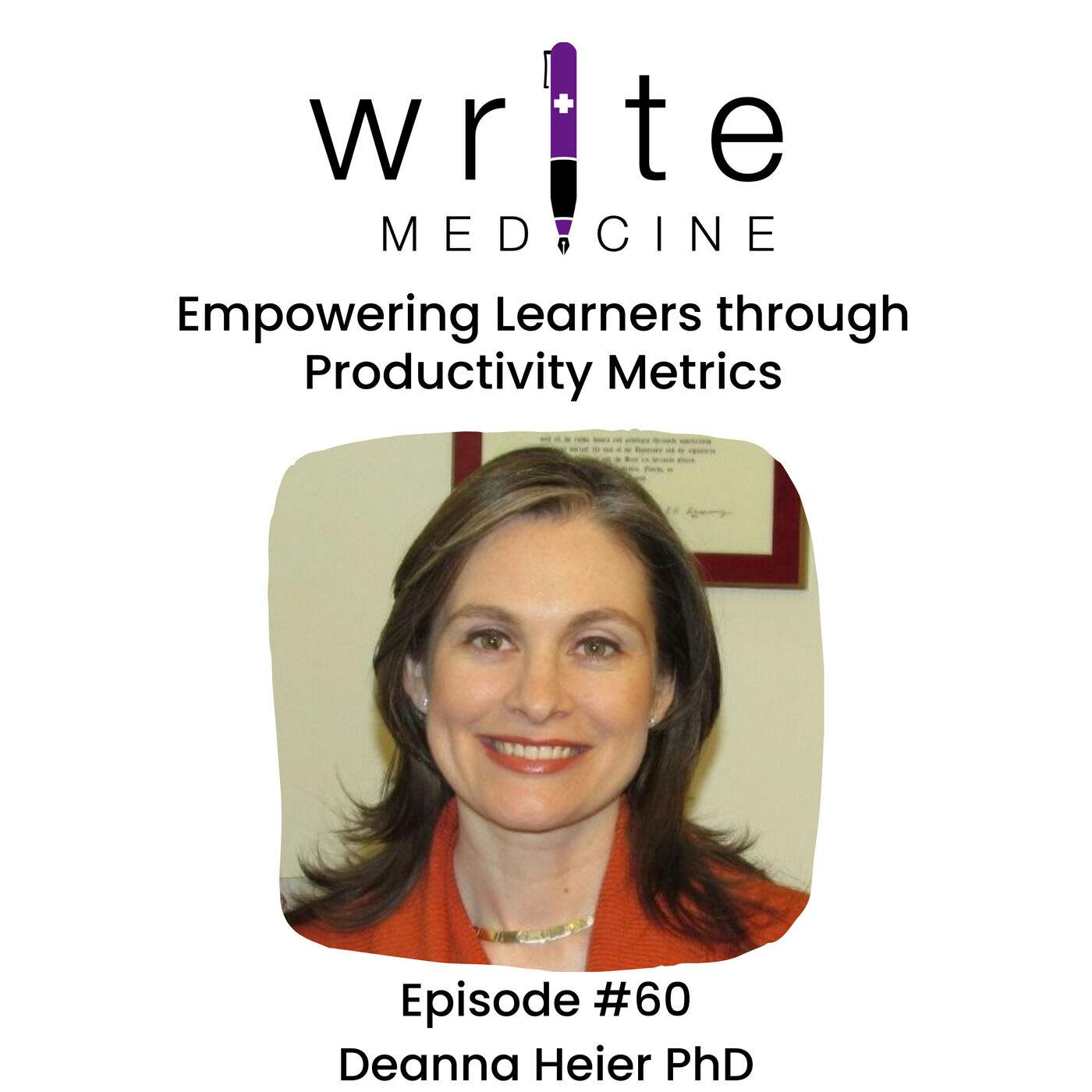
S5 Ep 60Empowering Learners Through Productivity Metrics
Simulated case-based educational formats allow radiologists to develop their skills in a safe environment, learning from experts without the risks involved in clinical care. This is exactly what Medality specializes in offering its learners. On today’s episode, Dr. Deanna Heier, Ph.D., Head of Educational Strategy and Operations at Medality, shares how the company replicates side-by-side training through asynchronous and synchronous learning options and uses performance outcomes to enhance this approach to medical education. While the microlearning model offers asynchronous, flexible case-based learning, faculty provide personalized feedback on both clinical and communication skills via synchronous learning. Join us for a conversation about mentorship, using productivity metrics to assess outcomes and gauge the confidence, accuracy, and efficiency of learners, and how Medality is partnering with the American Association of Women and Radiology to diversify its faculty and balance out this male-dominated field.Connect with DeannaEmail: [email protected] Association for Women in Radiology Support the show📍Grab the WriteCME Roadmap⭐ Review the podcast🗞️ Biweekly Newsletter with tips and resources to enrich your CME content niche➡️ Join WriteCME Pro for ongoing professional development 🌐 Podcast website🎙️ Share the podcast Mentioned in this episode:Root Cause Analysis Practice LabReady to write needs assessments that go deeper than "clinicians need more education"? Join our Root Cause Analysis Practice Lab on February 19th. You'll learn systems thinking, defensible frameworks, and grant-ready language in 3 hands-on hours. $297 | Applies to WriteCME Pro membership [CTA Button] Save My Spot → https://community.writecmepro.com/root-cause-analysisRoot Case Analysis Practice LabThis podcast uses the following third-party services for analysis: Podtrac - https://analytics.podtrac.com/privacy-policy-gdrp
Empowering Learners Through Productivity Metrics
Building Blocks for a Successful Learning Culture

S5 Ep 59Building Blocks for a Successful Learning Culture
✨ Focus Your Writing with Ben Riggs ✨Join Ben Riggs for a WriteCME Pro Expert Perspective session on how to focus your writing and create focused content for busy health professionals. When: June 21, 11:00 AM - 12:00 PM PDTWhere: Live onlineHow: Buy a ticket for the event + 1 month of WriteCME Pro__________________________If content is King, learning culture must be Queen, as the latter goes a long way to determining learner outcomes. Frustrated with many years of check-box top-down broadcast learning culture, Andrew Barry founded Curious Lion and built a better way to effect behavior change by fostering progressive and transformative learning cultures. In this episode, Andrew outlines the building blocks required for a successful learning culture.✔️ Shared vision✔️ Collaborative peer-to-peer team learning✔️ Personal mastery & individual accountability ✔️ Systems thinking Andrew invests heavily in building motivation through the self-determination theory of competence, relatedness, and autonomy, as he believes self-determination lies at the heart of behavior change. He recommends that creating learning cultures involves interventions at both the micro and macro levels, focusing on both the individual and company culture. We discuss the importance of developing life-long reflective learners and the circle of learning. Connect with AndrewFounder & CEO, Curious LionEmail: [email protected] Enablement ScorecardAgency for Healthcare Research and Quality Learning Health SystemsPeter Senge, The Fifth Discipline (shared vision and systems thinking)Deci EL, Ryan R M. Self-determination theory: A macrotheory of human motivation, development, and health. Canadian Psychology . 2008;49(3): 182–185MySnapshotProduced by Golden Goose CreativeSupport the show📍Grab the WriteCME Roadmap⭐ Review the podcast🗞️ Biweekly Newsletter with tips and resources to enrich your CME content niche➡️ Join WriteCME Pro for ongoing professional development 🌐 Podcast website🎙️ Share the podcast Mentioned in this episode:Root Cause Analysis Practice LabReady to write needs assessments that go deeper than "clinicians need more education"? Join our Root Cause Analysis Practice Lab on February 19th. You'll learn systems thinking, defensible frameworks, and grant-ready language in 3 hands-on hours. $297 | Applies to WriteCME Pro membership [CTA Button] Save My Spot → https://community.writecmepro.com/root-cause-analysisRoot Case Analysis Practice LabThis podcast uses the following third-party services for analysis: Podtrac - https://analytics.podtrac.com/privacy-policy-gdrp

S5 Ep 58Why Connection Is Key In CME
Whether you are an education provider working with a distributed team or a freelance writer working with multiple clients, connecting with your colleagues, peers, and clients is key.Today I’m taking a deeper dive into connection to explore why it’s important in CME and to offer some different ways to foster connection with clients, colleagues, and content. To apply empathy to content creation, you can create content in multiple formats and provide access to that content in multiple ways. For instance, if the primary format is a podcast, including a transcript for people who prefer to read can be helpful. It's important, too, to identify the factors that motivate learners to participate in the educational activity and use these motivation factors to help learners connect with the content. Self-determination theory can be a helpful framework here as a reminder that adult learners need to feel autonomous, competent, and connected to what they're learning, as well as to the people they're learning with.We can also offer choices in the activity content and ensure the expectations for learners are succinct and clear and cultivate an audience mindset. By gathering feedback and engaging in dialogue with learners we can better understand what's important to them and create content that connects on a deeper level.✔️ Only connect✔️ Focus on relationship building✔️ Cultivate empathy in CME planning, designing, and writing✔️ Cultivate an audience mindsetRelated Podcast EpisodesConscious Communication in Content CreationMentoring You, Mentoring Me: Reciprocity and RelationshipsCultivating a Visual Mindset: Infographics in Continuing Healthcare Education ArticlesDeci EL, Ryan R M. Self-determination theory: A macrotheory of human motivation, development, and health. Canadian Psychology . 2008;49(3): 182–185Gohil S, Vuik S, Darzi A. Sentiment Analysis of Health Care Tweets: Review of the Methods Used. JMIR Public Health Surveill. 2018;4(2):e43Guevara K et al. Busting myths in online education: Faculty examples from the field. J Clin Trans Sci. 2021; 5(1): e149.CAST. Universal Design for Learning Guidelines. Focus Your Writing with Ben RiggsProduced by Golden Goose CreativeSupport the show📍Grab the WriteCME Roadmap⭐ Review the podcast🗞️ Biweekly Newsletter with tips and resources to enrich your CME content niche➡️ Join WriteCME Pro for ongoing professional development 🌐 Podcast website🎙️ Share the podcast Mentioned in this episode:Root Cause Analysis Practice LabReady to write needs assessments that go deeper than "clinicians need more education"? Join our Root Cause Analysis Practice Lab on February 19th. You'll learn systems thinking, defensible frameworks, and grant-ready language in 3 hands-on hours. $297 | Applies to WriteCME Pro membership [CTA Button] Save My Spot → https://community.writecmepro.com/root-cause-analysisRoot Case Analysis Practice LabThis podcast uses the following third-party services for analysis: Podtrac - https://analytics.podtrac.com/privacy-policy-gdrp