
Who Arted: Weekly Art History for All Ages
785 episodes — Page 13 of 16
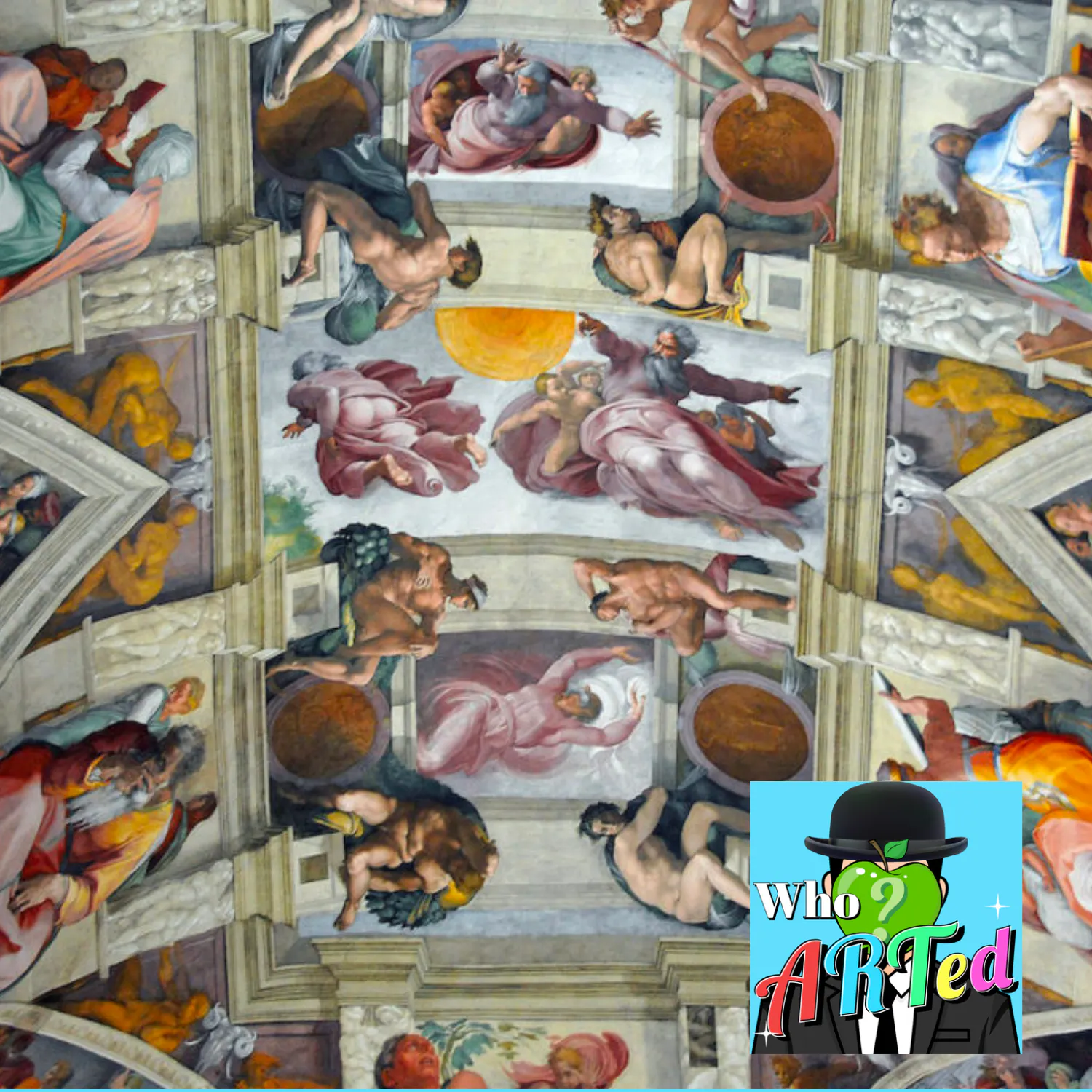
Michelangelo | The Sistine Chapel Ceiling
This episode gives a brief overview of the life of Michelangelo, one of the greatest artists of the Italian Renaissance, and one of his most famous works, the fresco on the Sistine Chapel's ceiling. I was joined once again, by my good friend, Chuck Hoff who teaches art at the middle school my students feed into. When he first commissioned the painting for the ceiling of The Sistine Chapel, Pope Julius II just wanted Michelangelo to paint the 12 apostles on the pendentives (a triangular architectural feature). Michelangelo was hesitant to take the job because he considered himself more of a sculptor than a painter. Also, Pope Julius II had hired Michelangelo to design his tomb and the two of them both had tempers and fought a lot during that project. He convinced the pope to give him free rein on the project along with a payment equivalent to about $600k today. The massive work basically illustrates The Book of Genesis over around 5300 square feet (500 square meters for those using logical measuring systems). The painting depicts the creation of Adam, the fall of man, the prophets, and the genealogy of Jesus. Contrary to popular belief, he did not paint laying on his back. He stood on the scaffolding, but don’t worry he was in physical discomfort during the entirety of the 4-year job. He stood craning his neck. He actually wrote a little poem about how painful it was including a little doodle in the margin illustrating it. Who ARTed is an Airwave Media Podcast. Connect with me: Website | Twitter | Instagram | Tiktok Support the show: Merch from TeePublic | Make a Donation As always you can find images of the work being discussed at www.WhoARTedPodcast.com and of course, please leave a rating or review on your favorite podcast app. You might hear it read out on the show. Learn more about your ad choices. Visit megaphone.fm/adchoices

Satoshi Tajiri | Pokemon
Who ARTed is the art history show dedicated to appreciating art in all of its forms from all sorts of artists. This week's mini-episode is about Pokemon. Pokemon is one of the biggest games in modern history. For over 25 years, hundreds of millions of people around the world have enjoyed videogames, card games, cartoons, and movies. But how did it all get started? For that we need to go back a little further than the 25 years of Pokemon, back to the 1960s and 70s in Machida Tokyo Japan, and a little boy named Satoshi Tajiri. Even though Tokyo is obviously a big city, the area where Satoshi grew up was still kind of rural. He loved exploring nature and in particular, he liked catching bugs. The other kids took notice of his love of entomology and called him Dr. Bug. The thing is, Machida didn’t stay rural. Satoshi saw Tokyo’s urban sprawl pave over the space where he grew up and he felt a sense of loss. As an adult in the 1980s, he started a gaming magazine, then decided that making his own games would be more satisfying than writing about other people’s games. He and his friends started the video game company Game Freak with some modest success early on. In the early 1990s, Satoshi came up with an idea for a game inspired by his childhood. He thought about all the kids growing up in cities who wouldn’t get the chance to enjoy exploring nature and collecting bugs as he had. He thought it would be great to build a game around this idea with a kid collecting fantasy creatures he called pocket monsters. Who ARTed is an Airwave Media Podcast. Connect with me: Website | Twitter | Instagram | Tiktok Support the show: Merch from TeePublic | Make a Donation As always you can find images of the work being discussed at www.WhoARTedPodcast.com and of course, please leave a rating or review on your favorite podcast app. You might hear it read out on the show. Learn more about your ad choices. Visit megaphone.fm/adchoices
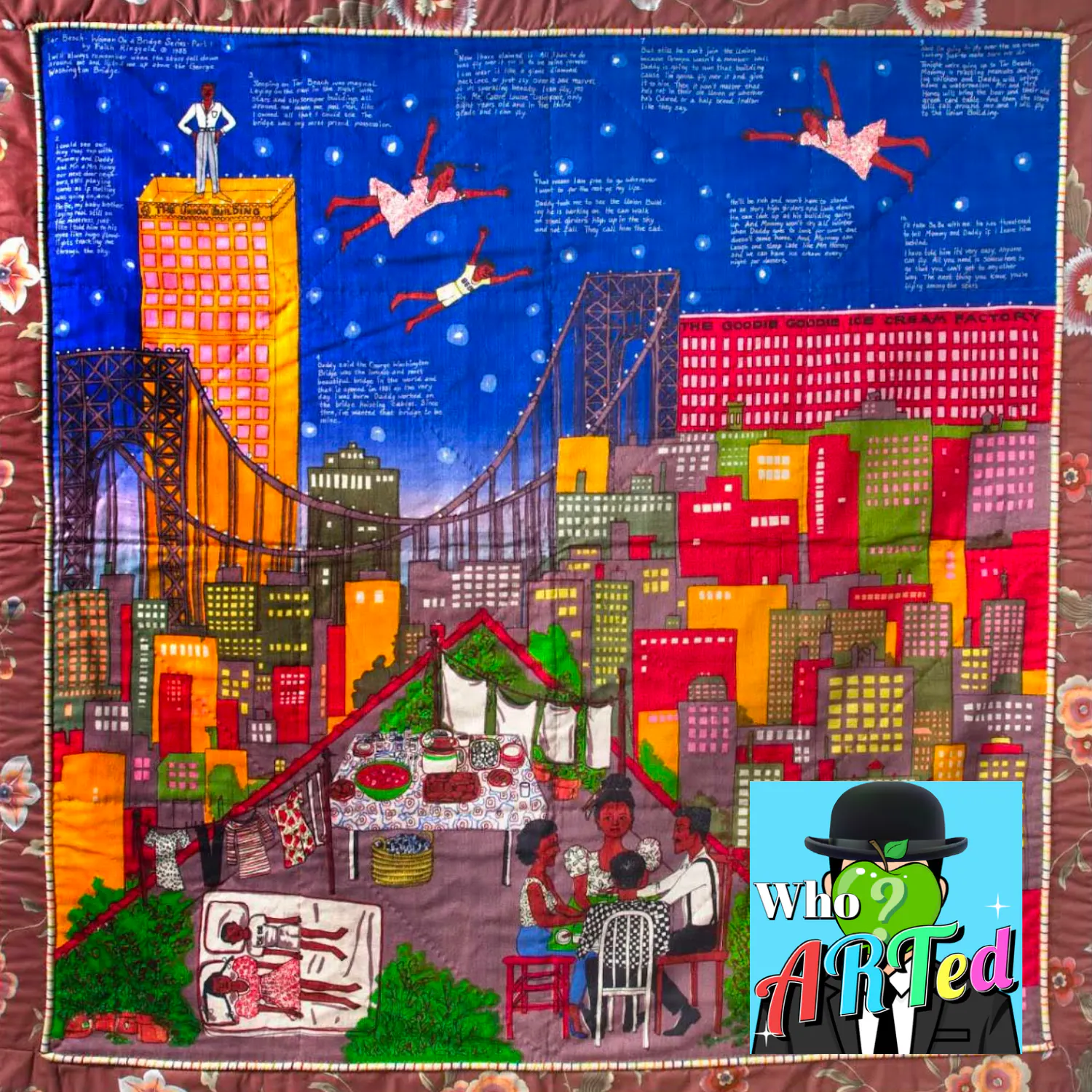
Faith Ringgold | Tar Beach
Faith Ringgold is an accomplished painter, quilter, author and illustrator. Tar Beach is perhaps her best-known quilt and book. My guest for this episode is a quilter and fellow podcaster Myrtle. She hosts a new podcast A Series of Dysfunctional Events set to launch on October 1. You can find her on her website. Dysfunctionalevents.com Faith Ringgold began writing stories on the quilts as a way of getting her stories out there. She was not able to get her stories published, but when she put them on the quilt and hung it in a gallery, people could see it. Then later those quilts would be photographed and included in published articles or books further widening the audience to read her stories. Eventually, people did take notice and an audience grew for her stories. She has written and illustrated 17 children’s books. Tar Beach is her most famous work. The book was published in 1991 based on the story quilt of the same name which she created in 1990. Who ARTed is an Airwave Media Podcast. Connect with me: Website | Twitter | Instagram | Tiktok Support the show: Merch from TeePublic | Make a Donation As always you can find images of the work being discussed at www.WhoARTedPodcast.com and of course, please leave a rating or review on your favorite podcast app. You might hear it read out on the show. Learn more about your ad choices. Visit megaphone.fm/adchoices
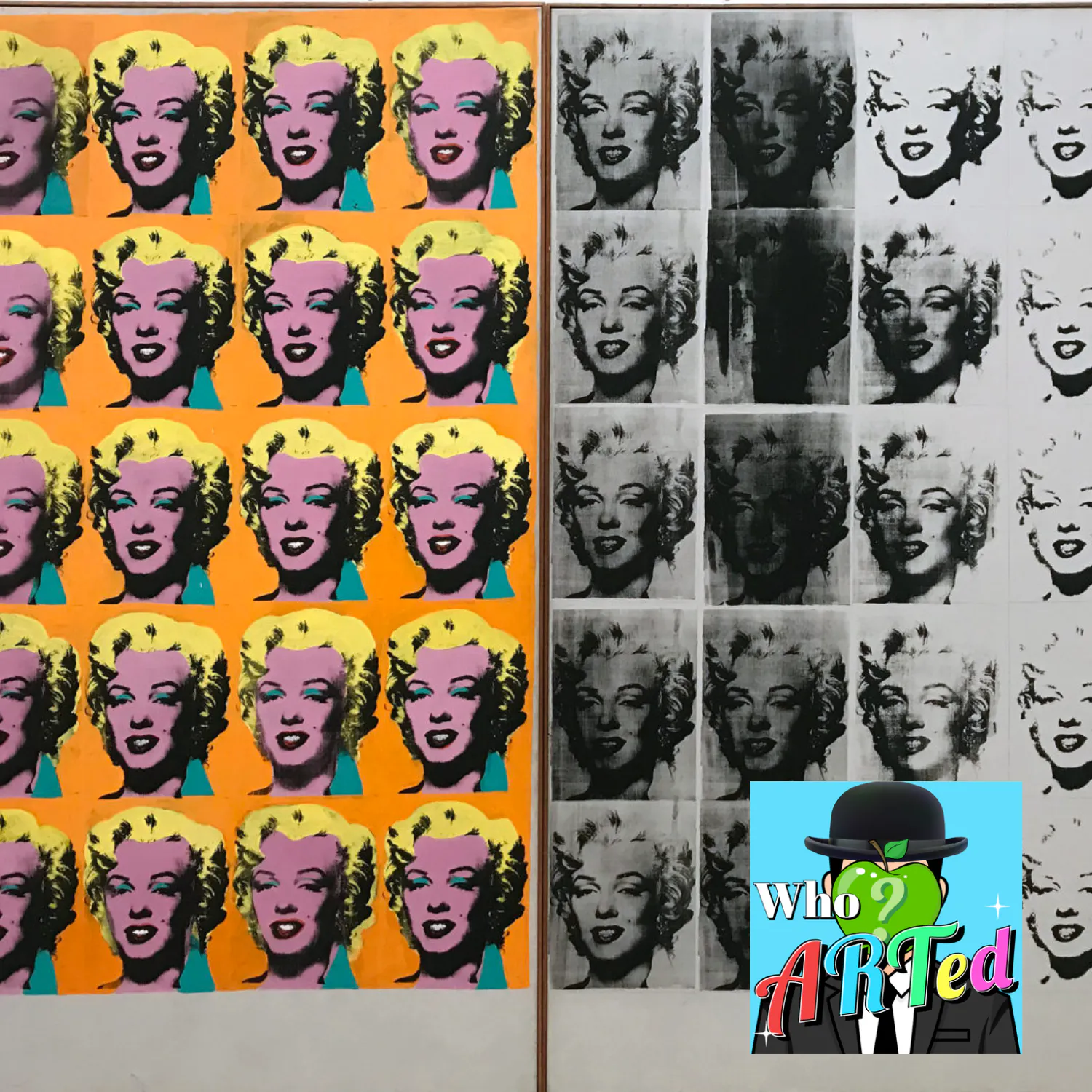
Andy Warhol | Marilyn Monroe Diptych
Warhol’s Marilyn Monroe diptych is a post modern altarpiece. A diptych is a two-paneled piece. Traditionally, diptychs would be associated with religious artworks. Specifically Christian works. They often conveyed stories of the lives of saints or they were portraits of significant religious figures. A diptych would be a portable altarpiece, hinged so that the artwork could be closed off and protected. Andy Warhol, much like Marilyn Monroe and this portrait, was filled with seeming contradictions. There was a bright public persona, but simultaneously, the artist could be closed off and guarded. Warhol was known to revel in fame and he was a fixture of the New York club scene in places like studio 54, while simultaneously he remained a devout Catholic attending mass regularly and living with his mother. He took care of her and lived with her for most of his life. In this portrait, we see Marilyn Monroe presented in the format typically associated with religious artworks. This work was created just a few weeks after Monroe’s untimely death. She is an icon of pop culture. A face that graced the pages of every magazine and tabloid. She was a young girl, Norma Jean who had been plucked from obscurity and celebrated around the world for her beauty, but outside of public view, she struggled with her mental health, failed relationships and substance abuse. She was a martyr of the common culture’s celebrity worship. In Warhol’s diptych, we see 50 repetitions of her famous face. On one panel, there is shockingly bold underpainting creating a cartoonish appearance. On the other we see 25 black and white copies of the same shadows and contours but without the garish color. There are varying degrees of intensity. Some over-saturated with black and others fading to the ghost of an image. And yet, with all of these, we never see the real Marilyn. We see only copies of a publicity still. The image of a star at the height of her fame and beauty. Frozen in time and sent out for others to see and appreciate. The image prime for reproduction and distortion. For the artist and audience to project and see as they wish. Who ARTed is an Airwave Media Podcast. Connect with me: Website | Twitter | Instagram | Tiktok Support the show: Merch from TeePublic | Make a Donation As always you can find images of the work being discussed at www.WhoARTedPodcast.com and of course, please leave a rating or review on your favorite podcast app. You might hear it read out on the show. Learn more about your ad choices. Visit megaphone.fm/adchoices

Ai Weiwei | Sunflower Seeds
Ai Weiwei is a contemporary artist who became well known to most people after he was held by the Chinese government for what many believe to have been political retribution. He has been such a thorn in their side, that his name is a banned search term on some social media. He was a highly rated blackjack player comped in all the casinos of Atlantic City and in addition to monumental works such as designing the stadium for the Olympic games, he put out heavy metal music. Learn more about the life and art of Ai Weiwei. My guest this week was Nathan from Post Modern Art Podcast Who ARTed is an Airwave Media Podcast. Connect with me: Website | Twitter | Instagram | Tiktok Support the show: Merch from TeePublic | Make a Donation As always you can find images of the work being discussed at www.WhoARTedPodcast.com and of course, please leave a rating or review on your favorite podcast app. You might hear it read out on the show. Learn more about your ad choices. Visit megaphone.fm/adchoices

Raphael | The School of Athens
The School of Athens was a Renaissance masterpiece depicting numerous ancient Greek philosophers and a little selfie by Raphael. If you want to learn more about the Renaissance, check out my other podcast, Art Smart. Who ARTed is an Airwave Media Podcast. Connect with me: Website | Twitter | Instagram | Tiktok Support the show: Merch from TeePublic | Make a Donation As always you can find images of the work being discussed at www.WhoARTedPodcast.com and of course, please leave a rating or review on your favorite podcast app. You might hear it read out on the show. Learn more about your ad choices. Visit megaphone.fm/adchoices
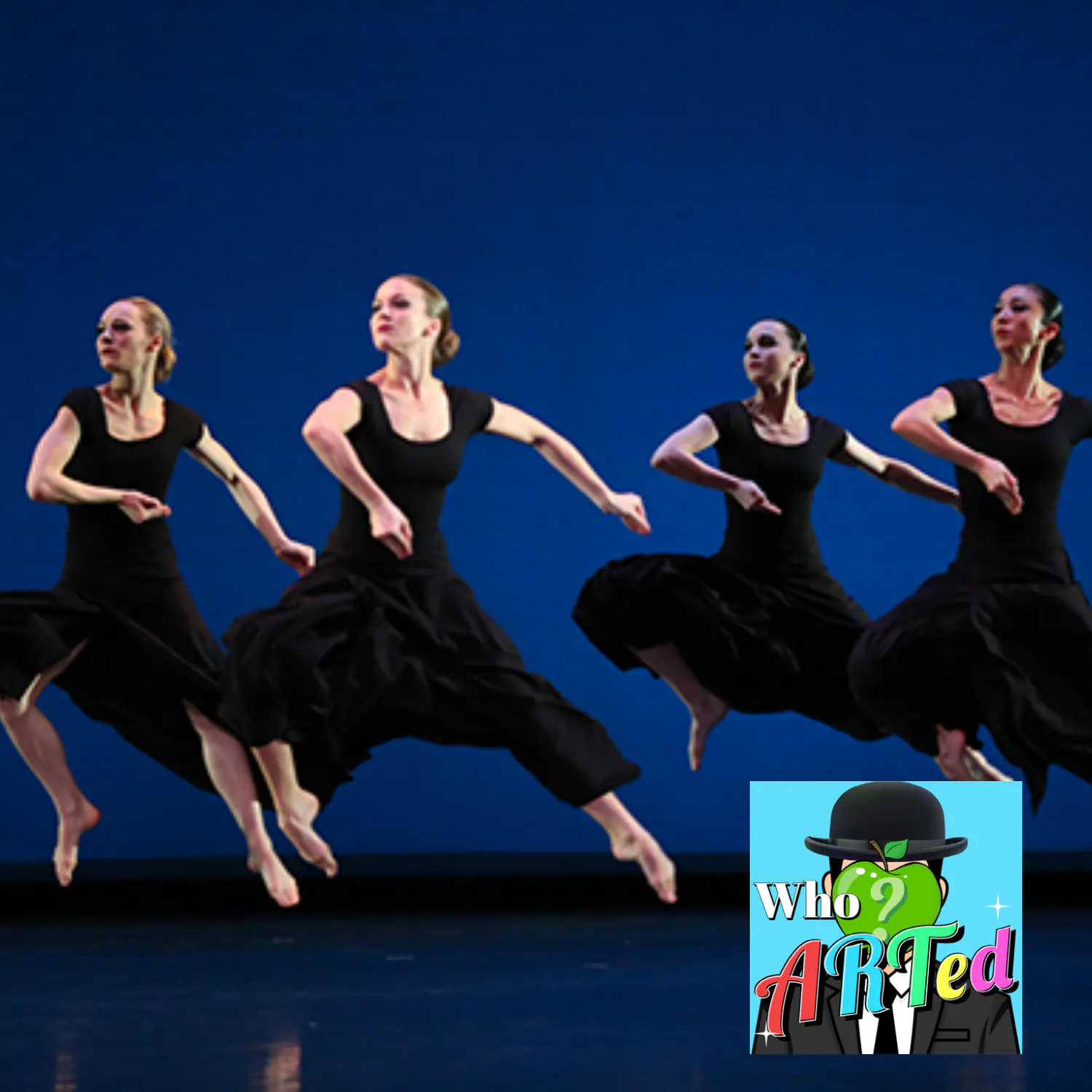
Martha Graham | Steps in the Streets
Martha Graham was a pioneer of modern dance. She was 17 years old when she saw her first dance performance by Ruth St. Denis. A few years later she began studying at Denishawn School of Dancing and Related Arts founded by Ruth St. Denis and Ted Shawn. In 1922, she danced in a silent film that tried to synchronize the live sound with the film. Basically, they had the dancer and conductor on film and the live orchestra would follow the conductor on the film to synch everything up. She left Denishawn in 1923. Her goal was to make dance reveal the inner man, and make something about the human experience rather than simply entertainment. Growing up the child of a psychiatrist feels like it was relevant here. I mean surely there would be some sort of Freudian interpretation of the daughter of an alienist transforming the field of dance into an exploration of the inner workings of humanity See Graham's piece, Steps in the Streets on Youtube My guest for this episode was Sean Roschman, director for Niko8. Who ARTed is an Airwave Media Podcast. Connect with me: Website | Twitter | Instagram | Tiktok Support the show: Merch from TeePublic | Make a Donation As always you can find images of the work being discussed at www.WhoARTedPodcast.com and of course, please leave a rating or review on your favorite podcast app. You might hear it read out on the show. Learn more about your ad choices. Visit megaphone.fm/adchoices
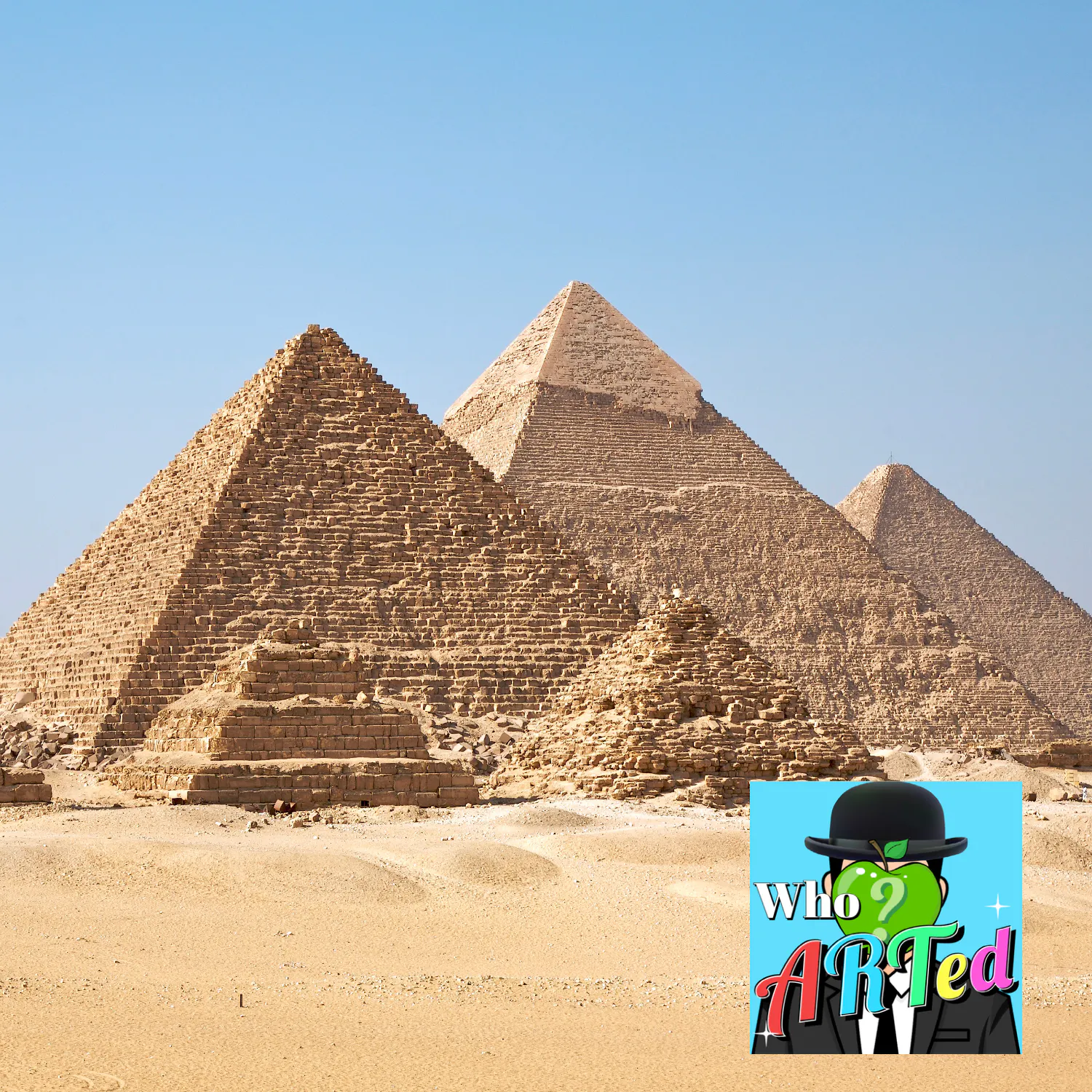
The Pyramids at Giza
The great pyramids constructed by ancient Egyptians at Giza are the last of the seven wonders of the ancient world still remaining. These massive stone monuments have left people awestruck for thousands of years. True to the distinction as wonders of the ancient world, people have wondered and speculated about how the great pyramids were constructed pretty much as long as they have been around. While some conspiracy theorists like to talk about aliens because they cannot conceive of a world in which ancient people could figure out how to build a pile, I’m going to go out on a limb and say the pyramids were built by people. Archaeologists have found evidence of encampments around the pyramids suggesting that there was a group of skilled craftsmen permanently stationed to work while crews of around 2000 workers would be brought in seasonally. Who ARTed is an Airwave Media Podcast. Connect with me: Website | Twitter | Instagram | Tiktok Support the show: Merch from TeePublic | Make a Donation As always you can find images of the work being discussed at www.WhoARTedPodcast.com and of course, please leave a rating or review on your favorite podcast app. You might hear it read out on the show. Learn more about your ad choices. Visit megaphone.fm/adchoices

Charuvi Agrawal | 26,000 Bells of Hanuman (encore)
This is an encore presentation of my episode on Charuvi Agrawal, the contemporary Indian artist. In 2014, she created a massive sculpture of Hanuman using 26,000 bells. I think what I love most about the piece is the way that her work engages the audience. Not only can we see, the piece, but people can touch it, and hear the bells ring out. The audience is not only a viewer, but a participant. Who ARTed is an Airwave Media Podcast. Connect with me: Website | Twitter | Instagram | Tiktok Support the show: Merch from TeePublic | Make a Donation As always you can find images of the work being discussed at www.WhoARTedPodcast.com and of course, please leave a rating or review on your favorite podcast app. You might hear it read out on the show. Learn more about your ad choices. Visit megaphone.fm/adchoices
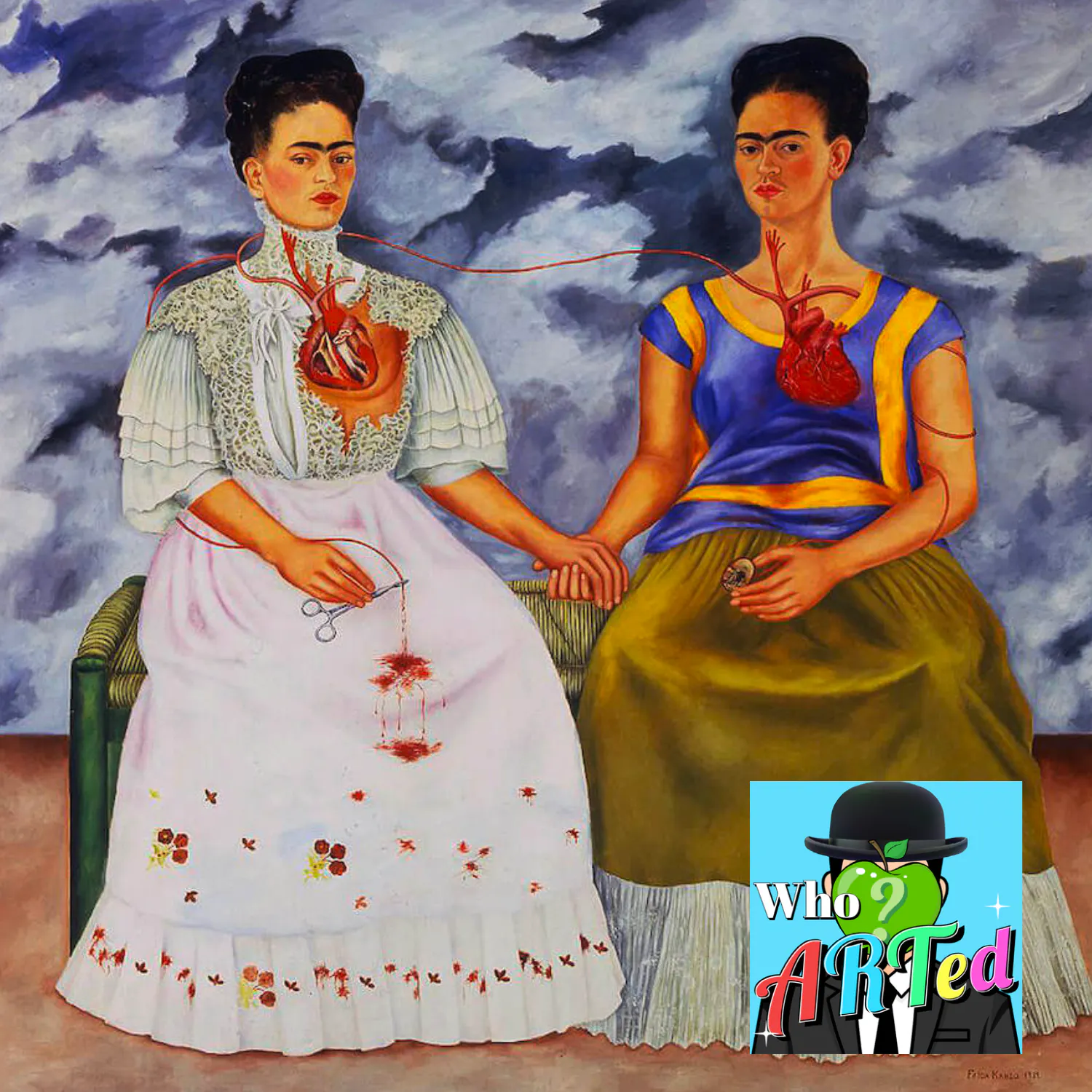
Frida Kahlo | The Two Fridas
Frida Kahlo was an interesting artist. I first became familiar with her work when I was a teenager after watching a bio pic in an art house theater. She has become an icon of not only art history, but also pop culture. When a person becomes an icon in the popular imagination, it can become a challenge to tell the woman from the myth. If I were to summarize Kahlo in one sentence, I would say she was a feminist surrealist painter berst known for her unflinching self portraits. Who ARTed is an Airwave Media Podcast. Connect with me: Website | Twitter | Instagram | Tiktok Support the show: Merch from TeePublic | Make a Donation As always you can find images of the work being discussed at www.WhoARTedPodcast.com and of course, please leave a rating or review on your favorite podcast app. You might hear it read out on the show. Learn more about your ad choices. Visit megaphone.fm/adchoices
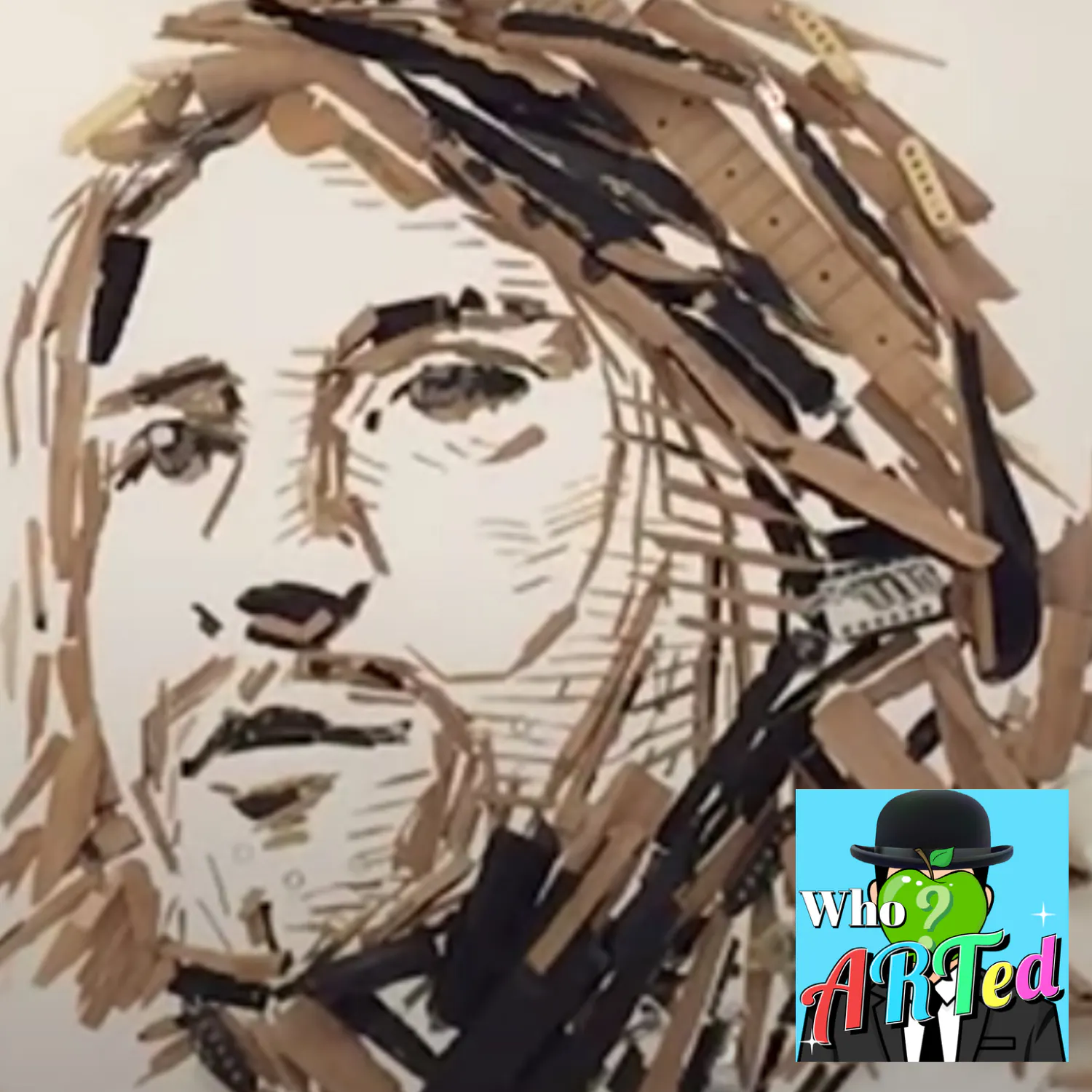
Phil Hansen | Cobain (Goodbye Art 2)
This is an encore presentation of my episode about Phil Hansen. New full episodes will be coming starting in September. In the meantime, you can find new episodes of Art Smart on your favorite podcast app every Wednesday, and I will be publishing new mini-episodes on Fridays. For images and resources, go to www.WhoArtEdPodcast.com For this week's episode I spoke with Kelly Beach about the contemporary American artist, Phil Hansen. The specific work being discussed was Hansen's piece Cobain, from his Goodbye Art 2 series. Hansen's work focuses largely on the creative process and overcoming obstacles. Hansen himself struggled with a tremor that hindered his artistic career until he learned to "embrace the shake" and change his methods, change his mindset and opened up a whole new world of possibilities. Who ARTed is an Airwave Media Podcast. Connect with me: Website | Twitter | Instagram | Tiktok Support the show: Merch from TeePublic | Make a Donation As always you can find images of the work being discussed at www.WhoARTedPodcast.com and of course, please leave a rating or review on your favorite podcast app. You might hear it read out on the show. Learn more about your ad choices. Visit megaphone.fm/adchoices

Louis Daguerre | The World's First Photobomb (Encore)
The history of photography has some really interesting and surprising facts. For example, the camera is about 2000 years older than photography. The earliest known camera obscuras were documented as far back as the 4th century BCE in China, while photography didn‘t really come about until the 18th Century. In the early 19th century, Louis Daguerre was working hard to improve the photographic method. His innovations helping to develop a latent image drastically cut down on exposure times making photography much more practical. Of course while I say it drastically cut down exposure times, it cut the times down from hours to minutes, but it was still too long to be practical for most people to be captured in a photo. The first photograph of people actually happened by accident as one man‘s decision to get his shoes shined in 1838 led to his likeness being captured in an image that would make history. Who ARTed is an Airwave Media Podcast. Connect with me: Website | Twitter | Instagram | Tiktok Support the show: Merch from TeePublic | Make a Donation As always you can find images of the work being discussed at www.WhoARTedPodcast.com and of course, please leave a rating or review on your favorite podcast app. You might hear it read out on the show. Learn more about your ad choices. Visit megaphone.fm/adchoices

Jim Davis | Garfield
This is an encore presentation of my episode about Jim Davis, the creator of Garfield. My guest for this episode was Lindsey Little, creator of the Oni Girl comic. Here is her link tree for all the places to find her and her work https://linktr.ee/OniGirl Who ARTed is an Airwave Media Podcast. Connect with me: Website | Twitter | Instagram | Tiktok Support the show: Merch from TeePublic | Make a Donation As always you can find images of the work being discussed at www.WhoARTedPodcast.com and of course, please leave a rating or review on your favorite podcast app. You might hear it read out on the show. Learn more about your ad choices. Visit megaphone.fm/adchoices

Jean-Honore Fragonard | The Swing
The Swing, also sometimes called The Happy Accidents of The Swing, is a Rococo painting by Jean-Honore Fragonard. It is intended to be light-hearted and fun as it depicts people in a care free moment on a swing in the garden. Interestingly, while today's audiences would likely see riding on a swing as a wholesome activity, centuries ago it was considered to be a bit of a risque activity as clothing would move in the breeze giving glimpses of a lady's ankle. In fact, this painting was commissioned by an aristocrat who wanted a painting of himself looking up his mistress's skirt. For those listeners in high school, The Swing is on the AP Art History required artworks list. You can find more episodes covering those works on my Spotify playlist called AP Art History Cram Session. Who ARTed is an Airwave Media Podcast. Connect with me: Website | Twitter | Instagram | Tiktok Support the show: Merch from TeePublic | Make a Donation As always you can find images of the work being discussed at www.WhoARTedPodcast.com and of course, please leave a rating or review on your favorite podcast app. You might hear it read out on the show. Learn more about your ad choices. Visit megaphone.fm/adchoices

Matt Groening | Homer Simpson (encore)
This is an encore presentation. I wanted to start 2021 with something fun, so I decided to do an episode about a classic episode of The Simpsons. In season 10 episode 19 titled Mom and Pop Art, Homer becomes an outsider artist. While much of the humor is derived from the premise that Homer Simpson is inept and could never be a decent artist, but I thought it would be fun to consider what kind of an artist Homer really is. His first sculpture was created accidentally from a failed attempt to build a backyard barbecue pit. After tastemakers declared the failed grill to be an artistic triumph, Homer leans in to his new career as an artist. Of course after the initial success that came so easily, Homer discovers that maintaining an art career is difficult as he presents a series of works that are considered too derivative of his earlier work as they all had the same feel behind them. This actually is one of the least true criticisms I observed in the satirical look at the art world. While in the Simpson‘s world art critics are fickle and looking to be constantly shocked, in reality one of the most sure paths to success is for an artist to develop a signature style so their work is easily identified to patrons. Consistency is crucial to an artist‘s marketability. Still Homer‘s falling out of favor led to a rare bit of introspection and growth for the character. Marge guides him through the museum and Homer applies his learning to creating one final masterpiece - The Grand Canals of Springfield. If you set aside the reckless destruction of property and the fact that such an act would have wreaked havoc endangering thousands of people and animals, it was actually a fairly interesting work. Ultimately, I consider Homer to be most interesting as a work of art rather than as an artist, but through any lens I find him delightful and thought provoking. Who ARTed is an Airwave Media Podcast. Connect with me: Website | Twitter | Instagram | Tiktok Support the show: Merch from TeePublic | Make a Donation As always you can find images of the work being discussed at www.WhoARTedPodcast.com and of course, please leave a rating or review on your favorite podcast app. You might hear it read out on the show. Learn more about your ad choices. Visit megaphone.fm/adchoices
What's up with ROY G BIV? (encore)
This is an encore presentation of my very first Fun Fact Friday mini episode. This week's Fun Fact is that the ROY G BIV model of a rainbow is somewhat arbitrary. The only reason people slip indigo between blue and violet is because Sir Isaac Newton wanted to have seven colors in order to match the musical scale. If you are interested in learning more about color or the other elements of art, check out my other show, Art Smart which is available on all the major podcast apps. Who ARTed is an Airwave Media Podcast. Connect with me: Website | Twitter | Instagram | Tiktok Support the show: Merch from TeePublic | Make a Donation As always you can find images of the work being discussed at www.WhoARTedPodcast.com and of course, please leave a rating or review on your favorite podcast app. You might hear it read out on the show. Learn more about your ad choices. Visit megaphone.fm/adchoices

Introducing Art Smart | Modern Art
bonusArt Smart season 2 began last week with an episode on Modern Art. If you like this episode, search for Art Smart on your podcast app and hear the next episode on Post Modern Art. Learn more about your ad choices. Visit megaphone.fm/adchoices

Vincent van Gogh (part 2) | Starry Night
This is an encore presentation of my episode on Vincent van Gogh and his painting, Starry Night. In this episode, I continued my discussion with Chuck Hoff about Vincent van Gogh. We covered the later part of his life and career after he moved to France. The painting we specifically focused our attention on was The Starry Night from 1889. During the episode, we also briefly discussed The Night Cafe and Starry Night Over the Rhone. Please remember to check out my other podcast, Art Smart on your favorite podcast app. Who ARTed is an Airwave Media Podcast. Connect with me: Website | Twitter | Instagram | Tiktok Support the show: Merch from TeePublic | Make a Donation As always you can find images of the work being discussed at www.WhoARTedPodcast.com and of course, please leave a rating or review on your favorite podcast app. You might hear it read out on the show. Learn more about your ad choices. Visit megaphone.fm/adchoices
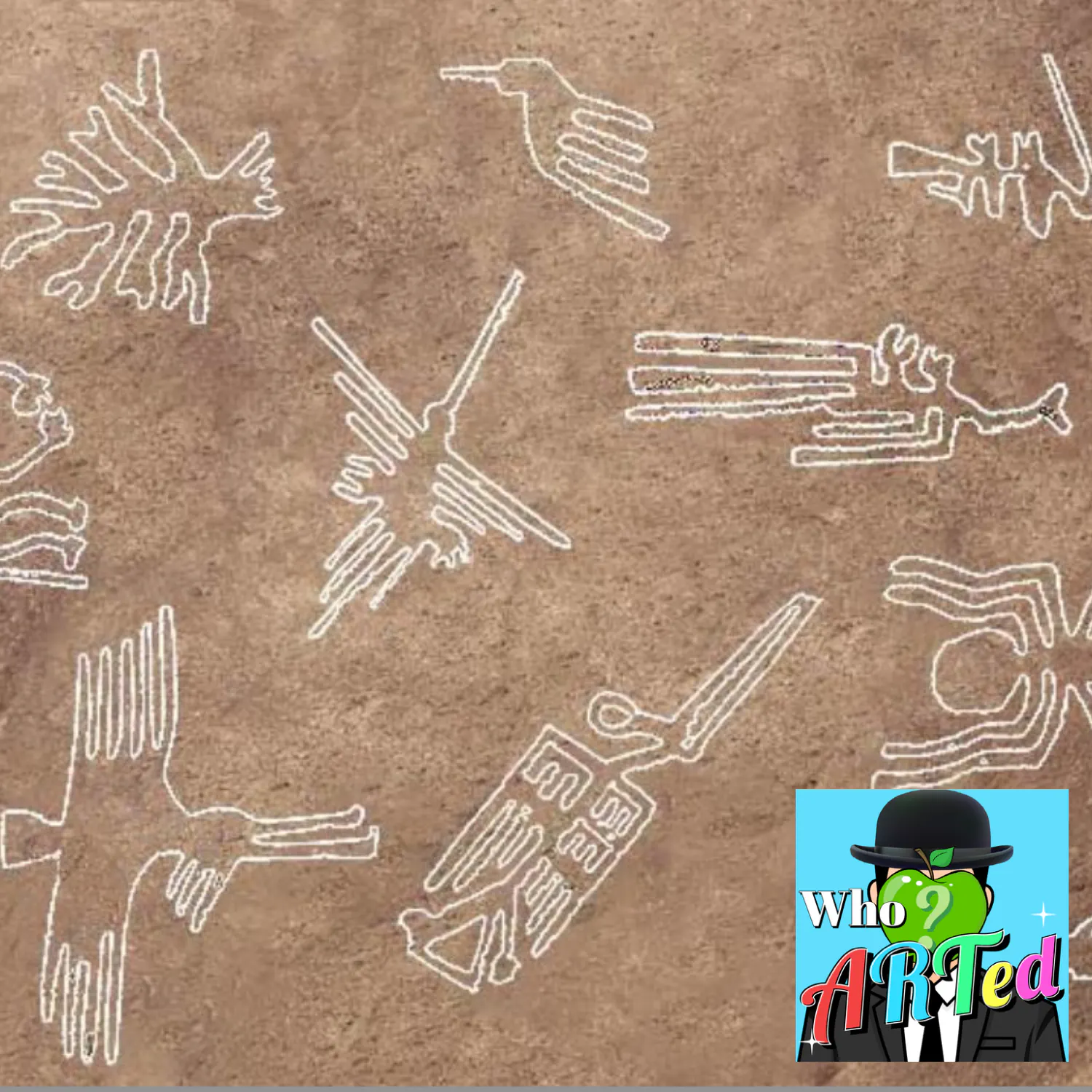
The Nazca Lines
This is an encore presentation of my episode covering a lesser known bit of art history - the Nazca Lines. In the Peru there are massive geoglyphs etched in the ground with the full design only visible from the sky leaving people to wonder how they were created around 500 CE and for whom to enjoy. Who ARTed is an Airwave Media Podcast. Connect with me: Website | Twitter | Instagram | Tiktok Support the show: Merch from TeePublic | Buy me a coffee As always you can find images of the work being discussed at www.WhoARTedPodcast.com and of course, please leave a rating or review on your favorite podcast app. You might hear it read out on the show. Learn more about your ad choices. Visit megaphone.fm/adchoices

Vincent van Gogh (part 1) | The Potato Eaters
This is a two part episode about Vincent Van Gogh.Part 1 focuses on his early life and development up to his first masterpiece,The Potato Eaters from 1885. Next week we will discuss the mature phase of his career and how his style shifted upon moving to France. Remember this week I am also starting season 2 of Art Smart with new episodes coming every Wednesday. Please be sure to follow Art Smart on your favorite podcast app and leave a rating or review to help others discover the show. Learn more about your ad choices. Visit megaphone.fm/adchoices

Edvard Munch - The Scream
The Scream by Edvard Munch is one of the most famous artworks out there, and one of the most widely referenced. We see it in pop culture on t-shirts and posters, in the Simpsons and other cartoon parodies and one of the most famous scenes in the movie Home Alone saw Kevin mimic the pose of The Scream as he put on after shave. Of course, while we think we know the work, there is a lot people get wrong. For example, the painting isn't about a person screaming. Munch was painting his feeling of anxiety being overwhelmed as he heard the scream of nature all around him. Also, some say the figure in the painting was based on a Peruvian mummy that was on display around that time. For my second segment, we got a little-known fact about mummies from Andrew and Kate, the hosts of Let's Talk Petty. They have a few more episodes to go in their first season, and if you aren't familiar, check them out. I got hooked on the show when I came across their episode on the petty rivalry between Stuart Semple and Anish Kapoor. Who ARTed is an Airwave Media Podcast. Connect with me: Website | Twitter | Instagram | Tiktok Support the show: Merch from TeePublic | Make a Donation As always you can find images of the work being discussed at www.WhoARTedPodcast.com and of course, please leave a rating or review on your favorite podcast app. You might hear it read out on the show. Learn more about your ad choices. Visit megaphone.fm/adchoices

Introducing: Art Smart
bonusThis is a bonus episode of my other show, Art Smart. Season 2 is coming July 20 with new episodes every Wednesday. In this bonus episode, I discussed the steps to make sense of any work of art. For season 2 of Art Smart, I will be making art history quick and easy. Each episode will focus on a different time period or movement in art covering the big ideas in broad strokes, then sharing a few artists and works to look at for a better understanding. Please follow Art Smart on your favorite podcast app and leave a rating or review to help others find the show. Who ARTed is an Airwave Media Podcast. Connect with me: Website | Twitter | Instagram | Tiktok Support the show: Merch from TeePublic | Make a Donation As always you can find images of the work being discussed at www.WhoARTedPodcast.com and of course, please leave a rating or review on your favorite podcast app. You might hear it read out on the show. Learn more about your ad choices. Visit megaphone.fm/adchoices
S4 Ep 168Njideka Akunyili Crosby (encore)
For this episode, I talked to Janet Taylor, art teacher and writer for the Art of Education. She actually taught be about Njideka Akunyili Crosby, the contemporary Nigerian/American painter. Njiedeka Akunyili Crosby was born in 1983 in Enugu, Nigeria. Her father was a surgeon and mother was a professor of pharmacology. Her mother won the green card lottery allowing Njideka to come to the U.S. to study when she was 16. She spent a year studying and prepping for the SATs then went back to Nigeria to perform a year of service. After completing the year of service, she came back to the U.S. She took her first painting classes at a community college in Philadelphia then went on to Swarthmore. She was initially pre-med before deciding to pursue art. After Swarthmore, she went to the Pennsylvania Academy of Fine Art, then went on to get her MFA from Yale. A lot of her work focuses on straddling different worlds and her connections to Nigeria and the U.S. She uses painting with some collage methods like integration of fabric but particularly transfers. These methods not only integrate patterns and textures but also enrich the work through the connections to pop culture and other icons embedded as details to be discovered within her work. In 2017, she got the MacArthur genius grant which pretty much says it all right there. Her CV could make even the most accomplished among us question their adequacy. For this episode we looked at Predecessors from 2013. As always you can see the piece linked here in the show notes, or visit www.WhoArtEdPodcast.com to see this week‘s work as well as previous pieces and free resources for art teachers. If you enjoy the show, please help spread the word. Like, Subscribe and leave a review on iTunes or wherever you get your podcasts. Learn more about your ad choices. Visit megaphone.fm/adchoices
S4 Ep 167Forgers Forging Forgeries
The Guangzhou Academy of Fine Arts in southern China had over 140 works stolen from their collection, but nobody noticed for years. This is because the thief replaced every item he stole… with his own paintings. Now some guy working in a museum quietly helping himself to the collection of artworks then replacing them with his own copies seems pretty strange and bold, but this next bit brings the story to next-level bananas territory. According to Xiao theft and forgery were rampant. He said he noticed that people were stealing his forgeries and replacing them with their forgeries. It kinda makes you wonder if he was getting the originals or if he was forging a copy of a forgery. I mean he did steal and copy work by Zang Daqian, a landscape and still-life painter who was also considered to be a master forger himself. Xiao plead guilty in court, but warned that the lax security was causing big problems for the university’s collection. He said that he noticed fakes in there from his first day on the job and obviously quite a few more of them popping up throughout his time there. My Fan Fact this week came from my friend over at The Big Balance podcast. You can find The Big Balance on Apple podcasts or wherever you get your podcasts. Who ARTed is an Airwave Media Podcast. Connect with me: Website | Twitter | Instagram | Tiktok Support the show: Merch from TeePublic | Make a Donation As always you can find images of the work being discussed at www.WhoARTedPodcast.com and of course, please leave a rating or review on your favorite podcast app. You might hear it read out on the show. If you would like to share a fun fact for a future episode, email me at [email protected] Learn more about your ad choices. Visit megaphone.fm/adchoices
S4 Ep 166Four American Artworks
July 4 is America's celebration of independence from England. In honor of the holiday, I decided to make an episode covering a little bit about 4 artworks from American history. I started with a piece from the people who were here before the Europeans. I discussed a transformation mask from the northwest coast. Specifically, I was looking at work from the Kwakawak. In this episode I also shared about Houdon's neoclassical statue of George Washington, Thomas Jefferson's foray into architecture with Monticello, and Jacob Lawrence's 60 panel collection, The Migration Series. Images of the works can be found on www.whoartedpodcast.com along with Fragonard's painting of The Swing which I mentioned to draw a contrast between neoclassical art and the Rococo movement which came before it. Who ARTed is an Airwave Media Podcast. Connect with me: Website | Twitter | Instagram | Tiktok Support the show: Merch from TeePublic | Make a Donation As always you can find images of the work being discussed at www.WhoARTedPodcast.com and of course, please leave a rating or review on your favorite podcast app. You might hear it read out on the show. Learn more about your ad choices. Visit megaphone.fm/adchoices

S4 Ep 165Loving Vincent | A Film Made of Paintings
A few years prior to the immersive experiences, filmmakers brought Vincent van Gogh's paintings to life in a completely new and different way. In 2017, Loving Vincent was a film made of oil paintings. Today Vincent van Gogh is sort of the model we hold in our minds for a tortured artist. He saw little to no commercial success in his lifetime. He struggled with addiction and mental health. He lived on the fringes of society inspired by other artists and impoverishing himself in his drive to create. He was known to go without food at times because he was spending all of his money on paint. And now we can see his dramatic tale unfold through paint. A team of 125 artists from around the world produced 65,000 paintings to animate the film. Film and animation basically work off the principle that if you have a bunch of pictures played back really quickly it overwhelms the eye. The human eye can not process more than ten pictures or frames per second so it stops looking like a series of pictures and instead looks like one picture that is moving. For Loving Vincent, the artists created an oil painting on canvas for each of the 65,000 frames. They recreated some of his masterpieces telling the dramatic tale through his best known works, in his style and his preferred medium of oils. So how did they do all of this? Well, the storyboard for the movie included a number of Vincent van Gogh’s paintings. They recruited a team of 125 well-trained oil painters rather than traditional animators. A bit of the movie was made by rotoscoping which is a technique of basically drawing on top of a frame of film. Actors were filmed in front of a green screen. Editors made a composite shot replacing the green to put Vincent van Gogh’s paintings into the background. Now here is the tricky part. After the green screen and all that editing, they put every single frame of the film onto a canvas. It took six years, but they painted 65,000 frames on canvas. Today only about 1000 of the paintings remain because after a frame was painted and photographed for the film, they would typically re-use the canvas. Oil paints take a long time to dry so they would be able to make slight alterations to a wet painting for the next frame. It was a remarkable feat blending old and new media. You can see the trailer for Loving Vincent on YouTube Who ARTed is an Airwave Media Podcast. Connect with me: Website | Twitter | Instagram | Tiktok Support the show: Merch from TeePublic | Make a Donation If you have a fun fact you would like to share, please email it to [email protected] As always you can find images of the work being discussed at www.WhoARTedPodcast.com and of course, please leave a rating or review on your favorite podcast app. You might hear it read out on the show. Learn more about your ad choices. Visit megaphone.fm/adchoices

S4 Ep 164Shigeru Miyamoto | Mario
In 1979, after some modest success a Japanese video game company opened an office in America. They started off in New York but eventually moved to Seattle. They wanted to break into the new North American market, but the game sales were lackluster. The head of the American division tried to keep them afloat and asked for more talent to be sent over from Japan. Most people at the top were involved in other projects, but they were able to find a young artist who was willing to develop a new game. His name was Shigeru Miyamoto and while he had not yet created a videogame, he would go on to create the flagship game became the symbol of the company and really home gaming. In the early days the character was a carpenter named jumpman. Then one day the landlord for the American offices came in to yell about how the rent was late and the staff thought he looked like their character so they started referring to Jumpman by a new name. They called him Mario. My guest this week is Matthew Bliss, host of The Dead Drop, a podcast sharing the latest video game news. It publishes twice a week and you can find him at www.deaddroppod.com Who ARTed is an Airwave Media Podcast. Connect with me: Website | Twitter | Instagram | Tiktok Support the show: Merch from TeePublic | Make a Donation As always you can find images of the work being discussed at www.WhoARTedPodcast.com and of course, please leave a rating or review on your favorite podcast app. You might hear it read out on the show. Learn more about your ad choices. Visit megaphone.fm/adchoices

S1 Ep 164Jan van Eyck - The Arnolfini Portrait
In the 1400s, influencers couldn’t simply scout a location, arrange the perfect lighting and pull out their camera phone to snap dozens of pics testing different angles to find the perfect shot demonstrating how much better their curated life is than the lived experience of the rest of us plebeians. No back then, if someone wanted a picture to go along with their smug sense of superiority, they needed to hire a painter and in 1434, Jan van Eyck painted one of the greatest testaments to the enduring power of carefully constructing a casually posed portrait. There is a lot of debate about the meaning and symbolism in the work, but a common interpretation is that this is a sort of wedding scene. The man is taking the hand of his wife. She is in the interior of the space near the bed reinforcing the gender roles of the time with the woman’s place being taking care of the home while he stands by the open window symbolizing his role in the outside world. The mirror in the background is said to represent the eye of God witnessing their union and the frame of the circular mirror has a dozen small scenes from the passion of Christ. The small dog could be seen as a symbol of fidelity, or some say simply it is another signifier of wealth as many wealthy women were given lap dogs as companions. The green of the dress symbolizes hope. Many speculate the hope of becoming a mother and while many viewers today believe the woman in the portrait appears to be pregnant, as we all know, one should never assume a woman is pregnant. Scholars say this was actually a fashionable look for the day. Clothing was very expensive. Their clothing was particularly expensive with fur lining etc. The idea back then was the more clothing, the more wealthy one must be, so no matter how ridiculous the silhouette may appear to contemporary audiences, in the 15th century, those strange bulges of fabric showed that this was a person who could afford to dress themselves. It was conspicuous consumption proving yet again that for as long as we have had a means to record what people looked like, those people have worked to dress themselves up and surround themselves with markers of their high status. While some see modern mass media as producing a more vain and shallow culture, I would argue van Eyck shows us people have always been feeding their egos and flaunting their privilege with material goods. At least now most people know better than to use animal fur to do it. Who ARTed is an Airwave Media Podcast. Connect with me: Website | Twitter | Instagram | Tiktok Support the show: Merch from TeePublic | Make a Donation As always you can find images of the work being discussed at www.WhoARTedPodcast.com and of course, please leave a rating or review on your favorite podcast app. You might hear it read out on the show. Learn more about your ad choices. Visit megaphone.fm/adchoices

S4 Ep 163Derrick Adams | Floater 73
One of the things that really strikes me is that he is creating scenes of people being joyful. Adams says that part of the appeal of being an artist is getting to create the environments you would like to see and experience. I also think that there is something really nice about normalizing and even elevating fun and celebration. My guest this week was Goldie Robinson, an art teacher out of Atlanta. She was my guest on a previous episode about Alexander McQueen, and when I talked with her about coming back on the podcast, she suggested Derrick Adams. I am so glad she did because his work delivers some nice summer fun, but as with all great art, there is a ton more under the surface. Who ARTed is an Airwave Media Podcast. Connect with me: Website | Twitter | Instagram | Tiktok Support the show: Merch from TeePublic | Make a Donation As always you can find images of the work being discussed at www.WhoARTedPodcast.com and of course, please leave a rating or review on your favorite podcast app. You might hear it read out on the show. Learn more about your ad choices. Visit megaphone.fm/adchoices

S4 Ep 162MC Escher | Portrait of GA Escher (portrait of his father)
I live in the United States where this weekend, people will be celebrating father’s day. I thought this would be great time to dedicate a mini episode to an artist who created a beautiful work for his father. I love MC Escher’s portrait of GA Escher not only because it shows us the Escher men had a strange proclivity for referring to humans by letters rather than names, but we see some similarities between the father and son as both wrote diligently in their journals throughout the process of its creation. This mini episode is about the portrait MC Escher lovingly created of his 92 year old father. He made 15 copies of the lithograph to be shared among the family. Who ARTed is an Airwave Media Podcast. Connect with me: Website | Twitter | Instagram | Tiktok Support the show: Merch from TeePublic | Buy me a coffee As always you can find images of the work being discussed at www.WhoARTedPodcast.com and of course, please leave a rating or review on your favorite podcast app. You might hear it read out on the show. Learn more about your ad choices. Visit megaphone.fm/adchoices

S4 Ep 161Roy Lichtenstein | Look Mickey
In 1964, Life Magazine ran with Lichtenstein on the cover and the text read “Is He the Worst Artist in the U.S.?” Lichtenstein responded to criticism of his work saying “I think my paintings are critically transformed, but it would be difficult to prove it by any rational line of argument." Seems like kind of a weak defense. Basically, ‘I think my work is good, but there’s really no rational argument in favor of it.’ I mean its a bold move. I’ll give him that. He painted Look Mickey after his son taunted him saying he couldn’t paint something that good. There is something I really love about the idea that basically his entire career was the ultimate “so there” to a child. I mean doing your work out of spite is one thing, but doing it to spite your child, that’s some next level pettiness. My guest this week was The Real Michael Lee, a musician, graphic designer and comic artist based out of Iowa. You can find him at www.therealmichaellee.com and or go to his links page to check out all the different spaces he occupies online. In this episode, we dropped a lot of names. Take a minute to look through my back catalog to learn more about Jack Kirby, Pablo Picasso's Guernica, Diego Rivera, Ernie Barnes and Andy Warhol. As I said in the show, feel free to leave a comment on the message boards at Goodpods, the platform with the good sense to feature Who ARTed on their recommendations list and where I am frequently ranked number 1 for visual arts. Who ARTed is an Airwave Media Podcast. Connect with me: Website | Twitter | Instagram | Tiktok Support the show: Merch from TeePublic | Buy me a coffee As always you can find images of the work being discussed at www.WhoARTedPodcast.com and of course, please leave a rating or review on your favorite podcast app. You might hear it read out on the show. Learn more about your ad choices. Visit megaphone.fm/adchoices

S4 Ep 156Louis Daguerre | The Artist's Studio
I have talked a bit about Daguerre and his photographic methods in a previous episode about the world’s first photobomb. Listeners may recall that the first photograph to feature a human happened by accident as Daguerre was taking a photograph of the view out his window. Those early photographs needed a long exposure. I’m talking around 15 minutes and few subjects could sit still for that long. This is why the first subjects of photos tended to be landscapes or still lives, you know, things that will be still for a long time. The plaster casts were a practical subject. They were also intended to send a message that photography was a new medium but it could handle the traditional subject matter. In this collection, we see an arrangement of casts of Venus, cupid, the wings, and heads of two cherubs. Above the cherub or putti heads which would have been associated with Phaethon son of Helios, we see the rams head, and the golden Ram in Greek mythology was a descendant of Helios, the sun god. Central to the composition, we see these references to Greek mythology making a connection between the new medium and classic subjects but more specifically, we are seeing references to the sun. When we break down photography, photo means light. Graphy is writing, The photographic process is making a picture with light. The sunlight triggers a chemical reaction causing silver compounds to darken. If you want to learn more about Daguerre and early photography, listen to my previous mini-episode about The World's First Photobomb. This week's Friday Follow recommendation is Art Ed Radio from The Art of Education University. This segment is not paid promotion. I simply want to share some of the things that I love. If you have a recommendation for something good I should check out, email me or reach out on social media. Who ARTed is an Airwave Media Podcast. Connect with me: Website | Twitter | Instagram | Tiktok Support the show: Merch from TeePublic | Buy me a coffee As always you can find images of the work being discussed at www.WhoARTedPodcast.com and of course, please leave a rating or review on your favorite podcast app. You might hear it read out on the show. Learn more about your ad choices. Visit megaphone.fm/adchoices

S4 Ep 155Meret Oppenheim | Object
My guest this week is Janet Taylor, an artist and art teacher at the high school and college levels. Find her work and more about her at www.jatayolorart.com In 1936, Meret Oppenheim was having lunch with friends when they began to joke about wrapping things in fur. She went back to her studio later and wrapped a cup, saucer, and spoon in fur thus creating what many consider to be the quintessential Surrealist sculpture, Object. Meret Oppenheim was a highly talented artist. She moved to Paris at age 18, and she was almost immediately recognized for her brilliance. Artists like Hans Arp and Alberto Giacometti invited her to participate in group shows, Object was inspired by her lunch conversation with Pablo Picasso, and Object was purchased by MoMA. Unfortunately, Oppenheim also struggled with depression and stepped out of the limelight for some period. For over a decade, focused on art conservation work to pay the bills, but ironically destroyed much of the art that she was creating in her own studio. When she did return to exhibiting her work with renewed confidence, her brilliance was again recognized. Although she is largely associated with the Surrealist movement, she also tackled issues of gender in a lot of her work. As she accepted an award from the city of Basel, she said, “I think it is the duty of a woman to lead a life that expresses her disbelief in the validity of the taboos that have been imposed upon her kind for thousands of years. Nobody will give you freedom; you have to take it.” Who ARTed is an Airwave Media Podcast. Connect with me: Website | Twitter | Instagram | Tiktok Support the show: Merch from TeePublic | Buy me a coffee As always you can find images of the work being discussed at www.WhoARTedPodcast.com and of course, please leave a rating or review on your favorite podcast app. You might hear it read out on the show. Learn more about your ad choices. Visit megaphone.fm/adchoices

S4 Ep 154The Peace Symbol
In November of 1957, a small committee was formed. February 17, 1958, they held the first public meeting of the Campaign for Nuclear Disarmament. That same year, the Campaign for Nuclear Disarmament asked the artist Gerald Holtom to create a symbol for the movement. The CND has been at the forefront of the peace movement in the UK and claims to be Europe’s biggest single-issue peace campaign. Holtom’s design though has become one of the most widely recognized symbols on the planet. I am talking of course of the peace sign. More than one peace sign exists. There is a hand gesture comprised of a thumb holding down the ring finger and pinky as the index and middle fingers are splayed to form a “v” In some bit of irony, that hand gesture started on the battlefields of World War II. Allied soldiers held up the gesture signaling “v for victory” and sometime later, anti-war protesters adopted the gesture as a peace sign. The universal symbol developed by Gerald Holtom though, is the other peace sign, the one consisting of a circle with a vertical line down the center and two diagonal lines forming an inverted v shape going from the center of the vertical line down to the bottom portion of the circle. Gerald Holtom made line drawings representing the flag semaphores of N and D for nuclear disarmament then put it into a circle to represent the globe and because let’s face it, the roundness looks nice. This week my FridayFollow Podcast Recomendation is Your Brain on Facts. Check it out at www.yourbrainonfacts.com or on your favorite podcast app. Who ARTed is an Airwave Media Podcast. Connect with me: Website | Twitter | Instagram | Tiktok Support the show: Merch from TeePublic | Buy me a coffee As always you can find images of the work being discussed at www.WhoARTedPodcast.com and of course, please leave a rating or review on your favorite podcast app. You might hear it read out on the show. Learn more about your ad choices. Visit megaphone.fm/adchoices
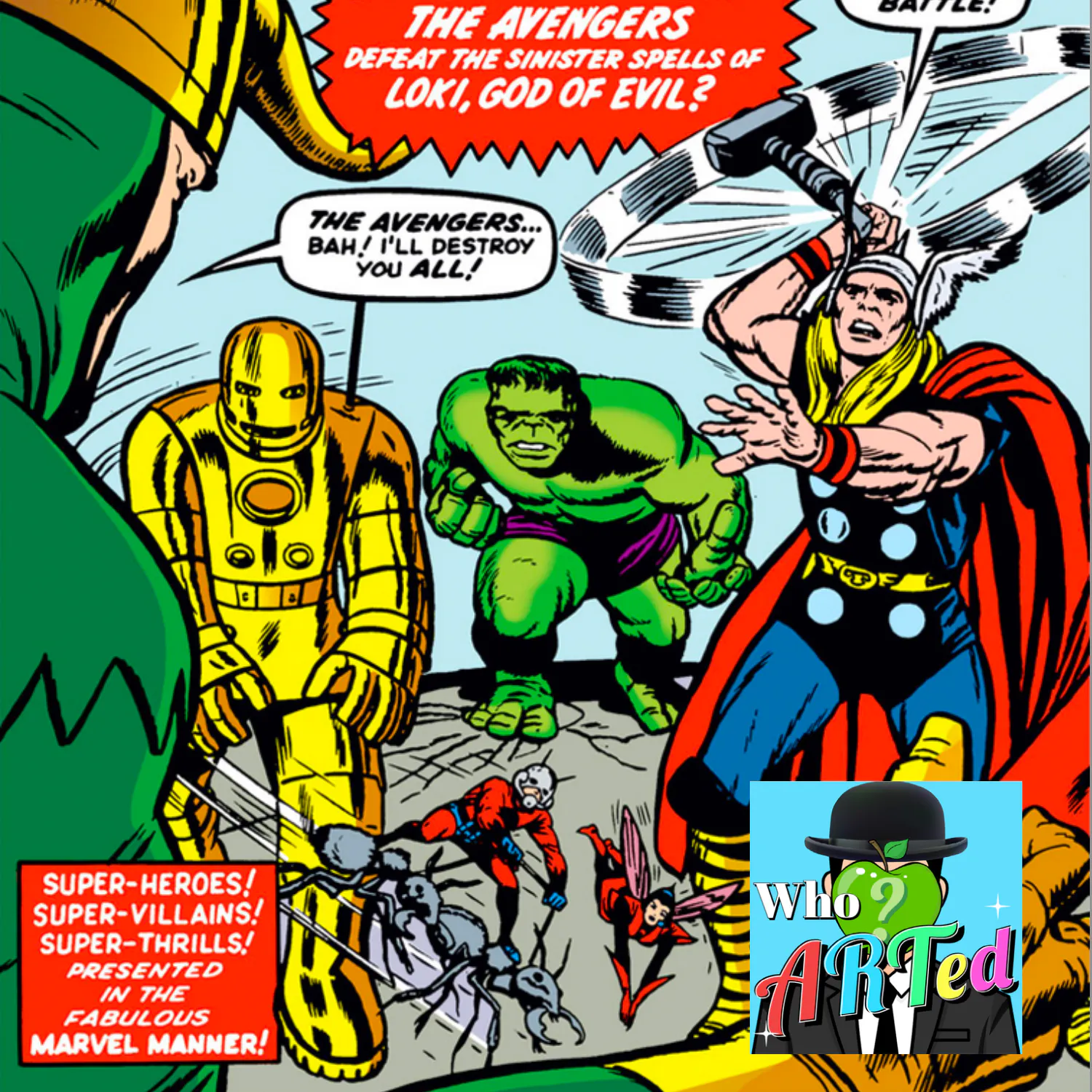
S4 Ep 153Jack Kirby | The Avengers
My guest this week is The Real Michael Lee, a musician, graphic designer, illustrator and comic enthusiast (find him and all his social media at bit.ly/heartrml) . We had a great talk about Jack Kirby, the legendary comic book artist who made contributions to both Marvel and DC among others. Kirby was responsible for the development of several notable characters including The Fantastic Four, Thor, Captain America, Black Panther, and for this episode, we focused on his illustration of The Avengers. At age 14, Jack Kirby enrolled in Pratt. He later said he wasn’t the kind of student Pratt was interested in. They wanted people to work on their projects forever. He didn’t want to work on anything forever - he wanted to get things done. Throughout his career, Kirby was noted to be very fast in his work. He would put out about 5 pages a day. Kirby basically was all over the scene in the golden age of comics. Companies were springing up and going under or morphing into other companies and it seems like he basically worked with, for, or helped create all of them. Jack Kirby experimented with things like romance comics for a more mature audience and I think that wasn’t really breaking any rules because the rules hadn’t even been established yet. His work showed generations of artists how to create compelling visualizations of epic yet relatable heroes. Who ARTed is an Airwave Media Podcast. Connect with me: Website | Twitter | Instagram | Tiktok Support the show: Merch from TeePublic | Buy me a coffee As always you can find images of the work being discussed at www.WhoARTedPodcast.com and of course, please leave a rating or review on your favorite podcast app. You might hear it read out on the show. Learn more about your ad choices. Visit megaphone.fm/adchoices
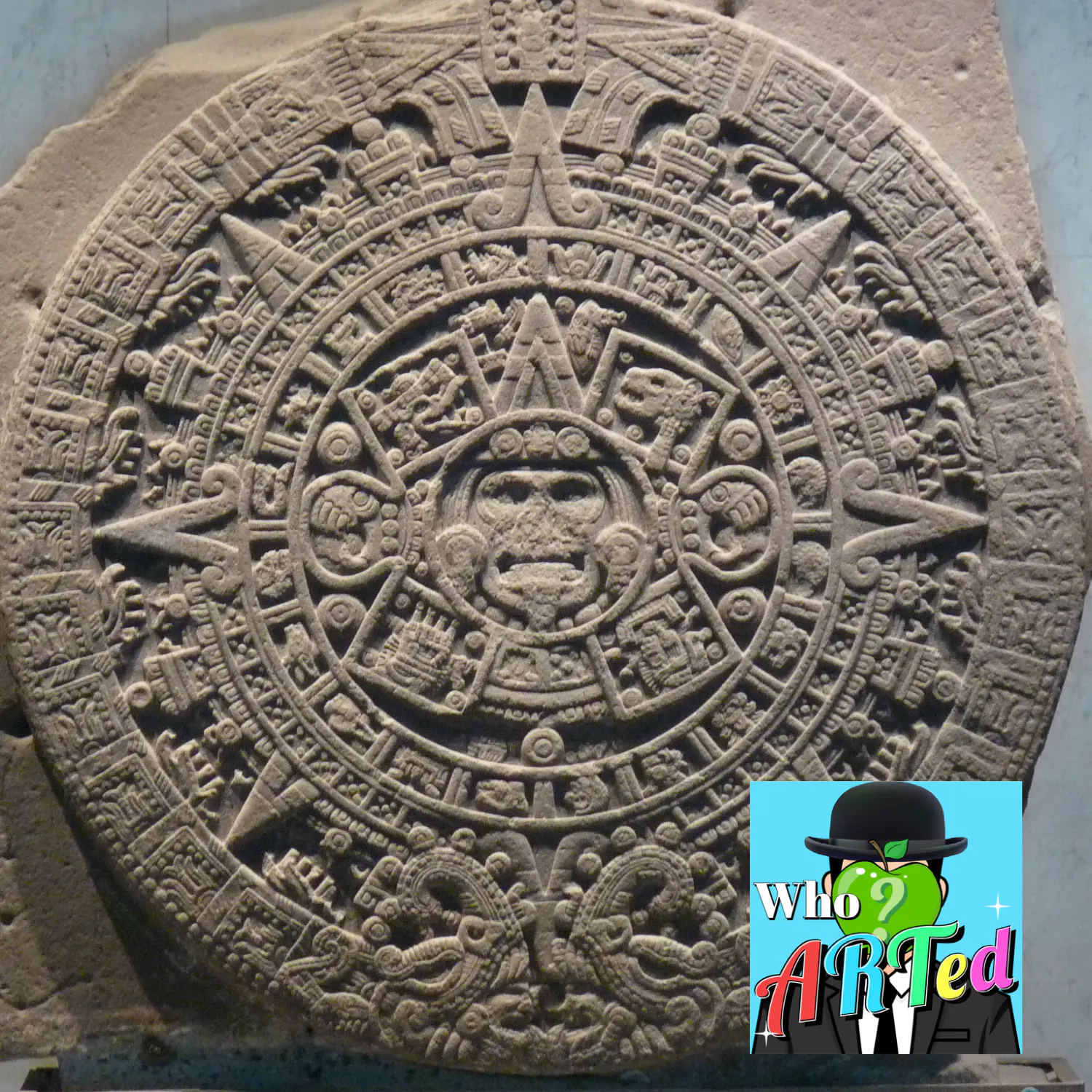
S4 Ep 152The Aztec Sun Stone
The Sun Stone is probably the first bit of Aztec art I became familiar with even before I studied art. It has been widely represented in various forms of culture from the relatively recent Mexican folk art tradition of Amate paintings to pop culture such as Legends of the Hidden Temple which I must confess was one of my favorite Nickelodeon game shows in the 90s. On its face, we see a beautiful image full of symbols laid out in radial symmetry that is just so visually satisfying, But as we look a little closer and get to know the symbols, this stone image is a lot deeper and heavier than I realized. The Aztec Sun Stone is also often referred to as the Calendar Stone, but it wasn’t intended to function in the way we use calendars today. The image is a representation of Aztec mythology describing five consecutive worlds of the sun all carved into the elaborate radial stone glyph. While the calendar stone was not used to mark the passing of days and months, it does have a date represented at the top. 13 Reed represents the start of the fifth and final sun, as well as the year that Itzcoatl began his rule thus legitimizing his rule with a link between the divine and man in the year 1427CE When the Sun Stone was discovered, it was flipped upside down. It is believed that the Aztecs may have flipped it upside down in order to prevent the final cataclysm, the fall of the fifth sun. Flipping the stone would have been no easy feat considering it is about 3 and a half meters wide, almost a meter thick and weighs in at 25 tons although I suppose people will do whatever they can to fend off the end of the world. Now putting this into a historical context, remember that this stone was created in the 15th century and the late 15th century is when Columbus and other European explorers began to make contact with the Americas. About 100 years after The Sun Stone was created, the Spanish conquistadors did effectively end the Aztec civilization so their apocalyptic notion of the 5th sun being the final really wasn’t so far off. While the sun didn’t fall to the earth, it was the end of their era. Who ARTed is an Airwave Media Podcast. Connect with me: Website | Twitter | Instagram | Tiktok Support the show: Merch from TeePublic | Buy me a coffee As always you can find images of the work being discussed at www.WhoARTedPodcast.com and of course, please leave a rating or review on your favorite podcast app. You might hear it read out on the show. Learn more about your ad choices. Visit megaphone.fm/adchoices

S4 Ep 151Alma Thomas | Resurrection
While Alma Thomas worked for decades as a teacher, but she continued pursuing her art. She took classes at American University in Washington. She showed her work in group exhibitions with other African American artists. While she obviously experienced some setbacks as a black woman, her work was not taking on feminist or racial themes. Her early works in the 1950s were generally academic, realistic works and while they were fine, they didn’t stand out too much. During this period though, as she was studying at American Universtiy she became more interested in color and abstraction. In 1966 Howard University offered to put on a retrospective show of her work. She was actually considering giving up painting due to arthritis pain but with that tremendous opportunity, she wanted to produce something new. She looked out her window and was struck by the color. She watched the sunlight shift the colors on the trees and the flowers in her garden and she began working in a more expressionistic, abstract style. Ultimately, she is best known for her abstract works. Her style is characterized by mosaic like splashes of color somewhat like the impressionists, but also borrowing a bit from color field painters. I think one of the most inspiring bits is she rose to prominence as an artist after three decades teaching (she taught junior high for 35 years). She continued pursuing her passion and demonstrated it is never too late to learn, grow and develop your talents. In an interview in 1970, she said, “Creative art is for all time and is therefore independent of time. It is of all ages, of every land, and if by this we mean the creative spirit in man which produces a picture or a statue is common to the whole civilized world, independent of age, race and nationality; the statement may stand unchallenged.” Who ARTed is an Airwave Media Podcast. Connect with me: Website | Twitter | Instagram | Tiktok Support the show: Merch from TeePublic | Buy me a coffee As always you can find images of the work being discussed at www.WhoARTedPodcast.com and of course, please leave a rating or review on your favorite podcast app. You might hear it read out on the show. Learn more about your ad choices. Visit megaphone.fm/adchoices

S4 Ep 150The Mysterious Mona Lisa
Leonardo da Vinci’s painting of The Mona Lisa, also called La Gioconda has captured society’s collective imagination. Her hold on the audience is so intense there is a widely known phenomenon called, The Mona Lisa Effect referring to the experience of feeling like the subject of an image is looking directly at the viewer no matter where one is standing in the room. Simply put, people feel like Mona Lisa is staring at them and her eyes follow them around the room. According to scientists at Bielefeld Unversity in Germany, La Gioconda does not look directly at the viewer. Her gaze is said to be about 15 degrees to the right looking at the viewer’s ear or over their shoulder. They concluded that ironically, The Mona Lisa does not demonstrate the Mona Lisa effect. Who ARTed is an Airwave Media Podcast. Connect with me: Website | Twitter | Instagram | Tiktok Support the show: Merch from TeePublic | Buy me a coffee As always you can find images of the work being discussed at www.WhoARTedPodcast.com and of course, please leave a rating or review on your favorite podcast app. You might hear it read out on the show. Learn more about your ad choices. Visit megaphone.fm/adchoices
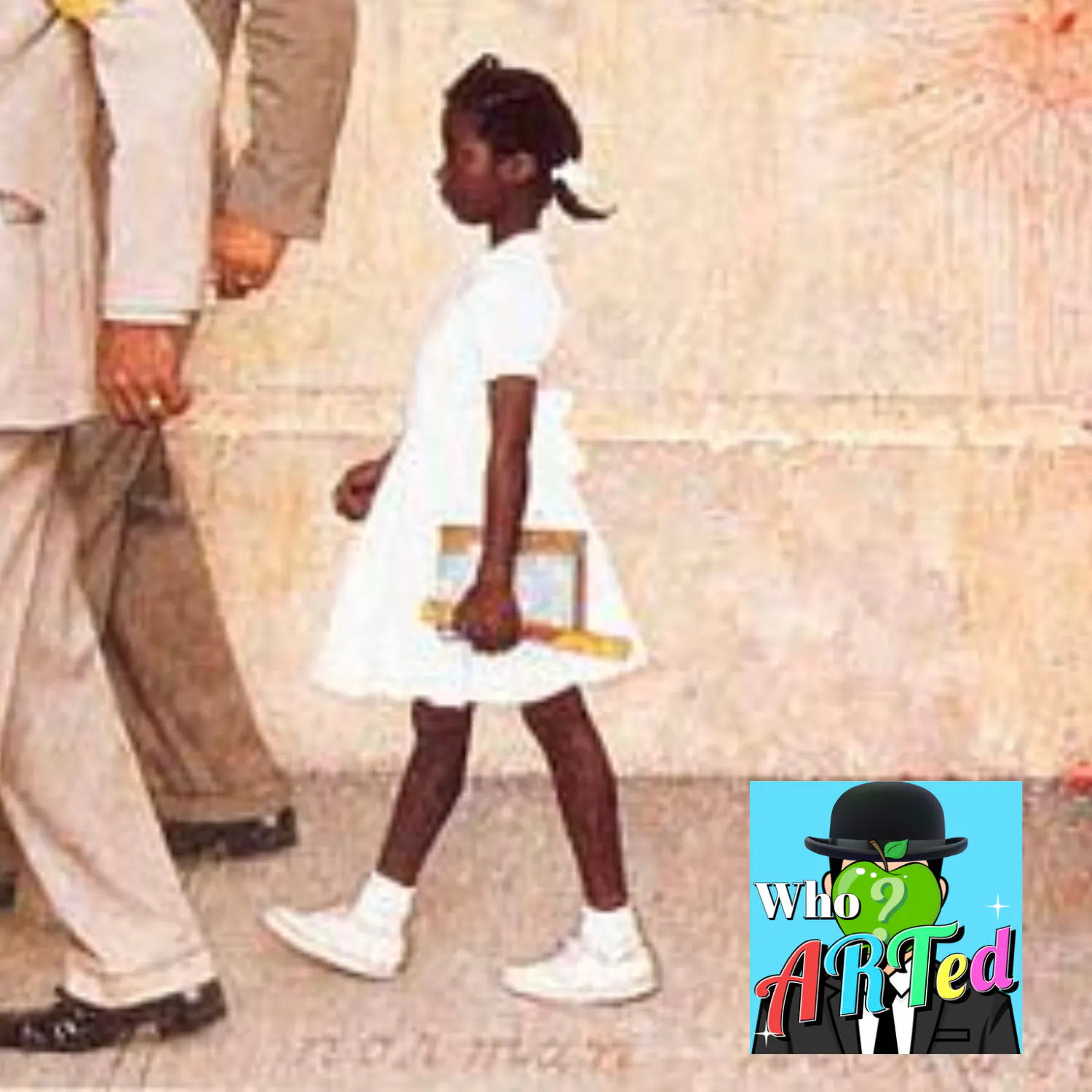
S4 Ep 149Norman Rockwell | The Problem We All Live With
Norman Rockwell is probably best known for his wholesome and nostalgic illustrations that graced the covers of The Saturday Evening Post for decades. His name has become shorthand for an idealized version of America but as we all know, in great art, there is always more than meets the eye. In this episode, we did not focus on Rockwell’s depictions of the American mythos. If you are interested in that stuff, check out my previous episode on Freedom from Want. For this episode, we focused on the hard truths Rockwell depicted in The Problem We All Live With. This is a piece about the struggle surrounding race, integration and equity and regardless of race, gender, ability, religion or other cultural identifiers, the struggle for equity is one we all live with because injustice for anyone is a harm to everyone. Norman Rockwell believed that our ideal of all people being treated fairly was important enough that he felt compelled to use his platform and his talents to call attention to it. My guest this week is Candido Crespo, fellow art teacher and host of Everyday Art Room from The Art of Education University. He is doing a ton of good work and here are the various places you can find him: https://linktr.ee/crespoarts Who ARTed is an Airwave Media Podcast. Connect with me: Website | Twitter | Instagram | Tiktok Support the show: Merch from TeePublic | Buy me a coffee As always you can find images of the work being discussed at www.WhoARTedPodcast.com and of course, please leave a rating or review on your favorite podcast app. You might hear it read out on the show. Learn more about your ad choices. Visit megaphone.fm/adchoices

S3 Ep 148The Taj Mahal (Fun Fact Friday)
The Taj Mahal is one of the most beautiful man-made structures in the world. It is a UNESCO world heritage site considered to be one of the modern wonders of the world. The story behind its construction is equally beautiful as it is a tale of love and devotion between Shah Jahan and his wife Mumtaz Mahal who passed away shortly after giving birth to their fourteenth child. The Taj Mahal has a massive dome stretching 240 feet covered in marble. The are four thin white marble minarets to mark the four corners. Of course without cranes, getting giant slabs of marble to such heights was no easy task. A ramp would be constructed to bring the pieces up, and to keep the incline manageable the ramp used for this construction had to be about 10 miles long. Shah Jahan never really got over the loss of his wife. He remained in mourning for years before his position was usurped by his fourth son. He was imprisoned in a fort in Agra in 1658. He was forbidden to leave and spent the final 8 years of his life in the fort looking out the window at the Taj Mahal. When he died in 1666, Shah Jahan was reunited with his beloved wife Mumtaz Mahal in the crypt beneath the Taj Mahal. Who ARTed is an Airwave Media Podcast. Connect with me: Website | Twitter | Instagram | Tiktok Support the show: Merch from TeePublic | Buy me a coffee As always you can find images of the work being discussed at www.WhoARTedPodcast.com and of course, please leave a rating or review on your favorite podcast app. You might hear it read out on the show. Learn more about your ad choices. Visit megaphone.fm/adchoices
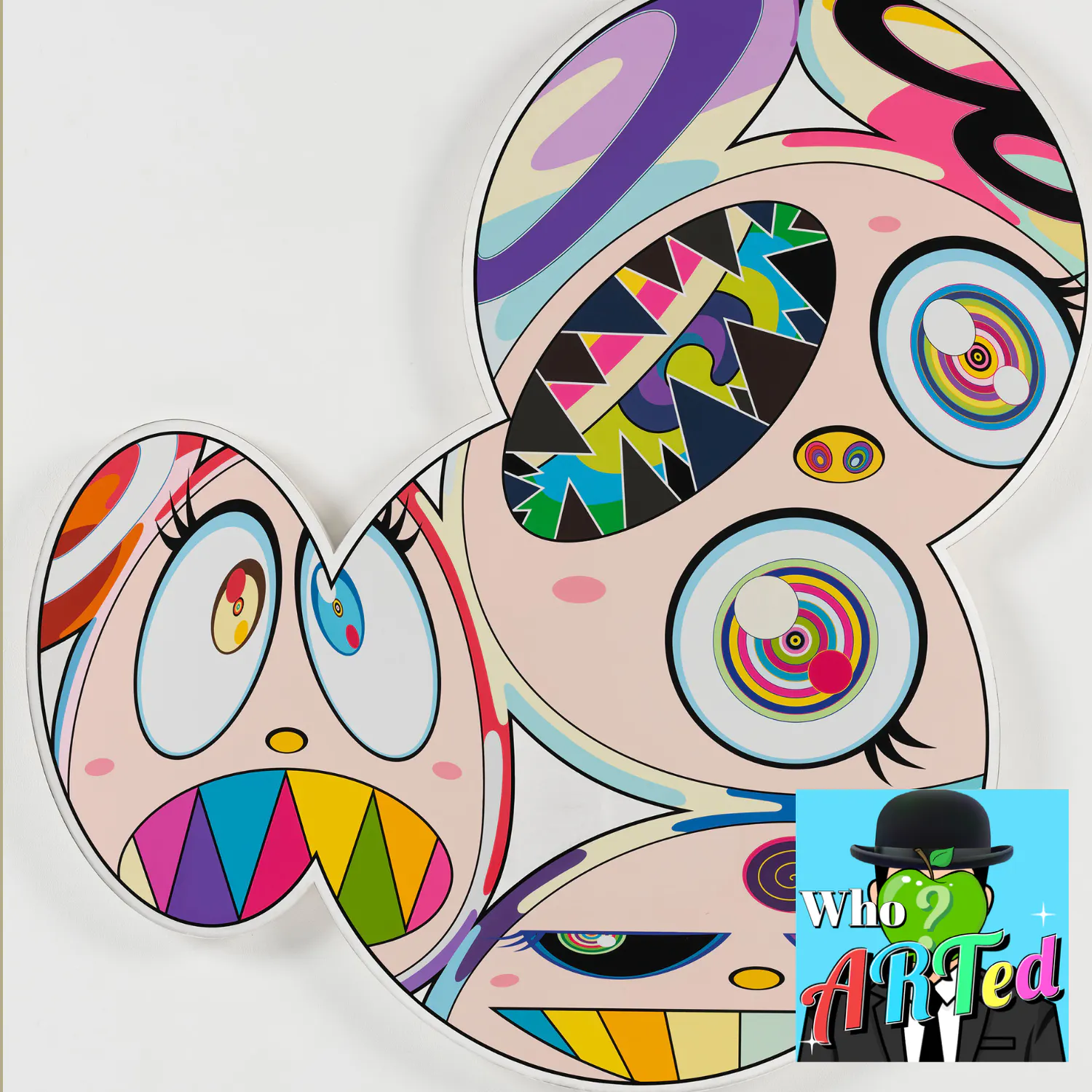
S3 Ep 147Takashi Murakami | Mr Dobs (encore)
Learn more about your ad choices. Visit megaphone.fm/adchoices

S3 Ep 146Olowe of Ise | Veranda Post (Fun Fact Friday)
The bulk of Olowe’s carvings seem to have been both decorative and functional artworks for the Yoruba kings and prominent families. One of his celebrated works for example is the veranda post that sits in the collection at the Art Institute of Chicago. In that piece we see the elongated neck and oval faces that were a part of his signature style. Traditionally Yoruba artists used scale and proportion to indicate hierarchy. The more important a figure, the larger they are within the composition. The status of the king’s senior wife is shown by her size while the king is seated central to the post. His crown eye level to the viewer and the king sits with his feat up above the ground signifying his transcendent nature. His eyes are cast down expressing a contemplative mood as he looks down on the world beyond. The crown has four ancestral faces signifying the legitimacy of his royal lineage, the divine line and wisdom running through it. Who ARTed is an Airwave Media Podcast. Connect with me: Website | Twitter | Instagram | Tiktok Support the show: Merch from TeePublic | Buy me a coffee As always you can find images of the work being discussed at www.WhoARTedPodcast.com and of course, please leave a rating or review on your favorite podcast app. You might hear it read out on the show. Learn more about your ad choices. Visit megaphone.fm/adchoices

S3 Ep 145Henri Matisse - The Dessert: Harmony in Red (Encore)
This is an encore presentation of the episode about Henri Matisse and his painting The Dessert: Harmony in Red from 1908. Who ARTed is an Airwave Media Podcast. Connect with me: Website | Twitter | Instagram | Tiktok Support the show: Merch from TeePublic | Buy me a coffee As always you can find images of the work being discussed at www.WhoARTedPodcast.com and of course, please leave a rating or review on your favorite podcast app. You might hear it read out on the show. Learn more about your ad choices. Visit megaphone.fm/adchoices

S3 Ep 144Louis Sullivan & the Carson Pirie Scott Building (Fun Fact Friday)
In 1896, Louis Sullivan wrote about skyscrapers and architectural design in “The Tall Building Artistically Considered” This was the origin of the famous phrase, “form follows function.” What Sullivan actually said was “form must ever follow function” but regardless of phrasing, the meaning remains the same - architects should first consider how a building will be used then base the design on that. I remember when I was in school hearing my art history professor describe the early modern architectural philosophy like a layer cake. Sullivan argued that the building should be considered in tiers. At the base level, the business should be easily accessible to the public. It should be light and open and the second story should also be easily accessed by stairways. Above that, there should be offices. The offices should be uniform. They should look the same to unify the design and because they are all serving the same purpose. This section can have as many stories as needed and desired, then finally the attic at the top. Sullivan argued the attic story should have distinctive molding or a cornice to add not only a decorative flourish but to mark an end point to the building. Simultaneously this decorative topper would serve to set the building apart from others in the skyline. While the building bears Sullivan’s name today, and he was a very important and influential architect, he was not an easy man to work with. One of the things many people leave out of the story of this building is the fact that a different architect, Daniel Burnham was hired to complete the last phase of the building in 1906. Louis Sullivan had a reputation for being great artist but awful human and his career suffered because of it. In the end, Sullivan died penniless. Another great architect, Frank Lloyd Wright, actually took up a collection and paid for Sullivan’s burial and stone inscribed to pay tribute to Sullivan’s legacy. While the man may be gone, his words that “form must ever follow function” have been repeated in textbooks and etched in stone to live on influencing generations to come. Who ARTed is an Airwave Media Podcast. Connect with me: Website | Twitter | Instagram | Tiktok Support the show: Merch from TeePublic | Buy me a coffee As always you can find images of the work being discussed at www.WhoARTedPodcast.com and of course, please leave a rating or review on your favorite podcast app. You might hear it read out on the show. Learn more about your ad choices. Visit megaphone.fm/adchoices

S3 Ep 143Marcel Duchamp - Fountain (encore)
Marcel Duchamp's Fountain was a controversial early readymade. It has been named one of the most influential artworks of the 20th century and it is on the list of required works for AP Art History students to learn about. Since the Art History AP test is just a few weeks away, I thought this would be a good time to drop an encore presentation giving a little bit of contextual information to understand how a toilet could make such a splash in the art world. Who ARTed is an Airwave Media Podcast. Connect with me: Website | Twitter | Instagram | Tiktok Support the show: Merch from TeePublic | Buy me a coffee As always you can find images of the work being discussed at www.WhoARTedPodcast.com and of course, please leave a rating or review on your favorite podcast app. You might hear it read out on the show. Learn more about your ad choices. Visit megaphone.fm/adchoices

S3 Ep 142Fun Fact Friday - Robert Smithson's Spiral Jetty
Robert Smithson decided to make monumental sculptures using perhaps the world’s oldest material, the earth itself, but he used modern tools to shape it in a way and on a scale rarely seen. Spiral Jetty is as the name would suggest, a spiral. Part of what makes it special is the enormousness of it. On the peninsula at Rozel Point on Utah’s Great Salt Lake, Smithson created his most famous monumental sculpture using over six thousand tons of black basalt rocks and earth from the site. The spiral forms a path out onto the lake. It is intended to be not only witnessed, but experienced. Walking the spiral would be an almost meditative act similar to circumambulating or walking around a hindu temple. The spiral allows people to walk out onto the lake. A small speck on a vast lake witnessing the entropy of nature as the water erodes the foundation. The gigantic piece built from thousands of tons of stone has been decaying from the moment it was built. It was a giant monument to nature demonstrating the concept of entropy. It was born out of a time of social upheaval and changing norms leaving in which people were rethinking the ways they related to both nature and the constructed environment which now that I’m saying it out loud could just as easily be a description of pretty much any time period as the only true constant is change. Who ARTed is an Airwave Media Podcast. Connect with me: Website | Twitter | Instagram | Tiktok Support the show: Merch from TeePublic | Buy me a coffee As always you can find images of the work being discussed at www.WhoARTedPodcast.com and of course, please leave a rating or review on your favorite podcast app. You might hear it read out on the show. Learn more about your ad choices. Visit megaphone.fm/adchoices
Ep 141Claude Monet - Water Lilies
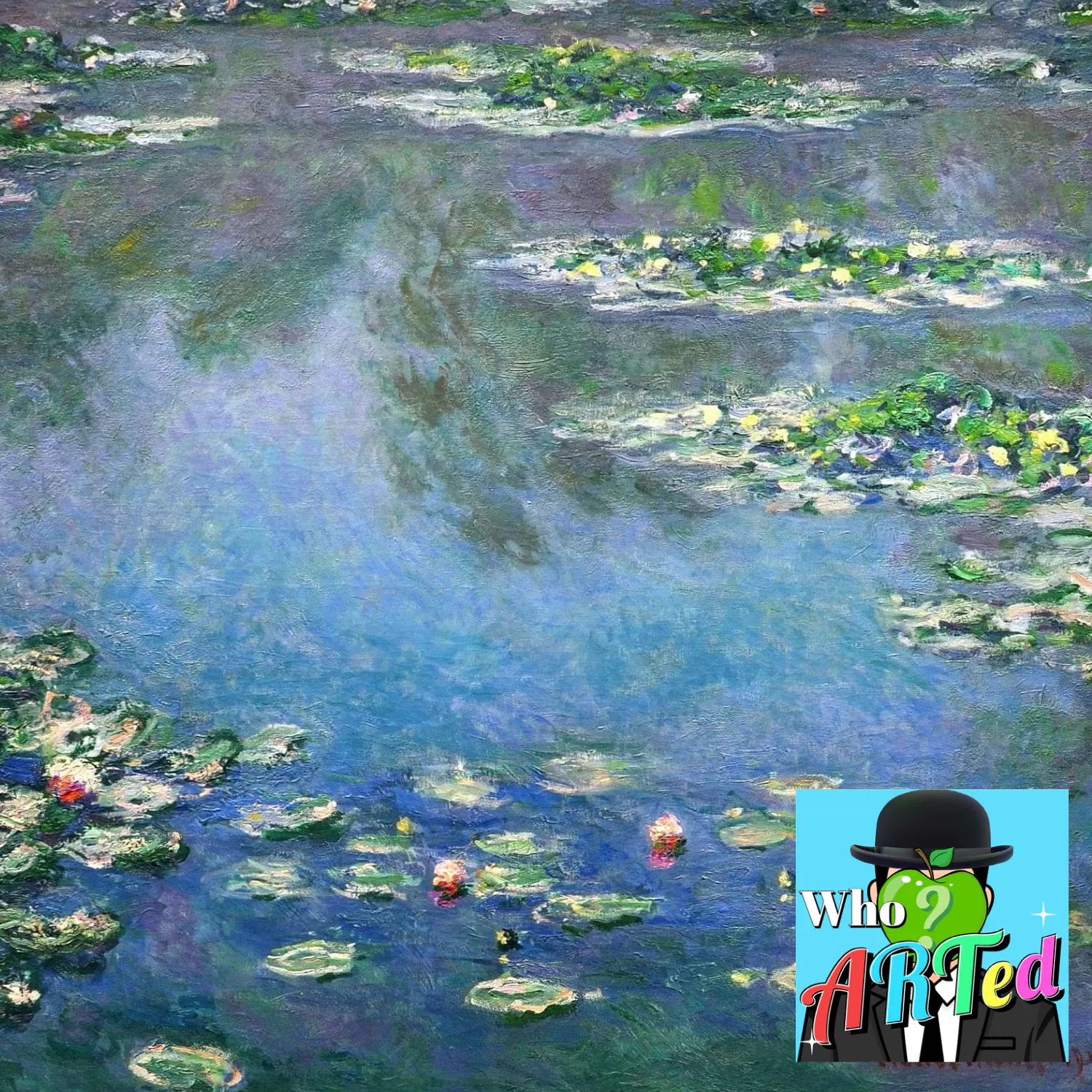
The Impressionist movement was named after one of Claude Monet's paintings. In this episode, we discussed a bit about Monet and his life as well as one of his most famous series of works, Water Lilies. Monet loved painting his garden and over his lifetime, he created about 250 paintings of Water Lilies. Who ARTed is an Airwave Media Podcast. Connect with me: Website | Twitter | Instagram | Tiktok Support the show: Merch from TeePublic | Buy me a coffee As always you can find images of the work being discussed at www.WhoARTedPodcast.com and of course, please leave a rating or review on your favorite podcast app. You might hear it read out on the show. Learn more about your ad choices. Visit megaphone.fm/adchoices

S3 Ep 140Fun Fact Friday - The Last Supper by Leonardo da Vinci
One Leonardo da Vinci’s most famous works is not housed in a museum. It is in the Convent of Santa Maria in Milan Italy. It seems totally fitting for a depiction of the last supper was painted on the wall in the convent’s dining hall. Visitors today are often surprised by how enormous the work it. The People are life sized on this massive 15 by 29 foot painting. Another surprising fact is that while people flock to see Leonardo’s work on the wall of the convent, very little if any of what we see there today was actually painted by Leonardo. Who ARTed is an Airwave Media Podcast. Connect with me: Website | Twitter | Instagram | Tiktok Support the show: Merch from TeePublic | Buy me a coffee As always you can find images of the work being discussed at www.WhoARTedPodcast.com and of course, please leave a rating or review on your favorite podcast app. You might hear it read out on the show. Learn more about your ad choices. Visit megaphone.fm/adchoices

S3 Ep 139Season 3 Finale(ish) - Arts Madness Winner
This is sort of the finale for season 3. I will be taking a short break but will continue releasing episodes on my regular schedule. I will be running some encore presentations for a few weeks, but I will continue to release new mini-episodes so it won't be all re-runs. The Friday mini-episodes will largely focus on artworks from the AP Art History list as at this time of year a lot of students are working to prep for the test and I want to do my part to help provide them with resources to the extent that I can. After six weeks and thousands of votes cast, we have narrowed the field from 64 great artists to 1 ultimate Arts Madness champion. I read a few statements on why people chose this artist, followed by an encore presentation of the episode about this artist. Thank you all for participating in the tournament and I hope it helped you discover some new artists to inspire you. Who ARTed is an Airwave Media Podcast. As always you can find images of the work being discussed at www.WhoARTedPodcast.com Connect with me: Website Twitter Instagram Tiktok Support the show: Merch from TeePublic Buy me a coffee Learn more about your ad choices. Visit megaphone.fm/adchoices
S3 Ep 138Fun Fact Friday - The Burghers of Calais
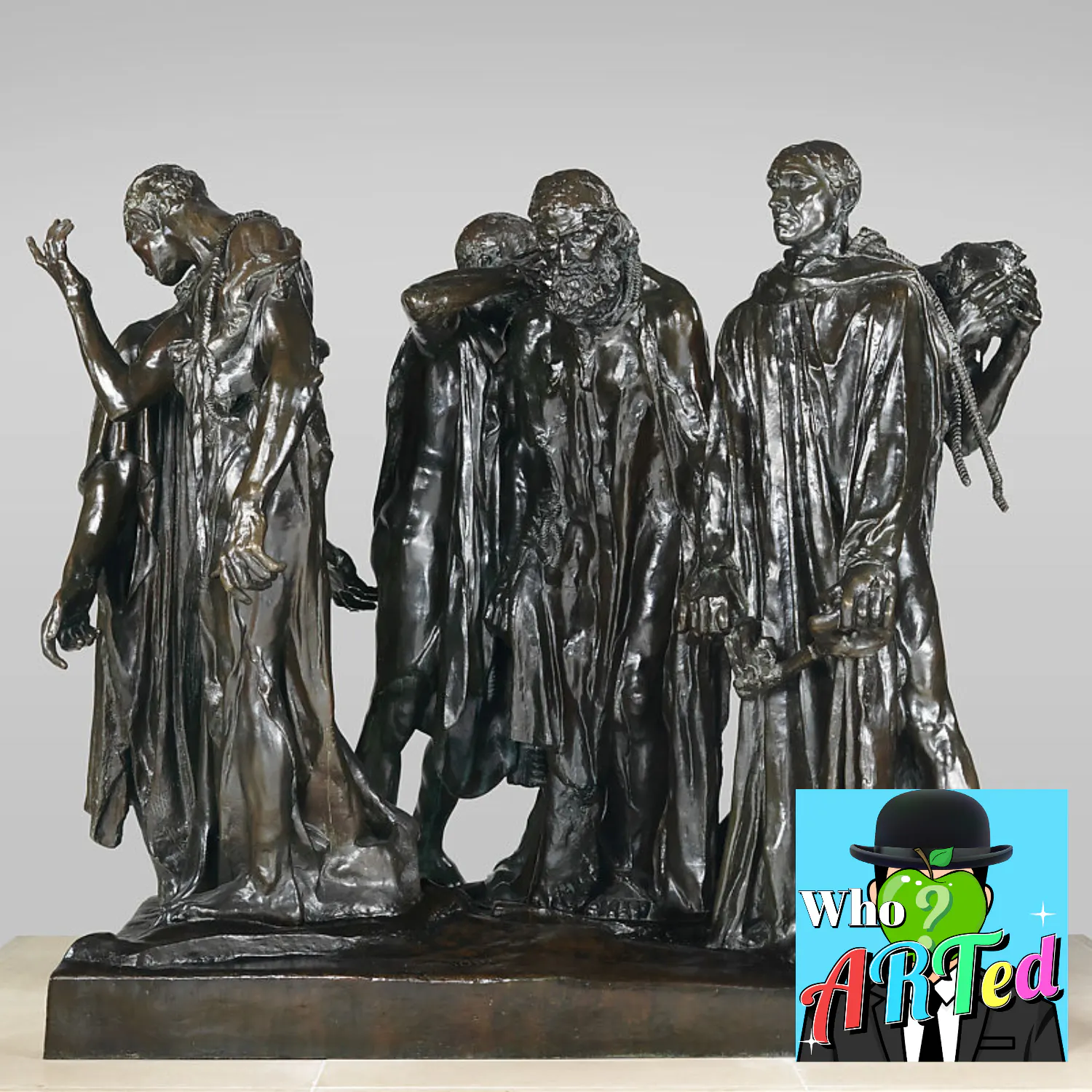
In America, a lot of high school students are studying for the AP Art History Exam to try to earn college credit. I am trying to make sure my podcast can be a helpful resource for learning about art history and in a lot of my fun fact mini episodes I cover works of art that are required for the test. This mini episode covers a bit about Rodin and the story behind his piece, The Burghers of Calais. If you enjoy the show, please leave a rating or review on your favorite podcast app to help others discover the show. Who ARTed is an Airwave Media Podcast. As always you can find images of the work being discussed at www.WhoARTedPodcast.com Connect with me: Website Twitter Instagram Tiktok Support the show: Merch from TeePublic Buy me a coffee Learn more about your ad choices. Visit megaphone.fm/adchoices