
Who Arted: Weekly Art History for All Ages
785 episodes — Page 11 of 16
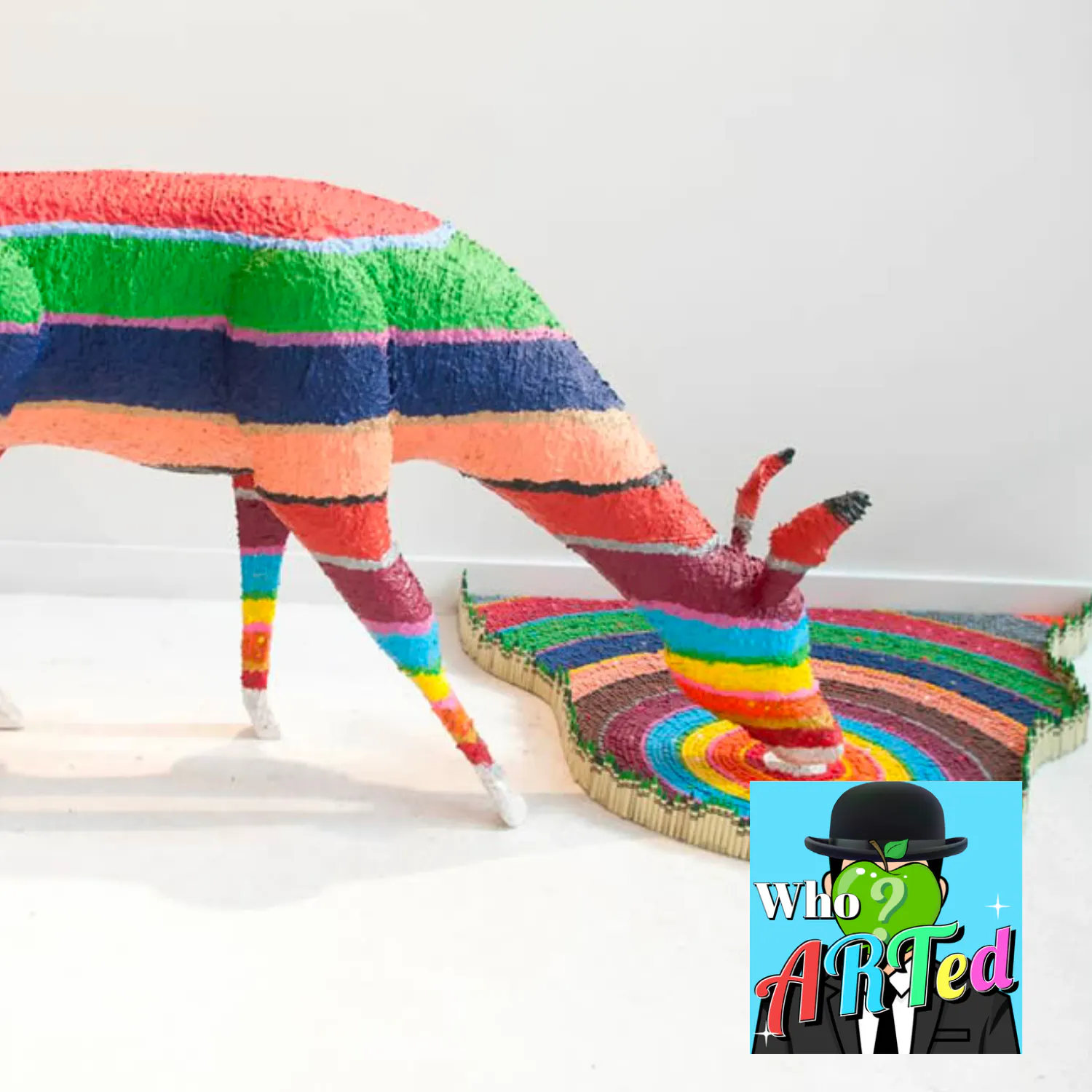
Herb Williams | The Ultimate Crayons Artist
For this week's #funfactfriday mini episode I wanted to share a bit about Herb Williams. Williams is based out of Nashville, TN and he is working with crayons on a level I have never seen from anyone else. He makes jaw dropping sculptures that are not only beautiful to look at, but the choice of crayon makes the work engage multiple senses as the unmistakable scent of crayons draws people in. I first shared this story on my other podcast, Art Smart. If you want to listen to my crayon episode or other episodes, check out Art Smart on Apple Podcasts Spotify Amazon Stitcher Google Podcasts or wherever you listen Check out Herb Williams: Website: https://www.herbwilliamsart.com/ Instagram: @solidspectrumart Fill out the Airwave Media Network survey to give me feedback and get a chance to win a $500 gift card: www.surveymonkey.com/r/airwave Arts Madness Tournament links: Check out the Brackets Vote for this week's matches Who ARTed is an Airwave Media Podcast. If you are interested in advertising on this or any other Airwave Media show, email: [email protected] Connect with me: Website | Twitter | Instagram | Tiktok Learn more about your ad choices. Visit megaphone.fm/adchoices
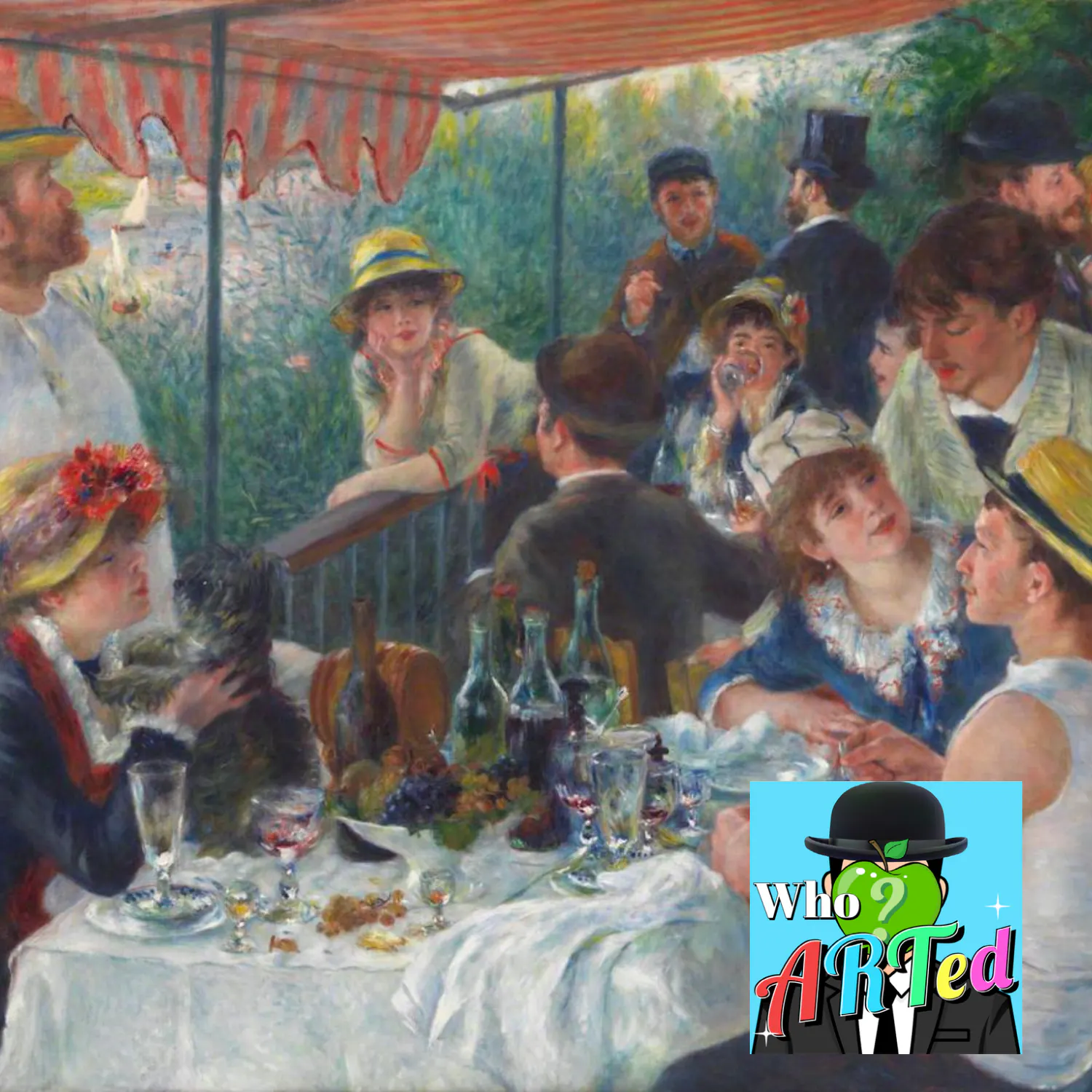
Pierre-Auguste Renoir | Luncheon of the Boating Party
Today, Renoir is remembered as one of the greatest painters of the Impressionist movement. His paintings are soft and delicate, but his life and his work was a painful struggle. Most painters pride themselves on their ability to work with their hands. They spend years practicing, developing fine motor skills and muscle memory to easily render a beautiful image, but Renoir’s hands weren’t on board with the plan. As his son Jean recounted “Visitors who were unprepared for this could not take their eyes off his deformity. Though they did not dare to mention it, their reaction would be expressed by some such phrase as ‘it isn’t possible! With hands like that, how could he paint those pictures?” In 1899, Pierre-Auguste Renoir was sticken with Rhumetiod Arthritis which not only caused painful inflammation of the joints. It left his hands deformed. While even the most minor movements of his hand or wrist would bring pain, Renoir persisted. He continued making beautiful paintings until his death 20 years later because as he said, “pain passes, but beauty remains.” Fill out the Airwave Media Network survey to give me feedback and get a chance to win a $500 gift card: www.surveymonkey.com/r/airwave Check out my other podcast Art Smart Arts Madness Tournament links: Check out the Brackets Who ARTed is an Airwave Media Podcast. If you are interested in advertising on this or any other Airwave Media show, email: [email protected] Connect with me: Website | Twitter | Instagram | Tiktok Support the show: Merch from TeePublic | Make a Donation Learn more about your ad choices. Visit megaphone.fm/adchoices
Arts Madness Round 2
bonusA quick summary of some of the interesting results from the voting in Round 1 and some of the matches I'm interested in for Round 2 of this year's Arts Madness Tournament. I mentioned Vincent van Gogh and his supposed commercial failure as an artist. Check out this episode to learn a little bit more about sales of his work during his lifetime. Did Vincent van Gogh Really Only Sell 1 Painting? Vote in this week's matches at www.WhoARTedPodcast.com/Vote Fill out the Airwave Media Network survey to give me feedback and get a chance to win a $500 gift card: www.surveymonkey.com/r/airwave Check out my other podcast Art Smart Who ARTed is an Airwave Media Podcast. If you are interested in advertising on the show, email [email protected] Connect with me: Website | Twitter | Instagram | Tiktok Learn more about your ad choices. Visit megaphone.fm/adchoices
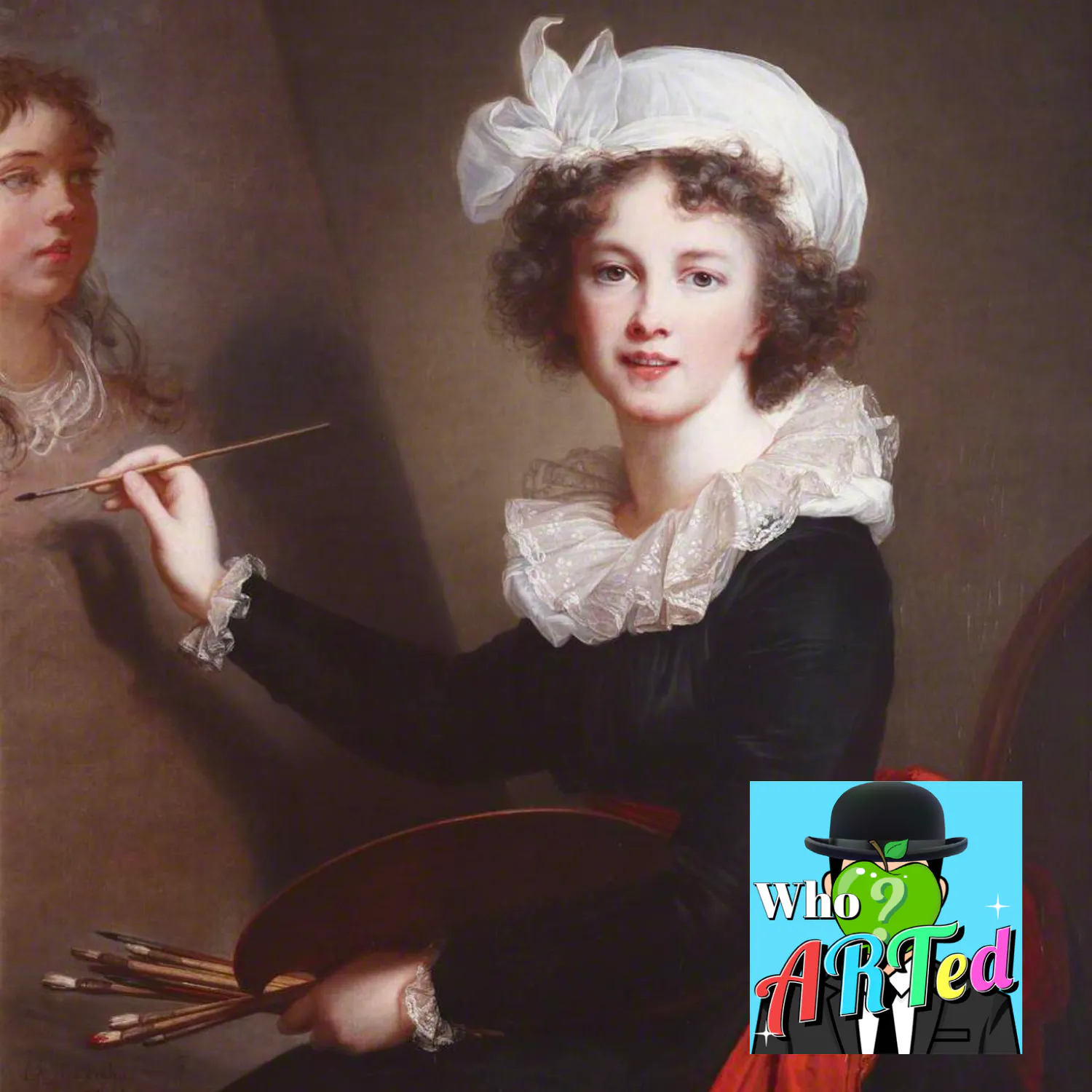
Elisabeth Vigée Le Brun
In 1778, Elisabeth Vigée Le Brun met Marie Antoinette at the Royal palace in Versailles. The queen had heard of Le Brun’s talent and asked to paint her portrait. Marie Antoinette loved the way Le Brun painted her and from that point on, she was pretty much her official royal portrait painter. Le Brun painted 30 portraits of the queen. Almost as quickly as her star rose, her fortunes changed. In 1789, Elisabeth Vigée Le Brun was forced to flee France in a disguise and under the cover of darkness during the early stages of the French Revolution. Le Brun didn’t have the opulent life of luxury that revolutionaries despised, but she had worked her way up to become Marie Antoinette’s favorite portraitist and the French Revolution was not the ideal time and place for friends of the monarch. Fill out the Airwave Media Network survey to give me feedback and get a chance to win a $500 gift card: www.surveymonkey.com/r/airwave Check out my other podcast Art Smart Listen to other episodes covering AP Art History content on my Spotify Playlist: AP Art History Cram Session Arts Madness Tournament links: Check out the Brackets Tell me which artist you think will win this year's tournament Vote for your favorite artists at www.WhoARTedPodcast.com/Vote Who ARTed is an Airwave Media Podcast. If you are interested in advertising on this or any other Airwave Media podcast, email: [email protected] Connect with me: Website | Twitter | Instagram | Tiktok Support the show: Merch from TeePublic | Make a Donation Learn more about your ad choices. Visit megaphone.fm/adchoices

George Lucas | Star Wars
George Lucas is responsible for some of the most popular films of all time. Early in his career, he began working on a script for a science fiction story following the hero's journey as outlined by the anthropologist, Joseph Campbell. His film series, Star Wars was not only a commercial success, it was a remarkable technical achievement. Lucas and his crew needed to invent new methods in order to tell the story as he imagined it. It was difficult work, but the final product was truly a masterpiece. My guest for this episode was Kalani Hubbard, owner of the independent film studio Pure Magic Pictures located in New York City. He is also the writer/director of Pure Magic Pictures’ upcoming movie “Skye Hoshi: Anime Girl”, a fun fantasy feature film zapping your screen April 21st. Guest links: www.puremagicpictures.com www.skyehoshi.com Instagram: @puremagicpictures Tiktok: @puremagicpictures Fill out the Airwave Media Network survey to give me feedback and get a chance to win a $500 gift card: www.surveymonkey.com/r/airwave Check out my other podcast Art Smart Arts Madness Tournament links: Check out the Brackets Tell me which artist you think will win this year's tournament Give a shoutout to your favorite teacher (the teacher who gets the most shoutouts on this form by Feb 27 will get a $50 Amazon gift card) Who ARTed is an Airwave Media Podcast. Connect with me: Website | Twitter | Instagram | Tiktok Support the show: Merch from TeePublic | Make a Donation As always you can find images of the work being discussed at www.WhoARTedPodcast.com and of course, please leave a rating or review on your favorite podcast app. You might hear it read out on the show. Learn more about your ad choices. Visit megaphone.fm/adchoices

Arts Madness Round 1
bonusEvery year in the US, 64 college basketball teams compete in a single elimination tournament known as March Madness. For years, I have created a similar bracketed tournament having my students vote for their favorite artists and now listeners around the world are welcome to join in the fun voting for their favorite artists in a series of head to head matchups. Vote for your favorite artists at www.WhoARTedPodcast.com/Vote Fill out the Airwave Media Network survey to give me feedback and get a chance to win a $500 gift card: www.surveymonkey.com/r/airwave Check out my other podcast Art Smart Arts Madness Tournament links: Check out the Brackets Tell me which artist you think will win this year's tournament Give a shoutout to your favorite teacher (the teacher who gets the most shoutouts on this form by Feb 27 will get a $50 Amazon gift card) Who ARTed is an Airwave Media Podcast. Connect with me: Website | Twitter | Instagram | Tiktok Support the show: Merch from TeePublic | Make a Donation As always you can find images of the work being discussed at www.WhoARTedPodcast.com and of course, please leave a rating or review on your favorite podcast app. You might hear it read out on the show. Learn more about your ad choices. Visit megaphone.fm/adchoices
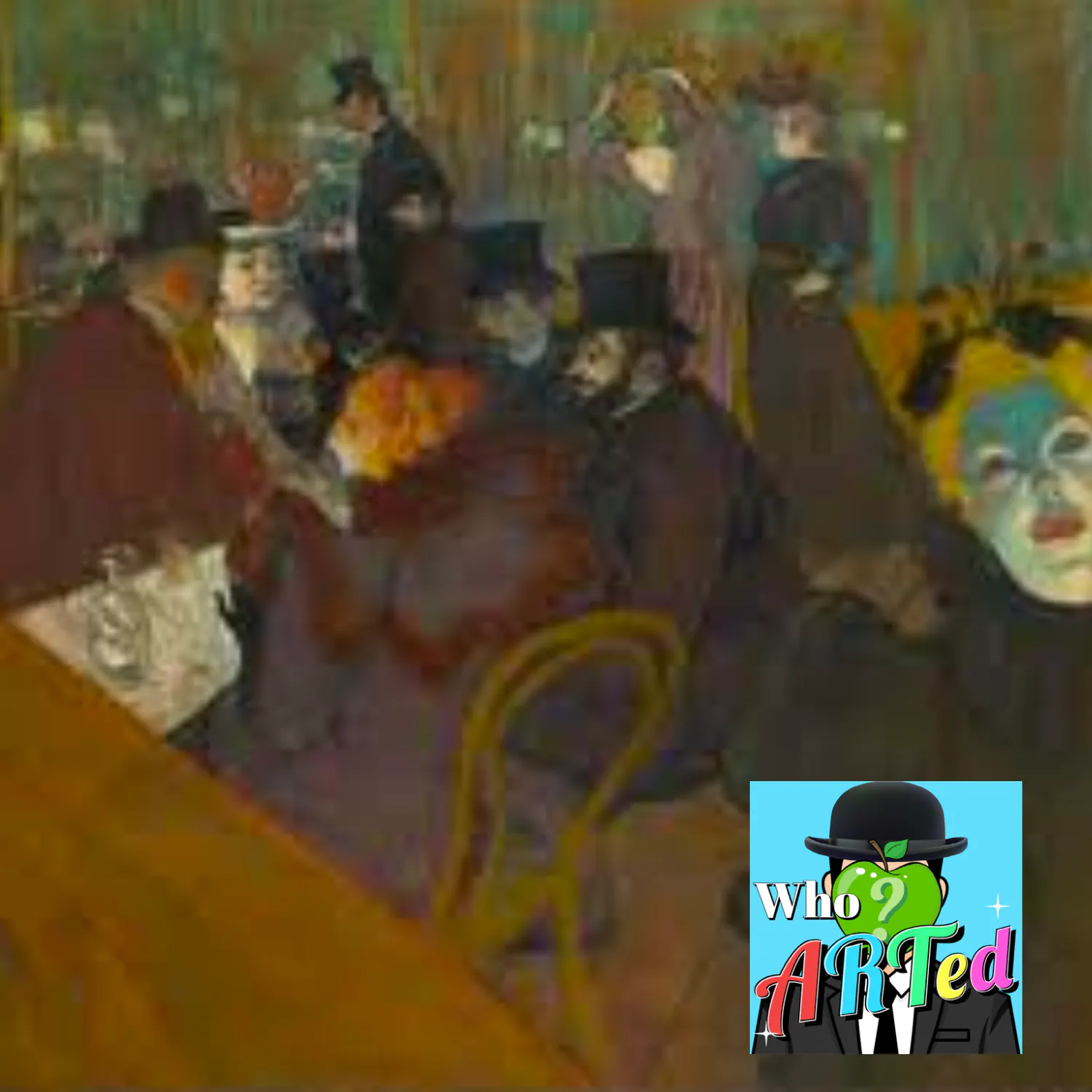
Henri de Toulouse Lautrec
Henri de Toulouse Lautrec was associated with the Moulin Rouge since it first opened in 1891. He was captivated by the unique spirit of the club where people of all walks of life would mingle and enjoy the festivities. Fill out the Airwave Media Network survey to give me feedback and get a chance to win a $500 gift card: www.surveymonkey.com/r/airwave Check out my other podcast Art Smart Arts Madness Tournament links: Check out the Brackets Tell me which artist you think will win this year's tournament Give a shoutout to your favorite teacher (the teacher who gets the most shoutouts on this form by Feb 27 will get a $50 Amazon gift card) Who ARTed is an Airwave Media Podcast. Connect with me: Website | Twitter | Instagram | Tiktok Support the show: Merch from TeePublic | Make a Donation As always you can find images of the work being discussed at www.WhoARTedPodcast.com and of course, please leave a rating or review on your favorite podcast app. You might hear it read out on the show. Learn more about your ad choices. Visit megaphone.fm/adchoices

Alexander Calder | Streetcar (encore)
For this week's episode we learn a bit about Alexander Calder, the mechanical engineer who became a pioneer of kinetic sculpture. The specific work we looked at in this episode is Streetcar from 1951. It is one of many mobiles Calder created over his career. While he did have other amazing work including his wire sculptures that are just masterfully created drawings in air, as well as toys, jewelry, stabile sculptures, set designs and more, he is best known for his mobiles so we used a piece representative of his most famous innovation when discussing the artist and his legacy. Fill out the Airwave Media Network survey to give me feedback and get a chance to win a $500 gift card: www.surveymonkey.com/r/airwave Check out my other podcast Art Smart Arts Madness Tournament links: Check out the Brackets Tell me which artist you think will win this year's tournament Give a shoutout to your favorite teacher (the teacher who gets the most shoutouts on this form by Feb 27 will get a $50 Amazon gift card) Who ARTed is an Airwave Media Podcast. Connect with me: Website | Twitter | Instagram | Tiktok Support the show: Merch from TeePublic | Make a Donation As always you can find images of the work being discussed at www.WhoARTedPodcast.com and of course, please leave a rating or review on your favorite podcast app. You might hear it read out on the show. Learn more about your ad choices. Visit megaphone.fm/adchoices
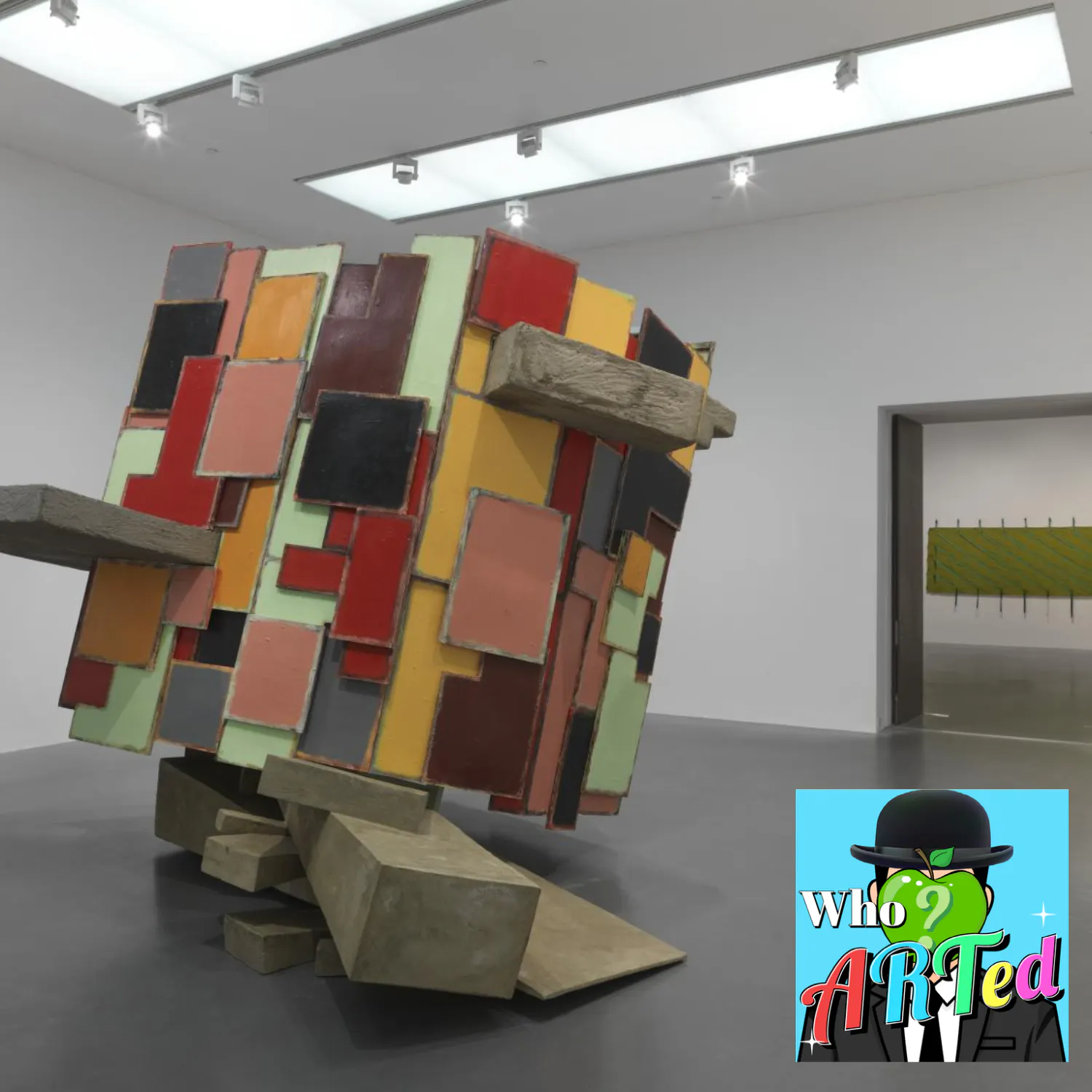
Phyllida Barlow - Untitled: upturnedhouse2, 2012 (encore)
This episode is about Phyllida Barlow. I spoke with Greg Daniels, an art teacher out of the UK who runs www.theartteacher.net It was a pleasure talking to him and learning about a unique contemporary sculptor. Fill out the Airwave Media Network survey to give me feedback and get a chance to win a $500 gift card: www.surveymonkey.com/r/airwave Check out my other podcast Art Smart Arts Madness Tournament links: Check out the Brackets Tell me which artist you think will win this year's tournament Give a shoutout to your favorite teacher (the teacher who gets the most shoutouts on this form by Feb 27 will get a $50 Amazon gift card) Who ARTed is an Airwave Media Podcast. Connect with me: Website | Twitter | Instagram | Tiktok Support the show: Merch from TeePublic | Make a Donation As always you can find images of the work being discussed at www.WhoARTedPodcast.com and of course, please leave a rating or review on your favorite podcast app. You might hear it read out on the show. Learn more about your ad choices. Visit megaphone.fm/adchoices
Andy Warhol
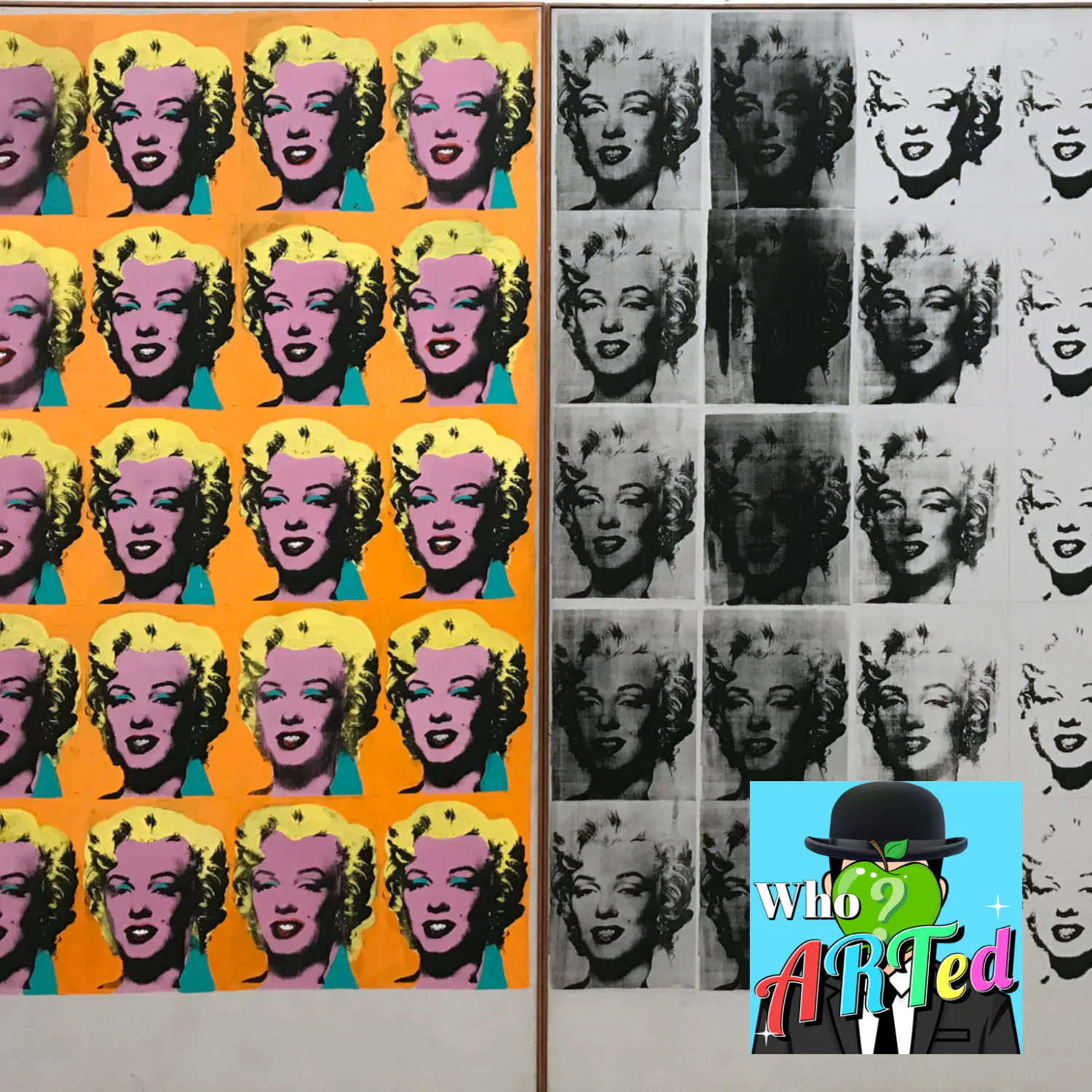
In this portrait, Andy Warhol presented Marilyn Monroe in the format typically associated with religious artworks. This work was created just a few weeks after Monroe’s untimely death and it seems like a pop art shrine. Hers was a face that graced the pages of every magazine and tabloid. She was a young girl, Norma Jean who had been plucked from obscurity and celebrated around the world for her beauty, but outside of public view, she struggled with her mental health, failed relationships and substance abuse. She was a martyr of the common culture’s celebrity worship. In Warhol’s diptych, we see 50 repetitions of her famous face. On one panel, there is shockingly bold underpainting creating a cartoonish appearance. On the other we see 25 black and white copies of the same shadows and contours but without the garish color. There are varying degrees of intensity. Some over-saturated with black and others fading to the ghost of an image. And yet, with all of these, we never see the real Marilyn. We see only copies of a publicity still. The image of a star at the height of her fame and beauty. Frozen in time and sent out for others to see and appreciate. The image prime for reproduction and distortion. For the artist and audience to project and see as they wish. Fill out the Airwave Media Network survey to give me feedback and get a chance to win a $500 gift card: www.surveymonkey.com/r/airwave Check out my other podcast Art Smart Arts Madness Tournament links: Check out the Brackets Tell me which artist you think will win this year's tournament Give a shoutout to your favorite teacher (the teacher who gets the most shoutouts on this form by Feb 27 will get a $50 Amazon gift card) Who ARTed is an Airwave Media Podcast. Connect with me: Website | Twitter | Instagram | Tiktok Support the show: Merch from TeePublic | Make a Donation As always you can find images of the work being discussed at www.WhoARTedPodcast.com and of course, please leave a rating or review on your favorite podcast app. You might hear it read out on the show. Learn more about your ad choices. Visit megaphone.fm/adchoices

Henri Matisse
Henri Matisse was born in Northern France on December 31, 1869. His father was a successful grain merchant. In 1887, Henri was well on his way to a successful, respectable career when he went to Paris. He was going to study law, and was working in that arena for a while then at age 20, he had appendicitis. His mom gave him a paint set so he could have something to do while he recovered, and he decided to become an artist. Links: Art Smart Who ARTed: Katsushika Hokusai ArtCurious: Katsushika Oi Fill out the Airwave Media Network survey to give me feedback and get a chance to win a $500 gift card: www.surveymonkey.com/r/airwave Check out my other podcast Art Smart Arts Madness Tournament links: Check out the Brackets Tell me which artist you think will win this year's tournament Give a shoutout to your favorite teacher (the teacher who gets the most shoutouts on this form by Feb 27 will get a $50 Amazon gift card) Who ARTed is an Airwave Media Podcast. Connect with me: Website | Twitter | Instagram | Tiktok Support the show: Merch from TeePublic | Make a Donation As always you can find images of the work being discussed at www.WhoARTedPodcast.com and of course, please leave a rating or review on your favorite podcast app. You might hear it read out on the show. Learn more about your ad choices. Visit megaphone.fm/adchoices
Grant Wood
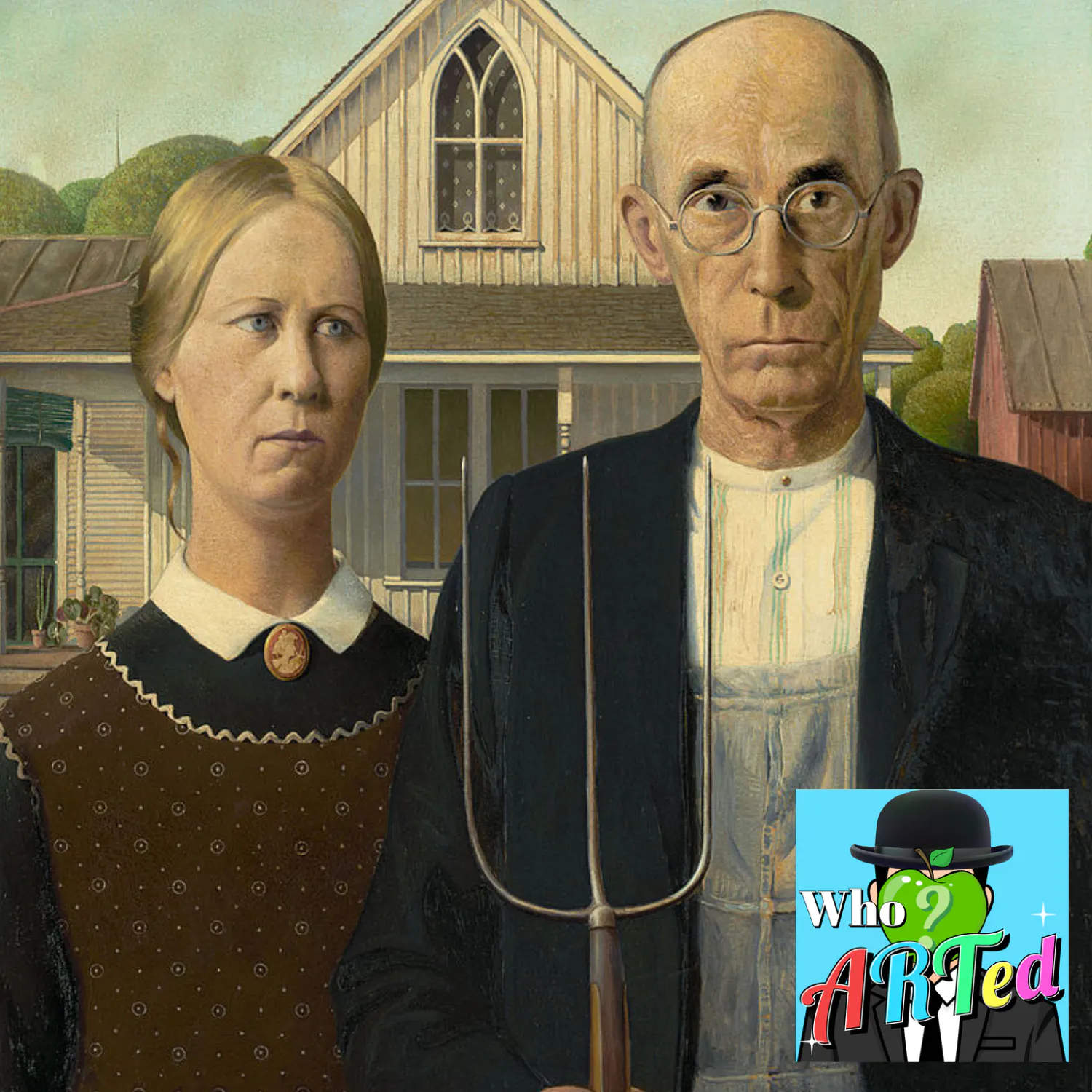
Grant Wood was one of the most prominent painters of the Regionalist movement. He became a star of the art world pretty much overnight when his painting, American Gothic won an award then was purchased by The Art Institute of Chicago. Fill out the Airwave Media Network survey to give me feedback and get a chance to win a $500 gift card: www.surveymonkey.com/r/airwave Check out my other podcast Art Smart Related episodes: Grant Wood | American Gothic (full episode) Arts Madness Tournament links: Check out the Brackets Tell me which artist you think will win this year's tournament Give a shoutout to your favorite teacher (the teacher who gets the most shoutouts on this form by Feb 27 will get a $50 Amazon gift card) Who ARTed is an Airwave Media Podcast. Connect with me: Website | Twitter | Instagram | Tiktok Support the show: Merch from TeePublic | Make a Donation As always you can find images of the work being discussed at www.WhoARTedPodcast.com and of course, please leave a rating or review on your favorite podcast app. You might hear it read out on the show. Learn more about your ad choices. Visit megaphone.fm/adchoices

Shigeru Miyamoto
Shigeru Miyamoto has developed some of the most popular games of all time including Mario which is the most successful game franchise ever. Mario has actually been in 250 videogames and The Super Mario Brothers movie was the first major motion picture ever made based on a videogame. Well maybe that one was a little regrettable, but I’m sure the next Mario movie will be great. Interestingly though, Miyamoto’s big break came largely by accident. When he was first hired by Nintendo, he was making designs for their game cabinets. Nintendo had grossly overestimated the popularity of a game called Radar Scope and found themselves with 2,000 cabinets in need of a new game. They wanted to make a Popeye game, but couldn’t get the rights so Miyamoto came up with a new concept and Donkey Kong was born. When his game was released in 1981, it pulled in $200million and Miyamoto was quickly put in charge of game development. Fill out the Airwave Media Network survey to give me feedback and get a chance to win a $500 gift card: www.surveymonkey.com/r/airwave Check out my other podcast Art Smart Arts Madness Tournament links: Check out the Brackets Tell me which artist you think will win this year's tournament Give a shoutout to your favorite teacher (the teacher who gets the most shoutouts on this form by Feb 27 will get a $50 Amazon gift card) Who ARTed is an Airwave Media Podcast. Connect with me: Website | Twitter | Instagram | Tiktok Support the show: Merch from TeePublic | Make a Donation As always you can find images of the work being discussed at www.WhoARTedPodcast.com and of course, please leave a rating or review on your favorite podcast app. You might hear it read out on the show. Learn more about your ad choices. Visit megaphone.fm/adchoices
Rene Magritte
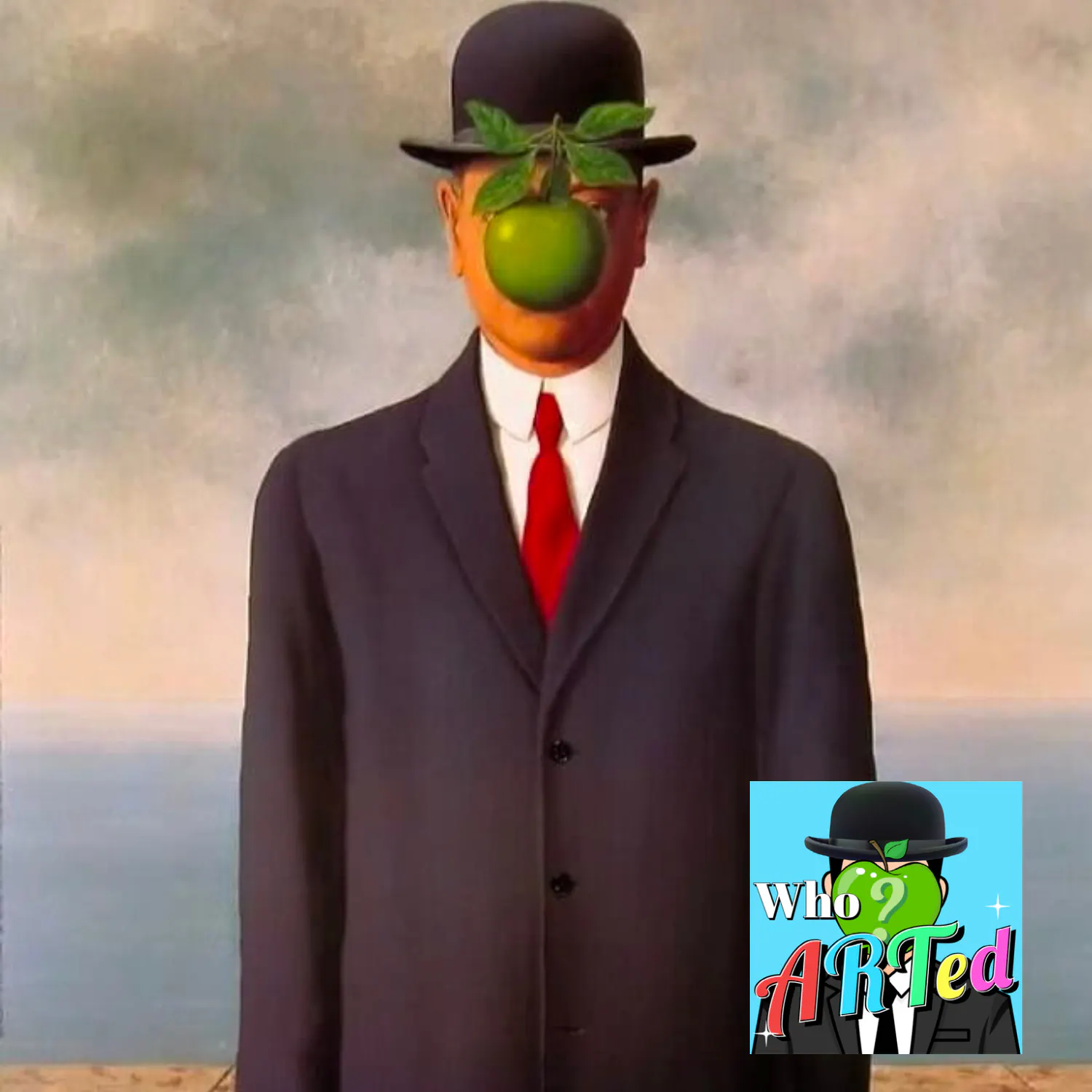
Rene Magritte's painting, Son of Man, is among the most famous images of the Surrealist Movement. It is one of the few artworks that transcends the museum and has become a part of pop culture. Actually technically it isn’t even in the museums. Son of Man is privately owned and rarely seen on public display, but it has been referenced in books, movies like Stranger than Fiction and The Thomas Crown Affair, tv shows like The Simpsons, music videos by the likes of Michael Jackson. Of course listeners of this show no doubt recognize that the painting was also the inspiration for the greatest pop culture image of all time, my podcast cover art. Network Survey: www.surveymonkey.com/r/airwave Other episodes to check out: Rene Magritte | The False Mirror (full episode) Art Smart (my other podcast) Arts Madness Tournament links: Check out the Brackets Tell me which artist you think will win this year's tournament Give a shoutout to your favorite teacher (the teacher who gets the most shoutouts on this form by Feb 27 will get a $50 Amazon gift card) Who ARTed is an Airwave Media Podcast. Connect with me: Website | Twitter | Instagram | Tiktok Support the show: Merch from TeePublic | Make a Donation As always you can find images of the work being discussed at www.WhoARTedPodcast.com and of course, please leave a rating or review on your favorite podcast app. You might hear it read out on the show. Learn more about your ad choices. Visit megaphone.fm/adchoices
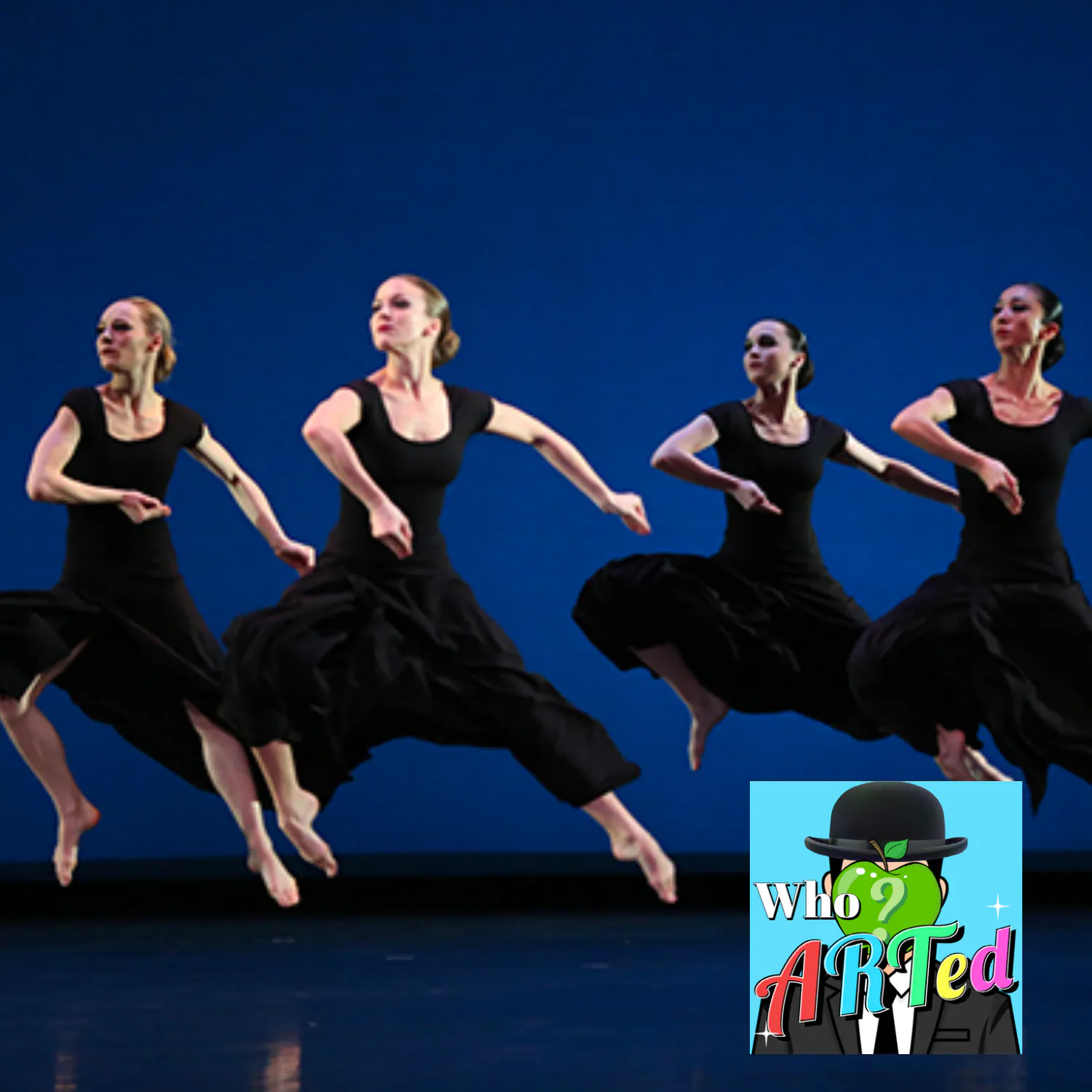
Martha Graham (encore)
Martha Graham was a pioneer of modern dance. She was 17 years old when she saw her first dance performance by Ruth St. Denis. A few years later she began studying at Denishawn School of Dancing and Related Arts founded by Ruth St. Denis and Ted Shawn. In 1922, she danced in a silent film that tried to synchronize the live sound with the film. Basically, they had the dancer and conductor on film and the live orchestra would follow the conductor on the film to synch everything up. She left Denishawn in 1923. Her goal was to make dance reveal the inner man, and make something about the human experience rather than simply entertainment. Growing up the child of a psychiatrist feels like it was relevant here. I mean surely there would be some sort of Freudian interpretation of the daughter of an alienist transforming the field of dance into an exploration of the inner workings of humanity See Graham's piece, Steps in the Streets on Youtube Airwave Media Network survey: www.surveymonkey.com/r/airwave Arts Madness Tournament links: Check out the Brackets Tell me which artist you think will win this year's tournament Give a shoutout to your favorite teacher (the teacher who gets the most shoutouts on this form by Feb 27 will get a $50 Amazon gift card) My guest for this episode was Sean Roschman, director for Niko8. Who ARTed is an Airwave Media Podcast. Connect with me: Website | Twitter | Instagram | Tiktok Support the show: Merch from TeePublic | Make a Donation As always you can find images of the work being discussed at www.WhoARTedPodcast.com and of course, please leave a rating or review on your favorite podcast app. You might hear it read out on the show. Learn more about your ad choices. Visit megaphone.fm/adchoices

Robert Rauschenberg
Robert Rauschenberg came on the scene in the 1940s and made a name for himself with the idea of the combine. He not only blurred the lines, he eliminated the distinctions between media as he combined painting and sculpture. Later, in the 1950s he began making plain white paintings, but in 1953, he came up with an idea for something more revolutionary and even more empty than a plain white canvas. Network Survey: www.surveymonkey.com/r/airwave Related episodes: Art Smart | Pencils Art Smart | Clay Art Smart | Glaze Who ARTed | Sand Mandalas Arts Madness Tournament links: Check out the Brackets Tell me which artist you think will win this year's tournament Give a shoutout to your favorite teacher (the teacher who gets the most shoutouts on this form by Feb 27 will get a $50 Amazon gift card) Who ARTed is an Airwave Media Podcast. Connect with me: Website | Twitter | Instagram | Tiktok Support the show: Merch from TeePublic | Make a Donation As always you can find images of the work being discussed at www.WhoARTedPodcast.com and of course, please leave a rating or review on your favorite podcast app. You might hear it read out on the show. Learn more about your ad choices. Visit megaphone.fm/adchoices
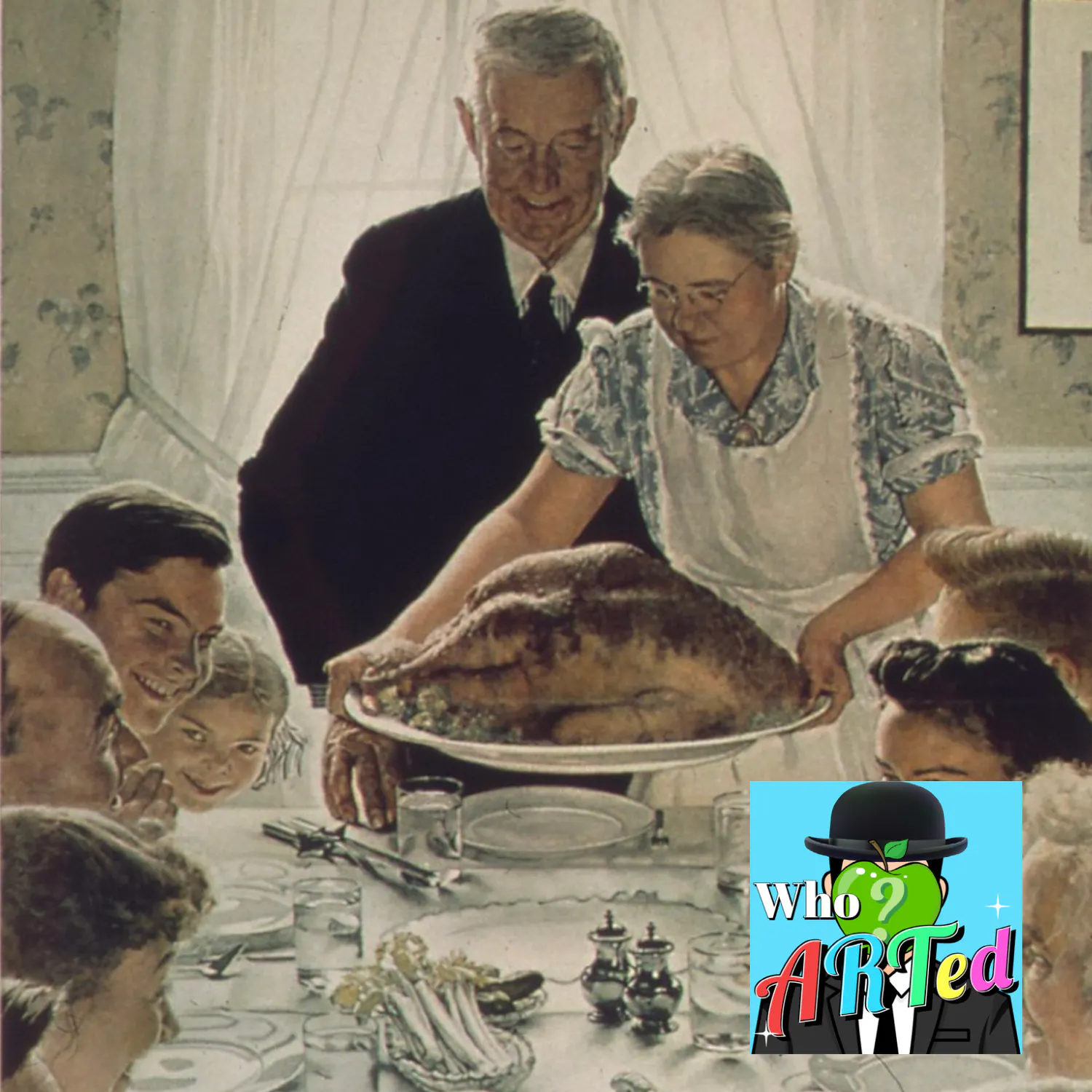
Norman Rockwell
Norman Rockwell was an incredible artist. He was not always respected as an illustrator, but his nostalgic images of small town America were incredibly popular as they graced the covers of the Saturday Evening Post. His Four Freedoms series was particularly popular. Initially the work was rejected by the US government when Rockwell pitched the series, but after seeing the final works and how popular the posters were in the post, the US ordered 2.5 million copies. Related episode: Norman Rockwell | The Problem We All Live With (full episode) Network Survey: www.surveymonkey.com/r/airwave Arts Madness Tournament links: Check out the Brackets Tell me which artist you think will win this year's tournament Give a shoutout to your favorite teacher (the teacher who gets the most shoutouts on this form by Feb 27 will get a $50 Amazon gift card) Who ARTed is an Airwave Media Podcast. Connect with me: Website | Twitter | Instagram | Tiktok Support the show: Merch from TeePublic | Make a Donation As always you can find images of the work being discussed at www.WhoARTedPodcast.com and of course, please leave a rating or review on your favorite podcast app. You might hear it read out on the show. Learn more about your ad choices. Visit megaphone.fm/adchoices
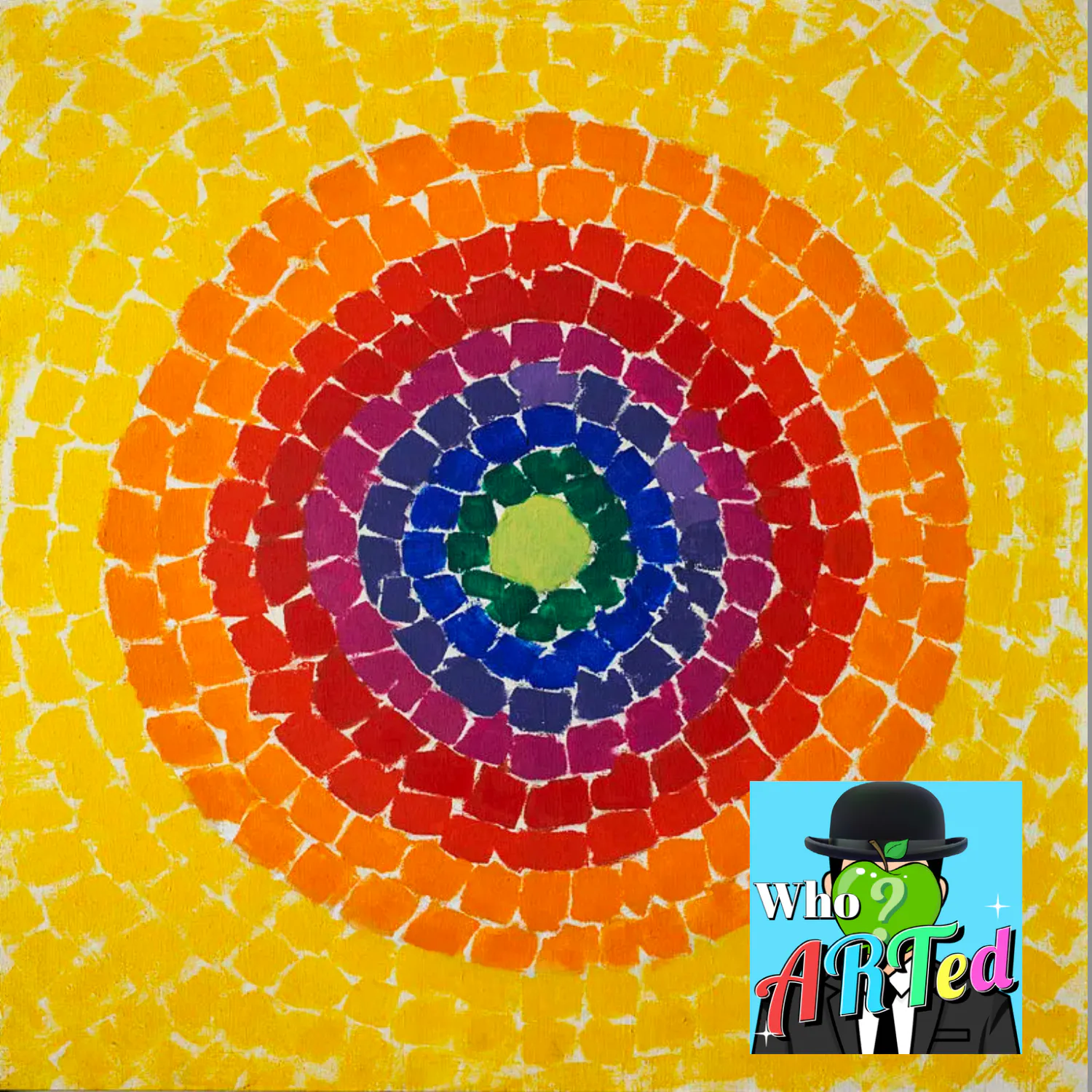
Alma Thomas
Alma Thomas was an amazing African American painter known for her abstract paintings with bold brush strokes that take on a mosaic quality. Network Survey: www.surveymonkey.com/r/airwave Arts Madness Tournament links: Check out the Brackets Tell me which artist you think will win this year's tournament Give a shoutout to your favorite teacher (the teacher who gets the most shoutouts on this form by Feb 27 will get a $50 Amazon gift card) Who ARTed is an Airwave Media Podcast. Connect with me: Website | Twitter | Instagram | Tiktok Support the show: Merch from TeePublic | Make a Donation As always you can find images of the work being discussed at www.WhoARTedPodcast.com and of course, please leave a rating or review on your favorite podcast app. You might hear it read out on the show. Learn more about your ad choices. Visit megaphone.fm/adchoices
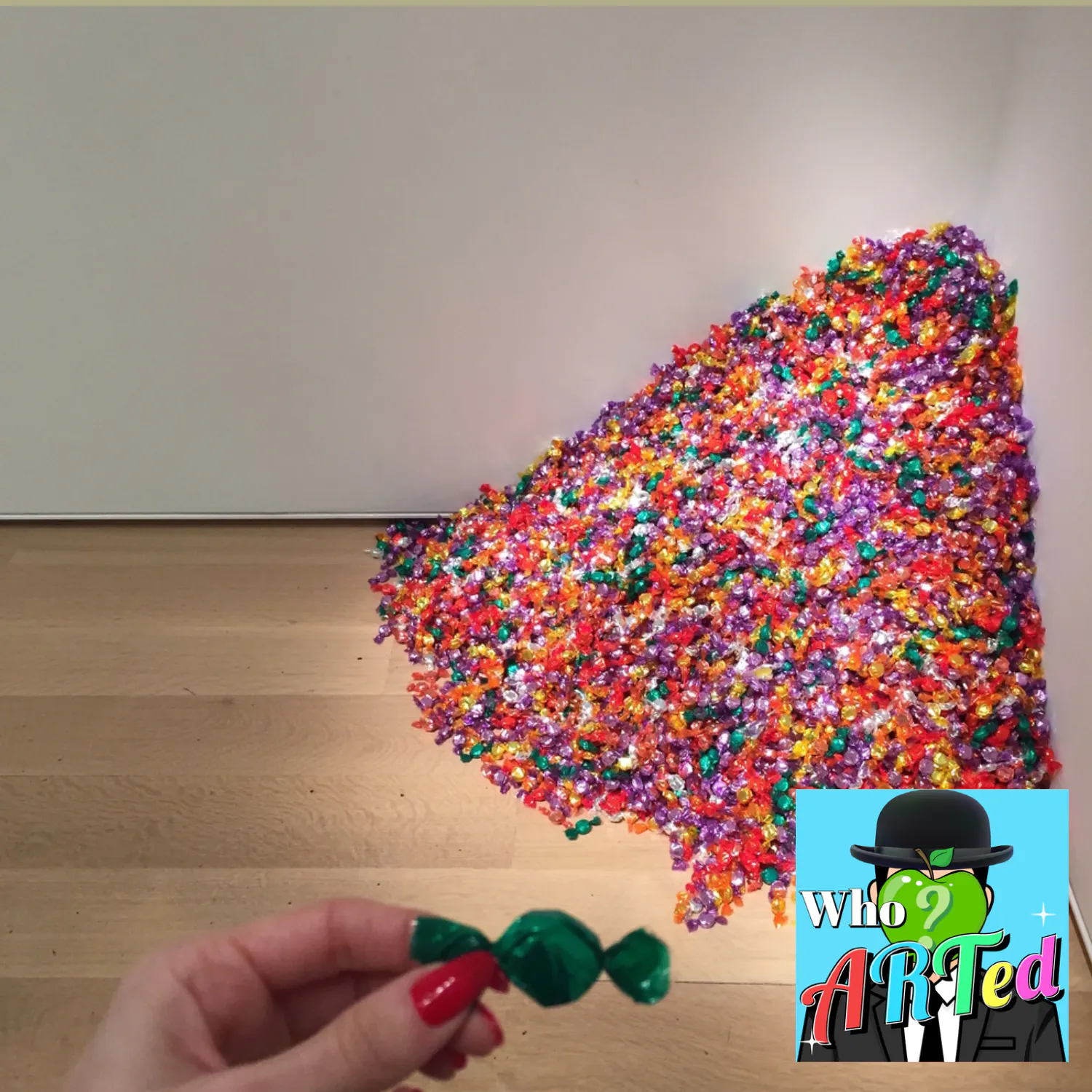
Felix Gonzalez-Torres
Felix Gonzalez-Torres was a conceptual artist who became well known in the 1980s and 90s for his works that broke down the barrier between artist and audience. Many of his works invited the audience to become a part of the creative process making the work more dynamic and engaging. Network Survey: www.surveymonkey.com/r/airwave Arts Madness Tournament links: Check out the Brackets Tell me which artist you think will win this year's tournament Give a shoutout to your favorite teacher (the teacher who gets the most shoutouts on this form by Feb 27 will get a $50 Amazon gift card) Who ARTed is an Airwave Media Podcast. Connect with me: Website | Twitter | Instagram | Tiktok Support the show: Merch from TeePublic | Make a Donation As always you can find images of the work being discussed at www.WhoARTedPodcast.com and of course, please leave a rating or review on your favorite podcast app. You might hear it read out on the show. Learn more about your ad choices. Visit megaphone.fm/adchoices

The Apollo 11 Stones
The Apollo 11 Stones were not from the moon and really had nothing to do with the NASA mission, but they happened to be discovered as news of the moon landing came over the short-wave radio. Still these stones found in a remote cave in Africa show the remarkable capacity for imagination that makes us human. Network Survey (fill it out for a chance to win a $500 Amazon gift card) www.surveymonkey.com/r/airwave Arts Madness Tournament links: Check out the Brackets Tell me which artist you think will win this year's tournament Give a shoutout to your favorite teacher (the teacher who gets the most shoutouts on this form by Feb 27 will get a $50 Amazon gift card) Who ARTed is an Airwave Media Podcast. Connect with me: Website | Twitter | Instagram | Tiktok Support the show: Merch from TeePublic | Make a Donation As always you can find images of the work being discussed at www.WhoARTedPodcast.com and of course, please leave a rating or review on your favorite podcast app. You might hear it read out on the show. Learn more about your ad choices. Visit megaphone.fm/adchoices

Arthur Boyd
Arthur Boyd drew a lot of inspiration from religion, mythology and his own personal experiences. In the painting of Nebuchadnezzar on Fire Falling Over a Waterfall, he draws parallels between the biblical figure and Icarus who flew too close to the sun, then he set the scene in the Australian bush. Boyd has said that this work was partly a way of grappling with his trauma of having born witness to a person self-immolating in protest of the Vietnam war. In 1993, Boyd gifted Bundanon to Australia. It was his former home and studio, now an arts organization and trust with a collection of generations of Boyd artists among others. It is a museum, offers classes to artists of all ages and has artist in residence programs. It is absolutely massive (2,700 acres) dedicated not only to the arts, but also environmental preservation. He was an artist and activist to the very end. Arthur Boyd gave all he had in service of improving the environment, his homeland and the world more broadly. Network Survey (fill it out for a chance to win a $500 Amazon gift card) www.surveymonkey.com/r/airwave Arts Madness Tournament links: Check out the Brackets Tell me which artist you think will win this year's tournament Give a shoutout to your favorite teacher (the teacher who gets the most shoutouts on this form by Feb 27 will get a $50 Amazon gift card) Who ARTed is an Airwave Media Podcast. Connect with me: Website | Twitter | Instagram | Tiktok Support the show: Merch from TeePublic | Make a Donation As always you can find images of the work being discussed at www.WhoARTedPodcast.com and of course, please leave a rating or review on your favorite podcast app. You might hear it read out on the show. Learn more about your ad choices. Visit megaphone.fm/adchoices
Jack Kirby
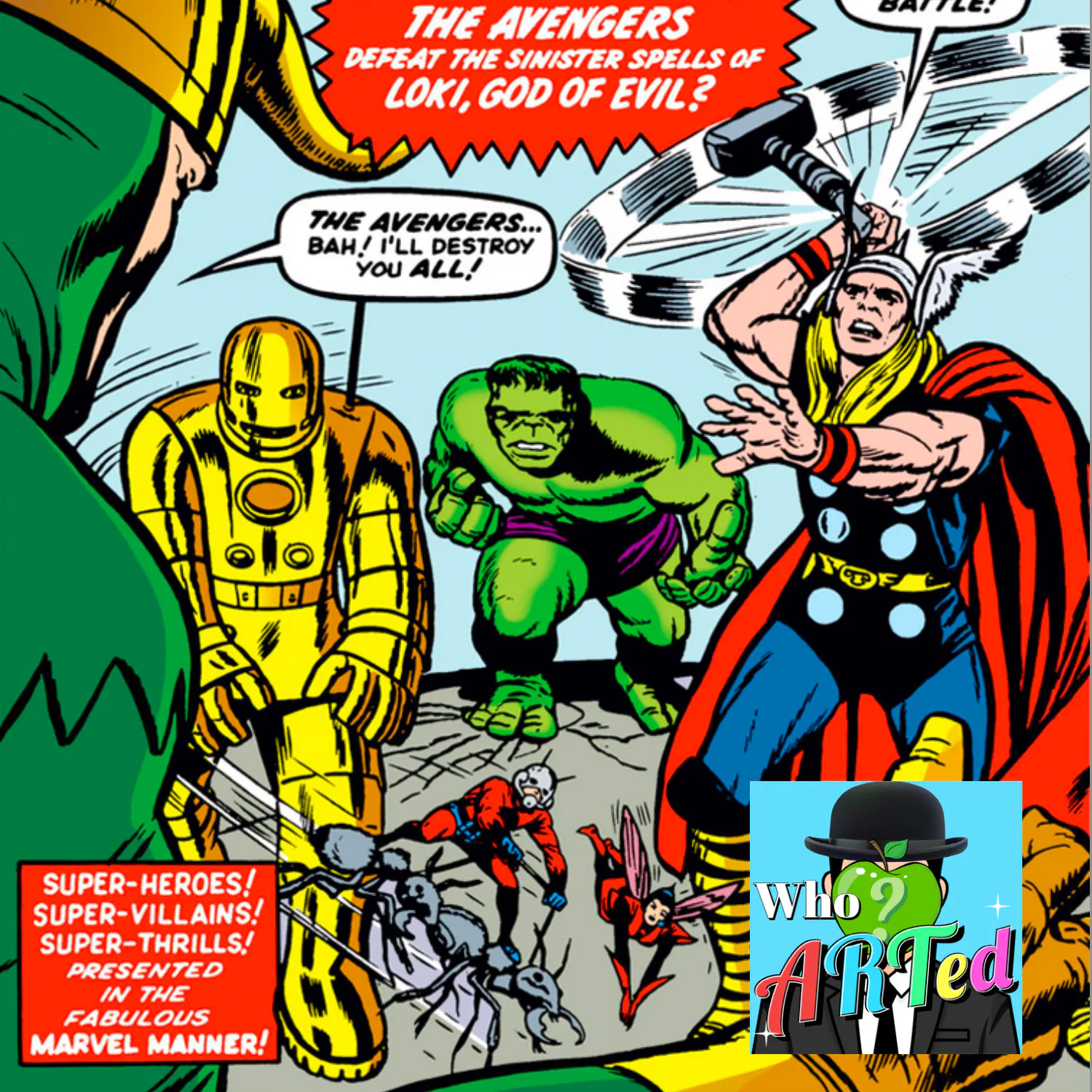
Jack Kirby created some of the biggest names in the golden age of comics including: Fantastic Four, the X-Men, Iron Man, Black Panther, The Incredible Hulk. He basically populated the Marvel Universe. In 1970 though he felt like he wasn't getting the credit he deserved there and left Marvel for DC. There he created a series, Fourth World which I imagine he thought would demonstrate his brilliance and make Marvel wish they hadn’t blown it with him. The series was a commercial flop so maybe not the great “I told you so” he likely envisioned as he left Marvel for their rival, but some of the New Gods from the series live on in the DC Universe. Please support the show by filling out the network's listener survey and enter for a chance to win a $500 gift card: www.surveymonkey.com/r/airwave Arts Madness Tournament links: Check out the Brackets Tell me which artist you think will win this year's tournament Give a shoutout to your favorite teacher (the teacher who gets the most shoutouts on this form by Feb 27 will get a $50 Amazon gift card) Who ARTed is an Airwave Media Podcast. Connect with me: Website | Twitter | Instagram | Tiktok Support the show: Merch from TeePublic | Make a Donation As always you can find images of the work being discussed at www.WhoARTedPodcast.com and of course, please leave a rating or review on your favorite podcast app. You might hear it read out on the show. Learn more about your ad choices. Visit megaphone.fm/adchoices
Robert Smithson | Spiral Jetty
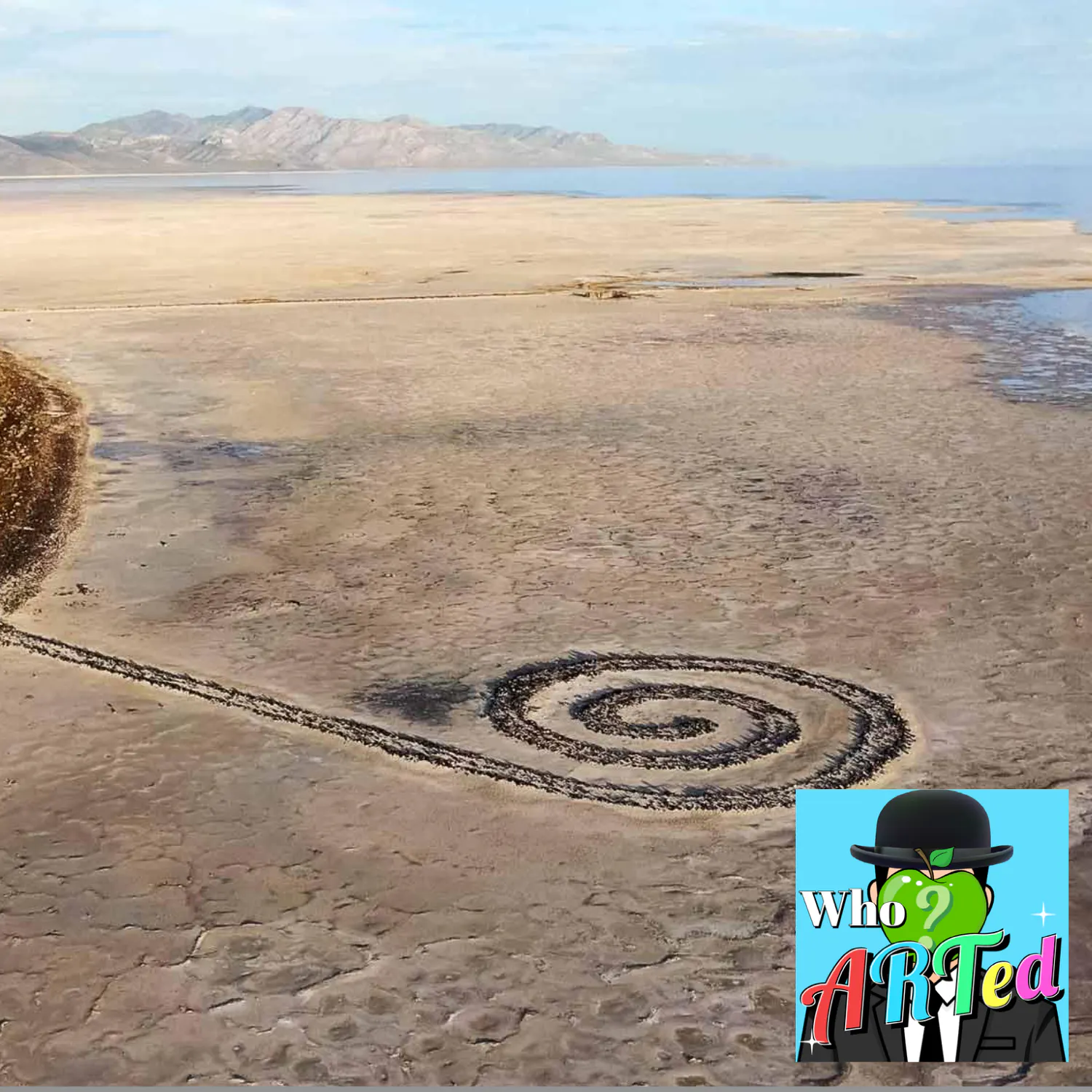
Robert Smithson decided to make monumental sculptures using perhaps the world’s oldest material, the earth itself, but he used modern tools to shape it in a way and on a scale rarely seen. Spiral Jetty is as the name would suggest, a spiral. Part of what makes it special is the enormousness of it. On the peninsula at Rozel Point on Utah’s Great Salt Lake, Smithson created his most famous monumental sculpture using over six thousand tons of black basalt rocks and earth from the site. The spiral forms a path out onto the lake. It is intended to be not only witnessed, but experienced. Walking the spiral would be an almost meditative act similar to circumambulating or walking around a hindu temple. The spiral allows people to walk out onto the lake. A small speck on a vast lake witnessing the entropy of nature as the water erodes the foundation. The gigantic piece built from thousands of tons of stone has been decaying from the moment it was built. It was a giant monument to nature demonstrating the concept of entropy. It was born out of a time of social upheaval and changing norms leaving in which people were rethinking the ways they related to both nature and the constructed environment which now that I’m saying it out loud could just as easily be a description of pretty much any time period as the only true constant is change. Help support the show by completing the network's survey. You can give me feedback to improve the show and get a chance to win a $500 Amazon Gift Card! www.surveymonkey.com/r/airwave Who ARTed is an Airwave Media Podcast. Connect with me: Website | Twitter | Instagram | Tiktok Support the show: Merch from TeePublic | Make a Donation As always you can find images of the work being discussed at www.WhoARTedPodcast.com and of course, please leave a rating or review on your favorite podcast app. You might hear it read out on the show. Learn more about your ad choices. Visit megaphone.fm/adchoices
Katsushika Hokusai
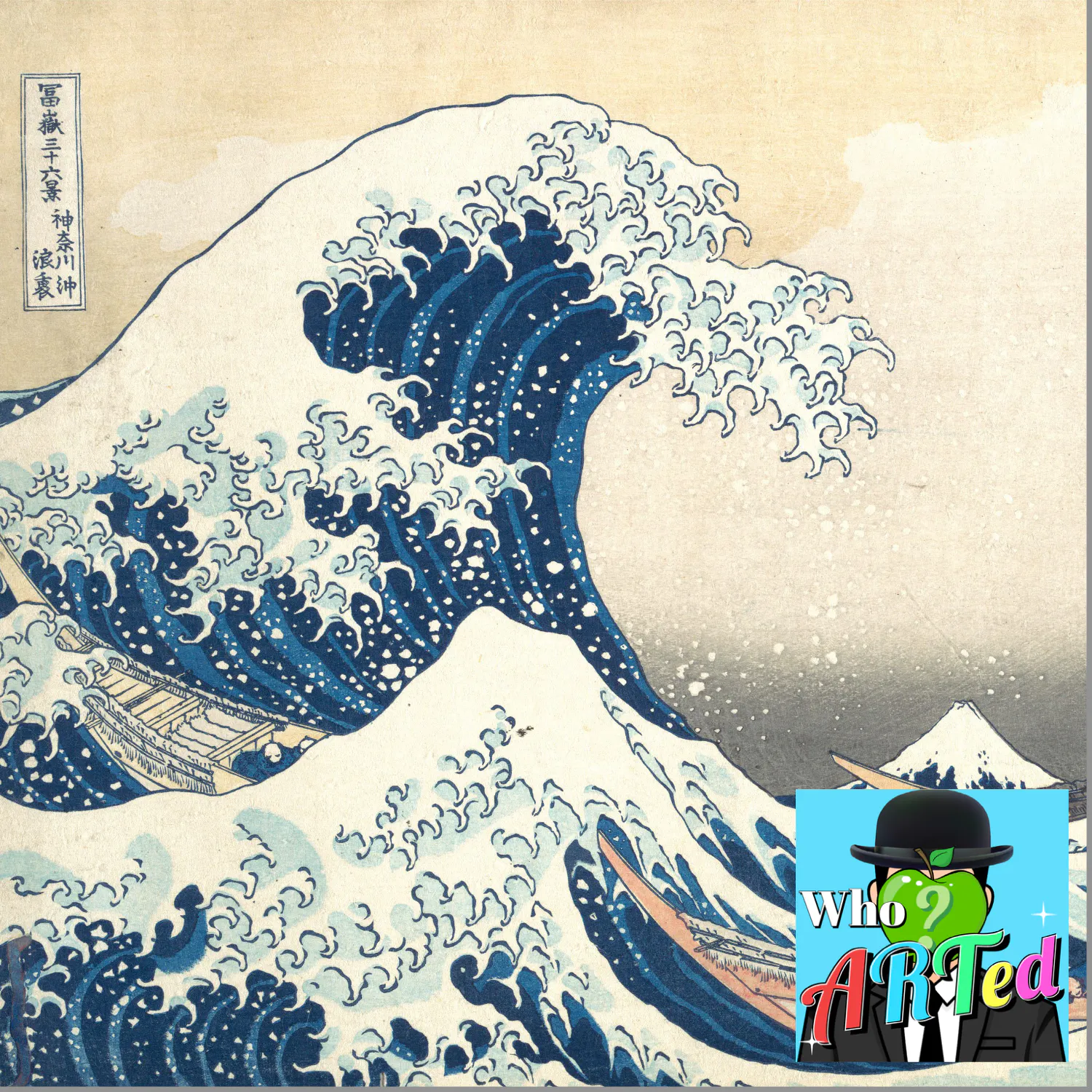
Katsushika Hokusai is best known for The Great Wave Off of Kanagawa, part of his series of 36 Views of Mount Fuji. His family was in the mirror business, but Hokusai showed a proclivity for art starting at a young age. When he was 14 he started apprenticing as a wood carver. He spent 4 years carving wood blocks to use as stamps for printmaking. He then went on to study under artists to produce his own designs. His first prints were of actors from the Kabuki theater in 1779. Some years later, he would shift his focus to landscapes. Please support the show by taking this listener survey. The information in the survey helps the network figure out appropriate advertising, and you can give me feedback to help me improve the show. As an added bonus, when you fill out the survey, you can enter to win a $500 Amazon gift card. www.surveymonkey.com/r/airwave Related Episodes: ArtCurious: Katsushika Oi Art Smart: Ukiyo-e Who ARTed: Blue Arts Madness Tournament links: Check out the Brackets Tell me which artist you think will win this year's tournament Give a shoutout to your favorite teacher (the teacher who gets the most shoutouts on this form by Feb 27 will get a $50 Amazon gift card) Who ARTed is an Airwave Media Podcast. Connect with me: Website | Twitter | Instagram | Tiktok Support the show: Merch from TeePublic | Make a Donation As always you can find images of the work being discussed at www.WhoARTedPodcast.com and of course, please leave a rating or review on your favorite podcast app. You might hear it read out on the show. Learn more about your ad choices. Visit megaphone.fm/adchoices
Wassily Kandinsky
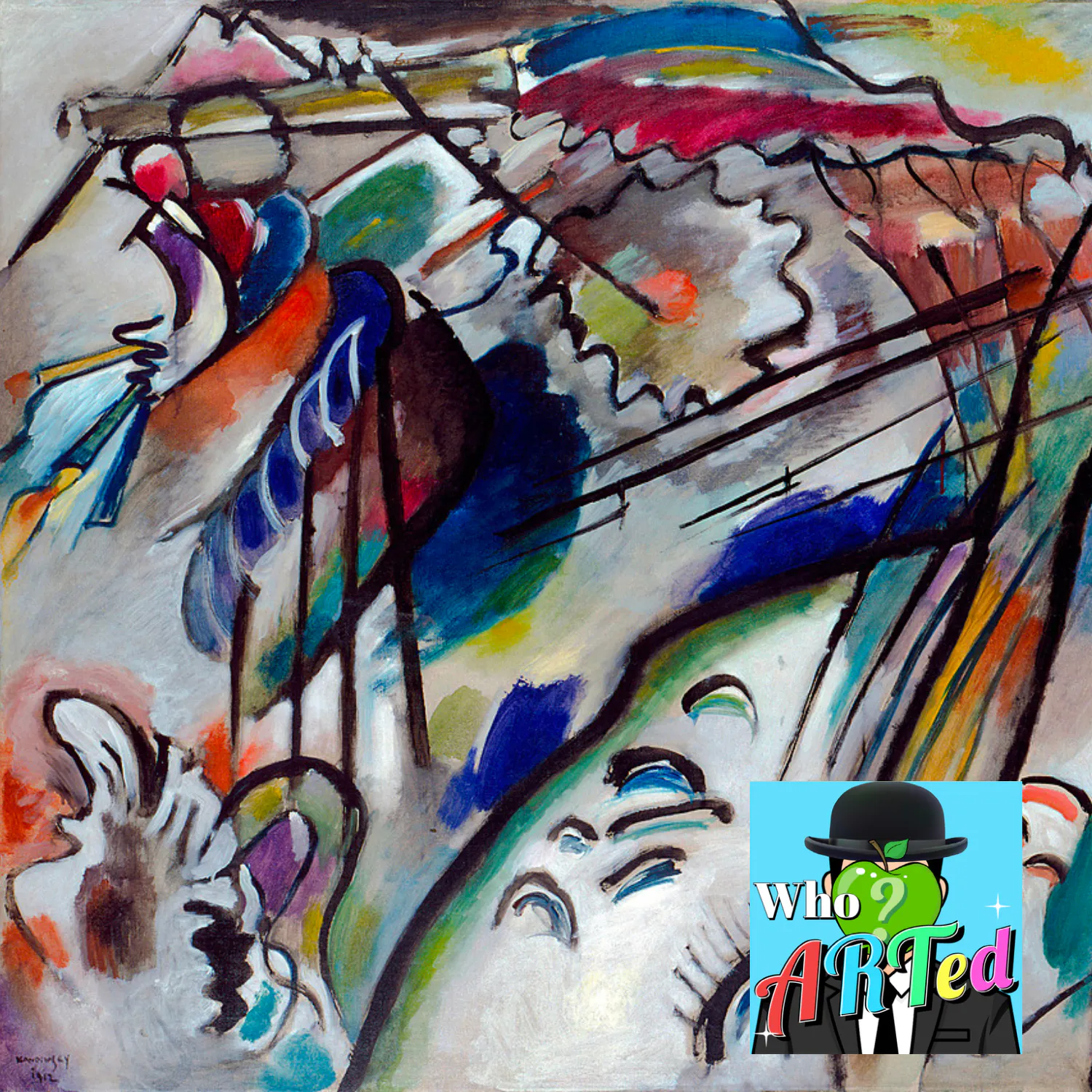
Wassily Kandinsky was an artist, teacher and art theorist in the early 20th century. His work was very influential in the development of modern, abstract art. He was likely able to paint differently because he experienced the world differently. Kandinsky is thought to have had a rare condition called synesthesia, which is a combining of the senses. For him sound and color were linked. He would see music and often used that for inspiration in his paintings. Related episodes: Art Smart: Modern Art Hilma af Klint Piet Mondrian | Composition with Red Blue and Yellow Wassily Kandinsky | Yellow Red Blue (full episode) The Apollo 11 Stones Arts Madness Tournament links: Check out the Brackets Tell me which artist you think will win this year's tournament Give a shoutout to your favorite teacher (the teacher who gets the most shoutouts on this form by Feb 27 will get a $50 Amazon gift card) Who ARTed is an Airwave Media Podcast. Connect with me: Website | Twitter | Instagram | Tiktok Support the show: Merch from TeePublic | Make a Donation As always you can find images of the work being discussed at www.WhoARTedPodcast.com and of course, please leave a rating or review on your favorite podcast app. You might hear it read out on the show. Learn more about your ad choices. Visit megaphone.fm/adchoices
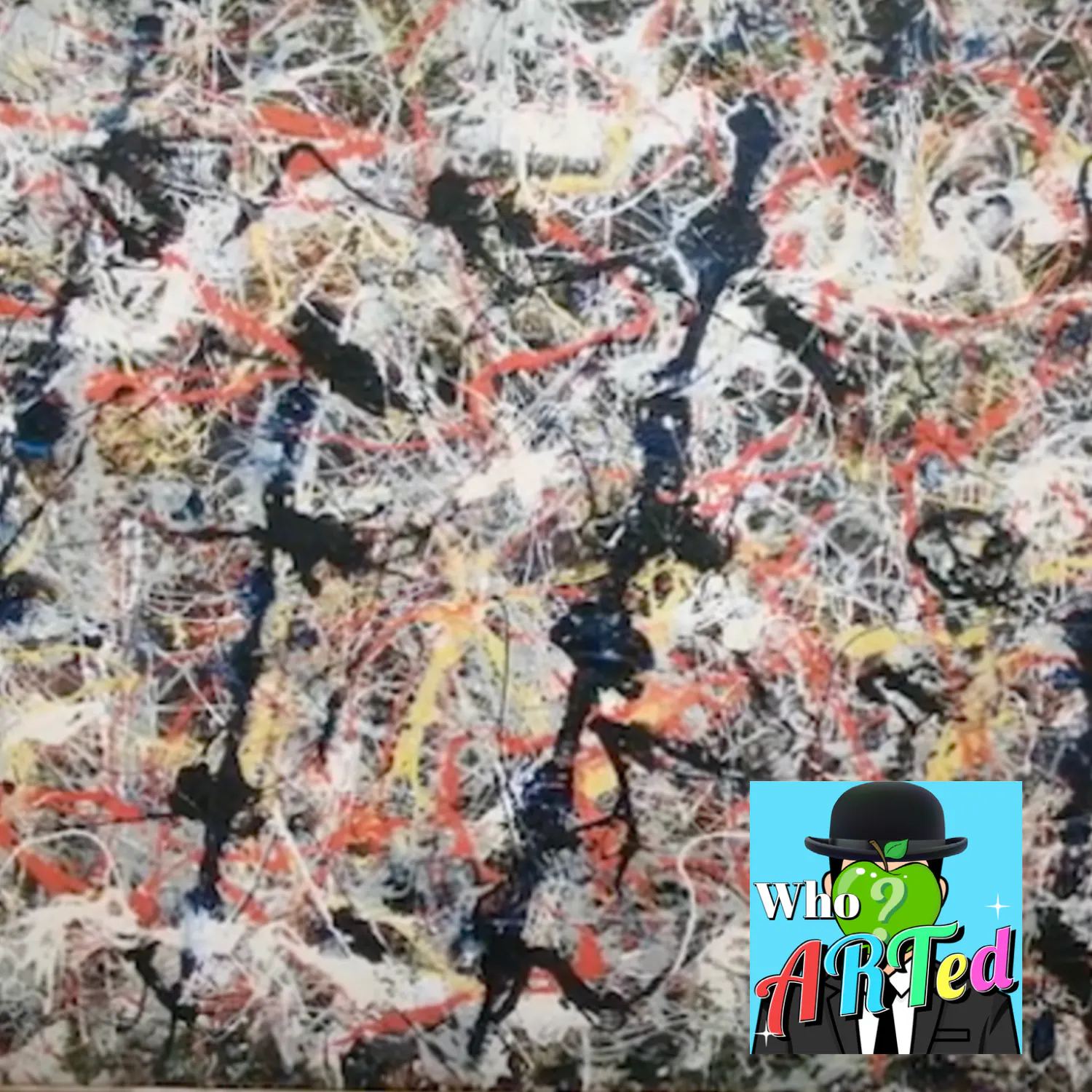
Jackson Pollock
In August of 1973, the Australian government bought a Jackson Pollock painting for $2 million. It was the highest price paid for work of an American artist and it was a huge scandal in Australia. Most people thought it was a waste and inconceivable that a Pollock would be worth as much as a Rembrandt. Pollock's work seems so simple and direct that it is easy to forget how revolutionary it was. Related Episodes: Janet Sobel Arts Madness Tournament links: Check out the Brackets Tell me which artist you think will win this year's tournament Give a shoutout to your favorite teacher (the teacher who gets the most shoutouts on this form by Feb 27 will get a $50 Amazon gift card) Who ARTed is an Airwave Media Podcast. Connect with me: Website | Twitter | Instagram | Tiktok Support the show: Merch from TeePublic | Make a Donation As always you can find images of the work being discussed at www.WhoARTedPodcast.com and of course, please leave a rating or review on your favorite podcast app. You might hear it read out on the show. Learn more about your ad choices. Visit megaphone.fm/adchoices
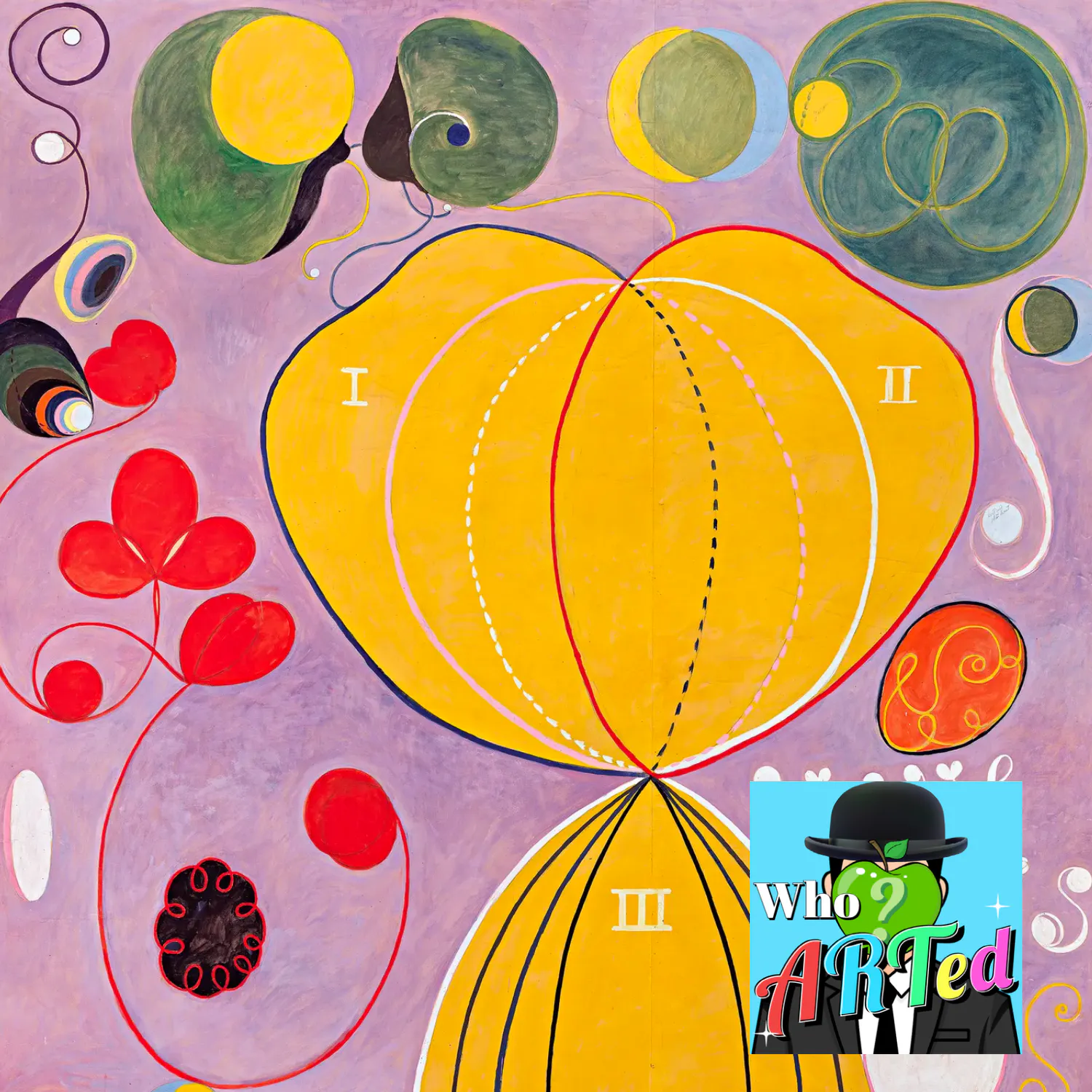
Hilma af Klint
Hilma af Klint was a painter making abstract art years before men like Kandinsky and she was exploring automatic drawing long before the surrealists. She knew she was well ahead of her time, which is why she stipulated in her will, that many of her greatest works were not to be displayed until 20 years after her death. Related episodes: Hilma af Klint | What a Human Being Is Spirit Photography Arts Madness Tournament links: Check out the Brackets Tell me which artist you think will win this year's tournament Give a shoutout to your favorite teacher (the teacher who gets the most shoutouts on this form by Feb 27 will get a $50 Amazon gift card) Who ARTed is an Airwave Media Podcast. Connect with me: Website | Twitter | Instagram | Tiktok Support the show: Merch from TeePublic | Make a Donation As always you can find images of the work being discussed at www.WhoARTedPodcast.com and of course, please leave a rating or review on your favorite podcast app. You might hear it read out on the show. Learn more about your ad choices. Visit megaphone.fm/adchoices
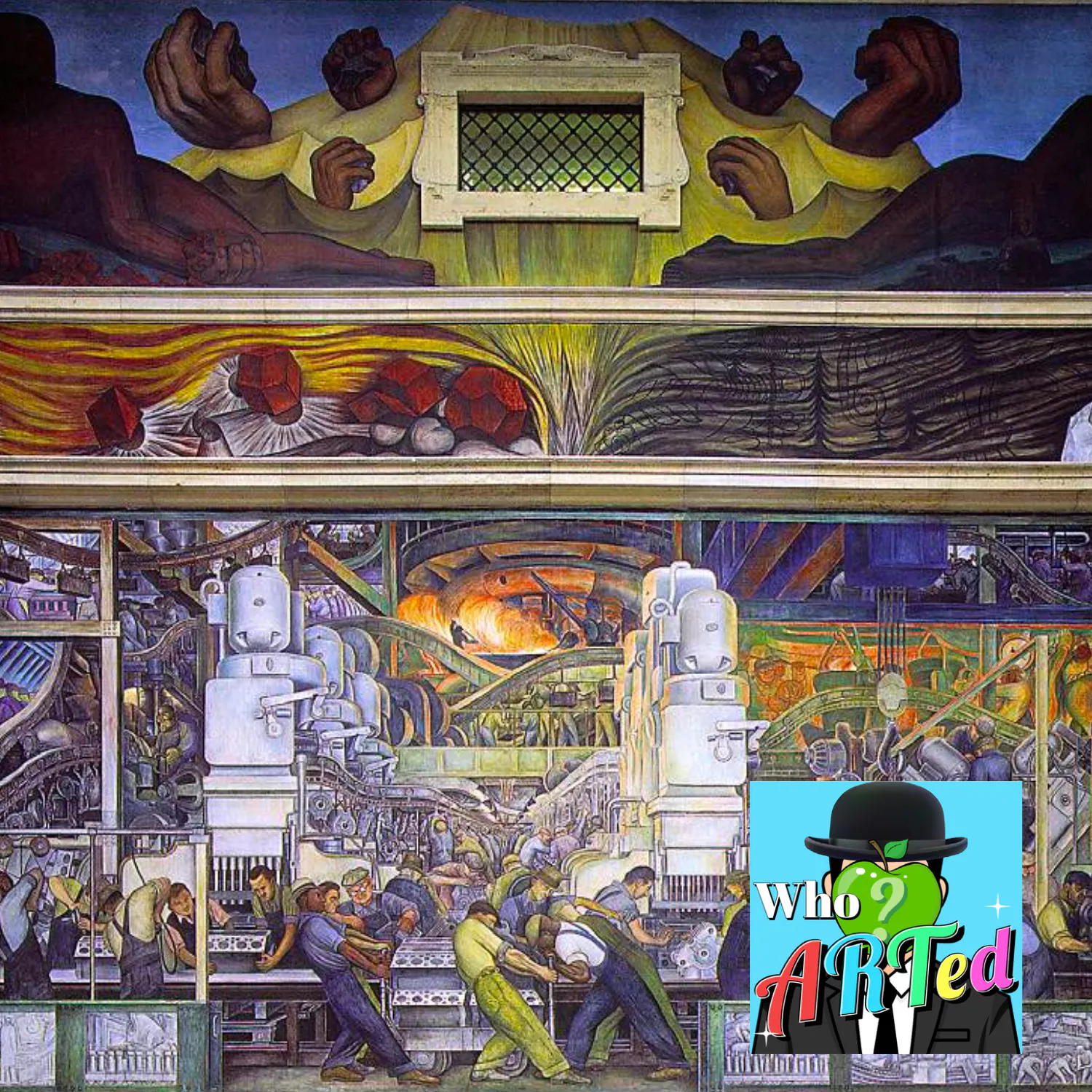
Diego Rivera
Today Diego Rivera is less of a household name than his wife Frida Kahlo, but in the early 20th century, he was the more established artist. Rivera was born December 8th, 1886 in Guatajaunto Mexico. As a 3 year old, he was caught drawing on the walls, but instead of getting angry, his parents chose to encourage his creativity by hanging canvas and chalkboards on the walls. He would go through a lot of canvas in his life, but ultimately I suppose it was his work directly on the walls that he would come to be remembered for. The Detroit Industry Murals consists of 27 frescos. Rivera and his assistants painted the murals in just 8 months. They worked at a grueling pace routinely putting in 15 hour days without breaks. The work was said to have been so intense that Diego Rivera lost 100 pounds during this time. Arts Madness Tournament links: Check out the Brackets Tell me which artist you think will win this year's tournament Give a shoutout to your favorite teacher (the teacher who gets the most shoutouts on this form by Feb 27 will get a $50 Amazon gift card) Who ARTed is an Airwave Media Podcast. Connect with me: Website | Twitter | Instagram | Tiktok Support the show: Merch from TeePublic | Make a Donation As always you can find images of the work being discussed at www.WhoARTedPodcast.com and of course, please leave a rating or review on your favorite podcast app. You might hear it read out on the show. Learn more about your ad choices. Visit megaphone.fm/adchoices

Olowe of Ise
The bulk of Olowe’s carvings seem to have been both decorative and functional artworks for the Yoruba kings and prominent families. One of his celebrated works for example is the veranda post that sits in the collection at the Art Institute of Chicago. In that piece we see the elongated neck and oval faces that were a part of his signature style. Traditionally Yoruba artists used scale and proportion to indicate hierarchy. The more important a figure, the larger they are within the composition. The status of the king’s senior wife is shown by her size while the king is seated central to the post. His crown eye level to the viewer and the king sits with his feat up above the ground signifying his transcendent nature. His eyes are cast down expressing a contemplative mood as he looks down on the world beyond. The crown has four ancestral faces signifying the legitimacy of his royal lineage, the divine line and wisdom running through it. Arts Madness Tournament links: Check out the Brackets Tell me which artist you think will win this year's tournament Give a shoutout to your favorite teacher (the teacher who gets the most shoutouts on this form by Feb 27 will get a $50 Amazon gift card) Who ARTed is an Airwave Media Podcast. Connect with me: Website | Twitter | Instagram | Tiktok Support the show: Merch from TeePublic | Buy me a coffee As always you can find images of the work being discussed at www.WhoARTedPodcast.com and of course, please leave a rating or review on your favorite podcast app. You might hear it read out on the show. Learn more about your ad choices. Visit megaphone.fm/adchoices

Christo and Jeanne Claude
Christo and Jeanne Claude are best known for their monumental works using fabric to transform public spaces. These massive works outside of the museum or gallery context helped to bring art to the masses. Whether people wanted to or not, they were forced to reconsider the space as the building, or the coast was covered in masses of fabric. Related Episodes: Christo and Jeanne Claude | The Floating Piers (full episode) Arts Madness Tournament links: Check out the Brackets Tell me which artist you think will win this year's tournament Give a shoutout to your favorite teacher (the teacher who gets the most shoutouts on this form by Feb 27 will get a $50 Amazon gift card) Who ARTed is an Airwave Media Podcast. Connect with me: Website | Twitter | Instagram | Tiktok Support the show: Merch from TeePublic | Make a Donation As always you can find images of the work being discussed at www.WhoARTedPodcast.com and of course, please leave a rating or review on your favorite podcast app. You might hear it read out on the show. Learn more about your ad choices. Visit megaphone.fm/adchoices

Frank Lloyd Wright
Frank Lloyd Wright was one of America's most famous and influential architects. He famously said, "No house should ever be on a hill or on anything. It should be of the hill. Belonging to it. Hill and house should live together each the happier for the other." It was this emphasis on unity between the construction and the surrounding landscape that made Falling Water such a breathtaking design. Related Episodes: Frank Lloyd Wright | Falling Water (full episode) Arts Madness Tournament links: Check out the Brackets Tell me which artist you think will win this year's tournament Give a shoutout to your favorite teacher (the teacher who gets the most shoutouts on this form by Feb 27 will get a $50 Amazon gift card) Who ARTed is an Airwave Media Podcast. Connect with me: Website | Twitter | Instagram | Tiktok Support the show: Merch from TeePublic | Make a Donation As always you can find images of the work being discussed at www.WhoARTedPodcast.com and of course, please leave a rating or review on your favorite podcast app. You might hear it read out on the show. Learn more about your ad choices. Visit megaphone.fm/adchoices

Ai Weiwei
Ai Weiwei is possibly the most interesting man in the world. He is not only a famous contemporary artist. He was a top rated blackjack player, a political prisoner and released a heavy metal album about his incarceration. Related episodes: Ai Weiwei (full episode) Marchel Duchamp Arts Madness Tournament links: Check out the Brackets Tell me which artist you think will win this year's tournament Give a shoutout to your favorite teacher (the teacher who gets the most shoutouts on this form by Feb 27 will get a $50 Amazon gift card) Who ARTed is an Airwave Media Podcast. Connect with me: Website | Twitter | Instagram | Tiktok Support the show: Merch from TeePublic | Make a Donation As always you can find images of the work being discussed at www.WhoARTedPodcast.com and of course, please leave a rating or review on your favorite podcast app. You might hear it read out on the show. Learn more about your ad choices. Visit megaphone.fm/adchoices
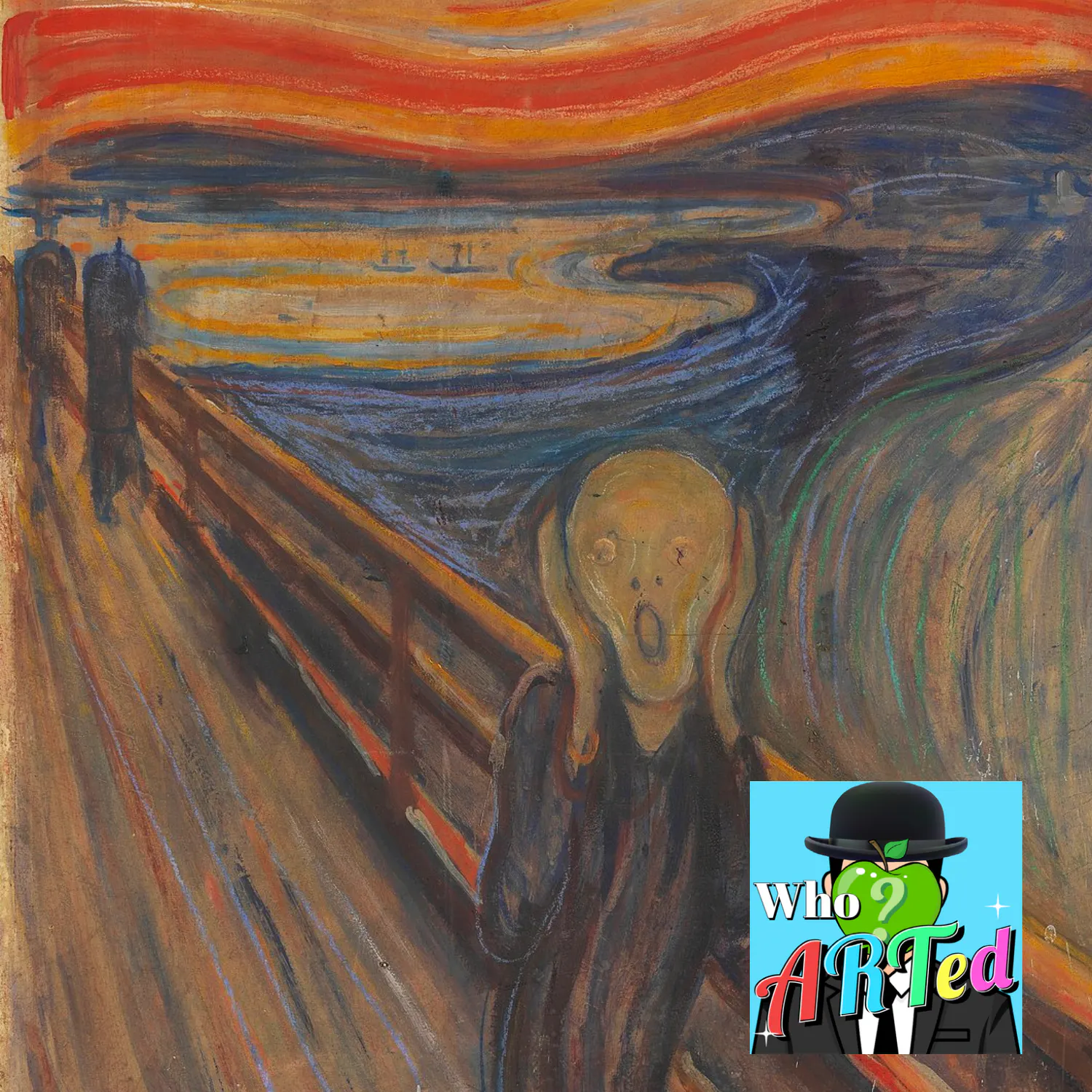
Edvard Munch
Edvard Munch was a Norwegian artist best known for The Scream. He created multiple versions of the piece using paint, pastels, and lithography. The Scream is one of the rare works of art that resonates with audiences well beyond the museum. It has become a part of popular culture and it is among the most recognizable and widely parodied works of art. Arts Madness Tournament links: Check out the Brackets Tell me which artist you think will win this year's tournament Give a shoutout to your favorite teacher (the teacher who gets the most shoutouts on this form by Feb 27 will get a $50 Amazon gift card) Who ARTed is an Airwave Media Podcast. Connect with me: Website | Twitter | Instagram | Tiktok Support the show: Merch from TeePublic | Make a Donation As always you can find images of the work being discussed at www.WhoARTedPodcast.com and of course, please leave a rating or review on your favorite podcast app. You might hear it read out on the show. Learn more about your ad choices. Visit megaphone.fm/adchoices

KAWS
Related Episodes: KAWS (full episode) The Art World is Bananas Take the Money and Run Arts Madness Tournament links: Check out the Brackets Tell me which artist you think will win this year's tournament Give a shoutout to your favorite teacher (the teacher who gets the most shoutouts on this form by Feb 27 will get a $50 Amazon gift card) Who ARTed is an Airwave Media Podcast. Connect with me: Website | Twitter | Instagram | Tiktok Support the show: Merch from TeePublic | Make a Donation As always you can find images of the work being discussed at www.WhoARTedPodcast.com and of course, please leave a rating or review on your favorite podcast app. You might hear it read out on the show. Learn more about your ad choices. Visit megaphone.fm/adchoices
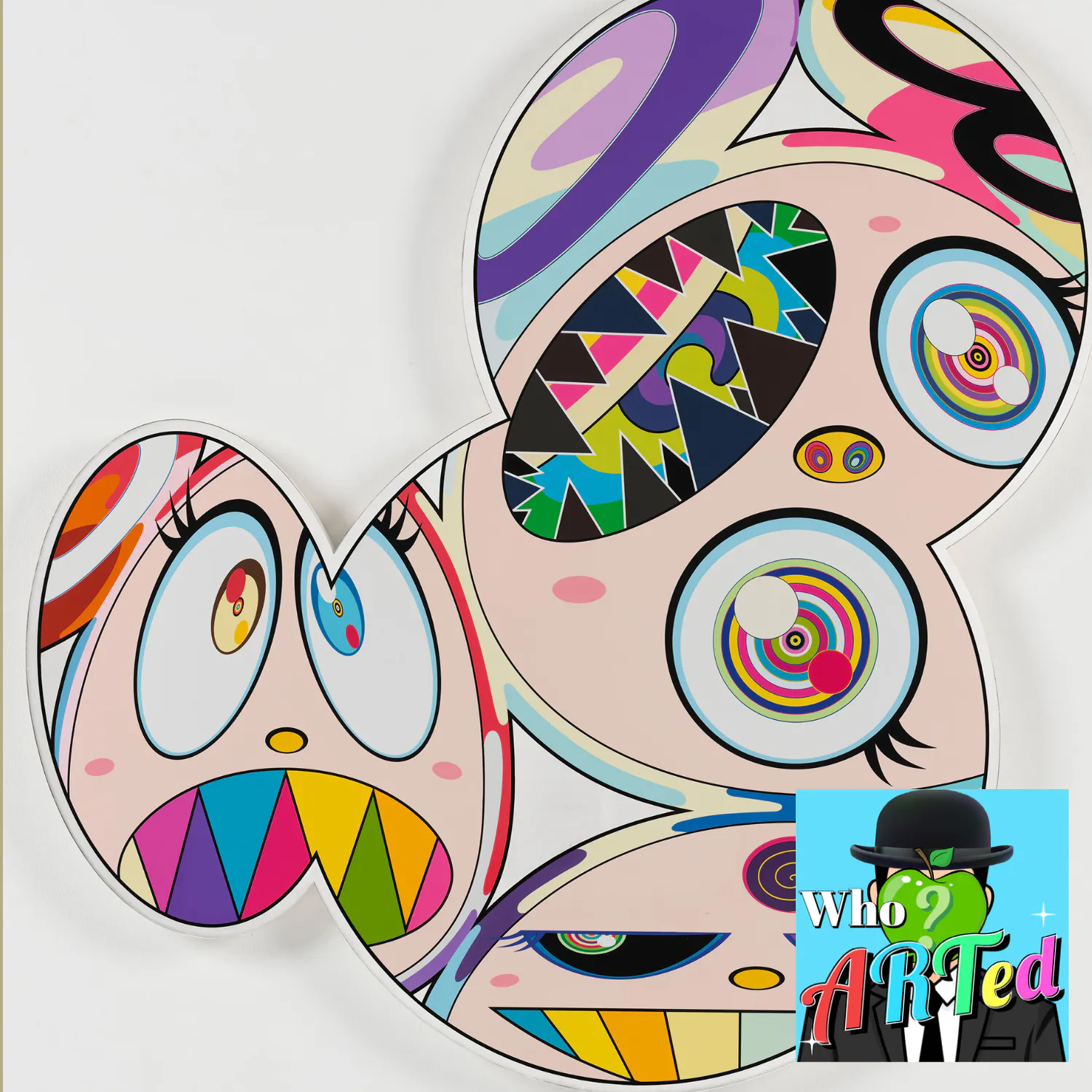
Takashi Murakami
This episode covers a little bit about Takashi Murakami, the contemporary Japanese artist. Arts Madness Tournament links: Check out the Brackets Tell me which artist you think will win this year's tournament Give a shoutout to your favorite teacher (the teacher who gets the most shoutouts on this form by Feb 27 will get a $50 Amazon gift card) Who ARTed is an Airwave Media Podcast. Connect with me: Website | Twitter | Instagram | Tiktok Support the show: Merch from TeePublic | Make a Donation As always you can find images of the work being discussed at www.WhoARTedPodcast.com and of course, please leave a rating or review on your favorite podcast app. You might hear it read out on the show. Learn more about your ad choices. Visit megaphone.fm/adchoices
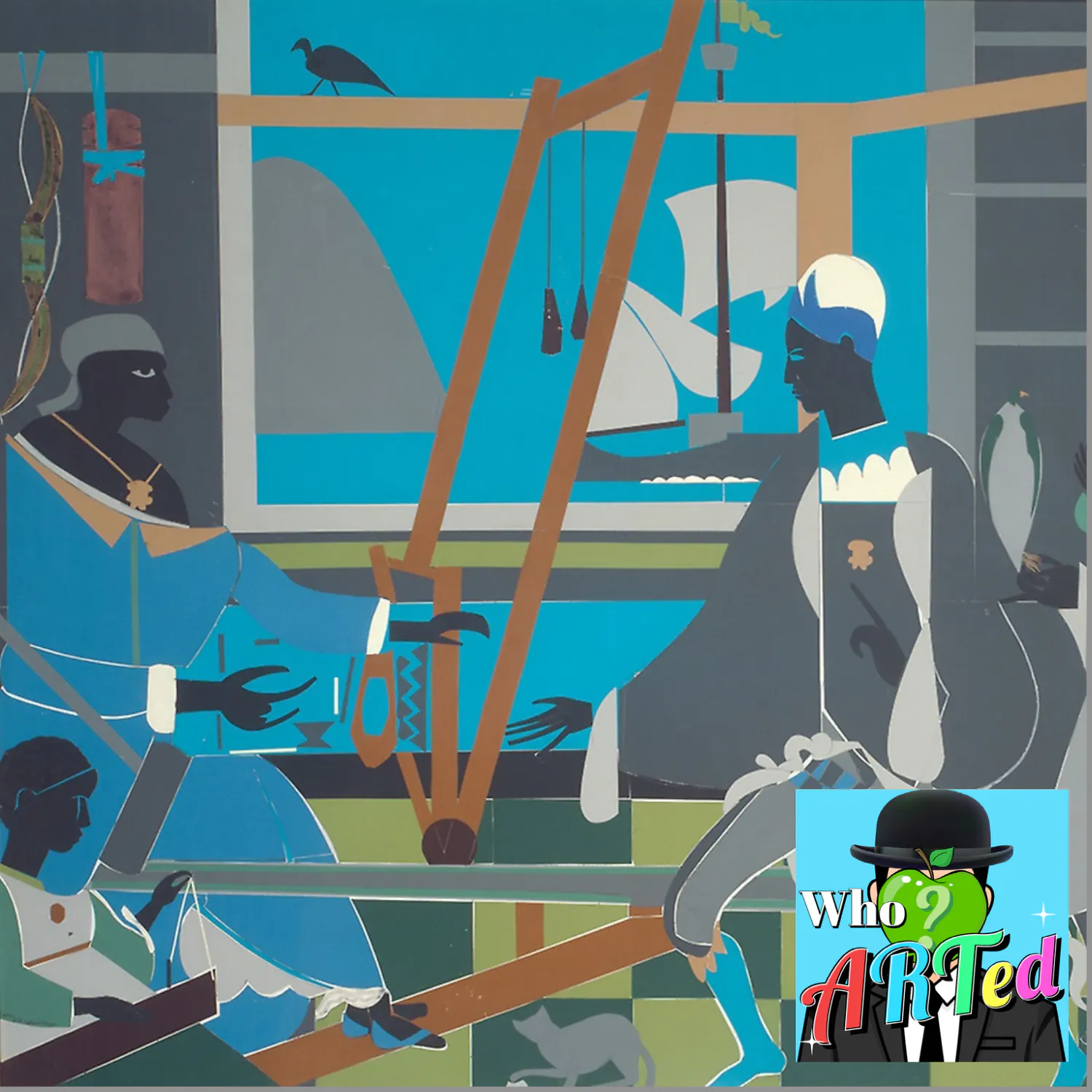
Romare Bearden
Romare Bearden grew up during the Harlem Renaissance. He enlisted in the army during World War 2 and in addition to painting, he made collages, he wrote and he loved music. One of my favorite works of Bearden's is based on a Renaissance painting imagining the return of Odysseus. In his work, Bearden puts black people into classic mythology because representation matters and he wants a diverse audience to be able to truly embrace the work and see themselves in the story. In this episode, I mentioned the Art Explora Academy. Check it out for tons of free resources to further your art education. Arts Madness Tournament links: Check out the Brackets Tell me which artist you think will win this year's tournament Give a shoutout to your favorite teacher (the teacher who gets the most shoutouts on this form by Feb 27 will get a $50 Amazon gift card) Who ARTed is an Airwave Media Podcast. Connect with me: Website | Twitter | Instagram | Tiktok Support the show: Merch from TeePublic | Make a Donation As always you can find images of the work being discussed at www.WhoARTedPodcast.com and of course, please leave a rating or review on your favorite podcast app. You might hear it read out on the show. Learn more about your ad choices. Visit megaphone.fm/adchoices

Matt Groening
Matt Groening is the creator of The Simpsons, one of the most successful cartoons of all time. Related episodes: Homer Simpson (full episode) Arts Madness Tournament links: Check out the Brackets Tell me which artist you think will win this year's tournament Give a shoutout to your favorite teacher (the teacher who gets the most shoutouts on this form by Feb 27 will get a $50 Amazon gift card) Who ARTed is an Airwave Media Podcast. Connect with me: Website | Twitter | Instagram | Tiktok Support the show: Merch from TeePublic | Make a Donation As always you can find images of the work being discussed at www.WhoARTedPodcast.com and of course, please leave a rating or review on your favorite podcast app. You might hear it read out on the show. Learn more about your ad choices. Visit megaphone.fm/adchoices

Georgia O'Keeffe
Georgia O'Keeffe was one of the greatest American painters of the 20th century. Arts Madness Tournament links: Check out the Brackets Tell me which artist you think will win this year's tournament Give a shoutout to your favorite teacher (the teacher who gets the most shoutouts on this form by Feb 27 will get a $50 Amazon gift card) Who ARTed is an Airwave Media Podcast. Connect with me: Website | Twitter | Instagram | Tiktok Support the show: Merch from TeePublic | Make a Donation As always you can find images of the work being discussed at www.WhoARTedPodcast.com and of course, please leave a rating or review on your favorite podcast app. You might hear it read out on the show. Learn more about your ad choices. Visit megaphone.fm/adchoices

Leonardo da Vinci | The Mona Lisa
Leonardo da Vinci’s painting of The Mona Lisa, also called La Gioconda has captured society’s collective imagination. Her hold on the audience is so intense there is a widely known phenomenon called, The Mona Lisa Effect referring to the experience of feeling like the subject of an image is looking directly at the viewer no matter where one is standing in the room. Simply put, people feel like Mona Lisa is staring at them and her eyes follow them around the room. According to scientists at Bielefeld Unversity in Germany, La Gioconda does not look directly at the viewer. Her gaze is said to be about 15 degrees to the right looking at the viewer’s ear or over their shoulder. They concluded that ironically, The Mona Lisa does not demonstrate the Mona Lisa effect. Arts Madness Tournament links: Check out the Brackets Tell me which artist you think will win this year's tournament Give a shoutout to your favorite teacher (the teacher who gets the most shoutouts on this form by Feb 27 will get a $50 Amazon gift card) Who ARTed is an Airwave Media Podcast. Connect with me: Website | Twitter | Instagram | Tiktok Support the show: Merch from TeePublic | Buy me a coffee As always you can find images of the work being discussed at www.WhoARTedPodcast.com and of course, please leave a rating or review on your favorite podcast app. You might hear it read out on the show. Learn more about your ad choices. Visit megaphone.fm/adchoices
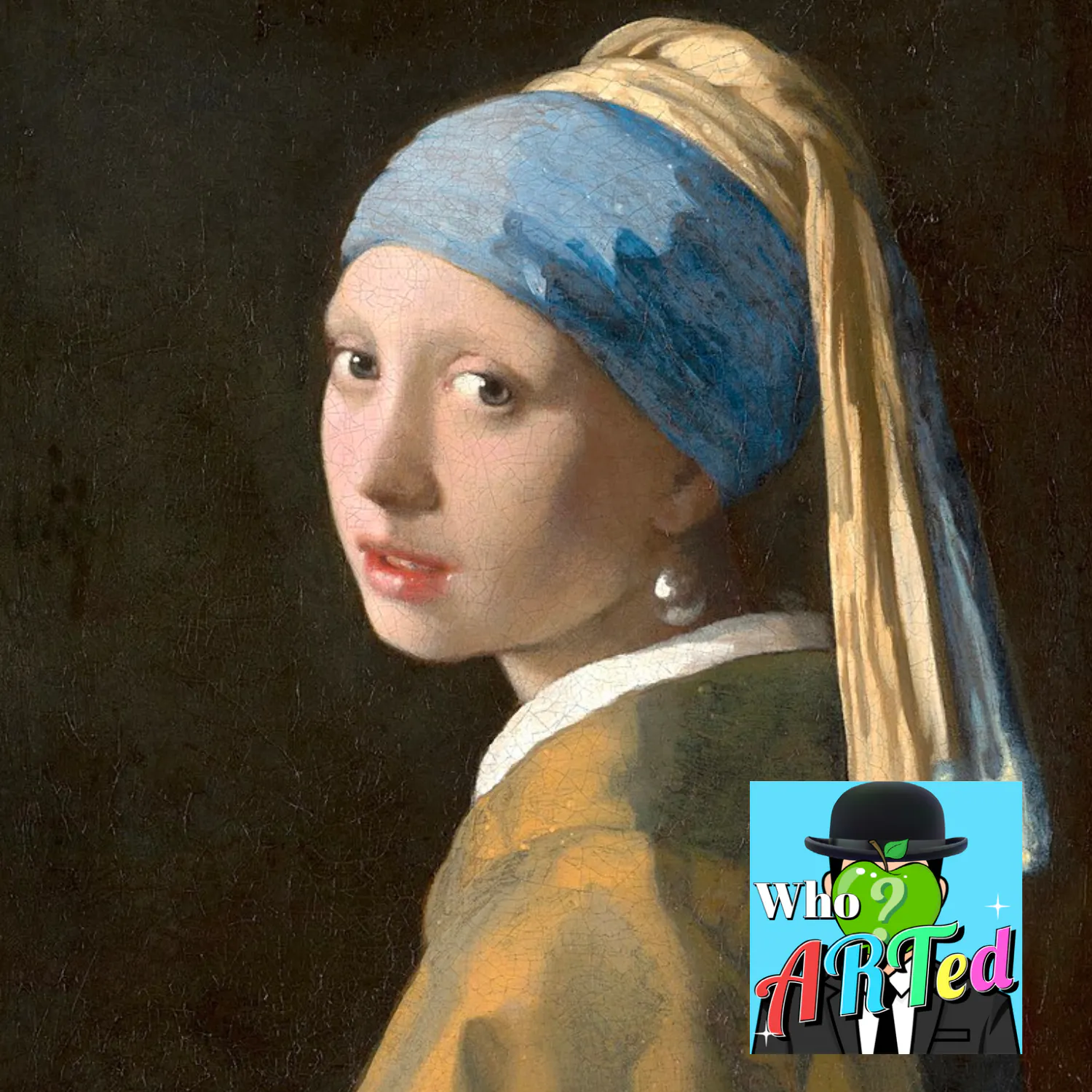
Johannes Vermeer
Johannes Vermeer is best known today for painting The Girl with the Pearl Earring. Part of the allure of this painting is the pose, she seems a little caught off guard looking over her shoulder at the viewer. Or maybe she is turning away from the viewer. The pose has a little bit of ambiguity and the painting is rendered so beautifully that many refer to The Girl with the Pearl Earring as the Mona Lisa of the North. Related episodes: Johannes Vermeer | The Concert The Unbelievable Story of Han van Meegeren Arts Madness Tournament links: Check out the Brackets Tell me which artist you think will win this year's tournament Give a shoutout to your favorite teacher (the teacher who gets the most shoutouts on this form by Feb 27 will get a $50 Amazon gift card) Who ARTed is an Airwave Media Podcast. Connect with me: Website | Twitter | Instagram | Tiktok Support the show: Merch from TeePublic | Make a Donation As always you can find images of the work being discussed at www.WhoARTedPodcast.com and of course, please leave a rating or review on your favorite podcast app. You might hear it read out on the show. Learn more about your ad choices. Visit megaphone.fm/adchoices

Rembrandt
Recently a team completed a 717 gigapixel image of Rembrandt's painting, The Night Watch. Learn a little bit more about this famous piece that has been called by the wrong name for hundreds of years as it actually took place in the daytime. Check out the ultra high resolution photo Arts Madness Tournament links: Check out the Brackets Tell me which artist you think will win this year's tournament Give a shoutout to your favorite teacher (the teacher who gets the most shoutouts on this form by Feb 27 will get a $50 Amazon gift card) Who ARTed is an Airwave Media Podcast. Connect with me: Website | Twitter | Instagram | Tiktok Support the show: Merch from TeePublic | Make a Donation As always you can find images of the work being discussed at www.WhoARTedPodcast.com and of course, please leave a rating or review on your favorite podcast app. You might hear it read out on the show. Learn more about your ad choices. Visit megaphone.fm/adchoices

Chuck Close
Chuck Close said when a problem seems overwhelming, you should break it down into smaller pieces. To tackle the photorealistic faces, Chuck Close would use a grid. He broke the image down into sections allowing him to focus on the lines, shapes, and proportions one little bit at a time. In his early works, he would erase the grid as he painted, but as he matured, he chose to lean into the grid. He not only left it visible, but in many works he emphasized it making the paintings appear almost pixilated as the viewers see every square he plotted. As a child, he wanted to be a magician, but couldn’t resist revealing how the tricks were done. For him, it was more impressive when you see the work that produces the magic, and I gotta say I agree. Arts Madness Tournament links: Check out the Brackets Tell me which artist you think will win this year's tournament Give a shoutout to your favorite teacher (the teacher who gets the most shoutouts on this form by Feb 27 will get a $50 Amazon gift card) Who ARTed is an Airwave Media Podcast. Connect with me: Website | Twitter | Instagram | Tiktok Support the show: Merch from TeePublic | Make a Donation As always you can find images of the work being discussed at www.WhoARTedPodcast.com and of course, please leave a rating or review on your favorite podcast app. You might hear it read out on the show. Learn more about your ad choices. Visit megaphone.fm/adchoices

Faith Ringgold
Faith Ringgold is a contemporary American artist. She studied art education and started as a painter, but she is best known for her story quilts. She has written and illustrated seventeen children's books. The most famous was Tar Beach which started as a quilt but later became an award-winning, best-selling book. In this episode I discussed her story quilt Dancing at the Louvre, which is one of the 250 artworks required for AP Art History courses across the US. For listeners prepping for the AP Art History test, check out my Spotify playlist (AP Art History Cram Session) with episodes about artworks and artists from that list. Related Episodes: Faith Ringgold | Tar Beach (full episode) Arts Madness Tournament links: Check out the Brackets Tell me which artist you think will win this year's tournament Give a shoutout to your favorite teacher (the teacher who gets the most shoutouts on this form by Feb 27 will get a $50 Amazon gift card) Who ARTed is an Airwave Media Podcast. Connect with me: Website | Twitter | Instagram | Tiktok Support the show: Merch from TeePublic | Make a Donation As always you can find images of the work being discussed at www.WhoARTedPodcast.com and of course, please leave a rating or review on your favorite podcast app. You might hear it read out on the show. Learn more about your ad choices. Visit megaphone.fm/adchoices

Burton Morris
Burton Morris is a contemporary Pop Art painter whose work was featured in the sitcom Friends. His work got a starring role after a camera operator on the show wore a Burton Morris t-shirt on set. David Schwimmer, one of the lead actors in the show saw the shirt and borrowed it to wear in a scene. After that, Morris got in touch with the show's creator and his paintings were featured in the background on the wall of Central Perk every season. Related episodes: Burton Morris (full episode) Art Smart: Pop Art Arts Madness Tournament links: Check out the Brackets Tell me which artist you think will win this year's tournament Give a shoutout to your favorite teacher (the teacher who gets the most shoutouts on this form by Feb 27 will get a $50 Amazon gift card) Who ARTed is an Airwave Media Podcast. Connect with me: Website | Twitter | Instagram | Tiktok Support the show: Merch from TeePublic | Make a Donation As always you can find images of the work being discussed at www.WhoARTedPodcast.com and of course, please leave a rating or review on your favorite podcast app. You might hear it read out on the show. Learn more about your ad choices. Visit megaphone.fm/adchoices

Vincent van Gogh | The Starry Night
Vincent van Gogh saw little commercial success during his lifetime, but he loved art and he worked to forge relationships with other artists he could learn from. The Starry Night came about late in his short career after Vincent van Gogh was hospitalized. He painted the view from his window, but rather than painting things exactly as he saw them, he painted a sort of composite landscape of views from different nights and even different locations. He moved the cypress tree to the foreground and added a little town nestled in the mountains despite the town not being visible from his window. This marked a major shift in painting away from observation of the external world to artists creating work as a show of their internal thoughts and feelings. Related episodes: Vincent van Gogh (part 1) | The Potatoe Eaters Vincent van Gogh (part 2) | Starry Night Vincent van Gogh | Sunflowers Loving Vincent - a Film Made of Paintings Did Vincent van Gogh Really Only Sell One Painting? Art Smart: Impressionism & Post Impressionism I mentioned the LuxeSci Podcast in this episode. Dr. Lex joined me in my Cezanne episode. The current season of LuxeSci is getting into the weeds about art materials, so if you want to understand how we see color, or how different pigments are made, check out her show. Arts Madness Tournament links: Check out the Brackets Tell me which artist you think will win this year's tournament Give a shoutout to your favorite teacher (the teacher who gets the most shoutouts on this form by Feb 27 will get a $50 Amazon gift card) Who ARTed is an Airwave Media Podcast. Connect with me: Website | Twitter | Instagram | Tiktok Support the show: Merch from TeePublic | Make a Donation As always you can find images of the work being discussed at www.WhoARTedPodcast.com and of course, please leave a rating or review on your favorite podcast app. You might hear it read out on the show. Learn more about your ad choices. Visit megaphone.fm/adchoices

Alphonse Mucha
In December 1894, Alphonse Mucha just happened to be in the print shop checking some proofs for a friend, when in walked an actress, Sarah Bernhardt in need of posters for her upcoming play. All of the regular artists she worked with were off for the holidays leaving Mucha as her only option. It was a tremendous stroke of luck for both of them as Mucha created a stunning poster that not only flattered the actress, it caught the attention of collectors all around Paris. People were cutting the posters off of displays and bribing the poster hangers so they could get copies, and the Mucha style laid the foundation for Art Nouveau. Related episodes: Alphonse Mucha | Gismonda (full episode) Art Smart: Art Nouveau Arts Madness Tournament links: Check out the Brackets Tell me which artist you think will win this year's tournament Give a shoutout to your favorite teacher (the teacher who gets the most shoutouts on this form by Feb 27 will get a $50 Amazon gift card) Who ARTed is an Airwave Media Podcast. Connect with me: Website | Twitter | Instagram | Tiktok Support the show: Merch from TeePublic | Make a Donation As always you can find images of the work being discussed at www.WhoARTedPodcast.com and of course, please leave a rating or review on your favorite podcast app. You might hear it read out on the show. Learn more about your ad choices. Visit megaphone.fm/adchoices

Marcel Duchamp
Marcel Duchamp liked to portray himself as a rebel and an outsider courting controversy. While he was bold and pushing boundaries, he also came from a family of artists and he served as an advisor to the likes of Peggy Guggenheim and MoMA. Two of Duchamp's best known pieces were Nude Descending a Staircase 2 and Fountain. Arts Madness Tournament links: Check out the Brackets Tell me which artist you think will win this year's tournament Give a shoutout to your favorite teacher (the teacher who gets the most shoutouts on this form by Feb 27 will get a $50 Amazon gift card) Who ARTed is an Airwave Media Podcast. Connect with me: Website | Twitter | Instagram | Tiktok Support the show: Merch from TeePublic | Make a Donation As always you can find images of the work being discussed at www.WhoARTedPodcast.com and of course, please leave a rating or review on your favorite podcast app. You might hear it read out on the show. Learn more about your ad choices. Visit megaphone.fm/adchoices

Jan van Eyck
Jan van Eyck was a remarkable painter. He worked in oils during the Renaissance, and created stunning photorealistic portraits centuries before photography was developmed. In the Arnolfini portrait, he captures not only the subjects standing before him, but also a reflection of the room in a convex mirror showing the full scene and accurately rendering the distortions caused by the curved glass. Arts Madness Tournament links: Check out the Brackets Tell me which artist you think will win this year's tournament Give a shoutout to your favorite teacher (the teacher who gets the most shoutouts on this form by Feb 27 will get a $50 Amazon gift card) Who ARTed is an Airwave Media Podcast. Connect with me: Website | Twitter | Instagram | Tiktok Support the show: Merch from TeePublic | Make a Donation As always you can find images of the work being discussed at www.WhoARTedPodcast.com and of course, please leave a rating or review on your favorite podcast app. You might hear it read out on the show. Learn more about your ad choices. Visit megaphone.fm/adchoices

Louis Sullivan
In 1896, Louis Sullivan wrote about skyscrapers and architectural design in “The Tall Building Artistically Considered” This was the origin of the famous phrase, “form follows function.” What Sullivan actually said was “form must ever follow function” but regardless of phrasing, the meaning remains the same - architects should first consider how a building will be used then base the design on that. One of his most famous designs was for the Carson Pirie Scott building downtown Chicago. Today the building is actually called the Sullivan Center in his honor, but Sullivan was such a difficult man to deal with, he was actually passed over for the third phase of it's construction. Essentially Louis Sullivan couldn't get the job of designing The Sullivan Center. Other episodes you may find interesting: Frank Lloyd Wright | Falling Water Barbara Kruger | Don't Be a Jerk Art Smart | Art Nouveau Arts Madness Tournament links: Check out the Brackets Tell me which artist you think will win this year's tournament Give a shoutout to your favorite teacher (the teacher who gets the most shoutouts on this form by Feb 27 will get a $50 Amazon gift card) Who ARTed is an Airwave Media Podcast. Connect with me: Website | Twitter | Instagram | Tiktok Support the show: Merch from TeePublic | Make a Donation As always you can find images of the work being discussed at www.WhoARTedPodcast.com and of course, please leave a rating or review on your favorite podcast app. You might hear it read out on the show. Learn more about your ad choices. Visit megaphone.fm/adchoices
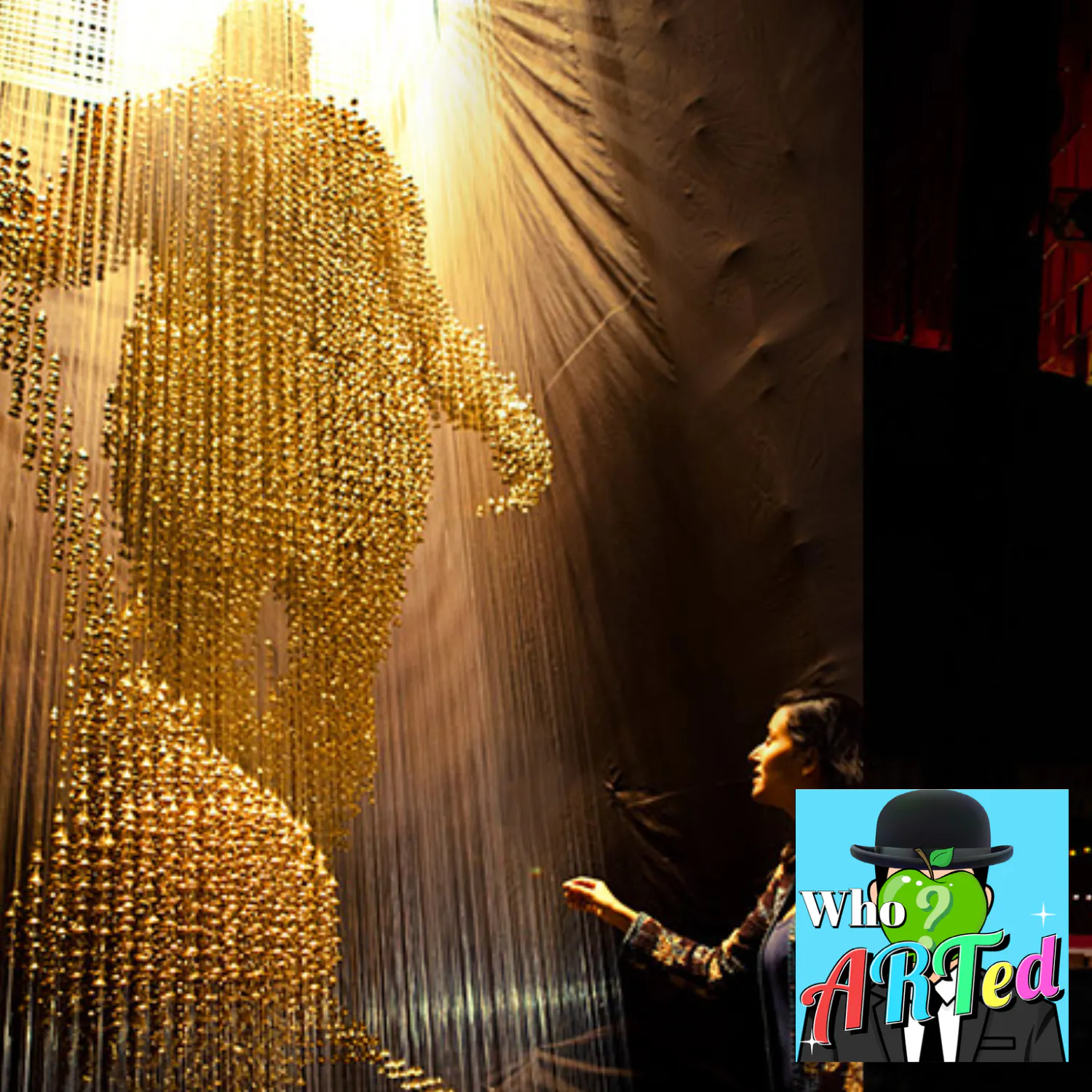
Charuvi Agrawal
Charuvi Agrawal made a name for herself with a stunning computer-animated film about Hanuman. In 2014, she grabbed more headlines as she created a record-setting 25-foot tall monumental work comprised of 26,000 bells. Arts Madness Tournament links: Check out the Brackets Tell me which artist you think will win this year's tournament Give a shoutout to your favorite teacher (the teacher who gets the most shoutouts on this form by Feb 27 will get a $50 Amazon gift card) Who ARTed is an Airwave Media Podcast. Connect with me: Website | Twitter | Instagram | Tiktok Support the show: Merch from TeePublic | Make a Donation As always you can find images of the work being discussed at www.WhoARTedPodcast.com and of course, please leave a rating or review on your favorite podcast app. You might hear it read out on the show. Learn more about your ad choices. Visit megaphone.fm/adchoices