
Who Arted: Weekly Art History for All Ages
785 episodes — Page 16 of 16

S2 Ep 37Fun Fact Friday - The Erased Masterpiece
For this week‘s fun fact friday, learn about how Robert Rauschenberg created a famous work of art simply by erasing another artist‘s drawing. The piece is called ”Erased de Kooning Drawing” from 1953. This work is often misunderstood as an act of aggression or disrespect as Rauschenberg figuratively and quite literally erases Willem de Kooning‘s work, but actually this work was meant to be a celebration of de Kooning. Rauschenberg knew that the piece would only work if he were erasing a significant work by a great artist. De Kooning reluctantly agreed and gave a drawing for the younger artist to erase. Over the course of 2 months, Rauschenberg meticulously wore through numerous erasers until all that was left were a few smudges on an otherwise blank paper. Ultimately, we will never know what was originally on that paper, but de Kooning indicated it was a high quality piece and something he would miss. He felt that was important to the project. Now viewers are left to imagine what great drawing was once on that paper. The erased drawing creates an an absence or a loss that is somehow more empty than a new white page and in doing so it has elevated de Kooning‘s drawing to a space of legend freed from the page to now live inside the viewer‘s imagination. Learn more about your ad choices. Visit megaphone.fm/adchoices
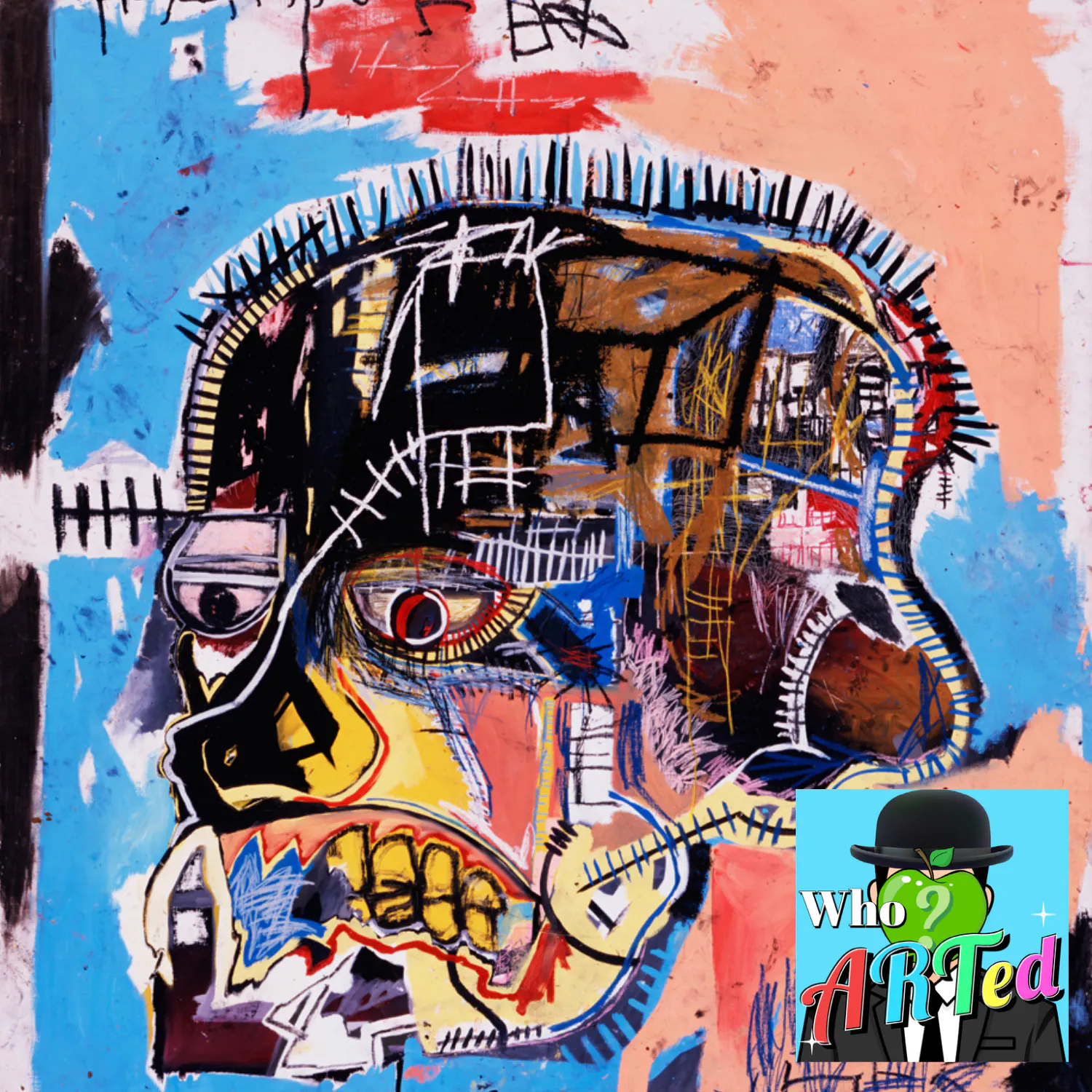
S2 Ep 36Jean-Michel Basquiat
Jean-Michel Basquiat became a star of the art world in the 1980s. He grew up in New York and started making a name for himself through his collaborative graffiti project SAMO. In 1980, SAMO was dead and a young Basquiat was poised to take the art world by storm. His biography is the kind of story one would find hard to believe if laid out as the plot to a book or movie. He showed tremendous promise from an early age. He learned to read and write by the age of four. His mother nurtured his talents taking him to museums, providing him books to read to feed his appetite for more learning. Unfortunately, by his teenage years, while he was fluent in 3 languages, he was also struggling with his mother‘s mental illness and the need for her to be in care away from the family. He was a high school dropout and homeless in the late 1970s, but in the 1980s, he was painting in expensive Armani suits and throwing hundred dollar bills out of his limo to panhandlers on the street. In 2017, one of Basquiat‘s paintings set a record for the most expensive painting by an American artist when it sold for $110.5 million. In this episode of Who ARTed, we discuss the life and work of Jean-Michel Basquiat. As always you can find images of the work and other resources on the website www.WhoArtEdPodcast.com and if you like the podcast, please help spread the word, leave a review and all that. Learn more about your ad choices. Visit megaphone.fm/adchoices

S2 Ep 35Fun Fact Friday -It Really Seems Like Leonardo da Vinci Had ADHD
To be accurate, this one is a little more of a ”Fun Speculation Friday” as we will never know for a fact whether he had ADHD. He was not diagnosed in his lifetime and no credible diagnostician would pretend that they definitively prove someone had a disorder 500 years after they died. Still to consider him as an artist with a disability makes Leonardo da Vinci even more inspiring. Leonardo da Vinci is one of the most talented artist the world has ever known. He is frequently held up as the ideal ”Renaissance man” because of his notebooks full of scientific study, observations and plans for different inventions. The thing is, he never got around to editing, organizing or publishing those notes in order to help others learn and build off of his study. He never got around to building his machines. The majority of his work went unfinished. While many great artists from history created hundreds or thousands of works, Leonardo only appears to have completed a few dozen and he was notorious for taking absurdly long to do so. It took him over a decade to complete the Mona Lisa. He spent 3 years painting The Last Supper and he only finished that work after his patron threatened to cut off his funding. That distractibility and constant thirst for knowledge on a wide range of topics likely made him frustrating to work with, but it is also what made him brilliant. Learn more about your ad choices. Visit megaphone.fm/adchoices

S2 Ep 34Pablo Picasso
Pablo Picasso is arguable one of the most talented and influential artists of the 20th century. He is certainly one of the most famous and successful. The name Picasso has become synonymous with artistic greatness, but the reality is not always quite as great as the myth. For all of his undeniable skill and talent, Pablo Picasso was a deeply flawed human being. His legacy is tarnished to some extent by his terrible treatment of women and his own family. I was hesitant to do an episode on Picasso for a long time because I generally want this podcast to have a positive tone and focus primarily on the better aspects of art. I tried to cover a bit of his artistic legacy and brilliance while acknowledging but not getting overly bogged down in the depressing details of his personal shortcomings. For this episode we focused on Guernica from 1937. It was Picasso‘s massive painting created as a response to the horrific violence of the bombing of the town of Guernica during the Spanish Civil War. The German Nazis and Italian fascists were involved in the Spanish Civil War and Picasso painted Guernica at the request of Spanish Nationalists. He exhibited the painting at the Paris International Exhibition at the Spanish Pavilion. Nazi Germany had a huge pavilion at the same exhibition which had to make things a little awkward. Guernica was exhibited in other venues throughout the world to raise money for Spanish war relief and to convey his antiwar/anti violence political stance. As always, you can find the image linked within the show notes or look on the website www.WhoArtEdPodcast.com where fellow art teachers can also find numerous resources that can be helpful in the classroom. Learn more about your ad choices. Visit megaphone.fm/adchoices

S2 Ep 33Fun Fact Friday - The World‘s First Photobomb
The history of photography has some really interesting and surprising facts. For example, the camera is about 2000 years older than photography. The earliest known camera obscuras were documented as far back as the 4th century BCE in China, while photography didn‘t really come about until the 18th Century. In the early 19th century, Louis Daguerre was working hard to improve the photographic method. His innovations helping to develop a latent image drastically cut down on exposure times making photography much more practical. Of course while I say it drastically cut down exposure times, it cut the times down from hours to minutes, but it was still too long to be practical for most people to be captured in a photo. The first photograph of people actually happened by accident as one man‘s decision to get his shoes shined in 1838 led to his likeness being captured in an image that would make history. For images and more resources, check out www.WhoArtEdPodcast.com Learn more about your ad choices. Visit megaphone.fm/adchoices

S2 Ep 32Wassily Kandinsky
Wassily Kandinsky was a Russian artist and art theorist. He is known as one of the early pioneers of abstract art. Learn a bit about Kandinsky‘s background, his personal journey from a teacher of Law and Economics to one of the most influential artists of the 20th century. Wassily Kandinsky is said to have had a condition known as synesthesia in which sound and color were linked sensory experiences. As a child he described hearing the paint his as he mixed colors. As an adult, he spoke of visual arts in musical terms. We discussed his unique vision as expressed in the piece Yellow Red Blue, 1925. Who ARTed is an art history podcast for all ages. Kyle Wood has been teaching elementary art for well over a decade helping to break things down and explain art history in a way that listeners of any age can understand and appreciate. For more information and resources of particular interest to fellow art teachers, check out the website www.WhoArtEdPodcast.com Learn more about your ad choices. Visit megaphone.fm/adchoices

S2 Ep 31Fun Fact Friday - The Primary Colors: Way More Complicated Than You Thought
For this week‘s Fun Fact Friday, I wanted to share a little bit about the Primary Colors. In Art class, we are traditionally taught that all the colors we see are a combination of just red, yellow and blue. This is true to some extent, but teaching that there are just three primary colors and that you can make any color you want using red, yellow and blue gives people an incomplete picture. The fact is there are actually different sets of primary colors depending on what colored medium one is working with. Also, if we are being technically accurate, whether using additive or subtractive color the optimal primaries are not red, yellow and blue. If you enjoy this podcast, please like subscribe and leave a review on Apple Podcasts or wherever you are listening. Learn more about your ad choices. Visit megaphone.fm/adchoices

S2 Ep 30Phil Hansen
For images and resources, go to www.WhoArtEdPodcast.com For this week's episode I spoke with Kelly Beach about the contemporary American artist, Phil Hansen. The specific work being discussed was Hansen's piece Cobain, from his Goodbye Art 2 series. Hansen's work focuses largely on the creative process and overcoming obstacles. Hansen himself struggled with a tremor that hindered his artistic career until he learned to "embrace the shake" and change his methods, change his mindset and opened up a whole new world of possibilities. If you enjoy the podcast, please like, subscribe, leave a review and help spread the word. Learn more about your ad choices. Visit megaphone.fm/adchoices

S2 Ep 29Fun Fact Friday - Pablo Picasso: Art Thief
For more information and resources, go to www.WhoArtEdPodcast.com Pablo Picasso is credited with numerous quotes including, "Good artists copy. Great artists steal." Interestingly, he may have stolen that idea from T.S. Elliot. It is not entirely clear whether Picasso ever did actually say the oft quoted line, but Elliot is definitely documented to have said "Immature poets imitate; mature poets steal; bad poets deface what they take, and good poets make it into something better, or at least something different." The quote is not the only instance of Picasso's questionable practices with regard to other people's property whether physical or intellectual. Diego Rivera accused Picasso of plagiarizing his work. The police even suspected Picasso of stealing The Mona Lisa in 1911, and while he did not take Leonardo da Vinci's masterpiece, Picasso was in possession of other art stolen from the Louvre. If you enjoy the Who ARTed Podcast, please like, subscribe, leave a review and help spread the word of this thoroughly adequate podcast. Learn more about your ad choices. Visit megaphone.fm/adchoices

S2 Ep 28Barbara Kruger
For images and more to explore, go to www.WhoArtEdPodcast.com For this episode, we talked about the Barabara Kruger. She is known for her collages using text often on top of found images in a way that confronts the viewer raising questions about the conduct of our culture. Her work is often political without being prescriptive. She raises questions and poses problems for the viewer to think about, but often leaves it to the viewer to make up his or her mind about the issue. In this episode, we talked about the popular piece, Don't be a Jerk, which was first made early in her career, but she was commissioned by MoMA to make another version of it in 1996, and in 2017 it was printed on skateboard decks. Learn more about your ad choices. Visit megaphone.fm/adchoices

S2 Ep 27Spooktacular Bonus - The Art of the Lego Hidden Side
bonusAs always you can find more information and resources on my website WhoARTedPodcast.com I thought it would be fun to do a bonus episode this Halloween focusing on the artistry behind the spooky, fun Lego Hidden Side collection. For those who are unfamiliar, the Hidden Side is Lego's augmented reality theme with delightful transformational elements. The sets focus on the paranormal and there are physical manifestations of hauntings in the real world play with the sets as well as a free app allowing players to can the set with their phone and hunt for ghosts or be a ghost haunting the town. It is a delightful combination of multiple artistic disciplines as sculptors, graphic designers, writers, animators all worked to create a masterful collection that engages the audience on multiple levels in the real and virtual worlds. Learn more about your ad choices. Visit megaphone.fm/adchoices

S2 Ep 26Fun Fact Friday - Killer Wallpaper
For more information and resources check my website www.WhoARTedPodcast.com This week's fun fact Friday episode focuses on Scheele's green which was a popular green pigment in the victorian era. Unfortunately, while the green was beautiful, it was also deadly because Scheele's green was derived from arsenic. Learn more about your ad choices. Visit megaphone.fm/adchoices

S2 Ep 25Alexander Calder
As always you can find a picture of the work and more at www.WhoArtEdPodcast.com For this week's episode we learn a bit about Alexander Calder, the mechanical engineer who became a pioneer of kinetic sculpture. The specific work we looked at in this episode is Streetcar from 1951. It is one of many mobiles Calder created over his career. While he did have other amazing work including his wire sculptures that are just masterfully created drawings in air, as well as toys, jewelry, stabile sculptures, set designs and more, he is best known for his mobiles so we used a piece representative of his most famous innovation when discussing the artist and his legacy. Learn more about your ad choices. Visit megaphone.fm/adchoices

Ep 24Fun Fact Friday - The Lego House
As always, you can find pictures and more information at www.WhoArtEdPodcast.com For this week's fun fact friday, you can learn about everyone's first and favorite modular building material Lego, and how in 2009 on man (with the help of corporate sponsors and a few thousand volunteers) built a livable house out of Lego complete with working plumbing. Learn more about your ad choices. Visit megaphone.fm/adchoices

S2 Ep 21Yayoi Kusama
To see the work discussed in this episode, visit www.WhoArtEdPodcast.com Yayoi Kusama is among the most popular contemporary artists. In addition to her beautiful paintings, Kusama makes installations, sculptures, poetry, fashion. She has done a bit of everything in the art world and audiences have loved her work for decades. Her infinity room installations are particularly popular as the mirrored rooms create a sensation of a space that extends forever. For this episode, the specific work discussed was her installation, Love is Calling. Learn more about your ad choices. Visit megaphone.fm/adchoices

Ep 23Fun Fact Friday - The Feud Between Stuart Semple and Anish Kapoor
For more information and resources you can visit www.WhoArtEdPodcast.com In this minisode, we learn about some of the petty behavior of "sophisticated" artists. Anish Kapoor has the exclusive rights to use vantablack, the world's blackest black, for artistic purposes. Many in the art world found it infuriating that someone in a creative field would stop others from accessing materials thus stifling innovation. Some were more bothered by the uninspired ways that Kapoor squandered this material. Stuart Semple fought back in was that are in some ways petty, but always amusing. Learn a bit about their feud in this episode, and if you want to learn more about Semple, purchase some of his pigments, or participate in #Pinktober visit his website Culture Hustle. Learn more about your ad choices. Visit megaphone.fm/adchoices

S2 Ep 20Burton Morris
Go to www.WhoArtEdPodcast.com to see the work being discussed. This week we talked about the American Pop Art painter, Burton Morris. His work has gained quite a bit of notoriety as it was featured on the hit NBC sitcom Friends. In this episode we discuss a bit about his background, his style and we do a closer look at his nightstand portrait of Andy Warhol. Learn more about your ad choices. Visit megaphone.fm/adchoices

S2 Ep 22Fun Fact Friday - What‘s up with ROY G BIV?
This season I thought it would be nice to do a series of minisodes on Fridays. The Fun Fact Friday series will consist of short episodes with little anecdotes about art history and interesting connections to science. This week's Fun Fact is that the ROY G BIV model of a rainbow is somewhat arbitrary. The only reason people slip indigo between blue and violet is because Sir Isaac Newton wanted to have seven colors in order to match the musical scale. As always you can find more information and resources at www.whoartedpodcast.com Learn more about your ad choices. Visit megaphone.fm/adchoices

S2 Ep 19Marcel Duchamp
For pictures of the works being discussed, go to www.WhoArtEdPodcast.com For Season 2, I decided to start by taking a deep dive into Fountain from 1917. Marcel Duchamp started his career as a painter, but his greatest legacy is the readymade which caused artists, critics and audiences to question what art is, what it could be and opened the door to all sorts of innovations for generations of artists who followed. Learn more about your ad choices. Visit megaphone.fm/adchoices

Ep 16Jen Stark
I met with my friend Jeff Arndt, the art teacher at Ranch View Elementary, and we decided to record a quick episode while we were setting up an art show at city hall. For this episode we discussed Jen Stark and her piece Inside Out from 2014. Learn more about your ad choices. Visit megaphone.fm/adchoices

S1 Ep 15OK Go
For this episode, I thought it would be fun to do something a little different. We looked at the work of OK Go, specifically their video for The One Moment. It serves as a fun and accessible piece to start to break down how an audience can make sense of performance art. You can see their video here: https://www.youtube.com/watch?v=QvW61K2s0tA Learn more about your ad choices. Visit megaphone.fm/adchoices

S1 Ep 14Bobbi Cyr
In this episode I spoke with Mrs. Pradel about Bobbi Cyr, a local artist known for her paintings and prints featuring hand lettering. Click here to see the specific piece we discussed in the episode. Learn more about your ad choices. Visit megaphone.fm/adchoices

S1 Ep 13Carl Larsson
Every episode explores a different artist/work first with a discussion of the context, then looking at one specific piece and finally we share our takeaways to further one's own artistic practice. In this episode we looked at the Swedish painter, Carl Larsson and his watercolor The Kitchen from 1898. Click here to view the work. Learn more about your ad choices. Visit megaphone.fm/adchoices
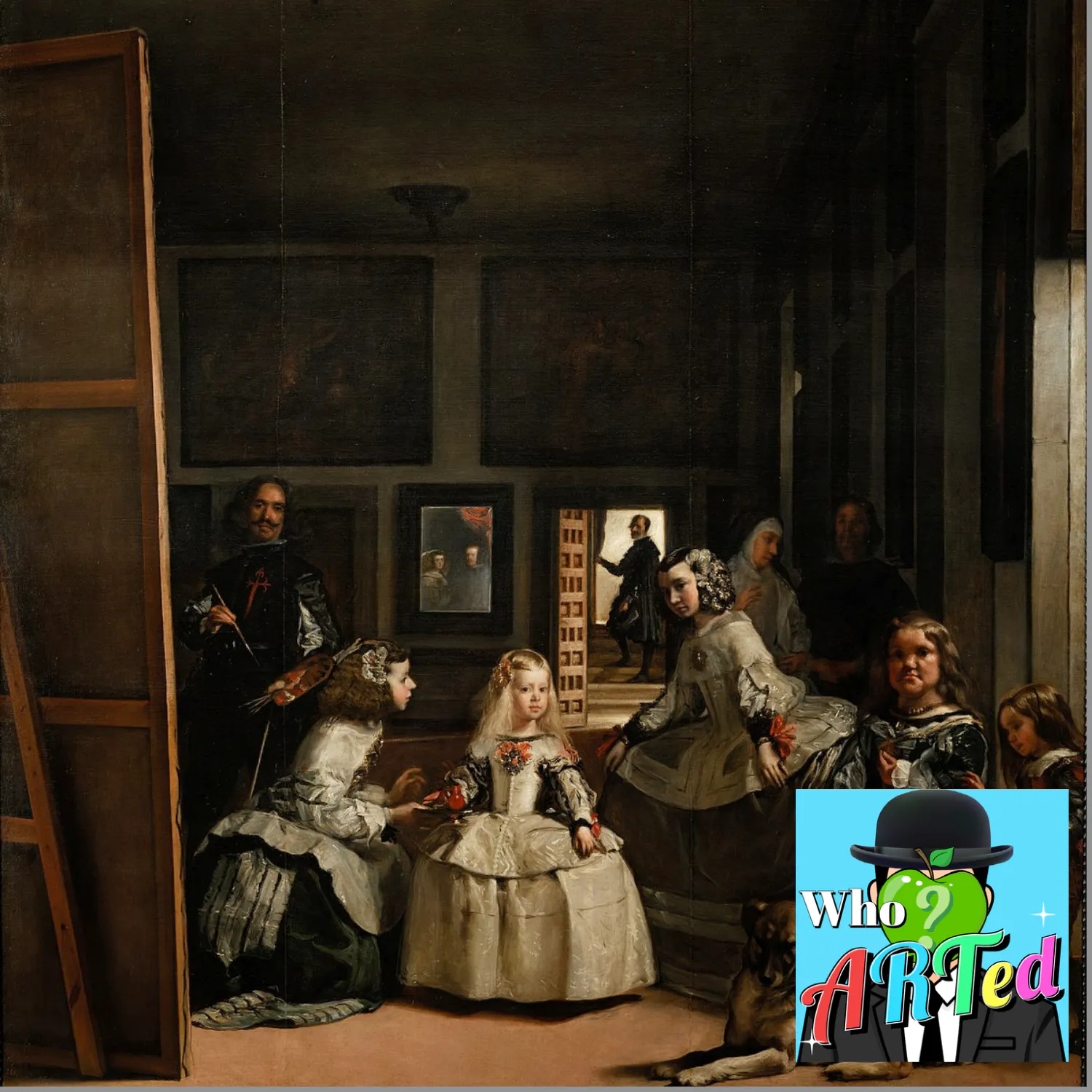
S1 Ep 12Diego Velazquez
In this episode, I talked with Rita Woker about Diego Velazquez and his masterpiece, Las Meninas. It was a great privilege to learn from Woker's insights as a person who has seen the work first hand in Spain and her ability to share not only what she knows of the piece from her research, but the experience of seeing such a monumental painting. Click here to see Las Meninas. Learn more about your ad choices. Visit megaphone.fm/adchoices

S1 Ep 11Mid Season Review - 10 Takeaways from the first 10 Episodes
This episode shares the 10 bits of advice I would pass on based on what I have learned over the course of the first ten episodes. Click here to view the collection of works discussed throughout the first half of the season and reviewed in this episode. I will be taking a short break and returning with ten more episodes to finish the season starting on Thursday February 6. Learn more about your ad choices. Visit megaphone.fm/adchoices

S1 Ep 10Frida Kahlo
For this episode, we discussed Frida Kahlo and her Self Portrait with Thorn Necklace and Hummingbird from 1940. In each episode, we have 3 segments: In Situ where we discuss the context and biographical information, In Gallery where we discuss one specific piece and finally In Studio where we share our takeaways and advice for artists to apply to their own work based on what we learned from this artist. Learn more about your ad choices. Visit megaphone.fm/adchoices

S1 Ep 9Leonardo da Vinci
For this episode, we discussed Leonardo da Vinci, the artist known to embody the Renaissance ideal of study and mastery of diverse topics. First we discussed the historical context and a little bit about his biography, then for our In Gallery segment, we discussed one of Leonardo's most famous masterpieces, The Mona Lisa. Learn more about your ad choices. Visit megaphone.fm/adchoices
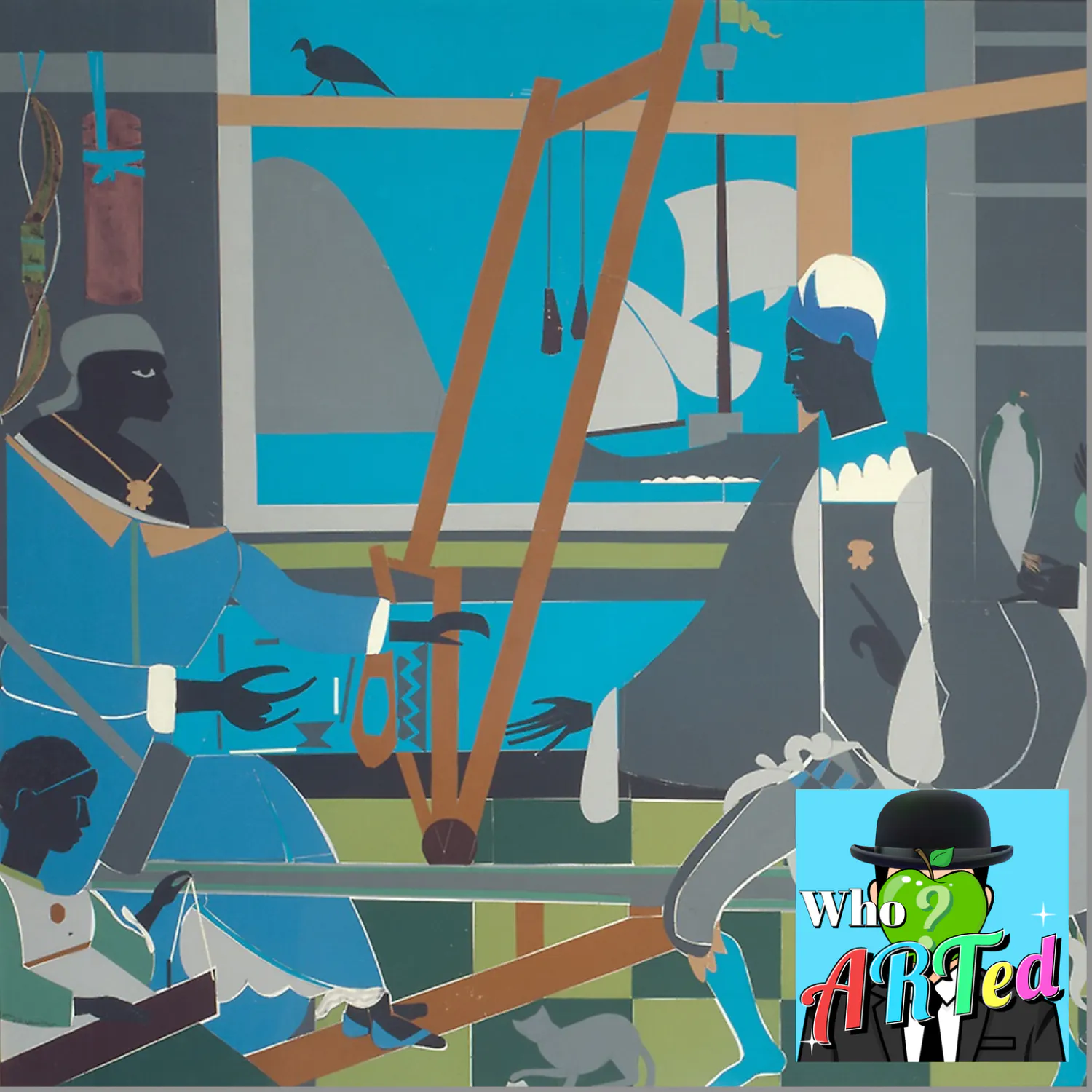
S1 Ep 8Romare Bearden
For this episode, we focused on Romare Bearden and his collage The Return of Odysseus (Homage to Pinturricchio and Benin). My guest was Hugh Boger, the principal of Scott Elementary School as we discussed the personal history of the artist as well as the social context, we discussed his collage and then share our takeaways. Learn more about your ad choices. Visit megaphone.fm/adchoices
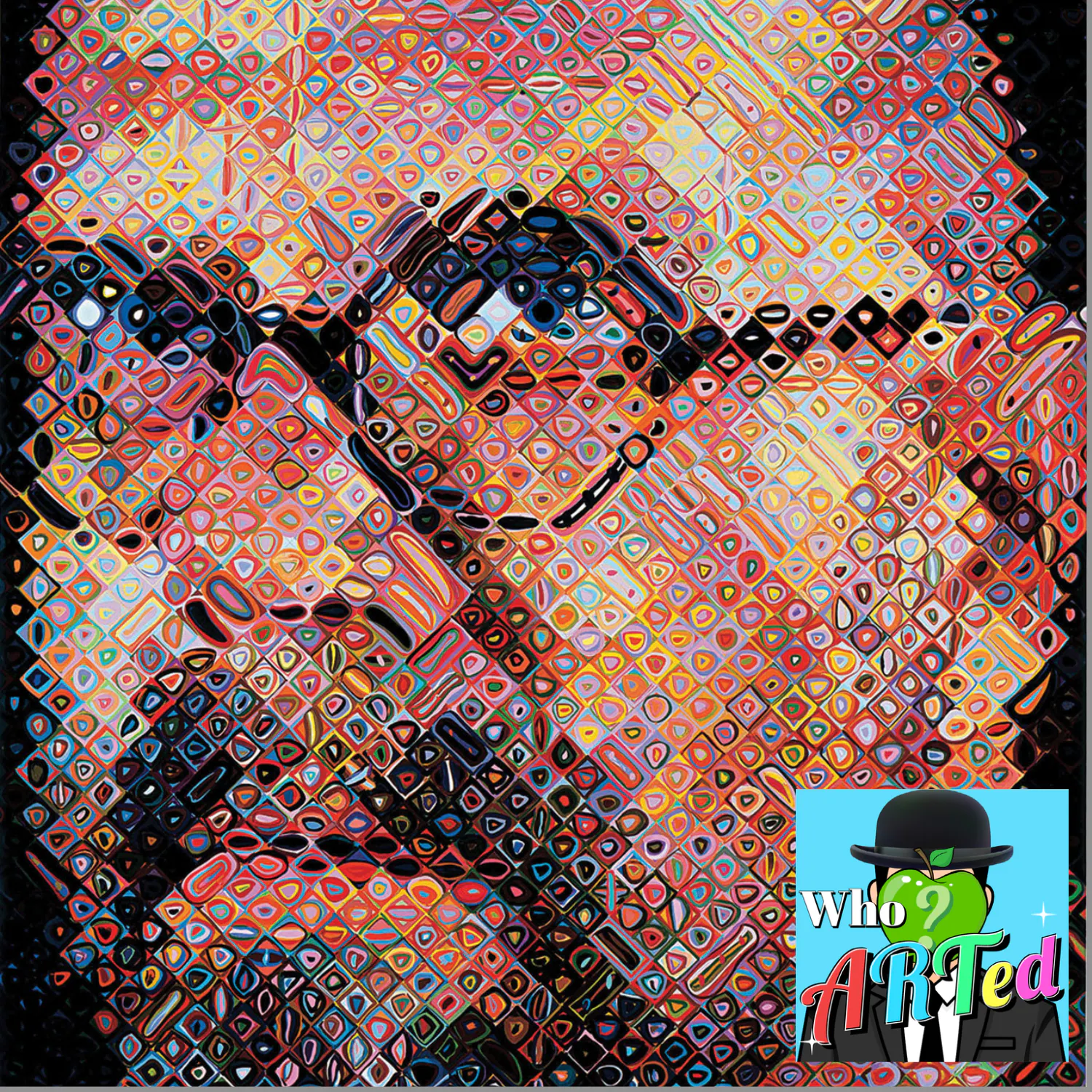
S1 Ep 7Chuck Close
For this episode, I sat down to talk with Chuck Hoff, an amazing art teacher who has mentored me and and collaborated on numerous projects. We talked about one of his favorite artists, Chuck Close, and share some of Close's background and the obstacles he has overcome to be one of the most prominent photorealist painters today. We discussed his set portrait from 2001. Learn more about your ad choices. Visit megaphone.fm/adchoices
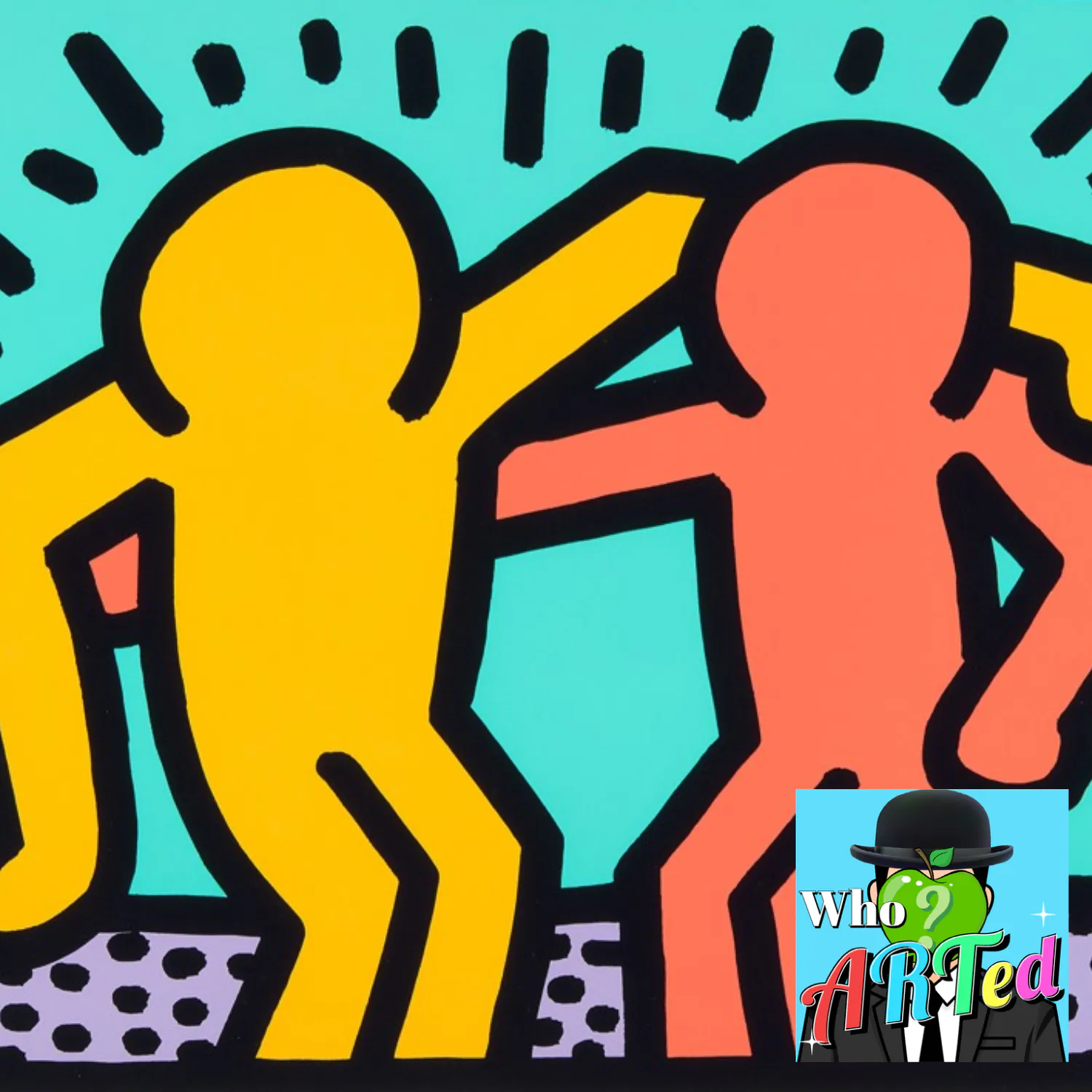
S1 Ep 6Keith Haring
For this episode we discussed the work and legacy of Keith Haring. He rose to prominence for his Pop Art in the 1980s, but even decades later his work still feels fresh and young because so many of his themes and his imagery are timeless and universal. The specific work discussed in this episode is Best Buddies Learn more about your ad choices. Visit megaphone.fm/adchoices

S1 Ep 5Alphonse Mucha
This episode focuses on Alphonse Mucha, the Art Nouveau painter and printmaker. We specifically are looking at the poster of the actress Sarah Bernhardt for her play Gismonda from 1894. That piece really elevated Mucha's career and captures the elements key to his influential style. Learn more about your ad choices. Visit megaphone.fm/adchoices
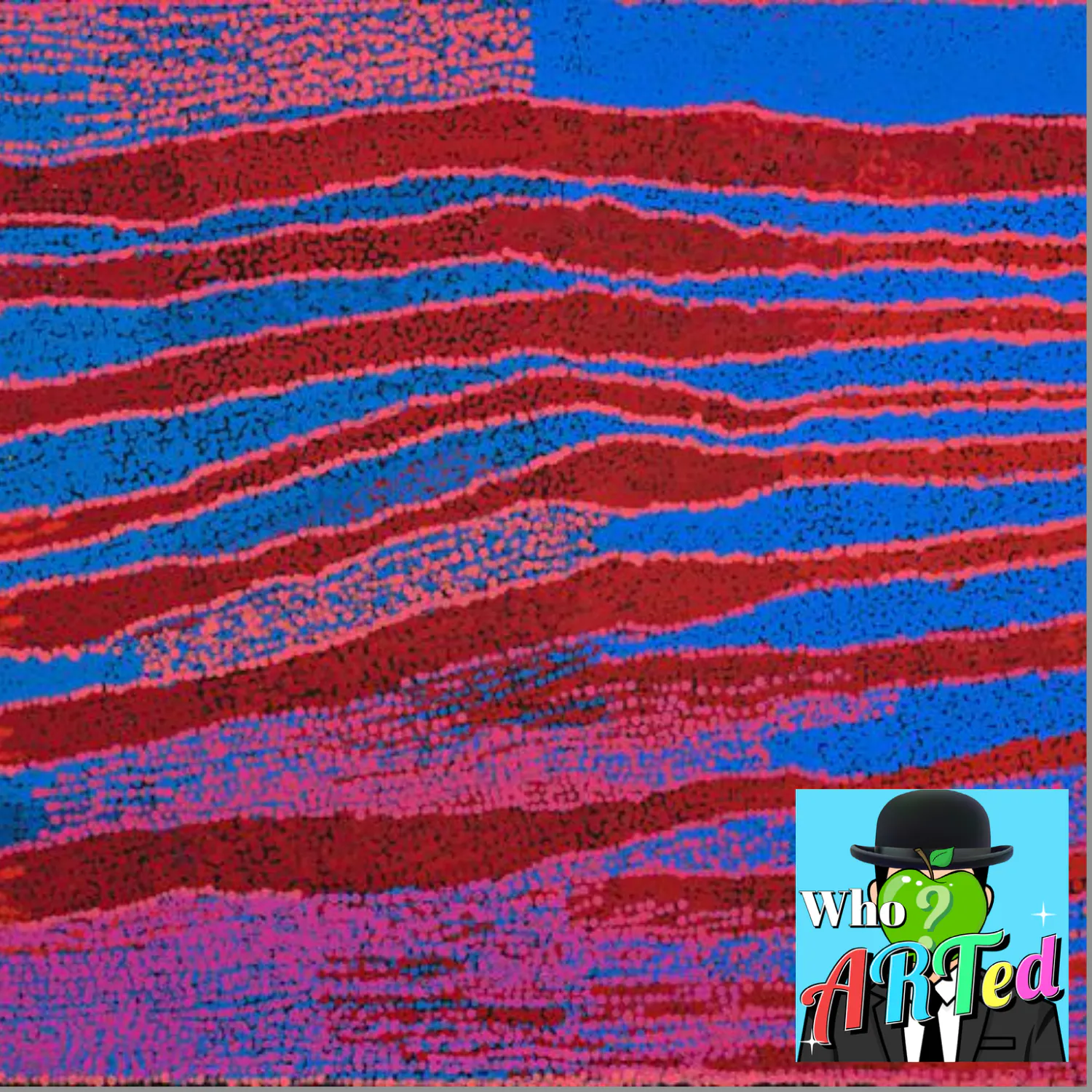
S1 Ep 4Yannima Pikarli Tommy Watson
Yannima Pikarli, more commonly known as Tommy Watson, was an indigenous Australian painter known for his wonderful sense of color. In this episode we discuss a bit about Tommy Watson's background, aboriginal art in general, and we discuss one of his paintings, Ngura Pulka from 2005 Learn more about your ad choices. Visit megaphone.fm/adchoices
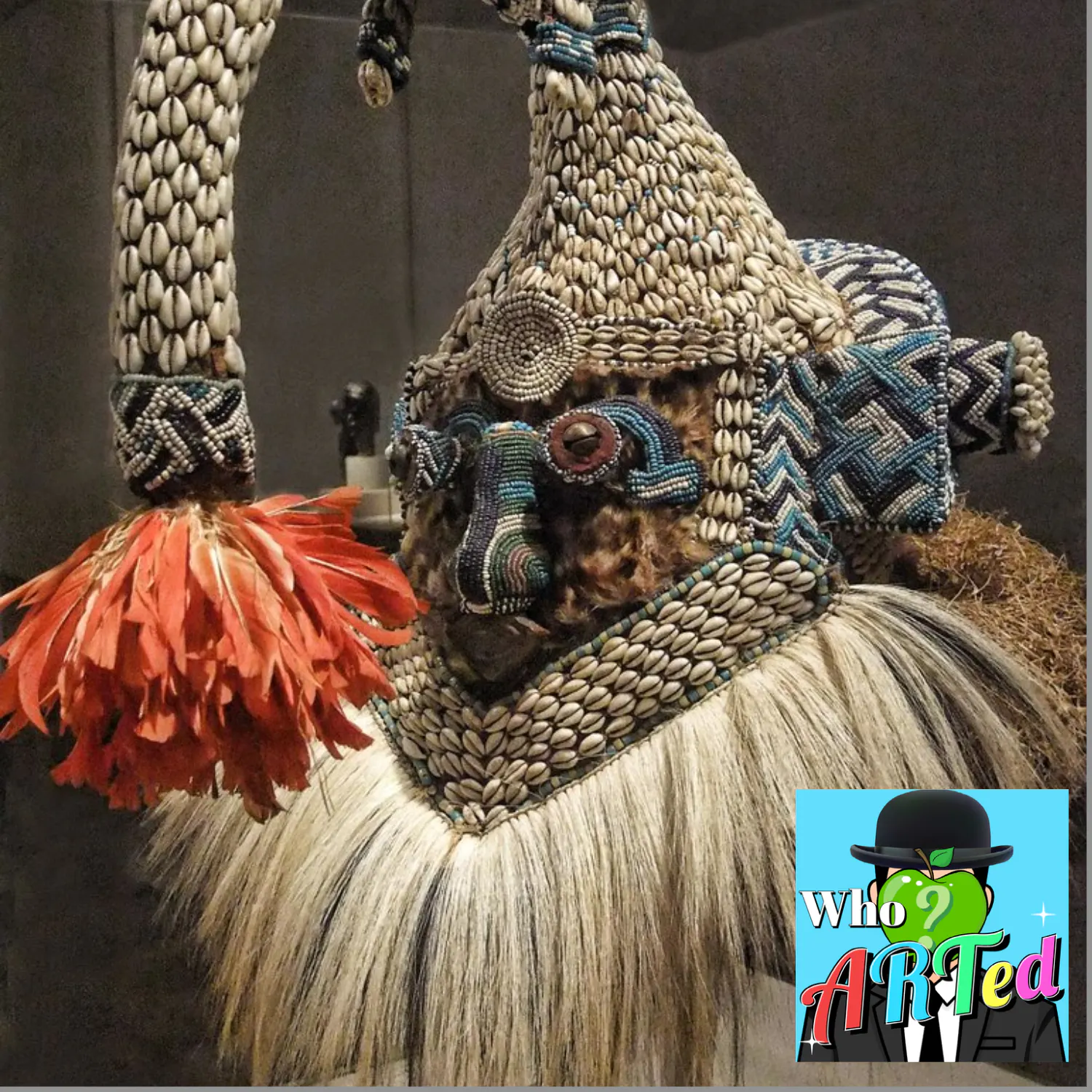
S1 Ep 3Mukenga (African Mask)
African masks have a rich tradition dating back thousands of years. For this episode, we sat down to talk a bit about African masks in general and contrasted the approaches of western and non-western artists then we did a bit of a deeper dive analyzing the Mukenga mask on display at The Art Institute of Chicago. Learn more about your ad choices. Visit megaphone.fm/adchoices
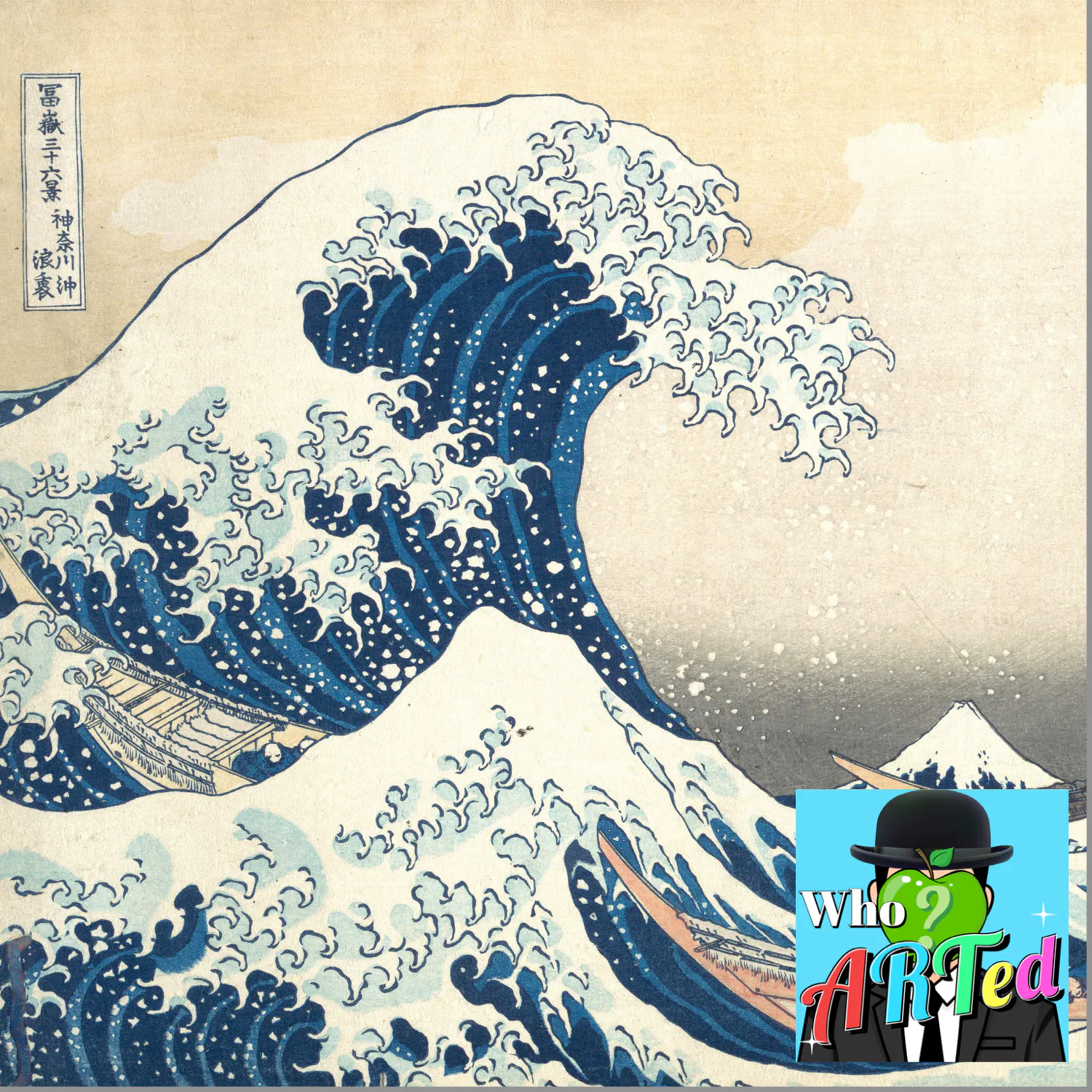
S1 Ep 2Katsushika Hokusai
In this episode we look at the iconic woodcut print, The Great Wave Off Kanagawa by Katsushika Hokusai. This piece was part of his series 36 Views of Mount Fuji and has been appreciated internationally for almost 200 years. Listen as we discuss a bit of the art history, analyze the piece and share our takeaways. Learn more about your ad choices. Visit megaphone.fm/adchoices
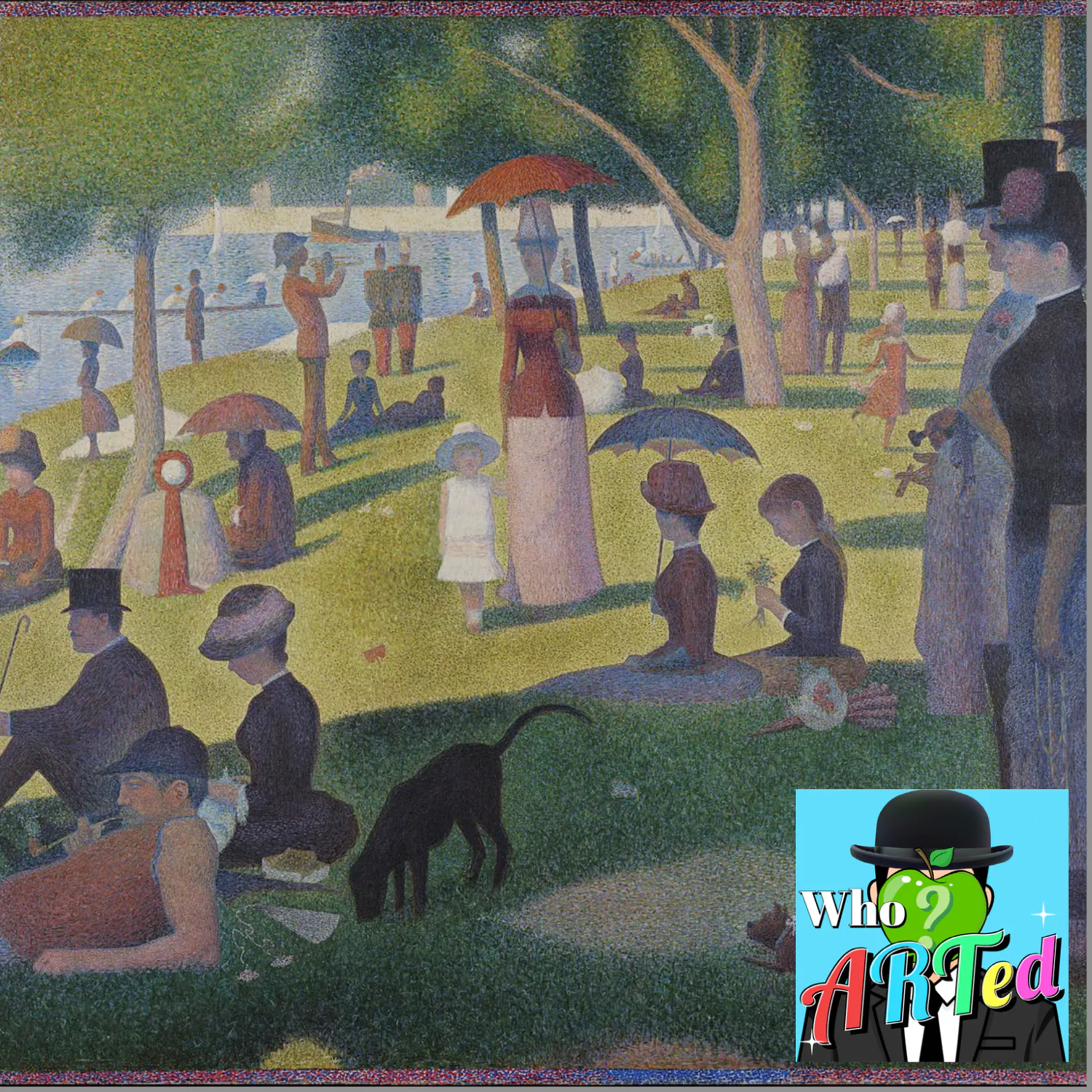
S1 Ep 1Georges Seurat
Georges Seurat is best known for his painting, Sunday on la Grande Jatte. In this episode, we discuss the pointillist masterpiece. Every episode features 3 sections in which we discuss the context in which the piece was created, what we see and connections we make as we examine the piece, and finally our takeaways or advice artists can apply to their own work. Learn more about your ad choices. Visit megaphone.fm/adchoices