
Who Arted: Weekly Art History for All Ages
785 episodes — Page 15 of 16

S3 Ep 87Fun Fact Friday - Lascaux Cave Art
This episode is about the cave art discovered in Lascaux, France in 1940. Learn more about your ad choices. Visit megaphone.fm/adchoices

Ep 86Rene Magritte - The False Mirror
This episode is all about Rene Magritte. We discussed his life and in the second segment, we focused specifically on his piece, The False Mirror from 1929. Learn more about your ad choices. Visit megaphone.fm/adchoices

S3 Ep 85Fun Fact Friday - Rangoli
This mini-episode is about rangoli. Since it is the start of Diwali, I thought it would be a great time to share a little information about the beautiful, colorful designs often seen in people‘s entryways during the festival. Learn more about your ad choices. Visit megaphone.fm/adchoices

Ep 84Keith Haring (encore)
This episode is about Keith Haring. It is a re-edited encore presentation of one of the first episodes I recorded and one of the most special to me because it focused so much on the potential of artists to create positive change. Learn more about your ad choices. Visit megaphone.fm/adchoices

S3 Ep 83Fun Fact Friday - The Mummy‘s Curse
This is about the idea of a mummy‘s curse associated with Howard Carter and his exhibition to explore and loot Tutankhamen‘s burial chamber. Learn more about your ad choices. Visit megaphone.fm/adchoices

S3 Ep 82Jim Davis
This episode is about Jim Davis, the creator of Garfield. We discuss his life and his work particularly looking at how Garfield evolved and the features that make him such a beloved character. Learn more about your ad choices. Visit megaphone.fm/adchoices

S3 Ep 81Fun Fact Friday - The Scream
This episode is all about The Scream by Edvard Munch. Learn more about your ad choices. Visit megaphone.fm/adchoices

S3 Ep 80AWESOME ANNOUNCEMENT - Art Explora Academy
bonusSpecial Announcement - Who ARTed is featured in the media library of the new Art Explora Academy. The Art Explora Foundation created their online academy as a completely free learning platform for anyone interested in art history. Check it out at academy.artexplora.org Learn more about your ad choices. Visit megaphone.fm/adchoices

S3 Ep 79Dan Santat
This episode is about the popular illustrator and author, Dan Santat. Learn more about your ad choices. Visit megaphone.fm/adchoices

S3 Ep 78Fun Fact Friday - The World‘s Oldest Art
This episode is about a debated discovery of the oldest known work of art. Learn more about your ad choices. Visit megaphone.fm/adchoices
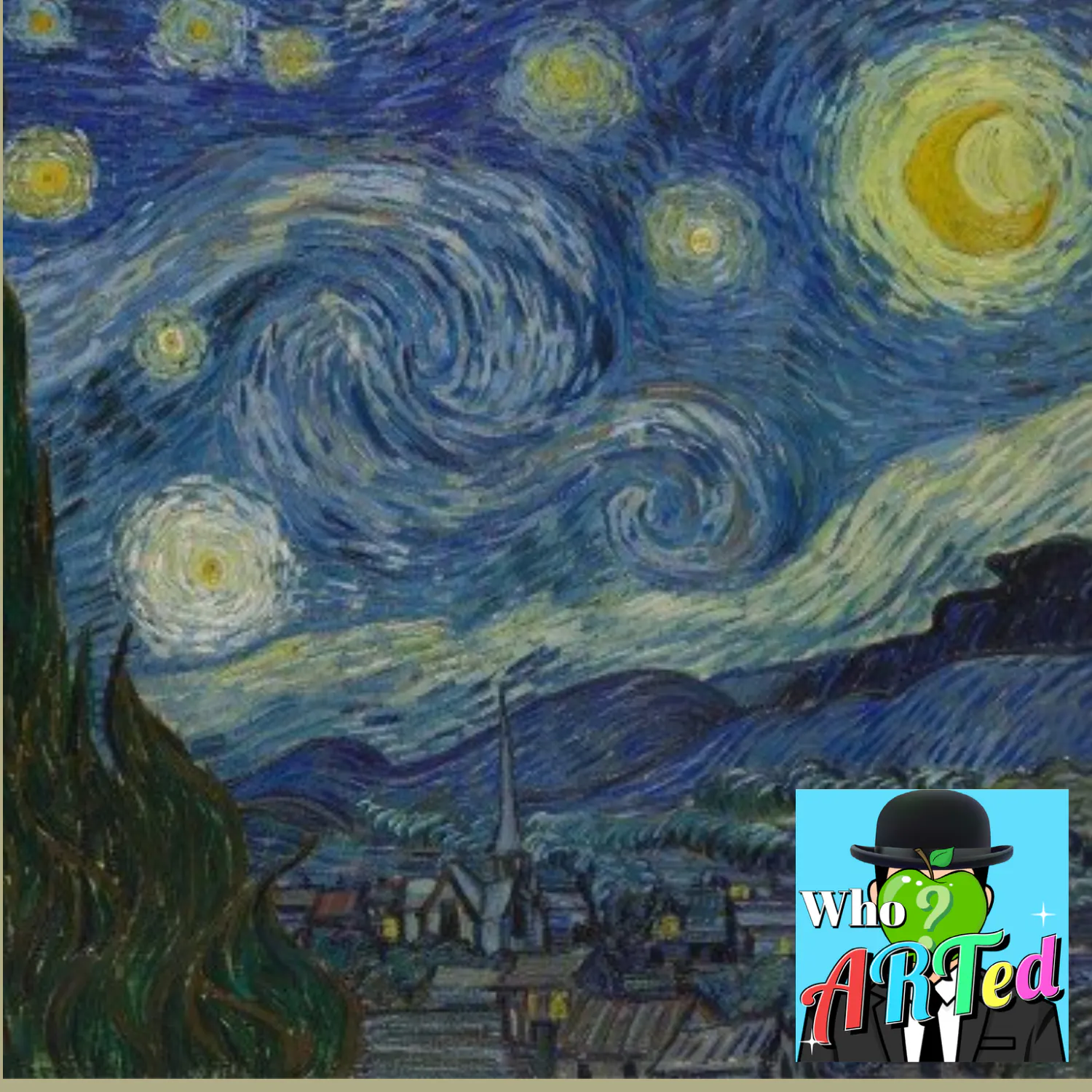
S3 Ep 77Vincent Van Gogh (Part 2)
In this episode, I continued my discussion with Chuck Hoff about Vincent van Gogh. We covered the later part of his life and career after he moved to France. The painting we specifically focused our attention on was The Starry Night from 1889. During the episode, we also briefly discussed The Night Cafe and Starry Night Over the Rhone. Learn more about your ad choices. Visit megaphone.fm/adchoices

S3 Ep 76Fun Fact Friday - DayGlo Colors
This episode is about how DayGlo colors work and how they were developed by a pair of brothers in the 1930s. Learn more about your ad choices. Visit megaphone.fm/adchoices

S3 Ep 75Vincent Van Gogh (Part 1)
This is a two part episode about Vincent Van Gogh.Part 1 focuses on his early life and development up to his first masterpiece,The Potato Eaters from 1885. Next week we will discuss the mature phase of his career and how his style shifted upon moving to France. Learn more about your ad choices. Visit megaphone.fm/adchoices

S3 Ep 74Fun Fact Friday - Take the Money and Run
In this fun fact Friday mini episode, learn about the controversial conceptual art piece, ”Take the Money and Run.” The artist, Jens Haaning was loaned $84,000 for use in re-creating two of his previous works, but Haansing thought it would be better to give them 2 blank canvases and keep the money. Learn more about your ad choices. Visit megaphone.fm/adchoices

S3 Ep 73Salvador Dali
Salvador Dali was among the oddest artists of the 20th century. He was known not only for his surrealist paintings, but also his surreal life. From his waxed mustache that is said to have outlived the artist, to antics like driving a Rolls Royce filled with cauliflower, Salvador Dali knew how to command people‘s attention. In this episode we discuss a bit about the man, the myth and his work, The Persistence of Memory from 1931. As always you can find more information at www.whoartedpodcast.com Please follow, like, leave a review and tell your friends. If you have a connection, correction or suggestion you would like to share, please email [email protected] Learn more about your ad choices. Visit megaphone.fm/adchoices

S3 Ep 72Fun Fact Friday - Who Created The Smiley Face?
For this week‘s Fun Fact Friday mini episode, learn a little bit about the smiley face. The iconic image of a yellow circle with two dots and a smile actually has a surprising history. The design was commissioned to boost morale around the office at an insurance company and almost instantly became a sensation. While the image is world famous, Harvey Ball, the graphic designer who created it was largely forgotten. While one might expect he would have made millions of dollars off of his popular design, he actually only made $45 for the commissioned piece. He did go on to create World Smile Day which is dedicated to spreading positivity, smiles and acts of kindness. His foundation licenses his Smiley design to raise money for worthwhile charities. If you are looking for a way to celebrate World Smile Day on October 1, 2021, try making your own smiley or emoji. Art teachers can find a video lesson based on Harvey Ball on the teacher resources page of www.WhoARTedPodcast.com Reach out or follow Kyle Wood on social media. Instagram: Wood.Art.Ed Twitter: @WoodArtEd Email: [email protected] Learn more about your ad choices. Visit megaphone.fm/adchoices

S3 Ep 71Takashi Murakami
Takashi Murakami is one of the most prominent contemporary Japanese painters. I spoke with Toki from the podcast Japan Explained to get some insights into Murakami and how his work is a reflection of modern and traditional Japanese culture. Takashi Murakami is well known for his Superflat artwork. The Superflat movement was named for an exhibition of Murakami‘s work in the year 2000. Murakami‘s paintings often utilize outlines and flat colors that give the work the visually flat sense similar to traditional woodcut prints. Simultaneously the Superflat movement represents a flattening of society as barriers between cultures are broken down. In this episode, we discussed Murakami‘s background as well as his paintings of Mr. Dobs, a recurring figure in many of his works that serves as a sort of alter ego for the artist. As always you can find pictures of the work discussed along with other resources on website www.WhoARTedPodcast.com Keep in touch by emailing [email protected] and if you like the podcast, please tell your friends, rate and review it wherever you listen. Learn more about your ad choices. Visit megaphone.fm/adchoices

S3 Ep 70Fun Fact Friday - Jackson Pollock Rags to Riches
Jackson Pollock grew up in a family that struggled financially. He was expelled from two different high schools and bounced around doing odd jobs early in his adulthood. When Peggy Guggenheim started to collect his work, it was like Jackson Pollock won the lottery. With success in the fine art world, came financial success and one of the most interesting legacies of Jackson Pollock is his ability to pay it forward. In the 1990s, a woman bought a painting at a thrift store for $5. She was actually going to sell it at a garage sale later when it was identified as a Pollock original leading to a raise in the price from $5 to $50,000,000. This type of thing has actually happened more than once, so be sure to keep an eye out for hidden treasures in thrift stores and garage sales. If you like Who ARTed, please subscribe, leave a review and tell your friends. You can find more information, images and other resources at www.whoartedpodcast.com Learn more about your ad choices. Visit megaphone.fm/adchoices

S3 Ep 69Janet Sobel
For the season opener, I was joined by Garret McCorkle of the podcast No Country for History. His podcast focuses on obscure bits of American history so we focused on an awesome, but largely forgotten American painter. Janet Sobel may not be a household name, but her work was amazing, innovative and influential. While Jackson Pollock is credited with inventing the drip painting method and pioneering the approach of all over painting, Sobel did it first. Not only did Sobel employ these methods about a year before Pollock, he was aware of her work. He saw Sobel‘s work in a gallery and commented about how she influenced him. Sadly, Janet Sobel moved away from New York and her rise in the art world was quickly halted. Hear all about her life and career as well as our discussion of her painting Milky Way. As always, you can find a picture of the work at www.whoartedpodcast.com You can follow Kyle Wood on Instagram (Wood.Art.Ed) and Twitter (@WoodArtEd). You can email [email protected] to share your connections, corrections, suggest topics for future episodes etc. Learn more about your ad choices. Visit megaphone.fm/adchoices
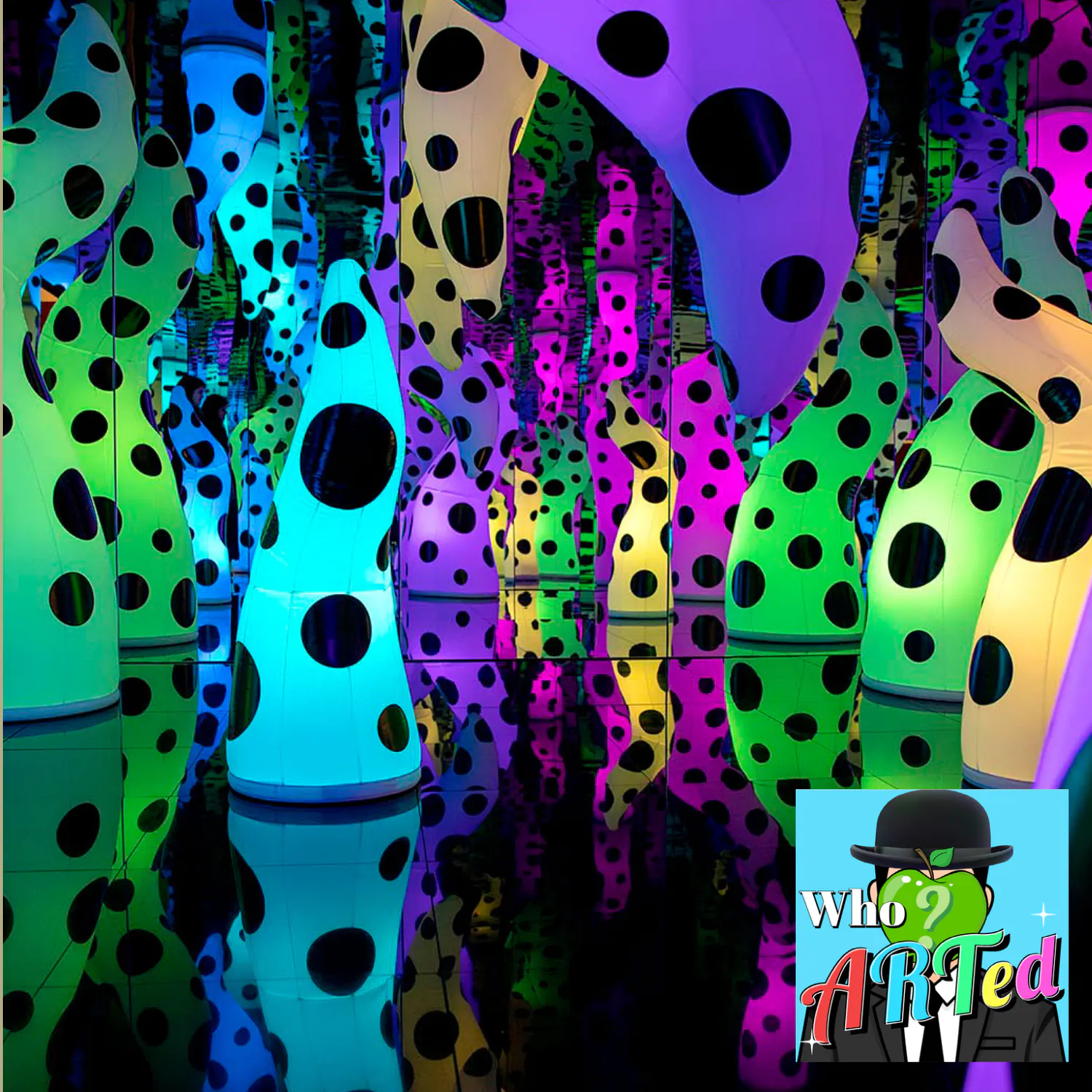
S2 Ep 68Season 2 Finale -REBROADCAST The Arts Madness Winner
I am wrapping up this season with the conclusion to my Arts Madness Tournament. Over the last 6 weeks, voters have narrowed the field from 64 down to 1 ultimate artist. I really appreciated everyone who took the time to participate. Hopefully you have learned more about some of your favorite artists and discovered some new ones. This episode is rebroadcasting the episode on the tournament's winner. Look for new episodes in your podcast feed when season 3 starts in the fall and as always you can find more at www.whoartedpodcast.com Learn more about your ad choices. Visit megaphone.fm/adchoices

S2 Ep 67Fun Fact Friday - From a King‘s Bathroom to an Iconic Museum
The Louvre is one of the most famous museums in the world with an expansive collection of some of the greatest masterpieces ever created. Interestingly, it did not start out that way. The building actually started as a medieval fortress. It had a moat, walls and a fortified tower in the center. Of course as Paris expanded, the fortifications moved to the exterior of the city and the Louvre was converted to a royal residence in the 14th century. The fortress was mostly demolished and extensive renovations were underway but people got distracted with the whole hundred years war going on and the Louvre basically was dormant for some time. In 1527, King Francois changed all that. He was a poet, a patron of the arts and he built up quite the collection. He acquired the Mona Lisa among other works and he is said to have hung the iconic masterpiece in his bathroom. Of course his bathroom was a little nicer than the average outhouse. His sprawling residence housed numerous works of art and eventually he started to display these works making them accessible to the public. This will be the final new episode for this season of Who ARTed. I will rebroadcast either the Georgia O'Keeffe, or Yayoi Kusama episode on Monday depending on who wins the Arts Madness tournament, but then I will be taking a break for a while. I may do a run of a few mini episodes if I have time over the summer, but otherwise look for new episodes in your podcast feed when Season 3 starts in the fall. Learn more about your ad choices. Visit megaphone.fm/adchoices

S2 Ep 66Georgia O‘Keeffe vs. Yayoi Kusama
We are entering the final round of this year's Arts Madness Tournament. For those listeners outside the United States, every spring, there is a giant basketball tournament called, March Madness, as 64 different college teams compete. The Arts Madness Tournament is a shameless attempt to ride the coattails of the immensely popular NCAA basketball tournament, but with 64 diverse artists. For the last five weeks, listeners have voted for their favorites narrowing the field from 64 down to just two finalists: Georgia O'Keeffe and Yayoi Kusama. One thing that I find particularly interesting in this matchup is that O'Keeffe and Kusama actually had a connection. While she was living in Japan thinking of becoming an artist, she was inspired by Georgia O'Keeffe and wrote to her. O'Keeffe responded offering her advice and encouragement. When Kusama was in New York, Georgia O'Keeffe actually came to her studio and offered her support even offering to provide Kusama a place to live. Kusama politely declined the invitation because while O'Keeffe was an established artist and could afford to stay in her beloved New Mexico desert home, Kusama was just starting out and needed to be in New York to be immersed in the art scene, make connections and establish her own career. This episode replays the background information from each artist's full episodes recorded earlier this season. You can vote for your favorite at www.WhoArtEdPodcast.com Learn more about your ad choices. Visit megaphone.fm/adchoices

S2 Ep 65Fun Fact Friday - The Art World is Bananas
In 2019, Maurizio Cattelan displayed a piece at Art Basel Miami, and it grabbed headlines around the world. The artwork titled Comedian consisted of simply a banana duct taped to a wall. Cattelan was offering 3 editions of this work and actually sold two for $120,000 each. If that weren‘t enough, another artist at the show took the banana off the wall and ate it. David Datuna, a performance artist, performed an intervention he dubbed Hungry Artist consuming the banana that caused such a stir. Cattelan appears to have had a good sense of humor about the incident. Nobody pressed charges for vandalism or anything along those lines because the banana was not the point. Comedian was a conceptual piece, so patrons were not really buying a banana tapes to a wall. They bought a certificate of authenticity for the idea of taping a banana to a wall, so basically they paid $120,000 for an artwork made of a banana bought from a local grocery store for $0.30 and in the end, they may or may not actually get the banana. As always you can find more at www.WhoArtEdPodcast.com and if you enjoy the podcast, please follow Who Arted on Spotify, Stitcher, Apple Podcasts or wherever you listen. Learn more about your ad choices. Visit megaphone.fm/adchoices

S2 Ep 64Georgia O‘Keeffe
Georgia O‘Keeffe is considered the mother of American modernism. Her influence actually reached beyond American borders. Yayoi Kusama was not only inspired by O‘Keeffe, but Georgia O‘Keeffe was generous enough to give her advice and even offer to allow her a place to stay and financial support early in Kusama‘s career. Georgia O‘Keeffe appears to have not only been a great artist, but also a great person. O‘Keeffe‘s greatest legacy is probably her unique perspective on nature. She painted around 200 pictures of flowers using a close cropped composition that made them appear as abstractions. While these paintings are often viewed in symbolic terms, O‘Keeffe always insisted her work was simply based on observation. For this episode we discussed her painting Blue Morning Glories from 1935. As always you can see the image and find more at www.whoartedpodcast.com Learn more about your ad choices. Visit megaphone.fm/adchoices

S2 Ep 63Fun Fact Friday - Georgia O‘Keeffe Painted in her Car
For this week's Fun Fact Friday mini episode, I am sharing an interesting little tidbit I found about Georgia O'Keeffe. While she is best known for her paintings of nature specifically, her most popular works are close cropped images of flowers or images inspired by the desert landscapes she encountered while living in New Mexico. While her work was all about nature, she painted those vast, open desert landscapes from the confines of a cramped Ford Model A car. She apparently developed a habit of transforming her car into a makeshift studio. She would remove the driver's seat, flip the passenger seat backwards so it would face the backseat. The back bench would serve as an easel as she sat in the rear facing passenger seat to paint. She did this in order to protect herself from the harsh sun, although I would imagine the interior of that car would also get quite hot baking out in the New Mexico desert. If you are interested in learning more about Georgia O'Keeffe, she will be the subject of the next full episode coming out on Monday. As always there is more fun art history to explore at www.whoartedpodcast.com Learn more about your ad choices. Visit megaphone.fm/adchoices
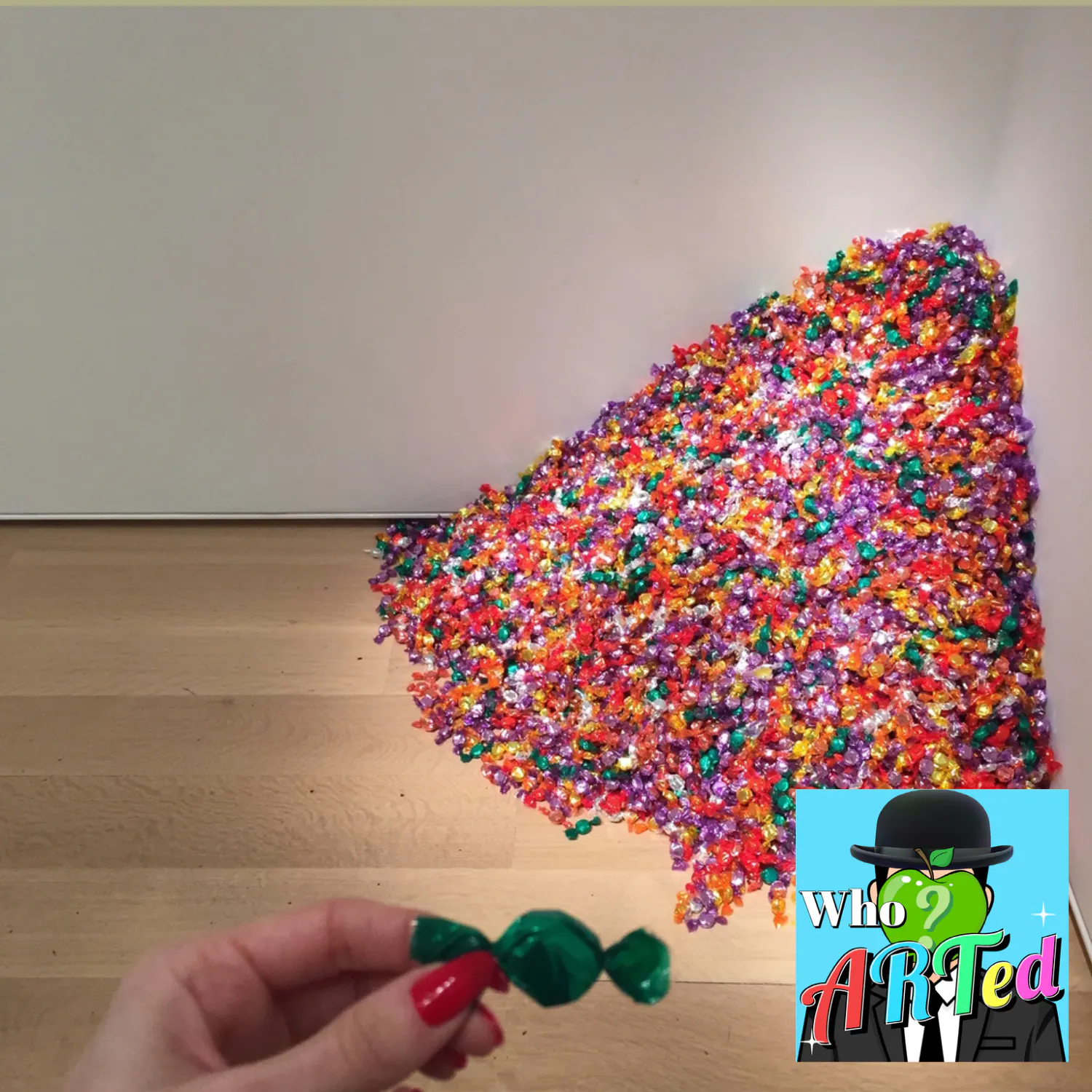
S2 Ep 62Felix Gonzalez-Torres
Felix Gonzalez-Torres was a Cuban American artist who rose to prominence in the late 1980s and early 1990s with his poignant minimalist installations. His stack pieces of unlimited edition prints make the fine art gallery space more democratic. Patrons are not only able to touch and take a piece from the artist, but the viewer becomes a collaborator as every person who takes one of the prints changes the dimensions of the sculpture. Throughout his career, Felix Gonzalez-Torres was focused on art and community as well as cultural connections. In this episode, we discussed "Untitled" (Portrait of Ross in L.A.) from 1991. The first time, I saw this piece, I was walking through a gallery and saw just a giant pile of candy. At first, I dismissed the work as a sign of everything wrong with contemporary art. I simply walked past thinking how ridiculous it was that simply pouring bags of candy on the floor would be considered worthy of a museum. Of course, as with most things I initially dismissed, I found upon further research that it was actually quite thoughtful and deliberately created. Felix Gonzalez-Torres's work was actually a big influence on my development as an artist and a teacher in getting me to think of art as not simply a static object created by an artist for others to look at, but rather something for all to participate in. Learn more about your ad choices. Visit megaphone.fm/adchoices

S2 Ep 61Fun Fact Friday - Andy Warhol had a Mummy Foot
Andy Warhol was an odd dude with an expansive and extremely odd collection. He basically hoarded all he could with boxes of stuff that could fill warehouses. His collection ranged from the ordinary objects that were the subjects of his iconic pop art, to curious artifacts from history such as the mummified foot he kept in his studio. It is unclear where he got the foot, but a popular story is that he bought it from a flea market. While acquiring ancient Egyptian remains at a flea market may seem incredible today, there is actually a long history of mummies being used as decorations, party games, paper and they have even been ground up to be consumed as medicine or as pigment for paints. As always you can find more at www.whoartedpodcast.com Learn more about your ad choices. Visit megaphone.fm/adchoices
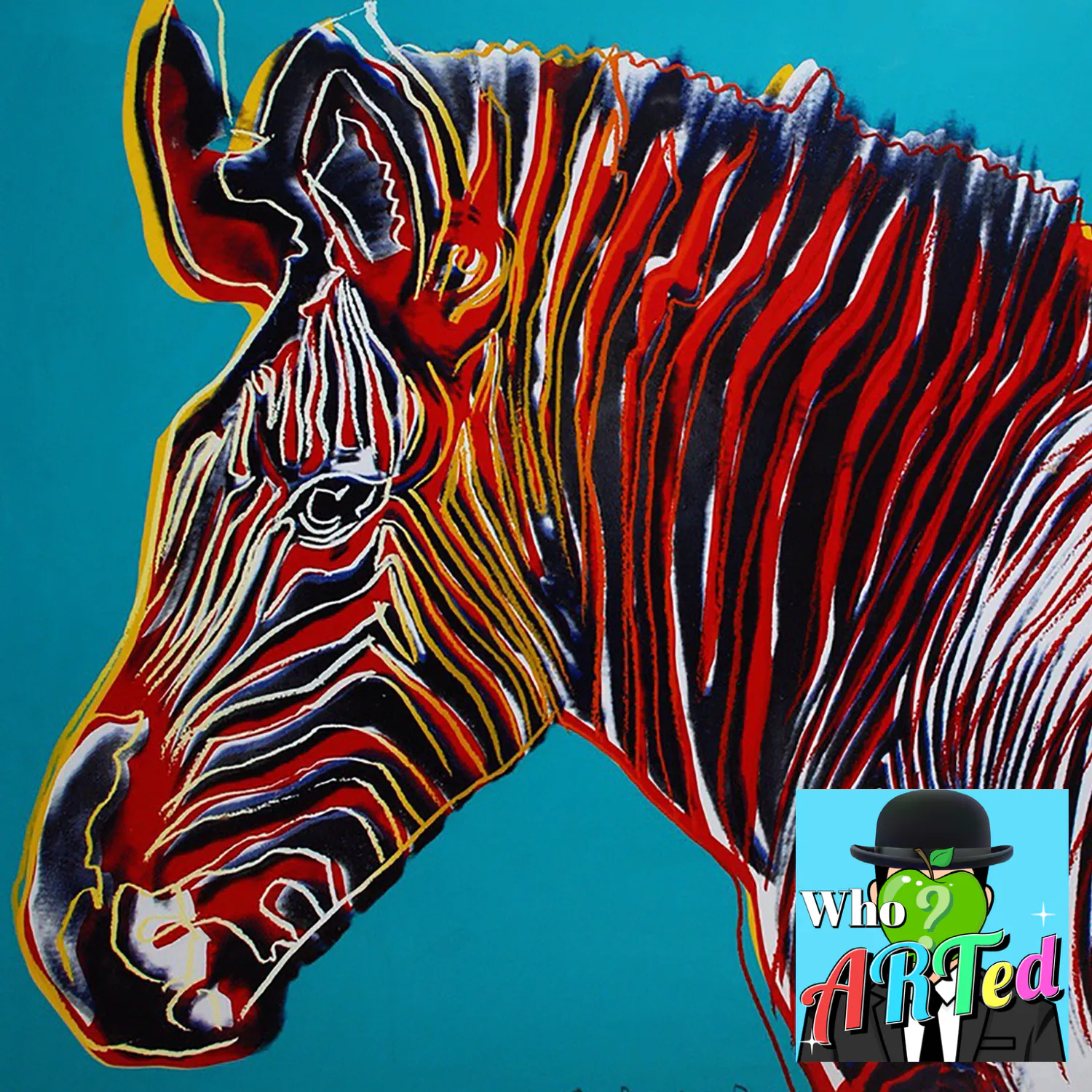
S2 Ep 60Andy Warhol
For this week‘s episode, we focused on one of the most famous and influential Pop Artists of all time, Any Warhol. Andy Warhol was born, Any Warhola but later dropped the ‘a‘ because he loved mass production and tended to favor shortcuts, so I guess even his own name proved too much work. He said he dropped the name because his name was Czech and he thought Warhol was simpler. This change occurred right at the beginning of his career in 1949 as his first commissioned illustrations for Glamour Magazine was a collection of his shoe drawings and the art credits listed him as Andy Warhol. Andy loved mass media and used images found from newspapers and magazines as inspiration. He said he wanted to be a machine. He dubbed his studio ”The Factory” and he used methods to streamline and automate the creative process. He traced images for efficiency, he used screen printing to make it easier to copy his works for the repetitive series he was known for. While most printmakers work very carefully and meticulously to align their prints and ensure there will be no mistakes, Warhol actually celebrated to the flaws inherent in the printing process as it referenced the cheap tabloid feel he longed to create in so many of his works. While his work was often criticized as shallow and celebrating consumerism, he carefully thought about every aspect of his subjects and his process to create a deep and meaningful reflection of a culture that was largely shallow and fixated with throw away cultural icons. For this episode we looked at his zebra print which was a part of a series of 10 endangered species prints Warhol created in 1983. You can see the image at www.WhoArtEdPodcast.com Learn more about your ad choices. Visit megaphone.fm/adchoices

S2 Ep 59Fun Fact Friday - Purple
For this fun fact Friday mini episode, I discuss the color purple. Purple has long been associated with royalty and that is largely because purple dyes have been hard to come by. The time consuming, labor and resource intensive process of producing purple dyes made them very expensive and thus only people of wealth and power could afford such finery. As always, you can find more to learn about on the website www.whoartedpodcast.com Learn more about your ad choices. Visit megaphone.fm/adchoices

S2 Ep 58Bisa Butler
For this episode, I spoke with Dr. Rosemary Lee an artist far more serious and accomplished than myself to gain some insights into the work of Bisa Butler. Specifically we talked about The Safety Patrol from 2018. For images, and more go to www.WhoArtEdPodcast.com Bisa Butler is a contemporary American artist. She was born and raised in New Jersey. She attended Howard University where her primary studio concentration was painting. Later on, she worked as an art teacher, but one of the most significant impacts on her personal and professional life came when she was pregnant. For health reasons, she gave up oils and solvents during her pregnancy but she could not give up on making art. When her grandmother got sick Butler wanted to make something for her. She found an old wedding photo of her grandparents, and used that image as inspiration for a quilt. Butler continued working making portraits on quilts. Her subjects include both famous and forgotten figures. A lot of her imagery comes from found photographs. She says she prefers black and white images as they allow her to be more creative in her selection of color. Bisa Butler uses an appliqué method layering colorful fabrics to make quilts that look like paintings. Her method actually starts off similar to how one might construct a large scale painting or drawing. She projects the image and draws out the shapes for the various color separations to capture the range of values needed. She then carefully selects fabrics in a variety of colors, textures and patterns to suit the subject and she cuts/stitches them together to form her image. Her portraits are life size bringing the viewer face to face with forgotten and overlooked people from history. Learn more about your ad choices. Visit megaphone.fm/adchoices

S2 Ep 57Fun Fact Friday- Blue
This is a part of my series of fun fact Friday mini episodes about different colors. This week you can learn a bit about the history of different pigments used to create blue in artworks. For a long time, blue pigment was more valuable than gold. Blue pigments were so labor intensive and expensive that some prominent artists like Michelangelo were said to have left some paintings unfinished because they could not afford more blue paint. While we see blue all around us in the sky, the water, even people's eyes, blue pigments are relatively rare in nature. There is no blue pigment in people's eyes, just as the sky does not have blue pigment. Blue eyes, and the blue of the sky are just optical illusions produced by the shorter wavelengths of light scattering more readily through the gasses in earth's atmosphere or in the case of blue eyes, the way the light scatters through the fluid in the stroma of the iris. As always, you can find more at www.WhoArtEdPodcast.com Learn more about your ad choices. Visit megaphone.fm/adchoices

S2 Ep 56Marcus Bromander
Marcus Bromander is one of the co-creators and co-designers of the extremely popular game, Among Us. For this episode, I spoke with Jeff Arndt, a fellow art teacher, about Bromander and his work. Although Among Us is an online game, it was actually inspired by Bromander's love of a game he played with his friends in real life when he was growing up. The social aspects of gaming have become particularly important during the global pandemic making Among Us a perfect game for this time as it has allowed for people to maintain connection with friends while social distancing. As always you can learn a bit more at www.whoartedpodcast.com Learn more about your ad choices. Visit megaphone.fm/adchoices

S2 Ep 55Fun Fact Friday - Green
Remember the voting in round 1 of the Arts Madness tournament will begin Monday, March 1. Visit www.WhoArtEdPodcast.com for more information. This week's Fun Fact Friday mini episode is about the color green. Learn a little more about associations with the color green as well as sources of green in nature, in food and a surprising fact about green eyes. Learn more about your ad choices. Visit megaphone.fm/adchoices

S2 Ep 54Joe Mills
For this week‘s episode I talked with Chuck Hoff about Joe Mills. Joe is an artist based out of Chicago and both Chuck and I were lucky enough to work with him years ago. Joe Mills was born in Kentucky but he came to Illinois for college. He studied industrial design at the University of Illinois and after college, he worked as a toy designer. A big turning point in his artistic development came when he moved to Australia in 2010. While in Australia, he missed his adopted home town of Chicago and he began creating work based on the city he loves. That Chicago themed work came to be his signature. Over the years he has captured many different subjects, but he focuses on his passions whether it is the city and the culture of communities around Chicago, or figures from pop culture. Mills creates work that is both meticulous and whimsical. He has the precision of an industrial designer combined with the creative and aesthetically pleasing style of a fine artist. For this episode we discussed his Chicago Factory piece to discuss. You can find the image and more at www.whoartedpodcast.com Learn more about your ad choices. Visit megaphone.fm/adchoices

S2 Ep 53Fun Fact Friday - Yellow
Voting for the Arts Madness tournament will begin March 1. Right now, you can check out all 64 artists and enter your prediction to win at www.WhoArtEdPodcast.com This week's fun fact Friday mini episode is all about the color yellow. The ancient Egyptians associated yellow with gold, and gold was symbolic of the gods and the eternal. Consequently, they used quite a bit of yellow to decorate their tombs. Of course just as with orange, the yellow pigment favored by the Egyptians contained arsenic so kind of ironic as a connection to immortality and yet perfect for the decoration of a tomb. Learn more about your ad choices. Visit megaphone.fm/adchoices

S2 Ep 52Duff Goldman
For this episode I sat down with my good friend David Pittman to talk about the amazing work of Duff Goldman, the Ace of Cakes. Duff Goldman is a culinary artist well known for his incredible artistry with cakes. He is part baker, part sculptor, part painter but definitely one amazing artist. His actual name is Jeffery Goldman, but his brother mispronounced it as Duffy and the name stuck. Throughout his life, Duff moved around to different parts of the country: Michigan, Missouri, Massachusetts, California, Maryland but no matter where he was his love for cooking and his incredible work ethic remained constant. Because Duff is a celebrity baker it seemed only fitting that the episode focus on discussion of a piece from one of his shows, so we discussed the Bollywood inspired elephant cake from the competition between Duff and Buddy, another celebrity baker. As always you can find more at www.whoartedpodcast.com Learn more about your ad choices. Visit megaphone.fm/adchoices

S2 Ep 51Fun Fact Friday - Orange
I am continuing my fun fact series about colors. This episode is all about the color orange. I compiled a few fun facts about the color orange. For example, before the orange was brought to Europe in the 16th century, the color was simply referred to as yellow red. Orange has positive connections to warmth, energy and the divine all around the world. Orange pigment also has a long history of being highly toxic and it was only recently that artists shifted away from the use of chrome orange which was made with lead. As always you can find more resources to continue learning at www.whoartedpodcast.com Learn more about your ad choices. Visit megaphone.fm/adchoices
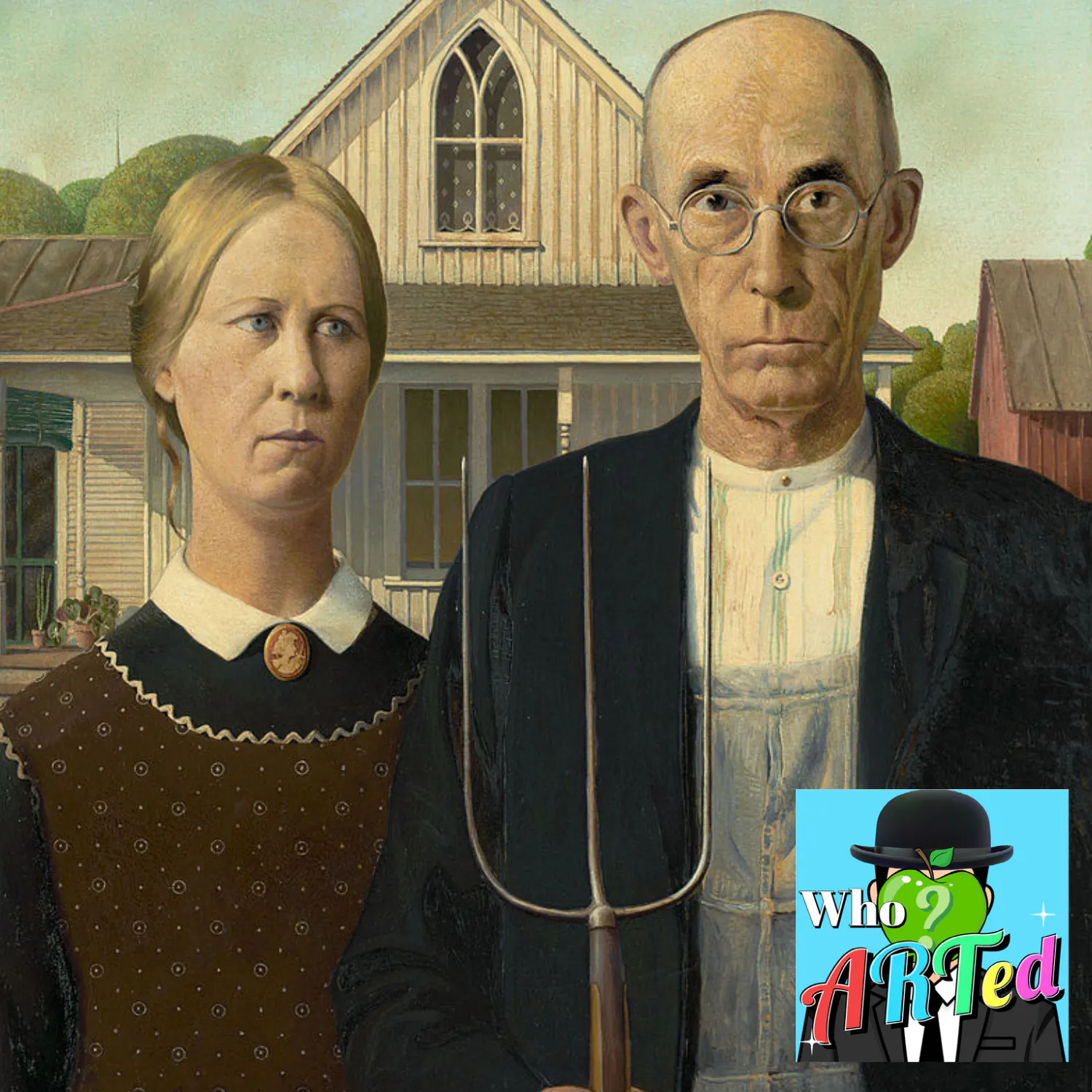
S2 Ep 50Grant Wood
Grant Wood was the American regionalist painter who rose to prominence almost overnight with his 1930 painting, American Gothic. In this episode, I spoke with Mike Divelbiss about Wood, his biography and his iconic work. Grant Wood was born in rural Iowa in 1891. His mother moved the family to the more urban Cedar Rapids in 1901 after his father passed away. Grant Wood showed a proclivity for the arts from an early age and after high school he pursued a broad based education at the Minneapolis Institute of Design and Handicraft. While he is best known today for his painting, Grant Wood worked in diverse media including functional art designing and building furniture as well as jewelry. In 1913, he moved to Chicago where he found work as a silversmith and eventually opened his own shop. During that time, he continued his education studying at The School of the Art Institute of Chicago. A few years later, he moved back to Iowa to help take care of his mother and he found work as an art teacher. While teaching art, he also served as the local jack of all trades artist. He was commissioned to make a stained glass piece honoring veterans of World War I in addition to building furniture, painting etc. In 1930, Grant Wood submitted American Gothic in an exhibition at the Art Institute of Chicago. The piece was immediately popular and acquired by the museum. This elevated Wood‘s stature in the art world and opened opportunities for him such as teaching at the University of Iowa. He used his prominence to continue to do good in his community starting an artist colony, and during The Great Depression, he led the government jobs program overseeing artists painting murals around Iowa. American Gothic has been an interesting icon of American and particularly midwestern art for decades. In Iowa, there was an immediate backlash to the piece by people who felt it portrayed them in an unflattering light. Of course as years went on, in the grips of the depression, the painting came to be viewed more as portraying the strength and quiet dignity of working people. Personally I would argue that there is truth in both interpretations. I would argue that Grant Wood has a deep love and fondness for his subjects and his community, but infused his work with a little bit of the caustic humor that is typical of the culture. He is a bit playful with his work on some level making fun of some of the stiffness of some of conventions of the art world and what he viewed as the absurd and pretentious ”gothic” window on a small rural home (interesting fact, the window that Wood found so pretentious was actually functional and purchased from a Sears catalog) but simultaneously he has a deep love and affection for everyone and everything he is portraying in his work. You can find a picture of American Gothic linked here, and as always on the website www.WhoArtEdPodcast.com Learn more about your ad choices. Visit megaphone.fm/adchoices

S2 Ep 49Fun Fact Friday - Red
Last week I began a series of mini episodes exploring color. For this week's episode, I share some interesting bits about the color red. The color red is associated with both love and anger. While many mistakenly believe red will anger a bull, people looking at the color red have been known to experience an increase in their heart rate. Listen to this mini episode to find out a little more about the color red. If you enjoy the podcast, please like, subscribe and leave a review. Follow me on twitter @WoodArtEd and find more on the website www.WhoArtEdPodcast.com Learn more about your ad choices. Visit megaphone.fm/adchoices

S2 Ep 48Claude Monet
The Impressionist movement has been appealing to art lovers for about 150 years. While Claude Monet was not the sole inventor of the style, the movement was actually named after one of his paintings. Claude Monet was born in 1840. The 19th century brought us innovations that drastically changed how artists saw their role and their process. The advent of photography allowed artists to shift their focus away from use of paint as a means of recording what important people, places and things looked like. Artists started to shift their focus toward being more creative in their paintings focusing on color, and the expressive qualities that a camera could not capture. The tube of paint was also a 19th century invention. While it does not seem like such a big deal, the tube of paint made a wider range of hues available to artists and made those paints more portable. Monet and the Impressionists were well known to love painting outside. They stood in the landscape carefully capturing the colors as they saw them rather than staying in the studio painting from memory. While audiences today might look at paintings by Monet and other Impressionists as pleasant compositions that are fairly realistic, at the time, Impressionist paintings were revolutionary and viewed as scandalously sloppy when compared to the more traditional works that would have been seen in the Paris Salon. For this episode, we discussed one of Monet‘s water lilies paintings from what is perhaps his best known and most beloved series. Check out Water Lilies for 1906 at this link or on the website www.WhoArtEdPodcast.com Learn more about your ad choices. Visit megaphone.fm/adchoices

S2 Ep 47Fun Fact Friday - What is Color?
For this week's mini episode, I wanted to take a little time to explain what color is and how we perceive color. This is going to be the first in a series of mini episodes about colors. I wanted to get some of the initial science out of the way before going into deeper dives about the histories and interesting facts behind individual colors and how artists have created those colors throughout history. As always, if you enjoy this episode, please like, subscribe and leave a review. For my fellow art teachers, I keep every episode clean and school appropriate so you can use this podcast as a resource to help your students explore art history. You can find images and free resources including a virtual gallery you can embed in your classroom site at www.whoartedpodcast.com Learn more about your ad choices. Visit megaphone.fm/adchoices

S2 Ep 46Ernie Barnes
Not a lot of great painters were also professional football players. Ernie Barnes was an American artist who grew up in the South during the Jim Crowe era. Despite the numerous challenges, he worked hard, her persisted and he succeeded. As a teenager, a coach mentored Barnes helping him to become captain of the football team and a state champion at shot put. He attended a historically black university on an athletic scholarship but he majored in art. After college, Barnes went on to play pro football, but the owner of the New York Jets saw that Ernie Barnes was more valuable applying his talents to the canvas rather than the field. In the 1960s, Barnes quickly started gaining critical acclaim. His first show in New York sold out. His paintings not only hung in galleries, but also in pop culture on album covers and perhaps most famously on the television series Good Times. For this episode, my good friend and fellow elementary art teacher, Chuck Hoff discussed the history, and the incredible artistry of Ernie Barnes. We referenced a few pieces, but primarily focused our analysis on his painting The American Dream. As always you can find the work being discussed and other resources on the website www.WhoArtEdPodcast.com Learn more about your ad choices. Visit megaphone.fm/adchoices

S2 Ep 45Fun Fact Friday - The Curious Case of Nat Tate
The art world is full of interesting characters. In so many ways, the artist‘s biography can be as important as their work. Nat Tate was an interesting character introduced to critics and tastemakers in 1998 when David Bowie hosted a dinner party to help launch a new book Nat Tate: Am American Artist 1928-1960. While the book has the sleepy title of a non-fiction book, it was actually a novel framed as a biography. Nat Tate was a tragic abstract expressionistic painter who destroyed 99% of his work before his untimely death. It was a compelling narrative of art and an artist lost to history. It was also pure fiction. While Bowie enlisted the help of a Picasso biographer to tell tales of Tate‘s interactions with Picasso, Braque and others, Nat Tate never existed. A week later, a journalist published a story of how important figures in the art world fell victim to this hoax. Oddly while Nat Tate was not real, there are real ”surviving” artworks attributed to him. In 2011, Sotheby‘s auctioned off a Nat Tate painting, Bridge No. 114, which sold for over 7000 pounds. As always you can see the work at www.WhoArtEdPodcast.com Learn more about your ad choices. Visit megaphone.fm/adchoices

S2 Ep 44Homer Simpson
I wanted to start 2021 with something fun, so I decided to do an episode about a classic episode of The Simpsons. In season 10 episode 19 titled Mom and Pop Art, Homer becomes an outsider artist. While much of the humor is derived from the premise that Homer Simpson is inept and could never be a decent artist, but I thought it would be fun to consider what kind of an artist Homer really is. His first sculpture was created accidentally from a failed attempt to build a backyard barbecue pit. After tastemakers declared the failed grill to be an artistic triumph, Homer leans in to his new career as an artist. Of course after the initial success that came so easily, Homer discovers that maintaining an art career is difficult as he presents a series of works that are considered too derivative of his earlier work as they all had the same feel behind them. This actually is one of the least true criticisms I observed in the satirical look at the art world. While in the Simpson‘s world art critics are fickle and looking to be constantly shocked, in reality one of the most sure paths to success is for an artist to develop a signature style so their work is easily identified to patrons. Consistency is crucial to an artist‘s marketability. Still Homer‘s falling out of favor led to a rare bit of introspection and growth for the character. Marge guides him through the museum and Homer applies his learning to creating one final masterpiece - The Grand Canals of Springfield. If you set aside the reckless destruction of property and the fact that such an act would have wreaked havoc endangering thousands of people and animals, it was actually a fairly interesting work. Ultimately, I consider Homer to be most interesting as a work of art rather than as an artist, but through any lens I find him delightful and thought provoking. Learn more about your ad choices. Visit megaphone.fm/adchoices

S2 Ep 43Season 2 Recap (Part 2)
This is a second mini episode recapping the takeaways from the artists covered thus far in season 2. In this episode, I share my takeaways from the episodes about Phil Hansen, Wassily Kandinsky, Pablo Picasso, Jean-Michel Basquiat, Charuvi Agrawal, and Njideka Akunyili Crosby. The second half of season 2 will start on Monday, January 18th. Learn more about your ad choices. Visit megaphone.fm/adchoices

S2 Ep 42Season 2 Recap (Part 1)
I will be taking a bit of a break. This week and next week will be the podcast equivalent of a clip show as I will rundown just the main takeaways I had from each artist I discussed throughout this season. In this episode I talked about the first five episodes which were about Marcel Duchamp, Burton Morris, Yayoi Kusama, Alexander Calder, and Barbara Kruger. Next week, I will run down the rest of the artists featured thus far. New episodes will be back in your feed starting Monday, January 18th. Learn more about your ad choices. Visit megaphone.fm/adchoices

S2 Ep 41Fun Fact Friday - Art Was An Olympic Event
Few people know this, but Art used to be an Olympic event. Starting in the 1912 games, artists could win Olympic gold, silver and bronze medals in five categories of art. For more information and resources, check out the website www.WhoArtEdPodcast.com Learn more about your ad choices. Visit megaphone.fm/adchoices

S2 Ep 40Njideka Akunyili Crosby
For this episode, I talked to Janet Taylor, art teacher and writer for the Art of Education. She actually taught be about Njideka Akunyili Crosby, the contemporary Nigerian/American painter. Njiedeka Akunyili Crosby was born in 1983 in Enugu, Nigeria. Her father was a surgeon and mother was a professor of pharmacology. Her mother won the green card lottery allowing Njideka to come to the U.S. to study when she was 16. She spent a year studying and prepping for the SATs then went back to Nigeria to perform a year of service. After completing the year of service, she came back to the U.S. She took her first painting classes at a community college in Philadelphia then went on to Swarthmore. She was initially pre-med before deciding to pursue art. After Swarthmore, she went to the Pennsylvania Academy of Fine Art, then went on to get her MFA from Yale. A lot of her work focuses on straddling different worlds and her connections to Nigeria and the U.S. She uses painting with some collage methods like integration of fabric but particularly transfers. These methods not only integrate patterns and textures but also enrich the work through the connections to pop culture and other icons embedded as details to be discovered within her work. In 2017, she got the MacArthur genius grant which pretty much says it all right there. Her CV could make even the most accomplished among us question their adequacy. For this episode we looked at Predecessors from 2013. As always you can see the piece linked here in the show notes, or visit www.WhoArtEdPodcast.com to see this week‘s work as well as previous pieces and free resources for art teachers. If you enjoy the show, please help spread the word. Like, Subscribe and leave a review on iTunes or wherever you get your podcasts. Learn more about your ad choices. Visit megaphone.fm/adchoices

S2 Ep 39Fun Fact Friday - Michelangelo Stunk
Michelangelo is one of the most celebrated artists in history. He is known for having created some of the finest masterpieces in the world including the painting on the Sistine Chapel and the statue of David. As talented people become historical figures over the centuries, a lot of their humanity can be lost in historical accounts that feature only their highlights. I generally believe in giving people the generous edit and focusing on their good aspects, but going too far in mythologizing an artist or anyone else can be unhelpful. To focus only on their brilliance and ignore their struggles and shortcomings can be frustrating and cut short the growth of future generations of artists under the shadow of larger than life ”old masters.” With that in mind, I share that while Michelangelo‘s art was absolutely beautiful, the artist himself was kind of gross. Learn more about your ad choices. Visit megaphone.fm/adchoices

S2 Ep 38Charuvi Agrawal
Charuvi Agrawal is a contemporary artist from India. She is tremendously talented as a painter, sculptor and animator. She is probably best known for two incredible works based on Hanuman. Shortly after finishing her Masters in computer animation, she opened her own studio Charuvi Design Labs and spent 3 years developing a 3D animated film about Hanuman which gained widespread critical acclaim. Following that project, Agrawal created a jaw dropping sound sculpture, a 25 foot tall sculpture of Hanuman consisting of 26,000 hanging bells. As always you can find images of the work being discussed and more resources for art lovers and art teachers at www.WhoArtEdPodcast.com Learn more about your ad choices. Visit megaphone.fm/adchoices