
When Diplomacy Fails Podcast
744 episodes — Page 6 of 15
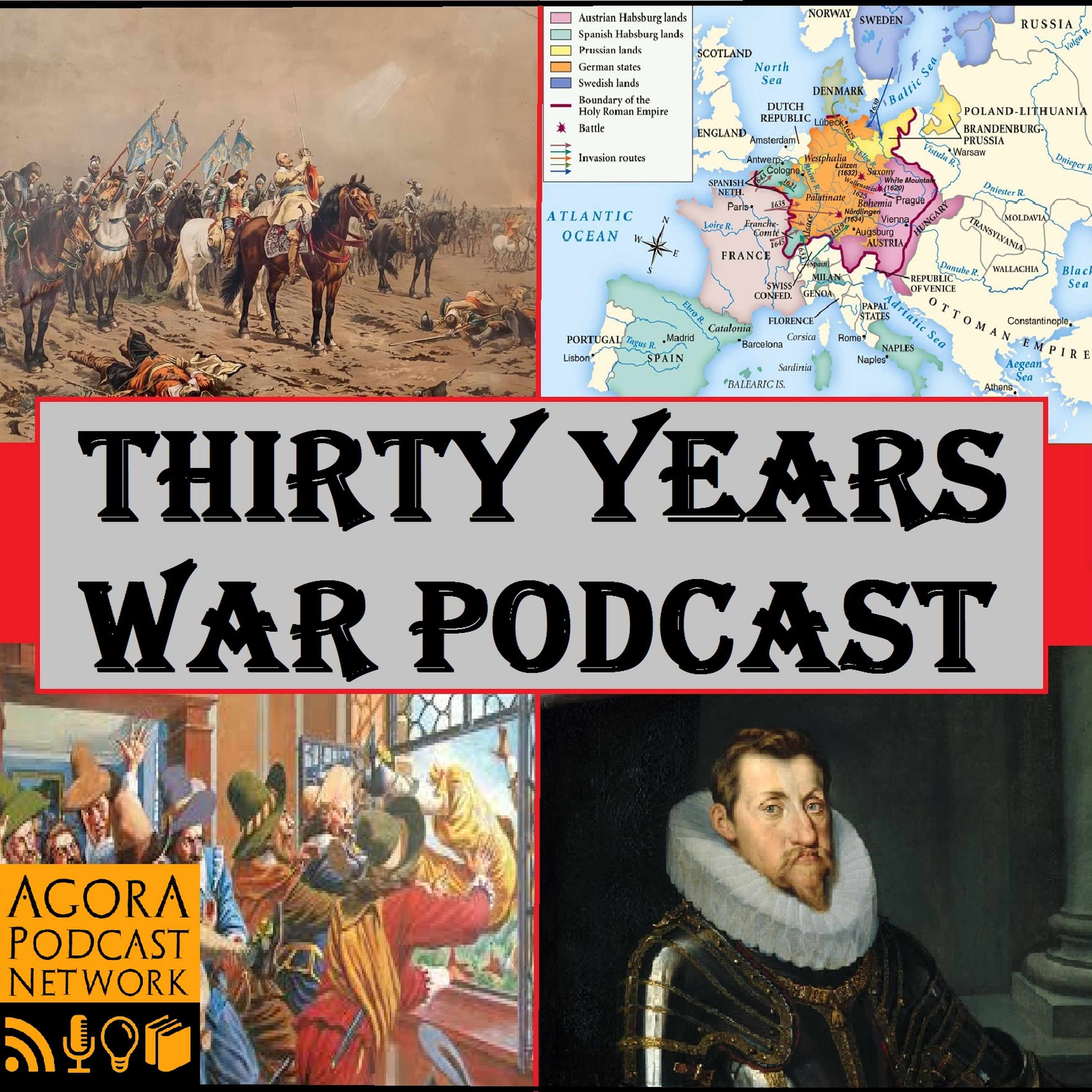
30YearsWar: 17th Century Warfare Episode 8
After covering the adoption of a revolutionary new musket drill by Maurice of Nassau in the late 1590s, in this episode we come to the point where all of these innovations would be put to the test, so I hope you’re ready to listen in, as the full horrors of constant barrages of lead on the human body were felt to their full effect for the first time in Western Europe, in the relatively unknown Battle of Nieuwpoort, in July 1600.This episode provides a key example of what made the Military Revolution so unique and important for European warfare. From Maurice’s display at Nieuwpoort, so many other innovations would follow, including the adoption of its key lessons by other powers, and the perfecting and adding to them by others, like the Swedish and French. Before long, the drill would be the staple means by which infantry would take the field, and training these men and giving them the platform they needed to succeed would become the occupation of all competent commanders in early modern Europe. Make sure you tune in here to see what made innovators like Maurice of Nassau tick, and why he was so important for his time. We also get a window into how the Dutch government organised its military, and what they were up against in the sheer professional supremacy of the Spanish tercio system. I hope you enjoy it history friends! Make sure you spread the word – thanksss!*********Click here to pre-order the book | Click here to sign up on Patreon from as little as $2 a month and access awesome goodies! | Click here to find our dedicated section of the website | AND #1) Follow us on Twitter #2) Like us on Facebook #3) Join the history friends group! Hosted on Acast. See acast.com/privacy for more information.
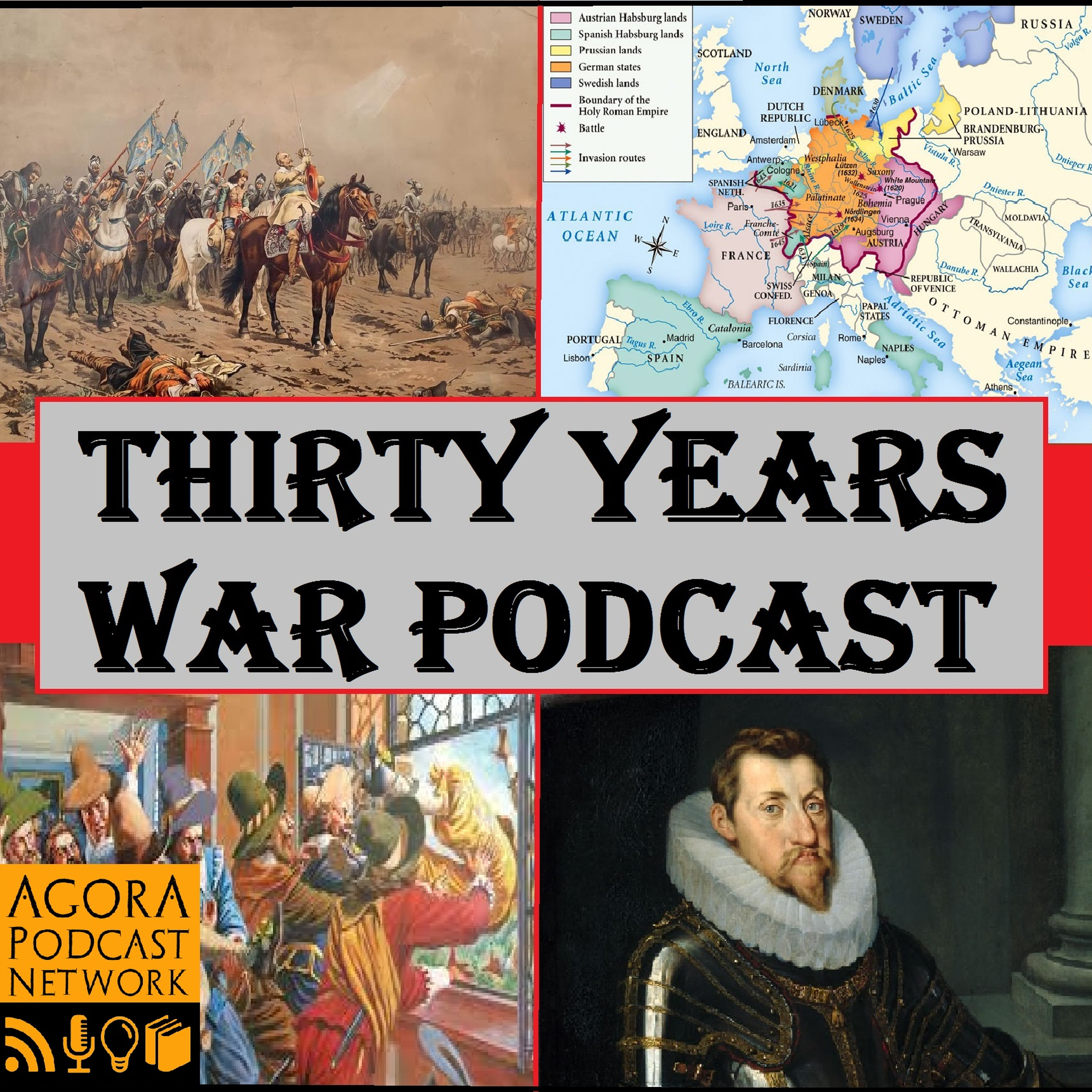
30YearsWar: NEW Introduction
We're back! At long last, after a lot of confusing scheduling and weird decisions, WDF is finally ready to introduce to you what we have planned for the next few years. It is an investigation of the Thirty Years War (1618-1648) like you've never seen it before, and I couldn't be more excited to begin! Listen in here for a rundown of what we've done so far since our too eager release back in May 2018, and what we plan to do going forward. For those confused with what this all means, and why there's so many introduction episodes floating around, look no further than this episode, which is made up of explainers, disclaimers, and probably a few complainers! Thanksss!Click here to pre-order the book | Click here to sign up on Patreon from as little as $2 a month and access awesome goodies! | Click here to find our dedicated section of the website | AND #1) Follow us on Twitter #2) Like us on Facebook #3) Join the history friends group! Hosted on Acast. See acast.com/privacy for more information.
WDF Collab: Diplomacy Games
What a lovely surprise! I sat down with Kaner [Ken] and Amby [Gavin], two Ozzies with a love of the game Diplomacy, which I have name dropped many times on this show. The three of us chat about a whole range of topics, from our experiences playing the game, to my recent projects and the processes involved with them, to current examples of diplomacy failing. It was a great chat and I had a wonderful time, and if you did too, make sure to check out their show Diplomacy Games, and follow the links below!Subscribe to their show [iTunes]: https://podcasts.apple.com/au/podcast/diplomacy-games/id1148827717 Subscribe to their show [Stitcher]: https://www.stitcher.com/podcast/diplomacy-games?refid=stpr If you are interested in playing Diplomacy online, check these links:webDiplomacy - https://webdiplomacy.netplayDiplomacy - https://www.playdiplomacy.comvDiplomacy - https://www.vdiplomacy.net Hosted on Acast. See acast.com/privacy for more information.
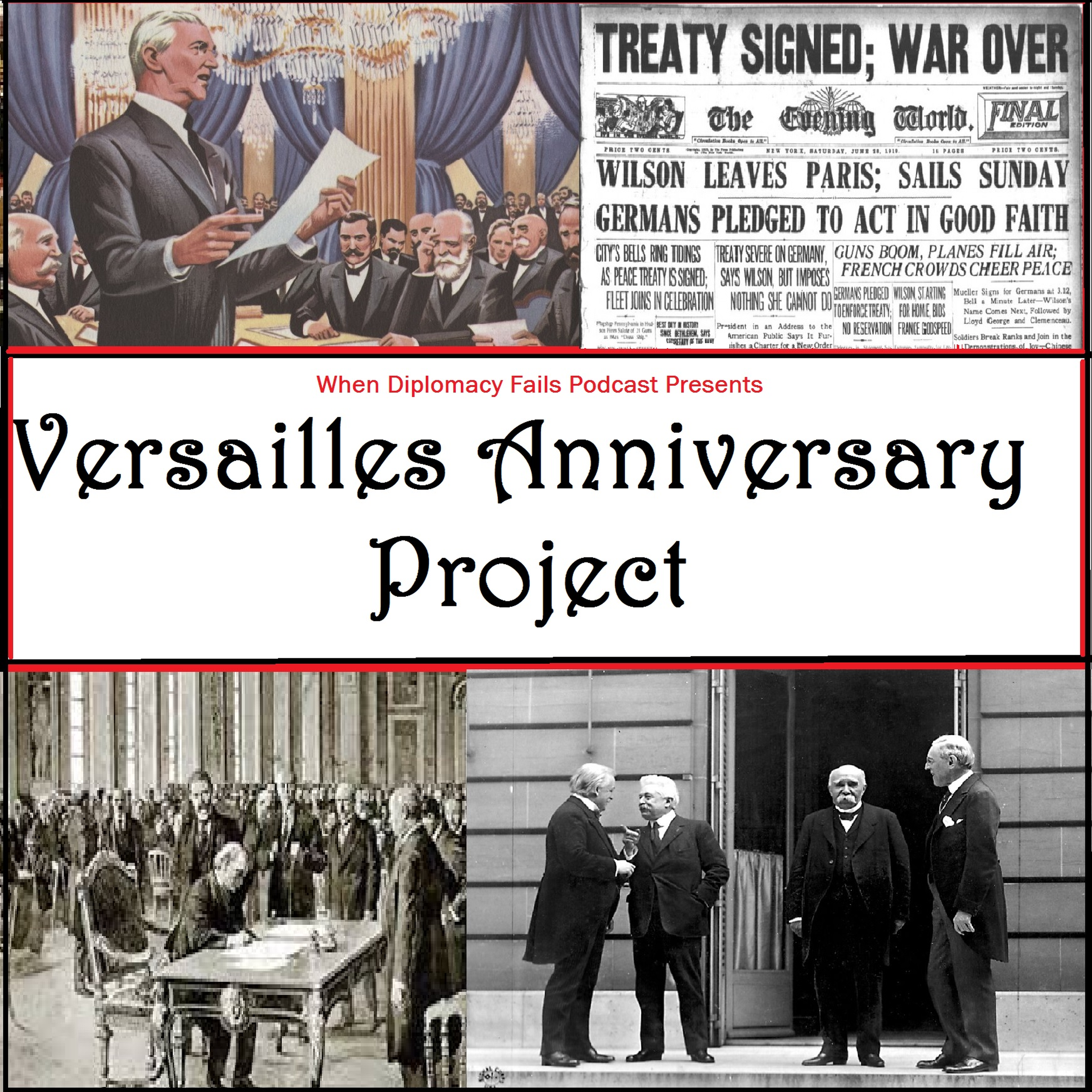
Versailles: Retrospective
The Versailles Anniversary Project consumed 8 months of my life, and 8 months of your attention. It was the largest, most ambitious, and most exhausting project we have ever taken on. What did this 'taking on' actually look like though? You may know that it was a long hard enjoyable slog, but what else is there to the story of this monster, which, as the statistics show, has taken more than 67 hours to fully unwrap? Well history friend, look no further, as finally bid farewell to this project once and for all. No concluding revelations here - just the musings and memories of me, your host, as I spill the beans about my experience. If you were curious, or had more questions about how I did this, then look no further. A huge thanksss must be said once more history friend, for maing Versailles the best place to be for well over half a year. Here's to the next audio adventure, but until then, I will see you all on 9th September for the Thirty Years War!************The Versailles Anniversary Project is possible because of your support and interest - make sure to spread the word, engage with the debate, and look at the different ways you can help this project succeed!->Visit the homeland for this new project!->Become a delegate and play the Delegation Game for just $6 a month!->Support the podcast financially and access ad free episodes with transcripts from just $2 a month! ->Follow WDF on Twitter! ->Join the Facebook group!->Subscribe on iTunes! Hosted on Acast. See acast.com/privacy for more information.
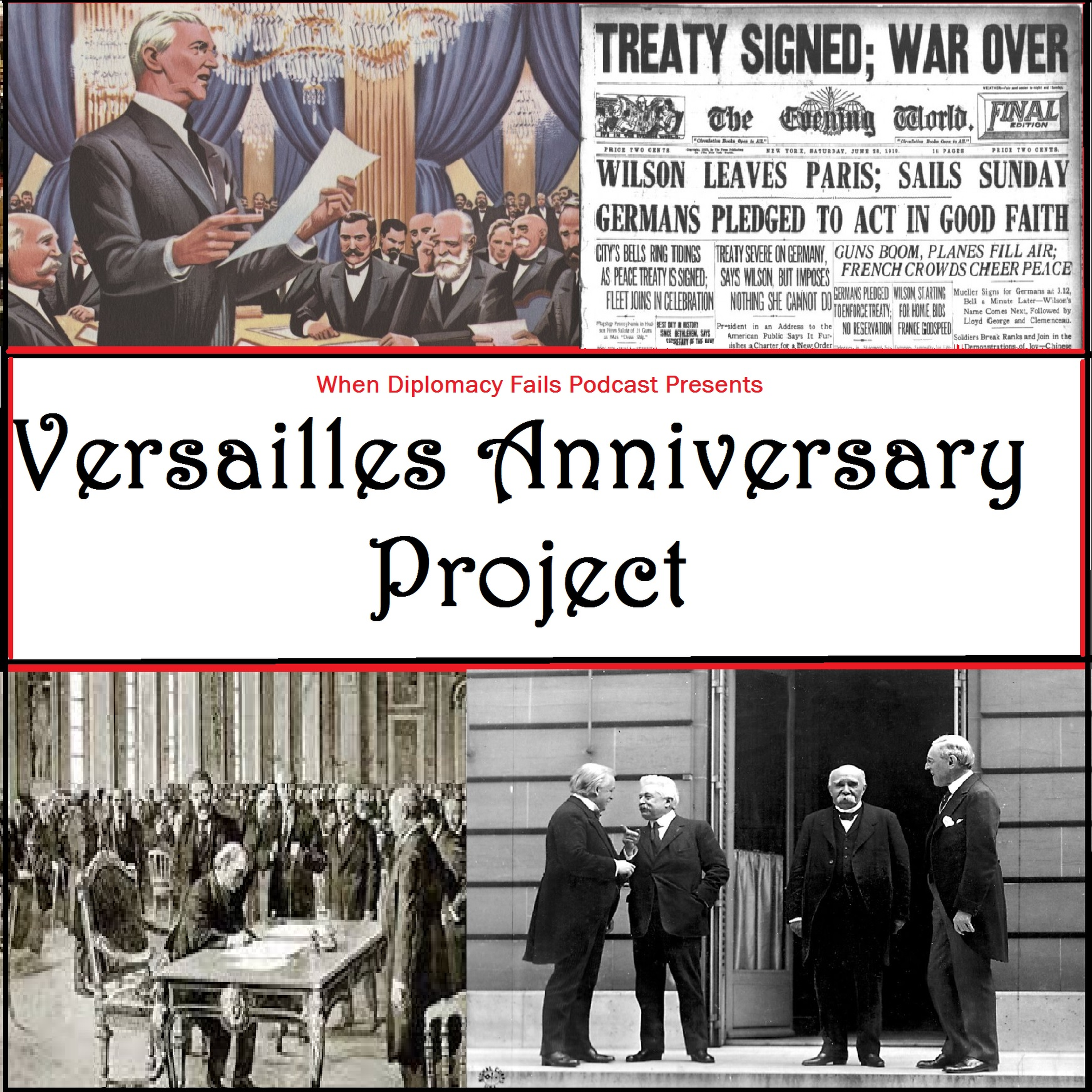
Versailles: Conclusion
After 8 months and 85 episodes, what is left to say? As it turns out, quite a lot, so I hope you'll join me as we wrap up the longest project we've ever tackled here at WDF. The questions of German responsibility, of Woodrow Wilson's selective compromising, and the exercise of finger pointing all come under our microscope, as we deliver our final words on this saga. Thanksss so much for your support over the last few months, and here's to our next audio adventure!****The Versailles Anniversary Project is possible because of your support and interest - make sure to spread the word, engage with the debate, and look at the different ways you can help this project succeed!->Visit the homeland for this new project!->Become a delegate and play the Delegation Game for just $6 a month!->Support the podcast financially and access ad free episodes with transcripts from just $2 a month! ->Follow WDF on Twitter! ->Join the Facebook group!->Subscribe on iTunes! Hosted on Acast. See acast.com/privacy for more information.
Delegation Game: The End
In this episode, we conclude our story f the delegates who partook in this romp through alternative history and imagination land over the last six months. You are all a credit to history podcast listeners, and thanksss so much for making such hard work be so much darn fun. What does the world look like up to 1945? What did the delegates do after 1919 to make their mark upon the world? Furthermore, who would walk away with the coveted 74th ANNUAL DELEGATION GAME AWARDS!? Find out here! Thanks again, you are the best dear delegates. Hosted on Acast. See acast.com/privacy for more information.
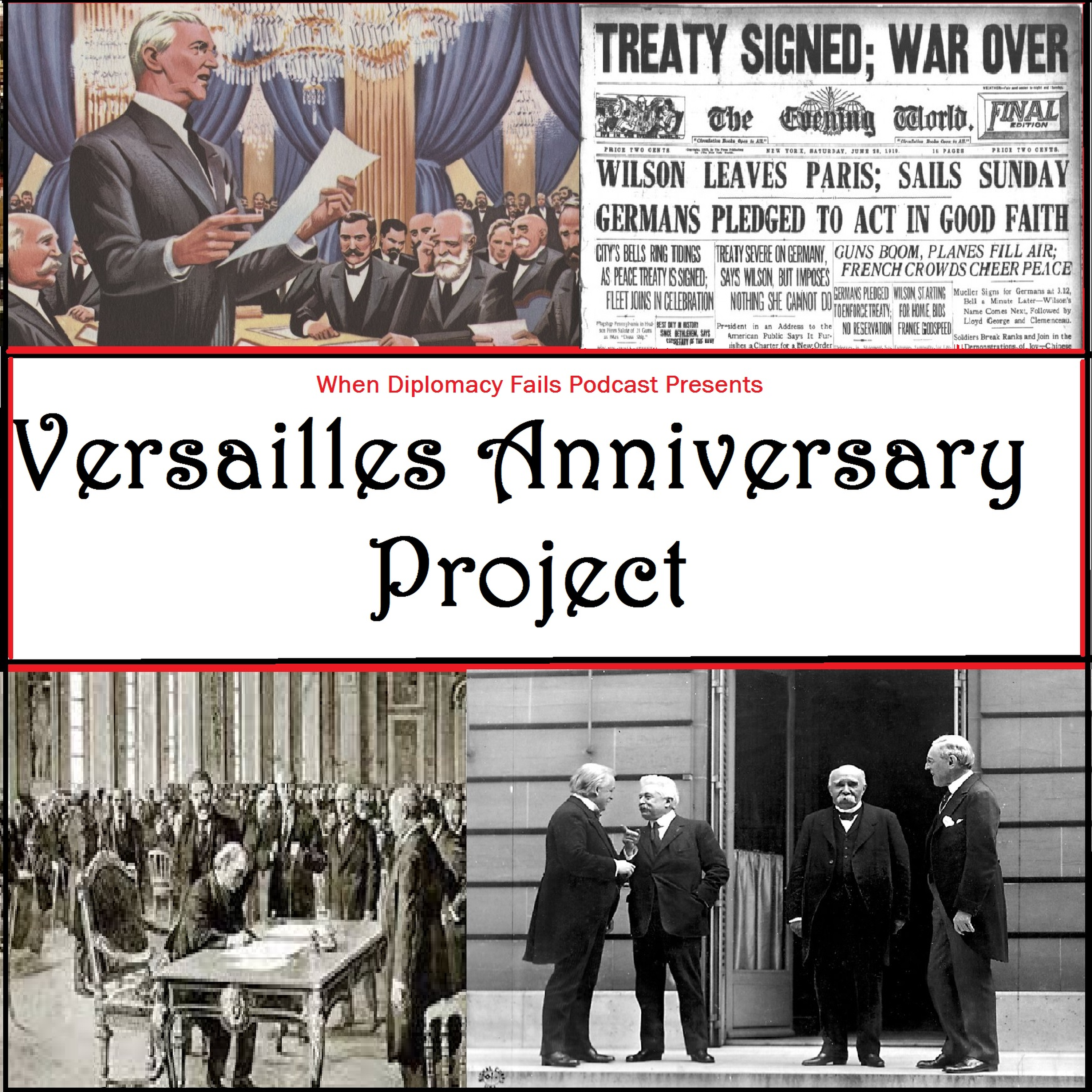
Versailles #85: Thanks for the Mess
It's high time we examined where the Germans fit into all of this mess. Having been left with the most unfair treaty in the universe, how could these poor unfortunate Germans possibly repair and move on? My point, as I make many times in this final episodes of our project, is that the German responsibility for this 'moving on' rested with the Germans and the Germans alone. An imperfect Treaty was not an excuse for Nazism. A did not automatically equal B, and the Treaty of Versailles did not have to lead inexorably to WW2. To claim that it did, to recall those few sentences in a textbook which proclaims as such, is to seriously underrate the responsibility of individuals in Germany, Hitler included of course, for what followed.Few would ever seek to claim that Hitler was justified, but the problem was, he used this Treaty as justification for his earlier successes in peacetime, and while we recognise these successes were wrong, we also let his core argument go unchallenged. If Hitler was wrong to invoke the Treaty when marching into the Rhineland, annexing Austria or seizing the Sudetenland, then it stands that neither he nor his contemporaries were justified in proclaiming that the Treaty of Versailles 'made him do it'. No, it was the German people who made WW2 possible, and setting the record straight in this regard is a mission which is long overdue...*******The Versailles Anniversary Project is possible because of your support and interest - make sure to spread the word, engage with the debate, and look at the different ways you can help this project succeed!->Visit the homeland for this new project!->Become a delegate and play the Delegation Game for just $6 a month!->Support the podcast financially and access ad free episodes with transcripts from just $2 a month! ->Follow WDF on Twitter! ->Join the Facebook group!->Subscribe on iTunes! Hosted on Acast. See acast.com/privacy for more information.
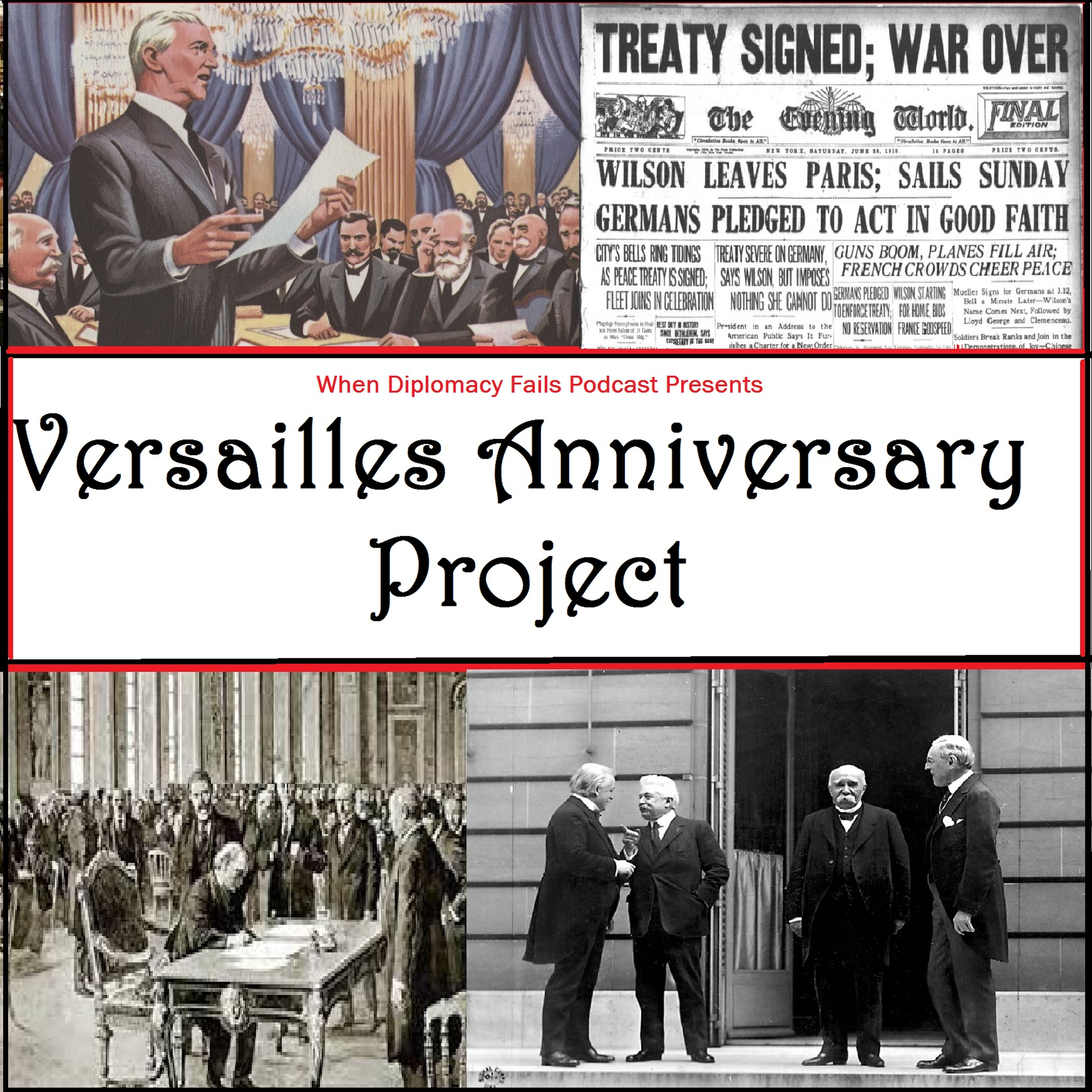
Versailles #84: Big Four, Exit Stage
Vittorio Orlando, George Clemenceau, David Lloyd George and Woodrow Wilson. Four men, who over the last eight months, had been more central to the development of the peace, and thus the development of the 20th century, than any other figures. In this episode, we remember each man and his story during this eight month period. What struggles did each face, what triumphs did they enjoy, and what has history come to say about each of them? Can any one of them truly claim to have succeeded? If all had some qualms with the Treaty, was that Treaty even worth anything? A century later, how do explain the behaviour of these men, and what does it tell us about the Treaty which emerged afterwards?Was there a good guy and a bad guy? Not quite, and just like in 1914, there was no smoking gun. The big four were four men in a sea of others, who tried their best to change the narrative, and to make something new. Each man differed as to exactly what he wanted, but all were united on one thing - a desire to avoid at all costs, a repeat of the Great War. Unfortunately, it is impossible now to avoid the conclusion that they failed, but as we've also learned, not a single one of them went down without a fight. In fact, for a few, the struggle which followed the Treaty truly was a matter of life and death.Track down the song Whirlwinds of Danger which we used in our intermission by clicking here ************The Versailles Anniversary Project is possible because of your support and interest - make sure to spread the word, engage with the debate, and look at the different ways you can help this project succeed!->Visit the homeland for this new project!->Become a delegate and play the Delegation Game for just $6 a month!->Support the podcast financially and access ad free episodes with transcripts from just $2 a month! ->Follow WDF on Twitter! ->Join the Facebook group!->Subscribe on iTunes! Hosted on Acast. See acast.com/privacy for more information.
Delegation Game #20: Peaced Out
Germany and Austria receive their peace treaties, amidst an atmosphere which was calm and collected in some places, but scheming and troubling in others. Could it be guaranteed that these arrangements would stand the test of time? Who was left pleased, where others were enraged? Was anyone listening to the small people? Find out in our final narrative episode of the Delegation Game! Hosted on Acast. See acast.com/privacy for more information.
Versailles #83: Yours Sincerely, Everyone Else
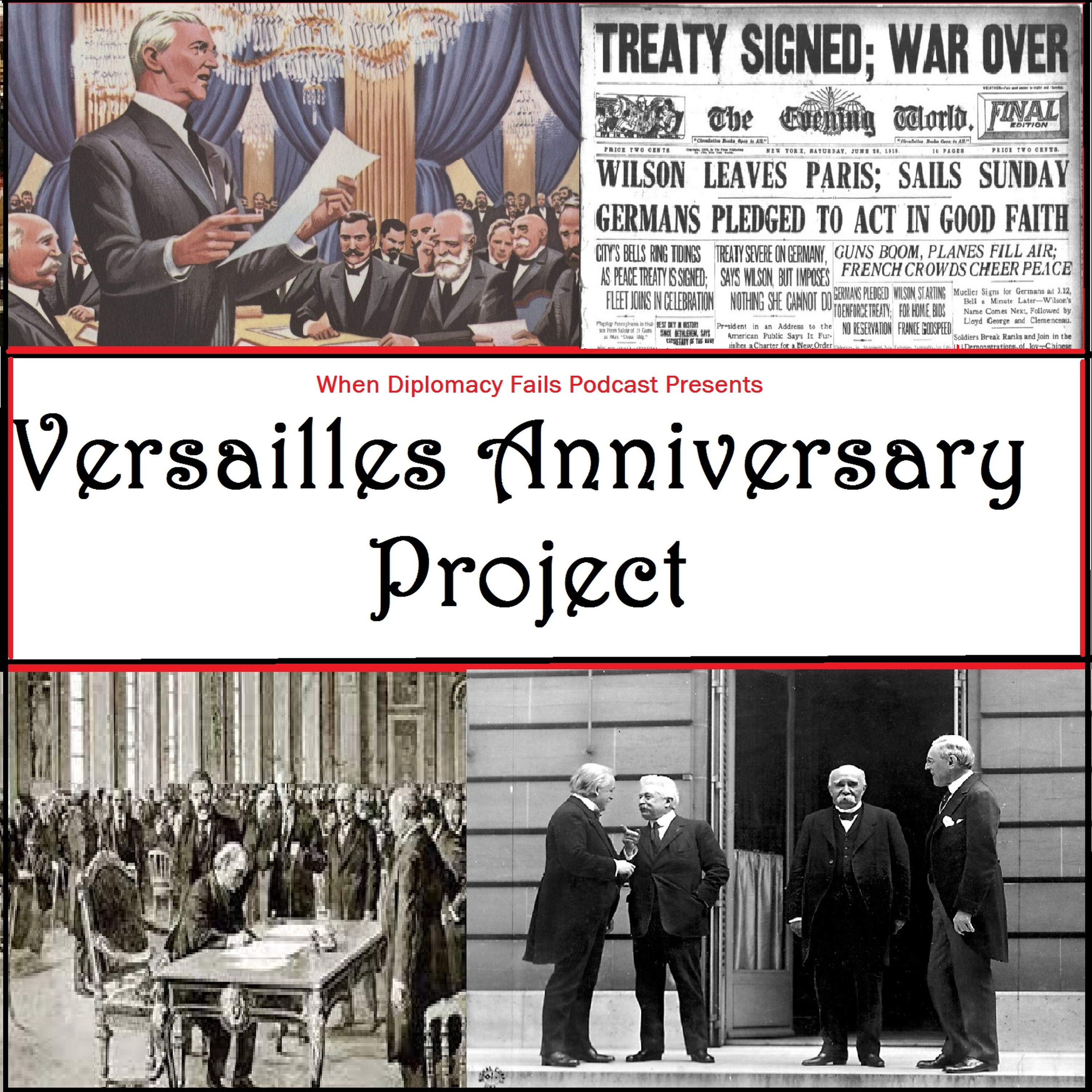
Just because the main event had been and gone, did not mean that the story ended here. For many delegates and peacemakers, the mission remained one of leveraging as many advantages from the peace treaty as possible. For others, it was a case of working with friends and foes alike to secure their borders or their interests once they returned home. Returning home, indeed, was on the agenda on many statesmen who had helped make the treaty. Yet, the signing of the Treaty of Versailles did not mean that the leaders outside of the Big Four were satisfied, and in this episode, we hone in on their experiences, and tell their side of the story.*************The Versailles Anniversary Project is possible because of your support and interest - make sure to spread the word, engage with the debate, and look at the different ways you can help this project succeed!->Visit the homeland for this new project!->Become a delegate and play the Delegation Game for just $6 a month!->Support the podcast financially and access ad free episodes with transcripts from just $2 a month! ->Follow WDF on Twitter! ->Join the Facebook group!->Subscribe on iTunes! Hosted on Acast. See acast.com/privacy for more information.
Versailles #82: OTD 28 June 1919 - Signatures of the Century
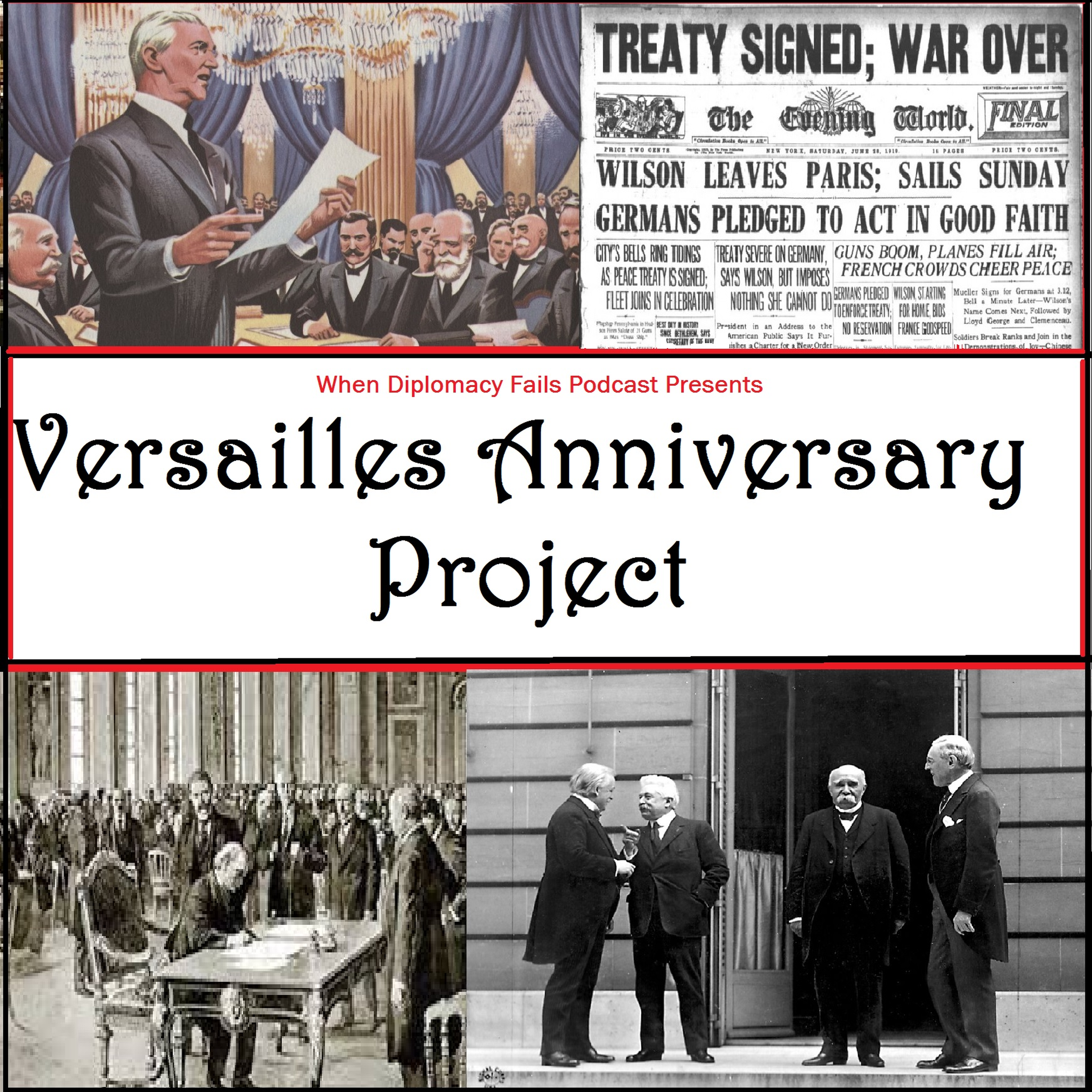
On This Day in history a century ago! What else, other than that infamous scene. After more than eight months, we reach that scene. What exactly was the Hall of Mirrors like to sit in? We have the answers. What did the Germans look like? Again, we have it covered. What were the consequences, of these signatures of the century? Again, we have it covered in Episode 82 of this whopper project. We've been on quite a journey over the last few months, and I couldn't have done without you all. So thanksss so much - sit back, relax and mark this regretful anniversary the only way we can, by listening and wondering what might have been, or how it should have ended.See you on the other side of Versailles....******The Versailles Anniversary Project is possible because of your support and interest - make sure to spread the word, engage with the debate, and look at the different ways you can help this project succeed!->Visit the homeland for this new project!->Become a delegate and play the Delegation Game for just $6 a month!->Support the podcast financially and access ad free episodes with transcripts from just $2 a month! ->Follow WDF on Twitter! ->Join the Facebook group!->Subscribe on iTunes! Hosted on Acast. See acast.com/privacy for more information.
Versailles #81: Hollow Triumphs
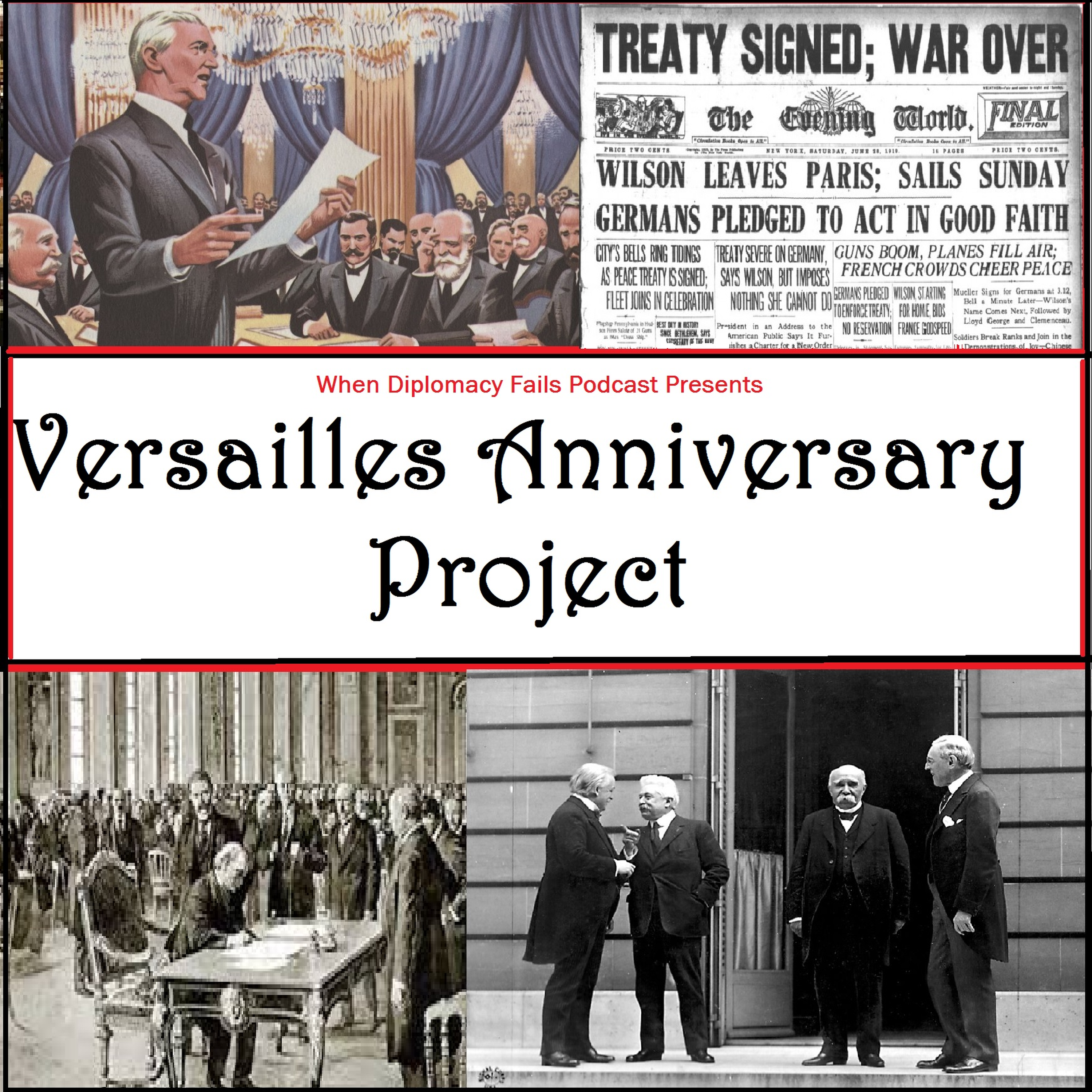
If you thought we'd simply fast forward to the infamous scene where the Germans signed on the dotted line, then you haven't been paying attention! Between the 24 and 27 June, there was a great deal going down, even if many of the peacemakers had mentally checked out, knowing that the signing was only a few days away. As the allies blamed the Germans for Scapa Flow, and Clemenceau imagined a new scheme involving the occupation of the city of Essen, the Germans worked to find someone, anyone, who would sign. The German Colonial Minister would request his title be changed, so that he wouldn't be known as the German colonial minister who signed away Germany's colonies, and this individual, Johan Bell, made his way with Herman Mueller, the German Foreign Minister, to Versailles. The ground was being prepared for the scene, but there seemed like an overall feeling of 'meh' had crept in. Was it not a bit of anticlimax, after all they'd worked on together, that the end result was just some unhappy Germans? Perhaps, but that couldn't be allowed to stand in the way of the gravity of the moment. The 28th loomed, and peacemakers pushed relentlessly on...******The Versailles Anniversary Project is possible because of your support and interest - make sure to spread the word, engage with the debate, and look at the different ways you can help this project succeed!->Visit the homeland for this new project!->Become a delegate and play the Delegation Game for just $6 a month!->Support the podcast financially and access ad free episodes with transcripts from just $2 a month! ->Follow WDF on Twitter! ->Join the Facebook group!->Subscribe on iTunes! Hosted on Acast. See acast.com/privacy for more information.
Delegation Game #19: Peaces Great And Small
With a German Treaty tantalisingly close to completion, it remained to do the rounds, and find out exactly what was bothering or motivating the various delegates. Some last minute agreements, goals, and even strategic alliances were possible, as these peacemakers imagined life after the Treaty of Buckingham... Hosted on Acast. See acast.com/privacy for more information.
Versailles #80: OTD 23rd June 1919 - Ayes to the Right
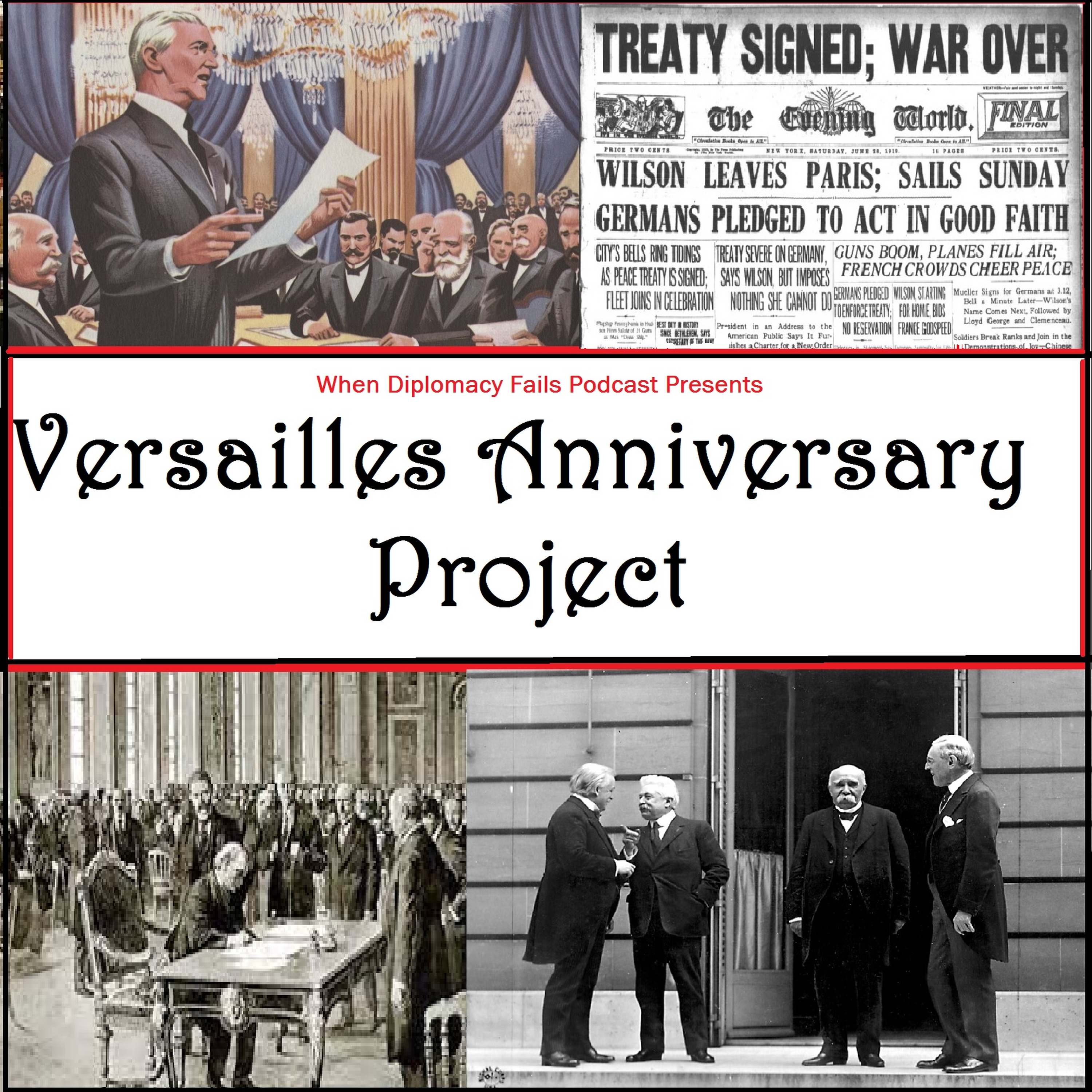
Join me and other history friends on Flick - a great app for history friends and important conversations!My agora friends and others are going to be in New York for a special conference on 29th June - meet Mike Duncan, Kevin Stroud, David Crowther and more! Search Intelligent Speech Conference now! Use the code WDF to get 5% off your ticket!On This Day a century ago, the Germans finally accepted the unacceptable. They finally arrived at the point where they determined that enough was enough. Or, to be more accurate, they exhausted their appeals, and realised that the choice between war or shame was not much of a choice at all. They would pick shame, with several caveats. They had tried everything else - their final appeal was one requesting another 48 hours delay, which the allies refused, likely because of the events at Scapa Flow 48 hours before.Now there was truly no going back. They would have to accept the peace treaty, warts and all, the same peace which Ulrich von Brockdorff-Rantzau had so spurned on 7th May. This treaty was virtually unchanged, as was the allied determination to press home their considerable advantages if it proved necessary. No, the new Chancellor and his President said, they could not risk the fate of Germans by a refusal. So it was that the German assembly voted explicitly to outlaw the use of this moment for political gains in the future - a seriously significant moment which was later subsumed under Nazi propaganda. It could not be denied that the German statesmen, from virtually all parties, had assented.The Ayes to the right were legion, and nobody could be quite sure what would happen next. First things first though, they needed to find some Germans wiling to journey to Paris and sign - this proved to be the next trying phase of the peace conference, but back in Paris, the celebrations were beginning early. After so many months of work, it was finally time to revel in the fact that it was over, and soon they would be going home...*****The Versailles Anniversary Project is possible because of your support and interest - make sure to spread the word, engage with the debate, and look at the different ways you can help this project succeed!->Visit the homeland for this new project!->Become a delegate and play the Delegation Game for just $6 a month!->Support the podcast financially and access ad free episodes with transcripts from just $2 a month! ->Follow WDF on Twitter! ->Join the Facebook group!->Subscribe on iTunes! Hosted on Acast. See acast.com/privacy for more information.
Versailles #79: Confusion & Delusion
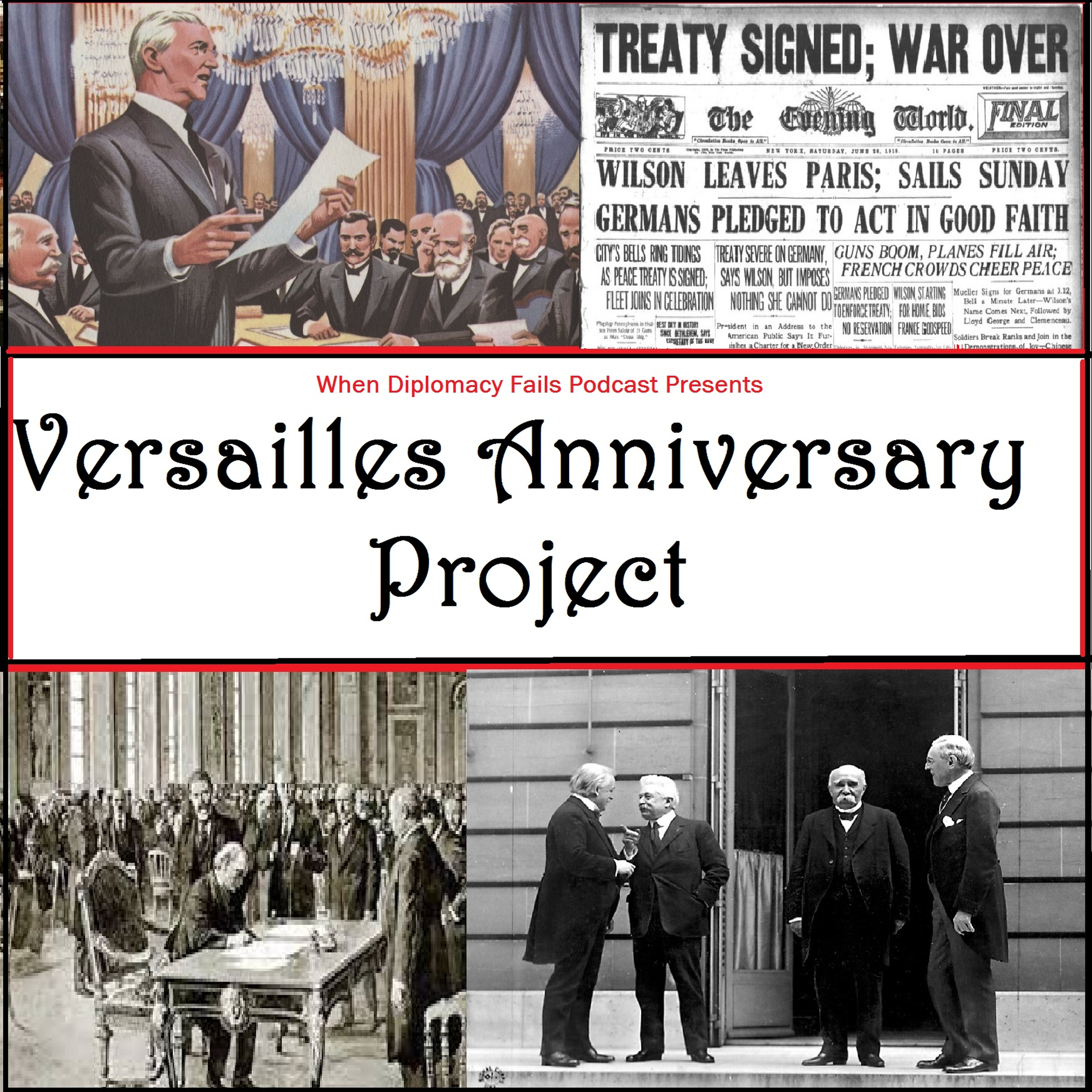
Join me and other history friends on Flick - a great app for history friends and important conversations!My agora friends and others are going to be in New York for a special conference on 29th June - meet Mike Duncan, Kevin Stroud, David Crowther and more! Search Intelligent Speech Conference now! Use the code WDF to get 5% off your ticket!Our latest episode contains the following theme, expressed by the Germans, to the effect that Germany would not accept the so-called 'war guilt clause'. The 22nd of June was a day of intense anxiety for the Germans and big three alike, because of this theme of defiance, and also, in a sense, delusion. The news of Scapa Flow hardly helped, as any sense of sympathy had been torpedoed, pun intended, and the Germans were faced with another brick wall. One particularly defiant message was sent in the late afternoon of 22nd June by Gustav Bauer, the German Chancellor, who clung to the notion that the most offensive articles could be deleted from the final version of the peace treaty, and it read:Germany further lays the greatest emphasis on the declaration that she cannot accept article 231 of the Treaty of Peace which requires Germany to admit herself to be the sole and only author of the war, and does not cover this article by her signature. It consequently follows without further argument that Germany must also decline to recognise that the burdens should be placed upon her on the score of the responsibility for the war which has unjustly been laid at her door.And that wasn't all - as it became evident that Germany would soon either tumble into an unwinnable war, or face the ultimate shame, statesmen across Europe were already planning for what would happen next. Yet, it was outside of Europe, in the court of the newest world power, that these decisions would prove most biting of all. What would the American President do with that undeniable tide of isolationism threatening to subsume American politics? And what would Europe do if, contrary to his public pronouncements, he was in fact submerged?******The Versailles Anniversary Project is possible because of your support and interest - make sure to spread the word, engage with the debate, and look at the different ways you can help this project succeed!->Visit the homeland for this new project!->Become a delegate and play the Delegation Game for just $6 a month!->Support the podcast financially and access ad free episodes with transcripts from just $2 a month! ->Follow WDF on Twitter! ->Join the Facebook group!->Subscribe on iTunes! Hosted on Acast. See acast.com/privacy for more information.
Versailles #78: OTD 21st June 1919 - Ships of State
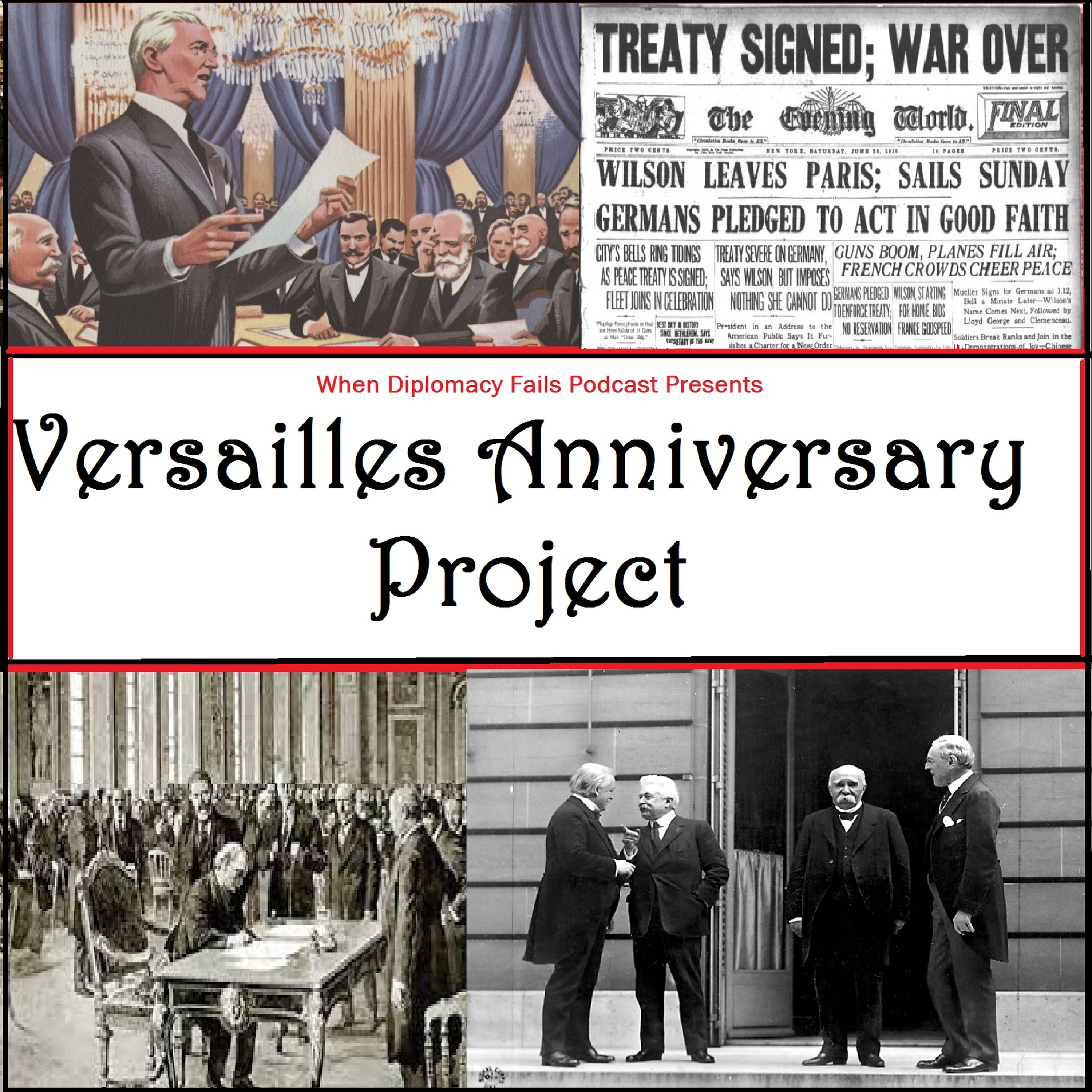
Join me and other history friends on Flick - a great app for history friends and important conversations!My agora friends and others are going to be in New York for a special conference on 29th June - meet Mike Duncan, Kevin Stroud, David Crowther and more! Search Intelligent Speech Conference now! Use the code WDF to get 5% off your ticket!Within this episode we tell the incredible story of Scapa Flow, that infamous event in the twilight of the peace conference, where the German admiral von Reuter determined that he had no choice other than to scuttle his ships. As we will learn here though, the decision which the German admiral took was not a straightforward case of a German doing bold things, and debate rages on to this day over whether or not the act was a result of misunderstanding, or deliberate sabotage.We also provide some background to the situation at Scapa Flow. How long had von Reuter's 74 ships been at this harbour, and why were they interned, rather than simply handed over as a surrender? What did the allies plan to do with his ships, and how did they plan to overcome thier disagreements? Could anyone really afford to add these 74 ships to their naval arsenal, or should they be used instead as a beacon of hope, by handing them to the League of Nations? Maybe they should just be destroyed in a grand ceremony, the symbol of the Anglo-German naval race sinking beneath the waves. As we will learn, the scuttling didn't merely embarrass the British, it also saved any potential antagonism between the British and Americans. Perhaps, in some respects, the act was even a blessing in disguise?*************The Versailles Anniversary Project is possible because of your support and interest - make sure to spread the word, engage with the debate, and look at the different ways you can help this project succeed!->Visit the homeland for this new project!->Become a delegate and play the Delegation Game for just $6 a month!->Support the podcast financially and access ad free episodes with transcripts from just $2 a month! ->Follow WDF on Twitter! ->Join the Facebook group!->Subscribe on iTunes! Hosted on Acast. See acast.com/privacy for more information.
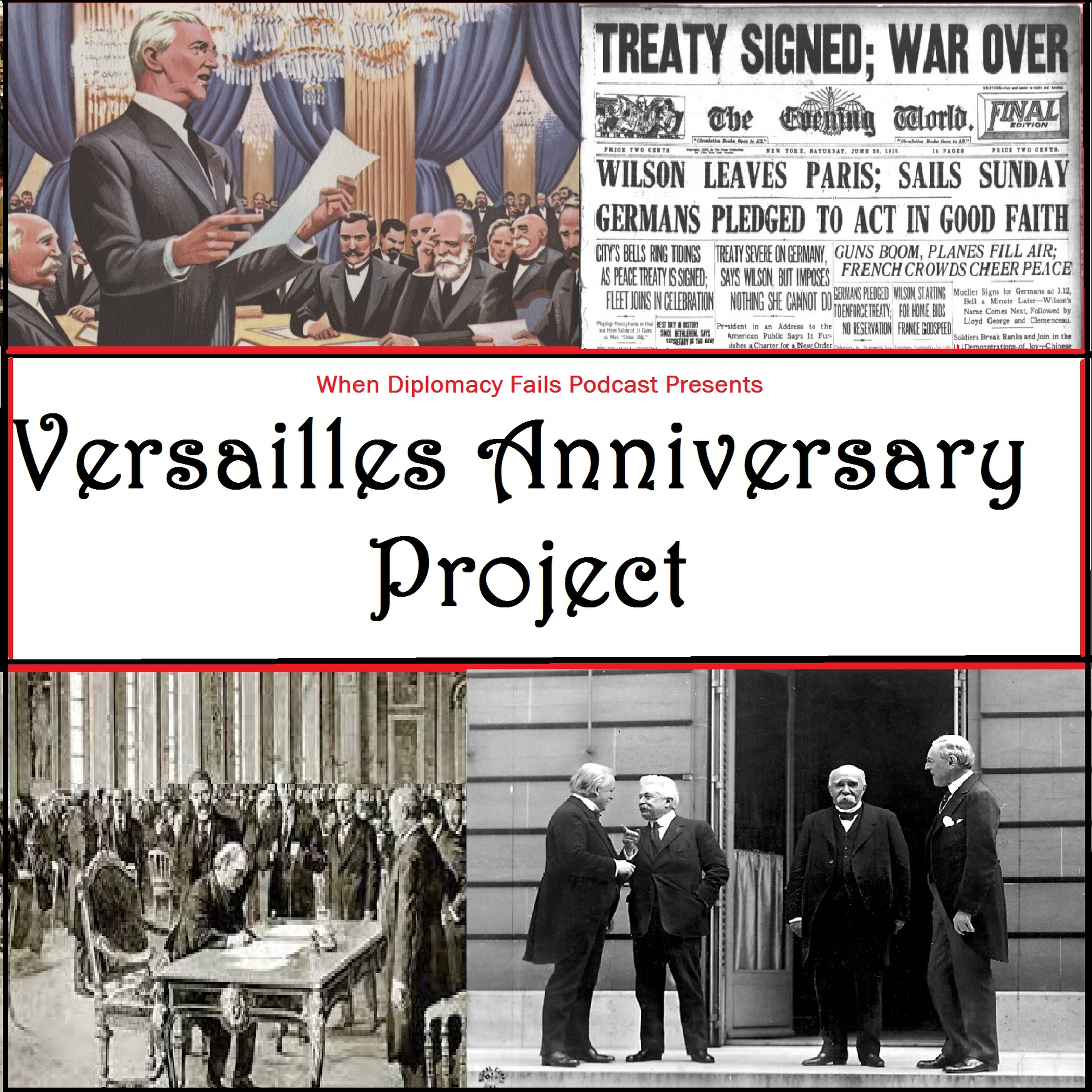
Versailles #77: War or Shame
Join me and other history friends on Flick - a great app for history friends and important conversations!My agora friends and others are going to be in New York for a special conference on 29th June - meet Mike Duncan, Kevin Stroud, David Crowther and more! Search Intelligent Speech Conference now! Use the code WDF to get 5% off your ticket!While the allied rejection of the Counterproposals seemed to signify that there was no going back for Germany, certain individuals within the German delegation in Paris, and the German government back in Weimar, were keen to try a few final desperate things. At the top of the list of these desperate men was Ulrich von Brockdorff-Rantzau, the German Foreign Minister and recipient of the allied terms on 7th May. BR was, incredibly enough, not just planning to reject these terms, he was also preparing for war with the allies. What was more, this German and many of his peers in the German delegation had become convinced that this was the only way to avoid the humiliation of defeat, whatever the cost may be.So we examine here the forgotten story of Germany's planned resistance to the peace treaty, which the allies had made plain, could not be negotiated. To BR though, the apocalyptic vision of what would follow German rejection of the terms, complete with an allied invasion of German lands, soldiers in Berlin and maybe even the dissolution of the German Empire into individual German states, all this was worth it if it provided Germans with an opportunity amidst the carnage. As we will learn in this episode, BR was banking on noting less than an allied collapse in the midst of this invasion, which would enable Germans to bring the divided allies back to the negotiating table, and get a better peace. As we will also learn though, BR had it all wrong. So very wrong in fact, and the allies knew that at this point, it would have been the ultimate crime to hold back after coming this far...**********The Versailles Anniversary Project is possible because of your support and interest - make sure to spread the word, engage with the debate, and look at the different ways you can help this project succeed!->Visit the homeland for this new project!->Become a delegate and play the Delegation Game for just $6 a month!->Support the podcast financially and access ad free episodes with transcripts from just $2 a month! ->Follow WDF on Twitter! ->Join the Facebook group!->Subscribe on iTunes! Hosted on Acast. See acast.com/privacy for more information.
Delegation Game #18: Operation Redeemer
Operation Redeemer - that plan to relieve the besieged forces commanded by General David McCay in Kiev, spearheaded by a force commanded by Paul von Lettow Vorbeck, composed of Freikorps soldiers and other German volunteers. It was a story almost too incredible to be true - and yet, onwards the redeemed marched. Back in London, the peacemakers chaired the Arbitration Committee, and imagined life after the conference. It seemed that the pieces were coming together, but would everyone be standing by the end? Hosted on Acast. See acast.com/privacy for more information.
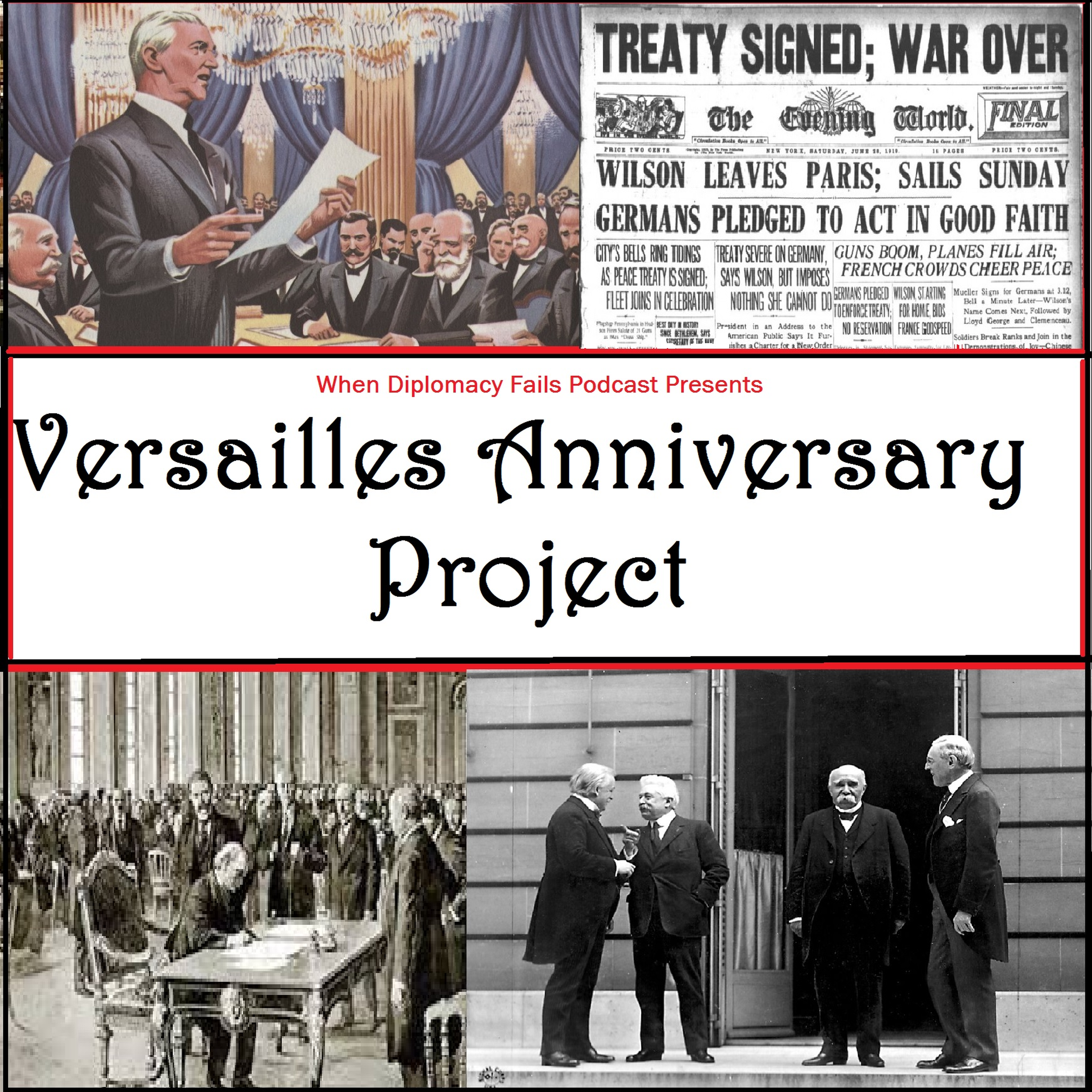
Versailles #76: OTD 16th June 1919 - A Show of Unity
Join me and other history friends on Flick - a great app for history friends and important conversations! My agora friends and others are going to be in New York for a special conference on 29th June - meet Mike Duncan, Kevin Stroud, David Crowther and more! Search Intelligent Speech Conference now! Use the code WDF to get 5% off your ticket!On This Day in history a century ago, a significant milestone in the history of the Paris Peace Conference was reached, and like so many others we have come across, its significance is largely lost in the narrative. This allied response, examined in this episode, represented a solid defence of their peace treaty, and a rebuke of Germany’s pretences to be standing for the Fourteen Points. The allied response was devastating and formidable, in that it was effectively the answer to Germany's claims to any moral high ground. Germany could claim no such high ground, said the allies, for their past behaviour disqualified them from any such claims.The historian George Creel wrote on the allied response: "It is to be wished that the two documents – the German of May 29th and the Allied reply of June 16th – could be printed in every language and placed in every school and library, for they furnish in themselves a complete and dramatic exposition of the whole Peace Treaty, permitting the formation of an intelligent and independent opinion with respect to the confused question of justice or injustice."The significance of the communications could never be in doubt. What was in doubt was what might happen next. The allied language was certainly arranged to leave no doubt: "It is only justice that restitution should be made and that these wronged peoples should be safeguarded for a time from the competition of a nation whose industries are intact and have even been fortified by machinery stolen from occupied territories. If these things are hardships for Germany, they are hardships which Germany has brought upon herself. Somebody must suffer for the consequences of the war. Is it to be Germany, or only the peoples she has wronged?" There could be no doubt according to the big three - the Germans had to admit their wrongdoing, and what was more, this was the end of the debate. "In conclusion", their reply said, "the Allied and Associated Powers must make it clear that this letter and the memorandum attached constitute their last word."Failing the successful adherence by the Germans to these terms, "The said Armistice will then terminate, and the Allied and Associated Powers will take such steps as they think needful to enforce their Terms." It was, in short, do or die for the German government, and On This Day the scales finally fell from the German eyes...or did they? Listen to this fascinating examination of this forgotten moment to find out...********The Versailles Anniversary Project is possible because of your support and interest - make sure to spread the word, engage with the debate, and look at the different ways you can help this project succeed!->Visit the homeland for this new project!->Become a delegate and play the Delegation Game for just $6 a month!->Support the podcast financially and access ad free episodes with transcripts from just $2 a month! ->Follow WDF on... Hosted on Acast. See acast.com/privacy for more information.
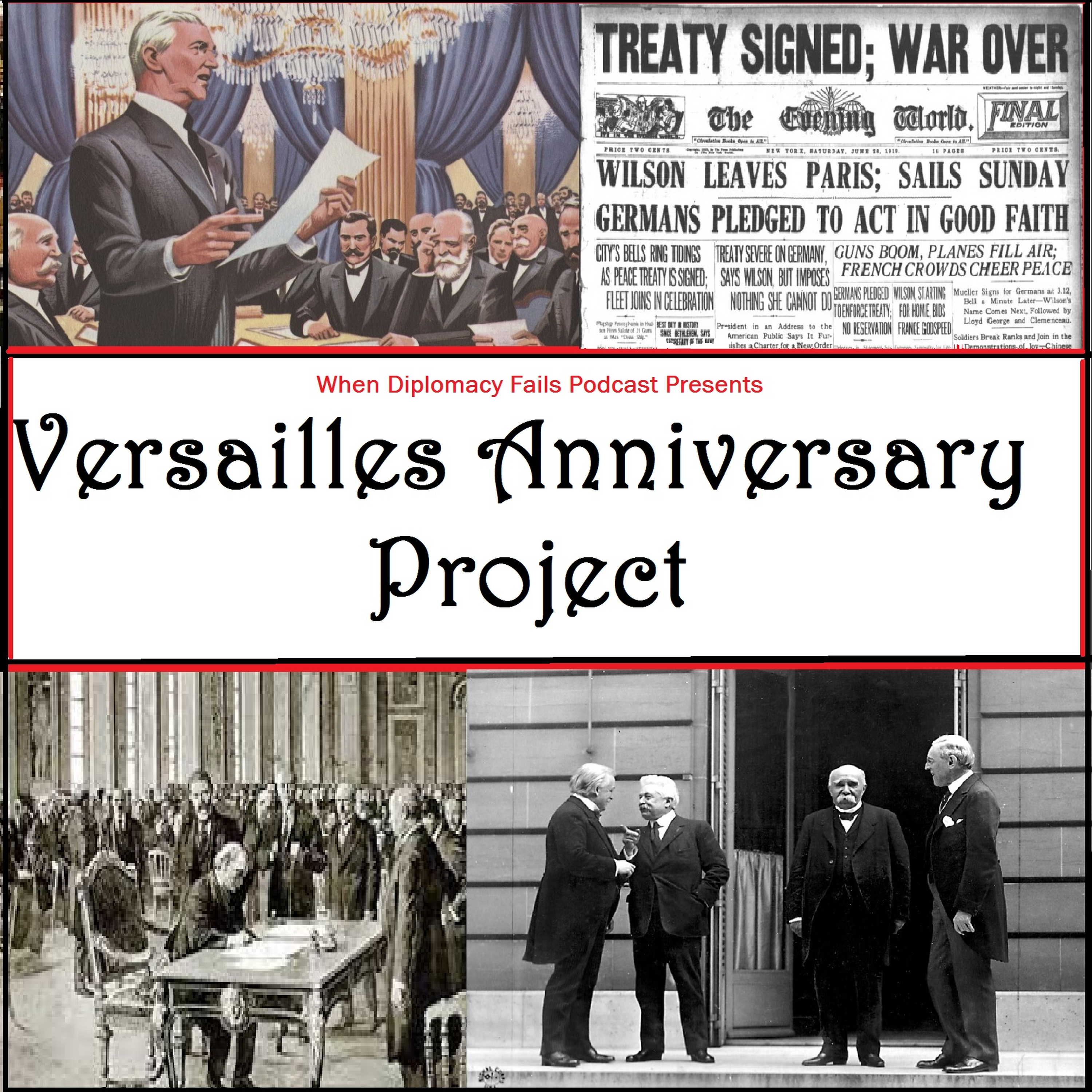
Versailles #75: Destructive Divisions
Join me and other history friends on Flick - a great app for history friends and important conversations!My agora friends and others are going to be in New York for a special conference on 29th June - meet Mike Duncan, Kevin Stroud, David Crowther and more! Search Intelligent Speech Conference now! Use the code WDF to get 5% off your ticket!Between 5 to 10 June 1919, one could be forgiven for imagining that the allies would be far too buys discussing the German counterproposals and their intended reply to do anything else. In fact, what we see on the morning of 5th June is a significant exchange between Paderewski and the big three, as Poland was placed on trial for its recent actions. It was almost as though the big three had nothing else to do, as their attentions were well and truly occupied with this largely unrelated issue.Or...was it so unrelated? After all, unless the border with Germany and Poland was finalised, and the question of Upper Silesia affirmed, there could be no clarity on the German Treaty as a whole. Furthermore, it was entirely possible that if the Poles were unclear about where they would have to stop in thier claims to nationhood, a conflict could erupt as soon as the peace was signed. As it happened, this conflict did erupt, but between Poles and Soviets rather than Poles and Germans. Solving the borders between the two states was just another divisive mission which the big three would have to accomplish, and it was plain that each individual had a different stake in the debate.Was it possible that while en route to the resolution of the peace treaty, the big three could get so tied up in other questions equally in need of resolution that they might never make it to the end? Possibly; at the very least, these destructive divisions which always remained under the surface, and which moved the French, Americans and British to grow their own positions on the different aspects of the peace refused to go away. Until compromise could be reached, a final settlement would thus be out of reach altogether.********The Versailles Anniversary Project is possible because of your support and interest - make sure to spread the word, engage with the debate, and look at the different ways you can help this project succeed!->Visit the homeland for this new project!->Become a delegate and play the Delegation Game for just $6 a month!->Support the podcast financially and access ad free episodes with transcripts from just $2 a month! ->Follow WDF on Twitter! ->Join the Facebook group!->Subscribe on iTunes! Hosted on Acast. See acast.com/privacy for more information.
Delegation Game #17: Peace At Last?
An eventful fortnight indeed, as the delegates crowd around the table to read the latest on the German peace treaty, the dominions offer their views, the Germans seem to be scheming, and the Russians remain mysterious. Still, despite the setbacks and mistrust, the lies and disappointments, one could be forgiven for wondering - is this peace at last? Hosted on Acast. See acast.com/privacy for more information.
D-Day - Sand and Steel w/ Peter Caddick-Adams
75 Years ago, our ancestors made a brave step towards the liberation of France from the most terrible of tyranny. Now, with the considerable help of Dr Peter Caddick-Adams, historian, journalist, author, reservist and more, I delve into this event, using the recently released book Sand and Steel - a New History of D-Day by the author as my guide. We get into so much detail here, and a huge thanksss must go out to Peter for being so swell and coming onto the show - I had a ball talking with him!To get Peter's book click on the link here OR enter our competition by sharing the relevant status on Twitter or Facebook...or both! The winner will get a signed copy of Peter's whopper book sent directly to their door, so don't delay! Competition ends Monday 10th June at 12 noon GMT. Thanksss! Hosted on Acast. See acast.com/privacy for more information.
Versailles #74: Commission Impossible
Join me and other history friends on Flick - a great app for history friends and important conversations!My agora friends and others are going to be in New York for a special conference on 29th June - meet Mike Duncan, Kevin Stroud, David Crowther and more! Search Intelligent Speech Conference now! Use the code WDF to get 5% off your ticket!The incredible story of the Paris Peace Conference addresses that all important question of: should they not really have been finished this madness by now?! The Counterproposals had by now been absorbed, and from the beginning it was clear that they were bound to cause divisions. Not mere technicians or delegates, but full blown PRIME MINISTERS were determined to lead these divisions. Lloyd George, after supporting just as many difficult clauses as his peers, was now convinced, after having met with his peers in the British Empire delegation, that the Treaty as it stood was unacceptable. If the Treaty was not changed, the PM claimed, then he would have to be allowed return to Parliament back in London, in a tactic not dissimilar to Vittorio Orlando, to justify it. In the PM's sights were arguably the most sensitive clauses which had been agreed, and he potentially had enemies in each.The Rhineland occupation, Clemenceau's proudest achievement perhaps, was under threat from the PM's revisionist gaze. Britons, LG claimed, would never accept the occupation. Few of his delegates would even consider it, and they would not approve of British soldiers marching into Germany to enforce the peace based on this clause. Clemenceau was apoplectic, and we know this from the conversations he shortly shared with his counterparts, but the minutes of the Council of Four remained sickly polite and familiar, as though the PM wasn't angling to tear up months of work which he had played no small role in creating.But that wasn't all - Upper Silesia would need a plebiscite, Germany must be invited into the League sooner, or perhaps instantly, and reparations must be fixed to a certain figure. These concessions, claimed Lloyd George, were the only way to fuse peace to the international order, and guarantee peace between France and Germany. That said, Lloyd George scoffed at the idea that war would return to Europe, or that Germany would pose a threat to France, for at least another 30 or 50 years. Certainly, the PM claimed, Germany and France would not be at each other's throats again in a mere 15 years, so what was Clemenceau so worried about? In fact the PM was correct, the Nazis annexed the Rhineland in 16, not 15 years, but he was bound to be wrong about virtually everything else. Whether he owned these errors or not, they threatened to undo everything which the big three had worked towards since they had first landed in Paris...***************The Versailles Anniversary Project is possible because of your support and interest - make sure to spread the word, engage with the debate, and look at the different ways you can help this project succeed!->Visit the homeland for this new project!->Become a delegate and play the Delegation Game for just $6 a month!->Support the podcast financially and access ad free episodes with transcripts from just $2 a month! ->Follow WDF on Twitter! ->Join the Facebook group!-> Hosted on Acast. See acast.com/privacy for more information.
Versailles #73: The German Counterproposals
Join me and other history friends on Flick - a great app for history friends and important conversations!My agora friends and others are going to be in New York for a special conference on 29th June - meet Mike Duncan, Kevin Stroud, David Crowther and more! Search Intelligent Speech Conference now! Use the code WDF to get 5% off your ticket!After weeks of waiting, Ulrich von Brockdorff-Rantzau finally broke radio silence on 29th May 1919, when he communicated the full extent of Germany's answer to the draft peace treaty from 7th May. And oh boy, was this communique full in its extent. Consisting of more than 100 pages, what came to be known as the German 'counterproposals' was half a document half as large as the peace treaty itself, and it packed quite a punch. Initially, it was necessary to translate the document to discover its ramifications, so it wasn't until 31st May that true consideration of it was possible for the non-German speakers. This delayed matters, and facilitated speculation among the big three over what the Germans could be after. Before long, the document would be unwrapped - the Germans, in a very roundabout way, were saying Nein.In this episode, we examine a forgotten answer to that forgotten question - that being, what did the Germans have to say about the allied draft peace treaty? So often we are presented with the simple narrative of A-B, where the treaty is presented on 7th May, and approved on 28th June. Here, we are reminded that matters were rarely if ever so simple. The Germans had been waiting on the sidelines, following the peace conference as best as they could. Now utterly depressed and disillusioned by what they had been given, the Germans started writing immediately after 7th May, and came to discover that they had an awful lot to get off their chests. The allies, technically, did not have to listen to their proposals, yet in the atmosphere of emotional post-war morality politics, the big three discovered that not only would they have to listen to these proposals, they would also have to absorb them, consider them, and mount a rely. This was a process which, it was feared, the vaunted unity of the big three up to this point might not survive...*********The Versailles Anniversary Project is possible because of your support and interest - make sure to spread the word, engage with the debate, and look at the different ways you can help this project succeed!->Visit the homeland for this new project!->Become a delegate and play the Delegation Game for just $6 a month!->Support the podcast financially and access ad free episodes with transcripts from just $2 a month! ->Follow WDF on Twitter! ->Join the Facebook group!->Subscribe on iTunes! Hosted on Acast. See acast.com/privacy for more information.
Versailles #72: Grim Expectations
Join me and other history friends on Flick - a great app for history friends and important conversations!My agora friends and others are going to be in New York for a special conference on 29th June - meet Mike Duncan, Kevin Stroud, David Crowther and more! Search Intelligent Speech Conference now! Use the code WDF to get 5% off your ticket!The last few days of May 1919 were a weird time in the allied camp. Despite the fact that it was absolutely expected that Germany was about to send 'elaborate' counterproposals, which meant that Germany, therefore, would not be signalling its complete acceptance of the Peace Treaty, the big three refrained from authorising Marshal Foch to begin his preparations for war. These preparations might have turned up the heat on Germany, and demonstrated to Chancellor Scheidemann's government that the allies were serious indeed about their demand for unconditional acceptance being respected. This was a strange contradiction in the allied policy - did they not want the Germans to know they meant business? It was a strange contradiction, but it was far from the only one.Despite the need to prepare for the arrival of these anticipated counterproposals, and the necessity in maintaining allied unity at all times, the big three decided that the time was now right to gang up on Italy like never before. In a series of scathing verbal attacks on the Italian premier who was present, Clemenceau, Wilson and Lloyd George in their turn all claimed that Orlando had had no policy, that he had made no clear requests, that much had changed since 1915, that he was jeopardising the Entente, and a whole range of other ideas. We will measure the fairness of these jibes in the episode, but they typically followed by the claim that they meant Italy to feel no disrespect, and that they looked forward to solving these issues in the future.Insincere though the last minute trudgings through the Italian issues, the Austrian peace and the Russian situation might appear to us here, the big three seemed to have little else to do, while they waited with baited breath to see what the Germans would say about their peace treaty. Remember - these were supposed to be the victorious allies. Notwithstanding Germany's right to make suggestions, according to the terms of the peace, the spectre of Germany making the allies wait in line for their verdict was a bizarre one. Perhaps, the big three genuinely believed that the best course was to give diplomacy another chance, and that was why they made Foch delay his plans, which might have made a difference to the German reply. Either way, the moments which filled the diaries of the big three in the final days of May were about to build towards something incredible, and the grim waiting process seemed like the very worst part of this process.********The Versailles Anniversary Project is possible because of your support and interest - make sure to spread the word, engage with the debate, and look at the different ways you can help this project succeed!->Visit the homeland for this new project!->Become a delegate and play the Delegation Game for just $6 a month!->Support the podcast financially and access ad free episodes with transcripts from just $2 a month! ->Follow WDF on Twitter! ->Join the Facebook group!-> Hosted on Acast. See acast.com/privacy for more information.
Versailles #71: Relegating Russia
Join me and other history friends on Flick - a great app for history friends and important conversations!My agora friends and others are going to be in New York for a special conference on 29th June - meet Mike Duncan, Kevin Stroud, David Crowther and more! Search Intelligent Speech Conference now! Use the code WDF to get 5% off your ticket!There was nothing simple about the allied policy towards Russia. The adventures of William C. Bullitt and a failed conference at Prinkipo were all the allies had to show for their attempts to fix Russia, which meant ridding the world of the Bolsheviks. Of course, the allies also had considerable forces of their own in the different Russian fronts, in the Northern theatre based at Archangel, in the South near the Crimea and in Siberia at Omsk. This latter theatre contained the base of one Admiral Alexander Kolchak, and on 26th May 1919, the finishing touches had finally been put on a document of incredible significance. The allies, it seemed, were willing to recognise Kolchak's government as THE government of Russia!This was nothing less than a declaration of war on the Bolsheviks, but if you asked Lenin, he would have said without much of an effort, that the allies were at war with the Bolsheviks anyway. The impetus behind making their pro-Kolchak policy official was the successive military triumphs of his regime. The problem was, in spite of what the big three might have thought, these triumphs were very impressive, but they had been impressive a month ago. In the space of that month, while the German treaty was handed over, the Italians were peeved and the Greeks landed, a great deal had changed. This period of change was not felt in Paris though, because the big three were steadily informed of the situation. Who supplied their information? The very faction they wished to see come out on top, Admiral Kolchak.This produced a tragic situation whereby allied help, such as it was, came far too late to make any difference. The allied recognition of Kolchak, while it was effective in bolstering the morale of him and his men, did not have much of a material impact. The allies, in other words, had moved too slowly, and not done enough, to make any difference. This was, in many respects, the story of the big three's life in the Peace Conference. In addition to their recognition of Kolchak though, the allies forwarded EIGHT demands (not seven as I say here, before going on to list eight...oops!) which Kolchak would have to adhere to if his regime was to enjoy allied support. Kolchak agreed with the terms - what did he have to lose after all, when his forces were on the backfoot, and allied help was so desperately needed? In the end, the allies treated the Russian front the same as they treated the Turkish, Eastern European, African, Middle Eastern and indeed the German front - they acted too slowly, with inadequate information, and made a giant mess in the process. We live with the consequences of their mess today, so why not have a listen and see just how much stuff you can blame the big three for today?!*********The Versailles Anniversary Project is possible because of your support and interest - make sure to spread the word, engage with the debate, and look at the different ways you can help this project succeed!->Visit the homeland for this new project!->Become a delegate and play the Delegation Game for just $6 a month!->Support the podcast financially and access ad free episodes with transcripts from... Hosted on Acast. See acast.com/privacy for more information.
Versailles 70: What Will Germany Say?
Join me and other history friends on Flick - a great app for history friends and important conversations! My agora friends and others are going to be in New York for a special conference on 29th June - meet Mike Duncan, Kevin Stroud, David Crowther and more! Search Intelligent Speech Conference now! Use the code WDF to get 5% off your ticket!By the last week of May 1919, the focus in the allied camp had switched from Italy to Germany...for the most part. It was known that the Germans would have to send a reply to the allied peace treaty soon - they had just 15 days from the moment it was handed to them to give an answer. Thus, while in the interim the big three mostly did their own thing, by the tailend of that deadline, they were beginning to seriously worry about what the Germans would actually say. What they could agree on, at least, was that this was THE peace treaty, and like it or not, Germany would have to sign. At least, that was how it seemed.It is up to me to explain then, if this resolute insistence on accepting the terms of the treaty was so dominant, why were the Germans allowed to procrastinate, and why were they even allowed to communicate counterproposals to the allies, making their own suggestions, and continuing their loud protest at the terms already agreed to. It was quite a sight – after four months of negotiation, the treaty reached by the allies was meant to be final. Yet, within two weeks of handing that treaty to the Germans, it was evident that they were not willing to accept it in its full form. What was more, as we will learn, some of the allies, and even some of the big three, had begun to get cold feet as to the nature of some of the terms. ************The Versailles Anniversary Project is possible because of your support and interest - make sure to spread the word, engage with the debate, and look at the different ways you can help this project succeed!->Visit the homeland for this new project!->Become a delegate and play the Delegation Game for just $6 a month!->Support the podcast financially and access ad free episodes with transcripts from just $2 a month! ->Follow WDF on Twitter! ->Join the Facebook group!->Subscribe on iTunes! Hosted on Acast. See acast.com/privacy for more information.
Delegation Game #16: Truth & Consequences
In episode 16 of the game, we visit four distinct scenes, where a great deal of drama goes down. Lloyd George has some words for the British Empire Delegation; four allied figures meet to try and address their differences; the Austro-German party urge action in the creation of some peace treaty which will actually end the war, and in the American delegation, the fallout from Woodrow Wilson's stroke continues to paralyse policy, as Poles and Frenchmen look on. It's an episode packed with developments, subtle hints and the consequences of previous decisions, so I hope you enjoy it! See you next time on Saturday 8th June!****************The Delegation Game is possible because of your support and interest - make sure to spread the word, engage with the debate, and look at the different ways you can help this project succeed!->Become a delegate and play the Delegation Game for just $6 a month!->Support the podcast financially and access ad free episodes with transcripts from just $2 a month! ->Follow WDF on Twitter! ->Join the Facebook group!->Subscribe on iTunes! Hosted on Acast. See acast.com/privacy for more information.
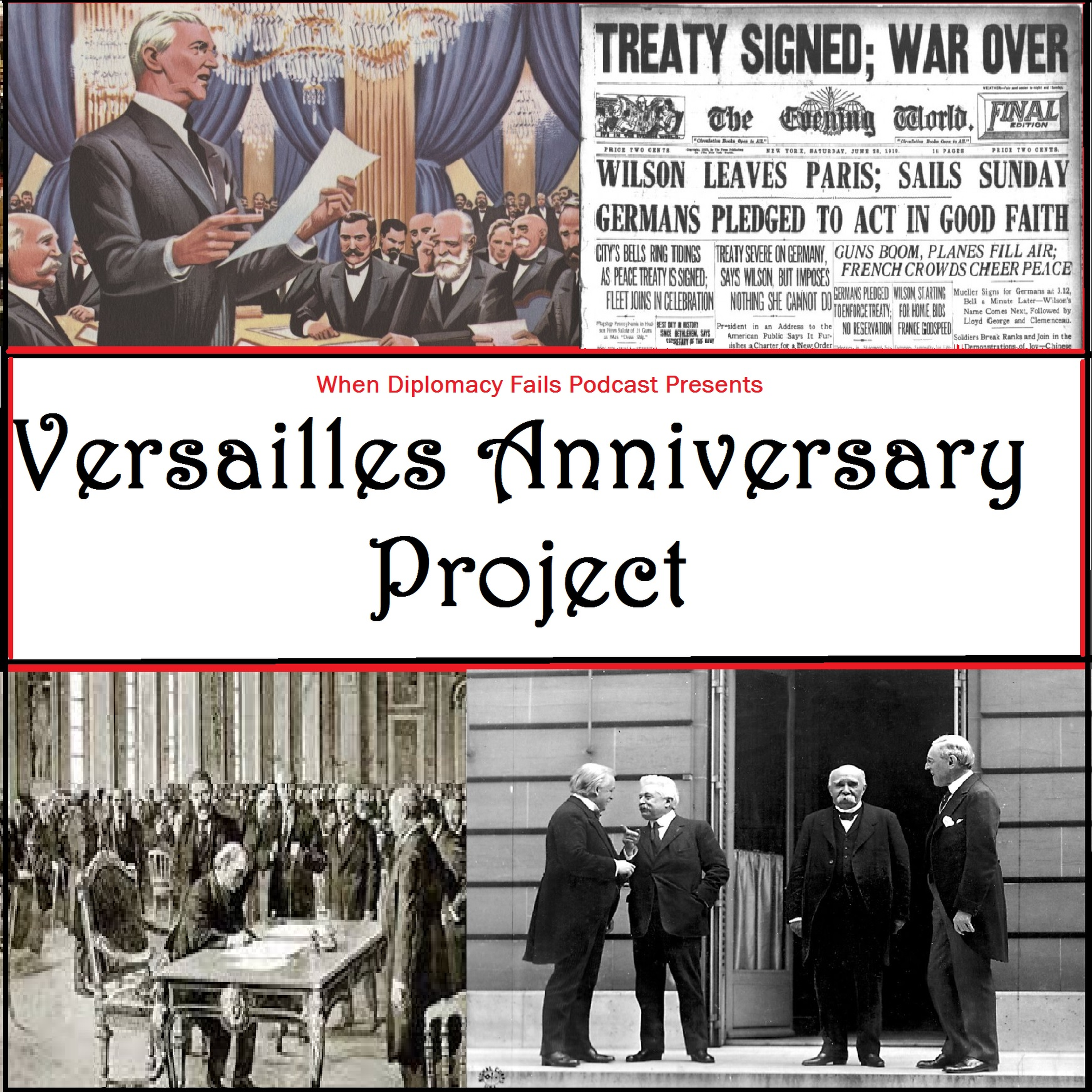
Versailles #69: Big Three And One
Join me and other history friends on Flick - a great app for history friends and important conversations! My agora friends and others are going to be in New York for a special conference on 29th June - meet Mike Duncan, Kevin Stroud, David Crowther and more! Search Intelligent Speech Conference now! Use the code WDF to get 5% off your ticket!The aftermath of the Greek landing was one thing, but there was no ignoring the reception which the peace treaty received in Germany either. The Big Three, sometimes joined by Italy, worked through their to-do list between 16-19 May - by the way yes, apologies for this episode being rather late... But it's no later than the British, American and French reaction to the news of German problems with their treaty. You'll be unsurprised to learn, the Germans had problems with this draft that reached to the very core of its 440 articles, and they were loud in their expressions of disgust. They were not the only ones. Despite the grave criticisms which were leveled against the Treaty, Wilson stood firmly against them. He was, he believed, fighting the good fight, even if the end result was not perfect.The League would make things right in the world, and that was what mattered now, not the hurt feelings of the Irish, the Chinese, or especially the Italians. This latter party were the most prolific in their disappointments by far - in fact, at one point on a sunny day in mid-May, the Italians faced the full wrath of its three weary allies, who just wanted the Italians to roll over. As Vittorio Orlando knew full well though, this was not an option. He would have to hold on, to Fiume, or the Treaty of London, or whatever he could, with results that tore at the very fabric of the allied accord, but which also make for positively fascinating listening. So why not pull a chair up, make sure Italy isn't sitting on it first, and see how it was that the big four became the big three and one!*********The Versailles Anniversary Project is possible because of your support and interest - make sure to spread the word, engage with the debate, and look at the different ways you can help this project succeed!->Visit the homeland for this new project!->Become a delegate and play the Delegation Game for just $6 a month!->Support the podcast financially and access ad free episodes with transcripts from just $2 a month! ->Follow WDF on Twitter! ->Join the Facebook group!->Subscribe on iTunes! Hosted on Acast. See acast.com/privacy for more information.
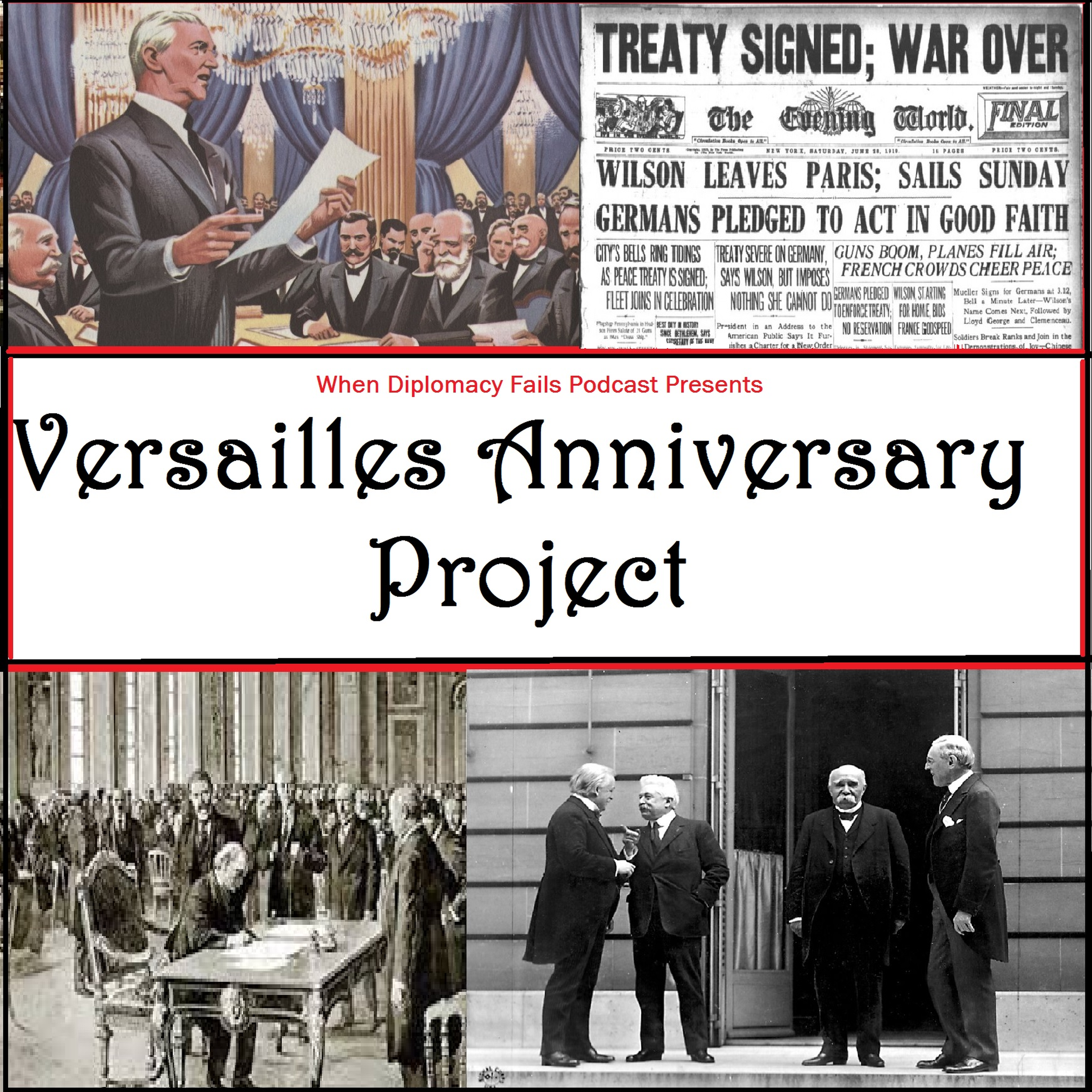
Versailles #68: American Matters
Join me and other history friends on Flick - a great app for history friends and important conversations! My agora friends and others are going to be in New York for a special conference on 29th June - meet Mike Duncan, Kevin Stroud, David Crowther and more! Search Intelligent Speech Conference now! Use the code WDF to get 5% off your ticket!It's high time we considered the American angle once again. After several weeks of work, one would imagine that the American delegation and the American President would have their kinks all worked out by this stage, right? Unfortunately not. In fact, Woodrow Wilson faced several serious conflicts of interest and differences of opinion not only within the American delegation and the body politic back home, but also, so it seemed sometimes, from his old self. Wilson had undoubtedly been forced to compromise on several of his key ideals, and while he imagined that the League of Nations would justify these sacrifices for the sake of long term gains, there were those in his confidence that couldn't imagine allowing the President to get away with it.Whether it was his inconsistency in treating the Italians over Fiume and the Japanese over Shantung, his inability to clarify what self-determination actually meant, or his consistent faux pas with each of the allied leaders, Wilson seemed a far cry from his triumphant, visionary self by mid-May 1919. In this episode, we'll get to grips with how his contemporaries and historians since weighed in on the question of Wilson's principles, from those he was willing to cling to relentlessly, and those which he seemed to throw aside as the German peace treaty loomed into view. If you want to be clued in on the latest developments in the American side, then this installment of our project is for you!****************The Versailles Anniversary Project is possible because of your support and interest - make sure to spread the word, engage with the debate, and look at the different ways you can help this project succeed!->Visit the homeland for this new project!->Become a delegate and play the Delegation Game for just $6 a month!->Support the podcast financially and access ad free episodes with transcripts from just $2 a month! ->Follow WDF on Twitter! ->Join the Facebook group!->Subscribe on iTunes! Hosted on Acast. See acast.com/privacy for more information.
Delegation Game #15: The Clemenceau Directive
After so many weeks of preparation, it is finally time to journey to Warsaw where the Council for Russian Freedoms presents its mission. Accompanied by volunteer forces from all over the world, the message is clear - the extinction of Bolshevism and the rescuing of Russia. However, beneath of the surface of the good intentions and proud speeches, lurks dark rumours, doubts and further conspiracy...*****The Delegation Game is possible because of your support and interest - make sure to spread the word, engage with the debate, and look at the different ways you can help this project succeed!->Become a delegate and play the Delegation Game for just $6 a month!->Support the podcast financially and access ad free episodes with transcripts from just $2 a month! ->Follow WDF on Twitter! ->Join the Facebook group!->Subscribe on iTunes! Hosted on Acast. See acast.com/privacy for more information.
WDF 7th Birthday Bash: Huge News and Q&A
Are you ready for this? After a long time teasing you all, it's time I dropped some incredibly exciting news on the world. This news has the potential to change history podcasting FOREVER...sort of, but first and foremost, it means big changes for you and I. I hope you'll have a listen to the first half of this show to hear my news and get to grips with what I'm all about. Pat yourself on the back and say a huge thankssss with me, for seven wonderful years of history podcasting! Who would have thought that after seven years of talking to myself, you would all still be listening! Happy birthday to us, and thankss for being the best history friends a guy could ask for [self hug]Here are the questions I cover in this episode:What’s a typical day of work for you with the show? How are you managing to do all this? What black magic are you using to make days last 48 hours etc.? How is teaching? Do you think you’ll revisit BGTW again? How do you get through sources so quickly? Do you see Sean anymore? What’s your favourite junk food? If you had one piece of advice for someone starting out in history podcasting, what would it be? What is your recording studio set up? Will you cover any examples of when diplomacy succeeds in the future? What’s a pet peeve you have with history podcasting? How do you construct your scripts for each episode? You came to the US in November 2018, what was one thing you liked and one thing you didn’t like about our country? Did you expect this series to be so massive? Most surprising fact about my research for it? What’s the weirdest error you’ve made with the project? What’s your favourite subtitle you’ve given to an episode of the series? Where do you begin with big projects like the VAP? Whose diary do you wish you had for the VAP? What are you reading right now aside from all the VAP/1956 stuff? Any books that you stopped reading out of frustration? Name and shame! What famous hair or beard style do you wish you could pull of today? Favourite female diplomatic leader? You get to ask one question to one historical figure, they must answer honestly, who will you ask and what question will you ask? What do you think of historians that allow their ideology or opinions to affect their work? Hosted on Acast. See acast.com/privacy for more information.
Versailles #67: OTD 15th May 1919 - Greek Landing
My agora friends and others are going to be in New York for a special conference on 29th June - meet Mike Duncan, Kevin Stroud, David Crowther and more! Search Intelligent Speech Conference now! Use the code WDF to get 5% off your ticket!OTD 100 years ago, the switch was finally pulled, and Greek soldiers were landed in Anatolia for the first time in centuries. The cause was the city of Smyrna, that centerpiece of Greek culture and history which, Greek premier Venizelos claimed, was eager to welcome its compatriots. Yet, the act of the landing is as fascinating as the story which led up to this event. It was a story of Hellenic romanticism, background intrigue, a selective application of self-determination, a lot of Greek pressure oh, and did I mention, a whole lot of Greek pressure.On the surface, this act seemed to be the peak of Venizelos' career. It was merely a stepping stone, potentially, for the realisation of a Greater Greek Empire which straddled the Hellespont. And yet, several problems lurked behind the curtain. Perhaps the most important elephant in the room were the Turks, who were not even considered a proper nationality by the allies. Certainly, in Venizelos' view, Turks were really just lapsed Greeks, or sometimes, they were irredeemable barbarians. Either way, Greek culture would nourish them back to civilisation, and it was only humane not to stand in their way. Yet, despite receiving the most punitive peace treaty of any vanquished power, the Turks would enjoy a resurgence, and against all odds, ignore the peace treaties handed down by the allies. They were by far the most thoroughly punished of the Central Powers, yet they were also the only member of that group to ignore the peace terms which the allies presented, and to live to tell the tale.On the other side of this crisis, loomed a reckoning between two peoples, Greek and Turkish, who had been at loggerheads for millenia. It was impossible to imagine Greeks and Turks living side by side in harmony, to the extent that, in acting to land at Smyrna, Venizelos set off a chain of events which would result in an incredibly tragic scene - the ending of centuries of Greek culture in Smyrna, in exchange for a lasting peace. It was a journey - from triumph to despair - which took fewer than five years. The aftershocks of this act were still being felt nearly four years after the First World War had officially 'ended', and believe it or not, Venizelos had a key role to play in both of these seismic chapters of Greco-Turkish history. All of it, began with a landing...***********The Versailles Anniversary Project is possible because of your support and interest - make sure to spread the word, engage with the debate, and look at the different ways you can help this project succeed!->Visit the homeland for this new project!->Become a delegate and play the Delegation Game for just $6 a month!->Support the podcast financially and access ad free episodes with transcripts from just $2 a month! ->Follow WDF on Twitter! ->Join the Facebook group!->Subscribe on iTunes! Hosted on Acast. See acast.com/privacy for more information.
Versailles #66: Greater Greek Dreams
My agora friends and others are going to be in New York for a special conference on 29th June - meet Mike Duncan, Kevin Stroud, David Crowther and more! Search Intelligent Speech Conference now!The story of Greece comes under our microscope at long last. Here we are introduced to a fascinating vision, yet another example of what might have been. Greater Greece was a project which appealed to many people outside the realm of Greece itself, and in this episode we will get to grips with the origins of the idea in Greek, but mostly in British foreign policy. It was in Britain, as we'll see, that some of the most enthusiastic supporters of an enormous Greek empire existed. This 'redeemed' Greece would expand its power and influence across the Hellespont, into Constantinople, into Anatolia, all over the Aegean, and virtually everywhere else that a smattering of Greek culture and history could said to have resided.We also recap in this episode how Greece got to this point. Greece was, in spite of what Premier Venizelos might have claimed, a very divided country by 1919. The legacy of the war, where the country had flip flopped between allied and central power supporter, had left serious scars, which only Venizelos seemed capable of keeping under control. The danger, as ever, was that Greece might unravel if it were left wanting in its claims. Another more serious danger though, which was realised too late, was what might happen if the Greeks DID get what they wanted. What would it mean for Greek and Turkish relations into the future if Greece acquired portions of Anatolia? Without due consideration of this question, the allies blundered onward with terrible naivety, pushing Greeks and Turks into a collision course, the impact of which reverberates to this day...***************The Versailles Anniversary Project is possible because of your support and interest - make sure to spread the word, engage with the debate, and look at the different ways you can help this project succeed!->Visit the homeland for this new project!->Become a delegate and play the Delegation Game for just $6 a month!->Support the podcast financially and access ad free episodes with transcripts from just $2 a month! ->Follow WDF on Twitter! ->Join the Facebook group!->Subscribe on iTunes! Hosted on Acast. See acast.com/privacy for more information.
Delegation Game #14: His Rightful Place
The President Marshall arrives in London to take his seat alongside the big three in the Council of Eight, as a very exhausted SIR Alistair Tancred accompanies him. Awaiting Foch in London are several developments; the Minor Council continues to quarrel, the League of Nations is under severe threat, and the concerned nations prepare themselves to contribute men to the cause of Russian freedom, after a rocky start...**********The Delegation Game is possible because of your support and interest - make sure to spread the word, engage with the debate, and look at the different ways you can help this project succeed!->Become a delegate and play the Delegation Game for just $6 a month!->Support the podcast financially and access ad free episodes with transcripts from just $2 a month! ->Follow WDF on Twitter! ->Join the Facebook group!->Subscribe on iTunes! Hosted on Acast. See acast.com/privacy for more information.
Versailles #65: Three's a Crowd
My agora friends and others are going to be in New York for a special conference on 29th June - meet Mike Duncan, Kevin Stroud, David Crowther and more! Search Intelligent Speech Conference now!Somehow, we managed to cram an hour of content in an episode that examines the 8-10 May 1919! That's because in that episode, a great deal happened which requires our attention, so sit down and relax as we talk about...Italy again??!! Well yes, but other issues too. How would the Germans respond to the peace terms? What plans did the allies have in place in the event that the Germans refused to accept? The two week deadline was ticking downwards, but considering all we've seen so far, it should be no surprise that sceptics and realists alike imagined that this two week deadline was not the final word...*******The Versailles Anniversary Project is possible because of your support and interest - make sure to spread the word, engage with the debate, and look at the different ways you can help this project succeed!->Visit the homeland for this new project!->Become a delegate and play the Delegation Game for just $6 a month!->Support the podcast financially and access ad free episodes with transcripts from just $2 a month! ->Follow WDF on Twitter! ->Join the Facebook group!->Subscribe on iTunes! Hosted on Acast. See acast.com/privacy for more information.
Versailles #64: OTD 7th May 1919 - Moment of Truth
On this day 100 years ago, the Germans were finally presented with the treaty had been under construction for nearly five full months. What would they think of it? That remained to be seen, but in the process of handing this treaty to them, the German delegation, represented by Ulrich von Brockdorff-Rantzau, would be given a chance to speak while seated, before the entirety of the plenary conference on afternoon of 7th May 1919. It was a scene which the allies had never expected to behold, but as soon as the German foreign minister began talking, two things were clear. First, despite the fact that they hadn't got the treaty in their hot little hands, the Germans had tapped into the rumours which were swirling around, and they hadn't liked at all what they had gathered. Second, and arguably more importantly though, the spectre of the German foreign minister defying the allies and their treaty went down like a lead balloon. Brockdorff-Rantzau's performance, while in content was not explosive, in style it was positively volcanic, and it shaped the attitudes of the big three towards the Germans more than ever before. If they had forgotten who the real enemy was, this scene served better than anything as a grim reminder of the task ahead.***********The Versailles Anniversary Project is possible because of your support and interest - make sure to spread the word, engage with the debate, and look at the different ways you can help this project succeed!->Visit the homeland for this new project!->Become a delegate and play the Delegation Game for just $6 a month!->Support the podcast financially and access ad free episodes with transcripts from just $2 a month! ->Follow WDF on Twitter! ->Join the Facebook group!->Subscribe on iTunes! Hosted on Acast. See acast.com/privacy for more information.
Versailles #63: The Long Italian Shadow
In our longest episode to date (and hopefully ever) we examine the incredible story of the first week of May 1919, by delving into primary sources never before used on a podcast, and rarely used in books! This delivers to us a narrative rich in detail and plainly, in length, but it is a necessary chapter to absorb in our story simply because it is so fascinating. The Italians, as is commonly known, walked out of the Peace Conference in the last week of April. Therefore, a reasonable history enthusiast might conclude that the big three would ignore them, and that they would spend more time talking about Germany instead, especially since the German delegation was present in Paris, and eagerly awaiting the moment when they would be handed that peace treaty which the allies had been working on for so many months by this point.And yet, an incredible truth of the 1-6 May 1919 is that, in spite of all of these facts which would recommend a speedy resolution of the German peace, and the conclusion of the first phase of peacemaking, the big three were utterly besotted with an apparently irrelevant issue - the Italians. That's right - contrary to what conventional pictures of the conference process tells us, the Italians were not forgotten once they left Paris. Instead, the Italians had never been so popular, as the allies worked to predict a morass of issues that concerned Rome. Would the Italians be included in the final peace? Would the Italians join the League of Nations? Would the Italians launch a pre-emptive strike at Fiume, or even Asia Minor? What should the allies do to stop them? Amidst these concerns, of course, the conference did not sit still, and the German treaty was examined in a plenary conference on the afternoon of 6th May, in a process which House called 'stupid beyond endurance.' Yet, it deserves reiterating that even by that point, the allies had yet to examine or consider the treaty in its full scope or impact. It is often noted that the big three didn't spend enough attention properly considering the full extent of their decisions. What is talked about far less, and what my research brings forward here, is the surprising answer behind these delays and misconceptions.The allies didn't pay scant regard to the eventual Treaty of Versailles because they were inherently lazy or ignorant, but because they were consumed and distracted by the long Italian shadow, which was cast over all their proceedings. Try as they might, they could not escape from the power which had abandoned them a week before. Tune in here for a story which I have never seen told; as we delve into the nitty gritty of the conference, to unveil a story that is as fascinating as it is disturbing. It's something which has to be HEARD to be believed, so if you'll join me for this two hour bonanza, I believe you'll come away with a completely different perspective on what it meant to be a peacemaker, and sit among the big three...******The Versailles Anniversary Project is possible because of your support and interest - make sure to spread the word, engage with the debate, and look at the different ways you can help this project succeed!->Visit the homeland for this new project!->Become a delegate and play the Delegation Game for just $6 a month!->Support the podcast financially and access ad free episodes with transcripts from just $2 a month! ->Follow WDF on Twitter! ->Join the Facebook group!->Subscribe on iTunes! Hosted on Acast. See acast.com/privacy for more information.
Versailles #62: A Wild Soviet Bavaria Appears
The German delegation had arrived in Paris, but despite the confident exterior, Ulrich von Brockdorff-Rantzau would have known full well that all was not well back home. Germany was tottering on the edge of the abyss, and nowhere was this danger more acute than in the traditionally safe, conservative heartland of the Empire - Bavaria. What had led this second state of Germany to veer so far to the left, and so far from its old roots? Was there any hope for Bavaria, or was it destined to be another Budapest? Germans were determined that the answer should be nein, but the aftershocks of this trauma were not something that could be so easily contained...*******The Versailles Anniversary Project is possible because of your support and interest - make sure to spread the word, engage with the debate, and look at the different ways you can help this project succeed!->Visit the homeland for this new project!->Become a delegate and play the Delegation Game for just $6 a month!->Support the podcast financially and access ad free episodes with transcripts from just $2 a month! ->Follow WDF on Twitter! ->Join the Facebook group!->Subscribe on iTunes! Hosted on Acast. See acast.com/privacy for more information.
Versailles #61: The Last Day of April
The 30th April was a strange day. It was barely a microcosm in the grand scheme of the Paris Peace Conference, and it was wedged awkwardly between the Italian walkout and the German arrival, not to mention the madcap adventures of the drafting committee, as hundreds of overworked printers and technicians worked to get the Treaty finished within 48 hours - the intended deadline at this stage. It is little wonder that the big three were busy then - they held no fewer than FIVE meetings on the same day. What did they have to show for it by the end? Some notes taken on the Italian feelings, the confirmation of Japanese intransigence over China, and French stubbornness over Alsace-Lorraine...and that was it! If the allies continued to work without working like this for the next few days, then it didn't look good for either the drafting committee, or the Peace Conference itself. As a new month dawned, the big three seemed more sluggish than ever...***********The Versailles Anniversary Project is possible because of your support and interest - make sure to spread the word, engage with the debate, and look at the different ways you can help this project succeed!->Visit the homeland for this new project!->Become a delegate and play the Delegation Game for just $6 a month!->Support the podcast financially and access ad free episodes with transcripts from just $2 a month! ->Follow WDF on Twitter! ->Join the Facebook group!->Subscribe on iTunes! Hosted on Acast. See acast.com/privacy for more information.
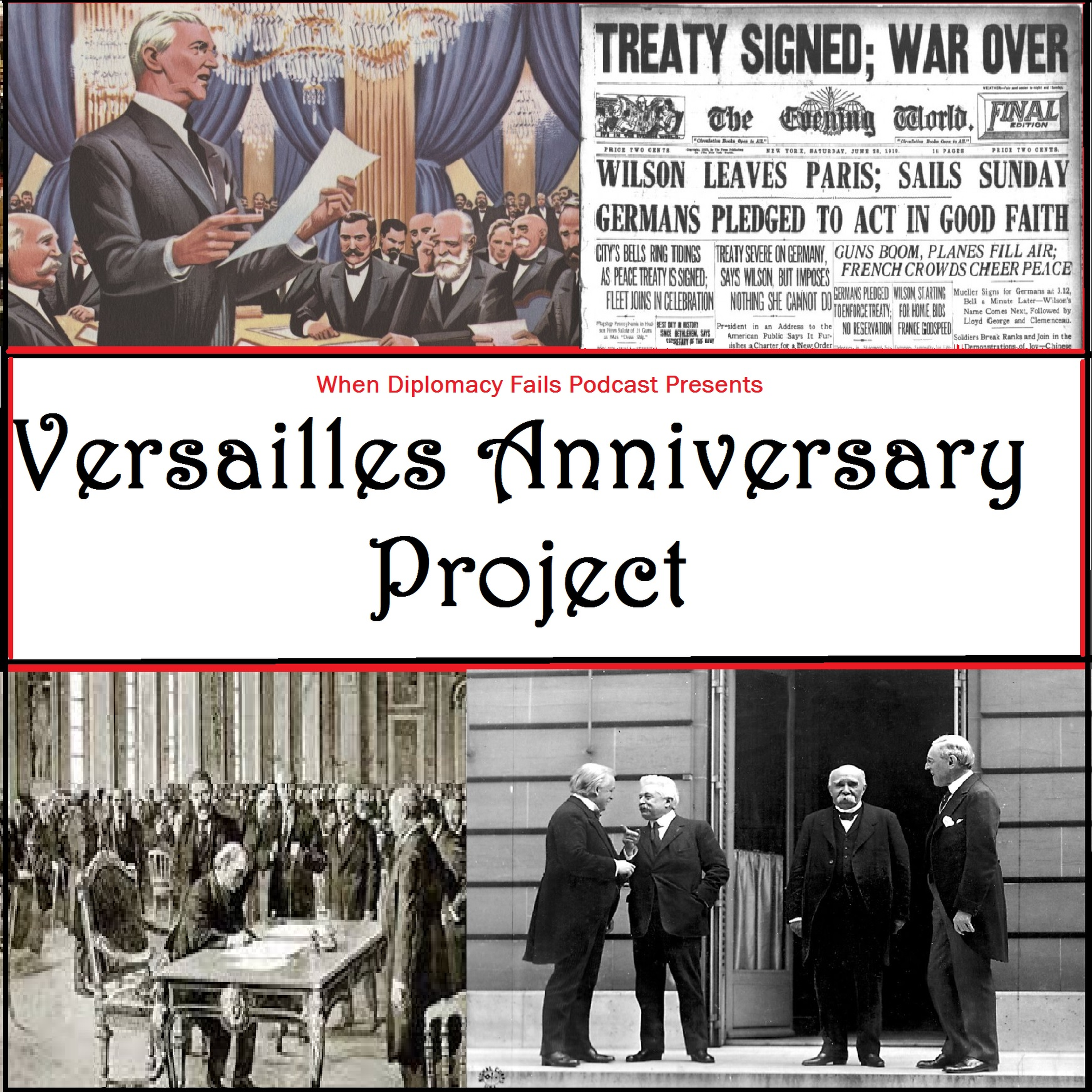
Versailles #60: The Germans Arrive
At long last, the German delegation has arrived in Paris, and resides in the exact same hotel where in 1871, the French government was forced to kowtow to Bismarck. What a coincidence! Leading the delegation was Ulrich von Brockdorff-Rantzau, a Wilhelmian German official of the old order, so it seemed. Brockdorff-Rantzau was the German Foreign Minister, and was utterly determined to get what he believed was Germany's just deserts - a peace treaty based on the Fourteen Points. Anything less than that, and he was bound to be unhappy. Yet, even as the German delegation arrived, a key problem was brought out into the open - the peace treaty STILL wasn't ready! This was far from the only problem which lay in store...***********The Versailles Anniversary Project is possible because of your support and interest - make sure to spread the word, engage with the debate, and look at the different ways you can help this project succeed!->Visit the homeland for this new project!->Become a delegate and play the Delegation Game for just $6 a month!->Support the podcast financially and access ad free episodes with transcripts from just $2 a month! ->Follow WDF on Twitter! ->Join the Facebook group!->Subscribe on iTunes! Hosted on Acast. See acast.com/privacy for more information.
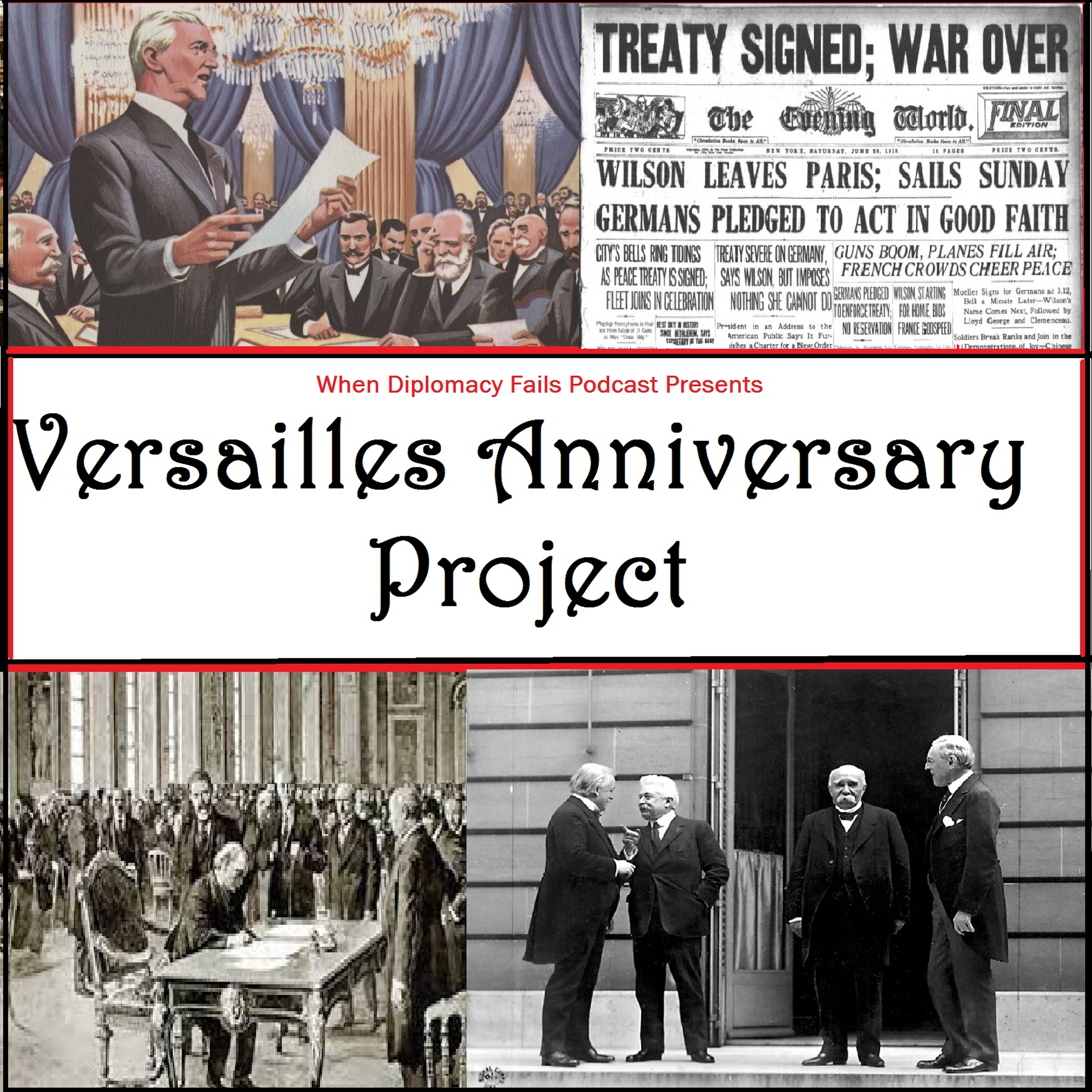
Versailles #59: OTD 28th April 1919 - A League Come True
OTD 100 years ago, perhaps the most infamous international organisation in history was officially blessed by the plenary conference of the Paris Peace Conference. This made it essentially impossible to ignore that institution, or to fail to bake it into the final Treaty of Versailles. And so it was done. Yet, at the time, on that eventful day, and in that stuffy room where the minor and major nations debated the pros and cons of the vision, there could be no way of predicting what this League of Nations would mean. It seemed, at its core, to represent hope. In this episode, I examine that moment when it was established. To men like Wilson, who had envisioned some version of this League since he had first left the United States in late 1918, it must have seemed like a dream come true, but even at this early stage, not everyone was convinced...*******The Versailles Anniversary Project is possible because of your support and interest - make sure to spread the word, engage with the debate, and look at the different ways you can help this project succeed!->Visit the homeland for this new project!->Become a delegate and play the Delegation Game for just $6 a month!->Support the podcast financially and access ad free episodes with transcripts from just $2 a month! ->Follow WDF on Twitter! ->Join the Facebook group!->Subscribe on iTunes! Hosted on Acast. See acast.com/privacy for more information.
Delegation Game #13: Foch's Five Pillars
As the Conference at London works towards several compromises, we tune in to some new arrivals, some storm conference scenes, and a weighted meeting between the President Marshal, Ferdinand Foch, and the delegation of British, Swiss and Spanish delegates sent to meet him. They would arrive in Foch's office uncertain of precisely what to expect, but they would leave with yet another proposal...*********The Delegation Game is possible because of your support and interest - make sure to spread the word, engage with the debate, and look at the different ways you can help this project succeed!->Become a delegate and play the Delegation Game for just $6 a month!->Support the podcast financially and access ad free episodes with transcripts from just $2 a month! ->Follow WDF on Twitter! ->Join the Facebook group!->Subscribe on iTunes! Hosted on Acast. See acast.com/privacy for more information.
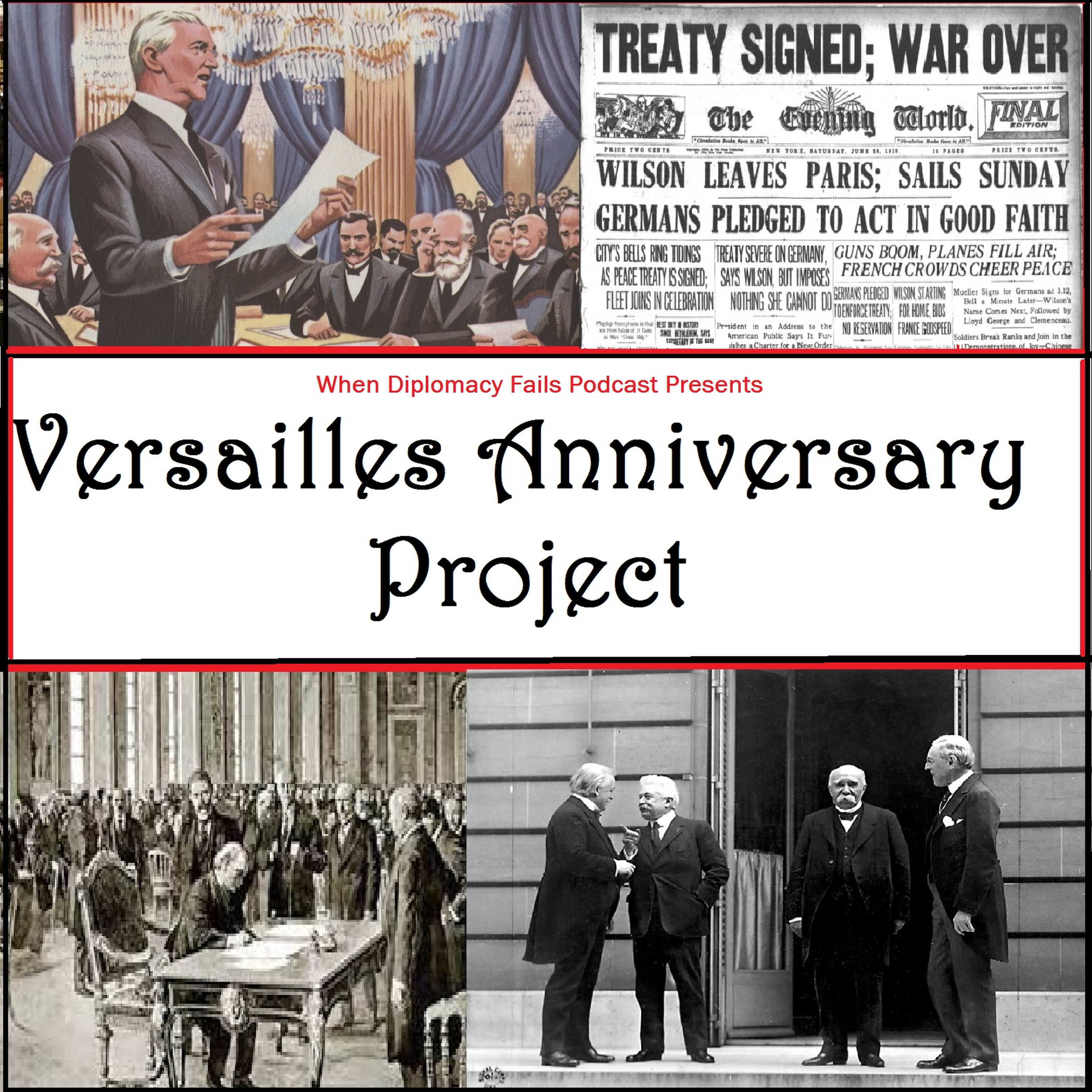
Versailles #58: Reparations and War Guilt
It's time we cleared the air about reparations and war guilt, arguably the two most controversial elements of the Treaty of Versailles. Here, making use of studies long since ignored or forgotten, we unwrap the reality of the Germans were actually faced with, what the infamous articles actually said, and why the Germans determined, rather than face their mistakes, to make up a whole load of stuff about how unfair their lot was! It's a stunning tale of propaganda and deliberate duping, and may be one of the most revealing episodes we release, so have a listen!********The Versailles Anniversary Project is possible because of your support and interest - make sure to spread the word, engage with the debate, and look at the different ways you can help this project succeed!->Visit the homeland for this new project!->Become a delegate and play the Delegation Game for just $6 a month!->Support the podcast financially and access ad free episodes with transcripts from just $2 a month! ->Follow WDF on Twitter! ->Join the Facebook group!->Subscribe on iTunes! Hosted on Acast. See acast.com/privacy for more information.
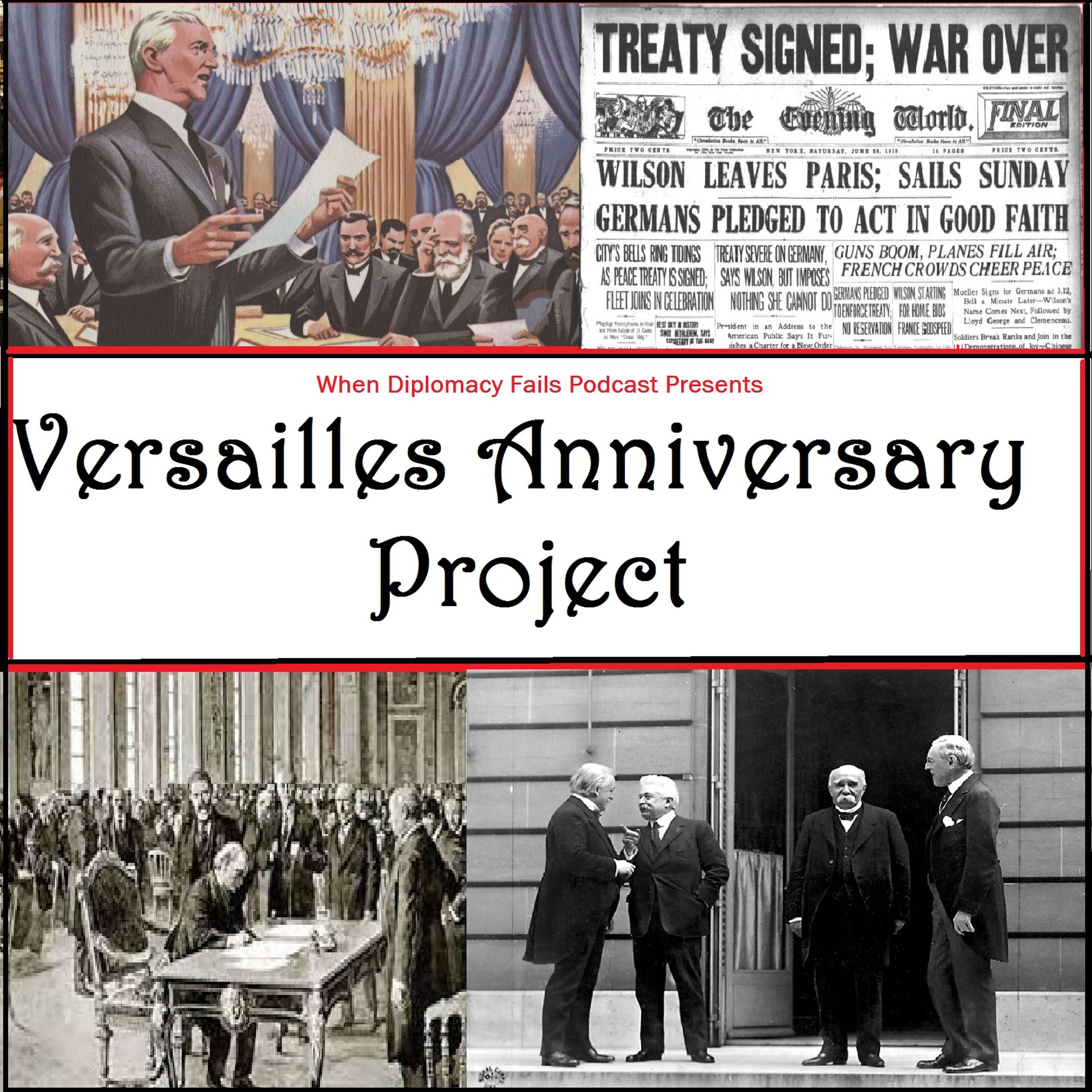
Versailles #57: Danzig and the Rhine
Here we take stock of the situation by the last week of April 1919 by focusing our microscope on two apparently unrelated, but hugely important issues – specifically the future of the Rhine, and the status of the city of Danzig. These two issues of the Rhineland and Danzig were intrinsically linked with the outbreak of the Second World War, and it is thus important in our narrative to establish where they came from. As we will learn here, not only did these two issues provide Hitler with different opportunities, they also represented, to Woodrow Wilson, an opportunity to send a unique message to the Italians...*********The Versailles Anniversary Project is possible because of your support and interest - make sure to spread the word, engage with the debate, and look at the different ways you can help this project succeed!->Visit the homeland for this new project!->Become a delegate and play the Delegation Game for just $6 a month!->Support the podcast financially and access ad free episodes with transcripts from just $2 a month! ->Follow WDF on Twitter! ->Join the Facebook group!->Subscribe on iTunes! Hosted on Acast. See acast.com/privacy for more information.
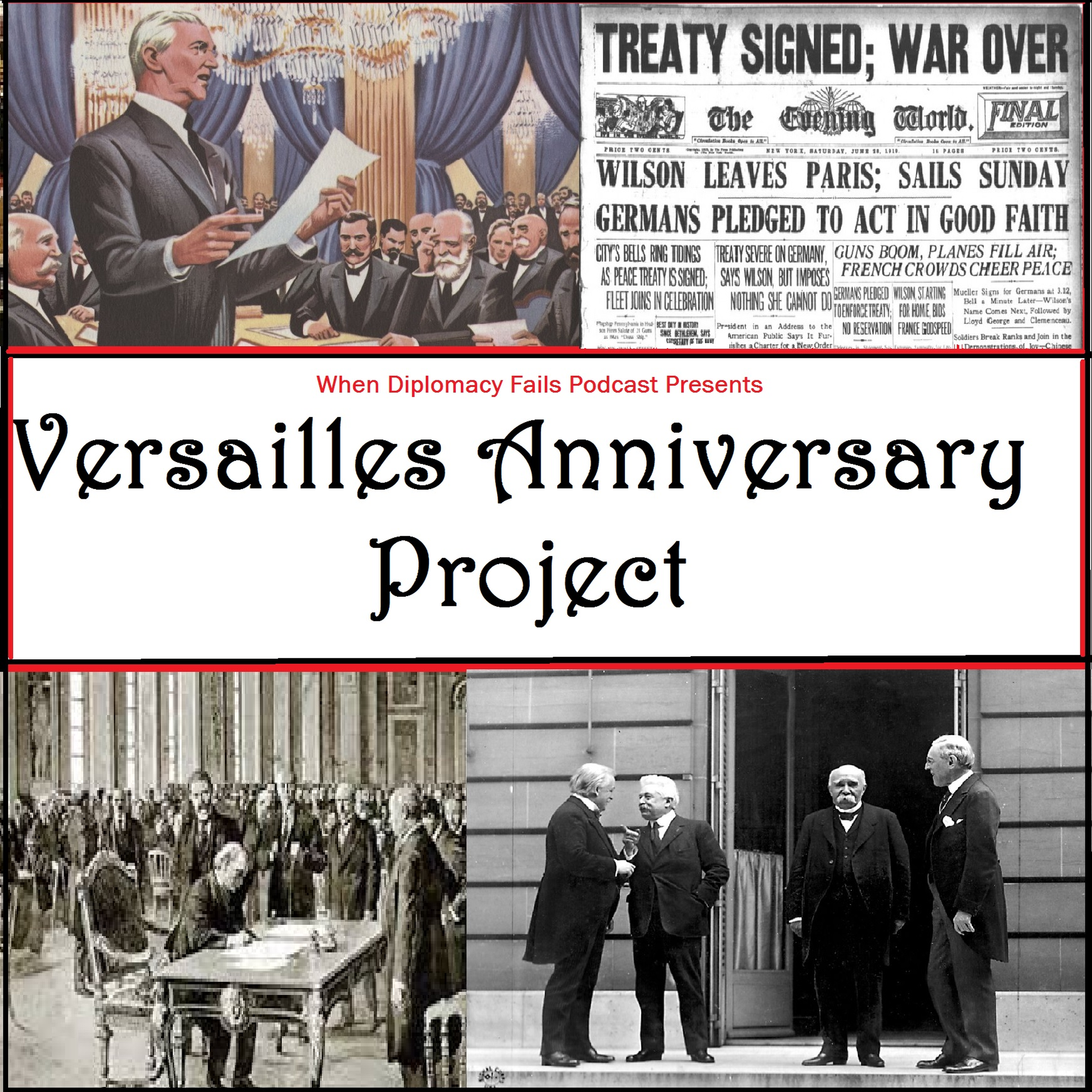
Versailles #56: OTD 24th April 1919 - The Italians Walk Out!
On 24th April 1919, Italy left the Paris Peace Conference. This stunning development was a long time coming, and was a natural result of the behaviour of the big three. Notwithstanding the justness of Italy's demands, these demands had brought her into the war, and now that it was plain the allies would not listen, Vittorio Orlando felt he had little choice other than to call the allied bluff. It was a decision that had been predicted for some time, and though they had tried to avoid this rift widening between them, no member of the big three cried for Italy. Unfortunately though, while they did not cry for Italy, the allies found they could not escape her long shadow. Orlando's victory, if it could be called that, was that Italy's smell lingered long after she had gone. The walkout was a significant development either way though, and paved the way for later disasters and misunderstandings which all served to hamper the steady flow of the conference. It's a long and winding tale, but it's one I had a great time investigating, so take a look here!*******The Versailles Anniversary Project is possible because of your support and interest - make sure to spread the word, engage with the debate, and look at the different ways you can help this project succeed!->Visit the homeland for this new project!->Become a delegate and play the Delegation Game for just $6 a month!->Support the podcast financially and access ad free episodes with transcripts from just $2 a month! ->Follow WDF on Twitter! ->Join the Facebook group!->Subscribe on iTunes! Hosted on Acast. See acast.com/privacy for more information.
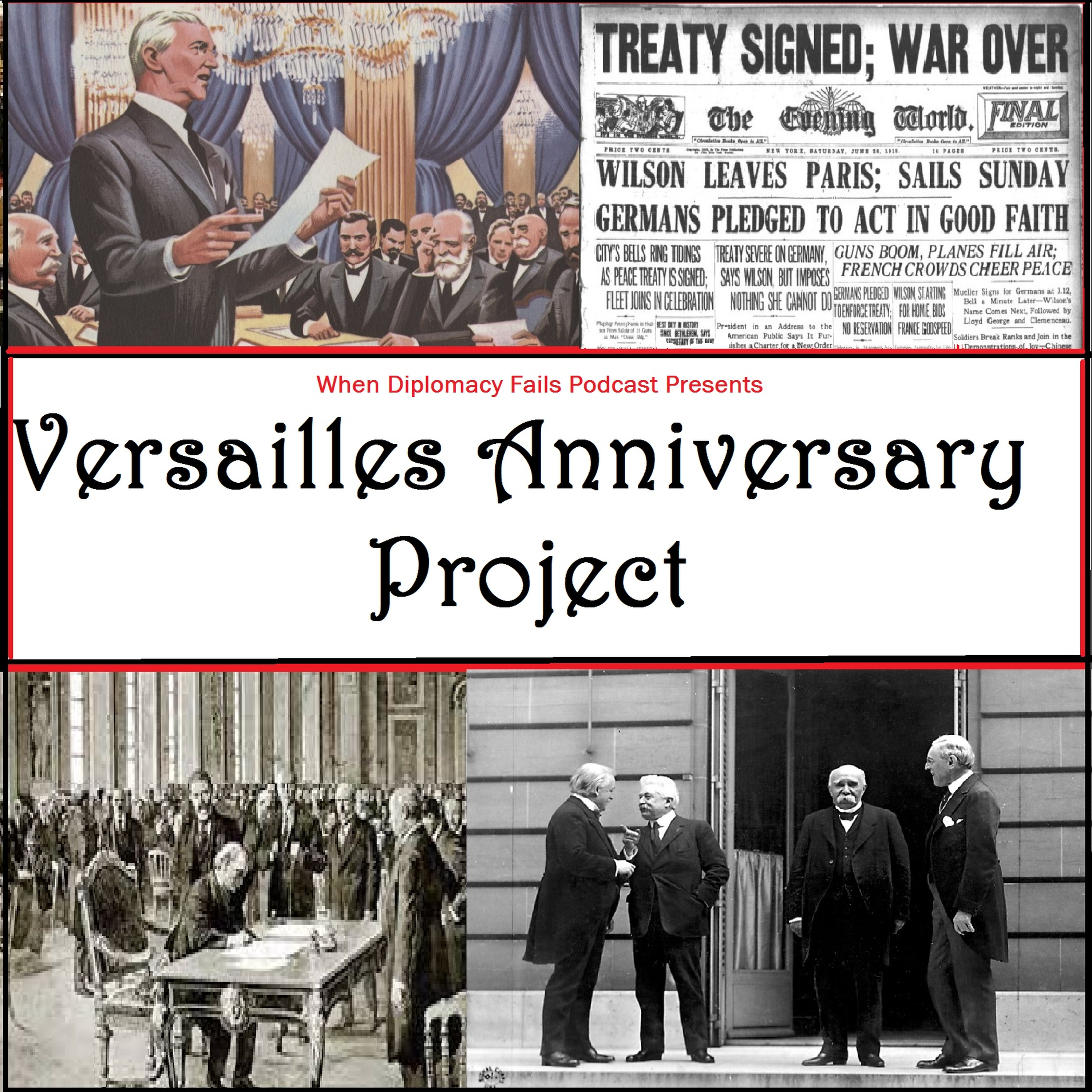
Versailles #55: Italian Stallions
We finally turn our attention to Italy in this episode history friends, where the relationship of Vittorio Orlando with his peers in the big five comes under our microscope. What were Italy's demands? Why was Italy upset with how its interests had been received? Were these interests fair, or unjust altogether? How do we balance our innate repugnance at Italy's expansionist demands with the fair point that without those promises made to her, 500,000 of her men would still be alive, and 900,000 unwounded? It was quite a conundrum, and as the Italian government was beginning to fear, the allies were content to abandon this conundrum in favour of easier relations with the Americans. This was what the Italians feared, but they were not about to give up without a fight...*******The Versailles Anniversary Project is possible because of your support and interest - make sure to spread the word, engage with the debate, and look at the different ways you can help this project succeed!->Visit the homeland for this new project!->Become a delegate and play the Delegation Game for just $6 a month!->Support the podcast financially and access ad free episodes with transcripts from just $2 a month! ->Follow WDF on Twitter! ->Join the Facebook group!->Subscribe on iTunes! Hosted on Acast. See acast.com/privacy for more information.
What Happened in the Suez Crisis?
Hello dear listeners, this is a jack of all trades episode, which serves several purposes:It explains what the Suez Crisis was, and why you should be interested in it.It examined each one of the episodes, providing audio previews for most of themIt announces our Q&A episode due on 18th May - our 7th birthday, and I need your questions!It serves as a call to arms, for history friends everywhere, to support this show in whatever way you can, in the run up to that birthday.The best way to support this show monetarily is through Patreon, and while it has been said before, in this episode it is said again, just how important this financial support is, and how much of a difference you can make. In return you'll get far more than $5 gets you these days, as well as some awesome audio goodies and my eternal gratitude. Let's smash 300 patrons and make the long term of success of this show guaranteed, from just $1 a month!If you want to skip the Call to Arms in the beginning of the show, go to the timestamp of roughly 18:30, and start listening to the breakdown of the Suez Crisis series!Start supporting the show by clicking here! Hosted on Acast. See acast.com/privacy for more information.
Delegation Game #12: The Tiger Still Roars!
Episode 12 of the game sees our focus hone in on one eventful day, 19th April 1919, where three separate meetings were held, and where dreams were debated and dashed. The Japanese put forward their long anticipated racial equality proposal - which you will have to vote for - and the dominions made their cases before a packed plenary council meeting. With Poincare present, as the Premier of France or shill of Foch depending on your perspective, the stage was set for some memorable exchanges and weighted debates. Then, at the last moment, a bombshell was dropped which promised to dramatically alter the future of Russia, Europe and the world! From the grave, the Tiger's roar could still be heard...*******The Delegation Game is possible because of your support and interest - make sure to spread the word, engage with the debate, and look at the different ways you can help this project succeed!->Become a delegate and play the Delegation Game for just $6 a month!->Support the podcast financially and access ad free episodes with transcripts from just $2 a month! ->Follow WDF on Twitter! ->Join the Facebook group!->Subscribe on iTunes! Hosted on Acast. See acast.com/privacy for more information.
Tim Bouverie: Appeasing Hitler
You can order Tim's book here! Something very special for you indeed history friends! A mere days away from launch, the lovely Tim Bouverie joins us for a fascinating chat about his monumental book, Appeasing Hitler: Chamberlain, Churchill and the Road to War, available in all good book stores! To say this book is monumental is to do it an injustice - in fact, I would go as far as saying, if you read any book on the build up to the Second World War in your life, you must read this. Just like I have attempted to reimagine the outbreak of the Great War from Britain's perspective, so too does Tim here work hard to bring us a refreshed look at that infamous foreign policy device. But, it'd be wrong to pigeonhole his book, or this episode, as an examination of appeasement in the late 1930s. We certainly do that, but we delve deep into other matters as well - believe it or not, even the Treaty of Versailles and the Suez Crisis come up in our discussion, and how could they not? If you had the impression that appeasement was an isolated thing in British foreign policy, then you'd be wrong! Appeasement lived and died in the context of the 20th century, and lessons which were learned and which could never be forgotten shaped this century beyond measure. Appeasement was one of these lessons, and it's high time we did it justice. If you're ready to join Tim and for I for this incredible ride, then please do stop by! Remember you can track down Tim's great book here, or by going to any bookshop worth its salt. Thanksss! Hosted on Acast. See acast.com/privacy for more information.