
When Diplomacy Fails Podcast
744 episodes — Page 8 of 15
Alt-History: What If Gavrilo Princip Missed? #1
Welcome history friends, as we launch into a little sideshow I cooked up for you all. This is the first in a chunky 2-parter series on alternative history, where we build a different world in the style you're used to, having asked the question - what would have happened if Gavrilo Princip missed, rather than actually successfully assassinated the Austrian Archduke Franz Ferdinand? Using all I've gathered in my years studying the First World War and the July Crisis in particular, I give you my answer, so I hope you enjoy it! Over the course of the episode we will look at several threads, such as the change in Serbian government and increasing tensions provoking reactionary policies across the Balkans, it remained to be seen whether the European alliance system would save the peace or help destroy it. Find out here, and remember to catch part 2!Support the show!->Visit the homeland for this new project!->Become a delegate and play the Delegation Game for just $6 a month!->Support the podcast financially and access ad free episodes with transcripts from just $2 a month! ->Follow WDF on Twitter! ->Join the Facebook group!->Subscribe on iTunes! Hosted on Acast. See acast.com/privacy for more information.
Versailles #17: The Big Three En Route
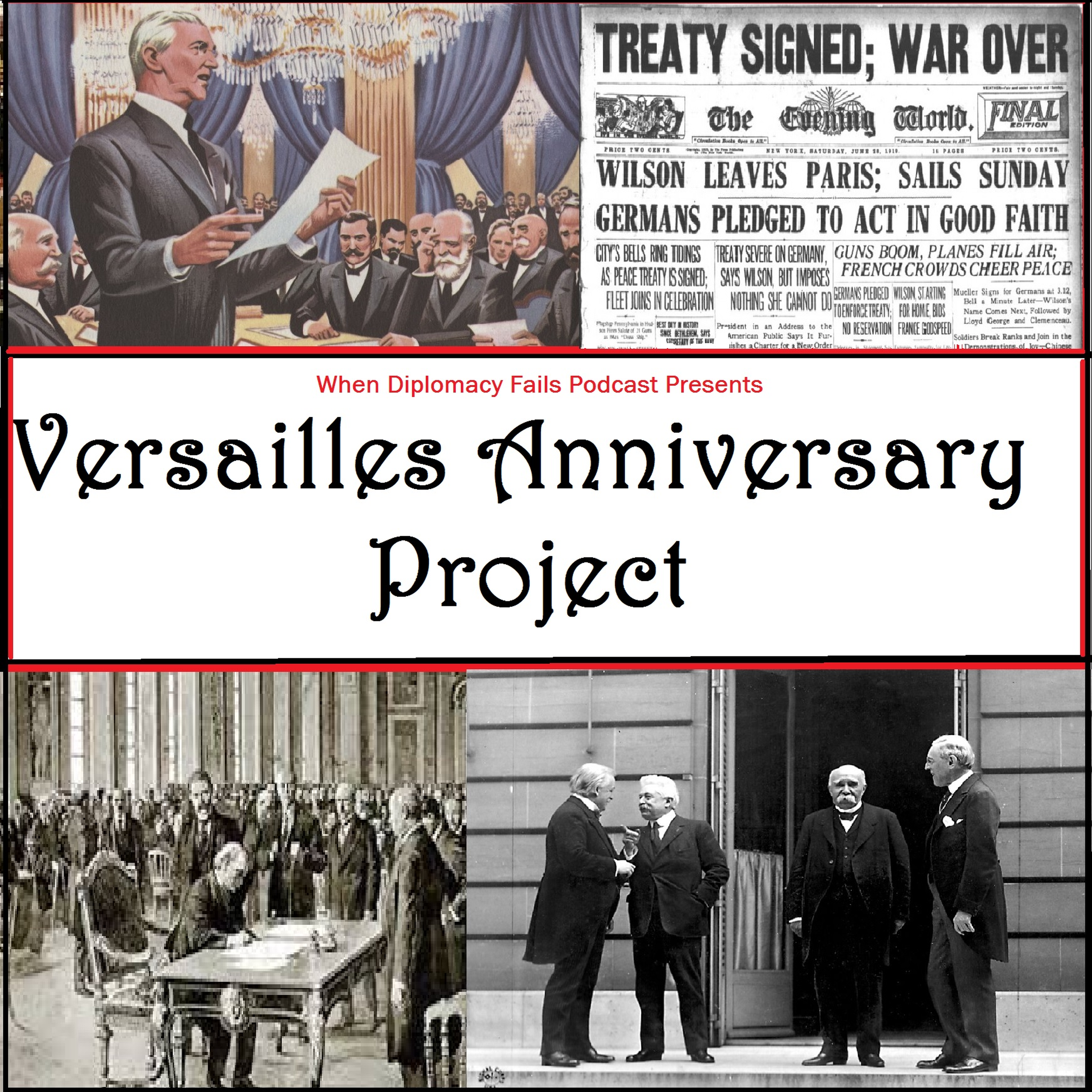
You've been introduced to the Big Three of Wilson, Clemenceau and Lloyd George - you know their aims, their backstories and their fears. What happens though when these men gather together in the same room? Could they possibly cooperate? Could their varied viewpoints and aims be reconciled? Before the Paris Peace Conference opened, I feel it'd be useful to take each of the three men under our microscope again, and refresh ourselves on what they wanted, what they did NOT want, and that grey area where they could see themselves compromising.This episode will conveniently tie together all we've learned about the three men so far, and it is our last episode of the Versailles project before Christmas, so have a listen, refresh yourself, and I hope you have a safe and happy holiday season festivity Christmas food time! I think I covered all my bases! Thankssss :D *************The Versailles Anniversary Project is possible because of your support and interest - make sure to spread the word, engage with the debate, and look at the different ways you can help this project succeed!->Visit the homeland for this new project!->Become a delegate and play the Delegation Game for just $6 a month!->Support the podcast financially and access ad free episodes with transcripts from just $2 a month! ->Follow WDF on Twitter! ->Join the Facebook group!->Subscribe on iTunes! Hosted on Acast. See acast.com/privacy for more information.
Versailles #16: OTD 14 Dec 1918 - Coupon Election
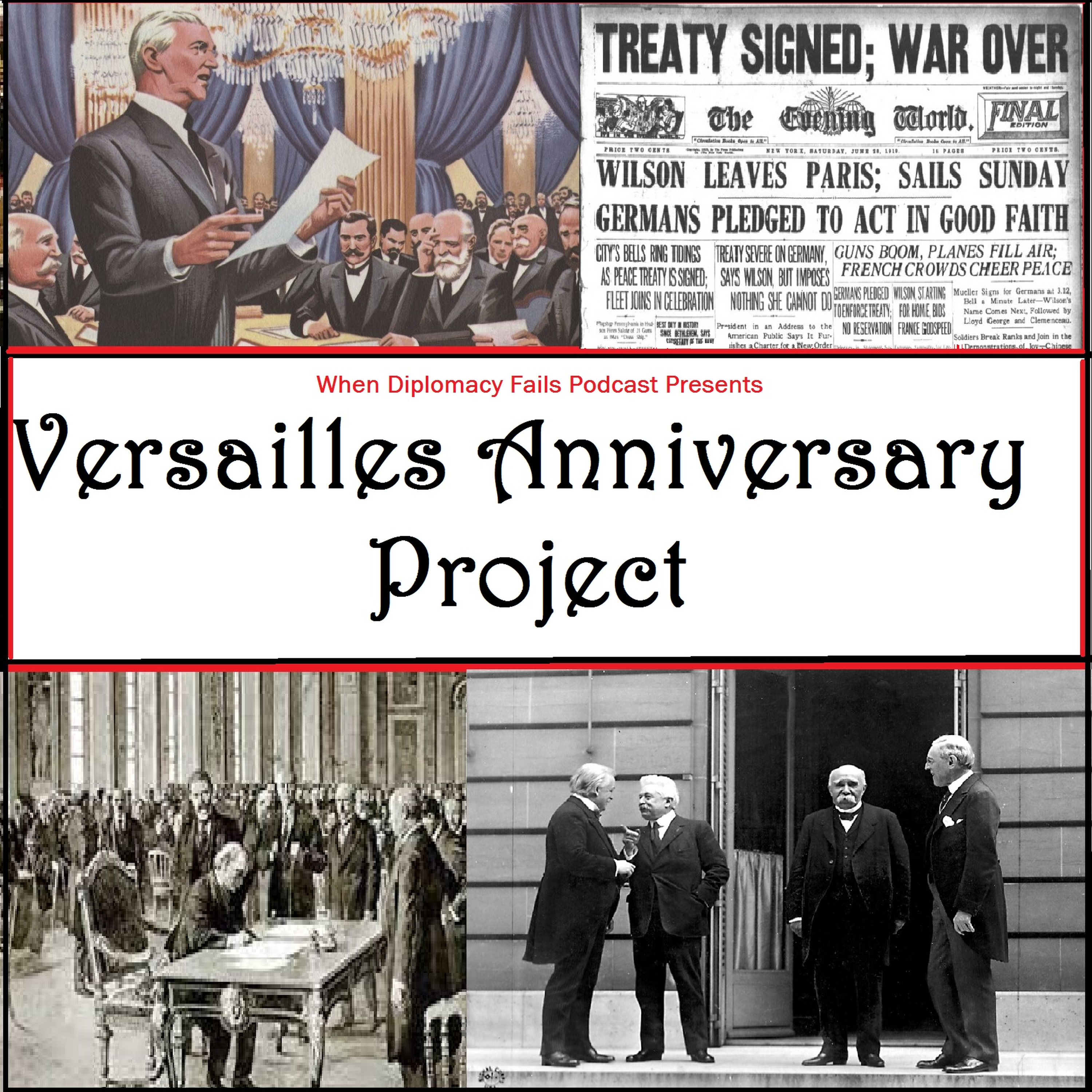
ON_THIS_DAY_IN_HISTORY - 14th December 1918 - The Coupon Election secures Lloyd George's Coalition Government.It had long been expected that Lloyd George would call for an election at the end of the war, to beat off challenges to his position from both sides of the political spectrum, and to secure his mandate for the looming peace conference. Much was said about punishing Germany during the campaign trail, and making her pay what she owed to Britain and everyone else. The British electorate were thus heavy with expectation once their PM left for France in the new year - they anticipated Lloyd George would drive a hard bargain, and wrest concessions from the defeated foe which would vindicate their losses. As Lloyd George discovered, but probably knew already deep down, it wasn't so simple as taking things from Germany.Lloyd George, whatever his white lies, did managed to secure a mandate from the British electorate with this election. It was the most votes ever cast in any election in British history, and for the first time ever, women were also entitled to vote (so long as they were over 30 and were connected to someone with at least £5 of property that is...). The Coupon Election - so called for the curious way with which the incumbent government represented itself, with a coupon that indicated the loyalty of several varied candidates - was a success for the PM, but dark clouds were on the horizon.In Ireland, the old Irish Parliamentary Party had been wiped out by a new force called Sinn Fein, which refused to take its seats at Westminster. Within a month, a guerrilla war would erupt in Ireland, instigated by the decision of those Irish MPs to set up their own Parliament in Dublin. Still though, for the moment, Lloyd George could be happy. It was the result which Woodrow Wilson would have died for, because it granted a mandate for everything he did later, and demonstrated the faith and gratitude which the British people wished to express in their wartime leader.*****************The Versailles Anniversary Project is possible because of your support and interest - make sure to spread the word, engage with the debate, and look at the different ways you can help this project succeed!->Visit the homeland for this new project!->Become a delegate and play the Delegation Game for just $6 a month!->Support the podcast financially and access ad free episodes with transcripts from just $2 a month! ->Follow WDF on Twitter! ->Join the Facebook group!->Subscribe on iTunes! Hosted on Acast. See acast.com/privacy for more information.
Versailles #15: OTD 13 Dec 1918 - Wilson's Welcome
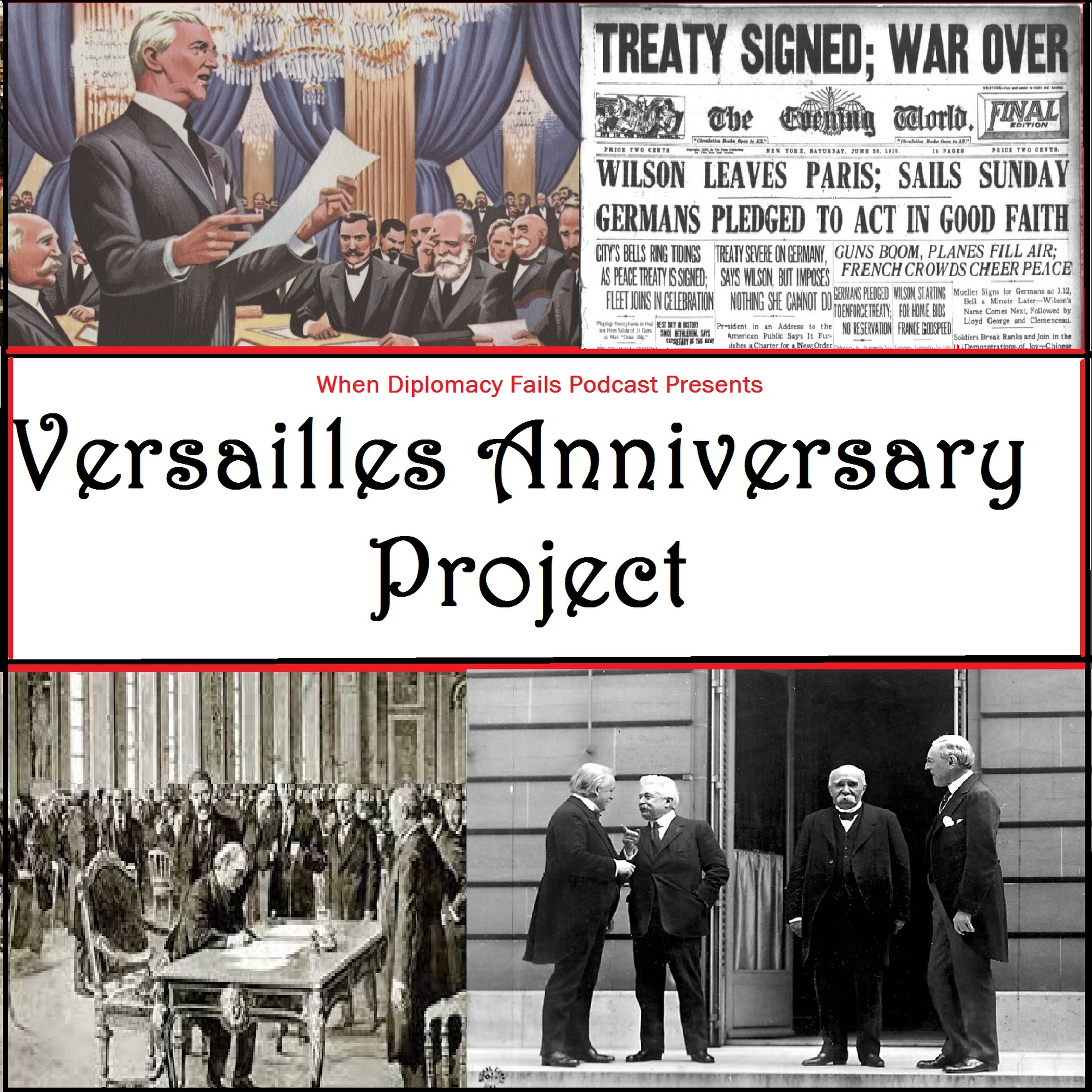
ON_THIS_DAY_IN_HISTORY - 13th December 1918 - US President Woodrow Wilson lands in France.Woodrow Wilson had a vital role to play in the Treaty of Versailles, and was certainly the most dynamic actor in the Paris Peace Conference. Apparently immune to the old trappings of statecraft, intrigue and power, Wilson represented something new and promising for those French citizens and Europeans who were sick of war and who longed for something better. Wilson's rapturous welcome convinced him that he had done the right thing by deciding to travel to Paris personally, even though many had disapproved back home.Flattered, excited, vindicated though he was, the reception did not last. Wilson would never be so popular in France again...***********The Versailles Anniversary Project is possible because of your support and interest - make sure to spread the word, engage with the debate, and look at the different ways you can help this project succeed!->Visit the homeland for this new project!->Become a delegate and play the Delegation Game for just $6 a month!->Support the podcast financially and access ad free episodes with transcripts from just $2 a month! ->Follow WDF on Twitter! ->Join the Facebook group!->Subscribe on iTunes! Hosted on Acast. See acast.com/privacy for more information.
Versailles #14: David Lloyd George Profile Part 2/2
David Lloyd George's assent to the top of the greasy pole came at a difficult time for Britain and the allied war effort. The war did not appear near its end after all; instead the bloody stalemate had begun to tell, on all sides, and 1916 had been a year of crushing disappointments. Faced with a crisis in confidence, PM Asquith made way for the last Liberal Prime Minister of the age, Lloyd George, who ensured by early 1917 that he had the support of his colleagues in the wartime coalition to continue on with the war in the manner that he saw fit.Lloyd George's vision was tempered by realities and the hard lessons which still lay ahead, but he was at his best when delegating to his colleagues, when relinquishing something of his iron grip on power, and when accepting that sharing the load was the best way to win the war. New men were made and old men retreated from public life in disgust, but Lloyd George wasn't here to make friends. His single minded determination to win this damned war earned him admiration and appreciation, but it also represented the greatest test he had yet faced. That is, of course, until he had to craft the peace. Join us here as we unravel the traits which helped Lloyd George lead Britain to victory, no matter the cost...********************The Versailles Anniversary Project is possible because of your support and interest - make sure to spread the word, engage with the debate, and look at the different ways you can help this project succeed!->Visit the homeland for this new project!->Become a delegate and play the Delegation Game for just $6 a month!->Support the podcast financially and access ad free episodes with transcripts from just $2 a month! ->Follow WDF on Twitter! ->Join the Facebook group!->Subscribe on iTunes! Hosted on Acast. See acast.com/privacy for more information.
Versailles #13: David Lloyd George Profile Part 1/2
David Lloyd George, the unlikely Prime Minister, and the only PM in history to have spoken Welsh fluently, comes under our microscope in the final of our profiler episode couplets. Lloyd George's childhood and upbringing, his experience of life in Wales, his love of country, of justice and of independence - these were all important building blocks of a character which would soon serve Britain at its most critical time.We open our account of Lloyd George with an anecdote from Harold Nicolson, a vital eyewitness to the events of the Paris Peace Conference, and a man who happened to be present when the PM jubilantly announced the end to the war. This represented the end of a long, exhausting journey for Lloyd George, but he wasn't finished yet! Join us as we unwrap Lloyd George the man, before he became Lloyd George the leader.**********The Versailles Anniversary Project is possible because of your support and interest - make sure to spread the word, engage with the debate, and look at the different ways you can help this project succeed!->Visit the homeland for this new project!->Become a delegate and play the Delegation Game for just $6 a month!->Support the podcast financially and access ad free episodes with transcripts from just $2 a month! ->Follow WDF on Twitter! ->Join the Facebook group!->Subscribe on iTunes! Hosted on Acast. See acast.com/privacy for more information.
Versailles #12: Woodrow Wilson Profile Part 2/2
Woodrow Wilson's Fourteen Points are an integral part of what made the end of the First World War so fascinating, but also so confusing. Did the President want to go easy on Germans for the sake of it, or did he have more ambitious goals in mind? Was he as determined to remake the post-war order as we are often told, or were these fourteen points simply a smokescreen for the imperialistic policies which the president wished to pursue? The answers to these questions are not clear cut, but join us for episode twelve where we discuss each of these points in turn, assess how they were received by the international community, examine the impact of each point, and then detail the president's feelings on the document which he had just communicated to the world. The Fourteen Points were supremely important, not least because they represented the first true statement of peace terms revealed by any of the allies. Coming as they did in January 1918, the end of the war was some way off, but it is impossible to understate their importance as the months ticked by. As the provided image shows, Germany made use of these points as the basis for a peace settlement which, they hoped, would grant them what they wanted. For a variety of reasons, they were to be sorely mistaken...************The Versailles Anniversary Project is possible because of your support and interest - make sure to spread the word, engage with the debate, and look at the different ways you can help this project succeed!->Visit the homeland for this new project!->Become a delegate and play the Delegation Game for just $6 a month!->Support the podcast financially and access ad free episodes with transcripts from just $2 a month! ->Follow WDF on Twitter! ->Join the Facebook group!->Subscribe on iTunes! Hosted on Acast. See acast.com/privacy for more information.
Versailles #11: Woodrow Wilson Profile Part 1/2
Welcome to Woodrow Wilson's United States of America. As we build towards a key concept, the Fourteen Points, here we set some background and ask some pertinent questions, such as - why did the US intervene in the war, and why did Wilson wait so long before doing so?Woodrow Wilson is a character we must understand if we are to grasp the nuances of the Paris Peace Conference and the Treaty of Versailles which that created. Wilson was an integral part of what made the end Treaty so significant, but he can also be blamed for its uninspired record in America, and its ultimate failure. All the while, his message was one of firm but fair treatment for a defeated Germany, and this message was one which many at the top levels of Germany's government could not fail to heed.To understand where such high minded ideals came from, we must examine Woodrow Wilson before he arrived in Paris in late 1918. More than that, we must investigate whether Wilson's ideals were developed not to meet the crisis of the Great War, but as a repeat of what he had done before, in Mexico.Thus, we take a seemingly strange detour into the Mexican American border over 1913-1914, to get to the bottom of what the President was doing and why. Why did he care so much about what government was represented in Mexico? Why did he feel compelled to work against big businesses when they could have cut him a tidy profit? Wilson's actions led to turmoil along the border with Mexico, and even some Mexican raids into American soil, which Uncle Sam had to meet directly, as this cartoon suggests.My point is, in history, nothing is ever so straightforward as we might think. Wilson's famed ideals did not come from nowhere, and here we debate whether we can see their origins in the tumultuous relationship which America's southern neighbour had with the President. It's quite a journey, so I hope you'll join me to see where it takes us... ***********The Versailles Anniversary Project is possible because of your support and interest - make sure to spread the word, engage with the debate, and look at the different ways you can help this project succeed!->Visit the homeland for this new project!->Become a delegate and play the Delegation Game for just $6 a month!->Support the podcast financially and access ad free episodes with transcripts from just $2 a month! ->Follow WDF on Twitter! ->Join the Facebook group!->Subscribe on iTunes! Hosted on Acast. See acast.com/privacy for more information.
Versailles #10: OTD 1 Dec 1918 - Birth of Yugoslavia
ON_THIS_DAY_IN_HISTORY - 1st December 1918 - The Kingdom of the Serbs, Croats and Slovenes is proclaimed by Prince Regent Alexander of SerbiaThis kingdom, known to history as Yugoslavia, was to have a tumultuous birth, life cycle and death, but even its very name was contentious! Serbs wanted the state to indicate the greater Serb role in its administration and creation; non Serbs wanted to maintain the facade that all were equal under the new kingdom, and that it was more a union or federation than a unitary state. The facade was not maintained for long.This fragile kingdom, which drew together so many Balkan states and tidied up the region a great deal, was not built to last, but in this episode we examine the circumstances surrounding its proclamation, in the context of a world which was struggling to get to grips with everything that had come pouring out of Pandora's Box...*************The Versailles Anniversary Project is possible because of your support and interest - make sure to spread the word, engage with the debate, and look at the different ways you can help this project succeed!->Visit the homeland for this new project!->Become a delegate and play the Delegation Game for just $6 a month!->Support the podcast financially and access ad free episodes with transcripts from just $2 a month! ->Follow WDF on Twitter! ->Join the Facebook group!->Subscribe on iTunes! Hosted on Acast. See acast.com/privacy for more information.
Versailles #9: Eastern Europe Reborn
If finding a solution to Western Europe was difficult, then untangling the morass which was Eastern Europe seemed like mission impossible. Thankfully for those flocking to Paris, Eastern Europeans had taken it upon themselves to do the legwork for them. Poles, Czechs, Yugoslavs and Romanians had all taken advantage of the power vacuums left by the vanished empires, and had staked their claims to land, people and resources while those in Paris gathered. Some leaders, like Edvard Benes (pictured) took matters into their own hands, while others were overtaken by the pace of events.In this episode we examine the fates and behaviours of these four powers, before they presented their individuals cases to the Paris Peace Conference in late January-early February 1919. All they would require, it was said, was the blessing of the statesmen at the French capital for their efforts...and maybe a tiny few adjustments here and there...***********The Versailles Anniversary Project is possible because of your support and interest - make sure to spread the word, engage with the debate, and look at the different ways you can help this project succeed!->Visit the homeland for this new project!->Become a delegate and play the Delegation Game for just $6 a month!->Support the podcast financially and access ad free episodes with transcripts from just $2 a month! ->Follow WDF on Twitter! ->Join the Facebook group!->Subscribe on iTunes! Hosted on Acast. See acast.com/privacy for more information.
Versailles #8: OTD 28 Nov 1918 - Preparing Paris
ON_THIS_DAY_IN_HISTORY - sort of - everyone was going to Paris!Destination Paris: Mission, end the war! As thousands of people from all across the world flocked to Paris for the looming conference, Parisians and civil servants of all shades had the unenviable task of preparing the way for them. Hotels would have to acquired for the different delegations, some of these would have to be scrubbed from top to bottom. Wine would have to be found, as would tons of foodstuffs. Along with the delegations, thousands of other people from printers, journalists and curious travellers to prostitutes, actors and entertainers crowded the city. The British warned that no space was left, but nobody took any notice. Paris was the capital of the world for eight long months, and the task of preparing Paris would have to be tackled before anyone could even think of any kind of itinerary...*********The Versailles Anniversary Project is possible because of your support and interest - make sure to spread the word, engage with the debate, and look at the different ways you can help this project succeed!->Visit the homeland for this new project!->Become a delegate and play the Delegation Game for just $6 a month!->Support the podcast financially and access ad free episodes with transcripts from just $2 a month! ->Follow WDF on Twitter! ->Join the Facebook group!->Subscribe on iTunes! Hosted on Acast. See acast.com/privacy for more information.
Versailles #7: George Clemenceau Profile Part 2/2
"From the blind confusion of factional strife the Frenchman has emerged in this hour all of a piece throughout, stronger, more resolute, silent, smiling, his eyes bright with an invincible fire which affirms that the legend of France shall not fail…It is in that mysterious hour when something comes to birth in us which burns out the dross and clears the way for the casting of a metal which neither steel nor diamond can scratch. And when, some day, after superhuman efforts, all these souls, fatigued with heroism, meet again under the vast blue vault of a regenerated fatherland, it must be that of so many hearts which were sundered a soul of France will forge itself, and the discords which are a condition of life will dissolve, fast fused in a bond of solidarity so closely knit that nothing will have power to shatter it."These were the words which Georges Clemenceau used upon learning of the outbreak of the war. The war would cleanse France of its lethargy, provide it with an opportunity to redeem its past loss, and of course, provide an even more important opportunity to inflict a defeat upon Germany, and restore the rightful order of things. Nobody that marched to war in 1914 could have imagined the kind of losses which awaited their nation, and France was no exception. Her people quickly learned their lessons the hard way. In the month of August 1914 alone, 75,000 Frenchmen died. On the bloodiest day of the war for France, the 23rd August 1914, 27,000 men lay dead by the end of it.With losses like these, George Clemenceau quickly turned his attention to that critical question - why was the war so costly, and who was sabotaging France's successful realisation of its aims? It was above his imagination to think that actually, such casualties were the result not of sabotage or anyone's fault necessarily, and were instead the predicable consequences of a French high command which preferred old tactics like charging straight at the enemy - the cult of the offensive - while the soldiery were decked out in the finest clothing and fanciest accessories. France's old world was shattered after successive years in this meat grinder, but Clemenceau remained somewhat aloof from it all.A heavy critic of the government's method of fighting the war, Clemenceau found his paper banned and his friends no longer talking to him. Clemenceau became more shrill and less able to find some solution to the carnage, but in its hour of need, France relied on this formidable 76 year old once more. Against so many odds, this veteran statesman was at the helm of France again, and he had a strong message for those that would listen - not one more step back. Even if it took another August 1914 of casualties, Clemenceau was resolute in his determination not to give in to the German war effort. 1918 would test him to his limits, but at no point did the elder statesman ever imagine that making peace, would be just as difficult as winning the war*********The Versailles Anniversary Project is possible because of your support and interest - make sure to spread the word, engage with the debate, and look at the different ways you can help this project succeed!->Visit the homeland for this new project!->Become a delegate and play the Delegation Game for just $6 a month!->Support the podcast financially and access ad free episodes with transcripts from just $2 a month! ->Follow WDF on Twitter! ->Join the Facebook group!->Subscribe on... Hosted on Acast. See acast.com/privacy for more information.
Versailles #6: George Clemenceau Profile Part 1/2
France, that critically important cog in the machine of the Paris Peace Conference, had scores to settle and plenty to feel sorry about. The war had ripped through her people and country, bringing with it a plague of devastation unmatched in living memory. The flower of her youth lay dead, a demographic fact which she never truly recovered from. The final year of the war had been a trying and at times, gloomy one for France. Could Germany ever be defeated, was the question which seemed to surface at the beginning of every year, when some new general would propose a new offensive, only to be ground down again. All the while, the man on the ground would suffer. By late 1917, the country was nearing despair. It needed tough, resolute and defiant leaders if the anticipated harshness of the year to come were to be endured. In response, France sent forth two men, Marshal Ferdinand Foch to head up the Supreme Allied Command on the Western Front, and Georges Clemenceau, a veteran statesman of the radical persuasion who held one goal above all - defeating Germany and inflicting a peace upon her which would save France from another trauma like the Great War.Here, we meet Clemenceau, as we place him in his proper context, and examine the haunting aftermath of so many years of war, and the impact it had on a wounded French Republic. As we move through the relevant powers, we build a picture of the different cast of the Treaty of Versailles which is vital for us to appreciate if we are to have any hope understanding what happened next. Make sure you join me!********Listen to The Land of Desire podcast for more details on French history and culture - check out that series on the Dreyfus Affair!The Versailles Anniversary Project is possible because of your support and interest - make sure to spread the word, engage with the debate, and look at the different ways you can help this project succeed!->Visit the homeland for this new project!->Become a delegate and play the Delegation Game for just $6 a month!->Support the podcast financially and access ad free episodes with transcripts from just $2 a month! ->Follow WDF on Twitter! ->Join the Facebook group!->Subscribe on iTunes! Hosted on Acast. See acast.com/privacy for more information.
Versailles #5: Armistice Wishlist
Remember - check out the Delegation Game, and find out how you can participate in this exciting new way to make the very most out of this incredible centenary era... The famed armistice was signed followed several weeks' worth of diplomatic process, and several hours' worth of meetings between statesmen that didn't like each other very much. By the time it was finished, the document which they were left with went far short of what many had wanted, and was too harsh in the minds of others. Still, at its face value, it was a document which would bring the war to an end. After so many weeks of preparation, it finally came down to this, and the Germans arrived to sign on the dotted line.Actually, they had arrived to negotiate, only to be told that signing was all they would be permitted to do. There would be no negotiation. After several days' dallying in these circumstances, the ten man German delegation accepted that it had no choice. At 5.20AM on 11th November 1918, the armistice document was signed. Within the document, 35 articles stipulated what would happen next. We have, of course, touched on this event before, but in this episode we delve into this seismic event in history with the detail that you've come to love and expect from WDF, so tune in here! The Germans held out hope that many of these more difficult terms would be modified at a peace conference which was due to follow. For all intents and purposes though, even though the peacemaking was not over, the Great War finally was. ****** The Versailles Anniversary Project is possible because of your support and interest - make sure to spread the word, engage with the debate, and look at the different ways you can help this project succeed!->Visit the homeland for this new project!->Support the podcast financially and access ad free episodes with transcripts from just $2 a month! ->Follow WDF on Twitter! ->Join the Facebook group!->Subscribe on iTunes! Hosted on Acast. See acast.com/privacy for more information.

Versailles #4: Vision of Division
Remember - check out the Delegation Game, and find out how you can participate in this exciting new way to make the very most out of this incredible centenary era...Sometimes, it isn't always the best idea to take vain people at their word. In the case of Edward House, the situation which he claimed to have created in Paris, in the run up to the signing of the armistice, and the situation he ACTUALLY created, proved to be two very different things.After several days meeting intimately with European leaders, House may have believed that he understood and could read these men, but in reality, they were the ones reading and manipulating him! In episode 4, 'Vision of Division', we examine this disconnect between what House believed he had achieved, and what had actually taken place during the preliminary peace negotiations.This episode is essential for establishing the foundations of what would take place later on at Versailles. House, indeed, had wrested from the allies a concession to make the Fourteen Points the basis for all peace settlements. However, this was qualified with several reservations, and House gave so much in return, particularly to the harsh armistice document, which was being drawn up at the same time, that his gains appear inconsequential in contrast to what he had been forced to sacrifice. The story, as ever, is one of intrigue, personal diplomacy, lobbying, disappointment, lies and frustration, and represents a prelude to the Paris Peace Conference which was to come. By the end, the allies had their armistice in hand, and the Germans were expected to agree to make peace within a few days, but at what cost? *********The Versailles Anniversary Project is possible because of your support and interest - make sure to spread the word, engage with the debate, and look at the different ways you can help this project succeed!->Visit the homeland for this new project!->Support the podcast financially and access ad free episodes with transcripts from just $2 a month! ->Follow WDF on Twitter! ->Join the Facebook group!->Subscribe on iTunes! Hosted on Acast. See acast.com/privacy for more information.
Versailles #3: The House That House Built
Now THIS is exciting - click here to learn more about the aforementioned Delegation Game which I talked about for a great deal in this episode, and remember to connect with me if you have any questions! To everyone else, I hope you weren't too bothered by my rambling about it for ten minutes - I'm just super excited, and I think it could really be something special!Onto this episode at hand though, and we come to Edward House, Woodrow Wilson's best friend; a man whom the president could truly talk to like no other man. Wilson and House had been friends for years, and this friendship had grown and blossomed ever since Wilson became President. Considering their relationship, it seems bizarre to me that Wilson would send his friend to a place like Paris in late October 1918, and task him with arranging the preliminary negotiations for an armistice. Not only that, House was also tasked with paving the way forward for a peace conference that upheld the Fourteen Points as its basis.This was quite the mission, even for a formidable man like House, yet according to one source in particular (namely, House's diary), he was more than up to the task. From 26 October to 3 November, House represented his President to the British and French premiers, as the terms of an armistice, and an agreement about the foundations for a peace settlement were hammered out. House proclaimed a diplomatic triumph, but on closer inspection, the American diplomatic position was not as strong as the President may have liked to believe.Listening to this episode, 'The House That House Built' is a must for those interested in the American diplomatic approach, and in characters like Edward House, who were to dominate the peace negotiations for the next six months. House is the first of many vibrant characters which the era threw up, and while he was far from perfect, his actions would create an indelible mark upon the proceedings which were to follow, for better and for worse... Interested in reading Edward House's diary online for free? Click here, and thanksss again to Yale for making it all possible! ******* The Versailles Anniversary Project is possible because of your support and interest - make sure to spread the word, engage with the debate, and look at the different ways you can help this project succeed!->Visit the homeland for this new project!->Support the podcast financially and access ad free episodes with transcripts from just $2 a month! ->Follow WDF on Twitter! ->Join the Facebook group!->Subscribe on iTunes! Hosted on Acast. See acast.com/privacy for more information.
Versailles #2: Germany Falling, Germany Falling
It is impossible to tell the story of the Treaty of Versailles without Germany, and in episode 2 of the VAP, 'Germany Falling, Germany Falling', we examine the state of Germany in military, economic and societal terms by mid-1918. A campaign which had started out so strong and filled everyone with false hope ended in failure. The gamble to move all men from east to the western front had failed, and the chasm in capability was growing by the hour.Stark pronouncements on the true state of affairs may have caught many Germans by surprise, but for those that had endured horrific deprivations, been starved, wounded, abandoned or simply vanished into the despair of total war, the reality cannot have been too much of a surprise. In this episode we place in context the gradual collapse of Germany in 1918, even while some in the country attempted, for their own reasons, to mount some form of final stand. Grim though the prospects of Germany seemed, there were some in the upper echelons of the military and civilian government who believed, for one reason or another, that Germany still had some potent cards to play. Episode 7, 'Ignoring Defeat' examines these last ditch efforts to save face and achieve peace with honour for Germany. What could Germans realistically do to avoid the worst peace terms? What did America's associates think of these back channel negotiations? How, indeed, did the Germans interpret all that went down in autumn 1918 as anything other than a catastrophe to be exited from at once? The truth is that, although she was defeated, the German army was not destroyed, and for as long as they could, certain figures within the country were willing to use the threat of resistance to the end as a last resort, even while at home, emaciated bodies lined the streets, mutinies piled up and soldiers deserted in droves. The collapse was imminent, seen most infamously in the Spartacist Revolution, but while she teetered on the edge, Germany made one last attempt to have things her way...*******The Versailles Anniversary Project is possible because of your support and interest - make sure to spread the word, engage with the debate, and look at the different ways you can help this project succeed!->Visit the homeland for this new project!->Support the podcast financially and access ad free episodes with transcripts from just $2 a month! ->Follow WDF on Twitter! ->Join the Facebook group!->Subscribe on iTunes! Hosted on Acast. See acast.com/privacy for more information.
Versailles Introduction Part 3/3
Another introduction episode - this one giving us a brief(ish) rundown on the origins of the Great War, for the benefit of those that have not listened to the July Crisis Anniversary Project of old. The world went to war in 1914, and the circumstances which surround that event are often held against Germany in the subsequent peace negotiations. Germany, it is said, started the whole wretched thing, so she should be punished once her gamble failed, and she clearly lost. In my view though, it isn't that simple.Historians tend to take one side or the other when it comes to examining the July Crisis and Treaty of Versailles. By that I mean, either Germany started the war and deserved the Treaty, or she didn't start it or deserve it. I won't be this clear cut, because the situation and the debate aren't this clear cut. In my mind, Germany alone did not start the war - even though technically she did declare war on Russia first and begin the countdown - but she did deserve some kind of punishment for LOSING it. Germany, as my thesis for this project will argue, was punished for losing the Great War, not for starting it. Any statesman worth their salt in 1918-19 knew full well that there was more to the story than the straightforward tale of the belligerent Hun. Germany had to be punished and kept low so that she could not threaten the peace again, and because of her military loss, this meant that she was liable to be punished - just as Berlin had punished her enemies in Russia and Romania, and developed grand plans for punishing Britain and France before her war plans collapsed. The issue with Versailles wasn't so much the injustice of it, as we will learn, but the problem of making Germany accept its terms, when Germans came to believe that they hadn't been truly beaten, hadn't truly started the war, and had been unfairly blamed.Yet, an important point to remember is that war guilt - another issue we will deal with in time - did not have to exist in Germany in order for the judgement of Germany's contemporaries to follow. It did not matter, in other words, who started the war, as much as it mattered who lost it, and what was to be done next. This episode will help us refocus our gaze on that critical issue, and also ensure that we're all on the same page when it comes to my thesis and ideas about the origins of the First World War. As always, I'd ask you guys keep an open mind - we'll be sticking together for the next eight months, so you better get used to my outside the box way of thinking!*****************The Versailles Anniversary Project is possible because of your support and interest - make sure to spread the word, engage with the debate, and look at the different ways you can help this project succeed!Visit the homeland for this new project: http://www.wdfpodcast.com/vap/Support the podcast financially: https://www.patreon.com/WhenDiplomacyFailsFollow WDF on Twitter! https://twitter.com/wdfpodcast Hosted on Acast. See acast.com/privacy for more information.
Versailles Introduction Part 2/3
We must set the structure and sources of this project in front of you before we jump right into it, and we should also clarify our aims before we go any further too. We have got a LOT of ground to get into over the next eight months, but I hope that you are ready to join me for this fascinating and illuminating journey, as we examine this era of our past like you've never seen it before.Of course it is worth setting forth our aims: 1) create the most comprehensive, but also the most accessible, account of the Treaty of Versailles in audio form. 2) investigate whether the Treaty really was so bad, or whether some redeeming features exist within it. 3) ascertain how responsible, if at all, the Treaty was for all the vile catastrophes that followed it in the 20th century.*****The Versailles Anniversary Project is possible because of your support and interest - make sure to spread the word, engage with the debate, and look at the different ways you can help this project succeed!Visit the homeland for this new project: http://www.wdfpodcast.com/vap/Support the podcast financially: https://www.patreon.com/WhenDiplomacyFailsFollow WDF on Twitter! https://twitter.com/wdfpodcast Hosted on Acast. See acast.com/privacy for more information.
Versailles Introduction Part 1/3
To make it through the tons of research material available on the Treaty of Versailles, it is essential we take a certain angle as our guide. Find out what kind of angle I am interested in, and how I plan to divide the different sections of this project up, so that you and I can get through it with our sanity maintained!It's going to be a wild ride to 28th June, but before we reach those sumptuous halls (below), we first have to paint a picture, or series of pictures, that help us set the scene. As ever, context is our King, and it's time we got right down to it... Hosted on Acast. See acast.com/privacy for more information.
Versailles #1: OTD 11 Nov 2018 - To The Last Man
It's time. It's time at long last to unleash this project, to reveal the hidden complexities, the terrible truths, the dire dangers, the fascinating characters and the inspiring anecdotes of the period in history so often maligned and misunderstood, but so critically important to our world. It's time to go to 11th November 1918, where the guns fell silent at long last, and the birds could finally be heard to sing.******The Versailles Anniversary Project is possible because of your support and interest - make sure to spread the word, engage with the debate, and look at the different ways you can help this project succeed!Visit the homeland for this new project: http://www.wdfpodcast.com/vap/Support the podcast financially: https://www.patreon.com/WhenDiplomacyFailsFollow WDF on Twitter! https://twitter.com/wdfpodcast Hosted on Acast. See acast.com/privacy for more information.
WDF: State of the Podcast Address 8th November 2018
WDF is about to be positively lit up by the most ambitious project we've ever taken on, but before we jump into that, I felt it only right that I bring you guys up to speed with my new job, how I got on in the Sound Education Podcast Conference in Harvard, some notes about the podcasting schedule, a bit on Dan Carlin, some more info about my future and even more ramblings - sounds like a state of the podcast address to me! Hosted on Acast. See acast.com/privacy for more information.
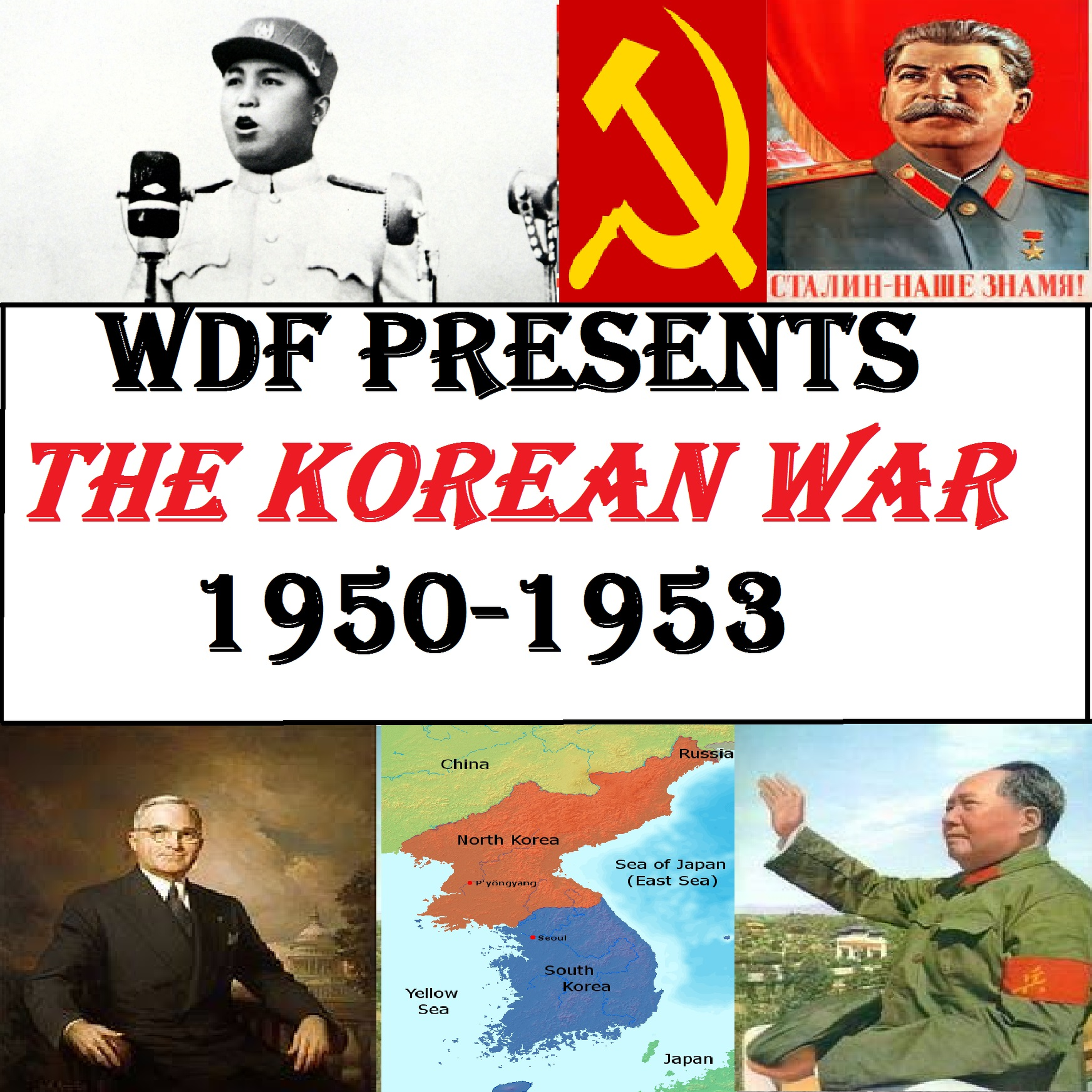
Korean War: Conclusion
It's time to say goodbye to this incredible era, and to end this whopper journey we've been on for the past 11+ months. I really can't believe we're here, but we are, and I figured there was never a better time to end this series, than on my birthday, so happy birthday to me!Our conclusion examines a suitably poignant moment in recent history - the location of a reunion of Korean families, trapped and separated for more than six decades by a war which they never wanted, but which they have been paying for for their entire lives. It is here, I believe, that we should end our story - with a reminder that the greatest losers in the conflict of no winners, was the Korean people themselves.Thankssss as always for joining me history friends, and make sure you prepare yourselves for the Versailles Anniversary Project, coming on 11 November 2018... Hosted on Acast. See acast.com/privacy for more information.
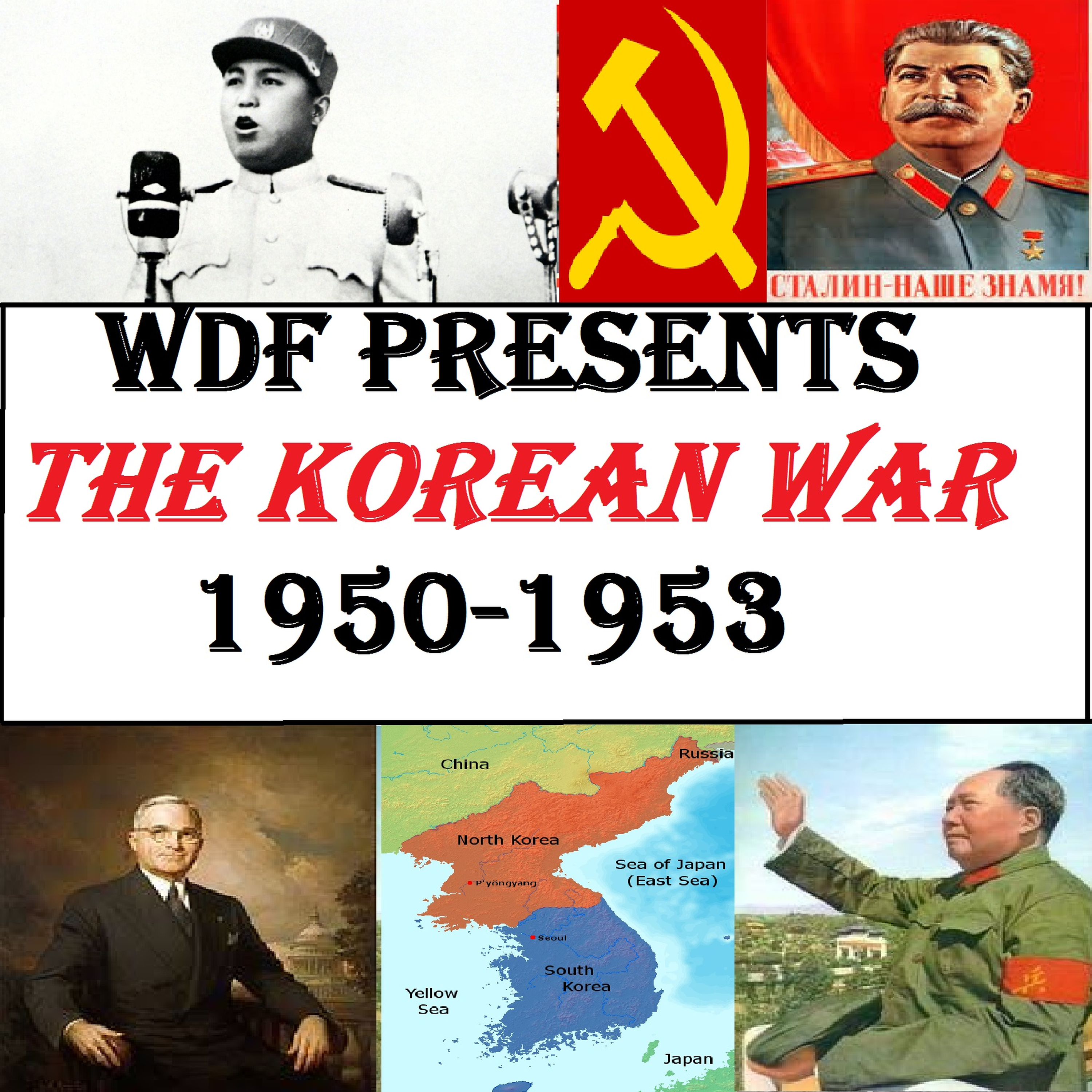
Korean War #48: Something of an Ending
It's time to say good bye!Episode 48: Something Of An Ending gathers together everything we’ve learned over the last 47 episodes and returns to those key questions, theories and goals which opened our series all those months ago. It is a typically intensive episode, since we have a good deal of stuff to talk about, several things to reiterate and not a small amount of final goodbyes to wave at our key figures. By now you have seen our narrative underline and hopefully vindicate my conclusions, which I presented to you guys all the way back in the introduction episodes. It’s been quite a journey, to put it mildly, and I have sincerely enjoyed taking it with you, as we learned, laughed and were shocked together. I hope you’ll continue to seek out new information on the Korean War, and that you now have seen for yourself that this conflict is so much more than just a few sentences in a textbook. Instead, it was the vital ingredient in the Cold War, the terrible tragedy which cost millions of lives, and the start point for countless diplomatic and military initiatives, with varying degrees of success. The Korean War was many things to many people, but now it’s time for us to say goodbye, and to prepare for our next series – the Versailles Anniversary Project. Of course, this wouldn’t be WDF if we didn’t have an Epilogue and Conclusion to round our narrative off, so make sure you place the cherry on top of our experience here, by tracking those episodes down in the next few days. Other than that my lovely history friends and patrons – it is time to say thanksss, and I’ll be seeing you all soon!**********Music used:“Streets of New York” by Billy Murray released in 1907. Available: http://freemusicarchive.org/music/Billy_Murray/Antique_Phonograph_Music_Program_03032015/The_Streets_of_New_York_-_Billy_Murray SPONSORS1) Use the code WDF15 to get 15% off your stylish new pair of headphones/earphones/listening things2) To access some fascinating books, nerd out with like minded enthusiasts, further your knowledge of some classical works, get 25% off your first three months AND help the show, head on over to onlinegreatbooks.com!Remember to BEFIT!B is for blogE is for email [email protected] is for Facebook, the Page and the GroupI is for iTunes, please rate, review and subscribeT is for TELL ANYONE!1) Pre-order our book on the Thirty Years War 2) Are you TeamFerdinand or TeamFrederick ? It's time to pick a side, and a t-shirt! 3) Don't forget of course to support WDF on Patreon to access ad-free episodes with the scripts attached, as well an hour of extra content every month, and so much... Hosted on Acast. See acast.com/privacy for more information.
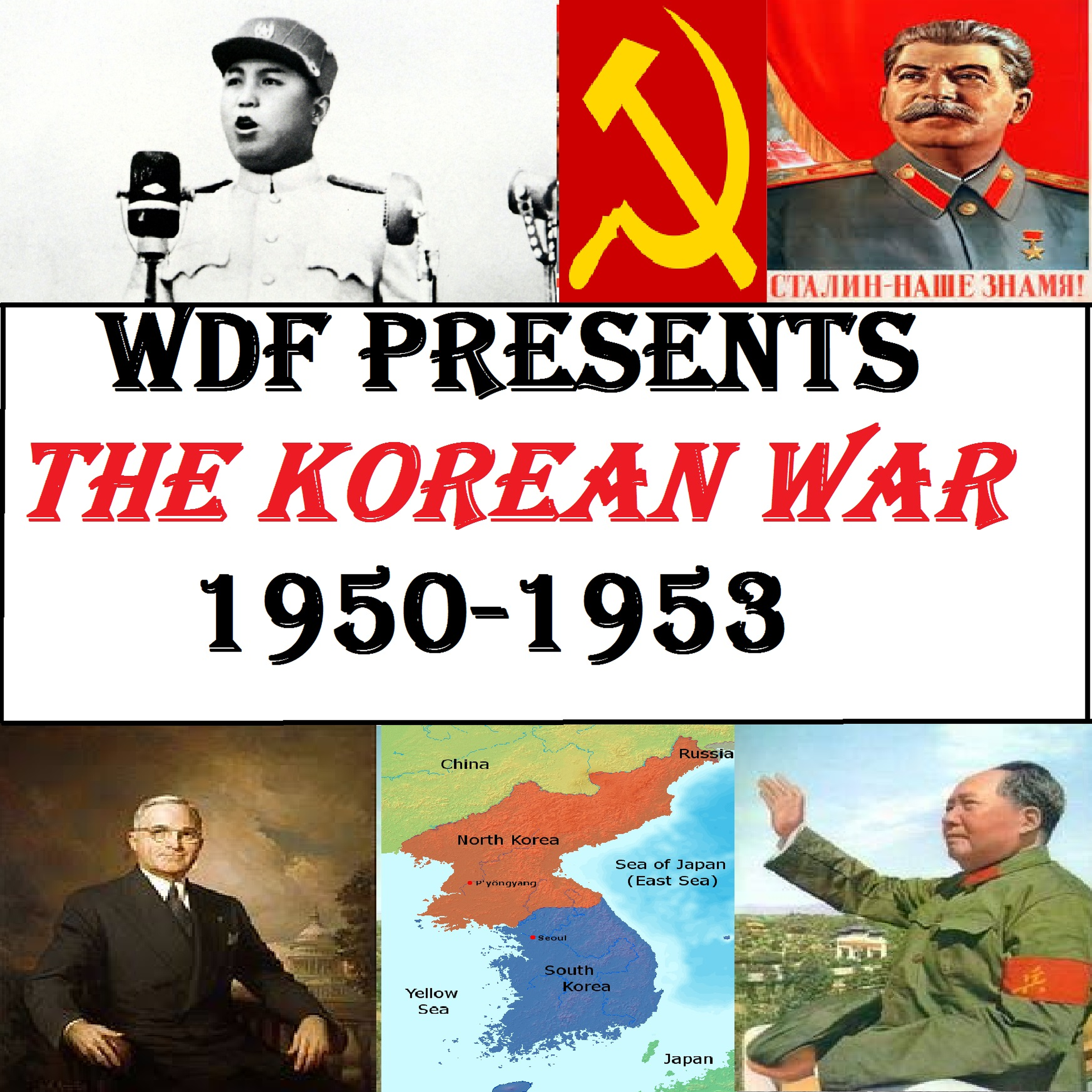
Korean War #47: Ike Will Bring Them Home!
Episode 47: Ike Will Bring Them Home! This is our penultimate episode, and as such plays a critical role in bringing several threads of our narrative together. How fluent in the use of atomic diplomacy was Eisenhower’s administration? Armed with the knowledge we have from the last episode, we can state that Eisenhower was far from the first President to bring atomic weapons into the diplomatic discourse. Indeed, it makes sense that the first and last president of the US to make use of the atomic bomb should make the most active use of it in diplomacy. In addition, contrary to the conventional view, Eisenhower’s administration failed in the last phase of the Korean War to actually formulate a coherent policy regarding nuclear weapons and diplomatic pressure. For a number of reasons, the former General was content to drag his feet.Dispensing with the myths of atomic diplomacy enables us to look more closely at the very real role which the Indians played in putting forward the policy ideas in the UN General Assembly, most notably in the case of the touchy prisoners issue. The genuine importance of Indian diplomacy in that institution has been greatly understated for some time, and in this episode we’ll give them their proper due. The Chinese will of course also need to be considered, since if atomic diplomacy did not force them to make peace, what can we say actually did? The answer has as much to do with the policy of bluff as it does with the death of Josef Stalin, and it’s another fascinating journey I can’t wait to take you on! Of course, the major appeal of this episode is in the loose ends are tied up – it is in this instalment of our series that the Korean War is finally brought to its anticlimactic end on 27th July 1953.SPONSORS1) Use the code WDF15 to get 15% off your stylish new pair of headphones/earphones/listening things2) To access some fascinating books, nerd out with like minded enthusiasts, further your knowledge of some classical works, get 25% off your first three months AND help the show, head on over to onlinegreatbooks.com!Remember to BEFIT!B is for blogE is for email [email protected] is for Facebook, the Page and the GroupI is for iTunes, please rate, review and subscribeT is for TELL ANYONE!1) Pre-order our book on the Thirty Years War 2) Are you TeamFerdinand or TeamFrederick ? It's time to pick a side, and a t-shirt! 3) Don't forget of course to support WDF on Patreon to access ad-free episodes with the scripts attached, as well an hour of extra content every month, and so much more! - $1, $2 & $5 memberships available! 4) Of course, make sure you also follow us on Twitter, visit our website and sign up to our Hosted on Acast. See acast.com/privacy for more information.
Korean War #46: Atomic Diplomacy
Episode 46: Atomic Diplomacy looks at the fascinating tactic supposedly made use of by the Eisenhower administration in the first half of 1953. This policy of threatening nuclear war if the communists did not see sense worked, so the conventional account suggests, and it worked because NSC68 had so empowered American defensive capabilities. However, as we’ll see in this episode, Eisenhower’s tactic was neither completely successful nor was it unprecedented. In fact, to set the background by what we mean when we talk about atomic diplomacy, in this episode we’ll examine not Eisenhower’s, but Truman’s consistent approach to that weapon in diplomatic negotiations, while we also assess the general perspective of the political and military staffs of the early 1950s.The result is a surprising but also critically important set of take aways – not only was Truman unsuccessful in his efforts to bluster with the atomic bomb, he also learned from these failures, and refrained from threatening the communists from spring 1951. This gap enabled the Eisenhower administration, or more accurately John Foster Dulles, to claim that the new brand of atomic diplomacy was a great success, and played a leading role in ending the war. The truth, as we’ll learn, was far from so straightforward.*********Music used:“Take Me Out To The Ball-game”, by the Hayden Quartet released in 1908. This classic should be familiar to everyone, even those like myself who don’t know what’s going on if they watch a baseball game! Available: http://freemusicarchive.org/music/Hadyn_Quartet/Antique_Phonograph_Music_Program_04212015/Take_Me_Out_to_the_Ballgame_-_Hadyn_Quartet SPONSORS1) Use the code WDF15 to get 15% off your stylish new pair of headphones/earphones/listening things2) To access some fascinating books, nerd out with like minded enthusiasts, further your knowledge of some classical works, get 25% off your first three months AND help the show, head on over to onlinegreatbooks.com!Remember to BEFIT!B is for blogE is for email [email protected] is for Facebook, the Page and the GroupI is for iTunes, please rate, review and subscribeT is for TELL ANYONE!1) Pre-order our book on the Thirty Years War 2) Are you TeamFerdinand or TeamFrederick ? It's time to pick a side, and a t-shirt! 3) Don't forget of course to support WDF on Patreon to access ad-free episodes with the scripts attached, as well an hour of extra content every month, and so much more! - $1, $2 & $5 memberships available! 4) Of course, make sure you also follow us on Twitter, visit our... Hosted on Acast. See acast.com/privacy for more information.
Korean War #45: The Culminating Factors
Our endless flurry of Korean War content continues as we pave the way towards the Versailles Anniversary Project! Stay tuned!Episode 45: The Culminating Factors brings several threads of our story together, as we count down towards the establishment of peace amidst the political climb of Dwight D. Eisenhower, who would be elected President of the US and wave goodbye to the Truman administration. The story of how Eisenhower got there, and why he decided that “I will go to Korea” is a fascinating one which we examine here. At the same time, we look at what the departing Truman administration meant for American foreign policy. Was Truman sad to leave, or did he believe that he had done his duty for American security, and left a lasting legacy on that office?In addition to examining these aspects of the story, we look as well at the coercive diplomacy used by Eisenhower. Was Eisenhower’s diplomatic approach, as the historical consensus suggests, sprinkled with several sticks and threats, in a bid to force the communists out of the war? A great deal of evidence exists to suggest that the Eisenhower administration did engage in a great deal of coercive, even nuclear, diplomacy, from 1953. However, while this does fit quite nicely with the idea that NSC68 made America more powerful and thus better positioned to actually lob threats at its rivals, we will see in future episodes that the reality is not so straightforward. SPONSORS1) Use the code WDF15 to get 15% off your stylish new pair of headphones/earphones/listening things2) To access some fascinating books, nerd out with like minded enthusiasts, further your knowledge of some classical works, get 25% off your first three months AND help the show, head on over to onlinegreatbooks.com!Remember to BEFIT!B is for blogE is for email [email protected] is for Facebook, the Page and the GroupI is for iTunes, please rate, review and subscribeT is for TELL ANYONE!1) Pre-order our book on the Thirty Years War 2) Are you TeamFerdinand or TeamFrederick ? It's time to pick a side, and a t-shirt! 3) Don't forget of course to support WDF on Patreon to access ad-free episodes with the scripts attached, as well an hour of extra content every month, and so much more! - $1, $2 & $5 memberships available! 4) Of course, make sure you also follow us on Twitter, visit our website and sign up to our Newsletter Hosted on Acast. See acast.com/privacy for more information.
Korean War #44: Talking & Fighting
Episode 44: Talking & Fighting picks up from last time with the Korean peace process, as the allies managed to sit down at last and talk face to face with the communists, at a place called Kaesong. As we’ll discover, getting the communists to sit and talk with them was only half the battle. The Chinese and North Koreans were well equipped to turn even the most genuine peace initiative into a great propaganda victory. When they weren’t applying their own brand of spin to the latest talks, they were talking in public and preparing for more war in private. Indeed, the first year of peace talks was to be one of immense frustration to the allies, who were made to look like supplicant puppets in the communist propaganda, and then like fools when those same communists took advantage of the lull in hostilities to prepare a defensive line which would, with some small changes, remain unchanged for the next two thirds of the war. Peace initiatives thus had their price, but as the allies and the communists well understood, peace initiatives were the only means by which the Korean War could be ended, and the suffering soldiers be returned home. Dilemmas such as these were a dime a dozen in the wearisome conflict, and Korea was by no means finished with the allies yet.************Music used:“Is There Still Room For Me ‘Neath the Old Apple Tree”, by Albert Campbell and Henry Burr, released in 1916. Available: http://freemusicarchive.org/music/Albert_Campbell_and_Henry_Burr/Antique_Phonograph_Music_Program_01202015/Is_There_Still_Room_for_Me_Neath_the_Old_Apple_Tree_-_Albert_Campbell_and_Henry_Burr SPONSORS1) Use the code WDF15 to get 15% off your stylish new pair of headphones/earphones/listening things2) To access some fascinating books, nerd out with like minded enthusiasts, further your knowledge of some classical works, get 25% off your first three months AND help the show, head on over to onlinegreatbooks.com!Remember to BEFIT!B is for blogE is for email [email protected] is for Facebook, the Page and the GroupI is for iTunes, please rate, review and subscribeT is for TELL ANYONE!1) Pre-order our book on the Thirty Years War 2) Are you TeamFerdinand or TeamFrederick ? It's time to pick a side, and a t-shirt! 3) Don't forget of course to support WDF on Patreon to access ad-free episodes with the scripts attached, as well an hour of extra content every month, and so much more! - $1, $2 & $5 memberships available! 4) Of course, make sure you also follow us on Hosted on Acast. See acast.com/privacy for more information.
Korean War #43: Peace Talks, Almost
Episode 43: Peace Talks, Almost presents the situation on the frontlines as it stood in spring 1951, following some promising offensives by General Ridgeway which effectively crushed the Chinese capacity to launch another great offensive again. This incapacitation of the Chinese by no means meant that the communists were ready to roll over; indeed, the Chinese were still determined to hold on. As the allies crossed the 38th parallel for the second time, indeed, there was no genuine desire to push the envelope either, and to advance once more to the Yalu River. To have done so may well have escalated the situation, and caused the Chinese to declare an open war against the allies. Neither Washington nor its allies wanted this, but what the allies wanted above all was an end to the war after so many difficult months, and Washington was forced to listen to this request.As certain initiatives were approached, the real star of the peace-making game loomed into view. The Indian delegation in the United Nations held influence among the third world delegations, and had been a convenient go-between with the Chinese and the West in years past. Now, Indian Prime Minister Nehru wished to bring an end to the Korean War through the auspices of the UN, either through its General Assembly or its Security Council, which India held a temporary seat in at this critical time. With high hopes, Nehru’s representatives in New York busied themselves throughout 1951, but it soon became clear that not even the Americans could be counted as reliable, in the strange game which was peace-making. With several twists and turns ahead, the Indians settled down into a long, arduous pressure campaign, just as the soldiers settled into the early phases of military stalemate.**********Music used:“Alabama Red”, by Sidney Stripling, released in 1941, available: http://www.museumsyndicate.com/item.php?item=82676 SPONSORS1) Use the code WDF15 to get 15% off your stylish new pair of headphones/earphones/listening things2) To access some fascinating books, nerd out with like minded enthusiasts, further your knowledge of some classical works, get 25% off your first three months AND help the show, head on over to onlinegreatbooks.com!Remember to BEFIT!B is for blogE is for email [email protected] is for Facebook, the Page and the GroupI is for iTunes, please rate, review and subscribeT is for TELL ANYONE!1) Pre-order our book on the Thirty Years War 2) Are you TeamFerdinand or TeamFrederick ? It's time to pick a side, and a t-shirt! 3) Don't forget of course to support WDF on Patreon to access ad-free episodes with the scripts attached, as well an hour of extra content every month, and so much more! - $1, $2 & $5... Hosted on Acast. See acast.com/privacy for more information.
Korean War #42: So Long, Old Soldier
Episode 42: So Long Old Soldier bids farewell to General MacArthur in a podcast experience which has to be heard to be believed! Before we get to the point that MacArthur stood before Congress and gave that rousing farewell speech on 19th April 1951 though, we have to detail how it was that the relationship between President and General deteriorated to such a point that both parted ways. It was not, predictably enough, MacArthur’s choice. Yet, for a myriad of reasons, including MacArthur’s inability to stop flapping his gums, Truman decided in early April to pull the plug on the grizzled General’s career.Truman’s decision is still debated to this day. It seems at its core was the problems that MacArthur presented to American foreign policy. It seemed, in spring 1951, that there were two American foreign policies – one presented by the Truman administration in Washington, the other communicated by MacArthur’s staff in Tokyo. In a world where America’s allies were anxious that the war not be escalated, it was only natural that the President would seek to limit his General’s pronouncements, lest they cause a chain reaction and ruin the original plan. Fortunately for Truman, the end of MacArthur’s career was not an out of the blue event, but an incident which contained several stages that had been prepared in time. It was in many ways the perfect conclusion to a plan set in motion months beforehand, but that didn’t mean the General was going down without a significant PR fight. Let’s see how it all looked, as I take you to one of the most contentious, and vibrant periods of the Korean War!*********Music used:“I’ll Say She Does” by Al Jolson, released in 1919. Available: http://freemusicarchive.org/music/Al_Jolson/Antique_Phonograph_Music_Program_04212015/Ill_Say_She_Does_-_Al_Jolson SPONSORS1) Use the code WDF15 to get 15% off your stylish new pair of headphones/earphones/listening things2) To access some fascinating books, nerd out with like minded enthusiasts, further your knowledge of some classical works, get 25% off your first three months AND help the show, head on over to onlinegreatbooks.com!Remember to BEFIT!B is for blogE is for email [email protected] is for Facebook, the Page and the GroupI is for iTunes, please rate, review and subscribeT is for TELL ANYONE!1) Pre-order our book on the Thirty Years War 2) Are you TeamFerdinand or TeamFrederick ? It's time to pick a side, and a t-shirt! 3) Don't forget of course to support WDF on Patreon to access ad-free episodes with the scripts attached, as well an hour of extra content every month, and so much more! - $1, $2 & $5... Hosted on Acast. See acast.com/privacy for more information.
Korean War #41: Adored No More
Episode 41: Adored No More examines the week following the shattering experience of Chinese intervention on a grand scale. With General MacArthur’s credibility in tatters, President Truman’s plan to apportion blame to his least favourite General now appeared to make all the more sense. MacArthur was under immense pressure to explain himself, and when he finally did, Truman’s response was to place a gag order on all US figures from talking about the country’s foreign policy. Truman claimed he was protecting the unity and integrity of Washington’s plans, but this was debateable. On the ground, amidst the schemes of the President and the desperate errors of the General, the men suffered. From late November until early spring, the soldiers were to experience a debilitating retreat in the worst wintery conditions seen in living memory. As all the practical difficulties blended in together, and as the talk in Washington continued, few could deny that the once triumphant General had taken a severe knock to his reputation and prestige. Here was the man who had led the President astray, and who had promised that all would be over by Christmas. Here was the man, who even if he was still respected for his tenure of service, was adored no more.*******Music used:“Columbus Stockade Blues”, by Bert and Ruby Rains released in 1940, covered by the likes of Willie Nelson, it’s one of my personal favourites. Available: http://www.museumsyndicate.com/item.php?item=82651 SPONSORS1) Use the code WDF15 to get 15% off your stylish new pair of headphones/earphones/listening things2) To access some fascinating books, nerd out with like minded enthusiasts, further your knowledge of some classical works, get 25% off your first three months AND help the show, head on over to onlinegreatbooks.com!Remember to BEFIT!B is for blogE is for email [email protected] is for Facebook, the Page and the GroupI is for iTunes, please rate, review and subscribeT is for TELL ANYONE!1) Pre-order our book on the Thirty Years War 2) Are you TeamFerdinand or TeamFrederick ? It's time to pick a side, and a t-shirt! 3) Don't forget of course to support WDF on Patreon to access ad-free episodes with the scripts attached, as well an hour of extra content every month, and so much more! - $1, $2 & $5 memberships available! 4) Of course, make sure you also follow us on Twitter, visit our website and sign up to our Newsletter Hosted on Acast. See acast.com/privacy for more information.
Korean War #40: Shock & Awe
Episode 40: Shock & Awe continues where we left off last time. This was the result of the Truman administration’s months of planning and theorising, and for the sake of NSC68 and the strategy of containment, it was believed to be the right one. The Chinese had finally intervened, and thus the efforts to make this so must have been considered a success. Yet, on the ground level, it was anything but a success, as the Chinese advanced with a ferocious pace and zeal that stunned and shattered all allied soldiers they encountered. With MacArthur apoplectic in Tokyo, it remained for the soldiers on the ground, let blindly into this mess by their vain commander, to pick up the slack. Instead, sense prevailed, and a massive retreat without parallel in American military history characterised the allies action in December of 1950. Several bloody and bitter battles were still to come with the Chinese, who blended their command with the North Koreans and fulfilled the total control of Pyongyang that Mao Zedong now aimed to seize. Beijing’s aims could not be certain, but Mao was now determined, after being pushed into this corner, to make something good out of the situation and to get some kind of benefit for his regime. As ever, it was the soldier on the ground that suffered for the statesman’s objectives. Meanwhile, Truman is confronted about nuclear weapons, and the plans to throw MacArthur under the bus were put into motion.*******Music used:“The Gaby Glide”, by Billy Murray, released in 1912 and available at: http://freemusicarchive.org/music/Billy_Murray/Antique_Phonograph_Music_Program_04282015/The_Gaby_Glide_-_Billy_Murray SPONSORS1) Use the code WDF15 to get 15% off your stylish new pair of headphones/earphones/listening things2) To access some fascinating books, nerd out with like minded enthusiasts, further your knowledge of some classical works, get 25% off your first three months AND help the show, head on over to onlinegreatbooks.com!Remember to BEFIT!B is for blogE is for email [email protected] is for Facebook, the Page and the GroupI is for iTunes, please rate, review and subscribeT is for TELL ANYONE!1) Pre-order our book on the Thirty Years War 2) Are you TeamFerdinand or TeamFrederick ? It's time to pick a side, and a t-shirt! 3) Don't forget of course to support WDF on Patreon to access ad-free episodes with the scripts attached, as well an hour of extra content every month, and so much more! - $1, $2 & $5 memberships available! 4) Of course, make sure you also follow us on Twitter, visit our Hosted on Acast. See acast.com/privacy for more information.
Korean War #39: 'An Entirely New War'
Truman continues to set up his General, as the allied soldiers wander into the consequences on the Manchurian border...Episode 39: ‘An Entirely New War’ focuses on that moment in the conflict when the Chinese finally pulled the trigger and invaded in massive force between late October and late November 1950. After months of diplomatic manoeuvring, Mao Zedong seemed to finally have had enough and believed that the moment had come to act in force. This decision, fully in line with the aims of the Truman administration, would destroy the plans of General MacArthur and reverse overnight the sense of superiority and positivity which had dominated his staff since the triumph at Inchon. As an episode it is a long one, but it is also a critical pivot of our story and contains too many vital threads to list here. Within we’ll see shattered dreams, fulfilled ambitions, distraught soldiers, zealous communists, hopeful North Koreans, confused subordinates, wasted resources, missed opportunities, unexpected bravery and so much more. It’s an episode which ties so many important elements of our narrative together, and it really has to be heard to be believed.SPONSORS1) Use the code WDF15 to get 15% off your stylish new pair of headphones/earphones/listening things2) To access some fascinating books, nerd out with like minded enthusiasts, further your knowledge of some classical works, get 25% off your first three months AND help the show, head on over to onlinegreatbooks.com!Remember to BEFIT!B is for blogE is for email [email protected] is for Facebook, the Page and the GroupI is for iTunes, please rate, review and subscribeT is for TELL ANYONE!1) Pre-order our book on the Thirty Years War 2) Are you TeamFerdinand or TeamFrederick ? It's time to pick a side, and a t-shirt! 3) Don't forget of course to support WDF on Patreon to access ad-free episodes with the scripts attached, as well an hour of extra content every month, and so much more! - $1, $2 & $5 memberships available! 4) Of course, make sure you also follow us on Twitter, visit our website and sign up to our Newsletter Hosted on Acast. See acast.com/privacy for more information.
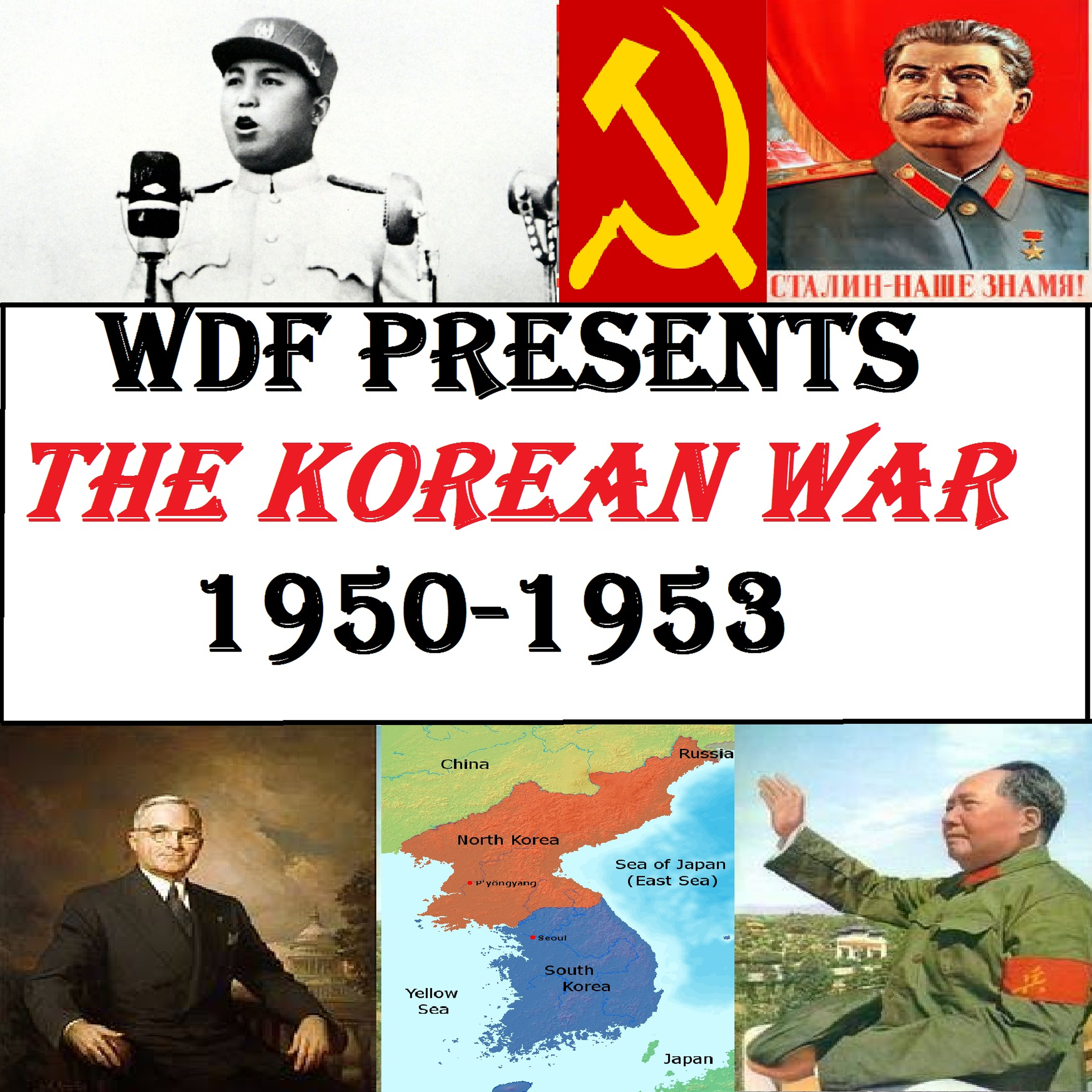
Korean War #38: The Perfect Scapegoat
Truman serves up MacArthur, and contrary to popular imagination, it was not the General, but the President, who schemed in the background - at least at this stage...Episode 38: The Perfect Scapegoat introduces one of the most infamous aspects of the Korean War narrative to you guys – that insufferable tension between President and General which would eventually lead to the dismissal of the latter and harsh criticism of the former. It was a difficult relationship long before this plug was pulled though, and while we’ve seen disagreements and MacArthur’s reaction to the Truman administration’s policies vary, we take some time here to properly root a portion of our narrative in this perspective. More specifically, here we return to that meeting on Wake Island on 15th October between Truman and MacArthur, and we examine what I believe is the real reason why the President began to increasingly present himself alongside everyone’s favourite triumphant General. It wasn’t because he was in search of some of the glory for himself, instead it was because Truman was already thinking of the post-war situation, and of his own legacy. While he would accept, as President, a portion of the blame for allowing the war in Korea to escalate into the massively expensive but still limited war with the Chinese, he was not willing to accept all of this blame. Indeed, he was determined now to leave behind the crumbs of evidence which would later enable critics to note that MacArthur’s considerable and well known hubris was just as much to blame for the intervention of the Chinese as was the official line from Washington which continued to underestimate the Chinese stance and capabilities. When MacArthur assured his President that the Chinese would not intervene, Truman likely already knew thanks to the codebreaking that Mao had announced his intention to intervene in a cable to Kim Il-sung. In this respect then, General Douglas MacArthur was the perfect scapegoat – he was as belligerent and vain as he was totally out of the loop of what Washington was aiming for, and he would help take much of the focus from the President once the Chinese did, contrary to MacArthur’s claims but in line with Truman’s information, invade.********Music used:“My Sweetie Went Away” by Bessie Smith, released in Nov 1923. Bessie Smith was an American blues singer. Sometimes referred to as The Empress of the Blues, Smith was the most popular female blues singer of the 1920s and 1930s. Available: http://freemusicarchive.org/music/Bessie_Smith/Antique_Phonograph_Music_Program_02172015/My_Sweetie_Went_Away_-_Bessie_Smith SPONSORS1) Use the code WDF15 to get 15% off your stylish new pair of headphones/earphones/listening things2) To access some fascinating books, nerd out with like minded enthusiasts, further your knowledge of some classical works, get 25% off your first three months AND help the show, head on over to onlinegreatbooks.com!Remember to BEFIT!B is for blogE is for email [email protected] is for Facebook, the Page and the GroupI is for Hosted on Acast. See acast.com/privacy for more information.
American Scandal Promo
Since the founding of the United States, in every generation, in every field of business, politics, sports and society, we’ve watched in shock as corruption, deceit and desire bring down heroes, titans and those we thought we could trust.In the aftermath, we’re left with too many questions, how did this happen? Who is to blame?American Scandal, a new podcast from Wondery, will answer these questions. They tell the stories of America’s biggest scandals, the who, how and why, to discover what happened, how they changed our country - and what lessons we can learn.I encourage you to subscribe to American Scandal. The first story is a look inside America’s pastime - Baseball - and scandal that changed the way we view our favorite athletes. It’s riveting. And while you’re listening, subscribe to American Scandal on Apple Podcasts or wherever you listen to podcasts. Thanksss! Hosted on Acast. See acast.com/privacy for more information.
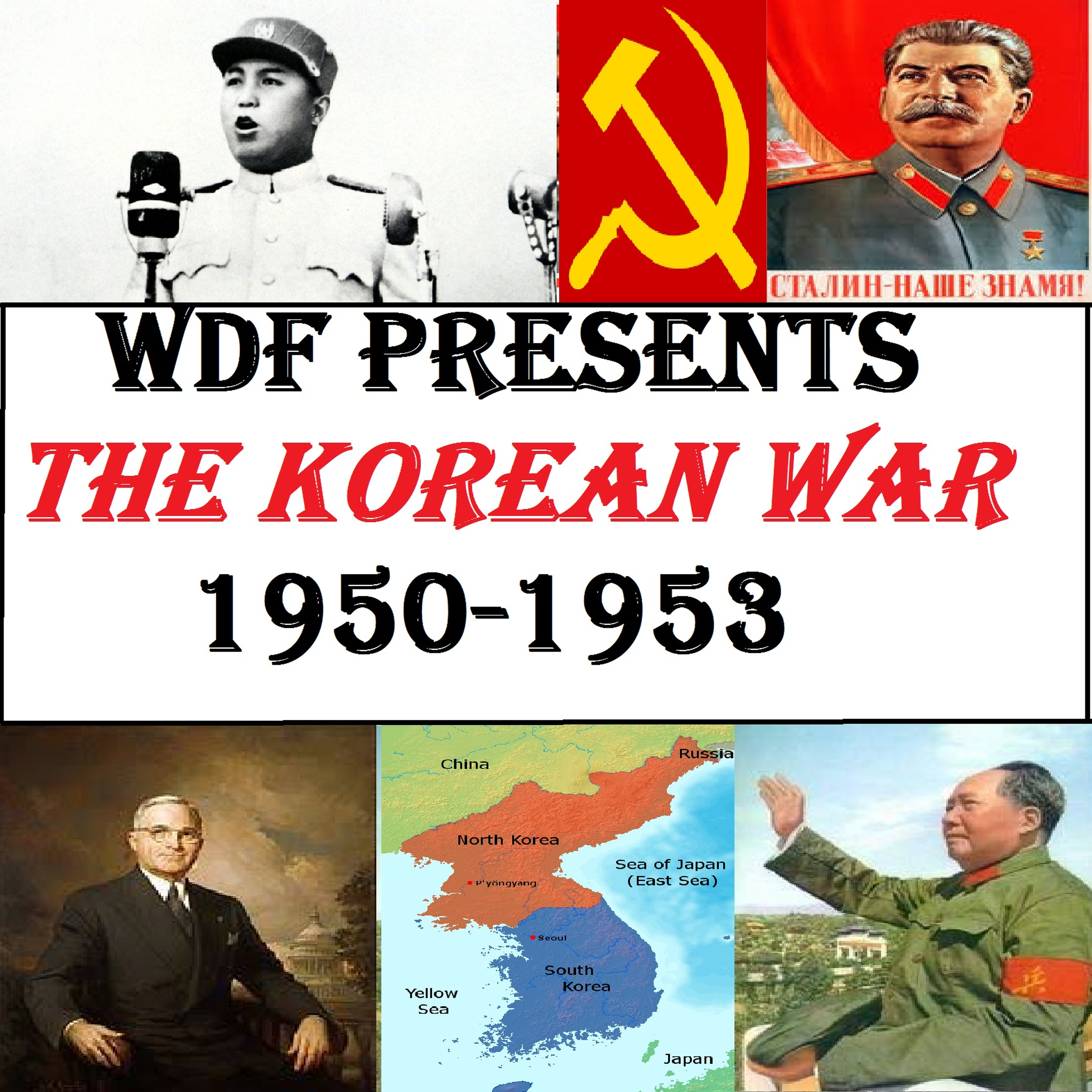
Korean War #37: Burning Chinese
Episode 37: Burning Chinese takes our story back a bit to late September, in roughly the same timeframe we covered in the last episode, to examine how the American policy was developed as the Chinese became ever more pressed to involve themselves. The official picture in Washington and among the UN allies, and of course in General MacArthur’s mind, was that no matter what they publicly said, the Chinese would not, could not intervene, and that thus, all evidence to the contrary was bluff or the intrigue of some communist agent. America’s leaders worked hard to reinforce this message, and it certainly likely that some heartily believed that there was no sense in stopping at the 38th parallel now that the North Koreans – the aggressors – were clearly in flight. Yet, it is inconceivable, as we’ve learned, that the Truman administration did not plan or think to plan for what may have occurred if Mao Zedong did decide to send his forces over the Yalu River. Indeed, if you believe my research, we have seen that this intervention was what the President wanted, but that to prevent the allies from being spooked, a more conservative presentation of foreign affairs was necessary for the public consumption. Fortunately for Truman, he was helped by the British who in this episode put forward their proposal to the UN General Assembly to cross the 38th parallel and continue the advance up North. This wasn’t because the British wanted the conflict that Truman did; instead it was because, after several pressure campaigns, it had been made clear to Atlee’s administration that support for the American policy in Korea would be taken as a litmus test of loyalty. With such a compelling reason to support the Americans, many UN allies would be taken, often against their will, across the 38th parallel, as MacArthur enthusiastically led the charge to wipe out the last vestiges of Kim’s regime. As we’ll see in this episode, even now, as October progressed, warning signs were becoming difficult to ignore.*********Music used: “By the Light of the Silvery Moon”, by Billy Murray and the Hadyn Quartet, available: http://freemusicarchive.org/music/Billy_Murray_and_Haydn_Quartet/Antique_Phonograph_Music_Program_03032015/By_The_Light_of_The_Silvry_Moon_-_Billy_Murray_and_Haydn_Quartet SPONSORS1) Use the code WDF15 to get 15% off your stylish new pair of headphones/earphones/listening things2) To access some fascinating books, nerd out with like minded enthusiasts, further your knowledge of some classical works, get 25% off your first three months AND help the show, head on over to onlinegreatbooks.com!Remember to BEFIT!B is for blogE is for email [email protected] is for Facebook, the Page and the GroupI is for iTunes, please rate, review and subscribeT is for TELL ANYONE!1) Pre-order our book on the Thirty Years War 2)... Hosted on Acast. See acast.com/privacy for more information.
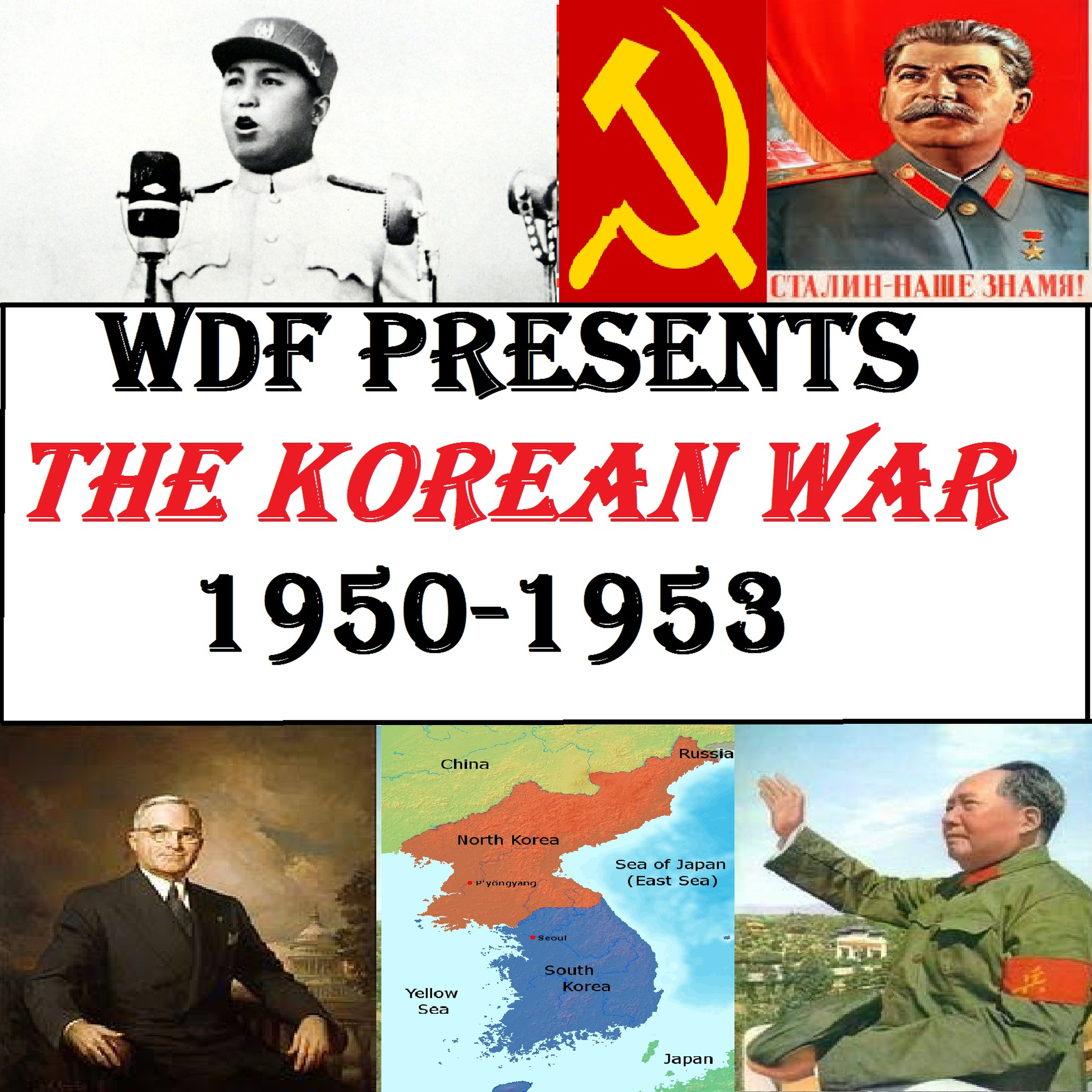
Korean War 36: Ordering Chinese
Our biggest episode yet!Episode 36: Ordering Chinese picks up from the last episode, this time from the perspective of the Chinese, as in late September they were clearly faced with something of a quandary. Stalin was ramping up his campaign to urge the Chinese to intervene, and in response, the Chinese claimed that since Kim Il-sung had yet to ask for help, Beijing could not give it. Stalin thus set to work engineering his plan into motion, and ensuring that the North Koreans would indeed ask for help. It was only to be expected that as the military situation worsened for Pyongyang in light of the Inchon landings, that Kim would see sense and appeal to the communist comrade in Beijing. Indeed, it was likely that he would have no choice but to do otherwise, thanks to the Soviet unwillingness to aid the NKPA in its time of need. In case Soviet involvement in the war was discovered by the West, Stalin insisted, the Soviets would have to pull the plug of support for the Northern Army. These threats were delivered solely to produce the policy outcome that Stalin wanted, and in the first two weeks of October, we’ll see how, after some hesitation and preparations, Mao Zedong determines that the time had come to intervene. With a resolution approving the crossing of the 38th parallel on 7th October, it was clearly necessary to fight back and prepare for the conflict which Mao had once feared, then tacitly accepted, and now actively planned for. The next phase of the conflict began to whir into life, just as MacArthur believed that his greatest triumph was in the works.**********Music used:“Sister Susie’s Sewing Shirts”, Al Jolson, available: http://freemusicarchive.org/music/Al_Jolson/Antique_Phonograph_Music_Program_03242015/Sister_Susies_Sewing_Shirts_for_Soldiers_-_Al_Jolson SPONSORS1) Use the code WDF15 to get 15% off your stylish new pair of headphones/earphones/listening things2) To access some fascinating books, nerd out with like minded enthusiasts, further your knowledge of some classical works, get 25% off your first three months AND help the show, head on over to onlinegreatbooks.com!Remember to BEFIT!B is for blogE is for email [email protected] is for Facebook, the Page and the GroupI is for iTunes, please rate, review and subscribeT is for TELL ANYONE!1) Pre-order our book on the Thirty Years War 2) Are you TeamFerdinand or TeamFrederick ? It's time to pick a side, and a t-shirt! 3) Don't forget of course to support WDF on Patreon to access ad-free episodes with the scripts attached, as well... Hosted on Acast. See acast.com/privacy for more information.
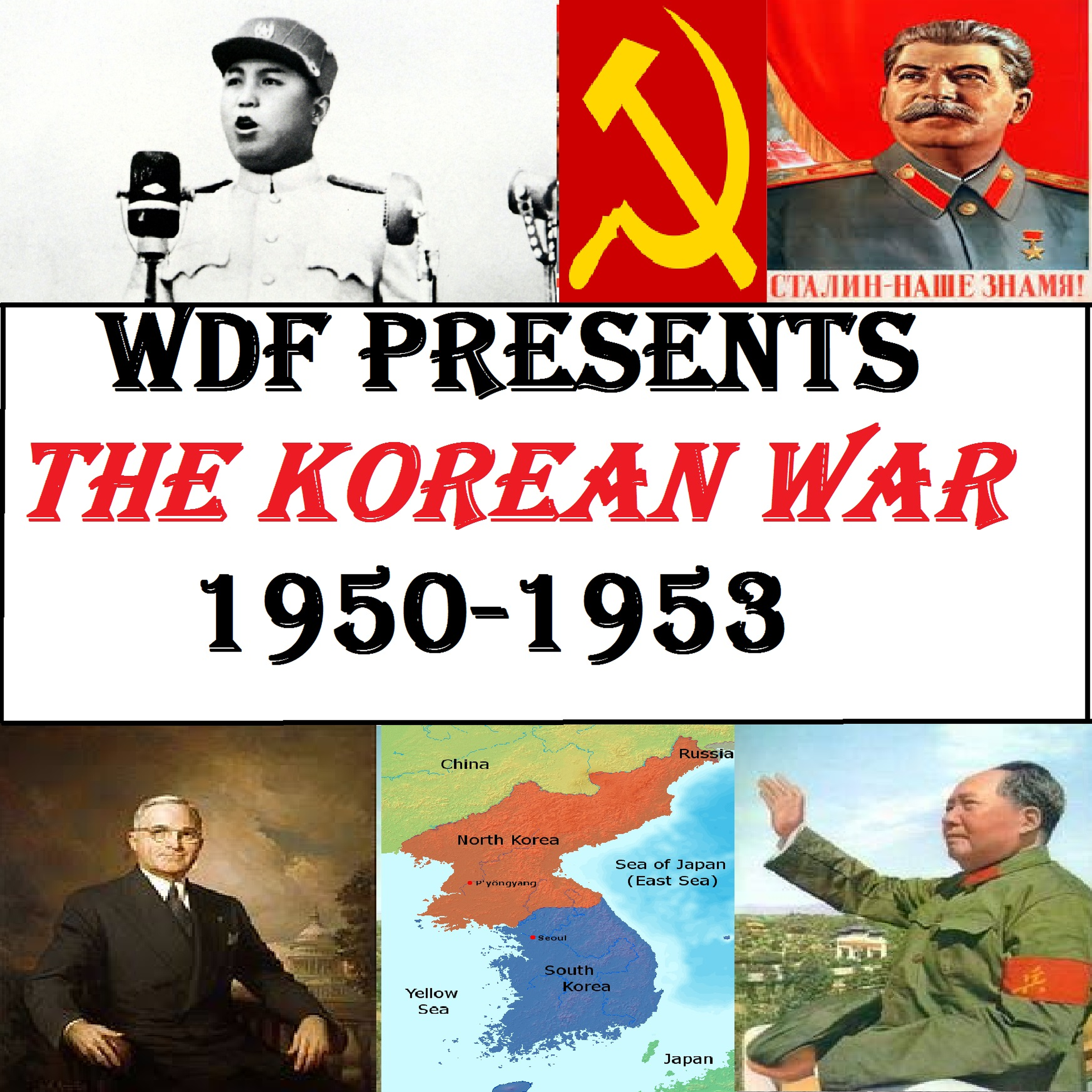
Korean War 35: Up In Flames
Remember your NSC reports!NSC 68: The reason we're all here (ish).NSC 81: The public report on compromises that pleased everyone and meant nothing. Especially no mention of the Chinese...NSC 73: The secret report which imagined Chinese involvement.NSC 76: The report which confirmed that the Soviets would never get involved.Episode 35: Up In Flames examines that pivotal moment in the history of the Korean War, when General MacArthur finally got the chance to achieve his greatest triumph at Inchon. The build-up to this event and the circumstances which surrounded it were far from conventional as we have seen, since the war plans of the Soviets, Chinese and Americans all relied on MacArthur achieving a great success for their own reasons, yet the triumph at Inchon was an unmistakable victory for the grizzled General and his unflinching attitude towards the communists. Might, it seemed, had indeed made right.Under the surface of this great success, the political and strategic interests of Washington were still being considered. The NSC had been busy creating some new policy approaches, one which dealt with Chinese intervention, NSC 73, and another which dealt with a World War 3 scenario of Soviet involvement in NSC 76. Both of these plans were top secret, and they were drawn up in response to the unpredictable stance of Moscow and Beijing. Washington kept its true ambitions a secret from its allies and enemies, and forged ahead with NSC 81, a compromise filled document which pleased the allies, but which, on the surface, solved few problems. What was more, while the situation in Korea moved towards Inchon, American leaders strengthened their hand in Europe by empowering the West German government, and securing that flank of the European common defence perimeter. All hands were now dedicated to defending against communism, a necessary exercise thanks to the example given by Korea. For the British, and especially for the French fighting the communist Vietminh, the increasing activism of communism illuminated the importance of bringing their old foes into the struggle. In the midst of further warnings from Beijing, MacArthur pushed forward past Seoul and onto the 38th parallel in late September, bypassing the objections of allies and the resolutions from the Indians. The moment of truth was approaching fast.************Music used:“Everybody Loves My Fanny” by Benny Bell, another wonderful double entendre song since you all enjoyed Shaving Cream so much. Benny’s collection can be found at: https://archive.org/details/BennyBellSPONSORS1) Use the code WDF15 to get 15% off your stylish new pair of headphones/earphones/listening things2) To access some fascinating books, nerd out with like minded enthusiasts, further your knowledge of some classical works, get 25% off your first three months AND help the show, head on over to onlinegreatbooks.com!Remember to BEFIT!B is for blogE is for email [email protected] is for Facebook, the Page and the GroupI is for Hosted on Acast. See acast.com/privacy for more information.
1956 Episode 2.2: Suez, A Life
This is it history friends, our last free episode of section 2 of 1956! If you like what you hear here, then make sure and track down the rest. Hours of content await, not just associated with this series. If you want to invest in Zack Twamley, in history podcasting and in WDF's future, then supporting us on Patreon is the best way to do that. I'd be most grateful, and you'd be filled with more history audio than you can shake an Egyptian stick at! Head on over to our Patreon page and access all of 1956 for $5 a month by clicking here.Episode 2.2: Suez, A Life examines that critical actor in the Suez Crisis… No I’m not just talking about the British, I’m also talking about the Suez Canal! A French investment opportunity, an ancient idea, and a British masterstroke, discover in this episode how this waterway became so monumentally important for British imperial interests in the latter 19th century, and how this interest was then carried over into the 20th century. After years of defending and expanding their stock in Suez, it was highly unlikely that Britain was going to give up its position there without a fight. Yet, at the same time, decolonisation trends across the world were in full swing, and it was far from certain that Egypt could be held while certain movements were underway.The most important of all these movements in decolonisation era Africa was found on 23rd July 1952, when a coup against King Farouk of Egypt, that docile and loyal British puppet, succeeded. A cadre of Egyptian military men now held control over the country, and they were determined to be anything but puppets to the British interest. Nationalists for Egypt as much as for the idea of pan-Arabism, one figure surged forward above all. His name was Gamal Abdel Nasser, and in this episode, we will be introduced to him, as we see what the British establishment was up against. Mindful of Britain’s interests in his country, and its unsavoury record there, Nasser was not about to give ground for nothing. Thousands of miles away, a government change waved goodbye to Winston Churchill, and ushered in his subordinate Anthony Eden. The stage was set for a conflict which was unlike any other yet seen in the British experience.Remember - you can access the rest of 1956 for just $5 a month by clicking here and signing up to WDF on Patreon! Thankssss! Hosted on Acast. See acast.com/privacy for more information.
1956 Episode 2.1: Bitter French Pills
PATRONS! HISTORY FRIENDS! Everyone in between! Part 2 of 1956 is now upon us, and here’s what you should do.First – ask yourself, do you love history? Second – answer yes, and have a listen to us here, as we unpack the Suez Crisis, in 21 easy steps!For everyone, episodes 2.1 and 2.2 are out now, but for those Patrons at the $5 level and above, 1956 is about to get very interesting indeed! For the rest of the year we’ll be hitting you with the run up to, outbreak of and consequences of the SUEZ CRISIS. If you’ve been holding off from being a Patron up to now, then I can guarantee you that there has never been a better time to sign up. I think the last time we released a series so diplomatically juicy was…well…every time, but still, you’d be mad to miss out!So what’s in the box of Episode 2.1: Bitter French Pills? Well in order to get to the bottom of Suez, we must begin the story with one its main actors, and this is where the French come in. In this episode, we will examine the painful post-war experience of France, why it was so reluctant to let go of its colonies and how this caused it more damage in the long run. As an integral, but largely forgotten player in the Crisis, understanding the French angle is essential for us. On many occasions, the fractured French government would be the only thing holding the also fractured plans for Suez together. Here, we discover what was moving the French in North Africa, and how its bitter Algerian pill, which it would put off swallowing for some time, so influenced its government’s decision to weigh in against Egypt.I hope you’ll join me for this first episode of Part 2! I for one am really excited to get into it, so remember that if you want to access ALL of the history, come and visit us at Patreon! Hosted on Acast. See acast.com/privacy for more information.
1956 Part 2: Introduction
After an interesting prelude, we are finally ready to tackle the main event of our series - the Suez Crisis. In this introductory episode, we explain what's in store, who to prepare for, what we're wary of and exactly why you should be excited for part 2 of this eventful series. Remember, the first two episodes will be out for FREE in line with getting everyone in the mood, but be sure to head over to our Patreon page to access all 20 of these episodes in full. For only a fiver a month, all of this and more could be yours.For those interested, make sure and track down the 1956 bibliography from the section of our website. Thankssss history friends, and stay tuned! Hosted on Acast. See acast.com/privacy for more information.
30YearsWar: 17th Century Warfare Episode 7
The fire by rank tactic used by Europeans in the 18th and 19th centuries had surprising beginnings, as we learn in this episode. While key military thinkers like Maurice of Nassau in the Netherlands played a pivotal role in changing how infantry were viewed and used on the battlefield, it is highly likely that he acquired inspiration for these ideas not just from Europe’s Ancient past, but also from Asian innovations many thousands of miles away.The adoption of the musket on a wide scale and its incorporation into the infantry-based armies of the 1500s was a process made into legend by the Spanish, who achieved their supremacy on the continent with the tercio formations – pikemen squares surrounded by musketmen, with a secure centre and the capacity to meet any challenge, be it man or beast, on the field. This tercio formation granted the Spanish stunning victories, from Pavia in 1525, all the way up to Nordlingen in 1634. Yet, as a tactic, it was gradually dying, to be replaced by Maurice of Nassau’s innovations in the fire by rank approach. In this tactic, men would line up as a group of musketmen several ranks deep. The front rank would discharge their weapons and march to the back of their unit to reload, with the second rank following suit, and so on. In this way, a constant volley of fire would be poured into the enemy – in this case the vaunted Spanish tercio formations, with devastating results. This tactic harnessed the potential for superior firepower which the musket could boast, and it ensured that further innovations were possible. In this episode we trace the development of this idea from its unlikely beginnings, and in the next episode, we will see it in action for the first time. Make sure you join us for this fascinating look at European warfare in the 17th century history friends! Thanksss! SPONSORS1) Use the code WDF15 to get 15% off your stylish new pair of headphones/earphones/listening things2) To access some fascinating books, nerd out with like minded enthusiasts, further your knowledge of some classical works, get 25% off your first three months AND help the show, head on over to onlinegreatbooks.com!Remember to BEFIT!B is for blogE is for email [email protected] is for Facebook, the Page and the GroupI is for iTunes, please rate, review and subscribeT is for TELL ANYONE!1) Pre-order our book on the Thirty Years War 2) Are you TeamFerdinand or TeamFrederick ? It's time to pick a side, and a t-shirt! 3) Don't forget of course to support WDF on Patreon to access ad-free episodes with the scripts attached, as well an hour of extra content every month, and so much more! - $1, $2 & $5 memberships available! 4) Of course, make sure you also follow us on Twitter, visit our... Hosted on Acast. See acast.com/privacy for more information.
Korean War #34: Building Inchon
Episode 34: Building Inchon examines the extensive diplomatic and political preparation which the Truman administration engaged with in the weeks before MacArthur’s landing at Inchon on 15th September 1950. Truman was forced to deal with several issues, including the independently minded actions of some of his own personnel, like the Secretary of Defence, who would be forced to resign. We see a new policy report NSC 81 come to the fore, even while it didn’t promise a whole lot it still managed to please the British and French, which was its primary goal.Meanwhile, Mao and Stalin’s cynical approach to Kim Il-sung’s precarious position became clear as August became September. As Stalin’s support of North Korea slackened, the Soviet leader became focused instead with building towards his political strategy and end goal of bringing China into conflict with the West. Mao on the other hand was determined to wait until the landings at Inchon took place, landings which he almost certainly expected, so that it would be easier to swoop into North Korea and re-orientate the loyalties of that state in its moment of desperation. Thus the Americans were allowed to plan for their famed amphibious landing in peace, and General MacArthur moved forward with his finest hour unaware that he was as much of a pawn in the wider game as Kim Il-sung had been. It was up to MacArthur now to turn the tide and open the next phase of this conflict, and the General proved more than up to the task.*******Music used“You’re a Grand Old Rag” by Billy Murray in 1906. Available: https://archive.org/details/GrandOldRag-BillyMurray9256 SPONSORS1) Use the code WDF15 to get 15% off your stylish new pair of headphones/earphones/listening things2) To access some fascinating books, nerd out with like minded enthusiasts, further your knowledge of some classical works, get 25% off your first three months AND help the show, head on over to onlinegreatbooks.com!Remember to BEFIT!B is for blogE is for email [email protected] is for Facebook, the Page and the GroupI is for iTunes, please rate, review and subscribeT is for TELL ANYONE!1) Pre-order our book on the Thirty Years War 2) Are you TeamFerdinand or TeamFrederick ? It's time to pick a side, and a t-shirt! 3) Don't forget of course to support WDF on Patreon to access ad-free episodes with the scripts attached, as well an hour of extra content every month, and so much more! - $1, $2 & $5 memberships available! 4) Of course, make sure you also follow us on Twitter, visit our website and... Hosted on Acast. See acast.com/privacy for more information.
Korean War #33: Chinese Chequers
Check out the Sound Education Podcast Conference at Harvard University, where you can meet yours truly and listen to some brilliant minds in podcasting over 2-3 November 2018!Episode 33: Chinese Chequers continues where we left off last time, as the implications of the American approach to Korea and Taiwan are heavily felt in Beijing. Mao now had reason to believe that the war could be turned to his advantage, and that a Chinese orientated Korean satellite on the sensitive border region was worth fighting for. It would also demonstrate the Chinese strength, and give Mao a chance to pose as a defender of communism, which was important for his reputation and self-image both at home and abroad. First, we examine a different but revealing new development in the United Nations, as India takes the lead in proposing a ceasefire arrangement. Predictably, this proposal failed, but it anticipated India’s later activism in the name of a Korean peace deal, and to some American figures, Chinese willingness to discuss the measure signified that communism was not universal in its foreign policy. Far from following the same policy, China and the Soviets would pursue their own interests, and in early July Mao, unlike Stalin, was still willing to talk about peace, especially if such a deal enabled Chinese Communist representatives to sit in the UN General Assembly for the first time.In the meantime, Mao prepared for the worst, but it wasn’t until mid-August that the American intention to unify the peninsula was announced. This carefully timed announcement, coming as it did when the allied perimeter at Pusan was judged secure, forced Mao to dispense with peace talks and compelled him to advance his plans for an invasion of the North in support of Kim Il-sung. Now that the American-led UN coalition would be seeking the expulsion of Kim’s regime, Mao knew he could not allow the allies to succeed, for it would be disastrous to Chinese security and prestige. At the same time though, the Truman administration continued to send Mao mixed signals, as the countdown towards the Inchon landings began.******Music used:“Go To Work You Jerk”, by Benny Bell released in 1948, available: https://archive.org/details/BennyBell SPONSORS1) Use the code WDF15 to get 15% off your stylish new pair of headphones/earphones/listening things2) To access some fascinating books, nerd out with like minded enthusiasts, further your knowledge of some classical works, get 25% off your first three months AND help the show, head on over to onlinegreatbooks.com!Remember to BEFIT!B is for blogE is for email [email protected] is for Facebook, the Page and the GroupI is for iTunes, please rate, review and subscribeT is for TELL ANYONE!1) Pre-order our book on the Thirty Years War 2) Are you TeamFerdinand or Hosted on Acast. See acast.com/privacy for more information.
Korean War #32: Chinese Whispers
Episode 32: Chinese Whispers follows on from Truman’s speech requesting those yummy defence budget increases, by rolling our coverage back to the immediate aftermath of the American intentions to intervene which were announced on 26th June 1950. For Mao Zedong, our main focus for the next two episodes, the really aggravating aspect of Washington’s policy wasn’t that the Yanks were suddenly supporting Seoul with more enthusiasm – it was instead the fact that America now identified Taiwan as being part of this policy of support. They moved their fleet in between the Taiwan Straits, it was said, to prevent Chiang Kai-shek from intervening and breaking open the limited war, but Mao read between the lines, and believed that the act was done to interfere and jeopardise Chinese Communist interests, rather than protect the fragile Asian peace.Here we examine the Chinese leader’s fears and plans during the first half of 1950 and then his responses to the numerous challenges to the Chinese position immediately after the outbreak of the war. We question what the Chinese planned to do in Korea, how they viewed the conflict and what Beijing expected the US to do. We also see how transparent the allied plans for Korea were, and how MacArthur’s supposedly top secret brainchild was so well-known, even the Times was hinting at an Inchon landing to turn the tables against Pyongyang. Under such circumstances, and in light of what we’ve learned in the last few episodes, Mao’s attitude towards Korea suffered a series of shocks, and before long Stalin was requesting that the Chinese intervene in force to aid the Northern invasion which he had helped to sabotage. This episode collects together several threads then, and sees the Americans resume their more belligerent policy towards the Chinese after some weeks of appeasement; in early August, MacArthur appeared on Taiwan and began to converse with Mao’s mortal enemy Chiang Kai-shek. The message was clear – the US was not a friend of Beijing, and the US knew how to hurt the Chinese. Mao began to prepare for intervention, and in the process walked right into the trap so carefully laid by both the Soviets and Americans.**********Music used:“Mama Goes Where Papa Goes”, by Isabelle Patricola, released in 1923, available: http://freemusicarchive.org/music/Isabelle_Patricola/Antique_Phonograph_Music_Program_04072015/Mama_Goes_Where_Papa_Goes_-_Isabelle_PatricolaSPONSORS1) Use the code WDF15 to get 15% off your stylish new pair of headphones/earphones/listening things2) To access some fascinating books, nerd out with like minded enthusiasts, further your knowledge of some classical works, get 25% off your first three months AND help the show, head on over to onlinegreatbooks.com!Remember to BEFIT!B is for blogE is for email [email protected] is for Facebook, the Page and the GroupI is for iTunes, please rate, review and subscribeT is for TELL ANYONE!1) Pre-order our... Hosted on Acast. See acast.com/privacy for more information.
Korean War #31: Laying Down The Gauntlet
Episode 31: Laying Down The Gauntlet looks at the other side of the coin and how the Americans reacted to the developing war in the late summer of 1950. MacArthur attempted to follow War Plan SL-17, which stipulated that a landing at Inchon should take place in response to a Northern surge down the peninsula, but problems existed in this plan, and MacArthur faced a conundrum throughout July 1950 as he tried to adapt to the curious nature of the communist advance. Pusan, it was clear, would be the holding action, and the test of allied mettle before reinforcements arrived. What was also clear in the Truman administration was that the time was right to present its first of many appeals to the public and to Congress. The policy aim of NSC 68 and the requirements within the defence budget necessitated that the President acted fast and did not hesitate to request, in consideration of the urgent state of affairs in Korea, some emergency funding increases. In addition, the apparently contradictory policy of appeasement towards the Chinese was adopted. This, as we’ll see, was pursued only because of the momentary vulnerability of the defenders at Pusan – if the Chinese intervened now, in late July-early August, all would surely be lost. Far better it would be to see the Chinese involve themselves AFTER the reinforcements had arrived and triumphs had been achieved. This, indeed, was the outcome eventually reaches. Little did Mao Zedong know, while he cautiously welcomed the allied approaches and watched the conflict unfold on the peninsula somewhat nervously, that all was proceeding according to the plans of everyone but his own.********Music used: “While They Were Dancing Around”, by Eddie Morton released in 1914. Available: http://freemusicarchive.org/music/Eddie_Morton/Antique_Phonograph_Music_Program_04282015/While_They_Were_Dancing_Around_-_Eddie_Morton SPONSORS1) Use the code WDF15 to get 15% off your stylish new pair of headphones/earphones/listening things2) To access some fascinating books, nerd out with like minded enthusiasts, further your knowledge of some classical works, get 25% off your first three months AND help the show, head on over to onlinegreatbooks.com!Remember to BEFIT!B is for blogE is for email [email protected] is for Facebook, the Page and the GroupI is for iTunes, please rate, review and subscribeT is for TELL ANYONE!1) Pre-order our book on the Thirty Years War 2) Are you TeamFerdinand or TeamFrederick ? It's time to pick a side, and a t-shirt! 3) Don't forget of course to support WDF on Patreon to access ad-free episodes with the scripts... Hosted on Acast. See acast.com/privacy for more information.

30YearsWar: 17th Century Warfare Episode 6
We return with part 6 of our series on 17th century warfare, and in this episode we have something very special for you guys – an examination of the sick man of Europe, before he was sick, but when he was certainly maligned and looked down upon. For some time, it has been supposed that the Ottoman Empire could not keep pace with Western Europe, and that her eclipse by the West European powers in the 1700s was an inevitable, rational process which can be partially explained by the Turk’s reluctance to accept new technological advances. Yet, as we’ll learn here, this generalisation against the Turks is as unfair as it is unfounded. The Ottoman Empire possessed one of the most advanced organisational and administrative systems in the world at the dawn of the 17th century. She was equipped with some of the most educated military minds, and had on site some of the best facilities for producing the weapons of war which he soldiers needed. This was not a sick man of Europe, nor did the patient show any signs of illness – far from it. The Turk was the envy of the continent thanks to the immense successes and accomplishments of her Sultans and soldiers, and it was partially to explain away these successes that the more unflattering myths about the Turk’s barbarity did the rounds.In this episode we’ll learn what the Turk was truly capable of, and why he made use of certain weapons which were shown to be obsolete in other parts of Europe. The Military Revolution, as we’ll see, was not the blanket theory which could be universally applied to all – advancements in technology did not arrive evenly to the continent, and even when they did, these advancements were affected by the circumstances on the ground, and issues as simple as whether Tartars were more comfortable firing a technically obsolete bow, than picking up a more ‘modern’ carbine. So I hope you’ll join me here history friends, while we examine the Turk’s prowess in the detail it deserves. Thanksss! SPONSORS1) Use the code WDF15 to get 15% off your stylish new pair of headphones/earphones/listening things2) To access some fascinating books, nerd out with like minded enthusiasts, further your knowledge of some classical works, get 25% off your first three months AND help the show, head on over to onlinegreatbooks.com!Remember to BEFIT!B is for blogE is for email [email protected] is for Facebook, the Page and the GroupI is for iTunes, please rate, review and subscribeT is for TELL ANYONE!1) Pre-order our book on the Thirty Years War 2) Are you TeamFerdinand or TeamFrederick ? It's time to pick a side, and a t-shirt! 3) Don't forget of course to support WDF on Patreon to access ad-free episodes with the scripts attached, as well an hour of extra content every month, and so much more! - $1, $2 & $5 memberships available!... Hosted on Acast. See acast.com/privacy for more information.
Korean War #30: Unfriendly Fire
Episode 30: Unfriendly Fire switches gears from the Anglo-American to the Asian angle in the war. We encounter some more controversial points, as we learn just how instrumental Stalin was in blunting the force of the North Korean People's Army, as he manipulated the situation to acquire the war he wanted. Stalin was creating in Korea a war which would draw the allies in further, and which would force the Chinese to respond. With this in mind, he couldn't afford to watch the North actually push the allies off the peninsula and effectively win the war.In previous episodes, we've made the point that Stalin wanted a certain kind of war, but in my mind, this evidence here proves that Stalin was utterly committed to sabotaging Kim Il-sung after leading him to believe that the war would take a certain shape. Kim, much like the Chinese and Stalin believed, the Americans, were pawns in his game to gather greater power and influence for himself. We thus see for ourselves that the Northern failures were less to do with allied preparations or Northern mistakes, but Stalin's deliberate actions. Controversial for sure, but in this window of time that the North had to close the war in its favour, Stalin needed to be sure that everything went according to plan, and that the war would not end just yet.************Music used:We return to the American Heart Association and Jo Stafford for another another song, and you can find the collection of audio I used for that series here: https://archive.org/details/1950-1959RadioNewsSPONSORS1) Use the code WDF15 to get 15% off your stylish new pair of headphones/earphones/listening things2) To access some fascinating books, nerd out with like minded enthusiasts, further your knowledge of some classical works, get 25% off your first three months AND help the show, head on over to onlinegreatbooks.com!Remember to BEFIT!B is for blogE is for email [email protected] is for Facebook, the Page and the GroupI is for iTunes, please rate, review and subscribeT is for TELL ANYONE!1) Pre-order our book on the Thirty Years War 2) Are you TeamFerdinand or TeamFrederick ? It's time to pick a side, and a t-shirt! 3) Don't forget of course to support WDF on Patreon to access ad-free episodes with the scripts attached, as well an hour of extra content every month, and so much more! - $1, $2 & $5 memberships available! 4) Of course, make sure you also follow us on Twitter, visit our website and sign up to our Newsletter Hosted on Acast. See acast.com/privacy for more information.
Korean War #29: With Allies Like These
Episode 29: With Allies Like These looks further at the Anglo-American relationship from where we left off last time. After July 1950, the British were militarily committed to Korea under the auspices of the United Nations, and under the command of General Douglas MacArthur. If these facts made Britons nervous, these nerves were not soothed by the repeated examples of where the two allies differed in their attitudes towards the theatre.The British were hesitant to invest too much resources in a region where they could construe little benefit, and they, unlike Washington, could not afford to anger the Chinese, whom they had recognised and wished to retain a favourable trading partnership with. These differences led to some stunning scenes, such as British intransigence in the United Nations General Assembly nearly forcing the British to vote on the side of the Soviets! These scenes and more come under our microscope here, as we examine the often fraught but desperately needed Anglo-American alliance as it traversed the perils of the Korean War.The sheer amount of content we have to cover means that Episode 29 is the largest yet, but I hope you will also agree that it is one of the most interesting, as we challenge the idea that the British and Americans remained on good terms throughout the postwar era. Certainly, it would all come crashing down quite painfully for Britain in 1956, but until that point, cracks were already beginning to show in the Anglo-American axis.*******Music used:We look at a 1950 radio program in support of the American Heart Association, where Jo Stafford, 'American Singing Sensation', gives us a quality gem. Giving the link for this specific song is tricky, since it came as a part of a big audio bundle of a radio archive, but the link is available here: https://archive.org/details/1950-1959RadioNewsSPONSORS1) Use the code WDF15 to get 15% off your stylish new pair of headphones/earphones/listening things2) To access some fascinating books, nerd out with like minded enthusiasts, further your knowledge of some classical works, get 25% off your first three months AND help the show, head on over to onlinegreatbooks.com!Remember to BEFIT!B is for blogE is for email [email protected] is for Facebook, the Page and the GroupI is for iTunes, please rate, review and subscribeT is for TELL ANYONE!1) Pre-order our book on the Thirty Years War 2) Are you TeamFerdinand or TeamFrederick ? It's time to pick a side, and a t-shirt! 3) Don't forget of course to support WDF on Hosted on Acast. See acast.com/privacy for more information.
Korean War #28: London Stalling
You can find American Moments here. It's a history podcast bringing you more of the history from America which you love, but may have forgotten...Episode 28: London Stalling, introduces us to the British participation in the Korean War, and how utterly transfixed on the American partnership Clement Atlee's administration was. A guiding reason why the British and their Commonwealth allies took part in the Korean War can be explained by the Anglo-American partnership, and the pressures felt in London to support Washington in Asia, even though their policies and interests frequently conflicted there.Several times, British and American allies butted heads over what to do in Korea, and the issue of how far to proceed once across the border and into North Korea was a very hot, sensitive topic as well. Once the Chinese intervened, the British felt all of their aims go up in smoke, and wished only to end the war as quickly as possible so that the defence of Western Europe could properly be organised. Rearmament, unlike in the US, was not a net positive for British policymakers, but a terrible cost, and it led to skimping on other plans such as the NHS in the name of the increasingly unpopular war. In this first of two part examination of the Anglo-American relationship in the Korean War, we see that initial optimism and passion for defending a victim of aggression soon degenerated into a campaign of diplomatic self-interest, and then into a dreary, messy stalemate which the British found they could not escape from.Yet, in summer 1950, it could not be known where the war would end up, and positivity, twinned with the defence of its ally's interests, moved the British government to invest itself heavily in Korea, even while the shadow of the Second World War still loomed large and visibly in the British consciousness, not to mention in the every day lives of its citizens. The British had won World War 2, but they had been made to feel like a defeated nation ever since. Now their government, for a variety of reasons, had committed itself to yet another conflict which it could not afford. This was a July Crisis in 1950, but it was one of a very different nature to that experienced 36 years before.*********Music used:"I Can't Escape From You", by Bing Crosby, released in 1936. Available:https://archive.org/…/78_i-cant-escape-from-you_bing-crosby…SPONSORS1) Use the code WDF15 to get 15% off your stylish new pair of headphones/earphones/listening things2) To access some fascinating books, nerd out with like minded enthusiasts, further your knowledge of some classical works, get 25% off your first three months AND help the show, head on over to onlinegreatbooks.com!Remember to BEFIT!B is for blogE is for email [email protected] is for Facebook, the Page and the GroupI is for iTunes, please rate, review and... Hosted on Acast. See acast.com/privacy for more information.