
When Diplomacy Fails Podcast
744 episodes — Page 5 of 15
30YearsWar #28: "The Perfect Villain"
Matchlock is a historical fiction series set during the Thirty Years' War, beginning in 1622, when Matthew Lock lands in Europe to investigate the brutal murder of his parents. Order your copy of Matchlock and the Embassy by clicking here. King James of Britain was a complex fellow, and while his son is arguably more infamous, the father had some issues of his own to get through too. Most particularly, in the Spanish Match, the king's quest to balance Europe with a Palatine Protestant marital alliance on one hand and a Spanish Catholic on the other. Had it worked, Europe may have been spared the 30 Years War, and we could be talking about the Great Peacemaker. Unfortunately, this was a fantasy land only the King himself appeared to live in, and he would have to be rudely shaken out of it before that dodgy Spanish ambassador makes his move...****** **DON'T FORGET TO FOLLOW THESE LINKS!**1) To support the podcast financially in return for some extra audio content, check out Patreon!2) To find a community of history friends, look at our Facebook page and group!3) To keep up to date with us, follow us on Twitter!4) For everything else, visit our website!5) For merchandise including tees and mugs, all you have to do is click here!6) Get our new Thirty Years War book, For God or the Devil! Hosted on Acast. See acast.com/privacy for more information.
30YearsWar #27: The Ultimate Crossover
Matchlock is a historical fiction series set during the Thirty Years' War, beginning in 1622, when Matthew Lock lands in Europe to investigate the brutal murder of his parents. Order your copy of Matchlock and the Embassy by clicking here. What happened when the most intensive, bitter conflict Europe had to offer spilled over into the other conflict between the Holy Roman Emperor and the Elector Palatine? The Spanish and Dutch had fought for many decades, but the latest chapter in their war looked set to change everything, as the two branches of the Habsburg family merged their wars together, with dramatic consequences for all involved. Why did the Dutch feel they had to resume the war? Why did the Spanish believe they had no choice at all? Find out here, as the two theatres of war cross over, changing Europe and the Thirty Years War forever... **DON'T FORGET TO FOLLOW THESE LINKS!**1) To support the podcast financially in return for some extra audio content, check out Patreon!2) To find a community of history friends, look at our Facebook page and group!3) To keep up to date with us, follow us on Twitter!4) For everything else, visit our website!5) For merchandise including tees and mugs, all you have to do is click here!6) Get our new Thirty Years War book, For God or the Devil! Hosted on Acast. See acast.com/privacy for more information.
30YearsWar #26: The Disunited Provinces
Matchlock is a historical fiction series set during the Thirty Years' War, beginning in 1622, when Matthew Lock lands in Europe to investigate the brutal murder of his parents. Order your copy of Matchlock and the Embassy by clicking here. In today's episode we look at the story of the Dutch in a time of peace and tranquility - or at least, peace - and ask what went wrong. The problem was that the United Provinces were not so united after all, and were in fact beset by divisions on numerous levels. A state which had been forged in war, and which found its identity in war, suddenly had to cope without war, and it was harder than expected.Between 1610-19, the Dutch Republic was struck by a new religious dispute which was soon folded into the political and societal tensions. The two camps became inflamed, and with the Spaniard always the subject of suspicion, it became clear that blood would have to be paid, for the crisis to pass... **DON'T FORGET TO FOLLOW THESE LINKS!**1) To support the podcast financially in return for some extra audio content, check out Patreon!2) To find a community of history friends, look at our Facebook page and group!3) To keep up to date with us, follow us on Twitter!4) For everything else, visit our website!5) For merchandise including tees and mugs, all you have to do is click here!6) Get our new Thirty Years War book, For God or the Devil! Hosted on Acast. See acast.com/privacy for more information.
30YearsWar #25: From Truce To War
Matchlock is a historical fiction series set during the Thirty Years' War, beginning in 1622, when Matthew Lock lands in Europe to investigate the brutal murder of his parents. Order your copy of Matchlock and the Embassy by clicking here. After many episodes examining Frederick's woes, here we change our focus and look at that conflict long in the background - the Spanish Dutch War, which was resuming after twelve years of truce, in 1621. What had the truce done for both parties, and why did the Spanish feel particularly eager to resume war after going all in in Germany already? Could Madrid afford the extra expense? Probably not, but now that they held to the Rhine, the war against the Dutch could be brought to bear as a way to save the regions where Spain was truly hurting, as the professional piracy of the Dutch simply had to be stopped. Whether it as the last gasp or a desperate strike, either way, Spain had no choice but go on, even if that meant going down fighting... **DON'T FORGET TO FOLLOW THESE LINKS!**1) To support the podcast financially in return for some extra audio content, check out Patreon!2) To find a community of history friends, look at our Facebook page and group!3) To keep up to date with us, follow us on Twitter!4) For everything else, visit our website!5) For merchandise including tees and mugs, all you have to do is click here!6) Get our new Thirty Years War book, For God or the Devil! Hosted on Acast. See acast.com/privacy for more information.
30YearsWar #24: Woe to the Vanquished
Matchlock is a historical fiction series set during the Thirty Years' War, beginning in 1622, when Matthew Lock lands in Europe to investigate the brutal murder of his parents. Order your copy of Matchlock and the Embassy by clicking here. Welcome to our coverage of the 30 Years War, where we cover the period 1622-23. It was a time of significant defeats and changes, but also of moments of great triumph and success for the Holy Roman Emperor.In the aftermath of his enemy's disaster, Ferdinand was now free to shape Bohemia in his own image, in the process undoing centuries of history and traditions, all in the name of force, and through force alone. The country was effectively recast as a loyal Catholic dependency of Vienna, losing its independence and character, but Ferdinand wasn’t finished there. As his agents worked overtime to realise his victory, several prominent profiteers began to loom into view.Among these new Bohemian men was a relatively minor noble by the name of Albrecht of Wallenstein, who played no small role in later years in securing Ferdinand’s security, not to mention creating the first standing Habsburg army. Other triumphs were affected too, as in February 1623, Maximilian of Bavaria cashed in his chips to become the Elector of Bavaria, thereby acquiring for himself and his realm a promotion which would have been the envy of the Empire. This, it seemed, was the reward which awaited those that aided the Emperor. And yet, there still fluttered in the Empire’s lands several rebellious flags, who had as their master not Ferdinand, but the defeated Frederick. The Winter King was certainly down, but he was by no means out... **DON'T FORGET TO FOLLOW THESE LINKS!**1) To support the podcast financially in return for some extra audio content, check out Patreon!2) To find a community of history friends, look at our Facebook page and group!3) To keep up to date with us, follow us on Twitter!4) For everything else, visit our website!5) For merchandise including tees and mugs, all you have to do is click here!6) Get our new Thirty Years War book, For God or the Devil! Hosted on Acast. See acast.com/privacy for more information.
30YearsWar #23: My Poor Palatinate
Matchlock is a historical fiction series set during the Thirty Years' War, beginning in 1622, when Matthew Lock lands in Europe to investigate the brutal murder of his parents. Order your copy of Matchlock and the Embassy by clicking here. In this episode, we examine the years between roughly 1620-22, as Frederick moved into his new home in The Hague, just as the war between Spain and the Dutch was about to resume. Like many others at the time, Frederick believed that the Eighty Years War had the potential to erupt into something more, and he banked that before long, all the wars in Europe would become one war. But this impression - which was also a statement later made by the King of Sweden, interestingly enough - did not happen quite yet, even though there were Spanish soldiers occupying his homeland.The ravaging of the Palatinate was only one issue which Frederick would have to contend with though. Plans were afoot which would ensure that Frederick would be persona non grata in Germany, and in this desperate situation, what choice did Frederick have but to turn to his allies, the English, Danes and Dutch? Unfortunately for Frederick, these folks weren't quite ready to accept that the newly crushed Bohemian revolt would son spread into the 30 Years War. All in good time, though, Frederick was determined not to give up the fight, no matter what it cost him, his co-religionists, or his poor Palatinate! **DON'T FORGET TO FOLLOW THESE LINKS!**1) To support the podcast financially in return for some extra audio content, check out Patreon!2) To find a community of history friends, look at our Facebook page and group!3) To keep up to date with us, follow us on Twitter!4) For everything else, visit our website!5) For merchandise including tees and mugs, all you have to do is click here!6) Get our new Thirty Years War book, For God or the Devil! Hosted on Acast. See acast.com/privacy for more information.
30YearsWar #22: Winter Is Here
Matchlock is a historical fiction series set during the Thirty Years' War, beginning in 1622, when Matthew Lock lands in Europe to investigate the brutal murder of his parents. Order your copy of Matchlock and the Embassy by clicking here. In this episode, the Battle of White Mountain shatters Frederick's regime, but how did we get here? Let's roll back the clock a bit....Frederick’s prospects were fair so long as his allies came to aid him against the Emperor. Yet, once these allies refused to pick up the phones, once his new subjects refused to pony up what was needed for defence, and once the Emperor called in HIS favours with the Spanish and several other electors, it was only a matter of time before Frederick’s mistake was brought home to in full. It began with a Spanish invasion of the Palatinate, alongside a Bavarian invasion which followed. Frederick had probably never expected or imagined such an act – after all, Spain was not at war with him, and Maximilian of Bavaria was a distant cousin for crying out loud! But family proved a curse rather than a blessing at this juncture, and worse news was to come. John George of Saxony was the most influential Protestant Elector in the Empire, and Frederick may have at least expected a sympathetic ear. Instead, he got an opportunistic enemy, who invaded Bohemia, seizing Lusatia, one of the kingdom’s contingent parts, and siding firmly with the Emperor. The walls were now closing in, and disaster then struck.In November 1620, the Battle of White Mountain saw a Spanish-Bavarian-Imperial army defeat Frederick’s ragtag force of militia and mercenaries, and Frederick was only notified when the remnants of this shattered force began to stream back to Prague. The attack and disaster had come so quickly there was not even time to drain the bathwater, and Frederick fled along with his wife to the Netherlands, where a new chapter of their lives, and a new phase of the war, was due to begin in earnest. Ferdinand had won this round, but as far as Frederick was concerned, so long as he was breathing, the contest was far from over… **DON'T FORGET TO FOLLOW THESE LINKS!**1) To support the podcast financially in return for some extra audio content, check out Patreon!2) To find a community of history friends, look at our Facebook page and group!3) To keep up to date with us, follow us on Twitter!4) For everything else, visit our website!5) For merchandise including tees and mugs, all you have to do is click here!6) Get our new Thirty Years War book, For God or the Devil! Hosted on Acast. See acast.com/privacy for more information.
30YearsWar #21: Winter Is Coming
Matchlock is a historical fiction series set during the Thirty Years' War, beginning in 1622, when Matthew Lock lands in Europe to investigate the brutal murder of his parents. Order your copy of Matchlock and the Embassy by clicking here. The Winter King had to carry on, and over November 1619- April 1620, he did just that. Frederick embarked on his royal progress, doing his best to persuade those he met that he was legit, and that his regime was here to stay. He had no other choice - Emperor Ferdinand was gathering his allies, and on the Habsburg side of the ledger, the omens were not good for the Elector Palatine. One by one, as 1620 progressed, his allies left his side.Frederick was unfortunate to have to rely on people who had their own agendas. The Dutch were preparing for the resumption of the war with Spain; Brandenburg was terrified into quiescence, and his own father in law James I and VI was doing his best to arrange a grand partnership with a Spanish match. In short, the Winter King was alone, with only his increasingly anxious Bohemian subjects for company, and a looming threat of doom just over the horizon...**DON'T FORGET TO FOLLOW THESE LINKS!**1) To support the podcast financially in return for some extra audio content, check out Patreon!2) To find a community of history friends, look at our Facebook page and group!3) To keep up to date with us, follow us on Twitter!4) For everything else, visit our website!5) For merchandise including tees and mugs, all you have to do is click here!6) Get our new Thirty Years War book, For God or the Devil! Hosted on Acast. See acast.com/privacy for more information.
WDF Is On Teepublic, And We're On Sale!
Great news history friends - I've finally done it, and taken a large weight off my shoulders by joining up with Teepublic, a podcaster's favourite merchandise company! This is where you come in, because you guys can now make this a success by heading over to our Teepublic storefront. As an added incentive, we arranged to launch when a 35% off sale was already on!All you have to do is click here! Hosted on Acast. See acast.com/privacy for more information.
30YearsWar #20: Desperate Measures
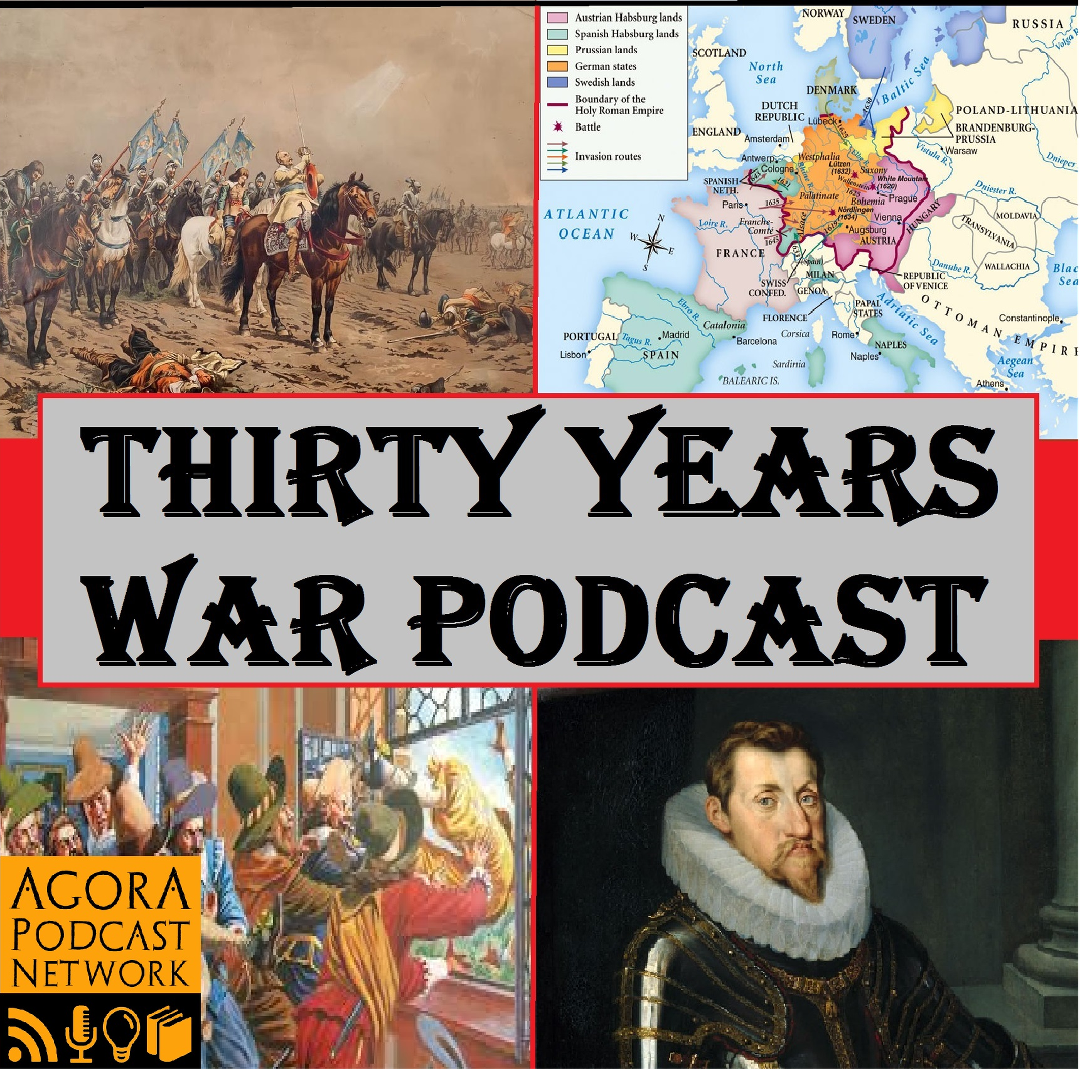
Matchlock is a historical fiction series set during the Thirty Years' War, beginning in 1622, when Matthew Lock lands in Europe to investigate the brutal murder of his parents. Order your copy of Matchlock and the Embassy by clicking here. Last time in our 30 Years War story, Frederick V, a big time German ruler with small time power, accepted the Crown of Bohemia, and Europe seemed to breathe a sigh of shock. Some were shocked of course, but others were positively bouncing, and excited for the potential of what Freddy could achieve. All that was required to happen was for his friends and allies and relatives to stand up and be counted, and Emperor Ferdinand wouldn't stand a chance. Against the combined forces of England, Denmark, the Netherlands and countless Protestants in Germany, what chance did Emperor Ferdinand have? In fact, the Emperor was as cynical as he was fortunate - fortunate to have friends who depended on him as much as he depended on them. Bavaria and Spain, motivated by much more than religious and familial ties, could not afford to let this opportunity slide.Was Frederick doomed as soon as he set out for Bohemia, or were matters outside of his control? As he marched for Prague, there was no shortage of promises and declarations in his favour, but a disconcerting shortage of practical contributions. This was the first sign of many that matters were perhaps not as rosy as Frederick had believed, but he pressed on regardless. Frederick set up his regime in Prague, making a grand impression upon the Bohemians, being joined by his wife Elizabeth, in addition to their infant children. Optimism was not hard to find, even if the omens were not good. There was a reason why history determined Frederick and Elizabeth the Winter King and Queen, and Frederick was about to find out precisely what it was…**DON'T FORGET TO FOLLOW THESE LINKS!**1) To support the podcast financially in return for some extra audio content, check out Patreon!2) To find a community of history friends, look at our Facebook page and group!3) To keep up to date with us, follow us on Twitter!4) For everything else, visit our website, where you'll find the shop, archive, and much more!5) To purchase merchandise of all sorts, including mugs, books and clothing, check out our Merchants' Quarter6) Get our new Thirty Years War book, For God or the Devil! Hosted on Acast. See acast.com/privacy for more information.
30YearsWar #19: Desperate Times
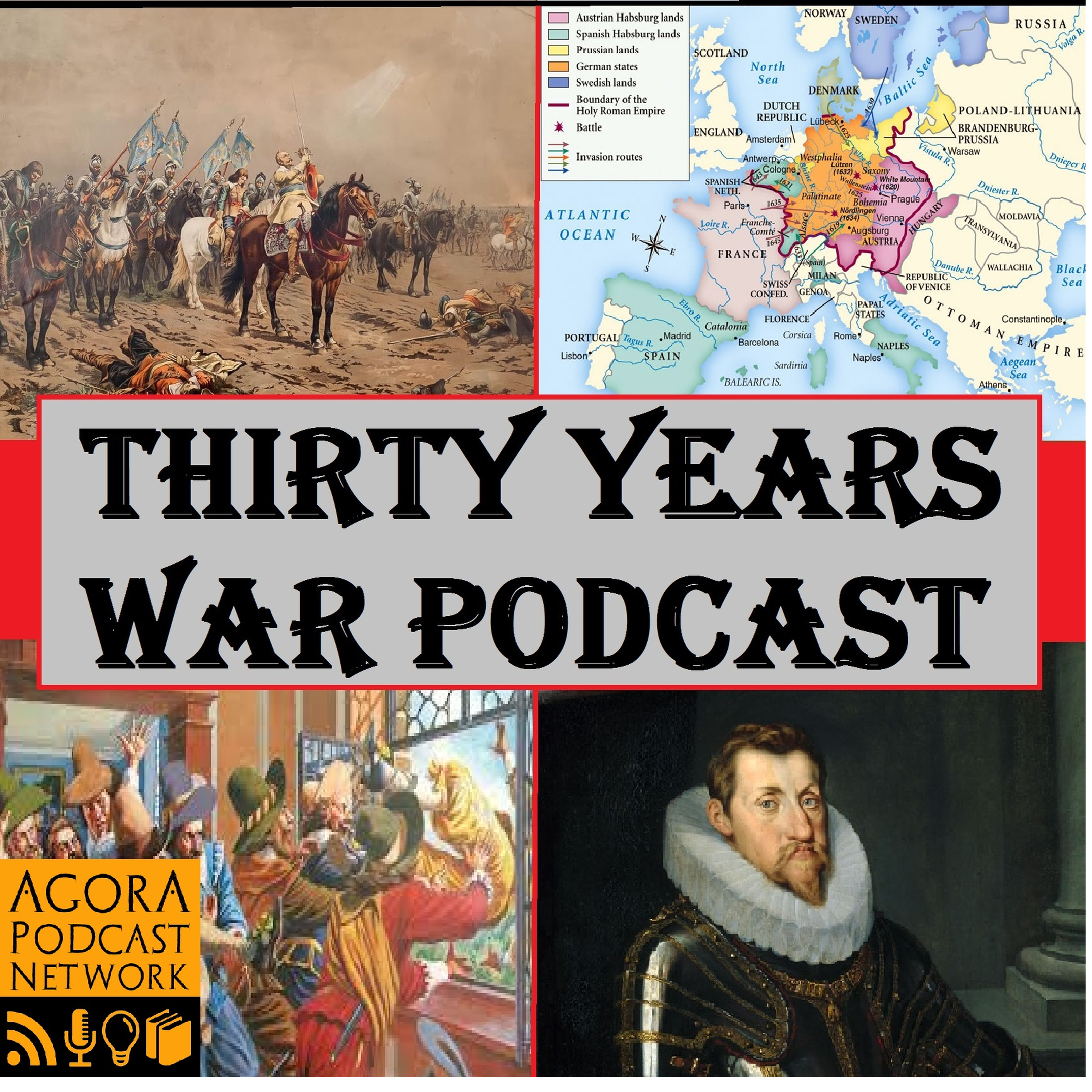
Matchlock is a historical fiction series set during the Thirty Years' War, beginning in 1622, when Matthew Lock lands in Europe to investigate the brutal murder of his parents. Order your copy of Matchlock and the Embassy by clicking here. Almost exactly 401 years to the day since Frederick accepted the Bohemian Crown, we return to our 30 Years War narrative, with episode #19!In this episode, we reach the long-awaited moment when Frederick decided, after all, to accept the Bohemian Crown. Was it a terrible mistake? In retrospect, YES! However, as I explain in this installment, things were not so black and white in the summer and autumn of 1619. For one, the Habsburgs appeared to be on their last legs, and it's worth considering whether Frederick, seeing Vienna under siege for the second time in two years - felt pressure to act before the spoils had all been siezed.But what about the other side. Was Ferdinand's military arm really as frail as Frederick seemed to believe? Granted, Ferdinand had only Spanish money and Bavarian promises, but as all were soon to see, these were still powerful weapons in the right hands. Further, while Ferdinand secured his allies with a mixture of bribes, unconstitutional pledges and quality Spanish steel, it seemed above Frederick's imagination to suppose that he could even be abandoned. His wife, after all, had sworn that James I & VI could not ignore their plight.But James had no intention of jeopardising his rapprochement with Spain, and still believed, just as naively, that he could play both sides, and maintain peace between the two pillars of Christian Europe. Within a few years, the folly of these positions would become clear, but these were still desperate times for both sides of the initial conflict. After so many years of posturing and preparing, could Germany's most infamous rivalry now explode into the open, with Bohemia caught in the middle? (spoiler - yes, yes it could!)******************DON'T FORGET TO FOLLOW THESE LINKS!**1) To support the podcast financially in return for some extra audio content, check out Patreon!2) To find a community of history friends, look at our Facebook page and group!3) To keep up to date with us, follow us on Twitter!4) For everything else, visit our website, where you'll find the shop, archive, and much more!5) To purchase merchandise of all sorts, including mugs, books and clothing, check out our Merchants' Quarter6) Get our new Thirty Years War book, For God or the Devil! Hosted on Acast. See acast.com/privacy for more information.
30YearsWar: Q&A
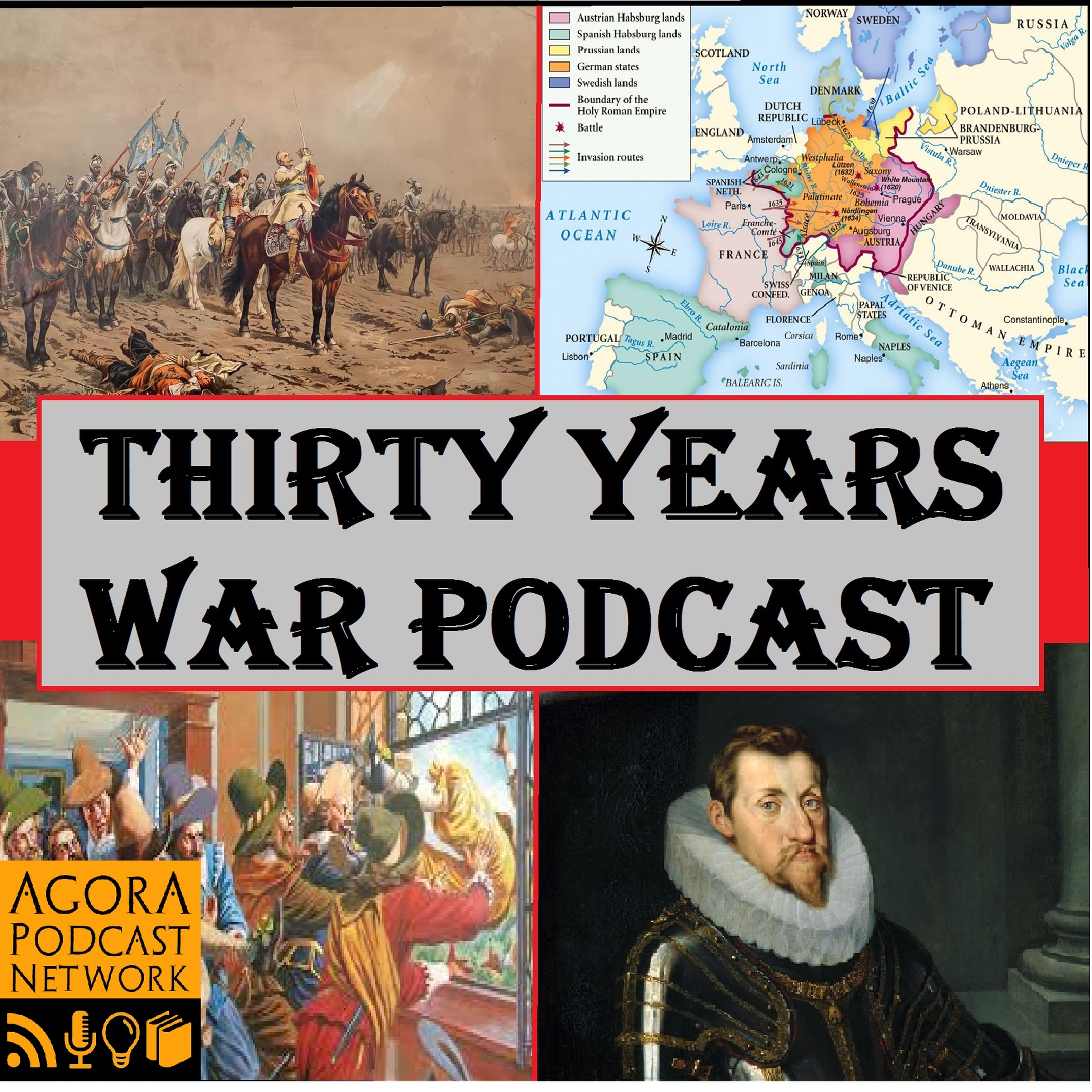
I have a question for you - why don't you check out our new historical fiction series set during this very era - Matchlock! Our first instalment, Matchlock and the Embassy, is out NOW! Order your copy of Matchlock and the Embassy by clicking here. Welcome to our Q&A! Herein we answer loads of questions, including...Who was the best diplomacy player in the conflict? How many in Bohemia actually wanted Freddy as King? What narrative of the war is my fave? What was the story with the Ottoman-Persian wars which kept the Turks so preoccupied during the war? What impact did climate change have on the war? What would have happened if Gustavus Adolphus had lived through Lutzen? What would have happened if Richelieu had died in obscurity from pneumonia, as he nearly did, thereby missing his later career as premier of France?These q's are all here and there are more besides, so if you want some a's, you know where to go! The last four weeks have been great for bringing this show to new people, and you have all been so encouraging as I try to make WDF bigger than ever before. Hosted on Acast. See acast.com/privacy for more information.
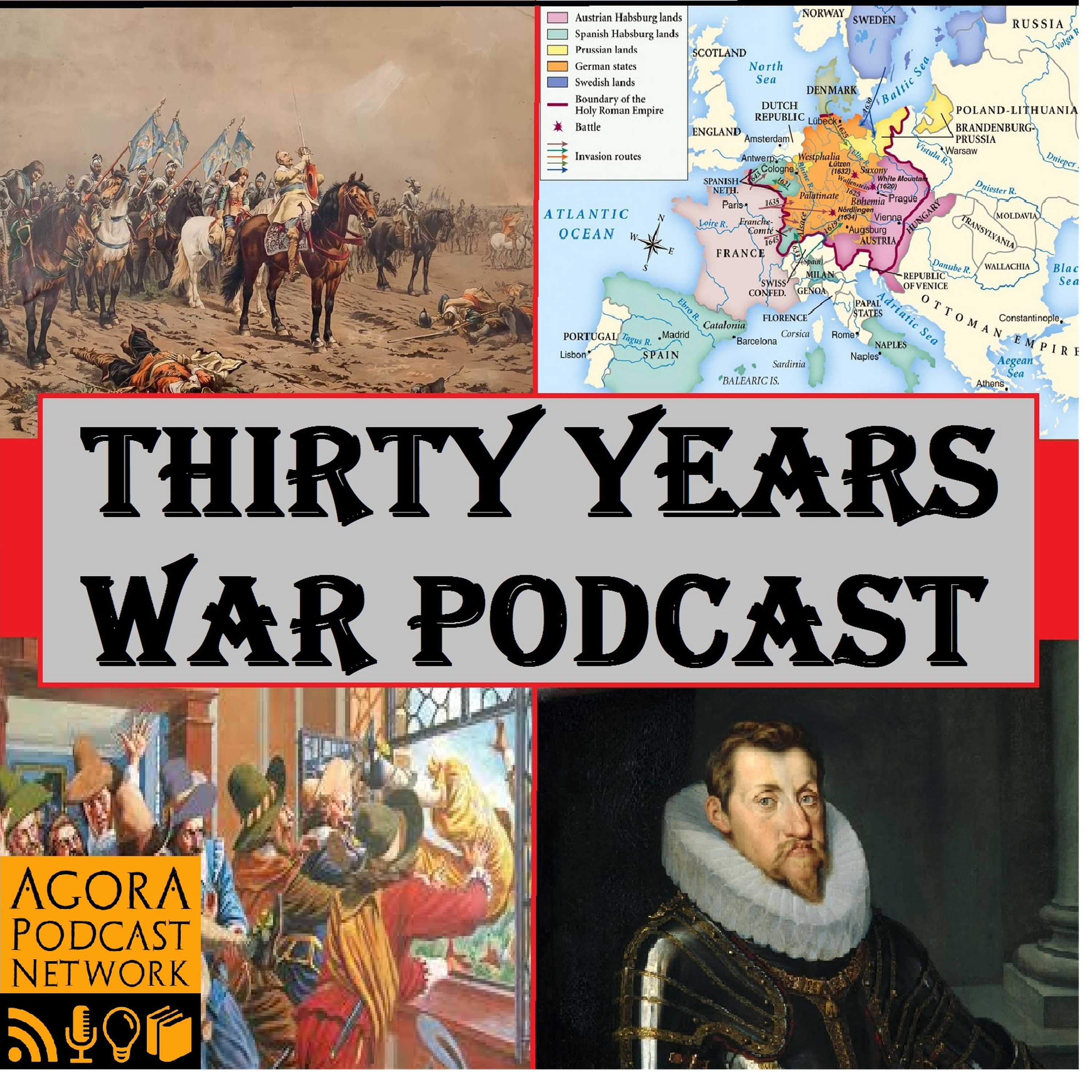
30YearsWar #18: 'My Kingdom Come'
Order the book now! For God or the Devil is finally out! After enduring Ferdinand’s repression, throwing off his yolk, formally deposing him and marching an army to Vienna, the Bohemians sought to go one better than all previous revolts had done. With Ferdinand deposed, this meant the crown of Bohemia was vacant, and it meant that someone else should be offered it. But whom? Someone, ideally, who was anti-Habsburg enough, but also powerful, wealthy and well-connected enough to defend the kingdom. Someone, ideally, who had a deep-seated hatred for the Habsburg influence. Who better to fit these criteria than Frederick V, the Elector Palatine? In this episode we answer that question, delving into the impressive connections Frederick had, as well as the root of his anti-Habsburg sentiments, which distinguished him as the ideal candidate… Hosted on Acast. See acast.com/privacy for more information.
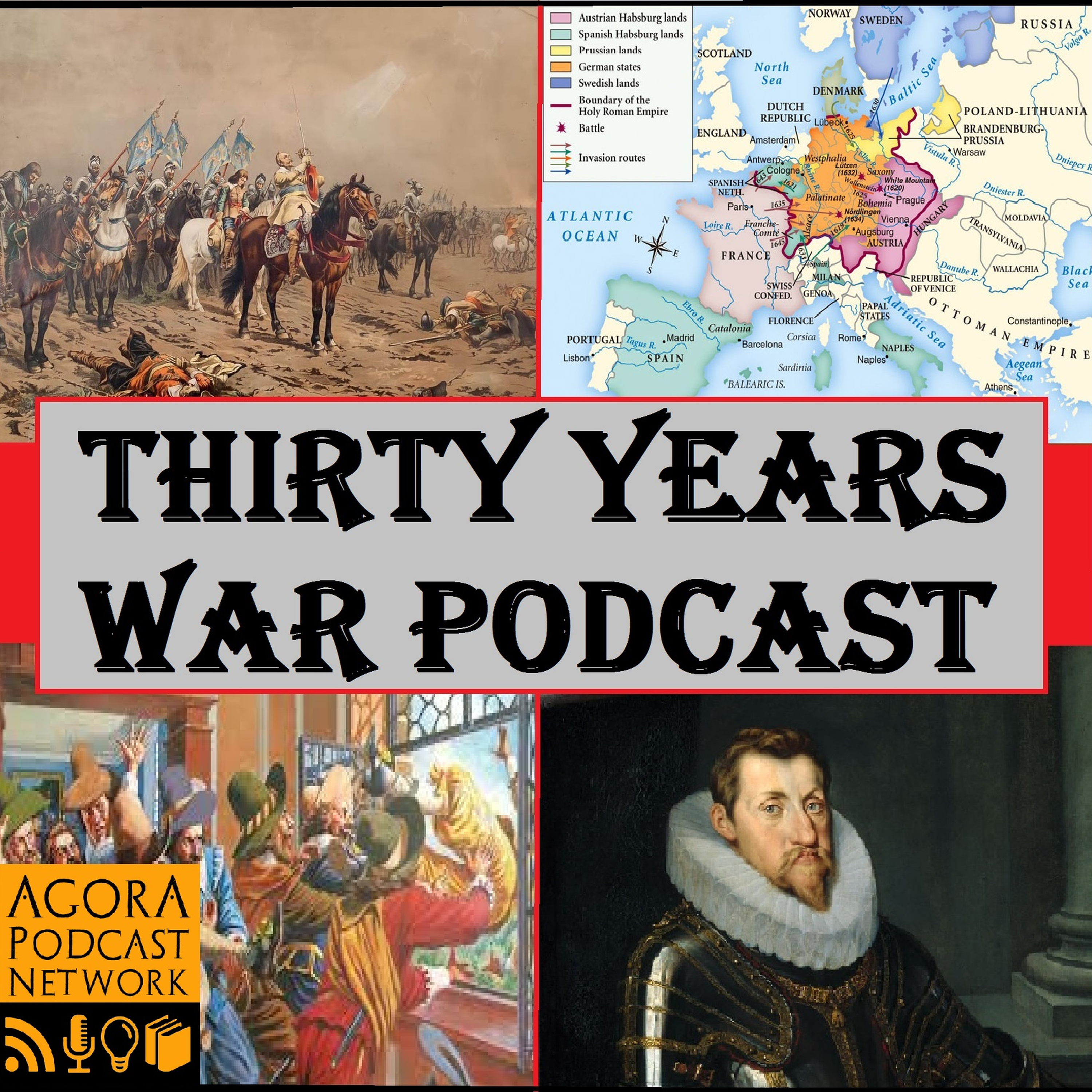
30YearsWar #17: 'On The Brink'
Matchlock is a historical fiction series set during the Thirty Years' War, beginning in 1622, when Matthew Lock lands in Europe to investigate the brutal murder of his parents. Order your copy of Matchlock and the Embassy by clicking here. Here we cover the years 1618-1619, when the fortunes of rebels, Hungarians, Habsburgs and everyone else in between would rise and fall. In this episode, we also see a critical milestone come to pass – Ferdinand, the new King of Bohemia, is formally deposed by his subjects, in protest at the heinous extent of his efforts to control their freedoms in violation of the Letters of Majesty. Our episode opens with the revolver pointed at Ferdinand's head, but his saviour was not far away.Ferdinand focuses on stabilising his position after the unsettling events of spring and summer 1619, when Vienna seemed close to succumbing and was at the mercy of the rebels. Aid from Spain was en route, but so was an attack from that troublesome quarter, Transylvania, as Bethlen Gabor set off to stick it to the Emperor Elect. The explosive elements of a full-blown war were added, and it required only the intervention of a sworn enemy of Ferdinand, powerful enough to tip the balance, for everything to escape Pandora’s Box forever…**DON'T FORGET TO FOLLOW THESE LINKS!**1) To support the podcast financially in return for some extra audio content, check out Patreon!2) To find a community of history friends, look at our Facebook page and group!3) To keep up to date with us, follow us on Twitter!4) For everything else, visit our website, where you'll find the shop, archive, and much more!5) To purchase merchandise of all sorts, including mugs, books and clothing, check out our Merchants' Quarter Hosted on Acast. See acast.com/privacy for more information.
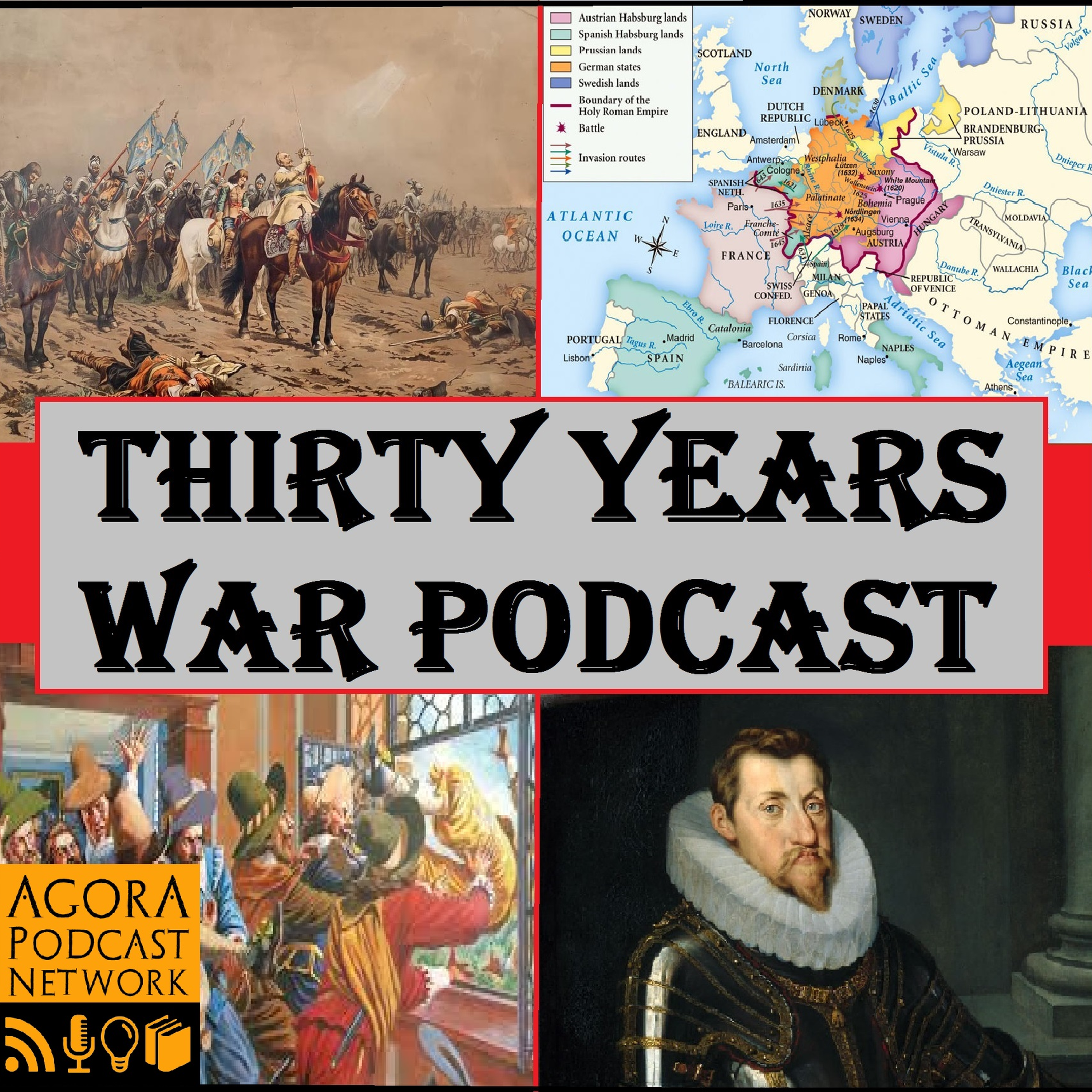
30YearsWar #16: 'Bohemia in Revolt'
Matchlock is a historical fiction series set during the Thirty Years' War, beginning in 1622, when Matthew Lock lands in Europe to investigate the brutal murder of his parents. Order your copy of Matchlock and the Embassy by clicking here. Here we ask an important question – how did the Bohemia revolt become the Thirty Years War? After throwing the Habsburg magnates out the windows of the town hall in Prague, what was next for the rebels? First and foremost, the kingdom had to be brought together to fight as one, and the three estates were assembled, determining on resistance to their new King’s inflammatory policies of repression and intolerance. Bohemians must fight for their rights, but could they hope to defeat the powerful Habsburgs? Further, could they risk losing to Ferdinand when their very freedoms were on the line?In such desperate times, desperate measures were sought out, and these were pursued in the foreign connections Bohemian officials had built up over the years. Publishing their Apologia to the world, the Bohemians gathered with enemies of the Habsburgs such as the Duke of Savoy, and marched an army to Vienna. The Emperor, utterly unprepared at the storm he had been warned against provoking, called in some foreign aid of his own, and the ingredients were already in the offing for a terrible calamity quite unlike any which Bohemia, or indeed Europe, had ever seen.**DON'T FORGET TO FOLLOW THESE LINKS!**1) To support the podcast financially in return for some extra audio content, check out Patreon!2) To find a community of history friends, look at our Facebook page and group!3) To keep up to date with us, follow us on Twitter!4) For everything else, visit our website, where you'll find the shop, archive, and much more!5) To purchase merchandise of all sorts, including mugs, books and clothing, check out our Merchants' Quarter Hosted on Acast. See acast.com/privacy for more information.
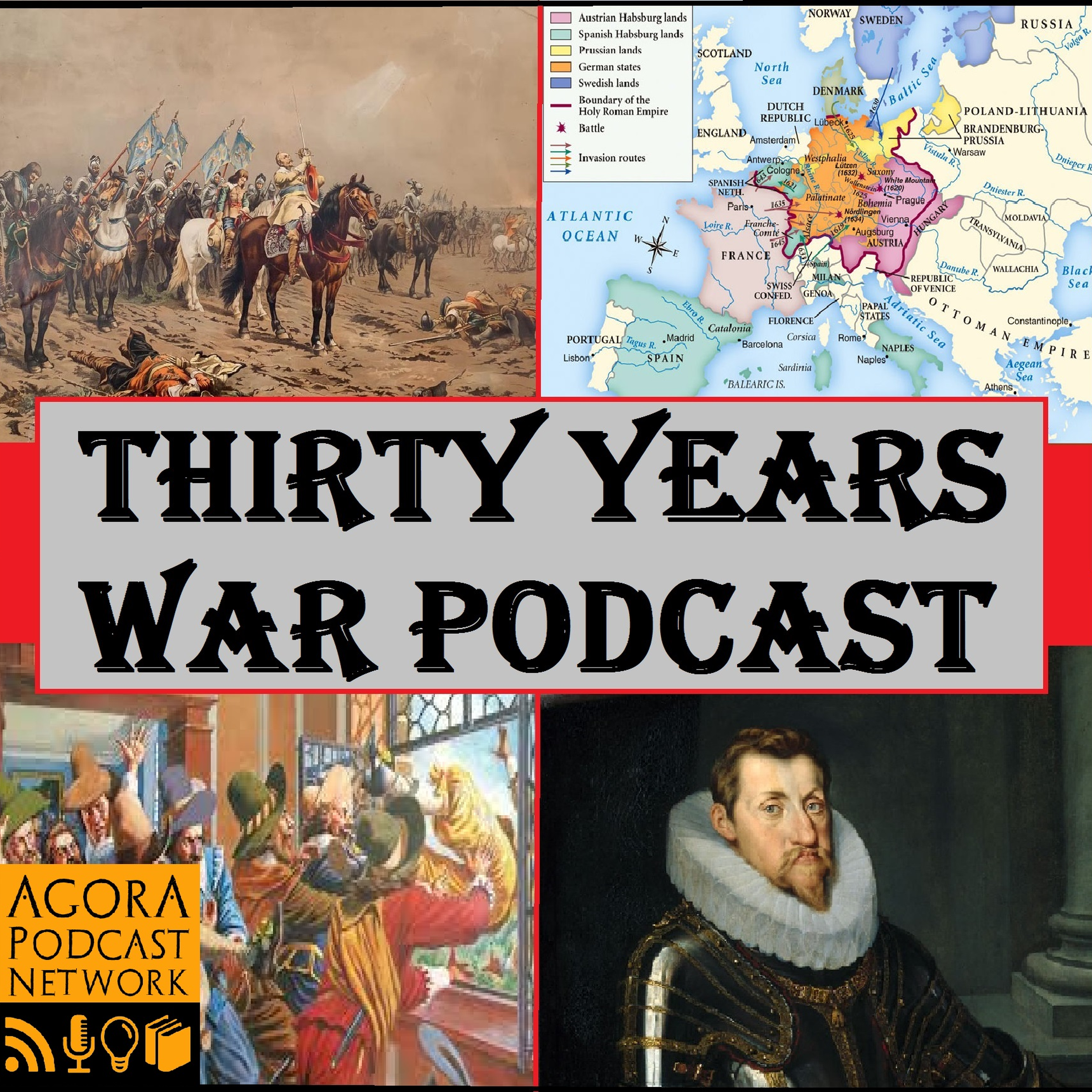
30YearsWar #15: 'The Right to Conspire'
Matchlock is a historical fiction series set during the Thirty Years' War, beginning in 1622, when Matthew Lock lands in Europe to investigate the brutal murder of his parents. Order your copy of Matchlock and the Embassy by clicking here. Episode 15 - what's in the box?Well, Bohemia continues to descend into rebellion, but its activism did not stop merely on the local, national level. Instead, Bohemians contacted known advocates of an anti-Habsburg conspiracy, and they landed on Ferdinand’s arch-rival, Frederick V, the Elector Palatine and sworn foe of the Habsburg supremacy. In the years since he had come to the office of Elector Palatine, Frederick’s regime had distinguished itself thanks to the policies of Christian of Anhalt, a radical anti-Habsburg, and charger of policy in Frederick’s stead. Anhalt arranged the more controversial agreements, and guaranteed that the British marriage went ahead, but Frederick was very far from his puppet. The Elector Palatine was more than willing and able to make moves himself, and Bohemia seemed to present the ideal opportunity to strike.It wasn’t as though the Bohemians wished to instigate the Thirty Years War – above all, they wished to be able to trust their new King, Ferdinand. But try as they might, something seemed off. In a fit of optimism, their leaders made the cardinal error of approving Ferdinand’s position, only to regret it soon after. The new king had made a public show of accepting the Letters of Majesty, thereby accepting Bohemia’s claim to tolerations and privileges which made Ferdinand’s skin crawl. So how had he agreed to it? Well, to put it simply, he lied his head off. Princes might be required to honour agreements and treat honestly with their subjects, but Ferdinand’s religious advisors had assured him that breaking such deals with the Bohemian heretics was not a sin at all, and was in fact to be encouraged. Thus duped, the Bohemians were bound to do what Bohemians did best, and launch a rising for the third time in a decade. The writing was on the wall, but Ferdinand ignored it, and thus the first phase of a conflict which was to end in three decades at Westphalia was begun.**DON'T FORGET TO FOLLOW THESE LINKS!**1) To support the podcast financially in return for some extra audio content, check out Patreon!2) To find a community of history friends, look at our Facebook page and group!3) To keep up to date with us, follow us on Twitter!4) For everything else, visit our website, where you'll find the shop, archive, and much more!5) To purchase merchandise of all sorts, including mugs, books and clothing, check out our Merchants' Quarter Hosted on Acast. See acast.com/privacy for more information.

BismarckRise #8: 'A Danish Vindication' [1864]
Want to show your appreciation for Bismarck Rise? Oddly enough, you can do so by heading in a completely different direction! Matchlock is a historical fiction series set during the Thirty Years' War, beginning in 1622, when Matthew Lock lands in Europe to investigate the brutal murder of his parents. Fans of intrigue and drama, in addition to battles and complex characters, will love it!Order your copy of Matchlock and the Embassy by clicking here. Make sure you head over to Patreon if you want more podding goodies, and to stamp your ticket for more Bismarck!Blood and iron, the Alvensleben Convention, and then the Congress of Princes – Bismarck’s first year as Minister President was certainly a busy one, yet it was about to become busier still. As a happy accident, the Danish crown became vacant upon the death of its king, and with this succession looming, Danish control over its German duchies, Schleswig and Holstein, loomed to the forefront of European politics once again, in a manner which it hadn’t done since 1848. The problem was that the Danes wished to retain their grip on the German duchies, through a constitution which would formalise the union between Danes and the duchies for good. The population of the duchies though, which was made up mostly of nationalist Germans, refused to have anything to do with such a scheme. The Danes refused to back down, but neither did the German Confederation – by a vote of one, in November 1863, the assembly at Frankfurt voted to return Denmark to its old constitution and protect the status quo of the duchies, by force if necessary. Just like that, a new crisis had fallen into Bismarck’s lap.The Schleswig Holstein War would only last a few months, but Bismarck quickly ensured that the interests of Prussia were tied up in it. Before Prussian soldiers got involved, Bismarck demonstrated his flair for coups of a different kind – in the diplomatic sphere, Bismarck had broken through his own principles apparently, and forged an alliance with Austria. This alliance made, the combined forces of the two powers were turned against the Danes, and the outcome of the war became only a matter of time. The key question was what to do with the duchies; Bismarck believed in annexation, since Holstein and Schleswig boasted some strategically important land, as well as valuable farmland, and the potential to craft the Kiel Canal and improve the prospects of a Prussian navy. Yet there were several complications that got in the way of this aim. One of the great pleasures of this episode is to marvel at how Bismarck overcame these complications and limits to his power, and made an unpopular option – the annexation of the duchies – into the accepted state policy of Prussia. What was more, Bismarck managed to drag Austria along with him for the ride. The outcome proved more beneficial than Bismarck could ever have imagined.Here we also say farewell to Bismarck for the moment, and we leave him in the aftermath of his great triumph until next time, when Hardcore WDF examines Bismarck’s next short sharp war, this time against Austria. I hope you’ll join me for that in the distant future, but I hope first and foremost that you have enjoyed listening to this series for the last few weeks or hours if you’re a patron! It took many months to make this, and 100,000 words of notes, fifteen hours of audio, and several headaches from reading too many Bismarck articles, but the end product is something I’m proud of, and something I’m happy to present to you listeners as a gift. From Zack to you, thanksss so much history friends, patrons, PhD Pals all, and I’ll be seeing you all, soon! Hosted on Acast. See acast.com/privacy for more information.

BismarckRise #7: 'Domination & Manipulation' [1863-1864]
Get your tickets to Intelligent Speech online! Only $10 until 16 June, and catch your faves including me, as I do a Q&A!Make sure you head over to Patreon if you want more podding goodies, and to stamp your ticket for more Bismarck!Episode 7 – Domination and Manipulation: 1863-64.He had made his fair share of errors, but it was fair to say at the same time that Bismarck wasn’t going anywhere. By the summer of 1863, the Polish business was mostly forgotten, and Bismarck could look further afield and see what developments in foreign affairs provided an opportunity to wipe the slate clean. He didn’t have to wait long. The Austrian Emperor Franz Josef claimed to desire a new constitution, one which all Germans should cooperate in crafting. To learn more, my fellow Germans, I wish to summon you to Frankfurt, where we can discuss the pending unification of Germany under Austrian control in more detail. This initiative had been on the cards for some time, but once it was announced, it was obvious to Bismarck what he had to do. Over the course of August 1863, Bismarck worked on the King. To Bismarck’s horror, Wilhelm saw no issue with the fact that he had been summoned, and his sense of tradition and pride at being summoned first meant that Bismarck would have a real fight on his hands. If Your Majesty went to Frankfurt and kowtowed to the Austrians, Bismarck insisted, then Prussia would be forever ruined, and forever viewed as little more than a vassal state. Furthermore, your army would be placed at Austria’s command, your soldiers would become cannon fodder, your legacy would be destroyed, and your kingdom subordinated to Vienna. It was a concentrated and detailed verbal attack, launched against the exhausted king who lay on a sofa and just absorbed it all for nigh on three hours. By the time Bismarck was finished, he was in tears, at the height of nervous anxiety, and ready to walk out of the door and into the Prussian wilderness. But Bismarck’s state was nothing compared to the King’s – Bismarck had broken the poor man, and within hours, it was plain that Prussia would not in fact be attending the Congress of German Princes which the Austrians had intended to host in Frankfurt.Wilhelm could lament that he was missing out on a great honour, but Bismarck proved correct – the Frankfurt meeting was little more than Austria’s last effort to unite Germany under its aegis, with Austrian rules, Austrian soldiers, and Austrian predominance guaranteed. The realisation of the dream of national German unity was intoxicating for some, but not for Bismarck. If Germany was to be unified, then it must be under Prussia, and if the King of Prussia couldn’t see this, Bismarck would make him see it. All in all, it was a merciless campaign of bullying and persuading by Bismarck, yet if he hadn’t engaged in it, history would have turned out very differently indeed. Here, not for the last time, Bismarck changed history, and set Prussia on a course which was to end in triumph. Hosted on Acast. See acast.com/privacy for more information.
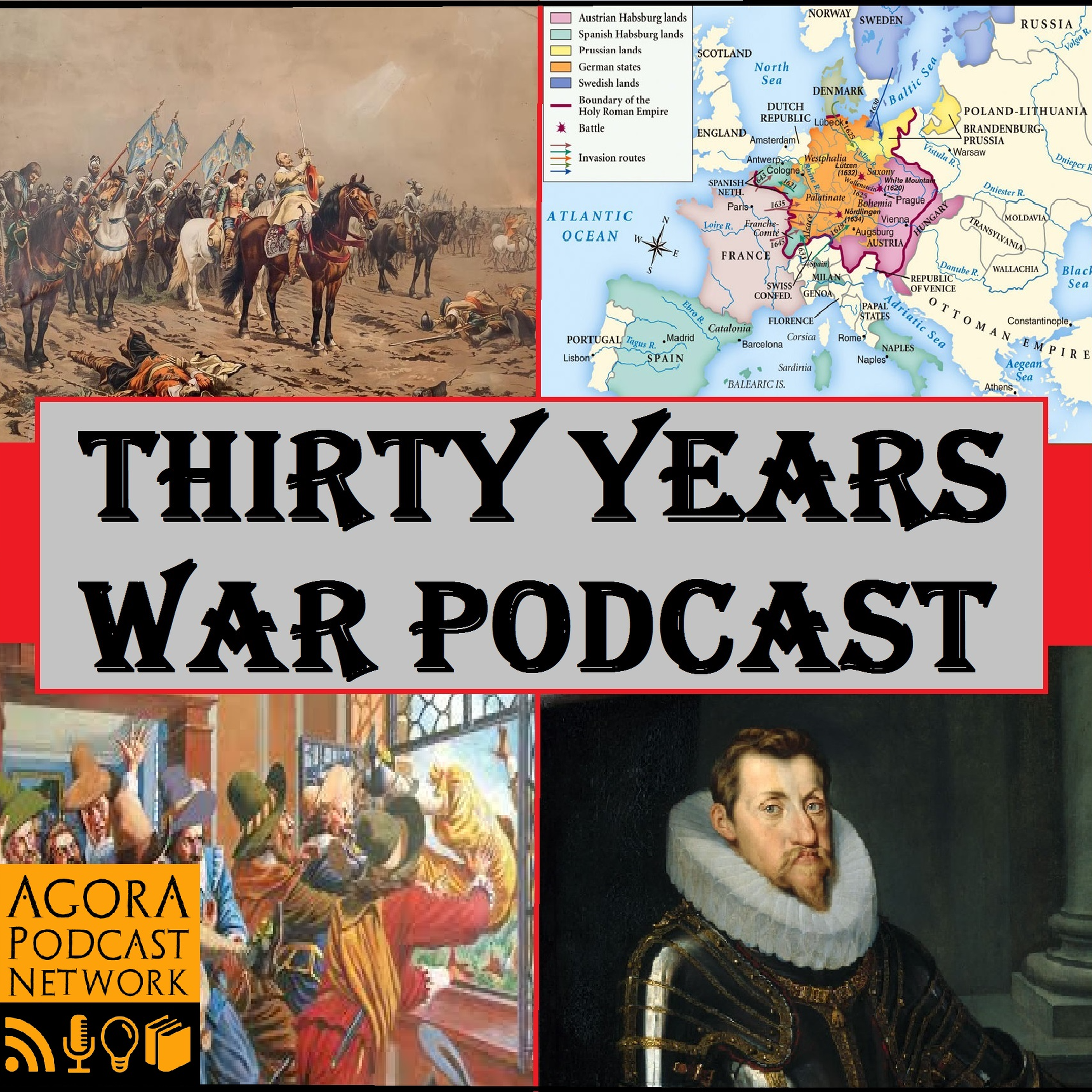
30YearsWar #14: 'Bohemian Rampancy'
You know what those Bohemians needed? Historical fiction! Matchlock is a historical fiction series set during the Thirty Years' War, beginning in 1622, when Matthew Lock lands in Europe to investigate the brutal murder of his parents. Order your copy of Matchlock and the Embassy by clicking here. Episode 14 of the Thirty Years War, 'Bohemian Rampancy', is out NOW!Other than the ingenious title, what else does this episode offer? First and foremost, it offers and unparalleled look at Bohemia in the second decade of the 17th century. It is here that the Thirty Years War would be touched off, but precisely how would this transpire? At the heart of Bohemia’s problems, Wedgewood claimed, was a ‘dismal confusion’, but it certainly didn’t help that Bohemia itself was at the centre of the Habsburg hereditary lands. There could be no rest, and no relenting, from creating in Bohemia the kind of Kingdom Ferdinand II had always envisioned. Unfortunately for Ferdinand, the Bohemians had seen him coming.Years of chafing under Habsburg rule had moved the Bohemians to demand a list of privileges, called the Letters of Majesty. This effectively granted Bohemia religious toleration before it was cool, though this was anything but cool to Ferdinand. In an era when religious uniformity and loyalty to the state were considered to be one and the same, it was impossible for Ferdinand to allow the religiously diverse Bohemia to continue on as it had under his cousins. Various trains were set in motion, the most ruinous of which lay in Ferdinand’s own intolerant personality, and which would explode into Prague in a matter of months. Hosted on Acast. See acast.com/privacy for more information.

BismarckRise #6: 'Blood, Iron and Tears' [1862-63]
Get your tickets to Intelligent Speech online! Only $10 until 10 June, and catch your faves including me, as I do a Q&A!In this episode we examine the opening six months of Bismarck’s regime, and what a regime it was. It began, to Bismarck’s surprise, with a somewhat bumpy road. In the course of his first speech before the Landtag as Minister President, Bismarck discovered that his very reputation might prove the greatest danger to his premiership. In the course of this ‘Iron and Blood’ or blood and iron speech, Bismarck simply set forth the ideas and principles which he had always held dear, and which he had never tried to hide. Later, he would claim that he was trying to bring the deputies round to his way of thinking, in that they might see the need to place power in the Prussian army’s hand, thereby giving Prussia the chance to seize the day. To his contemporaries though, Bismarck’s speech was like the denunciation of Christian, moral principles, a rejection of the political independence which liberals so valued, and a reiteration of the nationalist, high Prussian guff which they couldn’t stand. Within a short while, Bismarck became vilified, and King Wilhelm came to terms with the fact that he would have to get rid of his minister. By this point, Bismarck had been in power for less than a month.That Bismarck’s regime would be a mere flash in the pan was a hope entertained earnestly by his enemies, but they failed to account for two things. First, that the King would not be strong enough to fire his subject, and second, that Bismarck would never have allowed himself to be fired, not at this early stage. He turned on his head the mission of the disenchanted Wilhelm, and fired up his king with talk of defending the monarchy to the end, as a soldier defends his honour. The soldier in Wilhelm was touched deeply, with the effect that Bismarck, after this episode in manipulation, had never been so secure in his position. What was more, Bismarck had learned a valuable lesson just in time – that although the King was a decent man all told, he was not a particularly strong character, whereas Bismarck’s force of personality was already a commonly known fact. This combination proved essential to Bismarck’s staying power, not to mention his success.Within weeks, Bismarck would have a new crisis to sink his teeth into – this one emanating from the Polish provinces of Russia, where a new Polish revolt was erupting. For just over a year, from 1863-64, the Poles fought a doomed campaign against the occupying Russian forces, and the Austrians and Prussians looked on. Now ensconced in his official post, Bismarck moved to make use of an active foreign policy, and over the course of a few days, established what seemed like a good working relationship with the Russians to cooperate in the destruction of the Poles. The Alvensleben Convention was the result, but this agreement, signed in February 1863, was far from a perfect solution. It sent a firm signal to the rest of the world, about where Prussia stood, but it was also somewhat hasty in Russian minds. Had Bismarck failed again, and if he had, could another such failure be survivable? The shaky initial months of this political genius were to show that Bismarck did not have it all figured out, at least, not quite yet. Hosted on Acast. See acast.com/privacy for more information.

BismarckRise #5: 'Power at Last' [1861-1862]
Want to access these episodes all at once? Patreon is where you go my history friend!What were my five favourite moments from this series? Read this new blog post to find out...Episode 5 – Power at Last: 1861-62.Years of struggle and disappointment had finally led to this moment. On 22 September 1862, a fatalistic and hesitant King Wilhelm finally did it, he finally agreed to appoint Otto von Bismarck as Prussian Minister President, or Prime Minister. It was a decision which Wilhelm felt forced to take in the heat of the moment, what with those darned liberals still refusing to relent and give Prussia the military reforms she needed. Yet it was a decision which was to have profound consequences for Prussians, Germans, and the world. Bismarck’s career was made that day, but as we’ll see in this episode, it took some time for the nightmare to be over, and for confirmation of this appointment to filter into Bismarck’s anxious mind. As he waited for news, throughout late 1861 and much of 1862, Bismarck sought to make himself both scarce and somehow useful. He went on holiday to London, then to a seaside resort in Biarritz. Yet he kept his toe in the water, insisting on retaining the position of ambassador to France, a post which would have suited him very well, we imagine. But Bismarck felt deep down that this French posting wasn’t long for this world. So long as the crisis in Berlin continued to escalate, and so long as Bismarck’s superiors couldn’t make up their mind as to what they all wanted, Bismarck was left adrift. Very well, he said, in effect, if I am not needed, I will retire from public until I am. Over the course of the fateful six-week holiday which Bismarck enjoyed in the summer of 1862, he fell in love, met with future Prime Minister Benjamin Disraeli, and felt his former optimism return. A rejuvenated Bismarck then began to respond to his mail, and before long, found that he was to go to Berlin after all. What happened next soon entered into legend. The King couldn’t stand his subject, but also couldn’t afford to ignore him. He didn’t trust him, but he distrusted the liberals all the more. One choice was abdication, the other was Bismarck, and with Roon there to push him onward, King Wilhelm went with Bismarck. The decision may have been regretted by Wilhelm years later, when he realised what kind of monster he had just employed. Yet Wilhelm must also have realised something else – that Bismarck was utterly unlike any Minister President which any Prussian king had ever had. Now that he had been given power, Prussia was never to be the same again… Hosted on Acast. See acast.com/privacy for more information.
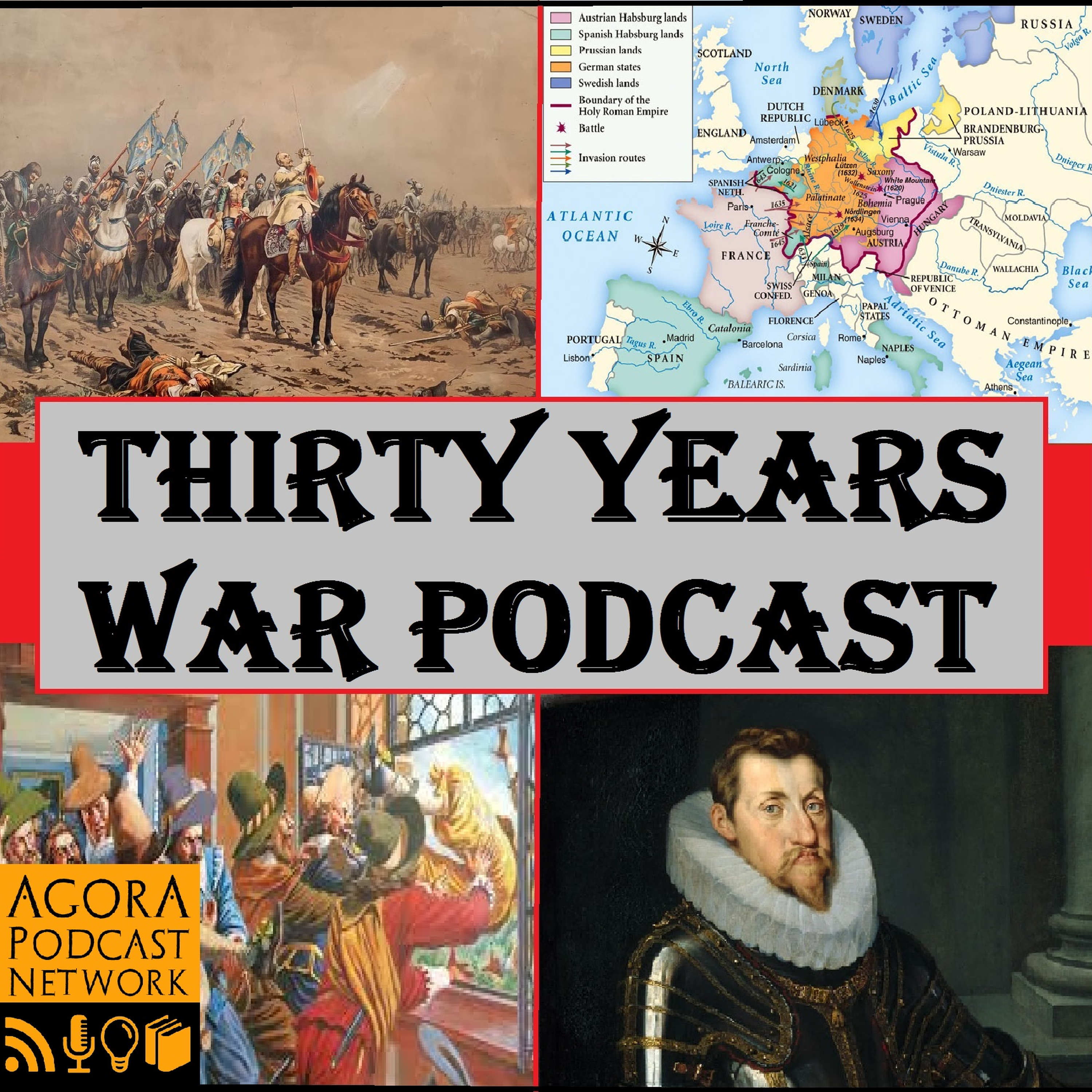
30YearsWar #13: "The Pax Hispania"
What could be better than our sponsor? How about a new series I made all by myself! Matchlock is a historical fiction series set during the Thirty Years' War, beginning in 1622, when Matthew Lock lands in Europe to investigate the brutal murder of his parents. Order your copy of Matchlock and the Embassy by clicking here. Take a break from the Bismarck party, because Episode 13 of the Thirty Years War, the Pax Hispania, is out NOW!In this instalment of our series, we look at how the moment of peace moved the Spanish to act in concert with their Austrian Habsburg cousins. More specifically, we assess the relationship of the Emperor and the King of Spain and, it may surprise you to learn that it wasn’t especially good! In fact, mutual slights and unpaid bills had soured relations between the…relations, over the previous years, to the extent that a Treaty repairing the damage was necessary. The Onate Treaty was born, the product of Count Onate, a Spanish official and later ambassador in Vienna. Onate conceived of the Treaty not merely as a way to better the Habsburg dynastic relationship, but also to settle once and for all on the question of the succession. After many years, you see, the Austrian Habsburg line which was descended from Charles V’s brother Ferdinand I, was dying out.All that remained were those childless Emperors Rudolf and Matthias. When they died, only Ferdinand of Styria would be left. Would Vienna push him forward, despite his shortcomings, or would they side with Philip III, and grant the King of Spain an even greater inheritance, the likes of which had not been since the days of his grandfather? Fortunately for the Habsburgs succession, but unfortunately for the peace of Europe, and of Spain, Vienna elected to go for Ferdinand of Styria. Per the terms of the Onate Treaty, Ferdinand of Styria would become Ferdinand II, Holy Roman Emperor, and he would enjoy the full support of Madrid. All he had to do in return, was promise Spain a short list of concessions…**DON'T FORGET TO FOLLOW THESE LINKS!**1) To support the podcast financially in return for some extra audio content, check out Patreon!2) To find a community of history friends, look at our Facebook page and group!3) To keep up to date with us, follow us on Twitter!4) For everything else, visit our website, where you'll find the shop, archive, and much more!5) To purchase merchandise of all sorts, including mugs, books and clothing, check out our Merchants' Quarter Hosted on Acast. See acast.com/privacy for more information.

BismarckRise #4: 'Ambassador Extraordinaire' [1859-1861]
Want to skip the queue and access all episodes of BismarckRise right NOW? OF COURSE YOU DO! Click here for moreThe Bismarck Party rolls on...As he soon discovered upon returning to Berlin in early 1859, he was not bound for a ministerial post, but a new role as the Prussian ambassador to Russia. It was still a great promotion for a man who had only a slim record of diplomatic training – now he was to be head of the Prussian embassy! But Bismarck was less than thrilled. He was not only disappointed in not grabbing the brass ring of a ministerial post, he was also irritated that he would have to leave Frankfurt in less capable hands. This surely made no sense, and what was he to do in St Petersburg that someone else could not do instead? Was this simply an effort by the new King Wilhelm to be rid of him? It was hard to argue against that theory, but in the spring of 1859, Bismarck simply had to accept his new post and move on, into the next eventful chapter of his life. Leaving Frankfurt behind him forever, Bismarck trudged through the snow and ice to reach his new post in the Russian capital.It was just as he left that a new war erupted between Austria and France. As Bismarck choked with rage that he should miss such an opportunity, he was given additional reasons to despair when he learned how timid the Prussian policy had been in that war, even mobilising six army corps to aid the Austrians. Prussia could never be empowered with a policy like this! But what could Bismarck do so far from the action? He would at least be able to assess Russian attitudes – it cheered him up that the Russians, of all ranks, seemed to hate the Austrians with a burning passion. The potential for a Russo-Prussian understanding seemed guaranteed, and Bismarck got along famously with the Russian Imperial family, who seemed to regard this Junker as a rising star. Perhaps they were believing Bismarck’s own hype about himself?Yet another development began to build in the background during the period, which would soon explode in Bismarck’s favour. Prussia, through its attempt to mobilise its army, had aimed to get on Austria’s good side, but the disorganised and ragtag Prussian units brought shame, rather than pride. Cue the arrival of a man determined to fix the army and prepare it for the future. Albrecht von Roon became minister of war in late 1859, and from that point onward, became consumed by the sole mission of getting a military reform bill passed the Landtag. The problem was, those liberal deputies would never consent to the bill, because they feared the King might use this army against them, and also because it cost a bomb. This disagreement, inconsequential though it seemed, would build in the background for the next few years, until it reached such a fever pitch by autumn 1862, that Bismarck seemed the only man capable of solving it. That was all to come, but first Bismarck had to make his name on the world stage, starting with Russia. Hosted on Acast. See acast.com/privacy for more information.

BismarckRise #3: "The Ultimate Opportunist" [1853-59]
Want to skip the queue and access all episodes of BismarckRise right NOW? OF COURSE YOU DO! Click here for moreUnsure of what's going on? Read this blog post for more information on BismarckRise.Episode 3 – The Ultimate Opportunist: 1853-59.The Crimean War changed everything in Europe. It left Austria alienated, her Russian ally bitter and the Tsar vengeful, after Austria’s display of perfidy. ‘Austrian ingratitude’, claimed the new Tsar Alexander II, ‘killed my father.’ Under these circumstances, it was possible that Prussia could take advantage. Could an agreement with Russia be created, to be directed against Austria? But then there was the issue of France, and what Napoleon III intended to do with this new power balance. In Bismarck’s view, France presented an opportunity. We ought to negotiate with France, or at least give the impression that we were negotiating to spook our enemies, Bismarck opined. But this was too much for his superiors, even with the change that came in the aftermath of the Crimean War. Austria was still the traditional friend of Prussia; France was still the traditional bogeyman of all true Junkers. To change this, Bismarck would have to get into power, and change the system from the inside. Until this happened, he would march on in Frankfurt, crafting a niche for himself among his fellow deputies, in the hope that some day soon, he would be noticed, and called upon for bigger and better things. In a long and detailed correspondence with his friend and mentor Leopold von Gerlach, Bismarck would explain his views and plans for Prussia’s future, but these letters, written in 1857, were not the product of a man in control of his own destiny. Bismarck had to go where the pace of events took him, and by the end of 1858, with King Frederick William incapacitated by a stroke, the moment seemed ripe to hope that now, under a new sovereign perhaps, Prussia would call upon this mad Junker at long last. It was a hope he would nourish right up to the point of his actual appointment in September 1862. Before he got there though, Bismarck would have to endure a great deal of disappointment and stress first. As was to be expected, he didn’t suffer these trials in silence… Hosted on Acast. See acast.com/privacy for more information.
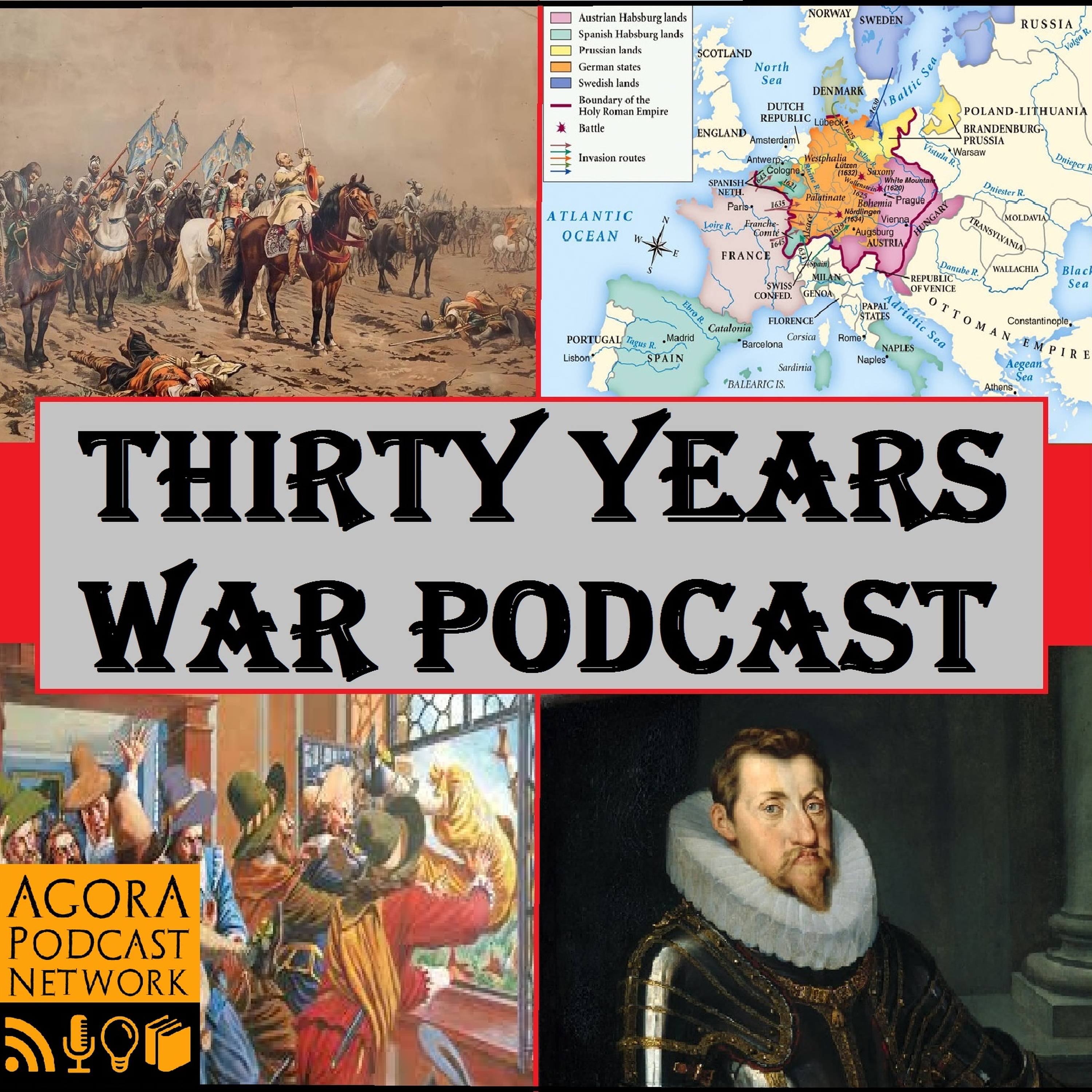
30YearsWar #12: "The Roots of Spain"
Bismarck? Not here - what you want is something Bismarck himself would have longed to read! Matchlock is a historical fiction series set during the Thirty Years' War, beginning in 1622, when Matthew Lock lands in Europe to investigate the brutal murder of his parents. Order your copy of Matchlock and the Embassy by clicking here. Put that Bismarck party on hold, and check out the latest episode of the 30 Years War!Here we look at a rarely mentioned aspect of Spain – the fact that it was still teeming with citizens of a different culture and religious persuasion than those of the Catholic, Castilian majority. These were the Moriscos, first or second generation Muslims who had converted to Catholicism rather than leave the country, but in many cases, this official conversion was in name only. Moriscos varied from province to province in Spain, but generally, they tended to still practice their religion in private, and retained many of their old Arab customs and traditions. The Spanish government, largely, failed to stop these practices, mostly because they lacked the resources, but also because many provincial governors lacked the will to care what a minority of their residents were quietly doing in private. If that sounds somewhat unlike the suffocating levels of control over Spanish citizens which we are often provided with, then you’re right – it was quite unlike it!Fears about what would happen if the Moriscos left Spain, and took their wealth with them also aggravated the problem, but with the arrival of peace between Spain and the Dutch in 1609, some in Madrid attempted to conceive of a solution. The solution was familiar to that posed by Philip II many generations before – convert genuinely, or leave completely. What followed was an additional exodus of citizens, but Spain’s Arab neighbours were not willing to stand by and do nothing. The coastal provinces were surprisingly poorly defended, and while Madrid feared what might happen if Arab pirates landed and tried to rouse the population to revolt, few measures were ever implemented to guard against this – as a result, several close calls were to follow. The story of Spain and the Moriscos is a vital element of the religious and political patchwork which made up early 17th century Europe, so I hope you’ll join me in unravelling it!**DON'T FORGET TO FOLLOW THESE LINKS!**1) To support the podcast financially in return for some extra audio content, check out Patreon!2) To find a community of history friends, look at our Facebook page and group!3) To keep up to date with us, follow us on Twitter!4) For everything else, visit our website, where you'll find the shop, archive, and much more!5) To purchase merchandise of all sorts, including mugs, books and clothing, check out our Merchants' Quarter Hosted on Acast. See acast.com/privacy for more information.

BismarckRise #2: 'First Taste of Intrigue' [1851-1853]
Want to skip the queue and access all episodes of BismarckRise right NOW? OF COURSE YOU DO! Click here for moreUnsure of what's going on? Read this blog post for more information on BismarckRise.When we last left Bismarck, he had established himself in Frankfurt, and prepared to meet the challenges which Prussia faced, following several years of bungled, humiliating foreign policy. The constraints upon Bismarck seemed obvious, the greatest restriction by far being the Austrian domination of the German Confederation. This domination, an established fact since 1815, was to Bismarck the greatest flaw in Prussian diplomacy – made worse by the fact that few in Berlin, if any, seemed willing to contest this domination. Should we just let Austria have all the benefits of this Confederation, even if it was to Prussia’s detriment? Yet how could Austria even be combated? Bismarck had an idea, spending the next few years making his name as Vienna’s primary opponent in Frankfurt. ‘When Austria hitches a horse in front’, Bismarck proclaimed, ‘we hitch one behind!’ It was as plain a manifesto as the mad Junker could give us, but beneath this declaration was a man undergoing a remarkable transformation. Bismarck had gone to Frankfurt an untested commodity, and he would leave it a force to be reckoned with. But first he would have to reckon with the status quo, and this status quo, Bismarck insisted, meant that Prussia would never reach the heights of its power. Very well then, it was plain that nothing, not the ideal of German unity, not the tradition of Austrian power, not the fact of Prussian isolation should stand in the way. It was all to play for, and Prussia should look wherever it could to find potential friends, even in revolutionary France. These ideas stunned and horrified his traditionalist superiors, but they also gave us a hint of the kind of principles which Bismarck possessed. He was unrestricted by old assumptions, no matter how ingrained, and he was adamant that unless Prussia thought outside the box (or outside of Germany) she would never be supreme. A supreme Prussia was the only thing Bismarck could accept. Impossible, said his superiors, Austria is Berlin’s friend and ally, and besides, Vienna has the power of Russia behind her – we cannot contest those two powers together! No matter, said Bismarck in effect, we should wait and see whether circumstances might change. And change they soon did. Bismarck would be rewarded for his patience, because with the eruption of the Crimean War, everything was about to change. Hosted on Acast. See acast.com/privacy for more information.

BismarckRise #1: 'I, Bismarck' [1815-1851]
Want to skip the queue and access all episodes of BismarckRise right NOW? OF COURSE YOU DO! Click here for moreUnsure of what's going on? Read this blog post for more information on BismarckRise.In this episode, the first of eight, we explore the life of a young Otto von Bismarck, and assess the different events, influences and individuals who moved through his life. It’s a personal story, but it’s also a story about the unassuming, you could even say unremarkable, beginnings, of a man who would one day dominate Europe. At this stage in his life, only those three qualities – intelligence, ambition and energy – were palpable, but there was also something raw within the young Otto that suggested a great potential, if only it could be harnessed…We also see Bismarck living through some incredibly significant events. Born in the final moments of the Napoleonic Wars, Bismarck seemed to come of age during the 1848 revolutions, which to his contemporaries appeared like the beginning of the end of Old Prussia, to be replaced by a new radical liberal iteration, beholden to the mob. This did not pan out, but we still see young Otto here present himself to the authorities in Berlin, and try to make himself useful. His suggestions to the royal family on how to deal with the crisis would make him a firm enemy in Augusta, wife of Prince Wilhelm, for life. By this stage though, Bismarck’s introduction to politics had already been complete – he had acquired a seat in the United Diet in 1847, so this experience of revolution was like the cherry on top of a political education without parallel in Prussian history.In spite of his late blooming, only discovering what he really wanted to do at age 32, Bismarck quickly made up for lost time. This confrontational, coarse, but unmistakably vibrant and dynamic individual managed to charm his peers, with the result that he gained a seat in the Landtag at Berlin in 1849. Plying his trade for the next few years, Bismarck established a reputation for himself as a reactionary, a conservative Junker of the old school, when in reality, he was most interested in furthering his own career, and laying his hands on some real power. Power, for Bismarck, as he quickly discovered, was more intoxicating than anything else he had ever known, and he needed to have more. To the surprise of nobody but Bismarck, the King did not grant him a ministerial post, but he did not pass him over either. Amidst troubling diplomatic crises, the relationship between Prussia, Austria and Russia seemed destined to change. Bismarck, noted the King, could be immensely useful under these circumstances, and the King very much intended to use him.In spring 1851, Bismarck learned that his first posting of serious significance would be in Frankfurt, the capital of German cooperation and political intrigue, where representatives from the German princes gathered. It was here that Bismarck would land first. His superiors intended for Frankfurt to be his political education – here was a chance as well to put their enthusiastic, energetic subject to good use. A friendship with Austria, so it appeared, could be best achieved with this mad Junker, who had voiced his support of the Austrian partnership in the past. And so off Bismarck went to Frankfurt, but before long, his personal role began to change. Far from willing to kowtow to Vienna, Bismarck quickly discovered just how restrictive the Austrian domination of Germany had become for Prussia. And then the idea began to germinate within him – an idea which would distinguish him from his peers, launch his political career, and redefine the Prussian Kingdom. So long as Austria reigned supreme, Bismarck believed, Prussia could never achieve its full... Hosted on Acast. See acast.com/privacy for more information.
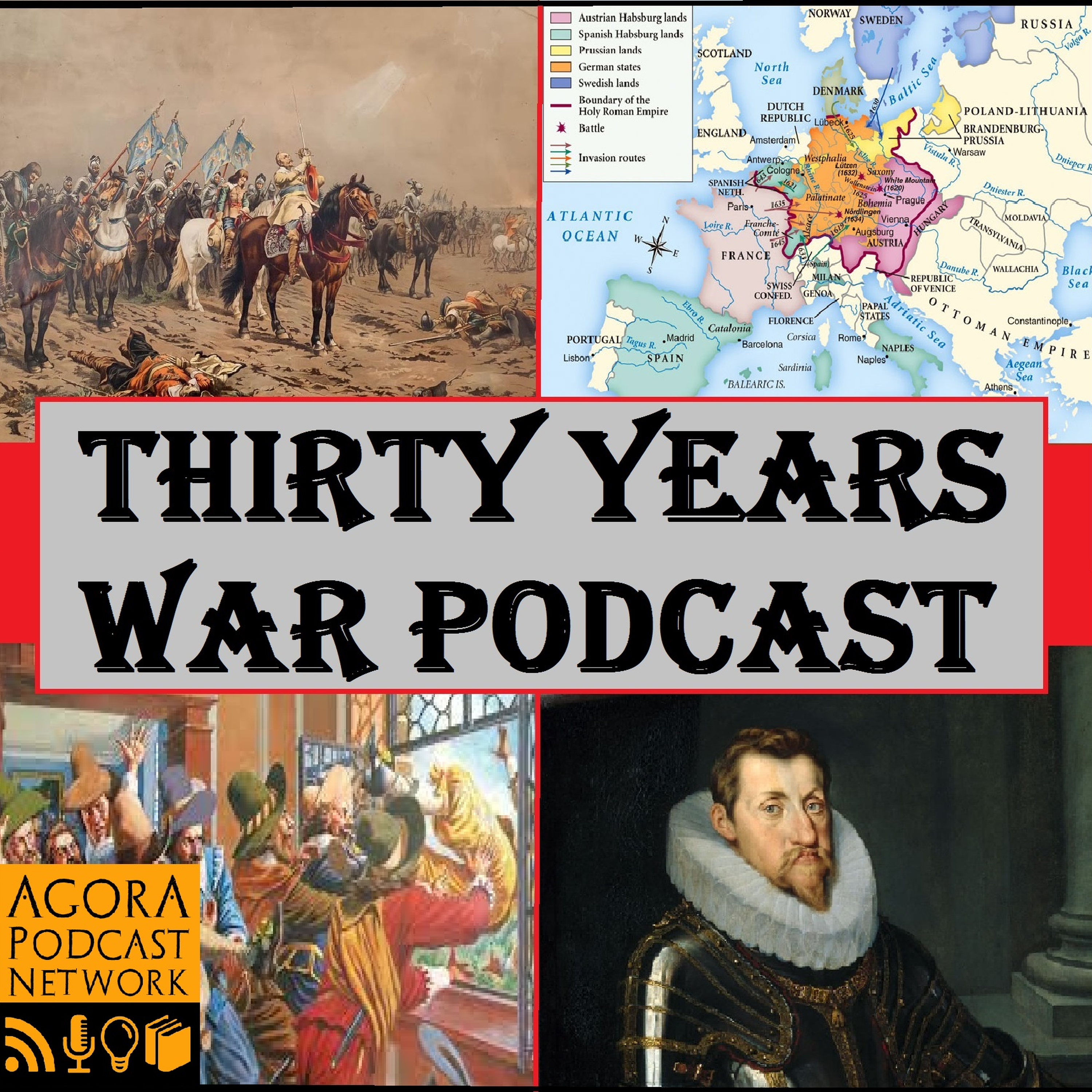
30YearsWar: #11 - "Northern Tremors"
The only tremors around here are those I'm making in the historical fiction genre! Matchlock is a historical fiction series set during the Thirty Years' War, beginning in 1622, when Matthew Lock lands in Europe to investigate the brutal murder of his parents. Order your copy of Matchlock and the Embassy by clicking here. In this episode we radically change our focus, away from the Empire and towards a brand new theatre of Europe – Scandinavia. It was there, in the sphere of the Baltic, Eastern Europe and the wild North, that an incredible drama was playing itself out, as the House of Vasa divided over matters or religion and leadership, with profound results for Poland, Sweden, Russia and pretty much everyone else in the region. The House of Vasa’s predominant King, Sigismund III, rowed away from Sweden in the late 1590s, never to return again. His uncle, Charles IX, had effectively deposed him in the name of Lutheran leadership and more rights for the nobility. It was a watershed moment for both Poland and Sweden, and shaped relations between the two of them for more than a century.Here we examine the shots which were fired before the ascension of a new King, Charles IX’s son, Gustav Adolph, better known to posterity and history nerds the world over as Gustavus Adolphus. But the latter did not rule a majestically powerful kingdom when he assumed the throne in 1611. Sweden was exhausted and divided, surround by enemies in Denmark and Russia as well as Poland, and there was no guaranteed way to keep his Polish Catholic cousin away from his new throne. The conflict between the two cousins was destined to be bloody and all-consuming, and this story forms a vital part of the wider narrative of the Thirty Years War, so I hope you’ll join me for it!**DON'T FORGET TO FOLLOW THESE LINKS!**1) To support the podcast financially in return for some extra audio content, check out Patreon!2) To find a community of history friends, look at our Facebook page and group!3) To keep up to date with us, follow us on Twitter!4) For everything else, visit our website, where you'll find the shop, archive, and much more!5) To purchase merchandise of all sorts, including mugs, books and clothing, check out our Merchants' Quarter Hosted on Acast. See acast.com/privacy for more information.
Hardcore WDF Presents - Bismarck: Rise
SURPRISE!At long last, I can finally share the secret which has been at the front of my mind for months! Bismarck, and as you've never seen him before. That's right, on Thursday 30 April, we're starting a new series called Bismarck: Rise, which will look at the Iron Chancellor's life and times in some serious detail, in the period 1815-1864. This is the legend of Bismarck, now watch him rise!Seriously though, I am super excited about this, and when you listen in I'm sure you'll be too! Or, have a read of this informative blog post if you're not up listening: http://www.wdfpodcast.com/thevassalstate/bismarck-riseSign up on Patreon to skip the queue, and get ALL episodes of Bismarck: Rise the moment they're released! Hosted on Acast. See acast.com/privacy for more information.
30 Years War: #10 - "Thick as Thieves"
If you thought Ferdinand had a tough time of it, you should see how Matthew Lock struggled in 1622! Matchlock is a historical fiction series set during the Thirty Years' War, beginning in 1622, when Matthew Lock lands in Europe to investigate the brutal murder of his parents. Order your copy of Matchlock and the Embassy by clicking here. It's time to meet Ferdinand of Styria and the rest of his lovely Habsburg family! Taken together, these were the kind of people who would fight doggedly for their rights and their faith. They also seemed to have a real hard time leaving Prague alone (foreshadowing!)The counterpoint to Frederick V, Ferdinand of Styria was the heir designate to the Imperial throne, but he brought to the table a legacy which many would have found unsettling. A history of oppression and repression in his native Styria, in Inner Austria, had not merely forced many Protestants there to convert or flee, it had also demonstrated Ferdinand’s single-minded pursuit of a goal, regardless of the consequences.And these consequences were indeed dire. A rising in Prague in 1611 provided a grave example of what could happen when the Emperor did not listen to the fears and concerns of his subjects, but was Ferdinand paying attention to this display? It seemed that, unfortunately, he was, but to the wrong parts of the story. Within a few years, the citizens of Prague would launch another uprising, and this time they would play for keeps, formally deposing their new Bohemian King Ferdinand, and pushing the Empire over the chasm into the volcano of war. The preceding years were a chance for Ferdinand to learn from the mistakes of his predecessors, but these lessons were not learned, and because of this, Europe could not be spared what happened next...**DON'T FORGET TO FOLLOW THESE LINKS!**1) To support the podcast financially in return for some extra audio content, check out Patreon!2) To find a community of history friends, look at our Facebook page and group!3) To keep up to date with us, follow us on Twitter!4) For everything else, visit our website, where you'll find the shop, archive, and much more!5) To purchase merchandise of all sorts, including mugs, books and clothing, check out our Merchants' Quarter Hosted on Acast. See acast.com/privacy for more information.
30YearsWar: #9 - "First of His Name"
Why be first of your name when you get the first instalment of my historical fiction series, set during this very war! Matchlock begins in 1622, when Matthew Lock lands in Europe to investigate the brutal murder of his parents. Order your copy of Matchlock and the Embassy by clicking here. Episode 9 of the Thirty Years War, First of His Name, is out NOW!You can’t have a Habsburg protagonist without also having the anti-Habsburg antagonist, and in the years before the war, few individuals were better placed to challenge the Habsburg position than the Elector Palatine, one of seven men granted the honour of voting for the next Emperor, and a greatly influential ruler in his own right, holding sway over the disconnected lands that snaked along the Rhineland and beyond. Frederick V, Elector Palatine, was a Calvinist member of the House of Wittelsbach, but that wasn’t all. He was also pledged to be married to Elizabeth, daughter of King James I and VI.This granted him supremely useful connections, which he proved determined to make use of in the coming years, to the detriment of the Empire, but to the wonder and fascination of history friends like us. Check out this instalment of the series to get up close and personal with the REAL Elector Palatine, rather than the idealised version which tends to paint Frederick as feckless, lazy or just plain stupid. On the contrary, Frederick was an amiable, considerate, intelligent ruler, in possession of something profoundly important for posterity – an inherited mission to combat Habsburg influence wherever it could be found.**DON'T FORGET TO FOLLOW THESE LINKS!**1) To support the podcast financially in return for some extra audio content, check out Patreon!2) To find a community of history friends, look at our Facebook page and group!3) To keep up to date with us, follow us on Twitter!4) For everything else, visit our website, where you'll find the shop, archive, and much more!5) To purchase merchandise of all sorts, including mugs, books and clothing, check out our Merchants' Quarter Hosted on Acast. See acast.com/privacy for more information.
30YearsWar: #8 - "German Problems"
I've got 99 problems but a new historical fiction series ain't one! Find out why by checking out Matchlock and the Embassy for yourself! Matchlock is a historical fiction series set during the Thirty Years' War, beginning in 1622, when Matthew Lock lands in Europe to investigate the brutal murder of his parents. Order your copy of Matchlock and the Embassy by clicking here. We get straight to the point with that title, because while we've done some exposition on it, it's pretty clear to me history friend that we need to talk about the HRE...As the name suggests, the Germans were occasionally a problematic people, especially when there was so much on the line. We are given something of a grand tour of the Empire in this episode, and introduced to some of the major issues which the German people faced. The Habsburgs had only been able to monopolise the office of Emperor since 1438, but there regime was by no means secure if they failed to account for the fears and ambitions of their potential supporters.Unfortunately for Germany, on the line of succession in the Imperial office was a man who rarely considered these issues – Ferdinand of Styria. We get our first glimpses of Ferdy in this instalment, but it should be said, Ferdinand was more than a bit preoccupied with his vision of the Counter-Reformation instilled within his by his Jesuit upbringing to notice us. Simply by existing, Ferdinand presents us with an ideal example of what can happen when the dice roll turns against mankind, and towards fanaticism. He was to be a crucial partner to the disaster that followed, but far from the only one...**DON'T FORGET TO FOLLOW THESE LINKS!**1) To support the podcast financially in return for some extra audio content, check out Patreon!2) To find a community of history friends, look at our Facebook page and group!3) To keep up to date with us, follow us on Twitter!4) For everything else, visit our website, where you'll find the shop, archive, and much more!5) To purchase merchandise of all sorts, including mugs, books and clothing, check out our Merchants' Quarter! Hosted on Acast. See acast.com/privacy for more information.
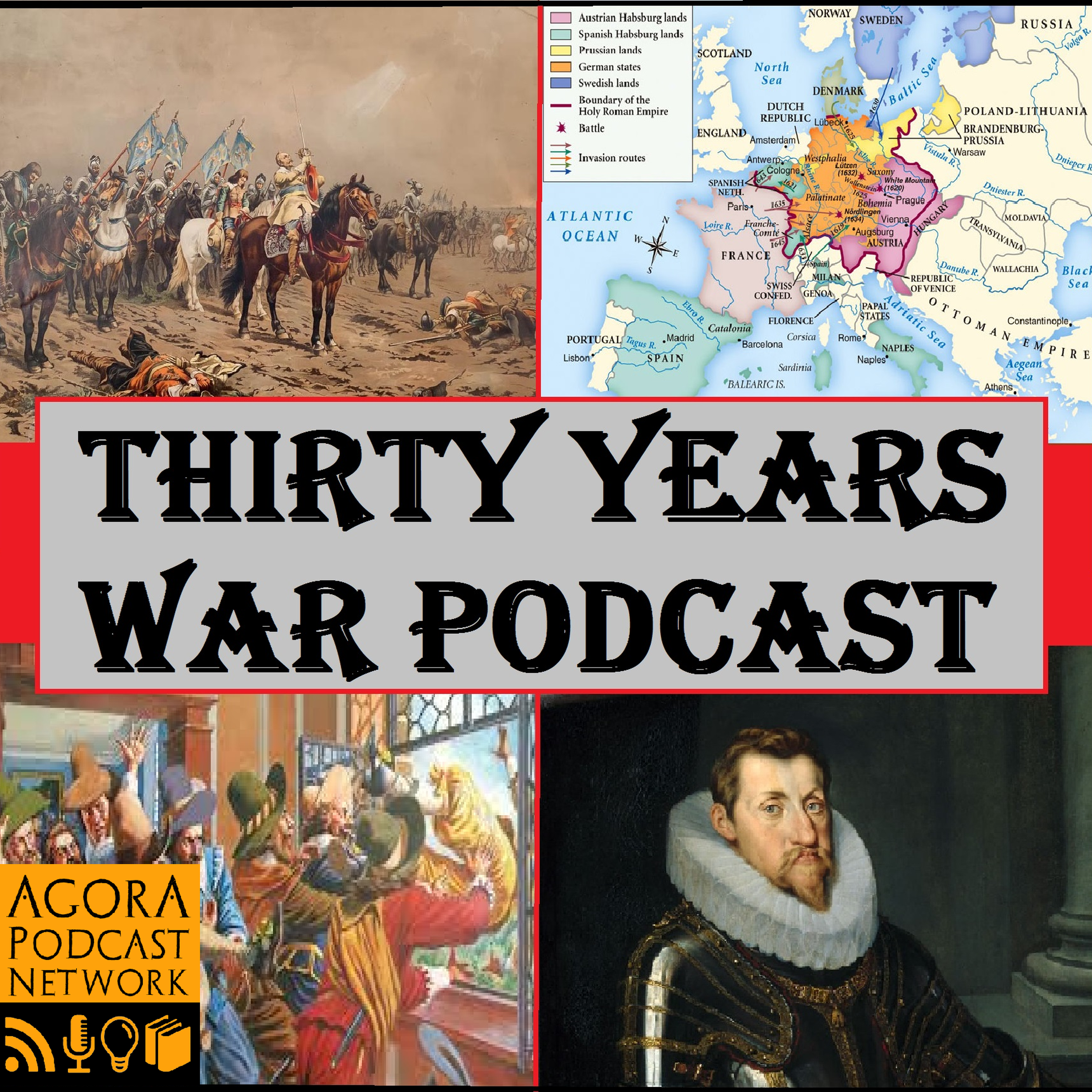
30YearsWar: #7 - "Turkish Delights, Habsburg Disasters"
Do you know what is truly delightful? My new historical fiction series, Matchlock! Matchlock is set during the Thirty Years' War, beginning in 1622, when Matthew Lock lands in Europe to investigate the brutal murder of his parents. Order your copy of Matchlock and the Embassy by clicking here. In this episode, we look at an oft-forgotten theatre of the Thirty Years War, the east. Specifically, we examine the Habsburg border with the Ottoman Empire, and assess the conflicts and slights which the two radically different powers had committed in previous years. The conflict wasn’t merely religious, or opportunistic or political – it was also a matter of pride, since both the Turkish Sultan and the Habsburg Holy Roman Emperor laid claim to that banner of tradition: the inheritor of Rome. The Turkish Sultan had earned this by conquest, the Emperor through the Pope, but both argued fiercely that theirs was the more legitimate, and battle had a way of simplifying the question.Interestingly, the urgency of war lends us some fascinating examples of realpolitik in the early modern era, as the enemy of my enemy is my friend was bought into wholly. While the Turks enjoyed healthy relations with all the traditional enemies of the Habsburgs, the latter were not above contacting the Islamic foes of the Sultan, Safavid Persia. With this border to the east effectively resembling a militarised wasteland, the Emperor would need every wile in his possession if he was to turn his attentions westward. In this episode, we examine how this balance was managed.**DON'T FORGET TO FOLLOW THESE LINKS!**1) To support the podcast financially in return for some extra audio content, check out Patreon!2) To find a community of history friends, look at our Facebook page and group!3) To keep up to date with us, follow us on Twitter!4) For everything else, visit our website, where you'll find the shop, archive, and much more!5) To purchase merchandise of all sorts, including mugs, books and clothing, check out our Merchants' Quarter! Hosted on Acast. See acast.com/privacy for more information.
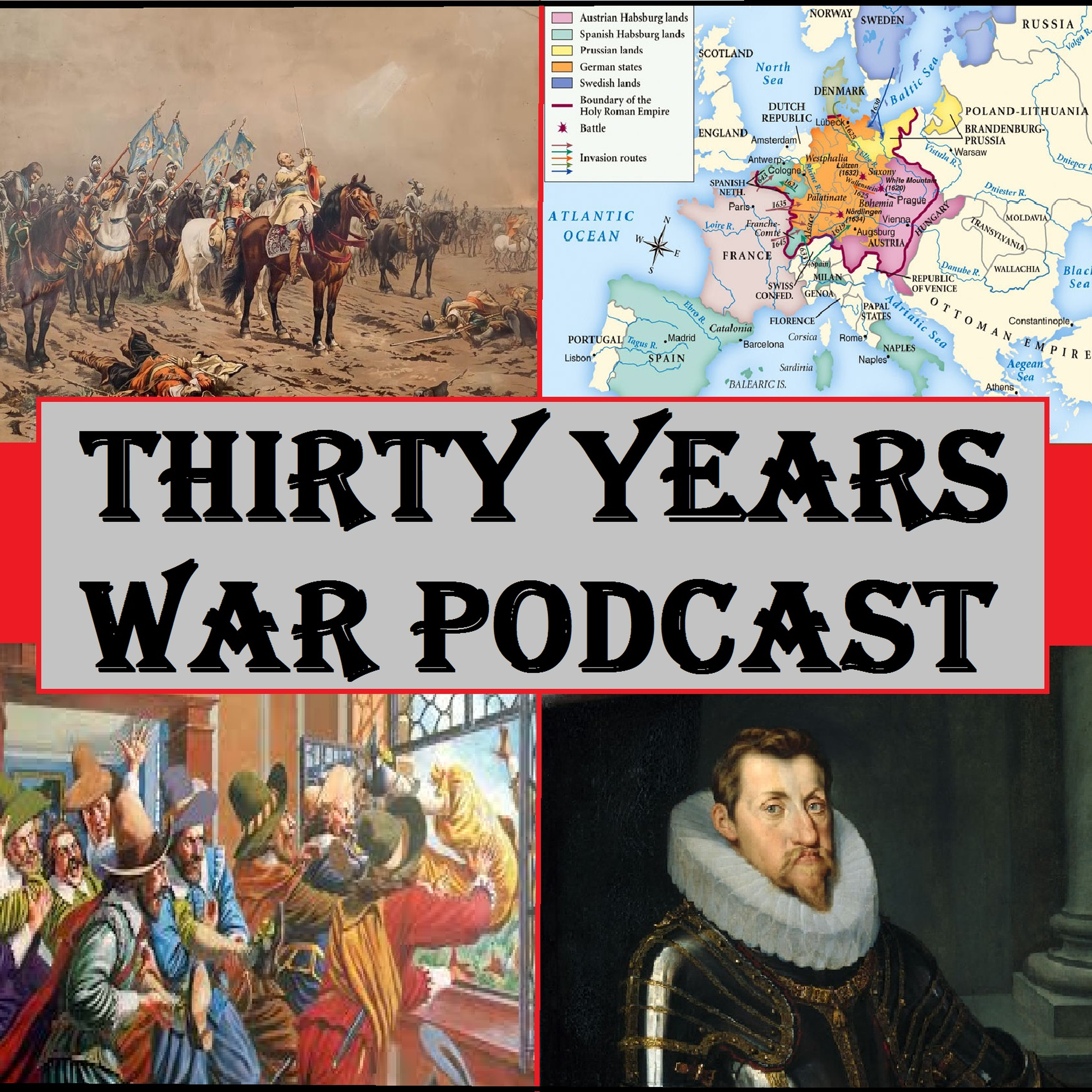
30YearsWar: #6 - "King of the Islands"
Retreat to your own personal island with our new historical fiction series, Matchlock! Matchlock is set during the Thirty Years' War, beginning in 1622, when Matthew Lock lands in Europe to investigate the brutal murder of his parents. Order your copy of Matchlock and the Embassy by clicking here. Traditional narratives of the Thirty Years War frequently gloss over the English/Scottish or British contribution, and in this episode, we do our best to rectify that error! We start with a scene of peacemaking not dissimilar to that visited in our previous episode, with the added twist that James I and VI had ended a twenty-year war instigated by his famous predecessor. The Anglo-Spanish war was at an end, with little good gains to show for it and all that had been spent, but there was still work for King James to do. Ireland required planting, money needed borrowing, ships needed sailing, and foreign diplomats needed talking to.If James was to bring Britain out of its Spanish funk and into the continental system, arrangements with old foes like France would have to be reached, and the relationship with the Dutch properly formalised. In the background of course, were the residual impacts of twenty years of war – a deep-seated suspicion among the British populace of everything Spanish or Catholic. Such trends would have to be combated, and time would tell whether James was equal to the task.***********DON'T FORGET TO FOLLOW THESE LINKS!**1) To support the podcast financially in return for some extra audio content, check out Patreon!2) To find a community of history friends, look at our Facebook page and group!3) To keep up to date with us, follow us on Twitter!4) For everything else, visit our website, where you'll find the shop, archive, and much more!5) To purchase merchandise of all sorts, including mugs, books and clothing, check out our Merchants' Quarter! Hosted on Acast. See acast.com/privacy for more information.
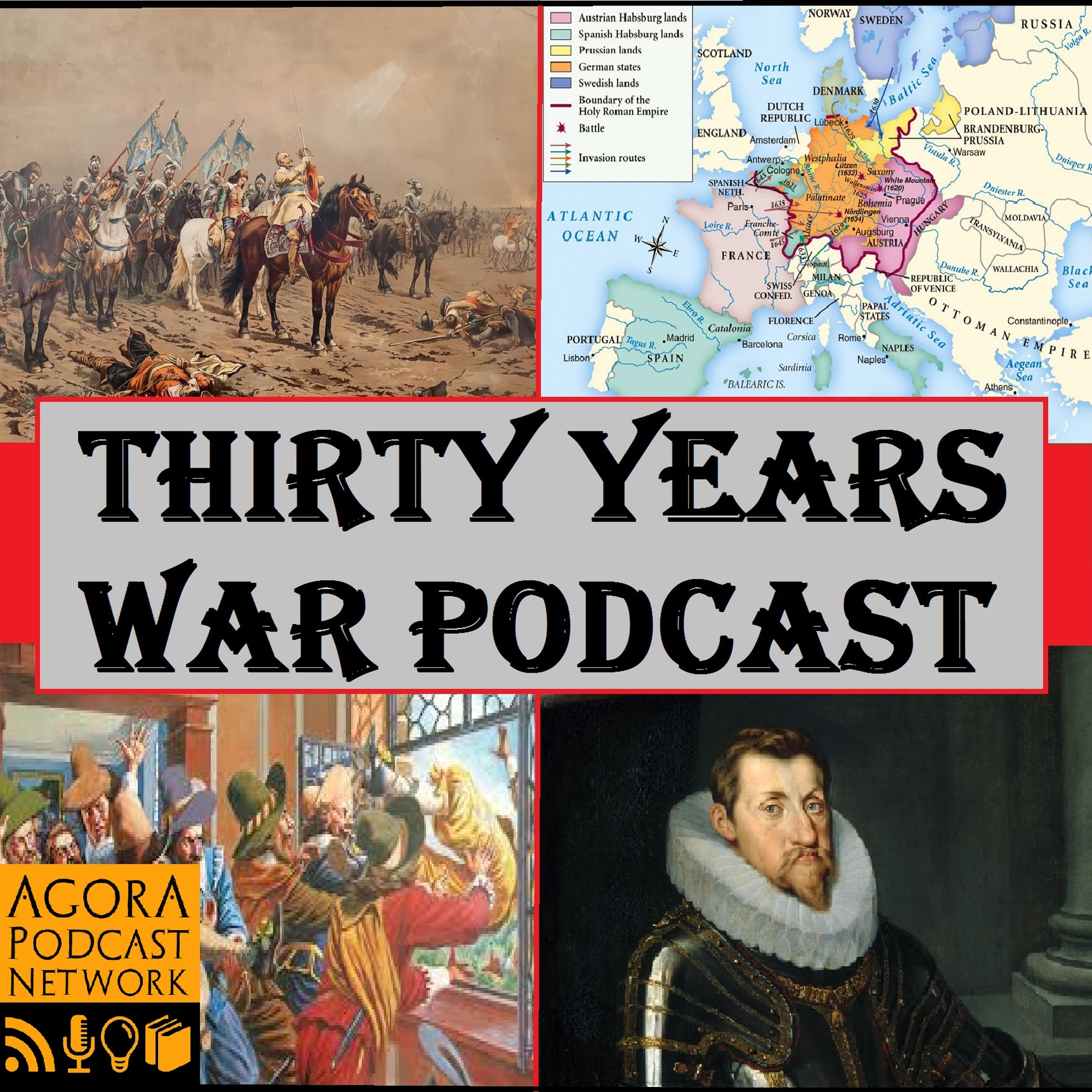
30YearsWar: #5 - 'The Triumphs of Peace'
Talk about triumphs, how much of a triumph would it be if little old Zack could be an Amazon best-seller? You can make it happen! Matchlock is a historical fiction series set during the Thirty Years' War, beginning in 1622, when Matthew Lock lands in Europe to investigate the brutal murder of his parents. Order your copy of Matchlock and the Embassy by clicking here. War wasn’t good for everything in the early 17th century, and nowhere was this more evident than in the spate of peace treaties which were signed between Spain and its enemies during the years 1598-1609. Spain went from at war with, to at peace with, its three primary enemies in the space of little more than a decade, and I think it’s time we examined why! Such a task isn’t possible without first looking at where the most dominant of these conflicts – that of the Dutch War – first came from. We go a bit deeper into the history of the Dutch revolt here, and assess how a lucrative corner of Spain’s Empire went onto become the greatest pain in Madrid’s backside.What began as the Burgundian Netherlands had split into North and South, Dutch and Spanish, loyal and rebellious, by 1609, but the conflict had dragged on relentlessly since the 1560s, so it was little wonder that some inclinations towards peace were pursued. Here we are introduced to the logic behind a temporary peace with one’s enemies, as well as the family charged with taking the fight to the Spanish in the first place, the House of Orange. This semi-royal House started off as a source of loyal Spanish governors for Madrid, but had been transformed into stadtholders – agents of rebellion and military reform, with talents that surpassed and ruined all Spanish expectations. Orange and the Dutch henceforth were inseparable, much like the two Habsburg branches. **DON'T FORGET TO FOLLOW THESE LINKS!**1) To support the podcast financially in return for some extra audio content, check out Patreon!2) To find a community of history friends, look at our Facebook page and group!3) To keep up to date with us, follow us on Twitter!4) For everything else, visit our website, where you'll find the shop, archive, and much more!5) To purchase merchandise of all sorts, including mugs, books and clothing, check out our Merchants' Quarter! Hosted on Acast. See acast.com/privacy for more information.
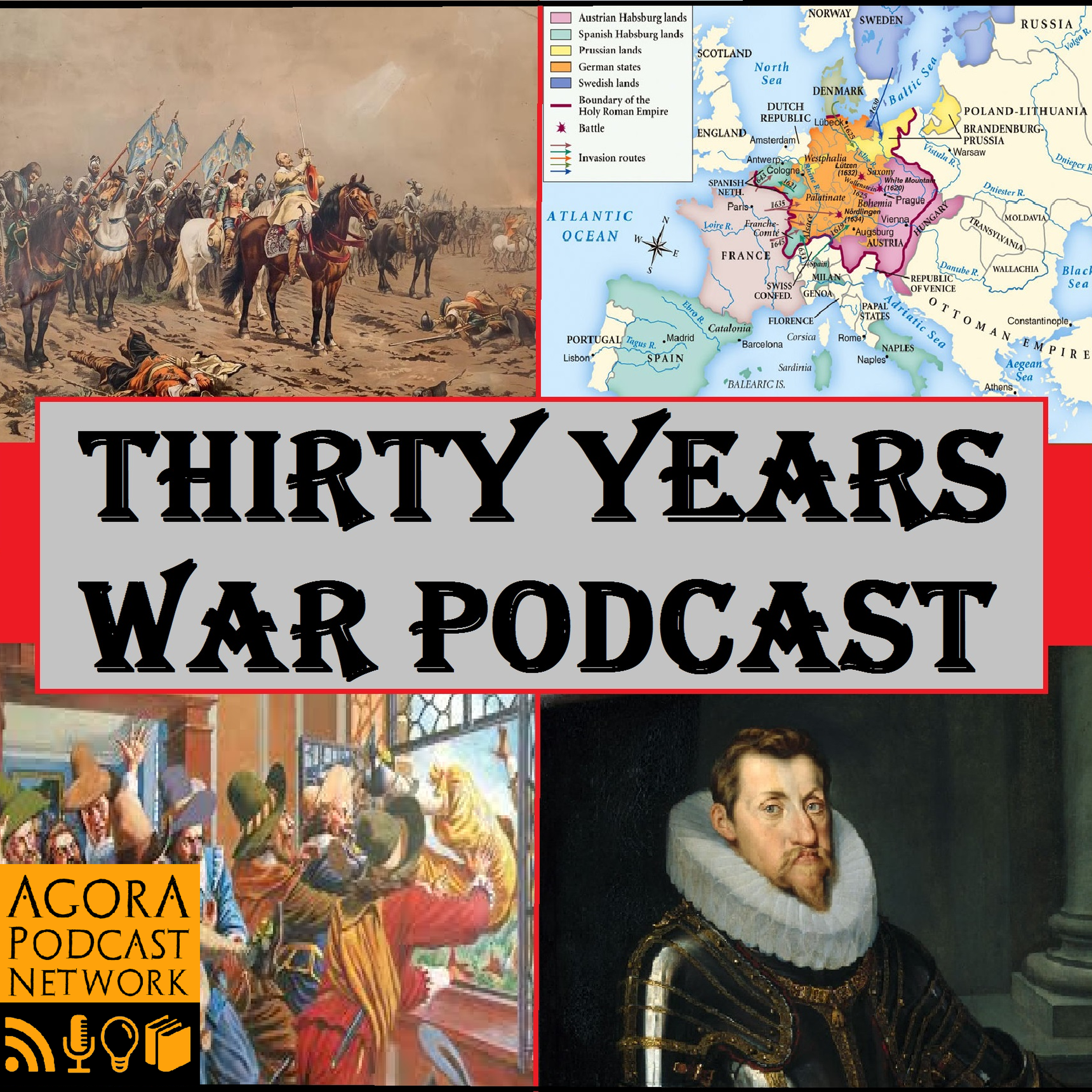
30YearsWar: #4 - "The French Connection"
The only connection you need is from your eyes to the pages, because we have a historical fiction series out NOW which will definitely be right up your street! Matchlock is set during the Thirty Years' War, beginning in 1622, when Matthew Lock lands in Europe to investigate the brutal murder of his parents. Order your copy of Matchlock and the Embassy by clicking here. This episode continues where we left off in the previous instalment, by delving deeper into the motives of the French King Henry IV, in the context of the ongoing Julich-Cleve Crisis. Would Henry intervene, thereby reigniting the war against Spain which had only come to an end in 1598? The answer was no, but not for lack of trying. At the last moment, Henry was assassinated in 1610, on the verge, perhaps, of a great rupture with the enemies of France. That rupture would have to wait fifteen years, as the Empire focused back in on itself. A major force in the Empire was plainly Maximilian, the Duke of Bavaria, and in this episode we get closer to grips with him, assessing his influence, his wealth and his power. Much of these qualities were enhanced, as we will see, thanks to his relationship with the Habsburgs. If you can’t beat ‘em, join ‘em, or in Maximilian’s case – marry them! The Bavarian-Imperial arrangement was to prove mutually beneficial to both sides, and effectively carried the Thirty Years War forwards, and we investigate it here.Important though Bavaria was, the Emperor would have been utterly lost without his Habsburg brethren, the King of Spain, on hand for a handy loan of money or the occasional lending of a whacking large army of professionals. Unfortunately for the King of Spain Philip III, his kingdom was at war with the Dutch, or at least it had been, until an unlikely mediator, the assassinated King of France, helped bring it to a temporary end. The Twelve Years Truce paused the war with the Dutch, but it did not relieve Spain completely from the burdens which were to follow. Europe seemed to be moving into two distinct camps – one Habsburg, and one against that great dynasty. Only time could tell what consequences might follow…**DON'T FORGET TO FOLLOW THESE LINKS!**1) To support the podcast financially in return for some extra audio content, check out Patreon!2) To find a community of history friends, look at our Facebook page and group!3) To keep up to date with us, follow us on Twitter!4) For everything else, visit our website, where you'll find the shop, archive, and much more!5) To purchase merchandise of all sorts, including mugs, books and clothing, check out our Merchants' Quarter! Hosted on Acast. See acast.com/privacy for more information.
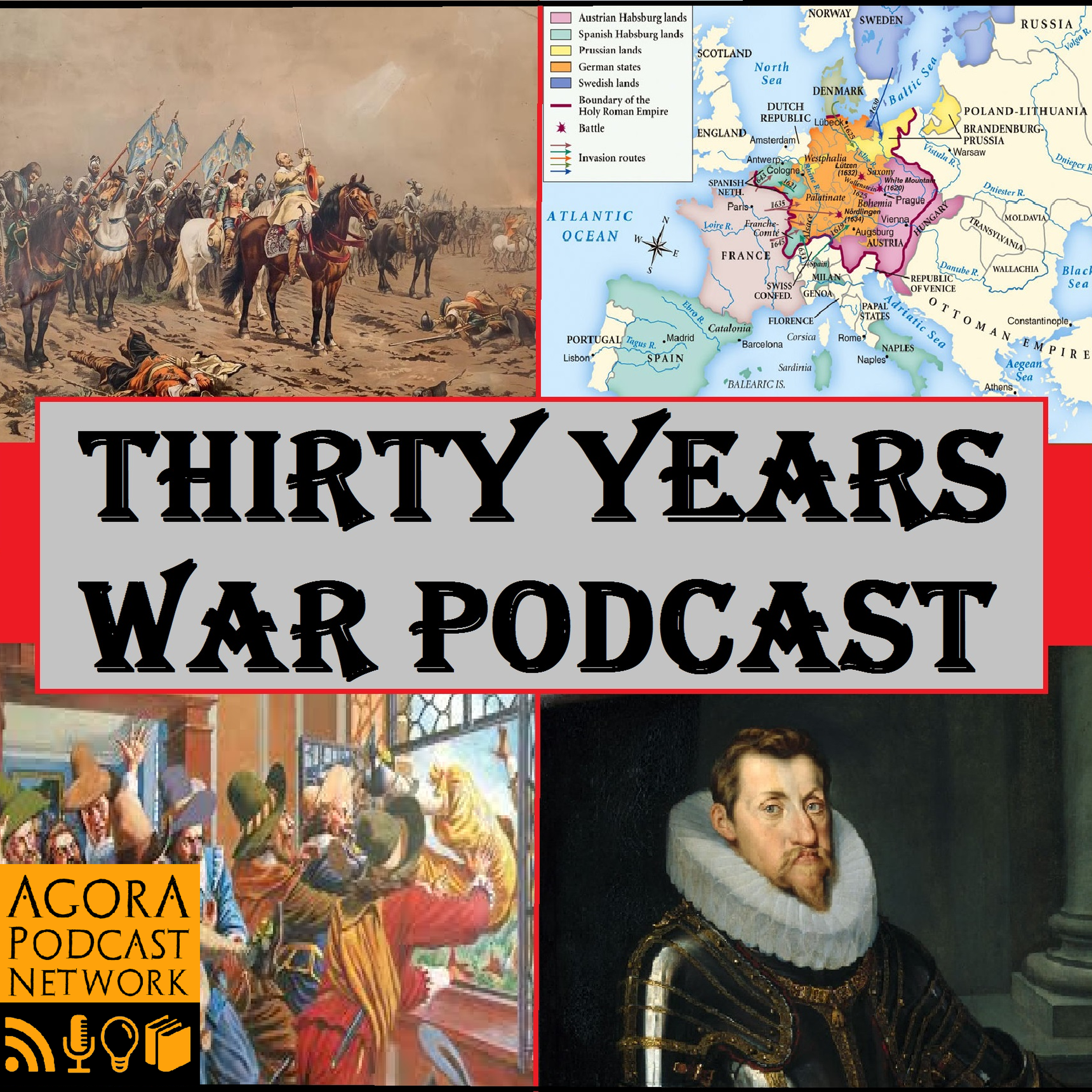
30YearsWar: #3 - "Dukes, Electors, Emperors and Kings"
Long lists of characters are much easier to manage in fiction, and that's where my new series comes in! Matchlock is a historical fiction series set during the Thirty Years' War, beginning in 1622, when Matthew Lock lands in Europe to investigate the brutal murder of his parents. Order your copy of Matchlock and the Embassy by clicking here. If you thought you properly understood how the Empire worked at long last – then think again! There was always some wrinkle or exception to the rule, but perhaps no rules were more important than those concerning the role of Electors. We touched on them in the last episode, but here we place them in their proper context, and unwrap what specifically made them so important to the functioning of the Empire. The Habsburgs, powerful though they were, depended upon the Electors for their legitimacy, and after the Reformation, the seven invaluable votes which could be offered were split along these lines. What was the solution? To a generation of Habsburg rulers, it was quite simple – maintain such a monopoly on power that the votes come in regardless. How to manage this feat? Marriage, of course!Into this examination we throw several wrenches, including the Julich-Cleve Crisis of 1609-14, which provided a dangerous training ground for the two ideological blocs of the Empire to square off. Another incident, the destruction of the city of Donauworth in 1608, and its capture by the Duke of Bavaria, also deserves mention. The Empire, stable though it somehow remained, was in danger of a major rupture if calmer heads did not prevail. Somewhere to the west, an individual was seeking an opportunity to capitalise, and bring his Kingdom to the front of the Emperor’s lists of problems. Henry IV, the King of France, had emerged triumphant from the French Wars of Religion, but this scion of the House of Bourbon had a way to go before he could sponsor the showdown with the Habsburgs that his son and grandson were to pursue. Tune into episode 3 to see exactly how Europe sustained such domineering personalities and powers!**********DON'T FORGET TO FOLLOW THESE LINKS!**1) To support the podcast financially in return for some extra audio content, check out Patreon!2) To find a community of history friends, look at our Facebook page and group!3) To keep up to date with us, follow us on Twitter!4) For everything else, visit our website, where you'll find the shop, archive, and much more!5) To purchase merchandise of all sorts, including mugs, books and clothing, check out our Merchants' Quarter! Hosted on Acast. See acast.com/privacy for more information.
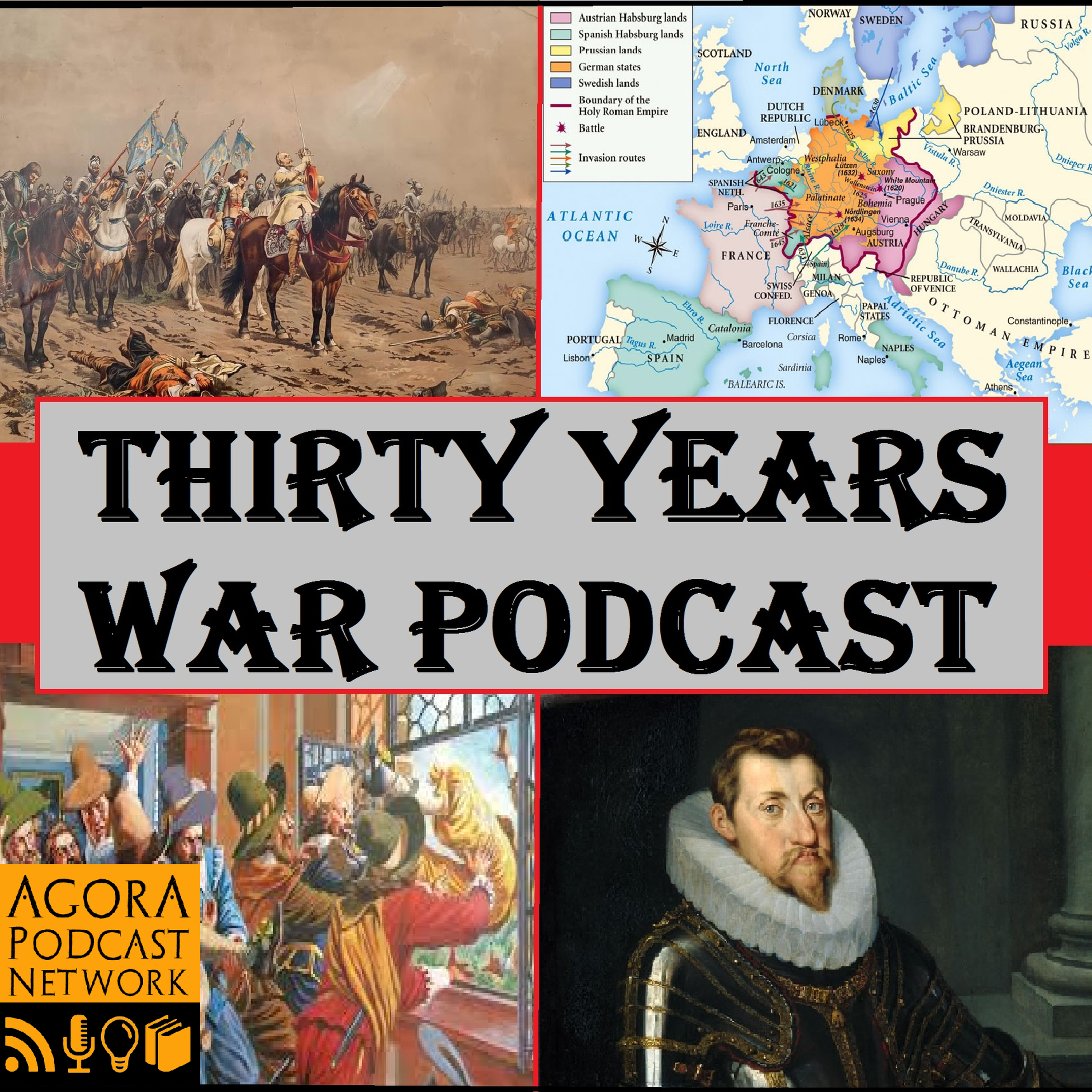
30YearsWar #2: The Small Print
Matchlock is a historical fiction series set during the Thirty Years' War, beginning in 1622, when Matthew Lock lands in Europe to investigate the brutal murder of his parents. Order your copy of Matchlock and the Embassy by clicking here. The Holy Roman Empire was a unique place, full of unique laws, unique settlements and very unique rulers. Unique is just a polite way of saying, that the HRE was a freakin’ mess, but it is a mess which we have to acquaint ourselves with if we’re to stand any chance of understanding the event which it housed – the Thirty Years War. It was in the lands of this sort of state/sort of empire that the events of this conflict were played out. It was fanned and exacerbated by men like Electors and Emperors, it was driven by arguments over religion and constitutions, and it was empowered by actors outside of the Empire, who had their eye on manipulating the situation to their advantage.Our focus in this episode goes to 1555, where a settlement between protestant and catholic agents was agreed. The Peace of Augsburg, the religious and profane peace, as it would come to be known, was a crucial milestone in the history of the Empire, but it is also vital to our understanding of the conflict which followed three generations later. How did the Empire work, what did the Electors did, how did the Emperor get elected, what did the whole thing look like in practice – all of these are questions which we will get to grips with in this episode, so I hope you’ll join me!*********DON'T FORGET TO FOLLOW THESE LINKS!**1) To support the podcast financially in return for some extra audio content, check out Patreon!2) To find a community of history friends, look at our Facebook page and group!3) To keep up to date with us, follow us on Twitter!4) For everything else, visit our website, where you'll find the shop, archive, and much more!5) To purchase merchandise of all sorts, including mugs, books and clothing, check out our Merchants' Quarter! Hosted on Acast. See acast.com/privacy for more information.
Poland Is Not Yet Lost - What's That? [Teaser]
Today in our Patreon feed, the first episode of the Poland Is Not Yet Lost narrative is released, which is super exciting! But, even if you've been tempted in the past to sign up for $5 a month and get this extra content, you may be wondering, what exactly does this series look like, and how do I know if I'll like it? All good questions, which I hopefully answer with some preview clips of episodes we've released before in this exclusive series. If you find yourself wanting more, you know where to go! Head over to the Patreon page for this podcast by clicking this link here. By supporting the show you're not only accessing great history content you won't get anywhere else, you're also helping me live my dream in my History PhD! So thanksss so much! Hosted on Acast. See acast.com/privacy for more information.
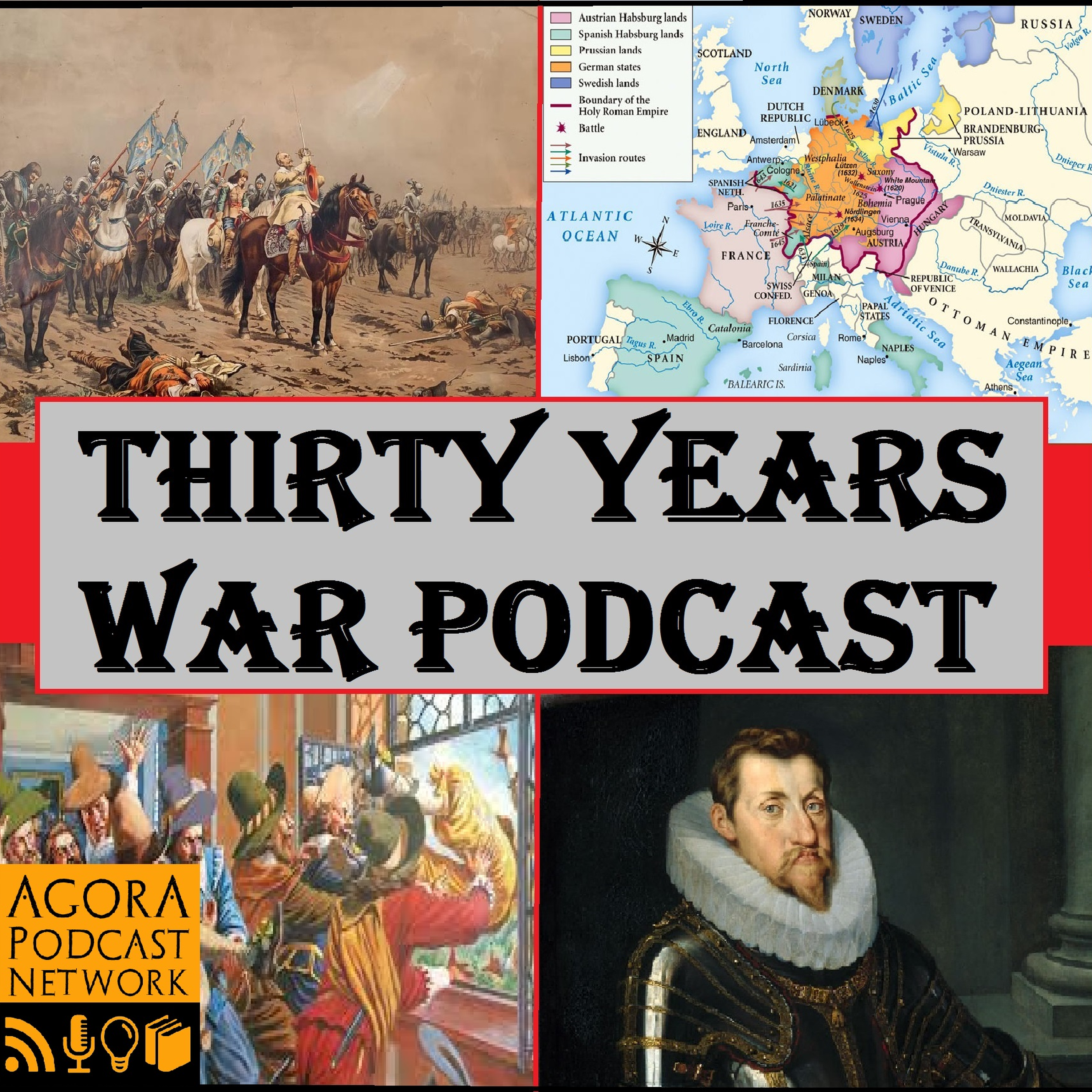
30YearsWar #1: "Prosperity, Profit, Power"
Start off your new Thirty Years War journey the right way, by exploring our other offering - historical fiction! Matchlock is a series set during the Thirty Years' War, beginning in 1622, when Matthew Lock lands in Europe to investigate the brutal murder of his parents. Order your copy of Matchlock and the Embassy by clicking here. We're back! After running through 17th Century Warfare with a fine-toothed comb, I am finally ready to deliver to you the most exciting series we've ever covered here at WDF Towers. It's eerily familiar, but also breathtakingly different - it sounds like the Thirty Years War!Our first proper episode of the Thirty Years War begins with a somewhat surprising scene – Hernan Cortez, far away in South America, coming face to face with the Aztecs. Why do we begin our story with such a controversial, pivotal character? Simple – Cortez was, truth be told, an agent of the Habsburgs, or more specifically, Charles V, the King of Spain and Holy Roman Emperor.Charles was the embodiment of Habsburg power and influence; he was arguably the most powerful man in Europe since the era of Roman Emperors, and he owed his position to the incredible marital policy of his forebears, who married their way out of obscurity in an isolated Swiss castle, to become THE predominant European family by the turn of the 16th century. The Thirty Years War is a story which cannot be told without the Habsburg dynasty, so I hope you’ll join me in this first true instalment of our series to see where this dynasty came from, and where it went next!**********DON'T FORGET TO FOLLOW THESE LINKS!**1) To support the podcast financially in return for some extra audio content, check out Patreon!2) To find a community of history friends, look at our Facebook page and group!3) To keep up to date with us, follow us on Twitter!4) For everything else, visit our website, where you'll find the shop, archive, and much more!5) To purchase merchandise of all sorts, including mugs, books and clothing, check out our Merchants' Quarter! Hosted on Acast. See acast.com/privacy for more information.
30YearsWar: 17th Century Warfare Episode 15
In the words of the historian John A. Lynn, "trying to understand seventeenth-century European history without weighing the influence of war and military institutions is like trying to dance without listening to the music." For the last 15 episodes, we've surrounded ourselves with a heck of a lot of music, so I hope you're ready to dance!This is it, our FINAL episode of 2019 [if you're not a patron!] and our last instalment of the 17th Century Warfare series! We've come a long way in our examination of warfare in this eventful century. Everything from Swedish Kings, to siege ingenuity, to barrages of artillery reforms, to the development and spread of the infantry firearm drill. Hopefully after listening in, you feel like you've learned something about warfare worked, and you appreciate me shining this light on a topic which is rarely given the attention it deserves outside of really nerdy history circles.Hopefully as well, you feel ready and prepared to begin again in the Thirty Years War, and start to climb the mountain which is the actual narrative of the war itself. I for one am REALLY excited to deliver it to you, as it's something which I've been creating and perfecting in the background for YEARS. It is the backbone of our upcoming book, and it's also [to my mind] the ONLY series which analyses this pivotal conflict in the detail it deserves. So, from January 6 2020, I hope to have you in my corner as we revisit those characters, the weighted issues and the high drama once again.This time, with the knowledge of how it ends, and how it keeps going for three decades, I hope you will find me a more accomplished guide! Either way, soon it'll be time to lay down your arms, and listen into our latest deep dive. Until it arrives though, have a wonderful, safe and happy Christmas/Hannukah/New Year etc., and I'll be seeing you all....soon!Wanna listen to Poland Is Not Yet Lost? Visit our Patreon to find out more, and scratch that Polish itch! Hosted on Acast. See acast.com/privacy for more information.
30YearsWar: 17th Century Warfare Episode 14
Our war is nearly over, but we still have some matters to discuss! Here we summarise what we’ve learned over the last few episodes, and pave the way for the narrative to come. There is much we still don’t know about warfare in the 17th century, simply because there is so darn much to know! However, over the last several episodes, we’ve given a very good grounding in what 17th century warfare was all about. We saw how important the theory of the military revolution was, because it shaped debate about how warfare changed during the 17th century. Indeed, the military revolution thesis led to historians producing counterarguments at a rapid rate, to the point that more material than ever before on the period was released in the last fifty or so years. This is of course great news for us, and means that we haven’t exhausted the well of sources just yet.Here we revisit some of the most important lessons we came across. The trace italienne was arguably the most important, since this technological development facilitated the creation of more impressive armies to adequately besiege and take them down. In addition, more advanced siege techniques led in turn to the creation of more effective defensive bastions, in a kind of arms race between defender and attacker which resulted in an explosion of experimentation and architectural marvels. The French, arguably, benefited from this the most, as Louis XIV harnessed the defensive potential of fortresses to hold the numerous enemies of France at bay at critical times.If the French gained the most from the use of the fortress, arguably the Dutch were the most impressive pioneers with musket drills in the beginning of the century, as Maurice of Nassau searched for new ways to combat the core of tercio professionals which Spain boasted. Speaking of Spain, the Spanish were by no means the useless, wasteful dolts that historians have sometimes portrayed them as. Well into the 17th century as we saw, Spain maintained its reputation for military supremacy, while across the continent, its cousins in Austria were experimenting with new ways to maintain an army all year round, and anticipating the benefits this could bring. In addition, to the east, the Turks were also throwing their considerable weight around, and were far from insignificant, as is often claimed.In short, we’ve learned a lot about warfare in the 17th century – be it through the eyes of different states, when we examined certain case studies, or analysed given terms like the trace italienne and fire by rank mass volley musket tactics. We saw the English trade the longbow for the musket, and discovered how the Ancient Roman legionnaires managed to contribute to the Dutch military theories of the day. It’s been a great ride, so I hope you’ll join me here as we attempt to wrap it up. Sign up for a fiver or less a month on Patreon to support the show, support Zack and support history - in return you'll get some fantastic audio content which you can't listen to anywhere else! Currently, we're preparing the way for Poland Is Not Yet Lost! Hosted on Acast. See acast.com/privacy for more information.
30YearsWar: 17th Century Warfare Episode 13
This is a tale of two sieges! We examine the siege of St Martins on the Isle of Re by the ENglish, and the siege of Mantua by the Imperials and Spanish. These two sieges in the late 1620s were pivotal cases where the Thirty Years War hung in the balance. Unrelated though these theatres were to the main war in Germany, they each created ripples which had a profound effect on the outcome of the war. But these sieges did more than that - they also provided us with an ideal opportunity to focus our warfare obsessed microscope, and investigate what's really going on on the ground.What did the practice of a siege mean for the defenders and attackers, particularly when the defences were strong, or when the besiegers weren't very well led? Here is where we investigate! You may never have heard of these campaigns before, but this just goes to show that the war which housed them is full of surprises, so I hope you'll join me for this fascinating story. Thanksss!Could you spare 3 minutes to tick a few boxes, and complete this survey for the Agora Podcast Network? PRETTY PLEASE! Check out BT Newberg's new show a History of Sex! Listen to the intro episode Wanna listen to Poland Is Not Yet Lost? Visit our Patreon to find out more, and scratch that Polish itch! Hosted on Acast. See acast.com/privacy for more information.
30YearsWar: 17th Century Warfare Episode 12
We've heard a great deal about how armies changed during the 17th century, and how their commanders adopted new tactics and reforms to increase their firepower and ferocity. BUT what about the states that commanded these armies? Here we look at a specific case study, Austria, to see not just how the creation of a standing army empowered this curious state, but also how it defined what it meant to be an Austrian Empire. Where exactly did the Austrian Empire come from, carved as it was from the rump Habsburg Hereditary Lands in the south central portion of Europe? The answer is found in the fascinating process which led to the creation of an Imperial standing army, courtesy of the Emperor Ferdinand II, and made possible by everyone's favourite generalissimo, Albrecht of Wallenstiein! Check it out!Could you spare 3 minutes to tick a few boxes, and complete this survey for the Agora Podcast Network? PRETTY PLEASE! Check out BT Newberg's new show a History of Sex! Listen to the intro episode Hosted on Acast. See acast.com/privacy for more information.
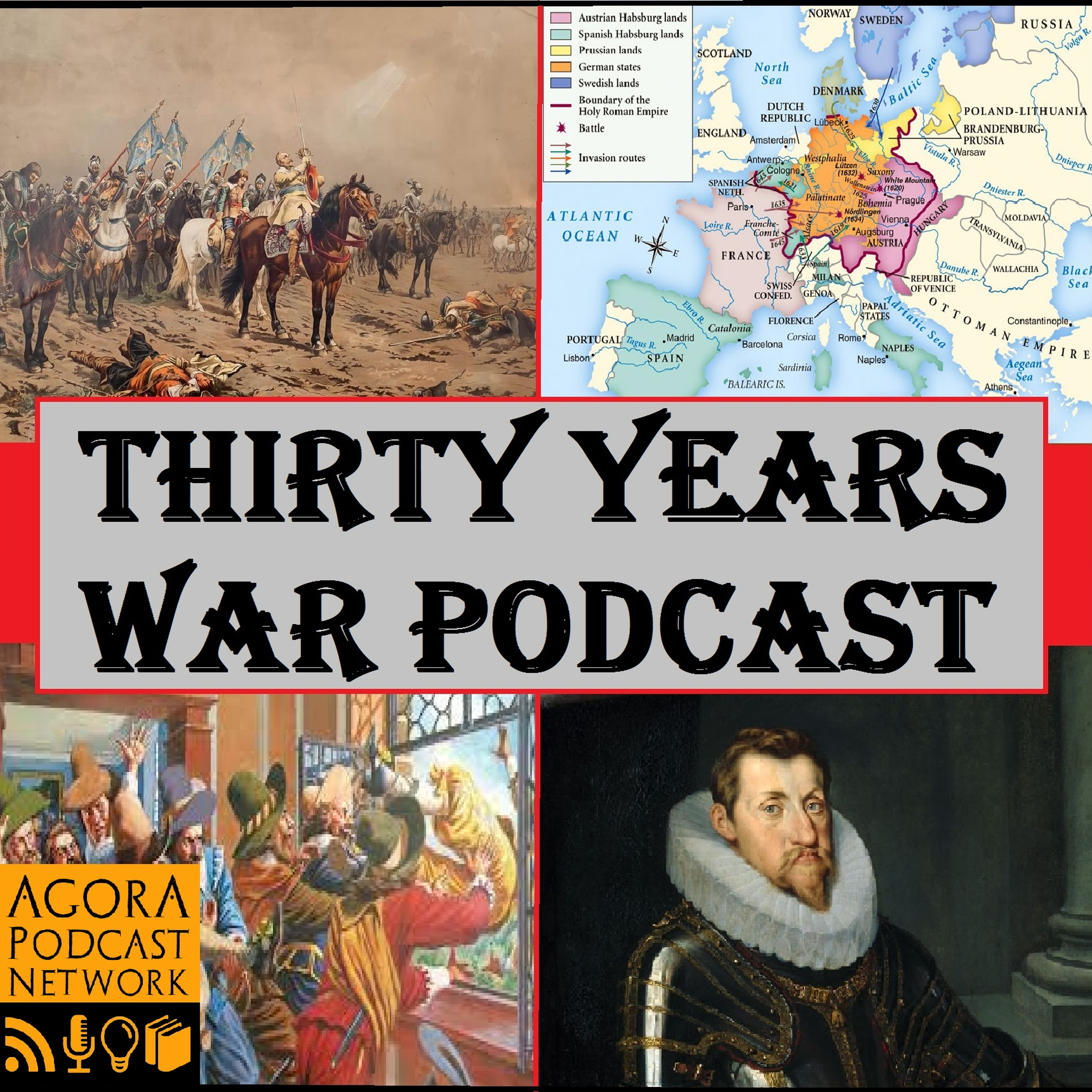
30YearsWar: 17th Century Warfare Episode 11
Breitenfeld. The most important battle of the Thirty Years War in my view, and the ideal but also terrifying testing ground for all of Gustavus' new reforms. Could the Swedish King leverage all his innovations in the infantry drill, in the use of artillery, or in the harnessing of cavalry's best bits? Or would he be just another victim to Count Tilly's war machine? You probably know the answer, considering his large fame, but you may not know the story of how it all happened. With a focus that I don't usually take, WDF is going to the battlefield for once, so I hope to see you all there!Obligatory shout out to my wonderful patrons, who have rallied to the colours for our special offer in October 2019, and have nearly helped us smash our goal of $2k! Amazing! If you want a signed copy of our book an your name in the acknowledgements, make sure you sign up to become a PhD Pal now! Time is of the essence, as October is your ONLY CHANCE to make it happen! Hosted on Acast. See acast.com/privacy for more information.
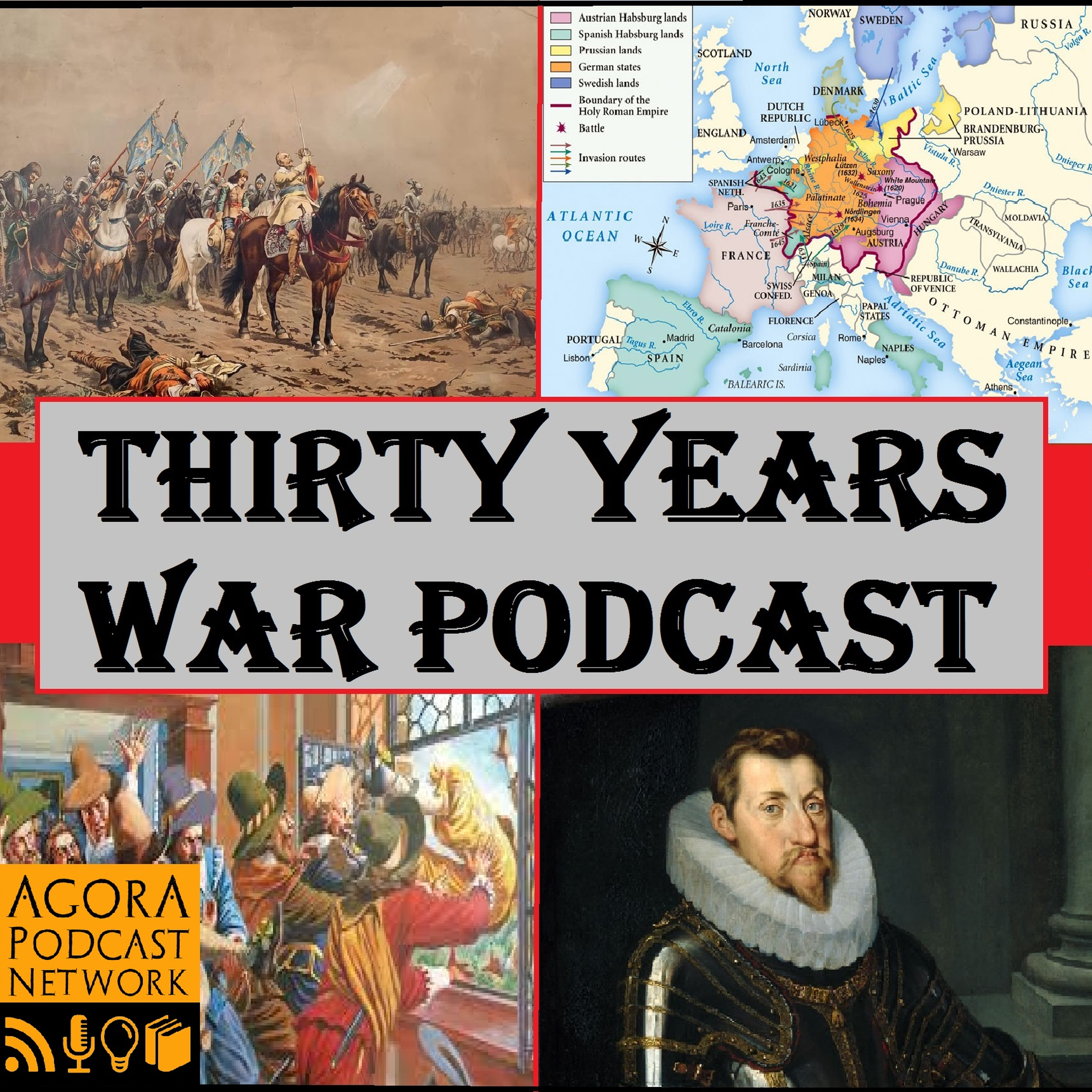
30YearsWar: 17th Century Warfare Episode 10
At long last, our series on 17th century warfare smacks straight into the man many of you probably came all this way to see. What did Gustavus Adolphus of Sweden do to make his name in the military sphere? Did he really do all that is often assumed? Do we give me too much credit? What, at the base level, can it truly be said that he accomplished? Come and find out here, as we look at the Swedish king's innovations in infantry drill, firepower, artillery and cavalry, to build a picture of the most famous Swede in the game. If you think you know Gustavus, you ain't seen nothing yet!I would remiss if I didn't thank all my lovely patrons for making the first week of this special offer such a massive success! Our Patreon income has exploded by more than 15%, up over $200, and we have an army of nearly TWENTY PhD Pals now on our side! If you want to get your name in lights in our new Thirty Years War book, and get it signed, delivered to your door, then make sure you sign up to become a PhD Pal in the month of October. Thanksss! Hosted on Acast. See acast.com/privacy for more information.
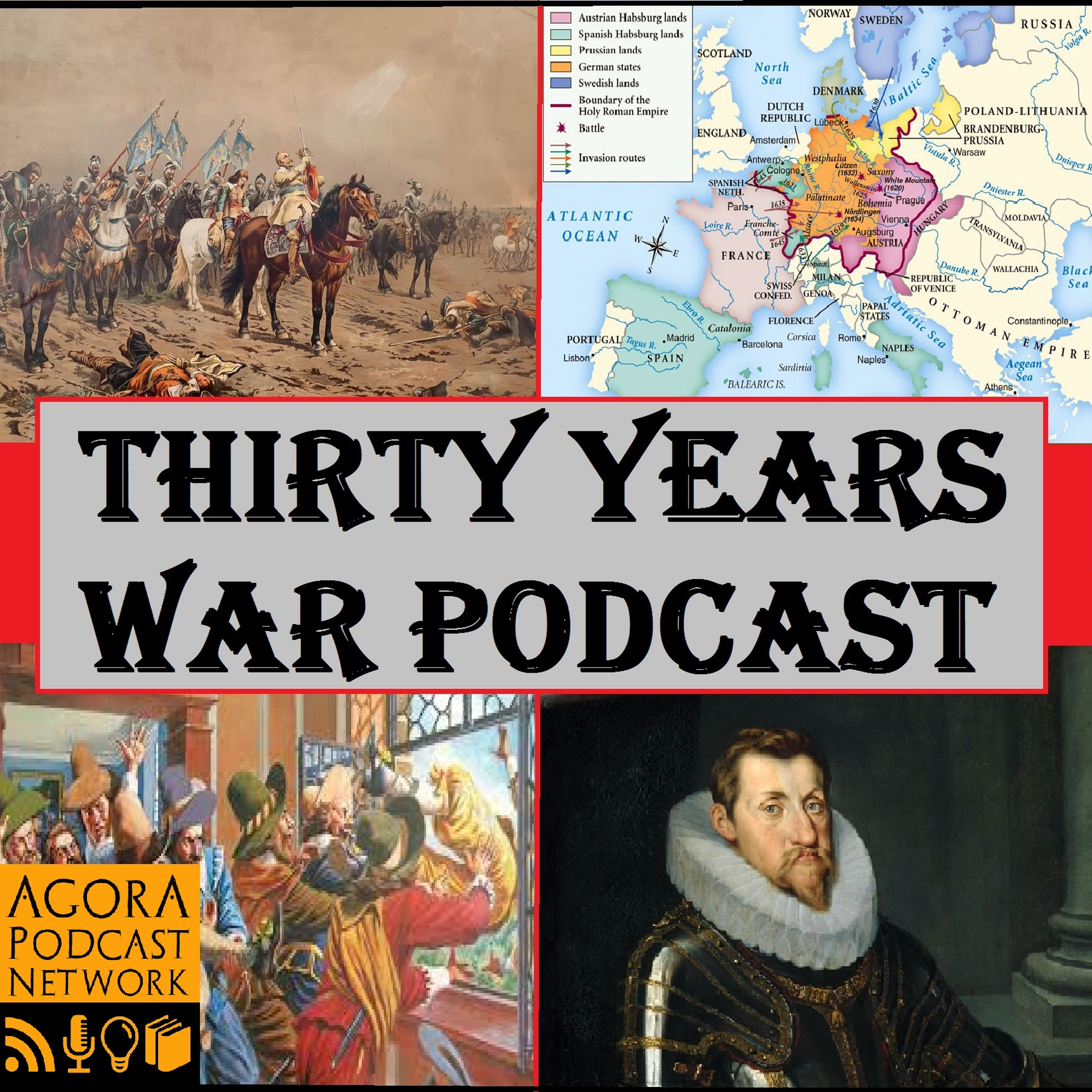
30YearsWar: 17th Century Warfare Episode 9
In our ninth installment on 17th century warfare, we assess the overall contribution of the Dutch to the military revolution, through a few important spheres. We will learn that spreading the word about new technological innovations was not an unusual practice, and that Europeans were far more willing to share their discoveries than we may have previously imagined. In addition, we examine how the drill became the supreme method of warfare, and how it inculcated a sense of discipline which profoundly affected European society on the battlefield as much as off. The journey involves one of discipline, forbearance and continued practice, and obsolete methods of making war did not go quietly...*********Click here to pre-order the book | Click here to sign up on Patreon from as little as $2 a month and access awesome goodies! | Click here to find our dedicated section of the website | AND #1) Follow us on Twitter #2) Like us on Facebook #3) Join the history friends group! Hosted on Acast. See acast.com/privacy for more information.
PINYL: A) Creating a Commonwealth Part 1
How did Poland and Lithuania come to be joined together as one state? Here we answer that critically important question, as well as several others which go along with it. Of course, our story may begin in the year 1700, but we would be remiss if we didn't mention several threads of the story which brings the narrative to that point. Why did the Commonwealth have an elective monarchy? Why were the nobility so powerful? And perhaps the most pressing question - how did a pagan grand duke of Lithuania, the last of his kind, become engaged to the sole heir of Poland's Catholic Angevin King? It's a story which needs to be heard in full, so make sure you don't miss out! Thanksss so much for making Poland possible, and remember that by listening in, you're not just helping make it viable, you're also funding my PhD! I can't thank you enough!Check out Poland Is Not Yet Lost in full by clicking here Hosted on Acast. See acast.com/privacy for more information.
Poland Is Not Yet Lost: Introduction 2
Where did the inspiration to tackle this project come from, what sources have we devoured, and what can you expect from this series? These questions and so many more besides will be addressed here, so make sure you get the full picture of what we're up to by listening in!Click here to access all of what Poland has to offer! Hosted on Acast. See acast.com/privacy for more information.
Poland Is Not Yet Lost: Introduction 1
FINALLY! After several years, countless teases, numerous changed plans, and no shortage of research, one of the most anticipated series we have ever tackled lands at long last. Poland Is Not Yet Lost has been made possible thanks to the incredible support I received from you, my patrons, so I hope you'll check this first introduction episode out as we set the scene, and set forth some of our plans for this fascinating and very chunky series. Click here to sign up on Patreon and get ALL Poland has to offer! Hosted on Acast. See acast.com/privacy for more information.