
When Diplomacy Fails Podcast
744 episodes — Page 3 of 15
1956 - The Suez Crisis #2.2: Suez, A Life
A French investment opportunity, an ancient idea, and a British masterstroke - discover in this episode how the Suez Canal became so monumentally important for British imperial interests in the latter 19th century, and how this interest was then carried over into the 20th century. After years of defending and expanding their stock in Suez, it was highly unlikely that Britain was going to give up its position there without a fight. Yet, at the same time, decolonisation trends across the world were in full swing, and it was far from certain that Egypt could be held while certain movements were underway.The most important of all these movements in decolonisation era Africa was found on 23rd July 1952, when a coup against King Farouk of Egypt, that docile and loyal British puppet, succeeded. A cadre of Egyptian military men now held control over the country, and they were determined to be anything but puppets to the British interest. One figure surged forward above all. His name was Gamal Abdel Nasser, and in this episode, we will be introduced to him, as we see what the British establishment was up against. Mindful of Britain’s interests in his country, and its unsavoury record there, Nasser was not about to give ground for nothing. Thousands of miles away, a government change waved goodbye to Winston Churchill, and ushered in his subordinate Anthony Eden. The stage was set for a conflict which was unlike any other yet seen in the British experience. Remember history friends - you can get these episodes ad-free with scripts attached for just $2 a month - for a fiver you can access our PhD Thesis series, so come and nerd out with us! Hosted on Acast. See acast.com/privacy for more information.
1956 - The Suez Crisis #2.1: Bitter French Pills
In this episode, we will examine the painful post-war experience of France, why it was so reluctant to let go of its colonies and how this caused it more damage in the long run. As an integral, but largely forgotten player in the Crisis, understanding the French angle is essential for us. On many occasions, the fractured French government would be the only thing holding the also fractured plans for Suez together. Here, we discover what was moving the French in North Africa, and how its bitter Algerian pill, which it would put off swallowing for some time, so influenced its government’s decision to weigh in against Egypt.Remember history friends - you can get these episodes ad-free with scripts attached for just $2 a month - for a fiver you can access our PhD Thesis series, so come and nerd out with us! Hosted on Acast. See acast.com/privacy for more information.
1956 Part Two: The Suez Crisis Introduction
1956 now enters its second season, and we are confronted with several pressing questions. How did the British, French, Israelis and Americans become involved in Egypt, and how did these events affect what was ongoing in Hungary? The incredible spectacle of these two simultaneous crises, both caused by very different forces, and hosting very different characters, is what we have to examine next, so I hope you'll join me as we introduce the Suez Crisis - perhaps the greatest error of modern Britain until the decision to Brexit! Hosted on Acast. See acast.com/privacy for more information.
1956 1.15: Socialism Stays
1956 Episode 1.15 examines the final moments of Imre Nagy, as the Soviet noose tightened around him. But the Kremlin was not safe yet. Of particular concern to Moscow and to the Hungarians was the stance of Yugoslavia, as its embassy in Budapest provided asylum to Imre Nagy and 40 other individuals responsible for guiding and leading the momentarily independent Hungarian state. The revolution may have been crushed within a few days, but it was evidently not going to be so simple to remove the memory of Nagy. Although normal Hungarian citizens couldn’t know of his fate, even when he was tricked into leaving this safe haven in late November, behind the scenes the Soviet-Yugoslav diplomacy was only serving to heighten tensions in the communist world.In addition, the Chinese, soon to visit the Eastern satellites in January 1957, had their own comments to make on the events in Hungary. The Chinese conclusion, and the conclusion which has largely survived as canon to this day, was that Vladislav Gomulka had only gone so far, whereas Imre Nagy had gone far too far in bringing reform to his country. It was not acceptable, in the Chinese mind, that reform came at the expense of Soviet power and stability – a national road to socialism was to be admired, but this road could be bumpy, and on occasion, fraught with danger.Also worth considering was the American perspective – Eisenhower’s administration was thoroughly distracted by events in Egypt, and while he and his Secretary of State John Foster Dulles never really intended to intervene with force in Hungary, the unofficial state organs like Radio Free Europe ensured that the American or at least the Western approach and intentions remained unclear to Hungarians, who felt encouraged to challenge the Soviet domination, and were then bitterly disappointed when no Western aid materialised. Suez was of course a convenient excuse for American non-intervention, yet for Eisenhower’s new ‘rollback’ policy towards the Soviet Union, it was important to blame the Anglo-French-Israeli attack upon Egypt to the end...At the pinnacle of our narrative was the fate of Nagy and his circle. Two years after the revolution had been put down, Nagy was executed. Even in his final moments he refused to admit error and to denounce what had been done. He went to the gallows courageously, confident that no matter what occurred after his death, one day, he would be reburied, and Hungary would be free. His legacy was to inspire Hungarian politicians and a tacit policy of non-violent resistance to Soviet rule throughout the next few decades. His words would prove correct – Imre Nagy’s reburial in June 1989 signalled the end of Soviet domination, the collapse of the Soviet Union and the end of the Cold War all at once. Nagy’s death and rehabilitation put to bed the fallout of Khrushchev’s secret speech, and it also concludes our first part of 1956. Next time, we’ll begin our examination of that other significant narrative which 1956 provided, as we count down to the Suez Crisis. Hosted on Acast. See acast.com/privacy for more information.
1956 1.14: Lessons Learned and Forgotten
1956 Episode 1.14 analyses the Soviet response in the first week of November 1956, as the rug was finally pulled on Hungarian independence. Having already removed his country from the Warsaw Pact and requested Western assistance, Nagy was persona non grata in Soviet minds, yet this Hungarian communist was not finished yet. If there was any chance at all that this Hungarian state could be preserved, he was willing to engage in whatever to took to protect his people from the Soviet axe. Yet, unfortunately for Nagy and for Hungary generally, there was no chance. Khrushchev had no intentions of letting Budapest think for itself, and the crushing of the Hungarian revolution and the entry of Janus Kadar into Hungary represented the end note of the Hungarian effort. Kadar, it would transpire, was not the supplicant figure he seemed, but he was ambitious, utterly ruthless and not all constrained by any concept of loyalty to Imre Nagy, a man whom he had known and befriended after several years of close cooperation. This episode contains several primary source extracts which detail the real experiences of Hungarian politicians and citizens as they fled the country, encouraged it, or sold it out to Moscow. It provides us with a great and invaluable window into the Soviet mindset at the time, so I hope you enjoy it, and join us for the concluding episode on this Soviet chapter next time. Hosted on Acast. See acast.com/privacy for more information.
1956 1.13: Crushing Hope
1956 Episode 1.13 examines the unlikely triumph of the Hungarians in Budapest, even as the Soviets schemed for revenge. After somehow wresting a ceasefire agreement from the Soviet Union, the Hungarian revolution appeared – against all odds – to be secured by 28th October. Yet, this was merely a pause for Moscow, it was not the end. As Hungarians began to dream of life outside the Soviet sphere, Soviet tanks were preparing to move, and figures within Imre Nagy’s tightening circle were preparing to stab him in the back. What followed would be bitter, bloody and terribly depressing for those that dreamed big in Hungary, yet for us, it serves to underline the chaotic Soviet experience of the eventful, revolutionary year of 1956. Without giving too much away, this longest episode of 1956 yet brings many issues to their logical conclusion, but we’re far from finished with the story of Budapest, of Hungary or of Imre Nagy just yet, so make sure you stick with us to the somewhat sticky end! Show Less Hosted on Acast. See acast.com/privacy for more information.
1956 1.12: Hope Springs
1956 Episode 1.12 examines a key moment when a Hungarian student protest exploded into something far more encouraging, and for the Soviets, far more dangerous. The demands of the protesters – joined by workers, peasants, Hungarian communists, soldiers and many more figures besides – were as disconcerting as the threat the protest posed to Soviet control. Still more incredible than the growth of the protest was the transformation of this protest into a riot, and the further transformation of this riot into a revolution.From these process a rallying cry of hope seemed to spring, as independence and some freedom of action could at last be imagined. Hungarians who had never before dreamed of such things now engaged with all their enthusiasm this most dangerous task – that of standing up to the superpower of the era and their superior in almost every respect. Time would tell if this act would be tragic, or met with miraculous fortune. With far too many individual details to explain here, WDF is so excited to bring its patrons the latest piece of this fascinating story, so make sure you check it out and let me know what you all thought, perhaps by leaving a review in the section of the iTunes store where this series is hosted! Hosted on Acast. See acast.com/privacy for more information.
1956 1.11: Gone But Nagy Forgotten
1956 Episode 1.11 looks at what happened when Moscow decided it’d be a good idea to force Rakosi, the avowed Stalinist, to share power with Imre Nagy, his opposite in almost every respect. Rakosi wished to maintain the status quo even as his favourite weapons like the secret police were taken away, yet Nagy recognised and appreciated from an early stage that much would have to change. Hungary couldn’t continue on in the manner of a repressed, unhappy vassal, especially if Moscow wished to guarantee the support of all Hungarian people. Nagy proposed limited reforms, but after 1953 it began to become apparent that with Stalin gone and Pandora’s Box opened, it was immensely difficult to keep that box closed.Every concession granted to the Hungarians provoked calls for greater concessions – every bit of freedom given permitted Hungarians to become braver and more willing to question the apparatus which held them low. Every time Nagy said yes, the Hungarian people seemed to say more, and Rakosi tattled on him to the Soviet leadership. Since this Soviet leadership was undergoing great changes of its own at this stage – as Khrushchev attempted to manoeuvre his way past his rivals – the signals from Moscow were not always clear. Yet after a year it became largely certain that Nagy was on borrowed time. As we’ll discover in this episode though, while Nagy hadn't done enough to ensure he remained in power, he had done enough to ensure that the Hungarian people did not forget him once he was removed. In a sea of sycophants, the courageous but otherwise bland Nagy stood out, and soon it was his name and his principles, regardless of his political persuasions, that positioned Nagy atop another pole – that of the public affections. As we’ll come to appreciate, this position was to be both a blessing and a fatal curse for Imre Nagy... Hosted on Acast. See acast.com/privacy for more information.
1956 1.10: I Did Nagy See That Coming
1956 Episode 1.10 continues where we left off last time, and looks a bit more at the person of Matyas Rakosi.Rakosi was the Stalinist dictator of Hungary from the late 1940s, and he set about establishing a Hungarian Stalinist regime, complete with all the trappings Stalin enjoyed. For every purge, every policy and ever character assassination that the man of steel engaged in, Rakosi felt compelled to demonstrate his loyalty by going still further. He would terrorise the people of Hungary into a burning, resentful, petrified silence, but his hold on power was only as strong as the secret police.Imre Nagy, a passionate communist and eager reformer of all things Stalinism, was guaranteed to butt heads with a man like Rakosi, and in this episode we examine why this was the case. What were Nagy’s guiding principles, why was he such a committed communist, and what did he bring to the table that a man like Rakosi did not? Nagy was as complex as Rakosi was cruel, but this doesn’t mean we can’t give our best shot at analysing this fascinating individual who became, almost in spite of himself, a hero and then a martyr of the Hungarian people.This episode is a pivotal instalment as we examine the background to what was to come in Hungary, and how a quiescent vassal became the centre of anti-Soviet sentiment within only a few stormy months. All of this began, of course, in the eventful year of 1956. Hosted on Acast. See acast.com/privacy for more information.
1956 1.9: Desperately Hungary
1956 Episode 1.9 takes a somewhat depressing journey into post-war Hungary, to present a story and a people which suffered much over the course of the Soviet occupation – also known as the Soviet ‘liberation’. Liberation from what, one may ask? Well how about liberation from national pride, freedom of conscience and that all too valuable commodity in history – freedom from fear. Fear was the key ingredient in the Soviet-Hungarian relationship between 1945-56, and in this episode we detail its key characteristics. Why were some Hungarians so eager to serve the Soviets, who were the most loyal Hungarian servants above all, and what were the consequences of this partnership by the time Khrushchev’s secret speech shattered all notions of Stalin-worship?These are questions we get into in great detail here, so I hope you’ll join us. The story of Hungary is as fascinating and inspiring as it is depressing and tragic, but either way, it is a story worth committing to audio podcast format, because it tells us so much about what life was really like under the Soviet writ, and how the end of the Second World War did not mean the end of foreign rule. The Hungarians had merely swapped one regime, one centre of power, for another, and this one was more determined than ever to hold sway over every aspect of their lives. The Hungarians were desperate for sure, but as 1956 would demonstrate, their spirits and dreams were far, very far, from crushed. Hosted on Acast. See acast.com/privacy for more information.
1956 1.8: The Star Pupil
We continue our story from last time, as the Polish situation is connected to other fascinating questions. Perhaps the most significant aspect of this chapter in Soviet-Polish relations was the notable involvement of China. The Chinese, it emerged, were very interested in seeing that other peoples travelled their own ‘road to socialism’ as they had done. A Polish road to socialism would validate the unique Chinese experience of struggle over the last few decades, and it would also confirm that Moscow didn’t have the authority to dictate how a communist satellite would feel.Under the Chinese direction and approval, Poland’s limited revolution and Gomulka’s leadership would be safe, but only because, as we’ll see, Gomulka had zero intentions of truly changing any status quos. Unfortunately, Gomulka’s tenure in office was not destined to be a completely wholesome one. His behaviour over the 1960s would confirm that he was far more loyal and far less independently minded than his initial behaviour may have initially suggested, yet in 1956, Gomulka was the right man for the Polish leadership, and so long as the Polish people agreed, Poland was to be kept within the Soviet orbit, and Gomulka was to be the star pupil of the tumultuous year of 1956, especially in comparison to his Hungarian counterpart Imre Nagy, who we’ll meet in the next few episodes. Hosted on Acast. See acast.com/privacy for more information.
1956 1.7: Soviet Sickles
1956 Episode 1.7 examines the continuing deterioration of the Polish situation, as Polish citizens dared to ask more and more questions, and to criticise the Soviet order, on their lips was one figure above all – Vladislav Gomulka (pictured). Gomulka was one figure among many who had been disgraced and imprisoned during Stalin’s numerous purges. Gomulka, it was said, was too vocal a critic, and too independent or nationalistically inclined to rule Poland in Moscow’s name. Now though, the Polish people were calling for him, and they were demonstrating on the streets in increasing numbers to do so.Here we detail how the Soviets dealt with this challenge in one of their most sensitive satellites, and what the major concerns of Polish citizens were in light of the revelations of the secret speech. The story involved a face-off between Gomulka and Khrushchev, as the latter made a stormy visit to Warsaw to see for himself in late October exactly what had gone down in Poland. Khrushchev left not with Gomulka’s head, but with a tacit acceptance of that man’s leadership. The question of why this occurred holds several fascinating answers, so make sure you join us here as we attempt to unpack this incredible episode in Soviet-Polish relations.Remember history friend, if you want extra content and to support my ventures then make sure you head to Patreon! Hours of additional content and other goodies await! Hosted on Acast. See acast.com/privacy for more information.
1956 1.6: Polish Hammers
1956 Episode 1.6 examines the tumultuous fallout of Khrushchev’s February speech in the context of Poland. What was the Polish experience of living in the Soviet orbit? Here we set the scene and trace a bit of the background. It’s a tragic kind of story if you happen to be a Pole, or care about the sovereignty of independent states, but it also makes for fascinating listening. Here we look at a specific example of a revolutionary study, which tore the lid off of Soviet occupied Poland and which exposed its worst excesses to the world. The release of 𝘛𝘩𝘦 𝘓𝘰𝘯𝘨 𝘞𝘢𝘭𝘬, adopted in 2010 as the film 𝘛𝘩𝘦 𝘞𝘢𝘺 𝘉𝘢𝘤𝘬, proved to be an indication of things to come in 1956.The Soviet-Polish relationship both before, during and after the Second World War was a difficult one, fraught with historical grievances, mutual distrust and grand ambitions. After all that had occurred in this portion of the world over the centuries, it was perhaps inevitable that the two peoples could never live peacefully side by side, yet the policies enacted by Stalin immediately following the victories of the Red Army in Poland from late 1944 nonetheless make for startling listening. Stalin’s approach to Poland was to treat it as the troublesome if necessary little brother of Moscow – to be dominated by its larger neighbour, and always to be suspected and feared. Poles suffered terribly under Soviet rule from 1944-1989, and in the episode we’ll provide the background details for one of the most notable chapters in this 45 year history, as we explain how the Poles responded to news of Khrushchev’s speech.Remember history friend, if you want extra content and to support my ventures then make sure you head to Patreon! Hours of additional content and other goodies await! Hosted on Acast. See acast.com/privacy for more information.
1956 1.5: Broken Springs
1956 Episode 1.5 examines the implications for the Soviet people, as Khrushchev’s speech is disseminated through the sprawling empire. The questions which many citizens had were to be restricted and constrained by the specific parameters set down by the Soviet authorities. In short, as we’ll see in this episode, there was a fine line between debate and dissent. Pravda liked to distinguish between dissent and debate by presenting discussion of the secret speech in the spirit of party-mindedness, rather than a cynical or wholly critical perspective. As always, it was a matter for Khrushchev to determine the difference between debate and dissent, as he attempted to deal with the mess his speech had created.We look at the example of the response given in Moscow’s Thermal Technical University, where three technicians gave their views and planned in grandly ambitious, optimistic ways, only to discover when they returned to work on Monday that their words and phrases had gone too far. Nobody could deny the central truths that they spoke, but everyone remained too afraid to actively challenge the post-Stalin order. This background of the social implications of the secret speech are important if we are to fully grasp what occurred in Poland – the first and most troubling dissenter in the Soviet camp...Remember history friend, if you want extra content and to support my ventures then make sure you head to Patreon! Hours of additional content and other goodies await! Hosted on Acast. See acast.com/privacy for more information.
1956 1.4: The People Are Revolting!
1956 Episode 1.4 examines the immediate storm caused by Khrushchev’s denunciations of Stalin in late February.Above all, the greatest ingredient in this storm was that of confusion. Soviet officials didn’t know what to tell the assembled crowds, and schoolteachers didn’t know what to tell their pupils. How far exactly could they go in the condemnation of Stalin? This wasn’t made clear, nor was it made clear exactly what Khrushchev hoped to gain. He seemed to vacillate between wanting people to know about the speech and covering up its contents.In Georgia, as we’ll see, the criticism of their favourite Soviet son caused demonstrations and rioting of an anti-Moscow nature, as the impression had been gained that these new Soviet bureaucrats were attempting to tarnish the name of Stalin for their own ends. Putting down these demonstrations were bloody and costly, and their eruption seemed to catch Khrushchev off guard. Indeed, the British and Americans were already learning of the secret speech by the middle of March, and began to ask their own questions about its contents – was this what Khrushchev wanted? We examine this question by looking at what other historians thought of Khrushchev’s move, and we prepare ourselves well for the most serious eruption of all in the Soviet bloc – in Poland...Remember history friend, if you want extra content and to support my ventures then make sure you head to Patreon! Hours of additional content and other goodies await! Hosted on Acast. See acast.com/privacy for more information.
1956 1.3: A Not So Secret Speech
Episode 1.3 opens with the scene which greeted Khrushchev as he performed that incendiary speech over 24-25th of February 1956. It was a pivotal day in the history of the Soviet Union, and after we unwrap its major aspects, we then tackle the key questions – how had this speech come to be, and how had Khrushchev managed to convince his peers that it was necessary?These questions require answers if we’re to understand and appreciate the world which housed the secret speech, so I hope you’ll tune in here and have a listen to an incredible period of history, when Josef Stalin – the father of peoples and the sun of the universe, was exposed as the monster that he was, by the very people who had followed his lead and helped him craft the system that dominated much of the continent.What followed the secret speech then were other questions – how would Khrushchev et al manage to reconcile their involvement in Stalin’s crimes with this new course, and how would they manage to critique Stalin’s role in creating the Soviet system without also delegitimising it at the same time? Would the speech be seen as a welcome admission of wrongdoing, or an invitation to push for more freedom? From this speech in spring 1956 would spring even more troubles, which Khrushchev could never have imagined.Remember history friend, if you want extra content and to support my ventures then make sure you head to Patreon! Hours of additional content and other goodies await! Hosted on Acast. See acast.com/privacy for more information.
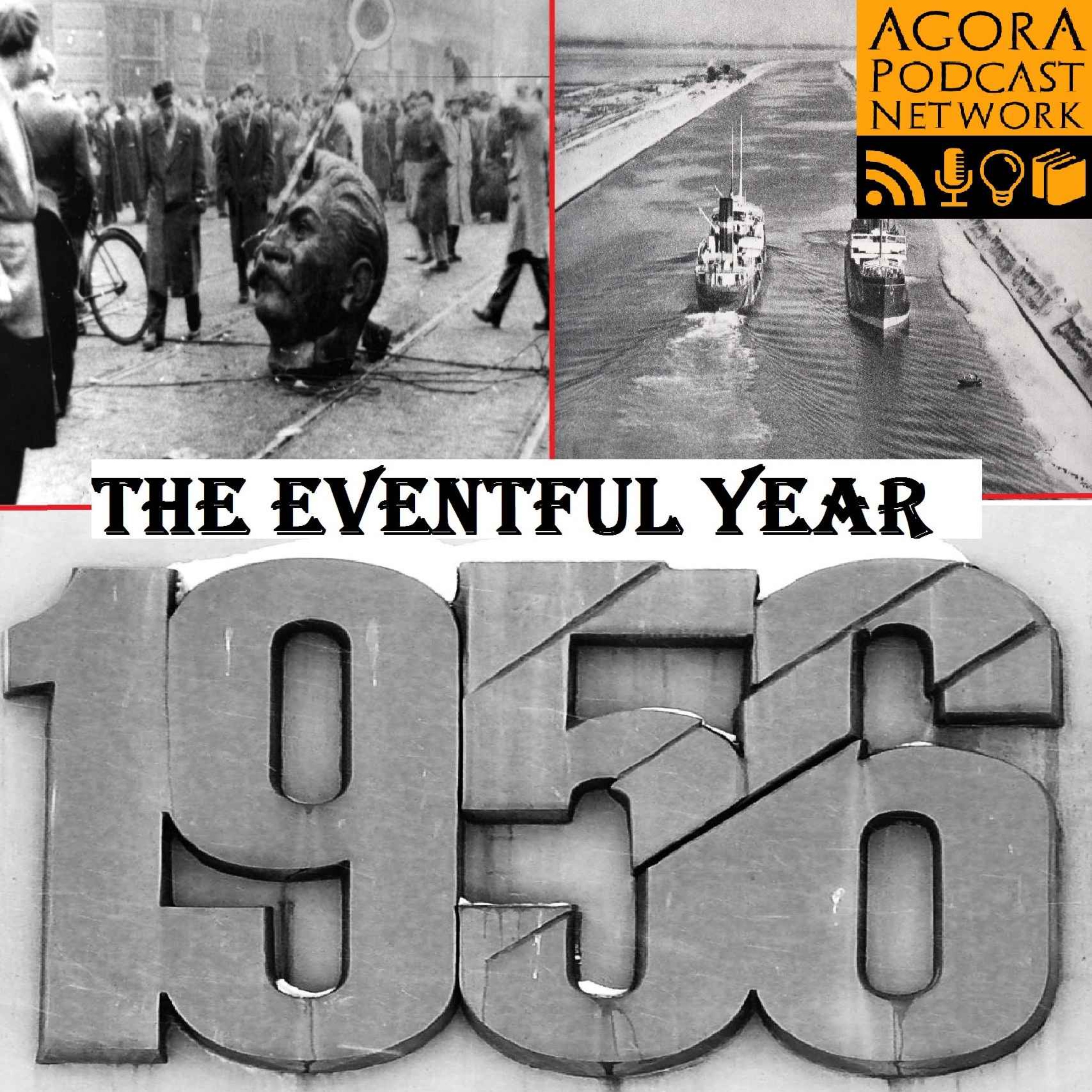
1956 1.2: Bolshevik Battle Royale
Episode 1.2 follows on from where our first episode left off. Here, the power struggle between the Soviet Union’s top men is in full swing, and power plays, character assassination, genuine assassination and even more tactics besides distinguish this period of post-Stalin Soviet history. Nikita Khrushchev’s victorious succession and confirmation as First Secretary was far from certain once the struggle began, but as his rivals continued to underestimate him, and as he worked to build up his power base while the big fish sniped at one another, Khrushchev emerged as the best candidate to fill Stalin’s murderous shoes. Yet, it was far from clear at the same time exactly what Khrushchev had in mind.For one, the so-called Thaw had been on-going since Stalin’s death, as prisoners were released, trumped up charges commuted, and some of the more unpopular policies relaxed. Would Khrushchev make efforts to expand upon this approach to Soviet rule, or would he contain its potential dangers as soon as he was able to do so? The different possibilities for life after Stalin remind us that what followed and what opened the year 1956 was by no means the only course, yet it was the most radical option at the time. The infamous secret speech thus occupies a great deal of our time here. Of most interest to us here though is the spectacle of Khrushchev’s elimination of his rivals, either through execution or political neutralisation. As far as Khrushchev was concerned, while a collective leadership on paper looked nice, in reality, there could be only one... Remember history friend, if you want extra content and to support my ventures then make sure you head to Patreon! Hours of additional content and other goodies await! Hosted on Acast. See acast.com/privacy for more information.
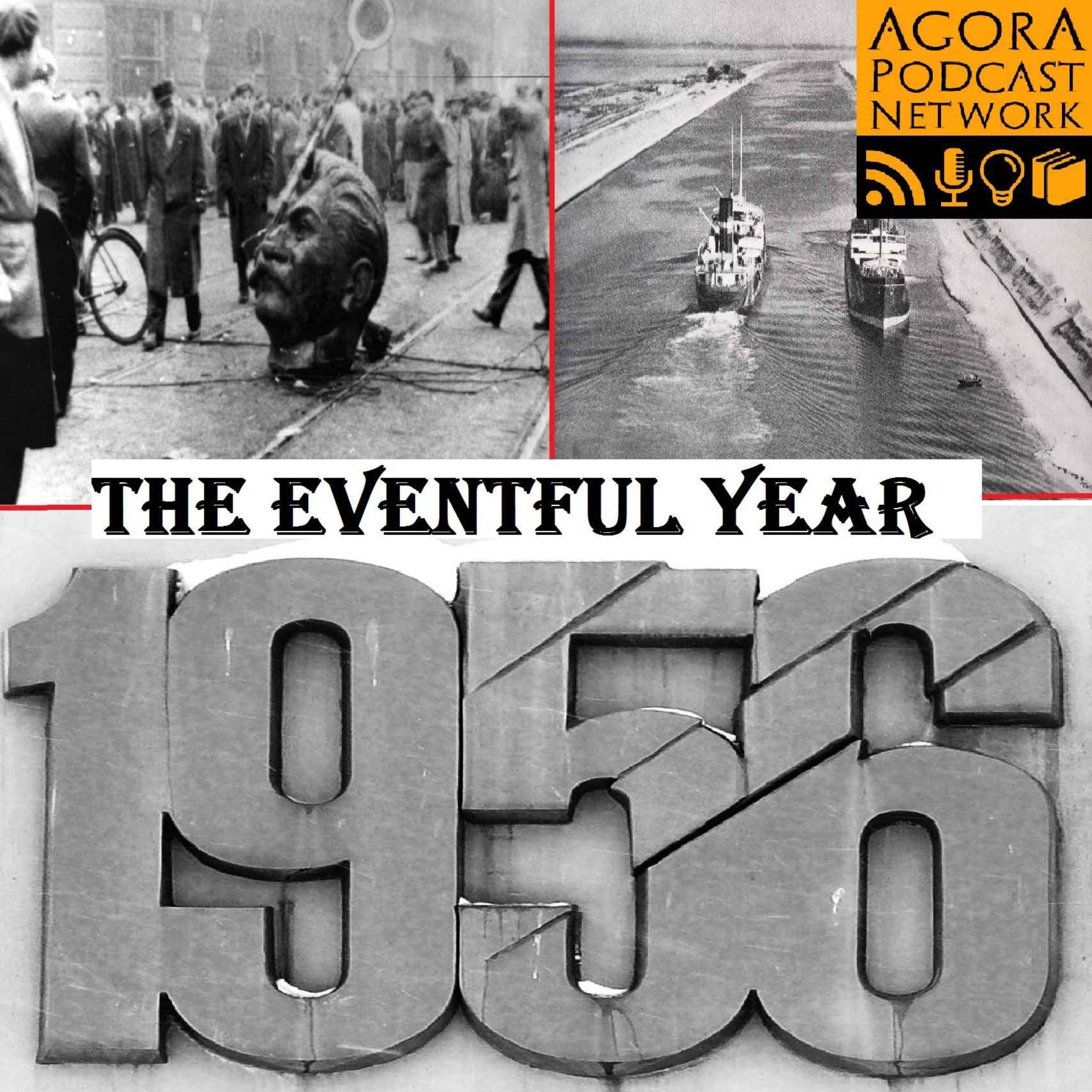
1956 1.1: Death of a Comrade
What happened when the architect of the Cold War passed away? Would the Soviet Union Stalin built adapt to a new successor, or would a set of chain reactions doom the empire in its cradle? If you want to learn more about what followed after the Korean War – as a story and as a year of significance, 1956 has few equals, and we open our narrative with the event which set up all subsequent events – the death of Josef Stalin on 5th March 1953. As far as deaths of prominent characters go, the death of Stalin from a succession of strokes at the age of 73 sticks out particularly – a man who allowed his paranoia get the better of him, out of fear of his own vulnerability and out of lust for power, died without being the victim of any underhanded scheme. As we’ll see, he also died without naming an official successor, throwing into chaos those men who had stuck around long enough to accumulate some power for themselves. In this episode we’ll meet these figures – the so-called ‘collective leadership’ of the Soviet Union, which included such heavy hitters as Molotov, Malenkov, Lavrenti Beria, Anastas Mikoyan and a sometimes crude, always blunt figure by the name of Nikita Khrushchev. The story of what would come after Stalin is a gripping and fascinating snapshot of life at the top of the Soviet greasy pole. It prepares us for the eventful months which are to come, by investigating exactly what it was that compelled these men to undo some of what Stalin had made, while still holding onto the terrifying edifice which held half of the continent of Europe in rapture. Hosted on Acast. See acast.com/privacy for more information.
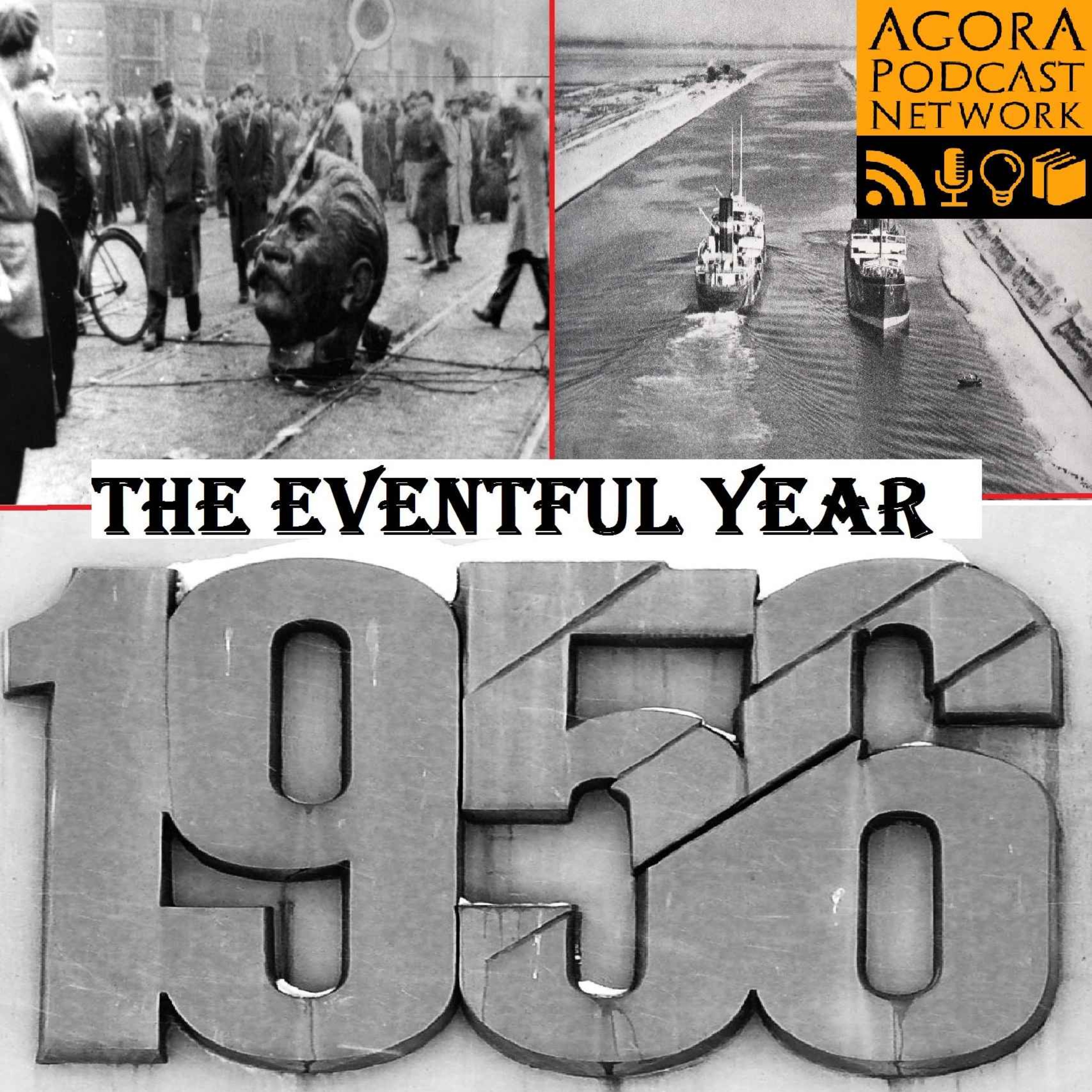
1956: Introduction to Part One
Welcome to 1956, an era of schemes, revolution, propaganda, intrigue and a whole lot of diplomacy!Originally brought exclusively to patrons, I've repurposed this series for all listeners, and within it you will learn exactly why I believe this eventful year is well worth your time. Our series begins with the death of Stalin, a megalomaniacal dictator who left no successor save the clique of people who had managed to survive his paranoid wrath for several years. Nikita Khrushchev, against all the odds, managed to surge above the rest. But before he could do this, and before he presented his vision for a post-Stalin world, we must set the scene.This begins our new biweekly release schedule, so I hope you're excited. If you somehow need more of Dr Zack, make sure to sign up on Patreon for our PhD thesis series, and help make history thrive! Hosted on Acast. See acast.com/privacy for more information.
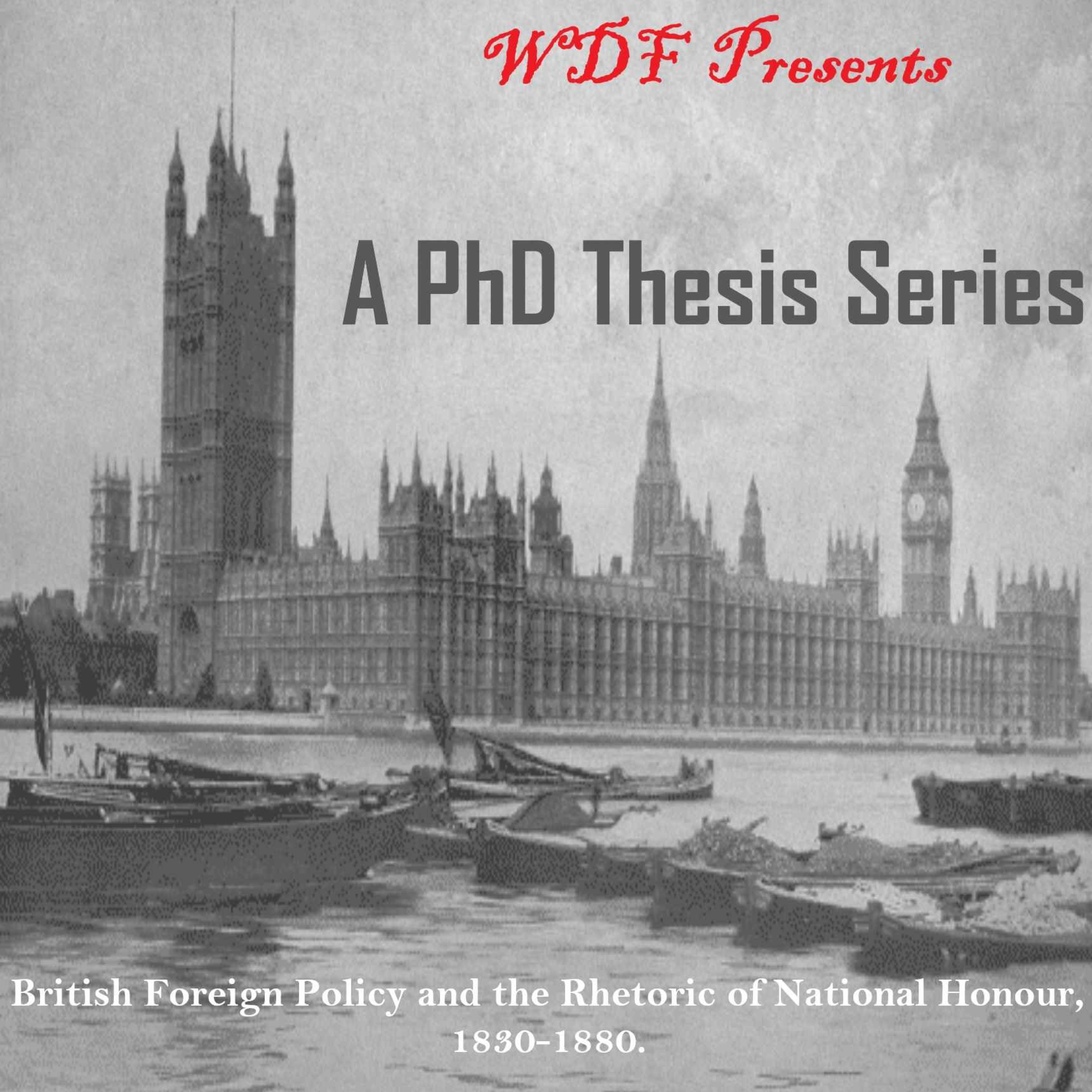
PhD Thesis: Introduction Part 1
Like what you hear? Consider signing up on Patreon to access the entire series. Thanksss!For the last four+ years, this PhD thesis has been my obsession. Like pushing a boulder up a hill, the struggle was real. But, sometimes, struggle can produce great things, and I hope you'll agree that what I made is worthy of your time. This series comes exclusively to $5 patrons, but as is customary, listeners get the first episode for free. See if you like the sound of this nitty-gritty exploration of history we have planned, and if national honour really is as important as I claim. Maybe you're curious about the kind of kind of work expected for such a high standard of research? Perhaps you just want to know what I've been frantically working at during the last four+ years. Whatever brings you to this chunky series, we have a lot to get through. This is the first step towards unwrapping this 100k-word beast, so I hope you'll join me! Hosted on Acast. See acast.com/privacy for more information.
Welcome to a New Season of WDF!
Welcome back! Here we talk about the State of the Podcast Address' HUGE NEWS 1) Our somewhat new series1956 and how it's all going to work. Also, is it actually interesting? 2) The new PhD Thesis series for Patrons! 3) Age of Bismarck - and of course, more!Thanksss so much for the warm welcome back history friend. I haven't stopped grinning for the last few days, and it's thanks to you! Hosted on Acast. See acast.com/privacy for more information.
WDF State of the Podcast Address 1-4-24
We're back! In case you were unaware, the lack of content over the last while was because of the PhD, which is now finished. This means, yes, I am finally Dr Zack! Imagine that! I have a lot to say about the future of this podcast, and stick around for some honesty about the PhD process and how I'm doing generally after this four year plus saga. I'm really excited to dive back into podcasting after all this.And it goes without saying, but thanksss so much for all your support over the last few years! Hosted on Acast. See acast.com/privacy for more information.
Presenting: History Challenge w/ Ole Petter Høie
Join Ole and I for a fascinating chat about History Challenge, a new way for educators and students to make history thrive! If you want to try it out for yourself, the latest version of this project is available in the link below. Thanksss!Access the Battle of Britain lesson here If you can, completing this survey on your experience would be much appreciated. Hosted on Acast. See acast.com/privacy for more information.
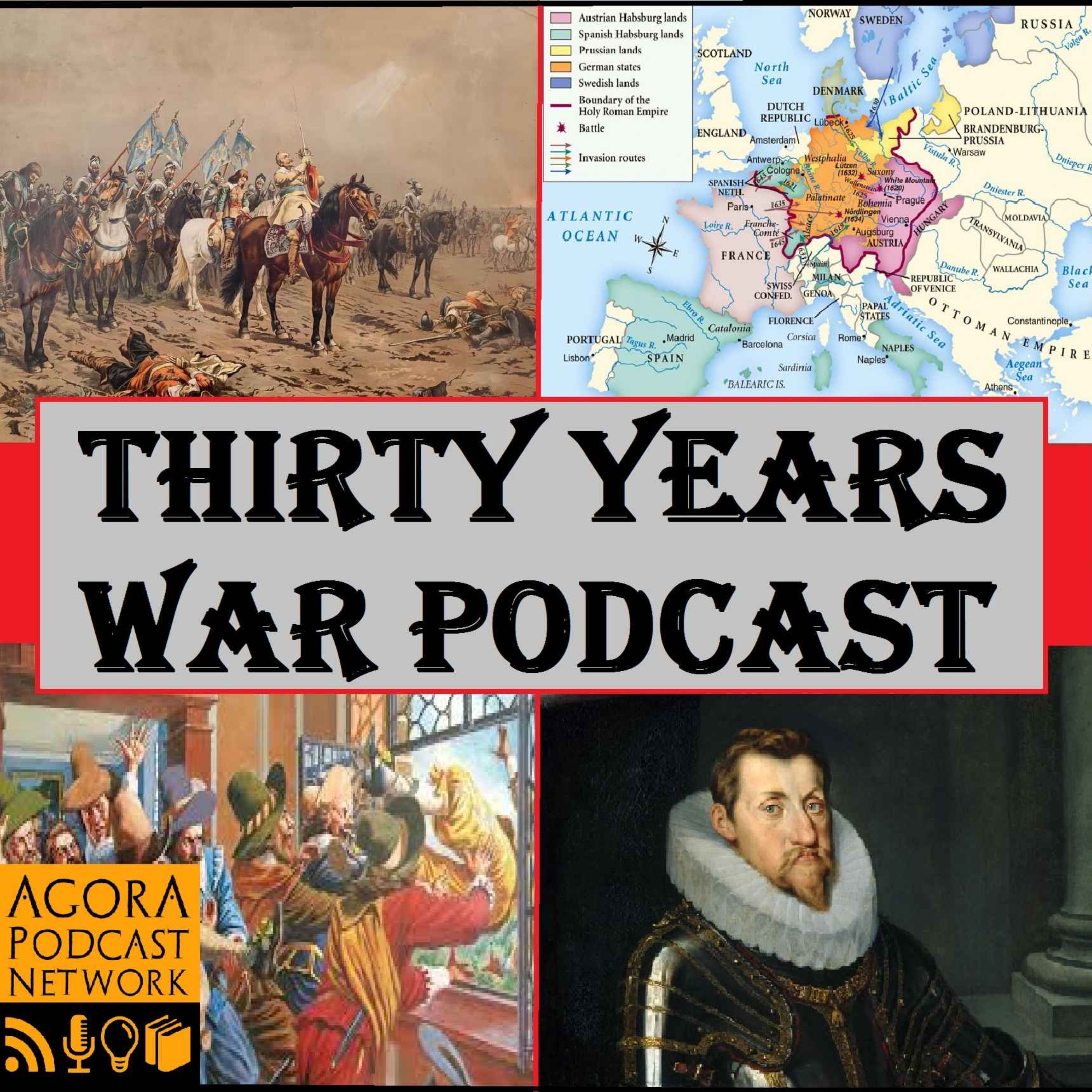
30YearsWar: Conclusion
And so it ends. After 82 episodes and what feels like thirty actual years, we finally wrap up this fascinating period of history. Thanksss so much for tuning in!Make sure to stay to the end to learn about our plans for the Thirty Years' War book, my Matchlock series, the new Delegation Game, and other PhD details.Where do we go after this? What's next for WDF? We cover that here too!**FOLLOW THESE LINKS!**1) To support the podcast financially in return for some extra audio content, check out Patreon!2) To find a community of history friends, look at our Facebook page and group!3) To keep up to date with us, follow us on Twitter!4) Matchlock and the Embassy, our new historical fiction novel, is out NOW! Get it here5) Researcher? Student? Podcaster? Use Perlego to access a massive online library of books, and get a week for free! Hosted on Acast. See acast.com/privacy for more information.
30YearsWar #82: A Return To Prague [1648]
The final episode of our series involves no shortage of intrigue, scheming and mistrust, yet it is also the moment when diplomacy arguably succeeded. After three decades of war, Europe, and the Holy Roman Empire in particular, had come to terms with the cost of conflict. Perhaps, in the future, things would be different? Perhaps, but as a brief look at our back catalogue shows, the post-Westphalian world was by no means free from the curse of war.Thanksss so much for following this series over the last four years - or is that thirty years? Can hardly believe we made it, but be sure to look out for the conclusion episode, where we will wrap these things up in a satisfying bundle!**FOLLOW THESE LINKS!**1) To support the podcast financially in return for some extra audio content, check out Patreon!2) To find a community of history friends, look at our Facebook page and group!3) To keep up to date with us, follow us on Twitter!4) Matchlock and the Embassy, our new historical fiction novel, is out NOW! Get it here5) Researcher? Student? Podcaster? Use Perlego to access a massive online library of books, and get a week for free! Hosted on Acast. See acast.com/privacy for more information.
30YearsWar #81: The Last Campaign [1648]
Although the Dutch and Spanish had made their peace, 1648 had room for one more campaign, and there had arguably never been so much on the line. With warfare came the chance to secure more leverage at the peace table, but the Franco-Swedish allies faced problems of its own. How were the Swedes to settle the impossibly high wage bill of so many thousands of unpaid soldiers? How were the French going to pacify the many elements within society who were sick and tired of being squeezed for barely palpable returns? And what about Portugal or the amnesty of rebels? Questions remained to be answered, then, but one final campaign had the potential to provide this answer, before the quills could be set to the parchment, and peace be finally made. I hope you'll join me to see how they did it, in our penultimate episode of this whopper series!**FOLLOW THESE LINKS!**1) To support the podcast financially in return for some extra audio content, check out Patreon!2) To find a community of history friends, look at our Facebook page and group!3) To keep up to date with us, follow us on Twitter!4) Matchlock and the Embassy, our new historical fiction novel, is out NOW! Get it here5) Researcher? Student? Podcaster? Use Perlego to access a massive online library of books, and get a week for free! Hosted on Acast. See acast.com/privacy for more information.
The State of America and the Brexit Debacle - ft Thom Daly
EPlease consider supporting our podcast friend Benjamin Jacobs during this difficult time. In this special episode, Thom Daly joins me to rant about the state of education in America, how Republican ideologues ban what they don't understand, how misinformation and scaremongering replaced proper political discourse, and whether he has much hope that it will actually improve.I then discuss Brexit, explaining what it means, the different types of trade arrangements, how this affects Northern Ireland and why it has me so irate as I watch the situation deteriorate. Was Brexit worth it, or just a massive con which was kept vague from the beginning? After listening in, I'm sure you'll see where I stand.Thanksss for listening, and please do support our friend Benjamin Jacobs if you can. Hosted on Acast. See acast.com/privacy for more information.
30YearsWar #80: Cardinal Sins [1647-1648]
Here, in our third-last episode of the series, we take the time to analyse Cardinal Mazarin's motives. What kind of role did religious motivations, strategic motivations, political or economic or any other kind of motivation have upon his behaviour? Was he fighting for French security, or future French expansion?In line with this, we look at the religious question in the Empire, which had appeared like an impossible riddle in previous years. How was it possible to make everyone happy, particularly when everyone involved had such conflicting ideas of justice, and such differing opinions on compromise. Only a joint effort could possibly bring about peace in such a sensitive arena, but if they could manage it, one of the great roadblocks in the way of a final settlement would be removed.The Dutch may have watched these events with smug satisfaction - they managed to finalise their peace with Spain in early 1648, but not before making some fascinating proposals towards their French ally. Matters stuck fast on Lorraine though, as Mazarin proved unwilling to compromise on such a sensitive border region. Lorraine's complex fate was just one element in the tangled web of manouevre and intrigue, but one could argue that the writing was on the wall when it came to peace. The question was, would this writing be read, or erased as before?**FOLLOW THESE LINKS!**1) To support the podcast financially in return for some extra audio content, check out Patreon!2) To find a community of history friends, look at our Facebook page and group!3) To keep up to date with us, follow us on Twitter!4) Matchlock and the Embassy, our new historical fiction novel, is out NOW! Get it here5) Researcher? Student? Podcaster? Use Perlego to access a massive online library of books, and get a week for free! Hosted on Acast. See acast.com/privacy for more information.
30YearsWar #79: Bavarian Bargains [1646-1647]
As the war raged, Maximilian of Bavaria was forced to reconsider his position towards his Emperor. As the Habsburgs' most faithful and important German ally since the beginning, the rumours that Max was contemplating a truce had to be taken seriously. One thing was clear though - the wily Bavarian Elector had made his name by identifying the most advantageous course, and whatever decisions he made, they would be for Bavaria and Bavaria alone.**FOLLOW THESE LINKS!**1) To support the podcast financially in return for some extra audio content, check out Patreon!2) To find a community of history friends, look at our Facebook page and group!3) To keep up to date with us, follow us on Twitter!4) Matchlock and the Embassy, our new historical fiction novel, is out NOW! Get it here5) Researcher? Student? Podcaster? Use Perlego to access a massive online library of books, and get a week for free! Hosted on Acast. See acast.com/privacy for more information.
30YearsWar #78: Alsace and Pomerania [1646-1647]
By the end of 1646, two massive problems plagued the negotiators. For France, the matter was Alsace, a huge chunk of territory along the sensitive Rhine region, which had long served as a buffer between the French and Imperial spheres. For Sweden, Pomerania, a slice of land along northern Germany's Baltic coast, was the central issue. The process by which the powers solved these questions, the compromises they agreed, and the implications they had, are all examined here. Although in the context of Westphalian negotiations, the decisions reached were important, it is in them that we see the birth of new empires - the French, the Swedish, and one fascinating outlier, that of Brandenburg-Prussia. Truly, the foundations for such significant political and strategic acts which later defined early modern Europe were laid here. I hope you'll join me in checking them out!**FOLLOW THESE LINKS!**1) To support the podcast financially in return for some extra audio content, check out Patreon!2) To find a community of history friends, look at our Facebook page and group!3) To keep up to date with us, follow us on Twitter!4) Matchlock and the Embassy, our new historical fiction novel, is out NOW! Get it here5) Researcher? Student? Podcaster? Use Perlego to access a massive online library of books, and get a week for free! Hosted on Acast. See acast.com/privacy for more information.
30YearsWar #77: Dutch Loose Ends [1646-1648]
Check out our series Diplomacy: Britain vs America to nerd out on a forgotten era of Anglo-American confrontation, complete with war scares, gunboat diplomacy, and me pronouncing many things incorrectly!It's time to get all emotional, as we tie up the Eighty Years' War between the Spanish and Dutch, which had formed an integral part of the Thirty Years' War in its earlier phase, but which had, from 1645, effectively been relegated to a sideshow of the larger war. The Dutch, and its House of Orange, had made a substantial contribution to the war, directing anti Habsburg energies towards several schemes, and chipping away at Spanish prestige and power even as the Habsburg dynasty reached the peak of its powers. By 1646 though, Frederick Henry lay dying, and although none could accuse him of under performing, it was his grandson William III that made arguably the most significant mark not just on British, Irish and European history, but also on the world we live in today.**FOLLOW THESE LINKS!**1) To support the podcast financially in return for some extra audio content, check out Patreon!2) To find a community of history friends, look at our Facebook page and group!3) To keep up to date with us, follow us on Twitter!4) Matchlock and the Embassy, our new historical fiction novel, is out NOW! Get it here5) Researcher? Student? Podcaster? Use Perlego to access a massive online library of books, and get a week for free! Hosted on Acast. See acast.com/privacy for more information.
30YearsWar #76: The Emperor's Dilemma [1645]
The Battle of Jankau in 1645, followed by Allerheim later in the year, confirmed that the Emperor could expect few miracles from the battlefield. Bavaria seemed teetering on the edge, making secret moves towards the French, while the Spanish buckled, and the Swedes rampaged throughout the Habsburg Hereditary Lands. Ferdinand III understood that his greatest chances for self preservation lay in Westphalia, and his agent, Trauttmansdorf, was sent with very specific instructions. Here, we cover this figure's arrival, the Emperor's hopes, and the hints of what was to come in the future for the increasingly fractured Habsburg dynasty.**FOLLOW THESE LINKS!**1) To support the podcast financially in return for some extra audio content, check out Patreon!2) To find a community of history friends, look at our Facebook page and group!3) To keep up to date with us, follow us on Twitter!4) Matchlock and the Embassy, our new historical fiction novel, is out NOW! Get it here5) Researcher? Student? Podcaster? Use Perlego to access a massive online library of books, and get a week for free! Hosted on Acast. See acast.com/privacy for more information.
30YearsWar #75: Westphalian Woes [1645-46]
The wide range of interests and powers that gathered at the two Westphalian cities each tell a fascinating story. Whether it was the two French agents that loathed one another; the Dutch tradition of representing each of the seven provinces; Swedish desires to legalise its control over Pomerania; Johan Oxenstierna's frequently drunken state, when he wasn't insisting on trumpets blasting to announce his presence; the Franco-Swedish request on having all Imperial estates represented at Westphalia, regardless of their size; French plans to court Bavaria; the Emperor's plan to prevent the smaller states from attending, and the confusion over exactly what religious settlement would be pushed for - all of these issues made the negotiations dynamic, unpredictable, and occasionally hilarious. Join me as we cover their early phase, while the war carried on in the background.**DON'T FORGET TO FOLLOW THESE LINKS!**1) To support the podcast financially in return for some extra audio content, check out Patreon!2) To find a community of history friends, look at our Facebook page and group!3) To keep up to date with us, follow us on Twitter!4) Matchlock and the Embassy, our new historical fiction novel, is out NOW! Get it here5) Researcher? Student? Podcaster? Use Perlego to access a massive online library of books, and get a week for free! Hosted on Acast. See acast.com/privacy for more information.
30YearsWar #74: Destination Westphalia [1645]
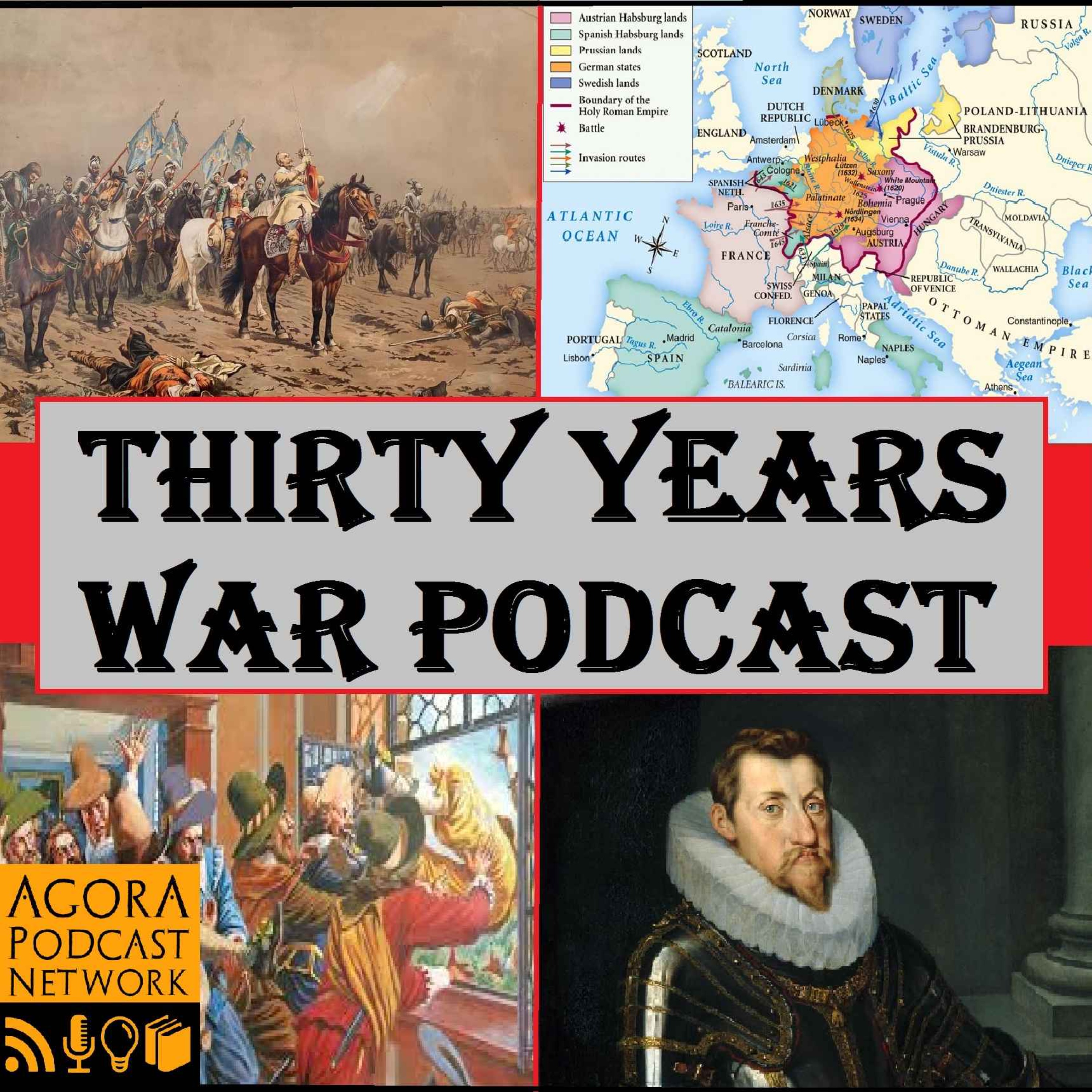
After so long dancing around the issue, here we finally look at the moment when the Westphalian towns of Osnabruck and Munster hosted delegates from all across Europe and the Empire. Why were the French so eager to arrive with an enormous entourage? How did the delegates get their mail? How did warmer creatures cope with the cold, rainy mud of Germany? We get into it here, as well as contextualising these key early steps of the most famous peace congress of the early modern era.**DON'T FORGET TO FOLLOW THESE LINKS!**1) To support the podcast financially in return for some extra audio content, check out Patreon!2) To find a community of history friends, look at our Facebook page and group!3) To keep up to date with us, follow us on Twitter!4) Matchlock and the Embassy, our new historical fiction novel, is out NOW! Get it here5) Researcher? Student? Podcaster? Use Perlego to access a massive online library of books, and get a week for free! Hosted on Acast. See acast.com/privacy for more information.
30YearsWar #73: The Pen and the Sword [1644]
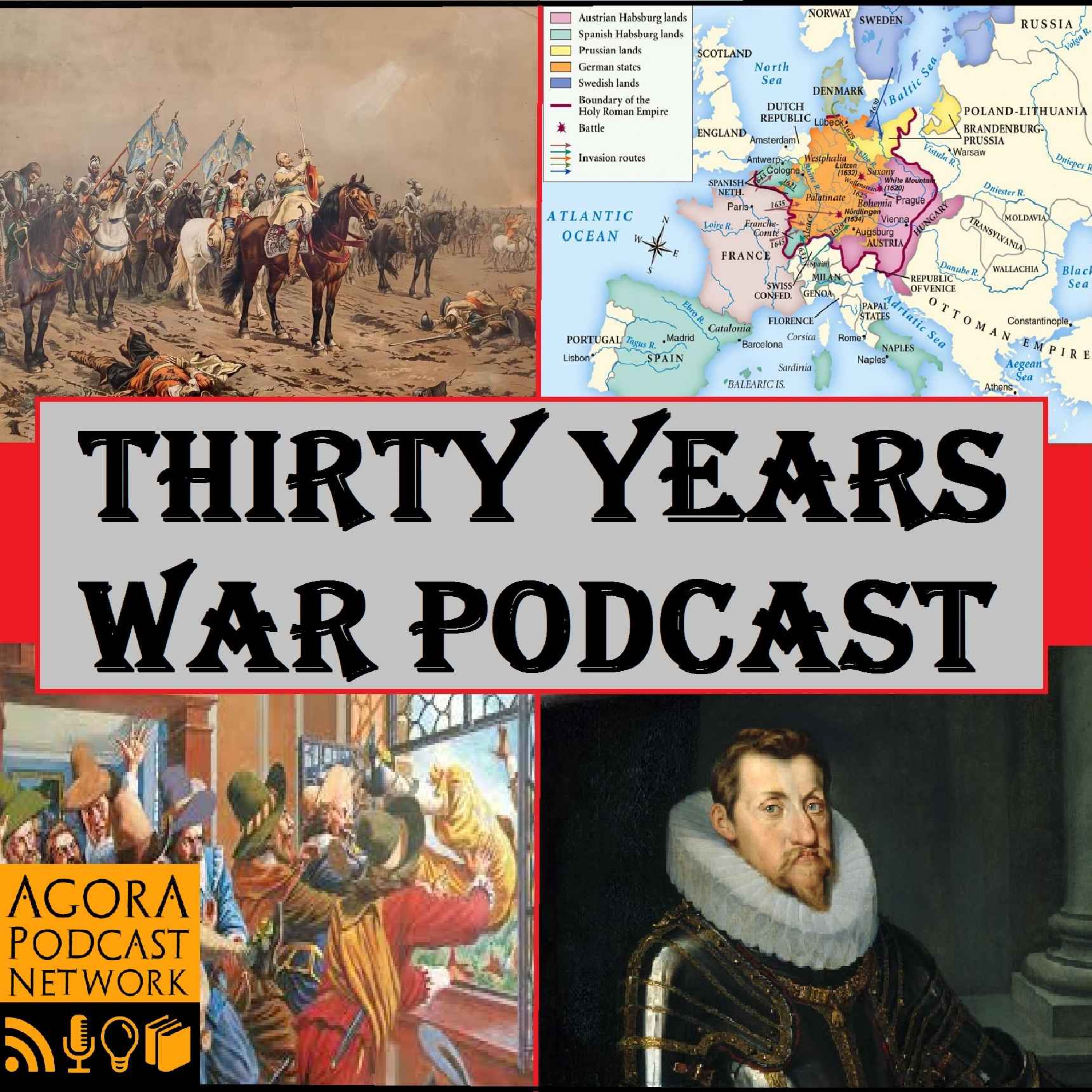
Don't forget that for a limited time you can get 16% off an annual Patreon membership - sign up now to get 40 hours of exclusive content AND listen to our new series on Anglo-American diplomacy from 1838-1846. Your support will help me become Dr Zack!Yes, I do still exist! In this episode we examine how the French coped with the sudden absence of Sweden, which had turned its attention to the Danes. France had to contend with several fronts, particularly along the Rhine, in the Netherlands, and in Catalonia, but Swedish diplomacy had worked to ensure that Cardinal Mazarin would not have to fight alone, as a familiar face re-entered the chat. Assessing his deteriorating odds, we find King Philip IV of Spain increasingly despondent, as his ability to project his power into Germany declines, with disastrous consequences for the Habsburg dynasty...**DON'T FORGET TO FOLLOW THESE LINKS!**1) To support the podcast financially in return for some extra audio content, check out Patreon!2) To find a community of history friends, look at our Facebook page and group!3) To keep up to date with us, follow us on Twitter!4) Matchlock and the Embassy, our new historical fiction novel, is out NOW! Get it here5) Researcher? Student? Podcaster? Use Perlego to access a massive online library of books, and get a week for free! Hosted on Acast. See acast.com/privacy for more information.
30YearsWar #72: Torstensson's War [1643-45]
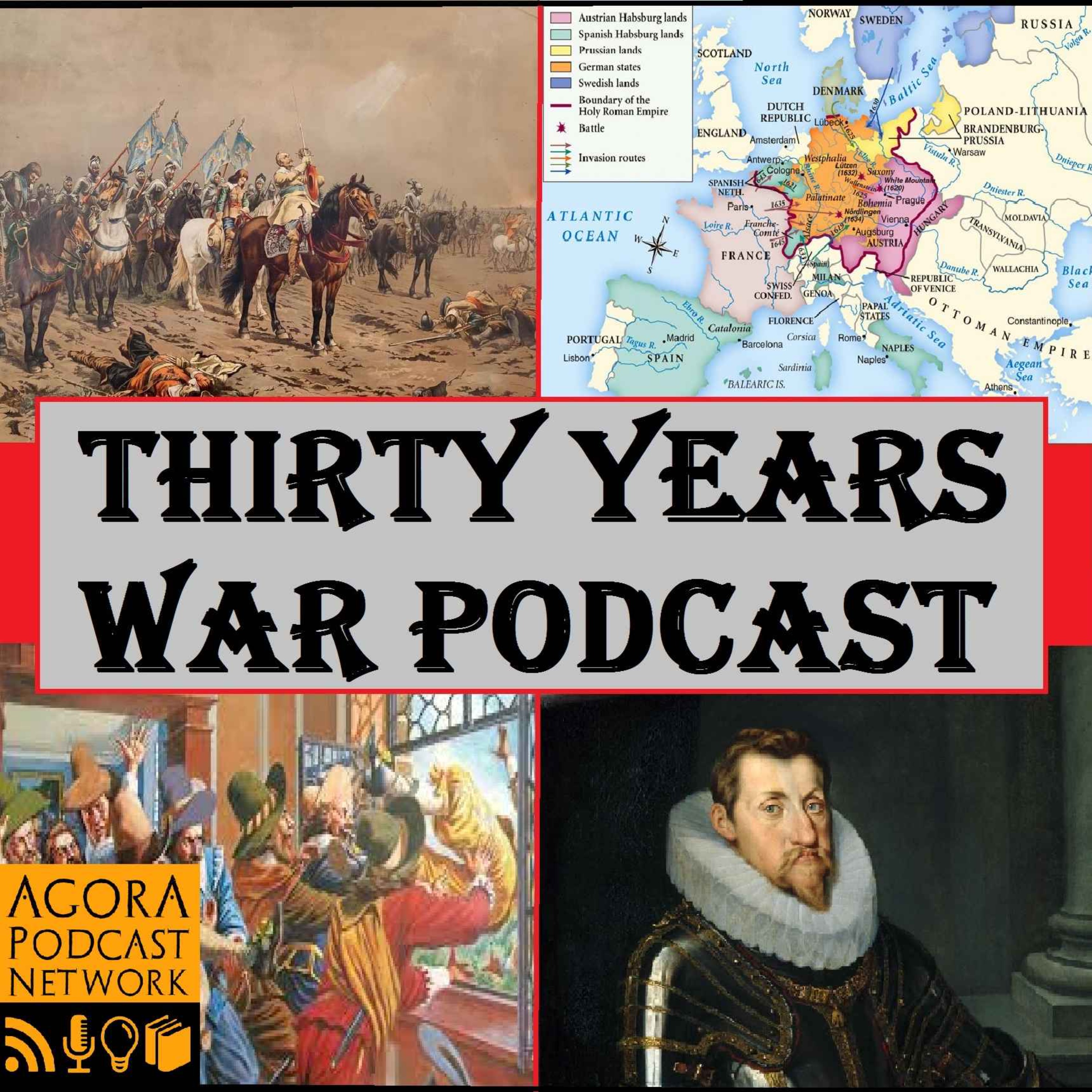
Don't forget that for a limited time you can get 16% off an annual Patreon membership - sign up now to get 40 hours of exclusive content AND listen to our new series on Anglo-American diplomacy from 1838-1846. Your support will help me become Dr Zack!By late 1643, one could be forgiven for expecting Lennart Torstensson, the Swedish commander in Germany, to take stock of his situation and plan for a new campaign in the new year. But such plans were placed on hold, because a letter from the Swedish Chancellor directed him towards a new goal, and a brand new campaign. Torstensson was to abandon Germany, and march double time to launch a pre-emptive strike against the old Danish foe. Why? What? How? Listen in to learn about this fascinating episode of the Thirty Years War, and an event which transformed Baltic and Scandinavian history for centuries to come...**DON'T FORGET TO FOLLOW THESE LINKS!**1) To support the podcast financially in return for some extra audio content, check out Patreon!2) To find a community of history friends, look at our Facebook page and group!3) To keep up to date with us, follow us on Twitter!4) Matchlock and the Embassy, our new historical fiction novel, is out NOW! Get it here5) Researcher? Student? Podcaster? Use Perlego to access a massive online library of books, and get a week for free! Hosted on Acast. See acast.com/privacy for more information.
National Honour and Victorian Diplomacy
Don't forget that for a limited time you can get 16% off an annual Patreon membership - sign up now to get 40 hours of exclusive content AND listen to our new series on Anglo-American diplomacy from 1838-1846. Your support will help me become Dr Zack!It's about time I dropped my research on you guys, so in this episode we'll be plumbing the depths of something I've mentioned many times, but rarely taken the time to define or explain properly - national honour. What was it, where did it come from, what role did it play in mid-Victorian diplomacy, and how did contemporaries use it in their construction and presentation of foreign policy? All these questions and more will be addressed, so if you're ready for a chunky episode on a concept barely understood in the histories, you've come to the right place! Hosted on Acast. See acast.com/privacy for more information.
Introducing Diplomacy: Britain vs America 1838-1846
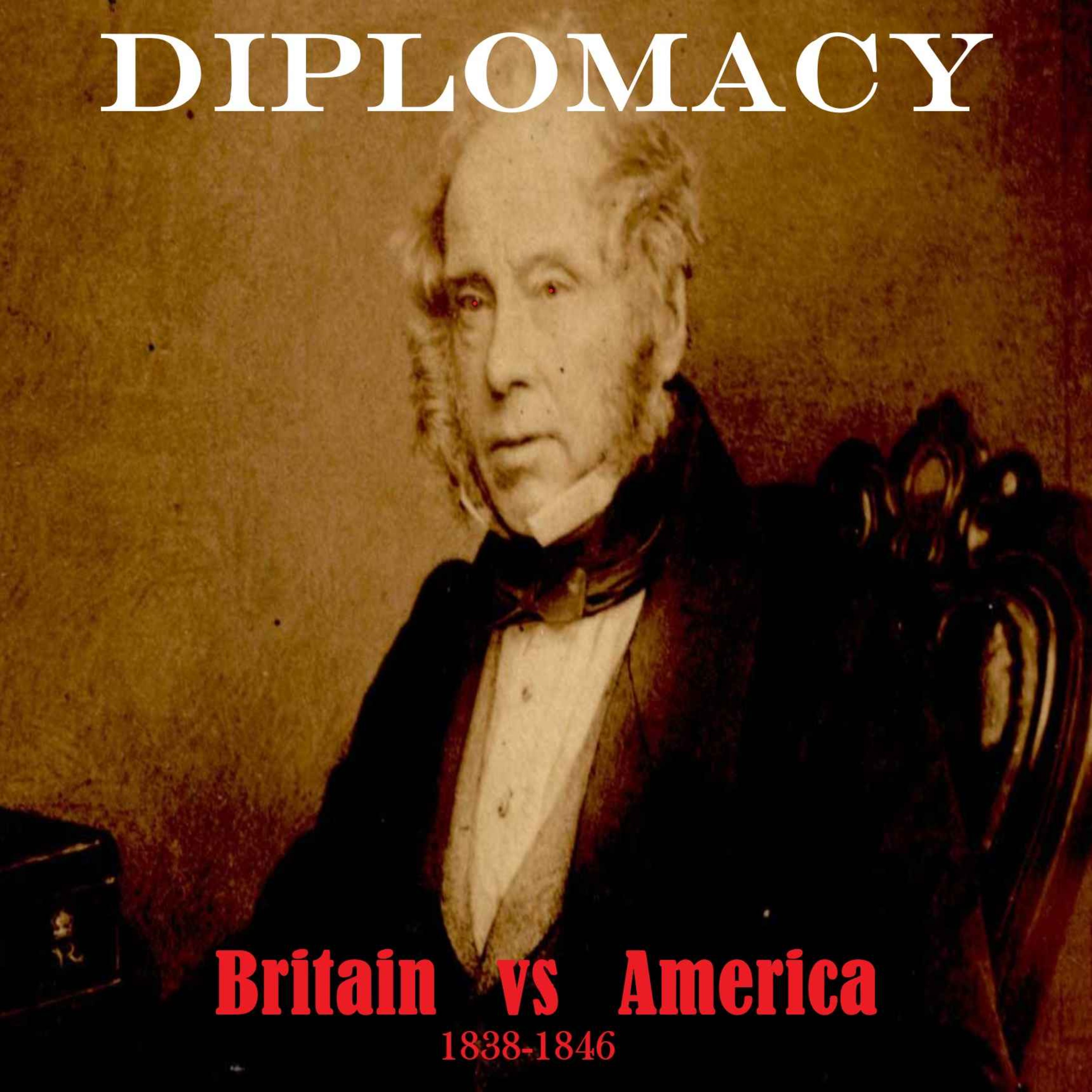
To get this series and 40+ hours of extra content, make sure you sign up for an annual Patreon membership to get 16% off NOW! I couldn't have got this far in the PhD without the support of you lovely patrons, and this is my way of saying thanksss, so why not nerd out with us?Oh boy, it's finally time! Now you get to see what I've been working on over the Christmas break, an extremely chunky and detailed twelve part series examining Anglo-American relations from 1838-1846. Expect fractious diplomacy, war scares, major tensions, close calls and settlements which dramatically affected how each side saw the other, with consequences that are felt to this day.In this introductory episode, I set the scene and justify my interest in this period, as well as explaining why YOU should care. We look at the British destruction of the Caroline, and question how this incident helped fan the flames of American hostility towards London, while Palmerston...shrugged his shoulders. The British Foreign Secretary, you see, had his hands full with keeping the Ottoman Empire propped up, while he also kept his eye on France. We're just beginning our journey in this fascinating period, and I can't wait to bring you along for the ride! A huge thanksss to all of my lovely patrons for supporting this show for so long. It's now official, I'm in the final stretch, and after this final set of fees, Dr Zack will be coming soon to earbuds near you! Hosted on Acast. See acast.com/privacy for more information.
30YearsWar #71: Au Revoir Richelieu [1643]
Get 16% off an annual Patreon membership and access to our new series examining Anglo-American Relations from 1838-46 when you sign up now!The Battle of Rocroi was a signal French triumph, but it did not transform the face of the war, either in the Netherlands or in Europe. A Bavarian victory later in the year at Tutlingen made 1643 a year of ups and owns, but of far greater consequence than who won, was who left the scene after so many years. Within a season, Cardinal Richelieu, King Louis XIII and the Count Duke Olivares all departed, leaving behind a war which was to change the face of early modern Europe. Fortunately, in Richelieu's case at least, the baton had been passed into some very capable hands...**DON'T FORGET TO FOLLOW THESE LINKS!**1) To support the podcast financially in return for some extra audio content, check out Patreon!2) To find a community of history friends, look at our Facebook page and group!3) To keep up to date with us, follow us on Twitter!4) Matchlock and the Embassy, our new historical fiction novel, is out NOW! Get it here5) Researcher? Student? Podcaster? Use Perlego to access a massive online library of books, and get a week for free! Hosted on Acast. See acast.com/privacy for more information.
30YearsWar #70: Enter Torstensson [1641-42]
Give yourself an early Christmas present including over 40 hours of extra content when you sign up on Patreon! I'll even lie about you in the opening monologue! Pay for a year's membership and get 5% off!1641 was the year when Lennart Torstensson was finally appointed commander of Sweden's mostly German army. Having hunkered down for many years in the north of the country, Torstensson understood that Sweden had to strike hard against the Imperials if anything was to change. Possessed of a fierce determination and great strategic mind, the new commander pressed his advantage and seized a new triumph in the graveyard of Gustavus Adolphus' most famous victory. Torstensson knew a great deal about the Battle of Brietenfeld - he had commanded the artillery on that fateful day, and he intended to make this second Breitenfeld even greater than the first.Off the battlefield, peace feelers were finally beginning to go somewhere, albeit at a painfully slow pace. The basics of a two-city conference were established, but other than the selection of Osnabruck and Munster, little else of consequence could be decided on so long as there were victories to be gained from war. Still, these talks about peace talks produced significant fruit in their own right. The all out war was drawing to an end, and the interconnected fronts would soon be drawn into a peace. Before the peace was made, though, it would first have to be won.**DON'T FORGET TO FOLLOW THESE LINKS!**1) To support the podcast financially in return for some extra audio content, check out Patreon!2) To find a community of history friends, look at our Facebook page and group!3) To keep up to date with us, follow us on Twitter!4) Matchlock and the Embassy, our new historical fiction novel, is out NOW! Get it here5) Researcher? Student? Podcaster? Use Perlego to access a massive online library of books, and get a week for free! Hosted on Acast. See acast.com/privacy for more information.
30YearsWar #69: Maiming Spain [1640-41]
By 1640, two rebellions shook Madrid to its core, and had a dramatic knock on effect on Spain's ability to support its Habsburg cousins in Vienna. In summer, Catalonia erupted in revolt after years of provocations and intransigence. When Portuguese soldiers were sent to quell the rising, those soldiers took home news of Spanish weakness, and by December, Portugal had broken away, and declared itself independent under King John IV. It was plain that Spain couldn't suppress the original Dutch revolt with this disaster on its doorstep, and its war against France was also in doubt, as Richelieu took the opportunity to take Catalonia under French protection. The writing was on the wall, the wheels were coming off, but even with this maiming, Spain was not done yet.**DON'T FORGET TO FOLLOW THESE LINKS!**1) To support the podcast financially in return for some extra audio content, check out Patreon!2) To find a community of history friends, look at our Facebook page and group!3) To keep up to date with us, follow us on Twitter!4) Matchlock and the Embassy, our new historical fiction novel, is out NOW! Get it here5) Researcher? Student? Podcaster? Use Perlego to access a massive online library of books, and get a week for free! Hosted on Acast. See acast.com/privacy for more information.
Frederick the Great and the Invasion of Silesia - with Alec Avdakov
In this episode I'm joined for a great conversation about Frederick the Great's 1740 invasion of Silesia, by a guy who knows a whole lot about it - Alec Avdakov from the Life and Times of Frederick the Great Podcast! Listen in and make sure you find Alec's show by clicking below. Thanksss Alec!Follow on Spotify Subscribe on Apple Hosted on Acast. See acast.com/privacy for more information.
30YearsWar #68: With Allies Like These [1640-41]
By 1640, both the Habsburgs and their foes had reached something of a crisis. There were opportunities to be had, if a new campaign could be pursued, but where to find the money, and how to support the soldiers in lands no longer suitable for massive armies? As they sized each other up, diplomacy continued in the background. Could the Swedes and French finally achieve that seizmic victory they desperately needed? Could anything plug the gaping hole in Habsburg financial and military resources long enough to reclaim the Empire for the Emperor? If Vienna could not rely on Madrid, and Stockholm could not depend on Paris, there was no guarantee that a new campaign would be in the offing at all. But this is only 1640, so you know we've eight more years to go. They were destined to be arguably the longest years of all.**DON'T FORGET TO FOLLOW THESE LINKS!**1) To support the podcast financially in return for some extra audio content, check out Patreon!2) To find a community of history friends, look at our Facebook page and group!3) To keep up to date with us, follow us on Twitter!4) Matchlock and the Embassy, our new historical fiction novel, is out NOW! Get it here5) Researcher? Student? Podcaster? Use Perlego to access a massive online library of books, and get a week for free! Hosted on Acast. See acast.com/privacy for more information.
30YearsWar #67: The Ravages of War [1639]
War is hell, as the saying goes, but just how bad was the war by the late 1630s, after two decades of fighting? As we learn here, the worst aspects of the conflict didn't come from the deaths in battle, but what went along with the battle - armies that marched over aching, increasingly desolate lands; the ruination of the delicate agricultural system; the acute crisis of starvation that followed, and the spread of disease that followed it. The picture was depressing, but it tells a story of a continent that grew more desperate for peace by the month. Could the Holy Roman Emperor make it happen? Let's find out...**DON'T FORGET TO FOLLOW THESE LINKS!**1) To support the podcast financially in return for some extra audio content, check out Patreon!2) To find a community of history friends, look at our Facebook page and group!3) To keep up to date with us, follow us on Twitter!4) Matchlock and the Embassy, our new historical fiction novel, is out NOW! Get it here5) Researcher? Student? Podcaster? Use Perlego to access a massive online library of books, and get a week for free! Hosted on Acast. See acast.com/privacy for more information.
30YearsWar #66: A Tale of Two Crowns [1639-40]
King Philip IV of Spain and King Charles of Britain had a surprising amount in common by the late 1630s. Both were presiding over a deteriorating situation domestically and abroad, and during the Battle of the Downs in October 1639, both came off worse than before. For Charles, the problem was one of authority, which had suffered terribly following years of wrong headed religious and political policies. With Scotland in revolt, and only pacified with painful concessions by spring 1639, Charles needed a win, and nothing said defeat like the prospect of watching a Spanish-Dutch naval battle off the coast of Dover. Having presented himself as the Sovereign of the Seas, this was a sharp strike against Charles' honour, and things were soon to get worse.Many miles away in Madrid, King Philip IV's greatest problem was the intractable Dutch, followed by the equally intractable Catalans. Even after Count Olivares had asked them really nicely, the Catalans had not agreed to aid and supply the defending Spanish garrisons, and matters came to a head thanks in no small measure to Olivares' heavy-handed responses. Olivares may have been trying to make a point about the King's authority - a move Charles would surely have sympathised with - but his approach caused the very disaster he had longed to avoid. By autumn 1640, both Spain and Britain were wracked by conflict and division, as the Thirty Years' War's actor looked on, and asked whether it was really fair on historians to open yet more fronts to this multi-layered conflict. Fair or not, here we delve into these issues, so I hope you'll join me!**DON'T FORGET TO FOLLOW THESE LINKS!**1) To support the podcast financially in return for some extra audio content, check out Patreon!2) To find a community of history friends, look at our Facebook page and group!3) To keep up to date with us, follow us on Twitter!4) Matchlock and the Embassy, our new historical fiction novel, is out NOW! Get it here5) Researcher? Student? Podcaster? Use Perlego to access a massive online library of books, and get a week for free! Hosted on Acast. See acast.com/privacy for more information.
My Ten Favourite Podcast Guests
Want to do some research? Want to nerd out on a massive selection of history books? Perlego has you covered, and you can get your first week for free and 50% off your first month by signing up here!After ten years of podding, we've seen a wide range of fascinating guests brave enough to nerd out with yours truly, but who is my favourite? Find out here, in this long-delayed episode, to see if your fave made the cut, and don't forget to track them down in our large back catalogue! Hosted on Acast. See acast.com/privacy for more information.
30YearsWar #65: A Tour of the War [1637-38]
The war which began in the Habsburg humiliation at Prague had arguably crystallized by the late 1630s, and thus begins perhaps my favourite period of the conflict! We now have battles raging in Northern Germany, where Johan Baner's Swedish-German force faced down Matthias Gallas' Imperials. Further towards the Rhine, Octavio Piccolomini watched the border near the Spanish-Dutch war, where Spain poured its resources into a never ending grinder of men and money. With Portugal and Catalonia showing worrying signs of disloyalty, what did the future hold for Spain as the anchor of the Habsburg alliance? Holy Roman Emperor Ferdinand III was just 29 when he assumed the throne. His 'gift' from his foes was to learn of the new Franco-Swedish alliance, signed in Hamburg in March 1638. Meanwhile, along the upper Rhine, the capture of Breisach gave the French a crossing on the German side of the river, and threatened the integrity of Bavaria. The flag of appeal was waved at Madrid, but the Spanish had little sympathy to spare for their Austrian cousins, being demoralised and defeated by the Dutch and French foes, the latter most devastatingly at sea, in 1639. All the little wars had certainly converged into one, and it's my pleasure to take you on a journey through its most incredible and fascinating sights! Thankssss for the support and thankss for listening in!Get 50% off your first month and a week's free trial when you sign up to Perlego with my link! Use the code WDF2022 and access an incredible catalogue of academic and library books - I'd be lost without Perlego, and I think you'll be really excited and impressed when you check them out. Their history collection has saved me $ and time!**DON'T FORGET TO FOLLOW THESE LINKS!**1) To support the podcast financially in return for some extra audio content, check out Patreon!2) To find a community of history friends, look at our Facebook page and group!3) To keep up to date with us, follow us on Twitter!4) Matchlock and the Embassy, our new historical fiction novel, is out NOW! Get it here Hosted on Acast. See acast.com/privacy for more information.
30YearsWar #64: Death of an Emperor [1637]
Get 50% off your first month and a week's free trial when you sign up to Perlego with my link! Use the code WDF2022 and access an incredible catalogue of academic and library books - I'd be lost without Perlego, and I think you'll be really excited and impressed when you check them out. Their history collection has saved me $ and time!EPISODE: With the passing of Emperor Ferdinand II in February 1637, the moment seems right for a lay of the land by this eventful new year. The challenges for both sides were formidable, yet limited flurries of peace initiatives could only go in one direction, so long as each believed they could gain more on the battlefield. The French were stabilising after a nail bitingly close call. The Dutch were exorcising their demons, with a campaign aimed at clawing back the town of Breda, lost so painfully in 1625. The Swedes had restored their reputation, but little else. In Vienna, there may have been confidence in eventual victory, but that victory was clearly going to come at great cost. Still, with a new Emperor on the case, there was reason to be positive. After all, it's already gone of for nineteen years, how much longer could it possib....**DON'T FORGET TO FOLLOW THESE LINKS!**1) To support the podcast financially in return for some extra audio content, check out Patreon!2) To find a community of history friends, look at our Facebook page and group!3) To keep up to date with us, follow us on Twitter!4) Matchlock and the Embassy, our new historical fiction novel, is out NOW! Get it here Hosted on Acast. See acast.com/privacy for more information.
30YearsWar #63; The Road to Wittstock
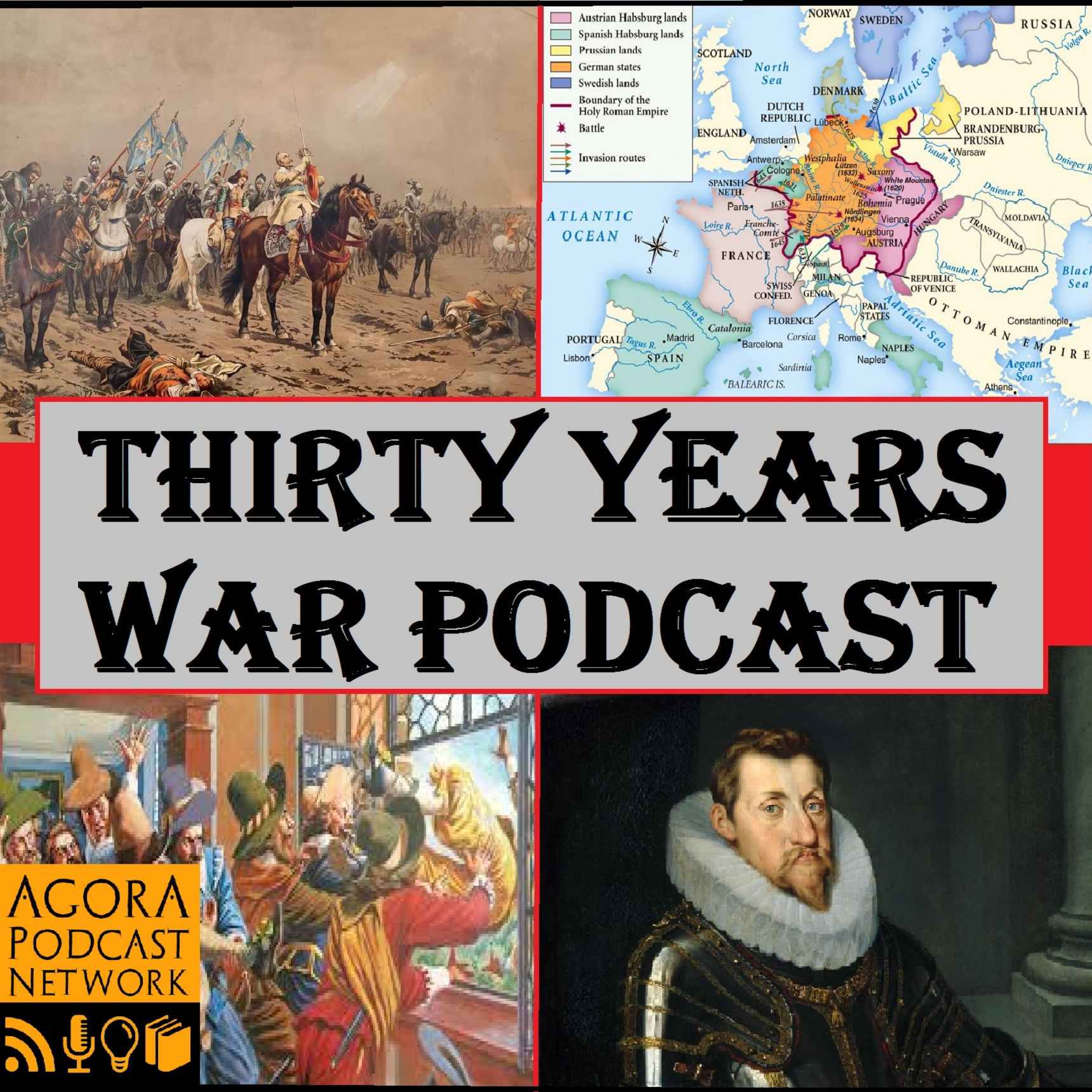
Having looked at Sweden's failed plans for Poland, and then at Richelieu's ultimate survival, we return here to the Swedish theatre - this time, the pressure is all on the Swedish Chancellor Axel Oxenstierna, who somehow had to turn everything around, and keep Sweden's war in Germany going. As 1635 turned to 1636, Oxenstierna's desperation moved him to approach Cardinal Richelieu, cap in hand, for a renewal of the Franco-Spanish alliance of 1631. Lacking leverage, Ax Ox was still willing to swallow his pride and do what was necessary, but he knew that what Sweden needed most of all was a victory - a triumph on the battlefield could change everything, and show her foes and friends alike that Sweden was not yet lost.Enter, Johan Baner.**DON'T FORGET TO FOLLOW THESE LINKS!**1) To support the podcast financially in return for some extra audio content, check out Patreon!2) To find a community of history friends, look at our Facebook page and group!3) To keep up to date with us, follow us on Twitter!4) Matchlock and the Embassy, our new historical fiction novel, is out NOW! Get it here Hosted on Acast. See acast.com/privacy for more information.
30YearsWar #62: The Great Showdown
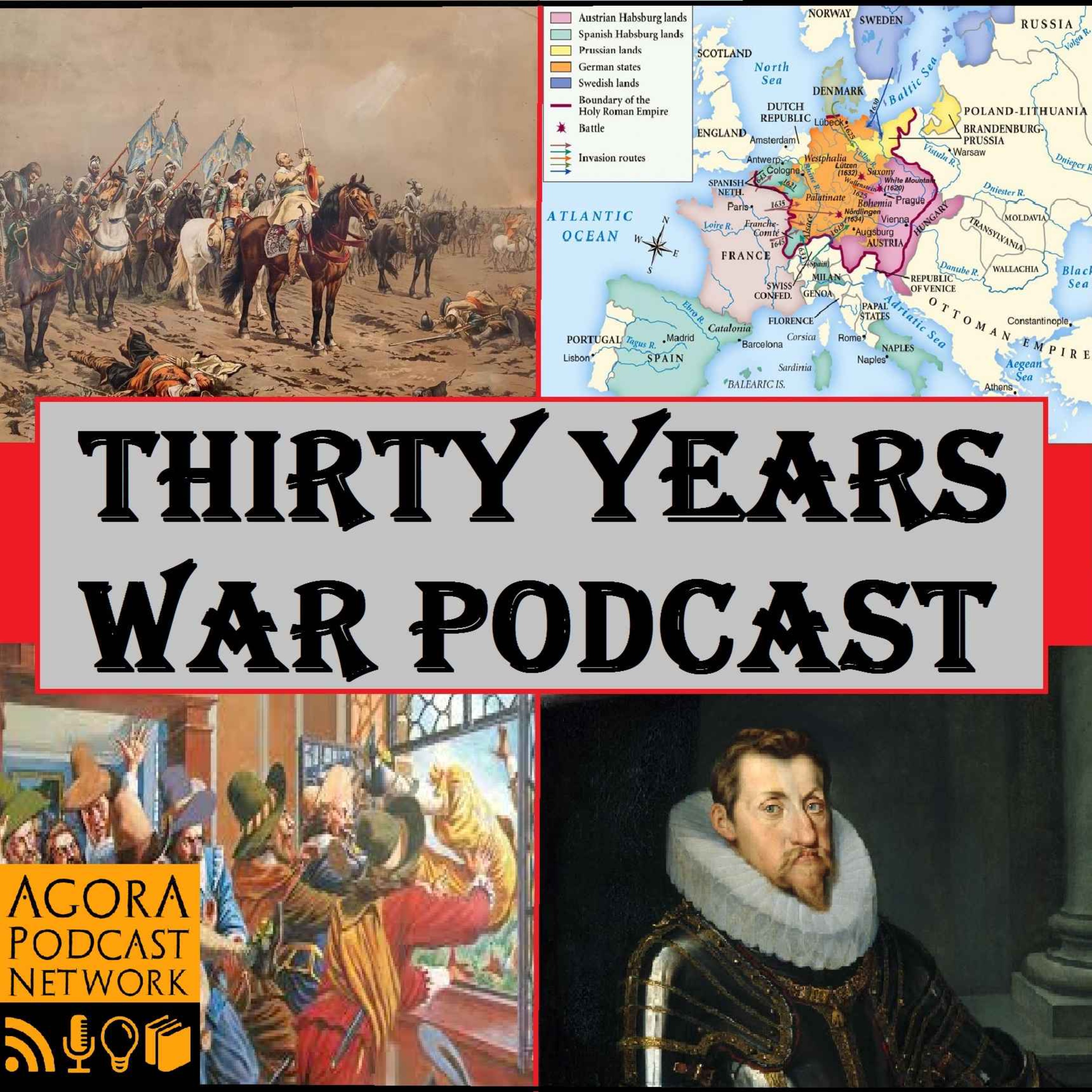
Since my laptop died, I would REALLY appreciate your support in getting a new one. RIP my twelve year old lappy!After so many years of cold war, finally, by 1635, France and Spain were destined to face each other in the battle - and what a battle it was! As defensive and offensive plans collided, and each side verged from crisis to stability and back to crisis again, the world shivered with nervous excitement. This was a test for the ages, a great power confrontation like no other, which would dramatically affect the future of the continent. Would it Richelieu's France, or Olivares' Spain? There could be only one.**DON'T FORGET TO FOLLOW THESE LINKS!**2) To find a community of history friends, look at our Facebook page and group!3) To keep up to date with us, follow us on Twitter!4) Matchlock and the Embassy, our new historical fiction novel, is out NOW! Get it here Hosted on Acast. See acast.com/privacy for more information.