
When Diplomacy Fails Podcast
744 episodes — Page 2 of 15
Age of Bismarck - Introduction
It's been a long time coming! The Age of Bismarck is finally here after so many years of planning, teasing, and dreaming. Tune in here to see how we plan to do it, and why you should be excited! Whether you're a long time history friend or just stopping by, Otto von Bismarck's life and times, and the age in which he lived, deserves your attention. The Iron Chancellor would accept nothing less!Sign up on Patreon so you don't miss the first episode next week!Thanksss so much to all of you that made this possible. Hosted on Acast. See acast.com/privacy for more information.
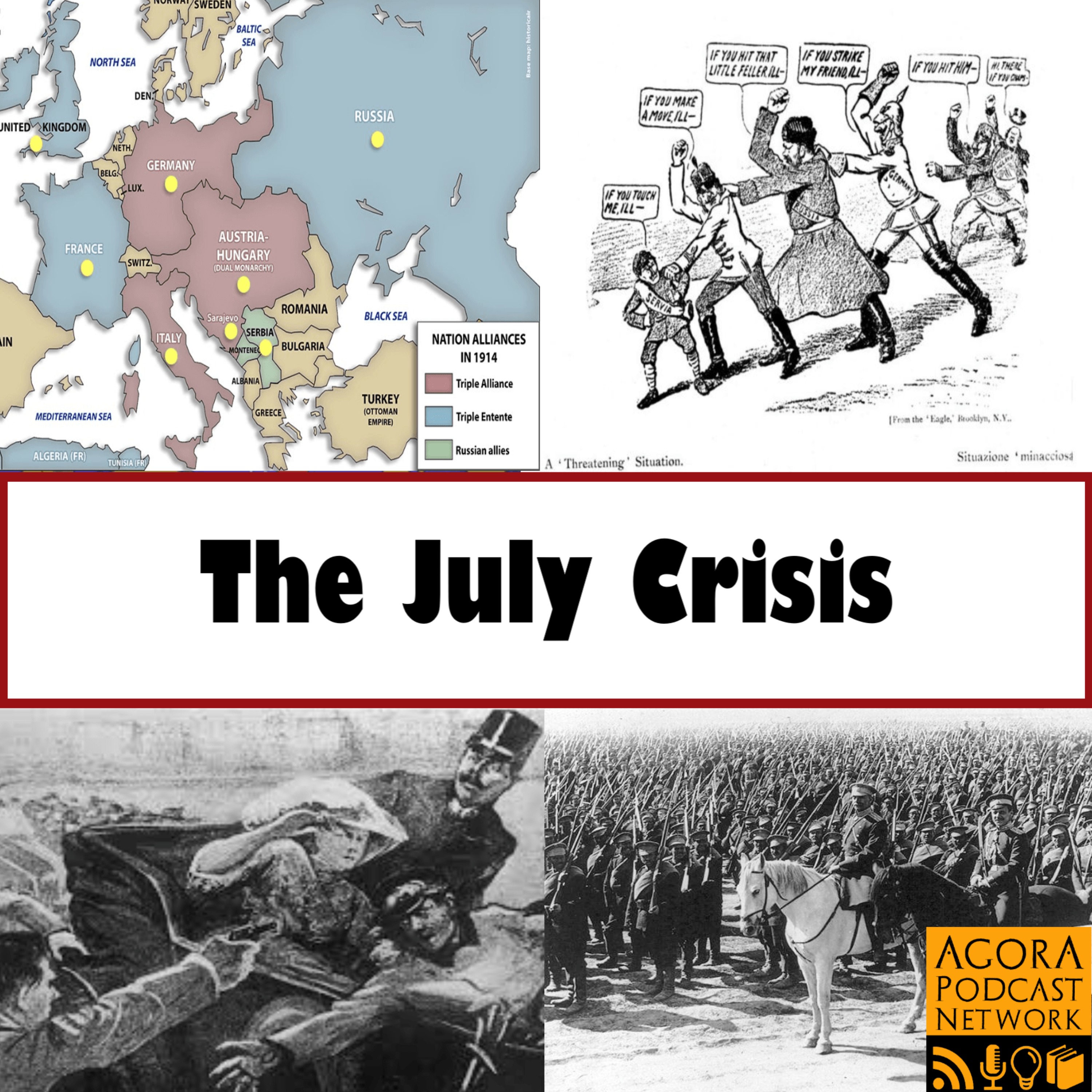
#28: 26 July 1914 I - Austria Delays Again
The ultimatum had expired, and yet somehow, Austria had not declared war on Serbia. What was going on?Well, despite pushing the crisis forward with reckless abandon, the Austrian chief of staff Conrad von Hotzendorff now seemed awake to the dangers facing the country. The army would not be ready for war until 12 August, he said. This was a shock to the Germans, who continued to expect a lightning Austrian strike at Belgrade. But it did give the diplomats time to do their work.From Britain, Sir Edward Grey believed a mediation scheme involving four uninvolved powers was the answer. He encouraged Berlin to push this idea, and the Germans did so, but only reluctantly, and out of fear of offending Britain if they did not. But the question of Russia was arguably the most important of all, and the Tsar was apparently now willing to exercise his military muscle by approving the period preparatory to war, and the mobilisation of key military districts.This should have shown Austria that Russian intervention was highly likely, yet her statesmen continued to forge ahead. They had lost the diplomatic initiative, and they had failed to present Europe with a fait accompli. Instead, the sluggish, conditional Austrian response seemed ideally suited to diplomatic mediation. But would Austria take the easy way out? Incredibly, from Vienna, the answer was still no.Support the July Crisis series, join the conversation, and find out more through these links:Do you want ad-free episodes with scripts attached, and bonus content? Support us on Patreon and you can suggest July Crisis episodes!Join our Facebook group as we make our way through this fascinating series!Click here to see our July Crisis workspace in Perlego, you'll find every source you need! Hosted on Acast. See acast.com/privacy for more information.
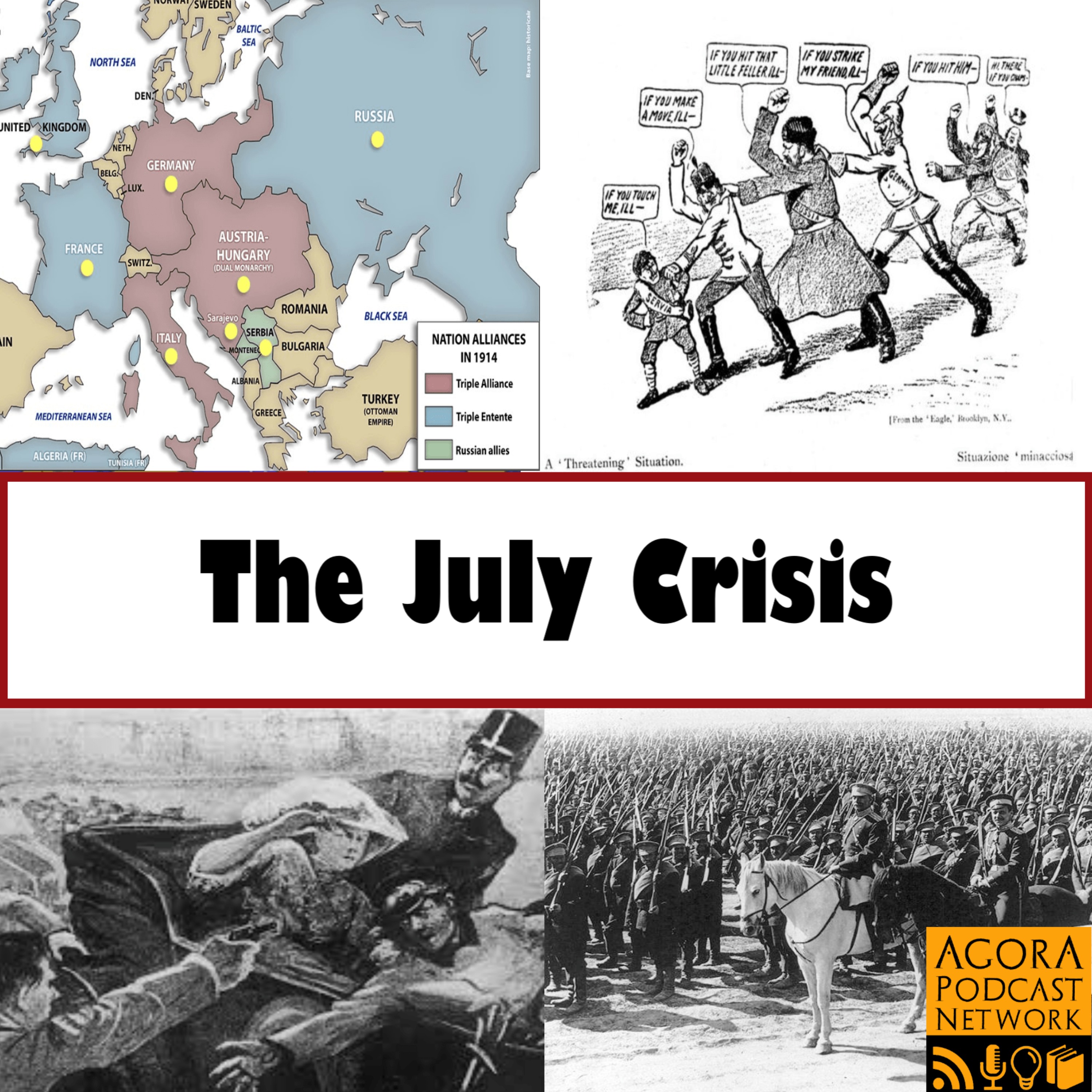
#27: 25 July 1914 II - Russian to Mobilise
Here we address the question - now that Austria's ultimatum to Serbia had expired, and the Austrians had evacuated Belgrade, what was Russia going to do about it?The answer is as complicated as it is controversial. Russia's response revolved around military preparations; specifically, those preparations which would make the mobilisation of its enormous army across such a vast empire easier to carry out. These measures were called the Period Preparatory to War, and on this day, these measures were officially approved by the Tsar and his Ministers. What did this mean? Was the Period Preparatory to War simply mobilisation under a different name, or was it a reasonable response to the crisis, which merely granted Russia more diplomatic leeway?Unsurprisingly, the answer is contentious. To some, this was the key aggravating factor which transformed the July Crisis from a regional dispute into the world war it became. To others, Russia's preparations may have been inflammatory, but they were not necessarily sinister. Should we take these measures as proof of Russia's intention to orchestrate a world war on favourable terms to themselves? Perhaps we should not go so far, but one thing is certain, by the end of the day, a line had been crossed in St Petersburg.Once more details leaked out, Austria and Germany were bound to take notice. The question then became - would the Central Powers be scared off, or would they up the ante, seeing in Russia's behaviour yet another bluff which had to be called? Could anyone stop this game of chicken? In fact the Russians were not the only actors willing to be economical with the truth. Another was the French ambassador, Paleologue, and the Austrian Foreign Minister, Berchtold, as well as many German officials, determined to have their localised war and firm in the belief that Russia would back down.In this episode, we wade through this soup of contradictions, poor communications, mistrust and misinformation, to arrive at some worrying conclusions. Whoever we might claim was responsible, Europe was entering the twilight period of peace, whether contemporaries wished to acknowledge it or not.Support the July Crisis series, join the conversation, and find out more through these links:Do you want ad-free episodes with scripts attached, and bonus content? Support us on Patreon and you can suggest July Crisis episodes!Join our Facebook group as we make our way through this fascinating series!Click here to see our July Crisis workspace in Perlego, you'll find every source you need! Hosted on Acast. See acast.com/privacy for more information.
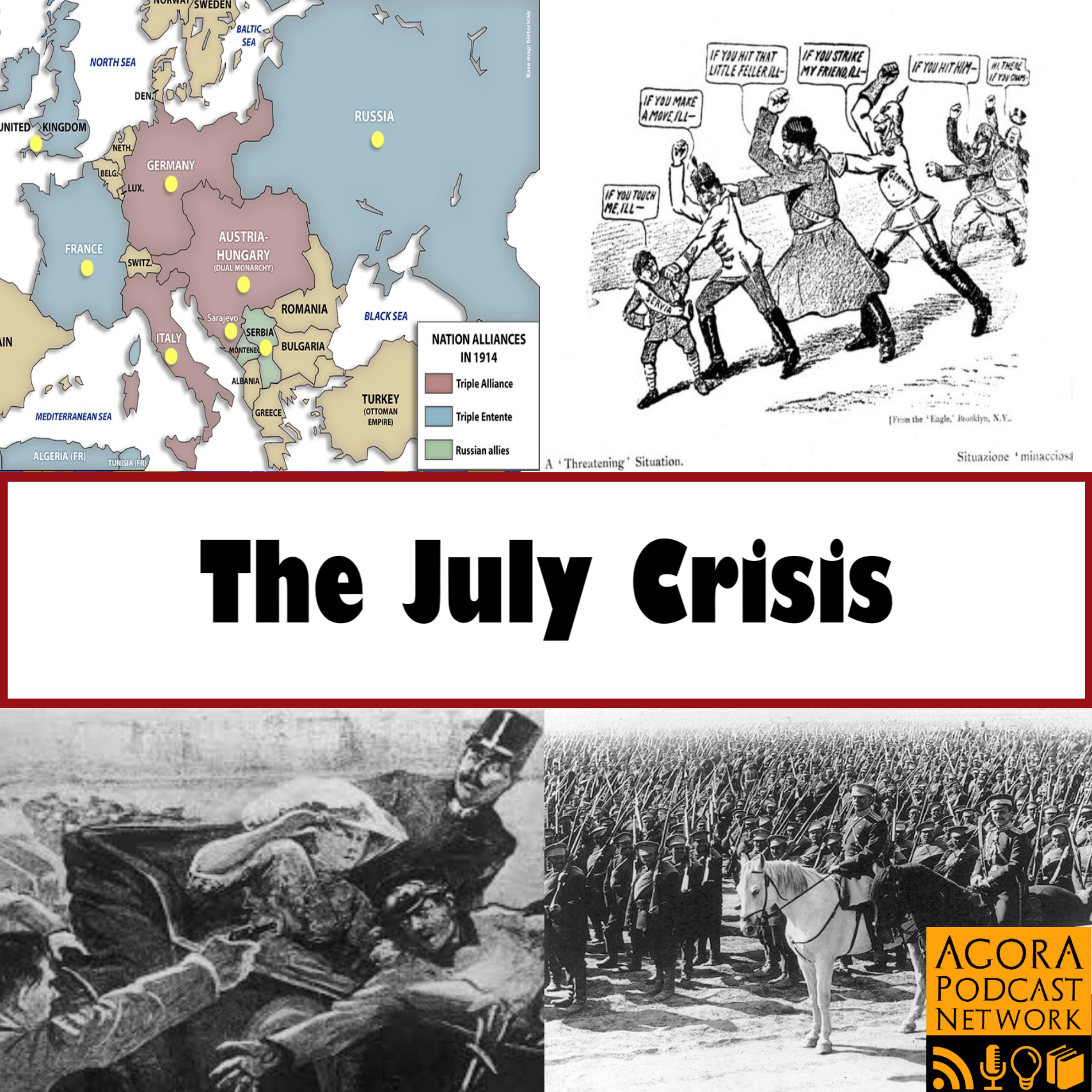
#26: 25 July 1914 I - The Last Chance for Peace?
By now, everyone was expecting Austria-Hungary to do something once its ultimatum expired later in the day, but what? And could this response be adjusted, and peace be preserved, if only a certain diplomatic finesse was applied?In Britain, Sir Edward Grey certainly hoped so. The solution, to him, seemed one of mediation, where the four uninvolved powers - Britain, France, Germany and Italy - gathered to arbitrate the Austro-Serb dispute. The question then became, could Germany be brought on side? Many were doubtful. It did not help that the German claim it had known nothing of the ultimatum was highly suspicious. Was it truly believable that Austria had acted entirely alone? This question informed the responses. In Russia, Sergei Sazonov continued to lead a firmer and more assertive foreign policy, but to what end? As he learned of the British mediation plans, Sazonov did not rule them out, but he also failed to mention that Russia's preliminary military measures were already underway. It was understood that mobilisation was a dangerous risk, which would complicate mediation efforts. The further these measures had gone by the time mediation got its chance, the harder it would be to save the peace. This was why an extension of Austria's 48 hour deadline became briefly popular - this would give everyone sufficient time to act. Unsurprisingly, Vienna opposed this measure, and it scarcely got off the ground before time had run out, and Serbia handed over its reply. Contrary to contemporary views and the opinions of historians since, the Serbian reply was not designed to placate Austria. It was instead designed to engender sympathy among the Entente. There was no defiant language or accusations, but Belgrade's response did reject core Austrian demands, and denied that they Vienna possessed sufficient evidence to prosecute its case. As the Austrians fully appreciated, the ultimatum was always designed to be unacceptable, but Serbia's 'perfumed' response, rather than a full throated message of defiance, greatly complicated the situation. Indeed, it was one among many complications of the day, as the glacial pace of Austrian policymaking encountered yet more roadblocks. All the while, in the east, Russian soldiers were marching to their destinations. If there was a chance for peace, then this was surely the last chance. Hosted on Acast. See acast.com/privacy for more information.
#25: 24 July 1914 - 'It Is War This Time!'
We return to our narrative on an eventful day in world history. By the end of 24 July, Russia had established its policy towards Austria's ultimatum. But what was this policy, and why did Russia act so differently to crises in the past?We find Russian Foreign Minister Sergei Sazonov to be central to the events that transpired next. But what did Sazonov want? He authorised the period preparatory to war, and signalled his intention to support Serbia via war, if it came to that. This did not mean Sazonov was a warmonger, but he had not been entirely honest with the Central Powers either. Moderate advice was given to Serbia, and the Austrian and German ambassadors were informed that Russia would not look lightly upon an Austrian attack. Seeing German tentacles curling around any Austrian initiative, Sazonov felt he could not back down if Russia wished to retain her prestige, but what did this mean in practice?Further afield, Britain was perhaps the sole power capable of offering a neutral space where mediation could take place. But how attractive were Grey's proposals, and were they likely to appeal to Germany? Did British distractions with the Irish Home Rule crisis impact its effectiveness in this regard? It seemed unlikely that London could rely on France. This time around, the French, represented in St Petersburg by Paleologue, maintained that Russia would find its ally loyally by its side for whatever came next. Such assurances were not designed to pull Russia back, because the prevailing belief in Entente circles was that only a policy of firmness could deter the Central Powers from going further.However, if all the powers clung to a policy of deterrence, and if none considered backing down, what we are left with is a dangerous game of chicken with no off ramps. Since Sazonov believed that it meant war this time, was this proof of his conspiratorial policy, or simply of his realism? Could the Central Powers have done anything to defuse the crisis, or had the assumption of Russia's retreat blinded them to the disaster they now hurtled towards? All these questions and many more will be addressed in the episodes to come, so I hope you enjoy it! Support the July Crisis series, join the conversation, and find out more through these links:Do you want ad-free episodes with scripts attached, and bonus content? Support us on Patreon and you can suggest July Crisis episodes!Join our Facebook group as we make our way through this fascinating series!Click here to see our July Crisis workspace in Perlego, you'll find every source you need! Hosted on Acast. See acast.com/privacy for more information.
Age of Bismarck Release Date & July Crisis Update - State of the Podcast Address 23 August 2024
After a crazy two months, it's time we had a chat.In this episode we'll be talking about the Age of Bismarck Patreon series, which has been advertised for years, and requested for even longer. We finally have a release date, and I can't wait to welcome you all to Bismarck's world.We also talk about the July Crisis series, how it's gone for me so far, and why I feel compelled to change things up. We get a bit personal, but I've never been shy about being honest with you, so thanksss for your patience and enthusiasm!WDF is entering an exciting new phase, but we have to make sure there's a proper balance between Zack's life and Zack's pod-baby, so that we can do justice to the fascinating projects we have in store for you. See you all...soon! Hosted on Acast. See acast.com/privacy for more information.
#24: 1912-1914 - Anglo-German Relations III
By late 1912, it appeared the period of Anglo-German detente was over. The Kaiser assembled a War Council, and apparently planned for a war of domination. In fact, appearances were deceptive, and although Britain and Germany's relationship had been damaged, it was still intact. There now emerged a new opportunity to repair it, as the Balkan Wars brought the two disinterested powers together again.The two powers had already achieved a great deal by pushing the naval race to the side. But other questions were more difficult. Both France and Germany came to terms with the role of Belgium in their war plans, but only Germany viewed its violation as a necessity. This key aspect of German strategy was already locked in, but this proved a grave miscalculation. That said, opinions in Berlin had arrived at more optimistic conclusions by 1914. Britain, it was said, faced an internal crisis over Ireland, and those intractable problems meant opportunities for the Central Powers.Yet still, the Anglo-German detente continued, with fascinating trends emerging in the British Foreign Office. For so long dominated by anti-German sentiment and fear of Russia, a new generation of officials were graduating to new positions, and they were less sanguine about the Anglo-Russian relationship. A last minute trip by Grey's private secretary to Berlin suggested a new era of cooperation, but this, like so many other plans, fell to pieces once the Archduke fell in Sarajevo. Here we conclude the story of this underrated relationship, and set the scene for what was to come.Support the July Crisis series, join the conversation, and find out more through these links:Do you want ad-free episodes with scripts attached, and bonus content? Support us on Patreon and you can suggest July Crisis episodes!Join our Facebook group as we make our way through this fascinating series!Click here to see our July Crisis workspace in Perlego, you'll find every source you need! Hosted on Acast. See acast.com/privacy for more information.
#23: 1911-1912 - Anglo-German Relations II
By late 1911, Germany had been embarrassed by the Second Moroccan Crisis, and the Anglo-French Entente had once again rallied. We might have expected Germany to double down on its provocative naval campaign, to increase the pressure on Britain. In fact, what happened instead was the beginning of a period of Anglo-German detente. This was initiated through the Haldane Mission of spring 1912, which sought to exchange restrictions on naval building with political guarantees.The mission was not a success, but it did terrify the French, who worked to consolidate their agreements with Britain on the seas, with dramatic consequences. In this tug of war for Britain's friendship, though, her officials were far less free than they may have assumed. A strong current of anti-German sentiment had become entrenched in London, and it would take braver steps to reserve this trend. Could they do so, and snatch peace from the jaws of conflict? Join me here as we continue our look at Anglo-German relations on the eve of war.Support the July Crisis series, join the conversation, and find out more through these links:Do you want ad-free episodes with scripts attached, and bonus content? Support us on Patreon and you can suggest July Crisis episodes!Join our Facebook group as we make our way through this fascinating series!Click here to see our July Crisis workspace in Perlego, you'll find every source you need! Hosted on Acast. See acast.com/privacy for more information.
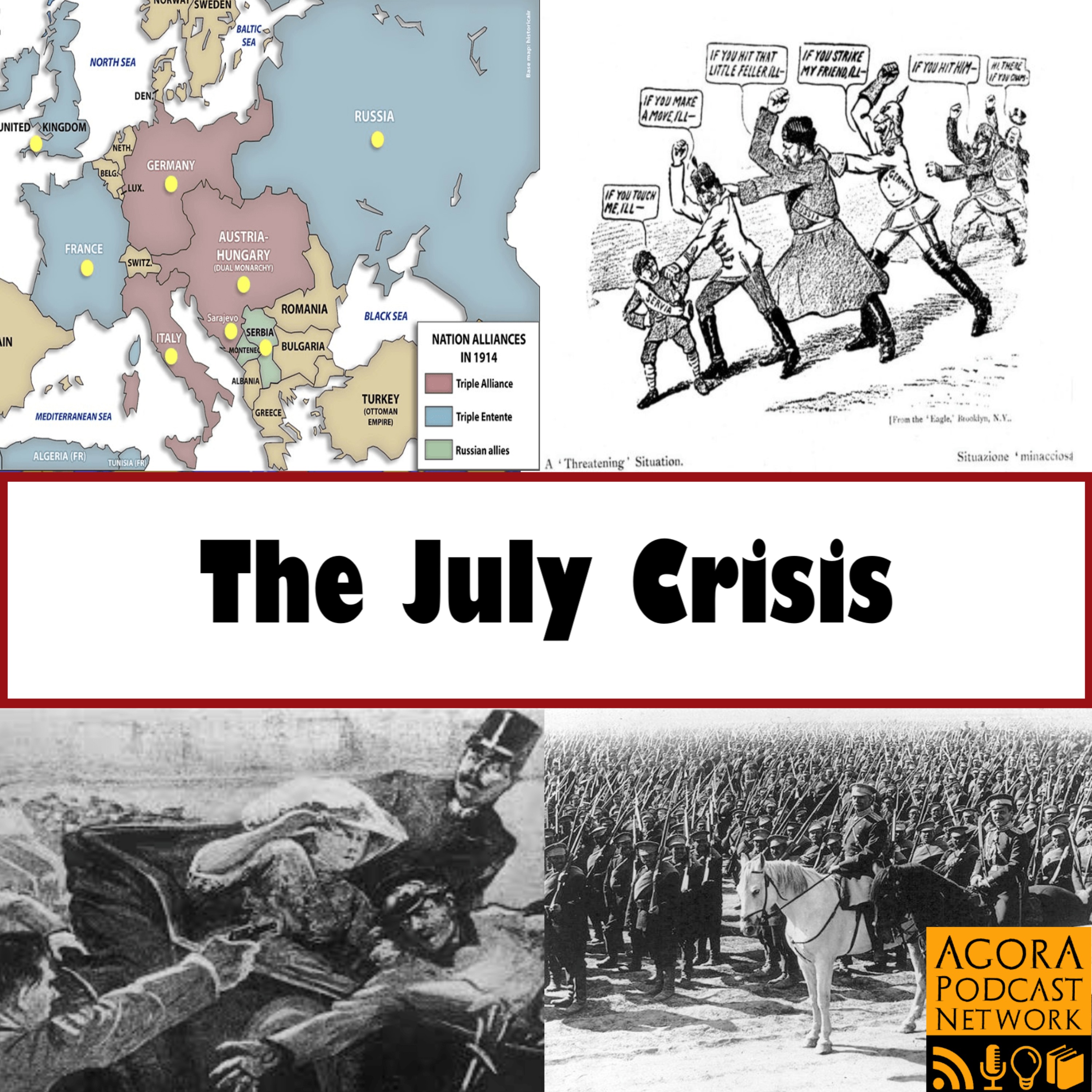
#22: 1905-1911 - Anglo-German Relations I
Everyone knows the story of Britain and Germany before 1914. Or at least, they think they do.Anglo-German relations following the Russo-Japanese War seemed bound to enter a period of hostility, enabled by the naval race which forced London to invest heavily in production and innovation, and produced the dreadnought as an unforeseen consequence. But this race to outbuild the other in warship construction did not lead automatically to the events of 1914. Indeed, many possibilities existed for the two rivals to patch things up.This was what the French truly feared, but as they prepared for a second showdown with Berlin in Morocco, the British appeared to stand by them. Was the British Cabinet entirely convinced that Germany was its enemy? Many thought so, but again, matters were not so clear cut. Even Kaiser Wilhelm's disastrous record in PR could not guarantee that these two nations, tied together by so many dynastic, religious, traditional and economic threads, would face each other on opposite sides of the battlefield.In this first part of our trilogy looking at Anglo-German relations, we set the scene and assess some key moments when Germany became the bogeyman of Britain. Yet even as the naval race became a naval scare, and even as Britain secretly planned for an Anglo-French defence, nothing was yet set in stone. The years that immediately preceded the war were vital for the next phase in the relationship - detente.Support the July Crisis series, join the conversation, and find out more through these links:Do you want ad-free episodes with scripts attached, and bonus content? Support us on Patreon and you can suggest July Crisis episodes!Join our Facebook group as we make our way through this fascinating series!Click here to see our July Crisis workspace in Perlego, you'll find every source you need! Hosted on Acast. See acast.com/privacy for more information.
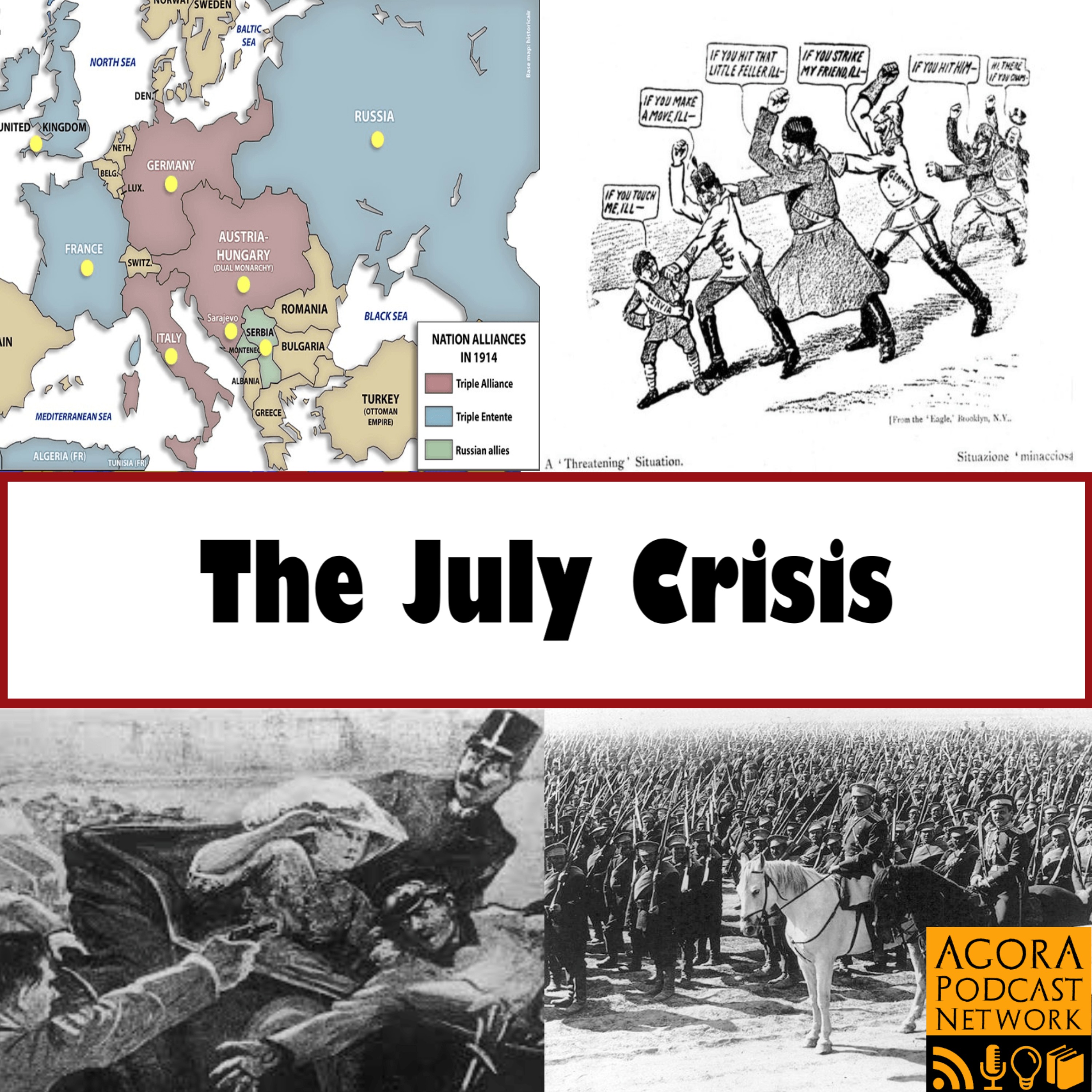
#21: 23 July 1914 - The First Ultimatum
Austria-Hungary finally delivered its ultimatum to Serbia nearly four weeks after the assassination of Franz Ferdinand. The journey had been incredibly slow, and the outcome was nothing like the fait accompli its statesmen had originally envisioned, but Austria had officially taken the bold step towards war. What did this infamous ultimatum contain? Did it leave any possibility for Serbia to accept it with some dignity? One point in particular - the participation by Austrian officials in a Serbian investigation - was bound to be unacceptable in Belgrade. Accompanied by a 48 hour deadline, the ultimatum hit the disparate Serb government, then preparing for elections, like a bomb. All was seemingly going according to plan. Now all Austria had to do was wait for its bombshell to settle in Belgrade. As for Russia, surely the Tsar would not intervene to help regicides, right? RIGHT?! Support the July Crisis series, join the conversation, and find out more through these links:Do you want ad-free episodes with scripts attached, and bonus content? Support us on Patreon and you can suggest July Crisis episodes!Join our Facebook group as we make our way through this fascinating series!Click here to see our July Crisis workspace in Perlego, you'll find every source you need! Hosted on Acast. See acast.com/privacy for more information.
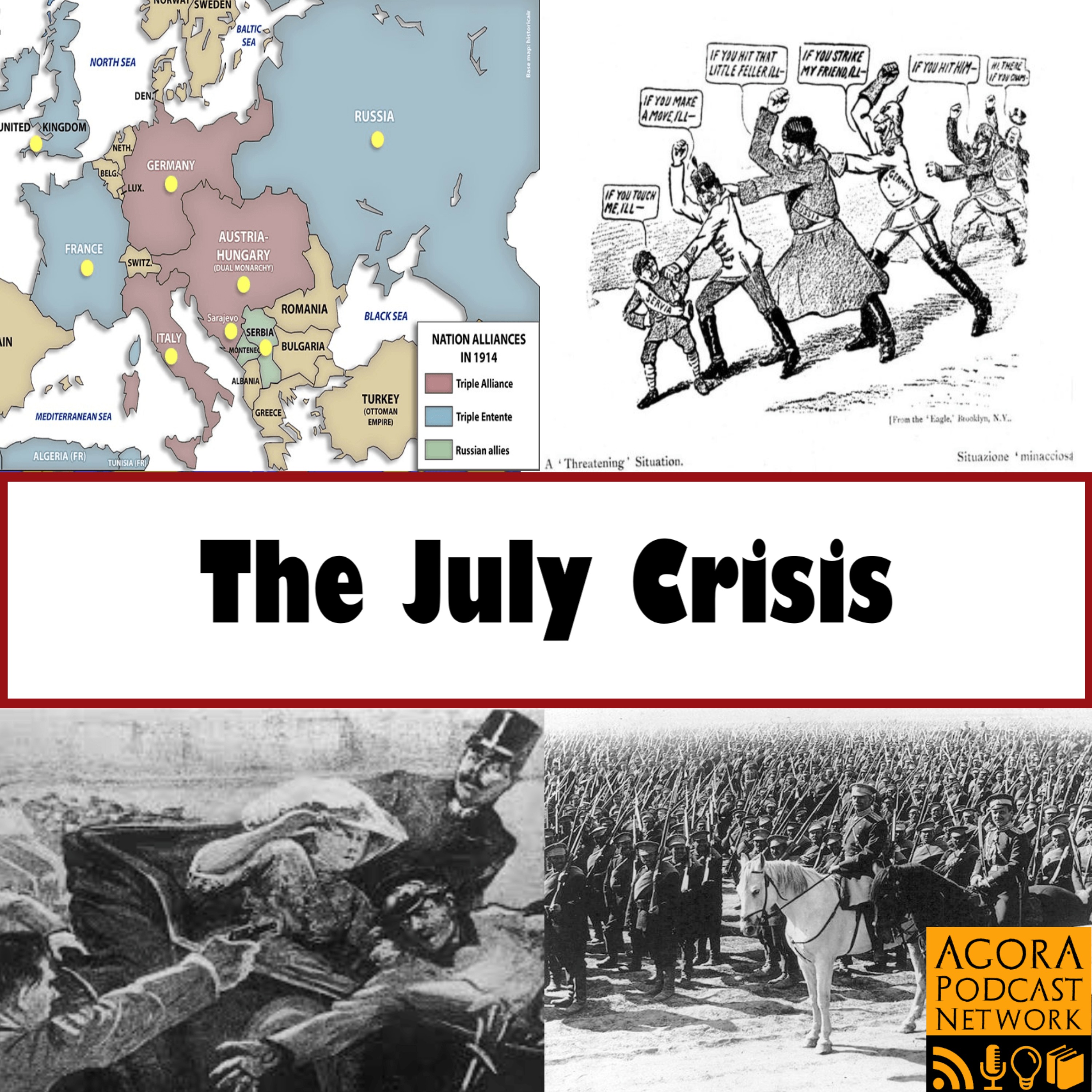
#20: 20-22 July 1914 - France In Russia
On 20 July, the French President, Premier, and other statesmen docked at Kronstadt, aboard the fittingly named France.It began a tremendous spectacle of Franco-Russian cooperation, just as rumours were swirling of Austria's nefarious intentions. The allies could not know for sure what Vienna was planning, but they could send some strongly worded warnings. As the French President attempted to put steel into his allies, his Premier suffered something akin to a breakdown. Perhaps Rene Viviani was anxious about domestic politics, or perhaps the pacifist Premier was beginning to realise that a great war was more likely. Either way, once they returned to the sea, French policy would be in the hands of Maurice Paleologue, the French ambassador, and it was hard to see him as anything other than a hawk.Support the July Crisis series, join the conversation, and find out more through these links:Do you want ad-free episodes with scripts attached, and bonus content? Support us on Patreon and you can suggest July Crisis episodes!Join our Facebook group as we make our way through this fascinating series!Click here to see our July Crisis workspace in Perlego, you'll find every source you need! Hosted on Acast. See acast.com/privacy for more information.
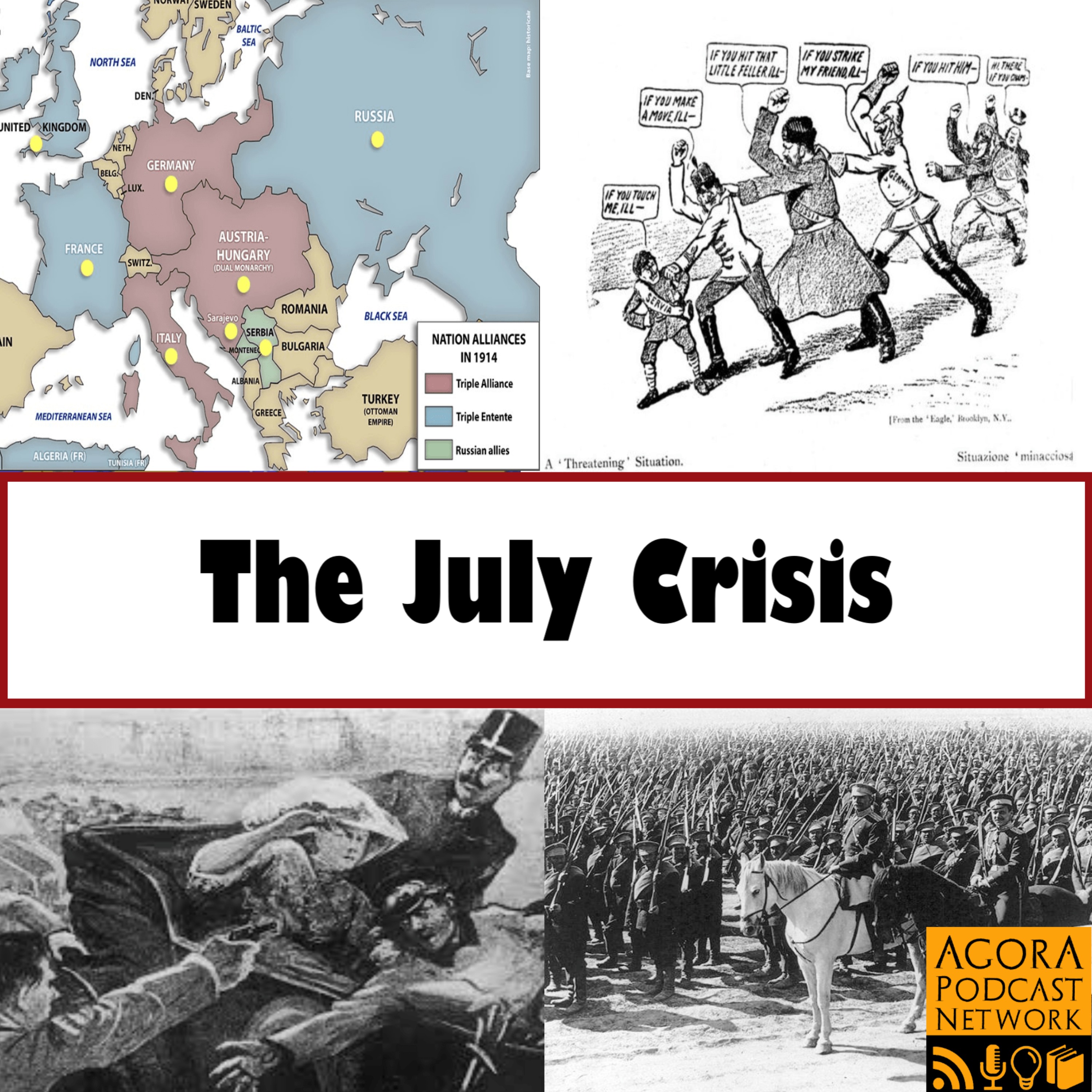
#19: 19-22 July 1914 - Finalising Fatalism
As the French sailed for St Petersburg, the Austro-Hungarian government gathered in Vienna for a meeting of historic importance. It was here on 19 July 1914 that the infamous ultimatum to Serbia was finalised, but also the question of what kind of war Austria expected to fight. Shockingly, the question of Russian intervention barely registered. The tunnel vision was laser focused on Belgrade, and now that everyone was on the same page, and the pieces in place, nothing could stop Austria-Hungary putting the finishing touches on the most fatalistic policy imaginable. Their decision to move against Serbia was by now an open secret, but amidst the rumour and whisper, the most important step yet towards war had been taken, and this was to take the whole world by surprise.Support the July Crisis series, join the conversation, and find out more through these links:Do you want ad-free episodes with scripts attached, and bonus content? Support us on Patreon and you can suggest July Crisis episodes!Join our Facebook group as we make our way through this fascinating series!Click here to see our July Crisis workspace in Perlego, you'll find every source you need! Hosted on Acast. See acast.com/privacy for more information.
#18: 16-20 July 1914 - France at Sea
As the French President and Premier made their way to Russia, on board the France, they tried their best to keep up to date with what was happening outsides the confines of their vessel. Troubling rumours were not hard to come by, but they could not be wholly ignored. The Central Powers kept up a front of ignorance, even luring Sazonov into a false sense of security. Here we see how the allies reacted to the suspicious news, and how close their intelligence sources came to unearthing the truth. Even though they could not quite put their finger on it, Franco-Russian solidarity was the one constant they could feel confident in.Support the July Crisis series, join the conversation, and find out more through these links:Do you want ad-free episodes with scripts attached, and bonus content? Support us on Patreon and you can suggest July Crisis episodes!Join our Facebook group as we make our way through this fascinating series!Click here to see our July Crisis workspace in Perlego, you'll find every source you need! Hosted on Acast. See acast.com/privacy for more information.
#17: 15-18 July 1914 - Secrecy and Haste
With the Austro-Hungarian government on the same page at long last, it remained to follow through with the ultimatum. To Berchtold, this meant moving as quickly and as secretly as possible, so that once the ultimatum arrived in Serbia, Europe would be presented with a fait accompli. The Germans were similarly anxious, and emphasised the necessity of speed. Still, neither Berlin nor Vienna gave much thought to the Russians. Somehow, a comfortable consensus permeated: Russia would not defend Serbia, but if she did, this was the best time to fight her. The more surprised Russia was, the more likely she was to be overtaken by events. Thanks to Berchtold's carelessness and cracked Italian codes, however, the secret did leak out. Here we examine how this happened, and what it meant for the deteriorating situation.Support the July Crisis series, join the conversation, and find out more through these links:Do you want ad-free episodes with scripts attached, and bonus content? Support us on Patreon and you can suggest July Crisis episodes!Join our Facebook group as we make our way through this fascinating series!Click here to see our July Crisis workspace in Perlego, you'll find every source you need! Hosted on Acast. See acast.com/privacy for more information.
#16: March-June 1914 - The Entente Part 3
In our final episode looking at the Entente, we bring our story up to the eve of the July Crisis.How had past lessons influenced the way Russia and France interpreted the world by spring 1914? Was war certain? Had new military reforms so affected the balance of power that war was now inevitable? What did the position of Britain mean for the two allies, and why was London so concerned with losing Russia as a friend? Was Germany's effort to match its rivals really sustainable in the long term?The British strategy of balancing between the two blocs was coming to an end, but how would the Germans react to news that Russia was now courting Britain into the Entente? Was Britain truly as free as she imagined, or was the cold reality of the bloc system about to dawn in London? Still, few contemporaries believed war would come - had the peacemakers not saved Europe from war in the past? Perhaps they had, but there was no guarantee that a spark in a sensitive region would not transform the situation.Support the July Crisis series, join the conversation, and find out more through these links:Do you want ad-free episodes with scripts attached, and bonus content? Support us on Patreon and you can suggest July Crisis episodes!Join our Facebook group as we make our way through this fascinating series!Click here to see our July Crisis workspace in Perlego, you'll find every source you need! Hosted on Acast. See acast.com/privacy for more information.
#15: Jan-March 1914 - The Entente Part 2
In our second installment of this Entente analysis, we look at the Liman von Sanders crisis.By late 1913, a new crisis in Russo-German relations centred on the status of General Liman von Sanders, appointed to command the 1st Army Corps at Constantinople. To the Germans, this was a useful way to assert their influence in the Ottoman Empire and rebuild its capabilities after several years of conflict. But to Russia, the appearance of their rival in a theatre earmarked as a sphere of Russian interest seemed akin to a threat. How would Sergei Sazonov react, and did the resolution of the crisis settle differences, or merely establish resentments and mistrust which reverberated right up to the outbreak of the First World War? Please join us, as we examine this forgotten crisis, assess the growing military power of Russia, its relationship with France, and the possibility that Britain might tie itself more securely to its former rivals. The Entente had come a long way, yet it was far from set in stone...Support the July Crisis series, join the conversation, and find out more through these links:Do you want ad-free episodes with scripts attached, and bonus content? Support us on Patreon and you can suggest July Crisis episodes!Join our Facebook group as we make our way through this fascinating series!Click here to see our July Crisis workspace in Perlego, you'll find every source you need! Hosted on Acast. See acast.com/privacy for more information.
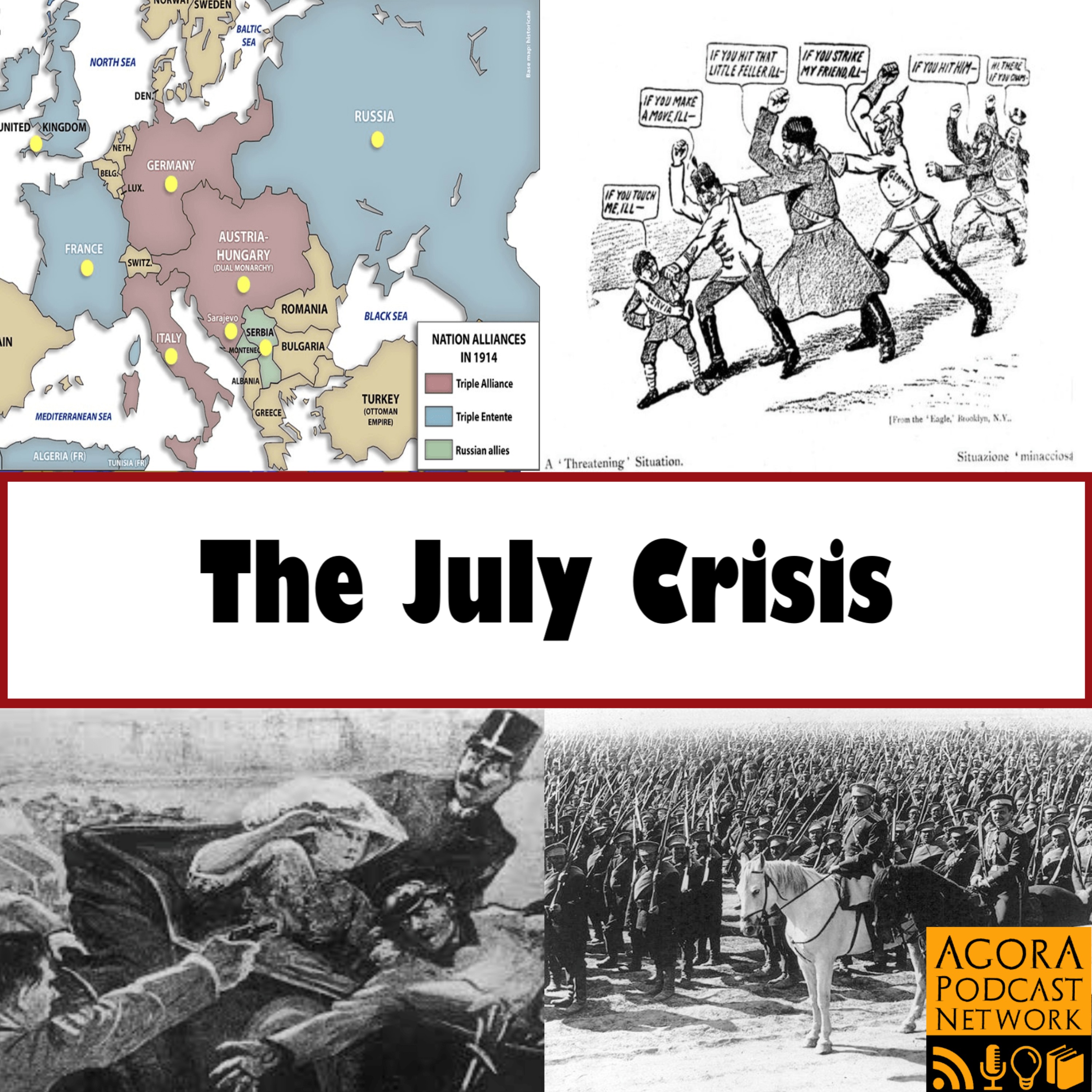
#14: 1912-1913 - The Entente Part 1
In this first of three episodes, we look at the pre-war position of the Entente!Before we bring our narrative further, it would be useful to turn our attention to what came before. The Franco-Russian alliance was formed in 1894, and over the next twenty years, the two allies experienced their share of ups and downs. Even as new crises shifted the balance of power, France and Russia stuck together. Russia brought the manpower, and France brought the money and expertise which could project that power. By 1912, certain limits had been set on the alliance, depending on the theatre in question, but Raymond Poincare, Premier and then President of France before the war, worked to remove these breaks, and enhance the alliance. Meanwhile, Russian Foreign Minister Sergei Sazonov distinguished himself. After several ignominious retreats on the world stage, both partners were looking for opportunities to stand firm, and show the Triple Alliance they meant business. The inclusion of Britain might affirm the supremacy of the Entente, but first, Russia would have to secure its influence in the Straits.Support the July Crisis series, join the conversation, and find out more through these links:Do you want ad-free episodes with scripts attached, and bonus content? Support us on Patreon and you can suggest July Crisis episodes!Join our Facebook group as we make our way through this fascinating series!Click here to see our July Crisis workspace in Perlego, you'll find every source you need! Hosted on Acast. See acast.com/privacy for more information.
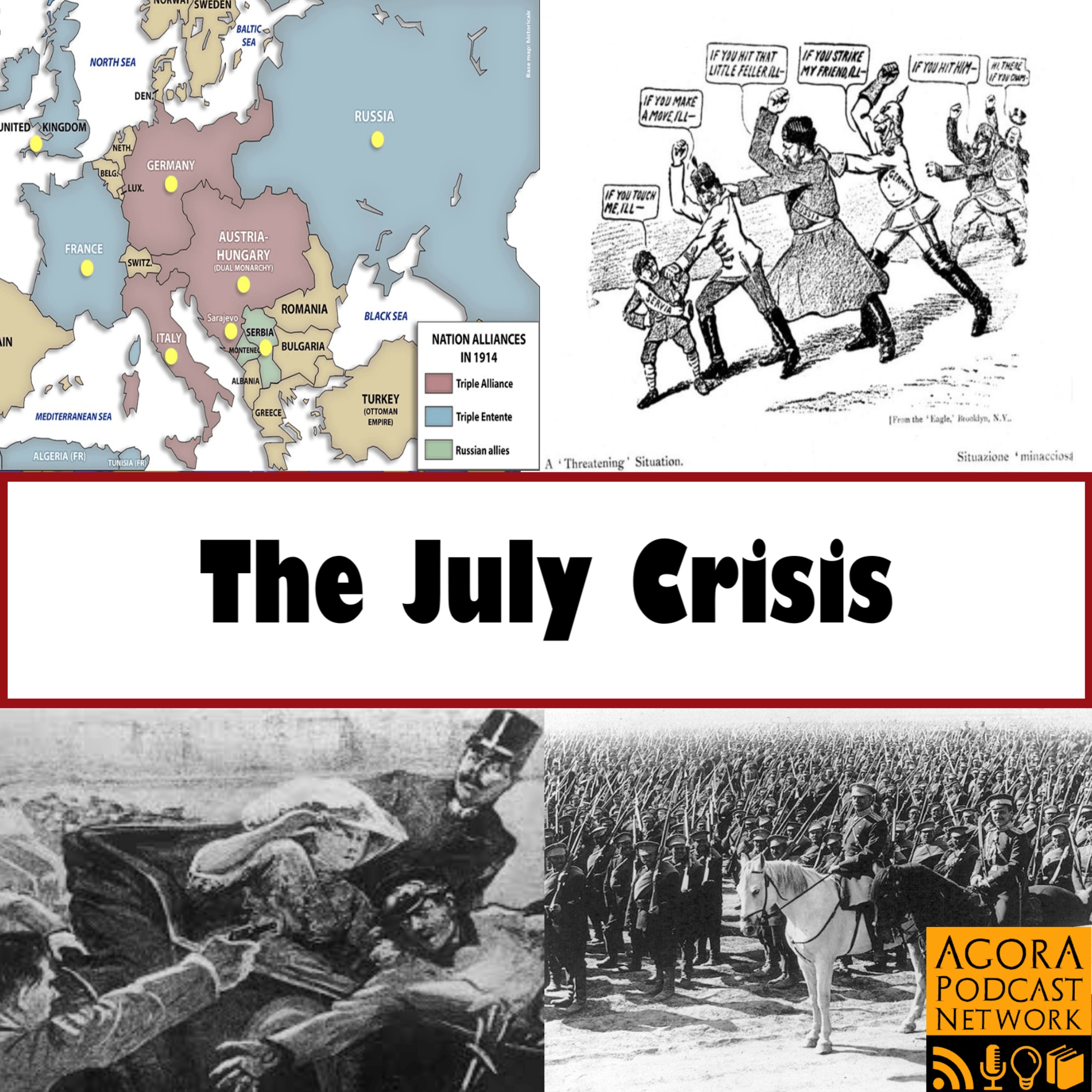
#13: 13-14 July 1914 - Berchtold Supreme
As Belgrade burned with rage following the death of Ambassador Hartwig, Berchtold was on the verge of his greatest triumph. After several intense weeks of pressure, Stefan Tisza seemed finally to be seeing the light. A combination of factors, including German pressure, agitation from his subordinates, fear of Romania, outrage at Serbia, and probably exhaustion, all moved Tisza to accept a policy of war. Tisza was eager to clarify that this did not render him a hawk - he still wished for peace if this was possible. Yet, he no longer blocked the construction of an ultimatum designed to be impossible for Serbia to accept, and he no longer flew the lonely flag for diplomacy. How had Tisza been persuaded, and what did it mean for Berchtold, to finally have a united Cabinet behind him? Here we consider these critical questions, in a pivotal turning point of the July Crisis.Support the July Crisis series, join the conversation, and find out more through these links:Do you want ad-free episodes with scripts attached, and bonus content? Support us on Patreon and you can suggest July Crisis episodes!Join our Facebook group as we make our way through this fascinating series!Click here to see our July Crisis workspace in Perlego, you'll find every source you need! Hosted on Acast. See acast.com/privacy for more information.
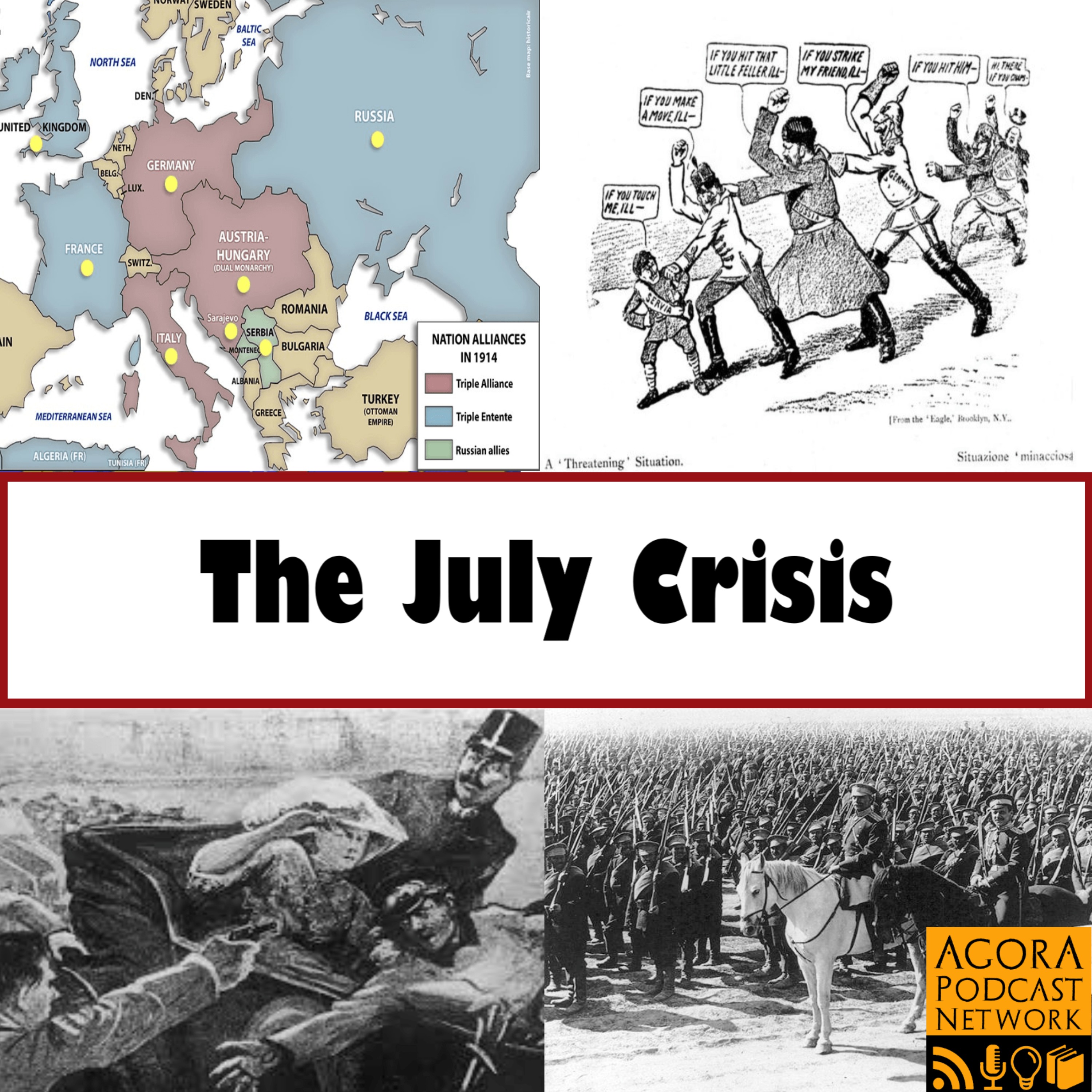
#12: 8-12 July 1914 - Hartwig's Last Act
Now that German support had been acquired, and the delivery of an ultimatum to Serbia was virtually guaranteed, Berchtold had one final mission - to persuade the Hungarian Premier Stefan Tisza of the necessity of war. This was easier said than done, since Tisza had good reasons for resisting calls for a war which he believed was unnecessary and dangerous. But Berchtold was fortunate in that the Hungarian was in the minority - Tisza was the only senior Habsburg official to press for a diplomatic resolution to the assassination, and he knew he was alone in this. The pressure was bound to increase on him to make the 'right' decision, but just over the border in Serbia, a shocking incident momentarily jolted Berchtold away from his mission.Nikolai Hartwig, Russian ambassador to Belgrade since 1909, arrived at the Austrian embassy in Belgrade to finally pay his respects. The date was 10 July 1914, and Hartwig was there to counter several unflattering rumours regarding his reaction to the assassination. Hartwig was also keenly interested in any news of Austria's intentions towards Serbia. It had now been a fortnight since the assassination, and surely Vienna did not intend to do nothing. But Hartwig never learned these secrets, because he dropped dead of a massive heart attack just as he and his Austrian colleague were getting down to business. Although what followed contained no shortage of farce and conspiracy, Hartwig's death was yet another red flag, and to Berchtold, it furnished yet more proof that Austria would never be safe so long as Serbia went unpunished.Support the July Crisis series, join the conversation, and find out more through these links:Do you want ad-free episodes with scripts attached, and bonus content? Support us on Patreon and you can suggest July Crisis episodes!Join our Facebook group as we make our way through this fascinating series!Click here to see our July Crisis workspace in Perlego, you'll find every source you need! Hosted on Acast. See acast.com/privacy for more information.
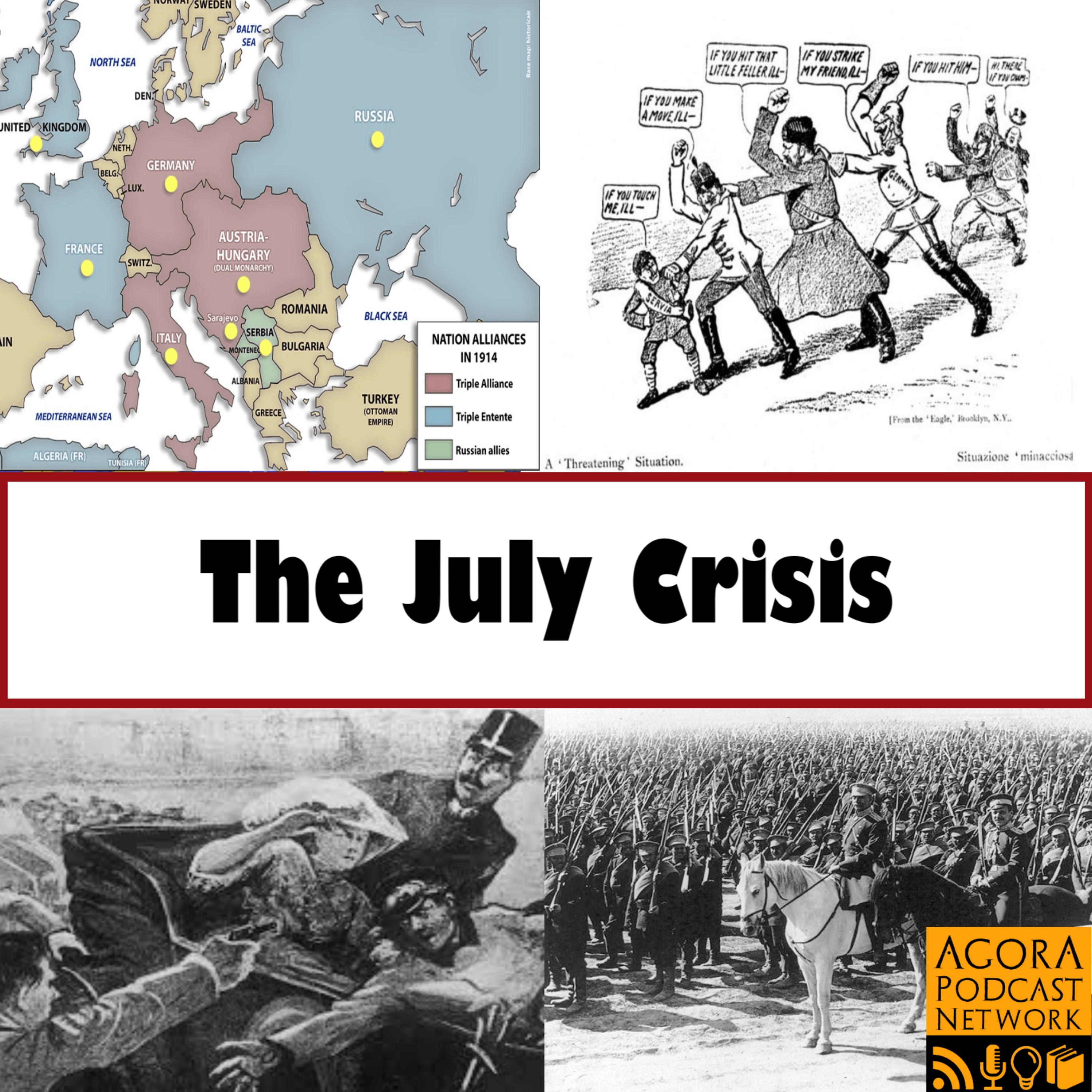
#11: 7 July 1914 - Joint Council Meeting
By 7 July 1914, Austria-Hungary's leading officials gathered in Vienna. The key item on the agenda was what to do about Serbia, but an unspoken item amounted to what to do about Hungary.With German support for the punitive strike on Serbia now assured, all that remained was for the Habsburg government to maintain a degree of unity at such a crucial moment in its history. Yet, unfortunately for Berchtold, Stefan Tisza - the Hungarian Minister President or Premier - refused to give his approval for the kind of aggressive policy most in Vienna now wanted. Tisza feared the acquisition of more Slavic territories, which would dilute the Hungarian influence, but he was also fearful of Russian intervention on Serbia's side, and Romanian intrusions into Transylvania.The solution, as Berchtold understood it, was to up the ante. Pressure would be heavily applied on the Hungarian holdout, and an impression of firmness would be presented to the German ally. After many years second guessing her ally, Germany had now signalled its willingness to support Austria regardless of the complications, and this gift could not be squandered. Yet still, Tisza's position was not irrational, and it was at least possible that the Hungarian could have an outsized impact on Austrian policy.Indeed, as we will see, Stefan Tisza was instrumental in delaying the Austrian response, removing its element of surprise, and increasing the risks surrounding it. Berchtold could not change the 1867 Compromise which granted Hungary such powers, but he could use his contacts to wear Tisza down, and make him more amenable to a swift, firm response. Whether this was war, or diplomatic triumph, or whether an ultimatum should be sent at all, were matters which were still to be hammered out.Support the July Crisis series, join the conversation, and find out more through these links:Do you want ad-free episodes with scripts attached, and bonus content? Support us on Patreon and you can suggest July Crisis episodes!Join our Facebook group as we make our way through this fascinating series!Click here to see our July Crisis workspace in Perlego, you'll find every source you need! Hosted on Acast. See acast.com/privacy for more information.
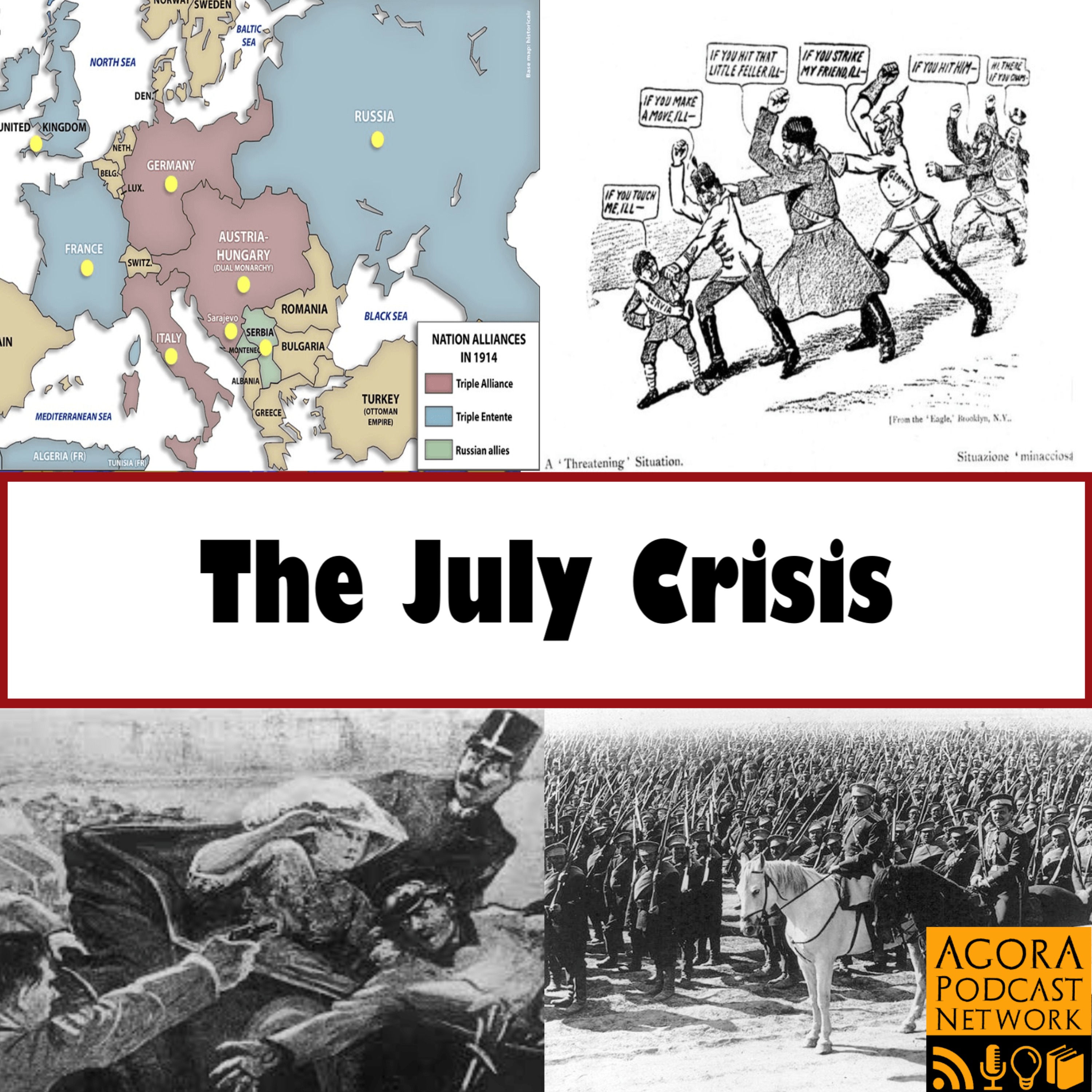
#10: 6 July 1914 - Saving Austria-Hungary
With the blank cheque secured, Austria had received its ally's blessing to pursue a punitive strike against Serbia - what would happen next? The morass of questions surrounding this development deserve greater examination, but you may be wondering, just how widespread was the pro-war party in Vienna? How many officials believed that only war with Serbia could fix the Empire's chronic problems, and why did they take this position considering the risks involved? In this episode we are introduced to a memorandum published on 6 July by Berthold Molden, a senior Habsburg author, philosopher and politician in the Austrian press office. If you've ever wanted to hear from an official contemporary source outside of the traditional coterie of conspirators, which historians have paid scant attention to in the past, then this episode is for you. Expect fascinating insights into Austria's psyche, damning indictments of Austria's position, and heavy condemnation of Serbia, Russia, and any other power who stood in Austria's way.Support the July Crisis series, join the conversation, and find out more through these links:Do you want ad-free episodes with scripts attached, and bonus content? Support us on Patreon and you can suggest July Crisis episodes!Join our Facebook group as we make our way through this fascinating series!Click here to see our July Crisis workspace in Perlego, you'll find every source you need! Hosted on Acast. See acast.com/privacy for more information.
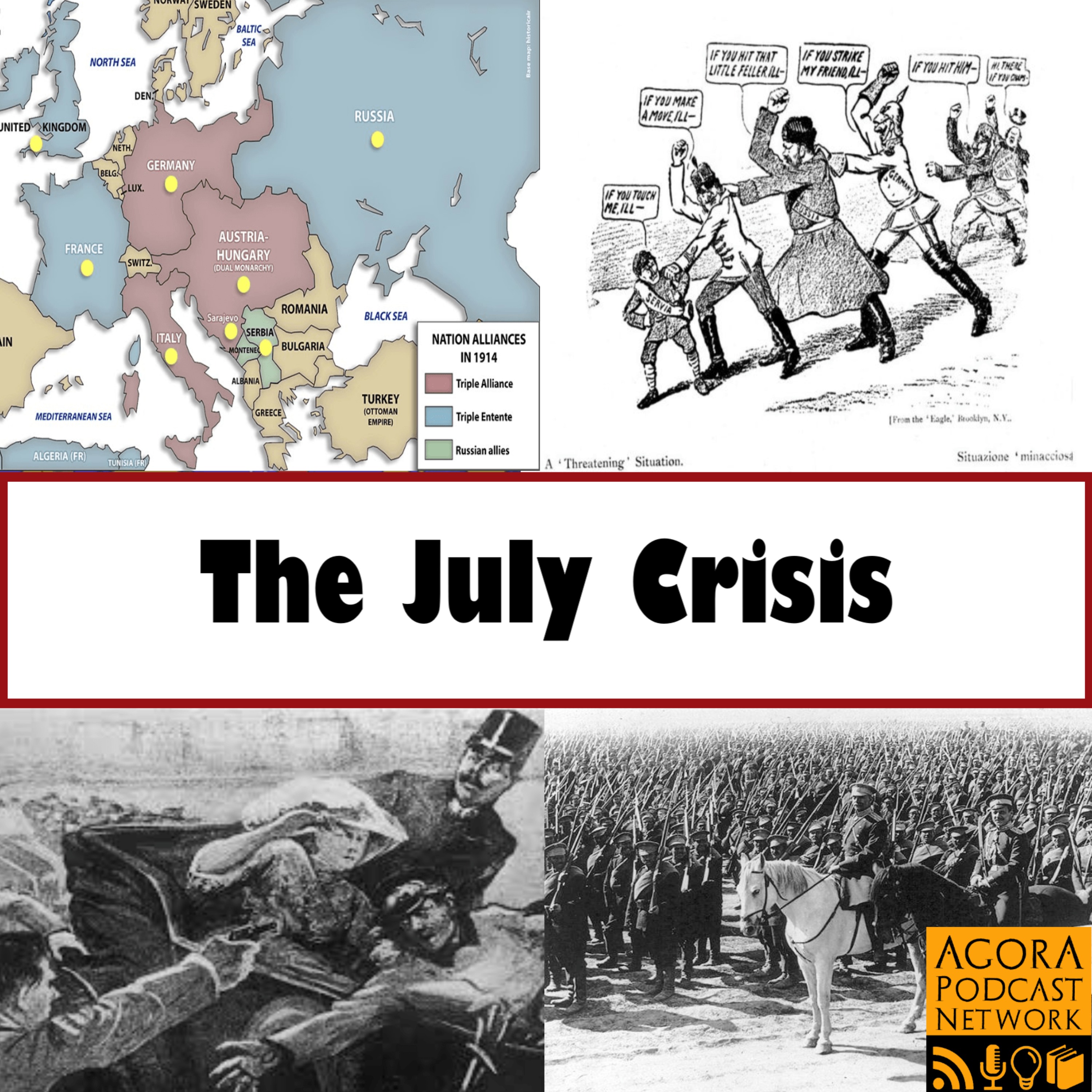
#9: 5 July 1914 - Drafting the Blank Cheque
Among all the controversies of the July Crisis, perhaps few compare to Germany's decision to provide Austria-Hungary with a 'blank cheque' for whatever policy it intended to adopt towards Serbia. In fact, word from Berlin suggested that the German government was impatient, and wanted Austria to strike Serbia as soon as possible. But, did this represent a German desire to launch a world war? As we see in this episode, the truth is more nuanced, but no less shocking. Germany was not seeking world war, but to repair the damage done to its ally by destroying the incessant Serbian threat once and for all.But how would Vienna do this? Would she annex Serbia, or parts of it? Would she reduce her sufficiently to reorientate Serbian policy away from irredentist expansion in Bosnia? What divisions manifested themselves in Austria even as she strove desperately to recoup her position? More importantly, in the event of war between Austria and Serbia, could Russia reasonably be expected to stand aside? Incredibly, the status of Russia was not given nearly enough attention, but this was a sign of things to come, as the Habsburg grievance machine rumbled steadily onwards...Support the show, join the conversation, and find out more through these links:Do you want ad-free episodes with scripts attached, and bonus content? Support us on Patreon and you can suggest July Crisis episodes!Join our Facebook group as we make our way through this fascinating series!Click here to see our July Crisis workspace in Perlego, you'll find every source you need! Hosted on Acast. See acast.com/privacy for more information.
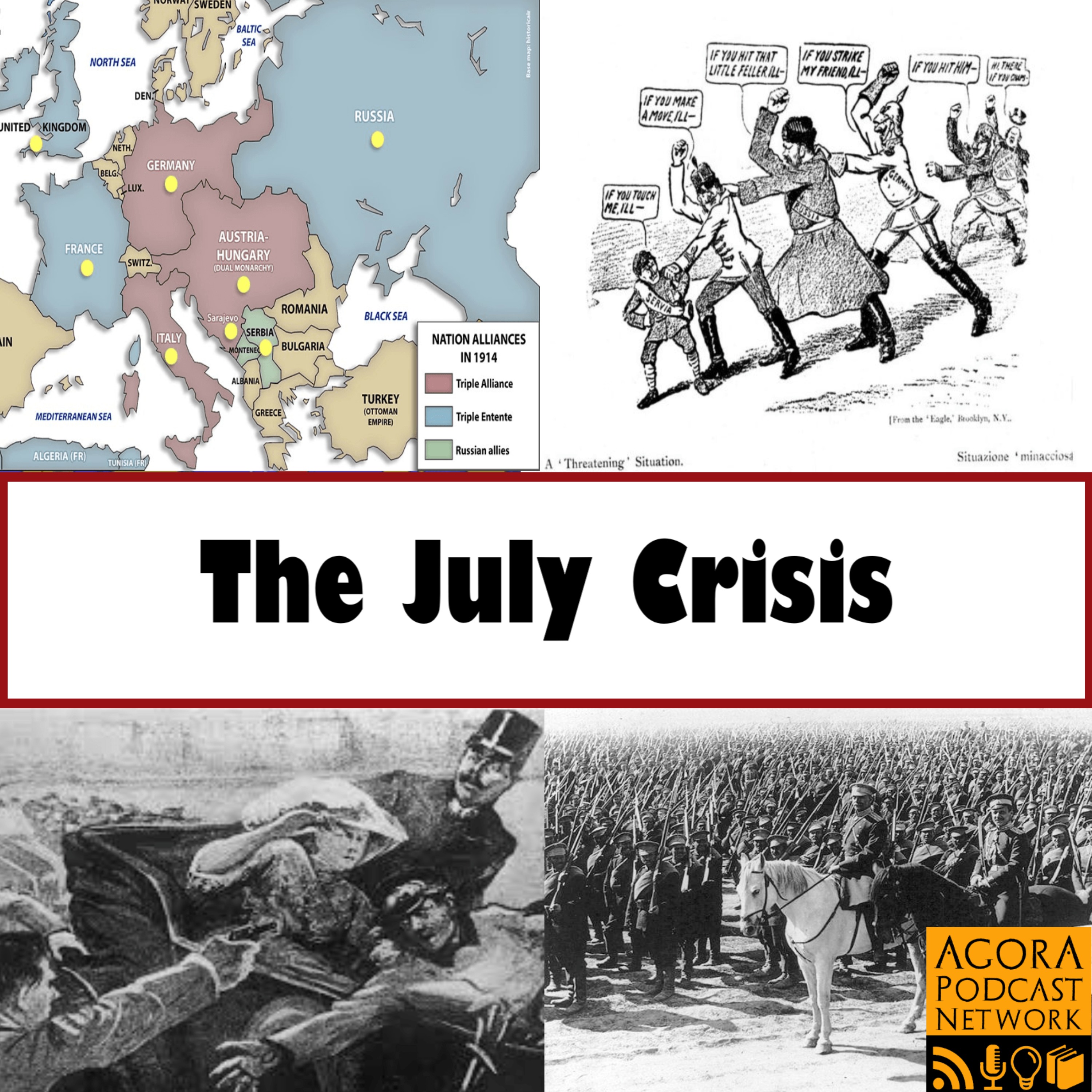
#8: 1-4 July 1914 - 'Are You Certain of Germany?'
Now that Vienna had decided to use war against its Serbian neighbour, the mission became one of guaranteeing German support. As we discuss in this episode, in Austria's estimation it was far from certain that Berlin would give this support. The record of diplomatic crises and cooperation in recent years suggested that Germany might even try to contain Austria's response, and prevent it acquiring the satisfaction it needed.To confront this dilemma, Austrian Foreign Minister Count Berchtold rallied his colleagues around him, and plotted to confront the Kaiser once Franz Ferdinand's funeral took place. Unfortunately for him, the Kaiser was not coming. Vienna was too unsafe, it was said in private, and Germany would not risk its Emperor if the Serbs struck again. Such an embarrassing turn of events forced Berchtold to consider plan B. If Germany would not come to him, he would send his best men to Germany instead...Support the show, join the conversation, and find out more through these links:Do you want ad-free episodes with scripts attached, and bonus content? Support us on Patreon and you can suggest July Crisis episodes!Join our Facebook group as we make our way through this fascinating series!Click here to see our July Crisis workspace in Perlego, you'll find every source you need! Hosted on Acast. See acast.com/privacy for more information.
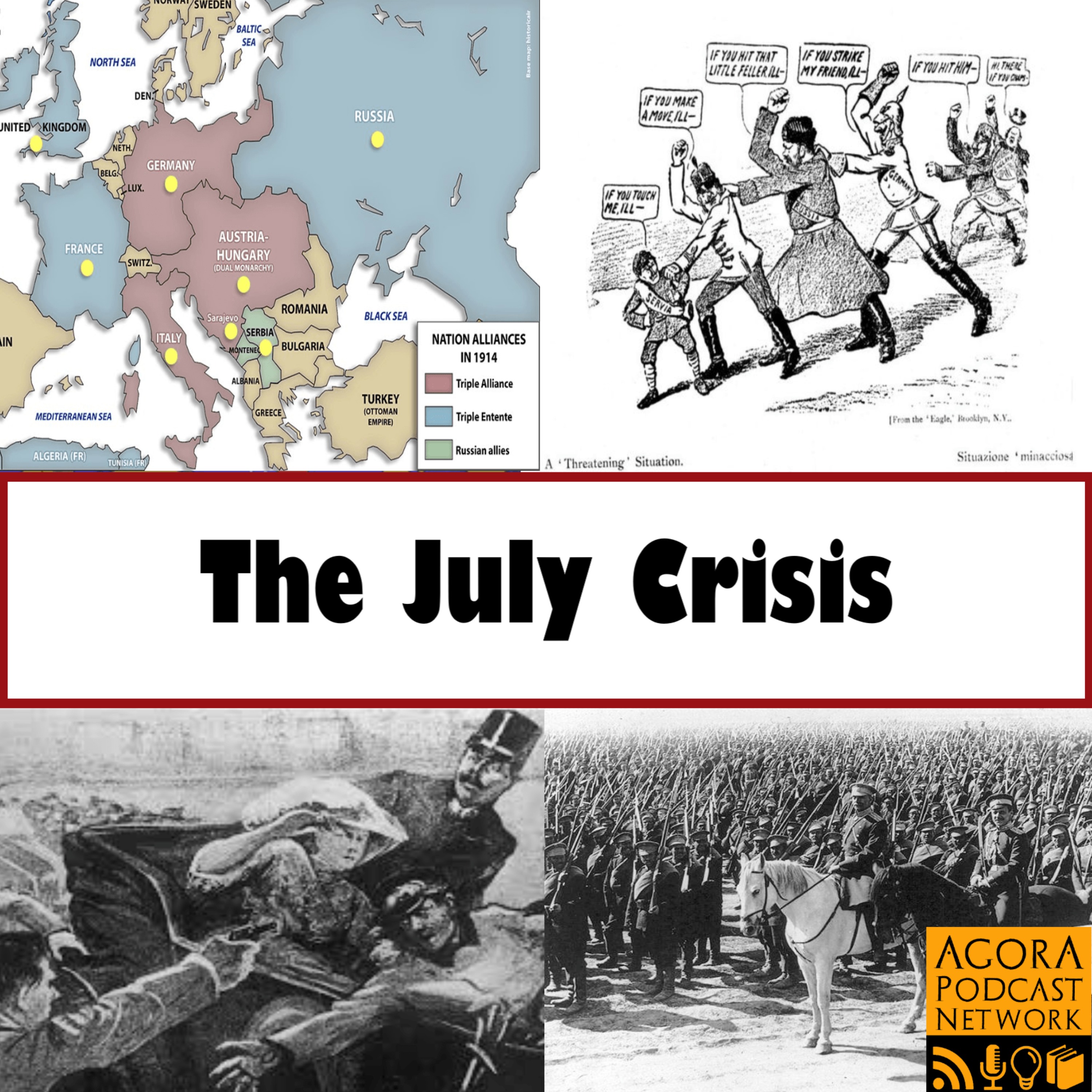
#7: 29-30 June - Vienna Chooses Violence
With the shots heard round the world, how would Austro-Hungarian statesmen react to the news that the heir to their throne had been murdered in Sarajevo? In fact, as we see here, Austrian patience towards Serbia had been so exhausted by 1914 that a violent, warlike response was virtually inevitable. At least, Habsburg Foreign Minister Count Berchtold thought so. But what about the Hungarian element in the room?Since the Compomise of 1867, Austria and Hungary had essentially become two cooperating entities, rather than an Austrian whole, so Hungarian approval from the Hungarian Premier would be necessary if any military policy was pursued. Berchtold would have to use all his skills of persuasion, but he would also call upon Emperor Franz Josef, and above all the Germans, to add greater pressure. Could he succeed? Austria's existence, Berchtold believed, hung in the balance.Support the show, join the conversation, and find out more through these links:Do you want ad-free episodes with scripts attached, and bonus content? Support us on Patreon and you can suggest July Crisis episodes!Join our Facebook group as we make our way through this fascinating series!Click here to see our July Crisis workspace in Perlego, you'll find every source you need! Hosted on Acast. See acast.com/privacy for more information.
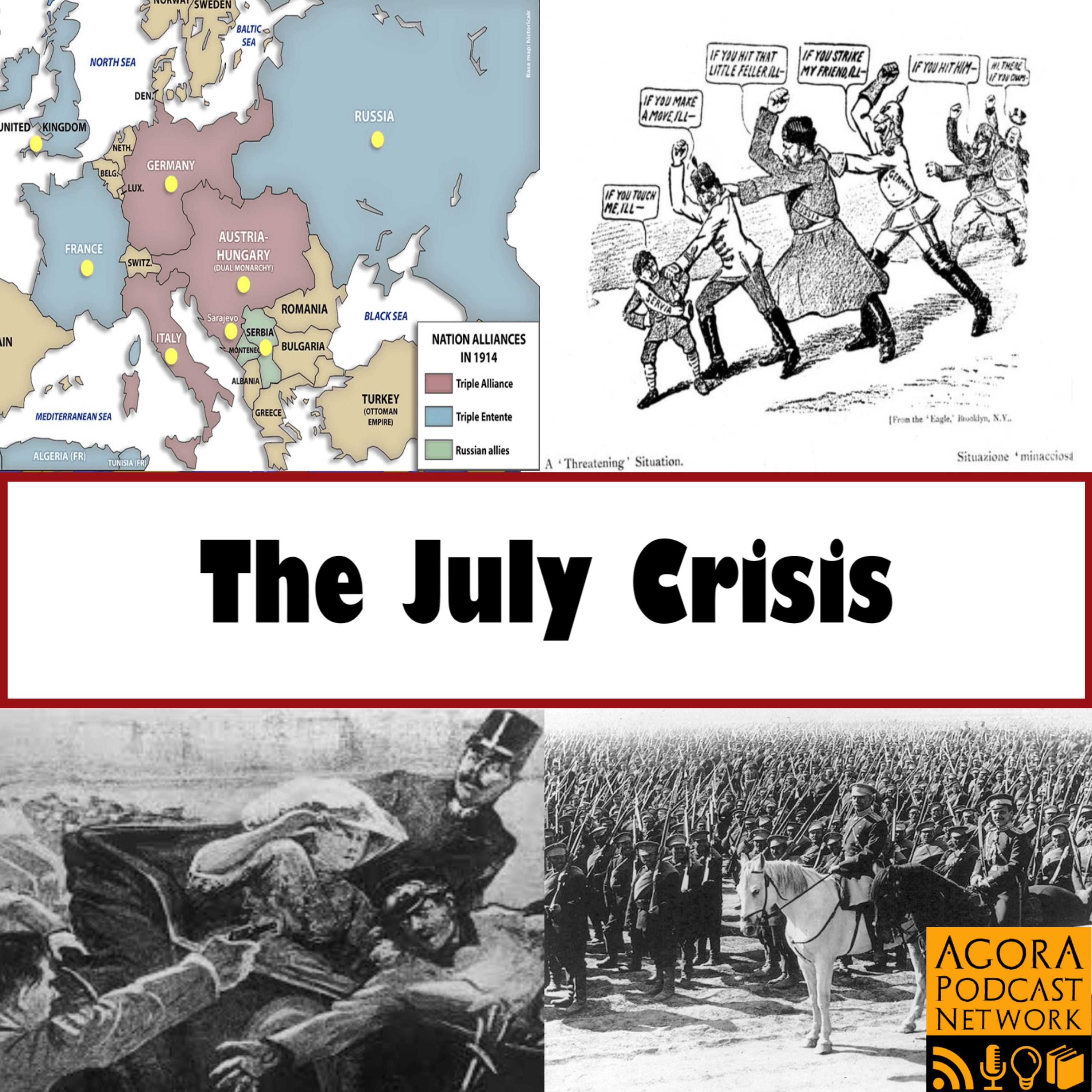
#6: 28 June 1914 - Assassination in Sarajevo
On 28 June 1914, Franz Ferdinand was assassinated by Gavrilo Princip, a Bosnian Serb terrorist. What followed was the July Crisis, as Austria-Hungary attempted to gain a measure of justice, or even revenge. No story of the July Crisis is complete without beginning here, but considering its infamy, what is there left to learn about this assassination and all that flowed from it? I would like to humbly invite you to join me, as I investigate how the act was carried out, what other assassination attempts in Sarajevo meant, why Franz Ferdinand's unique circumstances made the atrocity possible, and why the Austrians really should have seen it all coming... Hosted on Acast. See acast.com/privacy for more information.
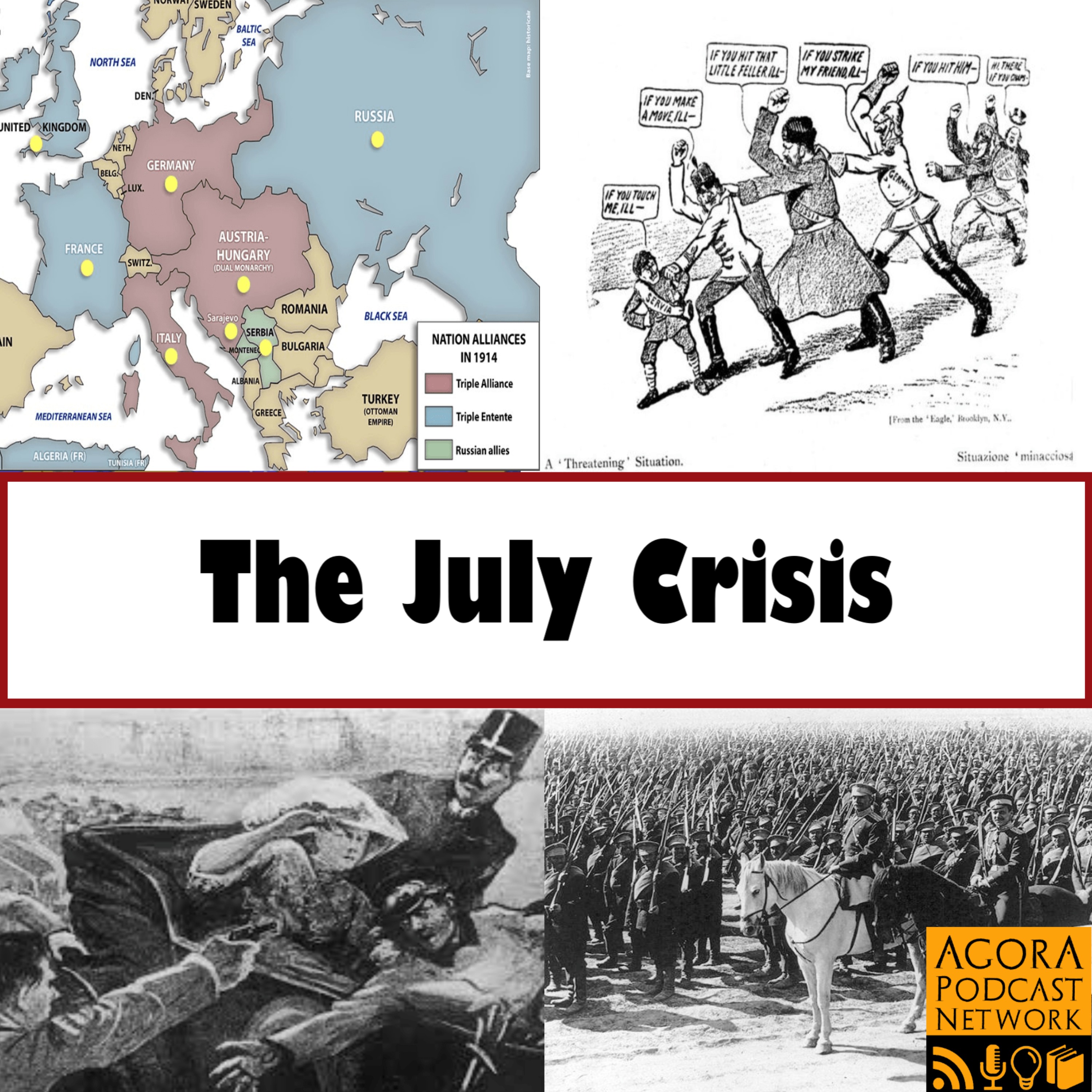
#5: The Balkans and Other Wars (1911-1913)
In this teeny tiny episode, we look at the Italian invasion of Libya and the Balkans Wars!But first, get a load of these links!Do you want ad-free episodes with scripts attached, and bonus content? Support us on Patreon and you can suggest July Crisis episodes!Join our Facebook group as we make our way through this fascinating series!Click here to see our July Crisis workspace in Perlego, you'll find every source you need!How do you kill the status quo? By forming a league of extraordinary states, who want nothing less than to destroy the empire which has ruled over them for centuries. When the Balkan War began in October 1912, Europe was far from ready for the implications which would follow. The end of Turkish rule in Europe, and the expansion of young nation states eager to prove themselves appeared to guarantee that the peninsula would never be quiet again. Yet, aside from Europe, Russia had played a key role in bringing this league to life. To this, we may be tempted to ask why?The answer is found in the Austro-Russian rivalry, but also in the opportunistic mood of the moment. The Balkan League's members - Serbia, Montenegro, Bulgaria and Serbia - were not traditional allies. Yet they were certainly capable of smelling blood in the water. In September 1911, Italy invaded Libya, and instigated a year-long war with the Ottoman Empire. Watching their overlord struggle with such a wide-ranging campaign, the Balkan League seized the moment, and attacked just as Italy met the Turks at the peace table.What followed was the shocking disintegration of Turkish power in Europe, at a scale and speed no one expected. Yet, even though the League had won the day, the spoils proved harder to divide up among them. Hostility increased between Serbia and Bulgaria over the fate of Macedonia, and when a second war came, the ensuing dogpile by the Ottomans, Serbs, Greeks and Romanians shattered Bulgaria apparently for good.By autumn 1913, a different question thus emerged. If the Balkan states were justified in throwing off the Ottoman yolk and expanding their powers, just how much expansion was too much? In Vienna's view, the Serbian threat had become intolerable. The only solution was to threaten her with ruin, and prevent Serbian occupation of Albania, including an Adriatic port. Germany stood behind her, Russia backed down, but this was the last such victory of the Central Powers.In this episode we weigh up the impact of these pre-war conflicts, with a depth and obsession for nerdy details you've never seen before! Join me as I attempt to navigate such a turbulent world, where old assumptions were slain, traditional rivalries were reinforced, and a new order beckoned. Hosted on Acast. See acast.com/privacy for more information.
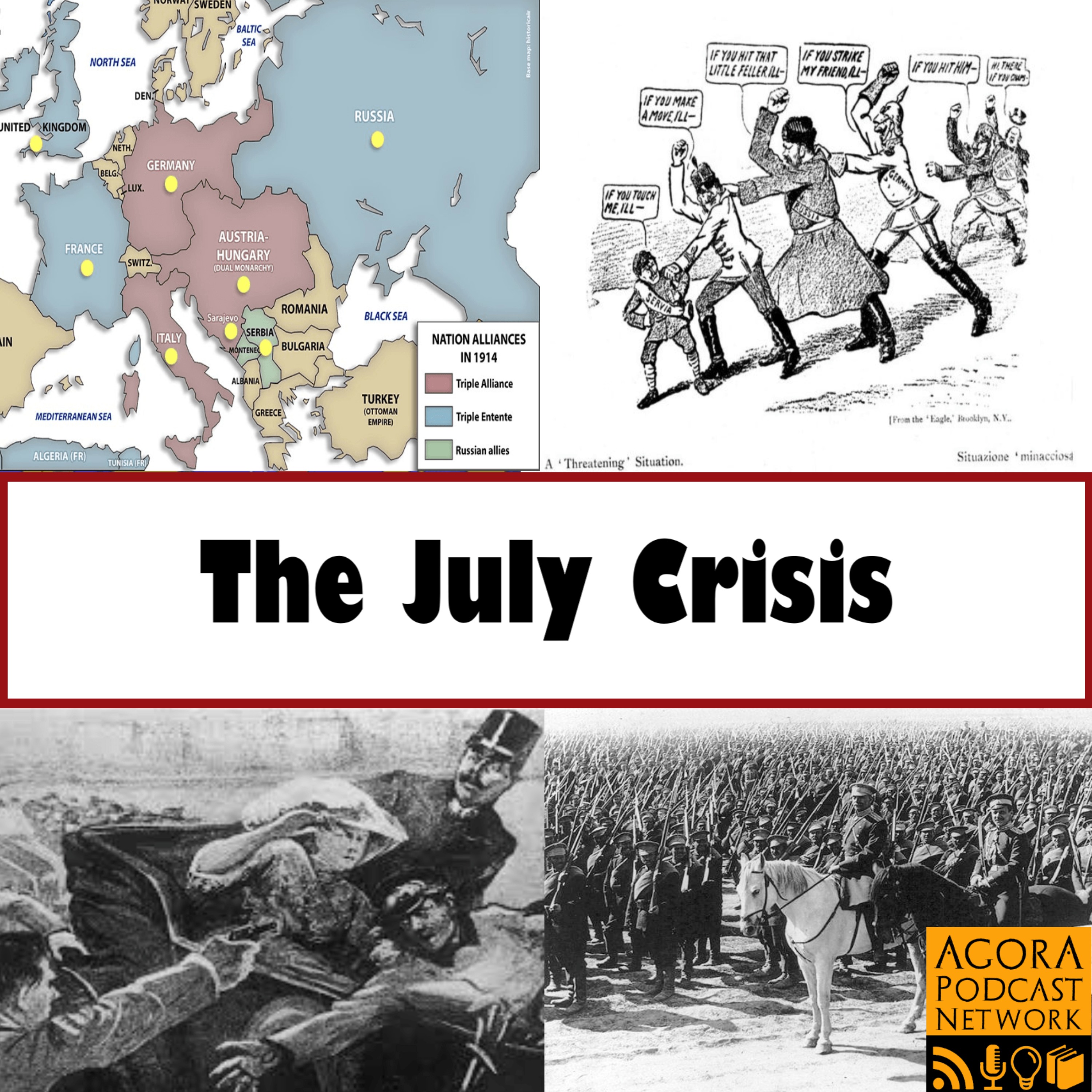
#4: The Bosnian Annexation Crisis (1908-1909)
In our second background episode, we cover the Bosnian Annexation Crisis from 1908-1909!But first, get a load of these links!Do you want ad-free episodes with scripts attached, and bonus content? Support us on Patreon and you can suggest July Crisis episodes!Join our Facebook group as we make our way through this fascinating series!Click here to see our July Crisis workspace in Perlego, you'll find every source you need!From late 1908 to spring 1909, European attentions were intensely occupied by the Austrian decision to annex the province of Bosnia Herzegovina, which it had occupied since 1878. This decision spurred into life fascinating impressions and behaviours which became even more important in 1914. Russia was humiliated, Serbia was enraged, Austria learned the value of an ultimatum, and Germany stood resolutely by its ally. Meanwhile, the British and French looked on, concerned that the Balkans might activate the war they had been secretly preparing for behind closed doors. The annexation is thus a key point on our journey towards the war, so I hope you're ready to get into it! Hosted on Acast. See acast.com/privacy for more information.
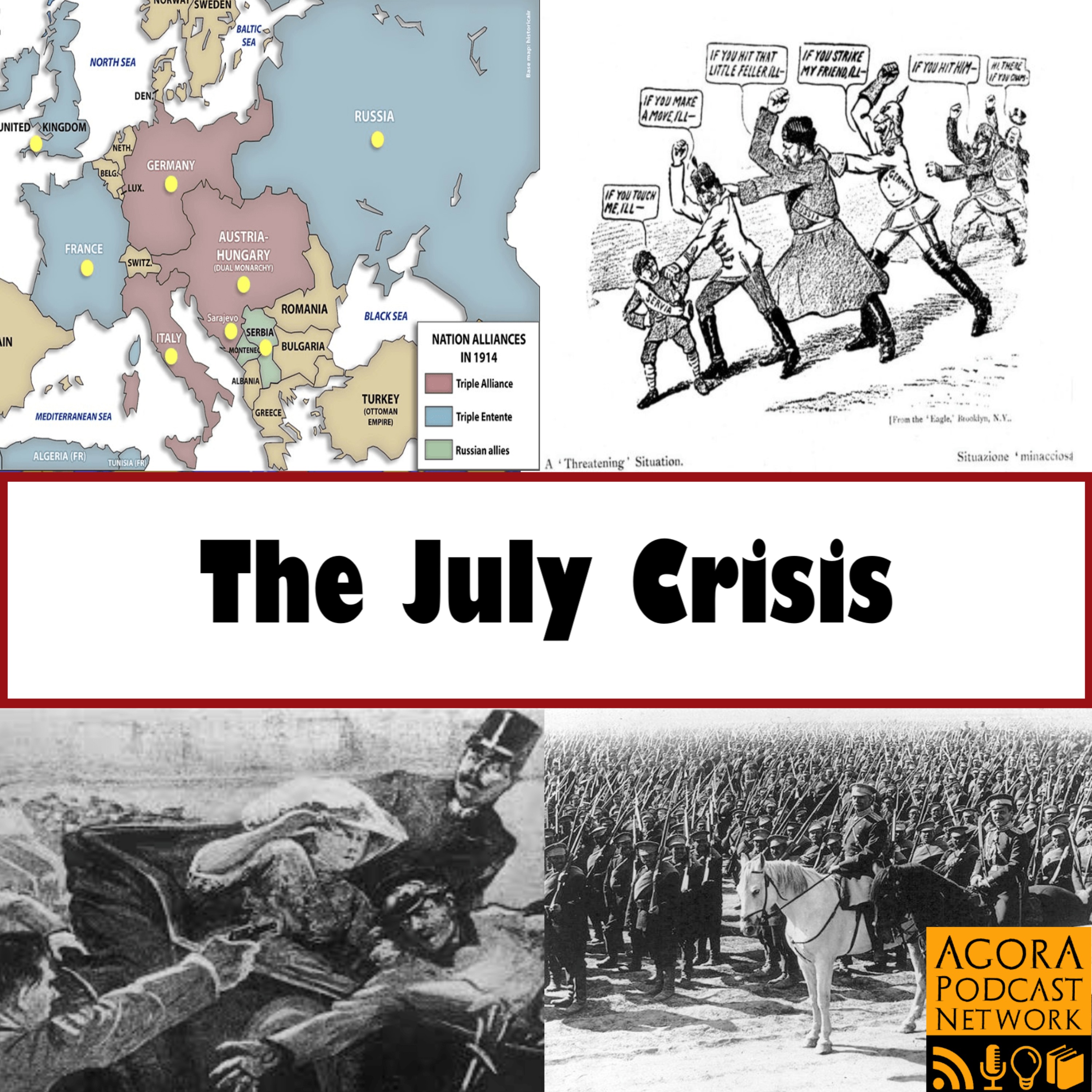
#3: Ententes and Alliances (1871-1907)
In our first background episode, we look at the formation of the Triple Alliance and Triple Entente. But first, get a load of these links!Do you want ad-free episodes with scripts attached, and bonus content? Support us on Patreon and you can suggest July Crisis episodes!Join our Facebook group as we make our way through this fascinating series!Click here to see our July Crisis workspace in Perlego, you'll find every source you need!By 1890, the new German Kaiser Wilhelm II officially 'dropped the pilot', and assumed the powers of German foreign policy into his own hands. Within a few years, Russia had slipped from his grasp into the eager arms of France. The Second Holy Alliance of Bismarck's days was over, henceforth Europe would be dominated by two distinct power blocs.As we will see in this episode, the reality behind the firm front each bloc put up was far from representative of the truth. Disputes existed, from colonial spheres to military conventions, to old antagonisms and new plots. How reliable was the Italian element? Could the Germans and Russians reach across the divide, and forge a new path independent of these barriers? And, what to do with those powers outside these groups? The first of these was Britain, whose status as an isolated power living her best life was about to come to a screeching halt. Interestingly, the power Britain elected to ally with, to announce its return to the Concert of Europe, was a rising power in Asia, Japan. Even more interestingly, Japan was to play a pivotal role upending the apple cart of several decades of assumptions - foremost among them, the insurmountable power of Russia.Russia's loss in the war with Japan, official by October 1905, shattered the existing balance of power. Into this dynamic situation, Britain drew closer to France, and further from a German partnership which had seemed the most likely outcome. By 1907, Britain went still further, embarking on a brave new course by looking at Russia as something of a friend. If not a friend, then at least a partner. The closer alignment of Britain, Russia and France into a Triple Entente, however, was little more than a French dream at this stage. It was impossible to plan ahead when those wretched Balkans never seemed to stay quiet... Hosted on Acast. See acast.com/privacy for more information.
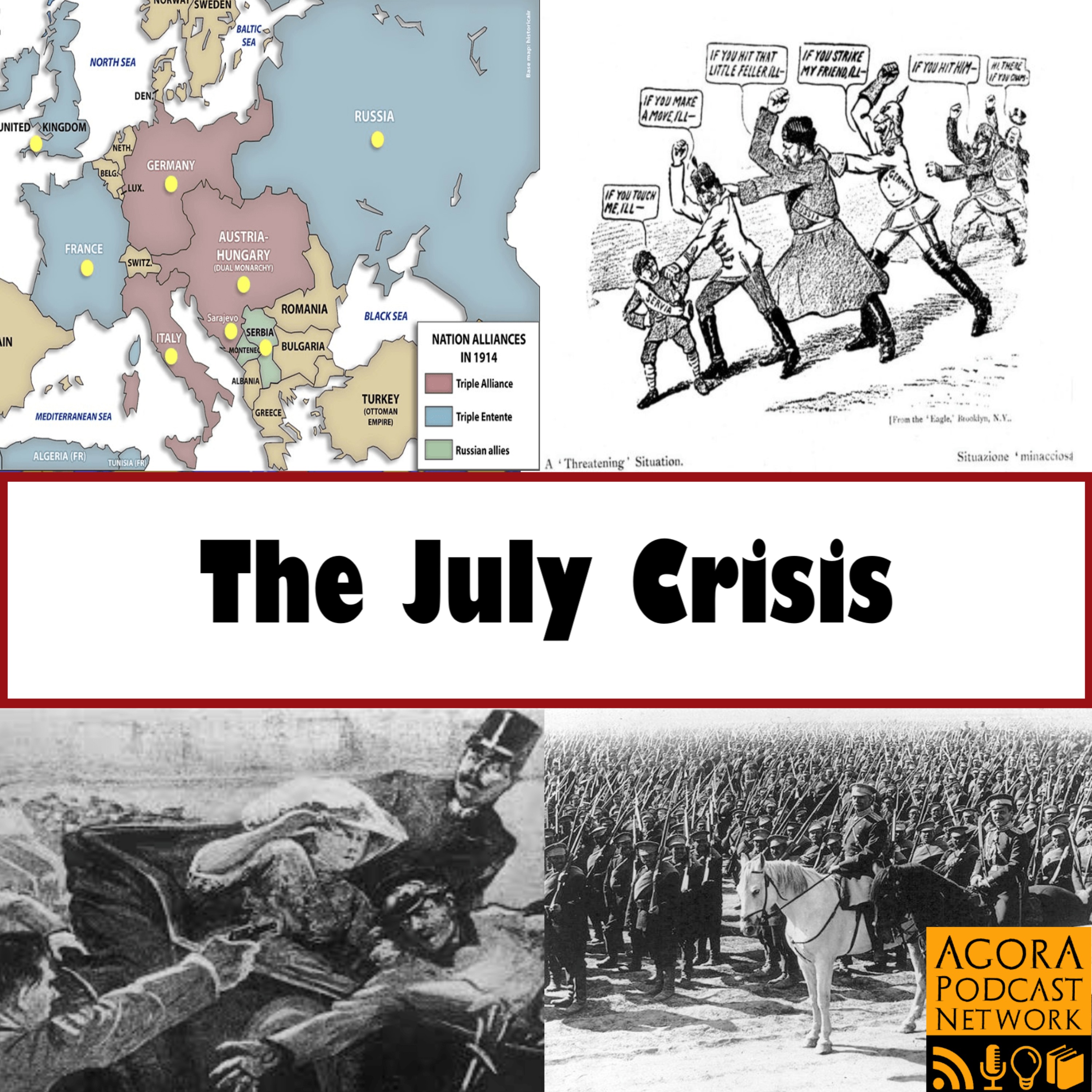
#2: Historiography of the July Crisis
How do historians explain the outbreak of the First World War, and how have these views changed over the last century? Were they influenced by new perspectives, new motives, or new source materials? How have they influenced our current understanding of the war's origins, and what impact have they had on the 'mainstream' view of why war broke out? In this episode we go on a journey through the historical record, where new theories and explanations emerged, in the teeth of contentious debate.For some, the pursuit of truth was a matter of justice - finding significance in the loss. For others, it was a political necessity, to rehabilitate their nation. For others still, it was a mere matter of historical study - the need to find the truth, and be the first person to do so. Whatever the motives - whatever the results - the story behind how historians reached their conclusions, and how these conclusions changed, represents one of the most fascinating and important aspects of the First World War's origins story, and I can't wait to share it with you! ****Do you want ad-free episodes with scripts attached, and bonus content? Support us on Patreon and you can suggest July Crisis episodes!Join our Facebook group as we make our way through this fascinating series!Click here to see our July Crisis workspace in Perlego, you'll find every source you need! Hosted on Acast. See acast.com/privacy for more information.
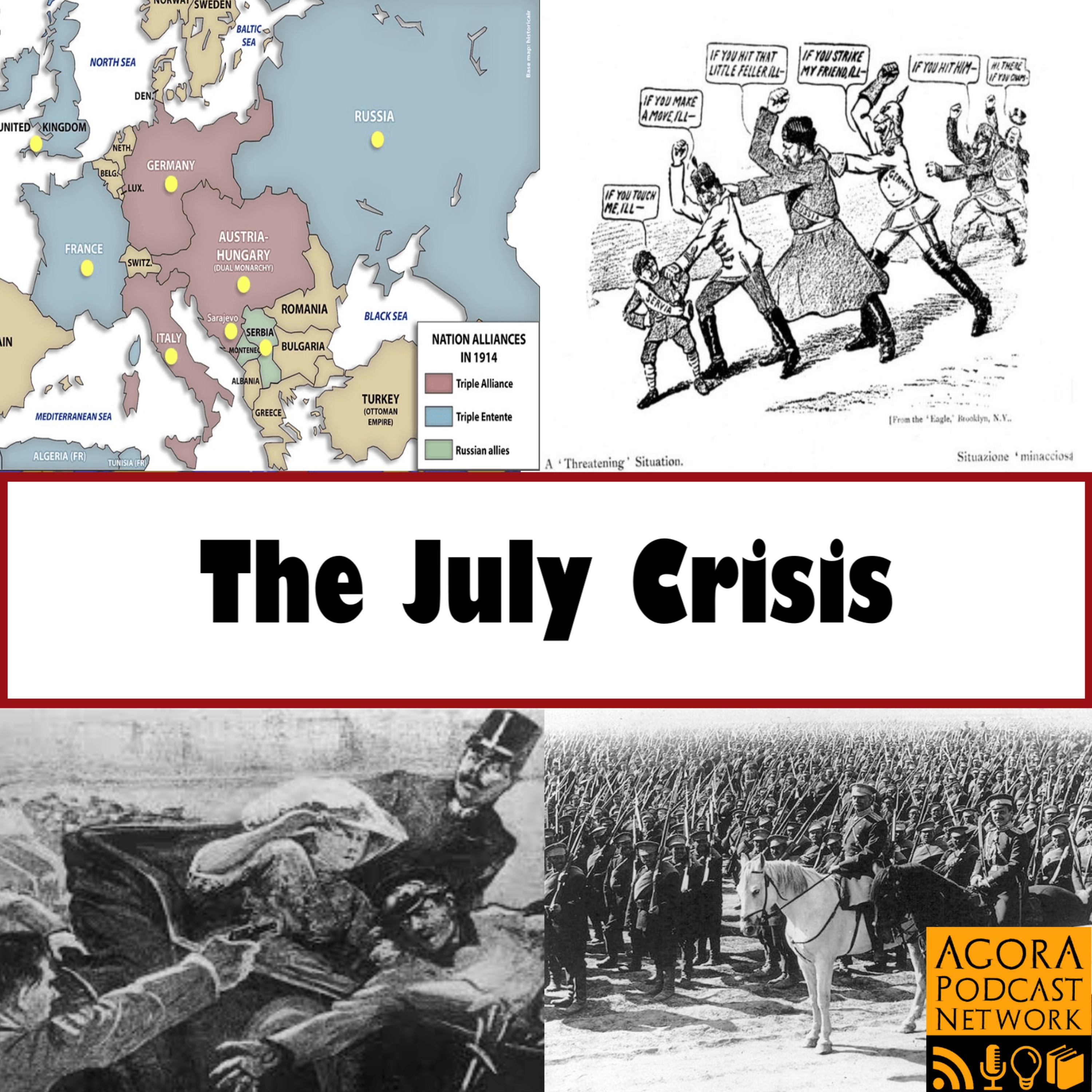
WDF Presents: The July Crisis
Welcome history friend, to this exciting new series!110 years to the day since Franz Ferdinand was assassinated in Sarajevo, and a decade on from our July Crisis Anniversary Project, I believe there has never been a better time to jump back into this world. This is a brand new series, and I have been working on it for some time now.In this episode, we set some things straight. This is not a remaster, a re-release, or any form of recycling. Oh no, we're here for something far more special. Armed with my new expertise, far too many sources to count, and a renewed passion for this pivotal era, we are ready to bring you the July Crisis like you've never seen it before!If our July Crisis Anniversary Project was a rigorously scheduled day-by-day account of the last few weeks of peace in 1914, this series is a different beast. Content is our focus this time around - deep dives, fascinating studies, and a more comprehensive analysis of the how and the why behind the descent into war in summer 1914.If you're at all curious about how the First World War erupted; if you've never listened to the July Crisis Anniversary Project - and especially if you have - this series is for you! Please join me over the next few months, in this post-PhD gift to myself, as we bring this complicated, fascinating, tragic world to life, 110 years after it all fell to pieces.****Do you want ad-free episodes with scripts attached, and bonus content? Support us on Patreon and you can suggest July Crisis episodes!Join our Facebook group as we make our way through this fascinating series!Click here to see our July Crisis workspace in Perlego, you'll find every source you need! Hosted on Acast. See acast.com/privacy for more information.
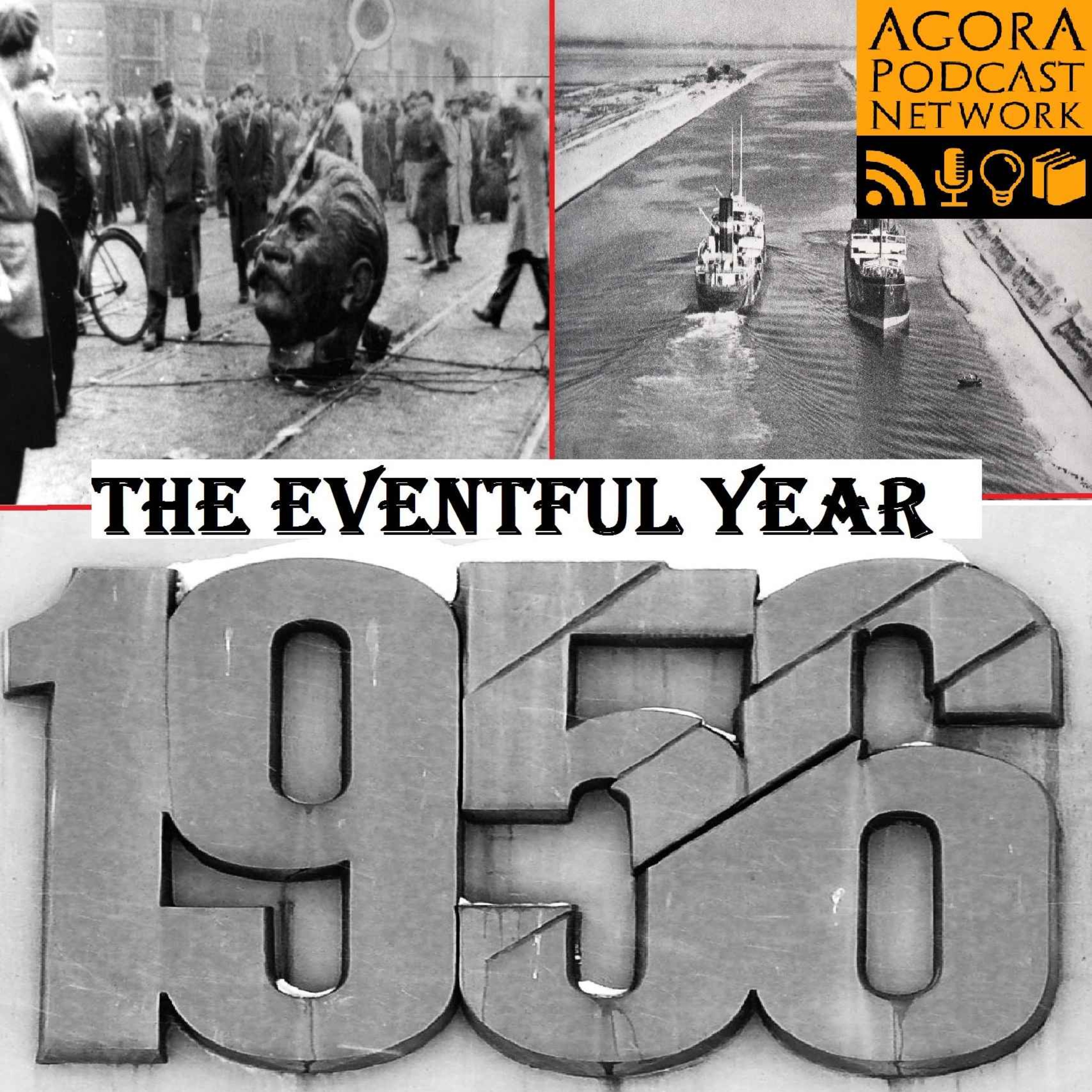
1956: Conclusion
After nearly forty episodes, and many fantastic discoveries, what can we learn from this incredible year in history? Was it a turning point for the decolonising Europeans, or simply a signal that the United States was now the top dog? Was it truly damaging for the Soviets, or did the Hungarian chapter simply confirm what many had assumed - that only by forceful repression could the Warsaw Pact members be kept in line? This was a year of several spinning plates, but before we bid it farewell, we still have a bit more to say, so I hope you'll join me! Hosted on Acast. See acast.com/privacy for more information.
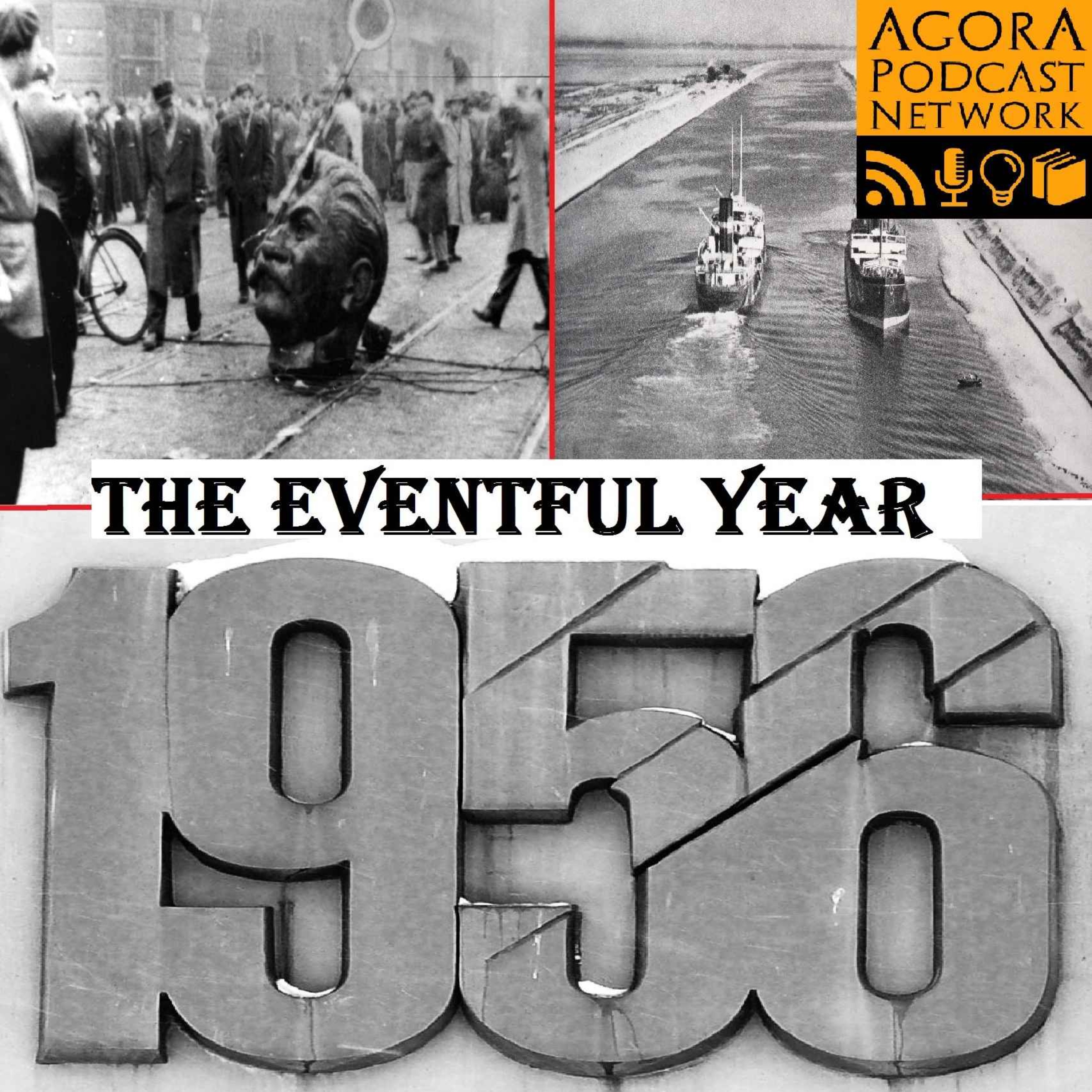
1956 - The Suez Crisis #2.21: From Eden
Here we finish 1956, with the final episode in the series wrapping up Eden's story, and the Conclusion episode, wrapping up this eventful year.The Prime Minister, once so revered, had irreparably damaged his reputation by acting as he did in the Suez Crisis. While on paper the record stated that Britain and France had acted with the most noble of intentions, in reality, as Eden well knew, the ambitions had been far more rudimentary and straightforward, and the miscalculations far more grave, than Eden would ever let on. He would meet his maker still parroting the lies which had so stupefied his political rivals, frustrated his allies and outraged the Western powers.How can we explain Eden’s policy? How did the British political nation react afterwards? Was it ever possible to leave Suez behind? Did the incident significantly damage Anglo-Americans, as we are sometimes led to believe? Did it result in a downturn of British fortunes in the Middle East? All of these are critical questions, so I hope you’ll join me to investigate them as we tackle Anthony Eden, the Suez Crisis and this fascinating year of 1956 in one more eventful episode.Remember history friends - you can get these episodes ad-free with scripts attached for just $2 a month - for a fiver you can access our PhD Thesis series, so come and nerd out with us! Hosted on Acast. See acast.com/privacy for more information.
1956 - The Suez Crisis #2.20: Americans And Soviets
Episode 2.20: Americans & Soviets examines the involvement of the Cold War’s primary protagonists in the Suez Crisis. At long last, we bring the events in Hungary full circle with events in Egypt, and assess whether Anthony Eden’s crimes doomed Hungary after all. In short, we bring everything full circle in 1956. What the events of this year demonstrated, between the Soviet aggressions in Hungary and the Anglo-French adventures in Egypt, was that a strong United Nations was critical for the sake of the peace of the world. ‘I agree with you’, said Eden, ‘and that was why I acted as I did in the first place!’ While the Prime Minister was in full-blown deception mode, his political rivals in the Commons were far from satisfied. Their curiosity was piqued, rather than satiated, and they latched onto the inconsistencies in Eden’s version of events like dogs latched onto a bone. In the end, their suspicious persistence would prove correct, though even they would be startled by just how far Eden had gone.To a great many British citizens and statesmen, it was easier to believe the narrative parroted by the Government. To suppose that the Government could have acted so rashly and aggressively was the antithesis of Conservative governance, and of a sensible foreign policy which the Tory ideology was meant to stand for. Not only that, but the version of events Eden parroted – that Britain had saved the peace by compelling the UN to offer up a peacekeeping force – enabled many Britons to feel proud of their country’s contribution to peace. They would have had good cause to feel proud, had there been any shred of truth to what the PM had said. It was clear to him by the end of 7th November that his choices had had consequences. Not only Egypt, but the relationship with the Americans, the powers of the Soviets and the nature of the Cold War itself had all been affected. It was at this moment, that Eden decided it was time for a holiday…Remember history friends - you can get these episodes ad-free with scripts attached for just $2 a month - for a fiver you can access our PhD Thesis series, so come and nerd out with us! Hosted on Acast. See acast.com/privacy for more information.
1956 - The Suez Crisis #2.19: Not All Heroes Wear Capes
1956 Episode 2.19 examines Eden efforts to completely redefine what the Suez Crisis had meant, and what Britain’s role in the crisis had been. From the afternoon of 6th November, with a ceasefire in the air, a UN Emergency Force still had to be negotiated. Eden could claim that British and French forces were sticking around in Egypt only for the purpose of maintaining peace and protecting the Suez Canal. Yet, his critics could argue that Britain and France broke the peace in the first place, and that the Canal was now only blocked because of British and French belligerence.For his sins, Eden’s Party would be attacked in the Commons on the 6th November by the Labour Leader, until, shortly after 6PM, he decided to spill the beans to his peers in the Commons. No, he wasn’t about to tell the truth, instead he was about to put forward the polished turd of an explanation for why Britain had acted as it did. We quote from Eden in full in this episode, as we are reliant on the good folks at Hansard for making the all-important speeches in the Commons over these heady days freely accessible to all. Primary sources help build a story like no other, and here we can hear the British PM say the exact words he said at ten past six on 6th November. Words which, it would transpire, were based in the main on lies which Eden knew to be lies from the beginning. The British PM, as we learned last time, was now engaging in a new strategy – damage control. He was determined to make Britain look as good, as noble and as heroic as possible while doing it. By the end of his diatribe, one could be forgiven for thinking that the world owed Britain some heartfelt thanks. Only Eden and a closed circle of allies knew the truth, but it couldn’t stay this way for long…Remember history friends - you can get these episodes ad-free with scripts attached for just $2 a month - for a fiver you can access our PhD Thesis series, so come and nerd out with us! Hosted on Acast. See acast.com/privacy for more information.
1956 - The Suez Crisis #2.18: The Art Of Backing Down
1956 Episode 2.18 brings us to a critical point in the narrative, where Anthony Eden decided that a ceasefire was in fact favourable after all!So just what had changed? Thanks to Harold Macmillan, Eden was persuaded that the economic situation in Britain was close to breaking point, and the Treasury Secretary greatly inflated the figures to ape a crisis which could not be avoided, unless peace was reached. Explaining this event necessitates a small investigation into the elements of truth in Macmillan’s economic doomsaying, as well as a deeper examination of Macmillan’s motives. Was the Treasury Secretary motivated by the hopeless Egyptian situation, or by his political ambition to oust Eden and take his spot?As the title of the episode indicates though, much of our time is spent on examining the incredible transformation in British aims which took place over the day of 6th November. With news that Egypt would not be capitulating now common knowledge among his peers, Eden determined to change virtually every aspect of the Egyptian campaign. If a ceasefire would have be implemented, then it was necessary Britain control the narrative which led to this ceasefire. This Eden did, with a breath-taking disregard for the truth. Britain, so the PM claimed, had gone to Egypt not to remove Nasser, recoup prestige or recapture the Suez Canal, but to prevent the Egyptian-Israeli war from spilling over into neighbouring countries and, most incredibly of all, to draw the conflict to the attention of the UN. This latter goal was ludicrous, but Eden insisted until the end that because the UN Emergency Force was en route, this ‘aim’ of his had been successful.This recasting of Britain’s role in the Crisis was never going to fool everyone, but it was immensely convenient now that Eden possessed someone to blame – the Americans – and something noble to cling on to – the idea that Britain had acted in the interests of the world. It was a combination which he was to uphold for the rest of his life, with the most damning of consequences for his legacy and Party. Remember history friends - you can get these episodes ad-free with scripts attached for just $2 a month - for a fiver you can access our PhD Thesis series, so come and nerd out with us! Hosted on Acast. See acast.com/privacy for more information.
1956 - The Suez Crisis #2.17: Britain Knows Best
1956 Episode 2.17 looks at Anthony Eden’s furious efforts to shape the debate on the British intervention in Egypt in the first few days of November, 1956. Our story on 5th November where, just as British and French paratroopers were landing on Port Said, the British Government was fighting its own battle in the House of Commons. Selwyn Lloyd, the beleaguered Foreign Secretary, was tasked with standing up for British foreign policy in light of the emerging controversies. At this stage, the idea that there could have been collusion was vehemently denied, but for now, it was bad enough that Britain had acted without American support, defied the UN and failed to appraise all parties of the policy it planned to put forward.There seemed a great deal of secrecy underway, and while he couldn’t quite put his finger on it, Hugh Gaitskell, Labour Party leader, knew that something was up. Gaitskell wasn’t the only one; his Labour colleagues fired a succession of difficult questions at Lloyd, who by now probably wished he had stood up to Eden when he’d had the chance. Lloyd was able to open the debates of 5th November with some good news – the resolution on the UN Emergency Force had been approved in the UN General Assembly, meaning that a peace force could soon be sent to the trouble spot of the Middle East. What stood out from this resolution though was the fact that the British and French had abstained rather than vote for it in the UN. This stunned and deeply angered the opposition, who believed that yet another opportunity for peace had been lost.Hungary remained a topic on the lips of many, and few backbenchers on either side could ignore the fact that this crisis distracted perfectly from what was happening in Budapest. Still though, the Tories insisted – their intervention had been right, and peace would now be guaranteed. Eden’s government was now banking above all on a capitulation from President Nasser, which it was hoped would come once the Anglo-French forces landed in number on the following morning of 6th November. This victory would surely mask the terrible embarrassment which had preceded it, but here, it was made clear that not all were convinced. Something was afoot, yet even despite the objections of his peers, neither Eden nor Lloyd gave in. They had come to far to give up now. Might would make right, because in the confused international circumstances presented by the 1950s, it was only rational to conclude that Britain knew best… Remember history friends - you can get these episodes ad-free with scripts attached for just $2 a month - for a fiver you can access our PhD Thesis series, so come and nerd out with us! Hosted on Acast. See acast.com/privacy for more information.
1956 - The Suez Crisis #2.16: My Canadian Friends
1956 Episode 2.16 introduces the fascinating Canadian element into our story. Eden’s efforts to control the discussion continued, as the Prime Minister sought to make the British people see things wholly his way. To some extent he would succeed, but much like his French counterparts, it was proving immensely difficult to control what people thought deep down about this strangely brave but also incredibly reckless action. For a few fleeting hours, it appeared as though Eden had judged correctly – it was nice to see the entente cruising into battle again without the American say-so. But this pride would evaporate once it became clear how alone Britain and France were in this plot.Seemingly to the rescue in this equation was Lester Pearson, Canada’s Foreign Secretary and a critically important statesmen in the early Cold War era. An advocate of a police force controlled by the United Nations, and an enthusiastic supporter of negotiations taking place in the General Assembly, where many smaller states were represented, Pearson quickly became the face of solving Suez. This, of course, was not to Eden’s wishes, who wanted to crush Nasser, not be bailed out of his country. But even the PM had to make a show of going along with his proposals for the sake of good press, and before long, a stunning proposal was gathering momentum. A United Nations Emergency Force was the solution proposed by Pearson, and even while proposals in the General Assembly were not legally binding, Pearson soon counted several supporters eager to contribute men to this force.The task of persuading the British and French to make peace and hold back while this force was assembled was another issue entirely of course. As we’ll soon discover, the art of backing down was something which Eden soon gravitated towards, as he moved to recast his country not as an interventionist power, but as one acting explicitly in the interests of the UN, and of course, of world peace. Until he had the opportunity to manipulate the truth though, the PM would have to rely on his Canadian friends to change the debate, and bring about a solution which even he could accept. It was destined to be a busy next few days.Remember history friends - you can get these episodes ad-free with scripts attached for just $2 a month - for a fiver you can access our PhD Thesis series, so come and nerd out with us! Hosted on Acast. See acast.com/privacy for more information.
1956 - The Suez Crisis #2.15: Foiled Abroad
1956 Episode 2.15 resumes the story of Anthony Eden and his struggle to implement the once perfect plan upon his unwilling nation. Having been challenged passionately at home by a disbelieving political nation in the last episode, here we see this suspicion and fear transplanted to Britain’s supposed allies, and to the United Nations. It was within the UN that some of the sneakiest and indefensible behaviour took place, as Britain was forced to veto measures which would have ordered a ceasefire between Egypt and Israel. This put her forward, alongside France, as a disturber of the peace, and as the hypocritical Soviets rushed to condemn her actions, the American reaction also became apparent. Having operated on the ludicrous assumption that President Eisenhower would fall into line, Eden was faced instead with the quite predictable scene of a confused, hesitant and deeply suspicious President, who could not bring himself to believe that Eden had actually done what he had done. Evidently, the PM was operating according to his own interests, and had failed to consider the fallout of his schemes, yet Eden never seemed to have paused for a moment, before it all kicked off, to think about what would happen if anything went wrong.As further attempts were made to class the British act as legally justified, to the immense consternation of those legal officers who had insisted this was impossible, British foreign policy bungled its way through negotiations in the UN General Assembly, as John Foster Dulles came out strongly against the Anglo-French act. The news of an ultimatum had been delivered in the late afternoon of 30th October, according to their carefully laid plans. Now, the Egyptians would resist, the Israelis would compromise and make peace, and all would see that Egypt was the problem which only Anglo-French arms could solve. This delusional plan, while it had demonstrated several holes already, remained the hymn sheet of the British government. For better or worse, as Hungary was crushed under Soviet boots, and an Anglo-French flotilla approached the first military target in Egypt, everything must go according to plan.Remember history friends - you can get these episodes ad-free with scripts attached for just $2 a month - for a fiver you can access our PhD Thesis series, so come and nerd out with us! Hosted on Acast. See acast.com/privacy for more information.
1956 - The Suez Crisis #2.14: Attacked At Home
1956 Episode 2.14 takes us to the scenes facing Anthony Eden in Britain in the final days of October.Having orchestrated an Israeli-Egyptian war, the plan now was to issue an ultimatum, and for Anglo-French forces to swoop into Egypt to separate the two belligerents. Such a noble act, Eden believed, would cloak the fact that Britain and France were really there to oust Nasser, recoup prestige and occupy the Suez Canal for Western benefit. It was a thoroughly imperialistic, backwards set of policy aims that moved Eden’s government forward, and what he seems to never have suspected during the time he spent crafting it, was just how the opposition in Britain would respond.Incredibly, the PM seems to have expected everyone to have just believed him and his bare-faced lies. The fact that they did not and that many were aghast as the British act in tandem with France and acting outside of the realm of the UN forced Eden to go on the defensive. The PM had completely underestimated the situation, and he was now put in a position where he would have to lie in order to defend himself.Amidst rumours which put it that he was largely to blame for the Crisis which was unfolding, Eden would insist that British forces were operating with France to keep the peace, and to protect the interests of the world, represented in the Suez Canal. What a noble set of goals, except of course, the claims were full of hot air. Under such circumstances were political and military disasters made, but the PM had made his bed, conspiratorial and confused as it had been. Now he would be forced to lie in it. Remember history friends - you can get these episodes ad-free with scripts attached for just $2 a month - for a fiver you can access our PhD Thesis series, so come and nerd out with us! Hosted on Acast. See acast.com/privacy for more information.

1956 - The Suez Crisis #2.13: When A Plan Comes Together
1956 Episode 2.13 examines the final moments of peace between 25-29 October, as the conspiracy to attack Egypt and make it look like an accident developed further.In Britain, the focus was on the legal argument still, even despite the clear problems which Britain’s legal advisors in the Foreign Office had in painting any British attack on Egypt as legally justified. While some less informed Cabinet members, like the Lord Chancellor, insisted that there was grounds for claiming that British rights were involved and intervention justified, the majority of the legal profession disagreed. Anthony Eden meanwhile sought to lie and deceive his way towards the conflict, letting no hints drop in the meantime that what was to come would profoundly affect Britain’s position in the world.The French and Israeli governments were already actively mobilised for war, involved as each was in its own miniature struggle for supremacy which promised to tie into the Egyptian situation. For France, it was Algeria and President Nasser’s tireless support of the enemies of France. For Israel it was President Nasser’s threatening Pan-Arabism and his refusal to permit Israel to access the Suez Canal. While these schemes progressed, hints were dropped and Egyptian nerves were frayed.Surely though, it would not be possible to initiate such a conflict – surely the UN, or the US, or NATO or something would prevent such a 19th century approach to international relations from taking place? Indeed, in this strange transition period between world war, decolonisation and the increasing focus on domestic matters, here were three powers about to turn back the clock in policy and behaviour, in the name of a plan which was soon to shatter world opinion, and dramatically alter the debate. Our story is heating up, so make sure you don’t miss a minute of this incredible instalment here! Remember history friends - you can get these episodes ad-free with scripts attached for just $2 a month - for a fiver you can access our PhD Thesis series, so come and nerd out with us! Hosted on Acast. See acast.com/privacy for more information.
1956 - The Suez Crisis #2.12: Collusion And Delusion
1956 Episode 2.12 takes us to the 22-24 October 1956, where the war plan that would create the Suez Crisis was created, developed and signed by Britain, France and Israel in an unassuming Parisian suburb.This process was, of course, far from straightforward or guaranteed to produce a result. It required the French reassuring both the Israeli and British representatives about the solid nature of their plan, and it also demonstrated the lack of tact which Selwyn Lloyd in particular seemed to possess. One of the most incredible scenes though comes near the end of the episode when, on the evening of 24th October, Britain’s representatives return home to Anthony Eden with a copy of the Sevres Protocol in hand, only to come under rhetorical attack for leaving this paper trail in the course of their top secret discussions.Eden was well aware that there could be no evidence of what had been done at Sevres, and he would send these men back to France to track down and destroy any pieces of evidence that remained. The Prime Minister, of course, was already planning ahead to what he would say when word of the Crisis got out. For the sake of plausible deniability, Eden wished there to be no evidence and no written record of the collusion. Thankfully for historians since, Eden’s wishes were not fulfilled. Here was the last piece of the Suez puzzle being set in place, so I hope you’ll give it a listen and enjoy!Remember history friends - you can get these episodes ad-free with scripts attached for just $2 a month - for a fiver you can access our PhD Thesis series, so come and nerd out with us! Hosted on Acast. See acast.com/privacy for more information.
1956 - The Suez Crisis #2.11: A Protocol For War
1956 Episode 2.11 finally takes us to that controversial moment when Britain, France and Israel began to move closer together.The Sevres Protocol was neither developed nor signed in a day, and in the first two weeks of October, negotiations critically important to the later conflict were underway. At first, Foreign Secretary Selwyn Lloyd hoped to make use of the UN Security Council to gain British satisfaction in Egypt, and for a time he was successful in this aim, because Anthony Eden was ill and unable to order his subordinate around. Once Eden recovered though, Eden ramped up the pressure, and Lloyd was encouraged, alongside his French counterpart, to torpedo the negotiations in the Security Council which had aimed at a peaceful resolution.While this peace effort was frustrated, a looming conflict aside from all these considerations began to develop. This involved Jordan, Britain’s firm ally in the Middle East, and he difficult relationship with Israel, the newly established ally of the French. Since neither the French nor British wished to see their newfound entente drift apart, the French government determined it would be better to spill the beans on what was being agreed with Israel rather than watch the different allies initiate an unwanted war in the region. Thus, the French travelled to Chequers, Anthony Eden’s swanky manor home, on 14th October 1956, to initiate the first step of the collusion which was to become infamous. At first hesitant, Eden was soon convinced of the genius of the plan – Britain, France and Israel would work together against the common Egyptian foe, and this partnership would surely sink President Nasser once and for all.Remember history friends - you can get these episodes ad-free with scripts attached for just $2 a month - for a fiver you can access our PhD Thesis series, so come and nerd out with us! Hosted on Acast. See acast.com/privacy for more information.
1956 - The Suez Crisis #2.10: Israeli Sneaky
1956 Episode 2.10 takes us to the Commonwealth, seen as so vital to British interests, but fracturing over the question of the best course of action to take against President Nasser.The Canadian, Australian and NZ governments were all uneasy at the prospect of war, and some, like the Canadian Foreign Minister Lester Pearson, advocated a diplomatic approach. While Eden forged ahead with an aggressive policy, torpedoing another conference on the Suez Canal in the process, he increasingly began to alienate the Americans. The PM didn’t seem to care what other nations thought, though he was eager to make even better friends with the French throughout September. It was around this time in our story that things in France began to change – they were increasingly coming to provide weapons and support to a new ally – Israel.Largely because of French prodding and intrigue, the Israeli element of the story became all important. While the British were not yet let in on the plan, Franco-Israeli military cooperation and supply deals were paving the way towards a more trusting, beneficial relationship which could soon be exploited. The Israeli government, led by David Ben-Gurion, was also desirous of a war with Egypt, that nation which had threatened his own with destruction time and time again. The dilemma was that Israel could not be seen as the aggressor, but how was such a war then to be crafted and set in motion? Scheming heads were set together, and before long, a solution more incredible than anyone could have imagined was brought into being… Remember history friends - you can get these episodes ad-free with scripts attached for just $2 a month - for a fiver you can access our PhD Thesis series, so come and nerd out with us! Hosted on Acast. See acast.com/privacy for more information.
1956 - The Suez Crisis #2.9: The Fix Is In
1956 Episode 2.9 looks at that moment which has become infamous in history – the collusion between Britain, France and Israel.We are almost ready to see these sneaky meetings take place, and for the infamous agreement take shape, but first, it is worth investigating another important and underrated angle of the Crisis. The key element of the Suez Crisis story that demonstrates how low Britain sank must be the manifest failure of the British Government to develop any legal argument in favour of their interventionist actions. In the past, formulating such an argument was simple – an act of aggression against British interests or allies was enough to provoke a war. Now though, the whole issue was a good deal trickier.For one, the Suez Canal Company may have been a British ‘interest’, but it was also by no means damaged by the nationalisation of late July 1956. Second, try as he might, Eden failed in his efforts to convince the opposition and many of his peers that legally, Britain had a case in Egypt. Not only was Nasser working hard not to give Eden any excuse at this stage, but he had even compensated British shareholders in the Canal Company in previous months. While many would argue that Nasser’s use of force to nationalise the Canal Company was unsavoury, it was not, in the strictest sense, illegal, because Nasser was only taking what was in his country, and thus his to take.In this episode we are introduced to Sir Gerald Fitzmaurice, a person of foremost importance thanks to his legal work in the British Foreign Office. Fitzmaurice’s task was to find legal justification for an Anglo-French war in Egypt. This, as Fitzmaurice was made aware, was an impossible task. It was to Eden’s immense frustration that Fitzmaurice’s integrity was greater than his ‘loyalty’ or ‘patriotism’ – the legal officer refused to give Eden the legal justification he desired.While on the surface this seems like an unimportant sequence of events, Fitzmaurice’s convictions here demonstrated clearly at the time, and speak loudly to this day, the fact that Eden’s interventionist policy in Egypt was baseless, and was devoid of the honour or noble intentions he would later claim. If the Prime Minister couldn’t even get his minion in the Foreign Office to see ‘sense’, then how on earth was he going to persuade the rest of the world? This question, as we’ll see, was far from Eden’s thoughts. If he couldn’t get legal approval, then he would move along with the plan regardless…Remember history friends - you can get these episodes ad-free with scripts attached for just $2 a month - for a fiver you can access our PhD Thesis series, so come and nerd out with us! Hosted on Acast. See acast.com/privacy for more information.
1956 - The Suez Crisis #2.8: Deception As Policy
1956 Episode 2.8 examines the increasingly secretive plotting which took place behind the scenes in early autumn 1956.While Eden worked feverishly to make the conflict he desired come together, the countless variables continued to haunt him. We see here a glimpse of a common theme which will occupy us later on – the use of legal arguments to support the Anglo-French operation, on the grounds that Nasser had infringed upon British ‘rights’ and that Britain was thus entitled to compensation. In this episode we also are introduced to one of banes of Eden’s life, the leader of the Labour Party Hugh Gaitskell, who insisted that intervention in Egypt was wrong, and who began to suspect that something unsavoury was afoot despite what Eden told him.Gaitskell was not the only one. Further abroad, the American desire to have a conference of Suez Canal users was met with private indignation from the British and French, whose governments would uphold to the end that Washington did not understand what was needed to deal with a man like Nasser. Increasingly, comparisons with Nasser to Hitler, and the idea that Britain must not ‘appease’ such figures yet again, did the rounds. Eden was determined to have his interventionist cake and eat it, and he instructed his Foreign Office deputies to look into the Charter of the United Nations as well. With so many different avenues to justification, Eden was certain that at least one of them had to provide a path to conflict. As we’ll see, he was ultimately to be disappointed.Remember history friends - you can get these episodes ad-free with scripts attached for just $2 a month - for a fiver you can access our PhD Thesis series, so come and nerd out with us! Hosted on Acast. See acast.com/privacy for more information.
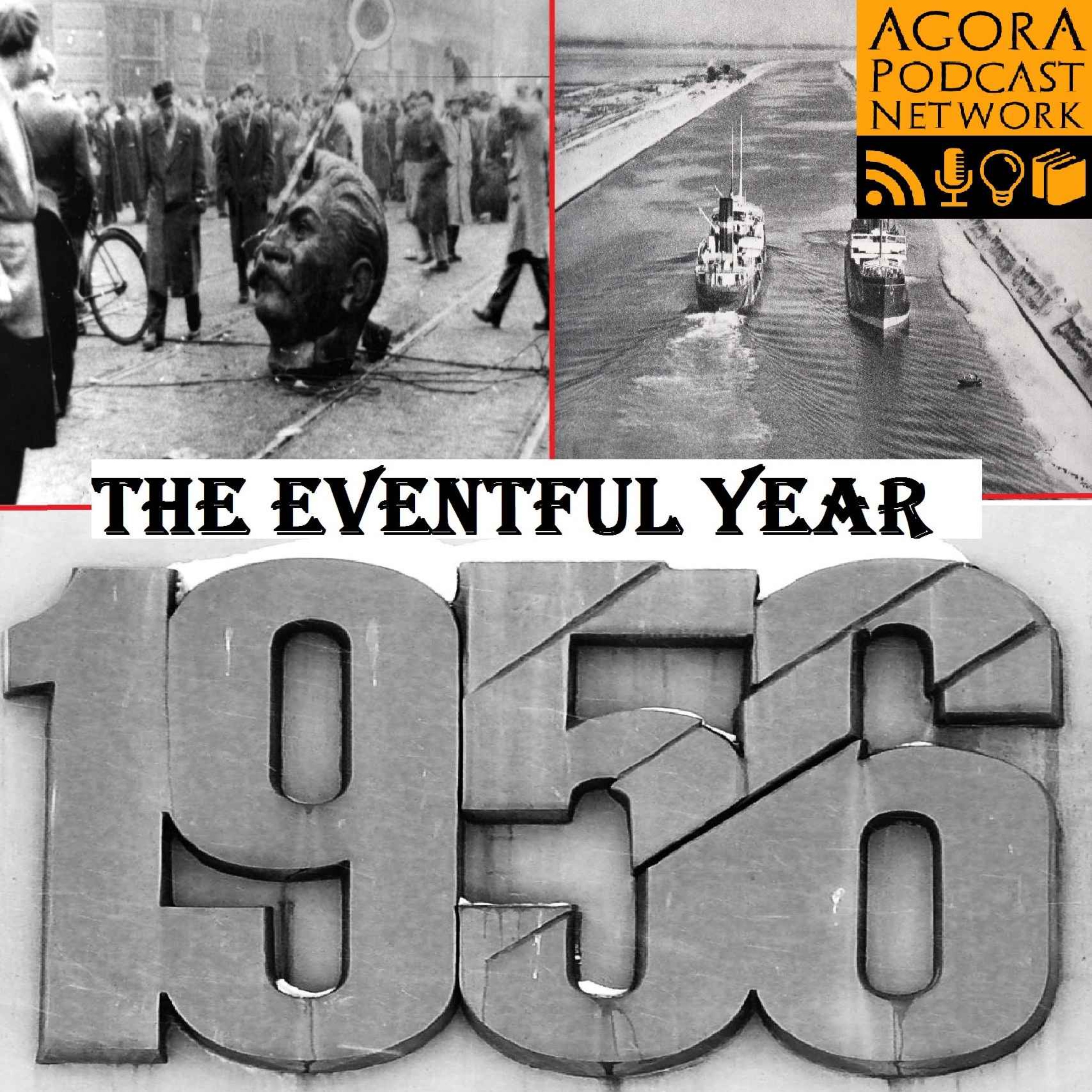
1956 - The Suez Crisis #2.7: Blind Intrigue
1956 Episode 2.7 examines the steps which led towards the military intervention in Egypt, by placing the British behaviour in its imperial context.In spring 1955, Britain remained a premier power in the Middle East, while American representation in that theatre was not particularly impressive, save for the commercial connections which American citizens had with the different oil barons there. In the space of a year though, disquiet in the Middle East and several threats to Britain’s sphere of influence there emerged, crowned by Nasser’s refusal to fall in line. The personality of Anthony Eden stands out during these eventful months, as the veteran Tory statesman appears to have been wholly unable to accept the new status quo, or the rebellious qualities of a once docile corner of the Empire.Even before the nationalisation of the Suez Canal Company, Eden was adamant that Nasser was not to be bargained with, and certainly not to be trusted. Convinced of this view, he sought to make all of his peers – both at home and abroad – come to see it this way as well. Such efforts were not wholly successful, as even following the nationalisation, Eden found to his horror that several of his peers in Government, and particularly the opposition, were not convinced that force needed to be used.Was the nationalisation of the Canal Company really such a big deal, did it really require a war with Egypt? As per the terms of the military plans already made with France, preparations completely out of the view of Parliament were underway. Here Eden followed what was to become his modus operandi during the Crisis – acting with the approval and support of only a few peers, while everyone else was kept in the dark. This policy, while making everything faster, was to prove lethal once everything blew up in Eden’s face… Remember history friends - you can get these episodes ad-free with scripts attached for just $2 a month - for a fiver you can access our PhD Thesis series, so come and nerd out with us! Hosted on Acast. See acast.com/privacy for more information.
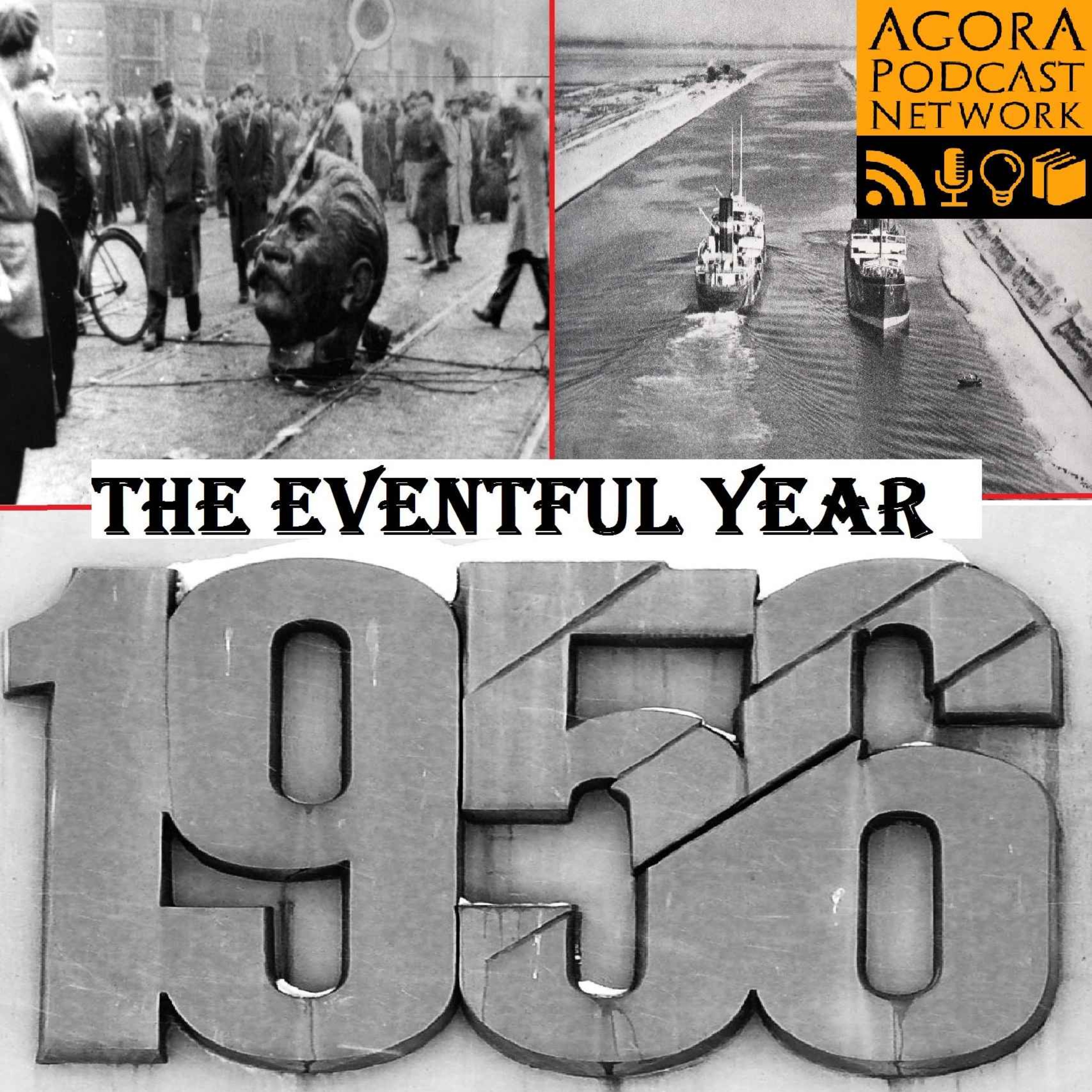
1956 - The Suez Crisis #2.6: The Entente Rides Again!
1956 Episode 2.6 looks at the increasingly close cooperation between Britain and France in light of the signal defeat of Western imperialist ambitions in Egypt.We open our episode with a defining scene – President Nasser’s nationalisation of the Suez Canal. The nationalisation of the Canal was not the moment that the world flocked to condemn Nasser’s regime, as Anthony Eden may have hoped. For a time, the Egyptian leader would be seen as unstable, aggressive and unreasonable, but this bad press would die down as the Egyptians proved themselves very capable in handling the new responsibilities which the Suez Canal Company presented.After convincing himself that the nationalisation of the Canal represented a national humiliation for he and his government, Eden proceeded to cement the Anglo-French commitment in the days that followed. Only 24 hours after the nationalisation occurred, French government ministers and the French premier were talking of travelling to London.Within a week, military plans were being developed. These plans would be carried out by WW2 era weaponry, under WW2 era ideas of strategy, and even in the same secret bunkers under the Thames which had been used by Churchill to plan a resistance to the Nazis. Yet, this latest iteration of the entente cordiale was to prove anything but glorious, since at its heart was the desire to turn back the clock, and preserve the systems and status quo which held the developing world in permanent bondage. This mission was to doom Eden’s career and lead to the deaths of so many lives, and its planning stage began here.Remember history friends - you can get these episodes ad-free with scripts attached for just $2 a month - for a fiver you can access our PhD Thesis series, so come and nerd out with us! Hosted on Acast. See acast.com/privacy for more information.
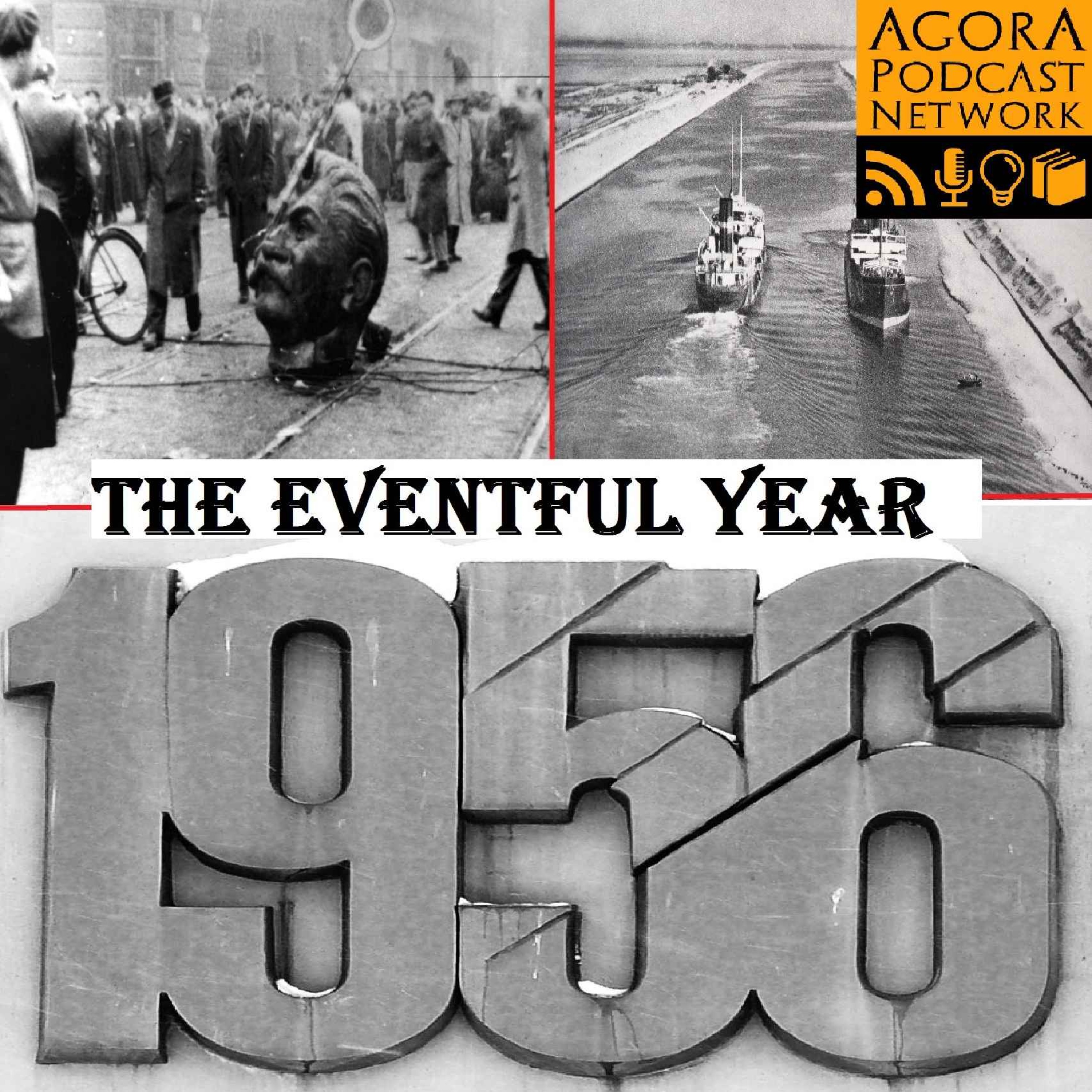
1956 - The Suez Crisis #2.5: Oh No Cairo
1956 Episode 2.5 looks at British commitments in the Middle East, and how setbacks there could massively drag down ideas of British ‘prestige’ in that region.What did the French have to fear from Colonel Nasser, and how did this tie in with later Anglo-French agreements? The answers can be found here. Also of note in this episode is the moment when the Anglo-American loan to Nasser was cancelled, which meant that the Egyptian leader would be unable to construct his Aswan Dam.With this setback for Nasser came Anthony Eden’s effort to paint the event as a personal triumph for himself, when in reality, Britain had been led by the Americans. Speaking of Eden, here we receive our first glimpse of the Prime Minister which suggest that he may not have been the flawless, crusading statesmen of the 1930s, and that he was, on the contrary, exactly what Britain did NOT need right now...Remember history friends - you can get these episodes ad-free with scripts attached for just $2 a month - for a fiver you can access our PhD Thesis series, so come and nerd out with us! Hosted on Acast. See acast.com/privacy for more information.
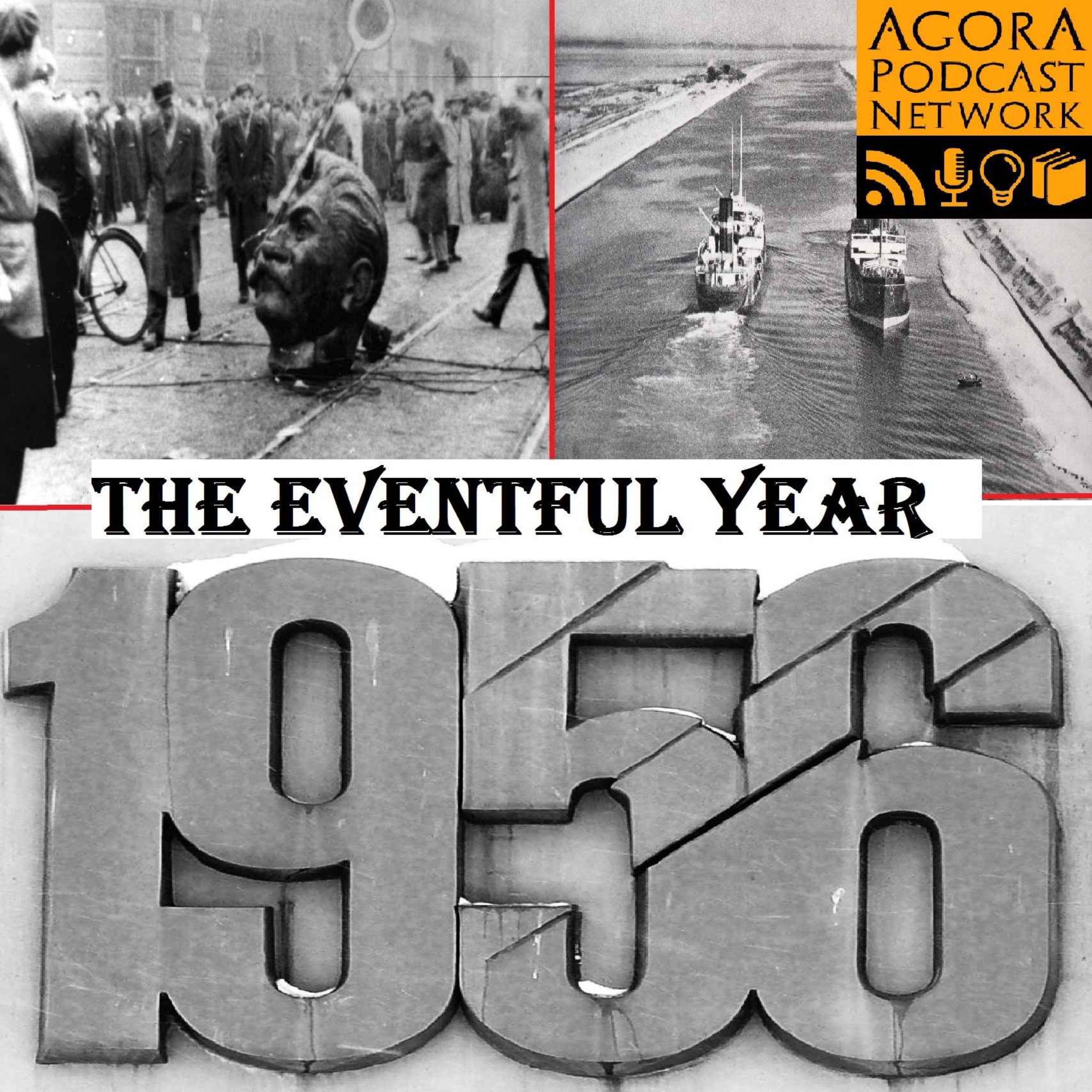
1956 - The Suez Crisis #2.4: Britain Bitten
1956 Episode 2.4 examines Britain's embarrassing and dissatisfying efforts to try and make Egypt see sense.Here we see what kind of Government Anthony Eden led, and how he shook it up, or failed to shake it up, after he assumed the premiership in spring 1955. Anthony may have deserved his turn, but he would quickly exhaust the sense of goodwill he had built up over the years. In spite of his reputation for integrity and bravery when standing up to the appeasement policy of the 1930s, Eden proved wholly ill-equipped for dealing with this strange new world. Emerging from Churchill’s shadow, he felt extra pressures to act as though nothing had changed, and to pursue a Conservative foreign policy mindset as though he was still living in the 1930s.After setting Eden’s premiership in context, we switch gears to President Nasser’s policy. Nasser had great ambitions for his country, and these centred on getting Egypt on track technologically, and fixing the grave problems which geography and poverty presented. The Aswan Dam was a radical solution which would solve these problems in one go. By the construction of this billion dollar project, the Nile could be harnessed, disastrous floods avoided, and the energy of nature made proper use of for industrial purposes. It seemed like the ideal solution, save for the key problem that Nasser lacked the kind of money required to engage in this building project.While he was increasingly turning towards the Soviets for arms, for the moment, he was happy to look to the Anglo-American bankers to put up the funds.The decision of the Americans and British to put up the money for this construction project may seem, in the context of the mid-1950s and especially considering what would follow, like a very odd decision indeed. Yet, as we’ll see, the Aswan Dam was not the investment opportunity which the British had hoped. Instead, once they and the Americans reneged on the deal, it proved to be the nail in the coffin of the already shaky Anglo-Egyptian relationship, and the beginning of a road towards conflict and crisis.Remember history friends - you can get these episodes ad-free with scripts attached for just $2 a month - for a fiver you can access our PhD Thesis series, so come and nerd out with us! Hosted on Acast. See acast.com/privacy for more information.
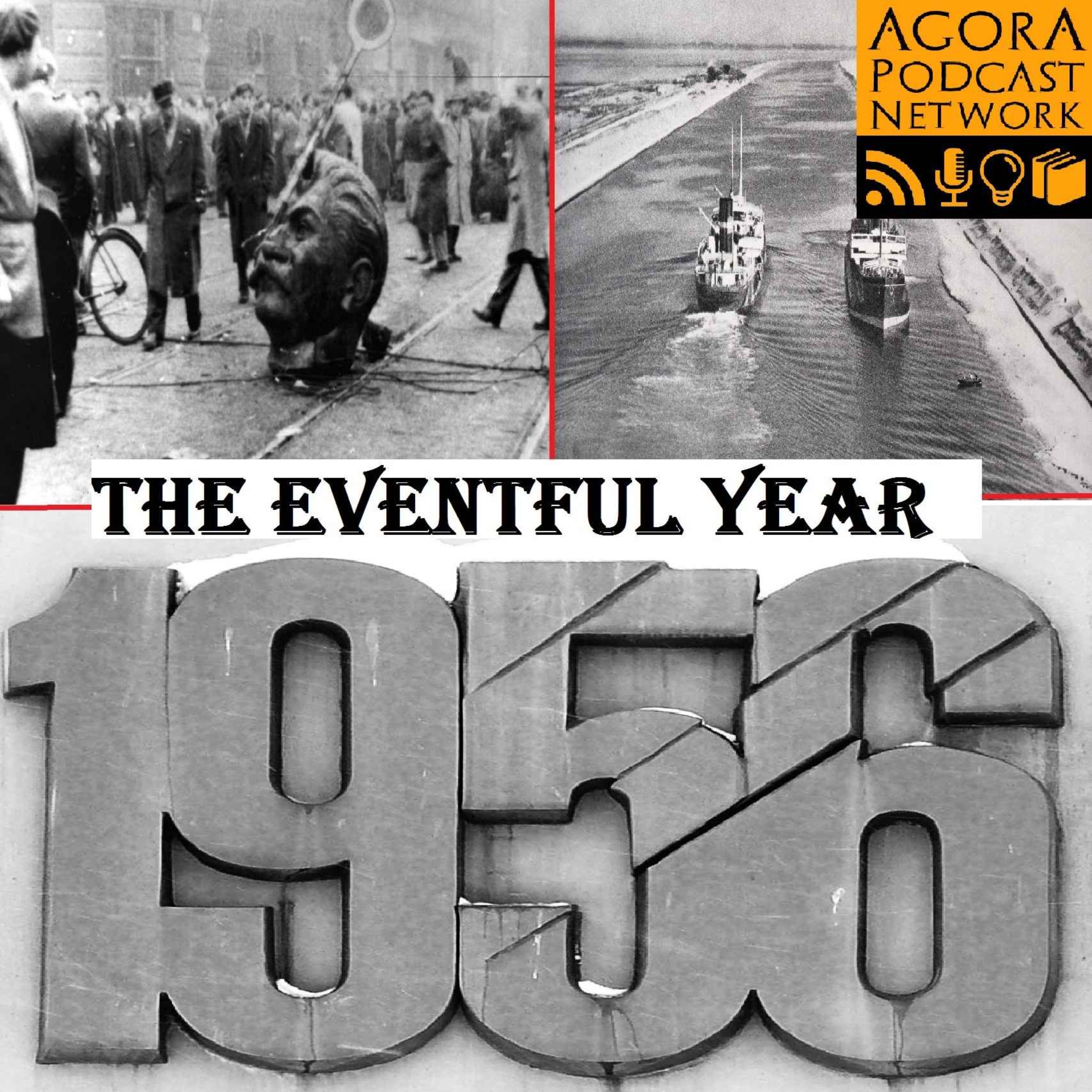
1956 - The Suez Crisis #2.3: Egyptian Conniption
1956 Episode 2.3 examines British views of Suez and Nasser's new Egyptian regime.As the British government underwent a change and waved goodbye to great old men like Churchill, it was clear at the same time that this new government had no intention of changing its imperial tune. Egypt was a place to be held onto, not relinquished; Nasser was a figure to be loathed, rather than cooperated with; British prestige, as much as her long-standing strategic and security interests, depended on holding the Canal. That neither Churchill nor his successor in Anthony Eden proved capable of holding Nasser back speaks volumes about the awakening in Egyptian national consciousness which was beginning in the 1950s.As the men at the top of the coup finished their own struggles and Colonel Nasser surged ahead, it became apparent that Egypt was in something of an ideal position. It had its problems of course, and its legacies of poverty and inequality for days, but it was in an ideal strategic position at the same time. Poised as the link between Africa and the Middle East, Egypt was the crossroads between different worlds. It was also, potentially, a crossroads in the Cold War, but for the moment, Nasser knew that his bread was buttered on its Western side.Before conflict and crisis had their day, negotiation and diplomacy were allowed to flourish in this Anglo-Egyptian relationship. An agreement for policing the Suez Canal and for mobilising it during wartime was signed with the Cairo government. To insulate these deals, a Northern Tier system of alliances with other Middle Eastern states like Jordan, Iran and Iraq was signed. It seemed, at least on some level, that Britain was giving peace a chance. Yet, the more than the Foreign Secretary, and then the PM saw of Nasser’s Egypt, the less he liked. It was impossible to deal with an Egypt that did not seem to know its place, but with every meeting came a painful reminder that all was not as it had once been. The Egyptian puppets were gone, and it was uncomfortably clear that these new Egyptian men pulled their own strings.Remember history friends - you can get these episodes ad-free with scripts attached for just $2 a month - for a fiver you can access our PhD Thesis series, so come and nerd out with us! Hosted on Acast. See acast.com/privacy for more information.