The Thomistic Institute
2,030 episodes — Page 6 of 41
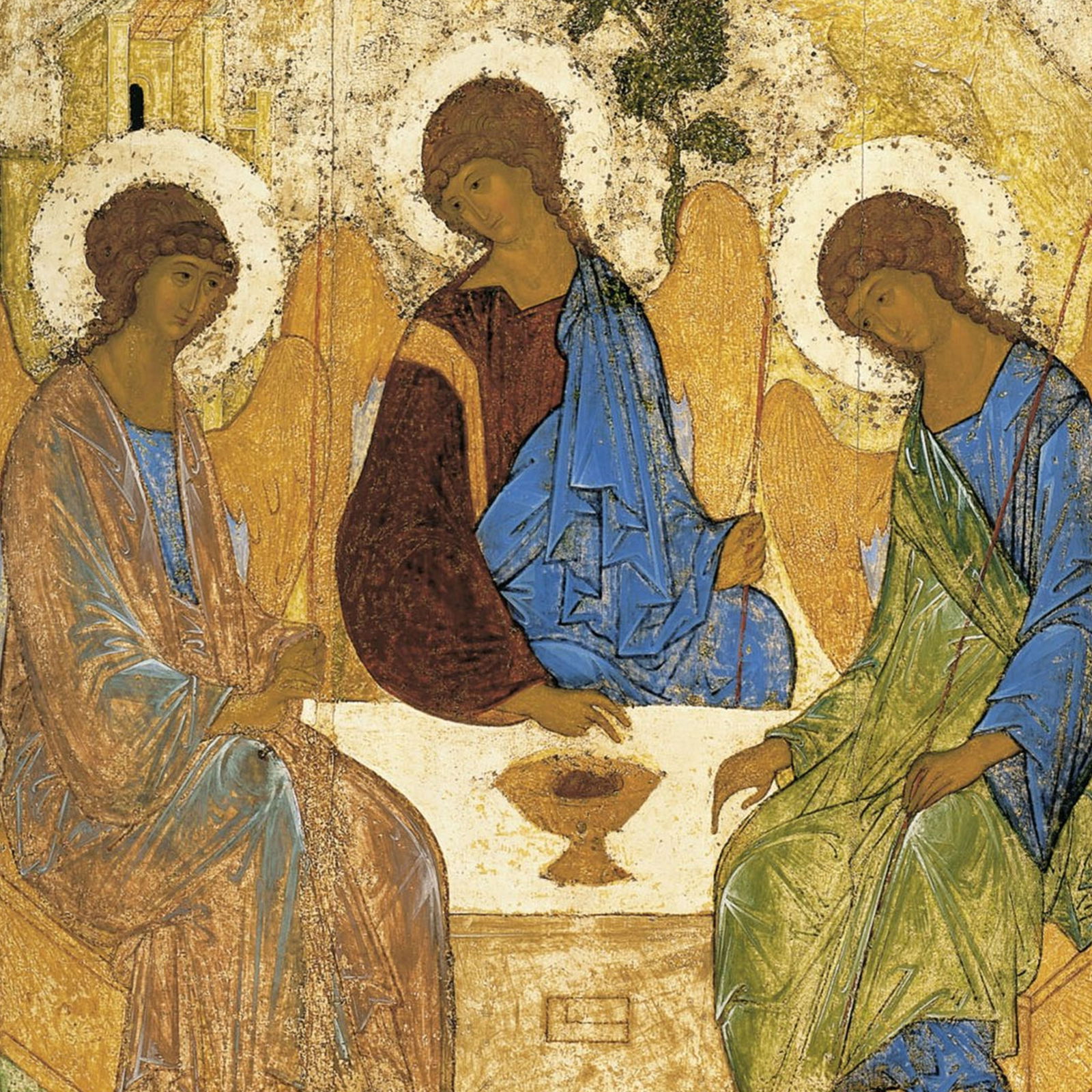
Nicene Trinity, Chalcedonian Christology: Understanding Christ through Councils and Conflicts – Fr. Gregory Pine, O.P.
Fr. Gregory Pine explains Nicene Trinitarian theology and Chalcedonian Christology through key councils and controversies, showing how Christ’s incarnation and union with humanity unveil the path to salvation and divine participation.This lecture was given on September 11th, 2025, at University of Dallas.For more information on upcoming events, visit us at thomisticinstitute.org/upcoming-events.About the Speakers: Fr. Gregory Pine, O.P., is an instructor of dogmatic and moral theology at the Dominican House of Studies and the Assistant Director of the Thomistic Institute. He holds a doctorate from the University of Fribourg (Switzerland). He is the author of Prudence: Choose Confidently, Live Boldly and Your Eucharistic Identity: A Sacramental Guide to the Fullness of Life, and is co-author of Credo: An RCIA Program and Marian Consecration with Aquinas. His writing also appears in Aleteia, Magnificat, and Ascension’s Catholic Classics series. In addition to the TI podcast, he regularly contributes to the podcasts Godsplaining and Pints with Aquinas, and Catholic Classics.Keywords: Chalcedonian Christology, Council Of Chalcedon, Divine Participation, Ecumenical Councils, Exemplar Cause, Homoousios, Hypostatic Union, Incarnational Solidarity, Nicene Theology, Soteriology
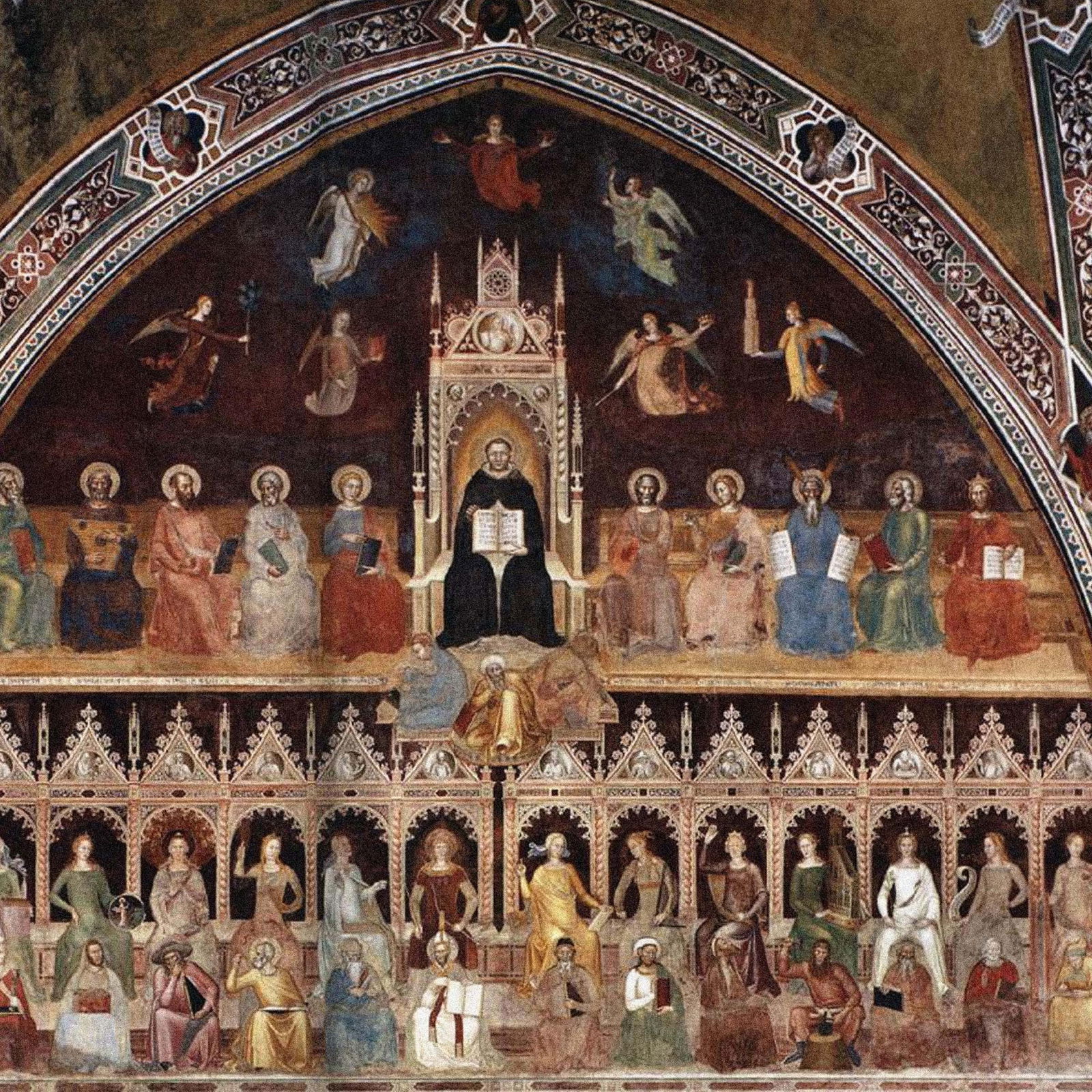
Thomas Aquinas on Intellectual Memory – Fr. Philip-Neri Reese, O.P.
Fr. Philip-Neri Reese examines Thomas Aquinas’s theory of intellectual memory, tracing how Aquinas navigates conflicting authorities and ultimately defends the preservation of intelligible species in the possible intellect.This lecture was given on June 17th, 2025, at Schloss St. Emmeram.For more information on upcoming events, visit us at thomisticinstitute.org/upcoming-events.About the Speakers: Fr. Philip-Neri Reese, O.P. is a Dominican Friar of the Province of St. Joseph and a professor of philosophy at the Pontifical University of St. Thomas (the Angelicum), where he also serves as the assistant director of the Angelicum Thomistic Institute. Though his scholarly research mainly focuses on metaphysics (especially the scholastic metaphysics of St. Thomas and his later interpreters), he has also published on ethics, economics, Christology, and philosophical anthropology.Keywords: Aristotelian Anthropology, Avicennian Epistemology, Habitual Knowledge, Imago Dei, Intellectual Memory, Intelligible Species, Memory, Possible Intellect, Verbal Dispute, Voluntary Cognition
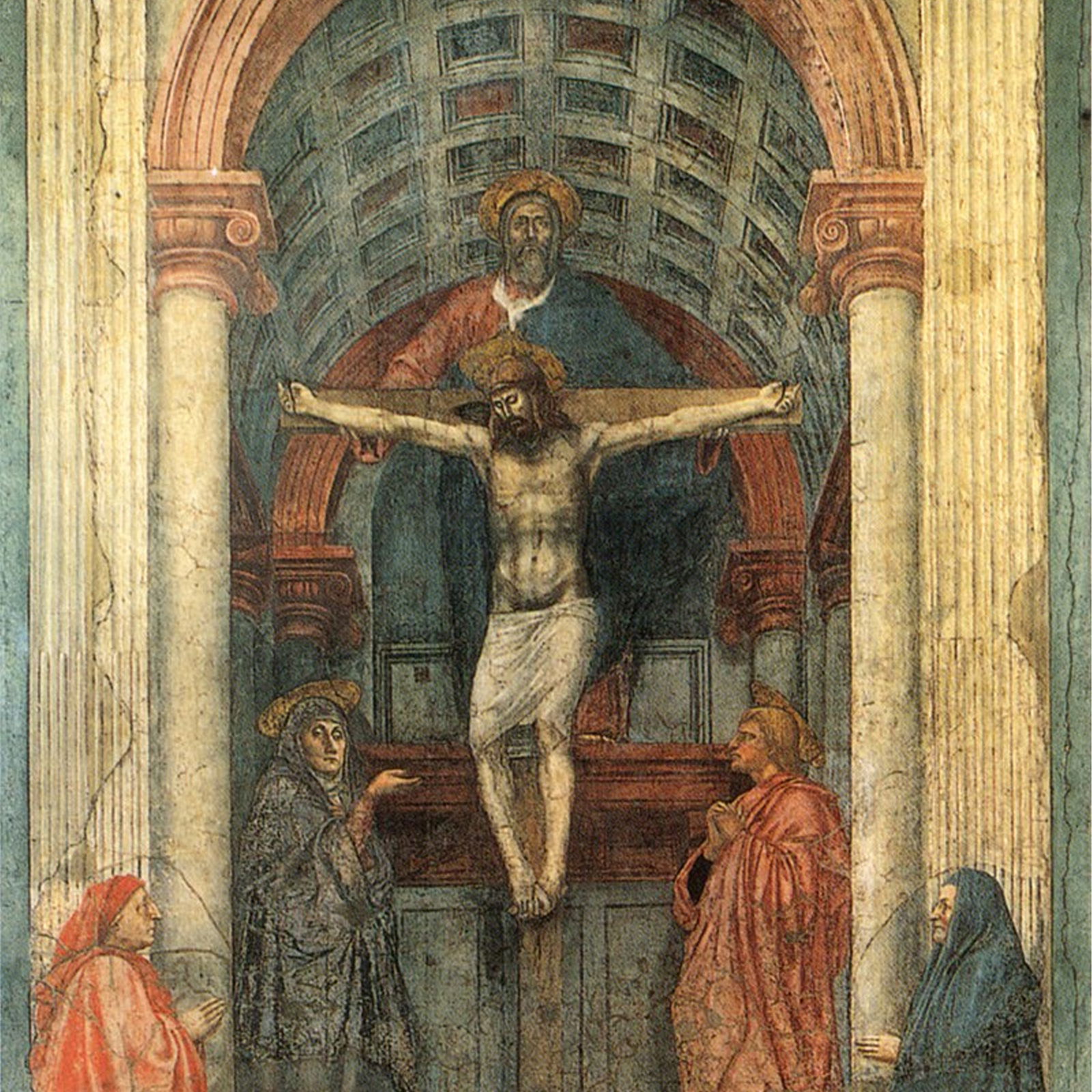
Augustine's Account of Trinitarian Image and Thomas Aquinas – Fr. Reginald Lynch, O.P.
Fr. Reginald Lynch’s lecture explores Augustine’s account of the Trinitarian image and its reception by Aquinas, illuminating how the development of grace, human anthropology, and sacramental life shape the Christian journey toward likeness with God.This lecture was given on June 17th, 2025, at Schloss St. Emmeram.Will you hand on the Faith to those who need it the most? Give by October 31st to film the next season of Aquinas 101! https://aquinas101.thomisticinstitute.org/oct25podcastFor more information on upcoming events, visit us at thomisticinstitute.org/upcoming-events.About the Speakers: Fr. Reginald Lynch is a Dominican priest of the Province of St. Joseph and a faculty member at the Dominican House of Studies in Washington, DC (USA). His research focuses on a range of issues in the History of Christianity area, especially medieval and early modern theology. His most recent work has focused on Aquinas’ reception history in the early-modern West. He has recently completed the book, Aquinas’s Summa Theologiae and Eucharistic Sacrifice in the Early Modern Period (Oxford University Press, 2023), which focuses on Dominican and Jesuit receptions of Aquinas in the sixteenth and early seventeenth centuries. He is also the author of The Cleansing of the Heart: The Sacraments as Instrumental Causes in the Thomistic Tradition (Catholic University of America Press, 2017).Keywords: Aristotelian Categories, De Trinitate, Divine Likeness, Essence And Powers, Habitual Grace, Human Anthropology, Liturgical Virtue, Sacramental Character, Sanctification, Threefold Image
In the Beginning Was the Word: Augustine, Aristotle, and Aquinas – Fr. Dominic Legge, O.P.
Fr. Dominic Legge’s lecture traces the theological development of the concept of the Word through Augustine, Aristotle, and Aquinas, illuminating the evolution of Trinitarian analogy and the nature of human understanding in medieval philosophy.This lecture was given on June 16th, 2025, at Schloss St. Emmeram.Will you hand on the Faith to those who need it the most? Give by October 31st to film the next season of Aquinas 101! https://aquinas101.thomisticinstitute.org/oct25podcastFor more information on upcoming events, visit us at thomisticinstitute.org/upcoming-events.About the Speakers: Fr. Dominic Legge is the President of the Pontifical Faculty of the Immaculate Conception and Associate Professor in Systematic Theology at the Pontifical Faculty of the Immaculate Conception in Washington, D.C. He is an Ordinary Member of the Pontifical Academy of St. Thomas Aquinas, and holds a J.D. from Yale Law School, a Ph.L. from the School of Philosophy of the Catholic University of America, and a doctorate in Sacred Theology from the University of Fribourg in Switzerland. He entered the Order of Preachers in 2001, after having practiced constitutional law for several years as a trial attorney for the U.S. Department of Justice. He has also taught at The Catholic University of America Law School and at Providence College. He is the author of The Trinitarian Christology of St. Thomas Aquinas (Oxford University Press, 2017).Keywords: Albert The Great, Aristotelian Abstraction, Bonaventure, Illumination, Intellectual Procession, Inner Word, Marius Victorinus, Medieval Trinitarian Debates, Philosophical Cognition, Plotinus
Memory, Intellect, and Will: The 13th Century Reception of Augustine – Dr. Albert von Thurn und Taxis
Dr. Albert von Thurn und Taxis explores the 13th-century reception of Augustine’s account of memory, intellect, and will, analyzing how medieval philosophers navigated the tension between Augustinian and Aristotelian models of the rational soul.This lecture was given on June 15th, 2025, at Schloss St. Emmeram.Will you hand on the Faith to those who need it the most? Give by October 31st to film the next season of Aquinas 101! https://aquinas101.thomisticinstitute.org/oct25podcastFor more information on upcoming events, visit us at thomisticinstitute.org/upcoming-events.About the Speakers: Dr. Albert von Thurn und Taxis is the twelfth Prince of Thurn und Taxis and the current head of the Princely House. Born in Regensburg in 1983, his academic career reflects a diverse range of studies across economics, theology, and philosophy.Prince Albert completed his early education in Regensburg and at the German School in Rome. He went on to study economics and theology at the University of Edinburgh, graduating with a Master of Arts in 2008. He further honed his financial expertise by training as a chartered financial analyst in Zurich from 2008 to 2010. He later returned to Rome to pursue philosophy, earning a doctorate in 2022 from the Pontificia Universitas Studiorum a Sancto Thoma Aquinate in Urbe (Pontifical University of St. Thomas Aquinas). His research interests touch on morality and agency, evident in his publication, "John Stuart Mill and the Criterion of Morality: The Good, the Self and the Other" (2011), and his Licentiate Thesis, "Triumph of the Will? Rationality and Freedom in Aquinas' Theory of Agency" (2014).He is also a member of several other noble and religious orders, including the Royal Order of Saint George for the Defence of the Immaculate Conception (2005) and an honorary knight of the Sovereign Order of Malta (2010).Keywords: Albert The Great, Aristotelian Anthropology, Augustinian Triad, Faculty Psychology, Human Rationality, Imago Dei, Medieval Controversies, Memory Intellect And Will, Philosophical Anthropology, Trinitarian Psychology
Catholic Culture with Tolkien – Prof. Patrick Callahan
Prof. Patrick Callahan explores the living tradition of Catholic culture, using Tolkien’s life and imagination to demonstrate how the Mass, community, and cultivation of virtue form a unified Christian identity resilient amidst modern challenges.This lecture was given on January 18th, 2024, at University of Washington.Will you hand on the Faith to those who need it the most? Give by October 31st to film the next season of Aquinas 101! https://aquinas101.thomisticinstitute.org/oct25podcastFor more information on upcoming events, visit us at thomisticinstitute.org/upcoming-events.About the Speakers:Prof. Patrick Callahan is director of the Newman Institute for Catholic Thought & Culture as well as Assistant Professor of English and Humanities at St. Gregory the Great Seminary. There he directs and teaches in a Great Books Catholic program for students at the University of Nebraska-Lincoln and other regional colleges. He did his undergraduate work at the University of Dallas and his graduate work at Fordham University in Classics. He lives in Lincoln, NE with his wife and 5 children.Keywords: Catholic Culture, Community Tradition, Cultural Standardization, Evelyn Waugh, Incarnational Liturgy, Intellectual Virtue, Justice And Temperance, Letters Of Tolkien, Mustard Seed Metaphor, Sacramental Imagination

Flannery O'Connor and the Perils of Governing By Tenderness – Dr. Jerome Foss
Dr. Jerome Foss uses Flannery O’Connor’s stories to warn against the pitfalls of governing by abstract tenderness, advocating for a vision rooted in faith, realism, and the transformative power of suffering.This lecture was given on February 12th, 2025, at University of Illinois Urbana-Champaign.For more information on upcoming events, visit us at thomisticinstitute.org/upcoming-events.About the Speakers:Jerome C. Foss is Professor of Politics, Endowed Director of the Center for Catholic Thought and Culture, and Director of the SVC Core Curriculum at Saint Vincent College in Latrobe, Pennsylvania. Foss earned his BA from the University of Dallas and his MA and PhD from Baylor University. His research focuses on Catholic political thought, American political thought, and literature and political philosophy. His most recent book, Flannery O'Connor and the Perils of Governing by Tenderness, brings these interests together. He has also published on the history of political philosophy, the U.S. Constitution, Constitutional Law, James Madison, and Abraham Lincoln. He is currently working on a scholarly book on the first ten amendments to the Constitution (commonly known as the Bill of Rights) and a book for a more general Catholic audience on the Declaration of Independence. Foss enjoys teaching a variety of courses, including courses on the Constitutional Convention and Shakespeare as a political thinker. As Director of the CCTC, Foss helps administer the college's Benedictine Leadership Studies Program, has developed and led the colleges summer program in Rome, founded and edits an academic journal entitled Conversatio, and organizes conferences, seminars, and other events.Keywords: Abstract Tenderness, Alexis De Tocqueville, Christian Vision, Evil And Suffering, Flannery O’Connor, Moral Clarity, Nihilism, Real Presence, Storytelling Vocation, Theological Realism
Newman and Tolkien: The Humility of (Hi)story – Prof. Giuseppe Pezzini
Prof. Giuseppe Pezzini explores the biographical and spiritual connections between Newman and Tolkien, revealing how their shared organic vision of historical development and renewal challenges modern tensions between nostalgia, progress, and Christian identity.This lecture was given on March 27th, 2025, at University of Edinburgh.Will you hand on the Faith to those who need it the most? Give by October 31st to film the next season of Aquinas 101! https://aquinas101.thomisticinstitute.org/oct25podcastFor more information on upcoming events, visit us at thomisticinstitute.org/upcoming-events.About the Speakers: Giuseppe Pezzini is Associate Professor in Latin at Corpus Christi College, Oxford, which he joined in 2021, after five beautiful years of teaching in St Andrews (2016–2021), and research fellowships at Magdalen College Oxford (2013–2015) and the Institute for Advanced Study in Princeton (2016). He worked as an assistant editor for the Oxford Dictionary of Medieval Latin, and has published especially on Latin language and literature, philosophy of language, and the theory of fiction, ancient and modern. He is the Tolkien Editor for the Journal of Inklings Studies, one the founders of the Oxford Tolkien Network, and the author of many publications on Tolkien, including a forthcoming monograph on Tolkien’s literary theory (Cambridge University Press). He is also a member of the Young Academy of Europe, an Associate Member at the Institute of Theology, Imagination and the Arts at the University of St Andrews, and has published and curated exhibitions on John Henry Newman (2011, 2014) and Oscar Wilde (2015).Keywords: Birmingham Oratory, Decline And Renewal, Historical Change, J.R.R. Tolkien, John Henry Newman, Organic Vision Of History, Sacred Memory, Seed And Tree Symbolism, Spiritual Influence, Vatican II
Psalms, Hymns, and Spiritual Canticles: Gregorian Chant and the Joy of the Gospel – Fr. Innocent Smith, O.P.
Fr. Innocent Smith’s lecture illuminates how Gregorian Chant, rooted in Psalms, hymns, and spiritual canticles, enriches Catholic liturgy by shaping Christian spirituality and expressing the deep joy of the Gospel through sung prayer.This lecture was given on April 10th, 2025, at Clemson University.For more information on upcoming events, visit us at thomisticinstitute.org/upcoming-events.About the Speakers: Innocent Smith, O.P., is Assistant Professor of Theology at the University of Notre Dame. After undergraduate studies in music and philosophy at Notre Dame, he entered the Order of Preachers in 2008 and was ordained priest in 2015. Fr. Innocent served in parish ministry for several years before completing a doctorate in liturgical studies at the University of Regensburg in 2021. After teaching for several years in Baltimore and Washington, DC, he joined the Department of Theology in 2025. His research focuses on the material and musical aspects of medieval liturgical books as well as the relationship between liturgy and theology. His monograph Bible Missals and the Medieval Dominican Liturgy explores medieval manuscripts of the Bible that also contain liturgical texts for the celebration of Mass.Keywords: Biblical Canticles, Christian Liturgy, Ecclesiastical Music, Eucharistic Thanksgiving, Gregorian Chant, Liturgical Solemnity, Psalms Of David, Sacramental Joy, St. Augustine, Sung Prayer
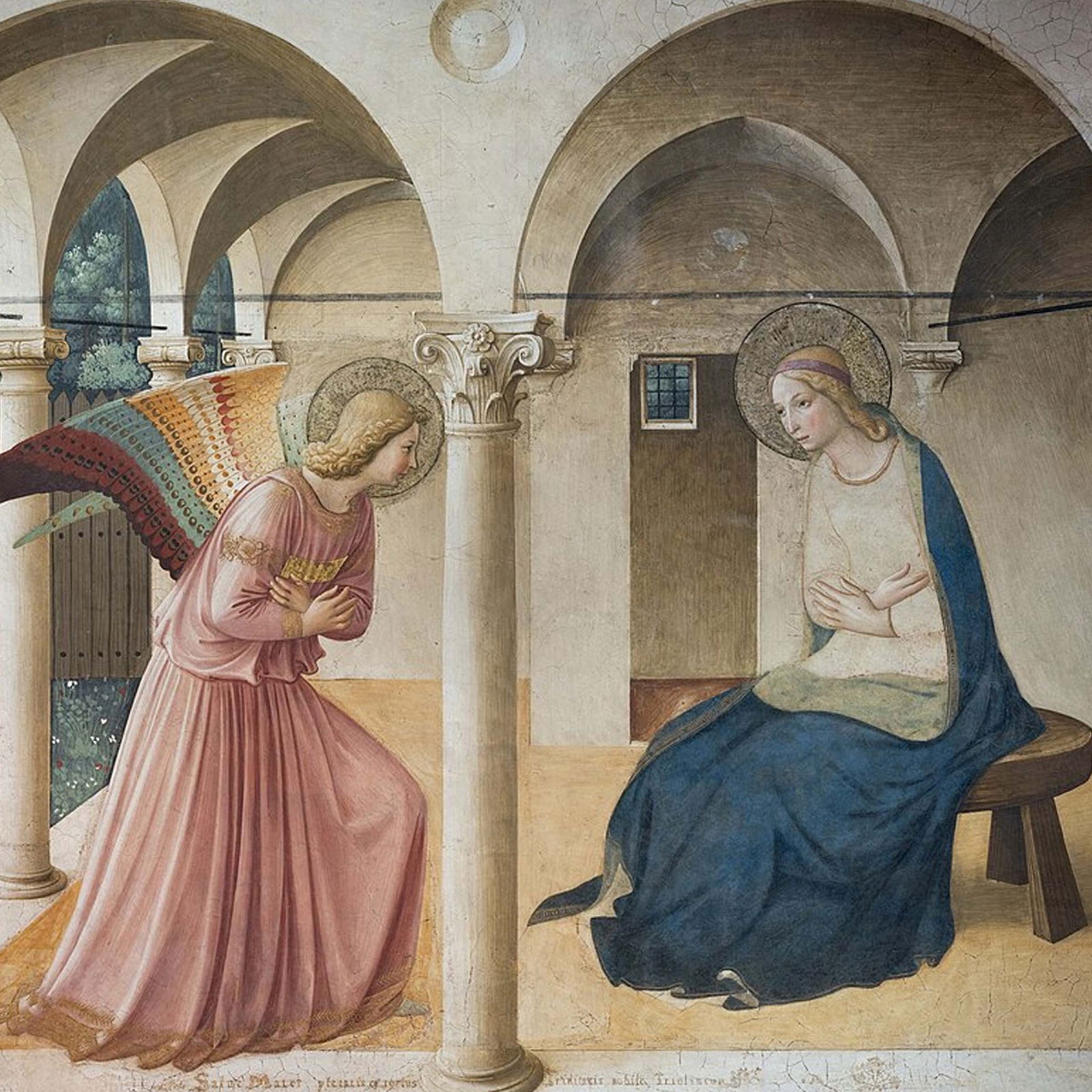
The Incarnation and the Machine: The Visions of Fra Angelico and Le Corbusier – Fr. Irenaeus Dunlevy O.P.
Fr. Irenaeus Dunlevy's lecture contrasts the incarnational vision of Fra Angelico with Le Corbusier’s machine aesthetic, revealing how Christian art and architecture communicate spiritual beauty, theological wisdom, and the presence of Christ through the transformation of physical space.This lecture was given on March 14th, 2025, at Rhode Island School of Design.Will you hand on the Faith to those who need it the most? Give by October 31st to film the next season of Aquinas 101! https://aquinas101.thomisticinstitute.org/oct25podcastFor more information on upcoming events, visit us at thomisticinstitute.org/upcoming-events.About the Speakers: Fr. Irenaeus Dunlevy, O.P. is a Coordinator for Campus Outreach at the Thomistic Institute in Washington, DC. He has served as a parochial vicar at St. Pius V Church in Providence, RI, as well as an adjunct professor and assistant chaplain at Providence College. He originates from Columbus, OH, studied architecture in Virginia and Switzerland, and practiced in the DC area before entering the Order of Preachers in 2013. He was ordained a priest in 2020 at the Dominican House of Studies during the quarantine. In his work with the Thomistic Institute, he has given talks on the virtue of penance, loving God with the mind, and the intersection of theology and architecture. He often travels the country visiting Thomistic Institute Campus Chapters, leading seminars that help students grasp Thomistic concepts. Additionally, he coordinates the TI's intellectual retreat programming, which affords students time to pray and integrate into their lives Thomistic theology and philosophy. Keywords: Art And Spirituality, Beauty And Incarnation, Christian Architecture, Conceptual Art, Letter To Artists, Marie-Alain Couturier, Minimalism, Religious Pedagogy, Sacramental Presence, San Marco Frescoes
Beyond but Not Against Nature: How Grace Perfects and Transforms Nature – Fr. Cajetan Cuddy, O.P.
Fr. Cajetan Cuddy explores the relationship between grace and nature, demonstrating how grace perfects, transforms, and preserves the continuity of human nature without destroying its fundamental reality.This lecture was given on July 20th, 2025, at Dominican House of Studies.Will you hand on the Faith to those who need it the most? Give by October 31st to film the next season of Aquinas 101! Visit aquinas101.thomisticinstitute.org/oct25podcast.For more information on upcoming events, visit us at thomisticinstitute.org/upcoming-events.About the Speakers: Fr. Cajetan Cuddy, O.P., is a priest of the Dominican Province of St. Joseph. He serves as the general editor of the Thomist Tradition Series, and he is co-author of Thomas and the Thomists: The Achievement of St. Thomas Aquinas and His Interpreters. He has written for numerous publications on the philosophy and theology of St. Thomas Aquinas and the Thomist Tradition.Keywords: Accident and Substance, Divine Revelation, Grace and Nature, Human Nature, Obediential Potency, Original Justice, Philosophy and Theology, Prime Matter, Salvation, Supernatural Finality
How the Highest of the Inanimate Touches the Lowest of the Living: A Contemporary Thomistic Approach – Fr. Thomas Davenport, O.P.
Fr. Thomas Davenport examines the philosophical and scientific boundaries between the inanimate and the living, highlighting how Thomistic principles, spontaneous generation, and structured homogeneity offer new ways to understand life’s emergence and complexity.This lecture was given on July 19th, 2025, at Dominican House of Studies.For more information on upcoming events, visit us at thomisticinstitute.org/upcoming-events.About the Speakers: Fr. Thomas Davenport, O.P., is professor of philosophy at the Pontifical University of St. Thomas Aquinas in Rome, where he teaches philosophy of nature and epistemology. He has written and spoken on the relationship of faith and science in a variety of venues, including being a main contributor to the Thomistic Evolution project. He was ordained to the priesthood in 2017 and is working on his second PhD in philosophy. Keywords: Abiogenesis, Aristotle’s Four Elements, Biological Complexity, David Oderberg, Emergence, Homogeneity, Integral Parts, Scala Natura, Spontaneous Generation, Structured Elementarity
The Measure of All Things? Rethinking Constants and Replicability in the Life Sciences – Prof. Santiago Schnell
Prof. Santiago Schnell’s lecture examines the challenges of measurement, scientific constants, and replicability in the life sciences, highlighting how philosophical and mathematical models are crucial for advancing biological research.This lecture was given on July 19th, 2025, at Dominican House of Studies.Will you hand on the Faith to those who need it the most? Give by October 31st to film the next season of Aquinas 101! https://aquinas101.thomisticinstitute.org/oct25podcastFor more information on upcoming events, visit us at thomisticinstitute.org/upcoming-events.About the Speakers: Santiago Schnell, is a Venezuelan-born mathematical biologist and academic leader known for his pioneering work in quantitative biology and enzyme kinetics, including the development of the Schnell-Mendoza equation. After earning his biology degree from Universidad Simón Bolívar and his doctorate at the University of Oxford, he held faculty positions at Indiana University and the University of Michigan, where he chaired the Department of Molecular & Integrative Physiology. Since 2021, Schnell has served as the William K. Warren Foundation Dean of the College of Science at the University of Notre Dame, where he is also a professor of Biological Sciences and Applied & Computational Mathematics & Statistics. His research focuses on mathematical modeling of complex biomedical systems, and he is a fellow of the AAAS, Royal Society of Biology, and Royal Society of Chemistry.Keywords: Error Analysis, Enzyme Kinetics, Experimental Design, Mathematical Modeling, Measurement Uncertainty, Michaelis Constant, Philosophy Of Science, Replicability, Reproducibility Crisis, Standard Equation
The Plasma Membrane: Boundary and Bridge at the Edge of Life – Prof. Keith Kozminski
Prof. Keith Kozminski explores the plasma membrane’s evolving scientific understanding, highlighting its role as both boundary and bridge in cellular life through detailed analysis of structure, function, and paradigm shifts in biology.This lecture was given on July 19th, 2025, at Dominican House of Studies.For more information on upcoming events, visit us at thomisticinstitute.org/upcoming-events.About the Speakers: Keith Kozminski is an Associate Professor of Biology and Cell Biology at the University of Virginia, where he studies polarized cell growth, in particular the role of lipid transfer proteins in intracellular membrane trafficking and secretion. In addition, he conducts research in the field of synthetic biology, as applied to health and environmental sustainability. He leads the Mid-Atlantic Synthetic Biology Network comprised of academic, private sector, and government researchers from Georgia to Delaware, in addition to being the senior Features editor of Molecular Biology of the Cell, the research journal of the American Society of Cell Biology. He also co-founded the biotech company Ourobio in 2020.Keywords: Abbe’s Resolution Limit, Cell Biology, Compartmentalized Fluid Model, Electron Microscopy, Gordon Grendel Experiment, Lipid Bilayers, Membrane Transport, Phospholipids, Protein Structure, Singer Nicholson Model
Thomistic Wisdom for the Pilgrimage to God – Prof. John Cuddeback
Prof. John Cuddeback presents Thomistic wisdom for the pilgrimage to God emphasizing the importance of cleaving to the final end—God—as the ultimate rule and measure of all actions, fostering order and peace in the spiritual journey.This lecture was given on June 28th, 2025, at Dominican House of Studies.Will you hand on the Faith to those who need it the most? Give by October 31st to film the next season of Aquinas 101! https://aquinas101.thomisticinstitute.org/oct25podcastFor more information on upcoming events, visit us at thomisticinstitute.org/upcoming-events.About the Speakers: John A. Cuddeback, PhD, is professor of Philosophy at Christendom College, where he has taught for thirty years. He lectures widely on topics including friendship, fatherhood, virtue, homesteading, and household. His professional writings appear in various academic journals and books, and his book True Friendship was republished by Ignatius Press. His podcasts, blogging, and courses at LifeCraft are renowned for applying a timeless wisdom to life today.Keywords: Blessed Columba Marmion, Divine Order, Final End, Holiness, Human Fulfillment, Rule Of Life, St. Catherine Of Siena, St. Thomas Aquinas, Spiritual and Material Goods, Wisdom
Thomistic Wisdom for the Pilgrimage to God – Prof. Paige Hochschild
Prof. Paige Hochschild explores Thomistic wisdom for the pilgrimage to God, focusing on the virtues required for spiritual journey, the meanings of patience, hope, and memory, and the role of Dante’s Divine Comedy in illuminating the challenges and fulfillment of the pilgrim’s quest.This lecture was given on June 28th, 2025, at Dominican House of Studies.For more information on upcoming events, visit us at thomisticinstitute.org/upcoming-events.About the Speakers:Dr. Paige Hochschild is a professor of historical and systematic theology at Mount St. Mary's University (MD), specializing in Augustine, Thomas Aquinas and the early Church. She also teaches philosophy courses at the Seminary at Mount St. Mary's. She has written a book on the place of memory in Augustine's theological anthropology, and publishes on the Church, education, tradition, and 20th Century theological debates within the Church (scripture, history, marriage). Keywords: Contrition, Dante Alighieri, Divine Fulfillment, Fear and Faith, Fortitude, Homo Viator, Memory, Patience and Hope, Pope St. Gregory the Great, The Divine Comedy
Must Beautiful Things be Natural? – Prof. Raymond Hain
Prof. Raymond Hain examines whether beauty must be natural, exploring Thomistic metaphysics, twentieth-century debates between Maritain and Gilson, and contemporary examples from architecture and literature to probe the relationship between nature, artifice, and the beautiful.This lecture was given on May 31st, 2025, at Mount Saint Mary College.Will you hand on the Faith to those who need it the most? Give by October 31st to film the next season of Aquinas 101! https://aquinas101.thomisticinstitute.org/oct25podcastFor more information on upcoming events, visit us at thomisticinstitute.org/upcoming-events.About the Speakers:Raymond Hain is Associate Professor of Philosophy and Associate Director of the Humanities Program at Providence College in Providence, RI. Educated at Christendom College, the University of Notre Dame, and the University of Oxford, he is the founder of the PC Humanities Forum and Humanities Reading Seminars and is responsible for the strategic development of the Humanities Program into a vibrant, world class center of teaching, research, and cultural life dedicated to the Catholic Intellectual Tradition. His scholarly interests include the history of ethics (especially St. Thomas Aquinas), applied ethics (especially medical ethics and the ethics of architecture), Alexis de Tocqueville, and philosophy and literature (especially Catholic aesthetics). His work has been supported by the National Endowment for the Humanities, the Templeton Foundation, the Gladys Krieble Delmas Foundation, and the Charles Koch Foundation. His essays have appeared in various journals and collections including The Thomist, International Journal of Applied Philosophy, and The Anthem Companion to Tocqueville. He is the editor of Beyond the Self: Virtue Ethics and the Problem of Culture and is currently working on a monograph titled The Lover and the Prophet: An Essay in Catholic Aesthetics. He joined Providence College in 2011 and lives just across the street with his wife Dominique and their five children.Keywords: Aesthetics, Art and Imitation, Christopher Alexander, Clarity And Proportion, Creative Intuition, Etienne Gilson, Integration and Wholeness, Jacques Maritain, Smith of Wootton Major, Thomistic Metaphysics
Are Societies Natural? The Metaphysics of Thomistic Social Thought – Prof. Joshua Hochschild
Prof. Joshua Hochschild examines whether societies are natural by tracing the Aristotelian and Thomistic understanding of social forms, arguing that certain social bodies like families and states have intrinsic natures and purposes that fulfill the social aspect of human flourishing.This lecture was given on May 31st, 2025, at Mount Saint Mary College.For more information on upcoming events, visit us at thomisticinstitute.org/upcoming-events.About the Speakers:Joshua Hochschild is Professor of Philosophy at Mount St. Mary’s University, where he also served six years as the inaugural Dean of the College of Liberal Arts. His primary research is in medieval logic, metaphysics, and ethics, with broad interest in liberal education and the continuing relevance of the Catholic intellectual tradition. He is the author of The Semantics of Analogy: Rereading Cajetan’s De Nominum Analogia (2010), translator of Claude Panaccio’s Mental Language: From Plato to William of Ockham (2017), and co-author of A Mind at Peace: Reclaiming an Ordered Soul in the Age of Distraction (2017). His writing has appeared in First Things, Commonweal, Modern Age and the Wall Street Journal. For 2020-21 he served as President of the American Catholic Philosophical Association.Keywords: Alasdair MacIntyre, Aristotelianism, Catholic Social Teaching, Civil Society, Common Good, Community, Corporate Personality, Moral Agency, Politics, Subsidiarity
Are the Virtues Natural? – Fr. John Sica, O.P.
Fr. John Sica explores whether virtues are natural by examining Aristotle and Aquinas, ultimately concluding that the virtues are not innate qualities, but are rather habituated character states that perfect human nature.This lecture was given on May 31st, 2025, at Mount Saint Mary College.Will you hand on the Faith to those who need it the most? Give by October 31st to film the next season of Aquinas 101! https://aquinas101.thomisticinstitute.org/oct25podcastFor more information on upcoming events, visit us at thomisticinstitute.org/upcoming-events.About the Speakers:Fr. John Sica, O.P. is an Assistant Professor of Philosophy at Providence College. KeywoAristotelianism, Ethics, Gerard Manley Hopkins, Habits And Dispositions, Human Flourishing, Metaphysics, Morality, Nicomachean Ethics, Rational Powers, Virtue Theory
From Nature to Norm: How to Derive 'Ought' From 'Is' – Prof. Catherine Peters
Prof. Catherine Peters addresses the philosophical question of deriving moral 'ought' from descriptive 'is', arguing from a Thomistic natural law perspective that the essence of human nature grounds objective moral norms, bridging fact and value through teleology and reason.This lecture was given on May 30th, 2025, at Mount Saint Mary College.Will you hand on the Faith to those who need it the most? Give by October 31st to film the next season of Aquinas 101! https://aquinas101.thomisticinstitute.org/oct25podcastFor more information on upcoming events, visit us at thomisticinstitute.org/upcoming-events.About the Speakers:Catherine Peters is an associate professor of medieval philosophy at Loyola Marymount University in Los Angeles, California. Her work centers on issues of philosophical anthropology, metaphysics, and natural theology. She is passionate about translating medieval thought into modern terms and applying its insights to perennial questions such as “Who am I?” “What should I do?” and “Is there a God?” A frequent presenter in both the United States and Europe, her scholarship has been published in numerous volumes and journals, including The Thomist, New Blackfriars, National Catholic Bioethics Quarterly, The Journal of Islamic Philosophy, European Journal for the Study of Thomas Aquinas, Lex Naturalis, and Jesuit Higher Education. When not in the classroom, she can often be found in local coffee shops, at the dog park, or in a HIIT class. Keywords: Anthropology, Eternal Law, Humean Empiricism, Law and Morality, Natural Law, Naturalistic Fallacy, Practical Reason, Rational Animal, Teleology, Treatise of Human Nature
The Natural and the Artificial – Prof. Christopher Frey
Prof. Christopher Frey examines the distinctions and interactions between natural and artificial entities, showing how art can complete, imitate, or even subvert nature within Aristotelian and Thomistic frameworks.This lecture was given on May 30th, 2025, at Mount Saint Mary College.For more information on upcoming events, visit us at thomisticinstitute.org/upcoming-events.About the Speakers: Christopher Frey is currently the McFarlin Professor of Philosophy at The University of Tulsa. Prof. Frey works primarily in Ancient Greek philosophy, especially Aristotle’s natural philosophy and metaphysics. He also works in contemporary philosophy of perception and mind and has written extensively on the relationship between the intentionality and phenomenality of perceptual experience.Keywords: Agriculture, Anthropocentrism, Aristotelianism, City-Building, Completion of Nature, External Principle, Homonymy, Natural Substance, Republic, Techne
Nature's Cheat Codes? On the Course of Nature and its Laws – Prof. John G. Brungardt
Prof. John Brungardt explores the concept of laws of nature as partial transcriptions of the natures of physical substances, emphasizing the interplay between philosophical tradition, scientific discovery, and metaphysical causality.This lecture was given on May 30th, 2025, at Mount Saint Mary College.Will you hand on the Faith to those who need it the most? Give by October 31st to film the next season of Aquinas 101! https://aquinas101.thomisticinstitute.org/oct25podcastFor more information on upcoming events, visit us at thomisticinstitute.org/upcoming-events.About the Speakers: John G. Brungardt is an associate professor of philosophy at the School of Catholic Studies at Newman University.As a philosopher, Catholic layman, and Dominican tertiary, his studies, teaching, and scholarship aim at continuing the philosophical tradition of St. Thomas Aquinas, Aristotle, and their heirs. He attempts to bring their insights into meaningful dialogue with modern theories. His central interests lie in the philosophy of nature, the philosophy of science, as well as the philosophy of technology.Keywords: Aristotelianism, Causality, Course of Nature, Divine Providence, Experimental Science, Human Reason, Metaphysics, Scholasticism, Scientific Laws, The Consolation of Philosophy

Aquinas on Nature and the Natural: Form and the Scale of 'Esse' – Fr. Raymund Snyder, O.P.
Fr. Raymund Snyder explores Thomas Aquinas’s metaphysics of nature, form, and the scale of being, emphasizing the integration of Aristotelian and Neoplatonic traditions and the unique Christian vision of creation, essence, and intellect.This lecture was given on May 29th, 2025, at Mount Saint Mary College.For more information on upcoming events, visit us at thomisticinstitute.org/upcoming-events.About the Speakers: Fr. Raymund Snyder, O.P. is the Director of Campus Programs and Evangelization for the Thomistic Institute. He grew up in Wichita, Kansas and studied philosophy and classics at the University of Notre Dame. He entered the Order of Preachers in 2010 and was ordained a priest in 2016. He recently completed a licentiate in philosophy at the Catholic University of America. His academic interests include Metaphysics, Natural Theology, and Neoplatonism.Keywords: Aristotelianism, Christian Distinction, Creation, Divine Names, Essence and Esse, Metaphysics, Natural Law, Neoplatonism, On the Nature of Man, Scale of Being
Aquinas on Nature and the Natural: Endoxa and Principles – Fr. Raymund Snyder, O.P.
Fr. Raymund Snyder explores the foundations of nature, natural philosophy, and metaphysics through a Thomistic lens, with special attention to Aristotelian principles, correlative pairs, and the interplay of form, substance, act, and potency in philosophical and theological discussion.This lecture was given on May 29th, 2025, at Mount Saint Mary College.For more information on upcoming events, visit us at thomisticinstitute.org/upcoming-events.About the Speakers: Fr. Raymund Snyder, OP is the Director of Campus Programs and Evangelization for the Thomistic Institute. He grew up in Wichita, Kansas and studied philosophy and classics at the University of Notre Dame. He entered the Order of Preachers in 2010 and was ordained a priest in 2016. He recently completed a licentiate in philosophy at the Catholic University of America. His academic interests include Metaphysics, Natural Theology, and Neoplatonism.Keywords: Act And Potency, Aristotelian Natural Philosophy, Aristotle, Beauty And Philosophy, Correlative Pairs, Endoxa, Essence And Being, Gerard Manley Hopkins, Metaphysics, Motion And Change
Usefulness and Elegance in Mathematics – Prof. Meraiah Martinez
Prof. Meraiah Martinez explores the beauty and usefulness of mathematics, emphasizing the delight mathematicians find in elegant proofs, structured abstractions, and the interplay between pure and applied mathematics across various fields.This lecture was given on July 18th, 2025, at Dominican House of Studies.For more information on upcoming events, visit us at thomisticinstitute.org/upcoming-events.About the Speakers: Meraiah Martinez grew up moving between California and Colorado and graduated from BC in 2019. She received her M.S. (2021) and Ph.D. (2023) in mathematics from the University of Nebraska-Lincoln. Meraiah’s primary research area is coding theory, although she greatly enjoys combinatorics, cryptography, and graph theory, as well. In her free time, she enjoys reading and making a variety of things from yarn.Keywords: Algebra, Applied Mathematics, Coding Theory, Differential Equations, Euler’s Equation, Four Color Theorem, Pure Mathematics, Quadratic Formula, Susceptible Infectious Recovered Model, Topology
How Planetary Science Unifies the Search for Life Beyond Earth – Prof. Jonathan I. Lunine
Prof. Jonathan Lunine explains how planetary science unifies the search for life beyond Earth by integrating astronomy, geology, chemistry, and atmospheric science to investigate habitable environments on Mars, Europa, Enceladus, Titan, and exoplanets.This lecture was given on July 18th, 2025, at Dominican House of Studies.For more information on upcoming events, visit us at thomisticinstitute.org/upcoming-events.About the Speakers: Jonathan Lunine is the Chief Scientist at NASA’s Jet Propulsion Laboratory and Professor of Planetary Science at Caltech in Pasadena, California. Beforehand, he was the David C. Duncan Professor in the Physical Sciences and Chair of the Department of Astronomy at Cornell University. Lunine is interested in how planets form and evolve, what processes maintain and establish habitability, and what kinds of exotic environments (methane lakes, etc.) might host a kind of chemistry sophisticated enough to be called "life". He pursues these interests through theoretical modeling and participation in spacecraft missions. He is co-investigator on the Juno mission now in orbit at Jupiter, using data from several instruments on the spacecraft, and on the MISE and gravity science teams for the Europa Clipper mission. He was on the Science Working Group for the James Webb Space Telescope, focusing on characterization of extrasolar planets and Kuiper Belt objects. Lunine has contributed to concept studies for a wide range of planetary and exoplanetary missions. Lunine is a member of the National Academy of Sciences and has participated in or chaired a number of advisory and strategic planning committees for the Academy and for NASA.Keywords: Astrobiology, Biosignatures, Enceladus, Europa, Exoplanets, Habitability, James Webb Space Telescope, Mars Exploration, Planetary Science, Titan
Nicolaus Steno and the Intersection of Disciplines in the Scientific Revolution – Prof. Nuno Castel-Branco
Prof. Nuno Castel-Branco examines Nicolaus Steno’s innovative use of focused interdisciplinarity during the Scientific Revolution, tracing Steno’s groundbreaking shift from anatomy to geology and theology by integrating mathematics, mechanical philosophy, and collaboration across European scientific circles.This lecture was given on July 17th, 2025, at Dominican House of Studies.For more information on upcoming events, visit us at thomisticinstitute.org/upcoming-events.About the Speakers: Prof. Nuno Castel-Branco is a historian of early modern culture and science. He is especially interested in the social and intellectual interactions between disciplines such as physics, medicine, and theology in early modern Europe and its global expansion. He is currently concluding a book about the emergence of the new sciences in seventeenth-century Europe through the fascinating career of Nicolaus Steno. He argues that Steno’s greatest innovation was introducing methods and ideas from various disciplines, especially mathematics, and chymistry, into anatomy. Undergirding this variety of approaches was Steno’s ability to forge friendships with scholars, princes, artisans, and women. I use Steno’s career to uncover novel interactions between science and religion. His second project aims to improve our historical knowledge of how mathematicians, anatomists, and patrons cooperated in the early 1600s. This project builds upon his previous research on early modern Italy and the Iberian oceanic expansion. He is also interested in science and religion, for which he currently co-organizing two workshops at the Max Planck in Berlin. Keywords: Anatomy, Epicureanism, Euclidean Geometry, Fossils, Galileo, Geology, Jesuit Mathematicians, Mathematics, Steno’s Laws of Stratigraphy, Theology
Dividing and Relating the Sciences in Aquinas – Fr. Philip-Neri Reese, O.P.
Fr. Philip-Neri Reese analyzes Aquinas’s method for dividing and relating the sciences, clarifying the distinction between speculative and practical sciences, the role of material and formal causes, and the concept of mixed or subalternated sciences.This lecture was given on July 17th, 2025, at Dominican House of Studies.For more information on upcoming events, visit us at thomisticinstitute.org/upcoming-events.About the Speakers: Fr. Philip-Neri Reese is a Dominican friar of the Province of St Joseph and a Professor of Philosophy at the Pontifical University of St.Thomas (Angelicum) in Rome. He is also the principal investigator for the Angelicum Thomistic Institute’s new Project on Philosophy and the Thomistic Tradition. He received his Licentiate in Philosophy from the Catholic University of America in 2015 and his Doctorate in Philosophy from the University of Notre Dame in 2022. From 2015-2017 he taught philosophy at Providence College in Providence, RI. His main area of research is metaphysics and anything adjacent to it, with a special emphasis on the metaphysical thought of St. Thomas Aquinas and its subsequent reception and interpretation. His publications, however, range widely, including articles on philosophical anthropology, ethics, and economics. He is also an enthusiast of classical Indian philosophy. Fr Philip-Neri is a member of the American Philosophical Association, the Society for Medieval and Renaissance Philosophy, the Aquinas and the Arabs International Working Group, the Society for Medieval and Renaissance Thomism, and is currently serving on the executive committee of the American Catholic Philosophical Association.Keywords: Aristotelianism, Causality, Formal and Material Division, Intellectual Virtues, Mathematics, Metaphysics, Mixed Sciences, Natural Philosophy, Practical Sciences, Summa Theologiae
Aquinas and the Basic Principles of the Material World – Prof. Michael Gorman
Prof. Michael Gorman explores Aquinas’s foundational philosophy of the material world, detailing key concepts such as the four causes, hylomorphism, act and potency, matter and form, and the distinction between substantial and accidental change.This lecture was given on July 17th, 2025, at Dominican House of Studies.For more information on upcoming events, visit us at thomisticinstitute.org/upcoming-events.About the Speakers: Michael Gorman is Professor of Philosophy at The Catholic University of America in Washington, D.C. He has doctorates in philosophy and theology, and his work covers both areas, with a special emphasis on metaphysical themes. He is the author of over thirty-five scholarly articles, a book entitled Aquinas on the Metaphysics of the Hypostatic Union (Cambridge University Press, 2017), and a book that will appear in the spring of 2024 entitled A Contemporary Introduction to Thomistic Metaphysics (The Catholic University of America Press, 2024).Keywords: Act and Potency, Aristotle, Final Causality, Hylomorphism, Matter and Form, Metaphysics, Natural Philosophy, Prime Matter, Nicomachean Ethics, Substantial Change
How Many Friends Should I Have? I Fr. Aquinas Guilbeau, O.P.
Fr. Aquinas Guilbeau explores the nature, value, and varieties of friendship in Christian and philosophical tradition, highlighting the importance of cultivating friendships of pleasure, utility, and virtue for a fulfilling human and spiritual life.This lecture was given on November 5th, 2023, at Dominican House of Studies.For more information on upcoming events, visit us at thomisticinstitute.org/upcoming-events.About the Speakers: A native of Louisiana, Fr. Aquinas Guilbeau, O.P., entered the Dominican Province of St. Joseph in 2005. After several years of pastoral work in New York City, Fr. Guilbeau began doctoral studies in moral theology at the University of Fribourg, where he completed a dissertation on St. Thomas Aquinas’s doctrine of the common good. Currently, Fr. Guilbeau serves as the University Chaplain and Vice President for Ministry and Mission at The Catholic University of America.Keywords: Anaxagoras, Aristotle, Beatitude, Christian Friendship, Incarnation, Nicomachean Ethics, Saint Basil the Great, Saint Elred of Rivaux, Saint Gregory Nazianzen, Three Kinds of Friendship
Dating Like Mr. Darcy I Dr. John-Paul Heil
Dr. John-Paul Heil investigates how virtuous courtship, compassionate secrecy, and sexual difference—as presented in Jane Austen’s novels—are essential for discerning authentic love and practicing self-giving in Catholic romance.This lecture was given on April 22nd, 2025, at United States Naval Academy.For more information on upcoming events, visit us at thomisticinstitute.org/upcoming-events.About the Speakers: John-Paul Heil is a Core Fellow in history, philosophy, Catholic anthropology, English, and theology at Mount St. Mary's University. He received his Ph.D. in history from the University of Chicago and is pursuing an MBA in marketing. He has received multiple awards from the U.S. and Italian Fulbright commissions. His writing has appeared in Time, Smithsonian, The Week, and Los Angeles Review of Books. He is the books editor at the University of Pennsylvania's Dappled Things.Keywords: Charity, Compassionate Secrecy, Culture, Feminine Genius, Henry Crawford, Masculine Genius, Mansfield Park, Romance, Sexual Difference, Pride and Prejudice
What is Wisdom and Why Do We Need It? I Fr. Irenaeus Dunlevy, O.P.
In this lecture, Fr. Irenaeus Dunlevy explains how wisdom—philosophical, theological, and mystical—transcends mere technical knowledge and, therefore, is able to orient man's action toward divine truth and human flourishing.This lecture was given on May 2nd, 2025, at Dominican House of Studies.For more information on upcoming events, visit us at thomisticinstitute.org/upcoming-events.About the Speakers: Fr. Irenaeus Dunlevy, OP is a Coordinator for Campus Outreach at the Thomistic Institute in Washington, DC. He has served as a parochial vicar at St. Pius V Church in Providence, RI, as well as an adjunct professor and assistant chaplain at Providence College. He originates from Columbus, OH, studied architecture in Virginia and Switzerland, and practiced in the DC area before entering the Order of Preachers in 2013. He was ordained a priest in 2020 at the Dominican House of Studies during the quarantine. In his work with the Thomistic Institute, he has given talks on the virtue of penance, loving God with the mind, and the intersection of theology and architecture. He often travels the country visiting Thomistic Institute Campus Chapters, leading seminars that help students grasp Thomistic concepts. Additionally, he coordinates the TI's intellectual retreat programming, which affords students time to pray and integrate into their lives Thomistic theology and philosophy. Keywords: Aristotelianism, Charity, Ethics, Gaudium et Spes, Human Dignity, Liberal Arts, Metaphysics, Summa Theologiae, Technology, Wisdom Literature
The Happiness of Human Limitations I Fr. Gregory Pine, O.P.
In this lecture, Fr. Gregory Pine explores how true happiness is discovered by accepting and embracing the limits and commitments inherent to human life, rather than escaping them. This lecture was given on February 15th, 2025, at Dominican House of Studies.For more information on upcoming events, visit us at thomisticinstitute.org/upcoming-events.About the Speakers: Fr. Gregory Pine, O.P., is an instructor of dogmatic and moral theology at the Dominican House of Studies and the Assistant Director of the Thomistic Institute. He holds a doctorate from the University of Fribourg (Switzerland). He is the author of Prudence: Choose Confidently, Live Boldly and Your Eucharistic Identity: A Sacramental Guide to the Fullness of Life, and is co-author of Credo: An RCIA Program and Marian Consecration with Aquinas His writing also appears in Aleteia, Magnificat, and Ascension’s Catholic Classics series. In addition to the TI podcast, he regularly contributes to the podcasts Godsplaining and Pints with Aquinas, and Catholic Classics.Keywords: Abnegation, Community, Divine Hierarchy, Ethics, Human Flourishing, Hylomorphism, Limitations, Mystical Body, Stanley Hauerwas, The Pulley
12 (Thomistic) Rules for Managing Appearances and Making Yourself Miserable I Sr. Anna Wray, O.P.
Sr. Anna Wray, redefines leadership as the practice of initiating genuine collaboration by rational wishing, deliberation, and action, exposing twelve common pitfalls that distort true agency and offering practical guidance for more authentic, freeing teamwork and spiritual growth.This lecture was given on June 26th, 2025, at Dominican House of Studies.For more information on upcoming events, visit us at thomisticinstitute.org/upcoming-events.About the Speakers: Sister Anna Wray is a native of Connecticut and a member of the Dominican Sisters of Saint Cecilia of Nashville, TN. Sister received her PhD in philosophy from The Catholic University of America, having written her dissertation on Aristotle’s account of the activity of contemplation. Sister is an assistant professor on the faculty of CUA's School of Philosophy in Washington, DC, where she regularly teaches courses in rhetoric, philosophy of religion, and philosophical psychology. She is also an adjunct professor for Aquinas College, where she teaches metaphysics and epistemology to her sisters in formation. Her research and conversational interests include imagination and attention in human agency and speech, the effects of technology on human agency, and form as function and unifying activity.Keywords: Accountability, Agency, Aristotle, Collaboration, Emotional Connection, Leadership, Politics, Practical Wisdom, Rest, Virtue
The TI and Your Vocation I Fr. Gregory Pine, O.P.
Fr. Gregory Pine discusses how involvement with the Thomistic Institute can help college students integrate faith, virtue, and personal vocation by fostering self-possession, authentic freedom, and meaningful relationships within campus life.This lecture was given on June 27th, 2025, at Dominican House of Studies.Secular campuses are being transformed, but the students need your help! Your gift before September fifteenth can launch a new TI chapter and change lives. Visit thomisticinstitute.org/bts25podcast to give today!For more information on upcoming events, visit us at thomisticinstitute.org/upcoming-events.About the Speaker:Fr. Gregory Pine, O.P. is an adjunct professor of dogmatic theology at the Dominican House of Studies and an Assistant Director of the Thomistic Institute. He is the author of a few books including Prudence: Choose Confidently, Live Boldly. His writing also appears in Ascension’s Catholic Classics, Magnificat, and Aleteia. He is a regular contributor to the podcasts Pints with Aquinas, Catholic Classics, The Thomistic Institute, and Godsplaining.Keywords: Commitment, Community, Eleanor Stump, Freedom, Personal Vocation, Secular Universities, Self-Gift, Self-Possession, Spiritual Growth, Wandering in Darkness
Why Becoming More Philosophical is a Good Idea I Prof. Michael Gorman
Prof. Michael Gorman demonstrates why becoming more philosophical is essential for intellectual autonomy and deeper understanding, emphasizing the importance of fundamental questioning, sustained attention, and personal intellectual effort over dependence on artificial intelligence.This lecture was given on June 27th, 2025, at Dominican House of Studies.Secular campuses are being transformed, but the students need your help! Your gift before September fifteenth can launch a new TI chapter and change lives. Visit thomisticinstitute.org/bts25podcast to give today!For more information on upcoming events, visit us at thomisticinstitute.org/upcoming-events.About the Speakers: Michael Gorman is Professor of Philosophy at The Catholic University of America in Washington, D.C. He has doctorates in philosophy and theology, and his work covers both areas, with a special emphasis on metaphysical themes. He is the author of over thirty-five scholarly articles, a book entitled Aquinas on the Metaphysics of the Hypostatic Union (Cambridge University Press, 2017), and a book that will appear in the spring of 2024 entitled A Contemporary Introduction to Thomistic Metaphysics (The Catholic University of America Press, 2024). Keywords: Artificial Intelligence, Attention, Autonomy, Critical Thinking, Digital Minimalism, Education, Intellectual Virtue, Philosophy of Science, Revelation, Technology and Learning
Technology In Our Relationship With God I Fr. Anselm Ramelow, O.P.
Fr. Anselm Ramelow examines how technology shapes and reflects our relationship with God, cautioning against both idolizing technology and seeking salvation through it, while affirming its proper role as an instrument serving man's chosen ends.This lecture was given on June 11th, 2025, at Dominican House of Studies.Secular campuses are being transformed, but the students need your help! Your gift before September fifteenth can launch a new TI chapter and change lives. Visit thomisticinstitute.org/bts25podcast to give today!For more information on upcoming events, visit us at thomisticinstitute.org/upcoming-events.About the Speakers: Fr. Anselm Ramelow, O.P., a native of Germany, teaches philosophy at the Dominican School of Philosophy and Theology in Berkeley, California, where he is also currently the chair of the philosophy department. He is also a member of the Core Doctoral Faculty at the Graduate Theological Union in Berkeley and the Academy of Catholic Theology. He obtained his doctorate under Robert Spaemann in Munich on Leibniz and the Spanish Jesuits (Gott, Freiheit, Weltenwahl, Leiden: E. J. Brill, 1997) and did theological work on George Lindbeck and the question of a Thomist philosophy and theology of language (Beyond Modernism? - George Lindbeck and the Linguistic Turn in Theology, Neuried: Ars Una 2005). Other works include Thomas Aquinas: De veritate Q. 21-24; Translation and Commentary (Hamburg: Meiner, 2013) and God: Reason and Reality (Basic Philosophical Concepts) (Munich: Philosophia Verlag, 2014), as editor and contributor. Articles appeared in Historisches Wörterbuch der Philosophie, Archiv für Begriffsgeschichte, Nova et Vetera, American Catholic Philosophical Quarterly and Angelicum. Areas of research and teaching include Free Will, the History of Philosophy and Philosophical Aesthetics. He has worked on a philosophical approach to Miracles and other topics of the philosophy of religion, and more recently the philosophy of technology. Keywords: Divinization of Technology, Ethics, Idolatry, Incarnation, Liturgy, Makers, Materialism, Sacramentality, Spirituality, Virtual Reality
Insight, Idolatry, and AI I Prof. Jordan Wales
Prof. Jordan Wales examines how AI-aided decision making and bias in fields like medicine and criminal justice risk reducing human engagement to idolatrous control, urging that technology must serve authentic love and responsibility rather than replace genuine insight and ethical discernment.This lecture was given on June 11th, 2025, at Dominican House of Studies.Secular campuses are being transformed, but the students need your help! Your gift before September fifteenth can launch a new TI chapter and change lives. Visit thomisticinstitute.org/bts25podcast to give today!For more information on upcoming events, visit us at thomisticinstitute.org/upcoming-events.About the Speakers: Jordan Wales is Associate Professor and John and Helen Kuczmarski Chair in Theology at Hillsdale College, where he teaches historical theology. His scholarship—appearing in journals such as Augustinian Studies, the Journal of Moral Theology, and AI & Society—focuses on early Christianity as well as theology and Artificial Intelligence. Holding degrees in Engineering (B.S.), Cognitive Science (M.Sc.), and Theology (Dip.Theol., M.T.S., Ph.D.), he is a member of the AI Research Group for the Centre for Digital Culture, under the Dicastery of Culture and Education at the Holy See; a fellow of the International Society for Science and Religion; and a fellow of the Centre for Humanity and the Common Good.Keywords: AI Bias, Decision Making, Ethics, Idolatry, Insight, Medicine, Neural Networks, Predictive Policing, Responsibility, Technology
Predictive AI, Manipulation, and Human Freedom According to Aquinas I Fr. Anselm Ramelow, O.P.
Fr. Anselm Ramelow explores the tension between predictive artificial intelligence and human freedom, drawing on St. Thomas Aquinas to argue that while AI and social systems can influence and predict behavior to a certain degree, genuine free will and moral responsibility remain grounded in rational deliberation and virtue.This lecture was given on June 12th, 2025, at Dominican House of Studies.Secular campuses are being transformed, but the students need your help! Your gift before September fifteenth can launch a new TI chapter and change lives. Visit thomisticinstitute.org/bts25podcast to give today!For more information on upcoming events, visit us at thomisticinstitute.org/upcoming-events.About the Speakers: Fr. Anselm Ramelow, O.P., a native of Germany, teaches philosophy at the Dominican School of Philosophy and Theology in Berkeley, California, where he is also currently the chair of the philosophy department. He is also a member of the Core Doctoral Faculty at the Graduate Theological Union in Berkeley and the Academy of Catholic Theology. He obtained his doctorate under Robert Spaemann in Munich on Leibniz and the Spanish Jesuits (Gott, Freiheit, Weltenwahl, Leiden: E. J. Brill, 1997) and did theological work on George Lindbeck and the question of a Thomist philosophy and theology of language (Beyond Modernism? - George Lindbeck and the Linguistic Turn in Theology, Neuried: Ars Una 2005). Other works include Thomas Aquinas: De veritate Q. 21-24; Translation and Commentary (Hamburg: Meiner, 2013) and God: Reason and Reality (Basic Philosophical Concepts) (Munich: Philosophia Verlag, 2014), as editor and contributor. Articles appeared in Historisches Wörterbuch der Philosophie, Archiv für Begriffsgeschichte, Nova et Vetera, American Catholic Philosophical Quarterly and Angelicum. Areas of research and teaching include Free Will, the History of Philosophy and Philosophical Aesthetics. He has worked on a philosophical approach to Miracles and other topics of the philosophy of religion, and more recently the philosophy of technology. Keywords: Algorithmic Manipulation, Autonomy, Behaviorism, Free Will, Human Freedom, John Paul II, Prediction, Rational Deliberation, Surveillance Capitalism, Virtue Ethics
AI and Interpersonal Relationships I Prof. Jordan Wales
Prof. Jordan Wales explores the ethical and spiritual implications of interpersonal relationships with artificial intelligence, emphasizing the dangers of mistaking AI’s simulated personhood for authentic human connection.This lecture was given on June 11th, 2025, at Dominican House of Studies.Secular campuses are being transformed, but the students need your help! Your gift before September fifteenth can launch a new TI chapter and change lives. Visit thomisticinstitute.org/bts25podcast to give today!For more information on upcoming events, visit us at thomisticinstitute.org/upcoming-events.About the Speakers: Jordan Wales is Associate Professor and John and Helen Kuczmarski Chair in Theology at Hillsdale College, where he teaches historical theology. His scholarship—appearing in journals such as Augustinian Studies, the Journal of Moral Theology, and AI & Society—focuses on early Christianity as well as theology and Artificial Intelligence. Holding degrees in Engineering (B.S.), Cognitive Science (M.Sc.), and Theology (Dip.Theol., M.T.S., Ph.D.), he is a member of the AI Research Group for the Centre for Digital Culture, under the Dicastery of Culture and Education at the Holy See; a fellow of the International Society for Science and Religion; and a fellow of the Centre for Humanity and the Common Good.Keywords: Augustinian Theology, Empathy, Ethics, Idolatry, Interpersonal Relationships, John Paul II, Personhood, Pride, Simulated Personhood, Technology and Spirituality

AI and Ethics I Fr. Anselm Ramelow, O.P.
Fr. Anselm Ramelow examines the ethical challenges of artificial intelligence, highlighting both its beneficial uses and its risks to human dignity, personal relationships, moral growth, and authenticity.This lecture was given on June 10th, 2025, at Dominican House of Studies.For more information on upcoming events, visit us at thomisticinstitute.org/upcoming-events.About the Speakers: Fr. Anselm Ramelow, O.P., a native of Germany, teaches philosophy at the Dominican School of Philosophy and Theology in Berkeley, California, where he is also currently the chair of the philosophy department. He is also a member of the Core Doctoral Faculty at the Graduate Theological Union in Berkeley and the Academy of Catholic Theology. He obtained his doctorate under Robert Spaemann in Munich on Leibniz and the Spanish Jesuits (Gott, Freiheit, Weltenwahl, Leiden: E. J. Brill, 1997) and did theological work on George Lindbeck and the question of a Thomist philosophy and theology of language (Beyond Modernism? - George Lindbeck and the Linguistic Turn in Theology, Neuried: Ars Una 2005). Other works include Thomas Aquinas: De veritate Q. 21-24; Translation and Commentary (Hamburg: Meiner, 2013) and God: Reason and Reality (Basic Philosophical Concepts) (Munich: Philosophia Verlag, 2014), as editor and contributor. Articles appeared in Historisches Wörterbuch der Philosophie, Archiv für Begriffsgeschichte, Nova et Vetera, American Catholic Philosophical Quarterly and Angelicum. Areas of research and teaching include Free Will, the History of Philosophy and Philosophical Aesthetics. He has worked on a philosophical approach to Miracles and other topics of the philosophy of religion, and more recently the philosophy of technology. Keywords: Autonomy, Deskilling, Empathy, Ethics, John Paul II, Moral Virtue, Minority Report, Personal Relationships, Pope Francis, Sherry Turkle
AI and Knowledge of the World I Prof. Jordan Wales
Prof. Jordan Wales explores how artificial intelligence and neural networks engage with meaning and knowledge, contrasting their statistical methods with the depth of human conceptual understanding rooted in philosophical and theological traditions.This lecture was given on June 10th, 2025, at Dominican House of Studies.For more information on upcoming events, visit us at thomisticinstitute.org/upcoming-events.About the Speakers: Jordan Wales is Associate Professor and John and Helen Kuczmarski Chair in Theology at Hillsdale College, where he teaches historical theology. His scholarship—appearing in journals such as Augustinian Studies, the Journal of Moral Theology, and AI & Society—focuses on early Christianity as well as theology and Artificial Intelligence. Holding degrees in Engineering (B.S.), Cognitive Science (M.Sc.), and Theology (Dip.Theol., M.T.S., Ph.D.), he is a member of the AI Research Group for the Centre for Digital Culture, under the Dicastery of Culture and Education at the Holy See; a fellow of the International Society for Science and Religion; and a fellow of the Centre for Humanity and the Common Good.Keywords: Augustinian Philosophy, Artificial Intelligence, Creation, David Bentley Hart, Knowledge, Meaning, Neural Networks, Personhood, Phantasm, Thomas Aquinas
Mind, Matter, and Life: Can Machines be People, too? I Fr. Anselm Ramelow, O.P.
Fr. Anselm Ramelow examines whether machines can possess consciousness or personhood, arguing from philosophical and theological perspectives that artificial intelligence lacks the essential qualities of subjective experience, intentionality, and rational unity found in living beings.This lecture was given on June 9th, 2025, at Dominican House of Studies.Secular campuses are being transformed, but the students need your help! Your gift before September fifteenth can launch a new TI chapter and change lives. Visit thomisticinstitute.org/bts25podcast to give today!For more information on upcoming events, visit us at thomisticinstitute.org/upcoming-events.About the Speakers: Fr. Anselm Ramelow, O.P., a native of Germany, teaches philosophy at the Dominican School of Philosophy and Theology in Berkeley, California, where he is also currently the chair of the philosophy department. He is also a member of the Core Doctoral Faculty at the Graduate Theological Union in Berkeley and the Academy of Catholic Theology. He obtained his doctorate under Robert Spaemann in Munich on Leibniz and the Spanish Jesuits (Gott, Freiheit, Weltenwahl, Leiden: E. J. Brill, 1997) and did theological work on George Lindbeck and the question of a Thomist philosophy and theology of language (Beyond Modernism? - George Lindbeck and the Linguistic Turn in Theology, Neuried: Ars Una 2005). Other works include Thomas Aquinas: De veritate Q. 21-24; Translation and Commentary (Hamburg: Meiner, 2013) and God: Reason and Reality (Basic Philosophical Concepts) (Munich: Philosophia Verlag, 2014), as editor and contributor. Articles appeared in Historisches Wörterbuch der Philosophie, Archiv für Begriffsgeschichte, Nova et Vetera, American Catholic Philosophical Quarterly and Angelicum. Areas of research and teaching include Free Will, the History of Philosophy and Philosophical Aesthetics. He has worked on a philosophical approach to Miracles and other topics of the philosophy of religion, and more recently the philosophy of technology. Keywords: Artificial Intelligence, Chinese Room Thought Experiment, Consciousness, Ethics, Free Will, John Searle, Materialism, Personhood, Qualia, Thomas Nagel
AI and the Human Person I Prof. Jordan Wales
Prof. Jordan Wales critically examines the relationship between artificial intelligence and human personhood through the lens of Christian theology, exploring how AI challenges traditional notions of intelligence, consciousness, and relationality.This lecture was given on June 9th, 2025, at Dominican House of Studies.For more information on upcoming events, visit us at thomisticinstitute.org/upcoming-events.About the Speakers: Jordan Wales is Associate Professor and John and Helen Kuczmarski Chair in Theology at Hillsdale College, where he teaches historical theology. His scholarship—appearing in journals such as Augustinian Studies, the Journal of Moral Theology, and AI & Society—focuses on early Christianity as well as theology and Artificial Intelligence. Holding degrees in Engineering (B.S.), Cognitive Science (M.Sc.), and Theology (Dip.Theol., M.T.S., Ph.D.), he is a member of the AI Research Group for the Centre for Digital Culture, under the Dicastery of Culture and Education at the Holy See; a fellow of the International Society for Science and Religion; and a fellow of the Centre for Humanity and the Common Good.Keywords: AI Ethics, Artificial Intelligence, Christian Theology, Consciousness, Emmanuel Augustine, Harari Yuval Noah, Intelligence, Personhood, Silmarillion, Trinity

The Neuroscience of Vice and Virtue I Dr. Paul LaPenna
Dr. Paul LaPenna delves into the neuroscience of vice and virtue, explaining how neuroplasticity, habit formation, and philosophical insights from figures like Aquinas inform our understanding of humility, magnanimity, pride, and vainglory in the development of moral character.This lecture was given on May 2nd, 2025, at Thomistic Institute in New York City.For more information on upcoming events, visit us at thomisticinstitute.org/upcoming-events.About the Speakers: Dr. Paul LaPenna is a neurologist based in Greenville, South Carolina, specializing in the care of patients with neurological emergencies. He is also an award-winning professor at the Edward Via College of Osteopathic Medicine, where he teaches neuroscience and has been recognized as the Professor of the Neuroscience Block from 2019 to 2025. Dr. LaPenna’s professional and academic work is deeply informed by the thought of St. Thomas Aquinas, particularly regarding the integration of faith and reason, science and religion, and the Thomistic understanding of the human person. Through his lectures and writings, he explores how modern neuroscience complements classical philosophy and theology, offering insights into human cognition, virtue formation, and the relationship between mind, brain, and soul. Dr. LaPenna lives in Greenville with his wife Nicole and their three daughters, Catherine, Susanna, and Lucia, who daily remind him of life’s greatest joys and deepest blessings.Keywords: Addiction Neuroscience, Aristotelianism, Habit Formation, Humility, Magnanimity, Moral Psychology, Neuroplasticity, Summa Theologiae, Teleology, Vice and Virtue
Origins of the Christian 'Just War' Tradition in Augustine's Anti-Manichean Works I Fr. Andrew Hofer, O.P.
Fr. Andrew Hofer explores the origins of the Christian just war tradition through Augustine’s anti-Manichean writings, examining the theological debates around violence, authority, and moral law within early Christianity.This lecture was given on June 11th, 2024, at Dominican House of Studies.For more information on upcoming events, visit us at thomisticinstitute.org/upcoming-events.About the Speakers: Fr. Andrew Hofer, O.P., (Ph.D. Notre Dame) is professor of patristics and ancient languages at the Pontifical Faculty of the Dominican House of Studies where he serves as the director of the doctoral program. He authored Christ in the Life and Teaching of Gregory of Nazianzus (Oxford University Press, 2013) and The Power of Patristic Preaching: The Word in Our Flesh (Catholic University of America, 2023). He co-authored A Living Sacrifice: Guidance for Men Discerning Religious Life (Vianney Vocations, 2019). Editor-in-chief of the academic journal The Thomist, Hofer is editor or co-editor of several volumes including The Oxford Handbook of Deification, The Cambridge Companion to Augustine's Sermons, and Thomas Aquinas and the Greek Fathers. He enjoys speaking with students about their theological and spiritual questions.Keywords: Augustine of Hippo, Augustinian Ethics, Christian Just War Tradition, Ethics of Violence, Against Faustus, Manichaeism, Moral Law, Pacifism, De Libero Arbitrio, Theology
Drone Warfare and Just War Theory: Aquinas on the Virtuous Use of Violence I Prof. Michael Krom
Prof. Michael Krom analyzes the ethics of drone warfare through the lens of Aquinas’s just war tradition and virtue ethics, addressing moral principles of discrimination, proportionality, and the indispensability of human judgment in the use of violent technology.This lecture was given on March 18th, 2025, at Virginia Military Institute.For more information on upcoming events, visit us at thomisticinstitute.org/upcoming-events.About the Speakers: Michael Krom started reading Aquinas’s Summa Theologiae shortly after his conversion at the end of college. Upon learning about Flannery O’Connor’s “hillbilly Thomist” habit of reading Aquinas every night, he started studying two articles a day and completed the Summa while in graduate school at Emory University. As a professor at Saint Vincent College, he saw the urgent need for collegians and seminarians to receive a solid foundation in Aquinas’s philosophical theology. In 2020, he published Justice and Charity: An Introduction to Aquinas’s Moral, Economic, and Political Thought (Baker Academic Press), and teaches a Thomistic philosophy course each fall. In addition to continuing work on the moral, economic, and political topics covered in the book, his current research is on the influence of monastic spirituality on Aquinas; he is working on a monograph tentatively entitled Aquinas Among the Benedictines.Keywords: Artificial Intelligence in Warfare, Christian Ethics, Double Effect Principle, Drone Warfare, Ethics of Technology, Human Judgment, Incendiary Weapons, Just War Tradition, Proportionality, Virtue Ethics
Just War Theory I Prof. Joseph Capizzi
Prof. Joseph Capizzi presents the just war account within the Catholic tradition, arguing that the use of force in war can be a moral act of peacemaking grounded in pursuit of the common good, and emphasizing the importance of authority, intention, cause, proportionality, and distinction between guilt and innocence.This lecture was given on April 11th, 2025, at The Ohio State University.Secular campuses are being transformed, but the students need your help! Your gift before September fifteenth can launch a new TI chapter and change lives. Visit thomisticinstitute.org/bts25podcast to give today!For more information on upcoming events, visit us at thomisticinstitute.org/upcoming-events.About the Speakers: Joseph E. Capizzi is Dean of Theology at the Catholic University of America. He teaches in the areas of social and political theology, with special interests in issues in peace and war, citizenship, political authority, and Augustinian theology. He has written, lectured, and published widely on just war theory, bioethics, the history of moral theology, and political liberalism.Keywords: Anabaptism, Aristotelianism, Augustine of Hippo, Christian Pacifism, Common Good, Ethics of War, Francisco de Vitoria, Guilt and Innocence Distinction, Natural Law, Schleitheim Confession
Render Unto Caesar: Aquinas On the Relationship Between Religion and Politics I Prof. Michael Krom
Prof. Michael Krom explores Thomas Aquinas’s view on the relationship between religion and politics, discussing the distinction between obligations to political authority and to God, as reflected in the biblical command to "render unto Caesar what is Caesar's and unto God what is God's."This lecture was given on November 7th, 2024, at University of Florida.For more information on upcoming events, visit us at thomisticinstitute.org/upcoming-events.About the Speakers: Michael Krom started reading Aquinas’s Summa Theologiae shortly after his conversion at the end of college. Upon learning about Flannery O’Connor’s “hillbilly Thomist” habit of reading Aquinas every night, he started studying two articles a day and completed the Summa while in graduate school at Emory University. As a professor at Saint Vincent College, he saw the urgent need for collegians and seminarians to receive a solid foundation in Aquinas’s philosophical theology. In 2020, he published Justice and Charity: An Introduction to Aquinas’s Moral, Economic, and Political Thought (Baker Academic Press), and teaches a Thomistic philosophy course each fall. In addition to continuing work on the moral, economic, and political topics covered in the book, his current research is on the influence of monastic spirituality on Aquinas; he is working on a monograph tentatively entitled Aquinas Among the Benedictines.Keywords: Abortion, Catholic Social Teaching, Christian Ethics, Divine Law, Early Christianity, Incarnation, Legal Justice, Martyrdom, Obedience, Summa Theologiae
Anna Karenina and the Project of Literature I Sr. Jane Dominic Laurel, O.P.
Sr. Jane Dominic Laurel explores the project of literature from the classical to the modern era, highlighting how stories like Anna Karenina shape the moral imagination through themes of virtue, marriage, culture, and the perennial question of what it means to be human.This lecture was given on March 11th, 2025, at Trinity College Dublin.Secular campuses are being transformed, but the students need your help! Your gift before September fifteenth can launch a new TI chapter and change lives. Visit thomisticinstitute.org/bts25podcast to give today!For more information on upcoming events, visit us at thomisticinstitute.org/upcoming-events.About the Speakers: Sr. Jane Dominic Laurel is a member of the St. Cecilia Congregation of Dominican Sisters of Nashville, Tennessee. She has been active in her religious community’s teaching apostolate for over fifteen years and assists with the theological formation of the newest members of her religious congregation, serving as Associate Professor of Theology at Aquinas College. In addition to contributing articles to a number of journals and magazines, including the Vatican newspaper (L’Osservatore Romano), The National Catholic Bioethics Quarterly, The Linacre Quarterly, and the Baylor University Medical Center Proceedings, her favorite projects have been serving as editor-in-chief of her Congregation’s book, Praying as a Family, directing a television series of the same title with EWTN, co-directing the documentary Undivided Heart, and serving as the creator and founding Director of the University of Dallas Studies in Catholic Faith & Culture Program.Keywords: Agapic Love, Aristotle, Anna Karenina, Classical Literature, Hans Christian Andersen, Homer, Moral Imagination, Romeo and Juliet, Tolstoy, Virtue Ethics