The Thomistic Institute
2,030 episodes — Page 9 of 41
Ectogenesis: Transhumanism, The Brave New World, and the Attack on Transcendentals | Prof. Stephen Meredith
Prof. Stephen Meredith explores the essence of being human through the lens of Aristotelian and Thomistic philosophy, contrasting it with biological and scientific perspectives that often overlook the importance of form and final cause.This lecture was given on September 14th, 2024, at Dominican House of Studies.For more information on upcoming events, visit us at thomisticinstitute.org/upcoming-events.About the Speaker:Stephen Meredith (University of Chicago) is a professor of Pathology, Biochemistry and Molecular Biology, and Neurology. He is also an associate faculty member in the University of Chicago Divinity School. He has published more than 100 journal articles, focusing on the biophysics of protein structure. Much of his work has been the application of solution and solid-state NMR to the study of amyloid proteins associated with neurodegenerative diseases such as Alzheimer’s Disease. His teaching includes courses to graduate students in biochemistry and biophysics, medical students, and undergraduates and graduate students in the humanities, including courses on James Joyce’s Ulysses, St. Thomas Aquinas, Augustine, Dostoevsky (focusing on Brothers Karamazov), Thomas Mann and David Foster Wallace. He is currently working on a book examining disease and the theological problem of evil. Other current writing projects include a study of James Joyce and the problem of evil.Keywords: Accidents and Essence, Aristotle's Four Causes, Biology and Definition of Human, Causality and Teleology, Ectogenesis and Transhumanism, Empiricism vs. Essence, Hylomorphism and Form, Rational Animal Definition, Soul as Form of Body, Thomas Aquinas's Angelology
Can Machines be People, Too? | Fr. Anselm Ramelow, O.P.
Fr. Anselm Ramelow critically examines whether artificial intelligence can achieve personhood, arguing that machines lack the essential qualities of being, consciousness, and unity inherent to human nature.This lecture was given on September 14th, 2024, at Dominican House of Studies.For more information on upcoming events, visit us at thomisticinstitute.org/upcoming-events.About the Speaker:Fr. Anselm Ramelow, O.P., a native of Germany, teaches philosophy at the Dominican School of Philosophy and Theology in Berkeley, California, where he is also currently the chair of the philosophy department. He is also a member of the Core Doctoral Faculty at the Graduate Theological Union in Berkeley and the Academy of Catholic Theology. He obtained his doctorate under Robert Spaemann in Munich on Leibniz and the Spanish Jesuits (Gott, Freiheit, Weltenwahl, Leiden: E. J. Brill, 1997) and did theological work on George Lindbeck and the question of a Thomist philosophy and theology of language. Areas of research and teaching include Free Will, the History of Philosophy and Philosophical Aesthetics. He has worked on a philosophical approach to Miracles and other topics of the philosophy of religion, and more recently the philosophy of technology.Keywords: AI and Personhood Debate, Consciousness and Qualia, David Chalmers on Materialism, Human Unity in Consciousness, Immaterial Nature of Humans, Nagel’s What Is It Like to Be a Bat?, Reductionism in AI Ethics, Simulation vs. Reality in AI, Thomas Hobbes’ Materialism
Reconciling the Image of God with the Scientific Image of Human Persons | Dr. Daniel De Haan
Dr. Daniel De Haan examines the interplay between philosophical, theological, and scientific images of human persons, emphasizing their complementarity and addressing challenges posed by reductionist scientific perspectives.This lecture was given on September 28th, 2023, at University of Edinburgh.For more information on upcoming events, visit us at thomisticinstitute.org/upcoming-events.About the Speaker:Dr. Daniel De Haan is a Research Fellow of the Ian Ramsey Centre for Science and Religion at the Faculty of Theology and Religion, University of Oxford. He is working on the Renewal of Natural Theology Project directed by Professor Alister McGrath. Before coming to Oxford, De Haan was a postdoctoral fellow in the Faculty of Divinity at the University of Cambridge working on the neuroscience strand of the Templeton World Charity Foundation Fellowships in Theology, Philosophy of Religion, and the Sciences Project, directed by Sarah Coakley. During this postdoctoral fellowship, he conducted research on the intersections of theology, philosophy, and neuroscience in Lisa Saksida’s Translational Cognitive Neuroscience Laboratory in the Department of Psychology, University of Cambridge.Keywords: Aristotelianism, Augustine’s De Trinitate, Catholic Anthropology, Divine Image, Human Dignity, Psychological Analogy of the Trinity, Rational Animals, Reductionism in Neuroscience, Scientific Challenges to Theology
Sharing in Divine Goodness by Grace | Fr. John Mark Solitario, O.P.
Fr. John Mark Solitario explores the transformative power of grace offered by Christ, emphasizing the perfection of charity and voluntary poverty as a means to participate in divine goodness and a sure path to eternal life.This lecture was given on July 10th, 2024, at Theodore House at Stonyhurst.For more information on upcoming events, visit us at thomisticinstitute.org/upcoming-events.About the Speaker:Fr. John Mark Solitario, O.P. is a coordinator for campus outreach at the Thomistic Institute. He met the nuns and friars of the Order of Preachers at the Dominican Monastery of the Mother of God in his hometown of West Springfield, MA. Their lives of Christian totality, marked by sacrifice, prayer, and preaching but above all, a supernatural goodness and joy, made a huge impact on him. After studying the liberal arts and philosophy at Christendom College and teaching high school theology as a member of Providence College’s PACT program, Father entered the Dominican novitiate in Cincinnati, OH, and went on for theological studies at the Dominican House of Studies. Following the solemn profession of religious vows, he was ordained a priest of Jesus Christ in 2019. Focusing on the Universal Call to Holiness in the theology of the Spanish Dominican Juan Arintero, Fr John Mark earned his licentiate in sacred theology in 2020. He is delighted to be working with students and professors as they seek to know better the truth about God and his creation through the patronage of St. Thomas Aquinas.Keywords: Abandonment of Riches, Evangelical Poverty, Grace and Divine Goodness, Incarnation Theology, Material Detachment, Perfection of Charity, Saint Augustine’s Eighty-Three Questions, Saint Jerome’s Commentary on Matthew, Voluntary Poverty, Way of Perfection
What Exactly Is the Hypostatic Union? | Fr. Dominic Legge, O.P.
Fr. Dominic Legge explores the intricacies of the hypostatic union, focusing on Aquinas's understanding of how the divine and human natures are united in the person of Christ, while navigating various Christological heresies.This lecture was given on February 24th, 2024, at Dominican House of StudiesFor more information on upcoming events, visit us at thomisticinstitute.org/upcoming-eventsAbout the Speaker:Fr. Dominic Legge is the Director of the Thomistic Institute and Associate Professor in Systematic Theology at the Pontifical Faculty of the Immaculate Conception in Washington, D.C. He is an Ordinary Member of the Pontifical Academy of St. Thomas Aquinas, and holds a J.D. from Yale Law School, a Ph.L. from the School of Philosophy of the Catholic University of America, and a doctorate in Sacred Theology from the University of Fribourg in Switzerland. He entered the Order of Preachers in 2001, after having practiced constitutional law for several years as a trial attorney for the U.S. Department of Justice. He has also taught at The Catholic University of America Law School and at Providence College. He is the author of The Trinitarian Christology of St. Thomas Aquinas (Oxford University Press, 2017).Keywords: Albert the Great, Christological Heresy, De Unione, Divine Nature, Ephesus, Hypostatic Union, Monophysitism, Nestorianism, Saint Thomas Aquinas
The Life-Giving Appropriation of the Flesh: St. Cyril of Alexandria on the Unity of Christ | Prof. Paul Gavrilyuk
Professor Paul Gavrilyuk explores Cyril of Alexandria's Christology as a sustained meditation on majesty and lowliness, driven by the desire to probe the mystery of the hypostatic union in light of the Nestorian controversy.This lecture was given on February 23rd, 2024, at Dominican House of Studies.For more information on upcoming events, visit us at thomisticinstitute.org/upcoming-eventsAbout the Speaker:Prof. Paul L. Gavrilyuk holds the Endowed Aquinas Chair in Theology and Philosophy in the Theology Department at the University of St. Thomas in St. Paul, Minnesota, USA (2013- present). His fields of expertise range from historical theology to philosophy of religion to ecumenical studies. He has contributed to the understanding of the early Christian doctrine of God, of modern Russian religious thought, and of Orthodox-Catholic dialogue. He is the founding president of the International Orthodox Theological Association and Rebuild Ukraine.Keywords: Alexandria, Antioch, Christology, Cyril of Alexandria, Divine Impassibility, Hypostatic Union, Kenosis, Logos, Nestorius, Philippians 2:5-11
Nicene Existential Theology: Then and Now | Fr. Khaled Anatolios
Fr. Khaled Anatolios argues that the Nicene Council and its doctrine of creation from nothing entail a comprehensive understanding of Christian existence, particularly as illuminated by Athanasius's "On the Incarnation," which configures human life within the dialectic of being and nothingness.This lecture was given on February 8th, 2025, at Dominican House of Studies.For more information on upcoming events, visit us at thomisticinstitute.org/upcoming-eventsAbout the Speaker:Fr. Khaled Anatolios is John A. O'Brien Professor of Theology at Notre Dame. He is interested in all aspects of the theology of the early Church, with special emphases on the Trinitarian, Christological, and soteriological doctrines of the Greek fathers and Augustine; early Christian biblical exegesis; and the development of theological methodology in Patristic and medieval theology. He has published on a variety of early Christian theologians including Irenaeus, Origen, Athanasius, Augustine, and Gregory of Nyssa. A particular focus of his work is the engagement between early Christian theological reflection and contemporary theological concerns.Keywords: Saint Athanasius, Creation From Nothing, Existential Theology, Gabriel Marcel, Homoousios, Nicene Council, On The Incarnation, Theology, Word of God
Understanding the Human Person as Imago Dei: A Biblical Perspective | Fr. Jordan Schmidt, O.P.
Fr. Jordan Schmidt explores the concept of humans being created in God's image and likeness (Imago Dei) from a biblical perspective, particularly focusing on the Genesis creation account and St. Paul's teachings.This lecture was given on November 7th, 2024, at University of South Florida.For more information on upcoming events, visit us at thomisticinstitute.org/upcoming-eventsAbout the Speaker:Fr. Jordan Schmidt graduated with a BA in English and Philosophy from St. John’s University in Collegeville, MN in 2002. He entered the Order of Preachers in 2005 and after completing his theological studies (STL and Mdiv), he was ordained a priest in 2012. Fr. Jordan initially served as associate pastor of St Mary’s parish in New Haven, CT, and subsequently returned to the Dominican House of Studies in Washington, DC to pursue doctoral studies at CUA, ultimately earning his PhD in biblical studies in 2018. He is currently an assistant professor of Sacred Scripture at the PFIC where he teaches various Old Testament courses, including survey courses on the Pentateuch, Prophets, and Wisdom literature as well as seminar courses on biblical inspiration, eschatology and apocalyptic literature, theological history, and creation theology.Keywords: Ancient Near East, Creation, Genesis, Imago Dei, Jesus Christ, Original Sin, Saint Paul, Sacrifice, Worship
Peripatetic Therapy: Taking Seriously Aristotle's World and the Role of Contemplation in It | Sr. Anna Wray, O.P.
This lecture was given on February 9th, 2024, at Dominican House of Studies.The speaker requests that anyone interested in a summary of this talk listen to the whole thing.For more information on upcoming events, visit us at thomisticinstitute.org/upcoming-eventsAbout the Speaker:Sr. Anna Wray, O.P. (Thomistic Institute) is a native of Connecticut and a member of the Dominican Sisters of Saint Cecilia. Sister received her PhD in philosophy from The Catholic University of America, having written her dissertation on Aristotle’s account of the activity of contemplation. Sister is on faculty in CUA's School of Philosophy.Keywords: Aristotelian Contemplation, Aristotle’s De Anima, Contemplation, Fulfillment in Human Activity, Peripatetic Therapy, Saint Thomas Aquinas on Contemplation, Speculative Thinking vs. Practical Thinking, Therapeutic Philosophy, Virtue Ethics, Unmoved Mover
Sacred Study: Loving God with Your Mind | Fr. Irenaeus Dunlevy, OP
Fr. Irenaeus Dunlevy explores the meaning of loving God with all our minds, drawing from St. Thomas Aquinas's interpretation of the greatest commandment.This lecture was given on April 9th, 2024, at the University of Pennsylvania.For more information on upcoming events, visit us at thomisticinstitute.org/upcoming-eventsAbout the Speaker:Fr. Irenaeus Dunlevy, OP is a Coordinator for Campus Outreach at the Thomistic Institute in Washington, DC. He has served as a parochial vicar at St. Pius V Church in Providence, RI, as well as an adjunct professor and assistant chaplain at Providence College. He originates from Columbus, OH, studied architecture in Virginia and Switzerland, and practiced in the DC area before entering the Order of Preachers in 2013. He was ordained a priest in 2020 at the Dominican House of Studies during the quarantine. In his work with the Thomistic Institute, he has given talks on the virtue of penance and the use of metaphor in Scripture. He often travels the country visiting Thomistic Institute Campus Chapters, leading seminars that help students grasp Thomistic concepts. Additionally, he coordinates the TI's intellectual retreat programming, which affords students time to pray and integrate into their lives Thomistic theology and philosophy.Keywords: Analogical Predication, Articles of Faith, Deposit of Faith, Ignorance, Love of God, Saint Paul, Sacred Study, Saint Thomas Aquinas, Wounds of Original Sin
Study and the Spiritual Life: Crucifixion of the Desk? | Sr. Anna Wray, O.P.
This lecture was given on November 15th, 2023, at Dominican House of Studies.The speaker requests that anyone interested in a summary of this talk listen to the whole thing.For more information on upcoming events, visit us at thomisticinstitute.org/upcoming-eventsAbout the Speaker:Sister Anna Wray is a native of Connecticut and a member of the Dominican Sisters of Saint Cecilia. Sister received her Ph.D. in philosophy from The Catholic University of America, having written her dissertation on Aristotle’s account of the activity of contemplation. Sister is on faculty in CUA's School of Philosophy. Keywords: A.G. Sertillanges, Contemplation, Crucifixion of the Desk, Dominican Order, Prayer, Saint Thomas Aquinas, Spiritual Growth, Studying, Study and the Spiritual Life
The Nature and Significance of Contemplation According to Thomas Aquinas | Prof. Rik Van Nieuwenhove
Professor Rik Van Nieuwenhove explores Thomas Aquinas's concept of contemplation, emphasizing its intellective nature, self-transcendent character, and relationship to charity, while discussing its significance in modern life.This lecture was given on November 28th, 2024, at University of St. Andrews.For more information on upcoming events, visit us at thomisticinstitute.org/upcoming-eventsAbout the Speaker:Rik Van Nieuwenhove lectures in Medieval Thought at Durham University, UK. He has published scholarly articles on medieval theology and spirituality, theology of the Trinity, and soteriology. His books include: Introduction to Medieval Theology (Cambridge: Cambridge University Press, 2012); Jan van Ruusbroec. Mystical Theologian of the Trinity (IN: University of Notre Dame Press, 2003); Introduction to the Trinity (with D. Marmion) (Cambridge: Cambridge University Press, 2011); and he is editor of The Theology of Thomas Aquinas (with J. Wawrykow) (IN: University of Notre Dame Press, 2005); and Late Medieval Mysticism of the Low Countries (with R. Faesen & H. Rolfson) (NJ: Paulist Press, 2008). Presently he is researching the topic of contemplation in Thomas Aquinas.Keywords: Charity, Christian Love, Contemplation, Divine Names, Gratuitousness, Intellective Understanding, Modern Philosophy, Reason, Self-Transcendence, Thomas Aquinas
Prayer and the Presence of God | Fr. Ambrose Little, O.P.
Fr. Ambrose Little explores the concept of praying always and becoming aware of God's constant presence in our lives, discussing biblical exhortations, patristic interpretations, and four ways God is present to us: by his presence, power, essence, and divine indwelling.This lecture was given on September 13th, 2024, at Duke University.For more information on upcoming events, visit us at thomisticinstitute.org/upcoming-eventsAbout the Speaker:Fr. Ambrose Little is the assistant director of the Thomistic Institute He is originally from Connecticut and entered the Dominican Order in 2007 and was ordained a priest in 2013. Before entering the Dominican Order, he graduated from The Catholic University of America with a BA in philosophy. After ordination, he completed a Licentiate in Philosophy at The Catholic University of America and then taught for two years at Providence College. After completing his Ph.D. in philosophy in the summer of 2021, he started teaching at the Pontifical Faculty of the Immaculate Conception. He specializes in the philosophies of Aristotle and St. Thomas Aquinas, with an emphasis on their study of nature and the soul. He also studies topics at the intersection between philosophy and science.Keywords: Anselm Moynihan, St. Augustine, Brother Lawrence of the Resurrection, Catholic Spirituality, Divine Presence, Dominican Order, Practice of the Presence of God, Prayer, The Presence of God
Who Am I to Judge? Politics and the Problem of Moral Relativism | Prof. Francis Beckwith
Prof. Francis Beckwith explores the arguments for moral relativism, particularly the argument from disagreement and the argument from tolerance, and offers critiques, emphasizing that disagreement does not necessarily entail relativism and highlighting the common moral ground underlying many disagreements.This lecture was given on October 9th, 2023, at University of Alabama at Birmingham.For more information on upcoming events, visit us at thomisticinstitute.org/upcoming-eventsAbout the Speaker:Francis J. Beckwith is Professor of Philosophy & Church-State Studies at Baylor University, where he also serves as Associate Directorof the Graduate Program in Philosophy. Among his over one dozen books are Defending Life: A Moral and Legal Case Against Abortion Choice (Cambridge University Press, 2007), Politics For Christians: Statecraft As Soulcraft (IVP, 2010), and Taking Rites Seriously: Law, Politics, and the Reasonableness of Faith (Cambridge University Press, 2015), winner of the American Academy of Religion's prestigious 2016 Book Award for Excellence in the Study of Religion in Constructive-Reflective Studies. He is a graduate of the Washington University School of Law, St. Louis (MJS) as well as Fordham University (PhD, MA, philosophy).Keywords: Argument From Disagreement, Argument From Tolerance, Catholic, Ethics, Marriage, Moral Objectivism, Moral Relativism, Natural Law, Plagiarism, Politics
How Should Faithful Catholics Respond To Problems In Magisterial Teaching? | Prof. Michael Sirilla
Prof. Michael Sirilla explains how faithful Catholics should approach problematic magisterial teaching with a disposition of respect while recognizing that, in rare instances, fraternal correction motivated by love is necessary when Church authorities promulgate errors that contradict established doctrine.This lecture was given on October 17th, 2024, at University of Florida.For more information on upcoming events, visit us at thomisticinstitute.org/upcoming-eventsAbout the Speaker:Michael Sirilla is a Professor of Dogmatic and Systematic Theology at the Franciscan University of Steubenville, where he has taught since 2001. His research has focused on ecclesiology and Aquinas’s theology of the episcopacy. Archbishop Augustine Di Noia, OP wrote the foreword for his book, The Ideal Bishop: Aquinas’s Commentaries on the Pastoral Epistles (CUA Press, 2017). His other research interests include natural theology, fundamental theology, and the theology of the Church’s magisterium. He and his wife, Laura, are blessed with nine children and two grandchildren.Keywords: Catholic Doctrine, Church Authority, Ecclesiology, Fraternal Correction, Galatians, Heresy, Matthew, Papal Authority, St. Paul, St. Peter
What's Wrong with Moral Relativism? | Prof. Francis Beckwith
Prof. Francis Beckwith discusses moral relativism, presenting arguments for and against it, while emphasizing the importance of objective morality in the context of the Catholic intellectual tradition.This lecture was given on January 26th, 2024, at University of Miami.For more information on upcoming events, visit us at thomisticinstitute.org/upcoming-eventsAbout the Speaker:Francis J. Beckwith is is a philosopher who teaches, publishes, and speaks on a variety of topics and issues in ethics, law, politics, and religion. He is currently Professor of Philosophy & Church-State Studies, Affiliate Professor of Political Science, Associate Director of Graduate Studies in Philosophy, and Resident Scholar in the Institute for Studies of Religion at Baylor University, where he has served on the faculty since 2003. He earned an Ph.D. and M.A. in philosophy from Fordham University, and a Master of Juridical Studies (M.J.S.) degree from the Washington University School of Law in St. Louis, where he won the CALI Award for Excellence in Reproductive Control Seminar. Among his over twenty books are Defending Life: A Moral and Legal Case Against Abortion Choice (2007) and Taking Rites Seriously: Law, Politics, and the Reasonableness of Faith (2015), both published by Cambridge University Press, and Never Doubt Thomas: The Catholic Aquinas as Evangelical and Protestant (2019), published by Baylor University Press. Taking Rites Seriously was a winner of the American Academy of Religion’s 2016 Book Award for Excellence in the Study of Religion. He has served as President of both the American Catholic Philosophical Association (2017-18) and the Evangelical Theological Society (2006-07), from which he resigned in the middle of his term in May 2007 to return to the Catholic Church of his youth. He and his wife, Frankie, make their home in Woodway, Texas.Keywords: Catholic Intellectual Tradition, Ethics, Moral Objectivism, Moral Relativism, Natural Law, Philosophy, Pre-evangelization, Virtue
On the Justice of Creation | Prof. John O'Callaghan
Prof. John O'Callaghan discusses Aquinas's perspective on divine justice in the act of creation, emphasizing that it is primarily an act of justice of God towards Himself, reflecting His will, wisdom, and goodness.This lecture was given on October 18th, 2024, at Dominican House of Studies.For more information on upcoming events, visit us at thomisticinstitute.org/upcoming-eventsAbout the Speaker:Prof. John O'Callaghan is the Director Emeritus of the Jacques Maritain Center at the University of Notre Dame as well as a permanent member of the Pontifical Academy of St. Thomas Aquinas, appointed by Pope Benedict XVI in 2010. He served as the past President of the American Catholic Philosophical Association. His areas of scholarly interest include medieval philosophy, the philosophy of St. Thomas Aquinas, and Thomistic metaphysics and ethics.Keywords: Aristotle, Augustine, Creation, Distributive Justice, Divine Justice, Divine Will, Justice, Metaphor, Natural Law, Summa Contra Gentiles
Forgiveness: An Examination of Justice and Mercy from the Perspective of the Victim | Fr. Gregory Pine, O.P.
Fr. Gregory Pine discusses justice as a virtue that enables us to render to others what is due to them, exploring its characteristics of otherness, equality, and precision, while also acknowledging its limits and the need to go beyond justice in our relationships.This lecture was given on November 7th, 2024, at University of Tulsa.For more information on upcoming events, visit us at thomisticinstitute.org/upcoming-eventsAbout the Speaker:Fr. Gregory Pine, O.P. is an instructor of dogmatic and moral theology at the Dominican House of Studies and an Assistant Director of the Thomistic Institute. He holds a doctorate from the University of Fribourg (Switzerland). He is the co-author of Credo: An RCIA Program and Marian Consecration with Aquinas as well as the author of Prudence: Choose Confidently, Live Boldly. His writing also appears in Aleteia,Magnificat, and Ascension’s Catholic Classics series. He is a regular contributor to the podcasts Pints with Aquinas, Catholic Classics, The Thomistic Institute, and Godsplaining.Keywords: Aristotelianism, Catholic Intellectual Tradition, Ethics, Forgiveness, G. K. Chesterton, Justice, Mercy, Relationships, Summa Theologica, Virtue
Evil and Vice in Entertainment | Dr. John Haldane
Dr. John Haldane examines the themes of evil and vice as portrayed in film and entertainment, utilizing philosophical concepts and specific examples like The Exorcist and Apocalypse Now, to analyze the ethical dimensions of these representations.This lecture was given on November 28th, 2024, at University of Edinburgh.For more information on upcoming events, visit us at thomisticinstitute.org/upcoming-eventsAbout the Speaker:John Haldane is the Newton Rayzor Sr Distinguished Professor of Philosophy at Baylor University, Texas, and Professor of Moral Philosophy, and Senior Fellow of the Centre for Ethics and Public Affairs, at the University of St Andrews, Scotland. He is also Fellow of the Royal Society of Edinburgh and Chair of the Royal Institute of Philosophy, London. As well as his many philosophical writings, he has contributed to the Times and the Guardian, and broadcast often with the BBC UK and World, and ABC Australia. In 2016 he was named by Best Schools one of the ‘50 Most Influential Living Philosophers’.Keywords: Apocalypse Now, Aristotelian Ethics, Courage, Evil, Exorcist, Film, Heart of Darkness, Hollywood, Justice, Prudence, Virtue And Vice
The Christian Tradition on the Virtue of Prudence | Fr. Gregory Pine, O.P.
Fr. Gregory Pine explores the virtue of prudence as practical wisdom, emphasizing its role in navigating human limitations, ordering practical life, and integrating intellect and appetite to achieve human flourishing.This lecture was given on March 12th, 2024, at Stanford University.For more information on upcoming events, visit us at thomisticinstitute.org/upcoming-eventsAbout the Speaker:Fr. Gregory Pine, O.P. is an adjunct professor of dogmatic theology at the Dominican House of Studies and an Assistant Director of the Thomistic Institute. He is the author of a few books including Prudence: Choose Confidently, Live Boldly. His writing also appears in Ascension’s Catholic Classics, Magnificat, and Aleteia. He is a regular contributor to the podcasts Pints with Aquinas, Catholic Classics, The Thomistic Institute, and Godsplaining.Keywords: Appetites, Charity, Christian Virtues, Fortitude, Human Flourishing, Moral Virtues, Practical Reason, Prudence, Temperance, Virtue Ethics
Disease and the Problem of Evil | Prof. Stephen C. Meredith
Professor Stephen Meredith explores the problem of evil, particularly in the context of disease, examining philosophical and theological perspectives, including those of Aquinas, Leibniz, and Voltaire, while also considering biological factors like genetics and evolution.This lecture was given on November 7th, 2024, at Indiana University.For more information on upcoming events, visit us at thomisticinstitute.org/upcoming-eventsAbout the Speaker:Stephen Meredith is a professor at the University of Chicago’s Departments of Pathology, Biochemistry and Molecular Biology, and Neurology. He is also an associate faculty member in the University of Chicago Divinity School. He has published more than 100 journal articles, focusing on the biophysics of protein structure. Much of his work has been the application of solution and solid-state NMR to the study of amyloid proteins associated with neurodegenerative diseases such as Alzheimer’s Disease. He has also published articles on literature and philosophy in diverse aspects of medical humanities and bioethics. His teaching includes courses to graduate students in biochemistry and biophysics, medical students, and undergraduates and graduate students in the humanities, including courses on James Joyce’s Ulysses, St. Thomas Aquinas, Augustine, Dostoevsky (focusing on Brothers Karamazov), Thomas Mann and David Foster Wallace. He is currently working on a book examining disease and the theological problem of evil. Other current writing projects include a study of James Joyce and the problem of evil.Keywords: Boethius, Disease, Evil, Leibniz, Original Sin, Problem of Evil, Sickle Cell Anemia, Theodicy, Thomas Aquinas, Voltaire
Put Away Falsehood | Prof. Adam Eitel
Professor Adam Eitel explores Thomas Aquinas's treatment of truthfulness and falsehood, discussing different types of lies, their motivations, and how they relate to charity and friendship with God, as well as forms of deception beyond speech, like hypocrisy and irony.This lecture was given on June 22nd, 2023, at Stonyhurst College.For more information on upcoming events, visit us at thomisticinstitute.org/upcoming-eventsAbout the Speaker:Prof. Adam Eitel (Yale Divinity School) holds appointments in the Divinity School, the Program in Medieval Studies, and the Humanities Program. His research and teaching bring topics in the history of Christian theology to bear on questions of fundamental moral concern. A specialist in medieval scholasticism, his particular research interests span doctrinal and moral theology, especially in the works of Thomas Aquinas and his contemporaries. His first book, Thomas Aquinas and the Invention of the Preacher, examines the need for gifts of the Holy Spirit in light of the eliminable conditions of human folly; as this volume approaches the final stages of revision, he is also preparing a translation and critical introduction to Aquinas’s Contra impugnantes. His contributions to various journals include published and forthcoming essays in the Journal of Religious Ethics, Nova et Vetera, Studies in Christian Ethics, and The Thomist. Longer term aspirations include projects on the virtue of charity, the nature of sin, grace, eschatology, grief, and infant mortality.Keywords: Charity, Deception, Holiness, Hypocrisy, Irony, Lies, Mortal Sin, St. Thomas More, Summa Theologica, Truthfulness
God and Suffering: How Could God Allow Evil? | Rev. Thomas Petri O.P.
Fr. Thomas Petri explicates St. Thomas Aquinas's understanding of God as ipsum esse subsistens (being itself), the source of all existence and goodness, and that evil is not a thing but an absence or deficiency of good within God's ultimate plan.This lecture was given on January 17th, 2025, at University of Michigan.For more information on upcoming events, visit us at thomisticinstitute.org/upcoming-eventsAbout the Speaker:Father Thomas Petri, O.P. is the President of the Pontifical Faculty of the Immaculate Conception at the Dominican House of Studies, where he also serves as an assistant professor of moral theology and pastoral studies. Ordained a priest in 2009, he holds a Doctorate in Sacred Theology from The Catholic University of America.Keywords: Aristotelianism, Causality, Evil, Free Will, Goodness, Ipsum Esse Subsistens, Pantheism, Summa Theologica, Suffering, Theology, Trinity
The Benedict Option: What Is It and Would Aquinas Advise Us to Embrace It? | Prof. Michael Krom
Professor Michael Krom evaluates the modern "Benedict Option" as a proposed Christian response to cultural decline, contrasting it with Saint Benedict’s historical withdrawal from Rome and analyzing its merits through Thomistic ethical frameworks governing obedience to authority and resistance to unjust laws.This lecture was given on November 8th, 2024, at Florida State University.For more information on upcoming events, visit us at thomisticinstitute.org/upcoming-eventsAbout the Speaker:Michael Krom started reading Aquinas’s Summa Theologiae shortly after his conversion at the end of college. Upon learning about Flannery O’Connor’s “hillbilly Thomist” habit of reading Aquinas every night, he started studying two articles a day and completed the Summa while in graduate school at Emory University. As a professor at Saint Vincent College, he saw the urgent need for collegians and seminarians to receive a solid foundation in Aquinas’s philosophical theology. In 2020, he published Justice and Charity: An Introduction to Aquinas’s Moral, Economic, and Political Thought (Baker Academic Press), and teaches a Thomistic philosophy course each fall. In addition to continuing work on the moral, economic, and political topics covered in the book, his current research is on the influence of monastic spirituality on Aquinas; he is working on a monograph tentatively entitled Aquinas Among the Benedictines.Keywords: Aristotelianism, Benedict Option, Catholic Intellectual Tradition, Life of Saint Benedict, Patrick Deneen, Post-Liberal Age, Saint Benedict, Scott Hahn, Thomistic Theology, Virtue Ethics
The Right Answers of Ethics | Fr. Bonaventure Chapman, O.P.
Fr. Bonaventure Chapman presents a philosophical exploration of ethics, drawing on Anscombe, Aristotle, and Aquinas to argue for moral absolutes grounded in human action itself, rather than solely relying on divine law.This lecture was given on October 5th, 2024, at Dominican House of Studies.For more information on upcoming events, visit us at thomisticinstitute.org/upcoming-eventsAbout the Speaker:Father Bonaventure Chapman, O.P. (Catholic University of America) was born and raised in Buffalo, NY. Father Bonaventure entered the Order of Preachers (Province of St. Joseph), in 2011 and was ordained a priest in 2017, having completed theology degrees at the Dominican House of Studies, as well as a Ph.L from The Catholic University of America. After teaching philosophy at Providence College, RI, he completed a Ph.D in philosophy at Catholic University in 2023 and joined the faculty of the School of Philosophy in Fall 2023. Father Bonaventure’s dissertation, “The Crusian Core of Kant’s Critical Project,” investigates the influence of philosophical Pietism, especially that of Christian August Crusius, on Immanuel Kant’s critical metaphysics and ethics. His primary research interest is eighteenth-century German philosophical Pietism as developed by Crusius and his beloved teacher Adolph Friedrich Hoffmann, and more broadly on early modern German metaphysics and ethics. For relaxation, Father Bonaventure serves as Assistant Student Master at the Dominican House of Studies, enjoys viewing great American art, sailing, and finding American toads whenever the opportunity presents itself.Keywords: Action Theory, Anscombe, Aristotelian Ethics, Consequentialism, Divine Command Theory, Ethics, Moral Absolutes, Moral Philosophy, Philosophy of Action, Virtue
Going for Glory: Seeking Honor Rightly | Fr. Dominic Verner, O.P.
Fr. Dominic Verner explores Aquinas' definition of honor as reverence exhibited in testimony to someone's excellence, explaining its importance for personal virtue, self-knowledge, friendship, and fostering a community that values true goodness.This lecture was given on March 9th, 2024, at Our Lady of Corpus Christi Retreat Center.For more information on upcoming events, visit us at thomisticinstitute.org/upcoming-eventsAbout the Speaker:Fr. Dominic Verner, O.P. (Providence College) after earning a B.S. in electrical engineering from Purdue University and an M.A. in philosophical studies from Mount St. Mary's University, Fr. Dominic Verner, O.P. entered the Order of Preachers and was ordained to the priesthood in 2016. He has an S.T.L. from the Pontifical Faculty of the Immaculate Conception and a Ph.D. in moral theology/Christian ethics from the University of Notre Dame, where he wrote his dissertation "Saving Honor: A Thomistic Ethics of Honor." He joined the Theology Faculty at Providence College as an Assistant Professor in the Fall of 2022. His research and teaching interests especially concern Thomistic moral theory and the role that honor, friendship, and glory play in practical reason and the quest for beatitude.Keywords: Excellence, Fear of the Lord, Friendship, Honor, Imitation, Reverence, Self-Love, Testimony, Virtue
The Wrong Questions of Modern Action Theory | Fr. Bonaventure Chapman, O.P.
Fr. Bonaventure Chapman analyzes the flaws in modern action theory, using Wittgenstein and Anscombe to argue against seeking intention in either physical or psychological states, and advocating instead for examining the description of intentional actions.This lecture was given on October 5th, 2024, at Dominican House of Studies.For more information on upcoming events, visit us at thomisticinstitute.org/upcoming-eventsAbout the Speaker:Father Bonaventure Chapman, O.P. (Catholic University of America) was born and raised in Buffalo, NY. Father Bonaventure entered the Order of Preachers (Province of St. Joseph), in 2011 and was ordained a priest in 2017, having completed theology degrees at the Dominican House of Studies, as well as a Ph.L from The Catholic University of America. After teaching philosophy at Providence College, RI, he completed a Ph.D in philosophy at Catholic University in 2023 and joined the faculty of the School of Philosophy in Fall 2023. Father Bonaventure’s dissertation, “The Crusian Core of Kant’s Critical Project,” investigates the influence of philosophical Pietism, especially that of Christian August Crusius, on Immanuel Kant’s critical metaphysics and ethics. His primary research interest is eighteenth-century German philosophical Pietism as developed by Crusius and his beloved teacher Adolph Friedrich Hoffmann, and more broadly on early modern German metaphysics and ethics. For relaxation, Father Bonaventure serves as Assistant Student Master at the Dominican House of Studies, enjoys viewing great American art, sailing, and finding American toads whenever the opportunity presents itself.Keywords: Action Theory, Anscombe, Ethics, Intention, Modern Moral Philosophy, Robert Chisholm, Wittgenstein, Wrong Questions
Go and Do Likewise:The Saints as Models for Growth in Virtue | Prof. Michael Wahl
Professor Michael Wahl discusses the Catholic Church's position on abortion, emphasizing the importance of both scientific and philosophical arguments in defending the pro-life stance.This lecture was given on May 5th, 2024, at Massachusetts Institute of Technology.For more information on upcoming events, visit us at thomisticinstitute.org/upcoming-events.About the Speaker:Michael Wahl is Assistant Professor of Theology at Providence College. His research focuses on Catholic moral theology, Thomistic ethics, virtue theory, and moral development. His articles have been published in The Thomist, Nova et Vetera, and Philosophy, Theology, & the Sciences. He lives in Providence, RI with his wife and four young children.Keywords: Abortion Ethics, Catholic Church, Embryology, Fetal Development, Human Dignity, Natural Law, Personhood, Philosophy of Life, Pro-Life Arguments, Scientific Evidence
Do Trees Have Souls? | Prof. Joshua Hochschild
Professor Hochschild explores the question of whether trees have souls through the lens of Aristotelian biology, emphasizing the importance of empirical observation and questioning modern biology's approach.This lecture was given on September 13th, 2024, at University of North Florida.For more information on upcoming events, visit us at thomisticinstitute.org/upcoming-events.About the Speaker:Joshua Hochschild is Professor of Philosophy at Mount St. Mary’s University, where he also served six years as the inaugural Dean of the College of Liberal Arts. His primary research is in medieval logic, metaphysics, and ethics, with broad interest in liberal education and the continuing relevance of the Catholic intellectual tradition. He is the author of The Semantics of Analogy: Rereading Cajetan’s De Nominum Analogia (2010), translator of Claude Panaccio’s Mental Language: From Plato to William of Ockham (2017), and co-author of A Mind at Peace: Reclaiming an Ordered Soul in the Age of Distraction (2017). His writing has appeared in First Things, Commonweal, Modern Age and the Wall Street Journal. For 2020-21 he served as President of the American Catholic Philosophical Association.Keywords: Aristotelian Biology, Aristotle, Empirical Observation, Natural Philosophy, Nature, Plant Souls, Soul, Thomas Aquinas, Trees
Do You Have a Soul? Are You Just a Cloud of Atoms? | Prof. Alexander Pruss
Professor Pruss presents arguments against physicalist theories of mind, explores the challenges to biologism and functionalism, and discusses the possibility of consciousness in non-biological systems.This lecture was given on October 24th, 2024, at Texas A&M University.For more information on upcoming events, visit us at thomisticinstitute.org/upcoming-events.About the Speaker:Alexander Pruss is professor of philosophy at Baylor University. He has two PhDs, one in mathematics and one in philosophy, and does research in metaphysics, philosophy of religion, ethics, epistemology, philosophy of science and philosophy of mathematics. Much of his work is centered on showing how pretty much everything in reality points to the existence of God. His books include The Principle of Sufficient Reason, Infinity, Paradox, and Causation, and One Body: An Essay in Christian Sexual Ethics. In his spare time, Pruss engages in a variety of hobbies including electronics, software development, and indoor rock climbing where he recently got two Guinness World Records.Keywords: Aristotelianism, Biologism, Consciousness, Functionalism, Mary Argument, Meaning Argument, Multiple Realizability, Neuroscience, Octopi Consciousness, Physicalism
Neurobiology, Human Embodiment, and the Concept of Soul | Prof. William Hurlbut
Professor William Hurlbut explores the relationship between neurobiology and the concept of the soul, examining the reductive scientific approach to life, the challenges posed by technology like large language models, cerebral organoids, and synthetic embryos, and the need to integrate scientific understanding with the ancient insights of the soul.This lecture was given on November 17th, 2024, at Massachusetts Institute of Technology.For more information on upcoming events, visit us at thomisticinstitute.org/upcoming-events.About the Speaker:William B. Hurlbut is a physician and Adjunct Professor in the Department of Neurobiology at Stanford University Medical Center. After receiving his undergraduate and medical training at Stanford, he completed postdoctoral studies in theology and medical ethics, studying with Robert Hamerton-Kelly, the Dean of the Chapel at Stanford, and subsequently with the Rev. Louis Bouyer of the Institut Catholique de Paris. His primary areas of interest involve the ethical issues associated with advancing biomedical technology, the biological basis of moral awareness, and studies in the integration of theology and philosophy of biology. He was instrumental in establishing the first course in biomedical ethics at Stanford Medical Center and subsequently taught bioethics to over six thousand Stanford undergraduate students in the Program in Human Biology.Dr. Hurlbut is the author of numerous publications on science and ethics including the co-edited volume Altruism and Altruistic Love: Science, Philosophy, and Religion in Dialogue (2002, Oxford University Press), and “Science, Religion and the Human Spirit” in the Oxford Handbook of Science and Religion. He has organized and co-chaired three multi-year interdisciplinary faculty projects at Stanford University, “Becoming Human: The Evolutionary Origins of Spiritual, Religious and Moral Awareness,” “Brain Mind and Emergence,” and the ongoing “The Boundaries of Humanity: Human, Animals, and Machines in the Age of Biotechnology.” In addition, he was Co-leader, together with U.C. Berkeley professor Jennifer Doudna of “The challenge and opportunity of gene editing: a project for reflection, deliberation and education.”Keywords: Aristotle, Blaise Pascal, Cerebral Organoids, Hylomorphism, Large Language Models, Neurobiology, Reductionism, Soul, Synthetic Embryos, Vitalism
Evolution and the Soul | Prof. Christopher Baglow
Professor Christopher Baglow explores the compatibility of evolutionary science with Catholic faith, focusing on the role of chance and divine providence, and defending the unique creation of the human soul.This lecture was given on October 28th, 2024, at University of Texas at Austin.For more information on upcoming events, visit us at thomisticinstitute.org/upcoming-events.About the Speaker:Dr. Baglow is Professor of the Practice of Theology and the Director of the Science and Religion Initiative of the McGrath Institute for Church Life at the University of Notre Dame. His work is the culmination of 19 years of faith and science scholarship and educational program creation, as well as a lengthy career in Catholic theological education spanning high-school, undergraduate, graduate and seminary teaching. For this work, he was co-recipient of an Expanded Reason Award in Teaching from the Universidad Francisco de Vitoria (Madrid) and the Vatican Joseph Ratzinger Foundation (Rome).Baglow is the author of Faith, Science and Reason: Theology on the Cutting Edge (2nd edition, Midwest Theological Forum, 2019) and Creation: A Catholic’s Guide to God and the Universe (Ave Maria Press, 2021). He serves as theological advisor to the Board of Directors of the Society of Catholic Scientists and as a contributor to the JTF-funded science and religion programming of the Word on Fire Institute. Most recently, he authored the transcripts for Wonder: The Harmony of Faith and Science, a Word on Fire film series directed by Manny Marquez and narrated by Jonathan Roumie. His work has appeared in That Man is You, Crux, Church Life Journal, Culture and Evangelization, and Joie de Vivre Quarterly Journal.Keywords: Chance, Darwinism, Divine Providence, Evolution, Faith and Science, Humani Generis, John Henry Newman, Pope Pius XII, Primary and Secondary Causality, Soul
Lent is for Lovers | Fr. Andrew Hofer, O.P.
Fr. Andrew Hofer connects the themes of Lent and love, explaining how God's sacrificial love, as revealed in Christ, calls us to a deeper, more authentic love that purifies our affections and strengthens us for sacrifice, particularly within the context of marriage.This lecture was given on February 13th, 2024, at Dominican House of Studies.For more information on upcoming events, visit us at thomisticinstitute.org/upcoming-events.About the Speaker:Originally from a farm in Kansas, Fr. Andrew Hofer, O.P., is a priest in the Dominican Province of St. Joseph who teaches on the pontifical faculty of the Dominican House of Studies in Washington, DC where he is editor-in-chief of The Thomist. He has authored Christ in the Life and Teaching of Gregory of Nazianzus and The Power of Patristic Preaching: The Word in Our Flesh . He is editor or co-editor of several volumes, including The Oxford Handbook of Deification, The Cambridge Companion to Augustine's Sermons, Thomas Aquinas and the Greek Fathers, Thomas Aquinas and the Crisis of Christology, and Thomas Aquinas as Spiritual Teacher.Keywords: Ash Wednesday, Catherine of Siena, Friendship, Lent, Love, Marriage, Sacrament of Charity, Sacrifice, Saint Valentine's Day, Theology of the Body
The Art of Dating | Prof. Michael Foley
Professor Michael Foley discusses dating as an art, addressing the challenges posed by the sexual revolution and social media, and offering advice for men and women to approach relationships with virtue and integrity. This lecture was given on October 4th, 2024, at The Ohio State University.For more information on upcoming events, visit us at thomisticinstitute.org/upcoming-events.About the Speaker:Michael Foley is a Catholic theologian, a Professor of Patristics at Baylor University, and the author of over 400 articles and seventeen books, including the Politically Incorrect Guide to Christianity, Drinking with the Saints, and Dining with the Saints. He can speak on a wide variety of topics touching upon Catholicism, culture, and liturgy.Keywords: Courtship, Dating, Ethics, Marriage, Pornography, Romantic Relationships, Sexual Revolution, Social Media, Virtue
Marriage as Natural Community | Prof. Joshua Hochschild
Professor Joshua Hochschild connects Theology of the Body with Aristotelian philosophy, arguing that it supports the concept of marriage as a natural community amidst modern challenges from social contract theory and technology.This lecture was given on March 23rd, 2024, at Dominican House of Studies.For more information on upcoming events, visit us at thomisticinstitute.org/upcoming-events.About the Speaker:Joshua Hochschild is Professor of Philosophy at Mount St. Mary’s University, where he also served six years as the inaugural Dean of the College of Liberal Arts. His primary research is in medieval logic, metaphysics, and ethics, with broad interest in liberal education and the continuing relevance of the Catholic intellectual tradition. He is the author of The Semantics of Analogy: Rereading Cajetan’s De Nominum Analogia (2010), translator of Claude Panaccio’s Mental Language: From Plato to William of Ockham (2017), and co-author of A Mind at Peace: Reclaiming an Ordered Soul in the Age of Distraction (2017). His writing has appeared in First Things, Commonweal, Modern Age and the Wall Street Journal. For 2020-21 he served as President of the American Catholic Philosophical Association.Keywords: Aristotle, Catholic Social Teaching, Humanae Vitae, John Paul II, Marriage, Natural Community, Social Contract Theory, Technology, Theology of the Body, Thomas Aquinas
Affairs of the Heart: The Ethical Significance of Anger | Prof. Jennifer Herdt
Professor Jennifer Herdt examines the cognitive dimensions and ethical significance of anger, distinguishing human anger, linked to justice and reason, from animal anger, within an Aristotelian-Thomistic framework.This lecture was given on September 7th, 2024, at Dominican House of Studies.For more information on upcoming events, visit us at thomisticinstitute.org/upcoming-events.About the Speaker:Jennifer A. Herdt is Gilbert L. Stark Professor of Christian Ethics at Yale University’s Divinity School. She is the author, most recently, of Assuming Responsibility: Ecstatic Eudaimonism and the Call to Live Well (link is external). Her 2019 book, Forming Humanity: Redeeming the German Bildung Tradition, was supported by a research fellowship from the Alexander von Humboldt Foundation. She is also the author of Putting On Virtue: The Legacy of the Splendid Vices, and of Religion and Faction in Hume’s Moral Philosophy (link is external), and has published widely on virtue ethics, early modern and modern moral thought, and political theology. She serves on the editorial boards of the Journal of Christian Ethics, Studies in Christian Ethics, and the Journal of Religion, and served as the 2020 President of the Society of Christian Ethics. Her current research project on more-than-human creaturely agency flows from a $3.9M, 3-year collaborative grant from the Templeton Foundation (link is external) supporting projects in science-informed theological anthropology. From 2013-2021, she served as the academic dean of Yale Divinity School, and is now Senior Associate Dean for Faculty Affairs. Keywords: AI, Anger, Aristotelianism, Ethics, Justice, Passions, Peter Strawson, Reactive Emotions, Responsibility, Thomistic Thought
An Historical Overview: The Growth of Marriage as Avenue of Holiness | Fr. Thomas Petri, O.P.
Fr. Thomas Petri provides a historical overview of the evolving understanding of marriage as a path to holiness within the Catholic Church, set against the backdrop of societal changes, medical advancements, and challenges to traditional Christian views on procreation and contraception in the 20th century. This lecture was given on March 22nd, 2024, at Dominican House of Studies.For more information on upcoming events, visit us at thomisticinstitute.org/upcoming-events.About the Speaker:Father Thomas Petri, O.P. is the President of the Pontifical Faculty of the Immaculate Conception at the Dominican House of Studies, where he also serves as an assistant professor of moral theology and pastoral studies. Ordained a priest in 2009, he holds a Doctorate in Sacred Theology from The Catholic University of America.Keywords: Alice Von Hildebrand, Anglican Communion, Christian Marriage, Conjugal Act, Contraception, Dietrich Von Hildebrand, Humanae Vitae, St. John Paul the Second, Vatican II, Theology of the Body
Cosmological Apologetics: For and Against Creation | Prof. William E. Carroll
Does the Big Bang prove God? In this lecture, Prof. William E. Carroll explores how cosmological arguments for and against a creator often get it wrong by confusing creation with a temporal beginning, a mistake that Thomas Aquinas can help us avoid.This lecture was given on October 14th, 2024, at Mount Saint Mary College. For more information on upcoming events, visit us at thomisticinstitute.org/upcoming-events.About the Speaker:Professor William E. Carroll has recently retired from research and teaching at the Aquinas Institute of Blackfriars in the University of Oxford. For the past two years he has been a Visiting Professor at the Zhongnan University of Economics and Law (Wuhan, China), and at the Hongyi Honor College of Wuhan University. He is a European intellectual historian and historian of science whose research and teaching concern: 1) the reception of Aristotelian science in mediaeval Islam, Judaism, and Christianity, and the development of the doctrine of creation, and 2) the encounter between Galileo and the Inquisition. He has also written extensively on the ways in which mediaeval discussions of the relationship among the natural sciences, philosophy, and theology can be useful in contemporary questions arising from developments in biology and cosmology. He is the author of four books: Aquinas on Creation; La Creación y las Ciencias Naturales: Actualidad de Santo Tomás de Aquino; Galileo: Science and Faith; and Creation and Science (with translations in Slovak, Spanish, and Chinese). His published work has appeared in 12 languages. Over many years he has written more than 25 op-ed pieces for Public Discourse, the web site of the Witherspoon Institute at Princeton.Keywords: Beginning of the Universe, Big Bang Theory, Causation, Cosmology, Cosmological Apologetics, Creation, Quantum Mechanics, Stephen Hawking, Thomas Aquinas, William Lane Craig
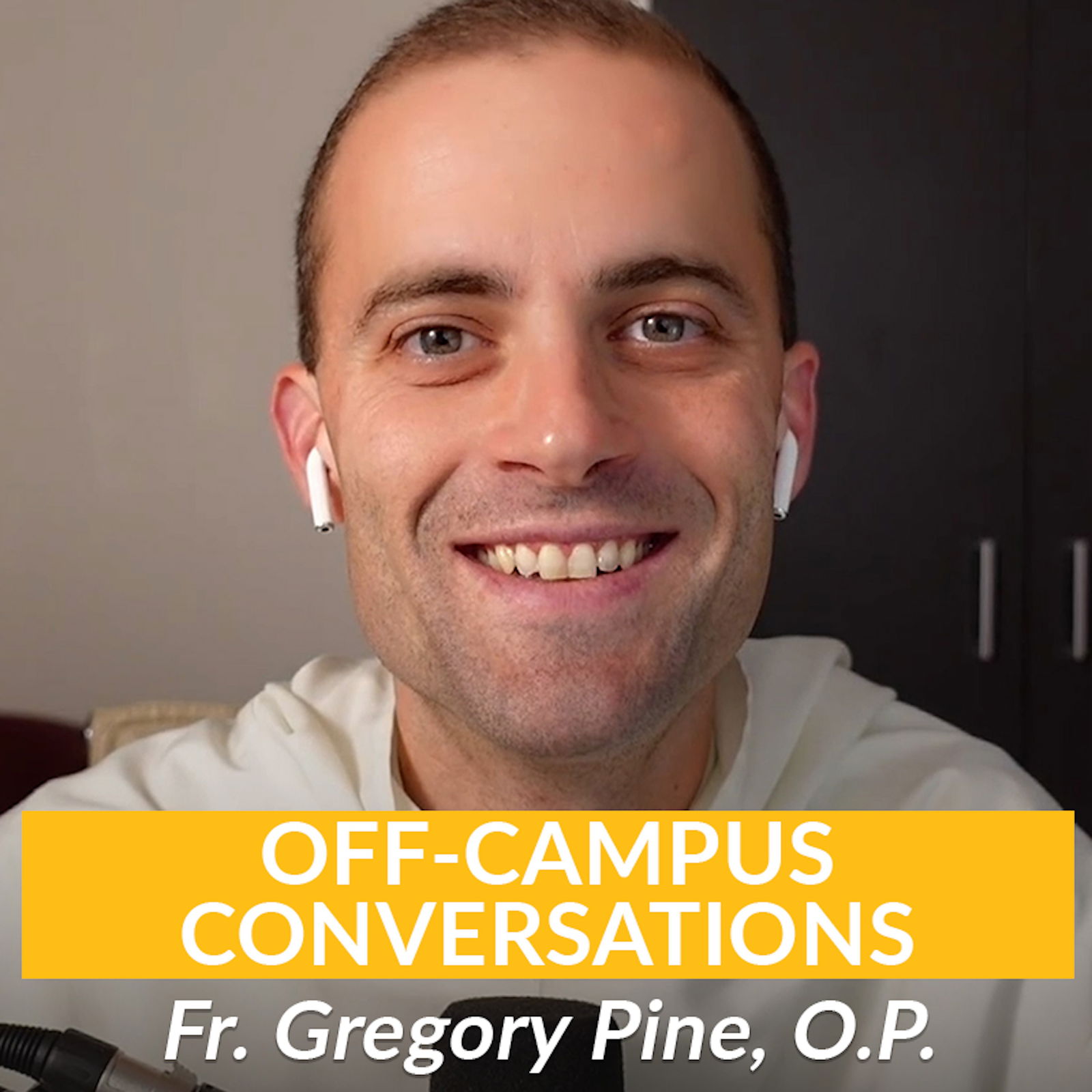
How the Sacraments Can Change Your Life w/ Fr. Gregory Pine, O.P. & Fr. Dominic Langevin, O.P.
What role do the sacraments play in human flourishing? Why do we need them? How can they change your life? Join Fr. Gregory Pine, O.P. of Aquinas 101, Godsplaining, and Pints with Aquinas for an off-campus conversation with Fr. Dominic Langevin, O.P. about the role of sacraments in human experience, how the sacraments can transform our lives, why we should have a deeper sacramental life, and more!You can watch this interview on YouTube here: https://www.youtube.com/watch?v=qmzv3rBZ64kAbout the speaker: Fr. Dominic Langevin, O.P. is Dean and Assistant Professor of Dogmatic Theology at the Pontifical Faculty of the Immaculate Conception, where he teaches courses principally in sacramental theology and liturgiology. He is the secretary/treasurer of the Academy of Catholic Theology. He did his undergraduate degree at Yale University. He entered the Dominican Order in 1998 and was ordained a priest in 2005. He earned his doctorate from the University of Fribourg while working as the assistant to the chair of dogmatic theology for ecclesiology and the sacraments. He is the author of From Passion to Paschal Mystery and was editor of the journal The Thomist from 2018 to 2021.Keywords: Body Positivity, Dei Veritate, Grace, Incarnation, Liturgical Life, Sacramental Theology, Sacraments, St. Thomas Aquinas, Summa Theologica
Aquinas's Shortest Way to God’s Existence, and How Darwinism Fits Within It | Fr. Stephen Brock
Fr. Stephen Brock explains Aquinas's Fifth Way, focusing on the governance of things and how natural bodies without cognition display goal-oriented activity, ultimately placing the Fifth Way into dialogue with Darwinism. This lecture was given on September 5th, 2024, at University of Illinois Urbana-Champaign.For more information on upcoming events, visit us at thomisticinstitute.org/upcoming-events.About the Speaker:Stephen L. Brock is a priest of the Prelature of Opus Dei (ordained 1992). He is Ordinary Professor of Medieval Philosophy at the Pontifical University of the Holy Cross in Rome, where he began teaching in 1990. Since 2008 he has been an Ordinary Member of the Pontifical Academy of St. Thomas Aquinas. Since 2017 he has been a visiting professor in the Department of Philosophy of the University of Chicago. He is the author of Action & Conduct: Thomas Aquinas and the Theory of Action (T&T Clark, 1998); The Philosophy of Saint Thomas Aquinas: A Sketch (Wipf & Stock, 2015); The Light that Binds: a Study in Thomas Aquinas's Metaphysics of Natural Law (Wipf & Stock, 2020); and numerous articles on various aspects of Aquinas’s thought.Keywords: Aquinas' Fifth Way, Darwinism, Divine Governance, Natural Bodies, Natural Inclinations, Purposeful Activity, Regularity in Nature, St. Thomas Aquinas, Teleology
Is Atheism Rational? | Prof. John O'Callaghan
Professor John O'Callaghan argues that atheism is not inherently irrational, exploring its varied historical meanings and proposing that, while not necessarily true, it can be a rational pursuit driven by a desire for truth. This lecture was given on November 21st, 2024, at Michigan State University.For more information on upcoming events, visit us at thomisticinstitute.org/upcoming-events.About the Speaker:Prof. John O'Callaghan is the Director Emeritus of the Jacques Maritain Center at the University of Notre Dame as well as a permanent member of the Pontifical Academy of St. Thomas Aquinas, appointed by Pope Benedict XVI in 2010. He served as the past President of the American Catholic Philosophical Association. His areas of scholarly interest include medieval philosophy, the philosophy of St. Thomas Aquinas, and Thomistic metaphysics and ethics.Keywords: Atheism, Benedict XVI, Descartes, Faith, Irrationality, Nietzsche, Rationalism, Truth
More than Spiritual: Proofs for the Existence of God | Prof. Joshua Hochschild
Professor Joshua Hochschild argues that Aquinas' proofs for God's existence, specifically the first way, are simple, accessible, and not merely spiritual exercises, but rather starting points for a deeper understanding of God and the relationship between faith and reason. This lecture was given on November 4th, 2024, at University of Texas at Austin.For more information on upcoming events, visit us at thomisticinstitute.org/upcoming-events.About the Speaker:Joshua Hochschild is Professor of Philosophy at Mount St. Mary’s University, where he also served six years as the inaugural Dean of the College of Liberal Arts. His primary research is in medieval logic, metaphysics, and ethics, with broad interest in liberal education and the continuing relevance of the Catholic intellectual tradition. He is the author of The Semantics of Analogy: Rereading Cajetan’s De Nominum Analogia (2010), translator of Claude Panaccio’s Mental Language: From Plato to William of Ockham (2017), and co-author of A Mind at Peace: Reclaiming an Ordered Soul in the Age of Distraction (2017). His writing has appeared in First Things, Commonweal, Modern Age and the Wall Street Journal. For 2020-21 he served as President of the American Catholic Philosophical Association.Keywords: Aristotelianism, Causality, David Hume, Empirical Fact, First Cause, Natural Theology, Proof of God's Existence, Reason, Skepticism, Unmoved Mover
Divine Causality and Human Freedom | Prof. W. Matthews Grant
Professor W. Matthews Grant examines the traditional Christian doctrine of divine universal causality, exploring how God can be the cause of all things, including human free acts, and how this relates to our understanding of freedom and responsibility. This lecture was given on November 7th, 2024, at University of Scranton.For more information on upcoming events, visit us at thomisticinstitute.org/upcoming-events.About the Speaker:W. Matthews Grant is Professor and Chair in the Department of Philosophy at University of St. Thomas (MN), and Associate Editor of the American Catholic Philosophical Quarterly. His articles have focused on Aquinas and the Philosophy of God, particularly issues having to do with the divine nature and God’s relationship to human freedom.Keywords: Alvin Plantinga, Anthropomorphism, Divine Causality, Freedom, God, Responsibility, St. Anselm, St. Augustine, St. Thomas Aquinas
God's Response to the Problem of Evil | Dr. Medi Volpe
Dr. Medi Volpe explores God's response to the problem of evil by contrasting modern theodicy against the approach of early Christians, emphasizing the Incarnation and human action as integral to God's response. This lecture was given on October 24th, 2024, at University of Edinburgh.For more information on upcoming events, visit us at thomisticinstitute.org/upcoming-events.About the Speaker:Medi Ann Volpe is a Catholic moral theologian and mother of four children, including a daughter with Down Syndrome. She is the Director of Research at Wesley House, Cambridge and teaches theology and ethics at Durham University (UK) . Her first book, Rethinking Christian Identity (Wiley-Blackwell, 2013), brings contemporary theological themes into conversation with voices from the classical Christian tradition. More recently, her work has explored the intersection of ecclesiology and spiritual formation, with a special interest in discipleship and Christian identity of children as well as people with intellectual disabilities. She has published in journals and handbooks, including the International Journal of Systematic Theology, Modern Theology, and the Oxford Handbook of Catholic Theology (which she co-edited with Lewis Ayres). She also serves on the board of the Journal of Disability and Religion. For the last several years, Volpe has been writing and speaking about the kind of Church we must be if we are truly to honour the weaker members. Her current book project (Living as the Body of Christ) considers ecclesiology from the perspective of disability.Keywords: Augustine, Evil, Gustavo Gutierrez, Hume, James Cone, Incarnation, Irenaeus, Problem of Evil, Tolkien, Theodicy, Theology
Creation: Mercy Beyond Justice | Prof. John O'Callaghan
Professor John O'Callaghan delves into St. Thomas Aquinas's understanding of God's mercy in creation, addressing the apparent paradox of extending mercy to non-existent beings by examining the transition from non-being to being. This lecture was given on October 19th, 2024, at Dominican House of Studies.For more information on upcoming events, visit us at thomisticinstitute.org/upcoming-events.Keywords: Being, Creation, God's Mercy, Justice, Metaphysics, Misericordia, Non-being, Suffering, Thomas AquinasAbout the Speaker:Dr. John Callaghan is an Associate Professor of Philosophy at Notre Dame University. He is a permanent member of the Pontifical Academy of St. Thomas Aquinas and he was the President of the American Catholic Philosophical Association (2012-2013). He is the author of Thomistic Realism and the Linguistic Turn: Toward a More Perfect Form of Existence and the editor, with Prof. Thomas Hibbs, of Recovering Nature: Essays in Honor of Ralph McInerny.
God's Justice According to St. Thomas' Reading of the Apostle Paul | Fr. Andrew Hofer, O.P.
Fr. Andrew Hofer explores St. Thomas Aquinas's understanding of God's Justice as revealed in the Gospel and the writings of St. Paul, emphasizing its connection to grace, truth, and the conformity of creation to God's intellect. This lecture was given on October 19th, 2024, at Dominican House of Studies.For more information on upcoming events, visit us at thomisticinstitute.org/upcoming-events.About the Speaker:Fr. Andrew Hofer, O.P., (Ph.D. Notre Dame) is professor of patristics and ancient languages at the Pontifical Faculty of the Dominican House of Studies where he serves as the director of the doctoral program. He authored Christ in the Life and Teaching of Gregory of Nazianzus (Oxford University Press, 2013) and The Power of Patristic Preaching: The Word in Our Flesh (Catholic University of America, 2023). He co-authored A Living Sacrifice: Guidance for Men Discerning Religious Life (Vianney Vocations, 2019). Editor-in-chief of the academic journal The Thomist, Hofer is editor or co-editor of several volumes including The Oxford Handbook of Deification, The Cambridge Companion to Augustine's Sermons, and Thomas Aquinas and the Greek Fathers. He enjoys speaking with students about their theological and spiritual questions.Keywords: Aquinas, Dikaussune, God's Justice, Gospel, Grace, Justification, Romans, St. Paul, Truth
God's Mercy According to St. Thomas' Reading of the Apostle Paul | Fr. Andrew Hofer, O.P.
Fr. Andrew Hofer explores St. Thomas Aquinas's understanding of God's mercy in the writings of St. Paul, paying particular attention to Mercy's relationship to Divine justice and its transformative activity in Christian life. This lecture was given on October 19th, 2024, at Dominican House of Studies.For more information on upcoming events, visit us at thomisticinstitute.org/upcoming-events.About the Speaker:Fr. Andrew Hofer, O.P., (Ph.D. Notre Dame) is professor of patristics and ancient languages at the Pontifical Faculty of the Dominican House of Studies where he serves as the director of the doctoral program. He authored Christ in the Life and Teaching of Gregory of Nazianzus (Oxford University Press, 2013) and The Power of Patristic Preaching: The Word in Our Flesh (Catholic University of America, 2023). He co-authored A Living Sacrifice: Guidance for Men Discerning Religious Life (Vianney Vocations, 2019). Editor-in-chief of the academic journal The Thomist, Hofer is editor or co-editor of several volumes including The Oxford Handbook of Deification, The Cambridge Companion to Augustine's Sermons, and Thomas Aquinas and the Greek Fathers. He enjoys speaking with students about their theological and spiritual questions.
Catholic Feminism | Erika Bachiochi
In this lecture, Erika Bachiochi discusses Catholic feminism, her encounter with St. John Paul II's Theology of the Body and her subsequent intellectual journey, and the historical roots of feminism in Christian thought, particularly focusing on the views of early feminists on abortion and chastity.This lecture was given on October 29th, 2024, at Benedictine College.For more information on upcoming events, visit us at thomisticinstitute.org/upcoming-events.About the Speaker:EPPC Fellow Erika Bachiochi is a legal scholar who works at the intersection of constitutional law, political theory, women’s history, and Catholic social teaching. She is also the editor-in-chief of Fairer Disputations, the online journal of the Mercy Otis Warren Initiative for Women in Civic Life and Thought at the School for Civic and Economic Thought and Leadership at ASU.Keywords: Abortion, Catholic Feminism, Chastity, Christian Feminism, Elizabeth Blackwell, Evangelium Vitae, First Wave Feminism, John Paul II, Rights Of Women, Theology Of The Body
True Courage: On Facing Death with Fortitude | Fr. Gregory Pine, O.P.
Fr. Gregory Pine discusses the virtue of courage, exploring its complexities, its relationship to the passions, and its importance in living a complete and virtuous life.This lecture was given on October 24th, 2024, at Georgetown University.For more information on upcoming events, visit us at thomisticinstitute.org/upcoming-events.About the Speaker:Fr. Gregory Pine, O.P. is an adjunct professor of dogmatic theology at the Dominican House of Studies and an Assistant Director of the Thomistic Institute. He is the author of a few books including Prudence: Choose Confidently, Live Boldly. His writing also appears in Ascension’s Catholic Classics, Magnificat, and Aleteia. He is a regular contributor to the podcasts Pints with Aquinas, Catholic Classics, The Thomistic Institute, and Godsplaining.Keywords: Courage, Daring, Emotions, Fear, Fortitude, Passions, St. Thomas Aquinas, Sensitive Appetite, Virtue
What is the Separated Human Soul? Incomplete Person, Survivalism or Corruptionism | Prof. Daniel De Haan
Professor Daniel De Haan explores the Thomistic debate surrounding the nature of the separated human soul after death, contrasting survivalism, corruptionism, and incompletionism to understand whether the soul retains personhood after death.This lecture was given on October 10th, 2024, at University of Edinburgh.For more information on upcoming events, visit us at thomisticinstitute.org/upcoming-events.About the Speaker:Daniel D. De Haan is the Frederick Copleston Senior Research Fellow and Lecturer in Philosophy and Theology in the Catholic Tradition at Campion Hall and Blackfriars at the University of Oxford. Before to coming to Oxford, De Haan was a postdoctoral fellow on the neuroscience strand of the Theology, Philosophy of Religion, and the Sciences project at the University of Cambridge. He has a doctorate in philosophy from the Catholic University of Leuven and University of St Thomas in Texas. His research focuses on philosophical anthropology, hylomorphism and the sciences, moral psychology, philosophical theology, and the thought of Thomas Aquinas.Keywords: Corruptionism, Eschatology, Hylomorphism, Incompletionism, Joseph Ratzinger, Personhood, Separated Soul, Survivalism, Thomas Aquinas