The Thomistic Institute
2,030 episodes — Page 7 of 41
Getting to Know Tolkien and Lewis and Why It's Worth Your Time I Prof. Lee Oser
Prof. Lee Oser explores the intertwined lives, faith journeys, and literary legacies of J.R.R. Tolkien, C.S. Lewis, and the Inklings, highlighting their countercultural Christian imagination against modernist trends.This lecture was given on November 22nd, 2024, at College of William and Mary.For more information on upcoming events, visit us at thomisticinstitute.org/upcoming-events.About the Speakers:Lee Oser's scholarly focus is Religion and Literature. His books include Christian Humanism in Shakespeare: A Study in Religion and Literature and The Return of Christian Humanism: Chesterton, Eliot, Tolkien and the Romance of History. Also, he is a noted novelist who specializes in satire. Keywords: Beowulf, Christian Imagination, The Chronicles of Narnia, Inklings, Medievalism, Modernism in Literature, Owen Barfield, Subcreation, The Lord of the Rings, World War I

Reading Sacred Scripture with St. Thomas Aquinas I Fr. Isaac Morales, O.P. and Prof. Michael Root
Fr. Isaac Morales and Prof. Michael Root explore how Thomas Aquinas’ biblical commentaries on Matthew and 1 Corinthians illuminate the beatific vision, resurrection, and the role of Scripture in shaping Christian life through literal and spiritual interpretation.This lecture was given on June 28th, 2025, at Dominican House of Studies.Secular campuses are being transformed, but the students need your help! Your gift before September fifteenth can launch a new TI chapter and change lives. Visit thomisticinstitute.org/bts25podcast to give today!For more information on upcoming events, visit us at thomisticinstitute.org/upcoming-events.About the Speakers: Fr. Isaac Morales, O.P. is associate professor of theology at Providence College. Before joining the Dominican Order, he received an MTS in biblical studies from the University of Notre Dame and a PhD in New Testament from Duke University. He is the author of The Bible and Baptism: The Fountain of Salvation (Baker Academic Press) and a forthcoming book on eschatology titled The Life of the World to Come: Seeing God, Resurrection, and the Christian Hope. He also regularly teaches a course on the life and writings of C. S. Lewis.Michael Root is Professor Emeritus of Systematic Theology at the Catholic University of America, Washington, DC. Earlier in life, he was a Lutheran, teaching at various Lutheran seminaries and serving ten years as a Research Professor at the Institute for Ecumenical Research in Strasbourg, France. He was received into the Catholic Church in 2010. His particular theological interests lie in grace and justification, eschatology (death, heaven, hell, etc.), and Protestant-Catholic relations. Keywords: Aristotelian Science, Beatific Vision, Biblical Exegesis, Christian Formation, Figural Interpretation, Grace and Salvation, Resurrection of the Body, Sacred Scripture, Spiritual Senses of Scripture, Thomistic Theology
J.R.R. Tolkien's Detached Aesthetics I Dr. Rebekah Lamb
Dr. Rebekah Lamb explores J.R.R. Tolkien’s “detached aesthetics,” revealing how his Christian understanding of spiritual detachment shapes his writing, especially in "The Lord of the Rings," as a means of cultivating hope, wonder, and a rightly ordered love for the world.This lecture was given on January 30th, 2025, at University of Edinburgh.For more information on upcoming events, visit us at thomisticinstitute.org/upcoming-events.About the Speaker: Dr. Rebekah Lamb is a Lecturer (Assistant Professor) in theology and the arts at the University of St Andrews, specializing in religion and literature of late modernity. Her research centres on the ways in which the arts can be distinctive and timely modes of theology in their own right, especially in light of liturgical, spiritual, and existential concerns. Key figures in her work include Joseph Ratzinger, St. John Henry Newman, Gerard Manley Hopkins SJ, Christina Rossetti and the Pre-Raphaelites as well as their inheritors (JRR Tolkien and CS Lewis, among others). Prior to joining St Andrews, she was an inaugural Étienne Gilson Post-Doctoral Fellow at the University of Toronto. She is a trustee of the Christian Heritage Centre at Stonyhurst (Lancashire, UK) and frequently contributes to popular magazines and journals, including an interview with Robert Cardinal Sarah for the Catholic Herald. Keywords: Aesthetics of Detachment, Beauty and Suffering, Christian Tradition, Detached Narrative Style, Leaf by Niggle, Lord of the Rings, Mary Mother of God, Providence and Hope, Spiritual Detachment, The Wanderer
C.S. Lewis on the Ethics of Technology I Prof. Thomas Ward
Prof. Thomas Ward explores C. S. Lewis’s "The Abolition of Man", analyzing how technology’s conquest of nature risks diminishing humanity unless anchored by objective moral values.This lecture was given on April 8th, 2025, at Indiana University.Secular campuses are being transformed, but the students need your help! Your gift before September fifteenth can launch a new TI chapter and change lives. Visit thomisticinstitute.org/bts25podcast to give today!For more information on upcoming events, visit us at thomisticinstitute.org/upcoming-events.About the Speaker: Thomas M. Ward is Associate Professor of Philosophy at The University of Texas at Austin, in the School of Civic Leadership. He specializes in the history of philosophy and theology of the Middle Ages. Ward is the author of After Stoicism: Last Words of the Last Roman Philosopher (Word on Fire, 2024), Ordered by Love: An Introduction to John Duns Scotus (Angelico, 2022), Divine Ideas (Cambridge University Press, 2020), and has translated, with commentary, John Duns Scotus’s Treatise on the First Principle (Hackett, 2024). He has been a NEH Fellow (2022) and Harvey Fellow (2009-2011), and is a past winner of the Society for Medieval and Renaissance Philosophy Founder's Award (2013) and the American Catholic Philosophical Quarterly Rising Scholar Essay Contest (2018). He studied philosophy at Biola University (BA 2004) and theology at Oxford University (M.Phil 2006), where he was Head Resident at the Kilns, the former residence of C.S. Lewis. His PhD in philosophy is from UCLA (2011). Ward is married with six children and is a member of St. Peter Catholic Student Center in Waco.Keywords: Abolition of Man, Artificial Contraception, Catholicism, C. S. Lewis, Eugenics, Ethics of Technology, Incarnation, Posthumanism, Practical Reasoning, Virtue Ethics
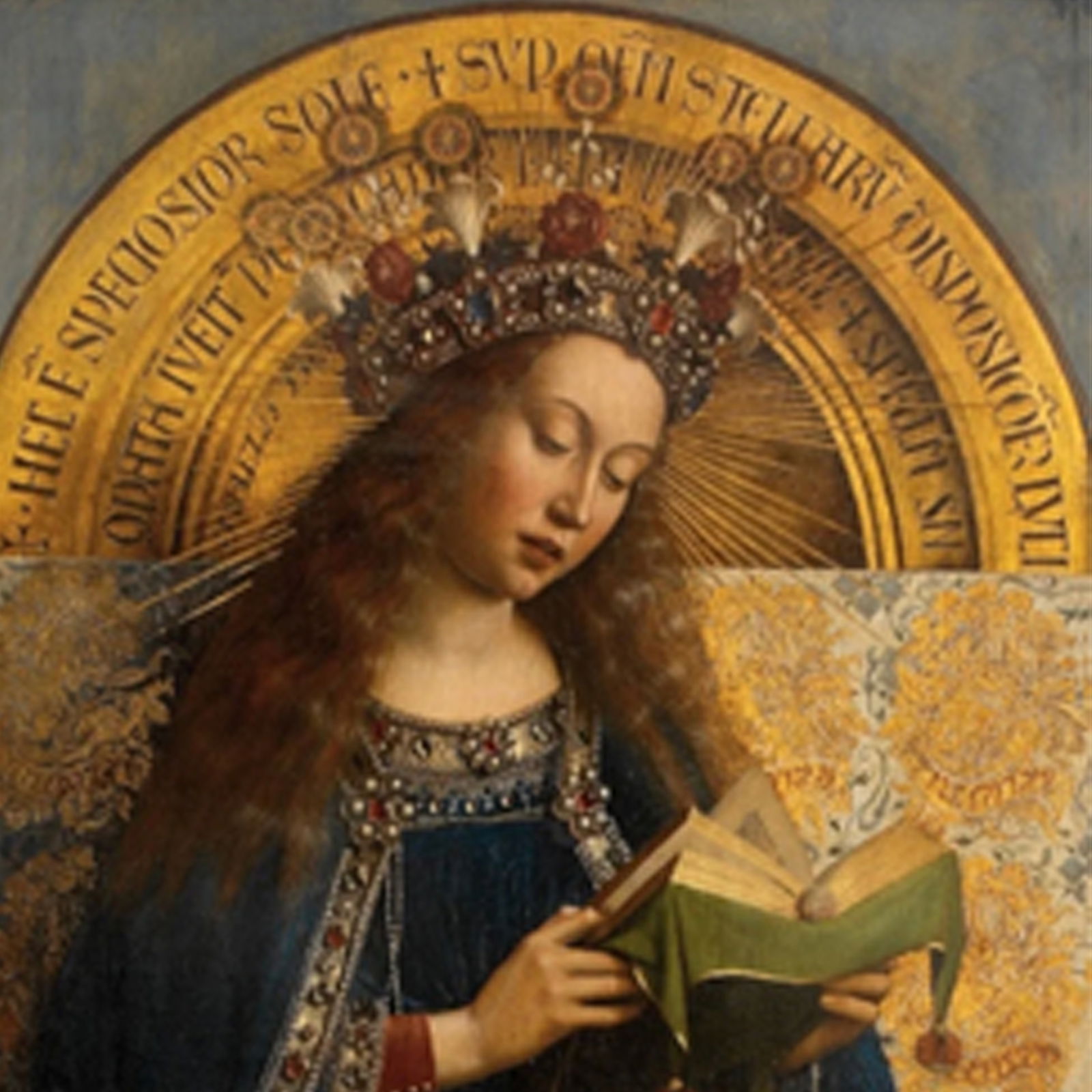
Christ vs. Mary? Mary in Catholicism I Prof. Christopher Malloy
Prof. Christopher Malloy defends the Catholic understanding of Mary’s role in salvation history, refuting common objections and demonstrating how her divine maternity, perpetual virginity, and immaculate grace magnify rather than diminish the glory of Christ.This lecture was given on April 6th, 2025, at Massachusetts Institute of Technology.For more information on upcoming events, visit us at thomisticinstitute.org/upcoming-events.About the Speaker: Christopher J. Malloy is married to Flory with whom he has seven children. He earned his B.A. in Theology (second major in Philosophy) from the University of Notre Dame in 1992. He earned his Ph.D. in Systematic Theology (minor in Philosophy) from The Catholic University of America in 2001. Since then he has taught at The University of Dallas, where he currently serves as Professor and Chair of Theology. He has published three books: Engrafted into Christ: A Critique of the Joint Declaration [on Justification], Aquinas on Beatific Charity and the Problem of Love, and False Mercy: Recent Heresies Distorting Catholic Truth. He has published numerous blind peer-reviewed articles for journals such as The Thomist, Nova et Vetera, Freiburger Zeitschrift für Philosophie und Theologie, Josephinum, Angelicum, etc. He loves academia, especially publishing and teaching systematic theology, but he has always been fired up to give popular presentations highlighting the intelligibility and beauty of the Catholic faith, since that was the reason he got into Theology in the first place.Keywords: Abraham, Bernard of Clairvaux, Divine Maternity, Immaculate Conception, Incarnation, John Calvin, Marian Doctrine, Martin Chemnitz, Mother of God, Participation in God
Will Heaven Be Incredibly Boring? I Prof. Christopher Mooney
Prof. Christopher Mooney's lecture confronts the philosophical objection that heaven would be unbearably boring due to its infinite duration, arguing instead that Christian eternity is fulfilled in the beatific vision of God, which offers infinite and undiminished joy.This lecture was given on April 23rd, 2025, at Texas A&M University.For more information on upcoming events, visit us at thomisticinstitute.org/upcoming-events.About the Speaker:Dr. Christopher Mooney is an assistant professor of theology at the Augustine Institute Graduate School in St. Louis, Missouri, where he teaches on Catholic theology, scriptural interpretation, and the Church Fathers. His teaching and research specialize in Augustine, the Fathers, and historical theology, and he is the author of Augustine's Theology of Justification by Faith (2026). A native of Connecticut, he studied at Georgetown and Yale Divinity School before receiving his PhD from the University of Notre Dame. He also serves as a theological representative for the USCCB's Catholic-Reformed dialogue. He lives next door to the Augustine Institute's campus with his wife and four children.Keywords: Augustine of Hippo, Beatific Vision, Bernard Williams, Eternal Life, Freud, Heaven, Immortality, Odyssey, Philosophy of Religion, Richard Dawkins
The Mystery of Predestination: A Catholic Approach I Prof. Bruce Marshall
Prof. Bruce Marshall presents a deep Catholic theological exploration of predestination, examining its biblical foundations, historical development, doctrinal boundaries, and the enduring tension between God’s sovereign will, grace, and human freedom.This lecture was given on October 6th, 2024, at Massachusetts Institute of Technology.For more information on upcoming events, visit us at thomisticinstitute.org/upcoming-events.About the Speaker:Bruce D. Marshall is Lehman Professor of Christian Doctrine at Southern Methodist University, and in 2023 he held the Aquinas Chair in the Thomistic Institute at the Angelicum in Rome. He is the author of Trinity and Truth and Christology in Conflict, and at present he is completing a book entitled The Primacy of Christ: Faith, Reason, and the Cross. Marshall has written extensively on the doctrines of the Trinity, the person and redemptive work of Christ, the Eucharist, the Catholic Church and non-Christian religions, and the relationship between faith and reason. He received his B.A. from Northwestern University and his Ph.D. from Yale University, and is a past President of the Academy of Catholic Theology.Keywords: Augustine, Baptism, Council of Trent, Efficacious Grace, Gaudium et Spes, Grace and Free Will, Jesus Christ, Predestination, Romans 8, Sufficient Grace
Brothers Karamazov: Manicheanism, Christian Existentialism and other Paradoxes I Prof. Thomas Pfau
Prof. Thomas Pfau offers an in-depth theological and philosophical analysis of Dostoevsky’s The Brothers Karamazov, focusing on Ivan and Alyosha’s contrasting worldviews, the “Rebellion” and “Grand Inquisitor” chapters, and the novel’s profound exploration of freedom, suffering, and divine love.This lecture was given on January 31st, 2025, at University of Texas at Austin.For more information on upcoming events, visit us at thomisticinstitute.org/upcoming-events.About the Speaker:Thomas Pfau (PhD 1989, SUNY Buffalo) is the Alice Mary Baldwin Professor of English, with a secondary appointment in the Divinity School at Duke University. He has published some fifty essays on literary, philosophical, and theological subjects ranging from the 18th through the early 20th century. In addition to two translations, of Hölderlin and Schelling (SUNY Press, 1987 and 1994), he has also edited seven essay collections and special journal issues and is the author of four monographs: Wordsworth’s Profession (Stanford UP 1997), Romantic Moods: Paranoia, Trauma, Melancholy, 1790-1840 (Johns Hopkins UP 2005), Minding the Modern: Intellectual Traditions, Human Agency, and Responsible Knowledge (Notre Dame UP, 2013), and Incomprehensible Certainty: Metaphysics and Hermeneutics of the Image (Notre Dame UP, 2022). He in the early stages of a new book project focused on the relationship between poetry and theology from 1800 to the present.Keywords: The Brothers Karamazov, Freedom, Gnosticism, Grand Inquisitor, Human Suffering, Ivan Karamazov, Nihilism, Original Sin, Rebellion, Rowan Williams
Happiness Understood Psychologically and Theologically I Prof. Christopher Kaczor
Prof. Christopher Kaczor explores the relationship between positive psychology and Catholic theology, uncovering how empirical psychological findings on happiness align with and deepen spiritual practices like gratitude, service, and forgiveness.This lecture was given on February 15th, 2025, at Dominican House of Studies.For more information on upcoming events, visit us at thomisticinstitute.org/upcoming-events.About the Speaker: Dr. Christopher Kaczor (rhymes with razor) graduated from the Honors Program of Boston College and earned a Ph.D. four years later from the University of Notre Dame. A Fulbright Scholar, Dr. Kaczor is a former Federal Chancellor Fellow at the University of Cologne and William E. Simon Visiting Fellow in the James Madison Program at Princeton University and Honorary Professor in Bishop Barron's Word on Fire Institute. His eighteen books include Is Belief Believable? The Gospel of Happiness, The Seven Big Myths about Marriage, A Defense of Dignity, The Seven Big Myths about the Catholic Church, The Ethics of Abortion, O Rare Ralph McInerny: Stories and Reflections on a Legendary Notre Dame Professor, Thomas Aquinas on the Cardinal Virtues; Life Issues-Medical Choices; Thomas Aquinas on Faith, Hope, and Love; The Edge of Life, and Proportionalism and the Natural Law Tradition. Dr. Kaczor’s views have been in The New York Times, The Washington Post, The Wall Street Journal, The Los Angeles Times, Huffington Post, National Review, NPR, BBC, EWTN, ABC, NBC, FOX, CBS, MSNBC, TEDx, and The Today Show.Keywords: Achievement, Altruism, Engagement, Forgiveness, Gratitude, Happiness, Martin Seligman, Meaning, Positive Psychology, Relationships
Aquinas and Luther on Justification I Dr. Nathaniel Peters
Dr. Nathaniel Peters explores and compares the theological views of Martin Luther and Thomas Aquinas on justification, focusing on grace, faith, merit, and the fundamental differences shaping Catholic and Lutheran perspectives.This lecture was given on February 25th, 2025, at University of Virginia.For more information on upcoming events, visit us at thomisticinstitute.org/upcoming-events.About the Speaker:Nathaniel Peters is the Director of the Morningside Institute. He received his B.A. from Swarthmore College, his M.T.S. from the University of Notre Dame, and his Ph.D. from Boston College. He has published article on many topics on religion and public life, and his first book, The Trinitarian Dimensions of Cistercian Eucharistic Theology, is forthcoming from Catholic University of America Press.Keywords: Aristotelianism, Ethics, Faith and Works, Grace, Incarnation, Justification, Law and Gospel, Martin Luther, Summa Theologiae, Thomas Aquinas
Thomas Aquinas on Charity I Fr. Cajetan Cuddy, O.P.
Fr. Cajetan Cuddy provides an in-depth exploration of charity as the highest theological virtue in the thought of Saint Thomas Aquinas, laying foundational principles for understanding just war, peace, and the ordered structure of the Christian moral life.This lecture was given on June 10th, 2024, at Dominican House of Studies.For more information on upcoming events, visit us at thomisticinstitute.org/upcoming-events.About the Speaker:Fr. Cajetan Cuddy, O.P., is a priest of the Dominican Province of St. Joseph. He serves as the general editor of the Thomist Tradition Series, and he is co-author of Thomas and the Thomists: The Achievement of St. Thomas Aquinas and His Interpreters. He has written for numerous publications on the philosophy and theology of St. Thomas Aquinas and the Thomist Tradition.Keywords: Christian Anthropology, Divine Friendship, Eternal Law, Intellectual Monasticism, Just War Theory, Moral Virtue, Natural Law Tradition, Summa Theologiae, Theological Virtue of Charity, Thomistic Ethics
Martin Luther and Thomas Aquinas Against the Pelagians I Dr. Erik Dempsey
Dr. Erik Dempsey explores the positions of Martin Luther and Thomas Aquinas against Pelagianism, highlighting their shared rejection of justification by human effort and their nuanced theological differences on grace, merit, and free will.This lecture was given on March 18th, 2024, at Regent University.For more information on upcoming events, visit us at thomisticinstitute.org/upcoming-events.About the Speaker:Professor Erik Dempsey an Associate Professor of Instruction in the Departments of Government, Classics, and Religious Studies, and is the Assistant Director of the Thomas Jefferson Center for the Study of Core Texts and Ideas. He has taught at the University of Texas at Austin for over ten years, during which time he has offered classes in the history of political philosophy, on the Bible and its interpreters, on American political thought, on classical philosophy and literature, and others. His favorite classes to teach are Jerusalem and Athens, a class comparing the political, moral, and theological ideas of the Hebrew Bible to Aristotle's, and the Question of Relativism, a class on what he considers the central quandary of our time. He writes primarily about Aristotle and Thomas Aquinas, and he is currently studying John Locke's commentaries on St. Paul's epistles. Last but not least, he is an Eagle Scout.Keywords: Augustinian Theology, Christian Anthropology, Ecumenical Dialogue, Galatians Commentary, Grace and Merit, Justification Doctrine, Liberal Modernity, Martin Luther, Original Sin, Pelagianism
What Makes Laws Just? An Introduction to the Natural Law Tradition I Fr. Dominic Legge, O.P.
Fr. Dominic Legge delves into the philosophical and moral considerations that determine whether laws are truly just, highlighting the ongoing relevance of these questions in contemporary society. This lecture was given on March 26th, 2025, at Harvard University.For more information on upcoming events, visit us at thomisticinstitute.org/upcoming-events.About the Speaker:Fr. Dominic Legge is the Director of the Thomistic Institute and Associate Professor in Systematic Theology at the Pontifical Faculty of the Immaculate Conception in Washington, D.C. He is an Ordinary Member of the Pontifical Academy of St. Thomas Aquinas, and holds a J.D. from Yale Law School, a Ph.L. from the School of Philosophy of the Catholic University of America, and a doctorate in Sacred Theology from the University of Fribourg in Switzerland. He entered the Order of Preachers in 2001, after having practiced constitutional law for several years as a trial attorney for the U.S. Department of Justice. He has also taught at The Catholic University of America Law School and at Providence College. He is the author of The Trinitarian Christology of St. Thomas Aquinas (Oxford University Press, 2017).Keywords: Aristotelian Philosophy, Catholic Ethics, Contemporary Legal Theory, Incarnation, John Finnis, Jurisprudence, Natural Law Tradition, Saint Augustine, Summa Theologiae, The Metaphysics of Morals
Can We Be Happy Without God? I Prof. Matthew Shea
Prof. Matthew Shea examines the classic philosophical question “Can we be happy without God?” by analyzing historical and contemporary perspectives on happiness, ultimately contrasting the limitations of atheistic views with the theistic argument for true human fulfillment in God.This lecture was given on April 22nd, 2025, at Franciscan University of Steubenville.For more information on upcoming events, visit us at thomisticinstitute.org/upcoming-events.About the Speaker:Matthew Shea is an Assistant Professor of Philosophy at Franciscan University of Steubenville. He specializes in moral philosophy and bioethics, with additional interests in philosophy of religion and epistemology. He did his undergraduate studies at Boston College, received a PhD in philosophy from Saint Louis University, and completed a fellowship in clinical health care ethics at the University of California, Los Angeles. He is the author of God and Happiness (Cambridge University Press, 2024).Keywords: Aristotelianism, Augustine, Atheism, Bertrand Russell, Boethius, Human Flourishing, Perfectionism, Plato, Schopenhauer, The Consolation of Philosophy
How to be a Little Less Awful: The Cultivation of Virtue I Prof. Timothy J. Pawl
Prof. Timothy J. Pawl examines the nature, divisions, and cultivation of virtue, harmonizing Christian moral wisdom with contemporary psychological research and offering eight practical steps to growing in virtue.This lecture was given on April 24th, 2025, at North Dakota State University.For more information on upcoming events, visit us at thomisticinstitute.org/upcoming-events.About the Speaker:Timothy J. Pawl is Professor of Philosophy at the University of St. Thomas in St. Paul, Minnesota, and holds a Ph.D. from Saint Louis University in philosophy. He specializes in the philosophy of religion, metaphysics, Thomistic philosophy, analytic theology, and moral psychology. His books include In Defense of Conciliar Christology (Oxford, 2016), In Defense of Extended Conciliar Christology (Oxford, 2019), The Incarnation (Cambridge, 2020), and Jesus and the Genome: The Intersection of Christology and Biology (Cambridge, 2024), co-authored with a philosopher of science and an evolutionary biologist. Keywords: Aristotelianism, Augustine, Cardinal Virtues, Christian Moral Wisdom, Habit Formation, Intellectual Virtues, Nicomachean Ethics, Self-Control, Situational Self-Control, Theological Virtues
From Apathy to Agape: Christian Encounters with Stoic Philosophy I Prof. Thomas Ward
Prof. Thomas Ward explores the resurgence of Stoicism in modern culture and critically contrasts it with Christian philosophy, especially through the lens of Boethius' The Consolation of Philosophy, advocating for divine providence and the Christian virtues of hope and charity in place of Stoic apathy.This lecture was given on May 4th, 2025, at Stanford University.For more information on upcoming events, visit us at thomisticinstitute.org/upcoming-events.About the Speaker:Thomas M. Ward is Associate Professor of Philosophy at Baylor University in Waco, Texas. He specializes in the history of philosophy and theology of the Middle Ages and has contributed over thirty peer-reviewed articles and book chapters to these fields of study. Ward is the author of After Stoicism: Last Words of the Last Roman Philosopher (Word on Fire, 2024), Ordered by Love: An Introduction to John Duns Scotus (Angelico, 2022), Divine Ideas (Cambridge University Press, 2020), and has translated, with commentary, John Duns Scotus’s Treatise on the First Principle (Hackett, 2024). He has been a NEH Fellow (2022) and Harvey Fellow (2009-2011), and is a past winner of the Society for Medieval and Renaissance Philosophy Founder's Award (2013) and the American Catholic Philosophical Quarterly Rising Scholar Essay Contest (2018). Before taking up his current post at Baylor, Ward taught in California at Azusa Pacific University (2011-2012) and Loyola Marymount University (2012-2017). He studied philosophy at Biola University (BA 2004) and theology at Oxford University (M.Phil 2006), where he was Head Resident at the Kilns, the former residence of C.S. Lewis. His PhD in philosophy is from UCLA (2011). Ward is married with six children and is a member of St. Peter Catholic Student Center in Waco.Keywords: Apathy, Boethius, Christian Philosophy, Divine Providence, Fatalism, Hope, The Consolation of Philosophy, Stoicism, Tranquility, Virtue
The Cardinal Virtues and Living Life Well I Prof. Raymond Hain
Prof. Raymond Hain examines the four cardinal virtues—prudence, justice, fortitude, and temperance—tracing their philosophical and theological roots while exploring their essential role in living a morally excellent and flourishing human life.This lecture was given on March 27th, 2025, at University of Louisiana at Lafayette.For more information on upcoming events, visit us at thomisticinstitute.org/upcoming-events.About the Speaker:Raymond Hain is Associate Professor of Philosophy and Associate Director of the Humanities Program at Providence College in Providence, RI. Educated at Christendom College, the University of Notre Dame, and the University of Oxford, he is the founder of the PC Humanities Forum and Humanities Reading Seminars and is responsible for the strategic development of the Humanities Program into a vibrant, world class center of teaching, research, and cultural life dedicated to the Catholic Intellectual Tradition. His scholarly interests include the history of ethics (especially St. Thomas Aquinas), applied ethics (especially medical ethics and the ethics of architecture), Alexis de Tocqueville, and philosophy and literature (especially Catholic aesthetics). His work has been supported by the National Endowment for the Humanities, the Templeton Foundation, the Gladys Krieble Delmas Foundation, and the Charles Koch Foundation. His essays have appeared in various journals and collections including The Thomist, International Journal of Applied Philosophy, and The Anthem Companion to Tocqueville. He is the editor of Beyond the Self: Virtue Ethics and the Problem of Culture and is currently working on a monograph titled The Lover and the Prophet: An Essay in Catholic Aesthetics. He joined Providence College in 2011 and lives just across the street with his wife Dominique and their five children.Keywords: Aquinas' Moral Philosophy, Cardinal Virtues, Common Good, Formation of Virtue, Les Misérables, Moral Exemplars, Peter Geach, Prudence and Practical Wisdom, Smith of Wootton Major, Virtue Ethics
St. Augustine on Love for Confused Lovers I Fr. Andrew Hofer, O.P.
Fr. Andrew Hofer, O.P., delves into St. Augustine's understanding of love for "confused lovers," drawing from the Confessions to explore the transformative power of God's grace and the ordering of human loves toward divine union.This lecture was given on April 4th, 2025, at University of Wisconsin-Madison.For more information on upcoming events, visit us at thomisticinstitute.org/upcoming-events.About the Speaker:Fr. Andrew Hofer, O.P., (Ph.D. Notre Dame) is professor of patristics and ancient languages at the Pontifical Faculty of the Dominican House of Studies where he serves as the director of the doctoral program. He authored Christ in the Life and Teaching of Gregory of Nazianzus (Oxford University Press, 2013) and The Power of Patristic Preaching: The Word in Our Flesh (Catholic University of America, 2023). He co-authored A Living Sacrifice: Guidance for Men Discerning Religious Life (Vianney Vocations, 2019). Editor-in-chief of the academic journal The Thomist, Hofer is editor or co-editor of several volumes including The Oxford Handbook of Deification, The Cambridge Companion to Augustine's Sermons, and Thomas Aquinas and the Greek Fathers. He enjoys speaking with students about their theological and spiritual questions.Keywords: Augustine’s Confessions, Christian Friendship, Divine Grace, Disordered Love, Eucharist Theology, Grace and Conversion, Incarnational Love, On Christian Teaching, Restless Heart
Catholic Teaching on Birth Control: Beyond Common Misunderstandings I Prof. Gina Noia
Prof. Gina Noia explores the Catholic Church's nuanced teachings on birth control, responsible parenthood, and the moral distinctions between natural family planning, direct contraception, and sterilization, rooted in theological and philosophical reasoning.This lecture was given on October 1st, 2024, at North Carolina State University.For more information on upcoming events, visit us at thomisticinstitute.org/upcoming-events.About the Speaker:Gina Maria Noia, PhD, is an Assistant Professor of Theology at Providence College. She received her PhD in Theology and Health Care Ethics from Saint Louis University. She has served as a clinical ethicist for OSF Saint Francis Medical Center in Peoria, IL and St. Alexius Hospital in St. Louis, MO, and she is published in Christian Bioethics and the Journal of Moral Theology. Outside of academia, you’ll find her spending time outdoors with her (philosopher) husband, Justin Noia, PhD, and their vivacious children.Keywords: Catholic Marriage, Catholic Moral Theology, Contraception Ethics, Double Effect Principle, Gaudium et Spes, Humanae Vitae, John Paul II, Natural Family Planning, Responsible Parenthood, Theology of the Body
The Ethics of Abortion: Women's Rights, Human Life, and the Question of Justice I Prof. Christopher Kaczor
Prof. Christopher Kaczor critically examines the ethics of abortion by exploring whether the unborn are alive and human, whether killing is justified, and whether bodily autonomy overrides other moral considerations.This lecture was given on April 14th, 2025, at Duke University. For more information on upcoming events, visit us at thomisticinstitute.org/upcoming-events.About the Speaker:Dr. Christopher Kaczor (rhymes with razor) graduated from the Honors Program of Boston College and earned a Ph.D. four years later from the University of Notre Dame. A Fulbright Scholar, Dr. Kaczor is a former Federal Chancellor Fellow at the University of Cologne and William E. Simon Visiting Fellow in the James Madison Program at Princeton University and Honorary Professor in Bishop Barron's Word on Fire Institute. His seventeen books include The Gospel of Happiness, The Seven Big Myths about Marriage, A Defense of Dignity, The Seven Big Myths about the Catholic Church, The Ethics of Abortion, O Rare Ralph McInerny: Stories and Reflections on a Legendary Notre Dame Professor, Thomas Aquinas on the Cardinal Virtues; Life Issues-Medical Choices; Thomas Aquinas on Faith, Hope, and Love; The Edge of Life, and Proportionalism and the Natural Law Tradition. Dr. Kaczor’s views have been in The New York Times, The Washington Post, The Wall Street Journal, The Los Angeles Times, Huffington Post, National Review, NPR, BBC, EWTN, ABC, NBC, FOX, CBS, MSNBC, TEDx, and The Today Show.Keywords: Abortion Ethics, Bodily Autonomy, Don Marquis, Human Rights, Justice, Judith Jarvis Thomson, Moral Philosophy, Personhood, Science and Ethics, Women's Rights
Thomistic Perspectives on True Artificial Intelligence I Prof. Jordan Wales
Prof. Jordan Wales offers a theological critique of artificial intelligence, examining the limitations of computational and behaviorist definitions of intelligence and emphasizing the need for intentionality, interior experience, and a Christian understanding rooted in Augustine.This lecture was given on April 4th, 2024, at Hillsdale College.For more information on upcoming events, visit us at thomisticinstitute.org/upcoming-events.About the Speaker:Jordan Wales is Associate Professor and John and Helen Kuczmarski Chair in Theology at Hillsdale College, where he teaches historical theology. His scholarship—appearing in journals such as Augustinian Studies, the Journal of Moral Theology, and AI & Society—focuses on early Christianity as well as theology and Artificial Intelligence. Holding degrees in Engineering (B.S.), Cognitive Science (M.Sc.), and Theology (Dip.Theol., M.T.S., Ph.D.), he is a member of the AI Research Group for the Centre for Digital Culture, under the Dicastery of Culture and Education at the Holy See; a fellow of the International Society for Science and Religion; and a fellow of the Centre for Humanity and the Common Good.Keywords: Augustinianism, Behavioral Definition of Intelligence, Christianity and AI, Computationalism, Ethics, Francis Bacon, Intentionality, Machine Consciousness, René Descartes, Encountering Artificial Intelligence
The Christian Imagination I Prof. Raymond Hain
Prof. Raymond Hain explores the Catholic imagination through the literary works of Flannery O'Connor and J.R.R. Tolkien, revealing how Catholic literature intertwines hope, redemption, and the complexities of faith in the face of suffering and beauty.This lecture was given on May 28th, 2025, at University of Washington.For more information on upcoming events, visit us at thomisticinstitute.org/upcoming-events.About the Speaker:Raymond Hain is Associate Professor of Philosophy and Associate Director of the Humanities Program at Providence College in Providence, RI. Educated at Christendom College, the University of Notre Dame, and the University of Oxford, he is the founder of the PC Humanities Forum and Humanities Reading Seminars and is responsible for the strategic development of the Humanities Program into a vibrant, world class center of teaching, research, and cultural life dedicated to the Catholic Intellectual Tradition. His scholarly interests include the history of ethics (especially St. Thomas Aquinas), applied ethics (especially medical ethics and the ethics of architecture), Alexis de Tocqueville, and philosophy and literature (especially Catholic aesthetics). His work has been supported by the National Endowment for the Humanities, the Templeton Foundation, the Gladys Krieble Delmas Foundation, and the Charles Koch Foundation. His essays have appeared in various journals and collections including The Thomist, International Journal of Applied Philosophy, and The Anthem Companion to Tocqueville. He is the editor of Beyond the Self: Virtue Ethics and the Problem of Culture and is currently working on a monograph titled The Lover and the Prophet: An Essay in Catholic Aesthetics. He joined Providence College in 2011 and lives just across the street with his wife Dominique and their five children.Keywords: Angels and Demons, Catholic Imagination, Culture, Greenleaf, Incarnation, Pilgrimage, Prophetic Writing, Redemption, The Lord of the Rings, Wise Blood
Are Science and Faith Compatible? I Prof. Karin Öberg
Harvard astronomer Prof. Karin Öberg examines the compatibility of science and faith, addressing perceived conflicts through philosophical, doctrinal, psychological, and historical lenses while emphasizing Catholic intellectual tradition and the role of reason.This lecture was given on March 28th, 2025, at Ohio State University.For more information on upcoming events, visit us at thomisticinstitute.org/upcoming-events.About the Speaker:Karin Öberg is Professor of Astronomy at Harvard University. Her specialty is astrochemistry and her research aims to uncover how chemical processes affect the outcome of planet formation, especially the chemical habitability of nascent planets. She did postdoctoral work at Harvard-Smithsonian Center for Astrophysics as a NASA Hubble fellow, focusing on millimeter observations of planet-forming disks around young stars. Keywords: Agnosticism, Big Bang Cosmology, Ethics, Evolution, Exodus, Incarnation, Miracles, Primary and Secondary Causality, Saint Augustine, Theology
Woman as Companion and as Mother | Sr. Elinor Gardner, O.P.
Sr. Elinor Gardner explores the vocation of women as companion and mother, drawing on Edith Stein’s philosophy to highlight the natural ethos of femininity as a gift received from God, characterized by a unique capacity for nurturing and companionship that shapes both family and professional life.This lecture was given on February 22nd, 2025, at Dominican House of Studies.For more information on upcoming events, visit us at thomisticinstitute.org/upcoming-events.About the Speaker:Sister Elinor Gardner, O.P., is Affiliate Assistant Professor of Philosophy at the University of Dallas. Prior to arriving at UD, she taught at Aquinas College (Nashville, TN) and at The Catholic University of America, and spent one year assisting in formation at her Congregation’s Novitiate. She has a PhD from Boston College with a doctorate titled “St Thomas Aquinas on the Death Penalty.” Besides the ethical and political philosophy of Aquinas, her other research interests include the Christian anthropology of Robert Spaemann and Edith Stein.Keywords: Aristotelianism, Catholic Theology, Complementarity of Man and Woman, Culture, Edith Stein, Ethos of Woman’s Vocation, Feminism, Genesis, Motherhood, Virtue Ethics
True Fatherhood as Archetype of Masculine Virtue | Prof. John Cuddeback
Prof. John Cuddeback explores true fatherhood as the archetype of masculine virtue, examining its modes, challenges, and unique virtues through the lenses of Aristotelian philosophy, domestic prudence, and scriptural figures like Joseph.This lecture was given on February 22nd, 2025, at Dominican House of Studies.For more information on upcoming events, visit us at thomisticinstitute.org/upcoming-events.About the Speaker:John A. Cuddeback is professor of Philosophy at Christendom College, where he has taught for twenty-five years. He lectures widely on topics including virtue, fatherhood, friendship, and household, and his professional writings appear in various academic journals and books. Keywords: Abortion, Aristotelianism, Authority and Virtue, Chastity, Culture, Domestic Prudence, Fatherhood, Feminism, Genesis, Virtue Ethics
Household as Natural Revelation of Masculinity and Femininity | Prof. John Cuddeback
Prof. John Cuddeback explores how the household serves as a natural revelation of masculinity and femininity, emphasizing the complementarity of men and women, the significance of virtue, and the essential roles of fatherhood and motherhood.This lecture was given on February 22nd, 2025, at Dominican House of Studies.For more information on upcoming events, visit us at thomisticinstitute.org/upcoming-events.About the Speaker:John A. Cuddeback is professor of Philosophy at Christendom College, where he has taught for twenty-five years. He lectures widely on topics including virtue, fatherhood, friendship, and household, and his professional writings appear in various academic journals and books. Keywords: Aristotelianism, Complementarity of Man and Woman, Culture, Domestic Prudence, Ethics, Fatherhood, True Friendship, Virtue, Virtue Ethics, Womanhood
The Importance of Friendship in Marriage | Dr. Nathaniel Peters and Prof. Jane Peters
Dr. Nathaniel Peters and Prof. Jane Peters explore the vocation of marriage as a transformative friendship, highlighting how the goods of marriage—offspring, fidelity, and sacrament—are elevated by grace to foster virtue, mutual delight, and a living witness to Christ’s love.This lecture was given on January 24th, 2025, at Dominican House of Studies.For more information on upcoming events, visit us at thomisticinstitute.org/upcoming-events.About the Speakers:Dr. Nathaniel Peters is the Director of the Morningside Institute. He received his B.A. from Swarthmore College in linguistics, with a focus on French and Latin, his M.T.S. from the University of Notre Dame, and his Ph.D. in theology from Boston College. He has published articles and reviews on many topics in historical theology and ethics and serves as a contributing editor at Public Discourse.Prof. Jane Peters is an Assistant Professor of Religious Studies at the College of Mount Saint Vincent in Riverdale, NY. Her dissertation explored Thomas Aquinas's reception of Greek patristic and Byzantine biblical interpretation for his four-volume commentary on the Gospels, the Catena Aurea. She lives in Connecticut with her husband and two sons.Keywords: Aristotelianism, Catholic Theology, Complementarity of Man and Woman, Concupiscence, Culture, Familiaris Consortio, Fatherhood, Marriage as Sacrament, Motherhood, Virtue Ethics
Is the Biblical View of Sex and Marriage Realistic? | Prof. Michael Dauphinais
Prof. Michael Dauphinais explores the realism of the biblical view of sex and marriage, analyzing cultural challenges, scriptural diagnoses, and the transformative power of radical trust in God’s plan for relationships.This lecture was given on February 10th, 2025, at Ohio State University.For more information on upcoming events, visit us at thomisticinstitute.org/upcoming-events.About the Speaker:Michael A. Dauphinais, Ph.D., serves as the Fr. Matthew Lamb Professor of Catholic Theology and the co-director of the Aquinas Center for Theological Renewal at Ave Maria University, Ave Maria, Florida. He has co-authored with Matthew Levering Knowing the Love of Christ: An Introduction to the Theology of Thomas Aquinas; Holy People, Holy Land: A Theological Introduction to the Bible; and The Wisdom of the Word: Biblical Answers to Ten Questions about Catholicism. He specializes in C.S. Lewis, the Bible, and St. Thomas Aquinas. He speaks frequently in both academic and popular settings, and particularly enjoys visiting Thomistic Institute student chapters. Dr. Dauphinais hosts The Catholic Theology Show podcast to help a wide audience discover the richness of coming to know and love God as he has revealed himself in Jesus Christ. Keywords: Acceptance, Aristotelianism, Book of Tobit, Chastity, Culture, Genesis, Incarnation, Marriage, Radical Trust, Sexual Ethics
The Mission of the University and the Role of the Humanities | Prof. Michael Foley
Prof. Michael Foley critically examines the authentic role of the humanities in the modern American university, contrasting the consumerist and human models of education while advocating for self-emptying, integrated knowledge, and the cultivation of wonder.This lecture was given on February 16th, 2024, at Clemson University.For more information on upcoming events, visit us at thomisticinstitute.org/upcoming-events.About the Speaker:Michael Foley is a Catholic theologian, a Professor of Patristics at Baylor University, and the author of over 400 articles and seventeen books, including the Politically Incorrect Guide to Christianity, Drinking with the Saints, and Dining with the Saints. He can speak on a wide variety of topics touching upon Catholicism, culture, and liturgy.Keywords: Alexander Solzhenitsyn, Catholicism, Chesterton, Consumerism, Culture, Education, Harry Potter, Humanities, Joseph Ratzinger, Self-Emptying
Aesthetics, Mozart, and the Pathways of Beauty | Prof. George Corbett
Prof. George Corbett explores the philosophical and theological foundations of beauty through Mozart’s music, highlighting the "pathway of beauty" as a means of encountering the divine and engaging culture.This lecture was given on March 13th, 2025, at University of Edinburgh.For more information on upcoming events, visit us at thomisticinstitute.org/upcoming-events.About the Speaker:George Corbett is Professor of Theology at the University of St Andrews, and the Director of Cephas (a Thomistic Centre for Philosophy and Scholastic Theology). He researches and teaches theology and the arts (with specialisms in Dante studies, sacred music, and theological aesthetics) and historical theology (with specialisms in medieval theology, Aquinas’s theology and its influence, and Catholic theology). His books include Dante’s Christian Ethics (2020), Dante and Epicurus (2013), and, as editor or co-editor, Vertical Readings in Dante’s ‘Comedy’ (2015-18), Annunciations: Sacred Music for the Twentieth-Century (2019), and Music and Spirituality: Theological Approaches, Empirical Methods, and Christian Worship (2024).Keywords: Aesthetics, Beauty, Catholicism, Culture, Evangelization, Don Giovanni, Hans Urs von Balthasar, Incarnation, Mozart, Pope Benedict XVI
Objective Beauty in a Subjective World | Prof. Jan C. Bentz
Prof. Jan C. Bentz examines the nature of beauty, arguing that beauty is not merely subjective but possesses objective and transcendent qualities rooted in metaphysical, ethical, and theological traditions from Plato and Aristotle to Aquinas.This lecture was given on December 9th, 2024, at Thomistic Institute in Limerick.For more information on upcoming events, visit us at thomisticinstitute.org/upcoming-events.About the Speaker:Dr. Jan C. Bentz was born and raised in Germany and graduated high school in St Louis, Missouri, where he attended as a foreign exchange student. Dr Bentz holds a doctorate in Philosophy from the Roman Athenaeum Regina Apostolorum, a Masters in Sacred Art, Architecture, and Liturgy and a Masters in Church, Ecumenism, and Religious Studies. His dissertation was published in German on Gustav Siewerth (1903-1963) and his work on Thomas Aquinas and G.W.F. Hegel. His fields of expertise include Metaphysics, History of Philosophy, Medieval Philosophy, Thomism, and Philosophy of Art. Dr Bentz lectures at Blackfriars’ Studium on History of Modern and Contemporary Philosophy, Aesthetics, and Philosophy of History. He taught Philosophy of Art (Aesthetics) for The Catholic University of America, Rome Campus, History of Medieval Philosophy at Christendom College, Rome Campus, and Apologetics for IES Study Abroad also in Rome. His journalistic career included the production of weekly TV coverage in German and English for EWTN Global; interviews and commentary for Catholic News Agency, Inside the Vatican; and for The Catholic Herald in English and Jüdische Rundschau in German. His current format is called Reality Check, a series of video interviews also published on YouTube with the European Conservative.Keywords: Aesthetics, Aristotle, Divine Order, Ethics, Hans Christian Andersen, Immanuel Kant, Metaphysics, Plato, Proportion, The Emperor’s New Clothes
Becoming Human: Barbie, Storytelling, and Aquinas on Self-Knowledge | Prof. Joshua Hochschild
Prof. Joshua Hochschild explores the philosophical and theological dimensions of the Barbie movie, analyzing its narrative through the lens of storytelling, existentialism, and the thought of Aquinas, while engaging with diverse critical interpretations.This lecture was given on September 20th, 2024, at North Carolina State University.For more information on upcoming events, visit us at thomisticinstitute.org/upcoming-events.About the Speaker:Joshua Hochschild is Professor of Philosophy at Mount St. Mary’s University, where he also served six years as the inaugural Dean of the College of Liberal Arts. His primary research is in medieval logic, metaphysics, and ethics, with broad interest in liberal education and the continuing relevance of the Catholic intellectual tradition. He is the author of The Semantics of Analogy: Rereading Cajetan’s De Nominum Analogia (2010), translator of Claude Panaccio’s Mental Language: From Plato to William of Ockham (2017), and co-author of A Mind at Peace: Reclaiming an Ordered Soul in the Age of Distraction (2017). His writing has appeared in First Things, Commonweal, Modern Age and the Wall Street Journal. For 2020-21 he served as President of the American Catholic Philosophical Association.Keywords: Adultery, Aristotle, Catholic Personalism, Culture, Existentialism, Feminism, Gabriel Marcel, Pinocchio, Plato, Storytelling
Recovering the Image of God in Man (and Woman) | Sr. Elinor Gardner, O.P.
Sr. Elinor Gardner explores the Christian understanding of virtue, emphasizing the theological and cardinal virtues as foundational to human excellence and the restoration of the image of God in man and woman.This lecture was given on February 21st, 2025, at Dominican House of Studies.For more information on upcoming events, visit us at thomisticinstitute.org/upcoming-events.About the Speaker:Sister Elinor Gardner, O.P., is Affiliate Assistant Professor of Philosophy at the University of Dallas. Prior to arriving at UD, she taught at Aquinas College (Nashville, TN) and at The Catholic University of America, and spent one year assisting in formation at her Congregation’s Novitiate. She has a PhD from Boston College with a doctorate titled “St Thomas Aquinas on the Death Penalty.” Besides the ethical and political philosophy of Aquinas, her other research interests include the Christian anthropology of Robert Spaemann and Edith Stein.Keywords: Aristotelianism, Beauty, Cardinal Virtues, Catechism of the Catholic Church, Christian Anthropology, Divine Grace, Gregory of Nyssa, Summa Theologiae, Temperance, Virtue Ethics
Created Equal: An Interpretation and Defense of the American Proposition | Prof. Christopher Kaczor
Prof. Christopher Kaczor rigorously defends the inclusive interpretation of the Declaration of Independence, arguing that "all men are created equal" refers to all human beings, regardless of race, sex, or status, drawing on historical documents, the founders' intentions, and philosophical influences.This lecture was given on March 27th, 2025, at University of South Carolina.For more information on upcoming events, visit us at thomisticinstitute.org/upcoming-events.About the Speaker:Dr. Christopher Kaczor graduated from the Honors Program of Boston College and earned a Ph.D. four years later from the University of Notre Dame. A Fulbright Scholar, Dr. Kaczor is a former Federal Chancellor Fellow at the University of Cologne and William E. Simon Visiting Fellow in the James Madison Program at Princeton University and Honorary Professor in Bishop Barron's Word on Fire Institute. His seventeen books include The Gospel of Happiness, The Seven Big Myths about Marriage, A Defense of Dignity, The Seven Big Myths about the Catholic Church, The Ethics of Abortion, O Rare Ralph McInerny: Stories and Reflections on a Legendary Notre Dame Professor, Thomas Aquinas on the Cardinal Virtues; Life Issues-Medical Choices; Thomas Aquinas on Faith, Hope, and Love; The Edge of Life, and Proportionalism and the Natural Law Tradition. Dr. Kaczor’s views have been in The New York Times, The Washington Post, The Wall Street Journal, The Los Angeles Times, Huffington Post, National Review, NPR, BBC, EWTN, ABC, NBC, FOX, CBS, MSNBC, TEDx, and The Today Show.Keywords: Abraham Lincoln, American Founding, Declaration of Independence, Equality, First Treatise On Government, Inalienable Rights, John Locke, Race and Gender, Slavery, Thomas Jefferson
Predestination and Human Freedom | Prof. Bruce Marshall
Prof. Bruce Marshall explores the complex theological and philosophical challenges of predestination, examining its biblical foundations, Catholic doctrinal teachings, and the relationship between divine will, human freedom, and universal salvation.This lecture was given on February 28th, 2024, at University of Texas Austin.For more information on upcoming events, visit us at thomisticinstitute.org/upcoming-events.About the Speaker:Bruce D. Marshall is Lehman Professor of Christian Doctrine at Southern Methodist University, and in 2023 he held the Aquinas Chair in the Thomistic Institute at the Angelicum in Rome. He is the author of Trinity and Truth and Christology in Conflict, and at present he is completing a book entitled The Primacy of Christ: Faith, Reason, and the Cross. Marshall has written extensively on the doctrines of the Trinity, the person and redemptive work of Christ, the Eucharist, the Catholic Church and non-Christian religions, and the relationship between faith and reason. He received his B.A. from Northwestern University and his Ph.D. from Yale University, and is a past President of the Academy of Catholic Theology.Keywords: Biblical Election, Catholic Doctrine, Council of Trent, Divine Foreknowledge, Ephesians, Free Will, Gaudium Et Spes, Jansenism, Predestination, Romans
'Many are called, but few are chosen': A Thomistic Approach to Predestination | Fr. Gregory Pine, O.P.
Fr. Gregory Pine explains the Catholic doctrine of predestination, distinguishing it from Calvinist interpretations by emphasizing God’s gratuitous initiative, human participation through grace, and the ultimate purpose of creation as sharing in divine life.This lecture was given on May 8th, 2025, at Universidad Panamericana.For more information on upcoming events, visit us at thomisticinstitute.org/upcoming-events.About the Speaker:Fr. Gregory Pine, O.P. is an adjunct professor of dogmatic theology at the Dominican House of Studies and an Assistant Director of the Thomistic Institute. He is the author of a few books including Prudence: Choose Confidently, Live Boldly. His writing also appears in Ascension’s Catholic Classics, Magnificat, and Aleteia. He is a regular contributor to the podcasts Pints with Aquinas, Catholic Classics, The Thomistic Institute, and Godsplaining.Keywords: Augustine, Calvinism, Creation, Divine Foreknowledge, Free Will and Grace, Four Quartets, Human Participation in Salvation, Molinism, Predestination Doctrine, Single Predestination
How to Make Life-Changing Decisions | Dr. Nathaniel Peters
Dr. Nathaniel Peters examines how young adults can make life-changing decisions by applying philosophical and theological frameworks, particularly drawing on Aristotle and Aquinas, to overcome paralysis, weigh competing goods, and move beyond the allure of endless options.This lecture was given on April 10th, 2025, at Williams College.For more information on upcoming events, visit us at thomisticinstitute.org/upcoming-events.About the Speaker:Nathaniel Peters is the Director of the Morningside Institute. He received his B.A. from Swarthmore College in linguistics, with a focus on French and Latin, his M.T.S. from the University of Notre Dame, and his Ph.D. in theology from Boston College. He has published articles and reviews on many topics in historical theology and ethics and serves as a contributing editor at Public Discourse.Keywords: Aristotelian Ethics, Decision Paralysis, Life-Changing Decisions, Mark Edmundson, Mihir Desai, Nicomachean Ethics, Optionality Culture, Restlessness
Free Will and the Brain | Fr. Anselm Ramelow, O.P.
Fr. Anselm Ramelow explores the philosophical and scientific debates surrounding free will, examining cultural attitudes, neuroscience experiments like Benjamin Libet's, and the necessity of free will for rational thought and moral responsibility.This lecture was given on September 14th, 2024, at Dominican House of Studies.For more information on upcoming events, visit us at thomisticinstitute.org/upcoming-events.About the Speaker:Fr. Anselm Ramelow, O.P., a native of Germany, teaches philosophy at the Dominican School of Philosophy and Theology in Berkeley, California, where he is also currently the chair of the philosophy department. He is also a member of the Core Doctoral Faculty at the Graduate Theological Union in Berkeley and the Academy of Catholic Theology. He obtained his doctorate under Robert Spaemann in Munich on Leibniz and the Spanish Jesuits (Gott, Freiheit, Weltenwahl, Leiden: E. J. Brill, 1997) and did theological work on George Lindbeck and the question of a Thomist philosophy and theology of language (Beyond Modernism? - George Lindbeck and the Linguistic Turn in Theology, Neuried: Ars Una 2005). Other works include Thomas Aquinas: De veritate Q. 21-24; Translation and Commentary (Hamburg: Meiner, 2013) and God: Reason and Reality (Basic Philosophical Concepts) (Munich: Philosophia Verlag, 2014), as editor and contributor. Articles appeared in Historisches Wörterbuch der Philosophie, Archiv für Begriffsgeschichte, Nova et Vetera, American Catholic Philosophical Quarterly and Angelicum. Areas of research and teaching include Free Will, the History of Philosophy and Philosophical Aesthetics. He has worked on a philosophical approach to Miracles and other topics of the philosophy of religion, and more recently the philosophy of technology. Keywords: Aristotle, Augustine, Benjamin Libet, Brain Science, C.S. Lewis, Culture and Autonomy, Ethics and Moral Responsibility, Free Will Debate, Minority Report, Neuroscience Experiments
Could God Weep or Feel Pain? Christ's Assumption of Human Suffering for Our Sake I Prof. Paul Gondreau
Prof. Paul Gondreau explores whether God could truly experience human emotions and suffering by examining Christ’s full humanity, the Church’s response to heresies like docetism and monophysitism, and the Aristotelian-Thomistic understanding of human nature and passions.This lecture was given on March 7th, 2025, at Dominican House of Studies.For more information on upcoming events, visit us at thomisticinstitute.org/upcoming-events.About the Speaker:Paul Gondreau is professor of theology at Providence College, where he has taught for 26 years. He received his doctorate in theology from the University of Fribourg, Switzerland, doing his dissertation on Christ's full humanity (Christ's human passions/emotions) under the renowned Thomist scholar Jean-Pierre Torrell. He specializes in the thought of St. Thomas Aquinas and has published widely in the areas of Christology (focusing on Christ’s full humanity and his maleness), Christian anthropology, the moral meaning and purpose of human sexuality and sexual difference, the biblical vision of Aquinas' theology, the theology of disability, the sacrament of the Eucharist and the priesthood, and the Catholic vision of J. R. R. Tolkien's The Lord of the Rings. This project/publication was made possible through the support of Grant 63391 from the John Templeton Foundation. The opinions expressed in this publication are those of the author(s) and do not necessarily reflect the views of the John Templeton Foundation.Keywords: Animal Nature, Aristotelianism, Christology, Concupiscence, Council of Chalcedon, Council of Constantinople, Docetism, Gospel of John, Incarnation, Monophysitism
God on a Cross: The Meaning of the Passion, Death, and Resurrection of Jesus I Fr. Thomas Petri, O.P.
Fr. Thomas Petri explores the profound meaning of Christ’s passion, death, and resurrection, emphasizing humanity’s original condition and ultimate end, the consequences of sin, and God’s redemptive plan culminating in the Incarnation.This lecture was given on April 10th, 2025, at University of Scranton.For more information on upcoming events, visit us at thomisticinstitute.org/upcoming-events.About the Speaker:Father Thomas Petri, O.P. is the President of the Pontifical Faculty of the Immaculate Conception at the Dominican House of Studies, where he also serves as an assistant professor of moral theology and pastoral studies. Ordained a priest in 2009, he holds a Doctorate in Sacred Theology from The Catholic University of America.Keywords: Abraham, Divine Providence, Ethics, Incarnation, Jeremiah, Original Sin, Pentecost, Philippians, Redemption, Suffering
Is Anything More Tortuous than the Human Heart? I Prof. Steven Jensen
Prof. Steven Jensen analyzes the complexity of the human heart by distinguishing the interplay between emotions and will, drawing on Aquinas and Aristotle to explain how passions like love, desire, sorrow, anxiety, guilt, vainglory, and pride shape human behavior and moral decision-making.This lecture was given on September 6th, 2024, at Dominican House of Studies.For more information on upcoming events, visit us at thomisticinstitute.org/upcoming-events.About the Speaker:Steven J Jensen, who holds the Bishop Nold Chair in Graduate Philosophy at the University of St. Thomas, Houston, teaches in The Center for Thomistic Studies. His fields of research include bioethics, moral psychology, the philosophy of Thomas Aquinas, human nature, and natural law. He is the author of several books, including Living the Good Life: A Beginner’s Thomistic Ethics and The Human Person: A Beginner’s Thomistic Psychology.Keywords: Aristotle, Emotions and Will, End-of-Life Ethics, Human Passions, Moral Psychology, Virtue Ethics
Pope John Paul II's Salvifici Doloris I Prof. Gina Noia
Prof. Gina Noia explores Catholic teaching on medical treatment decision-making, focusing on how suffering, prudence, and the distinction between ordinary and extraordinary means inform ethical choices in end-of-life care, euthanasia, and palliative care, as illustrated by real clinical casesThis lecture was given on March 8th, 2025, at Dominican House of Studies.For more information on upcoming events, visit us at thomisticinstitute.org/upcoming-events.About the Speaker:Gina Maria Noia, PhD, is an Assistant Professor of Theology at Providence College. She received her PhD in Theology and Health Care Ethics from Saint Louis University. She has served as a clinical ethicist for OSF Saint Francis Medical Center in Peoria, IL and St. Alexius Hospital in St. Louis, MO, and she is published in Christian Bioethics and the Journal of Moral Theology. Outside of academia, you’ll find her spending time outdoors with her (philosopher) husband, Justin Noia, PhD, and their vivacious children.This project/publication was made possible through the support of Grant 63391 from the John Templeton Foundation. The opinions expressed in this publication are those of the author(s) and do not necessarily reflect the views of the John Templeton Foundation.Keywords: Bioethics, End-of-Life Ethics, Euthanasia, Medical Treatment Decision Making, Ordinary and Extraordinary Means, Palliative Care, Prudence, Samaritanus Bonus
Suffering and End-of-Life Care I Prof. Gina Noia
Prof. Gina Noia explores Catholic teaching on end-of-life care, suffering, and medical treatment decision-making, highlighting the nuanced distinction between morally obligatory and optional treatments within the Catholic ethical tradition.This lecture was given on March 8th, 2025, at Dominican House of Studies.For more information on upcoming events, visit us at thomisticinstitute.org/upcoming-events.About the Speaker:Gina Maria Noia, PhD, is an Assistant Professor of Theology at Providence College. She received her PhD in Theology and Health Care Ethics from Saint Louis University. She has served as a clinical ethicist for OSF Saint Francis Medical Center in Peoria, IL and St. Alexius Hospital in St. Louis, MO, and she is published in Christian Bioethics and the Journal of Moral Theology. Outside of academia, you’ll find her spending time outdoors with her (philosopher) husband, Justin Noia, PhD, and their vivacious children.Keywords: Catholic Bioethics, Catholic Moral Teaching, End-of-Life Care, Ethical and Religious Directives, Euthanasia, Medical Decision-Making, Ordinary and Extraordinary Means, Palliative Care, Prudence, Samaritanus Bonus
The Wedding Supper of the Lamb I Prof. Paul Gondreau
Prof. Paul Gondreau explains how the Mass, as the perfect form of human worship, unites sacrifice, thanksgiving, and fellowship by making present Christ’s atoning sacrifice as the Lamb of God, thus joining earthly and heavenly liturgy in a cosmic event.This lecture was given on April 25th, 2025, at University of North Texas.For more information on upcoming events, visit us at thomisticinstitute.org/upcoming-events.About the Speaker:Paul Gondreau is professor of theology at Providence College, where he has taught for 26 years. He received his doctorate in theology from the University of Fribourg, Switzerland, doing his dissertation on Christ's full humanity (Christ's human passions/emotions) under the renowned Thomist scholar Jean-Pierre Torrell. He specializes in the thought of St. Thomas Aquinas and has published widely in the areas of Christology (focusing on Christ’s full humanity and his maleness), Christian anthropology, the moral meaning and purpose of human sexuality and sexual difference, the biblical vision of Aquinas' theology, the theology of disability, the sacrament of the Eucharist and the priesthood, and the Catholic vision of J. R. R. Tolkien's The Lord of the Rings. Keywords: Abel’s Sacrifice, Book of Revelation, Davidic Covenant, Eucharist, Incarnation, Jewish Passover, Lamb of God, Melchizedek, Sacrifice of Isaac, Gospel of John
Corpus Christi and the Mystery of the Eucharist I Fr. Innocent Smith, O.P.
Fr. Innocent Smith explores the origins and theological significance of the Feast of Corpus Christi, emphasizing how liturgical tradition, scriptural foundations, and figures like Saint Juliana of Liège shape the Church’s understanding and celebration of the Eucharist.This lecture was given on October 25th, 2024, at Dominican House of Studies.For more information on upcoming events, visit us at thomisticinstitute.org/upcoming-events.About the Speaker:Fr. Innocent Smith, O.P. entered the Order of Preachers in 2008 and was ordained to the priesthood in 2015. From 2015 to 2018, Fr. Innocent served as parochial vicar at the Parish of St. Vincent Ferrer and St. Catherine of Siena in New York City. From 2018 to 2021, he lived in Munich while completing a doctorate in liturgical studies at the University of Regensburg. From 2021 to 2023, Fr. Innocent served as Assistant Professor of Homiletics at St. Mary’s Seminary & University in Baltimore. In 2023, he joined the Pontifical Faculty of the Immaculate Conception.Fr. Innocent’s teaching and research interests include liturgy, homiletics, sacramental theology, ecclesiology, and sacred music. His S.T.L. thesis, “In Collecta Dicitur: The Oration as a Theological Authority for Thomas Aquinas,” explored the importance of the liturgy as a source for scholastic theology. His monograph Bible Missals and the Medieval Dominican Liturgy focuses on medieval manuscripts of the Bible that also contain liturgical texts for the celebration of Mass.This project/publication was made possible through the support of Grant 63391 from the John Templeton Foundation. The opinions expressed in this publication are those of the author(s) and do not necessarily reflect the views of the John Templeton Foundation.Keywords: Christian Liturgy, Corpus Christi, Dei Verbum, Eucharist, Incarnation, Liturgical Year, Mystery of the Eucharist, Saint Juliana of Liège, Acts of the Apostles, First Corinthians
Aquinas the DJ: Tradition and Invention in the Corpus Christi Liturgy | Fr. Innocent Smith, O.P.
Fr. Innocent Smith explores how Thomas Aquinas creatively blended tradition and innovation in composing the Corpus Christi liturgy, drawing on earlier hymns and melodies to craft enduring Eucharistic music that deepens theological understanding.This lecture was given on February 11th, 2025, at Cornell University.For more information on upcoming events, visit us at thomisticinstitute.org/upcoming-events.About the Speaker:Fr. Innocent Smith, O.P. entered the Order of Preachers in 2008 and was ordained to the priesthood in 2015. From 2015 to 2018, Fr. Innocent served as parochial vicar at the Parish of St. Vincent Ferrer and St. Catherine of Siena in New York City. From 2018 to 2021, he lived in Munich while completing a doctorate in liturgical studies at the University of Regensburg. From 2021 to 2023, Fr. Innocent served as Assistant Professor of Homiletics at St. Mary’s Seminary & University in Baltimore. In 2023, he joined the Pontifical Faculty of the Immaculate Conception.Fr. Innocent’s teaching and research interests include liturgy, homiletics, sacramental theology, ecclesiology, and sacred music. His S.T.L. thesis, “In Collecta Dicitur: The Oration as a Theological Authority for Thomas Aquinas,” explored the importance of the liturgy as a source for scholastic theology. His monograph Bible Missals and the Medieval Dominican Liturgy focuses on medieval manuscripts of the Bible that also contain liturgical texts for the celebration of Mass.Keywords: Corpus Christi Liturgy, Eucharistic Theology, Hugh Of Saint Cher, Innovation in Liturgy, Jacques Panteleon, Juliana Of Cornillon, Liturgical Music, Pange Lingua, Tradition And Innovation, Venantius Fortunatus
Is the Adoration of the Blessed Sacrament in "Accordance with the Scriptures"? I Prof. Gary Anderson
Prof. Gary Anderson examines how the Christian practice of adoring the Blessed Sacrament is deeply rooted in the scriptural tradition, particularly through the Old Testament themes of God's indwelling presence in the tabernacle and the dual spiritual practices of visual contemplation and sacrificial offering.This lecture was given on February 7th, 2025, at Dominican House of Studies.For more information on upcoming events, visit us at thomisticinstitute.org/upcoming-events.About the Speaker:Professor Gary Anderson is the Hesburgh Professor of Catholic Theology at Notre Dame University. Prof. Anderson has won numerous awards including most recently grants from the American Philosophical Society, Lilly Endowment and the Institute for Advanced Study at Hebrew University in Jerusalem. Prof Anderson’s is well known for his books Sin: A History and Charity: The Place of the Poor in the Biblical Tradition (Yale University Press, 2009 and 2013). His newest book, That I May Dwell among Them: Incarnation and Atonement in the Tabernacle Narrative appeared in 2023. Some recent articles include: “To See Where God Dwells: The Tabernacle, Temple, and the Origins of the Christian Mystical Tradition;” “The Roman Church as Casta Meretrix;” and “God Doesn’t Break Bad in the Old Testament.” Keywords: Adoration, Eucharistic Theology, Exodus, Indwelling Presence, Levitical Priesthood, Old Testament Interpretation, Psalms, Tabernacle Narrative
My Lord and My God: Understanding the Incarnation | Prof. Bruce Marshall
Prof. Bruce Marshall examines the fundamental Christian doctrine of the Incarnation, explaining how the New Testament and Catholic tradition affirm that Jesus is truly God in the flesh, as confessed by Thomas in the Gospel of John and articulated in the Nicene Creed and the Definition of Chalcedon.This lecture was given on April 7th, 2025, at University of Tulsa.For more information on upcoming events, visit us at thomisticinstitute.org/upcoming-events.About the Speaker:Bruce D. Marshall is Lehman Professor of Christian Doctrine at Southern Methodist University, and in 2023 he held the Aquinas Chair in the Thomistic Institute at the Angelicum in Rome. He is the author of Trinity and Truth and Christology in Conflict, and at present he is completing a book entitled The Primacy of Christ: Faith, Reason, and the Cross. Marshall has written extensively on the doctrines of the Trinity, the person and redemptive work of Christ, the Eucharist, the Catholic Church and non-Christian religions, and the relationship between faith and reason. He received his B.A. from Northwestern University and his Ph.D. from Yale University, and is a past President of the Academy of Catholic Theology.This project/publication was made possible through the support of Grant 63391 from the John Templeton Foundation. The opinions expressed in this publication are those of the author(s) and do not necessarily reflect the views of the John Templeton Foundation.Keywords: Chalcedonian Definition, Christology, Gospel of John, Incarnation, St. Thomas the Apostle, Nicene Creed, Scripture
The Convertibility of Being and Goodness | Prof. Thomas Ward
Prof. Thomas Ward explores the Thomistic concept of the convertibility of being and goodness, examining how the privation theory of evil and the essential natures of things underpin the intrinsic goodness of all that exists, drawing on insights from Aristotelian and Thomistic philosophy.This lecture was given on February 22nd, 2025, at Dominican House of Studies.For more information on upcoming events, visit us at thomisticinstitute.org/upcoming-events.About the Speaker:Thomas M. Ward is Associate Professor of Philosophy at Baylor University in Waco, Texas. He specializes in the history of philosophy and theology of the Middle Ages and has contributed over thirty peer-reviewed articles and book chapters to these fields of study. Ward is the author of After Stoicism: Last Words of the Last Roman Philosopher (Word on Fire, 2024), Ordered by Love: An Introduction to John Duns Scotus (Angelico, 2022), Divine Ideas (Cambridge University Press, 2020), and has translated, with commentary, John Duns Scotus’s Treatise on the First Principle (Hackett, 2024). He has been a NEH Fellow (2022) and Harvey Fellow (2009-2011), and is a past winner of the Society for Medieval and Renaissance Philosophy Founder's Award (2013) and the American Catholic Philosophical Quarterly Rising Scholar Essay Contest (2018). Before taking up his current post at Baylor, Ward taught in California at Azusa Pacific University (2011-2012) and Loyola Marymount University (2012-2017). He studied philosophy at Biola University (BA 2004) and theology at Oxford University (M.Phil 2006), where he was Head Resident at the Kilns, the former residence of C.S. Lewis. His PhD in philosophy is from UCLA (2011). Ward is married with six children and is a member of St. Peter Catholic Student Center in Waco.This project/publication was made possible through the support of Grant 63391 from the John Templeton Foundation. The opinions expressed in this publication are those of the author(s) and do not necessarily reflect the views of the John Templeton Foundation.Keywords: Aristotelianism, Convertibility Of Being And Goodness, Creation, Essence And Existence, Evil As Privation, Nature, Perfection, Teleology
The Emergence of Evil as a Theological Problem | Fr. Timothy Bellamah, O.P.
Fr. Timothy Bellamah explores how the problem of evil emerged as a distinct theological issue within the Judeo-Christian tradition, contrasting it with ancient mythologies and examining historical responses from Gnosticism to Augustine and Aquinas.This lecture was given on February 21st, 2025, at Dominican House of Studies.For more information on upcoming events, visit us at thomisticinstitute.org/upcoming-events.About the Speaker:Fr. Timothy Bellamah, O.P. (Commissio Leonina) was born and raised in Washington, D.C. He entered the Order of Preachers in 1991 and was ordained a priest in 1998. He studied at Wake Forest University (B.S., 1982), the Pontifical Faculty of the Immaculate Conception (M.Div. and S.T.B., 1997; S.T.L, 1999) and the Ecole Pratique des Hautes Etudes, Paris, (Ph.D., Section des sciences Religieuses, 2008). He has previously taught at Providence College in the Department of Theology and the Department of the Development of Western Civilization. From 2010 to 2018 he served as editor of The Thomist and is a member of the Leonine Commission, a team of Dominican scholars responsible for the production of critical Latin editions of the writings of St. Thomas Aquinas. He is also currently preparing a critical Latin edition of the Commentary on John’s Gospel by one of St. Thomas’ Dominican contemporaries, William of Alton.Keywords: Aquinas, Augustine, Catharism, Gnosticism, Greek Mythology, Manichaeism, Marcionism, Metaphysical Dualism, Problem Of Evil, Theodicy