The Swyx Mixtape
540 episodes — Page 9 of 11
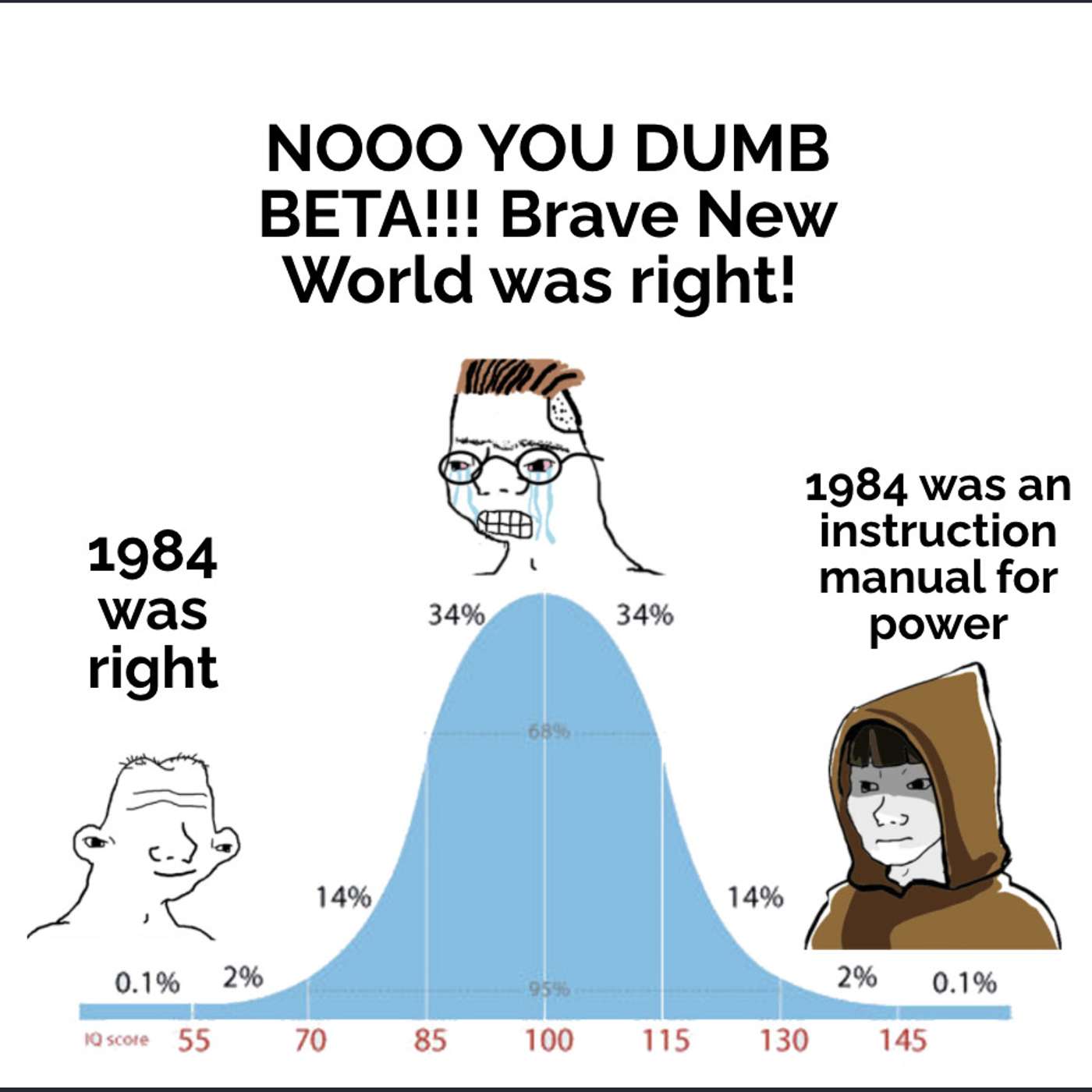
Ep 1411984 vs Brave New World Pt. 1 [Intelligence Squared]
Audio source: https://www.listennotes.com/podcasts/intelligence-squared/the-sunday-debate-brave-new-usI2DpLUHQ0/ (55 mins in)Full debate: https://www.youtube.com/watch?v=31CcclqEiZwPart 2 is next: https://swyx.transistor.fm/episodes/1984-vs-brave-new-world-pt-2-intelligence-squaredLoki vs 1984: https://twitter.com/swyx/status/1419128271799656449Aldous Huxley's comments: https://en.wikipedia.org/wiki/Aldous_Huxley
Ep 1406 + 2 + 1 [Warren Spector, designer of Deus Ex]
Source: https://www.youtube.com/watch?v=tffX3VljTtI (11 mins in)Warren Spector's 6 + 2 + 1:What's the core idea?Why do this game? Commercial hit? No choice?What are the dev challenges? Hard is ok, impossible not goodIs this idea well-suited to games? Games are about DOING, not BEINGWhat's the fantasy? If no fantasy, bad ideaWhat are the verbs? Games are about DoingHas anyone done this before? If no - could be a bad idea, or good, just be carefulWhat's the ONE thing? ONE new thing that hasn't been done beforeDo you have something to say? An issue/theme to explore
Ep 139The Origin of Yahoo [Jerry Yang]
The incredible origin story of Yahoo from start to $850m IPO in 2 years.Source: https://greatness.floodgate.com/episodes/jerry-yang-how-yahoo-went-from-a-hobby-to-the-early-king-of-the-internetYahoo Origin StoryJerry Yang: When the HTTP and the web and HTML came along, it was this moment of aha. All that information can be put together in a graphical way. That is point and click. You don't have to sit in and typing command line and hyperlink.[00:00:15] So you just kept going. You could keep exploring as owns there's links to click on now. Moment for us to say, wow, this is going to be big because anybody can create a website and can link to other websites. So you don't need a lot of content to start. Right. You could just start and say, Hey, here's my Madonna website and here's five other ones.[00:00:34] And it was totally decentral. There was no way of knowing who created what website, when and how was updated and things like that. So, so there were just websites out there. So there's websites that are popping up everywhere. And so we created a little, just the beginning when we called it hotlist and then David started writing the end to get it into more of a database format, more tagging or labeling more keywords and a more directory structure.[00:01:00] And. Publish it onto a webpage in the front end. And so it was called Jerry's guide to the world wide web. And then. And I don't quite remember exactly when it was, has gotta be, early 94, mid 94. And then at some point I got sick of putting my name out there and David doing 80% of the work. So I put David and Jerry's guide to the world wide web, and then all hell broke loose.[00:01:19] So we said, One night, let's not leave until we come up with a new name. Right. So I remember we were, at the office and God, it must've been midnight and we were getting tired and sick of this. And so, so we said fine, let's look up all the acronyms that had yet another Y There's all kinds of computer tools.[00:01:37] I have Yia references and we looked in the dictionary and Yahoo stood out. Partly it was because if you look in the dictionary, it means people who are very uncivilized uncouth, rude, and were like cost. Great. We're just a couple of years. [00:01:50] Mike Maples Jr: And was David [00:01:51] Jerry Yang: from Louisiana. He was from Louisiana. Yeah, he claims his father called him a Yahoo or Yahoo growing up.[00:01:57] So, and so we just thought it was funny. It was short because we were typing our thing. We could get a short Yahoo that, Stanford IDU, everybody thought we were the chocolate drink it's it was it was just a totally zany off the cuff decision. [00:02:11] Mike Maples Jr: And at the time, did you even really think it was that important of a decision or is this just still a hobby?[00:02:16] Jerry Yang: It was absolutely a hobby. And so it was only important because, we had to go and tell people that this is what is now called. You don't have to type in David and Jerry's guide to the world wide web anymore. And it remained a hobby until. Until it wasn't. [00:02:29] Mike Maples Jr: And when you were designing the original Yahoo product, did you draw on any lessons from like library science or attempts pre prior attempts and just throughout history to classify [00:02:41] Jerry Yang: it?[00:02:41] Thanks. Yeah, it was funny. I, as a college student, I, one of the jobs I had to take was working in the engineering library, working in the stocks too. To restack books. So I was very familiar with it, the Dewey decimal system, and a bunch of other ways of organizing information. And it just didn't seem right when we started Yahoo to go to any existing system.[00:03:00]So we created our own sort of ontology our tagging system, our directory tree that I think lived on for quite a while but it was a bit ad hoc. And so we realized we needed somebody that understood organizing information at a grand scale. And that's when you know, , who was a symbolic systems major, Stanford joined us and she like.[00:03:22] Put order into the chaos. [00:03:23]Mike Maples Jr: And I guess, with libraries, you've got some type of hierarchy, I suppose, right. Books are in a classification or sub classification and you're trying to put them back on shelf. Right. So, but the internet, I suppose, you discover pretty quickly, it's different. Right?[00:03:38] You can cross link to [00:03:40] Jerry Yang: lots of different, right. You're exactly right. So it's more of a graph than a tree, in a it's more interconnected graph. It doesn't. We try to avoid circles. You don't want to get in the place where you just can't get self out, but the idea that you can interrelate, you can get to you can get to a music artist from Iceland, from starting with Iceland, countries, Iceland, or you can start with music artists, or you can start with pop.[00:04:02]The idea was to get people where they want to go. If you think of a keyword, why would you. Not let that keyword get you where you want to go, rat
Ep 138[Weekend Drop] Temporal — the iPhone of System Design
This is the audio version of the essay I published on Monday.I'm excited to finally share why I've joined Temporal.io as Head of Developer Experience. It's taken me months to precisely pin down why I have been obsessed with Workflows in general and Temporal in particular.It boils down to 3 core opinions: Orchestration, Event Sourcing, and Workflows-as-Code.Target audience: product-focused developers who have some understanding of system design, but limited distributed systems experience and no familiarity with workflow engines30 Second PitchThe most valuable, mission-critical workloads in any software company are long-running and tie together multiple services.Because this work relies on unreliable networks and systems:You want to standardize timeouts and retries.You want offer "reliability on rails" to every team.Because this work is so important:You must never drop any work.You must log all progress.Because this work is complex:You want to easily model dynamic asynchronous logic......and reuse, test, version and migrate it.Finally, you want all this to scale. The same programming model going from small usecases to millions of users without re-platforming. Temporal is the best way to do all this — by writing idiomatic code known as "workflows".Requirement 1: OrchestrationSuppose you are executing some business logic that calls System A, then System B, and then System C. Easy enough right?But:System B has rate limiting, so sometimes it fails right away and you're just expected to try again some time later.System C goes down a lot — and when it does, it doesn't actively report a failure. Your program is perfectly happy to wait an infinite amount of time and never retry C.You could deal with B by just looping until you get a successful response, but that ties up compute resources. Probably the better way is to persist the incomplete task in a database and set a cron job to periodically retry the call.Dealing with C is similar, but with a twist. You still need B's code to retry the API call, but you also need another (shorter lived, independent) scheduler to place a reasonable timeout on C's execution time since it doesn't report failures when it goes down.Do this often enough and you soon realize that writing timeouts and retries are really standard production-grade requirements when crossing any system boundary, whether you are calling an external API or just a different service owned by your own team.Instead of writing custom code for timeout and retries for every single service every time, is there a better way? Sure, we could centralize it!We have just rediscovered the need for orchestration over choreography. There are various names for the combined A-B-C system orchestration we are doing — depending who you ask, this is either called a Job Runner, Pipeline, or Workflow.Honestly, what interests me (more than the deduplication of code) is the deduplication of infrastructure. The maintainer of each system no longer has to provision the additional infrastructure needed for this stateful, potentially long-running work. This drastically simplifies maintenance — you can shrink your systems down to as small as a single serverless function — and makes it easier to spin up new ones, with the retry and timeout standards you now expect from every production-grade service. Workflow orchestrators are "reliability on rails".But there's a risk of course — you've just added a centralized dependency to every part of your distributed system. What if it ALSO goes down?Requirement 2: Event SourcingThe work that your code does is mission critical. What does that really mean?We cannot drop anything. All requests to start work must either result in error or success - no "it was supposed to be running but got lost somewhere" mismatch in expectations.During execution, we must be able to resume from any downtime. If any part of the system goes down, we must be able to pick up where we left off.We need the entire history of what happened when, for legal compliance, in case something went wrong, or if we want to analyze metadata across runs.There are two ways to track all this state. The usual way starts with a simple task queue, and then adds logging:(async function workLoop() { const nextTask = taskQueue.pop() await logEvent('starting task:', nextTask.ID) try { await doWork(nextTask) // this could fail! catch (err) { await logEvent('reverting task:', nextTask.ID, err) taskQueue.push(nextTask) } await logEvent('completed task:', nextTask.ID) setTimeout(workLoop, 0) })() But logs-as-afterthought has a bunch of problems.The logging is not tightly paired with the queue updates. If it is possible for one to succeed but the other to fail, you either have unreliable logs or dropped work — unacceptable for mission critical work. This could also happen if the central work loop itself goes down while tasks are executing.At the local level, you can fix this with batch transactions. Between systems, you can create two-phase commits. But this

Ep 137[Music Fridays] Tori Kelly Unplugged
Sources - Olivia Rodrigo - Drivers License (Tori Kelly cover) - Tori Kelly & Alessia Cara - Masterclass Of Impressions (Britney Spears, Xtina)- Tori Kelly & Jessie J - Who You Are- Demi Lovato - Sorry not Sorry (feat. Tori Kelly) - Ed Sheeran - Perfect (Tori Kelly cover)
Ep 136The Secret To Great Interviewing [Debbie Millman, Jay Acunzo]
Source: https://3clipspodcast.com/design-matters-deep-research-as-respect-ft-debbie-millman/Debbie Millman of the Design Matters podcast shows how she gets tender, emotional moments from her guests.

Ep 135The Genius of Apple's Name [Brent Schlender]
I recently started the audiobook version of Brent Schlender's Becoming Steve Jobs and this passage on Apple's name made me stop in my tracks:"There are different tales about the origin of the name, but it was a brilliant decision. Years later, Lee Clow, Steve’s longtime collaborator on Apple’s distinctive brand of advertising, told me, “I honestly believe that his intuition was that they were going to change people’s lives by giving them technology they didn’t know they needed, that would be different from anything they knew. So they needed something friendly and approachable and likable. He took a page out of Sony’s book, because Sony was originally called Tokyo Telecommunications Engineering Corporation, and [cofounder] Akio Morita said they needed something much more approachable.”"Indeed, adopting the name Apple foreshadows the expansiveness and originality Steve would bring to the creation of these new machines. It’s suggestive of so much: the Garden of Eden, and the humanity — both good and bad — resulting from Eve’s bite of the fruit from the Tree of Knowledge; Johnny Appleseed, the great sower of plentitude from American myth; the Beatles and their own record label, a connection that would lead to litigation years later; Isaac Newton, the plummeting apple, and the spark of an idea; American as apple pie; the legend of William Tell, who saved his own life and that of his son by using his crossbow to pierce an apple perched on the son’s head; wholesomeness, fecundity, and, of course, the natural world."Apple is not a word for geeks, unlike Asus, Compaq, Control Data, Data General, DEC, IBM, Sperry Rand, Texas Instruments, or Wipro, to mention some less felicitously named computer companies. It hints at a company that would bring, as it eventually did, humanism and creativity to the science and engineering of computers. As Clow suggests, settling on Apple was a great, intuitive decision. Steve was innately comfortable trusting his gut; it’s a characteristic of the best entrepreneurs, a necessity for anyone who wants to make a living developing things no one has ever quite imagined before.I don't know how many times I've looked at names like Asus, IBM, Wipro, and Texas Instruments and never reflected on how they are clearly less friendly than "Apple". It's obvious in retrospect — the best kind of obvious.Longtime readers here will know I have opinions on How to Name Things - mostly in code. It's easy to have strong opinions about stuff only developers see since user validation is just asking people like yourself. It's much harder to name something consumer facing. Here are some useful rules I gleaned from Apple:Two syllables maxFamiliar English word - literal 5 year olds can spell and pronounce it rightStarts with A - useful for alphabetical sort. Amazon did this tooName leads to easy logo/swag/branding ideasEvoke aspirational qualities - knowledge, health, natureI've vacillated somewhat on whether or not to use an English word for a name. My current company, Temporal, is an English word, and by sheer misfortune it exactly coincided with the Temporal JavaScript proposal. Given that we aim to release a JS SDK soon, this is regrettable potential confusion in every customer conversation. Whereas if you just make up a word, like "Netlify", or "Serverless", you not only ensure that you never clash with anyone, you also shoot right to the top in SEO results. Then again, people can just append "Apple Computer" or "Apple Macintosh" and do fine.Whatever you do, the worst outcome of naming something an English word is if it leads people to assume it does something different than you intend. It can help to do a sanity check by asking people to guess what your thing does without context.
Ep 134Elegant Software [Joel Spolsky]
Two anecdotes from StackOverflow founder Joel Spolsky, on how Google and Amazon wrote elegant software that balances simplicity and power.Audio: https://www.listennotes.com/podcasts/business-of/ep-70-simplicity-vs-value-in-YaRkM5T41IN/ (45mins in)Talk video: https://businessofsoftware.org/2009/01/joel-spolsky-at-business-of-software-2009-video/Oct 2021 update - I snipped it here: https://youtu.be/-QqIyICyXbU
Ep 133The Challenges of Building Community [Tropical MBA]
Audio source: https://www.tropicalmba.com/ten-years-dynamite-circle/ (24 mins in)

Ep 132[Weekend Drop] Why Invest in Developer Community? GitHub OCTO Speaker Series
Video: https://octo.github.com/speakerseries/swyxBlog Post: https://codingcareer.circle.so/c/dx-blog/technical-community-builder-is-the-hottest-new-job-in-techSlide dec: https://docs.google.com/presentation/d/1WGCfellGTboDwtM_D9uMwsHtD0qCFeBv6AYNUSxlDLg/edit?usp=sharingMy talk at Heroku's conference where I met Idan: https://www.youtube.com/watch?v=1_w1YWCHXFgTimestamps00:01:17 Intro presentation on Why Dev Community00:16:15 Discussion between Idan, Brian, and SwyxTranscriptswyx: [00:00:00] Hey everyone! On weekends, we do long form audio from one of my conversations with people. [00:00:06] And a few months ago, I published an article on why technical community building is the hardest new job in tech. And it got a lot of traction. In fact, some of the other weekend drops on this podcast are related to that. Podcasts, but I was invited by the GitHub office of the CTO to talk about it. [00:00:25] These are two people that I knew from prior engagements before. Idan Gazit. I actually met at the Heroku conference. When I spoke aboutNetlify CLI and Netlify Dev. And then Brian Douglas, BDougie , it was the dev advocate at Netlify before any of us were dev because another fi. So he kind of pioneered and originated the role, which I stepped into. [00:00:46] And both of them are just very well. The tunes to dev community. So I thought we had a really good conversation. About it. So the first part of this talk basically is me presenting a few slides on the, my thoughts on dev community. And then it was just a freeform discussion between. Myself and these two experts at GitHub. so enjoy [00:01:17] Idan Gazit: [00:01:17] Hello, welcome to the Octo speaker series. My name is Eden and I'm with Gibbs office of the CTO. We look at the future of development, developer experiences and try to figure out how to make development faster, safer, easier, more accessible to more people and more situations. All I find jazz today we're trying something a little different.[00:01:43] Our guest is GitHub Star, Shawn Wang, better known by his internet handles Swyx and we'll also be joined by Brian Douglas, AKA B Douggie, who is a developer advocate and educator, and my colleague here at get hub. So, excited for that. I first met Swyx at a conference in the before times before the Corona, almost two years ago when he was giving a talk about state machines for building CLIs.[00:02:07]I knew of him in the context of his famous learning in public essay. And the talk that he gave was a fantastic demonstration of that diving into an area where he had relatively little expertise and making sense of that territory and jumping back out to explain it to the rest of us after his talk, he can.[00:02:28] To me that he he's actually a refugee from programming, Excel for finance. And I think coming out of that background, Swyx excels at finding that place of empathy for developers in the middle of the unglamorous, the hard parts of development the parts that we don't like to show off to one another, because they don't make us look smart.[00:02:49] They don't make us look, look cool. His work normalizes, the feeling of I'm stupid right now, which is very much a part of every developer journey and with which I identify very, very much. I think that's what makes his thoughts on community building so relatable and so topical developer facing businesses have to find a way to channel empathy into action.[00:03:13] And Swyx is figuring that out in all of its messiness in public for us to see and learn from. And in fact the reason I reached out to invite them onto the show is this recent post that he wrote called technical community builders. And looking critically at, at how that's different from the way Deborah has done today.[00:03:30]And I think this is a very interesting take on the future of, of, of this business function for developer facing businesses. Okay. So before I bring him on I'll remind everybody that we have a code of conduct it's really important to me that chat is a place where everyone feels welcome. So, please make sure to make that possible.[00:03:47] And without further ado I would like to welcome Swyx and be Douggie. Hello. [00:03:52]swyx: [00:03:52] Hey, Hey, Hey [00:03:54] Idan Gazit: [00:03:54] Swyx, you're, you're out in Singapore and it's like the middle of your night. Thank you so much for coming in and joining us for, for, for this talk. [00:04:02] swyx: [00:04:02] Oh, it's my pleasure. Yeah, I mean, I work specific hours specific time anyway, so, this is I guess the start of my day. [00:04:10] Idan Gazit: [00:04:10] Okay, well, good morning to you then.[00:04:12]Doug, [00:04:14] Brian Douglas: [00:04:14] I'm doing perfectly fine enjoying my normal time of the day, [00:04:19] Idan Gazit: [00:04:19] the north, the morning. That includes the day star. Fantastic. Swyx you said that you wanted to give a little bit of a, an upfront a mini talk about this before we dive into this discussion. Why don't I bring you on.[00:04:35] There we
Ep 131[Music Fridays] Still Alive - Frank Sinatra Swing Cover
Original "Still Alive" song: https://www.youtube.com/watch?v=Y6ljFaKRTrIStill Alive - Frank Sinatra Big Band Swing Version (The 8-Bit Big Band): https://www.youtube.com/watch?v=22vbhTi1ieI
Ep 130How to Be Kelsey Hightower [Kelsey Hightower]
Audio Source: https://www.listennotes.com/podcasts/the-popcast-with/episode-77-googles-kelsey-1hEI5D-Myci/
Ep 129How To Die Well [Kathryn Mannix]
Audio source and show notes: https://simplify.simplecast.com/episodes/kathryn-mannix-how-to-die-well"Dying is not as bad as you think": https://www.bbc.co.uk/ideas/videos/dying-is-not-as-bad-as-you-think/p062m0xt/player
Ep 128How to Explain Things Well [Neil deGrasse Tyson]
Audio source: https://www.jordanharbinger.com/neil-degrasse-tyson-cosmic-queries-for-the-acutely-curious/ 22 mins inTranscript[00:21:14] I would love to know how you develop your skills to be able to explain and communicate complex ideas effectively to the everyday person or any suggestions for people struggling in this area, because you must have worked really, really hard to be able to go, "Okay, your level of understanding is right here because you're 16, 12 or 41, and you just don't have a good science background. I'm going to now make this digestible for you." And you do that seemingly on the fly on talk shows like on the Daily Show or on TV, possibly even live. So it's not like, "Oh, Hey Neil, we're going to ask you all this stuff, come up with a clever sounding soundbite." Like you got really, really good at that through a lot of hard work I assume. [00:21:55] Neil deGrasse Tyson: Well, first thank you for not saying, "Oh, you're so good at it. It must be natural." [00:22:00] Jordan Harbinger: I know it's not — no one's that good at that naturally. [00:22:03] Neil deGrasse Tyson: Thank you for granting me the expectation that it's the product of hard work. So that's my first, thank you. Second, I remembered — you know, I go back. I'm an old man now. So let me go back many decades. And I started explaining things to people because they'd asked, "Oh, you're a natural physicist. I have this question." And I would monitor their attention span, their eyebrows, would they lean into the conversation or are they easily distracted? At what word did I utter did they then lose interest? By the way, any writer thinks this way all the time, because the moment you lose someone in that sentence, they're gone. They're never coming back to your novel. Hence is the important review of a novel — it was a page turner, right? Where you kept wanting to hear more. So somehow the author has gotten under your skin in a good way and keeps you coming, sentence by sentence, idea by idea. So there I am explaining things and not everything is working, the words I'm using that they're not understanding. So I'm taking mental note of this because I say to myself, if this happens again, I want to avoid those pitfalls. I mean, why not? If it's done incrementally, how much effort is that? [00:23:15] But you also have to pay attention to body language. You have to monitor, are they interested or not? And if you're not, it's just like the professor facing the chalkboard or the class, if you're not even looking or paying attention, you will fail because you're not going to be reading what works with them. So I make note, "Oh, this works for person of this age group, but not this age group or this kind of background or if they're from this part of the country. Okay, or this part of the world, all of this is an assembled encyclopedia — that sounds so antiseptic — an assembled toolbox for me to reach it — utility belt. There you go. [00:23:54] Jordan Harbinger: There you go. Yeah. [00:23:55] Neil deGrasse Tyson: I'm Batman. Everybody wants to be Batman. It's my utility belt. And I find out what their interests are and I clad the science that I'm describing on what they came to me with. Are they fluent in pop culture or are they religious? Are they ambitious? Are they not ambitious? All of these things shape what words I choose and hardly anything I ever say, do I say without having first written it down. [00:24:23] Jordan Harbinger: Really? Like even the soundbites on like a show you'll have written that in the past and used it on before. [00:24:28] Neil deGrasse Tyson: Yes. But I've worded differently. I'll say, I've written so much about all of these topics that when the topic comes up, I just access a carefully worded sentence that I spent time composing. So if science writing was just communicating information, you can just staple together Wiki pages on all the science topics, but well-written books don't read like Wiki pages as useful as Wiki pages are. You're not reading them to be page turners, right? You're reading them to get specific information. But if you're going to write a book or give a lecture, you want the words to matter to flow, to attract someone's interest.[00:25:08] And so I'm going, "Oh, I have a better word that's shorter and less complicated. Let me use that. Yeah, that works." But now the next idea that follows it, these become templates within me and I have a good random access memory. Because if you spent that much time composing a sentence, you're going to remember that sentence. You're going to remember what the machinery was that went through your head. And I've written about basically every single science topic that I talk about publicly. So that helps a whole sentence is, can come out fully composed primarily because I already went through that same thought process. Unless you ask me a question that's so out of far left field, but then I can sort of assemble. I have words with me and I have, I can do this on
Ep 127How to Get Rid of Phobias [This American Life]
Audio source: https://www.thisamericanlife.org/740/there-i-fixed-itTranscriptAs long as he could remember, going back to when he was a child, Sam was scared of spiders. But not scared in the normal way, where lots of us don't feel great when we see a big spider, or a snake, or a big bug, or whatever.SamIt invaded all aspects of my life at all points in the year. I was thinking about spiders all the time. Any room I walked into, I looked in the corners. I looked under the table, crouched down. Every night before I went to bed, I fully unmade my bed.Walking down the street, I wouldn't walk under anything that-- I would try to avoid right angles to the best I could, because that's where a spider is going to make its web.Ira GlassBut you were scared that one would fall on you? Or just because that's where they are?SamWhether or not it would fall on me was really irrelevant. Just seeing a spider, not moving, moving, large, small, it just created a feeling in my body that was just-- I would shake. I would throw up. I would faint. And of course, if you're constantly going through your life looking for spiders, you'll find one.Ira GlassAs a kid, he didn't do sleepovers, didn't do summer camp. Other kids made fun of him. People did not understand. People pitied him.And when he grew up, it did not go away. His fear ruined dates. He once found a spider the size of your thumbnail in his car and sold the car that day.SamI had went to psychiatrists for exposure therapy. I had went to psychiatrists to talk about it. I couldn't watch an image of a spider on a TV screen.Ira GlassLet me ask you, does this name mean anything to you?SamHmm?Ira GlassPeter Parker.SamNo. Oh, oh, Spider Man.Ira GlassYeah, could you watch those films?SamNo, absolutely not. I don't even know if Spider Man has anything to do with spiders, to be honest.Ira GlassAnd then, he was seeing a hypnotherapist, and it was going nowhere, when he read in The New York Times about this new treatment for phobias that can get full results in just one day. And he reached out to the doctor behind it, a psychologist, Dr. Merel Kindt in Amsterdam. And she invited him to be part of a study and get the treatment. He figured he had nothing to lose and flew to The Netherlands. A film crew captured what happened during his treatment for a documentary series called A Cure for Fear.Merel KindtYou're doing fine.SamI'm so nervous.Merel KindtYeah, it's OK.Ira GlassSam and Dr. Kindt stand outside the door of her room. She opens it. He looks in. There's an aquarium with a brown, furry tarantula, maybe 4 or 5 inches in size.Merel KindtYes, there's a spider in the tank. But let's not wait too long. So it would be very good if you can already walk in the room, and then I close the door. Very good, great. We're doing very well.SamI think you can hear that I was breathing hard, and I'm feeling that there is adrenaline. I crouch down, my arms crossed.Ira GlassDr. Kindt then opens the door of the tank.SamOh, whoa, god. No, no, no, you're not going to make me look in there, are you?Merel KindtYes, I'm going to ask you.Sam[HYPERVENTILATING]Merel KindtSo please come with me. So step in here, and then close it. Very good. And then, can you also--SamOh god!Merel KindtVery good, very good. Yeah, come. And--SamNo! Don't make me go in there!Ira GlassThen, to get the spider to move around this tank, she sprays it with water. And every time she plays it with water, the spider waves its legs or moves around a little.SamYeah.Merel KindtOK. How high is your distress right now?SamIt's like 100.Merel KindtOK, but it's very important not to move away.SamOK, I'm not moving away.Merel KindtAll right, spray it a bit so that--Sam(SCREAMING) Oh, god, no! [WAILS]Merel KindtYeah, that's very good. OK.Sam[HYPERVENTILATING] I gotta go!Ira GlassSam, I'm wondering, like when you scream like this, I'm wondering what goes through your head.SamThat I feel like I can feel it on me, that I'm going to be attacked by it. None of this is rational, right?Ira GlassMm-hmm.SamI know it's not--I know that the thing isn't going to jump out of the tank and move like 4 feet in the air and jump on me. I get that. But it doesn't matter, because I feel that the absolute worst things that can happen are going to happen and are, in fact, happening.Ira GlassThe reason Dr. Kent wants him to max out on anxiety like this is that she wants to trigger the memories and feelings of fear of spiders that are stored in his brain. And then, when his brain goes to store this big new terrible experience with the old ones, it has to re-save the old memories. And she gives him a drug, a beta blocker called propranolol, that disrupts that process. And I know this sounds so simple. How can this be real? But by disrupting the way that the brain re-saves those memories, she neutralizes them.The very next day, Sam returns to the same room. He walks right in. His breathing is normal.SamThere's fear in that-- well, I don't know that there's fear. I don't und
Ep 126[Weekend Drop] Swyx on Side Projects - Modern Web Podcast
My thoughts on shipping The Coding Career Handbook as a Side Project, and tips and tricks on how to do it well.Audio source: https://modernweb.podbean.com/e/s08e09-modern-web-podcast-sides-projects-with-shawn-wang/
Ep 125[Music Fridays] Dear Theodosia Cover — Trey Mclaughlin, Jamal Moore, & Arthur Chapman
See them sing it https://www.youtube.com/watch?v=h4nYLQsXjoM
Ep 124The Race to Remote [Marc Andreeesen]
Audio source: https://underthehoodpod.robinhood.com/#element-452 (15 mins in)Mp3: https://www.listennotes.com/podcasts/under-the-hood/the-future-of-finance-with-ApbGyU2DfQE/Why the future is remote work and location independent pay.The backing track to my narration is Algorithms by Chad Crouch.
Ep 123Snorkel.ai: Unlocking Subject Matter Experts to make Software 2.0 [Alex Ratner]
Source: https://www.thecloudcast.net/2021/06/automated-data-labeling-for-ai-apps.htmlSee also: https://softwareengineeringdaily.com/2020/04/09/snorkel-training-dataset-management-with-braden-hancock/Software 2.0 is Andrej Karpathy's idea that instead of coding business logic by hand, the applications of the future will be trained by data. In other words, machine learning. But ML is limited by the quality of data available, and there is a lot of unstructured, unlabeled data out there that is still being manually labeled today. Scale.AI is a well known startup that has done very well offering a scalable manual labeling workforce, however they are still bottlenecked by the number of subject matter experts available for labeling critically important data, like cancer diagnosis and drug trafficking rings. In order to get labels from subject matter experts, you typically have to put them through a very tedious process of labeling to build up a useful structured dataset upfront before any useful machine learning can be done.I did some very minor ML work about 5 years ago and found Christopher Re's work on DeepDive at Stanford. It takes a revolutionary approach by making it easy to write the labeling functions themselves. This turns the labeling process into an iterative, REPL like experience where subject matter experts can suggest a function, see its impact right away, and continue refining it, assisted by AI. DeepDive is now commercialized in a startup called Snorkel.AI, so I was very excited to find a clear explanation of Snorkelflow from its CEO, Alex Ratner. Here it is!Transcript[00:01:15] Alex Ratner: [00:01:15] SnorkelFlow is a platform that's meant to take this process of building machine learning models and AI applications. And I get all starting with buildings, the data that they rely on that fuels them and make it, in a nutshell, look more like an iterative software development process. Then you know, this kind of 80, 90% upfront just, hand labeling exercise.[00:01:34]And so snorkel flow supports that entire iterative loop of, actually laboring data. Can be by hand in the platform, but also most centrally programmatically by letting users, what we call labeling. Basic idea, is that rather than say asking your, legal associate at a bank to, or your doctor friends to sit down and, label a hundred thousand contracts or a hundred thousand electronic health records have them, right.[00:02:00]Sharistics are bits of their expertise look for this keyword or look for this pattern or look for this, et cetera. I'm like a bridge from old, expert knowledge type input. Modern machine learning models using one to power. The other. So a snorkel flow is an IDE basically, and has a no-code UI component as well, but let's not people either via code or by pushing buttons for even, non-developer subject matter experts say to.[00:02:24]Programmatically labeled their data by writing these labeling functions and then uses a bunch of modeling techniques. A lot of which was actually, the work that, that the co-founding team. And I did in, in, in our kind of thesis work around how you take a bunch of programmatic data and clean it up and turn it into a final.[00:02:41]Instead of clean training data for machine learning models, and then actually in snorkel flow, you can, autumn, basically push button train best-in-class open source models. You can then analyze where they're succeeding or failing and, and use that to go back and iterate on your data.[00:02:54]And there's a Python SDK throughout the whole thing. So many of our customers will mix and match. Will you start. Create the training data set and then train the model on some other system, et cetera. But what's normal flames of support. Is it basic iterative development process where, you know, rather than just spending months to label a training at once and then being stuck with it and having to throw it out and start all over again, anything in the world changes your upstream input, data changes your downstream objectives.[00:03:18] Change, making it again more like an iterative process where you push some buttons or write some code. That label the data. You compile a model or train it, but you can think of it like compiling and then you go back and debug by, by iterating on your data, everything centers and snorkel flow around looking at your data and iterating on how it's labeled to improve models.[00:03:38]Brian Gracely: [00:03:38] I'm curious. So you mentioned you mentioned in there's a there's a Python SDK, which for anybody who, works in data science, data modeling, right? Python is your language to Frank sort of the language you use or are you a couple of them, that's the language that, you how you do your program, but I'm curious, like in today's world, Do data scientists consider themselves programmers or is there still Hey, look, I work on the numbers, I'm good at building models and the numbers, but I don't think of myself as a programmer.[00:04:08] Like how do y
Ep 122Dispatch from LA [swyx]
I've moved back to the US! Just a quick audio update + announcement that I'm taking this week off because of lack of equipment.The backing track to my narration is Algorithms by Chad Crouch.
Ep 121[Weekend Drop] Swyx on Marketing Yourself - DataTalks.Club
I joined Alexey Grigorev's DataTalks.Club podcast to talk about my viral essay on How to Market Yourself (without Being a Celebrity).Links:- How to Market Yourself without Being a Celebrity (tweet thread) - DataTalks.Club Video and Transcript- The Coding Career Handbook - special discountTimestampsMarketing ourselves (1:15)Components of personal marketing (5:00)Personal brand for an average developer (7:06)Picking a domain: what to write about? (13:13)Being too niche (15:30)Finding a good niche (17:15)Learning in public (18:23)Borrowed platforms vs own platform (20:11)Starting on social media: Picking what they put down (22:48)Career transitioning: mutual exchange of value (23:50)Personal marketing for getting a new job (33:30)Getting hired through the back door (37:50)Finding content ideas (39:45)Marketing yourself in public — summary (40:10)Open-source knowledge (41:11)Internal marketing: promoting ourselves at work (45:09)Signature initiative (49:30)Public speaking (53:30)The backing track to my narration is Algorithms by Chad Crouch.

Ep 120[Music Fridays] Baba Yetu — Christopher Tin
The theme song of humanity.Audio sources:Baba Yetu at Cadogan HallOfficial music videoBaba Yetu at LlangollenLyrics“Baba Yetu” is essentially the Lord’s Prayer sung in Swahili. The title translated means “Our Father”.Baba yetu, yetu uliyeMbinguni yetu, yetu amina!Baba yetu yetu uliyeJina lako e litukuzwe.Utupe leo chakula chetuTunachohitaji, utusameheMakosa yetu, hey!Kama nasi tunavyowasameheWaliotukosea usitutieKatika majaribu, lakiniUtuokoe, na yule, muovu e milele!Ufalme wako ufike utakaloLifanyike duniani kama mbinguni.(Amina)Our Father, who artin Heaven. Amen!Our Father,Hallowed be thy name.Give us this day our daily bread,Forgive us ofour trespasses,As we forgive othersWho trespass against usLead us not into temptation, butdeliver us from the evil one forever.Thy kingdom come, thy will be doneOn Earth as it is in Heaven.(Amen)TranscriptOn Fridays we feature music on this podcast and today i'm sharing one of my favorite songs - Baba Yetu. If all of humanity ever had a theme song, this would be my pick.This first clip was from a performance with the Royal Philharmonic in London at Cadogan Hall.Baba Yetu was the theme song for the game Civilization 4 and it was the first video game song to ever win a Grammy award. If you watch the official music video that comes with the game, linked in the show notes, you can imagine how it celebrates the crowning achievements of civilization from the taming of fire all the way through to the space race and the information age. But the renditions I feature here are not from the game, they are live performances conducted by Christopher himself. I really prefer the live performances because you get to see how passionate Christopher is about this song, and how much it lifts up the entire chorus and orchestra. As one youtube commenter said, "this is a song composed by an asian guy in an african language sung by white people from a game about the rise of humanity. Now if that isn't awesome I don't know what is."Baba Yetu is the Lords Prayer in Swahili - so literally you are saying "give us this day our daily bread, forgive us of our trespasses as we forgive others" as you sing this song. To close out, here's another rendition I like with a more diverse cast and I love appreciating how a different soloist interprets it.If you have the time, I recommend watching both performances on youtube.
Ep 119Writing Advice [David Perell, Courtland Allen]
5 tips to improve your writing:NoveltyIntrigueStoriesAnalogiesExamplesAudio source: https://www.indiehackers.com/podcast/196-david-perell (35 mins)
Ep 118Everything is a Remix [Kirby Ferguson]
Everything is copied - although Apple didn't copy as much from Xerox as most people say.Audio source: https://www.youtube.com/watch?v=nJPERZDfyWc (the full 4 part documentary is an inspiring watch)

Ep 117wtf is dbt? [Drew Banin]
dbt is taking the data eng world by storm. this is the best 10 minutes i've heard on it, from Fishtown Analytics cofounder Drew Banin.Fun fact: Fishtown is a town in Philadelphia!Audio source: https://www.dataengineeringpodcast.com/dbt-data-analytics-episode-81/ (14 mins in)Fivetran CEO geeking out on dbt: https://medium.com/hashmapinc/the-origins-and-future-of-fivetran-with-george-fraser-1af8e7cb90aa (17 mins in)TranscriptTobias Macey: And also, we don't have this version repository of queries and reports and the ability to collaborate on it fairly easily, then you end up leaving everyone to write their own sequel, usually ad hoc, and they might have their own assumptions as to what an order is or what a customer is, or how to structure the query to join across different tables. And so everybody's going to have slightly different views of the data or slightly different outputs. And so definitely having the ability to have one location that everybody can look to. And one interface for everybody to collaborate on makes it much easier and more scalable to have more people working on building and interacting with these Analytics reports and these analytics pipelines.Drew Bannon: Absolutely, I think it's a great point, what we find is that in the process of building up these data models, what you're actually doing is generating knowledge about your organization. And you're saying here's exactly what an order is, or here's exactly how we calculate MRR. And to that end, dbt ships with auto generated documentation about your project, you can run dbt docs generate, to generate this single page app, have all of your models with all the tests on the columns and descriptions that you can populate for these different models. And so if you do have some consumer of the data that isn't using GBT, they have a great place that can go and see all the models that exist and all the columns and your pros about all of it. And so in that way, it's sort of a catalog of all the data that your organization commands and serve instructions for us toTobias Macey: Yeah, and I think that that is definitely very powerful, because particularly having the documentation be generated as part of the code as opposed to something that someone does after the fact or alongside the work that they're doing means that it's much more likely to stay fresh and actually be up David periodically, rather than somebody putting in the time and effort to write some prose once when they first build the overall reporting pipeline. And then it quickly grows stale and useless over time as new modifications are made. Yeah, that's absolutely right. And another interesting capability that dbt has is the idea of packaging, and being able to package up these different subsets or reports or transformations so that they're reusable across different teams and across different code bases. So can you talk a bit about how those packages are set up and implemented, and also maybe talk a bit about who the sort of primary drivers are for the different packages that are currently available? Sure.Drew Bannon: So when dbt runs, it will look in a couple different places for we will call it resources. And so an example of a resource is a model or a test of a model, or things like documentation, snippets, etc. And so one of the places that looks is your models directory, which are the models that you've created, but the other place it looks is a folder called dbt modules, which is sort of note inspired. And so what you can do is just drop whole dbt projects into that dbt modules folder. And they get picked up as though they're a natural part of your project. And all of these resources become available in the compilation context the dbt provides. And so there are basically two types of packages that that are produced. One is data set specific packages, and the other is sort of macro or utility packages. An example of a data set package is something like snowplow. And so we're huge fans of the snowplow event tracking system at Fishtown analytics, the big idea is that you can track events from all your different clients. And they flow directly into a big events table in your warehouse. And so this event table is like an immutable event log, it has the full history of you know, every interaction that you cared about to track in a single table, which is phenomenal. It's a great resource. But the problem is, it's difficult to plug a BI tool right into that, either because it's too much data or because the things you really care about are hard to analyze, like how many people had two different events in a single session. And so what we frequently find ourselves doing is rolling up these events into sessions using some code that was actually originally produced by the snow pub team called their web data model. And so what we can do is we can make a package of these transformations that go from bra events, to page views to sessions, all the way up to users. And then we encode these things as
Ep 116The REAL Lesson of Tuesdays with Morrie [Mitch Albom]
Audio source: https://www.3books.co/chapters/15 (14 mins in)Tuesdays with Morrie wikipedia entry
Ep 115[Second Brain 5] Finale
I am a mentor for the Notion Advanced track of Tiago Forte's Building a Second Brain, Cohort 12. You can catch Weeks 1, 2, 3, and 4 in the previous weekend episodes. This is the cleaned up audio of the last of 5 mentorship sessions with Q&A at the end. Video version: https://youtu.be/emUfFWixQwETimestampsRecap of Last 4 Weeks [00:02:08]Shifting Perception to Sharing [00:03:07]IP's Personal Progress [00:09:38]How to Solve the Cold Start Problem [00:10:57] The Invisible Pipeline and the 1% Rule [00:14:00]Peer Group Progress [00:15:48]Course Recap: Convergence vs Divergence, CO vs DE [00:20:41] Your First Brain vs Your Second Brain [00:22:43] Project Kickoff Checklist [00:24:06]Favorite Quotes [00:25:26] Q&A: Denys on Learning in Public in YouTube [00:32:47] Q&A: Meryl Johnston on Learning in Public [00:43:34] The Resistance and Gratitude Journaling [00:46:04]Don't Just Write Essays: Remove Resistance [00:48:37]Three Strikes Rule [00:52:51]Guy Margalith on Fear and Your Second Brain [00:53:40]Organizing Files on your Mac [01:00:59]Swyx Twitter Journey [01:04:18]Tropical MBA and Balaji Srinivasan [01:09:05] Closing Remarks [01:10:20]Transcriptswyx: [00:00:00] Okay, so we're in week five. I didn't know what to call it. So I just called it finale week. I, at this point I feel like everyone knows each other even.But feel free to say hi, if you're new you're still totally woke up and to jump around and visit the each other's sessions. I'm also going to blast through the housekeeping just because there's not that much more housekeeping left to do. And I will also want it to shout out what I did for last week's.Events which well that's Swyx week app, which was essentially right up my own experience of intermediate packets. And I broke my own journey down into eight intermediate packets. So that's tweet, tweet, livestream, blog posts, conference, conference conference, a job interview. And this took place over the course of a year.So it, it shocked me because even though I went through it, you don't, you never really think about intermediate packets dripping out over a year. And the thing that I really wanted to get across was that I think the way that immediate packets, which was presented last time was very much of a top-down thing.Like I want to do something big, let me work backwards and break it down into intranet, small things that can ship. But it also equally works for bottom up where you have no idea what the end goal is, but you're just like. That's just ship of small things, and try to build up to something big if the interest is there. Glen G says, paddle reminds me of bubbling off events. Yep. That's a very WebDev analogy and that's fully true there. The two directions of bubbling. I forget what the opposite of bubbling is in the dumb, but that's beside the point anyway. I wanted to offer that as my own perspective on intermediate packets.Oh, yeah. Dave says he is bubbling up NIST insider today. Yeah, totally. Yeah. We are bubbling ideas. That's great. That title doesn't resonate with me. So I just went with bottom up, but feel free to write your own policy. And I think that's something that we should talk about as well.Who's written stuff as a result of this course. And what post ideas do you have to share? You can feel free to throw that in the chat as well. Housekeeping, we've covered this plenty of times, but stupid questions are welcome. Often beats. Perfect. And then this is the discussion and not a lecture.Recap of Last 4 Weeks [00:02:08]All right. So we've covered all these 12. I think it actually works out without the 12. So it's cohort 12 with 12 items. I think so. I grabbed this, I went back to lecture one and grab this slide. And actually the last week changed quite a bit, I think, but the first 3 have been relatively stable.And it's quite a bit of content if you walk back and think about it. So I just wanted to acknowledge and pause for a bit and say I think the last five weeks have been a real blast in terms of flights and just a lot of ideas, especially if you're new to them for the first time. But even for me going through them the second time I felt like I just had a lot more to think about each on each in each time, because I've lived through it and I've had a year to really sit with it. I think it'd be interesting to hear from you in in, in the chat or if you wanna, if you want to speak up, I'm just going to pause here and it's just go was there, was there a particular idea that really stuck out to you during this these this whole curriculum w what's your favorite sort of takeaway that you really liked?Shifting Perception to Sharing [00:03:07]Speaker 2: [00:03:07] The one thing that I found which wasn't actually to deal with lessons wasn't to do with systems and processes. It was his perception for me. It's just been a shift in perception, but that's been the benefit of building a second brain, but I've taken that and I've applied that to everything. And I'm looking at, whet

Ep 114[Music Fridays] In The Heights — Original Motion Picture Soundtrack
I just watched the new In The Heights movie and had to mixtape my favorite moments!Samples from:Benny's Dispatch (Corey Hawkins)Paciencia y Fe (Olga Merediz)Breathe (Leslie Grace)96,000 (Cast)In The Heights on Wikipedia

Ep 113Apple Pie Positions and Certainty Theater [Shreyas Doshi]
How people unintentionally obstruct progress by asking for perfectly reasonable thingsAudio source: https://artofproductpodcast.com/episode-17310 Tricks to Appear Smart During MeetingsShreyas Twitter thread on Apple Pie PositionsJohn Cutler's response with more
Ep 112Cloudflare at TechCrunch Disrupt 2010 [Matthew Prince]
Listen to Cloudflare's pitch when it was just 3 people at TechCrunch Disrupt. Would you have invested?Audio Source: https://www.youtube.com/watch?v=XeKWeBw1R5AQwiki, winners of Disrupt that year: https://techcrunch.com/2010/09/29/qwiki-techcrunch-disrupt-winner/
Ep 111EPOC Personal Branding [Sam Parr, Shaan Puri]
The extremes people go to in order to reinforce a personal brand.Audio Source: https://www.listennotes.com/podcasts/my-first-million/182-how-an-astrology-app-mplvUweDHMA/My How To Market Yourself essay: https://www.swyx.io/marketing-yourself/#personal-branding
Ep 110The Goddess of Everything Else [George Hotz, Scott Alexander]
A short story with a message of hope for the future, recommended and read by a unique, brilliant mind.Audio source: https://www.youtube.com/watch?v=Nr7Yn3W8VQE&t=16555sStory source and comments: https://slatestarcodex.com/2015/08/17/the-goddess-of-everything-else-2/They say only Good can create, whereas Evil is sterile. Think Tolkien, where Morgoth can’t make things himself, so perverts Elves to Orcs for his armies. But I think this gets it entirely backwards; it’s Good that just mutates and twists, and it’s Evil that teems with fecundity.Imagine two principles, here in poetic personification. The first is the Goddess of Cancer, the second the Goddess of Everything Else. If visual representations would help, you can think of the first with the claws of a crab, and the second a dress made of feathers of peacocks.The Goddess of Cancer reached out a clawed hand over mudflats and tidepools. She said pretty much what she always says, “KILL CONSUME MULTIPLY CONQUER.” Then everything burst into life, became miniature monsters engaged in a battle of all against all in their zeal to assuage their insatiable longings. And the swamps became orgies of hunger and fear and grew loud with the screams of a trillion amoebas.Then the Goddess of Everything Else trudged her way through the bog, till the mud almost totally dulled her bright colors and rainbows. She stood on a rock and she sang them a dream of a different existence. She showed them the beauty of flowers, she showed them the oak tree majestic. The roar of the wind on the wings of the bird, and the swiftness and strength of the tiger. She showed them the joy of the dolphins abreast of the waves as the spray formed a rainbow around them, and all of them watched as she sang and they all sighed with longing.But they told her “Alas, what you show us is terribly lovely. But we are the daughters and sons of the Goddess of Cancer, and wholly her creatures. The only goals in us are KILL CONSUME MULTIPLY CONQUER. And though our hearts long for you, still we are not yours to have, and your words have no power to move us. We wish it were otherwise, but it is not, and your words have no power to move us.”The Goddess of Everything Else gave a smile and spoke in her sing-song voice saying: “I scarcely can blame you for being the way you were made, when your Maker so carefully yoked you. But I am the Goddess of Everything Else and my powers are devious and subtle. So I do not ask you to swerve from your monomaniacal focus on breeding and conquest. But what if I show you a way that my words are aligned with the words of your Maker in spirit? For I say unto you even multiplication itself when pursued with devotion will lead to my service.”As soon as she spoke it was so, and the single-celled creatures were freed from their warfare. They joined hands in friendship, with this one becoming an eye and with that one becoming a neuron. Together they soared and took flight from the swamp and the muck that had birthed them, and flew to new islands all balmy and green and just ripe for the taking. And there they consumed and they multiplied far past the numbers of those who had stayed in the swampland. In this way the oath of the Goddess of Everything Else was not broken.The Goddess of Cancer came forth from the fire and was not very happy. The things she had raised from the mud and exhorted to kill and compete had become all complacent in co-operation, a word which to her was anathema. She stretched out her left hand and snapped its cruel pincer, and said what she always says: “KILL CONSUME MULTIPLY CONQUER”. She said these things not to the birds and the beasts but to each cell within them, and many cells flocked to her call and divided, and flower and fishes and birds both alike bulged with tumors, and falcons fell out of the sky in their sickness. But others remembered the words of the Goddess of Everything Else and held fast, and as it is said in the Bible the light clearly shone through the dark, and the darkness did not overcome it.So the Goddess of Cancer now stretched out her right hand and spoke to the birds and the beasts. And she said what she always says “KILL CONSUME MULTIPLY CONQUER”, and so they all did, and they set on each other in violence and hunger, their maws turning red with the blood of their victims, whole species and genera driven to total extinction. The Goddess of Cancer declared it was good and returned the the fire.Then came the Goddess of Everything Else from the waves like a siren, all flush with the sheen of the ocean. She stood on a rock and she sang them a dream of a different existence. She showed them the beehive all golden with honey, the anthill all cozy and cool in the soil. The soldiers and workers alike in their labors combining their skills for the good of the many. She showed them the pair-bond, the family, friendship. She showed these to shorebirds and pools full of fishes, and all those who saw them, their hearts broke with longing.But they

Ep 109[Second Brain 4] Intermediate Packets / Bottom-Up Idea Exploration
I am a mentor for the Notion Advanced track of Tiago Forte's Building a Second Brain, Cohort 12. You can catch Weeks 1, 2, and 3 in the previous 2 weekend episodes.The 4th week had significant Internet issues and the audio was lost, so this is an audio essay to replace that.You can read the full blogpost here: https://www.swyx.io/bottom-up-ideas — there are plenty of links to original tweets and video embeds for those keen to dig further.
Ep 108[Music Fridays] The Thong Song — Sisqo
This is the story of the Thong Song, told by Vice.Source: https://www.youtube.com/watch?v=Y0S1buCBwGI
Ep 107Lineage Driven Fault Injection [Kolton Andrus]
The theoretical foundation of Chaos Engineering.Audio source: Gremlin Podcast https://www.gremlin.com/blog/podcast-break-things-on-purpose-ep-9-kolton-andrus-ceo-and-co-founder-at-gremlin/ (33 mins in)ReadingLineage Driven Fault Injection - Paper, ReviewFailure Injection Testing at NetflixChAP: Chaos Automation Platform at NetflixTranscriptRich Burroughs: Hey, so to shift gears a little bit Kolton, so you're one of the authors of a paper about Lineage Driven Fault Injection or LDFI. And I tried to read that paper and it was a bit over my head. So, I'm hoping you can explain to me and the listeners like we're five years old what LDFI is.Kolton Andrus: Yes, it's both a mouthful and as an academic paper, it can be a little hard to digest. There is the Netflix tech blog where we try to show some pictures and simplify it for folks that may be about to follow along at home. So the idea behind Lineage Driven Fault Injection is systems really stay up because there's some amount of redundancy. Whether it's hardware redundancy, a host failed, we had another host to take its place, or it's a logical redundancy. We had a bit of code and it failed, but we have some other way to fill that data or to have a fallback for that data.Kolton Andrus: And so the key idea was, if we have some way to walk the system, we have some way to graph it, think like tracing, and we can see how the pieces fit together, so we can see the dependencies, then we could start to reason about, if one of these dependencies failed, could something else take its place? And so at its heart, it's an experiment, it's really we're walking this graph, and we're failing a node, and then we're checking to see what the user response was. So this is a key part. You have to build a measure did the failure manifest to the user or was the user able to continue doing what they wanted to do?Kolton Andrus: And that sounds easy. It's like, oh, just check if the service returned a 200, or a 500. But in reality, you have to go all the way back to the user experience and measure that ala real user monitoring to see if the user had a good experience or not because the server could return a 200, and then the device that received that response could find that inside that 200 is a JSON payload that said error, everything failed. It happened. That's not a hypothetical. That was a learning from the process.Kolton Andrus: So, we build this service graph, we walk it, we fail at something, and then we rerun that request, or we look for another one of the same type of request. And we see if something else popped up and took its place or if that request failed. And then the other computer sciencey piece is, in the end, these service graphs are something that we can put into a satisfiability, a SAT solver. And so we can basically reduce it down to a bunch of ORs and ANDs. Hey, we've got this tree, obviously, if we cut off one of the root nodes of that tree, we're going to lose all of the children and all of those branches. And so we don't have to search all of those if we find a failure higher up because we can be intelligent that we'll never get to those.Kolton Andrus: So at its root, it's build a graph in steady state, build a formula that tells us what things are most valuable for us to fail first, on subsequent or retried requests, fail those things and see if the system either has redundancy that we find, that the request succeeds, or if the request fails. And then as we go, we're getting into more and more complicated scenarios where we start failing two, or three, or four things at the same time.Rich Burroughs: Oh, wow. Yeah, we actually just had Haley Tucker from Netflix on our last episode and I think that we talked about some of this and I didn't realize that we were talking about LDFI, so thank you for that explanation.Kolton Andrus: Yes, I mean, there's a lot of cool things. Building FIT at Netflix really enabled LDFI because we needed that framework to cause the failure very precisely to run the experiments. It enabled CHAP, so the chaos automation platform is entirely built on FIT, where it's essentially routing traffic to canary and control clusters, and then causing failures with FIT to see how they respond and how they behave. And then I believe, Haley and her team are continuing that forward and even looking at other ways to do more of this A/B Canary style testing around failure.Rich Burroughs: Yes, she mentioned that they're adding in load testing along with the Chaos Engineering in that scenario, which I think is super cool. I love that idea of doing that A/B testing and doing the actual statistical analysis on what's going on.Jacob Plicque: Yes, I think it's interesting too because I feel like we're seeing a lot of the different pieces come together. Obviously, things like continuous chaos within a CI/CD pipeline is typically where we're first start with that more automated chaos. So of course you have your build or the canary cluster like you mentioned, but
Ep 106Hinge's Last $25,000 [Justin McLeod]
What do you do if you are down to your last $25,000 and had one last shot to launch a dating app?Justin McLeod figured it out — just barely.Audio Source: https://www.npr.org/2021/03/19/979188827/hinge-justin-mcleod

Ep 105Nuclear Plant Security [Malicious Life]
Want to hack into a Nuclear Plant? Good luck.Audio source: https://www.youtube.com/watch?v=oQchwJV-lJ8Scott Tolinski pick: https://syntax.fm/show/268/potluck-beating-procrastination-rollup-vs-webpack-leadership-code-planning-styled-components-more

Ep 104Time Block Planning [Cal Newport]
Cal Newport on why Time Block Planning beats Todo Lists, and why you should do it on *paper*.Audio source: https://www.youtube.com/watch?v=LrJcHp0Ocm8My tweet thread on Your Calendar As Todo List (and previous episode with Nir Eyal)Cal's Time Block Planner
Ep 103[Second Brain 3] Distilling Notes
I am a mentor for the Notion Advanced track of Tiago Forte's Building a Second Brain, Cohort 12. This is the cleaned up audio of the third of 5 mentorship sessions with Q&A at the end. You can catch Week 1 and 2 in the previous 2 weekend episodes. This week we cut out the intro and just go straight into content. For visuals you can follow along the Week 3 Slide Deck and the recorded video (don't share this!)There are 2 weeks left in this series and I'll write a recap blogpost at the end of it.ReferencesWeek 3 Slide DeckAlex West's Part Time Creator storyEugene Yan's Guide to ZettelkastenFriendcatchers10 Years of Professional BloggingTwo WordsVisualizing Adam Grant vs Scott KaufmannThree Strikes Rule for BloggingGuy Margalith's Mindfulness EngineWhy You Should PresellTimestampsWeek 3 Recap - Distill [00:00:00]Q&A: Calendar as Todo List [00:09:10]Q&A: Zettlekasten vs PARA [00:12:55]Q&A: Time Blocking [00:16:05]Visual Structure in Notes [00:24:12]Producing in Reverse [00:26:44]Two Words [00:29:07] Forcing Function [00:30:45]Q&A: Two Hours A Day [00:34:02]Three Strikes Rule [00:35:35] Guy Takes Over [00:38:39]Once a week Newsletter [00:50:51]Q&A: Publication Approval Process [00:56:55] Q&A: Publishing on Big Platforms vs Building your own [01:00:05]TranscriptWeek 3 Recap - Distill [00:00:00]swyx: [00:00:00] So this week was about distilling. I thought this was one of the more interesting slides. Cause I think Tiago just likes the cooking metaphors. last week he also used the cooking metaphor. Basically your notes should be about getting the best ingredients for you to cook with when your, the time comes to eventually produce.And it's not so much about how you rearrange your kitchen. It's not so much about the hierarchy of the notes. It's just about getting the best quality ingredients each time. And they just really nailing the quality of the ingredient. So that's the way that I interpret his emphasis on note first knowledge management.So he also had this really interesting duality. Let me turn off my discord because this is really distracting right now. Give me one second. I have this beeping in the background, which I always have tuned out, but I know it's distracting on zoom. Okay. So most people notes are like this, but our notes are going to be like this.And the difference is the gradients, right? In, in understanding like where we are pretty shallow on and where we're pretty deep on, if you'd advert the mountain metaphor in terms of the amount of work that we've done and being able to see in a single glance, like the highs and the lows.Stepping away from an undifferentiated mass with just random notes towards putting different degrees of work based on how often we use them, how well we use them. So that's kinda how I pitch the importance of this progressive summarization approach. He used to actually have a much uglier chart than this in the previous cohorts, but I like this metaphor.Okay. This is a example that I thought was really helpful. The perfect note taking that he exemplifies where we really use some structure. Seven habits is easily breaks yourself down bolding heightened and just a really light sprinkled highlighting. The key is to be able to zoom in and out.While preserving the same context of the notes which you were connected to. Okay. You gave, he also gave 4 guidelines. I think, I don't think I did a very good job with these slides. I just took some screenshots. I don't know. So the first one is used resonance. So literally notes are very personal.I think every one of us should be able to look at the same documents and come away with different notes because it really just matters what resonates with you. Not about trying to produce something objective right answer what it means. The second one is to really be very sparing in terms of how we, how much we highlight To keep it glanceable as they say, really.I think I liked his metric of being able to grasp what you summarized in 30 seconds. I think that's a really nice hard limit. And there's only so much you can fit in 30 seconds cause that's how you make your notes consumable in the future like that your notes are only as useful as they are consumable in the future.The dial-in number three is spending as only as much attention as it's needed. So your notes don't have to be the same length or same level of detail every single time you can come back and expand upon it if you need to. And sometimes if it's just like a, one-off a couple of sentences here that's okay, too.And then the last guideline is that you should distill when you have an use of mine. So sometimes if you don't even have a use case, you can just leave them notes in raw capture form, like this without all the, with all of the bolding and highlighting. And that's totally fine. When you have a use case, it's much better to have a purpose.That's what the projects in the areas of for and to me, a lot of that use cases just blogging. Like how will this s

Ep 102[Music Fridays] Ludwig Göransson — Black Panther, This is America, The Mandalorian
One of the most impactful film composers of our time.Audio sources: The Making Of “Wakanda” With Ludwig GöranssonChildish Gambino - This Is AmericaThe Mandalorian OST - Main Theme
Ep 100The Power of Personal Podcasting [swyx]
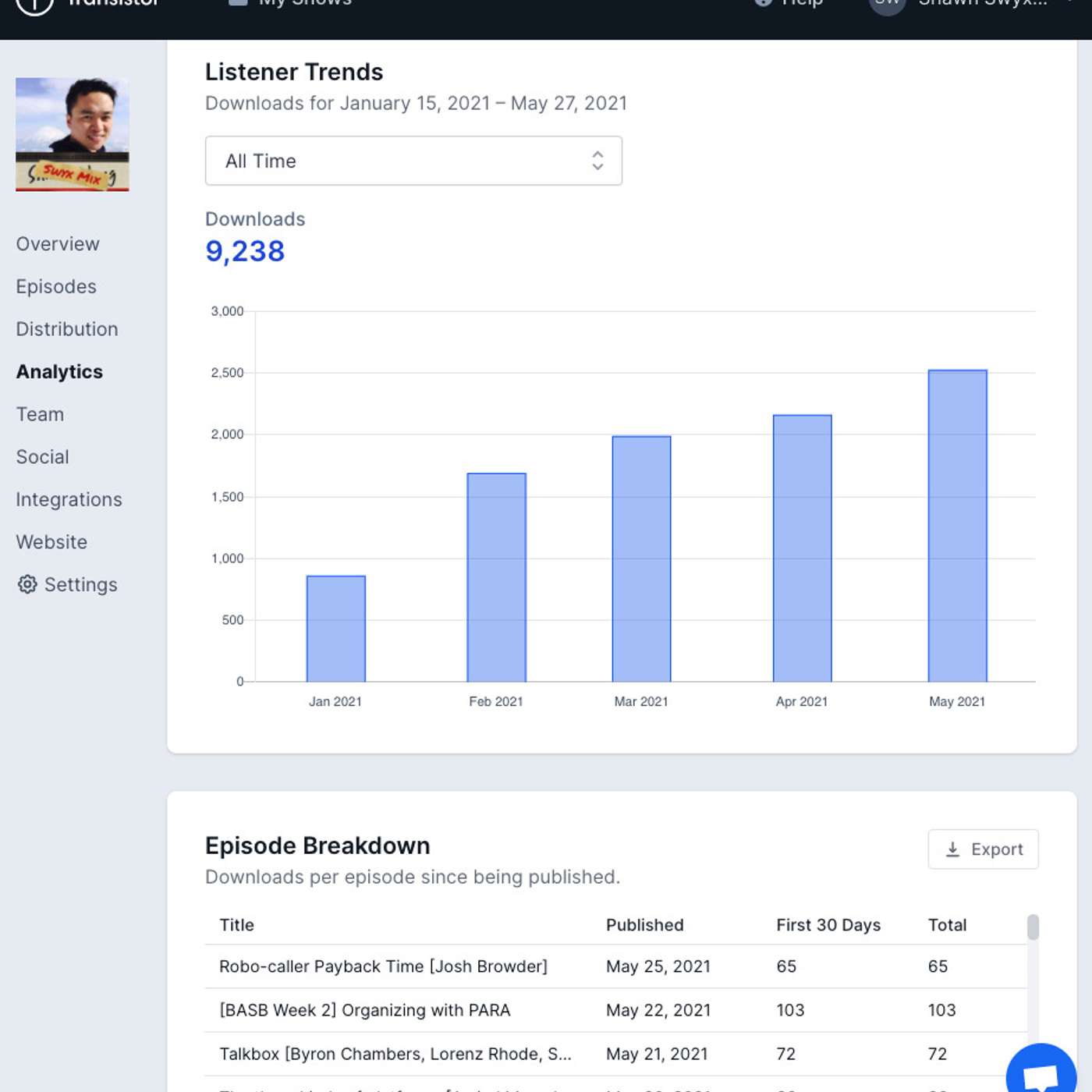
Thanks for 100 episodes! You can read the blogpost in full on my site.My ideas for future episodes: http://simp.ly/publish/BQJJ5bMain points covered:Personal Podcast SuperpowersInfinite GameHot MediumIndependenceCompletionismSuperfansScheduling and Creative ControlWhy MixtapesGiving ValueCurationBrevityDownsidesAudio EditingDiscoverabilityAnalyticsDepthFeedback
Ep 101Robo-caller Payback Time [Josh Browder]
Making $400k by punishing robocallers automatically. Genius!Audio source: https://www.listennotes.com/podcasts/the-pomp-podcast/557-joshua-browder-on-p8id7SOsmCD/ (41 mins in)See more: https://donotpay.com/
Ep 100[Second Brain 2] Organizing with PARA
I am a mentor for the Notion Advanced track of Tiago Forte's Building a Second Brain, Cohort 12. This is the cleaned up audio of the second of 5 mentorship sessions with Q&A at the end. The first session was last week.Recommended readsPARA: https://fortelabs.co/blog/para/ Blogpost Annealing: https://www.swyx.io/blogpost-annealing/Twitter as Universal Meta-Commentary Layer: https://www.swyx.io/twitter-metacommentary/Digital Garden TOS: https://www.swyx.io/digital-garden-tos/Devon Zuegel on Epistemic Status: https://devonzuegel.com/post/epistemic-statuses-are-lazy-and-that-is-a-good-thingSlides and Video.TimestampsPrelude [00:00:00]Housekeeping [00:01:09]Content Recap [00:02:34] Q&A: Constancy/Consistency [00:11:17] Q&A: Maintaining the Second Brain [00:14:34]Q&A: Weaknesses of PARA [00:17:55]Q&A: Broken Links in Notion [00:19:16] Q&A: Automation with Zapier [00:22:34]SMART Goals [00:23:25]Denormalizing Notes [00:25:01]Open Source Knowledge [00:28:27]Brag Documents [00:29:28]Just Do It [00:30:57]Q&A: How do you share in public? [00:31:45]Q&A: Atomicity/Denormalization [00:34:02]Q&A: Why Notion? [00:37:33]Q&A: Book writing? [00:38:28]First Wrapup [00:40:23] Q&A: Twitter Links Extension [00:42:30]Q&A: Chrome Extensions [00:43:33]Q&A: How do you balance research and writing? [00:44:39]Q&A: Converting Resources to Projects [00:47:37]Q&A: Video/Audio Capture [00:49:11]Q&A: Speaking [00:50:39]Q&A: Writing My Book [00:52:58]TranscriptPrelude [00:00:00]swyx: [00:00:00] Why PARA? Have you considered why only four letters? I really liked the thought process going into that. That's actually touched upon in the blog post. I'm not sure that you covered it in the lectures, but I think it's just really great to have something that's barely minimal enough that it covers the span of everything that we organize our information because I think in past attempts, I know I have probably, this is a common experience, you try to organize all the things and then you have like 15 different categories to spot stuff in and you just get overwhelmed because you're like, I don't know where to put stuff in. So the second week, week two is really about organization. So that's what we're trying to optimize for.And that's what PARA is. Christopher says some of the mentors have modified the acronym shock. What, what modifications have they said? Some mentors only have PAR or PA. Yeah. I will say my A and my R are merged, Maria says PTARA for tasks with silent T that's. Cool. Yeah, because you do need tasks as well. So I'll mention something about your calendar as a to-do list, because that's pretty important. Someone should blog about that because then you scoop Tiago. Alright. Okay. So I'm going to get started and I'm going to try to keep the chat alive. Housekeeping [00:01:09]This is a little bit stressful as always, cause I'm not used to such a big zoom but thanks for everyone for making the time on the weekend. This is the notion advanced group that I lead. It's Sundays at 5:00 PM, as you might know. And it's a very developer focused the meet up because there are a lot of developers in BASB, but we do try to keep it generally accessible. Part and just I'm going to give an agenda that's happening cause last time it didn't. So you know what to expect and you can jump off if you have other stuff going on. So we're going to do a little bit of content recap. I got very positive feedback from last week about what did we cover this week? From my point of view, and then we'll talk a little bit about projects versus areas. I'll give some extra content around what I think para is. I don't have, I didn't modify the acronym. That's a very smart move. I wasn't smart enough to think about that. And then we'll just have a general Q&A . Last time we went for 90 minutes, this one, we try to keep it to an hour, but.Some housekeeping, the three rules that we have from zero, because we start at zero in this house stupid questions are welcome Second rule Often beats perfect. So don't try to do it right, but I try to do the best, just do it a lot and you'll find that you do more than if you try to do the best and third rule this is a discussion, not a lecture, so I'm not an expert and I don't have the right answer. And I fully welcome people here to answer questions that other people have asked, because I don't know the right answer as well. So it's a discussion that I'm facilitating. So that's the framing that I want to set for this session. Content Recap [00:02:34] Okay. So now into the content recap I'm just basically going to pick the three best slides that I thought really represented this week. So if you remember nothing else from this week, hopefully you remember these slides.So the primary thing I think that everyone needs to get from this week is that completed creative projects by the oxygen of your second brain. In other words, action. Right. Or what did someone say at the start o
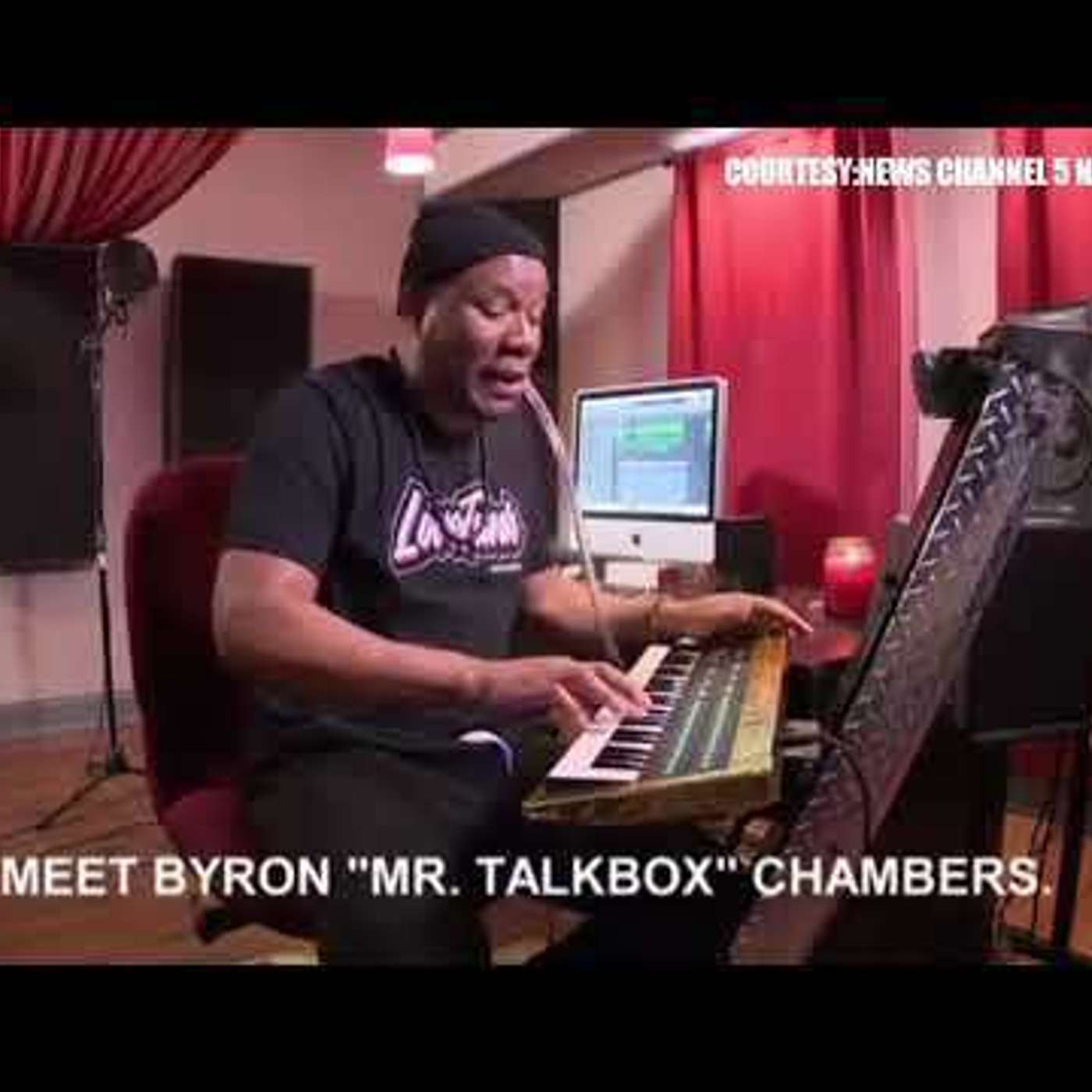
Ep 99[Music Fridays] Talkbox — Byron Chambers, Lorenz Rhode, Scary Pockets
Audio Sources:Byron Chambers (Mr Talkbox) sample https://www.youtube.com/watch?v=WOL1owQq4ocLorenz Rhode - How to TalkboxScary Pockets - Harder, Better, Faster, StrongerWikipedia on Talk boxes
Ep 98The three kinds of platforms [Amjad Masad, quoting Marc Andreesen]
Audio source: https://www.listennotes.com/podcasts/village-globals/the-state-and-future-of-KNpTy90h4XI/ 40 mins inA 2019 recap of devtools investment theses, by two of the most prominent up and coming devtools founders.- What hackers play with during weekends will become the things we use at work tomorrow - Reducing Time to Code - TabNine (i tried it recently and quite like it, it just saves keystrokes, end of story) - Kite.ai- Level 1/2/3 platforms - Marc Andreesen- Netlify, Zeit, Dev.to
Ep 97Aggregation Theory [Alex Lieberman]
Audio source: https://art19.com/shows/the-founders-journal/episodes/a77afe33-236f-44b6-a2e8-55b6ff5c8e02Ben Thompson's own writing on Aggregation Theory Transcriptswyx: [00:00:00] I generally think that Ben Thompson's aggregation theory is the most important tech strategy concept of our time. It explains a lot. But Ben Thompson himself doesn't really have a good explainer on his own site. So I really appreciated this. Summary by Alex Lieberman of aggregation theory. I thought it was the clearest explainer, with some examples, that I've ever heard. So enjoy.Alex Lieberman: [00:00:23] Aggregation theory says that some of the most dominant companies in the world became dominant by doing three things. First, they have a direct relationship with their customer. Two, there is zero marginal cost to serve their customer and three, they have network effects. I'm going to unpack each of these qualities. Own The Relationship [00:00:43] The first quality that I mentioned was having a direct relationship with the user. Google is the most trafficked site on planet earth. There are 63,000 searches that happen every second on the site. By the end of this episode, there will have been 50 million searches that happen on the platform. Since you started listening. Google's power is in its relationship with you.The user, when you search something on Google, you are Google's customer. You're not the customer of the website that you end up going to Google captures your data. They monetize you. They recommend the most relevant content for you to click on. And Google is the website that you go to when you want to find an answer.And so just so you have a comparison around like what it looks like to own your relationship versus not own it take most retail companies that sell through brick and mortar, which many of them do? So let's say you're Patagonia and let's say you sell pullovers through Bloomingdale's. You don't own the customer relationship as Patagonia Bloomingdale's does.Bloomingdale's has your information as the customer. They know what you bought and they can market to you moving forward, because they have things like your email address or your credit card information beyond getting the sale. If you're Patagonia, you haven't learned anything about your customer.That's the first characteristic of aggregators. You own the user relationship. Zero Marginal Cost [00:02:08]Now, number two, the second relationship of aggregators is that there is zero marginal cost for serving users. Let me explain what that means. If you're an aggregator, you don't incur any of the marginal costs that most businesses have to.So take Airbnb. All Airbnb does is provide a great user experience for the customer or the renter to find homes or apartments for rental Airbnb. Doesn't have to worry about the normal costs that most businesses do in serving their customers, because they're not the supplier of the product. There's no such thing as cost of goods sold for Airbnb because they are simply aggregating supply or homes or apartments.And they're playing matchmaker for demand, which are the people who want to. Rent homes or apartments, whereas let's say your t-shirt business, you have to incur the cost of each additional t-shirt to serve each customer. Airbnb doesn't have any marginal costs for adding another customer on the platform, because if someone decides to find a place to stay on their platform, Airbnb isn't paying for it.They're simply just connecting that person with the home or the apartment that they were looking for. On top of that, Airbnb also doesn't have to deal with distribution costs because their business exists on the internet. Unlike say a fulfillment based business like Amazon, which literally has to ship physical goods everywhere across the world.Airbnb is built on the internet and the internet has made delivering goods. Zero cost. That's the second quality of aggregators. Network Effects [00:03:41] The third and final characteristic of an aggregator are network effects. Basically all that, this means is an aggregator gets more valuable over time for the user and aggregators. Find that the cost of acquiring new customers goes down over time as well, which is completely opposite from what most businesses experience for most businesses.When you start your company, when you achieve product market fit, your initial customers are generally your most passionate, your most loyal and your perfect fit customers. As you grow your company, you find that the quality of your customer goes down because it isn't a perfect fit. Aggregators are different in that regard, it actually costs less to get good customers moving forward.Whereas for normal businesses, as you expand, you have to pay more to convince. Less perfect customers to join your company or buy your product. What that also means is aggregators generally operate in a winner, take all fashion because it becomes increasingly difficult for any companies in the industry that an aggregator
Ep 96Gonzo Journalism [Antonio García Martínez]
What Antonio García Martínez actually wrote, and what happens when gonzo journalism meets 2021 tech culture (note: I am not defending him).Audio source: https://www.youtube.com/watch?v=FDLBGriyky8 (45mins in)- Antonio García Martínez Wikipedia page- Hunter S Thompson Wikipedia page- Gonzo Journalism Wikipedia page
Ep 95Why Creator Clones Fail [MKBHD]
Audio source: https://www.youtube.com/watch?v=Jl2ciIU4Qm4 (30 mins in)Blog version with better writeup: https://www.swyx.io/clones-failReply via tweet!Transcript:Why Clones Failswyx: [00:00:00] Something I love collecting examples of is the Innovator's Dilemma, which was coined by Clayton Christensen in his book on the Innovator's Dilemma. He really demonstrates how successful outstanding companies can do everything right, and still lose their market leadership, or even fail as new unexpected competitors rise and take over the market. And part of this thesis is basically that the incumbents company cannot clone the upstart for whatever reason.And it's really amazing when you see someone that's so giant, that's so well-known, that has such great distribution, that has so much resources, be constitutionally unable to clone the small startup. This is known as counter positioning, as promoted by Hamilton Helmer in his book on the seven powers. And you can hear it in this clip from the MKBHD podcast talking about the failure of YouTube Shorts.Andrew Manganelli: [00:00:53] Shorts in general that are just a really great way of explaining how like YouTube launches, these new features, they fall flat. And then they're trying to find ways to get people to do them. And I think that all because of that, it boils down to like, why are these not working? People love YouTube, like, people made their whole lives on YouTube. I literally have a job because you have, but like, why are these main creators not doing these other things.Marques Brownlee: [00:01:20] I think I can speak to that. I, so first of all, the, the creator funds though, he keeps seeing, it's like my favorite new trend. Yeah. Andrew Manganelli: [00:01:27] Tick-tock one this week for tick docs.Marques Brownlee: [00:01:29] Exactly the same thing. Yeah. It's because the platforms realize they not just want, but need creators on their platforms and making stuff to make them work that realization. Great. Now YouTube shorts. And so the hesitation by a lot of YouTubers to dive into shorts is really interesting. I think a lot of the longer-term creators like me have a bit of an aversion to YouTube releasing new untested unproven features because they could possibly have adverse algorithmic effects, they could possibly get killed in six months and you will have just poured a bunch of resources and pivoted your channel down a path that ends up being a dead end road.Yup. So the other end of that is. If the feature works, I think there are a lot of younger creators or more nimble creators who will just jump right in and do a bunch of shorts or do a bunch of those lasting YouTube stories. I think that's, might've been dead already, but I Andrew Manganelli: [00:02:30] don't see anyone posts stories, Marques Brownlee: [00:02:31] but they'll they'll once they mirrors.The thing is they launch a feature like that and they have a whole plan behind it, backing it as if it's going to be the future of the platform. So when creators see that they'll go, oh, okay. I see that story is going to be a really big deal for YouTube, for the foreseeable future. Let me pivot hard and make sure that's a big part of my content strategy.And then when it's dead in a year, you feel like you wasted a lot of time resources. You might've hired for it. Like that's a. That's a big loss. Like that's a big risk to take, but if it does explode and let's say shorts is, you know, this huge future category on YouTube, a lot of younger creators who got in early and focused really hard on that are going to be really happy about it.So shorts is clearly a response to tick-tock. It's literally almost the same thing. Like you go into hit shorts on the YouTube app and it's this endless scrolling carousel of vertical videos. That's what you'd expect. The algorithm tries to learn you. But YouTube knows that it needs youTube shorts creators instead of just people uploading to Tik TOK, and then copying that file and also putting it on shorts.Andrew Manganelli: [00:03:37] That's what they're doing. That's what they did on reels. Like that's most real is Marques Brownlee: [00:03:41] literally like watermarked, tick tock. Like literally Andrew Manganelli: [00:03:43] all of reels has the Tik TOK, like watermark and the name on it. And probably just using reels to find more people to go follow Marques Brownlee: [00:03:50] it and tick tock. And they, they literally show up on my explore page.Like, what is that? The gram is suggesting to me on my explore page, have tick tock, tick tock logos on it. That's Andrew Manganelli: [00:03:59] really funny. And if anyone was going to do though a tick-tock competitor, it would be Instagram. It just makes the more sense. The demographic that is on Tik TOK is very, very active on Instagram.And it's just that social media platform, that short form social media platform that it makes way more sense on. Yeah. And it's Tik TOK still blowing reels out of the water. Marques Brownlee: [00:04
Ep 90[Second Brain 1] The Capture Habit
I am a mentor for the Notion Advanced track of Tiago Forte's Building a Second Brain, Cohort 12. This is the cleaned up audio of the first of 5 mentorship sessions with Q&A at the end. Slides: https://docs.google.com/presentation/d/1yY46bq527SyDCI3IgzMNrkumOnrhYwI9VeuhdGqr3Dg/edit?usp=sharingTimestampsIntro [00:00:28]Why Build A Second Brain [00:07:58]Content Recap [00:09:32]Breakout Session [00:11:53]The CODE methodology [00:15:44]Q&A: Work vs Personal Capture Apps? [00:18:11]Q&A: Should I Capture Googlable Stuff? [00:19:55] Q&A: Physical Book notes? [00:22:48]Q&A: Starting for the first time [00:24:23]Q&A: How to turn notes to action? [00:25:53]Q&A: Processing Notion vs SimpleNote [00:28:36]Capture Thinking [00:31:47]Q&A: Podcast Notes? [00:33:41] Q&A: Grabbing notes on the go [00:37:06]Q&A: I dont like any of my apps, what do I do? [00:43:46]Q&A: Security & Privacy [00:46:31]Q&A: Triaging Information to be Productive [00:49:35]Q&A: Outdated content [00:51:46]Question: Defining Dealbreakers [00:53:25] Transcriptswyx: [00:00:00] So we're here for BASB week one capture and I'm Shawn also known as Swyx. And I was part of cohort 10 and I'm back again to try to go through the new content. I know that Tiago has re-recorded a bunch of this stuff.Some of the content has changed and also just meet people. I think that you know something best when you teach it. So I do encourage you, as you go through this journey to try to teach it to your friends or family members and you retain that much better as well. Intro [00:00:28]Okay. A little bit of self intro, and then we'll go into the specifics. I'm going to basically try to recap the stuff that we covered this week, and then try to get some feedback from you and get you talking amongst yourself. On some of the questions that were raised this week. So hey, I'm Swyx I blog at swyx.io, I am a finance guy, turned developer.That's a long story. I just compressed there. We used to work at Netlify AWS, that's Amazon web services for the non-technical people. And now I'm currently head of developer experience at Temporal dot IO. I helped to run the React-TypeScript CheatSheet, which is one of the ways in which I build a second brain which is very specific for developers.Probably a bunch of you here are developers. I see Glenn is using reveal dot JS and I also wrote the coding career handbook as my capstone for building a second brain last year. So, part of the reason why this is a notion advanced course, even though I'm like not a huge notion expert is because we are very focused on trying to get people to produce output.So not just getting comfortable with the habits but also producing by blogging, speaking, and writing and hopefully making money. I'm very keen on helping people to make money with their second brains. Okay. So, I'm from Singapore. These are the pictures that I, I tweeted this once basically saying Singapore's that would kind of Asia.It's not usually so super overexposed like this, so don't come here and be super disappointed. But it does look pretty great. It does have a lot of manmade slash nature blended with it. And it is home for me. So, happy to answer any questions about Singapore. Alright.So here's a brief history of my blogging. This is me in 2016. Nobody knows about this. I never talked about this. This is me on medium writing, trying to get into the whole content creation game and not really having much results. So this is my attempt at thought leadership and not really, and just engaging with stuff that I thought was interesting. I was very into voice user interfaces because I coded an Alexa skill and at the time Alexa was going to be this huge thing is going to take over the planet. Yeah. And then just kept blogging and then just like fell off. And I think a lot of people here probably have some experience of this where like you tried to get started, didn't go anywhere and then you just stopped.And I think it's very authentic and original And I'm here to say that I'm one of you, I've definitely been there. The first real hit was when, because I started reading and listening to Ben Thompson got a bit lost in Ben Thompson's universe. And so decided to make a map.And so I applied some of my data analysis skills. this was my first hit because it focused on a person and a prominent person at that, and it solves a problem for myself that other people had.And that was my first real breakthrough, like all these previous ideas were just things I had in my head that nobody cared about. And then. When you focus on such a small, specific topic as one person. And it's such a small specific question as how do you rank things?You perform a service that other people are interested in because I also had that same problem. So I think that was the beginning of my journey as to how do I productionize this second brain or like writing system towards building a network, towards building a reputation for myself,
Ep 94"Squalid" [Jorge Just]
Audio and Transcript: https://www.thisamericanlife.org/233/starting-from-scratchJorge happens to be an executive editor at Gimlet Media, a frequent background appearance in credits and shows like Startup and Heavyweight.Ira GlassThings are just starting to look up for Jorge, when the thing with the TV happened. He had just moved to a new town, started his life over, found some work, got a place. Years of searching around in vagueness were ending.Jorge JustIt's going well. Like the way that I'm procrastinating now is by-- like doing work. You know? Coming into my home, I feel good. I'm paying bills relatively on time.Ira GlassHe'd moved to New York City, which was scary. And walked into an apartment that real New Yorkers told him was a find-- a little studio in the East Village. One room. Good location. Cheap. And then one night he's sitting at his table, watching The Bachelorette on TV. And it's the episode where the bachelorette has whittled it down to four guys that she's going to pick one from, eventually. And she's in New York City visiting one of the potentials.Jorge JustAnd you know, she goes out to dinner with his family. And they eat, and you know, they've got the shifty-eyed sister. And you know, like everybody's family acts the exact same way. You know?Ira GlassRight.Jorge JustAnd then they get in the limousine, and they decide to go back to his apartment. Now I'm on the edge of my seat. Because I moved to New York-- it's an enormous city. And I would be so excited if I could recognize the street. I would be so excited. It would just make me so happy. And so I'm totally-- I'm totally excited. So they get out of the limo, and he hugs her in the street. And they pan and they show a building. They show an awning. And it's my awning.Ira GlassIt's your building?Jorge JustIt's my building. It's the awning to my building. It says the address. It says the street. It's-- you know-- it's possibly the only place in New York I actually know. (both laughing) And then he opens the door, and she comes in, and it's my lobby. You know? There's my lobby. There is the row of mailboxes, you know? And I'm just like-- I'm out of my chair. And I'm-- I can't talk. I'm like-- you know-- like pointing at the TV.Ira GlassIf it were me, I would think like, are they here right now? Like in the building?Jorge JustYou're too smart. I couldn't think. I was just like, aaah. [Ira laughs] You know? You know what I mean? I was just like-- I was just flabbergasted. It just couldn't be happening, you know?Ira GlassHe watches them take the elevator up to the fourth floor. Jorge lives on the fifth. They walk down the hallway door. And then Jorge realizes something else.Jorge JustYou know, he doesn't just live in the city as me. He doesn't live on the same street as me. He doesn't just live in the same building as me. He basically lives in my apartment. He lives in the exact same apartment. This exact same layout.Ira GlassSo wait a second. So the camera goes inside this apartment, and you see your apartment, basically.Jorge JustA much better version of my apartment. His is much better. The walls are wider. The place is cleaner. The furniture is nicer. He has a half wall. He's got a half wall.Ira GlassA half wall with brick, glass, blocks?Jorge JustIt's like drywall, you know? But it seems like it has some sort of counter top kind of thing on it.Ira GlassAnd at that moment Jorge gets this flash. He is not really doing all that well. His apartment is a kind of dump, compared to this guy who's on TV. Plus he's watching Trista Rehn, the bachelorette, on TV, looking uncomfortable in his apartment on national TV. In fact, she bails on the guy.Jorge JustShe leaves the apartment, and they cut to like that head-on interview. You know? And she's looking into the camera. And she says, I've dated guys with really bad apartments before. I can't judge him on that. I have to-- I have to find out why he feels like he can live in an apartment like this.Ira GlassShe ditched him because of the apartment?Jorge JustYeah. Yeah.Ira GlassWait. He lost out on the bachelorette because of the apartment?Jorge JustOh yeah.Ira GlassAnd it was your apartment?Jorge JustBut better.Ira Glass[laughing]Over the next few days it all sort of goes to hell for Jorge. He's depressed. His new life does not seem so shiny. His New York friends console him. Look, they say, the bachelorette had never seen a New York apartment before. She does not know how people here live. This means nothing. Which helps him for a while, until one day Jorge picks up the New York Post, and right there is an article about his neighbor, Todtman-- the guy from The Bachelorette-- getting busted for cocaine.Jorge JustThird paragraph. "Todtman's fate on The Bachelorette was sealed the moment Rehn set foot in his squalid Avenue A studio apartment."Ira Glass[laughing]Jorge JustDo you understand the weight of that? Squalid. "Squalid Avenue A studio apartment."Ira GlassSo this isn't just like people from outsi