The Swyx Mixtape
540 episodes — Page 8 of 11
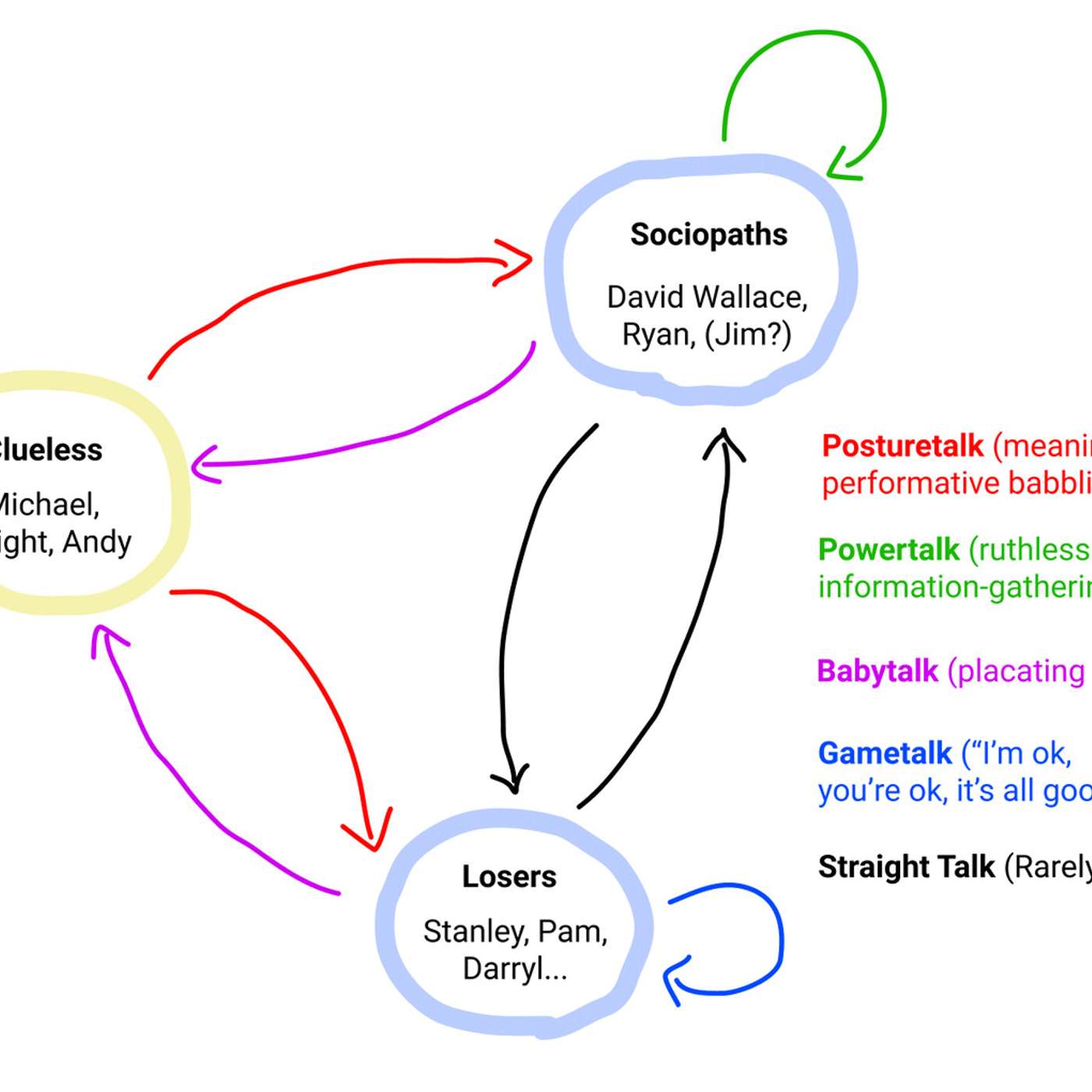
Ep 192The Michael Scott Theory of Social Class [Alex Danco]
Listen to the Infinite Loops podcast: https://www.infiniteloopspodcast.com/alex-danco-everyones-job-is-world-building-ep53/ (40mins in)Read the full essay: https://alexdanco.com/2021/01/22/the-michael-scott-theory-of-social-class/See tweet reactions: https://twitter.com/swyx/status/1424953927426928646Transcript [00:00:00] Hey everyone today, I'm about to break one of the core rules of this mixed tape, which is that episode should come in at around 10 minutes. Uh, this is a 25 minute rant from Alex Danco, which is still one of the best essays I've read of the year. He posted it on January 22nd, and I think it's still resonating. It basically is a theory of social class that is both entertaining and actually strangely true. Just don't think too hard about it because if you do you will realize how true it is. Maybe this is a good segue into the other thing that I feel like we were theoretically supposed to talk about this podcast episode, which was the Michael Scott theory of social class, which again is like another example of the power of world-building in this case, it's the power of world-building as applied to the phenomenon of middleman. Right, right. Like, what is middle management? If not world built real, because that's all you've got right. Is this world you've constructed. So originally a missile, who's going to fill the forms out. I mean, come on. It's not, it's not anything who's going to fill the firms out. It's like, who's going to create the meaning. It's like I forgot who described middle management as the control rods and a nuclear reactor. It's like, but the point of them is to slow things down so that it doesn't run out of your control and blow up. So, okay. So I wrote this piece, the Michael Scott theory of social class, which is basically a re skinning of Venkatesh Rouse article that your base principle, which itself was a re-skinning of Holly White's book, the organization, man. Oh, so that's the actual source material is the organization, man. Have you read the organization, man? Do you know that book? I don't have notes on it. So that means I didn't take it seriously. It's so good. It's so good. It's in the list of books that I recommend to everybody. So I'm going to have, I'm going to have to read it again. What's remarkable about the organization, man is simultaneously how in a literal sense. It did not get the future. Right. But at a second order sense, it just nailed the future so hard. They got it. So, so, so right, just at a slightly different abstraction layer than people realize. So the general thesis of the organization, man, is that all organizations that survive have stratified into three layers. You have the bottom layer, the middle layer and the top layer. The bottom layer is the people who do the actual work. This is the majority of people. Their lives are spent doing literal things. So these are line workers, frontline people, anybody who is actually producing something. Literally there are the people at the bottom there, the majority of people at the top, you have the exact. They actually have a lot in common with the people at the bottom in the sense that they have very literal roles and responsibilities and very real stakes involved. And they see the world very clearly as it is, but the people at the bottom and the people at the top see the world through clear eyes with clear actions and consequences, but there's this group of people in the middle called middle-management that is really, really different than either of those groups. And their job is to intermediate between the people at the top and the people at the bottom by basically constructing this reality called middle management that does not literally produce anything nor have any literal stakes or consequences, but whose job is effectively to mediate like the control rods in the reactor to say like, look, the goal here is to create a stable system that perpetuate. Regardless of how efficient it is or how complicated it is or anything just like, can you get something to persist? This group of people will always emerge in one form or another. So in the 1950, in the early fifties, when Holly white wrote this book, this was in the era of these mega mega conglomerates, like Dow DuPont, us steel, general motors, like this was the field. Like the current mindset was that. The frontier of progress was mega organizational dynamics. It was scaled to get scaled, to get scaled. This is how everything works. Eventually everything will be run by four corporations because we figured out the science of how management works. And specifically we figured out what middle-management. We created this whole world of middle management that has sense of purpose and a sense of identity. And it was fed through these institutions called business schools and the NBA. And this whole idea that like middle manager was actually this craft more or less independent of the industry. It's like, what do you do? Oh, you're a manager. Oh, like what
Ep 190Everything Goes My Way [Bill Lawrence]
Listen to Brett Goldstein's podcast https://www.listennotes.com/podcasts/films-to-be-buried/bill-lawrence-films-to-be-vyfQWE4F5O3/ (20 mins in)
Ep 189Saying Yes [Howie Mandel]
Listen to/Watch the Tiger Belly podcast: https://www.youtube.com/watch?v=HUNZe_ghZK4https://en.wikipedia.org/wiki/Deal_or_No_Deal_(American_game_show)#Season_one_(2005%E2%80%932006)https://en.wikipedia.org/wiki/Howie_Mandel#Later_workhttps://en.wikipedia.org/wiki/Steve_HarveyTranscript [00:00:00] swyx: This is the story of how, Howie Mandel booked Deal or No Deal, completely turning his career around, even though he originally didn't want the job in the first place. As a word of caution, there is some swearing, there's a lot of swearing in this story. So you've been warned. [00:00:13] Bobby Lee: You told me once though, too, is that, um, At first, when dealer knew no deal was presented to you, you didn't really initially jump on [00:00:20] Howie Mandel: it, jump on it. I said, fuck you to the person. I know I was at 2005. I T I told you this, my career in my mind was over, you know, I had, I had done, uh, St elsewhere and I had done Bobby's world in the nineties, and I did a lot of TV. And I did a lot of movies in the eighties. And by about 2004, I was getting jobs at comedy clubs, which were maybe twenty-five percent full when I got there. So there was no people in the audience. So the audience has waned in my, in my height. I was playing like 10,000 seats and 84 or 83 and doing the tonight show. But now. 60 people in the audience. And I was reading for parts for five lines and under, so I bead outside a casting office and then I get this call from my manager, says, you know, NBC wants you to do, uh, a game show and I went, fuck you. And if you remember. Uh, nobody remembers, but if you remember 2004, 2005, at that time, not one comedian ever since Groucho Marx had done a game show, Gracia marks, did you bet your life, which Leno is actually doing right now, but, but no comedian had done that. And in fact, you know, being the game show host was the punchline. You know, it was kind of a joke. It's just the guy in a suit who reads trivia question. I didn't want to be a game. So I said, fuck you, you know, Career is over and I'd like to leave and leave. No, I'm I, I deal in, uh, I've I've done. Okay. But I like real estate as much as I like show business. So I was doing real. I said, listen, as for money and business, I can do okay. I just don't need to be constantly humiliated, embarrassed, kicked in the nuts mentally every fucking day. This is a really hard thing. Even when you're doing well, even when you're doing well, because the better you do the harder the rejection feels because you feel like you got that self worthiness and how can he say no? You know, even up to like two months ago, I've, you know, as you talked about, I produce shows, I've even said to a network, you know, All hosts this one and they have said to me, well, we don't want you. So yeah. You know, which is funny, but it's also, it's a kick in the nuts. So w what I'm saying is I couldn't, I wasn't, I didn't have the success along with the kick of the nuts. So I just said, listen, I'll make money. I'll do it. I don't need to do this to myself every day. And if I do a game show, that's going to be the nail in the coffin of my career. Wow. You know, game show hosts. That's the last thing I want to do, or I'd be embarrassed in front. Comedy community or anybody in show business. The last thing he did, he did St. Elsewhere. He did movies. He created shows. And now he's saying, what is the capital of Arizona for six points? Yeah. You know, it wasn't something I thought was an in the cards for me. And, and so I said, no, then they call back a half hour later they go. I just want you to understand that they're going to do this game. It's not an afternoon game show. They're going to do it in primetime five nights. And no network has ever devoted five hours in one week of prime time television to a game which already exists in most of the world and it's kicking ass. Ah, so I said, I really don't want to do it. He calls me back half hour later and he's. Will you just talk to the guy? I go, I'll talk to the guy, but I don't even want to, you know, part of the humiliation is me driving and trying to find the place I don't like today. Anyway, uh, he comes in and he goes, let me just show you the game. And I thought I was being pranked. It's this guy, Rob Smith from Endemol. And he brought in, he had a cartoon, he had a cartoon, he had a, um, an art card, like a piece of paper, and he had drawn 26 squares. He didn't go to Kinko. He didn't spend, it looked like a special needs after school project. Yeah. And, and, and he, he puts these 2016. I'm going to show you something, pick a card and don't show me what it is. And I pick a card and I don't show him what it is, but he's got the, each card had the amount of money on it, like a million and what yeah, he goes now, do you think you got the million? I go, well, I got the soup and why do I think he goes, watch this open up six other cards and whatever's in those cards is not in York and I didn't really u
Ep 188How to be miserable for the rest of your life [Joey Schweitzer]
Watch on YouTube: https://www.youtube.com/watch?v=W9qsxhhNUoU1. Wake up whenever you want 2. Make sure your house is a complete disaster 3. Procrastinate 4. Pretend to be busy5. Wait for opportunities 6. Always say no 7. Be suspicious of people8. Never fix the things you dislike about yourself9. Focus on things you can’t control 10. Use fear as motivation 11. Only do what is comfortable 12. Believe you are special13. See life not how it is, but how you wish it to beTranscriptHere's a quick tutorialon how to be miserablefor the rest of your life.Step one, wake up whenever you want to.Don't wake up at a reasonable hour,an hour that makes youfeel good about yourself.Make sure you wake upwhen everyone has had ahead start to the day.You really wanna make sureyou feel like you've missed any chanceto start your day off on the right foot.And when you get out of bed,don't make your bed and don't shower.Just wear whatever you woreyesterday and head downstairs.It's important that you start the day offwith little to no self-respect,feeling as grimy as possible.Step two, make sure your houseis always a complete disaster.Your house is filled with many rooms,each with a specific purpose.You wanna make sure thatit's extremely difficultto accomplish those purposes.The pigsty will also helpsubconsciously reinforce the ideathat you're a disorganized personwhose life is not in order.This is an extremelyimportant belief to havewhen trying to remain miserable.Step three, procrastinate.When the thought dawns on youto do something productive,like clean your disgusting kitchen,just ignore that feeling.After all you just woke up,and you have so much time laterin the day to get that done.You wanna get in the habitof delegating all your life's problemsto the future version of yourself,who will probably havea lot more motivationand energy than you do right now.Step four, look busy.After you sit down to do somework, open up a Word documentto help yourself feel likeyou're being productive.Give your document a nice titleand then immediately open up Reddit,Instagram, Facebook, and Twitterjust to check if you missed anything.You see, it doesn'treally matter what you do.As long as you're sitting on your deskand that Word document is open,it'll help trick your conscienceinto thinking you're doing work,but you won't be gettingany further in life.Step five, wait for opportunities.Never be proactive withfinding new opportunitiesto grow your career or meet new people.Wait for all of that tocome knocking on your door.After all, if it's gonnahappen, it's gonna happen.You'll meet the girlof your dreams one dayand things will kinda just work out.You'll probably also land your dream jobif you just wait long enough.Anyways, the importantthing is to not take action.Don't try to figure outthe most effective wayto get what you want, justwait until things work out.Step six, be default no.When a friend asks you to goout for a drink, just say no.After all, you're super busy these daysand have a lot of work to do.When your boss gives you the opportunityto lead a meeting at work,try to find an excuse to slink out of it.The key here is to giveeveryone the impressionthat they should just letyou do your own thing.Be so good at saying nothat people just stopasking you to do anything.Step seven, be suspicious of people.Never give people thebenefit of the doubt.Believe that everyonebasically just wants totake advantage of you,and because of this, you should be guardedand put up walls to protectyourself emotionally.Assume the smiles people give you are fakeand that their motives are malevolent.Step eight, never fix the thingsyou dislike about yourself.Continue to engage in activitiesthat make feel subhuman and weak.Never prove to yourselfthat you can overcomeobstacles or better yourself.Never attempt to transcend your vicesor change your lifestyle for the better.Subscribe to the ideathat people can't change,so you shouldn't try.Step nine, focus onthings you can't control.As often as possible, getpissed off at the traffic,the government, the pandemic.You really wanna reinforce the ideathat the world is messed upand there's nothing you can do about it.Focus on the shortcomings of others,the failings of your country,and the state of the economy.Maintain a constantexternal locus of controlover all the events in your life.This will really help you feel powerless.And if you're trying to bemiserable, that's perfect.Step 10, use fear as motivation.Make the fear of negative consequenceyour primary motivatorfor everything you do.Set up deadlines that frighten youand punish yourself forfailing to meet them.Use white-knuckle tacticsto force yourself into productivityand remind yourself constantlythat your entire life could fall apartif you don't keep your head above water.Step 11, only do what is comfortable.Let your comfort zone be the authorityon what you do and don't do.If it's not comfortable, don't do it.Avoid discomfort at all costsand participate only in activitiesthat ar

Ep 187[Weekend Drop] Miško Hevery: Qwik, PartyTown, and Lessons from Angular
This podcast involves two live demos, you can catch up on the YouTube verison here: https://youtu.be/T3K_DrgLPXMLinksBuilder.io https://www.builder.io/PartyTown https://github.com/BuilderIO/partytownQwik https://github.com/builderio/qwikhttps://dev.to/mhevery/a-first-look-at-qwik-the-html-first-framework-afTimestamps[00:01:53] Misko Intro [00:03:50] Builder.io [00:08:31] PartyTown [00:11:41] Web Workers vs Service Workers vs Atomics [00:15:02] PartyTown Demo [00:21:46] Qwik and Resumable vs Replayable Frameworks [00:25:40] Qwik vs React - the curse of Closures [00:27:32] Qwik Demo [00:42:40] Qwik Compiler Optimizations [00:53:00] Qwik Questions [01:00:05] Qwik vs Islands Architecture [01:02:59] Qwik Event Pooling [01:05:57] Qwik Conclusions [01:13:40] Qwik vs Angular Ivy [01:16:58] TED Talk: Metabolic Health Transcript [00:00:00] Misko Hevery: So the thing that I've learned from Angular.js days is make it really palatable, right. And solve a problem that nobody else has. Doing yet another framework in this state of our world would be complete suicide cause like it's just a different syntax for the same thing, right? So you need to be solving a problem that the other ones cannot solve. [00:00:22] swyx: The following is my conversation with Misko Hevery, former creator of Angular.js, and now CTO of Builder.io and creator of the Qwik framework. I often find that people with this level of seniority and accomplishment become jaded and imagine themselves above getting their hands dirty in code. [00:00:39] Misko is the furthest you could possibly get, having left Google and immediately starting work on the biggest problem he sees with the state of web development today, which is that most apps or most sites don't get a hundred out of a hundred on their lighthouse scores. We talked about how Builder.io gives users far more flexibility than any other headless CMS and then we go into the two main ways that Misko wants to change web performance forever: offloading third-party scripts with PartyTown, and then creating a resumable framework with Qwik. Finally, we close off with a Ted Talk from Mishko on metabolic health. Overall I'm incredibly inspired by Misko's mission, where he wants to see a world with lighter websites and lighter bodies. [00:01:23] I hope you enjoy these long form conversations. I'm trying to produce with amazing developers. I don't have a name for it, and I don't know what the plan is. I just know that I really enjoy it. And the feedback has been really great. I'm still figuring out the production process and trying to balance it with my other commitments so any tips are welcome. If you liked this, share it with a friend. If you have requests for other guests, pack them on social media. I'd like to basically make this a space where passionate builders and doers can talk about their craft and where things are going. So here's the interview. [00:01:53] Misko Intro [00:01:53] swyx: Basically I try to start cold, [00:01:55] assuming that people already know who you are. Essentially you and I met at Zadar and, I've heard of you for the longest time. I've heard you on a couple of podcasts, but I haven't been in the Angular world. And now you're no longer in the Angular world. [00:02:11] Misko Hevery: The child has graduated out of college. It's at a time. [00:02:15] swyx: My favorite discovery about you actually is that you have non-stop dad jokes. Um, we were walking home from like one of the dinners and that you're just like going, oh, that's amazing. [00:02:27] Yes. Yeah. [00:02:28] Misko Hevery: Yes. Um, most people cringe. I find it that it helps break that. It does and you know, the Dad jokes, so they're completely innocent. So you don't have to worry. I also have a good collection of, uh, computer jokes that only computer programmers get. [00:02:47] swyx: Okay. Hit me with one. [00:02:48] Misko Hevery: Um, "How do you measure functions?" [00:02:51] swyx: How do I measure functions? And the boring answer is arity, [00:02:55] Misko Hevery: and that's a good one! "In Para-Meters." Uh, [00:03:03] swyx: yeah. So for anyone listening like our entire journey back was like that it just like the whole group just groaning. No, that's really good. Okay. Well, it's really good to connect. I'm interested in what you're doing at Builder. You left Google to be CTO of Builder. I assumed that I knew what it was, from the name, it actually is a headless CMS and we can talk about that because I used to work at Netlify and we used to be very good friends with all the headless CMSes. And then we can talk about Qwik. How's that ? [00:03:34] Misko Hevery: I can jump into that. Sorry. My voice is a little raspy. I just got over a regular cold, like the regular cold ceilings [00:03:42] swyx: conference call, right. I dunno, I, I had it for a week and I only just got over it. [00:03:46] Misko Hevery: It was from the conference. Maybe it wasn't from the other trip I made anyways. [00:03:50] Builder.io [00:03:50] Misko Heve

Ep 186[Music Fridays] Flight of the Conchords
Listen to Jenny: https://www.youtube.com/watch?v=XHTxqk_UxHoListen to Father and Son: https://www.youtube.com/watch?v=4cZAr_WaLcwhttps://en.wikipedia.org/wiki/Flight_of_the_Conchords
Ep 185Scout Mindset [Julia Galef]
Watch the TED talk: https://ideas.ted.com/why-you-think-youre-right-even-when-youre-wrong/Scout Mindset book: https://www.amazon.com/dp/B089CJ6SVS/ref=dp-kindle-redirect?_encoding=UTF8&btkr=1Imagine for a moment you’re a soldier in the heat of battle — perhaps a Roman foot soldier, medieval archer or Zulu warrior. Regardless of your time and place, some things are probably constant. Your adrenaline is elevated, and your actions stem from your deeply ingrained reflexes, reflexes that are rooted in a need to protect yourself and your side and to defeat the enemy.Now, try to imagine playing a very different role: the scout. The scout’s job is not to attack or defend; it’s to understand. The scout is the one going out, mapping the terrain, identifying potential obstacles. Above all, the scout wants to know what’s really out there as accurately as possible. In an actual army, both the soldier and the scout are essential.You can also think of the soldier and scout roles as mindsets — metaphors for how all of us process information and ideas in our daily lives. Having good judgment and making good decisions, it turns out, depends largely about which mindset you’re in. To illustrate the two mindsets in action, let’s look at a case from 19th-century France, where an innocuous-looking piece of torn-up paper launched one of the biggest political scandals in history in 1894. Officers in the French general’s staff found it in a wastepaper basket, and when they pieced it back together, they discovered that someone in their ranks had been selling military secrets to Germany. They launched a big investigation, and their suspicions quickly converged on one man: Alfred Dreyfus. He had a sterling record, no past history of wrongdoing, no motive as far as they could tell.However, Dreyfus was the only Jewish officer at that rank in the army, and unfortunately, at the time the French Army was highly anti-Semitic. The other officers compared Dreyfus’s handwriting to that on the paper and concluded it was a match, even though outside professional handwriting experts were much less confident about the similarity. They searched Dreyfus’ apartment and went through his files, looking for signs of espionage. They didn’t find anything. This just convinced them that not only was Dreyfus was guilty, but he was also sneaky because clearly he had hidden all of the evidence. They looked through his personal history for incriminating details. They talked to his former teachers and learned he had studied foreign languages in school, which demonstrated to them a desire to conspire with foreign governments later in life. His teachers also said that Dreyfus had had a good memory, which was highly suspicious since a spy must remember a lot of things.The case went to trial, and Dreyfus was found guilty. Afterwards, officials took him out into the public square; they ritualistically tore his insignia from his uniform and broke his sword in two. This was called the Degradation of Dreyfus. He was sentenced to life imprisonment on the aptly named Devil’s Island, this barren rock off the coast of South America. He spent his days there alone, writing letter after letter to the French government begging them to reopen his case so they could discover his innocence. While you might guess that Dreyfus had been set up or intentionally framed by his fellow officers, historians today don’t think that was what happened. As far as they can tell, the officers genuinely believed that the case against Dreyfus was strong.Other pieces of information are the enemy, and we want to shoot them down.So the question arises: What does it say about the human mind that we can find such paltry evidence to be compelling enough to convict a man? This is a case of what scientists refer to as “motivated reasoning,” a phenomenon in which our unconscious motivations, desires and fears shape the way we interpret information. Some pieces of information feel like our allies — we want them to win; we want to defend them. And other pieces of information are the enemy, and we want to shoot them down. That’s why I call motivated reasoning “soldier mindset.”While you’ve never persecuted a French-Jewish officer for high treason, you might follow sports or know someone who does. When the referee judges your team has committed a foul, for example, you’re probably highly motivated to find reasons why he’s wrong. But if he judges that the other team committed a foul — that’s a good call. Or, maybe you’ve read an article or a study that examined a controversial policy, like capital punishment. As researchers have demonstrated, if you support capital punishment and the study shows it’s not effective, then you’re highly motivated to point out all the reasons why the study was poorly designed. But if it shows that capital punishment works, it’s a good study. And vice versa: if you don’t support capital punishment, same thing.Our judgment is strongly influenced, unconsciously, by which side we wan
Ep 184F*** You, Pay Me [Mike Monteiro]
Watch full talk on YouTube: https://www.youtube.com/watch?v=jVkLVRt6c1UThe FYPM app https://www.theverge.com/22684237/fuck-you-pay-me-lindsey-lee-lugrin-decoder-interview
Ep 183Why Big Companies Make Bad Products [Steve Jobs]
Watch on Youtube: https://www.youtube.com/watch?v=p6PgHFS48gY
Ep 182[Weekend Drop] Developer Relations (with Sai Senthilkumar of Redpoint)
I was interviewed by Sai of Redpoint based on these blogposts:https://www.swyx.io/community-builder/https://www.swyx.io/measuring-devrel/The session was covered by Tom Tunguz, whose blog I love (https://tomtunguz.com/shawn-wang-offi...) and the feedback was wonderful!Full video on YouTube https://www.youtube.com/watch?v=guK1XiLQbH8Timestamps[00:01:42] What is DevRel? [00:04:59] Where should DevRel report? [00:06:57] Getting Started with Early Stage DevRel [00:12:28] How to Structure DevRel Efforts [00:16:02] When to Hire First DevRel [00:18:23] Community and DevRel [00:25:41] How to Start a Community [00:29:47] Technical Community Builders [00:31:04] Social Media Managers [00:33:14] North Star Metric [00:39:20] Product DevRel [00:40:37] Finding Great DevRels [00:43:47] DevRel for Dev Platforms of non-DevTools companies [00:46:38] DevRel Tooling Transcript [00:00:00] Sai Senthilkumar: My name is Sai and I'm at Redpoint investing primarily in B2B software with a focus on developer oriented business. I'm very excited to be chatting with Shawn Wang today about the importance of developer relations for any company selling to developers. You know, we find that several developer companies we work with today are hiring for diverse leaders and oftentimes it's function gets overlooked early. Or maybe not built out soon enough. So today we'll talk a little bit more about how to structure and measure our world-class Debra organization for any startup and why it's so important for a company's overall health. So I'm wanting you to be joined today by Shawn, who is the head of developer experience at Temporal. Shawn, do you want to briefly introduce yourself? [00:00:39] swyx: Yeah. Hi everyone. I am Shawn Swyx online as well. I guess my dev role ex experience starts at Netlify where I was the second DevRel hire. And we grew from about 30 ish people when I joined to about 250. And. I think something like 300,000 developers to 1.5 million. And then we, and then I left in 2020 to go to Amazon where he spent a year working at amplify and thinking about AWS level or branded Daryl. And we can talk about what it's like to work at. You know, a series B to C stage company. The rail versus a big company devil. And then I joined Temporal this year in in February to head up developer experience. And we're a series, a company focused on microservice orchestration, which is a bundle of words, but basically we're reinventing asynchronous programming. And if that doesn't hook your interest, I don't know what will, so I'm happy to talk more about that. [00:01:42] What is DevRel? [00:01:42] Sai Senthilkumar: Awesome. So is that Shawn is the, is the guy to speak with, in terms of structuring and starting out in Beverly also Shawn, I guess starting with the basics here, you know, many people wrote in asking for clarity around the devil row. So, so in your, in your mind, what is Deborah and the various roles and responsible. [00:02:04] swyx: In what is dev route and the various rules and responsibilities. Okay. There a very big question. So dev REL I think is essentially for a lot of people is essentially rebranded marketing. Developers. Don't like to be marketed to every time you hire a professional marketer and you get them to talk at developers, their eyes glaze over and they're turned off by your marketing buzzwords and your emphasis benefits over features because you refuse to talk about how things work because marketers don't know how things work. Cause they're not technical. You hire developer relations before. Developers want to be spoken to by other developers. And they want to be explained on how to use things, why, and not to be handheld too much to do some hand hand-holding, but not to do too much handholding that you restrict their creativity. Because I think some of the best DevRel programs have often just said, we can't wait to see what you build, which is a very cliched term in Debra. It's actually, it's pretty true. If you talk to the early Twilio, derails, they just held hackathons and they're like weird a communications layer. What can you come up with? And they are often impressed in a lot of their new products direction comes from the, the stuff that developers want to take their product in. And so Val is very much of a bottom line. Developer first marketing efforts. And I personally segments the growing sub specialties that devel into three set, three segments, which is community content and products. The reason I add products in there, which is not a very common thing to, to emphasize with Daryl is because developer relations has. Background or backstory as developer evangelism, which is kind of the old Microsoft slash Google name for it, which is essentially you hire professional influencers to travel the world and give talks. And it's very us to the rest of the world. Like I'm pre. The good word, which is very nice because a good talk and a good useful demo or a good you know, explanation is, is actually a very importa

Ep 181[Music Fridays] Adam and the Metal Hawks
Metal Hawks - For Whom the Bell Tolls https://www.youtube.com/watch?v=RrYWgGHJpXUAdam Ezegelian - Demons https://www.youtube.com/watch?v=gGdyafdVktwAdam Ezegelian - Sweet Child of Mine https://www.youtube.com/watch?v=KK1W_THw2d4AMHBand - Sweet Child of Mine https://www.youtube.com/watch?v=g4eo6LS9ltoJack Black Duet (Kickapoo) https://www.youtube.com/watch?v=GZTmhVbPr6cAMH - Backwards https://www.youtube.com/watch?v=GZTmhVbPr6c
Ep 180Engineering as Marketing: The Growth Hack for a $35b Marketing Empire [Dharmesh Shah]
Listen to MFM: https://www.listennotes.com/podcasts/my-first-million/197-with-dharmesh-shah-DzipvNkQ17y/https://website.grader.com/More on website grader: https://blog.hubspot.com/marketing/website-graderhttps://www.growthbot.org/More ideas on Engineering as Marketing
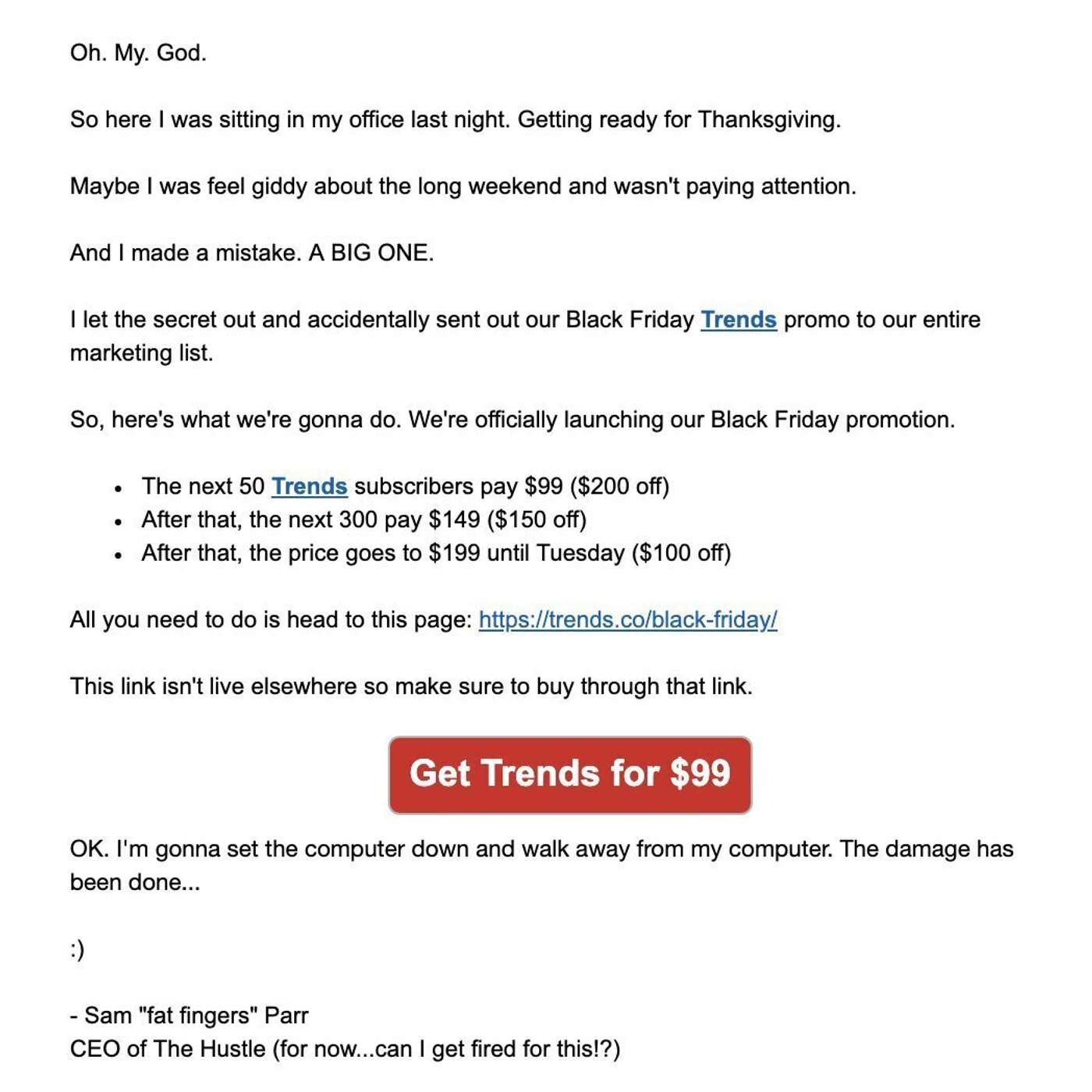
Ep 179Email Economics: The Math to a $800k Email [Sam Parr, Nathan Barry]
Listen to the Nathan Barry show: https://nathanbarry.com/030-sam-parr-growing-2m-subscribers-selling-newsletter/ 50mins inSam Parr's $800k email: https://twitter.com/theSamParr/status/1332018614367645697?s=20https://twitter.com/theSamParr/status/1331759376433115140?s=20300k views: https://twitter.com/theSamParr/status/1332024062919503875?s=203k subscribers - max 1% conversion rateTranscript [00:00:00] swyx: Today, we're talking about email from two of its biggest practitioners, Nathan Barry from convert kit and Sam Parr from the hustle and sandbar par recently sends a email that converted into $800,000 worth of sales in one day. And this is. [00:00:19] Sam Parr: You want to know something funny that, that tactic of emailing the wrong link and then emailing them again to let people know that you've created. [00:00:27] Always gets more sales. [00:00:29] Nathan Barry: Oh, it does. Okay. You should tell everyone about your black Friday [00:00:33] Sam Parr: promotion. Okay. So I've done this twice. Most people don't know I did this twice. I actually did this in 2014. When we first started, when we only had about 40,000 subscribers. So back then in 14, what I did or 15? Well, no, when did we launch? [00:00:46] No, we lost at 16, so I didn't tell him 60. I'll tell you what I did black Friday. And I'll tell you what I did now or back then. So back then I, we accidentally sent, like, it was, the day was Thursday morning. We accidentally sent the previous Wednesday's email on Thursday. And so people got like the same one over and then we immediately send a reply and it was a screenshot of my slack, where it was me slacking to our writers saying. [00:01:13] You really screwed up, you know, this right. And then being like, oh my God, I can't believe I did that. It's like, and she's saying like, well, what do I do? And I'm saying, you better fix this or you're out of here. And she was being like, well, you got to give me some suggestions. I go, I don't know, just take a screenshot of this and put it in the email. [00:01:29] And if it gets a lot of opens, you're gonna keep your job. If it doesn't you're outta here. And we just screenshot of that and put it in the email and it got the highest open rate. Uh, some people didn't get the joke and they got mad at me, but I was whatever. Um, but the other day we made like $800,000 in one day. [00:01:47] And what we did was, um, this, this is like what I'm saying, like you, you convert kit creates the Lego pieces and, and it's fun for us to manipulate it, to create cool stuff. We, um, made an email, which is actually really hard to make an email look like a Gmail email. Um, It's like not intuitive. And you've got to like, kind of do weird stuff, but we made an email look like a Gmail email and we made it look exactly like I was having a conversation with the team and I sent them an email. [00:02:17] It said art, everyone are big black Friday sale. It's totally ready. Can you guys please make sure all the links work? Um, this is going to go live and it's actually like our biggest discount ever. I'm kind of think that we're giving too big of a discount, but, uh, whatever, I guess we'll see what happens. [00:02:33] Just, uh, let me know if it works and then we'll, and we'll hit send tomorrow morning and then they reply. And so that email was sent to a million plus people or something like. And we made it look like it was, it was an accident. You know, I accidentally sent it to our whole list as opposed to our company. [00:02:51] Right. And we got so much traction so much. There was tens of thousands of people on the website buying. And I got literally 10,000 emails and we send it from Sam at the hustle, my personal email. I got so many subscribers people saying, including my friends like Nathan, um, or, uh, Andrew Wilkinson, like smart techie, entrepreneurial friends. [00:03:13] They called me and they go, yeah, they go, dude, you just sent this out to your whole list. This was not meant for, this was you were not meaning to send this to me. And my reply was like, oh no, really? And, uh, it just crushed it. Yeah. It was like the biggest sales day ever. I think we, I think we stole that idea by the way. [00:03:32] I I'll give credit. I think it was Chubbies who I stole it or Brooklyn and we stole it from someone, but it was really effective. Yeah. [00:03:39] Nathan Barry: That's amazing. I just love the idea that someone receiving that email. That like, there's another email address of like entire list@:.com or whatever, they've you send to that? [00:03:49] It, like, I love that someone thinks that's a mistake that could act [00:03:53] Sam Parr: the people at HubSpot emailed me. This was during our due diligence and they're like, Hey, like they called me or texted me. They're like, I don't think this meant to go to everyone. And I was like, oh my God. I know it was a joke. It was a hit, it was a huge hit. [00:04:07] It was great. That's amazing. I'd [00:04:10] Nathan Barry: love to
Ep 178Angel Economics: The Math to a $100k Angel Portfolio [Jason Calacanis, Zach Coelius]
Listen to TWiST: https://thisweekinstartups.com/ask-an-angel-plus-antonio-garcia-martinez-vs-apple-with-zach-coelius-e1215/Listen to my previous episode on Angel Investing Math: https://www.listennotes.com/podcasts/the-swyx-mixtape/why-angel-investing-is-dumb-v6oYXBeO4wS/
Ep 177Podcast Economics: The Math to $14,000 a month [Jordan Harbinger, Cal Newport]
Listen to the full Deep Questions podcast: https://www.listennotes.com/podcasts/deep-questions-with-cal-newport-cal-newport-t94EC0dyxsL/ (clip is from 40ish mins in)NotesYouTube CPM $2.50, Audio CPM $25, yet Audio gets paid for non-listened downloadsLow end YouTube podcast audience 37k, high end 400k views per episodeAudio makes way more for something half that audienceAudio targets 25-45yo professionalsBigger shows like Marc Maron have lower CPM, $9Science and education show: $35-40 CPMChillax show: $15 CPM10,000 fans * 4 ads a week * 25 CPM each ad = $1,000 a week, $4k a month50,000 fans => $20k a monthSales cut - 15-30%Transcript [00:00:00] swyx: Hey everyone today, I'm featuring a conversation between Cal Newport and Jordan harbinger. Both of whom are top podcasters talking about the economics of podcasting. So there are very few people who are as qualified to talk about it because the actual Lee have numbers and they make their living. [00:00:19] swyx: Partially at least on podcasting. There's two angles I'm interested in here. The first is of course just how people make money and what kind of money people make from podcasting. And second of all, I've been very interested in YouTube podcast versus audio podcasts. And Jordan goes a little bit brutally into why YouTube is just not that popular for podcasting. [00:00:38] YouTube vs Audio CPMs [00:00:38] Cal Newport: I think a little economics for my listeners will be useful to try to understand actual money amounts so that they can understand right now where the industry is before we go to where it could go in the future. So it might, if I'm correct. And I hope so because I'm doing some of this. Um, so our core number here to think about is four, uh, adds a CPM. [00:01:01] So cost per mil, meaning thousand, um, which is how many, how many dollars. Per a thousand people that are going to hear an ad, right? So is this, I think this is, this is the cord number, right? When trying to understand how to putting aside other types of revenue, but just for passive advertisers, this is the cord number. [00:01:21] Jordan Harbinger: Okay. It is, although I will nitpick one thing you mentioned, it's the cost per mil cost per thousand people who will hear an ad with podcasting it's actually download or even stream it doesn't mean listen. And there's a difference here for people who aren't super familiar with it. You probably have podcasts on your phone that you've downloaded, but you've never listened to, if you've got the Jordan harbinger show queued up on your phone, and there's an episode that you didn't think was interesting, but you still download it and you plan to delete it later. [00:01:48] I still got paid for every ad that is in there, you know, that fraction of a cent or whatever it is from you. So thank you for that. Um, That's important, an important distinction, because if you're a YouTuber, you don't get paid for somebody thinking about playing your video, right. You only get paid. If somebody hits play, they don't necessarily have to see the ad either they can quit halfway through and it counts as a play, but usually there's some sort of dynamic insertion that only inserts when you're playing yada, yada. [00:02:14] But what this means is it's important for the CPM, because what it means is the CPM for a podcast ad that is actually listened to is something like. Nine X or 10 X, the actual amount that you're getting paid per thousand downloads. So if, if I'm looking at it, there's some new technology that does this and they say, okay, we're only gonna pay you for the amount of people we think heard the ad. [00:02:43] And, but your CPM is 250. Yeah. Whereas if I sell an ad wholesale and I, and you pay for downloaded or streamed or listened to my CPMs, like 25 bucks. So it makes the pricing different, but it also shit, it sheds light on how valuable a viewer of a YouTube video is versus a listener of a podcast, because if you're a viewer of a YouTube video and you're getting three bucks CPM, and I'm getting, let's say 250, let's say you're getting two 50, $2 and 50 cents for a view of a video just to keep them. [00:03:15] I, my listeners are worth a hundred times more than your viewers, which means that a thousand people listening to a podcast is worth like a hundred thousand people watching a YouTube video. Now that is not actually true, but that's how the math works [00:03:29] out. [00:03:29] Cal Newport: Yeah. And what's interesting about it is, and this might have to do with the ad form because if you have. [00:03:36] Full U-turn version of your podcast. A lot of ad agencies are going to, um, count those views of the YouTube, like a download. So, so in other words, there's something about the host delivering the ad, I guess that, whereas the value is. If you listen to it, you're watching the host and the host is delivering an ad on a YouTube video. [00:03:58] And that's much more valuable, I suppose, than a banner pops up. Totally huts. It cuts to on
Ep 176[Weekend Drop] Sunil Pai: React and the Meta of the Web
A wideranging convo with Sunil covering the future of React, the Third Age of JavaScript, and the Meta of online discourse.Watch on YouTube: https://www.youtube.com/watch?v=H3h1WICelqsFollow Sunil: https://twitter.com/threepointoneChapters:[00:01:40] React and Temporal, Declarative vs ImperativeMy Temporal Explainer: https://twitter.com/swyx/status/1417165270641045505https://www.solidjs.com/ [00:12:57] State Charts and Lucylanghttps://lucylang.org/XState and Stately https://stately.ai/viz[00:17:08] The Future of React[00:25:03] React Streaming Server Rendering vs SSR/JAMstack/DSG/DPR/ISRReactDOMServer.renderToNodeStream()Sunil's Slides: https://www.icloud.com/keynote/0MyOJkDIOVfFit76PqJFLvPVg#react-advancedhttps://react-lazy.coolcomputerclub.com/ [00:33:13] Next.js and the Open Source Commons[00:38:46] The Third Age of JavaScriptThird Age of JS Benedict Evans (not Sinofsky) on Word Processors: https://www.ben-evans.com/benedictevans/2020/12/21/google-bundling-and-kill-zones[00:45:16] ESbuild vs SWC vs BunBun (Jarred Sumner) https://twitter.com/jarredsumner/status/1390084458724741121 [00:50:46] Let Non-X Do X: Figma vs Canva, Webflow vs Wix/Squarespace Canva vs Figma valuations https://twitter.com/swyx/status/1438102616156917767[00:52:42] JavaScript Twitter and Notion's 9mb Marketing SiteNotion 9mb JS Site Tweetmrmrs' Components.ai[01:06:33] React Server Components and Shopify Hydrogen/Oxygenhttps://twitter.com/swyx/status/1410103013885108229 [01:09:18] Categorical Imperatives of Web Platforms: Cloudflare vs AWS, MongoDB vs Auth0, Gatsby vs Netlifyhttps://auth0.com/blog/introducing-auth0-actions/ [01:18:34] Wrap-up Transcript [00:01:40] React and Temporal, Declarative vs Imperative [00:01:40] swyx: Okay. So the first topic we want to talk about is React and Temporal, right? [00:01:43] Sunil Pai: I feel Temporal is introducing a shift into the workflow ecosystem, which is very similar to the one that React introduced to the JavaScript framework system. [00:01:54] swyx: That's the hope. I don't know if like my explanation of Temporal has reached everybody or has reached you. There are three core opinions, right? The first is that whenever you cross system boundaries, when you call it external API. So when you call internal microservices, there's a chance of failure and that multiplies, the more complex the system gets. [00:02:11] So you need a central orchestrator that holds all the retry states and logic, as well as timers And it tracks all the events and is able to resume from it from failure. [00:02:21] Second opinion that you should have is you should do event sourcing rather than try to just write your business logic and then instrument with observability logs after the fact you should have your logs as the source of truth. And if it's not in the log, it did not happen. [00:02:34] And then the final piece is the workflows as code, which is the one that you're focusing on, which is the programming model, in the sense that like all the other competitive workflow engines, like, Amazon step functions, Apache airflow, Dagster, like there's a bunch in this category. [00:02:48] They're all sort of JSON and YML DSLs, and the bind that you find yourself in is that basically you're reinventing a general purpose programming language inside of these JSON and YML DSLs because you find a need for loops, branching, variables functions, all the basic stuff. And, people find that like at the end of the day, all this tooling is available, you just have to make it run in inside of a general purpose programming language. So that's what Temporal offers. [00:03:12] But it's very interesting because it kind of straddles the imperative versus declarative debate, right? [00:03:17] React, people view as declarative. And I think it's mostly declarative, like there's imperative escape hatches, and because it's declarative, people can have a single sort of render model of their entire app for the entire tree. And I think it makes sense to them. [00:03:32] And you're saying that that's better, right? That's better than the imperative predecessor of like jQuery and randomly hooking up stuff and not having things tied up together. You sounded like you want it to [00:03:42] Sunil Pai: interrupt. So it's actually two things. One is the jQuery had an imperative API, and then they went way too hard into the declarative side with templating languages and then started reinventing stuff there. [00:03:54] So really react was like, no, you need access to an imperative language to create, you need a fully featured programming language to generate description trees like Dom trees or in this case, a workflow graphs. [00:04:10] swyx: Got it. So it's kind of like a halfway solution, maybe, maybe anyway. So the problem with us is that we're trying to say that imperative is better than declarative, for the purposes of expressing general purpose business logic, which is an interesting sell for me because in all other respects, I'm very used to arguing t
Ep 175[Weekend Drop] Temporal - Not so Temporary (with Jaden Baptista)
Video version on youtube: https://www.youtube.com/watch?v=ErO9UjccwdsMy conversation with Jaden Baptista introducing him to Temporal.Transcript[00:00:00] swyx: Hey everyone is Swyx. I've been gone for the past couple of days and you may or may not be wondering what's happened. I basically got a cold and at this conference, it's actually nice to have a conference cold. I guess, because that means that things are going back to normal, even the, not so great stuff about being meeting back in person. [00:00:22] But I have a cold and I did not feel great. And I think gets COVID. But anyway, I decided to take a little bit of a break, but I also, I'm not sure if you know, but the weekday topics are all done on the same day. And I tried to do this pattern of batching things in weekly themes and this week's theme. [00:00:43] Basically it was poorly chosen. I thought that I had enough to do some, some stuff on basically the how technologies get adopted or get their traction. But I just didn't I ended up not liking any of the other episodes or any other podcasts that I shortlisted for that particular topic. So I just ran out and I just didn't feel inspired. [00:01:06] I felt trapped in the format and didn't really know what to do with it. So I ended up not doing anything. I also had other work to catch up on, on top of the conference stuff. So that was all in my head recently. And in general, and wondering whether or not I'm going in the right direction. So if you do that, And I really am grateful. [00:01:26] Checking out this podcast, because it's like a weird experiment with no particular theme or direction apart from cause it's stuff that I like. If you are, if you have a strong opinion and if you particularly think that there's some ideas that I should just pursue further and you're just mad at me for not doing. [00:01:42] Now's the time to tell me, because I'm also a little bit direction as to where this podcast could go. That's it? I do think that there's a strong thesis for exploring or having a central place for exploring ideas. I am personally interested in and recent dictating my podcast appearances on other people's podcasts to my own feed. [00:02:03] So people who are interested in what I do can follow up directly. So here's a conversation that I had with Jen Battista on Twitter spaces that was recorded. And it's about Tim Poro. So this is the first of maybe. Three podcasts that I did in the last month or so. So I'll be dripping them out over the weekends the next couple of weeks. [00:02:23] And we'll see, we'll see where this goes. I want to get back more into writing. I still have hopes of spinning out my YouTube more seriously, but I think the creative journey. The part-time creative journey of these, where I have a day job and that should take priority over the other side of stuff. [00:02:42] I do dictates the format of the things that I can take on. So, so far the podcast thing has been really great. I actually have a lot, a long backlog of things, which I selected for sure. They just don't fit in any, any particular theme. I think that theme is really nice when I can do it. And just, maybe you don't have enough backlog to do it just yet, so maybe I might go back to not having themes anyway. [00:03:06] So here's my conversation with Jane and review stuff. Well, thank you for [00:03:09] Jaden Baptista: joining me today, Sean. I really appreciate you taking the time are you doing today? [00:03:14] swyx: Very good. I'm very entertained by your Twitch title called temporal nutso temporary. Very interesting. [00:03:22] Jaden Baptista: Oh yeah. I was trying to come up with like a S a stupid clever name for the Twitch streams, despite them not really helping out with what the stream is usually ends up being about. [00:03:34] We tend to wander from topic to time. [00:03:37] swyx: Sure sure. Yeah. Thanks for having me in a happy to chat to portal. Awesome. [00:03:42] Jaden Baptista: Yeah. Well, let me ask you just the first quick question. You know, every, every big program that we all talk about w we really enjoy using was, was built to solve a problem, some sort of problem. [00:03:55] What problem was tempura both too soon, but what was the point of building it in the first. [00:03:59] swyx: So, to be clear, I did not build it. Who did exactly it was built to solve the problem of The abstract problem that the category of problem, this is called is workflows anything long running that needs to take anything more than a simple request response cycle, a request response will be just like, you know, you're paying a serverless function. [00:04:20] It gets back to you in, let's say 300 milliseconds, right? That's a typical cycle, but sometimes you need to do long running work. Typically I would think this is something like video projects. So, if you kick off a job, it takes like four hours to transfer code audio file. But actually it is both longer and shorter than that. [00:04:40] So, this is actually a topic of
Ep 174React Native's Near Death Experience [Christopher Chedeau]
Listen to the Sourcegraph podcast: https://about.sourcegraph.com/podcast/christopher-chedeau/ (~28mins in)Lessons learned:Hackathon is important for intrapreneurshipNear Death moment requires leap of faithSolve People Problems with Technology, not just technology problemsTranscript [00:00:00] swyx: I'm continuing my exploration of how technologies get adopted. And recently there was a really good interview of Christopher shadow by Beyang Liu on the source graph podcast. So I really had to feature it. this tells the story of the invention and adoption of react native internally within Facebook. And the context to this is. [00:00:21] Facebook had a problem with the iteration speed of mobile apps at Facebook, and they were much slower than web apps. So basically the context before this conversation is that mark Zuckerberg had actually set an engineering priority to fix the solution and the engineers have to figure it out. [00:00:36] Christopher Chedeau: One of those things that John had in mind, Can we embed JavaScript in a iOS app. And so at that point, we actually there was no API for this and they're going to do it, but like you found a way to cross compare something and he was able to do it. And you, you want it to be like, okay, can we run, react and power, like native iOS views out of react instead of like dibs and spans, you can like a UI label and a UI views. [00:01:03] And. And so this is like at Facebook there's hackathons. And so in the summer does a three day hackathon. And we basically like Ashwin Lynn that's where on my team, on the photos team. And Joanne, we hacked together off for three days working on this like raw using react to power, like native use. [00:01:25] And at the end of the three days, we had a demo where we are able to show his view and we had a primitive layout system. And. I have the texts it's on the right and the iOS, the rep on the left and basically moved the line like a before and after and a native, iOS, like button. And I bought to move the, like better from the left to the right. [00:01:49] And we were able to click on it. Now, the lights like actually like walks and we're able to like, do. Changing and saving would be like almost entirely. I think it was a hundred milliseconds, a refresh. So it was barely perspective perceptible and we presented to the like hackathon group, like all the, did some callbacks could go. [00:02:11] And what happened is the five project, like most interesting have an audience with Mark Zuckerberg. And so you went to present this hack to Mark Zuckerberg and there was a SRAP, the CTO of the company as well, like in this? Yes. Yeah. And wasn't for this. Yeah. And both of them were like, we're super excited. [00:02:32] And what happened the next week is we basically did like a wall tour of Facebook and we talked to all of the management chain, . And it was like a super, like a fun thing. But now the thing that happened then is okay, so we did this demo, there was like people liking it and everything, but now for like myself as an engineer, like I joined like Facebook, like less than a year ago. [00:02:54] And I moved like my, like myself, I married my wife. I like, this was like a huge like thing. We moved off way across the world. So now it was like a soul searching moment. Do I want to like bets, like this dream, like on a crazy idea that and I was like, like at that time I was like the answer was No. [00:03:18] And so what happened is like a Lena Nash Ashwin basically went and B up like a, they wanted to do an iOS photo up and they built it using what was react iOS at the time. And three months after they basically came back to us and said Hey look like we really want to build like the iOS photo app. [00:03:37] Yeah. And right now we're spending more time building this react iOS thing than actually building the products. And so we're going to restart the product like in a normal iOS. So we can actually walk on it. The project could die. All the project could live and I need to make a call. Do I want to invest in? [00:03:58] And so I did a lot of soul searching and I basically at that point I was like, okay, I think I need to do it. And so, Tom Occhino was the manager of a Joel at the time. And Joel Dan and myself okay, now we like basically creating a small team. And then she came in after this. And this is how like the program. [00:04:17] But this was like not an easy, like a decision to make. And this is like something, a lot of people don't realize it counting products and like they're super high risk Harry, well, for decks, but most of the projects actually fail. This is a startup. Like most of us, not the film and the fact that I'm like here talking to you, like all of the stars align and everything, like it's good work, but this was not a given at the time. [00:04:40] Beyang Liu: You took a risk and it paid off. And I think especially it was a big risk in Facebook at the time. Cause my understanding is that they had already tried to bui
Ep 173How React got Traction [Pete Hunt]
Listen to the Future of Coding Podcast: https://futureofcoding.org/episodes/011 (30ish mins in)3 Lessons Learned:Features over Benefits- original was a tutorial - second time: here's why react is different. Focus on the implementation rather than how to use it- Sophie Alpert, Dan Abramov, Cheng LouSupport everybody: IRC, Stackoverflow, RedditInfluencers - David NolenBigger conferences, F8, ReactConfPublic user WikiHaters - view every hater comment was your faultTable stakesDocumentationInclusive communicationThree single sentences to communicate why your project is different and worthy of someone's attention - real reasons with tradeoffs, not "faster, smaller, lightweight"Transcript [00:00:00] swyx: Hey everyone. I'm coming to you today from the Infoship shift conference where I just gave a talk on the third is your JavaScript. And it's got me in a mood to look back a little bit on the history of some of the JavaScript frameworks and what better history to cover it, then react, which is something I know. [00:00:17] Well, but I think the history of react is not that well-documented and people. Should hear it from people who are there. The central question, which occupies a lot of my waking thought is how to get developer tools adopted. And there's no better case study than most, no more successful case study than react and how it overcame its initial difficulty. [00:00:38] Here's original reactive team member, Pete hunt on the future of coding podcast. [00:00:43] Pete Hunt: It took a lot of time to figure out how to message this. Because he can't just come in and say like, everybody's wrong and we're right. Blah, blah, blah, blah, blah, blah. That's not that's not really, you did that a little bit. [00:00:55] Which, which talk. So there was the original JS coffee us talk where we came in and we said, Hey, this is how we build user interfaces. At the time. And it was just like a tutorial. And then there's another way, which was the second top, which was the one that I did, which was basically like, Hey, here's why react is different. [00:01:15] The argument that we were trying to make is that, Hey, this is these are the problems that we had. Here's the solution we came up with and here's what makes our solution. And we had a lot of caveats in there that said, Hey, this might not work for you. There are these certain edge cases where it's actually slower than what you're doing today, but what we found was this was a better set of trade-offs and really what we focused on was. [00:01:40] Educating people on how to use react or how to build their next application with it. It was more about this is what makes it unique and interesting. And what that did was it disarmed people. They were like, oh, this is actually really interesting. We focus much more on the implementation in that than the, how to use it. [00:01:56] And people appreciated that. And the second thing it did was it recruited people into the community that were really passionate about what it does differently. And so you see. These big shots in the react community now like Sophie Albert, and Dan Abramov and Cheng Lou and all these, these people they originally recruited because I think they found the internals of react to the interesting or at least some of the ideas around it to be really interesting rather than, oh, I built my, my application and, three less days than it otherwise would have taken. [00:02:25] Steve Krause: From my perspective it seemed like react was inevitable and it just happened magically, but you were more on the ground floor making it grow. And it seemed like, like you find around the conferences telling people about evangelizing it. [00:02:38] So could you talk through like how it became adopted how, how that felt. Like w what were like some of the key milestones or like key the key things that happened that like made it like moved along. [00:02:50] Pete Hunt: Yeah. So there was JS con you asked, which was the original announcement. Everybody hated it. Then there was JS con EU which got some more people excited about it. [00:03:00] We wanted to support everybody a lot. So we were in IRC, like almost 24, 7. People would come in and ask a question and we would answer it. Some people would, would camp on stack overflow and answer those questions. But basically like the, the idea was we wanted to recruit and, and basically keep those people engaged in the community because hopefully they could help out. [00:03:20] And that ended up working out nicely. So the number one thing was like just supporting the hell out of people that [00:03:26] the second big milestone that happened was when David Nolan got involved. And brought in the closure script community. And they, he wrote this blog post called the future of JavaScript MVCs and he was kind of like, Hey, this reacting solves a missing piece that we've had in the closure script community for a long time. [00:03:44] And it's got a programming model that I really like. So that was a b

Ep 172[Movie Fridays] Shang-Chi and the Legend of the Ten Rings
Song: DJ Snake - Run It (ft. Rick Ross & Rich Brian) [from Shang-Chi and the Legend of the Ten Rings]BBC Radio 1 interview: https://www.bbc.co.uk/sounds/play/p09tz2bz
Ep 171Journey to Vitess [Alkin Tezuysal]
Full interview on the HOSS talks FOSS podcast: https://www.youtube.com/watch?v=8e3IC-lAgXsVitess: https://vitess.io/Planetscale: https://planetscale.com/Vitess was created in 2010 to solve the MySQL scalability challenges that the team at YouTube faced. This section briefly summarizes the sequence of events that led to Vitess' creation:YouTube’s MySQL database reached a point when peak traffic would soon exceed the database’s serving capacity. To temporarily alleviate the problem, YouTube created a master database for write traffic and a replica database for read traffic.With demand for cat videos at an all-time high, read-only traffic was still high enough to overload the replica database. So YouTube added more replicas, again providing a temporary solution.Eventually, write traffic became too high for the master database to handle, requiring YouTube to shard data to handle incoming traffic. As an aside, sharding would have also become necessary if the overall size of the database became too large for a single MySQL instance.YouTube’s application layer was modified so that before executing any database operation, the code could identify the right database shard to receive that particular query.Vitess let YouTube remove that logic from the source code, introducing a proxy between the application and the database to route and manage database interactions. Since then, YouTube has scaled its user base by a factor of more than 50, greatly increasing its capacity to serve pages, process newly uploaded videos, and more. Even more importantly, Vitess is a platform that continues to scale.
Ep 170Journey to CockroachDB [Spencer Kimball]
Listen to the full episode on SERadio: https://www.se-radio.net/2020/06/episode-413-spencer-kimball-on-cockroachdb/Previous two parter on Spencer: https://swyx.transistor.fm/episodes/consistent-synchronous-replicationhttps://swyx.transistor.fm/episodes/spencer-kimball-pt-2-competing-with-big-clouds
Ep 169Journey to TimeScaleDB [Mike Freedman]
Listen to the full interview on SEDaily: https://softwareengineeringdaily.com/2021/06/28/timescale-time-series-databases-with-mike-freedman/We originally created Timescale, really from our own need. Around thattime, 2014-2015, my co-founder and I, Ajay Kulkarni, who we go back many years, we resyncedup and we started thinking about it was a good time for both of us to think about what the nextchallenges are that we want to tackle. It seemed to us that there was this emerging trend ofnow, people talk about the digitization, or digital transformation. It feels like somewhat of ananalyst term, but I think, it's really responsive of what's happening, in that if you think about thelarge, big IT revolution, it was about changing the back office. What was used to be on paperwas now in computers.What we saw was somewhat the same thing happened to basically, every industry, from heavyindustry, to shipping, to logistics, to manufacturing, both discrete and continuous and home IoT.Sometimes this gets blurred under IoT, but we also think about it more broadly as operationaltechnology, those which are not necessarily bits, but atoms. A big part of that was actuallycollecting data of what those systems were doing. It's about sensors and data and whatnot.When we do Initially looked at this problem, we were thinking about a type of data platform wewould want to build, to make it easy to collect and store and analyze that type of data. I thinkthat's a way that we're slightly different, or why our – what we ultimately built as our databaseended up being fairly different than a lot of other so-called time series databases. That'sbecause many of them arose out of IT monitoring, where they were trying to collect metrics fromservers, where we were originally thinking about collecting data more broadly from all these typeof applications and devices around your world.When we started building it, it was originally focusing mostly on IoT. We quickly ran into thisproblem that the existing databases out there and the time series databases out there were notreally designed for our problems. They were often much more limited, because they werefocusing on this narrow infrastructure monitoring problem, where the data maybe wasn't asimportant. It was only a very specific type. Let's say, they stored only floats. They didn't have tohave extra metadata that they wanted to enrich their data to better understand what was goingon, like through joins.After, basically working on this platform for about a year, we somewhat came to the conclusionthat we actually need to build somewhat of our own time series database that was focusing onthis more broad type of problem, and so that's what we do. That's what led the development ofwhat became Timescale.JM: Today, what are the most common applications of a time series database?Like and speak mostly about obviously, TimescaleDB, rather than – as I wasalluding to before, a lot of the other time series databases are much more narrowly focused onIT monitoring, or observability. We really see our use cases across the field. We certainly seecases of observability. In fact, we have subsequently built actually a separate product on top of Timescale called Promp scale, that is really used for initially Prometheus metrics, but morebroadly, to make it easier to store observability data with TimescaleDB.We see still a lot of IoT. We see a lot of logistics. We see financial data and crypto data. We seeevent sourcing. We see product and user analytics. We see people collecting data about howusers are using their SaaS platforms. We see gaming analytics, where companies are collectinginformation about how people's virtual avatars are actually playing within the games. We seemusic analytics. We like to think of the old way, used to find the pop stars, you went down to thesmoky club. Now you collect SoundCloud and Spotify streams, and you use that to identify whothe next breakout artist is going to be.All of these are example of time series data. It's really what's so exciting to us as is it's such abroad use case, so horizontal, because basically, it's all about collecting data at the finestgranularity you can.Tell me about the initial architecture for TimescaleDB. You’re based off ofPostgresSQL. What was the reasoning around that decision?I think, as you point out, Timescale is actually implemented as an extension onPostgresSQL. Starting maybe 10 or 15 years ago, PostgresSQL started exposing low-levelhooks throughout its code base. This is not a plugin where you're running a little JavaScriptcode. We have function pointers into – we get function hooks into the C. PostgresSQL is writtenin C, and so TimescaleDB is, for the most part written in C. We have hooks throughout the codebase at the planner, at sometimes in the storage, at the execution nodes. We are able to insertourselves and do Lot of optimizations as part of the same process.You could ask the question of why not just implement a new database from scratch? Why
Ep 168Journey to MongoDB [Mark Porter]
Listen to more on the StackOverflow Podcast: https://stackoverflow.blog/2021/08/06/podcast-364-mark-porter-mongodb-database/Transcriptmarkporter [00:00:00] swyx: This is Mark Porter, the CTO of Mongo DB on his personal journey from relational databases to Mongo DB. [00:00:06] Mark Porter: I am a relentless tech geek. I've loved tech my whole life. In fact, my Twitter handle is MarkLovesTech. I have used databases since I was 14 with some really ancient technologies started out on a 4k TRS 80 model one computer. We had to program it in assembly language because there wasn't enough memory to use the local basic copy. And I very quickly got into databases and I was talking to someone the other day and he pointed out something I'd never noticed, which is I've oscillated between using databases and building database. So I started out at Caltech and NASA using databases for space, data, and chip data. And then I built databases at Oracle versions, 5 6, 7, 8 for about 13 years. And then I used databases at NewsCorp for huge student data systems. And then I built databases at Amazon with Amazon RDS. Then I moved to Grab taxi, which is the Uber of Southeast Asia and use databases to deliver 15 million rides and meals a day, and then came back to Mongo DB. And here I am building databases again. I frankly can't get away from this thing. [00:01:20] Ben Popper: I love that story. I wonder. Does that mean. You know, at each point you had some sort of frustration or saw some sort of like opportunity for innovation, you know, you kind of would build something, then you'd be the user of it. Then you'd realize that like the next sort of turn of the wheel was coming. As you move between those jobs where new paradigms and databases and murders. [00:01:38] Mark Porter: Yeah. I mean, it's been really interesting. Half of my career. I've been the Bo and half my career. I've been the target. And I got to tell you that sometimes as a customer, you're not really happy being the target of what has been produced. Look, the reality is, is relational databases have been the modus operandi since 1970, when Cod first did his paper. And then Oracle was the first company that released them in 1979. They were actually known as relational technology back then and then changed their name later to Oracle. So the mission criticality of databases has never been in doubt. What has changed is the amount of data, the way we process that data. And what's really, really important. And it used to be duplication of data was important and things like that. And while that's still important, what's really important. Now is developer product. Bar none. That is job one for any mission critical software company is developer productivity and innovation [00:02:35] Ben Popper: makes a lot of sense. It does seem like data has become almost this, uh, overwhelming force for some companies. Ryan. I know if you have experience with this, but I've been getting a lot of pitches and, and talking with folks on the podcast and you know, it's gone from, we're using data to, we have data lakes and there's a data iceberg. And, you know, we're only sort of scratching the surface of what we might be able to do with this. Endless flow of unstructured data that we're collecting. And as you mentioned, yeah, a lot of times what they're looking to do is understand it in a way that allows them to enhance productivity or automate certain processes, which right now are very time labor intensive. Yeah. Yeah. At my previous job, I worked out on an article about data pipelines and, you know, ETL processes and that yeah. There's a becoming a separation, I think, between your production database and the database you use to gain insights, right? Then the production database has to be fast. But the insight database, it can be a little more flexible in how it produces data, right? [00:03:34] Mark Porter: Yeah. So we think about systems of record. We think about systems of insight and yeah. I mean, definitely different people want to do different things with the databases. And so what we do is we think about personas. Are you an analyst? Are you a developer? Are you an AI ML engineer? Are you a PhD data scientist? We always try to come at it from the customer and what they want to accomplish. Yeah, [00:03:56] Ben Popper: I think that's so interesting because as you said, obviously, databases have always been part of working in the world of software and computers, but increasingly there are these specialties that are very important in which are producing these really interesting results that themselves are devoted to data, as opposed to it being something that, you know, needs to be part of the larger process. Um, so mark, I wanted to touch on something, which is that you had a part of your career at AWS, which now, you know, has grown into. Quite a behemoth. Um, yeah. Just wondering if you can talk to us a little bit about what you learned there and maybe how some of that applies to the role
Ep 167[Weekend Drop] The True Story of Frank Abagnale
Watch on https://www.youtube.com/watch?v=iJIc16aqpO8&t=642s
Ep 166[Music Fridays] The Petersens
The Petersens: https://www.youtube.com/c/ThePetersens/aboutTake Me Home: https://www.youtube.com/watch?v=qap9Qm-Q894Jolene: https://www.youtube.com/watch?v=viQx4KDivPYLandslide: https://www.youtube.com/watch?v=joUwy8lpvP0
Ep 165The Origin of Braintree [Bryan Johnson]
Listen to his full interview on the Lex Fridman podcast: https://www.youtube.com/watch?v=1YbcB6b4A2UBryan's wiki: https://en.wikipedia.org/wiki/Bryan_Johnson_(entrepreneur)
Ep 164The Origin of Twilio [Jeff Lawson]
Listen to the Cloud Giants podcast: https://www.listennotes.com/podcasts/cloud-giants/jeff-lawson-co-founder-and-sFi-ad_etHQ/#
Ep 163The Origin of Waze [Noam Bardin]
Listen to the NFX podcast: https://www.nfx.com/post/the-insider-story-of-waze/ (28 mins in)
Ep 162The Origin of Kubernetes and Heptio [Joe Beda]
Listen to the OSS Startup Podcast for the full episode.References:- Heptio's acquisition in 2018 "It’s not clear how many customers Heptio worked with but they included large, tech-forward businesses like Yahoo Japan."
Ep 161[Weekend Drop] An Evening With Kevin Smith
Superman Lives: Part 1, Part 2 Tim Burton: https://www.youtube.com/watch?v=fKbAEmvZyKQ
Ep 160[Music Fridays] Walk Off The Earth
Wiki: https://en.wikipedia.org/wiki/Walk_off_the_Earth- 2011: Someone Like You (5 People 1 Guitar) https://www.youtube.com/watch?v=d9NF2edxy-M- 2018: Girls Like You https://www.youtube.com/watch?v=e3PcnNiWygw- 2020: A History of the Beatles https://www.youtube.com/watch?v=rfOx4CmQWLs
Ep 159Unity [Robert Cialdini]
From the Psychology Podcast again: https://www.listennotes.com/podcasts/the-psychology-podcast-with-scott-barry-10LF_aSGfEg/#search
Ep 158Commitment and Consistency [Robert Cialdini]
Source: https://www.listennotes.com/podcasts/the-psychology-podcast-with-scott-barry-10LF_aSGfEg/#searchSource: https://freakonomics.com/podcast/frbc-robert-cialdini/
Ep 157Social Proof and Scarcity [Robert Cialdini]
Listen to the Pyschology Podcast: https://scottbarrykaufman.com/podcast/robert-cialdini-the-new-psychology-of-persuasion/Steph Smith's book: Announcement Tweet: https://twitter.com/stephsmithio/status/1418320255429062661Launch Tweet: https://twitter.com/stephsmithio/status/1411047949094637569Doing Content Right: https://stephsmithio.gumroad.com/l/doing-time-right## Social ProofThe next principle is what we call social proof. The idea that one way we decide what we should do in a situation is not proof that comes from some empirical or logic. Uh, information that we've received, it comes from social information. What are the people around us like us doing in this situation that allows me to reduce my uncertainty about what I should.In this situation. Uh, so, uh, for example, uh, a study done in Beijing shows you the cross-cultural reach of this, uh, restaurant managers at one string of restaurants, uh, in, in, in China, put a little asterisk next to certain items on their menu. Uh, and each one immediately became, um, 13 to 20%, depending on the idea.More likely to be purchased. So what did the asterick stand for it? Wasn't what we normally see, which is, this is a specialty of the house, or this is the chef's selection for this evening. It was, this is one of our most popular items and each became 13 to 20% more popular for its popularity. And so. One way as a communicator of genuine information that we can give to other people is to say, we have a lot of popularity for what we are doing and give them examples of that or percentages or market share or this sort of thing.And that always is, uh, an easy way for people. To take the shortcut to yes. Oh, okay. Then I don't have to continue to calibrate it. Yeah. And, and, and, and, uh, thinking about the pros and cons of this, the majority of people like me like it. So that's a shortcut. Yes. But there's some new research. Now, my team is responsible for some of it that takes the principle of social proof to a nother level. And. It is that suppose you have a startup or you have a new product or service or an idea, a new initiative, you would like people to, to join you in. But because it's new, you can't point to social proof. The social proof is minimal. I mean, it's actually negative that a lot of people are doing it.Is there anything you can do under those circumstances? It turns out it is. Even if you don't have, even if you only have a minority or a small minority of people who have adopted it, because it's a good idea, you have to have a good idea. But if it's a good idea, you get the show, a trim who that minority position, if it's only 20% of the market, that's interested in the, if you just say 20%, that's a statistic. If six months ago, it was 10%. That's a difference and that's much better. But if you say six months ago, what was 10%? Three months ago, it was 15% this month. It's 20%. The same 20% is the end point of a trend. And people project the function of a trend into the future. So that for the first time you have the leverage of something, we didn't know the label of before future social proof in the research that we did that showed that if you give people a trend to 20%, They are more likely to say yes to it, right?Because they expect in the future, it will be more than 20%. If you've got a good idea with that kind of ability to move people upward in a trend, you'd be a fool of the influence process. Not the honestly, give them three. Data points. One data point is a statistic, two data points, a difference, three data points, a trend.## ScarcityPeople want more of those things they can have less of. And, uh, w one reason that is the case, I think applies to, uh, what Daniel condoms. It has won the Nobel prize for demonstrating. And that is the power of loss aversion, uh, as opposed to, so that we are more in his prospect theory, says the prospects of losing something are more motivating to us than the prospects of gaining that same thing under conditions of risk and uncertainty.Yeah. You know, I was on a, uh, at a conference where, um, I was in a program to be interviewed, uh, with, uh, Richard Thaler and Daniel Kahneman. And me. Right. And I said to the interviewer, you know, I feel like I'm in a Nobel Laureate sandwich.I'm the lettuce. That's hilarious. I mean, those are big hitters. Those are, those are big hitters. Uh, anyway. Yeah. Yeah, so, Hey, thank you. But, uh, what Kahneman says is this loss aversion, well, that's what scarcity, the basis of scarcity is your F if something is scarce or rare or dwindling and available availability, you're afraid that it will be lost to you.And so, yeah. That's the reason people want those things, uh, that have those characteristics. And, uh, there was a study done of, um, 6,700 E commerce websites. And they looked at AB tests within them to see, which were the factors that if they included it or withdrew, it had the made the biggest difference.In, uh, conversion from, uh, prospect to customer, it wa
Ep 156The Power of Contrast [Robert Cialdini]
Listen to the Jordan Harbinger Show: https://www.jordanharbinger.com/robert-cialdini-a-new-look-at-the-science-of-influence/
Ep 155[Music Fridays] Alan Silvestri
Sources:- Back to the Future: https://www.youtube.com/watch?v=e8TZbze72Bc- Predator: https://www.youtube.com/watch?v=_Z4ll94hN_E- Death Becomes Her: https://www.youtube.com/watch?v=YsKDxRrscg4- Forrest Gump: https://www.youtube.com/watch?v=FcOt6mfjxeA- Captain America: https://www.youtube.com/watch?v=qrXwAeJ87Bk- Avengers: https://www.youtube.com/watch?v=J1VgF9ysbM8- Avengers Infinity War: https://www.youtube.com/watch?v=GY4mGgfc0Ag- Avengers Endgame (Portals): https://www.youtube.com/watch?v=F_mhWxOjxp4
Ep 154The Third Generation of Cryptocurrency [Charles Hoskinson]
Watch Charles' full talk: https://www.youtube.com/watch?v=Ja9D0kpksxwApologies for the bad sound, I moved house and lost my microphone for a while. I'll get it back.Response from a listener (DaveJ on our Discord):@swyx enjoyed the last mixtape about Cardano. You closed with the same thoughts that I had initially about academic peer review and how it could slow down progress and network building. I was looking at it through the lens of the usual startup advice "ship quickly and iterate to PMF". You might be coming from a different angle. Charles Hoskinson has talked about this before and here is a summary of his points that appealed to me. 1. Proof is in the pudding. Cardano's main competitors are Ethereum and Polkadot. Ethereum has been trying to do PoS a year longer than Cardano, Cardano shipped PoS first despite the fact that they did it through peer review. Polkadot copied Cardano's PoS protocol for their ecosystem. So Cardano's competitors either copied them or took longer to get to market despite the fact that they are following a startup-y "move fast and break things" mentality. 2. Code is law. Rigour is important in a way that you don't usually see in startup-land. Blockchain is immutable. Making unplanned changes is very difficult and recovering from mistakes is often not possible. For this reason, rigour is super important when designing protocols. Having hundreds/thousands of blockchain/math/CS academics read and peer review your paper provides some of that rigour. Also, because of the compositional nature of blockchain protocols, upfront investments tend to compound over time. I now think academic peer review is a net positive for Cardano (against my initial intuitions). Still though, Bitcoin and Eth were around first and have a head start in network building. Perhaps the inflection point has been hit and the winner(s) are already decided. It doesn't feel like that though. It feels like we're only getting started.Here is the source: https://www.youtube.com/watch?v=CuKhyz280zA&t=2795s
Ep 153Solving The Oracle Problem [Sergey Nazarov]
Listen to Software Engineering Daily: https://softwareengineeringdaily.com/2021/04/07/chainlink-connecting-smart-contracts-to-external-data-with-sergey-nazarov/TranscriptJM: Tell me a little bit more about the data sources for Chainlink. Like how do thosedata sources get vetted and how does the data make its way onto the chain?SN: Right, absolutely. So there're actually two approaches here and I think they'reboth important and the flexibility of how you acquire data is important. The first approach is thatyou have an oracle network and that oracle network is a collection of nodes that are incentivizedjust like blockchain miners and Bitcoin miners are incentivized. Those nodes are incentivized togo out and get accurate data in order to generate the most accurate, highly reliable resultpossible. In the first version of how data is put into a smart contract, this oracle network of anywhere fromseven to over 30 nodes basically goes to an API at a data provider that is considered a highquality data provider. Often that's determined by users. So users will say, “Hey, we want that data provider.” Chainlink also has a reputation system where we track how well each node, and even more and more now how each data provider is performing. And so better data providersget to continue selling their data to Chainlink networks, whereas worst data providers are kind ofnot as used by node operators because they're either not responsive or not returning the rightresults. And so there's actually a reputation system baked into Chainlink, and it's quitefascinating because the system inherently puts all of the data on chain and generates a lot ofproof about what's going on with the oracles.In any case, in the first variant of the system you can go to any data provider, you can go toreally any API in the world and you can request from it and you can come to consensus on thedata from that source assuming you can get other sources or you can come to some model ofconsensus that the user wants around that data. And that doesn't require the data provider to doanything, right? So the benefit of this system is that you have a layer of consensus and youhave a lot of proof that the data was acquired from a data provider and the data providers don'tneed to change anything about their infrastructure, right? So the data providers just continue toprovide their APIs, operate the way they have always operated and just do what they'resupposed to be doing. This is the system through which a good amount of the data is acquiredand then the data providers are more than happy to sell their data to Chainlink nodes becauseit's consumed into these applications which they're all excited about.The second version is when a data provider runs their own Chainlink node. And what thatbasically means is the data provider gets a lightweight signing appliance. They basically get alightweight signing application that allows them to connect their APIs internally to their ownofficial node. And then that node publishes a contract on-chain, and that on-chain contract is arepresentation of that data provider. So now there's an on-chain contract that's therepresentation of that data providers services. And that on-chain contract gets requests fromother smart contracts for data to be given to them because, once again, a blockchain cannottalk to an API. A blockchain has to have an oracle to speak with any API in the outside realworld. And so the second variant is where data providers that are more interested in kind of sellingtheir data to the blockchain ecosystem or more convinced about that, and we have many dataproviders already doing this live. We have data for sports events, weather events, marketevents, all kinds of things out in the real-world already live on production with data providersrunning their own production nodes. This variant allows you to get data essentially directly froman official node run by a data provider. It has the benefits of getting data directly from a dataprovider running their own node. It has the limitation in that the data provider now has to be ableto make sure that they are properly connected, that their APIs stay up according to the node andall these other kinds of nuances. The benefit that they get is they are connected to manydifferent chains all at once. And in reality this variant basically requires the data provider to wantto opt-in to some kind of infrastructure. It requires them to want to say that, “Hey, I want to kindof run a function in the cloud or I want to run some kind of node myself and I want to make atechnical investment in that.”What we found so far is that the majority of data providers just want to sell their data tosomebody and they want to provide that to an oracle network that just retrieves their data andsells that data successfully to a smart contract. There are some data providers that want to runtheir own node and we're working with a lot of those, but I think that's something that's going toevolve more slowly.[
Ep 152Scaling Blockchains [Vitalik Buterin]
Source: https://www.youtube.com/watch?v=XW0QZmtbjvsTranscript[00:00:00] swyx: Part two of my cryptocurrency exploration is on scaling blockchains. And I think if metallic is probably the best and most articulate person to talk about this. [00:00:09] Vitalik Buterin: There's two major paradigms for scaling blockchains. Right? As you said, we are one and layer two. And layer one, basically means, make the blockchain itself, like it capable of, uh, processing more transactions by having some mechanism by which you can do that. Despite the fact that there's a limit to the capacity of each participants in the blockchain. [00:00:29] And then what you're two says, while we're going to keep the blockchain as. But we're going to create clever protocols that sit on top of the blockchain that still use the blockchain. And it's still kind of inherit things like the security guarantees of a blockchain, but at the same time, a lot of things that are done off chain. [00:00:45] And so you get more scalability that way. Um, so. In Ethereum, the most popular paradigm for layer two is roll-ups and the most popular paradigm for layer one is charting. [00:00:54] Lex Fridman: So one way to achieve layer one scaling is to increase the block size, hence the block size wars quote unquote, and a, you actually tweeted something about. [00:01:06] Uh, people are saying that Vitalik changed his mind about in, he, he went from being a S [00:01:13] Vitalik Buterin: small. I went from being big to small. Is it big to small? [00:01:16] Lex Fridman: And, uh, but you said I've been a medium blocker all along. So maybe you can also comment on, on work, on the very basic aspect before we even get to sharding of where you stand. [00:01:27] Block [00:01:28] Vitalik Buterin: size debate. Sure. So the way that I think about the trade-off, as I think about it as a trade-off between making it easy to write to the blockchain and making it easy to read the blockchain. Right. So when I say read, I just mean, you know, have a node and actually verify it and make sure that it's correct. [00:01:43] And all of those things. And then by right. I mean, send transactions. So I think for decentralization, it's, it's important for both of these tasks to be accessible. And I think that they're like about equally important, right? If you have a. Too expensive to read, then everyone will just trust a few people to read for them. [00:01:59] And then those people can change the rules without anyone else's permission. But if on the other hand it becomes really expensive to write. Then everyone will move on to like basically second layer systems that are incredibly similar. And that takes away from, you know, decentralization and self sovereignty as well. [00:02:18] So this has been my viewpoints, like pretty much the whole time, right? It's like, you know, you need this balance and going in one direction or the other direction is very unhealthy in the Bitcoin case. Um, basically what happens was that Bitcoin originally. Like at the very beginning, it didn't really have a block size. [00:02:33] It just had an accidental block size of 32 Meg or oxides limit of 32 megabytes because that just happens to be the limit of the peer-to-peer messages. Um, but then I didn't even know that part. Yeah. But then, um, so Toshi back in 2010 was worried that even 32 megabyte blocks would be too hard to process. [00:02:51] So he, uh, put the limit down to one megabyte and, you know, I think the. You mean sneaked in there? Yeah. Just like made an update to the Bitcoin software that made blocks bigger than one. I think it's a million bytes invalid. And I think the impression that most people had at the time is that, you know, this is just a temporary safety measure and overtime, you know, as we become more confident in the software, that limit would be like raised some, uh, somewhat. [00:03:21] Um, but. That then when the actual usage of the blockchain started going up, and then it started going up first to 100 kilobytes per block, then to two 50 kilobytes per block, then to 500 kilobytes per block. Now let me know there started a kind of coming out of the woodworks, this opinion that like, no, that limit should just not be increased. [00:03:42] And, and, you know, then there are all of these attempts at compromising, right? Um, No first, there was like a proposal for 20 megabyte blocks. Then there was the two for eight proposal, which is, um, a bit ironic because the 2 48 proposals started off being like a small block negotiating position. But then when the big law people came back and said like, Hey, why aren't we aren't we going to do this? [00:04:05] They're like, oh no, no, no, we don't want them. We don't want the block size increases anymore. Uh, so, you know, there were these two different positions, right? The small blockers, I think they valued one megabyte blocks for two reasons. One is that they just like really, really believe in the importance of being able to read the Chan
Ep 151Ethereum 2.0 [Danny Ryan]
Source: https://www.listennotes.com/podcasts/epicenter-learn/danny-ryan-ethereum-dNF42A7tuiR/ NotesEth 2Beacon chain went live in Dec 20204.5m eth locked Each validator 32 ethValidator job: randomness generation, finality, validator level transactions (attestations, deposits, onboarding)The MergeEth1 has an application layer and a thin consensus layer (PoW)Post merge - beacon chain will drive applications going forwardEth2 keeps everything about Eth1 clients and swaps out the consensusWhy not fork?difficulty bombapplications atop Eth are much more substantial nowTranscript [00:00:00] swyx: This week, we're diving into Ethereum and other cryptocurrencies. Don't worry, this isn't about to become a cryptocurrency podcasts, but I still think it's a pretty interesting topic. And there's a lot of interesting research that is not just price hype, but actually serious innovation in terms of distributed systems and crypto economics. [00:00:19] And I've been storing up a bunch of podcasts related to that, that I figured I would get through it now in one block. [00:00:25] So today I wanted to feature this conversation on the epicenter podcast with Denny Ryan, Danny is from the foundation and works on Eve too. And he explains what these two is what the merge is going to be like as well as what the incentives are for the community to stick together rather than have hard fork like they did last time with Eth classic. [00:00:43] Danny Ryan: Eth2 is a series of major consensus upgrades for Ethereum aimed to make the protocol more secure, more sustainable, and more scalable. And at the core of that is the move from proof of work consensus to a proof of stake consensus. [00:01:00] So instead of securing the network with mining hardware and energy consumption, securing the network with the tokens itself the ether. And so at the core of that is the bootstrapping and the creation of this new consensus mechanism. And what as you mentioned, is live today is what we call phase zero. [00:01:18] And that went live in December of 2020. And that was really the bootstrapping of this new proof of stake consensus mechanism. That is called the beacon chain. So in December tons of Ethereum community members and different institutions put a bunch of ether as capital and collateral into what we call the deposit contract and kickstarted this new consensus mechanism called the beacon chain. [00:01:42] The beacon chain exists in parallel to the current theater network. So in parallel to the proof of work network, which is still securing all of the assets and applications and contracts and accounts today. So we have on the one hand and the proof of work network chugging along and on the other hand, this new consensus mechanism called the beacon chain existing in parallel to this building and securing it. [00:02:07] I think today there's something like 4.5 million ether locked and secured in this chain. I don't know what that's worth today. It depends on the minute and the hour. This thing exists, this thing finalizes itself, this thing builds itself. But ultimately what it does is it just builds and secures itself. [00:02:26] And this is by design. This is an iterative path to get rid of the proof of work and to move Ethereum to this new consensus mechanism, obviously it, there may not as used by tons of people secure as tons of value. And there's a lot at stake in this operation. But what we've done is built it in parallel vetted it in production dozens, tons of tests live. [00:02:49] And now what we're working on is actually the deprecation of the proof of work consensus mechanism in favor for the slide proof of stake consensus mechanism. So that's where we're at today. There is a proof of stake, consensus mechanism, bootstrapped live securing tons of value, but really just securing itself in isolate. [00:03:07] Martin Köppelmann: Then let's deep dive into what it exactly does. So, right now it comes to consensus on what? [00:03:13] Danny Ryan: It comes to consensus on itself and it's by itself. What I mean is the proof of stake, consensus mechanism and all of the little gadgets and things in it. So it has a validator set. Each validator is worth approximately 32 eith. [00:03:26] So there's something like 140,000 validator entities in this consensus. Each one of them has like its own little state. It has its balance. It has duties. It has like a job at any given time. It has randomness generation. It has information about finalities. So which portions of the chain are finalized and will never be reverted. [00:03:47] And it has a lot of just various accounting between finality and kind of the head of the chain. So there's a number of operations related to the functionality of this chain. And those operations are what we call validator level transactions. So system level trends. And really what it does is there's a core operation called attestations where validators are constantly signaling what they see as the head of the chain and what they s
Ep 150[Weekend Drop] What We Know We Don't Know — Hillel Wayne
An exploration of Empirical Software Engineering. We know far less than we care to admit, and the stuff we do know is boring but definitely worth investing in.See talk slides, referenced papers, and video: https://hillelwayne.com/talks/what-we-know-we-dont-know/
Ep 149[Music Fridays] Writing Songs - Ed Sheeran, Charlie Puth
Ed Sheeran: https://www.youtube.com/watch?v=ZpMNJbt3QDECharlie Puth: https://www.youtube.com/watch?v=IU8BEMi8UyM
Ep 148Writing Poetry [Writing Excuses]
Source: https://writingexcuses.com/2021/05/02/16-18-poetry-and-the-fantastic/“The first words that are read by seekers of enlightenment in the secret, gong-banging, yeti-haunted valleys near the hub of the world, are when they look into The Life of Wen the Eternally Surprised.The first question they ask is: 'Why was he eternally surprised?'And they are told: 'Wen considered the nature of time and understood that the universe is, instant by instant, recreated anew. Therefore, he understood, there is in truth no past, only a memory of the past. Blink your eyes, and the world you see next did not exist when you closed them. Therefore, he said, the only appropriate state of the mind is surprise. The only appropriate state of the heart is joy. The sky you see now, you have never seen before. The perfect moment is now. Be glad of it.'The first words read by the young Lu-Tze when he sought perplexity in the dark, teeming, rain-soaked city of Ankh-Morpork were: 'Rooms For Rent, Very Reasonable.' And he was glad of it.”― Terry Pratchett, Thief of Time
Ep 147Writing for SEO [Jennifer Fitzgerald, PolicyGenius]
Source: https://www.npr.org/2021/05/21/999062490/policygenius-jennifer-fitzgerald
Ep 146Writing Newsletters for a Living [Nathan Baschez, Dan Shipper]
Audio source: https://share.transistor.fm/s/63fb35d1NotesInterviewing People Good Writing = Engine + Drag + LiftEngine: The core idea. "Why am I here in the first place?"Drag: Writing problems, eg jargon, run-on sentencesLift: Stylistic points — jokes, fun tone, deep insight"Trying to make a writer do something that they don't want to do is like not going to really work""Write pieces that put their finger on things that people have been thinking a lot, but don't have the words for"hit on timely topics, but have something to say that is new and interesting"you almost need to have your finger on the pulse of what people are publishing... but once you start doing that, once you start like looking at what everyone else is doing, like you, you lose whatever that is that can get people interested in what you're doing, because you're no longer original."Reading things that other people aren't necessarily readingTranscriptDan Shipper: I think especially when you're starting out, the thing to do is just make good stuff, especially in media, because that's, the idea is if you write something really good, it's going to spread. So another thing that we've done.[00:00:09] Over time is the model that I started with super organizers, which is interviewing people. So when you do an interview with someone and you write it up and you do a good job and they like it, they share it with their audience. So if you can write really good interviews and get people who have successfully more and more followers, every time you publish.[00:00:25] You, you get exposed to their audience and you can recruit their audience to be your audience. And then that means you can get someone even more famous next time. It doesn't fully work exactly like that all the time. Like sometimes the fans, people don't share it. Honestly, you have to mix in people who are not famous.[00:00:38] Cause sometimes famous people are just, aren't very good interviews. Have these bits that they just give you, but they given it to a hundred people before. So it's feels like raw other things that we've done right now. Something that we're experimenting with is just like during cross-promote with other newsletters, we have someone who's doing growth with us and he's just setting up different cost promos with newsletters that, that we're a fan of.[00:00:59]And that has been actually fairly successful so far. But yeah, I think we're just at the very earliest stages of figuring out like how to grow beyond. Yeah. Just writing stuff that, that people really like. [00:01:10] Nathan Baschez: Yeah. And I think all the other stuff depends on that first core layer of just the writing being really good.[00:01:17] So it's like we focus way more time on editing pieces and like figuring out what makes a good piece on that kind of stuff. Then we do. Doing cross promo or whatever else, we're just now starting to do some cross promo, but it's like the cross promo wouldn't work. If the pieces weren't that good.[00:01:30] And if the pieces are good, you don't need cross promo that bad. Cause people just share it on Twitter. So it's like really the higher order bit is just editorial focus, basically. [00:01:39] Courtland Allen: Yeah. There's nothing more shareable than basically articles online. We've got a URL. Every single social network is formatted to allow you to share links and blow it up into the cool little expanded version with a picture and stuff.[00:01:48]If you write good content, people will share it. What have you learned? [00:01:52] Nathan Baschez: Writing good content. We're developing some like frameworks around this one is engine drag and lift. So three interesting things. Lift is a new one that Rachel Jepson, our executive editor came up with that. I love, but so the engine of the piece is like the core idea of like, why am I here in the first place?[00:02:08]It's just oh you're going to if you're here, it's oh, you're going to learn how to start a new media company. Or at least how these people did it. And. Whatever, like you're going to learn a bunch of like random other bits about this kind of world along the way. Like maybe co-founder relationships, whatever.[00:02:20] That's like the engine of this podcast interview that we're doing drag is like, Okay. Maybe you have a really strong engine, but just the way you wrote it, like the sentences don't make sense. They're not they don't logically flow from each other. You start to feel lost, and so I think about it like a car.[00:02:35] This is funny. This is before I got into formula, now that I'm into formula one, I'm like way into this analogy. But it's if you have a car that has really terrible aerodynamics, no matter how strong the engine is, people are going to fall off, but. It's really hard as an editor to fix an engine.[00:02:48] That's just not there. Like sometimes the engine is just weak or oh, it only appeals to a really tiny subset of people. And it's this is very specific. Like maybe you might want to make
Ep 145Writing for Twitter and Writing for Action [Julian Shapiro, Aella, Sam Parr]
Audio source: https://www.brainspodcast.com/episode/internet-creators-2JulianResearch top ranked posts of all time (HN Algolia, Twitter like filters, Indiehackers top posts) and find the patternsThreads are useful because they show "meat" - "proves that you can sustain how interesting you are across multiple messages"Julian's post on Content Marketing: Novelty and UsefulnessCategories of novelty:Counterintuitive — "I had no idea" or "I would have never thought that's how the world worked".Elegant sentence — "It's where you capture something, people know, but you say it so beautifully. They think I couldn't have said that better. Or you took the words right out of my head."Shock and awe — "holy crap. I cannot believe that just happened. Thanks for sharing that news." Actionable: "Hey, now that you know this novel piece of information, here's what you can do". "Here are the steps, here's how this would now affect how you navigate the world going forward." "Actionable and novel in like a thread form tends to perform exceptionally well."Aella"Aella has all these polls on Twitter and they're almost always asking people like these super controversial things.""What I did is I went through all of the polls. I've been doing polls for like pretty steadily for about three years. I have around 1500 and I put them all on a spreadsheet. And then I sorted them all by like the amounts of likes and retweets. And like, I weighted them differently. And then I sorted it by ones that are most divisive. So like the answers tend to be like roughly 50, 50. And then I selected from there in different categories. And I had people like vote on them. So Twitter is a proving grounds."https://www.askhole.io/Sam"I know how to use the written word to get people to do what I want them to do."Copywork"the best way to get good is I found people who I admired and who were best in their field. And then I would write their workout by hand." "So for example, there was a handful of long-form copywriters that are considered the best. And I spent six months writing it out by hand copying each of their ads." "Then I wanted to learn a little bit about writing, uh, like books. So I took JD Salinger's book and I wrote that up by hand.""if you want to learn how to become a good script writer for like comedy, for movies, you to go and find a Judd Apatow script or Woody Allen script and write it up by hand""I see the commonalities between all these cause I've been copying them. Now I know how to put my texture on this because I've learned the combination of what the people I like do. And I'm gonna make a little bit of my own, add my own flair to that.""You actually have to feel the rhythm like a great writer. You can have one short sentence and then a really long sentence and you can feel these rhythms by writing it up by hand. And it's because when you write it out by hand, it forces you to acknowledge every single syllable, every single comma, every single period."Three step process: Copy, Internalize, and Make It Your Own.Transcriptswyx: Usually the topics are a little bit unpredictable on the show. So I'm going to try something a little different this week. This week, we're going to focus on writing how to write better, how to write more engaging, uh, and get more readers. So the first feature today is Julian Shapiro. Julian, very interesting system as a creator from writing Twitter threads that convert into his blog posts and from his blog posts converting into email subscribers.[00:00:28] Julian Shapiro: So this gets us to the topic of how do you optimize for growing as quickly as possible on these channels? The way I start is I think, how do I get my hands on all of the top ranked posts of all time? And then if I can see what those are, can I then find the patterns?[00:00:43] So they're really, the only trick here is find a tool that lets you measure or lets you identify. All of those top ranked posts. So for hacker news, you can use, Algolia like the search feature. And then for Twitter, you can actually use tweet, deck tweet, deck dot, twitter.com. And you can rank things essentially, but you can filter the middle east by how many likes do they have?[00:01:03] So if I filter by 10,000 likes or more, I start looking for the patterns among these high-performing pieces. Content. [00:01:09] Courtland Allen: Do you, nobody does this because like on hack, like on any hackers on like, I literally on the homepage, I'm like, here are the best posts of all time. Here are the best posts every month.[00:01:17] You're the best post every week. And I'm hoping people will go back and look at the best posts and make more posts like that because I want them to, and they never do. They just make kind of crappy posts and they complain like, why is nobody liking my posts? I'm like, the answers are literally right in front of you.[00:01:31] Like, it could not make it easy, easier to find what works. Right. Right. Okay. So we were talking about Twitter earlier. What a
Ep 144[Weekend Drop] Coding Career for College Students - Major League Hacking
Slides: https://docs.google.com/presentation/d/1GQjhDBiQ4raGcn4M7eXXuoJ_9VOGSgpd3RcIQ2dyXJ4/edit?usp=sharingVideo: https://www.youtube.com/watch?v=Z2X-RsCVRasTimestamps[00:00:00] Prepared presentation on Coding Careers[00:21:46] If you've worked with junior developers, what's the biggest mistake you see them making and how would you go about solving it if you were in their shoes?[00:24:03] What should be the aim when job hunting big companies or startups?[00:26:06] Can you expand more on the differences between being a junior software engineer in finance Two Sigma versus tech?[00:26:43] If you don't have contacts, do you have any advice in terms of contacting real people or companies to show yourself in the best light possible?[00:28:31] How easy or hard is it to change your field?[00:29:52] What do you think about product management and how would the graduate set of career path aim towards that?[00:33:13] What's the best or correct way of approaching a recruiter slash employee to get a referral?[00:34:28] When hiring someone and looking at OSS contributions, how would you rate it from very different projects are more well-known? [00:36:29] What's the benefit of a random employee spending the time on you for referral or talk about their job? I feel like it's one sided for the student.[00:37:44] How do you ask developers for conversations about their job or guidance?[00:38:45] how do I approach about the referral at the end of the conversation though? [00:39:52] do you prepare for data structure and algorithms for job interviews? Is there a fun way for that? Transcriptswyx: I can just get going with my prepared slides. It's going to take me like half an hour ish and then we can do half an hour of questions. Does that sound good? And then, yeah, just like, feel free to pause me if there's any technical difficulties or anything.[00:00:13]This is something that I never thought I would. Write about or specializing. It essentially was an R com of my blogging and like people really responding to some of this stuff that I've written for them.[00:00:25]And it's essentially like the meta code stuff around code. Yeah. You've learned as you go along, that nobody teaches you. Like w when you tend to think about coding careers, like your career as a software developer as just about code, when really like it's maybe 25% about code. And there's a lot of other stuff around that.[00:00:44] So this is what I ended up doing in between jobs. Like I wrote essentially like a list of essays that became a book. And that's the whole idea. And I was invited to it. To do a talk with you guys about it. So I'm going to share what I have right now. And I'd love to go into further detail because there's just too much to go into it with you in 30 minutes.[00:01:00]So I'm, Swyx I also go by Shawn. I used to use to have a career in finance change careers in 2017, did a boot camp instead of like a proper season. When did you to Sigma? Netlify and now I just recently joined AWS. And we already talked about the other stuff. One of the, I guess, one of my other roles, if you're into front end development at all is that I may react R slash react or Jess subreddit moderator.[00:01:24] And I think we're about to hit 200,000 subscribers tomorrow. So that's pretty exciting as well. So. What, this is what this attempt is. I just want to situate them this among the other advice that the other books that you've heard about as seen a lot of books are very sort of pointed point in time solutions, essentially like their target, like learn to code or.[00:01:43] Crack the coding interview or like, solve the algorithm design or like, do you do a great resume or, write about clean. And so these are like just very point in time solutions, but they don't really help you with the transition steps. And so what I essentially tried to do with this book was essentially layout things which Principles, which are basically like always on default decisions, strategies, which are like, which helped to help you decide.[00:02:09] And based on one-off big uncertain irreversible decisions and in tactics, which are things that you use frequently throughout your career. So that's the way that we're gonna break it. And and yeah, so, so basically like there's four parts to what we so how do I, how I break it down.[00:02:23] And the first is the career guide. And one of my obsessions is the OSI layer. I think if you're doing a lot of tech interviewing, I think that's one of the first models that used to be. Come across from essentially like the network layer, I'll be out to applications.[00:02:36] And I don't remember what the other five layers, but I was always thinking like, what if there's an OSI layer for humans as well? So instead of just protocols and and data, we can also talk about how humans form a chain of value from machines all the way to end users. So we have here the entire universe of coding careers going from, I guess, people who work the closest with hardware.[00:
Ep 143[Music Fridays] Faheem Rasheed Najm aka T-Pain
Sources:Masked Singer Monster all Performances & Reveal | Season 1T-Pain: NPR Music Tiny Desk ConcertT-Pain - Mashup (To The Beat with Kurt Hugo Schneider)T-Pain: https://en.wikipedia.org/wiki/T-Pain
Ep 1421984 vs Brave New World Pt. 2 [Intelligence Squared]
Audio source: https://www.listennotes.com/podcasts/intelligence-squared/the-sunday-debate-brave-new-usI2DpLUHQ0/ (10 mins in)Full debate: https://www.youtube.com/watch?v=31CcclqEiZwPart 1 here: https://swyx.transistor.fm/episodes/1984-vs-brave-new-world-pt-1-intelligence-squared