The Swyx Mixtape
540 episodes — Page 11 of 11
Ep 42[Weekend Drop] Career Jam Session with Jeff Escalante of Hashicorp
I caught up with Jeff Escalante, who runs the Web Platform team at Hashicorp, and we talked about quite a few career related topics with breaking down ideas, making tech choices, content creation, and adversary strategy!This is the audio-only public feed of the chat - Coding Career customers can find the video and more detailed notes on our Circle community.00:40 - 1: Making Tech Choices vs Career Progression13:50 - 2: Shortcodes vs MDX23:00 - Content Creation Process29:30 - 3: Why did IaaS beat PaaS?39:17 - 4: Progress Bars for Humans50:30 - 5: Reactor Cores Wanted1:06:30 - Bonus topic: Jeff on Adversary StrategyListener notes:- Daniel Imfeld's summary of the Shape Up process
Ep 41Normalcy — Never Again
Clip source: Cautionary Tales on MLK and improvising speech- Original draft of "Normalcy Never Again"- Full text of "I Have A Dream" as spoken- Dream turned to Nightmare
Ep 40JavaScript: Lovechild of Java and Scheme
Brendan Eich was on the Lex Fridman podcast recently and gave some new perspective on what and why JavaScript borrowed from Java, and yet took from Scheme (his first love) - giving us the infamous JavaScript callback, which caused so much pain, and yet led to JavaScript ultimately winning in the browser.Audio source (29 mins in): https://lexfridman.com/brendan-eich/
Ep 39Pick Up What They Put Down Vol. 1
Examples from Mikael Cho, Khe Hy, and Howard Tayler:Audio sources:- Khe Hy on the Nathan Barry Podcast (22 mins in)- Mikael Cho on the Creator Lab Podcast (1h24 mins in)- Howard Taylor on the Writing Excuses Podcast (20 mins in)

Ep 38The Brink of Failure
Examples from: Justin Kan and Matt ArbesfeldAudio clips:- Justin Kan's origin story (26ish mins in)- Matt Arbesfeld of LogRocket in Software Engineering Radio (19 mins in)- Song: Shakira - Try Everything
Ep 37[Weekend Drop] Q&A on the Scrimba Livestream
YouTube link: https://www.youtube.com/watch?v=t6A0jVDRymwHere were the questions she sent me, though the audience asked a few others:1. Can you tell us a bit about your background and how you came to tech?2. You had a different career before coding, can you tell us a bit about why you made the switch and how you did it? 3. What was your biggest struggle when learning to code and how did you overcome it?4. You’ve worked in the US and the UK - were those experiences very different? Did you need different skills?5. You’ve mentioned that the Coding will always be the easiest part of a Coding Career. What other skills do people need to succeed in tech?6. What tips do you have for people wanting to switch careers? 7. You’re a big advocate for learning in public, can you tell us about this?8. You mentioned that “chances are that by far the biggest beneficiary of you trying to help past you is future you.” How has learning in public helped your career?9. You’ve recently released the Coding Career Handbook - can you tell us a bit about what inspired this and what people can expect from it? 10. You’ve written about the ‘quality vs consistency’ debate, can you tell us a bit about your thoughts on that? 11. You have a policy of “no zero days” - how does that work and what benefits does it have?12. You’ve mentioned that discipline is more important than motivation. I think a lot of people will find that encouraging. Can you tell us a bit more about that?
Ep 28Gaga Unplugged
Lady Gaga sang Million Reasons on the Howard Stern Show in 2016.Audio Source: https://www.youtube.com/watch?v=av99SbpsNto&feature=youtu.be
Ep 36The Picking Experts Problem
Naval's old tweet featured 3 things: - "A fit body, a calm mind, a house full of love. These things cannot be bought - they must be earned." Now he is adding a fourth: judgment - in picking experts and deciding who to trust. Audio Sources:- Naval Ravikant on Clubhouse- Ben Horowitz on a16z Clubhouse

Ep 35ARK ETFs and General Purpose Technologies
ARK ETFs have had a monster performance in the past few years, and core to their process is this obscure theory of General Purpose Technology. They use it to identify technologies that have:- steep cost declines- cut across sectors- platforms of innovationSo they arrive at 5 sectors:- gene sequencing/editing- AI (collaborative robots)- energy storage- biotechnology- cryptocurrencyAudio source: The Odd Lots Podcast https://www.bloomberg.com/news/audio/2021-02-10/ark-s-head-of-research-on-how-they-find-winners-podcast Further reads:- https://en.wikipedia.org/wiki/General-purpose_technology- more notes: https://twitter.com/swyx/status/1362333935322075139

Ep 34How Daft Punk Samples Music
The original song is More Spell on You by Eddie John (1979).Audio source is from Tracklib: https://www.youtube.com/watch?v=5QwOpRh-IfI
Ep 33Audio's Dunbar Number
Audio source: https://share.transistor.fm/s/5337aec0Do you have a question you'd like me to address? Email me (sound files welcome!) swyx @ hey dot com!
Ep 32Jay Acunzo on Starting and Ending a Podcast
Warmup questions:- Do you have any pets at home? Why? If X were a person, what would he be?- What would be your last meal on Earth? If you had to choose between two, which do you pick: pizza or ice-cream?Leaving:- Say something profound, and leave. Source: Jay Acunzo — Podcasts, Storytelling, and How To Make Your Audience's Favorite Show
Ep 31Stop Worrying About Cold Starts
Sources (both podcasts are fully transcripted)- Serverless Properties with Johann Schleier-Smith: https://softwareengineeringdaily.com/2021/02/11/serverless-properties-with-johann-schleier-smith/- Azure Functions with Jeff Hollan: https://www.serverlesschats.com/88/- This is all you need to know about Lambda cold starts by Yan Cui: https://lumigo.io/blog/this-is-all-you-need-to-know-about-lambda-cold-starts/---Serverless Properties with Johann Schleier-Smith: https://softwareengineeringdaily.com/2021/02/11/serverless-properties-with-johann-schleier-smith/"The cold start problem got a lot of attention early on. And I'm happy to say that I think that for a lot of practical purposes is something that people can either consider resolved or worked around sufficiently that they don't need to worry about it so much. But let me go intoa little bit more detail on that. So what is the cold start problem? Well, in order to provide these secure execution environments, the cloud provider needs to create a VM for your workload, because that's really how you can guarantee that you're not going to be exposed to otherclients, other tenants.And so booting a VM traditionally means booting and operating system. Operating systems just simply aren't designed to boot up super-fast. It's not something that really matters. You're usually happy, or traditionally you'd be okay if a server booted up within a few minutes,because it's going to run for days. So what does it matter? And traditionally also the things that happen during boot up time involve things like probing for devices and figuring out whether you've upgraded the hardware and other things that have just no role in a serverlessenvironment. You know what the hardware is and you want to get going as quickly as possible because you want to be able to have that ability to expand elastically. And similarly in order to keep costs low you want to have that ability to just shut things off and effectively power down.And so what the cold start is really about is it's about that time that it takes. And to be clear, also, what's important about a cold start versus a warm start is that when you have a – Once you start it up, what you can do is you can just leave that function instance you. Can just leave it running so that it can do more than one request so you get to amortize your startup cost over many, many requests. So sort of two reasons why this startup time is becoming less of an issue, and they're actually both related to the technology that's in Firecracker.So Firecracker makes it much, much faster to boot up the VMs in part because it sort of strips down that kernel so that it has just simply has a much faster boot time. And so the boot times are, instead of seconds, they come down to something like 100 milliseconds or so. And there are a number of other techniques. Some of these are in Firecrackers. Some of these are in research papers that are about making these boot up processes much faster. For example, one thing that you can do is once you have booted an image of a virtual machine, what you can actually do is you could just save those pages essentially, save a state of the memory. And then when you need another one, you can simply clone that and you can use sort of copy and write semantics for that as well so that really you're just creating a new set of page tables to reference that underlying image."---This is all you need to know about Lambda cold starts by Yan Cui: https://lumigo.io/blog/this-is-all-you-need-to-know-about-lambda-cold-starts/---Azure Functions with Jeff Hollan: https://www.serverlesschats.com/88/In the last six months, we actually have been rolling out some machine learning, too. So we've got some folks in Microsoft Research who worked at looking at a bunch of historical data for functions. It's actually all open source. It's anonymized. But if you go to GitHub, you can actually see a bunch of Azure Functions anonymized data. And they trained a bunch of models. So that hopefully, Jeremy, if you were using Azure Functions and it's Monday at 8:00 AM, that our model, hopefully, would get smart enough over time to say, "Oh, there's a 70% chance that at Monday at 8:00 AM. Jeremy's about to hit this thing. We're actually just going to warm it up before he even executes it." So that's something that we've been rolling with for a while. But even then the ... And then just trying to make progress on the underlying technology, the underlying platform. There's a lot of components to building a multi-tenant secured service that all add a little bit of a national latency.So something we're aware of. And then I guess to the second part of that question is, we do have some options to fully mitigate it or partially mitigate it. The one is the fateful pinger. We have folks, I mentioned, you can create this Function app concept. You can have multiple functions in there. One thing that even I have done, and I would say don't quote me on this, but I'm on a podcast. Now,
Ep 30The Princess Bride: Home Movie
If you're a fan of The Princess Bride, you can watch the star-studded 2020 Quibi home video remake here: https://www.youtube.com/watch?t=1494&v=lR8pA_WV9QI&feature=youtu.be (cast guide: https://screenrant.com/princess-bride-remake-cast-guide-who-plays-each-character-in-quibis-movie/)If you haven't seen The Princess Bride before, I recommend starting with the original first, it is a classic.
Ep 29Estée Lauder
From Business Wars, which is very good for historical narratives..Audio source: https://www.listennotes.com/podcasts/business-wars/est%C3%A9e-lauder-vs-lor%C3%A9al-do-or-zqlYDhenOJA/More on Estée Lauder: https://en.wikipedia.org/wiki/Est%C3%A9e_Lauder_(businesswoman)
Ep 27Beyoncé Unplugged
In 2011, Beyoncé visited the child cancer ward at the National University Hospital in Singapore and performed three songs. Her ridiculous talent shines through here, and she looks even better on video.Audio source: https://www.youtube.com/watch?v=e5rKKL37kHQIntro and context: https://www.youtube.com/watch?v=0ItX3_mh0e8Alternative Capture: https://www.youtube.com/watch?v=8-NZB-riaQoIrreplaceable: https://www.youtube.com/watch?v=6Tib3l7vJX4Radio: https://www.youtube.com/watch?v=3eBoAlHnttY

Ep 26[Weekend Drop] Digital Gardening w/ Maggie Appleton
Maggie and swyx hosted a Clubhouse chat this weekend on Digital Gardens. Here are show notes for ongoing conversations so you can dig in further!Maggie’s garden: https://maggieappleton.com/ Swyx’s garden: https://www.swyx.io/ideas, http://github.com/sw-yx/spark-joy (and other repos)Comments and extra questions welcome!## RecordingYouTube Recording Here and Commentable Transcript is Here!This podcast audio was automatically edited for pauses and filler words via Descript. It gets a little choppy about 45mins in, but otherwise seems ok?## Things we talked aboutNikita’s Everything I Know garden: https://wiki.nikitavoloboev.xyz/Maggie's list of Digital Gardeners: https://github.com/MaggieAppleton/digital-gardenersPenn Course on the Literature of Success: https://apps.wharton.upenn.edu/syllabi/?course=LGST227 Devon Zuegel on Epistemic Statuses: https://devonzuegel.com/post/epistemic-statuses-are-lazy-and-that-is-a-good-thing Digital Garden Terms of Service: https://www.swyx.io/digital-garden-tos Neil Postman: The Medium is the Metaphor: https://people.wou.edu/~visuanod/visuano_amusing_ourselves_to_death.pdf Amusing Ourselves to Death: https://en.wikipedia.org/wiki/Amusing_Ourselves_to_Death Building A Second Brain: https://www.buildingasecondbrain.com/ Andy Matuschak: https://notes.andymatuschak.org/About_these_notes Gatsby Theme Andy: https://github.com/aravindballa/gatsby-theme-andy Transclusion: https://maggieappleton.com/transcopyright-dreamsNonlinear tools for thought:Roam of course :)Muse App https://museapp.com/Kosmik App https://lithium.paris/ Google Docs as Collaborative Digital GardensChris Paik’s Frameworks Google Doc (tweet, doc) has ongoing comments that help shape the gardenSwyx on Webmentions: https://www.swyx.io/twitter-metacommentary/ Swyx Three Strikes Rule: https://www.swyx.io/three-strikes/ Tiago Forte on Progressive Summarization: https://fortelabs.co/blog/progressive-summarization-a-practical-technique-for-designing-discoverable-notes/Drawing tools: https://excalidraw.com/, https://miro.com/, https://figma.com/ How To Create Luck: https://swyx.io/create_luck Lisa Hardy’s Hyperfine Village concept
Ep 25The Race of Our Lives
Audio source with transcript: Jeremy Grantham on the Meb Faber PodcastRead the full paper: (which is investment focused) The Race of Our Lives RevisitedClip 1:The point is that we are not winning what we call the rest of our lives. The amount of carbon dioxide extra in the air last year was the highest ever increment. And we don’t start winning until A, that gets to 0. And then we have to backtrack and we have to find a way of pulling it out of the air to take it over the following several decades back down to 280 parts per million. We’re currently at 415 and we’re surely heading for 550, 600, and I hope not 700, 750 but something like that. And we’re going to have to take it out of the air by direct air capture or by biological means by planting trees and by growing seaweed and doing many exotic things, and hopefully, getting paid a carbon credit for doing it, and hopefully, having technological breakthroughs so that the credit we need is only $25 a ton and not $250 a ton because we can afford $25 a ton to get the job done. But we are going to have a lot of pain from the damage we’ve done to the environment, mainly in terms of greenhouse gases. And it’s going to be very expensive and very difficult and highly probably a big chunk of the world, something like 15% will basically become uninhabitable that currently is habitable, which a lot of it is the kind of Saudi peninsula and parts of the Sahara and so on, sub-Sahara, which are bad enough. But the really bad news is that it’s most of the Indian subcontinent, which will in 50 years when the really bad news occurs, will have 2 billion people on it. And a big chunk of the world’s population, which will probably be about nine by there. And then parts of Indonesia, that just unlivable, that the combination of humidity and heat will mean you can’t go out and do your farming, and how much that will stress out the rest of the Indian subcontinent where they still can’t function, I don’t know, but it won’t be pleasant. And Africa is already being stressed, has the worst soil and the worse governance and so on.Clip 2:I got to tell you a story about the Manhattan Project, which is a perfect example for people who think government can’t do anything. Listen, guys, if government couldn’t do anything, we would not have won World War II. America went from producing cars to producing tanks, and jeeps, and destroyers pretty damn effectively. And it was all done at the top. It was all planned. It was Galbraith, the economist was minister of this and that, you know. It was done by a heroic effort. But the Manhattan Project is unique because I knew a fellow who was on an Investment Committee of a mutual fund that we ran. And we used to meet them four times a year as obstreperous committee of scientists and so on used to grill us. And eventually, I discovered that one of them had won the Nobel Prize, I’d met him through the fund, for working done decades before I even met him. So he got the prize after six or seven years of working together for work he’d done decades earlier. He’s been taken out of Harvard, as an undergraduate physicist, and he’d been stuck in the desert as a 19-year-old or a 20-year-old, working side by side with Italian Nobel Prize winners and things. What amazing demonstration of out of the box thinking and risk taking that was going on in the Manhattan Project, I had no idea. And to prove how good it was, he did indeed get a Nobel Prize himself, you know, 50 years later for work he’d done 30 years later. The Manhattan Project took a job that would have taken 15 years easily and then crammed it into three-and-a-half years by dint of money and brilliance and gathering these people together and using any talent they could get their hands on, like this kid. And if we could do half as well, we would be in great shape. We would definitely make the cut. And the fact is that governments can do it if they get their brains together, if they get their act together. The race of our lives will be decided by the difference between what humans are capable of doing and what we will actually do. We can win this race and along the way, get rid of poverty and so on, if we put our best foot forward. But given half a chance, we mess it up. That’s what they say, never underestimate the power and creativity of the homosapiens, and never underestimate his ability to foul it all up.
Ep 24The Elicitation Technique
Clip Source:- Jordan Harbinger Show: jack Schafer | Getting People to Reveal the Truth

Ep 23[Music Friday] P!nk
- Raise Your Glass Official Music Video- There You Go Official Music Video- Just Give Me A Reason ft. Nate Ruess but do me a favor and MAKE SURE to check out the live version
Ep 22Closed Core, Open Shell
An interesting idea I heard on the StackOverflow Podcast - locking open source code to contributions, and then having an open plugin ecosystem where people can do whatever they want.- Sara Chipps and Paul Ford on StackOverflow Podcast- Litestream closed to contributions for self preservation- Simon Willison's datasette project

Ep 21Elon on Bitcoin
Today I feature a clip from Elon's recent Clubhouse interview, just after he bought $1.5 billion in bitcoin. It mostly just has a funny story, rather than anything insightful. But the action speaks volumes.- Original Elon Bitcoin Tweet- Elon Clubhouse Interview Audio Source
Ep 20[Weekend Drop] Building SwipeFiles.com with Corey Haines
Corey Haines (https://www.coreyhaines.co/) was most recently Head of Growth at Baremetrics and just went fulltime on SwipeFiles.com.I interviewed Corey for the Creators group that I run. I figured I could strip out the audio of our Zoom chat for a surprise Weekend Drop! It was full of inspiration on indiehacking (11 minute mark), the sunk cost fallacy (16 minute mark), cold emailing (18 minute mark), his work on Swipe Files (23 minute mark), his work on SavvyCal (32 minute mark) and marketing (46 minutes). The full show notes and discussion is available in our private Circle community — it's a paid membership, but it's one-time, lifetime membership :) check it out here. Let me know if this sort of thing does or doesn't work for you, I'm still trying to figure out what my Weekend Drops are going to be like. swyx @ hey.com or https://twitter.com/swyx

Ep 19Early 2010's The Onion
The Onion TV was darkly hilarious.- Today Now! Interviews The 5-Year-Old Screenwriter Of "Fast Five"- Political Talk Show Host Suddenly Very Interested In Manslaughter Law Loopholes
Ep 18Empathy, The Hard Way
It's a good idea to have toolmakers use their own tools, and a good idea to learn to do it the hard way.- Kelsey Hightower on the Sourcegraph Podcast- Build Your Own XMore on Empathy Sessions:- "It's like people who work on an assembly line but don't have a driver’s license. I want to get you, the engineer, in that car. I want you to understand what it feels like when you hit a bump so you know how to work on that suspension." - Kelsey on Gun.io- Photo of Empathy Sessions- Impact of Empathy Sessions on GKE- Empathy Sessions and Anthos

Ep 17Nullius in Verba
Listen to the full chapter of the Data Detective audiobook and check out Tim Harford's podcast, Cautionary Tales.Because of course you shouldn't take Tim at his word — The Yale study cited is here: https://www.jstor.org/stable/41511108 (free pdf here)---"They Saw a Protest": Cognitive Illiberalism and the Speechconduct DistinctionDan M. Kahan, David A. Hoffman, Donald Braman, Danieli Evans and Jeffrey J. RachlinskiAbstract"Cultural cognition" refers to the unconscious influence of individuals' group commitments on their perceptions of legally consequential facts. We conducted an experiment to assess the impact of cultural cognition on perceptions of facts relevant to distinguishing constitutionally protected "speech" from unprotected "conduct." Study subjects viewed a video of a political demonstration. Half the subjects believed that the demonstrators were protesting abortion outside of an abortion clinic, and the other half that the demonstrators were protesting the military's "don't ask, don't tell" policy outside a military recruitment center. Subjects of opposing cultural outlooks who were assigned to the same experimental condition (and thus had the same belief about the nature of the protest) disagreed sharply on key "facts" — including whether the protestors obstructed and threatened pedestrians. Subjects also disagreed sharply with those who shared their cultural outlooks but who were assigned to the opposing experimental condition (and hence had a different belief about the nature of the protest). These results supported the study hypotheses about how cultural cognition would affect perceptions pertinent to the speech-conduct distinction. We discuss the significance of the results for constitutional law and liberal principles of selfgovernance generally.
Ep 16Hybrid Calisthenics
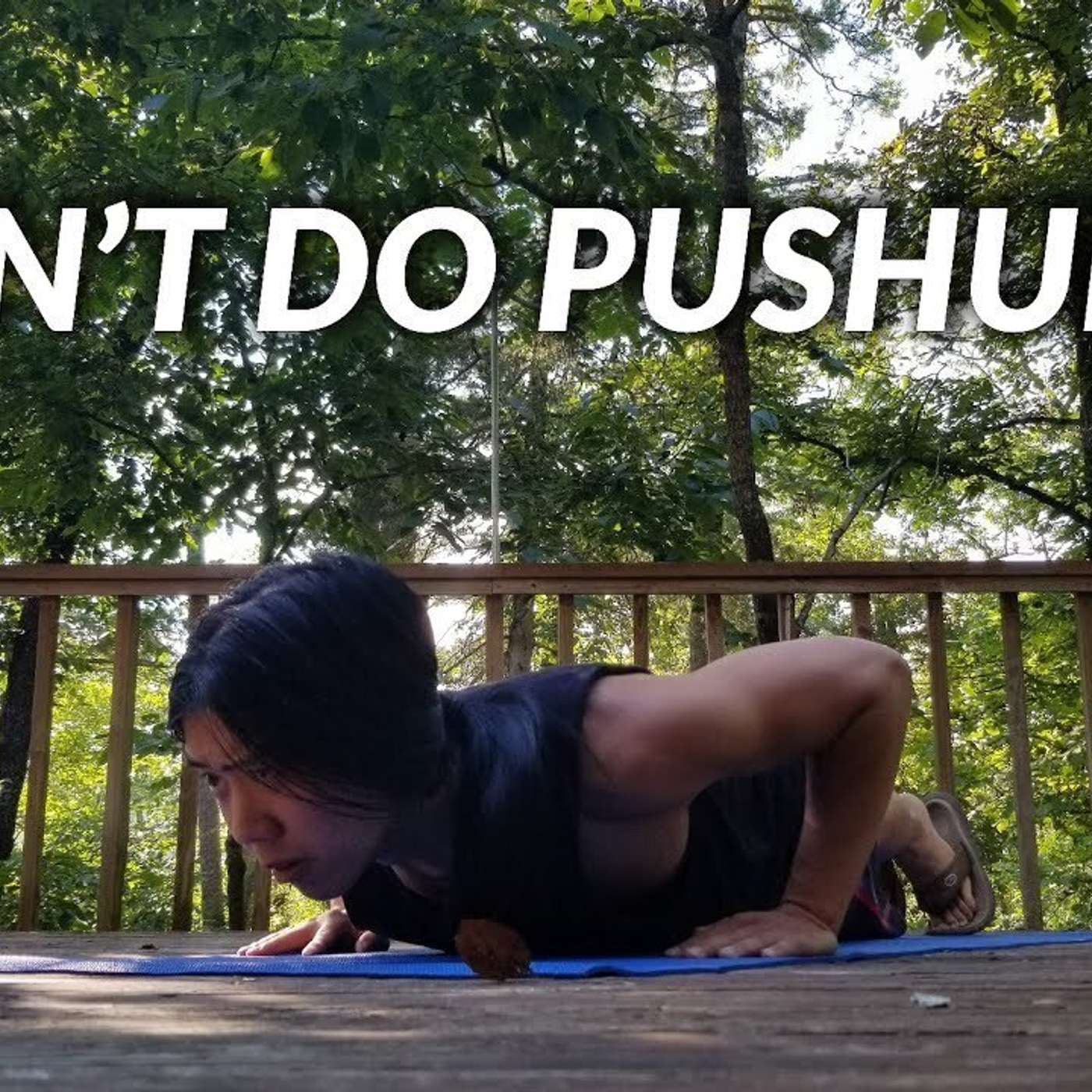
Hampton is the most wholesome and motivating person on YouTube in under 1 minute!- Hybrid Calisthenics on YouTube- Free bodyweight workout routine on his site- Pushup video- Elbow lever video

Ep 15Everything You Hate About Clubhouse Is Why It Will Win
This is the audio version of a blogpost I published today. Comments on Dev.to and Twitter.---Trust me, I tried to make the Clubhouse bear case.The original title of this post was "Everything Clubhouse Did Right — and Why It Will Fail Anyway". The exercise forced me to list the reasons why it wasn't worth $1 billion - why live conference calls are inferior to existing formats like podcasts and Discord.When I was done, I went for a walk to think about it. By the time I came back, I had done a complete 180. (Note - this was even before I heard about the Elon event)I still dislike the Clubhouse experience. I wouldn't recommend it to you. But all the reasons I dislike it are the same reasons it will work:Clubhouse is exclusive. You have hoops to jump and gates to open every step of the way. It's iOS only. Invite only. Requires your phone number for no goddamn reason. And once you're through all of that you gain the privilege of being in the voiceless audience hoping senpai will notice your raised hand and puffed up bio.Clubhouse is ephemeral. Conversations aren't recorded. Your work doesn't compound and isn't searchable. This is horrible for ROI on your time as a content creator.Clubhouse is live-only. If all the convos are happening in Pacific Time and you live in Europe, tough luck. If you came in halfway and have no idea what was said, tough luck. The only way to be fully involved is to turn on mobile notifications and track scheduled chats. Causing more — not less — distraction and work for you.Clubhouse enhances existing privilege. Because automated recommendations aren't possible, Clubhouse mostly relies on a Twitter-like follow graph. To gain a following you mostly already have to be famous off-platform or well-connected to people who will bring you up on stage ("second-degree famous"). Choosing a Status as a Service model (Twitter) over a Sorting Hat model (TikTok) sacrifices discovery for establishment.Clubhouse is a terrible listening experience. There's no audience chat or polling. Obnoxious speakers can dominate the conversation. Trolls and harassment abound. You can't play at 2x or rewind an important part. Podcasts were trending towards better audio and editing, Clubhouse regresses to shitty phone mics with feedback and connection issues. Signal is scarce, noise is rampant.In my original write up I listed the many better offerings in every dimension. Want to listen to interviews with great audio and show notes? Podcasts. Want ultrascalable livestreaming? Twitch. Want livestreamed audio with recording and submitted questions? Capiche. Want to do an audio webinar? Use Zoom with the camera off. Want voice with text chat? Discord. Just want a Clubhouse clone with less friction? Twitter Spaces.When I was done listing the alternatives, I knew I had made a mistake. They checked more boxes on a feature comparison basis. But social media doesn't work like that. I was trying to be logical in a socio-logical domain.I had conclusively PROVED, with my big brain and fancy words, how profoundly inferior Clubhouse was. No compounding creator should prefer it, and no self respecting listener should enjoy it, compared to alternatives.But the majority of people don't work like that:Some people are turned off by exclusivity and friction. But most people take it as social proof of something cool.Some creators are turned off by ephemerality. But more people will start trying precisely because it's easy and doesn't matter. The Elon Musks and Vlad Tenevs of the world will be less guarded, despite clearly knowing anything they say will be recorded, because the medium is the message.Some people are turned off by demands on their time. But most people leave mobile notifications on and the live nature of chats creates some of the most urgent notifications you'll get on your phone, second only to a call from your mother. The synchronicity creates an event — a clear Before and After where you can excitedly gossip and feel superior to people out of the loop. This is a rarity in an everything-async world.Some people are turned off by stacked decks. But most people just want to follow celebrities and experts and aren't interested in the challenging, messy work of finding people on the way up.Some people are turned off by the listening experience. But Clubhouse is Good Enough, especially if content is created sooner and in bigger quantity than available anywhere else.Clubhouse should've died in July when the VC and Media abuse cases erupted. Instead it came back stronger than ever, standing at 2 million weekly active users. If any of these negatives mattered, the app should have seen extreme churn. Instead, Andrew Chen, Ryan Hoover, and Sahil Lavingia — who do this for a living and have insider knowledge of metrics — value it above $1 billion dollars, six months after it was valued at $100 million.People. Aren't. Churning. No matter how much you may hate the app — usage is going up. This is scary and worth taking note. Clubhouse is
Ep 13Take Back Your Life From YouTube
A great tip I learned from Cal Newport's Podcast, Episode 66, which I highly recommend.- Distraction Free YouTube Chrome Extension
Ep 12Jack Conte
CEO of Patreon, and a damn good musician. Inspiration of the day!- Jack Conte TED Talk - How Artists can Finally Get Paid- Scary Pockets YouTube Channel
Ep 11Digital Scarcity (Explicit)
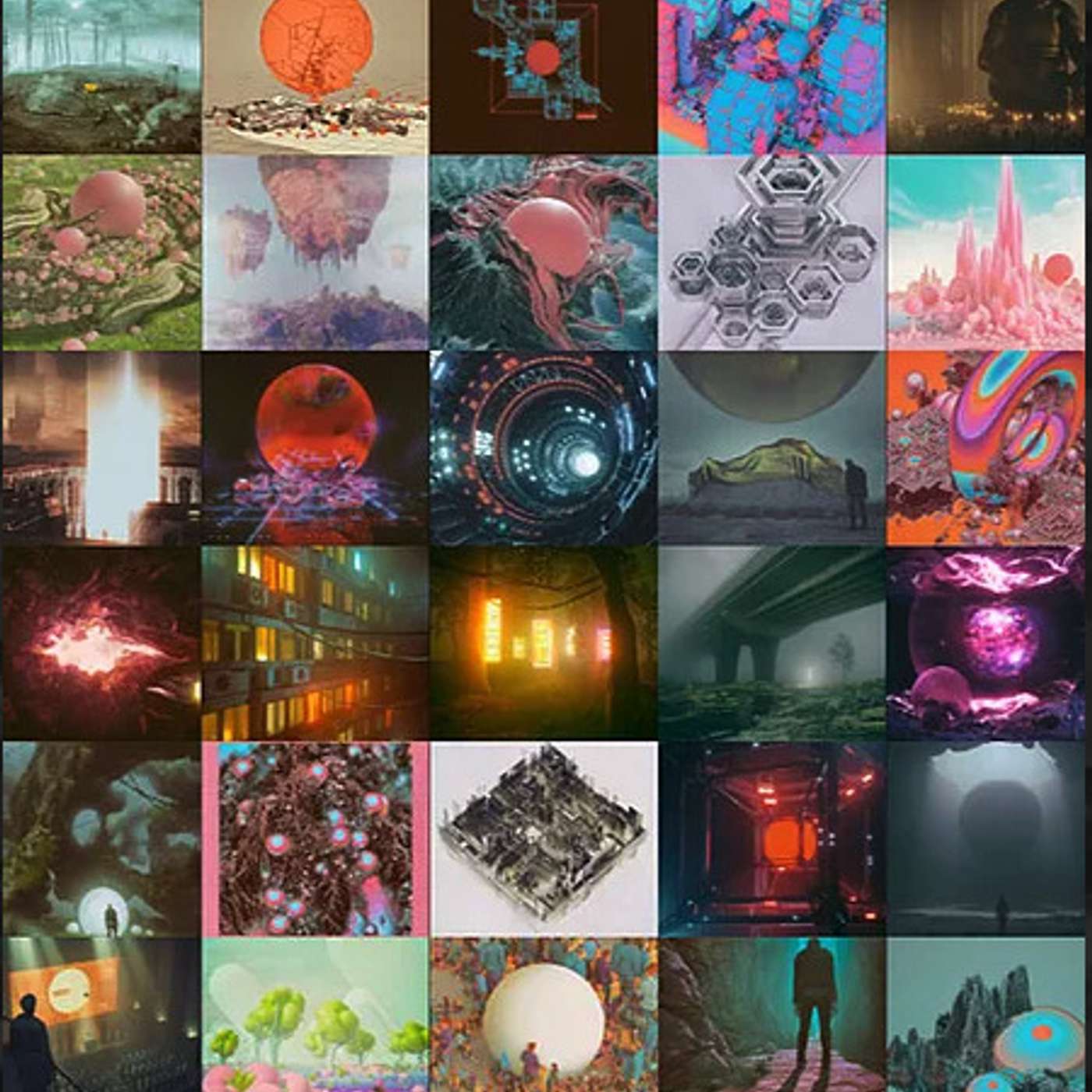
EBeeple made one piece of digital art a day for 10 years. He had never been directly paid for this work before. In one weekend, he auctioned it off for $3.5 million. How?The direct answer is Non-Fungible Tokens (NFTs) on Nifty Gateway.The general answer is that blockchains create digital scarcity. Naval explains.Sources:- Beeple on Unchained podcast- Naval on Tim Ferris podcast- Beeple on School of Motion podcast
Ep 10The Yes Ladder
The Yes Ladder is a technique for getting people to agree to something they wouldn't agree to if asked outright. You do it by asking a series of questions, all of which a normal person would say "yes" to. The questions increase in scope as you go, and the sheer momentum of saying "yes" after "yes" gets you to say the final "yes" to the biggest ask at the end.This exploits a few principles:- The frog in boiling water effect- Cialdini's Consistency principle- Priming, aka Pre-suasionCold open is from Yes Prime Minister
Ep 9Quality vs Consistency
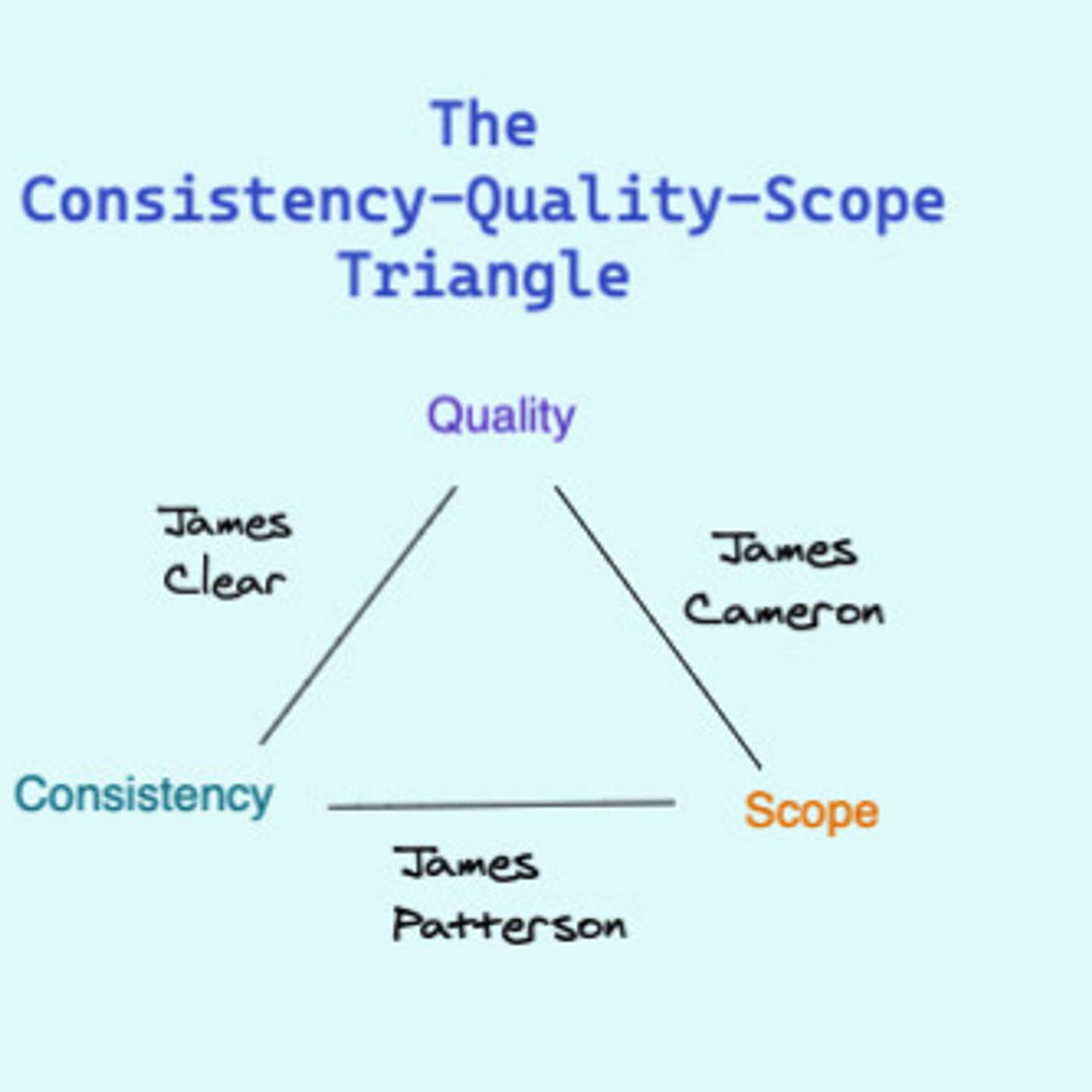
Two solutions for the consistency vs quality debate: cut scope, and start with consistency.You can read the related blogpost with visuals here.All clips are from the excellent Creative Elements podcast by Jay Clouse, which I have been enjoying greatly. The three episodes we reference:- #37: Ali Abdaal- #41: Tim Urban- #2: James Clear
Ep 8[Weekend Drop] Swyx on FSJam Podcast
ICYMI, I was on the @FSJamorg podcast recently talking about AWS Amplify, Jamstack vs containers vs Frontend Application Bundles, Netlify's Docker Image, Tanner Linsley's Tanstack, and Abstracting over REST! Don't forget Anthony's recap of the podcast as well - he clearly put a metric TON of effort into this!I also touch upon prior blogposts:- Cloud Distros- the Third Age of JS- Learning in Public- You Can Run Containers on AWS Amplify Now- Optimistic, Offline-First Apps with Svelte and Amplify DataStoreReally well edited and the hosts clearly prepared well so I am proud to share this one with you!
Ep 7World War Z Review (Explicit!)
ESome highlights from World War Z.- The Israeli 10th man- General Raj Singh- The Russian Decimation- The Fake Vaccine- The Crashlanded Pilot- The Battle of YonkersRead & Listen- World War Z Official Audiobook on Audible- World War Z (unofficial) on YouTube- World War Z Chapter-by-chapter Wiki
Ep 6The Rosenhan Experiment
How well can we diagnose mental illness? A landmark case from the 1970's.- Cold Intro is from Jim Jeffries Gun Rant (highly recommend)- The Rosenhan Experiment (Wikipedia)- My Reddit SubmissionInteresting Angles:EntrapmentDiagnostic and Statistical Manual of Mental Disorders - DSM-VDeinstitutionalizationOther patients
Ep 5The Meta-Creator Ceiling
The Meta-Creator CeilingHow many people should be teaching people how to succeed instead of just succeeding in their own way?As independent creators carve out a new career path for themselves, I suspect that some are unintentionally picking a path that limits their growth and robs the world of their true potential.This theory was triggered by this Hunter Walk tweet:Of course it is too reductive to reduce pluripotent people to "A players" and "B players". And of course this is nowhere near as bad as the real-life "glass ceiling" or a "bamboo ceiling" in normal careers, where a certain set of the workforce is unable to progress by sheer fact of who they are. That is obviously despicable and is a far more important societal issue.But the meta-creator ceiling is interesting to me because it is a path that new creators follow by choice, yet without being aware of it's limitations because nobody is incentivized to warn them. Perhaps because it is an easier game than others, or perhaps because of hype and marketing.No judgment — I of all people know that there are many ways to avoid asking what it is I really want to do with my life.Perhaps some definitions are in order: A "Meta-Creator" is someone who creates content about creating, instead of just creating.The temptation toward being a Meta-Creator is extremely high. There are three paths:The A-B-C Loop: People want success porn. They are oblivious to the narrative fallacy and ignore luck and complicating details. Your success creating success porn gains you access to more successful people who are only too happy to let you write their hagiography. You can spend an entire career mythologizing successful people, living a life of a bard rather than a hero.The Creator Strange Loop: To quote the always-brilliant Philip Kiely: "First you do X, then you make content about doing X, then you make content about that content... One day you realize you haven't done X for six months. And there is only so much room for content at the highest levels of abstraction." Every single step makes logical sense because you have credibility from having just done the thing. Yet after a few steps you look back and you have wandered far from your original interests.The Audience-Building Loop: The natural end game of the current Audience-First and Build in Public memes is that you naturally attract an audience of wannabe builders. There are only so many topics they want to buy, and so many things to incestuously sell to each other. The successful cohorts will be supported by the far bigger unsuccessful ones in a self-organizing pyramid scheme.To be extremely clear: You can be enormously successful and happy being a Meta-Creator, and bring success and happiness to millions, and that is no small feat. I enjoy Tim Ferris' podcasts and Tren Griffin's blogposts. No judgment if that's your thing. The economics make sense too — in a gold rush, go mine a bit of gold, then sell the shovel you used because it is proven to work.But, one, you may have a lower chance of success pursuing this path than others, because it is both available to everyone and zero-sum.But I write for reason two: the sneaking suspicion that even if you win and are top of the heap at the Meta-Creator game, you are still limiting yourself from what you could be doing with your life. What the people you actually look up to are doing with theirs. What the world could be benefiting from if the greatest minds of our generation just applied themselves to other problems than "How to Crush it on Twitter" or "How to Get A Million Subscribers on YouTube" or the 3923rd "How Warren Buffett and Charlie Munger Think" blogpost.Smart, capable people like you and I can often approach life with more ambition than direction. We want success more than we want to solve problems. I think the way to approach the question of "what do I do to be successful", may be to flip it on its head:Assume you will be successful at whatever game you play. Are you playing a game you want to win?
Ep 4Wasting $40k vs starting Rent The Runway
Two stories to tell a lesson that has been learned time and time again - talk to your customers and validate your thesis before building.Masters of Scale podcast on Rent the Runway, then read Jennifer Hyman's own writeup. I especially recommend her analysis of the flash sale boom and bust of the 2010's (Groupon, Gilt).I wasted $40k on a fantastic startup idea, then read Hacker News responsesThe Mom Test by Rob Fitzpatrick, with summary
Ep 3How To Market Your Blogposts
Create value, learn better, and make connections by picking up what others put down. A real life example.This is the audio version of a YouTube video, hop over to YouTube for visuals.How to Join a Team and Learn a Codebase - My Tweet about it vs His TweetGeneration EffectHow to Visualize Value Tacit KnowledgeHow To Practice Marketing Yourself: Help others market their ideas
Ep 2Sea Shanties and C-130s
Remix culture, the history of work music, and the great Sea Shanty revival of 2021.NYT explains the Sea Shanty TikTok Meme Peter Campbell Sea Shanty ThreadThe Longest Johns Wellerman (YouTube)C-130 Rolling Down The Strip (YouTube) C-130's were military transport aircraft for airborne army troopsBest of TikTok Sea Shanties (YouTube)