The Swyx Mixtape
540 episodes — Page 7 of 11
Ep 241React Native's Many Platform Vision [Rick Hanlon]
Watch: https://www.youtube.com/watch?v=FZ0cG47msEk&list=PLNG_1j3cPCaZZ7etkzWA7JfdmKWT0pMsaRead: https://reactnative.dev/blog/2021/08/26/many-platform-vision
Ep 240React Server Components and Shopify Hydrogen [Ilya Grigorik]
Listen to the Changelog https://changelog.com/podcast/469 (40mins in)React Distros: tweet, blogTry it out: https://hydrogen.new/Transcriptwhen we looked at the available set of tools in the React ecosystem, we felt like the existing crop of frameworks, and particularly ones for commerce, don’t solve the right problems, or maybe don’t stack the right decisions to enable this dynamic commerce experience that we’ve been talking about.There’s a host of really good tools for statically generated pages, but if you really wanna build a fast, server-side-rendered, React-powered experience, you have to hire some really smart people to make that work. And that gets very expensive very quickly. So most teams fail. They end up with subpar experiences, and we thought we could help. So this is why we entered into this space and said – it’s not like we’ve invented server-side streaming.JEROD SANTORight.ILYA GRIGORIKI think I was with you guys on this show ten years ago, talking about streaming in HTTP servers.ADAM STACOVIAKYeah.ILYA GRIGORIKSo this is not new technology, but it’s a new stack. It’s a different stack, it’s a different set of choices. So now the question is “Well, I do want to use React on the server and client. How do I do that, while still delivering a really fast server-side streaming solution that is not blocking on data requests, such that I can enable the clients to quickly render at least like a visual shell of the page, provide some loading indicators, and speak to that user experience aspect of speed, not just the technical metric of speed?” Like, did you get the fast time to first byte?JEROD SANTOYeah.ADAM STACOVIAKI can imagine us being two years down the road, having you back on, Ilya… So we’re at the opening gates of a new thing for you. You’ve put six months into this, you’ve worked closely with the React core team, so you’ve had very knowledgeable people involved with this project on how React works. But I can just imagine, to Jerod’s question, like “Why did you choose React over Vue, Svelte, and does it lock out other frameworks?”, I can imagine this as the beginning. And like any beginnings, you start from somewhere.ILYA GRIGORIKI think that’s exactly right. We took a pragmatic choice. So if you look at Oxygen - as I said, it’s a thing that accepts an HTTP request and spits out an HTTP response. It doesn’t matter what JavaScript code runs inside. So any server-side JavaScript is fair game. On top of that we have GraphQL, which is framework-agnostic, of course… And now it’s a question of “How do you make the right architecture decisions on the server? How you compose the response such that you don’t end up blocking the response for too long?”[36:12] So let’s say you need to fetch product data, query some product description data, maybe figure out card discounts… Can you do those things in parallel, as opposed to sequentially and blocking, and stream that such that the user has a good user experience?” So that’s a set of choices that you have to make, and that’s a problem that we’re solving with Hydrogen....
Ep 239Why Remix [Michael Jackson]
Listen to devtools.fm: https://devtools.fm/episode/19 (23mins)My livestream going thru Remix docs (ft Lee Robinson): https://www.youtube.com/watch?v=HZV1pT-qMqgRemix's blogpost today: https://remix.run/blog/react-server-componentsTranscriptAndrew: I've heard the core of remix referenced as that compiler. Can you explain that a little bit? What's it compiling? Is it kind of like Vite where it's more in browser? So what's happening there.Michael: Yeah, that's a great question. So, um, the way I kind of think about remix is it's a compiler for react router, compilers, it might seem funny to somebody that, to sort of think about it this way, because if you're new to web development, you might think, well,haven't we always just compiled our web apps?And the answer is no, we didn't, that's, that's actually pretty new. I remember when I, when I worked at Twitter, we used to have, we had a file. Uh, that we, we just sort of cargo culted into our app from some other team that was working at Twitter, it was called T w T T R dot JS.And it was like, that file was just sort of like making its way around. And if you needed something, some shared thing, you would just go and add it to that file and then you just commit it. And then like the next team would come along and they would be like, oh, we need a, we need a thing in there too.Like, we'll just add it to the file. And then, and that file just was huge. And I remember opening it up one time and thinking like, I remember, uh, cause we, it, it had existed in the days before ES five. And so it had like, it had like a lot of the array pro prototype methods, like reduce and filter and like basic stuff in there.Except they had it like five or six times, because the file was so long that like people didn't take the opportunity to like go back further in the moment. So w why, why am I saying this? Well, that was a decade ago, that was a decade ago at a high-tech company in downtown San Francisco. We were not building our apps.We were not using, modules, uh, and, and a compiler like Webpack and all that stuff. We were, we were literally just like writing JavaScript. Uh, we certainly didn't have TypeScript, uh, or, or, you know, uh, CSS in JS, or a lot of the stuff that people nowadays are, are using compilers for it.Um, and, and honestly, it wasn't even a popular thing back then to pull code off of NPM. Like if you were doing note, it was, but I remember the first time I saw installed jQuery off of NPM, I was like, Like jQuery off npm? Like, why don't I just go to the website and download jQuery? Why am I installing it from NPM?Nowadays if you're a JavaScript developer, it's like, why would you go to somebody's website and download a file? Why don't you just NPM install it, right? Like that is the way we get code. Right? So, so the whole model of consuming front-end code has dramatically changed over the last eight or nine years. And, um, and, and so, compiling for the web is now the thing and installing dependencies, and that's how you share code that is now also the way to do things.And so as a front end team, the front end development team, uh, your job, has, has ballooned in the last 10 years. You used to just write JavaScript and HTML and CSS, and like there's already enough there for you to know how to do right. When you're talking about semantically sound HTML, like building accessible app.And performant apps. There's a lot to discuss with those technologies, but now you, you also are moving further back in the stack. And so you now also have to understand compilers and build pipelines and even things like code splitting, how are you going to do that?And, and, dynamic importing and loading the bundles that sort of run time. And, um, th th there are just so, so many concerns as a front end developer, now that you have, that you didn't use to have. It used to be pop the script tags on the page and go. And so, uh, so yeah, so, so that's kind of how I tend to think about remix is, react router is one piece of it.You can take react-router or you can serve a render it, you can not server render it You can do code splitting with it. You get ignore code splitting. You can build a static site with it. You could build a fully dynamic site with it. It's not opinionated at all. You can build whatever kind of a site that you want with react-router remix comes along and says, Hey, you know, that, that cool router that we built, uh, we're actually going to build a framework for you to take full advantage of that router. So, uh, so we're going to give you TypeScript compiling right out of the box. Uh, we're going to give you things like a strategy for loading data right out of the box.And we're going to give you a strategy for a mutating data right out of the box. And by the way, how do you keep that data fresh on the page? As you do things as you, as you do mutate data, how do you keep other other routes, data fresh, um, how, how do you do things like, transitioning gradually or grac
Ep 238Prophet and Zillow's $10 Billion Mistake [Hilary Parker, Roger Peng]
Listen to NSSDeviations: https://nssdeviations.com/145-get-used-to-being-unhappy (30mins in)https://counting.substack.com/p/what-data-folk-were-saying-aboutthe offensive tweet: https://twitter.com/ryxcommar/status/1456045288079204358his actual thoughts: https://ryxcommar.com/2021/11/06/zillow-prophet-time-series-and-prices/
Ep 237[Weekend Drop] Adam Argyle: Complexity Cliffs, DX, and the Disruption of Web Design
The following is my conversation with Adam Argyle, CSS Developer Advocate for Google Chrome.Watch on YouTube: https://youtu.be/xEyJ6LY7DKIThe conversation covers a quite a few topics that are relevant in the webdev and web design industries: UI complexity cliffs, DX vs UX, Self Disruption, and what Web Design Tooling could be.Along the way we touch on what OpenUI is, Adam's Deferred Inputs proposal, the 4 Jobs of Developer Experience, Thoughtleading for Good from Emily Freeman, Ilya Grigorik, and Dion Almaier, and Adobe vs Figma vs Webflow!Links: Button tweet https://twitter.com/swyx/status/1450333133300064259https://open-ui.org/https://jasonformat.com/application-holotypes/https://siliconangle.com/2021/09/29/devops-dummies-author-emily-freeman-introduces-revolutionary-model-modern-software-development-awsq3/https://en.wikipedia.org/wiki/The_Cathedral_and_the_BazaarIlya Grigorik Perf.now talk https://www.youtube.com/watch?v=vtIfVPtN6ioVisbug https://chrome.google.com/webstore/detail/visbug/cdockenadnadldjbbgcallicgledbeoc?hl=enhttps://web.dev/learn/Timestamps:00:00:00 Cold open00:01:05 Complexity Cliffs and the Reusable Button Problem00:03:28 OpenUI00:04:32 DevRel vs Personal work00:05:52 DRY vs Design Systems00:07:10 Building in Phases00:08:04 Thought Leading for Good00:10:33 Learning00:14:13 The Surprising Complexity of Tabs00:17:12 What is Open UI?00:19:59 Hot Take: Deferred Inputs00:23:40 Cathedral vs Bazaar00:28:01 Illya Grigorik: Head/Torso/Tail00:32:45 UX vs DX00:45:51 4 Jobs of DX00:50:33 Self Disruption00:54:50 Adobe vs Figma vs Webflow01:01:04 VisBug01:05:05 Shameless PlugsTranscriptswyx: Alright So the first thing we're talking about is ui complexity cliffs what's on your mind what was his first on your on your list.Adam Argyle: yeah you had a tweet the other day that was i'm at my fourth startup or something like this and we're pressing buttons again like, how s it 2021.swyx: And by guysAdam Argyle: Are popping up i needing refactoring or something like How are they not solved and.Adam Argyle: i'm sure you had threads of people that have their ideas there and mine was it's a omplexity cliff it's the first introduction, where you as a front end ui person who actually.Adam Argyle: is like goingto go build out all this matrix of states that a button needs that it lands on you it's like you've been in the car using a shifter this whole time using a steering wheel this whole time and then someone said hey.Adam Argyle: Go change the steering wheel out and you're like oh that's just a component just a single use like that things totally only got like one attachment right, and then you walk up to it and you start working on it you'd like.Adam Argyle: To see just like really integrated into the system.Adam Argyle: And or whatever right, you have these like discovery moments with it and you realize it's much more complex than it is in a button just does that buttons like yeah well let's allow an icon to be on our button and you're like okay left and right.Adam Argyle: sides can be I can have both sides because you could have a shopping cart with a little drop down arrow.Adam Argyle: Oh man Okay, and you have to have dark mode you better have this and that and that the matrix like i've seen the of states, is what I mean by this complexity cliff like it's just not visible from the surface, it looks all innocent.Adam Argyle: And then you go map it like if you mapped out everything you need it's it's a lot, like the CSS alone that it takes to have like a custom button and the design system is absurd it's absurd, but at the same time I love it anyway.swyx: So this is the tweet and question and honestly like this is this is genuine because.swyx: yeah I had that to Sigma away, where I had my first front end job and then modify and now it's immoral same stuff again and all did you handle disabled Oh, is it a link, or is it a button.swyx: And it was interesting was also just the replies like Nicole from Google So what does she do she like.Adam Argyle: beats I worry record directly.Adam Argyle: These days, she was on frameworks and she's now shifted to ui and sort of like how did she empower people to build flexible and fluid interfaces on the web.Adam Argyle: And that's why she points to open your eyes it's like a community for that, but anyway that i'm part of her team because i'm I work on similar things.swyx: Okay yeah and so like you know, first of all I didn't I didn't expect this to reach anyone in Google.swyx: But then also like the Web components people reached out to me and they're like how come work a foreign service officer for you and i'm like it's not about the tech.swyx: it's more about like understanding the specs of what people wanted people not agreeing what a button should do.Adam Argyle: yeah.Adam Argyle: yeah Google cloud had had too many.Adam Argyle: They had them in multiple frameworks in the same.Adam Argyle: repo right being like just because they grew so fast or whatever like your project
Ep 236[Music Fridays] Prosody of the Snow Queen
Listen to the song: https://www.youtube.com/watch?v=gIOyB9ZXn8sListen to the analysis: https://www.youtube.com/watch?v=4zs0U8Z6yI8
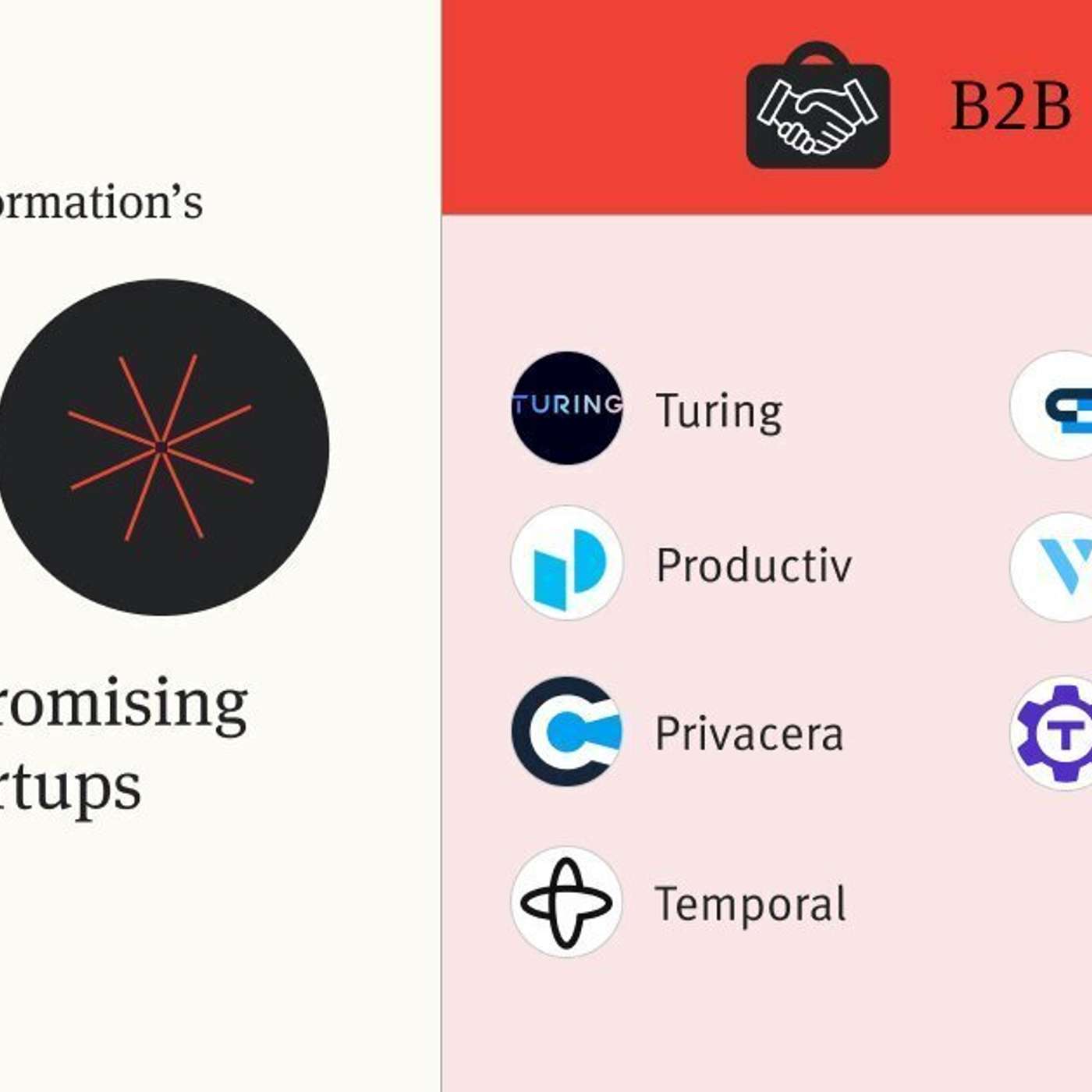
Ep 235[Quick Clip] Temporal: 50 Most Promising Startups - The Information
Listen to https://www.theinformation.com/articles/the-talent-cloud-the-411-podcast (7 mins in)https://www.theinformation.com/ti50 (paywall)My pitch: https://swyx.transistor.fm/episodes/weekend-drop-temporal-the-iphone-of-system-design
Ep 234How to Grow a Top 10 Podcast + Impatience with Action, Patience with Results [Sam Parr, Shaan Puri]
Listen to MFM (1hr in https://www.youtube.com/watch?v=MBIgYNAI9Fk)how to grow podcastsbig guest"how to" episodebuy ads on niche audience - eg podcast junkie types - castbox, overcastbe consistent and at least oktreat side hustle like a job -> grind at itmaintain and improve an existing winner instead of constantly jumping around "there are no silver bullets, only lead bullets"impatience with action, patience with resultsTranscriptuh in 3-1 so what was that march march we did 338 000 downloads in april we did 436 000 downloads so uh that's a 30 game about in may it's tracking towards around 520 000 which is another 20 20 increase i think we can keep going and i want to tell you what i think is is causing all this the first is the biology episode so guests typically we have found don't work that well but a really big name guest or someone that has a cult following like a tie or biology um that works who's ty lopez oh tai lopez okay gotcha uh when we did that one because he's like cult following and a cult unfollowing he's got both yeah yeah so that that worked so the biology's episode is probably gonna be the most listened one ever um so that worked out how much more is it than the usual is like 20 more 50 more than a typical episode it got to 30 000 like in the first week typically our episodes get to 30 000 over like two months gotcha okay so it it did that in like a week or whenever it was when did it get released a week days five days wednesday i talked to him on the phone and he said yeah a good episode i shared it so hopefully that helps and then uh he's down to share more but we only tweeted out i think one clip from it so he's down to share more clips and he liked the animation he was like oh like looks like production value's going up i was like sweet yes it is yeah uh so that worked out well and then do you want to announce what's working really well is how to's so any time a title is called how to build a paid community how to build paid events how to whatever we've done those rank the highest no matter what or not no matter what but more often than not so like in our top 10 most downloaded stuff it's either an interview with a huge a well-known person um which like an andrew would be a well-known person or a how-to blank so we have to do some more almost like they don't care about us and our great ideas they care about themselves learning something and being able to do something they want to do i think that's exactly what it is and then it's ourselves peppered in there we are the spice but the meat is the how-to right and then finally i got a last update um we're running some ads on do you know this thing called the billionaire investors podcast what's it called it's like a famous thing is it we study billionaires is it that one yeah i love that podcast if you're looking to do it yeah so we're running an ad on their net on their network on that podcast i think uh we bought it last week i think it's gonna go live this week then so there's two types of podcast advertising that i'm learning about the one is what we do is people advertise now hubspot advertises on our podcast and people go to hubspot.com mfm whatever the other one is podcast platform so like overcast have you heard of overcast yeah like these clients these apps you can use to listen to podcasts yes and on those clients those uh users click subscribe and the strategy that i'm doing is what we're doing is we are going towards niche ones because those niche ones typically have a far loyal following and you could get low cost per click to download and subscribe and it makes sense because those people if you are you got to be a real podcast junkie to go get like a new podcast app because it has these extra five features about podcasts so it's actually a really good audience that's probably really cheap because nobody else really goes for them so i i like the strategy a lot and they're like they're techie they're like tech they're early doctors yeah and so we're running ads currently on cast box i've never even heard of them but it looks cool and then overcast and so those are some of the updates uh it's going well okay what about the so the ad on the we study billionaires podcast what is it because i'm always like if i'm listening to a podcast what's actually going to make me go subscribe one is a guy comes on or a girl comes on and they're a guest like this happened with elaine elaine came on our podcast she did ideas and she said it was like i don't know one of her biggest uh her newsletter got like a huge spike in subscribers like her next email send was welcome all my new subscribers this is amazing and she said she got you know thousands of new subscribers from her appearance on the pod which is great and so that one makes sense because if i go and guest on somebody's podcast you listen to it for 45 minutes or an hour because that's your favorite podcast or that's what you listen to regularly and you might be like oh that guess was
Ep 233Inspiration over Information [Nick Wignall]
Listen to the Corey Haines podcast: https://www.swipefiles.com/everything-is-marketing/43 (1hr in)How to grow a writing audienceSEO important to startSomething Owned (Wordpress), Something Rented (Google), Something Borrowed (Medium)Inspiration over Information: "Medium really rewards writing that makes it easy on the reader"5 habits that will make you...Straightforward, and plain, not too intellectualNo enormous paragraphs of textMost people want to feel something more than they want to learn somethingPeople click in to clickbait titles and find a thoughtful article - challenge expectationsPut a little cheese wiz on the broccoliTranscriptCould you share, well, one how you built your audience we've briefly touched on. Okay. We started blogging for a medium thrown out a few times. So like, how have you built your audience that allows you to now make a living online and just any sort of, I don't know, numbers or scale you can share. It's just, some people have an idea of like where you are.Yeah. So I, I had no following on line really to speak of when I started. And so I just put up a WordPress blog and I had a email newsletter and I, I sent out an email to, I don't know, maybe like 50 friends and family and I, my first newsletter probably went out to like 30 or 40 people, again, friends and family.And that, that was probably the case for the. Three or four months. I like, I literally don't think it, it wasn't above like probably 70, 60 people for like three miles. Like it just really, but I do remember finally, like after every single weekly newsletter, my grandfather would always email me back saying great article.Like this was really good. You know, he just always have like something nice to say, and that sounds stupid. But like that made so much of a difference to me. I knew it was kind of like corny and yes. Just to be nice. And like, I mean, I think he did like him, but it's very grandfatherly thing to do, but like, God damn it like, that actually helped, like, despite my like, cynicism, like having someone, just one person like that, it was really helpful.So I, yeah, I wouldn't skip that step again. Like kind of recruiting friends and family initially the next thing, the next, like, bump that really. And I, at that point, by the way, I was getting like zero traffic to my blog. I mean, I had no. And I wasn't on any social media. Really. I was literally just putting stuff out there, like into the void, didn't know anything about SES and publish, just pressing, publish and sharing it with this really small group of people.My first kind of big break came when I, I just, I had known about meeting them, but I decided I, I heard that it was like pretty easy. You can just cross post stuff. I saw, I already have these articles written on my blog, so I thought, yeah, what the hell? I'll just like, put this on medium. And so I, I put this article on medium and.Within like a day, someone from an editor from one of the bigger publications they're called the startup said, Hey, like I saw this piece somehow. I don't know how I saw it. Can we publish it in the startup? And I said, yeah, sure. I guess why not? And then it, it kind of had a little mini blow up. It seemed like out of this world, to me, like at my stage, he got like, I don't know, 10,000 views or something like, and that got me probably.I don't know. I mean, it bumped my, my medium follower account, but I also had a CTA at the bottom of the, of the article. So that kind of doubled my email list probably in all sorts of new people. And then. Obviously like that was super exciting. And so I was like, all right, this medium things is great. I'm just repurposing.I'm just literally copying pacing. Might this article I've written already and putting it on a medium. So that kind of progressed fairly well for about a year or so. And at that time I also started learning just like the real basics of. SEO. I like, I got like the Yoast plugin and I wasn't even doing keyword research at that point.I was just kinda like following the Yoast thing and, and over the course of about a year, I started getting fairly good, some, some pretty good SEO traffic. And then about, at about the year point, this is when I was talking before about, I started. Actively like trying to learn from a few of these writers, I admired on medium and developing this more conversational style.And that's where my, my medium growth like really took off. I mean, I went from like a few hundred subscribers up to thousands, you know, eight, nine, 10,000. And then at the same time that I was starting to build up like SEO kind of organic traffic to my website and common misconception with medium, you can actually set the canonical link to be.Like your WordPress version, so that if an article like blows up on medium, all the SEOG is still goes to your website. So I was having these pieces blow up on medium, but then I break for forum for the, my site's version. So I'd get all this more organic traffic co
Ep 232Starting a Second Youtube [Charli Prangley]
Subscribe to the Convertkit Creators podcast: https://www.youtube.com/watch?v=4pgecyiAMksRelated episode: https://swyx.transistor.fm/episodes/why-creator-clones-failTranscriptas a quick recap for anyone new who is listening i have had a youtube channel for i think about eight years um and i've grown up to two thousand two hundred and three thousand subscribers in that time so it's been like a slow growth but you know that's quite a sizable audience um and several months ago i decided to start a second youtube channel to split off a portion of my content and um yeah i don't know there might be people out there who think why would you start another one when you already have one that's got all these people why start a game from scratch you know um and so we're gonna talk about that today about the why behind it how to try and get as much of your audience as possible over from one to another when you start a new project we'll talk about youtube specifically but i guess it could apply to in general creators like starting a new project after already having built an audience somewhere else you know yeah thank you for giving me the platform to talk about this today youtube because i feel like it's been an interesting experience and i have learned a lot oh well charlie why don't you kick us off why do you start a second youtube channel yeah well so i started it because um okay backstory i have this podcast series called inside marketing design quick plug inside marketingdesign.co season two is happening right now um but i i ran this last year and i uploaded the episodes to my main youtube channel because it's like me making the content it made sense for me to put it in one place right um i found that my first of all those videos didn't get as many views as my regular like vlogs and you know or other videos did and also the youtube algorithm i feel like i confused it by suddenly uploading content that was a very different format a very different length like these episodes were like 45 minutes long compared to like 10 minute videos i was making um that all of a sudden it was like i don't know i felt like my whole channel took a while to recover after the season ended but my views on my more regular videos were then lower as well which i was like damn this sucks because i feel like this content is really great like i believe in it you know um i had some advice from roberto blake i'll definitely plug him he has a lot of really useful advice for youtubers you just search roberto blake on youtube and you'll find him um he was like i think you should put this content on a second channel because it is such a different format it's like its own brand and like in doing that you might have a better chance in the youtube algorithm to to keep it separate and also it could be a very different audience right people wanting to watch these their interviews with designers who work at other tech companies about the behind the scenes of their work there might be a different audience for that compared to someone wanting to just watch me hang out in my office with my cats and do my work you know like that's kind of very different content so it made sense to me um to put it on a separate channel and so that is the why behind why i did it and oh go ahead okay um a question that uh someone might have um about this is is that someone youtube allows you that someone might be me uh but i think someone else might have this question so okay here we go uh uh i know that youtube has the ability to kind of segment things within youtube so you can have different playlists and you can have like sub sections of your work there so why would you take the extreme of starting an entirely different channel instead of maybe the you thinking oh the overarching thing is this is charlie and these are the different things that charlie does and here are the different playlists of the things that i do you know go down the rabbit hole that you prefer choose your own adventure why why what's the main benefit of completely separating because you might also you kind of benefit from the fact that you're using your current audience to do this other thing right instead of starting all over so you're kind of taking a hit there as far as like possible eyes in front of your work that's a really good point yep yep that's a really good point um i think that doing that like you said having it in a playlist on the channel that can solve the problem of there being different audiences you know that makes it easy for the audience who likes interview content to find that on my channel but it doesn't solve the problem of the youtube algorithm and like as i'm talking about this please listeners take all of this with a grain of salt i'm not saying this is the only way to go about it if you want to do a different type of content i just know that from my experience um the youtube algorithm stopped recommending me as much and like my previous videos weren't getting as many views once i w
Ep 231Shipping Side Projects with Wife + 3 Kids + Fulltime Job + Church + Open Source [Alex Reardon]
Listen to the Egghead Podcast: https://egghead.io/podcasts/alex-reardon-on-balancing-work-life-and-large-side-projectsCheck out https://domevents.dev/ and Alex's course: https://egghead.io/courses/your-ultimate-guide-to-understanding-dom-events-6c0c0d23Transcript[00:00:00] You mentioned that you had learned a lot about Dom events while you're like on the clock working on the D and D project. So presumably you got to learn some of it on the clock, but then you also have to, since, you're not paid to create courses by your day job. Like, how did you draw the lines between work time learning and free time teaching, I guess was, is the way I'd phrase it. Yeah. I mean working in software engineering, I think we're always learning all the time, every day. I that's been my experience anyway and relearning. I feel like there's some things I learn. And then not that long later I have to re-look up again. There's just so much out there. Just always learning all the time and relearning. It's just too hard to hold. Hold it all in your head or. So in terms of creating this course I set up very clear boundaries around my work time, and making sure that I'm doing and focusing on my work during work time. And then I set aside designated times at home where I was working on side projects. So for me, that, what that looked like practically was one night a week. For me it was Wednesday night where I would work like on this. And that's not a large amount of time. But it was a balanced amount of time, cause I have a lot going on, full-time work at the time. I had two kids now, three kids, which is wild. I'm doing stuff with my church and I'm doing stuff with my family, doing stuff with friends, like it's just my last very full. And so one night, a week was something quite palatable. But it meant that creating this course took an extremely long time. It took about a year and a half to actually put this whole thing together. Doing that research. I was doing a lot of research, on that Wednesday night. And I created a visualized. Which took a long time cradle the scripts, recorder, all the lessons. Yeah. It took, it just takes a lot of hours. And so you only doing it one night a week. It, it takes a while now. Sometimes it would be maybe no nights a week back. There was a period of some periods of time where I was busy with other things on holidays. And sometimes it might've been a few nights a week because I was like really inspired and towards the end. Of the recordings or when I was actually doing the recordings, we actually had our third child Jew. And so that was a bit of an interesting time. And I was really keen. I'm like, I need to get this course done. Working on it for so long. And so I guess the month before. He was born I was in the room, in my office, most nights I recording those lessons to make sure that it was done before he came so that I could, when he did come, I could focus on him and the family exclusively and not have to try and be balancing the stuff. It's impressive that you were able to have that kind of discipline to Wednesday nights. I'm working on this and you have to know in your head that it's going to take a while when you're only, one night a week. But what I'm wondering about is having I don't have children, but I'm married. And I know that when my hobbies are also on the committee when it's like work on the computer, but then my fun times on the computer too, it doesn't always make for the best home situation not to project at all. But what I'm wondering is how did you come to having one night, a week dedicated when you already have the door shut nine to five every day and everyone's at home? Yeah. I'm really glad you raised this. Because I think this is the less glamorous side of side projects. I'm happy to talk about the benefits of doing side projects, but I'm glad we're going in this direction for now. So you need to understand what's important to you. What's important with your time. What is more important for you? Is it more important for you to be a rock star, a software engineer, or to meaningfully invest and engage with the people around you? I think the answer to that. Questions. I was really big questions will impact what you do with your time and how you spend your time. So we arrived in after negotiation, like my wife and I on that one night, a week thing because it balanced everything else that I wanted to do. I really want to make sure that I'm spending good quality time with my family, with my friends and with my wife. Ultimately those are the most important things, like rather than. Becoming, the next big thing in software, so to speak. So yeah, it was a kind of a process of negotiation to to arrive on that point. Yeah. Because yeah, it is hard to balance. It is tricky when you're in the office all the time to then say, Hey, I'm going to spend more time in the office. Yeah, it's a tricky one. And I guess I'll take this question even further and say that like my experience with doin
Ep 230[Music Friday] Freestyle - Kiraly Payne, Wayne Brady
Kiraly Payne: https://www.youtube.com/watch?v=dlxeWURe7q4Wayne Brady: https://www.youtube.com/watch?v=SpMkrtXr4b8Youtube autotranscription for Kiraly:[Music]hey hey hey i remember this i'm gonnalook about them but i was back in the daynow my whole crew filled with stars[ __ ] make sure they people switch shadesit was enough for me to get a picturehad to go and readjust frames i've beenreally feeling like it's new editionwhere these hoes love a [ __ ] in the game buthey i been focused on some other [ __ ] myback been feeling like the mother [ __ ]the pressure only made me betterreaching high levels really all becauseof iti really do it for the fun of it ain'ttripping really cause i love this [ __ ]my soul be lighter than a feather likepuffin that is not feeling wonderfulhey[Music]my spiritual sin i just woke up to powerwithin ain't nothing unchanged for thehoes in the [ __ ] bankrollcould it be indications need to pay[Music]treating you like you changed you ain'teven know the namenow you wanna be faithful girl i've beenmaking plays you was just later turningon the gameall my peers so cold depression got a[ __ ] feel like exploding but don't fallfor this platform chosen i'm on goal hadto lie my goals and my big bro hereminded me ain't another [ __ ] quitelike you [ __ ] do you and [ __ ] stopfighting competition leo ass how youplay too much attention on what theydoinghey might hurt your movement it hurtsyour confidence just keep moving aspossibleyou can move obstacles go to impossibleplaces you thought was impossible justfocus on who you've been talking toand watch how quickly they ride for youstay on the road like a [ __ ]monstercause i had some down days depressioncome where you were always change habitstaught a [ __ ] blessed to come with allthe lessons that be coming your way gota message it was like you text me now itake advantage every day i'm on game nowflex the creatine[Music]
Ep 229Status as a Service [Eugene Wei]
Listen to 20 minute VC: https://www.listennotes.com/podcasts/the-twenty-minute/20vc-eugene-wei-on-status-as-K-_1nakoYwE/The essay read to you on NFX: https://www.listennotes.com/podcasts/the-nfx-podcast/the-founders-list-status-as-_h9HsoiGQYc/Reads:Status as a Service: https://www.eugenewei.com/blog/2019/2/19/status-as-a-serviceGraph Design: https://www.eugenewei.com/blog/2021/9/29/and-you-will-know-us-by-the-company-we-keepAmerican Idle: https://www.eugenewei.com/blog/2021/2/15/american-idle
Ep 228Being a Lighthouse [Matthew Kobach]
Listen to Masters of Community: https://pod.cmxhub.com/episodes/matthew-kobach-greatest-hits3 key takeaways:- Three ways to build your social media brand: Be Unbelievably Niche, Be Consistent, Compound Tweets.- Be the lighthouse for topics you’re interested in. 90% of people don’t post, they just read. Get this 90% to look at your content.- Need to be passionate about and enjoy what you’re doing. Being good at something makes you passionate about it. No matter what you do, there will be aspects you don’t love - but make sure it’s something you’re curious about.“90% of people don't really post on social media, 9% post, a medium amount, and 1% of post most of it. So those 90% of people, they have interests, they want to participate. Maybe they'll reply once in a while, but for the most part, they just want to read interesting thoughts. So that's the lighthouse - you’re trying to get those 90% of the people, and they're looking for topics that interest them. The only way for them to find you is if you turn your light on and you start talking about the things that interest you, and you've just got to hope that they're actually attracted to what you have to say.”
Ep 227The Second Brain [Ali Abdaal and Tiago Forte]
Watch his video: https://www.youtube.com/watch?v=OP3dA2GcAh8My Blogpost: https://www.swyx.io/tiago-forte-second-brain/These 10 principles are basically different aspects of a system/approach to knowledge work that helps us reduce stress, produce more, and live a life of creative joy:Borrowed Creativity: Stand on the shoulders of giants.The Capture Habit: Outsource memory to devices.Idea Recycling: Reuse ideas repeatedly.Projects over Categories: Don't silo insights - organize them into projects you are working toward, right now.Slow Burns: Not everything has to be a Heavy Lift. You can accumulate in the background.Start With Abundance: Don't start from a blank canvas.Intermediate Packets: Break down work into manageable projects.You Only Know What You Make: Taking action is the best way to discover what you don't know.Make Things Easier for your Future Self: Package up things for your future self to use.Keep Your Ideas Moving: You never need to be stuck.
Ep 226[Music Fridays] Marc Martel
https://www.youtube.com/watch?v=QkCxE2Lh458https://www.youtube.com/watch?v=L3eRHmFV8aM
Ep 225Katalin Kariko [The Daily]
Listen to the Daily: https://www.nytimes.com/2021/06/10/podcasts/the-daily/mrna-vaccines-katalin-kariko.htmlLong read: https://www.theatlantic.com/ideas/archive/2021/03/how-mrna-technology-could-change-world/618431/
Ep 224SynBio and mRNA [Jason Kelly]
Listen to Business Breakdowns: https://www.joincolossus.com/episodes/56584905/kelly-moderna-the-software-of-lifeTranscriptJesse: [00:06:03] And if you back up on the DNA, like this notion that it's four letters of code, can you walk us through the history of that? How did that come to be? Who's the father or mother of that? Where did that come to be? And then how did it evolve to today where it sounds like you're able to essentially program your own things in a lab and create them?Jason: [00:06:19] The first thing to realize is this is just a miracle of biology that it works this way in the first place. Get back four billion years of evolution, here's the magic. When we invented computers, we had to come up with a way to copy things. Do you want to send a file or make... And we realize that instead of like a record player, which is an analog thing, little bumps on the record define the data, but those can move around and change. If you really want to transfer information with high fidelity, make a CD and make it zeros and ones, digital, because every time you copy it perfectly.Biology figured out the exact same thing. When you have a kid, you want to transmit heritable information, you want your genes to move on to the kid. And the way that biology figured out how to pass information across generations, digital. A, T, Cs, and Gs. It just happens to do it, not with magnetic bits on a computer, but with actual chemicals.Jesse: [00:07:11] Through our cells.Jason: [00:07:12] A,T, C, and G, adenine, thymine, they are actual chemicals in a long string, just like a piece of cassette tape back in the day, a long string of molecules. That's just how biology works. There was the discovery of DNA, Rosalind Franklin and Crick and all those folks, Watson, figured out what it looks like, but they just we're discovering it. They didn't invent it, it just was that way. And then we take advantage of it as cell programmers, as synthentic biologists, we take advantage of that fact that it's digital and read and write it to make it do new things across really tons of markets. But Moderna is really the leader.Jesse: [00:07:46] So when did they discover it? What took it from them discovering it to then maybe The Human Genome Project profiling it to now the point? What are the big milestones and timing between those two things?Jason: [00:07:56] So one of the technologies that got invented in the late '70s was PCR. And I won't get into much technical detail, but what PCR lets you do is basically pick a certain region of DNA and make a billion copies of it. And you're basically hijacking the fact that cells have ways to copy their DNA because every time XL has a kid, it makes a whole copy of its genome. So there's really great little things called polymerases that read the DNA and pop off a copy. And so PCR, you just do that in the lab. You basically say, "Hey, this little region, make copy, copy, copy." And the advantage of that as you start to get tons of it, it's enough you can work with it in the lab. So that's one technology, PCR. So that's what they did with the insulin. They took a human cell, they found where the insulin gene was, they put these things called primers in which your little markers on either side of the gene, and they use PCR to make billions of copies of it. Now, you get it into the bacteria to make that insulin drug, that built Genentech, now worth hundreds of billions of dollars company. What did they do to do that? A technology called restriction enzymes, which are basically scissors. It's like little molecular scissors that bacteria use to cut DNA out. Why did they do that? Oh, because they're afraid of viruses.So if a virus infects a bacteria, the bacteria blows up. And so to defend itself, it has the technology that it invented through evolution, which is, "If I see some DNA that isn't mine, chop it into pieces." And in fact, the more modern form of these restriction enzymes is what's called CRISPR. So you might've heard of CRISPR, same shit. Basically, a technology bacteria used to defend themselves from a virus inserting its code into the bacteria, and the bacteria wants to cut that into pieces before it executes. It's wild. And so what Genentech did was it said, okay, I've got this scissor, I know it cuts in a certain place in the bacteria. I got this PCR to make copies of insulin. I'm going to use the scissor to cut the bacterial genome and the PCR products so that they match each other, and then I just paste them together.Jesse: [00:09:53] And that happened in the late '70s?Jason: [00:09:56] 1978 was the very first. That was the beginning of humans directly influencing the evolution of biology, life on this planet.Jesse: [00:10:04] One quick sidebar just occurred to me. Can you even closer? What's actually happening? Is the microscope doing these things? What are the tools that human being is using to do these things? Is it like our biology class where we had a little dropper thing and we dropped f
Ep 223The 3 Levers of Fasting [Peter Attia]
Listen to the Tim Ferriss Show: https://tim.blog/2021/06/14/peter-attia-transcript-2/TranscriptI think that one thing that I absolutely learned through fasting is the enormous importance of strength training throughout a fast. You’re going to lose muscle mass when you fast, you have to accept that. So the question is how do you minimize that damage? How do you lose as little muscle mass as possible? And strength training daily during a fast has become an important part of that. But when you look at time-restricted feeding, or people call it intermittent fasting, although I don’t like that term very much. I think time-restricted makes more sense when you’re just talking about 16 or 18 hours. I’m really starting to see a lot of people who do that excessively and who aren’t necessarily training correctly. They lose weight, but they’re losing muscle more than they would want to see.And we just had a patient who we did a DEXA scan on last week and it was probably the first one we’ve done in 18 months on him. And in that 18 month period, his body weight had not changed. Maybe he was a bit lighter, actually, he might’ve lost four pounds. But his body fat was so high I almost fell off my chair and he doesn’t look chubby, but it speaks how much muscle he’s lost. So his body fat went from about 18 percent to 30 percent.Tim Ferriss: Yikes.Peter Attia: It’s just a totally unacceptable amount of fat for someone his age. And his visceral fat went up, which I actually care more about than body fat. We can talk about that later, but his visceral fat also went up. So, this is a guy who has religiously been doing his time-restricted feeding every day, but he doesn’t really lift weights.He walks and does some yoga and stuff like that, but he’s not doing strength training. So I think in a person like that, there’s a real downside to too much time-restricted feeding. And even for myself, in the last four or five months, I did a DEXA back in January and I hadn’t done one in years. And from January to the last period that I had done a DEXA, my body weight was almost identical. Maybe I was two pounds lighter this year versus the last time. But my body fat was up.I think I went from 10 to 16 percent body fat. And again, you could say, “Well, 16 is not the end of the world,” but that was a significant loss of muscle and gain of fat. And I did wonder if that was just too much, because I always exercise in the morning, but then don’t eat. So to exercise, and especially when you’re strength training, to provide yourself with any amino acids every single day to undergo muscle protein synthesis, I think is a little bit risky. So I’ve been looking at other strategies around that. So for example, front-loading the meals.Tim Ferriss: Quick question, and then we’ll come back to front-loading meals. During that period of time, were you doing, and I may be misremembering, one three-day fast a month or one week-long fast every quarter? What was the frequency of — Peter Attia: All of the above. Yeah, I probably spent maybe two years doing seven days a quarter, maybe a year doing three days a month. But in between it’s also doing lots of time-restricted. And honestly, I think the daily time-restricted was a bit more the issue because I think the three-day fast a month with a lot of lifting, I didn’t sense I lost a lot of muscle during that period of time, but I think every day, exercising in the morning, not putting calories in until later in the day, it has to be taken in the context of an individual. So if you’re someone who’s 100 pounds overweight or you have diabetes, it’s a totally worthwhile trade-off to lose muscle mass because you’re losing more fat mass along the way. So you are going to technically get leaner with that approach, but when you take a relatively healthy and lean individual, one has to be a little bit careful and look for alternative ways to get the benefits of that fast.Tim Ferriss: So you were saying something about front-loading meals.Peter Attia: Yeah. So I just find nowadays, although probably not tonight.Tim Ferriss: Almost certainly not tonight.Peter Attia: I’m going to eat a little bit more early in the day and a little less late in the day. So — Tim Ferriss: There may or may not be some mezcal involved.Peter Attia: There will be.Tim Ferriss: So we won’t take either of our Oura Ring data as the standard for this evening. I totally got caught up in my own fantasy narrative — Peter Attia: Fantasies about mezcal?Tim Ferriss: So front-loading meals, could you just walk back and explain — Peter Attia: In an ideal world I think that the best way to do time-restricted eating would be to eat a big breakfast. So it would be to wake up, exercise, eat a huge breakfast. By huge I don’t mean gluttonous, but that’s your biggest meal of the day at say — I don’t know, let’s just put some numbers to it. You wake up at six, you work out from seven to 08:30, at nine o’clock you’re eating your largest meal. You eat another meal at one
Ep 222Why We Sleep [Matt Walker]
Watch his TED Talk: https://www.youtube.com/watch?v=5MuIMqhT8DMBill Gates on the book: https://www.gatesnotes.com/Books/Why-We-SleepCriticisms of the book: https://guzey.com/books/why-we-sleep/Lack of Sleep ages you 10 years by testosterone"Sleep Spindles" from Deep Sleep act like file transfer from short term memory to long termSleep gets worse as you ageSleeping pills are blunt instruments - electrical stimulation helps betterDaylight savings time causes 20% increase/decrease in heart attacks as we jump forward/backward due to lost sleep70% loss in immunity with 4 hrs of sleepNighttime shift work is carcinogen711 genes distorted on 6 hrs of sleepTips for better sleep:no alcohol/caffeineavoid naps during the dayregularity - bed and wake at same time regularly keep it cool: 18 deg celsius
Ep 221[Weekend Drop] Swyx on How To Market Yourself
Listen to UI Breakfast: https://uibreakfast.com/223-how-to-market-yourself-with-shawn-swyx-wang/
Ep 220[Music Fridays] Taylor Swift
Blank Space: https://www.youtube.com/watch?v=p1Zt47V3pPwWildest Dreams: https://www.youtube.com/watch?v=OGDkg3QiJmkOut of the Woods: https://www.youtube.com/watch?v=K-n9-FVTq6w
Ep 219Vercel [Guillermo Rauch]
Code Story: https://codestory.co/podcast/bonus-guillermo-rauch-vercel-next-js/ (10mins in)Podrocket: https://podrocket.logrocket.com/vercel (57mins in)
Ep 218Sidekiq Race Conditions [Chris Toomey]
Listen to The Bikeshed (24mins in) https://www.bikeshed.fm/313TranscriptSo we had a bug that occurred in the application where something was supposed to have happened. And then there was an email that needed to go out to tell the user that this thing had happened. And the bug popped up within AppSignal and said something was nil that shouldn't have been nil.Particularly, we're using a gem called Time For a Boolean, which is by Caleb Hearth. And he's a former thoughtboter and maintains this wonderful gem that instead of having a Boolean for like, is this thing approved, or is it paid? Or is it processed? You use a timestamp. And then this gem gives you nice Boolean-like methods on top of that timestamp. Because it turns out, very often just having the Boolean of like, this was paid, it turns out you really want to know when it was paid. That would be a really useful piece of information. And so, while you're still in Postgres land, it's nice to be able to reach for this and have the affordances of the Boolean-like interface but also have the timestamp where available.So anyway, the email was trying to process but that timestamp...let's pretend that it was paid as the one that matters here so paid at was nil, which was very concerning. Because this was the email that's like, hey, that thing was processed. Or let's say it was processed, actually, because that's closer to what it was. Hey, this thing was processed, and here's an email notification to tell you that. But the process timestamp was nil. I was like, oh no. Oh no. And so when I saw this pop up, I was like, this is very bad. Everything is very bad. Oh goodness.Turns out what had happened was...because I very quickly chased after this, looked in the background job queue, looked in Sidekiq's UI, and the job was gone. So it had been processed. I was like, wait a minute, how? How did this fix itself? Like, that's not the kind of bug that resolves itself, except, in this case, it was. This was an interaction that I'd run into many times before. Sidekiq was immediately processing the job. But the job was being enqueued from within the context of a database transaction. And the database transaction had not been committed yet. But Sidekiq was already off to the races trying to process.So the record that was being worked on, the database record, had local changes within the context of that transaction, but that hadn't been committed. Sidekiq then reads that record from the database, but it's now out of sync because that tiny bit of Sidekiq is apparently very fast off to the races immediately. And so there's just this tiny little bit of time that can occur. And this is also a fun one where this isn't going to happen every time. It's only going to happen sometimes. Like, if the queue had a couple of other things in it, Sidekiq probably would have not gotten to this until the database transaction had fully closed.So the failure mode here is super annoying. But the solution is pretty easy. You just have to make sure that you enqueue outside of the database transaction. But I'm going to be honest, that's difficult to always do right.STEPH: That's a gnarly bug or something to investigate that I don't think I have run into before. Could you talk a little bit more about enqueueing the job outside the database transaction?CHRIS: Sure. And I think I've talked about this on a previous episode a while back because I have run into this one a few times. But I think it is sufficiently rare; like, you need almost a perfect storm because the database transaction is going to close very quickly. Sidekiq needs to be all that much more speedy in picking up the job in order for this to happen.But basically, the idea is within some processing logic that we have in our system; we find a record, we do some work. And then we need to update that record to assign this timestamp or whatever it is. And then we also want to inform the user, so we're going to enqueue a job to send the email notification. But for all of the database work, we are wrapping it in a transaction because we want it to either succeed or fail atomically. So there are three different records that we need to update. We want all of them to be updated or none of them to be updated. So, therefore, we wrap it in a transaction.And the way we had written, this was to also enqueue the job from within the transaction. That wasn't something we were actively intentionally doing because those are different systems. It doesn't really mean anything. But we were still within the block of ApplicationRecord.transaction do. We're now inside of that block. We're doing all of the record updates. And then the last piece of work that we want to think about is enqueueing the job to send the email.The problem is if we're still within that database transaction if it's yet to be committed, then when Sidekiq picks up that job to run it, it will see the prior state of the world. And it's only if the Sidekiq job waits a little bit that then the d
Ep 217GPT-3: Ladder to Heaven [Wojciech Zaremba]
Listen to the Lex Fridman podcast (1h 20mins in) https://www.youtube.com/watch?v=U5OD8MjYnOM
Ep 216The GitHub Codespaces Story [Cory Wilkerson]
Listen to the Changelog: https://changelog.com/podcast/459 (15mins in)TranscriptYou said something interesting about the preciousness of our development environments… And I’m with you that we’ve commoditized the servers, but we definitely have not commoditized dev, because it’s so intricate, it’s so set up… Sometimes it’s like “There be dragons. Please don’t touch my laptop, because it works right now, but I’m not sure if it’s gonna work tomorrow.” I do hate that. I think it’s almost a different skillset, of maintaining that. There’s overlap between development and the maintenance of a development environment in terms of things that you need to learn… But it’s almost a different task altogether. So I don’t like that about it, but it’s still very true that our development environments are precious to us, and they’re tweaked, and configured, and customized, and all the things. So I’m sure there’s probably lots of resistance to this…[00:11:59.29] We talk about our setup - we have probably tens of thousands of lines of code, and very few dependencies in our stack, but GitHub is 14 years old, and there’s a million plus commits, and I’m sure the dependency list is very long… What kind of effort was this? Tell us the story of bringing it along.CORY WILKERSONIt is. These are all very, very true points. You know, the last thing I wanted to do was kind of be the vessel that went out to GitHub and said “I wanna change your development environment”, because these things are so precious. Like, I’m an engineer, too. I think my environment is very much precious. And here I was, kind of the face in GitHub of saying “Well, we think we have a better way. Come join us over here.”And I started off on this journey as a skeptic. I think I shared some of this, too… I didn’t think this would be a fruitful journey necessarily. I was just gonna go do my level best as an employee, see if I could make it happen, build moment etc. and see if I could find something out there. Now, on the other side of this journey, I feel like I’m completely on the other end now, where I’m just like “This is the future. This is the way that we will absolutely build software…”But going back to the core of the story, it was literally just me out there, calling on my friends to begin with, inside of GitHub. I’d been there for five years, and the first few years were just me tapping into relationships, saying “Hey, can you give this thing a shot? Can you try this out? I wanna get your feedback and feelings about where this is at.” And no one could yet use it on our core repository. We call it github/github - the organization is GitHub, the repository is GitHub. We didn’t have this thing standing up in a Codespace yet, but we had other repositories that were compatible with Codespaces.So I’d go out and ask favors of friends, and just be like “Can you try this out and give me some feedback?” And generally, the feedback I would get back was – first it was resistance, like “Why would I do this? It’s productivity lost; tax on productivity. I don’t trust HTTP. There’s gonna be lag”, that kind of feedback. But then people would try it and they’d come back and be like “Huh. That was maybe better than I thought.”At the same time, as I hacked in this space too, I was starting to get some of that “Well, there’s something here.” The big a-ha moment for me was connecting VS Code into my Codespace out in the cloud and still retaining that local development experience. So it felt to me like it was still very local. The magic is the synchronization that’s happening between the local environment and the cloud. It feels totally transparent.But that aside, it started with just a very small number of users. So we would go back to leadership in GitHub and talk about progress we were making… And the early days, the story was “I have five people that have responded positively to Codespaces.” So not much of a story, but starting to kind of make a little bit of progress. And then maybe it was ten people.Then, the next iteration on this was like “Well, let’s go find a team. Let’s get a full team on Codespaces. How can we get a single team - 6 to 8 people - committed to using Codespaces, and stick in this thing?” At this point we’d had this other effort running on the side to get github/github, the core github.com repository, compatible with Codespaces. And we’d gotten it to a point – we detail how we did this in the blog post - where performance was mostly acceptable. So now we could go shop this with a team that worked primarily on GitHub.com and see what their experience was. And we’re making progress there. So we’re ramping in – I think y’all have talked to Kyle Daigle in the past. Kyle was the leader of that effort that got this team spun up inside of Codespaces on GitHub core. And again, it was somewhat retentive. People were sticking, and going like “Wow, this is not what I thought. It’s better than maybe what I thought.”[00:15:59.11] But I think the real breakthrough moment c
Ep 214[Weekend Drop] Lee Robinson: Next.js, Vercel, and the SDK for the Web
Watch on video: https://www.youtube.com/watch?v=mlsTlFW7BSoThe following is my conversation with Lee Robinson, Head of Developer Relations at Vercel which recently launched Next.js 12, the most popular framework in the most popular programming language in the world.The conversation can be broken into two parts. The first covering the new features in Next.js, primarily Next.js Middleware and Edge Handlers with zero Cold Starts thanks to Cloudflare Workers, the Next.js Live realtime collaboration feature, and how they are rewriting everything in Rust. The last third covers our respective views on Developer Relations, both doing the job and hiring for it.Along the way we touch on Cloudflare vs Vercel, Remix vs Next.js, Static export vs Dynamic rendering, Webpack vs SWC, OpenTelemetry and Observability, WASM and awesome people we know in the industry.Timestamps: [00:00:00] Cold Open [00:01:39] Next.js 12 [00:03:52] Next.js Middleware[00:06:08] Edge Functions[00:07:23] React Server Components[00:11:06] Netlify Edge Handlers[00:12:48] Cloudflare & Vercel[00:15:37] Self-hosting Next.js Middleware[00:17:36] Static vs Dynamic Tradeoffs[00:19:18] Remix vs Next.js[00:22:32] next export[00:25:13] Webpack 4 to 5[00:26:06] Next.js Live[00:30:50] Rust Rewrite[00:34:36] OpenTelemetry and Observability[00:37:14] Webpack vs swc and WASM[00:40:41] Vercel Conference Strategy[00:44:38] DevRel at Vercel[00:52:50] Vercel and Svelte[00:57:48] Dev Marketing and Content Mix
Ep 215[Music Fridays] Davie504 vs TwoSetViolin
Watch: https://www.youtube.com/watch?v=ut1hZKeYkZU
Ep 213If [Rudyard Kipling]
Watch: https://www.youtube.com/watch?v=sqOgyNfHl1UIf— by RUDYARD KIPLINGIf you can keep your head when all about you Are losing theirs and blaming it on you, If you can trust yourself when all men doubt you, But make allowance for their doubting too; If you can wait and not be tired by waiting, Or being lied about, don’t deal in lies,Or being hated, don’t give way to hating, And yet don’t look too good, nor talk too wise:If you can dream—and not make dreams your master; If you can think—and not make thoughts your aim; If you can meet with Triumph and Disaster And treat those two impostors just the same; If you can bear to hear the truth you’ve spoken Twisted by knaves to make a trap for fools,Or watch the things you gave your life to, broken, And stoop and build ’em up with worn-out tools:If you can make one heap of all your winnings And risk it on one turn of pitch-and-toss,And lose, and start again at your beginnings And never breathe a word about your loss;If you can force your heart and nerve and sinew To serve your turn long after they are gone, And so hold on when there is nothing in you Except the Will which says to them: ‘Hold on!’If you can talk with crowds and keep your virtue, Or walk with Kings—nor lose the common touch,If neither foes nor loving friends can hurt you, If all men count with you, but none too much;If you can fill the unforgiving minute With sixty seconds’ worth of distance run, Yours is the Earth and everything that’s in it, And—which is more—you’ll be a Man, my son!
Ep 212Directives [Derek Sivers]
Full podcast: https://tim.blog/2015/12/14/derek-sivers-on-developing-confidence-finding-happiness-and-saying-no-to-millions/ (1h30min in)Transcript: https://tim.blog/wp-content/uploads/2018/08/125-derek-sivers.pdf (page 34 on)So, I’ve got to tell you, so we haven’t really talked about this yet,but this is so up your alley, up your listeners’ alley, people who areinto books will appreciate this. So, a lot of my friends – actually, Idon’t think any of my friends are as into reading as I am. Okay, acouple are, but most aren’t.And so, whenever I tell them about some amazing book I’ve read,the gist I get from my friends is, just tell me what to do.Tim Ferriss: Give me the index card, yeah.Derek Sivers: It’s like, yeah, like they don’t wanna read the book. So, my friendJeff, he’s a smart guy, he’s a lawyer, he’s smart. But, he just looksat me with these tired eyes, and is just like, I’m not gonna read thebook, dude. You can stop pushing it on me, it’s never gonnahappen. He said, just tell me what to do, he said, I trust you. I likeyou, you know me, so tell me what to do.And, I realized that, if you trust the source, you don’t need thearguments. That so much of a book is arguing its point, but often,you don’t need the argument. If you trust the source, you can justget the point. So, after reading, taking detailed notes on 220 books,on my site, I realized that distilling wisdom into directives is sovaluable, but it’s so rarely done.In fact, the only time I can think of that it was done was MichaelPollan, with his three books in a row, about food, each one gettingshorter and shorter. I think the first one was, was it Omnivore’sDilemma?Tim Ferriss: Omnivore’s Dilemma. Yeah.Which was big, so I know you’re the kind of guy that would –Tim Ferriss: It’s a great book, but also, I mean, there are, like 70 pages on cornproduction in the US, and most people just drop out. Even I waslike, God, my eyes are glazing over here. But, I know there’s somegreat stuff coming, so I’ll just slog through it. But yes, a very greatbook, but a very big book.Derek Sivers: And then, he did another one a year later, that basically took thebest stuff from Omnivore’s Dilemma, and made it into a shorter,kinda more pop market kinda 2 to 300-page book. I forget thename of that one. And –Tim Ferriss: Could it have been In Defense of Food, maybe?Derek Sivers: Yes, that sounds right, thank you.So, even that one, I remember someone telling me I should read it,and I remember looking at it and going, I don’t know if I wannaread 300 pages about food. But then, about a year later, he put outa teeny, tiny, little book called Food Rules. I think that’s what it’scalled. And, it’s like, you basically can read the whole thing whilejust standing in the bookstore. It’s, he took the energy and theeffort to compress everything he’s learned into very succinctdirectives. And, that’s what it is. Sentences that tell you what to do.Do this, do that.Or, don’t do that. If your grandmother wouldn’t recognize it asfood, don’t eat it. And, his tagline for that book, the popular phrasewas, “Eat food, mostly plants, not too much.”Tim Ferriss: Right.Derek Sivers: And, I so admired that. I got inspired by the effort it takes to distillthe blah, blah, blah, blah blah, down into the specific sentences forthe people that just aren’t going to read that 900-page book, right?Probably all of that same information is in the 900-page book, butwe have to be honest for a minute and admit that not everyone isgoing to read the 900-page book. So, as I’m reading these 300-page books, 220 of them, very often there’ll be this, like, brilliant,amazing, important point on, like, page 290, and I feel almost alittle sad that almost nobody’s gonna read that. I wish that theselittle, tiny points were extracted, without all the surroundingargument.So, especially – okay, I’ll admit, this was also sparked by the ideaof when I had a kid, and I thought, I might not be alive when he’smy age, or even when he’s 19, I might die before he gets older.How can I compress everything that I’ve learned, that I think heshould know, into a real, succinct format, that he will definitelyread? And, of course, then I thought, other people will read, too.So, I got onto this idea, of the Do This Project.Which is, instead of talking around a subject, just giving directives,saying, do this, do that, don’t do this, don’t do that. Which is kindafunny, because it feels very presumptuous, right? Like, who am Ito tell others what to do? But then, I think, well, who am I not to?Right, it’s useful, so get over myself. Kinda like you asked aboutme onstage when I was 18, what was the biggest lesson learned?Like, this isn’t about me, people aren’t here about me, they’re herefor their own gain.Oh, you asked about my advice to TED speakers. That’s my mainadvice to TED speakers. It’s like, people aren’t here to see you, oryour life story. People come to TED, or watch TED videos, tolearn something. So, just speak only about what is surprisi
Ep 211Leverage [Naval Ravikant]
Watch Naval on the JRE: https://www.youtube.com/watch?v=3qHkcs3kG44Tiago's quote: https://twitter.com/swyx/status/1410739112261214209
Ep 210Media Companies For Everyone [Brian Armstrong, Chamath, swyx]
Read: https://blog.coinbase.com/announcing-coinbase-fact-check-decentralizing-truth-in-the-age-of-misinformation-757d2392d61aWatch: https://www.youtube.com/watch?v=eoZG89pDzzY (33mins in)Coinbase Fact check: https://blog.coinbase.com/factcheck/homeAnnouncing Coinbase Fact Check: Decentralizing truth in the age of misinformationEvery tech company should go direct to their audience, and become a media company.Whether traditional, social, or corporate media, we’re all just typing words on the internet.As Coinbase and the cryptoeconomy grow, we’ve seen more interest from the media, government, and the general public in our business and in crypto overall. This increased awareness has been great. Unfortunately, we also see misinformation published frequently as well, whether in traditional media, social media, or by public figures.This doesn’t always come from negative intentions. Our business, and crypto, can be difficult to understand, and often people are rushed to post first impressions online, making mistakes in the process. At other times, misinformation comes from people pushing their own agenda, or from those who have a conflict of interest.This is not unique to our business or industry of course. Every company experiences this to some degree, and it can be incredibly frustrating.So how should companies respond to misinformation?The choicesOption 1: turn the other cheekThe most common advice you’ll hear from PR firms and boards is to work behind the scenes to correct misinformation, but never engage in public fights. This might mean working with journalists to fact check a story, or to send internal emails to employees when misinformation is spreading on social media.Pejoratively, one could call this the pacifist’s approach. Yes, you’re taking regular beatings from a bully, but don’t fight back. Just focus on building a great product and helping the industry grow, and everything will work out in the long run.On the surface, this approach makes a lot of sense. Why pick a fight with someone who buys ink by the barrel, or with internet trolls who have too much time on their hands. After all, most of your customers probably never see the misinformation, and it can just draw more attention to respond publicly. Companies should never lose focus on the primary objective: building great products.On the other hand, it can be very damaging to a company’s brand to let misinformation spread unchecked, and working through third parties to share your side of the story rarely is effective. You might, at best, get a short quote in a narrative that someone else controls.If you look at companies like Facebook, they suffered enormous brand damage when traditional media coverage of them went south (although their business metrics seem to be unaffected). Accurate or not, traditional media has a conflict of interest when covering this topic, as they are in the process of being disrupted by tech. Yet to a large degree, Facebook turned the other cheek and didn’t respond or point out this conflict.Option 2: fightThe opposite end of the spectrum is to actively fight back. Any time someone posts false information about your company, it’s war. Come out swinging and never back down.This is a legitimate strategy that some companies have engaged in. Amazon’s recent responses to Andrew Yang or Elizabeth Warren are in this direction, along with FedEx’s CEO aggressively pushing back on a story they found inaccurate. And Peter Thiel’s takedown of Gawker may be the canonical example.The advantage of this approach is that you are standing up for yourself. The downside is that warfare can be time-consuming, taking your energy away from building. You need to be prepared to go all the way, and it needs to be in line with your brand. There is an old quote which says “never wrestle with a pig, you both get dirty and the pig likes it”.Option 3: publish the truthI believe there is a reasonable middle ground between these first two options, which is to simply publish the truth, in a thoughtful and respectful way, and build a direct relationship with your audience. Companies no longer need to go through biased intermediaries to communicate with their customers and stakeholders. They often have equal or greater reach via their blog, podcast, YouTube channel, or through their own product. In many cases, the only organization that knows what really happened is the company itself.Tesla is a great example of this middle ground approach, in their Most Peculiar Test Drive blog post. Other examples include Apple debunking the claims of a cover piece or our own post correcting facts in the New York Times. These examples take a reasonable middle ground of trying to just share the facts.This “fact check” approach is not about antagonizing or embarrassing others, but simply sharing what happened through your own channels. It also means sharing the good along with the bad, with radical transparency. Companies are often reticent to share negative facts, in their i
Ep 205[Weekend Drop] Mapping Developer Experience
Video link: https://www.youtube.com/watch?v=ddKDPikKbNkTimestamps00:00:00 Intro[00:00:11] Four Components of Developer Experience [00:02:08] API Design [00:03:27] Documentation [00:06:52] Learning Journey [00:07:59] Feature Mapping Presentation [00:11:10] Companies With Great DX [00:12:58] Most Misunderstood thing about Developer Experience [00:15:46] Docs as Service Team not Endpoint [00:19:33] How to Focus
Ep 209[Music Fridays] $stdout the rapper
Listen to The Changelog: https://changelog.com/podcast/466Stdout's YouTube: https://www.youtube.com/c/stdout/videos?view=0&sort=p&flow=grid
Ep 208False Negatives [Steve Yegge]
watch Steve Yegge's podcast https://www.youtube.com/watch?v=7GurMGEDHUYTranscript[00:00:00] So this week we've been going through Steve yogis podcasts and his greatest hits his updated perspectives on the big clouds and what they're doing right. And what they're doing wrong. But the other thing that Steve is really well known for is his views on tech interviewing. And he's done in big tech interviews and quite a lot of them. And we all know they're broken in some way, but it's often in very stark reminder of how broken it is. I think there are two anecdotes here. I want you to look out for, which is the first, the one on Jeff Dean. Just look out for that name. And second, the one on them reviewing their own packets and applying too high of a bar saying too many nos. There's a lot of false negatives in the industry. Both false negatives and false positives. R a problem. Of course. And he's just some ways to handle them. But overall, I just think we, we deserve some reminder of how flawed it is when we do our own interviewing. I thought I had a bad run of it doing two interviews a week. And he did multiple a day, sometimes three at once. And i just think this is a fantastic story to go over So the thing about interviewing is it's a terrible signal. It's, it's better than a phone screen. And a phone screen is better than a resume screen. If you just look at someone's resume, how sure are you that they're good. I mean, in any, in any discipline, right? You know, you wanna, you wanna, you want an airplane, airline, pilot, you look at the resume. Will you just hire them based on the risk? Not usually. So the resume is, is your first filter. It's the first thing where you basically take a stack of resumes and there's an art to reviewing resumes and looking for people that are kind of trying to cover up, uh, things that, that, that, uh, they may not know. And they don't want you to know that they don't know. So they try to cover it up in their resume. So you can look for. Weasel words, and it's all kinds of things you need, but basically you're taking the resumes and you're, you're sorting them into two piles, right. That the keeps in the don't keeps and there's of course, the old running joke in the industry about how you want to take some resumes and just throw them in the trash can because you don't want to hire unlucky people. And so if you throw in the trashcan, that person was unlucky, but they do sort of the resumes into the I'm gonna follow up. And the ones that you just say pass. So writing a resume is really important. And part of, um, a book. Passing technical interviews would be on how to write a great resume. And this comes up again when you're writing your resume, so-called resume for what you've accomplished your company. When at time it's time to get promoted. So the art of resume writing never, never gets old. It never leaves you and is always an important part of your career. Being able to represent yourself. But that's a, that's just step one and it's a bad filter. You don't want to just base your decision on a resume. Would you marry somebody based on their race? Maybe, but probably you'd want to meet them first. Right? So the next step is a phone screen and everybody hates doing phone screens. I actually love doing phone screens. I, for some reason have, um, never really had an issue with them unless there's a bad connection or something, but a lot of people just hate talking on the phone and they even more hate having to ask people technical questions on the phone. So I often got stuck with phone screen duty at every company that I ever worked. Because you can actually do a pretty good job, not a great job, but a pretty good job of predicting whether they're going to pass their interviews based on my phone screen. Cause my phone screens would go for two hours if necessary to sort of, you know, get a comprehensive look at what this PR this candidate is good at because the general rule is like the longer you spend evaluating somebody than the better. Idea. You're going to have of whether they're going to work out. Long-term just like the longer you have a relationship with somebody before you decide whether to marry them or not the better you're going to know how that marriage is going to go. Most likely there is a point of diminishing returns and we'll talk about that. But by and large, The amount of vetting that we do in the industry today is nowhere near enough. And I'm going to, I'm going to talk about the consequences of that and how we, how we arrived at that conclusion. And so on in this, in this talk, but at a high level, I don't believe in interviewing anymore. I, I ha I'm a strong skeptic. I think that interviewing is so flawed. It's it re any company that really wants to get ahead of their competitors and succeed needs to spend some time re-inventing their interview process. And probably having people spend more time with candidates than they're spending today. It's, it's just not a v
Ep 207Customer Obsession [Steve Yegge]
Listen to Steve Yegge's podcast: https://www.youtube.com/watch?v=L0xmHrQJdAwthefirst in this little series was i talkedabout their ability to root out diseaseand dysfunction in theorganization and squash it immediatelythe second one was about their focus onretail customers and individual peopleand how they put that front and centerin first and foremost and there was noalso customer service mentality therein this episode what we're talking aboutisthat situation where grabs servers wouldrun on amazon's cloudso it's like a rental service it's likewe rent computersfrom from amazon and we have otheroptions we could have been on google'scloud we could have been on microsoft'scloud and there were some effortsactually to get onto microsoft's cloudat least part of the computing just toreally mostly i think for negotiatingleverage butbut the reality was grab was not reallythat importanti mean there are a lot of companies oncloudessentially someday all companies thathave any sort of computing in thebackground which is most companies willhave uh a cloud presence okayand so you know huge huge names you knownetflix runs on amazongo figure they don't have their own datacenters as far as i knoweverything you know i certainly knowtheir biggestthey're uh they're amazon's biggestcustomer or they have been and they goin and out of being amazon's biggestcustomeryou look at the top 50 customers foramazon and uh grabs not in that listyou look at the top 100 customers andgrabs probably not in that list just interms of how much they're spending okaycorporate customers uh you know prettypretty sizable chunk of money but notnot really a blip at amazon scaleand yetuhwhenever i had a question uh aboutamazon's cloud let me tell you what iwhat i didokayumi would sayhey bob can you come over here for a secyeahnotice i'm not touching a phone or acomputer uhi'm talking to bob over here who who isfrom amazon he's an amazon employee he'sa cloud specialist and uh knows how toanswer a lot of customer questions uhhe's an engineer uh and and sue you knowbob and sue she would do the same thingthey'd come in we had all these thesedifferent account reps in a rotationuh and they would uh they would comeover and say yeah what do you need whatdo you need what were they doing in myoffice in graham's office in downtownbellevue we're not a top 100 customerthey can't that how does that even scalethey can't have enough people to go andsit on site with every single customernow you could make the argument oh wellgrabs kind of important because you knowthey're going to be the gateway tosoutheast asia and so on and so they'remasasan's investment they're big and youknow there's a lot of you know smoke andmirrors and you know it's it's all trueand it's going to come true and and grabis going to be dominant but it's neverbeen a foregone conclusion i mean uberwas competing with him and then nowgojek's competing with him and gojek hasa bunch of really big investors and it'snot clear-cut right you know thatthey're that they're gonna be big andwhy would you bet on a customer that'sgonna be big when you've already gotcustomers that are already bigand yet amazon had people sitting in ouroffices you know uh they offered we saidyesuh you know microsoft got into that andthey sent some people too and that wasthat was fine you know you know us tooumbut it was never really the sameso so i'm gonna i'm gonna close with awith a story about uh i'll close thisoff with a story about umthe conferences okay the developerconferences because those are sort of acustomer interaction sort of a way thattheycan demonstrate customer obsessionand it's kind of um it's not a directthing it's more of an indirect thing youknow and how successful the conferenceisbut you know it's a it's a it's a signaluh so the story is i was at my grab inmy ummy first yearit was 2018uh i joined just late the previous yearand uh my boss mark porterhe said hey steve yeah let's uh let's goto re inventreinvent is amazon's cloud conferenceokay it's about awsand it's in las vegas and you know i'min seattle and so it's only like a twoand a half hour flightand so it made sense you know for forfor me to go and represent uh you knowas a head of engineering and ads and allthat stuff uh but i didn't want to go uhyou know i like i don't like conferencesi don't know why i don't like them ijust don't like them like they'rethey're a waste of time they justthey're just like umi could go on and on about how howshallow they are but they're they'renothing gets done at a conferenceand they'rei don't see the point a lot of people dolike them they like they got their badgeand their lanyard and their packagesswag and they're like i'm in aconference and they feel important orsomething and people speaking atconferences feel important i've donethat too and then it was ultimately itwas like why did i do that what was whatwas the goal here right just buildingbrand recognition with developers iguessyou know fine fineit's fine that they have t
Ep 206Greasy Spots on Chairs [Steve Yegge]
Watch Steve Yegge's podcast https://www.youtube.com/watch?v=9v4z46Ea35Qacompany is like a bodyit's not like a person like a humanbeing it's like a thing it's an entitythat has its own agenda and its owngoals and its own control of resourcesand its own value systemand uhthe individual members of the companykinda don't matter as long as they'redoing their joband the company cares about them rightthe way you care about your heart andyour lungs but if you had a chance toreplace them with a better heart andlungs you would and that's the waycompanies operate too a company you knowsort of maintains its own healthuh uh or asks for government handoutsthose are the sort of two optionsand um and so to understand you know andthe original people who started thecompany sure when it's small and it'sjust a small group of people it's just agroup of people but when it grows to acertain size everybody becomesreplaceableokayand this is important to understandingwhy amazon is so dominant across the theboard okay in everything that they doit's it's really crazy soso what happens is umgroups can get diseasesand sometimes we call it dysfunction butit's it's really a disease it's anailment right uh you know to give you areally simple example you might have onefamily member who's uh a real problemsomebody who's in and out of jail andalways you know uh getting in troubleyou know with the law or always stirringup trouble at family gatherings or justgenerally a problem rightyou can have those in companies tooright maybe not getting in and out ofjail they won't last long at the companymost likely unless they're the ceobut you have people that are creatingproblems okayuhand uhso that's not really a disease so muchas like a wound you know like apulled muscle you know or a sore that'shaving trouble healingssdsdbut it's still a problem an illness anailment with the companybecause it's preventing other peoplefrom getting stuff doneif you have a whole bunch of those allover your body then it's a diseaseif you have a whole bunch of people inyour company who are holding on tokeeping other people from beingproductivein any way there's lots of differentways they can do this then your companyis diseased a great example of this ismicrosoft and we'll go into great detailabout this uh down the road in anotheranother episodeumit's a really common pattern there arethere are there are companies have awhole host of diseases that they can getand they're common like many companieswill have the same diseaseand the diseases could potentiallythere's a taxonomy you could name themand you could uhyou know learn how to diagnose them andlearn what the symptoms are and learnhow to treat them and learn which onesare fatali mean like nobody's done this you knowi'm going to start talking about them inmy show you can call me dr steveuh you you know it's really kind ofadvanced to the state of maybe veteranyou know horse medicine at this pointlook at a company and just like shoot itbut um you know the the reality is thatuh companies you know they get their owndiseases just like populations getdiseases they can get real diseases orthey can get diseases like beinganti-facts now i'm not blaminganti-vaxxers if you're anti-vaxx uh youknow don't angrily turn off my show youknow i'm not blaming you for beinganti-vaxxed it's really a failure of theeducation system and of uh science uhmarketing and of the government and abunch of other reasons uh that thatbecause it's a very real phenomenon imeanthere you know some 30 40 of the entireworld's population maybe is isfirmly anti-vaxuh but it is a disease in in aggregatebecause it's killing people i meanthat's kind of the definition of adiseaseand so you know how does this happen imean diseases can be diseases of themind in a sense and companies they donot have the willto cure their diseases i mean if you ifyou're like you're talking about the oldwest and you know you you get you knowan arrow to your to your knee and youhave uh you know uh an infection and youknow you're looking at it and it startsto gangrene and the docdoc you know who's your buddy who youknow drinks you know as much whiskey asyou says man we're gonna have to takethat offokayand so saw you know sawing your leg offto save the body to save your lifei mean it happens today still right it'svery painful and traumaticand breaking up a companycan be very painful and traumatic orrooting out a systemic illness from acompany because companies are made ofpeopleand even if companies don't reallymatter people do you know and uh and andthere's also a lot of like legalobstacles to companies just snuffingthings out we do have at will employmentwhich means they can fire you anytimethey wantat least in the united states and thatisabsolutely huge for productivity i'm noti'm not uh trying to justify ituh and you know in europe they protectpeople's rights workers rights more thanthey do in the united states or in asiabut in the us and asia which are farmore productive than europein the
Ep 204Xbox One and Bad Execs [Steve Yegge]
Listen to Stevey's Tech Talk (10mins in) https://www.youtube.com/watch?v=jUtUAc_ew9YPlaystation ad talked about in the clip: https://www.youtube.com/watch?v=kWSIFh8ICaAhttps://www.forbes.com/sites/insertcoin/2013/06/11/playstation-4s-price-and-policies-humiliate-microsofts-xbox-one-at-e3/?sh=377dd8aa133fhttps://en.wikipedia.org/wiki/Don_MattrickListener Jeremy Jung emailed in this clip: https://www.youtube.com/watch?v=KbWgUO-Rqcwand I really liked this comment: "They got their target audiences mixed up, when they studied the data from the 360 it showed masses of casual users primarily using it to stream Netflix and other video, play EA sports titles, and Call of Duty. They pitched the presentation as if that was who was watching. However casual users don't typically watch these types of presentations. The hardcore gamers who do watch these presentations were more interested in unique gaming experiences, console exclusives, upgraded game features like higher resolution, better graphics, higher framerate, and high end hardware specs. This pitch fell very flat with the hardcore crowd that tuned in."
Ep 203[Weekend Drop] Swyx on Svelte Society
Listen to the full episode on PodRocket: https://podrocket.logrocket.com/sveltehttps://podrocket.logrocket.com/swyxhttps://podrocket.logrocket.com/rich-harrishttps://podrocket.logrocket.com/elderjs
Ep 202EnterpriseReady.io [Grant Miller, Replicated]
Listen to Software Defined Talk (17 mins in) https://www.softwaredefinedtalk.com/297https://www.enterpriseready.io/https://en.wikipedia.org/wiki/Fallacies_of_distributed_computing
Ep 201AliAbdaal.com [Ali Abdaal]
Listen to the Nathan Barry podcast https://nathanbarry.com/048-ali-abdaal-building-multiple-income-streams-content-creator/ (7 and 21 mins in)TranscriptSo, I started the YouTube channel in my penultimate year, so I, I, I, I done five years of med school at this point. I’d set up a few businesses. I had like two SAS products that I was using to side hustle, income, most my, my way through med school. And then in 2017, when I was in my final year, the YouTube channel actually started out as a content marketing strategy for my, my business, that business was helping other people get into med school.It was like that standard thing. Once you do something, you then teach other people how to do the thing. and it was like, you know, the creative economy before it was really called that where[00:07:20] Nathan:Yeah,[00:07:20] Ali:You kind of follow that model. And so the YouTube channel started.[00:07:23] Nathan:Because you were you teaching people like test prep[00:07:25] Ali:Exactly. Yeah. And it’s so similar to pet Flynn story as well.You know, he, he started off teaching people how to do some architecture exam. I started up teaching people how to do the med school admissions exams, and that’s kind of transitioned into a coaching business, which then transitioned into the YouTube channel.[00:07:40] Nathan:Okay. And so as the YouTube channel started to grow, like, what were some of those first milestones, you know, as you’re getting to, how long did it take for you to a thousand subscribers and then maybe, you know, 5,000 or 10,000? Like what milestones stand out.[00:07:52] Ali:Yeah, so I started in the summer of 2017 and it took me six months and 52 videos to get to the first thousand subscribers, six months in 52 videos. I was putting out two videos every week while preparing for med school finals and kind of neglecting my exams for the sake of YouTube, because I could see the YouTube thing was like, oh, I really want to do this.I think the ROI on being a YouTube or is going to be higher than the ROI and getting an extra 2% in my med school finals. that was, that was the theory. Anyway, So, yeah, it took six months of the channel to get a thousand subscribers, another like four or five months for it to get up to 5,000 subscribers.And at the point where I was at around 4,005,000 subscribers, there were two like really good things that happened. Number one was a collab with a much bigger utuber. his name is Ibz Mo. So he and I got to know each other through university and he had 60 K at the time. And so he and I did a collab which took off and helped the channel get exposure.But also there was a video that I made my, my very first video that actually went viral, which was a video about how to study for exams. now this video is a bit weird because like I’d actually planned for it to happen like a whole year before I made it. So when I started YouTube, I, I sort of consumed the hell out of everything on the internet, around how to be a YouTuber and, Sara Dietschy and Casey Neistat had this thing whereby Casey Neistat, enormous YouTuber, Sarah DG would take YouTube who was smaller at the time.She went from 40 cases. Over to like one through over a hundred, a hundred thousand, basically overnight because Casey Neistat shouted her out. and the way that she described that, and I, that I found in some random interview, like on the YouTube grapevine, was that you, you benefit from a collaboration with a bigger utuber, but you only benefit from it.If there is already a backlog of really high quality content on your channel. And so I took that to heart and I knew that, okay, at some point I want to do a collab with a bigger utuber. And at some point I want to try and make specifically a video on how to study for exams, but I knew number one, I needed to have a backlog of hot, cold, high quality content because otherwise no one would care.And secondly, I knew that it would take me about a hundred videos to get good enough at making videos to actually be able to make a decent video about exams. And so that was like my 82nd or something video, which I, I, I I’d had in the back of my mind for so long since, because since getting started button, you know, I need to get my skills up.I need to put in the quantity so that I can actually make videos that are hopefully.[00:10:06] Nathan:Okay. That’s interesting. Yeah, because coming, doing a collab and coming to a channel and it’s like, okay, they have four videos. And the one that I saw in the collab is actually the best one they’ve ever done. Like it’s sort of, it doesn’t have the same ring to it as if you come in and be like, wow, this is incredible.Like, one of my favorite bloggers, you know, it’s separate from the YouTube space, but I got him, Chris Guillebeau was an author and blogger and I followed him in the early days. And I had the experience of, he had written a guest post for Tim Ferris and I was reading Tim versus blogging. This was probably 2011, maybe.And I was like, oh
Ep 200NerdFitness.com [Steve Kamb]
Listen to Brian Clark's podcast https://unemployable.com/podcast/intersectional-positioning/ 20mins inhttps://www.nerdfitness.com/Transcript [00:00:00] Hey folks. It's Swyx so today's clip is the longest one. I'm sorry about that. Basically. It was such a good story from beginning to end and I could not cut any of it out. It covers nerd fitness, which is one of the fitness blogs I've been tracking for many years. Um, I fell off the radar. A while ago, but I still have very high opinion of it. Um, I have been one of the passive leaders, but I think the message definitely resonates that it finds a niche, which is nerds. And then it tries to do something to serve that niche. And I think the journey of Steve as a creator, as a writer who went through SEO, Uh, just the exploration and understanding how to do contents for living. And then starting to build a business on top of it, and then exploring how to productize this stuff that he did. Like don't teach me what to do, just do it for me. I think it's a very typical business journey for bootstrappers that is extremely successful. He's essentially one guy, maybe if a team of 20 something, people making millions of dollars a year. And I think. What's great about that is that it also helps people be fit so it's just one of those ideal bootstrap businesses that is just win-win. So my origin story. After college, I was living in San Diego and I was selling construction equipment. I was in sales because I didn't know any better. I didn't know what I wanted to do with my life. Both my parents were in sales, so I just figured get in, get into sales. I've lived by the beach. I worked in sales and I was terrible at it. So, so bad. I had very little experience with construction equipment, renting. I was renting out forklifts and boom lists. Giant downtown projects in San Diego 22 or 23 at the time. And just have no idea what I'm doing and on a particularly miserable. Day at work on my lunch break. I walked into a bookstore and I felt like the sun was shining through the window and spotlighted this book that had just come out. I had no idea who the author was or what it was all about, but I saw the cover and the book is called Tim Ferriss's four hour workweek. So I see this book as like, it was literally the first week it came out. So this was 2007, I think, or somewhere in there. And I picked it up and I read it and. A big part of the book was like, pick something that you're good at and a social group that you're a part of and see where you can find that overlapping, gap. And for myself, I was like, well, I just cracked the code for myself personally, about my health and fitness. And I was spending an inordinate amount of time playing video games. I was like, well, I don't think I could write like the best fitness website, but. I could probably help people that are beginners. And who else has big, is a beginner fitness. That's self-conscious and like, can think of fitness, like a video game nerds do that. It's like, all right. I Googled nerd and fitness, nothing popped up. I was like, huh. All right, let's do that. So I bought nerd fitness.com and then I did nothing with it for like two years. Cause I was so afraid to get started. Eventually quit. The first job started a sec or went to work at a different company. It was while I was at that second company, I got certified as a trainer. I got further education and finally worked up enough. To start writing basic articles about beginners getting started with health and fitness. And that was it, but like, I didn't start it because I saw that nerd culture was going to become popular. Like, I didn't know, Disney was going to acquire star wars and Marvel and like, it was just going to become cool to be a nerd. I was just like, I'm playing 40 hours a week of EverQuest, which was like, even nerdier than world. Like I'm playing all of these video games and I want to talk about nerd stuff. Like let's just stick the two together and see what happens. And fortunately I didn't know any better, which is what I started at before. Yeah, that's amazing. Because now of course you look like a genius, like just a complete marketing guru who saw how these two things would work together because the stereotype of course, is that nerds don't work out. Did it well, but you were an exception, I guess. So in many ways it seems like you created this. That someone like you would want. And it just happened to also resonate with a lot of exactly. I, so when I was starting my fitness journey I did what most guys do. I went out and bought like muscle and fitness magazine and I followed like the bodybuilder workout programs. And after like three weeks, I'm like, well, I don't, I look like that guy. It's like, well, because you're not on steroids and you don't eat like that dude. And he's been training for 25 years. So I most stuff that I found. I felt either disconnected from like, I have nothing in common with this guy, or I felt almost like, I want to
Ep 199GetEmails.com [Adam Robinson]
Listen to Code Story: https://codestory.co/podcast/bonus-adam-robinson-getemails/https://getemails.com/data-privacy/https://vimeo.com/48104974https://www.bizjournals.com/boston/blog/techflash/2013/05/former-ratepoint-customers-launch.htmlhttps://www.amazon.com/Permission-marketing-fastest-growing-companies-permission-ebook/dp/B087KTYCH1
Ep 198[Weekend Drop] Abhi Aiyer & Ward Peeters: Gatsby 4 and the Jamstack Endgame
The following is my conversation with Abhi Aiyer and Ward Peeters, two lead engineers behind Gatsby Cloud and the recently announced Gatsby v4, which is at the forefront of what I think is the most significant change in the Jamstack landscape in the past 2 years.Watch the video version here. Links:Gatsby 4Netlify DPRMy blogpost on Smart Clients vs Smart ServersTimestamps: [00:00:00] Cold Open [00:00:28] Swyx Intro [00:01:59] Call Start [00:03:07] Gatsby v4 [00:06:23] Incremental Builds [00:07:16] Cache Invalidation [00:09:03] Gatsby DSG vs Netlify DPR [00:09:35] Abandoning Redux for LMDB [00:11:50] Parallel Queries (PQR) [00:13:32] Gatsby DSG [00:15:24] Netlify DPR vs Gatsby DSG [00:19:19] The End of Jamstack [00:22:12] Tradeoffs and Performance [00:24:34] Image Processing [00:27:25] Automatic DSG [00:29:33] Gatsby Cloud vs Netlify [00:33:34] Gatsby vs Next.js [00:35:41] Gatsby and the Content Mesh [00:37:19] React 18 and Gatsby [00:39:45] Custom rendering page fragments with React 18 [00:42:10] Server Components in Limbo [00:43:33] Smart Servers vs Smart Clients [00:45:21] Apollo and Open Source Startup Strategy [00:47:06] TMA: Too Many Acronyms [00:49:16] Gatsby for Docs Transcript [00:00:00] Cold Open [00:00:00] Abhi Aiyer: And so with LMDB in place, right? We have workers that can read and write to LMDB, which allows us to run parallel queries. So PQR was a huge advancement for us. I think we saw up to like 40% reduction in query running time. And build times went down. We had a goal, I think it was like, we'd try to look for at least 20% reduction in build times and I think we hit 26%, so all cool wins, you know? [00:00:28] Swyx Intro [00:00:28] swyx: The following is my conversation with Abhi Aiyer, and Ward Peeters, two lead engineers behind Gatsby Cloud, and the recently announced Gatsby V4, which is at the forefront of what I think is the most significant change in the JAMstack landscape in the past two years. We discussed how parallel query writing PQR and deferred static generation DSG are achieving 40% faster queries and 300% faster overall builds. [00:00:53] And they did a wonderful job handling the most impolite questions I could think of, including whether it Gatsby Cloud is a Netlify clone or the Gatsby should just be a data layer on top of Next.js and how they're dealing with TMA too many acronyms in web development. This conversation should be viewed together with my past discussions, with Sunil Pai and Misko Hevery in considering the cutting-edge of web development today. Online discussions often present a binary split in that your technical choices either have to optimize for developer experience or user experience. [00:01:25] But I find that it is builders like Abhi and Ward and Misko and Sunil who are constantly trying to improve the experience of developers in building great user experiences by default. I hope you enjoy these long form conversations I'm trying to produce with amazing developers. I still don't have a name for it. [00:01:41] And I still don't know what the plan is. I just know that I really enjoy it. And the feedback from you guys have been really great. So if you like this, share with a friend, if you have other requests for guests, tag them on social media, I basically like to make this a space where passionate builders and doers can talk about their craft and where things are going. [00:01:58] So here's the interview. [00:01:59] Call Start [00:01:59] Abhi Aiyer: I'm Abhi Aiyer. I'm a principal engineer at Gatsby. Thanks for having us. [00:02:05] Ward Peeters: My name is Ward Peeters. I'm a staff software engineer at Gatsby and I'm from Belgium. And I've been working mostly on the open source side. [00:02:15] Abhi Aiyer: I forgot to say where I'm from. I'm from Los Angeles, you know, Hollywood, [00:02:21] swyx: I'm actually heading down to LA, [00:02:22] Abhi Aiyer: in a couple of weeks, there's, [00:02:24] swyx: I'm going to Kubecon, which is like a very interesting thing for a front end engineer to end up at. But that's where my career has taken me. [00:02:34] So this conversation started because I had a chat with Sunil, on this podcast that I accidentally launched. I don't think we did Gatsby much, a good favor. [00:02:45] Like we both saw the new updates and I didn't get to say the nice things that I thought about Gatsby. I should also say that I used to have my blog on Gatsby and I no longer do. I used to work at Netlify and I no longer do. There's a lot of history here for me with Gatsby. It's been a while since I caught up, and I'm curious to see or get the latest. [00:03:07] Gatsby v4 [00:03:07] swyx: Maybe we should start off with like a quick summary of what's new with Gatsby with Gatsby V4, right? [00:03:13] Abhi Aiyer: Is that a good place to start? Yeah, I think so. [00:03:17] swyx: So first of all, I think the marketing was really nice. Gatsby camp, it seems like a really big push and qualitatively very different from Gatsby 3. Tell me about what the beh

Ep 197[Music Fridays] Musicality
Lion King Medley: https://www.youtube.com/watch?v=iH66hZIPVjkFrom Now On: https://www.youtube.com/watch?v=ruCl8X-xWPAhttps://www.musicalityvocal.com/If you like the Greatest Showman also check out their cover of This Is Me
Ep 196Two GitLab Pitches [Sid Sijbrandij]
2015: https://www.youtube.com/watch?v=HmrDjvv_ENQ2018: https://www.youtube.com/watch?v=XcqloQezOUgGitLab IPOed for $15b valuation today.
Ep 195Rare Knowledge [Andreessen and Horowitz]
Listen to a16z live: https://a16z-live.simplecast.com/episodes/one-on-one-with-a-and-z-11-how-much-rare-knowledge-is-there-4aF0UbP7- rarely wrong just early- pets.com, diapers.com- hadoop -> databricks- Nycira -> central control plane - 2b revenue company- rare knowledge - what do you believe that nobody else believes- 2 kinds - super secret, or in plain sight- airbnb - history of hotels- new ideas nobody else has- take seriously things that nobody else believes- history gets rewritten to be both obvious and inevitable- bill gates the road aheadTranscript [00:00:00] Hey everyone today, I'm sharing a clip from the Andreessen Horowitz podcast from both Marc Andreessen and Ben Horowitz. Which is them talking about rare knowledge basically the secrets that you believe that no one else does as well as how to develop a view of the future which is important obviously for vcs but i think generally important as well [00:00:19] Marc Andreesen: How much rare knowledge is there in the world in your experience or concretely, how often does it happen that there are less than 10 people you can think of? No. I could do something and you'd be skeptical you can find anybody else that can, and then a huge, no asks. How can I develop a view for the future, which I think is actually a very related question. [00:00:38] Ben Horowitz: So way more than you would think. There's a lot of very knowledge and, mark and I like experienced this on our job. Every single day. There's just, the world is really dynamic. Now, in fact, it's probably never been more dynamic, I think, by any measure. And so what we see all the time is the old conventional wisdom just ceases to be true. [00:01:02] And we've seen this here. One of our favorite examples is just. All the dot bombs that everybody made, hysterical fun of during the early two thousands, all the idiotic ridiculous, stupid ideas that people had for the future, which were just so obviously. All eventually worked. And and it was a matter of the underpinnings of the internet and other things changing to the point where those really bad ideas, Pets.com or diapers.com or any of these kinds of things, they all work fantastically later, as world changed. And that all was super rare knowledge because the conventional knowledge was of course, those things are all the stupidest things ever, and you'd have to be some kind of moron to leave your high-paying consulting job to do that. [00:01:54] But we continually see this and in the firm, we even have kind of a rule. Which is, if you know too much about something you got to back off, because you know what, particularly, if historically what did not work that can be dangerous knowledge in our business because you can miss it the next time when it actually does work. [00:02:14] And w we just hit all the time on. Favorite investments that I've made was it was common knowledge in Silicon valley that Hadoop had one big data, like architecturally, like that was the thing. It had one open source that had hearts and minds, blah, blah, blah. It was going to be the. [00:02:30] And I think, probably the best, for sure one of the best investments I ever made was that wasn't true. And so it's just like a small piece of rare investing knowledge, but a big piece of rare knowledge for the entrepreneurs who invented spark. And then, later turned that into Databricks. [00:02:46] Marc Andreesen: Yeah. Ben, do you remember? So for we invested in a company called Nycira early on in the life of the firm, like nine, 2010. And then do you remember the we shouldn't name him, but we had a meeting with a a I believe the CTO of one of the really big networking companies at the time in our diligence literally said it was [00:03:01] Ben Horowitz: against the laws of physics. [00:03:02] It wasn't possible. They had already like steady. At length this very large, important networking company and you could not have a central control plane and the way that the Sierra proposed to do. And of course, now in the Sierra inside, VMware is like a $2 billion a year revenue. [00:03:21] Marc Andreesen: Yup. Yup. And then of course, a classic essence on the consumer side of course, is that everybody knew right up until 2004, that consumers would never put their real identities online. That was the one thing that would never happen. Never. And then of course Facebook like completely blew that open. [00:03:32] So the twist that I want, there's a couple of twists that I wanted to put on. This are circuit aspects of this very important question that I want it to get a little deeper into. For those of you who like, think about these things you will have, some of you will have at least read Peter Teal's kind of famous book zero to one, he talks a lot in that book about, what he calls the secret, which is this idea of the were knowledge that other people don't use. And then he has this famous question that he asks he had kind of dinner parties where he asked this question of what, what is the th
Ep 194Manufacturing as Software [Steve Jobs]
Listen to the Ship It! podcast: https://www.listennotes.com/podcasts/ship-it-devops/its-crazy-and-impossible-Q3tD0SVWCh1/ (45 mins in)Steve Jobs anecdote - $50m fumble https://twitter.com/apartovi/status/1447251334814523392?s=20
Ep 191[Weekend Drop] Temporal: React for the Backend
Video: https://youtu.be/Cxaf8E00GMMSlides: https://docs.google.com/presentation/d/1sJSqNy-t-kVxzrWlqMTp_03nI7Zo8Znr7k0f0C6L9ig/edit?usp=sharingTimestamps:[00:00:00] Intro[00:02:17] Part 1 - Components: Code Organization for Real Apps [00:04:26] What we learned from React [00:07:46] Part 2 - Architecture: Choreography vs Orchestration [00:13:05] Retries and Timeouts [00:14:37] Part 3 - Time: React vs Temporal[00:16:34] Elevator Pitch [00:17:13] Programming Model [00:18:44] Comparing React and Temporal Principles [00:19:11] Live Demo: Amazon One Click Button [00:23:49] Talk Recap [00:24:16] React and Temporal Full Comparison [00:24:42] Conclusion: EnablementTranscript [00:00:00] Once again, I want to thank you all for tuning in and joining, React New York 2021 without further ado, I'll pass it on to Shawn. All right, so hi everyone. Hello, React new York. It is my home town in the U S and I miss everyone back in New York. I am currently based in Seattle, but I'm here to talk about React for the Backend. In 2020 I actually thought that I had given my last React talk because I was all tapped out. I had said everything I wanted to say, and then React New York came by and said, do you want to speak? And I was like, oh, I really wanted to speak for React New York. So here's my presentation about what I've been working on and what I think the parallels have been for React. And I think there's some generalizable lessons, even if you don't end up using Temporal. So, the inspiration for this talk came from Guillermo Rauch, the creator of Next.js. And he was the first person to point out that Temporal.io, does to backend and infra what React did to frontend. Temporal engine is quite complex, much like React, but the surface exposed to developers a beautiful render function and I'm a bit upset because he realized there's before me and I have been working on Temporal for a few months now. So important caveats before I start this talk. What I'm presenting to you is alpha for TypeScript. Temporal is typically a goal or Java based application, but we're developing TypeScript and hopefully launching it soon. And then finally "React for the backend" is an analogy, not a design goal. The way I treat this is like, it's a, it's basically like crabs. And one of the most entertaining facts that I've ever found is that nature has apparently tried to evolve crabs five independent times. And in fact, there's a word in evolutionary biology for it called Carcinization. And of course, this is really good for a lot of memes. So tired convergent evolution is not uncommon, especially when species have similar selecting pressures in their environments, wired. Everything is Crab. And perhaps everything is React, because we have similar design space problems. So I'll tell a little bit of the story through three parts there's Components, and we'll tell it through the story of Uber, talk about architecture, we'll talk through the story of YouTube, and Time will tell you through the story of Amazon. So a lot to cover, I'm going to try to go really fast. Don't worry. I'll share the slides on my Twitter later on. Okay. [00:02:17] Part 1 - Components: Code Organization for Real Apps So part one is about components. You see this a lot on YouTube. Probably you're watching now on YouTube or live streaming. And yeah, you know, like three hour live stream and that's it. Very cool. I think we, we know how to break things down and React has really helped us be more productive by being able to break things down into the components and knowing how to compose them together in a predictable way. But there's a lot of things unanswered in things like this in, in full stack, clones of major well-known apps, which is the hard parts. What like a typical Uber trip, we'll have all these steps like search pricing match. Pick-up drop-off rating tipping, payment, email, uh, and so on and so forth. And typically the naive way of organizing all this is basically one after the other, right? Like this is search goes to pricing, goes to matching, goes to pick upgoes to dropoff goes to rating goes to tipping goes to payment, goes to email, imagine that these are all managed by separate teams and scaled independently. Then you realize, like, this is only the happy path. Then you have to throw in a whole bunch of things that can happen along the way. An Uber trip is basically a long running process with humans in the loop and humans are very, very messy by nature. So how would you write an Uber clone? good luck with a lot of data technologies that you would typically reach for just naively, because you will have to discover all these systems and all these use cases and edge cases along the way. So when people say full stack, they often really mean like this half drawn horse meme. I think this is particularly funny so I take every opportunity I can get to show it, but to be honest, a lot of us front end developers are probably the other way the half-drawn Dragon where we're fro
Ep 193[Music Fridays] Squid Game OST
Squid Game OST: https://www.youtube.com/watch?v=ADyazK7btX4Trumpet Concerto: https://www.youtube.com/watch?v=oYA2RRJpS6kBlue Danube: https://www.youtube.com/watch?v=KEGdn0OZ22Qhttps://www.thefocus.news/tv/squid-game-what-is-the-classical-music-played-before-the-game/