
The Flying Frisby - money, markets and more
647 episodes — Page 6 of 13

The Art of Timing: Famous Market Cycles and Their Implications
Before we begin today’s piece, if you should happen to be in the Scottish neck of the woods this August, I am doing one of my lectures with funny bits at the Edinburgh Fringe this year.This one is about gold. It has got Greek gods, interstellar collisions, heists and Nazis. What more you could want in a show? It’s from August 4th to 20th at 2pm. Please come if you are in town- you can get tickets here.Plus an added bit of history: it takes place in the room in which Adam Smith wrote Wealth of Nations.Hopefully, I will see you there. So cycles …‘The wheel is come full circle,’ commented Shakespeare’s Edgar on the carnage that surrounded him at the end of King Lear. The notion of a wheel of fortune is one that has pervaded since antiquity. There are good times and bad times. There are bull markets and bear markets. There is boom and bust, something Chancellor Gordon Brown said he was going to eliminate.Whether it’s the seasons of the year, the moons, or the inevitable ageing process and the cycle of life - what Shakespeare called “the Seven Ages of Man” - it’s clear that there are recurring patterns to the world around us. There are even recurring patterns in the length of women’s hemlines. Anyone who has been involved in business for any significant amount of time will know that markets never go up for ever, but are subject to the same cyclical movements. Commodities are very prone to cycles, so called secular bull markets or super-cycles. In 1947, Edward R. Dewey and Edwin F. Dakin published a book called Cycles - The Science of Predictions. It’s now out of print, but Dewey and Dakin noticed a 54-year index cycle in wholesale prices – in other words commodity prices - going back to 1790. Based on this they made projections for the future. They called it the 54-year "Rhythm".Their forecasts were pretty accurate. The 1980s and 90s were a clear secular commodities bear market. The 2000s a clear secular bull. The 2010s another secular bear. The 2020s? A bit of everything.Thinking in basic terms can be an effective way of investing: are we in a bull market or a bear market? How long does this bull/bear market have to run? Find a bull market and go long. That’s all you need to do really as an investor. There’s no point picking brilliant stocks, if the sector they are in is in a bear market. Mining companies themselves, go through clear cycles – perhaps phases is a better word – from exploration and discovery, through development and mine building, to actual production. New technology goes through a clear cycle as it evolves, which research firm Gartner dubbed the hype cycle. Look at what happened with Dotcom and the internet: from invention to excitement and bubble to collapse to mainstream adoption. Felix Dennis in his book How To Be Rich talked about “riding the wave”: getting into a new growth area early and then surfing to riches. Thinking in terms of cycles can help you to frame the bigger picture. It can give you an idea of where you are in the grand scheme of things. We like reading about cycles because they bring a veneer of certainty, clarity, security and comfort, where there is, in fact, often none. But most of us have a slightly superstitious streak, which means we can be vulnerable to cycles narratives, too easily persuaded by them and too easily wedded to them.I remember around the time of the Global Financial Crisis in 2008, many became obsessed with the idea of Kondratiev winter. In his 1925 book The Major Economic Cycles, Russian economist Nikolai Kondratiev had identified a long-term cycle lasting approximately 50 years. As I say, cycles can make for good copy and Kondratiev made his name pedalling them. We had had spring, summer and autumn. Now we were headed into winter. The notion was confirmed by the collapse in financial markets happening in real time around us. The narrative took hold, and many buckled down with gold, tins and guns, ready for a great depression, only to miss out on one of the most epic bull markets in history.Back in 2005 economist Fred Harrison wrote about an 18-year cycle in UK property in his cult classic Boom Bust: House Prices, Banking and the Depression of 2010. In 2005 many had already turned bearish on property with good fundamental reasoning. But Harrison said the bull market had longer to run and the top was coming in 2008. He was right. There were still two more years of bull market. The peak actually came in the third quarter of 2007. The problem is the trough was so short lived. A couple of years maybe. We got the Global Financial Crisis but I don’t remember the “Depression of 2010”. There was a buying window during that 2009 to 2011 period, but prices, especially in London, did not fall by anything as much as many were hoping. Interest rates were slashed and there were few forced sellers. Without the rate cuts, house prices would have come down by a lot more. By the turn of the decade it was off to the races again. If you sold in 2007, but were too wedded to

Unveiling the Potential: A Special Situation in the Silver Mining Industry
This is a free preview of a paid episode. To hear more, visit www.theflyingfrisby.comPlease do not share, copy, reproduce or distribute any part of this report without the express permission of the author.I am going to do something I don’t often do today, and that is tell you about a silver mining company. The reason? I think it could rally by 50%, and quickly. I make no secret of my ambivalence towards silver. On the one hand, there is no metal with as much potential. It’s a monetary metal and we are in an inflationary environment that wiser heads than me are comparing to the 1970s. Silver was the “bitcoin of the 1970s” going from below $2 to $50, with the silver mining companies rising thousands of times over.Then there are silver’s multiple industrial uses. Silver is to modern technology as sugar and salt are to modern food: it is in just about everything. If ever there was a metal that had so many uses, I’d like to know what it is. I could write a tome about uses of silver. It might not be that readable, but it would be long. From medical equipment to electrical appliances, it’s almost harder to find things that don’t contain silver than things that do. Every smartphone has silver in it; every computer; every jet engine; every solar panel. The best batteries contain silver; it’s used in detergent, deodorant, wart treatment, antimicrobial lab coats, 3D printing, plastics, jewellery, wood preservation, water purification. It’s like a “picks-and-shovels” play on new tech and the growing middle class of the developing world. There is 15 times as much silver in the earth’s crust as there is gold. So silver “should” be 1/15th the gold price. That is the historical norm. But silver, at $24/oz with gold at $1,970/oz, is 1/82nd the gold price. If it were to revert to anything like the historical mean, and gold were to stay at its current price, then silver would be $130.But if there is one thing you can rely on in this fickle world, it is that silver will not deliver on its potential. One day it might, but I dare say we will be waiting a long time. However, there is something of a “special situation” to the company I am going to cover today. Obviously, if silver goes to $130, or even $50, or even just $30, the company will soar. But we don’t need that to happen.The company in question has acquired a past-producing silver mine and is putting it back into production. The mine was only recently put into care and maintenance, the equipment is all there, as are the workers. The capital is in place. To get it producing again, should take less than two years. But the stock was halted for almost a year pending completion of the transaction, and various regulatory approvals in Mexico where the mine is located. I’ve never known a stock to be halted for as long.The company has just resumed trading and so there is a torrent of selling pressure - almost a year’s worth - from people who have not been able to trade the stock. The result is that the company is now trading some 20% below its IPO price.This situation will not last. The company knew that as soon as trading resumed a plethora of stock would hit the bid, so it has done very little to defend the share price. Once the stock is properly cleaned out, however, then the company will start marketing itself again and the stock price will rise. But there is no point doing that until the selling is done. I’d say we are a couple of weeks from when the marketing starts.So, if you want to buy an imminent silver producer that will soon enjoy mid-tier status, at beaten down exploration-discovery play prices, here is your chance. This my biggest silver position. I think there is 50% upside to be had before the summer is out. It could quite easily double within a year with some help from the silver price. If silver itself ever even remotely delivers on its potential, we will make out like bandits. We are talking Mexico here, so perhaps I should say, “banditos”?

The Power of Cider Vinegar
A number of people I know have started using Ozempic. This is the drug, otherwise known as Wegovy, beloved by the likes of Elon Musk and Jeremy Clarkson, that suppresses your appetite, so enabling you to lose weight. Not only does it suppress your appetite, it actually turns you off food. I’ve been overweight in the past. I get how hard it is to shed pounds. It takes a lot of time, effort and persistence. It can be deeply demoralising, and you can become quite desperate, so I get why many are taking the apparently easier Ozempic route. But I worry about it. We don’t yet know for sure what the side effects are, but I’d wager that in a few years time, as so often is the way, we are going to discover all sorts of nasty unintended consequences. What is more, on the company’s own site it reads:Ozempic® may cause serious side effects, including:Possible thyroid tumors, including cancer. Tell your health care provider if you get a lump or swelling in your neck, hoarseness, trouble swallowing, or shortness of breath. These may be symptoms of thyroid cancer. In studies with rodents, Ozempic® and medicines that work like Ozempic® caused thyroid tumors, including thyroid cancer.Read that last sentence again. In studies with rats, Ozempic caused thyroid tumours.What’s more, as soon as you stop taking Ozempic, you are going to put all the weight back on that you’ve lost, and probably more. Ozempic can only be a temporary solution. Lastly, people who’ve taken Ozempic and lost weight, don’t look that good. They look weird. Why take the risk when there is a much more healthy and natural alternative? An alternative that is also much cheaper. But nobody is pushing it, because there are not big pharma bucks with patents behind it. That alternative is cider vin egar.If you are considering Ozempic, please give cider vinegar a week’s trial. It’ll save you money and it may well save your health as well.In September 2021 I went the wrong side 90kg (over 14 stone or 200lb). (I should really use stones and pounds on point of principle, especially having given this lecture, but my scales default to metric). Metric or Imperial, this was too much for a man of my 5ft9 frame. None of the diets I tried were working, so I went back to a diet that had worked in the past - intermittent fasting, specifically the 5:2 - and I set myself a goal of 75kg (11 stone 8, or 165 pounds). I set that goal without ever thinking I would reach it. But about 14 months later, last November, I hit 77kg. I explain the diet here. But sod’s law being what it is, I ended up putting on about 4kg after writing that article and then plateauing. I then got a trapped nerve in my neck which was agony and that stopped me exercising.However, lo and behold, in the last three or four weeks, I suddenly shed a load more weight and hit my target. 75kg. 11 stone 8.The magic bullet, in my opinion, was cider vinegar. I upped my intake. from once to three times a day. Like Ozempic, it makes you eat less.I take two dessert spoons in a glass of water twice or three times a day (about an hour before I would usually eat seems to work best). I then skip meals wherever possible, which is easy as cider vinegar reduces your appetite. I exercise a fair bit and the weight falls off.Some days I don’t take it at all, other days I take it three times a day.Cider vinegar is said to have numerous other benefits: * It lowers blood sugar* It lowers cholesterol* It lowers blood pressure* It’s good for your complexion* It kills bacteria, fungi and germs* It eases eczema* It eases acid reflux (don’t overdo it first thing in the morning)* It can help your body be more alkaline (which itself has been said to ward off cancer)* It’s even supposed to improve hair healthPlease tell people about cider vinegar and the dangers of Ozempic.But because there is no Big Cider Vinegar, nobody is marketing it. It reminds me of animal fats, tallow and lard, which we have eaten for centuries, suddenly being superseded by heavily marketed and patented industrial oils, rebranded as vegetable oils, with horrific consequences to obesity rates. You now can’t even buy tallow in your local store, while there is shelf upon shelf of seed oil.Nothing is perfect. Cider vinegar is not great for your teeth, so be sure to rinse your mouth out after consuming.Cider vinegar is dirt cheap.You can take it every day for the rest of your life, should you so wish.There are no nasty side effects.Please give it a go before you try Ozempic. And make sure you buy one with “the mother” (meaning it has naturally occurring probiotics, that ordinary cider vineger does not contain).You should subscribe to this amazing publication. Just put your email in the box.And if you are interested in reading about how I managed to get my weight down, you can do that here:Finally, if you should happen to be in the Scottish neck of the woods this August, I am doing one of my lectures with funny bits at the Edinburgh Fringe this year.This one is about gold. It

There Will Not Be A Revolution
Sometimes I look at what is happening in the world around me, both at home and abroad, and I feel like I’m watching some kind of slow-motion car crash. It’s so obvious what is happening, what is going to happen, and yet the protagonists are oblivious. At school we learnt about dramatic irony: when the audience sees what the characters in the play don’t. That’s how I feel when I watch what Western Europe is careering towards. From energy to fiat money to mass immigration, we don’t seem to realise what we are doing to ourselves, nor what the long-term consequences of some of these decisions, if you can call them that, are going to be, never mind the sheer stupidity of many of the arguments that are taking place. I suggest that pretty much everything that “isn’t” working has some kind of state action at its heart, yet the solution always seems to be more state. When will people realise that the state itself is the problem? I’m not holding my breath.“Our political economy is broken,” says right-leaning commentator Matt Goodwin. Left-leaning commentator Matt Forde describes himself as “politically homeless.” It is the same thing. It does not matter where on the political compass you are, left, right, libertarian, authoritarian, barely a soul feels represented. I have never known a time when so many felt so disenfranchised. Nobody wants what we have, nobody voted for it.(By the way if you have never done a political compass test, you should. I always encourage my mates to: it is a surprisingly effective remedy for political division). Such is the discontent, if this was a history book, you would expect the next episode to be some kind of revolution or revolt. It feels like we need a revolution today. Almost all of Europe and the US is discontent. Enough people are calling for it. But here is the depressing fact: a revolution is not possible. We can’t “starve the monster” and refuse to pay taxes, because almost all taxes are deducted at source. Whether you like it or not, your endeavour is funding this thing. In the case of Income Tax, which, together with National Insurance, accounts for 50% of government revenue, PAYE means most workers never actually receive the money, so are never in a position to be able to refuse to hand it over. Nor can you go into a shop and refuse to pay the VAT, or the fuel or alcohol duty. Nor can we take the traditional route and rise up and revolt like the peasants in 1381, the Americans in 1765 or French in 1789, because, in Europe at least, we are not allowed to carry arms. The mismatch in weaponry between citizen and state is too great.That leaves voting. What good does that do? Elections every five years change nothing. Representative democracy is conflation: it’s neither representative nor democratic. Direct democracy, when citizens vote on issues as they arise - should we legalise drugs? What should the immigration cap be? - and politicians then administer the will of the people, might work. It would certainly engage citizens. But that will not happen. The one vote that seemed meaningful was Brexit. Here was a chance, finally, to change the direction of the tanker, but that has largely proved a wasted opportunity. The basic tax reforms that Liz Truss and Kwasi Kwarteng attempted were stamped out pretty quickly by the IMF, the Bank of England, the globalists or whoever it was.There are occasional glimmers of hope. For example, in December 2021, when Prime Minister Boris Johnson didn’t lock down against the tide of the rest of Europe, which did. But the only reason Johnson didn’t lock down is because Steve Baker headed a Conservative rebellion, which, basically, said it would put a vote of no confidence in Johnson if he locked us down. So Johnson only took that decision to save his own skin. It was a classic of the career risk genre.I’ve always been very interested in figuring out how things work. That’s why I’ve written so much about our systems of money and tax: these are the zero patients. We now have this slow motion car crash, but there is nothing anyone can do. You can’t starve the system by not paying taxes. You can’t rise up and overthrow it, because we are unarmed. All most of us can do, I guess, is put are own house in order, hope that others do the same and we can extrapolate from there. But most people can’t put their own house in order because they can’t afford a house! We have the state to thank for that. People only have smaller families, because they can’t afford to have bigger families. And what is the biggest cost in everyone’s life? The state.The government solution, however, to smaller families is to import people from abroad and so the locals are eroded away. The locals are then told this is what has to happen because of something somebody may or may not have done three hundred years ago.Depressing.So, if no revolution, what happens next? You know the answer to that: the South Africanisation of Everything.My dad always used to say there was no Golden Age. It o
Celebrating the 40th birthday of the pound coin
Tom Haynes wrote an interesting piece in the Telegraph the other day to mark the 40th birthday of the pound coin. “The pound in your pocket is now worth just 30p” ran the title, followed by the subhead “Some 40 years after the first pound coins were minted, their relevance is waning”. I’ll say!But the pound has actually lost a lot more than 70% of its value, and the article’s own statistics demonstrate that. “The average house cost £27,386, compared to £290,000 today,” says Haynes. I make that a fall of over 90% in purchasing power.A first-class stamp was 16p. Now it’s £1.10. That’s a fall of over 85%.A pint of London Pride cost 58p. Good luck finding it below a fiver today outside of Wetherspoons. Another c90% loss of purchasing power.A pack of fags was £1.02. Those same B&H will cost you 14 times that today. A 93% loss of purchasing power.A Mars Bar was 15p. Today it’s 65p. That’s a 77% loss of PP.In general terms, as covered before in this piece on inflation, items we buy with debt, such as houses, have risen in price by much more than items we buy with cash, such as food. A dozen eggs cost 73p. Today - assuming your local store is not out of stock - they would cost between £2.50 and £4, depending how free range and organic you want to go. But even for food, the minimum loss of purchasing power is 70%. A loaf of bread, which was 38p, might be around £1.50 today.“A weekly shop would cost a family £8.54. These days families spend £26.38 a week on food.” I don’t know about that £8.54 figure, but what family spends £26.38 on food? That’s barely enough for one family meal in my household, if fish or meat is involved. It is, of course, increased taxes that have largely caused the 90%+ loss in purchasing power of the pound against booze and fags. Meanwhile, the massive increase in debt levels we have seen over the past 40 years has meant a massive increase in the supply of money chasing the things we buy with debt - so have house prices become so unaffordable. The pound’s worth, says Haynes, “has been eroded by the passage of time”.No, no, no, no, no! A thousand times no! The pound’s worth has been eroded not by time, but by government. Inflation is not measured properly. It is not even defined properly. Money supply growth is ignored. House prices are ignored. Only the prices of certain consumer goods and services, most of which are prone to the deflationary forces of increased productivity, are measured. The result is that interest rates have been too low for too long. And don’t get me started on Quantitative Easing and all those other forms of fiscal stimulus that came with Covid. This is not erosion by the passage of time, but the incremental and compounded effects of decades of debasement. I often refer to this chart from Our World in Data which shows consumer prices over the course of the 19th century, when the world was on a gold standard. The purchasing power of money did not fall by over 90% or even 70% in forty years. It increased over time. In the 30 years from the end of the Napoleonic Wars, the purchasing power of money doubled. Prices halved.They rose again with the effects of the US Civil War in the 1860s, but from its end to the turn of the 20th century, the purchasing power of money almost doubled again, and prices almost halved.40 years from now, do you think your money will buy you more or less? We all know it will be less. The only question is: how much less?But imagine if you knew that in 40 years time your money would buy you double what it buys you today. The whole dynamic of society would change.In a way money is stored energy. You expend energy working and in exchange you receive money, which you will then spend at some later stage for the product of somebody else’s expended energy. But why should the value of your stored energy decline? It should maintain its value. It is essential to an honest society that it does.No wonder gold standard advocates of the past considered sound money to be one of the key pillars of a free society, like property rights or habeas corpus.The easiest way for ordinary people to protect themselves against and benefit from the explosion in money supply of the last forty years has been via real estate. That is why houses have become savings vehicles instead of just houses. Now we have an entire generation that cannot afford anywhere to live and will put off starting a family as a result.How much better for society if houses were just houses, somewhere to live, and instead money was the savings vehicle?Now take a look at this chart of consumer prices since 1695 (when central banking began give or take).Hundreds of years of price consistency, until the fiat era and price explosion.Wages have of course increased, but to nothing like the extent that the purchasing power of money has fallen. It now takes two salaries, fewer children and a lot more debt to enjoy the middle-class lifestyle that many took for granted in the 1950s. It has long been my contention - since

On career risk
Following on from my piece last week Tyranny of the Midwits, I was having dinner the other day with a friend who is a big cheese behind the scenes in government. I won’t say his name. Discretion is everything. In any case, his name doesn’t really matter to what I’m about to say.I was busy moaning, as we all do, about the state of the country, and at the fact that there are so many things that, it seems to me, could be quite easily remedied with some reasonably ballsy decision-making by those in power. Yet, from planning to tax to energy to immigration, nothing seems to change. We seem to be having the same arguments we were having decades ago, arguments that I thought had long since been won. Something, in particular, that drives me nuts is when a politician or public servant in an influential position stands down, then goes to the media and says what needs to be done. And you’re thinking: you were literally just the person who could’ve done something, you were in charge, why didn’t you do anything? I remember it happened with George Osborne, with Mervyn King and many more besides.My friend came back with this. If you want somebody in government or in a position of influence at a major institution to do something, and you say to them, “look, we have this problem here, and this is the solution, this is what needs to be done”, they will nod their heads wisely and then do nothing, because to do something involves, first, extra effort and initiative on an already-full plate, but, more significantly, career risk. The path of least resistance, with the least career at risk, is usually to continue with things as they are. People don’t like to ruffle feathers or create work for themselves unless they really have to.On the other hand, if you invert the process, and you leak a story to the press, create a scandal, then you turn to the person in charge and you say, “look at this story, it’s really bad, it reflects really badly on you, you’ve got to do something,” then suddenly the career risk to that person in charge becomes not doing something.So the only way you can get people to do stuff is by creating pressure, usually via the media, and somehow making the career risk to not do something. It’s why it so often seems we are ruled by the media. It’s only when they create a scandal, and put pressure on those who run institutions, that anything ever gets addressed. Our system of rule is not a democracy but a media-cracy, never mind a mediocrity. It’s nuts. It’s such a backwards way of operating. Lord knows how, but if any of the change so many of us crave is to happen, we need to invert that career-risk thing, so that the risk in powerful institutions is no longer doing something, but not doing something, otherwise, this ridiculous process of leaking stories to the press to put pressure on those in charge will continue to be the only way of ever getting anything done. It’s such a second- or even a third-rate way of operating, and it’s especially bad when midwits are running the show.Subscribe to the amazing publication which is The Flying Frisby. This is a public episode. If you'd like to discuss this with other subscribers or get access to bonus episodes, visit www.theflyingfrisby.com/subscribe
Talking Markets with private investor Danny Solomon
A one-hour interview with private investor Danny Solomon, discussing which markets we like and which we don’t … and a bit about Chelsea too. This is a public episode. If you'd like to discuss this with other subscribers or get access to bonus episodes, visit www.theflyingfrisby.com/subscribe
Collapse in slow motion
In 2004 James Turk and John Rubino published The Coming Collapse Of The Dollar And How To Profit From It: Make A Fortune By Investing In Gold And Other Hard Assets. I discover from Amazon that I “purchased this item on 18 Feb 2006”. Isn’t digital record keeping amazing?It remains one of the best books about gold and gold investing that I have ever read, beautifully articulating the anti-dollar, anti-fiat, anti-money printing, pro-gold narrative. Those that followed the advice of the book will have made good money – as long as they got out in 2011.There’s just one thing: the dollar never collapsed. Sure, its purchasing power has steadily eroded. Each year it buys you 10%-15% less house, less S&P 500, less good or service than the previous, so that if you compare 2004 prices with today the dollar buys less than half as much house or S&P 500 as it did then.Have US wages more than doubled by way of compensation? No. They have gone from $60,000 to $75,000. The taxes you pay on them have gone up too. Sterling has been even worse. Back then a pound got you two dollars. Some people could actually afford a house.But is a 55% loss of purchasing power over 20 years a collapse? Not really. Currency collapses happen over quicker time frames, as in Weimar Germany, Zimbabwe or Venezuela.The narrative is shifting againThe dollar-is-going-to-collapse narrative really got going around the global financial crisis in 2008 and with all the money printing that followed. In a way, it spawned bitcoin. (If you think gold bugs are extreme in their anti-fiat narratives, go and have dinner with some bitcoin maximalists.)But then, after 2011, gold went into a bear market. “Bear market” isn’t strong enough to describe what happened to gold mining. Gold mining really did collapse. The dollar, meanwhile, actually strengthened. Not versus stuff we actually buy, like houses, equities or cars, but versus other currencies.I’m saying this because I have noticed a discernible change in narrative over the last 12 months. No longer do we hear about the imminent collapse of the US dollar or of fiat currency. Now the buzz word is “de-dollarisation”. I’ve written about it a lot. The US dollar is the global reserve currency. It is the default for international trade. Participants trust Swift and the international banking system enough to use them for payment. But there are many nations who would prefer, if they could, to use something else. China would, I’ve little doubt, like to see its yuan replace the US dollar. Russia would rather use roubles. And so on.The de-dollarisation theme really took hold in the wake of Russia’s invasion of Ukraine, when the US weaponised its financial might to confiscate Russian dollars and freeze Russia out of international trade. But whether it’s the Russian Davos, where attendees regularly talk about a new system of international settlement, or France’s President Emmanuel Macron telling China President Xi Jinping that “We should not depend on the extraterritoriality of the US dollar,” or China making trade deals with major international commodity suppliers Argentina, Russia, Brazil and Saudi Arabia to bypass the dollar and trade using the Chinese yuan, or nations not just increasing their gold holdings at the fastest rate since the 1960s, but increasing their gold holdings relative to other assets, we are seeing de-dollarisation in action.People like talking about crashes. Crashes get clicks. Crashes sell copy. But they are for the media, not for politics or economics (until they actually happen). De-dollarisation, however, is very much a theme now, a mainstream narrative, beyond the media, in a way that collapse never could be. I think it’s only going to become more of a theme.But what of James Turk and John Rubino’s collapse? That was not a single event, but a gradual process, even if the net result, a 50% loss of purchasing power, is similar. And what of the next 20 years? Do I think it’s possible that houses, cars or equities will cost less than they do now? If this was the 19th century, they would. Stuff got cheaper. But I don’t think there’s a chance in hell. In fact, I’d be surprised if they are only double what they are today.Your wages, or your children’s wages, might be a bit higher. Your taxes? They’ll be higher. Your government, or your state as we tend to call it in the UK? That’ll be a lot bigger. While many nations are taking steps to de-dollarise, I would take steps to avoid the constant erosion of fiat money, whether pound, dollar or euro. De-fiatise. I don’t think that’s going to catch on as a term. But “erosion reduction” should very much be the focus.If you are interested in buying gold, please consider the The Pure Gold Company, with whom I have an affiliation deal. Premiums are low, quality of service is high. They deliver to the UK, US, Canada and Europe, or you can store your gold with them. An earlier version of this article appeared at Moneyweek. This is a public episode. If you'd like to dis
Comedian Simon Evans: PG Wodehouse and the Slippery Slope
Comedian Simon Evans joins me for a video interview in which we discuss the re-writing of Wodehouse and the nature of slippery slopes.If you prefer the video version, it is here.I share a flat with Simon at the Edinburgh Festival most years and I will say that Simon is one of the most well-read and well-informed people I have ever met. He seems to spend every spare moment he has listening to audiobooks on double speed with the result that he is bursting with knowledge. In another, fairer life he would carry the same intellectual status as Stephen Fry. This interview is well worth an hour of your time - if you happen to have any of that precious commodity.Simon’s show is superb and if you are interested in going to watch him on tour, you can find out more here. This is a public episode. If you'd like to discuss this with other subscribers or get access to bonus episodes, visit www.theflyingfrisby.com/subscribe

Tyranny of the Midwits
The other night I did that thing on Substack: you follow one writer you like’s recommendations onto another’s and onto another’s and, before you know it, you’re down a rabbit hole. While down there I came across the term “midwits”. It really made me laugh. I know I’m late to it, but my finger is not on the cool kids’ internet jargon pulse.But I love it. Instead of the dimwit for the stupid, we have a pejorative term for those of average or even above-average intelligence, who do not share the same worldview. According to the internet, a midwit has an IQ score between 85 and 115. This is probably most of us. (I once did an IQ test and scored 136, but I think it was a fluke. I’m never doing another one, as I do not want to put that score in jeopardy). A midwit is probably university educated, has reasonable qualifications, is of slightly above average ability, but who is in no way exceptional. (Me in a nutshell, probably you too, but, as I say, not with the same worldview). Because midwits occasionally read, they think they are superlatively intelligent. Because all around them think the same, they think have the right opinions about everything.Really, midwit is a libertarian or alt-right term for someone out of that left-of-centre blob that seems to proliferate in large corporations, in middle management, across the internet, in suburbia, in bureaucracies, in commissioning, in planning, in government, and so on. You’ve probably seen an IQ Bell Curve meme at some stage on your travels. They are the best. Idiots and geniuses arrive at the same conclusion, midwits in the blobby middle take the opposing view. Here’s the template. Here’s a beauty about inflation.I love them. I should have done one about Brexit - if I only I had some basic (midwit) picture-editing skills.By the way, a process I noticed with comedy was that those comedians who weren’t quite good enough to make it as comedians, but knew they had something to offer, would often become producers. I think something similar might happen again: those that aren’t quite good enough to be top producers, but have something to offer, then become commissioners, with the result that commissioning is full of midwits. Just a theory, very generalised, and I probably feel that way because of the lack of success I’ve had with commissioners over the years. (I doubt any commissioners are reading this BTW. At least I hope they’re not). But you get the point.On personality typesI’ve met many different people over the years but there are two types that seem to stand out.One is of the let’s-try-this-and-see-what-happens mentality. Rather than study something for years before trying it, they dive in and learn on the job. If it goes wrong, well, so be it. At least we tried. It’s not so much a who-do-I-ask mentality as a why-not-what’s-going-to-stop-me? Such types end up entrepreneurs, explorers, inventors, sometimes artists.Then there is a much more cautious, risk-averse type. They’ll often focus on why you can’t do something rather than why you can. They seek permission not forgiveness. These types often end up in structured, safe careers with clear parameters- civil servants, solicitors, accountants that kind of thing. They tend to be employees, rather than self-employed. They often do well in big company environments, such as the BBC, the NHS, most corporations, the government itself, where it doesn’t pay to rock the boat.I guess in a successfully functioning group or society you want a healthy balance of the two types. One to push boundaries and the other to reign them in.What concerns me with government today is that power and decision-making has fallen into the hands of this risk-averse, health and safety mindset that proliferates public health, that we dare not do anything. National destiny is determined by people whose first instinct is to find reasons why you can't do something, not why you can. There is too much focus on their own career risk.We saw it like mad during Covid. Rules were imposed out of fear. Under pressure, the government quickly changed from the Swedish approach to the international approach, before they fully understood the illness, even though the efficacy of certain measures - masks and lockdown - was disputed. It was a safety-first, career-risk first approach. One set of data - Covid deaths and infections - was scrutinised. The other, immeasurable data set, which was the cost of locking down, went ignored.It's pure Bastiat and his broken window parable. Not just the cost to businesses and the economy, and all those whose livelihoods were ruined, but the cost of having lives, relationships, social contact, free movement, experiences, to kids for example of having their school or university years taken from them.Many paid a price they should not have had to pay. The medicine - from lockdown to the economy to vaccine side-effects - seems to have been more harmful than the disease itself. Collectivism is supposed to be for the greater good.But this
The most important price in the world - what happens next?
Before getting started today, I just wanted to flag that Kisses on a Postcard won silver at the New York Festivals Radio Awards for best serialised podcast.We beat off competition from major production houses, including Lionsgate, the BBC and MediaHuis (Ireland’s largest media group), which is good.If you haven’t already listened, load it onto your favourite podcast app and play it while you are cooking/walking/driving/ironing. This podcast with music about two boys in WWII will make your life better.In other news, wearing my comedy hat, there are still about 10 seats left for the Crazy Coqs gig on May 3rd. Some new songs, and plenty of old favourites, these nights are really good fun. Please come.So to today’s piece …I've said it before and I'll say it again - the US dollar is the most important price in the world.The dollar is the global reserve currency, the international money of default. Global commerce thinks in dollars. It’s the pricing mechanism for essential materials. Oil, copper, wheat - energy, metal and food, in other words - are traded in US dollars. The majority of international debt - and there is even more debt than essential material - is traded in dollars. The IMF thinks in dollars. It’s a determinant of international capital flows: is capital flowing from or to the United States, the largest economy in the world (just)?I can get all idealistic and say the world would be a better place if gold had this role. It should. It’s independent. It gives no nation or government exorbitant privilege. It lasts longer. It has a proven history. Its purchasing power doesn’t get steadily eroded. New gold supply matches population growth. That kind of stuff. Even bitcoin could work. It’s independent.But the reality is that the US has got the gig, largely by having such a strong army, and also for the fact that so many around the world trust in America. (I would argue that trust is not what it was. It’s fading. But when push comes to shove it still has the gig).A strong US dollar should be good for international stability, and thus good for America’s reputation. But the US government likes to print, spend, and then export the inflation and debasement. You just need to look at what it does to know what it prioritises. How the game worksWhen the dollar is weak, asset prices rise – and the policy-making world sure does love a bit of asset-price inflation. Borrowing is cheap, house prices go up, stock prices go up, bond prices go up, energy and metal prices go up. The party keeps on rocking. Everybody feels wealthy.But when the dollar is strong, the world gets the jitters. It starts to think that the asset price bubble that has been inflating since August 15, 1971, might be about to pop.Those in charge may talk tough. They wear smart, plain suits and look respectable. But then they usually start printing again.Here’s the thing though. The dollar has just hit an inflection point. It comes to them every now and then. And when it does, it pays to take heed.Despite the experience of day traders, where prices flicker at you and fortunes are made and lost in tiny fluctuations, if you zoom out a bit, the dollar tends to trend for months at a time, if not years.The US dollar index (the dollar versus the currencies of its major trading partners) hit a high in 1985. It got so high, in fact, the G5 nations signed the Plaza Accord to get the price back down again. The eventual low did not come until 1992, seven years later. This wasn’t a one-directional thing, except for the first move. There were counter-trend rallies that lasted several months. Trend, consolidate, trendIn fact, the process of making a low lasted from 1988 to 1995. It made a low, rallied a bit, made another low and so on. It took time in other words. Seven years.But then from 1995, the dollar rallied - with the usual drawn-out countertrend moves - all the way to 2001. With the dot-com bust, 9-11, the Iraq War and all the rest of it, the dollar then saw seven years of a bear market and in 2008 it made another low. The price was 71. It rallied for several months, then declined for several months, eventually retesting the low in 2011. So the bull trend, the bear trend and the process of making lows and highs can each take many years. If you, as an investor, trader or portfolio manager, were able to catch these trends - and be in and out of the market at the right time - you would have been able to magnify your returns many times. The low in 2011 was 72. Many years of bull market - with the usual drawn-out countertrend moves - followed before the dollar index eventually peaked in September last year at 114. Here’s the long-term chart that illustrates what I have just described:Please subscribe to this amazing letter.When it changes direction, this lumbering beast likes to put in double tops and double bottoms, more than any asset I can think of. Sometimes triple tops and bottoms. It reaches a level, then re-tests it, and then sometimes re-tests it again.Her

Gold keeps on going up
The gold price printed its highest ever weekly close on Friday. What do new highs usually lead to? Yup. More new highs. Is it too late to buy gold? Nope. Should you own some? Yup. Everyone should own some gold. Put 5% of your net worth into gold and hope it doesn’t go up. That’s the old Wall Street adage that I am forever quoting, and I quote it again today.Here are my thoughts on gold and the latest developments in the Great Unravelling of Fiat. The de-dollarisation trend continuesFor the record, gold’s all-time high was $2,089. That came in August 2020, amidst the Covid money-printing bonanza. Get past that level and there really will be a lot of noise.I have, as long time readers - or should I say sufferers? - will know, been wittering on about de-dollarisation since more or less the dawn of time. But the de-dollarisation narrative really seems to have taken hold these past few weeks and hit the mainstream.Just yesterday I read that French President, Emmanuel Macron, while in China at the weekend, said to President Xi. “I want to take the opportunity to insist on one point: we should not depend on the extraterritoriality of the US dollar.”We can quibble over whether extraterritoriality is even a word, but the gist of his statement is pretty clear and it comes on the back of deals China has made in recent weeks with Russia, Brazil and Saudi Arabia to bypass the dollar and trade using the Chinese yuan.At the “Russian Davos” – the St. Petersburg International Economic Forum – in New Delhi a fortnight ago, Russia’s State Duma Dep Chairman Alexander Babakov stated that a BRICS alliance was working on a new currency secured by gold and other commodities, including rare-earth elements.Tucker Carlson of Fox News delivered an impassioned monologue on the subject last week, and it went viral garnering millions of views. “If you want the rest of the world to trust your currency, the last thing you would do is use it as a weapon or print too much of it”, he said. “But if Mitch McConnell and Joe Biden and the rest of these reckless leaders have their way, an increasing number of countries will do what so many have already done, which is begin to reject the U.S. dollar and what will happen then? “Well, all those dollars will come home and the value of our currency will plummet even further, and that will lead to poverty across the United States, and that will lead to the typical political and cultural volatility that inevitably follows economic collapse, disaster, and we've seen it before”.It’s classic goldbug erotica. He even cited the fact that nobody knows how much gold is in Fort Knox because it has not been audited for generations. Even Elon Musk has been tweeting about de-dollarisation, exporting inflation and the likelihood of bank runs accelerating. I must say, I get a little bit concerned as narratives mature. The more widespread and well-formed the story, the more likely it is about to run out of steam. That said, the trend is strong and it’s up. Gold miners are too cheapAnother concern I have about this move is that woeful relative performance of the gold miners. In a trusty bull market, you want to see the miners leading the gold price higher. They are doing no such thing. The juniors (as measured by benchmark ETF, GDXJ) are a good 35% off their 2020 highs, and a quite astounding 70% off their 2011 highs at the climax of the last bull market.One explanation for this is that their input costs – energy and equipment – are rising more than the gold price is rising, which impacts their profitability. Even so, you want to see miners behaving better than this. Maybe a break-out to new highs will give them the boost they need. Maybe they are forecasting a correction. Either way, you can’t argue with the fact that they are cheap.Please subscribe to this amazing publication.Gold reserves are risingI have written before about bearer assets – assets that are nobody’s liability. Gold is the most famous example. Gold has existed since before the solar system was formed and it will exist long after the human race has shuffled off this mortal coil. It is Nature’s money, "a child of God,” according to an Ancient Greek lyric, and “neither moth nor rust devoureth it.” Spandau Ballet went with the rather more catchy “indestructible”. “Money is gold, and nothing else,” the financier JP Morgan once said (this is one of the most misquoted lines on the internet - here we quote him correctly). Everything else, as James Turk argues in his latest book Money and Liberty, be it dollar, pound, silver, or crypto, even the mackerel that sometimes changes hands in American prisons, is currency. Most currency is credit. Money in the bank, as few seem to realise, is credit.That is why gold sits at the top of the hierarchy of financial instruments, as we see from this slide from analyst Jan Nieuwenhuijs. In the same article, in which he makes a case for $8,000 gold, Nieuwenhuijs presents international reserves. You can see how central banks
When the government stole 11 days
Today is April 6, the beginning of the new tax year In the UK. Odd that the UK tax year should begin on such an apparently random date as April 6, but there is a reason.Once upon a time, the new year in England did not begin in the middle of winter on January 1. The year was aligned with the seasons and it began around the spring equinox (when the length of day and night is the same) on 25 March – Lady Day.England operated on the Julian calendar (so named because it came into law under Julius Caesar). Lady Day was one of the four quarter days, the other three being Midsummer Day (24 June), Michaelmas (29 September) and Christmas Day. Quarter days were important days. They were when rents were paid, accounts were due, servants were hired and school terms began. The tradition went the way back to medieval times (in fact probably back to the days of Roman rule).As Lady Day fell between ploughing and harvesting, it became the date on which long-term contracts between farmer and land-owner would begin, so it also came to be the first day of the fiscal and contractual year. Farmers could often be seen travelling from old farm to new on Lady Day. In 1582, Pope Gregory XIII introduced the Gregorian calendar, and Europe, led by France, began to adopt it. Scotland, both independent and Catholic at the time, switched in 1600. Protestant England, however, did not embrace this Catholic innovation and stayed with what it knew.Eventually, in 1751, to address the growing problem of ‘dual dating’ (people using different calendars), and to be consistent with both Scotland and the rest of Europe, Parliament passed the Calendar Act, and Britain switched from the Julian to the Gregorian calendar. January 1 became the first day of the new year.1751 became a short year, running only from March to December, but England still had to adjust by 11 days in order to align the two calendars. So it was decided that Wednesday 2 September 1752, would be followed by Thursday 14 September. Thus did England ‘lose’ 11 days.Taxes and other dues still had to be paid on Lady Day, 25 March, however, and of course collectors wanted the full amount. But people wanted something for the 11 days they had lost. ‘Give us our eleven days!’ they cried. There are even stories of riots breaking out.A compromise was reached by moving the start of the fiscal year back 11 days, to April 6. It has remained the beginning of the tax year ever since.Share this interesting little anecdote on social media.And why not subscribe to the Flying Frisby as well?.The above is a from Daylight Robbery: How tax shaped our past and will change our future. This is a public episode. If you'd like to discuss this with other subscribers or get access to bonus episodes, visit www.theflyingfrisby.com/subscribe

The conflation of everything and the decline of intelligent conversation
I didn’t get involved in the Lineker wars, mainly because I had other stuff on, but the affair triggered a little moment of realisation in me. That is: how conflation is used as a political weapon. It probably always was, but today, in all this political and philosophical division, conflation seems to be everywhere. The Great Conflationconflationnoun the act or process of merging two or more separate sets of information, texts, ideas etc into one wholeThe intention, with deliberate conflation, is often dishonest, usually to confuse. It’s a technique frequently used by lawyers in courts. Often the conflation arises from actual confusion, however.In the Lineker wars, Team Gary conflated the issue of free speech with that of impartiality. Yes, there is crossover in the Venn diagram. There always is, otherwise the conflation does not work.Gary should be able to say what he likes. Free speech! Well, yes, but not if you are a BBC presenter, runs the other side of the argument. Presenters should be impartial. Many are, but so many are not it is no wonder people think the BBC is not impartial, but biased. The issue that Lineker was arguing about has also been conflated. Legal migrants, asylum seekers and refugees should be distinguished from illegal migrants and people trafficking, but the two have been conflated. Because of that conflation, it has become impossible to have a sensible conversation about immigration without emotions getting in the way and wild accusations of racism and all the rest of it being thrown about. (Racism itself is forever being conflated with other things to the point that now anything non-positive said about a person of colour can be construed as racist. Indeed now even positive things are being called out for being racist).My plan in this article was to call out other areas of conflation, because once you see conflation, it’s very hard to un-see. The more people that see it, therefore, the better the chance of some kind of truth returning to public discourse. I was planning to highlight a few areas of conflation, followed by a short discussion of each. But it turns out there are so many, to discuss each one would be exhausting both for reader and writer. So, instead, I’ve put together this list.(Perhaps in future articles, I’ll come back and discuss individual conflations in more detail).List of common conflations* Elections and democracy* Free speech and impartiality* Legal and illegal migration* The law and fascism* Justice and equality* Speech and violence* Journalism and activism* Opinions and facts* Statistics and truth* Europe and the EU* The state and society* Free markets and capitalism* Education and indoctrination* Free speech and hate speech* Morality and religion* Patriotism and nationalism* Brexit and take your pick* Equality of opportunity and equality of outcome* Cultural appropriation and cultural appreciation* Rights and privileges* Diversity and tokenism* Diversity and skin colour* Inflation and the price of the goods and services measured by CPI* Criticism and cancel culture* Science and pseudoscience* Debt and productivity* Clean energy and environmental sustainability* Climate change and environmentalism* Money and credit* Deposit and loan* Investment and spending* Skin colour and culture* Islam and terrorism* Fluctuations in the weather and man-made climate change* Price and value* Diversity quotas and equal opportunities* Morality and obedience* Aspergers and classic autism* Equity and equality of outcome* Diversity and conformism* Social justice and left-wing activism* Morality and leftist/progressive ideology* The NHS and quality healthcare for all* Income and wealth* Slavery and the Transatlantic Slave Trade* Anarchy and chaos* Conservatism and right-wing ideology* Western representative democracy and true democracy* Two political parties and choice* Abortion and euthanasia* Wokism and caring about people* Beauty and truth (an ancient conflation)* The state and God* Conservatism and the Conservative Party* Classical Liberalism and the Liberal Party* Anything I don’t like and fascismIn fact, there are so many in politics, I think I should stop there. (Lots of other good ones have been suggested in the comments).These are some of the many examples of things that have been conflated, leading to misunderstanding and misinterpretation galore. It's important to understand the nuances and differences between these concepts if you are to have informed and productive conversations about them.I’m normally a proponent of the never-explain-as-conspiracy-that-which-can-be-explained-by-incompetence school of thought, but I am coming round to the view that a lot of this conflation is deliberate. I once saw a presentation by Professor Tim Evans which outlined the methods employed by Marxists to seize power. The goal of the Marxist, he argued, is to create chaos, then, from that chaos, secure power. Conflation leads to intellectual chaos.There are, however, also the stupid, the

Radical localisation and the perfect society
It’s my pleasure this week to once again interview Paul Kingsnorth, author of many books and the excellent Substack, the Abbey of Misrule.This is thought-provoking interview in which we discuss how we would like society to be designed: the best systems of rule, our philosophical journeys to small and local government, radical localisation, the failures of modern politics and globalisation, the destruction of the environment and local culture, and old school conservatism. I love talking to Paul.Please like and share if you enjoy this interview.If you want to see what we look like, the video version of this interview is here:Here’s Paul’s excellent Substack: This is a public episode. If you'd like to discuss this with other subscribers or get access to bonus episodes, visit www.theflyingfrisby.com/subscribe

This contrarian indicator suggests we’re at the bottom of the mining cycle
I went to a mining conference on Monday - the Mining Journal Select London. As well as being on a panel, I wanted to catch up with the management of a couple of companies I hold shares in and get a feel for the state of the industry.Mining is cyclical. If there’s a shortage of some metal or natural resource, the price of that resource will go up. Rising prices encourage people to start looking for more said resource, investing in it and mining it. Suddenly there’s a mining boom.This eventually leads to an increased quantity of whatever the resource in question is, and the price comes back down again. The price of mining companies comes back too. Investment goes away. Suddenly we have a mining bust.In today’s fiat world of wild price swings, boom seems to turn to bust with increasing rapidity and violence. We are definitely not in the boom phase of the cycle.“Look at the room,” an investor came up to me and said after the panel I was speaking on. “It’s empty. It’s a classic bottom-of-the-market sign.”I can’t help thinking he may have a point. But I also want him to be right, as my own portfolio is so exposed to mining. An analogue industry in a digital worldIn our 21st-century world of billionaires, leverage, booming tech stocks and cryptocurrencies doubling overnight, value is digital and digital is quickly scalable. Ten grand can be enough to be trading portfolios in the hundreds of thousands. Write a bit of code, upload it to the app store and it can be downloaded billions of times. Upload a funny video, watch it go viral and find yourself with a million followers. And then there is old analogue mining. Getting to some remote and unexplored part of the globe. Sampling a bit of rock. Getting a licence. Sticking a drill into the rock. Hopefully, finding something. Sticking a few more drill bits in. Hopefully finding something more. Getting what you have evaluated. Persuading investors that what you have is meaningful. Getting more permits. Drilling more, evaluating more, persuading investors more and on and on for 20 years until you eventually complete the mine construction and start producing. It takes an average of 16 years to take a mine from discovery to production, more if you factor in prior exploration. 16 years before the company is profitable. Who’s got 16 years in today’s fast-paced world? 16 years is a lot of time for something to go wrong. There could be a change of government, a change of local attitude to mining, a change in underlying commodity price or a change in the investment landscape to name just a few of the risks. Mining is slow. Mining has not seen the breathtaking improvements in technology that other industries have seen. Yes, there are massive trucks, and huge machines, but the basic principles, extract metal from rock, are not far off what they were in the Bronze Age. And yet mining is essential. We could not enjoy the world we enjoy without mining. The picture below is of a cabinet at the Camborne school of mines that shows the 70 different elements we need to make a typical smartphone: copper, silver, gold, tin, indium, tantalum, silicon, not to mention the gadolinium, europium and dysprosium.These elements cannot be digitally created. Midjourney serves no purpose here.Should investors ignore mining stocks? At present, retail investors shun mining. So do institutions. Who can blame them? Never mind the ESG deterrent, the sector is down around a third or more on this time last year. The small-caps by much more. It takes time, I was constantly told yesterday, but investors don’t like looking at stocks in their portfolio that are down 30 or 50% from where they were last year. They don’t have 16 years.At the conference, there was some dissatisfaction that retail investors are no longer interested in mining, but can you blame them?Culture is a factor too. Most mining investment comes from people within the industry who understand the sector. Here in the UK, mining is no longer part of our culture as it once was. People like to invest in things they understand. Mining requires so much capital, it needs promoters. It needs the guy with the suspiciously white teeth telling you that this stock is going to the moon and that you are going to be a millionaire. Without the promotion, without the blue sky, it can’t raise the capital it needs. The problem is that a lot of promoters are scoundrels. Investors get ripped off. What did Mark Twain say about a mine being a hole in the ground with a liar standing next to it?But even without the scoundrels, capital gets destroyed. Sometimes unscrupulous governments in far-flung parts of the world seize control of profitable mines. Sometimes unprincipled governments bow to environmental lobbies and remove their licences. Most of the time the regulator is Mother Nature. The mine is simply uneconomic. There is not enough metal in the ground to justify mining it at current prices. Metals prices need to be twice as high or more before this mine is viable.

Why Gold and Bitcoin Are Gaining Popularity as Bearer Assets Outside the Financial System
In your time bestriding the narrow world like a Colossus, you might have heard the term, “bearer asset” or “bearer instrument”.That would be an asset that you take physical possession of - cash or bullion, for example - an asset that is effectively owned by whoever has possession of it, that can be transferred from one person to another by just handing it over.The ownership of the asset is not registered with a central authority, so that makes it vulnerable to theft or loss, but it also means the asset is nobody else’s liability. Unlike money in the bank or a government bond, it carries no promise from a third party. The value of the asset is thus not dependent on the creditworthiness of any issuer or guarantor, but rather on the inherent value of the asset itself.So, in today’s interlinked financial world, a bearer asset becomes an asset outside the system.Like Tottenham Hotspur, bearer assets have their strengths and their weaknesses. Their strength is that they are nobody else’s liability. Their weakness is that their liability is yours. The two main bearer assets in today’s financial marketplace are gold and bitcoin. Bitcoin rallies as investors seek safety Bitcoin is not a physical asset of course. But the technological genius behind it means that it is a “digital bearer asset”. No such thing previously existed. With bank runs, bail-outs and another banking crisis now upon us, both gold and bitcoin have suddenly fetched a bid. No surprise: they both are means to store value outside of the system. You don’t have to rely on third parties. I thought, given everything, we should check in on both today.Here’s bitcoin, which, at $28,000, has broken out to 9-month highsIs that a bullish, inverted head-and-shoulders pattern I see before me? I think so. On that basis, what would the target be? The distance from the top of the head (around $15,000) to the shoulder line at c.$25,000 is $10,000 - so you would have a target of around $35,000, perhaps a little higher.Some are even calling out for hyperbitcoinisation: a hypothetical scenario in which the widespread adoption of bitcoin occurs so rapidly that its price rises dramatically and it becomes the dominant form of money in use. In this scenario, bitcoin would be widely accepted by merchants and individuals alike. The term "hyper" refers to the extreme and rapid level of adoption. In a way, it is an inversion of hyperinflation. The fiat system would remain, it wouldn’t necessarily collapse, it would just be overtaken and superseded by bitcoin.There are many who believe hyperbitcoinisation is both inevitable and desirable. Bitcoin is better money than fiat. The traditional banking model is dysfunctional and reliant on constant bailouts. One such advocate is billionaire Balaji Srinivasan, who has grown so concerned at the goings-on in US banking, he has made a million-dollar bet that bitcoin will hit $1 million by June 17.The odds are against him. Some are suggesting he is just doing it for the attention. But to be fair to Balaji, he has a good track record spotting trends. I’m a bitcoin bull, but maybe I lack ambition. I can see it getting to $35,000 or $40,000 by June. I’m not so sure about $1 million. But hey, I’ll take $1 million dollar bitcoin if it’s offered. I’ve heard this kind of prediction before. You used to hear them all the time about silver. I’m not holding my breath.My rather drab observation is that, after a miserable 2022, tech has suddenly caught a bid. Even Meta’s going up. Bond yields have fallen with the banking panic, and suddenly growth stocks look attractive again. Sorry to be so prosaic and unsensationalist. Meanwhile, that other bearer asset, gold has also found a bid, and with it silver and platinum. Gold this week has been flirting with $2,000.The gold price surged after bank collapse My buddy Josh Saul at the Pure Gold Company reports to me that, with the panic at Silicon Valley Bank, his company saw a 385% increase in new enquiries last weekend and a 274% increase in investors purchasing physical gold bars and coins last Monday, compared to its normal daily average. “One client said they are moving £16 million out of their current bank provider owing to fears of instability”, he says.Volatility in the stock market isn’t helping either. “This year, we have also seen a 712% increase in people removing exposure to equities and cash in their pensions and SIPPs in order to purchase physical gold bullion in the same vehicle”. My other buddy Ross Norman reports that visitors to his site Metals Daily have risen 763% in a month.Gold is now at all-time highs in almost all currencies, except the US dollar. What do new highs normally lead to?In the short term, gold , breathing down the neck of $2,000, is a little overbought by most sentiment readings. The miners have been quite flat in comparison, which is not a good sign. That suggests the spike is temporary.But longer term I think it goes higher. I have long argued that everybody should have e

More on ChatGPT, the Future of AI and what it means for you
With the latest developments in AI, ChatGPT, Midjourney et al, we are experiencing something that, in terms of impact, will prove as big as the internet was in the late 1990s, if not bigger. Following on from my chat with Andy last week, which has had really good feedback from those watched/ listened (some haven’t had time yet), we have another really interesting conversation for you today about the implications of the amazing developments that are happening in the world of tech, this time with Danny Richman. It is only for paid subscribers. I will make it available to one and all in due course, when I will also release the podcast version for those who prefer to listen.Danny is a seasoned tech professional with 38+ years of experience helping organizations like BBC, Vodafone, and Salesforce streamline operations and improve online visibility. He's now focused on practical AI applications in business, education, and non-profit sectors. Danny volunteers for the Prince's Trust, supporting disadvantaged youth to start their own business. Follow Danny on Twitter.Going forward, I am looking to make more of these videos - please let me know what you think in the comments, or by liking and sharing (assuming you like!).If you want to watch or listen to my chat with Andy, it is here. This is a public episode. If you'd like to discuss this with other subscribers or get access to bonus episodes, visit www.theflyingfrisby.com/subscribe

The Business of War
Once upon a time, the business model of war was straightforward. You attacked some neighbouring realm, overpowered it, then plundered and taxed the conquered people. The Vikings were great pioneers of the model, as was Ancient Rome: it worked for as long as the empire kept expanding and Rome kept winning wars. When the expansion stopped, Rome had to replace the plunder with some other form of income. That’s when the currency debasement started.Often, but not always, the conquerors built infrastructure - buildings, roads or train lines (in the case of the British) - they stabilised the currency and introduced functioning bureaucracies, leading to the common argument that the conquerors actually improved things, which in many ways they did.The business model didn’t always function well, especially if the fight was ideological or, more importantly, if you lost. Europe “came second” in the Crusades and the grand part of the bill fell to the lowly European tax-payer. The various tithes of Henry II, Richard I and John, for example - with the Saladin tithe being the most famous - have gone down in history as some of the most punitive taxes ever imposed. There were even cowardice taxes, “scutage”, for those who didn’t want to go to war. On the other hand, the Catholic Church and the papacy, which, broadly speaking, initiated the expeditions, made extremely good by the whole affair: the church experienced an enormous increase in wealth and power, the papacy especially.Something changed with the great wars of the twentieth century. The Nazis may have vigorously pursued the traditional business model of war - to overpower, plunder and then tax. But the Allies emerged victorious and Britain, in particular, did not enjoy the spoils of victory that were enjoyed after the wars of previous centuries. There was little plunder, loot and taxation. Instead, the cost of the war fell on the British citizen. Taxation in 1947 was three times as high as it was in 1938. The cost of living doubled between 1938 and 1951 - put another way, the pound lost 50% of its purchasing power. The US supplied Britain with all sorts of essentials during the war and then after the war provided all sorts of credit. But it would not accept pounds as repayment, instead demanding gold or dollars. It took Britain two generations - 60 years - to settle the debt. Germany, on the other hand, had its debt written off in 1953. The British were not rewarded for their sacrifice.Today, the US’s enormous military-industrial complex has had its coffers tremendously enriched by its various wars in Vietnam, Iraq, Afghanistan and elsewhere, and through America’s role as world policeman. From defence contractors such as Lockheed Martin and Boeing to oil giants, such as Halliburton, which benefitted from lucrative contracts gained in the aftermath, billions have been made. But who actually foots the bill?Broadly speaking, there hasn’t been the “traditional” plunder and taxation of the newly conquered territories in the wars that the US nominally won, and it lost quite a few others. Some of the cost has been covered by the “exorbitant privilege” of the US dollar and the ability the US has to print and loan. But probably the largest portion of the cost of war falls on the US citizen, paid for in taxes. Roughly 12% of total US government spending (21% of federal spending) - so roughly 12% of everything an American pays in tax - will go on what the US disingenuously calls defence (I don’t recall any nation actually invading the US). That same citizen will be the one hit to get hit if/when those debt chickens come home to roost.With the enrichment of the military-industrial complex, and the worship of many of those who operate in it, there are many parallels between today’s US war business model and that of the Crusades. Some large organisations are enriched and empowered by it, others pay.You might say the current model is unsustainable, which would be true. But that doesn’t mean it can’t go on for a long time. The Crusades went on for two hundred years.And what about the current war in Ukraine? At first glance, I suggest Russia was hoping for a traditional plunder-and-tax affair with its invasion. But Ukraine has since attracted vast support, the original source of which is the western tax-payer. I guess we have a blend of the two models.Thank you for reading The Flying Frisby. This post is public - please like and share.West End gig alert! This May, wearing my comedy hat, I’ll be coming back to Crazy Coqs in Brasserie Zedel for another night of “curious comedy songs”. That’s this May 7th. Please come if you’re in town. They are super nights.AI and the FutureI recorded this 90-minute interview about AI the other day with Andy - super interesting - and it’s now available to free subscribers:GoldInterested in protecting your wealth in these extraordinary times? Then be sure to own some gold bullion. My current recommended bullion dealer is The Pure Gold Company, whether yo
Life skills you learn from stand-up comedy
Jonathan Johnson, from recruitment company, Auxato, got in touch and asked me to write a piece for him, explaining how it is I got from being stand-up comic and voice actor to a renowned (his words) longstanding, financial writer for Money Week. I thought readers would like it and he kindly gave me permission to republish it here. The questions are Jonathan’s.Stand-up comedy – what life skills did it teach you?Stand-up comedy teaches you lots of things. How to stand on stage in front of a bunch of strangers. How to present yourself. How to entertain people. How to cope with pressure. How to deal with difficult situations and difficult people. How to think on your feet. Communication. Clarity.These are all really useful life skills that you might call upon in any number of other situations. Everyone should go and be a stand-up for a bit. But there is a lot more to being a stand-up than what you see on stage. Behind the scenes, every comic is running a small business. Every day you are trying to get gigs. You’re sending out emails, making phone calls, posting on social media, all with the aim of pushing your brand, getting noticed and getting better work. You’re running a diary. You’re invoicing for the gigs you have done. You’re chasing money from slow payers, while trying to extract money from the unsavoury promoters who are trying to wriggle out of paying you at all.You are travelling up and down the country four, five, sometimes seven nights a week to places you have probably only ever heard of, meeting all sorts of different people. As a result comics often know the country as well as anyone - all the while trying to keep costs down so that you can exit the gig at a profit. On top of all of that, but most fundamental of all, you have got to write an act that people find funny. You learn so many skills doing comedy. Even if you are not destined for stardom, which most of us aren’t, the discipline still equips you for life. You just need to look at the many people who started out as comedians who have since gone on to achieve huge success in other fields, from Joe Rogan to Volodymyr Zelensky, to know there must be something in it.Yet, if you’re a potential employer looking at someone’s CV and you see the word comedian, I bet that makes you less likely, rather than more likely, to call them in for an interview.In fact, most comedians who decide they’ve done it for long enough and now want to try something else, find it near impossible to find employment because of the fact they have comedian on their CV. The only option for most is to set up another business. Please tell your friends on Twitter, Linked and Facebook about this really interesting article.What a random hotchpotch of a career you have. How did it happen?I’m now 53. The longest I’ve ever lasted in a “proper” job is three months. This was back in 1992, when I was 23. I used to get up every morning, get the tube into Leicester Square and then do 10am to 6.30pm in an office. I hated it. It was not that bad a job either, but I hated being stuck in an office all day with no fresh air and not owning my own time.That’s not to say I’m not hard-working. I’m extremely hard-working. You just need to look at my output to see that. I would spend the next 15 years working occasionally as an actor, regularly as a voiceover (for some reason I always got more voiceover work than acting) and then, from 1997, as a comedian. All the while, I was trying to get stuff published - I wrote two novels and a million articles - but never with any success. I think I got one article in the Big Issue.But by 2006, I had made a bit of money, some in property (by accident) and some from voiceovers: I had been, at various points, the voice of such eminent products as First Direct, Nintendo 64 and the National Lottery. My dad had made a bit of money, too. Between us, we were trying to figure out how to turn our bit of money into a lot of money; because we were trying to raise five million quid to bring Kisses on a Postcard into the West End. From what I was reading at the time, commodities and gold, especially, seemed to be the place to invest, particularly with all the growth that was taking place in China. There were all sorts of people talking about it. But how to meet them and talk to them, without having to pay them? A podcast …What gave you the inspiration for the podcast interviews?I always knew I’d be a good presenter, even though I’d never actually done it. I was good at hosting comedy clubs and other such stuff. I approached a mining PR company called Commodity Watch and suggested we start a podcast. They didn’t really understand what I was talking about, so I did it anyway and began interviewing all these various people I’d heard on the internet talking so wisely about stuff.My very first interview was with the billionaire, Jim Rogers, who had run the Quantum Fund with George Soros. My next two were with noted silver analyst, David Morgan, and the gold expert, James Tur

AI and the Future
A 90 minute interview about AI, the latest developments and the implications for our future with Andy. Andy is an experienced technical architect and lifelong technologist, coder and hacker.He designs systems that span security, finance, automation, IoT and proptech - and devotes a lot of his time to thinking about how technology will continue to transform our world. This is a public episode. If you'd like to discuss this with other subscribers or get access to bonus episodes, visit www.theflyingfrisby.com/subscribe
The lithium bull market is over. Here's why.
I’ve seen it happen with so many niche commodities - potash, graphite, antimony, rare earth metals, cobalt, vanadium - and I am pretty sure it is happening again.There is some substance you’ve barely heard of. Suddenly, it’s essential to some new technology which is going to save the earth in some way, but nobody’s producing it. Why is nobody producing it, if it’s so essential? Because prices are so low.Prices then start going up, because everybody wants it and nobody’s producing it. Suddenly, a load of natural resource companies which aren’t going anywhere, especially in Canada and Australia, “change their focus” and “pivot” They start exploring for said commodity. Some of them acquire half-explored development projects and re-drill them.Investment capital piles in. Some of the above companies actually make discoveries that start producing. Existing producers up their output.Within a few years, there is a surplus of said commodity, where once there was a shortfall, and the price comes back down again. The bigger the previous rocket launch, the bigger the subsequent crash. Those companies that aren’t profitably producing hit the skids. Those that are have to tighten their belts. The bull market has morphed to bear.Nothing fixes high commodity prices like high commodity prices runs the adage. If you can time these cycles well, you can make a great deal of money. But you can also lose a lot of money.The bull market in an essential commodity bursts I think we are seeing one such turn right now in lithium. Perhaps even in the broader battery metal space. Fossil fuels are destroying the planet. Electric vehicles are the answer. But they need lots of lithium? Yes. Who makes lithium? I don’t know. But the price is going up. Quick, let’s invest in lithium. Let’s start a lithium company. Lithium is going to save us. Tesla can’t get enough lithium. Tesla’s going to buy a lithium company. Lithium, Tesla, EVs, Net Zero, Climate Change, BUBBLE!!!Much as I love niche commodities for these repeating cycles they display, I’m afraid I missed the lithium bubble. I didn’t catch the early phases of the bull market when it had a good run in 2016 and 2017.In 2018 and 2019 the lithium companies had a miserable time, and I felt somewhat vindicated. But after the Covid lows of 2020, they exploded - I missed that one too, as I was away with other commodities. I felt I was too late to join the party. I clicked my tongue as the price went up without me. I clicked my tongue even more as the bull market went on for longer than I thought it would . I then watched with a certain amount of confusion as the companies pulled back while the price of lithium carbonate kept on rising. That’s not normally a good sign.In any case, now the price of lithium carbonate has stopped rising. In just a couple of months, it’s lost over 30% - having risen tenfold. Here’s the price action since 2017.And here is the Global X Lithium ETF (NYSE:LIT) - the lithium companies - over the last ten years.Supply up, demand down Lithium is not actually that hard to produce. Many of the problems are regulatory. But there was a frenzied rush by electric vehicle makers to secure supply over the past two years, which sent lithium prices to the moon. Whoever could get producing first would win the race to secure contracts. The slower movers would suffer. Then late last year China announced it would halt subsidies for the $87 billion industry. Demand for electric vehicles dropped, just as lithium supply started coming on-stream. There is now a lot more supply on its way from China, Chile, Australia and North America and that is only going to send prices one way. Australian supply alone is set to rise by 32% this year.Lithium giant Albemarle (ALB.N) has said the lower car sales are a “temporary weakness”, given the early Lunar New Year in China. I’m not buying it. As my buddy, asset manager Simon Catt of Arlington Capital, alerted me in an email yesterday, the AUD$12.5bn market cap, Aussie producer, Pilbara Lithium (ASX.PLS) announced last week that their latest shipment of 15,000 tonnes of 6% spodumene concentrate was unpriced. “UNPRICED! Hold the phone,” he cried.Chinese battery giant CATL, the largest Chinese battery manufacturer, is selling its batteries at little more than cost to automakers. The discount includes an assumption that prices of lithium carbonate would fall by over 50%.“Lithium - First Leg Lower”Goldman Sachs just put out a report titled, “Lithium - First Leg Lower”, noting much of what I have just said and more. Chinese lithium demand is down 52% versus the three-month moving average, while production is unchanged. Prices “have more room to fall before spot demand recovers, in our view.” Goldman notes the end of subsidies, falling EV sales, falling spot prices, falling demand from EV battery production, and rising EV inventory putting a further dampener on demand and rising supply from China and Chile. It would seem the battery wheel is come full circle,
Why Net Zero will fail
Today I wanted to expand on a theme I have been writing about for a while: that the green energy revolution is anything but green. In fact, the amount of metal required and the amount of fossil fuel needed to be burnt to make it happen means it will be extraordinarily damaging to the environment, while unprecedented amounts of CO2 will be released into the atmosphere.Moreover, unlike the inflation that resulted from Covid and the Ukraine war, which might yet prove temporary, Net Zero will produce inflation that will be prolonged and entrenched. In other words, Net Zero is not only deluded, but it will also be extremely damaging, both to the planet and to people’s lives.Here we explain why - and what to do to protect your wealth.How much more metal do we need to achieve Net Zero?I stumbled across a super talk this week by Mark Mills, author and senior fellow at the Manhattan Institute, called "The Energy Transition Delusion: Inescapable Mineral Realities". He argues that the current energy transition to renewable is based on a flawed understanding of the resources required to make it happen. Most of the evidence cited here is cited from that talk.Today the world gets a little under 4% of its total energy supply from wind and solar. That’s one-third as much energy as it gets from burning wood. I couldn’t believe that stat when I read it - are we still burning that much wood? - but that’s what the International Energy Agency (IEA) says. Wood still provides 350% more energy to the world than all the world's wind turbines and solar power combined.To get to this 4% level the world has directly spent something like $5 trillion (more than double UK GDP) in the last 15 years, and probably the same amount again in indirect spending, says Mills. An electric vehicle requires 400% more metal than a conventional car. To build a machine to replace a gas turbine, you need 1,000% to 2,000% more mineral to deliver the same unit of power. To deliver the same mile of driving, the same hour of heat, the same hour of lighting or the same hour of computer time the extra minerals required amount to anything from 2,000% to 7,000%Overall this amounts to an increase in mineral demand in the order of 700% to 4,000%. “Not to put too fine a hyperbolic a point on this,” says Mills, “this would be the largest single increase in demand or supply of metals in all of human history. It's never happened.”Where is all this metal going to come from?Mining cannot increase output whether by 700% or 4,000%, not in the next decade, nor in time for the Net Zero deadlines.We are thinking in terms of kilowatt hours instead of in terms of tonnage - and tonnage is what’s required to get those kilowatt hours. Mills says, “It requires both the extraction and movement of a quantity of materials equal to or greater than the quantities of materials that humanity extracts and moves and grows for all other purposes combined. The world's not capable of doing that with the technologies that exist.”Where is all this new metal going to come from? To take a mine from exploration and discovery to production takes 16 years. Even if you relax regulation (unlikely) and accelerate investment (not so easy) you are only at best going to shave a few years off that. To go out and explore for mines and develop them requires investment, which the industry has been starved of since 2011. What’s more, there’s no guarantee you will ever get a payback: exploration has a success rate of about one in a thousand. Let’s say you do discover something and start building a mine, what if commodity prices come down? You lose a lot more than your shirt.Then there’s the political risk, whether from activists campaigning to get your mine closed (many mine plans in Chile, for example, which is supposed to be a mining hub, have lately been ditched because of such objection) or from governments seizing the produce. Burkina Faso's energy & mines ministry issued a statement on Tuesday saying it had "commandeered" 200kg of gold from Endeavour Mining’s operations for "public necessity". The company will be compensated for its value, the statement added without providing further detail. Mining is starved of finance yet “the mining industry needs to deliver new projects at a frequency and consistent level of financing never previously accomplished,” says energy research company Wood McKenzie. Currently, the world is not even investing 10% of what’s required. Then there is the issue of refining. This is a major geopolitical and strategic issue. China dominates refining. 40% of the global copper supply is refined there, 35% nickel, 65% cobalt, 87% rare earth, 58% lithium. Never mind the strategic questions of handing China that much power, how environmentally friendly do you think Chinese refining is going to be? Chinese coal production for power generation hit a record last year. What will happen to energy and metal prices in all of this? Currently metals prices are a whisper in the broader inflation c
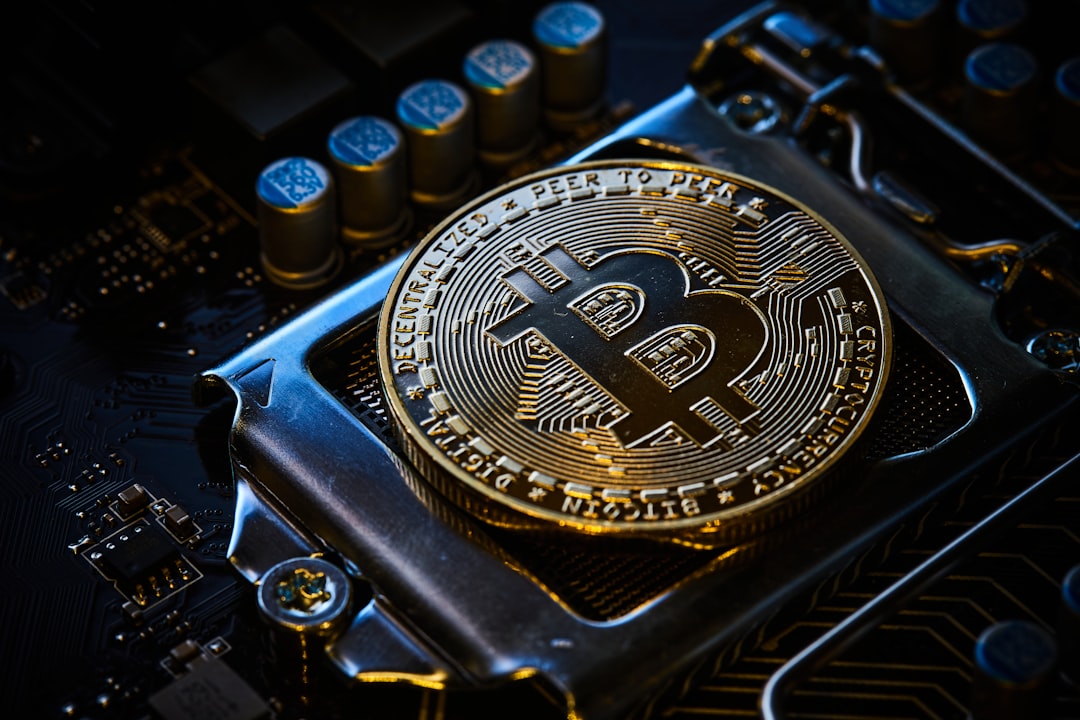
How to buy bitcoin in the UK (and elsewhere)
The bitcoin price has been quietly moving up and, almost inevitably, I am getting messages from people asking how to buy it.Bitcoin should make up a core part of your investment portfolio. Never mind the noise, the doubts, the FUD (fear, uncertainty and doubt), the “but I don’t understand how it works”, bitcoin is an incredible computational breakthrough with enormous implications for the world. It’s the most technologically brilliant form of money ever invented. My advice is to own a share of the pie - it is in limited supply.So here, by popular demand, we outline the best ways to buy bitcoin in the UK and elsewhere.This is a reversion of an article I put together for paid subscribers last year, but I am making it available to one and all.I wrote the first (and many say the best - who am I to disagree?) book on bitcoin from a recognised publisher back in 2014. So I know a thing or two about it.“A great account. Read it and glimpse into the future,” said Richard Branson. Though it’s not clear he actually read it.When he was Chancellor, Rishi Sunak, like George Osborne before him, gave it the big one about turning the UK into a hub for cryptocurrencies and the industries of the future, but these are just words. In practice, the UK regulator, the Financial Conduct Authority (FCA), has made life very difficult for the UK investor who is interested in cryptocurrencies. It has banned the sale of crypto derivatives and exchange traded notes to retail investors, which means traditional brokers are out, and it it has made sending money from a bank to a crypto exchange very problematic.Fear not. The guide will explain all.My first dollop of advice is this: before putting any significant sums to work, research as much as you can. Read about bitcoin, listen to podcasts and, above all, try out the tech. Buy small amounts, get a friend to do the same, and practice sending small amounts of money to each other. When you have got the hang of things, then you can invest more significant sums.Bitcoin’s repeating cycleBitcoin seems to go through four phases with every cycle - and these cycles repeat.* There’s the Quiet Accumulation. Few outside of the bubble of ardent bitcoiners take notice, as it discreetly creeps up. * The Frenzy and Blow-Off Top. The price rises accelerate. There is a rush to buy. The media is all over it. Everyone on social media is crowing. There’s a huge row about whether bitcoin is in a bubble or not. I get invited onto the BBC to talk about it. You get a phonecall from your mate’s nan asking how to buy it. Dean from up the flats starts holding court in the cafe about irresponsible monetary policy at the Federal Reserve. Bitcoin has one of its blow-off tops. See 2013, 2016 and 2021 for more details.* The Monster Correction. Bitcoin loses over 50% of its value. Economists who missed the boat go on telly and declare they were right, ignoring the fact that the price to which bitcoin corrected to is several hundred percent above where the quiet accumulation phase began. Earlier in bitcoin’s evolution these corrections could be 90% or more. Now they have “scaled back” to more like 80%.* The Frustrating Consolidation. Bitcoin goes into a period of range trading, consolidating the gains of the previous bull market. This is a period of relative quiet, at least by bitcoin standards. There are rallies that get many excited, we might even be seeing one of those now, but they prove to be false dawns. Investors get frustrated by the grinding action. The media loses interest. Many forget about it, and so we gradually drift into another Quiet Accumulation phase.We have just had a classic-of-the-genre Monster Correction, during which bitcoin lost 80% of its value, going from around $68,000 back to just under $16,000.Since December it has been quietly rallying and today we sit around $23,000. It might go back and re-test $16,000. It could fall another 80%. Then again it could go up and up and up from here. The best time to accumulate is during the Frustrating Consolidation or the Quiet Accumulation phase, and I suggest that is where we are now. Somewhere in stage 3 or 4 of the cycle.There are many who dismissed it late last year as it fell to $16,000. I take the other side. Given the spate of bankruptcies, the Sam Bankman-Fried saga and more, I think it’s pretty amazing that it didn’t go lower.The best ways to buy bitcoinThere are three ways to get hold of bitcoin: you can earn it, you can buy it or you can mine it. I suppose you can steal it as well. But that’s not something we cover here. Or anywhere.Forget mining for now. Bitcoin mining is beyond the scope of this article.Earning bitcoin is simple. All you need is a wallet. As long as the buyer of whatever product or service you are selling is happy to pay you in bitcoin, you just send them your wallet address, instead of your bank details, and they can pay you in bitcoin, just as they would any other form of money.There are countless wallet providers. I like Exodus
Revolut - how safe is your money?
A few weeks ago, an Irish friend of mine was contacted by the Irish Postal service. A package had arrived for her from abroad, but there were a couple of euros and change of duties to be paid. This had happened to her before - she buys a lot of stuff on the internet, clothes especially - and she duly got out her debit card and paid up.A week or so later, she was sitting in a meeting, when she started getting updates from Revolut notifying her that money was being sent from her account to Binance, the crypto exchange. She doesn’t have an account with Binance.She contacted Revolut and then found money had also been sent to the crypto exchanges Kraken and Coinbase, and then, of all places, to Deliveroo. The perpetrator was ordering dinner.She thought she had frozen her account, but it seems Revolut had already done this ten minutes earlier - their fraud detection system had been triggered and the customer alerted. The Revolut rep advised her that the transfers had not been completed yet, that they would be halted and that in a few days the money would be returned. My friend calmed down.The following day, however, she saw that the transfers had gone through. She got in touch with Revolut again. Only this time the rep told her that yesterday’s rep had given her the wrong advice. Those payments could not have been halted and the money would not be returned.After several days’ back and forth, Revolut then confirmed that the money was gone and that they would not be refunding it to her. If she had any complaints she should take it up with the police. In total, she had around 7,000 euros stolen from her account. Someone had stolen her debit card details, most likely that person supposedly from the Irish postal service, and that is how the fraud was perpetrated.She reported it to the Gardai (the Irish police), spending several fruitless hours on several different occasions at the station, where notes were taken on bits of paper (not digitally) and she was given titbits of advice such as, “ah, well, you don’t know what’s going on with them foreign banks.” There was one detective, apparently, who was helpful, but, apart from that, fruitless. They then told her to speak to the financial ombudsman, which she did, to be told that it was too close to Christmas and she should try again in the new year. She would eventually be given the run around by the ombudsman as well.She asked another of her banks what they did in this situation, and they suggested she try and find a solicitor. But this, it seems, was hard too. Most specialise in defending organisations against fraud, but few act for individuals, she says, and certainly not in her price bracket.She then started getting repeated calls from another company - a Florida number, but based in Israel - asking her for €1,000 upfront to recover the money, which they say there is a “good chance” of doing.Eventually, she got in touch with me to see if I could help. The whole story seemed extraordinary. I read the conversations she had had with the Revolut representative telling her not to worry. I couldn’t believe Revolut then saying she had no protection, when she was clearly the victim of a debit card fraud. Surely, even with Revolut’s non-banking status, it has to abide with EU customer protection laws, doesn’t it?I’ve had money stolen from my account, when I lost my debit card. Whoever found it went on a shopping spree round the supermarkets of South London. I had to fight to get the money back, and go through endless phone calls and form filling - and even then HSBC “forgot” to re-instate the stolen funds - but I did eventually get the money. I’ve never had such problems with credit cards, which is why I prefer them to debit cards. But even with HSBC’s delaying tactics, I never got a flat refusal in the way that my friend was given by Revolut.The ability to hold numerous different currencies in Revolut, the ease with which you can send and receive money internationally and indeed send to crypto exchanges, where many traditional banks will block transfers, make it a tempting option. But the convenience it offers seems to come at a cost and that cost is the safety of your money.I got in touch with Revolut here in the UK saying I was writing a story about this and I wanted to hear Revolut’s side. Revolut replied straight away. I spoke to their representative, who was extremely helpful (he doesn’t want his name mentioned here).He recognised that I was working to a deadline, looked straight into the case and then came back to me a couple of days later with a resolution. “The experience of [unnamed] fell well below our high customer support standards and we’re sorry for the distress this caused her,” he said. “We have reimbursed her stolen funds in full as a gesture of goodwill.”I’m not sure my friend’s experience would have been the same had she not had a friend who is a financial journalist, but I have to commend Revolut and this employee in particular for the way he acted as soo

The Great Decline: Where Is This All Going?
Something is very wrong with my country. Something big and something bad. We can all feel it, though we might not agree on what is actually wrong. The great institutions of state are falling apart. Mighty institutions that I grew up trusting for their integrity, respected around the world, seem to be crumbling amidst incompetence, incoherence, corruption and more.The government, essentially unelected, is unpopular and ineffectual. Not that a properly elected government would make much difference. Sir Humphrey and the Blob still seem to run everything. The system seems set up to look after the system, rather than its people. The opportunities for change and reform that were first, Brexit, then Boris Johnson’s sweeping 2019 election win, have been squandered. The government is unable to carry out even its most basic function, which is to defend the borders. The Bank of England has for many years been destroying the value of money. Inflation, which apparently was unforeseeable, is now at 9%. And that’s just official inflation – we all know actual inflation is higher. The Bank’s monetary policies, together with planning laws, have given us an intergenerational wealth divide which means anyone born after about 1985 can’t afford anywhere to live. They delay starting families as a result, and they have smaller families, with the long-term consequence that the local population is eroded away. This then gives rise to the argument that, as locals aren’t reproducing, we “need” immigration. I can’t remember trust in the police, who seem more concerned with online wrong-think than violent crime, ever having been so low. I wrote that sentence before the David Carrick scandal. The courts are overwhelmed and the court system is both expensive and antiquated. The legal system is manipulated and exploited, only affordable to the very rich or very poor. The penal system is inadequate. Google “NHS and news”, if you want to see what state healthcare is in. Radical progressive ideology has enveloped education. Even the armed forces have been afflicted by it. Universities are overpriced and increasingly irrelevant to the modern work environment. The BBC, the national broadcaster, is loathed for its bias, and its output is, for the most part, crap. Luxury green ideology has left us with sky-high energy prices. Royal Mail only occasionally delivers - I’m still getting Christmas cards now. The trains are useless and expensive. Who knows how well the civil service is doing? It’s opaque. The electoral process has become meaningless. You get the same blob whoever you vote for. Representative democracy is neither representative nor democratic.I could go on. You get the point. Everywhere that is not functioning involves (or has involved in its recent history) the heavy hand of the state. You could look at, say, shops, tech, restaurants or media – areas where the state is less involved – and user dissatisfaction levels are not comparable. Airports actually ran better when the border force went on strike. It’s as though the state is inherently incompetent. Why there aren’t more libertarians, I’ll never understand. Meanwhile, all of these institutions are costing a fortune. Spending on most is at all-time highs. By the time you factor in inflation (which is a stealth tax - even the Chancellor recently admitted as much), taxation levels are comfortably in excess of 50%. That is to say: more than half of everything you earn is taken from you by the state to pay for stuff that doesn’t work. That’s before we get to the tax on the future which is debt and deficit spending.And then there’s the waste. Here is just one example:Imagine how much better off we’d all be, if citizens, rather than the government, could choose where to allocate the money they earn. You spend your money better than they do.Culture wars and mass migrationIt’s not just crumbling institutions and state overreach. They call it the Culture Wars, but we are in the midst of a religious war, an ideological struggle. What Elon Musk calls “the woke mind virus” – an aggressive, radically progressive ideology born out of an obsession with identity politics – has taken over, especially within institutions and education, and is wreaking havoc. From male rapists being put into women’s prisons to expensive green initiatives that actually damage the environment to a pandemic of cancel culture. Again, I could go on. I don’t need to spell it out here. You know what I’m talking about. Small government and libertarianism solves this too, by the way. The virus would not be able to survive and spread without the oxygen of public money.Meanwhile, the demography of the country has changed, and as a result, so has its identity (though few have yet realised that). Last year, 1.1 million people migrated to this country – that’s just the ones who were granted visas. There are plenty more that weren’t. In effect, roughly one in every 65 people you meet in this country only came here last year. The Lond
Never mind the vaccines - what about the vaccine stocks?
There has been a discernible change in the narrative over the past few weeks regarding Covid-19 vaccines. From the Andrew Bridgen affair and questions in the House of Commons regarding the unusually high seasonal death rates to the publicity that came with “Novacc” Djokovic winning the Australian Open, to the sudden collapse of Thailand’s Princess Bajrakitiyabha, daughter of the King, and the resulting (likely fabricated) story that Thailand is nullifying its Pfizer contracts, the powers-that-be - and I’m still not sure who they actually are - seem to have lost control of the narrative.The take-up of boosters was low and there is now widespread doubt amongst those who had the vaccine that they did the right thing, while there is both pride and vindication amongst those who didn’t.In a world awash with both censorship and misinformation (which is worse? - there is another thing I’m not sure about), it is difficult to know who or what to believe.We do, however, have price. There is a truth to price. Price, like the truth, can change every day, many times per day, but the price of something, or should I say the price of a publicly traded asset, reflects all the available information about that asset at any given moment. In that respect, there is a truth to price.The price of Brent Crude Oil, currently $84, reflects all the available information there is about current and future oil supply, current and future demand, current and future government policy, net zero, global risk appetite and more. All the information, opinion, and research, the truths, the half-truths and the lies, the ideals and the realities - everything is distilled into those two digits: 84 dollars.And so today, with all this in mind, I thought it would be informative to ask - how are the vaccine stocks doing? How’re they are doing might tell us about the vaccine narrative itself.Covid-19 vaccine stocks The main vaccine stocks are as follows: * Pfizer (NYSE: PFE) - although not a “pure” play (its share price is determined by the success or failure of many of its products and patents), it did bring the world’s most famous and controversial vaccine to market. * Biotechnology company BioNTech (NASDAQ: BNTX), which teamed with Pfizer to produce its vaccine, can be seen as much more of a “vaccine bellwether” stock. Its messenger RNA (mRNA) technology was critical to the Pfizer vaccine.* Moderna (NASDAQ: MRNA). The ticker’s on brand! Moderna was quick in the wake of Pfizer and BioNTech to win a US EUA for its vaccine. Unlike Pfizer and BioNTech, it doesn’t have to split profits. It’s also a ‘pure play”, so a good bellwether.* Johnson & Johnson's (NYSE: JNJ) sold its vaccine at cost during the pandemic and it is so diversified with numerous other products that we can probably discount it as a vaccine bellwether. Still, we can include it on the list as it is a key player.* Likewise AstraZeneca (LON: AZN) -was an early winner in the vaccine race, but then it got embroiled in disputes with the European Union. Like Johnson and Johnson, it is also heavily diversified with other products and it also initially delivered the vaccines at cost. So, again, it is not a “pure play.”* There is the lesser-known Novavax (NASDAQ: NVAX), whose product is not as widespread as the others.* Ocugen (NASDAQ: OCGN), also not very well known, is partnered with Indian drugco, Bharat Biotech, and has a vaccine authorised in India. * Finally, Vaxart (NASDAQ: VXRT), is developing an oral vaccination tablet. At this stage of writing this article, I haven’t yet looked at a single chart of a “vaxco”, so I don’t know what I’m about to discover. I’m going to post 4-year charts - ie going back a year before Covid - along with a 200-day moving average (200DMA) in green to help identify primary trends.Let’s start with Pfizer (NYSE: PFE)You can see the run it had since 2020. But, shorter term, since early December, it’s been falling like a boulder off a cliff. It’s not seen any of the rally that accompanied the broader stock market since Christmas. It’s below its 200DMA and trending down. On the other hand, it’s still at $43, above its October low, and well above its pre-Covid price in the low- to mid-$30s, so all is not lost. I do not like the look of that chart at all. I’m pretty sure its handle will no longer be a four but a three before long.Next is BioNTech (NASDAQ: BNTX). This is a classic pop-and-drop and could just as easily be the chart of some crypto currency or junior miner.At $140, it’s 70% down from its $460 high, and it too is in a downtrend. There is support at $120 and it’s still three or four times higher than it was before Covid. I wish I’d known about BioNTech in 2020!Moderna (NASDAQ: MRNA) is next and like BioNTech, the other “pure vax play,” this is another pop-and-drop. Cynics would say pump and dump.Gosh, this was a $25 stock in 2020. It went to $500. How fortunes can change.Now it’s at $175, 65% of its highs, but above its 200DMA. The shorter-term trend is down, h
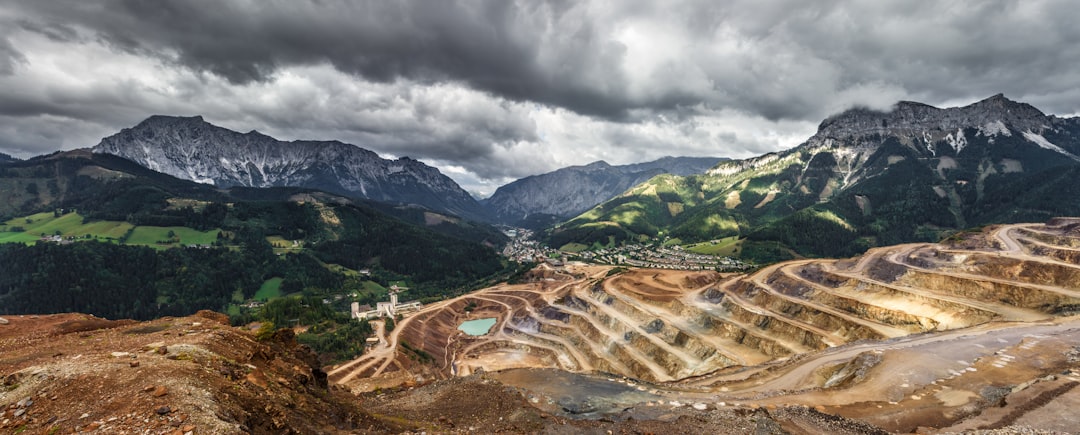
The terrifying statistic about UK resource security that should put the wind up every strategist
There are just three ways, I once heard someone say, to create real wealth:* You make stuff* You mine stuff* You grow stuffEverything else is just redistribution - pushing what is already there around. We can argue about whether offering a service is “making stuff”. I would say, generally, it is. I’ve always loved that as a maxim by which to view things. Pretty much all wealth creation comes under one of those three categories. You are bringing something new into the world that did not previously exist. It’s why I have issues with forex. The foreign exchange markets are the largest and most liquid financial markets in the world. They are more than 25 times larger in daily turnover than all of the world's stock markets combined. Forex has made many people supremely rich. But is forex trading actually creating new wealth or is it another illusory consequence of fiat, and just pushing existing wealth around? It’s a question for another time because it’s item two on that list - mining - that I want to talk about today, that loathed and despised industry, responsible for so much pollution, waste, injury, fraud and death. Why mining is so importantWe need mines. We cannot do without them. They are essential to human progress. Mines provide the raw materials that are the foundations for modern living. We would not have the world we have around us today were it not for mining: the primary means by which natural resources - metals, minerals and fossil fuels - are extracted from the earth. Human beings have been mining since before the Bronze Age and we won’t ever stop. These natural resources can be used to make wonderful things: buildings, bridges, planes, trains and cars, electronics, and, of course, energy. Mining, and all the risks you have to take to do it, is to bring new and real wealth into the world that did not previously exist. In the West we sit at our desks all day, in our clean, sanitised environments, and we forget that, for example, for the internet to exist, we need untold amounts of metal , be it steel, copper, silver or some rare earth metal neither you nor I know the name of. With our cosseted western existence, we have in many ways lost touch with the world around us: the land, the environment, the animals and plants we eat. We have forgotten just how the things around us came to be. There was a time when you would build up a relationship with an animal before you ate it. I’m looking around me at my office and every single item - from my desk to my computer to my books to the house I’m in - would not exist without mining.If Net Zero is to be realised (spoiler alert: it won’t be), and we are going to transition from fossil fuel to electricity, we are going to need to mine unprecedented amounts of copper and lithium (which in itself is going to entail extraordinary amounts of fossil fuel consumption). But mining has a huge environmental impact. Though it’s hard to find a human activity that doesn’t have an environmental impact, mining is exceptional. Together with certain types of fishing, it’s probably the most environmentally damaging of all industries. That’s why there are so many rules and regulations in place. They’re there to attempt to minimise damage. Mining will never have zero impact. There is a trade-off between the impact of the mine, the wealth it creates and the benefits it brings. But it is because of the potential mining has to cause harm, to the environment, to local communities, to workers, that so many of us feel ambivalent about it, if not downright opposed. The fellowship of miningThere are common characteristics to miners, visible throughout history and in all the myth and legend that surrounds them: brave, strong, hard working, fiercely proud, stoic, with incredible camaraderie amongst them - probably because of the incredible risks and effort involved in doing their job.From Snow White to Middle Earth, you see it in the depiction of dwarves, the miners of mythology. Visit any of the old mining pubs in Cornwall, Wales or the North East, where the mines are no more, but look at the pictures on the wall, let your senses go and you can feel it there too. The old boys who used to work in the now closed mines still talk about the camaraderie.Mining is hard. It always was and it always will be, even with modern machines. Never mind the financial and political risk, it’s dangerous. It’s a difficult business. You have to go to some of the most unsavoury parts of the planet. Yet for decades we have been attacking mining. We attack this key industry, which instead we should support.Protestors become heroes when they stand against this terrible industry. Lawmakers do not stand up to protestors, they bow to them.The cost of regulation in the UK is so high, the mining industry barely here exists now. We have lots of coal, we have tin, we have copper, we even have tungsten and lithium, but producing mines are few and far between. We were once a nation once internationally famous for its m
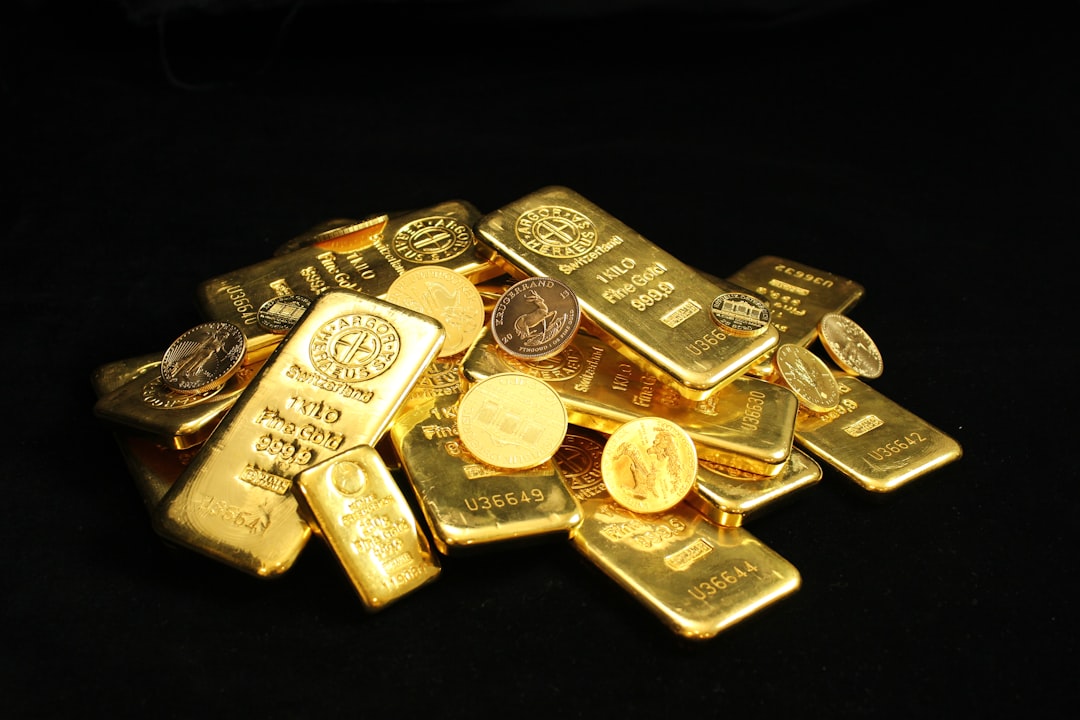
Gold to $5,000? I like the sound of that!
Gold had an epic bull market in the noughties - I still remember the key numbers like it was yesterday.There was the low in 1999 at $250/oz, marked for all eternity by Chancellor of the Exchequer, Gordon Brown, as he sold off two-thirds of British gold at the bottom of the market, when there were no compelling need to sell.That low was re-tested in 2001 and we got a classic double bottom, followed by eight years of bull market, which ended, after a big wobble in 2006, in 2008 at $1,030/oz. Then the Global Financial Crisis came along. Gold plummeted along with everything else. An unstoppable rebound lasting three more years followed. First, the gold price broke out to new highs, and on it marched until it eventually peaked in 2011, with the Greek debt crisis, at $1,920/oz.Then came the bear market. Five brutal years of pain. It went all the way back to $1,040/oz.The period between 2018 and 2020 saw gold rally again, heading north of $2,000/oz, albeit briefly.But here we are in early 2023. And guess what? As I write, gold sits at $1,920/oz - the same price as it was back in 2011. Markets remember prices.What’s next for the gold price? Will it pull back from here? Maybe. Probably.It has rallied $300/oz in barely two months. It’s overbought. Neither silver nor the miners are leading. That’s usually not a good sign. Charlie Morris says gold is trading above fair value. Charlie Morris is usually right.You can get cute and try and trade it, but no one knows what is going to happen. It’s a precious metal and it’s a market. If they can throw you, they will. But then again, gold usually does well when trust in financial markets is low. I’d say that’s the case now. Do you risk your position in the hope that you can get back in lower? What if it goes up instead?Or you can take the longer-term view. Like the famed trader, Old Partridge, in Edwin Lefevre’s Reminiscences of a Stock Operator, who never wanted to lose his position in a bull market, a view since echoed by a memed typo, you can just hodl on.We must each make our own choices, learn from them and live with them.What happens to the gold price if everyone starts buying? Here’s a nice little thought experiment. I’ve heard it before - but I’d forgotten it, and it was brought to my attention again by Winston Miles of Canadian investment house Eight Capital.There was a presentation by strategist Grant Williams in 2016 called “What If?” when he asked what would happen if pension funds, which currently had a 0.15% weighting to gold, increased that allocation. Miles decided to run that scenario in today’s marketplace.“According to the OECD’s most recent data, global pension assets are $56 trillion. I could easily see pension funds getting up to 1% of their portfolio in precious metals on average. But let’s be a bit more conservative and go with two-thirds of 1%, or 66bps… which is $373,903,924,800.“That amount of money … could buy every single company that makes up the Philadelphia Gold and Silver Index… which would set them back a cool $297 billion. Then they could buy every share of GLD, even taking delivery of all that gold if they wanted, as it’s all sitting in a vault somewhere. That would cost another $56 billion. Then with the scraps left over, they could buy every share of the GDX… GDXJ… SIL… AND the SILJ.” (Those are the gold and silver mining ETFs).In short, there’s a lot of money out there. On a relative basis, there isn’t a lot of trade-able gold, and there aren’t that many gold mining companies. A small shift in the narrative could send the gold and silver markets a long way higher. “It’s an environment,” says Miles, “where almost no major pensions have a portfolio manager focused on metals and mining. The infrastructure is totally gone. It’s hard to add supply, the mines are old, it takes ten+ years to build new ones, these are really long lead time projects.”You can conduct the same thought experiments with oil, gas and coal. Very little allocation (largely because of ESG), and very little investment leading to tight supply and long lead times.You can conduct the same experiments with bitcoin. What happens to the bitcoin price, if bitcoin were to become a core, mainstream portfolio holding?They all go a lot higher.You can’t say the same about tech, the S&P 500, or government bonds. They are already owned.The narratives for gold, fossil fuels or bitcoin may not change, but if they do, look out above.On this note, here is the S&P500 relative to gold since 2000. When the chart is rising, gold is rising relative to the stock market and vice versa. At $1,920/oz gold is a lot cheaper today, relative to the stock market, than it was when it was $1,920/oz back in 2011. It’s a third of the price. To get back to those equivalent levels, assuming no change in the price of the S&P500, gold would have to triple. I like the sound of $5,700/oz gold!$5,700 gold - that’s a stat worth sharing.Gold and gold minersHere are the gold miners relative to gold. With the plethora

It's New Year Predictions Time
It’s that time of year once again when I get out my crystal ball and tell you exactly what is going to happen in this the Year of our Lord 2023 (here’s how I performed last year). You can normally rely on your intrepid author to have strong, even if wrong opinions on markets, but I must confess to not feeling as strongly about things as I usually do. My biggest concern is how Chat GPT - the new chatbot that can generate intelligent text about, it seems, almost anything - is going to change the world. In fact, my greater concern relates to the extraordinary influence its designers are going to wield on the global narrative.So it is a humble Dominic Frisby you find today, one lacking in clear vision, nervously looking up at the egg that is no doubt going to be on my face in a year’s time. Nevertheless here are 14 things I think we will see in the year ahead.* Commodities have a good year. Oil is currently in a downtrend, so it may have a bit more to fall. Metals took their hit in mid-2022 and appear to have made their lows. For the last couple of months, they have been rising, but both fossil fuels and metals have suffered from many years of underinvestment, which has hurt supply. China opening up should see increased demand. I see a good market for metals and energy in the first half of 2023 at least. Possibly the second half as well. Let’s set some targets. Brent, currently at $80/barrel, revisits three figures.* And Copper revisits with $4.80/lb.* Yield becomes a thing again. With choppy, uncertain markets, but sticky inflation, investing for yield rather than capital growth becomes a much bigger theme in 2023 than it has been for a decade or more.* This is a classic recessionary bear market. This bear market proves to be more of the recessionary variety, rather than an all-out collapse. It’s a tricky, grinding market, but the S&P 500 gets back towards its old highs at 4,800. Briefly.* Emerging Markets outperform. That’s something we haven’t seen in a while, but their time has come again.* Biotech becomes a thing again too. Remember how back in the day biotech was all the rage? Somehow it was overlooked in the last tech bull market. Not anymore.* European banks have a good time of it too. Thanks to Swen Lorentz for pointing out to me just how uninterested people are in them. Normally a good sign.* Bitcoin also has a good year. It’s hard to think of a time when sentiment in bitcoin has been as low as it’s been these past few months and yet it’s still $17,000. It has a market cap north of $300bn. The mining hashrate hit all-time highs this autumn, meaning the network is more robust than it has ever been. The tech is stronger than ever.Usage is growing in East Asia, Africa, especially in Nigeria, and anywhere there is a currency crisis (which is a lot of places - Turkey, Lebanon, Argentina, and Venezuela). It solves the many issues facing the member nations of the Shanghai Cooperation Organisation - China, India, Russia et al - which are desperately seeking a non-dollar alternative money to trade with that doesn’t rely on trusted third parties. (I doubt they’ll go for bitcoin by the way, even though it does everything they want it to).Bitcoin’s Lighting Network solves the problems facing Elon Musk who is looking to incorporate a payments system into Twitter.There are so many reasons to be bullish about bitcoin, yet sentiment could not be worse. It will not always be this way. My prediction for 2023: bitcoin will have a good year.Tell your friends about this amazing article.* Silver fails to deliver yet again. I’m getting so complacent with my predictions about silver that I’m bound to be proved wrong. If you can count on anything in this cruel world, it’s that silver will let you down. Silver can’t get above $30.* The US dollar - up and down. It’s perhaps the world’s most important price and it has periods of strength and of weakness, but it ends the year higher than where it started. As I write, it’s at 102.* CBDCs - they’re coming. Currently, there are two countries in the world with functioning CBDCs - the Bahamas and Jamaica. Several other Caribbean nations are at the pilot stage, including St Lucia, St Kitts, Dominica and Grenada. As demonstrated by the reaction to Covid-19, risk-averse governments tend not to trail blaze, but to follow the lead of their neighbours. In this regard, it is likely that a couple or more Caribbean nations could have functioning CBDCs before the end of 2023. Such a roll-out is easier in nations with small populations.But my forecast is that in 2023, probably in the latter part of the year, a nation with a population greater than 15 million rolls out its first CBDC, likely one of Canada, China, India, France, Saudi Arabia, Ghana or Nigeria.* Ukraine. I know Dominic Frisby is the first person you turn to when you want insights into the Ukraine conflict, so here they are: The Ukraine War will not end before October. There will not be a nuclear war and Vladimir Putin will still be
Revisiting my 2022 predictions
Later this week I’ll be posting my predictions for 2023, but first we revisit my predictions for 2022 to see how I got on.This is more an exercise in entertainment than anything else because, in case you needed reminding, risk management changes - and so do forecasts - as events unfold. As Mr Keynes once said, “When the facts change, I change my mind. What do you do?” So when you leap back a year, and there’s stuff that’s wildly out, and I have egg on my face, because, for example, a certain man ordered the invasion of a certain country and that threw things off rather, by all means chortle at my expense - but don’t think I didn’t revise my opinions.Right that’s the excuses over and done with. A reminder of the rules: I get 2 points for a direct hit, 1 point for close but not a bullseye, 0 for a miss and minus one for a howler. There were 14 predictions (you can read them in full here) and the first was a humdinger of a howler. My view was that, because of the scalability of tech, the Nasdaq would continue its relentless march higher and we would see 19,000. The opposite happened. Tech gave back all its post Covid gains. Minus one.Prediction Two was that oil (Brent), which began the year at $77, would revisit $100. We hit that target in March, and some. Two points.Prediction Three was that the US dollar would start weak, with support at 95, and later go higher. Longer term “the dollar looks like it can go a lot higher”. Support did prove to be 95, and it went a lot higher. Two points. Prediction Four was that gold, which began the year at $1,825, would go north of $2,000. It went to $2,080, then it went down. Two points.Prediction Five was for the S&P500 to go to 5,000. Wrong. Bear market. Minus one.Prediction Six was for the crypto market cap to go above $3trn. The year started quite well, but no. Minus one.Prediction Seven was that two other nations would follow El Salvador’s lead and adopt bitcoin as legal tender. Just the one did - Central African Republic back in April. Zero points.Prediction Eight was that copper goes above $5/lb. It did. For one day in March. Technically, it’s a two pointer but I’m only going to give myself one because it had such a horrible bear market later in the year.Prediction Nine was for house prices to continue their inexorable march higher. Amazingly, house prices have marched higher. “Average UK house prices increased by 12.6% over the year to October 2022,” says the ONS. That will come down as the data for the last part of the year comes in. I’ll give myself a point, but not two. The backdrop for house prices is looking shakier than it’s looked in a long time.Prediction Ten was that the pound would get to €1.24. It didn’t. €1.21 was the high, and it ended the year lower than when it started. Zero points.Prediction Eleven was that silver would disappoint, as always, and can’t get above $30. You can always depend on silver. It disappointed. As always. $27, or just nigh, was the high. Two points.And so to Prediction Twelve which was that, to everyone’s surprise, Boris would still be Prime Minister. Ha! We’ve had two since then. Prime Ministers are like buses. Uh-uh.Prediction Thirteen, your Bruce-y bonus sports prediction, was that Manchester City would win the league and that Watford, Norwich and Burnley all go down. A bulls-eye, sir. This year’s table will be much harder to get right.And, finally, my Prediction Fourteen, “based on my own instincts, not data or science” was that “Peak Covid has now passed and something akin to free movement can slowly return”. It looks obvious now. It was not then. I lost Christmas last year to Covid. And so to the score. Maximum possible would be 28. Minimum minus 8. Both so extremely unlikely as to be impossible. I’ve got a middle-of-the-road, deeply mediocre 11. Could do better, as my school teachers so often noted.Happy new year, everyone, hope you have a great 2023 and that prosperity makes a welcome return to our portfolios.And make your Number One resolution for 2023 to listen to Kisses on a Postcard.Interested in protecting your wealth in these extraordinary times? Then be sure to own some gold bullion. My current recommended bullion dealer is The Pure Gold Company, whether you are taking delivery or storing online. Premiums are low, quality of service is high. You can deal with a human being. I have an affiliation deals with them.Subscribe to this most learned of publications.This article first appeared at Moneyweek. This is a public episode. If you'd like to discuss this with other subscribers or get access to bonus episodes, visit www.theflyingfrisby.com/subscribe
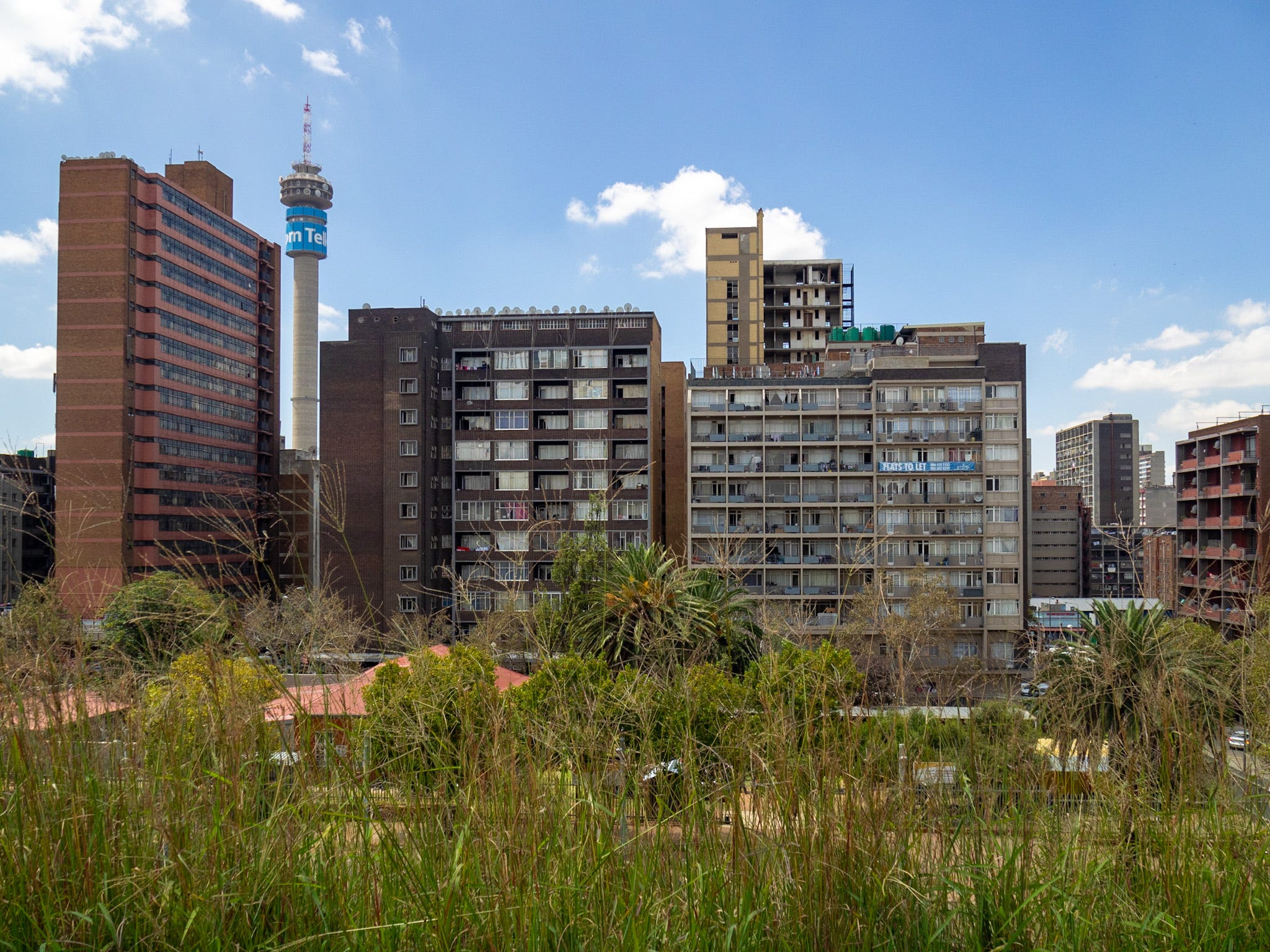
The South Africanisation of Everything
This is a podcast recorded with director Alex McCarron, following a comment he made to me in the pub the other day, when I asked “Where is this all going?”. “South Africa,” came the reply. Indeed. We are witnessing the South Africanisation of everything.Here’s a link to the the YouTube video, Science Must Fall, Alex mentioned in the discussion.And here is the follow-up article:Have you got you Kisses on a Postcard CDs yet?If you are interested in buying gold bullion, my current recommended bullion dealer in the UK is The Pure Gold Company, whether you are taking delivery or storing online. Premiums are low, quality of service is high. You can deal with a human being. I have an affiliation deals with them. This is a public episode. If you'd like to discuss this with other subscribers or get access to bonus episodes, visit www.theflyingfrisby.com/subscribe
ChatGPT: the “scary good” tech that is changing the world
I’ve been playing with a new technology this week, which, I think, is as potentially transformative as Google’s search engine, Facebook’s network or Apple’s iPhone. It’s that significant. Elon Musk says it’s “scary good”; Google management is so worried about it they have issued a “code red”; and it has achieved in just five days what took Netflix three and a half years. And it’s going to put me out of a job. This is Open AI’s latest offering ChatGPT - short for Chat Generative Pre-trained Transformer. Open AI, if you are not familiar with it, is a research institute that develops artificial intelligence. The company has developed language models that can generate human-like text and neural networks that can create images from text descriptions. Its founders include many of the world's most famous tech entrepreneurs, not least Elon Musk, and it is funded by private donations and research contracts. Its lofty “ultimate goal is to benefit humanity through the responsible development of AI”. I first heard about ChatGPT from my son when he came back from university last weekend. Apparently, loads of students are getting it to write their essays for them. Academics, reports the Guardian, say it generates exam responses that “would result in full marks if submitted by an undergraduate”. Programmers meanwhile, the Guardian continues, “have used the tool to solve coding challenges in obscure programming languages in a matter of seconds – before writing limericks explaining the functionality.” I was discussing it on Twitter and User @Peng33G got it to write a perfectly passable song in the style of Dominic Frisby. I urge you to go and have a play.To give you an idea of how quickly this thing has found users, cast your eyes over the following, which shows the amount of time to reach one million users. Netflix → 3.5 years Airbnb → 2 years Facebook → 10 months Zoom → 9 months Spotify → 5 months Instagram → 2.5 months iPhone → 74 days ChatGPT → 5 days Share this really interesting article on Twitter, Facebook or LinkedIn.To verify the above take would probably take me an hour of research. ChatGP did it in a matter of seconds. “The information you provided appears to be accurate”, it said. “Here is a brief summary of the growth of each of the companies or products you mentioned:* Netflix: It took Netflix approximately 3.5 years to reach one million subscribers. The company was founded in 1997 and reached one million subscribers in 2001.* Airbnb: It took Airbnb approximately 2 years to reach one million users. The company was founded in 2008 and reached one million users in 2010.* Facebook: It took Facebook approximately 10 months to reach one million users. The company was founded in 2004 and reached one million users in 2005.* Zoom: It took Zoom approximately 9 months to reach one million daily meeting participants. The company was founded in 2011 and reached one million daily meeting participants in 2012.* Spotify: It took Spotify approximately 5 months to reach one million users. The company was founded in 2006 and reached one million users in 2007.* Instagram: It took Instagram approximately 2.5 months to reach one million users. The company was founded in 2010 and reached one million users in 2010.* iPhone: It took the iPhone approximately 74 days to reach one million units sold. The iPhone was released in 2007 and reached one million units sold in 2007.ChatGPT has multiple uses in the real world My buddy, business consultant and tech entrepreneur, Danny Richman, mentors, as he puts it, “a young lad with poor literacy skills who is starting a landscaping business. He struggles to communicate with clients in a professional manner.” In less than 15 minutes, with no coding required, he created a ChatGPT-powered Gmail account to which the landscaper sends a message. It responds with the text to send to the client. Danny continues: “I also helped him use GPT3 to prepare an estimate, create a contract and respond to client enquiries. He just secured his first contract worth £220,000. This would not have been possible without this tech”. So what will ChatGPT be used for? In the words of ChatGPT itself, slightly edited by me, “A wide range of natural language processing tasks, including language translation, text summarization, text generation, and language modelling” . So that might be chatbots and virtual assistants; “text generation tasks”, as it puts it - writing news articles or social media posts. It could also be used to summarise texts - anything from legal documents to the tax code to the bible, by generating a shorter summary of a longer piece of text. Its capabilities are likely to improve as it is further developed and refined. It is learning all the time. So what does all this mean for investors? And how do you invest in ChatGPT? How to invest in ChatGPT the technology shaping the world Earlier in the week, I looked at how the world’s largest companies by market cap change from decade to decade. Seven of the to
What does the next decade have in store?
I stumbled across a Gavekal Research Daily Comment over the weekend with a really interesting table that I thought we could discuss today.Gavekal Research, if you don’t know it, is a financial research firm that provides analysis and insights on global economies, markets and industries. It was founded in 1999 by Charles Gave, Anatole Kaletsky, and Louis-Vincent Gave, and is headquartered in Hong Kong. It is, the internet tells me, known for its holistic approach to analysis. Holistic is one of those corporate buzzwords that I never really know what it meant. Again the internet is our friend: in the context of financial analysis, holistic analysis refers to considering a wide range of factors, such as economic, political, and behavioural, in order to gain a full understanding of market developments. It is a way of looking at the big picture rather than just focusing on specific details or individual factors.Why didn’t they just say “big picture”? Such is the equivocal financial world in which we live.In any case, Louis-Vincent’s Gave’s report is a compelling one. He describes how, roughly every decade or so, financial markets fall in love with a new narrative. This is something we have observed many times in the column. The 1970s were all about precious metals and energy. The 1980s went to Japan. The 1990s saw tech stocks take over and the 2000s were all about natural resources and extraordinary growth in China. The 2010s were all about tech.So what about the 2020s. What are they all about?What does the next decade have in store for investors? Gave suggests that there are three narratives each with a core idea: “The opening of new markets to capitalism (Ricardian growth), technological breakthroughs (Schumpeterian growth), or the fear that in the coming years there will not be enough for everyone (the Malthusian constraint).”Each time the narrative is persuasive and rooted in some truth, which is why it takes hold, but by the end of the cycle, valuations reach such extremes that they no longer make sense, a bear market sets in and a new narrative takes over. Asset allocation is everything, I have often argued - and it has been repeatedly proven that being int he right sector is more important than individual stock selection. All you have to do is shift from narrative to narrative. A lot easier said than done of course.But here is Gave’s humdinger of a table.Share this amazing article.You can see how clearly the narrative has shifted with each decade. By the end of the 1970s six of the world’s largest ten companies were oil companies. By the end of the next decade, just one of them was.By the end of the 1980s, eight of the world’s largest ten companies were Japanese. By the end of the following decade, just two of them were.At the turn of the century, seven of the world’s largest ten companies were tech related. By the end of the following decade, just two were.At the end of the noughties, seven of the world’s largest companies were natural resource companies. By the end of the following decade, not one was.2022 seems to have marked the turning point. The Covid rallies in tech were the final spike in an amazing bull market. These are all huge companies that make the foundation on which portfolios are built. But how many of 2021’s top ten will be there in ten years' time? Not more than two or three I wouldn’t have thought.You have to hand it to Microsoft. It’s been there three decades running. Perhaps that’s because, in a way, as much as it is a tech stock it is also a patent holding company. Apple has also made that list twice. So mighty are these companies and so entrenched in their monopolies, it is very hard to envisage them not being so mighty in ten years' time. But this is the world of tech. New inventions can come along that quickly make old monopolies redundant.In that regard, I’ve just been playing with a new Open AI chat bot that my son, who is at University in Bristol, put me on to and it’s extraordinary. It can write essays. It wrote a biog that I am now going to use on my site - and it’s a better biog than I’ve ever had. What the impact of it might be on, say, Google, who knows? The investment landscape has changed for goodGave says waiting for the Fed to cut rates and being long the likes of Nvidia or Alphabet makes “about as much sense as sitting in Tokyo in 1992 waiting for the Bank of Japan to cut rates in order to buy Industrial Bank of Japan.”In short, we are in a transitioning phase. What does the next decade have in store for us? Elsewhere Howard Marks of Oaktree Capital also argues that we are in a “Sea Change” - only the third we have seen in his career. That the model of success for the previous cycle is not going to work this time around. He suggests that the high leverage, asset owning, low-interest rate, low yield, low inflation models of the last cycle are behind us. The general landscape is much less optimistic. He suggests that stimulative rates are not coming anytime soon and th

10 outrageous predictions for 2023
Before we get started today, I just wanted to flag two articles from last week. First, my special report on helium. And, second, Dr John’s latest on bonds. Both for paying subscribers, there is lots of valuable info to be had, so please check them out.So to today’s piece … Every December Saxobank puts out ten outrageous predictions for the year ahead.It does not claim that these predictions will happen, but that they could happen. The purpose of the exercise is to stimulate thought, discussion and debate.And that is just what Saxobank has achieved because today we consider its ten outrageous predictions for 2023.The 10 outrageous predictions for 2023I went back to look at their predictions for 2022 to see if any of them actually happened. The very first was “The plan to end fossil fuels gets a rain check.” Net Zero has not yet been abandoned, but this year has certainly seen a quite dramatic change in attitude towards fossil fuels. The second was “Facebook faceplants on youth exodus”. Facebook has certainly faceplanted. But I wasn’t aware the youth were ever on it.After reading the first two, I was about to bestow Nostre Damus status on Saxobank, but the rest of their 2022 predictions did not really pan out. I won’t go through them here. They are in the past. Nobody can do anything about the past. It’s the future we need to worry about.So to 2023. Saxobank describes the year as a “war economy”. The days of low-interest rates and a harmonious world built on renewable energy, equality and independent central banks are gone. Now “sovereign economic gains and self-reliance trump globalisation”.That’s the macro. Onto the specifics.Prediction one. The pressing global energy needs drive the world’s richest to launch an “R&D project in a size the world hasn't seen since the Manhattan Project gave the US the first atomic bomb”.Well, you can bet your bottom dollar that they are talking about it. But I don’t think it happens. Not just yet, anyway. Somebody would have to organise it.Prediction two says that, due to the political stalemate in France, and the rise of Marie Le Pen since the 2022 elections, President Macron resigns. I don’t see that happening either. France’s daft electoral system is what enabled him to be President. The political stalemate means he stays President. Presidents like Macron don’t resign unless they are forced to. Too big an ego. Though this McKinsey affair does seem to be hurting him.The gold price surges to $3,000Prediction three is that gold goes to $3,000. Now you’re talking my language!“As markets and central banks realise that the idea that inflation is transitory is wrong and that prices will remain higher for longer, gold is sent through the roof,” says Saxobank.To rocket, gold needs inflation expectations to be markedly higher than government bond yields - negative real rates in other words. In the US we do not yet have that. Saxobank is describing a situation where we do.I’ve got to be straight with you guys. I don’t think gold goes to $3,000 in 2023. It’s got a better chance of going to £3,000.Prediction four suggests an EU army is coming and that it forces the EU down the path to full union. We know that, despite denials, the EU has been talking about an EU army for years. With that man Mr Putin on the doorstep the need gets rather more pressing. It’s possible but it needs the US to take a backward step in its global policeman role, something President Biden and the US military-industrial complex seem unlikely to do.Like many of Saxobank’s predictions, I’ve no doubt it’s coming. Just not next year.We come to prediction number five and one that made me smile. “In an effort to become one of the global leaders on the path to net-zero emissions, one country decides to not only put a heavy tax on meat, but to ban domestic production entirely.”I’d never thought about it before, but I do think about it now and I know it’s inevitable. Under the pretence of climate change, somewhere is going to impose meat taxes. I don’t think meat production will be banned - that’s too big a political ask - but meat taxes are coming. And, if you’ve read the definitive book on taxation that is Daylight Robbery, you will know that taxes are easily imposed, often for moral reasons, but not so easily gotten rid of. Meat taxes are coming - again maybe not a year, but they are coming. It will be for your own good. And once imposed they will stay. Outrageous predictions for 2023: time to wind back Brexit? Prediction six suggests that the UK will hold a referendum to wind back Brexit. Bregret is a big thing now in the UK. A recent YouGov poll found that only 32% now think leaving the European Union was a good idea; 56% say it was a mistake. The Conservative Party have made the most almighty balls up of the opportunity. The primary reason given for voting leave was sovereignty, yet, as the people trafficking and illegal migrant crossings show, they have been unable to even police our borders. No wonder only 21% th

The solution to all your Christmas present problems
What are you getting people for Christmas this year?I have the solution.Forgive me for going full salesman, but read on and you’ll see why I do that. This is life mission stuff. First, there are all sorts of goodies in the Dominic Frisby shop, which I think you may like. We have CDs of all my various albums, the latest (and probably best yet) being Gammon and Proud. Digital versions are also available at Bandcamp.There is Contains Swearing, an EP of unbroadcastable songs for the discerning listener. I daren’t release digital versions of this online for fear of the repercussions. You can only get the CD.My other albums are there in the shop too.The best thing I’ve ever doneAnd so we come to Kisses on a Postcard, which is the musical based on my dad’s story of his experiences as a vacky in World War Two, that I’ve been working on for so long. It has been my life’s mission to get this made and I consider it to be, artistically, the best thing I’ve ever done or been involved with.But trying to get people to listen to it has been really hard. In the last few weeks, however, I’ve appeared on Triggernometry, James Delingpole and Lawrence Fox’s shows to talk about it and, suddenly, some real interest has ignited. I am getting constant notifications on my phone telling me we have sold another CD and I have been getting some of the nicest messages“I spent most of today binge-listening to the podcast on the Apple platform and it has been one of the happier days of my life thus far,” Daamini from Dubai“I just wanted to congratulate you on such a wonderful and beautifully touching musical. I was enthralled, I cried, I laughed, I spent my whole Sunday GLUED to this amazing show. A real quality production. I think this should be essential viewing for younger generations. It HAS to be in the West End, just HAS TO BE”. Angela from Ascot.“A heartwarming, delightful musical that keeps you right to the end. The characters are wonderful. There is tragedy, heartbreak, bigotry, compassion, courage, joy and laughter and it is narrated beautifully. Thank you for giving it to us to enjoy, a real gift”. Nat from PenrynPeople really like it - and that’s because it is really good. As I’ve said, artistically, Kisses on a Postcard is the most special thing I have ever been involved with, I urge you, if you haven’t already, to listen.A Kisses on a Postcard CD - first edition - will make the most special Christmas present, especially for anyone you know who was some way connected to the evacuation. The artwork, says Ian from from Cheltenham, is “wonderful. Such a special gift.”So I hope you don’t mind me going full salesman, but you can probably see how much I care about this project. You can find out more at the website here and you can order CDs either there or in the Dominic Frisby shop. Thank you. This is a public episode. If you'd like to discuss this with other subscribers or get access to bonus episodes, visit www.theflyingfrisby.com/subscribe
Developments in the murky world of geo-politics
Some interesting developments in the murky world of geopolitics to report on this week, as the currency wars heat up.WWIII has already started. So says US economist Pippa Malgrem, who was Special Assistant to US President George Bush for Economic Policy and a former member of the President's Working Group on Financial Markets.“We are in a hot war in cold places: Space, Cyberspace, Underwater, and high places, including the Arctic, and the Himalayas, and in proxy conflicts in places the media give a cold shoulder to like Africa.” (Not to mention the Pacific). A cold war in hot places then - as well as a hot war in cold places.We are also, of course, in a very hot currency war.Vladimir Putin goes down the bitcoin rabbit holeThis week, with the aim of limiting Russia’s ability to finance its war in Ukraine, the G7 Nations, the European Union and Australia set a price cap of $60 a barrel on Russian crude oil. This follows the EU's embargo on Russian crude imports by sea, with similar pledges from the US, the UK, Canada and Japan.As you would expect, Russia has said it will not abide by such price caps, even if it has to cut production.Meanwhile, the world’s largest oil importer, China, seems to be slowly opening back up. Cities are easing COVID-19-related restrictions in the wake of recent protests, and it seems the country is set to further relax curbs as soon as today. I think it’s fair to say that if China had not locked down, oil demand would have been a lot higher - and so the oil price would have gone a lot higher. Same goes for metals, in fact most other commodities. And then we have another part of the puzzle. Russia’s President Vladimir Putin did his best bitcoin maximalist impression last week, as he called for an international, independent, blockchain-based settlement network. (Spoiler alert: it already exists. It’s called bitcoin).“The technology of digital currencies and blockchains can be used to create a new system of international settlements that will be much more convenient, absolutely safe for its users and, most importantly, will not depend on banks or interference by third countries,” he said. “I am confident that something like this will certainly be created and will develop because nobody likes the dictate of monopolists, which is harming all parties, including the monopolists themselves.”Here’s the link to bitcoin.org, Vladimir, in case you have self-googled and are now reading this.Where is this all going?I have a few ideas. So does Credit Suisse’s answer to Led Zeppelin, analyst Zoltan Pozsar.Tell your mates about this amazing article.You want my oil? Give me your gold.“The oil market is tight,” he says. The oil price is lower than it might otherwise be not just because of China lockdowns, but because of the US release of its strategic reserves (SPR), as well as from OECD countries. But Saudi Arabia is now low on spare capacity and the SPR is finite. You can’t print oil after all. “Recent releases have brought reserves down to levels we haven’t been at since the 1980s. The 400 million barrels left in it isn’t much: it could help police prices for a year if we released 1 million barrels per day (mbpd), half a year if we released 2 mbpd, and about four months if we released 3 mbpd”.Short of a sudden new surge in supply (where from?) or a sudden reduction in demand, it would seem then that the oil price is going higher.Russian crude already sells at a $30 discount relative to Brent, which currently sits at $83, he observes with China and India the main buyers. “In the case of India, it is widely understood that Indian refiners are turning some of the imported oil into diesel for re-export. Buying Russian crude at $60 per barrel (pb) and selling diesel at $140pb makes for a nice crack spread, the petroleum market’s equivalent of 100 bps of spread in the land of OIS-OIS cross-currency bases. India and China thus serve as matched-book commodity traders (instead of Glencore or Trafigura), the former dealing in oil and the latter in LNG, keeping commodities in circulation.”But Putin may be happy to sell to India or China at that discount - he won’t however cap prices to sell to Europe on point of principle.Meanwhile, the US needs to replenish the SPR, especially if it wants to control domestic oil prices. “Gone are the days when the U.S. Deputy National Security Advisor warned India and other countries of sanctions if they bought Russian crude oil. The change in tune could be one backdoor mechanism to refill the SPR, and given the $30 dollar discount to Brent that India is paying for Russian oil, this would be below President Biden’s $75 target.”But if Russian oil is exported for the purpose of replenishing the US SPR, Putin’s not going to like that either. What to do then? Only accept payments in gold, says Pozsar, not dollars or rupees. Sound a bit fantastic? “No it is not”, says Pozsar. “Look at the tit-for-tat measures so far: you invade Ukraine, I freeze your FX reserves; you freeze my FX
Helium can only go higher
Today we consider the coldest substance on earth.Which is?I knew you knew. Liquid helium. I have been covering helium for several years now, and it’s time to revisit the theme today. The reason? I keep reading articles about helium shortages (and these have nothing to do with the controversial cryptocurrency of the same name).Bull markets come along every few years in some niche but strategically important commodity. I’ve seen it in cobalt, lithium, graphite, phosphate, uranium, rare earth metals, tin and others besides. The story is almost always the same. Years of underinvestment have led to a shortage of supply of the said commodity. Government stockpiles are exhausted. And, now, suddenly, the commodity is essential to some new technology. Cue the bull market. What do we need helium for - and why is there a shortage?Helium is the second most common element in the universe, so how can there be a shortage?You could say the same about hydrogen and that’s even more common. There may be plenty of it up there, but there isn’t plenty of it down here and down here is where we need it.Nor is helium a huge market. Annual global demand is estimated at around 6 billion cubic feet (Bcf) or 170 million cubic metres (m3). It’s hard to establish just what the current price is because prices tend to be agreed by contract between buyer and seller, but Cliff Cain, CEO of rare gas consultancy Edelgas Group, which studies the market and consults with most of the companies operating in it, gives me the figure of $1,800 per thousand cubic feet (mcf). A year ago the price was closer to $500/mcf.The entire global market for bulk liquid helium is probably around $3bn.Demand keeps growing though, mainly from the medical, tech and aerospace sectors, and “it will keep growing”, says Cain.Helium is seven times less dense than air. Replace the air in a hard drive with helium, there is less turbulence, the discs spin better and so more discs can be packed into less space, while consuming less power. Helium-filled hard drives increase capacity by 50% and energy efficiency by 23%. Thus almost all high-quality data centres now use helium-filled high-capacity hard drives. It’s also used in barcode readers, computer chips, semiconductors, LCD panels and fibre optic cable.Another rapidly growing industry that’s gobbling up helium is the space sector. Helium is used in fuel tanks for rockets and satellites. Physics requires it in particle accelerators. Its low density means it also finds use in deep sea diving, but perhaps its most essential use is as a coolant, especially for the magnets in MRI (magnetic resonance imaging) machines. They must be kept near absolute zero to maintain the magnets’ quantum properties and not lose their potential. A typical MRI machine needs 2,000 litres of liquid helium.As someone who has recently broken his ankle, and also only discovered that I broke my neck in my younger days (it was never properly diagnosed), I can tell you the importance of MRI machines and the diagnostic clarity they bring. Some 38 million MRI examinations were carried out in the United States last year. Forbes suggests helium shortages may be the world’s next medical crisis.“Given the importance of MRI in the medical profession,” it says, “the helium crisis should be front and centre for politicians, policy makers, physicians, patients, and the general public to discuss and find sustainable solutions for. The scarcity of helium is a serious matter and affects all of us directly or indirectly.”And then there are the party balloons.Subscribe now to this amazing publication.Where do we get helium from - and why its price is going upAs Cain points out to me, if you are an aerospace company whose business relies on putting satellites in space, ideally as many as possible, or an MRI manufacturer whose business relies on selling MRI machines, you are not going to let helium shortages get in the way of your business. You are not going to stop producing the machines you produce - you are going to want to produce more and more of them. You will pay whatever price is necessary for the helium and pass the cost on. “Phones, computers, all modern life – it requires helium,” says Cain. “There’s no substitute. Without it, we go back to the Stone Age.”Helium is produced as a byproduct of natural gas refining. The world’s largest producer is the United States (roughly 40% of supply), followed by Qatar, Algeria, and Russia. However, the world’s largest single source of helium for the past 70 years, the US National Helium Reserve, recently stopped its supply. It is letting its staff go and the pressure has come off in its pipelines. “It is now at 700psi when it needs to be at 1,200 to be producing,” says Cain. The system is now for sale, at least in theory. The paperwork has met with delays in the White House, this is likely to take some time to resolve and we won’t see any market until it does. Prospective buyers should also beware of contaminated supplies a

17 Ways Bitcoin Makes the World Better
This was supposed to go out to one and all last week, but for some reason it didn’t. So today we try again - and the article can also be the Sunday morning thought piece.What problem does bitcoin solve? How does it make the world better?Merryn posted those questions on Twitter yesterday.It being Twitter, as you might expect, as well some measured, sensible stuff, it met with a barrage of outrage too, with responses ranging in scope from “it’s a Ponzi scheme” to “it’s destroying the planet” to “it’s going to give us world peace”.I thought I’d answer Merryn’s questions today, sheltered from the mania of Twitter, in the calm surroundings of this blog.I have been trying, on and off, to orange-pill Merryn since about 2014 and I think it’s fair to say, Merryn gets it. She gets fiat money, inflation, money printing, the harm it does, all that stuff. Not only does she get it, she was several years ahead of most of us on that one. She gets the need for apolitical money, lower taxes, less state, less central banking, fewer capital controls - all that stuff too. Cripes, she’s been writing about it all long enough.She just isn’t crazy about bitcoin. I don’t want to put words in her mouth, but I think her objections come, broadly speaking, under three main headers.First, she doesn’t like all the Wild West scams, blunders and ensuing losses that have accompanied this new financial technology. The FTXs, the Mt Goxs, the hacking, the extortions - and all the rest of it.Yes, these are not bitcoin, but bad actors operating in and around bitcoin, but bitcoin has still been the enabler. Two, she doesn’t like the volatility. The price needs to be more stable, if it’s to be a legitimate form of currency or cash.Three, even though bitcoin is, in theory, open to all, in practice it is only open to those technologically savvy or organised enough to be able to store keys, passwords, wallets, seed phrases and so on safely. Those - and there is no shortage of them - who are not comfortable with all of that tend to use third-party providers, which, in the unregulated world of crypto, leaves them vulnerable to those factors listed under “First” - and we are in a loop.I think/hope I’ve summarised Merryn’s core objections - there’s probably something I’ve missed. They are all though, I think, legitimate.So … here, in no particular order, are 17 ways bitcoin makes the world better. Tell your buddies about this amazing article.1. It separates money and state.If one body in a society has the power to create money at no cost to itself, while the rest of us must expend energy to earn it, it is inevitable that body will have disproportionate power and influence within that society. If you want to know why Western states have grown so large, bloated and invasive, look no further than fiat money systems and the power they give to the state. That money goes on welfare, waste, wars, wokery, whatever. You might agree with some ways that money is spent, or you might not; depends on your politics. Doesn’t matter: fiat centralises power in state.Bitcoin removes the ability of the state, and those who operate in it, to print or debase money for their own political agenda.Money, therefore, remains money. It cannot be a political tool.2. It provides a lifelineYou tend to see high bitcoin use under regimes that have seen the greatest destruction to their national currencies - Turkey, Venezuela, Argentina. Bitcoin has provided citizens with an escape. 3. You can send any amount anywhereSending money across borders is hard, even today, whether for large amounts or small. If I want to return the five dollars that somebody in New Orleans gave me last month when I forgot my wallet, or a pound to my friend in India to buy him a cup of coffee, or a thousand pounds to my friend in Iran, I am not entirely sure how I would do all those things. There are forex and other charges. There are processing fees. There can be capital controls. There might be a lot of admin and forms to fill in. Bitcoin is international, borderless, instantaneous and cheap.4. No more capital controls.Governments cannot control the flow of bitcoin capital in or out of the economy. 5. It obviates central banking.The bitcoin inflation rate is transparent and set in code. The central bank can’t start using dodgy inflation measures. It can’t set the price of money too high or too low for too long. There is no scope for human or policy error.6. It increases financial inclusionAround a quarter of the adult population remains unbanked. Around 1.5 billion people around the world (more women than men) still do not have access to basic financial services, such as a bank account. This, more than anything, roots them in poverty. Yet almost everyone (over 90%) now has a smartphone. All you need to participate in crypto, to start sending and receiving money, is an internet connection. Bitcoin banks the unbanked.7. It provides privacy. As the world goes cashless, your every transaction now relies on third pa
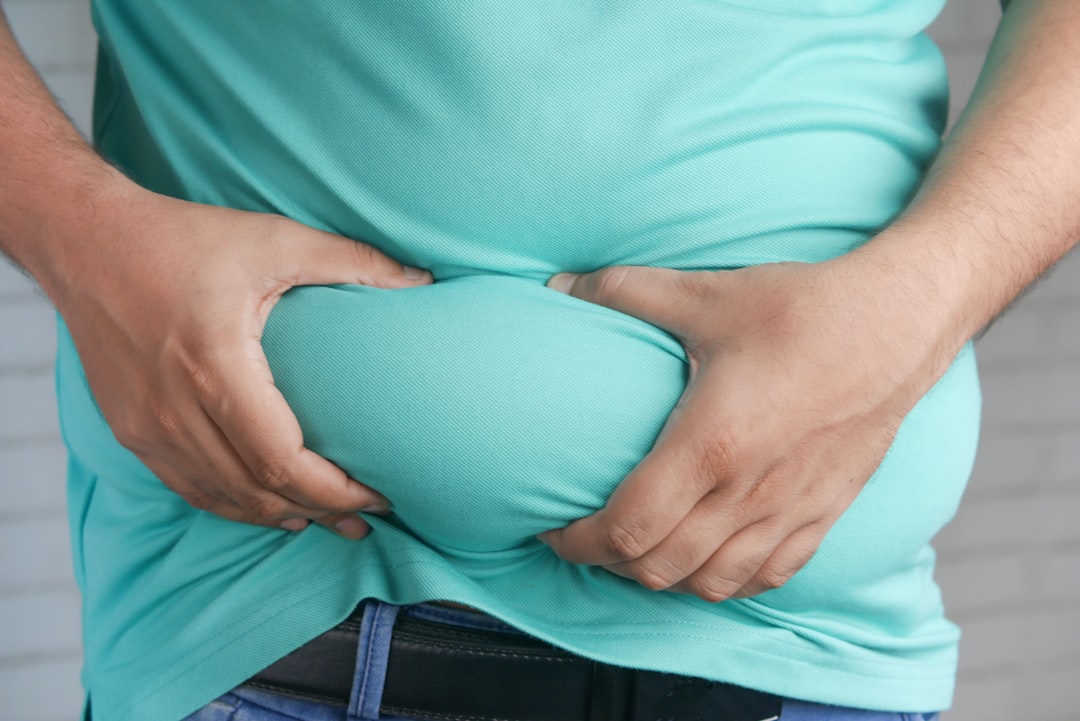
How to lose weight
You can read an update to this article here.Over the last year, I’ve lost over 2 stone - 14kg or 30lb, to be precise. I say over the last year, truth is I’ve been trying, unsuccessfully, to lose weight for three years - in fact, since practically forever. Given that most of us want to be somewhat lighter than we are, I thought I’d share my experiences with you today. They may be of some use.BackgroundWhile I don’t really like going to the gym, I do quite a lot of exercise, I always have. I run, I play football, I walked the dog, but I always seemed to be 5-6kg (about a stone) heavy than is ideal. I have a sweet tooth, but not as bad as some. I like beer and I like wine (not so much of a spirit man). I also have a tendency to eat and drink late at night, particularly coming home after gigs. I suspect it was a combination of eating too late at night and booze which left me in that semi-permanent state of slightly heavier than I would like.I’ve tried all sorts of diets in the past. I lost loads of weight on the Atkins diet back in the early 2000s - that’s basically a low carb, high protein diet - but I also felt fatigued, weak and, as soon as I stopped, I put all the weight back on again and more.I also lost loads of weight on the 5:2 diet in the 2010s. Again as soon as I stopped fasting, I put it all back on again. I would also piss off my partner on fasting days, by not participating in the communal activity that is eating.After seeing Fat, Sick and Nearly Dead five or six years ago, I did the juice diet and lost more weight more quickly than with any other diet I have done. You can lose as much as a kilo (2 pounds) a day. It’s very hard to sustain though, and your kitchen quickly gets swamped with juiced vegetable remains. Again, a few months after stopping, I was back where I was weight-wise and some.Between 2020 and 2021, I took up the 16:8 diet, where you fast 16 hours a day and eat only in 8 hour windows. I would have my first meal at lunchtime - 12-1pm and try not to eat or drink anything after 8 or 9. However, this is hard when you’re doing gigs and I often found myself breaking the rules. I lost a couple of kilos, then plateaued. It meant, though, that I got into the fasting state every day, and I got used to the feeling of being hungry. It became normal. Then I actually started putting on weight. I think it’s because my body got used to fasting, so it did all the things it did - conserve energy and calories - then I would consume too many calories in the evening, close to bed-time, and so, in this state of efficiency and fasting, the body conserved more calories than it otherwise would have and I ended up putting on weight.I was fatIn September 2021 I went the wrong side 90kg (over 14 stone or 200lb). Too much for a man of my 5ft9 frame. A change of strategy was needed. 16:8 wasn’t working, but I was convinced of the efficacy of fasting, so I went back to 5:2.Within a couple of weeks I shed 3-4kg (half a stone), but then I plateaued again. For many months. There was probably still too much of the eating and drinking in the mid to late evenings, especially after gigs, on non-fasting days. I was presenting Headliners on GB news at the time, and I would get home at 1am, not want to go to bed and often then crack open a bottle of red wine. To avoid doing this, I took up fasting on the days I was presenting Headliners. On fasting days, it’s best to go to bed early. Presenting a TV show at 11pm having not eaten all day meant I was almost falling asleep, as it ended. Not ideal.I left the show in March or April, and it was after that that the big weight loss suddenly accelerated.In my new less employed state, I had a bit more time on my hands and I took up playing tennis twice a week with a chap I met on Facebook. I had fewer late night gigs, so less late night calorie consumption. I then got involved in a swimming challenge, so I started training for that. I also continued playing football once a week.It was the combination of increased activity and fasting on the same day that made the weight fall off me. I got caught in this virtuous loop. As I started to feel fitter, on my way to tennis, I would cycle up a really steep nearby hill four or five times and get in some HIT. On non-fasting days I now found myself consuming less anyway. I would skip meals, especially breakfast, so found myself doing a mild version of 16:8 as well.England cycling coach Philip Brailsford used to talk about the “aggregation of marginal gains”. So it is with dieting. There are lots of small things you can do, but it is when you put them altogether that the big changes occur. (The same happens in reverse).So here in bullet points is the Dominic Frisby Diet.Subscribe to this amazing publication.1. Indoctrinate YourselfI would say this is almost the most important part. Find a diet that works for you. A lot of people swear by protein diets, for example. I find them too hard to practically sustain. I like fasting. It works. It’s prov
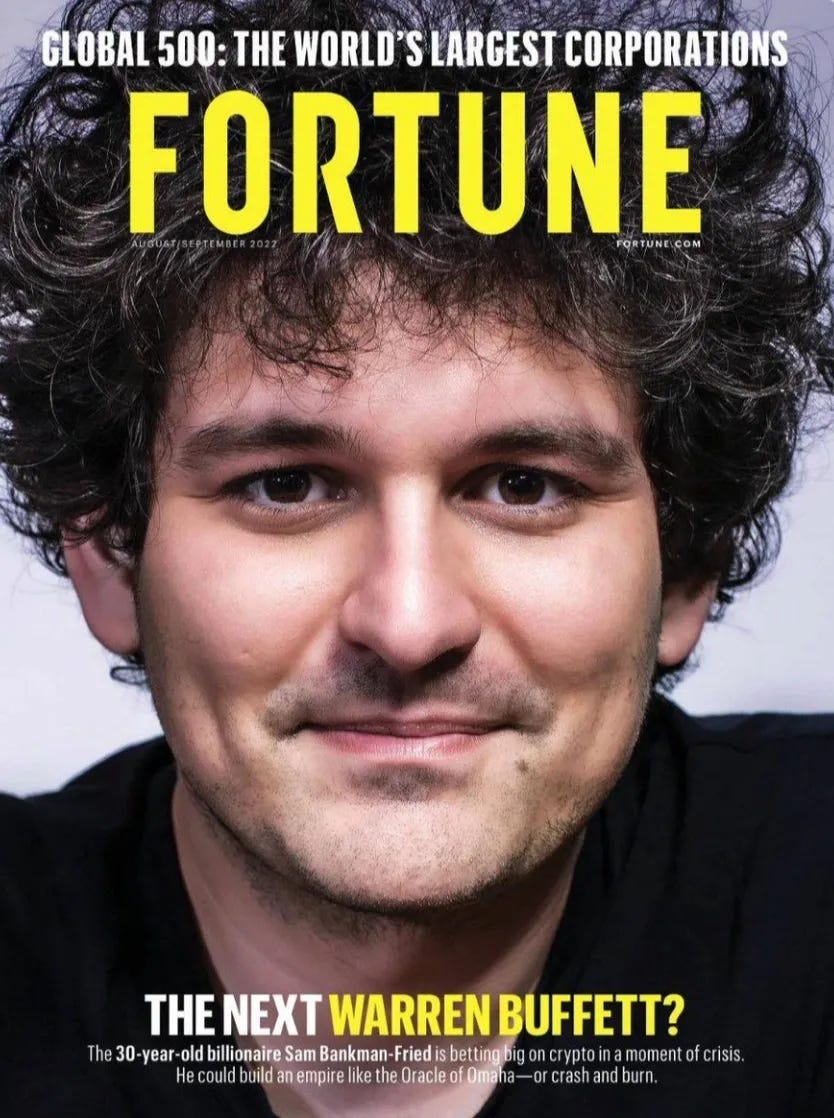
Polyamorous geeks, psychopaths and perhaps the greatest fraud in history
I’m delighted to report that The Flying Frisby is now a Substack Bestseller. Thank you to everyone who supports this bestselling publication!By popular demand, today we consider bitcoin - and the amazing story that is FTX.Gosh, this is some story - it’s difficult to know where to start. The more you dig in, the more that comes out. It’s a cautionary tale of the madness that engulfs crowds during investment manias and bubbles, of greed, delusion, risk, and more besides.I’m sure many of you already know the story, even though there are new developments every day, so I’ll recap it quickly, before moving on to what it means for bitcoin.Tell everyone you know about this amazing article.The story of FTXSam Bankman-Fried was a geeky young crypto “entrepreneur”, born to an upper-middle-class Jewish family in California. His parents were both professors at Stanford Law School. Ironic.In 2017 he set up the quantitative trading firm (that would be trading based on mathematical models) Alameda Research . Then, in 2019, came FTX, a crypto exchange that became phenomenally successful, phenomenally quickly. In July 2021, barely two years into its existence, FTX raised $900m at an $18bn valuation. That was Series A. Three months later came Series B - $420m at a $25bn valuation. Three months after that, in January of this year, it raised another $400m. This time the company was valued at some $32bn.To put those numbers in some kind of context, the likes of Barclays, Soc Gen and Deutsche Bank - banks that have been around forever - all have smaller market caps in the $20-30bn range. $32bn would be more than the UK collects in stamp duty in a year. Or fuel duty or alcohol and tobacco duties. It’s roughly five times what it collects in inheritance tax.Bankman-Fried himself was worth $16bn, and at the age of 30, was on the front cover of Fortune Magazine, along with a headline asking if he was “The Next Warren Buffett?” FTX’s blue-chip and “smart money” investors included Japan’s SoftBank, venture capital firm Sequoia Capital and hedge fund Tiger Global. Even the Ontario Teachers’ Pension Plan put in $95mn. (What has your pension fund manager been doing with your money?)There were rumours of another $1bn raise in September. However, that didn’t materialise and the bitcoin bear market meant the tide was going out in the crypto industry. We would soon learn who had been swimming naked.Subscribe to this amazing publication. It’s a Substack bestseller.FTX suffers in the bitcoin bear market Some started asking questions about FTX’s accounting and other practices. Short sellers also started taking notice - they expose frauds more quickly than anyone. Negative coverage started to appear. On November 6 an article at Coindesk raised doubts about the balance sheet of Bankman-Fried’s sister company, Alameda. Then things started to unravel quickly. Changpeng Zhao, CEO of Binance (the world’s biggest crypto exchange), which had been an early investor in FTX, announced that Binance was selling all its FTT coins - as much as $2bn worth. (FTT coins are part of the plumbing of the FTX exchange). The value of FTT started to fall.Suddenly there was a scramble to withdraw assets from the exchange. It was thought to have had the assets to back the liabilities, Bankman-Fried tried assure everyone that client funds were safe, but it seemed this was no full reserve exchange and FTX didn’t have the funds to meet the run. In fact, it seems FTX had been using some of the funds - as much as $10bn - to shore up sister company Alameda, which had suffered significant trading losses over the past year. (Watch the interviews with 28-year-old Alameda CEO Caroline Ellison - said to be in a polyamorous relationship with Bankman-Fried - describing how she “doesn’t like stop losses”. Turns out she had barely any risk management at all).Chain analysts noted that FTX didn’t have the funds to cover withdrawals. On November 8th Bankman-Fried said he had “enough to cover all client holdings” and that “he doesn’t invest client assets”, but the run continued. That evening withdrawals were halted. In an attempt to restore confidence, Zhao and Bankman-Fried announced that Binance would be acquiring FTX soon after. However, the following day, Zhao said that having done his due diligence, Binance would not be acquiring FTX. A day later, FTX filed for bankruptcy. Easy come, easy go: Bankman-Fried’s net worth went from $16bn to zero in barely 72 hours. Reports are FTX had $900m in assets against $9bn in liabilities.And then, the day after that, some $600m in crypto was hacked from FTX’s wallets and syphoned lord knows where - Panama, Bermuda and Cayman, presumably. Apparently the hacker isn’t even that sophisticated and numerous Twitter feeds are now following the stolen crypto.This story’s amazing - you need to share it on Twitter, LinkedIn or Facebook.As FTX unravels stories start to emerge Since then all sorts of stories have emerged. Weird sexual goings on at the companies
Hold on to your oil, gas and coal stocks
A number of people have asked me to cover bitcoin after this week’s insanity - and I will very soon, I promise, but today we consider fossil fuels once again.While the oil and natural gas prices have not done a great deal these last six months - up a bit, down a bit, then sideways - the associated companies have done very well: the producers, the service companies and so on.Many years of bear market and belt-tightening are now paying off.However, we are not yet, I would suggest, at that point of excess and decadence that marks the end of a cycle - crazy mergers and acquisitions, insane valuations and Bacchanalian behaviour from the executive classes. So I venture today, as last week, that there is still plenty of gas left in the tank of this bull market.With that in mind I wanted to share a few charts with you today that give an idea of what is possible.Oil and gas stocks are on the rise The first of them shows the ratio between energy stocks and the rest of the market. Indeed, without energy stocks there would not be a rest of the market. A simple point that many, especially those who make policy, seem oblivious to. The world we live in today and the economic benefits we enjoy, relative to our ancestors, have been made possible by fossil fuel.So here is the energy sector relative to the the S&P 500. The higher the chart goes, the bigger the relative market cap of energy stocks. You can see that, even with the rally we have seen in energy companies since 2020, on a relative basis, energy companies are, give or take, where they were at the turn of the century, when oil itself was around $10/barrel and that secular bull market was only just getting started.You can also see that we are in an uptrend. Energy stocks are increasing in value, while the broader S&P500 is flat or falling.It’s also worth noting that the relative market cap was almost three times as large in mid 2008, when oil went to $147/barrel. The inference is that the bull market has a lot further to run.Tell the world about this amazing article.Oil versus stocksNext we consider the ratio between oil - West Texas Intermediate - and the S&P 500. You would expect this chart to trend lower over time because oil production and extraction techniques should improve over time, while broader economies and the companies who operate in them grow. Nevertheless we are below the levels we were in the early part of the century. You can see how high this ratio went in 2008 - and how low in Corona panic of 2020, when oil futures, somehow, went into negative territory.It feels a bit like, as far as this ratio is concerned, we are in late 2003.Relative to the S&P 500, oil is roughly where it was three or five years ago - I’d say it’s at its 3- or 5-year average. And it’s a lot cheaper than it was throughout that entire 2003 to mid-2014 timeframe. So even with the gains of the last two years, oil does not look expensive relative to the S&P 500. It is at the cheaper end of the range. Another sign there is more gas left in the bull market tank.Here now we look at oil relative to gold. These two - as hard commodities - tend to trade in a much tighter range over time, but my observation again is that it is in the low to middle of the 20-year range and not at one of those points of extremity whereby you might consider rolling out of one and into the other.For sure we are nothing like where we were went oil went to $147 in 2008. In fact, we are below where we were for most of the 2000s. On the basis of this chart, oil is probably the cheaper of the two.Trade of the lustrumAs regular readers will vouch, oil is a drum I have been beating since 2016 when it was $25 or so, declaring it our “trade of the lustrum”. A lustrum is a five-year period - a useful and underused word I’d say.That lustrum is now becoming a decade. We continue to beat the drum on oil, gas, coal and the related companies. Fossil fuel demand will continue to grow until at least 2030, the IEA has forecast (2040 in the case of natural gas). That means it is not just enough to maintain current production levels, they need to increase. Yet there have been seven or eight years of underinvestment - leading to today’s shortages. Partly because of ESG deterring investment, partly because so much capital has gone into green energy related companies instead and partly because of the excesses of the previous bull market still needed to be purged. The bull market conditions are still good and longer term, I think fossil fuel stocks go higher.I’m a big believer in narratives within markets. The fossil fuel story is only slowly starting to change. Many are realising just how important they are and what they have made possible. Indeed, that there is a strong moral case for them, not against them.But the narrative is not yet at end-of-cycle levels. When people start talking about Peak Oil again - that’s the sort of thing you want to be looking out for. That the need for alternative energy sources is not because fossil fu

What happened there could soon happen here
Today’s missive comes to you from the Galapagos Islands out in the eastern Pacific, where two stories of noble energy initiatives reflect the broader realities of energy policy around the world. We tell these stories with a specific question in mind: how much gas, so to speak, is left in the tank of this energy bull market?The Galapagos population is only around 30,000, but, as a fully functioning society, the same dynamics observed in this small ecosystem occur elsewhere, even if less visibly, so it serves as a useful case study.So we come to the first of our two stories.Not so green transport in GalapagosIn order to limit traffic, protect the environment in this most ecologically delicate of places and protect the taxi industry, the local government made it extremely difficult to get a vehicle licence. All sorts of problematic bureaucratic hurdles had to be jumped, and most people ended up using bikes or public transport.But then in 2016 the powers that be, with a brighter, greener future in mind, decided that anyone could get a licence to own a vehicle, no permit required - as long as it was an electric vehicle. There was just one condition. The buyer had to have a family. Given that most people on the islands have relations, that was a pretty easy condition to meet, even for the single folk. There was a great deal of PR and fanfare about this new initiative: clean, green, sustainable - all that stuff - and a blind eye was turned to the increase in traffic, or of roadkill to the many tame birds on the streets of the island (this is a major problem).At this point it’s worth reminding ourselves that there are, around the world, three main areas of energy consumption - transportation, heating and electricity. While cleaner forms of energy, such as nuclear or wind, might be increasing as sources of electricity, 84% of global energy still derives from the burning of fossil fuels, as the graphic below from Our World In data shows.Even electricity, despite its green credentials, still relies on fossil fuels. The burning of the fossil fuel may be out of sight and, therefore, out of mind, but over 60% of global electricity still derives from it, as our second graphic shows. Wind and solar between them account for barely 10%.Sign up to The Flying Frisby.As we are all now discovering to our cost, despite many years of considerable investment, some might say over-investment, in green energy, there have, simultaneously, been many years of underinvestment in fossil fuel exploration and extraction, nuclear power (the use of which in electricity has, on a relative basis, been declining since the 1990s) and public grids. Hence the current energy shortages especially in Europe. The Galapagos Islands followed the international trends in this regard - which is one reason this story makes for such an interesting case study.Here on the Galapagos Islands, the majority of electricity, despite what you may read, is produced by burning diesel. And at this point we deviate to story number two.The Galapagos wind turbines.There were, once upon a time, some wind turbines built by a consortium of overseas energy corporations, looking to advertise their green credentials to the world. Said corporations conducted a one-year study of wind on the island and concluded that next to the airport (where they would also conveniently be seen by everyone arriving at and leaving the islands) was the best place to erect the turbines. The turbines were duly installed, the publicity was had - here is the world’s first airport that runs 100% on wind and solar, all that stuff - and the energy companies retired back to their nation states.It turned out that year of the study had been an outlier for winds, and they hadn’t built the turbines in anything like the windiest spot. Then the wind turbines stopped working, but nobody on the islands knew how to fix them. Nor was it clear whose responsibility they were. Ever since, the turbines have sat there, stuck - even when the wind is blowing up a storm. Ask a local for the story, and you’ll get a wry shake of the head and a smile at the stupidity of it all. Lord knows how much fossil fuel was burnt mining the necessary materials, manufacturing the turbines, transporting them to the islands and erecting them, only for them not to work, but that is, despite the good intention, what has happened. There they remain, motionless, like statues from a fallen empire. But how now to get rid of them?The episode is neither clean, green nor sustainable.Tell the world about this amazing articleSo back to story number one and the attempt to make the islands greener with electric vehicles (EVs). With the easing of regulation in 2016, the locals who had previously wanted a vehicle but couldn’t get one (a lot) piled in and bought electric vehicles, much to the benefit of the EV manufacturers.But as diesel is the major source of electricity on the islands, so more diesel than ever was now burnt. Again, neither clean nor green.

The Way We Help People Does Not Help People
The highest form of charity, argued the 12th-century Jewish philosopher Maimonides, is when the help given enables the receiver to become self- sufficient.But our systems of state charity - aka welfare - have too frequently had the opposite effect: they have actually created dependency. It is time to re-think the way we help people.I suggest something that may be heinous to some, but it’s this: welfare would be more effective, more varied, more widespread and affordable if there were no state involvement.People instinctively think that without a welfare state, the poor and needy would not be looked after. At such an unacceptable prospect, people then become fervent in their defence of state welfare systems. You can see the passion people feel about this erupting all over the Twitter and the blogosphere.Before we start, I want you to get your head around one thought - suggesting that the welfare system is not working and that we should do away with it is not the same as suggesting the poor and needy should not be looked after. Not at all - in fact, quite the opposite.The provision of care is a delicate, complicated and unpredictable process. Sometimes money might help the recipient towards self-sufficiency, but sometimes not. Giving money might lead to a temporary lessening of suffering, but often it can lead to greater dependency and less self-reliance. Sometimes something local is required, sometimes something practical, sometimes something psychological or emotional, sometimes something specific to the individual's circumstances - sometimes what's needed is a proverbial kick up the backside. Different circumstances require different forms of care.The dignity of the recipient also needs to be considered. It can be demeaning to receive charity. On occasion anonymity might be required - but on other occasions it might not be.How on earth can anyone hope to design a top-down, one-size-fits-all, system of state welfare that can meet all these varying needs consistently over time?Then there is the matter of the giver. He or she must also be considered.Compassion, care and the giving of charity and care are essential human functions - they are a part of human nature. People need to give as much as they need to receive. You just need to see the pleasure children get from giving as evidence of this. Even perhaps the most ruthless, murderous drug-trafficker that ever drew breath, Pablo Escobar, was a prolific giver. He built houses, churches and schools in his native city of Medellin on a scale unmatched by the Colombian government.In the charitable process, the giver has needs too. Sometimes the giver wants to be anonymous - sometimes they want recognition. Sometimes he or she likes to be involved with the recipient in some way, sometimes not.But, in the process of state care, the giver's needs are not even considered. Taxes are taken and that is it. We are given no real say in how the money we have earned is spent, bar a vote of dubious effect every five years. Often the giver is morally opposed to what his taxes are being spent on!The forced giving that is taxation actually destroys the altruistic satisfaction that people get from giving voluntarily. To help others and to share with them is part of humanity. But, in a world in which government is responsible for the care of the poor and needy, that compassion is removed from life. As a result, the state now has a near monopoly on compassion!if you find this interesting, please share .In fact it is even more bizarrely specific than that: the pro-large-welfare-state left wing has the monopoly on compassion. Anyone who doesn't agree with the concept of a large, generous welfare state is deemed heartless and selfish.While you have to pay the government through tax to provide welfare (or heathcare or education) your ability to provide any of these things for yourself or your family is reduced, because you have less money. After taxes are taken from you, you often you can't then afford to pay for your children's school, your doctor, your hospital, your home, or your charity to others - so you find yourself depending on the state help in some way. And so more and more people, in some way or other, are caught in the ever-growing dependency net.What's more, if the state is providing care to the needy, you are then absolved of the responsibility to do so.Meanwhile, government welfare, as well as being inflexible, is expensive . The large organizations, such as the NHS or the DWP, through which care is administered can be inefficient and wasteful. Worse yet, they are be prone to corruption and rent-seeking (people gaming the system in some way).If you look at food, clothing or technology - essential human needs that, largely, are not supplied by the state - we have, over the last thirty of forty years, seen dramatic falls in price and dramatic improvement in quality. Competition has driven costs lower. Yet welfare has not experienced the same improvements. Why not? Because
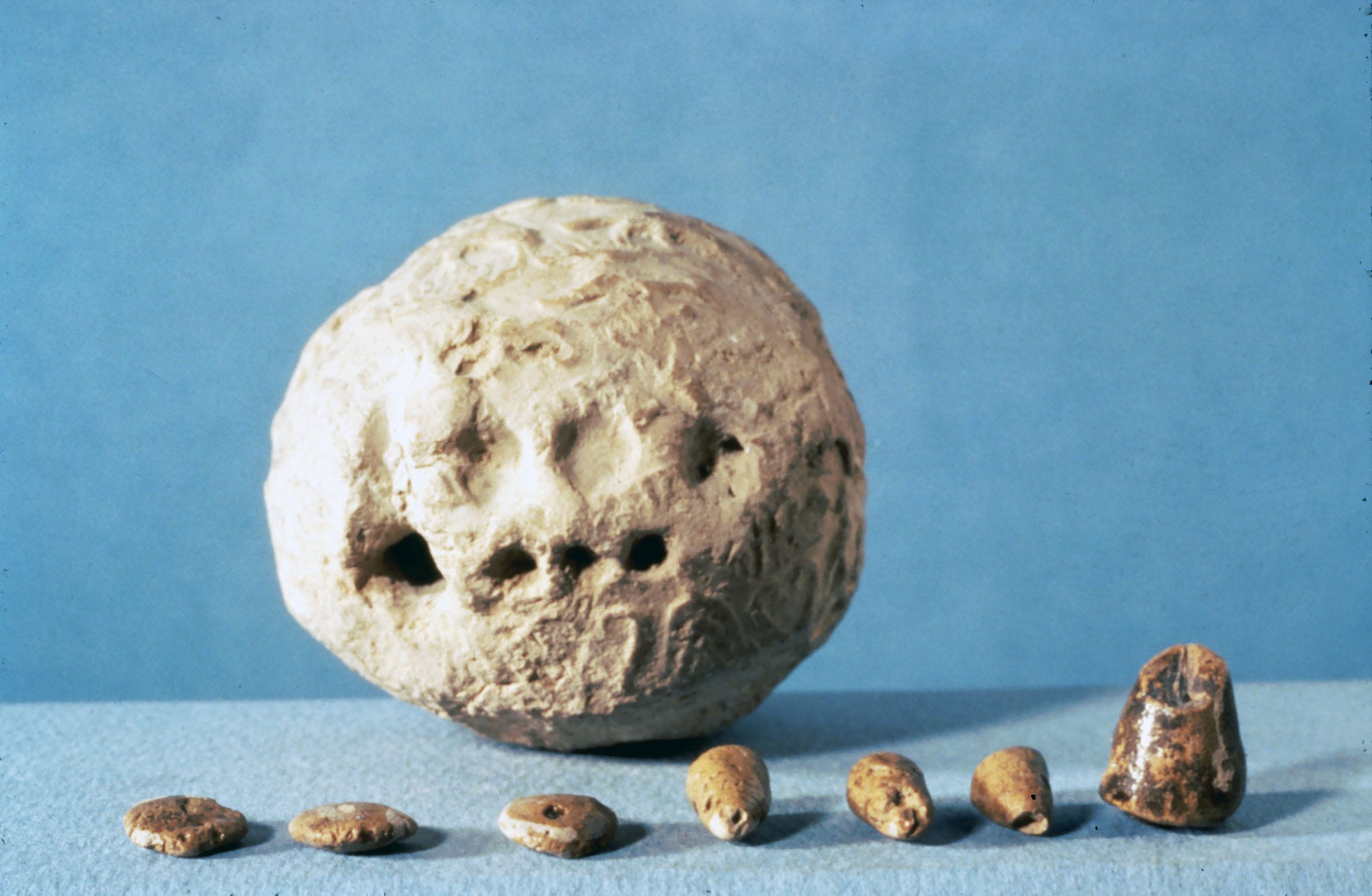
How the nature of money has changed - and what it means for you
Money evolves constantly. Every day there is some tiny new fintech development, but it’s only when you take a step back and look at the ten-, twenty- or thirty-year picture that you realise just how much things have changed. What is money today is a far cry from what was money when I was a child. Digital technology barely existed back then. We used cash and these things called cheques. You’ve probably heard of them.It’s not just what we use as money that evolves. How money is created - that changes too. And just this decade there has been a major evolution. That’s what I am going to talk about today.Thank you for reading The Flying Frisby. This post is public so feel free to share it.The creation of money and debtOnce upon a time you would create money by mining gold and silver. But debt-based money systems have also existed since the dawn of civilization, when clay tokens representing valuable items such as barley or sheep would be baked inside clay balls. When the debt was settled the clay balls would be smashed open.Humans, being the ingenious folk they are, especially when it comes to money, soon found that it was quicker to simply inscribe the clay with pictures of said items and so did the first systems of writing develop - hieroglyphics. Coins came along, and then the printing press, both remarkably long-lived technologies, but behind it all there was always metal.Western Europe abandoned gold in 1914 so it could print the money to pay for the First World War, and the United States did the same in 1971 amidst spiralling welfare costs and the conflict in Vietnam. Both years were landmarks in the evolution of money creation.This became the fiat era, when money became debt. Some physical cash was printed or minted, but money for the most part was created when loans were made. You borrow a thousand pounds to buy a house, the bank created that thousand pounds using the house as collateral and suddenly there was a thousand pounds in the housing market that wasn’t previously there. That’s why houses kept on rising in value - the constant introduction of newly created money through mortgages. Introduce debt into a market and prices rise. If houses were cash based, they’d be a lot cheaper. Something similar happened in the bond markets and the financial markets with the use of leverage. Leverage is just a fancy term for debt.There were occasional moments of credit tightening, but the broader trend, especially as economists and governments became obsessed with what they call growth, was for ever expanding credit.Human beings, being the greedy folk they are, especially when it comes to money, took the whole thing too far, 2008 came along and the bubble went pop.Then a whole way new to create money was invented: Quantitative Easing. Central Banks now started creating money, and they bailed out the financial system with it. Then they started using the money to buy government bonds - so they effectively printed money to pay for government spending. They also bought other financial assets. And so lots of newly created money went into the financial system and from there to the expensive houses in which many of those who work in finance live, and we got another decade or more of rising prices.But because all this newly created money went into financial assets and housing, it didn’t show up on the inflation numbers. Central bank inflation measures don’t include houses or financial assets. So they said there was no inflation. Then Covid came along. Central banks could now print money and it doesn’t create inflation, they thought. They forgot about the sleight of hand that was their inflation measures. So they printed more money and the government handed it out to people. That money made its way into the real economy and now we have inflation. And they are all scratching their heads and blaming Vladimir Putin.But the nature of money creation has changed. Now money is not just debt. Governments are creating it to fund their activities. And when central bank digital currencies come along, they are going to do that even more. As a result governments, are going to play far greater role in where capital gets allocated. We turn to the wise old owl that is financial historian Russell Napier. “By issuing state guarantees on bank credit during the Covid crisis, governments have effectively taken over the levers to control the creation of money”. They said it was temporary, but, to quote the great Milton Friedman, “nothing is so permanent as a temporary government programme”.We now have the War in Ukraine and with it spiralling energy costs - another emergency. How to deal with it? Keep with the programme. Lend money and guarantee loans. Russell Napier again: “By telling banks how and where to grant guaranteed loans, governments can direct investment where they want it to, be it energy, projects aimed at reducing inequality, or general investments to combat climate change. By guiding the growth of credit and therefore the growth
Talking mining with Brent Cook and Kai Hoffman
Here at the New Orleans Investment Conference, I met up with veteran geologist and mining newsletter writer Brent Cook of Exploration Insights together with not-so-veteran, but equally on-it investor Kai Hoffmann of SF Capital. What followed is a 20-minute chat about the state of the mining markets. Those of you that are interested in the state of mining - enjoy! This is a public episode. If you'd like to discuss this with other subscribers or get access to bonus episodes, visit www.theflyingfrisby.com/subscribe
Notes from New Orleans
Back in the 90s, when we were in our 20s, all my university buddies and I wanted to do was travel. We wanted to go everywhere and see the world. The problem was how to pay for it.My solution was to work all year, save up, then, having spent Christmas with my folks, get a flight somewhere on Boxing Day or the day after (flights were always cheap then) and come back at the end of January. The business I was in at the time – voiceovers – never really got going until mid January, so I would end up with almost six weeks of backpacking and only miss a couple of weeks of work, if that.My best buddy, who is now a big cheese at Channel 4 so I won’t mention his name, went several stages further. He got a job compiling guide books for many years. As a result, he has been to more places than anyone I’ve ever met – across Asia, Africa, Europe, the Americas, you name it. And, of all of them, he says he reckons New Orleans was the best.So, imagine my delight when I got an invitation to come and speak at the New Orleans Investment Conference this year. Do I want to come? You betcha!The conference took place last week and I thought it might be of some use or interest to you if I shared some of my observations.Will the Fed keep raising interest rates?First up, I had a great time. The conference, organised by Brian Lundin of the Gold Newsletter and his supremely competent team, lasted four days. There were workshops and events galore, plus a host of great speakers – from celebrated resource investors such as Rick Rule, Brent Cook and Sean Broderick to macro strategists such as Danielle DiMartino Booth, Peter Boockvar, James Grant and Jim Iuorio to the unorthodox with the likes of Jim Rickards, George Gammon, Dave Collum and Robert Prechter. Over 600 people came and there were 100 exhibitors. I would say the bulk of the attendees were American, over 50 and male. There were a lot of gold bugs in the room. I felt well at home. Plus there was plenty of fun to be had in this most musical of cities by night – and great food too.I would say the overriding theme of the conference – the subject that would not go away – was the Federal Reserve Bank. How long does it continue to raise rates for? When does it pivot? At what point do debt levels become unsustainable? The US has interest to pay on $31trn of debt – that surely caps how much further it can raise interest rates? But then it has made it clear that fighting inflation is its number one priority. Round and round the subject went. Some argued that it pivots, others that it keeps on raising.There was also plenty of talk about falling real estate prices; commodities – especially base and battery metals, not to mention energy; the strong dollar and the Ukraine war. I found myself on a panel with George Gammon and Jim Rickards about the threat of imminent nuclear war that got very tin-foil hat. When I suggested that, to everyone’s surprise, Russia was losing the war in Ukraine, Rickards declared that I had fallen for the propaganda and had become a mouthpiece for the globalist agenda and the New World Order. Each to their own, I guess.Opportunities for investors in the UKAnother theme that cropped up a couple of times was investing in the UK and the opportunities there – or here, I should say. The yields on real estate investment trusts (Reits) are incredible, said Peter Boockvar, and, unlike New York where a lot of commercial property is sitting vacant, while many continue to work from home, in the UK it’s mostly being used again. Perhaps most importantly, UK property is looking very cheap to our transatlantic friends thanks to the strong dollar. I warned about the potential for rising rates here in the UK and the damage it could potentially do to real estate, whether commercial or residential, but Boockvar still felt the UK is looking like an attractive proposition at the moment. We have a tendency to denigrate ourselves here in the UK, which is why it’s so good to go abroad and meet people who see the UK in a much more favourable light.A lot of North American money is going to make its way to Europe and the UK, not to mention Japan, in the not too distant future, I would venture.I focused my talk on subjects that I have been covering quite extensively on these pages in recent weeks – energy; gold and its relevance (or lack thereof) in today’s world and China’s monumental gold holdings; and the strong dollar superseding all.There were plenty of mining companies there too exhibiting their wares. I think my favourite was probably a silver mining company by the name of Sierra Madre Gold and Silver (TSX-V.SM), which has a dynamic young management, good broker backing, some promising exploration properties and has just acquired a silver mine from First Majestic Silver (Toronto: FR, NYSE: AG) that it is now putting back into production. Pending the closing of this transaction, the stock is currently halted, which is what all silver companies should be – it removes the temptation to buy th
On raising money and distorted incentives
I was listening to an interview the other day with entrepreneur Balaji Srinivasan, in which he argued that there are two ways by which you can raise capital: one is through investment, the other is through charity.If you are raising capital through investment, the incentive is to demonstrate strength, competence, ability, prowess, honesty and many such other qualities. The more competence you demonstrate, the more likely people will invest in you and the more they will invest. Broadly speaking, this applies to gaining employment too.On the other hand, if you are looking to appeal to people’s charity, then the opposite applies. You must demonstrate that you need and deserve this charity, and so the incentive is to demonstrate weakness, affliction, victimhood and so on. Many of these messages of affliction have made for some of the most powerful ad campaigns ever conducted. Young children and animals are probably the most evocative - from the starving Ethiopian children that inspired Live Aid to the battered seals of anti-fur campaigns.Welfare and, to an extent, healthcare can be seen as forms of charity, even education in a way. In the 19th century responsibility for the provision of welfare, healthcare and education mostly lay with the church, the friendly societies and other private bodies, but in the 20th they, for the most part, became the domain of the state.Today there are countless institutions that rely on government subsidy for their existence - from those fighting climate change or promoting green energy to those fighting perceived inequalities such as Stonewall to many in the arts. All rely on demonstrating affliction to fund themselves and exist. Meanwhile, charity has become an enormous business in the developed world, and all sorts of scandals are starting to emerge of corruption, of the huge salaries many of those who work in it enjoy (get paid lots and be virtuous) and the fact that so little of money donated actually reaches the intended recipients - less than 50% is the key stat from the David Craig book, The Great Charity Scandal: What Really Happens to the Billions We Give to Good Causes? Some charities rely on donations and subscriptions, many rely on the state and its subsidies, many on both. And the industry is heavily regulated by state (with questionable results if the above is to be believed). Regulation also costs a lot of money to adhere to.As those who read my stuff, especially Life After the State, will know, I constantly argue the state is not the best means to provide these things to the highest possible standard at the lowest possible cost, that in fact, for all its good intentions (let’s assume they’re good) the state often causes more harm than good and its role in exacerbating the health, wealth and opportunity gaps is demonstrable and large. Thus we should shrink the state as much as is possible.But because the state has grown so bloated in the West, and because it is the main provider of this second form of capital - charity - whether by subsidy or through its other systems, and because the solution to pretty much any social problem that arises is that the government “must do something”, I suggest we are getting caught up in an extremely unhealthy psychological loop. Rather than incentivising strength, competence, excellence and so on, our systems are incentivising behaviours by which that second form of capital be raised - weakness, victimhood and so on. That’s why there is so much of it about.New afflictions are being found all the time, as “entrepreneurial” spirits try and find new means to secure special favour, protection and subsidy.Thus, by shrinking the state do we shrink victimhood. We want people to be the best they can be, surely? Not the opposite.Thank you for reading The Flying Frisby. This post is public so feel free to share it. This is a public episode. If you'd like to discuss this with other subscribers or get access to bonus episodes, visit www.theflyingfrisby.com/subscribe

Gold: the disconnect between the price and what is happening in the physical markets
Today we turn our attention to the physical gold markets.There is, as veteran dealer Ross Norman of Metals Daily puts it, a “disconnect between the gold price and what is happening in the physical markets.”“Our biggest challenge,” says Joshua Saul of the Pure Gold Company, “is finding enough stock on a daily basis to sell. There is a long line of demand, but very little supply. There’s more demand than at the height of Covid.”These situations don’t occur very often, but they do occur. The gold price is falling, but demand for physical gold is highI remember 2008 like it was yesterday. Gold cratered along with everything else in the second half of that year. It lost around 30% – falling from north of $1,000/oz to $720/oz. The mining companies fell by a lot more.Yet there was a scramble in the physical gold markets. Bullion dealers had never been so busy. The general public were rushing to get their money “outside the system” into an asset that was nobody else’s liability. Gold would later turn up long before most other assets. November was the low, while the S&P500 carried on lower until the following March. But the fact was there was a scramble to buy physical gold even as the price was falling.It happens. “Coins and bars,” says Norman, “are just a subset of a much bigger industry.” That industry includes the futures markets, exchange traded funds, institutional buying and selling, central bank buying and selling and, of course, jewellery. Ordinary investors may look at the state of the world and think, “I need to buy some gold”. They may be doing that at unprecedented levels. But that is not enough to balance out institutional investors who are, says Norman, “selling three to ten tonnes a day.”As I say, these disconnects do happen, but they don’t necessarily last.The US dollar has stolen the showIt’s all about the US dollar, as we have been saying on these pages for many months. In the year to date, gold is up around 13% in sterling. That’s an almost stellar return compared to stock and bond markets. But against the dollar it’s down some 8%. How long does the dollar stay so strong? That’s the question we must ask ourselves. On current form, a while longer it would seem.Norman, who has an extraordinarily good forecasting record, agrees. “The rampant dollar looks like it might be here for a while,” he says.You don’t need to look further than US interest rates relative to European interest rates and US energy dependency relative to Europe’s, to understand why we are where we are.“Never in my career did I think we’d see the circumstances we are now in and gold behaving like it is,” says Norman. “It’s extraordinary. The dollar has stolen the show. But nuclear war is a real possibility!”Gold, by the way, will survive a nuclear explosion, and none of the three types of radiation that follow – alpha, beta and gamma – will affect it.Smart investors are still buying gold bullionBut one of the few bright spots in this market is what Norman calls “the literate investor” who continues to support it.Saul of Pure Gold makes a similar observation. His company makes a point of talking to clients as they buy and sell, to understand their motivations. As a result, they build up a lot of qualitative data.“Everyone’s looking to protect their wealth in a time when things are really uncertain”. But there have been two notable trends he has observed.First, there has been a notable increase in buyers from the financial world. “Traders, investment bankers, financial services, accountants, lawyers – they’ve been buying large sums. I find this notable: “Their trade sizes are bigger. The median trade size is probably three times bigger than it was a year ago – and during Covid.”Saul says many of them are worried about what is going on behind the scenes at the banks. “These are considered investments, where there is a lack of alternatives.”The Flying Frisby is a reader-supported publication. To receive new posts and support my work, consider becoming a free or paid subscriber.Money is moving out of property and in to goldThe second notable trend is the exodus of money from real estate – whether commercial or residential.“Property investors normally like to remain liquid, so they have cash on hand ready for the next deal. Buy-to-let landlords, commercial landlords, people who buy big buildings and let out floor by floor, developers. Companies and individuals. A lot of them have a lot of cash. They have an appetite for debt, but the increased cost of debt, plus the possibility that the underlying asset will fall in value means there is too much risk for them. They’re now parking that cash in physical gold.”“We are also seeing a growing amount of people with properties on the market, who when their property sells will move their capital into gold. Many are removing their exposure to debt that they might have taken two or three years ago.”What we are seeing then is capital flowing from finance and from real estate into gold. I find that te
Mind The Gap
I stumbled across this 2013 blog earlier today. I’m posting it because I thought you might enjoy it, and partly because it’s relevant to a thought piece I’ve been working on that I’ll be posting later in the weekOoh, what fun There's nothing surer The rich get rich and the poor get poorerPeggy LeeMost of us now enjoy luxuries that would have been unheard of a hundred years ago - running water, electricity, computers, phones, cheap food and clothing. Yet, despite all this, there is discontent. Huge amounts.The problem is inequality. Inequality is everywhere, it is increasing and it comes in many different forms.There is the wealth gap.The wealthiest 400 people in the world are worth more than the poorest 140 million.70% of the land in the UK is owned by less than 1% of the population.When once CEOs of major corporations earned 20 times more than their employees, now they can earn a thousand times more. A Burberry sales assistant (according to Glassdoor) earns £16-17,000 including commission. The Burberry CEO, Angela Ahrendts, received £16.9 million last year. I shudder to think what the Burberry factory worker is getting.Over fifty per cent of young people believe they will never own a house, while the average age of the first-time buyer in London is now over 40. He or she'll be a pensioner before they can start a family.We can build a decent house for less than a hundred grand, and only 2.5% of the UK is actually built on, so how can we have a society in which houses have got so expensive that most young people think they will never own one?There is the health gap.Unbelievably - and despite best intentions - health inequality, as measured by life expectancy, has actually increased since the founding of the NHS in 1948. There is also huge discrepancy in the quality of care received between the top and bottom of society.And we have the opportunity gap.Despite billions being spent on education, despite more and more taxation, subsidy, legislation and regulation all with the intention to spread wealth and bring equality of opportunity, the top positions in just about every area of the economy you can think of - politics, law, media, finance, medicine, even manufacturing - are dominated by the 7% of the population who went to public school.Even in the Olympics you were five times more likely to win a medal if you went to public school.Something is wrong. People are, rightly, angry about it.Tax the rich more. Stop companies like Google evading their tax. Clamp down on immigrants. Stop benefit cheats. Spend more on education, on health care, or is it infrastructure? Increase regulation of banks. Build more houses. Subsidize wind farms or environmental initiatives. More austerity. Everyone has their own idea about what needs to be done and over the last decade a huge ideological battle has been unfolding as people argue about it.But all these ideas and many more besides, some of which come from the left and others from the right, all involve the same thing: that the government does more, that it takes action.I suggest the opposite - that the ONE thing government should do is LESS. I suggest that, counter-intuitive though it may seem, the huge rise in inequality is BECAUSE of government and the unintended consequences of its actions.For a hundred years the state has got more and more involved in our lives. It now look after our birth, our education, our health, often our employment, our old age, even our burial. Through its money and interest rates, through its taxes and subsidies, its rules and regulations, it looks after our economy. The more it does, the greater these gaps have all grown.It's time to try something else - Life After The State.Life After The State by Dominic Frisby is available on Amazon. The audiobook is available at Audible.And if you happen to be in the Louisiana neck of the woods next week, or fancy a trip, I’ll be speaking at the New Orleans Investment Conference, which runs from October 12-15, at the Hilton New Orleans Riverside. There are lots of big names on - Rick Rule, James Grant, George Gammon, Jim Rickards, Doug Casey and many more besides. Come and say hi!The Flying Frisby is a reader-supported publication. To receive new posts and support my work, consider becoming a free or paid subscriber. This is a public episode. If you'd like to discuss this with other subscribers or get access to bonus episodes, visit www.theflyingfrisby.com/subscribe