The Delicious Legacy
251 episodes — Page 4 of 6
S4 Ep 17Foodways of The Hittites
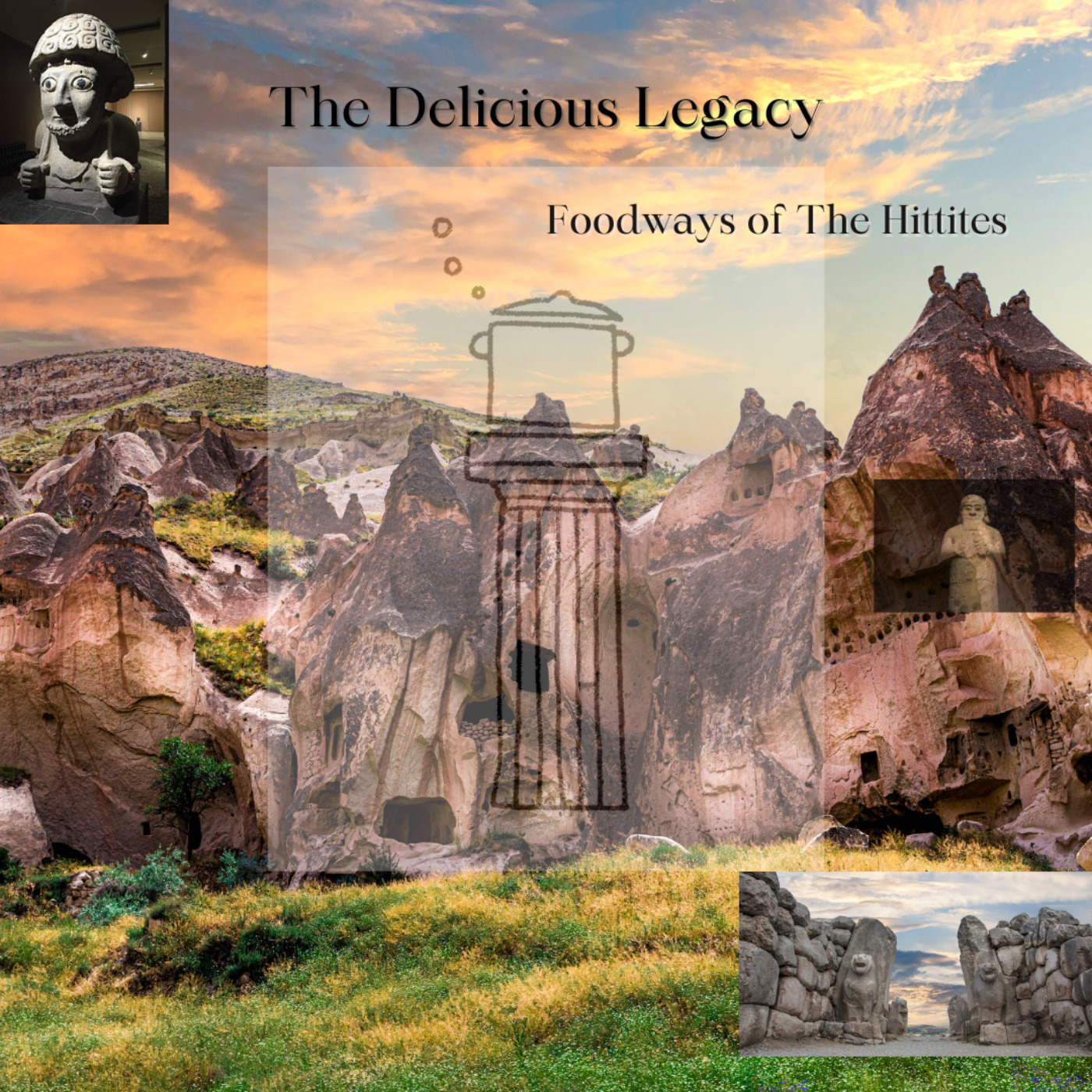
Hello!!!This week we are going back roughly 4000 years ago, in Anatolia, in what is today Turkey. A plateau, created by the forces of the tectonic plates pushing each other, bordering Syria, Iran, Iraq, Armenia or encompassing some of the current countries, the Hittites were an ancient civilization a powerhouse controlling much of the fertile land and trade.Avid collectors of foreign literature, they saved for our eyes, thousands of clay tablets with myths, legends, incantations and spells of cultures surrounding them, as well as their own history. Peace treaties with Egyptians and trade with the semi-mythical kingdom of the Achaeans or otherwise as we know them Mycenaean Greeks. and their disputre with Wilusa, or as we know it Troy.Join me to find out more about the people were myth and history collides with some fascinating insights!Thom & The Delicious LegacySupport the podcast on Ko-Fi and Patreon for ad-free episodes! https://ko-fi.com/thedeliciouslegacypodcasthttps://www.patreon.com/c/thedeliciouslegacySupport this show http://supporter.acast.com/the-delicious-legacy. Hosted on Acast. See acast.com/privacy for more information.
S4 Ep 16Whiskey and Haggis- A Burns Night Dinner
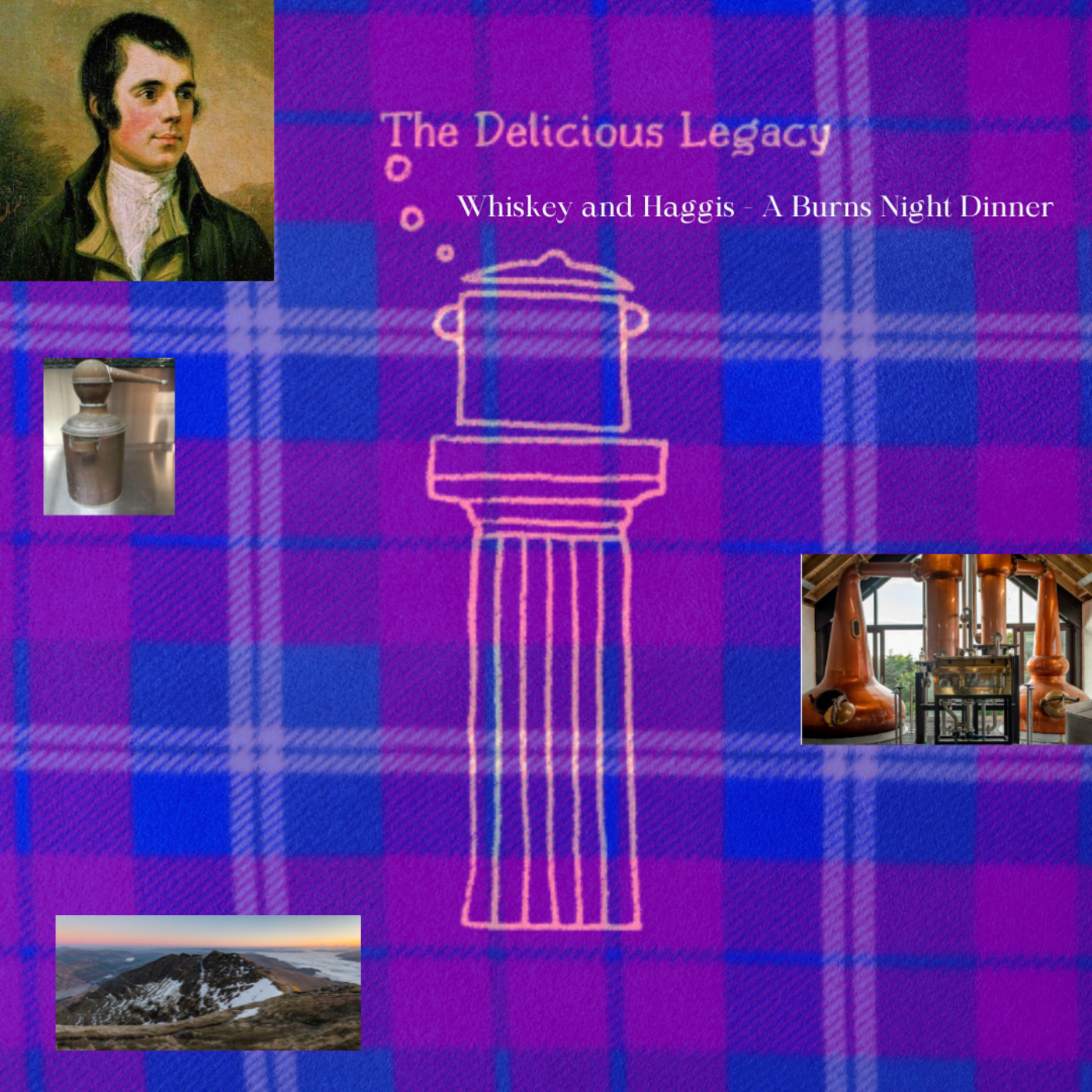
25th of January is the birthday of Scotland's National Poet: Robert Burns.What was served on the first ever commemorative dinner in honour of Burns?What are the origins of the delicious pudding Haggis, and how is related to an ancient Greek comedy by Aristophanes?How are the Arabs responsible for Whiskey?And what is on offer on a traditional Burns night? What delicious fare is available for all party goers?Join me to find out more about this absolute classic Scottish party!Enjoy!The Delicious LegacySupport the podcast on Ko-Fi and Patreon for ad-free episodes! https://ko-fi.com/thedeliciouslegacypodcasthttps://www.patreon.com/c/thedeliciouslegacySupport this show http://supporter.acast.com/the-delicious-legacy. Hosted on Acast. See acast.com/privacy for more information.
S4 Ep 15A (Pungent) History of Beans
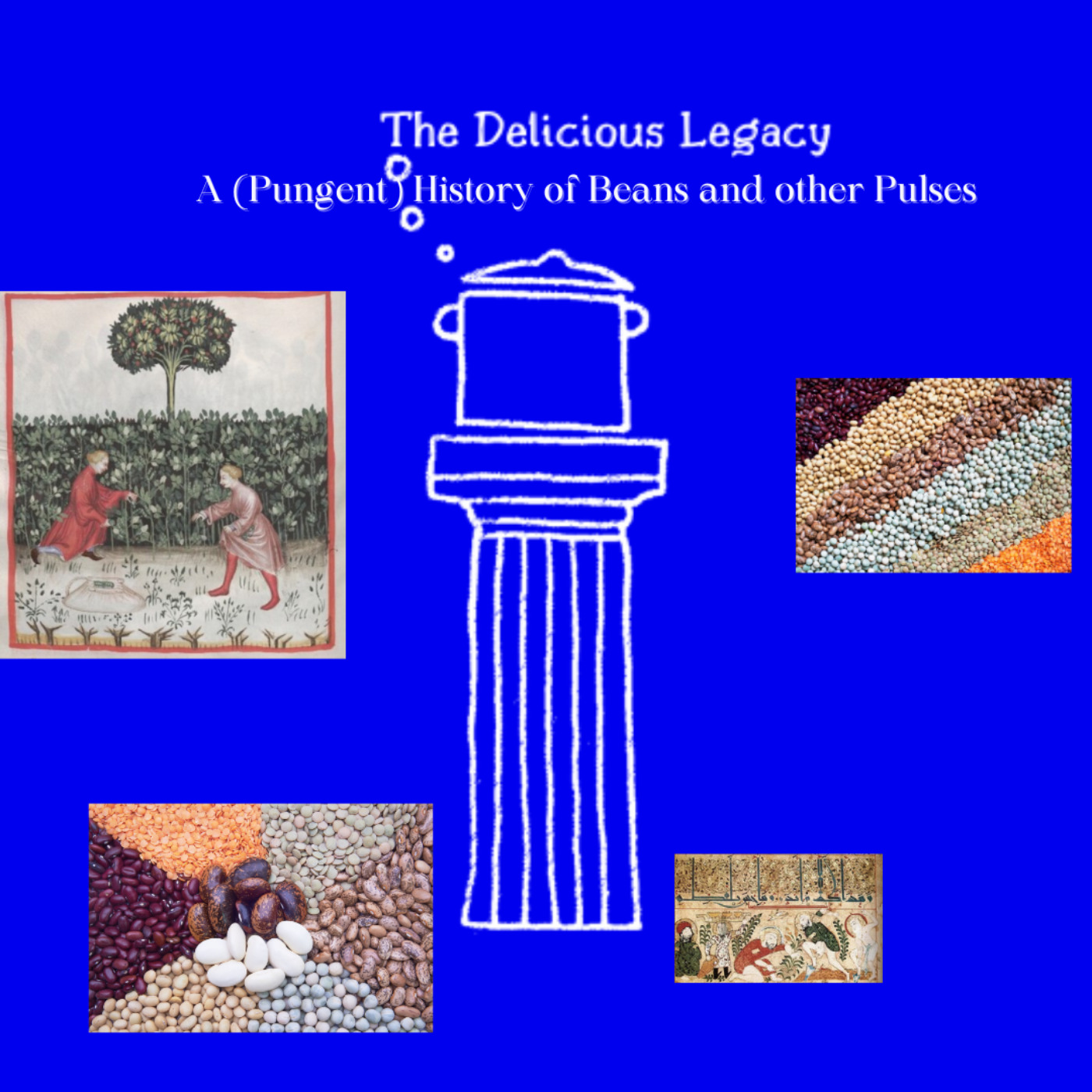
Why Pythagoras was afraid of a field of beans?Did really an angel decent from Heaven to cook up the most tasty bean soup in a Byzantine Monastery?Do the British love beans or is it just the canned beans?What's pease pudding and what Santorini Fava gotta do with it?And have you heard of this Lancashire delicacy called "parched peas"?This is the episode you've been waiting for! A universal history of beans!Yep. A global phenomenon! Beans have been eater in many forms and guises all over the world. A fantastic resource for humans, and the environment.When we say "beans" we generally mean all pulses, all legumes, not just the tinned variety from a very well known brand...in tomato sauce...This covers lentils, chickpeas, black eyed peas, broad (fava) beans, lupins, peas and other "Old World" beans.From Mesoamerica and the "New World" we got our many varieties of white, black, red, kidney, butter, runner beans and some crazy number of 3000 different varieties of beans!Beans were important in all cultures, and a staple food, a sustenance for thousands of years.From Ancient Egypt, to Greece and Rome, and Medieval Europe via the Arab world.What's the older recipe we've got? And how is cassoulet made? Links:Academy of Cassoulet:https://www.academie-du-cassoulet.com/la-recette-du-cassoulet/ Lentils of Eglouvi in The National Index of Intangible Cultural Heritage of Greece under the aegis of UNESCOhttps://www.greekgastronomyguide.gr/en/item/faki-egklouvis-lefkada/ Theophrastus the father of botany:https://en.wikipedia.org/wiki/Theophrastus Giant beans from Prespes:https://www.poupadou.com/blog/en/area-prespes/ https://www.theguardian.com/food/2023/jul/26/how-to-make-the-perfect-gigantes-plaki-recipe-felicity-cloake Fava from Santorini;https://www.aglaiakremezi.com/fava-and-the-history-of-the-humble-lathyrus-pea/ EnjoyThe Delicious LegacySupport the podcast on Ko-Fi and Patreon for ad-free episodes! https://ko-fi.com/thedeliciouslegacypodcasthttps://www.patreon.com/c/thedeliciouslegacySupport this show http://supporter.acast.com/the-delicious-legacy. Hosted on Acast. See acast.com/privacy for more information.
S4 Ep 14Celebrating 100 Episodes of The Delicious Legacy
Hello!In January 2024 we have reached 4 years of the podcast!Plus in early December we completed 100 episodes of the podcast and for this I wanted to share with you a special episode.What better way that to ask some of my favourite historical food people and friends of The Delicious Legacy, for their opinion on what is their beloved dish from the past, or historical cookbook, or something ancient they like to cook?Here, I've collected the favourite ones from Dr Neil Buttery, Dr Christopher Monk, Ned Palmer, Victoria Flexner and Jay Reifel, Dr Andrew Kenrick, Lewis Bassett from the Full English Podcast,Tudor expert and author Briggite Webster, friend of the podcast and baker Kristin Carrigg, and fellow podcaster and friend of the podcast Kyle Glover from History Rage podcast.On the audio, you'll also find some quick details about each guest and on which episode they were on the podcast, talking about their speciality subject.Enjoy! The Delicious LegacySupport the podcast on Ko-Fi and Patreon for ad-free episodes! https://ko-fi.com/thedeliciouslegacypodcasthttps://www.patreon.com/c/thedeliciouslegacySupport this show http://supporter.acast.com/the-delicious-legacy. Hosted on Acast. See acast.com/privacy for more information.
S4 Ep 13The Legendary Gourmet Apicius
A man, a legend, a myth. So much is a mystery about Marcus Gavius Apicius the gourmet, and Apicius De Re Coquinaria, the oldest surviving cookbook from the Classical World. Before the word Epicurean was in use, there was "Apician" 'of or pertaining to Apicius the notorious Roman gourmand.' My guest today, Andrew Kenrick is a tutor at University of East Anglia who wrote Eating the Empire: The Life and Dines of a Roman FoodieEating the Empire is a book about the life and food of the world’s first celebrity chef and author of the oldest surviving cookbook, Marcus Gavius Apicius where he attempts to uncover the real Apicius, buried amidst the scandal and myth that surrounded his life.Enjoy!The Delicious LegacySupport the podcast on Ko-Fi and Patreon for ad-free episodes! https://ko-fi.com/thedeliciouslegacypodcasthttps://www.patreon.com/c/thedeliciouslegacySupport this show http://supporter.acast.com/the-delicious-legacy. Hosted on Acast. See acast.com/privacy for more information.
S4 Ep 12Byzantine Christmas Foods and Traditional Greek Christmas Recipes
Merry Christmas to all!Happy holidays and a delicious New Year!So I have a festive episode for you! Out now, and the last one for the year!Christmas in the Emperor's Palace in Byzantine Constantinople...How did the Emperor entertained his guests in Christmas time? What food was advised to be eaten for the celebrations?Also, what is some traditional modern Greek dishes for Christmas from my home town of Veria?I have some exclusive and delicious recipes for your ears and only!Enjoy!The following talented human beings wrote the music for this episode:Music by Argyris Ottas, https://soundcloud.com/argymusicPavlos Kapraloshttps://www.youtube.com/channel/UCzgAonk4-uVhXXjKSF-Nz1Aand Miltos Boumis.https://boumisfilms.com/Support the podcast on Ko-Fi and Patreon for ad-free episodes! https://ko-fi.com/thedeliciouslegacypodcasthttps://www.patreon.com/c/thedeliciouslegacySupport this show http://supporter.acast.com/the-delicious-legacy. Hosted on Acast. See acast.com/privacy for more information.
S4 Ep 11Elizabeth Raffald, Hannah Glasse, Eliza Smith, Ann Cook
It's another The Delicious Legacy Podcast Vs The British Food History Podcast!The Lives & Works of Four Incredible 18th Century Cooks:Four women. Four household cooks. In the course of a century they reshaped the rules of authorship, cookbooks and home cooking.You might have heard their names. Especially, if you're into your culinary history.But what was that made these four remarkable women to stand out -nearly 300 years ago- in a field crowded with men and rife with plagiarism? Cookery books before were fairly useless as a workable text for the inexperienced new middle classes trying to get economical meals on the table.How did these persistent and talented cooks and cookbook authors shaped our modern genre of culinary writing? And what was the evolution of cooking since the 18th century to today? Suddenly women’s voices were being heard, at least in the gendered realms of romantic fiction, cookery, self-help manuals and other works of betterment…What do we own to these superbly talented women?Join Neil Buttery writer and food historian and me in an exploration of the lives of Eliza Smith, Hannah Glasse, Ann Cook, and Elizabeth Raffald!Enjoy!Thom & The Delicious LegacySupport the podcast on Ko-Fi and Patreon for ad-free episodes! https://ko-fi.com/thedeliciouslegacypodcasthttps://www.patreon.com/c/thedeliciouslegacySupport this show http://supporter.acast.com/the-delicious-legacy. Hosted on Acast. See acast.com/privacy for more information.
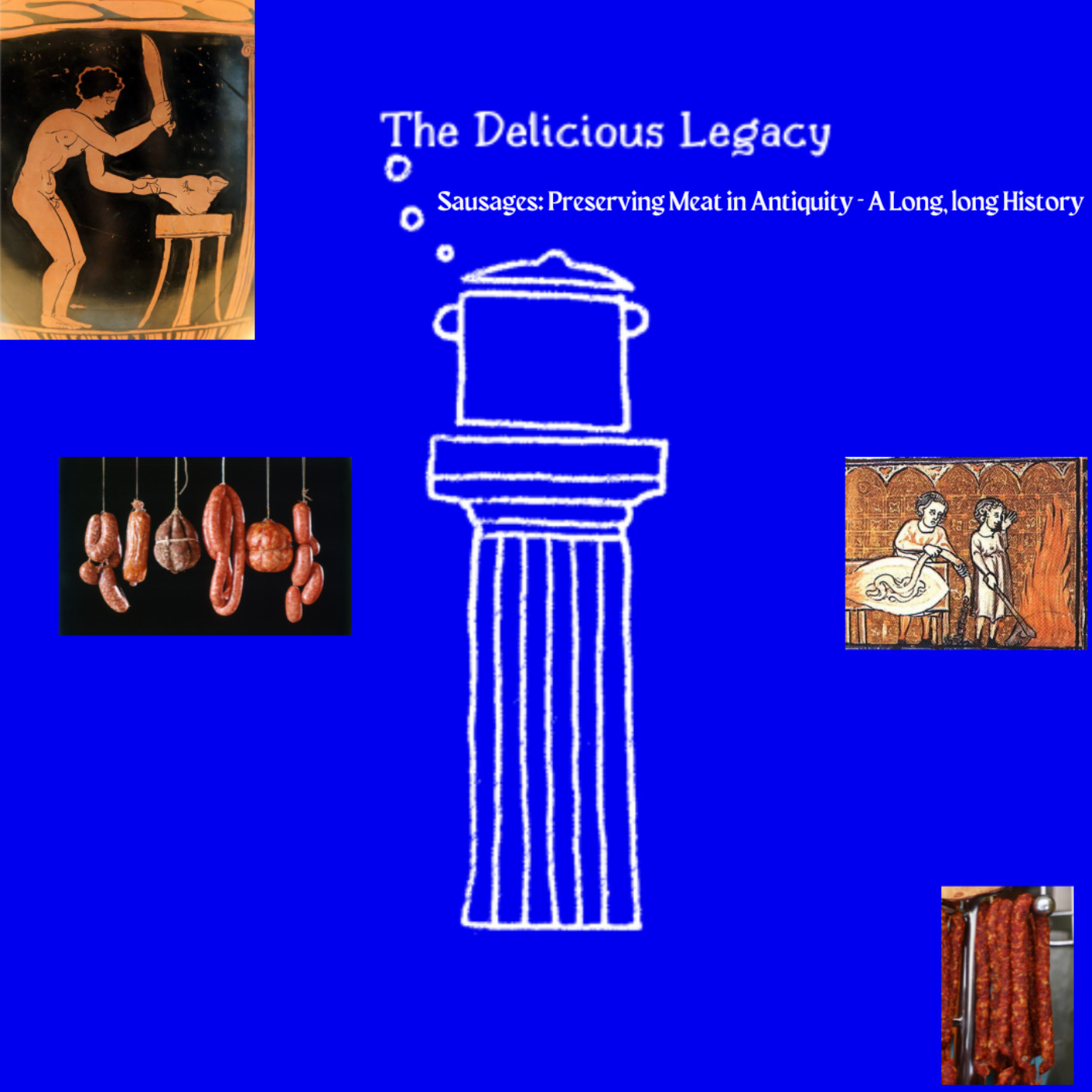
S4 Ep 10Sausages: Preserving Meat in Antiquity - A Long, long History
Hello!Everyone's different, but we all love sausages! Isn't true?Greeks eat it, Italians eat, Germans, Spanish, Polish British, Portuguese ...There is, even, a sausage party in Taiwan Taipei...Listen for some recipes for sausages from Apicius as well as recipe for traditional Greek sausages today!Enjoy!Join me on Patreon for exclusive bonus content!https://www.patreon.com/thedeliciouslegacyThe Delicious LegacyMusic by Pavlos KapralosSupport the podcast on Ko-Fi and Patreon for ad-free episodes! https://ko-fi.com/thedeliciouslegacypodcasthttps://www.patreon.com/c/thedeliciouslegacySupport this show http://supporter.acast.com/the-delicious-legacy. Hosted on Acast. See acast.com/privacy for more information.
S4 Ep 9Episode Swap! The Haloa Festival of Ancient Athens
Hello!This is a short bonus episode where I swapped with Ancient History Hound which is one of the first podcasts and friends on ancient Greek/ Roman history that I've been listening to since I started.He tells us all about an Ancient Athenian Winter Festival - The Haloa. One of many, celebrated the goddess Demeter and in was happening during or around or month December/January.He's website is : https://ancientblogger.com/ Podcast here: https://podcasts.apple.com/gb/podcast/ancient-history-hound/id1281030015 He is on Twitter as @ancientbloggerInstagram: https://www.instagram.com/ancientblogger/?hl=en Enjoy!The Delicious LegacySupport the podcast on Ko-Fi and Patreon for ad-free episodes! https://ko-fi.com/thedeliciouslegacypodcasthttps://www.patreon.com/c/thedeliciouslegacySupport this show http://supporter.acast.com/the-delicious-legacy. Hosted on Acast. See acast.com/privacy for more information.
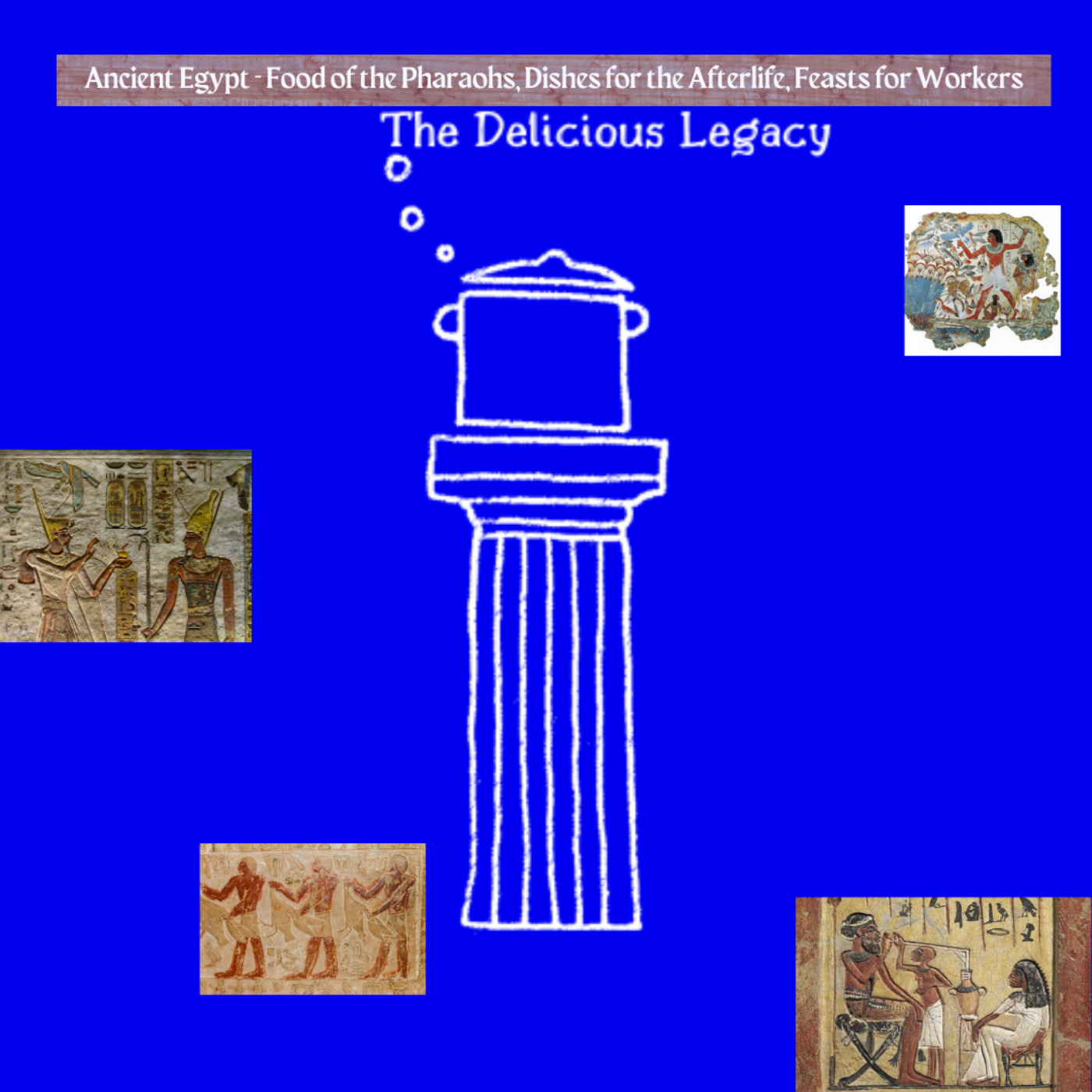
S4 Ep 8Ancient Egypt - Food of the Pharaohs, Dishes for the Afterlife, Feasts for Workers
Hellooooooo....!Episode 100 is out!New episode is out!Links mentioned in the episode:Food Fit for the the Soul of a PharaohThe Mortuary Temple's Bakeries and Brewerieshttps://www.penn.museum/sites/expedition/food-fit-for-the-the-soul-of-a-pharaoh/ 5000-Year-Old wine jars found intact at Abydos in Sohaghttps://english.ahram.org.eg/NewsContent/9/40/509364/Antiquities/Ancient-Egypt/YearOld-wine-jars-found-intact-at-Abydos-in-Sohag.aspx Enjoy!Thom & The Delicious LegacySupport the podcast on Ko-Fi and Patreon for ad-free episodes! https://ko-fi.com/thedeliciouslegacypodcasthttps://www.patreon.com/c/thedeliciouslegacySupport this show http://supporter.acast.com/the-delicious-legacy. Hosted on Acast. See acast.com/privacy for more information.
S4 Ep 7What have the Romans ever done for us? Food of Roman Britain
I recently met with the creator and presenter of The Full English Podcast, Lewis Bassett to talk about -well our favourite subject: food- and especially the long lost history of food in British Isles.How far back could we go? Perhaps the first documented evidence were from the Roman occupation of Britain nearly 2000 years ago.We thought we should examine the social aspect of Roman food in Britain and the influence of Rome in the lives of ancient Britons. What was the flavour palette of the ancient world? What were the common foods 2000 years ago? What did the Romans introduced to these islands, foods that we now take as native and local?Lewis came to my house and we cooked an ancient Romano-British feast inspired by both Apicius and archaeological evidence and analysis of remains.I hope you'll enjoy our little conversation, and the food of course!Music by Pavlos KapralosMuch love,Thom & The Delicious LegacySupport the podcast on Ko-Fi and Patreon for ad-free episodes! https://ko-fi.com/thedeliciouslegacypodcasthttps://www.patreon.com/c/thedeliciouslegacySupport this show http://supporter.acast.com/the-delicious-legacy. Hosted on Acast. See acast.com/privacy for more information.
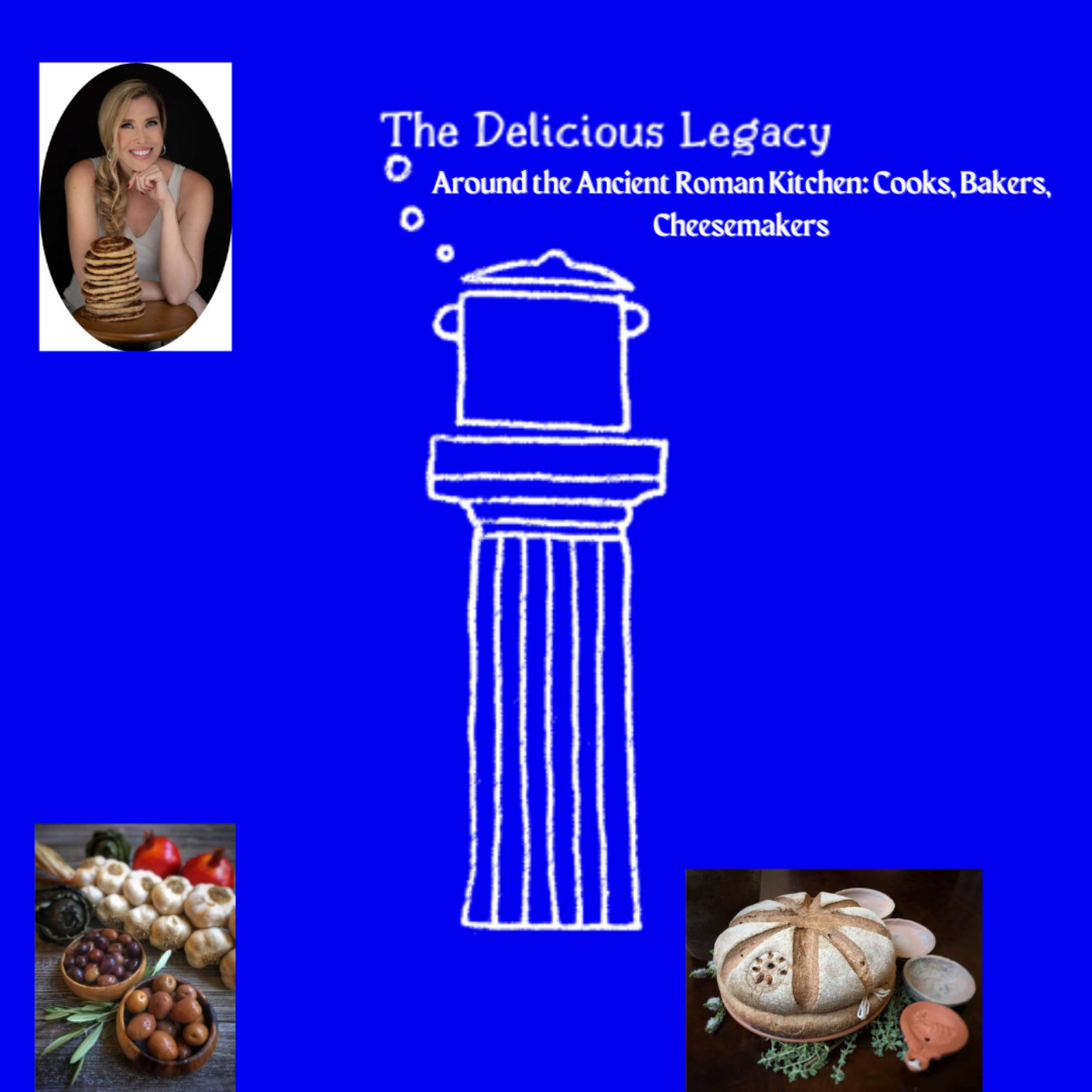
S4 Ep 6Around the Ancient Roman Kitchen - Cooks, Bakers, Cheesemakers
Hello!I'm very excited about this episode! Farrell Monaco is a culinary & experimental archaeologist, and bread-baking addict! Especially of the ancient Greco-Roman variety...So what better person to chat about the ancient cuisine? And it's a very thought-provoking and thoughtful. Who were the people (and the animals!) who did the hard work?Currently in California -where she was when we spoke online- but mostly researching in Pompeii, Herculaneum and Ostia about ancient Greco-Roman breadways.More info on bread from Pompeii by Farrell Monaco:https://www.bbc.com/travel/article/20230629-adoreum-the-newly-discovered-flatbread-fresco-of-pompeiihttps://www.bbc.com/travel/article/20230406-arculata-the-bread-that-survived-pompeiiApuleius and The Golden Ass:https://en.wikipedia.org/wiki/The_Golden_AssEtruscan Tarquinian Tombs:https://tarquiniaturismo.com/tomb-of-the-triclinium/?lang=en Farrell's website and blog:https://tavolamediterranea.com/Enjoy!Thom & The Delicious LegacySupport the podcast on Ko-Fi and Patreon for ad-free episodes! https://ko-fi.com/thedeliciouslegacypodcasthttps://www.patreon.com/c/thedeliciouslegacySupport this show http://supporter.acast.com/the-delicious-legacy. Hosted on Acast. See acast.com/privacy for more information.
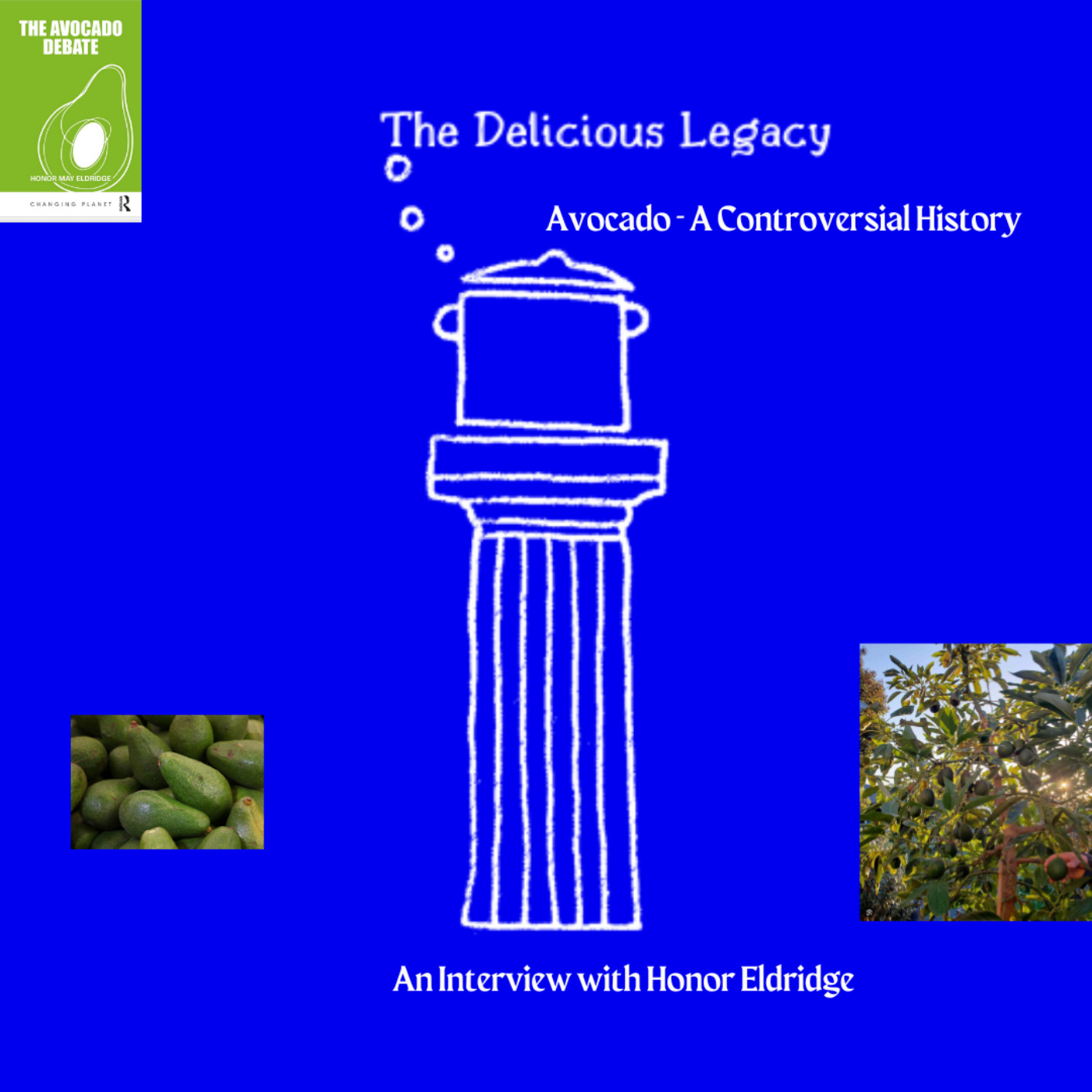
S4 Ep 5Avocado - A Controversial History
Hello!An new episode is out!A few weeks ago I had the chance to interview Honor Eldridge about her new book "The Avocado Debate" which will be released on 24 of November.We talked about the controversy and debate that this fruit causes around many circles of commentators both online and in the real world and of course about it's history and how it went on to conquer the breakfast tables around the world, and why!From claims it steals water from local communities, to destroying pristine ecosystems and being simply a crop at the hands of drug cartels avocado hasn't being short of controversies.Should we rightly demonize the avocado or we need a subtler approach to figure out how to solve general environmental issues that arise in food production and help indigenous, local communities? (and enjoy a smashed avocado on toast with our breakfast?)Let's find out what really happens behind the scenes on this episode of The Delicious Legacy Episode!You can pre-order the book here:https://www.routledge.com/The-Avocado-Debate/Eldridge/p/book/9781032443898Intro Outro Music by Pavlos KapralosEnjoy!The Delicious LegacySupport the podcast on Ko-Fi and Patreon for ad-free episodes! https://ko-fi.com/thedeliciouslegacypodcasthttps://www.patreon.com/c/thedeliciouslegacySupport this show http://supporter.acast.com/the-delicious-legacy. Hosted on Acast. See acast.com/privacy for more information.
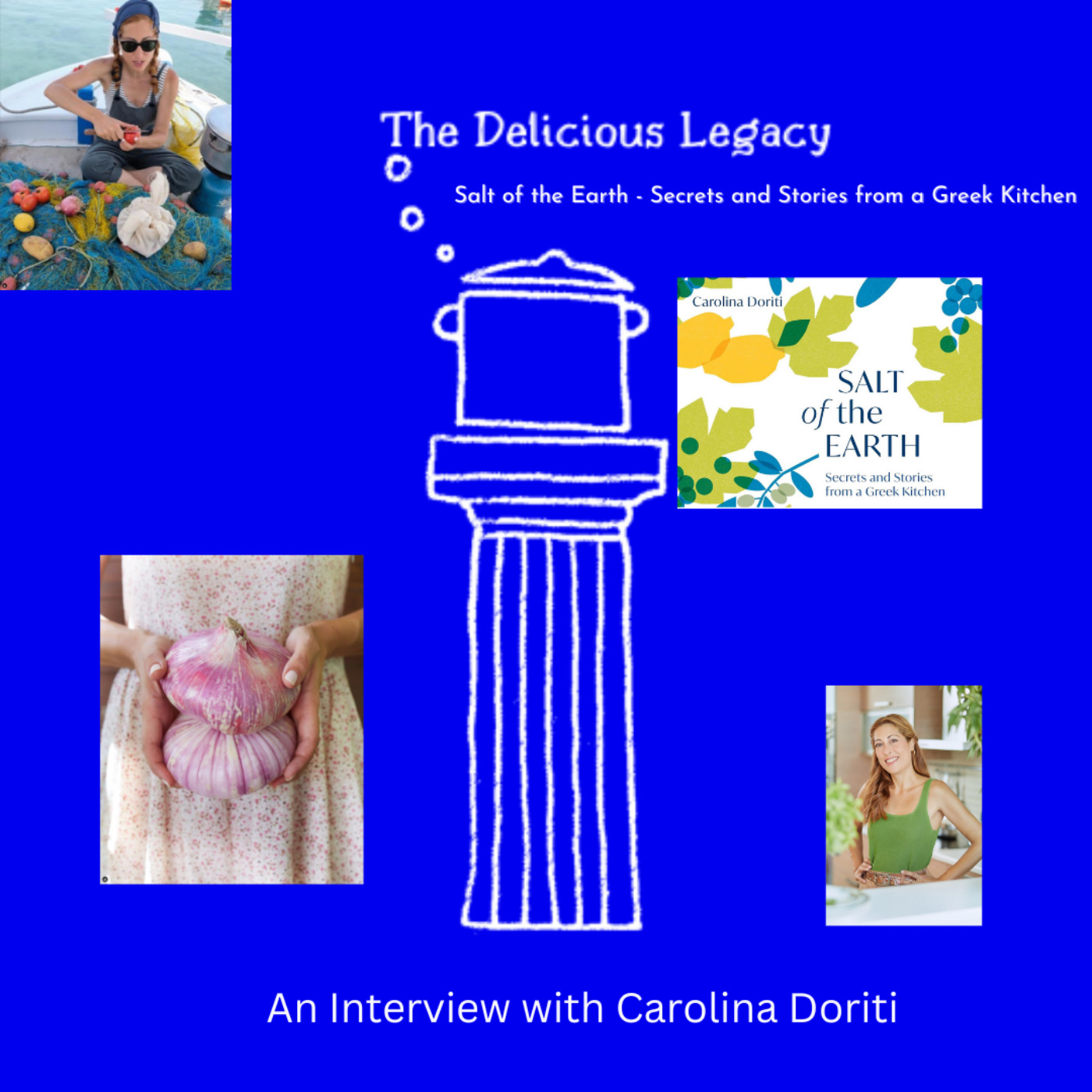
S4 Ep 4Salt of the Earth -Secrets and Stories from a Greek Kitchen
Hello!On this episode I had the pleasure to interview the fantastic Greek author and chef Carolina Doriti about her new book, titled as above.What is "Kakavia"? "Giouvarlakia"? "Bobota" and "Koliva"? And what's the secret for the best Avgolemono?Where can we trace the lineage of all those traditional Greek recipes from? These and a lot more, in our interview today!Carolina will be in London 12th till 24th of November, appearing in Saturday Kitchen and fronting workshops at Borough Market in the 17th of November and 18th of November will be doing a workshop. Book here:https://oliveology.co.uk/product/cooking-with-carolina/ Also she will be cooking at restaurant Vori in Holland Park on 21st and 22nd of November.You can find out more and book here:https://vorigreekitchen.co.uk/ Her book Salt of the Earth is out now, and you can get it online or on all good bookshops!https://www.waterstones.com/book/salt-of-the-earth/carolina-doriti//9781787138544?sv1=affiliate&sv_campaign_id=259955&awc=3787_1698752038_ab4da470e66bc19b3be129111e510b4d&utm_source=259955&utm_medium=affiliate&utm_campaign=Genie+Shopping+CSS Diane Kochilas PBS series on Greek Food:https://www.pbs.org/food/shows/my-greek-table-with-diane-kochilas/Enjoy listening!The Delicious LegacySupport the podcast on Ko-Fi and Patreon for ad-free episodes! https://ko-fi.com/thedeliciouslegacypodcasthttps://www.patreon.com/c/thedeliciouslegacySupport this show http://supporter.acast.com/the-delicious-legacy. Hosted on Acast. See acast.com/privacy for more information.
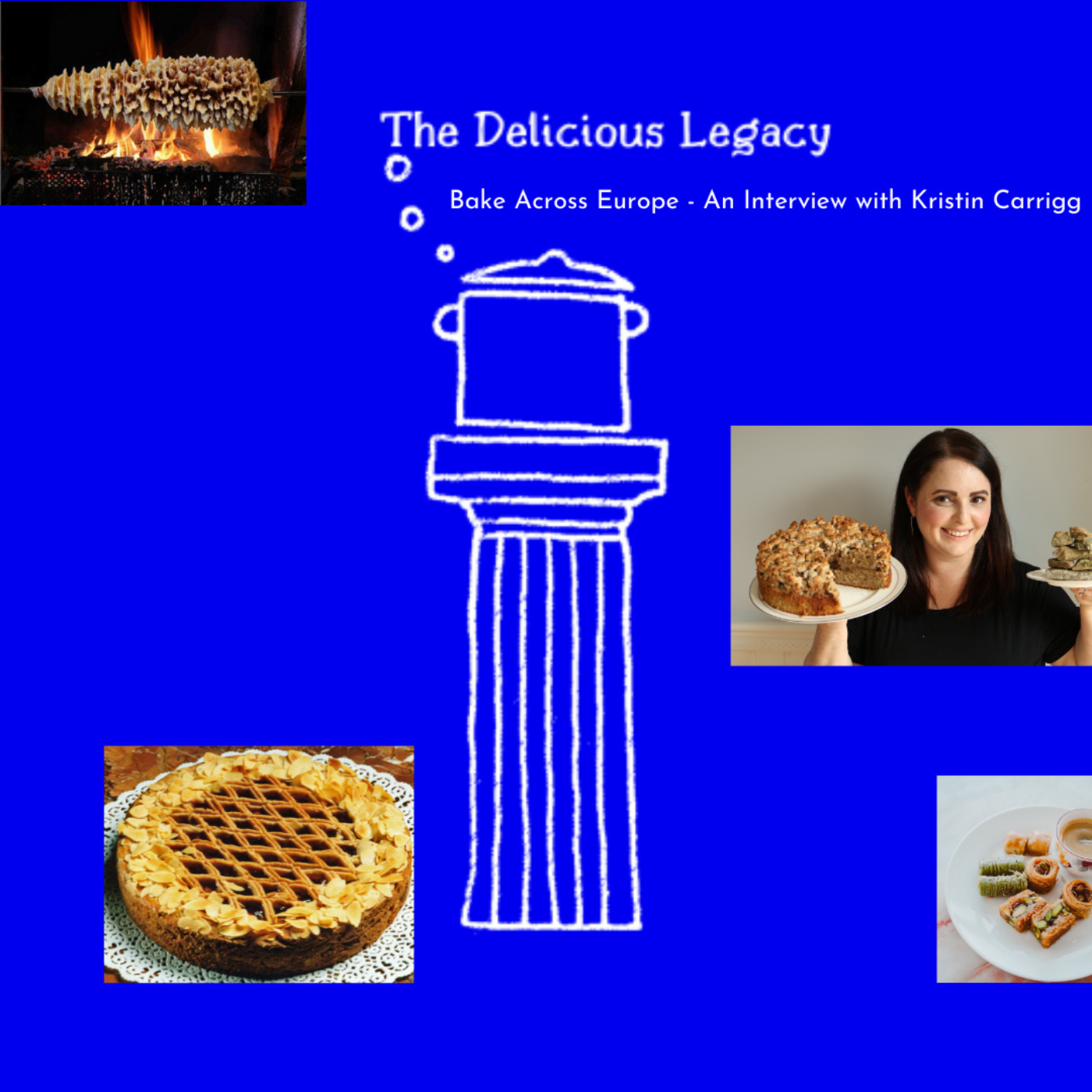
S4 Ep 3Bake Across Europe
Nights drawing in. It gets colder and wetter outside.We tend to stay in more. Cosy. Get to cook more warm foods. The autumn and winter seasons have many festivities and celebrations. These, need something special to mark the occasion. A cake, a dessert...But even a bread is something I'd consider baking now...In the summer? no way I would have that oven on! ahahaha!And what is a spit roast cake?!!?Let's explore some traditional, unique and quirky desserts from the corners of Europe together with Kristin, a curious baker, a baker who wants to eat her way across traditional European desserts, and between you and me, who can blame her?Kristins channel is here: https://www.youtube.com/@BakeAcrossEuropeEnjoy!Thom & The Delicious LegacySupport the podcast on Ko-Fi and Patreon for ad-free episodes! https://ko-fi.com/thedeliciouslegacypodcasthttps://www.patreon.com/c/thedeliciouslegacySupport this show http://supporter.acast.com/the-delicious-legacy. Hosted on Acast. See acast.com/privacy for more information.
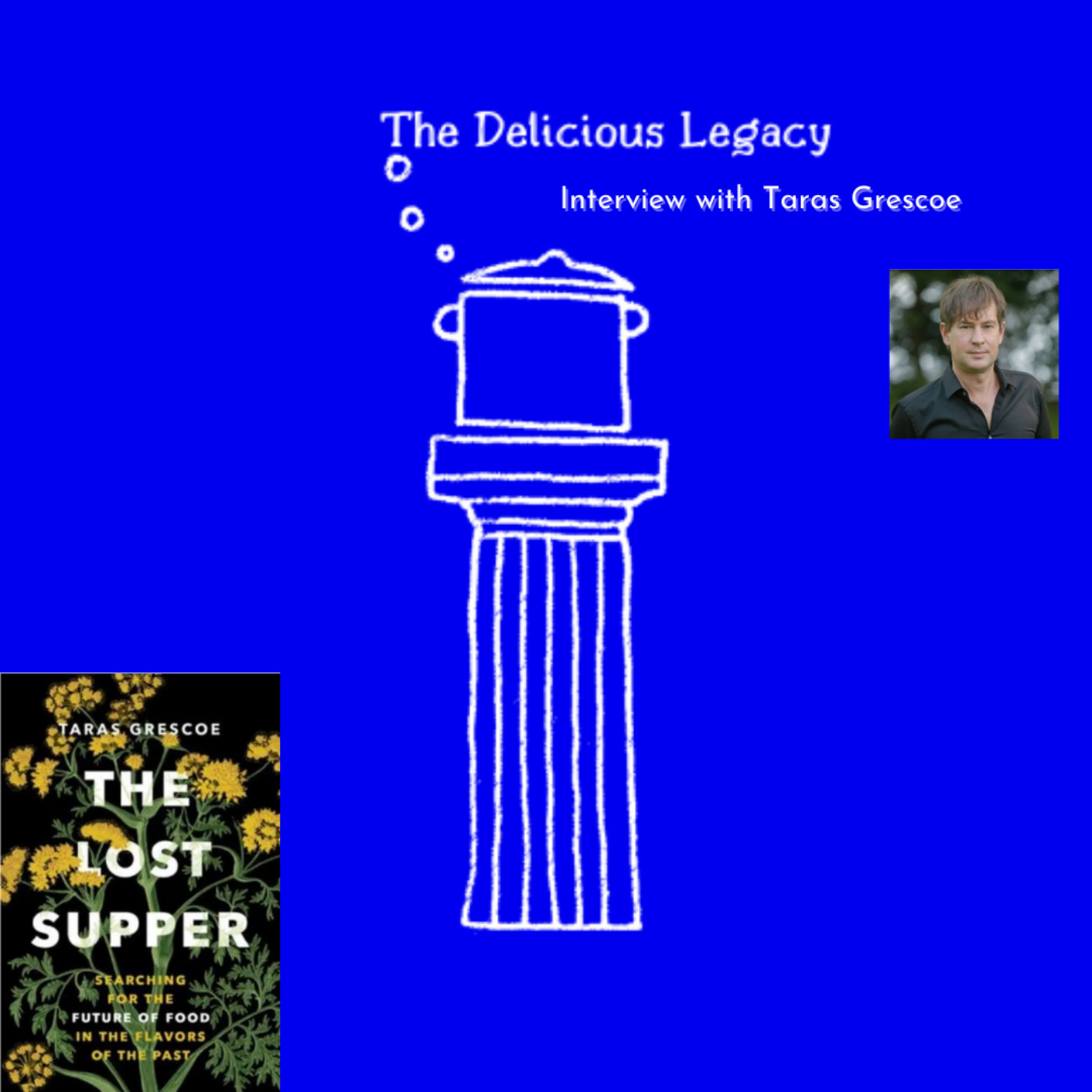
S4 Ep 2The Lost Supper - An Interview with Taras Grescoe
Where do you go if you want to find the plant Silphium?And what the heck is Axayacatl?Join me on this episode for a great discussion I had with author and journalist Taras Grescoe. His latest book "The Lost Supper" will be published on November 9th in UK and so I managed to secure a pre-release copy and ask him all the important questions!Taras through his quest for past flavours, is perhaps the first westerner in nearly 2000 years that have chewed on the root of "Silphion" the legendary plant and spice for Greek and Roman cuisine! Bold claim huh? What did he find in a remote plain in the centre of modern Turkey?How did his own home-made Garum tasted like? And who makes the best modern garum? The archaeologists in Spain or the fishermen of Vietnam?A key message of the book is that in Diversity there is Resilience. And all the diversity in our food systems is diminished constantly by the Industry.These and a lot more in our interview here!Buy Taras book here: https://www.waterstones.com/book/the-lost-supper/taras-grescoe/9781771647632More details about The Ark of Taste:https://slowfoodusa.org/ark-of-taste/orhttps://www.fondazioneslowfood.com/en/what-we-do/the-ark-of-taste/Music by Pavlos KapralosTranscript for inaudible parts:12min 25sec in:“She advised me as I made my own garum and the interesting thing is of course it’s a pretty straightforward process you allow with salt, small fish, in my case portuguese sardines to liquify…”15 min 39sec:“We do well to include them in our diet especially given the population pressure i decided to go down to mexico city …”21min 13 sec:“I grew up in somewhere what some people call it British Colombia I prefer to call it Illahee Ch uk,which means where the land meets the sea, I grew near Vancouver Island…”22min 25sec:“ a variety of plant foods and of course the aquatic resources and especially the salmon ….so it was my goal was to find that root and to see if someone will offer my some hospitality its amazing food it is a complex carbohydrate…”23min 35sec:“...which is almost like a Scottish fried bread which they are not really good for your health those things whereas the camas was excellent. There’s one thing about the camas you have to be careful there are two kinds of camas, blue camas and white camas and the white camas is also known death camas and a single taste of it it can paralyse you” Thanks for listening! Join me on Patreon for bonus 7 extra minutes of bonus content on this episode!https://www.patreon.com/posts/lost-supper-with-91141070?utm_medium=clipboard_copy&utm_source=copyLink&utm_campaign=postshare_creator&utm_content=join_linkLove,The Delicious LegacySupport the podcast on Ko-Fi and Patreon for ad-free episodes! https://ko-fi.com/thedeliciouslegacypodcasthttps://www.patreon.com/c/thedeliciouslegacySupport this show http://supporter.acast.com/the-delicious-legacy. Hosted on Acast. See acast.com/privacy for more information.
S4 Ep 1Biryani - A Short History. (Bonus taster)
trailerCoarse rice to eat, water to drink, my bent arm for a pillow, therein is happiness. Wealth and rank attained through immoral means are nothing but drifting clouds. Where did Biriyani come from?What is the best recipe for it?Did Mongols, or Persians or Tamils or someone else brought it to the Indian Subcontinent?When did it become a such a popular sensation?All the above will be answered in this episode.For a full version please go to my Patreon page and subscribe from $3 a month, less than a cup of coffee in London, for exclusive archaeogastronomical content!https://www.patreon.com/thedeliciouslegacyThis way you'll help create more episodes, more frequently and you'll allow me to extent my research to many different fascinating areas of our past.Plus you'll be getting unique recipes tailor made for you! And more videos! Win-win really!EnjoyThe Delicious LegacySupport the podcast on Ko-Fi and Patreon for ad-free episodes! https://ko-fi.com/thedeliciouslegacypodcasthttps://www.patreon.com/c/thedeliciouslegacySupport this show http://supporter.acast.com/the-delicious-legacy. Hosted on Acast. See acast.com/privacy for more information.
S3 Ep 30A Forgotten Empire - Foods of Ancient Carthage
The centre of Mediterranean. The true centre of the ancient world. The Phoenicians, from what is modern day Lebanon, from a small coastal strip of land, sailed away and never looked back! They and their descendants went further away than any other ancient civilization perhaps even circumnavigated Africa westwards as fasr south as Gabon in the equator! They also gave us the alphabet! Greeks, Etruscans and Romans then adopted it and we're still using it to this day. it's rather tragic then, that we don't have almost nothing surviving from their libraries and their literature and of course their foods and recipes.Carthage was perhaps the most significant culture connecting the far west of the Med -even beyond the pillars of Hercules- with the East; Mesopotamia and even beyond. True sailors, navigators, explorers and merchants perhaps are somehow forgotten in our age -unfairly in our opinion- about their contributions to the worlds history.In today's episode we explore the agricultural impact, the foods and important discoveries that played a significant role in the rise of the first truly global trade network in the ancient world.Is there anything surviving from the golden era of Carthage that tells us about their food?Greeks and Romans followed where the Phoenicians and Carthaginians lead the way.To support the podcast go to Patreon: https://www.patreon.com/thedeliciouslegacyMusic by Pavlos Kapralos.Enjoy!Support the podcast on Ko-Fi and Patreon for ad-free episodes! https://ko-fi.com/thedeliciouslegacypodcasthttps://www.patreon.com/c/thedeliciouslegacySupport this show http://supporter.acast.com/the-delicious-legacy. Hosted on Acast. See acast.com/privacy for more information.
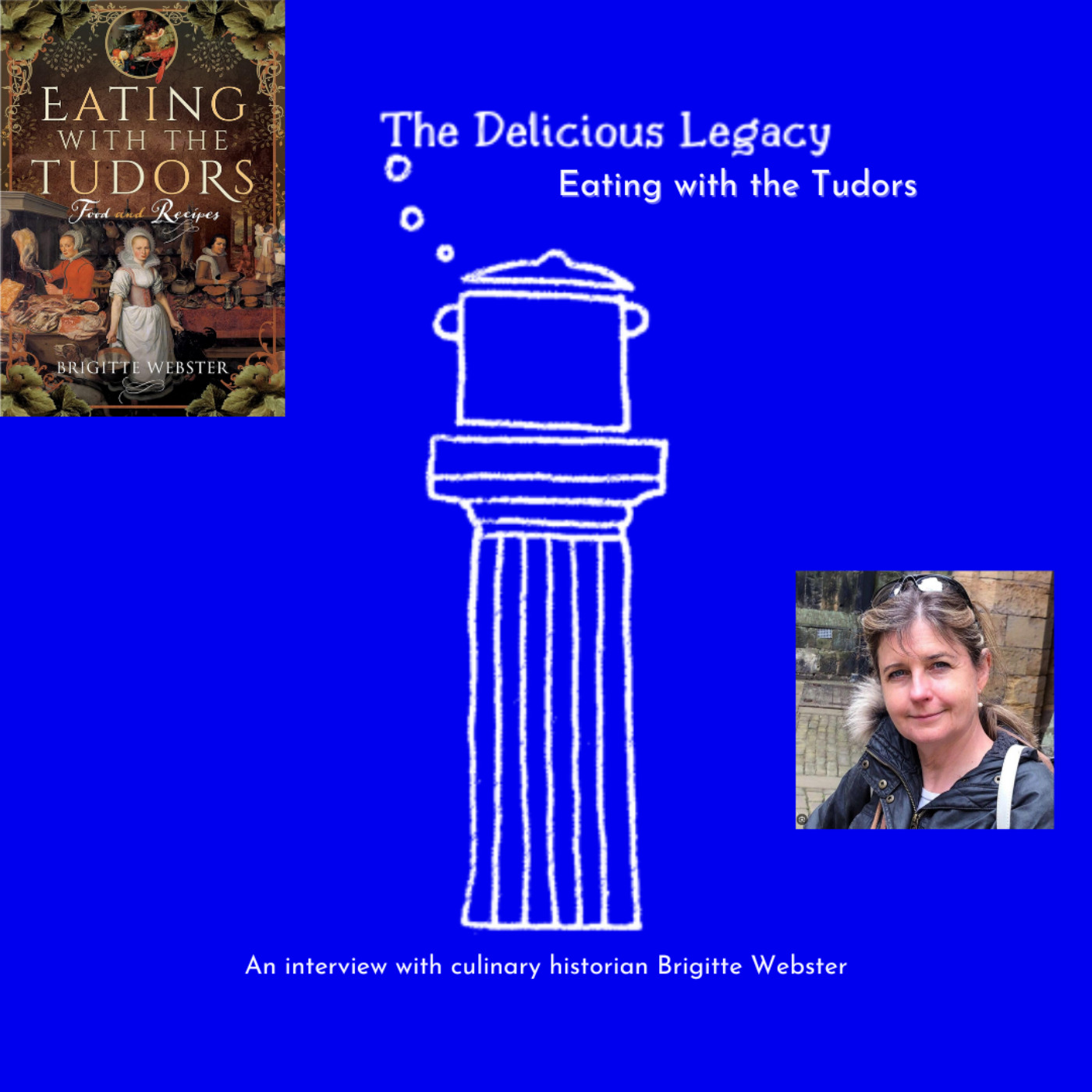
S3 Ep 29Eating with the Tudors - An interview with food historian Brigitte Webster
What did the real people in Tudor England eat? From fruit pies to bean and bacon stews, what Tudors ate & drank varied greatly, and was subject to season and Galen's humoral theory...Poor and wealthy alike lived off the land, using ingredients based on their availability and seasonality.Let's find out more from our expert, historian Brigitte Webster. She truly lives and breaths Tudor, in her Tudor house in rural Norfolk where she grows her own fruit and vegetables in a truly authentic Tudor way. She rediscovers day in day out, how did the people back then grew their food in different seasons, plus how savvy with food waste they were! Nothing was wasted!Join Brigitte to find out what an authentic Tudor recipe looked like, from how it was worded to exactly what ingredients were used.You can get Briggite's book here:https://www.pen-and-sword.co.uk/Eating-with-the-Tudors-Hardback/p/23659And this is her Tudor house:https://www.tudorexperience.com/Support the podcast on Ko-Fi and Patreon for ad-free episodes! https://ko-fi.com/thedeliciouslegacypodcasthttps://www.patreon.com/c/thedeliciouslegacySupport this show http://supporter.acast.com/the-delicious-legacy. Hosted on Acast. See acast.com/privacy for more information.
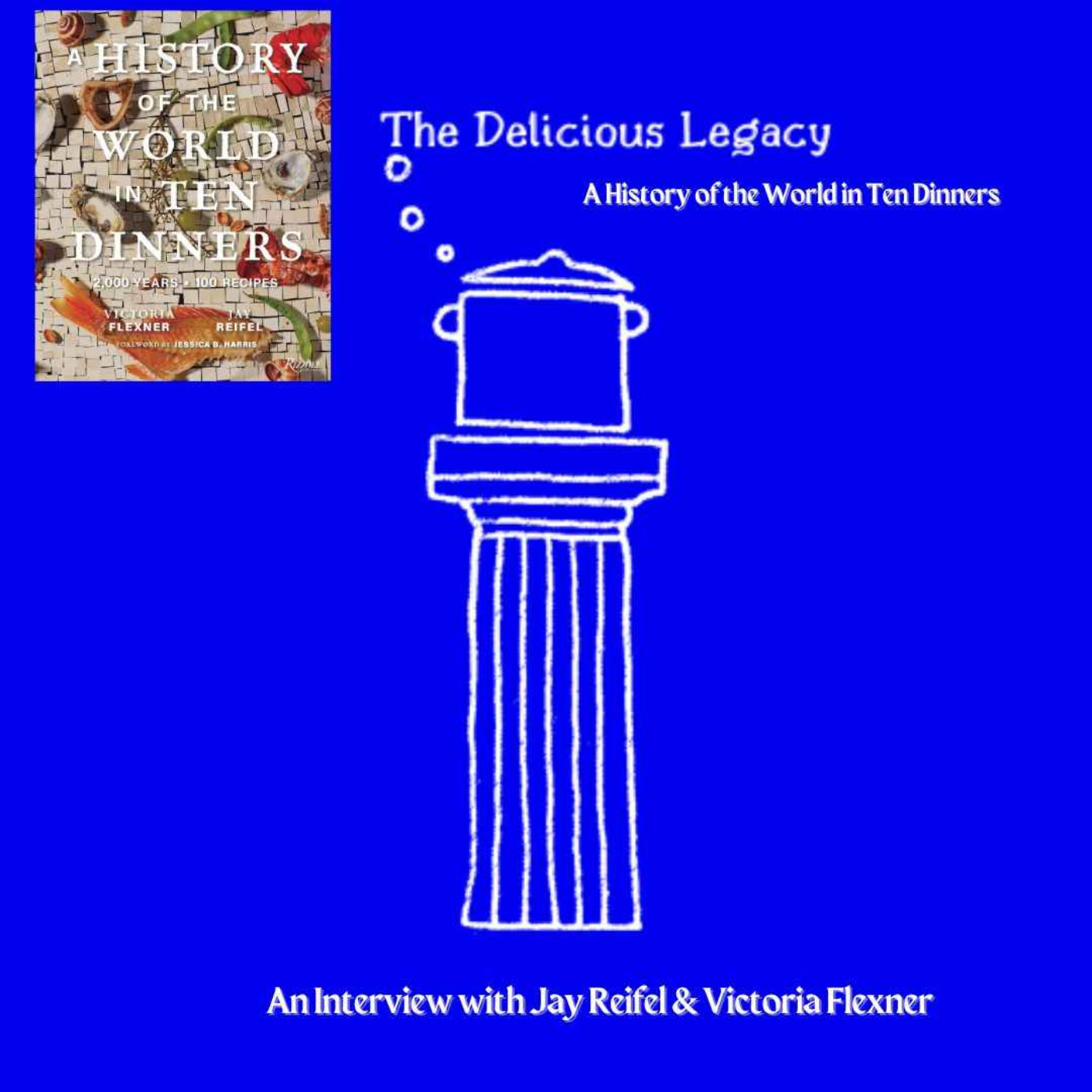
S3 Ep 28A History of the World in Ten Dinners
What have I got for you?Only an exclusive interview with food historian Victoria Flexner and Chef Jay Reifel about their new book "A History of the World in Ten Dinners" which is going to be released on 19 of September.I was granted access to the preview copy and the opportunity to chat to the creators of the Supper Club "Edible History" about their new adventure writing this amazing book.A History of the World in Ten Dinners, is divided into ten chapters, starting in ancient Rome, working through 10th century Baghdad, the medieval Silk Road, Renaissance Italy, Tudor England, Al-Andalus, the Columbian Exchange, the Ethiopian Empire, Versailles all the way up to 19th century New York City. Each chapter weaves historical narrative with period recipes sourced from manuscripts, ancient culinary compendiums.Enjoy!Links to Jay's & Victoria's work and book:https://www.ediblehistorynyc.com/ https://www.vogue.com/article/what-did-feminist-icons-eat-for-dinner-mofad-edible-history https://www.rizzoliusa.com/book/9780847873456/ https://www.newyorker.com/culture/annals-of-gastronomy/an-actual-dinner-party-inspired-by-judy-chicagos-the-dinner-party Music by Pavlos Kapralos as usual!Thanks,The Delicious LegacySupport the podcast on Ko-Fi and Patreon for ad-free episodes! https://ko-fi.com/thedeliciouslegacypodcasthttps://www.patreon.com/c/thedeliciouslegacySupport this show http://supporter.acast.com/the-delicious-legacy. Hosted on Acast. See acast.com/privacy for more information.
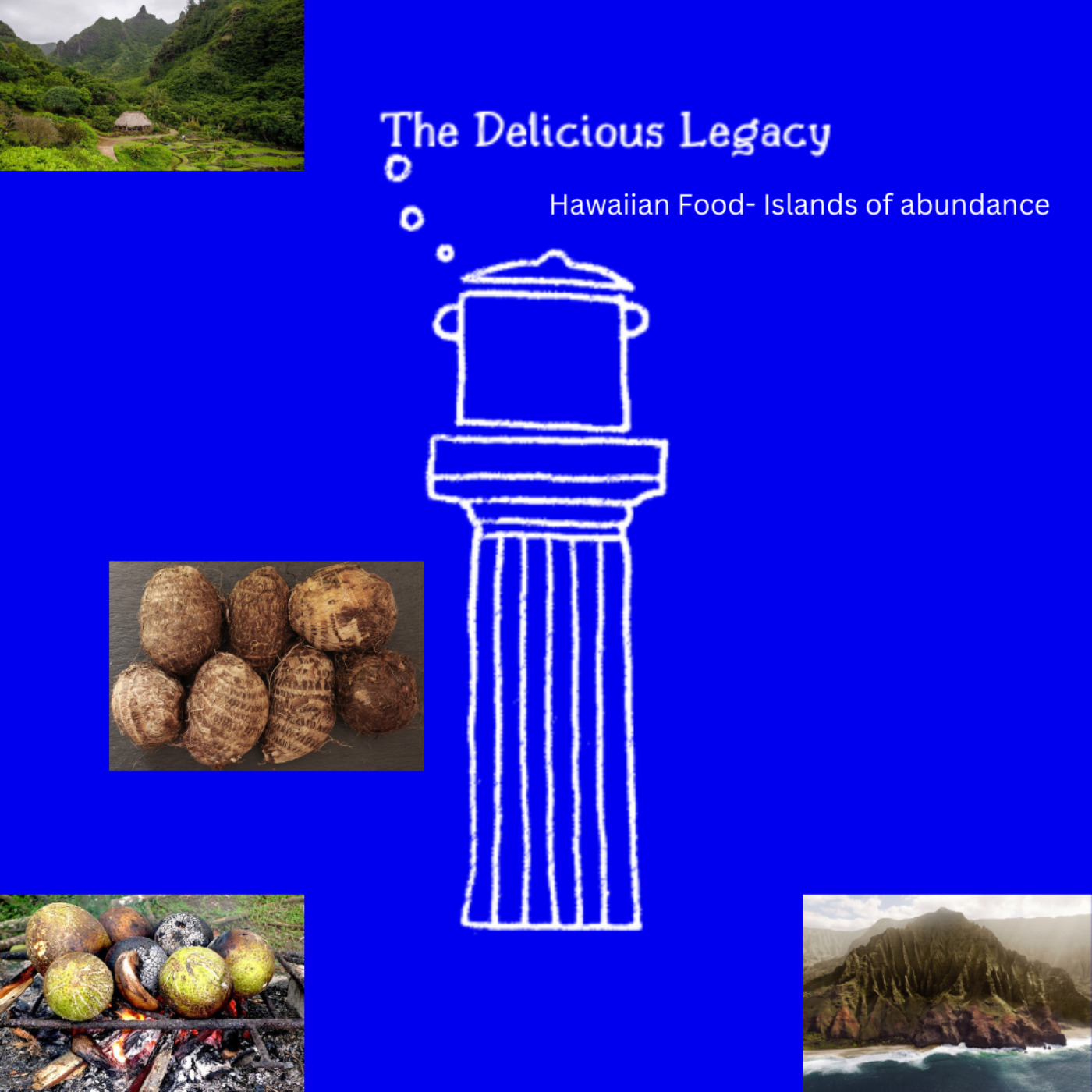
S3 Ep 27Hawaiian Food- Islands of abundance in pre-European contact
Hello!First of all, my thoughts go to all wildfire victims, the world over. It seems that Europe and North America are burning all summer with no end in sight. It is heartbreaking to watch it on the news in real time. The deadly wildfires wept through Hawaii recently, and even though I had this episode researched and recorded for a few months, I kept thinking about the release last week, since the catastrophic wildfires in Maui swept through a whole town. I was in two mind releasing it but in the end the rich, beautiful gastronomic history and myths of these islands needed to be told and appreciated by as many people as possible. Hawaiian Pineapple: Sliced, Crushed or Grated. “Picked ripe, canned right”The kindly sun of the tropics, tempered by the trade winds of the pacific; the gentle rain that brings bloom and fruit to almost every inch of soil in Hawaii. The dew of morning and the mellow evening light- all these you will find in a can of Hawaiian pineapple.Always ask for Hawaiian Pineapple - no matter what brand so long as it comes from Hawaii. Sold everywhere. Sliced, grated or crushed. - Saturday Evening Post, May 3, 1913.What are the images you firstly get when you hear Hawaii? Pineapples? Well forget them! Pineapples came from Brazil. So why is Hawaii so much in our imagination wedded with pineapples and tiki?In this episode we'll get to grips with the colonial recent past and how still resonates in the islands, but most importantly, we'll dive into the ancient Polynesian culture.What is taro, breadfruit and the famed "ahupua'a"? Join me to explore the ancient myths of creation of Hawaii and her foods!The Delicious LegacySupport the podcast on Ko-Fi and Patreon for ad-free episodes! https://ko-fi.com/thedeliciouslegacypodcasthttps://www.patreon.com/c/thedeliciouslegacySupport this show http://supporter.acast.com/the-delicious-legacy. Hosted on Acast. See acast.com/privacy for more information.
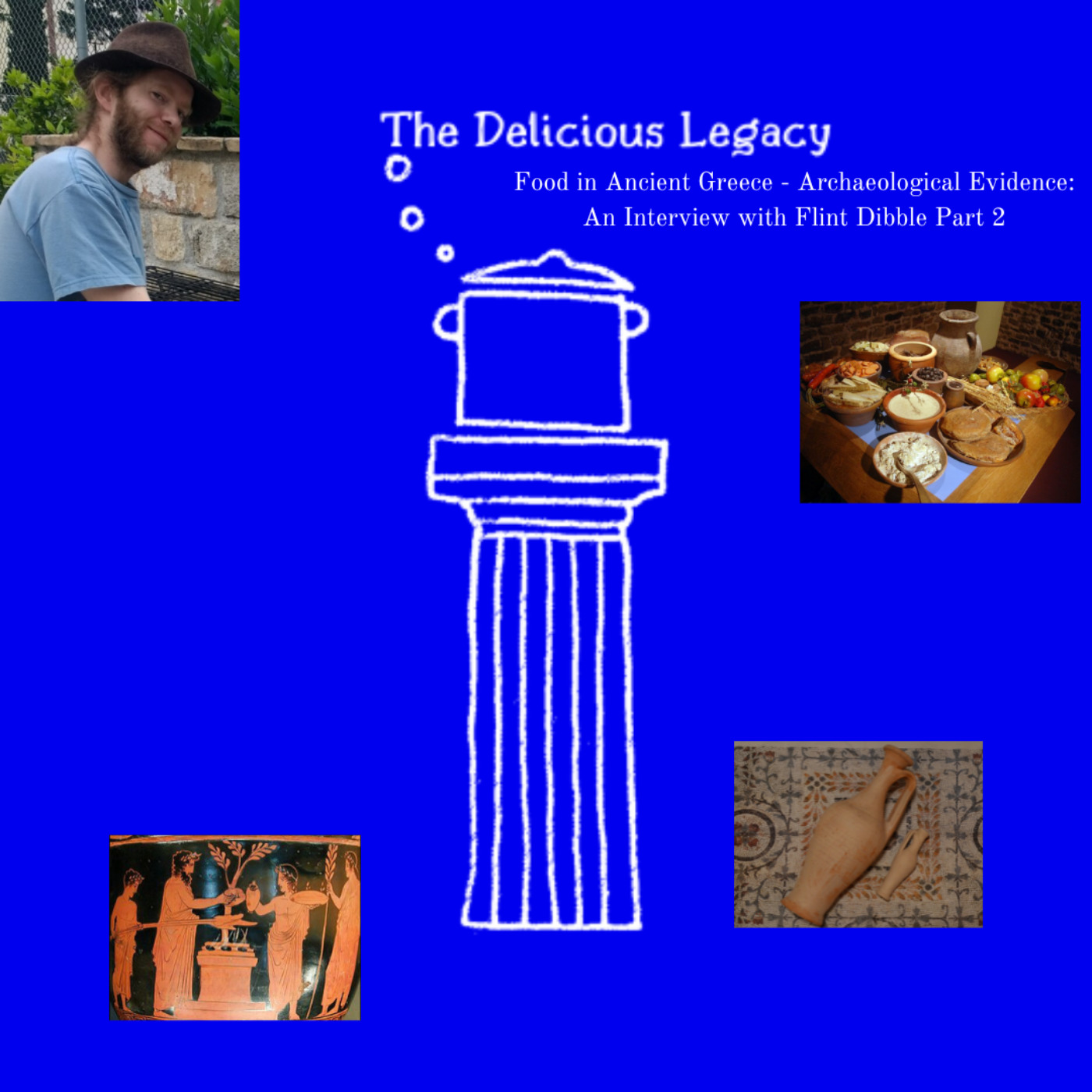
S3 Ep 26Food in Ancient Greece -An Interview with Flint Dibble Part 2
Dr Flint Dibble is an archaeologist whose research focuses on foodways of ancient Greece.Animal bones: Once discarded by archaeologists as more or less useless, in recent years they have become an essential part of modern research. Current scientific analysis can shed a lot of light on many aspects of every day ancient life. Simply, by studying what bones our ancestors left behind, i.e. what was consumed, how, and when. With isotope analysis of human and animal remains we can also find out their diet and how this diet varied from season to season! All incredibly detailed and exciting stuff which we have only scratched the surface of!On this Part 2 of our discussion Flint dives deeper into the ancient Athenian world. What did they eat? How did they butcher their animals, what was the difference between sacrificial feasts and home cooking? How's the urban eating habits and technology change from the 1st millenium BCE going towards the classical period and Athens's hygemony in the years of the Delian League?Flint's current project, ZOOCRETE: The Zooarchaeology of Historical Crete: A Multiscalar Approach to Animals in Ancient Greece, combines archaeological, textual, and biomolecular evidence for the human management and consumption of animals. From animals herded in the landscape to large-scale sacrificial feasts, animals were a central component to the development and resilience of citizen-states during the first millennium BCE.Enjoy, share and as ever let me know your thoughts!Much love,Thom & The Delicious LegacyMusic by Pavlos Kapralos.Support the podcast on Ko-Fi and Patreon for ad-free episodes! https://ko-fi.com/thedeliciouslegacypodcasthttps://www.patreon.com/c/thedeliciouslegacySupport this show http://supporter.acast.com/the-delicious-legacy. Hosted on Acast. See acast.com/privacy for more information.
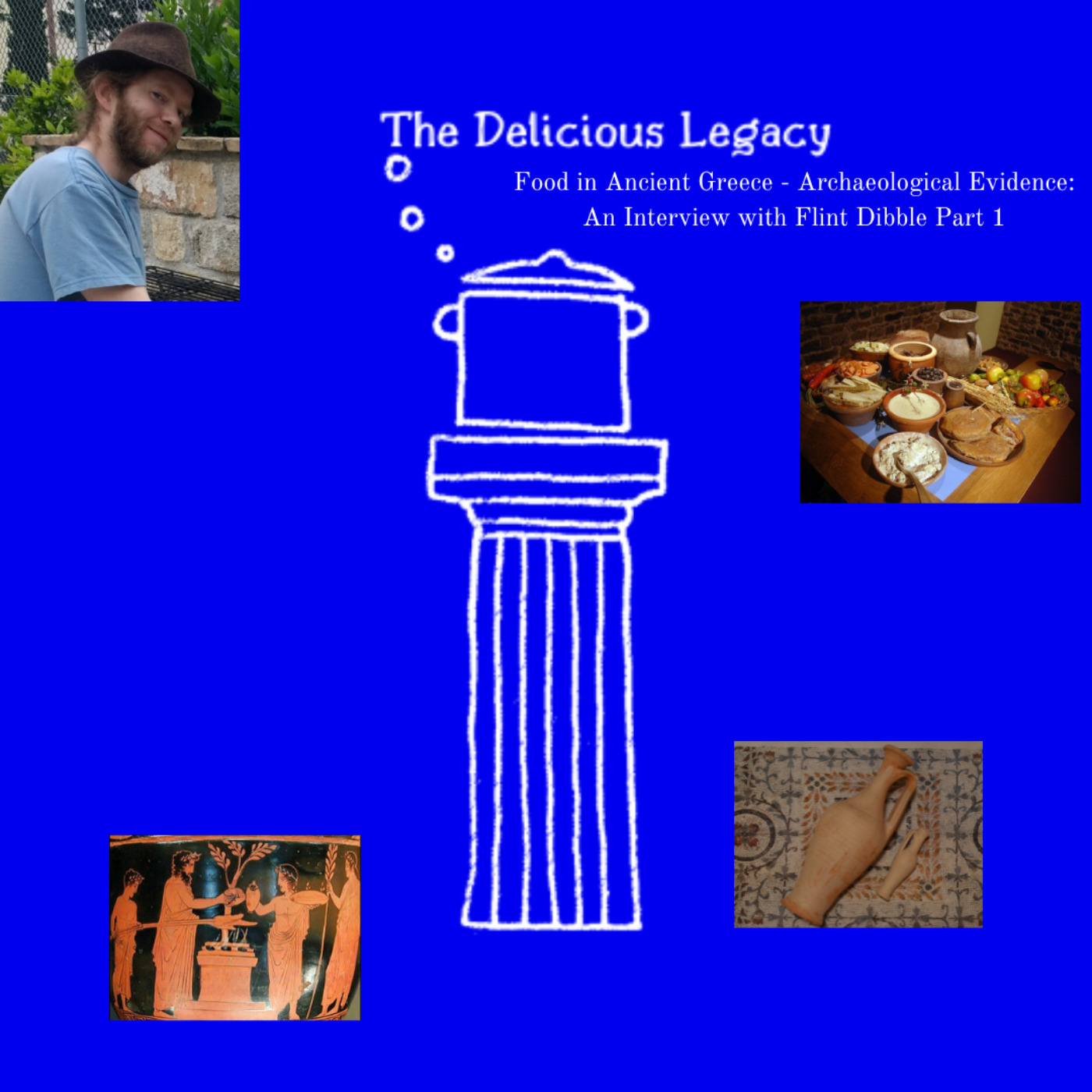
S3 Ep 25Food in Ancient Greece -An Interview with Flint Dibble Part 1
Animal bones: Once discarded by archaeologists as more or less useless, in recent years they have become an essential part of modern research. Current scientific analysis can shed a lot of light on many aspects of daily ancient life. Simply, by studying what bones our ancestors left behind, i.e. what was consumed, how, and when and then discarded. With isotope analysis of human and animal remains, we can also find out their diet and how this diet varied from season to season! All incredibly detailed and exciting stuff which we have only scratched the surface of!Dr Flint Dibble is an archaeologist whose research focuses on foodways of ancient Greece.On today's episode, Flint takes us on an exploration of ancient Greece, and makes a case for the importance of zooarchaeology in studying the foods and what animals were consumed in the past. Crucially, how the literary evidence from surviving ancient texts gives us one picture of food in ancient Greece, and how this isn't the whole complete one. While we discover more, a more highly complex portrayal of the diet of the every day person emerges for men, women, slaves and children. Importantly, we discuss, why is our conception of past peoples diet wrong and how?Flint's current project, ZOOCRETE: The Zooarchaeology of Historical Crete: A Multiscalar Approach to Animals in Ancient Greece, combines archaeological, textual, and biomolecular evidence for the human management and consumption of animals. From animals herded in the landscape to large-scale sacrificial feasts, animals were a central component to the development and resilience of citizen-states during the first millennium BCE.Enjoy, share and as ever let me know your thoughts!Much love,Thom & The Delicious LegacyMusic by Pavlos Kapralos.Support the podcast on Ko-Fi and Patreon for ad-free episodes! https://ko-fi.com/thedeliciouslegacypodcasthttps://www.patreon.com/c/thedeliciouslegacySupport this show http://supporter.acast.com/the-delicious-legacy. Hosted on Acast. See acast.com/privacy for more information.
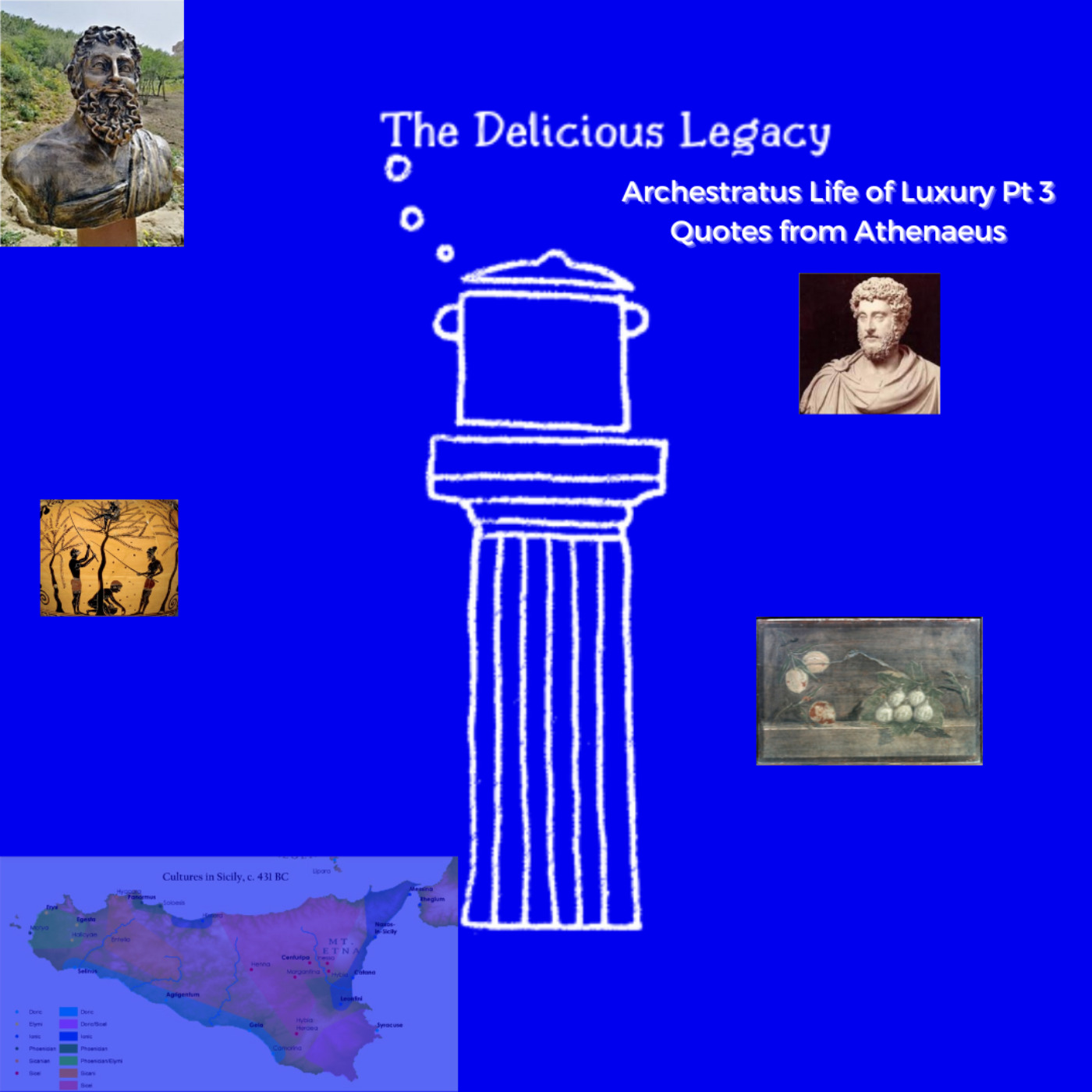
S3 Ep 24Archestratus The Life of Luxury- Quotes from Athenaeus Pt3
"Archestratus of Gela or Syracuse, the Sicilian who circumnavigated the world (ie the Med) to satisfy his hunger..."Was he a poet, a gourmand, a philosopher, a traveller? In the final part of our trilogy we explore the last of the Athenaeus quotes in Deipnosophistai - aka Philosophers at Dinner- the only literally source we have surviving quotes from the legendary poem of Archestratus,"Hydipatheia" or The Life of Luxury where as an ancient version of Anthony Bourdain goes around the Greek world finding where the best fish, the best wine, the best bread comes from, how to eat it, and, crucially how not to ruin said ingredient.Plus a recipe or two for parrotfish.Enjoy!Music by Miltos Boumis and Pavlos Kapralos.This episode comes with the welcome support of Maltby and Greek, UK's No1 Greek Delicatessen!The Delicious LegacySupport the podcast on Ko-Fi and Patreon for ad-free episodes! https://ko-fi.com/thedeliciouslegacypodcasthttps://www.patreon.com/c/thedeliciouslegacySupport this show http://supporter.acast.com/the-delicious-legacy. Hosted on Acast. See acast.com/privacy for more information.
S3 Ep 23Archestratus The Life of Luxury- Quotes from Athenaeus Pt2
"Archestratus who sailed round the inhabited world for the sake of his belly says: [...]""Archestratus the Daedalus of tasty dishes in his Gastrology (for such is its title according to Lycophron in his books on comedy...."Hello! I'm happy to say that part2 of The Life of Luxury is here!I've started the episode with Archestratus doing imaginary trip in the Black & Aegean seas, 2330 years ago. This was part of my first episode about Archestratus back in Season 1 Episode 11.I hope you'll enjoy, and please let me know your thoughts!Music by Pavlos KapralosSupport the podcast on Ko-Fi and Patreon for ad-free episodes! https://ko-fi.com/thedeliciouslegacypodcasthttps://www.patreon.com/c/thedeliciouslegacySupport this show http://supporter.acast.com/the-delicious-legacy. Hosted on Acast. See acast.com/privacy for more information.
S3 Ep 22Archestratus Life of Luxury Pt 1 -Quotes from Athenaeus
Hello! New episode is out!Archestratus was the man who supposedly we own the word 'gastronomy' to!What else can I say other than enjoy all that we know of, from my favourite ancient foodie hero!Archestratus of Gela! Let's find out what has he left for us, mere whispering echoes from 23 centuries ago!Any sound advice I wonder?Music by Pavlos KapralosThis episode was brought to you with the welcome support of Maltby and Greek UK's No1 Greek Delicatessen!https://www.maltbyandgreek.com/Enjoy!The Delicious LegacySupport the podcast on Ko-Fi and Patreon for ad-free episodes! https://ko-fi.com/thedeliciouslegacypodcasthttps://www.patreon.com/c/thedeliciouslegacySupport this show http://supporter.acast.com/the-delicious-legacy. Hosted on Acast. See acast.com/privacy for more information.
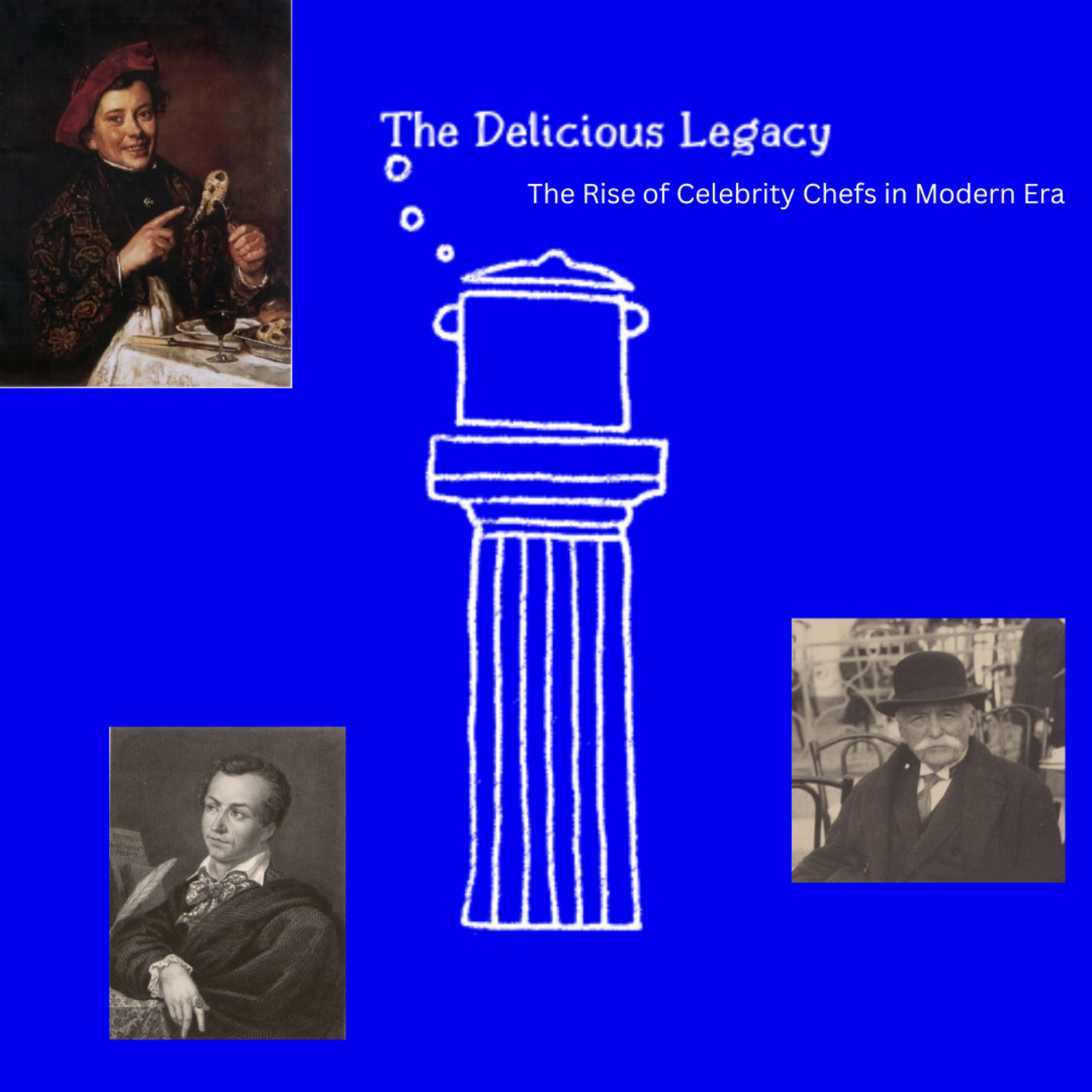
S3 Ep 21The Rise of Celebrity Chefs in Modern Era
Alexis SoyerMarie-Antoine CarêmeAuguste EscoffierFamous Chefs. Culinary Inventors.Who were they?How did they become famous and celebrated, in a pre-internet world, where news travelled slower and printing press was still relatively expensive?What were their origins, their motives and their legacy that still lives with us today?Enjoy!The Delicious LegacyThis episode is brought to you with the welcome support of Maltby and Greek. UK's No1 Greek delicatessen.If you want to shop and get a 15% discount click the link below and enter the code "delicious" at the checkout.https://www.maltbyandgreek.com/Music by Pavlos Kapralos and Motion Array.Support the podcast on Ko-Fi and Patreon for ad-free episodes! https://ko-fi.com/thedeliciouslegacypodcasthttps://www.patreon.com/c/thedeliciouslegacySupport this show http://supporter.acast.com/the-delicious-legacy. Hosted on Acast. See acast.com/privacy for more information.
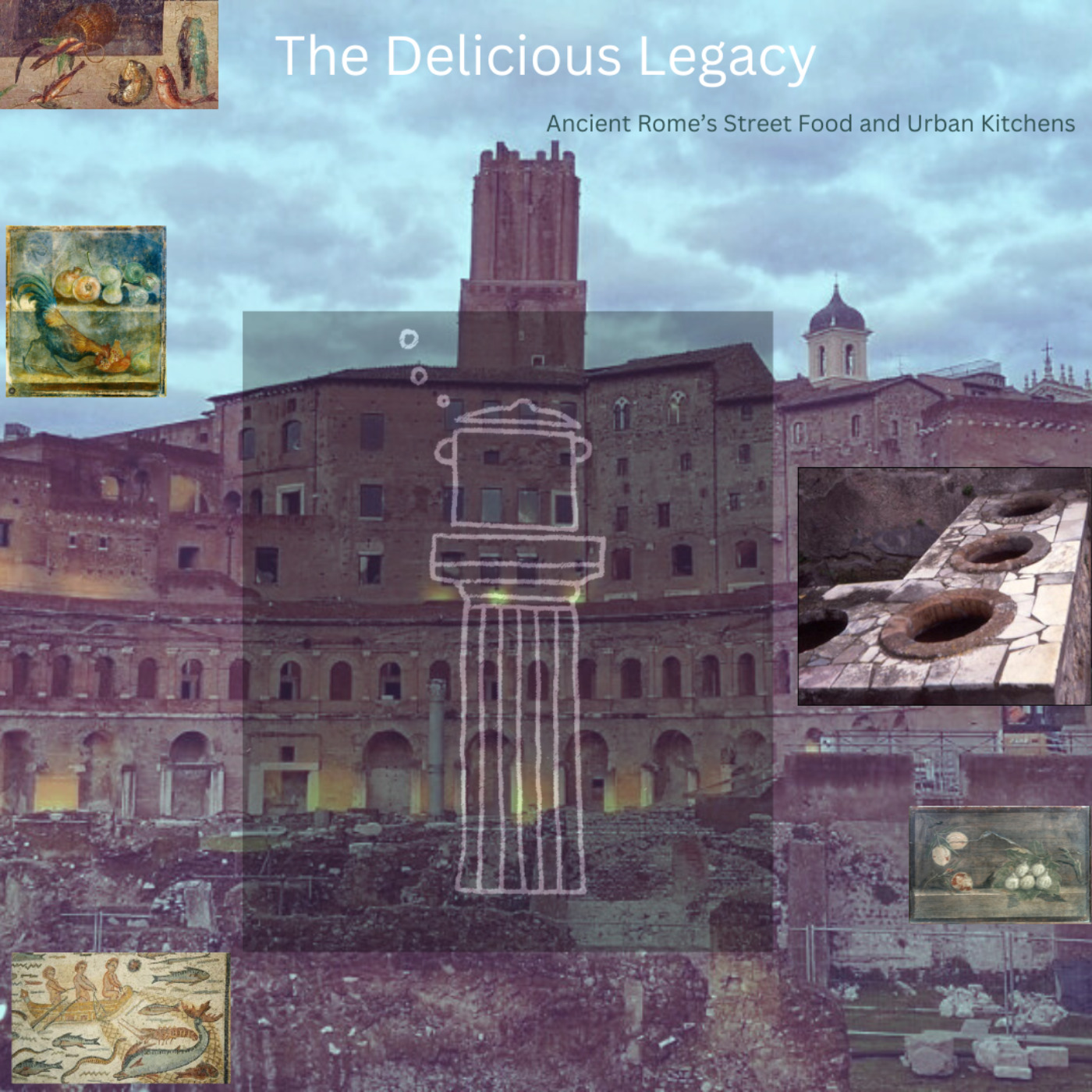
S3 Ep 20Ancient Rome’s Street Food and Urban Kitchens
The Late Roman Republic and the Roman Empire were highly urbanized societies.In order to function, the hungry citizens must be fed at all times. So what did the Roman Citizen eat every day? How did they procure their foods in their busy cities?How did the food of the slaves, the workers, the craftsmen and the senators differ? What was popular and cheaply available for the masses?What was for dinner? And do we have any tasty recipes from 2000 years ago?All this and more, answered in the latest archeogastronomical adventure!Enjoy!The Delicious Legacy podcastThis episode is brought to you with the welcome support of Maltby and Greek. UK's No1 Greek delicatessen. If you want to shop and get a 15% discount click the link below and enter the code "delicious" at the checkout.https://www.maltbyandgreek.com/Music by Pavlos Kapralos and Motion Array.Support the podcast on Ko-Fi and Patreon for ad-free episodes! https://ko-fi.com/thedeliciouslegacypodcasthttps://www.patreon.com/c/thedeliciouslegacySupport this show http://supporter.acast.com/the-delicious-legacy. Hosted on Acast. See acast.com/privacy for more information.
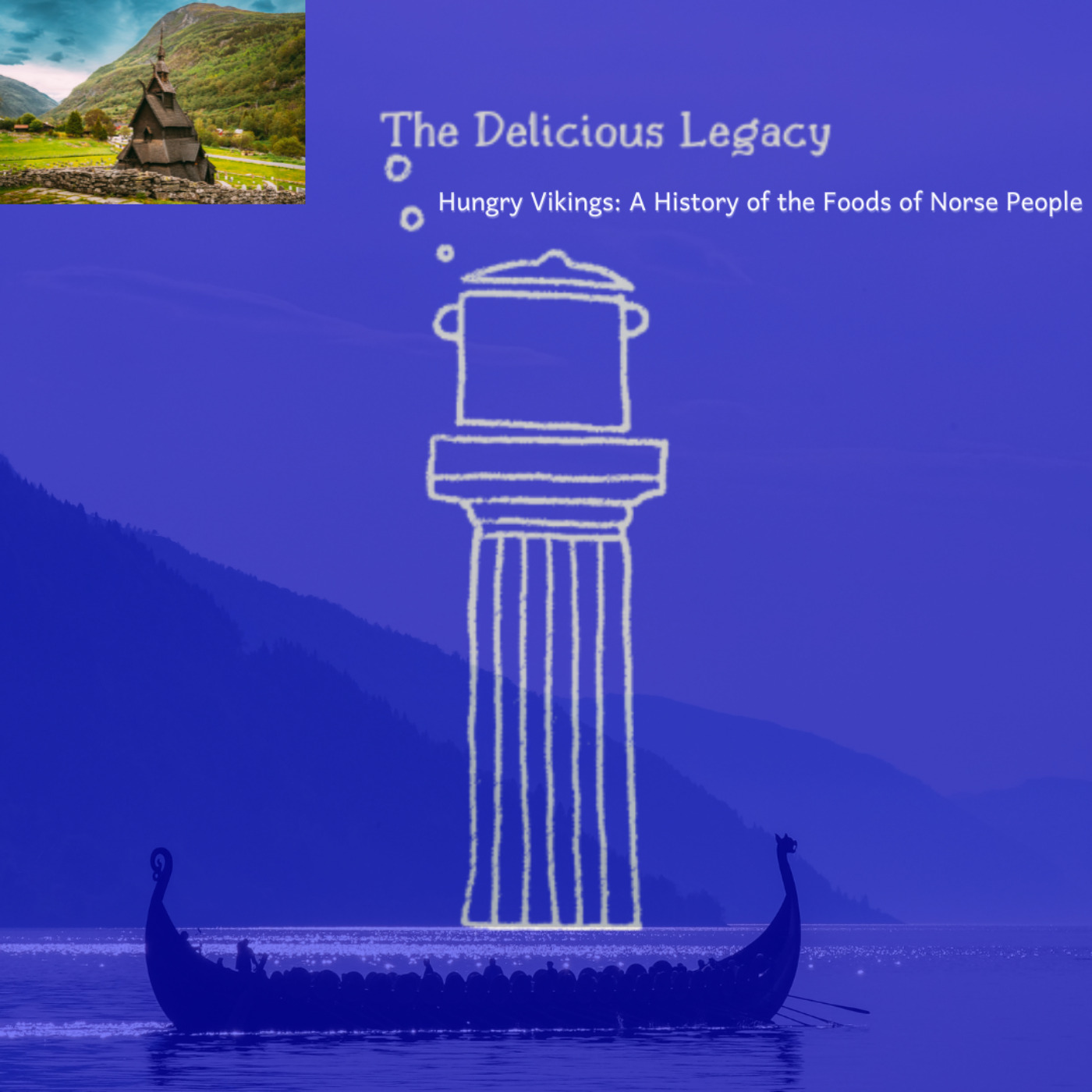
S3 Ep 19Hungry Vikings: A History of the Food of Norse People
Lo, it is nearly 350 years that we and our fathers have inhabited this most lovely land, and never before has such terror appeared in Britain as we have now suffered from a pagan race, nor was it thought that such an inroad from the sea could be made. Behold, the church of St. Cuthbert spattered with the blood of the priests of God, despoiled of all its ornaments; a place more venerable than all in Britain is given as a prey to pagan peoplesAlcuin, a senior adviser to Charlemagne – the most powerful man in Europe – was writing to the king of Northumbria to express his shock and horror at the attack“...the woeful inroads of heathen men destroyed God’s church in Lindisfarne island by fierce robbery and slaughter’. Writing in the next century, the chronicler Symeon of Durham wrote: ‘They miserably ravaged and pillaged everything. They trod the holy things under their polluted feet, they dug down the altars, and plundered all the treasures of the church. Some of the brethren they slew, some they carried off with them in chains, the greater number they stripped naked, insulted, and cast out of doors, and some they drowned in the sea.”Well pillaging and destroying it's a tough work that makes men hungry!OK, besides the joking, who were the Vikings and what was their food like? Let's do some popular myth busting plus lets check some traditional Norse food of the time.Whey Pickles, Lutefisk, Skyr dairy, hares and rabbits, stews, nuts and berries, game meat, ale and mead.For ad free version of the episodes with extra content why don't you join me on Patreon?https://www.patreon.com/thedeliciouslegacyEnjoy!Thom and The Delicious Legacy Music by Motion ArraySupport the podcast on Ko-Fi and Patreon for ad-free episodes! https://ko-fi.com/thedeliciouslegacypodcasthttps://www.patreon.com/c/thedeliciouslegacySupport this show http://supporter.acast.com/the-delicious-legacy. Hosted on Acast. See acast.com/privacy for more information.
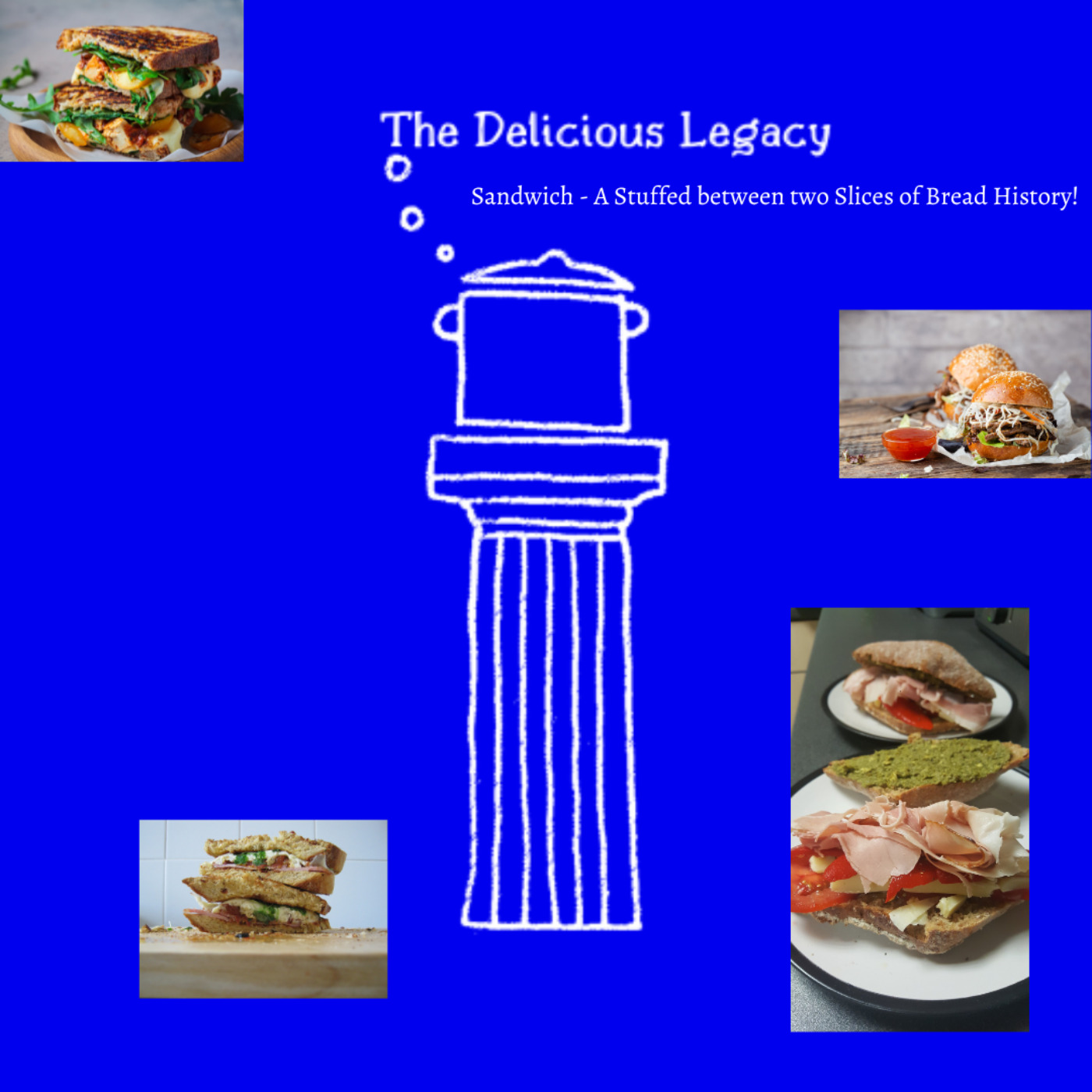
S3 Ep 18Sandwich - A Stuffed between two Slices of Bread History!
What is your favourite sandwich? How do you make it?Many myths and delicious recipes for a sandwich exist through the ages!Who was the first who made a sandwich? Why?And what does a small town in the Kent coast has to do with naming this culinary concoction across the globe?And are we addicted to plasticky, fridge-cold supermarket sandwiches?This Episode was brought to you with the welcome suport of Maltby and Greek UK's No1 Greek Delicatessen. Get your hands in some delicious Greek food here:https://www.maltbyandgreek.com/Music by Cloudcub https://cloudcub.bandcamp.com/musicand Pavlos Kapraloshttps://www.youtube.com/channel/UCzgAonk4-uVhXXjKSF-Nz1AEnjoy!Thom & The Delicious LegacySupport the podcast on Ko-Fi and Patreon for ad-free episodes! https://ko-fi.com/thedeliciouslegacypodcasthttps://www.patreon.com/c/thedeliciouslegacySupport this show http://supporter.acast.com/the-delicious-legacy. Hosted on Acast. See acast.com/privacy for more information.
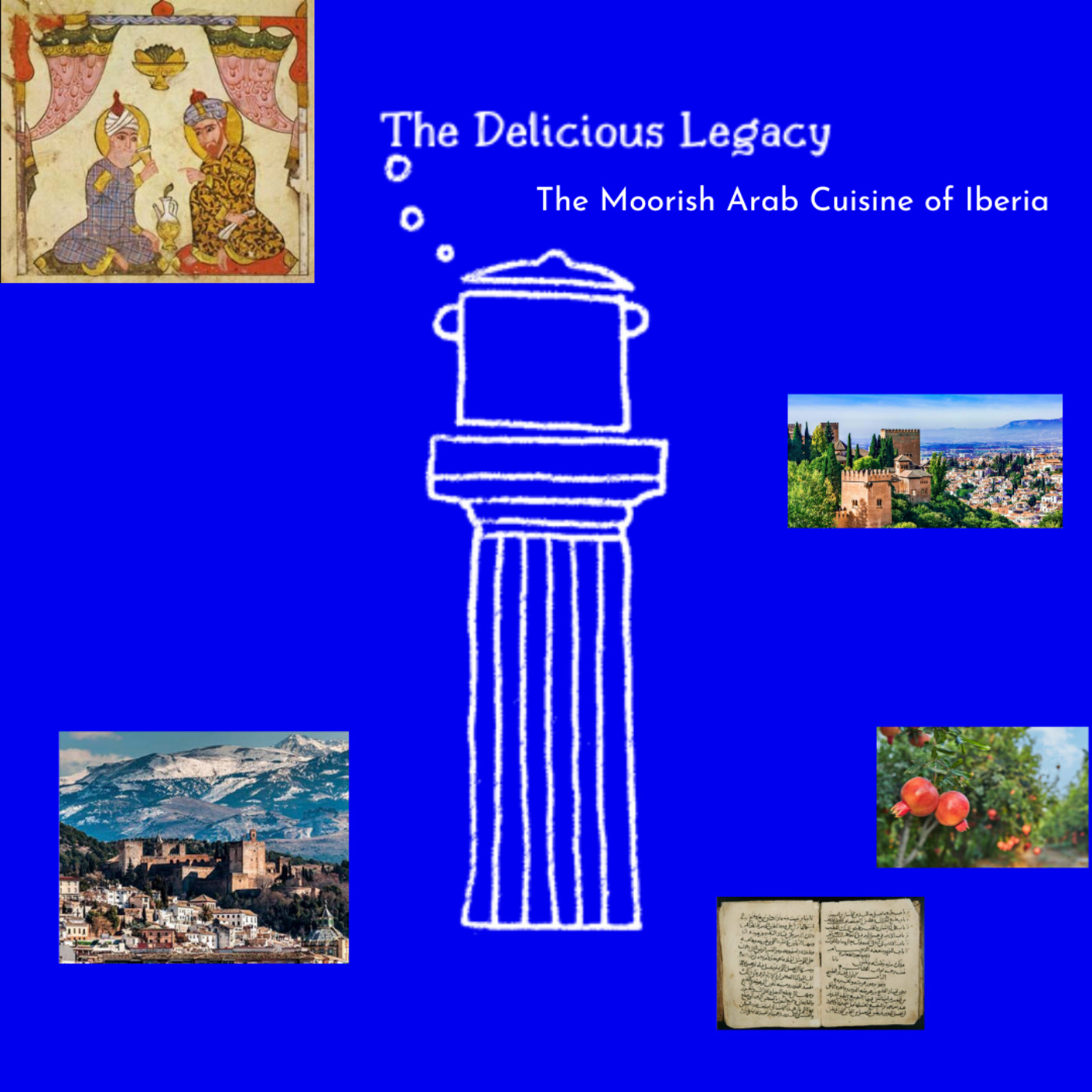
S3 Ep 17The Moorish Arab Cuisine of Iberia
What made the Umayyah descendants to flee Damascus and the Caliphate there almost overnight and travel all the way to the westernmost tip of the known world in the Iberian Peninsula?And how in turn succeeded in creating a flourishing cultural and culinary paradise?Let's find out some amazing recipes from the period and the secret ingredients in the highly sophisticated cuisine of Moorish Spain!Enjoy!Find out more about Nawal Nasrallah:https://nawalcooking.blogspot.com/https://www.aramcoworld.com/Articles/November-2022/Refuge-in-Recipes-The-Research-Journey-of-Nawal-Nahttps://www.aljazeera.com/features/2020/9/13/medieval-arabic-cookbooks-reviving-the-taste-of-historyOn today's episode the music featured is from Motion Array and the song "Thessaloniki" from Pavlos Kapralos! If you want to find out more check his YouTube channel here:https://www.youtube.com/channel/UCzgAonk4-uVhXXjKSF-Nz1AThis episode comes with the welcome support of Maltby and Greek UK's No1 Greek delicatessen!Get shopping some delicious Greek wines, cheeses, honey and herbs here:https://www.maltbyandgreek.com/And don't forget to use the discount code delicious for 15% discount!The Delicious LegacySupport the podcast on Ko-Fi and Patreon for ad-free episodes! https://ko-fi.com/thedeliciouslegacypodcasthttps://www.patreon.com/c/thedeliciouslegacySupport this show http://supporter.acast.com/the-delicious-legacy. Hosted on Acast. See acast.com/privacy for more information.
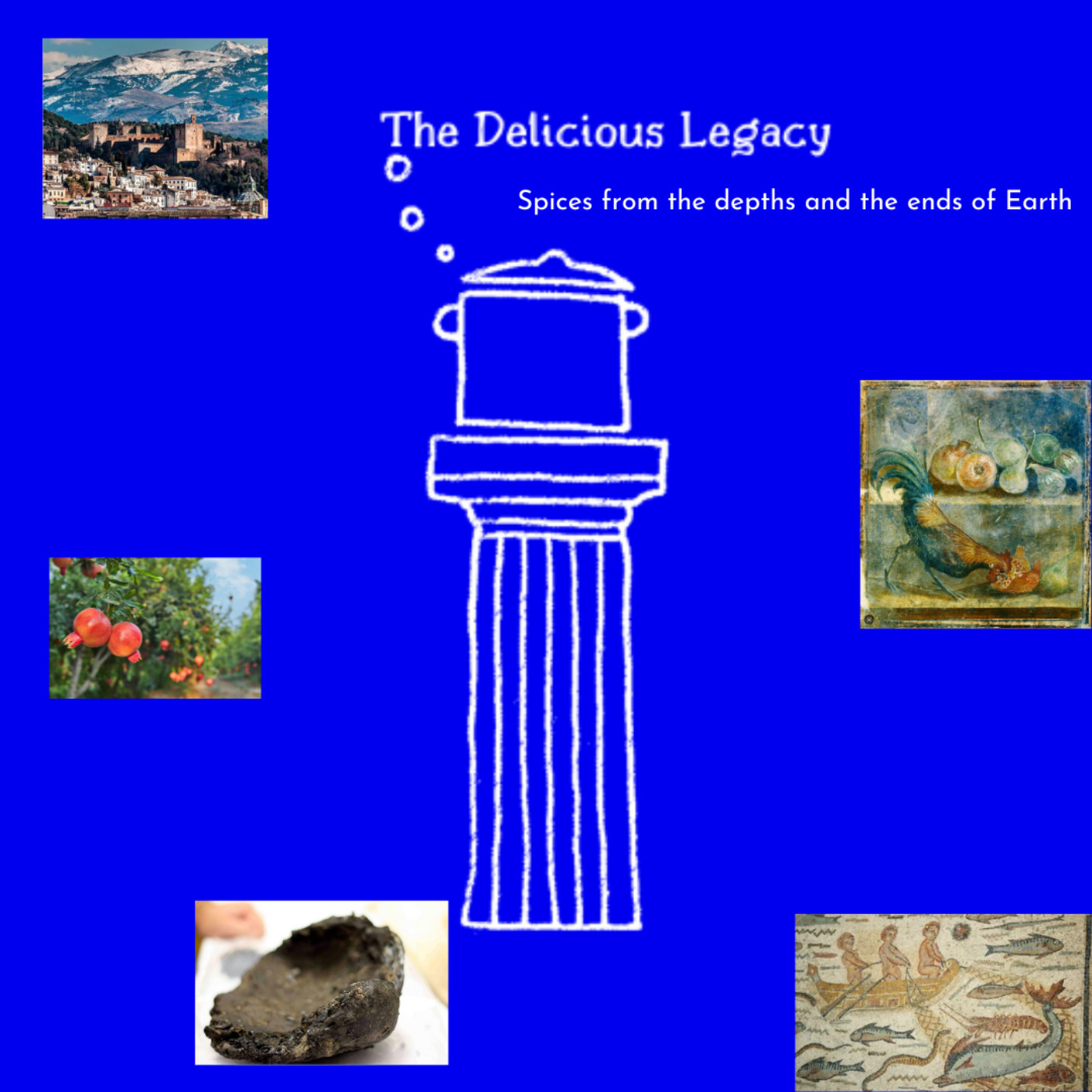
S3 Ep 16Ambergris, Musk and Pomegranate
Hello!New episode is out!Whale excrement anyone? Deer glands? Not keen? What could not entice you to taste these?Where did these ingredients come from? And what is the allure? Aside from perfumes, how do we eat these mysterious spices from the depths of the oceans and the farthest corners of Siberia?Let's delve a little deeper and find out the history and use of the above aromatics to our recipes through the centuries.This episode was brought to you with the welcome support of Maltby and Greek Uk's No1 Greek delicatessen, supplier and distributor of premium Greek product.get your order here: https://www.maltbyandgreek.com/Enjoy!The Delicious LegacySupport the podcast on Ko-Fi and Patreon for ad-free episodes! https://ko-fi.com/thedeliciouslegacypodcasthttps://www.patreon.com/c/thedeliciouslegacySupport this show http://supporter.acast.com/the-delicious-legacy. Hosted on Acast. See acast.com/privacy for more information.
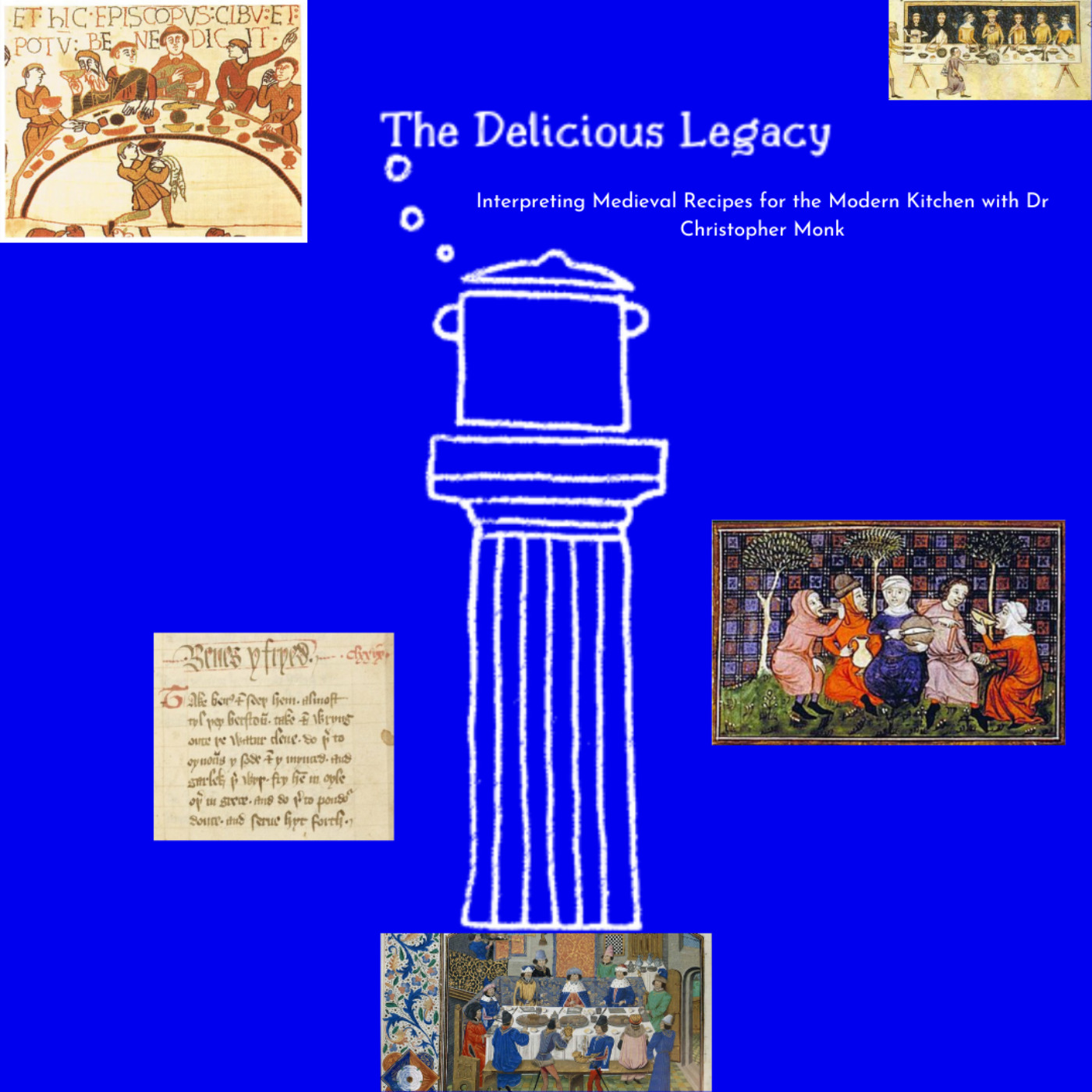
S3 Ep 15Interpreting Medieval Recipes for the Modern Kitchen with Dr Christopher Monk
Dr Christopher Monk is a specialist consultant in medieval culture and texts, working freelance in the heritage sector and with creative professionals. He is also a cook.A cook of Medieval food and recipes, re-worked for our modern kitchens. The feasts of kings usually cooked over open fire, for 100's of guests and with the help of countless cooks, spit-turns, kitchen assistant's and many others now reworked for your family table!What are the barriers for us when trying to cook an ancient recipe? What does the language and the translation of the texts tell us and how do we interpret the texts?What recipes can be found in the early Anglo-Norman kitchen?Let's dive in and get a chance to find out recipes, language and techniques of the past going back nearly a thousand years in Medieval Europe.Do we need a glossary - a medieval culinary glossary- to better understand the ingredients of our old English kitchens? On his YouTube channel Dr Christopher Monk brings to you recipes from the fourteenth century Fourme of Cury ('Method of Cookery'), King Richard II's official cookery treatise (c.1390), as well as other early cookery works.If you want to find more about Dr Monks forthcoming book as well as watching some of the fascinating recipes he re-creates check his website and YouTube channel here:https://modernmedievalcuisine.com/https://www.youtube.com/@MonksModernMedievalCuisine/aboutThis podcast comes with the welcome support of Maltby and Greek UK's No1 Greek delicatessen!Get your hands to some delicious cheese, wine and herbs here: https://www.maltbyandgreek.com/Music was composed by Pavlos Kapralos: https://www.youtube.com/channel/UCzgAonk4-uVhXXjKSF-Nz1AThank you for listening!The Delicious LegacySupport the podcast on Ko-Fi and Patreon for ad-free episodes! https://ko-fi.com/thedeliciouslegacypodcasthttps://www.patreon.com/c/thedeliciouslegacySupport this show http://supporter.acast.com/the-delicious-legacy. Hosted on Acast. See acast.com/privacy for more information.
S3 Ep 14European Medieval Cuisine and Food Part 4- The Culinary Legacy of Constantinople
Hello!Brand new episode is out!Part 4 of our Medieval European Cuisine tour!How did Byzantium played a role to create the first ever French cookbook? Who was Anthimus? And what foods did the Frankish kings ate?And how we could leave out the legendary empire of Byzantium and its influential court, palace life, writers, doctors and physicians who went to establish trends across the medieval Mediterranean and European world with their food habits. And how in turned they were influenced by outside factors and the spice trade from Arab merchants.Enjoy the latest archeaogastronomical adventure here!With music from the immense Pavlos Kapralos and Miltos Boumis!The Delicious LegacySupport the podcast on Ko-Fi and Patreon for ad-free episodes! https://ko-fi.com/thedeliciouslegacypodcasthttps://www.patreon.com/c/thedeliciouslegacySupport this show http://supporter.acast.com/the-delicious-legacy. Hosted on Acast. See acast.com/privacy for more information.
S3 Ep 13European Medieval Cuisine Part 3 - Foods and Recipes of Medieval England & Italy
Hello!A new archaeogastronomical adventure beckons!Come with me and explore the complex flavours of England and Italy a thousand years ago. Let's find out how our ancestors used spices, and what was the common and traditional dishes for the folk of the continent of Europe so many centuries ago.Where do we find our sources from? What recipes and cookbooks have survived? And what archaeology tells us?Listen now and find out!ThomSupport the podcast on Ko-Fi and Patreon for ad-free episodes! https://ko-fi.com/thedeliciouslegacypodcasthttps://www.patreon.com/c/thedeliciouslegacySupport this show http://supporter.acast.com/the-delicious-legacy. Hosted on Acast. See acast.com/privacy for more information.
S3 Ep 12European Medieval Cuisine Part 2 - A History through recipes
On the second part of our exploration of Europe's Medieval Cuisine and the regional recipes, we are delving to the amazing, rich and complex foods of Al-Andalus: The medieval Arab Iberian peninsula and the heady mix of spices, fruits from the East, and the mix of Arab, Jewish and Roman cuisines to create something out of this world!The Almohade Cookbook’s 220 recipes have no counterpart in Middle Eastern cookery of the time; this speaks for the unique character of Muslim Spain’s cuisine. Will check some mouthwatering recipes too. And from there we go to to Catalonia and then Medieval Germany! Enjoy!Thom and The Delicious LegacySupport the podcast on Ko-Fi and Patreon for ad-free episodes! https://ko-fi.com/thedeliciouslegacypodcasthttps://www.patreon.com/c/thedeliciouslegacySupport this show http://supporter.acast.com/the-delicious-legacy. Hosted on Acast. See acast.com/privacy for more information.
S3 Ep 11European Medieval Cuisine - A History Part 1
In 1000 years of eating & cooking…there are too many things to explore!Before the arrival of new foods from the New World…There was still a remarkable variety of foodstuffs available to European citizens. Certainly not for everyone, not all the time, but many had access to both indigenous varieties of fruit and veg AND meat..When was the medieval period? What were the kitchens, cuisines and the diet back then?Who are our sources that gives us all the information about it?Find out on today's part one!Enjoy!Thom and The Delicious LegacySupport the podcast on Ko-Fi and Patreon for ad-free episodes! https://ko-fi.com/thedeliciouslegacypodcasthttps://www.patreon.com/c/thedeliciouslegacySupport this show http://supporter.acast.com/the-delicious-legacy. Hosted on Acast. See acast.com/privacy for more information.
S3 Ep 10Alliums, Actually!
Every recipe -almost universally- begins with "finely chop an onion..." or a variation on the theme. Yet, when was the last time you really thought about one?Onions are ubiquitous in every cuisine and every country. But what is their deep history?Join me to find out the symbolism of onions and their healing properties according to ancient sources, form Mesopotamia, to Ancient Egypt and Rome.Let's find out some delicious ancient recipes, with onions, or just onions cooked in ways that our ancestors used to eat.Enjoy!Thom Music by Pavlos Kapralos and Miltos BoumisThanks to Maltby and Greek for sponsoring this episode!Support the podcast on Ko-Fi and Patreon for ad-free episodes! https://ko-fi.com/thedeliciouslegacypodcasthttps://www.patreon.com/c/thedeliciouslegacySupport this show http://supporter.acast.com/the-delicious-legacy. Hosted on Acast. See acast.com/privacy for more information.
S3 Ep 9The Celebrity Chefs of Ancient Greece and Fragments of Ancient Recipes
The ancient Greek chef, was the first of the genre we know today as "Celebrity Chef".Competitive, highly sought after, creative, innovator...Feuds and fights and fish, gossip and satire! They had it all!Who were they? What did their contemporaries thought of them? What did survive of their fame, of their recipes and their books?Take for example, the only surviving recipe by Europe's oldest cookbook author, Mithaecus, from Sicily, is an instruction for dealing with this fish. 'Gut, discard the head, rinse,. slice; add cheese and oil. Cepola rubescens, a long, ribbon-like fish. Now not much sought after, this was a delicacy to classical Greeks...The recipes the fragments of which I'm sharing with you today will delight you, excite you, mystify you...and hopefully will inspire you too!Find out more, on today's episode....Enjoy!Thom & The Delicious LegacySupport the podcast on Ko-Fi and Patreon for ad-free episodes! https://ko-fi.com/thedeliciouslegacypodcasthttps://www.patreon.com/c/thedeliciouslegacySupport this show http://supporter.acast.com/the-delicious-legacy. Hosted on Acast. See acast.com/privacy for more information.
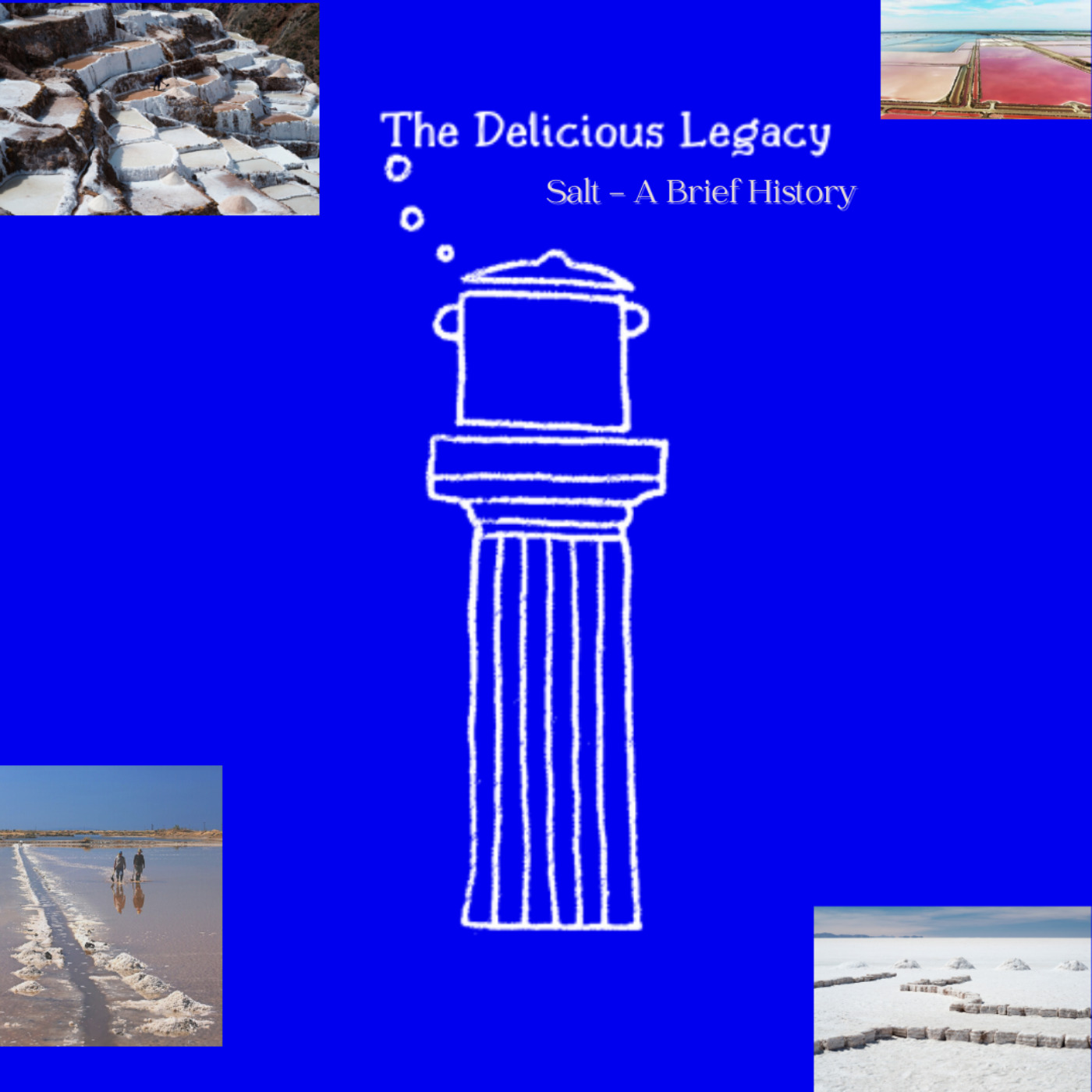
S3 Ep 8Salt- A Brief History
Salt!Homer, Plato, Plutarch, Pliny and Livy all wrote about it in various forms.Life saving, literally we can't survive without salt our bodies won't function.Preserving in more than one ways, giving us the chance to have food in the lean harsh winters...Delicious in so many ways.And yet not known too well, commonly misunderstood, and with many myths attached to it.Let's explore the deep, ancient and fascinating history of salt!Enjoy!Music by Pavlos KapralosThis episode comes with the welcome support of Maltby and Greek UK's No1 Delicatessen.The Delicious Legacy Support the podcast on Ko-Fi and Patreon for ad-free episodes! https://ko-fi.com/thedeliciouslegacypodcasthttps://www.patreon.com/c/thedeliciouslegacySupport this show http://supporter.acast.com/the-delicious-legacy. Hosted on Acast. See acast.com/privacy for more information.
S3 Ep 7A Very Short History of Cheese -Updated Version 2023
bonusDid you know that humans couldn't digest milk? All humans except babies and toddlers that is. But cheese...Cheese was OK!Our Neolithic ancestors were goat and sheep herders and had this amazing resource, milk from their animals, which was making them ill. Till something clicked and they've realised that we could utilize it if it is transformed to cheese!When did all that happened? Why? Where was cheese first 'invented' by whom and how did it spread across Europe and the world?In this episode - a rerun and re-edit of an older one from season one- I speak with author and cheesemonger and all around great human being Ned Palmer, who's book "A Cheesemongers Guide to the British Isles" was released in 2019 and formed the basis for our conversation here.*Warning there is a somewhat graphic description of the "dead goat cheese" which some listeners might find upsetting.The episode is updated and more concise than the one from Season 1, this one is roughly 50 minutes of fascinating cheese history; we are time-travelling in an adventure to discover one of our most genius creations! Cheese!With so many varieties and styles join us for fun trip to humankind's past! We travel to Neolithic Mesopotamia, Prehistoric Britain and Ireland, Homeric Greece, Ancient Rome and Medieval Europe!Music by Miltos Boumis https://cretanbrioche.com/author/boumis/and Pavlos Kapralos. https://www.youtube.com/@pavloskapralos3969This episode is brought to you with the kind support of Maltby and Greek, UK's No1 Greek Delicatessen.https://www.maltbyandgreek.com/You can get Ned's book here:https://www.waterstones.com/book/a-cheesemongers-history-of-the-british-isles/ned-palmer/9781788161176Support The Delicious Legacy here:https://www.patreon.com/thedeliciouslegacyMany thanks!The Delicious LegacySupport the podcast on Ko-Fi and Patreon for ad-free episodes! https://ko-fi.com/thedeliciouslegacypodcasthttps://www.patreon.com/c/thedeliciouslegacySupport this show http://supporter.acast.com/the-delicious-legacy. Hosted on Acast. See acast.com/privacy for more information.
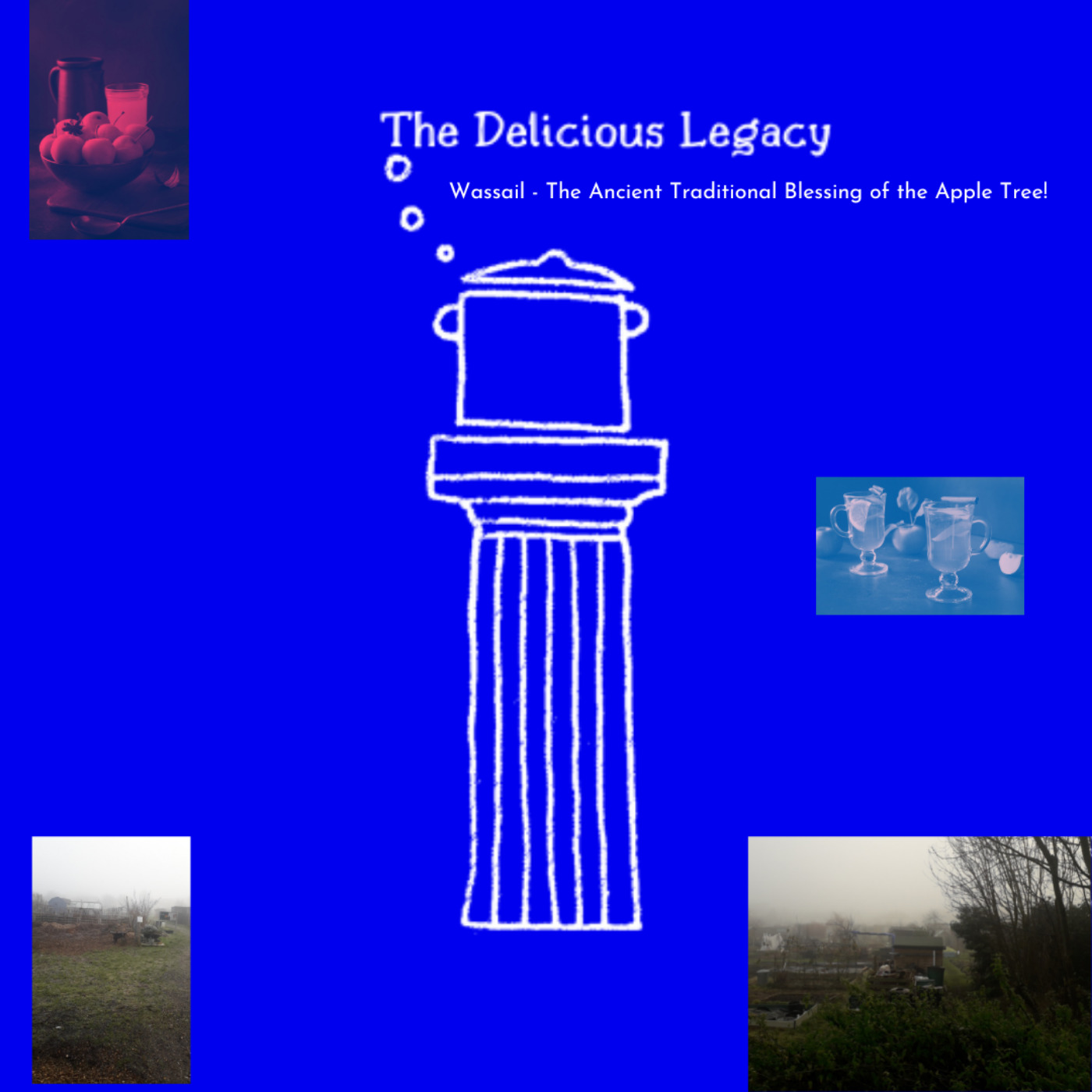
S3 Ep 6Wassail - The Ancient Traditional Blessing of the Apple Tree!
On a glorious sunny winter day on 21st of January, I arrive on Horsenden farm intrigued by what I am about to witness next. It’s a crisp bright afternoon just about lunchtime. People had already gathered and chatted and they were all dressed with some very interesting attire, all mysterious and pagan they’ve seemed to me. Some of them resembled the Holy Man, the winter incarnation of the Green Man that kind of thing, with leaves and branches adorning their head and upper body and capes. Bells around the thighs for noise when walking. And of course all this interesting stuff included hot cider, and people had gathered around a table, waiting for the possession to start, helping themselves with the hot spiced beverage, very welcome on a cold winter day but also delicious.I too helped myself to one or three cups while waiting for the ceremony to start… The whole vibe was very folk, very old spirit of the forest type of thing, really ancient England stuff. I wondered if it was the effect of the hot cider that amplified these surreal scenes, or indeed I stepped into the past…An overall feeling of revelry and party was hanging in the air, people with instruments practising the tunes…and of course plenty to drink and keep us warm on this winter day…The purpose of the Wassailing ceremony is to awake the cider apple trees from the winter sleep and to scare away the evil spirits. And so what happens is the people wet the trees with cider and play music and bang on drums and pans to frighten the evil spirits. This is definitely a weird and wonderful sight to behold.On the verge of extinction, now Wassail is back, almost from the dead! What’s going on? Are we going back to something, hankering to return to some mythical age? Or the disconnect with land, the growing of food and the old folk traditions, breeds a strange not nostalgia but thirst perhaps for knowledge and understanding of our past? Something to connect us in the current disconnected age?Whatever it is that made it possible, it seems Wassail has returned for good in the parts of England that originated, but also in many places that aren’t in Somerset, like Sussex and well, even here in London!Thank you and enjoy!ThomSupport the podcast on Ko-Fi and Patreon for ad-free episodes! https://ko-fi.com/thedeliciouslegacypodcasthttps://www.patreon.com/c/thedeliciouslegacySupport this show http://supporter.acast.com/the-delicious-legacy. Hosted on Acast. See acast.com/privacy for more information.
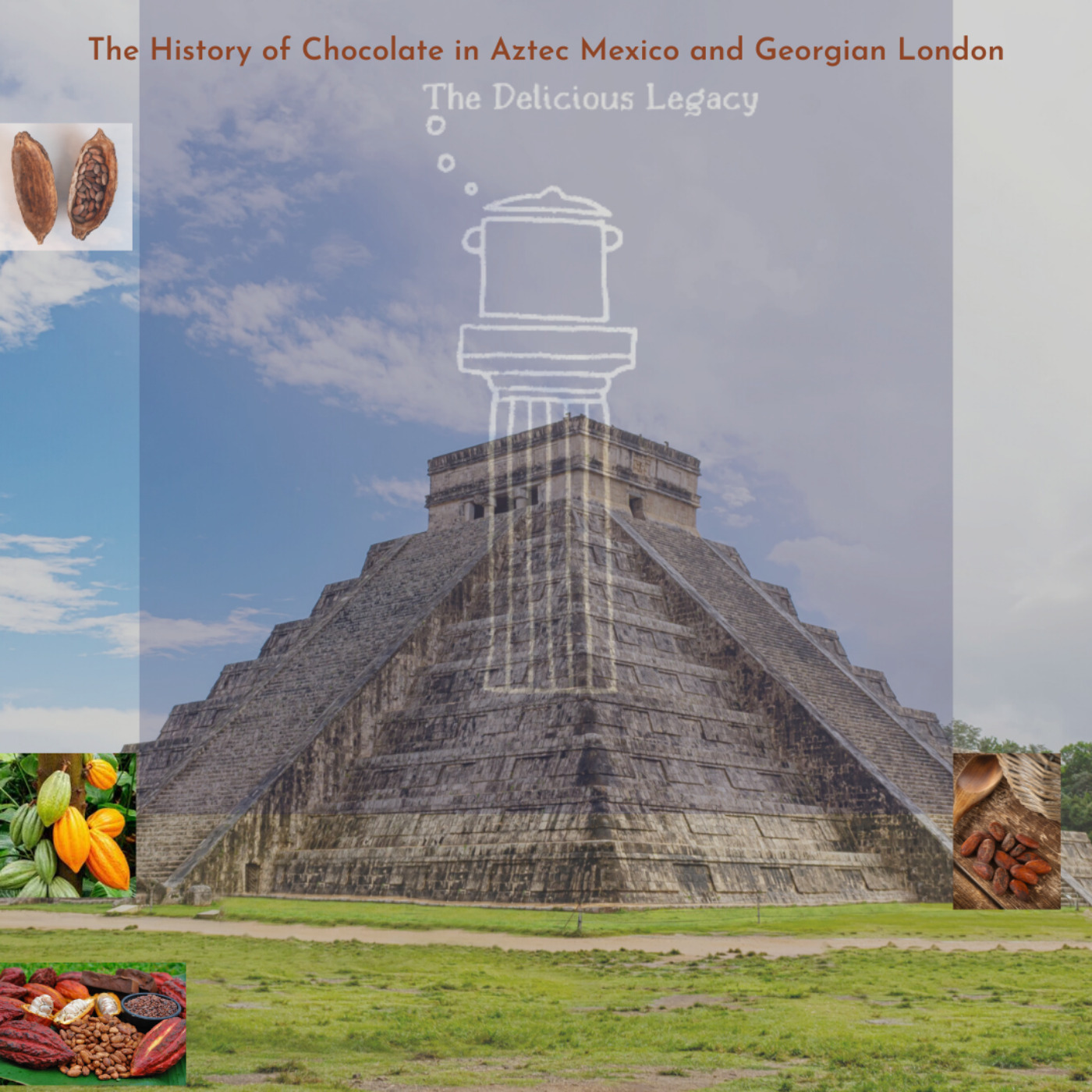
S3 Ep 5The History of Chocolate and Cacao Tree Part 3
Chocolate, gambling, debauchery, and plotting to bring down the government...You wouldn't expect that from your average coffee house, but this was part and parcel of the most exclusive clubs of the day, the infamous chocolate houses of St James Square, London...And you thought Aztecs were the wild ones...Sadly almost all that we know for the Aztecs is wrong or plainly exaggerated. Montezuma indeed he had lavish feasts with many courses, but he certainly didn't drink 50 cups of cocoa! And certainly it wasn't an aphrodisiac. This was a strange fascination and obsession of the Spanish conquistadors.The Aztecs drunk it as a ritual drink, a drink fit for the nobility and the higher echelons of society.Find out about the above and a lot more on today's episode about the history of chocolate in the Aztec Mexico and in Europe!Enjoy!The Delicious LegacyThe episode was sponsored by Maltby and Greek. Get your 15% discount if you shop online with the code "delicious" on the checkout.https://www.maltbyandgreek.com/Music by Motion Array.Support the podcast on Ko-Fi and Patreon for ad-free episodes! https://ko-fi.com/thedeliciouslegacypodcasthttps://www.patreon.com/c/thedeliciouslegacySupport this show http://supporter.acast.com/the-delicious-legacy. Hosted on Acast. See acast.com/privacy for more information.
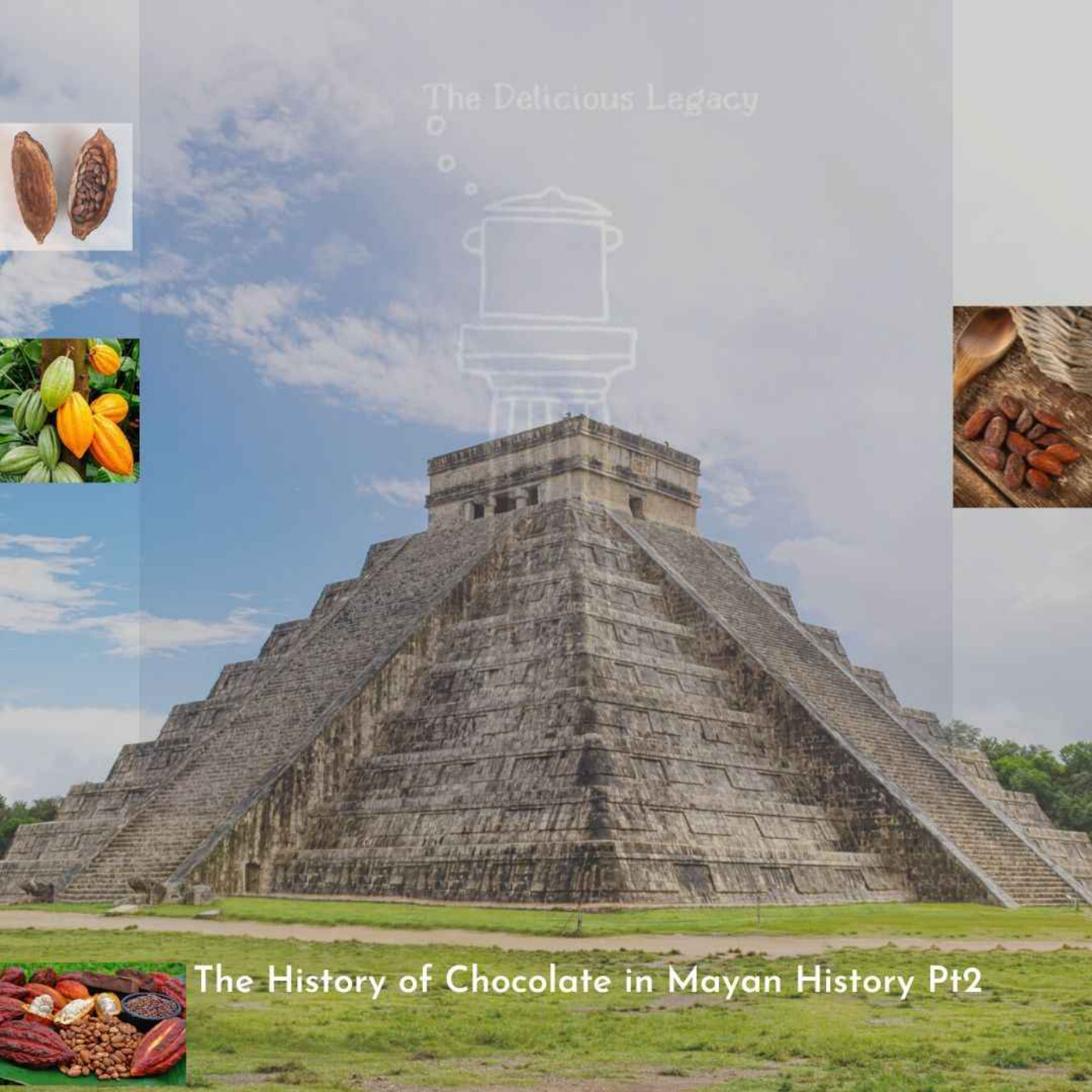
S3 Ep 3The History of Chocolate in the Mayan Civilization - Pt2
Fun fact about chocolate:The chocolate drink of today, is nothing like the drink the ancient Mayans had! That was 98% cacao nibs, today is probably 2%!Have you ever thought how on earth someone thought to take the seeds of a difficult to grow tree, dry them, ferment them, toast them, grind them and make them into a delicious yet bitter drink? How did all start? When and where?Chocolate has been known for 3000 years , give or take to humankind. And for almost all of it’s history, it has been consumed as a drink. Mayas and Aztecs both used to drink it, making a form of frothy chocolate drink flavoured sometimes with spices such as chilli and vanilla. In order to achieve the froth which was considered a sign of quality, the drink was poured back and forth between two jars.Enjoy!The Delicious LegacyThis episode features music from Motion Array.Support the podcast on Ko-Fi and Patreon for ad-free episodes! https://ko-fi.com/thedeliciouslegacypodcasthttps://www.patreon.com/c/thedeliciouslegacySupport this show http://supporter.acast.com/the-delicious-legacy. Hosted on Acast. See acast.com/privacy for more information.
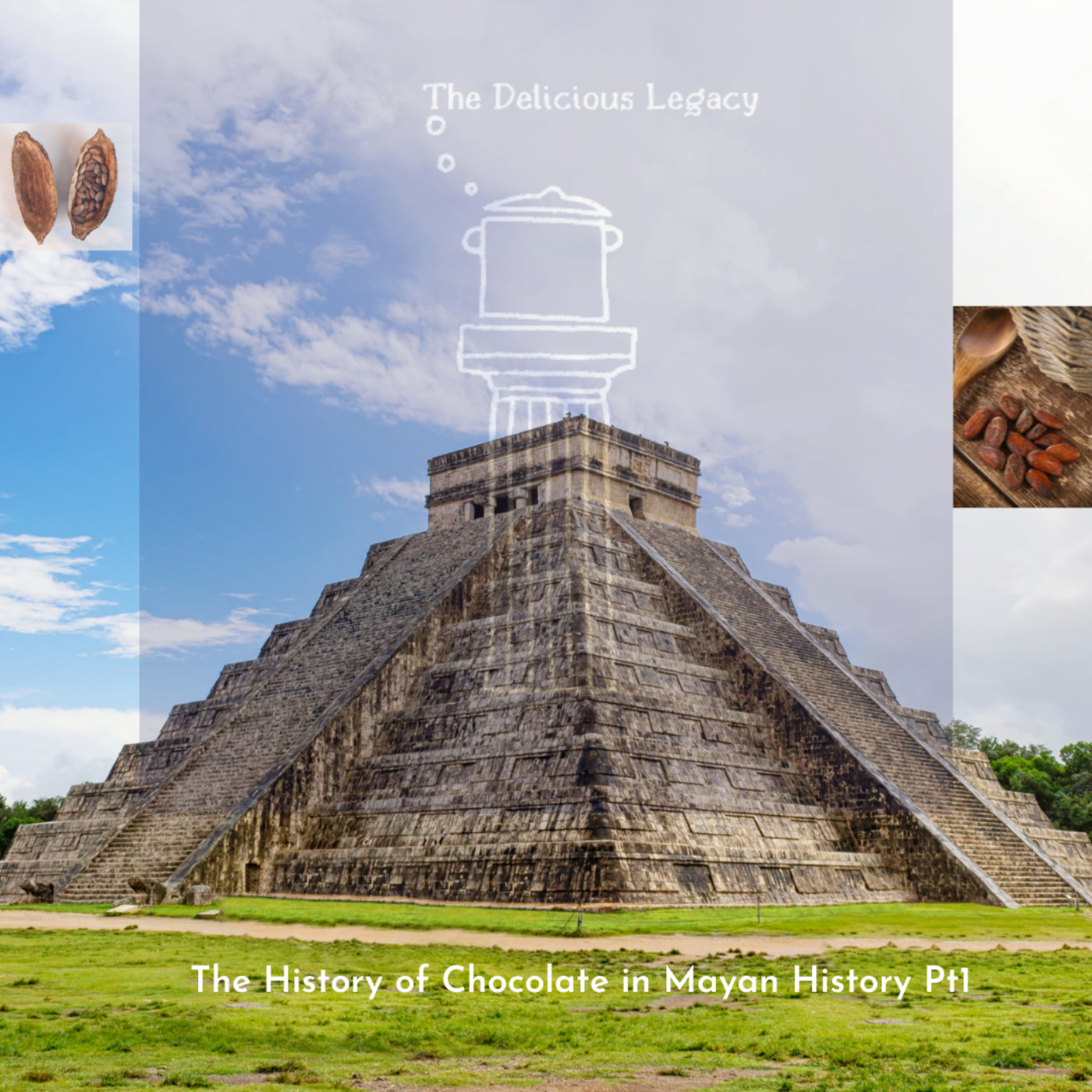
S3 Ep 2The History of Chocolate in the Mayan Civilization -Pt1
Deep in the diverse, evergreen, and humid tropical forests of Yucatan, lies a secret; something that in the past 50 years we certainly have become more familiar with, yet when one sets foot today, in these vast tropical landscapes, it is hard to imagine. Once, this was part of the urban landscapes of the Mayans, long before the European invaders trampled on American soil with their armour and leather boots. Here, Mayans planted cacao trees amongst other crops on these sites, right on the riverbanks. The birdsong in the morning was and still is, intense. Troops of howler monkeys, swing and cry and feast on figs that grow along the river, and which provide the shade that cacao trees need to thrive.Who made the first cacao drink? Where does the name come from?Find out this and a lot more on this episode of The Delicious Legacy!This episode was sponsored by Maltby and Greek UK's No1 Greek Deli!Get your hand to some delicious Greek produce with a generous 15% discount if you use the promo code "delicious" here:https://www.maltbyandgreek.com/Happy listening!Thom & The Delicious Legacy PodcastThis episode features music from Motion Array.Support the podcast on Ko-Fi and Patreon for ad-free episodes! https://ko-fi.com/thedeliciouslegacypodcasthttps://www.patreon.com/c/thedeliciouslegacySupport this show http://supporter.acast.com/the-delicious-legacy. Hosted on Acast. See acast.com/privacy for more information.
S3 Ep 1Traditional Food of Christmas around Europe
How did our ancestors celebrated the birth of Christ? What was considered "special" and celebratory dish and food worthy of the birth of Christ?Are there many differences between the nations of Europe, north, south, east and west?What the Greeks of different regions cook for their Christmas table? what other foods and cakes we serve during the twelve day festive table?And most importantly, why am I so excited and greedy when Christmas comes?Find out all the above and more here!Why there are so many cakes and sweet puddings over the festive period? Traditional cakes made and eaten almost everywhere in Western Europe between Christmas and early January.The Twelfth Night cake, which is in direct line of descent from the Roman cakes of Janus, after whom January is named. Janus, god of the double gate – the gate that opens andthe gate that shuts – had two faces and a double mission: to look back at the past, the Old Year, and forward to the future, the New Year.In Gascony, aniseed cakes used to be distributed after midnight Mass at Christmas.Celebratory foods include Goose, the Germanic tradition was to serve roast goose at Christmas. This is convenient,since the goose, a large bird, hatches in spring and is in its prime at eight or nine months old. Any older and it will not be a success roasted.Or Carp; who is king of the fish in Central Europe, where Christmas or Easter would be unthinkable without it.In South France dried figs also feature among the traditional ‘Thirteen Desserts’ of Christmas. With walnuts or hazelnuts, raisins and almonds, they were one of what were called the quatre mendiants, the four orders of begging friars (so called because the different colours of the nuts and dried fruits suggested the colours of their habits). A treat for children was a ‘Capuchin nougat’ – a dried fig split open and stuffed with a green walnut.Calissons, the famous sweets of Aix-en-Provence, must be made with almonds. They consist of marzipan and crystallized fruits mixed with orange-flower water, all the ingredients being Provençal, and worthy of a sweetmeat which is the pride of Aix. Olivier de Serres, in his Théâtre d’agriculture et mesnage des champs, describes a confection very much like calissons d’Aix. Mme de Sévigné was delighted with a big box of them that her daughter gave her. The word calisson may be from Latin. At Christmas festivities in Aix-en-Provence rich families and confectioners had them distributed by priests at Mass instead of the consecrated bread.Enjoy the latest episode with the welcome support of Maltby and Greek UK No1 Greek Delicatessen!https://www.maltbyandgreek.com/Much loveThom & The Delicious LegacySupport the podcast on Ko-Fi and Patreon for ad-free episodes! https://ko-fi.com/thedeliciouslegacypodcasthttps://www.patreon.com/c/thedeliciouslegacySupport this show http://supporter.acast.com/the-delicious-legacy. Hosted on Acast. See acast.com/privacy for more information.
S2 Ep 30A Saturnalia Feast! Feasting and Partying during winter, in the Roman World
Io Saturnalia!Long before Christmas existed and was celebrated...There was another mid-winter festival...SATURNALIA!Gaius Valerius Catullus described it as "the best of times"; an extravaganza of food and drink, an inversion of social roles, an expression of one's self through singing gambling...Originating as a farmers' festival dedicated to Saturn, the Roman god of agriculture and the harvest, it started as one day celebration, usually December 17th, but over centuries evolved to something bigger.Eventually the Roman dramatist Seneca complained 'December used to be a month- now it's a whole year'Can you not relate? Every holiday nowadays seems to last, until the next one! Could be month, could be longer, after all, the Christmas tat goes for sale in August these days!Music by Pavlos Kapralos.You can find delicious traditional Greek products online for your Christmas table at Maltby and Greek with 15% discount if you put the discount code "delicious" here:https://www.maltbyandgreek.com/Happy listening,Thom & The Delicious LegacySupport the podcast on Ko-Fi and Patreon for ad-free episodes! https://ko-fi.com/thedeliciouslegacypodcasthttps://www.patreon.com/c/thedeliciouslegacySupport this show http://supporter.acast.com/the-delicious-legacy. Hosted on Acast. See acast.com/privacy for more information.
S2 Ep 29The Abbasid Caliphate's Pickles
bonusThe Abbasid caliphate (750-1258) and its associated "golden age of Islam" is famous for a range of achievements in science, literature, and culture. The preservations and translations of ancient Greek texts to Arabic and the flow of discussion, philosophy, the merging of Persian, Greek and Arabic thought with Islam the countless inventions and new paths in science, mathematics and astronomy. All these are more or less known widely. Huge achievements. A mass of ancient texts were preserved for our eyes thanks to Persian scientists. But what about...Pickles?! What do we know about this superb condiment I say?!!?Well let's try and get a sense of place and a starting point to our story!Baghdad was founded in 762 as The City of Peace.The Abbasid empire stretched from the edges of India to the borders of Europe. Baghdad was the heart of the Islamic world and the centre of political rule. It was also the centre of the Translation Movement, when scholars from around the world came together at the House of Wisdom in Baghdad, translating ancient Greek and Roman texts on subjects like algebra, medicine, and astronomy. Music, poetry and art flourished. The society of the Abbasid Caliphate was diverse and open. Think of it a little bit like the “Citadel” in Game of Thrones.As a Metropolis of a vast empire, Baghdad it was a sprawling city with houses of main thoroughfares, connected by narrow, winding and shade-giving streets; all within earshot of the local mosque. Business and trade were kept to the main streets and public squares, bustling and noisy with its food stalls and many other traders. Gardens both public and private, were an imitation of paradise with attention and care to details. Huge water-raising machines could be seen pumping water from rivers into the fields and to the cities and houses.In this hugely influential cultural city al-Baghdadi was born in 1239AD. He was a scribe, and was a compiler of an early Arabic cookbook of the Abbasid period, The Book of Dishes. Originally with 160 recipes but later 260 more were added.Thank you and see you soon!Music by Pavlos Kapralos and Motion Array (Arabian Nights, Barren Sands)Support the podcast on Ko-Fi and Patreon for ad-free episodes! https://ko-fi.com/thedeliciouslegacypodcasthttps://www.patreon.com/c/thedeliciouslegacySupport this show http://supporter.acast.com/the-delicious-legacy. Hosted on Acast. See acast.com/privacy for more information.
S2 Ep 28The History of Coffee
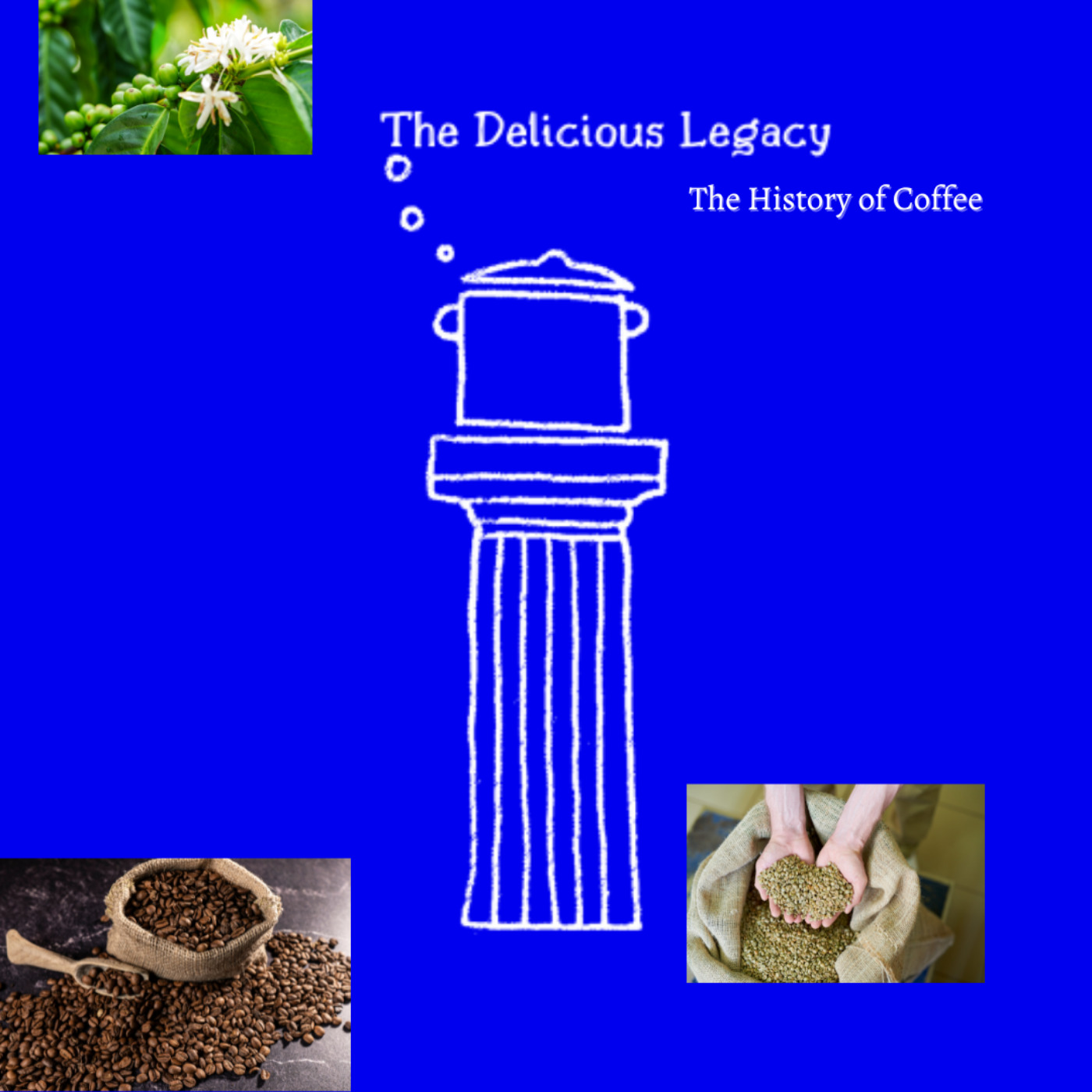
"An Ethiopian goatherd named Kaldi one day noticed his bestgoat dancing about and baaing like a maniac. It seemed tohappen after the old billy goat had been nibbling the berries offa certain plant. The goatherd tried a few himself and soon wasdancing about, too."How do you like your coffee?Dark, bitter, milky, sweet or spiced?Hot, or iced?From Brazil, Mexico, Java, Jamaica or Colombia?But even if it's unimaginable to think your morning without it, there was a time before the caffeinated era! A time that people didn't drink it! I know! The horror!Where did it all started and why? and how come it's the most popular trading commodity in the world after oil?From Ethiopia to Yemen from there to Egypt and Turkey and then Europe...and then the new world and the whole world! Coffee is truly global!Many myths persist on how or why and many wars were fought. And bans on its consumption. And slavery.So much to unpack!Listen and enjoy!Support the podcast on Ko-Fi and Patreon for ad-free episodes! https://ko-fi.com/thedeliciouslegacypodcasthttps://www.patreon.com/c/thedeliciouslegacySupport this show http://supporter.acast.com/the-delicious-legacy. Hosted on Acast. See acast.com/privacy for more information.
S2 Ep 27The History of Sugar from Ancient India to the Caribbean Slave Plantations
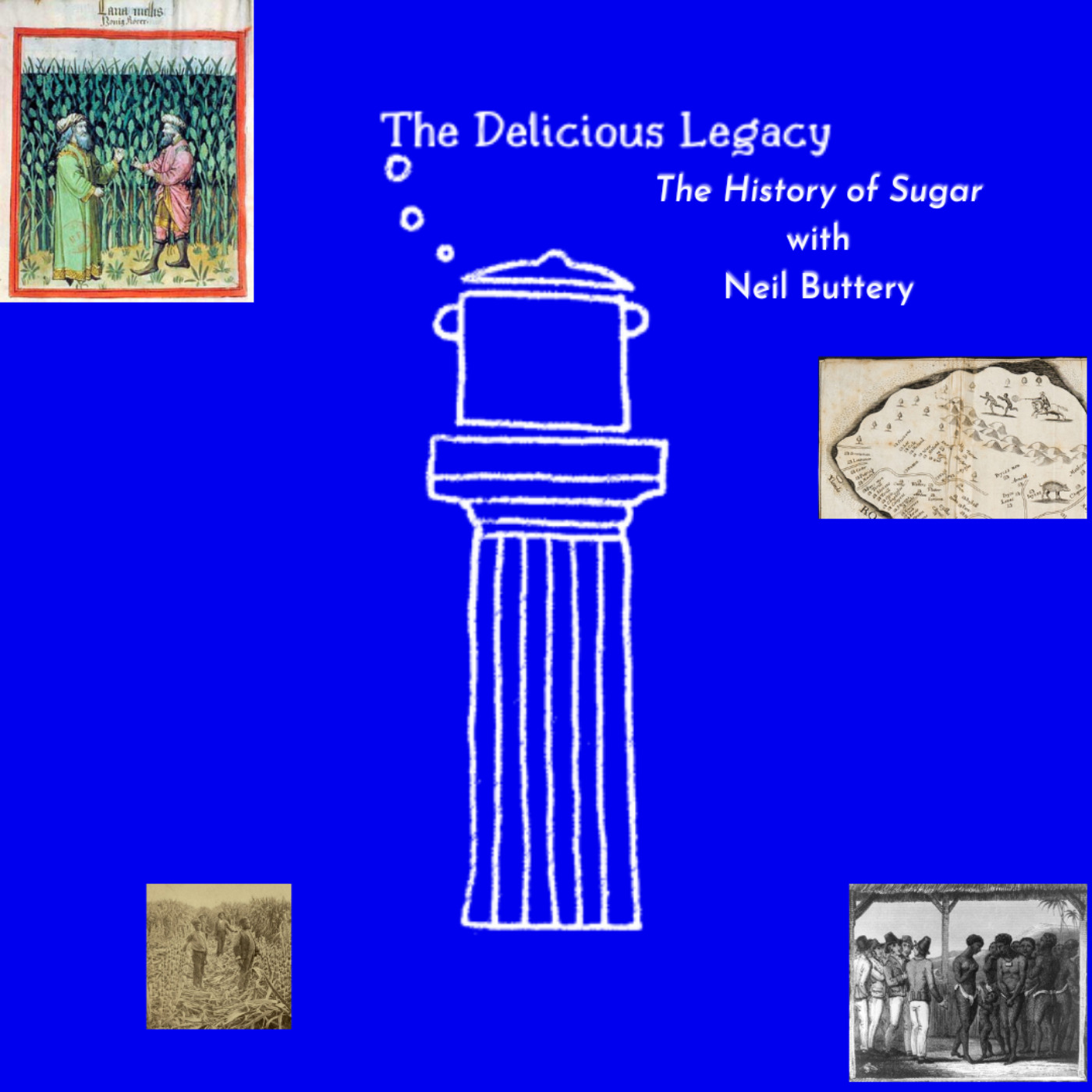
How would our modern day to day life would be like, in a world without sugar?I’m very pleased to have Neil Buttery on the podcast today, the food historian and author of “A dark history of sugar”, who’s book is out now and traces the origins of all the above, sugar’s production and consumption especially during its darkest parts between the 16th and 19th century. Once, it was called Indian Salt. Or white salt. The Chinese lay claim to be the first to make it; among their many inventions.It seems the art of making it though, came from India. Sugar cane is a giant grass that once was native to the island of New Guinea. This is the history of sugar, and sugar cane, the plant Saccharum officinarum which today is found growing in many places around the world, but crucially used in so many of our foods that it certainly makes it ubiquitous …Darius the Persian King is said to have discovered in India a reed that gives honey without the aid of bees. And brought it home with him. A spice -as it was considered in the ancient world- more expensive than any other, and used for medicinal primarily purposes. Dioscorides, a Greek contemporary of Augustus, remarks that: ‘There is a kind of solid honey called saccharon, which is found in the reeds of India and Arabia the fortunate. It resembles salt in consistency, and crunches in the mouth.’ Sweet foods are very rare in nature indeed. And exactly why before the age of sugar, honey was the no1 sweetener in the world, eaten and used by people all over.Energy giving, it was the only sweetener available in a pure and natural state. We describe people as sweet when they’re nice, polite and so on.Clearly sweetness is something we desire, something we need, something we revered as sacred since our deep ancient past. Honey and sugar have religious connotations too.But we also need high energy for our development. As a species our need for sweet and sugar led us to develop ingenious ways to make things sweeter. From the development of sophisticated apiculture to agriculture and breeding selectively fruit bearing plants that have more sugar. But how did sugar as we know today come to the forefront of our lives? And how it created and was shaped by the transantlantic slave trade, colonialism and exploitation of humans and nature? If you want more archaeogastronomical content, and the extra bits from our conversation with Neil, please subscribe to the Patreon page here:https://www.patreon.com/thedeliciouslegacyYou can buy Neil Buttery's "A Dark History of Sugar" book in every good bookshop.Music by Pavlos Kapralos.If you want to get your hands on some delicious Greek products go to Maltby and Greek website and use the code "delicious" at the checkout to get a lovely 15% discount!Enjoy!The Delicious LegacySupport the podcast on Ko-Fi and Patreon for ad-free episodes! https://ko-fi.com/thedeliciouslegacypodcasthttps://www.patreon.com/c/thedeliciouslegacySupport this show http://supporter.acast.com/the-delicious-legacy. Hosted on Acast. See acast.com/privacy for more information.