The Delicious Legacy
251 episodes — Page 5 of 6
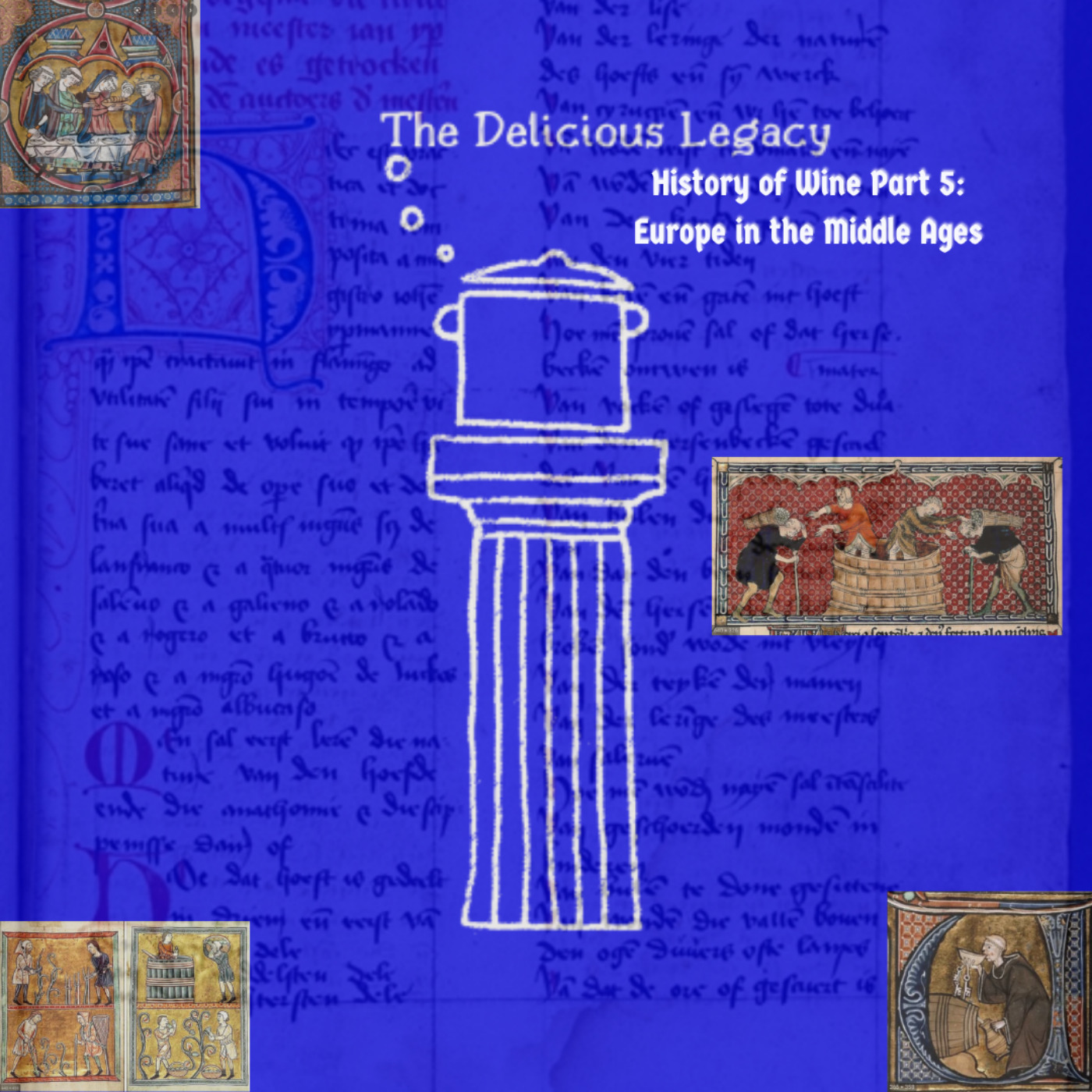
S2 Ep 26Wine in Europe in the Middle Ages, in a Christian, Post-Roman world
Who were the heavy drinkers of Post-Roman Western Europe? What did Kings, monks and bishops did to curb the excess of wine consumption and violence in what is now France, Germany and England?Find out on the newest episode of The Delicious Legacy...I hope you enjoy the start of our wine series so far!Happy Listening!With the so-called collapse of the Western Roman Empire, Europe was in turmoil. Or so the traditional narrative goes. Certainly there was de-centralised powers emerging.What did this do to wine cultivation and production? Who drunk wine? What happened in the years between 500 and 1000 AD?Listen to find out on part five of this exploration of the history of wine!And of course I'm delighted to say that the listeners get a 15% discount from Maltby and Greek deli in London,when you shop online using the code "delicious" here: maltbyandgreek.com/deliciousYou can follow and listen to everything my friends Partial Historians do here: https://linktr.ee/ThePartialHistoriansMusic by Pavlos Kapralos.Thanks!Thom & The Delicious LegacySupport the podcast on Ko-Fi and Patreon for ad-free episodes! https://ko-fi.com/thedeliciouslegacypodcasthttps://www.patreon.com/c/thedeliciouslegacySupport this show http://supporter.acast.com/the-delicious-legacy. Hosted on Acast. See acast.com/privacy for more information.
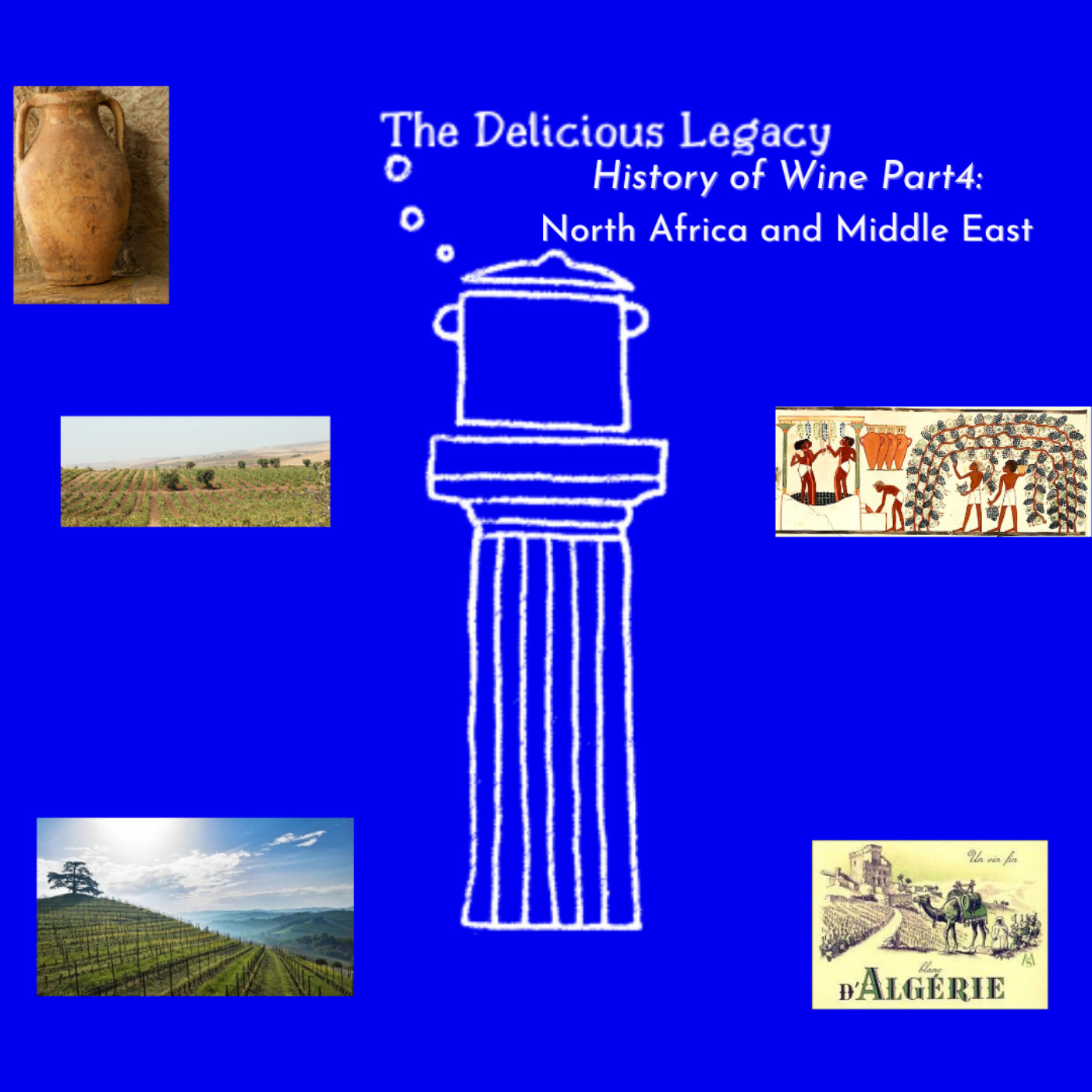
S2 Ep 25Wine in North Africa and the Middle East: History of Wine Part Four
An interview with Aghiles Ourad from the project The Other Grape.From around 800 BCE ancient Phoenician merchant sailors created commercial hubs and trading stations all over North Affrica and Spain. Doubtless they exported their wine making and grape growing there more than 2600 years ago...The Mediterranean is for all intends and purposes a lake as much as a sea. The trade and commerce of the peoples living on her shores happened through the sea for millennia. The climate is very similar and the exchange of ideas, foods, and culture almost free-flowing. And yet, nowadays, when we talk about wine we only think of French, Spanish, Italian, perhaps Greek and ...that's about it! We completely forget the other half of the Med. The southern shores, the lands of North Africa and the Middle East. A vast area of any fertile lands, that played important roles in the rise and fall of countless empires! The grape was first cultivated and wine drunk in the East. In the Anatolia lands, in modern Turkey but also in Iran and Iraq, and Lebanon. Ancient Egypt too, had a very important wine production.The proper old, old world wines!Why this blindness persists in our globalised age? And what is the colonial legacy of the wine making and vine growing on these lands?Yet today we tend to ignore of the wine production of the predominately Muslim countries. Well today we'll try and rectify that!I hope you'll enjoy our discussion! Thom & The Delicious LegacyMusic by Pavlos KapralosAghiles wine adventure is https://theothergrape.co.uk/Support the podcast on Ko-Fi and Patreon for ad-free episodes! https://ko-fi.com/thedeliciouslegacypodcasthttps://www.patreon.com/c/thedeliciouslegacySupport this show http://supporter.acast.com/the-delicious-legacy. Hosted on Acast. See acast.com/privacy for more information.
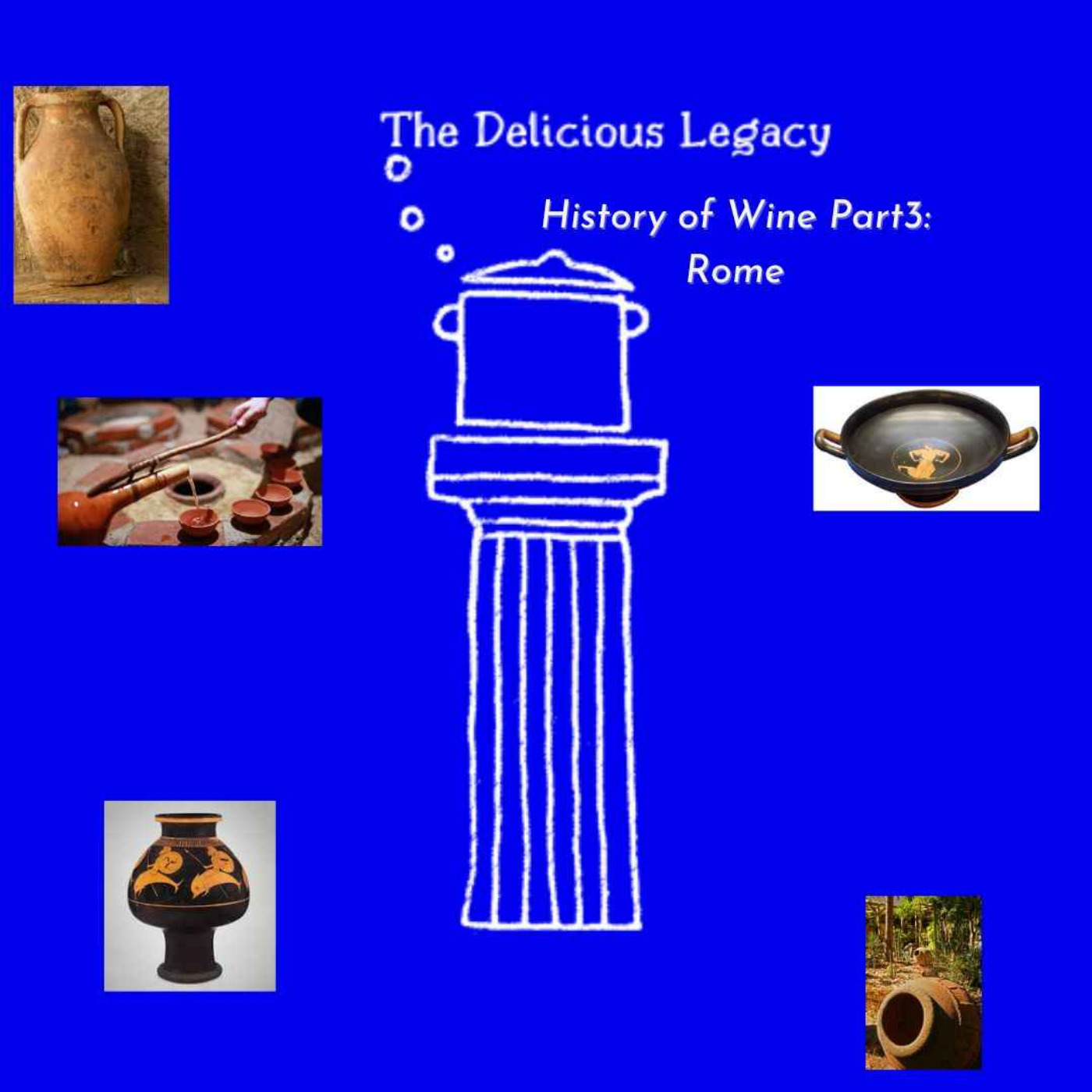
S2 Ep 24History of Wine Part Three - Ancient Rome
Hello!"...For filled with that good giftsuffering mankind forgets its grief; from itcomes sleep; with it the oblivion of the troublesof the day. There is no other medicine for misery."Wine. More than medicine. More than nourishment. A gift from the Gods...Though wild grapevines have grown on the Italian peninsula since prehistory, historians are unable to determine precisely when domestic viticulture and winemaking first occurred.The earliest recorded evidence of Greek influence dates to 800 BC. Viticulture was widely entrenched in Etruscan civilization, which was centred around the modern winemaking region of Tuscany.For most of Rome's winemaking history, Greek wine was the most highly prized, with domestic Roman wine commanding lower prices. The 2nd century BC saw the dawn of the "golden age" of Roman winemaking and the development of grand cru vineyards (a type of early first growth in Rome). The famous vintage of 121 BC became known as the Opimian vintage, named for consul Lucius Opimius. Remarkable for its abundant harvest and the unusually high quality of wine produced, some of the vintage's best examples were being enjoyed over a century later.For the most part wine was fermented in sealed amphoras. Small holes permitted carbon dioxide to escape during fermentation, but after the process was complete they were blocked up. The wine was not always racked or filtered and when it was not it was syphoned or run through a sieve as it was poured out to be consumed.Cato recommended drying grapes in the sun for two to three days, while Virgil advised a different means to the same end of increasing sugar content: leaving grapes on the vine until they were exposed to frost. The products of Virgil’s method were the forerunners of modern late- harvest wines.Cato also said that during the thirty days of fermentation the insides of wine jars should be regularly scraped with brooms made of elm twigs to stop the dregs sticking to the sides. This process was the equivalent of batonnage and other methods of ensuring that the less stay in contact with the must during fermentation. Depending on the grapes used, it should have ensured a darker and more tannic wine. The jars were then sealed until spring when the wine was racked off into clean amphoras for ageing.Cato provided several recipes for *Greek', 'Coan' (that is, from Cos) and other wines, including this one which he described as suitable 'for the handsto drink through the winter:Pour into a jar ten quadrantals of must, two quadrantals of sharp vinegar, two quadrantals of boiled must, fifty quadrantals of fresh water. Stir with a stick thrice a day for five consecutive days. Then add sixty-four sextarii of old sea-water, cover the jar, and seal ten days later. This wine will last you until the summer solstice; whatever is left over will be a very sharp and excellent vinegar.That and a lot more on this weeks episode!Enjoy!The Delicious LegacySupport the podcast on Ko-Fi and Patreon for ad-free episodes! https://ko-fi.com/thedeliciouslegacypodcasthttps://www.patreon.com/c/thedeliciouslegacySupport this show http://supporter.acast.com/the-delicious-legacy. Hosted on Acast. See acast.com/privacy for more information.
S2 Ep 23The History of Wine Part Two - Ancient Classical Greece
Wine, because no great story started with a salad!Hello!Today we shall explore the legacy of ancient Greece and her wines.Symposiums, ancient Greek grape varieties and wines, like Lemnio, Savvatiano, Assyrtiko, Thassian and Chian wines...And what about the ancient Greek drinking vessels? Which ones did they use?"In ancient Greece, the master of the house would open the festivity known as an agape (meaning literally ‘love’ in the sense of friendship) by pouring a libation of wine. For once, the wine was served neat, without water, and very little of it was drunk. Before any of the guests raised it to their lips the host emptied a cup of wine on the sacred family hearth, as the share for the gods, those of the hearth and the others. Then everyone sang a hymn to Dionysus."Sit back, relax, open a bottle of wine and listen!Remember if you want to enjoy the extra content with exclusive recipes why not join me on Patreon and become my patrons there? Tonnes of lovely material to enjoy as well as extra content on the episodes!Thanks!The Delicious LegacySupport the podcast on Ko-Fi and Patreon for ad-free episodes! https://ko-fi.com/thedeliciouslegacypodcasthttps://www.patreon.com/c/thedeliciouslegacySupport this show http://supporter.acast.com/the-delicious-legacy. Hosted on Acast. See acast.com/privacy for more information.
S2 Ep 22The History of Wine Part One
"Nothing more excellent nor more valuable than wine was ever granted to mankind by God.” – PlatoHello!Today on this first part of the History of wine, we’ll go back into the past to trace the beginnings, from prehistory and also see some Greek myths about the legendary god Dionysus.Let me ask you this: and be honest with me. When I say ‘wine’ what do you think?What’s the first thing that comes to mind? Or rather to give a clue, what country comes first to your lips when one says wine?Is it perhaps, by any chance, France? Well today we're not discuss anything about the history of French wine! heh...The history of wine is steeped into peril, danger and many many myths and controversies!Let's find out!Thanks, and happy listening!The Delicious LegacySupport the podcast on Ko-Fi and Patreon for ad-free episodes! https://ko-fi.com/thedeliciouslegacypodcasthttps://www.patreon.com/c/thedeliciouslegacySupport this show http://supporter.acast.com/the-delicious-legacy. Hosted on Acast. See acast.com/privacy for more information.
S2 Ep 21The History of Spice Trade Pt3
The spice trade episode was an epic undertaking and I am so pleased with it, but sadly we have reached the end!On this final part we are examining a number of other spices -namely black pepper, cardamom and ginger- and we learn about the demise of the Nabateans in the early centuries of our common era. We also see how the clever tribes enhanced the selling of their incense and spices by weaving elaborate stories, with monsters and dangerous birds guarding the valuable trees!The ancient world was highly globalised and the Arabian traders were in the middle of a lucrative route; incense and spices and precious, exotic luxury goods were coming from the East and used in the West, for many millennia. For rituals, for food and seen as items that bestowed power and authority to the person who possessed them. Were the magical tears of Frankinsence, much coveted by the Egyptian Nobility, the thing that kick-started the global race for spices?Enjoy!Music by Epidemic Sound and Motion Array exceptTheme of The Delicious Legacy and end song by Pavlos KapralosFree Mily by Miltos BoumisVoiceover actors appearing in order : Mark Knight, Baron Anastis, Jim Bryden, Rachael Louise Miller.Sources:The Periplous of the Erythraean Sea (ancient unknown author),Roman Arabia by BowersockCumin, Camels and Caravans - A Spice Odyssey by Gary Paul Nabhan Food in the Ancient World from A to Z by Andrew Dalby.Wikipedia : https://en.wikipedia.org/wiki/Cinnamonhttps://en.wikipedia.org/wiki/Indo-Roman_trade_relationshttps://en.wikipedia.org/wiki/Pre-Islamic_Arabiahttps://en.wikipedia.org/wiki/Indian_Ocean_tradeSupport the podcast on Ko-Fi and Patreon for ad-free episodes! https://ko-fi.com/thedeliciouslegacypodcasthttps://www.patreon.com/c/thedeliciouslegacySupport this show http://supporter.acast.com/the-delicious-legacy. Hosted on Acast. See acast.com/privacy for more information.
S2 Ep 20The History of Spice Trade Pt2
Making this episode was an epic adventure, "travelling" through the ancient world and through time, so I had to divide it into three parts.Today in part two of our adventure amongst other things we follow the trails of frankinsence and who were the Nabataeans?The ancient spice route is inextricably linked with the Arabian peninsula. At first, this seems a little bit odd perhaps, and a little baffling. Why this inhospitable desert, is connected with the spice trade so closely?In today's part two of our trilogy about the ancient history of the spices and spice trade, we'll talk about the Frankincense and other spices introduced to the temples and plates of ancient Egyptians, Greeks and Romans.Let's delve a bit deeper to the history of aromatics and spices, their use in ancient Greece and EgyptThe ancient world was highly globalised and the Arabian traders were in the middle of a lucrative route; Incense and spices and precious, exotic luxury goods were coming from the East and used in the West, for many millennia. For rituals, for food and seen as items that bestowed power and authority to the person who possessed them.Enjoy!Music by Epidemic Sound and Motion Array exceptTheme of The Delicious Legacy and end song by Pavlos KapralosFree Mily by Miltos BoumisVoiceover actors appearing in order : Mark Knight, Baron Anastis, Jim Bryden, Rachael Louise Miller.Sources:The Periplous of the Erythraean Sea (ancient unknown author),Roman Arabia by BowersockCumin, Camels and Caravans - A Spice Odyssey by Gary Paul Nabhan Food in the Ancient World from A to Z by Andrew Dalby.Wikipedia : https://en.wikipedia.org/wiki/Cinnamonhttps://en.wikipedia.org/wiki/Indo-Roman_trade_relationshttps://en.wikipedia.org/wiki/Pre-Islamic_Arabiahttps://en.wikipedia.org/wiki/Indian_Ocean_tradeSupport the podcast on Ko-Fi and Patreon for ad-free episodes! https://ko-fi.com/thedeliciouslegacypodcasthttps://www.patreon.com/c/thedeliciouslegacySupport this show http://supporter.acast.com/the-delicious-legacy. Hosted on Acast. See acast.com/privacy for more information.
S2 Ep 19The History of Spice Trade Pt1
This week's episode is an epic so I had to divide it in three parts!Part One today and then part two next week, and the final part the week after.The ancient spice route is inextricably linked with the Arabian peninsula. At first, this seems a little bit odd perhaps, and a little baffling. Why this inhospitable desert, is connected with the spice trade so closely?In today's part one of our trilogy about the ancient history of the spices and spice trade, we'll get introduced to the climate, region and the people who inhabited the Arabian peninsula. The ancient world was highly globalised and the Arabian traders were in the middle of a lucrative route; Insence and spices and precious, exotic luxury goods were coming from the East and used in the West, for many millennia. For rituals, for food and seen as items that bestowed power and authority to the person who possessed them. Were the magical tears of Frankinsence, much coveted by the Egyptian Nobility, the thing that kick-started the global race for spices?Enjoy!Music by Epidemic Sound and Motion Array exceptTheme of The Delicious Legacy and end song by Pavlos KapralosFree Mily by Miltos Boumis Voiceover actors appearing in order : Mark Knight, Baron Anastis, Jim Bryden, Rachael Louise Miller.Sources: The Periplous of the Erythraean Sea (ancient unknown author), Roman Arabia by Bowersock Cumin, Camels and Caravans - A Spice Odyssey by Gary Paul Nabhan Food in the Ancient World from A to Z by Andrew Dalby.Wikipedia : https://en.wikipedia.org/wiki/Cinnamonhttps://en.wikipedia.org/wiki/Indo-Roman_trade_relationshttps://en.wikipedia.org/wiki/Pre-Islamic_Arabiahttps://en.wikipedia.org/wiki/Indian_Ocean_tradeSupport the podcast on Ko-Fi and Patreon for ad-free episodes! https://ko-fi.com/thedeliciouslegacypodcasthttps://www.patreon.com/c/thedeliciouslegacySupport this show http://supporter.acast.com/the-delicious-legacy. Hosted on Acast. See acast.com/privacy for more information.
S2 Ep 18The Ancient History of Beer with Pete Brown
I'm very excited to share this episode with you!Also this hot, hot weather makes one thirsty! There's only one thing that can sort our thirst: Beer!Beer indeed is the answer. A pint of cold, clear, crispy happiness. An almost universal pasttime, African, Asian, European and South American civilisations all had a version of this delightful alcoholic beverage, to enjoy with friends, and family around the fire. Water, malt, hops and yeast is all there is and yet we’ve managed to produce countless different delicious drinks from these simple four ingredients.In this episode I'm delighted to have as my guest Pete Brown, the beer writer, and all around delightful human, to ask him all the important questions:When did humans started making beer? And why? Where's the birthplace of beer-making?How did the first beer tasted like? And can we try it now?Is beer the drink of the commoners or actually a great social leveler anyway?What is a lambic beer?We sat around and ate some ancient Greek inspired BBQ, drunk some delicious beers both modern and some old school ones too and we discussed all of the above, for your curious ears!Pete Brown is an expert writer of all things degustatory, but most of all passionate for the convivial drink that we call beer! And his expertise helped to match great beers, with some fantastically marinated bbq meats.Join us for an adventure that begins in the neolithic era, as we travel through to ancient Mesopotamia, and China then to modern-day subsaharan Africa in our quest to quell our thirst for ancient beer!You can find Pete's books on all good bookshops, and he has a website with articles and other useful stuff here:https://www.petebrown.net/Music on this episode is by Pavlos Kapralos. You can find his music at https://www.youtube.com/channel/UCzgAonk4-uVhXXjKSF-Nz1A?app=desktopThis episode comes with the welcome support of Maltby and Greek, and you can find some really taste Greek beer here:https://www.maltbyandgreek.com/collections/beers-spiritsEnjoy!Thom & The Delicious LegacySupport the podcast on Ko-Fi and Patreon for ad-free episodes! https://ko-fi.com/thedeliciouslegacypodcasthttps://www.patreon.com/c/thedeliciouslegacySupport this show http://supporter.acast.com/the-delicious-legacy. Hosted on Acast. See acast.com/privacy for more information.
S2 Ep 17The curious search for Cyrenaic Silphium
What is Silphium and why was it so valuable for ancient Greeks and Romans alike?In today's episode I am exploring the long history of the mysterious plant Silphium, how is it connected with the prosperous ancient Greek colony of Cyrene, in modern day Libya, and I try to answer the question if indeed went extinct!Join me for another archaeogastronomical adventure into the deep Meditarannean past; let's taste some ancient recipe with Silphium and see if we can unravel the mystery of its supposed disappearance and how we today can we get a taste of it...!It's all very intriguing! You won't regret it! I even try some raw asafoetida powder for you!Herodotus passage read by the superb Mark KnightMusic by the amazing Pavlos KapralosSound design created with Soundtoys and UAD Plugins as well as Spitfire Synths.Don't forget to review and rate the podcast on all platforms you listen to! It helps to get us out there! And please share with three of your friends who haven't heard it yet!Enjoy!The Delicious LegacySupport the podcast on Ko-Fi and Patreon for ad-free episodes! https://ko-fi.com/thedeliciouslegacypodcasthttps://www.patreon.com/c/thedeliciouslegacySupport this show http://supporter.acast.com/the-delicious-legacy. Hosted on Acast. See acast.com/privacy for more information.
S2 Ep 16Magical Mastic From Chios and Other Eastern Spices
Chios, the fifth largest Greek island, is best known perhaps as one of the acclaimed birthplaces of Homer; The famous ancient poet, supposed author of Iliad and Odyssey. Whatever truth is behind this claim, we will never know. The second most important thing that is famous for, is mastiha, from the south of the island, the beautiful 'tears' which gives it's unique flavour in many recipes in the Greek cuisine and also gives us the term "masticated" in English, deriving from the ancient Greek term "to chew"; For 'Mastiha' was the world's first -natural - chewing gum, popular from antiquity till today!So, what does the raisin mastic, from a tree native to the island of Chios in North East Aegean Sea doing in a dietary manual from the Mongol Emperor all the way in what is today's modern China? How did it get there?Let's explore three often used in middle east and Greece but a bit forgotten spices here, on today's episode; especially the marvellous, magical mastiha!Music by Pavlos KapralosEnjoy!Thom & The Delicious LegacySupport the podcast on Ko-Fi and Patreon for ad-free episodes! https://ko-fi.com/thedeliciouslegacypodcasthttps://www.patreon.com/c/thedeliciouslegacySupport this show http://supporter.acast.com/the-delicious-legacy. Hosted on Acast. See acast.com/privacy for more information.
S2 Ep 15Traditional Foods of Northern England
Hello!On today's bonus episode I'm exploring somewhat little known local delicacies from the Northern corners of England. Some cheeses, and meats, and desserts that seem to deserve a lot more limelight than they currently have!For example Ribblesdale cheese, "Pressed Beef", Cumberland Rum Nikki, Taylors Original Prepared Mustard, and Swaledale Cheese!(Get the cheeses, here https://www.ribblesdalecheese.com/ and https://swaledalecheese.co.uk/ )Enjoy!Thom & The Delicious LegacySupport the podcast on Ko-Fi and Patreon for ad-free episodes! https://ko-fi.com/thedeliciouslegacypodcasthttps://www.patreon.com/c/thedeliciouslegacySupport this show http://supporter.acast.com/the-delicious-legacy. Hosted on Acast. See acast.com/privacy for more information.
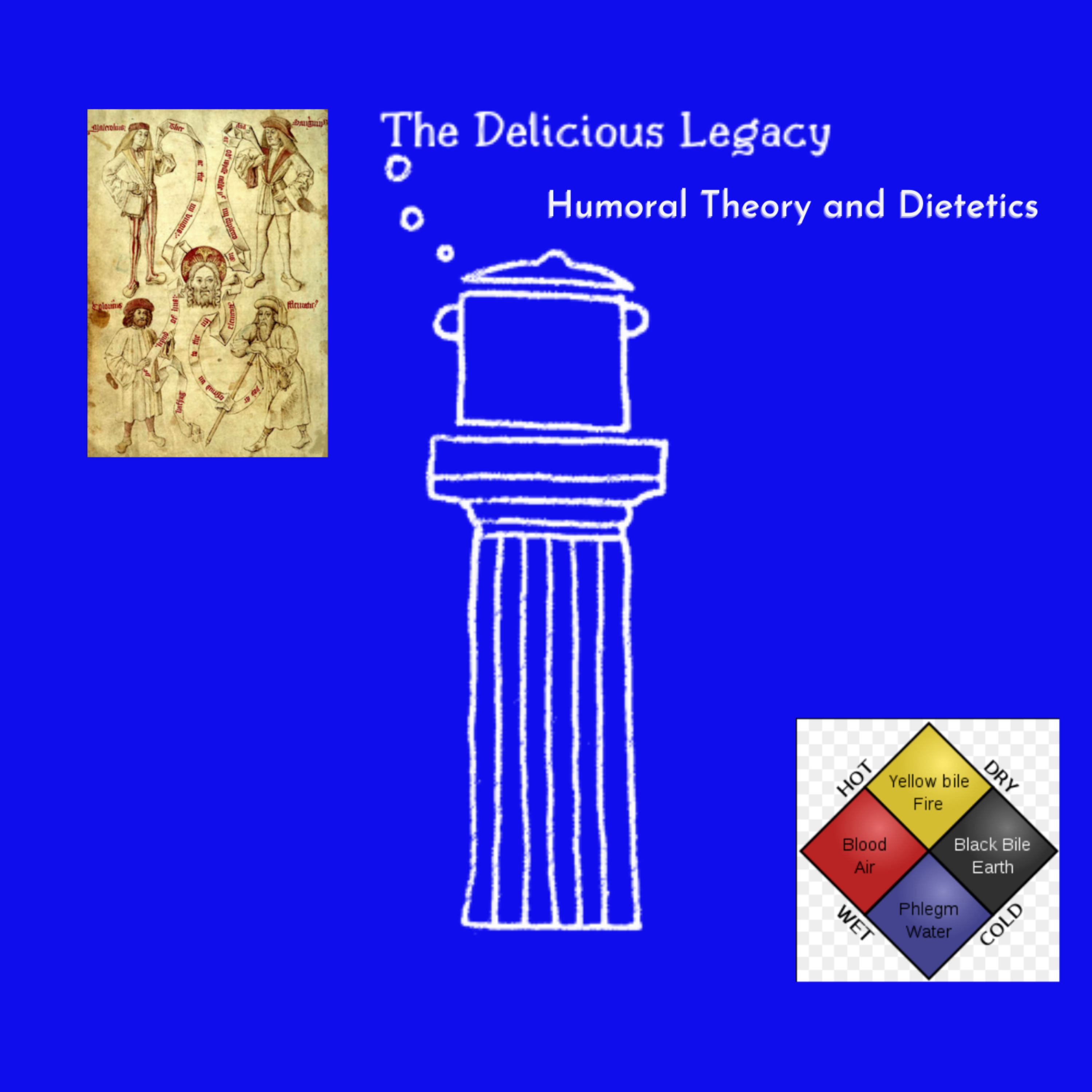
S2 Ep 14Humoral Theory and Dietetics from Ancient Greece to Medieval Europe
The ancients, -Greeks and Romans alike- where equally worried about health and food and the balance between a healthy diet and a delicious one.More than in our days, diet played a role in preventing and curing diseases, and in fact it was one of the main areas of study at medieval medical schools.Medical writers and doctors and philosophers of the ancient world, from Hippocrates, to Galen and Oreibasius to Haly Abbas in Islamic Persia al obsessed and thought about the connection of diet and healthy body.The notion of humours and the idea that disease was related to some imbalance of them was only one of many theories in antiquity, some of which completely ignored them. For Galen the definitive theory was that articulated in the Hippocratic Nature Of Man. The nature of Man was made up of blood phlegm yellow bile and black bile, and it was through these that the body felt pain and maintained health. If their balance was disturbed the body experienced disease.To find out more, listen to the episode!The music on this episode was written and performed by the incredible Pavlos Kapralos.Find out more here: https://www.youtube.com/channel/UCzgAonk4-uVhXXjKSF-Nz1AEnjoy,Thom & The Delicious LegacySupport the podcast on Ko-Fi and Patreon for ad-free episodes! https://ko-fi.com/thedeliciouslegacypodcasthttps://www.patreon.com/c/thedeliciouslegacySupport this show http://supporter.acast.com/the-delicious-legacy. Hosted on Acast. See acast.com/privacy for more information.
S2 Ep 13Part Two of the Medieval Arab Cuisine
Welcome to Part Two of our Interview!So much more to explore, with kitchen innovations, stews, pickles, and the most incredible cookbooks preserved for our eyes from Medieval Arab World.The Islamic Golden Age... What does it come to one's mind when hears the above words?Do you think of the 'Arabian Nights' ? Or as it is properly called as 'One Thousand and One Nights'? Is your imagination also filled with other Middle Eastern Folk tales of Aladdin and Ali Baba and Sinbad the Sailor? Or, maybe, the flourishing of scientific, cultural, economic activities in the near middle east and the centre of the worlds knowledge in the largest city then in the world, Baghdad? Well so you should; these are superbly important aspects of the medieval Arab world, but for me equally important was the flourishing of an extremely delicious, complex culinary tradition, a cuisine with one foot in the Arab peninsula and the other in ancient Persia! Mouth watering rich stews and elaborate banquets, feasts for kings and caliphs that lasted weeks on end... In other words, food! Food glorious food, food that we've never heard of, food and recipes that influenced the European medieval cuisine and to this day we find echoes of them in recipes across the known world,-without exaggeration- from India to South America!For this reason I have invited on today's episode Professor Daniel Newman; an academic from Durham University specialising in Arabic literature, to talk to us about the medieval Arab cuisine. He is also known for his blog "Eat like a Sultan" where he brings the medieval recipes to our modern world with some mouth watering creations, professor Newman shares with us his unique insight of a rich and wonderful world! This was such a fun interview and I thoroughly enjoyed our chat. He is such a passionate and knowledgeable man who loves sharing his wisdom with us! If I had such lecturers when I was at University doubtless my time there would have been much, much more worthwhile! Today's music Nihavend peşrev is kindly performed by Pavlos Kapralos and it's by Petros Peloponnesios a great cantor, composer and teacher of Byzantine and Ottoman music (born c. 1735 Tripolis– died in 1778 Constantinople) the music is influenced obviously by Persian motifs and the song is played with a santur which is a hammered dulcimer of Iranian or Mesopotamian origins. Prof Daniel Newman's blog, Eat Like A Sultan: http://eatlikeasultan.com/ Thank you and enjoy!Thom & The Delicious LegacySupport the podcast on Ko-Fi and Patreon for ad-free episodes! https://ko-fi.com/thedeliciouslegacypodcasthttps://www.patreon.com/c/thedeliciouslegacySupport this show http://supporter.acast.com/the-delicious-legacy. Hosted on Acast. See acast.com/privacy for more information.
S2 Ep 12Medieval Arab Cuisine with Professor Daniel Newman Pt1
The Islamic Golden Age... What does it come to one's mind when hears the above words?Do you think of the 'Arabian Nights' ? Or as it is properly called as 'One Thousand and One Nights'? Is your imagination also filled with other Middle Eastern Folk tales of Aladdin and Ali Baba and Sinbad the Sailor? Or, maybe, the flourishing of scientific, cultural, economic activities in the near middle east and the centre of the worlds knowledge in the largest city then in the world, Baghdad? Well so you should; these are superbly important aspects of the medieval Arab world, but for me equally important was the flourishing of an extremely delicious, complex culinary tradition, a cuisine with one foot in the Arab peninsula and the other in ancient Persia! Mouth watering rich stews and elaborate banquets, feasts for kings and caliphs that lasted weeks on end... In other words, food! Food glorious food, food that we've never heard of, food and recipes that influenced the European medieval cuisine and to this day we find echoes of them in recipes across the known world,-without exaggeration- from India to South America!For this reason I have invited on today's episode Professor Daniel Newman; an academic from Durham University specialising in Arabic literature, to talk to us about the medieval Arab cuisine. He is also known for his blog "Eat like a Sultan" where he brings the medieval recipes to our modern world with some mouth watering creations, professor Newman shares with us his unique insight of a rich and wonderful world! This was such a fun interview and I thoroughly enjoyed our chat. He is such a passionate and knowledgeable man who loves sharing his wisdom with us! If I had such lecturers when I was at University doubtless my time there would have been much, much more worthwhile! Today's music Nihavend peşrev is kindly performed by Pavlos Kapralos and it's by Petros Peloponnesios a great cantor, composer and teacher of Byzantine and Ottoman music (born c. 1735 Tripolis– died in 1778 Constantinople) the music is influenced obviously by Persian motifs and the song is played with a santur which is a hammered dulcimer of Iranian or Mesopotamian origins. Prof Daniel Newman's blog, Eat Like A Sultan: http://eatlikeasultan.com/ Thank you and enjoy!Thom & The Delicious Legacy Support the podcast on Ko-Fi and Patreon for ad-free episodes! https://ko-fi.com/thedeliciouslegacypodcasthttps://www.patreon.com/c/thedeliciouslegacySupport this show http://supporter.acast.com/the-delicious-legacy. Hosted on Acast. See acast.com/privacy for more information.
S2 Ep 11Monks: Fasting, Foraging and Praying in the Desert
A splendid photo from 1858, of the colossal Temple of Olympian Zeus in Athens spurred me to write today's episode: A top of the ancient columns, protruding was a weird structure, almost placed on top as joke. What was it? This, it transpired, was the hut of a monk! A hermit, a stylite, an ascetic who lived his days praying on top of this magnificent ancient monument in the centre of 19th Century Athens. A history of monasticism: one that traces the history of Christian religious life through food, eating and fasting. More importantly though,finding at the end that it is about the deliberate relegation of food and eating to a purely physical need, separated from any conscious emotion of pleasure or displeasure, on the part of individuals and collectives who followed a Christian religious life in the period from the earliest days through to the late Middle Ages. All the way from the Sinai Desert and the isolation of Dead Sea caves through to the forests of Northern England.Easter is nearly here, and I thought that some Lenten recipes would be welcome if we would like to imitate the lifestyle of the first desert fathers and on this episode I have two recipes in the spirit of fasting that hope will inspire you.Enjoy!Thom & The Delicious LegacySupport the podcast on Ko-Fi and Patreon for ad-free episodes! https://ko-fi.com/thedeliciouslegacypodcasthttps://www.patreon.com/c/thedeliciouslegacySupport this show http://supporter.acast.com/the-delicious-legacy. Hosted on Acast. See acast.com/privacy for more information.
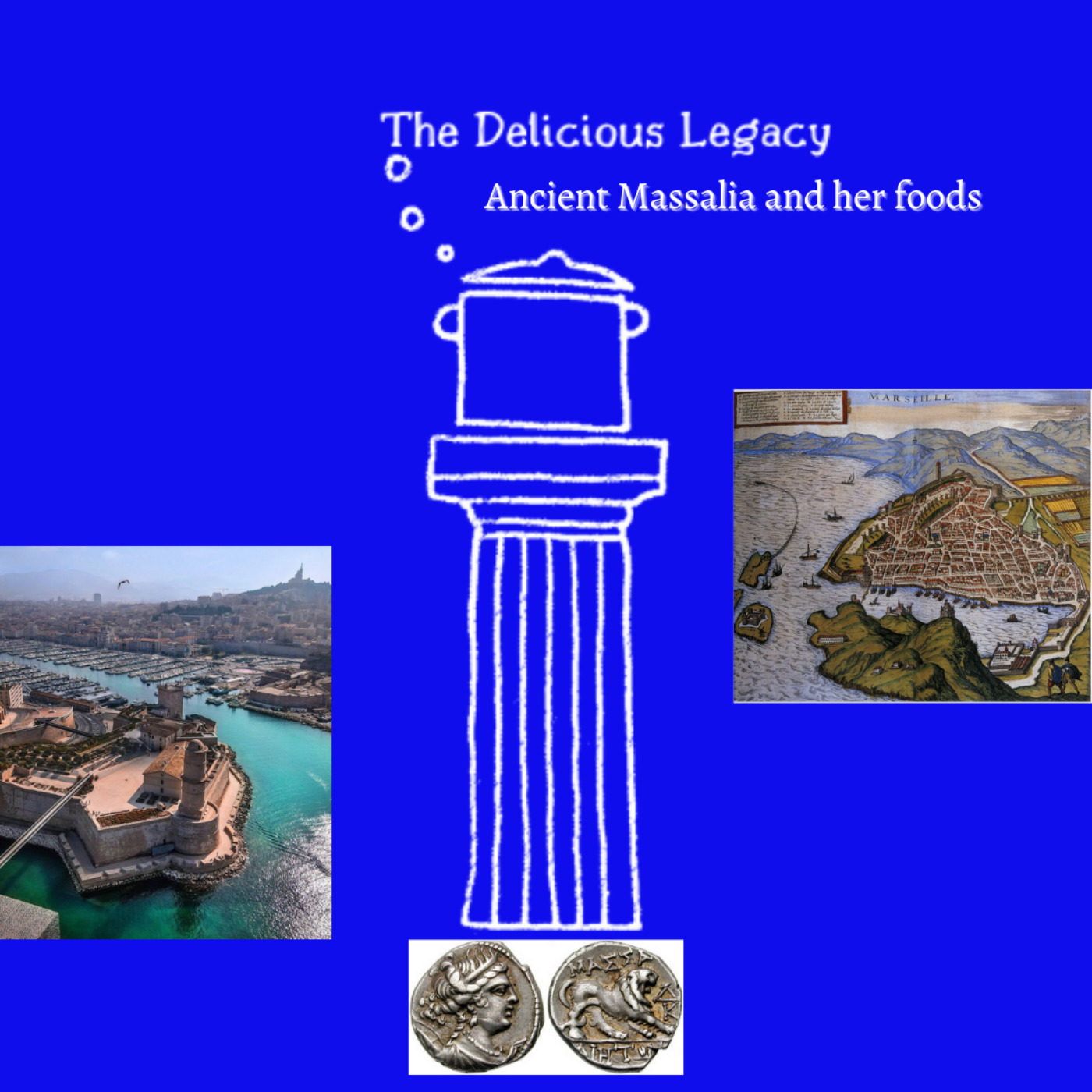
S2 Ep 10Ancient Massalia and her foods
Today, we know this beautiful legendary city, as Marseilles.It's the 2nd largest city in France and the most ancient one. And her foundations were laid thanks to ancient Greeks! The mythical start of the city is told by Herodotus and Aristotle who give us some information and traces of truth through their stories about her establishment. But we will look into her ancient food traditions!Wine! Grapes! Olives and Herbs! The Greeks brought a lot with them when settled in Massalia around 600 BCE.The inland routes to reach northern Europe started here; the navigable rivers that led to the Atlantic, made the spot the city was built, ideal. The trade of tin and other goods was of outmost importance, and so was the necessity to avoid the conflicts with Carthaginians along the southern routes from Spain.But let's go to the food.Archestratus says:Use all anchovies for manure, exceptThe Attic fish; I mean that useful seedWhich the Ionians do call the foam;And take it fresh; just caught within the bays,The sacred bays of beautiful Phalerum.Good is it too, when by the sea-girt isleOf Rhodes you eat it, if it's not imported.And if you wish to taste it in perfection,Boil nettles with it—nettles whose green leavesOn both sides crown the stem; put these in the dishAround the fish, then fry them in one pan,And mix in fragrant herbs well steep'd in oil.How is the traditional Provençal dish "sartanado" connected with the above passage from Archestratus?What is "myttotos"? What has in common with rouille? What does a recipe found in a papyri, has to do with the famous French bouillabaisse?Which oysters the poet Ausonious things are the best?These, and a lot more are answered in the episode today! Join me and enjoy the foods of Massalia!The Delicious LegacySupport the podcast on Ko-Fi and Patreon for ad-free episodes! https://ko-fi.com/thedeliciouslegacypodcasthttps://www.patreon.com/c/thedeliciouslegacySupport this show http://supporter.acast.com/the-delicious-legacy. Hosted on Acast. See acast.com/privacy for more information.
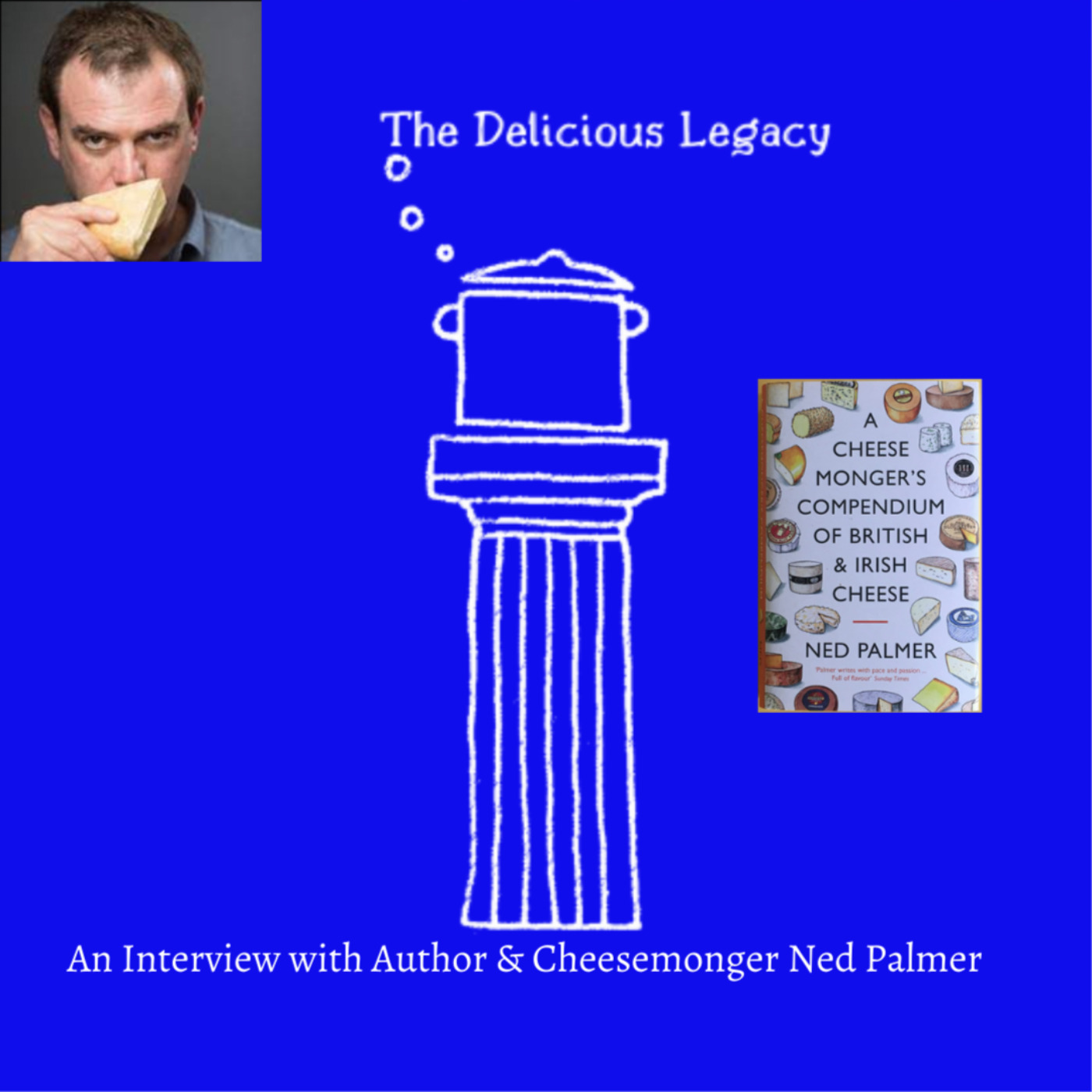
S2 Ep 9An Interview with Author & Cheesemonger Ned Palmer
Hello!New episode is out!Here, Ned and I, met in Borough Market in London Bridge -the biggest and perhaps oldest continuous market here in London- the "Mecca" of the freshest food produce! So we came here to discuss his latest book "A Cheesemongers Compendium of British and Irish Cheeses" and of course to question like modern philosophers what it means to be a cheesemonger? (it turns out there a lot of recovering philosophers in the cheesemongers profession!) What is terroir and how this manifests in the differences in cheese? And of course I ask more information about the tastiest British Cheeses and more broadly about the place of them in the modern world. (and table!)Do you want to know which cheese tastes of roasted peanuts? And has floral notes? Or what about banana scented cheese, the old artificial kinda of banana, and estuary! Surprising huh? You don't expect that huh? Well, have a listen and all will be revealed!Extra content for backers only (if you subscribe on Patreon you have access to it) Ned gives us his perfect cheese and beer pairings! Because cheese and beer goes really well together, and perhaps so, even better than most wines! Enjoy!Support the podcast on Ko-Fi and Patreon for ad-free episodes! https://ko-fi.com/thedeliciouslegacypodcasthttps://www.patreon.com/c/thedeliciouslegacySupport this show http://supporter.acast.com/the-delicious-legacy. Hosted on Acast. See acast.com/privacy for more information.

S2 Ep 8An Interview with Pen Vogler - Breakfast Through the Ages
Just before the Christmas break, I had the chance to interview -via the magic of the internet- Pen Vogler: author of "Dinner with Mr Darcy" and "Dinner with Dickens" who also had curated the exhibition "Food Glorious Food" at the Charles Dickens Museum. She edited Penguin's Great Food series, writes and reviews on food history for the press and has recreated recipes from the past for BBC Television.On this episode though, we actually chat about her latest book "Scoff" which is a history of food and class in UK through the ages. Her title, Scoff, plays on two meanings, the first being to chow down and fill your boots with whatever good things come your way, while the second means to mock or negate another person’s way of life – their taste, in other words!So together we trawl through history and find out why breakfast is crucial mean, what is an important and healthy breakfast, and of course what does it say about your status and your standing in society; what is the most breakfasty breakfast food you should eat?Of course we explore some recipes, and some delicious ideas for breakfast or brunch (ever so fancy and trendy!) and get deeper into fads and fashionable things, how they change though history and what is -or not- nutritious for you. Needless to say we both hate, and scoff in the notion of cereals for breakfast! Yet we must endure their presence; they are so ubiquitous everywhere we turn! Oh the irony!Happy listening!The Delicious LegacyMusic by Pavlos Kapralos. Find out more here: https://www.youtube.com/channel/UCzgAonk4-uVhXXjKSF-Nz1AThanks to Maltby and Greek for sponsoring this episode! Check how you can get your 15% discount!Support the podcast on Ko-Fi and Patreon for ad-free episodes! https://ko-fi.com/thedeliciouslegacypodcasthttps://www.patreon.com/c/thedeliciouslegacySupport this show http://supporter.acast.com/the-delicious-legacy. Hosted on Acast. See acast.com/privacy for more information.
S2 Ep 6A Universal History Of Pickles Part2
Welcome to Part 2 of the Universal History of Pickles!Humanity have been fermenting for so long, so many thousands of years! These microorganisms that help us ferment, might be considered domesticated just like our cats and dogs! Or, they domesticated us, in order for them to thrive? Hmmmm....always worth wondering! Lactobacillales are present on the skins and leaves of just about any vegetable or fruit you would ever want to ferment! Coincidence? who knows...! There's definitely an element of co-dependence between us and them for sure!This time we will see a medieval chutney from Richard the II's cookbook "Forme of Cury", evidence of the first "modern" mention of brined cheese aka feta from Crete, the emergence of Dutch pickled herrings and how it conquered Europe, a brief history of saurekraut, Indian pickles, why balsamic vinegar is such a special vinegar, and of course the holy triptych of soya beans- soy sauce- miso!Enjoy!Support the podcast on Ko-Fi and Patreon for ad-free episodes! https://ko-fi.com/thedeliciouslegacypodcasthttps://www.patreon.com/c/thedeliciouslegacySupport this show http://supporter.acast.com/the-delicious-legacy. Hosted on Acast. See acast.com/privacy for more information.
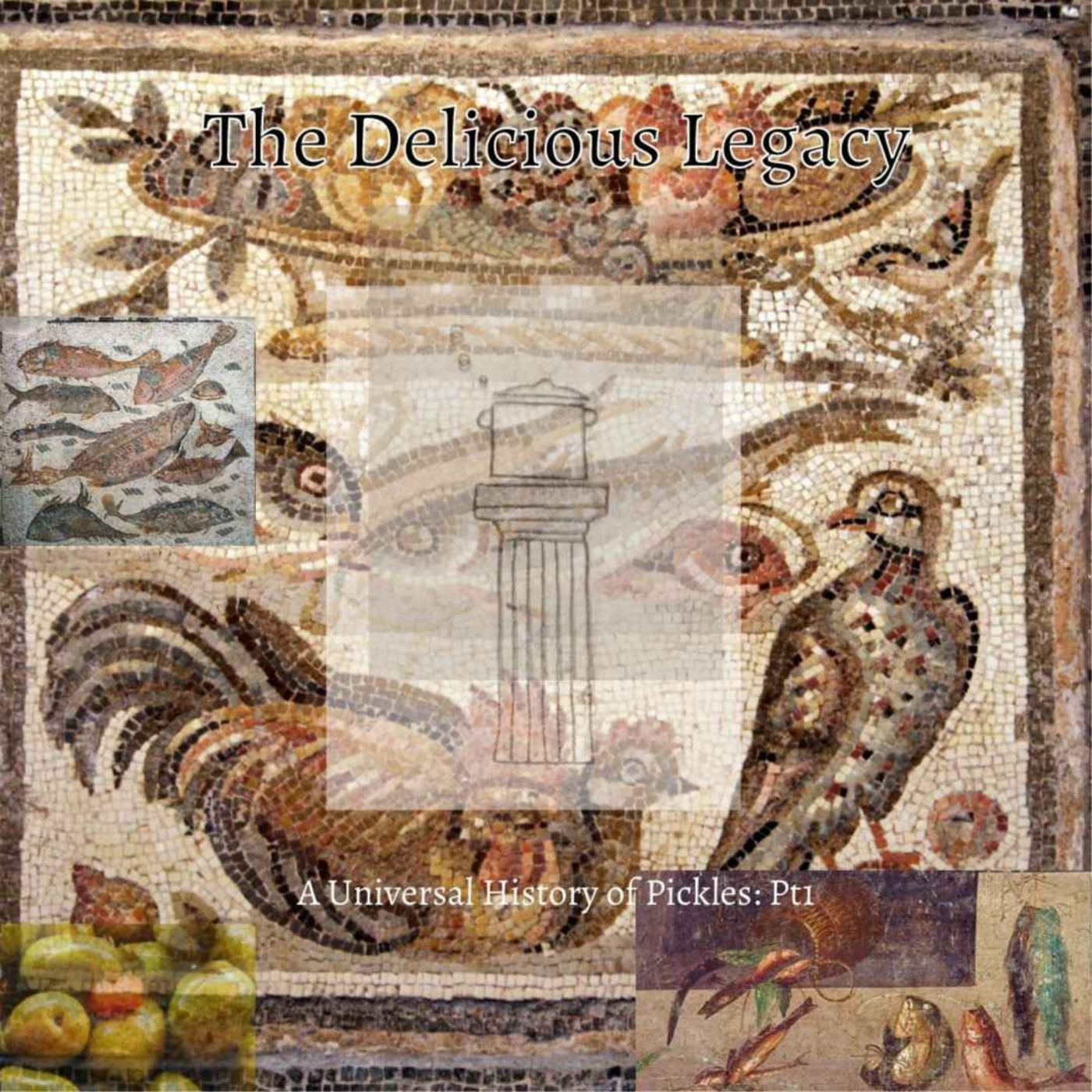
S2 Ep 5A Universal History of Pickles Part 1
Helloooooo!Part 1 of the History of Pickles across the globe is out! Quite excited about it!We will go to the ancient lands of Mesopotamia, Greece, and Rome, and through them to Persia, the Arab world, Spain and Latin America!I think a history of civilization is a history of pickles, and fermentation!Without fermentation we wouldn't have beer, wine, cheese, miso, kimchi. sauerkraut and pickled herrings!Where would we be then huh?Sources used in this episode is Jan Davidsons book: Pickles A Global Historyand the fantastic Noma Guide to Fermentation alongside with Cato "Liber De Agricultura"and Columella's "De Re Rustica" agricultural manualPart2 will be released next week!Music theme is Seikilos Epitaph the oldest recorded surviving melody, performed by the formidable Panos Kapralos.Thank you and enjoy!The Delicious Legacy PodcastSupport the podcast on Ko-Fi and Patreon for ad-free episodes! https://ko-fi.com/thedeliciouslegacypodcasthttps://www.patreon.com/c/thedeliciouslegacySupport this show http://supporter.acast.com/the-delicious-legacy. Hosted on Acast. See acast.com/privacy for more information.

S2 Ep 4Women, Beer and Cheese In Medieval Europe
EJoin myself and Dr Janega, a medieval expert, in a discussion about the most important things! Beer and Cheese! And women! All while we eat cheese and drink beer, on a Sunday afternoon! What can possible go wrong?Cheese! Beer! Women! It seems women did everything didn't they? Why did medieval women worked so hard?So why did we forgot their contribution? Well, find out here!Other subjects discussed:Hoped beer - drink of the Satan!Myths and misunderstandings about medieval timesSpices in everything, especially drinks!Rome didn't fall on 476 CE! Constantinople is/was Rome!Monks, nuns and beer! (and wine)Henry VIII - evil b*st*rd or what?Thanks to Dr Eleanor Janegaand to Pavlos Kapralos for the music!Enjoy!Support the podcast on Ko-Fi and Patreon for ad-free episodes! https://ko-fi.com/thedeliciouslegacypodcasthttps://www.patreon.com/c/thedeliciouslegacySupport this show http://supporter.acast.com/the-delicious-legacy. Hosted on Acast. See acast.com/privacy for more information.
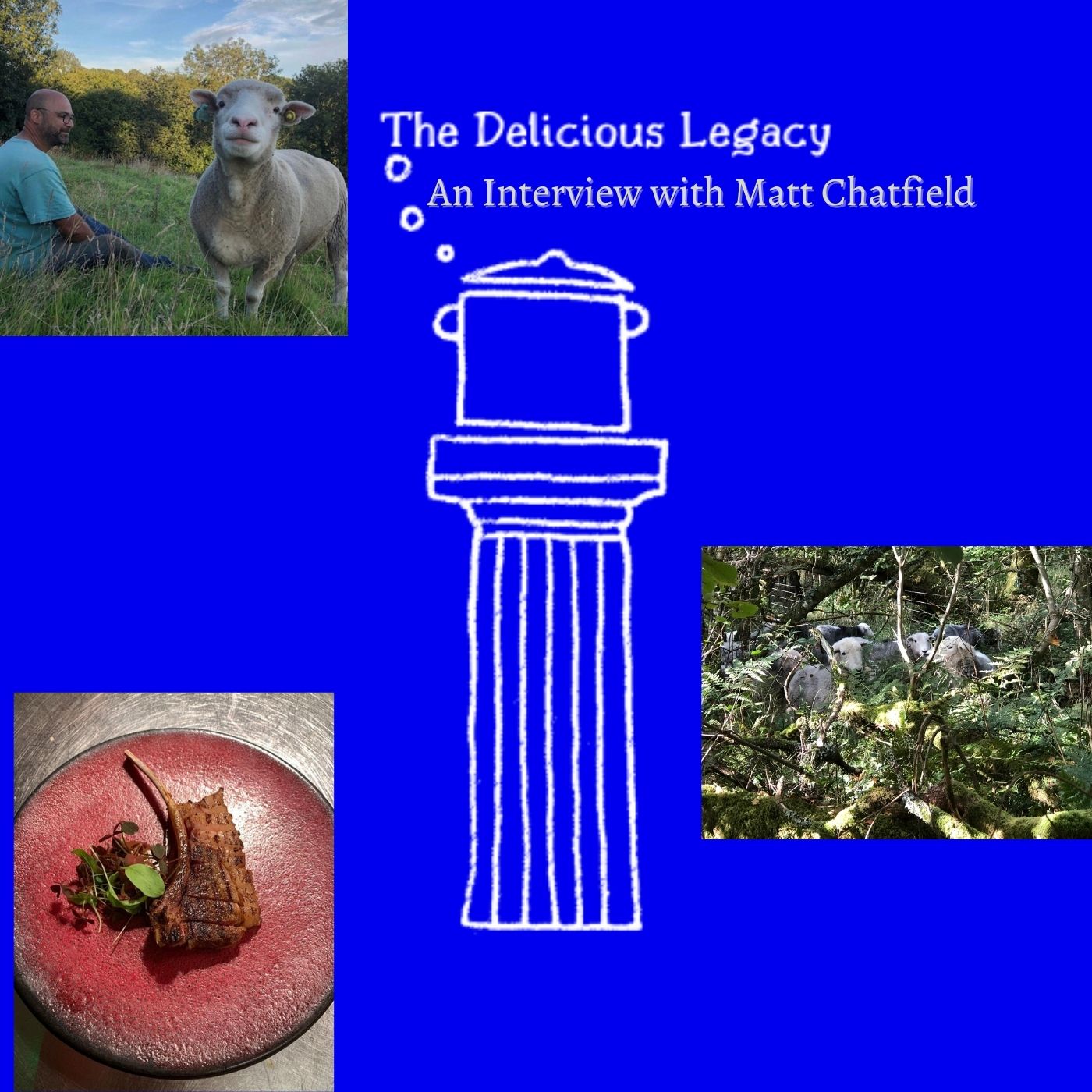
S2 Ep 3The Cornwall Project - An Interview with Matt Chatfield
EToday's episode is taking a little bit of turn; I always wanted to know more about the Cornwall Project and Cull Yaw mutton, a meat not so popular in UK but there's a man that is fighting to change this: Matt Chatfield. We talk about traditional farming, timeless ancient techniques, Silvopasture and how this will help humankind for the future too.Our online interview was very challenging as Matt is obviously down in Cornwall in his caravan somewhere in a field with only a mobile phone and sporadic 4G signal. We were regularly losing connection due to wind apparently and the quality of the audio is not the best one I'm afraid, but nevertheless I think you will enjoy the knowledge that Matt kindly offered here and shared with all of us! Matt highlights the fact that there are many farmers that are doing an excellent work both to feed the people but also care for nature.Anyway I hope you enjoy Matt's thoughts and actions, and buy his lovely aged mutton! Incredibly tasty and versatile!Some brilliant quotes:- "If you look after nature, flavour looks after itself."- "I just look after nature by using the sheep and incredible things happen."- "I detest factory farming especially what we do to the chickens and pigs."His Cull Yew meat is some of the tastiest mutton I have ever tried, and of course is extremely ethical, done with love and care and according to ancient methods and traditions of rearing animals that help the environment and nature, wildlife and as an added bonus sequester carbon into the ground, so help combat climate change too!According to many farmers nowadays this is the future. Top quality meat from really happy animals grazing in woodlands.Silvopasture is the term that's used and we talk with Matt about it quite extensively.We are chatting about farming and farmers in general, how can they make a living and also get some younger people into farming, why the current talk of rewilding is such a con, and why it would be great to rewild Kensington with bears and wolves (!!!)And of course the need to feed the nation and do it from our soil and land, and not make it impossible for farmers to grow meat here. How offsetting our meat production it is a form of colonial future which isn't not so far removed from the horrors of the colonial past. And many, many other subjects!Fascinating talk, very pleased with it, I hope you will enjoy it too!Thanks to Maltby and Greek for their support. I'm delighted to say that the listeners get a 15% discount from the deli in London,when you shop online using the code "delicious" here: maltbyandgreek.com/deliciousThe Delicious LegacySupport the podcast on Ko-Fi and Patreon for ad-free episodes! https://ko-fi.com/thedeliciouslegacypodcasthttps://www.patreon.com/c/thedeliciouslegacySupport this show http://supporter.acast.com/the-delicious-legacy. Hosted on Acast. See acast.com/privacy for more information.
S2 Ep 2The History of Olive Oil Pt2
"If you deconstruct Greece, you will in the end see an olive tree, a grape vine and a boat remain. That is with as much you reconstruct her." -Odyseas Elytis Greece's Nobel Prize winning poet.Olive Oil tasting:Since extra virgin olive oil is simply pressed fruit juice without additives, the factors influencing its quality and taste include the varieties of olives used, the terroir and the countless decisions, production practices and the dedication of the producer. Olive oil tasters describe the positive attributes using the following terms: • Fruity: Having pleasant spicy fruit flavours characteristic of fresh ripe or green olives. Ripe fruit yields oils that are milder, aromatic, buttery, and floral. Green fruit yields oils that are grassy, herbaceous, bitter, and pungent. Fruitiness also varies by the variety of olive. • Bitter: Creating a mostly pleasant acrid flavour sensation on the tongue. • Pungent: Creating a peppery sensation in the mouth and throat. The traditional palate cleanser between olive oils, is water, plain or sparkling, and slices of Granny Smith apple.You may notice the smell of fresh-cut grass, cinnamon, tropical fruits or other aromas of ripe or green olive fruit. This is a good time to point out that the word “fruity” in olive oil can refer to vegetable notes, i.e. green olive fruit, as well as to ripe fruit notes. So think of artichokes, grass and herbs as “fruit” when you taste olive oils!Music by Pavlos KapralosVoiceover recorded at Richard Bignell's studio, Area18 in North Acton.Enjoy!Thom & The Delicious LegacySupport the podcast on Ko-Fi and Patreon for ad-free episodes! https://ko-fi.com/thedeliciouslegacypodcasthttps://www.patreon.com/c/thedeliciouslegacySupport this show http://supporter.acast.com/the-delicious-legacy. Hosted on Acast. See acast.com/privacy for more information.
S2 Ep 1The History of Olive Oil Pt1
"In that acropolis is a shrine of Erechtheus, called the “Earthborn,” and in the shrine are an olive tree and a pool of salt water. The story among the Athenians is that they were set there by Poseidon and Athena as tokens when they contended for the land. It happened that the olive tree was burnt by the barbarians with the rest of the sacred precinct, but on the day after its burning, when the Athenians ordered by the king to sacrifice went up to the sacred precinct, they saw a shoot of about a cubit's length sprung from the stump, and they reported this."What is the common thread running through the following; - The sack of Athens from the Persians at 480BCE- Rome's 8th "hill"-The end of the biblical flood- the remains of an 1600BCE workshop in Cyprus???Well, it's the olive tree, the olive, and the olive oil!The Liquid Gold of the ancient world, that run empires, civilizations and the commercial activity of the ancient Mediterranean for the bigger part of 4000 years! Listen and find out more about the fascinating story and myths of this amazing food!Many thanks to my actors:Jonathan KyddTony HirstMark Knightand to Pavlos Kapralos and Miltos Boumis for their music contributions.You can hear Pavlos music endeavours here:https://www.youtube.com/channel/UCzgAonk4-uVhXXjKSF-Nz1A Miltos is playing and composing music with a traditional Cretan folk band:https://cretanbrioche.com/ Links and info about ancient olive oil:https://ancient-world-project.nes.lsa.umich.edu/tltc/wp-content/uploads/2016/08/FOOD_OLIVES_Tyree_Roman-Oil-Making.pdf Herodotus on the Greco-Persian wars:http://www.perseus.tufts.edu/hopper/text?doc=Perseus%3Atext%3A1999.01.0126%3Abook%3D8 Monte Testaccio:https://en.wikipedia.org/wiki/Monte_Testaccio Support the podcast on Ko-Fi and Patreon for ad-free episodes! https://ko-fi.com/thedeliciouslegacypodcasthttps://www.patreon.com/c/thedeliciouslegacySupport this show http://supporter.acast.com/the-delicious-legacy. Hosted on Acast. See acast.com/privacy for more information.
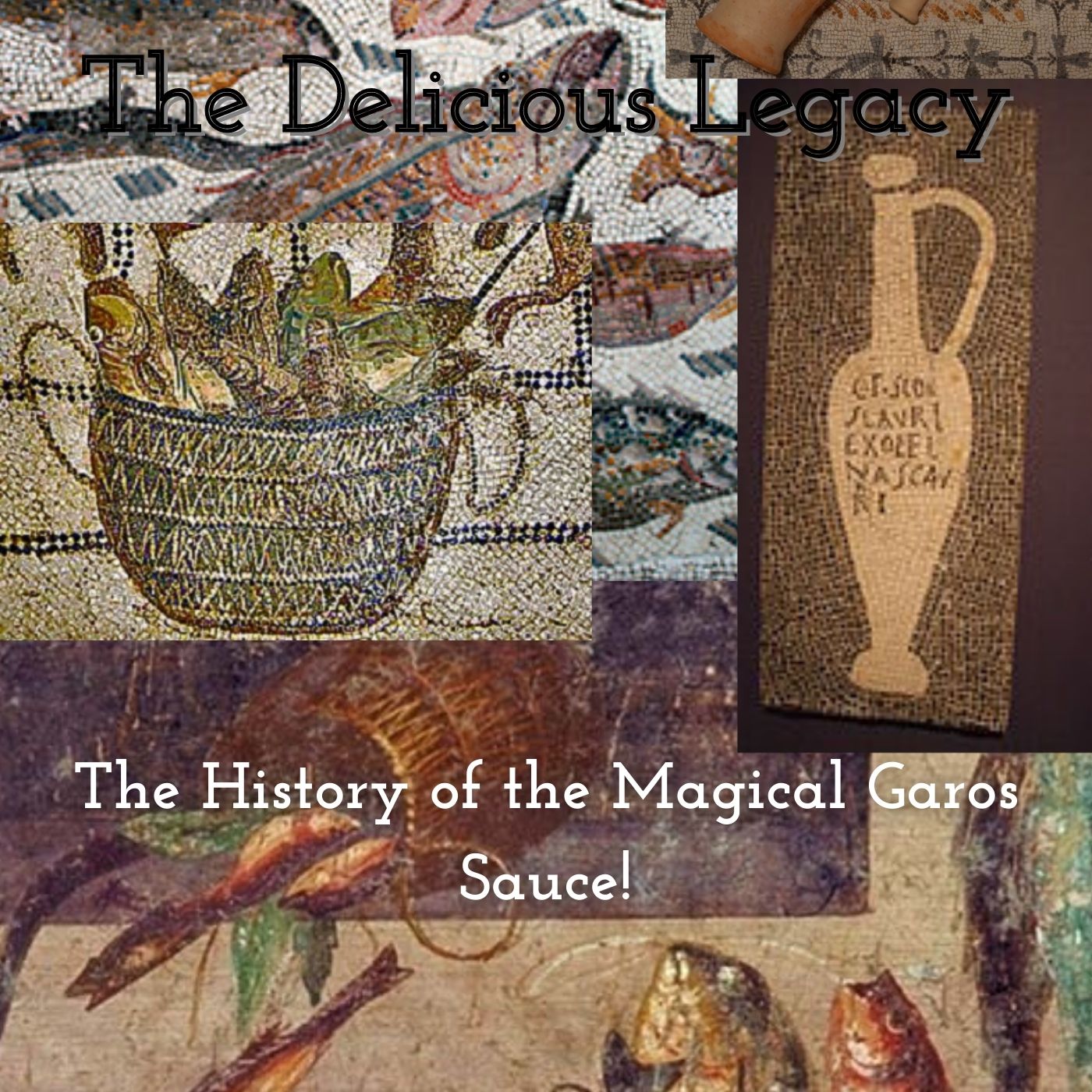
The History of the Magical Garos Sauce
bonusWelcome to Season Two of The Delicious Legacy Podcast!Garos, Garum, Fish Sauce.All interconnected, similar, possible same, but in a essence a single idea, a concept that has connected the far corners of the Mediterranean and of course today the massive sub-continent of South East Asia!The first episode of the new season is all a little bonus taster of what is going to follow in the next weeks...!Garum is an ingredient, a recipe, a history and a mystery, that I find myself coming back to investigate, experiment and re-use again and again.It really doesn't get boring at all!Here we are updating the episode 5 from season 1, over a year and a half ago, with more interesting information:A vegetarian Garum from ancient Rome (!!!)Galen's dietary advice with Garum.Details about Garum from GeponicaUpdates and details from modern Garums in Andalusia and in Amalfi...And much more of course!Many thanks to Pavlos Kapralos for writing the theme music!more of his work here:https://www.youtube.com/channel/UCzgAonk4-uVhXXjKSF-Nz1AColatura Di Alici info (in Italian)https://www.costieraamalfitana.com/colatura-di-alici-di-cetara/ Modern Flor De Garum from Cadiz:https://fuegoysal.com/gb/vinegars-and-sauces/392-flor-de-garum-of-cadiz-andalusia.html Fish Salting Factories of Ancient Southern Spain:https://www.costatropical.net/almunecar/almunecar-monuments-fish-factory.php"A sauce with a lot of history in southern Spain"https://www.eyeonspain.com/blogs/luislopezcortijo/19372/a-sauce-with-a-lot-of-history-in-southern-spain.aspxAnd of course I'm delighted to say that the listeners get a 15% discount from Maltby and Greek deli in London,when you shop online using the code "delicious" here: maltbyandgreek.com/deliciousI hope you enjoy the start of our season two!Happy Listening!Thom & The Delicious LegacySupport the podcast on Ko-Fi and Patreon for ad-free episodes! https://ko-fi.com/thedeliciouslegacypodcasthttps://www.patreon.com/c/thedeliciouslegacySupport this show http://supporter.acast.com/the-delicious-legacy. Hosted on Acast. See acast.com/privacy for more information.
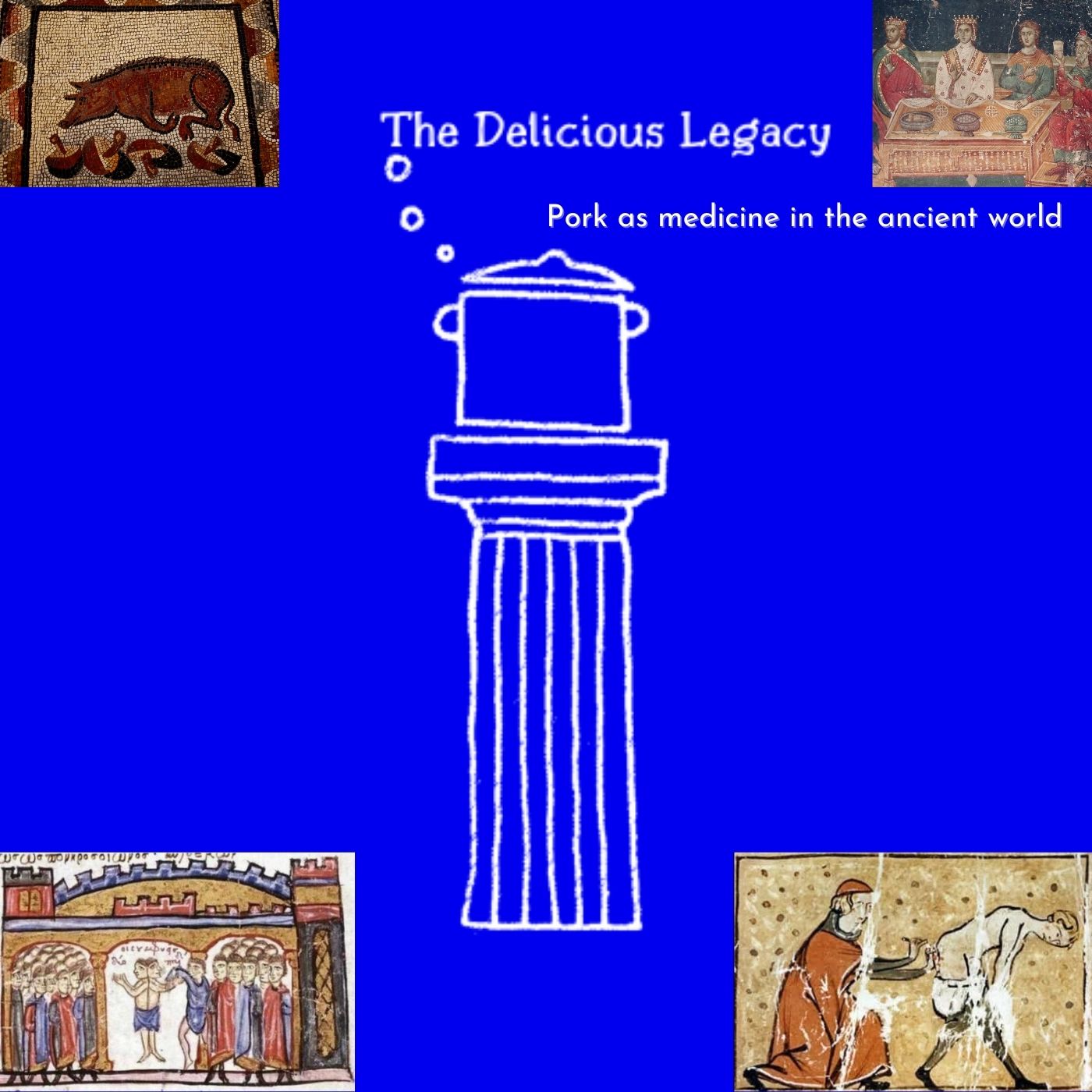
S1 Ep 30Pork as medicine in the ancient and medieval world
EI've been eternally fascinated with ancient medicine and all the different remedies and potions that medicinal writes were advising to cure all sorts of maladies! But one "cure" -literally- salted, cured, ham and bacon it was really above all others! Tarikhos -aka salted meat- and any other pork cut was considered light and and nutritious meat.I wanted to find out how it was used and why!The theory of maintaining or regaining one’s health through a lifestyle of moderation and balance was called “dietetics.” More than in our days, diet played a role in preventing and curing diseases, and in fact it was one of the main areas of study at medieval medical schools. Not surprisingly, foodstuffs and dishes were seen in much the same way as simple and compound drugs, and like them were classified in accordance with the theory of the four humors, by which was meant a theory of the four bodily fluids. To find out the history of this early scientific theory we must go back to the sixth century B.C., to such Greek philosophers as Anaximenes, Heraclitus, and Thales.It was Hippocrates, the famous Greek physician, and his followers who around 400 B.C. added to the four qualities of Zeno the four bodily fluids blood, phlegm, black bile, and yellow bile, and formulated a prototype of what came to be known as “humoral theory.”One of the few remnants of humoral theory that has survived into the twenty-first century; when we describe a person’s temperament today as sanguine, choleric, melancholic, or phlegmatic, we are, in effect, referring to their dominant bodily fluid or humor: blood (sanguis), yellow bile (cholé), black bile (melaina cholé), and phlegm. The Greek physician who was the most prolific medical writer and who influenced medieval medicine more than any other was Galen of Pergamon of the second century A.D. In selecting and harmonizing elements of the humoral theory he found in Plato, Aristotle, Hippocrates, and others, he created a system that was capable of describing the world as a whole, and all inanimate and animate objects in it. By Byzantine times, the theory of humours was accepted without question by doctors and court alike and even amongst more common people. Foods had to be judged and balanced for their effects on the bodily humours, month by month, hour by hour, and according to individual constitution.Ancient medicals writers, physicians and philosophers mentioned on this podcast:Oribasius: https://en.wikipedia.org/wiki/Oribasius Aetius of Amida: https://peoplepill.com/people/aetius-of-amida Alexander of Tralles: https://www.penn.museum/sites/expedition/the-life-and-times-of-alexander-of-tralles/ Paul Of Aegina: https://en.wikipedia.org/wiki/Paul_of_Aegina Anthimus: https://en.wikipedia.org/wiki/Anthimus_(physician)Many thanks to Pavlos Kapralos for the music! You can find more of Pavlos's work on his YouTube channel: https://www.youtube.com/channel/UCzgAonk4-uVhXXjKSF-Nz1AThanks for listening!The Delicious LegacySupport the podcast on Ko-Fi and Patreon for ad-free episodes! https://ko-fi.com/thedeliciouslegacypodcasthttps://www.patreon.com/c/thedeliciouslegacySupport this show http://supporter.acast.com/the-delicious-legacy. Hosted on Acast. See acast.com/privacy for more information.
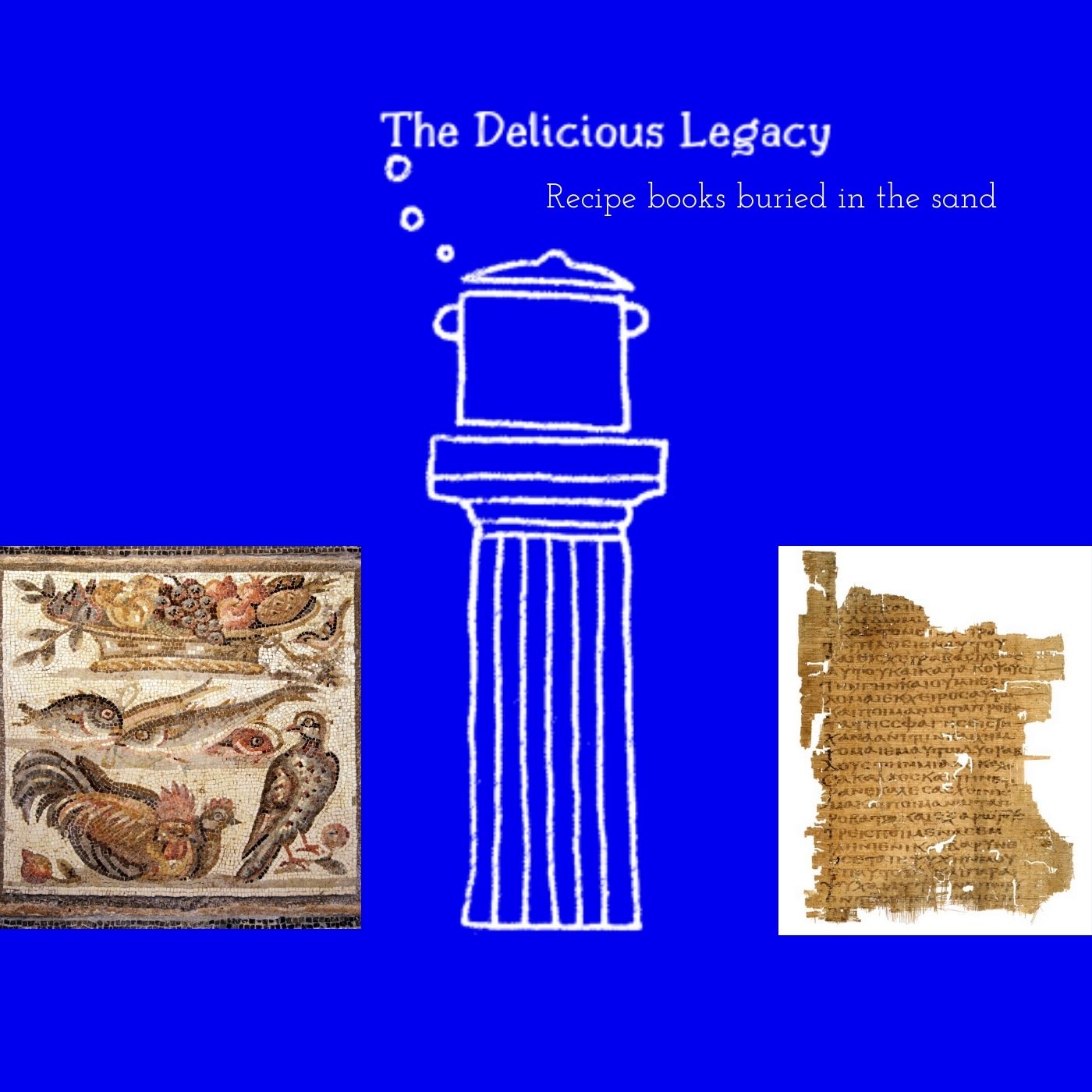
S1 Ep 29Recipe Books Buried Under the Sand
In a seemingly abandoned desert spot, near a small and insignificant Egyptian village, for a period of one thousand years, a city flourished; an important Hellenistic-Egyptian city, perhaps the 3rd largest in Egypt at the turn of the world from the Greek to Roman influence. This city, was called Oxyrhynchus: which translates as the city of the sharp-nosed fish .This, is where our adventure today begins! Two thousand years ago Oxyrhynchus, was on canals leading directly to the river Nile, which as today, it was the lifeline of all of Egypt's inhabitants.On January 11, 1897, a low mound was being dug, when a piece of papyrus with unknown Logia, or ‘Sayings of Jesus’ was brought to the surface (it would later be determined that this was the apocryphal Gospel of Thomas ). Next was a leaf from the Gospel of Matthew , and then even more pieces of papyri. In three months, the men found enough papyri to fill 280 boxes.These papyri, tell us the story of the inhabitants, open a window to the everyday past, and to the private lives of the Hellenistic, Roman and Byzantine citizens of Egypt!Find out how, by listening to the episode!As ever, many thanks to Pavlos Kapralos for creating the music for this episode.Love,The Delicious LegacySupport the podcast on Ko-Fi and Patreon for ad-free episodes! https://ko-fi.com/thedeliciouslegacypodcasthttps://www.patreon.com/c/thedeliciouslegacySupport this show http://supporter.acast.com/the-delicious-legacy. Hosted on Acast. See acast.com/privacy for more information.
S1 Ep 28Decoding the Forme Of Cury - An Interview with Dr Christopher Monk
Did you know that you could use cinnamon buds as spice in food? Well I didn't either before my interview with Dr Christopher Monk!Is Forme of Cury the oldest complete collection of recipes from England?This book was originally commissioned by Richard II and compiled by his master cooks, with the assent of his physicians and philosophers at court, and it was designed to have 194 recipes. The book dates from late 14th century originally, and is a fascinating document of the medieval period and the cooking habits not only of the King and his palace, but generally of the medieval period.As with everything so old, that has been saved by the ravages of time, we luckily have several versions of it, some dating from the reign of Richard II, some are later, some are incomplete, we have folios, rolls, manuscripts etc...! And then, on top, modern scholars tend to muddle things with compiling all these versions into one without much context for us mere mortals to understand what's happening!Anyway enjoy the lovely Dr Monk taking us to a journey through Medieval England, with his food adventures, including mince meats, and mince mint! (say that loudly quickly!)Find out more medieval recipes on Dr Monks YouTube channel here: https://www.youtube.com/channel/UClOt8UgoRHFIFcCD7ibGibwAs always many thanks for Pavlos Kapralos for his composition, "Marmaras" which I kindly use for my theme this time!More about this talented man: https://www.youtube.com/channel/UCzgAonk4-uVhXXjKSF-Nz1AMaltby & Greek link, for your 15% off of your next purchase, please go here: maltbyandgreek.com/deliciousMany thanks and Happy listening!The Delicious LegacySupport the podcast on Ko-Fi and Patreon for ad-free episodes! https://ko-fi.com/thedeliciouslegacypodcasthttps://www.patreon.com/c/thedeliciouslegacySupport this show http://supporter.acast.com/the-delicious-legacy. Hosted on Acast. See acast.com/privacy for more information.
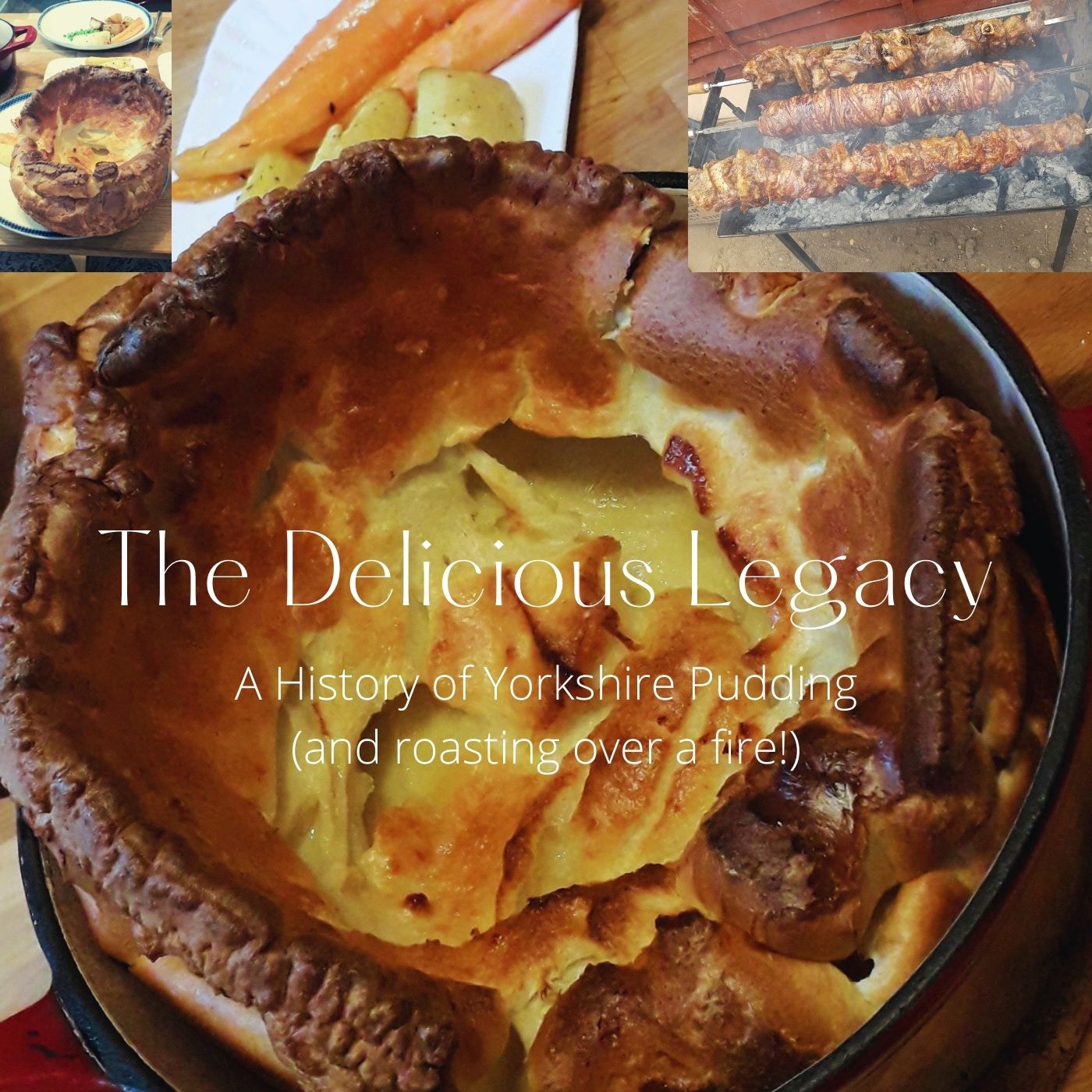
S1 Ep 27Yearning for Yorkshire Pudding (A History of)
The pudding is a dish very difficult to be described, because of the several sorts there are of it: flour, milk, eggs, butter, sugar, suet, marrow, raising, etc are the most common ingredients...They make them fifty several ways: BLESSED BE HE THAT INVENTED PUDDING for it is a manna that hits the palates of all sorts of people... Ah what an excellent thing is an English pudding!' - Henry Misson "Misson's Memoirs and Observations in His Travels Over England"All puddings started their lives as meat puddings. Mostly sausage-like concoctions similar black pudding. Even when we started wrapping food stuffs in cloth, and boiling them, they were heavy on meat, and some fruit and spices and even some sugar. How, from this we went to the Yorkshire pudding? A good question!A kind of early boiled pudding called thryon is described by the ancient Greek grammarian and gastronome Pollux: lard, brains, eggs and cream cheese were beaten together, the mixture was wrapped in fig leaves (in the same way as puddings were tied in a cloth later) and boiled in chicken or kid broth, then untied and given a final cooking in boiling honey. (Julius Pollux was a Greek scholar and rhetorician from Naucratis*, Ancient Egypt. Emperor Commodus appointed him a professor-chair of rhetoric in Athens at the Academy — on account of his melodious voice, or at least that's what we know according to Philostratus' Lives of the Sophists. Pollux Died in 238 AD in Athens.) Praise of course for cooking over fire! Any cooking; meat, vegetables, stews soups for that matter! Amazing skills from people who (still) do it! Plus my recipe for Yorkshire puddings! Tasty fluffy morsels of deliciousness! Heh...! Hope you're going to make them!It's been a while as I was very busy ...I had it all written down, but never had the chance to go to the studio and record it. So I decided to record this in my bedroom and in a hurry so apologies for the drop in audio quality of my recorded voice!Thanks to Sebastien Froment for lending me his French voice and accent to record as the French 17th century traveller Henri Misson. (From "Misson's Memoirs and Observations in His Travels Over England")Charles Lamb essay is from this little gem of a book : https://www.amazon.co.uk/Dissertation-Upon-Roast-Other-Essays-ebook/dp/B004V2WR22 (Finally a credible explanation on how humankind started cooking over fire! Only kidding, I love the Chinese myth though!)I've tried my best to read the Yorkshire saying “Them ‘at eats t’most pudding gets t’most meat” without trying to pretend I'm from Yorkshire!I appreciate it might sound wrong when i say "batter" it might sound like "butter" but for the purpose of this episode, mostly when I say "batter" I mean "batter" ie flour and liquid mix that needs cooking and not the dairy product! Ha!Another point I thought might bring confusion is "Medieval Tansie" so what's that? Tansy is an edible flower/herb/plant whom the name can be traced back to the Latin athanasia, or immortality, from the Greek athanatos, meaning deathless, perhaps because the herb has been used to preserve bodies.Tansy was used to flavour puddings, cakes, and eggs, and gave its name to a pancake flavoured with bitter herbs known as a “tansie,” which was traditionally eaten in spring and associated with Easter. (One sixteenth-century authority noted that tansy was beneficial in purging the body of the excessive phlegm engendered by a Lenten diet of fish.)Tansy was more often added to sweet than savoury dishes, although it is the flavouring agent in a traditional Irish blood pudding known as drisheen. Alan Davidson, in The Oxford Companion to Food, speculates that the amount of tansy used was relatively small, given its strong taste.Some hopefully illuminating photos can be found here:http://wildflowerfinder.org.uk/Flowers/T/Tansy/Tansy.htm As always music is kindly composed & provided by Pavlos Kapralos:https://www.youtube.com/channel/UCzgAonk4-uVhXXjKSF-Nz1A Expect the opening and closing theme tune, which is "Waltz Detunee" performed, recorded and mixed by Cloudcub: https://cloudcub.bandcamp.com/album/down-memory-lane-ep Maltby & Greek link, for your 15% off of your next purchase please go here: maltbyandgreek.com/deliciousMany thanks and Happy listening!Thom & The Delicious LegacySupport the podcast on Ko-Fi and Patreon for ad-free episodes! https://ko-fi.com/thedeliciouslegacypodcasthttps://www.patreon.com/c/thedeliciouslegacySupport this show http://supporter.acast.com/the-delicious-legacy. Hosted on Acast. See acast.com/privacy for more information.
S1 Ep 26Interview with Culinary Historian Ursula Janssen
bonusA fascinating chat with archaeologist, culinary historian and historical cookbook author Ursula Janssen!An all around brilliant talented human being then, that her passion is history and transmitting this through her ancient cooking!Garum made of Barley. From middle east. In the Arab times.Food of of Mesopotamia and Biblical Times.The Arabic influence in European medieval cuisine.And much more...!Find some of her ancient recipes interpretation here:https://www.youtube.com/user/ursulajanssen and all about the Trullo Cicerone experience here:https://trullocicerone.com/ Happy listening!The Delicious LegacySupport the podcast on Ko-Fi and Patreon for ad-free episodes! https://ko-fi.com/thedeliciouslegacypodcasthttps://www.patreon.com/c/thedeliciouslegacySupport this show http://supporter.acast.com/the-delicious-legacy. Hosted on Acast. See acast.com/privacy for more information.
S1 Ep 25Traditional Burmese Cuisine -An Interview with Mimi Aye
bonusBurmese food writer turned activist MiMi Aye has been raising awareness about the crisis in Myanmar since the coup in February. MiMi’s award-winning book ‘MANDALAY: Recipes & Tales from a Burmese Kitchen’ is loved by Nigella Lawson and was chosen by The Observer, The FT, and The Mail on Sunday as one of their Best Books of 2019. MiMi also co-hosts the food and culture podcast The MSG Pod and is on social media as @meemalee***The vast tropical and sub-tropical south east Asia always was a place of tantalising and fascinating stories, myths and legends! Ruins and monuments hidden deep in the jungles, long and unexplored rivers, mysterious tribes living in the jungles, and long lost civilizations! Even more the myriads of different foods, the ingredients the thousands of local plants were alien to me! We do know a lot of Thai and Vietnamese food, and we have a sense of place for them. We know of Indian and Bangladeshi cuisines too well. But what about that "little" corner of the earth sandwiched between China in the north, India to the west and Thailand in the East? What about Myanmar? Or as it is also known (perhaps more correctly) Burma. I knew practically nothing about the country. Same with many of us. I could point it on the map, but aside from that, the long military dictatorship and the many years of isolation, shrouded her in mystery!I could not pass the opportunity then, to invite Mimi Aye on the podcast, since she is the go to person for all things that have to do with Burmese food in UK!Obviously rice was been cultivated in this region of the world for almost 6000 years...And what is Lahpet? A unique delicacy of the Burmese people...And do they eat fish sauce? Tea, rice, fritters, soups and salads, fermented bean pastes, fish sauce...!Why is that extremely bitter foods are consider a must-have?I need to know -and most importantly eat- everything!Well now I have a sense of direction on where to start thanks to Mimi!And so do you:https://www.meemalee.net/buy-my-book Enjoy!ThomSupport the podcast on Ko-Fi and Patreon for ad-free episodes! https://ko-fi.com/thedeliciouslegacypodcasthttps://www.patreon.com/c/thedeliciouslegacySupport this show http://supporter.acast.com/the-delicious-legacy. Hosted on Acast. See acast.com/privacy for more information.
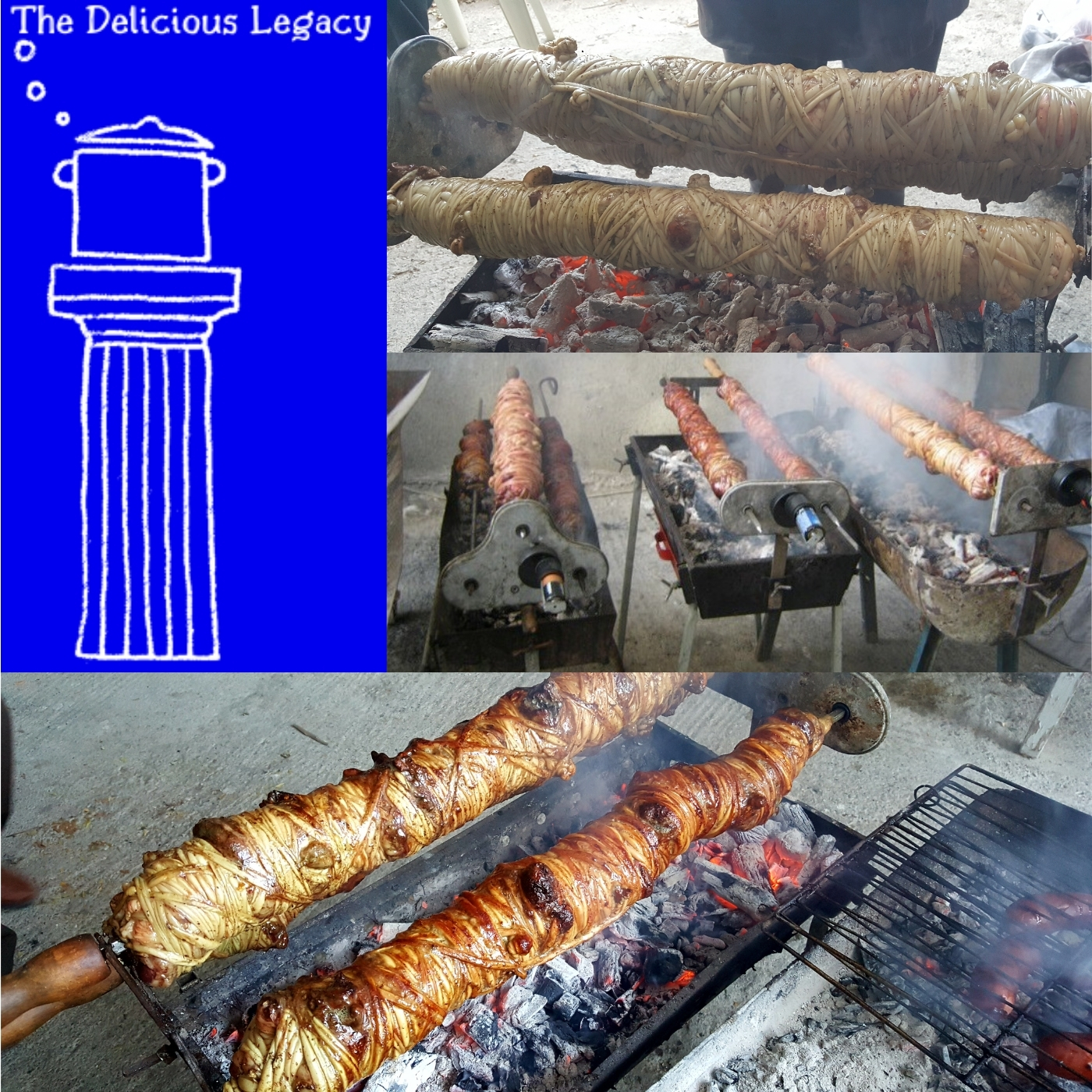
Ep 24Kokoretsi: The Ultimate Easter Kebab!
bonusKokoretsi!The first love that lasts forever. It's delicious, its bloody and it requires patience and knowledge. Real heroes don't wear capes. They make kokoretsi. Thank you father!Kokoretsi is a traditional Easter delicacy, that Greeks usually make and eat on Easter Sunday, together with the other traditional dish: Spit roast lamb over charcoal fire!So how is it made? What's the tradition behind and what's the connection with Ancient Greece?Which other nation makes it? Let's find out more about Sardinian, Italian, Turkish versions of Kokoretsi on the podcast!Happy listening! My voiceover was recorded at Area18 studio, North Acton, West London. Many thanks to Richard Bignell for letting me use his studio for my episode!Here's a link to the studio's website to find out more about the services Richard offers, as he is a very talented Sound Engineer! www.area18.net/NewWebsiteTheme tune on this episode is the oldest surviving song from Ancient Greece "Seikilos Epitaph" which is performed by Pavlos Kapralos.Enjoy!ThomThe Delicious LegacySupport the podcast on Ko-Fi and Patreon for ad-free episodes! https://ko-fi.com/thedeliciouslegacypodcasthttps://www.patreon.com/c/thedeliciouslegacySupport this show http://supporter.acast.com/the-delicious-legacy. Hosted on Acast. See acast.com/privacy for more information.
S1 Ep 23Pythagoras's Pies
Helloooooooooooooooooooooooooo!!!Welcome back to another episode of our archaogastronomical adventures!I hope you're all well and healthy and had a lovely Easter.Today's episode is all about ancient vegetarianism.And the philosopher Pythagoras is the central figure on all these talk today.Pythagoras, the father of mathematics, was born and raised in Samos. around 580BCE. He is one of the most acclaimed pre-Socratic philosophers and the Pythagorean Theorem bears his name. Samos is a green island known for its mixed flora, full of mountains and plains. Olive groves are covering most of these plains, since the age of Pythagoras and even before, while the main varieties are the local Ntopia Elia, Koronéiki and Kalamòn. Even though Pythagoras spent more than forty years in his birthplace, he eventually decided to set sail for new seas; his thirst for knowledge led him to travel throughout most of the then known world, most notably Egypt and Babylon, centres of wisdom knowledge and secret mystical rites, before settling down to Croton, a town in Magna Graecia, modern Southern Italy. He may have found pupils to follow him, and welcoming ears to listen to his preaching....More on the audio if you press play!Notes for this episode:Theophrastus (c. 371–287 BCE) was a Peripatetic philosopher who was Aristotle's close colleague and successor at the Lyceum. He wrote many treatises in all areas of philosophy, in order to support, improve, expand, and develop the Aristotelian system. Of his few surviving works, the most important are Peri phytōn historia (“Inquiry into Plants”) and Peri phytōn aitiōn (“Growth of Plants”), comprising nine and six books, respectively.Aulus Gellius (c. 125 – after 180 AD) was a Roman author and grammarian, who was probably born and certainly brought up in Rome. He was educated in Athens, after which he returned to Rome.Vetch: A member of the pea family, Fabaceae, which forms the third largest plant family in the world with over thirteen thousand species. Of these species, the bitter vetch, was one of the first domesticated crops grown by neolithic people. There are many different vetch species, the purple flowered varieties are all safe to eat.Credits:All Music by Pavlos Kapraloshttps://www.youtube.com/channel/UCzgAonk4-uVhXXjKSF-Nz1Aexcept under Maltby and Greek promo; Song "Waltz Detuné" by Cloudcubhttps://cloudcub.bandcamp.com/album/memories-i-cant-readand under Ancient History Hound ad; Song by Aris Lanaridishttps://www.arislanaridis.co.uk/You can help with the costs of the podcast by becoming a patron on Patreon:https://www.patreon.com/thedeliciouslegacySupport the podcast on Ko-Fi and Patreon for ad-free episodes! https://ko-fi.com/thedeliciouslegacypodcasthttps://www.patreon.com/c/thedeliciouslegacySupport this show http://supporter.acast.com/the-delicious-legacy. Hosted on Acast. See acast.com/privacy for more information.
S1 Ep 21Of Figs and Foie Gras
EHello all!What fabulous frolics and food fantasies are we exploring today? Ones made of figs and foie gras!Well these two items might seem unrelated to begin with, but there is a very close connection!Let's trace the history of figs in Ancient Greece and Rome, and foie gras - a technique for force feeding geese and duck - all the way back to Ancient Egypt, around 2500 BCE. (A controversial food, and technique that even then it was it's critics! We are not unique my friends!)Enjoy!Credits:Thanks to Richard B for the use of his studio, Area18 to record this episode!Music by Pavlos Kapralos for more of his amazing music go here: https://www.youtube.com/channel/UCzgAonk4-uVhXXjKSF-Nz1A/videosInstrumental music on the "Support me" break at 17min 40sec composed and performed by James R Bryden & Thom NtinasSupport the podcast on Ko-Fi and Patreon for ad-free episodes! https://ko-fi.com/thedeliciouslegacypodcasthttps://www.patreon.com/c/thedeliciouslegacySupport this show http://supporter.acast.com/the-delicious-legacy. Hosted on Acast. See acast.com/privacy for more information.
S1 Ep 20A Short History of Ice Cream
Hello! What could call itself the first ice cream cup was found in Egypt in a tomb from the Second Dynasty (2700 BC). This was a kind of mould, consisting of two silver cups, one of which contained snow (or crushed ice) and the other cooked fruit. “Icehouses”, where snow was stored and ice deliberately formed, were undoubtedly an extremely ancient invention. Around AD300 in India they found a way to manufacture cheap ice: Porous clay pots containing boiled, cooled water were laid out on top of straw in shallow trenches; under favourable circumstances, thin ice would form on the surface during winter nights which could be harvested and combined for sale.Of course ancient Persians by 400BC have mastered the art and technique of creating ice in the deserts of Iran for their needs ie storing food and for pleasure in form of iced drinks! This practice requires an ingenious structure called a yakhchālThe emperor Nero had snow and ice transported from mountains or volcanoes such as Mount Etna, these natural ice being stored in ice-boxes and buried in wells to be preserved. Nero also feasted his guests with crushed fruit with honey and snow, practices that Seneca found very expensive.How long have these sorbets and frozen fruits been eaten ? Historians remain silent on the subject. It seems that these icy preparations lasted in the Middle East but not in the West.The famous Italian traveller of the middle ages, Marco Polo met Kublai Khan and had the honour of enjoying the royal treat. After leaving China, Marco Polo brought the technique of making ice cream back to Italia. Marco Polo is often recognized for bringing knowledge of Chinese ice cream techniques to Italy where it was perfected, but it seems clear that news about ice cream has travelled to Europe from the Arab world, also via a number other sources.Resources and further reading:"Consider the Fork: A History of How We Cook and Eat" by Bee WilsonISBN: 9780141049083How Ice Cream Got Its Conehttps://www.seriouseats.com/2019/06/ice-cream-cone-history.html The Delicious History of Ice Cream:https://medium.com/@andersoncuellar/the-delicious-history-of-ice-cream-6a75938630f0 Martini Fisher Ancient History of Ice Cream: https://martinifisher.com/2020/10/30/the-ancient-history-of-ice-cream/ Saltpetre: Regency Refrigeration:https://regencyredingote.wordpress.com/2013/08/09/saltpetre-regency-refrigeration/Support the podcast on Ko-Fi and Patreon for ad-free episodes! https://ko-fi.com/thedeliciouslegacypodcasthttps://www.patreon.com/c/thedeliciouslegacySupport this show http://supporter.acast.com/the-delicious-legacy. Hosted on Acast. See acast.com/privacy for more information.
S1 Ep 19A short history of bread
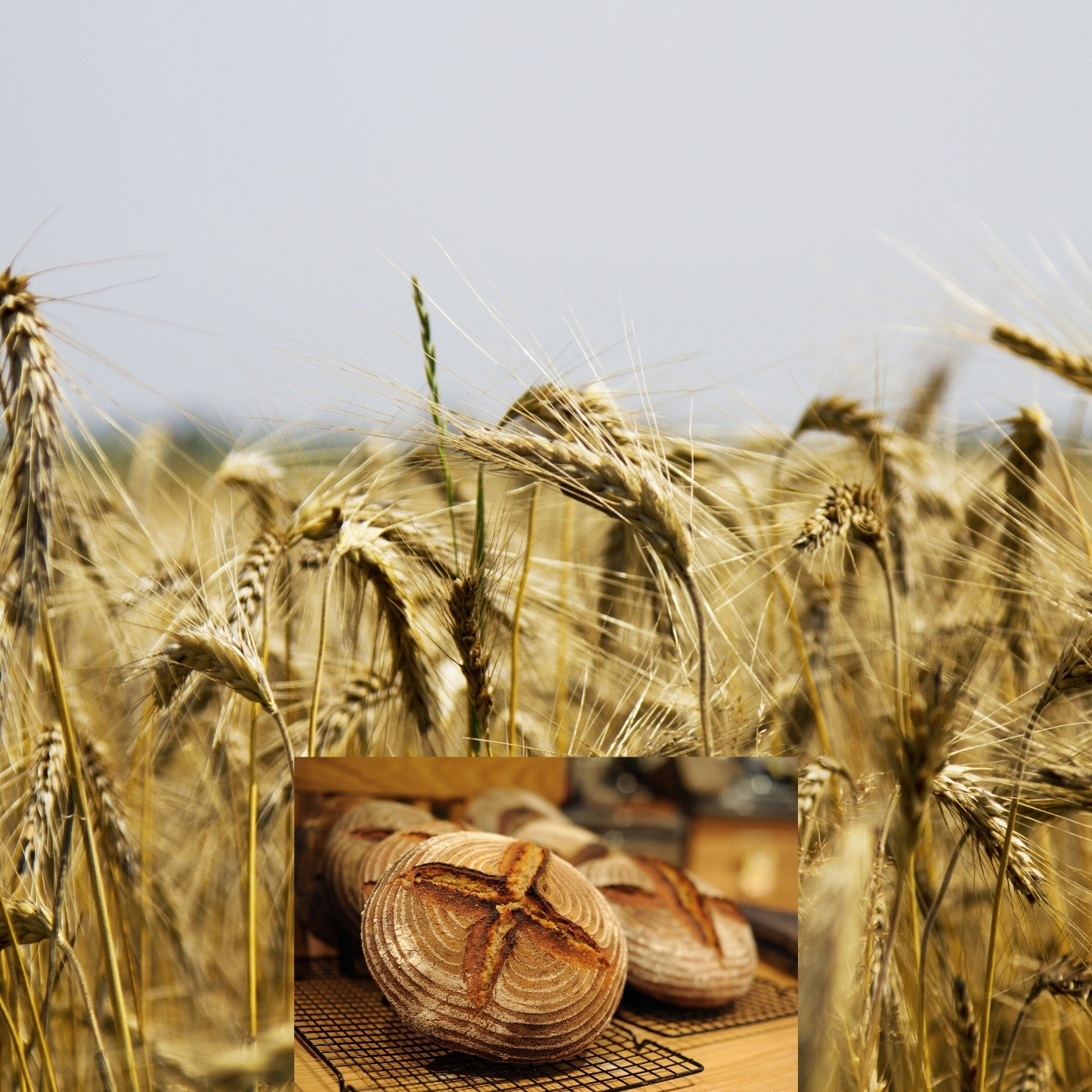
The Greek playwright Euripides said; "What is abundance? In a word, and no more, the wise are content with what is necessary". And we can all agree, what could be more necessary than bread, oil and wine?Hello! My name is Thomas Ntinas and this is the Delicious Legacy Podcast!Today I will sing the praises of bread! We'll see the history and myths and techniques of this delicious, nourishing magical food, going from a seed of a wild grass to dust and then to this warm, crunchy, chewy deliciousness that fed empires!Archestratus on where to find good bread: "First then I will list the gifts of Demeter of the fair tresses, my dear Moschus: keep it safe in your heart. Now the best to get hold of and the finest of all, cleanly bolted from barley with a good grain, is in Lesbos, in the wave-surrounded breast of famous Eresos. It is whiter than snow from the sky: if the gods eat barley groats then Hermes must come and buy it for them from there. In seven-gated Thebes too it is reasonably good, and in Thasos and some other cities, but it is like grape pips compared with Lesbian. Get that idea clearly into your head. Get hold of a Thessalian roll, rounded into a circle and well pounded by hand They themselves call this roll krimnitas, but others call it chondrinos bread. Then I praise the son of fine wheat flour from Tegea, ash-bread. Bread made in the market, famous Athens provides for mortals, of an excellent quality. In Erythrae which bears clusters of grapes a white bread comes out of the oven, bursting with the delicate flavours of the season, and will bring pleasure at the feast."Enjoy!with music from the amazingly talented Pavlos KapralosIf you like to support the podcast and get some exclusive content alongside with recipes do go to Patreon!Support the podcast on Ko-Fi and Patreon for ad-free episodes! https://ko-fi.com/thedeliciouslegacypodcasthttps://www.patreon.com/c/thedeliciouslegacySupport this show http://supporter.acast.com/the-delicious-legacy. Hosted on Acast. See acast.com/privacy for more information.
S1 Ep 18Traditional, but perhaps unknown food of Southern England
Firstly,Apologies for some pronunciations! I think I've 'murdered' some words or place names. So sorry. Below, you'll find the a list with the food stuff I'm talking about on the podcast.Dorset Blue VinneyElversBath ChapsForntum Black HamBrawnHead or Pork CheeseGloucester Old Spots PigHogs PuddingApple CakeBlueberry PieChilli MustardThanks to the detailed research by Laura Mason and Catherine Brown and their books!A lot of info comes from The Experienced English Housekeeper, is a cookery book by the English businesswoman Elizabeth Raffald (1733–1781). It was first published in 1769.The book contains some 900 recipes for: soups; main dishes including roast and boiled meats, boiled puddings, and fish; desserts, table decorations and "little savoury dishes"; potted meats, drinks, wines, pickles, preserves and distilled essences. The recipes consist largely of direct instructions to the cook, and do not contain lists of ingredients. The book is illustrated with three fold-out copper plate engravings.The book is noted for its practicality, departing from earlier practice in avoiding plagiarism, consisting instead almost entirely of direct instructions based on Raffald's experience. It introduced the first known recipe for a wedding cake covered in marzipan and royal icing, and is an early use of barbecue. The book remains a reference for cookery writers.http://www.elizabethraffaldsociety.org/ Other bits come from Martha Bradley's book The British Housewife (1758)The title page of book version of The British Housewife, published in 1758,[a] outlines that the work contains information on cookery, pastry, puddings, preserves, pickles, fricassees, ragouts, soups, sauces, jellies, tarts, cakes, creams, custards, candies, dried fruits, sweetmeats, wines, cordials and distilled spirits. The book also contained a chapter on cures for common ailments, which included a recipe that included powdered earthworm to cure ague. The work was divided up into monthly sections, and showed a "sophisticated organisation", according to Davidson.Bradenham Ham (Or Fortnum Black Ham) originated in Wiltshire, England. The ham is first dry-cured in salt, then placed in a liquid cure of molasses, coriander, juniper berries, and other ingredients. After curing, it is aged for 6 months, then smoked. The outside skin of the ham becomes black and shiny. The meat inside is sweet and mild.You can see a great recipe for Brawn at Borough Markets website:https://boroughmarket.org.uk/recipes/brawn Thanks! Hope you enjoy!ThomSupport the podcast on Ko-Fi and Patreon for ad-free episodes! https://ko-fi.com/thedeliciouslegacypodcasthttps://www.patreon.com/c/thedeliciouslegacySupport this show http://supporter.acast.com/the-delicious-legacy. Hosted on Acast. See acast.com/privacy for more information.
S1 Ep 17An Interview with Chef Giancarlo Vatteroni
bonusEThis August just passed, I had a wonderful chat with chef Gianni about all things food.Giancarlo Vatteroni aka Gianni, is an amazing Italian chef that has been cooking his delicious family recipes -and other yummy stuff- in London for over 25 years, working in Moro, Sugar Club, Salt Yard Group / Dehesa, The Modern Pantry, The Union Cafe amongst many.We go through all the troubles and tribulations of the professional chef's life in London of course, but mainly the fun stuff of food memories growing up in Tuscany, fishing, cooking and serving pizza! And of course secret recipes from his father, favourite dishes, ingredients and some pizza classified info!Gianni is starting a new exciting trip in his cooking travels, -this time a little more literally- with a mobile pizza van, "Pizza Squad" coming soon near you, serving amazing pizzas and the exciting farinata! A pie/pitta made from chickpea flour and really simple toppings like olive oil and salt. Simplicity and taste to the max! We talk about the freedom and fun having your own little food business and how one returns eventually, back to their roots; As a teenager, Gianni was working with his family for years in their pizza restaurant. And after a massive detour involving moving in London and cooking on some amazing restaurants he is back to pizza! And what is the difference between Neapolitan and pizza from the North of Italy, and of course delicious Italian cheeses; who does the best? Italians or Spanish?From December, you'll find them in Beresford square in Woolwich for lunch time trade!Follow them on Twitter and InstagramTwitter: @PizzaSquadUK1Instagram: PizzaSquadUK1and get in touch and check the menu:Website: http://pizzasquad.co.uk/E-mail: [email protected]!Support the podcast on Ko-Fi and Patreon for ad-free episodes! https://ko-fi.com/thedeliciouslegacypodcasthttps://www.patreon.com/c/thedeliciouslegacySupport this show http://supporter.acast.com/the-delicious-legacy. Hosted on Acast. See acast.com/privacy for more information.
S1 Ep 16Mouthwatering, Unusual Greek Cheeses
Cheese!Greek Cheese in fact!Today, on this episode I am taking you on a virtual curd-y tour of Greece, through the medium of ...cheese!We'll travel across each region, each county, each geographical province that comprises Hellas today, and we're going to see one or two (or more!!!) cheeses that must be celebrated, known and tasted!In fact, while certainly Greece doesn't have the immense variety and the superbly complex cheeses of Italy, France and UK (and some Spanish cheeses too!) definitely has some that define the character of each place they come from, that taste different, unique, and are steeped into the thousands years old tradition of cheesemaking.A land that has high mountains, wild forests, thousands of islands and such a varied climate, surely can have cheeses tied to the specific microclimate of the region it comes form, the flora, the herbs and flowers that the animals eat. Well you'll find out here.Cheese made with fig sap, sun dried, cured in wine, or olive pulp, or bathed in sea water....Cheeses matured in massive goats skins...! Listen and explore the rich variety of Greek cheeses here, and I wish and hope once this pandemic is over, you can go and taste them yourselves!You can buys some amazing Greek cheeses in London from the following suppliers:Maltby and Greekhttps://www.maltbyandgreek.com/collections/cheese Odysea:https://www.odysea.com/products/cheese Credits: Opening and closing music theme: Cloudcub " Waltz Detunee" written by Sebastien Froment, performed by Cloudcub. https://cloudcub.bandcamp.com/ Additional Music composed, performed by Pavlos Kapralos https://www.youtube.com/channel/UCzgAonk4-uVhXXjKSF-Nz1A Except "Lasithiou and Pentozali" written, performed and mixed by Cretan Brioche folk ensemble: http://cretanbrioche.com/ Support the podcast on Ko-Fi and Patreon for ad-free episodes! https://ko-fi.com/thedeliciouslegacypodcasthttps://www.patreon.com/c/thedeliciouslegacySupport this show http://supporter.acast.com/the-delicious-legacy. Hosted on Acast. See acast.com/privacy for more information.
S1 Ep 14The Delectable Delights of Northern England
What makes a recipe or a particular ingredient to withstand the test of time? What P.G.I and P.D.O. foods can one discover in England?On this episode I tried to explore a few unknown -or at least relatively unknown- ingredients of traditional English cuisine; specifically from the North of the country. Recipes or food items that intrigued me, that sound delicious, unique or at least deserve a mention equal to others that we revived in the past, and need to reviving too!While other European - particularly Italian and Spanish- peasant, simple, food is (in my opinion) rightly praised by chefs in UK as tasty, hearty, healthy during the past decade or so a trend that accelerated the last couple of years, it seems to me that we completely sidestepped, disregarded or forgotten the delicious simple recipes from England. Is that on purpose? Is it some form of snobbery?Have a listen and see what you think about Ribblesdale Cheese, Cumberland Rum Butter, Herdwick Lamb Macon, Manx Logthan Sheep, Char from lake Windermere, Dock Pudding, Pickled Damson, Wilfra Tart, Hawkshead Wig and Cowheel!Bon Apetit!Support the podcast on Ko-Fi and Patreon for ad-free episodes! https://ko-fi.com/thedeliciouslegacypodcasthttps://www.patreon.com/c/thedeliciouslegacySupport this show http://supporter.acast.com/the-delicious-legacy. Hosted on Acast. See acast.com/privacy for more information.
S1 Ep 13Grandma Ntinas Food Memories
bonusBack in 2009 I had the idea to record some of my grandmother's old stories. For posterity reasons, but mainly for me to document some of the so many different stories that she used to tell us since we were kids, and over the years, during the family gatherings, be it Christmas, Easter or other holidays and celebrations. She was a natural story teller, and she was from an interesting family that lived during interesting times. ( to say the least!) Her name was Evangelia Ntina (taking the surname of my pappous {grandfather}) her family name was "Karali" -I should spell it Kar-a-lee perhaps to make sense phonetically? Ntinas by the way is pronounced "Deenas" as the letters N+T make the sound D in the Greek language.Anyway, she told us so many stories over the years; of course some of her opinions in actual historical facts contradicted what I was aware as real history, or even her stories were often confusing. I needed to have a definite record of her own words and her own world, even if it wasn't exactly absolute and real, at least it was her own reality! In any case having everything documented, forever, would have meant I 'd have the opportunity to examine her stories at a later date, share them with my uncles, aunties and cousins, and keep some family history alive, and not lost in the midst of time, and in the mouths and words of different people with different agendas! So when I had the opportunity for a short visit back home in Greece and my home town of Veria, I brought my laptop, an audio interface and a microphone with me from my studio in London and off I went to my grandmother's house! She was at that time nearly 85, so time was of the essence, I didn't know how many opportunities I'd had later on, and what would her mind be in the future, for her to give me her stories as she remembered them. And it was lucky that I did this when I did, as she sadly passed away in 2013, and the last couple of years of her life she was mostly bedridden. The whole aural documentary with my grandmother lasted about 4 hours, and I edited several bits to their own individual stories, one about her parents and grandparents, one about the second world war and civil war that followed and of course one about the diet, the foods, the cooking and eating back in the frugal pastoral daily lives of families in the mountainous central north west Greece somewhere between the prefectures of Grevena, Kozani and Trikala...So a bit of a context here: My grandma's father (from my dad's side) so my great-grandfather -which I met many times in the first 8 years of my life- was born in 1893, in what was back then the Ottoman Empire. His name was Dimitris Karalis. He subsequently became a teacher at a very young age in the local school, of the small villages in the area, age 16 (!!!), and then, later on, a priest. They lived in a village called Katakali, with the extended family his brothers and sisters and led a pastoral life mainly with sheep, pigs and some cattle, and of course cultivating the land too. No electricity, no petrol powered vehicles just donkeys, bandits roaming the mountains kidnapping people for ransom and so on...The area became part of Greece after the Balkan Wars in 1913. But, life for the peasants, the poor and the farmers didn't change significantly, nor the day to day toil...My grandmother had in total 8 siblings, some of whom died in childhood of course. As I was growing up I think I met 4 or 5 who survived to an old age.So to our story: ...And what did you eat in the big Lent periods of the year? Easter and Christmas grandma?We didn't eat oil , only on Saturdays and Sundays. In the winter we did not have vegetables such as peppers and aubergines that we have now. If we had pickled veg, like cabbage and peppers and so on, would eat these veg straight out of the jar, or we would fry them for a more tasty and salty snack. But mainly cabbages, endives, and leeks, with some wild poppies if the weather was good, which we would find growing in the fields... Chickpeas, peas and beans alongside with lentils that we used to grow, some yellow peas, and some other types of legumes ( called them "fakos" which I can't really decipher what she meant by this) we had a decent size croft/allotment around 500 square metres and we would sow one line with one type of legume, one line of another one and so on...we would not eat olive oil for the whole Lenten period... (alongside with any animal fat)-What type of oils did you use, that were common back then? Did you have olive oil?ah of course we had and used olive oil, we had always olive oil coming from south, Kalamata, Crete and so on...No bottles of course, glass bottles weren't common back then, but big tins, 16 okka in weight (this was an ottoman measurement equivalent to 400 dirhems per okka which was used by grandmothers well after WWII) This means that the 16 okka tin weights 20 litres today! A considerable size tin then, and one that had to feed a fam
S1 Ep 12The Culinary Treasures of the Byzantine Empire
The most comprehensive archaeological excavation in Istanbul’s history, took place very recently in the 21st century; a 58.000 square meter area in Yenikapi region. Here was revealed one of the biggest harbours known in the ancient world dating back to the Byzantine Era, the Theodosius Harbour. Amongst the group of findings there were 36 shipwrecks dating between 5th and 10th century which is the biggest collection of Early and Middle Byzantine Period shipwrecks. These shipwrecks are important because of their very well preserved state. Several of them had been very spectacular, with a large number of amphorae still in position when they sank in the harbour. Their discovery, brings into light fascinating clues of the life in the late ancient city (and early medieval period) and offers some direct evidence of the foods and trading goods of the Byzantine Empire.Where do I begin with the cuisine and food of the Byzantine Empire? This is a daunting task as this was an Empire stretching 3 continents at its peak and with over 1100 years history!The Mediterranean trilogy of wine, oil and bread meets the flavours of the Orient and in turn this mingles with the gastronomic staples of the Roman Empire thousand years before, and thus creates the unique characteristics of the Constantinople's food character that made it to a de facto gastronomic space, having created its own culinary propositions and became established as the Christian capital of wine and gastronomic delights in the medieval world.Find out more, and everything you need to know of the Empire that would make the "Game of Thrones" books blush, with the feasts and murders and plots of their emperors and nobility here!Ancient & Byzantine music composed and played by Pavlos Kapralos: https://www.youtube.com/channel/UCzgAonk4-uVhXXjKSF-Nz1ATraditional Cretan Music by Cretan Briochehttp://cretanbrioche.com/Music theme"Indu" in the History Hound ad by Aris Lanaridis: https://www.arislanaridis.co.uk/Support the podcast on Ko-Fi and Patreon for ad-free episodes! https://ko-fi.com/thedeliciouslegacypodcasthttps://www.patreon.com/c/thedeliciouslegacySupport this show http://supporter.acast.com/the-delicious-legacy. Hosted on Acast. See acast.com/privacy for more information.
S1 Ep 11The Audacious Gourmand Archestratus
EHistory's first ever gourmand, foodie, hipster of the Ancient Greco-Roman world!The question of Archestratus life story had me puzzled for ages! I wanted to write an episode for a while now, but the more I looked for information about his life and works the more unanswered questions I have had! Admittedly, countless classicists, historians and food writers have been puzzled through the ages too, with the same burning questions.Imagine the worst foodie hipster (I zest here, I am one!) friend you have; The one that visits the local farmers market every weekend, goes to Borough Market as if on a religious pilgrimage at least once a month and also on top of that knows every single Vietnamese store in Hackney or the South-American food stall in Seven Sisters Indoor market. He also seem to know the food trends, the new ingredients and read the reviews on Eater for the cheapest eats at the outskirts of South-East London for some reason! (as if he or she will ever visit south east!)Well your friend doesn't compare to Archestratus little finger! If you thought your friend was bad for visiting the mercado de san martin in San Sebastian, mercado San Miguel in Madrid and La Boqueria market in Barcelona, mercato delle embre in Bologna, Grand Bazaar in Istanbul or Varvakios Market in Athens spending hours looking at fish that cannot buy...you know the friend who watched all the episodes of Anthony Bourdain's "Parts Unknown" and can quote all his lines...Well, our dude Archestratus, was a lot worst!New tastes, the freshest ingredients, so local and seasonal and simple, that even the inhabitants of the nearest town wouldn't have heard them, well he would have been there first, straight to the local fishermen begging them for a fish. Well this is Archestratus! The tourist who went to every food market on every city he visited; only he accomplished your feat 2500 years ago and all by sail!In the interconnected world of the ancient Mediteranean we then find Archestratus, a Sicilian who circumnavigated the world to satisfy his hunger - and even lower appetites, as a Roman scholar said once quite disparagingly. He was though an inveterate traveller. How else could he have found out about the specialities of all these places, small seaside cities over 50 of them from Sicily to the Black Sea? Remarkably what he writes rings true, as sometimes their specialities are exactly the same now as they were 2400 years ago. Archestratus loved the taste of Lesbian wine but also praised the aroma of the Phoenician wine that came from Byblos. (Although he though it to go off quickly)"When a libation to the gods you make, Let your wine worthy be, and ripe and old; Whose hoary locks droop o'er his purple lake, Such as in Lesbos' sea-girt isle is sold. Phœnicia doth a generous liquor bear, But still the Lesbian I would rather quaff; For though through age the former rich appear, You'll find its fragrance will with use go off." We know almost nothing about him, apart that he was a Sicilian Greek from Gela (or Syracuse) and that he wrote a now lost, remarkable and unique poem "The Life of Luxury" (Hydipatheia). The poem is dated variously around 350BCE.What we know of the poem, is mostly from Athenaus from his work "Deipnosophistai" -Philosophers at Dinner- which was composed in about AD200. This, is our only source for Archestratus work, which is telling. Lost works of ancient literature - poetry, drama etc- are usually reference by multiple ancient authors; however this lack of interest demonstrates the status of food and recipe books. Not high literature and therefore not carefully preserved for posterity.What would I give for the chance to glance upon the book on bread-making by Chrysippus of Tyana or the book on salt fish by Euthydemus of Athens! Sadly both are lost completely and only know of their existence through second -hand passing accounts from other authors! Lost masterpieces!Archestratus cooks the fish simply, boiling roasting or grilling with light seasoning and oil added if its quality fish. Freshness and quality are his watchwords and these features mustn't be damaged by strong sauces based on cheese and pungent herbs. His favourite fish tend to have firm-textured and strongly flavoured meat; rather than mild tasting flesh like the white fish we are now used in French cooking as the vehicle for sauces. He also shows much interest in eels; common, conger, mooray. He emphasizes flavour and the oil/fat of the fish, where the taste and interest is to be found. There is much interest in texture of the fish, the different cuts and parts, from head meat, fin, tail, belly as well as in the varieties of fish.OK I will stop now and let the audio do the talking! Happy listening!Links, sources, further reading:Andrew Dalby, "Siren Feasts": https://books.google.co.uk/books/about/Siren_Feasts.html?id=wtLgAAAAMAAJ&redir_esc=ySally Grainger, Andew Dalby : "The Classical Cookbook" : https://books.google.co.uk/books/about/The_Classica
S1 Ep 7Food of Roman Britain
Hope everyone is well in these strange times and keeping safe and healthy!Let's talk a bit about Roman Britain and how the Romans viewed these mysterious lands...But, before that let's get some anecdotal accounts from our Mediterranean cousins about UK:Cold. Wet. Foggy. Miserable. These are probably the main descriptions -unfair of course- that one gets from modern Italian (and Greek!) students after they've spent their first semester in UK universities, particularly in the Northern cities. Well nothing has changed since Caesar's time! Take the following lines: 'It is "the home of men who are complete savages and lead a miserable existence because of the cold; and therefore, in my opinion, the northern limit of our inhabited world is to be placed there" (II.5.8). By Diodorus Siculus an ancient Greek historian, known for writing the monumental universal history Bibliotheca historica, much of which survives, between 60 and 30 BC. Or the following: The nights are short (Caesar, Gallic Wars, V.13; Agricola, XII) and the weather miserable, with frequent rain and mists. "I don't want to be Caesar, stroll about among the Britons" Florus writes to Hadrian, "and endure the Scythian winters" (Historia Augusta: Hadrian, XVI.3). It is a savage place (ferox; Agricola, VIII) as are the fierce, inhospitable Britons who live there (Horace, Odes, III.4.33). Those near the coast in Kent may be more civilized, but in the interior they do not cultivate the land but share their wives with family members, live on milk and meat, and wear the skins of animals—behaviours so foreign to the Romans.Until the Roman invasion, the most common dish would've been some short of pottage, a thick vegetable stew or soup flavoured perhaps with bog-myrtle, and served in bowls made from unleavened bread with the occasional salted pork, bacon or seafood and of course wild game. Everything changed after 43AD!Cherry, plum, fig, cucumber, pea, chive, cabbage, lettuce, garlic, onion, marjoram, parsnip, possibly hare, (or could have been earlier) rosemary, turnip, pheasant... All introduced by the Romans...Who Incidentally they've made the first burgers! Not the Americans! hahaahahaa! :-pAnyway find out more about all of the above when you listen to the podcast! Oh check this website with aerial photos of Roman forts and settlements in Britain:https://www.cambridgeairphotos.com/themes/roman+fort/page5.htmlAncient Music Themes by Pavlos KapralosMusic Theme for the ad provided by Aris Lanaridishttps://www.arislanaridis.co.uk/Support the podcast on Ko-Fi and Patreon for ad-free episodes! https://ko-fi.com/thedeliciouslegacypodcasthttps://www.patreon.com/c/thedeliciouslegacySupport this show http://supporter.acast.com/the-delicious-legacy. Hosted on Acast. See acast.com/privacy for more information.
S1 Ep 5The Galvanising Garum
Apparently the first recorded fish sauce was produced by the ancient Greeks of the Black Sea colonies. Clearly the abundant fish resources of the Black Sea played a role in the production of this extremely popular condiment! The sauce we know from Martial's verse - "here is lordly garum, a costly gift made from the first blood of a still-gasping mackerel!" was almost certainly a table condiment and made from blood and viscera of very fresh fish. Sometimes handled by the diner and used in relatively small amounts over already cooked food. (Sally Grainger 'A New Approach to Roman Fish Sauce' -2007) The other more commonplace kind of sauce was called liquamen and was used in the kitchen by the cook to add salt and other more complex flavours to most dishes, just as we add salt during cooking. This was made using various kinds of whole small fish which were then mixed with salt and left to dissolve and ferment for up to three months. The resulting liquefied fish was removed from its bone and shipped all over Mediterranean in special amphorae. This whole -fish sauce is very similar to the Thai fish sauces so popular today! Roman fish sauce was NOTHING like modern anchovy paste; using the latter has been the downfall of many an attempt to recreate ancient recipes! ( Sally Grainger -The Classical Cookbook)Fish sauce was manufactured at factory sites along the coast; these were typically beside a beach or a harbour. The fish was only a few hours from the net when the process began. These sauces cannot and shall not be seen as a rotten decaying substance! What took place was not bacterial putrefaction (which, given the high proportion of salt would be impossible) but enzymic proteolysis, a process in which the enzymes in the viscera of the fish convert the solid protein into a liquid form. The viscera is therefore essential to the process; without them the protein does not dissolve. What the modern gourmet has to understand, and probably some only know too well from modern experience, is that there was not a single Garum sauce. As always there was the elite one, one for commoners and many other versions in between. For example, when Martial describes this sauce being "made from the blood of a still breathing mackerel " it therefore implies this was a black and bloody sauce. Or, the surviving Greek recipes for fish sauce also affirm the importance of the distinction between blood/viscera sauce and one made from whole fish. As we see things can get a little bit complicated when we muddle through the murky waters of ancient gastronomy!One could buy aged elite black mackerel garum, ordinary black tuna garum, elite liquamen cooking sauces made from mackerel or cheaper cooking sauces made with a mixture of clupeidae and sparidae, or a tuna or mackerel muria, both of which could also be aged or new. All of these products could also come in second or even third grade versions.The expensive and intensely- flavoured blood sauce would be lost in the cooking process and wasted, needed to be seen by the gourmet to be experienced, valued and discussed. Therefore we can conclude it would have been the table sauces handled by the guests or the host himself. From modern South East Asian cuisine we learn of a fermented squid blood viscera (and ink) sauce that is used today in Japanese cuisine. It is known as ishiri and is used as a finishing sauce for sushi as well as cooked food. Its taste neither fishy nor salty, and smells of the iron compounds from the blood. Japanese cuisine also has a whole-fish sauce called ishiru and many dishes are prepared with both i.e the whole fish sauce is used for cooking and the blood/viscera sauce finishes the dish. This sauce is truly fermented with bacteria and low salt. It is quite remarkable that the Japanese word for viscera is gari! In Roman cuisine, the use of garum was enriched with different combinations of the sauce - with honey (meligarum), vinegar (oxygarum), wine (oenogarum), water (hydrogarum), or dry spices (such as dill, oregano, coriander, celery, or even mint). These sauces were used as condiments for literally everything: from meat and fish to vegetables, salads, desserts, bread, and wine dipping.The best way to use it in all recipes is thus; Take a litre of grape juice and reduce it by half, cool it and blend a bottle of Thai nam pla fish sauce with it. My favourite recipe that includes garum is "Honey-Glazed Prawns with Oregano and Black Peppers" a relatively simple dish, which I've made countless times as a starter in one of my ancient Greek themed dinners! For a decent starter for two, take 8 large prawns 15ml of olive oil, 30ml of fish sauce 30gr of clear honey, a handful of chopped fresh oregano and black pepper. Place oil, fish sauce and honey in a saucepan, then add the prawns. Sauté gently in the cooking liquor for 2 or 3 minutes. remove prawns from sauce and keep them warm, cook the liquor a little longer so in reduces by half
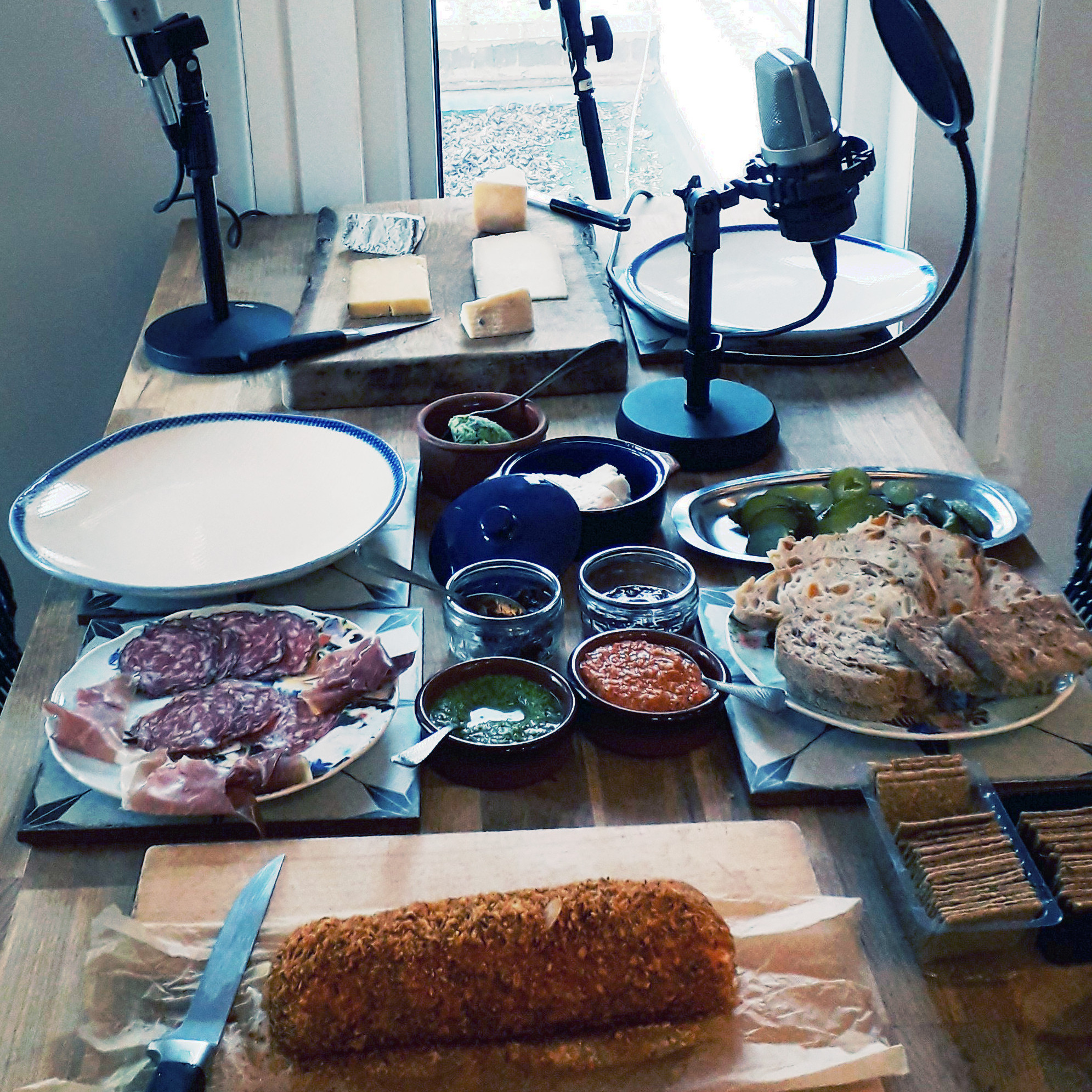
S1 Ep 4History of Cheese
EToday's episode is all about cheese!I had the pleasure - and it was such a fun interview- to talk about cheese with Cheesemonger and Author Ned Palmer!A history of cheese. From the first discovery in Neolithic times in Mesopotamia through Europe and Britain, to ancient Greece and Rome and the Dark Ages, Medieval Europe and the monastic cheeses...All very intriguing! We are talking about cheese origin stories, and myths about cheese. All so fascinating!So we tried some cheeses...We had to. It would be rude otherwise! Plus I made a couple of recipes based on ingredients from Roman times, inspired by the cookery book of Apicius!The cheeses we've tasted yes, ok they are modern of course, but the style and the techniques and the taste would differ very little since the time they were first created. Essentially if an neolithic or ancient human was transported here and saw them would recognize them as cheeses they've made.Some of the cheeses we've tasted:Perroche, Tor, Berkswell, Durrus, Isle of Avalon, Barrel Aged Feta, Lord of the Hundreds, CantalI've also made a cheese log with feta, pecorino olives, spring onions artichokes and crushed smoked almonds, essentially an ancient farmers lunch all in one!Of course if you go to my Patreon page, you can find more info about each cheese there if you're a subscriber and make a pledge or become patron of my Ancient Gastronomic Writing!https://www.patreon.com/join/thedeliciouslegacy?As ever you can follow me on Twitter for more news and updates: @deliciouslegacyHappy listening I hope you enjoy as much as I did while I was doing it!Support the podcast on Ko-Fi and Patreon for ad-free episodes! https://ko-fi.com/thedeliciouslegacypodcasthttps://www.patreon.com/c/thedeliciouslegacySupport this show http://supporter.acast.com/the-delicious-legacy. Hosted on Acast. See acast.com/privacy for more information.
S1 Ep 3Interview with Vasilis Chamam
bonusEHello!This is a bonus episode; I had interviewed -a few months back- a chef that I known for a long time and I rate him highly. Relatively "new" in the scene, I find his creations and food fascinating. An amalgamation of the essential Greek and Middle Eastern cuisine;A fresh perspective that gives a really really mouthwatering result!We talk about the influence of Ottoman and Arabian cuisines in Greek foods; the cross-pollination and constant exchange of ideas between the different Mediterranean cuisines and how brunch become the must have part of every cafe and restaurant in London.We touch lightly on my favourite thing, the absolutely divine kokoretsi; lamb's offal wrapped in intestine and slowly roasted over a charcoal fire. Just delicious! OK, below I have some links on Vasilis's creations and Catalyst Roasters coffee shop where he works!https://www.instagram.com/vasilis_chamam/?hl=enhttps://www.instagram.com/catalyst_roasters/https://catalyst.cafe/https://www.tripadvisor.co.uk/ShowUserReviews-g186338-d12425777-r654378681-Catalyst-London_England.htmlhttps://london.eater.com/maps/best-breakfast-sandwiches-london/catalystThe amazing "The Cornwall Project" was mentioned briefly also about their superb fresh Cornish producehttps://www.instagram.com/thecornwallproject/The music for this episode was provided by the very talented composer Aris Lanaridis which I thank kindly for giving me permission to use his piece "Indu"https://www.arislanaridis.co.uk/Support the podcast on Ko-Fi and Patreon for ad-free episodes! https://ko-fi.com/thedeliciouslegacypodcasthttps://www.patreon.com/c/thedeliciouslegacySupport this show http://supporter.acast.com/the-delicious-legacy. Hosted on Acast. See acast.com/privacy for more information.
Ep 1My Passion For Ancient Gastronomy
trailerHello!This is 'The Delicious Legacy' Podcast and I'm Thom NtinasThanks for tuning in! This is Episode zero, of sorts! An introduction to how I came about -by accident- cooking these amazing recipes!This is a brand new podcast where we discuss everything about...ancient food and gastronomy!Tantalising recipes and luxurious ingredients from Classical Greece and ancient Rome. Where do lore, myths and history start, finish and how to untangle them? Was there really stuffed vine leaves back then, and..... feta cheese??? Relishes, sauces, the earliest form of pizza, the first mention of bread used as trenchers...Can we definitely taste authentic recipes from two thousand years ago?! Will we find out how the food tasted!? Is it to our palette today? We must talk about Garum too! I'll dedicate a whole episode to it! We'll see the lineage from Carthage, Greeks from the Black Sea, Romans, Byzantines, to Thai and Vietnamese people today!Follow me on twitter here: @deliciouslegacyMy Patreon page to become subscribers: https://www.patreon.com/thedeliciouslegacyForever indebted to Andrew Dalby and Sally Grainger and their inspirational book 'The Classical Cookbook'https://www.goodreads.com/book/show/1579230.The_Classical_CookbookSong "Micro Jump Jump" by Cloudcubhttps://cloudcub.bandcamp.com/track/04-micro-jump-jump Support the podcast on Ko-Fi and Patreon for ad-free episodes! https://ko-fi.com/thedeliciouslegacypodcasthttps://www.patreon.com/c/thedeliciouslegacySupport this show http://supporter.acast.com/the-delicious-legacy. Hosted on Acast. See acast.com/privacy for more information.
S1 Ep 2The Mysterious Herb Sylphium
Hello! I'm Thom Ntinas and I delve into archaeogastronomy for reasons of greed (mainly!) but also curiosity about the foods of our ancestors, and how little or much our taste buds, ingredients and methods have changed, since the dawn of the civilisation!Feasting was an important activity of the ancient Greeks and in general of all the Aegean societies and I believe in our modern day and age these activities are equally important especially when we spend so much of our time on our own without physical interaction with other human beings in any meaningful way.I am not a trained cook/chef but I have worked for many years in kitchens -from my mums canteen at the Greek Telecommunications company in my hometown as a teenager- to the infamous Greek taverna of Bangor in north Wales while I was in university, studying Electronic Engineering!In this second episode I am exploring the beginnings of the amazing and almost mythical in status, Sylphium! A herb that was extremely popular in the cuisine of ancient Greece and Rome, and made the Greek colony of Cyrene rich and powerful democracy with an important philosophy school too!what did it taste like? How was it used? Can I use it in my recipes now ? All will be answered here!I am talking briefly about a myriad other herbs and spices used in the ancient kitchen and also give you a couple of ancient recipes to play with. Enjoy!With music by the marvellous Freddy Macha@freddymachaMore music here: https://globalfusionmusicarts.bandcamp.com/album/freddy-macha-constipationFurther reading: https://www.bbc.com/future/article/20170907-the-mystery-of-the-lost-roman-herbhttps://fia.umd.edu/answer-an-important-plant-thats-now-extinct/https://www.reddit.com/r/UnresolvedMysteries/comments/6gg0rr/what_exactly_was_the_ancient_plant_silphium/Support the podcast on Ko-Fi and Patreon for ad-free episodes! https://ko-fi.com/thedeliciouslegacypodcasthttps://www.patreon.com/c/thedeliciouslegacySupport this show http://supporter.acast.com/the-delicious-legacy. Hosted on Acast. See acast.com/privacy for more information.