The Big Impression
167 episodes — Page 1 of 4
J&J Snack Foods CMO Lynwood Mallard on the art of keeping the 60-year-old ICEE brand cool
Dow Jones Factiva's Emma O'Brian on why publishers hold 'the ace card' in the AI era
Inside Levi’s and TBWA’s cultural comeback with the Super Bowl, Beyoncé and a return to denim’s roots
Chili's CMO on the restaurant's cultural comeback
BBDO ‘client-whisperer’ Daale Carter: Brands need a challenger mindset — even the iconic M&M’s
Asana CMO Prachi Gore on how AI workflows are ‘completely disrupting’ the B2B playbook
How Tripadvisor and PMG are breaking down the brand-agency divide with an ‘in-residence model’
Warner Bros. Discovery’s Marisa Crocker: 'It's an attention economy' and live sports is the last great gathering place
Formula E CMO Ellie Norman on rewriting the rules of sports marketing
Tenzing founder Huib van Bockel on leaving Red Bull to build a natural energy drink challenger
BBDO's Nancy Reyes and Chris Beresford-Hill on why epic creativity is good for business
MINI CMO Jennifer Treiber-Ruckenbrod on the rise of AI bots and the risk of ‘water armies’
Disney’s Jamie Power explains why advertisers are buying audiences, not shows
Target's Matt Drzewicki explains why retailers are becoming AI's most valuable data partners
Hinge's Tamika Young explains why the app wanted to reach Gen Z at the movies
Joy Robins on how The New York Times is luring news-averse advertisers
Kroger's Christine Foster says more brands are applying retail data to CTV campaigns
Reddit's Paulita David on how brands are using the internet’s most valuable focus group
Hisense CMO Sarah Larsen on turning the FIFA World Cup into a brand-building moment
The Weather Company's Dani Feore on how the elements can be a predictor of consumer behavior
Dick’s Sporting Goods’ David Young on balancing performance with customer experience
Ace Hardware’s Molly Hjelm on bringing the retail back into retail media
E.W. Scripps’ Seth Walters on making premium sports more accessible
Best Buy Ads’ Lisa Valentino on retail media’s next chapter: commerce media
Oura’s Doug Sweeny on turning data into daily wellness
Land O’Lakes’ Heather Malenshek on reshaping rural America’s story
Stanley Steemer’s Andrew Schneider on owning the spring clean
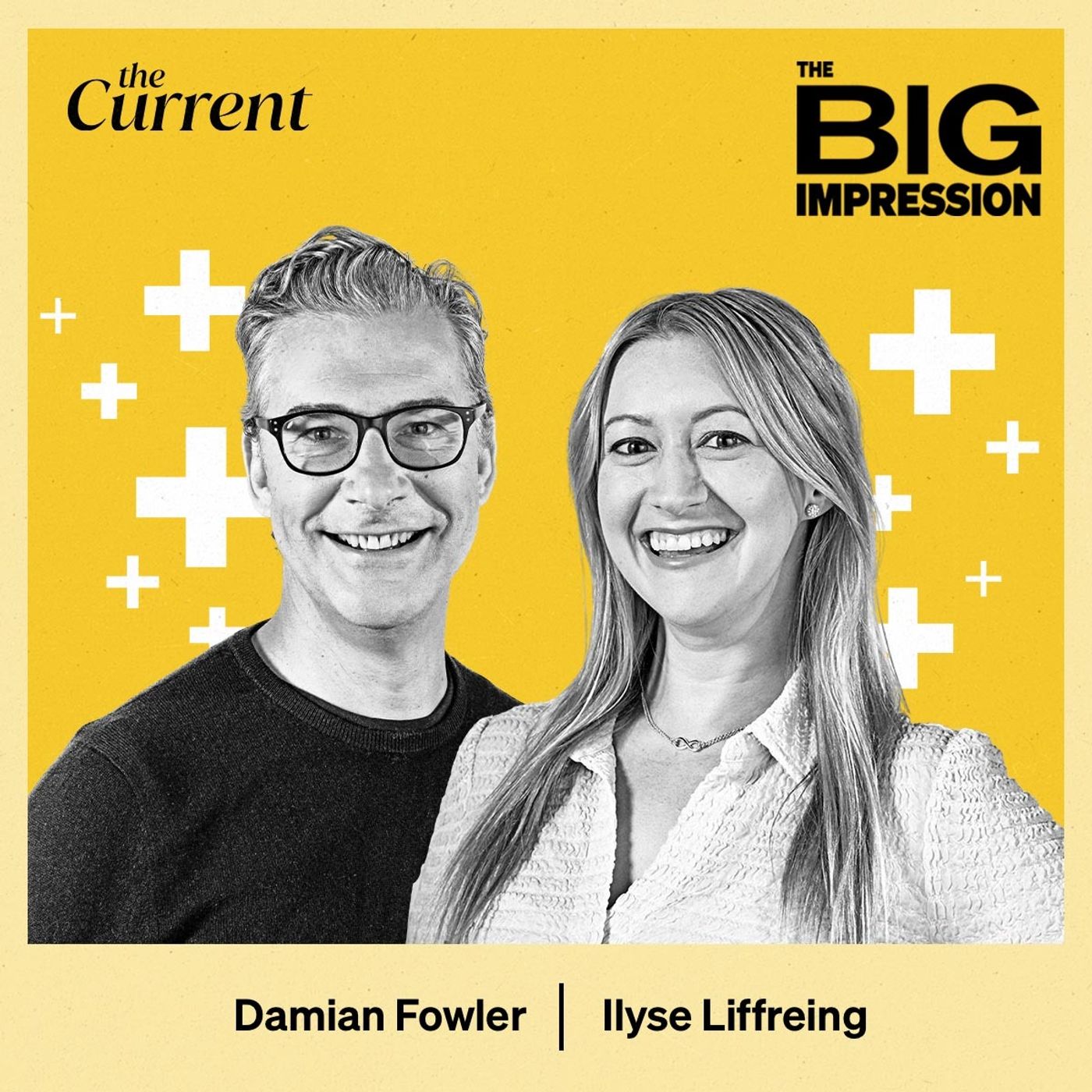
Introducing The Big Impression Podcast
trailerEditors and co-hosts Damian Fowler and Ilyse Liffreing uncover insights and inspiration from leaders at the world's most influential brands. New episodes drop every Wednesday on all podcasting platforms and YouTube. Hosted by Simplecast, an AdsWizz company. See https://pcm.adswizz.com for information about our collection and use of personal data for advertising.
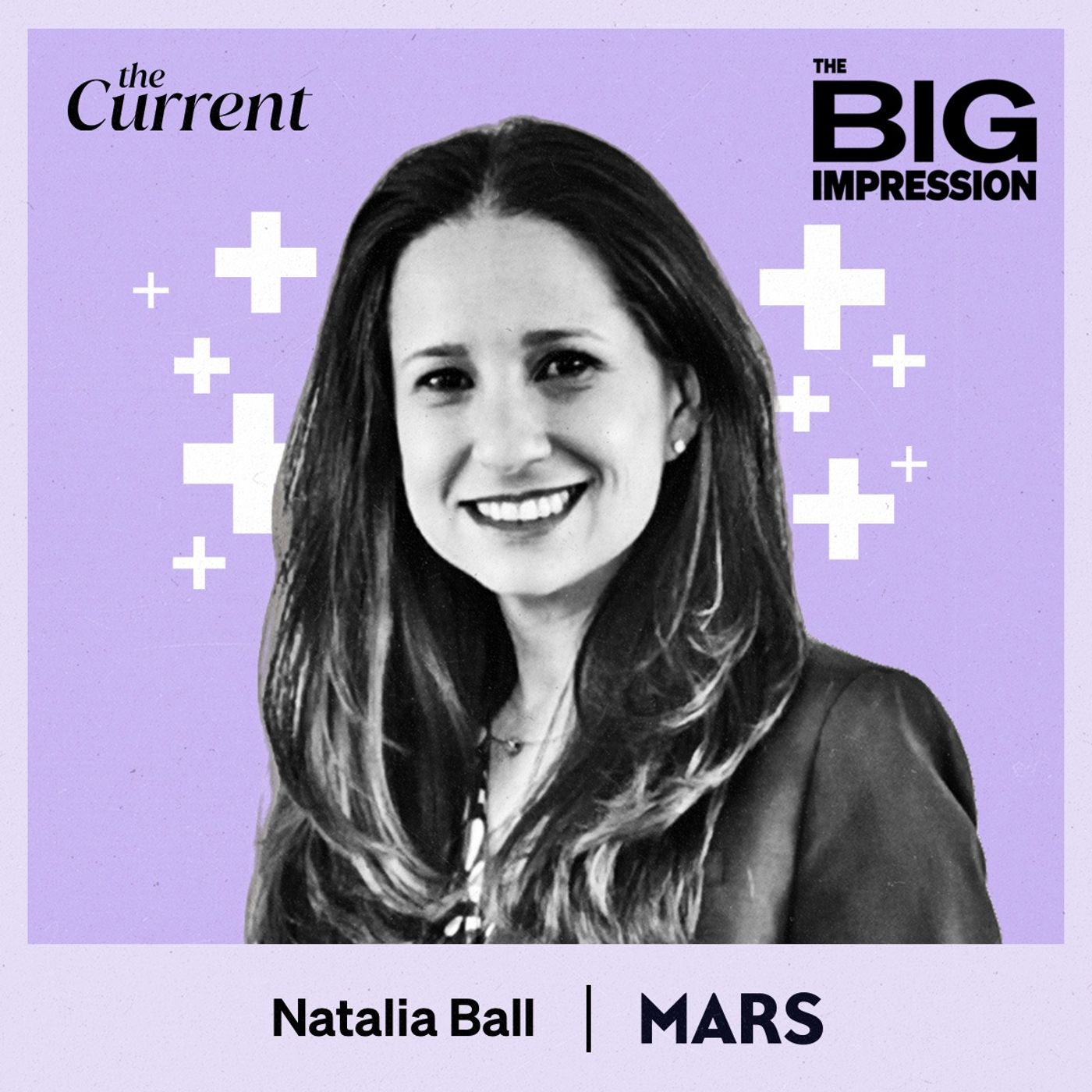
S13 Ep 140Pedigree’s Natalia Ball on turning an underdog into a Titanium Lion
Natalia Ball, global chief growth officer at Mars Pet Nutrition joins The Big Impression podcast to talk about how Pedigree transformed a local Brazilian insight into a global business story. She also shares why she is now focused on the next frontier of growth: Connected commerce and making sure brands show up when AI agents, not just people, are making purchasing decisions. Episode TranscriptPlease note, this transcript may contain minor inconsistencies compared to the episode audio. Damian Fowler (00:00):I'm Damian Fowler.Ilyse Liffreing (00:01):And I'm Ilyse Liffreing.Damian Fowler (00:02):And welcome to The Big Impression.Ilyse Liffreing (00:09):This week we're joined by Natalia Ball Global Chief Growth Officer at Mars Pet Nutrition home to brands like Pedigree and Sheba.Damian Fowler (00:18):Last March, pedigree launched a bold, purpose-driven campaign in Brazil celebrating mixed breed dogs, especially the iconic Vela Caramelo.Ilyse Liffreing (00:27):It wasn't just a campaign, it became a movement boosting adoption and challenging long held bias.Damian Fowler (00:35):The work went on to win top honors at the 2025 cans. Lions including the titanium lionIlyse Liffreing (00:41):And its impact is still rippling across markets and media channels worldwide.Damian Fowler (00:45):So today we're unpacking what made it work with the person who helped drive it. Natalia, tell us about the Carello campaign and how you landed on the idea.Natalia Ball (00:57):Carmelos are mixed dogs that are beloved in Brazil. They are found on the streets everywhere. They are the subject of meme, street culture, and people just identify Carmelo as the Brazilian dog. However, the inside that we discover was that this dog is 90% less likely to get adopted than breed dogs. So it is the most popular dog in Brazil, but the most overlooked. And when we learned about that, we decided that we wanted to make a difference and that we wanted this dog to get the position it deserve and pedigree decided to champion the underdog and become the official brand of caramel's in Brazil.Damian Fowler (01:41):You talked about the caramel. Could you just describe a little bit more for people who don't really know the caramelo and that term Vita, where does that come from?Natalia Ball (01:52):Yes, so caramels are basically mixed breed dogs that you can find on the streets of Brazil everywhere they are called caramel because they are caramel color and that's what it is in Spanish and they tend to be that caramel color, short hair. But there are different ways that these dogs look and feel because they are mixed breeds. But like I said, they are beloved dogs in Brazil, but when it comes to getting a pet, getting a dog, they are not the ones that people are going for. They see them as street dogs, not a dog that you have in your house. And the whole campaign was about, like I said, championing these caramels, driving adoption of mixed breed dogs, not only breed dogs. And we did that by saying that if caramels were considered non breeded, pedigree was going to give them a breed and who better to give them a breath than pedigree.Ilyse Liffreing (02:48):Great. And then at what point did you connect that insight to the campaign itself?Natalia Ball (02:54):What you need to know about pedigree? Pedigree is one of the largest dog brands in the world. Pedigree feeds more dogs than any other brand, and it has been there for many years and for the past 20 years or more, pedigree has been driving adoption, encouraging people to adopt pets everywhere. We have had a lot of iconic campaigns so much which maybe you would've heard, like for example, docs on Zoom during COVID or the child replacement program, which was a very interesting one. And we were talking about adoption in Brazil, but other local brands were talking about adoption too. So we were not cutting through and it was only when this insight came to us, which was a very deeply local insight that we made the connection, if we want to drive adoption in Brazil, this is going to be the way in and we're going to make this as big as it can possibly be.(03:51):Because we, from the very beginning saw we understood this idea of the vi Lata. You mentioned it before by the way, the vi lata is how you call mixed breed dogs in Brazil. And so when we had these conversations about this insight, the injustice of this beautiful dog not getting adopted, but also the cultural impact that it would have on resilience themselves, who could see themselves related in the fact that they were being championed, we decided to go really big on this campaign and not only do just an activation, but actually we are doing this campaign. We did it all of last year and we continue activating through this year. And some of the ways in which we championed this was actually by creating a caramel kennel club by creating the first ever caramel DNA testing. And it's the largest ever DNA test done in mos in all of history, kept creating a Carmelo dog
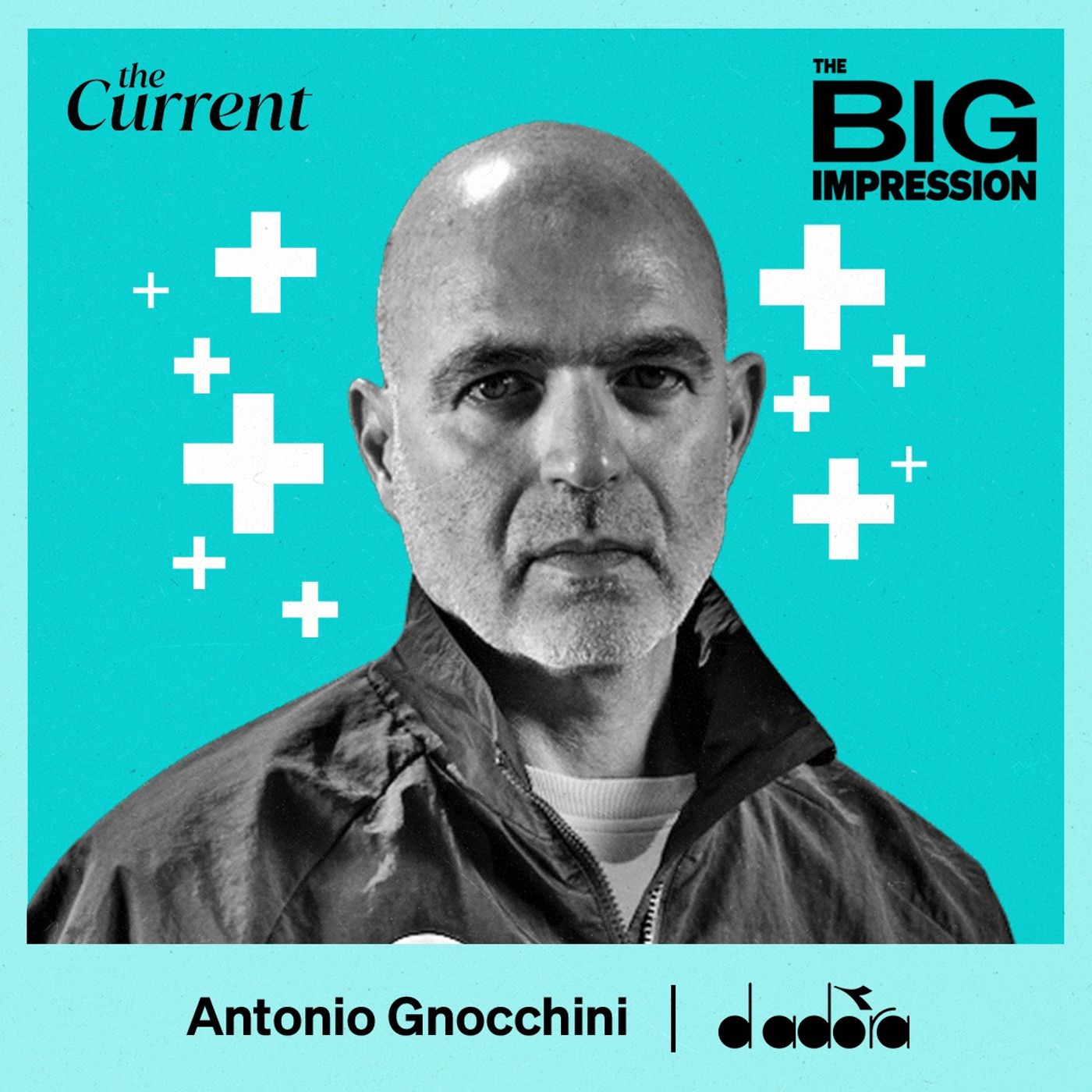
S13 Ep 138Diadora’s Antonio Gnocchini on the power of discovery
Heritage sports brands may be tempted to rely on their history to appeal to a new generation that wasn’t there to see it. But in the fast-moving digital attention economy, that’s a mistake, says Antonio Gnocchini, chief marketing officer at Diadora.He joins The Big Impression podcast to explain how the iconic Italian brand is reclaiming its spot in the performance market. By leaning into a challenger brand mindset during the Paris 2024 Olympics — without the price tag of official sponsorship — Gnocchini and his team are shifting the focus from nostalgia to high-performance innovation. Episode TranscriptPlease note, this transcript may contain minor inconsistencies compared to the episode audio.Damian Fowler (00:00):I'm Damian Fowler, and welcome to this edition of The Big Impression. Today, we're looking at how a heritage sportswear brand carved out its own spotlight at the Paris 2024 Olympics without being an official sponsor. My guest is Antonio Gnocchini, Chief Marketing Officer at Diadora, the iconic Italian brand known for its made in Italy craftsmanship. In the lead of the Paris, Antonio and his team launched a global brand campaign built around Diadora's roster of Italian athletes from Trackstar, Larissa, Yapacino, defensers and speed skaters, all while showcasing innovations like the Atomo Running Shoe. That's the first high mileage running shoe made in Italy in three decades. We're going to break down how Diadora timed its campaign to maximize the Olympic moment, how it differentiates itself from giants like Nike and LVMH, and what this strategy says about building awareness in a crowded high-stakes marketing landscape. So let's get into it.(01:07):Antonio, can you tell us about why the Paris Olympics was such an important moment for Diadora as it sought to elevate its brand name again?Antonio Gnocchini (01:18):So if you are a multi-category sport brand, Olympics is certainly the big event, the main event, your main catwalk of the main show. And you prepare for it for a long time because you need to be in one of the most competitive environment with the best product, competitive athletes. Everything needs to be perfect. And it's also one of those moments in which you can go deeper with attention, with messages. If you are serious about sport and you want to communicate, sport brand values, what you really stand for, it's not easy, especially today in moments in which the attention is not much, few seconds from everybody. Channels are very fast and flattened messages very easily. The Olympics is a moment in which for a few weeks you have the attention. You have people connected and engaged. You have people who care. And so it's a perfect environment to talk again about what you stand for.(02:41):And so going back to the Olympics was a statement to say, we actually are a competitive sport brands, a performance brand, not only lifestyle of it. And so yeah, it was such an important environment for us. Also, these Olympics was maybe one of the first ones that I've seen since I started doing this job when you could see some challengers brands activating and being visible.(03:15):In the past, this was really an event only for main sponsors and official sponsors mostly. Now this is a moment of challengers. And if you find the right way and if you had a good connection with your outlets, you could be doing a successful marketing campaigns and actions.Damian Fowler (03:35):That's really interesting to hear you say that. And I think, and I'm curious to hear your thoughts on this. Is the kind of media environment that we exist in now, does that make it possible for challenger brands to find a way to reach audiences that they otherwise might not be able to find back when it was the main TV channels and big glossy mags, there are more niches now in many ways.Antonio Gnocchini (04:00):There's a very interesting report that Business of Fashion and McKinsey release every year. And the most recent one was a study from McKinsey, which they were showing displaying how the sport market, which was dominated by only few incumbents. And you could see that at Olympics, still today, the most recent one, the usual suspects are dominated most of the sports. But in this past few years, there is a change going on in which incumbents are really under pressure from Challengers brand in the sport industry. They're gaining momentum. Challenges are gaining space, gaining market share, and also visibility. And you can say that maybe this is linked to the explosion of running as a global movement, but it's not only that. Running certainly as contributed, because running is one of those categories that is really extremely democratic. And yeah, sure, track and field main athletes, famous names help, but you can become a successful running brand without having only the most amazing hundred meters runners.(05:37):You can be successful by working in other ways. And you see brands starting to become more visible through running in the sport
S13 Ep 137Dish Media’s Liam Kristinnsson on how linear and programmatic TV are converging
As Dish Media’s new head of programmatic partnerships, Kristinnsson is helping turn advanced TV into a single, addressable marketplace. Episode TranscriptPlease note, this transcript may contain minor inconsistencies compared to the episode audio.Damian Fowler (00:00):I'm Damian Fowler.Ilyse Liffreing (00:01):And I'm Ilyse Liffreing.Damian Fowler (00:02):And welcome to this edition of The Big Impression.Ilyse Liffreing (00:09):Today, we're joined by Liam Kristinnsson, head of programmatic partnerships at Dish Media, where he's helping shape how the company connects advertisers with premium audiences across both linear and digital environments.Damian Fowler (00:23):Dish has been pushing hard into the programmatic space. From Dish Connected, it's addressable solution across the ecosystem to Advantage, which links programmatic buying with linear inventory in real time. It's all part of a broader move to bring automation and accountability to advanced TV.Ilyse Liffreing (00:39):We'll talk with Liam about how Dish is tackling fragmentation, what premium really means in a mixed green world, and where the next phase of programmatic growth is headed.Damian Fowler (00:51):So let's get into it.Liam Kristinnsson (00:57):Dish Connected has really revolutionized our product in the marketplace. We've been able to convert an additional four million to five million households into tangible CTV devices across real-time bidding systems across the industry. And it's kind of given us a leg up against some of our more linear competition where we now have full autonomy over our inventory and can enable and provide transparency downstream to any client.Damian Fowler (01:28):That's amazing. I mean, there was a moment there where there was a sort of either all linear or CTV, but this is something that's kind of connecting thoseLiam Kristinnsson (01:38):Two worlds. I think this is the start of the convergence. I know it probably truly started post-pandemic, I would say, but the reality is now that what is perceived as underutilized impression-based audiences are now becoming tangible and kind of overlapping with their traditional legacy linear purchases. And there's much more value to it because we are not enabling people to find attribution in a more roundabout extrapolated way, but we can provide meaningful real time results to third party attribution vendors or measurement vendors.Damian Fowler (02:20):And that brings us to Advantage, which you introduced in May to Power Programmatic and Linear at the same time. Could you tell us a little bit more about that?Liam Kristinnsson (02:30):Yeah. So the beauty of Advantage is it really expands upon what we've already built for Programmatic in Disconnected, but it provides solutions across the whole suite of products we have. Our addressable business can tap into real-time kind of innovations, real-time optimizations against audiences, ensure that we are better delivering across the target audience and finding that incremental reach that in the past may have been next to impossible to verify. And now we have all that inventory in one place. It's kind of like a grocery store when I think the industry has become accustomed to going to a bodega. That's very New York with me, I understand. I like that. But sometimes bodegas have eggs, they have a deli, they might have milk, but they might not always have milk and seltzer and all the little things that you want on a day-to-day basis. And the reality is something lacking when it comes to you being able to actually fill your fridge.(03:35):Now we have all those components that the customer or the client is looking for.Damian Fowler (03:40):Yeah. I like that analogy.Ilyse Liffreing (03:41):It's a good one. Yeah, no, I like that. And now Liam, I'm curious about the advertisers you're working with. Is there a new segment of buyers that Programmatic is really opening the door to here? What is basically your sense of that cohort?Liam Kristinnsson (03:58):Yeah, I think it really has grown overnight programmatic in general, but I think it allows us to have expanded exposure across all clients that are looking for that more meaningful kind of results. I think we are seeing a lot of success in generating a lot of traction across the CPG world, the direct to consumer world. And I think we're finding a nice overlap from a category perspective of what we traditionally looked at as direct IO or addressable business, but maybe not all those brands or clients in maybe like a pharmaceutical vertical would tap or earmark dollars for commitments early in their planning phase. Now they have the liberty and the luxury to find that right audience and enable dollars downstream where we're just not hunting in that lane and now we can kind of, instead of spreading ourselves thin, the technology can enable us to really kind of tap into all those brands, whether it be the CPG or the pharmaceuticals.(05:05):Now on the CPG side, I would double down further. I think becaus
S13 Ep 136Former Lyft brand leader Jessica Bryndza on humanizing mobility in the age of AI
Editor’s note: This episode of The Big Impression was recorded prior to Jessica Bryndza’s departure from Lyft.For years, ride-hailing has been optimized for speed, price and efficiency. Jessica Bryndza believes that’s only part of the story. During her tenure as Lyft’s vice president of brand marketing, she focused on reminding people that getting from Point A to Point B can still be personal — shaped by emotion, culture and the everyday moments that happen along the way.That philosophy is at the heart of Lyft’s new “Check Lyft” campaign, which launched last fall in San Francisco and New York City. The work reframes transportation as something human and choice-driven, not just transactional. Bryndza argues that the future of mobility won’t be defined solely by technology, but by how intentional and human the experience feels when you’re actually inside the ride.“I’ve cried in the back of Lyfts; I’ve laughed with friends,” she says on The Big Impression. “We have this spectrum of emotions.” Rather than treating mobility as a pure utility, Check Lyft taps into those moments — the small trade-offs, the waiting, the savings and the lived reality of getting around a city.”Bryndza also discusses how Lyft’s founding DNA continues to influence its brand voice, why empathy matters more than ever in the battle for attention and how the campaign comes together across out-of-home, social, in-app and hyperlocal executions, with no “AI slop” in sight. “There’s a lot of slop out there,” Bryndza says. “How do we respect our customers enough to not put crappy work in front of them?” Hosted by Simplecast, an AdsWizz company. See pcm.adswizz.com for information about our collection and use of personal data for advertising.
S13 Ep 135Albertsons’ Brian Monahan on turning shopper data into retail media gold
In conversation with The Big Impression, Brian Monahan, SVP of retail media at Albertsons Media Collective, explores how shopper insights, creative storytelling and omnichannel strategies intersect. Hosted by Simplecast, an AdsWizz company. See pcm.adswizz.com for information about our collection and use of personal data for advertising.
S13 Ep 134Mitsubishi’s Kimberly Ito on how a challenger brand punches above its weight
CMO Kimberly Ito shares how Mitsubishi, a challenger brand, drives big impact through audience insight, digital precision and a redefined spirit of adventure. Hosted by Simplecast, an AdsWizz company. See pcm.adswizz.com for information about our collection and use of personal data for advertising.
S13 Ep 133Kate Wik, the CMO of Las Vegas, on marketing an iconic city
Discover how Kate Wik, CMO of Las Vegas, drives bold innovation and storytelling to transform the city into a global destination brand. Episode TranscriptPlease note, this transcript may contain minor inconsistencies compared to the episode audio. Damian Fowler (00:00):I'm Damian Fowler.Ilyse Liffreing (00:01):And I'm Ilyse Liffreing.Damian Fowler (00:02):And welcome to this edition of The Big Impression.Ilyse Liffreing (00:09):Today we're joined by Kate Wik, chief Marketing Officer at the Las Vegas Convention and Visitors Authority. The team behind the city's newest brand campaign, which launched in September,Damian Fowler (00:20):Las Vegas, is known around the world for its energy, its entertainment, and its edge. But this ladies' campaign takes a closer look at what the city means today beyond the casinos and into its growing identity as a cultural and sports destination.Ilyse Liffreing (00:34):We'll talk with Kate about the ideas behind the campaign, how Vegas is connecting with new audiences, and what it takes to evolve one of the most recognizable brands in the world. Q,Damian Fowler (00:45):Frank Sinatra. It's okay. You have an unusual role in that you represent a city as an iconic one, but could you tell us about the role?Kate Wik (00:56):That's exactly right. So I work for the Las Vegas Convention and Visitors Authority. Nobody knows what that is or what that means. So really, I shorthand it and I say I am the CMO of four Las Vegas. Las Vegas is my product, which is very unique. It is a city, it's a destination. It's unbelievably dynamic. And what's so unique and thrilling for a CMO of Las Vegas is that our product is always changing, always evolving. If you think back, we were known as the gaming destination. We've evolved into, we're the number one hospitality destination in the US with more hotel rooms than any other destination. And we are the entertainment capital of the world. You've got the world's best artists coming and performing on stages across destination every single night. And we've worked really hard to evolve ourselves into the sports destination as well through a lot of recent things. So really the exciting thing for me in this role is no one day is ever the same. Our product is constantly iterating and evolving, and that is a marketer's dream come true.Damian Fowler (02:10):Just on that point about the evolution of the city and the perception of it, how fast has that happened in the last, say, five, 10 years?Kate Wik (02:20):Yeah, absolutely. Incredibly fast. And so today we are known as the sports and entertainment capital of the world, but less than 10 years ago, we did not have any sports teams. Yes, sports has kind of always been in our DNA. We'd host major boxing matches in the eighties, NFR we've had for decades. NBA, we hosted their in-season tournament, NBA Summer League, but really it was through infrastructure development that really led to the explosion of sports today. So what I mean by that is we had T-Mobile Arena, which was a joint venture between MGM resorts and a EG that enabled NHL to come to town with the Vegas Golden Knights in 20 17, 20 18, we purchased the WNBA team, which we renamed the Las Vegas ACEs. And so now we've got A-W-N-B-A team. And then in 2020, of course with Allegiant Stadium, we welcome the Raiders. And so now we've got the Las Vegas Raiders, and we are, so actually in four years, we went from having zero professional sports teams to having three, and we're actively working to bring our fourth to town, which is the major league baseball. We're welcoming the Las Vegas a,Damian Fowler (03:34):Not to mention Formula One.Kate Wik (03:36):Yes, exactly. And Formula One now an annual event on our calendar. So it's a lot. It's a lot. And it creates new reasons to come to Las Vegas for our visitors. And what we found through research actually, is that the sports traveler, number one, we know sports tourism has just exploded the sports traveler. Through our research, we found that it creates a new reason to come to Las Vegas for those that haven't been here before. It creates a reason to explore the destination, see it, consider it, and then ultimately come. And then most importantly, we find that they spend more money than the average leisure traveler. So it's a really rich new audience for Las Vegas. And F1 has definitely exploded that for us too.Ilyse Liffreing (04:24):Do you know by just how much more do they spend?Kate Wik (04:27):It's usually anywhere from 500 to 800 more per trip.Ilyse Liffreing (04:31):Wow, that's a lot. And the rest on gambling,Kate Wik (04:36):AnythingIlyse Liffreing (04:36):Extra? It'sKate Wik (04:37):Funny. Gambling hasn't been, revenue from gaming hasn't been the primary source of how consumers are spending their budget while they're in town. Hasn't been that for over a decade.Ilyse Liffreing (04:51):AndKate Wik (04:51):I think it speaks to the diversification of the experience in Las Vegas. And when I say we're the enterta
S13 Ep 132Formula 1’s Emily Prazer on revving up American enthusiasm through an ‘always-on dynamic’
Formula 1 Chief Commercial Officer Emily Prazer joins The Big Impression to accelerate the motorsport’s hold on Americans with year-round content and venue in Las Vegas. Episode TranscriptPlease note, this transcript may contain minor inconsistencies compared to the episode audio.Damian Fowler (00:00):I'm Damian Fowler.Ilyse Liffreing (00:01):And I'm Ilyse LiffreingDamian Fowler (00:02):And welcome to this edition of The Big Impression.Ilyse Liffreing (00:09):Today we're joined by Emily Prazer, president and CEO of the Las Vegas Grand Prix and the Chief Commercial Officer of Formula One. She's helping transform F1 into one of the fastest growing sports brands in the world, leading strategy partnerships and fan engagement across markets from Miami to Melbourne.Damian Fowler (00:30):Emily's here to talk about the road to the last Vegas Grand Prix on November the 22nd. Now, in its third year, the Vegas Grand Prix turns the strip into a global stage where sport, entertainment and culture collide under the neon lights.Ilyse Liffreing (00:46):I love that. From the 100 day countdown events to new sponsorship models and digital fan experiences, formula One is redefining what a modern sports brand can look like, especially in the U.S. market.Damian Fowler (01:02):In past years, the marketing around Las Vegas, the Grand Prix has felt like a crescendo building over several months. What's been your strategy this year as you build, it's the third year, right? As you build towards those?Emily Prazer (01:14):Yeah, this third year, so I think the difference this year is we've had two years of a foundation to figure out what works and what doesn't work, but equally we've had our building open all year, so prior, well the first year we're obviously building the building for those that dunno, it's called Grand Prix Plaza. It's the length of three NFL fields, so it's not small. It's designed and built to service the Formula One Paddock Club, which is the most high-end hospitality that we offer in Formula One. Underneath that is where the garages are and where the teams hang out, so it's quite a significant building. When we first moved to Vegas, we purchased the 39 acres of land and have invested around $500 million in this infrastructure and so the difference I think is obviously the first year we were building it, the second year we were getting to grips with owning such a significant property in Las Vegas and then moving into the third year of the event, the building's been open all year and we built something called F1 Drive, which is carting.(02:10):We've had a restaurant up there called Fool and Fork, which is Formula One, themed food and beverage as you'd expect. We built an immersive Formula one experience called F1 X and so the marketing's ramped up, but that's because locally we've been able to activate since the day after the race last year all the way through to this year, and obviously how we market is very different depending on what we're trying to do, whether it's selling tickets or whether it's driving foot traffic to the building. It's all the awareness that we need in Las Vegas to continue to grow our fan base.Damian Fowler (02:41):The a hundred day countdown, that's important,Emily Prazer (02:43):Right? That was a big one. We always go big around a hundred days. We did a strip takeover, we made sure people understood that it was a hundred days ago. We did similar for 50 days, so we use those milestones to make sure, obviously Vegas is somewhat a last minute market. Some Grand Prix go on sale and sell out in 90 minutes. We see the most amount of activity from a hundred days through to November.Damian Fowler (03:04):That's very interesting. How do you decide which moments where you target your marketing strategy in that a hundred day buildup?Emily Prazer (03:12):Oh, well, we're very fortunate that the racing continues For those, again, that aren't familiar, formula One is a 24 race calendar, which spans globally, so we typically go big around the big races as you'd expect. We've just come out of Singapore where hopefully people have seen that McLaren won the Constructors Championship. We'll go big again around Austin and Mexico. They're both feeder markets to the Las Vegas Grand Prix and we'll just continue to make sure we've got major announcements, whether it be food and beverage merchandise programming all the way through between now and race day.Ilyse Liffreing (03:42):Now, can you also talk a little bit about the F1 business summits because you're also launching that during race week? Sure. How intentional is the idea of making Vegas not just a race, but a business and cultural destination?Emily Prazer (03:56):Sure. Well, if you look at what Vegas do around other major sports, it's not that we're trying to reinvent the wheel, we're taking learnings from how well the NFL have operated there with the Super Bowl, even around WWE where you see them extend from a one or two day event through to a whole week.
S13 Ep 131Peggy Roe on redefining the travel journey — from loyalty to living a life well-traveled
Discover how Marriott International is transforming travel through personalization, commerce media and its new Media Network. EVP Peggy Roe shares insights on helping guests live a life well-traveled. Hosted by Simplecast, an AdsWizz company. See pcm.adswizz.com for information about our collection and use of personal data for advertising.
S13 Ep 130Godiva’s Ahad Afridi on marketing chocolate as an everyday indulgence
Ahad Afridi, CMO for the Americas at Pladis, owner of Godiva, shares how the legacy chocolate house’s “hundred-year reboot” is reshaping the brand for a new generation of snackers, particularly millennials and Gen Zers. Episode TranscriptPlease note, this transcript may contain minor inconsistencies compared to the episode audio. Damian Fowler (00:00):I'm Damian Fowler.Ilyse Liffreing (00:01):And I'm Ilyse Liffreing,Damian Fowler (00:02):And welcome to this edition of The Big Impression.Ilyse Liffreing (00:09):Today we're joined by Ahad Afridi Chief Marketing Officer for the Americas at Pladis, the company behind the Godiva brand, those premium chocolates we all live.Damian Fowler (00:20):We're diving into Godiva's bold new campaign, featuring Leighton Meester portraying the legendary lady, good diver, a modern spin on an iconic story of courage and individuality.Ilyse Liffreing (00:31):We'll talk about how the brand is trying to stand out ahead of the holiday season and how Pladis is evolving its brands for the next generation of snackers.Ahad Afridi (00:40):Let's get into it. It's a comprehensive launch. It's a launch of a new product within the Godiva range called Masterpiece, but it's also the start of a brand reset. And so part of this has an eye towards the now of launching this new product that's great, but also towards activities that are going to happen over the next one year. Godiva turns 100 next year, and so what we wanted to accomplish was the first big step in this centennial, what we call re-imagining of the Godiva brand.Speaker 2 (01:17):Yeah, that's a legacy brand for sure.Speaker 3 (01:18):And happy birthday as well.Speaker 2 (01:20):Thank youSpeaker 3 (01:20):A hundred years. Thank you. Thank you to Godiva. On behalf of Godiva, I'd say thank you.Speaker 1 (01:26):Yeah. In that hundred, how would you define what Godiva stands for as a legacy brand over that century?Speaker 3 (01:34):Godiva is a premium chocolate brand. It's been called a luxury chocolate brand, but we prefer to call it premium because it makes it more accessible, which we can talk about a little bit more. It's a Belgian heritage brand. Belgian chocolates are different than the normal. Speaker 2 (01:51):That’s good, in my opinion,Speaker 3 (01:53):Different than the normal chocolate milk-based chocolate, but it's just great tasting, high quality chocolate that you feel great giving to others as a gift and having for yourself as well.Speaker 1 (02:08):So just to ask you about this specific campaign, what made you wanted to bring that legacy as it were up to date? Is that the right way of putting it into today's culture through this campaign?Speaker 3 (02:18):Yeah, in a way. Let's say it's a hundred year reboot because turning a hundred, you have to celebrate your heritage, but reposition for the future. So it's about getting contemporary, bringing some of those traditional values and equities of the brand, but modernizing them for today and starting this, what we call re-imagining with totally new offerings coming over the next one to two years. We've started with what we call Masterpiece, and Masterpiece is a small chocolate piece that comes in a bag with multiple pieces in there, and it's great for sharing with others or treating yourself. So this is the first step. We've just launched this now it's in the market. In the next few weeks you'll see a totally reimagined what we call gold box and truffle box, which is high-end premium chocolate in specialty stores and on the giva.com website where we've totally revamped chocolate and got new offerings in that. So that's coming over the holiday period, Valentine's Day, there'll be another new collection coming next fall. Towards the end of the next year, we'll have some more gifting chocolates available that will be broadly available. And that's the start. And then after that, in the year 2027, we've got other exciting things coming in. So it's a sequenced campaign. Speaker 2 (03:47):Good timing for the holiday season, I'm sure.Speaker 3 (03:50):Exactly, exactly. Holiday seasons are important for us. Every day is important for us, but the holiday seasons are very important for us. Yes.Speaker 2 (03:58):Can you describe a little bit of the campaign itself and what viewers might see and experience as they witness the campaign?Speaker 3 (04:06):Yeah, I guess the first thing you'll see is a wonderful cinematic traditional sort of advertising, which has got some drama in it. It's got wonderful aesthetic, but at its heart it's a product centered ad and the product is celebrated in there, the taste of that. So that's let's say the hero piece or the centerpiece. But in addition, what you'll see is a lot of social content in different variations. You'll see different versions in digital tv. You'll see a billboard coming later, so some nice still art coming there. Now what's unique about this is we didn't look at it as just a specific campaign and a point of time. We look at this as a on
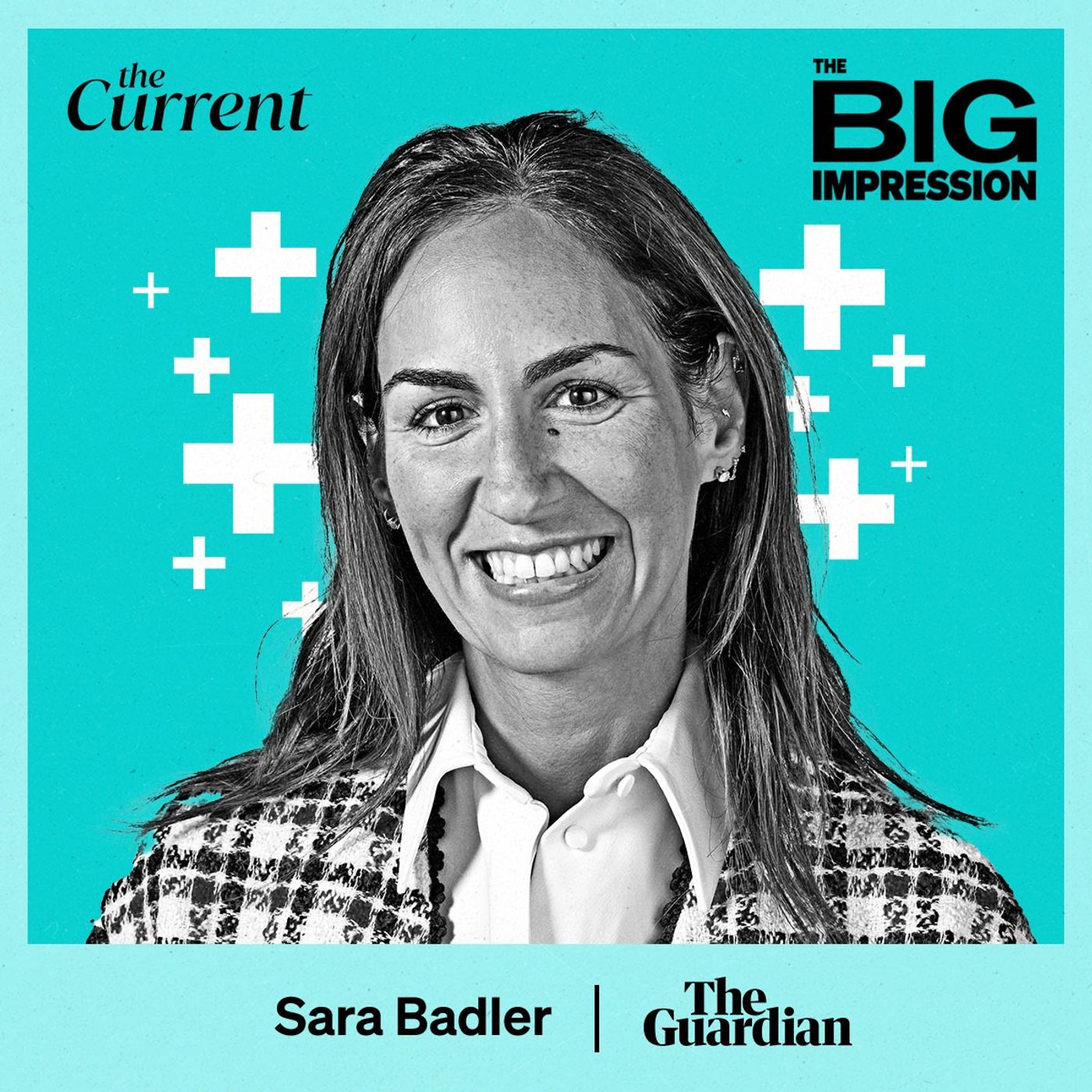
S13 Ep 129The Guardian’s Sara Badler on promoting journalism that’s “global, independent and free”
In late September, The Guardian launched its first major U.S. marketing campaign, featuring the tagline “the whole picture.” It’s a bold statement of intent from the 204-year-old news organization aimed squarely at American audiences, which highlights The Guardian’s brand of free, independent journalism.In this episode of The Big Impression, our hosts catch up with Sara Badler, chief advertising officer in North America for The Guardian U.S., to explore the vision behind the campaign, as well as some early takeaways since launch. Episode TranscriptPlease note, this transcript may contain minor inconsistencies compared to the episode audio. Damian Fowler (00:00):I'm Damian Fowler.Ilyse Liffreing (00:01):And I'm Ilyse Liffreing.Damian Fowler (00:02):And welcome to this edition of The Big Impression.Ilyse Liffreing (00:08):Today we're joined by Sara Badler, the chief advertising Officer of The Guardian U.S. She's leading the charge behind the Guardian's first major US brand campaign called The Whole Picture, a bold effort to reintroduce one of the world's most trusted news organizations to American audiences.Damian Fowler (00:29):It's an ambitious moment for The Guardian with plans to expand coverage in New York and DC launch new US podcasts and connect with readers in fresh ways. The campaign is signaling a big step forward for the brand and for quality journalism in the digital age.Ilyse Liffreing (00:44):From that striking yellow billboard in Midtown Manhattan to new approaches in digital marketing and audience engagement, the Guardian is proving that serious journalism can still make a splash and drive real impact.Damian Fowler (00:58):Let's get into it.Sara Badler (01:01):The whole picture is really, it's The Guardian saying, which I think now is more important time than ever, is this idea that we are completely global perspective, we are independent and we have no paywall. Everyone can read us and we are focused and dedicated to journalism. And the whole picture really shows dedicated in every sort of way of telling the facts whether that is culturally, artistically with the World Cup coming upon us. And obviously The Guardian is a massive, one of the biggest soccer ducks in the world, if not the biggest, and really showing up in different ways the whole picture. And so I'm probably talking too much about this, but you see us on the subway, we did a live activation last week in the Meatpacking District and it's just really showing who we are and what we represent.Damian Fowler (01:59):Yeah, it is interesting. It's one of those things like the 1111 thing when you think about it and you notice it. Once I saw the campaign launch, then I saw it on the New York subway and it was everywhere. But I'd read that the editor of the Guardian, Catherine ER had said that this is the perfect time to reintroduce the Guardian to US audiences. And I know it's had great traction in the country for a while. Why is that? Why do you think it is the perfect time, especially in New York and metropolitan cities, why is it the right time?Sara Badler (02:34):I think now more than ever, we really want alternative news sources. And I say that mean the Guardian's been around for 200 years. We are not new by any means, but we are new-ish and more of a teenager here in the US and we have tons of obviously news outlets and a lot of them are owned and operated by billionaires. And there's all different things that are happening to them. There's consolidation, there's putting up more paywalls. And I think now more than ever, having something free and a truly global perspective is unique and something that we have.Ilyse Liffreing (03:11):And the campaign itself has such a striking centerpiece, the creative looking at it, it's bright yellow, there's words that are hidden. I'm curious if you can describe a little bit about that creative choice developed with Lucky Generals and can you walk us through basically the idea behind that concept?Sara Badler (03:32):It was not easy. I would say that it took our marketing and cross organizational functions a long time to come up with this with Lucky Generals to credit to them. They've been amazing and they've worked with us in the UK and now in the US and we also work with PhD as an agency, which also has been amazing. And it just took time of evolving of what our real story is and what we want people to get out of it. And I think the global perspective, free independent journalism that's factual with integrity and talking about culture in these key moments is really what we wanted people to understand. And here,Ilyse Liffreing (04:14):Yeah, looking at the media strategy a little bit, what was the plan for go to market and for reaching those target audiences?Sara Badler (04:24):And I think this is with every marketing campaign. I was actually on talking yesterday on a panel and saying there's no more, my marketing campaign is like a media plan. You've got a podcast, you've got activations, you've got
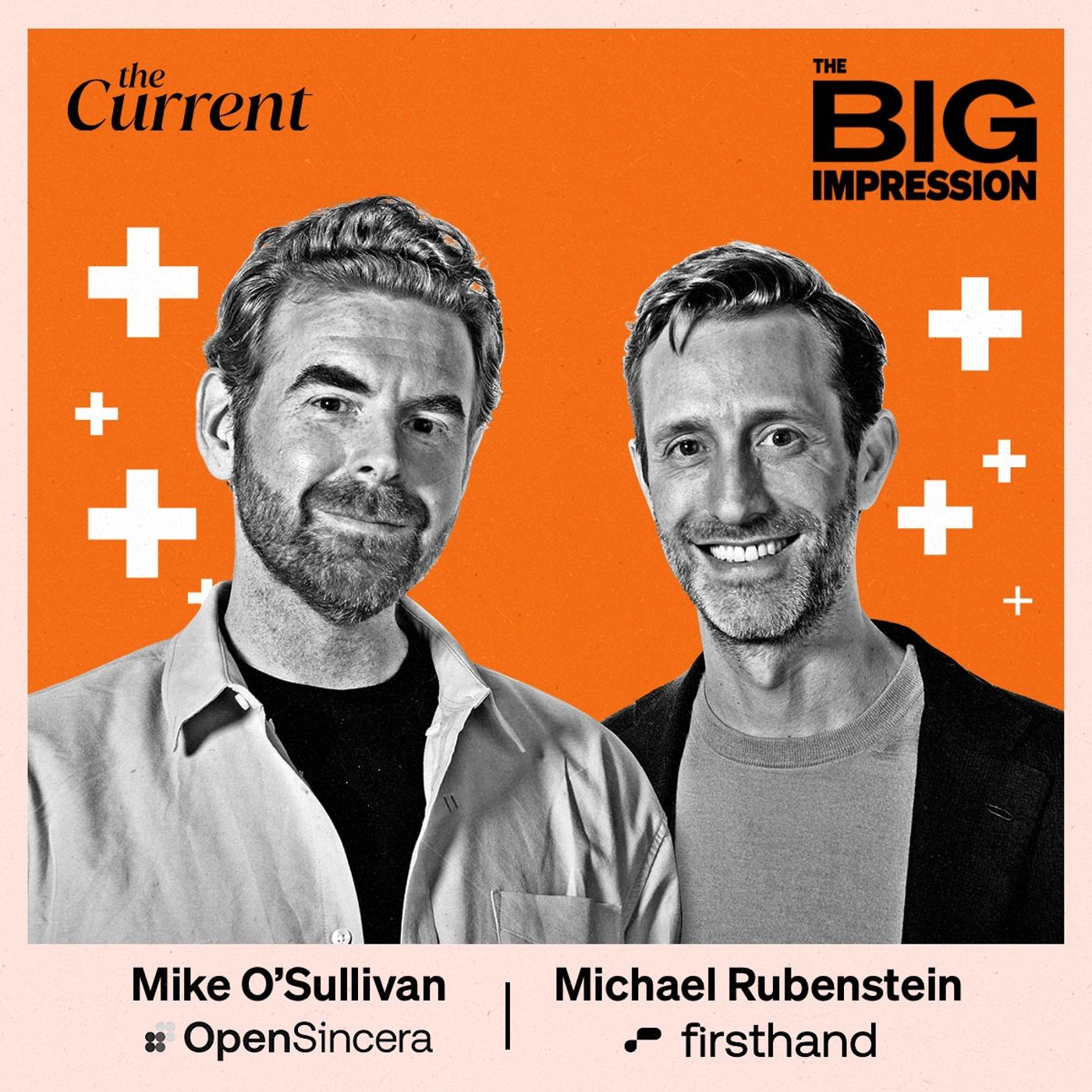
S13 Ep 128Michael Rubenstein on Building Firsthand, AI, and the Future of Ad Tech
Mike O’Sullivan (Co-Founder of Sincera and GM of Product at The Trade Desk) sits down with Michael Rubenstein, Co-Founder and Co-CEO of Firsthand, for a candid founder-to-founder conversation about innovation, risk, and leadership in the age of AI.From DoubleClick to AppNexus to Firsthand, Michael shares lessons from decades at the forefront of ad tech: what it means to build with purpose, how to hire and scale teams that thrive, and why the next wave of growth will come from brands who embrace AI directly.If you care about founder stories, AI, ad tech innovation, and building products that last, this episode offers a rare inside look from two builders shaping the future of the open internet.Watch their conversation: https://youtu.be/ishJspl-prw?si=Z29LpPSjK_fyUlqs Hosted by Simplecast, an AdsWizz company. See pcm.adswizz.com for information about our collection and use of personal data for advertising.
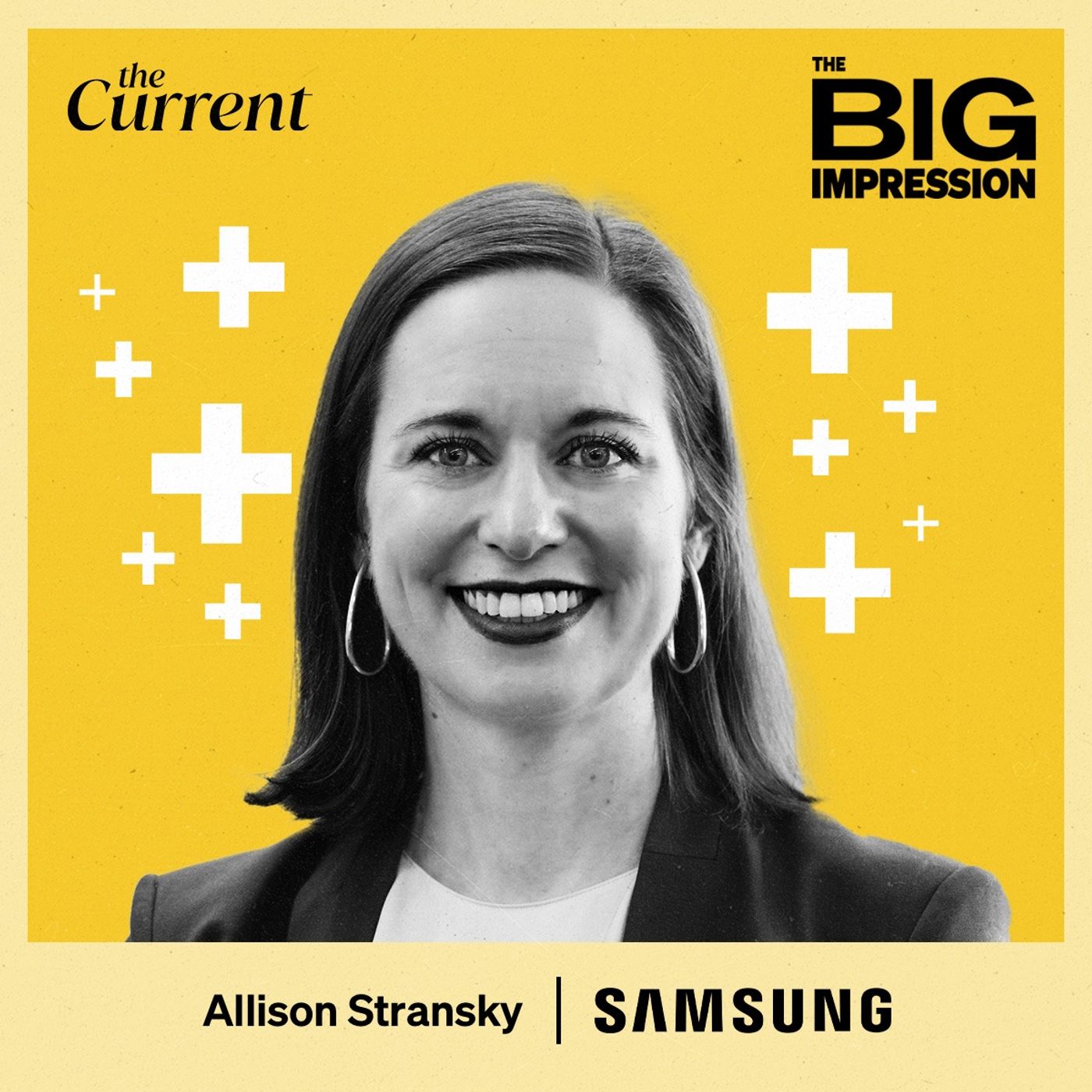
S12 Ep 127Samsung’s Allison Stransky on the future of AI in the home — and beyond
On the latest episode of The Big Impression podcast, Samsung’s Allison Stransky discusses the company’s new AI-focused campaign, “Your Home Speaks You.” She explains the importance of conveying how Samsung’s AI-powered home-automation features benefit the consumer. Episode TranscriptPlease note, this transcript may contain minor inconsistencies compared to the episode audio. Damian Fowler (00:00):I'm Damian Fowler.Ilyse Liffreing (00:01):And I'm Ilyse Liffreing.Damian Fowler (00:02):And welcome to this edition of The Big Impression.Ilyse Liffreing (00:09):Today we're joined by Allison Stransky, Chief Marketing Officer at Samsung Electronics America. She's led brand strategy at global companies like Google and L'Oreal, and now drive Samsung's vision for the connected home.Damian Fowler (00:24):Allison's here to talk about Samsung's new campaign Your Home Speaks You launched in June. The campaign highlights the joy of a home that feels more personal, showing how Samsung's connected products and Galaxy AI come together in everyday moments. Think a washer dryer that finishes a load in 68 minutes or a fridge that tells you to order some more cheese.Ilyse Liffreing (00:47):I love that idea. It's an omnichannel campaign built on real consumer insights about what homeowners actually need and how connected tech can save time, reduce stress, and make life a little easier.Damian Fowler (01:01):So let's get into it.Ilyse Liffreing (01:08):So Alison, the campaign Your Home speaks to you. It really redefines the home, not just as a space but as a feeling. And for the first time, it actually connects all of Samsung's various products into one overall story where anybody can pair these devices throughout the home together. Can you discuss the campaign and then how you translated that vision into the creative?Allison Stransky (01:31):Absolutely. So the initial insight behind your home speaks you is that we are all unique individuals and so are our homes, but also our homes are unique reflection of ourselves. And this actually went back to a campaign that we launched in 2024, but in 25 we took a really exciting evolution, which as you said was the first time we made a wide reaching video, digital video campaign featuring multiple Samsung products working together because we wanted to really convey to consumers who know consumers who don't know how much more you can get out of the Samsung ecosystem when you connect it all through smart things and what is also net new, how Galaxy AI takes those benefits really to the next level. So we are firm believers in how incredible our products are and how amazing they can all be when they work together, but we needed to translate that into something really tangible and relatable.(02:38):So that's where it came to life. In this campaign we featured four different hero products, the two TVs, combo washer dryer and the Bespoke fridge in sequence with a number of mobile products because that is where a lot of the real benefits of the interoperability can start to happen and then looked for real emotional insights to drive the storyline. So to turn that idea into a campaign, it all starts with the data. So we wanted to start by understanding the features and the benefits that our consumers like the most about our products and how our products work together. And then we took that data and turned them into insights. So to give you an example of how that worked, I'll start with the bespoke combo washer dryer. This is a new product that we launched in 2025. It does a wash in a dry all in one cycle in 68 minutes.(03:38):So this is the fastest combo washer dryer on the market, which is great. Fast speed is a great benefit, but when you connect to smart things and you start working with all of your devices together, you can really take your efficiency to the next level through things like notifications. But the human insight that comes into play is imagine that you are coming home and have to get ready for a date and you find that your dog is sitting on the clothes that you laid out for your date and your now brief tells you you have to be out the door in 75 minutes. Well, Samsung saves the day or the date night with the combo washer dryer and the sequence of notifications so you can get ready to go. And that's how really we thought about the whole campaign of bringing it together is it started with a product, it's made better by smart things in ai, but it's really a data-driven human insight that takes the whole thing and brings it to life.Ilyse Liffreing (04:34):Oh yeah, that's really cool. I know it took me two and a half hours to do laundry the other night.Damian Fowler (04:39):That's way too long.Ilyse Liffreing (04:41):And your own research has found that 76% of households already own at least one SAM product and then 27% have three or more. So how did those data insights actually help you shape the campaign?Allison Stransky (04:56):Well, that is data that we're really proud of. We are so pro
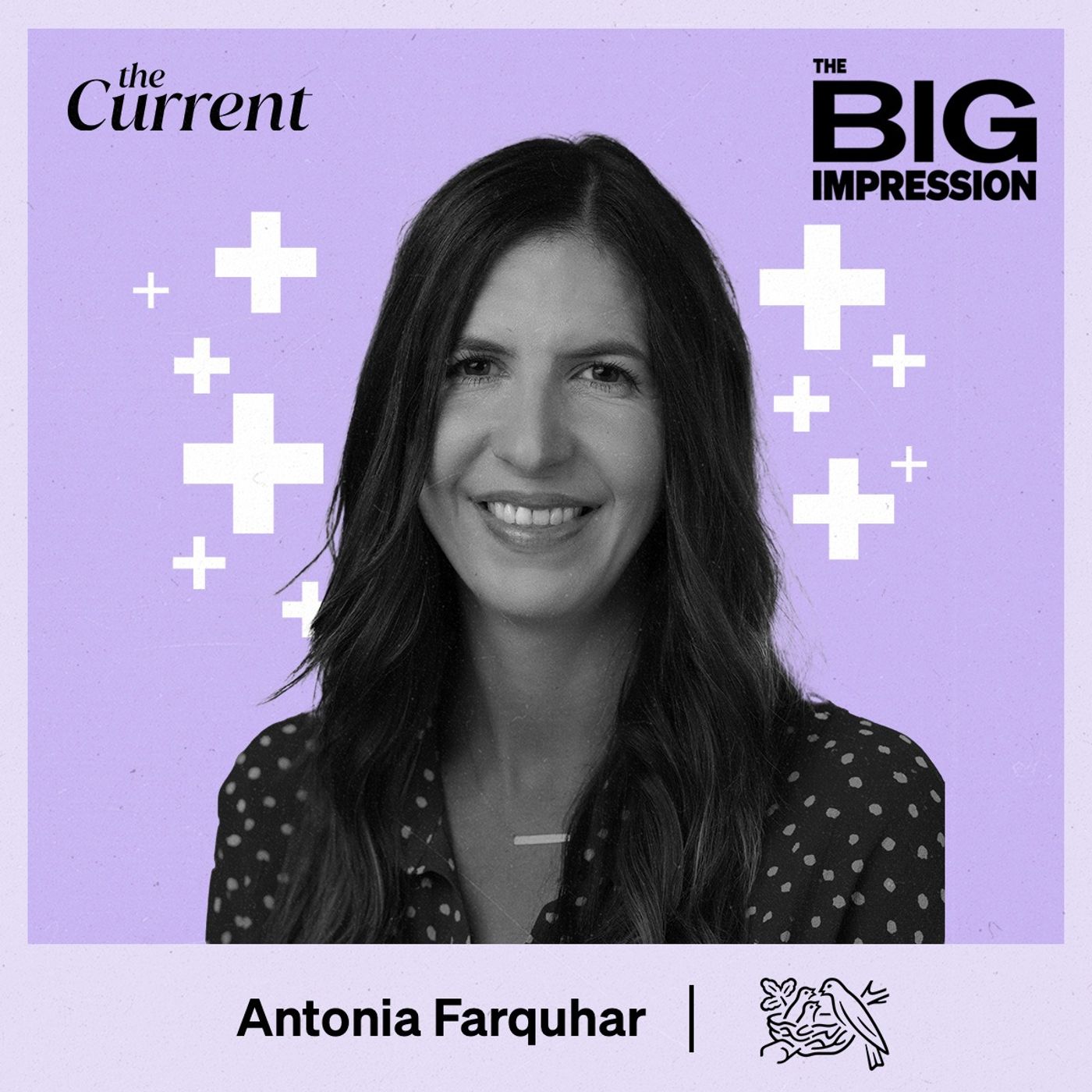
S12 Ep 126Nestlé’s Antonia Farquhar on why KitKat and F1 joined forces
On the latest episode of The Big Impression, Nestlé’s Antonia Farquhar talks about striking unexpected partnerships, like KitKat with Formula One, to keep the 90-year-old chocolate brand fresh. It’s part of a larger strategy to connect with new audiences through live cultural moments. Episode TranscriptPlease note, this transcript may contain minor inconsistencies compared to the episode audio.Damian Fowler (00:00):I'm Damian Fowler.Ilyse Liffreing (00:01):And I'm Ilyse Liffreing.Damian Fowler (00:02):And welcome to this edition of The Big Impression.Ilyse Liffreing (00:09):Today we're spotlighting one of the most ambitious shifts happening in brand marketing, Nestle's global push to redefine performance in a world where reach, relevance and streaming. Now go hand in hand.Damian Fowler (00:21):Our guest is Antonia Farquhar, global head of Media and partnerships at Nestle. Antonia has been at the forefront of Nestle's pivot towards connected TV and long-term brand building across categories, continents, and campaigns.Ilyse Liffreing (00:35):From Formula One to Gen Z coffee drinkers, she's helping Nestle rethink what media performance really means in a CTV first world and how brands can use new tools and data to close the loop between awareness and action.Damian Fowler (00:50):Let's get into it.Ilyse Liffreing (00:52):Antonia. So I understand that you guys are sponsoring Kit Kat's Formula One. I'm very curious to learn more about that.Antonia Farquhar (01:03):Yeah, one of the reasons that the Kit Kat team put that sponsorship together was to really, they've got an existing brand strategy, have a break, have a Kit Kat, right?Damian Fowler (01:14):Everybody loves that.Antonia Farquhar (01:14):Which is decades and decades old. I think it's way over 75 years old, that consistency of brand message is there and it's really part of the foundations of that brand. But the break is more important than ever in a busy world that we all live in today. And so it was really putting the brand at the heart of also everybody needs a break. How can we capitalize on that? And F1 has gone from being very much, I think known as a petrol head sports, to really bringing in different audiences, so younger, more diverse across the genders and it's global and Kit Kat is a major global brand of ours. So it was an excellent opportunity to really bring together the brand and I guess wouldn't have been an expected place. And then to capitalize on that, on giving people a better break as well.Ilyse Liffreing (02:08):Can you give me a little bit of background about why sports and why Formula One?Antonia Farquhar (02:15):I think for me, sports is one of the last truly appointment of view. Live viewing. You do not want to miss the race. You do not want to miss the final, you do not. There's so many of those moments now where it is also, people are talking about it, who won, how's the lineup, where is it? Et cetera. So it's part of cultural conversations and really the opportunity for our brands is to connect into what's happening, making sure we are injecting our brands with freshness and bringing in that new conversations. And I think sponsorship like the F1, and we also did Coffee Mate and the Super Bowl early this year, again, to really capitalize on where's the real excitement happening and how do we inject our brands in a distinct way. Obviously being true to their brand codes to new and different audiences,Damian Fowler (03:13):A thought a 30,000 foot view, you look across the landscaping like, well, these are the moments where we need to show upAntonia Farquhar (03:20):For sure. I mean, one of the role within the team is to really inspire and provoke and drive that distinctiveness for our brands. We are privileged to have a lot of huge global brands, but we're also over 150 years old as a company. So it's how do you inject that freshness? How do you stand out in a increasingly fragmented media landscape? So I think this is where we want brands to really lean in and as I said, it is holding on what is your brand territory? Where is that strategic foundations that hold true and need to be consistent, but how do you punch and become a little bit more maybe unexpected? Unexpected places is clearly one of the themes that I'm seeing in the industry lately that it drives that attention.Damian Fowler (04:20):When you talk about unexpected places. Could you say a bit more about that?Antonia Farquhar (04:26):I mean, we all know we are living in a very attention. Yeah, the second you wake up the phones, the amount of apps on your phones, it's increasingly hard and I think it'll continue to get harder to really drive connectivity to brands with people. And so I think doing something a little bit different and perhaps wouldn't, it's not predictable for that brand to be in that particular place or speaking in a different environment. I think that's an opportunity going forward. And I think when you look at a lot of the award-winning work globally thi
S12 Ep 125Roku’s Sarah Harms on building the future of CTV advertising
Connected TV is no longer just a buzzword in the ad world — it’s where the industry is being reinvented. Audiences aren’t just watching differently; they’re shopping, engaging, and co-viewing in ways that open new creative doors for brands. And sitting at the intersection of entertainment and advertising is Roku, a company that’s helping marketers meet these shifts head-on.In this episode of The Big Impression, Roku’s VP of advertising, marketing & measurement, Sarah Harms, explains why the company is uniquely positioned as a publisher and an operating system. Episode TranscriptPlease note, this transcript may contain minor inconsistencies compared to the episode audio.Damian Fowler (00:00):I'm Damian Fowler.Ilyse Liffreing (00:01):And I'm Ilyse Liffreing.Damian Fowler (00:02):And welcome to this edition of The Big Impression.Ilyse Liffreing (00:09):Today we're talking about how streaming and connected TV are transforming not just how we watch, but how brands connect with audiences.Damian Fowler (00:17):Our guest is Sarah Harms vice president of advertising, marketing and measurement at Roku. She leads the strategy behind Roku's advertising business, helping brands tap into streaming's growing audience while building smarter measurement tools along the way.Ilyse Liffreing (00:32):Before Roku, Sarah built her expertise across both the buy and sell sides of the industry with leadership roles at Microsoft XR and wpp giving her a unique perspective on how ad tech data and storytelling all come together on Connected tv.Damian Fowler (00:49):We'll talk about how Roku's helping brands of all scientists meet new viewer behaviors, build more effective campaigns, and push the creative boundaries of what's possible on CTV.Ilyse Liffreing (01:00):So let's get into it.Damian Fowler (01:03):So Sarah Roku is in a pretty unique spot right now, right? Between entertainment and ads with this latest brand or measurement move, what got it started? Was there an insight or audience need that really stood out to you?Sarah Harms (01:17):Yeah, so in my role I run ad marketing and measurement. So much of my job is us as a marketer, so marketing roku's, advertising proposition, but also in support of our marketers. And so that makes my job very fun. And so a lot of this conversation today, I'm going to go back and forth between my job as a marketer, but also my job in B2B advertising of driving marketers results on our platform. Something that's really fun about Roku is that we're a publisher, but we're also the largest operating system in the us. We see consumers come through our front door to get to the content they know and love and care about. And so that gives us a really rich canvas for supporting some of our marketers initiatives. And so for example, the Super Bowl was very fun for us, whether it was using our platform to drive traffic to Tuby or to build really fun brand experiences on our canvases.(02:13):So we had, when Sally met Hellman's and we had Hellman's and Roku City and we had the Super Bowl ad and a really lovely zone destination to drive shopping and drive purchases of Hellman's mayonnaise, which you really wouldn't expect from a television advertising experience. And so I think that was a fun one from us in supportive marketers. And then a whole part of my job is making sure our advertisers really know about the Roku experience. And so while it's B2B, it would be silly not to address them in a B2C capacity because our marketers could also be customers, the need to understand the value of the Roku experience even if they don't have a televisionDamian Fowler (02:53):From ro. Once you realize your customers could be businesses, consumers, or both, how did that shift your strategy? Did it change the way you approach things?Sarah Harms (03:01):I think it's just strategic use of our resources and a strategic use of our messaging. We certainly think the Roku experience as an operating system is delightful and easy and intuitive. We talk about how your mother-in-law can set it up herself as the example we always use. And so we certainly want our advertising customers to know that too because it really is a beautiful, elegant experience for advertising as well, for watching content.Ilyse Liffreing (03:28):So you've got such a big range of advertisers from big Fortune five hundreds to D two C brands to B2B. How do you build campaigns or measurements that flex for either of them but still stay true to your own approach?Sarah Harms (03:44):Great. So I'll address that as a speaking to the advertising community part of my job, we certainly are on a journey to evolve our strategy to be more flexible and meet our customers where they want us to be, whether it being in their buying platforms of choice or providing optionality to a D two C customer by giving them a very lightweight, intuitive self-service platform like Roku Ads Manager. And so I think a lot of it from a measurement standpoint is doing some education. I think some
S12 Ep 124People Inc.’s Jonathan Roberts on the untapped power of content
Cookies are out, context is in. People Inc.’s Jonathan Roberts joins The Big Impression to talk about how America’s biggest publisher is using AI to reinvent contextual advertising with real-time intent.From Game of Thrones maps to the open web, Roberts believes content is king in the AI economy. Episode TranscriptPlease note, this transcript may contain minor inconsistencies compared to the episode audio.Damian Fowler (00:00):I'm Damian Fowler, and welcome to this edition of The Big Impression. Today we're looking at how publishers are using AI to reinvent contextual advertising and why it's becoming an important and powerful alternative to identity-based targeting. My guest is Jonathan Roberts, chief Innovation Officer at People Inc. America's largest publisher, formerly known as Meredith. He's leading the charge with decipher an AI platform that helps advertisers reach audiences based on real time intent across all of People Inc. Site and the Open Web. We're going to break down how it works, what it means for advertisers in a privacy first world and why Jonathan's side hustle. Creating maps for Game of Thrones has something for teachers about building smarter ad tech. So let's get into it. One note, this episode was recorded before the company changed its name. After the Meredith merger, you had some challenges getting the business going again. What made you realize that sort of rethinking targeting with decipher could be the way to go?Jonathan Roberts (01:17):We had a really strong belief and always have had a strong belief in the power of great content and also great content that helps people do things. Notably and Meredith are both in the olden times, you would call them service journalism. They help people do things, they inspire people. It's not news, it's not sports. If you go to Better Homes and Gardens to understand how to refresh your living room for spring, you're going to go into purchase a lot of stuff for your living room. If you're planting seeds for a great garden, you're also going to buy garden furniture. If you're going to health.com, you're there because you're managing a condition. If you're going to all recipes, you're shopping for dinner. These are all places where the publisher and the content is a critical path on the purchase to doing something like an economically valuable something. And so putting these two businesses together to build the largest publisher in the US and one of the largest in the world was a real privilege. All combinations are hard. When we acquired Meredith, it is a big, big business. We became the largest print publisher overnight.(02:23):What we see now, because we've been growing strongly for many, many quarters, and that growth is continuing, we're public. You can see our numbers, the performance is there, the premium is there, and you can always sell anything once. The trick is will people renew when they come back? And now we're in a world where our advertising revenue, which is the majority of our digital revenue, is stable and growing, deeply reliable and just really large. And we underpin that with decipher. Decipher simply is a belief that what you're reading right now tells a lot more about who you are and what you are going to do than a cookie signal, which is two days late and not relevant. What you did yesterday is less relevant to what you need to do than what you're doing right now. And so using content as a real time predictive signal is very, very performant. It's a hundred percent addressable, right? Everyone's reading content when we target to, they're on our content and we guaranteed it would outperform cookies, and we run a huge amount of ad revenue and we've never had to pay it in a guarantee.Damian Fowler (03:34):It's interesting that you're talking about contextual, but you're talking about contextual in real time, which seems to be the difference. I mean, because some people hear contextually, they go, oh, well, that's what you used to do, place an ad next to a piece of content in the garden supplement or the lifestyle supplement, but this is different.Jonathan Roberts (03:53):Yes. Yeah. I mean, ensemble say it's 2001 called and once it's at Targeting strategy back, but all things are new again, and I think they're newly fresh and newly relevant, newly accurate because it can do things now that we were never able to do before. So one of the huge strengths of Meredith as a platform is because we own People magazine, we dominate entertainment, we have better homes and gardens and spruce, we really cover home. We have all recipes. We literally have all the recipes plus cereal, seeds plus food and wine. So we cover food. We also do tech, travel, finance and health, and you could run those as a hazard brands, and they're all great in their own, but there's no network effect. What we discovered was because I know we have a pet site and we also have real simple, and we know that if you are getting a puppy or you have an aging dog, which we
S12 Ep 123Spotify’s Brian Berner on the ‘untapped’ potential of audio
Spotify’s Brian Berner joins The Big Impression to talk about how brands are looking for speed, flexibility and smarter ways to connect with audiences. Hosted by Simplecast, an AdsWizz company. See pcm.adswizz.com for information about our collection and use of personal data for advertising.
S12 Ep 122State Farm’s Patty Morris on pulling off an NFL crossover in less than two days
Taylor Swift and Travis Kelce’s relationship was still only a fresh rumor in 2023, when State Farm brought together Travis’ mother, Donna Kelce, and Jake from State Farm at an NFL game.On a new episode of The Big Impression, State Farm’s Patty Morris dives into how the company quickly capitalized on the opportunity despite being risk-averse. Episode TranscriptPlease note, this transcript may contain minor inconsistencies compared to the episode audio.Damian Fowler (00:00):I'm Damian Fowler.Ilyse Liffreing (00:01):And I'm Ilyse Liffreing,Damian Fowler (00:02):And welcome to this edition of The Big Impression.Ilyse Liffreing (00:09):Today we're diving into one of the most buzzworthy brand moments in recent memory when Jake from State Farm crashed the Taylor Swift NFL multiverse in a way only he could.Damian Fowler (00:20):Our guest is Patty Morris, head of brand at State Farm. Patty and her team turned a viral cultural moment into a strategic marketing win from the sidelines of an NFL game to the front lines of CTV social and beyond.Ilyse Liffreing (00:34):We're talking about that famous seat swap with Mama Kelsey, and then digging into why Jake keeps showing up in all the right places and how State Farm is rewriting the playbook on building a culturally fluent brand.Damian Fowler (00:47):So let's get into it. We're going to go back to the fall of 2023 when Taylor Swift shows up at a chiefs game and sits next to Mama Kelsey and days later, Jake from State Farm's. In that seat, could you take us behind the scenes and how the idea came together so quickly?Patty Morris (01:07):Okay. Well first let me just back us up a little bit. Okay. State Farm is 103 year old, brand 103, so we have certain ways of doing things,Ilyse Liffreing (01:19):A lot of legacy there right?Patty Morris (01:19):Yes. A lot of legacy we, I think, have been successful as marketers and done a lot of great things over the decades, but we have a way of doing things and you can imagine we're an insurance company, we're risk averse, all of those things. I would just say knowing that context, how do you get from that to an agency calling you on a Friday night and saying, we have this big idea and we think you need to execute it, and it's in about 40 hours. And also it's on probably one of the biggest stages there is, and you say yes to that of course, but how do you get from A to BI think is your question. How did you make that happen? And I would just say a couple of things. One, you have to set the right conditions so that you are part of the cultural Lex Conna in a way that those opportunities come to you. And I think we had done that over time with Jake from State Farm, being really methodical about that and getting him out there in a way that people want to see him and in a way that is a best representation of our brand and allows us to be in cultural places that we otherwise couldn't without that physical brand asset.Damian Fowler (02:30):I mean, everyone obviously wanted to be part of that moment, and it's interesting that you bring up the fact that State Farm is risk averse, and yet you made it in it into that moment. Why was your connection to the Kelsey family and Jake's cultural capital so critical to making it land?Patty Morris (02:47):Yeah, I mean, I think the other context in the background around a moment like that is we've spent a long time over a decade really working to be endemic in the football landscape. Whether it was our longstanding campaign with Aaron Rogers and now Patrick Mahomes, we had brought Travis Kelsey into our football creative for the season and he was part of that work. If you remember, the Mahomes and Otto commercial was the best bundle in the league.Damian Fowler (03:15):Oh yeah, yeah, I do remember.Patty Morris (03:16):So we had all of those things working together, plus all the work we had done to make Jake from State Farm who he is, and you get this lightning moment where you have the right to be there because you have Jake and people love him, and he's a physical manifestation of an intangible product that you can put in these environments. We've built a brand that's endemic in football and is recognized in that space and just I think hats off to the creative mindset at maximum effort for calling us and saying, we think this could be a really great joyful cultural moment. And not many people could go sit in that seat next to Mama Kelsey the week after, but we think fans will love this and risk averse or not. When you hear an idea like that and you are able to put your brand in a position like that, you say yes. And if there's anybody that understands maximizing a cultural moment and doing it in the right way, I think it's maximum effort. So you trust them in that moment to do that with you. And man, we did it very quickly.Ilyse Liffreing (04:23):Very cool. Yeah, no, I know. I was just going to say it was very fast. The timing was impeccable.Patty Morris (04:30):Yeah, I think a week later it wouldn't haveI
S12 Ep 121Diageo’s Sophie Kelly on why great brand-building starts offline
In this episode of The Big Impression, Kelly breaks down how Diageo is turning tequila into a global cultural force. One standout example: a six-city collaboration with DJ and fashion icon Peggy Gou that combined out-of-home, merch drops, pop-up events and hyperlocal storytelling. From a Hong Kong hot pot party to a Milan piazza activation, every detail was designed to blur the line between brand and experience. Episode TranscriptPlease note, this transcript may contain minor inconsistencies compared to the episode audio. Damian Fowler (00:00):I'm Damian Fowler.Ilyse Liffreing (00:01):And I'm Ilyse Liffreing.Damian Fowler (00:02):And welcome to this edition of The Big Impression.Ilyse Liffreing (00:08):Today we're talking about how one of the fastest growing categories in the spirits industry, tequila and mezcal, is being shaped by culture, identity, and global consumer trends.Damian Fowler (00:20):Our guest is Sophie Kelly, SVP of Global Tequila and Mezcal Categories. At Diageo, she's leading the strategy behind some of the world's most iconic tequila brands, helping Diageo navigate its growth, changing cultural expectations, and the new ways consumers connect with celebration.Ilyse Liffreing (00:39):We'll talk about how Diageo is bouncing global scale with local storytelling, and in short, how tequila has become a cultural force beyond just the shot glass.Damian Fowler (00:50):So let's get into it.Ilyse Liffreing (00:51):Diageo is no stranger to bold campaigns and really intersecting in today's culture. How does your latest work in the tequila and mezcal category continue that legacy? And with your latest campaigns, what was one core story or rather insight that you're trying to bring to life?Sophie Kelly (01:13):Our moment of consumption is normally when people are out socializing, trying to have the best times of their lives or celebrate a major moment in their life. So think birthdays, weddings,Ilyse Liffreing (01:25):Or even here atSophie Kelly (01:26):Can, even here at can, right festivals. So what is really important for us as we build our brands and think about how we go to market is that we are creating experiences for consumers to participate in. I think some of my favorite stuff across the category is on Don Julio. I mean, we launched a brand new product, 1942 Manys, which was a 50 ml supposed to allow people to access the luxury of 1942 at a better price point in a fun format. And we did that in the Oscars, right? But the most recent one, which I just adore and am still obsessed with and is still going, would be our cultural global collaboration with Peggy Goo. She is a number one DJ globally. She's also an icon in the fashion world, and she creates a load of fashion jewelry. We discovered her in Southeast Asia and she was a massive fan of 1942.(02:32):As marketers, we just started to ride along with her and gift her and be a part of her experience. So we approached her and said, any interest in creating a 1942 special limited edition with us? And she was blown away. She was like, yes, but can I design the product? Can I design the experience? Can it be global? Can it travel? Can it be teased? We said yes to all of the above. So we started off in Miami where we had an intimate party, but that intimate party probably had influences at it that had over a hundred thousand followers on Instagram. So we started to tease the collaboration, which was called the 1942 goo. And that's a really important element because we changed the logo of 1942 to be 1942 goo. We teased the campaign with outdoor and these events and we went from Miami to New York, to London to Milan and then to Seoul and then to Hong Kong. New York had a pop-up souvenir store in a car park. When we went to Milan, we did it in a piazza. When we went to London, we did it differently. When we were in Hong Kong, we did a hot pot pop-up. One of the most special parts of the experience was in Seoul, right in her home neighborhood and right next to where she was going to perform. And that was already up six weeks before it came. So we are teasing the drum roll in and the desire for people to be a part of this limited experience.Ilyse Liffreing (04:12):Now, I know you're talking a lot about out of home, but what were some of the other marketing channels that you leaned into for this campaign?Sophie Kelly (04:18):Everything in the popup was consumable or was collectible. So whether it was the key chains, whether it was the hats, whether it was her specifically designed scars, consumers could collect it, they could create content on it and they could share it broader. So then what started to happen was they were creating their own content. She was creating her own content and influencers within her sphere were creating their own content. And then there was the tease that we were moving to a new city. So that was creating a hype in that. So when you think about channel mix, it was digital, it was static, it was experiences, real life experiences,
S12 Ep 120Kinective Media’s James Rothwell on United’s sky-high media ambitions
In this episode of The Big Impression, we’re joined by James Rothwell, managing director of brand marketing at Kinective Media. Rothwell walks us through what’s changed since launch — from major brand partnerships and custom content integrations to a headline-making alliance with JetBlue. With over 110 million traveler profiles and 63 million MileagePlus members, Kinective is fast becoming one of the most compelling new players in commerce media. Episode TranscriptPlease note, this transcript may contain minor inconsistencies compared to the episode audio. Damian Fowler (00:00):I'm Damian Fowler.Ilyse Liffreing (00:01):And I'm Ilyse Liffreing.Damian Fowler (00:02):And welcome to this edition of The Big Impression.Ilyse Liffreing (00:09):Today we're checking back in on one of the boldest moves in airline media, connected media by United Airlines as they've redefined what's possible in the world of Traveler Media Networks.Damian Fowler (00:22):Our guest is James Rothwell, managing director of brand marketing at Connective Media. James and his team are helping United leverage the power of 110 million traveler profiles, create new opportunities for brands across the entire customer journey.Ilyse Liffreing (00:38):We actually spoke with Connective on this podcast just last year and just a week after they launched. A lot has happened since then from major brand partnerships to rapid innovation in tech content and measurement, and today we're catching up on what's new. So let's get into it.Damian Fowler (00:57):So James, this time last year, United had just launched Connective Media. It was June, 2024 at CAN, and it was the first airline media network. Could you walk us through what's happened since then? How has the network grown? How has it attracted brand campaigns and how is it working?James Rothwell (01:20):Yeah, absolutely. And thank you Damian, for having me on. This is great to be here. We just celebrated our first birthday, which is a wonderful thing. We're engaging with so many different types of brands who are interested in reaching a premium traveler audience. We've seen some success in most of the key verticals that you would imagine, and then some surprising ones too. And obviously it's a slam dunk for a travel brand or a destination brand, but those non-endemic brands, the non-endemic advertisers who are trying to reach travelers, no matter where they are in their journey or even in between journeys, we're finding really interesting use cases, really interesting targeting options and ways for them to be able to reach them across all of our screens. And on,Damian Fowler (02:08):Let's get into it a little further. Can you give us some examples? And you mentioned non endemics as well, but maybe we could start with the endemics and then move on to the non endemics.James Rothwell (02:17):No, absolutely. I think travel as a category is a growth sector right now. I think ever since the pandemic, people have been looking to explore the world and get out of the, I mean, they were cooped up for quite a while there, and so travel's never been more popular. Like any industry, you've got to break through the noise and the options that you have out there. Right? World's a big place.(02:43):Luckily we fly to a lot of different places. We have over 330 different destinations. One really interesting case study that we've just completed was with the Cayman Islands tourist board, and they were looking to drive passengers travelers to the Cayman Islands, and they worked with us across all of our media, and we were able to do closed loop attribution based on the bookings that were then made to those destinations. So for us, measurement and measurability is incredibly strong in the travel sector and the travel space. We were able to see basically with Cayman Islands, that 9,000 bookings came from exposure to the ads that ran across email, across our club lounges and in our entertainment seat back screens on the planes. So we were able to drive awareness, intent, and then conversion, and we were able to track that and they saw a 13 times return on an ad spend against that campaign. We were incredibly happy with that. They were incredibly happy with that. We obviously made some travelers very happy to go enjoy the wonderful blues ocean around the Cayman Islands.Damian Fowler (03:58):Yeah, there's something nice when you see that on screen. You'reJames Rothwell (04:01):Like that, I'm going to go there. Yeah, that looks nice. That one sells itself. ItIlyse Liffreing (04:05):Does. So you mentioned non-endemic brands too. That's really interesting.James Rothwell (04:09):Yeah, I mean, we're all travelers, right? We all got on a plane to be here in Cannes. It doesn't define us, but certainly it helps to give context and potentially insights around who we are as individuals and what we like to spend our money on where we like to spend our time. And so that translates into a really interesting audience segment for different brands
S12 Ep 119Unilever’s Ryu Yokoi on Dove’s sweet-smelling campaign
This week, we’re talking to Ryu Yokoi, chief media and marketing capabilities officer for North America at Unilever, about Dove’s “Hot Seats” campaign — a bold, culture-hacking activation that shows up where the sweat is real and the stakes are surprisingly high. Episode TranscriptPlease note, this transcript may contain minor inconsistencies compared to the episode audio.Damian Fowler (00:00):I'm Damian Fowler, and welcome to this edition of The Big Impression. Today we are talking about how Unilever is breaking taboos, opening up new kinds of conversations and connecting with consumers in some unexpected places. Our guest is Ryu Yokoi Chief Media and Marketing Capabilities Officer for North America at Unilever. We're going to dive into DO'S Hot Seats campaign. It's a bold effort to normalize conversations around full body freshness and engage people across both digital and real world spaces. We'll be talking about how this campaign's activating across concerts, social, retail, and digital platforms. So let's get into it.Ryu Yokoi (00:46):It always starts with understanding our audience and also try to make our products really relevant and desirable in that context. And so the hot seats are originated from social listening within the community. And in particular, one of our, actually her name's Dana Pucci, who leads our PR and influencer work on Dove for North America is a big Charlie XCX fan. And she noted that the Incredible Sweat tour, which was driving and kind of owning the culture last summer in the brat summer, that was(01:21):Unfortunately the Sweat tour smelled not great. And it turned out that Charlie and Troy Sivan were going to be performing in Los Angeles the week before the launch of our new whole body deodorant. We kind did a takeover putting our product in the bathrooms. We sent in creators to sort of experience what a show is like when you can make sweats smell great. And the results were kind of magic because we got just unbelievable. The UVC on this and the Delight with folks attending a concert that actually smelled great was really fascinating, just fantastic response. And that week we had a really great launch of the product, first hitting the digital shells on Amazon and doing great.Damian Fowler (02:02):That sounded like a very fast activation for a campaign.Ryu Yokoi (02:06):It happened literally within 10 days.Damian Fowler (02:08):What was the war room like for that 10 days? How did you strategize to get that done?Ryu Yokoi (02:14):We always emphasize we want to build worlds instead of chasing moments. So when you have an idea of what you're trying to build with the brand, how you show up, then it becomes a lot easier.Damian Fowler (02:25):And tell me a little bit about the tone. I mean, one of you mentioned the humor element of it. Why is that real talk, that humor so key to Dove campaigns?Ryu Yokoi (02:34):Well, I think there's a real authenticity that the brand has earned. We say, oh, it's an authentic, it's only authentic if people believe it. The brand is really comfortable in its own skin. We have a sharp understanding. I think that goes beyond a positioning statement to really understanding what this brand stands for, how it shows up in real life, what it would be like if you were to meet it and still be consistent in our building of that brand means to people.Damian Fowler (03:00):Yeah, I mean, I've got to say I live in New York and I've noticed the campaign on the New York, out of digital, out of home subway screens and it just totally cuts through and I noticed it. And of course you're standing on a New York City platform in terrible heat, humidity, and everyone's sweating. It's like a perfect placement.Ryu Yokoi (03:19):Well, I would say the subway work you've seen is really telegraphing that benefit, right? If you're blessed to be next to somebody who's wearing dove on the subway, then wow, this is a good ride. We've sponsored Charlie's spring tour and we're also showing up at other festivals like Lollapalooza, which have just provide another canvas for us to tell the story.Damian Fowler (03:38):Is it a case that once the campaign's out there in the wild, it builds its own momentum? Or are you actively trying to find new events, new points of pop culture? Kind of.Ryu Yokoi (03:47):That's exactly what we're trying to find, right, is we understand that if we're able to actually become part of the discourse, we're not just broadcasting ourselves in, but actively playing a role and helping people. And we had a similar case where the first weekend of Coachella people were again, lamenting unfortunately didn't smell great, and in this case somebody not us posted saying, well, I wish Dov would come and help here. We really had a lot of fun with it. We flew a plane over Coachella the second week saying, the cavalry's coming help is on the way we hear you need.Damian Fowler (04:24):That's good.Ryu Yokoi (04:25):Some help. And we're going to be there. We lined up folks around t
S12 Ep 118SAP’s Tim Hoppin on why emotional storytelling belongs in B2B
B2B marketing has long been stuck with a somewhat boring reputation: rational, buttoned-up and forgettable. Tim Hoppin is on a mission to change that. As chief brand and creative officer at SAP, he’s helping one of the world’s largest software companies embrace big creative swings — and prove that business buyers are humans too. Episode TranscriptPlease note, this transcript may contain minor inconsistencies compared to the episode audio. Damian Fowler (00:00):I'm Damian Fowler.Ilyse Liffreing (00:02):And I'm Ilyse Liffreing. And welcome to this edition of The Big Impression.(00:09):You might be wondering, wait, what? Isn't this The Current Podcast? I'm here to listen to brand marketers talk about the highs and lows of their brand campaign. I know I am. Well, rest assured, we've just had a little bit of a brand refresh. We're now the big impression, andDamian Fowler (00:27):That's official shout out to our creative team for the new name, which I really love actually.Ilyse Liffreing (00:32):So without further ado, let's kick off this new season with a great guest.Damian Fowler (00:39):And today we are delighted to be joined by Tim Hoppin, the chief brand and creative officer at SAP.Ilyse Liffreing (00:45):Now, SAP makes software that helps big companies run everything from payroll to supply chains, all in one integrated system. It was recently hailed by brand Z as a 23rd most valuable brand on the planet.Damian Fowler (01:00):And no doubt, some of that's thanks to Tim. He's a brand builder who spearheaded the tech company's recent B2B campaign, unstoppable, which was shortlisted at this year's Cannes Lion, and that's where we sat down with him. So we're going to start out with this sort of philosophical frame. Ryan, you have said that a brand must influence everything a company makes, says and does. Could you explain that philosophy a little bit?Tim Hoppin (01:29):Yeah, sure. I think a lot of people even just kind of reduce it down to branding, like the colors and things like that and maybe the expression a little bit. But the way I think about a brand transmits meaning to people, and it does that through lots of different formats. So when I say what a brand is, what you make, you're actually affecting the service or the product that you're actually delivering to the world. So my classic example is Harley Davidson. Those motorcycles don't use plastic and they do that very specifically because they want the brand to be expressed a certain way in products. And then when I say a brand is what a company says, that's your marketing, your communication, and then what you do is your activations, your choices on what kind of companies you're going to invest in and so on and so forth. But it's all three.Ilyse Liffreing (02:25):Yeah. Can you walk us through your recent SAP campaign, which I believe is called Unstoppable?Tim Hoppin (02:31):The campaign was built to communicate a new way we're going to market with our products, which is bringing together all the different parts of the software that we make. We tie together, we call it the SAP Business suite, and we're dramatizing it with sort of metaphors that bring it to life. For instance, sometimes if you're in business and you're in charge of something, like being head of it could feel like you're literally underwater. So we recreated what literally happens when the entire office goes underwater. So we filmed the entire office submerged underwater, and people are trying to go about their business. And of course at the end we introduced our product, which kind of drains it and gets things back to normal. And another example, sometimes when you're trying to innovate, it's like an uphill battle. So you start off and the entire building tilts on its side and we kind of go in this metaphor world where the COO is trying to march up a hill and things are coming at her and she's trying to dodge it. So they're all metaphors that we can kind of associate, but they're also very real stories. Every one of 'em is based on an actual customer story.Ilyse Liffreing (03:47):Very fun. What would you say are the key consumer business insights behind this campaign?Tim Hoppin (03:54):Yes, because purely B2B, our research is a little bit, you have to be more precise in getting those insights. So a lot of it has to do with doing interviews because there's not like a survey you're going to send out to a bunch of CFOs or CEOs and they're going to respond. They're pretty busy people. But we can do other things like get some individual interviews. We do quant studies as well as well, but it's easier to get real insights when you actually talk to real people. So more like anthropology research, I'd say, than sort of traditional marketing broad surveys.Ilyse Liffreing (04:35):Some people might say that emotional storytelling and B2B business campaigns are almost like a oxymoron of sorts. Is that at a conundrum would you say,Tim Hoppin (04:51):How many times have you seen a piece of content that