Talking HealthTech
660 episodes — Page 1 of 14
638 - Beyond the Demo: How Facere AI Is Building AI Receptionists That Actually Work in Clinics
637 - The Future of Traceability in CSSD: RFID, Compliance, and Global Practices
636 - From Trial to Mainstream: Remote Patient Monitoring's Rise in Australian Healthcare
635 - Vital Signs Monitoring Reimagined: Predictive, Not Detective, and Ahead of the Alarm
634 - Smart Summaries and Real-World Evidence: How HEALWELL AI is Supporting Clinicians
633 - Smarter Rosters: How HosPortal Is Using AI to Ease Clinical Scheduling Complexity
632 - Connected Care Beyond the Postcode: Breaking Down Australia's Digital Health Silos
631 - AI, Workforce Enablement, and Women in Leadership: Highlights from HIC2026
Welcome to Talking HealthTech: Connecting Doers and Builders in Healthcare Technology
630 - Beyond Dashboards: How Command Centres Enable Real-Time Hospital Operations
629 - RingCentral: Cloud Migration, AI and the Future of Voice Communications in Australia
628 - Smart Health Asia Insights: Technology, Collaboration, and Healthcare's Future in Asia
627 - The Future of Biopharma: AI, Automation, and Clinical Trial Breakthroughs at BIO2026
626 - Turning Trends Into Action: Oura Ring 4 and Its Place in Healthcare
625 - Breaking Silos at DHF26: Telstra Health's Corus™ Modernises Patient & Clinician Experience
624 - Telehealth for Regional Australia: Updoc's Mission to Bridge Healthcare Gaps at DHF26
623 - Digitising Healthcare at Scale: Safe AI, Smarter Workflows and the Future of Care
622 - From Legacy Systems to AI-Driven Healthcare: Tackling Cybersecurity and Innovation at DHF26
621 - From Innovation to Adoption: Solving the Digital Health Distribution Problem at Scale
620 - From Know-What to Know-How: Medcast’s Journey with Medical-Grade AI at DHF26
619 - Practical AI in Public Health: Eastern Health at the Microsoft Stand at DHF26
618 - Real World Challenges & Successes in Implementing Healthcare Technology with Rauland Australia & New Zealand
617 - Inside Olinqua's Integrated Platform and Smart Device Deployments at DHF26
616 - Inside Lyrebird at DHF26: The Rapid Growth of AI Tools in Australian Healthcare
615 - EHDS: Europe's Digital Health Ambition, Global Standards, and the Role of AI
614 - Improving Access and Outcomes Across New Zealand: Tend’s Integrated Digital-First Care Model
613 - Preventative and Personalised Primary Care: EverLab on Data, Engagement and Innovation
612 - Small Steps, Big Futures: Solving Maternity Care One Happy Baby at a Time
611 - Bold Upgrades, Zero Downtime: How Smart Labs Are Modernising Pathology
610 - Exploring AI and Innovation in Healthcare at the RLDatix Summit 2026
609 - Automating Primary Care Admin with Care GP: AI Solutions for Australian Clinics
608 - From Burnout to Breakthrough: Real World Impact of AI Scribes at Heidi Unlocked
607 - Bringing Consistency to Complexity Through AI-Driven Decision Support
606 - Consumer Engagement Done Right: Designing Digital Health Experiences With Consumers
605 - The Cost of Care: Improving Transparency and Access in Australian Healthcare
604 - Cutting Through the Hype: Healthtech Solutions and Challenges at HIMSS26
603 - Transforming Patient Experience with Agentic AI: Reducing Administrative Burden at HIMSS26
602 - AI and Clinical Coding in Action: Improving Patient Outcomes with Insights from HIMSS26
601 - How Artificial Intelligence Is Influencing the Way Healthcare Software Is Built
600 - Clinical Evidence at Your Fingertips: AI, Scribes, and the Future of Medical Documentation
599 - Driving Collaboration in Healthcare: Community and Industry Insights at Sparked Hobart
598 - Behind the Scenes of Medical Software in Australia: MSIA’s Role and Priorities
597 - General Practice in Transition: AI, Technology Adoption and Clinic Operations
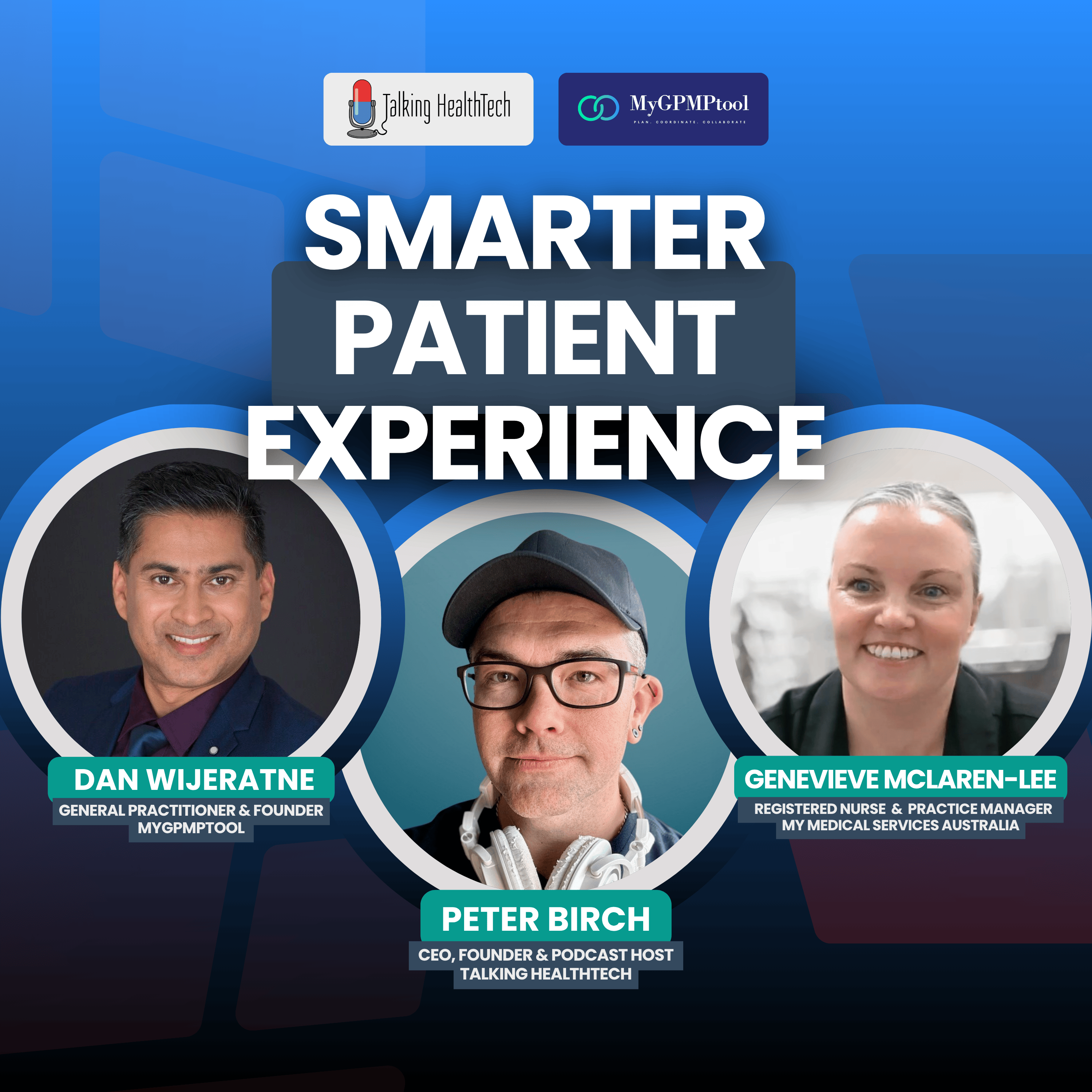
Ep 596596 - Smarter Chronic Disease Management & Patient Experience in General Practice
In this episode of Talking HealthTech, Peter Birch speaks with Dan Wijeratne, founder of MyGPMPtool (MGT), and Genevieve McLauren-Lee, a registered nurse and practice manager at My Medical Services Australia.The discussion explores how patient demographics vary across clinics and the evolving role of technology in general practice.It also covers structural changes in care planning within Australian healthcare, along with practical strategies to improve patient engagement and clinician efficiency.The episode unpacks how patient-centric care, effective communication tools, and the balance of business and medicine are shaping sustainable health practices.Key Takeaways🩺 General practice faces diverse patient demographics and challenges🕒 Technology enables faster, more meaningful consultations without compromising patient interaction📝 Structural changes in care planning emphasise patient-centric, team-based approaches🤝 Effective patient engagement depends on meaningful communication and tailored tools💼 Sustainable practice requires tools balancing clinician efficiency, patient experience, and business demandsTimestamps00:00 Introductions & practice overview03:12 Responsive, innovative general practice06:02 Technology's role in patient-GP interaction07:24 Chronic disease vs. preventative care12:24 Health cues and brief assessments14:48 Structural healthcare changes in Australia21:41 Technology supporting patient experience26:06 Balancing patient, clinician, and business needs________Want to keep the conversation going?The full article and extended show notes for this episode are available inside the THT+ Community here: View Full Article HereIn the THT+ Community, our members keep the discussion going, share perspectives, and unpack what this episode actually means in practice with other people working in healthtech.If you’re enjoying the show and want access to full articles, episode discussions, meetups, and member-only content, you can learn more about becoming a THT+ Solo Member here: talkinghealthtech.com/thtplus.And if this episode was useful, leaving a review or sharing it with someone in the industry always helps.
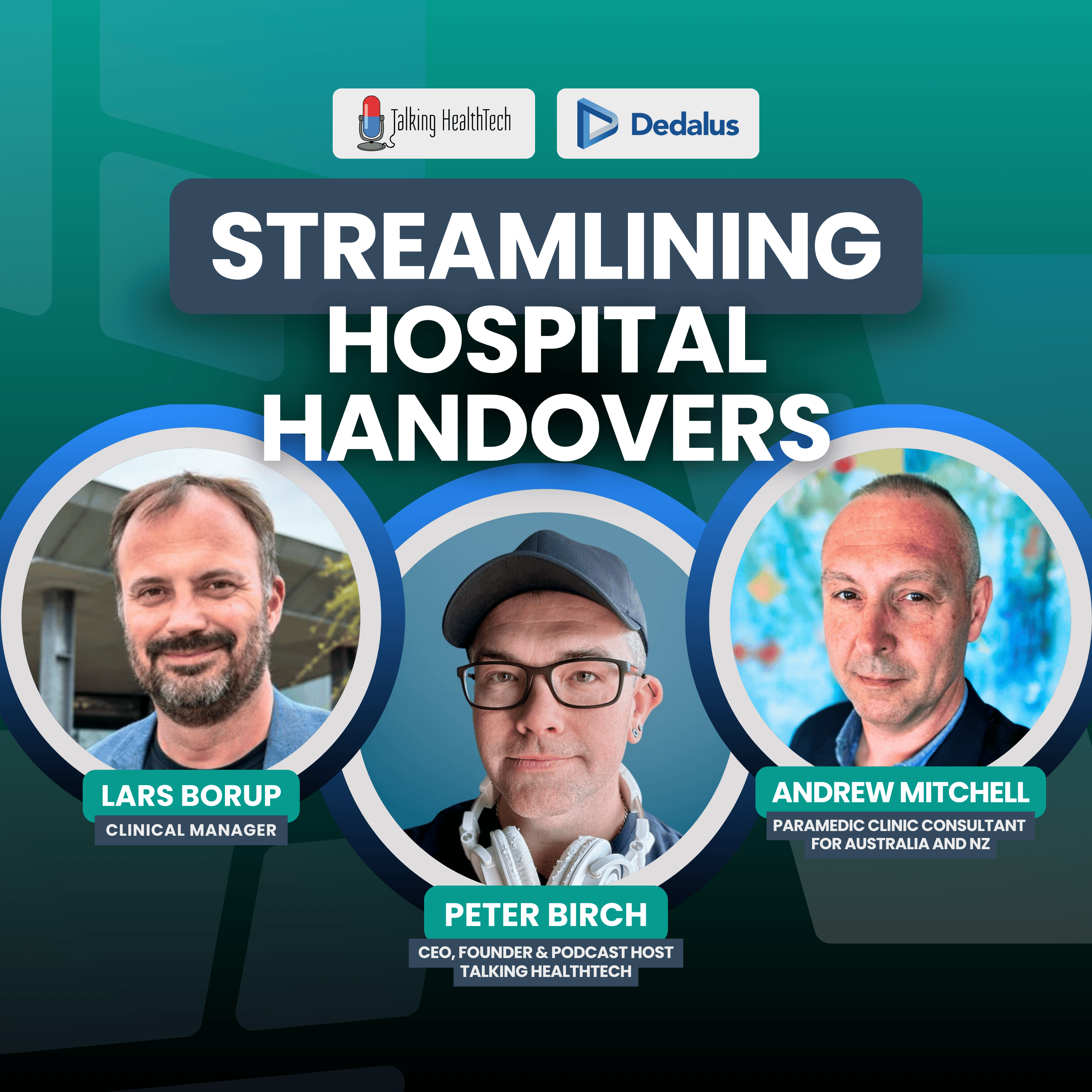
Ep 595595 - How Real Time Sharing and Communication Improve Patient Care and Reduce Ambulance Ramping
In this episode of Talking HealthTech, Peter Birch speaks with Lars Borup, Clinical Manager at Dedalus, and Andrew Mitchell, Paramedic Clinical Consultant for Australia and New Zealand, about the growing issue of ambulance ramping and the pressures facing paramedics and emergency departments.They discuss the human and operational impacts of patients waiting outside hospitals, and the complex factors driving congestion, from changing social structures to system bottlenecks.The conversation also explores digital solutions for streamlining patient handovers, including real-time data sharing, electronic patient care records, and coordinated care pathways.Drawing on both local experiences and international models from Europe, Lars and Andrew highlight how improved communication between pre-hospital care and hospitals can reduce delays and optimise patient flow.They also show how connecting with primary care providers supports better outcomes across the wider health system.This episode highlights how technology, workflow improvements, and integrated care can transform emergency services.Key Takeaways🔄 Growing demand in healthcare leads to complex ambulance ramping and bed block challenges in Australia and globally👨⚕️ Secondary triage and alternate care pathways are being developed to reduce hospital load📱 Real-time electronic patient care records enable hospitals to prepare more effectively for incoming patients🤝 Seamless communication and integrated data sharing between paramedics, hospitals, and primary care are critical for efficient transitions🚑 Structured digital tools support paramedics in decision-making and workflow, leading to improved patient safety and qualityTimestamps00:00 — Speaker introductions05:19 — Why not just add resources?07:47 — Is ramping just shifting the block?10:23 — Transition and handover points12:23 — Real-time electronic records in Denmark17:26 — Pre-arrival notification in Australia26:15 — Digital support tools for paramedics28:40 — Unified ED and ambulance workflow32:49 — Addressing ambulance ramping: Communication--------Want to keep the conversation going?The full article and extended show notes for this episode are available inside the THT+ Community here: View Full Article HereIn the THT+ Community, our members keep the discussion going, share perspectives, and unpack what this episode actually means in practice with other people working in healthtech.If you’re enjoying the show and want access to full articles, episode discussions, meetups, and member-only content, you can learn more about becoming a THT+ Solo Member here: talkinghealthtech.com/thtplusAnd if this episode was useful, leaving a review or sharing it with someone in the industry always helps.
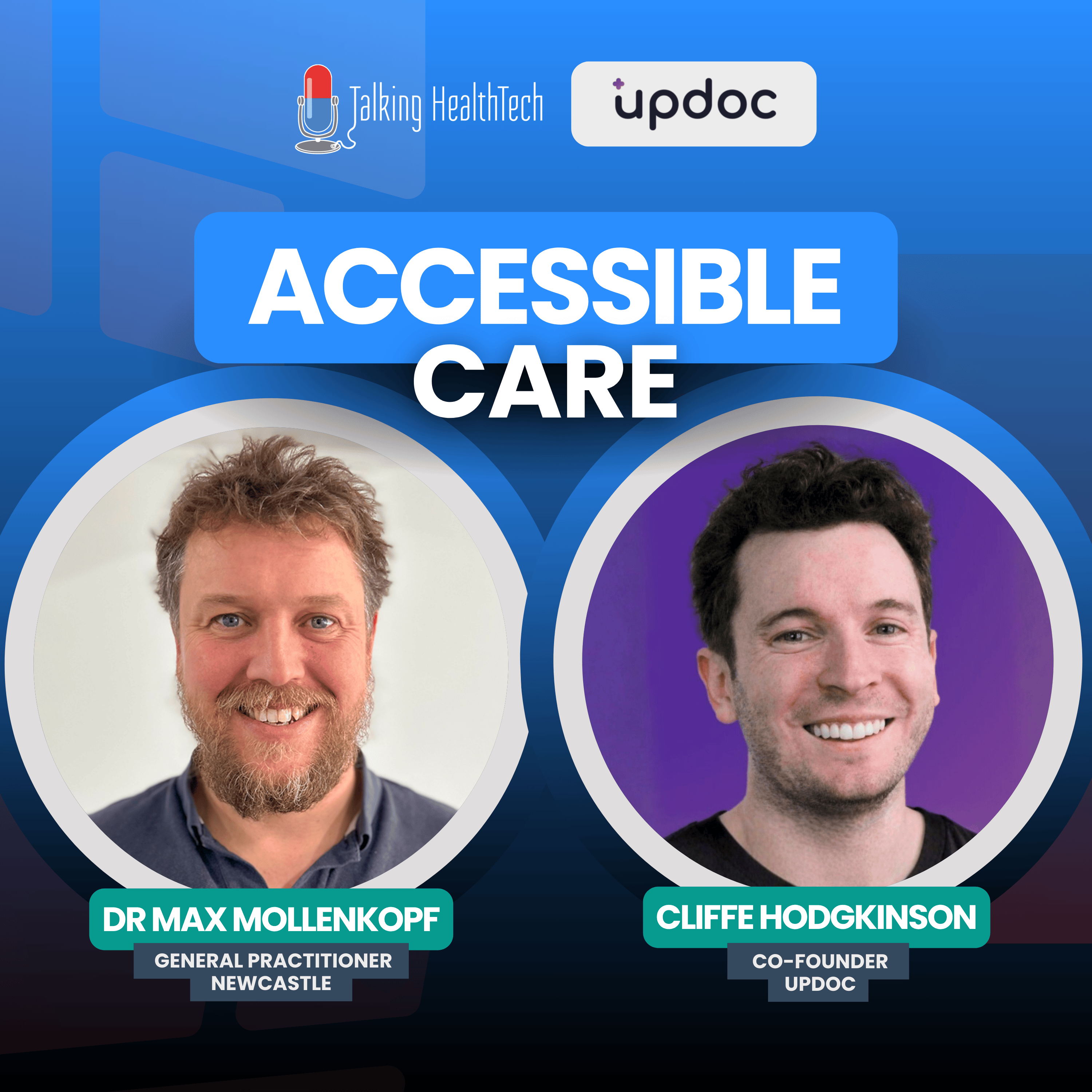
Ep 594594 - Building Frictionless Healthcare: Updoc’s Journey to Improving Healthcare Access
In this episode of Talking HealthTech, guest host and clinician Dr Max Mollenkopf is joined by Cliffe Hodgkinson, co-founder of Updoc, to explore the rapidly evolving world of telehealth and digital healthcare in Australia.The discussion dives deep into how Updoc is reshaping access to primary care, using technology to streamline patient intake, triage, and workflow management while maintaining robust clinical governance.The episode also examines the challenges and opportunities of building a digital health business, from recruiting and engaging clinicians with flexible work models to navigating economic pressures and policy changes.The conversation explores patient expectations in the digital age, the practical realities of delivering online consultations, and the ways digital platforms can complement traditional GP services.Cliffe and Max explore what drives patient adoption, how friction points in traditional clinics are being addressed, and what the future may hold for hybrid models of care that blend online and in-person consultations.Key Takeaways🩺 Updoc offers flexible, on-demand telehealth for routine and urgent care across Australia, focusing on accessibility for rural and time-poor patients.🔗 Incremental innovation and listening to user feedback drive continuous improvements in patient intake flows, data integration and care delivery.👨⚕️ Doctors are attracted by hyper-flexible work arrangements, supporting clinicians returning to work and those balancing multiple roles.⚖️ Updoc prioritises clinical governance, developing frameworks for patient safety, credentialing, and collaborating with Patients Australia on digital health standards.💡 Telehealth complements, but doesn’t replace, in-person care, offering new pathways for multimodal, hybrid healthcare delivery in Australia.Timestamps00:00 – Updoc introduction & mission00:05 – Updoc's formative experiences06:47 – Incremental innovation at UpDoc14:30 – Clinician engagement & workforce16:49 – Clinical governance approach22:02 – Accessibility focus: rural/time-poor29:30 – The future of telehealth vs. traditional care38:53 – Potential for hybrid & triage models44:03 – Patient impact story_________Want to keep the conversation going?The full article and extended show notes for this episode are available inside the THT+ Community here: View Full Article HereIn the THT+ Community, our members keep the discussion going, share perspectives, and unpack what this episode actually means in practice with other people working in healthtech.If you’re enjoying the show and want access to full articles, episode discussions, meetups, and member-only content, you can learn more about becoming a THT+ Solo Member here: talkinghealthtech.com/thtplus.And if this episode was useful, leaving a review or sharing it with someone in the industry always helps.
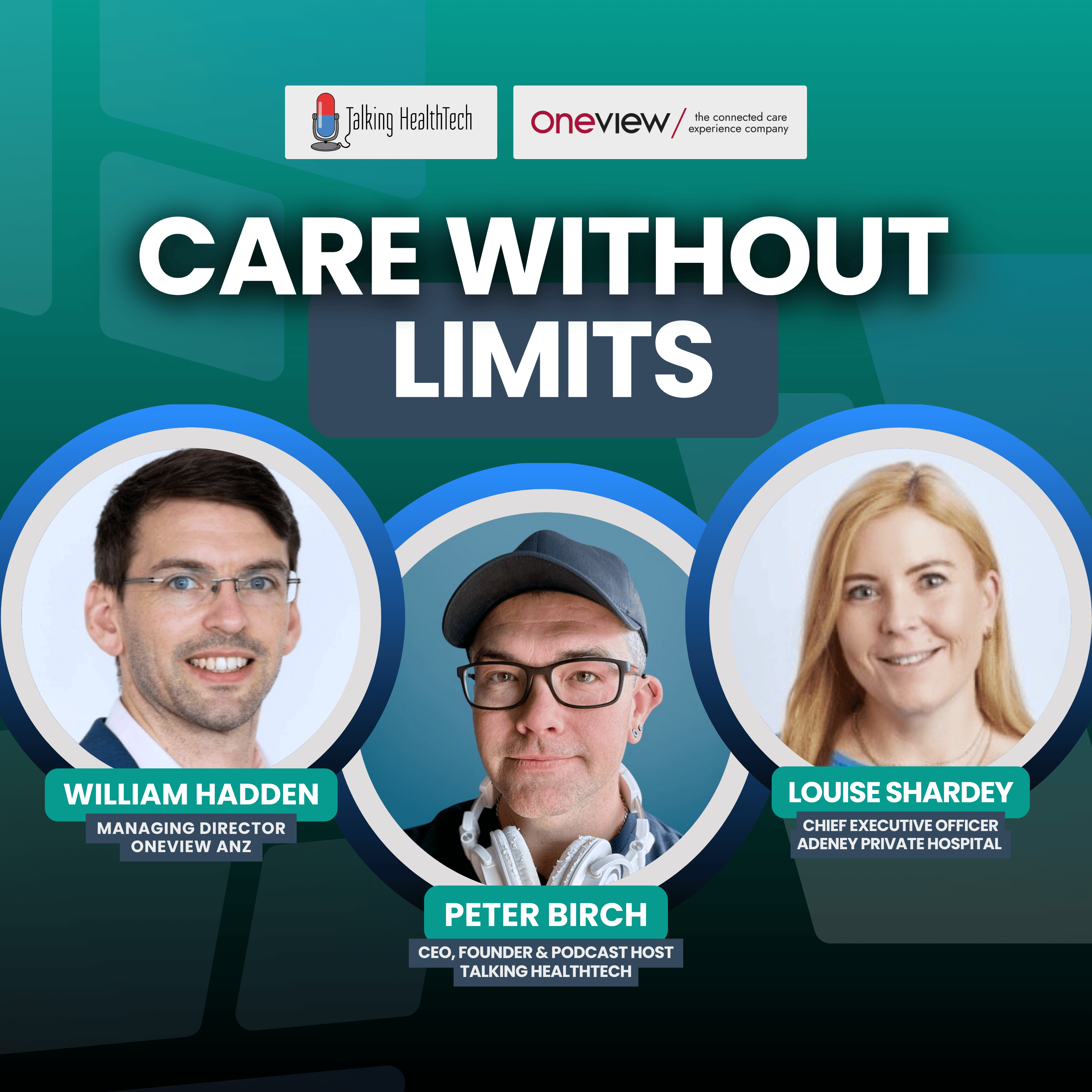
Ep 593593 - Rethinking Private Hospital Care: Technology Integration and Value-Based Models
In this episode of Talking HealthTech, host Peter Birch speaks with Louise Shardey, CEO of Adeney Private Hospital, and William Hadden, Managing Director for Oneview ANZ.The conversation explores how a new private hospital in Melbourne is approaching digital transformation, patient-centred care, and compliance with national standards.It highlights how collaboration between hospitals, clinicians, and technology providers is shaping integrated and seamless patient experiences.Topics covered include the hospital’s “zero out-of-pocket” model, the use of real-time digital tools at the bedside, strategies for reducing waste and improving efficiency, and how technology can support both clinical workflows and compliance requirements.The discussion also examines how data, analytics, and continuous feedback are applied to inform clinical decisions, enhance patient journeys, and design systems and processes that align with patient needs while meeting regulatory standards.Key Takeaways🌱 Starting a private hospital from scratch enables reimagining processes, workflows, and patient engagement, focusing on reducing waste and improving integration.🤝 Collaboration between technology vendors and hospital teams is crucial to achieve seamless data integration, improve workflow, and keep the patient at the centre.📊 Compliance with Australian healthcare standards drives innovation by creating guardrails that help ensure safety, efficiency, and high-quality care without stifling creativity.💡 Digital solutions such as integrated bedside technology, digital rounding, and plans for a digital whiteboard aim to empower patients and staff, support compliance, and enhance patient autonomy and communication.🔗 Continuous evaluation and improvement of digital infrastructure supports scalable success and ensures that adopted technologies genuinely meet clinical and patient needs.Timestamps00:00 - Welcome and guest introductions01:05 - Adeney Private Hospital foundations03:21 - Oneview overview and partnership04:39 - Designing systems from scratch07:17 - Integrating tech at the bedside13:29 - Compliance, data capture, and patient involvement18:41 - The impact of technology on patient outcomes24:14 - Digital whiteboards, real-time evidence, and workflow32:49 - What’s next for Adeney and Oneview--------Want to keep the conversation going?The full article and extended show notes for this episode are available inside the THT+ Community here: View Full Article HereIn the THT+ Community, our members keep the discussion going, share perspectives, and unpack what this episode actually means in practice with other people working in healthtech.If you’re enjoying the show and want access to full articles, episode discussions, meetups, and member-only content, you can learn more about becoming a THT+ Solo Member here: talkinghealthtech.com/thtplus.And if this episode was useful, leaving a review or sharing it with someone in the industry always helps.
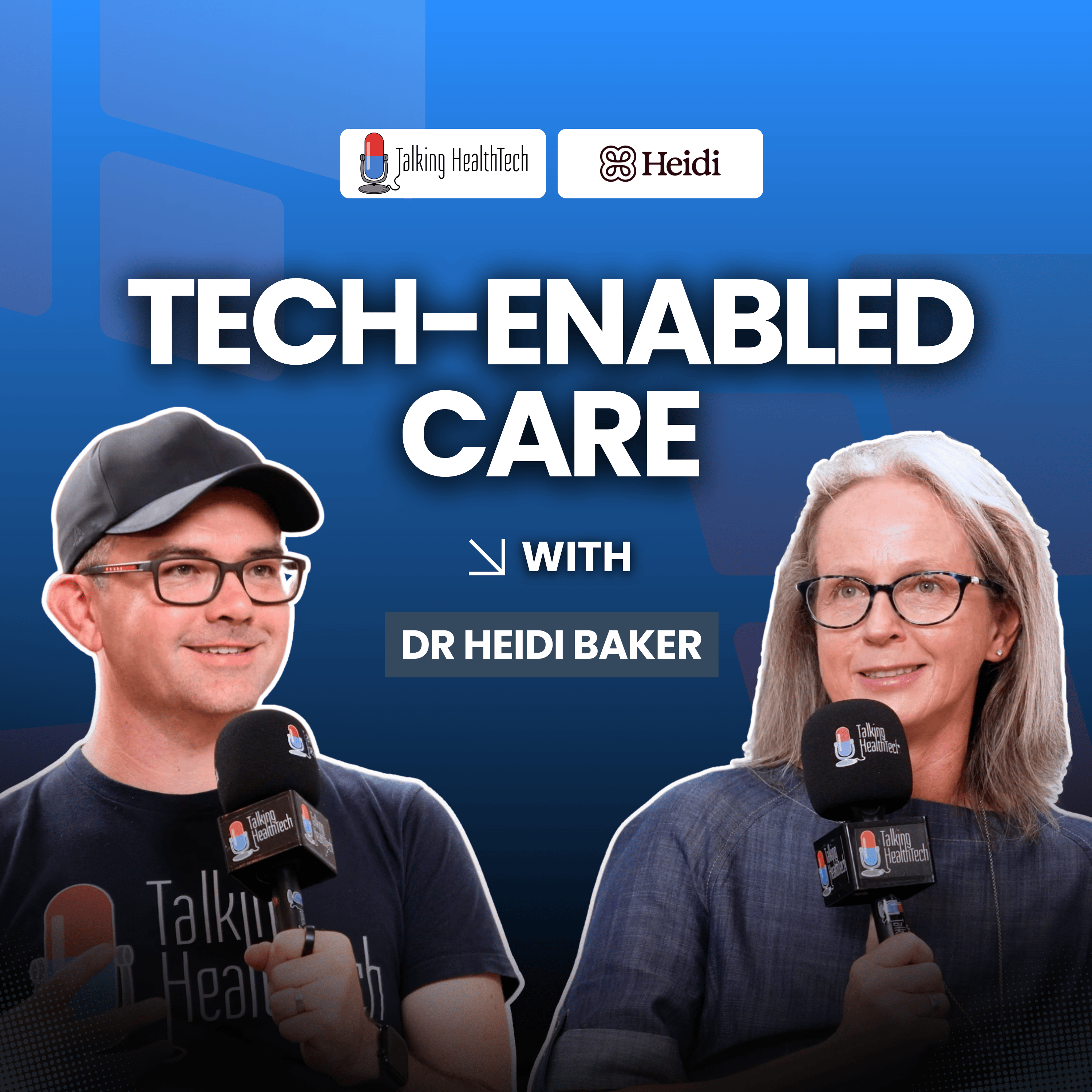
Ep 592592 - Technology, Trust, and Transformation: Dr Heidi Baker on Modernising Clinical Practice
In this episode of Talking HealthTech, Peter Birch speaks with Dr Heidi Baker, an emergency specialist and paediatrician at Podhealth in New Zealand.The episode explores the intersection of clinical practice, digital health adoption, and technology-driven approaches to supporting neurodiversity and developmental paediatrics across New Zealand.Dr Heidi Baker shares her journey as a clinician and business owner, including her transition from emergency medicine to paediatrics and her experiences in setting up a tech-enabled health service.She also discusses her adoption of AI scribe solutions to improve clinical documentation and strengthen patient connections.The conversation dives into the challenges of balancing hands-on patient care with running a private practice, offering honest insights into delegation, workflow, and the emotional demands of generalist medicine.The episode also provides an in-depth look at how digital tools can transform the consultation room, allowing clinicians to spend more time engaging with patients and less on administrative tasks.Key Takeaways🌏 Combining emergency and paediatric care can broaden a clinician’s skillset and approach to teamwork.🧑💻 Setting up a digital health business requires clinicians to delegate non-clinical tasks, leverage tech platforms, and trust others with complementary skills.💡 AI scribe technology is enhancing patient-clinician interaction, reducing admin burden, and enabling better capture of non-verbal cues and clinical details.📝 Transparent communication and consent processes support the adoption of AI documentation tools in clinical practice.🔒 Trust, data control, and careful selection of tech vendors are essential for upholding patient confidentiality and clinician confidence in digital solutions.Timestamps00:02 – Dr Heidi Baker's background and roles00:49 – Paediatrics and neurodiversity focus01:13 – Skills from emergency medicine03:17 – Starting a business as a clinician04:13 – Choosing technology stack06:49 – Delegating and managing capacity07:48 – AI scribe adoption journey09:51 – Transition and patient communication11:47 – Benefits and workflow changes13:49 – Impact on patient care and non-verbal cues16:18 – Advice for clinicians starting with tech18:47 – Balancing tech trust and regulation--------Want to keep the conversation going?The full article and extended show notes for this episode are available inside the THT+ Community here: View Full Article HereIn the THT+ Community, our members keep the discussion going, share perspectives, and unpack what this episode actually means in practice with other people working in healthtech.If you’re enjoying the show and want access to full articles, episode discussions, meetups, and member-only content, you can learn more about becoming a THT+ Solo Member here: talkinghealthtech.com/thtplus.And if this episode was useful, leaving a review or sharing it with someone in the industry always helps.
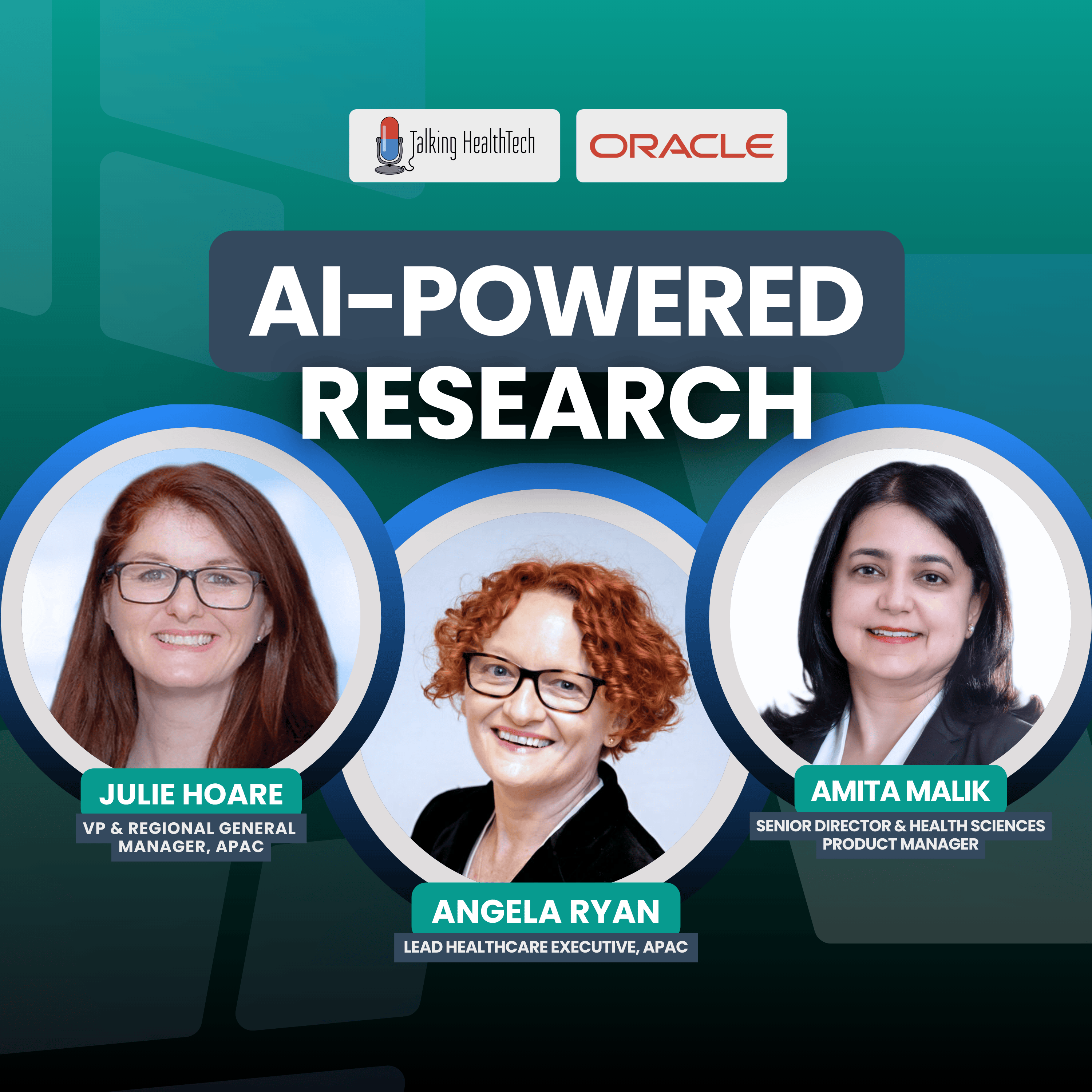
Ep 591591 - Building Trust in Healthcare AI: Transforming Clinical Trials and Data
In this episode of Talking HealthTech, Peter Birch speaks with Julie Hoare, VP and Regional General Manager for APAC, Angela Ryan, Lead Healthcare Executive for APAC, and Amita Malik, Senior Director and Health Sciences Product Manager at Oracle Health and Life Sciences.Together, they explore the evolution from Cerner to Oracle Health and the addition of Oracle Health Life Sciences, highlighting how these changes are shaping clinical trials, healthcare research, and patient care in Australia.The conversation examines the challenges facing clinical trials, including fragmented systems, slow recruitment, and complex regulatory processes, and how data and AI are being used to address these issues.The episode also covers the practical application of AI, the importance of trust and governance in digital tools, and the future direction of Oracle Health and Life Sciences in the region.Key Takeaways🧩 Fragmented healthcare and research data remain a barrier to efficient clinical trials and patient outcomes, highlighting the need for unified platforms.🤖 AI and analytics are being used to automate patient-trial matching, improve data quality, and accelerate research outcomes.📊 Leveraging existing EHR data can transform organisations from record-keepers to research-ready institutions, facilitating faster drug development.💡 Building trust in AI adoption is essential, emphasising the role of clinician validation and evidence-based implementation.🌏 Oracle Health is actively collaborating with industry and government to advance the safe, effective use of AI and unified data in health.Timestamps00:00 – Introductions & episode overview03:23 – Challenges in clinical trials in Australia07:54 – The evolution from Cerner to Oracle Health12:59 – AI’s role in healthcare data & trials18:06 – Clinical and practical use cases of AI19:56 – Building trust in AI and digital tools25:20 – AI Centre of Excellence and future directions---------Want to keep the conversation going?The full article and extended show notes for this episode are available inside the THT+ Community here: View Full Article HereIn the THT+ Community, our members keep the discussion going, share perspectives, and unpack what this episode actually means in practice with other people working in healthtech.If you’re enjoying the show and want access to full articles, episode discussions, meetups, and member-only content, you can learn more about becoming a THT+ Solo Member here: talkinghealthtech.com/thtplus.And if this episode was useful, leaving a review or sharing it with someone in the industry always helps.
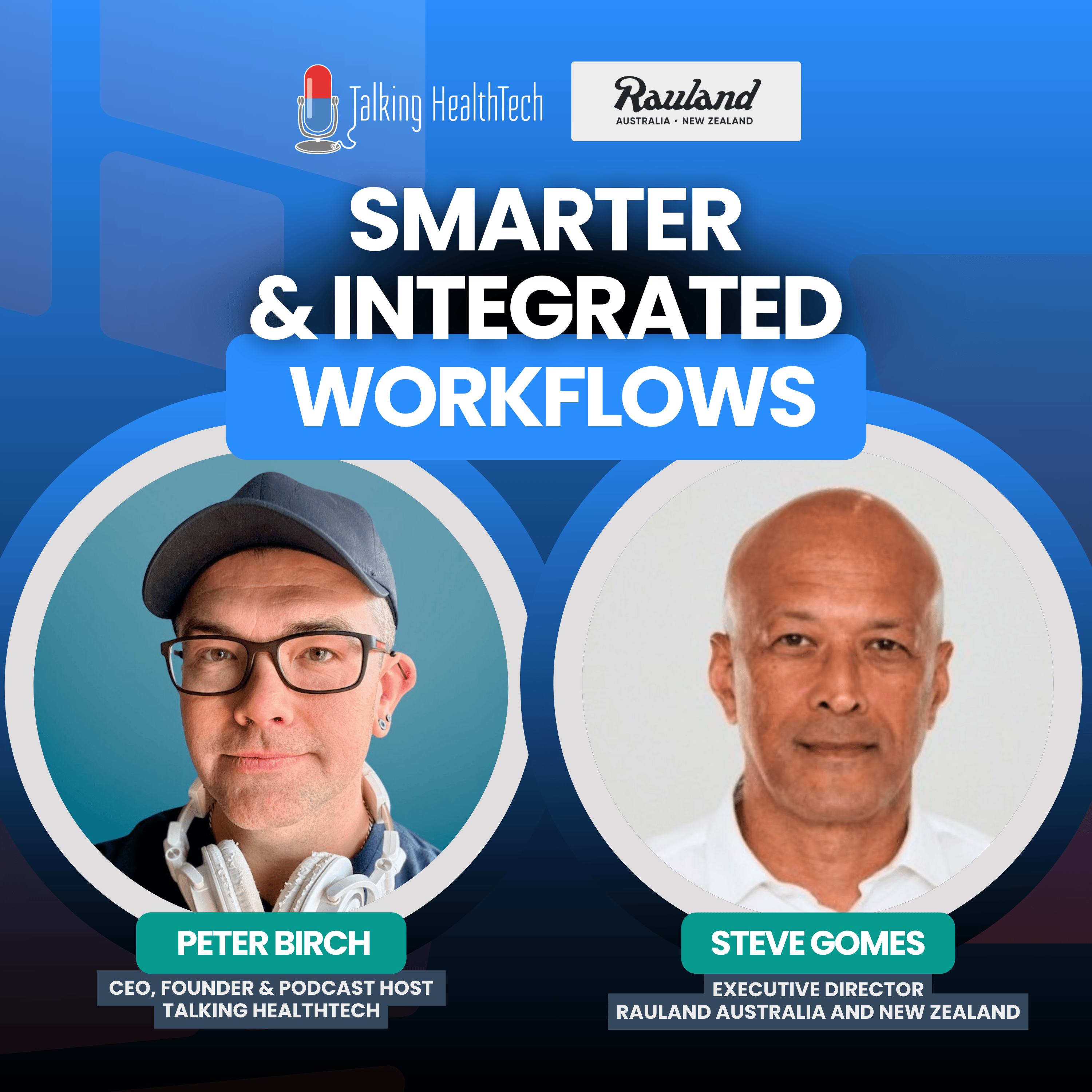
Ep 590590 - From Patient Flow to Operational Efficiency: Optimising Workflows at the Enterprise Level
In this episode of Talking HealthTech, Peter Birch speaks with Steve Gomes, Executive Director at Rauland Australia and New Zealand.They discuss the evolution of Rauland’s concentric care platform and how it has been integrated into a variety of healthcare environments.The conversation explores critical communication, optimising clinical workflows, and strategies for implementing technology in both new and existing hospital facilities.Peter Birch and Steve Gomes also discuss data-driven approaches to enhancing patient outcomes and operational efficiency across hospitals and aged care.They dive into real-world examples of how Rauland’s concentric care platform reduces delays, improves patient flow, and supports staff, giving listeners an inside look at the practical impact of digital transformation in healthcare.This episode was recorded virtually, following up from a previous in-person interview at Rauland’s offices.Key Takeaways: 🩺 Integrating multiple systems for streamlined clinical workflows, reducing silos in hospital settings📱 Rauland’s Reach messaging solution manages mission-critical alerts and closes communication loops🏥 Technology adapts to existing hospital infrastructure to bring visibility and operational improvements📊 Data from digital journey boards helps reduce patient length of stay and optimise resource allocation🌏 Enterprise thinking supports consistency and scale across hospital networks, benefiting support and cybersecurityTimestamps: 00:00 – Introduction & context00:39 – Concentric care platform updates02:04 – Rauland’s platform overview03:10 – Mission-critical messaging06:21 – Clinical workflow and emergency department example08:25 – Deploying technology in established hospitals11:54 – Impact in rehab and aged care14:07 – Emergency department operations16:33 – Importance of uptime and reliability17:16 – Enterprise thinking across hospital networks19:01 – Economies of scale with deployment20:17 – Roadmap for Rauland in 202622:17 – Advice for hospital decision makers--------Want to keep the conversation going?The full article and extended show notes for this episode are available inside the THT+ Community here: View Full Article HereIn the THT+ Community, our members keep the discussion going, share perspectives, and unpack what this episode actually means in practice with other people working in healthtech.If you’re enjoying the show and want access to full articles, episode discussions, meetups, and member-only content, you can learn more about becoming a THT+ Solo Member here: talkinghealth.tech/thtplus.And if this episode was useful, leaving a review or sharing it with someone in the industry always helps.