
Run to the Top Podcast | The Ultimate Guide to Running
768 episodes — Page 8 of 16

Speed in Your 60s and the Fastest Mile That Didn't Count: Dan King 10-28-2020
Speed in Your 60s and the Fastest Mile That Didn't Count: Dan King Dan King is blistering fast at 61 years old. We're talking world record breaking fast. He just broke the masters record in the mile for the 60-64 age group, running 4:49:08 to beat the 4:51:85 record set in 2012. But this amazing feat won't count. Why? Listen in to find out. Dan also talks about his surprisingly low-mileage training routine, how he incorporates a lot of cross training into his daily life, and his plant-based diet which he believes is key to his performance. Despite being super fit, Dan has suffered a number of injuries, including plantar fasciitis that has plagued him for years. He talks about a procedure he had to alleviate his heel pain, and how he's adapted his training and overall lifestyle to stay both fit and injury free. Dan hails from Boulder, Colorado. At the University of Colorado-Boulder, he ran an impressive 5,000-meter PR of 14:34, but didn't complete too much after graduation. After building a successful start-up company, he sold his business and retired in 2017. As of this recording, Dan was preparing to run another mile race that would officially count as a world record if he repeated his August performance. Coach Claire will share Dan's results at the end of the episode. Dan is definitely proof that you can train well and be fast at any age, and that there isn't a one-size-fits-all training plan that all runners must follow. Whether you're a masters athlete or just aspiring to keep on running as you age, this one's for you! Photo credit: Todd Straka Questions Dan is asked: 5:18 This past August, you ran 4:49:08 in the mile, which is faster than anyone in the world in the 60-64 year old age group. Now, I understand that this may not count as an official world record on a technicality. Can you explain this? 7:16 There's another race in South Carolina on October 17th that will be USATF certified, and that should count for the world record. And by the time this airs, you will have already raced it, but hopefully you'll get your official time at that one, right? 8:04 Can you tell us about the race and your strategy? 9:59 You've been a runner a long time. You ran for the University of Colorado in college. But you were not a miler back then, right? What made you decide to specialize in the mile now? 12:43 I would love to talk about your training. Your training is a little unusual for somebody at your level I would think. Can you talk about what a normal week looks like for you? 14:49 You're missing a big element that most runners think is incredibly important, and that's the long run. So no long run for you? 15:55 You're not running a ton of miles or pounding a lot by running over and over again, but you're spending hours and hours on your off days of running doing something aerobic. So you're still building that aerobic engine, just not running all the time. 17:18 You have no rest days? 17:27 About 25 miles a week is all you put in for running? 17:52 I would like to go a little bit deeper into your injuries, and especially the plantar fasciitis. You had what's called a Tenex procedure for that. Can you talk about that? 19:42 What was the recovery from the Tenex procedure like? 20:29 What is the eccentric calf-raise exercise? 21:13 Let's talk about diet and nutrition. Like me, you are 100% plant based. Can you tell us how you decided to become plant based, and what the benefits have been for you? 23:30 You're plant based, which is not always the same thing as being a vegan. Is that correct? 24:30 What do you eat and where do you get your protein? 26:29 What are your favorite things to eat before a workout or after a workout? 28:19 I'd love to know what lessons have you learned being a Masters athlete that maybe you didn't have to think about so much when you were younger? 30:17 What do you do for mobility and strength and stretching? How do you fit that into your routine? 31:12 After the race on October 17th, what's next for you? Questions I ask everyone: 32:54 If you could go back and talk to yourself when you started running, what advice would you give? 34:23 What is the greatest gift running has given you? 35:20 Where can listeners connect with you? Quotes by Dan: "I was still under a five-minute mile equivalent, and that was when I was 56. And so it just sort of put a goal in the back of my head that when I turn 60, I want to see if I can still run a five-minute mile." "When I turned 40, I just redefined myself as an endurance athlete, not as a runner, and I haven't not been fit since I've been 40." "I have gotten really consistent this year in terms of doing electrolytes post-workout. I feel like a lot of the injuries I get as a Masters athlete are because I get more easily dehydrated than I used to." Want more awesome interviews and advice? Subscribe to our iTunes channel Mentioned in this podcast: Younger Next Year The China Study Skratch Labs Nuun World Masters Athletics News Article - Dan King's Second Try

Can You Run and Laugh at the Same Time? Comedian Jeffrey James Binney 10-21-2020
The obesity-related death of his mother was a wakeup call to young, overweight Jeffrey James Binney. He could continue down the same path, or he could change his fate. And so he started running. And running. And running. All the way to the grueling Leadville 100 ultramarathon. Jeffrey's film Once is Enough chronicles his journey from couch potato to ultramarathoner. Fueled by grief and the desire to write jokes, his film is part documentary, part standup, and definitely unique! Jeffrey and Coach Claire tackle such interesting subjects as why on earth he set his non-athletic sights on doing a 100-mile ultramarathon, how he trained, his plant-based lifestyle, and the scourge of blisters and chafing. If you like your motivation served with a side of laughs, this episode's for you! Jeffrey is a Salt Lake City based actor, singer, comedian, and "athlete." He grew up on a farm in Laredo, MO before moving to Brooklyn, NY and later Los Angeles after receiving his B.F.A. in Musical Theatre Performance from Missouri State University. Jeffrey has been seen on Late Night With David Letterman, in the 1st National Tour and Chicago Company of the Broadway musical The 25th Annual Putnam County Spelling Bee, and at comedy clubs and festivals across the country. Questions Jeffrey is asked: 5:22 The reason I wanted to have you on the show is because I saw your film Once Is Enough on Amazon Prime this summer with my family. I subject my kids to a lot of documentaries and this is one that they actually liked! Can you tell us a little bit about the movie and why you wanted to make it? 6:42 While sitting in the hospital waiting room, you happened to pick up a copy of Trail Runner Magazine. What happened next? 7:54 Most people don't go running a 100-miler basically off the couch, let alone the Leadville 100. What were you thinking?!?! :) 9:51 What was it like running the race under-trained and overweight? That must have been a huge challenge physically for you. 11:20 Don't you have to qualify for Leadville? How did you get into Leadville? 12:26 What was your typical training week like or how did it progress over your 14 months of training? 13:51 How did you change physically through training? 15:23 Speaking of nutrition, you and I have a couple of things in common besides our gorgeous red hair. You and I are both plant-based! How did that fit into your training, your nutrition? What kind of things were you eating? 18:26 Most people think, "Oh, you're on a plant-based diet. That means that you're only eating twigs and potatoes and you're going to be super thin, and clearly that's not always the case for everybody, right? 19:17 Without giving away too much from the film, what kind of lessons did you learn? Just going through it and the whole filming and making a beautiful movie? What kind of lessons? 20:26 Do you think anybody can do this? 21:03 I would like to talk about the ultra running community. It's kind of a special group of some very strange and wonderful people. Would you agree? 23:20 The aid stations are much better for ultrarunning, right? 23:40 I would love to talk about gear, like what kind of gear that you were using. 24:19 Do you still wear a bro? 24:49 Every ultrarunner, every runner, has to deal with chafing obviously. How do you deal with that? 26:58 There's a point in the movie where you talk about your blisters that you had, and how did you deal with that? You look like you were in some serious pain there. 28:10 You manage your blisters better nowadays when you get them? 29:10 What kind of misconceptions have you come across in your running journey? When you started this, you had so much optimism about what this was going to turn out to be. What changed throughout your journey? What things were you surprised about? 31:21 What's next for you? Are you still running? Obviously, COVID, there's not a lot of races on the horizon, but what are you doing? 32:36 Some of the smaller trail races are still going on in person, so maybe there's something you can sign up for that you could actually do in real life. 33:07 You're still being coached by Ian Sharman, or are you on your own? 34:09 Questions I ask everyone: If you could go back and talk to yourself when you started running, what advice would you give? What is the greatest gift running has given you? Where can listeners connect with you? 36:08 Any new films on the horizon or was once enough? Quotes by Jeffrey: "I just went on a hike a few years ago with some friends to one of the taller peaks here in Utah. I was getting to the top and I was really beating myself up because I just could not keep up with them. And I finally got to the top and I was like, 'Why are you beating yourself up? You have 100 lbs on all of these people. You don't come from a lifetime of fitness other than five years.' And you'd think after this whole journey that I've been on that I would be able to keep that in better perspective, but there's still time like that when I still have to check myse

What Your Massage Therapist Isn't Telling You: The Truth About Massage for Runners with Matt Phillips - 10-14-2020
What Your Massage Therapist Isn't Telling You: The Truth About Massage for Runners with Matt Phillips That massage isn't doing what you think it's doing. Not if you see massage as a way to flush toxins out of your system, improve your circulation, or work out your muscle knots. Then what good are massages for runners? Prepare to be enlightened by today's guest, Matt Philips, who is a running injury and performance specialist, as well as an expert in massage for runners. Matt shares his knowledge with Coach Claire, dispelling a lot of common misconceptions about the benefits of massage for runners, but also talking about the benefits of massage for anyone, and he does so with a fair amount of humor! You may recognize Matt as a long-time RTTT and Extra Kick expert contributor. He started his career as a strength and conditioning coach with the National Academy of Sports Medicine. In 2004, he focused on sports therapy, working with distance runners and endurance athletes. Matt is currently part of a multidisciplinary team of physiotherapists, sports therapists, osteopaths, podiatrists and massage therapists, as well as a lecturer in Anatomy & Physiology. He writes for numerous websites and national magazines, including Runners Connect and Outdoor Fitness. Along with his running podcast and website called Run Chat Live, Matt holds an annual RCL International Running Conference. The first one was held in Brighton, Sussex with ten world class speakers traveling from Australia, Canada, and the United States. This year, the event has gone virtual, and will be held on October 29th and 30th. Listen to the show for the 20% off promo code. Questions Matt is asked: 6:17 You are a running injury and performance specialist and massage therapist. We could talk about any number of running topics, but today I'd like to focus on massage for runners. Let's talk first about some of the myths about massages. What are they and how did they get started? 11:49 What about the toxins? People talk all the time about, "Oh, I'm flushing the toxins. My muscles are building up all of these toxins from the environment or from my run." What does massage do for that? 13:18 Let's talk about something that actually does build up in the muscles when we run hard, and sometimes we're doing this on purpose, is to build up lactic acid. A lot of people think, "I'm going to go get a massage just to get rid of all that lactic acid." Do you want to talk about that one?" 15:49 If lactate is a good thing, why does it hurt so bad? 16:05 What about improving circulation? I've heard that massage can help your circulation. Is that true? 18:03 When I have gotten a massage, they always tell me to drink a lot of water afterwards, and I assume that's to flush out the toxins or whatever. Can you explain that? Why do they tell me to do that? 19:51 Okay, so we know what massage doesn't do, what does it do? 23:20 So, massage is good because it feels good? 24:26 I don't know how the idea of massage being good because it feels good is going to be received by people who get massages all the time because they swear by it, like, "Oh, I had a knot in my neck and she just worked at it and I feel better," or "Oh, I always get these cramps in my hamstring and after I get a massage, they're totally fine." There's got to be something else going on here other than just relaxation. 28:12 What is it with muscle knots? Do muscles really physically knot? I would love to know what's going on. You can sometimes feel like in your back a hard lump, and if you massage it, it can kind of smooth out. So what's going on under the skin? 29:52 We often see those free massages at the end of a marathon. Should we be waiting in line for those or should we be skipping those? 31:26 Will massage make you less sore? 32:04 What about massage during taper week before your big race or a week after your big race? What do you think? 35:18 If the main reason for a massage is relaxation, we can always choose other techniques such as getting into a hot tub or doing meditation or yoga. Is there something very specific about massage that is different from other relaxation techniques? 37:20 A lot of us are missing out on the power of touch with the COVID. Are there any ways to get a massage safely these days or replicate the massage experience at home? 39:00 On a more personal note, you are organizing an online running conference at the end of October. Can you share the details about that? Questions I ask everyone: 42:32 If you could go back and talk to yourself when you started running, what advice would you give? 44:35 What is the greatest gift running has given you? 45:48 Where can listeners connect with you? Quotes by Matt: "If you are with a therapist who is telling you they're breaking down scar tissue or they're re-molding your fascia or something or changing the length of your muscles, then you have to question yourself whether they're staying up to date with the latest evidence, and a lot of therapis
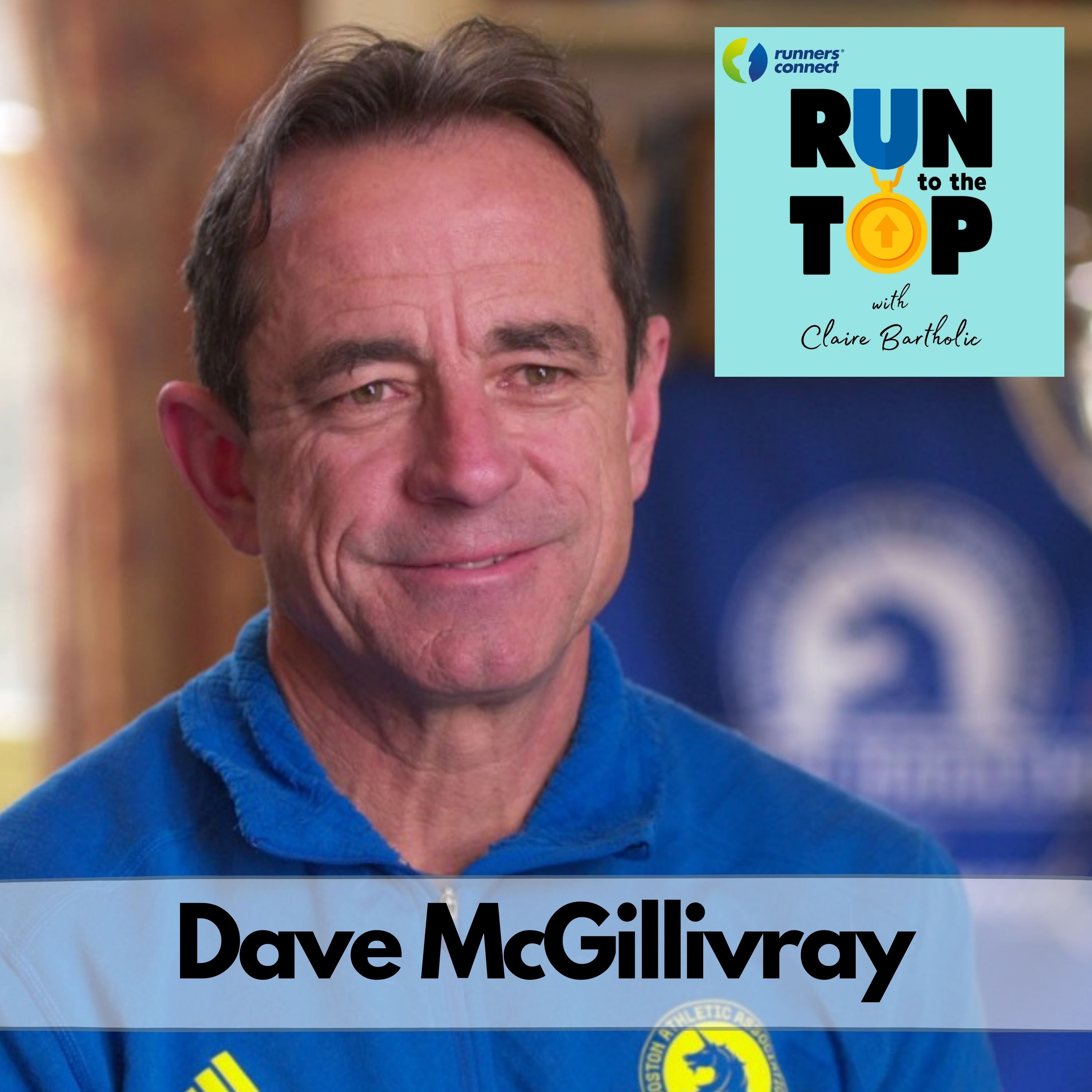
The Boston Marathon's Uncertain Future with Race Director Dave McGillivray - 10-07-2020
Were you one of the 30,000 people hoping to run the Boston Marathon this year? Are you hoping to run Boston next year? If yes, then you'll want to listen to this episode with race director Dave McGillivray. This year marked the first time since the first Boston Marathon in 1897 that the race was held virtually and not in person. Ordinarily, registration for Boston would have happened in September, but as of right now, October 2020, registration has been indefinitely postponed. In this week's interview, Coach Claire talks to Dave about how the virtual event went, how the Boston Athletic Association (BAA) has adapted due to the coronavirus, and what the future of the race might look like, including qualifications. Dave also shares what he believes to be the silver lining of the pandemic, as well as his own personal health scare story which he started sharing once he learned his experience could help others. Dave has been the director of the Boston Marathon since 1988, but he also practically invented the concept of running for charity when he ran across the United States to raise money for the Jimmy Fund in 1978. He ran 3,452 miles from Medford, Oregon to Medford, Massachusetts over 80 days, averaging 45 miles per day. He ended his run in Fenway Park to a 32,000-person standing ovation. He has personally raised hundreds of thousands of dollars and has been a source of inspiration to countless others. Dave has many other incredible athletic accomplishments under his belt as well. 1980 was a big year as he became the 30th person to complete a Hawaii Ironman Triathlon by finishing in 14th place. In subsequent years, he completed the event an additional eight times. That year, Dave also ran 1,250 miles of the East Coast, starting in Winter Haven, Florida and ending in Boston. He was joined by wheelchair marathon pioneer Bob Hall to raise money for the Jimmy Fund, and they met with President Carter at the White House during the Washington, D.C. leg. And that wasn't all for 1980. Dave also raised more than $10,000 for the handicapped in the Run For Our Dreams Marathon, running 120 miles in 24 hours through 31 communities in Southeastern Massachusetts, finishing in Foxboro Stadium (now Gillette Stadium) during a New England Patriots game halftime. In 1981, Dave raised $55,000 for the Jimmy Fund competing in an ultra triathlon which involved 1,522 combined miles of running, cycling, and swimming in six New England states. The race included running up and down Mt. Washington and swimming over seven miles from Martha's Vineyard to Falmouth, Massachusetts where he was greeted by thousands on the beach. As though running Boston wasn't challenging enough, in 1982, Dave ran the marathon in 3:14 while blindfolded, accompanied by two guides, raising over $10,000 for the Carroll Center for the Blind in Newton, Massachusetts. In 1983, he swam for 24 consecutive hours, covering the distance of the Boston Marathon, to raise money for the Jimmy Fund. He also raised money for his alma mater, Merrimack College, by cycling over 1,000 miles through six New England states in 14 days. He raised more money for charity by cycling for 24 consecutive hours in a five-mile loop in Medford, Massachusetts for a total of 385 miles, while simultaneously directing the annual Bay State Triathlon which was taking place on the same course at the same time. In 2004, Dave ran across the country a second time for TREK USA with nine other marathoners in relay style, raising over $300,000 for five children's charities. In 2018, he accomplished the World Marathon Challenge, running seven marathons in seven days on seven continents. To date Dave has run 158 marathons, including 48 consecutive Boston Marathons (32 of which were run at night after the official marathon.) His marathon personal best is 2:29:58. His Ironman personal best is 10:36:42. Fun note: Dave has run his birthday age each year since the age of 12. In recent years, he has both run and cycled the miles. In addition to being a super athlete and philanthropist, Dave is also an entrepreneur, motivational speaker, and author. He has been recognized with numerous honors and awards over the years for his achievements, and through his DMSE Sports and DMSE Foundation, he has raised over $50 million for charity. Questions Dave is asked: 5:48 The Boston Marathon was held virtually this year, in September. How did it go? 7:49 I know the BAA discouraged people from running on the course this year, but many people unofficially did. What is your reaction to that? 9:12 I would love to rewind a little bit and go back to February and March of this year. What were you and the team at the Boston Athletic Association talking about in the early days of COVID? 11:29 Obviously throughout the summer you had to go virtual. What was that decision like? 13:05 As we record this, it is just before the London marathon, which shifted to an elites-only race. Was having an elites-only race an option for the Boston Marathon

Forget About Your Form and Just Wear the Right Shoe: Biomechanist Dr. Iain Hunter - 09-30-2020
Forget About Your Form and Just Wear the Right Shoe: Biomechanist Dr. Iain Hunter Every runner dreams of running faster with less effort, with minimal chance of injury. To do that, we often think we need to "fix" our running form to become more efficient. Dr. Iain Hunter, a running biomechanics researcher, thinks you just might be wasting your time trying to run like someone you are not and tells us what to do instead. Iain shares his expertise with Coach Claire on topics that include if running mechanics can be improved, footstrikes, how to build strength outside of running, how different types of footwear affect performance, how to know which shoes to choose, and how we can run faster. Iain, a biomechanics professor at Brigham Young University, is also part of a research team that helped determine just how much the controversial Nike VaporFly 4%s really helps you run faster. He shares the results of the study and the actual range of performance improvement attributable to the shoes (Hint: It's not always 4%). His test subject for the study was none other than Jared Ward, the American Olympic Marathoner headed to London on October 4. Iain has a mathematics education degree with a coaching minor from BYU, followed by a Master of Education in coaching. During this time, his interest in biomechanics grew, which led him to pursue a PhD in Health and Human Performance at Oregon State University. Iain teaches Biomechanics of Sport and Exercise and conducts research related to the biomechanics of distance running related to performance and injury. He also works with USA Track and Field, applying his research to elite distance runners. He has been a member of the American Society of Biomechanics since 2003. Iain's honors and awards include the USA Track and Field: USA Track and Field Sports Medicine and Science and the College of Health and Human Performance: College Teaching Excellence. For a list of his many publications and presentations, please refer to his bio at https://lifesciences.byu.edu/directory/iain-hunter. Questions Iain is asked: 4:32 You research and teach about sports biomechanics at Brigham Young University. Can you first define what exactly that means and how you became interested in it? 5:45 Would you say that athletes that understand their particular biomechanics well will be able to perform their best? 6:23 Let's talk about running mechanics. There seems to be no such thing as "perfect form" because top level athletes seem to run very differently and still succeed. But can you improve on your running mechanics to run more efficiently and therefore perform better? How? 7:44 Let's talk about footstrike. Everybody asks, "Is there a proper way to hit the ground?" and "Heel striking is bad", and "Forefoot striking is good." Can you talk a little bit about that? 9:49 Runners come in all shapes and sizes. Taller runners are going to have a different cadence than shorter runners. Is that correct? 10:25 What about an athlete that continues to be injured and you look at something about their form. How do you make changes in a form because they really are getting injured from their preferred way of running? 12:55 I would think that if runners practice through their injury, changing their footstrike, that they would eventually learn to prefer that footstrike, but you don't see that happening? 14:01 You kind of get used to running a certain way that's right for your own body, and that's hard to fix, right? So should we as coaches even both trying to change people's form? 15:09 The most common reasons we think about changing our form is first of all, injury prevention, and second of all, speed and efficiency. We want to become faster runners over longer distances. So you say that it's just more about practicing running that'll become a better runner rather than changing our form? 16:11 What about outside of running? Surely you recommend strength training, and physical therapy, and all of that sort of thing. What sort of things should we runners be doing outside of the run? 18:30 Any tips for the knees? 20:04 Along with Olympian Jared Ward, you and a team of researchers set out to determine how much Nike's VaporFly 4% improved performance. How was this study done and what were the results? 22:10 What were the differences in the people who were at each end of the Nike VaporFly performance bell curve? 23:20 The results from your study have obviously been used to help other companies compete with Nike. Is that correct? 25:53 It's more than just the carbon fiber plate; it's the foam that does the work or a combination that makes this shoe effective? 27:03 I know that the foam, they have made some rules on the stack height of the shoe. Can you talk about what that is all about? Why would a higher shoe increase performance? 28:12 You mentioned that you saw that there was better recovery when wearing those shoes. Were you able to test that, like how a racer feels after the marathon? 28:49 Is the difference in muscl

Running at the Mouth, While Running For Her Life: Fitz Koehler - 09-22-2020
Imagine doing everything right with your health and fitness, being in peak shape, and enjoying a super successful career announcing at the start and finish lines of some of the top marathons and races in the country, and then being slammed with a cancer diagnosis. What do you do? If you're Fitz Koehler, you become even more of an inspiration. In 2019, Fitz found a cancerous lump in her breast just seven weeks after a clear mammogram. True to form, she immediately began treatment, including chemo, to wage an all-out war against the cancer. The treatment was exhausting and debilitating. Did she take time off? No! She got on the phone to the race directors, informed them of her diagnosis, and then told them she would still be showing up for the races. And she did. Fitz announced at all of her scheduled races, even when literally losing her hair while doing so. She continued to fly around the country, sometimes spending entire nights on bathroom floors, but she still showed up at the races where she both gave and got energy from the athletes. Fitz is now cancer-free and shares her story and amazing outlook on life and running in this motivating episode with Coach Claire. Fitz Koehler, M.S.E.S.S. is one of the most prominent and compelling fitness experts and race announcers in America. As the voice of the Los Angeles Marathon, Philadelphia Marathon, Big Sur Marathon, DC Wonder Woman Run Series, and more, she brings big structure, energy, and joy to sport. She's also passionate about guiding others to live better and longer through her company, Fitzness®. Fitz has appeared on national media outlets and has worked as a speaker and spokesperson for corporations like Disney® and Office Depot®. She has also inspired millions of kids to get active through her successful school running/walking program, The Morning Mile®. Fitz enjoys water sports, strength training, animals, hugs, sarcasm, and travel. She lives in Gainesville, Florida with her husband and two kids. Questions Fitz is asked: 4:53 Besides being a fitness professional, one of the things that you are most well-known for is race announcing. Can you tell us how you started and what exactly is involved? 7:48 You had a really full race schedule and were doing great. You're absolutely uber-fit, and then all of a sudden, after doing everything right, you were hit with a cancer diagnosis. Can you talk about what your life was like just before your diagnosis? Did you feel invincible? 8:43 You had just had a clear mammogram a couple months earlier before your cancer diagnosis. 10:04 Can you tell us how the cancer diagnosis, that first few weeks, how it affected you and your family? 11:21 You're known for being a positive person who encourages people all the time, and you had to deliver some pretty bad news. How was that? 12:49 You had a full race calendar, and after you made that video announcing your diagnosis you had to make some phone calls to the race directors that were expecting you to show up. What was that like? 14:47 As you were announcing the March 2019 LA marathon, your hair began to fall out during the race. Can you talk about that? 17:16 Obviously losing your hair has got to be difficult for anyone, but you chose specifically not to wear a wig and embrace your baldness. Can you talk about that? 18:54 How many races did you end up announcing during your treatment? And how difficult was it? 20:55 How did you have the confidence to call races? Anybody would have understood if you said, "Look, I'm just too sick. I'm going to take a pass." How did you know that it was going to be okay? 21:33 Clearly your own exercise routine was thrown way out of whack by cancer. How did your exercise change and how did you build back up? 24:46 Why don't you like pink ribbons? 26:23 Coming full circle, you were back announcing the 2020 LA Marathon. Can you explain what that was like? 27:52 Now that you are cured of cancer, your life has no doubt been completely changed with the cancellation of races due to the virus. How have you used this time instead? 29:50 Tell us what the title of your book is and when it comes out. 31:45 What's your advice on what to say to somebody who announces a diagnosis like yours? 33:28 What's your next race on the calendar? Questions I ask everyone: 33:52 If you could go back and talk to yourself when you started running, what advice would you give? 34:46 What is the greatest gift running has given you? 35:11 Where can listeners connect with you? Quotes by Fitz: "First of all, I whip them into a frenzy and then I yell, 'Go!' because we do not do boring races. And then I'm there at the finish line to welcome them home, and my intention is to make every single finisher feel like they won the damn thing, and if somebody goes home feeling disappointed, then I haven't done my job." "Part of my platform as a fitness expert has always been annual exams, self-exams, and personally I felt like, 'Gee whiz, if I ever have one cancer cell in my body, I want
Running at the Mouth, While Running For Her Life: Fitz Koehler - 09-22-2020
Imagine doing everything right with your health and fitness, being in peak shape, and enjoying a super successful career announcing at the start and finish lines of some of the top marathons and races in the country, and then being slammed with a cancer diagnosis. What do you do? If you're Fitz Koehler, you become even more of an inspiration. In 2019, Fitz found a cancerous lump in her breast just seven weeks after a clear mammogram. True to form, she immediately began treatment, including chemo, to wage an all-out war against the cancer. The treatment was exhausting and debilitating. Did she take time off? No! She got on the phone to the race directors, informed them of her diagnosis, and then told them she would still be showing up for the races. And she did. Fitz announced at all of her scheduled races, even when literally losing her hair while doing so. She continued to fly around the country, sometimes spending entire nights on bathroom floors, but she still showed up at the races where she both gave and got energy from the athletes. Fitz is now cancer-free and shares her story and amazing outlook on life and running in this motivating episode with Coach Claire. Fitz Koehler, M.S.E.S.S. is one of the most prominent and compelling fitness experts and race announcers in America. As the voice of the Los Angeles Marathon, Philadelphia Marathon, Big Sur Marathon, DC Wonder Woman Run Series, and more, she brings big structure, energy, and joy to sport. She's also passionate about guiding others to live better and longer through her company, Fitzness®. Fitz has appeared on national media outlets and has worked as a speaker and spokesperson for corporations like Disney® and Office Depot®. She has also inspired millions of kids to get active through her successful school running/walking program, The Morning Mile®. Fitz enjoys water sports, strength training, animals, hugs, sarcasm, and travel. She lives in Gainesville, Florida with her husband and two kids. Questions Fitz is asked: 4:53 Besides being a fitness professional, one of the things that you are most well-known for is race announcing. Can you tell us how you started and what exactly is involved? 7:48 You had a really full race schedule and were doing great. You're absolutely uber-fit, and then all of a sudden, after doing everything right, you were hit with a cancer diagnosis. Can you talk about what your life was like just before your diagnosis? Did you feel invincible? 8:43 You had just had a clear mammogram a couple months earlier before your cancer diagnosis. 10:04 Can you tell us how the cancer diagnosis, that first few weeks, how it affected you and your family? 11:21 You're known for being a positive person who encourages people all the time, and you had to deliver some pretty bad news. How was that? 12:49 You had a full race calendar, and after you made that video announcing your diagnosis you had to make some phone calls to the race directors that were expecting you to show up. What was that like? 14:47 As you were announcing the March 2019 LA marathon, your hair began to fall out during the race. Can you talk about that? 17:16 Obviously losing your hair has got to be difficult for anyone, but you chose specifically not to wear a wig and embrace your baldness. Can you talk about that? 18:54 How many races did you end up announcing during your treatment? And how difficult was it? 20:55 How did you have the confidence to call races? Anybody would have understood if you said, "Look, I'm just too sick. I'm going to take a pass." How did you know that it was going to be okay? 21:33 Clearly your own exercise routine was thrown way out of whack by cancer. How did your exercise change and how did you build back up? 24:46 Why don't you like pink ribbons? 26:23 Coming full circle, you were back announcing the 2020 LA Marathon. Can you explain what that was like? 27:52 Now that you are cured of cancer, your life has no doubt been completely changed with the cancellation of races due to the virus. How have you used this time instead? 29:50 Tell us what the title of your book is and when it comes out. 31:45 What's your advice on what to say to somebody who announces a diagnosis like yours? 33:28 What's your next race on the calendar? Questions I ask everyone: 33:52 If you could go back and talk to yourself when you started running, what advice would you give? 34:46 What is the greatest gift running has given you? 35:11 Where can listeners connect with you? Quotes by Fitz: "First of all, I whip them into a frenzy and then I yell, 'Go!' because we do not do boring races. And then I'm there at the finish line to welcome them home, and my intention is to make every single finisher feel like they won the damn thing, and if somebody goes home feeling disappointed, then I haven't done my job." "Part of my platform as a fitness expert has always been annual exams, self-exams, and personally I felt like, 'Gee whiz, if I ever have one cancer cell in my body, I want

Elite Training Center for Sale: Pete Rea on the End of an Era at ZAP Endurance - 09-16-2020
It is the end of an elite era. The beautiful training center in Blowing Rock, NC that has been home to some of the best endurance athletes in the country is for sale. What does that mean for the elite athletes that live and work there? And what about the adult and teen running camps that ZAP has hosted for the past 18 years? Coach Claire talked to head coach and owner, Pete Rea to find out. Pete Rea, the Elite Athlete coach at ZAP Endurance Team USA, has an impressive resume. He has led 51 athletes to Olympic Trials since the facility's opening in 2002, and also coached the following: 42 Senior US teams 9 ZAP athletes to spots on Senior World Championship Teams including 6 to the US World XC team 4 USATF Club XC Team Championships ('06,'07,'09,'14) 1 US marathon champion (Tyler Pennel) 1 Olympian (Pardon Nghlovu - Zimbabwe 2016 Rio Games Marathon) Pete together with his wife, two-time Olympic trials qualifier Zika Rea, are coaches at the facility, host adult running camps during the summer and retreats all year. The facility has a state-of-the-art weight room, a bio-lab for physiological testing, and a 24-bed lodge. RunnersConnect has held fall running retreats at ZAP for years and it's always been a highlight of the season. Big changes are coming to ZAP, however, and Coach Claire talks to Pete to discover what's in store for the team and their beautiful 45-acre center. They also talk about the evolution of running since the '90s, what Pete sees as the future of running, and what's next for him and the athletes he coaches. Prior to ZAP, Pete served as a private coach to athletes of all ages and abilities in Atlanta, Georgia. He was also the distance events coach at The Walton School in Georgia. Pete was a distance running standout both as a prep athlete in Connecticut, at the University of Connecticut, and as a post-collegiate runner in the early 1990s. Pete has been a freelance writer for over 20 years for publications such as Running Times, Running Journal, and more than a dozen fitness publications around the US. Questions Pete is asked: 2:59 You've been the head coach at ZAP Endurance, formally ZAP Fitness, since the beginning in 2002. A lot has changed in the world and in the world of running since then. Can you talk about what those early years were like in the sport and at ZAP and how it's changed? 5:59 How has the environment at ZAP changed now versus in 2002? 6:57 You mentioned that the ZAP facility is for sale. That's a big part of why I wanted to have you on this show. Can you talk a little bit about that, what's going on and what the future's going to be like? 8:24 How does not having a training facility in the future, how does that change the group training model? Because they won't be getting up together. They won't be probably having their meals together as much anymore. 9:16 You mentioned that ZAP does group camps and group retreats, and that's actually where we first met. RunnersConnect always has a training camp at ZAP. So what is that going to look like in the future? 10:33 What has the year 2020 been like for the athletes that you coach at ZAP? 11:59 What about the athletes that you have that have been injured? Have they been really using this time to heal and take care of themselves and scale back? At least maybe that is a silver lining for some of the people? 12:35 You have led 51 athletes to the Olympic Trials with ZAP. What does it take for an athlete to reach that level? 14:52 How would you describe your coaching style? 16:42 Time on feet matters, but you can't go hard all the time, right? 17:17 Would you advise a recreational runner who's looking to move up to the marathon to do a lot of running at a controlled pace? 17:46 How much slower than marathon pace would you say is a good recovery or easy run pace? 22:49 What advice would you give the people listening about training without a goal race? How do you stay motivated? How do you add a little spice to it? How do you keep that carrot in front of you when there's no race? 24:39 Two of your athletes, Joe Stilin and Joanna Thompson, have recently moved to New York City, but they are still affiliated with ZAP. How will you work with them from a distance? 26:01 In 2019, the Swiss running company On became the official sponsor of ZAP. Can you talk about the change from Reebok to On? 27:19 What's On's answer to the Nike shoes? They've got some carbon fiber plates? 28:11 Any predictions for the London Marathon coming up? 29:13 What's next for your athletes? What are they training for? Quotes by Pete: "Athletes now are fully aware of the types of training others are doing both domestically and around the world, and that's helped athletes who at one point probably thought they were training hard and then realized they weren't." "We've got a couple athletes right now who are struggling with injury. The party line is, 'Well, if you were going to be hurt, if there's such a thing as a good time, it's now.'" "What he averaged over the long term

Inside the Bubble: Olympian Jared Ward's Strategy for the London Marathon and Beyond
Jared Ward is getting ready to race. He is one of the few elite athletes that will enter the elite bubble to race the London Marathon on October 4th. Jared is an American marathoner who placed third in the 2016 US Olympic Trials and finished in sixth place at the Rio Olympics later that year. In 2019, he ran a personal best in Boston, finishing in 2:09, and then in Houston, at the half marathon in January of 2020, he was the first American man to cross the line in a PR of 1:01:36. With a condensed training build, Jared is now in full marathon mode and he talks to Coach Claire about how his training is going and what the 20-loop course in front of Buckingham Palace might be like for him. They also discuss pandemic-related changes to his and his family's life and how Jared stays inspired. Jared lives in Provo, Utah, and when he's not training for marathons for Saucony or chasing around his four little kids, he is a professor of statistics at Brigham Young University. He famously wrote his master's thesis on the best way to pace a marathon, and he was on a research team that set out to analyze the performance advantages of rival shoe company Nike's Vaporfly 4%. That research helped Saucony create the Endorphin Pro which Jared wore in Boston last year for his PR performance. If you want to race against Olympic Athlete Jared Ward, sign up for the Chaski Challenge marathon relay this Saturday, September 12th. It's a fun run for a good cause. Questions Jared is asked: 3:36 First of all, what a crazy year 2020 has been! Can you take us back to the beginning of the year, as you trained for the Olympic Trials in January and February, what you were imagining 2020 to look like for you? 5:34 What did you do with your training with no races in sight? 6:55 I watched an interview after the race with you and you could have easily dropped out of that race when you knew things were going pretty bad, and a lot of elites do that. They save their legs for another day, but you decided that you were going to finish the race, and I'd love to talk about what was going on in your head at that point. 12:50 Speaking of family, how are you handling four kids at home, home schooling, training, all of the craziness that we parents are going through right now? 14:20 Another interesting fact about you is that you take one day off of running each week because of your faith. Can you talk about this and how it affects your training? 17:05 Let's talk about London. You have announced that you are going to be one of the few elites running the London Marathon on October 4. Can you tell us how that came about? 19:55 Let's talk about the logistics of the London Marathon. It's just loops around the park, right? 20:05 Are they allowing spectators for the London Marathon? 20:55 You obviously had to get special permission for travel and all of that. What are the logistics of traveling as an American to Europe right now? 21:16 Do you know how big the field for the London Marathon is yet? 22:06 Any predictions for the London Marathon, or is it just too crazy to even try to predict? 22:51 I would imagine that this type of course (London Marathon) would actually really play to your strengths. You're a statistician, is that correct? And so you like the mathematical advantage of a 20-loop course? 24:14 On Saturday, September 12, you are headlining the men's elite virtual marathon relay called the Chaski Challenge, which is another virtual event put on by Tyler Andrews at Chaski Endurance. Can you talk about that and what it's all about? 26:38 So the Chaski Challenge is not a treadmill race? You can do this one outside? 28:23 What's next after London? 30:33 If racing can be done safely, then maybe it should be done, right? Questions I ask everyone: 31:27 If you could go back and talk to yourself when you first started running, what advice would you give yourself? 32:31 What is the greatest gift that running has given you? 32:56 Where can listeners connect with you? Quotes by Jared: "I think it's important for kids to see that even when it's hard, it doesn't mean we have to quit. We don't have to give up." "I've come to appreciate now as a more seasoned marathoner that it's a lot more about getting in enough training to unlock lifetime fitness than it is about some perfect marathon training block that tees the race up perfectly." "The Chaski Challenge on September 12th is creating an opportunity in a running world with fewer opportunities now than there were a year ago." Take a Listen on Your Next Run Want more awesome interviews and advice? Subscribe to our iTunes channel Mentioned in this podcast: Chaski Challenge Runners Connect Winner's Circle Facebook Community RunnersConnect Facebook page [email protected] Follow Jared on: Instagram Twitter We really hope you've enjoyed this episode of Run to the Top. The best way you can show your support of the show is to share this podcast with your family and friends and share it on your Facebook, Twitter, or

You are Probably Hydrating Wrong: Sweat Expert, Andy Blow - 09/02/2020
You Are Probably Hydrating Wrong: Sweat Expert, Andy Blow Are you over-hydrating during your runs? Under-hydrating? How can you even tell and what should you do about it? Sweat, dehydration, and cramping expert Andy Blow talks sodium, fluids, and performance with Coach Claire in this super informative episode. Andy has a degree in Sport and Exercise Science and was a regular podium finisher in elite short course triathlon racing in his younger days, but he learned about dehydration the hard way. Andy found that he suffered more than most racers in heat and humidity and at longer Ironman distances, frequently visiting the medical tent due to cramps and dehydration despite following common hydration protocols, and he ended with poor race results. Andy sorted out his hydration needs thanks to years of trial and error. Turns out, he's a very salty sweater. As proof that one size does not fit all when it comes to hydration, Andy loses nearly twice as much sodium per liter of sweat than does his head of operations, Jonny. Motivated by his struggles, Andy specialized in electrolyte replenishment and founded Precision Hydration with the help of respected heart surgeon, Dr. Raj Jutley, who introduced Andy to sweat testing and the huge variances in sweat and sodium losses among athletes. Precision Hydration produces hydration products, and offers unique sweat and sodium testing, as well as education on creating the right hydration plan to fit your individual needs. They have created personalized hydration plans for top level athletes and teams such as the English Premier League, International Rugby Union, the NFL, NBA, MLB, NHL, Formula 1 Motor racing, MotoGP, and IndyCar, as well as elite individuals from the worlds of cycling, running, triathlon, and firefighters and service personnel who are exposed to high levels of heat stress and sweating, helping them maintain performance in even the harshest of environments. As Precision Hydration progressed, they got exclusive access to patented sweat testing technology that requires no physical effort from the athlete. The technology has a long, credible history as a diagnostic test for Cystic Fibrosis and the test is simple, painless, and extremely accurate. They also developed their own range of effervescent electrolytes early on because existing products were simply not strong enough to meet most serious athletes' needs. The company working with We were now, built up such a wealth of data on how athletes sweat that they were able to build an algorithm-based questionnaire to deliver personalized hydration advice for athletes who couldn't make it to one of their test centers. Precision Hydration's mission is to give every athlete access to a personalized hydration strategy so that they have the best chance of achieving their goals. Disclosure: Precision Hydration is not a sponsor of our show and this interview is not an infomercial for their products. This is all about having an expert in the field help us understand our unique hydration needs. Questions Andy is asked: 4:31 You are a former elite triathlete that learned about hydration the hard way. I would love to hear some of your horror stories about how failing to hydrate properly affected your performances. 5:38 What were you doing wrong specifically with your hydration? 6:33 Can you give us a quick history lesson on the advice that athletes have been given about hydration? 8:33 Do you think it's true that being a little dehydrated is a lot better than being over hydrated? 9:39 How do you know that you are well hydrated and how do you get hydrated before you hit the starting line? 12:29 I was looking at the back of a thing of salt that I have and salt has about 600mg per quarter teaspoon of sodium in it, so can I just take my bottle of water and throw a little sodium in it and call it good? 13:55 Can you just tell us what we should drink? 17:17 How do we measure our own sweat rate and how do we measure our sodium losses? 22:01 Let's talk about cramps because I have a pretty high level Masters Athlete that I coach and he is very, very fast. He's a 2:27 marathoner, he's almost 50 years old, and he often suffers in cramps, and for the most part, it's at the end of the marathon, and he just powers through it. And we have not been able to figure it out. We think that it's a muscle issue, but he is a strong hard worker, and so it's really hard to figure out. Can you help explain the cramping issue? 27:36 Drink to thirst or drink to plan? 30:07 There's a pretty common myth that if you're 2% dehydrated, that's too much. Can you talk about that? 31:58 How does somebody come up with a hydration plan? Do we just go out and run and see when we fall off the cliff? What do you suggest? Obviously trial and error, but let's say I'm brand new to this whole thing. What advice would you give me? 34:35 Just like glycogen, we're not trying to replace everything we lost during the actual event. Is that correct? 36:20 After the race, what d

Team RC Update 8/28/2020: Team Update - RC Mobile App!
In this week's episode, Coach Michael talks about the changes on our podcast shows, Coach Dylan's strength training sessions, the new live coach chats on YouTube and our upcoming RC mobile app. Tune in now!

Up-Tempo Talks - Running Headlines (5k World Record, Trial Runners Attempt FKTs) 2020/08/27
In this week's Up-Tempo Talks episode, Coach Ruairi talks about the new 5k world record at Monaco Diamond League, FKT (Fastest Known Time) phenomenon among trail runners, and a showdown on the 1500m Irish National Championships. Listen now!
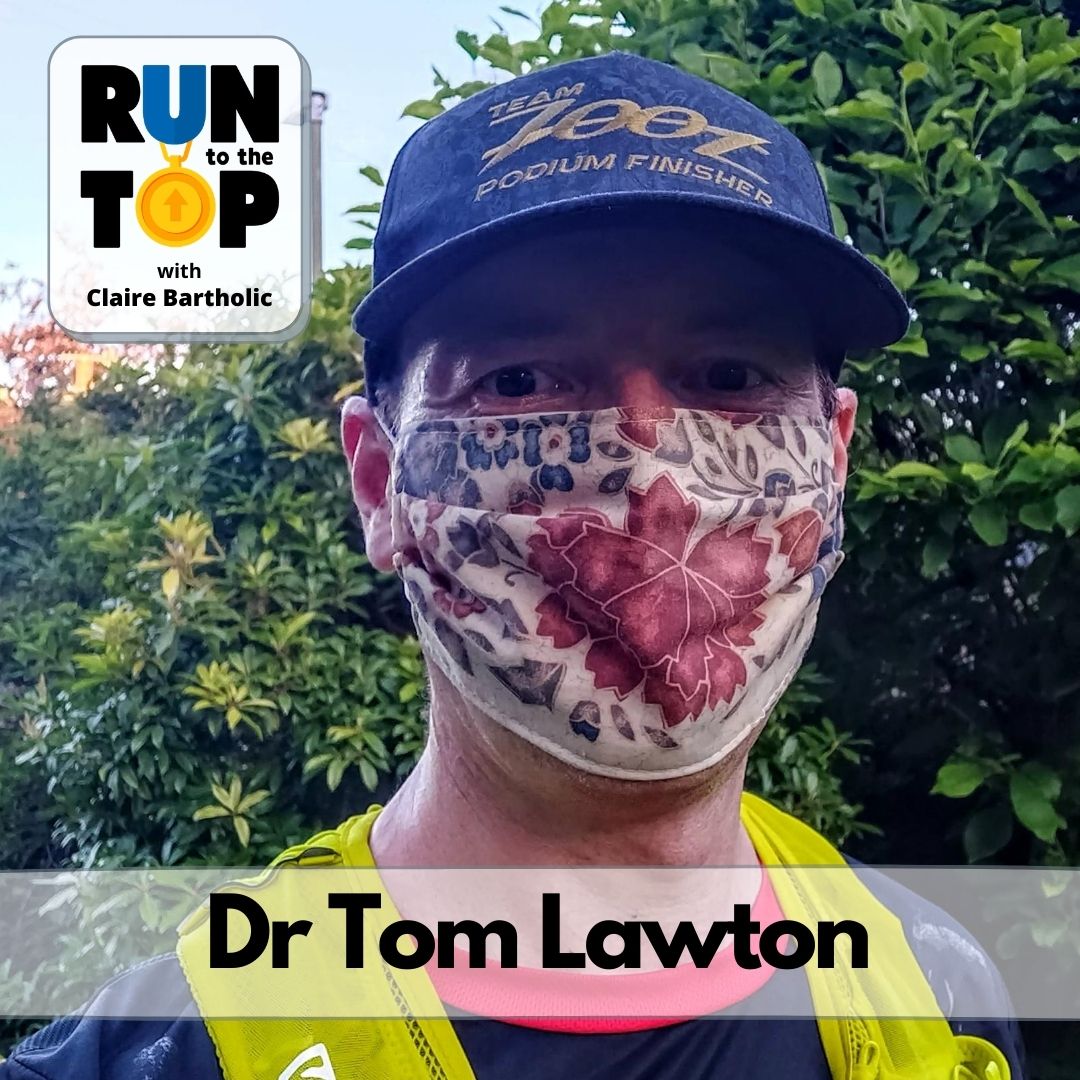
Dr. Tom Lawton Ran 22 Miles in a Mask To Prove A Point - 08/26/2020
Dr. Tom Lawton Ran 22 Miles in a Mask To Prove A Point Does wearing a mask really impair your oxygen levels as some people claim? Recent internet sensation Dr. Tom Lawton went to extremes to find out. After a prolonged period of not running, he ran 22 miles in a homemade triple-layer mask, testing his oxygen levels along the way. His goal was twofold: to prove it's safe to wear a mask while walking about and to raise money for charity. In this episode, Coach Claire delves into the details of Tom's mask experiment, finds out if he thinks runners should wear masks, what his experience as a critical care doctor has been like in the UK with the coronavirus, and also what he thought about recent controversial RTTT guest Matthew Hammersmith who has been putting on in-person races during the pandemic. Spoiler alert: Tom is not fully for or against what Matt is doing. Check out his opinion and see if you agree. Tom Lawton is an intensive care doctor with the Bradford Royal Infirmary in Yorkshire, England, a healthcare researcher, and triathlete. After being fat and wheezy through childhood, he took up rowing at his university, and hated running with a passion. Unable to run more than about a quarter of a mile without knee pain and a loud "slap" accompanying each foot strike, he foolishly ran (well, mostly walked while sobbing in pain) the London Marathon to raise money for charity. He then vowed never to run again. A decade later and unfit once more, a drunken wedding bet saw Tom enter the first Ironman Wales. He started running under protest and arrived at the race having managed training runs of no longer than 10 miles. Undeterred, he excitedly scarfed down everything he'd picked up from the expo during the bike section. Alas, at least one of those things did not agree with him and he spent most of the run being sick. Nevertheless, he still somehow managed to beat his London Marathon time, which prompted him to pick up triathlon training for real. Since then, Tom has continued to improve and has finished each of his last six iron-distance races in under 10 hours. However, the pandemic has put a stop to all that and he has been unable to train much since January due to a combination of work and the stress of caring for sick patients. Tom desperately wants to get back to training, so he wants everyone to do whatever they can to keep this virus under control, and he has become a keen mask advocate. In order to prove they were safe to wear around the shops, he pushed a bit more oxygen through one by running to the ICU and back, and has spent the last few weeks exposed to the Internet's underbelly in the aftermath with his aforementioned 22-mile run. Questions Tom is asked: 5:03 You are a critical care doctor in the UK who has recently gotten quite a bit of attention for running 22 miles wearing a triple layer mask to prove that wearing a mask does not cause a drop in oxygen levels. Before we get into that story, can you tell me a bit about what life is like with the pandemic where you are? 6:56 Can you talk a little bit about what the hospital you were working at was like in April with all the cases coming in? 8:20 Was your hospital overwhelmed with COVID patients? 8:50 In the United States, a big part of the decision to wear a mask or not seems to be a very political one. We Americans prize our freedom and individualism and some people just don't like being told what to do, so they don't want to wear a mask. Are you seeing that in the UK as well, that kind of attitude? 10:54 Let's have you tell the story of the run that got shared around the world. How did you set it up and what's the story? 14:47 Tell me about the mask you were wearing on your run? 15:49 How did you measure your oxygen levels on the run? 17:02 What kind of feedback are you getting from people? Are people saying that, "Well, you're an athlete. Of course your oxygen levels are going to be great," or "I have asthma. This isn't going to work for me." Did people say that you're some kind of exception? Have you gotten any feedback like that? 18:49 You ran to work in a mask, and then presumably you wore a mask all day at work, and then you turned around and wore a mask and ran home. Is that right? 19:43 What you said before is you ran in a mask just to show that you could do it, but I'm gathering that you wouldn't recommend it and it probably wasn't great for performance. Is that correct? 22:05 I certainly know a lot of athletes who do live in big cities and run on crowded paths and they wear the neck gaiter or the buff because it's easy to pull up and down. And you mentioned that Duke University study that came out, and it said that the buffs are actually worse than no mask at all because they break up the droplets and make them easier to spread. I'd love to get your thoughts on that. 25:01 A lot of people say, "Well, hey, if I'm healthy enough to go running or I'm healthy enough to go run a race, then I probably don't have corona." What do you say to pe

How To Make The Most Of Your Cool Down - 2020/08/25
Why you need to do cool down exercises after a workout? How to properly cool down after running or racing? Coach Hayley explains in today's episode.

How to Avoid Injury and Increase Your Speed as a Masters Runner 2020/08/24
How to stay speedy and healthy when running in your 50s, 60s, and 70s? Can older runners do speed work without ending up injured? Coach Claire shares tips to help master runners increase speed and avoid injury in today's podcast.

Team RC Update 8/21/2020: Team Update - Run To The Top Shakeup
In this week's episode, Coach Michael talks about the feedback we received on our daily podcasts and asks your suggestions about our plan of making a slight change with the podcast format.

Up-Tempo Talks - Why Do Runners Do That? (Train in race flats, 10 day training, Squat & Deadlifts) 2020/08/20
Why do a lot of runners wear racing flats during workouts? Why some runners follow a 7 day training cycle vs a 10 day training cycle? Why do runners incorporate squats and deadlifts in their training - What are its benefits? Find out in today's podcast from Coaches Ruairi and Dylan.

Are You Tough Enough to Race the World's Harshest Deserts? Samantha Fanshawe - 08/19/2020
Are You Tough Enough to Race the World's Harshest Deserts? Samantha Fanshawe Imagine running 250km (about 155) miles in 6 stages across the most inhospitable deserts in the world while carrying everything you need for the entire race on your back. Whether you think that sounds incredible or miserable, you'll probably agree the idea is fascinating. Samantha Fanshawe, president of the 4 Deserts Race Series at RacingThePlanet, manages ultra stage races all over the world in some of the harshest conditions from the Atacama Desert in Chile to the Gobi Desert in Mongolia to the Namib Desert in Africa to the coldest desert in the world, Antarctica. Sam tells Coach Claire what it's like to race these events, what you need to do to train and prepare, and who should (and should not) sign up for an event like this. It's a fascinating dive into the world of some of the toughest races on the planet, and you can enjoy it from the comfort of home! Sam has always been a citizen of the planet. She is a Brit, born in Peru and schooled in Pakistan for a few of her early years. She graduated from the University of Leeds with a joint honors degree in Maths and Biology, then went off to explore parts of the world such as Sydney, Australia, before returning to the United Kingdom to work in business development of corporate clients in the recruitment industry. After a couple of years, her company transferred her to Singapore, followed by stints in Penang, Malaysia and Hong Kong. Sam has mastered the art of dragon boat racing, competing in the Dragon Boat World Championships. She also plays squash, hikes, rides horses, and mountain bikes. She fell in love with running while living in Asia, starting with half marathons before running the Singapore Marathon, sprint triathlons, adventure races, and ultimately ultramarathons including the Hong Kong Oxfam Trailwalker, the Gobi March, Vibram HK 100, and Mongolia Sunrise to Sunset. In 2005, Sam volunteered at the hottest race on record, the Gobi March, a seven-day, 250km footrace. She fell in love with the spirit of RacingThePlanet and became a staff member, and has since worked over 20 RacingThePlanet/4 Desert events. Questions Samantha is asked: 5:18 You have a very interesting background, living all over the world. How did you first get involved with RacingThePlanet? 6:23 Can you describe what these events are like? I'd love to hear what they are and what kind of people sign up for them? 9:12 How many people actually really run every single day and how many people do more of a walk/hiking? 9:46 The participants pretty much have to bring everything as far as food. They don't have to bring a tent I understand, but pretty much everything else? 11:02 How has the pandemic affected RacingThePlanet? 12:47 Let's talk about training for the race. Let's fast forward to 2021 when everything is perfectly healthy. How would you recommend training for something like this? Is it similar to marathon training? 14:05 Training for the race with a backpack is super important, right? 15:01 I imagine you have a lot of repeat athletes who do this over and over again, but I would love to hear about the first timers. What challenges do the first-time racers tend to face? 16:44 What kind of food do people eat on something like this? I imagine it would be different if you're running or walking because you can chew a lot better when you are walking, but what kind of foods are most people bringing in their backpack every day? 19:23 You've got all of your food for all six stages in your backpack the whole time. Is that what you're saying? No one takes it for you to the next stage. 19:43 I imagine not everybody makes it to the finish line. What are the reasons that you see that most people have to stop the race? 21:52 What kind of people should NOT sign up for a race like this? 23:03 I bet you have a whole collection of amazing stories from races as epic as this. Can you share a few of the more memorable stories of things that have happened in some of these races? 25:19 I noticed that registration for Antarctica is by invite only. Can you explain? 26:57 I imagine you're not dealing with heat in Antarctica, but there's probably some other challenges like dealing with the cold and maybe frostbite. What are the other challenges in Antarctica? 27:56 How many times have you gone to Antarctica now? 28:29 What is the future for RacingThePlanet? Is there anything new in the works? Questions I ask everyone: 30:09 If you could go back and talk to yourself when you first started running, what advice would you give yourself? 31:11 What is the greatest gift that running has given you? 32:35 Where can listeners connect with you? Quotes by Samantha: "The whole ethos of the race was not only to take people to amazing places and to achieve things that maybe they didn't think was possible like covering 250km on foot across a desert, but also to make people realize that you can survive for seven days in a desert without the internet,

Do I Need to Take an Electrolyte Replacement - 2020/08/18
In today's episode, Coach Hayley talks about electrolyte drinks and guidelines for electrolyte replacement. Listen now to find out when do you need electrolytes and when plain water is fine.

How Running 80% Easy Could Make You 23% Faster 2020/08/17
Should you accumulate a lot of mileage at an easy pace in training? Or should you try to reach race-specific speeds frequently? Is it necessary to do all of your runs faster if you want to get faster? In today's episode, Coach Claire look at one study that addresses this topic of training intensity problem.

Team RC Update 8/14/2020: Team Update - Our CEO Eats Crow
In today's episode, Coach Michael talks about his experience as a high school runner and college athlete, and why is it worth to consider college sports from an athlete's perspective.

Up-Tempo Talks - Running Headlines - A London Showdown & the U.S. HIgh School Trail Championship 2020/08/13
Coach Dylan and Coach Ruairi welcome you back to another episode on running headlines where we cover the latest events and actions that happened in the running world during the past week or so. Listen now!

Battling Depression with Running Shoes and a Dog: Nita Sweeney - 08/12/2020
Battling Depression with Running Shoes and a Dog: Nita Sweeney A major depressive episode turned Nita Sweeney from the law to writing. She is now an award-winning author who shares what she's learned in her autobiographical Amazon best seller Depression Hates a Moving Target: How Running with My Dog Brought Me Back from the Brink. Running, and more specifically, running with her dog helped change Nina's life and her mental health, and she talks with Coach Claire about how running can be an effective tool for managing mental health issues, the challenges and limitations of running, the importance of community, even a virtual one, for keeping your spirits and your training up, and for all you new pandemic puppy owners, she shares tips on how to run with your new friend. Nita has been plying her writing trade for over 25 years, and her work has been featured in health.com, healthline.com, livestrong.com, Fupping.com, PsychCentral.com, bpHope.com, Bustle.com, NextAvenue.com, UpJourney.com, Medium.com, Pawstruck.com, Thrive Global, WGRN, Sweatpants & Coffee, Authority Magazine, Intergenerational Inspiration, 2014 and Beyond, and Pretty Progressive, and in bp Magazine and Epoch Times, on the Word Carver, Running Dad, My Brain on Endorphins, and Diz Runs podcasts, and was nominated for the Ohio Arts Council Governor's Award. Her articles, essays, and poems have appeared in Buddhist America, Dog World, Dog Fancy, Writer's Journal, Country Living, Pitkin Review, Spring Street, The Taos News, WNBA-SF blog, Pencil Storm, The Writing Cooperative, It's Not Your Journey, Wide Open Writing, and other newspapers and newsletters. She writes the blog, Bum Glue and publishes the monthly email, Write Now Columbus. Her poem "Memorial" won the Dublin Arts Council's Poet's Choice Award and an early draft of her memoir, Depression Hates a Moving Target: How Running with My Dog Brought Me Back from the Brink, (previously titled Twenty-Six Point Freaking Two) was short-listed for the William Faulkner - William Wisdom Creative Writing Competition Award. The book was awarded a Maxwell Medal in the Human Animal Bond category of the Dog Writers Association of America writing competition. It is a #1 Amazon Bestseller in the "mood disorders," "bipolar disorder," and "running & jogging" categories. The book was selected by Ohioana Library to be included in the 2020 Ohioana Festival. Nita also coauthored the popular writing journal, You Should Be Writing: A Journal of Inspiration and Instruction to Keep Your Pen Moving, with Brenda Knight (Women of the Beat Generation.) Nita earned a journalism degree from The E.W. Scripps School of Journalism at Ohio University, a law degree from The Ohio State University, and a Master of Fine Arts degree in Creative Writing from Goddard College. She serves on the board of the Women's National Book Association of San Francisco. For ten years, she studied with and assisted best-selling author Natalie Goldberg (Writing Down the Bones) at week-long writing workshops teaching the "rules of writing practice" and leading participants in sitting and walking meditation. Goldberg authorized Nita to teach "writing practice" and Nita has taught for nearly twenty years. When she's not writing and teaching, Nita runs. She has completed three full marathons, 27 half marathons (in eighteen states), and more than 80 shorter races. Nita lives in central Ohio with her husband and biggest fan, Ed, and her yellow Labrador running partner, Scarlet (aka #ninetyninepercentgooddog). Questions Nita is asked: 2:41 Let's start with your running journey. How did you begin to run regularly? 5:03 Your running journey is also connected to your mental health journey. Can you talk a little bit about that? 7:46 What was it like finding a running community? 10:14 How specifically has running helped your mental health? 11:49 I think it's pretty well known that everybody who gets a running habit going, you feel good, at least when you stop running. Sometimes when you actually are running it doesn't always feel good, but most of the time we feel good after we run, but there is a limit to that. You can only run so many miles in a day. You can't always rely on exercise for all of your mental health issues. Where do you kind of draw the line and say, "Yes, running is a tool but I need some extra help?" 14:16 Sometimes you need actual therapy beyond running; don't you agree? 15:41 I would also like to talk about you running with your dog, Scarlet. A lot of runners have dogs, and dogs help us get moving and get active, but you decided to write a book about that. Can you talk a little bit about that? 19:03 What other tips do you have for someone who just got their pandemic puppy and want to start running with the dog? 20:59 I know a lot of people who run with dogs who will maybe do their warmup with the dog and then circle back home and drop the dog off and then do a longer run. Is that something that you've had to do? In marathon training, you can'

Tweaks to Optimise Training and Health as an Older Runner - 2020/08/11
In today's podcast, Coach Hayley talks about some training tweaks that master runners can make to optimize their running performance and their health going forward. Tune in now!

Introduction to Running Biomechanics 2020/08/10
What is running biomechanics? How improving your mechanics can help improve your running performance and reduce susceptibility to injury? Find out in today's podcast from Coach Claire.

Team RC Update 8/7/2020: Team Update - What The Running Community Thinks About Races In 2020
What the running community thinks about participating in 2020 races such as London Marathon? In today's episode, Coach Michael talks about the email responses he received on this topic and the reasons runners gave on why they want to run or not to run a race.

Up-Tempo Talks - Race Day Precautions (& Updates) Amdist Covid-19 2020/08/06
In this episode, Coach Dylan interviews Coach Ruairi about his latest race experience and then both talk about their race plans during this pandemic. Listen now!

'Rona Racing: Why Matthew Hammersmith Is Still Holding Races
'Rona Racing: Why Matthew Hammersmith Is Still Holding Races This episode is sure to spark controversy. Despite the coronavirus, some small races are still happening, including the "Carolina 'Rona Reaper" in Greenville, South Carolina. Some runners are relieved to be racing again; others are angry and think holding races right now is irresponsible. Race director for the event, Matthew Hammersmith, answers Coach Claire's questions on how events like this are even legal and possible, addresses the risks participants take when they sign up for a race, and talks about what his organization is doing to minimize those risks. Listen in and see if you would be willing to risk racing in person during the pandemic. Matt Hammersmith founded Upstate Ultras in 2014 and serves as the race director. He's a lifelong runner who kicked off his career by hosting a running series (now known as the Knock on Wood Ultra Festival) as a way of meeting runners. He describes the event as "poorly organized" and "chaos," but the results were "utterly fantastic" and he has since dedicated his career to coaching athletes and hosting races of all distances and surfaces. Matt was born in Ohio, raised in Indiana, and found his long distance running path while competing at Eastern Michigan University. He started running at age 14 and is still going. Matt's personal bests range from running the 400 in 51.6, the mile in 4:08.17, the marathon in 2:31, and 100 miles in 17:48. Matt coaches about 40+ youth athletes every year and about 40+ adult runners throughout the country. His organization has over 20 events on the calendar including kids' races (always free), trail races, 5K beer races, some gimmick fun races, and of course some epic mountain ultra races! His events are cost effective and always have a charity component. He is very proud of some of the big impacts his events have had over the years. Matt has always been impressed by those who want to improve personal fitness and overall well being through physical fitness and nutritional awareness. An overall athlete and fitness guru, Matt's competed at the local, state, and national level in sports like cross country, track and field, wrestling, football, and basketball. His passion and intensity is summed up quite perfectly here: "I have seen the outer limits of the human body and there is no better feeling when your body, mind, heart, and soul are connecting on every cylinder and you transform your image into something that you have always wanted." Matt's motivation comes from wanting to offer opportunity and challenge. He enjoys watching overwhelming accomplishments, especially since he knows from experience that most will fail in a spectacular fashion. But ultra/trail running is ultimately not about the finish line; it's about the growth through the struggle, which should be good enough for anyone. Questions Matthew is asked: 3:03 On your bio on the Without Limits website, it says you are a life-long runner and fitness guru. Can you tell us a little bit about how you fell in love with running and eventually became a coach? 4:27 How was your progression from going from running 2 miles to running a 50K or 100 miles? Did you really just get an invitation for a 50K and you were like, "Sure, why not?" 5:18 How did you start getting into race directing? 6:31 Can you talk about some of the events that you organize? 7:35 With the pandemic, most running races around the world have been canceled and runners and race directors have had to make massive changes, and I wanted to talk to you about that. You decided to go ahead with your "Carolina Reaper," which this year was called the "Carolina Rona Reaper." Can you talk about the decision to go ahead and what safety measures you had in place? 9:31 I would love to get into the details of the safety measures you have in place. So for the Rona Reaper race, how did you actually do it? What do the safety measures actually look like? 11:06 Were runners wearing masks during the race? 12: 01 What's your advice if somebody did want to sign up for one of these races? How do you pass somebody at a socially safe distance? 13:01 It's my understanding that the governor of SC issued an executive order prohibiting large groups, but it's up to local law enforcement officials to enforce that if they choose. How did you address this issue? Did you work with local law enforcement while organizing your event? 14:13 How do you address those who might be critical to hosting events like this during the pandemic, especially as cases are rising? 15:23 What about the next races coming up? Any particular challenges with those? 16:24 I've seen a lot of thumbs up for what you're doing. What are some of the people who have attended your events or wanted to attend your events, what kind of reaction are you getting from them? 17:12 I would imagine if you were positive for COVID, it would be pretty hard to run a 30-mile or a 30-hour race? 17:57 What do you think is the future for rac
My Top Five Tips for Preventing Injury - 2020/08/04
In today's podcast, Coach Hayley gives her top five tips to prevent injury that she mastered over 20 years of running. Tune in now to find out what mistakes she made along the way so that you don't make the same ones again!

The Benefits of Balance Training for Runners 2020/08/03
What is balance training? What is the science behind it? Is it worth doing balance and proprioception exercises as a runner? How improving your balance can help prevent injuries? Find out in today's podcast from Coach Claire.

Team RC Update 7/31/2020: RC Athlete Spotlight - Sabina Havkins
In this week's episode, Coach Michael talks about the new venture of our RC founder Jeff and how this company helps runners during this pandemic time. He then shares inspiring stories of one of our RC athlete - Sabina Havkins.

Up-Tempo Talks - Running Headlines (Garmin Outage, Race Results & Tommy Riv's Battle) 2020/07/30
Coach Dylan and Coach Ruairi do a recap on some running related news that has happened during the last one to two weeks in today's podcast. Listen now!

At 79, Dr Betty Holston Smith is Fitter Than You Are - 07/29/2020
At 79, Dr. Betty Holston Smith is Fitter Than You Are AT 79, Dr. Betty Holston Smith has the fitness level of your average 30-year old and looks at least 20 years younger than she is! How did the former 200-pound couch potato and cigarette smoker transition to a vegan 50 years ago when hardly anyone even knew the word vegan and become a highly fit ultra-marathon runner? Dr. Betty shares with Coach Claire her nature's wisdom philosophy she's developed and lived by over the last 50 years, how she eats and trains, and her lack of need for much sleep or recovery time despite running 60 to 100 miles per week. Her overall health proves the benefits of strict vegan diets and highly fit lifestyles; the bottom line is that you do not need meat and junk food to stay healthy and fit. Dr. Betty's top rankings in the national ultra-running community continues even as she ages. At ages 76 and 78, she set and later broke official USA-TF ultra-marathon national age group records for the 48-hour and 6-day ultra-marathon races. She is in the USA-Track and Field permanent record books. Currently, at age 79, she continues her national ranking by the ultra-running community (91.46% age group ranked and 49.06% overall ranked). This strict plant eater has been a top-ranked ultra-marathon runner since she began running ultra-marathons in 2007. She took to running ultras after she completed 85 marathons run throughout the USA and on all seven Continents (a marathon on six including Antarctica), and a half marathon on the Great Wall of China. Now she trains for and uses marathons to train for ultras! She has completed 30 ultras run in: Boston, San Francisco, Rhode Island, Vermont, Florida, Maryland, Virginia, Arizona, and Pennsylvania. She is the founder and coach of the "Abandon Your Limits" land and deep-water running programs. Dr. Betty is currently running virtual races due to the pandemic and will continue to do so until the pandemic is controlled. She recently used a fitness age calculator developed by the Norwegian University of Science and Technology. The expected fitness level for her age of 79.6 is 26 VO2. According to the calculator, her fitness age is 45 VO2 and she has the fitness level of an average 30-year old. The free calculator is available at: https://www.worldfitnesslevel.org/#/ Prepare to be amazed and inspired by the one and only, Dr Betty Holston Smith! Questions Dr Betty is asked: 2:35 You are a 79 year old plant-based ultra runner and I suspect that you are healthier and fitter than most people listening to this show! Can you talk about how you first started running and how you came to adopt a plant-based lifestyle? 12:12 How do you take your ego away from the finish line in a race? 12:27 You've talked about your life being structured around "Nature's Wisdom." What does that mean for you? 23:24 You've said that you're just a normal person that does a whole lot of good things. Well, I don't know. Four hours of sleep doesn't sound too normal. You said that you don't need any recovery and you can still run 100 miles a week at almost 80 years old? 25:00 Have you ever been injured? 32:37 What foods do you eat every day? Questions I ask everyone: 40:39 If you could go back and talk to yourself when you first started running, what advice would you give yourself? 42:06 What is the greatest gift that running has given you? 46:06 Where can listeners connect with you? Quotes by Dr Betty: "I don't know how many marathons, I've lost track, but I do know at some point I was at 85 marathons, and I have run marathons on each of the seven continents." "My running is passion. My running is perseverance. Those two things are great for all of life, not just running." "I bring all of my food to all of my races. I also have a log with the food items across the top, and across the left side going down, I keep track of when I'm eating what. Once I'm into a six-day race and it's day three, I'm not going to remember when I drank the last water." Take a Listen on Your Next Run Want more awesome interviews and advice? Subscribe to our iTunes channel Mentioned in this podcast: Vivobarefoot Shoes Clif 90% Organic Lemon Lime Powder Lifestyle by Nature book Danny Dreyer, Chi Running Founder - Runt To The Top Interview Runners Connect Winner's Circle Facebook Community RunnersConnect Facebook page [email protected] Follow Dr Betty on: [email protected] We really hope you've enjoyed this episode of Run to the Top. The best way you can show your support of the show is to share this podcast with your family and friends and share it on your Facebook, Twitter, or any other social media channel you use. The more people who know about the podcast and download the episodes, the more I can reach out to and get top running influencers, to bring them on and share their advice, which hopefully makes the show even more enjoyable for you!
How To Train For Your Best Half-Marathon - 2020/07/28
In today's episode, Coach Hayley shares tips on how to train for the half marathon and how you can improve your running performance for that distance. Tune in now!

Runner's Knee – How To Diagnose, Treat and Prevent 2020/07/27
What causes runner's knee? How common it is among athletes? What are its symptoms? How to treat and prevent runner's knee? Coach Claire explains in this episode.

Team RC Update 7/23/2020: RC Athlete Spotlight - Sabina Havkins
In this week, Coach Michael talks about one of our athletes - Sabina Havkins. Find out why she is such an inspiration among our running community and the unique advice she gives to fellow runners.

Up-Tempo Talks - Don't Forget How Far You've Come 2020/07/23
Having trouble finding motivation to workout? Worried about your fitness? Not able to set running goals ? What can you do now to remain focused on your plans? In this episode, Coach Dylan talks about how to stay motivated and get going during this challenging times. Listen now!

Michael Hammond and Jeff Gaudette: How New Virtual Tools Will Transform Your Running and Racing 07/22/2020
Michael Hammond and Jeff Gaudette: How New Virtual Tools Will Transform Your Running and Racing Some big changes have been happening this year at RunnersConnect. You may or may not have noticed that company founder Jeff Gaudette has been a little quieter than usual while working on a mystery project and Michael Hammond has stepped up as CEO. Coach Claire interviews them both to find out what's been going on and what RunnersConnect members can expect to see going forward. First, Head Coach Michael Hammond tells us who he is, what big changes were happening in RunnersConnect heading into 2020, and how the company has pivoted in response to the pandemic. How does an online coaching platform focused on training runners for races stay relevant during these unprecedented times when essentially every race for the year has been canceled? Next, Jeff Gaudette discusses his exciting new company he's been working on behind the scenes to help you stay motivated and at your running best during this new norm of virtual racing. He's come up with a great new way to make individual racing fair, fun, and more engaging. There's definitely a lot to look forward to! Jeff Gaudette is an elite marathoner who founded RunnersConnect in 2011 as a better way to coach his personal clients. He was a two-time Division-I All-American in Cross Country at Brown University and competed professionally for four years afterwards. He has competed internationally in numerous marathons with a personal best of 2:22:02, and has recorded Olympic Trials qualifying times in the marathon and 10,000 meters. Jeff's coaching career started in 2004 when he was a member of the Hansons-Brooks professional team. He's had success at all levels of coaching; high school, college, local elite, and everyday runners. Under his tutelage, hundreds of runners have finished their first marathon and he's helped countless runners qualify for Boston. Jeff has been featured in Running Times magazine, Endurance Magazine, as well as numerous local magazine fitness columns. Michael Hammond is the Head Coach and newly appointed CEO of RunnersConnect. He competed in cross country and track while at Virginia Tech, earning two ACC titles and four NCAA All-American honors. His individual efforts led his team to four ACC team championships: one in cross country, two in indoor track, and one in outdoor track. Post-collegiately, Michael has competed formerly as a member of Furman Elite in Greenville, South Carolina and currently as an independent athlete. He now trains at his alma mater while also serving as a volunteer assistant with the team. Michael's passion for helping athletes succeed began while counseling high school runners at cross country camps. Since then he has coached several local athletes of various ability levels while continuing to gain experience at the college level. You can catch him every Friday on the Team Update segments of the Run To The Top podcast. Questions Michael and Jeff are asked: 2:35 2020 has been a historic year, to say the least, with everything that is going on in the world. Big changes were going on in Runners Connect before the pandemic hit and we expected an exciting year, but obviously nothing like this could have been predicted. If we can rewind to December 2019, what was your vision for Runners Connect in 2020? 6:24 Most of our listeners do know what RunnersConnect offers, but for those who don't, could you just give just a quick elevator speech of exactly if you go to RunnersConnect, what are you looking at? What would you get if you go to RunnersConnect? 8:31 Let's get into all the races being canceled. Traditionally, RunnersConnect has always been race-oriented, meaning that most of our athletes sign up with a particular race in mind, so obviously RunnersConnect had to make some changes. What were the changes that RunnersConnect made? 13:45 Speaking of getting fitter and stronger, you have been doing something a little special with strength training. Do you want to talk about what you've been doing pretty much since the pandemic started to help people get strong? 22:00 You mentioned that you and Jeff came up with this idea for live sessions, so we're going to hear from him at the end of our conversation, but I would love to talk about Jeff while he's not here for a second. We at RunnersConnect never really made a big splash or a big announcement about where is Jeff and who is this guy Michael? So I'm going to give the ball to you and talk about that. What on earth has happened to Jeff Gaudette and who are you, Michael? 28:57 We've got some great things coming up for our RC members, and I will ask Jeff when he comes on about some of those exciting new features, but before we wrap up with you, Michael, what do you see happening in the future of RunnersConnect? I know it's hard to see so far with nobody knows when this pandemic's going to end, but anything you'd like to share about how we're moving forward? 40:18 Jeff, can you talk about your

Are Your Calves Strong Enough - 2020/07/21
Why we need strong calves? How strong your calves are? How to strengthen your calf muscles? Coach Hayley explains in this week's ExtraKick episode. Listen now!

Is Your Concept of Base Training Wrong 2020/07/20
What are the common misconceptions about base training and how they came about? How to take a more modern approach when you structure your base training phase? Find out in today's episode from Coach Hayley.

Team RC Update 7/17/2020 - NO Races in 2020!
In this week's Team RC Update, Coach Michael talks about the current situation related to the major marathon events and what we can do to move forward with our race plans. Listen now!

Up-Tempo Talks - Why do Runners Do That? (Race Infrequently, Hit the Track, Hate Heel Striking) 2020/07/16
In this second part of "Why do Runners Do That" series, Coach Ruairi and Coach Dylan answer three more questions that are commonly asked related to running. Tune in now!
Wendy Wood: Habits to Automatically Improve Your Running - 07/15/2020
Wendy Wood - Habits to Automatically Improve Your Running Is running a habit for you? If yes, do you believe your running is a conscious choice? If no, how long would it take you to form a running habit? (Hint: A lot longer than you probably think.) What are habits anyway, and how can they benefit you as a runner? Psychologist Wendy Wood literally wrote the book on habits, appropriately called Good Habits, Bad Habits, and she shares with Coach Claire some of the knowledge she's gained during her 30-plus years of researching habit-related behavior. She discusses how habits form and how they overcome your intentions, how you can create friction to make your bad habits less attractive, and how good habits can pave the way to expanding your goals and increasing your creativity. Wendy is Provost Professor of Psychology and Business at the University of Southern California, where she also served as Vice Dean of Social Sciences. A 2008 Radcliffe Institute Fellow, and 2018 Distinguished Chair of Behavioral Science at the Sorbonne/INSEAD in Paris, Wendy has advised the World Bank, the Centers for Disease Control, and industries such as Procter & Gamble and Lever Bros. Wendy completed her graduate degree in psychology at the University of Massachusetts. She went on to be the James B. Duke Professor of Psychology and Neuroscience at Duke University. Having published over 100 scientific articles, she received numerous awards for her research and teaching. For the past 30 years, her research has been continuously funded by the National Science Foundation, the National Institute of Health, and the Templeton Foundation. Questions Wendy is asked: 3:55 You are a research psychologist who has devoted the last 30 years to understanding how habits work and you are also a runner, so when I heard about your work and read your book Good Habits Bad Habits, I knew I wanted to have you on the show. First off, what got you started in studying our habits? 5:54 In your book you said, "Intentions are no match for our habits." Can you describe this and basically define what a habit is? 8:16 A running habit, for example, I can use my own experience. I can tell you the first year that I was a runner, I hated every second of it, and then eventually it became just a part of my identity, who I am. It's obviously my job now, but it took forever for it to be something that I really identified with. Is that really a common experience for most people that you've found? 10:10 Does it take a lot less time to establish a running habit for example if you reduce decisions, like run at the same time every day, always have the same pair of shoes, always run the same routes? Is there a shortcut to getting a good habit? 12:46 We crave things that are new. We want to do new and exciting things. But you're also saying that the repetition, the doing the thing over and over and over again is also what we crave? 16:48 I would love to talk about goals and how they relate to habit. You've said that when you're forming a habit at the beginning a goal is absolutely critical, but as the habit becomes more established, you might not need the goal quite as much or perhaps not at all. And how that relates to running, especially this year so many of our running races, our big goals, have been canceled, and some of the runners react in one way and they completely stop training or almost stop training, and other runners just seem to find brand new goals, other ways to motivate. I would love to hear your thoughts on that and how these two groups are different. 21:30 One thing that I would love to get your thoughts on are how do you establish a habit that isn't daily, like for example, strength training? I often tell my athletes that they should strength train, lift some weights twice a week or three times a week, and for some people that's a lot harder than doing it every single day. How do we get ourselves to do more intermittent things on a regular basis, just not on a daily basis? 25:07 You've said that bad habits are not that different from good habits as far as the way the brain works. One study that you referenced in your book was the famous marshmallow study, which everybody has heard about where little kids are given a marshmallow, and if they don't eat it within a certain period of time, they'll get a second marshmallow. And of course all hilarity ensues and these poor little kids end up eating the marshmallow in most of the occasions, except for some very resilient little kids who end up getting both. What I wanted to ask about, you talk about hiding the marshmallow, hiding the temptation, getting it out of sight, out of mind. Can you talk a little bit about how we can change our bad habits? 31:28 Now that you're a researcher and you've studied all of this about habits, does that mean you do everything perfectly in your life now that you know all this information? 34:01 Another great thing that I learned from your books is If you "remove the friction," that is w

How to Deal with Pre-Race Nerves - 2020/07/14
Everyone has pre-race anxiety. But are you worried about the negative impact of pre-race jitters on your performance? What are the ways to calm your nerves and deal with performance anxiety? Coach Hayley discusses in today's podcast.

Hip Strength and Running Injuries 2020/07/13
In this week's Audio Blog, Coach Claire talks about the relationship between hip strength and running injuries. What's the latest research say? Are core workouts helpful to distance runners? What can you do to improve hip strength? Find out now!

Team RC Update 7/10/2020 - RC Athlete Spotlight - Bjorg Klem
In this episode, Coach Michael talks about one on our fascinating athletes - Bjorg Klem. Find out how she handles the pandemic in terms of training/racing and creates positive influence in our RC community.

Up-Tempo Talks - This Week's Running Headlines 2020/07/09
In this week's episode, we have a fun new segment where Coaches Dylan and Ruairi walk through some of the interesting running events happened in the last weeks. Tune in now!
Brian Reynolds: Powerhouse on Prosthetics - 07/08/2020
Brian Reynolds - World Record Powerhouse on Prosthetics Brian Reynolds is a world record holder in several running distances despite not running until after college, and oh yeah, he's a double amputee. Brian initially didn't even walk much, never mind run, because he was convinced it just wasn't possible for him. Instead he pursued powerlifting, accomplishing a deadlift of 485 pounds while weighing only 135 pounds himself. How did Brian morph from powerlifter to running record holder? It all started with a fundraising hiking challenge in the Grand Canyon, an epic setting for a life-changing experience. Brian discovered a love for endurance, which eventually led him to running despite his prosthetic legs not being remotely suitable for athletic pursuits. He persevered through the pain, and incredibly, just three weeks after he ran his first mile, he ran his first marathon. Brian emphatically recommends you not follow this training plan. Brian's story is truly fascinating, and he also shares with Coach Claire how he's staying inspired and finding meaning during the pandemic. He's definitely not short on motivation! Brian also discusses his approach to alcohol and training and talks about his current work for the nonalcoholic brewing company, Athletic Brewing, who is generously offering a 15% discount for listeners of this podcast until August 10th. See the list of resources mentioned in this podcast for the discount code. Questions Brian is asked: 2:54 You have an amazing story of starting off in weightlifting then transitioning to endurance running. Your accomplishments would be interesting in their own right, but they are even more fascinating because you are a double amputee. Can you talk about your history, beginning with how you lost your lower legs as a child? 4:29 Were you into sports and activities right away or did that happen later in life? 5:51 How much could you lift? 6:08 What did you like most about weightlifting? What did it do for you? 6:43 What were the challenges of walking during the time you were weightlifting? 7:40 How did all that change for you? 9:50 Why didn't you quit running given the effects of running with prosthetics not designed for a lot of activity? What was inside your head that made you want to keep going through all that pain? 10:44 When did you finally get new prosthetics that didn't cause you running-related problems? 11:39 Was running a marathon a few weeks after getting your new prosthetic legs a good idea? 11:49 Tell me what that first marathon was like. 12:53 How sore were you afterward? 13:08 You've made a lot of progress since that first marathon. You actually broke the world record at the time for a double amputee in the marathon with a time of 3:03 in Chicago. Can you talk about your progress and how you went from four-and-a-half hours to almost three hours? 15:51 What have you done as far as training? Have you gotten a coach, or how have you really managed to lower your time so much? 17:49 How has your training changed since the pandemic? 18:23 Do you have any tips for runners that are struggling right now with motivation with no races? 20:23 You work for Athletica Brewing, a non-alcoholic beer company that is becoming super popular lately. Can you talk a little bit about the company and what you do there? 22:38 What gave you the idea to not drink during training cycles? 23:29 Do you find it's easier to be black and white about drinking/not drinking versus trying to moderate drinking during training? 24:24 Do you miss powerlifting at all? 24:45 What is the line between lifting too heavy and just right for an endurance athlete? 25:49 How many days a week are you lifting when you're in running training? 26:08 Are gyms opening up yet in New Jersey? 26:24 What is on your plans next? Any running-related goals that you have in the future? Questions I ask everyone: 27:26 If you could go back and talk to yourself when you first started running, what advice would you give yourself? 28:17 What is the greatest gift that running has given you? 28:27 Where can listeners connect with you? Quotes by Brian: "It was definitely for me one of the hardest things I've ever done going from not really walking more than a block here and there to I think it was a 16 or a 17-mile hike in the Grand Canyon." "The prosthetist said, 'What do you want to do?' and I said, 'I want to be the best runner an amputee can be,' and he said, 'We can make that happen.'" "The half marathon has always been my favorite distance. It's like the blend between the speed and the endurance." Take a Listen on Your Next Run Want more awesome interviews and advice? Subscribe to our iTunes channel Mentioned in this podcast: A Step Ahead Prosthetics Team in Training City Coach Use code CLAIRE for a 15% discount at Athletic Brewing until August 10th, 2020. Runners Connect Winner's Circle Facebook Community RunnersConnect Facebook page [email protected] Follow Brian on: Instagram We really hope you've enjoyed th

Dealing with Unhealthy Snacking During the Pandemic - 2020/07/07
How to avoid emotional eating and curb unhealthy snacking during the pandemic? Coach Hayley shares some great tips to manage stress eating in today's podcast. Listen now!

Should I Eat Before I Run 2020/07/06
Should you eat or fast before you run? What and when to eat to set yourself up for a great workout? What are the pros and cons of eating or skipping food before your workout? Find out the arguments for and against eating before a run from Coach Claire. Tune in now!