
Run to the Top Podcast | The Ultimate Guide to Running
768 episodes — Page 7 of 16

How To Be An #AwesomeRunner
Many runners are guilty of downplaying their running. If you've ever said, "I'm not a real runner," or have gotten down about your abilities as a runner, this is for you. We are shifting the negativity about our running on The Run To the Top in this episode and owning up to our true awesomeness! Learn how to break out of the negative self talk and comparison trap today. *GIVEAWAY ALERT* If you agree with how awesome running is, and are ready to celebrate the fact that you are an awesome runner, I'd love to hear about it. Follow me, @theplantedrunner and tag me on instagram with your running post using the hashtag #awesomerunner. I'll respond to you personally and I'll send two winners a FREE supply of LMNT hydration powders as a thank you. CONNECT, COMMENT, & COMMUNITY: Leave a review on Apple Podcasts! A great FREE way to support the show! Email Coach Claire Follow Claire on Instagram Follow RunnersConnect on Instagram Join the Elite Treatment where you get first dibs on everything RTTT each month! Runners Connect Winner's Circle Facebook Community RunnersConnect Facebook page GET EXPERT COACHING AT RUNNERSCONNECT!

The Toxic Micronutrient Runners Need: Drs Michael Zourdos and Sara Mahoney
In today's episode, we're going to drill down on one critical micronutrient that is essential to humans in the right dose, highly toxic in the wrong dose, and one that many runners are chronically deficient in and that is iron. To help explain the unique role of iron in runners, I invited Dr Mike Zourdos and Dr Sara Mahoney on the Run to the Top. Mike and Sara have studied the role of iron in marathon runners for both health and performance, and fun fact, Sara is Mike's endurance coach. Mike is a Full Professor and the Associate Chair in the Department of Exercise Science and Health Promotion at Florida Atlantic University in Boca Raton, FL. Mike's research lab, the Muscle Physiology Laboratory, focuses on resistance and strength training, but more recently, he has begun to come over to the endurance side of sport with a little help from Sara. Dr Sara Mahoney is the Chair of the Department of Exercise Science and Associate Professor at Bellarmine University in Louisville, KY. Her research has been focused in the use of nutraceuticals and the use of nutrition in athletic performance, specifically endurance and ultra-endurance events. CONNECT, COMMENT, & COMMUNITY: Leave a review on Apple Podcasts! A great FREE way to support the show! Email Coach Claire Follow Claire on Instagram Follow RunnersConnect on Instagram Join the Elite Treatment where you get first dibs on everything RTTT each month! Runners Connect Winner's Circle Facebook Community RunnersConnect Facebook page GET EXPERT COACHING AT RUNNERSCONNECT! This week's show is brought to you by: LMNT. Head over to DrinkLMNT.com/RUNNERSCONNECT for your salty samples.

What All Runners Should Do to Prevent Stress Fractures
Up to 50% of runners will suffer an injury in any given year and one of the most severe and common injuries is a stress fracture. Because treatment for a stress fracture will require a significant amount of time off your feet, you'll want to become aware of this risk to runners and start work on prevention now to avoid ever getting a fracture in the first place. And if you've already suffered from a stress fracture and want to know what steps to take to heal, recover, and get back to running your bes t, I'll go over what you need to know with a little help from runnersconnect.net founder Jeff Gaudette. CONNECT, COMMENT, & COMMUNITY: Leave a review on Apple Podcasts! A great FREE way to support the show! Email Coach Claire Follow Claire on Instagram Follow RunnersConnect on Instagram Join the Elite Treatment where you get first dibs on everything RTTT each month! Runners Connect Winner's Circle Facebook Community RunnersConnect Facebook page GET EXPERT COACHING AT RUNNERSCONNECT!

Brendan Leonard Hates Running and You Can Too!
If you've run long enough or are just starting your journey, you probably have a Iove/hate relationship with running. Running long distances is wonderful and completely irrational at the same time. To help me explore the delightful and nonsensical sport that we all love to hate, I invited author and ultrarunner Brendan Leonard on the Run to the Top. Brendan is a freelance writer and illustrator whose new book, I Hate Running and You Can Too, is a hilarious and relatable trip into the mind of a runner that's not going to top any podiums or win any races, but still regularly runs irrationally long distances. Brendan started his popular website Semi-Rad.com in 2011 as a channel for active, yet not elite athletes, who love to get out there, but don't take themselves too seriously. He's a contributing editor at Adventure Journal and a columnist at Outside. His stories have appeared in Backpacker, National Geographic Adventure, Men's Journal, Sierra, Adventure Cyclist, and more. He's bicycled across America, runs hundred milers, and he is continually amazed at the things that regular people can do. His work is funny and insightful and he might just inspire you to love (or hate?) your running too. CONNECT, COMMENT, & COMMUNITY: Semi-Rad.com Leave a review on Apple Podcasts! A great FREE way to support the show! Email Coach Claire Follow Claire on Instagram Follow RunnersConnect on Instagram Join the Elite Treatment where you get first dibs on everything RTTT each month! Runners Connect Winner's Circle Facebook Community RunnersConnect Facebook page GET EXPERT COACHING AT RUNNERSCONNECT! This week's show brought to you by: Perform from the Amino Company. Perform is an amino acid based formulation that I simply add to my water bottle during my run. It tastes great and is easy on my stomach. Clinical studies have shown that Perform helps improve endurance, reduce fatigue, and increases muscle protein synthesis so you recover faster after the run. Check out the research here: https://aminoco.com/rttt If you're interested in learning more and giving Perform a try, we've got a special offer for you where you can save 30% by using the code RC30. Just head to: https://aminoco.com/rttt and use the code RC30 at checkout to save 30%

How to Actually Lose Weight with Running
Many people want to lose weight with running. While the benefits of running can go far beyond losing a few pounds, running can be a fantastic part of your strategy to get in the best shape of your life. So why is it that runners come in all shapes and sizes? If running is so good for weight loss, why aren't all runners perfectly trim and lean? And what about those stories that you hear of people actually gaining weight while training for the marathon? How is that even possible when you are pounding out mile after mile? Coach Claire Bartholic goes beyond just calories in and calories out to explore why you might not be losing weight despite how much you run. Then, she goes over how you can change your routine and habits to finally achieve the weight loss results you are looking for. CONNECT, COMMENT, & COMMUNITY: Leave a review on Apple Podcasts! A great FREE way to support the show! Email Coach Claire Follow Claire on Instagram Follow RunnersConnect on Instagram Join the Elite Treatment where you get first dibs on everything RTTT each month! Runners Connect Winner's Circle Facebook Community RunnersConnect Facebook page GET EXPERT COACHING AT RUNNERSCONNECT!

The EXACT Fueling and Hydration Secrets from the Best Endurance Athletes with Abby Coleman
Hydration and Fueling For Endurance Performance Series, Part Two: The EXACT Fueling and Hydration Secrets from the Best Endurance Athletes with Abby Coleman Learn exactly how the best endurance athletes in the world are fueling and hydrating with sports scientist, Abby Coleman. Abby is part of the team at Precision Hydration and she has helped create and analyze the strategies of top Ironman performers, the man who broke the 100 mile and 12 hour world record breaking race, and multiple champion ultra runners and riders. She knows exactly what they ate and drank at every stage of the race and will help us apply that knowledge to our own plans. Abby is an expert on sweat and has Sweat Tested some of the top athletes in the world - including NBA, Premier League, NFL and MLB players - to help them refine their hydration strategies. She advises professional cycling teams, pro triathletes, and 2x Olympic runner Eilish McColgan. Oh yeah, Abby helps recreational athletes too. CONNECT, COMMENT, & COMMUNITY: Leave a review on Apple Podcasts! A great FREE way to support the show! Email Coach Claire Follow Claire on Instagram Follow RunnersConnect on Instagram Join the Elite Treatment where you get first dibs on everything RTTT each month! Runners Connect Winner's Circle Facebook Community RunnersConnect Facebook page GET EXPERT COACHING AT RUNNERSCONNECT!

Your Perfect Hydration Plan for Endurance Performance
Welcome to Part One of our two part series on Hydration and Fueling for Endurance Performance. In this episode we'll talk about how to craft your perfect hydration plan and on Part Two, we'll learn the exact fueling and hydration strategies of some of the best endurance athletes in the world. Be sure that you are subscribed to the Run to the Top so you don't miss out on a single episode! Ah, summer. The warm, sunny days, and short nights are perfect for getting outside and savoring nature with family and friends. But if you are an endurance runner, training in the heat comes with challenges. Not only is running simply more uncomfortable as the mercury rises, but the combination of heat, sun, humidity and distance will begin to affect our performance as the body struggles to cool itself down. If you've ever come back from a run soaked in sweat, or had salt stinging your eyes and staining your clothes, you probably already know that hydration is important. And if you are training this summer for a marathon or an ultra, a perfect hydration plan is an absolute must. The question is how do we do it right for both our health and our performance? To get into the precise details and science to help you craft your own personal hydration strategy, I invited sweat expert Andy Blow of Precision Hydration back on the Run to the Top to help me out. You may remember him from my interview with him in 2020, one of our most downloaded episodes of the year. If you haven't listened to that one, be sure to go back and check it out! CONNECT, COMMENT, & COMMUNITY: Leave a review on Apple Podcasts! A great FREE way to support the show! Email Coach Claire Follow Claire on Instagram Follow RunnersConnect on Instagram Join the Elite Treatment where you get first dibs on everything RTTT each month! Runners Connect Winner's Circle Facebook Community RunnersConnect Facebook page Precision Hydration [email protected] How To Measure Your Sweat Rate Cramps How To Start an Event Well Hydrated How Much Dehydration Can You Tolerate? How To Tell if You May be a Salty Sweater Discount code for precisionhydration.com for 15% off your first order: RUNTOTHETOP GET EXPERT COACHING AT RUNNERSCONNECT!

Is Running Putting Your Spine at Risk? Dr Ulrike Mitchell
Your spine starts showing signs of aging at age 20. Is too much running putting it at more risk? We talk about the spine a lot to our athletes. Your posture and spinal mobility are huge players in good running form, which allow you to run faster and longer with less effort. Flexibility in the thoracic spine in particular allows you to run light and tall, as well as makes more room for lungs to fully expand to their potential. So what can we do to make sure that our spine is supported, helping us run faster and pain-free? And what happens to our spinal health as we age, especially if we've spent years pounding out mile after mile? Brigham Young University's Dr Ulrika Mitchell researches the spine and is on the show to talk about it. Dr Mitchell was born in Germany and got her degrees in Sports Science and Physical Therapy there before moving to the US in the 90s. She got her PhD at BYU and now teaches Functional Anatomy and Orthopedic Impairment at the university. Her research is mostly focused on the spine, low back pain, and she frequently studies runners as she is a runner herself. Coach Claire asks her all about how the spine functions when we run, how to make sure that it is optimally supported, what exercises we can do to maintain proper spine alignment as we run, and what happens to our spines as we age. CONNECT, COMMENT, & COMMUNITY: Leave a review on Apple Podcasts! A great FREE way to support the show! Email Coach Claire Follow Claire on Instagram Follow RunnersConnect on Instagram Join the Elite Treatment where you get first dibs on everything RTTT each month! Runners Connect Winner's Circle Facebook Community RunnersConnect Facebook page GET EXPERT COACHING AT RUNNERSCONNECT!

The Proven Strategy to Race Faster
The instinct to run hard from the start is something that is tough to unlearn. That's why you so often see new runners, and even experienced runners do this in workouts and races: they start off too fast and at some point, dramatically and disappointingly slow down, finishing far slower than their potential. But there is a proven race strategy that race after race produces far better results. It's a strategy that has led to nearly every world record in distances from 1500m to the marathon and beyond. It's called the negative split. A negative split is simply running the first half of your race slower than your second half. That means you have to run slower when you are feeling good and run faster when you are feeling tired. Sounds impossible, right? Well, it's not easy, for sure, but it's a concept that can work in nearly any race to ensure that you get the very most out of your potential. CONNECT, COMMENT, & COMMUNITY: Leave a review on Apple Podcasts! A great FREE way to support the show! Email Coach Claire Follow Claire on Instagram Follow RunnersConnect on Instagram Join the Elite Treatment where you get first dibs on everything RTTT each month! Runners Connect Winner's Circle Facebook Community RunnersConnect Facebook page GET EXPERT COACHING AT RUNNERSCONNECT!

Sleep Your Way to Better Running: Dr Shelby Harris
Is a lack of great sleep ruining our lives and our running? Claire wanted to find out, so she invited sleep expert Dr Shelby Harris on the show to talk about it. Dr. Harris is the former director of the Behavioral Sleep Medicine Program at the Sleep-Wake Disorders Center at Montefiore Medical Center. Now in private practice in White Plains, NY, she treats a wide variety of sleep disorders such as insomnia, nightmares, circadian rhythm disorders, narcolepsy, and more using evidence-based behavioral treatments. She has researched the neuropsychological effects of insomnia in older adults as well as behavioral treatments for insomnia, parasomnias, narcolepsy, and excessive daytime sleepiness. Dr. Harris has written for the New York Times and Psychology Today and has been quoted in media such as The Huffington Post, The New Yorker, Wall Street Journal, O Magazine, and New York Magazine. She has appeared on the Today Show, World News with Diane Sawyer, Good Morning America, and more. In other words, she knows a lot about sleep and she is a runner herself. Claire asks her how we can better decide to prioritize sleep over running and whether afternoon runners or morning runners are doing a better job with their sleep. She talks about how much sleep we really need and how to get more of it. And if you are a runner with kids, this episode is especially for you because your little ones might just need a little more sleep too. And just so you know, if you are listening to this at 2am because you can't sleep and you just happen to fall into dreamland before the show is over, we will take it as a compliment!

Run Better In The Heat
Summer is officially here in the Northern Hemisphere and while longer days leave lots more time for running, the sun, heat and humidity can make running miserable. But unless you'd like to spend the season on a treadmill in the air-conditioning, learning to adapt to the heat is your best option. The good news is that all your sweaty work this summer will pay off with faster times in the fall, when things cool off a little. We'll get into the science of what is happening when you run in the heat and then offer some cool suggestions that can help you train this summer more effectively, despite the temperatures. CONNECT, COMMENT, & COMMUNITY: Leave a review on Apple Podcasts! A great FREE way to support the show! Email Coach Claire Follow Claire on Instagram Follow RunnersConnect on Instagram Join the Elite Treatment where you get first dibs on everything RTTT each month! Runners Connect Winner's Circle Facebook Community RunnersConnect Facebook page GET EXPERT COACHING AT RUNNERSCONNECT!

The Rise of the Plant-Based Athletes: Matt Frazier and Robert Cheeke
Matt Frazier is a vegan ultramarathoner, author, and entrepreneur, best known as the founder of the No Meat Athlete movement and host of the No Meat Athlete Radio podcast. Matt found he could run longer and faster with the help of a plant-based diet, and shortly after adopting a plant-based diet, Matt qualified for the Boston Marathon after taking over 100 minutes off his first marathon time. He has run several 50-milers and a 100-mile ultramarathon on a vegan diet. Matt's books have sold over 125,000 copies in five languages, and his work have been featured in books including Rich Roll's Finding Ultra, Brendan Brazier's Thrive Foods, and Seth Godin's What to Do When It's Your Turn. Matt was named by Greatist as one of the 100 Most Influential People in Health and Fitness, and Sports Illustrated has called The No Meat Athlete Cookbook one of the best Health & Wellness books. Matt has a brand new book out called the Plant Based Athlete and I couldn't leave out his equally amazing co-author Robert Cheeke. Robert began a vegan lifestyle for ethical reasons at age 15, weighing just 120 pounds. Today he is the author of the best-selling books, Vegan Bodybuilding & Fitness, Shred It!, Plant-Based Muscle. He is often referred to as the "Godfather of Vegan Bodybuilding," growing the industry from infancy in 2002, to where it is today. As a two-time natural bodybuilding champion, Robert is considered one of VegNews magazine's Most Influential Vegan Athletes. He tours around the world sharing his story of transformation from a skinny farm kid to champion vegan bodybuilder. Robert is the founder and president of Vegan Bodybuilding & Fitness and maintains the popular website, VeganBodybuilding.com. He is a regular contributor to No Meat Athlete, Forks Over Knives, and Vegan Strong. In my conversation with Robert and Matt, we talk about common nutrition myths about plant-based and vegan diets (here's a hint--they are not always the same) and how more and more top athletes around the world are discovering that plant-based nutrition is not simply some fad diet, but a powerful performance and recovery enhancer. We talk about protein, calories, macros, and whether or not you need to be all in to reap the benefits of plants. As you can probably guess, this was a delightful conversation for me because not only did I get a chance to interact with two people whose work I think so highly of, but I also get to talk about my two most favorite subjects: running and food.

How to Conquer Late Race Leg Cramping
Have you ever experienced painful leg cramping late in a race? Coach Claire goes into the science of leg cramping. This episode will equip you with an action plan that you can start today to cramp-proof your legs, so you can crush your next race, cramp-free. And she does it with a little help from her running mentor, Coach Jeff Gaudette, 2:22 marathoner and founder of RunnersConnect.net. Coach Jeff has extensively studied the issue of late-race cramping in runners and it might not be caused by what you think it is. CONNECT, COMMENT, & COMMUNITY: Leave a review on Apple Podcasts! A great FREE way to support the show! Email Coach Claire Follow Claire on Instagram Follow RunnersConnect on Instagram Join the Elite Treatment where you get first dibs on everything RTTT each week! Runners Connect Winner's Circle Facebook Community RunnersConnect Facebook page GET EXPERT COACHING AT RUNNERSCONNECT!
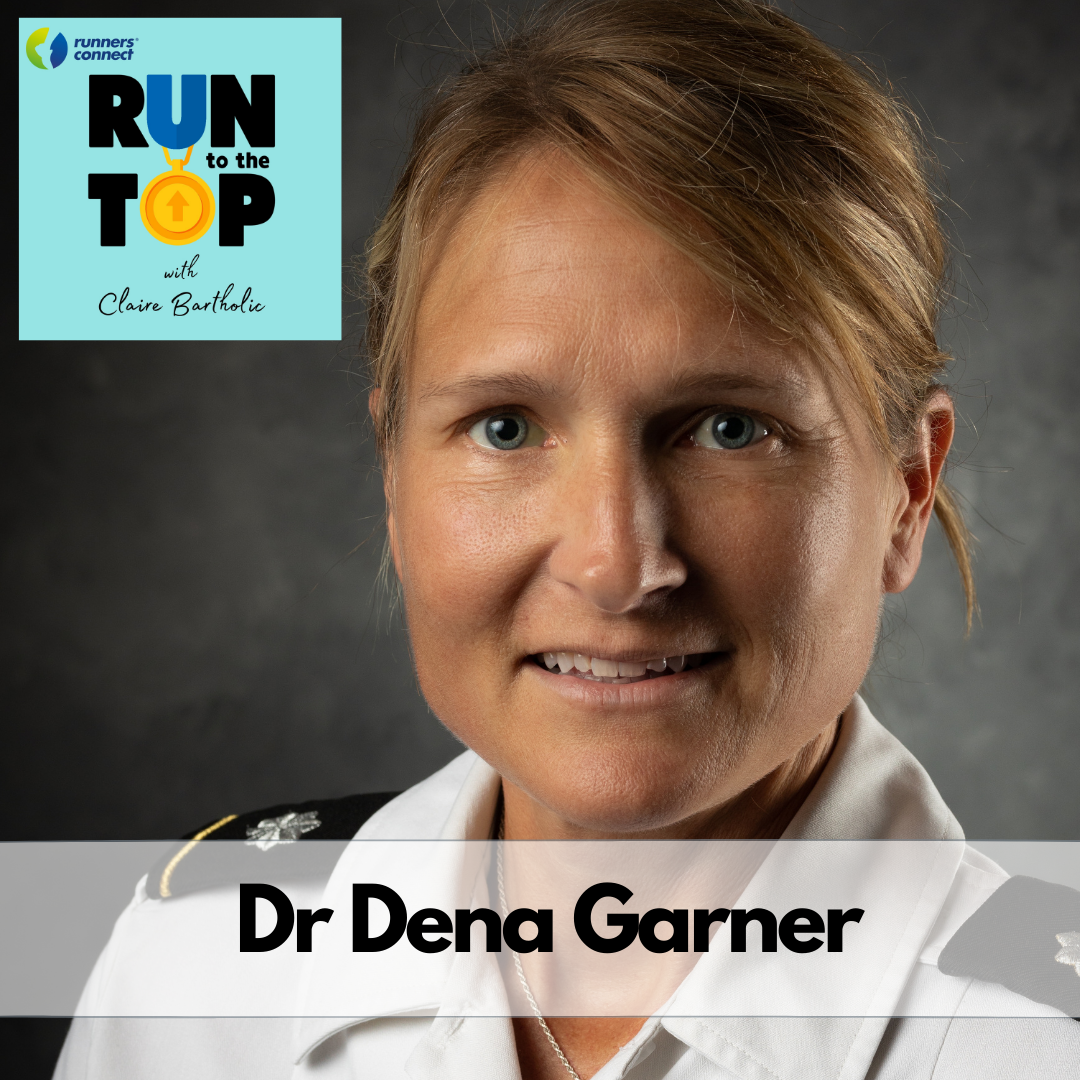
How A Low-Tech Device Improves Performance and Recovery: Dr Dena Garner
What if I told you that there was a simple way to improve your muscular endurance, reduce your respiratory rate when running, reduce the production of lactic acid, slash your cortisol build up in half, allowing for faster recovery times after every run? I bet you'd be all over it, right? And then you might be asking, what's the catch? My guest today is Dr Dena Garner and she's spent the last 17 years of her career researching and developing a very simple product that promises to do just that. Dr Garner is a professor at The Citadel, one of six senior military colleges in the United States. She has degrees in exercise science and muscle physiology as well as a postdoctoral fellowship in neurology. At The Citadel, her research has concentrated on the effects of a mouthpiece inserted over the lower teeth during exercise. She measures physiological parameters of her subjects while using the mouthpiece, including levels of lactate and cortisol, as well as respiratory rate and has found some pretty incredible results. Her research has shown that the specific way you place your jaw and tongue, aided by a mouthpiece, results in a physiological change in the airway, which improves performance outcomes. In addition to opening your airway, when you bite or clench down on the mouthpiece during exercise, research cites an increase in cerebral blood flow, which may be the link to the improvements in cortisol and lactate. Okay, okay, I know what you are thinking. This is pretty weird, right? And I'm not afraid to say that to Dr Garner in our conversation. But, if you think about it, it could make sense. Think about when you are concentrating hard on something. Many people instinctively clench their teeth or chew on a pencil or their lip or a necklace or bite their nails. Why do we do that? What if it's not just a habit your mom tries to get you to stop doing? What if it's a stress-relieving mechanism that's evolved over time that actually does help us? I don't know about all that, but what I do know is that this research is absolutely fascinating to me and potentially could be a gamechanger in performance and recovery. Let's find out. CONNECT, COMMENT, & COMMUNITY: Leave a review on Apple Podcasts! A great FREE way to support the show! Email Coach Claire Follow Claire on Instagram Follow RunnersConnect on Instagram Join the Elite Treatment where you get first dibs on everything RTTT each month! Runners Connect Winner's Circle Facebook Community RunnersConnect Facebook page GET EXPERT COACHING AT RUNNERSCONNECT!

How to Fuel For the Marathon
Having a solid fueling plan for the marathon can make the difference between a great race and a disaster. But how do you know what to eat, how much to eat, and when? Coach Claire Bartholic explains exactly how much runners need to take in before and during the marathon. She talks what you should be doing in the days before the race to top off your muscles' storage of glycogen, what you should eat race morning, and just how many carbs and calories you need to take in to avoid the bonk and cross the finish line your fastest! CONNECT, COMMENT, & COMMUNITY: Leave a review on Apple Podcasts! A great FREE way to support the show! Email Coach Claire Follow Claire on Instagram Follow RunnersConnect on Instagram Join the Elite Treatment where you get first dibs on everything RTTT each week! Runners Connect Winner's Circle Facebook Community RunnersConnect Facebook page GET EXPERT COACHING AT RUNNERSCONNECT! Marathon Nutrition Blueprint https://runnersconnect.net/marathon-nutrition-blueprint/

Fun is Abdi Abdirahman's Secret to Running Longevity
Are you ready to be inspired? And maybe have some fun while we are at it? Then this is the episode for you. For most of us, qualifying for the Olympics is a completely unrelateable accomplishment, right? Well how about qualifying for FIVE of them? Abdi Abdirahman is the only American distance runner to qualify for five Olympic Games. At age 44, Abdi is also the oldest American runner to qualify for the Olympics, the oldest male to podium at the New York City Marathon, and the USA Track & Field master's record holder in the marathon. Born in Somalia, he came to Tucson, Arizona, at age 16 after his family escaped civil war. He became an American citizen in 2000 and has represented the United States as a 10,000m runner at the 2000, 2004, and 2008 Olympics, in the marathon in 2012, and has qualified for the 2020 Olympic marathon to be held in Japan this year. Coach Claire Bartholic wanted to talk to "The Black Cactus" as Abdi is also known, not just about his amazing accomplishments, but about the things that are relatable and helpful to all runners--not just elites. Because the truth is that we are all runners and while Abdi just happens to be one of the fastest runners on the planet, we are all just putting one foot in front of the other. His new book is called, Abdi's World: The Black Cactus on Life, Running, and Fun, and in it, Abdi not only tells his incredible life story, but he also talks about how he leads a fulfilling life that is not all about running. It's like a guidebook that is part life lessons, part training tips, part autobiography, and all uniquely Abdi. Claire talks with him about his 5 rules of running that might just help you have a better run today. It's kind of hard to believe that such a dedicated, durable and resilient runner like him sometimes has to convince himself to go for a run, but it's true and she asks him all about it. This conversation is as much about living a passionate life as it is about running and it's hard to find someone more passionate about both than Abdi. CONNECT, COMMENT, & COMMUNITY: Leave a review on Apple Podcasts! A great FREE way to support the show! Email Coach Claire Follow Claire on Instagram Follow RunnersConnect on Instagram Join the Elite Treatment where you get first dibs on everything RTTT each week! Runners Connect Winner's Circle Facebook Community RunnersConnect Facebook page GET EXPERT COACHING AT RUNNERSCONNECT! This week's show brought to you by: Perform from the Amino Company. Perform is an amino acid based formulation that I simply add to my water bottle during my run. It tastes great and is easy on my stomach. Clinical studies have shown that Perform helps improve endurance, reduce fatigue, and increases muscle protein synthesis so you recover faster after the run. Check out the research here: https://aminoco.com/rttt If you're interested in learning more and giving Perform a try, we've got a special offer for you where you can save 30% by using the code RC30. Just head to: https://aminoco.com/rttt and use the code RC30 at checkout to save 30% This week's show also brought to you by: Heal from the Amino Company. Heal is an amino acid, whey and creatine based formulation designed to reduce recovery times and improve physical function after injuries by accelerating muscle repair while helping maintain a healthy inflammatory response. Check out the research here: https://aminoco.com/rttt If you're looking for a nutritional advantage when it comes to recovering from your running injury or your daily training I recommend you give Heal a try. If you're interested in learning more and giving Heal a try, we've got a special offer for you where you can save 30% by using the code RC30. Just head to: https://aminoco.com/rttt and use the code RC30 at checkout to save 30%

How Slow Running Can Make You Faster
Do you want to know the number one way to get faster as a runner? SLOW DOWN! Yes, it seems like the opposite of what you want to do to improve, but it's absolutely true. In this bonus episode of the Run to the Top, Coach Claire Bartholic will explain the science behind aerobic development and recovery and why slow, easy runs are the most beneficial. Not only that, but she describes exactly HOW to run slowly and master this powerful technique. CONNECT, COMMENT, & COMMUNITY: Leave a review on Apple Podcasts! A great FREE way to support the show! Email Coach Claire Follow Claire on Instagram Follow RunnersConnect on Instagram Join the Elite Treatment where you get first dibs on everything RTTT each week! Runners Connect Winner's Circle Facebook Community RunnersConnect Facebook page GET EXPERT COACHING AT RUNNERSCONNECT!
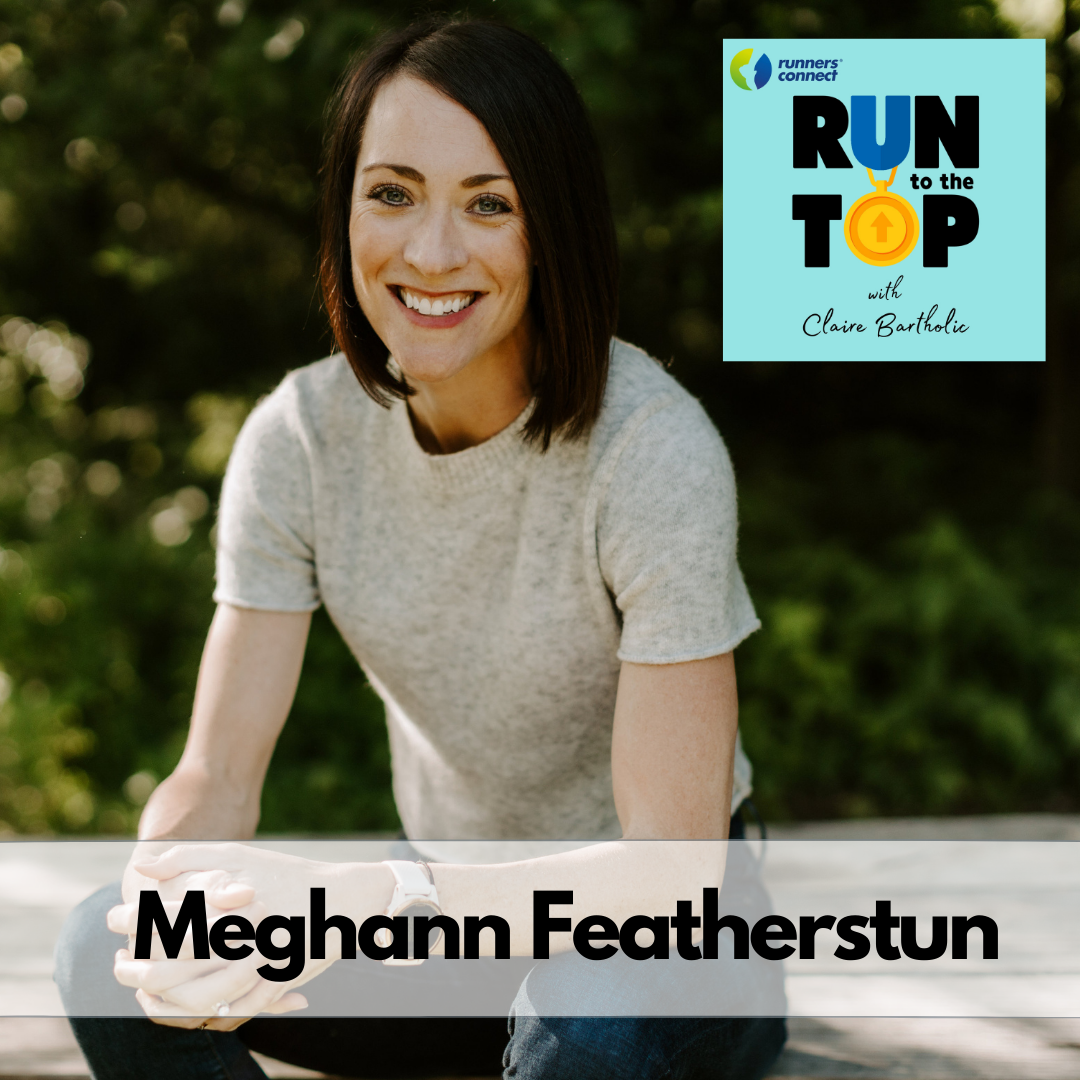
The Truth About Nutrition For Runners: Meghann Featherstun
Accurate nutrition information for runners can get pretty murky out there. It can be tough to figure out what's really important and really, what's even true. And that's why I've brought on Meghann Featherstun who's going to give it to us straight. Meghann is a registered dietitian and board-certified specialist in sports dietetics at Featherstone Nutrition– which means she's an expert in sports nutrition. Her passion is to bring accurate nutrition and fueling information out to runners everywhere, backed by research and science. And her mission is to debunk the food myths that hurt runners' health and performance. Oh, yeah, she's also a mom of two and a 2:57 marathoner. I invited Meghann on the show to play a little game that she plays every week with her Instagram followers called "is that freaking true Friday" and we had lots of fun with this one. So get ready to brush up on your running nutrition knowledge and crush a myth or two with Meghann. CONNECT, COMMENT, & COMMUNITY: Leave a review on Apple Podcasts! A great FREE way to support the show! Email Coach Claire Follow Claire on Instagram Follow RunnersConnect on Instagram Join the Elite Treatment where you get first dibs on everything RTTT each week! Runners Connect Winner's Circle Facebook Community RunnersConnect Facebook page GET EXPERT COACHING AT RUNNERSCONNECT!

How Over-Racing Impacts Your Running
On this bonus Run to the Top, we are going to talk about racing, and specifically over-racing. That's when you are racing so often that it's actually hurting your progress as a runner. Now you might be wondering why I chose this topic, over-racing, right now just as some races are finally coming back after the pandemic. But that's EXACTLY why I think this is the perfect topic right now. Races are coming back and we runners are so thankful and excited to get back to the sport that it's tempting to sign up for any and every race you can. I'm the last person that is going to tell you that you shouldn't go race, be social, test your fitness, and hang out with your tribe of runners. If it's bringing you joy, it's probably good for you. We all could use a big dose of joy right now. But if that's how you spend every weekend and you are wondering why your race times haven't improved in a while, or if they are getting worse, over-racing might have something to do with it. RunnersConnect athlete Jon tells us how over-racing at the beginning of his running journey started to affect his ultimate goal, the marathon, and how he now uses tune-up races as a boost to his build up instead of a detriment! Learn how you can incorporate tune-up races into your training in a way that they are beneficial to your bigger goal race and your long-term progress. Or if you just love racing as much as possible, learn how you can transform those races into workouts that improve your fitness! CONNECT, COMMENT, & COMMUNITY: Leave a review on Apple Podcasts! A great FREE way to support the show! Email Coach Claire Follow Claire on Instagram Follow RunnersConnect on Instagram Join the Elite Treatment where you get first dibs on everything RTTT each week! Runners Connect Winner's Circle Facebook Community RunnersConnect Facebook page GET EXPERT COACHING AT RUNNERSCONNECT!

How New Data Can Help You Run Better: Grant Trewartha and Anna Kosciuk
Can new tech in your shoe change the way you run for the better? We are all used to our watches telling us how fast (or slow) we are, counting our heartbeats, our footsteps, or even telling us how much recovery we need (or trying to anyway!) But now there is technology that can tell us even more. New wearables can give us some clues to our own unique running form so we can better understand where we can improve. My guests today are here to tell you all about it. Dr Grant Trewartha is the Head of Biomechanics at the wearable technology company NURVV. His research into the technical aspects of endurance running helped shape the development of a unique shoe insert called NURVV Run. Prior to his time at NURVV, Grant spent 16 years at University of Bath, leading significant research about injury prevention for rugby players as well as research on the biomechanics of sprinting and tendon mechanics during running. Anna Kosciuk is a Sport Scientist and a Footwear specialist and is also a part of Biomechanics team at NURVV. Anna's expertise is in learning how we can prevent running-related injury risk factors and maximize running performance through exercise and footwear. Prior to NURVV, she spent 4 years working in a specialist footwear lab where she performed detailed running gait analyses to match runners with the most perfect pair of running shoes based on their individual motion biomechanics. So we get into the nitty gritty about shoes, running form, and how wearable technology works and where it's headed in the future. Tons of great info in this one. And in case you are wondering, no, we are not sponsored by NURVV and I have never tried the product. I just think that this kind of tech is interesting and could be very relevant to helping runners become better without having to go to a fancy lab. But I did reach out to see if I could snag a discount code if you are interested in trying it: RUNPOD30 saves you 30% off NURVV Run in the US and UK only at nurvv.com This week's show brought to you by: Perform from the Amino Company. Perform is an amino acid based formulation that I simply add to my water bottle during my run. It tastes great and is easy on my stomach. Clinical studies have shown that Perform helps improve endurance, reduce fatigue, and increases muscle protein synthesis so you recover faster after the run. Check out the research here: https://aminoco.com/rttt If you're interested in learning more and giving Perform a try, we've got a special offer for you where you can save 30% by using the code RC30. Just head to: https://aminoco.com/rttt and use the code RC30 at checkout to save 30% CONNECT, COMMENT, & COMMUNITY: Leave a review on Apple Podcasts! A great FREE way to support the show! Email Coach Claire Follow Claire on Instagram Follow RunnersConnect on Instagram Join the Elite Treatment where you get first dibs on everything RTTT each week! Runners Connect Winner's Circle Facebook Community RunnersConnect Facebook page

Bonus Episode: How To Run By Feel
Can you run a specific workout pace on feel alone? Without looking at your watch? Tempo runs, steady runs, threshold runs, VO2 max workouts...they all have a "feel" to them and if you can learn how to pace them properly without being a slave to your watch, you can become a better, more adaptable runner. On this bonus episode of the Run to the Top, Coach Claire Bartholic introduces Laurie, a RunnersConnect athlete that has gotten very good at learning to pace by feel and effort. Laurie shares how she does it and Coach Claire explains how you can figure out how you should feel in any given workout by understanding the specific purpose of each one. CONNECT, COMMENT, & COMMUNITY: Leave a review on Apple Podcasts! A great FREE way to support the show! Email Coach Claire Follow Claire on Instagram Follow RunnersConnect on Instagram Join the Elite Treatment where you get first dibs on everything RTTT each week! Runners Connect Winner's Circle Facebook Community RunnersConnect Facebook page
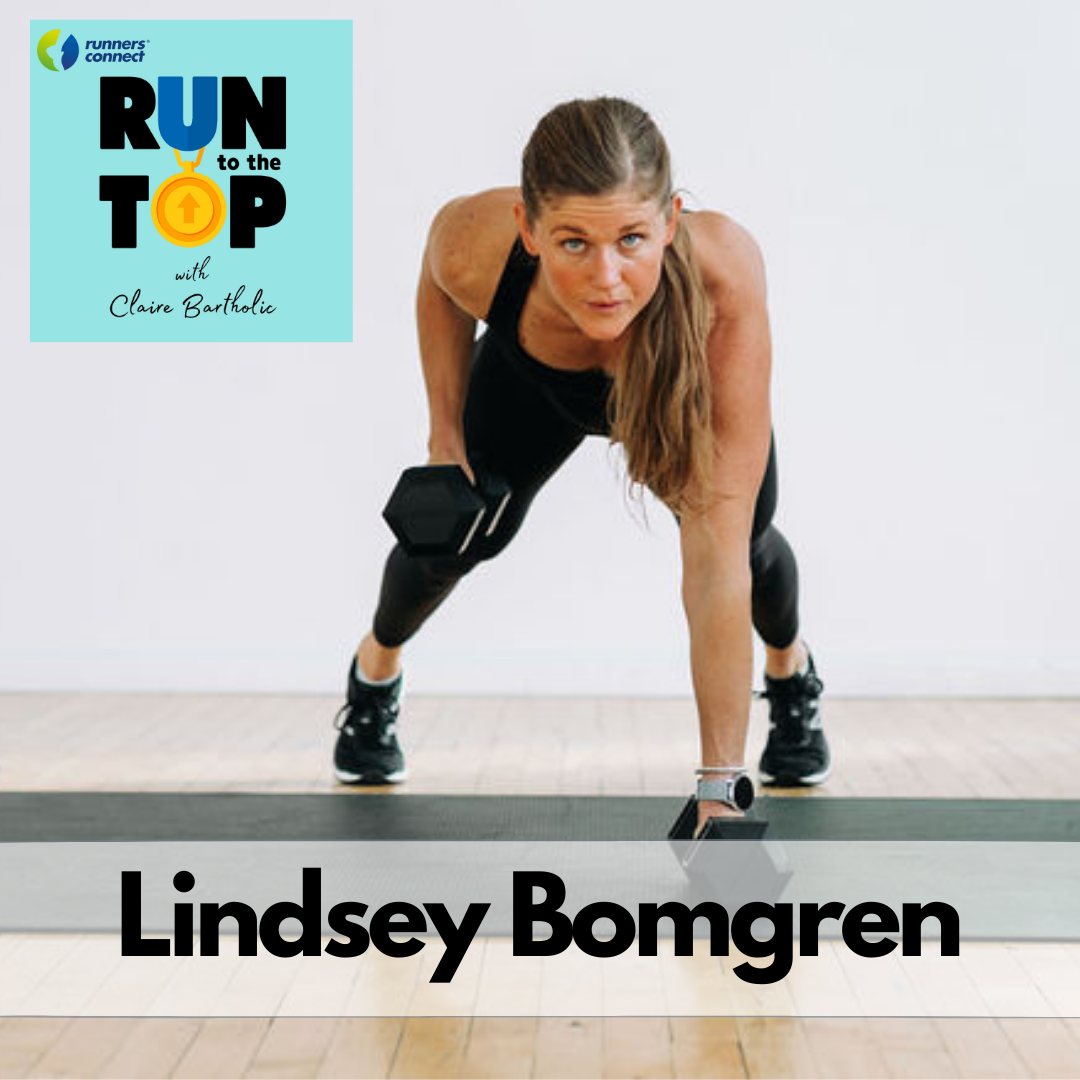
How Much Strength Training Runners Need: Lindsey Bomgren
Lindsey Bomgren from Nourish Move Love is a super fit Minnesota trainer and creator of amazing and free YouTube strength videos. While they are not marketed as "runners' workouts" they are the exact same exercises that Coach Claire prescribes to athletes because they are classic strength moves that build better runners. But Lindsey just does them better. Lindsey is a certified personal trainer and group fitness instructor who has been featured in Women's Health Magazine, The Bump, Yahoo Finance, Cosmopolitan, Popsugar, Brit + Co, Well + Good and more. Lindsey is tough, but also cheerful and encouraging, often interjecting with her signature catch phrase "holy bananas" when things get hard. Coach Claire has been using Lindsey's videos over the past few month and the difference in her strength is remarkable! Oh, and don't forget to stay tuned at the end of the episode where we've got a major announcement about the future of the Run to the Top! Runners Connect Winner's Circle Facebook Community RunnersConnect Facebook page email Coach Claire Follow Claire on Instagram Follow RunnersConnect on Instagram Join the Elite Treatment

2:38 Marathoner Andie Cozzarelli Joins RunnersConnect
The RunnersConnect family has grown! We welcomed a brand new expert coach to our staff this year and I'd like to introduce you to her. Andie Cozzarelli is a 2:38 marathoner, semi-pro athlete from Raleigh, NC. She ran in college at North Carolina State, becoming a 2 time All-American in the 10k and joined Oiselle after college. She qualified for the 2016 Olympic Trials in the Marathon with a half marathon and later went on to win her first full at the Indianapolis Monumental Marathon. After coaching on her own, Andie has joined the coaching team at RunnersConnect and we couldn't be more thrilled! But Andie's running road was not always smooth and easy. As a sophomore in college, she was diagnosed with Celiac Disease after struggling with her training and developing some disordered eating habits. Her performances improved after making some important dietary changes, but it wasn't enough to prevent some serious physical and mental health issues connected to her training and fueling. Thankfully, she has recovered and now is an advocate for mental health, nutrition, and balance in training. Aside from running & coaching, Andie and Claire have another sweet passion that they share and we'll get into that in this conversation.

100 Marathons at Age 24: Jocelyn Rivas
If you think running a single marathon is tough, get ready to be inspired by Jocelyn Rivas. Jocelyn is on a mission to not just run 100 marathons, but break the Guinness World Records (plural) for being the youngest person to run 100 marathons AND the youngest woman to run 100 marathons AND the youngest Latina to run 100 marathons. Whew! At age 24, Jocelyn already has 82 marathons behind her, many done during the pandemic, which was no easy feat. And we're not talking loops she's running through her neighborhood. These are real certified races, each one bringing her closer to her ambitious goal. No stranger to adversity, Jocelyn is a DREAMer who was brought to the United States from El Salvador as a child and remains in this country for now thanks to the Deferred Action for Childhood Arrivals Act. Part of her 100-marathon motivation stems from her desire to shine a light on people like herself and to show others that women can do anything no matter where they were born. She talks about what this quest means to her, how she manages to pull this off with a challenging full-time job, and what training and recovery is like for her. Oh, and she's doing this on a completely plant-based diet. Jocelyn's great determination and positive energy makes for a very unique and enjoyable conversation with Coach Claire! Questions Jocelyn is asked: 4:00 You are currently trying to break two Guinness World Records to become the youngest person to run 100 marathons and the youngest woman to run 100 marathons. How old are you and what got you started with this quest? 4:50 How did you start running then? Did you just start with a mile or what was the first day of training like? 5:45 How old were you when you ran your first marathon? 5:56 When did you get this idea to go for the world record? 7:05 Can you explain what a DREAMer is? 8:04 What country are you from? 8:11 Does anyone else in your family run? 8:43 How did the pandemic affect your mission? 10;33 What are some of your favorite stories? How many marathons have you run in a week? 11:49 The obvious question is how do you recover from running 26.2 miles for six out of nine days? You must be sore and tired, so how do you get through that? 16:33 Let's talk about food. You're a vegan so you're like me, and the first question that everyone's going to ask is, how do you eat enough on a vegan diet? Where do you get your protein? How do you pull this off on just plants? 19:06 You just started eating vegan as an experiment. It wasn't ethical or environmental. You just saw that people were doing it and decided to try it. Is that it? 19:52 Do you still use gels while you run marathons or do you eat something else? 20:50 How long does it usually take you to run the marathons? Are you running them really fast or what is your average finishing time? 22:28 What are you doing in-between each marathons? Do you have some kind of structured plan? Do you do speed work? Do you do strength training or are you just recovering? 23:59 Have you had any injuries? Are you worried about overtraining or anything like that? 25:22 You're still working a full-time job 40 hours a week. What do you do and how do you fit all this in with your life? 29:47 You're planning on hitting marathon number 100 in November in your hometown at the Los Angeles Marathon. What are you anticipating that day to be like? 31:13 What's been the hardest part of this journey for you? 31:54 You don't drive. Why don't you drive? 33:34 What kind of support are you getting from the community? If you pull this off, you will be the youngest Latina to run 100 marathons. Why is that important to you? 35:07 Once you accomplish this, do you have any idea what's next? 35:31 What's your next marathon coming up? Questions I ask everyone: 36:14 If you could go back and talk to yourself when you started running, what advice would you give yourself? 36:53 What is the greatest gift running has given you? 37:18 Where can listeners connect with you? Quotes by Jocelyn: "I was actually not in a good place mentally. There were things going on with being deported potentially, and so I was just in a very dark place. And I was like, I want to make a statement. I want to make a statement that DREAMers are here to do something good. DREAMers are here to just help." "My biggest thing is I take recovery, I prioritize it more than anything. I use so many tools. I massage myself. I use so many lotions. You would make fun of me because I literally have like 10 different lotions and I use them all." "I use running as a type of therapy and it's just so amazing. Once I am done with work, I go for a run. I come back and I'm just like, I feel amazing. That feeling that wow, just everything goes away." Take a Listen on Your Next Run Leave a space for libsyn link Want more awesome interviews and advice? Subscribe to our iTunes channel Mentioned in this podcast: JocelynRivas.com Students Run LA (srla.org) Runners Connect Winner's Circle Facebook Community RunnersConnec

Train the Body You Have to Get the Body You Want: Tianna Bartoletta
Tianna Bartoletta is one of the best sprinters in the world, and she's on hand to teach all of us, even the endurance runners, what we can learn from short distance running. Really short. For most of us, a sprint is less than 20 seconds, which is the distance short enough to reach your top speed completely anaerobically, or without needing oxygen for fuel. Past this point, your lungs scream for oxygen and you will probably not be able to sustain the effort. Why should long distance runners care about those 20 seconds? Because by tapping into your anaerobic system a couple times a week, you teach yourself to burn that fire just a little hotter, and train your other gears to run a little more smoothly and efficiently. Tianna also talks about what surprising things endurance runners can learn from long jumpers and yogis, how to frame our body talk in a positive way, how she's adapted her training as she's aged, and her gold-medal-winning, world-record-breaking Olympic relay experience. This episode has something for everyone, whether you're a walker, a sprinter, or an endurance monster! Tianna is a 35 year-old American sprinter and long jumper. She is a two-time Olympian with three gold medals. She ran the lead leg in the world record setting 4 × 100 m relay team in 2012, handing the baton to Allyson Felix. At the 2016 Summer Olympics she won two more golds, first with a personal best to win the long jump then again leading off the winning 4 × 100 m relay team. In non-Olympic years, Tianna has won the World Championships 3 times and competed as a pusher on the U.S. bobsled team in 2012. And if all of that weren't amazing enough, she's also a registered yoga teacher, writes a blog at tiannabee.com , and her memoir, Survive And Advance, will be released this June! Questions Tianna is asked: 4:37 This conversation is a little bit delayed because you got a surprise drug test at 7:00 in the morning. Can you talk about that? 5:09 Can you talk about the 60-day transformation that you posted? What happened? I thought you looked great before, but now you're like a sculpture. It's amazing. Can you tell me how that happened? 9:01 I remember reading in one of your Instagram threads that you said you were hungry during your 60-day transformation, and that's not something that we really like to admit. Why did you want to tell people like, "Hey, yes, this is working but to be perfectly honest, I'm hungry?" Why did you want to share that part about it? 11:45 You'll have to forgive me for asking what might end up being very basic questions, but our listeners mostly are endurance runners. So when somebody says, "I'm going to go run 100," they're usually talking about 100 miles not 100 meters, and you are a 100-meter specialist among many of your talents. So I would love to learn more about what it takes to be a good 100m specialist? 13:41 When you say you're allergic to running long, you obviously don't just run 100 meters in training and then stop. You do obviously run long. So what's a long run for you? 17:17 Let's talk about Stephanie Bruce. One of the bright spots of 2020, an obviously crazy year, is that you two connected, and I would love to hear about that story. 19:39 In 2020, obviously Tokyo was delayed. What was that like for you when you found out the news? 22:12 In both 2012 and 2016, you were a part of the gold-winning 4x100m relay team, in the lead leg position, handing the baton to Allyson Felix. Talk us through that. What makes a good relay team? How does the coach determine the order? How many times do you practice that baton pass? 24:19 What was your favorite moment from those games? 25:19 You are also a gold medalist in the long jump, and I want to talk about the world record there. The American world record and the overall world record, those are very, very old from the '80s and '90s. What's it going to take to break it? 29:00 You recently had a meet where you were jumping really, really well, and you registered under the team name AARP. Can you explain that? 30:37 What's your key to longevity in this sport then? What makes you at your age still able to perform at such a high level? 32: 17 How do you get your ego out of the way when training? How do you tell yourself, "No, it's okay to step back?" 34:19 Let's talk about yoga. One stereotype about runners is that they really don't have to be all that flexible. You are a yogi and you are super flexible. Can you share how yoga physically helps you, and then we get more into the mental side of it? 36:44 You have a book coming out. Tell us about that. 37:57 When does your book come out? 38:10 What do you think long-distance runners can learn from sprinters, jumpers, and yogis? 39:27 How often do you do plyometrics? 40:14 What's next for you? Questions I ask everyone: 40:39 If you could go back and talk to yourself when you started running, what advice would you give yourself? 41:04 What is the greatest gift running has given you? 41:17 Where can listeners connect

Jump Start Your Running With Plyometrics: Duane Scotti
You probably know that strength training can help a runner minimize injuries but what about plyometrics or jump training? Do runners really need plyometrics? Wouldn't that lead to more injuries? Dr. Duane Scotti thinks the opposite is true. Dr. Duane Scotti, DPT, PhD, OCS is a running physical therapist, run coach, host of the Healthy Runner podcast, and founding owner of SPARK Physical Therapy, and has been a leader in the rehab and running community for over 17 years. He is passionate about helping runners feel strong and confident so they can stay healthy and become lifelong injury free runners! Dr. Duane truly believes that anyone can run and that all runners should be treated differently as athletes. He is on a mission to change the traditional thinking that running causes "overuse injuries" and you must "take a break" in order to get better. Through run specific training (exercises and running progression) you can build your body to be a strong resilient runner and stay active, stay healthy, and just keep running! You may think it's counterintuitive to take time out from your running to work on your jumping, but running is a series of one-legged hops so incorporating some plyometric training into your workout plan to get better at those one-legged hops can dramatically change how well you run and how good you feel while running. In this episode, Duane explains exactly why plyometrics is important for runners and shares what he thinks are the key muscles runners should focus on, and also gives some great examples of non-jumping strength training exercises that all runners should do to become better and stronger. Some exercises were even new to Coach Claire! Through the Healthy Runner community, Duane strongly believes living an active lifestyle can help you stay healthy and live a pain free life. At SPARK Physical Therapy, Duane guides his clients in achieving a high-performance active lifestyle through his in-person clinic and virtually anywhere in the world. You could be a runner who aspires to complete your first half marathon, or you could be an experienced marathoner of 30 years. Duane has been the fitness and health support system and the go to resource for coaches, trainers, and runners. Duane is also honored to be a part of team UCAN as a featured expert dedicated to training strategies and innovation. He has his clients' best interest in mind as evidenced by constantly creating and sharing new videos, podcast episodes, and blog posts to help runners improve their confidence and strength for running. Through his programs, coaching, and virtual rehab, Duane has successfully helped thousands of runners crush their running goals, hitting personal bests over the years. He has a passion for helping runners of all abilities stay healthy and prevent injuries in order to get back to the workouts and runs they love! Questions Duane is asked: 5:27 You're a physical therapist who specializes in runners. Can you tell us a little bit about your own running journey and how you came to focus on runners in your practice? 6:30 You used to dance. What kind of dancing did you do? 7:20 What is plyometrics and why is it good for runners? 9:06 I'm going to play a little devil's advocate for you here. So if we are jumping all the time, running is a series of hops from one foot to the other, if we're already jumping all the time, why do we need to do more jumping? 10:03 How do your muscles function differently when you're running and jumping versus strength training? 11:06 Are plyometrics for every runner? 12:43 Let's say I am a Level 1 runner. I run three days a week, speed work one day, easy day one day, long run on the weekend, and I've never done any plyometrics before. What would your prescription be for me? 14:26 You're saying that we need to practice landing softly in the gym as well as when we're running? 15:22 What's Level 2 plyometric training? 19:32 When I was in super heavy marathon training, the miles piled up, I was running every day, and the last thing that I wanted to do was jump around because I would be so tired. So what do you say to somebody who's really deep into marathon training and who is balking at a little plyometrics? 22:00 One thing about plyometrics, at least in my experience, is that it ends up being really high cardio. For the most part, I want to get my cardio from running, not from my extra activities so what's your position on that? How much do you really need or are you a fan of getting your heart rate up in non-running activities? 24:10 At least with other kinds of strength training, a little goes a long way for runners because we're not trying to get huge and strong and build muscle mass and deadlift a million pounds. We are trying to be not weak for running, so we can get away with a little less strength training than some other kind of athlete in a different sport. So is the same true with plyometrics? Can I just do like five, ten minutes a week and call it good? 26:44 There are

The Relatable, Rambling Runner: Matt Chittim
The Relatable, Rambling Runner - Matt Chittim Most running podcasts focus on professional runners. Matt Chittim's Rambling Runner podcast focuses on dedicated amateur runners who are working hard at the sport while also balancing running with the rest of their lives. That's not to say Matt ignores the elites. He also covers the other end of the spectrum with his Road to the Trials podcast which follows the training, racing, and experiences of some of America's best runners as they prepared for the Olympic Trials. As an athlete, Matt is a former college basketball player and coach. He started running at a young age with an occasional 5k or track season but most of his running was at the service of getting fit for other sports. After college Matt started taking running more seriously and eventually became fully invested in the running community. Matt is currently working through a year-long journey called Mastering 40 in which he is hoping to break 40:00 in the 10k after turning 40 years old. He talks to Coach Claire about his training ups and downs and what motivated him to set this "stretch goal." Matt also talks about how his Ramblin Runner podcast got started, his most memorable interview, and what he thinks the differences are between professional and amateur runners. He is a natural storyteller who brings a unique perspective to the running community! Questions Matt is asked: 3:50 Most of us know you from your popular running podcast Rambling Runner. Can we go back to the beginning of how it all got started and how it's going now? 8:10 What do you attribute the growth of your podcast to? 9:32 What have been some of your most memorable interviews? 11:05 Who is still on your list of dream interviews? 13:28 You've got another show, Road to the Trials, which obviously interviews the best of the best, the elite Americans who are gunning for the Olympic Trials, so you have interviewed your share of elites and you've interviewed your share of just recreational runners. What would you say is the difference between the two? 15:54 PTs probably love working with professional runners because they do what they're told more than amateur runners do. 18:38 You have a new series within your podcast called Mastering 40 that you started last August, dedicated to chronicling your journey of breaking 40 minutes in the 10k. Let's talk about that and what you are doing to prepare. 21:29 How's your Mastering 40 goal going? 22:21 How did you injure your knee and how did it affect your training goal? 23:07 Do you have a date for your goal? When's the time trial? 24:26 What kind of races are you looking for to prepare for your time trial? 25:19 What are all the other things you're doing? What's training like? Nutrition, sleep, all that good stuff, etc? How are you doing in those areas? 29:28 Another project of yours is Road to the Trials. Can you talk about that and who you bring on the show? 32:33 We could talk about how great such and such race was but you really learn so much more when everything falls apart. 36:54 What's next for you? What happens when you break 40? Questions I ask everyone: 40:01 If you could go back and talk to yourself when you started running, what advice would you give? 40:46 What is the greatest gift running has given you? 41:00 Where can listeners connect with you? Quotes by Matt: "I started the Rambling Runner podcast with the idea of there's a lot of running podcasts out there that I really liked and the vast majority of them were talking to professional runners... and I was like, 'All right, no one's talking to amateur runners. Let's do that.'" "Professional athletes in any sport are incredibly gifted athletes, and I think that the thing that's easy to miss sometimes for dedicated amateur runners is sometimes they hold themselves to too high a standard. These folks, they were awesome at running the minute they started running." "One of the things I've learned through the show is that just like anything else, racing is a skill. It's not just a test of fitness." Take a Listen on Your Next Run Leave a space for libsyn link Want more awesome interviews and advice? Subscribe to our iTunes channel Mentioned in this podcast: The Rambling Runner podcast Road to the Trials podcast Amino Co - RunnersConnect Anchor - The easiest way to make a podcast InsideTracker.com Runners Connect Winner's Circle Facebook Community RunnersConnect Facebook page RunnersConnect Retreats email Coach Claire Follow Matt on: Instagram Twitter We really hope you've enjoyed this episode of Run to the Top. The best way you can show your support of the show is to share this podcast with your family and friends and share it on your Facebook, Twitter, or any other social media channel you use. The more people who know about the podcast and download the episodes, the more I can reach out to and get top running influencers, to bring them on and share their advice, which hopefully makes the show even more enjoyable for you!
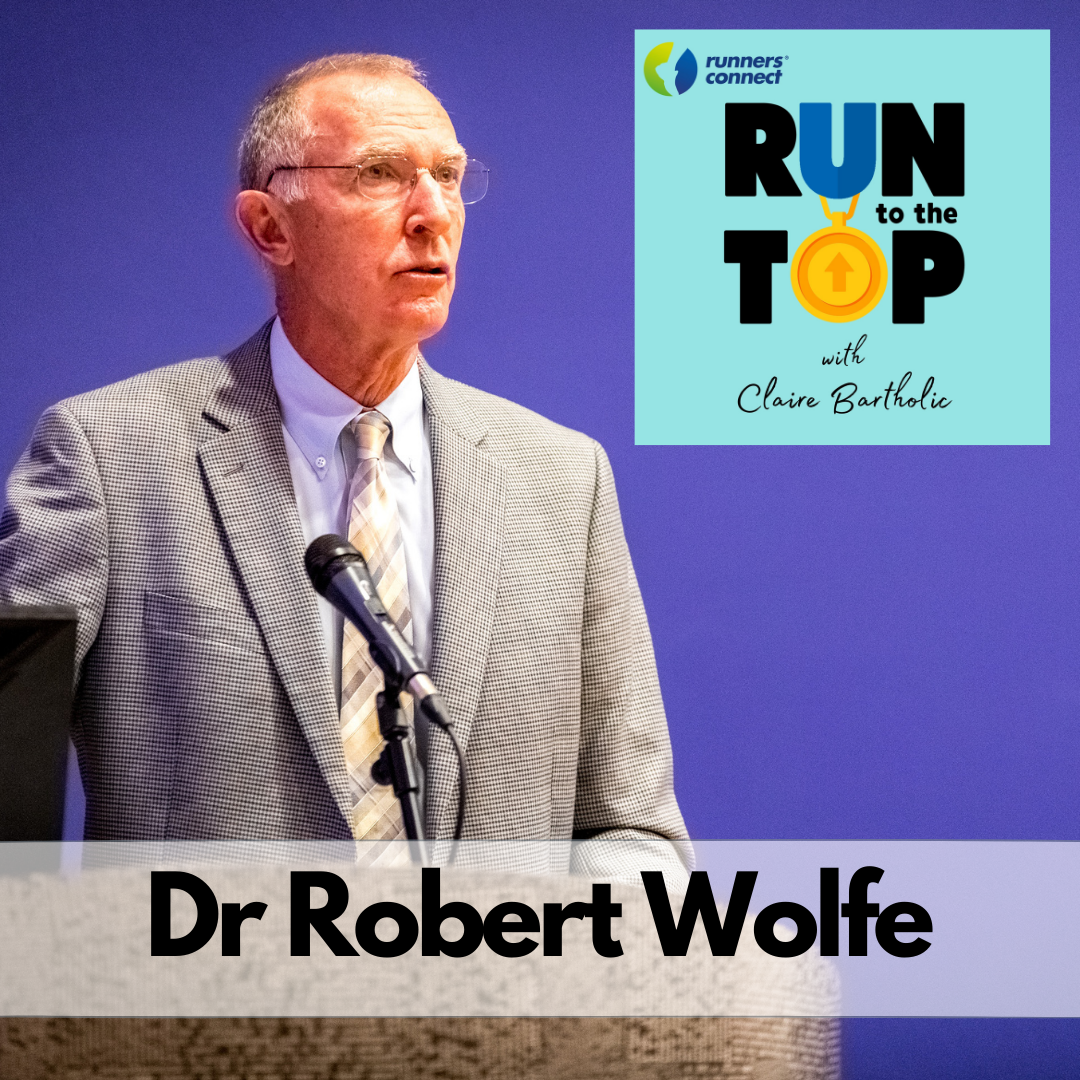
How Much Protein a Runner Really Needs: Dr. Robert Wolfe
As runners, we think about how to fuel properly. That includes carbohydrate and protein, but what about essential amino acids? How do they help us optimize our nutrition to become the best runners we can be? Dr. Robert Wolfe, Ph.D, is here to talk as both a scientist and a runner. As the director of the Center for Translational Research on Aging and Longevity at the University of Arkansas, he focuses his research on the regulation of muscle metabolism. His research publications have been cited an impressive 75,000+ times, and he shares how amino acids might be able to help your performance and recovery. Dr. Wolfe has also been running for 60 years and has run an amazing 62 marathons under 2:30 in his lifetime! Coach Claire talks to him about his running career, how to stay young and healthy, what happens in the body when we run, and how our food can help us before, during, and after the run. Dr. Wolfe also shares his thoughts on the importance of keeping a consistent exercise routine as we age, so there's definitely a lot of great food for thought in this episode! Dr. Wolfe's undergraduate studies were at the University of California, Berkeley, and he completed his Ph.D. degree at UC Santa Barbara's Institute of Environmental Stress. Dr. Wolfe served as a faculty member at Harvard Medical School for nine years. Prior to accepting his current position in 2006, he was at the UT Medical Branch at Galveston, where he held the John H. Sealy Distinguished Chair in Clinical Research and was Chief of the Metabolism Unit at Shriners Burns Hospital. Dr. Wolfe has received a number of awards and invited lectureships in recognition of his work. He received the Herman Award from the American Society of Clinical Nutrition for his career contributions. He has published over 452 peer-reviewed research articles, 126 review articles, three books, including the major reference source in the field of stable isotope tracer methodology and has 5 patents. His papers have been cited 50,663 times (h index= 122), and 16,423 (h index =65) since 2011. Dr. Wolfe has been funded continuously by the NIH for his entire career and frequently held two NIH grants per year as Pl. The focus of Dr. Wolfe's research is on the regulation of muscle metabolism, particularly as affected by aging and stressors such as injury, sepsis and cancer. His research has been performed largely in human patients and normal volunteers. Dr. Wolfe has developed models using stable isotopes to quantify a variety of metabolic processes in human subjects including the oxidation and production of fatty acids, various aspects of carbohydrate metabolism, and the rates of muscle protein synthesis, breakdown, and the transport of amino acids between blood and muscle tissue. Dr. Wolfe is the Director of the Center for Translational Research in Aging and Longevity at the Reynolds Institute on Aging. Questions Bob is asked: 3:33 Before we talk about the science of exercise metabolism, I want to hear about your running journey. You've been a runner for over 50 years with 62 marathons under 2:30. Can you tell us a little bit about what your story is and how you started? 5:15 I can't imagine that every single run was super fun, so I would love to talk about what your training was like, how you trained for marathons and what are the key ingredients in the recipe for a marathon? 8:06 How old were you when you did your last sub-2:30 marathon? 8:59 As far as fueling goes, what does an endurance athlete need before, during, and after exercise? 12:09 What are amino acids? What are the different kinds (essential, branched chain, etc)? And how are they used in the body? 14:56 When we're eating enough dietary protein, does that mean we are automatically eating enough of the essential amino acids that we need? 16:53 What is the optimal amount of essential amino acids we as individuals need? 18:44 Obviously protein requirements are going to be different for an endurance runner and a bodybuilder, right? 22:51 Is the purpose of taking amino acid supplements to get everything you need for optimum performance without having to eat more food? 25:24 Is there a limit to how much amino acids the body can absorb at one? 27:55 Does the body have a way of storing essential amino acids? 29:22 If you take in too much essential amino acids, do you just excrete it? 29:44 How are the amino acids from the Amino Company produced? 32:09 How do you use amino acid supplements? Do you take it before your run, after, or even during? 36:40 When you are taking amino acids during exercise, do they activate hormones in your body? 41:00 Does your company have an amino acid formulation to help me with my insomnia too? 41:41 Besides leading the Amino Company, you are also the director of the center for translational research on aging and longevity at the University of Arkansas. So what's the secret to staying youthful and vital as we age? 43:39 Do older athletes have an advantage when it comes to longevity and aging?

How to Finally Win Your Inner Negative Mental Battle and Become Stronger and Faster: Dr Jacob Cooper
Many runners face constant negative mental battle when the run starts to get hard. If you are frequently struggling with negative thoughts, there is a way to win the mental battle. Dr. Jacob Cooper has the answers. Jacob breaks down exactly what you need to do and exactly when you need to do it, to convert your self-talk that's telling you to quit, to an ally that lets the real you triumph. So if you want to perform better at running, or really at anything in life that's challenging, keep listening and be ready to apply Dr Cooper's techniques, and finally win the negative mental battle when running hard. Jacob is a clinical sport psychologist who serves as the director of sport psychology at Appalachian State University in Western North Carolina. A former college athlete himself, he has worked with professional and amateur athletes, Olympians, and Paralympians. He has an extensive background in mental health and how it ties to performance. Jacob has developed a style of working with athletes that focuses on them holistically, with the goal of performance optimization in the pursuit of excellence. Jacob Cooper Ph.D. - Full Bio Dr. Cooper is a clinical sport psychologist who serves as the director of sport psychology at Appalachian State University in addition to his own private practice serving professional and amateur athletes. He is a member of the United States Olympic & Paralympic athlete mental health registry, which consists of a selected group of specialized sports psychologists who are thoroughly vetted by the USOPC and then made available to current U.S. Olympians & Paralympians. As a former collegiate offensive lineman turned amateur triathlete and runner (Hello Clydesdale Division!), Jacob has worked with athletes at the Olympic, Professional, and Division-1 level over the course of his career. As a sport psychologist, Dr. Cooper brings an extensive background in mental health and performance enhancement. To this end, he has developed a style of working with athletes that focuses on them holistically, across the spectrum of future-oriented performance optimization, current personal barriers/stressors, as well as more significant mental health issues that can inevitably show up in the pursuit of excellence. As a doctoral student at Boston University, he completed clinical practicums within a variety of settings, including the U.S. Department of Veterans Affairs (VA), the Federal Bureau of Prisons system (BOP) along with multiple D1 college sport medicine teams as a performance consultant. Additionally, he has published scholarly articles and cultivated a unique approach to working with athletes and teams that integrates the latest research, evidence-based strategies, and technology to help them reach their goals. In addition to high performance populations, he has a unique background and training in the areas of rural mental health, trauma recovery, serving low help-seeking populations, and military psychology. He has provided performance optimization for military personnel prior to their deployments as well as counseling for veterans transitioning back to civilian life throughout Western North Carolina, Indiana, and Boston. Dr. Jacob Cooper- Ph.D. Clinical Sport Psychologist. Director of Sport Psychology Services at Appalachian State University Licensed Clinical Psychologist & Health Service Provider (HSP) U.S. Olympic & Paralympic Sport Psychology Registry Member Education Background: B.A.- (Psychology) Taylor University (Indiana)- 4 year scholarship athlete & team captain (Football) Dual Masters Degree- Ball State University (Indiana) M.S.- Sport and Performance Psychology M.A.- Clinical Psychology PhD- Counseling Psychology (Sport and Performance Track)- Boston University Matched Clinical Residency - Charles George Veterans Hospital - Asheville North Carolina. Questions Jacob is asked: 3:59 I first found out about you from an Instagram post that the folks at ZAP posted. You were working with the elites at ZAP helping them build some mental strength. Can you tell me a little bit about how you worked with them? 5:03 How do elite and regular runners find motivation and purpose when a lot of races have been taken off the board? 6:19 Maybe this pandemic is a silver lining or maybe it's a gift because we can look at our running in a different way because we're all going to get slower as we age and performance is a huge part of why we do it, at least for some people, but once you take those PRs and the clock away, why do we run? That's got to be the most important thing, right? 7:28 We always talk about, "I want to get mentally tough," because clearly it's not just our bodies. We can train our bodies to do certain things but if the brain is not onboard, the train's not going to get all the way to the station. So how do we train our brain to be mentally tougher when things get hard? 8:30 I'm going to use myself as an example. When I'm running really hard or trying for a specific goal, I have the devil

What All Runners With Kidneys Need to Hear: Dr Sherry Mansour and Dr F Perry Wilson
How many marathon runners have acute kidney damage after they cross the finish line? According to a Yale University study, the answer is a shocking 55%. So if you've ever run a marathon, the odds are slightly better than 50% that this has happened to you. But don't worry. The damage tends to be temporary, resolving itself after a few days. So we heal, get stronger, and move on. But what if something goes wrong? Dr. Sherry Mansour and Dr. F. Perry Wilson are kidney doctors or nephrologists at Yale, and they share their expertise on running and your kidneys. Dr. Mansour actually led the research on marathon runners and kidney research. They talk to Coach Claire about who is susceptible to acute kidney damage from running, what we can do about it, and what we still need to learn. They also discuss ibuprofen which can cause kidney issues, and how it can be used safely by runners. They also delve into kidney stones. If you've ever had one, you know they are extremely painful. They cover how to minimize the risk of kidney stones and what precautions kidney stone sufferers need to take when running long distances. If you are a runner with kidneys, this is one conversation you don't want to miss! Dr. Sherry Mansour grew up and attended medical school in New York. She graduated in 2010 and received the Highest Academic Achievement Award. She was elected valedictorian of her class and was also inducted into the Psi Sigma Alpha National Osteopathic Scholastic Honor Society. She went on to complete residency training in Internal Medicine at Stony Brook University Medical Center, where she was chosen as chief medical resident. She was inducted into the Alpha Omega Alpha Honor Medical Society, Stony Brook Chapter in 2012. She then joined Yale New Haven Hospital in 2014 as a Clinical Research Nephrology fellow. She also completed her Master of Science from the Yale School of Public Health in 2019 with a focus on Chronic Disease Epidemiology. Since her arrival at Yale, Dr. Mansour has been working on identifying novel repair biomarkers in blood and urine to better predict long-term kidney and heart disease outcomes after AKI, and improve overall patient care. Her K-23 proposal is focused on understanding the role of a vessel repair pathway, known as the Angiopoietin pathway, in graft outcomes after deceased donor kidney transplantation. A link to Dr. Mansour's full biography including links to her research and publications is: Yale Medicine Profile - Dr Sherry Mansour Dr. Wilson grew up in Connecticut, before attending Harvard College where he graduated with honors in biochemistry. He then attended medical school at Columbia College of Physicians and Surgeons, before completing his internship, residency, and fellowship at the University of Pennsylvania. In 2012, he received a Masters degree in Clinical Epidemiology, which has informed his research ever since. At Yale since 2014, his goal is using patient-level data and advanced analytics to personalize medicine to each individual patient. He is the creator of the popular online course "Understanding Medical Research: Your Facebook Friend Is Wrong" on the Coursera platform. A link to Dr. Mansour's full biography including links to his research and publications is: Yale Medicine Profile - Dr F Perry Wilson Questions Dr. Mansour and Dr. Wilson are asked: 6:33 Dr Mansour, you did a study a couple years ago at Yale that studied the effects of marathon running on the kidneys. Can you explain how the study was conducted and what you found? 7:50 So marathon runners have markers like people in the ICU. That sounds horrible. Should we be worried? 8:31 Why do runners suffer from Acute Kidney Injury? Is it unique to running? Do swimmers suffer from this too? 9:23 Sherry, you said that you just run for fitness, so I assumed you would be a marathon runner since you studied the effects of marathon running on kidneys. Can you tell me why you chose to study marathon runners? 10:38 Perry, are you a marathon runner? 10:48 Perry, what questions do you have when it comes to kidneys and running? Have you experienced dehydration? Have you tested your own urine after a race? 12:13 What role does dehydration, your sweat rate, and sodium play into the types of injuries that the kidneys have after endurance racing? 14:28 It's very difficult and actually not advised to drink the same amount of fluid that you actually lose during a race. What kind of advice would you give for somebody who says, "I know I sweat a lot. How much do I drink? How much salt do I put in my water?" Are these questions that you've been able to figure out yet? 16:28 Runners, especially older runners, worry about salt because their doctors say they shouldn't intake a lot of salt if they have high blood pressure. Or if they have other kidney problems, they might have been advised to be on a low salt diet. How does that play into while you're exercising? Should you continue to not consume much salt just because you're supposed to

Limits are An Illusion: Alex Hutchinson
When you're running hard, pushing yourself to extremes, which do you think is the more limiting factor, your body or your brain? Alex Hutchinson has done extensive research on exactly that question. The Toronto-based author and journalist focuses on the science of endurance and fitness. You may know him from his book ENDURE: Mind, Body, and the Curiously Elastic Limits of Human Performance or from Outside magazine where he's a contributing editor and writes the Sweat Science column. Alex believes that our limits are elastic, stretchable, and as of yet, undefined. He and Coach Claire discuss those limits, and also tackle hydration, fueling, carbohydrates, strength training, aging and more. And just for fun, they also get into the science of why Coach Claire loves an out-and-back course way more than a loop! Alex also writes the Jockology column for The Globe and Mail, and his writing has appeared in Canadian Running magazine, Popular Mechanics (where he earned a National Magazine Award for his energy reporting), the New York Times, and he was a Runner's World columnist from 2012 to 2017. Prior to ENDURE, Alex wrote a practical guide to the science of fitness called Which Comes First, Cardio or Weights? Fitness Myths, Training Truths, and Other Surprising Discoveries from the Science of Exercise, which was published in 2011. He is also the author of the 2009 book, Big Ideas: 100 Modern Inventions That Have Transformed Our World. Alex started out as a physicist, with a Ph.D. from the University of Cambridge, followed by a few years as a postdoctoral researcher with the U.S. National Security Agency, working on quantum computing and nanomechanics. During that time, he competed as a middle- and long-distance runner for the Canadian national team, mostly as a miler but also dabbling in cross-country and even a bit of mountain running. He still runs most days, enjoys the rigors of hard training, and occasionally races, but hates to think of how he'd do on an undergraduate physics exam! Alex's best-selling book Endure has a forward written by Malcolm Gladwell, another famous Canadian runner and writer, and the updated version is now out in paperback. Questions Alex is asked: 3:34 You are an author and a journalist, but you really seem like a scientist at heart. How did you get into writing about fitness and endurance sports? 5:22 What fascinates you most about how the body works when exercising? 6:10 Your book Endure, if you could really sum it up, I would say that it is trying to discover whether it's the body or the brain that's mostly the limiting factor when you're trying to go to extremes but it's clear that it's a mix of the two. You can't say, "Oh, it's just the brain" or "It's just the body." Can you talk a little bit more about how they're interrelated and what we are finding out? 7:41 Tim Noakes is a South African scientist that has been very controversial. He's written a lot of things that turned out to be totally true and then he's written a bunch of things that maybe people have not found to be true. Can you talk a little bit about the controversy, both the good and bad things that Tim Noakes has contributed? 10:35 I would love to distill the lessons that you've learned so far about things that can help runners do better. The two main topics I would love to get into are hydration and fueling. Let's talk about hydration specifically for the marathon. Hydration needs are different for every type of body. Are there any rules of thumb that recreational runners should think about when coming up with a hydration plan for the marathon? 15:25 'Drink to thirst' is starting to become more popular but there are some populations that their thirst isn't reliable. I've heard that as you age, your sense of thirst is not as strong. Have you heard that as well? 18:05 We could talk about fueling during the race or we could talk about nutrition in general, but what I have found is that human studies are just notoriously bad when it comes to nutrition because we're not rats and we can't put humans in cages and measure everything. So what would you say are the limitations to studying nutrition on humans? 23:53 Let's get into the great carbohydrate debate. As I often tell people, what's frustrating about the word carbohydrate is that lentils, lollipops, and lumber are all carbohydrate. And if you say do eat carbohydrates or don't eat carbohydrates, clearly those three things are processed differently in your body. First of all, why do we lump carbohydrate? It's an absolutely massive category of food and clearly our body treats it differently. Carbohydrate is the preferred fuel of the brain. It's the preferred fuel of the muscles. So why isn't everybody on the carbohydrate train? 25:35 Sugar or simple carbohydrate is bad if you're not exercising but it's exactly what you need if you are trying to run a fast marathon. 27:29 A keto diet could be exactly what an ultramarathoner would want to do. They're not so concerned about u

Track Club Babe Kim Clark Is Running for Good
Kim Clark's 110,000 Instagram followers know her as Track Club Babe. Kim microblogs daily offering inspiration, encouragement, and rock-solid training advice learned over years of running. Fun note: The Run to the Top was the very first running podcast she listened to! Kim ran her first marathon in high school. It was a six-hour disaster but she survived. Years later, in her late 20s, Kim decided to train seriously for another marathon and record her journey. Today she has a 3:11 PR and a massive following of runners. Kim is a former human rights lawyer turned commercial real estate agent in her hometown of San Diego, CA, who creates her social content each evening. She's done a ton of research throughout her running career and has of course had her ups and downs and is happy to teach and share her positivity with her online community. In this episode, Kim shares her story along with some great running knowledge including what she eats to fuel and recover, training mistakes she's made, over-training, and her thoughts on weight loss as it pertains to runners. Enjoy listening to running influencer @trackclubbabe! Questions Kim is asked: 3:42 When I invited you to be on the show, you said the sweetest thing about how this was a full circle moment for you. Can you explain? 4:49 You chopped almost three hours off your marathon time. Tell us about your journey. 7:59 What made you want to start a blog and give yourself the nickname Track Club Babe? 9:45 What were some of your early training mistakes? 12:57 What do you eat now before running? 14:08 You have a really big following on Instagram and you give training advice and things that work for you that people just absolutely eat up. What do you get asked about the most? 15:34 Your running journey hasn't exactly been perfectly smooth so I would love to hear about some of the times you've had plateaus and you broke through them. 20:14 Results are addictive when you get big PRs. You just think, "Well, if I just do a little bit more… " But clearly there's a breaking point. 26:26 One post of yours I noticed recently was about weight loss to get faster. Can we talk about this? 30:37 I think it's super helpful to spread that message that thinner is not faster so I'm really glad we're talking about that. 32:57 Let's talk about food. What's your favorite recovery food? What do you like to fuel up on when you're in marathon training? 33:53 With your Instagram following being so big and working on your blog, are you still working as a full-time realtor as well? 35:25 What's it like during COVID with no races for you? 37:01 How did you get through all the mental baggage of taking time off from running? 39:11 What's next for you? Questions I ask everyone: 42:36 If you could go back and talk to yourself when you started running, what advice would you give? 43:20 What is the greatest gift running has given you? 43:55 Where can listeners connect with you? Quotes by Kim: "We all love to run and no matter why you're running, whether it's just for the joy of it or competitively, it makes it more fun when it feels a little bit more effortless and you can go a little bit longer and a little bit faster, and it just makes it more fun." "I think the internet's an awesome place for just teaching you so much, and then just being connected with so many runners around the world helps so much to read from their experiences, learn from them." "I figured out how to qualify for Boston and I figured out training for me. The key for every person is just figuring out what is going to connect for you and your body and for where you're at." "There's so many things that you can be doing that have nothing to do with weight that are going to move the needle on your speed, and that's what we should be focusing on and not just being so obsessed with weight, which honestly, if you want to try to be frail and run fast; that's not going to work either. You want to be under-fueled and try to run fast; that's not going to help you." Take a Listen on Your Next Run Leave a space for libsyn link Want more awesome interviews and advice? Subscribe to our iTunes channel Mentioned in this podcast: Runners Connect Winner's Circle Facebook Community RunnersConnect Facebook page RunnersConnect Focus Classes email Coach Claire Follow Kim on: Instagram We really hope you've enjoyed this episode of Run to the Top. The best way you can show your support of the show is to share this podcast with your family and friends and share it on your Facebook, Twitter, or any other social media channel you use. The more people who know about the podcast and download the episodes, the more I can reach out to and get top running influencers, to bring them on and share their advice, which hopefully makes the show even more enjoyable for you!

Is Running Ruining Your Knees: Yale's Dr. John Fulkerson
What is it with runners and knees? If you run, you've heard "I used to run but it hurts my knees." Although running is not inherently bad for your knees and staying active helps keep your knees healthy, a lot of runners eventually stop running because it hurts their knees too much. Older runners, especially men, have to be particularly diligent in their strength training and stretching to avoid knee pain. So which is it? Does running cause people knee problems or are certain people predisposed to knee problems and would have issues regardless of whether they ran or not? To get to the bottom of this issue, Coach Claire speaks with Yale orthopedic surgeon, Dr. John Fulkerson. Dr. Fulkerson specializes in sports medicine and focuses on treating patella instability, which refers to the kneecap sliding in and out of position. Dr. Fulkerson has been at Yale for over 40 years and he is leading the way in cutting edge technology to help those who suffer from debilitating knee issues. He talks about who's most at risk for knee problems, what does and doesn't work for prevention, the simple exercise that you can do today that can help keep your knees running smoothly and pain free, and why those of us who are fortunate enough to be runners should feel gratitude for our running, even on those bad run days! Dr. Fulkerson received his medical degree from and also completed his internship and residency at Yale University. His awards include a Lifetime Achievement Award from the Patellofemoral Foundation, a Sports Medicine Fellow Educator Award from the Department of Orthopedic Surgery at the University of Connecticut, Connecticut Orthopedist of the Year, the San Francisco Bay Area Lifetime Achievement Award, U.S. News and World Report Top Doctors, and the Wisdom House Community Service Award (with his wife Lynn). He founded the International Patellofemoral Study Group and the Patellofemoral Foundation. He has been head team physician for the NHL Hartford Whalers and Hartford Wolfpack, and a team physician for the U.S. Olympic Men's Ice Hockey and Trinity College in Hartford. Dr. Fulkerson is known for orthopedic surgical innovation and has lectured worldwide. His publications include Disorders of the Patellofemoral Joint as well as many other chapters and monographs on the same subject. He also published the non-orthopedic book Thin Lines: A Vineyard Journey. Questions John is asked: 3:00 What every runner wants to know is, is running bad for your knees? 4:44 What other people besides older people need to be careful about running safely? You said that there are some people that maybe aren't as well suited to running as far as their knees go at least, so who are we talking about here? 5:53 Your specialty is patella instability. Can you talk about exactly what that is and maybe give us a quick anatomy refresher here? 7:11 So patella instability is when the kneecap is actually moving around is what you're saying? 7:42 The patella groove depth is just genetic, you get it or you don't? It's just how you were born? Or does it have anything to do with the activities we do? 8:24 Can you talk about some of the specific problems that runners face with their knees? Give us a definition of what's runner's knee? 10:30 You mentioned core instability, and that's something as I coach I talk to my runners about is that often knee problems are actually a symptom. They're not actually the problem. It's something higher up in the chain. The hips, the core, or maybe in the lower part of the leg or the ankles, something like that. Can you talk about how the knee is related to everything else that's going on in the chain? 11: 57 What are some other exercises besides jumping rope that you recommend that can help with people who complain about knee issues? 12:24 How do you stretch the knee? 13:47 Let's say we have a runner who complains of knee problems. He is doing everything he's supposed to be doing, all the stretches, all the strengthening, rock solid core, but still cannot get away from the knee pain. At what point is surgery the best option? 14:59 How does 3-D printing work as a diagnosis tool for knee pain? 16:10 This sounds like cutting-edge technology at Yale. Is this something that is spreading across the country? Are we going to be able to find this in Kansas? Or is this pretty limited at the moment? 17:44 When we're talking about knees and joints in general and aging, the next thing that tends to come to mind is arthritis. And when I was researching this before interviewing you, I learned that there's all sorts of different kinds of arthritis which I was not aware of. I thought arthritis was just arthritis but apparently it's not. Can you talk about arthritis, especially in the knee, that runners are likely to encounter as they age? 20:07 My dad used to jog three miles every other day and he stopped in maybe his 60s because it hurt his knees too badly. Am I going to have the same fate? What do you think? 23:34 Let's go back to cartil

Capturing Speed: Nike Photographer Cortney White
Even if you've never heard of Cortney White, you've probably seen her pictures. Cortney is one of the few female professional photographers snapping shots of elite runners at sporting events. What's even more impressive is she is 100% self-taught. How good is she? Her photography is all over the internet and she works with Nike's elite training group in Portland, Oregon, the Bowerman Track Club. Cortney also lives in a van full time, previously used running as a means of staying fit for all her other athletic endeavors, and has had to combat a serious medical condition affecting her legs called compartment syndrome. Cortney shares her interesting story with Coach Claire starting with her enjoyment of trail running in college while she studied business and IT, and how surgery on her legs resulted in a move to Portland and a "regular" job at a large accounting firm with running pushed to the back burner. Cortney quickly realized she wanted to switch careers and seized an opportunity to work at a startup where she fell into the role of photographer for the brand. Without any career aspirations or professional knowledge, Cortney photographed some friends and others in the Portland running community and fell in love with photography. Within a few months, she was able to quit her job and combine both passions by doing full-time sports photography, including work with the Bowerman Track Club. She quickly fell back into the running community, but this time from behind a lens. Along with her personal story, Cortney talks about which athletes love to get their picture taken, who doesn't, and how to get that perfect running picture, which makes for a fun and fascinating episode! Questions Cortney is asked: 2:31 I first learned about your work on Instagram. I follow a lot of professional athletes and I noticed that your name kept coming up in t photo credits. How did you start photographing runners at the elite level? 3:30 Are you completely self-taught? You just sort of accidentally became a pro photographer? 4:15 When you knew this was going to be more than just a hobby, did you just like fall down the rabbit hole, just obsessed and learned everything you could? Is that how it happened? 5:16 Why running? You were a runner yourself, right? 6:31 I read that you had an injury that forced you to stop running. Can you talk to us a little bit about that? 8:34 You film the best athletes in the world and yet you can't participate in this sport itself. You seem to have a good attitude about it but didn't that just crush you? 9:42 How's your injured hand now? 10:23 What is it like shooting the Bowerman Track Club? Can you talk about what the logistics are like shooting athletes on the track? 13:16 Who on the Bowerman Track Club loves getting their picture taken and who doesn't? Can you name some names? 14:06 Every runner knows this. It's really tough to look great when you're running really, really hard and you're working hard. So I would love to hear your tips, both as a photographer and as a runner, how do you look good in running photographs? How? 16:16 I recall a lot of pictures that I've seen you take where you must be somewhere at like the 300m line, like the inside of the curve or something, and you have the trees in the background, and all the Bowerman babes are like all in flight at the same time. Their trailing leg is just back at… like they're floating in air. And I'm just like, how does she do that? 16:55 How staged are some of your shots outside of the track? You do photo shoots with the athletes too, right? Walk me through some of those. What are those like? 18:39 I'm sure it's interesting to see the athletes kind of out of their element when you're doing photo shoots. 19:41 Let's talk about how things have changed. Obviously 2020 with COVID and the race scene was extremely different last year. The Bowerman Track Club along with other professional groups put on races that were very secretive, very last minute. Can you talk about this scene there with some of those races that they put on? What was it like and how was it different from the previous year? 22:16 You're the one that's documenting this craziness that we're going through. Pictures of their coach Shalane Flanagan wearing a mask, hugging the women at the end. These are pictures that are only going to be during this special, crazy period of time. They're going to be iconic. Have you thought about that? 24:11 What is your favorite part of the job? What do you look forward to the most when you wake up every day? 25:06 One interesting thing about you is that you live in your van full time. How did that happen and what do you love about van life? 28:12 You're doing all your editing and everything in the back of the van? Is that how you do it? 29:50 What's next for you? Questions I ask everyone: 31:17 If you could go back and talk to yourself when you started running, what advice would you give? 32:40 What is the greatest gift running has given you? 33:01 Where

Danny Dreyer and Sinead Haughey: How Mindfulness Can Help You Run Pain-Free
When ultramarathoner and running guru Danny Dreyer attended a tai chi class in 1999, a lightbulb went off. He believed the martial art's principles of alignment, relaxation, and balance could allow him to finally make the next leap in training, and he wasn't disappointed. After he began incorporating tai chi into his running, Danny not only witnessed dramatic improvements in his performance, but he also wasn't getting injured anymore. In fact, he'd finish a run feeling exactly the same as when he started. Wishing to share his discovery, Danny founded ChiRunning through which he's helped thousands of runners conquer injury and run more efficiently to reach new levels. A mindful and process-driven exercise rather than simply a means to an end, ChiRunning is also known as "moving meditation", and it's helped both recreational and elite athletes reduce impact for improved health, better performance, and more enjoyable running. Listen in as Danny discusses the benefits of ChiRunning as well as how to master the technique so many runners swear by today.

Evie Serventi and TIna Muir: Train Your Brain
Tina Muir talks with Evie Serventi, a competitive runner and swimmer, the Deputy Editor of Running Fitness magazine in the UK and Sports Psychologist in this encore from 2017. In this episode, they talk about the importance of Mental Training and techniques for training our brains to help us run better and to not sabotage the effort we put into our physical conditioning. As you will hear, Evie and Tina have a wonderfully close relationship. and you will come away with actionable steps that will get your brain and body working more effectively together.

Jonathan Beverly and Sinead Haughey: Keys to Avoid Burnout
Running isn't always forgiving. Between injuries, mental ruts, and the curve balls life sometimes throws at us, finding long term success and remaining engaged in the sport can be incredibly difficult, and Sinead Haughey talks with Jonathan Beverly about his book Run Strong, Stay Hungry, in this encore from 2017. The book reveals the habits and mentalities of more than 50 veteran runners who are still running fast decades after they started. A writer for Runner's World, Podium Runner, and lifetime runner himself, Jonathan will give us a peek into the lives of runners like Bill Rodgers, Deena Kastor, and Joan Benoit Samuelson to show us what it takes to avoid burnout and achieve longevity in the sport – both physically and mentally. Quotes by Jonathan: "The physical burnout usually comes because of a lack of variety: doing the same thing and the same type of training over and over again." "People overcomplicate it: always having a detailed training plan, hitting certain splits – it becomes obsessive…and when that happens, either you're doing it all or you're failing." "Gary Allen talks about how a recipe has to be followed exactly: if you don't have half a teaspoon of baking soda, things are going to blow up….But a chef knows that you put a little bit in and see what happens."

Jay Dicharry and Tina Muir: Strength for Runners 2017/02/06 Encore Presentation
Coach Tina interviews Jay Dicharry in 2017. Jay is a renowned expert in biomechanics and physical therapy and is also the author of Anatomy for Runners. In this episode, he challenges us to reevaluate parts of our accepted, conventional training and running wisdom. He does a great job of deconstructing clinically complex concepts into easily understandable ideas and examples. He breaks down things like Strength Training versus Power Training and the differences between joint limitation or blockage, shortened tissues, stiffness / sticky tissues, and dynamic mobility. Our conversation covered a lot of ground and included many additional resources as noted by the links below. This may very well be an episode that you will want to listen to multiple times to explore these and evaluate what changes you may want to integrate into your own personal program. Here are some of the topics we'll discuss today: How biomechanic training can help Pre-Hab or prevent injuries. Biomechanics fact vs. fiction and the ongoing critical evaluation of prior assumptions. How to leverage strength training to improve your running while reducing your volume. How to evaluate a potential strength coach or options if you don't have access to one. Risk / Reward balance of using different types of shoes for training / racing. Jay's Mobility / soft-tissue work philosophy. The difference between 'stretching' and 'dynamic mobility' and which you should do before a run. Quotes by Jay: "There's still the folks out there saying 'Running is going to kill you and you need to stop'." "I don't like being the person paving the way; I like being the person helping people." " 'What's the ONE thing to do?" and the reality is that life isn't that simple, right? If it was, then nobody would have problems." "There is very good research out there to show that running does NOT make you strong. Running efficiency DOES improve when you improve the way that you carry yourself." "At the end of the day, the runners who are serious find a way to get in the weight room. The runners I work with, the people I've introduced to this, I don't know any of them who have STOPPED doing this at all even from a novice up to an elite level." "The goal is to build a running-specific plan to RUN better, not just to lift more weight in the gym." "If it's not improving running economy and making your body more robust in terms of injury reduction, then you shouldn't be doing it." "If you're a soccer player and you're more accurate in shooting goal with your right foot, that's fine, right? But, when you run both legs have to show up." "I'm not looking to train a muscle; I'm looking to train a movement." Take a Listen on Your Next Run Want more awesome interviews and advice? Subscribe to our iTunes channel Mentioned in this podcast: UVA Speed Clinic Run To The Top podcast with Max Prokopy The American Academy of Physical Medicine and Rehabilitation Joe Friel's Blog Bryan Heiderscheit, PT, PhD Christopher M. Powers, PhD, PT, FACSM, FAPTA Irene Davis, PhD, PT, FAPTA, FACSM, FASB Reed Ferber PH.D., CAT(C), ATC: Director - Running Injury Clinic 2017 UVA Running Medicine Conference PubMed Website MedLine Home Page Jack Daniels's Run Smart Project Book: Anatomy For Runners Run To The Top podcast with Dr. Santos Run To The Top podcast with Drew Watts Saucony Stride Lab app for iOS Saucony Freedom Shoes Steve Magness Amazon Author Page Runner's World Article: How to Use a Lacrosse Ball for Recovery Carrom Balance Board Hyperice Vibration Ball Rep Lab - Jay's lab blog Tina's Dynamic Warm-up Drills We really hope you've enjoyed this episode of Run to the Top. The best way you can show your support of the show is to share this podcast with your family and friends and share it on your Facebook, Twitter, or any other social media channel you use. If more people who know about the podcast and download the episodes, it means I can reach out to and get through to the top running influencers, to bring them on and share their advice, which hopefully makes the show even more enjoyable for you!

World-Class Running is Still A Hobby for Keira D'Amato
Keira D'Amato is a world class runner who broke the American record in the 10 mile and clocked an incredible 2:22 at the Marathon Project this past December, but incredibly, she's a full-time realtor and running is her side gig. Keira, an unsponsored Realtor and mom of two from Virginia, unexpectedly placed 15th at the Olympic Marathon Trials last February, emerging onto the American running radar after a comeback mission that spanned over a decade. Keira was a rising star at D1 American University, even beating future Olympians Molly Huddle and Amy Cragg. Then an ankle injury and subsequent surgery seemingly ended her running career for good. Switching gears, Keira started working at her mom's real estate company, started a family, and called herself a "hobby jogger." She started training hard again to fulfill her life-long dream of becoming an Olympian, continuing to get faster and faster even as the pandemic shut down the world and Tokyo postponed the Olympics. In 2020, Keira got an unofficial Olympic standard in the 5K, ran a blisteringly fast 4:33 mile, and in November, Keira became the fastest American woman in the 10 mile. To cap off the year, Keira clocked a truly world-class time of 2:22 at the Marathon Project last December, coming in second place behind Sara Hall, a 12-minute improvement over her time at the trials. As remarkable as all that is, running is still a hobby for Keira. She remains a professional realtor, not a professional runner. She talks to Coach Claire about running at an elite level while being a full-time realtor and mom, what 2020 was like for her, including the Marathon Project and her PRs, and how she trains for both speed and distance. As a bonus, this fun and inspiring episode even includes some corny mom jokes! Enjoy! Questions Keira is asked: 4:14 What an amazing year 2020 turned out for you in running! After what you call a decade of "hobby jogging" you have emerged as one of the best American distance runners, breaking the American record in the 10 mile and clocking an incredible 2:22 at the Marathon Project in December. Can you talk about what last year was like for you? 5:43 It's easy to think that you just came out of nowhere, but you ran Division I in college, you were coached by Matt Centrowitz, even beating out a few future Olympians in races back then. What were your plans for your running career back then? 7:06 I imagine it must be such a mind shift to think, "Okay, my life is headed in a certain direction," and you get injured. "Well, my life is not going in that direction." And then to get a second chance. Not many people get a second chance like you got. 9:39 You have become one of the distance moms. The field of American female distance runners right now is so deep, and most of them are moms which would be unheard of not that long ago. How do you feel that motherhood has intertwined with your running? Do you think there's something to do with it that makes you a better runner? 11:34 When your kids were younger, did you do the running stroller thing? 12:46 Let's talk about the Marathon Project last month. You had a massive PR and came in second place. What about your training said that "Hey, I can do this. I can get a sub-2:30. I can get close to 2:20." What kind of workouts, what kind of things were going on in your mind that told you, "Yeah, I'm a contender?" 14:22 Did you have any thoughts of running out with Sara Hall and going for the American record at the time? 15:13 Not only did you kill it in the marathon but you got a new 5K PR and a mile PR this year. How does training for those shorter distances, or at least testing yourself at those shorter distances, how does that relate to your marathon, and what would you say to that 20-yr-old girl that you used to be that you're pretty much beating all the time now? 17:57 Would your advice to somebody who is let's say plateauing in the marathon be to do track work? What would be your number one tip to get a breakthrough like you had? 18:45 Speaking of your training, you are on Strava and your Strava feed is like a corny mom's joke, so I would love to hear what's your favorite corny mom joke? 20:16 We have something else in common besides running. You are a realtor. I've been a realtor for almost 19 years now so I can relate to that. You still work full time as a realtor and you're not sponsored as a pro runner. Tell me about that. 22:35 That's a great point. You think, "Oh, you're an elite runner, you should just get signed and have running, running, running all over your life," but the fact that you can be riskier because you have real estate as your income source, running isn't about money for you. 23:58 I read somewhere that you do real estate negotiations while you're on a run, on an easy run. 25:06 You said multiple times in this conversation that you are going to be an Olympian, so what's next for you? 25:29 You've hit the Olympic standard in the 5K, right, but it was unofficial? Is that correct? Questi
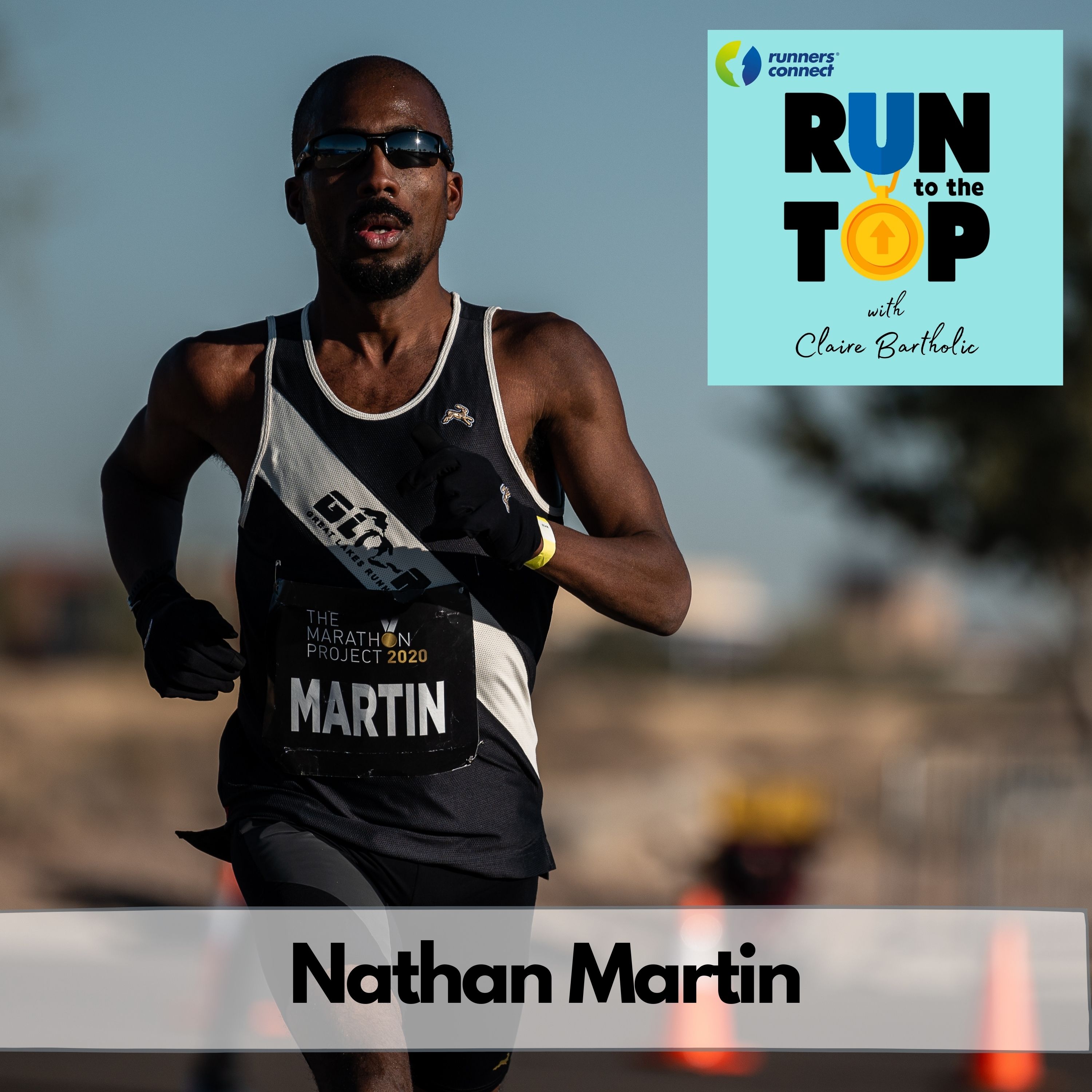
Nathan Martin is Breaking Records and Stereotypes
Nathan Martin just broke a 41-year-old record at the Marathon Project held this past December. He finished in 2:11:05, making him the fastest US born Black marathoner of all time. He placed ninth, beating out Olympians and professionals with far deeper pedigrees. In addition to being a super-fast runner, Nathan is also on a mission to give back and inspire others, especially the kids he coaches. Instead of leaving his high school coaching job to turn pro and join an elite training team, he decided to stay and continue training with his college coach Dante Ottolini at Spring Arbor University. In this episode, Nathan discusses how he first started running, the tragic deaths of both of his parents, and his unlikely path to record-breaking running success. He also shares his thoughts on why there are comparatively few American born Black runners in long distance running and how he sees that changing in the future. Lastly, he talks about his next goal which involves hopefully setting a huge PR! Nathan Martin was born in Chicago Heights, Illinois and raised in Three Rivers, Michigan. He started running Cross Country in Middle School after doing well in the gym class fitness test. He quickly discovered he had talent, and with the encouragement of others, kept with it. He was able to excel at the high school level, breaking three different school records and finishing runner-up at the MHSAA D2 state finals in the mile. At Spring Arbor University, Nathan majored in Recreation and Leisure Management with a minor in Computer Science. As a freshman, he came in underdeveloped as far as training goes. However, after a couple of years of hard work, his potential started to show. By the end of senior year, he became a National Champion in three different events and set the NAIA Marathon record. Post college Nathan continued pursuing running to see how far his talents could take him, which ultimately led to an incredible opportunity to coach at the MHSAA D1 level, as well as substitute teaching in Jackson County. At first it was just a way to keep a flexible schedule, but he quickly fell in love with it and his and his coach's new focus became how to make everything work together, which inspired them to create the Great Lakes Running Club. Through this process, Nathan was still making huge gains in running, most notably the 2019 20k Championships where he finished runner up, and now, his finish at the 2020 Marathon Project where he finished 9th with a 2:11:05 putting him 49th on the all-time US Marathoner list and breaking a 41-year-old record set by Herman Atkins, making Nathan the fastest US Born Black Marathoner. Questions Nathan is asked: 3:20 You made history at the Marathon Project on December 20th, by becoming the fastest US born Black man to run a marathon in 2:11:05, breaking a more than 40-year-old record. What does that feel like and did you even know about the record before the race? 4:16 Can you give us a recap of the race in Arizona, how it went, what your strategy was, all the details? 5:36 There's two sets of pace groups in that race, the 2:09 group and the 2:11 group. What made you not want to go ahead with the 2:09 group? 7:35 Easing up on your pace a little instead of staying with the 2:09 group left you out in no-man's land for a little while, didn't it? 8:22 You ended up in ninth place, which is obviously very impressive on such a fast course where so many guys went 2:09, so congratulations for that. It must have felt amazing to have such a PR and to crack the top 10. 9:28 I'd love to hear a little bit more about your back story. How did you first get into running and did you like it immediately? 11:15 You ran through high school and you ran in college, and you worked with a coach that certainly changed your life. Can you tell us a little bit about your coach and that relationship? 12:31 Dante Ottolini is still your coach today, right? 12:36 During college you lost your parents to cancer. How did running help you get through those hard times? 14:32 It sounds like your team really had your back when you lost your parents. That's amazing. 15:03 After college, you could have left Michigan to be a pro or train somewhere else, but you stayed and became a substitute teacher and high school coach. Why did you make that decision? What does coaching bring to your life? 16:36 It sounds like you get more out of coaching your athletes than they get from you. 16:50 Do you think you would ever consider turning pro? 19:21 Have you considered staying in Michigan and maybe joining Hansons-Brooks? 19:59 One thing that I wanted to ask you is do you have any insight as to why more Black Americans aren't involved in distance running? Black Americans dominate track and field but are not as well represented in the longer distances. Do you have any thoughts of why this is? 21:41 Why didn't you switch to basketball or football or something like that? 22:28 As a coach, how do you keep kids motivated when the other sports come ca

Running to Lose Weight? Here's How Much You Need: Kyle Flack - 2021-01-06
Happy New Year! Did you resolve to lose weight this year? Running burns a ton of calories so it should be a great way to melt off the pounds, right? Well, maybe not. Dr. Kyle Flack, a weight-loss researcher from the University of Kentucky, conducts studies on how the body responds to exercise and how much you really need to work out to work off those extra pounds, and it turns out you need to work out a lot more than the current recommendations suggest. Dr. Flack was recently featured in a New York Times article on exercising to lose weight and he shares his research results and provides insights on why weight loss isn't as simple as burning more calories than you take in. He explains how body chemistry can seemingly work against us, thwarting significant weight loss, especially for fitter people, and why it's not uncommon for people to actually gain weight while training for a marathon. Through his studies, Dr. Flack has found that people overcompensate for the calories they've burned pretty consistently, and he shares what the average calorie overcompensation amount is and how much exercise time is required to overcome it to really drop pounds. He also talks about how long it takes to make exercise a habit, he compares strength training to aerobic exercise for weight loss potential, and also reveals whether it's possible to build muscle and lose fat at the same time. If your goal is to lose or maintain your weight through your running, this is definitely a must-listen-to episode! Kyle Flack grew up in a small town in Vermont where, as a 4-year starter on the varsity football team, earned All-State honors twice and won two state championships. He left to play college football at Ferrum College in Southwest Virginia, earning a BS in health sciences 4 years later. He continued his education at Virginia Tech in the Department of Human Nutrition, Foods, and Exercise, where he earned his PhD in 2014. Upon beginning grad school, Kyle also turned over a new leaf in terms of his exercise routine, going from 280-pound power-lifting football player (who got winded walking upstairs) to a runner. He devoted an entire winter and spring to this newfound training, lost 40 pounds, and completed his first marathon, Vermont City Marathon in 2008. From there he was addicted, running two marathons each year for the next 5 years throughout grad school and dropping another 30 pounds. Each marathon was a new learning experience, a new opportunity to get better, and always ended with the goal or running the next marathon faster! After grad school, and after finally reaching that sub-3:30 goal (he did the Marshall University Marathon in 3:27) Kyle shifted his attention to triathlons, which he has been at since 2014. Kyle completed a Post-Doctoral research fellowship with the USDA in Grand Forks North Dakota from 2014 to 2017 and has since been an Assistant Professor at the University of Kentucky in the Department of Dietetics and Human Nutrition since 2017. Kyle is an RD (registered dietitian) and primarily focused on researching weight loss physiology, how exercise may affect eating behaviors, and how exercise can be more appropriately used for weight control. Questions Kyle is asked: 4:52 You are a researcher at the University of Kentucky specializing in how exercise affects eating and weight loss. And you don't just study it, you used running to lose weight yourself. Can you share your experience? 7:27 You were already an athlete with football so it wasn't like you were obese or overweight and just wanted to lose weight by running? 7:58 Let's get into some weight loss science. It seems that weight loss should be easy. It's "calories in and calories out." What makes it more complicated than that? 10:00 When you lose weight, you're obviously lighter so there's less of you to move around. Is that correct? 10:30 Why isn't exercise generally effective for weight loss? 11:37 Overcompensating for calorie expenditure due to exercise is not entirely all our fault. This is not entirely a willpower issue or something like that. Our body's working against us. Is that correct? 14:28 What you're saying is when you go for a great run and you get all these endorphins flowing, you're feeling really good, the entire pan of brownies tastes even better, right? 15:15 Many athletes that I've coached have actually gained weight when they start training for a marathon. They are burning a ton of calories and for whatever reason instead of losing weight, they gain weight. How is that possible? 19:34 I did a calculator once to figure out how many calories I burned running a mile and it was something terrible like 56 calories, and I'm just like, "What! That's not fair." Why is our body doing this to us? 20:17 In a recent study you did, you and your team found that in order to lose fat, the participants in the study needed to burn 3000 extra calories per week. Can you talk about this study? 21:52 In your recent study, were the participants moving less in t

Walk to Become a Faster Runner: Jeff Galloway - 2020-12-30
At age 75, legendary coach and Olympian Jeff Galloway is almost as famous for walking as he is for running. Jeff says his run-walk-run method of training enables people to run longer and faster with much less risk of injury, and his half a million followers agree. In this episode, Jeff talks about how he developed his walk/run technique and how everyone from absolute beginners to the fastest runners can benefit from it. He also shares with Coach Claire how he's getting more steps in while working from home, how runners can stay motivated during the pandemic, what his Magic Mile is and how to use it for training, and what he's doing at age 75 to ensure he can keep running until age 100 and beyond. Not only is there a lot to be learned from Jeff in this interview, but he also has a new book out called Galloway's 5K/10K Running, Training for Runners & Walkers. The book describes Jeff's Run Walk Run method and how it can be used to reduce aches and pains and fatigue while improving race times. It includes training plans, easy-to-read advice on medical checkups, nutrition for runners, fat-burning workouts, choosing the right running shoes, how to stay motivated, and a race day checklist. The book is definitely a great tool for runners at any level! Jeff worked his way from being an average teenage runner to an Olympian. His book Galloway's Book on Running is the best selling running book in North America. He also wrote columns for Runner's World for 20-plus years, he's an international running and fitness speaker, and as a coach, has helped 400,000-plus average people train for their goals. His Run Walk Run marathon training program boasts an impressive 98% success rate. Questions Jeff is asked: 3:35 At this point in your career, you are almost as famous for walking as you are for running! Can you talk about what you love about walking in general and its benefits for runners? 9:09 How would you recommend all of us who are working from home get more transition time between sitting at our computers and running and get more steps in? How do we get our work done and still get in all our steps? 10:51 Maybe because we're all stuck at home and the gyms are closed, I see more people in my neighborhood than ever out walking, out running, out doing things, people you'd never see before. So what advice would you give to someone just starting out? 14:58 Should runners of all levels use walking in their training and racing? What's your opinion on intermediate-to-advanced runners? 16:12 I'm a steady runner. I run even splits no matter what, and in the last marathon that I was in, there was somebody next to me who was leapfrogging me. And he was running super fast and then he would walk, and then I'd pass him, and he'd run super fast and then he would walk. And this is at a sub-three-hour marathon pace, and so I was just like, "That is pretty impressive to see someone doing that," because in order to get to the finish line in the same time as me, his run section would have to be significantly faster to make up for the walking. So I thought that was very interesting. 17:32 Is there a proper technique to walking or can you just go out and walk like you always do? 18:43 The walk in the run/walk method is not just a stroll; this is a walk with purpose? 19:42 Let's talk about the Magic Mile. What is so magic about it and how do you use it for training? 22:03 So you just go out, you run a mile as fast as you can, and then you pop it into a calculator. Is that it for the Magic Mile? 23:53 When I use the Magic Mile calculator on your site, my predicted marathon time is far slower than what I actually could run for the marathon. Can you explain this? 25:21 My Magic Mile calculator result could just mean that I'm bad at short distances and better at long distances, right? 25:43 In a recent podcast, I asked leaders in the running community what they did to continue running for life, and I actually got somebody wanting to know what you do. They asked for you specifically, so I would love to hear your thoughts on how you're going to keep running to 100 and beyond. 30:16 A lot of runners and walkers really look forward to having a race on their calendar, and with 2020 being as crazy as it has been, not all of us have those races on the calendar. How would you talk to those people who really get motivated by races when there aren't any? 33:43 What is next for you? Questions I ask everyone: 36:40 If you could go back and talk to yourself when you started running, what advice would you give? 38:57 What is the greatest gift running has given you? 39:55 Where can listeners connect with you? Quotes by Jeff: "There are a lot of people that won't start running unless you tell them, 'Well, just walk. Give it a try.' And then if they're interested, I offer them a proven way to add small segments of jogging or shuffling in a 30-second to 60-second timeframe so that they gradually introduce the body to the running motion. And I found that almost anybod

Elevating American Distance Running: Ben Rosario - 2020-12-23
Elevating American Distance Running: Ben Rosario Ben Rosario is the head coach of the HOKA Northern Arizona Elite. His athletes have been wildly successful in recent years, with the most notable being Aliphine Tuliamuk's win at the 2020 US Olympic Trials. His athletes Stephanie Bruce and Kellyn Taylor also finished in the top ten of that race, and on the men's side, Scott Fauble, a 2:09 marathoner, came in 12th. In this episode, Coach Claire talks to Ben about the Olympic Marathon Trials, focusing on how well his female athletes did, how HOKA NAZ treats female athletes, especially in light of the Nike Oregon Project, and why he thinks so many female runners are still posting PRs well into their 30s. Ben also shares some great coaching advice, his training philosophy, and his insight into why so many world records have been posted during COVID. At the time of this recording, Ben was preparing for The Marathon Project held on December 20. Coach Claire asks Ben for his predictions and will post the results here in the show notes following the race. Like many coaches, Ben started out as an accomplished runner himself as a member of the Hansons Brooks team and he competed in the Olympic Trials twice before turning to coaching full time. In his six+ years with Northern Arizona Elite, Ben's athletes have won U.S. National Titles in cross country and on the roads at 10k, the half marathon and the 25k, as well as New Zealand National Titles on the track and the roads. HOKA NAZ Elite athletes have recorded 8 top-10 finishes at World Marathon Majors.The team has been represented at the World Cross Country Championships, the World Half Marathon Championships, and at the World Track and Field Championships. His athletes have also competed at the European Athletics Championships, the Great Edinburgh International XC Meet, the NACAC Cross Country Championships, the NACAC Track Championships, the Pan American Cup Cross Country Meet and the Pan American Games. In 2016, the team produced two sixth-place finishes at the Olympic Trials Marathon and two fourth-place finishes in the 10,000 meters at the Olympic Track and Field Trials. At the 2020 Olympic Marathon Trials, four HOKA NAZ Elite athletes posted top 20 finishes, including three in the top eight in the women's race led by Aliphine Tuliamuk–the Trials Champion. Questions Ben is asked: 4:19 2020 has been pretty crazy for everyone in the world but specifically for the team that you lead, Northern Arizona Elite. Let's go back in time to February when you were getting ready for the Olympic Marathon Trials in Atlanta. Can you take us back there and recap what you were thinking? 5:10 Atlanta is a pretty tough course with all the hills. Obviously that was not a problem for at least your female athletes. 5:28 Your athlete, Aliphine Tuliamuk, won the women's race and was planning to head to Tokyo when the world shut down. What was that like as her coach? 6:41 I would love to talk to you about Aliphine Tuliamuk's recent announcement that she is pregnant and due in January. As her coach, I'm sure she came to you and said, "Hey, Ben, this is what I'm going to do." What was that conversation like? 7:26 How tough was it keeping Aliphine's pregnancy a secret? 8:33 You are quite experienced in elite mom runners. Several women on your team are moms and are still just killing it. I would love to talk about Kellyn Taylor, Stephanie Bruce. I would love to talk about Stephanie for a minute. She is almost 37 years old and still getting PRs in the 10K. How is that possible? 10:14 It didn't used to be so long ago that mid-30s was old for a runner but now that's not the case, and I think maybe it has something to do with belief, too, seeing all these new great examples. 11:06 I want to keep going back to the women because you have been coaching some really great ones obviously, and American women are seeing a resurgence in endurance running. American men maybe not so much. Would you want to talk about that? 12:32 I want to talk to you about how women are treated in this sport. We've all heard about the crazy things with the Nike Oregon Project and how Kara Goucher was treated when she was pregnant. I don't think that it's going to be the same story with Hoka. I would love to have you share what you could say about how Hoka supports its female athletes. 15:06 I think you're right that when all that came out about the Oregon Project that we thought as fans, "Oh. This is the way they're all treated." But it's great to hear that that's not the case. 15:34 Whenever I get a coach on, I love to talk about coaching advice to hopefully help someone who's listening become a better runner. Do you have different training approaches for the kids who come straight out of college than you do for your veteran elite runners? 17:03 Let's talk in a little bit more detail about the training advice. Most runners get the advice hard days are hard; easy days are easy. But then you throw in some medium days. I think t

Nike's Win-At-All-Costs Culture : Matt Hart - 2020-12-15
Is Nike too big to fail? Matt Hart is a freelance journalist whose new book Win at all Costs investigates Nike's Oregon Project, diving into its culture of cheating, lying, and misogyny. The book is a page-turning sports thriller reminiscent of a Shakespearean drama with one of the top coaches in the world felled by hubris. Coach Claire talks to Matt about the rise and fall of former coach Alberto Salazar, if he is indeed a villain through and through, the win-at-all-costs mindset of sports today, how young athletes are affected, the women at Nike, if Nike has some redeeming qualities as an organization, and if most people even care about any of this. It's a fascinating discussion that is sure to appeal to true crime fans! Matt Hart's writing covers sports science, human-powered adventure and exploration, performance-enhancing drugs, nutrition, and evolution. His work has appeared in The Atlantic, The New York Times, National Geographic Adventure, Outside, and Men's Journal magazine, among others. His reporting on the investigations into Salazar appeared on the front page, above the fold, of The New York Times in May 2017. In addition to his access to the Gouchers, other sources for the book include former Nike employees, athletes, and coaches; famed sports-scientist and Oregon Project whistleblower Steve Magness; and Olympic marathon gold medalist Frank Shorter, among many others. About Matt's Book WIN AT ALL COSTS: In May 2017, journalist Matt Hart received a USB drive containing a single file—a 4.7-megabyte PDF named "Tic Toc, Tic Toc. . . ." He quickly realized he was in possession of a stolen report prepared a year earlier by the United States Anti-Doping Agency (USADA). It was part of an investigation into legendary running coach Alberto Salazar, a Houston-based endocrinologist named Dr. Jeffrey Brown, and the cheating by Nike-sponsored runners. The file began Hart's reporting on the Nike Oregon Project and led him to uncover a win-at-all-costs culture of greed, corporate malfeasance, and abuse. WIN AT ALL COSTS is an explosive and revealing narrative depicting the deception and performance-enhancing drug use at the Nike Oregon Project. Hart writes richly detailed portraits of athletes Kara and Adam Goucher, Galen Rupp, and Mo Farah, as well as the coaches and doctors at the root of the cheating. The book recounts how the secretive program began to unravel when Steve Magness, an assistant coach to Salazar broke the code of silence by alerting USADA. He was followed by Olympians Adam and Kara Goucher who, risking their prosperous careers, became whistleblowers on their former Nike running family at headquarters in Beaverton, Oregon. Combining sports drama and corporate exposé, WIN AT ALL COSTS uncovers a relentless culture of deceit and drug misuse at Nike; as well as abuse of power, gender discrimination, medical malpractice, and systemic cheating at the highest levels of professional athletics. The book is also a cautionary tale about the excess of greed, corporate malfeasance, and the pushing of athletic boundaries. Deeply researched, unsettling, and ultimately entertaining, WIN AT ALL COSTS will astonish readers by the extremes that coaches and athletes will go to achieve athletic greatness—no matter the cost. Questions Matt is asked: 3:20 On your website, you say that humans learn through storytelling. What made you want to tell the story of Nike and its infamous coach, Alberto Salazar? 4:28 Your new book, Win At All Costs, is a fascinating deep dive into the world of Nike, from its scrappy, rebel beginnings to the behemoth brand that it is today. Essentially, it's a "David becomes Goliath" story. How would you describe the changes that the company went through from its humble beginnings to today? 6:33 Let's talk about Alberto Salazar. When he started out as an athlete he became one of the greatest American marathoners, and then became an absolute legend as a coach. I was struck reading your book how Skakespearean he really is. He's like this man in power brought down by his hubris. How would you describe him as an athlete, coach, and father? 10:18 It's easy to paint Alberto Salazar as the evil cult leader who got everybody under his spell, but how do you see that? Obviously there were people complicit in it and athletes at the top of the sport, some of them are willing to do anything to get ahead too. So how do you see it? Do you see Alberto as just the evil cult leader or is it more complicated than that? 13:25 Galen Rupp was what, 15 or 16 when he began to be coached by Alberto? That's a child, and you're not really able to make decisions, especially when somebody who has a reputation like Alberto comes into your life and says, "Hey, I see something special in you. Let me take you under my wing." I have a lot of sympathy for Galen Rupp. I know not everybody in the running community does, but I do. But he's an adult now, so we'll see what happens with his career. 15:12 It's like you want to hate

How to Stay Running For Life: Special Collaborative Episode! - 2020-12-09
How to Stay Running For Life: Special Collaborative Episode! This week's guests are a little different from our usual guests such as Olympian Jared Wade or top race director Dave McGillivray of the Boston Marathon or yoga instructor Adina Crawford to name a few. The athletes in this podcast aren't household names but still impact lots of runners. They're founders of some of the top Facebook running groups around the world and they have agreed to collaborate on this special episode. Facebook is a great platform for runners around the world to interact, share advice, and build virtual communities, which is especially important during these times. Coach Claire joined several of these Facebook running groups to try to find out what members were discussing and what questions the runners had. For this episode, Coach Claire decided to focus on advice for how to keep running for as long as possible, and so asked each of the guests the same question: What do you include in your running routine that will help ensure you are running for life? The responses were great. Each guest had something a little bit different to say, and all of it is good advice that will hopefully help keep you running and motivated for life. So get ready for six guests, one question, various accents, and some great answers coupled with Coach Claire's expert commentary! Question All Guests Are Asked: What do you include in your running routine that will help ensure you are running for life? Guests: 06:06 Karen Guttridge, Running Like A Wrinkly 08:30 Andy Jones-Wilkins, East Coast Trail and UltraRunners 11:50 Fred Scraire, Running Motivation Club 14:35 Mindy Bayless, Trail Sisters Asheville 16:14 Ken Michal, UltraRunning and Running Stupid 18:26 Steve Rice, Runners Helping Runners Take a Listen on Your Next Run! Want more awesome interviews and advice? Subscribe to our iTunes channel Mentioned in this podcast: RunnersConnect Free Virtual Training Summit, Dec. 10-13 Runners Connect Winner's Circle Facebook Community RunnersConnect Facebook page [email protected] https://www.precisionhydration.com/ Guest Facebook Groups Running Like a Wrinkly East Coast Trail and UltraRunners Running Motivation Club Trail Sisters Asheville, NC UltraRunning Running Stupid Runners Helping Runners We really hope you've enjoyed this episode of Run to the Top. The best way you can show your support of the show is to share this podcast with your family and friends and share it on your Facebook, Twitter, or any other social media channel you use. The more people who know about the podcast and download the episodes, the more I can reach out to and get top running influencers, to bring them on and share their advice, which hopefully makes the show even more enjoyable for you! ac2JFFUTKOF2J5FGYx1K

The Secrets of the World's Best Runners: Becky Wade Firth - 2020-12-02
Elite distance runner Becky Wade Firth, a standout at Rice University in Texas, was expected to turn pro after graduation. Instead, she chose a different plan that changed her life and how she looks at running and training. Becky decided to travel the world, but not just to see and explore like a typical college-age kid. She applied for and won a Thomas J. Watson Fellowship to travel the world to learn how others run. Over the course of 12 months, Becky traveled solo to 22 countries including Switzerland, Ethiopia, New Zealand, and Japan to learn about some of the world's most fascinating running traditions, and she captured her experience and findings in her book RUN THE WORLD. Coach Claire talks to Becky about how her year abroad affected her and what she learned from this incredible experience. They also get into Becky's cross training, her experience with orthotics, similarities between recreational and pro runners, and Becky's perspective on running in a year without in-person races. Becky is still an avid writer and in addition to her book, you'll find her work all over the web in places like Runner's World, Outside, Podium Runner, Women's Running and more. She is also a food lover and traveler. Part of two sets of twins born 20 months apart, Becky grew up in Dallas, Texas, before making her way to Rice University on a track scholarship. There, alongside the world's greatest teammates and coach, she fell in love with the distance running lifestyle and by the time she graduated, was a junior national champion, an All-American in cross-country and track, and an Olympic Trials qualifier in the 10K and 3K steeplechase. Since then, Becky has moved up to the marathon, signed with Flynn Sports Management, relocated to Boulder, Colorado, and gotten married. She's competed in three more Olympic Trials (4 total: 2 in the 3K steeplechase, 2 in the marathon) and qualified for 2 senior USA teams (2018 and 2020 World Half Marathon Championship, the latter of which USATF sadly pulled them out of). She now has her eyes set on the 2021 US Olympic Track Trials, faster PRs over all distances, and many more writing projects—ideally a second book before too long! Questions Becky is asked: 3:54 Instead of going directly from college to the pros, you took a year off to travel to 22 different countries to learn what runners do all over the world. What were some of the biggest similarities and differences you found when compared to American running? 5:19 Some of the countries you went to are obviously the big running countries that we all think about, Japan and Africa, New Zealand, all of these places, but you didn't end up just going to those places; you took a couple of detours. Anything you want to tell us about that and what you learned about that? 7:17 Were you worried at all before you left? Because people who are on track to do amazing things in whatever sport it is, they kind of get nervous about change, they kind of get nervous about getting out of their schedule. Were you worried when you took off for a year that your running might suffer? 9:01 I think that if you want to learn more about your own country, the only way to do it is to leave it, so I highly encourage everybody who can in college just to get out of America to see what the rest of the world is like. 9:43 What was it like coming back to the States after that experience? Do you think it made you a better runner? 10:51 Recreational runners think the same thing as professional runners, "Are we doing enough? Should I be resting? Should I be doing heel lifts?" Or whatever it is. You just think that "I've got to do it in such a perfect way," and there's room for flexibility. 11:44 2020 has been obviously a very strange year for everybody, but I'd love to know how you are doing specifically and how you've been training. 15:12 Let's talk a little bit about your cross training. I've looked through your Instagram. There's a lot of pictures of you in the pool and I know you aqua jog. Can you help us out and give us some tips to make aqua jogging less boring? 20:03 Besides your book, you are a pretty prolific writer. You write articles for lots of running magazines and online places, so what are some of your tips? I know you recently wrote an article for Runner's World about challenging the conventional rules of running. Do you want to talk a little bit about that? 22:26 Why do you wear orthotics? What is it for you? 23:28 We think of orthotics as a temporary solution, but to hear that you've been wearing them for 10 years, that's super interesting. 23:55 Another conventional rule of running you challenged in your Runner's World article was the 30-minute window, that you have to eat 30 minutes after you stop running, and you found that not to be true. 25:08 One thing I've been asking almost everybody this year is without in-person races, s really hard for a lot of people to find motivation, and for a lot of people it's going to be a really long time until we race ag

The Real Way to Get Mentally Tough: Matt Fitzgerald - 2020-11-25
The Real Way to Get Mentally Tough: Matt Fitzgerald The biggest difference between elites and the rest of us is not simply talent; it's mental resilience. Matt Fitzgerald has been studying elites his entire career and has learned what techniques the best of the best use to get there. In his new book, The Comeback Quotient, Matt talks about a philosophy called ultrarealism and how we can all apply it to add some extra oomph to our training and push to the next level. Matt is a well-known endurance sports author, coach, and nutritionist. His many books include How Bad Do You Want It?, 80/20 Running, and The Endurance Diet. Matt's writing has also appeared in numerous magazines, including Outside and Runner's World, and on popular websites such as podiumrunner.com and nbcnews.com. He is a cofounder and co-head coach of 80/20 Endurance and the creator of the Diet Quality Score smartphone app. A lifelong endurance athlete, he speaks frequently at events throughout the United States and internationally. Matt's work has given him access to some great athletes who have shared their secrets about what it takes to truly become the best in the world, and it's not just about raw talent or genetics; it's about the mind. It's about leveraging science and psychology and philosophy into mental toughness. In The Comeback Quotient, Matt combines those elements that he's compiled from the best in sport to deliver actionable advice and techniques that any athlete can use to improve. If you haven't heard of David Goggins, look him up. He overcame an abusive upbringing to transform himself into a Navy Seal, Air Force Ranger, and competitive ultramarathoner, and he is undeniably one of the toughest minds out there. He's just one example from Matt's book that he and Coach Claire discuss as they talk about the qualities that athletes like David have that we can all develop in ourselves. Matt's new book The Comeback Quotient comes out in December 2020, and if you are as interested in training your mind to be as fit as your body, make sure you get a copy! Questions Matt is asked: 6:15 You've written several books on endurance fitness that also seem to have a healthy dose of psychology woven in. What is it about the mental side of the sport that interests you so much? 7:49 I have two little kids, and when they run, they run as fast as they can and then completely poop out. They have no sense of pacing or anything like that, so obviously that's something that we have to learn. 8:30 Your new book that's coming out is called The Comeback Quotient. Can you give us a summary of what it's about and why you wanted to write it? 9:56 One thing that you talked a lot about in your book was a philosophy called ultra-realism. Can you explain what that is and why it's important not just for athletes, but for life? 12:24 It sounds so simple when you say, "Just make the best out of it." How simple is that? But why is it so hard? 14:16 If our brain is so good at predicting, then what do we do when we haven't thought out a way to get around the obstacle? 16:50 How do you override everything your brain is telling you when you're in pain? 18:51 You did have a few examples in your book of people who like David Goggins and the Slovenian skier who won Olympic bronze after she had punctured a lung and broken a bunch of ribs. I don't want to be that mentally tough!!! That just sounds pretty stupid some of these things though. Where's that line? 20:39 Besides just reading your book, how can athletes actively practice mental fitness? It's pretty simple to learn how to physically run your best, but how do you mentally train? Any advice with that? 23:59 You definitely have some stories in the book about people freaking out and things not going so well. 26:37 You basically said to some of the athletes that you've coached to stop BSing themselves, and sometimes that's some realism that's hard to hear too. 28:13 One thing I definitely have done in a race myself is BSed myself in a positive way and told myself, "It doesn't hurt. It's fine. Nothing is wrong here. You can keep going," when that's not really the way I feel at all. So I don't know how that falls into it. I feel like I'm lying to myself in a positive way, if that makes sense. 31:02 Another thing that struck me is a lot of sort of… I don't know if we call this a self-help book, but a lot of books that are trying to get into the psychology of performance, they only talk about the really positive things. This is called The Comeback Quotient. We're expecting to read a whole bunch of comeback stories and have everybody get the gold medal at the end, but you included several people who didn't come back "successfully," and I'd love to hear about why you chose to do that? 34:02 I think there's a lot of people, especially new runners, seem to struggle with accepting things that don't go as expected. Would you say that? 36:37 Another part of the book was your personal journey to train for a triathlon using the ment
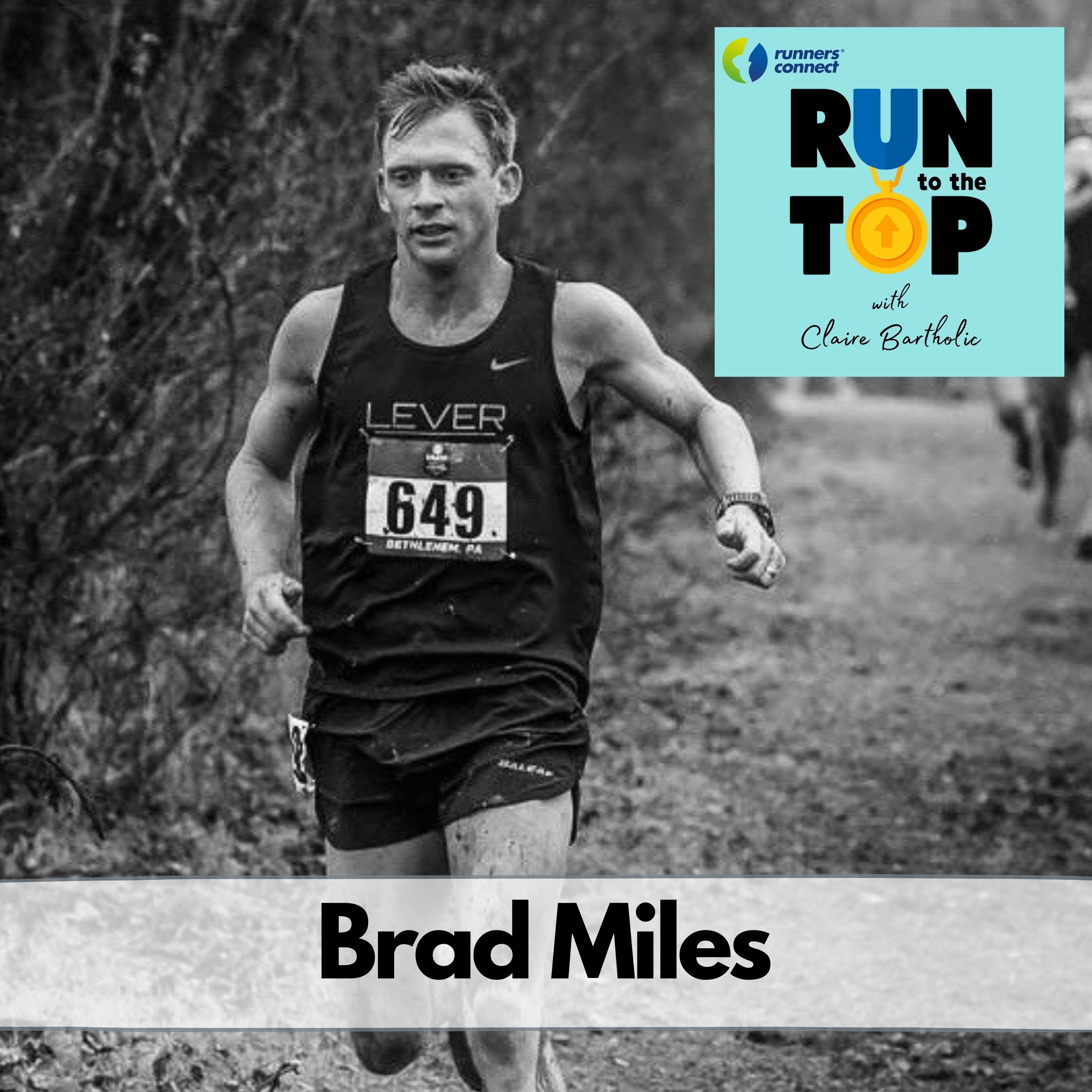
How to Make Everything That's Hard About Running Easier: Brad Miles-11-18
How to Make Everything Hard About Running Easier: Brad Miles Imagine being able to run and heal through an injury. Or imagine significantly increasing your weekly mileage while healthy, while also minimizing your chances for injury, increasing your speed, and improving your recovery. Wouldn't that be great? Brad Miles, the founder of Lever Running says it's not only possible, but scientifically proven. Brad created his Lever system to deliver the benefits of body weight supported running in a convenient, portable package that costs a fraction of the AlterG. The what? The AlterG is basically a big, fancy, eye-poppingly expensive treadmill that takes some of your weight off as you run. It's a bulky piece of equipment that NASA uses, not your local gym, and certainly not your average runner. And for years, it was the only player in the market for body weight supported running. Enter Brad, who says that the Lever makes everything that's hard about running easier. He shares use cases with Coach Claire about how injured athletes have benefitted from body weight supported running using his system, and also how healthy athletes have leveraged it to up their game. He describes the technical aspects of his system and how it works, and after hearing about it, you'll probably find yourself visiting his website to check out the videos and see the Lever in action. Please note: Lever Running is not a sponsor of the Run to the Top. This is not an infomercial, but we do talk about the product in great detail in order to introduce you to something that just might help you run faster and injury free. Brad is a native of Philadelphia, Pennsylvania. He started getting serious about running in high school where he helped his team win two State cross country titles, won an individual State cross country title, as well as the Footlocker Northeast Championship. He went on to run cross country and track for Baylor University and was named as Baylor's Cross Country Runner of the Decade. Brad first experienced the benefits of body weight support first hand in college, and soon his business degree was put to good use. He and co-founder Ryan Ognibene started LEVER in 2019 after they recognized the overwhelming need for a mobile, athlete-friendly body weight support system to compete with the AlterG. The primary goal with LEVER was to take technology that was once reserved for the elites and make it available to everyone. This episode is for everyone interested in breaking the injury cycle, cross training while running, or getting faster! Questions Brad is asked: 7:22 You first experienced body weight supported running in college. Can you talk about that experience? 8:05 Were you injured when you first tried body weight supported running? 8:13 The AlterG is a pretty expensive piece of technology, is that right? 8:32 AlterG was basically the only game in town as far as taking gravity off your run, is that right? 8:52 From a physiological point of view, what does taking the weight off running actually do for you? 9:32 Because AlterG is such an expensive piece of equipment, not a lot of people have access to it, so I don't think a ton of people besides the real running nerds know a whole lot about body weight supported running. So what made you decide to make a competitor? 10:37 Let's talk a little bit about the Lever product. It's basically an AlterG in a bag? 11:28 How much body weight can the Lever support? 11:35 Can you tell us a little bit more about what this is used for? Why would I want to have something like this? 13:32 In the use case you just described, you talked about a woman using your device to significantly increase her mileage. How was she able to do this safely? 14:28 Are you saying that anybody can use your product and basically double their mileage in a couple of months? 15:24 As a coach, I know that the best thing to do to become a better runner is to run, but there's an upper limit to that. So basically, it sounds like using body weight support could be like cross training, the most specific cross training that you could possibly have. Would you agree with that? 16:10 Let's go back to what Lever was originally designed for, which was injured runners. Do you have any stories that you could share about some of your clients? 17:56 Any surprising kind of uses that you've seen? 19:05 How do you use Lever for speed? 19:49 If the Lever makes it easier to run, isn't it de-training by using it? 20:45 Let's say you're running whatever pace for your tempo run and your heart rate is X, you want to make sure your heart rate is still at X, but obviously that speed, that pace is going to be much faster with the weight taken off using Lever is what you're saying? 21:59 Does your Lever pace translate to when you go outside? Do you run at the same pace or somewhere in-between your Lever and outside pace? 22:24 I went to your website and watched the videos and one thing I noticed is that you have to wear specific shorts in order to use t

The Fate of Charity Running in a World Without Races: Susan Hurley - 2020-11-11
The Fate of Charity Running in a World Without Races: Susan Hurley If you've run for charity, you're probably wondering how charities have been doing this year with so few races being run. Or maybe you're looking for inspiration and motivation during these uncertain times. If so, this week's guest, Susan Hurley, may provide the answers you're seeking. A former New England Patriots cheerleader, Susan brings the high energy, creative mind, and fun approach required to motivate, inspire, and lead others to achieve personal goals through fitness and running, while also raising funds for small nonprofits through her organization CharityTeams. CharityTeams helps nonprofits raise money for good causes through the use of running races and athletic events. Running for charity takes a lot more than just asking your friends and family for money. It takes a lot of organization, and Charity Teams helps take care of the details. Susan shares how 2020 has impacted charity running and what she sees for the future, through virtual racing and beyond. She also talks about her app, Charge Running, which she's developed over the last 3 years with a team in Chicago. Charge Running is a live virtual training and racing platform, which is especially relevant now when there are so few in-person races. Susan started CharityTeams when she recognized the need small nonprofits had for support in valuable athletic fundraising opportunities, and she created a niche sports-related business around that. CharityTeams has blazed a trail for many nonprofits to grow and set the bar high in the athletic fundraising industry. Her teams are some of the most desired to run on. She is a certified RRCA professional running coach and fundraising expert. Susan is a professional at developing team brands and understands what it takes to keep them succeeding. Her network in the industry is extensive and she has a strong ability to work with runners of all backgrounds in running and fundraising building lasting friendships in her groups and strong ambassadors for charities. She is formerly a New England Patriots Cheerleader and continues to dispel the words of her mother, that "You can't be a cheerleader your whole life." Susan's marathon personal best is 3:16 and she continues to run The Boston Marathon, NYC Marathon and Chicago Marathon each year, as well as many other races. (Qualifying for NY and Chicago) She has been running since she missed the bus in 2nd grade. She has qualified and competed in the World Triathlon Championship in Hawaii. She continues to run competitively while raising funds for various causes. Susan completed the first ever 2017 Fenway Park Marathon and the first ever Gillette Stadium Marathon. She is a two time finisher of the Mt. Washington Road Race in 2018 and 2019. She finished her first 50K at the Marine Corps Marathon weekend in 2021. Susan also works on special projects such as the Bobbi Gibb sculpture project which will be unveiled in April of 2021. This beautiful statue named after the children's book, The Girl Who Ran, was sculpted by winner of the Boston Marathon and trailblazer for women's running, Bobbi Gibb. It is of herself. In 1966, Gibb popped out from behind forsythia bushes in Hopkinton to become the first woman to run Boston. After listening to Susan, maybe you'll be inspired to run for a higher purpose! Questions Susan is asked: 6:36 Your business, Charity Teams, has raised over $24 million for various non-profits. Can you tell us more about how Charity Teams works and how you started it? 7:39 Let's say I am a charity and I want to raise money and I give you a phone call. What's that conversation going to be like? 8:26 Charity Teams is like a one-stop shop then for fundraising? 8:57 Obviously 2020 has been strange for all of us, but especially in the running world with no races. What are charities doing? 9:48 Most runners, we race because we want to achieve a personal goal. What makes it different when you run for charity? 11:09 Let's talk about the Boston Marathon for example. If you're not fast enough to meet the qualifications, you can go ahead and sign up with a charity and run for charity. But there's some big fundraising goals you have to meet which I think might be intimidating to some people, and maybe kind of stressful. So how do you encourage people when they're facing some $5,000 goal or something like that? How do you encourage people because that seems a little scary to me? 12:41 Do you have anybody that you can think of in mind that is just a charity superstar? Any good stories that you can share with us? 14:23 Let's talk about virtual racing. Virtual racing is here to stay I think for a while. I think it's a challenge for some people because it's not the same as in-person races, and you've kind of come up with a little bit of a solution for that with your app. Do you want to tell us a little bit about it? 16:22 So if I wanted to go out the door and go for a run using your Charge Runnin
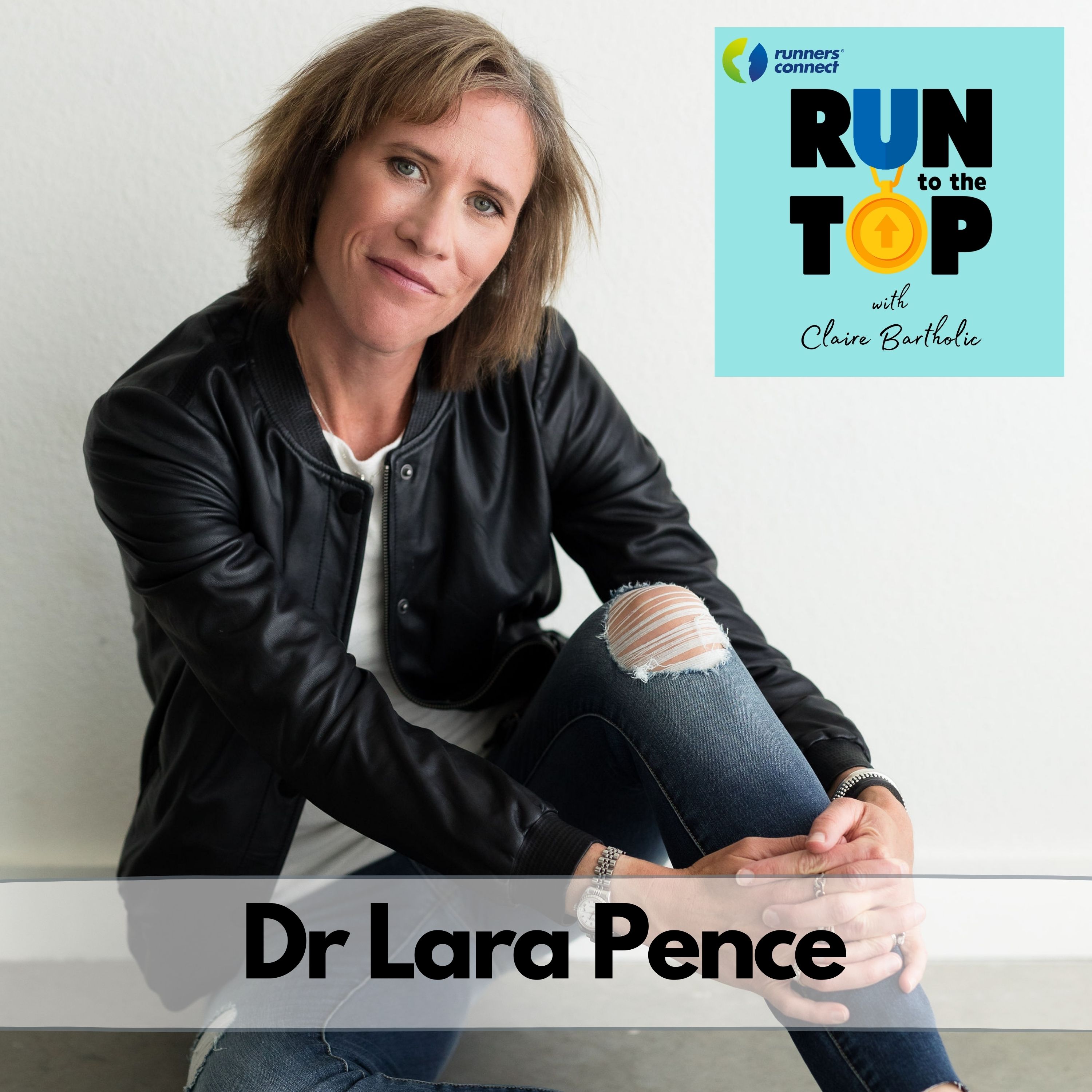
Your Mind is an Opportunity: Building Mental Toughness with Dr. Lara Pence 2020-11-04
As a runner, you prioritize your physical training, but what are you doing for your mental health training? Dr. Lara Pence (aka Dr. L) is a clinical psychologist who has spent the last 15 years working with endurance athletes to help them shed unhealthy patterns of behavior and build mental strength using curiosity as a tool to become mentally resilient and adventurous. By training athletes to dive deeper into the why behind their goals, she also helps them boost their mental toughness by creating a values-driven way of being. Dr. L shares a lot of great info with Coach Claire on how to build mental strength, including discussions on the relationship between athletes and food, changing our personal narratives about our performance as we age, setbacks, and motivation. Having a fit mind is at least as important as having a fit body, and this is an episode everyone can benefit from. Dr. L is an East Coast native who did her post-doctoral fellowship in Dallas, TX. She has since built her own private practice, becoming one of the most sought-after therapists in Dallas. She moved to Colorado in 2019 to become the Chief Mind Doc for SPARTAN, the world's top endurance company. She also hosted the Spartan Mind podcast and served as a consultant to the organization on various mindset-focused initiatives. Dr. L is also a coach for The Unbeatable Mind, alongside Mark Divine, founder of SEAL FIT. She has been featured in various publications and media outlets such as Good Morning America, the BBC, Glamour, Vogue, WebMD, Psychology Today, and The Huffington Post. Most recently, Dr. L has launched her own podcast called Curious Minds with Dr. L, and she has a new product called LIGHFBOX, a simple program designed to exercise your mind, spark curiosity, and boost your mental fitness. Get ready to strengthen your mind and boost your mental fitness with Dr. L! Questions Lara is asked: 6:17 You like to call yourself an "active therapist" and that's not just because you are also a runner. What do you mean by that? 7:39 Let's talk about the people you do work with and your own running background. How do you specifically work with runners? 9:34 Eating disorders and running. Obviously, to be at the top of your game, you need to be light and lean. Thankfully some elite runners these days are talking more about how getting too lean is really causing huge problems, but there is a fine line between being at your highest performance and whether that's actually healthy or not. So how do you kind of dig through that mess? 12:15 Let's go into the performance side of what you do, mental strength training if you will. A lot of people, when runners or athletes get to a certain level, they realize that it's not just all about physical training. The mental aspect is absolutely huge, if not more important than the physical training. Everybody wants to know: How do we get mentally tough? 14:47 You're saying that we should just be curious about why a race or a workout didn't go well. How do you incorporate curiosity in success and failure when it comes to athletes? 17:12 I would love to hear about how you practice incorporating curiosity. Say I'm a runner and I'm trying to go after this big goal and I'm just getting frustrated. How do I practice curiosity to improve my mental strength? 20:33 What happens when you peel back the onion and maybe there's not such positive motivation down there? 23:45 Obviously 2020 has been a crazy year, but for runners specifically, all their races have been canceled pretty much. And so the carrot that everybody has, that's evaporated, and so a lot of the clients that I coach have just been like, "You know what? There's no race on the schedule. I don't really feel like training anymore." What advice do you give runners who are training without races? 29:23 I read on your blog that you wrote an article recently about overcoming setbacks. Obviously as people, but also as runners specifically, setbacks can happen all the time, whether it's just a bad workout or a big race that you train for that didn't go so well. I'd love to hear your ideas about overcoming setbacks. 33:28 How about successes? Some people, surprisingly, don't handle success very well. What are your thoughts on that? 35:54 I'd love to get your thoughts on comparison and competition. Runners compete in races and we compete against ourselves. That can be great, but that can also be pretty tough, especially if you were let's say a high school or college runner and you're now in your 40s, 50s, and 60s, and you're just not the same person that you used to be. I would love to get your opinion and thoughts about Masters runners and about how as we get older, we're not as fast as we used to be, and how can we still celebrate what we can do? 40:16 I think honestly, the runners that have the healthier outlook as Masters are the ones who were not competitive when they were younger, because they're finding it all new and exciting, and every race is a PR, so it's