
Renegade Marketers Unite
633 episodes — Page 10 of 13

Ep 182182: How Talkdesk Led the "Business Continuity" Curve
It's impossible to have business continuity during a crisis if your contact center software is only designed to run on-premises (on-prem for short) and your employees can't come into the office. This has become a serious issue for many companies in the recent weeks, because if your customers can't reach your service team, it stops business in its tracks and, ultimately, adversely affects your brand. That's why Talkdesk, a cloud-based contact center solution, made it their mission to bring on-prem operations home quickly so that businesses can continue thriving while protecting their employees. Their first of many crisis-centered products launched one week before "business continuity" started trending, and Talkdesk CMO Kathie Johnson joins us this week to talk about how her team's agility, commitment to goodwill, and holistic view of business put Talkdesk front and center in the conversation.

Ep 181181: Collaboration in a #WFH World
Stack Overflow, an online Q&A community for developers, has a clear #WFH advantage—they've operated with a largely remote workforce for over a decade, and they've done it well, simultaneously growing their business and earning a spot on numerous Best Developer Website lists. That's why, in response to COVID-19, they've made it their top priority to share their #WFH best practices and anticipate the challenges that more traditionally in-office businesses may be facing. On this week's episode of Renegade Thinkers Unite, we're joined by Khalid El Khatib, Stack Overflow's VP of Marketing, to discuss the things companies can do to not just keep their teams connected, but to continue collaborating and innovating as they work from their new home. Tune in to hear his well-informed take on virtual socializing, the future of events, and the wealth of resources and tools available as we navigate a virtual world.

Ep 180180: Leadership During a Crisis
As our CEO & host Drew Neisser so aptly puts it, "this an unusual episode for an unusual time." There has been a lot to think about in recent weeks, and with the current COVID-19 pandemic affecting nearly every facet of life, it's tremendously important—now more than ever—for leaders to step forward, take action, and lead by example. That's why, on this week's episode, Drew reflects on how you can take care of the people in your orbit: yourself, your family, your employees, your customers, and the world at large. His valuable insights incorporate the input of 7 CMOs who have shared their recent actions and thoughts concerning the current crisis, including Sarah Larsen (Brightcove), Jeff Perkins (ParkMobile), Paul Sparrow (Chief Outsiders), Janine Pelosi (Zoom), Mandy Dhaliwal (Dell Boomi), Sara Varni (Twilio), and Alicia Tillman (SAP). For more, take a look at Drew's tips on our blog, here.

Ep 179179: CMO Mathematics with Service Express
Joshua Leatherman has been CMO at Service Express for 9 years now—during that tenure, revenue has grown from 30 million to 130 million, marketing efforts now contribute a whopping 70% of qualified leads in their sales pipeline, and their NPS score is currently at 90. Behind these impressive numbers is a lot of hard work, gaining executive buy-in, inspiring staff with an employee-first organizational purpose, and building a customer experience that drives satisfaction and referrals. Leatherman is an expert on the metrics that matter, both the impressive ones listed above, and the ones that you look at behind the scenes to get there. It's not about the number of meetings, it's about the number of quality meetings; not the number of prospects, but the strategy behind how prospects are brought in and engaged. In this episode, you'll get an up-close look at CMO math as Leatherman discusses how they calculate ROI and the essential steps to building a revenue-generating marketing engine.

Ep 178178: Why Dell Boomi is Booming
According to a Gartner Report, Dell Boomi leads the way as an innovative strategic partner for its clients in the Enterprise iPaaS category, with over 8,000 customers and a churn rate below 3%. That's the biggest compliment you can get, especially if you're a company with a large service component. What role did marketing play in developing these relationships and garnering this reputation? Drew sits down on this week's episode with Mandy Dhaliwal, Dell Boomi's CMO and certified sommelier, to discuss how she kept Boomi's marketing initiatives grounded in company strategy in order to modernize engagement across the board. When she joined in 2018, Mandy hit the ground running: she developed a company purpose within a six-week period (during a holiday, no less!), presented the positioning at the annual sales kickoff, and oversaw a complete rebrand with a clearer customer focus than ever before. This week's Renegade Thinkers Unite is packed with remarkable insights. Check it out!

Ep 177177: A CMO's Guide to Cultivating Customer Champions
How important are your customers to your business? This one should be a no-brainer—the relationships you build with your customers are vital to success. Leaders that actively focus on customer engagement and satisfaction are able to nurture a customer-base that will champion your product on your behalf and help push innovation. With a wealth of experience under his belt, Chip Rodgers, CMO of WorkSpan, knows the quantifiable value of cultivating customer champions and is here to tell us how he nurtured these relationships from Workspan's early startup days to now. Chip puts a special emphasis on building and retaining trust, and shared a perfect Bill McDermott quote on the subject: "Trust is earned in drops and lost in buckets." For more gems like this, listen in to this week's Renegade Thinkers Unite and learn about how cultivating customer champions can boost your business value, shape your product, and bring in new prospects.

Ep 176176: Keep Calm and Acquisition On
It's tough enough to build a company's marketing engine from the ground up, but Isabelle Papoulias, CMO of Mediafly, successfully navigated through not just one, but two acquisitions within a six-month period. What did she learn? Not all acquisitions are created equal: it was two weeks before their second acquisition announcement when Isabelle, in conversation with her CEO, realized they had an opportunity to completely pivot their brand messaging for the better and decided to scrap their original plan. While this would be considered risky to most, the decision ultimately elevated Mediafly to a new level within the sales enablement category. Join us on this week's episode of Renegade Thinkers Unite to hear all about Isabelle's experience during these back-to-back acquisitions, how their campaign brought both expected and unexpected successes, and why ABM goes beyond marketing to give a company a surround sound approach to targeting valuable prospects.
Ep 175175: Digging Deep into Corporate Purpose
When purpose moves front and center, a company can attract better talent and better customers. This is not conjecture. Dov Baron, via his leadership consulting practice, has proven it over and over. Dov, who is also a top podcaster, best-selling author and speaker, gets to purpose by asking the tough questions. No wonder he sees himself as the "father of dragons," helping executive teams find their own distinct purpose, and a collective purpose for the organization. This means digging deep and even exploring one's biggest fears. There's obviously a lot more to it and we spend a lot of time in this episode exploring why "starting with why" is in fact just the beginning of every organization's purpose-seeking journey. On this week's episode, Dov and Drew are also joined by a live audience of industry-leading CMOs, who weigh-in and help shape the engaging discussion. Listen in for more about the best way to find the why of your why, which questions you really should be asking to get there, and how to get tangible results from shining a light on your company's purpose.

Ep 174174: Finding Your Brand's North Star
Sometimes, the big ideas sort of just happen. That said, some magical brand moment isn't going to just appear without some planning or effort—but sometimes, some small bit of genuine authenticity can grow into a brand pearl. That's part of what happened with White Ops, and on this episode, Dan Lowden, CMO, discusses how. White Ops is fueled by their purpose-driven mission to disrupt the illicit economy built by cybercriminals; that mission has caught fire and stands as a sterling example of why purpose is a must. Tune in to hear about how they formed their mission, how they show it to the world, why they shun the hard sell, and how an overarching purpose came from a simple t-shirt that just read "human."

Ep 173173: Turning Obstacles into Opportunity
"It's not if—it's how." That's how Karen Jones, CMO of Ryder, a supply chain management and logistics company, started wrapping up our interview. It's also what she tells her team often, and an integral part of how they approach business hurdles. The key to their success, though, isn't just relishing the opportunity to overcome a challenge—they also rely heavily on a deliberate, test-heavy approach where they have room to explore, experiment, and find bold solutions that work. Another crucial element is the CEO relationship—for Karen to succeed, she noted the need for support from the CEO and board to have leeway in her marketing endeavors. In this episode, we'll hear more about how she's formed her marketing mindset through her career, and how learning from failures has helped shaped her current approach. Listen in for a candid conversation about the pitfalls of marketing in a silo, marketing's limitations within a business, and how effective marketing can accelerate a product's demise.

Ep 172172: Effective B2B Brand Strategy: The Appetizer Version
In this interview, host & Renegade CEO Drew Neisser actually sits down with, well, Drew Neisser. Maybe it's half interview, half monologue. Either way, on this episode, Drew explores the concept of CATS. Not the fluffy, loveable-yet-tempestuous pets, but the four key traits for being an effective marketer that are absolutely crucial in developing an effective B2B marketing strategy. Listen in to learn about being an effective, creative marketer, crafting a brand, cutting the clutter in your efforts, and much more! For the main course on How to Develop an Effective B2B Brand Strategy in 2020, please chomp on Drew's Special (17,771 word) Report http://renegade.com//b2b-brand-strategy-report/

Ep 171171: Unlocking Employee Optimism
In 2017, Jeff Perkins was champing at the bit to get started as CMO of ParkMobile, a parking assistance app based out of Atlanta. He saw the 7.5 million users, the hundreds of thousands of new users each month, and the awesome product driving everything. However, when he got going, he began to notice his enthusiasm wasn't exactly the norm. Jeff joined the team following some significant board changes, executive changes, and turnover. As a result, the company moral was experiencing a sort of slump, despite the app's early success, and the leadership decided to step up. Jeff was quick to spot that this relative malaise could be remedied with a clearer articulation of the company's vision in a clear set of core values. Following that, an emphasis on employee engagement would help that mission—and a new positive spirit—spread through the company. Listen in to this episode to hear more about how ParkMobile built a thriving culture around core values and an engaged internal team, and how that culture has helped the company grow to 17.5 million users.
Ep 170170: Scaling "Scrappy" and Growing Your Audience
One of the integral questions most marketers face is: How do I expand my audience? Well, you could draw up a new campaign, make a new product—heck, you could even bite the head off a bat; Ozzy Osbourne definitely reached quite a few new people in the 80's with that stunt. Well, maybe that last one isn't the best idea for businesses. Anyways, an important aspect is: you have to do something that works with your brand, resonates with the people who want to use your product, and is relatively product agnostic. Now, while they may not be dining on any small nocturnal mammals, Twilio's marketing efforts certainly capture the aforementioned guidelines, and take on a spirit of boldness and experimentation, all in the service of expanding their audience. In this episode, Sara Varni, CMO of the cloud comms company, discusses how they've created marketing that they know their users will like and respond to. It ranges from gamified tutorials, to dev conferences, to sponsored hackathons at client offices and so much more. To learn more about these efforts, and the scrappy, startup-mentality that drives them, tune into this week's episode of Renegade Thinkers Unite.

Ep 169169: Small Tests, Giant Leaps
As a veteran of Silicon Valley with tenures at multiple massive, industry-leading tech companies, Carl Tsukahara has developed a serious taste for adventurous testing, especially in B2B. That doesn't mean just running around pushing buttons and selecting metrics at random, it means breaking free from the common snare of planning multiple meetings and emails before adjusting a small facet of the landing page for A/B testing. Speaking of A/B testing, Tsukahara's career path has led him to currently serve as Chief Marketing Officer of Optimizely, which is essentially the home of the A/B test. They also call themselves "the world's leading experimentation platform," painting the company as a fitting place for a bold marketer and tester like Tsukahara. In this interview, Carl discusses what different companies ought to be testing for, how to properly set up certain guardrails to guide your testing, what we can learn from big brands like Amazon and Netflix, and much, much more. Check it out!

Ep 168168: Building A Challenger Brand with Matrixx Software
When Matrixx started out in 2008, they were a David among Goliaths. People thought they were crazy to even try cracking a pretty crowded SaaS market for communications and digital services provider. Skip ahead a few years and they're boasting 70% growth (for 3+ years!), 15% responsibility for the lead pipeline—which in a niche market like Matrixx's is quite a feat—and, perhaps most impressive of all, a 100% renewal rate for the multi-year subscription model. You don't see 100% all that often (Citizen Kane's 100% on Rotten Tomatoes is certainly good company to share), and with good reason: it takes some simply stunning work from the company to achieve. In this episode, Jennifer Kyriakakis, Founder & VP of Marketing, talks about their journey from startup to top-5 brand in their industry. She shares how they've celebrated customer loyalty (hint: don't make your case studies about your product), how to boldly approach new business acquisition, how they manage to show each prospect a live demonstration of how the Matrixx software can support their specific needs, and more. Matrixx has maintained a David mentality, even as they've grown to the Goliath level, listen in to this episode of RTU to learn how.

Ep 167167: Big, Dirty, Greasy Marketing With Purple Wave
Ask most senior marketing executives to describe their company, and you'll often hear words like "workflow," "optimization," or "disruption" get thrown around. When you ask Dave Brotton, Vice President of Marketing, about Purple Wave, you'll get something a little different—they like to say they "sell big, dirty, greasy equipment." Now that's a description with character. Purple Wave is, in fact, is in the business of big, dirty, greasy equipment—they are an online auction platform focused on things like construction and agricultural vehicles. So, think of it as eBay, but instead of a cute, $30 vintage sweater, you're bidding on a $43,000 2012 John Deere S660 RWA combine to help harvest your next corn or soybean crop. Believe it or not, marketing a company geared towards industrial agricultural equipment is a little different than marketing a company where you can sell your sibling's old sweaters for some pocket cash. Purple Wave has devoted significant time to ensuring proper persona slicing for their efforts and have committed to building a strong community that can help them draw in both buyers and sellers. On this episode, Dave and Drew meet in Tampa at The CMO Club Summit in their escapes from Manhattan, KS and Manhattan, NY, respectively. They talk about company growth, community forming for customers and prospects, meaningful customer relationships, and more. Check it out!
Ep 166166: B2B Marketers Talking Turkey in Taxis
What happens when you put an incredibly articulate CMO in a cab with the host of Renegade Thinkers Unite? Genuine fast-paced goodness, that's what! Jennifer Renaud, CMO of Vertiv, a $4.5 Billion company that spun out of Emerson Power in late 2016, is absolutely riveting as she shares the stories of two large companies that abandoned well-known brand names with frightful results. The first company in question was Oracle. During her time there, Renaud witnessed the disappearance of both the Eloqua and Responsys brands in favor of the new Oracle Marketing Cloud. The initial results were not pretty as thousands of Eloqua and Responsys lovers searched in vain for those brands. Site traffic dropped off dramatically until they returned to using the old names at least on landing page. Amazingly, the same thing happened at Vertiv, the parent company of brands like Liebert, Avocent and Geist. While none of these are household names, it turns out they are well liked in their vertical markets. Shortly after her arrival at Vertiv in April 2018, Renaud visited a customer who had not heard of her new company, but when she shared the name of the other brands, he said proudly, "oh great, do you want to see my Liebert?" It was at the moment that Renaud realized that bringing back the Liebert name, at least online, as well as the others, could have a dramatic impact on their business. She was right! If you're thinking about abandoning a brand name, then do listen in both to understand the risks and to hear ways of mitigating the downside. And for anyone who wants to make a case for growing brand awareness, you'll find it especially interesting to hear what happens when that awareness is suddenly taken away. Fascinating insights await you. Enjoy.

Ep 165165: The Art of Changing Your Brand Name
There is probably nothing more fundamental to marketing than your brand name. It usually takes years to build awareness and equity, especially the kind of equity that helps recruit employees, retain customers and attract prospects. So, when a company decides to change its name, that's a really big deal or at least it should be given both the challenges of finding a new name and then rebuilding the lost equity. In this episode, Dave Deasy, CMO of TrustArc, formerly TRUSTe, walks us through their entire renaming process. Over the course of this interview, you'll learn how to tell when a name change is in order and a concrete process for the development of the new name. Involving an outside naming firm was only part of the answer. Another important component was the role of the CEO and his insistence that the executive committee build consensus together. Along the way, Deasy shows his artfulness, encouraging his branding agency to "get crazy" when thinking about the logo design, a suggestion that resulted in the addition of a fin to the logo and a whole new story line for the introduction. This is just one of the many insightful stories you'll find in this episode.

Ep 164164: "Feline" Groovy—Building Nala Cat's 4.3-million-follower Brand
On this episode of Renegade Thinkers Unite, world-famous influencer Nala Cat—who is, in fact, a cat—joins RTU to meow her thoughts on brand building, partnership marketing, and her general marketing philosophy. As she usually does, Nala brought along her two interpreters/owners, Pookie and Shannon, to help put the Nala Cat marketing philosophy into words. In the discussion, they'll explore exactly what goes into building Nala Cat's brand, which is notable for—other than being awesome and adorable—boasting 4+ million Instagram followers, earning Nala her own CAA agent (the only cat to do so), and so much more. Additionally, we'll be donating $1 (up to 1K) for every download of this episode, and the money will go to an awesome charity selected by Nala herself: Love Your Feral Felines, an all-volunteer, registered 501(c)(3) non-profit dedicated to rescuing cats and giving them a second chance at life. Check out LYFF's website, and make sure to check out Nala's episode of Renegade Thinkers Unite!

Ep 163163: Ambushing Goliath (The True Art of Challenger Branding)
If you're a fan of renegade thinking, then you'll probably be a fan of David Thompson, CMO of Freshworks, and serial bold marketer. His marketing has historically been fairly subversive, think responding to competitions' hiring of Cindy Crawford with a RuPaul-led Superbowl commercial (in the early aughts). Or hiring a blimp with "#FailsForce" written on it to circle Salesforce Tower, the tallest building in San Francisco, and home of Freshworks competitor Salesforce. When asked about being afraid of backlash to his marketing, Thompson responded that, if you aren't a little afraid of your marketing, it's probably not worth putting out into the world. He likes to partially gauge this by seeing how his CEO reacts to the pitch—if the CEO immediately mentions that the board will need to take a look, you're on the right track. Learn more about bold, tactical marketing, rapid rebrands, bartending for Meryl Streep before a performance (her go-to before performing is whiskey), and more on this episode of Renegade Thinkers Unite.

Ep 162162: Working Like a Spartan
What comes to mind when you hear "Spartan?" Probably some version of the imagery found in 2006's blockbuster, 300. Scenes of great battle, troops acting in perfect unison to overcome odds in a gritty, ticket-selling fashion. While the Spartan brand we'll be discussing in this episode doesn't boast life-threatening battles, it does feature some dramatic challenges, the kind that help to build teamwork. And given the importance of building and sustaining teamwork for the success of just about every organization, you're going to want to hear how the CMO of Spartan, Carola Jain, pulls this all together. On this episode of RTU, Jain discusses the importance of a great team—and not just a supportive CEO or an understanding CFO; Carola emphasizes the importance of the people you work with, the people in the company trenches, not the owners or executives. She discusses how commitment to a purpose can help motivate employees, and how they can boost the effectiveness of internal rollouts. Beyond that, Jain explores leadership, collaboration, purpose, highlighting the Spartan women, and adds in what might be a piping hot take in the business world: "don't email." Tune in for more! Is there anything that drives the whole business? What are some crucial elements of your operation, marketing or otherwise? I think nothing works without a great team. And oftentimes you forget: It's the people that are not necessarily in the board-level conversations. And you really need to spend time and understand what makes him tick. Why do they believe in the company? They don't own the company. They don't necessarily own all the shares. So, how do you think about translating what makes me come to work every day to everybody in the team? And I recently devoted more time to these informal sessions where we explore that. I love working in a way where I can do a lot of interesting things—how do I bring that same opportunity to everybody on my team? Can you share any big or surprising learnings you've encountered in your career thus far? I think one of the biggest learnings, as well as something I'm continuing to learn about, are the fast lanes and slow lanes on projects. How do you create a fast lane where you can always tackle issues, and really drive forward? When is that the right move? I recently got advice from a mentor to always have these stand-up 10-minute meetings. There's only one topic that can be discussed. And everybody goes away and does something that gets implemented immediately. Looking at those moments where speed and efficiency are priority, as opposed to moments where a slower deliberate approach may be crucial.

Ep 161161: Hitting the Books: Smartling's Story-based Marketing
How many languages do you speak? No judgements here—just curious. But, a safe bet would say that the majority of people reading this have a primary language, and then a rudimentary understanding of a second (if that). Now, this is probably fine for the most part, but if you generate some content that needs to be consumed by prospects in other countries, you'll need a translation service like Smartling. But, Smartling's marketing doesn't just revolve around citing how they solve business needs, it celebrates the translators—the people—who make it run, and the stories that each translator has. On this episode of RTU, Adrian Cohn, director of Brand Strategy and Comms, and Jack Welde, Founder & CEO, discuss how they do that. Smartling's values highlight humanity and personality, and they've found considerable success taking those values to heart when marketing. Tune in to hear more about their efforts, how they engage employees before rolling out a campaign, their approach to measurement, and more. Plus, hear more about their most renegade marketing effort yet: a beautiful, printed book that tells the stories of 12 Smartling translators, both through beautiful prose and stunning imagery. What inspired the story-based approach? What are we in business to do? We're trying to help companies to reach people around the world. It's very human. It's a communication process. I would argue that, in a world of marketing personalization, translation is the most basic form of marketing. Speak my language if you want to reach me, right? So I said: hey, there's got to be a way to tell a story like this, that perhaps allows our translators and our buyers to connect more and really remember that balance between art and science, not just the technology, but also the humanity. How'd you settle on the book? How'd you start putting the content out there? We didn't have a calculation as to whether or not this would work, but we did have affirmation from customers who continuously told us about how important the translators were to them. This leap of faith was rooted in our customers and their feedback. When we went to produce this, it was extremely challenging. We had to send someone to 11 or 12 destinations around the world. There were dozens of trips, flights booked, hotel rooms—very complicated to execute. But what I was really excited about is that we decided to produce and roll out this campaign in a very agile way. We didn't actually produce everything and keep it to ourselves until one big launch. As soon as we started getting images from Elizabeth, we started dripping them out across social media. We started incorporating them in our presentations around the world. It was a very different way of unveiling a brand marketing campaign, but every single time we dripped something new, we got great feedback.

Ep 160160: When's the Right Time to Rebrand?
"When the time is right, you'll know." It feels like an almost trope-ish answer to many of life's questions, or like the vague wisdom from a mentor in a karate movie. Unfortunately, the utility of that phrase really doesn't extend to executing a rebrand. So, how did Acquia know it was time to rebrand? Acquia, an enterprise software company, just topped $200 million in revenue, and has achieved 57% growth in the past three years. Clearly, they've been doing some things right, and can feel good about their recent decision to rebrand. So, how did CMO Lynne Capozzi know the timing was right? Well, it took a quite a bit of marketing know-how, a need to stand out in the market, and a desire to really emphasize the company's purpose: to help people "experience digital freedom." Tune in to this week's episode to hear more about Lynne's extensive marketing background, their approach to a successful rebrand, the importance of getting internal buy-in, and more.

Ep 158159: Canna-tech: CRM for a "Budding" Industry
A major CRM company, Springbig, is blazing a trail. They've become a go-to provider in the industry they focus on, they've got a 98% customer retention rate, and have their entire staff supporting a brand purpose: Help retailers accomplish their goals, every day. On this episode, co-founder and CEO Jeffrey Harris explains how they managed to come into a new industry and quickly establish themselves as key players. The kicker? The area that Springbig pivoted to focus on is the rapidly flowering, marijuana dispensary industry. The cannabis tech industry—think martech, but specifically for cannabis companies—is booming. Updated legislature and an overall cultural shift in perception are two especially large factors in this market's rapid growth, and as such, a massive new marketplace is opening up, meaning companies have huge opportunities, but need to move quick. Springbig recognized this and set to work identifying and understanding their target. Now, they're sought out at industry conferences, expanding their vast clientele, and helping dispensaries optimize customer messaging with advanced metrics—After 4 visits, Springbig can actually predict with 90% accuracy what time a dispensary's customers will have their 5th visit! Tune in to this week's episode to hear more about their rapid ascent in dispensary circles, their approach to quickly gaining an accurate understanding of the market, how they use marketing to foster loyalty, and more. Plus, take a look at a couple highlights below: So, you made the decision to boldly commit to one, new-ish vertical market. How'd you approach it? When we got into it, we didn't realize what pent-up demand there was in the space for a service like ours. When we got into the space, there was one competitor that had gotten in before us and they were doing very well. And they were they were well-known. We were basically the other guys. We're now at the point where there's probably three other players besides us doing similar things in this space, in this vertical. And we probably are the most well-known now and probably have the most customers. You know, partly because we really delved into it. We really got to understand not only the general market, but the state-by-state market, because every state has its own market in this industry. You really have to continue and commit to those cycles of learning to try to get to a place where you can accelerate your success Were there some things that you did to help market your organization that were, in retrospect, particularly effective? Well, it's an industry now, but when we got into it about three years ago, I would call it more of a community than an industry. When there's this cause going on, there's a community built around that cause. And where does a community meet and get together? In person, at conferences. In other industries that I've participated in, you go to a conference and you may see the marketing managers, or the marketing directors of these companies. In cannabis, the owners were there. All of them. That was where we wanted to spend the most dollars and the most time. So, we basically brought people onboard, and walked through those conferences. We were advertising beforehand to let people know we were there, we were trying to do everything that we could to get the exposure that we needed. This past year, just to fast forward about a year and a half, at the big conference in Las Vegas—it's called MJ BizCon—we finally had people seeking us out. Coming over like "Oh, I was looking for you guys."

158: Why Avid is Powering Greater Creators
Most CMOs "only" have to focus on businesses or consumers as their primary target. Avid, a multimedia tech company, actually markets products to both audiences, a challenge that CMO Melissa Puls relishes. For Puls, the buyer in either market is still a human, a person with creative ambitions. And while a giant TV network might be spending a lot more money on far more complex editing equipment, their end goals are often the same – produce awesome content and share it with the world. As such, Puls helped the company rally around a shared purpose of "powering greater creators," an idea that also helped hold all their global marketing efforts together. In our lively conversation, we covered virtually every facet of modern marketing, from what to do in the first hundred days to building a content marketing machine. Importantly, we spent a lot of time talking about the power of having a purpose-driven story statement that is unique, own-able, and inspires employees, customers and prospects regardless of job or business size. Ultimately, Puls helped Avid recognize the humanity of all of its customers. Tune in to this week's episode to hear about that, the value of balancing face-to-face marketing with digital, the importance of a collaborative leadership team, the number one most important thing a CMO needs to do in a subscription-based world, and much, much more!

Ep 157157: From Shepherding to CMOing: How Simon Schaffer-Goldman Helps Case Paper Cut Through
Simon Schaffer-Goldman, of Case Paper, is really just your run-of-the-mill CMO. Well, except maybe for starting out as a shepherd in New Zealand. Also, maybe his portfolio of stunning photography and his penchant for comedy writing are somewhat uncommon. Oh, and the willingness to lead a bold rebrand with a new approach that strays pretty far from the typical tone of B2B paper companies. Hm. Okay, maybe Simon isn't so run-of-the-mill after all. Though, run-of-the-mill could make for some pretty decent paper industry puns... We'll file that one away for now. On this week's RTU, Simon and Drew discuss Case Paper's recent update to their branding and marketing, including their new commitment to being "On the Case," how introducing a purpose-driven branding campaign can improve the company culture and operations, agency partnerships (including with yours truly!), and Case's history—and future—with absurdity, humor, and, generally, having a good time cutting through. Listen in for more!

Ep 156156: Guidelines for Effective CMOs: A Conversation With 6 B2B Marketing Leaders
On last week's RTU episode 155, Kim Whitler and Drew dove into a wide range of marketing topics, including exploring the CMO/CEO relationship in detail. Given the subject matter, it was only appropriate that the episode was recorded in the presence of 6 B2B marketing leaders. Now, in the second part of the interview, those marketing leaders start guiding the discussion. Tune in to hear their questions on the subjects of branding vs. demand budgets, how CMOs should engage with other C-suite members, and whether modern CMOs should skew towards a quant-mindset or a creative mindset.

Ep 155155: Why CMO Troubles Start with the CEO
What do you get when you combine a dash of academic rigor, a hint a marketing obsession (in the best way possible), a few critiques of modern CMO tendencies, and a live audience of some of the sharpest B2B marketers out there? That'd be this week's episode of Renegade Thinkers Unite, with Kim Whitler, Assistant Professor of Business Administration at UVA's Darden School of Business. Host Drew Neisser and Kim cover quite a bit of ground on this one, drawing on Kim's 250+ published Forbes Articles—including a comprehensive look at some CMO challenges, in The Trouble With CMOs, published in the Harvard Business Review—Drew's 300+ CMO interviews, and the shared knowledge of 6 B2B marketing leaders weighing in. The conversation explores the often tenuous relationships with CMOs and CEOs, how those can be improved, the ideal type of CMO to lead an effective marketing team, how leadership can change consumer behavior, and much, much more. Given the expansive subject material, this episode will actually be broken into 2 parts—be on the lookout for part 2 next week, but for now, listen in to hear about some research-backed tactics every creative marketer needs to consider.
Ep 154154: The B2B Persona Problem
In the age of 1:1 personalization, it might be considered heresy to suggest that persona-based marketing is a false idol. But hey, we're renegades, so of course we're going to challenge convention. The idea of personas is not necessarily bad. You can never know enough about your target audiences especially when facing 11-person buying committees as is the case with so many enterprise sales efforts. But there is a big difference between 1:1 personalization and personas, which are often an amalgamation of clichés by job title-- like all CFOs are risk averse and all IT people are data-driven. Sure, many CFOs tend to be risk averse and many IT people like numbers. Now what? Does that mean you present you product as the least risky to the CFO and the most data-rich to the IT person? In a word, no. As it turns out the different story for different targets approach simply doesn't work when you're selling large solutions to large companies and Gartner's Brent Adamson has the research to prove it. In this episode, host Drew Neisser gets on his anti-persona pulpit by interviewing himself. That's one less persona to cope with on this show perhaps making the medium the message? Too meta? You decide.

Ep 153153: Mild to Wild: CPG to Software (Intuit)
When Intuit's Mary-Ann Somers took over as SVP & Chief Growth Officer of the Consumer Group business unit, she wanted to build upon the success of her predecessor, and encourage a culture of experimentation. She wanted a marketing machine that led with inquiry, holistically understood the business, and got close to its customers. She wanted big things for the consumer business—of course, when you're Intuit, which pulls in about $7B in revenue annually, employs over 8,000 people, and has a consumer product portfolio with names like TurboTax and Mint, you're already going pretty big. Still, Somers and her team were ready to continue building on the software giant's momentum. On this episode, she discusses her past in consumer packaged goods, including championing digital marketing at Hershey's (and moving 35% of their efforts to digital in just 6 months), her commitment to clean, crisp, and single-minded messaging, brand management, and why marketers ought to operate with a holistic view of the company. Listen in to her interview, recorded in front of a live audience, to hear more!

Ep 152152: What B2B Marketers Can Learn From Drinking (and It's Marketing)
At Drugstore Publicis, a luxury shop on Champs-Élysées, you'll find more than a typical pharmacy. You'll find Joel Robuchon's L'Atelier Etoile restaurant, a bookstore, a cinema, imported olive oils, cigars, and wines. Plus, they are also actually a drugstore in case you need a prescription filled. This summer, you may have also found host Drew Neisser chatting with Corneliu Vilsan, Director of Marketing Operations EMEA & LATAM for Pernod Ricard. Running the marketing of an international beverage titan, with a portfolio ranging from Jameson Whiskey, to Malibu Rum, to Absolute Vodka and far beyond, is certainly a tall order. On this episode, listen in as Corneliu shares how he does it, and the wide range of tools he uses, from influencer marketing, to cultural analysis, new approaches to data analysis and social listening, and more.
Ep 151151: Spurring Company & Category Growth at Brightcove
If someone ran up to you and said, "Congrats, you're now the CMO of a $165M tech company with about 500 employees," what would you do? First, maybe celebrate a bit—that's a pretty significant achievement—but next, you've got to form a plan. Are you pursuing growth? Acquiring companies? Rebranding? Pivoting away from tech and towards producing artisanal hand soaps? Granted, Sara Larsen, CMO of Brightcove (a $165M cloud video platform with about 500 employees), didn't just get her role from some random guy on the street—she'd stepped into it after an extensive career in tech marketing at companies like IBM and SAP—but hopefully that thought exercise gave you just the slightest glimpse into the sort of decisions that need to get made when you take the helm of a ship like Brightcove. Coming into the role, Larsen wanted to aim for growth, but not just for the company; the entire category of online video could be expanded with the right approach. Now, ten months later, the company has grown and is hard at work pushing its category further. Tune in to this interview to hear how they're approaching that, as well as other insights regarding career management, successful acquisition, customer experience, employee engagement, and more.
Ep 150150: What Makes a Marketing Leader
What's it take to be a marketing leader? Well, you can have boundless knowledge of metrics, have a mind for strategy somewhere in the neighborhood of Sun Tzu's, and write copy that would make Hemingway blush, but just having the sharpest tools on your belt won't cut it. Above all else, you need to able to mobilize your team. As Thomas Barta puts it, you need to be energetic, you need to inspire, and you need to be a role model. As the authority on marketing leadership, you'd be wise to heed his call. Barta was a partner and senior marketer at McKinsey, led the world's largest study of marketing leadership (68k+ assessments!), published a book on the subject, and is a regular contributor for multiple news outlets. He's consulted and marketed for 20+ years, in 14 industries, across 45 countries. You could say he's picked up a thing or two on the way—tune in to this week's special episode, recorded with a live audience of top-tier marketers and CMOs (who contribute along the way), to hear more about marketing leadership, effective attribution, learning from the customer voice, and more.

Ep 149149: Women in Marketing: Hard-Earned Lessons
In this special episode, three accomplished CMOs share their experiences as women in the marketing world. The featured guests include Kathy Button-Bell, SVP & CMO of Emerson, Tolithia Kornweibel, CMO of Gusto, and Jean English, who was CMO of NetApp at the time of this interview (she's now at Palo Alto Networks). While the glass ceiling seems to have been broken for CMOs awhile ago, distinct challenges remain. Each of the guests explore the barriers they've overcome and share hard-earned advice on navigating the modern workplace. It's important to note that these women have been vocal advocates for change, having worked to organize and develop female leaders within their organizations. Tune in to hear more.

Ep 148148: Making Leadership Connections (in Foreign Places)
Bon jour, and welcome to the first-ever overseas RTU! This episode was recorded from Paris' Charles de Gaulle airport. Why? This beautiful airport, in the spirit of the show, serves as a perfect symbol of breaking into new territories, and acts as a wonderful hub for exploration. Well… That, and this week's guest, Jan Huckfeldt, had a flight to catch after this interview. After all, the former Global CMO of Motorola and Lenovo, and current chairman of Ledger's advisory board, has quite a few places to be. Still, his busy schedule didn't stop him from taking some time to dive into a few crucial traits every great marketing leader should have. Jan helps break down how leaders need to approach inspiring and engaging employees, but also how to work towards a purpose, how to protect your marketing, and how to instill trust. He explores the subject in more detail, and also discusses broader brand strategy tactics, and his extensive marketing career, in this interview.

Ep 147147: Redefining ADP
Lorraine Barber-Miller, CMO of ADP, has a tough mission: make ADP a category of one. That means helping push her legacy brand past its perception of just being a payroll solution. And, though it's a tough goal, ADP's marketing machine has been firing on all cylinders and getting it done. Lorraine and her team have been hard at work implementing the company's first-ever marketing plan. They've crafted a new brand purpose to help differentiate in a crowded field, made a new character the hero of their story, and have invested in massive outdoor, digital, and print campaigns to bring their reinvigorated brand to the world. Tune in to hear how they told a story that no one else could, and how they made it real.
Ep 146146: Percolate Founder's Best Practices for Content Marketing
In last week's episode, we traced the career of Noah Brier from a copywriter who didn't know what copy was, all the way to co-founder of an immensely successful content marketing platform that's, to date, received north of $100M in funding. On the second part of the interview, Drew and Noah take a closer look at brand positioning and content marketing. Noah shares his thoughts on where brands are going too exclusive, and how orchestration is a thorn in content's side. He also dives into the key storytelling alongside the customer journey, and in one ten-minute stretch, shares a veritable boatload of illuminating advice on how to improve your content. Listen in!
Ep 145145: The Unlikely Path of Percolate's Founder
Percolate, a software company, has received north of $100M in funding. Not a number to be scoffed at. In this episode—a fairly atypical one—Noah Brier, the founder, recalls and examines the path he followed to get to this point. Noah started with a job at American Demographics, a now-defunct marketing and advertising magazine, moved into a copywriting position (despite not knowing what 'copywriting' was) at a familiar agency (Renegade LLC!), and wound his way through a few other roles and side projects, twists, turns, ups and downs before reaching the point he's at today. Now, Percolate is making a name as a leading enterprise content marketing platform, and he can lay claim to a true wealth of experience. Noah's journey is, in many ways, extraordinary. It follows unconventional routes, shows moments of peerless creative intuition and spark, and can ideally help guide each and every aspiring marketing leader out there. Listen in to hear about Noah's entry into marketing, how he advises developing and managing your career, and how he approached starting his own, now massively successful, company. Being an entrepreneur isn't easy, but Noah's model can offer some insights into how it can happen. As he says, "you can't go through the experience of being an entrepreneur and not make a bunch of mistakes. You just hope to make fewer of them the next time around."

Ep 144144: How to Be A Data Visionary & NetApp's CMO
Millions of data points. A singular vision. Those are at the core of the new NetApp campaign, and the results were pretty significant. Over 70% of folks who saw the campaign saw NetApp as "a new company," while website traffic tripled. So, yeah, pretty successful. So how'd they pull it off? A blend of tactful digital rollouts, account-based marketing, and more. It also came down to the idea of being a data visionary, and that, as CMO Jean English puts it, "everyone wants to be a visionary. On this episode, Jean further explores the notion of being a visionary, and the crucial role boldness played in shaping this successful campaign. In forming the campaign, and the marketing mindset, Jean wanted her team to stretch the idea as far as it could go, and then go a little bit further. She wanted to make sure people had far-reaching ideas, and then she wanted to test and experiment. Listen in to hear more about her fail fast and move forward mentality, about aligning her vision across the company, and more.

Ep 143143: Building a Culture Around an "Open" Purpose
How do you become a $4-billion company by selling free software? It almost sounds like a trick question, but it's been done. Just ask Tim Yeaton, CMO of Red Hat, a $4-billion, open-source software company. The marketing's been a major driver of success, and as Tim Yeaton puts it, has been the glue that permeates across the company and enforces everything—from product, to community, to end user. Though Yeaton starts out by discussing how marketing supports large tech companies, and how it has fostered a community as unique as Red Hat's, he starts to break down the individual elements that can be applied to any B2B brand looking to get their marketing gears turning: simultaneous brand building and demand gen, developing a collaborative, meritocratic culture, effective agency collaboration, and perhaps most importantly, the benefits of simply telling a great story. Lastly, though it may not be the most critical driver of success, it is probably worth mentioning that Red Hat is likely the first-ever company with an advisory committee built entirely of employees that have had the logo tattooed on them—now that's dedication.
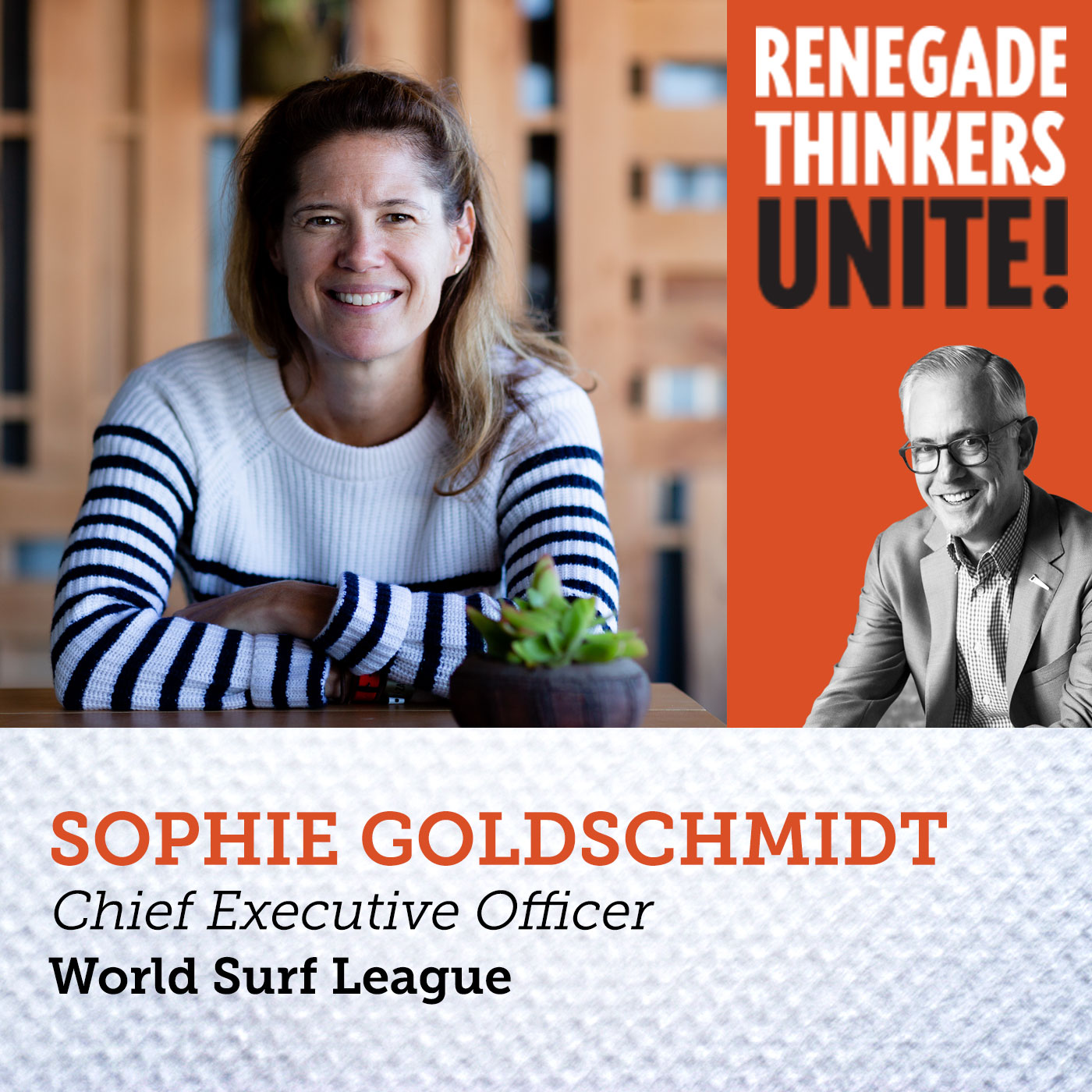
Ep 142142: Catching Waves and Going Carbon Neutral with the World Surf League
How can a brand save the world? They could do something flashy, like repel an alien invasion or topple Godzilla, or they could do something real and substantive, like the World Surf League. When the WSL isn't helping pro surfers shred the next big curl (are we saying that right?) or giving sports fans a great way to soak up some rays, they're preparing for the future. As a sport deeply intertwined with the environment, that means committing to going carbon neutral. Sophie Goldschmidt, CEO of the WSL, has helped this goal permeate the entirety of the organization, and has noted how crucial it is to have a brand purpose worth rallying behind. On this episode, she discusses her athletics-centered marketing career, from Adidas, to the World Tennis Association, the NBA, and Rugby Football Union, as well as her commitment to brand purpose, engaging with the customers, effective company leadership, and more.

Ep 141141: B2B Brands Can Beat "Boring" and Bad Bounce Rates
What does a B2B brand's website have in common with a SuperBall? A significant bounce rate! Okay, maybe not the funniest joke, but it does transition well into discussing a pretty real issue with many B2B brands: they're boring! There are plenty exceptions, of course, but far too often, B2B brands end up being, as this week's guest puts it, "B2Boring." Ryan Urban is the CEO & Founder of BounceX, a company that helps brands optimize their websites (and ditch the high bounce rates). In examining countless B2B brands, Urban has gotten a great sense of where these companies tend to go wrong, and so much of it ties to these brands being dull, playing it safe, and failing to show any personality. Their websites and content too often lack story, and end up being "coagulated, congealed buzzwords" that'll just bounce prospects away like a trampoline. So, if you're interested in hearing about how brands can be a little more exciting, what landing pages need to be successful, and more, tune in to this week's Renegade Thinkers Unite.

Ep 140140: Navigating Modern B2B Media
Email is still innovative...right? One might argue that email marketing has become the Facebook of marketing strategies— It was cool at first, it hasn't declined yet, but everyone and their grandmother is now on it. So what are the trendy marketing kids using now? Erik Huberman, CEO & Founder of Hawke Media, gives us the answer: SMS. As it turns out, customers only engage with marketing emails about 3% of the time, while the average click-through rate for SMS marketing tallies up to 30%. That's a number to write home about. Erik knows that these statistics are too important to ignore and knows that they're indicative of a larger shift in B2B. Acknowledging that shift, and moving with it, has helped Erik's young company grow from 7 to 160 employees in just about 5 years. On this week's episode of Renegade Thinkers Unite, Drew chats with Erik about the shift in traditional advertising towards more efficient digital strategies, and how B2B marketers can navigate it artfully. Learn about how this shift isn't for everyone, the importance of product demand, what an outsourced CMO does, and more.

Ep 139139: Digital Superheroes: How Agari Makes a Bold Mission Real
What do you need to make a big splash? A big ship, one would assume, is a terrific place to start. So that's exactly what Agari used to launch their new brand, the purpose of which is written loudly and proudly on the walls of their headquarters: "Agari protects digital communications to ensure humanity prevails over evil." That's a pretty bold way of explaining that your company is an advanced cybersecurity firm for email. But a bold mission statement is exactly what companies need to grow. At Agari, this statement is deeply woven into the community fabric, from the board members down to rank-and-file employees. On this episode of Renegade Thinkers Unite, Armen Najarian, CMO, discusses how they made the mission real, and how having that meaningful guidance of saving and protecting the world of digital communications, helped drive brand, product development, company growth, and more.

Ep 138138: Marketing Adobe: How Ann Lewnes Plants Flags and Inspires
How do you effectively lead the marketing efforts of a 20,000+ employee tech giant well enough to make it into the American Marketing Association's Hall of Fame? Sure—the question may sound a bit specific, but that journey is chock full of valuable takeaways for marketers at any sized company, in any line of work. Lucky enough for RTU listeners, this week's episode features Ann Lewnes. Ann is a recent inductee into the AMA Hall of Fame and is currently the CMO of Adobe, a company that doesn't really need much of an introduction. In her time at Adobe, she's established herself as a trail-blazing, "flag planter" who gives great attention to the big picture. Listen in to this episode to hear about how she does that, her own marketing journey, the content strategy for Adobe, building brand trust, inspiring the people around you, and more.

Ep 137137: Post-Sale Marketing and Keeping the Customer Smiling
Customers: What are they? Where do they come from, and what do they want? These are some of the great, cosmic questions we humans may never be able to answer. Just kidding, it's actually (from a high-level, conceptual viewpoint) pretty simple. We're all doing business with people, and people matter. If you keep your customer happy, great things happen. Going a little further, companies need to spend more time focusing on customer activation. Customers can and should be advocates for your brand, but to achieve that, they have to be treated well. Simple enough concept, but execution will take a little work. On this episode of RTU, Kevin Spurway, SVP of Marketing at Appian, an enterprise application development platform, talks about the high level of commitment and effort required to really engage with customers, especially existing ones. He discusses what he calls "post-sale marketing," which is how Appian has been so successful at developing meaningful relationships with its client base. Tune in to hear about post-sale marketing, celebrating customer success, customer-engagement pitfalls to avoid, and more!

Ep 136136: How Research Can Supercharge Your B2B Marketing
When you order a pizza, you want it delivered quickly. It should prepared, placed in one of those fancy heat-retaining delivery bags, and be at your door within the half hour. Boom. Simple. A brand transformation is not a pizza (stop the presses!). Most marketing endeavors, in fact, benefit immensely from first slowing things down. Do your research, let ideas cool off while you consider them, and make sure your efforts are built on a strong, deliberately crafted foundation. Then, order your team a pizza to celebrate a well-executed campaign. That's part of what Dawn Colossi, CMO at FocusVision, a customer insights company, preaches. Research is absolutely key. No matter how tight the deadline, how urgent the project, it'll always be beneficial to start off with the research, even if a light, initial round. Tune in to hear more about effective researching, tactful surveys, and how to be more deliberate in your marketing efforts.

Ep 135135: How the Control Freaks at UTAK Are Cutting Through
What's your brand truth? Actually—let's pull back a bit: what is a brand truth? You could give it a few different names, but in essence, your brand truth is a concise guiding principle that informs virtually every aspect of the company's operation and, importantly, can't be dismissed. In the case of UTAK, a toxicology quality control provider (serving chemistry labs, forensics experts, and more), they nailed it in two words: "Control Freaks." On this episode of RTU, CMO, and Chief Control Freak, Matt Kopp joins the show to discuss the origins of "Control Freaks," and how two simple words have influenced every arm of the company, from product development, to customer engagement, to marketing. He also dives into the benefits of bringing in an outside agency (Renegade LLC) to develop the idea, the importance of internal buy-in, how to stand out in a crowded B2B market, and more.

Ep 134134: Building a Lean, Mean, Lead-Gen Machine
About 5 years ago, Rebecca Stone joined LiveRamp and the CEO said, "I want you to be as sophisticated as possible in advertising, and how you use it." At the time, the company had two sales development reps, a funnel that wasn't necessarily feeding leads properly, and a young tech stack and tons of potential, so Rebecca got to work on the company's digital transformation. Now, the company has a tech stack built from roughly 40 different tools, broken into different operating nodes, a marketing team that supports 20 sales development reps, an in-house data lake, and data analytics models that can accurately predict how marketing spend will translate to revenue—a sort of holy grail for marketing analytics. On this episode, Rebecca shares her journey at LiveRamp, a platform that helps brands get personalized ads in front of users across the web, and how she helped build the well-oiled marketing machine that her department has become.
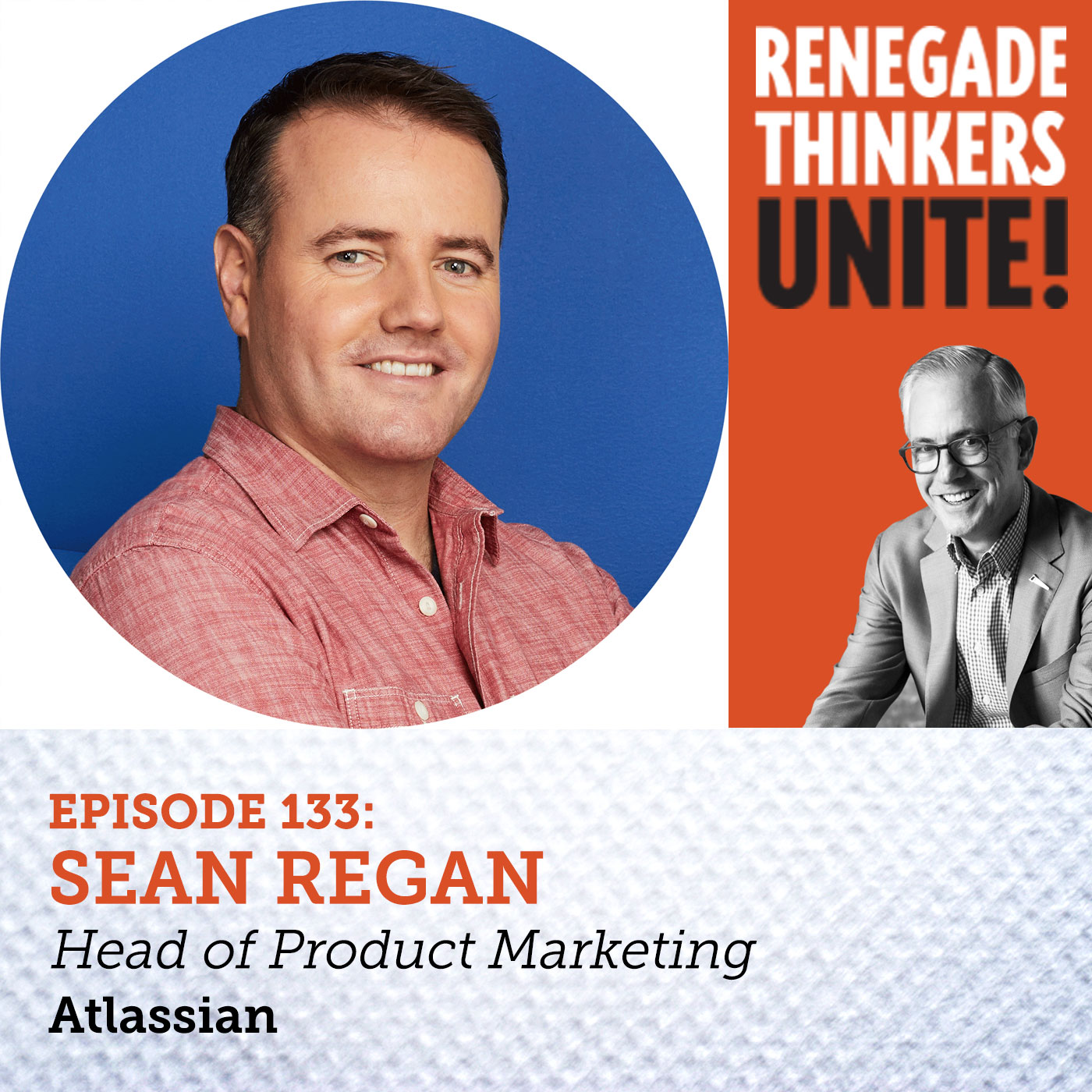
Ep 133133: Why B2B CMOs Should Mine Asteroids
You might think the first step to asteroid mining is get a rocket ship. Usually you would be right. But on this episode of Renegade Thinkers Unite, Sean Regan, Head of Product Marketing at Atlassian, is taking a different approach. To Sean, mining an asteroid speaks more to the idea that a portion of your marketing, or overall company strategy, has to seek out untapped, sometimes hard-to-reach areas, otherwise you'll just be chipping away at coal in the same mines as everyone else, looking for small, incremental bumps in value. As Sean says about marketing, "if you're not nervous about it—even a little bit—there's a pretty good chance it doesn't matter." At Atlassian, a software developer aimed at improving collaborative productivity for companies, Sean keeps asteroid mining front-and-center when formulating marketing strategies. On today's episode, join in as he and Drew talk about how to bring emotion and creativity to science-driven marketing, how product development and marketing is contributing to Atlassian's 100M monthly active user goals, how to get customers to become brand evangelists, and more.