
Renegade Marketers Unite
648 episodes — Page 12 of 13
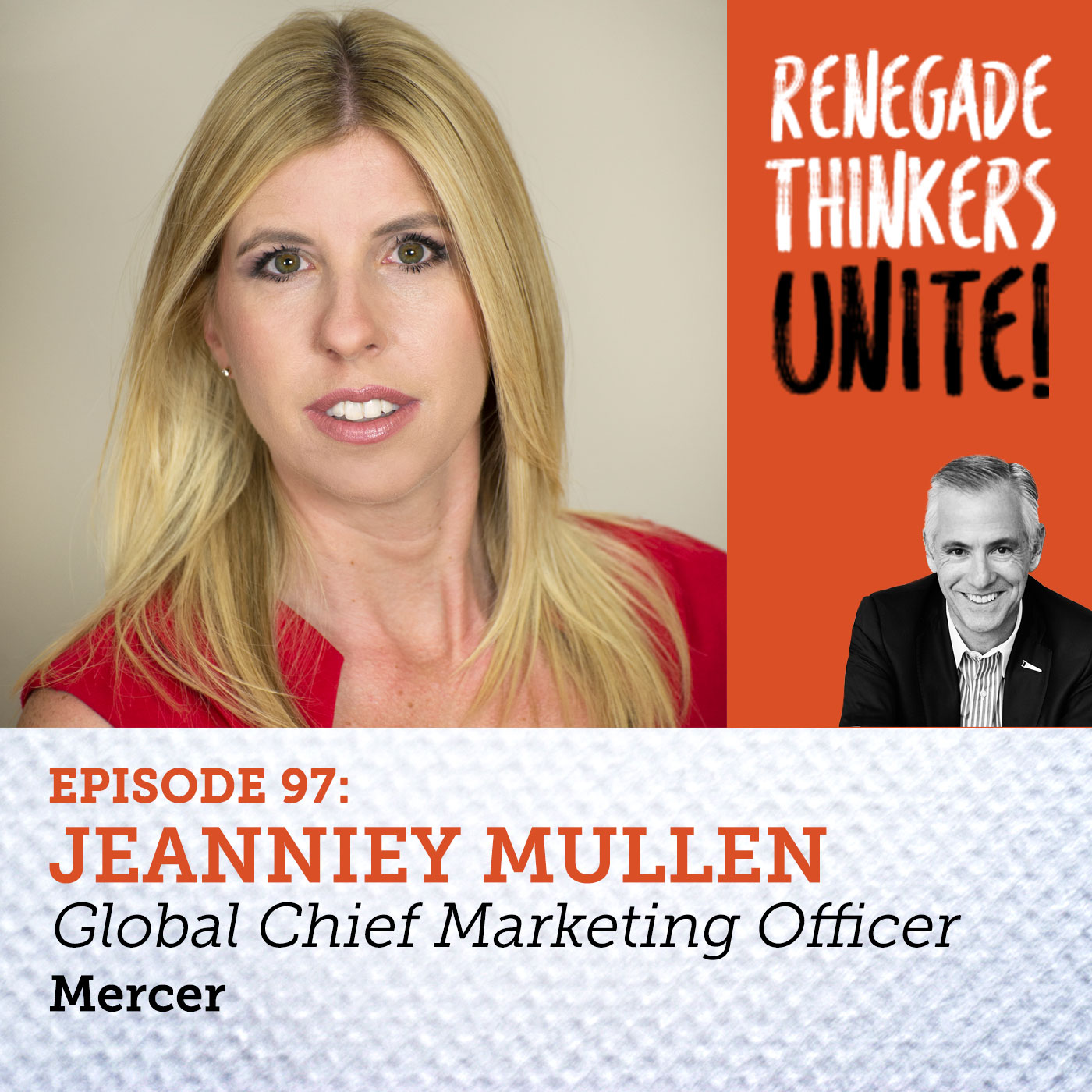
Ep 9797: Perfecting the Art of People Marketing
With growing demands from the C-Suite, (often) low budgets, and pressure to keep up with today's current trends, marketers constantly face the challenge of creating authentic content that builds brand awareness and inspires action. Every CMO knows how difficult it can be to recruit brand ambassadors to create compelling content that cuts through. But what if the answer could be found in the co-workers around you? A recent study showed that brand messages posted by employees achieved 561% more reach than posts made by the company itself—resulting in 8 times the engagement for those posts! You've probably heard of different employee advocacy programs, but Jeanniey Mullen's concept of "people marketing," through her role as CMO at Mercer, is a brilliant concept of building big brand awareness with no media budget at all. There is no formula and no equation to adhere to in order to get the best results. Jeanniey's philosophy is simple: trust in your people to tell their stories. Mullen has a deep background in advertising, start-ups, and entrepreneurship. Looking back at her career, she credits her renegade spirit to the Davos Squad initiative at Mercer—a content marketing success that created a one-of-a-kind buzz around hundreds of Mercer employees enthusiastically interacting with the brand on social media. On this episode of Renegade Thinkers Unite, Drew and Jeanniey dive into how brand ambassadors can be formed within your own company. Jeanniey also explains her top three takeaways from initiating a "people marketing" program and demonstrates how to overcome any obstacles in your way. Listen here to learn how to market engaging content in completely new ways. Subscribe on Apple Podcasts - Stitcher- or Podsearch What You'll Learn How can you use people marketing to create brand ambassadors? Simply put, Jeanniey explains that "People marketing is the process of leveraging your company's people in a way that's so powerful, it takes your brand to new heights." The first step in the people marketing strategy is to develop impactful content. Jeanniey created the AIR concept - content that is Authentic, Inspirational, and Relatable - in order to develop better material. Developing that content is only one part of the people marketing journey. You must then make your employees brand ambassadors. These ambassadors then share your content to reach new markets like never before. Overcome the challenge of staying "on voice" by following these guidelines With dozens or even hundreds of new employee brand ambassadors, how can a company stay "on voice" with the message? Jeanniey explains that the answer isn't found in strict guidelines. If you provide authentic content to people, let them choose what to share and when, and allow their individual personalities to shine through, your people marketing strategy will be effective. If you want a brand ambassador's post to be authentic, you can't script their social media. Jeanniey's 3 key takeaways from successful people marketing campaigns Throughout her time at Mercer, Jeanniey has learned 3 main lessons when handling people marketing campaigns. Here they are. Break the rules! Don't be afraid to pursue new options. Don't default to email (there are better, more creative options available) Nobody will pay attention to your content unless it's really cool People marketing has the power to forever change how you view marketing - be sure to learn from Jeanniey's career. Timeline [0:29] Jeanniey's Renegade Rapid Fire segment [13:01] What is people marketing? [21:18] Overcoming the challenge of staying "on voice" in people marketing [25:42] People marketing is not just a single moment in time [31:17] Tackling hurdles while pursuing this marketing strategy [34:04] 3 key takeaways from using people marketing strategies Connect With Jeanniey: Jeanniey's bio on the Mercer website Connect with Jeanniey on LinkedIn Follow Jeanniey on Twitter Resources & People Mentioned BOOK: "Storynomics: Story-Driven Marketing in the Post-Advertising World" VIDEO: "Peter Beshar Executive Vice President and General Counsel Marsh & McLennan Co. on Cyber Security" Connect with Drew http://renegade.com/ On LinkedIn On Twitter On Facebook On Instagram
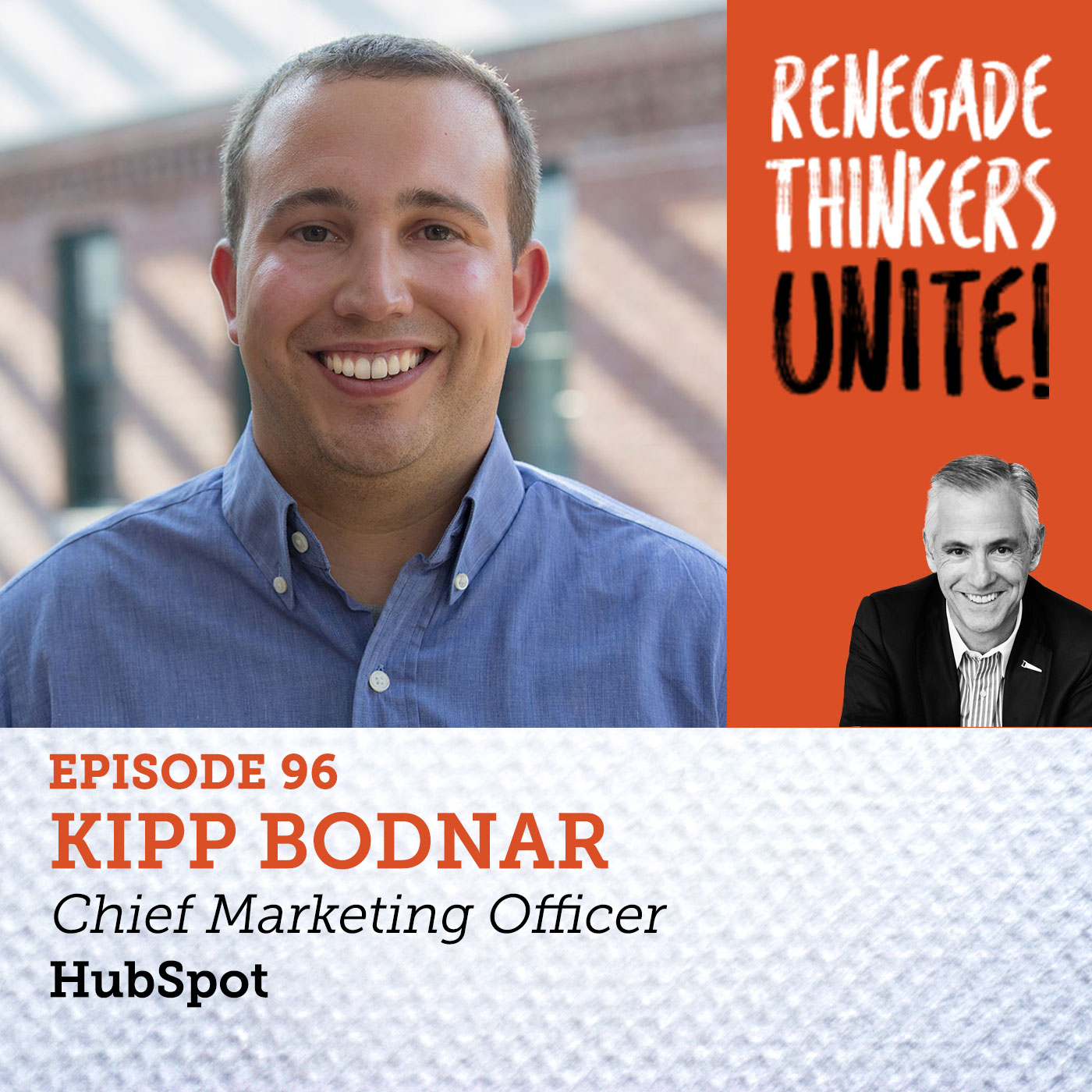
Ep 9696: Interview Questions that Build Better Marketing Teams
The notion of a CMO building or rebuilding a marketing team is not an unfamiliar concept, especially on Renegade Thinkers Unite. Thinking back to the insights provided by Paige O'Neill, hiring a new team can be one of the first major tasks a CMO has to tackle in their first 100 days. When faced with this challenge, CMOs should always focus on designing a team that will align with the strategic goals of the company and that fills the current HR gaps. But one element of the process that is often overlooked is the interview—and more importantly, the interview questions. That's where Kipp Bodnar comes in. As a wine enthusiast, mechanical watch aficionado, and host of HubSpot's "The Growth Show," Kipp Bodnar, the CMO of HubSpot, loves learning from the people he interviews and encounters. Kipp's recent article, "The Ultimate Guide to Marketing Interview Questions From HubSpot's CMO," made waves in the marketing community, discussing the best questions to ask in a marketing interview. On this episode, Drew turns the tables by asking Kipp to respond to the questions he wrote. Drew and Kipp also explain the best ways to hire for senior-level leadership positions and share how new professionals can prepare for the hiring process. Click here to learn how to add these great insights to your own interviews. Subscribe on Apple Podcasts - Stitcher- or Podsearch What You'll Learn The best marketing interview questions achieve these goals Hiring top talent starts with asking the right questions. Kipp is an expert in sorting out expert applicants from the general pool, and he suggests CMOs use marketing interview questions that do the following: Encourage open-ended responses Identify if an applicant can problem solve Discover if an applicant can simplify a complex topic and notice great marketing in other brands The best applicants will demonstrate a high level of humility, motivation to learn, and an ability to listen. Getting great answers only comes from great questions. To hear the full list of marketing interview questions, be sure to listen. Follow this advice when considering a senior-level leadership applicant Hiring for a senior-level position is much different than hiring for marketing team members. Kipp shares his process for hiring leaders throughout his conversation with Drew. Kipp explains that during a 2-week hiring process, he will spend 20-30 hours with the applicant in a variety of settings (dinners, presentations, panel interviews, etc.) He says that if you're going to be working closely with this applicant for the next few years, you must understand the essence of what that person is all about. How can new marketing professionals prepare for an interview? Preparing for an interview doesn't have to be stressful. Kipp shares 5 main things an applicant can do to prepare for the interview process. Here they are. Become familiar with the company's products/services Seek out and talk with existing company employees Do content research Understand the culture Come with questions of your own The hiring process is a "unique mix of buying and selling," as Drew explains. These insights from Kipp on marketing interview questions can help make the process smoother and more effective. Timeline [0:29] Drew explains the format for this episode of Renegade Thinkers Unite [2:51] The fine art of interviewing and hiring for a marketing team [4:00] Use this question to know if your applicant can problem solve [8:28] Use this question to see if the applicant puts the opinion of the customer first [12:14] This question determines if an applicant can pull info from a set of data [17:09] Is this applicant able to understand what good marketing is all about? [21:04] Can this applicant seek out and absorb information on their own? [28:16] Follow this advice for hiring a senior level position [30:20] These traits help people make the senior-level cut [34:24] Follow these tips for preparing for an interview [36:46] The main relationship between marketing and sales [39:20] This one question is what Kipp hopes for in every interview Connect With Kipp: Kipp's bio on the HubSpot website Connect with Kipp on LinkedIn Follow Kipp on Twitter Resources & People Mentioned PODCAST: "The Growth Show/The Turnaround" PODCAST: "71: Drew Neisser: Marketing's renegade talks strategy, story, and courage" ARTICLE: "The Ultimate Guide to Marketing Interview Questions From HubSpot's CMO" BOOK: "Competing Against Luck: The Story of Innovation and Customer Choice" BOOK: "The Challenger Customer: Selling to the Hidden Influencer Who Can Multiply Your Results" BOOK: "White Fragility: Why It's So Hard for White People to Talk About Racism" BOOK: "Shoe Dog: A Memoir by the Creator of Nike" BRAND: Walker and Company Follow Tristan Walker on Instagram APP: Flipboard Connect with Drew http://renegade.com/ On LinkedIn On Twitter On Facebook On Instagram
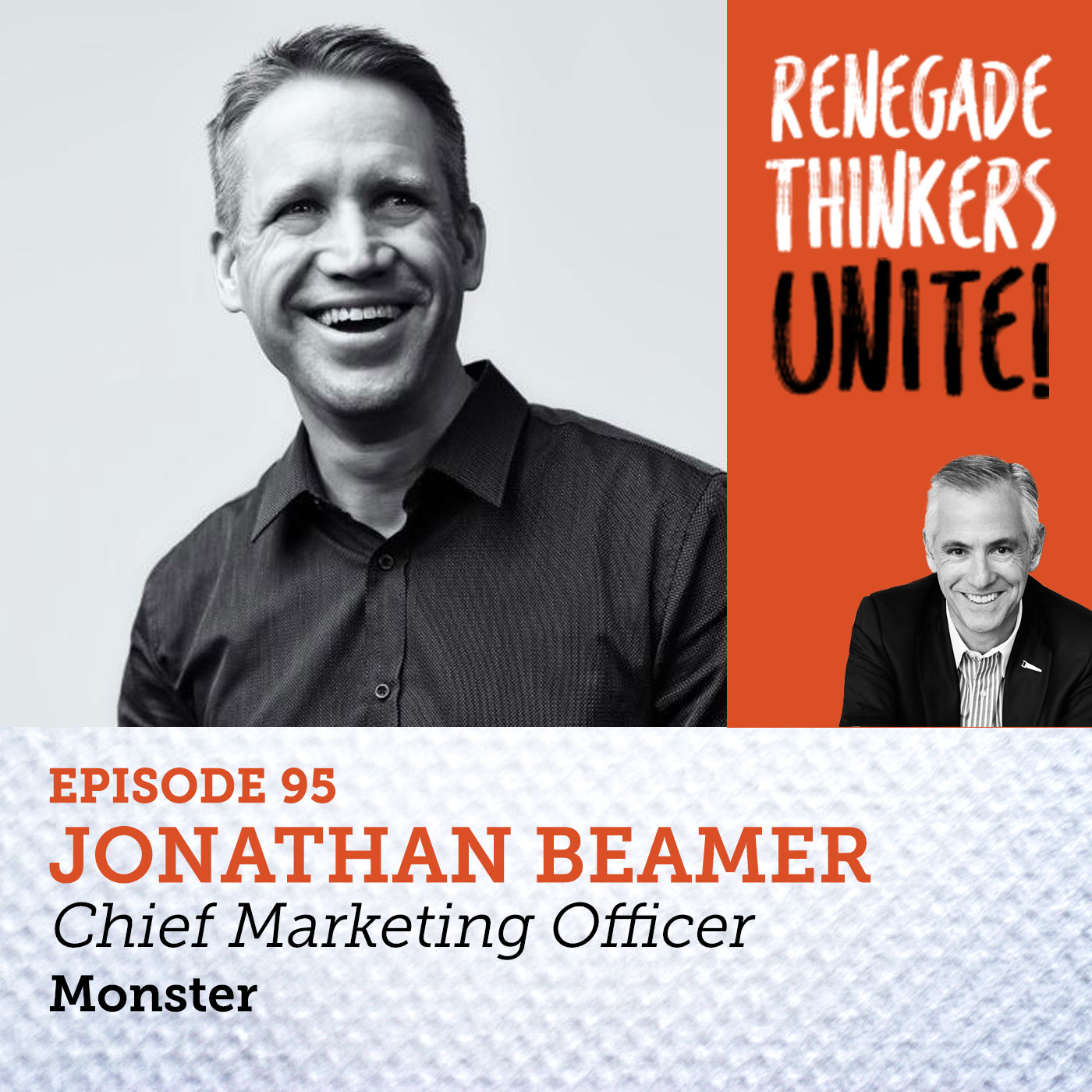
Ep 9595: How Monster's CMO is Revitalizing the Brand
EOne of the more refreshing trends in marketing is the grand "mea culpa" in which a brand apologizes for past shortcomings and offers a renewed commitment to quality/integrity. Wells Fargo's recent "re-established in 2018" campaign is one striking example. Another comes from Domino's a few years back when they admitted their pizza was poor and relaunched with a better tasting product. This approach takes guts but really resonates especially when the pledge to be 'better" comes with demonstrable actions. Which brings us to this episode of Renegade Thinkers Unite in which Jonathan Beamer, CMO of Monster, admits that the online jobs site had "coasted" for a while and explains how they are renewing their commitment to job-seeker success. What is so interesting in this case is that though Monster had coasted after dominating the job search market for most of the dot-com era, the brand still enjoyed high awareness and what Beamer calls "latent favorability." Having this strong baseline to build from, Beamer expected that the combination of product improvements and increased advertising would help revitalize the brand. And though Beamer describes Monster's revitalization as "a work in progress," the brand is already seeing increases in site traffic and customer activity. Not coincidentally, Monster is back on TV providing further proof that this medium is far from dead as digital pundits declared 10 years ago! Listen here for inspiration on how you might revitalize your brand. Subscribe on Apple Podcasts - Stitcher - or Podsearch What You'll Learn There's great power behind a brand that people are familiar with and trust There's one core truth behind Monster that has allowed their brand to survive across decades, and that is that people are always searching for fulfilling work. Since 1999 Monster has connected people and job opportunities, and Jonathan explains that it's paying attention to small details that makes Monster stand out from the masses. He explains the powerful concept of "latent favorability," when people remember your brand fondly even after having not used the company's services for a period of time. Monster has values attached to the brand that goes beyond the product it provides, and that's where the company's power lies. These 4 tips will help you refresh a stagnant brand Jonathan's marketing team at Monster has been faced with the challenge of refreshing a company message that has existed for nearly 20 years. In his conversation with Drew, Jonathan explains 4 main tips that have helped guide his team through the process of refreshing a stagnant brand. Here they are. Be the voice of the customer (in Monster's case, understanding both an employee on the hunt for a new job and a recruiter looking for top talent) Have a close partnership with the product/service development team Understand the simple decisions made throughout a customer's purchase journey Be consistent with the tools you choose to use Learn how to track brand awareness for greater marketing success Having data on your brand, its level of awareness within your target market, and your digital followers is essential, but you have to know how to aggregate and analyze that data. Jonathan explains that you should not get hung up on the questions to ask when conducting brand awareness surveys or sending out evaluation tools. At the end of the day, the tools you use to track brand awareness matter less than the overall feedback it provides to you and your team. Jonathan also recommends that you also utilize your historical data and keep the big picture in mind when doing brand tracking. For even more insights on how to track brand awareness effectively, be sure to listen. Timeline [0:28] Drew introduces Jonathan to the Renegade Thinkers Unite show [3:38] Jonathan's Renegade Rapid Fire segment [17:06] The importance of factfullness in the world around you [19:50] What Jonathan's excited about as the CMO of Monster [24:07] This is what happened when Monster stopped investing in marketing [30:14] Fixing fundamental aspects of the Monster brand [35:37] Keep these ideas in mind when doing brand tracking [40:51] There's a strong bond between quality products and justifying marketing efforts [43:32] Content is huge in Monster's marketing strategy [48:15] Jonathan's top 3 pieces of advice for new CMOs Connect With Jonathan: Connect with Jonathan on LinkedIn Follow Jonathan on Twitter Resources & People Mentioned BOOK: "The Fountainhead" BOOK: "Factfulness: Ten Reasons We're Wrong About the World--and Why Things Are Better Than You Think" BOOK: "How Brands Grow: What Marketers Don't Know" Connect with Drew http://renegade.com/ On LinkedIn On Twitter On Facebook On Instagram
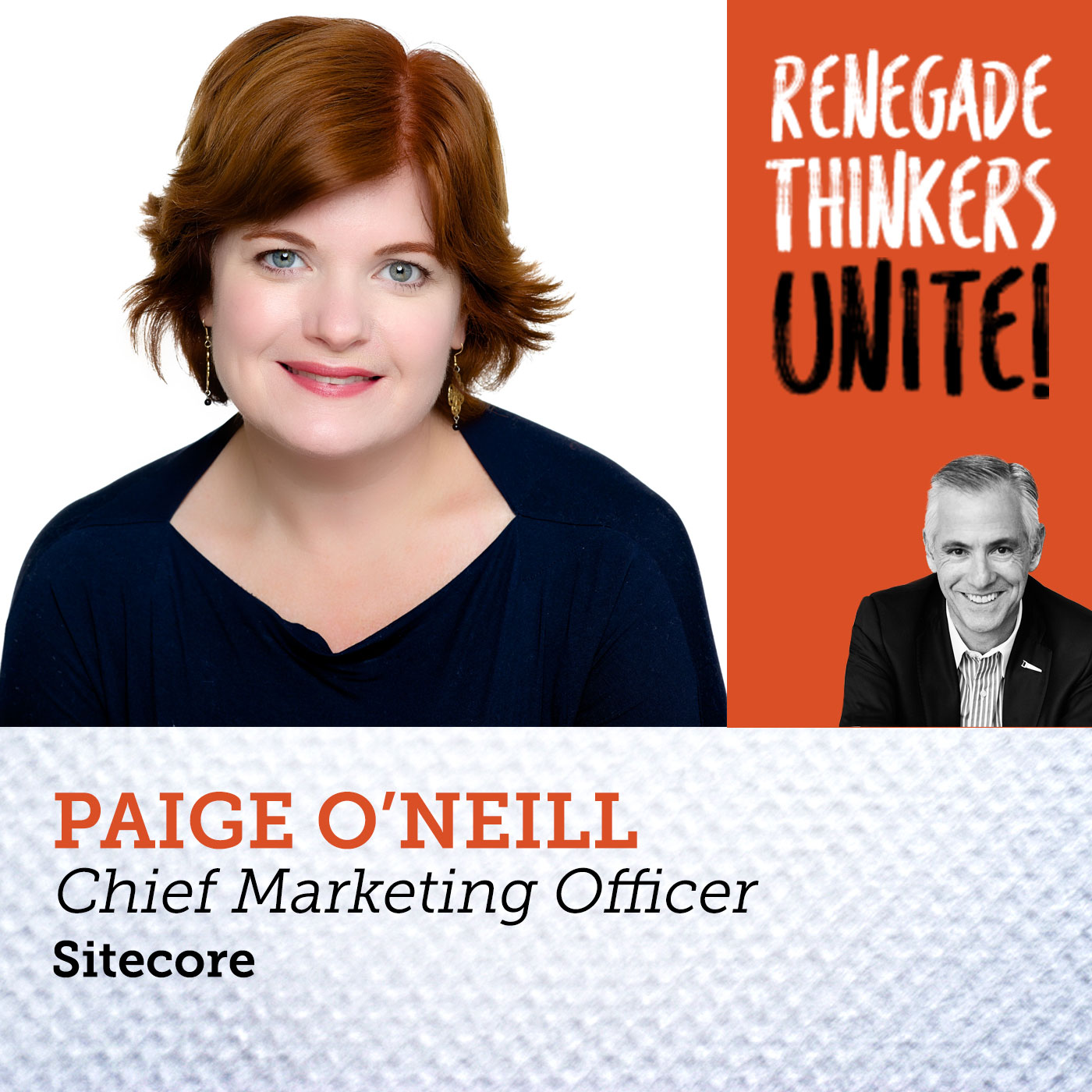
Ep 9494: Advice for CMOs in Their First 100 Days
Joining a company as the new chief marketing officer can be an intimidating affair. There are new team members to meet, historical strategies to digest, and an overwhelming pressure to make an impact early in your tenure. With the rest of the C-Suite reminding you of the needs to generate demand and to calculate ROI on every expenditure, it is easy to find yourself being pulled in multiple directions and forced into "ready, fire, aim" mode. Luckily, Paige O'Neill is here to help on this special episode of Renegade Thinkers Unite. As the new CMO of Sitecore, an integrated CMS, and e-commerce solution, Paige is an expert at handling new roles in marketing departments, having been through the process on multiple occasions. Dubbing herself as the chief marketing "synthesizer," Paige has a knack for synthesizing all the information that is thrown her way and gaining a quick understanding of the company's goals and priorities. Having worked as a CMO for large companies as well as start-ups she continues to add to her extensive toolkit, taking away something new from each experience. Listen carefully as Paige details the critical steps every new CMO should take to ensure they too get off to a successful start. Click here to listen and learn how to navigate your first 100 days. Subscribe on Apple Podcasts - Stitcher - or Podsearch What You'll Learn Don't be afraid to ask big questions during your first 30 days When Paige stepped into her new role as CMO, she understood the importance of asking the right questions within the first 30 days. Recognizing the key stakeholders within the company is one of the biggest objectives you should have as a new chief marketing officer. You also have to "become a synthesizer" of all of the information being thrown your way. Understanding the company's current priorities, current team roles, and workflow processes are all important to understand soon after joining the company. The sooner you ask these big questions and understand the answers, the faster you'll be able to start actually marketing and leading your team. Here's how to approach your new marketing team Being hired as a new CMO means being paired with a brand new team of marketing employees. Or, you'll be tasked with hiring your own new team. Paige outlines a few key questions that can help you navigate this complex process: What are the strategic goals of the company? How is the marketing team going to contribute to that growth? What's holding the company back from the current objectives? What vacancies and gaps are there in the current team? She encourages new CMOs to "be your own best case scenario" and to not let distractions get in the way of securing a great team. If you take the time to build solid relationships with your coworkers early on, the rest of your first 100 days will go much smoother. Consider Paige's best advice for your first 100 days as a new Chief Marketing Officer During your first 100 days as a new CMO, Paige explains that you will have to embrace and lean into the difficult conversations. On this episode, she shares a list of things that are important to work on during the first 3 months in a new role: Build key relationships Learn the business Shore up the team and prioritize hiring Figure out the quick wins that buy you time for longer-term projects Prioritization goal alignment Articulate a vision Be mindful of how you're spending your time - don't be afraid to say no By keeping these areas in mind as you work in a new company, your first 100 days as a new chief marketing officer are sure to be successful. Timeline [0:28] Paige is here to help CMOs understand steps to take in their first 100 days [2:54] Paige's Renegade Rapid Fire segment [13:33] Don't be afraid to ask big questions in your first 30 days [17:55] How do you ensure your observations are true? [19:40] How long should you take to make your first sets of decisions? [25:37] Here's how Paige approaches a new marketing team [34:09] This advice is key for the first 100 days in a new CMO role Connect With Paige: Press release on Paige's new role at Sitecore Connect with Paige on LinkedIn Follow Paige on Twitter Resources & People Mentioned BOOK: "A Good Time to be a Girl" Connect with Drew http://renegade.com/ On LinkedIn On Twitter On Facebook On Instagram

Ep 9393: Why ABM is a Must Have for B2B Marketers
Sometimes a marketer's most renegade moment comes from a change in their career path. As it turns out, moving across the country and making a career change is no easy feat and requires a healthy amount of courage. But that's exactly what Peter Isaacson did, and after a productive decade-plus working on the agency-side of advertising, he's now nested in Silicon Valley and leading a charge of marketing innovation as the CMO of Demandbase, a targeting and personalization platform and the global leader in account-based marketing. This podcast dives into the world of ABM and why it's no longer just optional for B2B marketers. As the CMO of Demandbase, the ABM market leader, Peter Isaacson offers an insider look at account-based marketing, serving up concrete advice on how to make the most of these programs. To achieve major results, Peter advises marketers that are new to ABM to take things slow and steady. It's not something that you can just rush into, but with the help of Peter and this podcast, crafting an ABM strategy will start to feel like a piece of cake. In this episode, Peter and Drew discuss the three main mistakes marketers make when trying to implement an account-based marketing strategy and how you can use intent signals to identify better targets. Peter describes how companies can begin to adopt an ABM strategy, the future of ABM, and why ABM is not the death of storytelling and creative marketing. Listen here for all the latest details on account-based marketing. Subscribe on Apple Podcasts - Stitcher- or Podsearch What You'll Learn These are the 3 biggest mistakes marketers make when considering an account-based marketing strategy Account-based marketing is not something that can be ignored in the B2B marketing space. However, Peter has found that many people new to ABM strategies make 3 main mistakes that prevent them from fully succeeding. They are: Not engaging the sales department teams in the new strategy Not aligning with the right target accounts Tackling too many areas of ABM all at once He proposes that all marketers engage with the sales teams from the start, to eliminate confusion down the road. He also explains that your former strategies for finding the right target accounts may no longer be effective and that starting small with ABM is the best way to approach the new strategy. How can marketers use intent signals in a new account-based marketing strategy? Implementing an account-based marketing strategy is all about identifying the right target accounts. Then, you must uncover the right buying committees and decision makers within that account. Using specific intent signals can help you accomplish those goals. When done correctly, intent signals can help you and your team understand which companies are already researching account-based marketing firms. Intent signals are no longer limited to simply noticing when a company fills out a form on your website. ABM is not the death of creative marketing - here's why Using an account-based marketing strategy does not mean you've given up on other creative marketing tactics. Creative marketing and genuine storytelling are still important, often overlooked, B2B marketing strategies. People are still looking for groundbreaking brand stories and engaging content. Peter explains how account-based marketing and creativity are uniquely paired, all on this episode. Timeline [1:09] Drew introduces Peter and why account-based marketing is so critical [3:00] Peter's Renegade Rapid Fire segment [13:46] These are the 3 biggest mistakes made in ABM [18:44] What does an ABM program look like? [22:00] Using intent signals in account-based marketing [24:54] The old way of demand generation is no longer functional [27:40] ABM is not the death of brand and creativity [30:48] Peter proposes the future of ABM Connect With Peter: Team webpage on Demandbase website Connect with Peter on LinkedIn Follow Peter on Twitter Resources & People Mentioned BOOK: "Educated: A Memoir" Demandbase's ABM Certification process Ep 73, "MRP CMO Explains Why Predictive Analytics in Marketing Will Revolutionize the B2B Industry" Ep 84, "Why an Account Based Marketing Strategy in B2B is Successful" Connect with Drew http://renegade.com/ On LinkedIn On Twitter On Facebook On Instagram

Ep 9292: Simplicity + Side Hustle = CMO Success
Let's face it – simple is hard, especially in B2B marketing. It's so easy to get caught up in flashy features, complicated jargon, and complex campaign strategies that we forget what marketing is all about – making buying easier. Faced with this challenge of persuading people, many CMOs are struggling to keep things simple. Margaret Molloy is not one of those CMOs. As the Global Chief Marketing Officer of Siegel+Gale, Margaret has mastered the art of persuading people with simple, but powerful messaging. She points her success to two key foundations: having permission to fail and the effectiveness of fact-based storytelling. The lessons she has to share are not only coming from her experience at Siegel+Gale, but also from what she learned by exploring her own passion project, the #WearingIrish initiative. In this episode, Drew and Margaret talk about how to keep things simple in B2B marketing and explain the four main traits of successful CMOs. Margaret describes her experience with her passion project, the #WearingIrish initiative, and how CMOs could be growing and learning from their own side hustle. Margaret is a bundle of B2B wisdom, click here to listen to her story. Subscribe on Apple Podcasts – Stitcher – or Podsearch What You'll Learn Keeping marketing simple is hard, but these 2 foundations make it easier B2B marketing is all about making a buying decision easier for a customer. Even though there are thousands of experts and opinions in the industry, Drew and Margaret both believe in the idea of simple marketing - a Renegade approach to marketing that makes everything approachable and easy to understand. Simple marketing focuses on encouraging and persuading people to act. But a CMO cannot pursue this path without these 2 foundations: internal company support and a solid fact base. Without these tools to lean on, a CMO is more likely to get distracted and lose sight of the true company goal. Artful, courageous simple marketing follows after these foundations have been laid. Successful CMOs exhibit these 5 behaviors that lead to better simple marketing campaigns Great CMOs are fundamentally simplifiers. They're always working towards boiling down ideas into easy-to-digest pieces of information. Margaret explains that throughout her career as a marketer and creator, the best CMOs consistently exhibit these 5 behaviors. They're purpose-driven They're fact-based, but they have an imagination They are bold and brave in prioritization (they say no often) They create and empower smaller teams They execute on company and brand promises These behaviors allow a CMO to focus on what truly matters in their marketing campaign. Margaret uses her passion project #WearingIrish to help her role as a CMO - and you can too Margaret's native country is Ireland and even while working as a top CMO she knew she wanted to bring global exposure to Irish creators. That's why she created the #WearingIrish initiative. She is telling the untold story of Irish fashion design and learning skills that are transferable to her CMO role as well. Margaret explains that this passion project has given her an opportunity to have an "experimentation lab" that is separate from the risks and responsibilities associated with Siegel+Gale. It also allowed her to develop a higher sense of empathy for other companies and her CMO clients. No matter where your personal interests may lie, the stories shared on this episode of Renegade Thinkers Unite show that they can always be used to benefit your company and your own professional work. Timeline [0:30] Margaret Molloy, CMO and creator, is featured on this episode of Renegade Thinkers Unite [2:07] Margaret's Renegade Rapid Fire segment [11:35] The story behind Margaret's #WearingIrish passion project [19:04] Tying together your personal brand with your company's brand and mission [22:20] These are the top 5 behaviors of successful CMOs [32:00] Actionable steps make simple marketing tangible Connect With Margaret: Margaret's profile on the Siegel+Gale website Connect with Margaret on LinkedIn Follow Margaret on Twitter Follow Margaret on Facebook Resources & People Mentioned Wearing Irish website BOOK: "The Innovator's Dilemma: When New Technologies Cause Great Firms to Fail" BOOK: "Eat Fat, Get Thin: Why the Fat We Eat Is the Key to Sustained Weight Loss and Vibrant Health" INTERVIEW: "Marketing Needs to Be More Than a Coat of Paint" Connect with Drew http://renegade.com/ On LinkedIn On Twitter On Facebook On Instagram
Ep 9191: Why a Digital Brand Relies on Outdoor for Growth
Fans of The Simpsons may remember the episode in which Homer is jubilant about "new billboard day." This 1995 episode happened long before digital marketing became an obsession that in some circles rendered outdoor obsolete. Well Homer Simpson has a new comrade in arms with Janine Pelosi, the CMO at Zoom, at least when comes to the appreciation of outdoor advertising. In past 18 months, Pelosi and Zoom put forward the simple but powerful message "Meet Happy" to build awareness of their online meeting platform. Then they shared it with the world, but not just through ads on Facebook, LinkedIn and Google. They invested heavily in billboards and transit ads across major US and European markets. The results? 100% year over year revenue growth. 135% year over year user base growth. 1600% growth in weekly web traffic. That Simpsons gag was released in 1995, but Janine's team is proving that billboards and outdoor advertising can still be powerful, as long as the message is right. In this episode, Drew and Janine talk about effective, honest messaging and how to broadcast it to the world. Janine talks through Zoom's success, its challenges, and her high-level thoughts on the role a CMO should play, especially in being an advocate for their team. Learn from Janine's journey at Zoom by listening to this episode. Subscribe on Apple Podcasts - Stitcher- or Podsearch What You'll Learn Zoom's latest brand awareness campaign is "Meet Happy," and it works wonders without digital marketing With over 700,000 businesses using Zoom to meet virtually, Janine and her team realized that meetings were a critical piece of modern business. They sought out to create a brand awareness campaign that would generate demand in a unique way. That's why they stayed away from typical digital marketing strategies such as Facebook ads. Instead, they put outdoor marketing pieces across the world on buses, billboards, taxis, etc. The "Meet Happy" campaign speaks to so many prospects because it encourages a positive emotion and interaction with a product. Delivering happiness and great meeting experiences are what Zoom does best, and it shows. Generating demand is one thing, delivering on a promise is another. Zoom succeeds at both! The "Meet Happy" campaign simply generates demand. It doesn't capture that demand and turn it into leads and sales. For capturing the demand, Janine still relies on digital tools. By using this form of promise-based marketing, Janine creates positive connections with prospects even before they visit Zoom's website. Their team follows through on that promise by always focusing on perfecting their product and having exceptional customer service. Internally, the Zoom team keeps "be happy" as a company culture pillar. It focuses everyone around a central mindset and has bonded the team together as they grew. Janine shares her main ideas for successful marketing, company culture, and innovation At Zoom, having a supportive CEO is one of the biggest ingredients in their "secret sauce" of success. Janine explains that without the support and encouragement of top company leaders, organizing successful campaigns is difficult. Are you interested in achieving the same amount of success as Zoom? Janine encourages all marketers to keep marketing practical, keep it simple, and stay focused. Don't chase after all the tools on the market and don't overthink your messaging. Simply know your brand, believe in your product, and trust your intuition. Timeline [1:15] How Janine's work has increased Zoom's marketing success in just 3 years [2:35] Janine's Renegade Rapid Fire segment [11:49] How Zoom's "Meet Happy" brand awareness campaign works wonders for capturing demand [20:07] The "secret sauce" behind Janine's marketing strategy at Zoom [23:34] Delivering on the promise of the "Meet Happy" campaign [26:45] Learn from the challenges Zoom's marketing team has faced Connect With Janine: Janine's profile on the Zoom website Connect with Janine on LinkedIn Follow Janine on Twitter Resources & People Mentioned Zoom website BOOK: "The SPEED of TRUST: The One Thing That Changes Everything" Gartner brand Connect with Drew http://renegade.com/ On LinkedIn On Twitter On Facebook On Instagram

Ep 9090: You Need to Blow Up Your Approach to B2B Marketing
Brent Adamson has a bone to pick with marketers: the way many of them define their industry is miles off the mark. In fact, Brent may want to abandon the term 'marketing' altogether, because too often the notion of separate marketing and sales departments breeds a lack of coordination. If your marketing and sales teams are not in perfect lockstep, you can count on your business suffering. If you disagree, maybe he can sway you in part 2 of his interview. In today's conclusion to the interview, Brent and Drew get at to the heart of how a marketing team needs to operate to be successful, and it involves a lot more than handing leads off to sales like a relay-race baton. Brent will talk the listener through seven tools that can help make speed up the process of connecting a customer with a product. Then, Drew and Brent talk through the buyer enablement journey, and why breaking down walls between sales and marketing will enable the teams make it as easy as possible for the customer to buy. In the end, that's goal number one. This episode is brimming with wisdom to help you shed some outdated notions of marketing, don't miss it! Subscribe on Apple Podcasts - Stitcher- or Podsearch What You'll Learn Marketing and sales collaboration is the wave of the future - here's why Brent wants every marketer to understand that the role of every B2B business is to make buying easier for the customer. This is achieved through a high level of marketing and sales collaboration. Gone are the days where marketers can simply hand off a prospect to the sales department and hope for the best. If a company knits together the two departments, they will have a competitive advantage over every other business in the industry. Where do buyers look for information validation? During the purchase journey, a buyer is always seeking for validation on the information they receive. After speaking with a sales representative, there are 3 main places where they will look for validation: The company's website SEO organic searches A third-party analyst/thought leader That's why it's so important for companies to be unified in the way they deliver information and lay out why their solution is the best available. If a buyer receives mixed information, they're less like to choose your solution. The 7 main tools that enhance buyer enablement A B2B company with linked marketing and sales departments can work together to create tools that help a customer make easier buying decisions. There are 7 main categories of tools that can be explored. Calculators Simulators Recommenders Benchmarks Connectors Advisors Diagnostics These tools ultimately allow the customer to choose the best solution to their problem. Brent explains that there is a "huge commercial benefit" to providing tools that make a customer's life easier, and companies can see increased loyalty from customers after they use these tools. Timeline [1:40] Marketing has a new role - make it easier for the customer to buy [4:24] Buyer enablement takes the form of these 7 tools [10:14] You can't fit these ideas into legacy structures for companies and brands [14:20] This is the #1 place customers look for information validation [23:34] Why you should be excited about the upcoming Gartner conference Connect With Brent: Brent's CEB/Gartner webpage Connect with Brent on LinkedIn Follow Brent on Twitter Follow CEB/Gartner on Facebook CEB/Gartner on YouTube Resources & People Mentioned Brent's book: "The Challenger Sale: Taking Control of the Customer Conversation" Gartner events and conferences Brent's blog on HubSpot Connect with Drew http://renegade.com/ On LinkedIn On Twitter On Facebook On Instagram

Ep 8989: Putting the B2B Buyer First and Understanding Their Purchase Journey, Part 1
A customer's purchase journey is never an easy process to document and collect data on. Thankfully, Brent Adamson is interviewed on this episode of Renegade Thinkers Unite. As Principle Executive Advisor at Gartner (formerly CEB), Brent works to help B2B companies explain to customers why their solution is the best available. Throughout part 1 of this conversation, Brent and Drew discuss why putting the customer first should be at the heart of any B2B organization. They explain the 6 non-linear steps in any purchase journey, and Brent shares his #1 tip for any B2B supplier. This conversation will shed new light on the purchase journey. Check it out. Subscribe on Apple Podcasts - Stitcher- or Podsearch What You'll Learn Putting the buyer first is the #1 step to create a better purchase journey B2B companies should be focusing on understanding how buying happens. Learning how your ideal customer views the buying process will give you direction when bridging the gap between marketing and sales departments. Brent explains that unfortunately, few brands in the B2B space are doing this well. To learn how to put the buyer first and reorganize your brand's purchase journey model, be sure to listen. The 6 main steps in any B2B purchase journey - they're not linear! Contrary to what many professionals believe, a purchase journey within B2B industries isn't linear. And closing a deal isn't about progression, it's about completion. Brent outlines the 6 main steps that must be completed before any buying decision is made. Problem identification Solution exploration Requirements building Supplier selection Consensus creation (always happening) Validation of information (always happening) These steps are far from being linear, especially when multiple decision-makers are involved. Of all the B2B buyers surveyed by Brent and his team at Gartner, 90% reported having to revisit one of the top 4 steps multiple times throughout their purchase journey. Marketers should be doing THIS, before anything else, to help buyers choose their solution Given these 6 steps, what is the ideal job of a B2B marketer? Brent believes it's simple: marketers need to make buying easier. The first step in doing so is ensuring that problem-solving information is available through multiple channels. The answers given to a buyer over the phone from a sales rep should be consistent with information available online and via social media. Actively solving a customer's problems, before they even recognize a problem, is the key to making B2B buying easier. By understanding a buyer's problems, offering them the best solution, and supporting them through their purchase journey, you're well on your way to closing more deals in your industry. Timeline [0:30] Brent's Renegade Rapid Fire segment, and his unique definition of marketing [7:30] The importance of putting the customer first [12:11] Brent explains the traditional customer purchase journey model [17:42] The 6 main steps to a buying process - they're NOT linear [25:40] B2B buying is incredibly complex, and it's through a multi-channel approach [33:27] Here are your need-to-know takeaways from part 1 of this conversation with Brent Connect With Brent: Brent's CEB/Gartner webpage Connect with Brent on LinkedIn Follow Brent on Twitter Follow CEB/Gartner on Facebook Resources & People Mentioned Brent's book: "The Challenger Sale: Taking Control of the Customer Conversation" BOOK: "Jobs to Be Done: A Roadmap for Customer-Centered Innovation" Connect with Drew http://renegade.com/ On LinkedIn On Twitter On Facebook On Instagram
Ep 8888: Build a Better Brand Narrative and Create Apps People Actually Want to Use
Becoming a great B2B company starts with one thing: creating a better brand narrative. The story you tell about your brand is the driving force behind every action your team takes. A great brand narrative inspires quality product design and links every team member to your common values and goals. Throughout this episode of Renegade Thinkers Unite, Drew and Barry also discuss why marketers need to go out and be the face of the company through making sales and speaking with customers. Finally, Barry shares his best tips for creating apps people ACTUALLY want to use. You can learn from his clear insights that break down app design into a few easy ideas. You'll enjoy and learn from this podcast - check it out! Subscribe on Apple Podcasts - Stitcher- or Podsearch What You'll Learn Professionals should do these 3 things in the B2B marketing industry B2B marketers do more than create content to be shared. The best professionals break out of the marketing mold regularly and become salespersons for the day. By going out and talking to prospects, understanding their problems, and making sales they are better equipped to create campaigns that target the heart of a prospect. Barry explains that marketing professionals should also do these 3 main tasks in order to best serve the company: Develop the "why change" and "why change now" stories Express and condense the brand narrative into 2-3 sentences that can be repeated by every team member Create authentic content that backs up the brand narrative Here's how to build a better brand narrative for your company Drafting a better brand narrative goes beyond restating the company's mission. A truly great narrative paints a picture to the customer that resonates deeply with their problems and need for solutions. Writing a better brand narrative becomes a process of deconstructing and reconstructing your company's mission, values, core principles, and positioning. Barry explains this process in full detail on this episode. It's not an easy road, but it's one that 100% worth it. Your app shouldn't be just a mobile website - give it a job to do and problem to solve Barry explains the 3 main types of apps: those used to waste time, those used to connect people together, and those used to save time. The entire idea behind productivity-based apps is to minimize the amount of time a user spends on the app itself. If you understand the fundamental reason behind WHY people need your app, you can use those insights to design a better, more efficient user experience. And remember, not everything should be about marketing within your app! To hear more about why user-first app design is so important, and even more details behind authentic brand narratives, be sure to give this episode your full attention. Timeline [1:20] Barry's Renegade Rapid Fire segment, and why marketers need to become salespeople [15:20] Could machines take over a creative marketer's job? [18:35] Constructing a great narrative for your company [25:57] Professionals do these 3 things in the B2B marketing industry [32:40] Barry's best advice for creating apps that people ACTUALLY want to use [38:42] Barry's #1 tip for designing great apps Connect With Barry: Swrve's company webpage Connect with Barry on LinkedIn Follow Barry on Twitter Resources & People Mentioned Swrve website Swrve on Facebook Swrve on Twitter Ep 67, "How DocuSign's CMO Discovered How to Develop a Marketing Vision through Orchestration" Connect with Drew http://renegade.com/ On LinkedIn On Twitter On Facebook On Instagram
Ep 8787: Marketing to Audiences 50+ and Future Marketing Trends, Live from PSFK Part 2
On part 2 of this episode of Renegade Thinkers Unite recorded live at the PSFK conference, Drew speaks with two guests about how marketers can relate to audiences over 50 and the future marketing trends to be looking for. David Stewart, CEO/founder of Ageist, explains the disconnect between 50+ audiences and younger marketing teams. He shares insights that will change the way you approach marketing to older generations. Dr. Devon Powers shares her knowledge on future marketing trends and how brands need to be thinking about their future interactions with guests. You'll appreciate this episode, it'll leave you thinking. Subscribe on Apple Podcasts - Stitcher- or Podsearch What You'll Learn [1:18] Part 2 of the podcast recorded live at the PSFK conference [1:55] Most marketers are missing the mark for consumers over 50 [8:10] How can you communicate effectively with the 50+ demographic? [16:26] Dr. Devon Powers, researcher and professor, on future marketing trends [23:57] Devon explains why challenging your marketing assumptions is key [28:19] Here are your main takeaways from this episode of Renegade Thinkers Unite Marketers are missing the mark for audiences 50+ -- here's the solution "Too many marketers are obsessed with the millennial generation," explains David on this episode. Few brands understand what older consumers are looking for and they're missing out on capturing their brand loyalty. He wants listeners to understand that people over 50 often feel invisible in the market, and if your company recognizes the value they add to society, you'll be well on your way to capturing their dollars. Focusing on values and aspirations is key for marketing to all ages Campaigns focused on values and aspirations are two marketing trends that are always successful. No matter the age of your audience, these types of campaigns speak to every consumer. If you appreciate a consumer's accomplishments and explain how your company can help them succeed even more, you'll earn customers for life. Here's how you can identify future marketing trends Devon explains that always evaluating your physical and online environments is key to understanding future marketing trends in your industry. Marketers need to be thinking about how their consumers identify themselves and interact with others. Those patterns and trends will dictate how they interact with your brand. If you're always challenging your assumptions, you'll be on your way to understanding where marketing trends are headed in the future. Connect With David Stewart: Ageist website Email David Connect with David on LinkedIn Follow Ageist on Twitter Follow Ageist on Facebook Connect With Devon Powers: Devon's website Devon's Temple University webpage Connect with Devon on LinkedIn Follow Devon on Twitter Resources & People Mentioned PSFK Conference Connect with Drew http://renegade.com/ On LinkedIn On Twitter On Facebook On Instagram
Ep 8686: 3 Strategies to Build a Quality Brand, Live from PSFK Part 1
Throughout this episode, recorded live at the PSFK conference, Drew speaks with two professionals that explain 3 strategies on how to build a quality brand. Both guests focus on how a brand can help people think about big ideas and create change in their own lives and in their communities. Jordan Schenck is the Head of Global Consumer Marketing at Impossible Foods, and she talks about how a brand can spark change across multiple business platforms. Amber Case is a Research Fellow at MIT and is an expert in "calm tech," an area of research that focuses on eliminating unnecessary tech systems. She wants to see every marketing professional avoid distracting systems, and get back to the heart of working for a quality brand. You don't want to miss these inspiring conversations. Subscribe on Apple Podcasts - Stitcher- or Podsearch What You'll Learn [0:01] Drew's overview for this episode of Renegade Thinkers Unite [1:38] Jordan Schenck from Impossible Foods is Drew's first guest [8:27] How Impossible Foods maintains brand integrity across multiple platforms [10:49] Impossible Foods is helping people make decisions they can feel good about [15:04] Jordan's key insight into marketing a product brand [17:14] Amber Case, MIT Research Fellow, is Drew's second guest [22:00] AI is not about replacing humans [25:29] You have to know what can and cannot be automated #1 - Creatively market your mission-led brand Jordan explains that in order to effectively market a mission-led brand, you have to go beyond spouting off your values. People are always willing to follow a quality brand, but you have to first get their attention. Your job as a marketer working for a quality brand is to get people into the headspace of getting behind a message they can support. #2 - Help people make beneficial decisions they can feel good about Quality brands push people towards decisions that are better for their communities, themselves, and the world we all live in. That the mindset Jordan and her team believe in at Impossible Foods. They are always trying to go beyond being a consumer brand and start bigger conversations about how the brands we follow can ultimately influence and change the world. #3 - Know when to use AI to make your life easier, not full of distractions Amber is a supporter of calm tech - a method of using technology that allows you to still be human and not become immersed in complicated technology systems. She explains that quality brands are well designed and built for optimal human use. Truly great products take more time, but they can help people do tasks in a more focused, efficient way. If you choose to use artificial intelligence (AI) in your company, understand that AI systems still require human insights. If not, your data will be flat and not useful. Connect With Jordan Schenck: Impossible Foods' company webpage Connect with Jordan on LinkedIn Follow Jordan on Twitter Follow Jordan on Facebook Follow Impossible Foods on Twitter Follow Impossible Foods on Facebook Connect With Amber Case: About Amber Amber's book: "Calm Technology: Principles and Patterns for Non-Intrusive Design" Connect with Amber on LinkedIn Follow Amber on Twitter Follow Amber on Facebook Resources & People Mentioned PSFK Conference Impossible Foods website Connect with Drew http://renegade.com/ On LinkedIn On Twitter On Facebook On Instagram
Ep 8585: Race Cars on a Cruise Ship? Surprises Abound in Travel Marketing
Norwegian Cruise Line is a leader in the travel industry and an expert in product launch marketing. Their CMO and Senior VP, Meg Lee, is Drew's guest for this episode of Renegade Thinkers Unite. Tune in as Meg and Drew talk marketing over a glass of champagne aboard Norwegian's Bliss ship in NYC. On this episode, Meg shares her tips on how to handle product launch marketing and the benefits of having diverse channels of marketing. She touches on how she sells fun, whether it's through the smoked Texas BBQ (prepared off-ship), or the electric race car track available to guests on the ship. Overall, she talks through how she completes her main job: filling 16 huge ships with excited travellers. Don't want to miss this entertaining and educational episode. Subscribe on Apple Podcasts - Stitcher- or Podsearch Use a variety of marketing strategies when launching a product Meg and her team at Norwegian Cruise Line recognize the importance of using many different marketing channels when preparing to launch a new ship. Using social, video, print, and word of mouth platforms allow the Norwegian brand to reach as many people as possible. It's always important to curate and organize the content you're developing so that the right message can be shared at the right time. Relationships can be your best marketing strategies In the travel industry, the best resource available for product launch marketing is travel agencies. The relationships Meg has built with travel agents are invaluable and offer an unparalleled level of expertise and knowledge to potential customers. Forming relationships in your own industry like these should be a top priority. The benefits of using creative product launch marketing strategies By using creative marketing for your B2B or B2C business, you can stand out from the competition. Creative ideas make your brand memorable and allow you to go deeper into storytelling mode. Without creative storytelling, you're just sharing data and facts. Meg also urges marketers to never let fear be a driver of their decisions. What You'll Learn [1:04] Meg's Renegade Rapid Fire segment [6:35] The customer journey for Norwegian Cruise Lines [9:52] Why differentiation matters for Norwegian Cruise Line [12:47] How the Norwegian brand leverages word of mouth marketing [14:15] The challenges of marketing and selling a brand new cruise ship [22:17] The role of B2B marketing in the travel industry [27:55] How Norwegian Cruise Line utilizes video marketing strategies [31:09] Meg's "two do's and a don't" for marketers Connect With Meg: Norwegian Cruise Line's Leadership webpage Connect with Meg on LinkedIn Follow Norwegian Cruise Line on Twitter Follow Norwegian Cruise Line on Facebook Resources & People Mentioned Target brand Feel Free video ad Norwegian Cruise Line 2018 video ad Connect with Drew http://renegade.com/ On LinkedIn On Twitter On Facebook On Instagram
Ep 8484: Why an Account Based Marketing Strategy in B2B is Successful
Jon Miller, founder and CEO of Engagio, has found success with an account based marketing strategy for his company. On this episode of Renegade Thinkers Unite, he explains what account-based marketing is and why it can change the way you approach prospective clients. He also shares practical ways you can authentically relate to company CEOs and why account-based marketing strategies are a business process, not a tech stack tool. This conversation is sure to educate and inspire, so be sure to listen! Subscribe on Apple Podcasts - Stitcher- or Podsearch What You'll Learn [1:14] Jon's Renegade Rapid Fire segment [10:39] What is ABM and why should you consider this strategy? [15:10] How Jon is using ABM in practical ways at Engagio [21:45] People respond to the human touch in account-based marketing strategy [27:32] ABM is a business process, not a tech stack tool [29:26] Jon's "two do's and one don't" for marketers interested in ABM Why choose an account-based marketing strategy? Jon describes account-based marketing (ABM) as fishing with a spear vs. fishing with a widely cast net. It's about identifying which accounts are most likely to work with your company, then putting more energy and resources into securing those accounts. B2B marketing environments are noisy and competitive, and ABM strategies allow you to stand out from the masses and attract the best clients with the highest ROI opportunities. People seek authentic connection - that's why they respond to the human touch in ABM True account-based marketing strategies are multidimensional and go deeper than superficial attraction. CEOs are open to ABM strategies because they're human and they want to work with people who truly understand them. Jon and his team at Engagio have a 26% meeting rate and a 60% human reply rate, simply because they're not afraid to personally reach out to every prospect. Practical ways to implement an account-based marketing strategy into your B2B company An account-based marketing strategy can be implemented within your company in 3 steps: identify a CEO/company target, assign a team member to interact with them, and personalize your tactics for that specific target. Using face-to-face meetings as much as possible, targeted direct mailings and engaging emails are all useful when starting an ABM approach. Connect With Jon: Jon's website Engagio's website Connect with Jon on LinkedIn Follow Jon on Twitter Follow Engagio on Twitter Follow Engagio on Facebook Resources & People Mentioned INTERVIEW: "Turning Marketing into Math" Salesforce brand 1-1-1 Approach Dreamforce conference BOOK: "The Advantage: Why Organizational Health Trumps Everything Else In Business" BOOK: "Getting Naked: A Business Fable About Shedding The Three Fears That Sabotage Client Loyalty" BOOK: "The Challenger Sale: Taking Control of the Customer Conversation" Lingo Live company Connect with Drew http://renegade.com/ On LinkedIn On Twitter On Facebook On Instagram
Ep 8383: Here's Why Your Brand Must Deliver on a Marketing Promise
Creating the perfect marketing promise is one of the biggest goals for CMOs. But a marketing promise without a product to back it up will not succeed. On this episode of Renegade Thinkers Unite, Drew interviews Jennifer Deutsch, CMO of Park Place Technologies - a company that specializes in third-party data center maintenance. She shares her experiences in pairing the perfect marketing message with a brand-changing product and it's an episode you don't want to miss. Jennifer shares her expert opinion on how your team can identify the "aha moment" for your brand. She and Drew also discuss how sales leads are directly connected to marketing and the importance of simple marketing. Learn from Jennifer's recent success with marketing promises by listening to this episode. Subscribe on Apple Podcasts - Stitcher- or Podsearch What You'll Learn [1:12] Jennifer's diverse experience brings a high level of expertise to this episode of Renegade Thinkers Unite [2:35] Jennifer's Renegade Rapid Fire [12:02] How did Jennifer and her team come up with the idea of anticipating customer needs? [17:46] What percentage of leads are driven by marketing? [19:43] A new product launch delivers on your marketing promise [23:53] How marketing & PR is directly tied to Park Place's global leads [26:24] Why simple is marketing is hard [28:07] The biggest lessons Jennifer learned while at Park Place Technologies A product MUST deliver on your marketing promise, or else it won't succeed If your CEO says "we don't have a new product, but we need a new campaign" - consider finding a new company. Marketing without a deliverable promise isn't really marketing, and it won't make an impact on your customers. It's the CMO's job to find a position that supports a new product and then deliver on that marketing promise. A stellar new product and a foolproof marketing plan create a 1-2 punch that will fundamentally change perceptions about your brand. Anticipating your customer's needs will allow you to crush your competition Jennifer and her team at Park Place Technologies have created the perfect tagline for their latest product and marketing releases, "Up-time is everything." They recognized that for data centers and technology companies, "downtime" (where servers and technology aren't functional because of repairs or unplanned incident) directly equates to lost profit. Jennifer and her team decided to passionately pursue the idea of "up-time" and make it a new cornerstone for Park Place Technologies. That was their "aha brand moment." On this episode of Renegade Thinkers Unite, Jennifer explains her process for internal and external rollout after identifying customer needs and creating a marketing campaign to support the product. They spent 1 month explaining the "why" and the inspiration behind the new campaign. This allowed internal audiences to buy into the new direction. Then, the global external rollout followed with digital and print marketing efforts. Combining these two rollout plans, just as Park Place Technologies did, will allow your company to see the greatest levels of success when delivering on a marketing promise. Simplicity in marketing key, but hard to master Effective marketing begins by simply understanding what makes your audience tick. Jennifer encourages CMOs to speak their customers' language and identify their needs. After you've identified those puzzle pieces you can begin to craft messages that speak to those needs. Drew and Jennifer discuss why simple marketing is as valuable as gold, but why it's so hard to perform in the right ways. Simplicity in the right places is genius, but simplicity in the wrong marketing places isn't strong enough to make an impression on your customers. For their solutions on how to simplify your marketing while have it be backed up by a product, don't miss this episode of Renegade Thinkers Unite. Connect With Jennifer: Jennifer's webpage at Park Place Technologies Connect with Jennifer on LinkedIn Follow Park Place Technologies on Twitter Follow Park Place Technologies on Facebook Resources & People Mentioned Gartner events Dragon 360 digital marketing Connect with Drew http://renegade.com/ On LinkedIn On Twitter On Facebook On Instagram
Ep 8282: How Braze Mastered the Art of Renaming a Company
Renaming a company is no small task. It's even more challenging when your company is fewer than 10 years old. Marissa Aydlett, Senior Vice President of Marketing for Braze, is Drew's guest for this episode of Renegade Thinkers Unite. They skillfully unpack the art and science of renaming a company and it's a conversation you don't want to miss. Marissa shares insight into challenges surrounding the renaming process and the subsequent rebranding efforts. There is power behind selecting a name and future direction for your company and it's not something that should be tackled haphazardly. Key differences between historical, in the moment, and predictive data are also covered. Knowing how to capture these types of data and use them to your company's advantage is one of the biggest pieces of advice Marissa has for listeners. Learn from the renaming journey Braze just completed by listening to this episode of Renegade Thinkers Unite. Subscribe on Apple Podcasts - Stitcher- or Podsearch What You'll Learn [0:30] Drew introduces his guest for this episode, Marissa Aydlett of Braze [2:56] The major brand transformation from Appboy to Braze [7:56] Understanding the true importance of selecting a new name through dedicated research [10:33] The biggest lessons Marissa's learned throughout the renaming process [14:27] So the company has a new name - now what? [18:06] The medium was the message at Braze's live promotion events [21:57] Turning the Braze name into an eponym [24:40] The future of Braze - where are all of the company's ideas heading? [28:21] Historical data vs. in the moment data vs. predictive data [34:23] The power of first-party data within predictive analytics [36:39] How to look at your marketing programs beyond the next 6 months The essentials behind renaming a company Braze is a customer engagement platform that allows companies to send out personalized messages across a variety of platforms. Formerly known as Appboy, the company began in 2011 and Marissa's team started the renaming process when the company was only 6 years old. She knew the company needed to be a leader in predicting how people will communicate and interact with each other in both B2B and B2C environments in the future. Achieving this leader status could only come after a renaming process. Marissa shares the following key insights about renaming a company: Understand that a name could stick with your company forever A name should be symbolic of your company's goals and values Naming a company is a personal experience - be sure to take into account internal and external opinions Don't be afraid of seeking third-party advice and support Have a plan for rebranding efforts after the naming process is complete All of this advice and more great insights can be found on this episode of Renegade Thinkers Unite. The power of choosing a great name and how that name can organically become an eponym The ultimate dream for marketers is universal awareness - the point in time when your brand becomes synonymous with a noun. Having your brand become a verb is an even better case scenario. Think, "I'll Venmo you the money!" or "I'll Google it!" Marissa has found that the company name "Braze" is organically becoming an eponym and that organic discovery process is better than any marketing-driven campaign. Her team members are using variations such as "Brazify it!" and that's quite an exciting process to watch. There's power in a great name. It could drive the future direction of your company for years to come. You can't afford to miss the renaming secrets that Drew and Marissa discuss, so be sure to listen. Being an innovative company is all about fostering personal connections with each customer Even though a stellar name is a perfect foundation for a company, the company then has to strive to make personal, individualized connections with every customer. That's where data comes into play. Marissa describes how Braze encourages its clients to use three types of data: historical, in the moment, and predictive. This combination of data gives a company the best chance at knowing what the customers want, when they want it, and why they're seeking it. She says it's all about delivering the right message at the right time to the right person. It's an explanation that's best heard from the expert, so be sure to listen to Marissa's conversation with Drew. You won't regret it. Connect With Marissa: Braze's About Us webpage Connect with Marissa on LinkedIn Follow Marissa on Twitter Resources & People Mentioned Branding partner company, Lexicon Episode 65: "The Ups and Downs of Xerox's Universal Awareness and Shifting Your Brand Perception" ARTICLE: "Most Innovative Companies - Domino's" Connect with Drew http://renegade.com/ On LinkedIn On Twitter On Facebook On Instagram
Ep 8181: The CMO of Salesforce Shares the Keys to Building Brand Trust and Customer-Centered Businesses
Salesforce has built a company that makes the customers a top priority, and it's a big part of the brand's success. Focusing on the customers means a marketing strategy centered on having an authentic voice and encouraging interactions that feel personally relevant to the consumer. On this episode of Renegade Thinkers Unite, Salesforce CMO Simon Mulcahy shares why that trust is so critical, and how companies can put customers first in their business plan. Additionally, Simon discusses the art and science of marketing, the role artificial intelligence can play, and how GDPR and data security concerns are forcing marketers to get better. This conversation is sure to inspire, click here to listen! Subscribe on Apple Podcasts - Stitcher - or Podsearch What You'll Learn: Don't put a product at the center of your business model Companies often make the mistake of placing their product at the center of their business model. Simon counters this mindset and explains that in the modern era, it's much easier to build an amazing product, but much harder to engage the customer in a relevant, honest way. With that in mind, customer-centered thinking has to be everywhere in your business, starting with the CEO. If you keep your focus squarely on the customer, success in other areas of business will follow. Brand trust takes years to build, but seconds to lose One of the key points Simon emphasized is that business is all about trust. If your company prioritizes generating trust in the community you're trying to serve, customers will keep coming back to your brand. Conversely, one major negative interaction can destroy months of rapport with a customer, so you should always be conscious of your tone and how it will be received. A voice that inspires trust in your customers will serve your marketing for years to come. Marketing isn't just for the marketing department. Every single touchpoint with the consumer represents the brand. That means that everything from salespeople, to direct communications, to customer service, is marketing, to an extent. Make sure that the brand identity is infused into every element of the company, and that each department is helping deliver a personalized, contextually-relevant experience. Timeline [1:20] Drew introduces his guest for this episode, Simon Mulcahy, CMO of Salesforce [3:15] Simon's Renegade Rapid Fire segment [13:07] Why the customer is at the center of the Salesforce business model [19:53] The most powerful lesson learned from Salesforce - it's all about trust [25:26] The importance of having a unified view of your customer [31:10] Simon shares his opinion on the future of customer centric businesses [36:39] How GDPR will impact customer-centric businesses [41:50] Simon's "two do's and one don't" for marketers Connect With Simon Salesforce website Connect with Simon on LinkedIn Follow Simon on Twitter Follow Simon on Facebook Resources & People Mentioned Adidas brand BOOK: A Pattern Language: Towns, Buildings, Construction BOOK: The Square and the Tower: Networks and Power, from the Freemasons to Facebook INTERVIEW: "Ding Dong, Salesforce Calling: CMO Aspires to Avon-like Army of Evangelists" BOOK: "Who Can You Trust?: How Technology Brought Us Together and Why It Might Drive Us Apart" Connect with Drew http://renegade.com/ On LinkedIn On Twitter On Facebook On Instagram
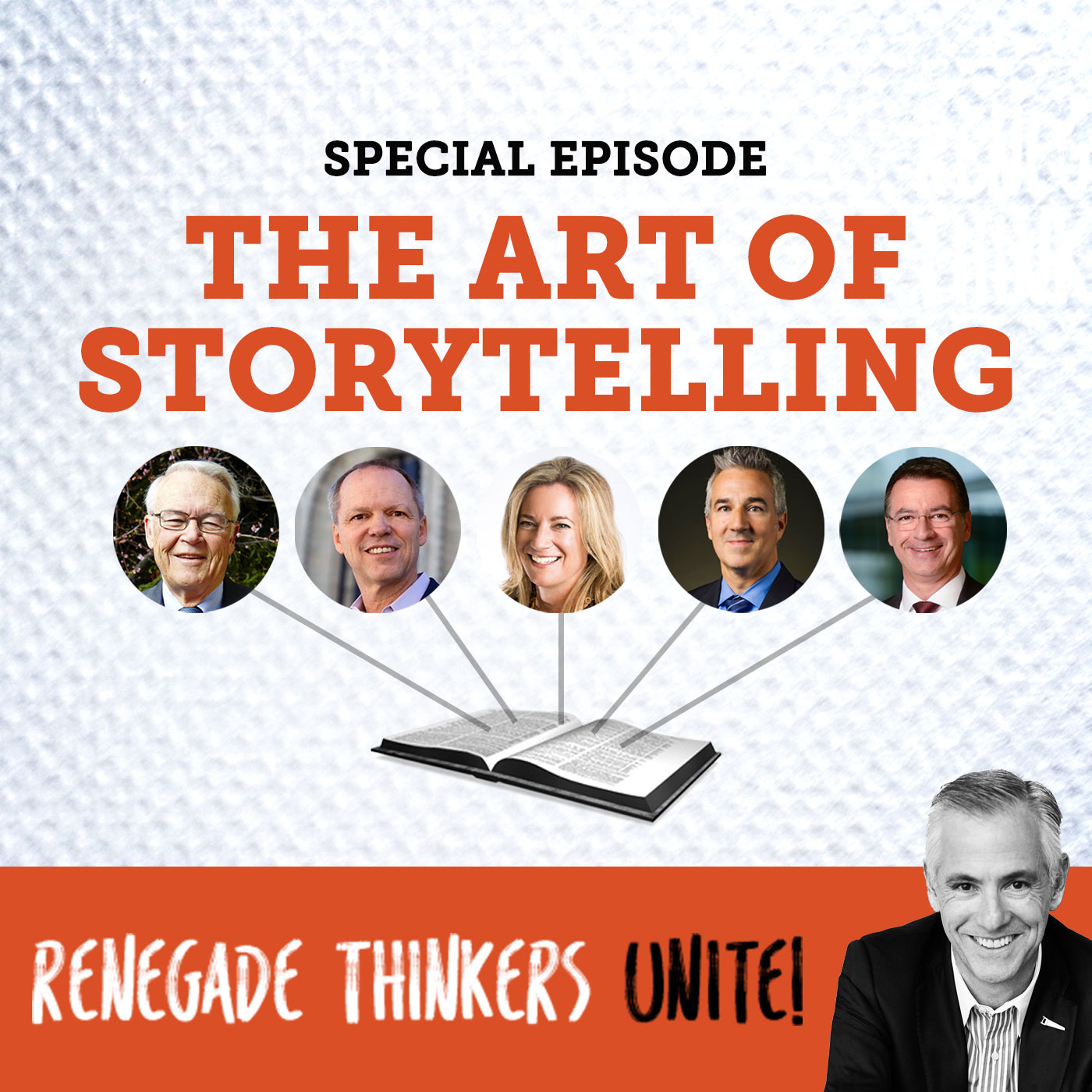
Ep 8080: Storytelling in Marketing is Essential - Don't Miss These Top 5 Insights
Storytelling is an important concept, but it's often misunderstood. It is absolutely crucial for creating meaningful marketing efforts that stand out, but few B2B marketing leaders are using it to its full potential. On this special 80th episode of Renegade Thinkers Unite, Drew revisits 5 past interviews that highlight key elements of successful storytelling and its use in marketing. To hear these insights from successful story-driven marketers, click here to listen now! Subscribe on Apple Podcasts - Stitcher - or Podsearch Why you need a signature story rooted in emotion - with David Aaker of Prophet David explains that when trying to convey a message, a CMO has two options: share facts or tell stories. And facts don't work. B2B storytelling must magnify the problem, offer a solution or accentuate the outcome. This can artfully be done by combining customer testimony with just enough facts to provide a reliable level of reality. However, simply listing data and facts is a record-keeping entry - not a compelling marketing campaign. How and when to put emotion into your ads - with Manny Rodriguez of UC Health Manny's healthcare marketing philosophy goes against the grain: He always strives to connect to the human side of B2B marketing by putting the patient first. He shares how to nurture the emotional component of storytelling to effectively connect with the audience, as well as his 4 top lessons all CMOs should learn. Brand identity and storytelling need to be strongly united - with Martin Häring of Finastra One of the biggest challenges any CMO will face is the task of creating a new brand identity without losing the loyalty and enthusiasm of existing customers. It goes far beyond choosing new colors, a new name, and a fancy new logo. From legal issues, to market research, to the process can be daunting. Martin discusses the foundational principles - including storytelling - that helped him get the job done quickly and successfully. With innovative storytelling, marketing campaigns can resonate with millions - with Rich Kylberg of Arrow Electronics Arrow's story-driven marketing campaign reached people around the world. Rich and his team connected with Sam, a former indy car driver who had become a quadriplegic following a crash in 2000. Arrow was given an opportunity to create technology with real human benefits, and to share a story that would engage people and bring about positive change. Some time after being connected, Sam was able to take his family for a Sunday drive again. Rich explained that Arrow wants to share stories that can "drive technology innovation forward and inspire people to dream big because anything is possible." How storytelling can be the foundation of a successful rebrand regardless of scale - with Carolyn Feinstein of Dropbox With over half a billion worldwide users, Dropbox is major player in cloud storage. Despite their success, they wanted a to expand to ensure their continued status as an industry leader and innovator. With a story-driven campaign, Carolyn helped successfully execute the massive rebrand that coincided with a new company mentality. Resources & People Mentioned BOOK: "Creating Signature Stories: Strategic Messaging that Energizes, Persuades and Inspires" VIDEO: "This is Normal" Email Drew for a special storytelling guide that will guide your business forward Ep 34 "How Storytelling Begets Healthy Marketing for UCHealth" with Manny Rodriguez Ep 66 "Driving the Future of Banking Technology Through a Massive Merger with Martin Häring of Finastra" Ep 69 "How Arrow Electronics Reinvented Storytelling Marketing and the Importance of Taking Risks" with Rich Kylberg Ep 70 "The Prophet Way of Utilizing Brand Storytelling to Engage With Audiences" with David Aaker Ep 74 "How Dropbox is Channeling Global Creative Energy Through a Bold Rebranding Effort" with Carolyn Feinstein Connect with Drew http://renegade.com/ On LinkedIn On Twitter On Facebook On Instagram Quotes Aaker: "The media world is clutter, today. It's really hard. Into this context steps story." Häring: "In marketing, we are all storytellers. We have to create emotions." Feinstein: "At the end of the day, our role is to understand the people that we're trying to reach deeply and to know the kind of stories that will resonate most deeply." Kylberg: "It was a wild success. This initiative totally transformed the company, totally pushed us into the dominant position in our industry." Rodriguez: "We took the risk of really tasking the patient with telling the story, and the payoff and the benefits have been huge."
Ep 7979: Discover the Funny, Creative Culture Behind the Success at Big Ass Fans
It's easy for B2B marketing to skew factual and dry, and it often forgets that on the receiving end of messaging and marketing, there are actual humans with senses of humor and personalities. Alex Reed, Global Marketing Director for Big Ass Fans, knows this well, and has used it to craft funny, innovative B2B marketing and branding that connects with his audience on an emotional level. In this episode of Renegade Thinkers Unite, Alex and Drew discuss the importance of using humor in marketing, share inventive ways to connect with customers, and examine why being relatable, funny, and approachable is extremely important, even if you're an industrial-size fan manufacturing company. This conversation is loaded with helpful insights into creative marketing, click here to listen now! Subscribe on Apple Podcasts – Stitcher – or Podsearch What You'll Learn Customer Listening Drove Big Ass Fans to Get Creative Alex shared a story of how the name went from the lackluster "HVLS Fan Company" to "Big Ass Fans". There was no big secret to the company's a-ha moment, they simply listened to customers who would call and ask "are you the guys that sell those big-ass fans?". It was an early lesson for the company: pay attention to what your customers are saying and adjust to fit what they're looking for can have massive payoffs. Alex also stresses that, in making these creative decisions, it's important to run everything by his team; if he's making a joke, it can't be too uptight otherwise it won't be funny, and it can't be too crass otherwise it'll be poorly received. How Big Ass Fans Connects with Customers Humor and creativity need to be ingrained in the company culture; a funny company name can only take a brand so far. "Big Ass Fans" can get a prospect's attention, but there's plenty more hard work that goes into landing a sale. Alex Reed and the marketing team committed to taking traditional outreach efforts and twisting them to deliver messages in a way that sets them apart. Rather than physical mailers, they produced a quarterly magazine that avoids being a catalogue and focuses on human interest pieces related to company employees or industries they service. The company used this to build up the 'Big Ass Fan Club' from the subscriptions, and now have a robust infrastructure for maintaining positive relationships with the customer base. The Primary Goal for All Marketers In reflecting on the lessons he's learned as CMO of Big Ass Fans as a brand, Alex's first piece of advice was that a marketer's number one job is to stand out. Big Ass Fans delivers humor, and shares their company culture with the world, but Alex notes that there are plenty of ways to connect with your audience emotionally, you just have to find them. For more in-depth discussions surrounding marketing and Big Ass Fans, listen to the full episode. Timeline [1:17] Drew ponders the use of humor in B2B marketing and introduces Alex as his guest for this episode [4:00] Why Alex uses humor in his communication strategy [8:08] Big Ass Fan's innovative way of connecting with their customers [15:20] The Big Ass ways of acquiring customers [20:16] Using traditional media in nontraditional ways to connect with customers [27:36] The role humor plays in acquiring customers and hiring top talent [30:32] Alex shares his best lessons for marketing Connect With Alex: Big Ass Fans website Connect with Alex on LinkedIn Follow Big Ass Fans on Twitter Follow Big Ass Fans on Facebook Resources & People Mentioned Big Ass Magazine Company tour video "Not What They Expected" video "Worthless Dirt Bag" Hate Phone Call Connect with Drew http://renegade.com/ On LinkedIn On Twitter On Facebook On Instagram Meet the Guest With nearly a decade at the company, Alex Reed is one of Big Ass Fans' longest-serving employees. As chief marketing officer, he has devised strategies that have yielded a commanding brand recognition in the commercial space. His innovative approach has seen the number of new customers increase nearly 40 percent annually over the past five years. At the same time, customer loyalty has become so strong that repeat business accounts for around half of all orders, and the company's net promoter score ranks three times higher than the manufacturing industry average. The world has taken notice, too, as Alex's public relations strategy has piqued the curiosity of every major media outlet with coverage that included a front-page article in The New York Times. Beyond marketing, Alex consistently pushes the company's evolution and oversaw its expansion beyond a B2B strategy to business-to-consumer with the 2012 debut of Haiku, the first Big Ass Fan for homes. Alex holds a bachelor's degree in integrated strategic communications from the University of Kentucky and has submitted two patent applications for smart ceiling fan technology. Quotes from Alex Reed Listen to your customers. Take risks, but first and foremost, do what's right for the customer. Everybody should und

Ep 7578: HealthSparq is Redefining Transparency in Healthcare Through Bringing People Together
Risk is too-often considered a dirty word in healthcare sectors. Transparency in healthcare industries is sadly uncommon. For this episode of Renegade Thinkers Unite Drew interviews a courageous thinker in healthcare that's changing the way people think about risk-taking in healthcare, CMO of HealthSparq Burt Rosen. Burt's background in hospitality and education allowed him to see the massive gap in the healthcare industry - it's wasn't actually about helping and connecting people. By turning his company upside down and digging into the true goal of HealthSparq, Burt has launched a movement that strives to make healthcare less confusing and more transparent. This interview will restore your faith in the healthcare system. Learn how an insatiable level of curiosity can make you successful in any industry, as well as how to know when your brand positioning has struck gold. Finally, hear the background story behind Burt's "What's the Fix?" conference. Burt and Drew tackle big issues on this episode and help you unravel the transparency in healthcare issues. Be sure to give it your full attention. Subscribe on Apple Podcasts - Stitcher- or Podsearch What You'll Learn [0:30] Drew's introduction of Burt Rosen, CMO of HealthSparq, and why risk shouldn't be a dirty word in healthcare [1:40] Why Burt embraces risk in healthcare and what attracted him to the industry [4:08] You can learn the skills necessary for any industry if you understand marketing and have an insatiable curiosity [8:13] Identifying HealthSparq's true niche through risk-taking rebranding [12:01] Uncovering what people really want out of healthcare through public focus groups [23:19] The importance of investing in face-to-face interactions with actual people [26:24] Storytelling at HealthSparq and why it's so critical for Burt and his team [30:01] How a low-budget conference became a massive movement in the healthcare industry [34:10] Everything starts with the positioning of the brand [37:38] Burt shares what's next for HealthSparq and the What's the Fix? conference Redefining HealthSparq's brand story in order to identify their true niche Burt learned about the importance of connecting with people and caring for them during his careers in education and hospitality. When he joined the HealthSparq team he recognized the need for a massive redefinition of the brand. Rather than talk about the specifics of the tools the company offers, Burt wanted to talk about the impact the tools has on the actual human using them. That's why HealthSparq's tagline is now "Helping people make smarter healthcare choices." No matter how powerful research tools or cost calculators may be, if they're not helping people feel more comfortable and confident in their own decisions, the tool is not serving the greater brand purpose. Burt's understanding of person-first business is unparalleled and you'll enjoy hearing him passionately talk about this idea on this episode. Transparency in healthcare is key because it's so personal to people and their families HealthSparq's marketing team realized that healthcare should not be impersonal. Everyone has a healthcare story - they should be positive and comforting tales, not riddled with confusion and frustration. Burt believes that the professionals in the industry should be framing every decision in regards to the customer and patient. This underlying belief drives everything HealthSparq creates. HealthSparq knows that people of every age and from every walk of life want the same things. They want to be taken care of, they want good service, and they want transparency. Changing a decades-old industry is not for the faint of heart and to hear how Burt is conquering this task be sure to listen to this episode of Renegade Thinkers Unite. How a simple focus group idea turned the healthcare industry upside down In every other industry, focus groups and panel questioning is commonplace. In the healthcare sector? Not so much. An idea for a public focus group left long-standing industry professionals baffled. When the first few HealthSparq-sponsored panels drew in massive amounts of feedback and stories it sent shockwaves through the industry. These panels soon morphed into Burt's passion project, the "What's the Fix?" conference. This conference, with the second one being held in May 2018, strives to connect actual people to industry leaders. Making people smarter about healthcare and the decisions they make for their families is always a move in the right direction. Burt's excitement about the conference is contagious and this episode is sure to leave you inspired. Connect With Burt: Burt's page on the HealthSparq website Connect with Burt on LinkedIn Follow Burt on Twitter Follow Burt on Facebook Resources & People Mentioned Drew's presentation "The 7 Reasons Why (Most) Brands Fail at Storytelling" Ep. 54 Story-Driven Content Marketing That Drives Leads HealthSparq's blog on the 2018 #WhatsTheFix conference What's the Fix? conferenc
Ep 7777: Top 4 Best Practices for Marketing Organizational Structure, Learned from Mindtree's CMO
Drew's conversation with Paul Gottsegen, Executive VP and Chief Marketing/Strategy Officer of Mindtree, will provide new CMOs with a step-by-step playbook for creating the best marketing organization structure possible. Paul provides listeners with 4 best practices to follow for ultimate success in digital, content, and social marketing. Paul explains that "I've learned everything by making every mistake in the book." Don't repeat his mistakes, learn from his experiences. Those experiences have allowed him and his team to bring in over 100,000 sales pipeline leads over the past few years. The company's stock value has quadrupled, and Mindtree has become a globally trusted brand. Learn from one of the industry's best experts on this episode of Renegade Thinkers Unite. Listen now! Subscribe on Apple Podcasts - Stitcher- or Podsearch What You'll Learn [1:38] Drew's guest introduction and why this episode is a playbook for marketing organization structure [4:45] Paul's biggest challenges as a new CMO and how he learned the best marketing lessons [10:50] Hidden costs to tech stacks that often go overlooked [13:37] How can a small B2B company develop a competitive brand? [17:58] Making Mindtree's tagline, "Welcome to possible," become reality [20:26] Paul's proudest moment of marketing execution at Mindtree [23:57] Utilizing metrics and how to drive more leads to the sales pipeline [30:12] The biggest area of uncharted territory in B2B marketing [34:23] Paul's 2 do's and 1 don't for CMOs #1: Find out what your CEO/Executive Board's marketing expectations are A CMO should not spend a single dollar or make a single decision until they determine what goals the company leadership team has for marketing. By having their expectations outlined ahead of time, you'll save time, energy, and resources. Paul struggled with conveying the true importance of marketing to Mindtree's executive board, but he summarized it by saying, "Marketing isn't easy! If it was, everyone would be doing it in amazing ways. You just have to keep pushing good content, having great interactions, and build company credibility." This mindset needs to be conveyed to company leaders before any of the other best practices can be implemented. #2: Build the best marketing tech stack infrastructure you can afford Once marketing expectations and goals are established, a CMO should focus on building the best marketing tech stack possible. Paul explains that marketing professionals should "hire and fire tech stack tools quickly; don't just sign a longer contract for a better deal!" He goes on to explain that many organizations forget about the staffing needs that come along with every tech stack tool and that every tool should provide quality metrics. Your tech stack should always be evolving and changing to fit the needs of the company. #3: Focus on building a competitive brand Clear marketing expectations and having the right infrastructure then allows a CMO to focus on building a competitive, trusted global brand. Paul explains that small marketing organizations shouldn't immediately focus on going toe-to-toe with brand 10x-20x larger than they are. That growth will come in time. However, every brand does need to focus on telling a better story that explains why YOU can solve a customer's problem better than anyone else. Marketing can and should be about more than securing contracts. It's about building a reputable, trusted, expert brand. All of this can be accomplished by following these 4 best practices, fully explained in the audio for this episode of Renegade Thinkers Unite. #4: Don't be afraid to partner with experts and empower your team Even the CMO of Mindtree wasn't afraid of turning to outside experts when he and his team hit a wall. There are thousands of qualified professional marketers that can provide third-party insights into your organization. Empowering your team to become experts in different areas is also immensely beneficial to a marketing organization's structure. Specialties are great, employee silos aren't. Your team should be just that, a team, all focusing on one common goal. This final best practice is best heard from Paul himself, so don't miss this episode. Connect With Paul: Paul's page on the Mindtree website Connect with Paul on LinkedIn Follow Paul on Twitter Resources & People Mentioned Pardot marketing automation platform Marketo platform Moz software Tableau business analytics software Ep. 75 "Best Practices for Bold Marketing Strategies, Learned from Marketo's CMO" Connect with Drew http://renegade.com/ On LinkedIn On Twitter On Facebook On Instagram
Ep 7976: Discover How Lucidchart is Mastering the Art of Viral Marketing Campaigns
When you think of Lucidchart, you probably think of the massively popular "doggo meme videos." These viral marketing campaigns are the result of Lucidchart taking risks and creating a culture of experimentation within their company. What started out as a simple idea from a team engineer has morphed into a global campaign that introduced Lucidchart to hundreds of thousands of new viewers. On this entertaining and educational episode of Renegade Thinkers Unite, Drew and Lucidchart's CMO, Nathan Rawlings, discuss the 3 major ideas behind a viral marketing campaign. Throughout the conversation, they discuss how the "doggo meme videos" became a staple in Lucidchart's marketing portfolio. Don't miss the conversation behind why your website must be rock solid before launching into a campaign strategy and how to effectively track the impacts of a digital marketing campaign. This podcast episode will leave you laughing and inspired - it's one you don't want to miss. Subscribe on Apple Podcasts - Stitcher- or Podsearch What You'll Learn [0:30] Drew introduces his guest for this episode, Nathan Rawlins, CMO of Lucidchart [1:03] How are marketing and torturing marshmallow peeps connected? [4:11] The marketing strategies going on behind the scenes at Lucidchart [5:30] Successful demand generation method examples [6:16] Search engines are ground zero for marketing and why you have to master the basics [10:16] Why practical effectiveness sometimes trumps creativity [11:49] The genius idea behind the "doggo meme" campaign [17:13] Memes are great, but some of Lucidchart's ideas weren't as successful as the "doggo speak" campaigns [18:21] How Lucidchart measured the impact of the meme videos [22:03] How viral videos can increase morale and allow people to have fun communicating [25:26] The future of Lucidchart's meme videos [27:58] Had Lucidchart not taken a risk with the meme videos, they would have never discovered the rich vein of viral marketing [29:53] Drew summarizes his conversation with Nathan and outlines 3 major points for successful viral marketing campaigns [32:06] Have a strategy to try many different marketing tactics Before you can begin thinking like a Renegade, your company's digital infrastructure must be built and optimized correctly Even the best viral marketing ideas will fall flat if your company does not have a stellar website. Combining best practices for SEM and SEO optimization, refining your blocking and tackling techniques, and understanding what your target market is looking for are crucial. This is where data and metrics trump creativity. If your website doesn't flow well and give people the answers they're looking for even the best demand generation strategies won't succeed. Nathan experienced this firsthand when he joined the Lucidchart team. He walks listeners through the process of tweaking your website on this episode of Renegade Thinkers Unite. Brand awareness can be created through viral marketing campaigns, like Lucidchart's wildly successful doggo meme videos Creativity can be found anywhere when brainstorming for ad campaigns. Lucidchart's team desired to reach out to potential customers and go beyond the low hanging industry fruit of people already creating diagrams. Thus the "doggo meme" diagram videos that describe the "internet love language for dogs" were born. Each video has millions of views and as a result, the company's global brand awareness has skyrocketed. A combination of endless internet memes, pop cultural awareness, and a willingness to produce great content simply for the sake of brand awareness allowed this viral marketing campaign to flourish. This campaign is shaping the way Lucidchart looks at customer engagement and you don't want to miss hearing Nathan talk about the videos with passion and excitement. Be sure to give your full attention to this episode of Renegade Thinkers Unite. Finding the intersection between culture, product, and storytelling comes after your team has built a culture of experimentation Nathan explains to Drew that "drawings are the most natural form of communication." Even before Lucidchart developed the meme diagram videos they had developed a culture of experimentation within their team. No idea was ever too simple or too outlandish to be considered. Nathan urges other CMOs to be human in their storytelling and to always seek out ways to communicate authentically with audiences. Drew also states that you can test a lot of things on the internet, and to not be afraid of the potential (minor) fallout if a digital campaign falls flat. When creative teams who are willing to take risks and try unconventional strategies are united with powerful technology strategies, brilliant ideas are able to flourish. Connect With Nathan Rawlins: Nathan's introductory blog feature on the Lucidchart website Connect with Nathan on LinkedIn Follow Nathan on Twitter Resources & People Mentioned VIDEO: Nathan's torturing peeps family tradition VIDEO: "What is a Pu
Ep 7575: Best Practices for Bold Marketing Strategies, Learned from Marketo's CMO
Marketo's bold marketing strategies are well known across the marketing industry. For this episode of Renegade Thinkers Unite, Drew interviews their CMO, Sarah Kennedy. He also introduces a new segment on the podcast, Renegade Rapid Fire, where listeners can get to know Sarah in an informative and engaging Q & A session. Discover her best advice for CMOs, why she chose a career in marketing and her recommendation for a book that will renew your courageous marketing spirit. Sarah left a 10-year tenure at a previous company and lept into a five-month interview process at Marketo in order to diversify her experiences and pursue bold marketing. She is passionate about building an empowered and talented team as well as removing the shackles of perfectionism that plague the marketing industry. You don't want to miss the insights Sarah brings from Marketo into this episode of Renegade Thinkers Unite. Discover why CMOs should be called to lead with conviction and the critical importance of risk-taking and experimentation through marketing. This interview will unveil Marketo secrets that will push your own company to greater success. Be sure to listen. Subscribe on Apple Podcasts - Stitcher- or Podsearch What You'll Learn [0:30] Drew introduces his guest for this episode, Sarah Kennedy, CMO of Marketo [2:07] Drew gets to know Sarah through his new segment, Renegade Rapid Fire [11:25] The most intriguing part of Marketo culture that drew Sarah in [13:55] How the fearless mentality was created at Marketo [16:53] Sarah's definition of a fearless marketer [23:20] CMOs are called to lead with conviction & stick to the ideas they truly believe in [27:07] Content marketing and brand stories at Marketo [32:54] Sarah's final words of advice for CMOs [34:19] Drew summarizes his conversation with Sarah Kennedy Why "fearless and bold marketing" is the mantra guiding Marketo into the future When Sarah Kennedy joined the Marketo team, she immediately recognized the need to build a stellar team and fully understand the current Marketo brand story. Once she accomplished those tasks, she wanted to be able to have a single direction that would guide the company forward. That's when "fearless marketing" was born. CMOs are born to lead, not waffle on ideas, and Sarah pursued fearless marketing relentlessly. She wanted to always circle back to customer engagement while also telling an even more powerful brand story that had been told in the past. Marketo has taken fearless marketing and turned it into an all-encompassing identity and even leadership summit events. Be sure to catch the full story on this episode of Renegade Thinkers Unite. Learn from Sarah's 15 years of experience at top marketing companies to discover what makes a fearless marketer The definition of a "fearless marketer" is a CMO that is not afraid to experiment and take bold marketing risks. By setting aside fear of failure, CMOs are able to pursue THE idea they truly believe in. Fearless marketers aren't afraid to experiment with platforms and strategies that other companies are ignoring. Bold marketing decisions, even if they fail by conventional standards, allow companies to learn and grow. Having the right infrastructure in place to be able to learn from mistakes is critical. Sarah shares all of this advice and more, so be sure to give this episode your full attention. CMOs are called to lead with conviction and empower their teams to pursue bold ideas without fear of failure Sarah believes that it is a moral imperative for CMOs to empower their teams to make bold marketing decisions. When Drew asks her about the most Renegade thing she's ever done in marketing, she explains that it's any time she steps up and serves as a voice for both the customer and her team. Sarah also explains that CMOs should never doubt their ability to succeed. This interview is filled with even more inspirational advice that will leave you hungry for success and it should not be missed. Connect With Sarah Kennedy: Sarah's profile on the Marketo website Connect with Sarah on LinkedIn Follow Sarah on Twitter Follow Sarah on Facebook Resources & People Mentioned Hospitality Sales & Marketing Association International organization BOOK: You Are a Badass: How to Stop Doubting Your Greatness and Start Living an Awesome Life ARTICLE: Calling the World's Boldest Marketers to Join the Marketo® Fearless 50 Drew's interview with Jon Miller, Turning Marketing into Math ARTICLE: Drink Your Own Champagne And 8 Other Delicious Ways To Drive Revenue Use promo code "Renegade 400" for $400 off your registration to the Marketo® Fearless 50 summit Connect with Drew http://renegade.com/ On LinkedIn On Twitter On Facebook On Instagram

Ep 7474: How Dropbox is Channeling Global Creative Energy Through a Bold Rebranding Effort
Few companies have mastered the art of channeling creative energy through a focused rebranding effort better than Dropbox. On this episode of Renegade Thinkers Unite, Drew interviews CMO of Dropbox Carolyn Feinstein. Their shared love of creative energy and authentic storytelling makes for a podcast episode you don't want to miss. Carolyn discusses her passion for connecting deeply with consumers through stories as well as why Dropbox chose to "fix something that wasn't broken" all on this episode. Be sure to listen to discover how Carolyn's team shifted the market's perspective about the well-loved company and its offerings. With over half a billion worldwide users, Dropbox is among the best for workflow technology companies. Their ability to roll out massive internal changes while simultaneously conveying the right story to loyal consumers is encouraging. Hear all about the challenges tackled, lessons learned, and joyful successes on this episode of Renegade Thinkers Unite Subscribe on Apple Podcasts - Stitcher- or Podsearch What You'll Learn [0:30] Drew asks the question, "if it's not broken, should you break it anyway?" [2:00] Carolyn's go-to story to share with marketers [6:16] The biggest moment for Carolyn when she was with Electronic Arts [11:03] The massive rebranding project Carolyn helped Dropbox navigate [14:27] Shifting the consumers' perspective of Dropbox [16:57] How Dropbox handled the fear of changing a well-loved brand [21:40] The internal rollout of Dropbox's rebranding project [23:57] Dropbox is becoming an eponym and approaching the level of Google or FedEx [26:00] The art of a living, dynamic workspace product [28:15] Distraction = death in the modern workplace, and how Dropbox is unleashing global creative energy [31:08] The biggest lessons learned throughout this bold rebranding mission and the 3 main measures used to measure a storytelling effort [35:06] Drew summarizes this inspiring episode of Renegade Thinkers Unite How did Dropbox approach such a massive project? By following these three main ideas Carolyn's team is passionate about storytelling. She explains to Drew on this episode of Renegade Thinkers Unite that connecting people to one another through quality products and touching stories is the best way to begin a rebranding project. After realizing that Dropbox wanted to reinvent itself, Carolyn followed three main ideas that dictated their path: the art of storytelling, achieving buy-in from internal audiences, and listening to the voice of loyal customers. To hear how she skillfully knit these steps together into one successful mission be sure to listen to this episode. Rebranding should not be incremental - bold actions conquer fear and allow your company to make huge strides forward Dropbox's biggest success throughout the rebranding process was persuading every member on the team that bold actions were the way to achieve ultimate success. Drew is also a huge proponent of the idea that incremental steps don't move companies forward. Carolyn knew she needed to snap people to attention and have them understand that Dropbox is more than cloud storage. While there will always be some concerns about restructuring a brand's identity, moving forward with confidence is the ultimate way to launch your company into the next chapter of success. You'll surely learn from this episode of Renegade Thinkers Unite so be sure to give it your full attention. The crisis of modern work is "death by distraction" - hear how Dropbox is channeling the world's creative energy and allowing people to work to their full potential The modern workplace is plagued with notifications, emails, and deadlines. Carolyn and her team at Dropbox recognized this issue and wanted to solve it. Their solution? Streamlined services and products geared at freeing teams from monotonous and time-consuming tasks so they can unleash their creative energy. The goal? Global teams working on a united platform to create projects that will change the world. That's why Dropbox continues to be a leader in workplace technology and creative storytelling. This interview is one you don't want to miss. Connect With Carolyn: Dropbox's blog on Carolyn Connect with Carolyn on LinkedIn Follow Carolyn on Facebook Resources & People Mentioned Ep. 63: Marketing Trends from The CMO Survey and Reigniting Your Passion for Marketing Ep. 65: The Ups and Downs of Xerox's Universal Awareness and Shifting Your Brand Perception Dropbox Paper ARTICLE: The world needs your creative energy Connect with Drew http://renegade.com/ On LinkedIn On Twitter On Facebook On Instagram

Ep 7373: MRP CMO Explains Why Predictive Analytics in Marketing Will Revolutionize the B2B Industry
Predictive analytics in marketing is going to revolutionize the way CMOs and marketing teams do business. On this stimulating episode of Renegade Thinkers Unite, Drew interviews James Regan, CMO and co-founder of MRP. James and his company are greeting predictive analytics with excitement and ingenuity. He shares why your company should be doing the same on this episode. This technology, combined with artificial intelligence (AI), is not something to be feared, contrary to what Hollywood may lead us to believe. For a full explanation of this exciting new technology, why predictive analytics is NOT the death of big brand ideas and company storytelling, and how to start integrating this idea into your company, be sure to listen to this conversation. Predictive analytics in marketing is something everyone needs to hear. Don't be left behind, and give this podcast your full attention. Subscribe on Apple Podcasts - Stitcher- or Podsearch What You'll Learn [0:29] Drew tracks down an expert in the field of predictive analytics for this episode, James Regan, CMO and co-founder at MRP [2:05] The excitement surrounding predictive analytics at MRP [4:20] James' layman's explanation of predictive analytics [8:26] Specific actions that sales teams can take to take advantage of this information [11:38] The death of traditional marketing campaigns [13:57] James shares a real-world example to describe how predictive analytics works [14:55] Creating the messages upfront and programming them into the analytics system is still a challenge [16:10] Predictive analytics, the future of B2B marketing, and removing the human element [20:50] What is preventing mass adoption of predictive analytics? [23:48] Predictive analytics is NOT the death of the big-brand idea [26:04] How a CMO's plan can welcome predictive analytics [28:33] Why an out of control marketing tech stack can be mitigated through predictive analytics tools and outsourcing [32:33] James' two overall "do's" and a "don't" for CMOs Predictive analytics in marketing is fairly new - what is it and why is it important? Predictive analytics seeks to increase marketers' ability to achieve the "holy trinity" of digital marketing - getting the right message in front of the right person at exactly the right time. James offers listeners of this episode of Renegade Thinkers Unite the perfect explanation of this technology. In a B2B sense, every organization has potential clients that are doing research on what they may need to buy that will serve their needs. Predictive analytics can track this digital data trail that tells your organization general geolocations and keyword sets that are spiking. The analytics program then automatically sends out tailored content that puts a problem-solving solution directly in front of the eyes of the potential client. James further explains that this is not being done at an individual level, rather at a group target market level. James' description is best understood by listening to this episode of Renegade Thinkers Unite, so be sure to make time for the full audio. Why the invention of predictive analytics is a death sentence for traditional campaigns, but not for big brand storytelling Predictive analytics is moving marketing teams towards automating and programming their engagement strategies into an AI program, rather than focusing on traditional campaign methods. James claims that traditional campaigns are simply too slow in today's environment. He argues that if you really want to deliver a relevant message, you have to be doing programmed customer engagement. You need to have an "always-on" approach that directly integrates your response with the appropriate message that is aligned to the content your potential customers are consuming outside of your firewall. Simply put, traditional campaigns create gaps in communicating with your customers that cannot be permitted any longer. This does not mean your brand's big stories are irrelevant. Predictive analytics simply propels your values and stories at lightning-fast speed - it does not eliminate the story you're trying to tell. You have to focus on the big brand of your company before you can focus on content delivery optimization. This episode is full of insights that you need to hear, so be sure to listen. The future of B2B marketing in a predictive analytics world, removal of the human screen, and what is preventing mass adoption of this technology AI and predictive analytics are going to reshape the world of B2B marketing as we know it. One of the biggest questions Drew asks James on this episode surrounds the perceived danger of removing the human element from the backend of content delivery. What will prevent an AI system from delivering the wrong message at an inappropriate time? James explains that AI will pull from an extensive digital repository of content that a marketing team has crafted. It will not be creating its own messages. Programming algorithms to know what message to pu

Ep 7272: Best Strategies to Improve Your Marketing Technology Stack - with CMO Eric Eden, Part 2
In this second installation of Drew's interview with Eric Eden, CMO of Receipt Bank, they discuss additional strategies to improve your marketing technology stack. Be sure to listen to part 1 of this conversation on episode 71 of Renegade Thinkers Unite. After securing a budget and receiving buy-in from company leadership teams, selecting the right pieces to add to your marketing technology stack is the next big step.

Ep 7171: Using a Refined Marketing Technology Stack as a Revenue Generator - with CMO Eric Eden, Part 1
When Drew recently asked a crowd of CMOs how much revenue marketing should directly generate, most said 5-15%. However, Eric Eden, expert CMO of Receipt Bank, claimed that marketing should be a company's main revenue generator, bringing in 80% of all sales. This uncommon point of view is explained and detailed on this episode of Renegade Thinkers Unite. Eric and Drew talk through the first two main steps of how to turn your marketing efforts into a revenue machine. They discuss the importance of having a solid foundation marketing technology stack, all of the details behind why evidence-based marketing is the norm, and how to secure a substantial marketing budget for your team. Don't miss part two of this interview on the next episode of Renegade Thinkers Unite. You'll learn a lot from part one of this conversation, so give it your full attention. Subscribe on Apple Podcasts - Stitcher- or Podsearch What You'll Learn [0:29] Drew introduces his guest for this episode, Eric Eden [3:05] How to lay the foundation for marketing to become a revenue generator [6:00] Why the burden of proof for success lies with the marketer [8:27] What exactly is evidence-based marketing, and how do you define your strategy? [13:57] Eric walks through his process for securing a substantial marketing budget [22:02] The essentials for your company's tech stack and additional layers to consider [28:22] What's the next step after creating a solid CRM piece? [33:39] Why isn't it more common to combine the first two layers of your marketing stack? Why a CRM is a foundational basis needed for any successful marketing or revenue-generating campaign Eric explains on this episode of Renegade Thinkers Unite that without a functional and clean customer relationship management technology piece, your marketing will never turn into a revenue generator. He continues by saying that, "If you don't have a good marketing technology stack that enables your demand generation engine, everything falls apart." A solid CRM piece allows you to track leads, understand what is encouraging or hindering contract success, improves integration between marketing and sales teams, and is necessary when putting together a budget proposal. If a CMO is looking at upgrading a single piece of their marketing strategy, having a bombproof CRM platform needs to be at the top of the list. To hear why CRM technology is so critical, and to understand why Eric is so adamant about this piece of technology, be sure to give this episode a listen. The importance of understanding evidence-based marketing to secure a substantial budget Gone are the days where the phrase, "it's complicated, just trust me!" can be successful in budget meetings with company executives. In order to secure the funds marketing teams need, CMOs need to understand how to articulate their marketing in in terms of data and evidence of success. The burden of proof lies with the CMO to persuade others why marketing as a revenue generator can work for the company. You have to determine how to frame things in such a way that makes people comfortable with spending dollars on marketing, build a common language that all teams and levels of employees understand, and prevent any misconceptions. Once you have set the stage and brought people over to your side of the budget debate, you can then begin to determine what percentage of the budget should be spent on each potential customer, and the ROI that would come from each prospective contract. This framing turns marketing into an investment, not a cost, and is the key to massive success. To hear Drew and Eric's conversation surrounding evidence-based marketing and how it can ultimately be used to generate revenue, don't miss this episode. Transform your ordinary marketing campaigns into a massive revenue generator through automation After a functional CRM piece, the next step to generate revenue is marketing automation - the second most popular piece of a technology stack. Eric urges listeners of this episode of Renegade Thinkers Unite to understand that automation cannot and does not happen overnight, or even within 90 days. A truly successful marketing automation plan can take upwards of 6 months to design and implement. But the time investment is 100% worth it. By hiring talented sales people and allowing them to actually sell your company, without getting bogged down by monotonous tasks, you are ultimately generating more revenue for the company. Automation allows more integration between the marketing and sales teams and setting the correct timeline expectations upfront will prevent mishaps later on down the line. Drew and Eric have a great conversation about marketing automation and the connections it has to revenue generation on this episode, CMOs in every industry need to hear it. Connect With Eric: Receipt Bank's blog - when Eric joined the team as CMO Connect with Eric on LinkedIn Follow Eric on Twitter Follow Eric on Facebook Resources & People Mentioned Down

Ep 7070: The Prophet Way of Utilizing Brand Storytelling to Engage With Audiences
David Aaker, known as "Father of Modern Branding," discusses the idea of B2B brand storytelling and being able to convey engaging messages on this episode of Renegade Thinkers Unite hosted by Drew Neisser. As the Vice Chairman of marketing consultant giant Prophet and renowned author, David has decades of experience in reinventing the way a company shares its brand message. He explains to Drew the importance of balancing hard facts with emotions as well as emphasizes the importance of becoming a brand other companies want to be associated with. David also shares multiple personal stories that validate the importance of being a stellar brand storyteller. You don't want to miss his explanation of how both T-Mobile and Barclay turned their companies around through brand storytelling. David's expertise will revolutionize your company's way of conveying messages, so be sure to give this episode your full attention. Subscribe on Apple Podcasts - Stitcher- or Podsearch What You'll Learn [0:30] Drew introduces his guest for this episode, David Aaker [2:58] Why is everyone realizing that storytelling is critically important? [4:27] Why is a story so important in engaging employees? [8:54] What will it take for B2B firms to recognize that story is a cultural opportunity? [12:32] David's personal stories behind effective storytelling [16:39] Why does the story go away once a company reaches marketing evaluation stages? [17:58] How does a brand find their signature stories? [21:06] The balance between hard facts and "fluffy" emotions in storytelling marketing [24:23] Actionable items behind improving your B2B storytelling marketing efforts [29:13] David's steps for creating a brand storytelling plan [32:42] One of the most common problems when brands attempt storytelling marketing for the first time [33:25] Drew summarizes his conversation with David Aaker Why are stories so effective in engaging customers and employees? Brand storytelling is more than just a hot topic in current B2B marketing environments. It is the key to truly connecting with your employees, partners, and customers. B2B customers feel the need to have a relationship with the business they interact with and employees need to feel that their work is important. Stories garner attention, change perceptions and attitudes, and inspire action - and stories are far more effective than fact-sharing alone. This is why your company and team need to be experts in brand storytelling. To hear the full reasoning behind why this idea is a critical issue for companies across the country, be sure to listen to this episode of Renegade Thinkers Unite. The importance of creating a signature story while balancing fact and emotion When trying to convey a message, a CMO has two options: share facts or tell stories. Even though some may argue that "if it's not fact-based how do you convince people's it's actually true?", there is a balance that needs to be reached. The key in the B2B storytelling space is to either magnify the problem, offer a solution or accentuate the outcome. This can artfully be done by combining customer testimony with just enough facts to provide a reliable level of reality. Just listing data and facts is a record-keeping entry - not a compelling marketing campaign. David highlights that a signature story can be 200-300% more effective than data alone. To hear more about why brand storytelling is so impactful give this episode a listen. Actionable items for creating brand storytelling initiatives Take it from the best leader in storytelling. David lays out a plan to create a storytelling focus in your company on this episode of Renegade Thinkers Unite. As a CMO you must first believe and buy into the power of storytelling marketing. Then you have to build a skilled team and develop an environment that allows storytelling opportunities to flourish. Drew also adds that you have to throw your content calendars away because all they do is allow you to get away with regularly producing mediocre content. Hiring a support crew that can take raw stories and turn them into engaging content can also drastically improve your storytelling ability. For more hands-on hints on brand storytelling, don't let this episode go unlistened. Connect With David: David's Prophet webpage Connect with David on LinkedIn Follow David on Twitter Follow David on Facebook Email David Resources & People Mentioned BOOK: Team of Rivals: The Political Genius of Abraham Lincoln BOOK: Grant BOOK: Creating Signature Stories: Strategic Messaging that Energizes, Persuades and Inspires PODCAST: David Aaker on the power of stories and the fight for the soul of capitalism ARTICLE: How Barclays Defined Brand Purpose and Regained Customer Trust Episode #4 - Content Marketing - Guest, David Beebe, Marriott Audible Course - The Art of Storytelling: From Parents to Professionals Connect with Drew http://renegade.com/ On LinkedIn On Twitter On Facebook On Instagram
Ep 6969: How Arrow Electronics Reinvented Storytelling Marketing and the Importance of Taking Risks
In order to achieve storytelling marketing success, CMOs have to be willing to take risks. Even with all of the data and metrics available to evaluate, sometimes the best ideas come directly from human intuition. On this episode of Renegade Thinkers Unite, Drew interviews Rich Kylberg, Vice President of Corporate Marketing and Communications at Arrow Electronics. Arrow is a $24 billion global supplier for a wide array of technology and products, and Rich has helped them break into new ways of communicating internally and externally. Throughout this podcast, Rich explains how his background in literature allows him to see marketing campaigns in new ways and why casting a vision internally is needed before you can communicate identity externally. Arrow's groundbreaking SAM vehicle technology is revolutionizing many industries, and you'll be inspired by Rich's explanation of this pursuit. Their conversation is a perfect mix of marketing knowledge and inspiration - you don't want to miss it. Subscribe on Apple Podcasts - Stitcher- or Podsearch What You'll Learn [1:25] Drew introduces his guest for this episode, Rich Kylberg of Arrow Electronics [2:48] Rich's favorite risk-taking story from his childhood [8:00] How Rich's educational background impacts his current career [13:18] The story behind how Rich joined the Arrow team and how they created a common identity [17:45] Taking the internal identity and transforming it into an external message [21:55] Arrow's program that brought their innovative ideas to life that enhance humanity [27:30] The barriers Rich's team encountered while developing the SAM technology [33:00] Rich shares the best lessons he learned through the SAM journey [37:13] Why you should bring in an outside firm to assist your company in storytelling [39:51] The power of a plan on a page [42:07] Drew summarizes his conversation with Rich How Rich helped Arrow create a common identity When Rich joined the Arrow team, they had recently acquired over 130 companies and many hadn't yet fallen in line with the overarching Arrow brand. Arrow was on the verge of becoming a holding company too comfortable in their own success, but Rich was determined to take some risks and create a guiding theme that would direct every employee and customer interaction. Thus, the phrase "guiding innovation forward" was born. Rich explains that "you have to inspire your employees before you can market your company externally" and this progress was essential for Arrow to continue growing. It created a conversation starter that is still being talked about today. To hear exactly how Rich achieved this lofty goal, be sure to give this episode a listen. Why risk taking in marketing is so important Rich and Drew are adamant about risk-taking in marketing - it's one of the key aspects of being a Renegade Thinker. On this episode, Rich explains that the opportunity to attain exponential rewards are worth taking substantial risks and that the fear of mediocrity is often the driving force behind risk-taking. CMOs in any B2B environment should ask themselves these questions: What risks am I willing to take in my marketing? What will be the source of my courage? How am I going to prepare? After you consider these questions, remember that as a marketer you need to be empowered to try ideas, keep what works, and move past what doesn't. Without risky marketing decisions, Rich and his team never could have developed the storytelling marketing campaign that moved Arrow into the future of connecting with clients and telling great stories. Be sure to discover the story on this episode. Arrow's innovative storytelling marketing campaign and how Rich and his team burst through the barriers they encountered Arrow Electronics recently unveiled their latest storytelling marketing campaign, and it's one that resonates with people across the country. When Rich and his team were connected with a former Indy Racing League race car driver who was sadly diagnosed as a quadriplegic after a crash in 2000, they came up with the SAM car technology - a car that would allow drivers with disabilities to regain their independence. When asked about the project, Rich's team explained that "We hope the SAM car continues to drive technology innovation forward and inspire people to dream big because anything is possible." Had Rich and his marketing team forgone risk-taking and stuck with what is "normal" and expected in the marketing industry, this amazing project never would have left the idea board. It's sure to inspire you and your team to take marketing risks and delve into the unknown so be sure to get all of the details by listening to this episode of Renegade Thinkers Unite. Connect With Rich: About Arrow Connect with Rich on LinkedIn Follow Rich on Twitter Follow Rich on Facebook Resources & People Mentioned ARTICLE: SAM Car Technology To Benefit Humanity Connect with Drew http://renegade.com/ On LinkedIn On Twitter On Facebook On Instagram

Ep 6868: Taking a Look at Provenir's Marketing Risks and Their Path Towards In-House Communication Distribution
The term "marketing risks" is not often heard in the financial technology industry, but Adi Bachar-Reske, Global Head of Marketing at Provenir, is making it commonplace. She has overturned the company's communication strategies and is sharing her insights on this episode of Renegade Thinkers Unite. In her conversation with Drew, Adi explains how Provenir went from using a third-party communication distribution company to handling all of their press releases and supporting content themselves. She also fully explains why Provenir seeks to help financial lenders make better, faster decisions. Taking marketing risks is one way to ensure your company stands out from the competition, even though it takes courage as a CMO. Drew shares his top four qualities for entrepreneurs as well as why you should avoid too many micro-campaigns all on this episode. You'll enjoy Drew and Adi's conversation, and it'll leave you thinking, so be sure to listen. Subscribe on Apple Podcasts - Stitcher- or Podsearch What You'll Learn [2:07] Drew introduces his guest for this episode, Adi Bachar-Reske, Global Head of Marketing at Provenir [3:33] Adi's approach and philosophy for risk-taking in marketing [10:17] Why Provenir decided to go with in-house communication strategies [14:07] The content that Adi created and the mechanisms they used to direct customers [17:00] Viewing new campaign strategies from an evaluation standpoint [19:23] The full story behind how Adi brought Provenir's marketing in-house [21:10] Why you should avoid too many micro-campaigns that drive leads but don't add up to a bigger story [24:01] Provenir's main goal as viewed through a car lease example [30:00] Adi's go-to inspirational resources for marketing risks and CMO advice [32:42] Adi looks forward into the rest of 2018 and talks about the challenges she hopes to tackle Provenir's main focus within financial technology and why empowering people to make better, faster decisions is so important Provenir strives to orchestrate a company's decision making processes for customers. Adi first experienced this decision-making dilemma after wanting to lease her third car from the same company in four years. Even though the company knew her as a customer and was familiar with her positive financial history, the company still made her wait over 48 hours before they would approve another lease agreement. She believes that decision making needs to be faster, more automated, and that you should never make a customer wait while you decide on whether or not to take their business because it gives them time to go to your competitors. That's what Provenir prevents. They empower lenders to make better decisions faster and enables them to provide their customers with an even better experience. Adi shares some great anecdotes with Drew about why automating decisions is so critical to a company's success and you don't want to miss them. The path towards in-house communication strategies and how Adi artfully crafted this process from start to finish Even though working with public relations organizations has been an industry standard for years. Adi and her team at Provenir recently decided to create and distribute their own in-house press releases. This decision came after a few of their self-published blog posts received large amounts of feedback and engagement. Journalists were attracted to the company and they connected with their audiences even without the third party assistance. While bringing communications in-house, Adi realized that there were a number of needs that now needed to be fulfilled by their team: create a CRM database, produce content to follow up each press release, measure the impact, etc. No one could do all of this work on their own, which is why Adi has teams across the world working on these communication and marketing strategies. She tells Drew that there are always trade-offs for bringing work in-house, but that it was definitely a successful marketing risk that Provenir took. To hear all about Adi's challenges and successes with this venture, be sure to listen to this episode of Renegade Thinkers Unite. Taking strategic marketing risks can provide greater benefits, and your company can learn from Adi's successes at Provenir There are four main qualities that Drew encourages every CMO to have: courage, artfulness, thoughtfulness, and scientificness. Of these, he believes that courage is the most essential and the one in shortest supply. Taking marketing risks can be difficult but it is necessary even in financial industries. If your team decides to go after a risky marketing venture rather than going with the standard methods and it's successful, the payoffs will be far greater. You can learn from Provenir's recent in-house communications successes and adapt their strategies to your company. Taking the initial steps is often the most challenging part, and requires every bit of courage that you have as a CMO. For inspiration, be sure to check out Adi's st

Ep 6767: How DocuSign's CMO Discovered How to Develop a Marketing Vision through Orchestration
Developing a marketing vision through company-wide orchestration will allow you create more value while streamlining work. In today's accelerated world, both customers and businesses want to spend less time on logistics and more time actually making a difference in their markets. DocuSign is one of the top businesses doing just that - allowing work to happen faster for over 200 million users across 188 countries. On this episode of Renegade Thinkers Unite, Drew interviews Scott Olrich, the Chief Strategy and Marketing Officer for DocuSign. They discuss exactly what orchestration means in terms of B2B marketing environments, how to sell a marketing vision, and why courageous decision making should be a part of any CMO job description. Scott is behind some of the biggest changes at DocuSign, rated as the 22nd best place to work in 2018 by Glassdoor. He shares his expertise with Drew in this interview and explains why ultimate orchestration will set you apart from your competitors in an exciting new way. To hear why marketing visions are so important, be sure to catch this episode of Renegade Thinkers Unite. Subscribe on Apple Podcasts - Stitcher- or Podsearch What You'll Learn [1:10] Drew introduces his guest for this episode, Scott Olrich, Chief Strategy and Marketing Officer for DocuSign [4:25] DocuSign's current place in transactional happiness and what it means to be an orchestrated company [11:54] What exactly does orchestration mean within a company? [15:05] The importance of not pushing the envelope too far when it comes to selling a vision [19:25] How Scott views the idea of a company narrative and how it can be used to sell your marketing vision [24:29] Scott shares how he's incorporating courageous decision-making into his current position at DocuSign [28:59] Where DocuSign is headed in the future [36:25] Drew's summary of the episode, and why orchestration will set you apart from your competitors Scott explains exactly what orchestration means within a company and why it's so critical to long-term success When Scott started the orchestration process at DocuSign, the company was focused solely on making digital signatures easier. Now they are moving towards streamlining multiple components of doing business in a digital world. In any company environment, you have to understand where your organization's broader category of business is going to go. Rather than focusing solely on the "now," teams have to be able to see where the entire market is going in the future and set up systems to accommodate that forward growth. That's where orchestration comes in. Essentially, orchestration occurs when a company's marketing visions, products, sales teams, and senior leadership all subscribe to a new macro way of thinking about the company. This drives long-term success because as Scott explains, "People want to buy into the future!" They just have to be given a reason to do so. The importance of not pushing the envelope too far when it comes to selling a marketing vision The first step of orchestration is to develop a new marketing vision for your company. This clear vision and narrative of what you think the company should be will drive your products, marketing strategies, and internal educational components. A vision should teach and challenge people to think differently about the bigger picture issue, but you have to be able to back up this vision with real-world examples that people can understand. Orchestration does so much more than just improve response rates for one marketing campaign, it has the power to rework your entire business if you allow it. The biggest danger with orchestration? You want to avoid a disconnect between your product and the vision you're trying to sell. If your marketing teams and product teams are not on the same page, customers will recognize this and be wary of your company. To hear Scott explain this challenge in full detail, be sure to listen to this episode of Renegade Thinkers Unite. Why courageous decision making should be a large part of any CMO job description As the Chief Strategy Officer and CMO, Scott has been charged with taking an already successful company and making it even better. On this episode, Drew asks Scott how he has the courage to take risky decisions and how he combats the idea of "if it's not broken, why fix it?" Once you establish a clear marketing vision you have to subscribe to it 100%, go out and win over the rest of the company, and then sell it to your customers. There's actually a formula for this type of courageous decision-making, and Scott fully explains each step in this interview with Drew. Your company and your career will greatly benefit from hearing his story, so don't miss this episode. Connect With Scott: DocuSign's press release on Scott Connect with Scott on LinkedIn Resources & People Mentioned DocuSign website Ep. 42 "Why The Best Talent is Going Client-side w CMO of Boxed.com" Drew's scheduling tool - Schedule Once Connect with Dre

Ep 6666: Driving the Future of Banking Technology Through a Massive Merger with Martin Häring of Finastra
It's always fun to talk with someone who is on the cutting edge of their industry. And when that industry is something as significant to the global economy as banking, it gets even more interesting. On this episode, you'll hear my conversation with Martin Häring, CMO of a newly formed company Finastra. Finastra is actually the result of a merger between two existing powerhouses in the banking technology industry - Misys and D+H. In our conversation, Martin highlights the particular challenges faced in bringing two well-known and highly-respected companies together with an eye to maintaining the reputation and specialization of each but forging something altogether different and exciting at the same time. As Chief Marketing Officer, for Finastra, Martin is responsible for marketing on a global scale. He first joined the team at Misys in October 2013 and is part of the Executive Team at the newly formed company. He's excited not only because the company is a big player in the banking industry but more so by its opportunity to determine the future of banking technology over the long haul. You'll enjoy this conversation so I hope you take the time to listen. Subscribe on Apple Podcasts or Stitcher What You'll Learn [0:29] My guest on this episode: Martin Häring of Finastra [1:18] The amazing journey of how Finastra combined 3 companies [4:41] Approaching the business analysis for a merger of this magnitude [7:23] Getting employees excited about the new brand coming from the merger [11:20] The brand naming process, legal hurdles, internal challenges [13:36] An unbelievable 6 month timeframe for making the merger happen [21:01] Martin's interview with a human-sounding and human-looking android [24:43] A.I. solutions being built into the Finastra platform [28:07] The biggest marketing challenges Martin and Finastra are facing In marketing, we are all storytellers ~ Martin Häring One of the most intriguing things to me about a huge merger like has happened between Misys and D+H is the task of creating a new brand identity without losing the loyalty and enthusiasm of existing customers. It's not simply a matter of coming up with a catchy name and deciding on a color palette for the new logo and letterhead. The legal issues alone are mind-boggling. Martin shares some of the challenges the Finastra team had to address in its merger and rebrand and highlights how the same foundational principle that supports good marketing - storytelling - was required internally in developing and nurturing a new vision among its team members, and externally in the form of customer outreach and communication. I love how marketing principles prove to be useful in a variety of challenges businesses face. Martin's insights are gold, so be sure you take the time to listen. A brand starts with a bold vision and requires the underlying tech to fuel it ~ Martin Häring When it comes to bold visions, Martin Häring and the team at Finastra are leading the way in the banking industry. The company is positioned as a leader in banking technology and is intentionally paving the way for the future of what banking will become as a global industry. In our conversation, Martin and I talk about the role A.I. (artificial intelligence) will play in banking tech and how Finastra is leading the way in developing the systems and platforms that financial institutions will use in the future. It's a long, slow road to introduce new technologies in the banking industry but the Finastra team is not only patient, they know the industry well and are taking steps at the pace the industry can handle. Are you driving the trends in your industry or trying to keep up with them? In Martin Häring's view, CEOs and CMOs should be asking themselves daily if their company is merely maintaining the status quo or driving their industry forward. It's the innovation and disruption market leaders create that makes them the go-to people in a given industry. In this conversation, as Martin describes the changes coming to the future of banking technology and the role his company, Finastra is playing in the implementation of those changes, I got a feel for what he meant. It's about thinking ahead, looking into the future to see what will be needed years from now, and positioning yourself to be the one to meet those challenges and provide the right solutions. This was an enjoyable and challenging conversation you won't want to miss. Connect With Martin: Finastra Company website Martin's LinkedIn Profile Resources & People Mentioned www.Force.com (the SalesForce website) Connect with Drew On LinkedIn On Twitter On Facebook On Instagram

Ep 6565: The Ups and Downs of Xerox's Universal Awareness and Shifting Your Brand Perception
The ultimate dream for marketers is universal awareness - the point in time when your brand becomes synonymous with a noun. Having your brand become a verb is an even better case scenario (think, "I'll Venmo you the money!" or "I'll Google it.") This extremely high level of brand awareness can create issues though when your brand perception becomes "stuck" in this one-way thinking. On this episode of Renegade Thinkers Unite, the CMO of Xerox, Toni Clayton-Hine, joins Drew for a conversation about how Xerox is embracing the new connectivity trend and how it is breaking through old brand perceptions to stay relevant in the 21st century. Toni shares with Drew the story behind Xerox's latest marketing initiative, Set the Page Free, and how Xerox is striving to be at the forefront of the intersection between digital and physical workspaces. They also discuss the pros and cons of such a risky marketing project and Toni's top "do's and don'ts" for current CMOs. Join Drew and Toni for this engaging conversation - you won't want to miss a single minute. Subscribe on Apple Podcasts - Stitcher- or Podsearch What You'll Learn [0:30] Why does brand awareness matter when you're trying to sell a product or service? [3:15] Drew introduces his guest for this episode, Toni Clayton, CMO of Xerox [4:52] The main strategy behind Xerox's marketing [9:31] The benefit of working with creators who deliver extraordinary content [12:58] Once you've created the excellent content, you have to "market the marketing" [15:47] Toni explains how she had the courage to approach her CEO with this big, untestable idea [18:30] What does storytelling meaning to Toni and Xerox? [23:29] How Xerox is currently demonstrating their broader platform and usability [26:48] Combatting the loss of reach associated with using digital marketing tactics [30:19] How Xerox is showing customers new ways to use their products [32:11] The biggest lesson Toni has learned in her career with Xerox [37:03] One "do" and one "don't" for CMOs as a result of Toni's experience with Xerox Xerox's latest Set the Page Free project and how they "marketed the marketing" so effectively When faced with seemingly cemented brand perceptions, Xerox came up with a creative and big-picture marketing campaign: Set the Page Free. With 14 world-famous writers and creative minds in collaboration, Xerox told the story of the modern workplace - and the entire project was produced using Xerox technology. The end result were podcasts, videos, and a final free download book. After creating the piece, Toni and her team had to answer the question, "who is going to consume this content?" Drew asks Toni about how they "marketed the marketing campaign" so effectively and she explains that they really leveraged the celebrity collaborators and their social channels. For the full story behind the project, don't miss this episode of Renegade Thinkers Unite. What does brand storytelling mean to Xerox in the 21st century? Shifting Xerox's brand perceptions became a balance of using the company's history to their advantage, while still demonstrating to their customers that they are about more than just copying and faxing physical documents. The Set the Page Free project helped Xerox transition from the realm of a 1990s office verb into a frontrunner of 21st-century workplace technology. This engaging act of brand storytelling allowed the company to show the outcome of using their technology, not just the inputs. Since Xerox is a B2B technology company, Toni's goal is to ensure Xerox is seen as fresh, relevant, and understanding of their different types of customers. To hear more of Toni's marketing initiatives at Xerox that are continually shaping their brand perspectives, be sure to listen to the full audio. The biggest lessons Toni has learned since joining Xerox and why taking marketing risks can be beneficial While developing Set the Page Free, Toni explained that she often struggled with the desire to control every aspect of the project and subsequent brand awareness surveys. But when Drew asks her about the biggest lessons she learned while working on the project, Toni explains that Xerox had to take a risk in order to shift how people think about the company - and taking that risk also meant dealing with unpredictable variables. She also learned the importance of being more directive in her approach to help customers understand how to bring their Xerox technology tools to life. To hear Toni's top "do's and don'ts" for other CMOs, don't miss this episode of Renegade Thinkers Unite. Connect With Toni Clayton-Hine: Connect with Toni on LinkedIn Follow Toni on Twitter Resources & People Mentioned ARTICLE: "41 Brand Names People Use as Generic Terms" Set the Page Free website and free book download VIDEO: "How does Lee Child Create the Jack Reacher Suspense?" Episode 48: "If Marketing is Storytelling Then Learn from NYT #1 Bestseller Chris Bohjalian" Episode 49: "The Intersection of Marketing & Storyte

Ep 6464: How Looker is Enhancing Marketing Data Analytics Through Organization and Face-to-Face Communication
The sheer amount of data any company collects can quickly become overwhelming if it's not managed efficiently. As a CMO you have to have control of the data and understand how it flows throughout your organization. That's why companies like Looker exist - to help you make sense of the data and use it to your advantage. In this episode of Renegade Thinkers Unite, Looker's CMO, Jen Grant, talks with Drew about why her unique background allows her to understand the art and science behind connecting everyone to your company's brand message. She also shares why it's important to simplify your company's core message down to just a few phrases. Not only does Jen explain why actual face-to-face interaction is even more critical in today's B2B marketing environment, she also discusses how Looker is achieving just that. You also don't want to miss her best advice for CMOs. Jen conveys the heart of marketing in such an intriguing way in this episode - you don't want to miss it. Subscribe on Apple Podcasts - Stitcher- or Podsearch What You'll Learn [2:20] Drew introduces his guest for this episode, Jen Grant, CMO of Looker [2:43] Jen shares her unique background story and how she got started in marketing [4:25] The key lessons Jen learned while working with Google [10:17] Looker's purpose and story simplified into just a few words [13:17] How Looker's technology allows data to be seen and enacted upon for their customers [17:16] What Looker's data processing system looks like [20:00] Where Looker falls within the "stack" of data systems [22:20] Jen shares Looker success story case studies [26:46] The marketing efforts Jen has completed to combat Looker's awareness challenge, outside of the data industry [34:24] Balancing tailored regional needs to overall company brand messages [37:45] The toughest lesson Jen has learned in the marketing world [39:20] Jen offers her "two do's and a don't" for data analytics Why data organization is so important and the art and science of connecting people to your company's true message Without a user-friendly and complete data analytics system, critical insights that could be derived from your company's data go undiscovered. Companies such as Looker provide an easily understood way of compiling individual data silos into one platform that can be shared across multiple employee teams. Once your data is organized in an effective manner, you can then use this data to enhance your company's ability to spread your brand message. Data that is easily accessed and understood becomes a tool for creative storytelling that elicits an emotional response from your target market - ultimately creating more success for your company. How Looker is bringing actual human interaction into B2B marketing, and why your company should be doing the same Jen explains to Drew in this episode that Looker really wants to push face-to-face marketing because of the human connections that come from that process. But she warns that these in-person events cannot just be a drawn-out sales pitch. It has to be about creating genuine connections with people in your industry and regions, which then opens the door for future sales. These events are also an incredible resource for first-person stories that can be shared with your team and customers. In our technology-driven world, actual human interaction events can set your company apart from the rest, and you'd be surprised at just how effective they can be. Be sure to listen to this episode so you don't miss out on Jen's engaging story behind Looker's journey in face-to-face B2B marketing. The top two "do's" and one critical "don't" in data analytics Because of Jen's long history in marketing, and her unique background in theatre and English, she has a unique set of advice for CMOs. She suggests that companies get all of their data centralized so that every team can see the whole picture - not just snippets of information. She also is a huge proponent of as many people as possible looking at your company's data, because you never know where your next great campaign idea might come from. Finally, she doesn't want CMOs to forget the innate nature of marketing. While technology, reports, and team meetings are all critical pieces of the data analytics process, she encourages CMOs to remember their gut intuition when it comes to taking a leap of marketing faith. Her insights are sure to be useful to your company in 2018, so be sure to listen to this episode of Renegade Thinkers Unite. Connect With Jen: Meet the Looker Team Connect with Jen on LinkedIn Follow Jen on Twitter Follow Jen on Facebook Connect with Drew http://renegade.com/ On LinkedIn On Twitter On Facebook On Instagram

Ep 6363: Marketing Trends from The CMO Survey and Reigniting Your Passion for Marketing
Christine Moorman is the T. Austin Finch, Sr. Professor of Business Administration at The Fuqua School of Business at Duke University. Beginning in 2008 she started interviewing marketing leaders to determine their most important marketing questions and The CMO Survey has been an integral part of illuminating marketing trends ever since. Christine shares with Drew her excitement over the future of marketing and explains that "It's not just about number crunching, the best marketing analytics bridge the divide between human insights and hard data." They also dive into a conversation about why performing all marketing activities well is critical to organizational success. On this episode of Renegade Thinkers Unite, Drew and Christine discuss the importance of teaching holistic marketing to future industry leaders, current trends in marketing, and the importance of measuring marketing effectiveness. Christine and Drew's conversation is sure to reignite your passion for marketing, so don't miss this episode. Subscribe on Apple Podcasts - Stitcher- or Podsearch What You'll Learn [1:44] Drew introduces this week's guest, Professor Christine Moorman, Professor at The Fuqua School of Business, Duke University [3:42] The importance of marketing in the business education curriculum [7:02] Key marketing components that Christine hopes students take away from her classes [9:30] The difference between the tech companies and the CPGs viewed from a teaching mindset [13:00] Christine talks about the macro trends she's seen since the survey was released [20:20] Christine explains the difference between digital marketing "stuff" and digital marketing organization [24:27] The future of CMOs and key questions to ask your marketing team [26:17] The ability to measure marketing effectiveness as shown by the survey [28:24] Key metrics used to evaluate marketing ROI [33:20] Christine shares her excitement over the future of marketing [35:00] The true reality of marketing done well The importance of passionate marketing curriculum in academia Marketing is the one area in business that companies cannot afford to not master. Exceptional marketing helps acquire and maintain customers which is critical to long-term success and profit. As new generations of future industry leaders are rising through the ranks of higher education, professors like Christine are setting the standards high. Throughout this episode, she explains a few of the top challenges she faces in the classroom, as well as why she enjoys instilling a passion for marketing in her students. You don't want to miss her description of why watching her students adopt a customer-first mindset is one of the greatest benefits of her position at Duke University, so be sure to listen. Key findings on marketing effectiveness and the top four components for measuring return on investments One of the biggest findings The CMO Survey has uncovered is the fact that marketing efforts need the whole company's support in order to be most effective. Christine explains that every CMO needs to ask themselves, "What place does marketing have in my company/career? How can I be the voice of the customer?" After these questions have been addressed, companies can move forward in evaluating how marketing is impacting ROI. Drew and Christine also list the top four metrics to be used in ROI evaluation: awareness based on reach, brand/brand lift, usage, and customer retention. They go into full detail on these metrics and why they're so critical - you should hear what they have to say. Where Christine sees future marketing trends going in the future and why she's excited Throughout her career in marketing, Christine has found that "It's such a dynamic field, a full array of different people and different works." In the digital age, marketing is an integral part of life in even more varied ways. Innovating marketing tactics are only going to become more refined over time, and marketing will continue to show up in new and impressive ways. Drew and Christine both believe that you can truly drive things forward with the deep understanding that stellar marketing can bring. Connect With Christine: Christine Moorman's biography page at Duke Christine's Forbes profile Connect with Christine on LinkedIn Follow Christine on Twitter Resources & People Mentioned The CMO Survey Highlights and Insights Report from August 2017 CMO Survey Innovative Marketing and ROI, an interview with Antonio Lucio Master of Quantitative Management at Duke's Fuqua School of Business Connect with Drew http://renegade.com/ On LinkedIn On Twitter On Facebook On Instagram

Ep 6262: Effective Verticalization Through the "Jive" Way, and Why Engineers Make Great CMOs
The historically challenging industry of telecommunications is changing thanks in part to Jive Communications and their cloud-based phone services. Drew talks with co-founder and current CMO, Matt Peterson, about how he transitioned from his background in software engineering into the marketing realm. Not only do they discuss Jive's innovative marketing verticalization strategies, but they also focus on the company's innate ability to tackle big problems and approach large customer opportunities with confidence and ease. Hear the story behind Jive's unconventional beginning and the heart of the company, as well as discover Matt's favorite resources for marketing professionals by listening to this engaging episode of Renegade Thinkers Unite. Matt and Drew's conversation is sure to inspire and educate - you don't want to miss it! Subscribe on Apple Podcasts - Stitcher- or Podsearch What You'll Learn [0:31] Drew introduces his guest for this episode, Matt Peterson, co-founder and CMO of Jive Communications [3:44] Matt explains how he became the CMO of Jive [6:34] How Matt's background in software engineering influences his current work in marketing [10:20] Drew asks Matt about his biggest learning curve when entering the marketing realm of Jive [13:35] What is at the heart of the Jive brand? [16:43] The top examples of Jive's marketing campaigns that point to the core of Jive [21:25] Drew asks Matt about one of Jive's most creative marketing projects [23:59] Another example of a Jive program that points to their core values [27:00] Brands and strategies from other companies that Matt admires [29:48] How to keep your marketing mind sharp and Matt's top resources for CMOs [34:04] Matt explains some of the strategies Jive is implementing for better organizational success [36:00] Challenges Matt is tackling in 2018 The heart behind Jive Communications and how Matt's background helps him in his position as CMO Drew and Matt discuss at length the heart of Jive Communications, and Matt attributes much of the company's success to their "scrappy, blue-collar, bootstrap" approach. He understands that while their competitors may be larger and have more resources, Jive is able to tackle the industry and "punch above their weight class" with ease. Matt explains that by using his background in software engineering he is able to approach problems with an analytical mind that quickly links together the human intangibles found in marketing with what the data illuminates. Your company could benefit from hearing the story behind Jive's foundation and current success, so be sure to listen. Tackling marketing verticalization the Jive way In order to effectively go after specific customers within their chosen target market, Matt needed to help Jive Communications find its optimal verticalization strategy. One of the best examples he explains to Drew involves the K-12 education system - a customer base that was notoriously hard to enter and change. By following Jive's "scrappy" mindset Matt and his team were able to solve multiple problems for their education customers and ended up with dozens of new sales contracts. You don't want to miss the full story of how Jive is shaking up the telecom industry, or the other fascinating examples of prime verticalization, so give this episode your full attention. How to keep your marketing mind sharp and Matt's top two challenges for 2018 Matt explains to Drew that staying current in the marketing industry through continuing education is key to greater success. By attending conferences, reading voraciously, and having an incredible appetite for knowledge your marketing professionals are sure to stay at the top of their game. In this episode of Renegade Thinkers Unite, Matt discusses his top two challenges for 2018: communicating Jive's differentiation points in better ways and nailing their outbound approaches. Be sure to listen to the full episode to catch the whole conversation. Connect With Matt Peterson: Jive's website Connect with Matt on LinkedIn Resources & People Mentioned "Will it Jive?" - video marketing campaign Book: Traction: Get a Grip on Your Business by Gino Wickman Turning Marketing into Math, an interview with Jon Miller, co-founder of Marketo Book: How Brands Grow: What Marketers Don't Know by Byron Sharp Connect with Drew http://renegade.com/ On LinkedIn On Twitter On Facebook On Instagram

Ep 6161: How Hootsuite is Going Beyond Marketing Through Social Media and Listening to Customer Voice
As the CMO of Hootsuite, Penny Wilson has some fantastic insights into the social media listening industry and why identifying the customer voice of your company is essential. Not only is customer voice important for executing exceptional customer service but it can also be used as a tool to effectively communicate with executive boards and chief financial officers. Drew Neisser asks Penny about her journey towards Hootsuite and the top questions on why listening to your customers is critical. The idea of going "beyond marketing" is explored and Penny's understanding of this concept is unparalleled. You can't afford to miss their discussion on upcoming social media trends that could help your company grow by leaps and bounds. The top challenges faced by CMOs are also discussed in this episode of Renegade Thinkers Unite. It's sure to be an educational and inspirational episode that you don't want to miss. Subscribe on Apple Podcasts - Stitcher- or Podsearch What You'll Learn [1:07] Drew introduces the guest for this episode, CMO of Hootsuite, Penny Wilson [4:40] How social media is helping companies go "beyond marketing" [5:57] Penny's part in a new leadership team at Hootsuite [7:53] Unpacking the voice of the customer [13:02] Finding insights for your company through listening to the customer voice [19:43] Hootsuite's challenge of breaking out of their original market [23:32] Drew asks Penny about the main challenges for CMOs [24:25] How can CMOs provide CFOs with the tools they need to understand the importance of marketing? [27:00] Social media opportunities that are often overlooked by companies [29:33] How AI can revolutionize the social media tools companies are using Customer voice is a tool that reaches beyond just marketing By taking the time to understand your company's customers and the preferences and expectations they have, you can capture their collective voice. While this voice has obvious benefits in product/service development it can also allow you to examine their entire journey with your company. Listening to the voice of your customers allows you to build a culture that encourages the customer to direct the company and lets the customer lead. Devoted listening creates loyal customers which leads to valuable insights. The listening process should be built into every level of your company, with employees being empowered to become representatives of your company. For more information on how identifying your customer voice can be an asset to your company don't miss this episode of Renegade Thinkers Unite. The greatest challenge faced by CMOs and how Hootsuite has conquered it Penny's career in marketing has allowed her to understand some of the greatest challenges faced by CMOs today. One of the most prevalent issues is the constant need for CMOs to get approval from top-level company leaders for their social listening and marketing campaigns. This challenge requires CMOs to tie marketing to a tangible outcome - a challenge that can be solved by using hypothesis-driven tools and metrics. Dive into this episode of Renegade Thinkers Unite to discover how Penny and her team at Hootsuite are enabling companies to create more effective marketing campaigns by offering information on the returns on investment for marketing campaigns. The most overlooked opportunities that exist through social media listening Penny explains to Drew that the best marketers should be paying attention to the fact that not every customer or employee is 100% comfortable with social media yet. Educational training components can be built into the company culture or customer interface to allow those with less experience to catch up with the current trends and techniques. She also explains that while artificial intelligence is definitely making an appearance in the social listening spheres, it's not going to overpower the human element of marketing and customer interaction. No matter how your company goes about social listening to uncover the voice of your customers, keep in mind Penny's best acronym for marketing - SCALE - social, customer-centered, authentic, listen and learn, and engage. You and your company will benefit from listening to this episode of Renegade Thinkers Unite, so be sure to listen. Connect With Penny Wilson: Hootsuite Leadership Team webpage featuring Penny Connect with Penny on LinkedIn Follow Penny on Twitter Follow Penny on Facebook Resources & People Mentioned Hootsuite's LiftMetrix tool Ep. 40 - "Meet McDonald's Maestro of Social Customer Care" Hootsuite Academy Connect with Drew http://renegade.com/ On LinkedIn On Twitter On Facebook On Instagram

Ep 6060: How to Reach Your Zone of Focus and the Top Marketing Trends for 2018
EFor the 60th episode of Renegade Thinkers Unite, Drew Neisser interviews Peter Shankman - author, serial entrepreneur, and a world-renowned speaker on social economics. He is a top-tier expert on customer service, social media, public relations, and advertising - all while spreading the idea that incredible things can happen when creativity, determination, and ADHD meet. Drew asks him about best advice for entrepreneurs and how to work in your zone of focus on this engaging and entertaining episode. You'll discover Peter's ritual suggestions and what's on the horizon for marketers in 2018. You don't want to miss Peter's insights into the top marketing mistakes to avoid. He also uncovers why social media relates so strongly to marketing and the foundational beliefs behind storytelling and public relations. Drew and Peter's conversation will leave you wanting more, so be sure to listen. Subscribe on Apple Podcasts - Stitcher- or Podsearch What You'll Learn [0:50] Drew introduces the guest for the 60th Renegade Thinkers Unite episode, Peter Shankman [4:00] How Peter was able to write a book in 31 hours after finding his zone of focus [6:24] Ritual suggestions for marketers in 2018 [12:00] New ideas on the horizon for marketers [13:00] The importance of public relations in B2B marketing [15:14] Public relations and marketing mistakes to avoid in the new year [19:00] How do we measure public relations? [22:28] Social media and how it relates to marketing [25:18] Why Twitter is becoming less valuable in a B2B marketing situation [28:35] Best use of social media as a brand within the marketing mix [30:14] Rapid fire questions with Peter Shankman Why finding and working in your zone of focus is critical for ultimate success When Peter had two weeks to finish (and start) a book he had committed to writing, he did what works best for his brain. He booked a roundtrip flight to Tokyo and wrote all ten chapters of the book over 31 hours. While this type of work schedule may not be ideal for everyone, Drew and Peter discuss the importance of finding what works for you and focusing solely on tactics within that zone. As conversations about resolutions become increasingly more abundant, Peter counters that line of thinking by explaining that "resolutions fail, but rituals succeed." To learn more about Peter's story and to learn from his successes don't miss this stellar episode of Renegade Thinkers Unite. The top marketing trends to look for in 2018 2018 is sure to be a cornerstone year for individuals and businesses alike. Peter talks with Drew about why listening is of utmost importance in the marketing realm, but why it has to go beyond listening for a break in conversation so you can share your thoughts. They also discuss why conversations across the world are moving away from distrust and into an age of wanting to believe in the truth again. Understanding hot topic ideas such as blockchain, cryptocurrency, and why Twitter's heyday may be ending are all covered on this episode, so be sure to take the time to listen. Public relations in B2B marketing and why having an audience is a privilege - not a right As B2B marketers it's key to understand how public relations relates to your company. Public relations helps people to believe the information they're consuming, which is key for audience engagement. The audience your company targets deserves high-quality content delivered on a timely basis, and Peter explains that companies should never take their audiences for granted. Connecting what you have to what the industry needs, and conveying it in a thoughtful, concise manner, is a key PR strategy in B2B marketing. You can't afford to miss the rest of Peter's insights that will help you start off 2018 with a burst of productivity, so don't miss this episode of Renegade Thinkers Unite. Connect With Peter Shankman: Peter's personal website Peter's ShankMinds: Breakthrough website Connect with Peter on LinkedIn Follow Peter on Twitter Follow Peter on Facebook Resources & People Mentioned Peter's founding company, Help A Reporter Out Peter's books on Amazon Drew's 2013 interview with Peter, "Nice Companies Finish First" Connect with Drew http://renegade.com/ On LinkedIn On Twitter On Facebook On Instagram

Ep 5959: Incorporating Listening into Social Marketing for Increased Customer Connections
On this episode of Renegade Thinkers Unite, Drew Neisser asks CMO of NetBase Solutions, Paige Leidig, the top questions surrounding social listening and analytics. With over 80% of tweets mentioning brands and the social media analytics industry being a $2.7 billion operation, it's critical to know how listening can increase your customer connections. Drew and Paige dive into social listening to give you and your business the best chance to hone your target market and utilize the best marketing channels possible. You'll also discover how artificial intelligence in the form of Natural Language Processing can revolutionize your metadata processing. The toughest challenges and biggest surprises encountered in social marketing are covered in this episode. You also don't want to miss Paige's top tips for CMOs in 2018. This conversation is sure to provide critical social listening insights, so be sure to listen. Subscribe on Apple Podcasts - Stitcher- or Podsearch What You'll Learn [1:40] Drew introduces this episode's guest - Paige Leidig, CMO of NetBase Solutions [3:00] What is social listening and social analytics? [8:15] Paige shares a great example of social listening information used in revolutionary ways [10:12] The main three marketing channels most brands utilize [12:13] What is the state of the art technique for social listening? [15:36] How can you differentiate your competitive advantage via social listening? [16:59] Natural language processing (NLP) - Artificial intelligence to moderate meta social media data [20:52] Top areas marketers miss while listening to customers [23:49] Paige shares additional example stories on why social listening is critical [28:19] How changing your message for your target market can increase sales and customer engagement [33:35] Why customer stories are of utmost importance in B2B marketing [36:33] Paige's tips for CMOs moving forward into 2018 [38:00] Common surprises encountered when entering into social listening The practical benefits of incorporating listening into your social marketing strategies The premise behind social listening is aggregating all public data that's published on millions of social media platforms and analyzing it to provide key insights into your industry. There are multitudes of practical benefits to social listening, including having the availability to quickly change marketing techniques if the listening offers new feedback on how the market is reacting to a campaign. It enables your company to create content that adds value to the market and encourages high-level digital connections with your customers. Microsoft and Apple are only two examples of top-tier companies utilizing social listening in their marketing strategies and their successes are demonstrated across the board. To hear their full stories be sure to give this episode a listen. The top three channels used in marketing and how new technology can improve the data analysis process Paige walks Drew through the main three channels that brands utilize on this episode of Renegade Thinkers Unite. The company's own channel is the most obvious, followed by partnered content channels. But the most valuable channel is through earned content - where people are talking about your brand/content and the signature characteristics that they find interesting and applicable. The best insights come from this channel alone. In order to analyze all of the data that comes through the earned channel, companies should utilize a new form of artificial intelligence called Natural Language Processing or NLP. It automatically sifts through millions of posts, images, and videos to determine the main themes and sentiments of the messages. This data is analyzed across dozens of languages in real time and offers critically important insights into your social marketing strategies. You don't want to miss this conversation, so be sure to listen to the full audio. Top social listening tips for CMOs and how to avoid the biggest mistake in marketing analysis If social listening is done correctly, your company has the opportunity to see huge progress made in your marketing campaigns. As 2018 approaches, Paige encourages other CMOs to be spending 80% of the marketing budget on digital marketing and to move beyond demographic marketing into psychographic marketing. He shares with Drew the biggest mistake to avoid in social listening, which is using false metrics derived from your own channel to drive marketing campaigns. There's a whole world of opportunity that exists in your earned channel, you just have to be infinitely curious about your customers. You can't afford to miss these applicable lessons from Drew and Paige so be sure to listen to this engaging episode of Renegade Thinkers Unite. Connect With Paige Leidig: NetBase team website featuring Paige Read Paige's recent posts for NetBase Connect with Paige on LinkedIn Follow Paige on Twitter Resources & People Mentioned NetBase's Natural Language Processing tool Pa

Ep 5858: Brand Building For Company Differentiation and Workplace Fulfillment
Drew's guest on this episode, Juliette Rizkallah, has an MBA from Harvard University and over 20 years of marketing and cybersecurity experience. As the CMO for SailPoint, she has linked the idea of identity management to cybersecurity and built a brand that is synonymous with excellence. In this conversation, she and Drew offer your company the best tactics for brand building, how to differentiate your company from competitors, and why branding is important for employee buy-in and workplace fulfillment. Juliette believes that going beyond "FUD - fear, uncertainty, and doubt factor" marketing leads to customer empowerment and a solid foundation for your company to stand on for many years to come. On this insightful episode of Renegade Thinkers Unite, Drew and Juliette tackle some of the biggest challenges for new CMOs and discuss how to handle one of the biggest obstacles in any workplace - ensuring top executives buy into a marketing initiative. Juliette has some exciting ideas to share with you, so be sure to listen. Subscribe on Apple Podcasts - Stitcher - or Podsearch What You'll Learn [1:22] Drew introduces the guest for this episode, Juliette Rizkallah, CMO of Sailpoint [2:30] How marketing influenced SailPoint's recent growth in sales [5:26] The human element of data breaches [6:47] Juliette discusses the mission and strategy of SailPoint [8:05] How do customers emotionally buy into SailPoint? [11:46] What is branding? [13:20] How Juliette is helping SailPoint cut through the competition through branding [18:23] One great effort that Juliette did with SailPoint to differentiate the company [20:54] How to handle a competitor copying your branding efforts, and what that means for your company [27:02] Slow branding is better than fast branding = builds a better foundation [30:00] The biggest challenge as a new CMO who is building a new program [33:00] Advice for fellow marketing professionals [35:33] Drew's summary of the episode How SailPoint built a brand that ultimately increased sales and moved away from FUD tactics When Juliette joined SailPoint two years ago, their existing branding efforts were not linking the impact of identity management to cybersecurity. She led the efforts that brought SailPoint back to their mission and core values, which "gives enterprises the power to grow, expand and innovate, securely and confidently via innovation, integrity, impact, and individuals." SailPoint moved away from relying on FUD techniques to incite fear in their customers and demonstrated to them the "power of identity." Juliette explains that by empowering your IT team and taking away the minutia of cybersecurity work, they are better equipped to focus on company growth - which leads to great fulfillment. These combined efforts led to an exponential growth in sales, increased customer satisfaction, and improved company culture and morale. You can learn how to make these benefits come to fruition at your company if you listen to Juliette's full story on this episode of Renegade Thinkers Unite. So a competitor copies your branding efforts? What's next? After the intense branding process, SailPoint was faced with a large competitor copying their efforts - unfortunately, a common problem in B2B environments. Drew and Juliette discuss the emotional discovery and how SailPoint turned a potential conflict into a reflective exercise. She explains that while the competitor copied SailPoint's tagline, they could not capture what made SailPoint an exceptional and unique company. Simply changing color schemes and logos does not bring about real change, and clinging to that mindset got Juliette's team and SailPoint through the challenge. She encourages other CMOs to accept the issue, move past it, and know that those who go through the long process of building a brand will ultimately find more success than those who simply copy the work of others. Slow branding is better than fast branding, and why a firm foundation is critical to company success and workplace fulfillment Throughout this episode, a common theme of Drew and Juliette's conversation is that "slow branding is better than fast branding." When she began the process of building a brand at SailPoint it was ten months later before real internal and external change was recognized. "We decided to do it well rather than fast," Juliette explains, and she recognizes that this mindset can be challenging with sales teams, marketing qualified leads, and executive boards looming. This process can excite employees and refresh the ideas behind why the company exists and why employees have dedicated time to its efforts. You can implement her same problem-solving techniques at your company and build a branding platform that you can use for many years to come. Be sure to listen to this episode of Renegade Thinkers Unite to take advantage of Juliette and Drew's CMO experience and learn why effective branding can differentiate your unique company from the rest. Connect With J

Ep 5757: Improving Customer Satisfaction Through Enhanced Marketing Techniques
With more than 15 years of healthcare marketing experience, Senior Vice President of Marketing at Binary Fountain, Aaron Clifford, talks with Drew in this episode about the importance of understanding what your customers are saying about your brand. As you listen to this episode of Renegade Thinkers Unite, you'll discover the top strategies you can implement during your first 6 months on the job as a CMO for a new company. Drew not only asks why customer experience should matter to company administrators, he and Aaron talk about the top marketing lessons current CMOs need to know in order to succeed. Critical topics such as reviewing past marketing attempts and accomplishments and the importance of owning a problem are all covered on this episode. You'll enjoy this conversation and you can't afford to miss Aaron's insights, so be sure to listen. Subscribe on Apple Podcasts - Stitcher- or Podsearch What You'll Learn [0:32] Drew introduces his guest, Aaron Clifford, Senior Vice President of Marketing at Binary Fountain [1:25] The story behind the name and purpose of Binary Fountain, and how Aaron came to be with the company after 15 years of healthcare marketing experience [7:00] Top tips for the first six months as a CMO at a new company [12:17] Why customer experience should matter to company administrators [13:21] How do you market a service to large companies? [19:00] Suggestions from Aaron to make webinars more impactful [21:51] Secret to making online events work - market the heck out of them [27:17] Trick to using RFPs for internal company success and to increase functionality on digital marketing platforms. [29:58] How did Aaron have the confidence to take on such a large risk at a new company? [32:38] Top marketing lessons from Aaron for other CMOs How Aaron Clifford tackled the issue of listening to conversations to enhance customer experiences The name Binary Fountain evolved from a simple brainstorming session with company developers. Since that initial discussion, Binary Fountain has become synonymous with creating exceptional customer experiences through enhanced marketing and conversational strategies. What began as a felt need - How do you sift through enormous amounts of healthcare-related customer feedback? - has morphed into a world-class operation that seeks to "leverage patient feedback to impact revenue and operations." During his first six months in his role as CMO Aaron went on a "listening tour" and simply asked why employees were working with Binary Fountain. What he found will surprise you. Be sure to listen to this engaging episode of Renegade Thinkers Unite to discover what he found. Why should customer experience matter to company administrators? Customer experience is a huge part of brand management. Aaron explains that "You are not what you say you are - you are what others say you are. That's your brand!" By ensuring that every interaction with every customer is exceptional, you are not only creating brand loyalty but also enabling your company to do better in its overall operations. If your marketing tactics such as utilizing social media platforms and having creative website interfaces create an atmosphere of support and engagement, your customers' satisfaction will improve dramatically. For more insights on why customer experiences should matter at a company's highest levels don't miss this episode. Tired of lackluster online events? Check out these industry secrets for stellar webinar sessions Drew and Aaron discuss how you can make webinars more impactful on this episode of Renegade Thinkers Unite. Here is an example: Live webinars allow you to connect with your customers in a tremendous way but they are of no use to your company if they aren't marketed correctly. Enhancing the marketing strategies for your webinars will allow you to increase your registrants for the event and increased registrants will combat the level of attrition that comes with the territory of webinars. And if you partner with industry leaders for the webinar, your company now has a bullet-proof way to disperse information and connect with customers. Don't miss this helpful, webinar-focused part of the conversation on this episode of Renegade Thinkers Unite with Drew Neisser. Connect With Aaron Clifford: Binary Fountain's spotlight on Aaron Clifford Connect with Aaron Clifford on LinkedIn Resources & People Mentioned Text "content audit" to (917) 679-8852 for world-class content National Donut Day Ep. 42: Why The Best Talent is Going Client-side w CMO of Boxed.com Connect with Drew 917-679-8852 (Text "renegade thinking" so we can talk about how to cut through the noise as a marketer) http://renegade.com/ On LinkedIn On Twitter On Facebook On Instagram

Ep 5656: Social Marketing Campaigns: Engagement Matters More Than Publication
For some time now the social marketing campaigns of most brands have consisted of scheduling out loads of content through Buffer or another social management tool and letting it run. Kevan Lee, Director of Marketing at Buffer says your promotions, blog posts, and podcast episodes are undoubtedly filled with valuable insights, but a shift is taking place in the social media world that demands you modify your strategy. Users of social media - the very ones you're trying to reach - are valuing the "social" part of social media more than the "media" part. In short: Engagement matters more than publication. What does that mean for a brand? It means a new approach to social media is in order. To help us get our heads around what exactly that means, Drew recorded this conversation with Kevan and discussed the shifting social media landscape, how social marketing campaigns of the past must give way to genuine transparency and engagement, and how small to medium-sized businesses can do social right. Sounds intriguing, don't you think? Be sure you listen. Subscribe on Apple Podcasts - Stitcher- or Podsearch What You'll Learn [0:30] Why hell hath no fury like a social detractor and why businesses need to use it effectively to listen, learn and engage. [1:50] Kevan and the team at Buffer work in a fully remote team environment [3:00] The reason Kevan believes writing is vital for marketers to learn [4:26] The changes that have happened in the social media world: engagement matters more than publishing [6:19] How the Buffer team markets Buffer through engagement: No ROI for social [10:26] What does it mean to be "on brand" - the Buffer approach [14:59] Brands that have been using social media effectively these days [20:24] The biggest mistakes Kevan sees brands making on social [24:33] Buffer's transparency ethic and how it impacts their planning and engagement [32:13] Kevan's advice for medium-small businesses when it comes to social Most social media activity is crap simply because brands feel they HAVE to schedule something to publish. Try on a new social marketing approach: Be active, be on brand, be engaged As Drew and his guest, Kevan Lee, of Buffer spoke about current social media trends, Drew pointed out how much of what's out there is the epitome of irrelevance. Most brands are guilty of adding to the noise instead of adding to the conversations already happening on social. Kevan responded by saying that a good social campaign these days involves being active (and he's got an interesting definition of what that means), being "on brand," and being engaged. In this conversation, he shares clear explanations of how a small to medium sized company can pull off each of those 3 elements of effective social, so don't miss this conversation. If you don't have something meaningful to say in a week's time, your brand has bigger problems The biggest part of being a brand that adds true value on social media is to only post things that are truly relevant and valuable. But because the "old way" of doing social marketing insisted that companies fill up their channels with content (relevant or not), many in the marketing department are scratching their heads about what it means to be truly meaningful. Kevan Lee, Director of Marketing at Buffer says if you don't have something meaningful to say in a week's time, your company has a bigger problem than you realize. Find out what he means by that statement and how he proposes companies adjust their social media strategy on this episode of Renegade Thinkers Unite. Be among the 20% of brands who actually respond to mentions on social media Engagement matters on social media, especially for companies. But Kevan Lee points out that only 20% of companies these days even respond when they are tagged or mentioned on social. It's unthinkable when you realize that the person who tagged your company is likely a customer or prospect - the very people you're looking to reach. So naturally, the most obvious thing you can do to increase the effectiveness of your social marketing is to be among the 20% of brands that monitor your social accounts and respond when you're mentioned. Start a conversation, engage, solve problems. That's the "social" part of social media, and it works. Connect With Kevan Kevan's profile on the Buffer page Connect with Kevan on LinkedIn Follow Kevan on Twitter Follow Kevan on Facebook Resources & People Mentioned Dogs in Politics Day National Blueberry Popsicle Month Mailchimp Red Bull GoPro Product Hunt On Twitter On Facebook The Seattle Times On Facebook On Twitter HARO - Help A Reporter Out Google Analytics Facebook Insights Ted Rubin - "There's no ROI on ignoring" Connect with Drew 917-679-8852 (Text "renegade thinking" so we can talk about how to cut through the noise as a marketer) http://renegade.com/ On LinkedIn On Twitter On Facebook On Instagram

Ep 5555: Courage: Why Any CMO Job Description Is Incomplete Without It
The role of the Chief Marketing Officer in any company is tough simply because it requires a seemingly contradictory set of skills - the foresight and courage of a brand marketer, and the detail and systems approach of a performance marketer. How can anyone be expected to fill THAT kind of job description as a CMO? That's the question being explored on this episode. Drew's guest is Kristi Maynor, Head of the U.S. CMO and Digital Transformation Practice at Egon Zehnder, one of the top recruitment and talent search companies in the world. The resumes of some of the top CMO candidates in business have passed through her hands, so if anyone can describe the kind of skills it takes to be or become a truly effective CMO, Kristi can. Join us for this wide-ranging and provoking conversation as we dig into why courage and curiosity are some of the most important characteristics for any potential CMO and how you can take steps in your current position that position you for advancement to the prestigious yet challenging role of CMO. You'll enjoy this conversation so I hope you take the time to listen. Subscribe on Apple Podcasts - Stitcher - or Podsearch What You'll Learn [0:30] Courage: Easy to say but hard to demonstrate [1:23] Kristi Maynor's role with Egon Zehnder, one of the premier talent search agencies in the world. [4:01] Marketers at Procter and Gamble Kristi worked with who she believes was courageous [8:11] The top characteristic of successful CMOs: Curiosity [12:03] The expanding role of today's marketer and what should a CMO be responsible for? [15:35] Who does better? A brand marketer or performance marketer? [21:55] The role of the CMO as bridge builder and instigator of more effective integrations within the company [27:43] Advice Kristi gives to those looking to become a CMO in the future [29:54] Why very few CMOs become CEOs In order to transform a company you have to exhibit courage from the moment you walk in It's probably fair to say that most newly-hired CMOs are walking into a situation where their new employer is struggling, at least on some level. They've been hired to assess the current state of things, diagnose the problems, and set a new direction that brings the company out of the down season and into a new era of success. Stepping into a situation like that requires courage - both because it's a step into the unknown and because it will require the development of plans that take the company in an entirely new direction. Find out how Kristi Maynor suggests you cultivate and develop that kind of courage, on this episode of Renegade Thinkers Unite. The problematic need for a CMO who is brand driven AND performance driven As Kristi and Drew discussed the common traits Kristi has seen in some of the most effective and sought-after CMOs in the business world, it quickly became apparent that a person with a very unusual gift-mix is needed to fill this vital and company-changing role. The CMO job description demands a person who is visionary and able to communicate where the brand is headed - but at the same time able to spearhead efforts to build systems and procedures that drive the process efficiently. There aren't many people like that, and Kristi explains what it takes to become that person and succeed, in this episode. When working toward a CMO role, don't focus on the title, focus on the impact you'll be able to have It's undoubtedly an ego boost to anyone to be offered the role of CMO in a prestigious company. But the allure of such a high profile position pales in comparison to the potential the role provides. Kristi Maynor has seen many new CMOs step into their role with courage and lead their company to new heights. Her advice? Don't focus on the title or position you've been given, focus on the impact you'll be able to have. Keeping your eyes on the prize enables you to avoid reading your own press and accomplish the things you were hired to do - and everyone from team members to customers to board members will benefit as a result. This episode shares key insights from a woman who's seen the impact of effective CMOs first-hand. Don't miss it. Connect With Kristi: Kristi's profile on the Egon Zehnder site Connect with Kristi on LinkedIn Follow Kristi on Twitter Resources & People Mentioned Procter and Gamble Kevin Hochman of KFC Beth Comstock Salesforce Best Buy Domino's Pizza Box.com Aflac Connect with Drew http://renegade.com/ On LinkedIn On Twitter On Facebook On Instagram

Ep 5454: Story-Driven Content Marketing That Drives Leads
B2B storytelling isn't easy especially on a modest budget. Creating campaigns that both peak the interest of prospective customers and rally the morale of employees requires careful orchestration and a big idea. On this episode, Tungsten Network's CMO Connie O'Brien breaks down how her internal and external team built a story-driven content marketing program that filled the company's pipeline with high-quality leads. Working with multiple agency partners including Renegade LLC, Speed Communications, and Dragon Search, O'Brien also provides valuable insights on how to maximize teamwork by getting everyone pointed at the same goals and metrics. Meet the Guest Connie O'Brien is the CMO of UK-based Tungsten Network. As CMO, Connie is responsible for the Tungsten brand and ensuring the firm is at the forefront of the digital transformation of the purchase-to-pay process, with a focus on how we delight our customers through automated, scalable, dynamic and personalized experiences. Connie joined Tungsten from Affinion Group, an international membership, and loyalty company where she was Chief Digital Officer. She has over twenty years' experience driving digital marketing strategies for businesses and has delivered campaigns for brands including GlaxoSmithKline, P&G, Kraft Foods, AXA, John Hancock, AT&T, Vonage, and Verizon. Connie is an innovative executive with an exceptional record of building award-winning integrated experiences across channels. She has expert multi-dimensional skills in strategy development, product launches, and cross-functional team building. Connie has also demonstrated a proven ability to align operations, establish a shared vision, recruit and retain top talent, build collaborative teams and instill the focus on shareholder value creation. What You'll Learn The ingredients of a successful story-driven content marketing strategy. How to empower your employees to get behind a new campaign. How to develop a sound A/B testing strategy. Advice for navigating agency partnerships.
Ep 5353: Holiday Wishes to Do Something Good
Think of this episode as a happy holiday greeting with just a bit of meat on the bones as Michele Fino, CMO of DoSomething.org, offers family-friendly advice on how to give back during the holiday season. Michele's suggestions are short and sweet offering a poignant reminder that giving is a habit that can be taught and shared at an early age.
Ep 5252: Special Preview of 2018 CES w Shelly Palmer
Are you hyped for the 2018 International Consumer Electronics Show? Today's guest, Shelly Palmer (CEO of the Palmer Group), covers some of the biggest tech trends that will be shown off at the event. Palmer talks about the future of AI, illustrating how consumer interaction with products like Google Home and Amazon Alexa is expected to evolve in the near future. Meet the Guest Named one of LinkedIn's Top 10 Voices in Technology, Shelly Palmer is CEO of The Palmer Group, a strategic advisory, technology solutions and business development practice focused at the nexus of media and marketing with a special emphasis on machine learning and data-driven decision-making. He is a trusted strategic advisor to the C-Suite of leading digital media, content, broadcasting and technology firms and a key driver of market, technology and strategic direction, as well as acquisition strategies, for his clients. Palmer is well known as Fox 5 New York's on-air tech expert and for his work on the Emmy-nominated television show, Shelly Palmer Digital Living. He is also a regular technology commentator for CNBC, MSNBC, CNN, and Fox Business News. An award-winning composer, producer, writer and director, Palmer has worked with hundreds of brands, agencies, broadcasters, publishers and tech platforms on advertising and marketing campaigns such as Meow Mix, Burger King and The City of Las Vegas. Palmer is the author of Television Disrupted: The Transition from Network to Networked TV (Focal Press 2006; 2nd Edition, York House Press, 2008) the seminal book about the technological, economic, and sociological forces that are changing everything, Overcoming The Digital Divide: How to use Social Media and Digital Tools to Reinvent Yourself and Your Career (York House Press, 2011), Digital Wisdom: Thought Leadership for a Connected World (York House Press, 2013) and Data-Driven Thinking: A collection of essays on data-driven decision making (Digital Living Press, 2016). You can book your official CES tour with a ShellyPalmer strategic advisor here. What You'll Learn What to expect at the 2018 International Consumer Electronics Show. How collaborating with people outside your field can lead to big ideas. Insights into recent AI trends. Topics to think about in preparation for the CES show. Quotes from Shelly Palmer This year at CES, we're going to have a really good look at integrations between the natural language understanding tools and the physical world. Just physically being at CES puts you in an environment where you can meet people who are scholarly, learned, and experienced in other disciplines. Consumers are going to always find the most frictionless path to fulfill their desires. If you're going to spend a few days out of your life [at CES] without having to be in the office and you're going to go learn new things, well then have a plan about what you want to learn.

Ep 5151: The Power of a Crystal Clear Positioning to Turnaround Your Brand
Retail is not exactly rich with turnaround stories these days but that's exactly what's happened at Pearle Vision. CMO Doug Zarkin provides a step-by-step review of how the brand has gone from stagnant to revitalized, indicated by same-store sales growth, new store openings and a jump in ranking from >100 to #24 among the best franchises to own. Through a number of small but ultimately significant changes like renaming customers to patients, employees to eye care professionals and stores to eye care centers, Pearle Vision has been able to shift the conversation from deals on glasses to professional eye care. Most significantly, Zarkin and company figured out that people who come in for eye exams are far more likely to buy glasses and become repeat customers than those that are just shopping for new glasses. Meet the Guest Doug Zarkin is a senior-level, global strategic marketing executive with an impressive array of honors and recognition for his marketing and brand building successes in the retail arena at companies such as Avon, Limited Brands and Kellwood. In 2012, Doug joined Luxottica where he is currently responsible for the global strategic marketing, visual merchandising, product promotion and store design for Luxottica's global optical franchise business Pearle Vision. Among other industry accolades, in 2015 and again in 2016 Doug and his team were recognized with a Silver Effie for marketing excellence in HealthCare Services Marketing for leading the brand revitalization work for Pearle Vision. When not at the office, Doug can be found on the tennis court or in the pool with his two kids. What You'll Learn How a willingness to learn and listen can allow your team to win. Why marketers should practice humility when facing their audience. Insightful perspectives on social media's role in the brand-customer relationship. How your brand's language can influence consumer perceptions. Quotes from Doug Zarkin Any marketer worth his salt knows that a positioning that doesn't make for great execution is just words on paper. To win, you must always be thinking about consumer perception because as smart as you are…you're never going to be as smart as your consumer. There is a positioning idea where you want to be aspirational. I don't think that's it. I think it's about a positioning ideal where you want to be inspirational. Trust is really built in a series of small moments.
Ep 50Special 50th Episode: Lessons from 200+ CMOs
Renegade Thinkers Unite may be 50 episodes in, but we've only begun to scratch the surface of the many innovative marketing ideas out there. This special episode takes a unique twist; instead of asking the questions, Drew will be answering them! Marketing Today podcast host Alan Hart asks the RTU host about some of the biggest insights he's discovered after interviewing over 200 CMOs. So buckle in and get ready to learn about Drew's favorite renegade-inspired strategies discussed on the show.
Ep 4949: The Intersection of Marketing & Storytelling (with Chris Bohjalian)
A little tenderness goes a long way when trying to reach an audience. If you want to develop a brand message that has meaning, emotional storytelling could be the key to your next marketing campaign. As bestselling author Chris Bohjalian illustrated in Part I of this Renegade Thinkers Unite episode, storytelling is all about touching the audience on a personal level. In Part II of this episode, Bohjalian talks about the mechanics behind some of the deeply emotional themes he has communicated to his readers over the years. The author's eloquent words are sure to inspire your marketing team, as he provides narrative advice that can help your brand convey a powerful story. Meet the Guest Chris Bohjalian is the #1 New York Times bestselling author of 20 books. His work has been translated into over 30 languages and three times become movies. His new book, The Flight Attendant, lands March 13, 2018. Bohjalian's books have been chosen as Best Books of the Year by The Washington Post, The St. Louis Post-Dispatch, The Hartford Courant, The Milwaukee Journal-Sentinel, Publishers Weekly, Library Journal, Kirkus Reviews, Bookpage, and Salon. His awards include the ANCA Freedom Award for his work educating Americans about the Armenian Genocide; the ANCA Arts and Letters Award for The Sandcastle Girls, as well as the Saint Mesrob Mashdots Medal; the New England Society Book Award for The Night Strangers; the New England Book Award; Russia's Soglasie (Concord) Award for The Sandcastle Girls; a Boston Public Library Literary Light; a finalist for the Lambda Literary Award for Trans-Sister Radio; a Best Lifestyle Column for Idyll Banter from the Vermont Press Association; and the Anahid Literary Award. Bohjalian is a Fellow of the Vermont Academy of Arts and Sciences. He has written for a wide variety of magazines and newspapers, including The New York Times, The Washington Post, Cosmopolitan, Reader's Digest, and The Boston Globe Sunday Magazine. He was a weekly columnist in Vermont for The Burlington Free Press from 1992 through 2015.
Ep 4848: If Marketing is Storytelling Then Learn from NYT #1 Bestseller Chris Bohjalian
Marketing is all about telling stories. Who could share better storytelling insights than #1 New York Times bestselling author Chris Bohjalian who also started his career in account service at J. Walter Thomson? A character-driven novelist who imports his own emotional experiences into many of his deeply descriptive works, Bohjalian has mastered the ability to connect with his readers. The wordsmith shares his strategy for hooking in audiences and discusses his genuine approach to engaging with fans on social media. Chris Bohjalian is the #1 New York Times bestselling author of 20 books including Midwives, Sleepwalker and The Guest Room. His work has been translated into over 30 languages and three times become movies. Bohjalian's new book, The Flight Attendant, lands March 13, 2018. His books have been chosen as Best Books of the Year by The Washington Post, The St. Louis Post-Dispatch, The Hartford Courant, The Milwaukee Journal-Sentinel, Publishers Weekly, Library Journal, Kirkus Reviews, Bookpage, and Salon. Bohjalian's awards include the ANCA Freedom Award for his work educating Americans about the Armenian Genocide; the ANCA Arts and Letters Award for The Sandcastle Girls, as well as the Saint Mesrob Mashdots Medal; the New England Society Book Award for The Night Strangers; the New England Book Award; Russia's Soglasie (Concord) Award for The Sandcastle Girls; a Boston Public Library Literary Light; a finalist for the Lambda Literary Award for Trans-Sister Radio; a Best Lifestyle Column for Idyll Banter from the Vermont Press Association; and the Anahid Literary Award. He is a Fellow of the Vermont Academy of Arts and Sciences. Bohjalian has written for a wide variety of magazines and newspapers, including The New York Times, The Washington Post, Cosmopolitan, Reader's Digest, and The Boston Globe Sunday Magazine. He was a weekly columnist in Vermont for The Burlington Free Press from 1992 through 2015. After graduating from Amherst College, Bohjalian started his career in advertising as an account executive at J. Walter Thompson where he met the host Drew Neisser. In this episode, you'll learn among other things the dramatic story that pushed Bohjalian out of New York City and into the verdant hills of Vermont.