
Renegade Marketers Unite
633 episodes — Page 13 of 13

Ep 3232: How Kofax's CMO Built a Global Marketing Organization
With great power comes great responsibility. When Lexmark acquired Kofax—an automation software company—in 2015, the now-global business was burdened with the task of streamlining its marketing functions. Kofax CMO Grant Johnson was tabbed for the job. It was Johnson's duty to institute a centralized marketing plan that the company's worldwide sectors could follow. Grant Johnson talks about his formula for creating a unified, global marketing strategy in part two of his interview. Host Drew Neisser, accompanied by Inc. magazine author Bill Carmody, ask Johnson about his trials and triumphs. If you missed part one of this interview, please refer to episode 31. Here's what you'll learn: How to unify all employees within your organization. How to harness the power of teamwork. How to integrate positive habits into your marketing strategy, while unlearning ineffective ones. Why simplifying your marketing goals is critical. Here is a sample of the content discussed in this episode: Drew: It's hard to get our marketing messages to stand out…what is one thing you do to make sure your marketing cuts through? Grant: We take great pains to avoid the one-size-fits-all approach or what I call random acts of marketing. Instead, we work toward truly integrated marketing campaigns that encompass print, digital, social, etc. Part of cutting through effectively is a relentless focus on delivering consistent messaging across every touch point and element of a given campaign. Like many companies, our customer base cuts across a range of verticals – from Banking and Financial Services and Insurance to Healthcare, Government and BPOs. For some of these verticals, like banking, we frame the message around their primary concerns, e.g. how we can help enhance the customer experience (faster account openings and easier loan applications through mobile apps, etc.). We call that "customer speak," instead of techno speak, and it really helps us stand out from the cacophony of competitors touting their offerings.

Ep 3131: B2B Marketing Success Starts with Internal Alignment
This episode is the first of a two-part series with Grant Johnson, CMO of Kofax, a huge company you made not have heard of unless you're in need of automation software. Grant is a veteran marketer who managed to pull together three separate organizations into one cohesive marketing machine and in the process, discover many keys to successful B2B marketing. My co-host in this in-depth exploration of B2B marketing is entrepreneur and Inc magazine author, Bill Carmody. Kofax CMO Proves that in Marketing, United We Stand. If "every village has its idiot" had an antithesis, it would be "every community has its organizer." In any group setting, he or she is that person who naturally brings together disparate individuals with a common bond and, most importantly, mobilizes them for action. At Kofax, that person is Grant Johnson, Chief Marketing Officer. The automation software company was acquired in 2015 by Lexmark, which had recently subsumed two additional software brands. As the new CMO, Johnson set out to unify the various marketing functions of the now-global brand. "I think we are in a unique position now at Kofax to look at the market with a fresh set of eyes," he says, "and we have the opportunity to reinvent ourselves. Although we have this broad portfolio of great software and solutions, we know that in the customer-driven era, it's about them, not us." The Cause: Customers Several years ago, Johnson realized that the only way for Kofax to thrive was to attain best-in-class marketing practices. How to do this required time, but it mostly involved attaining the maximum threshold of relevance with its customer. Because marketing technology is a vast, specialized landscape, Johnson also understood that Kofax could be hyper-targeted and intentional in its marketing and still generate a high volume of business. To reach that stream of business took building, refining, building, refining the customer journey via experimentation and retargeting, with some failures and what Johnson terms "sacrifices" along the way. "I have a motto, which is 'do great work that works.' If it doesn't work, stop doing it. If it works great, whether engaging customers and prospects, generating leads or nurturing opportunities, do more of it." His department eventually netted out with five detailed customer personas and predetermined content roadmaps. "We take great pains to avoid the one-size-fits-all approach or what I call random acts of marketing," says Johnson. "Part of cutting through effectively is a relentless focus on delivering consistent messaging across every touch point and element of a given campaign." These journeys are continually tested and refreshed via community engagement, influencer campaigns, and social listening. The approach is what Johnson calls "aim, ready, fire," and it helped Kofax's revenue climb from $300 million to $600 million in just three years. The Activists: Employees Getting three marketing departments on the same page after the merger, however, was no easy task for Johnson. The first step was a marketing audit among the brands, a new work stream Johnson called "marketing best practices." The groups gathered and came to discover who did what best. "The work stream became both a catalyst for change and way to galvanize the organization around a consistent set of best practices," says Johnson. "The teams could envision how they could do better marketing by making the changes." Part of helping teams "unlearn" their less effective habits involved a physical blueprint of 2017 plans that outlined their marketing roles and was created with assistance from outside firms. "That fact that every group could see how they were contributing to and impacting the integrated plan helped literally get them on the same page they could refer to, communicate and understand." The Goal: Change Johnson says the 2017 plan is off to a strong start, but he explains that one hard lesson for marketers to learn is that lasting change always takes more time than anticipated. "People can nod their head, agree to the new directive and then just go back to doing things the way they have," he says, "Especially when the leadership is thousands of miles away." One way to expedite the process, however, is spurring employee cohesion by blending teams and creating new ones. "I didn't just put managers based in Irvine [headquarters] in charge of larger groups. I gave some increased responsibility to leaders based in Lenexa, KS and Europe," says Johnson. His department also merged content, digital and social teams for the first time, driving higher productivity. Spoken like a true organizer: "I knew that I had to find a way to bridge different cultures and operational styles if I had any chance of success."

Ep 3030: From Drug Dealer to Saks Studio - The Stirring Success Story of ConBody
Brace yourself for the most inspiring episode of Renegade Thinkers Unite thus far. In fact, our guest Coss Marte, had us choking back tears. His story begins a little over a decade ago, when he kick started his own enterprise as a teenager in front of a New York City bodega. By age 19, Marte's business was raking in over $2 million dollars a year. He ran into trouble shortly thereafter, and in less than ten years he was scrubbing toilets at a reconstructed hotel to pay his rent. The reason for Marte's struggles is simple: his business was the business of selling drugs. He was incarcerated at 23 on charges related to peddling drugs, and spent seven years in prison. Marte, now 31, is a free man and an up-and-coming marketing phenom. Upon his release from prison, he founded ConBody—a prison style fitness program where students work out with minimal equipment. Thanks to Marte's marketing guts, ConBody is now one of the fastest growing fitness programs in NYC. To be frank, the young entrepreneur probably knows more about advertising than most CMOs. You can learn more about ConBody here: https://conbody.com/ As you might expect, the seedlings of ConBody—which is short for "convict body"—came while Marte was incarcerated. "I got my first medical examination and was told that I could die in prison because of my health issues," he says. "As soon as they told me this, I went back to my cell and I started doing lunges, and any type of exercise I probably knew." Marte lost 70 pounds in six months after customizing his own exercise routine. Not long afterwards, he helped over 20 inmates lose over a thousand pounds combined. Having inspired others to make positive lifestyle changes, Marte started thinking about his past—and his future. "I started realizing that I was creating a web of destruction," he says, "and for the first time I started praying and asking God, 'How can I give back?' And that's when ConBody was born." Marte mapped out a plan for an exercise center while he was in solitary confinement, and then turned those blueprints into action when he was released a year later. Marte's bold marketing tactics helped put ConBody on the exercise studio map. He began marketing his business by speaking to women who were doing yoga in public spaces. Simply talking to them about ConBody, Marte managed to steadily build a customer base. "There [have] been times," he states, "where I stood on the train and said, 'Ladies and gentlemen, pay attention.'… I tell my story and I'll tell about ConBody." Marte says he continues to share his story about 20 times a day, never underestimating word-of-mouth. ConBody has boomed since its inception. Upon speaking at a conference, Marte was approached by a woman who offered him the opportunity to open a ConBody location in one of New York City's most famous luxury department stores, Saks Fifth Avenue. This change in fortune still gives Marte goose bumps. He says, "Every time I go up to the second floor [of Saks], I start smiling because the first thing [I] see on the floor is a mannequin with a ConBody t-shirt on." ConBody's studio atmosphere is no doubt responsible for part of its success. With the intention of motivating participants, Marte designed the studio like a prison. Brick walls and prison bars line the fitness center. Signs that read "five minute showers" and "do the time" line the interior. At ConBody, you'll find all the same body weight equipment as you would in a prison. This gritty appearance is one of the business's most popular features, giving members a hardcore workout experience. Following Marte's lead, marketers should strive to provide consumers with a similarly exceptional experience. This is the driving force behind ConBody. "If I keep going and I keep delivering a great product," Marte says, "no matter what I'm going to wake up, I'm going to be okay, and I'm going to live life." (These show notes were prepared by Jay Tellini.) What You'll Learn Ideas for starting up killer guerilla marketing campaigns. How incorporating your passion into your business can lead to prosperity. How to tackle unexpected marketing challenges. Advice for establishing a clear and effective brand vision. Quotes from Coss Marte As an entrepreneur, you just don't know what's going to happen, what you have to deal with. You don't know what you're going to sign up with. You've just got to roll with the punches. I share my story about 20 times a day, and I stop random people and I go up to everyone who I think works out. I try to find somebody and train them and duplicate myself, which is impossible. But you do what you can, and you manage and you just set priorities and expectations. I was affecting so many people in my life and so many people that I sold drugs to, when I started realizing that I was creating a web of destruction and for the first time I started praying and asking God, "How can I give back?" And there's when ConBody was born.
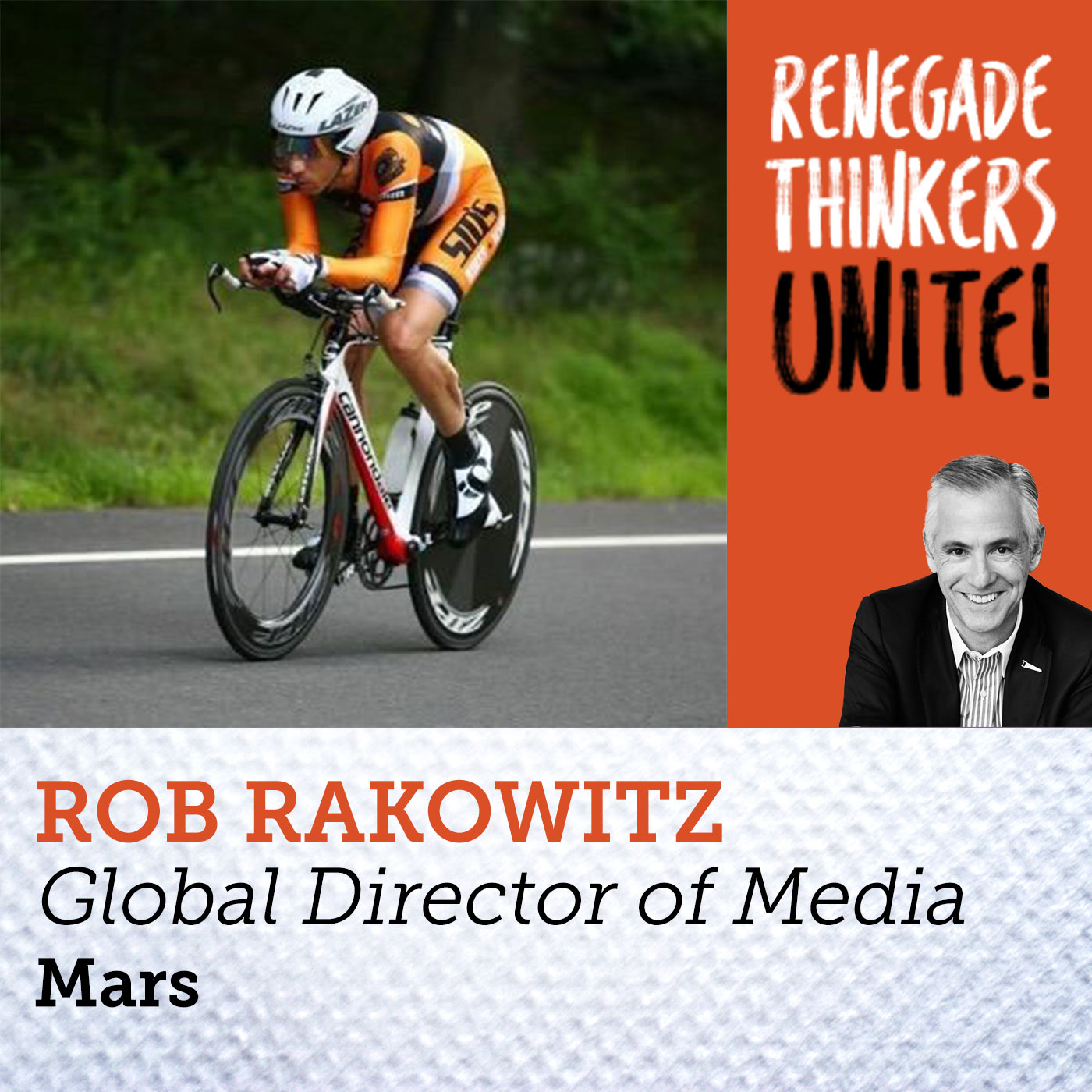
Ep 2929: How Mars Cashes in on Content Marketing
Gone are the days of "just throw it out there" and "let's see what happens" when it comes to marketing campaigns. The hard truth is that in 2017, we have too much information at our disposal to lean on our instincts and creative prowess to connect with consumers, and today's leading marketers know this better than anyone. How Take Rob Rakowitz, Global Director of Media at Mars, who was recognized by The CMO Club for his cut-through Content Marketing performance with brands like Uncle Ben's, Snickers, Pedigree and Whiskas. Rakowitz understands that to drive growth, marketing teams must use a targeted, well-researched approach backed by fail-safe insights—and the simpler the goal, the better. Here are just a few of things you'll learn from this episode: How to make your marketing campaign stick. The significance of identifying brand purpose and engaging with consumer culture. How to diversify your marketing strategy. Why service is the new selling. Driven by data It could be said that a good marketing theory works well outside of marketing, so a good marketing leader practices his theories outside of work. For his part, Rakowitz enjoys mining data as a member of a cycling team. Thanks to the Internet of things, even riding a bicycle generates a mind-boggling amount of data. Armed with insights before a race, for example, his team can determine distinct roles and peak performance points "much in the way that you would for launching a really great campaign." The implication for brands here is that data offers not only meaningful positioning but can also inform when to act on topical content. In Rakowitz's opinion, it's the CMO's duty to show his or her teams how to make these same discoveries. "The only thing that you can do in this role," says Rakowitz, "is equip teams with the right navigation tools so that they can wade into this unknown and increasingly complex territory and actually drive growth from it." And to drive growth, he says, these teams must make simplicity a goal, as the team with the discipline to focus in an ever-distracting environment will eventually outpace its competitors. "I find that the more you can simplify down what it is that we're trying to do from a vision perspective," he says, "the better an idea travels." Content that cuts to the point At Mars, Rakowitz says he was able to influence and coach teams in the execution of "fantastic content programs" for the labels that sought to understand how to best bring the brand, consumer and customer together. "It's what I like to call the idea of 4C conversion that bring consumer, customer, communications and commerce closer together," says Rakowitz, and it centers around a simple purpose. With Uncle Ben's, the Mars Food team discovered that the brand's purpose is helping consumers make great food choices. "We find out that consumers who start meals with rice are more likely to choose a lean protein or a vegetable to go along with it," he says, leading to healthier eating outcomes. But when Mars released Uncle Ben's ready-to-heat pouches in the UK, the Uncle Ben's UK team discovered that consumers either weren't aware of the product or saw it as irrelevant. Working with BBDO and MediaCom, the team started to look to content to address the reach and relevance shortfall. They developed a series of short online videos that featured a celebrity chef demonstrating the product in a public park, which engaged healthy consumers. The best-performing clip was trimmed and disseminated to TV and social media. "It was a very content-driven idea backed up by behavioral data," says Rakowitz. "We were able to use social media to make sure the content was as personal as possible. And it actually yielded some really nice business results for us." Another data-supported campaign Rakowitz championed was "Kitten Kollege" for Whiskas, following an insight that new cat owners often lack the knowledge to properly care for them at first. Mars' Petcare marketing team and agency partners in BBDO and Mediacom created tongue-in-cheek videos about a kitten's life stages using insights from Mars' Pet Institute research center in the UK. Partnering with Google and YouTube also helped raise the brand's profile, "simultaneously educating and entertaining and then closing the gap with commerce." While Mars marketing measure success with methods sometimes as sophisticated as biometric tracking, many are available to any CMO. "What we did for Uncle Ben's was 100 percent behavioral, digital metrics that are available to a lot of marketers," he says. In fact, Rakowitz recommends taking advantage of as many sources of data as possible to see the best results from a campaign and glean the best insights for the future. "I think that's very much an agenda I had, with a lot of my colleagues out there—taking more and more advantage of things to drive better planning, strategy, and activation."

Ep 2828: Road-Tested Tips for Driving a Marketing Department
Without communication, businesses crumble. Sending a clear message is the only surefire way to get people to care about your brand. This need for coherence isn't limited to the marketer-consumer relationship, however—all business branches should work in harmony in order to present a sharp brand image. Ann Davids, Senior Vice President and CMO of Direct General Insurance Company, specializes in coordinating her company's identity on all fronts. In this week's episode of the Renegade Thinkers Unite podcast, Davids explains how a brand identity can become too abstract if it's not managed well internally. It's Davids's duty to weave product language, internal language and consumer language together to create campaigns that customers and Direct employees can embrace. Marketers should stay in close contact with their fellow departments, believes Davids. When the marketing department at Direct works in unison with the entire office, it can accomplish brand goals from all angles. Davids says, "I've often heard it said that marketing should make the rest of the organization uncomfortable. I couldn't agree more. I'll really advocate for anything the business needs, even beyond marketing if it helps move the needle." This strategy is mutually beneficial, Davids finds. In addition to orienting the marketing team's attention to the overall business plan, she seeks to involve other business disciplines in Direct's advertising campaigns. In previous years, Davids has laid out the blueprints of her team's marketing strategy for all to see—literally—by distributing architectural blueprints in frames around the office. "We basically run our own internal campaign, and it tends to get people excited and raise intellectual curiosity," Davids says. "We have people hand-raising to opt in to work on these things instead of having to recruit." The blueprints clearly illustrated the marketing strategies, but they also generated interest in the projects from the entire company. Let's face it; if an organization can't get its own team members excited about a campaign, how can it expect to make a lasting impact on consumers? Speaking of impacting consumers, Davids notes how Direct aims to be, well, more direct. "We try to just always speak the customer's language," she says. "Whatever that happens to be for your particular customer, I think you have to really understand them and how they talk and process, and what they're looking for." Offering exactly what the consumer needs is only half the battle, however. Without clear, direct marketing, any campaign can fall flat. Given the nature of Direct Insurance's industry, it's inherently tough to make consumers eager to engage with the brand, which is why Davids's team goes the extra mile to make their experience enjoyable. Davids says, "A lot of people don't want to pay for insurance, either, so we make it fun, we make it pleasant and we try to have added little surprises along the way that make it easier to do business with Direct Auto and Life Insurance." These "little surprises" have resonated well with customers, she says. Another challenge for Direct has been the transition to new marketing platforms. When the company knew it wanted to establish a strong digital presence, Davids was careful not to jump the gun with new channels. Her team decided that gradual changes would better suit the brand's customers. "Our customer is still telling us that they enjoy other mediums, as well as digital," says Davids. "They're still heavy consumers of television and radio, so we've been careful in how we transition to digital." This kind of adaptability is an important piece of Direct's marketing puzzle. Davids talks about the art of identifying the next big thing: "Really, what I consider state of the art is knowing when to jump on a trend versus waiting. Or how you might migrate within your own media mix." Although her team is always looking for the next big thing, the marketing department acts slowly and steadily when integrating it into a campaign. If Davids could offer just one piece of advice to her fellow marketing leaders, it would be to maintain a robust network of professionals. "I think you've got to find people that you connect with," she says. "If you make investments in these relationships, they will be valuable. There's nothing more valuable to me than my network and the mentors I've had over the years." (These show notes were prepared by Jay Tellini.) What You'll Learn Ways to engage your company's entire business staff with your marketing strategy. How to speak your customers' language. Advice for building a successful network with likeminded business professionals. When to put the pedal to the metal on your marketing strategy, and when to hit the brakes. Quotes from Ann Davids Really, what I consider state-of-the-art is knowing when to jump on a trend versus You have to listen to your customer. Think about how to present yourself, your personal brand, through words and actions and
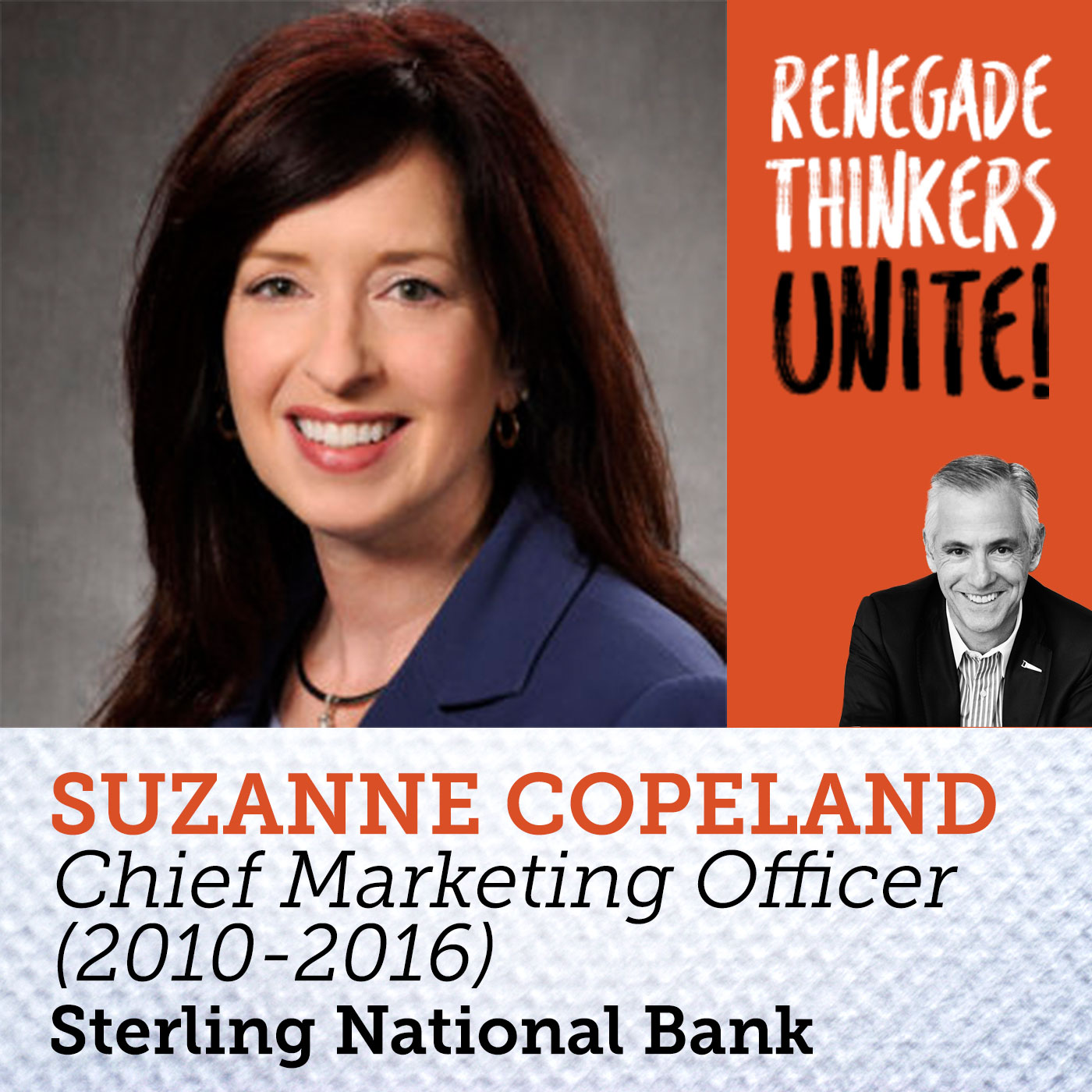
Ep 2727: How A Regional Bank Built its Sterling Reputation
One of the most difficult but important things marketers can do is find a way to make their brand stand out from the competition. This is an especially weighty challenge in the financial industry, as Suzanne Copeland, the former CMO of Sterling National Bank, will tell you. Faced with regulatory restrictions and fierce competition, Copeland applied renegade thinking to separate Sterling from the pack. In this episode of the Renegade Thinkers Unite podcast, Copeland explains how the bank's brand positioning allows it to provide one-of-a-kind customer experiences. (These show notes were prepared by Jay Tellini.) Creating a unique brand experience is crucial not only to marketing, but also to business success as a whole. At Sterling, this was no easy feat. As Copeland points out, "Everybody tells you that their customer relationship is better. It's kind of hard to really tease that out to some specifics that explain exactly how you're better." Abstract problems like these require creative solutions. For example, Copeland's content marketing strategy at Sterling went against the grain to reach to its audience, and you may be surprised to learn that digital marketing had little to do with it. The company wanted to bring its message to the consumer's doorstep—literally. The finished product for Sterling was Connect Magazine, a print publication featuring the success stories of some of its clients. Copeland says, "We have been publishing Connect Magazine for over seven years now, and a key feature is that we do client profiles. We have a cover story with a client talking about their business." Connect Magazine continues to spread brand awareness for both client businesses and Sterling National Bank. Copeland continues, "[Featured clients] sprinkle in where Sterling has helped them with their business." By mentioning how the bank has assisted clients, the publication also gets people talking about Sterling. As Copeland notes, "There is some relationship building with regard to the prospects and, quite frankly, most of Connect is mailed to prospects and that helps build our brand. But at the same time, it is going to our clients…It is also creating brand ambassadors that will praise our services." Like Copeland, many marketers face the challenge of presenting a uniform brand image. The team at Sterling is constantly maneuvering to keep all employees on the same page. "We have a lot of different sales people with a very specific approach," Copeland says. "It's really hard to be efficient with that. So, for us, the challenge is how do you have a really lean organization? How do you create some level of consistency and some configurability so that you can address vertical markets?" Copeland urges marketers everywhere to hone in on their core business to find a unifying message. She says, "The other thing now I think that we can do ourselves is just be maniacal about focusing on our business strategy, really understanding what is it this company is doing." Perhaps the biggest blunder a marketing team could make is to seclude itself from the company's other operations. "The biggest 'don't' for me is getting cornered in the marketing world," says Copeland. "You've got to be able to have relationships beyond that in the organization, and really understand what other parts of the organization are doing, and not just say this is the marketing domain and that's the only place that I stay." Meet the Guest Suzanne Copeland is the former CMO of Sterling National Bank, an institution that offers banking services and solutions to business owners and consumers. She holds an Executive MBA from the University of Memphis. After starting her career as an art director, Copeland moved into a corporate leadership role at First Tennessee Bank in her hometown of Memphis. Copeland started at Sterling in 2009 and has since launched Copeland Collaborative, an initiative that provides consultation for women at Sterling and executes strategies to improve employee engagement. What You'll Learn How to distinguish your brand from the pack. Tips for building relationships with clients and prospects. How to maintain a consistent brand message. Advice for understanding both your brand and your industry. Quotes from Suzanne Copeland Wherever you are, you really need to know: how does this business run, how does this business make money and what [are] the activities that you are driving in marketing? I still think if you can get in front of the absolute right person at the right time and say the wrong thing, it won't work. I do think having a personal brand is really important. The more and better data you have, the more discreet your activities can be toward changing particular behaviour.

Ep 2626: Proof Positive that Social Selling Works w Nimble CEO Jon Ferrara
Customer experience is at the core of marketing success. Nimble founder and CEO Jon Ferrara explains where and how brands should be targeting their messages in Part II of his interview on the Renegade Thinkers Unite podcast. Ferrara grew Nimble out of the idea that brands do best when customers recommend them to their networks. Nearly nine years later, Ferrara's business is stronger than ever and venturing into new marketing frontiers. During his extensive tenure in marketing, Ferrara learned that business doesn't have to be impersonal. In fact, his experience at GoldMine CRM—and eventually Nimble—demonstrates that the best marketing strategies are personal in nature. Ferrara says, "I think the mistake that many businesspeople make is that they make business about business…[but business] is about connecting with people. That's why they'll remember you." Jon walks the walk on that philosophy, sharing both his personal and private social accounts with the people in his network to this day. Ferrara didn't originally foresee GoldMine, his first business venture, taking a turn towards customer-centricity. "GoldMine actually started out as an accounting software company," he says. "I needed something to manage the relationships, so I built and designed GoldMine to do that. It turned out that GoldMine really was our future and we had to pivot." Ferrara's strategy at GoldMine was to "build relationships with editors and writers so [consumers would] see us being written about in publications, and then we started slipping in radio ads and airplane ads." Nimble, which launched in 2008, capitalizes on that same influencer-driven approach. "We're here to help those influencers build their brands in social sales and marketing by helping them inspire and educate our customers," he states. "So it's a win-win situation." The company anticipates user counts of multiple millions in the near future. One of Ferrara's top priorities is helping Nimble's marketing team strike the right balance between telling a unified brand message and genuinely opening up to potential partners. He says, "The relationships happen at that one-to-one level across your team members, but you still need to have a unified message, be consistent about that messaging, drive the high-level stuff, and then integrate." Knowing that he's serving his customers is Ferrara's biggest reward, and he takes every compliment to heart. "When somebody stops [me] on the street and says, 'you know, Jon, you changed my life with GoldMine,' or 'you're changing my life with Nimble,' that's the best," he claims. "That's why we do what we do." Meet the Guest Jon Ferrara is a social marketing sensei. As a co-founder of GoldMine CRM, he innovated new ways for marketers to build relationships with customers. Ferrara launched Nimble in 2008, the next-generation CRM product for small businesses. Ferrara provides top-notch social customer relationship management to marketers everywhere. He currently serves as Nimble's founder and CEO, where he specializes in entrepreneurship, product innovation and brand and identity development. What You'll Learn How customer experiences can expand your brand more rapidly than advertising can. Best practices for managing customer relationships. The importance of helping social influencers succeed in your audience's niche. The value of having a unified brand message. How to cook a chuck roast (seriously!)
Ep 2525: Marketing Your Business without Paid Media
Jon Ferrara grew the social selling platform Nimble from scratch to 100,000 users in just a couple of years without spending a dime on media. He has also converted 15% of those users to paid subscribers making Nimble a model for bootstrapping entrepreneurs. Having been a CRM pioneer with Goldmine which Jon sold in 2000, he is a wonderful font of insights and inspiration so much so that we recorded two episodes. This episode will teach you how to develop a clear-cut selling strategy for your brand, and look good doing it. You'll also learn how to institute an effective CRM strategy that won't overwhelm your business. No matter the bandwidth of your organization, Jon offers his testimony to describe how sharing content and networking with influencers can reel in dollars. Jon is a pioneer of CRM, and has used outside the box thinking to connect with influencers. After co-founding GoldMine three decades ago, Jon discovered new ways in which businesses can discover and engage with potential customers. His work resulted in the launch of Nimble in 2008, the next generation CRM product for small businesses. Jon believes that the key to marketing is using professionals who your target audience trusts to recommend your brand, rather than advertising to them yourself. He boldly claims, "I think it's more powerful when other people talk about you than when you talk about you."
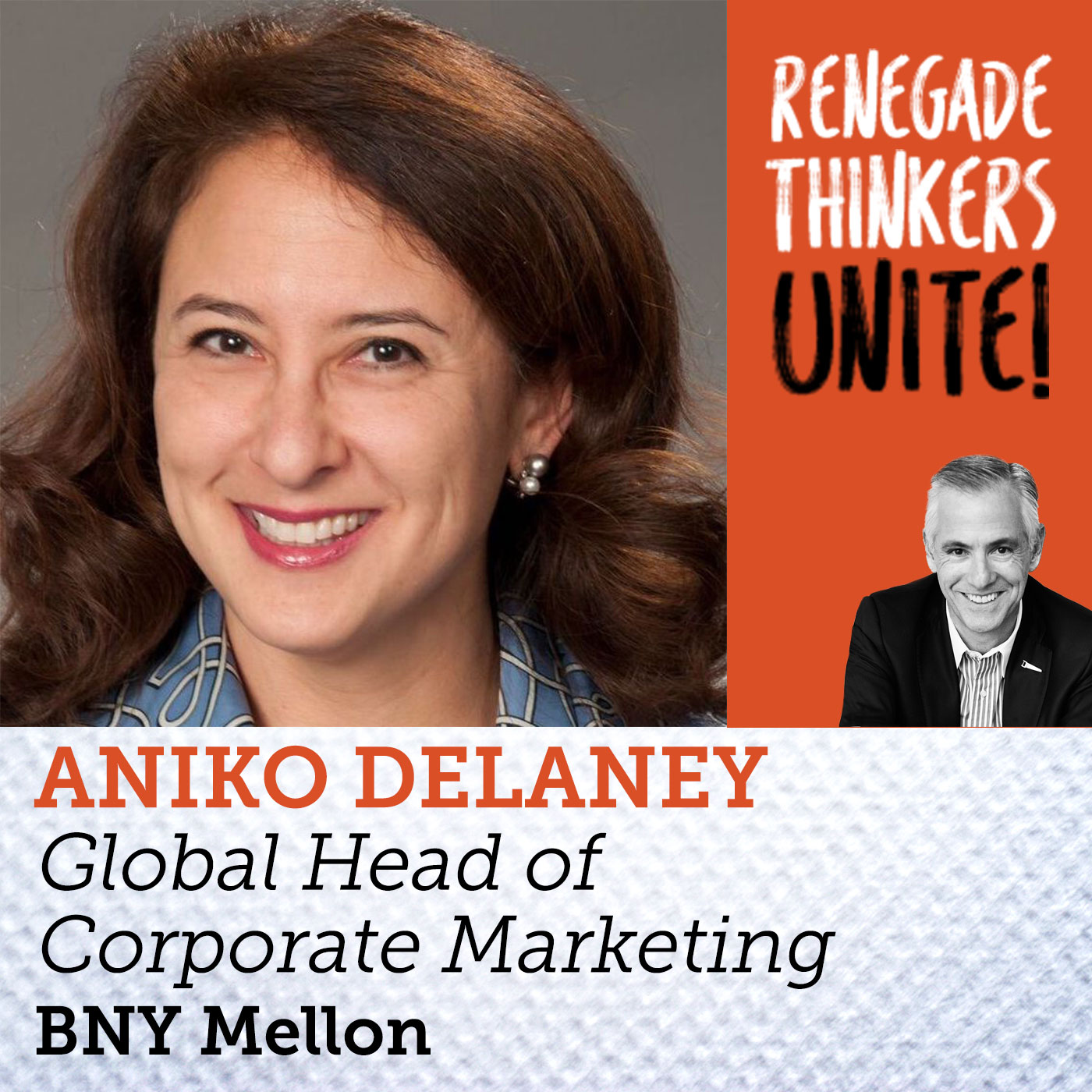
Ep 2424: How BNY Mellon Marketing Sings with Hamilton
Is the key to immortality for brands simply about finding the right moment for reinvention? When Ron Chemow's Hamilton became Lin-Manuel Miranda's Broadway sensation, Global Head of Corporate Marketing Aniko Delaney recognized the opportunity for BNY Mellon to reach new audiences. Affectionately called the Hamilton campaign, "Invest In Our Legacy" managed to not only to honor BNY Mellon's founder Alexander Hamilton but also to modernize the brand. So far, her team's modernization efforts have paid off in big ways, with triple-digit increases in engagement and brand awareness on Twitter, Linkedin, and Facebook. In this podcast, we'll examine how Delaney and her team capitalized on the Broadway Show, Hamilton, to help BNY Mellon's marketing cut through. You'll learn how to identify moments of opportunity for reinventing your brand, the importance of having a message that resonates across all social platforms, and the keys to keeping a seasoned brand relevant.
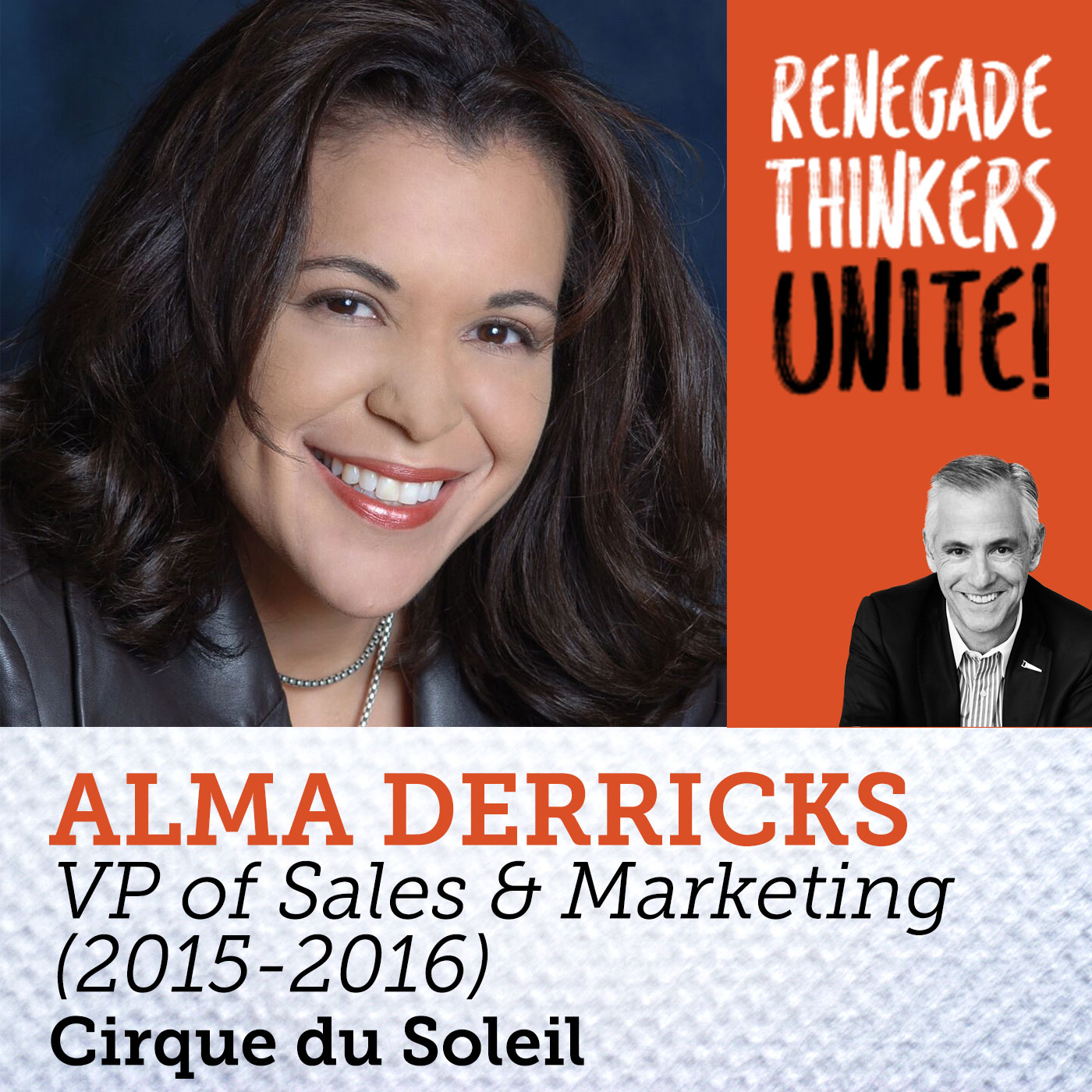
Ep 2323: How Cirque du Soleil Soared Above Vegas Competitors
Keeping a brand fresh means evolving with trends, but Alma Derricks, former VP of Sales & Marketing of the Retail Sales Division at Cirque du Soleil, knows that not every trend is right for every industry. As someone who runs towards moments of inflection, that's exactly what Derricks walked into when she joined Cirque during an ownership change in 2015. Believe it or not, Cirque had relied on organic growth for over 30 years but finally found itself in need of an organized and inventive marketing strategy. With a diverse background in media and entertainment, Alma Derricks helped differentiate Cirque's many shows and make them top-of-mind for show goers. She also launched SPARK, a brand extension of Cirque that serves as a learning laboratory for corporate teams. The new business took off and not only created a new way to access the brand, but also a strong statement about who they are. In this podcast, we'll take a special peek behind the curtain of one of the world's top-earning theatrical companies and the marketing that helped revive its brand. You'll learn about identifying which trends are suitable for your business, making sure your company cuts through the noise, differentiating your product or service offerings, and more. While Derricks has since moved to another role, you'll find that the insights she shares are timeless.

Ep 2222: Special Episode on CRM from PegaWorld
This episode will help you understand the state-of-the-art for CRM (Customer Relationship Management) and how forward-thinking businesses are capitalizing on CRM to improve customer experiences and drive revenue.

Ep 2121: Transformational B2B Marketing -- The Modern Software Factory
In this podcast, you'll learn about where to start your brand transformation, why your brand should be a "sage" instead of a "hero," the importance of creating a tangible customer experience and the strategy behind CA's new ad campaign, "The Modern Software Factory." Over the last four years, CMO Lauren Flaherty repositioned CA Technologies' global brand, helped it adapt to the fast-paced blur of digital disruptions and masterfully co-created an app with CNN to cover the 2016 presidential election. This app enabled CNN to experience higher-than-ever levels of engagement and reach while demonstrating the power of CA's technology. Flaherty has since initiated a similar co-creation venture with Eurosport, helping to make the brand more tangible. Think of this episode as a master class in transformation B2B marketing.

Ep 2020 - Inside Story on Marketing The New York Times
As Chief Revenue Officer, Meredith Kopit Levien is a driving force behind The New York Times's digital transformation and their stunningly timely "The Truth is Hard" campaign. When the news became the news during the 2016 presidential election cycle, Kopit Levien's challenge was not only to remind people why real journalism matters, but also to reach a new base of paid subscribers hungry for high-quality journalism, effectively changing the news category. What you'll take away from this podcast, among other things, is why the story you tell is more important than how often you tell it, and why it's important to adapt to the times—no pun intended—without losing sight of your brand's core mission. In addition to sharing why and how the new campaign came to fruition, Kopit Levien provides an inside look at building T-brand, their highly successful content creation studio. Although she admits that The Times was late to the content creation game, they entered it with gusto hiring top talent and holding the bar extremely high – so high that they will and have told the client "no" when they don't think an idea will in their publication. Noting that there are only 10 million people that pay for their news online, Kopit Levien says that the real work, is only beginning as The New York Times continues its transformation from print to all other current and future news channels. For example, The Daily, The Times' first podcast has dramatically exceeded expectations and is now a coveted slot for their reporters. She also discusses a new channel on Snapchat Discover, yet another indication that her brand ain't your grandmother's New York Times!

Ep 1919 : Secret to B2B Marketing (Be Your Own Best Customer)
When Tom Libretto joined Pegasystems as Chief Marketing Officer, he recognized that his new company was on the cusp of huge changes. Applying his experience at major companies like IBM, Nokia and Chase, Libretto dove headfirst into his role, first by assessing star performers, past successes and failures and opportunities for growth. The good news was that one of the company's star performers was its own platform, PEGA. What you'll learn in this podcast, among other things, is the importance of being able to "drink your own champagne," as Libretto and his team have found it to be an invaluable source of authentic marketing, not to mention troubleshooting. Today, Pegasystems is considered a top vendor of software for customer engagement and operational excellence. As a leader in martech (marketing technology), Pegasystems provides a window into the future of automation and artificial intelligence, which Libretto breaks down over the course of the conversation. Without giving too much away, check out the podcast to hear about how Libretto helped the company achieve this amazing transformation.

Ep 1818: Engaged Employees Beget Better Marketing
Described as both a bulldog and a warrior, Intuit's VP of Marketing Patti Newcomer-Simmons built her reputation by seeking out the difficult challenges most mortals try to avoid. One such challenge was to dramatically improve departmental performance at a company that was already filled with "happy campers." To do this, she first focused on the getting the metrics right. Rather than dwell on how satisfied employees were they with their jobs, she focused on employee engagement, a metric that corresponds with answers to questions like, "Would you stay with the company even if you received a higher offer from somewhere else?" Ultimately, through a series of actions, including adding new hires, moving team members around and aligning around core goals, Newcomer-Simmons helped drive a 30-point increase in employee engagement. In case you were wondering, that is a very big jump, especially when you consider that Intuit already enjoyed a very high employee retention rate. So, if you're wondering how you can get your marketing team operating at a higher level, this is definitely the right episode for you.
Ep 1717: How Mercy Corp Rebranded w $50,000
Dara Royer sat alone at her desk pondering the seemingly impossible--how do you rebrand a global organization with only a $50,000 budget? She knew in her heart of hearts that rebranding was not just a nice next step for Mercy Corps, but it was a critical requirement for the organization to realize its global ambitions. She also knew there is little glory in being right, what really mattered was getting the rest of Mercy Corps to join her on the journey and embrace the forthcoming change. Royer's journey as Chief Development and Marketing Officer is chronicled in detail in this epidsoe and it is profoundly instructive for all businesses especially those with modest budgets and massive expectations. And just in case you were wondering if we're hyperbolizing, the outcome of Mercy Corps rebranding was an increase in awareness, revenue via donations and recognition by the Harris Poll as the 2017 EquiTrend "Brand of the Year" and "Most Loved Brand" in the category of International Aid Nonprofits. Those are results that would delight any marketer and leads to the question, how the heck did Royer and her team accomplish so much with so little? Well, without telling the whole story, let's just say that necessity is indeed the mother of invention.
Ep 1616: Marketing's Torrid Trio: Storytelling, Data + Tech
Digital rock star and Spotify's Global Vice President for Growth & Marketing, Mayur Gupta, joins us in this week's podcast to talk predictive marketing, lack of separation in online and offline worlds, and why quality beats quantity when it comes to consumer acquisition. With over 15 years of experience in leading the digital transformation, Gupta shares insights on how brands and marketers can ease into predictive marketing, and explains how Spotify is using this method to unify online and offline worlds, delivering relevant, contextual experiences for their users that inspires them to keep coming back for their musical needs. While most of us are driving into the future of marketing with limited visibility, Spotify's Mayur Gupta not just sees what's ahead, but also shares his vision with helpful precision. In this episode, Gupta talks about how he views marketing and innovation from the eyes of an engineer, and the importance of putting human's needs at the top of the marketing ecosystem, which consists of technology, data, and storytelling. As the Global Vice President for Growth & Marketing at Spotify, Gupta emphasizes that you cannot effectively market only using technology, or data, or storytelling – the three are completely intertwined, and wholly dependent on the marketer's understanding of unmet human needs. To see what's ahead, just listen!

Ep 1515: 3 Keys to Creativity w Larry Robertson
There are three salient features of creativity, regardless of the form it takes: It's new, it's everywhere, and everyone can do it. This week we switch it up on RTU to talk to the expert on creativity, Larry Robertson. Robertson's latest book, The Language of Man, tackles the biggest myth about creativity, and that's this notion that only a few rare people are capable of creative genius. In the podcast, Robertson talks about the two sides to each individual: one side (the left brain) is dedicated to order, pragmatics, survival; the other side (right brain) is dedicated to exploring, creativity, and thinking towards the future. Most often we prioritize the side of our brain that is dedicated to order, but Robertson says it's important to give our creative brains a chance to play and discover as well. Ultimately, there has to be a balance between the two, but everyone is capable and equipped for creative genius.
Ep 1414: Marketo's CMO Reveals The Engagement Economy
At one point in our inspiring conversation, Chandar Pattabhiram says "I've always believed that people buy candles not because they need candles, but because they need light." As CMO of Marketo, Chandar brings a floodlight to the world of marketing, leading to an episode of Renegade Thinkers Unite you won't want to miss. Among his many illuminating ideas, Chandar espouses "engagement marketing" as the only way to overcome the radical shift in power from buyer to seller and proposes that we've entered the "engagement economy." Expecting a conversation about the science of marketing, marketing automation and perhaps the latest applications of artificial intelligence, his focus on engagement, the art of storytelling and advocacy provides a show that is as surprising as it is informative. Listen carefully and you'll discover some of the secrets to not just building customer loyalty but also the kind of brand advocacy that gets your customers shouting your story from the rooftops!

Ep 1313: Giving to Grow w Pete Krainik, The CMO Club
Every brand strives to build emotional connections with its constituents but few have succeeded in the manner of Pete Krainik, founder and CEO of The CMO Club. Starting from scratch in 2007, Pete has built a remarkably collaborative membership of over 800 senior marketers that meet regularly in 22 US cities and several more around the world. In this episode, we'll reveal some of the secrets to The CMO Club's success in recruiting new members and creating unmatched event experiences.

Ep 1212: Building a Loyalty Program w Ryan Linders, Sally Beauty
Ryan Linders, VP CRM, Loyalty, and Marketing Analytics at Sally Beauty provides a rare glimpse into the initial phases of building a customer loyalty program from scratch. You'll learn how Linders got the program off the ground and how Sally Beauty provides value to customers and gets it back in terms of membership fees and on-going purchase loyalty.

Ep 1111: Art of Fan Building - Guest, Will Dailey (Performing Artist)
In episode 9, we take a break from big brand CMOs to hear from independent musician Will Dailey. Why this deviation? Well first, I've been trying to get an interview with Will Dailey ever since I saw him speak at a Content Marketing conference in 2016 because I was certain his story would inspire marketers big and small. Second, Will really is a renegade, having walked away from a major record label just as his career was gaining steam. This was an incredibly gutsy move that helped set the stage for his instructive approach to fan building. And finally, I secretly hoped Will would perform on the show, and amazingly, he did just that, making it easy for you all to understand why I'm such a fan!
Ep 1010: Special Episode 2 from IBM Amplify on Watson Marketing
Special Episode - A second report from IBM Amplify on Watson Marketing and Cognitive Computing. Drew Neisser talks with Amber Armstrong, IBM Director of Digital Amplification and Demand Generation. Explore the future of marketing and customer experience by delivering just the right content at the right time.
9 Special Episode from #IBMAmplify on Influencer Marketing
Special Episode - Drew Neisser reports from IBM Amplify 2017. Live from the conference floor. Get an up-to-date perspective in this special report on influencer marketing with Amy Tennison, Director of IBM's "Futurist" influencer program. Also features interviews Brian Moran and Jason Falls, two IBM Futurists.

Ep 88: Building Loyalty - Guest, Rich Honiball, Navy Exchange
Rich Honiball, is the CMO of the Navy Exchange (NEX), which generates over $2 billion in sales through over 300 retail stores worldwide that range from a 200 square foot "Micro Market", a 24/7 vending operation, to a 200,000 square foot flagship store "that looks like a department store attached to an electronics store attached to a home store attached to a drug store." In this episode, you'll learn how NEX generates extraordinary brand loyalty through user-generated content and a fanatical devotion to customer listening and customer service.

Ep 77: Leading with Enthusiasm - Guest, Elissa Fink of Tableau
When Elissa Fink joined Tableau she was one of 40 employees that helped orchestrate a user conference for 200. Ten years later Tableau has a staff of over 3,200, a user conference for 13,000 and revenue that exceeds a billion dollars annually. It's an amazing success story that Elissa has not just witnessed – she's played a vital role, bringing a combination of enthusiasm, smarts, willingness to try new things and a deep appreciation for using data to make informed decisions. If you aspire to be a leader at a fast growing organization, then this is a must-listen episode.
Ep 66: RTU: Rebranding via Employees - Guest, Gina McDuffie, CMO of VER
Gina McDuffie of VER, one of the largest video/audio equipment providers in the world, shares how she helped evolve what was Video Equipment Rentals into VER, not just from a naming standpoint but also how they marketed and interacted with their global customer base.

Ep 55: RTU: Repositioning - Guest, Arra Yerganian, CMO of Sutter Health
Lamenting the fact that the healthcare industry "says the same thing and blends into this mush," Arra Yerganian is "working to change the conversation" about Sutter Health. To achieve this goal Yerganian is "leaning in when others lean away" and seeks to "embrace the digital experience and create one-to-one relationships for the 3.5 million people that we serve." Believing that this promise needs to go deeper than marketing, Yerganian works in "really close partnership with Sutter's patient experience folks, executive leadership and operations" to "lay the foundation for a new [customer] experience." Yerganian joined Sutter Health's not-for-profit network as its first chief marketing & branding officer in August 2015. "Recognized by colleagues as an innovator in residence, a marketing visionary and a customer experience evangelist," Yerganian has lead a comprehensive repositioning of Sutter Health, which you'll learn about in our podcast. Prior to joining Sutter Health, Yerganian served as chief marketing officer for San Francisco-based One Medical, an innovative primary care network focused on transforming patients' experiences through improved quality and accessibility of care. Before that Yerganian served as CMO for University of Phoenix and held senior international marketing roles at Procter & Gamble, the Dial Corp. and Atari.

Ep 44: RTU: Content Marketing - Guest, David Beebe, Marriott
The notion of having a large-scale content studio in-house would be radical for many brands but that's just the opening scene for David Beebe who "set out to establish [Marriott] as the largest producer of travel lifestyle content." A veteran of Hollywood, Beebe has turned Marriott into a content powerhouse by "not asking for permission all the time" and by focusing initially on "really premium storytelling." Noting that successful content needs to be scalable, built around a community and have a commerce component, Beebe advises, "You're not making a commercial, you're not talking about yourself and your features anymore." David Beebe leads Global Creative and Content Marketing for Marriott International's portfolio of 19 brands, which includes Marriott Hotels, The Ritz-Carlton, JW Marriott, Bulgari, EDITION, Renaissance, Gaylord Hotels, Autograph Collection, AC Hotels by Marriott, Moxy Hotels, Delta Hotels, Courtyard, Fairfield Inn & Suites, Spring Hill Suites, Residence Inn, TownePlace Suites, Protea Hotels, Marriott Executive Apartments, Marriott Vacation Club with over 4,200 hotels in 82 countries. Beebe leads a global creative + content marketing group responsible for the strategic and creative development of consumer facing creative, content marketing, influencer marketing, and real-time marketing with teams in Bethesda, MD, Hong Kong, London, and Dubai across four divisions, including Marriott Creative Agency (MCA), and in-house agency and Marriott Content Studio (MCS) an in-house studio that develops, produces, distributes, and monetizes original content including webisodes, documentaries, short films, television shows, magazines, books, animated series, and live programming. In short, when it comes to content, he's a king.

Ep 33: RTU: Customer Centricity - Guest, Dan Marks, Hancock + Whitney Bank
As a long-time financial services marketer, you would expect Dan Marks to have the science of marketing down pat. And indeed he does, having built a predictive marketing spend model at First Tennessee Bank (see my book The CMO's Periodic Table: A Renegade's Guide to Marketing!) and the marketing tech infrastructure in his current role. But Marks sees the trend towards data-driven marketing going too far, explaining that, "Just doing the science without starting with the purpose is a recipe for failure." Embracing the art-side of his job, he encourages his team to "remember that we are ultimately serving people" and to look at what's happening with people in other categories." Dan Marks is the CMO for Hancock And Whitney Bank, a regional bank in the Gulf South spanning from Houston, Texas, to Tampa, Fla. At the bank, Marks is responsible for overall strategy and execution of marketing and leading a digitally enabled client-focused transformation. Recognitions have included the Presidents Circle CMO Award, "Top CMO on Twitter," and "Top 40 under 40."

Ep 22: RTU: Brand Authenticity - Guest, Lee Applbaum, CMO, Patron Spirts
With over 70% share of the premium tequila market, it would be easy for Patrón's CMO to rationalize a conservative marketing approach. Instead, Lee Applbaum believes that success can only be found by "challenging long-standing norms in luxury and in spirits marketing," and by "always staying ahead of the curve." To these ends, Applbaum is focused on showcasing Patron's authenticity as a handcrafted tequila via advertising, influencer programs, social media and an innovative Oculus VR experience. During is over 3+ years as CMO at Patrón, Lee Applbaum has launched successful line extensions (La Roca) and won numerous awards including two from The CMO Club. But what's more impressive is that he has helped keep the growth streak alive as Patron continues to find new fans while maintaining a highly loyal following. Applbaum started his career at Coca-Cola in sales after earning his MBA at UMass Amherst. After Coca-Cola, he held increasingly senior marketing jobs at Schlotzsky's, Footstar Athletic, David's Bridal, Radio Shack and even spent 8 months in Melbourne, Australia working with Target. Most importantly, in addition to his strong marketing background, Applbaum knows how to mix the perfect margarita, a skill that comes in handy remarkably often in his current role.

Ep 11: RTU: Influencer Marketing w Eric Reynolds, CMO, Clorox
Packaged goods companies are well known for their marketing discipline and not the place you'd expect to hear a CMO express the need for "tolerating a lot more chaos and ambiguity in the culture and the way we work in order to get to the good stuff." But that's just the starting point with Eric Reynolds, CMO of The Clorox Company, who among other things advises against using influencers on a broad scale and believes that unless your brand gets talked about via the "holy trinity of the brand story, the message, and the content" then the idea isn't big enough to cut through. Eric Reynolds was named CMO in January 2015 and according to Clorox, "As CMO, he has global responsibility for all marketing functions, including brand strategy and management, personnel staffing and development, consumer insights, advanced analytics, agency management, consumer promotion, digital capabilities, media planning and buying, commercial production, and graphic design." In short, he's the real deal. Reynolds overseas marketing for a wide range of brands including Brita, Burt's Bees, Formula 409, Glad, Hidden Valley, Kitchen Bouquet, KC Masterpiece, Soy Vay, Kingsford, Liquid-Plumr, Mistolin, Pine-Sol, Tilex, S.O.S., and Fresh Step, Scoop Away and Ever Clean cat litters.
0: Welcome to Renegade Thinkers Unite!
Described by Inc as one of the "sharpest minds" in marketing, Renegade Thinkers Unite podcast host Drew Neisser is a recognized authority on cutting-edge techniques and has won innumerable awards for creativity and campaign effectiveness. In Episode 0, Drew tells you what he's learned from interviewing over 200 Chief Marketing Officer in the last five years and how these lessons can be applied to just about any marketing challenge. Ranked among "50 Thought Leaders over 50" by Brand Quarterly for 3 years in a row, Drew has been a featured marketing expert on ABC News, CNBC, CBS Radio, iHeart Radio and the Tony Robbins podcast series among many others. Drew is the author of the highly regarded book, The CMO's Periodic Table: A Renegade's Guide to Marketing. He is a frequent keynote speaker and emcee at top marketing conferences including the 2017 Marketo Marketing Nation Summit and is counted among a small group of IBM Futurists. Last but very definitely not least, Neisser is the founder and CEO of Renegade, the NYC-based marketing agency that has been helping CMOs find innovative ways to cut through since 1996.