
Relentless Health Value
664 episodes — Page 6 of 14

Ep 353EP353: What You Need to Know About Specialty Pharmacy Formularies and Rebating, With Pramod John, PhD
This episode is probably a 400-level class in specialty pharmacy rebating. If you want a 45-minute conversation on rebates in all their glory, go back and listen to the conversation with Chris Sloan (Encore! EP216). But if you're still with me, what's gonna follow is about an eight-minute overview of pharmaceutical rebating, just to make sure we're all on the same page before we get into the show itself. So, if you know all there is to know about pharmaceutical rebating, you can jump ahead about eight minutes and get to the part where I talk with Pramod John.

Ep 352EP352: Some Big Actionable Surprises About the Efficacy and Effectiveness of Specialty Pharmaceuticals, With Pramod John, PhD
As a country, we spend approximately $500 billion on prescription drugs. Specialty drugs account for less than 2% of prescriptions but will cost us over $250 billion (that's in 2021)—so, 2% of prescriptions but half the spend. Specialty is the fastest-growing segment of healthcare spend and is a dominant issue that self-funded employers and other purchasers face. But let's dig into that $250 billion being spent on specialty drugs, shall we? I have to say, personally, that if we spent $250 billion but saved more than that in medical costs or if the patient quality of life went up measurably or if life expectancy or overall survival or whatever metric you used to assess quality … if that big spend produced even bigger returns/results, I for one would be like, "OK, trade-offs. Let's discuss." But the thing is, clinical trials and real-world evidence alike suggest that there's a lot of patients who don't really benefit from the expensive drugs that they are taking or were prescribed, and even those who benefit might not get the results that they're hoping for or even de minimis expecting. In this healthcare podcast, I am talking with Pramod John, CEO of VIVIO Health; and he makes a couple of great points about all of this that I'll repeat here and then he's gonna say them again later in this episode but in context—and probably better. There was some research done that showed for a really popular, really expensive drug, only 2% of patients who took it got the expected, maybe promised, benefits. But 100% of the patients who took that drug got bad, in some cases dangerously bad, diarrhea. This situation is really kind of typical. A drug will work great for some people, mediocre for other people/patients, and not at all for, say, the remaining what might be majority of patients. So, you'll have 2 patients where the results are out of the park, 23 patients where results are pretty darn good, 25 patients reporting meh results but something you can actually still point to, and then maybe 50 patients who see absolutely no improvement in anything. So, here's an important point: Maybe there's, let's just say, 3 drugs or 10 drugs in this therapeutic category, and that same patient distribution is true for all of them—except different drugs may work for different people. So, by enabling access to all the drugs, you can see that patients have a better chance of being in one of those first groups where they actually get results because there's more drugs that they can try and different drugs work differently in different people. But now, let's consider the way that we pay for specialty drugs: One or two of them get on formulary typically, and then all the others are excluded. That said, the purchaser, patient, and/or taxpayer is gonna pay a whole lot of money for those drugs regardless of how well they do or do not work. And with fewer drugs on formulary, there's less of a chance that results gold will be struck. But we're gonna pay a whole lot of money, also in terms of human life, to deal with the direct and cascading side effects of drugs whether they do or don't work. I have to admit, I kind of have a new appreciation for so-called me-too drugs after this conversation. Let me just add that here for the record. My guest today and next week is Pramod John, who is the founder and CEO over at VIVIO Health. VIVIO contracts with self-insured employers and helps their employees/members/patients (whatever you call them) get the right drug. They actually expand access, and the employer saves money. After what I just said, you might be cottoning on to why. The show this week concerns the reality of specialty drugs and what the terms efficacy and effectiveness really mean because they might not mean what you think they mean. As inconceivable as that might feel, I learned something. You might, too. And there are implications—big implications—for all of this for patients/members/employees. Or you and your family. In this episode, we also define and discuss the terms NNT (number needed to treat) and NNH (number needed to harm), which are really important and, in my humble opinion, do not get discussed enough—especially with patients who need to know these things to make informed choices. Next week's show is also with Pramod John, and we get into how what we talk about here intersects with rebates and formularies. Come back for that. It's probably a 400-level class in specialty pharmacy rebating, but some of you will appreciate it. You can learn more at viviohealth.com or by emailing Pramod at [email protected]. Pramod John, PhD, is the team leader of VIVIO, a public benefit corporation whose mission is to ensure that drugs work in the real world for the people on them and that their costs reflect the value provided. VIVIO's model has improved health outcomes and generated 35% to 40% savings on drug acquisition costs. It accomplishes this by answering three simple questions: (1) Is this the right drug? (2) Is it a fair price? and

Ep 351EP351: Everybody in the Healthcare Industry Getting Up in Everyone Else's Business, With Eric Bricker, MD, From AHealthcareZ
In this healthcare podcast, I'm speaking with Eric Bricker, MD, about how so many entities in healthcare are getting up in other people's business and swimming in other people's traditional lanes. Consider last week's show with Katy Talento, for example. She mentions employers who are not only doing their own direct contracting (ie, cutting out the traditional carriers and negotiating directly with provider organizations) but also employee benefit consultants who are working on setting up their own hospital—an employer-owned hospital. That was episode 350, and while this hospital idea is a little future oriented, right now today, across the country, we have employers and also unions who are owning their own primary care clinics, which I discussed at some length with Mark Blum from America's Agenda (EP248). In this episode with Dr. Bricker, we start from the beginning. We kick off the conversation talking about the payer, PBM, and hospital system horizontal consolidation that has transpired over the past decades (that's plural). Horizontal consolidation is pretty much the easiest way to decimate all competition in your own swim lane so that you can charge more and not worry so much about patient/customer/member experience because the patients/customers/members have no better alternative. They effectively have nowhere, or few other places at best, to go if they leave you. So, what's the impact of horizontal consolidation? We get into this in the podcast, but subsequent to this recording, there was a study that came out in JAMA: "The Dysfunctional Health Benefits Market and Implications for US Employers and Employees." This was by David Scheinker, PhD; Arnold Milstein, MD; and Kevin Schulman, MD. This study showed that commercial insurance costs have gone up 4x the rate of other benchmark goods and services. Bottom line, "It is assumed that insurers compete intensely to improve the value received by employers and employees by negotiating to keep prices down and advocating for employers and employees." Ha ha … NOT. With peak horizontal consolidation, there is little meaningful competition—so ixnay on that premise. By the way, if anyone knows any of those authors that I just cited in that study, hit me up. I'd love to get one of them on the show. But let's spend a moment, shall we, on the human impact of all this extreme consolidation. The impact is your sister, your neighbor, your son, your friend. So many feel so much pressure financially in our country today because of healthcare costs. Even families earning significantly more than median household income are forgoing care because of costs. Again, this was in a recent paper. (The authors are Alyce S. Adams, Raymond Kluender, Neale Mahoney, Jinglin Wang, Francis Wong, and Wesley Yin.) But the direct observable financial toxicity resulting from high healthcare patient costs is really only the tip of the iceberg here. As Dave Chase from Health Rosetta has said a million times already, high healthcare costs have a multitude of effects on employers, big and small. One big one is, if healthcare costs more, then there's less money for salaries. Dave, citing lots of evidence, has long attributed wage stagnation in this country to accelerating healthcare costs, which became even more rampant during periods of industry consolidation. Dave Chase leads Health Rosetta, by the way. Here's another human toxicity: Listen to episode 337 with Oliva Webb on the impact on her life as a result of the undeniably and unquestionably common non-excellent treatment by the PBMs and SPPs that she has to deal with. Because, as Dr. Bricker also says, no competition means basically not a whole lot of concern about patient experience. Why should a for-profit business spend money to improve something when there's nothing really to be gained for them financially to do so? I mean, the best a patient can do most of the time is hop from the frying pan into the fire. That's what happens when there's no competition or no real competition. Also consider the burned-out clinicians who have to get stuck in the middle of this nobody-really-cares-at-the-monopoly customer service paperwork quagmire. By the way, here's a sidebar that might come as a surprise to some people, but please take this in the spirit with which it's intended. All of us innovators and lifelong learners, we want to update our beliefs when the facts show us an updated conclusion. So, I have learned that all of this consolidation was going on long before the ACA (Affordable Care Act). My point here is to please look into this well-documented trend line before reflexively tweeting that the ACA drove consolidation. Dr. Bricker and others like Dr. Mai Pham have told me that, in their opinion, low interest rates, cheap debt, and a desire to eliminate competition are wildly powerful drivers of consolidation. Anyway, about nine minutes into the interview with Dr. Bricker, if you're one of the ones who knows all you care to know about horizo

Ep 350EP350: Employers Direct Contracting With Hospitals, in Real Life, With Katy Talento
In this healthcare podcast, I'm talking about direct contracting IRL (in real life) with Katy Talento. This is a conversation that's more about the reality of direct contracting than the theory of direct contracting, and this was not an accident. So much of healthcare transformation is really easy to say and much harder to actually do. So … direct contracting. In the context we discuss in this episode, generally direct contracting means when an employer or their benefits consultant, more likely, hooks up with a provider organization, lots of times a hospital or a health system. Moving forward here, I'm just gonna say employer when I sort of really mean the employer and their TPA and their repricer, the constellation of consultants and other vendors that are working with the employer. So, just for simplicity, the employer says to the provider organization, "Hey, let's cut out the middleman here" (middleman likely being some insurance carrier). "I will just pay you directly, and it will be a win-win because no one is sucking out up to 15% to 20% right out of the middle, and also I'll steer my employees/patients/members your direction, which is great for us as a self-insured plan because money saved and also because I've done some quality analytics and I think you're relatively good at delivering care … so I'm happy to help my members find you." The employer will, in general broad strokes, pay the provider organization some percentage over the Medicare rate for procedures or codes or bundles. By the way, the dollar amount over Medicare for the bundles or procedures or codes can vary depending on factors like what service line it is because, unlike RBP (reference-based pricing), direct contracting is a negotiation. It's a two-way deal. RBP, a lot of times, is the payer/employer deciding what they're gonna pay and then paying it—without sitting around a table with the provider figuring all this out together. So, if only from this one dimension, direct contracting is something that you'd think that hospitals/health systems/providers would be kind of into and up for. One thing that I didn't really understand before this conversation is that, if we're talking about an employer direct contracting with, say, a hospital, the list of direct-contracted procedures or codes or bundles might include pretty much all of the services that the hospital can perform; but, in general, the employer is only going to steer members there or make it financially attractive to go to the hospital for, for example, emergency or unavoidable procedures. Why? Because no employer wants patients going to the hospital for things that they could get a whole lot cheaper in an outpatient setting with no less quality. So, unless a hospital is willing to compete on price with other care settings, then an employer is not going to steer their members there. If you're a hospital, you might take this as a con. But, on the other hand, consider that if there's a few hospitals in the area, the general direction will be to go to the one with the direct contract. Furthermore, if a plan is gonna steer members, they're gonna steer them whether they have a direct contract with you or not. Katy makes one point early and often throughout this conversation. From a hospital perspective, doing a direct contract is and should be pretty easy. From an employer perspective, too, there should not be a lot of disruption or friction for employees. There doesn't need to be. Done right, it should be a win-win for the employer, provider, and, most of all, the patient who doesn't get stuck with high bills, balance bills, and lower-quality care than might be available to them through their benefits. Katy goes through the steps to create a direct contract and the challenges she has faced along the way. We also get into the wonderful world of payviders, so you could consider this an extension to the episode with Jeb Dunkelberger (EP348) from last month. My guest today, Katy Talento, started out as an infectious disease epidemiologist (which I did not realize). She ended up doing public health policy. She's worked on Capitol Hill for various senators and, in the last administration, as health policy lead. Katy is the CEO of AllBetter Health and works with the Health Rosetta organization. She is a benefits advisor for employers who are looking to create better health plans that reduce costs dramatically while, at the same time, improving benefits. I mean, you can only do that in healthcare, right?—where there's basically no relationship between price and quality. You can learn more at allbetter.health or contact Katy directly at [email protected]. Katy Talento is an infectious disease epidemiologist, a veteran health policy advisor, and healthcare consultant. She is CEO of AllBetter Health, an insurgent benefits advisory firm building innovative health plans for employers that are free of misaligned financial incentives. Katy served as the health policy lead in the White House
INBW33: Thank You, and a Few Thoughts
As one of our guests, Dr. Tony DiGioia (EP332), has said, healthcare has been pushed to its limits this past year; but that doesn't mean that nothing good has come of it. Celebrating our bright spots and using our experiences to inform future innovations is really the key to more accessible, equitable, and higher quality of care. While the timing of the celebration could, in general, be better given the latest pandemic news, as they say, there's no time like the present. So, let's do this thing. Also, it's just definitely good from a mental health perspective to find bright spots and to be grateful for them. So, let me kick this off with all of the gratitude I can hold in my two hands for anybody listening who is on the so-called front line of healthcare. My appreciation cannot be expressed more fiercely. I wish, in fact, that there was more that I/we could do to address the systemic issues that plague our healthcare industry and really impact you directly. Speaking of doctors as one of these frontline healthcare groups, in the Doximity Physician Compensation Report that was released for this past year, here's four stats to know: Twenty-two percent of physicians are considering early retirement because of overwork. Sixteen percent of physicians are looking for another employer because of overwork. Twelve percent of physicians are looking for another career because of overwork. Twenty-seven percent of physicians said they're not overworked, so I guess there's that—that's a bright spot. So, all you docs, nurses, PAs, social workers, therapists of all kinds, any other healthcare workers: Thank you for all that you do even in the face of these adversities and a bunch of seemingly shortsighted policy and/or administrative decisions. Take care of yourself first and foremost. We need you; we appreciate you. Thank you. I'd also like to thank everybody who listened to Relentless Health Value this past year. Thank you for being part of an inspired and inspirational community of individuals who are trying hard to do the right thing and learn and connect with others on a similar journey—even in the face of all the perverse incentives and calcified status quo processes, the whole host of factors that add up to formidable barriers to positive change. All of us—and I'm thinking that includes you—we continue to press forward. This is important because the more of us there are, the more of us who link hands and do some combination of educate, cajole, scold, guilt into, demand, lead, vote, wear down … the more of us who consider ourselves part of the change, the more effective we can be. So, recruit your fellow thinkers and let's continue to make inroads. I want to give a special thank you to the many of you who have reached out to me over this past year. You have encouraged, coached, and debated with me. You have added details and case studies. You've provided context. You have offered up topics to explore and introduced me and our team over here to some great guests. You have changed my mind. You have made me realize that there's some maybe underlying reason for something that is, in fact, valid or a consequence that maybe hasn't been thought through well enough by me and/or others. I couldn't be more thankful or appreciative to every single one of you. For more information, go to aventriahealth.com. Each week on Relentless Health Value, Stacey uses her voice and thought leadership to provide insights for healthcare industry decision makers trying to do the right thing. Each show features expert guests who break down the twists and tricks in the medical field to help improve outcomes and lower costs across the care continuum. Relentless Health Value is a top 100 podcast on iTunes in the medicine category and reaches tens of thousands of engaged listeners across the healthcare industry. In addition to hosting Relentless Health Value, Stacey is co-president of QC-Health, a benefit corporation finding cost-effective ways to improve the health of Americans. She is also co-president of Aventria Health Group, a consultancy working with clients who endeavor to form collaborations with payers, providers, Pharma, employer organizations, or patient advocacy groups. 03:36 Thank you to our listeners and the feedback you've given the show over the years. 05:10 "Good and bad is a matter of extremes." 06:20 Thank you to Dr. Steve Schutzer, Dr. George Mathews, Dr. Ge Bai, Troy Larsgard, Dr. Hugh Sims, Vinay Eaton, Dr. Brian Decker, Jeff Hogan, Peter Hayes, Dr. Aaron Mitchell, Parker Edman, Andre Wenker, Doug Aldeen, Cristy Gupton, LynAnn Henderson, Chad Jackson, and Darrell Moon. 07:27 Thank you to our iTunes reviewers. 07:47 If you haven't given us a review yet, please do here. 08:01 Thank you to Malfoxley, Jopo1234, and Teresa O'Keefe for your 2021 reviews. 08:19 Thank you to Dr. Nadia Chaudhri, who sadly died this past year of ovarian cancer but who did so much to advance the awareness of ovarian cancer and pursue better outcomes and b
INBW32: The Ultimate Impact of Telehealth: A Thought Experiment
This episode is a little bit of a thought experiment, so hang with me as I bumble my way through it and then hit me up with your comments. The plan is to do another episode in the future where some of you with thoughts share your version of your own thought experiment. Here's the topic: The ultimate impact of telehealth—in 20 minutes or less. In my version of this thought experiment, I want to do something a little bit different (maybe) than everybody who seems to be putting up a poll on Twitter right now. I want to look at telehealth as a leading indicator, not as a trend. The goal here is not to inform you of things that you don't already know because I am entirely confident that much of what I'm gonna say right now the majority of you are already eminently familiar with—probably more familiar with than I am, frankly. So, the goal here is to put this information into a context that maybe is new—at least I hope it's new. The goal of that is to hopefully inspire some of you to take action, right now, with all haste. This whole telehealth thing started in the middle of one of the many conversations I've had lately about what will be the future of telehealth. You have probably had similar chats about the future of telehealth and know what I am going to say. They all seem to devolve into someone ticking off all of the states who have extended temporary telehealth measures and the 1000 telehealth bills pending in state legislatures that might mandate public and private payers cover it. Anyway, in the middle of one of these "let's all study this updated spreadsheet" exercises, I started to wonder if we were missing the bigger takeaway. So, let me tick through a few background points which are all pillars in my "what's the ultimate impact of telehealth" contemplation and the realization that telehealth in and of itself has no impact. What has impact is who is using it and whether their goals are reactionarily (if that's a word) short term and/or shortsighted, or if there's anything that approximates a strategic long game in that mix. For more information, go to aventriahealth.com. Each week on Relentless Health Value, Stacey uses her voice and thought leadership to provide insights for healthcare industry decision makers trying to do the right thing. Each show features expert guests who break down the twists and tricks in the medical field to help improve outcomes and lower costs across the care continuum. Relentless Health Value is a top 100 podcast on iTunes in the medicine category and reaches tens of thousands of engaged listeners across the healthcare industry. In addition to hosting Relentless Health Value, Stacey is co-president of QC-Health, a benefit corporation finding cost-effective ways to improve the health of Americans. She is also co-president of Aventria Health Group, a consultancy working with clients who endeavor to form collaborations with payers, providers, Pharma, employer organizations, or patient advocacy groups. 02:30 Should provider organizations be getting rid of telehealth? 02:40 EP330 with John Marchica. 04:36 EP349 with Lisa Trumble. 05:07 Should telehealth be viewed as a threat? 05:40 "Virtual is a 'head in the bed at the hospital' demand destroyer." 06:45 "'Virtual' is the scapegoat." 07:42 Patients/Consumers: Is in person really better? 10:42 EP338 with Nikki King; EP347 with Ian Tong, MD; EP320 with Christian Milaster; and EP302 with Blake McKinney, MD. 11:06 How one VP of finance justifies a facility fee for a telehealth visit. 11:54 Do patients actually act like consumers in the digital age? 12:12 Why are virtual-first entities steering patients to clinically integrated networks? 13:08 How is telehealth changing healthcare costs? 14:21 "It adds up to telehealth being inexorable. It's a done deal. It's not a trend." 15:17 "If telehealth is a leading indicator, anybody in the care delivery business who isn't … trying to figure out how to make telehealth work in their core business is gonna find themselves … in a very problematic position." 16:50 "When will tele-whatever become an existential problem for laggard traditional provider organizations?" For more information, go to aventriahealth.com. Our host, Stacey Richter, discusses the impact of #telehealth on our #healthcarepodcast. #healthcare #podcast #digitalhealth Should provider organizations be getting rid of telehealth? Our host, Stacey Richter, discusses the impact of #telehealth on our #healthcarepodcast. #healthcare #podcast #digitalhealth Should telehealth be viewed as a threat? Our host, Stacey Richter, discusses the impact of #telehealth on our #healthcarepodcast. #healthcare #podcast #digitalhealth "Virtual is a 'head in the bed at the hospital' demand destroyer." Our host, Stacey Richter, discusses the impact of #telehealth on our #healthcarepodcast. #healthcare #podcast #digitalhealth "'Virtual' is the scapegoat." Our host, Stacey Richter, discusses the impact of #telehealth on our #healthcarepodcast. #healthcare #p

Ep 294Encore! EP294: Building a Center of Excellence: A Playbook for Physician Entrepreneurs, With Steve Schutzer, MD
Believe me, filling in for the uncontested master of podcasts, Stacey Richter, is just a tad unnerving! My name is Dr. Steve Schutzer. I'm an orthopedic surgeon specializing in joint replacement surgery, and I think it's fair to say that I'm more comfortable, in my own lane, doing complex surgery than doing this introduction to our encore podcast 294 entitled "Building a Center of Excellence: A Playbook for Physician Entrepreneurs," which aired originally in October 2020. But when Stacey graciously offered me the honor of doing so, I said to myself (sic: Steve, suck it up) what an opportunity to share with the devoted listeners of this show my humble perspectives on the prominent position COEs (also known as Centers of Excellence) are playing in this rapidly accelerating, evolving, and exciting healthcare landscape. So, there's an ancient Chinese proverb that goes like this: "When the wind of change blows, some build walls, and others build windmills"—or in this case, Centers of Excellence! And the winds of change in healthcare are blowing, maybe even reaching gale force. In the year since episode 294 aired, there's been unambiguous upsurge of activity, in part fueled by the pandemic, that has collectively and finally moved the healthcare value agenda across the chasm, over the inflection point—and there's no turning back. Unaccountable fee for service as the predominant payment model for healthcare services is, well, shall we say, on its last legs—being replaced by reimbursement models that are aligned with the clinical and financial outcome of the services actually delivered to our patients. For COEs, that's characteristically in the form of predictable bundled payments and fully warrantied episodes of care. Question: Where do COEs fit in this new landscape? Answer: COEs are the common pathway for all healthcare purchasers (whether they're self-funded employers, advanced primary care groups, Medicare Advantage—all of them) to steer agnostically to high-quality specialists focused on a defined set of healthcare services and who are willing to assume total cost of care for their product. And the favorable impact of COEs on the ROI for purchasers has now moved beyond the realm of theory to indisputable. Take, for example, the recent report by the RAND Corporation published earlier this year in Health Affairs: A study of over 2300 patients who had either total joint, spine, or bariatric surgery done under the Carrum Health program at one of their COEs. Carrum Health is a value-based national COE platform that connects self-insured employers with top providers under standardized bundled payment arrangements. And now in full disclosure, I serve as medical advisor for the company; and our program, the Connecticut Joint Replacement Institute in Hartford, Connecticut, is actually a Carrum COE. But in this independent RAND analysis of two years of medical claims data, the savings per procedure when the surgery was done at a Carrum COE was over $16,000 per procedure. Readmission rates were reduced 80% on average. Out-of-pocket cost to the patient? Zero. And an astonishing 30% of patients who were in the queue awaiting surgery ultimately were treated nonoperatively! Peter Hayes is president and CEO of the Healthcare Purchaser Alliance of Maine and a frequent guest on this podcast. His organization has been under contract with Carrum for approximately two years and recently reported an ROI of 58% and plan savings approaching $1 million. And these data also closely reflect that reported in the Harvard Business Review two years ago by Ruth Coleman and colleagues from their experience with Walmart COEs. Finally, you know, I heard Stacey say of COEs in one of her podcasts, "This is not something you can do on a Tuesday." Agree. Prescient advice. As you will hear once again in just a moment, this takes work. But physician leaders and entrepreneurs, take heed. Although you won't be able to stand this up on a Tuesday, there's no reason why you can't begin next Monday. You can contact Dr. Schutzer at [email protected] and learn more at the Novel Healthcare Solutions website. Steven F. Schutzer, MD, graduated with honors from Union College and the University of Virginia School of Medicine. Following a surgical internship at the University of Rochester, he served as lieutenant in the Medical Corps of the United States Navy. After his tour of duty, Dr. Schutzer did his general surgical training at the University of Rochester and then completed his orthopedic residency at the University of Connecticut. He was then a fellow in adult hip and reconstructive surgery at the Massachusetts General Hospital, after which he entered practice in Hartford, Connecticut. Dr. Schutzer is a founding member and medical director of the Connecticut Joint Replacement Institute (CJRI), a Center of Excellence at Saint Francis Hospital in Hartford, where he served as medical director between 2007 and 2021. He is currently the physician executive

Ep 349EP349: How Integrated Is a Clinically Integrated Network, Actually? With Lisa Trumble
This interview with Lisa Trumble is mostly about clinically integrated networks (CINs)—what they are, how they work, how data get shared. Furthermore, we talk about hybrid CINs, meaning, for example, a virtual front door that might lead to in-person care. After that, we talk about the potential impact of direct contracting, which Lisa says could significantly change the healthcare marketplace. The hybrid talk, by the way, is toward the middle of the show; and we talk about direct contracting—that's near the end if you're short on time and you want to skip around. But before we go there, let's just level set a little bit, shall we, on the topics of accountability and integration as general constructs. Specifically, what's the impact, or lack thereof at times, when the provider is not accountable for patient results? I'm talking here about fee for service, in general, where the provider is not accountable for patient results. Like, if we're talking about a fee-for-service world and what it incents, it goes like this: Transaction happens. Somebody sends a bill. The end. I mean, in a fee-for-service world, the patient encounter may be the highest- or the lowest-value patient-doctor transaction in the history of humankind; but either way, the payment is the same. So, the incentive is to figure out how to encounter lots of patients and/or upcode wildly, I guess. The incentive is not to coordinate care or teach a patient how to take advantage of a telehealth offering to mitigate some social determinant of health or spend 10 minutes doing some education or shared decision making or establishing rapport and being culturally sensitive. Any docs who are doing that stuff are doing it on their own time in an FFS world. Here's the good news and the bad news—and I don't often hear it spelled out this bluntly, so I'll do the honors: If anyone wants to get paid to create patient health, they have to be accountable for the outcomes created—upside and downside. Frankly, when an organization is super worried about the downside, that could be—not in all cases, but it certainly could be—a clue that maybe their approach is a little bit more transactional and/or inefficient than perhaps they would like to admit. There's been much talk over the years about the importance of giving patients so-called "skin in the game," but what might work out better is to mandate that providers have so-called skin in the game. Providers have to be accountable so good providers can reap rewards and bad ones don't. The episode with Sunita Desai (EP334) is all about how providers have proven to actually be better "consumers" than "consumers," so there could be a constellation of rationales here. Now, if you're accountable for care, you must actually create outcomes, as just discussed. And to actually create outcomes, there must be integration. Integration is necessary. Care coordination is necessary both with internal and external other providers and entities. There are very, very few cases where a chronic condition can be appreciably improved by a random assortment of 7- to 15-minute patient encounters. Managing chronic conditions requires a longitudinal journey that weaves together most often more than one doctor, also nurses and a PA and a speech pathologist and a nutritionist and a Certified Diabetes Educator and maybe a physical therapist or two. Considering that 85% of healthcare spend in this country has to do with chronic conditions also ... yeah, integration is really required. And, yeah, how many decades later, we're still talking about interoperability. Here's a tidbit I found kinda apropos: Female doctors make $2 million less, apparently, over a 40-year career than their male counterparts. That's per research in Health Affairs, recently reported in the New York Times. More men become surgeons, and women have been shown to spend more time with their patients, leading to fewer services that can be billed for. What's the actionable takeaway there, I wonder? In this healthcare podcast, I have the honor and pleasure of speaking with Lisa Trumble. Lisa is president and CEO of a CIN, a clinically integrated network, called the Southern New England Healthcare Organization, or SoNE. SoNE was formed in January 2020 to integrate three ACOs [accountable care organizations] in two states. The CIN manages a population of over 200,000 patients—about $1.5 billion in total costs of care. Previously, she worked at Cambridge Health Alliance building their pop health and value-based structure to the point where about 60% of their business was in some form of risk or alternative payment models. There is one disclaimer that I would just ask you to keep in mind when listening to any conversation about value-based care—and there are lots of them going on right now—but I just want to tuck this in here because I'd be remiss not to mention it at some point. Dr. Mai Pham (EP325) has put this better than I ever would. She said recently, "After a decade of value-based

Ep 348EP348: Your Burning Questions About Payviders Answered! With Jeb Dunkelberger
The discussion to follow is probably a 400-level class in payviders. If I just said the word payvider and you're scratching your head wondering where you may have heard that term before, this show is probably not the best place for you to start. I'd go back and get some context by listening first to the episodes with Steve Blumberg from GuideWell (EP304) and/or the one with John Moore from Chilmark (EP172); and for a really retrospective lookback, check out the one episode with Dr. Kris Smith from Northwell (EP127) from back when they were still trying to become an insurance carrier. It's like a time capsule into their ambitions. OK, if you're still with me, in this episode I'm looking forward to digging into payviders with Jeb Dunkelberger, who is the CEO of Sutter Health | Aetna. Sutter Health | Aetna is the payvider joint venture between, you guessed it, Sutter Health and Aetna. Not only is Jeb one who would obviously know a whole lot about payviders and how they operate given his role, but he's also super articulate and thoughtful in terms of the potential impacts that this type of entity can have on patients and the surrounding healthcare ecosystem. I started to get really curious about payviders and what they're up to because the term keeps coming up in conversations, number one. And the more it came up, the more it started to become really obvious that payvider is one of those terms that everybody tosses around and may or may not define it the same way. Jeb refers to a payvider as an entity that delivers care but also writes insurance products and takes risk for them—not just taking capitated payments or doing direct contracting. While it's the employer who actually takes the risk, this is the definition of payvider that we explore in this healthcare podcast. Two kinds of interesting points that Jeb makes, which I'll just underscore here: One is "demand destruction." I like the idea of the term because it brings a really obvious point into stark focus. Bottom line, taking on risk or value-based programs is easier if you are a smaller percentage of the healthcare spend. The bigger a percentage of the healthcare spend that gets cha-chinged into your cash register, the more you destroy your own demand by creating value-based programs that minimize downstream costs. Those downstream costs are your revenue, after all. Value-based care is all about demand destruction at its core. In the last question of this interview (so, this is the second thing I'm underscoring here), I ask Jeb if he thinks payviders will ultimately lower healthcare costs; and he comes back with a reframe of my question. He says if we take costs out of the system, will hospitals close? And if the hospitals close, then people get laid off. Fair point, since in many places the health system is one of the biggest employers in town if not the biggest—and also a political tour de force. So, there's more nuances here; but you'll have to either get to or skip to almost the end of the episode to hear them. Jeb Dunkelberger began his career as a health economist and consultant. He became the CEO of Sutter Health | Aetna to focus on alternative reimbursement models and value-based care. Jeb also wrote a book called Rich & Dying. You can learn more at sutterhealthaetna.com. You can also connect with Jeb on LinkedIn and follow him on Twitter. Jeb Dunkelberger, MSc, MHCI, currently serves as CEO of Sutter Health | Aetna (SH|A), a commercial insurance plan serving Northern California. The health plan aims to combine the value of retail, provider, and payer via its partnerships with CVS, Sutter Health, and Aetna. Prior to SH|A, Jeb led growth for two bay-area healthcare start-ups: Cricket Health and Notable Health. Jeb has also held executive roles at Highmark, McKesson, and EY. Jeb holds healthcare-related degrees from Virginia Tech, The London School of Economics, Cornell University, and University of Pennsylvania. 03:58 What all does Sutter Health | Aetna entail? 04:31 What does it mean to be a "performance network"? 04:48 What does it mean to be a payvider? 06:35 How common are payviders? 07:31 "We are writing direct risk." 09:21 How does the fully insured product work? 12:30 "You want to hold their feet to the fire, from a value-based perspective." 12:42 What's the incentive for providers to partner with payers? 15:25 "It's just math. It's the amount of lives times the amount of utilization multiplied by your unit costs." 20:58 "You have to have a day of reckoning, and that only comes from financial incentives creating that gateway out." 24:55 How do we think about reform and taking money out of the healthcare system? 26:58 "We also have to talk about repurposing the workforce." 27:27 "We need to upskill our workforce." 30:14 "Can a health system survive as the largest employer, year over year, if they give unit cost concessions, year over year? … The answer is no." You can learn more at sutterhealthaetna.com. You can also connect with Jeb on Lin

Ep 347EP347: Rolling Out Healthcare Initiatives That Actually Get Uptake With the Populations You Aim to Serve, With Ian Tong, MD, About the Black Community Innovation Coalition
I attended the STAT Summit last week and heard the heart-wrenching story told by Charles Johnson, who is the founder of 4Kira4Moms, which is a group dedicated to improving maternal health equity. Charles's family is African American. After a planned C-section, his otherwise-healthy wife died an avoidable death because 10 hours after the clinical team was alerted that she had internal bleeding—10 hours later—they got around to wheeling her into surgery. At that point, she had three liters of blood in her abdomen. She bled out and died, leaving her newborn infant motherless. This all went down at a large, incredibly well-respected integrated delivery network. One of the biggest issues in healthcare today … well, there are many issues, so maybe I should start again. One of the biggest issues in healthcare that is going to be discussed on this podcast today is how to engage those patients or members or employees or consumers who might need our healthcare industry to work better on their behalf. This is especially a problem (a well-known problem) when we consider those patients who our healthcare system in so many ways does not serve well: many minority patients, Black people, other people of color, the LGBTQ community, people who do not speak English as their first language. These patient cohorts emerge on the other side of our healthcare industry sporting patient outcomes that are even worse than our usual not-so-great average patient outcomes. In this healthcare podcast, we're gonna talk about a new coalition formed by Walmart and six other employers, plus Included Health, which is the combined entity of Grand Rounds and Doctor On Demand. (They merged recently.) So, there was a coalition that was formed. It's called the Black Community Innovation Coalition, and in short, it's a new virtual-care program aimed at combating health disparities among African American workers. I wanted to learn more about this coalition, so in this episode I'm speaking with Ian Tong, MD, about the aforementioned Black Community Innovation Coalition—the how and also the intent. Dr. Tong is the chief medical officer over at Included Health and also a clinical assistant professor and adjunct faculty in the medical school at Stanford. One reason I was so intrigued is that the Black Community Innovation Coalition leverages ERGs (employee resource groups) in a way I thought was different. If you're unfamiliar, ERGs or, as I said, employee resource groups, used to be called employee affinity groups. Many big companies have them. These ERGs bring together groups with shared identities, shared experiences, shared interests. What I thought was worth contemplating if you're interested in improving health equity, health outcomes … through these existing ERG organizations, it might be possible to pull the healthcare system and these patients closer together to create healthcare benefits and care delivery models that are designed with them in mind. So, what I think might be actionable to others relative to this coalition and its methodology is the best practice of building the engagement mechanism into the design of the initiative. So often it's an afterthought if you think about it. We build the thing, and then we wonder how to "market" it—like the "marketing" is this separate and sequential function. It's not. And marketing is also probably a limiting misnomer. This is especially true, though, when contemplating minority populations for a whole bunch of reasons that we get into in this conversation. So that's number one: Build the engagement mechanism into the program design. But here's number two: Consider the engagement mechanism relative to existing channels of engagement, re: ERGs or otherwise. Other links on the show include: Rebecca Etz, PhD (EP295) talking about some best ways to measure primary care quality. The Harvard Implicit Bias Test You can learn more by checking out the Implicit Bias Test, the CDC REACH site, and includedhealth.com. Ian Tong, MD, is chief medical officer at Included Health (formerly Doctor On Demand and Grand Rounds Health). In this role, Ian leads all clinical care delivery, including clinical products and service lines, clinical quality, and practice performance of the clinical staff. Prior to Doctor On Demand, Ian held leadership roles including chief resident of Stanford Internal Medicine and co-medical director of the Arbor Free Clinic. He also founded and was medical director of The Health Resource Initiative for Veterans Everywhere (THRIVE), honored with the Award for Outstanding Achievement in Service to Homeless Veterans in 2008 by the US Secretary of Veterans Affairs. A national collegiate champion in rugby at the University of California at Berkeley, Ian was named to the All-American Team in 1994. He graduated from Berkeley with a bachelor's degree in English, then earned his medical degree from The University of Chicago Pritzker School of Medicine. He completed residency and chief residency at Stanfo

Encore! EP288: The "Big Three" PBMs Spinning Up GPOs—What? With Mike Schneider
Over the holiday season here, we're running some of our favorite episodes from years past. This one is with Mike Schneider, who actually has taken another role since this show was recorded. Other than that, the information that Mike shares during this episode from 2020 is all good. So, let's do this thing. Disclaimer before we get started here: This show is probably a 300-level class in pharmaceutical/PBM relations. If you are tuning in for the first time and you aren't pretty familiar with the role of PBMs, I would go back and listen to, say, episode 241 with Vinay Patel or episode 166 with Tim Thomas from Crystal Clear Rx. OK, now that that's out of the way, if you're still with me, this episode is like a ride on a roller coaster. I talk with Mike Schneider. And we get into, you know, kinda deeply, the what and the why behind the "Big Three" traditional PBMs deciding that now might be a fantastic time to set up GPOs. PBMs are pharmacy benefit managers—there's three huge ones. GPO stands for group purchasing organization. Traditionally, these GPOs have purchased drugs and supplies for hospitals and other providers at, according to their marketing materials, volume discounts. So, the unfolding story here, in a nutshell, is that ESI (Express Scripts) set up a GPO called Ascent in Switzerland. Optum has had an Ireland operation going in full swing for a while. And now we have CVS Caremark setting up a GPO called Zinc. These GPOs are not like normal GPOs working with hospitals, but instead, these GPOs are the entity which is now going to negotiate with pharma companies. In the past, it was the PBM that was negotiating with the pharma company to get rebates. Now it's this GPO entity. "But wait," you may say. "Wasn't there an executive order the other day requiring PBMs to, for example, pass through all of the rebates that they're collecting to patients?" Indeed, there was. And that rule doesn't say anything about GPOs having to do the same, especially GPOs in, let's just say, Switzerland. It's a tangled web we weave. You can learn more by connecting with Mike on LinkedIn. Mike Schneider is an experienced healthcare executive with over 20 years of experience in the pharmaceutical manufacturer, pharmacy benefit manager, and payer side of healthcare. He previously spent 9 years at CVS Caremark, where he was a director of industry relations with responsibility for trade strategy development, rebate negotiations, and contract execution for CVS Caremark's own Medicare Part D plans and that of its clients. He held a similar position at Universal American (UA) before it was acquired by CVS Health, where he also negotiated UA's commercial business. Mike has held various sales and market access roles with pharmaceutical manufacturers with increasing responsibility. Before entering healthcare, Mike began his career as a researcher at the Procter & Gamble Company in Cincinnati, where he worked on hair care product formulation development focusing on the key markets of China and Japan, and then moved on to work in drug development. Mike holds a BS degree from the University of Illinois and an MBA from the University of Akron. 02:48 What does a GPO add to a PBM? 05:23 Rebates vs driving more revenue. 10:39 PBMs vs safe harbors. 12:25 The net impact on the commercial side. 14:07 PBMs vs pharmaceutical manufacturers. 14:54 How the "Big Three" PBMs compete with each other, and how employers would choose between them. 15:56 What the net-net is here. 18:06 How PBMs are shifting their models. 20:42 How GPOs may be making things even less transparent. 21:31 "The PBM world as a whole is not very transparent." 25:00 "One of the biggest beneficiaries of this whole rebate [system] is the government." 25:46 "The question is, 'Who's paying those costs?'" 26:02 EP216 with Chris Sloan.27:00 A better way to move money from Pharma to employers and plan sponsors. 28:04 "Put your money where your mouth is." You can learn more by connecting with Mike on LinkedIn. Check out our newest #healthcarepodcast with Mike Schneider as he discusses #PBMs and #GPOs. #healthcare #podcast #digitalhealth #healthcarefinance #pharma What does a GPO add to a PBM? Mike Schneider discusses #PBMs and #GPOs. #healthcarepodcast #healthcare #podcast #digitalhealth #healthcarefinance #pharma Rebates vs driving more revenue. Mike Schneider discusses #PBMs and #GPOs. #healthcarepodcast #healthcare #podcast #digitalhealth #healthcarefinance #pharma PBMs vs safe harbors. Mike Schneider discusses #PBMs and #GPOs. #healthcarepodcast #healthcare #podcast #digitalhealth #healthcarefinance #pharma What is the net impact on the commercial side? Mike Schneider discusses #PBMs and #GPOs. #healthcarepodcast #healthcare #podcast #digitalhealth #healthcarefinance #pharma PBMs vs pharmaceutical manufacturers. Mike Schneider discusses #PBMs and #GPOs. #healthcarepodcast #healthcare #podcast #digitalhealth #healthcarefinance #pharma How do the "Big Three" PBMs compete with each other? M

Ep 346EP346: How Did Health Systems Get Addicted to the Inflated Prices They Charge Employers and Some Patients? 2021 Update, With Peter Hayes, President and CEO of the Healthcare Purchaser Alliance of Maine
In this healthcare podcast, I speak with Peter Hayes, who is president and CEO at the Healthcare Purchaser Alliance of Maine and a national presence in healthcare strategy, innovation, and a frequent keynote speaker. One thing, among many, that Peter said during our conversation struck me. He said it will take a village to fix what ails the healthcare industry in this country. There are too many interdependencies. This point obviously resonates around these parts because it's the rationale for the Relentless Health Value podcast. We started this show on the recognition that if you want to achieve anything in healthcare, you cannot do it without collaboration/cooperation/grudging acquiescence of other stakeholders in the patient journey or the payment journey. And when I say, "You can't do anything," I mean you can't sell anything, you can't improve patient care, and, most relevant to this particular episode, you can't contain prices. If we're talking about health systems (for example, hospitals and the like), they are not going to curtail their price hikes or improve the value of care delivered or safety or infection control really unless patients and employers and CMS and others demand that they do—and unless employers and others do some of the five things that Peter Hayes mentions at the end of our conversation. Spoiler alert there. For context to this discussion, let's check in with some of the biggest, most powerful health systems in this country. If I limit this comment to the "nonprofit" ones—and I say "nonprofit" with air quotes because what does that mean exactly?—look, I know there are many health system execs that listen to this show, but there's some inalienable facts here. And let's talk about them with the intent of fixing them because nothing is going to get fixed that isn't talked about. It's not my nature to mince words, so I won't. Many hospitals are, by almost every account, pretty darn inefficient. And they don't do cost accounting, but then they'll scream and claim to be losing money when paid the exact same prices for certain services that other hospitals can get paid and make a fair profit. Crappy workflows cost money. Talk to anybody who has watched even the trailer to a Six Sigma course. Another thing that costs money is when all the burned-out doctors quit and you have to recruit new ones, but that's a topic for a different day. Listen the EP323 with Arshad Rahim, MD. But there's also inefficiencies in how many health systems purchase supplies. (Listen to EP281 with Rob Austin for more on that.) Further, paying the C-suite millions of dollars but maybe underpaying or understaffing nurses has consequences. There's complaints about Medicare payer mixes, but then somehow there's enough spare shekel to put a waterfall in the lobby. Nonprofit hospitals also don't pay any taxes, keep in mind, which is a huge financial windfall, especially when they provide vanishingly small amounts of charity care compared to revenue. See the top 10 health system hall of shame in this category here. Here's another point to ponder: Amongst the hundreds, thousands, of requests I get from PR firms pitching guests to come on this show, there are plenty from what appears to be a pretty large cottage industry that I had never heard of before. I'll call it the real estate for nonprofit hospitals cottage industry. From what I can gather by the promo copy, this involves buying up medical office buildings, not paying any real estate taxes, and then leasing out the space. I should have one of these guys come on the show just to shine some light on whatever this apparently pretty common shenanigan is. As Vikas Saini, MD, from the Lown Institute has said, "No margin, no mission" can become an excuse for all kinds of questionable behavior. So bottom line, we have employers, employees, taxpayers, cash-pay patients whose federal and/or state and/or local taxes are going to support these nonprofit hospitals—but then there's this double tax. Because they claim to be losing money on Medicare patients, they justify cost shifting some pretty big bucks onto the commercially insured patients, who are then paying, on average, some wildly inflated prices for healthcare services. This might be considered a double tax if you think about it: tax dollars going to the IRS directly and then after-tax dollars buying that knee replacement for $125,000 that should cost $25,000. Consider that a $100,000 double tax. But why should a hospital with a motive to maximize margins quit it with their questionable and secretive billing practices if employers just pay whatever the bill is no fuss no muss? Short answer: They won't. So, it's going to be up to someone else in the village to make it untenable to continue. It's going to be up to another party to slow that roll. In this conversation, Peter Hayes talks about the RAND Hospital Price Transparency Study. One last thing that may or may not be relevant here, but I can't resist a good sidebar. N

Ep 345EP345: Can Pharma Imagine How Our Health System Will Look in the Future? With Paul Simms
At the beginning of 2021, my guest in this healthcare podcast, Paul Simms, had come up with a set of predictions for 2021. Some came true; some didn't. But I was fascinated by a bunch of things, one of them being Paul's sort of implicit and explicit assessment of the context of these predictions. Right now, Pharma is in a weird moment: It's a confluence of technology, consumer expectations, changes in care delivery accelerated by the pandemic, policy at the state and federal level, and the financial realities of where we're at today. So, if you meet patients or providers or payers where they were last year or the year before that, you're gonna potentially be pretty far off the mark. There's also the financial realities which Pharma kind of exacerbated for themselves when some, many, spent the past however many years making their numbers by raising prices on existing drugs and developing drugs for mostly rare diseases but then, at the same time, not innovating antibiotics or for other diseases that impact so many lives. I mean, no comments on these strategies, but is it safe to then assume that an environment that allows for this sort of thing will continue indefinitely? Not only from an "Is this really the most patient-centric thing we can do?" standpoint, especially when you consider how many patients are being left behind as a result of both the narrow focus and also the price points—upwards of 40% of Americans have said they've abandoned meds due to cost, after all—but potentially also from a business continuity standpoint. Right now could be a decent time to start getting creative and experiment with new models and new ways to reach and engage. My guest in this episode, Paul Simms, is the former chairman of eyeforpharma, which ran the largest events in the pharmaceutical space for a number of years. His new company, Impatient Health, helps a very conservative industry find ways to deliver and provide patient value. During our conversation, Paul made a bunch of thought-provoking points; but one of them I keyed onto was a counterpoint to the ye old pharmaceutical conventional wisdom that high drug prices are needed for innovation. He said that actually all the money sloshing around could inhibit R&D innovation. Here's the thinking: If you can make a ton of money not being super innovative, then why be innovative? If you can make a ton of money not really improving OS (overall survival) in a meaningful way and not really helping a whole lot of patients, then why bother doing anything else, especially if the "anything else" might require risk or new business models that are going to take time and determination? During our chat, the work of Clay Christensen comes up more than once. Just to remind you, Clay Christensen is the one who coined the term disrupters. He wrote The Innovator's Dilemma back in the 1990s. Keep in mind that the main point of that whole book is that if you're a big incumbent, it's pretty easy to cruise along thinking everything is great until you get kneecapped by a competitor who takes advantage of a new business model or consumer preference or technology or law—all of which are coming out of the woodwork right now. Paul Simms has put it this way: When the habitat changes, evolution happens and entities that are able to adapt will thrive. I've also heard it put this way: It's not IQ or even EQ that matters most when change is afoot. It's AQ—the ability to adapt. You can learn more by connecting with Paul on LinkedIn. Paul Simms is known as the "pharma provocateur" for his efforts to realize the unfulfilled potential of the life sciences industry. His journey started in 2003 with eyeforpharma, an organization which he quickly grew into the pharmaceutical industry's most influential and largest event organizer, acquired by Reuters in 2019. He has since set up a think tank and consultancy called Impatient Health. Paul counts the industry's CEOs and innovators amongst his friends and is a regular speaker, host, author, and commentator. 05:04 "We're at that catalyst point where we could go one way or the other." 05:39 How can the analogy of Web 1.0 vs Web 2.0 be applied to the future of healthcare business models? 07:06 "People need to improve their awareness at the very least as to a new generation of companies coming forward." 08:31 "What now is the new business model that can exist in that world?" 09:07 Is there a stage pre-agility that will allow pharma companies to pivot to future markets? 12:08 What are the new ways to think about things in the future of healthcare business? 14:09 "The mind boggles at what is possible but is not yet being achieved." 16:11 Why could prices falling actually spark more innovation? 16:49 EP300 with Bruce Rector, MD.21:36 "It's these companies that have this data-driven consumer relationship that I think are very interesting." 25:16 "I just think that it's a mindset change first." 25:38 "I'm not here to be right or wrong. I'm just here to enable the convers

Ep 344EP344: The High Cost of Generic Drugs, With Steven Quimby, MD
I was on LinkedIn, and someone was saying, "Oh, there's no real money in generic drugs. It's not a huge issue if patients are paying 10 bucks instead of 93 cents for something. It's not like anyone is getting rich off of that, and it's not like patient impact here is super meaningful." This is a pretty common refrain, actually; and from a conventional wisdom perspective, I get it, especially for those living comfortable middle- or upper-middle-class lives where an extra $9.07 for a prescription isn't a huge deal—except there are big-time issues with the generic supply chain that are worth billions and billions of dollars and that have a major impact on patient health. So, let's discuss. I started casting my eye over to what was going on on the generic drug front mainly because of the huge lawsuits in the news lately that were either filed and/or settled. Generic drug manufacturers are and have been the defendants in these lawsuits, accused of price collusion amongst other things. These lawsuits aren't fighting over chump change either, unless you consider hundreds and hundreds of millions of dollars as chump change, that is. The number of zeros on the table in these lawsuits may strike you, as they did me, as a factor of interest. I mean, we're talking about generic drugs here. The cost of goods on these drugs—there was a WHO study on this—and the cost of goods to manufacture a small molecule generic is, a lot of times, pennies. Further, there's no innovation undertaken by generic manufacturers in their manufacture of generic meds. Just so no one gets confused here, the rationale branded pharma manufacturers tout for high-cost branded (ie, new) drugs is that branded pharma manufacturers have to spot the R&D (research and development) dollars to come up with the new therapies and they take a lot of risk therein. Generic manufacturers, on the other hand, are getting a recipe that has been handed down to them. There is no R&D. There is no innovation. So, to restate the situation analysis, we have generic manufacturers spending no money on innovation and enjoying, many times, a low cost of goods. If the price were set using a cost plus methodology, you'd expect the prices paid by payers and patients to be correspondingly low—except they aren't. Depending on what study you look at, somewhere between 29% and 44% of patients who have been prescribed a med say they aren't taking it because it is unaffordable. Considering that 90% of the prescriptions written in this country are for generics, one could logically assume that there's some generics in that mix that are unaffordable due to their high prices. But there's a compounding factor here: The patient affordability problem has another aspect to it beyond just patients having to pay a portion, or all, of the price of generic meds that may be, let's just say, higher than one might expect them to be given the cost of goods. But here's this other factor: The share of patient out of pocket is weirdly high when it comes to generics. Consider that generics and branded generics account for 19% of invoice-level spending but represent 65% of patient out-of-pocket costs (IQVIA National Prescription Audit, 12/2020). So, that seems out of whack. But keep in mind, as I mentioned earlier, that 90% of prescriptions written in this country are for generics. That's five billion scripts a year. As my guest in this healthcare podcast, Steven Quimby, MD, says, generic medications touch many more lives than new branded drugs. Obviously, GoodRx comes up in the conversation in this episode. If you want to learn more about pharmacy list prices and how GoodRx makes money, listen to the conversation I had with Ge Bai (EP306 and AEE13). Several people actually mentioned on LinkedIn and Twitter that hers was one of the best explanations they had heard on these topics, so I recommend those shows. The show also with Vinay Patel dives pretty deeply into the "what's the what" between PBMs and pharmacies (EP241) if you're looking for more on that. Dr. Quimby also mentions how important it could be for providers to know at the point of prescribing what the cost of medications are for a patient and get this information right in their EHR system. Refer to the episode with Carm Huntress (EP284) for more info on that. My guest, as I said, Steven Quimby, MD, is an author and newly retired physician. His father was a pharmacist with a little drugstore that thrived in the late 1960s and early 1970s, so he literally grew up in the business. Dr. Quimby recently wrote a book called Billions in Your Generic Drugs. In sum, it's a supply chain where not only is nobody watching the henhouse, but everybody within that supply chain has a very, very vested interest to see prices go up. This is kind of a theme in healthcare, but nonetheless. Oh, and one last point to ponder before we get started here: Dr. Quimby mentions at one point that 86% of Americans believe that their health insurance plan always offers the l
Ep 343EP343: What Provider Leadership Teams Need to Know to Operationalize Value-Based Care, With David Carmouche, MD
Most people who have been in the healthcare industry for a while have heard by now the metaphor about the two canoes. Provider organizations or health systems with some of their payments coming from a fee-for-service (FFS) payment model and some of them coming from value-based arrangements have the challenge of one foot in the FFS canoe and one foot in the value-based canoe. They're probably going through a lot of metaphorical pants is the main takeaway that often comes to mind for me. But wardrobe malfunctions aside, this is a really difficult organizational challenge. That's what I'm talking about in this healthcare podcast with Dr. David Carmouche: how to deal with the operational challenges, the cultural challenges, maybe even (very arguably) the generational challenges here. Top line (very top line), to succeed in value-based care, you gotta have three things aligned: The payment model, the construct of the contract. No kidding, you have to have value-based contracts to succeed in value-based care. The big problem here—which is not to be underestimated—is that there are some areas of the country where it's really tough to find somebody, or enough somebodies, willing to offer a capitated, prospective value-based contract. That would be really frustrating to want to go forward (if you're a provider) in a value-based way but to not have a willing payer partner and/or employer partner to do so. So please step up, payers, policy makers, and employers in those areas of the country. But the construct of the value-based contracts can also not be overlooked. Toward the end of this interview, Dr. Carmouche gets into the different results that were achieved between two patient populations: one served by a Medicare Advantage (MA) plan and one in an MSSP (Medicare Shared Savings Program) model. So, the same provider network, the same environment, same geography, same number of lives, different payment model. Stick around for that part of the conversation. It's pretty eye-opening. The second of the three things to be aligned to be successful in value-based care are physician/administrative incentives and the employment models. Seriously, who is thinking that anyone's gonna succeed managing downstream risk when the physicians making the decisions about downstream services used are bonused by how much downstream costs they can drive and everyone is eating what they kill? If culture eats strategy for breakfast, incentives eat culture for lunch, as they say. Leadership skills. Leaders who are going to succeed in a world moving from FFS to VBC have to be mission driven toward that cause. They have to be strategic enough in their approach to take potential short-term revenue hits in pursuit of the longer-term goal—even the medium-term goal, honestly, if you think about the whole context of what's going on here. Leaders also need the skill and aptitude to pull off the change management and adjustments to the organizational culture that are needed. Staffs and teams really need systematic support. Value-based care is a team sport, and teams require leadership. Here's one example of where not having great leadership trickles down to bad results: If nurses or social workers or, in general, people of color or women in an organization feel demeaned or not valued by a critical mass of those in power—and maybe here I mean physicians or other physicians that they work with—then patient safety scores diminish and quality goes down. There's enough studies on the impact of having and not having psychological safety that it's getting harder to dispute what I just said. And if this environment becomes as toxic as the stories that you read about often enough, that's on the C-suite to fix. If the C-suite has value-based aspirations, that C-suite really might want to reprioritize their to-do lists. So, think about stuff like this because toxic environments make consistently delivering high-value care and satisfied patients difficult at best for many reasons. Here's a timely side note: I heard someone say the other day that in light of the pandemic and the FFS inpatient and outpatient volume fluctuations that plummeted and rose at various points during the pandemic, compounded with Medicare FFS rates that some institutions claim are not profitable or profitable enough … someone said that, given these factors, the best way to de-risk is to take on more risk. That's interesting to think about on a number of levels. In this healthcare podcast, as I mentioned, I'm talking about all this and more with Dr. David Carmouche. Dr. Carmouche was recently the executive vice president of value-based care and network operations at Ochsner, which is a very big integrated delivery network in Louisiana. You heard it here first, folks, but Dr. Carmouche will take on a new role in November 2021. He will oversee Walmart's expanding clinical care offerings and operations, including Walmart Health MeMD and its social determinants of health line of business. Here
Ep 342EP342: How the Consolidated Appropriations Act (CAA) and ERISA Fiduciary Requirements Are an Anchor for Self-insured Employers to Navigate the Complexity of Healthcare, With Christin Deacon
This episode's conversation is about the new Consolidated Appropriations Act (CAA), the fee disclosure part of it, as well as ERISA and the fiduciary responsibility that self-insured employers are responsible to comply with under the law. Don't worry, the first thing my guest in this healthcare podcast, Christin Deacon, does is explain these terms, what they actually mean, and how they can be a tool actually in CEOs' or CFOs' toolboxes to get access to the employer's own claims data, which is a linchpin here that we'll talk about in a sec. But suffice to say here that the ERISA fiduciary responsibility has a few provisions and, in general, self-insured employer health plan administrators kind of tend to off-load worrying about these provisions to their brokers and consultants. The problem with this is that brokers and consultants do not bear the ERISA fiduciary responsibility. They do not bear the responsibility of complying with the CAA either. The employer does. You'd think that, given this, more self-insured employers would dig in hard to do their own due diligence to check whether or not their plan is compliant. But they don't. I asked Parker Edman from Leavitt Partners why, and he said he thought that it's likely a combination of the "old boy's network" and a fear of the massive lift that switching up plan designs or even looking at this might entail. But here's another facet: There's a contingent of plan advisors and carriers who have a very vested interest in self-insured employers not knowing what's going on with their spend. And they actually even have a magic trick that they have developed to beat back inquiries. In this magic trick, HIPAA is the abracadabra. Let me give you an example role-play. Self-insured employer: I need my claims data. Carrier: HIPAA. Self-insured employer: Nooo, not the HIPAA. I stand down. Forget I mentioned it. Here's a pro tip: Actually read HIPAA. Pull it up on your computer. It's easy to find. Spoiler alert: You know what you'll discover? Ninety percent of it is a love note to the carriers themselves that govern the data they must possess and the structure of that data. Ten percent of it is about the privacy of that data, and in that 10%, it specifies clearly that a self-insured employer is a covered entity and, therefore, falls under the umbrella of who can have access to claims data, especially if it is deidentified. Of course, said employer has obligations as to how to treat that data, but yeah, just don't be fooled by the HIPAA when it's wielded like sorcery. The only reason that word has any power is because so many C-suites let it have power. Also now, there's some provisions in the Consolidated Appropriations Act, the CAA (which was passed in 2020), which really ups the ante here. My guest, Christin Deacon, explains all of this and more, including what's up with the CAA, which is good because I could barely remember the name of it throughout the course of this interview. Christin Deacon is a healthcare leader and public-sector entrepreneur. She is a former deputy attorney general, a "recovering attorney" as she calls herself. Earlier this year, 2021, she left her role running the state health and school health benefits plan for about 800,000 New Jersey public employees. Now, she's just transitioned to the private sector where she serves as an executive VP at 4C Health Solutions. You can learn more by emailing Christin at [email protected]. You can also connect with her on LinkedIn. Christin Deacon is a healthcare thought leader who brings with her a wealth of experience in both public and private sector. Driven by her passion to change the healthcare system to truly benefit patients and payers, she focuses on bringing solutions and agency to self-funded and government-sponsored health plans. 04:10 What is ERISA, and what does it stand for? 05:40 What is a fiduciary obligation for an employer? 08:18 "We're now at a point of spending 17.7% of our GDP on healthcare costs." 09:39 "You absolutely have the keys to … controlling that spend." 13:35 "You have to own your data." 15:04 "If you don't have your claims data, how do you know you're paying reasonable fees?" 15:31 "If your carrier is telling you, 'Oh, HIPAA … you can't look at your data,' you need to pull out that red BS card." 16:25 How do employers navigate carriers refusing to share claims data? 21:36 "It has only as much teeth as the self-funded employer is … willing to learn about it and … willing to push back." 22:22 "This is not aspirational; this is an absolute floor." 24:11 "What does value mean?" 27:41 "Become familiar with HIPAA beyond just the privacy piece." 29:30 "At the end of the day, it's about people." 29:38 "If you're not paying reasonable fees, you're using plan assets to enrich others." 32:21 "The self-insured market … they hold the keys to unlocking value. And they're holding them; they just have to use them." 34:10 Marshall Allen's new book. You can learn more by emailing Chris

Ep 341EP341: How to Cut Administrative Waste AND Attract and Retain Doctors and Nurses, With Gary Campbell
First, let's talk about reducing administrative waste in the US healthcare system. There was a pretty famous 2019 study by Shrank et al. that estimated about 25% of the $3.6 trillion the US spends on healthcare annually is potentially wasteful. This is each person spending $2500 unnecessarily. Robert Kocher wrote a really interesting article about getting rid of administrative waste and inefficiencies, and he said that it is the "safest form of health care cost savings; virtually no one argues that administrative costs should remain high. Reducing administrative waste should be the highest priority … [because] everyone, including patients and clinicians, would benefit from lower health care costs." In my mind, "everyone" means payers, policy makers, and also providers who are or want to take some accountability for the total cost of care here. To talk about the possibilities, I have the perfect guest: Gary Campbell, who is the CEO of Johnson Health Center, which is an FQHC, a Federally Qualified Health Center, in Lynchburg, Virginia. Why is the CEO of an FQHC a great person to talk about cutting out administrative waste with? Well, first of all, the patient population is what many would consider challenging at an FQHC. Second, they really have to cut out as much waste as possible because there is zero potential to cost shift. They do not have the option to charge their commercial lives 4x Medicare or whatever and effectively cost shift the impact of inefficiencies. There basically are no commercial lives. You either figure out how to be efficient, or the patient population does not get care. As Gary and I were talking, however, it became clear that when you cut out administrative waste, you wind up actually with the potential to become a great place to work. One reason for this just has to do with the process of cutting out waste, which requires culture and process. And a by-product of a great culture and a great process means a great place to work. You might be thinking, as I was thinking, that this show, which is supposed to be about cutting administrative waste, is going to be all about how to do lean and Six Sigma and pretty much go peak MBA. Spoiler alert: It's not. When I asked Gary how to be operationally efficient, it all ladders up to organizational leadership: leaders who commit to putting patients first, to have core values with the expectation to actually achieve them (for reals—not just in the marketing). Because without effective, accountable, committed leadership, patient first, lowering the cost of care, removing administrative waste … it ain't gonna happen. Leaders should be visible, have a vision, a strategic plan, project plans, and be inspirational. They also need to not be afraid to "move along," as they say, people who are pulling the team down and holding it back—maybe even if a short-term revenue hit will transpire. Before we get started here, let's talk about FQHCs for a sec just in case you're unfamiliar. Besides the acronym giving me fits of dyslexia—my brain always wants to invert the letters, so I have a Post-it Note here and I'm staring at it so, hopefully, I'll be able to keep this straight—FQHCs (Federally Qualified Health Centers) are usually nonprofits that are oriented to take care of the underserved. Today they serve upwards of 30 million people in the United States, and that's a growing number. There's something like 1500 of them across all 50 states. They're federally funded. They are a safety net really for individuals out there who may not be able to access care anywhere else. There's generally bipartisan support for FQHCs and often a real purpose and passion to really care for people regardless of their ability to pay. They also tend to offer a lot of resources under one roof (eg, medical care, dental care, other things, mental health care), which can add substantially to the operational complexity. Gary Campbell, my guest in this healthcare podcast as I said, is the CEO of an FQHC. Gary has a procurement and operations background, and this background informs how he approaches leadership and care delivery in ways that I find inspirational—and I hope that you do, too. Some of the conversation that we had in this episode reminded me of the interview with Tony DiGioia, MD, in EP332; so if you want to dig further into this topic, go back and listen to that episode. That interview is very specifically about how to create a patient-centric value system, which Dr. DiGioia says should be the new OS for healthcare delivery. During this show, I also mention my conversation with Jerry Durham (EP297), where we talk about streamlining the front desk. I didn't mention this in the show, but another episode that would be great to go back and listen to if this topic intrigues you is the one with Matt Anderson, MD, MBA, talking about how things get better when the scrubs and the suits collaborate (EP266). You can learn more at impact2lead.com. Gary Campbell is the founder and owner of
Ep 340EP340: How Digital Front Doors Can Enable Value-Based Care, With Kristin Begley
There's a next generation of digital front doors being created that open up to a patient/member experience that folds in payer, provider, and employer data—plus behavioral data the patient themselves generates when they browse through content in there. Because that's what it takes for a so-called personalized experience or patient journey to ensue. This is what I'm talking about in this healthcare podcast with Kristin Begley, PharmD. In an ideal world, you'd have, for example, a member/patient/customer who goes to their doctor and is handed a tablet to fill out an intake form. When they hit submit, they get access to a digital front door that leads to a vast Web portal inhabited by the doctor as well as the patient's payer and their employer. This personalized Web portal then knows this patient has asthma and is nonadherent to their maintenance medication and is using their rescue med a lot, because it's in the payer PBM (pharmacy benefit manager) data. The portal also knows the patient is searching a lot on content like what to do when you have a terrible asthma attack. Further, the portal knows that the patient's current doctor visit, the one where they're filling out the intake form, is about a respiratory chief complaint, because it's in the doctor data and also on that intake form, which, by the way, was immediately uploaded with structured insights available to all parties sharing the portal data. Now, everybody who needs to know knows this patient is at obvious rising risk. What can happen now? Lots of things. Because the portal knows what's included in the patient's benefit plan, there can be a proactive reach-out to get that patient into an available whole longitudinal program before they wind up in the ER. Maybe that's a point solution. Maybe that's a high-quality doctor offering a bundle. Which leads me to the whole value-based care part of this. Front doors are not only for patients to get steered to the best provider—maybe one with a value-based arrangement—but also, in a way, a front door for providers and payers to work together. A portal can be the "hub," if you will, the shared neutral interoperable space for all the parties who need to share space for their value-based arrangement to work out. In fact, some of these portals are taking on risk themselves. Like, you guys all use our portal for your value-based arrangements, and we'll guarantee this level of performance in those arrangements. Portals sharing risk and taking upside becomes even more relevant when the portal comes with its own network of existing provider users, for example—provider users who want to be paid for value and also with EHR (electronic health record) data and direct access and influence over patient care. It's the old network effect. But besides helping make sure the patient gets the right care at the right time, digital front doors also have the potential to ease patient administrative burden. While there's lots of well-placed attention on affordability, patient administrative burden means delayed or foregone care. That's as per a new study by Michael Anne Kyle, PhD, and Austin Frakt, PhD. Kristin Begley is chief commercial officer at Wildflower Health right now, but she started out as a pharmacist before she defected to the business world. She has spent time in the pharmacy space with big companies and small companies before transitioning into the value-based, risk-based world. She's now at Wildflower leading sales and account management, and she knows a whole lot about digital front doors. You can learn more at wildflowerhealth.com. Kristin Begley, PharmD, is a proven leader in the healthcare space with 20 years of experience in health information technology and the pharmaceutical supply chain, focusing on innovative solutions and software. She currently serves as the chief commercial officer of Wildflower Health, a modular digital-enablement care company that activates women and their families within the healthcare ecosystem. Wildflower's software, hardware, and humanware amplify and personalize available resources to women, breaking down silos of care between payers and clinicians while fueling the shift from fee-for-service to value-based care. Wildflower supports the whole person by helping clinicians address both clinical and social determinants of health needs and empowering women to confidently navigate and access care for the family. Kristin is a founding member of All Tru Health, a consulting organization dedicated to improving quality and lowering healthcare costs for Americans, with an emphasis on emerging technology and high-value clinical care. She also served as the chief commercial officer at EmpiRx Health, a pharmacy care manager with a model rooted in payer alignment through at-risk management and concierge service. Prior to that, Kristin was the chief pharmacy officer of Truveris, a healthcare technology company that sheds light on the inner workings of the pharmaceutical supply chain, serving a
AEE17: Employers and Reference-Based Pricing—David Contorno's Latest Thinking
Reference-based pricing, the way that most employee benefit consultants use the term anyway, refers to a methodology used by employers to pay providers for services. Usually we're talking within a fee-for-service (FFS) environment here. The way it typically works ... there are different flavors, but how it typically works is this: Reference-based pricing (RBP) means that an employer starts with some reference-based price. Many times, it's the Medicare rate. Medicare will pay X dollars for something. The employer—and when I say employer, I mean the vendor/company the employer is using to run this whole thing mainly—but the employer will decide that they're willing to pay some percent over the Medicare rate to providers who render that service to the employee. Maybe it's 10% over the Medicare rate or 20% to 50% as David Contorno talks about in this healthcare podcast. One of the biggest pushbacks against RBP schemes has been that it results in balance bills for employees, meaning that an employee goes to the hospital, the employer decides to pay some RBP amount for that service to the hospital, but the hospital hasn't necessarily agreed to accept that amount. There's no contract in place. So, the hospital decides to bill whatever their chargemaster rate is—which, as we all know, is redonkulous—and the employee gets a giant out-of-network balance bill. For the most part, this doesn't have to happen if you do it right; and David Contorno discusses all of this and more on this An Expert Explains. You can learn more at epoweredbenefits.com. You can also connect with David on LinkedIn. David Contorno is founder of E Powered Benefits. As a native of New York, David began his career in the insurance industry at the age of 14 and has since become a leading expert in the realm of employee benefits over the last 22 years. David was Benefits Selling magazine's 2015 Broker of the Year, and in March 2016, Forbes deemed him "one of America's most innovative benefits leaders." More recently, he received the 2017 Leadership Award at ASCEND, the annual conference of The Association for Insurance Leadership, which recognizes those whose leadership in support of improving the value and performance of employee benefits has significantly advanced the industry. David is a member of the board of directors for both the Charlotte Association of Health Underwriters and HealthReach Community Clinic. He served on the NC Insurance Commissioners Life and Health Agent Advisory Committee, as well as participated in the Technical Advisory Group that helped with the market reforms required under the Affordable Care Act in North Carolina. He is a longtime member of the Lake Norman and South Iredell Chambers of Commerce as well as the National, North Carolina, New York, and Long Island Associations of Health Underwriters. David contributes to numerous publications, including Forbes, Benefits Selling magazine, Business Leader magazine, and Insurance Thought Leadership. David is committed to giving back to his community and actively participates in the membership drive for the United Way, assisting the local chapter of Habitat for Humanity, and supporting The Dove House Child Advocacy Center. When he is not working, he enjoys boating and traveling. 01:37 What does good reference-based pricing look like? 01:57 What is the pricing methodology that 97% of healthcare is using? 04:25 How has E Powered Benefits minimized the noise around reference-based pricing? 04:55 "You're getting what we view as balance bills all the time." 06:47 "What very few people really recognize is that hospitals have multiple revenue streams." 07:36 "Which is the highest price? The answer is, commercial." You can learn more at epoweredbenefits.com. You can also connect with David on LinkedIn. @dcontorno discusses #employers and #referencebasedpricing on our #healthcarepodcast. #healthcare #podcast What does good reference-based pricing look like? @dcontorno discusses #employers and #referencebasedpricing on our #healthcarepodcast. #healthcare #podcast What is the pricing methodology that 97% of healthcare is using? @dcontorno discusses #employers and #referencebasedpricing on our #healthcarepodcast. #healthcare #podcast How has E Powered Benefits minimized the noise around reference-based pricing? @dcontorno discusses #employers and #referencebasedpricing on our #healthcarepodcast. #healthcare #podcast "You're getting what we view as balance bills all the time." @dcontorno discusses #employers and #referencebasedpricing on our #healthcarepodcast. #healthcare #podcast "What very few people really recognize is that hospitals have multiple revenue streams." @dcontorno discusses #employers and #referencebasedpricing on our #healthcarepodcast. #healthcare #podcast "Which is the highest price? The answer is, commercial." @dcontorno discusses #employers and #referencebasedpricing on our #healthcarepodcast. #healthcare #podcast Recent past interviews: Click a guest's name for their

Ep 339EP339: Helping Employers Navigate the Perilous Medical-Industrial Complex, With David Contorno
Let's just start here: As a general construct, insurance carriers have every incentive for health insurance premiums to go up every year. If you're an employer, that is a material fact. Is it counterintuitive? Maybe. Except if you're an employer and your premiums are going up year after year, it begs the question why, every single year, the already-extravagant amount you pay continues to go up way more than the inflation rate. You'd think that if your broker and your plan administrator were so great at their fiduciary responsibility over your self-insured plan that this wouldn't be happening. Oh right, whosever PPO network you're using, they don't have any fiduciary responsibility over your self-insured plan. You do, all you CFOs and CEOs and benefit professionals out there. Wait, I misspoke. Plan administrators do have fiduciary responsibility—to their shareholders. The CEO of CVS/Aetna made $36 million in 2019. He's clearly very good at that job. The rest of them are, too. I'm not singling anyone out here. And also, this podcast is not investment advice. In short, as previously stated, most major insurance carriers and the brokers they pay commissions to have every incentive for your premiums to go up every single year. That's where we're at, folks. It's an open secret, yet so many are just getting so wildly taken advantage of by carriers and brokers whom they have really put their trust in. If you work for a self-insured employer, tell your CFO/CEO to listen to this show. Or if you are a CEO/CFO or a benefits professional in charge of healthcare benefits, welcome. I hope this information is helpful. My guest in this healthcare podcast, David Contorno, has been in the benefits industry longer than he hasn't been in the benefits industry. I think he started working in a benefits brokerage when he was 17 or something. Currently, he's the founder of E Powered Benefits. In this episode, we talk about the keys for self-insured employers that lead to better health for their employees at something like 20% or more lower costs. Here's some of the imperatives for employers that David digs into in this episode: Advanced primary care—really valuing primary care providers who do not work for hospital systems and, therefore, are not subjected to the ball and chain of perverse incentives that David talks about at some length. Getting cost and quality data so you can make prospective choices and not get hit in the back of the head with an after-the-fact "gotcha" in the form of an overpriced bill that you are now obligated to pay. Let me bring up all the articles lately in the New York Times and elsewhere … people paying hundreds of thousands of dollars for something that should cost a fraction of that. Most of them have "good" insurance (keep that in mind) from their employer. Also keep in mind that most of these stories that hit the news are the ones where some poor employee got stuck with a bill—not the metric ton of other examples where the self-insured employer was on the hook. If you're an employer, you can get ahead of these "gotcha" moments. It's textbook risk mitigation if nothing else. Create benefit designs to help employees find and incent them to use the highest-quality providers charging a fair price. Listen to EP334 with Sunita Desai for more on the topic of incenting consumerism. Know how your broker gets paid. If someone is paying your broker a commission and it isn't you, then your broker makes more money when your premiums and rates go up. They are a sales rep getting paid to make someone else money off of you. Get a handle on your pharmacy spend. David gets into some nuances here which are super interesting. You can learn more at epoweredbenefits.com. You can also connect with David on LinkedIn. David Contorno is founder of E Powered Benefits. As a native of New York, David began his career in the insurance industry at the age of 14 and has since become a leading expert in the realm of employee benefits over the last 22 years. David was Benefits Selling magazine's 2015 Broker of the Year, and in March 2016, Forbes deemed him "one of America's most innovative benefits leaders." More recently, he received the 2017 Leadership Award at ASCEND, the annual conference of The Association for Insurance Leadership, which recognizes those whose leadership in support of improving the value and performance of employee benefits has significantly advanced the industry. David is a member of the board of directors for both the Charlotte Association of Health Underwriters and HealthReach Community Clinic. He served on the NC Insurance Commissioners Life and Health Agent Advisory Committee, as well as participated in the Technical Advisory Group that helped with the market reforms required under the Affordable Care Act in North Carolina. He is a longtime member of the Lake Norman and South Iredell Chambers of Commerce as well as the National, North Carolina, New York, and Long Island Associations of Health Underwriters.

Ep 338EP338: Ideas to Meet Rural Healthcare's Tough Challenges, With Nikki King, DHA
My overarching thought throughout a lot of this interview was that improving rural health will take everyone remembering to not let perfect be the enemy of the good. If I live in rural America, there's no subspecialists. Forget about even seeing a garden-variety kind of specialist. I might have to drive hours to even get to a PCP. There are NPs (nurse practitioners) in a lot of these remote communities, but everybody's fighting over whether to let them practice independently, even in places where there's zero PCPs for hundreds of miles, effectively leaving everyone in the vicinity with basically zero access to any care. Or here's another issue: Maternal mortality in this country is not only heartbreaking—a mother dying in what should be a precious moment—it's also embarrassing as an industrialized nation to be so far in last place. I don't know this for a fact, really, but women who have to drive literally hours to see a provider during their pregnancy or—God forbid!—they go into labor unexpectedly … is that a factor in our horrific maternal mortality rates? Consider that in Canada, which has, by the way, substantially better maternal mortality rates than the USA, PCPs and NPs deliver babies in low-risk pregnancies even in areas that have access to ob-gyns, unlike a lot of rural America. When do we start wondering if we're letting perfect be the enemy of the good? When do we start considering if no access to care is worse than some access, even if the "some" access is not with, perhaps, the ideal type of provider? These are not questions with easy answers, so we need data. We need to think in shades of gray—not in binary terms where good and bad have static definitions unaltered by wildly different circumstances. That said, one way to potentially make many parties happy might be to do something like the Nuka system has done for Native Americans in rural Alaska. Listen to EP312 for more info on that. It's pretty cool. But let's just back up a sec with a little situation analysis: The thing with rural hospitals closing—and they are surely running in the red and closing—is the very pernicious cycle that develops. A hospital closing is kind of a bellwether for a community caught in a downward spiral in ways I did not realize until my conversation with Nikki King in this healthcare podcast. The main industry shuts its doors—maybe coal, or I grew up in a steel town when they were "closing all the factories down." That was a Billy Joel quote there, and I spent a few years as a kid in the very same Allentown that song is about. Community trauma is no joke. Oh, and also, now there's no commercial lives. So, say the hospital in that town isn't prepared for this new payer mix reality and it closes. Then maybe a few hundred doctors and nurses move away, along with their spending habits, so other jobs go away. Then the more affluent senior citizens don't move back to their hometown to retire because who wants to live in a town with no hospital? Also, young families who have a choice might choose to go elsewhere. Former population centers start to disperse, and now there's not even a population big enough to support a hospital even if one would decide to go there. And when that hospital goes, so does its maternity department—and likely, even OB/GYN practices. Forget about a laborist. You then will have local PCPs leave town because, right, a PCP connected to a hospital can make twice as much as an indie. Reference the huge number of PCPs in this country who are employed by a health system. Most of these employed PCPs will not work in rural communities where their employer health system has no facilities to refer to. There's no jobs there for an employed physician. Obviously, no specialists can stay in business in this environment either. Things go from bad to worse: Child abuse rises, and multigenerational diseases of despair start to set in. And there's no healthcare to treat these diseases or prevent them. Things go from bad to worse to even more worse. In this healthcare podcast, I am honored and thrilled to talk with Nikki King, DHA, who offers up three community-centric ideas around solving the crisis of access that people in rural communities face. In short, these ideas include: Freestanding ERs (ERs that have the financial discipline to not take advantage of the communities they claim to serve, that is) Telehealth that recognizes broadband issues, which is possible Expanding nurse practitioner rights and maybe even the scope of PCP practices to, for example, include maternity care for low-risk pregnancies in areas that have zero or very minimal access to healthcare otherwise Here's the shorter-than-short version: Perfect can't be the enemy of the good when we're talking about some of these communities that have no healthcare options. Nikki King grew up in Kentucky in the coalfields of central Appalachia. She managed a behavioral health and addictions unit at a critical access hospital and also worked in biostatist

Ep 337EP337: A Patient-First Specialty Pharmacy, Not a Money-First Specialty Pharmacy, With Olivia Webb
Here's the cold hard truth: The whole specialty pharmacy operational model is not built to serve patients, a fact that becomes crystal clear when you're a patient. Instead, the specialty pharmacy model is, rather, pretty blatantly dedicated to the power struggle for revenue and captive patient populations. It's war between providers and the whole PBM/insurer/specialty pharmacy vertical consolidations. Employers and pharma manufacturers are, of course, on the battlefield as well. The patient, meanwhile, gets to be more the product than the customer if you think about. It's probably more similar than anyone would like to admit to the way that Facebook or Twitter users are the product, not the customer. This analog is not entirely parallel, but there's unsettling similarities if you think about it. What is a drug that qualifies to be a specialty pharmacy drug? Usually, these drugs are complicated to store, dispense, to use, and/or they're expensive—generally, really expensive. Lots of zeros, completely unaffordable to pay cash for them as an individual. No one is using a GoodRx card and not using their insurance to pay for these puppies. They can cost as much as a house. Biologics, for example, usually considered specialty drugs—lots of cancer and immunology therapies, injectable medications, IV/infused medications—all these are usually considered specialty drugs. There's no one definition of a specialty drug. It's more that someone somewhere decided to not run the drug through your traditional retail pharmacy for any number of reasons. The problem with the current status quo, wherein the patient gets tossed around while everybody fights over them, is that some basic needs are not being met—like if a patient asks the person administering the drug maybe even a pretty simple question about the drug or its side effects. It's way more likely than it should be that the nurse or whomever doesn't know the answer. Not knocking nurses here at all but definitely knocking a system that allows that to happen. I mean, really now. We're injecting a six-figure therapy in someone's arm that will impact their body in a myriad of maybe frightening ways, some of which are a problem and some of which are not. Said another way, there's a really good financial and clinical use case for making sure that we're patient-centric at a specialty pharmacy point of service—if you care about the patient and cost efficiency, that is. But I guess therein lies the root cause of the trouble. In this healthcare podcast, I'm talking with Olivia Webb about what it would take and be like to create a "patient-first specialty pharmacy," as she has coined the term—a specialty pharmacy dedicated to patients not only having a half-decent experience but also one that might actually create better patient outcomes. Olivia Webb is author of the Acute Condition newsletter. I would certainly recommend subscribing. Coming up, we're doing a few more shows on this topic wherein we cover the whole brown bagging, white bagging, clear bagging extravaganza. Also, hospitals opening up their own PBMs, which is a fascinating wrinkle. One last thing: If you're following the whole PBM/insurer/specialty pharmacy vertical integration skullduggery, keep an eye on a bunch of lawsuits against these combined entities (three examples here, here, and here) alleging that they are doing some not super upright and honest things with their massive market power. (Say it isn't so!) You can learn more at acutecondition.com. Olivia Webb, PharmD, is a healthcare strategist and writer. She publishes the weekly healthcare newsletter Acute Condition, in addition to writing freelance pieces. She also works as a senior communications manager at the specialty care start-up Thirty Madison. In the past, Olivia has worked on healthcare policy and hospital consulting at Economic Liberties, Massachusetts General Hospital, and Advisory Board Company. 04:11 Why did Olivia start thinking about a patient-centric specialty pharmacy? 05:33 "There's really no layer on top of it to make it look nice." 06:23 "You're kind of dealing with this vertical stack that doesn't really deal with patients frequently." 06:35 Is the specialty model more patient friendly or less? 07:08 What would a patient-centric specialty pharmacy look like? 07:58 "There's a lot of fragmentation; there's a lot of friction." 08:11 What's unique to specialty pharmacy prescriptions? 10:38 Why can infusion centers be a high-drama place? 12:15 What's "the question" around specialty pharmacy? 12:42 Who has the vested interest in ensuring patients take their medications correctly in specialty pharmacy? 14:39 "It's really just a unique area of healthcare where the people that I think of as the good guys and the bad guys completely flips." 16:05 Why might the time be ripe for disruption in the specialty pharmacy area? 19:56 "There's no one with a clear incentive to cap the prices." 20:09 What are the barriers in specialty pharmacy? 20:31 "The pa
EP336: The Barbarians at the Gate—Who Are They and How Do They Cause Trouble for the Healthcare Industry Status Quo? With Brandon Weber
I was listening to a panel discussion and heard Brandon Weber use the phrase the "barbarians at the gate" of the healthcare industry. I think I reached out to invite him to come on the podcast before the end of the segment. But at risk of spoiler alerts, let me sum up what I think is so interesting about Brandon's insights, which he talks about on the show. First of all, it isn't an "oh, heavens, some companies out there are trying to disrupt the status quo," like this is some sort of news flash that hasn't been tossed out with police lights and sirens however many times already over however many years. Brandon gets into the sheer magnitude of what's going on, right now, from a capital investment standpoint but also from a human capital standpoint. How many crazy smart proven disrupter-type people have come along with that capital? Brandon also touches on something I've been thinking about lately: coalition building, for lack of a better word for it. If we have status quo behemoths with market caps of a third of a trillion dollars out there, some start-up who is super happy to have scored a however-many-million-dollar seed round is not a threat in and of themselves. But if many of these littles are aligned and working together in win-win ways that ultimately take market share from the big dogs, now things get interesting. So, while much attention is focused on point solutions that disrupt some aspect of care delivery, we might want to take another look at the less visible entities that are putting platforms underneath: the companies that are building out services that offer economies of scale, that create "pipes" helping patients connect with appropriate solutions that make this emerging market just work better. It's these platform companies, combined with a general willingness to collaborate, that make ganging up a sort of natural strategy to build a really flourishing ecosystem. And it's that whole ecosystem that I would consider the most likely disrupter within an industry very much designed for the big to get bigger. Anecdotally, I see both of these ecosystem-building factors happening (ie, the platforms and then also a really unprecedented level of collaborative, all-boats-rise kind of thinking). There are communities like the one that Brian Klepper runs for benefits professionals or Health Tech Nerds or outofpocket.health. But based on what I see in these groups and elsewhere, the sharing and helpfulness is really encouraging and heartwarming if you're not an incumbent, I guess. My guest in this podcast, as mentioned, is Brandon Weber, who is the CEO and founder of Nava. This is one of those foundational-type upstarts. Brandon's company Nava is a benefits brokerage but one that's built on a platform that crochets together everything it takes to support a best-practice employer health plan. For example, point solutions have to be easy to buy and fold in, while on the back end, all of those point solutions and others need access to the right data so that appropriate employees can be engaged and make the most of the benefits offered. If you think about it, it's easy to see how having a really strong foundation here amplifies the value that can be delivered and accelerates change management. Coming up also, stay tuned because I'm interviewing Kristin Begley about optimal digital front doors, which is sort of an extension of the conversation that you'll hear in this episode. You can learn more at nava.io or by visiting their LinkedIn page. Brandon Weber is the cofounder and CEO at Nava, a modern benefits brokerage on a mission to provide high-quality, affordable access to healthcare to all Americans. By melding cutting-edge tech solutions with deep industry expertise, Nava aims to fix healthcare, one benefits plan at a time. Prior to Nava, Brandon cofounded VTS, a tech-driven leasing and asset management platform that transformed the commercial real estate marketplace. Trusted by over 45,000 brokers and asset managers around the globe, it's now used in over 50% of all office buildings in the United States and is consistently ranked one of New York's best places to work. Outside of work, he enjoys retreating into nature and is passionate about backcountry skiing, mountaineering, and trail running. 04:13 What does it mean to have "barbarians at the gate" of healthcare? 05:32 What is the overly complex gate to healthcare? 07:28 "No one can make the argument that we've seen this before." 08:37 Are the "barbarians" in healthcare going to expand the system that already exists? 09:25 What is the number one pain point in healthcare? 13:25 "Typically, the innovation doesn't come from the incumbents." 17:16 "We were actually just blown away by the amount of innovation that is already happening … [in] care delivery." 17:58 "The future is actually here; it's just not evenly distributed." 18:08 Why is there a need for a distribution layer in healthcare? 20:57 "Everyone is vying to be that one app in the pocket that act

Ep 30INBW30: A Hot Take on Healthcare Stakeholders Not Collaborating
Here's a hot take for you. I just learned what a hot take was last week, so, of course, I needed to get me one on the quick. The thing with hot takes, from what I understand, is that they are open for discussion. What I'm talking about today is something I've been thinking about for a while, and I would be interested in your thoughts, since probably some finesse is needed here. I want to talk about the imperative of collaborating with organizations across the care continuum, even the ones you may have a problem with. Let us begin by discussing why collaboration is so vital if the intention is to improve patient care, quality, and lower costs. The story really begins with fragmentation. Turns out, the US ranks last among 10 other countries in a recent study on healthcare systems. One of the reasons why is the fragmentation of professionals and patients and siloed health information. This is from a Commonwealth Fund study. In fact, according to an AJMC article I found the other day—or do a Google search for any number of others—fragmentation is associated with increased costs of care, a higher chance of having a departure from clinical best practice, higher rates of preventable hospitalizations … Even among patients with the same chronic condition, lower quality happened and costs were higher in patients who received more fragmented care. So, nothing for nothing, but it's kinda self-evident that to fix American healthcare, we need to fix fragmentation. But to fix fragmentation, stakeholders along the care continuum have to—God forbid!—collaborate and work with each other. For more information, go to aventriahealth.com. When not hosting the show, Stacey is co-president of Aventria Health Group, a marketing agency and consultancy. Aventria specializes in helping pharmaceutical, employer, pharmacy, and health system clients improve patient outcomes by creating and leveraging collaborations with other health care organizations. For more than 20 years, Stacey has innovated better-coordinated health solutions benefiting all stakeholders and, most of all, the patient. 00:12 What's Stacey's hot take on collaboration in healthcare? 00:43 Why is collaboration so vital, and how does fragmentation play into that? 01:38 "To fix American healthcare, we need to fix fragmentation." 03:23 "Nobody gets to be holier than thou." 04:38 What is the bottom line on collaboration in healthcare? 05:20 What's the difference between collaboration and collusion? 05:35 "More is not usually better." For more information, go to aventriahealth.com. Our host, Stacey Richter, discusses her hot take on #healthcarecollaboration in our #healthcarepodcast. #healthcare #podcast #collaboration #digitalhealth Why is collaboration so vital, and how does fragmentation play into that? Our host, Stacey Richter, discusses her hot take on #healthcarecollaboration in our #healthcarepodcast. #healthcare #podcast #collaboration #digitalhealth "To fix American healthcare, we need to fix fragmentation." Our host, Stacey Richter, discusses her hot take on #healthcarecollaboration in our #healthcarepodcast. #healthcare #podcast #collaboration #digitalhealth "Nobody gets to be holier than thou." Our host, Stacey Richter, discusses her hot take on #healthcarecollaboration in our #healthcarepodcast. #healthcare #podcast #collaboration #digitalhealth What is the bottom line on collaboration in healthcare? Our host, Stacey Richter, discusses her hot take on #healthcarecollaboration in our #healthcarepodcast. #healthcare #podcast #collaboration #digitalhealth What's the difference between collaboration and collusion? Our host, Stacey Richter, discusses her hot take on #healthcarecollaboration in our #healthcarepodcast. #healthcare #podcast #collaboration #digitalhealth "More is not usually better." Our host, Stacey Richter, discusses her hot take on #healthcarecollaboration in our #healthcarepodcast. #healthcare #podcast #collaboration #digitalhealth Recent past interviews: Click a guest's name for their latest RHV episode! Brian Klepper (AEE16), Brian Klepper (EP335), Sunita Desai, Care Plans vs Real World (EP333), Dr Tony DiGioia, Al Lewis, John Marchica, Joe Connolly, Marshall Allen, Andrew Eye, Naomi Fried, Dr Rishi Wadhera, Dr Mai Pham, Nicole Bradberry and Kelly Conroy, Lee Lewis, Dr Arshad Rahim, Dr Monica Lypson, Dr Rich Klasco, Dr David Carmouche (AEE15), Christian Milaster, Dr Grace Terrell, Troy Larsgard, Josh LaRosa, Dr David Carmouche (EP316), Bob Matthews, Dr Douglas Eby (AEE14), Dr Sheldon Weiss, Dan Strause and Drew Leatherberry

Ep 16AEE16: The Destruction of Primary Care—A Short History, With Brian Klepper, PhD
This conversation starts out talking about the RUC, which is a committee run by the AMA, who has the sole source contract with CMS to figure out how many RVUs any given procedure or service is worth. There are roughly four times as many specialists on this RUC committee as PCPs. You might be able to see where this is going, but let me let our guest in this healthcare podcast, Brian Klepper, explain how primary care got trampled by the goings-on. Brian Klepper is a longtime healthcare analyst and former CEO of the National Business Coalition on Health. You can learn more by emailing Brian at [email protected]. Brian Klepper, PhD, is a healthcare analyst, commentator, and entrepreneur. He is a Principal of Healthcare Performance Inc, a healthcare strategy and business development practice, and CEO/Principal of Worksite Health Advisors, a benefits consultancy focused on linking high-performance/high-impact healthcare organizations with purchasers. He founded and moderates a popular professional healthcare Listserv, Healthcare Hackers, which is a discussion forum on healthcare high performance and value and which has about 850 participating benefits managers, benefits advisors, and innovative vendors. An active author and speaker, Dr. Klepper has provided healthcare commentary to CBS Evening News, the Wall Street Journal, the New York Times, and the Washington Post. He has published widely in healthcare trade and academic publications and in newspapers nationally. Brian is a regular contributor to Employee Benefit News, the Health Affairs Blog, The Health Care Blog, The Doctor Weighs In, Kevin MD, and other expert healthcare blogs. He is a reviewer for Health Affairs and The Journal of Ambulatory Care Management. He is an advisor to the Lundberg Institute and to several for-profit healthcare organizations. In his spare time, Brian is an offshore sailor. 01:00 What is the RUC? 03:18 What is the goal of the specialists in the RUC? 04:32 Why health plans and not health systems? 06:55 "All this time, the hospital community was waging war against the HMO community." 07:59 "The incentives that have been at play have been very formidable." 08:23 "Primary care has developed a reputation for being the easy specialty … and it's just not so." You can learn more by emailing Brian at [email protected]. @bklepper1 discusses #primarycare on our #anexpertexplains #healthcarepodcast. #healthcare #podcast #digitalhealth #pcp What is the RUC? @bklepper1 discusses #primarycare on our #anexpertexplains #healthcarepodcast. #healthcare #podcast #digitalhealth #pcp What is the goal of the specialists in the RUC? @bklepper1 discusses #primarycare on our #anexpertexplains #healthcarepodcast. #healthcare #podcast #digitalhealth #pcp Why health plans and not health systems? @bklepper1 discusses #primarycare on our #anexpertexplains #healthcarepodcast. #healthcare #podcast #digitalhealth #pcp "All this time, the hospital community was waging war against the HMO community." @bklepper1 discusses #primarycare on our #anexpertexplains #healthcarepodcast. #healthcare #podcast #digitalhealth #pcp "The incentives that have been at play have been very formidable." @bklepper1 discusses #primarycare on our #anexpertexplains #healthcarepodcast. #healthcare #podcast #digitalhealth #pcp "Primary care has developed a reputation for being the easy specialty … and it's just not so." @bklepper1 discusses #primarycare on our #anexpertexplains #healthcarepodcast. #healthcare #podcast #digitalhealth #pcp Recent past interviews: Click a guest's name for their latest RHV episode! Brian Klepper (EP335), Sunita Desai, Care Plans vs Real World (EP333), Dr Tony DiGioia, Al Lewis, John Marchica, Joe Connolly, Marshall Allen, Andrew Eye, Naomi Fried, Dr Rishi Wadhera, Dr Mai Pham, Nicole Bradberry and Kelly Conroy, Lee Lewis, Dr Arshad Rahim, Dr Monica Lypson, Dr Rich Klasco, Dr David Carmouche (AEE15), Christian Milaster, Dr Grace Terrell, Troy Larsgard, Josh LaRosa, Dr David Carmouche (EP316), Bob Matthews, Dr Douglas Eby (AEE14), Dr Sheldon Weiss, Dan Strause and Drew Leatherberry, Dr Douglas Eby (EP312)
Ep 335EP335: Why Is Private Equity Willing to Pay $55,000 per Patient to Primary Care Start-ups? With Brian Klepper, PhD
In this healthcare podcast, I'm talking with Brian Klepper. If you haven't heard of him, Brian's a longtime healthcare analyst and former CEO of the National Business Coalition on Health. This interview takes off like a shot, as most of my conversations with Brian Klepper do. We're talking about primary care and its various iterations. We start out with Exhibit A—the HMO version of primary care from the '90s. This is a great comparator to really get a handle on what's going on today. During the heyday of HMOs (back in the '90s), primary care was basically a glorified gatekeeper kind of doing two things. On one hand, they were restricting access. It wasn't an accident that it was really hard to get an appointment with a PCP. On the other hand, it also wasn't an accident that, once you got there, the PCP only had 7 minutes to spend with you, which basically meant that you left with an appointment to see a specialist at, of course, the health system that probably had just bought that PCP practice. Everybody's happy then, right? Specialist volume goes up, they make a ton of money for the health system, plans make a ton of money because they make a percentage of total healthcare spend … Oh right, everybody's happy except the patient who can't get care and the PCP who can't do their job. By the way, for more information on why the '90s version of the HMO industry crashed and burned, listen to my conversation with Alex Jung on this exact topic. A big part of the "why" really actually took me by surprise. But back to primary care … Today, in broad strokes, we have three kinds of PCPs. And when I say three kinds of PCPs, we're not really counting urgent cares or what amounts to urgent cares in that mix—meaning, not counting a lot of the retail clinics because they don't really manage patient care like you'd hope a PCP would manage care. Last I checked, none of them were managing much more than an episodic visit. You can't manage a chronic condition in 15 minutes. So, like I said, there's three kinds of PCPs that are around today; and let's call the first kind the OPCP, the original PCP. This version of the PCP office is primarily fee for service (FFS). Maybe they have a couple of capitated contracts. But the distinguishing factor isn't really what their payer mix is. It's that they're not taking on much risk or any risk of real consequence. Second, we have direct primary care doctors. This group tends to cut out insurers and work directly with either employers or patients themselves. They take a monthly fee, and, in general, a patient can see them however much they need to. Again, no risk or little risk is assumed here beyond the primary care services themselves that are rendered. Third, we have what Brian calls industrialized primary care—or some people call it advanced primary care, or APC—but I'd probably call it something different. I'd call it "taking risk for the full continuum of care" primary care. Maybe I wouldn't even call it primary care at all because this third category really is starting to color outside of the lines of primary care. This third iteration requires many things to accomplish. It requires an unimpeachable relationship with the patient; you cannot be successful with this otherwise. It requires great virtual/digital capabilities. It also requires data—data to help ensure that care gaps are filled but also to make sure that patients are referred to high-quality, high-value specialists downstream who will actually create outcomes. It also includes optimizing specialty pharmaceutical usage, for example. Brian gets into this and how a state employee health plan is on track to save $1.3 billion in this fashion. Brian believes that this third iteration of primary care—this APC industrialized primary care—is the third leg of a three-legged stool that is needed to transform healthcare. If you must know, the second leg is identification and the use of high-performing specialty services; and the third is value-based reimbursement environment. Most of the second half of this conversation with Brian is about why there's just a flurry of investment into various forms of these advanced or just maybe even regular primary care models and how they might evolve moving forward. I ask Brian about Carbon Health and their recent claim that they can do primary care with about 25% to 30% EBITA, even at Medicare FFS rates. So, there's that. One last thing: Next week, we'll be posting an "Ask an Expert" with Brian Klepper, where he gives the backstory about how the RUC—that AMA committee—basically killed primary care. So, come back for that show after you're done with this one. It's a plot full of intrigue, that's for sure. You can learn more by emailing Brian at [email protected]. Brian Klepper, PhD, is a healthcare analyst, commentator, and entrepreneur. He is a Principal of Healthcare Performance Inc, a healthcare strategy and business development practice, and CEO/Principal of Worksite Health Ad

Ep 334EP334: Do Consumers Ditch High-Cost Providers After Shopping With Price Transparency Tools? With Sunita Desai, PhD
In this episode, host Stacey Richter speaks with Sunita Desai, PhD, a health economist and assistant professor at NYU Grossman School of Medicine, about the real-world impact of price transparency in healthcare. They break down the intended progression from transparency to consumerism to lower costs and higher quality care—and why, in practice, that progression often stalls. Sunita shares key research on the barriers consumers face when trying to act on price information, and they discuss what it will take to make consumerism an effective force in healthcare. === LINKS === 🔗 Show Notes with all mentioned links: https://relentlesshealthvalue.com/episode/ep334 ✉️ Enjoy this podcast? Subscribe to the free weekly newsletter: https://relentlesshealthvalue.com/join-the-relentless-tribe 🫙 Support the podcast with a small donation to the Tip Jar: https://relentlesshealthvalue.com/join-the-relentless-tribe 📺 Subscribe to our YouTube channel https://www.youtube.com/@RelentlessHealthValue 🎤 Listen on Apple Podcasts https://podcasts.apple.com/us/podcast/feed/id892082003?ls=1 🎤 Listen on Spotify https://open.spotify.com/show/6UjgzI7bScDrWvZEk2f46b === CONNECT WITH THE RHV TEAM === ✭ LinkedIn https://www.linkedin.com/company/relentless-health-value/ ✭ Bluesky https://bsky.app/profile/relentleshealth.bsky.social ✭ Threads https://www.threads.net/@relentlesshealthvalue/ ✭ X https://twitter.com/relentleshealth/ 06:23 Why is everyone so interested in price transparency right now? 07:30 How does price transparency enable consumerism? 08:05 What are the two aspects to consumerism in order to enable it in health care? 11:01 Does access to price transparency tools lower costs and spending? 15:19 Why is there such low utilization of price transparency tools? 16:13 What's the first barrier to using price transparency tools? 17:10 Why bypassing the physician at the point of care limits the use of price transparency tools. 17:53 EP284 with Carm Huntress.23:20 EP308 with Mark Fendrick, MD.23:31 How does reducing spending with high-deductible health plans negatively affect high-value health care? 25:23 "There is not a strong correlation between prices of providers and quality." 28:48 How does a reduction in physician choices undermine price transparency? 29:30 "We owe that information to patients … it's useful for patients to know what out-of-pocket costs they should expect."

Ep 333EP333: Actually Using Care Plans in the Real World, With (in Order of Appearance) Jeff Hogan, Darrell Moon, Dr. Grace Terrell, Dr. Rich Klasco, Nicole Bradberry, and Kelly Conroy
In this episode, host Stacey Richter engages with a panel of experts—including Jeff Hogan, Darrell Moon, Dr. Grace Terrell, Dr. Rich Klasco, Nicole Bradberry, and Kelly Conroy—to discuss the practical implementation of care plans in real-world settings. The conversation delves into the challenges and successes of integrating care plans into healthcare practices, offering insights into effective strategies and common pitfalls. Listeners will gain valuable perspectives on enhancing patient outcomes through the thoughtful application of care plans. === LINKS === 🔗 Show Notes with all mentioned links: https://relentlesshealthvalue.com/episode/ep331 ✉️ Enjoy this podcast? Subscribe to the free weekly newsletter: https://relentlesshealthvalue.com/join-the-relentless-tribe 🫙 Support the podcast with a small donation to the Tip Jar: https://relentlesshealthvalue.com/join-the-relentless-tribe 📺 Subscribe to our YouTube channel https://www.youtube.com/@RelentlessHealthValue 🎤 Listen on Apple Podcasts https://podcasts.apple.com/us/podcast/feed/id892082003?ls=1 🎤 Listen on Spotify https://open.spotify.com/show/6UjgzI7bScDrWvZEk2f46b === CONNECT WITH THE RHV TEAM === ✭ LinkedIn https://www.linkedin.com/company/relentless-health-value/ ✭ Bluesky https://bsky.app/profile/relentleshealth.bsky.social ✭ Threads https://www.threads.net/@relentlesshealthvalue/ ✭ X https://twitter.com/relentleshealth/ 02:10 Jeff Hogan (EP309) talks about the consequences of when there's a disconnect between what the patient thinks is happening and what is actually happening in a care plan.03:48 EP315 with Bob Matthews. 03:58 Merrill Goozner's perspective on successful population health.04:55 Why did Darrell Moon (EP305) give up being a hospital administrator because of care plans? 08:02 "It's a myth that population medicine … and precision medicine are incompatible or opposites."—Dr. Grace Terrell (EP319) 11:28 Dr. Rich Klasco (EP321) explains "noncognitive" medicine and why it bogs physicians down.14:45 What is at the core of appropriateness for care? 16:33 "You start to bring that data to the physician, and it really does open their eyes."—Nicole Bradberry (EP324) 16:51 Nicole Bradberry and Kelly Conroy (EP324) discuss how to really change the way physicians work.

Ep 332EP332: A New OS for Provider Organizations—The Patient-Centered Value System (PCVS), With Tony DiGioia, MD
In most other industries, it's the customer who consumes the services and engages with the purveyor of services. In health care, not so much. Legacy health care has evolved to honor the insurance carrier as the customer or, in some cases, the fancy surgeon or other driver of revenue as the customer. Listen to the podcast with Marshall Allen for more on that front, but yeah. And here we are. Health care should be designed so that patients get the best outcomes at a financially not-toxic price point. Otherwise, what are we doing here besides putting profit over patients? In this health care podcast, the conversation is about PCVS, otherwise known as creating a "patient-centered value system," otherwise known as building a new OS, or operating system, for health care—one that is built around the patient and their experience. The general idea here is to rationalize the patient journey from start to finish: to create a longitudinal flow that guides a patient from here to where they need to be with a minimum of being told you need a follow-up appointment but having no idea with whom or how that's supposed to happen and when, or getting discharged with no instructions, etc. So, PCVS … let's talk about this, how this works, real quick before we dive in with Dr. DiGioia. In a nutshell, the first step is to really, really carefully trace the patient journey from beginning—really the very, very beginning of the experience, which might start in the parking lot or with the first digital interaction or at the PCP referral—to the very last interaction, which might be after discharge from the SNF (skilled nursing facility) after their last follow-up appointment. It's figuring out what matters to the patient at each step in that journey and then documenting that flow map. Then the next step is to compare the current patient journey, the current state, to what the team decides is the ideal patient journey. Then the last task, which may be obvious, is to implement—for implementation teams to devise and implement action plans to get from here to there. Here's an interesting point to ponder: We often talk about fragmentation and interoperability, and when I said these words, your brain immediately snapped to technology fragmentation and interoperability. But bear this in mind: The patient is the only commonality between all the settings of care that are using all those varied technologies. When you rationalize the patient journey, you also, to some extent, create the foundation to integrate technology. Why a PCVS process, you might ask, if you're in charge of the P&L and regard patient centeredness as a nice to have if there's extra cash lying around? Here's why: If you're going to successfully roll out a prospective bundle, for example, to employers, you better have gone through a PCVS process. Other things, too, but being intimately aware of the patient journey and where patients fall through the cracks or get disgruntled can easily spell the difference between bundle success and failure. This is probably also true for really almost any sort of risk-based/capitation arrangement. It's probably also true for great customer satisfaction scores. It's probably also going to become increasingly true when competing against some of these virtual-first operations that may have been built from the ground up to be sticky and engaging for patients, as well as guide them through a longitudinal journey. For more on the WIIFM (the "what's in it for me?") if you are a provider organization and are thinking about patient-centered care, listen to one of our most popular episodes over here at Relentless Health Value—the one with Joe Selby, MD, from PCORI—on this topic. In this health care podcast, I'm talking with Tony DiGioia, MD, about PCVS (patient-centered value systems). Dr. DiGioia is a practicing orthopedic surgeon at the Bone and Joint Center over at UPMC Magee-Womens Hospital and also the medical director of the UPMC Innovation Center. Dr. DiGioia wrote a book aptly titled The Patient Centered Value System. One thing I thought of as I listened to this conversation again in preparation for releasing the episode: Dr. Shantanu Nundy has written that on the front lines of health care, clinicians and other frontline workers know what to do for their patients. They know what's the matter and what matters to the patient and, really, what they need. Dr. Nundy talks about how, to efficiently transform health care, one thing that we need to do is "decentralize" control or shift power in terms of decision-making authority and resources back to the front lines and to patients. The point that I'm making is that the PCVS might be the OS that health care needs for "decentralization" to happen at a system level and in a way that everyone works together toward a common, aligned goal—as opposed to clinicians and patients all doing their own thing, making their own assessments about what is needed at any given moment at potentially cross-purposes to one

Ep 331EP331: Employers Buyer Beware! Six Tricks Wellness and Point-solution Vendors Use to Overstate Their Results, With Al Lewis, Cofounder and CEO of Quizzify
In this episode, host Stacey Richter interviews Al Lewis, founder and "quizmeister-in-chief" of Quizzify, about the misleading tactics wellness and point-solution vendors use to inflate their cost savings claims. They explore statistical tricks like regression to the mean, flawed participant comparisons, trend inflation, and overstated engagement metrics. Al also shares advice for employers on spotting these deceptive practices and ensuring their brokers or benefit consultants are acting in their best interests. For more details, check out the Validation Institute's PDF linked in the show notes. Links below. === LINKS === 🔗 Show Notes with all mentioned links: https://relentlesshealthvalue.com/episode/ep331 ✉️ Enjoy this podcast? Subscribe to the free weekly newsletter: https://relentlesshealthvalue.com/join-the-relentless-tribe 🫙 Support the podcast with a small donation to the Tip Jar: https://relentlesshealthvalue.com/join-the-relentless-tribe 📺 Subscribe to our YouTube channel https://www.youtube.com/@RelentlessHealthValue 🎤 Listen on Apple Podcasts https://podcasts.apple.com/us/podcast/feed/id892082003?ls=1 🎤 Listen on Spotify https://open.spotify.com/show/6UjgzI7bScDrWvZEk2f46b === CONNECT WITH THE RHV TEAM === ✭ LinkedIn https://www.linkedin.com/company/relentless-health-value/ ✭ Bluesky https://bsky.app/profile/relentleshealth.bsky.social ✭ Threads https://www.threads.net/@relentlesshealthvalue/ ✭ X https://twitter.com/relentleshealth/ 04:49 Are brokers going to have to become more transparent about where their money is coming from? 07:33 Are carriers transparent? 08:09 What's the goal of the Validation Institute? 08:55 "You either get a true statement put up or learn what you have to do in order to get a true statement put up." 11:18 How is Regression to the Mean (RTM) used in a flawed way? 16:32 "If you do wellness for employees instead of to employees, the people who want the wellness will be able to access it." 21:13 What is plausibility testing? 23:17 What about actuaries and validation? 23:40 "That's one of the reasons the Validation Institute exists, is because actuaries are easily corrupted." 25:18 What is a prime example of population health economics? 26:20 What does it mean to overstate engagement? 27:15 "How often did you use this and was it useful?" 28:55 "Are you validated by the Validation Institute, and if not, why not?"
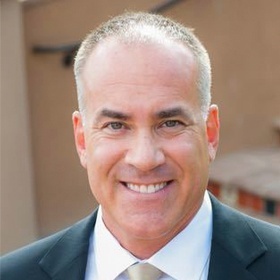
Ep 330EP330: What Is Going On Over at Health Systems? With John Marchica, CEO at Darwin Research Group
In this health care podcast, I'm interviewing John Marchica, who is the CEO at Darwin Research Group. Starting last year in the middle of the worst of the COVID pandemic, Darwin Research Group conducted a study about what was going on at health systems or integrated delivery networks (IDNs), and they've updated it every quarter since then. The goal was to try to stay on top of the effects of COVID-19 on care management and the business of care delivery. I loved having this opportunity to quiz John about what health systems are saying about how they are doing and what they are doing, both strategically and reactively, coming out of the pandemic and in response to the pandemic. Now this is a half-hour conversation about an extensive research report, so we're kind of aggregating all of the health systems in one big bucket. Said another way, we're obviously not going to play the deep cuts here. No worries—the insights that John lays out are fascinating and give an insider's look into what's going on at these really powerful institutions. By the way, when I say powerful institutions, I just was looking at some stats the other day. Something like 50% of all prescriptions these days run through IDNs (that was in 2020). And also in 2020, aggregate IDN market size was $1 trillion. And by 2027, their anticipated combined revenues may exceed $2 trillion. That's double. (I know, that was some quick math by me. You're welcome.) We'll see, though, what the recent Executive Order yields—the one to look into the market power that some of these consolidated IDNs wield. Regardless of who you are, it is tough to deny the mountain of evidence showing that IDN health system consolidation considerably jacks up prices that patients, employers, and taxpayers pay in any geography where consolidated IDNs, otherwise known as monopolies, have destroyed all competition. Probably the most striking takeaway I had from this conversation was how much there is to read between the lines. At the end of the day, IDNs are, and are run, like businesses; and regardless of whether they have a nonprofit on the door or not, that is still true. Before I get into this, let me just clearly say that my heart goes out to the frontline workers—doctors, nurses, everybody else—and all they have done and continue to do for us, and I mean that with three underlines. While I really admire and support some of the rural and urban truly safety net hospitals who are trying to cobble together positive net revenue against all odds, I am far less sympathetic to some of the huge institutions who will engineer an "it's good for patients, honestly" cover story for any and all endeavors which all seem to have one thing in common: their profitability. Like, nobody mentioned 340B revenue opportunities or how much money there is in specialty pharmacy when explaining the rationale for standing up specialty pharmacies within some health systems' walls. Maybe it goes without saying. Here's my conversation with John Marchica, CEO of Darwin Research Group and host of the Health Care Rounds podcast, by the way. You should check that out. You can learn more at darwinresearch.com or by emailing John at [email protected]. You can also listen to the podcast Health Care Rounds wherever you listen to podcasts. John Marchica is a veteran health care strategist and CEO of Darwin Research Group, a health care market intelligence firm specializing in health care delivery systems. He's a two-time health care entrepreneur, and his first company, FaxWatch, was listed twice on the Inc. 500 list of fastest-growing American companies. John is the author of The Accountable Organization and has advised senior management on strategy and organizational change for more than a decade. John did his undergraduate work in economics at Knox College, has an MBA and MA in public policy from the University of Chicago, and completed his PhD coursework at The Dartmouth Institute. He is a faculty associate in the WP Carey School of Business and the College of Health Solutions at Arizona State University and is an active member of the American College of Healthcare Executives. 03:50 What were John's top three health system findings during COVID? 05:24 What is priority for integrated delivery network health systems right now? 08:57 Why do health systems have a renewed focus in primary care? 10:07 How did infusion centers manage throughout the pandemic? 13:58 "It's not just in cancer, people not getting screened and being diagnosed; it's in other areas as well." 14:17 Which of these telemedicine changes are permanent? 19:39 "A visit is a visit … so why would you reimburse at a lower rate?" 19:57 "Telemedicine … is, by its nature, more efficient … and they should be able to figure out how to make money." 27:17 What are health system plans that own their specialty pharmacy groups doing right now? 29:57 What does Darwin Research Group focus on? You can learn more at darwinresearch.com or by emailing John at jm@da

Ep 329EP329: Virtual-First Health Care Solutions—Their Promise and a Few Outstanding Questions, With Joe Connolly From Visana Health
In a recent article in STAT news, TJ Parker, the VP of pharmacy at Amazon and the founder of PillPack, explained that Amazon's plan to stand out in the pharmacy space is simple: "Better selection, better convenience, and better prices." He added, "It really is the Amazon playbook." Better selection, better convenience, better price. The playbook of arguably one of the most successful companies ever, Amazon has decimated and bankrupted anybody standing in its way toward total market dominance. This same better selection, better convenience, better price trio—maybe with "better selection" inferred to mean "getting the right care to the right patient at the right time"—is the vision of many of the virtual-first health care providers starting to pop up. And when I say "pop up," I mean that in Q1 of this year, according to data from Rock Health, $6.7 billion was invested in digital health companies. In this health care podcast, we're talking about the proliferation of these "virtual-first" health care solutions. Before we begin, though, let me just clarify that in our conversation, virtual first doesn't mean virtual only. Most of the time, actually, virtual first means that the connective tissue of the operation is virtual/digitized. In other words, we're not just talking about some random mobile app here. There are likely human providers involved, and the goal is to offer patients not only a sticky engaging entry point and journey but then also a continuous longitudinal care experience. The patient journey should be clear, and the virtual-first solution is making sure that the patient isn't getting lost somewhere in their journey from diagnosis to better outcomes. Here's my main point: The big contrast between these newer virtual-first solutions and traditional health care enterprises is that humans involved in these virtual-first solutions are connected to each other and to their patients with technology designed for that purpose—as opposed to software and systems designed to maximize billing, which, sadly, many software tools and systems used in legacy health care were. The promise of these virtual-first solutions is to fill care gaps for patients who are currently having issues. It sometimes takes 10 years for people to get properly diagnosed. Care for chronic conditions is also abysmal in this country. Now, this all being said, much of the promise of these virtual-first, also called point solutions when someone is not a fan, has yet to be realized. Tune in to my interview with Al Lewis next week for more on that front. One area of concern is that if you have a point solution for MSK (musculoskeletal) care and a point solution for diabetes and a point solution for mental health, you wind up with silos. PCPs have complained that they don't know what's going on with some of these solutions, and it makes it harder to manage patients. Here's my inadequate response to these two criticisms: Well, how many silos currently exist in the health care system? When a specialist gets ahold of a patient, do the specialists talk to one another much less the PCP if we're talking about an average here? Sometimes patients have multiple PCPs even, who, I'm not exactly sure if they hold regular discussions. So, if the status quo is the benchmark to beat, then at least with some of these virtual-first silos, you have the patient getting longitudinal care within that silo. That's not the case with many specialists who, at best, manage one episodic or a series of episodic visits. On the other hand, consider that $6.7 billion of investment. Some PE company there is looking for 4x on their investment, so $6.7 billion of PE investment means that they expect to get $28 billion out of health care spend, meaning $28 billion paid for by patients, employers, or taxpayers. On the other other hand, $28 billion is a drop in the bucket compared to the almost $3 trillion that this country spends annually on health care. I talk about all this and more with Joe Connolly in this health care podcast. Joe was originally in medical devices and has created his share of digital health solutions. Currently, Joe serves as CEO and founder of Visana, a virtual-first solution for women's health. You can learn more at visanahealth.com or by emailing Joe directly at [email protected]. Joe Connolly is the founder and CEO of Visana Health, a virtual-first women's specialty care clinic focused on high-cost chronic gynecologic conditions like endometriosis. Visana works with payers and self-funded employers to improve access to best-practice women's health care. Joe also writes a popular blog consisting of long-form, in-depth analyses on the burgeoning virtual-first care industry. Prior to Visana, Joe led digital health and strategy efforts at Boston Scientific, a large medical device company. 05:01 What does it mean to be virtual first? 05:50 "It's meeting people where they are and where they want care to be delivered. It does not mean virtual only." 07:01 Ho

Ep 328EP328: An Interview Specifically for Health Care Executives, With Marshall Allen, Author of the Best Seller Never Pay the First Bill: And Other Ways to Fight the Health Care System and Win
"Scientists Announce Successful Experiment to Bankrupt Mouse That Can't Afford Cancer Drug." That's a recent headline from The Onion, which is, by the way, a funny satire newspaper, if you haven't heard of it. You could swap out "Cancer Drug" in that headline with "a Trip to the ER"—or pretty much any aspect of health care in this country. No matter what health care service you stick in there as the potential cause for a mouse's bankruptcy, it's a pretty LOL headline, right? But the reason why it became a headline is because obviously it's based on a truth that resonates with your regular citizens in this country. Think about that. A critical mass of people around here believe that health care will bankrupt you. This is one of those sociological signals that has implications to health care leaders. Here's another signal with implications. In this health care podcast, I'm interviewing the incomparable Marshall Allen. That's not the signal. His book, Never Pay the First Bill: And Other Ways to Fight the Health Care System and Win, a book with that title being on the New York Times best seller list, is the signal. Marshall's book is an instruction manual for patients on how to fight back against unfair and/or egregiously inaccurate bills. This interview with Marshall Allen is different from others that you may be hearing. Marshall wrote a book to motivate patients, a critical mass of patients, to get empowered relative to their health care bills. Because listeners of this show are health care executives, I wanted this interview to be relevant to you. What does this book mean for you? Doug Aldeen told me one time, unless something has a direct impact on the CEO or leadership team at a health system or insurance company, they're just bored. Let me sum up this interview in one sentence: This is not boring. If you want to skip to the exact examples of "not boring," you can skip ahead to about the 30-minute mark. We go through the ways that health systems can and probably will be hurt by the financial toxicity that they create. Here's the three-ish ways that Marshall and I talk about: Doctors who no longer trust their employers (ie, the health systems they work for) leave and then you have to recruit new doctors—#problematicandexpensiveonanumberoflevels, but I don't need to tell you that. Reputational damage. When the slogan on the door becomes a joke, that's a problem. Employers and taxpayers reading best-selling books like this one and Marty Makary's (which also is or was just recently on the best seller list) and learning how to not be basically passive suckers anymore. You can find Marshall's book, Never Pay the First Bill: And Other Ways to Fight the Health Care System and Win, anywhere that books are sold. Marshall Allen investigates why we pay so much for health care in the United States and get so little in return. He is the author of the new book, Never Pay the First Bill: And Other Ways to Fight the Health Care System and Win. He is also the founder of Allen Health Academy, which produces a curriculum of short on-demand videos to equip and empower employees to navigate the health care system. Marshall has investigated the health care industry for 15 years, including a decade at ProPublica. He has also spent a decade as an educator at the Craig Newmark Graduate School of Journalism at The City University of New York. His work has been honored with many journalism awards, including some of the top business reporting honors, the Harvard Kennedy School's Goldsmith Prize for Investigative Reporting, and twice as a finalist for the Pulitzer Prize. Before he was in journalism, Marshall spent 5 years in full-time ministry, including 3 years in Nairobi, Kenya. He has a master's degree in theology. 03:35 What's the point of view that Marshall is coming from with his investigative reporting? 04:06 "How does this affect the people who are paying for it and the people who are undergoing the care?" 04:58 "There's a lot of good people working within this very messed up system." 05:12 Why are patients considered outsiders in the health care system? 05:55 "What's happened in health care is that the stakeholders treat each other more as the customer." 07:54 What is upcoding? 11:27 "These are schemes that have been created within the industry to increase revenue." 11:56 "This system is not set up for the benefit of the patient." 12:22 "On the financial side, the industry is actually oppressing the American people." 12:39 Can a critical mass of patients force health systems to become more accountable? 16:02 "We have been expected to pay whatever aggregate sum is thrown at us." 17:09 Why have patients been so passive toward this crooked health care system so far? 18:04 "They're violating the trust of the American people when they don't treat us fairly." 19:28 "It's totally legal to do that, [but] is it ethical?" 20:11 What's the difference between making a profit and profiteering? 21:43 "It's hard to argue against your own pa
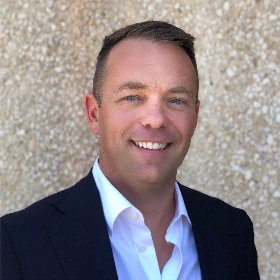
Ep 263ENCORE! EP263: The Start-up Who Won Medicare's AI Contest, Beating Out IBM, Deloitte, and Mayo—A Conversation With Andrew Eye
If I had a nickel for every guest on this show who went on to achieve wild success … TJ Parker from PillPack three years before they were bought by Amazon. Anyway, let me introduce this show with a clip from the recent podcast (EP325) with Dr. Mai Pham. We were talking about the rampant and very open secret of excessive upcoding in Medicare Advantage (MA) that is costing American taxpayers a fortune and is very not correlated with actual spend. Here we go with Dr. Mai Pham: Stacey: Do you have any thoughts relative to how you ensure that these MA plans that are becoming vast are still accountable to not game the system? How do you plug loopholes in a way that doesn't invite additional and more nefarious gaming? Dr. Pham: My fantasy has always been that CMS can develop, or somebody can develop, a black box machine learning–driven, risk-adjustment algorithm that no one can see into—not even the payer. It would very much level the playing field, assuming that it was developed correctly, appropriately, and you used unbiased data; but that's the kind of system and extreme solution that I think starts to sound almost necessary given the state of things and the rate of acceleration in upcoding. So, people may not have noticed that CMS had put out a request for — I think it was a challenge grant, maybe? And they recently announced a couple of winners. They were asking for artificial intelligence–driven approaches to predicting health outcomes, which I believe is just the first shadow approach, the first step that you take in thinking about artificial intelligence–driven risk adjustment. I also want the audience to understand, it's not like we're talking about replacing a really superlative gold standard, right? The majority of the most commonly used risk-adjustment approaches today produce a correlation with actual spend of only like 0.2. This is the best we can do? This is how we're deciding how we're going to spend a trillion dollars each year? Surely, we can do better. And, by the way, the winner of that CMS AI contest was ClosedLoop.ai; and Andrew Eye from ClosedLoop.ai was on the show. Cue Encore Episode here! In the original version of this show, there was a whole prelude about whether AI is or is not anything beyond an overused marketing pitch; but I think, in the time-space continuum, we're beyond that conversation now. Don't get me wrong, everybody still has AI in their cloud analytics platforms. And some of them are still, as they say, programmed in PowerPoint (that was a joke); but real deals are emerging from the fray. As mentioned, in this health care podcast I talk with Andrew Eye about AI. (He was born for this job.) Andrew is CEO over at ClosedLoop.ai. ClosedLoop.ai beat out over 300 rivals with their system that forecasts adverse health events and then plops warnings even in the EHR with action steps for clinicians to avoid the calamity in the making. You can imagine many things that CMS might be contemplating using this tool for, including as a control for false upcoding and all of the financial toxicity that goes along with that. By the way, keep in mind all the top-performing Medicare Advantage plans are using today, right now, some form of advanced analytics and artificial intelligence to risk stratify their populations and predict which members will, without intervention, become high cost in the near term. Others are using AI right now to do the kind of predictive analytics that you need to excel at population health. I get to ask Andrew some of the hard questions that have been bothering me about all the AI hype, and he set me straight a couple of times. Love it when that happens. You can learn more at closedloop.ai or by following Andrew (@andreweye) on Twitter. Andrew Eye's executive and entrepreneurial experience spans over 20 years in business to consumer and business to business for start-ups and Fortune 500 companies. Andrew founded and sold three technology companies and today is the CEO and founder of ClosedLoop.ai. In 2012, Andrew cofounded the mobile software company Boxer. Boxer developed mobile productivity software for individuals and large corporations. Boxer's flagship email product was downloaded by millions of users and received significant industry praise for its exceptional user interface, including a 2015 Webby Nomination as one of the top 5 productivity applications in the world. Boxer was purchased by VMWare (one of the top 10 largest software companies in the world) in 2015. Prior to Boxer, Andrew cofounded the cybersecurity firm Ciphent in 2007. Ciphent grew to nearly 100 employees with 1000 customers by 2010 before being acquired by Accuvant (now Optiv). With a three-year growth rate of 8900%, Ciphent was recognized by Inc. magazine as the 16th fastest-growing private company in the United States. During his tenure as SVP of services at Accuvant, Andrew oversaw a $50-million, 200-person organization and was responsible for doubling revenues in 18 months. Andrew also s

Ep 327EP327: Pharma Hooking Up With Start-ups, With Naomi Fried, PhD, About PharmStars™
You can subscribe to this show two ways. One way is through the iTunes podcast app or your podcast app of choice. That's a cool way to subscribe because then the show just kind of turns up in your podcast app each week and you can decide to listen to it on the fly. The other way is to subscribe on our Web site. This is more like a newsletter subscription. If you subscribe this way, you get an email each week that transcribes the show introduction, plus includes timed show notes. Many people subscribe both ways, just saying, because each way has different benefits that are pretty complementary. If you subscribe to the newsletter, you only get the newsletter. We are frankly way too busy doing other things to send out other emails. Also, you can easily unsubscribe at any time. I saw a post the other day in Twitter. Someone wrote, "So much can be done to improve community and share lessons to improve outcomes. The trick is making money without selling patient data to Pharma." Here's my question for you, and I'm legit asking: I have seen many use cases that benefit patients and that are incredibly worthwhile. But no one is willing to pay for them. That's the first point this Tweet I just read infers. And I've seen it time and time again: gaps in care no one is willing to fill. If you're speaking about very specific patient populations in very specific therapeutic categories, like some rare diseases, you're not going to find basically anyone besides Pharma who has the bandwidth, the money, the expertise, and the reach to fill that gap. If you contemplate this further, and I have, Pharma might be the only entity who, if they do it, the price of health care doesn't immediately go up. Hear me out here because I'm wading into controversial waters, so let me make my point before you jump me in a dark alley. If Pharma does something and it comes out of their existing marketing budget or their R&D budget or some other existing budget, them spending money on filling a patient gap versus them spending money on some TV ad is not going to impact the price of the drug either way. If the price of the drug is already too high, the price of the drug is still too high. That's going to be true regardless. Why not let Pharma pay the freight for making sure their own patient populations get the best care possible? This show is posted on LinkedIn and Twitter. Let me know what your thoughts are. I'm very interested. In this health care podcast, I am really pleased to be speaking with Naomi Fried, PhD. Dr. Fried has had and continues to have a storied career. Each of her roles has always circled around innovation. She's been the chief innovation officer at Boston Children's, where she built their first digital health accelerator. She was recruited by Biogen after that to be their VP of innovation and external partnerships. She founded a consulting practice focused on innovation, and her latest endeavor, which she talks about later on in this show, is PharmStars, which is, in my own words, a sort of 10-week crash course/accelerator for digital health start-ups looking to work with Pharma—and for Pharma looking to work with digital health start-ups. You can learn more about PharmStars at pharmstars.com. Naomi Fried, PhD, is the founder and CEO of PharmStars, the first and only pharma-focused accelerator for digital health start-ups, dedicated to driving digital health adoption to improve patient outcomes. PharmStars understands and addresses the challenges that Pharma and start-ups face when seeking to collaborate. Its PharmaU™ program supports its digital health start-ups and pharma members seeking to "bridge the gap," leading to greater success and faster adoption of "beyond the molecule" solutions for patients. PharmStars provides education and mentoring to digital health start-ups seeking engagement with pharma and biotech firms. Its pharma members are committed to working with its graduating start-ups. Applications for participation in the first cohort are due July 21, 2021. Dr. Fried is also the co-founder and managing partner of Ambit Health Ventures, an early-stage venture capital fund focused on digital health investments. Previously, she was the CEO of the consulting firm Health Innovation Strategies, VP of innovation and external partnerships at Biogen, the first chief innovation officer at Boston Children's Hospital, and the first VP of innovation and advanced technology at Kaiser Permanente. She advises and serves on the boards of digital health start-ups. 03:42 What does the pharma–start-up gap look like? 05:49 Why is it hard to navigate Big Pharma when trying to partner with start-ups? 09:53 "A lot of what contributes to that pharma–start-up gap is a lack of understanding." 10:05 What's the best way to navigate the pharma–start-up partnership? 10:55 "There's not a clear path as to who should be engaged from the pharma side, because the value proposition wasn't well articulated." 12:27 "Even if … the product is better, if
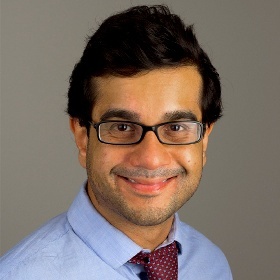
Ep 326EP326: The Unfortunate News About HRRP, With Insights on How to Fix It, With Rishi Wadhera, MD, MPP
Here's the context, friends: As you may have noticed over the past few episodes, we have been digging into value-based care here at Relentless Health Value corporate work-from-home headquarters. Many lessons have been learned, and it's important that we sit back and think hard every now and then about how we are going to use these learnings to improve. While this show tackles the Hospital Readmissions Reduction Program (HRRP)—and wow, I was glued to my seat during this interview—the show is really about more than that, which I'll get into in 30 seconds. But let's start here: HRRP was originally part of the Affordable Care Act in 2010. In 2012, HRRP began imposing penalties on hospitals with higher-than-expected 30-day readmission rates for three conditions: heart failure, myocardial infarction, and pneumonia. Spoiler alert: More recently, CABG, THA/TKA, and COPD were added to the list. So basically, if a patient is in the hospital for any of these six things and then is readmitted to the hospital for any reason within 30 days, penalties can happen. Today's guest is Rishi Wadhera, MD, MPP. Dr. Wadhera authored a retrospective analysis in the BMJ about the HRRP, which we will talk about in this health care podcast. His findings are fascinating and relevant on a number of levels. Dr. Wadhera is a cardiologist at Beth Israel Deaconess Medical Center. He also has a master's in public policy at the Harvard Kennedy School of Government and also a master's in public health from the University of Cambridge. Dr. Wadhera works on policy at the Richard A. and Susan F. Smith Center for Outcomes Research in Cardiology. But here's the larger epiphany that pertains to all value-based care and all quality metrics which Dr. Wadhera brings up in this health care podcast and which my nerd heart could not love more: Goodhart's Law. This law is the root of so very many problems. Goodhart's Law is this (which I learned from Dr. Wadhera): "When a measure becomes a target, it ceases to be a good measure." In other words, when we set a goal, people will try to take a shortcut to the goal, regardless of the consequences. And sometimes the consequences, paradoxically, are to do worse at the goal. For example, teaching to the test may not actually lead to students who deeply understand a subject. Here's another example, and Rebecca Etz, PhD, talks about this in EP295: If you want PCPs to do an amazing job managing diabetes, for example, the best measures are ones that quantify the doctor's relationship with the patient and the amount of trust between them. The second you start using their panel's average A1C as the performance metric, A1Cs at best don't improve. Why? Bean counters and admins and maybe even goal-oriented clinicians themselves will go right to the end goal, inadvertently skipping a whole bunch of (it turns out) rate-critical steps. It doesn't go well. It's like salespeople who try to close before they build a relationship. Time to goal counterintuitively is slower, and performance is poorer. Anyone building value-based care or quality programs might really want to include Goodhart's Law in their thinking. And anyone trying to achieve value-based care success, improve quality, form collaborations, or make sales might want to remember that old proverb, "Sometimes the shortest way home is the long way around." You can learn more at Dr. Rishi's Harvard Catalyst profile and the Beth Israel Deaconess Medical Center Web site. Rishi K. Wadhera, MD, MPP, MPhil, is an assistant professor of medicine at Harvard Medical School, a cardiologist at Beth Israel Deaconess Medical Center (BIDMC), and the associate program director of the cardiovascular medicine fellowship at BIDMC. He is also health policy and equity researcher at the Richard A. and Susan F. Smith Center for Outcomes Research in Cardiology. Dr. Wadhera received his MD from the Mayo Clinic School of Medicine as well as an MPhil in public health as a Gates Cambridge Scholar from the University of Cambridge. He completed his internal medicine residency and cardiovascular medicine fellowship at Brigham and Women's Hospital in Boston. During this time, he also received a master's in public policy (MPP) at the Harvard Kennedy School of Government, with a focus on health policy. Dr. Wadhera's research spans questions related to health care access, quality, and disparities, as well as understanding how local, state, and national policy initiatives impact care delivery, health equity, and outcomes. Dr. Wadhera has published more than 80 articles to date, and he receives research support from the National Heart, Lung, and Blood Institute (NHLBI) and the National Institutes of Health (NIH). 03:10 What was the Hospital Readmissions Reduction Program intended to do? 05:05 Why did the Centers for Medicare & Medicaid (CMS) think some readmissions were preventable? 05:46 "The spirit of the Hospital Readmissions Reduction Program was to incentivize hospitals to improve … discharge plannin

Ep 325EP325: The Show in Which Dr. Mai Pham Disagrees With Three of My Value-Based Care Premises
First of all, a shout-out to all of you listeners who have shared this show with colleagues and LISTSERVs—really appreciate it. It's because of you and your efforts to share that Relentless Health Value maintains its spot as one of the top podcasts reaching health care executives, executives who take the insights shared by our guests to drive actual change and transformation across our industry. So, thank you. Leaving a rating and/or a review on iTunes is also the bomb and really helps our RHV team stay motivated and keep it going. Weekly shows take a ton of work! Feedback is super appreciated. On to the topic this week: Who has read that white paper put out in February by the University of Pennsylvania, specifically, Penn's Leonard Davis Institute for Health Economics? It's called "The Future of Value-Based Payment: A Road Map to 2030." I mentioned this paper last week, too. So, if you still haven't read it, go back after this show and take a look. There's links in show notes. As with every interesting white paper, while you're reading it, you start thinking of more questions. That's why I was thrilled to get a chance speak with Mai Pham, MD, MPH. She is one of the paper's authors, a physician, and a trained health services researcher. Dr. Pham is a former chief innovation officer at the Centers for Medicare & Medicaid Services (CMS). She also spent time at Anthem doing value-based care (VBC) work for the enterprise on a national level. Further, she's the parent of an autistic child and founded the Institute for Exceptional Care to transform health care for people with IDD (meaning intellectual developmental disabilities), which I'll get to in a second. Here's some highlights from my discussion with Dr. Pham: Markets get distorted when insane quantities of dollars rush in. I'm thinking about Medicare Advantage and all of its attendant suppliers right now. Think about all of the amazing brainpower captivated by figuring out how to upcode at scale, which, by the way, only a minority of the time corresponds to actual spend. Dr. Pham has some words on this. Attaining value-based care results and adoption has a big problem. As a policy maker, you can't just keep trying to sweeten the value-based care pot. You don't want to plow even more money into the system. So, at a certain point, we all have to get real and realize that for the cost-driving entities in this country—those IDNs (independent delivery networks) with huge market clout—to get on the VBC bandwagon, value-based care probably has to be a mandate; and it also will mean making FFS (fee for service) much less attractive. Thirdly—and here's something I never considered—commercial prices drive up Medicare prices. You have hospital systems pointing to growing disparities between commercial rates when they negotiate for higher Medicare rates, when the hospital systems themselves created those deltas with their private-sector negotiations. Lastly, we chat national versus local health care reform and about indie doctors and the "why" behind consolidation. It aligns quite a bit, our conversation in this health care podcast, with the insights from the show last week with Nicole Bradberry and Kelly Conroy (EP324). The last 6 minutes of this podcast is Dr. Pham's insight about the scope and impact of not caring adequately for people with neurodevelopmental disabilities. We're talking about somewhere between 10 and 16 million people, as Dr. Pham notes for perspective. That's the number of new cancer cases each year. Collectively, we spend as a country somewhere between 1% and 2% of the GDP all in on this patient population. You can learn more at ie-care.org. Hoangmai (Mai) H. Pham, MD, MPH, is a general internist and national health policy leader. She was vice president, provider alignment solutions, at Anthem, Inc., responsible for value-based care initiatives at the country's second-largest health insurance company. Prior to Anthem, Dr. Pham served as chief innovation officer at the Centers for Medicare & Medicaid Services, where she was a founding official, and the architect of Medicare's foundational programs on accountable care organizations and primary care. She was co-director of research at the Center for Studying Health System Change and has published extensively on provider payment policy and its intersection with health disparities, quality performance, provider behavior, and market trends. Dr. Pham serves on numerous advisory bodies, including the National Advisory Council for the Agency on Healthcare Research and Quality, the Maryland Primary Care Program, and the National Business Group on Health, and was a member of the Board Executive Committee at the Health Care Transformation Task Force. Dr. Pham earned her bachelor's degree from Harvard University, her MD from Temple University, and her MPH from Johns Hopkins University, where she was also a Robert Wood Johnson Clinical Scholar. 04:22 What are the nuances within the promises of value-based care
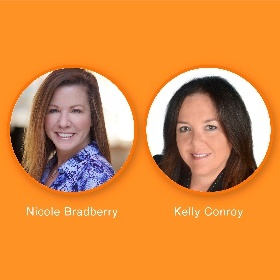
Ep 324EP324: ACOs (Accountable Care Organizations): Do They, in Fact, Improve the Quality of Care and Reduce Costs? With Nicole Bradberry and Kelly Conroy
Recently, the University of Pennsylvania Leonard Davis Institute of Health Economics, or LDI, put out a white paper called "The Future of Value-Based Payment: A Road Map to 2030." Spoiler alert: Next week's show is with Dr. Mai Pham, an author of that paper; and it'll be a great show—so, tune back in next week. But, in the meantime, that paper made some really interesting points about ACOs (accountable care organizations). For example, they say that the average ACO shows a net savings of I wanted to ask somebody who had attained great success with the ACO model what they thought about this average, rather, unimpressive average. And you know what? I am so pleased to say that today we have not one but two such superstars. Today's show features Nicole Bradberry and Kelly Conroy. Nicole Bradberry spent 16 years on the payer side. She was instrumental in a lot of the quality and affordability programs, which led to her founding the Florida Association of ACOs, which she leads in her role as CEO. Also on the program today, we have Kelly Conroy. Kelly helped start the very successful Palm Beach ACO and was the executive director there for a number of years. She's also a co-founder with Nicole and founding board member at the Florida Association of ACOs, as well as a director of Pinnacle Healthcare Consulting. So, in this conversation, we jump right into the ACO deep end, so let me just review a few bullet points about ACOs to get us all level set here. The flavor of ACO we'll talk about in this health care podcast is the MSSP ACOs, the Medicare Shared Savings ACOs. The deal is this: We are not talking right now about Medicare Advantage patients. We are talking about Medicare FFS (fee-for-service) patients. Medicare fee-for-service patients get attributed to one of the many MSSP ACOs by where the patient gets their plurality of services over the past three years. So, rough translation of that: If you're the doctor this FFS patient saw the most in the past three years, you get dibs on that patient. They're attributed to the MSSP ACO that you are in. A financial benchmark is then created for each of these attributed patients (ie, how much has the patient cost over the past three years). Then, if, while the patient is part of your ACO, if that patient costs less than that benchmark, the ACO group gets a percentage of those savings (ie, that's where the term shared savings comes in). This percentage the ACO gets can vary depending on the ACO model and how much upside/downside risk that ACO group is taking. Like in many things, the more risk, the bigger the upside. Here's an important note: In an ACO model, docs still get paid FFS as per usual. It's not like every single patient a doctor might see is attributed to them in this ACO model. So, any given doctor could have some Medicare patients that are Medicare Advantage patients, and maybe there's some kind of alternative contract there. They might have regular FFS Medicare patients and those who maybe are attributed to somebody else's ACO. And then they have the patients that are attributed to them where they are now responsible for the upstream and downstream costs as I just mentioned and can get a piece of that savings action—or cut a check back to CMS should things not go so well in the upstream/downstream costs department. There's another implication here if you think about it: Patients don't necessarily know what's going on during this whole thing. It's not like Medicare Advantage, where the patient has to actively sign up somewhere. So, patient engagement at these ACOs is a big deal. If the patient suddenly starts going somewhere else, especially a somewhere else that costs the big bucks, the ACO where that patient is attributed is now on the hook. Likely, we'll put out an "Ask an Expert" with today's guests Nicole Bradberry and Kelly Conroy where we dig into some of this background a little bit deeper. So, stay tuned for that, but we should be ready to dive into today's show with that. You can learn more at flaacos.com, valueh.com, and Pinnacle Healthcare Consulting. You can also connect with Nicole and Kelly on LinkedIn. Nicole Bradberry is the founder and chief of growth and innovation officer for MIND 24-7. MIND 24-7 runs mental health crisis centers with a focus on immediate access, quality care, and the understanding that mental health and substance abuse drive significant health cost. She is also the founder of ValueH Network, which aggregates high-performing value-based care network providers in order to enable the best performance in new innovate contracts. In addition, she is currently the chief executive officer and chairman of the board of the Florida Association of ACOs (FLAACOs). FLAACOs is the premier professional organization for accountable care organizations (ACOs) throughout Florida which provides education and collaboration in the fee for value health care space. Nicole spent 16 years leading operations and information technology programs for U

Encore! EP244: A Playbook for Jumbo Employers—or Providers, Consultants, Carriers, or Pharma Who Get Paid by Jumbo Employers, With Lee Lewis, Chief Strategy Officer at the Health Transformation Alliance
This episode seemed particularly relevant right now because it gives insight into how large self-insured employers are prioritizing their efforts to disrupt health care revenue streams that do not provide adequate health outcomes for dollars spent. This episode's conversation is with Lee Lewis. This is an encore episode. The original was recorded when Lee was the newly minted chief strategy officer at the Health Transformation Alliance, otherwise known as HTA. The HTA is a group of 50 major corporations that have come together in an alliance to do one thing: fix our broken health care system. Anybody who knows Lee knows he knows a lot about how to improve health and health care benefits for large employers. The most amazing thing I always find about improving health and health care benefits is that it's like having your cake and eating it, too. On one hand, both employer and employee save money. On the other hand, employees get better care and spend less time away from work struggling to navigate the health care jungle all by themselves. Lee's playbook consists of three chapters which we get into here. The first chapter covers the "how" of health benefits, including what Lee calls the "administrative superstructure." The second chapter in Lee's playbook is the "what," which usually comprises drug spend and then, on the medical side, how care is delivered for specific clinical conditions like musculoskeletal, cardiometabolic, etc. There are a few conditions that tend to rack up the most costs categorically. The last chapter in Lee's playbook is the "who," meaning where employees are steered for care, especially in those high-cost areas. You can learn more by visiting htahealth.com and by connecting with Lee on LinkedIn. Lee Lewis serves as chief strategy officer and GM medical solutions for the Health Transformation Alliance. He leads efforts across over 50 large and jumbo employers and six million employees to save lives and save millions of dollars through improved health delivery, outcomes, and experience. Key initiatives in this role include new models of health benefits administration, curated provider steerage, and improved clinical delivery and outcomes.

Ep 323EP323: A Short Take on Digital Tools Purporting to Maximize Throughput, With Arshad Rahim, MD, MBA, FACP, of Mount Sinai Health System
One way to spot a flash point is to notice when people are using different words to describe the same concept. Throughput is one example of this. On one side of the table, you have those who grasp that if a provider organization is concerned about patient outcomes, with few exceptions, building relationships with said patients is essential. It's not entirely clear to anyone anywhere how you manage to build relationships and trust without spending a certain amount of time with patients. These "we need time with patients" people will bring up the Quadruple Aim issues that arise from rigid 7-minute appointments or even 50-minute appointments really. On the other side of the table, you have those who have built practice fiscal models on the backbone of however-many-minute appointments. They use different terminology for this whole concept, however. They call it throughput. How many patients can a physician manage to squeeze into a day? Some of these folks will tell you that throughput success is "more is more." In other words, throughput is one of those things that you can never have too much of. Let me back up for a sec and mention the mission of this show. It is to connect health care leaders together by helping everyone understand each other well enough to communicate effectively, which is rate critical numero uno for any collaboration. You can't collaborate if parties don't really grasp what anyone else is actually saying when they communicate their WIIFMs (their "what's in it for me?") or their organizational imperatives. If we consider that the health care industry can only transform when multiple stakeholders collaborate, these little "language discrepancies" actually can have macro implications. In this respect, this throughput example—not in all cases but at a minimum—it's an exemplar illustration and certainly something to contemplate. Consider people arguing against 7-minute appointments without mentioning the word throughput. They're probably not going to even reach the headspace of those who just spent the past two decades in meetings to increase throughput. It's like two ships passing in the night. You could be sitting there right now pooh-poohing what I'm saying, but I've sat in enough meetings where people talk around each other using different terminology, think they've agreed on some collaboration or compromise or solution, except nothing happens because everyone got to walk out without addressing the elephant in the room. It sounds something like this: DOCTOR OR NURSE: We need you to enable patients to have quality time with their doctors and the rest of the care team. SOMEBODY ELSE: We need to get rid of inefficiencies, which means driving maximum throughput. ANOTHER PERSON: OK, let's compromise. Doctors should have quality time while maximizing throughput. Don't laugh. I've heard "action items" like this often enough, and so have you if you think about it. That's why I originally started this podcast—because I can also guarantee you if this is the action item, no action will actually take place. The only way this conversation is going to net any change is if people around that table head-on confront that quality time with patients means less throughput. And how much less are we going to agree on and/or how are we going to creatively change the practice model so throughput is an archaic term (ie, asynchronous stuff, etc)? I say all this to say that this throughput business also leaks into the technology space in ways that we should probably think about. Increasing throughput, after all, is one of the key ways to increase FFS (fee-for-service) revenue. FFS is all about the need for speed. The faster you can smack a billing code on a patient visit, the more patient visits you can pack into a day, the more billing revenue you can rack up. To some extent, throughput is code word for an addiction to FFS. You can always tell a tech vendor who is used to selling in an FFS environment because the second slide of their pitch deck is always one of two things: either how much faster the tool will get patients in and out of a doctor's line of sight or what the billing code is for the tool (but that's a whole different topic). I just described the second slide in an FFS-centric technology vendor deck. The first slide in those "use our AI thingamajig to revolutionize your throughput" decks is always some mission statement about improving patient care. And this is where not everybody using the same language creates immense wiggle room for profit over patients under cover of mismatched terminology. To add one point of context, when I say throughput here or increasing throughput, nobody is talking about making the front desk more efficient, minimizing faxing things around, or streamlining prior auths or duplications in the workflow (ie, fixing things that are in desperate need of a fix). What we're talking about in this health care podcast are tools like the one I saw the other day. This biz dev person of th
Ep 322EP322: Cherry Picking, Lemon Dropping, and Other Learnings for Value-Based Care Models, With Monica Lypson, MD, MHPE
Imagine if innovators in other businesses operated in the way that some health care status quo doomsayers finger wag. So much for failing fast, iterating, and folding learnings into something that might work better. I don't like to see screeds that seem to advocate an approach of "try it a few times at a minimum half-heartedly, fail, and then just quit, because obviously anything worth doing should be that easy." Pieces fell into place with me as I was speaking to Monica Lypson, MD, MHPE. Dr. Lypson is an expert in a bunch of things, but one of them is thinking about next-generation primary care and health equity and what that might look like in value-based care (VBC) metrics. I asked her if because of some of the negative potential perverse incentives to these patient populations whether we should throw out the VBC baby with the bathwater. Her response was succinct and amounted to, "And go back to what? FFS? Because that's worked out so well?" All this being said, there are big issues with value-based care right now that we really need to take a hard look at and think critically about. But that critical thinking, to be considered innovative and productive, really should inform creative thinking: What do we learn and do better next time? Cherry picking and lemon dropping is a very real potential problem with value-based care. To find out what that means, you'll have to listen to the interview. Another issue is who gets to decide what the measures and standards are. Who determined what is high-value and low-value care? And is that determination relevant to all communities and all care settings? Then ferreting out from there the potential loopholes for people to game the system because, despite all the virtue signaling that goes on around here, it is amazing sometimes the raw ingenuity exhibited when it comes to gaming the system. Dr. Lypson brought up some points that I have not heard so succinctly before. One of them is that a national framework is pretty necessary here to enable local initiatives. You can't have a local program, for example, help the homeless get homes when, on a national level, dollars are siloed into firewalled buckets. So, trying to take health care dollars and apply them to housing takes two years and an act of Congress—because it literally takes two years and an act of Congress, or at least someone with more time and authority than a local care team. For more insight into this topic, listen to also the upcoming interview with Mai Pham as well as Nicole Bradberry and Kelly Conroy. Also, the recent interview with Dr. Rich Klasco (EP321), Jeff Hogan (EP309), and Dr. Mark Fendrick (EP308). This is a huge, complicated topic that will take everyone sitting at the table thinking creatively to solve, incrementally, one step forward at a time. Monica Lypson, MD, MHPE, is currently vice dean for education at Columbia University Vagelos College of Physicians and Surgeons. She has practiced in a number of primary care settings, including the Department of Veterans Affairs. MHPE stands for Master of Health Professions Education, by the way. You can connect with Dr. Lypson on LinkedIn. Monica L. Lypson, MD, MHPE, FACP, serves as a professor, vice-chair of medicine, division director of general internal medicine at The George Washington University School of Medical and Health Sciences. She will join Columbia University's Vagelos College of Physicians and Surgeons as vice dean for medical education on June 1, 2021. Her work focuses on innovations and improvements in health professions education and assessment, health equity, workforce diversity, faculty development, medical care delivery, and provider communication skills. Dr. Lypson most recently served as director for medical and dental education for the Veterans Health Administration, where she oversaw undergraduate and graduate medical education across the nation within the Department of Veterans Affairs. 04:08 Is value-based care good for underserved communities? 05:09 "If you create perverse incentives, you actually might make known health care disparities worse … to meet the demands' value." 06:29 "There actually might be systematic and structural ways that the health care system might say … we're not interested in taking care of you." 07:12 "The incentive to have a good outcome is not there; the incentive to have another visit is there." 08:33 "If you don't have any connection in that system, even the provider trying to … provide a good outcome might be disconnected because the system is not in place to … connect the dots." 08:55 "The only indictment I have on the fee-for-service system is that it's gotten us to where we are right now." 09:30 What are the must-haves for a value-based system that creates the patient outcomes we need? 09:58 What is a whole health model? 10:43 EP319 with Grace Terrell, MD. 11:08 EP312 with Douglas Eby, MD, MPH, CPE. 16:25 "We want to move money around with the accountability of the patient outcome. We want to be

Ep 321EP321: How to Point Out Low-Value Care Without Starting a Fistfight, With Rich Klasco, MD
If you listen to this show on the regular, you probably have a pretty good bead on a couple of things I've been really into lately. One of them is high-value care versus low-value care. These are terms that are really easy to throw around. You also can get pretty much everybody to agree with a plan to deliver only high-value care and quit it with the low-value care … in theory. But the wheels fall right off the bus when it comes to actually doing this. IRL (in real life), what constitutes high-value care and what is low-value care exactly and specifically? This answer is the crucible for value-based care of almost any flavor. How are you supposed to do value-based care successfully when it remains an open question, "What is care that is of value?" Here's the good news, though. There is a bounty of unmistakably, inarguably low-value things. We can start there. Now, these low-value things may be situational in some respects, so you'll need to listen to my interview with Dr. Mark Fendrick (EP308) for the scoop on that nuance. But there are definitely some things which are incontrovertibly low value. Here's some more good news. There's a few ways to ferret out low-value things, and one of them is to look at data on practice patterns across a specialty. You can index the data nationally or regionally or even within the same practice. Here's an example: Let's just say, on average, a dermatologist does 1.74 cuts or surgical slices for Mohs surgery, where they often get paid by the cut, by the way. However, you can find some physicians who are outliers—derms who have two standard deviations above that average. The good news is that a lot of the times, all you have to do is show the doctors the data. Show them that they're an outlier and they'll alter their practice patterns. So, one way to figure out what the standard of care should be is by looking at physicians' actual experience and practices. That seems very fair. Marty Makary, Will Bruhn, and others from the team at Hopkins get a lot of credit for their pioneering work in this area. Other ways include assessing pubs and the guidelines that societies put out. I'm also sure that, more and more, it will also involve combing through real-world evidence. In this health care podcast, I speak with Rich Klasco, MD, who is chief medical officer at Motive Medical Intelligence; and we talk about the challenges and opportunities and solutions when it comes to identifying high- versus low-value care. Dr. Klasco has an interesting construct for this. We also talk about how patients, providers, and payers might have different points of view, incentives, and capacities really to distinguish the high from the low. You can learn more at motivemi.com. For more information and the case study, please visit motivepw.com/resources. Rich Klasco, MD, FACEP, has focused throughout his career on rendering evidence-based medicine operational—that is, making the right thing the easy thing to do. He has pursued this goal in academia, in industry, in policy, and in the press. In addition to publishing extensively in both peer-reviewed journals such as JAMA and lay publications such as The New York Times, Dr. Klasco has taught at leading academic medical centers, including Harvard, Stanford, Mayo, and the University of California, San Francisco; served on the executive committee of Brigham and Women's Hospital Center for Patient Safety Research and Practice; testified before the United States Congress on evidence-based practices; and won CMS approval for an officially designated compendium of evidence-based oncologic drug information. Dr. Klasco previously served as chief medical officer and editor-in-chief for the Thomson Reuters group of health care companies, where he had editorial responsibility for companies including Micromedex, the Physicians' Desk Reference (PDR), and the United States Pharmacopoeia (USP) Drug Information. For the past 15 years, Dr. Klasco has served as chief medical officer for Motive Medical Intelligence, where he provides clinical leadership for the development and deployment of solutions that quantitative assess physician performance for payers, providers, and patients, and integrate scientific knowledge into workflow systems where it can be accessed and applied in real-time. Dr. Klasco received his medical degree from Harvard Medical School. He completed his internship and residency in internal medicine at Brigham and Women's Hospital, and he completed his residency in emergency medicine at the Denver Health Residency in Emergency Medicine, where he served as chief resident. 03:31 How do you define high-value care? 04:40 How do we define what isn't appropriate care? 05:26 Why aren't patients good at recognizing high-value care? 07:02 "He was in the 'more is more' school of medicine, which is always wrong." 11:54 Are payers good at identifying high-value care? 13:41 Why are payers so adept at understanding what high-value care really is? 15:53 "It's not just cost

AEE15: A Sidebar Conversation About the Importance and Challenges for Health Systems to Collaborate With Pharma Manufacturers, With David Carmouche, MD, From Ochsner, a Large Health System
When I was talking with Dr. David Carmouche from Ochsner in EP316 about the importance of collaboration amongst anybody trying to actually pull off value-based care, we took a little detour, which I wound up cutting out, into the potential and challenges for health systems to collaborate and do value-based contracts with pharmaceutical manufacturers. It's a really interesting sidebar, though, that I wanted to share with you—especially on the heels of the recent interview with Troy Larsgard from Johns Hopkins (EP318) on how Pharma can better meet the needs of their health system customers. Here's an interesting point that Dr. Carmouche makes in the sidebar that I thought was worth highlighting. Chalk this up as one of the challenges when trying to create some kind of risk-share agreement with a pharma company to get the manufacturer to put their money where their mouth is when they say that downstream costs will be saved or complications avoided or better outcomes attained. The challenge comes in assembling enough patients to make it worth everyone's while. As we're considering the assemblage of patients, we have to first consider who's paying for the drugs. It's a payer, usually, who contracts with a PBM (pharmacy benefit manager). So, any given health system is going to have to have enough patients not only on that one particular payer in its payer mix but also on that one payer with a plan design that uses that one PBM. As I consider this, I still have questions. Dr. Carmouche is executive vice president of value-based care and network operations at Ochsner. You can learn more by visiting Dr. Carmouche's LinkedIn page or by reading From Competition to Collaboration by Tracy Duberman and Robert Sachs. David Carmouche, MD, views health care from three distinct perspectives: as a physician provider, an executive for an insurance company and as a leader in a health system. Specifically, he built a large, multidisciplinary internal medicine and preventive cardiology practice in Louisiana; served as the chief medical officer for Blue Cross Blue Shield of Louisiana; and currently has a triad of responsibilities with Ochsner Health, the largest nonprofit academic health care system in the Gulf South. He was recently promoted to serve as executive vice president of value-based care and network operations in addition to his duties as president of the Ochsner Health Network and executive director of the Ochsner Accountable Care Network. He is known as an expert in value-based care. He led one of the top 25 performing accountable care organizations in the United States, managing billions in care spend and generating millions in year-over-year shared savings. Dr. Carmouche earned a bachelor's degree from Tulane University and a medical degree from Louisiana State University School of Medicine in New Orleans. He completed his residency in internal medicine at the University of Alabama at Birmingham. 01:57 Why has creating collaboration across Pharma been difficult? 03:10 "Is it better over an episode of care to add a more expensive drug … or would we be better served using less expensive drugs?" 03:51 Why has it been difficult for health systems to execute agreements directly with pharma companies? 04:36 "The question is really just whether or not there's enough value that's created to make it worth our while." You can learn more by visiting Dr. Carmouche's LinkedIn page or by reading From Competition to Collaboration by Tracy Duberman and Robert Sachs. @CarmoucheMd discusses #healthsystem #collaboration with #pharmamanufacturers on our #healthcarepodcast. #healthcare #podcast #digitalhealth #pharma Why has creating collaboration across Pharma been difficult? @CarmoucheMd discusses #healthsystem #collaboration with #pharmamanufacturers on our #healthcarepodcast. #healthcare #podcast #digitalhealth #pharma "Is it better over an episode of care to add a more expensive drug … or would we be better served using less expensive drugs?" @CarmoucheMd discusses #healthsystem #collaboration with #pharmamanufacturers on our #healthcarepodcast. #healthcare #podcast #digitalhealth #pharma Why has it been difficult for health systems to execute agreements directly with pharma companies? @CarmoucheMd discusses #healthsystem #collaboration with #pharmamanufacturers on our #healthcarepodcast. #healthcare #podcast #digitalhealth #pharma "The question is really just whether or not there's enough value that's created to make it worth our while." @CarmoucheMd discusses #healthsystem #collaboration with #pharmamanufacturers on our #healthcarepodcast. #healthcare #podcast #digitalhealth #pharma

Ep 320EP320: Is Telehealth vs In-Person Care Like Some Kind of Winner-Takes-All Cage Fight? With Christian Milaster From Ingenium
If you want to hear what my mom and dad, both Medicare Advantage patients in their late 70s, have to say about telehealth (or teleconferencing, as my dad puts it), you'll have to listen to the episode. They are not and have never been health care professionals, but they fully get that the question "What's better—telehealth or in-person care?" asked like it's some kind of winner-takes-all cage fight doesn't serve anybody's needs. And by anybody, I mean clinicians or the patient. And by patient, I mean even Medicare Advantage patients in their late 70s. In this health care podcast, I'm speaking with Christian Milaster from Ingenium. Christian worked at Mayo for 12 years before starting his consulting firm specializing in many aspects of telehealth. He has a great newsletter, by the way. I've appreciated subscribing to it. It's called Telehealth Tuesday. I would recommend it. Christian says telehealth is a clinical tool. That's why there's no answer to the question of whether in-person is better than virtual. It's like asking, "What's better—an x-ray, a CT scan, or an MRI?" Or like, "What's better—a daily blood pressure test at home or one super fancy EKG a year?" I guess telehealth could also be considered maybe a setting of care. Christian probably wouldn't agree with me. Either way, few people sit around pitting Exam Room 6 against the one on the fourth floor with the extra-wide doorway. So, let's not even talk about this. We're over it. The relevant question to be asking about telehealth would be "What's the best clinical workflow, patient journey, clinical pathway for X kind of patient or for this patient?" The tools that we choose to use or the care setting we choose should be a function of the best care plan for the patient. You figure out the care plan first. It's just like you figure out what surgery someone needs, and then you stock the OR. It would be super weird to do it the other way around. You know, neurosurgeon walks into OR. "Hey, what's this knee replacement doing here?" You get my drift. What's the why, you might be asking, if I'm a provider and I'm kinda like the urologist that my father fired the other day? And I'm thinking I'm just going to require all of my patients to come into my office all the time because that's the way I've always done it and I kinda like it. Well, let me refer you to the article written by Jane Sarasohn-Kahn the other day entitled "Virtual Health Tech Enables the Continuum of Health From Hospital to Home." This article is great and talks about a bunch of things, but here's a quote I particularly liked: "[The demand for telehealth] will impact every segment of care delivery and sponsor, including small to mid-sized physician practices, employers, behavioral/mental health, public/government-sponsored health [plans], and the pharma and life science industry." She is talking about demand post-pandemic, by the way. Let me put a finer point on this. You know who is most likely, besides my father, to fire a doctor who doesn't know how to incorporate telehealth into his or her treatment pathway? Yes, exactly—educated working-aged people. People with commercial insurance. The people that health systems and doctors are always trying to attract because … favorable payer mix. So, there's that. One more thing before I turn the floor over to the interview with Christian Milaster: I just wanted to call out something that matters, especially right now. I recently saw a post by Joe Kvedar on LinkedIn about how digital inclusion is actually a social determinant of health. The post referenced an article by Jill Castek and Cynthia Sieck, amongst others. The point of it was that sometimes people have spoken about telehealth being the solution to rural health issues (eg, access issues) or people who have to work three jobs or those who have transportation issues. The problem is that it's exactly these people who may not have internet access or maybe have less digital literacy. So, exactly the people that, at least originally, telehealth was supposed to serve are exactly the people that are having trouble taking advantage of it. You can learn more at ingeniumdigitalhealth.com and connect with Christian on LinkedIn. Christian Milaster optimizes telehealth services for health systems and physician practices. He serves as a digital health and telehealth advisor to start-ups and established digital health companies. Christian is a master builder of digital health and telehealth programs and is the founder and president of Ingenium Digital Health Advisors, a boutique consultancy focused on enabling the effective delivery of extraordinary care through workflow optimization and the judicious use of technology. Born, raised, and educated as an engineer in Germany, Christian started his career at IBM Global Services before joining the Mayo Clinic in Minnesota, where he worked for 12 years in various roles before launching Ingenium in 2012. 06:53 What's the biggest mistake provider organizations a

Ep 319EP319: How Do We Improve Outcomes in Skilled Nursing and Also Assisted Living Facilities? With Grace Terrell, MD
I'll tell you what I wanted to figure out: How does care improve in SNF (skilled nursing) or assisted living facilities? My starting point in contemplating a possible path toward this goal was advanced primary care. There is so much talk and evidence these days about advanced primary team-based care and how much patients like it, the low-value care it could potentially prevent downstream, and the patient outcomes it can create. But in general, these advanced primary care models are talked about for patients in the community, not really for the intensely vulnerable populations inside facilities. So, where do these worlds collide if they do, in fact, collide? In this health care podcast, I'm speaking with Grace Terrell, MD. Dr. Terrell is a practicing general internist. She is also chief executive officer of Eventus WholeHealth, which is a company that is focused on medical care for medically vulnerable adults, specifically those who live in skilled nursing facilities, assisted living facilities, or reside at home and cannot make it into clinics or otherwise get care. Dr. Terrell and her team at Eventus have done some really powerful work bringing this kind of advanced primary care model, whole-person integrated primary care, into long-term care facilities; and she shares some of the promising results of doing so during our conversation. But for more, go to links in the show notes. One point that Dr. Terrell made, which I found really interesting—maybe not in a good way—is that in an FFS (fee-for-service) world, there is really zero financial incentive beyond consumerism to improve care. Skilled nursing facilities get paid a set of Medicaid/Medicare rates, and that's it, whether the facility is awesome or it kind of sucks. In this conversation, we also get caught up on the latest goings-on in the post-acute and assisted living parts of our industry, which, of course, were decimated by COVID pretty much bashing it from all directions. Add to the challenges of 2020 the general truth that SNF and assisted living care for years has been chronically underfunded and highly regulated in ways that aren't super productive of better care in many cases. Bottom line: There's a lot of work that needs to be done so that all of us have the best chance of great holistic medical care when we're older. And we shouldn't forget the lessons that we've learned in the community to make that happen. You can learn more at eventuswholehealth.com and follow Dr. Terrell on Twitter. Grace E. Terrell, MD, MMM, is CEO of Eventus WholeHealth, a company focused on integrated value-based behavioral medicine and primary care in the long-term care space. She is a national thought leader in health care innovation and delivery system reform and a serial entrepreneur in population health outcomes driven through patient care model design, clinical and information integration, and value-based payment models. She is the former CEO of Cornerstone Health Care, one of the first medical groups to make the "move to value" by lowering the cost of care and improving its quality for the sickest, most vulnerable patients; the founding CEO of CHESS, a population health management company; and the former CEO of Envision Genomics, a company focused on the integration of precision medicine technology into population health frameworks for patients with rare and undiagnosed diseases. Dr. Terrell currently serves on the US Department of Health and Human Services Physician-Focused Payment Model Technical Advisory Committee and the board of the AMGA (American Medical Group Association), is a founding member of the Oliver Wyman Health Innovation Center, and is the coauthor of Value-Based Healthcare and Payment Models. 04:09 "The industry itself is in a real pickle." 04:49 What are the fiscal opportunities that a SNF might have in a value-based care model? 09:34 What's the basic principle that needs to be true to provide the best care possible in a SNF environment? 11:05 How does whole-person care work? 15:51 "It does require integrative care; it does require somebody … to be steering the ship." 18:53 "This population doesn't necessarily do well with the typical medications that are prescribed … by a specialist." 20:49 "Most of us in health care … don't have the opportunity to build something from the ground up. You have to work in the system that you're in." 23:10 "More and more people are thinking about integrative models of care." 27:50 "Integrated care is very much based on … access to information, access to communication capabilities, the ability to know what the patient wants, … and the skills to actually provide them good care." 29:27 "Once you get past critical thinking and get into … creative thinking, you'll find that there's just a ton of folks out there who want to be with you, who want to create with you." You can learn more at eventuswholehealth.com and follow Dr. Terrell on Twitter. @gracet22 discusses #healthoutcomes of #skillednursing and #assistedlivin

Ep 318EP318: A Primer for Pharma Looking to Collaborate With Health Systems, From the Point of View of Troy Larsgard, a Pharmaceutical Category Manager at Johns Hopkins
I heard someone say the other day, "Practicing medicine without pharmaceuticals is like running to the ten-yard line, putting down the ball, and walking off the field." So, it's pretty imperative that providers and Pharma know how to work together to get the best outcomes for patients. In this context and in this podcast, when I say "get the best outcomes for patients," I kinda mean it. There's a sweet spot in the middle of "won't let those [expletive goes here] pharma reps in the building" and blatant conflicts of interest. I wanted to find out from someone who would know what a great collaborative relationship with a pharma company looks like for a large health system from their point of view. How do two, in general, gigantic bureaucratic organizations find ways to help each other help patients? No one would disagree that finding the best collaborative strategy with a health system is going to depend a lot on how that health system rolls in general. One aspect of how they roll is to take a look at their so-called level of control. This means how centralized decision-making is. For example, on the far one end of the control or lack thereof spectrum, you'll have your more controlled systems of care. These systems have centralized decision-making. Most of them will tell you that this centralization signals a bunch of things like, for example, a commitment to total care of patients. More control can mean that patients can have confidence if they walk in, there's a system of care that is standardized across all the sites of care and any drugs prescribed, for example, not only have been FDA approved but also vetted at the health system level. They've gone through some rigorous evidence-based decision-making. In this health care podcast, I'm talking with Troy Larsgard, who is the category manager of pharmaceuticals at Johns Hopkins Medicine. He held a similar role at Intermountain for a number of years also. As part of his role, Troy has sat on and sits on P&T (Pharmacy and Therapeutic) committees as a nonvoting member. Basically, Troy is the guy that drug companies want to meet with. Here's a point that Troy Larsgard makes during our conversation that I found really enlightening. And I guess this could pertain to either a more open or closed health system. It would just happen at a differing scale. Some suppliers, pharma companies, have a "boots on the ground" strategy for large health systems—lots of representatives running around who don't necessarily have a strategic framework to coordinate their efforts. From a health system perspective, this is what Troy considers not a strategic approach. As Troy says, all things being equal, he likes to work with companies who meet him where he's at and who understand the needs of his organization. In this conversation, I paid particular note to the ways that pharma companies who are really good at crafting their collaborative strategic approach get a leg up over competitors who cling to a more transactional, maybe legacy, pharma approach. Point of note: While this whole conversation is technically about pharma company collaborations, everything that we talk about in this episode is almost wholesale applicable to others looking to work with health systems, like medical device manufacturers, purveyors of digital health technologies, etc. You can connect with Troy on LinkedIn. Troy Larsgard is a health care professional specializing in pharmacy supply chain. After working six years at Intermountain Healthcare in Salt Lake City, Utah, he joined The Johns Hopkins Health System Corporation in Baltimore, Maryland, in January 2020. One of his most rewarding career experiences is taking an active role with key stakeholders in planning for and operationalizing the COVID-19 vaccine at Johns Hopkins. After thousands of meetings, proposals, and presentations from pharmaceutical companies, he is convinced there are better ways suppliers can work strategically with large health systems. He welcomes forward-thinking ideas and engagements to move beyond the transactional and create strategic alliances and value-added opportunities. He has put this philosophy to practice helping to remove barriers and working together with suppliers to make industry changes. 04:16 What's the rationale behind trimming the supplier list for pharmacists? 05:35 What's the difference between a strategic model and a tactical model? 06:49 "A lot of effort goes into developing drugs and bringing them to market, but sometimes the thought of how to interact with the health system beyond that isn't always thought out." 09:06 "I think there's opportunity to be more seamless." 10:48 "Those who inform early, often, and are transparent … save much more face." 11:04 What do account managers need to know about health systems and vice versa for them to work together? 14:15 How do drugs on formulary fall into these pharma/health system collaborations? 16:46 How do physicians know when a drug is on formulary? 19:32 Are down

Ep 317EP317: Wait, the Latest Action on Drug Pricing Reform Can Be Found in the Infrastructure Bill? With Josh LaRosa, MPP, Policy Director, Wynne Health Group
Let's get a fast bead on what's going on with drug pricing reform, shall we? Every time I wade into these waters, my head about explodes. So, I very much appreciate the opportunity to quiz Josh LaRosa from the always-well-informed Wynne Health Group. Here's the goings-on in a nutshell: There's goings-on. This infrastructure bill that's in all the news all over the place right about now? You know what the plan is to fund all those bridges? Yeah, well, part of it is for Medicare to save money on drugs and then apply the savings to cover the costs of all those roads and train tunnels. There are three major potential ways that the federal government might conceive of collecting these drug savings: (1) They could try to get others to pick up some of the Medicare Part D costs—others meaning private payers and pharma manufacturers. (2) Also, they can limit how much manufacturers could raise prices via this "inflation rebate" proposal. Interestingly, this "you can't raise prices more than the rate of inflation or else you have to rebate the difference" legislation is also being bandied about for Medicare Part B (as in boy) drugs. And those Part B drugs? Those are frequently the really expensive ones (ie, the oncology meds that are infused). And then the third way (3) to save some shekel that might wind up in the infrastructure bill is permitting HHS (the Department of Health and Human Services) to negotiate for drug prices. This last one is always a hot potato, but the winds might be changing some. On the Executive Branch front, we also may have a reboot of the Most Favored Nation rule, but I'll let Josh explain that one. In fact, I'll let Josh explain the brouhaha on all of these possibilities. For more information on any of this, read the article that Josh LaRosa and his Wynne Health Group colleagues wrote for The Commonwealth Fund blog recently. You can learn more at wynnehealth.com or by following on Twitter and LinkedIn. Josh LaRosa, MPP, is a policy director at Wynne Health Group, focusing primarily on regulatory affairs with a focus on the US Food & Drug Administration (FDA) and Centers for Medicare & Medicaid Services (CMS). His interests lie in delivery reform and innovations in payment and care delivery models. Josh also supports the firm's Public Option Institute, which studies the emergence of public option programs at the state level. Prior to Wynne Health Group, Josh consulted for the CMS Innovation Center, where he worked to implement, monitor, and spread learning garnered from the center's high-profile demonstration projects, most recently including the national primary care redesign effort, Comprehensive Primary Care Plus (CPC+). Josh holds a Master of Public Policy from the University of Virginia's Frank Batten School of Leadership and Public Policy. He also completed his undergraduate studies at the University of Virginia, graduating cum laude with a BA in political philosophy, policy, and law. 02:56 Where are we on drug pricing reform in legislation? 05:06 What things have the greatest potential for consideration on drug pricing reform legislation? 06:07 How is the Part D benefit design and reform shaping up? 07:55 Who is one of the largest offenders of high federal spending? 09:15 Who is going to pay in the reform of the catastrophic pricing phase? 12:04 What are inflation rebates? 15:36 "The interesting part of the inflation rebates … is that it not only … had these inflation rebates as applying to … Medicare Part D drugs but also Medicare Part B … drugs." 16:20 How likely is this reform? 18:43 What's happening on the regulatory and administrative side of drug pricing? 24:23 When will we start to see what the White House intends to do about drug reform pricing? You can learn more at wynnehealth.com or by following on Twitter and LinkedIn. @josh_larosa of @WynneHealth talks #drugpricingreform on our #healthcarepodcast. #healthcare #podcast #digitalhealth #drugpricing #pharma Where are we on drug pricing reform in legislation? @josh_larosa of @WynneHealth talks #drugpricingreform on our #healthcarepodcast. #healthcare #podcast #digitalhealth #drugpricing #pharma What things have the greatest potential for consideration on drug pricing reform legislation? @josh_larosa of @WynneHealth talks #drugpricingreform on our #healthcarepodcast. #healthcare #podcast #digitalhealth #drugpricing #pharma How is the Part D benefit design and reform shaping up? @josh_larosa of @WynneHealth talks #drugpricingreform on our #healthcarepodcast. #healthcare #podcast #digitalhealth #drugpricing #pharma Who is one of the largest offenders of high federal spending? @josh_larosa of @WynneHealth talks #drugpricingreform on our #healthcarepodcast. #healthcare #podcast #digitalhealth #drugpricing #pharma Who is going to pay in the reform of the catastrophic pricing phase? @josh_larosa of @WynneHealth talks #drugpricingreform on our #healthcarepodcast. #healthcare #podcast #digitalhealth #drugpricing #pharma What are inflati

Ep 316EP316: Unexpectedly Talking About Employers, With David Carmouche, MD, From Ochsner, a Large Health System
I don't know what I thought we were going to talk about during my interview with David Carmouche, MD; but I'm glad it turned out exactly as it did. Lately, we've had a number of guests on Relentless Health Value talking from the point of view of the employer: what a self-insured employer wants and needs from the large, and small, providers in their network. In this episode, we're flipping the script and talking about what a large provider organization wants and needs from the commercial side of its payer mix. If value-based care or risk shares are to be a thing, we can't have, as Troy Larsgard has put it, all risk and no share. In this health care podcast, I had the honor and pleasure of speaking with Dr. David Carmouche. Dr. Carmouche started out as a physician in a multi-specialty group. He practiced there for about 15 years before leaving to become chief medical officer at BCBS (Blue Cross Blue Shield) of Louisiana. Five years ago, Dr. Carmouche transitioned to Ochsner Health, where he is currently executive vice president of value-based care and network operations. At Ochsner, Dr. Carmouche helps lead the value-based care agenda—that's everything from managing strategic partnerships with payers, as well as managing risk in value-based contracts for Ochsner and affiliated network partners across their ACO (accountable care organization) and CIN (clinically integrated network). Highlighting one point that Dr. Carmouche makes early in our chat, there's four things that have to come together for meaningful value creation for providers: (1) willingness of providers and provider leadership to think and do things different than they have historically; (2) they have to be able to affect payment for those things; (3) they have to have data and be able to access it; and then (4) some control over steering patients. This kind of sets the stage, actually, for our fast dive, in this conversation, right into employer and commercial collaborations. Three of the four things on that list—affecting payment, data, steering patients—are right in the wheelhouse of forward-thinking employers, or commercial payers/TPAs (third-party administrators) trying hard to compete for or serve employers. Just a quick heads-up here: Coming soon, we're going to release a second episode with Dr. Carmouche giving some great advice for the leadership of provider organizations who are trying to figure out their transition away from FFS (fee for service) to a more risk-based, value-based model. One quick point that I thought was also relevant to the show here: It was super interesting to me how quickly Dr. Carmouche got from "transition to value" to "knows how to collaborate with other organizations." Here's the pretty obvious inference: You can't transition to value if you don't know how to play well with others to co-create value and share the rewards of such an endeavor. There might be a broader lesson in here for whoever you are in the health care ecosystem. And I'm looking at you, pharmacy, Pharma, tech, societies, BUCAs, etc. Thanks so much to Brian Klepper for the introduction to Dr. Carmouche. You can learn more by visiting Dr. Carmouche's LinkedIn page or by reading From Competition to Collaboration by Tracy Duberman and Robert Sachs. David Carmouche, MD, views health care from three distinct perspectives: as a physician provider, an executive for an insurance company and as a leader in a health system. Specifically, he built a large, multidisciplinary internal medicine and preventive cardiology practice in Louisiana; served as the chief medical officer for Blue Cross Blue Shield of Louisiana; and currently has a triad of responsibilities with Ochsner Health, the largest nonprofit academic health care system in the Gulf South. He was recently promoted to serve as executive vice president of value-based care and network operations in addition to his duties as president of the Ochsner Health Network and executive director of the Ochsner Accountable Care Network. He is known as an expert in value-based care. He led one of the top 25 performing accountable care organizations in the United States, managing billions in care spend and generating millions in year-over-year shared savings. Dr. Carmouche earned a bachelor's degree from Tulane University and a medical degree from Louisiana State University School of Medicine in New Orleans. He completed his residency in internal medicine at the University of Alabama at Birmingham. 04:15 Who needs to be working together to create value-based success? 04:31 "I think the most important partnerships that are likely to lead to value are those between payers or purchasers … and providers." 04:45 What four things have to come together for meaningful value? 06:02 "We're focusing specifically on payer employers today. We think that's where there's the biggest opportunity." 07:23 What's the overarching reason for health systems to want to grow their commercial market share? 14:00 Is the competition moving

Ep 315EP315: The Very Unsexy Essential for Technology to Drive Outcomes That Nobody Talks About, With Bob Matthews
Medicine is complex. It's getting more complex. We double what we know in medicine every 73 days. There's 800,000 journal articles published every year. It is impossible for any human to keep up. It's just impossible. There's a lot of talk about amazing technology to help humans manage the 26,000 variables in heart failure treatment or what have you. And, yeah, I'm a huge fan of technology doing what technology is good at doing. But here's a point to ponder: Just like meds don't work if the patient doesn't take them, technology kinda doesn't work unless it's part of a bigger framework. Who in the practice uses it or deploys it? Who checks the dashboard and follows up with patients and how do they follow up with patients? This is all process. Of course, there's good processes and not-so-good processes. But a value of process as a construct is you can incrementally improve a process. You can't incrementally improve everybody doing different things at different times. Nobody seems to talk about this in the "cool" circles, but any quality expert will tell you that complexity can only be mastered with process. Said another way (and this is inarguable), if anyone is trying to improve the quality of care delivered in any provider organization or any organization really—regardless of whether that organization is a solo practitioner or employs thousands of clinicians—the only way to improve the quality of care across time and the entire patient population is to standardize care at some level (ie, you have to have processes or care plans or pathways or whatever you want to call them). If you don't, the quality of care will always regress to the mean. The average of care will always be the top of the bell curve. You'll always hover around 65% of whatever measure. Why will you never be better than average if everybody is doing whatever they decide to do solely based on their own individual experience at that moment in time? Because you'll always have your great doctors (the 95 percenters) and your not-so-great doctors (the 45 percenters). So, if you want to level up, you have to deploy care standards that push up the poor performers. But those great performers? Consider this: Probably those great performers have a process. Otherwise, they wouldn't be consistently great, whether they realize it or not. Furthermore, great consistent performance generally happens with a team-based approach. That's more and more indisputable. And the second you have a team, you need a playbook—otherwise known as a book of processes. This is one of those boring aspects of delivering great care that gets lost in the hype of cool technology. Everybody's an individual, but every individual is a human—and there are some basic truths and precepts and research for what good care includes and constitutes at different points in care journeys and for differing diagnoses. In this health care podcast, I'm talking with Bob Matthews, president and CEO of MediSync. He's also VP for quality and care redesign for PriMed Physicians. Our conversation spirals in a few different directions, but the central theme is this: How and why does a provider organization level up care? And speaking of leveling up care, we talk about the business reasons to do so right now for organizations who base their decision making on their financials, which many in the health care space do. And once a provider organization has decided that they're going to produce better outcomes across their whole patient population, what are the major constructs necessary to pull it off? Process is a long tentpole in that big tent. So is culture. So is technology. So are the right incentives in quality measures. An upcoming Relentless Health Value episode with Grace Terrell, MD, also digs into this topic, so stay tuned. You can learn more at medisync.com. Bob Matthews is president and CEO of MediSync. Bob has led multiple medical groups over 20 years. He is Black Belt trained in the Six Sigma quality methods. The MediSync team creates sophisticated processes and AI technologies to enable physicians to achieve best-in-the-nation clinical outcomes, especially in chronic disease management. 04:47 How do you address concerns about chronic care costs? 06:15 What are the disjunctures in the health system? 07:01 "Very few organizations today know how to do a great job in managing [chronic care]." 09:58 "Some medical group organizations … put the pressure on, but they don't offer much help." 10:09 "There's something inherently difficult about the work, or we wouldn't have this problem." 10:44 What is the increasing pressure on practices to manage chronic conditions? 11:51 "We just simply cannot afford to get the outcomes we need with the system we have." 13:37 "The pressure to improve outcomes is just really now starting to heat up." 14:00 What things need to be focused on to improve outcomes? 17:32 "The only thing you get rewarded for is speed." 19:20 "Just because you start the journey doesn't mean th

AEE14: A Short Lesson for Self-insured Employers: Dr. Doug Eby Gives Some Advice That Everybody Should Hear Who Is Interested in Improving Outcomes and Lowering Costs, With Douglas Eby, MD, MPH, CPE
Have you never heard of the Nuka System of Care? If that's the case, it is an award-winning and really remarkable health system in Alaska. In this 5-minute "An Expert Explains," Dr. Douglas Eby, medical director over at Nuka, gets directly to the point. A key component to making sure that the people/customers in your plan get the best care is to make sure that they have access to a team of providers who know them well enough to have earned their patient consumers' trust. Both the trust and the access part of that last sentence are important. Both are needed in spades to reduce downstream costs. The access part might be a little counterintuitive and has a disclaimer or two that Dr. Eby articulates. But, yup, when you restrict access, what winds up happening is that people demand more when they finally get seen. They want their money's worth, so to speak, and will nab any lab diagnostic or expensive follow-up they can get while they're there, since they may never have the opportunity or the money or the time to arrange being seen again—or at least how it might feel to them at the time. Circling around to trust, listening to Dr. Eby talk, it makes me even more frustrated by providers who regard shared decision making endeavors or building trust with patients as a waste of time unless they're getting paid for it directly somehow. If a patient isn't going to do anything you tell them to do because they don't trust you, and if they have to do what you tell them to do to get the outcomes that they probably should be getting, then it's a bigger contemplation for providers and provider organizations than whether there's a billing code for that—for provider organizations trying to create the best patient outcomes for their patients, that is. If you're an employer and you recognize the criticality of access and trust, select your network accordingly would be my advice. Douglas Eby, MD, MPH, CPE, is the physician executive/VP of medical services at the Southcentral Foundation Nuka System of Care. This "An Expert Explains" sums up Dr. Eby's advice for employers, but if you haven't listened to it yet, when you're done with this "mini-sode," you might want to go back to the main episode I just did with Dr. Eby that gets into the how to provide effective health care from the provider organization clinician and kind of community standpoint. You can learn more at southcentralfoundation.com. Douglas K. Eby, MD, MPH, CPE, is vice president of medical services for Southcentral Foundation's Malcolm Baldrige Award–winning Nuka System of Care. Doug is a physician executive who has done extensive work with the Institute for Healthcare Improvement and other organizations around the Triple Aim, accountable care organizations (ACOs), patient-centered medical homes, whole system transformation, workforce, cultural competency, health disparities, and other topics. His speaking and consulting include work across the US, Canada, and portions of Europe and the South Pacific. Doug has spent more than 20 years working in support of Alaska Native leadership as they created a very innovative integrated system of care that has significantly improved health outcomes. Doug received his medical degree from the University of Cincinnati in Ohio and his master's in public health degree from the University of Hawaii. 03:19 "The employer is the total-cost provider." 03:23 "The people who don't like us are people who are trying to make profits … extremely high use of high-end medicine." 03:47 "Health care, for chronic disease management, should be provided when, where, and how the person on the receiving side wants and needs it." 07:05 "People think demand is driven by … paranoia … but when you replace all of that by trust … that's a massive replacement for all of that other stuff." You can learn more at southcentralfoundation.com. @deby59 of @SCFinsider discusses #selfinsuredemployers on our #AEE #healthcarepodcast. #healthcare #podcast #pophealth #digitalhealth "The employer is the total-cost provider." @deby59 of @SCFinsider discusses #selfinsuredemployers on our #AEE #healthcarepodcast. #healthcare #podcast #pophealth #digitalhealth "The people who don't like us are people who are trying to make profits … extremely high use of high-end medicine." @deby59 of @SCFinsider discusses #selfinsuredemployers on our #AEE #healthcarepodcast. #healthcare #podcast #pophealth #digitalhealth "Health care, for chronic disease management, should be provided when, where, and how the person on the receiving side wants and needs it." @deby59 of @SCFinsider discusses #selfinsuredemployers on our #AEE #healthcarepodcast. #healthcare #podcast #pophealth #digitalhealth "People think demand is driven by … paranoia … but when you replace all of that by trust … that's a massive replacement for all of that other stuff." @deby59 of @SCFinsider discusses #selfinsuredemployers on our #AEE #healthcarepodcast. #healthcare #podcast #pophealth #digitalhealth