
Relentless Health Value
664 episodes — Page 3 of 14

Ep 458EP458: A Really Unexpected Consideration for Solving Staffing Shortages That Impact Access and Care Quality That Is Based on a Ton of Evidence, With Komal Bajaj, MD
In Episode 458 of Relentless Health Value, host Stacey Richter speaks with Dr. Komal Bajaj about innovative strategies for addressing staffing shortages in the healthcare sector. They explore the importance of cultural alignment within organizations, emphasizing trust and shared values to retain staff. Dr. Bajaj shares surprising findings from surveys indicating that healthcare workers are motivated by the goal of providing high-quality, planet-friendly care. The discussion highlights the interconnectedness of environmental sustainability and healthcare quality, presenting tangible ways to engage and empower healthcare workers while addressing both local community health and broader environmental concerns. The episode underscores the strategic importance of aligning organizational goals with the aspirations of the workforce to foster trust and mitigate staffing shortages. Stacey's guest today is Dr. Komal Bajaj. Dr. Bajaj is an ob-gyn who serves as the chief quality officer for a couple of hospitals in the Bronx, New York, that are part of the municipal health system of New York. She also now serves as medical director of sustainability for the municipal health system NYC Health + Hospitals. === LINKS === 🔗 Show Notes with all mentioned links: https://cc-lnk.com/EP458 ✉️ Enjoy this podcast? Subscribe to the free weekly newsletter: https://relentlesshealthvalue.com/join-the-relentless-tribe 🫙 Support the podcast with a small donation to the Tip Jar: https://relentlesshealthvalue.com/join-the-relentless-tribe === CONNECT WITH THE RHV TEAM === ✭ LinkedIn https://www.linkedin.com/company/relentless-health-value/ ✭ Threads https://www.threads.net/@relentlesshealthvalue/ ✭ X https://twitter.com/relentleshealth/ ✭ Bluesky https://bsky.app/profile/relentleshealth.bsky.social 08:20 How do we quantify the issue of staffing shortages? 11:18 Why do we need to look at the root cause of the shortages? 11:51 Deloitte survey on staffing shortages. 11:54 Why is trust one of the core problems when it comes to staffing shortages? 13:59 "Healthcare workers have choice." 15:34 What are the strongest correlations that influence healthcare workers' desire to stay? 18:17 What things give healthcare workers the most pause? 19:36 The U.S. Department of Health and Human Services Health Sector climate pledge. 20:20 The Commonwealth Fund survey on what health systems can do to address climate change. 22:29 What do we do about sustainable, climate-friendly healthcare being a driving factor in staffing? 27:28 How do you meet the desires of healthcare workers where they're at?

Ep 457EP457: It's a Big Thing: Medical Spread Pricing. So, Let's Talk About Contract Transparency, With Cynthia Fisher
In this episode of 'Relentlessly Seeking Value,' host Stacey Richter is joined by healthcare entrepreneur Cynthia Fisher to discuss the crucial issue of medical spread pricing and the need for contract transparency. Fisher explains how hidden fees and spread pricing by middlemen are leading to substantial overcharges for employers and patients in the U.S. healthcare system. The conversation delves into recent lawsuits that highlight these practices, the legislative strides made to enforce price transparency, and how transparency can potentially transform the industry. Look, this is a thing now, medical spread. And similar to how PBM spreads adds up to millions, billions of dollars, medical spread is not change in the couch cushions. Did you see the lawsuit against Cigna? Cynthia Fisher mentions it in the conversation that follows. Spoiler alert, here's the numbers: Self-insured employer paid $4 million for a claim. There's a slide on this Cynthia Fisher gave me, by the way, if you want to see all this written out. So, the employer pays $4 million. The provider was paid—drumroll, please—$876,000. I'm pausing so that sinks in: $4 million paid by the employer; $876,000 of that makes it across the trench to the provider. To view the meme we created for how carriers are learning to do spread pricing from the PBMs, visit our show notes page below. (continued after the links below) === LINKS === 🔗 Show Notes with all mentioned links: https://cc-lnk.com/EP457 ✉️ Enjoy this podcast? Subscribe to the free weekly newsletter: https://relentlesshealthvalue.com/join-the-relentless-tribe 🫙 Support the podcast with a small donation to the Tip Jar: https://relentlesshealthvalue.com/join-the-relentless-tribe === CONNECT WITH THE RHV TEAM === ✭ LinkedIn https://www.linkedin.com/company/relentless-health-value/ ✭ Threads https://www.threads.net/@relentlesshealthvalue/ ✭ X https://twitter.com/relentleshealth/ ✭ Bluesky https://bsky.app/profile/relentleshealth.bsky.social Fisher emphasizes the importance of employers and unions demanding accountability, using existing laws to unveil true pricing, and advocates for a revolution in healthcare to ensure fair, equitable, and transparent billing. Insights are also shared from industry experts who were previous guests including Chris Deacon, Justin Leader, and Andreas Mang. You can find the links in the show notes on our site. 09:03 What is the goal of PatientRightsAdvocate.org? 10:28 Is American competitiveness being affected by healthcare spend? 13:47 Why is transparency a root cause to healthcare costs? 15:11 What's going on across the country to empower transparency in healthcare? 19:31 "I think people are fed up." 21:22 The Cigna lawsuit in California. 26:36 How do employers navigate contracts against anti-steering? 28:54 EP419 with Andreas Mang. 29:33 EP452 with Cora Opsahl and EP453 with Claire Brockbank. 29:45 EP433 with Justin Leader. You can learn more at PatientRightsAdvocate.org.

INBW40: Thank Yous and the Intersection of Product Value, Collaboration, and Being a "Giver"
In this special Thanksgiving episode of Relentlessly Seeking Value, Stacey Richter discusses the significance of being 'givers' in healthcare, advocating for collaboration over transactional relationships to deliver real value to patients. She touches on the challenges and necessary shifts in healthcare market dynamics, emphasizing that true value is determined through bi-directional conversations between providers and end-users, like patients and plan sponsors. Stacey concludes with a call to action for listeners to reflect on their support networks and consider supporting valuable media and publications. I want to drop a thank you right here to those who have left a tip in our tip jar and/or offer up a monthly contribution. From the bottom of my heart, thanks for the support. Thank you to Dr. Scott Tromanhauser, Marilyn Bartlett, Ann Kempski, Dr. Matthew Bunte. Also, thank you to Brian Uhlig, Dr. William Gailmard, Dr. John Lee, Dr. Paula Muto, and Linda Krebs. Plus everyone else who left a lesser amount. You guys are my village, and this matters because, as it's been said by me and others a million times, it will take a village to transform healthcare. So, if you haven't already done so, because … yeah, Thanksgiving, consider who is on your own list of villagers to thank right about now in your world. So, yeah, long story long, all the more thanks to everyone who has donated to our tip jar, who has written a nice review on Apple Podcasts or Spotify, or who interacts with our posts on LinkedIn. Thank you. This is how pods like this and any of the publications that you like are able to continue. It's also, if you want to get really "why do givers succeed" about it, it's through these interactions that like 99% of guests I'd estimate who get invited on a podcast, probably any podcasts, come from, or who likely get their name in any publication come from. As I said, this is true for this pod at least. But I would say that who are most hosts or most reporters going to reach out to when they need information or insight and are looking to quote somebody? It's gonna be somebody that they know. It's gonna be somebody that they like. So, giving, the healthcare industry. This is the actual point I wanted to make before I completely distracted myself. And I talked about this at length actually at a recent thINc360 panel about delivering better patient outcomes. So, collaborate, give. And thank you to all of you who do both of these things every day, despite the cognitive dissonance and corporate forces and the lack of time and resources that may plague your efforts. I appreciate you very, very much. And it is this gang—the Relentless Tribe, that listens to this show—it is you who will transform healthcare. It's really you. And again, from the bottom of my heart, I thank you. === LINKS === 🔗 Show Notes with all mentioned links: https://cc-lnk.com/INBW40 🔗 Healthcare Industry Acronyms and Terms https://relentlesshealthvalue.com/healthcare-acronymns ✉️ Enjoy this podcast? Subscribe to the free weekly newsletter: https://relentlesshealthvalue.com/join-the-relentless-tribe 🫙 Support the podcast with a small donation to the Tip Jar: https://relentlesshealthvalue.com/join-the-relentless-tribe 📺 Subscribe to our YouTube channel https://www.youtube.com/@RelentlessHealthValue 🎤 Listen on Apple Podcasts https://podcasts.apple.com/us/podcast/feed/id892082003?ls=1 🎤 Listen on Spotify https://open.spotify.com/show/6UjgzI7bScDrWvZEk2f46b === CONNECT WITH THE RHV TEAM === ✭ LinkedIn https://www.linkedin.com/company/relentless-health-value/ ✭ Threads https://www.threads.net/@relentlesshealthvalue/ ✭ Bluesky https://bsky.app/profile/relentleshealth.bsky.social ✭ X https://twitter.com/relentleshealth/ 01:33 How do you calculate the number of people you've helped? 02:46 Why is giving so important within healthcare? 03:16 Interview with Adam Grant. 05:47 How can you be a better giver? 07:50 Who is in charge of the bidirectional conversation of value? 11:35 Why is collaboration so important to value and being a giver? 12:58 Why is it important that plan sponsors are a part of all this giving and collaboration? 13:22 Encore! EP415 with Rob Andrews. 14:34 Summer Shorts 8 with Larry Bauer, MSW, MEd. 15:08 INBW39 with Stacey on the narcissism of small differences. 15:12 EP399 and EP400 with Stacey.
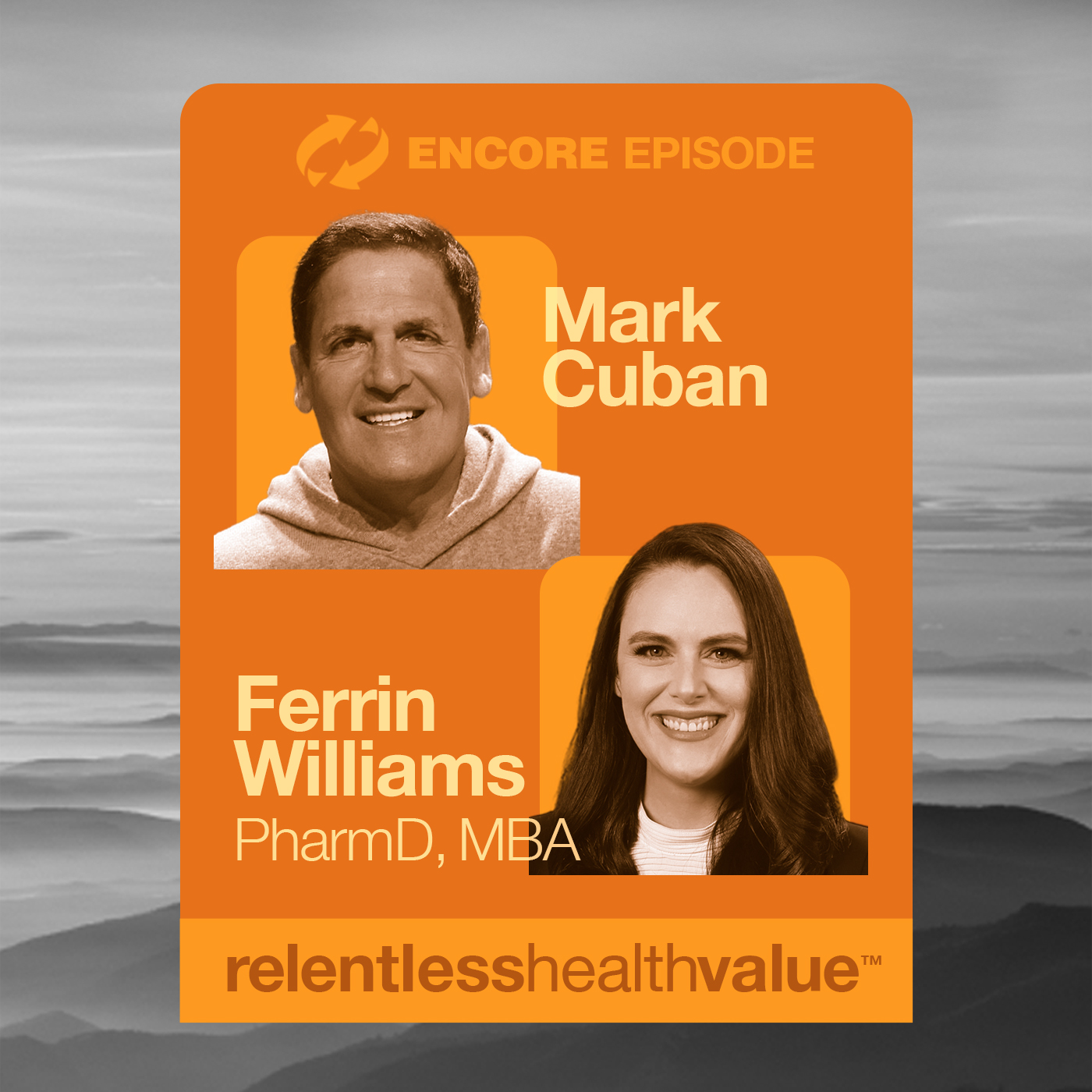
Encore! EP418: Mark Cuban With a PSA for CEOs and CFOs of Self-insured Employers, With Mark Cuban and Ferrin Williams, PharmD, MBA, From Scripta
In this encore episode, Mark Cuban discusses his insights and experiences on disrupting the healthcare and pharmacy benefits landscape with Stacey Richter. This show from last year was one of the most popular episodes of the past year. And it's also extremely relevant right now, given all of the PBM (pharmacy benefit manager) goings-on, as well as ongoing litigation like the J&J lawsuit, etc. Listen to the show with Julie Selesnick (EP428) for more on that one. Joined by Ferrin Williams from Scripta, Cuban stresses the importance for CEOs and CFOs of self-insured companies to get actively involved in their healthcare plans to avoid overpaying. The conversation tackles the opaque practices of PBMs, the financialized nature of the healthcare industry, and introduces Mark Cuban's Cost Plus Drugs model which aims for transparency and cost reduction. Key topics also include the potential legal implications for employers, the importance of trust in healthcare transactions, and the real-world savings and benefits achievable with greater involvement and transparency in healthcare management. What do all of these numbers have in common: $140,000, $3 million, $35 million, and $3 billion? These are all actual examples of how much employers, unions, and some public entities saved on healthcare benefits for themselves and their employees. The roadmap to saving 25% on pharmacy spend and/or 15% on total cost of care in ways that improve employee health and satisfaction always begins when one thing happens. There's one vital first step. That first step is CEOs and/or CFOs or their equivalents roll up their sleeves and get involved in healthcare benefits. === LINKS === 🔗 Show Notes with all mentioned links: https://cc-lnk.com/Encore418 🔗 Healthcare Industry Acronyms and Terms https://relentlesshealthvalue.com/healthcare-acronymns ✉️ Enjoy this podcast? Subscribe to the free weekly newsletter: https://relentlesshealthvalue.com/join-the-relentless-tribe 🫙 Support the podcast with a small donation to the Tip Jar: https://relentlesshealthvalue.com/join-the-relentless-tribe 📺 Subscribe to our YouTube channel https://www.youtube.com/@RelentlessHealthValue 🎤 Listen on Apple Podcasts https://podcasts.apple.com/us/podcast/feed/id892082003?ls=1 🎤 Listen on Spotify https://open.spotify.com/show/6UjgzI7bScDrWvZEk2f46b === CONNECT WITH THE RHV TEAM === ✭ LinkedIn https://www.linkedin.com/company/relentless-health-value/ ✭ Threads https://www.threads.net/@relentlesshealthvalue/ ✭ Bluesky https://bsky.app/profile/relentleshealth.bsky.social ✭ X https://twitter.com/relentleshealth/ 06:29 What was Mark Cuban's own journey as a self-insured employer with Cost Plus Drug Company? 07:44 What did Mark find when he decided to go through and look through his company's benefit program? 09:12 "When you think it through, you start to realize that money is being spent primarily by your sickest employees." —Mark 10:02 How do you get CEOs and CFOs of self-insured employers to realize that their sickest employees are the ones subsidizing their checks? 13:00 What is the role of insurance in healthcare? 14:30 "If you can't convince them, confuse them and hide it." —Mark 15:24 The reality behind getting a rebate check. 16:21 Why are rebates going away, and why isn't that changing PBM earnings? 19:05 How do you get CEOs and CFOs to dig into their benefits plan? 20:59 Does morally abhorrent move the needle? 21:33 "What we're trying to do is just simplify the [healthcare] industry." —Mark 24:19 What's been changing in consumer behavior? 25:04 "Transparency is a huge part of building that trust." —Ferrin 25:19 Why CEOs and CFOs really have the power to change healthcare. 32:29 What are Cost Plus Drugs' plans to expand? 39:21 Where is the future of the prescription drug market going? 42:09 What will happen to the prescription drug market in 10 to 20 years? 48:40 The wake-up call self-insured employers should be acknowledging now. 52:02 Where is the real change in the healthcare industry going to come from?

Encore! EP415: Some Jumbo Employers Buying Better Healthcare Outcomes While Saving 15% on Total Cost of Care, With Rob Andrews
In this episode, Stacey Richter speaks with Rob Andrews, CEO of the Health Transformation Alliance (HTA) and former Congressman, about the strategic steps jumbo employers can take to achieve improved health outcomes while reducing cost. They delve into the importance of using data to discern effective practices, negotiate contracts, and hold intermediaries accountable. The discussion highlights maternal health as a critical area of focus, with successful interventions shown to reduce NICU admissions and overall healthcare costs. Andrews emphasizes the role of self-insured employers in driving systemic changes that align financial incentives with health outcomes. This encore is very relevant after the shows with Cora Opsahl (EP452), Claire Brockbank (EP453), and Marilyn Bartlett (EP450). Getting better health for the 160 million Americans covered by commercial insurance is all about rates, rights, and power. === LINKS === 🔗 Show Notes with all mentioned links: https://cc-lnk.com/Encore415 🔗 Healthcare Industry Acronyms and Terms https://relentlesshealthvalue.com/healthcare-acronymns ✉️ Enjoy this podcast? Subscribe to the free weekly newsletter: https://relentlesshealthvalue.com/join-the-relentless-tribe 🫙 Support the podcast with a small donation to the Tip Jar: https://relentlesshealthvalue.com/join-the-relentless-tribe 📺 Subscribe to our YouTube channel https://www.youtube.com/@RelentlessHealthValue 🎤 Listen on Apple Podcasts https://podcasts.apple.com/us/podcast/feed/id892082003?ls=1 🎤 Listen on Spotify https://open.spotify.com/show/6UjgzI7bScDrWvZEk2f46b === CONNECT WITH THE RHV TEAM === ✭ LinkedIn https://www.linkedin.com/company/relentless-health-value/ ✭ Threads https://www.threads.net/@relentlesshealthvalue/ ✭ Bluesky https://bsky.app/profile/relentleshealth.bsky.social ✭ X https://twitter.com/relentleshealth/ 07:34 How did Rob get to his current role? 09:08 The problem of maternal health and mortality rate, and how self-insured employers wind up directly and indirectly paying for this. 10:27 Why economic consequences move the needle, and why sometimes they don't. 12:26 Why the best way to address costs isn't to re-shift costs but to address them directly. 13:22 Why compensation that isn't dependent on outcomes is a problem. 16:23 "Strategy's not what people say; it's what they do." 18:21 How do you operationalize saving money with better outcomes? 26:26 How do employers turn conflict into collaboration? 28:20 What is the win-win-win structure among employers, payers, and providers in Rob's eyes? 30:53 To whom should the task of risk adjustment fall? 34:43 "Better contracts do improve outcomes."

Ep 456EP456: Advice to Pharma at the Intersection of Product Value, Reputation, and Patient Affordability, With Brian Reid
In this comprehensive episode host Stacey Richter sits down with Brian Reid to discuss pivotal aspects for the pharmaceutical industry. Key topics include understanding product value from the perspectives of plan sponsors, patients, and society, and the significance of benefit design in improving patient affordability. The discussion delves into the complexities of drug pricing, the roles of Pharmacy Benefit Managers (PBMs) and brokers, and the impact of healthcare consolidation on costs. Reid emphasizes the importance of transparent communication among stakeholders, the detrimental effects of cost containment strategies, and the necessity of considering policy and reputational impacts. Throughout the conversation, examples such as the Hepatitis C drug illustrate the broader implications on drug access and affordability. Listeners are provided with critical insights into how pharmaceutical companies can better engage with ultimate purchasers to ensure patients receive necessary, cost-effective medications while navigating a changing healthcare landscape. === LINKS === 🔗 Show Notes with all mentioned links: https://cc-lnk.com/EP456 🔗 Healthcare Industry Acronyms and Terms https://relentlesshealthvalue.com/healthcare-acronymns ✉️ Enjoy this podcast? Subscribe to the free weekly newsletter: https://relentlesshealthvalue.com/join-the-relentless-tribe 🫙 Support the podcast with a small donation to the Tip Jar: https://relentlesshealthvalue.com/join-the-relentless-tribe 📺 Subscribe to our YouTube channel https://www.youtube.com/@RelentlessHealthValue 🎤 Listen on Apple Podcasts https://podcasts.apple.com/us/podcast/feed/id892082003?ls=1 🎤 Listen on Spotify https://open.spotify.com/show/6UjgzI7bScDrWvZEk2f46b === CONNECT WITH THE RHV TEAM === ✭ LinkedIn https://www.linkedin.com/company/relentless-health-value/ ✭ Threads https://www.threads.net/@relentlesshealthvalue/ ✭ Bluesky https://bsky.app/profile/relentleshealth.bsky.social ✭ X https://twitter.com/relentleshealth/ 08:29 Why is it important to understand the term "value" in respect to medicine? 10:07 Why is it important to consider all the players affected by the idea of this "value"? 11:06 Who are the ultimate purchasers in Pharma? 12:23 Findings of the Kaiser Employer Health Benefits Survey. 14:52 Why does it matter that we consider what value looks like to all players affected by Pharma? 16:46 EP300 with Bruce Rector, MD. 18:38 EP448 (Part 1) with Shawn Gremminger. 20:04 What does Pharma need to do to showcase their value when PBMs are often "locked in" at the moment? 23:11 Why Brian is celebrating companies that put their prices in their press releases. 32:31 Why does Pharma have an obligation to explain their value? 33:16 EP426 with Nina Lathia, RPh, MSc, PhD. 33:39 Why is it important for Pharma to keep an eye on hospital monopoly behavior? 35:55 EP370 with Erik Davis and Autumn Yongchu. 37:44 Why Pharma needs to capitalize on alignment.

Ep 455EP455: A Leadership Blueprint for Measurably Better Care, With Beau Raymond, MD
In this conversation, Stacey Richter engages with healthcare leader Dr. Beau Raymond from Ochsner Health Network to explore the blueprint for better patient care through enlightened leadership, data-driven strategies, and localized health initiatives. The discussion covers shifting from 'sick care' to preventative healthcare, integrating technology and data tools like glucometers for health coaching, and addressing health equity through accurate data and regional strategies. The conversation explains the importance of stakeholder engagement, setting clear goals, financial incentives aligned with patient care, and continuous improvement through feedback loops. Practical steps such as weekly huddles for primary care teams and the role of digital health in managing chronic conditions like diabetes and hypertension are also highlighted to improve healthcare outcomes and operational excellence. A rate critical to attain better care for patients, I'm gonna say, is enlightened leadership—maybe dyad leadership—at a clinical organization. I am saying this because without enlightened leaders, it'd be harder to build from the blueprint that Beau Raymond, MD, talks about today on the show. === LINKS === 🔗 Show Notes with all mentioned links: https://cc-lnk.com/EP455 🔗 Healthcare Industry Acronyms and Terms https://relentlesshealthvalue.com/healthcare-acronymns ✉️ Enjoy this podcast? Subscribe to the free weekly newsletter: https://relentlesshealthvalue.com/join-the-relentless-tribe 🫙 Support the podcast with a small donation to the Tip Jar: https://relentlesshealthvalue.com/join-the-relentless-tribe 📺 Subscribe to our YouTube channel https://www.youtube.com/@RelentlessHealthValue 🎤 Listen on Apple Podcasts https://podcasts.apple.com/us/podcast/feed/id892082003?ls=1 🎤 Listen on Spotify https://open.spotify.com/show/6UjgzI7bScDrWvZEk2f46b === CONNECT WITH THE RHV TEAM === ✭ LinkedIn https://www.linkedin.com/company/relentless-health-value/ ✭ Threads https://www.threads.net/@relentlesshealthvalue/ ✭ Bluesky https://bsky.app/profile/relentleshealth.bsky.social ✭ X https://twitter.com/relentleshealth/ 10:44 Why is it important to be flexible while keeping your goals in sight? 11:48 Dr. Eboni Price-Haywood's article on disparities in COVID. 12:29 How is equity a data point to achieving overall care improvement? 15:01 "If you can't measure it … accurately, you're not going to be able to do anything differently." 20:52 What strategies have been successful in using data to improve healthcare outcomes? 23:17 Why did Ochsner Health avoid looking at the individual physician standpoint in regard to an equity standpoint? 30:40 Why engaging patients in their healthcare actually improved patient visits and did not necessarily reduce patient visits. 34:49 "It's really about engaging with the patient."

Ep 454EP454: How the Particle v Epic Lawsuit Impacts Plan Sponsors and Public Health Trying to Get Data, With Brendan Keeler
In this episode, host Stacey Richter and guest Brendan Keeler dive deep into the significant legal clash between Epic and Particle over electronic health record (EHR) data access and market competition. This episode examines the broader repercussions on healthcare data exchange, including antitrust concerns, data liquidity, and the ethical considerations around secondary use of treatment data. The discussion brings to light how the outcome of such lawsuits could influence data transparency, interoperability, and the rules governing data sharing among plan sponsors, employers, and healthcare providers. Notable points include the shift to a judicial era impacting health tech companies and the potential for regulatory and judicial actions to improve data access and efficiency within healthcare networks. The episode emphasizes the critical need for clear pathways, accountability, and structured regulations to enhance patient care and reduce fraud in the healthcare data ecosystem. === LINKS === 🔗 Show Notes with all mentioned links: https://cc-lnk.com/EP454 🔗 Healthcare Industry Acronyms and Terms https://relentlesshealthvalue.com/healthcare-acronymns ✉️ Enjoy this podcast? Subscribe to the free weekly newsletter: https://relentlesshealthvalue.com/join-the-relentless-tribe 🫙 Support the podcast with a small donation to the Tip Jar: https://relentlesshealthvalue.com/join-the-relentless-tribe 📺 Subscribe to our YouTube channel https://www.youtube.com/@RelentlessHealthValue 🎤 Listen on Apple Podcasts https://podcasts.apple.com/us/podcast/feed/id892082003?ls=1 🎤 Listen on Spotify https://open.spotify.com/show/6UjgzI7bScDrWvZEk2f46b === CONNECT WITH THE RHV TEAM === ✭ LinkedIn https://www.linkedin.com/company/relentless-health-value/ ✭ Threads https://www.threads.net/@relentlesshealthvalue/ ✭ Bluesky https://bsky.app/profile/relentleshealth.bsky.social ✭ X https://twitter.com/relentleshealth/ 07:21 Who can gain access to EHR data? 10:31 Are there limits to how EHR data can be used secondarily? 11:36 Can EHR data be shared secondarily? 15:47 Part one and part two of Brendan's comprehensive account of the Epic/Particle dustup. 15:57 What was the dispute that started Epic v Particle? 18:21 What are the two viewpoints in this dispute with Epic's actions? 26:16 What progress has been seen since this lawsuit began? 28:00 Who else will be impacted by the likely rule cementing from this lawsuit?

Ep 453EP453: Running a TPA (Third-Party Administrator) RFP Process That Is Less of a Wild West Fiduciary Shootout, With Claire Brockbank
In this episode, host Stacey Richter delves into the complexities of the Third Party Administrator (TPA) Request for Proposal (RFP) process with guest Claire Brockbank from 32BJUnion. The discussion highlights the critical role of contracts in managing health plans effectively and the potential pitfalls of accepting contracts crafted by TPAs without thorough review. Drawing from Claire's experience, they explore tactics like starting with your own contract paper in RFP processes to gain negotiation leverage, and the benefits of employer coalitions in navigating health care complexities. Real-world examples underscore the financial impacts of poorly negotiated contracts and highlight successful strategies for health plan sponsors to optimize costs and services. The episode aims to empower employers with tools and insights to negotiate effectively and ensure their health plan contracts align with their strategic goals, ultimately paving the way for better population health management and cost-effective care delivery. As but one example—and Cora Opshal spoke about this last week and Claire talked about this today—it's about how allowing upside-down payments, for example, that are in a lot of ASO contracts, this allowing of upside-down payments. I mean, it turns out that 32BJ spent around $10 million paying more than the bill was for one year. If somebody signs that contract as handed to them by the carrier, then the plan is now contractually obligating themselves to pay more than the price the clinical practice was charging. So, doc sends bill for $100, and the carrier pays that practice $200 on behalf of the plan sponsor. So now the plan sponsor is paying $200 for a $100 bill. Is this conflict of interest? Is it imprudent? Is it not reasonable? Said another way, is that a bit of a fiduciary breach on the plan sponsor? So it's understandable why the team at 32BJ pushed back and pushed back hard. We all can see why the leading edge of plan sponsors and more and more C-suites are hotfooting it into conference rooms to plan their RFP process and doing it in the way that Claire Brockbank talks about today. For an open-source contract and some other free tools, please do head over to the 32BJ Insights Web site. Links in the show notes. === LINKS === 🔗 Show Notes with all mentioned links: https://cc-lnk.com/EP453 🔗 Healthcare Industry Acronyms and Terms https://relentlesshealthvalue.com/healthcare-acronymns ✉️ Enjoy this podcast? Subscribe to the free weekly newsletter: https://relentlesshealthvalue.com/join-the-relentless-tribe 🫙 Support the podcast with a small donation to the Tip Jar: https://relentlesshealthvalue.com/join-the-relentless-tribe 📺 Subscribe to our YouTube channel https://www.youtube.com/@RelentlessHealthValue 🎤 Listen on Apple Podcasts https://podcasts.apple.com/us/podcast/feed/id892082003?ls=1 🎤 Listen on Spotify https://open.spotify.com/show/6UjgzI7bScDrWvZEk2f46b === CONNECT WITH THE RHV TEAM === ✭ LinkedIn https://www.linkedin.com/company/relentless-health-value/ ✭ Threads https://www.threads.net/@relentlesshealthvalue/ ✭ Bluesky https://bsky.app/profile/relentleshealth.bsky.social ✭ X https://twitter.com/relentleshealth/ 05:36 How does the initial contract writing affect how events in your healthcare plan will go? 06:56 What happens if a plan sponsor or employer doesn't do the contracting right? 10:42 How much could be saved by doing contracting right? 11:01 EP433 with Justin Leader. 12:22 How do you start an RFP process with your own contract? 14:06 What Claire Brockbank recommends doing to do a TPA RFP process in a way that's best for you. 19:46 What factors do carriers need to get an ASO or TPA to respond to using your contract? 21:11 Open-source contract available from 32BJ. 21:57 Why it's important to really probe brokers, despite loyalty to your broker/consultant. 24:30 Who are the reliable agents and experts when carriers are looking to start this process? 26:24 EP428 with Julie Selesnick. 27:56 What's the silver lining to this effort? 29:17 Why is it important to make it clear why you're doing what you're doing for your lawyers and any other support team you need? 31:39 What does "good" look like in this process? 34:15 Why is it important to continue to hold your ASO accountable?

Ep 452EP452: Fiduciary Duty vs the Healthcare Status Quo, With Cora Opsahl
In this episode I interview Cora Opsahl from the 32BJ Health Fund to examine the intricate dynamics between fiduciary duties and the entrenched status quo in healthcare. The discussion focuses on the challenges employers face when dealing with anti-competitive contracts and their responsibility to ensure plan expenses are reasonable. Cora Opsahl, my guest today, is the director of the 32BJ Health Fund, serving over 200,000 folks. Their ability to kick NewYork-Presbyterian, a big, consolidated, very expensive hospital, out of their network in 2018 enabled them to offer maternity benefits for $40 in total out-of-pocket for members. And also, employees got their biggest raise ever; employers got a premium holiday and a 3% rate increase for a bunch of years after that; and yeah … this is where we start the conversation today. Furthermore, you will find links to a template health savings calculator for plan sponsors and also a template contract (again for plan sponsors) that 32BJ has made available, in our show notes. === LINKS === 🔗 Show Notes with all mentioned links: https://cc-lnk.com/EP452 🔗 Healthcare Industry Acronyms and Terms https://relentlesshealthvalue.com/healthcare-acronymns ✉️ Enjoy this podcast? Subscribe to the free weekly newsletter: https://relentlesshealthvalue.com/join-the-relentless-tribe 🫙 Support the podcast with a small donation to the Tip Jar: https://relentlesshealthvalue.com/join-the-relentless-tribe 📺 Subscribe to our YouTube channel https://www.youtube.com/@RelentlessHealthValue 🎤 Listen on Apple Podcasts https://podcasts.apple.com/us/podcast/feed/id892082003?ls=1 🎤 Listen on Spotify https://open.spotify.com/show/6UjgzI7bScDrWvZEk2f46b === CONNECT WITH THE RHV TEAM === ✭ LinkedIn https://www.linkedin.com/company/relentless-health-value/ ✭ Threads https://www.threads.net/@relentlesshealthvalue/ ✭ Bluesky https://bsky.app/profile/relentleshealth.bsky.social ✭ X https://twitter.com/relentleshealth/ 06:16 Why is it imperative for employers to do something differently when it comes to being plan sponsors? 09:22 How analyzing claims data allowed 32BJ Health Fund to reshape their benefit design. 12:09 What anticompetitive rights did 32BJ run into that limited 32BJ Health Fund from managing their benefit design? 14:12 How do these anticompetitive rights have quality implications as well as cost implications? 18:43 How did 32BJ Health Fund remove NewYork-Presbyterian from their network, and how much did it save 32BJ Health Fund per year? 19:46 What did the healthcare savings allow the unions and employers to do? 20:46 Study by Zack Cooper, PhD. 21:26 Why rising healthcare costs has pushed 32BJ Health Fund to move beyond benefit design to manage healthcare spend. 24:15 Why 32BJ Health Fund wants to control the contracting process. 26:00 EP419 with Andreas Mang. 27:18 What are 32BJ Health Fund's four non-negotiables? 33:17 Wall Street Journal article on health insurance contract. 35:30 Upcoming episode with Claire Brockbank. 36:14 What is the challenge that exists in our current healthcare environment? 37:43 Cora's advice on how to get high-quality healthcare at an affordable price.

Spotlight Episode: Oncology Side Effect Management in the Real World, With Dan Nardi From Reimagine Care
In this Spotlight Episode host Stacey Richter discusses the management of oncology side effects with Dan Nardi, CEO of Reimagine Care. Highlighting the challenges cancer patients face, especially following chemotherapy which often leads to nausea and readmissions, the conversation delves into how Reimagine Care facilitates at-home integrative cancer care. Their services focus on proactive and reactive support via AI-driven tools like 'Remy' to assist patients outside of clinical environments. This approach aims to reduce emergency visits and improve patient outcomes while easing the workload on healthcare providers. The discussion underscores the role of patient reported outcomes and the integration of technology with human care to improve the quality of oncology treatment pathways. Note from Stacey Richter: Pulling off a show like this one is not cheap, and my Aventria business partner Dave Dierk and I are happy to fund the vast majority of it. But yeah, breath of fresh air, and thanks much to the team over at Reimagine Care for their sponsorship. My one disclaimer is that I have not personally vetted the solution, but there is a white paper (link in show notes) available where you will also find some insights from Reimagine Care's work with Memorial Hermann Health System. === LINKS === 🔗 Show Notes with all mentioned links: https://cc-lnk.com/Spotlight1 🔗 Healthcare Industry Acronyms and Terms https://relentlesshealthvalue.com/healthcare-acronymns ✉️ Enjoy this podcast? Subscribe to the free weekly newsletter: https://relentlesshealthvalue.com/join-the-relentless-tribe 🫙 Support the podcast with a small donation to the Tip Jar: https://relentlesshealthvalue.com/join-the-relentless-tribe 📺 Subscribe to our YouTube channel https://www.youtube.com/@RelentlessHealthValue 🎤 Listen on Apple Podcasts https://podcasts.apple.com/us/podcast/feed/id892082003?ls=1 🎤 Listen on Spotify https://open.spotify.com/show/6UjgzI7bScDrWvZEk2f46b === CONNECT WITH THE RHV TEAM === ✭ LinkedIn https://www.linkedin.com/company/relentless-health-value/ ✭ Threads https://www.threads.net/@relentlesshealthvalue/ ✭ Bluesky https://bsky.app/profile/relentleshealth.bsky.social ✭ X https://twitter.com/relentleshealth/ 03:38 Why is it really important to keep track of oncology patients and their side effects? 04:27 Why is cancer treatment such a complex care journey? 05:57 Are there outcome and financial issues that compound when an oncology patient is left to navigate their care journey on their own? 08:53 What is difficult in navigating cancer treatment care pathways, and what does Reimagine Care tackle within that? 09:55 EP157 with Ethan Basch, MD. 10:17 How does Reimagine Care proactively check in with oncology patients to help them navigate their care pathways? 12:41 How does Reimagine Care measure their performance, and how did their work affect patient outcomes? 13:28 The Reimagine Care white paper. 14:57 How do providers feel about Reimagine Care services? 17:37 Where can technology really make a difference in cancer care?

Ep 451EP451: Hey, Let's Not Talk About Artificial Intelligence, With Spencer Dorn, MD, MPH, MHA
In Episode 451 of Relentless Health Value, host Stacey Richter converses with Dr. Spencer Dorn about the implications of AI in healthcare, referencing lessons learned from EHR implementations. They discuss Kranzberg's first law of technology, which advises against labeling a technology as inherently good, bad, or neutral, emphasizing instead the importance of its application, configuration, and the human decisions surrounding its use. Dorn and Richter explore both the potential benefits and drawbacks of AI, drawing parallels with past experiences in healthcare digitization. The first takeaway from this short show focused on artificial intelligence is gonna be the same, really, as it was in episode 446 about EHRs. Do not ascribe any given technology a label of, as good, bad, or even neutral. That is Kranzberg's First Law of Technology; and it applies here, too. Second major takeaway—and again, this is the same as in that earlier show about EHRs, but today we're talking about AI—if you're thinking about the ultimate impact of the people and the processes that have some technology in their midst (technology, again, such as AI, artificial intelligence), the ultimate impact will not be a black-and-white binary. We talk about some of these nuanced not binaries in the 10 minutes that follow, but for more, I've put some links in the show notes on our epsiode page for some newsletters et cetera to check out. === LINKS === 🔗 Show Notes with all mentioned links: https://cc-lnk.com/EP451 🔗 Healthcare Industry Acronyms and Terms https://relentlesshealthvalue.com/healthcare-acronymns ✉️ Enjoy this podcast? Subscribe to the free weekly newsletter: https://relentlesshealthvalue.com/join-the-relentless-tribe 🫙 Support the podcast with a small donation to the Tip Jar: https://relentlesshealthvalue.com/join-the-relentless-tribe 📺 Subscribe to our YouTube channel https://www.youtube.com/@RelentlessHealthValue 🎤 Listen on Apple Podcasts https://podcasts.apple.com/us/podcast/feed/id892082003?ls=1 🎤 Listen on Spotify https://open.spotify.com/show/6UjgzI7bScDrWvZEk2f46b === CONNECT WITH THE RHV TEAM === ✭ LinkedIn https://www.linkedin.com/company/relentless-health-value/ ✭ Threads https://www.threads.net/@relentlesshealthvalue/ ✭ Bluesky https://bsky.app/profile/relentleshealth.bsky.social ✭ X https://twitter.com/relentleshealth/ 05:23 What could happen with AI in healthcare if we aren't thinking about how we're deploying it? 05:58 How could the lessons from digitizing healthcare help us with employing AI? 08:25 How could artificial intelligence make things better and simultaneously worse? 10:55 Why is it important to look beyond the hype and pessimism and make a clear-eyed assessment?

Ep 450EP450: When Your Health Plan Is $9 Million in the Hole, Who Are You Going to Call? A CPA. And Tell Them to Bring Their Spreadsheets, With Marilyn Bartlett, CPA, CGMA, CMA, CFM
In Episode 450 I speak with Marilyn Bartlett, a renowned CPA in the healthcare field, about her remarkable achievement of transforming the state of Montana's employee health plan from $9 million in debt to a surplus of $112 million within three years. Marilyn discusses the steps she took, including identifying financial inefficiencies, targeting high-cost areas, and implementing data-driven strategies to produce quick wins and sustainable results. The conversation delves into the importance of having the right team, communicating effectively with stakeholders, and staying focused amidst challenges. Listeners will gain valuable insights into strategic change management and actionable advice for improving healthcare plans. Yeah, I made a meme for the show with Marilyn Bartlett. My very first meme ever (link in show notes). In this meme, I picture that Olympic silver medalist shooter from Turkey who showed up in a T-shirt and his hand in his pocket versus the others with all their fancy equipment that, turns out, may or may not be necessary, regardless of who might swear up and down that complexity requires even more complexity and plenty of expensive gear to shoot straight. Point being, it's amazing what a dedicated CPA with a spreadsheet and their eye on the target can accomplish in the real world when they just do their thing and follow the dollar. And with that, Marilyn Bartlett has entered the chat. Marilyn Bartlett isn't called the "Queen of Healthcare" for no good reason, and nobody is joking when they say this. She was probably the first person (or one of the first, at a minimum) to truly identify the amount of money getting sucked out of the wallets of taxpayers and employers and plan members and into the pockets of the healthcare and insurance and consulting industries. She is a through and through numbers person but also deeply cares. She is truly a senior stateswoman in our field. === LINKS === 🔗 Show Notes with all mentioned links: https://cc-lnk.com/EP450 🔗 Healthcare Industry Acronyms and Terms https://relentlesshealthvalue.com/healthcare-acronymns ✉️ Enjoy this podcast? Subscribe to the free weekly newsletter: https://relentlesshealthvalue.com/join-the-relentless-tribe 🫙 Support the podcast with a small donation to the Tip Jar: https://relentlesshealthvalue.com/join-the-relentless-tribe 📺 Subscribe to our YouTube channel https://www.youtube.com/@RelentlessHealthValue 🎤 Listen on Apple Podcasts https://podcasts.apple.com/us/podcast/feed/id892082003?ls=1 🎤 Listen on Spotify https://open.spotify.com/show/6UjgzI7bScDrWvZEk2f46b === CONNECT WITH THE RHV TEAM === ✭ LinkedIn https://www.linkedin.com/company/relentless-health-value/ ✭ Threads https://www.threads.net/@relentlesshealthvalue/ ✭ Bluesky https://bsky.app/profile/relentleshealth.bsky.social ✭ X https://twitter.com/relentleshealth/ 06:45 What gave Marilyn the confidence to fix Montana's state health plan? 08:11 Why Marilyn knew she would have enough power to make the changes needed in Montana's state health plan. 09:11 What Marilyn achieved in her time as the administrator of the Montana State Employee Health Plan. 10:38 What were the "quick wins" Marilyn was able to achieve when she first took over as administrator? 17:33 Stay tuned for an upcoming episode that covers RFP in detail. 17:50 How Marilyn structured her plan for the Montana State Employee Health Plan. 21:21 What's the key to setting yourself up for success when doing what Marilyn was able to achieve? 25:02 Why putting together your own team is so important. 29:07 What happened when Marilyn left the Montana State Employee Health Plan? 31:08 Have the costs of the plan gone up since Marilyn's time working on it?

Ep 449EP449: For Clinical Leaders, Payers, and Plan Sponsors, Let's Talk About Blind Spots for Getting Patients or Members Appropriate Care, With Marty Makary, MD, MPH
So, I had a chance to read Dr. Marty Makary's new book, which is called Blind Spots; and here's why I wanted to get him to come back on Relentless Health Value and talk to you, people of the healthcare industry. It's because of something that he said on page 127 and which I've been mulling over for probably years, actually. It's this idea of what is appropriate care and how good are we at ensuring that patients/members get said appropriate care. Lots of people are of the same minds because appropriate care has come up in the show with Ben Schwartz, MD, MBA (EP434); John Lee, MD (EP438); Spencer Dorn, MD, MPH, MHA (EP446); Tom Lee, MD (EP445). I mean, an estimated 21% of all medical care is potentially unnecessary. And unnecessary is, of course, one category of things that are not appropriate. This is according to a national survey of physicians: 25% of diagnostic tests, 22% of all medications, and 11% of all procedures are unnecessary/inappropriate. This is billions of wasted dollars doing stuff that shouldn't be done, and it's not appropriate care. But think about this: How many visions for how to fix healthcare and how to reduce waste depend upon a broad-stroke assumption that we will materially ensure that patients are getting best-practice (ie, appropriate) care? That we cut down on over-medicalization and surgeries on the back end and add appropriate preventative stuff and optimal medical therapy to the front end? Dr. Makary and I delve into the challenges of ensuring patients receive appropriate care, touching on medical dogma, financial, business, and legal incentives, and the importance of measuring practice patterns. Dr. Makary provides practical advice for clinical leaders, payers, and plan sponsors on promoting transparency, improving health literacy, and steering members towards higher performing providers. === LINKS === 🔗 Show Notes with all mentioned links: https://cc-lnk.com/EP449 🔗 Healthcare Industry Acronyms and Terms https://relentlesshealthvalue.com/healthcare-acronymns ✉️ Enjoy this podcast? Subscribe to the free weekly newsletter: https://relentlesshealthvalue.com/join-the-relentless-tribe 🫙 Support the podcast with a small donation to the Tip Jar: https://relentlesshealthvalue.com/join-the-relentless-tribe 📺 Subscribe to our YouTube channel https://www.youtube.com/@RelentlessHealthValue 🎤 Listen on Apple Podcasts https://podcasts.apple.com/us/podcast/feed/id892082003?ls=1 🎤 Listen on Spotify https://open.spotify.com/show/6UjgzI7bScDrWvZEk2f46b === CONNECT WITH THE RHV TEAM === ✭ LinkedIn https://www.linkedin.com/company/relentless-health-value/ ✭ Threads https://www.threads.net/@relentlesshealthvalue/ ✭ Bluesky https://bsky.app/profile/relentleshealth.bsky.social ✭ X https://twitter.com/relentleshealth/ 07:32 What is appropriate care? 10:19 Why what we think might be appropriate care might not be appropriate care. 10:34 Why is medical dogma damaging to appropriate care? 12:45 Why we need less absolutism in medical practice. 13:37 How is groupthink prevalent in medicine? 14:02 Why do we resist new ideas? 17:43 How do providers figure out what to believe and what not to believe? 20:59 "If you leave it to the medical profession to fix itself … so far, it's not going well." 22:33 How does supporting health literacy affect appropriate care? 30:23 "People need to find their care based on quality and price." 34:28 What proportion of medical care is deemed unnecessary right now?

EP448 (Part 2): 340B: Why Employers Should Probably Care About What's Happening Here, With Shawn Gremminger
Maybe you've already caught Part 1 of my conversation with Shawn Gremminger, and if so, you're ahead of the game. But if not, no worries—here's the deal: I decided to split this deep dive into the 340B program with Shawn into two parts. So, feel free to jump into one or both—it's totally up to you. These episodes don't have to be listened to in order, so you're good to start here with Part 2. Let's get into it!" Right now, we are going to talk about how 340B impacts employers and commercial plans and other plan sponsors. So, if all you want to hear about is the why—as in, Why do employers care about what amounts to a program that is or was supposed to be for low-income Americans and Medicaid?—you are in the right place. As just one example of the why should employers care if you are teetering on the edge of proceeding, did you know that if an employee or a member of a commercial plan gets a drug at a contract pharmacy participating in 340B, the employer does not get the rebate? The employer is gonna pay the list price for that med. Wait, what? Yeah, details follow because Shawn Gremminger is gonna get into this and many other reasons why employers or anyone in the commercial market (or taxpayers, really) should care about this, as some may call it, Medicaid program. The fact is, 340B is currently so gargantuan that it creates market distortions that bleed into the prices and possibly the quality of healthcare for everybody, all Americans. And that could really matter to employer or Taft-Hartley plan sponsors. After you listen to this show, if you want to drill in a little deeper on the "what the what" and the history of 340B, head back and take in Part 1 of this episode 448. Shawn Gremminger gives the skinny on how the program morphed over the years into a $53 billion juggernaut and is credited (or blamed) for all kinds of healthcare market consolidation and many other weird and unusual consequences that make me admire some of the folks who are truly gold medal winners in the sport of financial engineering. === LINKS === 🔗 Show Notes with all mentioned links: https://cc-lnk.com/EP448-2 🔗 Healthcare Industry Acronyms and Terms https://relentlesshealthvalue.com/healthcare-acronymns ✉️ Enjoy this podcast? Subscribe to the free weekly newsletter: https://relentlesshealthvalue.com/join-the-relentless-tribe 🫙 Support the podcast with a small donation to the Tip Jar: https://relentlesshealthvalue.com/join-the-relentless-tribe 📺 Subscribe to our YouTube channel https://www.youtube.com/@RelentlessHealthValue 🎤 Listen on Apple Podcasts https://podcasts.apple.com/us/podcast/feed/id892082003?ls=1 🎤 Listen on Spotify https://open.spotify.com/show/6UjgzI7bScDrWvZEk2f46b === CONNECT WITH THE RHV TEAM === ✭ LinkedIn https://www.linkedin.com/company/relentless-health-value/ ✭ Threads https://www.threads.net/@relentlesshealthvalue/ ✭ Bluesky https://bsky.app/profile/relentleshealth.bsky.social ✭ X https://twitter.com/relentleshealth/ 09:11 Why do employers care about 340B, which is a Medicaid program? 11:30 Why do I care as an employer, even if I'm not Pharma? 12:44 Why is 340B causing employers to pay significantly more for healthcare? 14:36 Study by Zack Cooper, PhD. 15:06 Why are there distorted pricing models at 340B hospitals? 21:22 Why do employers need to stop playing the blame game?

EP448 (Part 1): 340B: Where It Started, Where It Is Now, and Who Is Really Benefiting From This Massive Program, With Shawn Gremminger
So, after some pondering, I decided to release this conversation with Shawn Gremminger about 340B in two parts. So, listen to one, listen to both, pick your poison. Shawn Gremminger came up with three really important takeaways relative to 340B, which is a feat unto itself, considering how sprawling this conversation can be. So, if you came here for some concise and actionable takeaways, you have come to the right place. This first part you are listening to right now zeros in on Shawn's first takeaway: whether or not the original intent, or the presumed original intent, of the 340B program has actually been met. Many do not realize that 340B began life as a caterpillar. It originally, actually, was conceived as a lowly bureaucratic fix. But over the past 15 years, it has gone into a chrysalis and emerged into a 500-pound gorilla that sits in the corner of a lot of rooms, actually—probably more than many people realize. All of that being said, when you're done listening to this first part of the convo, you should be able to competently assess whether or not 340B does, in fact, adequately help underserved communities get better healthcare—because 340B is supposed to help safety-net healthcare providers stretch scarce resources. The second part of the show, which is a separate episode called Part 2, is how all of this impacts employers and commercial plans. And there's two more takeaways there. So, if you already have the gist of how we got from the beginnings of 340B to where we are in 2024 already and all you want to hear about is why do employers care about what amounts to a low-income program or was purported to be a low-income program, feel free to zip over to the second show and cut to that chase. === LINKS === 🔗 Show Notes with all mentioned links: https://cc-lnk.com/EP448-1 🔗 Healthcare Industry Acronyms and Terms https://relentlesshealthvalue.com/healthcare-acronymns ✉️ Enjoy this podcast? Subscribe to the free weekly newsletter: https://relentlesshealthvalue.com/join-the-relentless-tribe 🫙 Support the podcast with a small donation to the Tip Jar: https://relentlesshealthvalue.com/join-the-relentless-tribe 📺 Subscribe to our YouTube channel https://www.youtube.com/@RelentlessHealthValue 🎤 Listen on Apple Podcasts https://podcasts.apple.com/us/podcast/feed/id892082003?ls=1 🎤 Listen on Spotify https://open.spotify.com/show/6UjgzI7bScDrWvZEk2f46b === CONNECT WITH THE RHV TEAM === ✭ LinkedIn https://www.linkedin.com/company/relentless-health-value/ ✭ Threads https://www.threads.net/@relentlesshealthvalue/ ✭ Bluesky https://bsky.app/profile/relentleshealth.bsky.social ✭ X https://twitter.com/relentleshealth/ 05:25 Shawn's three takeaways from the 340B program. 06:04 What is the intent of the 340B program? 08:22 Read the full 32-page report of the Energy and Commerce Committee. 09:17 Why does Medicaid have to get the best price? 13:26 Why was there a shift in how the 340B program looked starting in the mid-2000s? 15:11 Why do more than half of acute care hospitals now qualify for 340B? 18:18 How has hospital consolidation affected 340B? 20:37 What is the misalignment between how a hospital qualifies for 340B and how it benefits said hospitals? 24:11 How is a 340B designed for hospitals to make a profit? 28:45 Why isn't there a real patient definition in 340B? 31:46 Why is 340B still popular among policymakers? 33:05 Are 340B dollars being used in underserved communities? 33:57 EP394 with Vikas Saini, MD, and Judith Garber, MPP.

The Euphemism That Has Become Value-Based Care, With Elizabeth Mitchell—Summer Shorts 9
In this Summer Short Episode of Relentlessly Seeking Value, host Stacey Richter discusses the hidden costs and inefficiencies of value-based care with Elizabeth Mitchell, President and CEO of the Purchaser Business Group on Health (PBGH). They uncover how value-based care, often touted as the ideal system, can be manipulated by middlemen to extract more money from plan sponsors without delivering real value to patients. Through a critical conversation involving examples and insights from various experts, they explore the disconnect between financial incentives and actual care quality in American healthcare. Elizabeth argues for for-real alternative payment models that are transparent to the employer plan sponsors. She wants prospective payments or bundled payments, and she wants them with warranties that are measurable. She wants members to get integrated whole-person care in a measurable way, which most health plans (ie, middlemen) either cannot or will not administer. Elizabeth says to achieve actual care that is of value, cooperation between employers, employees, and primary care providers is crucial (ie, direct contracts). She also says that this whole effort is really, really urgently needed given the affordability crisis affecting many Americans. There's been just one article after another lately about how many billions and billions of dollars are getting siphoned off the top into the pockets of the middlemen and their shareholders. These are dollars partially paid for by employees and plan members. We have 48% of Americans with commercial insurance delaying or forgoing care due to cost. If you're a self-insured employer and you're hearing this, don't be thinking it doesn't impact you because your employees are highly compensated. === LINKS === 🔗 Show Notes with all mentioned links: https://cc-lnk.com/SUMS9 🔗 Healthcare Industry Acronyms and Terms https://relentlesshealthvalue.com/healthcare-acronymns ✉️ Enjoy this podcast? Subscribe to the free weekly newsletter: https://relentlesshealthvalue.com/join-the-relentless-tribe 🫙 Support the podcast with a small donation to the Tip Jar: https://relentlesshealthvalue.com/join-the-relentless-tribe 📺 Subscribe to our YouTube channel https://www.youtube.com/@RelentlessHealthValue 🎤 Listen on Apple Podcasts https://podcasts.apple.com/us/podcast/feed/id892082003?ls=1 🎤 Listen on Spotify https://open.spotify.com/show/6UjgzI7bScDrWvZEk2f46b === CONNECT WITH THE RHV TEAM === ✭ LinkedIn https://www.linkedin.com/company/relentless-health-value/ ✭ Threads https://www.threads.net/@relentlesshealthvalue/ ✭ Bluesky https://bsky.app/profile/relentleshealth.bsky.social ✭ X https://twitter.com/relentleshealth/ So, yeah … with that, here is your Summer Short with Elizabeth Mitchell. 10:36 What are members and providers actually asking for in terms of value-based care? 10:56 Why won't most health plans administer alternative payment models? 12:17 "We do not have value in the US healthcare system." 12:57 Why you can't do effective primary care on a fee-for-service model. 13:30 Why have we fragmented care out? 14:39 "No one makes money in a fee-for-service system if people are healthy." 17:27 "If we think it is not at a crisis point, we are kidding ourselves."

Encore! EP413: The Intersection of Healthcare Waste, Value-Based Care, and the Potential Rising Power of PCPs, With Will Shrank, MD
My conversation today is with Will Shrank, MD. Dr. Shrank led the evaluation group at CMMI (Center for Medicare and Medicaid Innovation). He has spent time in the private sector, first at CVS Health and UPMC (University of Pittsburgh Medical Center) as chief medical officer of the health plan in Pittsburgh, and then as the chief medical officer for Humana. Now he is a venture partner at Andreessen Horowitz and doing some consulting for CMMI. We start out this conversation talking about waste in healthcare. In fact, Dr. Shrank was on a team who did a study (link in show notes) about waste in the US healthcare system. (The article is, unfortunately, paywalled.) In that study, it says estimates suggest we have upwards of a trillion dollars of waste a year. This waste can be categorized into administrative and clinical failures. Dr. Shrank emphasizes the need for aligning incentives with higher quality care, paying for patient outcomes, and highlights the potential rising power of PCPs. The discussion covers the progress made towards value-based care, the challenges faced by the current fee-for-service model, and the future landscape of primary care and healthcare delivery. In sum, we have a waste problem in this country. Aligning incentives might be one way to curb that waste. === LINKS === 🔗 Show Notes with all mentioned links: https://cc-lnk.com/Encore413 🔗 Healthcare Industry Acronyms and Terms https://relentlesshealthvalue.com/healthcare-acronymns ✉️ Enjoy this podcast? Subscribe to the free weekly newsletter: https://relentlesshealthvalue.com/join-the-relentless-tribe 🫙 Support the podcast with a small donation to the Tip Jar: https://relentlesshealthvalue.com/join-the-relentless-tribe 📺 Subscribe to our YouTube channel https://www.youtube.com/@RelentlessHealthValue 🎤 Listen on Apple Podcasts https://podcasts.apple.com/us/podcast/feed/id892082003?ls=1 🎤 Listen on Spotify https://open.spotify.com/show/6UjgzI7bScDrWvZEk2f46b === CONNECT WITH THE RHV TEAM === ✭ LinkedIn https://www.linkedin.com/company/relentless-health-value/ ✭ Threads https://www.threads.net/@relentlesshealthvalue/ ✭ Bluesky https://bsky.app/profile/relentleshealth.bsky.social ✭ X https://twitter.com/relentleshealth/ 06:54 Can we cut healthcare waste while improving patient care? 07:33 What does "healthcare waste" consist of? 07:46 What are the six categories of "healthcare waste"? 10:23 EP363 with David Scheinker, PhD. 10:37 How much money does Dr. Shrank estimate is wasted each year in healthcare? 13:09 Where is that healthcare waste going, and why does it happen? 20:07 Uncaring by Robert Pearl, MD. 21:18 "We've built a backbone of extraordinary waste on a fee-for-service chassis." 22:16 EP409 with Larry Bauer, MSW, MEd. 24:24 EP359 with Dan O'Neill. 26:02 Dr. Shrank's warning to providers out there. 30:03 Summer Shorts 2 with Scott Conard, MD. 31:41 Why there might be a generational shift among younger providers looking to work with different models.

Encore! EP402: What Physicians Trying to Clinically Integrate Care in the Real World Need to Know, With Amy Scanlan, MD
In this encore episode, host Stacey Richter speaks with Dr. Amy Scanlon, Chief Medical Officer of the Clinically Integrated Network, a joint venture between Intermountain Health and UC Health in Colorado. They discuss the complexities of transitioning to value-based care, including the need for infrastructure, data, technology, and team collaboration. Dr. Scanlon emphasizes the importance of listening to practices, fostering medical culture change, and addressing the powerful influence of fee-for-service incentives. They also explore the necessity of strong interpersonal relationships and the critical role of leaders in facilitating effective care integration. Despite the challenges, Dr. Scanlon offers valuable advice for those embarking on the journey toward clinically integrated networks. === LINKS === 🔗 Show Notes with all mentioned links: https://cc-lnk.com/Encore402 🔗 Healthcare Industry Acronyms and Terms https://relentlesshealthvalue.com/healthcare-acronymns ✉️ Enjoy this podcast? Subscribe to the free weekly newsletter: https://relentlesshealthvalue.com/join-the-relentless-tribe 🫙 Support the podcast with a small donation to the Tip Jar: https://relentlesshealthvalue.com/join-the-relentless-tribe 📺 Subscribe to our YouTube channel https://www.youtube.com/@RelentlessHealthValue 🎤 Listen on Apple Podcasts https://podcasts.apple.com/us/podcast/feed/id892082003?ls=1 🎤 Listen on Spotify https://open.spotify.com/show/6UjgzI7bScDrWvZEk2f46b === CONNECT WITH THE RHV TEAM === ✭ LinkedIn https://www.linkedin.com/company/relentless-health-value/ ✭ Threads https://www.threads.net/@relentlesshealthvalue/ ✭ Bluesky https://bsky.app/profile/relentleshealth.bsky.social ✭ X https://twitter.com/relentleshealth/ 06:35 How is Dr. Scanlan thinking about the transformation process and the shift to value? 09:16 "It is really trying to think about, how do we help practices get there?" 11:48 "The hard part is the in-between spaces." 13:21 EP407 with Vivek Garg, MD, MBA. 14:12 "Team-based care done badly is really just a series of handoffs." 15:52 "We have to get to that point where the culture of collaboration is more pervasive." 19:58 "How do we as healthcare providers step in and solve this problem?" 20:06 Why do providers have a responsibility to step in and try to fix the healthcare system? 20:22 Article (unpaywalled) by Eric Reinhart, MD, PhD. 21:51 Why do physicians need to be accountable for the cost of care as well as outcomes? 23:38 Why does physician burnout give Dr. Scanlan hope? 24:26 What is the solution to changing fee-for-service incentives? 25:43 What are some of the challenges facing changing incentives? 27:16 Why is data so important? 28:54 EP393 with David Muhlestein, PhD, JD. 30:13 "It's important to understand that we are in the middle of this change." 31:18 Dr. Scanlan's advice for those trying to stand up a CIN.

Ep 447EP447: Why an "EHR Strategy" Isn't Enough, With Ashleigh Gunter
In Episode 447, Stacey Richter interviews Ashleigh Gunter, president of Translucent Healthcare Consulting, to discuss the indispensable role of change management in healthcare transformation. They emphasize that creating an effective change strategy involves great leadership, a clear case for change, influential change champions, over-communication, and continuous measurement and celebration of successes. The conversation highlights the importance of understanding and aligning with the 'why' that drives healthcare professionals and the necessity of a multi-faceted approach beyond just implementing technological solutions like EHR systems. Before we kick in to the show today, let me remind you, if you haven't done so and you appreciate the show, could I ask you to please leave a rating and review on Apple Podcasts or Spotify? We haven't had any of them this month, and it is important for the show to get found and for me and the team to stay motivated over here. While you're there, be sure to Follow the show. === LINKS === 🔗 Show Notes with all mentioned links: https://cc-lnk.com/EP447 🔗 Healthcare Industry Acronyms and Terms https://relentlesshealthvalue.com/healthcare-acronymns ✉️ Enjoy this podcast? Subscribe to the free weekly newsletter: https://relentlesshealthvalue.com/join-the-relentless-tribe 🫙 Support the podcast with a small donation to the Tip Jar: https://relentlesshealthvalue.com/join-the-relentless-tribe 📺 Subscribe to our YouTube channel https://www.youtube.com/@RelentlessHealthValue 🎤 Listen on Apple Podcasts https://podcasts.apple.com/us/podcast/feed/id892082003?ls=1 🎤 Listen on Spotify https://open.spotify.com/show/6UjgzI7bScDrWvZEk2f46b === CONNECT WITH THE RHV TEAM === ✭ LinkedIn https://www.linkedin.com/company/relentless-health-value/ ✭ Threads https://www.threads.net/@relentlesshealthvalue/ ✭ Bluesky https://bsky.app/profile/relentleshealth.bsky.social ✭ X https://twitter.com/relentleshealth/ 09:22 How does change management go wrong in healthcare? 09:56 "Communication [of change] in and of itself isn't change management." 10:53 How does change management work on the provider organization side? 15:33 "You want to ensure you are educating the operational folks." 16:35 What is change management? 17:36 What does great leadership look like in change management? 18:55 "Leadership sets the tone." 19:04 What makes change management so hard? 19:31 "What's the company reason to make this change happen?" 20:51 What are change champions, and why do you need to create them when changing your benefit plan? 21:57 Crossing the Chasm by Geoffrey A. Moore. 23:21 Why is it important to overcommunicate change? 26:47 Why is it important to measure your successes and communicate those after a change?

Ep 446EP446: Hey, Let's Not Talk About EHRs, With Spencer Dorn, MD, MPH, MHA
In Episode 446, "Hey, Let's Not Talk About EHRs," host Stacey Richter engages Dr. Spencer Dorn, vice chair and professor of medicine at the University of North Carolina, in a comprehensive discussion about the implications of healthcare technology, specifically electronic health records (EHRs). The conversation emphasizes the necessity of understanding technology as a tool that neither possesses inherent goodness nor badness but delivers results based on its implementation and usage. They discuss the paradoxical nature of technology in healthcare, highlighting how EHR systems can simultaneously empower and overwhelm healthcare practitioners. Dr. Dorn and Stacey delve into the effects of digital technology on patient-doctor and clinician-clinician relationships, stressing the importance of proper deployment, operational excellence, and continuous improvement to optimize healthcare outcomes. In essence, the episode sheds light on the necessity of viewing technology as a means to an end rather than an end in itself. === LINKS === 🔗 Show Notes with all mentioned links: https://cc-lnk.com/EP446 🔗 Healthcare Industry Acronyms and Terms https://relentlesshealthvalue.com/healthcare-acronymns ✉️ Enjoy this podcast? Subscribe to the free weekly newsletter: https://relentlesshealthvalue.com/join-the-relentless-tribe 🫙 Support the podcast with a small donation to the Tip Jar: https://relentlesshealthvalue.com/join-the-relentless-tribe 📺 Subscribe to our YouTube channel https://www.youtube.com/@RelentlessHealthValue 🎤 Listen on Apple Podcasts https://podcasts.apple.com/us/podcast/feed/id892082003?ls=1 🎤 Listen on Spotify https://open.spotify.com/show/6UjgzI7bScDrWvZEk2f46b === CONNECT WITH THE RHV TEAM === ✭ LinkedIn https://www.linkedin.com/company/relentless-health-value/ ✭ Threads https://www.threads.net/@relentlesshealthvalue/ ✭ Bluesky https://bsky.app/profile/relentleshealth.bsky.social ✭ X https://twitter.com/relentleshealth/ 06:15 Breaking down Kranzberg's Laws of Technology. 08:16 How do EHRs go right? 12:49 "EHRs empower us with information, yet they also overwhelm us with information." 16:00 How do EHRs bring healthcare workers closer together? 19:35 The Digital Doctor by Robert Wachter. 21:33 "The whole point of healthcare is to help people live healthier, happier lives." 22:41 How the same EHR deployed in different places can be more or less efficient. 25:51 Why the problem is not necessarily the EHR but actually operational. 28:51 How technology has also changed our expectations on timing and value.

Ep 445EP445: Can a Primary-Care-Only Practice Survive in 2024? With Tom X. Lee, MD
I wanted to talk with Dr. Lee because so many RHV (Relentless Health Value) listeners are trying to figure out how to sustain primary care as a stand-alone entity when the most obvious and most common way to make enough money in primary care is to drive and maximize the dollars from downstream volume of high-priced service lines, which, if you think about it, undermines the entire point of primary care. In Episode 445 of Relentless Health Value, Stacey Richter interviews Dr. Tom Lee, founder of One Medical and Galileo, about the sustainability of standalone primary care practices in 2024. Dr. Lee also was a founder at Epocrates They discuss the paradox of primary care, the economic challenges of running an independent practice, and the importance of enlightened leadership with a value-focused mindset. Dr. Lee emphasizes innovative service operations, cutting hidden waste, and balancing human-centered care with efficient processes. The conversation explores various facets of primary care, including access, longitudinal patient care, and the role of technology. === LINKS === 🔗 Show Notes with all mentioned links: https://cc-lnk.com/EP445 🔗 Healthcare Industry Acronyms and Terms https://relentlesshealthvalue.com/healthcare-acronymns ✉️ Enjoy this podcast? Subscribe to the free weekly newsletter: https://relentlesshealthvalue.com/join-the-relentless-tribe 🫙 Support the podcast with a small donation to the Tip Jar: https://relentlesshealthvalue.com/join-the-relentless-tribe 📺 Subscribe to our YouTube channel https://www.youtube.com/@RelentlessHealthValue 🎤 Listen on Apple Podcasts https://podcasts.apple.com/us/podcast/feed/id892082003?ls=1 🎤 Listen on Spotify https://open.spotify.com/show/6UjgzI7bScDrWvZEk2f46b === CONNECT WITH THE RHV TEAM === ✭ LinkedIn https://www.linkedin.com/company/relentless-health-value/ ✭ Threads https://www.threads.net/@relentlesshealthvalue/ ✭ Bluesky https://bsky.app/profile/relentleshealth.bsky.social ✭ X https://twitter.com/relentleshealth/ 07:02 What is the paradox of primary care? 09:19 Why is it hard to run an independent primary care practice? 10:01 What are the barriers to running an independent primary care practice? 10:41 Can you have fee for service and value? 12:25 "Value is more about a mindset." 13:22 What hidden waste is there in a primary care practice? 15:11 What do you need to have a value-focused mindset? 17:14 Why does access precede quality? 18:20 Why have retail clinics failed in being longitudinal primary care destinations? 20:29 What is a longitudinal primary care destination and why does it matter? 23:48 What are the nuances of a service business that make them challenging for managers? 24:35 How do you find the balance between fee for service and value? 31:17 EP438 with John Lee, MD. 32:14 How can you invest in quality without a value-based contract? 34:19 How do you address the trade-off between fee-for-service finances and investing in value-based care? 35:36 Where is the "productive middle"? 36:27 Dr. Tom Lee's message to payers. 39:55 Dr. Tom Lee's message for policymakers.

Encore! EP397: The Minefield That Is a PBM Contract and Also Some Advice for EBCs Who Are Taking Money Under the Table, With Paul Holmes
In this encore episode of 'Relentlessly Seeking Value,' host Stacey Richter revisits a critically important conversation with ERISA attorney Paul Holmes about the complexities and hidden pitfalls in Pharmacy Benefit Manager (PBM) contracts. Aimed at CFOs and employer plan sponsors, Holmes highlights how poorly reviewed PBM contracts can lead to companies paying 30-40% over market for pharmacy benefits, discusses the potential legal exposures under the Consolidated Appropriations Act (CAA), and suggests the essential need for independent reviews. Holmes also delves into issues with Employee Benefit Consultants (EBCs) taking indirect compensation from PBMs and offers actionable advice for employers on how to mitigate these risks. === LINKS === 🔗 Show Notes with all mentioned links: https://cc-lnk.com/Encore397 🔗 Healthcare Industry Acronyms and Terms https://relentlesshealthvalue.com/healthcare-acronymns ✉️ Enjoy this podcast? Subscribe to the free weekly newsletter: https://relentlesshealthvalue.com/join-the-relentless-tribe 🫙 Support the podcast with a small donation to the Tip Jar: https://relentlesshealthvalue.com/join-the-relentless-tribe 📺 Subscribe to our YouTube channel https://www.youtube.com/@RelentlessHealthValue 🎤 Listen on Apple Podcasts https://podcasts.apple.com/us/podcast/feed/id892082003?ls=1 🎤 Listen on Spotify https://open.spotify.com/show/6UjgzI7bScDrWvZEk2f46b === CONNECT WITH THE RHV TEAM === ✭ LinkedIn https://www.linkedin.com/company/relentless-health-value/ ✭ Threads https://www.threads.net/@relentlesshealthvalue/ ✭ Bluesky https://bsky.app/profile/relentleshealth.bsky.social ✭ X https://twitter.com/relentleshealth/ 07:41 What are Paul's usual observations when a PBM contract crosses his desk? 08:34 "If you just sign … one of their model contracts …, you're probably gonna pay 30% to 40% above market on your drug spend." 12:11 What is a PBM lawyer? And why is it important to find an ERISA PBM lawyer? 17:12 EP379 with AJ Loiacono. 17:40 Who is on the hook for the cost of the PBM contracts? 21:05 What's the problem with most ERISA lawyers today? 22:56 Lawsuit about PBM contract. 27:43 What's Paul's advice for benefits consultants? 31:40 How much might a plan sponsor be paying their consultant versus what a consultant might be making from a PBM?

Ep 444EP444: Two State Healthcare Laws Often Don't Go as Planned: CON and COPA, With Ann Kempski
In Episode 444 of Relentless Health Value, Stacey Richter speaks with healthcare consultant Ann Kempski about two state healthcare laws with unintended consequences: the Certificate of Need (CON) and the Certificate of Public Advantage (COPA) laws. They delve into the original intentions behind these laws, the ways in which they have often failed, and their impact on the competitive landscape. The discussion also explores how CON laws have led to increased costs and market consolidation, while COPA laws have allowed potentially monopolistic mergers under state oversight. The episode sheds light on complex regulatory terrain and highlights the importance of vigilant oversight and diverse stakeholder involvement. === LINKS === 🔗 Show Notes with all mentioned links: https://cc-lnk.com/EP444 🔗 Healthcare Industry Acronyms and Terms https://relentlesshealthvalue.com/healthcare-acronymns ✉️ Enjoy this podcast? Subscribe to the free weekly newsletter: https://relentlesshealthvalue.com/join-the-relentless-tribe 🫙 Support the podcast with a small donation to the Tip Jar: https://relentlesshealthvalue.com/join-the-relentless-tribe 📺 Subscribe to our YouTube channel https://www.youtube.com/@RelentlessHealthValue 🎤 Listen on Apple Podcasts https://podcasts.apple.com/us/podcast/feed/id892082003?ls=1 🎤 Listen on Spotify https://open.spotify.com/show/6UjgzI7bScDrWvZEk2f46b === CONNECT WITH THE RHV TEAM === ✭ LinkedIn https://www.linkedin.com/company/relentless-health-value/ ✭ Threads https://www.threads.net/@relentlesshealthvalue/ ✭ Bluesky https://bsky.app/profile/relentleshealth.bsky.social ✭ X https://twitter.com/relentleshealth/ 00:00 Introduction 02:08 Understanding Certificate of Need (CON) Laws 02:57 Problems with CON Laws 04:02 Exploring Certificate of Public Advantage (COPA) Laws 05:25 Guest Introduction: Ann Kempski 06:05 In Memoriam: Suzanne Delbanco 06:20 Ann remembers Suzanne Delbanco. 06:55 EP224 with Suzanne Delbanco. 07:40 What are state Certificate of Need laws? 08:44 Why are states getting rid of these CON laws? 13:26 Why CON laws are created. 15:43 EP437 with Brian Klepper, PhD. 16:09 What are the conflicts of interest and problems that arise when CON laws are created? 20:55 What happens when states get rid of these CON laws? 24:10 How are Certificate of Public Advantage laws different from CON laws? 27:58 Why does the research show that COPAs don't usually accomplish their goals? 31:34 What encouraging current events are happening in the realm of COPA laws? 32:08 Gloria Sachdev, PharmD, of Employers' Forum of Indiana.

Ep 443EP443: Let Us Never Pay the First Bill in Honor of Marshall Allen
Episode 443 of Relentless Health Value pays tribute to the late Marshall Allen, an investigative journalist dedicated to exposing injustices within the American healthcare system. Hosted by Stacey Richter, the episode features Dave Chase, founder of Health Rosetta, who shares memories and insights into Marshall's tireless work in investigative reporting. The episode highlights Marshall's impact on healthcare legislation, his significant contributions to ProPublica, and his book 'Never Pay the First Bill,' which empowers patients and employers to fight back against corrupt billing practices. The episode also includes an earlier interview with Marshall, focusing on his perspective as an investigative reporter, the exploitation within the healthcare system, and the importance of patients and employers demanding transparency and fairness. The episode encourages listeners to continue Marshall's legacy by subscribing to the Marshall Health Academy and purchasing access for employees. === LINKS === 🔗 Show Notes with all mentioned links: https://cc-lnk.com/EP443 🔗 Healthcare Industry Acronyms and Terms https://relentlesshealthvalue.com/healthcare-acronymns ✉️ Enjoy this podcast? Subscribe to the free weekly newsletter: https://relentlesshealthvalue.com/join-the-relentless-tribe 🫙 Support the podcast with a small donation to the Tip Jar: https://relentlesshealthvalue.com/join-the-relentless-tribe 📺 Subscribe to our YouTube channel https://www.youtube.com/@RelentlessHealthValue 🎤 Listen on Apple Podcasts https://podcasts.apple.com/us/podcast/feed/id892082003?ls=1 🎤 Listen on Spotify https://open.spotify.com/show/6UjgzI7bScDrWvZEk2f46b === CONNECT WITH THE RHV TEAM === ✭ LinkedIn https://www.linkedin.com/company/relentless-health-value/ ✭ Threads https://www.threads.net/@relentlesshealthvalue/ ✭ Bluesky https://bsky.app/profile/relentleshealth.bsky.social ✭ X https://twitter.com/relentleshealth/ 09:28 What's the point of view that Marshall is coming from with his investigative reporting? 09:57 "How does this affect the people who are paying for it and the people who are undergoing the care?" 10:49 "There's a lot of good people working within this very messed up system." 11:03 Why are patients considered outsiders in the healthcare system? 11:45 "What's happened in healthcare is that the stakeholders treat each other more as the customer." 13:45 What is upcoding? 17:18 "These are schemes that have been created within the industry to increase revenue." 17:46 "This system is not set up for the benefit of the patient." 18:13 "On the financial side, the industry is actually oppressing the American people." 19:14 "We have been expected to pay whatever aggregate sum is thrown at us." 20:21 Why have patients been so passive toward this crooked healthcare system so far? 22:05 What's the difference between making a profit and profiteering? 29:45 What are the first-order and second-order consequences of what's happening in health care right now, and which of these consequences will actually drive change? 30:45 "When you tell the truth about what's going on … they become so ashamed … that they change their behavior." 32:00 "The patient … is not their most important customer." 32:50 "The sleeping giant is the employers."

Ep 442EP442: A Short Rumination on Saving Money, Except Not Saving Money. Oncology Side Effect Management as a Case Study, With Andreas Mang
In Episode 442 of 'Relentless Health Value,' host Stacey Richter shares an intriguing outtake from a previous episode featuring Andreas Mang, senior managing director at Blackstone, discussing the critical issue of cost management in oncology side effect treatment. The conversation delves into the inefficiencies and patient harms caused by inadequate side effect management, particularly dehydration due to chemotherapy, and the resulting financial burdens on employers, taxpayers, and patients. Stacey explores the importance of a value-based mindset in drug purchasing, integrating oncology care, and the potential financial and health benefits of better side effect management. She highlights various expert opinions and studies supporting these points, encouraging listeners to reconsider their approach to healthcare cost structures and patient care protocols. === LINKS === 🔗 Show Notes with all mentioned links: https://cc-lnk.com/EP442 🔗 Healthcare Industry Acronyms and Terms https://relentlesshealthvalue.com/healthcare-acronymns ✉️ Enjoy this podcast? Subscribe to the free weekly newsletter: https://relentlesshealthvalue.com/join-the-relentless-tribe 🫙 Support the podcast with a small donation to the Tip Jar: https://relentlesshealthvalue.com/join-the-relentless-tribe 📺 Subscribe to our YouTube channel https://www.youtube.com/@RelentlessHealthValue 🎤 Listen on Apple Podcasts https://podcasts.apple.com/us/podcast/feed/id892082003?ls=1 🎤 Listen on Spotify https://open.spotify.com/show/6UjgzI7bScDrWvZEk2f46b === CONNECT WITH THE RHV TEAM === ✭ LinkedIn https://www.linkedin.com/company/relentless-health-value/ ✭ Threads https://www.threads.net/@relentlesshealthvalue/ ✭ Bluesky https://bsky.app/profile/relentleshealth.bsky.social ✭ X https://twitter.com/relentleshealth/ 01:12 Andreas Mang on oncology medication side effect management. 03:12 Mark Lewis, MD's Tweet. 03:39 Celena Latham's response. 04:22 How integrative oncology can save money and what it looks like. 04:47 EP157 with Ethan Basch, MD. 06:20 Why PBMs saving money doesn't necessarily mean savings for employers and payers. 07:36 EP435 with Dan Mendelson. 08:20 EP372 with Cora Opsahl. 08:40 EP331 with Al Lewis. 09:50 Stacey's second rumination. 10:19 Why having a value mindset when purchasing is a thing. 10:42 Stacey's third rumination. 12:03 EP370 with Erik Davis and Autumn Yongchu. 13:07 Why FFS does not pay or pay adequately for side effect management. 14:31 Stacey's final rumination. 17:08 Summarizing Stacey's four ruminations on this topic.

Ep 441EP441: Tables Get Turned. This Is Me Interviewed by Abby Burns From Radio Advisory About What Is Value
In this episode, Abby Burns from Radio Advisory interviews Stacey Richter, host of the Relentless Health Value podcast, during the Raising the Bar Value Summit. They discuss the complexities of defining and creating value in healthcare, focusing on the roles of various stakeholders including patients, providers, and payers. Stacey shares insights on the challenges and tensions in the healthcare system, such as the fragmentation of care, financial toxicity, and the cultural norms that inhibit progress. The conversation also highlights practical examples and potential strategies to drive value and sustain positive changes within the industry. === LINKS === 🔗 Show Notes with all mentioned links: https://cc-lnk.com/EP441 🔗 Healthcare Industry Acronyms and Terms https://relentlesshealthvalue.com/healthcare-acronymns ✉️ Enjoy this podcast? Subscribe to the free weekly newsletter: https://relentlesshealthvalue.com/join-the-relentless-tribe 🫙 Support the podcast with a small donation to the Tip Jar: https://relentlesshealthvalue.com/join-the-relentless-tribe 📺 Subscribe to our YouTube channel https://www.youtube.com/@RelentlessHealthValue 🎤 Listen on Apple Podcasts https://podcasts.apple.com/us/podcast/feed/id892082003?ls=1 🎤 Listen on Spotify https://open.spotify.com/show/6UjgzI7bScDrWvZEk2f46b === CONNECT WITH THE RHV TEAM === ✭ LinkedIn https://www.linkedin.com/company/relentless-health-value/ ✭ Threads https://www.threads.net/@relentlesshealthvalue/ ✭ Bluesky https://bsky.app/profile/relentleshealth.bsky.social ✭ X https://twitter.com/relentleshealth/ 03:33 Stacey's journey and mission. 04:16 The story of Scott Conard, MD (EP391). 09:28 Why it's important not just to drive change but to sustain it. 12:23 Heart Failure: A Case Study in Value. 14:13 EP438 with John Lee, MD. 15:07 Why patient positive value often fails instead of succeeds. 18:07 How financial toxicity has become clinical toxicity in healthcare. 19:44 How cultural norms have evolved into healthcare challenges. 23:38 The story of Mike Tuggy, MD, in Washington. 25:13 Looking at the four tensions in measuring value as continuums. 25:37 Why timeline is important in creative value in healthcare. 27:52 Finding Allies by Michael Leavitt. 28:34 What are the four ways to measure value in healthcare? 29:27 How do payers and providers collaborate to align on value metrics? 31:26 Why will proven versus experimental treatments become more important in the next few years? 34:54 Stacey's manifesto (EP400) and values for personal integrity in healthcare. 38:55 Stacey's parting advice.

Ep 440EP440: What Is the Optimal Size for a Medical Practice? With David Muhlestein, PhD, JD
In Episode 440 of 'Relentless Health Value,' host Stacey Richter engages with David Muhlestein to explore the optimal size for a medical practice, concluding that 10 to 20 physicians supported by a capable team provide the best balance of economies of scale and community integration. The conversation transitions into the challenges large healthcare systems face, particularly the Diversification Discount. This diversification often impedes patient care and operational efficiency by misaligning values with business practices. The episode delves into the paradox of optimizing primary care while still supporting specialty care, reflecting on how organizational values impact healthcare outcomes. Muhlestein suggests implementing business units or decentralized models to realign with patient care values and efficiencies. === LINKS === 🔗 Show Notes with all mentioned links: https://cc-lnk.com/EP440 🔗 Healthcare Industry Acronyms and Terms https://relentlesshealthvalue.com/healthcare-acronymns ✉️ Enjoy this podcast? Subscribe to the free weekly newsletter: https://relentlesshealthvalue.com/join-the-relentless-tribe 🫙 Support the podcast with a small donation to the Tip Jar: https://relentlesshealthvalue.com/join-the-relentless-tribe 📺 Subscribe to our YouTube channel https://www.youtube.com/@RelentlessHealthValue 🎤 Listen on Apple Podcasts https://podcasts.apple.com/us/podcast/feed/id892082003?ls=1 🎤 Listen on Spotify https://open.spotify.com/show/6UjgzI7bScDrWvZEk2f46b === CONNECT WITH THE RHV TEAM === ✭ LinkedIn https://www.linkedin.com/company/relentless-health-value/ ✭ Threads https://www.threads.net/@relentlesshealthvalue/ ✭ Bluesky https://bsky.app/profile/relentleshealth.bsky.social ✭ X https://twitter.com/relentleshealth/ 08:12 From a business and patient/better outcomes standpoint, what does an optimal provider practice look like? 11:48 EP412 with Robert Pearl, MD. 13:06 Why isn't the current landscape what David considers optimal? 14:53 What leads to the "crisis of autonomy"? 15:13 How do medical practices get to the phase of delegation? 17:39 EP438 with John Lee, MD. 18:55 EP437 with Brian Klepper, PhD. 20:53 EP432 with Kate Wolin, ScD. 20:55 EP421 with Jodilyn Owen. 23:48 Medicare Meet-Up podcast with Mai Pham, MD. 24:45 What metrics should boards of directors also be held accountable for? 28:48 Why is an efficiency-focused business not necessarily the best at managing population care? 31:13 What is the "diversification discount"? 32:49 Pivot podcast with Kara Swisher and Scott Galloway, MBA. 35:53 What can primary care doctors do to optimize their practices? 36:48 Why do we need to shift the mindset from "bigger" and "more"?

Ep 439EP439: Fixing the Generic Drug Pricing Problem, Where Patients Pay More When They Use Their Insurance, With Luke Slindee, PharmD
In Episode 439 of 'Relentlessly Seeking Value,' host Stacey Richter discusses the convoluted issues surrounding generic drug pricing with pharmacy consultant Luke Slindee. They delve into the ways traditional Pharmacy Benefit Managers (PBMs) exploit the system to make immense profits, often leading patients to pay more even with insurance. The conversation explores various solutions, such as the removal of "Usual and Customary Prices" from PBM contracts, the advantages of bypassing insurance, and giving patients direct payment tools like health savings accounts. Luke Slindee, with his extensive background in pharmacy and consulting, provides valuable insights into rebalancing the generic drug market to benefit patients, pharmacies, and plan sponsors alike. Additionally, the broader implications of these dysfunctional systems on pharmacy operations and staff conditions are discussed. === LINKS === 🔗 Show Notes with all mentioned links: https://cc-lnk.com/EP439 🔗 Healthcare Industry Acronyms and Terms https://relentlesshealthvalue.com/healthcare-acronymns ✉️ Enjoy this podcast? Subscribe to the free weekly newsletter: https://relentlesshealthvalue.com/join-the-relentless-tribe 🫙 Support the podcast with a small donation to the Tip Jar: https://relentlesshealthvalue.com/join-the-relentless-tribe 📺 Subscribe to our YouTube channel https://www.youtube.com/@RelentlessHealthValue 🎤 Listen on Apple Podcasts https://podcasts.apple.com/us/podcast/feed/id892082003?ls=1 🎤 Listen on Spotify https://open.spotify.com/show/6UjgzI7bScDrWvZEk2f46b === CONNECT WITH THE RHV TEAM === ✭ LinkedIn https://www.linkedin.com/company/relentless-health-value/ ✭ Threads https://www.threads.net/@relentlesshealthvalue/ ✭ Bluesky https://bsky.app/profile/relentleshealth.bsky.social ✭ X https://twitter.com/relentleshealth/ 08:12 Where do cash prices fall when pharmacies have contracts with PBMs? 08:39 What is a usual and customary price? 12:14 How is the usual and customary price affected by PBMs? 16:49 Should pharmacies be allowed to have two sets of cash prices? 17:14 Where does GoodRx fit into this because of the pharmacy/PBM dilemma? 19:06 What's happening with Amazon and the anticompetitive contract lawsuit, and how does it relate back to pharmacy contracts with PBMs? 20:38 EP395 with Brennan Bilberry. 21:05 EP420 with Ge Bai, PhD, CPA. 23:27 Why is there a new wave of cash-only pharmacies? 24:02 EP418 with Mark Cuban and Ferrin Williams, PharmD, MBA, from Scripta. 25:41 What would allow the generic market to return to normal competitive pricing? 26:39 How does this dysfunction create a negative downstream effect?

Ep 438EP438: Recognizing Cognitive Dissonance and Thinking About How to Overcome It When in the Belly of the Beast, With John Lee, MD
In this episode of Relentless Health Value we dive into the concept of Cognitive Dissonance in the healthcare industry with Dr. John Lee, an ER physician and chief medical information officer. We explore how healthcare professionals navigate the conflict between their beliefs and actions, especially in large healthcare organizations. Dr. Lee shares practical advice on celebrating small wins, incremental improvements, and fostering a supportive culture among colleagues. This conversation sheds light on the challenges and solutions for those striving to deliver better patient care despite systemic obstacles. === LINKS === 🔗 Show Notes with all mentioned links: https://cc-lnk.com/EP438 🔗 Healthcare Industry Acronyms and Terms https://relentlesshealthvalue.com/healthcare-acronymns ✉️ Enjoy this podcast? Subscribe to the free weekly newsletter: https://relentlesshealthvalue.com/join-the-relentless-tribe 🫙 Support the podcast with a small donation to the Tip Jar: https://relentlesshealthvalue.com/join-the-relentless-tribe 📺 Subscribe to our YouTube channel https://www.youtube.com/@RelentlessHealthValue 🎤 Listen on Apple Podcasts https://podcasts.apple.com/us/podcast/feed/id892082003?ls=1 🎤 Listen on Spotify https://open.spotify.com/show/6UjgzI7bScDrWvZEk2f46b === CONNECT WITH THE RHV TEAM === ✭ LinkedIn https://www.linkedin.com/company/relentless-health-value/ ✭ Threads https://www.threads.net/@relentlesshealthvalue/ ✭ Bluesky https://bsky.app/profile/relentleshealth.bsky.social ✭ X https://twitter.com/relentleshealth/

Ep 437EP437: The Most Powerful Committee No One Ever Heard of and Their Role in Primary Care and Mental Health Struggles, With Brian Klepper, PhD
The Unseen Influence of the RUC on Healthcare This episode of 'Relentless Health Value' features a discussion with Brian Klepper, a healthcare analyst and former CEO of the National Business Coalition on Health, about the powerful yet obscure RUC (RBRVS Update Committee) and its significant impact on the economics of primary care and the broader healthcare system. The RUC, a committee within the American Medical Association, plays a critical role in determining the relative value of medical procedures, which directly influences Medicare payments. The episode reveals how the RUC's composition—dominated by specialists over primary care physicians—skews the financial incentives in healthcare, affecting the viability of primary care practices and mental health services. The discussion also explores the flawed assumption that the financial value assigned to healthcare services by the RUC equals their true value to patients, highlighting the need for a better understanding of the inner workings of American healthcare to address its shortcomings. === LINKS === 🔗 Show Notes with all mentioned links: https://cc-lnk.com/EP437 ✉️ Enjoy this podcast? Subscribe to the free weekly newsletter: https://relentlesshealthvalue.com/join-the-relentless-tribe 🫙 Support the podcast with a small donation to the Tip Jar: https://relentlesshealthvalue.com/join-the-relentless-tribe 🎤 Listen on Apple Podcasts https://podcasts.apple.com/us/podcast/feed/id892082003?ls=1 🎤 Listen on Spotify https://open.spotify.com/show/6UjgzI7bScDrWvZEk2f46b 📺 Subscribe to our YouTube channel https://www.youtube.com/@RelentlessHealthValue === CONNECT WITH THE RHV TEAM === ✭ LinkedIn https://www.linkedin.com/company/relentless-health-value/ ✭ Threads https://www.threads.net/@relentlesshealthvalue/ ✭ Bluesky https://bsky.app/profile/relentleshealth.bsky.social ✭ X https://twitter.com/relentleshealth/ 00:00 Introduction 02:29 Unpacking the RUC: The Power Behind Healthcare Economics 04:26 The Financial Impact of the RUC on Primary Care 07:43 Exploring the Value of Healthcare Services 10:29 The Real-World Consequences of RUC Decisions 12:50 Debunking the Equivalence of Value and Money in Healthcare 15:09 Final Thoughts and How to Stay Informed

Ep 436EP436: Let's Talk About TPA and Health Plan Inertia Instead of Jumbo Employer Inertia, With Elizabeth Mitchell
In this episode of Relentless Health Value we follow up on the topic of employer inertia discussed with Lauren Vela in episode 406, turning our focus to third-party administrators (TPAs), administrative services only (ASOs), and health plans. Elizabeth Mitchell from the Purchaser Business Group on Health (PBGH) joins us to discuss the roles of TPAs and ASOs, highlighting the gap in the market for independent, efficient TPAs not owned by health plans. We also delve into the trend of direct contracting between employers and providers to enhance access, quality, and outcomes. Bottom line, right now, there's a gap in the market. What is needed are indie TPAs who are effective and efficient and not owned by a health plan because, if history is any predictor of the future, the second the TPA gets owned by a health plan, the TPA sort of ceases to be a TPA and becomes a health plan. The conversation today with Elizabeth Mitchell pretty quickly gets into the shift toward direct contracting between employers and providers to improve access quality and outcomes. If you can't beat them, get ruthlessly practical is my takeaway. I have to say, I truly admire some of these HR folks and their leadership willing to do what it takes on behalf of protecting the people that work for them. There are certainly some health plans at least trying here, so I don't want to imply otherwise. There are some interesting initiatives that are afoot at, I'm gonna say, usually regional health plans. Elizabeth Mitchell has talked about some of these and made this clear also elsewhere. Join us for a deep dive into these critical components of the healthcare system and their impact on self-insured employers. === LINKS === 🔗 Show Notes with all mentioned links: https://cc-lnk.com/EP436 ✉️ Enjoy this podcast? Subscribe to the free weekly newsletter: https://relentlesshealthvalue.com/join-the-relentless-tribe 🫙 Support the podcast with a small donation to the Tip Jar: https://relentlesshealthvalue.com/join-the-relentless-tribe 🎤 Listen on Apple Podcasts https://podcasts.apple.com/us/podcast/feed/id892082003?ls=1 🎤 Listen on Spotify https://open.spotify.com/show/6UjgzI7bScDrWvZEk2f46b 📺 Subscribe to our YouTube channel https://www.youtube.com/@RelentlessHealthValue === CONNECT WITH THE RHV TEAM === ✭ LinkedIn https://www.linkedin.com/company/relentless-health-value/ ✭ Threads https://www.threads.net/@relentlesshealthvalue/ ✭ Bluesky https://bsky.app/profile/relentleshealth.bsky.social ✭ X https://twitter.com/relentleshealth/

Encore! EP363: How to Cut Healthcare Admin Burden in Half, With David Scheinker, PhD
Stacey Richter speaks with David Scheinker, PhD, to explore practical strategies for halving the administrative burden in healthcare. The discussion delves into the significant costs of healthcare transactions, the inefficiencies within the system, and actionable steps to reduce these costs. Key highlights include the potential of standardizing healthcare contracts, the role of telemedicine in building efficient systems, and the importance of competitive pressure in driving sector-wide improvements. The episode emphasizes real-world examples and research-backed recommendations to illustrate the financial and operational benefits of reducing administrative waste in the healthcare industry. If you'd like to read the full transcript, article or signup for our free weekly newsletter, see the links below. === LINKS === 🔗 Show Notes with all mentioned links: https://cc-lnk.com/Encore363 ✉️ Enjoy this podcast? Subscribe to the free weekly newsletter: https://relentlesshealthvalue.com/join-the-relentless-tribe 🫙 Support the podcast with a small donation to the Tip Jar: https://relentlesshealthvalue.com/join-the-relentless-tribe 🎤 Listen on Apple Podcasts https://podcasts.apple.com/us/podcast/feed/id892082003?ls=1 🎤 Listen on Spotify https://open.spotify.com/show/6UjgzI7bScDrWvZEk2f46b 📺 Subscribe to our YouTube channel https://www.youtube.com/@RelentlessHealthValue === CONNECT WITH THE RHV TEAM === ✭ LinkedIn https://www.linkedin.com/company/relentless-health-value/ ✭ Threads https://www.threads.net/@relentlesshealthvalue/ ✭ Bluesky https://bsky.app/profile/relentleshealth.bsky.social ✭ X https://twitter.com/relentleshealth/ 10:39 What's the quantitative administrative cost in an average transaction? 11:05 What's the quantitative administrative cost in a healthcare transaction? 11:58 What does the healthcare billing and administration cost add to the US's overall healthcare spend? 12:53 Is it possible to cut billing and administrative costs in healthcare? 14:17 "In some ways, the problem for healthcare should be simpler." 15:30 What does the complexity of the current system look like in a doctor's office? 18:42 How did David go about studying healthcare administrative costs? 21:34 "It doesn't have to be simple; it should be standardized." 24:50 What would be the pushback on standardizing contracts in healthcare? 25:43 Why is it possible to gain more value by losing customization in contracts? 27:20 "Never let a good crisis go to waste." 27:41 "It's much easier in healthcare to build something new than to change something that exists." 30:47 What benefits does telemedicine have to cutting administrative costs? 32:17 What is another significant benefit of using standardized contracts? 33:26 Why haven't standardized contracts become a common thing in the current healthcare system?

Ep 435EP435: Optimized Pharmacy Benefits Are Required if You Want to Do or Buy Value-Based Care, With Dan Mendelson
Optimizing Pharmacy Benefits in Value-Based Care: A Conversation with Dan Mendelson In Episode 435 of 'Relentless Health Value,' Stacey Richter hosts Dan Mendelson from Morgan Health to discuss the importance of integrating pharmacy benefits into the broader context of value-based care. The conversation stems from a LinkedIn post by Mendelson outlining five key considerations for optimizing pharmacy benefits. Topics include the total cost of care, the need for value-based decision-making in pharmacy benefits, the integration of clinical teams in formulary development, and the critical role of patient engagement. The episode also explores how employers can better manage healthcare costs by aligning incentives and navigating the complexities of the pharmaceutical landscape. Key advice for various healthcare stakeholders, including pharma companies, hospitals, and primary care doctors, is also provided. === LINKS === 🔗 Show Notes with all mentioned links: https://cc-lnk.com/EP435 ✉️ Enjoy this podcast? Subscribe to the free weekly newsletter: https://relentlesshealthvalue.com/join-the-relentless-tribe 🫙 Support the podcast with a small donation to the Tip Jar: https://relentlesshealthvalue.com/join-the-relentless-tribe 🎤 Listen on Apple Podcasts https://podcasts.apple.com/us/podcast/feed/id892082003?ls=1 🎤 Listen on Spotify https://open.spotify.com/show/6UjgzI7bScDrWvZEk2f46b 📺 Subscribe to our YouTube channel https://www.youtube.com/@RelentlessHealthValue === CONNECT WITH THE RHV TEAM === ✭ LinkedIn https://www.linkedin.com/company/relentless-health-value/ ✭ Threads https://www.threads.net/@relentlesshealthvalue/ ✭ Bluesky https://bsky.app/profile/relentleshealth.bsky.social ✭ X https://twitter.com/relentleshealth/ 00:00 Introduction 00:28 The Intersection of Pharmacy Benefits and Value-Based Care 00:57 The Critical Role of Pharmacy in Healthcare Outcomes 03:16 Exploring Pharmacy Benefits Optimization with Dan Mendelson 03:39 Morgan Health's Mission and Healthcare Innovation 04:46 The Conversation with Dan Mendelson: Deep Dive into Pharmacy Benefits 06:13 Strategies for Optimizing Pharmacy Benefits in Value-Based Care 11:19 The Future of Pharmacy Benefits and Employer Concerns 12:40 Advice for Pharma Companies in a Value-Based Healthcare System 16:13 Innovative Approaches to Managing Pharmacy Benefits 16:56 Engaging Patients in Pharmacy Benefit Decisions 18:06 Experimental Drug Tiers and Formulary Design 21:49 The Importance of Value-Based Contracting for Pharma 31:23 Lightning Round: Advice for Various Healthcare Stakeholders 34:47 Closing Thoughts and Invitation to Engage Further

Ep 434EP434: 5 Surprises About Bundled Payments, With Benjamin Schwartz, MD, MBA
In Episode 434 of 'Relentless Health Value,' host Stacey Richter interviews Dr. Ben Schwartz, an orthopedic surgeon and prolific writer, about bundled payments in the healthcare industry. The discussion focuses on four key surprises related to bundled payments: the all-encompassing nature of the 90-day post-surgery cost coverage; the reluctance of commercial payers to engage with bundled payment models; the shifting dynamics towards more integrated care between primary care physicians and specialists; and the complex realities of Centers of Excellence (COE) programs. The episode also highlights lessons learned from existing bundled payment models and potential future directions for more sustainable and efficient healthcare practices. === LINKS === 🔗 Show Notes with all mentioned links: https://cc-lnk.com/EP434 ✉️ Enjoy this podcast? Subscribe to the free weekly newsletter: https://relentlesshealthvalue.com/join-the-relentless-tribe 🫙 Support the podcast with a small donation to the Tip Jar: https://relentlesshealthvalue.com/join-the-relentless-tribe 🎤 Listen on Apple Podcasts https://podcasts.apple.com/us/podcast/feed/id892082003?ls=1 🎤 Listen on Spotify https://open.spotify.com/show/6UjgzI7bScDrWvZEk2f46b 📺 Subscribe to our YouTube channel https://www.youtube.com/@RelentlessHealthValue === CONNECT WITH THE RHV TEAM === ✭ LinkedIn https://www.linkedin.com/company/relentless-health-value/ ✭ Threads https://www.threads.net/@relentlesshealthvalue/ ✭ Bluesky https://bsky.app/profile/relentleshealth.bsky.social ✭ X https://twitter.com/relentleshealth/ 06:07 Where are we in the development of the bundled payments space? 08:09 What are the four types of bundled payments? 09:52 How can bundled payments create perverse incentives? 11:04 What are the positives in bundled payments, and how can they help push us toward value-based care? 13:02 What is surprising about bundled payments? 18:50 EP415 with Rob Andrews. 27:03 How do Centers of Excellence connect back to bundled payments? 29:00 EP346 with Peter Hayes. 30:29 EP294 with Steve Schutzer, MD. 33:38 EP331 with Al Lewis. 33:43 EP372 and EP373 with Cora Opsahl. 37:13 What does Dr. Schwartz think the future is for bundled payments? Recent past interviews: Click a guest's name for their latest RHV episode! Justin Leader, Dr Scott Conard (Encore! EP391), Jerry Durham (Encore! EP297), Kate Wolin, Dr Kenny Cole, Barbara Wachsman, Luke Slindee, Julie Selesnick, Rik Renard, AJ Loiacono (Encore! EP379)

Ep 433EP433: The Mystery of the Weekly Claims Wire: What Are Plan Sponsors Actually Paying For Each Week? With Justin Leader
Episode 433 of Relentless Health Value dives into the complexities of weekly claims wires that self-funded employers receive. Host Stacey Richter speaks with Justin Leader about the hidden fees embedded in these claims, including shared savings fees, prior authorization fees, prepayment integrity fees, pay and chase fees, and TPA claims review fees. Learn how these undisclosed charges impact plan sponsors and why transparency is crucial for fiduciary responsibility. This episode is a must-listen for plan sponsors, HR executives, and healthcare entrepreneurs seeking to understand and manage their healthcare costs better. === LINKS === 🔗 Show Notes with all mentioned links: https://cc-lnk.com/EP433 ✉️ Enjoy this podcast? Subscribe to the free weekly newsletter: https://relentlesshealthvalue.com/join-the-relentless-tribe 🫙 Support the podcast with a small donation to the Tip Jar: https://relentlesshealthvalue.com/join-the-relentless-tribe 🎤 Listen on Apple Podcasts https://podcasts.apple.com/us/podcast/feed/id892082003?ls=1 🎤 Listen on Spotify https://open.spotify.com/show/6UjgzI7bScDrWvZEk2f46b 📺 Subscribe to our YouTube channel https://www.youtube.com/@RelentlessHealthValue === CONNECT WITH THE RHV TEAM === ✭ LinkedIn https://www.linkedin.com/company/relentless-health-value/ ✭ Threads https://www.threads.net/@relentlesshealthvalue/ ✭ Bluesky https://bsky.app/profile/relentleshealth.bsky.social ✭ X https://twitter.com/relentleshealth/

Encore! EP391: A Case Study for Anyone Trying to Level Up Primary Care That I'm Gonna Call "How Margin Shoves Mission Off the Bus," With Scott Conard, MD
In this encore episode, Stacey Richter discusses the challenges and opportunities in primary care transformation with Dr. Scott Conard. The conversation explores the conflict between mission-driven healthcare and profitability, drawing from Dr. Conard's personal and professional experiences. Key topics include advanced primary care models, perverse incentives in the healthcare system, the impact of large health systems on local communities, and the complex dynamics of healthcare management. The episode illustrates the importance of leadership, systemic change, and balancing patient care with business imperatives. === LINKS === 🔗 Show Notes with all mentioned links: https://cc-lnk.com/Encore391 ✉️ Enjoy this podcast? Subscribe to the free weekly newsletter: https://relentlesshealthvalue.com/join-the-relentless-tribe 🫙 Support the podcast with a small donation to the Tip Jar: https://relentlesshealthvalue.com/join-the-relentless-tribe 🎤 Listen on Apple Podcasts https://podcasts.apple.com/us/podcast/feed/id892082003?ls=1 🎤 Listen on Spotify https://open.spotify.com/show/6UjgzI7bScDrWvZEk2f46b 📺 Subscribe to our YouTube channel https://www.youtube.com/@RelentlessHealthValue === CONNECT WITH THE RHV TEAM === ✭ LinkedIn https://www.linkedin.com/company/relentless-health-value/ ✭ Threads https://www.threads.net/@relentlesshealthvalue/ ✭ Bluesky https://bsky.app/profile/relentleshealth.bsky.social ✭ X https://twitter.com/relentleshealth/ 06:54 What triggered Scott's career journey? 07:31 What caused Scott to rethink what is good primary care? 08:11 Why did Scott realize that he is actually a risk-management expert as a primary care doctor rather than someone who treats symptoms? 09:25 EP335 with Brian Klepper, PhD. 09:53 How did Scott's practice change after this realization? 10:04 What is a "Whole-Person Risk Score"? 11:08 Scott's book, The Seven Numbers (That Will Save Your Life). 13:05 "You start to move from a transactional model to a relationship model." 15:31 Did Scott have any risk-based contracts? 16:08 Why is it so important to look at total cost of care and not just primary care cost? 21:08 Scott's book, The Art of Medical Leadership. 22:13 EP381 with Karen Root. 30:43 Why did Scott move over to help corporations? 33:10 EP364 with David Muhlestein, PhD, JD. 33:51 "Everybody thought they were honoring their fiduciary responsibility, and the incentives are completely misaligned." 34:31 EP384 with Wendell Potter. 34:43 "It's the system that's broken; it's not bad people."

Encore! EP297: A Driver of Patient Engagement and Clinician Team Success That Is Almost Always Overlooked, With Jerry Durham
In this encore episode of Relentless Health Value, host Stacey Richter delves into a crucial yet often ignored aspect of patient engagement and clinical success with Jerry Durham from the Client Experience Company. The discussion emphasizes how the front desk can significantly influence positive patient outcomes and mitigate clinician burnout. Jerry outlines the 'patient life cycle' and the vital role of the front desk in establishing trust and setting up provider success. Highlighting real-world examples and research, the conversation explores how proper front desk management can enhance patient satisfaction, retain patients, and contribute to the overall efficiency of healthcare practices. The episode also addresses common issues in patient-provider interactions and offers practical solutions for integrating the front desk into a cohesive, patient-centered care team. === LINKS === 🔗 Show Notes with all mentioned links: https://cc-lnk.com/Encore297 ✉️ Enjoy this podcast? Subscribe to the free weekly newsletter: https://relentlesshealthvalue.com/join-the-relentless-tribe 🫙 Support the podcast with a small donation to the Tip Jar: https://relentlesshealthvalue.com/join-the-relentless-tribe 🎤 Listen on Apple Podcasts https://podcasts.apple.com/us/podcast/feed/id892082003?ls=1 🎤 Listen on Spotify https://open.spotify.com/show/6UjgzI7bScDrWvZEk2f46b 📺 Subscribe to our YouTube channel https://www.youtube.com/@RelentlessHealthValue === CONNECT WITH THE RHV TEAM === ✭ LinkedIn https://www.linkedin.com/company/relentless-health-value/ ✭ Threads https://www.threads.net/@relentlesshealthvalue/ ✭ Bluesky https://bsky.app/profile/relentleshealth.bsky.social ✭ X https://twitter.com/relentleshealth/ 05:49 What is the patient life cycle? 06:48 What are the milestones of the patient life cycle? When does it start? 10:05 "This isn't a business solution; this is a patient-driven solution." 10:21 "What is best for the patient is best for business." 13:25 "The takeaway there is that your team members are all driving toward the same goal." 14:34 How does the front desk impact health outcomes? 16:41 What is the objective of a front desk to reduce provider burden? 20:03 EP236 with Liliana Petrova. 21:18 "There's actually three roles at the front desk." 30:37 EP228 with Julie Rish, PhD.

Ep 432EP432: The Knifepoint Intersection of Margin and Mission and the Peril of Cutting Clinical "Waste," With Kate Wolin, ScD
In Episode 432 of 'Relentlessly Seeking Value,' host Stacey Richter discusses with behavioral epidemiologist and digital health entrepreneur Kate Wolin about the challenges and opportunities in merging clinical care with efficient business practices. They explore the pitfalls of scaling healthcare services while maintaining patient outcomes and why human-centered approaches are vital. They stress the importance of aligning investors, founders, and clinical leaders, measuring meaningful outcomes, and fostering a mission-driven culture to ensure both financial sustainability and high-quality patient care. The episode also highlights relevant episodes and resources for further exploration. === LINKS === 🔗 Show Notes with all mentioned links: https://cc-lnk.com/EP432 ✉️ Enjoy this podcast? Subscribe to the free weekly newsletter: https://relentlesshealthvalue.com/join-the-relentless-tribe 🫙 Support the podcast with a small donation to the Tip Jar: https://relentlesshealthvalue.com/join-the-relentless-tribe 🎤 Listen on Apple Podcasts https://podcasts.apple.com/us/podcast/feed/id892082003?ls=1 🎤 Listen on Spotify https://open.spotify.com/show/6UjgzI7bScDrWvZEk2f46b 📺 Subscribe to our YouTube channel https://www.youtube.com/@RelentlessHealthValue === CONNECT WITH THE RHV TEAM === ✭ LinkedIn https://www.linkedin.com/company/relentless-health-value/ ✭ Threads https://www.threads.net/@relentlesshealthvalue/ ✭ Bluesky https://bsky.app/profile/relentleshealth.bsky.social ✭ X https://twitter.com/relentleshealth/ 00:00 Welcome to Episode 432: Navigating Healthcare's Margin and Mission 00:32 Gratitude and Progress in Healthcare 01:25 The Peril of Cutting 'Clinical Waste' in Healthcare 04:00 Kate Wolin's Optimism and Advice for Healthcare Entrepreneurs 05:56 Exploring Effective Healthcare Interventions and Their Challenges 14:33 The Impact of Money on Healthcare Mission and Margin 26:51 Advice for Healthcare Entrepreneurs and Investors 37:51 Closing Thoughts and Invitation to Subscribe

Ep 431EP431: How Accountability for Outcomes Works in the Real World With Kenny Cole, MD
In Episode 431 of 'Relentlessly Seeking Value,' Stacey Richter interviews Dr. Kenny Cole from Ochsner Health System, discussing the complexities of achieving accountability for outcomes in U.S. healthcare. They explore how understanding the real-world contours is crucial for devising effective strategies, particularly in the healthcare industry. Dr. Cole emphasizes the importance of measurable outcomes, trust-building with patients, and the implementation of care pathways to achieve clinical and financial success. They discuss practical examples, such as managing diabetes treatment with metformin, and address broader issues of care standardization and systemic incentives in healthcare. The conversation highlights the need for cultural alignment, proper measurement of outcomes, and innovative care models to improve patient health and prevent burnout among clinicians. The episode is a comprehensive look at operationalizing clinical excellence and aligning it with financial viability in the healthcare sector. === LINKS === 🔗 Show Notes with all mentioned links: https://cc-lnk.com/EP431 ✉️ Enjoy this podcast? Subscribe to the free weekly newsletter: https://relentlesshealthvalue.com/join-the-relentless-tribe 🫙 Support the podcast with a small donation to the Tip Jar: https://relentlesshealthvalue.com/join-the-relentless-tribe 🎤 Listen on Apple Podcasts https://podcasts.apple.com/us/podcast/feed/id892082003?ls=1 🎤 Listen on Spotify https://open.spotify.com/show/6UjgzI7bScDrWvZEk2f46b 📺 Subscribe to our YouTube channel https://www.youtube.com/@RelentlessHealthValue === CONNECT WITH THE RHV TEAM === ✭ LinkedIn https://www.linkedin.com/company/relentless-health-value/ ✭ Threads https://www.threads.net/@relentlesshealthvalue/ ✭ Bluesky https://bsky.app/profile/relentleshealth.bsky.social ✭ X https://twitter.com/relentleshealth/ 07:38 Is there an optimal care pathway where there might be a lot of treatment variability? 11:01 Why doesn't Dr. Cole like the terms "noncompliant" and "nonadherent"? 11:45 EP412 with Robert Pearl, MD. 13:50 Why is it important to start with the end in mind? 17:20 How do you scale clinical excellence? 20:21 EP315 with Bob Matthews. 21:15 EP242 with Marty Makary, MD. 23:49 Why is it important simply to demonstrate what's possible for better health outcomes? 24:58 EP427 with Rik Renard. 26:10 How do we reinvent the business model of healthcare? 27:50 EP415 with Rob Andrews. 30:06 EP391 with Scott Conard, MD. 38:37 Dr. Cole is published in various healthcare journals; check out his most recent article.

Ep 430EP430: Advice for Digital Health Vendors Selling to Employers, With Barbara Wachsman
In Episode 430 of Relentless Health Value, host Stacey Richter discusses strategies for digital health vendors aiming to sell their solutions to employers with guest Barbara Waksman. The episode covers why targeting employers can be lucrative, along with Waksman's four key pieces of advice for entrepreneurs: ensuring there is a significant market need, offering truly differentiated products, understanding and navigating internal politics of employer organizations, and managing investor expectations. Emphasis is placed on aligning product development with actual market needs and planning for lengthy sales cycles. Examples of successful strategies include improving patient engagement and predictive analytics for health outcomes. Waksman also highlights the importance for health tech entrepreneurs to broaden their focus beyond healthcare to include disability and occupational health in their offerings. === LINKS === 🔗 Show Notes with all mentioned links: https://cc-lnk.com/EP430 ✉️ Enjoy this podcast? Subscribe to the free weekly newsletter: https://relentlesshealthvalue.com/join-the-relentless-tribe 🫙 Support the podcast with a small donation to the Tip Jar: https://relentlesshealthvalue.com/join-the-relentless-tribe 🎤 Listen on Apple Podcasts https://podcasts.apple.com/us/podcast/feed/id892082003?ls=1 🎤 Listen on Spotify https://open.spotify.com/show/6UjgzI7bScDrWvZEk2f46b 📺 Subscribe to our YouTube channel https://www.youtube.com/@RelentlessHealthValue === CONNECT WITH THE RHV TEAM === ✭ LinkedIn https://www.linkedin.com/company/relentless-health-value/ ✭ Threads https://www.threads.net/@relentlesshealthvalue/ ✭ Bluesky https://bsky.app/profile/relentleshealth.bsky.social ✭ X https://twitter.com/relentleshealth/ 06:55 Why have people cottoned on to selling to employers, and is it a good direction to focus? 07:28 What are the three ways healthcare gets paid for in America? 07:46 Where is the profit in the healthcare system? 08:32 What does an entrepreneur really need to understand in order to sell to employers? 13:05 "It really is about producing a productive employee." 17:49 Why it's not enough to understand the market but you must also differentiate. 21:01 What's the biggest misunderstanding entrepreneurs have about per member per month? 24:10 What companies are standing out right now as differentiators? 28:02 Why is it important to also show that you are improving quality? 28:51 EP331 with Al Lewis. 28:55 EP427 with Rik Renard. 29:33 EP372 with Cora Opsahl. 30:07 Why is it important to find a strong champion who will advocate for you as a partner? 35:05 Why is it important to manage your investors and set appropriate expectations around the timeline of a sale? 36:21 What's the lesson to be learned behind Livongo?

Ep 429EP429: Following the Dollar Through Pharmacy Acronyms Like WAC, AWP, and NADAC, With Luke Slindee, PharmD
Episode 429 of 'Relentless Health Value' discusses complex pharmacy pricing acronyms like AWP (Average Wholesale Price), WAC (Wholesale Acquisition Cost), and NADAC (National Average Drug Acquisition Cost). Host Stacey Richter speaks with Luke Slindee about the convoluted drug supply chain, explaining how manufacturers, wholesalers, pharmacies, and pharmacy benefit managers (PBMs) interact. The episode explores how these interactions influence drug prices, rebates, and discounts, illuminating the opaque middleman transactions that often occur. Additionally, the conversation highlights the economic pressures on independent pharmacies and the resultant impact on pharmacy staff and access to medications. === LINKS === 🔗 Show Notes with all mentioned links: https://cc-lnk.com/EP429 ✉️ Enjoy this podcast? Subscribe to the free weekly newsletter: https://relentlesshealthvalue.com/join-the-relentless-tribe 🫙 Support the podcast with a small donation to the Tip Jar: https://relentlesshealthvalue.com/join-the-relentless-tribe 🎤 Listen on Apple Podcasts https://podcasts.apple.com/us/podcast/feed/id892082003?ls=1 🎤 Listen on Spotify https://open.spotify.com/show/6UjgzI7bScDrWvZEk2f46b 📺 Subscribe to our YouTube channel https://www.youtube.com/@RelentlessHealthValue === CONNECT WITH THE RHV TEAM === ✭ LinkedIn https://www.linkedin.com/company/relentless-health-value/ ✭ Threads https://www.threads.net/@relentlesshealthvalue/ ✭ Bluesky https://bsky.app/profile/relentleshealth.bsky.social ✭ X https://twitter.com/relentleshealth/ 09:52 Why is it important for plan sponsors to understand the going rate for every point in the supply chain? 10:21 How do manufacturers come up with a list price? 10:40 What does AWP stand for? 10:59 What does WAC stand for? 11:06 How are AWP and WAC numbers chosen by the manufacturer? 13:22 What is the difference between AWP and WAC? 14:54 How much are wholesalers paying to manufacturers? 16:43 How much is the pharmacy paying for branded drugs from a wholesaler? 17:34 Why might pharmacies be buying drugs for less than what wholesalers are paying? 18:17 Substack article by Benjamin Jolley, PharmD, on this topic. 19:22 EP423 with Joey Dizenhouse. 20:33 Why do things get weird when a PBM gets involved? 21:58 How does all of this work for generic manufacturers? 25:20 EP344 with Steven Quimby, MD. 26:15 How did Civica Rx come about? 32:21 What's the difference between the NADAC and the AWP value? 36:04 Luke discusses the downstream effects to pharmacies.

Ep 428EP428: Do-It-Now Advice From the J&J and the DOL v BCBS Lawsuits, With Julie Selesnick
In Episode 428 titled 'Do It Now Advice From the J&J and the DOL versus BCBS lawsuits,' host Stacey Richter discusses the implications of two major legal cases on plan sponsors with guest Julie Selesnick, an attorney specializing in fiduciary responsibilities. The episode covers essential actions for plan sponsors, brokers, and employee benefit consultants to avoid conflicts of interest and ensure fiduciary compliance. Selesnick, a senior counsel at Berger Montague's Employee Benefits and ERISA Group, emphasizes the importance of obtaining and effectively using claims data, renegotiating administrative services agreements, and conducting independent claims reviews. The discussion also highlights practical strategies like carving out certain high-cost services and establishing a health and welfare fiduciary committee. === LINKS === 🔗 Show Notes with all mentioned links: https://cc-lnk.com/EP428 ✉️ Enjoy this podcast? Subscribe to the free weekly newsletter: https://relentlesshealthvalue.com/join-the-relentless-tribe 🫙 Support the podcast with a small donation to the Tip Jar: https://relentlesshealthvalue.com/join-the-relentless-tribe 🎤 Listen on Apple Podcasts https://podcasts.apple.com/us/podcast/feed/id892082003?ls=1 🎤 Listen on Spotify https://open.spotify.com/show/6UjgzI7bScDrWvZEk2f46b 📺 Subscribe to our YouTube channel https://www.youtube.com/@RelentlessHealthValue === CONNECT WITH THE RHV TEAM === ✭ LinkedIn https://www.linkedin.com/company/relentless-health-value/ ✭ Threads https://www.threads.net/@relentlesshealthvalue/ ✭ Bluesky https://bsky.app/profile/relentleshealth.bsky.social ✭ X https://twitter.com/relentleshealth/ 05:48 What's happening with the J&J lawsuit? 07:38 What's going on with the DOL v BCBS case? 08:49 What do these cases mean for plan sponsors? 09:21 Why is engaging with claims data critical? 12:30 EP408 with Chris Deacon. 14:20 EP379 with AJ Loiacono. 16:58 What's one solution to avoiding a conflict of interest? 18:02 Why there's still not a total understanding about what to do with claims data once acquired. 20:58 NADAC (National Average Drug Acquisition Cost) to check pharmacy prices. 21:31 What advice do plan sponsors need to know that never gets recommended to them when dealing with conflicting interests? 27:02 EP337 with Olivia Webb. 28:41 EP285 with Dawn Cornelis. 30:24 "As a fiduciary, your money should only go to pay your plan's benefits, not to other plan benefits." 30:59 What's Julie's advice to advisors? 33:17 "Giving nonconflicted advice … is something you really can only do if you have no conflicts." 35:57 What's Julie's advice for administering whole plans?

Ep 427EP427: How Do Digital Health Vendors Deliver Patient Outcomes and Experiences? With Rik Renard
In this episode of Relentless Health Value, host Stacey Richter speaks with Rik Renard from Awell about the significance of standardized care flows in digital health. The discussion covers the impact these care processes have on patient outcomes, clinician efficiency, and the healthcare system's overall performance. Highlights include an overview of a survey conducted with Health Tech Nerds, revealing that while 84% of digital health vendors use care flows, only 16% are based on evidence. The episode emphasizes the need for real-time data integration, continuous improvement, and addressing clinician autonomy to ensure the effective and scalable implementation of care flows. Renard shares insights from experts like Dr. Ali Khan of Oak Street Health and the importance of transitioning from basic documentation to advanced, integrated systems. === LINKS === 🔗 Show Notes with all mentioned links: https://cc-lnk.com/EP427 ✉️ Enjoy this podcast? Subscribe to the free weekly newsletter: https://relentlesshealthvalue.com/join-the-relentless-tribe 🫙 Support the podcast with a small donation to the Tip Jar: https://relentlesshealthvalue.com/join-the-relentless-tribe 🎤 Listen on Apple Podcasts https://podcasts.apple.com/us/podcast/feed/id892082003?ls=1 🎤 Listen on Spotify https://open.spotify.com/show/6UjgzI7bScDrWvZEk2f46b 📺 Subscribe to our YouTube channel https://www.youtube.com/@RelentlessHealthValue === CONNECT WITH THE RHV TEAM === ✭ LinkedIn https://www.linkedin.com/company/relentless-health-value/ ✭ Threads https://www.threads.net/@relentlesshealthvalue/ ✭ Bluesky https://bsky.app/profile/relentleshealth.bsky.social ✭ X https://twitter.com/relentleshealth/ 09:26 Why should clinicians care about care processes and care flows? 12:05 Why do care flows and care processes have a bad reputation? 12:31 What components does a good pathway include? 14:51 Why pathways need to be looked at as a process of continuous reconfiguration. 17:15 Who did Awell survey about care processes and flows? 18:42 How many clinicians were using care flows, and what did those care flows look like? 25:45 EP315 with Bob Matthews. 26:44 EP392 with Emily Kagan Trenchard. 28:21 EP412 with Robert Pearl, MD. 30:01 "Just document something." 30:14 What was a shocking find from this care process survey? 31:06 Is AI the answer? 34:13 Why is it important to get the foundation of data correct before introducing AI? 34:51 How should employers use this information to vet vendors

Encore! EP379: How Much Money, Really, Are Employee Benefit Consultants and/or Brokers Making From Plan Sponsors? With AJ Loiacono
In this encore episode of 'Relentlessly Seeking Value,' Stacey Richter interviews A.J. Loiacono, CEO of CapitalRx. They delve into the hidden compensation practices of Employee Benefit Consultants (EBCs) and brokers engaging with plan sponsors. The discussion unveils the potential conflicts of interest and self-serving behaviors of these intermediaries, who sometimes prioritize their own financial gain over the best interests of employers and employees. With the enforcement of the Consolidated Appropriations Act (CAA), plan sponsors now have the power and responsibility to request full disclosure of all direct and indirect compensations being made. The conversation brings to light the murky and often unethical practices within the industry and emphasizes the importance of transparency and diligence for self-insured employers to avoid unreasonable and secretive fees that ultimately increase their total costs. === LINKS === 🔗 Show Notes with all mentioned links: https://cc-lnk.com/Encore379 ✉️ Enjoy this podcast? Subscribe to the free weekly newsletter: https://relentlesshealthvalue.com/join-the-relentless-tribe 🫙 Support the podcast with a small donation to the Tip Jar: https://relentlesshealthvalue.com/join-the-relentless-tribe 🎤 Listen on Apple Podcasts https://podcasts.apple.com/us/podcast/feed/id892082003?ls=1 🎤 Listen on Spotify https://open.spotify.com/show/6UjgzI7bScDrWvZEk2f46b 📺 Subscribe to our YouTube channel https://www.youtube.com/@RelentlessHealthValue === CONNECT WITH THE RHV TEAM === ✭ LinkedIn https://www.linkedin.com/company/relentless-health-value/ ✭ Threads https://www.threads.net/@relentlesshealthvalue/ ✭ Bluesky https://bsky.app/profile/relentleshealth.bsky.social ✭ X https://twitter.com/relentleshealth/ 07:09 Who can get in trouble for mismanaging employee funds? 07:48 "When you talk about conflicts of interest, they're everywhere." 13:13 "You're paying for access." 13:34 Why is it important to request that they disclose direct and indirect compensation? 14:04 What are the layers to these hidden fees and compensations? 18:13 What is a reasonable fee for a good plan admin? 19:27 "I think people need to take a step back and say, 'How many different ways are they getting compensated?'" 24:50 "The compensation is not just unreasonable, but if they were to move it, they would lose access to an entire column of revenue." 25:06 "For every good broker consultant, there's a horrible individual lurking out there and it's easy to figure out: Ask for them to disclose their fees." 28:08 "You can't win if you can't even pay the house fee to come in." 31:35 Why do you need to ask for disclosure, and what do you need to ask specifically? 32:21 What are some of the characteristics of a good plan consultant?

Ep 426EP426: Cost Containment Versus Value-based Drug Purchasing, With Nina Lathia, RPh, MSc, PhD
In this episode of 'Relentless Health Value,' host Stacey Richter discusses with Nina Lathia the complex debate between cost containment and value-based drug purchasing strategies. They delve into the negative impacts of poor pharmacy benefit strategies, such as increased healthcare costs, bankruptcies, and reduced member satisfaction. They explore why employers struggle with value-based purchasing due to factors like lack of price negotiation power, siloed pharmacy spending, short-term actuarial horizons, and FDA's approval based on limited evidence. The episode provides actionable advice on establishing a value-based formulary, including having a clear goal, considering overall healthcare spend, understanding drug value-based pricing, exploring risk-sharing agreements, and ensuring effective communication with plan members. Lathia, a pharmacist and consultant with a Ph.D. in health economics, shares her expertise on making evidence-based drug purchasing decisions that balance cost and clinical effectiveness. === LINKS === 🔗 Show Notes with all mentioned links: https://cc-lnk.com/EP426 ✉️ Enjoy this podcast? Subscribe to the free weekly newsletter: https://relentlesshealthvalue.com/join-the-relentless-tribe 🫙 Support the podcast with a small donation to the Tip Jar: https://relentlesshealthvalue.com/join-the-relentless-tribe 🎤 Listen on Apple Podcasts https://podcasts.apple.com/us/podcast/feed/id892082003?ls=1 🎤 Listen on Spotify https://open.spotify.com/show/6UjgzI7bScDrWvZEk2f46b 📺 Subscribe to our YouTube channel https://www.youtube.com/@RelentlessHealthValue === CONNECT WITH THE RHV TEAM === ✭ LinkedIn https://www.linkedin.com/company/relentless-health-value/ ✭ Threads https://www.threads.net/@relentlesshealthvalue/ ✭ Bluesky https://bsky.app/profile/relentleshealth.bsky.social ✭ X https://twitter.com/relentleshealth/ 06:34 What does cost containment mean? 07:43 Why is it important to consider health outcomes? 10:00 What does value-based purchasing mean in Pharma? 11:09 What are the principles of cost-effectiveness analysis? 12:50 Pharmacy plan time horizons versus employer time horizons. 14:42 Why is it increasingly important for payers to take a more global look at health and cost outcomes? 16:14 Why is the first step establishing a value-based price for drugs? 16:43 Why is the second step thinking about risk-sharing agreements with manufacturers? 18:57 LinkedIn article by Bryce Platt, PharmD. 19:20 What should an employer do if there's only one drug option and the price is too high? 21:20 What's a specialty carve-out solution? 21:26 EP352 and EP353 with Pramod John, PhD, of VIVIO. 22:10 Why should employers get more comfortable with saying "no" to certain drugs? 25:36 Why is patient engagement key? 28:23 What does "good" look like for employers implementing drug-spend changes? 29:51 EP337 with Olivia Webb.

Ep 425EP425: Three Ways for "Regular" Clinical Practices to Take Cash When It's Cheaper for a Patient Than Using Their Insurance, With Marshall Allen
In this episode of Relentless Health Value, Stacey Richter speaks with Marshall Allen about how clinical practices can implement cash payment options for patients, which can often be cheaper than using insurance. They discuss the growing trend of patients struggling with high deductibles and the legal considerations for providers accepting cash, including using HIPAA to navigate insurance constraints. Allen shares insights on setting competitive cash prices, the potential financial benefits for practices, and resources like fairhealthconsumer.org to benchmark pricing. He also touches on the broader movement towards direct contracting and the importance of fostering healthcare financial literacy among patients. === LINKS === 🔗 Show Notes with all mentioned links: https://cc-lnk.com/EP425 ✉️ Enjoy this podcast? Subscribe to the free weekly newsletter: https://relentlesshealthvalue.com/join-the-relentless-tribe 🫙 Support the podcast with a small donation to the Tip Jar: https://relentlesshealthvalue.com/join-the-relentless-tribe 🎤 Listen on Apple Podcasts https://podcasts.apple.com/us/podcast/feed/id892082003?ls=1 🎤 Listen on Spotify https://open.spotify.com/show/6UjgzI7bScDrWvZEk2f46b 📺 Subscribe to our YouTube channel https://www.youtube.com/@RelentlessHealthValue === CONNECT WITH THE RHV TEAM === ✭ LinkedIn https://www.linkedin.com/company/relentless-health-value/ ✭ Threads https://www.threads.net/@relentlesshealthvalue/ ✭ Bluesky https://bsky.app/profile/relentleshealth.bsky.social ✭ X https://twitter.com/relentleshealth/ 07:04 What Allen Health Academy is doing. 11:01 What's the problem with the system now? 14:19 EP363 with David Scheinker, PhD. 14:27 EP413 with Will Shrank, MD. 14:34 What's the hack Marshall Allen shares for insured patients paying cash? 15:06 How can patients cite HIPAA to pay cash instead of using their insurance? 19:00 What's the first recommendation Marshall Allen has when dealing with healthcare billing? 21:26 EP297 with Jerry Durham. 21:48 What are the other benefits of a clinic accepting cash payments? 25:36 Why do we need to have more direct pay happening? 26:36 How should a medical provider set a cash price? 27:12 Research tools for fair pricing: fairhealthconsumer.org, BILLY, colonoscopyassist.com, Jason Health, Green Imaging. 32:36 How do you find the win-win between a patient and a doctor? 32:51 What's the final tier of partners in creating more direct-pay opportunities? 34:30 What's Marshall Allen's opinion on having to pay credit card fees?

INBW39: The Narcissism of Small Differences Is a Really Must-Know Concept When Attempting to Fix the Healthcare Industry
In this inbetweenisode of 'Relentlessly Seeking Value,' Stacey Richter discusses the concept of the 'Narcissism of Small Differences' and its implications for the American healthcare industry. Richter explores how minor disagreements can prevent collaboration among healthcare professionals who share the same overarching goals. She emphasizes the need for unity to combat the profit-driven motives of large healthcare corporations and improve patient care. The episode also examines the role of conferences, the moral complexities faced by individuals within large entities, and the importance of focusing on collective goals rather than getting bogged down by insignificant differences. Richter encourages building a village of diverse yet aligned individuals to achieve meaningful healthcare reform. Love the show? Please consider signing up for our weekly newsletter. We'll send you an article covering the latest episode with show notes, mentioned links and a transcribed intro. Join the RHV Tribe. === LINKS === 🔗 Show Notes with all mentioned links: https://cc-lnk.com/INBW39 ✉️ Enjoy this podcast? Subscribe to the free weekly newsletter: https://relentlesshealthvalue.com/join-the-relentless-tribe 🫙 Support the podcast with a small donation to the Tip Jar: https://relentlesshealthvalue.com/join-the-relentless-tribe 🎤 Listen on Apple Podcasts https://podcasts.apple.com/us/podcast/feed/id892082003?ls=1 🎤 Listen on Spotify https://open.spotify.com/show/6UjgzI7bScDrWvZEk2f46b 📺 Subscribe to our YouTube channel https://www.youtube.com/@RelentlessHealthValue === CONNECT WITH THE RHV TEAM === ✭ LinkedIn https://www.linkedin.com/company/relentless-health-value/ ✭ Threads https://www.threads.net/@relentlesshealthvalue/ ✭ Bluesky https://bsky.app/profile/relentleshealth.bsky.social ✭ X https://twitter.com/relentleshealth/ 00:42 What "the narcissism of small differences" means. 02:18 How does this narcissism of small differences show up in the effort to fix the healthcare industry? 05:26 Quote from Jeff Hogan. 10:12 "What did the work we do add up to?" 16:31 Why we shouldn't judge someone for working within the "belly of the beast."

Ep 424EP424: Five Things for Hospital System Execs to Get Real About in 2024, With Peter Hayes
In episode 424 of Relentless Health Value, host Stacey Richter speaks with Peter Hayes about five critical topics hospital system executives must address in 2024. They discuss the implications of the Consolidated Appropriations Act, the necessity for hospitals to become more administratively and technologically efficient, the shift from fee-for-service to episode-based care, the need for transparency and accountability regarding tax-exempt statuses and 340B drug pricing, and the imperative of ensuring high-quality and safe patient care. The episode emphasizes the growing demand for hospital systems to adapt to regulatory changes and market pressures while maintaining fiduciary responsibility, quality care, and trust within their communities. For more on the wild problems with hospital pricing, check out this of episodes in the Show Notes (link below). But, spoiler alert, some of these are hair-raising. === LINKS === 🔗 Show Notes with all mentioned links: https://cc-lnk.com/EP424 ✉️ Enjoy this podcast? Subscribe to the free weekly newsletter: https://relentlesshealthvalue.com/join-the-relentless-tribe 🫙 Support the podcast with a small donation to the Tip Jar: https://relentlesshealthvalue.com/join-the-relentless-tribe 🎤 Listen on Apple Podcasts https://podcasts.apple.com/us/podcast/feed/id892082003?ls=1 🎤 Listen on Spotify https://open.spotify.com/show/6UjgzI7bScDrWvZEk2f46b 📺 Subscribe to our YouTube channel https://www.youtube.com/@RelentlessHealthValue === CONNECT WITH THE RHV TEAM === ✭ LinkedIn https://www.linkedin.com/company/relentless-health-value/ ✭ Threads https://www.threads.net/@relentlesshealthvalue/ ✭ Bluesky https://bsky.app/profile/relentleshealth.bsky.social ✭ X https://twitter.com/relentleshealth/ 08:04 Why do hospitals need to get real about the implications of the Consolidated Appropriations Act? 10:09 What is considered fair pricing for hospitals? 13:00 EP390 with Gloria Sachdev, PharmD, and Chris Skisak, PhD. 15:59 The medical transparency tool, Billy. 16:34 How does lowering prices become more challenging with consolidated hospital systems? 18:07 What is one of the solutions available to combatting this now? 19:31 Why do hospital systems need to get real about administrative and technology efficiencies? 22:27 EP373 with Cora Opsahl. 26:51 Why do hospitals need to get real about pivoting from fee-for-service reimbursement to episode-based care? 30:16 EP415 with Rob Andrews. 30:53 Why do hospitals need to get real about the 340B program and their tax-exempt status? 35:38 EP394 with Vikas Saini, MD, and Judith Garber, MPP. 38:19 What are the ethical and moral issues that are coming to a head with healthcare costs? 39:03 Why do hospitals need to reexamine their care quality and patient safety? 40:05 "We just need to make sure that the health industry is as accountable as some of our other industries." 42:53 Why does Peter think it's going to take regulation to move the dial?

Ep 423EP423: Maximizers and the "the Drugs Aren't Covered" Schemes Employers Use to Save Money (or Not) on Pharmacy Benefits, With Joey Dizenhouse
Episode 423 of 'Relentless Health Value' features a conversation with Joey Dizenhouse about the tactics employed by PBMs and pharmacy benefit schemes to manage drug costs, often leading to misaligned incentives. Joey outlines how maximizer programs work, differentiating between spread and transparent models, and the potential consequences for plan sponsors and patients. The discussion dives deep into copay assistance programs and the complex dynamics behind drug pricing and patient access. Key advice for plan sponsors includes applying purchasing discipline, understanding program structures, and being aware of the broader implications on patients. === LINKS === 🔗 Show Notes with all mentioned links: https://cc-lnk.com/EP423 ✉️ Enjoy this podcast? Subscribe to the free weekly newsletter: https://relentlesshealthvalue.com/join-the-relentless-tribe 🫙 Support the podcast with a small donation to the Tip Jar: https://relentlesshealthvalue.com/join-the-relentless-tribe 🎤 Listen on Apple Podcasts https://podcasts.apple.com/us/podcast/feed/id892082003?ls=1 🎤 Listen on Spotify https://open.spotify.com/show/6UjgzI7bScDrWvZEk2f46b 📺 Subscribe to our YouTube channel https://www.youtube.com/@RelentlessHealthValue === CONNECT WITH THE RHV TEAM === ✭ LinkedIn https://www.linkedin.com/company/relentless-health-value/ ✭ Threads https://www.threads.net/@relentlesshealthvalue/ ✭ Bluesky https://bsky.app/profile/relentleshealth.bsky.social ✭ X https://twitter.com/relentleshealth/ 06:21 How was the first iteration of maximizers conceived? 10:59 "I'd always encourage you to come back to the underlying incentives." 11:18 What does maximizer acceleration look like? 12:24 What are the two kinds of maximizers? 12:43 What is the spread model for a maximizer? 13:02 What is the transparent model for a maximizer? 15:26 "Ask the questions: How do you make money? Prove it!" 15:56 EP419 with Andreas Mang. 16:25 How might Pharma be making more money with maximizers? 26:14 What is the "it's not covered" approach? 32:29 "The right kind of program has been properly narrowed." 33:51 Is there a purpose that some of these programs can serve, issues aside? 35:57 How does a free drug program actually cost money?