
Relentless Health Value
657 episodes — Page 5 of 14

Ep 387EP387: Medicare Advantage Trends and How Medicare Advantage Plans Will or Will Not Succeed, With Betsy Seals, CEO and Cofounder of Rebellis Group
Here's a big thing that Betsy Seals makes clear in this show: Big companies can be successful in Medicare Advantage (MA)—and I mean success in all of its financial glory—because they have experience and the scale and also the specialized departments who keep track of all kinds of intricacies that are rate critical to MA success. Specifically, things Betsy Seals talks about as critical success factors, for example, are having relationships with brokers and health systems and other provider organizations. She also makes it clear how much local market knowledge is necessary. A benefit design working great in one local market might be a medical trend disaster in another area with different levels of social determinants of health (SDoH) or different disease patterns, so scaling into new areas isn't a matter of just cutting and pasting. History has shown it's easy enough to go down in a flaming ball of unanticipated medical trend and/or OIG/DOJ scrutiny. So, this is one thing that big MA carriers can get right and potentially, for sure, benefit patients in their plans. Now I say this knowing full well that there's a brouhaha afoot in which there are some who are really pro-MA and there are some who are really not. In this show with Betsy Seals today, we do not get into this (ie, Do patients in MA plans fare better than patients in traditional Medicare?). But I have a point to make, and I'm just gonna make it here. Like most "Is this better than that?" questions in healthcare, there is not one answer; and anyone running around espousing pretty much anything as a broad-stroke holy grail is pretty much full of it—and I would say that as a general statement. Whether MA is better than traditional Medicare depends on who the patient is and also which MA plan we're talking about here. So, starting on the "not a fan" side of the house, Wendell Potter has said (with evidence) that if a patient is toward the end of his or her life or acutely ill or needs to go to an NCI-designated cancer center, it could easily be deduced that traditional Medicare is going to be better. On the other hand, there seems to be evidence, including a recent JAMA article by Ravi Parikh, MD, MPP, and Ezekiel Emanuel, MD, PhD, that concludes MA produces a 22% to 26% reduction in costs compared to MSSP (Medicare Shared Savings Program) arrangements. And this is across just a general patient population of all age ranges, if I'm reading the study right. The great results that are discussed in that JAMA article are what can happen when payers and providers align to tackle SDoH and preventative stuff and are willing to go out into the community to curb potentially avoidable downstream acute events. David Carmouche, MD, by the way, on episode 343 talked at length about this. But there are variables here, and let me mention one of them: how good the Medicare Advantage plan is at risk-based contracting with physician groups. How good are they at putting patients into accountable relationships with provider organizations who are getting paid to keep patients healthy, meaning the MA plan is offering budget-based prospective payment contracts to physician groups? This is the case in that Ochsner/JAMA article example that Dr. David Carmouche was talking about. Ochsner, the health system in Louisiana, and MA plans were working together; and both assumed risk for this population. Susan Dentzer, president and CEO over at America's Physician Groups (APG), does a great job at covering a bunch of these topics on the Race to Value podcast. Another thing that will impact care quality is how good the plan leadership is at balancing patient care and shareholder demand for profit. Bottom line, it is not productive to be indiscriminately pie-eyed about pretty much anything in healthcare or throw babies out with bathwater on a regular basis. As Ge Bai, PhD, CPA, has said on this show (and others have said), there's no angels and no devils in healthcare. Everybody is some combination of both. And, in general, the only reason anybody does anything in healthcare is because it appeals to their self-interest. So, not working with some other healthcare stakeholder because we perceive them as greedy or "industry" or whatever is gonna mean that nobody is working with anybody. Just keep your eyes wide open, check the math, and in your contracts, get actual dollar amounts and not discounts. In this healthcare podcast, as mentioned a few times now, I am speaking with Betsy Seals. Betsy Seals is CEO and cofounder of Rebellis Group, a managed care consulting firm working with Medicare Advantage plans. Oh, and one acronym alert before we dive in here: SNP stands for special needs plan. A special needs plan is a Medicare Advantage coordinated care plan that is specifically designed to provide targeted care and limit enrollment to special needs individuals. So, a special needs individual could be any one of the following: An institutionalized individual A dual eligible, meaning somebody w

INBW36: Will Healthcare Stakeholders Who Don't Collaborate Wind Up With a Business Problem?
We got two new reviews this week on the podcast, which I was thrilled to see. The first was from, it turns out, Dave Chase from Health Rosetta, who wrote that "with so many people in healthcare practicing 'innovation theater' and bloviating versus driving real change, it's a breath of fresh air to listen to Relentless Health Value." Thank you so much for saying that, Dave. We try really hard to get guests who are actually doing great things such as yourself. And then there's another review from mattiw2002, who says, "For anyone trying to stay abreast of developments in the healthcare space, there's none better than … Relentless Health Value." Thank you so much to the two of you who took the time to write a review—could not appreciate it more. There have been two inbetweenisodes this year where I get deep into the why behind the "why collaborate." And when I say collaborate, what I mean is anybody in the healthcare industry working together with and for the patients that we're supposed to be serving here. It's creating alignment amongst stakeholders around what's best for the patient. Here is the nutshell version of the two previous shows. First point: Patients fall into one care gap after another. You hear this from any PCP you talk to who's working in a care setting when there's little, if any, collaboration effort on the front end to ensure a non-fragmented patient journey. So then, all these care gaps wind up getting surfaced, which, by the way—let's not forget this—these care gaps were there all along negatively affecting patient outcomes. It's just, in the past, we didn't know about them. But now that we know about them, it becomes the fee-for-service PCPs' job to mop up all the care gaps while the faucet is still running. So, that's the situation analysis, and if we're going to put an end to this, it means that payers have to align with providers and give enough incentive for those providers to create a non-fragmented patient journey (ie, making sure that the care gaps don't happen to begin with). This also means providers need to talk amongst themselves and collaborate. Keep in mind that a multi-morbid Medicare patient sees something like 5 to 13 doctors, on average, depending on what study you look at … 13! If anybody thinks that a patient can see 13 doctors not collaborating with each other and coordinating care and not wind up with some polypharmacy adverse event or materially conflicting advice … I don't know. Call me. I just do not understand how consistent excellence in patient outcomes or patient care even could be achieved. That whole cliché the left hand doesn't know what the right hand is doing? That's a cliché for a reason, and I seriously suspect the entire field of medicine isn't weirdly excluded from it. So, first point: Collaboration/alignment is required amongst healthcare stakeholders for patients to get decent outcomes, especially patients with multiple chronic conditions. Payers gotta pay for the right stuff, and providers have to coordinate care. Otherwise, you wind up with all of the care gaps that PCPs currently working in systems with fragmented patient journeys are seeing. Here's the second point from earlier episodes: Financial toxicity is clinical toxicity. Patients are forgoing care they need and not taking drugs they need because they cannot afford them. This is not speculation. Trilliant Health just released a report that showed this. Healthcare utilization, if you subtract COVID care and behavioral health, might be permanently down. Other reports speculated that by 2030, a leading cause of death might be nonadherence due to cost concerns. Wayne Jenkins, MD, in episode 358, talks about a whole constellation of negative effects when patients can't afford care; and yeah … here we are. Patients cannot afford their care. They cannot afford premiums, deductibles, out-of-pockets. These are insured patients a lot of times we're talking about here. Also, this is not a "Medicaid" problem, as Dan Mendelson put in episode 385. So, go back and listen to the earlier shows for the who and the what and the why of the above and much more context; but nothing I've just said is stuff that I personally would regard as my personal opinion. There is one study after another that bears all this out. There is just one anecdote after another. Fragmented patient care and care that is way more expensive than a patient can afford is going to result in outcomes that are not, let's just say, super. Alright, all of this being said, does then aligning payers and providers, and providers collaborating with each other and coordinating care … if these things are done, do patient outcomes improve? Do care gaps reduce? Are patients more satisfied with their care? Said another way, when physician practices get paid to deliver health and not paid for sick care, does patient health actually improve? Why, yes. Yes, it does. Why do I say this? First of all, this very much seems to be the conclusion of CMS. Here's

Encore! EP351: Everybody in the Healthcare Industry Getting Up in Everyone Else's Business, With Eric Bricker, MD
This episode was one of the most popular episodes in the past 12 months. Since it aired, there was a show with Kevin Schulman, MD (EP366), that added some context, which I would recommend, and also one with David Muhlestein, PhD, JD (EP364). Those two shows and this one are a good three-pack. And hey, here's something new that we're going to try out. Coming up in December, Dr. Bricker and I will host a smallish virtual chat to discuss the topics covered in this episode. It will be a conversation, not a presentation, so therefore the "why" behind the "smallish." If you are kinda thinking this is something that you'd like to do, go to our Web site and scroll down to the "Join the Relentless Tribe." When we get our act together, we'll send out the details for how to sign up in a future email. I'm thinking it will be very cool to get a chance for the great people who support our show enough to actually get a weekly email to talk amongst ourselves! In this healthcare podcast, I'm speaking with Eric Bricker, MD, about how so many entities in healthcare are getting up in other people's business and swimming in other people's traditional lanes. We kick off the conversation talking about the payer, PBM, and hospital system horizontal consolidation that has transpired over the past decades (that's plural). Horizontal consolidation is pretty much the easiest way to decimate all competition in your own swim lane so that you can charge more and not worry so much about patient/customer/member experience because the patients/customers/members have no better alternative. They effectively have nowhere, or few other places at best, to go if they leave you. So, what's the impact of horizontal consolidation? Commercial insurance costs have gone up 4x the rate of other benchmark goods and services. Let's spend a moment, shall we, on the human impact of all this extreme consolidation. The impact is your sister, your neighbor, your son, your friend. So many feel so much pressure financially in our country today because of healthcare costs. Even families earning significantly more than median household income are forgoing care because of costs. This was in a recent paper. (The authors are Alyce S. Adams, Raymond Kluender, Neale Mahoney, Jinglin Wang, Francis Wong, and Wesley Yin.) But the direct observable financial toxicity resulting from high healthcare patient costs is really only the tip of the iceberg here. As Dave Chase from Health Rosetta has said a million times already, high healthcare costs have a multitude of effects on employers, big and small. One big one is, if healthcare costs more, then there's less money for salaries. Dave, citing lots of evidence, has long attributed wage stagnation in this country to accelerating healthcare costs, which became even more rampant during periods of industry consolidation. Dave Chase leads Health Rosetta, by the way. Here's another human toxicity: Listen to episode 337 with Oliva Webb on the impact on her life as a result of the undeniably and unquestionably common non-excellent treatment by the PBMs and SPPs that she has to deal with. Because, as Dr. Bricker also says, no competition means basically not a whole lot of concern about patient experience. Why should a for-profit business spend money to improve something when there's nothing really to be gained for them financially to do so? I mean, the best a patient can do most of the time is hop from the frying pan into the fire. That's what happens when there's no competition or no real competition. Also consider the burned-out clinicians who have to get stuck in the middle of this nobody-really-cares-at-the-monopoly customer service paperwork quagmire. By the way, here's a sidebar that might come as a surprise to some people, but please take this in the spirit with which it's intended. All of us innovators and lifelong learners, we want to update our beliefs when the facts show us an updated conclusion. So, I have learned that all of this consolidation was going on long before the ACA (Affordable Care Act). My point here is to please look into this well-documented trend line before reflexively tweeting that the ACA drove consolidation. Dr. Bricker and others like Dr. Mai Pham have told me that, in their opinion, low interest rates, cheap debt, and a desire to eliminate competition are wildly powerful drivers of consolidation. Anyway, about eight minutes into the interview with Dr. Bricker, if you're one of the ones who knows all you care to know about horizontal consolidation, we get into vertical integration, vertical consolidation—and this is where things get interesting. And when I say interesting, I mean it in a "we live in interesting times" kind of way. The vertical consolidation conversation segues into whose swim lane that the digital health and other innovators or, dare I say, disrupters are diving into and whose lunch they are aiming to eat. Dr. Bricker probably needs no introduction. He is the force behind AHealthcareZ,

Ep 386EP386: What You Need to Know About ER Bills Post the No Surprises Act, With Al Lewis
First of all, let me thank those of you who have left a podcast review in 2022. There was one from Best Healthcare Podcast Around on Apple Podcasts the other day that thanked Relentless Health Value for being singularly responsible for providing a 400-level education in so many complex areas of healthcare, which I personally really appreciated because we aspire to be a master class in healthcare industry strategy, such that those looking to do right by patients understand the dynamics well enough to succeed. This also echoed a review from February of this year that said that Relentless Health Value distills complex healthcare issues into a highly intuitive and highly accessible narrative that helped the reviewer's Fortune 500 company get everybody in the C-suite the understanding needed to confidently make some pretty key healthcare-related decisions. Thanks so much to those of you who left a review for taking the time. As I have said on earlier shows, we really have a Relentless Tribe here working hard to make the healthcare industry in this country much more accountable to the patients that we serve. And you leaving a rating and a review might be the best thing that you can do if you're into helping us achieve our mission, because the ratings are so entwined with helping others find the show. If you consider yourself a listener who has gained value from this show and you haven't yet left a review or a rating, could I ask that you do me a favor and do so? If you don't know how to do that, there are instructions here for how to do so. *** In this healthcare podcast, I am talking with Al Lewis. Al has been on the show before. One thing I did not realize about Al is that he went to Harvard Law School. Today we are discussing using the Quizzify Consent Form in the emergency room. This Quizzify Consent Form quite simply gives patients convenient ways to remember the exact and specific words they need to write on any financial forms they are presented with and told to sign in the emergency room. These words negate a hospital system or ER staffing firm's claims that the patient agreed in a blanket statement to pay whatever they are charged. In the past (ie, before the surprise billing legislation that went into effect at the beginning of 2022), this Quizzify Consent Form helped prevent the old $11,000 COVID test somebody got in the emergency room or the million-dollar heart attack. For more on the legislation itself, listen to the show with Loren Adler (EP307). While it is far from perfect in a few respects, on the whole, the No Surprises Act is good for patients. It's been terribly bad news, however, for certain private equity–backed ER staffing organizations who used surprise billing as a business model, meaning specifically—and maybe there's others, but Team Health and Envision are certainly the big dogs here. This wasn't any sort of cloaked-in-the-shadows secret, by the way, as far as business models for these two entities. I recall one of them saying without equivocation that the No Surprises Act would be very detrimental to their business. And it turns out, they were right. Here's from Fierce Healthcare, quoting Moody's: "Envision 'faces significant social risk' due to 'significant negative publicity relating to the patients … receiving surprise medical bills' and will remain financially challenged by the No Surprises Act." Moody's downgraded Envision's corporate debt, suggesting that they are at risk of going bankrupt over the next 12-18 months. To further attenuate my sympathies, both of these companies, Team Health and Envision, cut doctors' pay during the first COVID-19 wave while simultaneously spending millions on political ads to protect surprise billing practices. Anyway, sad … not sad. Getting back on track here, the good news in all of this is that patients don't have to worry about surprise bills either by private equity–backed entities or just your run-of-the-mill hospital down the street who, pre–No Surprises Act, were not opposed to a little surprise billing action of their own or not opposed enough to do anything about out-of-network docs sending these bills in a lot of cases. But the No Surprises Act doesn't make going to the ER a safe space from a financial standpoint for patients or their employers, and this is what I talk about today with Al Lewis. This whole conversation reminded me of something that David Contorno has said more than once: Every hospital bill, every physician bill is a surprise bill if the patient does not know ahead of time what the charges will be. You've listened to this podcast before and heard guest after guest talk about how payers … frankly not so good at negotiating with hospitals, most of whom have emergency rooms. (Listen to EP346 with Peter Hayes, for example.) If you're a patient and you go to the ER, you're gonna see this lack of great negotiating in all of its glory. So, for example, if a payer "negotiated" $10,000 for an emergency MRI or CT scan or some ot
Ep 385EP385: Morgan Health and the 5 Things Self-insured Employers Should Do Right Now, With Dan Mendelson
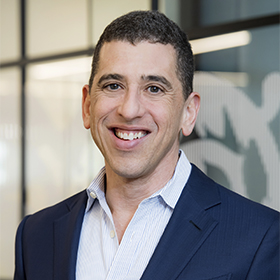
If you listened to the show with Dan O'Neill (EP359), you would know this already. But let me tell you: If you're a provider, even a provider very confident in your office's ability to confer better patient health, you will still have a super hard time getting off the fee-for-service (FFS) hamster wheel. Why? Because it's hard to find payer contracts out there which will reward you (the provider) for actually taking care of your patients and to be accountable for the value of healthcare that you deliver. This is a tangled web we weave because, despite some payers offering risk-based contracts, a lot of times there's some IPA (independent physician association) or other "holder of the actual payer contract" who does not pass along these contract terms. These IPAs or health systems even sometimes just keep paying docs or provider offices FFS even if they themselves have a risk-based or capitated or value-based-of-any-kind agreement. If I actually kept track of the issues raised in the emails I receive from docs, there's one thing that I would likely find amongst the most frequently cited points of consternation: Physicians or practices or CINs (clinically integrated networks) or ACOs (accountable care organizations) want contracts where they can do right by patients. These are the good docs. These are the ones burned out and suffering from moral injury because physicians, PAs (physician assistants), nurses, clinicians who actually follow up and coordinate care and spend time making accurate diagnoses instead of cramming in more procedures … these are the clinicians who want to do the right thing and are also the ones who are getting dinged on performance reports and paid less. Bottom line here, for a physician practice to transform itself from an FFS machine cranking out volume but not necessarily health or care, the office has to have a high enough percentage of their patients in value-based arrangements to make it actually feasible to transform. It is only when they hit a tipping point of enough volume, enough patients in risk-based contracts that they can afford to be accountable for their results. At that point, yeah, everybody wins—doctors, patients, actually the entire community wins because when a local practice transforms, all of their patients tend to benefit at some level from the new processes and procedures and standardizations and pop health systems that get put in place. So, let's move forward with this with all haste, shall we? Why aren't we? What's the problem here? Well, there are lots of problems, don't get me wrong. But a big one is self-insured employers on the whole are not offering any sort of accountable care arrangements to the providers in their community. This is 150 million patient lives we're talking about here—a huge chunk of many providers' patient panels. Self-insured employers have a really big opportunity to level up the care in their whole community due to the spillover effect when a provider practice transforms itself because it has enough patients to do so. But these employers are stuck. They are paralyzed. They are doing the same thing this year that they've done last year, and therefore their whole community is equally stuck in a smorgasbord of suboptimal FFS goings-on. So, offering accountable care contracts is one thing (a very big consequential thing) that is also one of the five things self-insured employers can do to improve employee health that I talk about in this healthcare podcast with Dan Mendelson. Dan Mendelson, my guest today, also wrote a Forbes article listing out these five things. Here are all five things that Dan mentions in one handy list: Expand availability of accountable care models to improve the care experience, quality, and affordability at a local level. For a deep dive on this, listen to the show with Dave Chase (EP374). Invest in the data access needed to assess health outcomes. For a deep dive on this, listen to the show with Cora Opsahl (EP372). Align employees' health benefits with pop health outcomes. For a deep dive on this, listen to the show with Mark Fendrick, MD (Encore! EP308). Prioritize care models that can meet employees wherever they are. For a deep dive on the DEI (diversity, equity, and inclusion) aspect of this, listen to the show with Monica Lypson, MD, MHPE (EP322). Make care navigation a central part of the benefits package and experience. I am looking for an expert to take a deep dive on care navigation who does not work for a care navigation company. Hit me up if you know someone (again, who does not work for a care navigation company). My guest today, Dan Mendelson, is CEO of Morgan Health at JPMorgan Chase. He previously founded Avalere Health. Before that, Dan served as associate director for health at the Office of Management and Budget. Besides exploring the why and the what for each of the five things employers should do right now, I also wanted to find out from Dan what's going on at Morgan Health and how they are l

Ep 384EP384: How Shareholders Impact Payer Behavior, Exactly and Specifically, With Wendell Potter
Here's a Milton Friedman quote: "There is one and only one social responsibility of business—to use its resources and engage in activities designed to increase its profits so long as it [that entity] stays within the rules of the game, which is to say, engages in open and free competition without deception or fraud." Okay, so this is Friedman, Milton Friedman, pretty much the most influential advocate of free market capitalism, stating quite clearly that an entity's greatest responsibility lies in the satisfaction of its shareholders. His nod to social responsibility or ethics of any kind comes at the end there, where he says that for free market capitalism to function, there must be open and free competition and no fraud. So, let's compare this to what's going on in the payer space in the healthcare industry. First off, there was just a chart in the New York Times the other day where pretty much every major payer except one got a check in a box for being accused of fraud. Interestingly, if you look in the comments section of that article, people posted links where that one outlier was being accused of fraud. So, I'm not sure what's up with that, but yeah, let's just conclude that there's fraud in the payer space. On to Friedman's requirement for open and free competition. As we all know, there are a few very powerful, very big, consolidated entities who control the vast majority of the market with both regulatory capture as well as the capital to continue to buy more and more adjacent businesses, as well as any threatening upstarts and just close them down. As I often hear said, we're gonna wind up with single-payer healthcare but maybe not the single payer most people are thinking of. If anyone thinks that in the highly consolidated payer space there is open and free competition, send me a note. I'd love to hear from you. I mean, even if what I've just said is 50% or 75% true, we're still outside of Friedman's definition of functional free market capitalism in the payer space. I wanna shift gears now to discuss the rules of the game, and this is really the topic of today's podcast. Friedman said in that quote above that there are rules of the game that entities abide by. Therefore, these rules of the game are inarguably consequential. And in this healthcare podcast we're talking about how these rules of the game echo when it comes to payers—companies that are publicly traded on Wall Street with shareholders. So, that's your spoiler for where this episode is headed. But before we go there, let me just say one or two things to the many listeners who I would consider certainly part of our Relentless Tribe who also work for payers. If you work for a payer, you have a few options. One of them is to do as much social good as you can to offset even a little piece of the not so good going on. The other is to help those working elsewhere in the organization to understand the full impact of their actions and the hope that they figure out a way to be less financially toxic to members. You have already taken the first step, because simply by listening to the show, you see the problems with clear eyes. The larger question, though, is this: Is it possible to do well by doing good vis-à-vis leveraging the power of market forces to efficiently help patients, even if shareholders are demanding otherwise? Well, it ain't working out so great so far, just comparing us to the rest of the world. But the more white hats we have, the better. So, keep advocating for patients in the belly of the beast, and there's always a whistle around to blow should it come to that. Meanwhile, let's focus our clear eyes on where we are from a patient's eye view—just briefly here, because we've discussed this all before in great depth. Here's some stats to a Commonwealth Fund issue brief. In the first half of 2020, first quarter, one out of four adults in employer plans were functionally uninsured due to high out-of-pocket costs or high deductibles. Listen to the show with Wayne Jenkins, MD (EP358), for a deep dive on the human consequences of having insurance but not being able to afford to use it. We're in a place in this country where the majority (67%) of adults who reported medical bill or debt problems was insured when that care was provided. That's from Kaiser Family Foundation. There's 100 million Americans with medical debt. These numbers are staggering. What's the why with all of this? It's our dysfunctional healthcare benefits market. Listen to the show with Kevin Schulman, MD (EP366), for more on this at the systemic level. But today we're talking about one entity in this dysfunction, which are payers, insurance carriers. I invited Wendell Potter on the show to ask him to explain how for-profit payers contribute to our dysfunction, creating inequality and wage stagnation. You see this happening as well as I do, right? On one hand, we have entities claiming all kinds of worthy and beautiful things in press releases and maybe even doin

Ep 383EP383: Direct Contracting as a Health System Business Strategy, With Nick Stefanizzi
The show on direct contracting with Doug Hetherington (EP367) and also the one with Katy Talento (EP350), both of these experts have said that if an employer direct contracts with a provider organization, in general, the employer gets about 20% savings over the status quo. This makes sense—just cut out the middleman with an MLR (medical loss ratio) of plus or minus about 15% and you're at three-quarters of the way there. You might be thinking, "Well, maybe not so fast here, because then wouldn't FFS (fee-for-service) rates go up? Is it not Slide 1 on most carriers' sales decks how great they are at leveraging their vast buying power to negotiate discounts with hospitals?" Hmmm … if you think this, you're about to be shook. Turns out, carriers are not so good at negotiating rates with hospitals. For more on this topic, follow Leon Wisniewski on LinkedIn. Or check out an article entitled "Hospital prices vary widely, often higher with insurance than cash, The New York Times finds." The big concerns for employers looking to direct contract, I think, are going to be threefold. And right now, I'm just speaking in general. This has nothing to do with the conversation that follows. But I think the three big concerns are this: Let's say the employer gets actual fee-for-service rates that are 20% less than average carrier negotiated rates. So, great … but will utilization go up if the wolf is watching the henhouse, so to speak? Especially if PCPs are owned by the hospital system and incented, as many are, to drive downstream utilization. It's been estimated that PCPs can drive $1,000,000+ of revenue when they refer in network to profitable service lines. What happens when this is unfettered, meaning no third party to do prior auth stuff for utilization management, for example? Some employers, for sure, could and certainly do hire a third party to do utilization management; but sometimes one of the contractual requirements of a health system direct contract is an easing of, let's just say, at least the most aggressive PA (prior auth) requirements. So now, all of a sudden, are more plan members getting more services that, even at a 20% discount, add up to a greater total spend? A counterpoint: I've heard more than one person who would know say that most PA programs don't actually do a whole lot except defer spend at best. Here's a quote from Scott Haas. He said, "The only value I have observed of the prior authorization process is the accumulation of data that is required of the stop-loss industry to establish known risk for them to laser risk. Cost shifting at its best. Other than that, I have rarely observed value to the patient, provider, or the plan sponsor." One thing I am noticing is that those providers offering direct contracts are aware of this whole line of questioning and fear of the health system driving overutilization because incentives and might be doing things (the health system looking to direct contract) to mitigate those fears. Some are discussed later in this podcast. So, I don't know about whether plan sponsor spend would net-net go up if you get rid of PAs and profit-driven utilization management or go up enough to offset all of the admin costs and care gaps that crappy prior auths or prior auth processes slam patients and providers with. Big concern for employers (besides even if the price goes down will utilization go up—and then what's the net effect of that?): Will the provider's PPO (preferred provider organization) network be too narrow if I go with a direct contract with a health system, either legally running afoul of network adequacy rules or run afoul of employees just getting pissed off because their doctors are no longer in network? I guess there's a bunch of ways you can do things if you are a plan sponsor that might mitigate this, but I could still see it certainly being a concern. By aligning the plan sponsor with the provider, including getting all the data and just from a pop health perspective being able to align around priorities, does care quality, preventative care stuff, social determinants of health, and equity concerns … does this stuff actually start to improve patient health? There are plenty of examples—some that Nick Stefanizzi talks about in this podcast, including a great one with Whole Foods—where this is certainly the case. But as we in healthcare all know, not all cases are the same. As soon as any party in the mix starts trying to maximize their revenue with little regard to its impact on patients and clinicians, things can go south. For example, just speaking in general here, but I might bring up the whole "remember consolidating health systems?" They promised all kinds of care quality improvements as a result of owning the entire patient journey and consolidating data and … yeah, not so much with that. As we know, hospital systems who consolidated have no greater or better quality on the whole as unconsolidated health systems, despite the fact that their prices

Encore! EP335: Why Private Equity Is Willing to Pay $55,000 per Patient to Primary Care Start-ups, With Brian Klepper, PhD
This show was one of the most popular episodes in the past 12 months, so enjoy this encore while I am in Chicago moderating a panel on pharmacy benefit management at the WTW Conference Board. But while I have you, I just wanted to thank everyone for listening. You really are a part of our Relentless Tribe, and I could not thank you enough for your commitment to doing the right thing for patients and for this country—and that dedication is evidenced by you listening as often as you do to Relentless Health Value. Our show has the largest following of individuals who are truly pushing hard for patients over profits, and since, according to LinkedIn anyway, 40% of our listeners are at the "highest level of seniority in their organization," I'm guessing that we have the muscle to do this thing. Thanks for being part of the Relentless Tribe and for all that you do. In this healthcare podcast, I'm talking with Brian Klepper. If you haven't heard of him, Brian's a longtime healthcare analyst and former CEO of the National Business Coalition on Health. This interview takes off like a shot, as most of my conversations with Brian Klepper do. We're talking about primary care and its various iterations. We start out with Exhibit A—the HMO version of primary care from the '90s. This is a great comparator to really get a handle on what's going on today. During the heyday of HMOs (back in the '90s), primary care was basically a glorified gatekeeper kind of doing two things. On one hand, they were restricting access. It wasn't an accident that it was really hard to get an appointment with a PCP. On the other hand, it also wasn't an accident that, once you got there, the PCP only had 7 minutes to spend with you, which basically meant that you left with an appointment to see a specialist at, of course, the health system that probably had just bought that PCP practice. Everybody's happy then, right? Specialist volume goes up, they make a ton of money for the health system, plans make a ton of money because they make a percentage of total healthcare spend … Oh right, everybody's happy except the patient who can't get care and the PCP who can't do their job. By the way, for more information on why the '90s version of the HMO industry crashed and burned, listen to my conversation with Alex Jung on this exact topic. A big part of the "why" really actually took me by surprise. But back to primary care … Today, in broad strokes, we have three kinds of PCPs. And when I say three kinds of PCPs, we're not really counting urgent cares or what amounts to urgent cares in that mix—meaning, not counting a lot of the retail clinics because they don't really manage patient care like you'd hope a PCP would manage care. Last I checked, none of them were managing much more than an episodic visit. You can't manage a chronic condition in 15 minutes. So, like I said, there's three kinds of PCPs that are around today; and let's call the first kind the original PCP. This version of the PCP office is primarily fee for service (FFS). Maybe they have a couple of capitated contracts. But the distinguishing factor isn't really what their payer mix is. It's that they're not taking on much risk or any risk of real consequence. Second, we have direct primary care doctors. This group tends to cut out insurers and work directly with either employers or patients themselves. They take a monthly fee, and, in general, a patient can see them however much they need to. Again, no risk or little risk is assumed here beyond the primary care services themselves that are rendered. Third, we have what Brian calls industrialized primary care—or some people call it advanced primary care, or APC—but I'd probably call it something different. I'd call it "taking risk for the full continuum of care" primary care. Maybe I wouldn't even call it primary care at all because this third category really is starting to color outside of the lines of primary care. This third iteration requires many things to accomplish. It requires an unimpeachable relationship with the patient; you cannot be successful with this otherwise. It requires great virtual/digital capabilities. It also requires data—data to help ensure that care gaps are filled but also to make sure that patients are referred to high-quality, high-value specialists downstream who will actually create outcomes. It also includes optimizing specialty pharmaceutical usage, for example. Brian gets into this and how a state employee health plan is on track to save $1.3 billion in this fashion. Brian believes that this third iteration of primary care—this APC industrialized primary care—is the third leg of a three-legged stool that is needed to transform healthcare. If you must know, the second leg is identification and the use of high-performing specialty services; and the third is value-based reimbursement environment. Most of the second half of this conversation with Brian is about why there's just a flurry of investment into vario

Ep 382EP382: Pharma Conflicts of Interest and the Anti-Kickback Statute, With Aaron Mitchell, MD, MPH
I saw a Tweet from Farzad Mostashari, MD, the other day; and I'm gonna rewrite it in the context of today's show: This is why we can't have nice things! As soon as someone comes up with something that might accomplish some good things when done in moderation and with good intent, it gets exploited for revenue maximization. I have to admit, this conversation with Aaron Mitchell, MD, MPH, and actually the one with Mark Miller, PhD (EP380), from two episodes ago were both kind of painful for me—and let me tell you why. It's the same reason I find conversations painful about hospitals or leading cancer centers or even some self-insured employers and EBCs (employee benefit consultants): It hurts my heart when some percentage of healthcare industry peeps who have the opportunity to produce so much good in the world instead choose to do stuff that is financially or otherwise toxic. But let me get to the point of today's show. Dr. Aaron Mitchell and I are talking about conflicts of interest (COI), and we're talking about COI in the payments that are made from Pharma to physicians. COI might mean when physicians are paid in a way that skews their clinical decision-making. Nobody wants to be the patient of a physician with skewed decision-making, after all. That's the "why" of this whole discourse. Now, let's get into two important points re: skewed decision-making. Any payment that skews decision-making is, in fact, considered no bueno by the current writing of the AKS, the anti-kickback statute. Second, almost any payment, direct or indirect, turns out, skews physician decision-making. It's not just getting paid the big bucks to make a speech or consult or whatever. Getting a modest free lunch can also have the same effect. Prescribing is affected. That's what the data show and what the recent paper that Dr. Aaron Mitchell and his colleagues published in the Journal of Health Politics, Policy and Law articulates. Their paper is titled "Industry Payments to Physicians Are Kickbacks: How Should Stakeholders Respond?" So, hmmm. Much to cogitate upon in what I just said, which is what the conversation with Dr. Aaron Mitchell that follows is all about. But let me offer up a few spoilers and maybe some additional thoughts. First of all, some "Are payments COI and kickbacks?" contemplations are pretty black and white. We start out the conversation in this healthcare podcast talking about the recent Biogen incident, I guess I'll call it, which is sadly not an outlier. Biogen never admitted any wrongdoing here. But if what they are accused of doing is true, this could be considered not a gray area. This is black-and-white COI—unquestionably should not happen. But where things get a little bit more open to interpretation and require some consideration and thoughtfulness is if we're trying to weigh the gray in the middle between black and white. Here, what needs to be thought through is the aggregate good versus the aggregate bad of Pharma paying physicians to do stuff or buying things for them. If Pharma needs help during its clinical trials to figure out a breakthrough therapy and they want to talk to leading experts in a specialty, that's maybe a good thing so that they can get a drug that actually works well for patients. So is—and this is me talking, not Dr. Mitchell—but I could see that Pharma helping to figure out ways to educate clinicians about the best ways to help patients suffering with real diseases that nobody else is making any effort to do anything about at a national scale … it could help humans live better lives if Pharma takes the advice of the right thought leaders and helps to disseminate their teachings. Maybe physician societies could fill this role, but a lot of times, who needs educated are not the actual doctors in the society in question. It's other doctors the patient is seeing who don't realize the root cause is a GI problem or CKD (chronic kidney disease) until the patient needs a liver transplant or "crashes" into dialysis in the ER. But irrespective of the validity of my musings here, the point is to quantify the in-aggregate "good" that might happen as a result of Pharma paying appropriate clinical experts appropriate amounts. Contrast that aggregate good against some not so good. Study findings that Pharma can drive up not only Rx's (prescriptions) for its own drugs but also drugs in general when they buy stuff for doctors or pay doctors. Patient populations get overmedicated when compared to a baseline as a result. Too many patients get diagnosed and treated for some condition that they may not actually have. Too many expensive me-too drugs get prescribed at big unnecessary costs to patients, taxpayers, and employers. When I say costs to patients, by the way, I also might be implying a clinical overtone here as much as a financial one, because there's almost no drug that comes without side effects. So, what are some solutions that Dr. Aaron Mitchell mentions in this episode, or I that bring
Ep 381EP381: For Reals, Becoming Customer-centric, Transforming, or Innovating at a Very Large Organization, With Karen Root
I was at the PanAgora Pharma Customer Experience (CX) Summit earlier this summer. Let me tell you one of my big takeaways. Many at pharma companies who are trying to convince their organizations of the need to be provider- and/or patient-centric are having a tough go of it. Heard that coming from every direction. Seems there are quite a few pharma organizations out there who are not actually customer/patient-centric. Say it isn't so. Turns out, they continue to be pretty darn brand-centric whether or not anyone besides the CX team and the most successful KAMs (key account managers) realize this hard truth. This matters because, from a provider organization, physician, or patient standpoint, it's not what's written on the walls … it's what goes on in the halls. It's what a company actually does in their interactions with the rest of the healthcare ecosystem that matters and that builds their reputation. You see this lack of customer centricity and, et cetera et cetera, there are certainly other things going on here; but you see the lack of customer centricity manifesting, right? You see the pharma reps that get kicked out of hospital systems because the perception is they add little if any value and "waste doctors' time; all they do is shove detail aids in our faces." Heard that recently. You see manufacturers in the news getting fined, very publicly, by the OIG (Office of Inspector General) or the DOJ (Department of Justice) for doing stuff that is not really patient-centric by a long shot. For those of you working at pharma companies looking to do the right thing by patients, looking to be patient- or customer-centric for reals, a couple of reality checks here which you might be able to use to spark transformation at your organization. You saw, for the first time ever, legislation allowing Medicare to negotiate for drugs to pass into law, as well as the inflation rebate. Listen to the show last week with Mark Miller, PhD (EP380), for the "why did that happen right now" full story, but the short version is this: People, voters, patients, physicians, taxpayers, policy makers … all of them are questioning the value that Pharma brings for the money being spent. I am being blunt, I know; but so is this here referendum that just happened. If you're trying to spark change and you need a story arc that has a carrot and a stick to inspire transformation at your organization, I'm just dropping this here for you. In today's environment, bottom line, being brand-centric instead of customer-centric diminishes trust. Look, this doesn't just pertain to Pharma; this is a message for the whole industry. But there is certainly a way to do well by doing good, and how that starts is helping provider organizations and patients improve patient outcomes as the primary goal. Being innovative to that end. It's about supporting the best-practice standard of care and bringing resources to bear that are truly helpful. That is how more of the right patients can get the right treatment/drug at the right time or take their meds as per the A1A clinical guideline. It's probably also the way to sustainable business success. I've said it here a thousand times: People trying to do the right thing by patients all need to work together. If there's a party in the mix that nobody else wants to deal with because they are deemed not a team player or they don't listen … yeah, that's what I call a competitive disadvantage, beyond just squandering their ability to achieve their mission statement and improve patient care and lives, that is. Today's conversation is with Karen Root, who was a speaker at the aforementioned PanAgora conference. In this healthcare podcast, we are talking about how to make transformation and innovation actionable at a large organization—maybe a pharma company but pretty much any large organization with lots of people, lots of human beings with different motivations and goals. As we all know, for every early adopter, there are (it feels like) five laggards who will fight you tooth and nail because they do not want to transform. They like being brand-centric, and it's been working out fine … well, up until this year, at least. Karen Root is currently director of experience strategy at Boehringer Ingelheim, which is a pharma company. For many years prior to her current role, she was an enterprise head of brand and culture at WL Gore & Associates. What we talk about in this show is how to break down the historical "brand is king" mentality so that people want to follow with the awareness, courage, and determination to do so. Everything that we talk about in this episode can also be applied to pretty much any organizational transformation or the rollout of any innovation or new capability. Here's the key things that Karen talks about which are essential for an organization to transform, maybe (again) in a way that is customer-centric and/or to roll out new innovations or capabilities: Leaders must communicate a compelling vision
Ep 380EP380: 7 Big Reasons Medicare Drug Price Negotiation Actually Happened This Time Around—What Changed? With Mark Miller, PhD
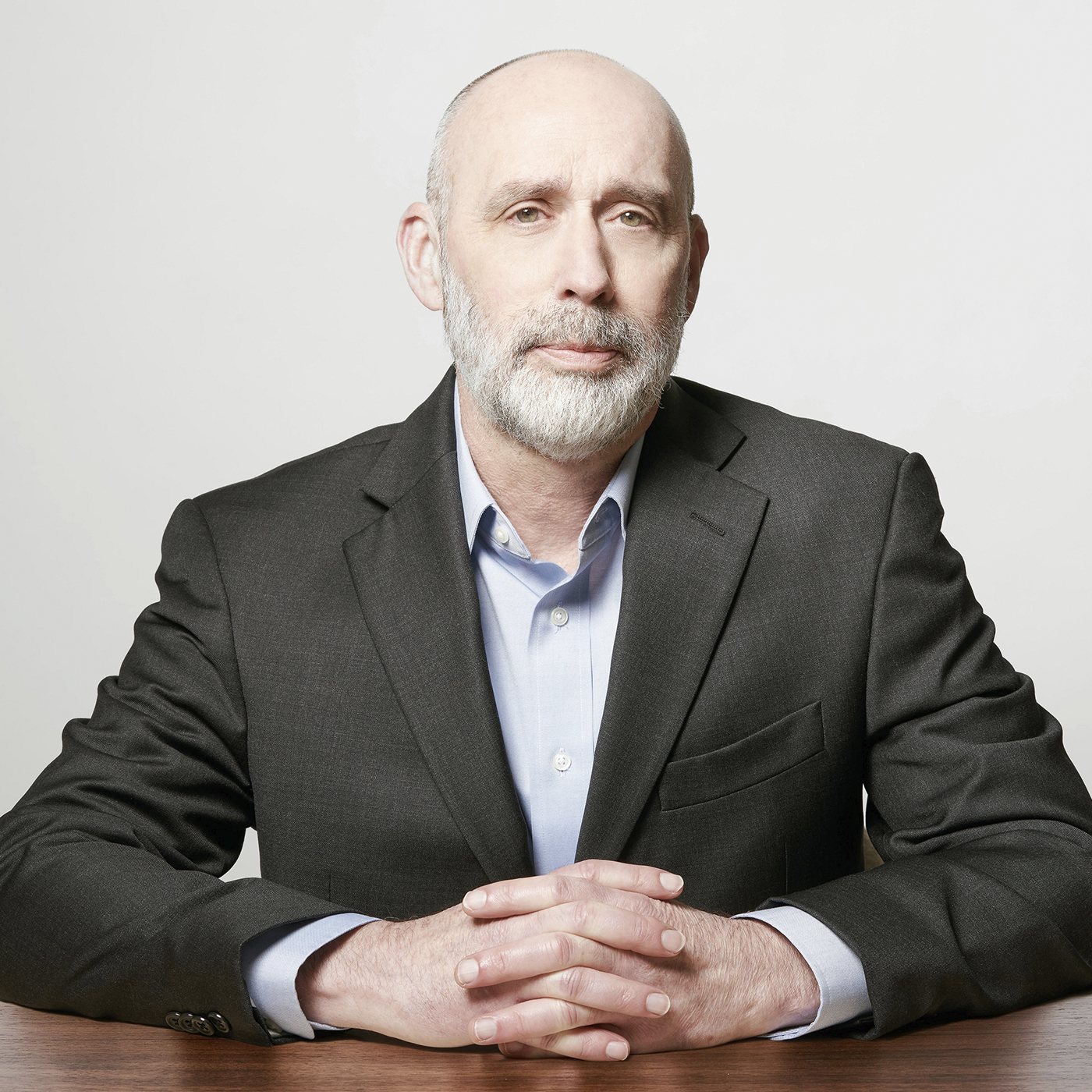
It's been said that healthcare in this country will not be transformed because of some incremental government policy, nor will this industry transform because of some tech company who techs the crap out of healthcare. It's been said that the only way the healthcare industry in this country is going to fundamentally change is vis-à-vis a seismic shift in the way Americans view the healthcare industry in their understanding of what is going on and the extent to which it directly impacts lives. You and I, all of us, have heard pundits say every year for a decade (at least) that this revolution is a-comin' and that this year … no más. Americans cannot afford to pay any more in premiums or out of pocket. We have reached the brink. And year after year, we've discovered that, in fact, Americans as patients, members, and taxpayers can pay more and are willing to do so. Well, maybe right now we are actually cresting the chop. Medicare can now negotiate drug prices legislation. Maybe it's a bit of a watershed moment here. In this healthcare podcast, I'm talking with Mark Miller, PhD, EVP of healthcare at Arnold Ventures; and this is what we talk about today: the why now—the why, all of a sudden, after years of talking and griping and nothing happening, how right now, what constellation of factors transpired that enabled Medicare drug price negotiation to become law. You need to listen to the show to get the context, but here's the seven main reasons by my counting that Mark Miller talks about in this episode: The sensitivity of the public to just healthcare costs in general, Pharma being an easy-to-spot component of those healthcare costs Sensitivity of policy makers to Pharma's R&D claims, and non-industry-sponsored information coming out that tempers some of those research and development claims that Pharma has been making Sensitivity that innovation isn't a homogenous broad stroke when it comes to new drugs. There's a difference between breakthrough innovations versus me-too-type drugs. Consider some new combination drug that's, I don't know, two generics and costs $2000 a month. There's eyes on that kind of stuff, and if Pharma's reputation travels in an industry-wide block, this compounds our #3 point here. Sensitivity of innovation in the future versus people getting access right now to today's innovations. If too many people (ie, voters) can't get access to today's meds, it's a reach to expect them to worry too much about their future selves where, in all likelihood, they are thinking that they still wouldn't have access to the drugs. The landscape shifted, but pharma talking points did not—and the result was labeled "tone deaf" by some. Voters wanted aggressive actions as a result of the aforementioned constellation of factors, and a majority of Congress people responded and either voted yes or didn't protest overly hard, even if they didn't. Patient voices became more sophisticated. While they still might have issues with PBMs (pharmacy benefit managers) and/or insurance carriers, there's a growing perception that the story here is more nuanced and Pharma is in that mix. This is what we talk about in this episode: the why now, exactly and specifically. So thrilled to have had this conversation with Mark Miller, who has had, and continues to have, such a storied career. In brief, Mark Miller ran MedPAC (Medicare Payment Advisory Commission) for 15 years. That's a big deal. He also has held other roles at CMS and the Urban Institute. Now, Mark is at Arnold Ventures, as aforementioned, which is a philanthropic organization. He oversees Arnold's work in healthcare. One last thing: The legislation that just passed also includes a few other parts that impacts drugs. A big one is limiting the catastrophic Medicare Part D out-of-pockets to beneficiaries to $2000. And then there's also an inflation rebate. So, there's a rebate back to Medicare if Pharma raises its prices faster than the inflation rate. You can learn more at arnoldventures.org. Mark E. Miller, PhD, leads Arnold Ventures' work to lower the cost and improve the value of healthcare. He has more than 30 years of experience developing and implementing health policy, including prior positions as the executive director of the Medicare Payment Advisory Commission, assistant director of Health and Human Resources at the Congressional Budget Office, deputy director of health plans at the Centers for Medicare and Medicaid Services, health financing branch chief at the Office of Management and Budget, and senior research associate at the Urban Institute. 04:45 Why did Medicare's ability to negotiate on drug pricing happen now? 06:35 What's different about the drug market today that allowed Medicare to gain the ability to negotiate drug pricing? 12:08 How has innovation played into drug price negotiations? 12:40 "If you limit profits, you can end up limiting innovation." 14:03 Why was the distinction between more drugs and innovative drugs important to changing th

Ep 379EP379: How Much Money, Really, Are Employee Benefit Consultants and/or Brokers Making From Plan Sponsors? With AJ Loiacono
This show with AJ Loiacono is different than others you may have heard with him because in this healthcare podcast, we are not talking about PBMs (pharmacy benefit managers). We're talking about brokers and EBCs (employee benefit consultants). So, say I'm a self-insured employer. Here's the big question: Is my broker or EBC helping me make the right decisions, or is he or she helping me make decisions that will make them the most money? While there are some amazing and totally above-board EBCs and brokers out there, unfortunately, caveat emptor is a thing. Buyer beware, that is. Too many self-serving and I'm sure very charming sharks are out there circling plan sponsors. It is currently a fact that some EBCs and brokers and even TPAs (third-party administrators) or PBMs or others take hidden kickbacks or fees or percentages. They make a lot of money, maybe the most money, in these secret ways. All this money, money paid in secret backroom deals—let's not lose track, these dollars increase the total prices paid by plan sponsors and employees. Now, I say this to say that my guest today, AJ Loiacono, calls 2022, right now, a "magical moment" for plan sponsors—and for straight-shooting EBCs and PBMs and all the others who are actually doing the right thing by their clients also. It's because of the Consolidated Appropriations Act (CAA), which states quite clearly that plan sponsors can ask their healthcare and benefits service providers to disclose the money that they are making off of the plan—all of the money, not just the direct fees. The CAA went into effect last December (December 2021), and contrary to what some people have said or may believe, it is in force right now. The field memo went out on 12/31/2021. So, the CAA is the rule right now. And in fact, the CAA makes it imperative under ERISA (Employee Retirement Income Security Act) to do what I just said: Plan sponsors must disclose the monies that they are paying out on behalf of employees and ensure that those fees are reasonable and free from conflict. If you're the fiduciary of the plan, you gotta disclose all these indirect and direct compensations of the people that you are paying or the people that you are paying who may be kicking back dollars to other people you are working with, unbeknownst to you. The Department of Labor is putting as much emphasis right now on healthcare as they put on 401(k) plans in the early 2000s, so this is a big deal—or it should be—for plan sponsors. So obviously, in order to comply with the CAA, self-insured employers should be requesting from their EBCs and brokers or others that they disclose, in writing, how much money they are making off the plan. You can see why this disclosure would be necessary if the plan sponsor is responsible to determine if those payments are reasonable and seem to be free from conflict, right? You can't evaluate something you do not know about, and if you don't know about it, the plan sponsor is the one at risk. Ignorance is not an excuse here. Here's one example: What if the EBC or TPA is collecting a $40 payment per prescription from the PBM? Wait … what? Some plan sponsor is paying $40 per script in, I guess you'd call it, a commission? Yes, that is a rumored example—$40/Rx. It is basically full-on arbitrage, and if anyone disagrees, let me know why and how it's not. Or let's say the EBC is making, say, $6 per script payable by the PBM, and this sum should be mailed quarterly to a PO box in another state. This was a condition, by the way, for a PBM to win an RFP (request for proposal) that the EBC wrote and picked the winner of. Yeah, you as the plan sponsor really probably want to know that this is going on because it's your butt on the line. Maybe they are happening right now to you if you haven't gotten the disclosures from your EBC or broker. So, in sum, the CAA is in effect right now. Penalties can be levied right now against plan sponsors. For a deep dive into the CAA, listen to the show with Christin Deacon (EP342) from last year. What's the process if I'm an employer plan sponsor? Step 1: Request in writing the dollars that your EBC or broker is making off of you. Similar to the advice that you'll hear often on this show, ask for actual dollars, not a percentage of this or that. Ask for how much money did you (broker or EBC) make off each program that you recommended to us, and what did that total up to. Once you make that request, the EBC/broker/TPA (whoever you're asking) has 30 or 90 days to respond, depending on who you ask. But if they do not respond, then you, the employer, should report them to the Department of Labor. Keep this in mind: Once that EBC or broker is reported for failure to comply by anybody, meaning likely some other employer, it is only a matter of time before that information becomes public. And the second that info becomes public, I guarantee you that there's some attorney out there just waiting to file a class action lawsuit against every other self-

Ep 378EP378: The Status of Telehealth Reimbursement and Other Telehealth Policy Updates, With Josh LaRosa, MPP
Okay, so … telehealth for Medicare patients. Currently, there's payment parity, meaning a clinician gets paid the same amount for a Medicare patient visit regardless of whether that patient comes in the office or has a telehealth encounter. Right? Or did that end already? And if it didn't end, how much longer will payment parity continue? Also, is it the same for commercial and Medicaid patients? Congress makes rules for Medicare patients, but is it Congress that makes the rules for commercial and/or Medicaid telehealth reimbursement rates? Or how do those reimbursement decisions get made? What about the doing telehealth across state lines thing … the idea that if I'm a doc in New York, I can take a telehealth appointment with a patient in Arizona even though I am technically not licensed in Arizona? And who's in charge of that? Yeah, I went into today's conversation with Josh LaRosa, VP at Wynne Health Group, with a lot of questions. As you may suspect, this program is about telehealth. But just to level set on what we're not talking about, this interview does not dissect the "should we use the telehealth or should we not" question; and it does not get into best practices or equity concerns. For that info, listen to the show with Christian Milaster (EP320) or Liliana Petrova (EP357) or Ali Ucar (EP362) or Ian Tong, MD (EP347). Also, we are not talking about the politics, per se, of who's for telehealth and who's against it. We also aren't drilling too far into the telehealth fraud cases that are coming to light right now, but of course we cannot resist talking about them a little bit. So, let me tell you what Josh LaRosa and I are, in fact, talking about in this healthcare podcast. We're specifically discussing the near-term future of CMS reimbursement for telehealth and the allowed so-called "flexibilities" for telehealth. We talk about a few of the why's behind why are policy makers doing some of the stuff that they are doing. And then we chat about the when, how long some of the new flexibilities and reimbursements that were permitted originally during the pandemic will continue. We touch on the Cerebral incident (I guess maybe you'd call it) and the potential DEA or legislative actions that may result from that as well. An interesting point that we dig into for a couple minutes is this one: Do not forget that the whole telehealth reimbursement debate (do I wanna call it?)—Should we cover it? Should we not cover it? And for how much?—this whole debate is part of a bigger debate. A much bigger debate, actually: the fee-for-service vs the not-fee-for-service debate. That's the larger context of all of this, and I think it's often overlooked. Nobody anywhere is limiting how often a practice who wants to use telehealth as part of some kind of risk-based or capitated thing can use telehealth. Why? Because in a capitated or bundle arrangement, from a Medicare trust fund perspective at least, telehealth visits are not equivalent to additional spend or additional volume. In a non-FFS environment, there's little chance of fraud also, really. Also, patient safety—arguably, probably—becomes much more of a practice concern. It gets a lot less rewarding to do unsafe things over telehealth when you don't get automatically paid to do them … and also paid to fix the problems that resulted from the unsafe things, which is the perverse beauty of FFS that we're all so familiar with. Acronym alert! PHE stands for public health emergency. A public health emergency is the thing the government declares, for example, during a pandemic. You can learn more at wynnehealth.com or by following on Twitter and LinkedIn. Josh LaRosa, MPP, is a vice president at Wynne Health Group, focusing primarily on regulatory affairs with a focus on the US Food & Drug Administration (FDA) and Centers for Medicare & Medicaid Services (CMS). His interests lie in delivery reform and innovations in payment and care delivery models. Josh also supports the firm's Public Option Institute, which studies the emergence of public option programs at the state level. Prior to Wynne Health Group, Josh consulted for the CMS Innovation Center, where he worked to implement, monitor, and spread learning garnered from the center's high-profile demonstration projects, most recently including the national primary care redesign effort, Comprehensive Primary Care Plus (CPC+). Josh holds a Master of Public Policy from the University of Virginia's Frank Batten School of Leadership and Public Policy. He also completed his undergraduate studies at the University of Virginia, graduating cum laude with a BA in political philosophy, policy, and law. 04:09 What is the story with telehealth policy right now? 06:08 What kind of flexibilities did HHS allow with telehealth after the pandemic? 09:46 Are we still under these pandemic flexibilities for telehealth? 12:15 Why isn't the government just making greater access to telehealth permanent? 18:24 How does telehealth lend itself t

INBW35: Collaboration Between Healthcare Providers, Payers, and Others Is Required to Improve Chronic Care Patient Outcomes
Late in May of this year, three-ish months ago, I did an inbetweenisode that explores the "why with the no collaboration" amongst healthcare stakeholders and what the lack of collaboration signifies. That episode got a lot of traction and engagement. This episode that follows is a pretty good approximation of a presentation that I made at the MTVA (Moving to Value Alliance) symposium that happened in Connecticut this past June. If you listened to the earlier show about collaboration, this one is slightly different, shorter, and more to the point. So, let's start here: When you listen to any patient with a chronic condition talk about their challenges with the healthcare industry—and yes, if a patient has a chronic condition, more often than not, that is what they will talk about, their challenges … I went on Twitter just now, and it took me literally 13 minutes to collect what I'm going to say are 300+ Tweets written by patients and their caregivers complaining about their chronic care journey. That's the sad part. I don't mean to kick this off talking about problems; however, if you're gonna solve for something, it is important to understand what problem you are solving for. You do not want to be a solution looking around for a problem. So, let's fix this, this rampant problem problem that chronic care patients seem to have. Many of the patient challenges in the 300 Tweets that I just collected can be grouped into two major categories. And these two major challenge groups can really only be solved for with collaboration amongst healthcare stakeholders. So, let's dig in here. The first major patient challenge is what I'm gonna call the care gap problem. I was talking to someone at a provider organization the other day, and she had 8000 known care gaps with patients and [insert overwhelm here]. And these were just the care gaps that showed up on somebody's radar because they added up to a quality metric, which is sometimes the definition people use for what is a care gap. But if we think about all the other holes in patient care, the typical care gaps that are identified probably come not even close to the total number of actual care gaps: patients who can't see their specialist because they can't get ahold of their records from the local health system or no coordination of care. Coordination is probably another synonym for collaboration. This is a huge deal. People literally die because their clinician cannot get their biopsy results or whatever from somebody else. That's a care gap as deep as a grave. Or patients who keep showing up in the ER because they aren't getting the help or the meds or the accurate diagnoses or the treatment plan that they need to stay out of the ER ... My grandfather had heart failure. At the end of his life, he was probably in the ER once a month. It was sad and painful and expensive and totally unnecessary. But his PCP didn't seem to be collaborating with the specialists, and the ER I don't think was telling anybody what was going on. Right? Or patients who can't get a drug they need approved by their insurance, so they wind up in crisis. Crappy prior auth processes create care gaps. All of these things are gaps in care. Carly Eckert, MD (EP361), was on the podcast; and she made a crucial point for me. In fact, I tried to get her to come on the podcast originally to talk about care gaps and closing care gaps; but she categorically refused. Chronic care management, she said, should not be a game of whack-a-mole. It may be better than nothing, a game of whack-a-mole; but it is certainly not ideal. Chronic care management by care gap is like cooking with a fire extinguisher. If we want to eliminate care gaps for reals, let's just not have care gaps. So, how do you go about not having care gaps, then? The goal should be to craft a non-fragmented patient journey. Let's figure out what a great care journey looks like ahead of time and then try to keep the patient on it. That is the best way to eliminate care gaps: proactively. You don't have them. Immediately, because I am a person of action, I went into my filing cabinet; and I actually found an example of a patient journey map amongst my papers that I had worked on years ago. You have probably seen one of these and may have some of your own patient journey maps tucked away in a binder in your office somewhere. Most people have them. There are a few things that they all have in common, irrespective of the disease state or the organization or anything. The things that they have in common are they are complicated flowcharts with a lot going on. Besides just being complicated, the other thing that patient journey maps all have in common is that there are multiple parties mentioned with roles in that patient journey. You're gonna have a PCP, a specialist or two, a hospital, a payer, a pharma company more than likely, a PBM maybe, maybe a community organization … Here's a quote that kinda sums that up from Dr. William Bestermann: "Improvi

Encore! EP295: The Not Entirely New but Definitely Improved Way to Measure Primary Care, With Rebecca Etz, PhD
I wanted to resurface this episode because when it originally aired over a year ago, the topic may have been ever so slightly ahead of its time. Look, here we are right now with everybody trying to do three big things relative to measuring PCP (primary care provider) performance: Come up with a fair measure for PCP performance. Account for diverse populations with diverse risks so that some docs don't get dinged because their patient populations have lots of comorbidities or behavioral health challenges or live in food deserts, or any one of the other social determinants of health. Not make measuring performance a total procedural nightmare. Right? We want fair measures, we want to account for equity issues essentially, and we want this whole measurement fandango to be as easy as possible. Enter Rebecca Etz, PhD, and The Larry A. Green Center with a really well-validated "instrument," as she calls it, to measure primary care performance. I can think of more than one PCP frankly right off the top of my head who would be thrilled to be measured using this methodology. Even more so because it's one thing that's simple and not a jumble of numerators with various mix-and-match denominators. PCPs are really important to population health. Primary care is the foundation of any well-functioning health system, I am sure many listening to this podcast know well. For the Triple Aim to happen, patients really need access to robust primary care. This has been affirmed by almost anyone who looks into it. And yet, in this country, our system sort of anemically supports our primary care colleagues. As a general statement, poking and prodding and procedures are compensated at a far higher rate than anything requiring cognitive services. What a PCP or a pediatrician mainly does all day is really cognitive. It's listening and thinking and counseling and coordinating. But here is maybe an underappreciated point: If we're going to measure PCP performance, then we need the right measures to measure that performance. You might be doing this measurement as a basis for incentives or maybe for continuous improvement programs. Either way, if you don't have the right measures, then maybe great primary care is under-rewarded or your continuous improvement process is counterproductive—you're incenting the wrong things, you get the wrong activity. And to add to that, PCPs (ie, practices) can spend upwards of $40,000 a year of uncompensated time trying to add and subtract and tote up the difference in all these varied and potentially inapplicable measurement standards coming at them from all manner of directions. My guest in this healthcare podcast is Rebecca Etz, PhD. Dr. Etz and the team over at The Larry A. Green Center have worked hard to create a set of 11 performance measures for primary care. These measures went through the wringer as far as their creation and validation. These 11 measures take into account what patients want, what primary care clinicians (including pediatricians, nurse practitioners, and others) think is most important and possible to provide, and what payers want to pay for. These 11 measures are aligned across the three stakeholders, and they are actionable. Rebecca Etz, PhD, is associate professor of family medicine and codirector of The Larry A. Green Center, which is in Richmond, Virginia, at the Virginia Commonwealth University. You can learn more at green-center.org. Rebecca S. Etz, PhD, is an associate professor of family medicine and population health at Virginia Commonwealth University (VCU) and codirector of The Larry A. Green Center—Advancing Primary Health Care for the Public Good. Dr. Etz has deep expertise in qualitative research methods and design, primary care measures, practice transformation, and engaging stakeholders. Her career has been dedicated to learning the heart and soul of primary care through three main lines of inquiry: (1) bridging the gap between the business of medicine and the lived experience of the human condition, (2) making visible the principles and mechanisms upon which the unique strength of primary care is based, and (3) exposing the unintended, often damaging consequences of policy and transformation efforts applied to primary care but not informed by primary care concepts. As a member of the VCU Department of Family Medicine and Population Health and previous codirector of the ACORN practice-based research network, Dr. Etz has been the principal investigator of several federal and foundation grants, contracts, and pilots, all directed toward making the pursuit of health a humane experience. Recent research activities have included studies in primary care measures, behavioral health, simulation modeling, care team models, and adaptive use of health technologies. Dr. Etz currently leads the fielding of a weekly survey regarding the response to and impact of COVID-19 on US primary care practices. She also serves on the National Academies of Medicine consensus study, "Implem
Ep 337Encore! EP337: A Patient-First Specialty Pharmacy, Not a Money-First Specialty Pharmacy, With Olivia Webb
This encore episode seemed really apropos at this moment in time, since we've just basically published a course in the specialty pharmacy ecosystem, including who all of the various stakeholders are and what their vested interests are. Weirdly, in many of the episodes in the series/course, you'll find the word patient in short supply. And that's not a weird oversight in our podcast production. It is actually an egregious oversight in the specialty pharmacy market, an oversight with real human consequences, which I talk about with Olivia Webb in this encore. Check out a playlist of all of the specialty pharmacy episodes that comprise our series here. If you listen to them all, let me know; and also let me know what you think and, I don't know, maybe we'll create a special certificate for you because at that point you will know more than 99.9% of the industry (even industry insiders) if you listen to the whole thing. Here's the cold hard truth: The whole specialty pharmacy operational model is not built to serve patients, a fact that becomes crystal clear when you're a patient. Instead, the specialty pharmacy model is, rather, pretty blatantly dedicated to the power struggle for revenue and captive patient populations. It's war between providers and the whole PBM/insurer/specialty pharmacy vertical consolidations. Employers and pharma manufacturers are, of course, on the battlefield as well. What is a drug that qualifies to be a specialty pharmacy drug? Usually, these drugs are complicated to store, dispense, to use, and/or they're expensive—generally, really expensive. Lots of zeros, completely unaffordable to pay cash for them as an individual. No one is using a GoodRx card and not using their insurance to pay for these puppies. They can cost as much as a house. Biologics, for example, usually considered specialty drugs—lots of cancer and immunology therapies, injectable medications, IV/infused medications—all these are usually considered specialty drugs. There's no one definition of a specialty drug. It's more that someone somewhere decided to not run the drug through your traditional retail pharmacy for any number of reasons. The problem with the current status quo, wherein the patient gets tossed around while everybody fights over them, is that some basic needs are not being met—like if a patient asks the person administering the drug maybe even a pretty simple question about the drug or its side effects. It's way more likely than it should be that the nurse or whomever doesn't know the answer. Not knocking nurses here at all but definitely knocking a system that allows that to happen. I mean, really now. We're injecting a six-figure therapy in someone's arm that will impact their body in a myriad of maybe frightening ways, some of which are a problem and some of which are not. Said another way, there's a really good financial and clinical use case for making sure that we're patient-centric at a specialty pharmacy point of service—if you care about the patient and cost efficiency, that is. But I guess therein lies the root cause of the trouble. In this healthcare podcast, I'm talking with Olivia Webb about what it would take and be like to create a "patient-first specialty pharmacy," as she has coined the term—a specialty pharmacy dedicated to patients not only having a half-decent experience but also one that might actually create better patient outcomes. Olivia Webb is author of the Acute Condition newsletter. I would certainly recommend subscribing. One last thing: If you're following the whole PBM/insurer/specialty pharmacy vertical integration skullduggery, keep an eye on a bunch of lawsuits against these combined entities (three examples here, here, and here) alleging that they are doing some not super upright and honest things with their massive market power. (Say it isn't so!) You can learn more at acutecondition.com. Olivia Webb is a healthcare strategist and writer. She publishes the newsletter Acute Condition, as well as working on other content across the healthcare and biotech ecosystem. She previously worked at Massachusetts General Hospital and Advisory Board Company. 04:43 Why did Olivia start thinking about a patient-centric specialty pharmacy? 06:05 "There's really no layer on top of it to make it look nice." 06:55 "You're kind of dealing with this vertical stack that doesn't really deal with patients frequently." 07:07 Is the specialty model more patient friendly or less? 07:39 What would a patient-centric specialty pharmacy look like? 08:29 "There's a lot of fragmentation; there's a lot of friction." 08:42 What's unique to specialty pharmacy prescriptions? 11:09 Why can infusion centers be a high-drama place? 12:44 What's "the question" around specialty pharmacy? 13:11 Who has the vested interest in ensuring patients take their medications correctly in specialty pharmacy? 15:08 "It's really just a unique area of healthcare where the people that I think of as the good guys and the bad

Ep 377EP377: Specialty Pharmacy, PBM, Hospital, Employer, and Pharma Strategic Maneuvering, With Mike Baldzicki, CRCM
Members taking specialty drugs represent about 2% of any given employer's population but often consume as much as 30% of an employer's total cost of care. As Pramod John, PhD, in EP353 has said, this isn't just small companies we're talking about here. Some of the largest employers in the US are dropping big bucks on specialty drugs, and they are obviously overpaying and don't need to. No employer or plan really need pay any more than the pharmacy's acquisition price plus a reasonable professional fee. But so many employers pay way more than that. Let's just keep in mind that specialty pharmacy spend extends beyond just pharmacy spend. Medical claims for pharma drugs that are infused, for example, can be more than 50% of an employer or plan's specialty pharmacy spend. What I'm talking about now is buy and bill–type stuff where a hospital or physician practice bills for an infused pharmaceutical product under a patient's medical benefit. Listen to EP370 with Autumn Yongchu and Erik Davis about how some hospitals, for example, are managing to charge employers 6x the cost of specialty meds to infuse them and also EP365 with Scott Haas about PBM shenanigans. So, currently, specialty pharmacy spend is big; but it's grown bigger every single year. Every year, employers and the government/taxpayers alike spend more and more on these really expensive drugs. As you can see, there are billions and billions of dollars on the specialty pharmacy table here. Also, as you certainly know if you've listened to the recent series of specialty pharmacy shows that we've done lately, it's kind of a war out there. There are multiple healthcare industry stakeholders trying to capture all of the money. If you can get your hands on a specialty pharmacy patient and manage their care—or, probably more pointedly, manage to bill for their care—it can be incredibly profitable. This show kind of wraps up some loose ends for me. In this healthcare podcast, I'm speaking with Mike Baldzicki, who is chief brand officer over at AscellaHealth. A majority of Mike's background is in specialty pharmacy infusion, capabilities with an array of different healthcare companies. So, he is a great guy to wrap up some of these loose ends with. On the show today, we discuss how many/the percentage of self-funded employers who have taken their specialty pharmacy business from the "Big Three" or "Big Five" PBMs, how many of them have actively started steering their members and managing their benefit carefully. I talk with Mike about what these employers are doing and how they are doing it. From there, the conversation, of course, naturally flows into preventing hospitals from rapaciously buying and billing, which then segues into a discussion about hospital strategy … because if you can't do your buy-and-bill thing for a whole bunch of your patients, then it makes sense for you to do two things strategically: (1) stand up your own specialty pharmacy and/or (2) set up your own network of infusion centers. Mike and I talk about this. We also discuss how much trying to get a specialty pharmacy drug sucks for most patients, which I deeply investigated in EP337 with Olivia Webb. Also in this episode, you can hear me contend that maybe if Pharma and payers enter into outcomes-based contracts, maybe patients would be better served. It's kind of the pharmacy version of the whole "let's pay for value, not volume" thing. I ask Mike how many pharma outcomes-based contracts are out there in the wild, for reals. All of this and more … but you gotta listen to the podcast. Oh, by the way, acronym alert: SPP stands for specialty pharmacy provider. You can learn more at ascellahealth.com. Michael J. Baldzicki, CRCM, is chief brand officer (CBO) at AscellaHealth. As CBO, Mike supports the AscellaHealth Family of Companies comprehensive business strategy to increase brand awareness, boost perceived value, and improve lines of services in the marketplace. He is responsible for oversight of their Family of Companies based on sales and marketing to finance, client services, and specialty pharmacy strategies throughout the organization that drive strategic business initiatives. Within his roles, he enhances the success of the strategic projects and applies business development, contract negotiations, network advancement, and marketing and outreach strategies that cultivate opportunities for AscellaHealth and their Family of Companies. With more than 24 years of experience, Mike held roles in senior executive management within the specialty pharmacy supply group, pharmaceutical and biotech industry of managed markets, group purchasing organizations, specialty wholesale, and integrated delivery networks. He assumed roles within the pharmaceutical organization such as Bristol Myers Squibb, Enzon BioTech, Novo Nordisk, Baxter BioScience, as well as roles within the distribution channel of AmerisourceBergen specialty groups, BioMatrix Specialty and Infusion Rx, Diplomat/BioRx Specialty

Ep 376EP376: Interoperability—Who's Who and Doing What? With Lisa Bari, MBA, MPH
Interoperability. Let's just review a few key points that probably everybody listening knows but certainly bear repeating because they matter. I don't want to dig into the technical or regulatory details of interoperability. That is above my pay grade. But I want to talk about the really important stuff that maybe doesn't get talked about a whole lot because you say the word interoperability and it's like the magic word that transports the unwary into the land of shadow and smoke and mist. It's like a self-published YA (young adult) novel half the time. But let's start here: First of all, consider that a lot of healthcare these days is conceived of as a scattering of micro-moments. It's not even like we think of patients one at a time. We think about patients one ICD-10 code at a time. And we think about those ICD-10 codes in 20-minute increments whenever a patient happens to show up in clinic. The average Medicare patient these days sees five specialists and more than one PCP a lot of times. So, we're not only breaking that patient down into codes per minute or something, but this is further broken down by clinician or practice. Now consider that everybody knows—and when I say everybody knows, I mean it's inarguable at this point—health happens at the whole-patient level, at the whole-person level, more accurately. It happens at the community level: 80% of patient outcomes are going to derive from what that patient does when they leave the office and whether they are able to and health literate enough to construct a reconciled treatment plan for themselves from the bits and pieces of information they've received scattered all over the place. You know in Star Trek when someone gets into the transporter to beam down to a planet and their whole body splinters into a gazillion little pieces? That's how our healthcare industry treats patients. They are frozen in that moment and rarely, if ever, become whole on the other side. So, when we talk about interoperability, what we're really talking about is a means to an end. What we are discussing is creating the ability to treat the whole patient or—Heaven forbid!—consider the whole community because we have enough data that we can accurately and adequately see the whole picture. We are able to avoid prescribing a treatment that is dangerous to the patient, inefficient, duplicative, or low quality—which is what happens over and over again. It's no amazing surprise that our healthcare industry wastes $1 in $4 we spend and doesn't net outcomes that are great in almost any respect when compared to other countries. Let me say this more bluntly, as if that wasn't already pretty blunt: If I don't know relevant and important details about my patient, then I cannot consistently deliver care that is high quality, safe, or cost conscious due to service duplication or uncoordinated care. I mean, how is anybody supposed to deliver evidence-based care when a lot of evidence may or may not be missing? So basically, without interoperability piping in the right patient information, I cannot succeed in any risk-based arrangement, right? If care provided is consistently lower quality, uncoordinated, unsafe, or inefficient, how am I supposed to optimize my care delivery? Said another way, interoperability is essential for anybody who wants to succeed in a value-based arrangement. I need all the data on my patients, and I need it in a way that I can separate the signal from the noise. Of course, getting 40 pages of duplicative SOAP (subjective, objective, assessment, and plan) notes that are semi-accurate and that no one bothers to look at is just unhelpful. Quick counterpoint: FFS (fee for service) loves siloed data. You know how much money everybody talks about could be saved if we eliminate duplicative services? Well, that's how much some fee-for-service health system is gonna lose if you make it easy for clinicians to see that the patient already got that CAT scan. So, in sum, interoperability is essential to high-quality, safe, and efficient care. A mark of a health system or provider practice who is really committed to patient outcomes is going to be their commitment to share data. The world has moved from a "Hey, you're permitted to share data if you really want to" to a "You are obligated to share your data." And right now, I am loosely quoting Micky Tripathi, PhD, MPP, who is the ONC's (Office of the National Coordinator for Health Information Technology) national coordinator and also the guy in charge of TEFCA (Trusted Exchange Framework and Common Agreement) and implementing the provisions against information blocking that was in the Cures Act Final Rule last year. In this healthcare podcast, I am speaking with the perfect person about interoperability, and that would be Lisa Bari, who is the CEO of Civitas Networks for Health, which is a national collaborative working to improve interoperability in this country to improve health. Since interoperability is a huge topic, what

Ep 375EP375: Medicare Advantage Plans in the Hot Seat, With Betsy Seals, CEO and Cofounder of Rebellis Group
Medicare Advantage (MA), otherwise known as the "money machine," is often the most profitable parts of many payers' business lines. Medicare Advantage plans can make a lot of cash if they are good at what they do. Look at any of these large, consolidated carriers' financial statements to get the magnitude of that statement. Also, in 2022, Medicare Advantage plans have enrolled 28 million participants between them, which represents 45% of all Medicare beneficiaries. This marks a three-point improvement in penetration over 2021 and a total program enrollment growth of 9%. All of this is not a secret. So, what's happening right now is that this administration is looking carefully at Medicare Advantage plans and what they have been up to. We have had an amping up of government oversight, including regulatory actions and program audits. In this healthcare podcast, I am speaking with Betsy Seals, who is CEO and cofounder of Rebellis Group, which is a managed care consulting firm working with Medicare Advantage plans. Betsy says (and this is what we talk about in the interview) that there's three main areas that the government is currently scrutinizing: Sales and marketing. There have been these third parties, it seems, these field marketing organizations who were hired to do marketing and sales for some of the Medicare Advantage plans. And because they were third parties, it seems that many of them felt themselves to be excluded from CMS (Centers for Medicare & Medicaid Services) regulations and able to basically mislead prospective members with sales pitches that were highly suspect. Betsy gives some examples of these, and when you hear them, you will see why CMS is cracking down. Recouping improper payments is another area that CMS is all over. Interestingly, as Betsy Seals says in this interview, this might be one area where the government is actually ahead of private sector plans from a technology and analytic standpoint. CMS seems to have better analytics capabilities and is better at detecting fraud schemes and improper payments than the plans themselves. These plans are not sophisticated enough to notice stuff that CMS detects when it gets ahold of the plan data. But as unusual as this situation is where the government is ahead of the business sector, I can't say I'm shocked. We have had one guest on this show after another talking about just how far in the past some of these health plans are lagging. Dan O'Neill probably said it most eloquently and notably (EP359). But I digress. So, recouping improper payments has the eye of CMS. This means two things largely. It means finding "outlier" codes that some MA plan paid for but which are clearly errors and should not have been paid. Another improper payment is when plans themselves do a little fancy upcoding so that they make more money than they should in their risk-adjustment payments. This has gotten some major attention lately. Let me quote from an OIG (Office of Inspector General) report: "Our findings raise concerns about the extent to which certain MA companies may have inappropriately leveraged both chart reviews and HRAs [health risk assessments] to maximize risk-adjusted payments. We found that 20 of the 162 MA companies drove a disproportionate share of the $9.2 billion in payments from diagnoses that were reported only on chart reviews and HRAs, and on no other service records." The sneaky idea here to get more money than they should from taxpayers is that someone somewhere puts down that a member has major depressive disease because someone somewhere said they did. But the patient clearly doesn't have major depressive disease because they aren't getting any treatment for it and nothing anywhere would indicate that they are suffering from a major depressive disease. So, the plan winds up getting more money from the government to care for a patient who is suffering from major depressive disease, but the patient doesn't require any additional care because they don't have major depressive disease. It's a great way to make some dollars for shareholders that is coming right out of the pockets of taxpayers. In sum, the #2 area of additional oversight is recouping improper payments either from paying claims that should not have been paid for or by wild upcoding. This is just kinda like the general sort of compliance oversight that CMS does, meaning grievances and appeals and formulary administration and models of care for SNP plans (special needs plans), compliance program effectiveness—normal stuff like this—which will be interesting given all of the articles coming out right now about how patients on Medicare Advantage plans are less likely to get more costly diabetes treatments and how often there's denials for cancer care or NCI cancer centers aren't covered, etc. One point of note here that's kind of thought-provoking on a few levels: If you're an MA plan, it is super important for you to get members in for their annual screenings. For one, CMS requ

Ep 374EP374: How to Grade a Health Plan and a Few Validated Success Stories, With Dave Chase, Cofounder of Health Rosetta
So, let's put the last, I don't know, 300 episodes of Relentless Health Value into perspective here. The USA wastes about $1.5 trillion a year on some combination of paying way too much for low-value care, fraud, and waste—$1.5 trillion down the drain. As my guest, Dave Chase, says in this healthcare podcast, if this was a country, what we waste would be the 11th biggest GDP in the world. We could call it Healthcare-istan. Meanwhile, outcomes aren't anything to brag about on the world stage, and 41% of American adults have medical debt in this country. Also, all across the country, people making all kinds of healthcare decisions to save money that are clinically toxic. Financial toxicity is clinical toxicity, right? You know this already. You listen to this show. I just saw yet another study the other day—actually this one about cancer outcomes and how they are appreciably worse when patients are worried about how much money their treatment will cost. And a lot of people in this country—many people with a Part D plan, commercial insurance with big deductibles—there's a lot of people in this country who cannot afford tens of thousands of dollars in out-of-pocket spend every year. But let's change gears and talk about some good stuff, some inroads that are being made. Let's talk about Rosen Hotels for a moment. Rosen Hotels is a bright spot, for sure, in all of this. They are a leading indicator of what is possible. Rosen Hotels, which is a hotel chain in Florida, they saved over $450 million in healthcare costs and have healthier, happier employees. They spend 55% less per capita on health benefits despite having an employee population with significant health challenges. They saved so much money that Rosen was able to set up a scholarship fund so that not only kids of employees (and employees themselves) but also kids in the community can go to college. Turnover there is lower. Retention is higher. Employees are healthier. I mean, the ROI of a CEO and a CFO getting engaged and taking back control over their health benefits from third parties? It's huge. Check out this article about Rosen and also Dave Chase's TED Talk about Rosen. My guest today, Dave Chase, says that what they did at Rosen Hotels was actually an inspiration for Health Rosetta, which is the organization that he founded to help employers take control of the out-of-control dysfunctional health benefits market in this country. Dave Chase says that the Health Rosetta community knows something that most don't (yet). Dave Chase has said that healthcare is fixed/fixable. He said that healthcare actually isn't expensive. Clinicians only receive $0.27 of every $1 that's ostensibly spent on healthcare. What is expensive is price gouging, profiteering, administrative bloat, fraud, and inappropriate treatment. And Dave Chase has also said that we're already investing more than enough money to not only fund world-class healthcare for everyone but also take all that money from Healthcare-istan and fund what drives 80% of health outcomes (ie, income, education, career opportunities, and clean air and water). There's so much money that is being wasted in healthcare. But all of this other stuff could be funded if we simply pay what we should be paying. (See Dave Chase's LinkedIn post to learn more about this.) Health Rosetta currently has about five million lives stewarded through plans managed by their Health Rosetta advisors. That's probably another bright spot right there—five million lives. Another bright spot is the work of the Nuka System in Alaska. Listen to EP312 with Douglas Eby, MD, MPH, CPE. The Nuka System has won award after award for being one of the best health systems in the country, and it serves a challenging patient population for less money than most Medicaid plans. So, here you have two entities, Rosen Hotels and the Nuka System, dealing with (on a good day) patient populations with multiple chronic conditions, high maternal mortality … At Rosen, 56% of their pregnancies are categorized as high risk, which not only has generational human consequences, of course, but is also a notorious budget-buster, as Dave Chase has said. There's substance abuse issues. These are patient populations who are doing appreciably better and cost far less than if they were covered by almost any other health plan in this country. Here's yet one more bright spot example company, and that's Pacific Steel. During our conversation, Dave Chase mentioned that the CFO of Pacific Steel said that when they went from spending $8 million in health benefits a year to spending under $3.5 million—basically cutting their healthcare costs in less than half—the CFO said that in order to make that same amount of net income, Pacific Steel would have had to raise their top-line sales revenue by 25% to 30%. So, okay … you're a CEO, and here's your choice to appease your shareholders or make your own bonus. Option A: Go out right now and figure out how to sell 30% more. Or Option

Ep 373EP373: How to Kick a Big Hospital Out of Your Network, With Cora Opsahl
In this healthcare podcast, I am speaking with Cora Opsahl, who directs the 32BJ Health Fund. This is the second conversation I'm having with Cora (last one was EP372), but these two conversations are not really linear—so listen in whatever order you want to. Important to know about Cora's background, in previous roles, she has worked deep in the inner sanctums of the healthcare industry. So, she came to 32BJ armed with a BS meter that's finely tuned, which is, as I said last week, an unfortunately essential skill for anyone trying to help patients and members relying on them to successfully navigate the healthcare industry. Here's a pivotal fact: 56% of total spend at the 32BJ Health Fund goes to hospitals. So, from a "making the juice worth the squeeze" perspective, focusing on hospital prices can have a lot of impact. This is doubly true because of the seriously huge price variations for the same exact types of services at different hospitals, even in the same local market. Because the 32BJ Health Fund demands and gets all of its own data, it can actually run reports and see the impact and nuances of hospital spend very clearly—unlike, frankly, the majority of employers and unions who have zero clue this is all going on behind their backs because they think some other party is actually the fiduciary and not them, which is false, of course. So, let's just linger on this really high hospital prices that are various across a market for one moment. Here's a Tweet from Rik Renard: "The price of CABG [coronary artery bypass graft] varies more than 10-fold across US hospitals (ranging from $44,824 to $448,038). There was no evidence to suggest that hospitals that charge higher prices provide a better quality of care." WHAT?! An employer could pay $44,000, or it could pay $448,000. Seriously? This is why we can't have nice raises—because some employer spent $400,000 not on raises but on overpriced hospital services. Ugh … so frustrating. When employers, almost willfully at this juncture, turn a blind eye to all of this because they think it might be disruptive, meanwhile they're worrying about employee retention and trying to figure out how to give raises. Okay, well, here's a suggestion: Get your healthcare house in order and then you'll have enough money for raises, but that aside … In the New York City market, 32BJ used all of the data that we talked about in the last episode (EP372). They used all of that data to deduce, quite crisply, that NewYork-Presbyterian is really, really expensive—even in comparison to other expensive health systems in the New York metro area. Furthermore, the Fund realized that it could not be sustainable without tackling the challenge of hospital prices. As Cora Opsahl says, "You can't reduce spend by benefit design alone." Which reminded me of that famous quote by Uwe Reinhardt, "It's the prices, stupid." Which, of course, reminded me of what David Contorno has said a million times, "You can't pay less for healthcare unless you pay less for healthcare." I can't overemphasize these points and their impact on employers and workers. It's really hard to be competitive in the global marketplace when shelling out an extra $400,000 here and an extra whatever tens of thousand dollars there for fringe benefits that do not actually add any value from the workers' standpoint and/or confer any additional health. This is just blatantly throwing money away. So, there's gonna be a few health system peeps listening here who will reflexively mutter under their breath a sentence including the terminology "razor-thin operating margin." It must be an AHA talking point because I talk to a lot of health system people from all over the country, and "razor-thin operating margin" is invariably the term that gets used. But let's just dig into that marketing-speak for a moment. While there are some hospitals who assuredly suffered under COVID (or were suffering even before COVID and definitely after), mostly these are rural ones—but let's not talk about them for a moment. Let's talk about the large, consolidated health systems who got billions in COVID relief. Are you kidding me with their razor-thin operating margin crocodile tears? Check out "New Study—Hospitals Hike Charges by Up to 18 Times Cost." Here's a few bullet points from that study: Hospital charges play a major role in mounting healthcare costs, with health expenditures closing in on one-fifth of the gross domestic product (GDP). Hospital profits/margins have mushroomed by 411% since 1999 to a record $88 billion in 2017. The rise in charges coincides with growing hospital mergers and acquisitions by large systems. (This is brutally apparent at this juncture.) The result is increased market consolidation, which leads to, again, higher profits and increased charges, not savings for patients as hospital systems often claim. Listen to the show with Kevin Schulman, MD (EP366). It explains a lot about how these "razor-thin operating margins" and the

Ep 372EP372: Step One for Employers and Unions—Get Your Data, With Cora Opsahl
In this healthcare podcast, I am speaking with Cora Opsahl, who directs the 32BJ Health Fund. Important to know about Cora's background is this: In previous roles, she's worked deep in the inner workings of the healthcare industry. So, she came to 32BJ armed with a BS meter that is finely tuned, which is, unfortunately, an essential skill for anyone trying to help the patients and members relying on them to successfully navigate the healthcare industry. So sorry to have to say that, but employers and unions, your employees and members need your help. If you do not help them, then your employees can find themselves defenseless against so many pit traps of financial toxicity and also clinical decision-making that is not made by patients and their clinicians in the service of improving patient outcomes but made by some other party in the service of financial maximization. It is really frightening what goes on in some cases. I really appreciated this interview with Cora Opsahl, which will be two shows, this week and next week. This whole conversation has been really a big bright spot for me and will provide hope, I think, for any employer/union who is seeking ways to protect their members and patients, the ones on their plans and therefore under their aegis and whom they have a fiduciary responsibility to look out for. It also should be a bright spot for dedicated clinicians out there suffering under the weight of moral injury because you are expected to do things that you know are not in your patient's best interest—or not do things, as the case may be. This whole conversation should put on notice health systems and others who have been really taking advantage of employers who are asleep at the wheel. Change is always really, really slow—until it hits a zeitgeist and then it's not slow anymore. I just attended the MTVA (Moving to Value Alliance) in Connecticut last month, and there were 30 employers there listening and learning. I hear similar numbers from business coalitions across the country penetrating their local markets (Houston, Indiana, for example). Also, spoiler alert, upcoming conversations with Dave Chase will continue this "yeah, there's good things happening out there" theme. So, let's start here with a little bit more about the 32BJ union and their Health Fund that we'll hear about in this episode. 32BJ represents about 200,000 members. They are mostly in residential and commercial real estate—so, for example, your doormen, your maintenance workers, your security, your cleaners, amongst others. Members are in about 11 states, but a lot of them are in the New York City metro area. These union members who are in the fund work for over 5000 different employers. The 32BJ Health Fund has zero-dollar premiums. Also, employees have no premium contribution. Wowza on that point—that's a huge benefit. Here's one more thing that I'm gonna say about the 32BJ Health Fund overseen by Cora Opsahl, my guest today. Let's talk about their amazing leadership, because I do not, nor should anyone else, take exceptional leadership for granted. We have had one guest after another on this podcast who, when asked what it takes to actually attain value for plan members or attain the quadruple aim, what it takes to navigate and overcome bureaucracy and inertia, every one of those thought leaders asked the "What does it take?" question came back with the following included in their list: It takes leadership. Real leadership. The mark of an exceptional leader is one who can conceive of a big mission statement, a goal to deliver better for their members at lower costs, and also the chops and determination to operationalize that vision. This operationalization requires brainpower and relentless dedication to untangle the deliberate opacity that some current healthcare stakeholders absolutely rely on as a business strategy. It takes work to get to the bottom of and disarm some deliberately labyrinthine and noncompetitive contract terms. Let me just pause for a beat on these basically egregious contract terms. Certain healthcare stakeholders seem to consider it somehow their birthright and their privilege to demand that employer and union customers sign on some pretty insane dotted lines—to the detriment of members and employees. By the way, if anyone is thinking CAA right now, I'm right there with you. Talking about the new Consolidated Appropriations Act that went into effect late 2021, and it's gonna take a lot of C-suite executives by surprise when they're named in class action lawsuits. So, there is another impetus to question bad contract terms if anyone at an employer or union needs an additional reason besides the health and safety of employees and members to justify getting their healthcare house under control. For more on the CAA, the Consolidated Appropriations Act, listen to the show with Christin Deacon (EP342). But as I mentioned a moment ago, we are breaking this conversation up into two power-packed episodes. Th
Encore! EP308: How Financial Toxicity Wreaks Havoc on Value-Based Payment Success, With Mark Fendrick, MD
I wanted to remind everyone about this show from last year because it's becoming increasingly relevant. We have this weird thing going on where everybody seems to be talking about physician incentives and payments and financial implications but so often disregards patient incentives and payments and financial implications. Consider that we're at a place in the time-space continuum where it is inarguable that financial toxicity has become clinical toxicity. Patients are increasingly in huge numbers abandoning care, splitting pills, doing all kinds of things to save money that are clinically toxic. And these are patients with "good insurance" that we are talking about here. So, here's a role play: Provider organization is actually paying doctors for outcomes. In wanders a patient with a huge deductible. Doc says, "Wow, Patient … so important that you take your insulin or med as directed or get a follow-up on that scary colonoscopy finding." Patient says, "Sorry, Doc. Can't afford it." And the doc gets dinged because the patient outcomes are avoidably poor. That's what this show with Dr. Mark Fendrick digs into: aligning patient incentives (aka benefit designs etc) with value-based payments on the provider side. And with that, here's your encore: And here I thought I knew a lot about value-based care. In this healthcare podcast, I am speaking with Mark Fendrick, MD, who is the director over at the University of Michigan Center for Value-Based Insurance Design. This conversation is for those of you who already know pretty much about value-based care concepts. If you do not, I'd go back and listen to, say, Encore! EP206, with Ashok Subramanian, before this one. Dr. Fendrick talks in this healthcare podcast about what it takes for value-based care to happen in the real world. No kidding, it's about making sure that reimbursement is aligned with good things (no great surprise there). But two light bulb moments I had in this conversation with Dr. Fendrick: At the beginning of the year, how many doctors and nurses, inspired to do the right thing, have told their patients with diabetes, say, to go get an eye exam to check for diabetic retinopathy? No one would disagree that this is definitely a good idea. Diabetic retinopathy causes blindness. But here's the reality of that conversation. Doc says, "Go get an eye exam." And patient says, "I can't. My deductible is huge, and I can't afford it." So, the patient doesn't get the follow-up care and winds up in the hospital or blind. And the doctor gets dinged on his or her quality scores. Suboptimal outcomes all around, I'd say. This also happens on the pharmacy side of the equation, but I think a lot of us are a little bit more familiar with that scenario—like type 1 diabetics who can't afford to pick up their insulin because of a Medicare Part D or commercial deductible that they haven't met yet. I just never really connected the dots back to the provider getting black marks because their patient has a benefit design that's not aligned with the quality measures. In a majority of benefit designs, consumer price sharing is based not on the value of the service but on how expensive the service just happens to be. Wow! So, we're trying to get our plan members to be consumers and use the power of their wallets to make good healthcare choices. And what we're really doing is driving them toward cheap things or no care and discouraging them from indulging—and I say that sarcastically—in expensive things. But the expensive things might be the high-value care, and the relatively cheap things might be crap that's fully unnecessary or harmful and, over a whole population, adds up to a lot of zeros. Healthcare is not like a consumer market where the expensive things are usually a better version of the cheap things. For all you economists out there, you don't want the demand curve to be elastic when what's cheap and what's expensive has no correlation to quality or necessity. Nobody should be super flabbergasted when a $35 cure-all supplement peddled on YouTube makes some random influencer a millionaire. That's how supply and demand works. Much to ponder in this episode. You can learn more at vbidcenter.org. There's also a great newsletter you can sign up for there. A. Mark Fendrick, MD, is a professor of internal medicine in the School of Medicine and a professor of health management and policy in the School of Public Health at the University of Michigan. Dr. Fendrick received a bachelor's degree in economics and chemistry from the University of Pennsylvania and his medical degree from Harvard Medical School. He completed his residency in internal medicine at the University of Pennsylvania, where he was a fellow in the Robert Wood Johnson Foundation Clinical Scholars Program. Dr. Fendrick conceptualized and coined the term Value-Based Insurance Design (V-BID) and currently directs the V-BID Center at the University of Michigan (vbidcenter.org), the leading advocate for development, i

Ep 371EP371: Buy and Bill vs Pharmacy Bagging—Which Is Better for a Plan Sponsor and Patients? With Erik Davis and Autumn Yongchu
So, this is a 400-level episode in specialty pharmacy options for plan sponsors, meaning here are your prerequisites: You gotta know what buy and bill is, and you gotta know what pharmacy bagging is, meaning white bagging, for example. If you do not, I would listen to Encore! EP282 with Aaron Mitchell, MD, MPH, where we go deep on buy and bill. And then listen to EP369 for the skinny on pharmacy bagging. If you already know what buy and bill is and you already know what white bagging is, then not only do you know more than 98% of the people in the healthcare industry, but also, you're going to get as much out of this conversation with Erik Davis and Autumn Yongchu as I did. Last week's show was also with Erik Davis and Autumn Yongchu. Last week, we talked about how some hospitals and cancer centers are managing to ring up up to six times the cost of an expensive-already injected or infused drug through buy and bill. This is why pharmacy bagging became a thing, if we want to talk about this in historical perspective. It's a direct market response to buy and bill. Hospital systems start making egregious amounts of money marking up drugs that already cost hundreds of thousands of dollars, and their markups are hundreds of thousands of dollars on top of that. Hospital starts making a fortune off of drug markups. Plan sponsors need an alternative, and … enter pharmacy bagging (ie, carving out specialty pharmacy drugs to a PBM [pharmacy benefit manager]). In this show, we compare the potential benefits and problematic loopholes and/or patient concerns for plan sponsors who are trying to figure out whether to carve out specialty pharmacy benefits to a PBM or grin and bear it with the buy and bill. Or, as another option, whether to steer patients to specific infusion centers or specific provider organizations that might have more favorable contract terms for the plan sponsor. Or, hooking up with a home infusion company, again, who is willing to negotiate terms that might be far better for said plan sponsor than just letting some hospital have their way with employees and the health plan. As another alternative, of course, plan sponsors could consider medical travel, which some certainly are. My biggest takeaway from this whole conversation and from the episodes that we have had in this, dare I call it, series about pharmacy benefits, starting with the show with Scott Haas (EP365) where we talked about PBM contracts, moving to the show with Dr. Aaron Mitchell (Encore! EP282) where we talked about buy and bill, then going to the show with Keith Hartman (EP369) where we talked about pharmacy bagging, then last week's show how hospitals manage to buy and bill at 6x the price of these expensive pharmaceuticals … my takeaway from this whole specialty drug extravaganza is that specialty drug procurement is very different than retail drug procurement. Retail drugs, you worry about them en masse at scale almost at the population level. Specialty drugs? You can have one patient on a specialty drug, and that one patient costs as much as the entire rest of the member population combined. So, managing specialty drugs and their administration becomes almost a case-by-case operation. What drug is it? Where is the patient? What options are available? It's possible to save hundreds of thousands of dollars on that one patient, for that one patient's care, and get better patient outcomes by getting the right patient on the right drug that is administered in the right setting. You can learn more by connecting with Erik and Autumn on LinkedIn or by emailing them at [email protected] and [email protected]. Erik Davis, AAI, CIC, CRM, is senior vice president and principal consultant, managed care and analytics, at USI Insurance Services. He has over 30 years of experience in the insurance and risk management industry. Erik works to create an environment that supports the healthcare risk management goals of an organization while maintaining focus on compliance and financial accountability. He is instrumental in vendor negotiations, data benchmarking, population health strategies, claims analysis, recommendations in plan design, and communication strategies. In this capacity, Erik has been involved with development of rates, payment structures, and recommendations of changes in processes, policies, and procedures. He has a broad understanding of contract analysis, evaluating risk, auditing for correct payment, and structuring of excess loss and pharmacy programs. Erik's experience extends from overall employee benefits consulting to workers' compensation, as well as managed care organizations in Medicaid, Medicare, and commercial contractual risk arrangements. Erik earned his bachelor's degree in economics from Oregon State University. He holds Accredited Advisor in Insurance (AAI), Certified Insurance Counselor (CIC), and Certified Risk Manager (CRM) designations. Autumn Yongchu is a healthcare operational risk consultant at USI Ins

Ep 370EP370: How Do Some Health Systems Manage to Charge 6x the Cost of a Specialty Pharmacy Med to Infuse It? With Erik Davis and Autumn Yongchu
I have been on a mission to figure out why some health systems, particularly in the oncology space but not limited to the oncology space, could manage to mark up the price of infused specialty pharmacy drugs up to 6x. Some employers and patients are paying six times the cost of a specialty pharmacy drug in markup for some already incredibly expensive specialty pharmacy drug at some oncology centers. Read more about this in a study by Roy Xiao, MD, and colleagues. Let's not forget now or ever that financial toxicity is clinical toxicity. This 6x is exactly how financial toxicity is operationalized. Many patients are charged a coinsurance percentage based on their cost of care, after all; and like 20% of 6x is a huge number, it is a huge bankrupting bill for some patients—maybe many patients. That, plus their premiums go up because, of course, their employers are picking up the remaining 80% of that 600% markup. Families are already, on average, paying I think it's $22,000 in premium; and the trend line on that premium growth continues to go up steeply in the 2022-23 projections that I have seen. Bottom line: This 6x is not a victimless modus operandi is my point. But what I wanted to know is how they do it, these health systems. Charging 6x the cost of a super expensive specialty pharmacy drug in markup would seem to require some skill, right? And any time I see a Pandora's box, I have a terrible habit of trying to get in there. Autumn Yongchu and Erik Davis to the rescue. Today's show digs into how some health systems and hospitals stack the odds that no one will notice their 6x markups and just pay the bills. Here's the short version of the playbook, but you'll need to listen to the show for a more robust explanation. First off, keep in mind that while Medicare Part B tells hospitals to charge ASP (average sales price) + 6% (ish) when they buy and bill Medicare patients, there is no such guidance for commercial patients. Commercial insurers negotiate a fee off chargemaster rates, and as we all know, those chargemaster prices are, in general, based on absolutely nothing and are, in general, sky-high. So that's the first thing. The second thing gets into coding. Let me give you the general idea here, but we talk about this in some depth in the conversation to come. As you likely know, hospitals get paid by sending bills with codes on them—procedure codes, for example. We the hospital did this procedure, and our charge for this procedure is $4000—so, here you go. Code followed by dollar amount is shown on somebody's bill or explanation of benefits document. These procedure codes are standardized across the industry for the most part. It's not like every health system and/or payer is making up their own. This standardized set of procedure codes is called the Healthcare Common Procedure Coding System, affectionally known as HCPCS. So, if someone starts talking about a HCPCS code, all it means is that the code comes out of that standard set of codes. Now, J-codes are one kind of code in this common procedure coding system. They are procedure codes that start with a "J." These J-codes are for procedures involving (usually) specialty pharmacy drugs. A J-code identifies the specialty pharmacy drug that was used in the procedure. So, you'd think it'd be pretty easy to audit a hospital bill, right? You look at the J-code on the bill; you find the ASP, the average sales price, or whatever of the drug; and then you get out your trusty calculator and you do the math on what the markup is. And okay, maybe this works sometimes … but the problem is that so very, very often, the hospital doesn't put the actual drug's J-code on the bill. There's this miscellaneous J-code that doesn't specify the drug used, which is a quite common tactic, it seems. (I learned that in this episode.) Hospital just sticks "Miscellaneous chemotherapy" on a bill with a price after it, and nobody knows what drug was used. Or the hospital will send a bill that just includes revenue codes. I think about revenue codes as the name of the section of the bill. It's like on a menu: There's that section, that headline, that says "Seafood" with a whole list of seafood dishes underneath it. In this example, the Seafood header is like the revenue code; and the J-codes are the actual dishes. Some bills come from the hospital, and all they have on them are the revenue code. There was some seafood. We're not gonna tell you what dish or how much seafood, but yeah, seafood. The only thing we know about seafood is that there was some and it was very pricy. Here's a great example of a bill with some explanations. The main point here is that how health systems get away, in large part, with charging a whole lot for specialty pharmacy drugs is that their bills roll up charges into these very opaque codes that include lots and lots of stuff that is not broken out. When I interviewed Marshall Allen (EP328) and we talked about his book Never Pay the First Bill, he said st

Ep 369EP369: What's Up With Specialty Pharmacy Bagging? With Keith Hartman, RPh
Last week's show was an encore episode with Dr. Aaron Mitchell (Encore! EP282), and we talked about buy and bill. To continue our exploration of specialty pharmacy intrigue, let's talk about so-called "bagging." I wanted to get an overview of all of the different kinds of specialty pharmacy bagging. Bagging is a big deal. If you have anything to do with trying to control pharmacy costs or the clinical outcomes of specialty pharmacy patients, you too are going to want to understand what's going on here with bagging. I was thrilled to have a chance to chat with Keith Hartman, who is my guest in this healthcare podcast. He is the CEO of ContinuumRx. He's a pharmacist by education and has been in the pharmacy space for over 25 years now, touching just about every aspect of pharmacy from retail operations to long-term care and now, most recently, home infusion. This makes him an ideal person to chat with about this topic. And FYI, it was not easy to find someone to do so to clearly see the actions and reactions going on here because that's what this is all about: actions and reactions—how any self-respecting market distortion is going to cause a cascade of equal and opposite market distortions. So, let's cruise through the whole infused/injected specialty pharmacy historical play-by-play, shall we? It's like a "Who's on First?" routine—except very, very not funny. So, here we go. This is, of course, the semi-reductive abridged version; but let's do this thing. Once upon a time, the bagging story starts in ye olden days, meaning more than ten years ago, before specialty pharmacy drugs really became the massive profit centers for any party who can manage to get their fingers in the specialty pharmacy cookie jar. In these ancient and halcyon times, brown bagging was kind of a modus operandi. Don't forget, we're talking about infused or injectable drugs here, especially ones that need to be infused or injected in the provider's office. So, brown bagging means and meant when a specialty pharmacy drug is shipped directly to a patient, or a patient goes and picks up the specialty pharmacy drug at the pharmacy. Doc takes out prescription pad (this is in ye olden days, remember) and writes out the Rx. Patient picks up the drug from the pharmacy, which may be handed to them in a brown bag. Get it? But then they take that "brown bag," as it were, to their doctor's office. The doctor takes the drug out of the brown bag and infuses or injects it. I say doctor's office because many times, in the olden days, that's where this went down. And this brown bagging had some issues, for sure; but specialty pharmacy drugs really weren't all that big of a thing either dollar-wise or frequency-wise. At some point in our story here, pharma manufacturers start seeing just exactly how much money the market will bear for specialty pharmacy drugs, and the prices of these specialty drugs go through the roof. At the same time, for a bunch of reasons I actually discussed with Dr. Bruce Rector (EP300), a whole bunch of these specialty pharmacy drugs start hitting the market all at once. So, these drugs have skyrocketing prices—and there's lots of them. At that point, some (certainly not all, but enough) CFOs at provider organizations were like—wowza, epiphany, light bulb moment—there's a lot of money that can be made here because buy and bill. In buy and bill, which I talked about last week with Dr. Aaron Mitchell, provider organizations get reimbursed the cost of the drug plus some percentage when they administer it—meaning the more expensive the drug, the more money a provider can make because a percentage of a bigger number is, of course, a bigger number. Add to that a party-sized container of other provider shenanigans to maximize revenue on specialty pharmacy patients—and that revenue got bigger every single year. A recent report just came out that, on average, for oncology drugs, some providers are making six times the cost of the drug. Six times the cost of a drug that can cost lots of zeros! Just wow—6x! That's real money. This is winning the lottery every single time a patient needing a specialty drug shows up on your doorstep. Continuing the tale here, this buy and bill health system extreme greed hits employers in their pocketbooks. And, of course, plan sponsors start desperately seeking relief. Who rides up on a white horse? PBMs (pharmacy benefit managers), of course. PBMs say that they will negotiate with drug companies and buy the drugs on behalf of the plan sponsors for much cheaper. Then they will ship the drugs purchased to the provider organizations. Thus, the plan sponsor only needs to pay providers to administer the drug, not that and some crazy markup on the drug itself. Ladies and gentlemen, white bagging has entered the building. White bagging is when the drug is not shipped directly to the patient à la brown bagging. It is when the drug is shipped to the provider. But wait … there's more to the story than a grand PBM ges

Ep 282Encore! EP282: Do You Know How Much Cancer Centers Get Paid to Put Patients on Drugs? With Aaron Mitchell, MD, MPH
After that recent episode with Scott Haas (EP365), where we talked about the real deal with PBM contracting, I kicked into high gear trying to untangle this whole apocalyptic honky-tonk we call benefits for prescription drugs. Notice I did not say prescription drug benefits because that would imply that pharmaceuticals are only charged for under the umbrella of pharmacy benefits. Ha ha, that would be just too easy. No, some pharma drugs are charged as part of patients' medical benefits. An amazing primer for what that looks like in the real world follows. Just pointing out that any self-respecting healthcare market distortion deserves another, and if anything qualifies as a market distortion, it's buy and bill—what I talk about with Dr. Mitchell in this healthcare podcast. In the following weeks, we'll chat about how the market has responded to this buy and bill market distortion that we talk about in this episode. So, next week, we're gonna get into all the different kinds of bagging: the so-called brown bagging, the white bagging, the clear bagging … and what is this newfangled gold bagging? Spoiler alert there. Tune in next week. And here's another spoiler alert: While in this show today we chat about how provider organizations tend to make somewhere between 4.5% and 20% additional over drug costs, there was a recent study claiming that 4.5% to 20% is chump change. Some provider organizations are, in fact, making four times to six times the cost of the drug—a very expensive drug, mind you (lots of zeros here)—in profit. In the show in two weeks, I'm speaking with April Yongchu and Erik Davis from USI about exactly and specifically how provider organizations can manage to perform this "let's make hundreds of thousands of dollars today" magic trick. So, with that, here's your encore. In the April [2020] issue of Value-Based Cancer Care (that's a journal), there's an article talking about a keynote presentation and a study highlighting a big problem for patients with cancer: toxicity. It's a fact that some chemo agents are pretty toxic, but in this healthcare podcast I am talking about financial toxicity. The financial burden of cancer care has a seriously negative influence on patients' quality of life. This keynote speaker quoted in the Value-Based Cancer Care article implored his fellow oncologists: "Think twice before ordering costly interventions that may have little impact on the clinical course," he said. This might be difficult for a number of reasons, and one of them is that oncology centers make money, a whole lot of money, sometimes the most money, from infusing cancer medications. It's this little payment paradigm called "buy and bill." The cancer center buys the meds and then gets paid an additional fee to infuse the drug. This fee is a percentage of the drug cost. You've probably heard a lot lately about the skyrocketing costs of some of these cancer agents. Realize that if you're an oncology center, the higher the drug costs, the higher your revenue. Now consider the patient suffering under the weight of increased cost sharing and employers and taxpayers who are funding this strange payment model. In this healthcare podcast, I dig into this so-called "buy and bill" payment model with Aaron Mitchell, MD, MPH. Dr. Mitchell is an oncologist and health services researcher over at Memorial Sloan Kettering. You can learn more at drugpricinglab.org. You can also connect with Dr. Mitchell on Twitter at @TheWonkologist. Aaron Mitchell, MD, MPH, is a practicing medical oncologist and health services researcher. He is an assistant attending at Memorial Sloan Kettering Cancer Center in the department of epidemiology and biostatistics. His research focuses on understanding how the financial incentives in the healthcare system affect physician practice patterns and care delivery to cancer patients. He cares for patients with prostate and bladder cancer. 04:34 Following the drug and following the dollar. 04:56 The "buy and bill" system. 05:43 The perverse and problematic incentives of the system. 08:38 "It creates the incentive for us to gravitate toward the more expensive drug." 08:42 The hesitancy to address the financial toxicity of drugs for patients. 09:53 Why the only person losing in this situation is the patient. 10:51 The financial impact from the patient perspective. 13:57 Are patients realizing this impact? 14:42 Solving the problem of oncology drug choice. 16:45 Reimbursement reform. 18:24 Capitated systems and incrementalist impacts to reimbursement reform, and what these look like. 23:30 Are we at a tipping point? 23:51 "The current system … works too well for too many people." 25:01 Who isn't well served by the current system. 25:32 Who has to lead the charge for change. 28:28 Large oncology providers vs small oncology providers in the buy and bill system. You can learn more at drugpricinglab.org. You can also connect with Dr. Mitchell on Twitter at @TheWonkologist. Check out our #healthcarep

INBW34: The Absence of Collaboration Between Healthcare Stakeholders: What It Means
In INBW32, I talked about telehealth. In this episode, I'm talking about collaboration between healthcare stakeholders or the lack thereof. My grandfather suffered from heart failure. This was many years ago now. But when I say suffered, I mean it. As many of you know, when heart failure is uncontrolled, it is painful to go through or even watch a loved one go through. There was that one time when I accompanied my grandfather (and my grandma was there, too) on a trip to the emergency room, you know, because he was drowning in his own lung fluid and could barely breathe. And when we arrived, they were going to wheel him into one of the exam rooms. But my grandmother put her foot down. She did not want to go into that one exam room because the TV was broken in there. Yes, the two of them had been in the ER so many times that they were familiar with the pros and cons of the various exam rooms. The end of my grandfather's life was almost unbearable, and I can't even begin to estimate the hundreds of thousands of dollars racked up in ER visits and inpatient stays. He was in the ER once a month at a minimum, and he would come home disoriented and confused. Now, as everybody listening to this show knows, this anecdote is also a data point that is, dare I say, all too common. But to that end, let me just talk about heart failure data for a second. Patients with heart failure generate a third of Medicare spending and 40% of Medicare fee-for-service deaths. They are also responsible for 55% of Medicare readmissions. You'd think that if there were any chronic condition that we'd be looking to improve outcomes on, it'd be this one. So, everybody's on it, right? Oh, wait … heart failure readmissions have actually gone up in recent years. I just want to point out that in between ER visits and inpatient stays, my grandfather received effectively no education, no PCP or cardiology follow-ups, no community support. He did not get a case manager. He got no coaching. He got 25 pages of tiny, printed instructions just before the door hit him in the butt on his way out to the parking lot. Obvious point here, but to do any of this in-between stuff would have required collaboration between the hospital and others. And it was conspicuous in its absence. Look, this is sad and I'm not telling the story because I think it's unique. If I asked who else has a story like this one where a family member or a loved one got lost in the gaps between their care, I am suspecting that everyone would raise their hands—even those of you who have medical degrees. No matter how much any of us know or care or try to help, stories like my grandfather's are painfully and unequivocally common in this country today. OK, so how to improve care, especially for chronic care patients. At its core, and I am not telling anyone listening something that you probably have not already thought about at great length, but there are two important contributors to patient outcomes. Not the only contributors for absolutely sure, but here are two important ones: Nonfragmented patient journeys that adhere to evidence-based best-practice care. My grandfather and anyone with a chronic condition requires a patient journey that isn't a game of whack-a-mole. Carly Eckert, MD, says this so well in EP361. Steering patients to the best care setting, which is required to get the highest-value best-practice care and also reduce financial toxicity. Short but important sidebar: We know that financial toxicity is clinical toxicity. There was just a study that came out that said in 2030, a leading cause of death will be noncompliance to treatment due to patients abandoning care because it costs too much. Wayne Jenkins, MD, from Centivo (EP358) talks about other implications of financial toxicity for a half-hour. Also, there's another paper that, again, is just more on this point. At this juncture, it is not arguable. Financial toxicity is clinical toxicity. So, we need to get patients, people, customers to the next place that is the highest value for them. Doing either or both of these things—nonfragmenting the patient journey and making sure patients get to the next care setting—it requires collaboration. Let me quote Dr. Steve Klasko, who, until recently, was president and CEO over at Jefferson Health in Philly. He said—and this is an adaptation of an old Steve Jobs mantra—but Steve Klasko said that for hospitals, our old math was inpatient revenue, outpatient revenue, and in-person tuition and funding. The new math is going to be strategic partnerships around this healthcare at any address model. Right? But good collaborations don't just improve patient outcomes. Here's another benefit: They also make happier clinicians or employees. If every outside interaction is a friction point, where employees, clinicians, doctors, nurses are rubbed raw because every interaction becomes a battle, if that's the ecosystem that any given party has created for themselves, patients aren't happy and

Ep 368EP368: How to Successfully Roll Out New Benefit Designs to Employees and New Care Delivery Models at a Provider Organization, With Ashleigh Gunter
People are averse to change. It's a thing. It's a thing that affects even those of us who consider ourselves highly educated and/or very smart. Nobody likes disruption or, even worse, the prospect of disruption and the uncertainty that goes along with that. Nobody likes to feel like the rug just got pulled out from under them or that they've lost control of something, especially something important like their health benefits or how they care for patients. Changes to health insurance and healthcare, from any angle, are fraught with stress. A big reason for this is because health and healthcare are filled with so-called "one-way-door" types of decisions and decision points. If I cannot get the care I need today, or if the care I want to provide today to a patient does not go as desired, I feel like the door is one-way: Once I make a decision, I cannot go back. I can't click "undo" on that and go back through the door and arrive at yesterday. Health decisions, therefore, have a very "you got one shot at this" kind of feel. And it's that, right there, that just upped the ante considerably in the stress department for employees and then also for any clinician who is working with patients. It's life or death, and this is why making changes either to the insurance side or the care side of the equation feels like they will be so disruptive. It's a big reason why some self-insured employers or even fully insured employers won't mess with the status quo benefit designs or switch up their EBC (employee benefit consultant) or their ASO/TPA (Administrative Services Only/Third-Party Administrator), even if everybody in the entire company is currently complaining about the price and complexity of said status quo (it's kind of like the devil that you know) and even if it's possible to offer employees overall better-quality care at lower prices, meaning that everybody in the company could get a raise funded by the sometimes massive savings that could be had. I just heard a union leader the other day, and she said that every worker would have an extra $5000 in their pocket if their healthcare costs were what they should be. So, for many employers, the prospect of disruption is just too much. It's not in the CHRO's (chief human resources officer's) job description to open that Pandora's box. Nobody gets fired for doing what they did last year—I guess, until they do (one straw or another is gonna break the camel's back, after all). But in the meantime, we have this fear-induced festering inertia. Let me just point out one thing: Implicit in everything that I just said is the notion that one day everyone will have their familiar insurance card snugly tucked in their wallet, and then the next day, it will be ripped from their bloody fingers in a violent and unexpected fashion. Or, let's talk about provider organizations now. Say one's trying to move from the world of fee for service to the world of value-based payment structures with downstream risk, or direct contracts with employers. To do this well, let's chat about one aspect of this that health systems seem to struggle with that's been a topic of some conversation lately. There's an article cautioning that "practicing at the top of one's license" and its attendant need for team-based care is a giant fail and/or a money grab, or it could be. And it could be both of these things, don't get me wrong. Team-based care isn't a homogeneous construct. It would be like saying that all movies are bad because Super Baby Geniuses 2 was such a dog. I mean, team-based care—pretty much like team-based anything—if it's not implemented well, nobody on the team knows what they're supposed to be doing and nobody is accountable. There's no infrastructure supporting it. There was no testing or iteration or discussion about the intent. No one actually on the proposed teams was even consulted about the whole idea. And so, everyone starts to suspect, maybe rightfully or maybe not, that it's all financially driven and a cost-cutting exercise. On the show today, my guest, Ashleigh Gunter, warns about all of these exact things. You switch something up without going through the proper steps and stages, everybody gets very suspicious. And, nothing for nothing, their suspicion could be the least of the leader's problems. The initiative's ensuing failure maybe should be their biggest concern. Which is a shame if something was done in the spirit of better patient care, for example, because there's tons of research on the immense power of well-functioning teams as just continuing this one example. And there's just as much research and well-proven case studies showing that innovative benefit designs can be a 365-degree win when they cut out wasteful spending and navigate employees and plan members to high-value care. For all of these reasons and more, I wanted to get Ashleigh Gunter, who is an expert in change management, on the show to talk about how to succeed when you want to change something as touchy a
Ep 367EP367: Why Would a Hospital Direct Contract With an Employer Looking to Pay Less? With Doug Hetherington
Lots of talk about direct contracting going on these days. Many of you will be familiar with the term, but in short, direct contracting means when a self-insured employer directly contracts with a provider organization with no payer in the middle of that arrangement. And when I say "employer," I mean the employer and all their peeps—their TPAs, repricers, other vendors, and consultants. Most of this talk, though, seems to come from the point of view of the employer. It's super easy to quantify what's in it for employers. US healthcare costs get blamed for all kinds of things: companies who have lost big global contracts because all of those fringe benefits cost way too much around here. If we're looking around for a why on that point, let me refer you to last week's episode (EP366) with Dr. Kevin Schulman entitled "An In-Depth Dissection of Our Dysfunctional Healthcare Benefits Market." Or the show with Dr. Wayne Jenkins (EP358) about how premium and deductible financial toxicity negatively impacts plan members. Never forget that financial toxicity is clinical toxicity. So, like a knight riding in on a white horse, direct contracting with a provider organization has some interesting potential. Most obviously, when an employer contracts directly with a provider organization, they cut out the middleman. They put the direct in direct contracting. Considering the multi-billions of dollars that some of these middle people are raking in every quarter in profits and/or "margins," cutting out the middle people could have a financial upside as big as those billions in profit. If those billions get passed on to patients in the form of lower co-pays/coinsurance or premiums, there could be some big benefits to direct contracting for pretty much all involved … except the middle people, of course. My guest in this healthcare podcast, Doug Hetherington, says that it's not uncommon to see on the low end a 10% reduction in costs to maybe up to 50% reduction in costs. It's amazing what can be accomplished when everybody starts working together for the good of the local community and patient and is held accountable for more than just revenue maximization. But there's also quality and patient outcomes upsides to these cost reductions. Here's a few we can speculate about: For example, if the middle people add layers of bureaucracy and administrative burden that make it really hard and/or upsettingly inefficient for anyone trying to serve their patients' needs to actually serve their patients' needs, then yeah, direct contracting can make getting the right care to patients faster and easier. That matters to burned-out clinicians. Also, here's another potential point to ponder: benefit designs. Listen to the show with Dr. Mark Fendrick (EP308) on this, but most benefit designs offered by middle people are really, as they call them, blunt instruments. High-value care costs as much (or more) as low-value care. Deductibles don't care if you need your diabetic foot ulcers checked urgently or you might get your foot amputated. It's a known fact that health outcomes plummet in January when, all of a sudden, cancer meds or whatever essential lifesaving medical innovation cost as much as a patient's deductible. So, patients abandon care—and outcomes go down. When an employer direct contracts with a provider, in its most sophisticated form—which my guest, Doug Hetherington, calls a "full-pay open contract"—the employer and the provider work together to construct a benefit design that helps patients get the best outcomes. Or here's another benefit, for the whole community, not just the employer: The whole community keeps the money local. Many of these middle people are big national companies. As Dave Chase and others have said often, when these Fortune whatever companies arrive on the scene, lots of money exits stage left out of the community. If local employers contract with local providers, the money stays local. So, all that I have said has been said before. What I wanted to dig into in this episode is the why and the how from the provider organization standpoint. I got curious about this after my conversation with Katy Talento (EP350). She talks about a major barrier for self-insured employers who want to work with local hospitals is that the local hospitals couldn't, frankly, get out of their own way. Maybe they couldn't see the benefit for themselves that made the juice worth the squeeze? That's what I talk about in this episode with Doug Hetherington: what's in it for providers and what a provider organization interested in direct contracting needs to actually pull it off. Doug Hetherington is CEO of Health2Business, and he has done and continues to do pioneering work with community hospitals in eastern Idaho and elsewhere. Health2Business helps facilitate direct contracting between hospitals and local employers. You can learn more at health2business.com and connect with Doug on LinkedIn. You can also learn how to engage in direct c

Ep 366EP366: An In-Depth Dissection of Our Dysfunctional Healthcare Benefits Market, With Kevin Schulman, MD
First of all, this is a 400-level discussion. If you think you already know all about our dysfunctional healthcare benefits market, then this show is for you. Before we begin, I just want to say something. I'm gonna refer back to David Muhlestein's episode (EP364), where he talks about the first step toward healthcare transformation. It is, let's just say, for incumbent health systems and payers, people who work there, to step back and in the harsh light of day really contemplate their business model—see it clearly. If you're listening to this show, then know that I love you; so this is not a condemnation of you or the great things that you are likely doing in your department. I see you as a changemaker. But contemplating your organization as a whole is like the first step of a 10-step program … to admit what friends and family were saying at the intervention. If you're not yet at the—what's it called?—contemplative stage in your journey toward transformation, you could skip ahead to the 23:00 mark approximately for some advice on what people who work at incumbent payers and/or providers can do right now. My one and only intent here is to see change happen. What I see currently are certainly efforts to improve quality at some level. But those responsible for finance, premiums, and the employer sales team are in a different part of the building. I mean, maybe a first step here is, Can you invite those guys and gals to your meetings? OK … so, there was a paper that came out in JAMA entitled "The Dysfunctional Health Benefits Market and Implications for US Employers and Employees." It was by David Scheinker, PhD; Arnold Milstein, MD; and Kevin Schulman, MD, who is my guest in this healthcare podcast. David Scheinker, by the way, was on the show earlier (EP363), so certainly go back and listen to that. This paper (the "Dysfunctional Health Benefits Market" paper) showed that commercial insurance costs have gone up 4x the rate of other benchmark goods or services in price. So, bottom line, "It is assumed that insurers compete intensely to improve the value received by employers and employees by negotiating to keep prices down and advocating for employers and employees." It turns out, though … not so much with that. My guest in this healthcare podcast, as mentioned, is Kevin Schulman, MD, an author on that paper. And he says this much more eloquently than I will, but the skinny is this: Because insurer profits are capped at 15%, that means that the more healthcare costs go up, the more possible profit in absolute terms that a health insurance carrier can make. After all, 15% of a bigger number is … a bigger number. If you look at how Wall Street responds to these bigger numbers all the way around—higher costs translating to higher profits, that whole thing—you will find that Wall Street likes this profit-generating formula … very much. Share prices go up when that 15% goes up. What does Wall Street like less? It likes less restructuring and pushing providers to deliver better care for less cost and then passing those savings on to employers and employees. Even if you increase quality and decrease costs really well and/or profitably as an insurer, share prices do not rise nearly as much as they rise if you phone it in with the "negotiations" with providers. Nonprofits, by the way, get no pass here either. Some of the most expensive hospitals in the country, which are nonprofit, are doing their thing in areas where nonprofit carriers are the big kahunas. Call it margins. Call it profits. Whatever … same thing. Listen to the show with David Muhlestein, PhD, JD (EP364) from two weeks ago. It's all about the business models. And that business model is revenue maximization. Period. End of the sentence. So, who loses in this equation? Oh, right … patients. And employers. Read anything by Dave Chase for more on how crushing this loss is that patients and employers suffer: middle-class wage stagnation, bankruptcies, financial toxicity that is actually clinical toxicity, skyrocketing premiums way over the cost of inflation, that healthcare costs borne by employers are a driver for offshoring because they make American labor so expensive. A study the other day said that nonadherence due to a patient's inability to pay for treatment will be a leading cause of death in 2030. That's what this all is adding up to. Because of business models, insurers have become the piggy banks for health systems, as my guest Dr. Kevin Schulman says. This piggy bank is funded with the pennies, nickels, and dimes from you and me, the insured lives, our employers, and taxpayers. So, unless you're a shareholder in one of these carriers and their vertically integrated PBMs, of course, then, I guess, good for you. Or getting political donations from them might also be a net plus for you personally. Where are the activist investors in all of this? Something that Dr. Schulman said in this episode I had never heard before, and—wow!—it explains so much.

Ep 365EP365: The Real Deal With PBM Contracts and Drug Rebates, With Scott Haas
One of my mentors often said price is irrelevant. He said he would sell anything for any price as long as he could define the terms of the deal. During this conversation today with Scott Haas about PBMs, that quote was playing in my head like an earworm. I'm henceforth gonna struggle with the term rebate to define dollars that the PBM gets back from Pharma, because, according to my guest in this healthcare podcast Scott Haas, it turns out "rebates" comprise only about 40% of those back-end dollars that some PBMs manage to score from pharma manufacturers. I don't have any insight really into this, but Scott Haas certainly does—and this is the average that he has seen in his work and that we're going to dig into today. But in sum … wow! Let me just repeat that a mere 40 cents on the dollar of the gross amount that PBMs take in "rebates" from Pharma these days winds up going back to plan sponsors, even plan sponsors who are getting "100% of the rebates." If you didn't understand what I just said, no worries. I'm gonna explain it right now. If you did and you know the why behind all of this also, you could probably skip ahead about five minutes. Here's the backstory on this whole rebate fandango. Let's start with part one of what is a two-part transaction. So, part one: the deal between pharma manufacturers and PBMs. In general, a pharma manufacturer signs a deal with a PBM to give back whatever percentage of their gross sales revenue to the PBM at the end of the year, say. It's along the same lines as a cash-back coupon for the PBM. Why would a pharma company be up for giving cash back like this? Well, to get on a PBM's formulary, giving cash back is like the price of admission. PBMs have a lot of leverage, after all—at least the big ones. They control access to millions and millions of patient lives. So, if Pharma wants their drug to be accessible to those millions and millions of lives, they have to play the cash-back game, otherwise known as the rebate game. They have to agree to give back to the PBM a certain amount of cash on the back end. So, PBM pays Pharma's list price up front—that's the gross amount paid, based on the list price of the drug—and then after all the cash back gets toted up at the end of the year, there'll be a net price. List price or gross price minus the cash back equals net price. It's this net price that's the true kind of final price which the pharma company gets paid per script by said PBM at the end of the day. These days, most everybody pretty much knows that PBMs are getting these so-called rebates—this cash back from pharma companies that I just explained. And it's pretty common knowledge the so-called gross-to-net bubble (the gross-to-net dollar amount) is pretty huge, meaning the rebate or cash-back amount is pretty huge. And many have also noticed that the gross-to-net dollar amounts seem to be growing bigger and bigger every year. I mean, for one insulin manufacturer, consider this: Their list price, their gross price, is $350 per script. And their net price after cash back/rebates was $52 this past year. Wait ... what? After all the cash back to the PBM, the insulin manufacturer got paid 86% less than their list price—$350 went down to $52 per prescription. The PBM vacuumed up 86% of the dough for every script written for this particular brand of insulin. OK … so, say Pharma gives $100 back to the PBM based on the terms of their deal. Call that part one of this example transaction. Here's part two: the deal between PBMs and health plans or self-insured employers. Health plans and self-insured employers are customers of the PBM. They hire PBMs to manage the pharmacy benefits for their members or employees. So, because everybody knows this whole rebate thing is going on, as part of the contracts that the PBMs put in place with their customers (meaning the health plans or employers), the PBMs tell their customers that they're going to give 100% of the rebates back to the plan/employer. So, you'd think that if the pharma manufacturer paid $100 to the PBM, that the customers of the PBM (the plan sponsors) would get the $100 back then, right? The PBM would pass on 100% of the savings, as it were, if they're saying that they're gonna give 100% of the rebates. I mean, if this is actually true, that $100 in and $100 out, then the PBM is potentially performing a useful service, right? They're lowering drug costs for their customer, the plan sponsors for their members and employees. Except … turns out, not so much. Because what is a rebate, really? A rebate can be anything the PBM defines as a rebate. And it turns out that, on average, as I said before, according to those in the know, something like $60 of that $100 is not a rebate. It's an administration fee. Or a data fee. Or an education fee. A clinical program fee. Some other name that is not rebate. As my guest Scott Haas says, the term rebate is meaningless because it can mean whatever the PBM wants it to mean. It's like incon

Ep 364EP364: A Way to Think About Transforming the Healthcare Industry, With David Muhlestein, PhD, JD
In this healthcare podcast, we're gonna zoom out and look at the entire healthcare industry. I am very confident that you know a lot about the healthcare industry and its basic stats. It's huge. The healthcare industry is approaching the $4 trillion mark, and it employs more people than any other industry in 47 states. Think about that momentarily. More people work in healthcare than in any other industry in every state except for Wisconsin, Indiana, and Nevada. We could get into (but we won't) how many of the gigantic, consolidated incumbents in the healthcare industry are either for-profits sporting very happy shareholders or investors. Then, of course, we have our "nonprofits"—especially mega-nonprofit health systems—who enjoy some pretty healthy margins while, at the same time, these health systems in general offer up some fairly embarrassing levels of charity care considering the amount of taxes they deprive their communities of. You also are probably eminently familiar with various ways that have been cited to transform the industry. So, the usual suspects here are, of course, changing incentives—offering true value-based care contracts, for example—and then the whole creative destruction angle, wherein upstarts come in with far superior products and services, à la the whole Kodak case study or what happened to Sears and Kmart. Maybe this will happen in healthcare. Other ideas to transform the healthcare industry include employers harnessing the latent power that they have in some markets and then, of course, getting rid of middle people, for sure. Or we could go single payer, of course. That's another suggestion/solution. Today's conversation is a rather holistic look at all of this. I dig into this with David Muhlestein, who is chief research and innovation officer at Health Management Association (HMA). And when I say dig in, I mean dig in. David made some very intriguing points that I had not heard before, actually—and I've heard a lot in my time, so that's saying something. I'm gonna tick off a couple of them, but I don't do them justice. So, you'll need to listen to David explain them and give context. First off, what's the problem with healthcare being a $4 trillion industry in this country—I mean, almost 20% of GDP—and employing more people than any other industry in 47 of our 50 states? There are other big sectors in our economy, after all, that get lots of love. Why is big healthcare "bad" and these other sectors "good" in economic terms when we talk about employment? That's one thing I wanted to know. And David made a point that may be self-evident for some but is worth reiterating in all cases. The government pays for roughly half of healthcare, and from a consumer or just American standpoint, it kind of sucks. I mean, I don't see many Insta selfies of someone rocking their brand-new insurance premium. Dollars going to healthcare or health insurance are not going to consumer goods. And that matters economically as well as retail therapy. For all you econ geeks out there, this industry offers no marginal utility. Here's a second interesting point: Just changing incentives might not be enough. Organizations downstream and upstream need to be on board with the spirit and objective of the incentive change. If they are not, then it's game on for every CFO and their revenue cycle managers to finagle how to find the loophole that enables revenue maximization. Revenue maximization. Period. Revenue. The end. Which brings me to another interesting point: Boards of directors, CEOs, people with fiduciary responsibility … they need to know thyself and consider their actual customer. Spoiler alert: 99% of the time, that actual customer is not patients, no matter what is printed in big letters on the front door. No change can really happen unless those who serve in the upper echelons of these businesses get really real about where their bread is buttered. Organizations are built to serve their customer, after all. So, if a patient isn't identified as a customer, the organization at its very core is gonna have a lot of difficulty serving the patient. So, now what? If I want my organization to move forward in a way that is more patient-centric and less financially toxic, say, what to do? Here's thoughts after chatting with David Muhlestein. Four main steps: As I just said, you gotta get your current state unemotionally understood. For reals, who is the organization built to serve? So, first step is being introspective in the harsh light of day. Consider the timeline of your existential demise. Ha ha, this show is so uplifting. But unless organizations really think out 5 years, 10 years, 25 years and really internalize the existential threat, it's going to be hard to motivate change. I see this all the time. So do you. Inertia is real. Nobody does anything until they absolutely have to. Sidebar: But if you need an eventual demise to bring up at your next strategy meeting, I just saw a paper come out saying
Ep 363EP363: How to Cut the Healthcare Administrative Burden in Half, With David Scheinker, PhD
Administrative costs in the United States have a bad rap. You don't have to look too far to find an article about how there's now, like, 10 administrators for every 1 physician in this country. Or 3 to 4 billing people for every physician. Or find someone complaining about arduous prior auth processes and how long specialists sit on phones trying to get a prior auth approved while having a frustrating "peer consult" with a "peer" whose career has nothing to do with that specialty and, in fact, knows very little about it. Also consider the time that specialists' admin teams have to spend—or really any doctor's admin teams have to spend—when they are required to send documentation validating some prior auth request or appeal. They, in many cases, have to send this documentation via old-school, drop-it-in-a-mailbox mail … literally. This documentation can and often does amount to a sizable box full of paper patient records. They have to drag a box into their office and fill it up with paper to send to the insurance company to validate whatever appeal. Think about who prints out all that paper. Who does all this stuff? And who on the insurance side is unboxing it all and, I don't know, are they highlighting the good parts? Are they rekeying anything? What goes on there? Or here's another administrative cost: collecting and tabulating all the data needed to participate in some quality incentive program. Considering that each carrier has their own flavor of metrics … yeah again. Administrative burden, administrative costs. Or consider what Dan O'Neill was talking about in EP359 the other day. He was talking about IPAs (independent physician associations) and other managed care entities. These entities hold the contracts with payers on behalf of smaller provider organizations or solo practitioners. So, these smaller (usually) individual practices contract with the IPAs—you know, for leverage and all that. And then it's the IPA who then holds the contract with the payer. As Dan mentions, contracting with some of these IPAs is like an "I love 1990" flashback. The contracting process, again, transpires via mail. Not email, mind you. Mail. Like, stick-a-stamp-on-the-envelope mail. So, in sum, there's a lot of pretty well-founded complaining about administrative costs in this country. A lot of this administrative stuff is truly inefficient and a fantastical waste of time—valuable clinician time. So, here we are freaking out about staffing shortages, overlooking that doctors at the heights of their careers are spending some percentage of their time not counseling, treating, or diagnosing patients but twiddling their thumbs on hold with one insurance company or another slowly burning out by the inefficiency of it all. Or doing pajama time, and we all know that too much pajama time means also burnout on a silver platter. Now consider this: Reducing admin costs are frequently cited as a fine way to reduce overall healthcare spending in this country. So then, let's get granular here. If we're trying to quantify admin costs, how you'd do that is to quantify how much each transaction costs. How much does it cost to send a bill and get paid for it? How much does it cost to file an appeal and a denial of a prior auth? Add all those transactions together and you get the full cost of the administrative burden. In this healthcare podcast, we're digging into a paper about admin costs written by David Scheinker, PhD (my guest today); Barak Richman, JD, PhD; Arnold Milstein, MD, MPH; and Kevin Schulman, MD, MBA. I have the pleasure of speaking with David Scheinker, PhD (as I mentioned), who is the lead author on this paper. Dr. Scheinker is an associate professor of pediatrics and executive director of systems design and collaborative research at the Stanford Lucile Packard Children's Hospital. He is the founder and director of SURF Stanford Medicine at Stanford. David Scheinker's work centers around bringing together engineering PhD students and faculty with hospital administrators, leaders, doctors, nurses. The goal here is to design improvements to operations from an industrial engineering point of view. So, you can see how investigating administrative burden and costs and trying to reduce them fits in here. Before we begin, I just want to point out one thing: I alluded to this earlier when I mentioned staffing shortages. As reported by Gist a few weeks ago, health systems saw an 8% increase in labor costs per patient day; and many are budgeting for a negative operating margin. In the past, most administrative challenges were solved by throwing bodies at the problem. That is now untenable. This is one promise of technology. Tech can automate, replicate, and scale much of what has required human labor in the past. Tech is used to automate administrative functions in many other industries also, so there's a number of precedents for this. Now, just to underline a major takeaway from this conversation with Dr. David Scheinker, he reit

Ep 362EP362: A CFO Talks About a Hybrid Business Model, With Ali Ucar
Let's talk about provider organizations and telehealth. It's just too common a refrain amongst provider organizations who say some combination of: Our patients and/or clinicians don't like telehealth. Telehealth is too expensive for us to do ... unless maybe we should charge facility fees for telehealth visits. Telehealth is risky to invest in because as soon as payers start paying less than 65% of in-person visits, we're gonna drop it anyway. These things are said despite the overwhelming popularity of telehealth in almost any large-scale survey that you'll find. It seems like largely the only entities reporting that patients and clinicians don't like telehealth are provider organizations who haven't adequately invested in telehealth at the systematic/strategic level. Therefore, the only thing their anecdotal evidence about telehealth really seems to show is the negative impact of phoning it in—which is no one wanting to phone in (pun unintentional but, you have to admit, kind of great). All of this is going on with an interesting backdrop, as reported by Chartis Group (and shared by Olivia Webb in her Substack the other day): Health systems see telehealth as a major competitor—82% of health systems surveyed reported that telehealth companies like Teladoc or Amwell are competitors. This is second only to the percentage of surveyed health systems that named other health systems as competitors. John Singer wrote on Twitter the other day, "Any leader who thinks their business is immune to the wild dynamism of our time is unlikely to last long." So apropos. Love it. I said this on a podcast last December (and you can go back and check the tape if you want to), and I'm even more convinced of it right now: Telehealth is inexorable, and it's already showing its disruptive potential. But let me point out something here. Who is leaning in hard to telehealth? I'm gonna make a broad-stroke statement here—so take it for what it's worth—but let me hypothesize that who is leaning in hard to telehealth and virtual healthcare are telehealth and virtual healthcare companies. Many of them are adding in-person care because billing codes, but their DNA is digital. So, most of the so-called "hybrid" companies out there are digital companies with in-person clinics that they've added—not ye old in-person clinic that added a digital service line. So, I say all this to say I wanted to talk to a traditional sort of provider organization. I wanted to talk to an in-person provider organization who is conceiving of telehealth not as a threat but as a new opportunity to provide ancillary services. One who is going "hybrid" but from the other direction—traditional in-person to digital instead of digital to in-person. Further, I wanted to talk to the CFO of one of these places. I thought the CFO would be the one to get the real scoop from because it's all about the business model, baby. Let me underline the business model point with a quote from a Substack entitled "I wasted $40k on a fantastic startup idea." And here's the quote: "It had been … a working assumption of mine ... that if you could improve the health of … patients then, you know, [someone] would pay for that." Yeah. No, they won't. Unless … business model. My guest in this healthcare podcast, Ali Ucar, is the CFO of Care Solutions Group. They provide mobile physician services to seniors. As they expanded their mobile physician service, they also looked at additional ancillary opportunities. Those ancillary opportunities all involve telehealth. Right now, Ali Ucar's company is running two telehealth programs. One of them is basically tele-urgent care. The second one is using telehealth for care transitions including some care coordination. They transition patients back to the home care setting as safely as possible. Let me say that again in business model speak: Discharged patients don't wind up in the ER and/or readmitted within 30 days. So, let's hear about telehealth from the vantage point of a CFO. How do organizations who realize that telehealth is essential for future viability, how do they make it financially viable today? Ali Ucar listed out a stepwise approach to creating a sustainable business model that takes advantage of telehealth. Here's the first thing: Figure out what you're trying to do on behalf of patients … please. For example, what opportunities are you trying to give your team or customers to improve patient care or equity in care? That's where it really should start. The next step, then, is figuring out how you're gonna get paid sustainably. There are two pieces to that. Maybe you can get paid directly, if at all possible. The most common way to do this, which is also the one I like the least because it echoes with the ghosts of paying for volume, is the whole "get yourself a code and bill FFS" for your activities. Maybe there's a value-based or risk-based contract that you can get where you're taking care of a patient population at a certain stage in

Ep 361EP361: The Gap in Closing Care Gaps, With Carly Eckert, MD
David Contorno the other day posted the life expectancy chart comparing the US to comparable countries. Spoiler alert: It's horrifying. You see Japan; you see Switzerland, Israel, Spain, Italy … basically everybody else in a cluster of pretty darn vertical lines: increasing life expectancies year over year without much cost increase at all. And then—wow!—off to the right, all by itself, you see the USA, costing nearly double the worst of the other countries with a life expectancy that is years lower. We pay a whole lot, and despite all of the advances in medicine and how much we pay, we don't seem to be getting the value for our dollar. We could dig into those poor outcomes that we pay for. If we were going to, I might mention our truly beyond-upsetting maternal mortality rates and also infant mortality rates, which are way above other comparable countries. We could talk about all of our issues with diabetes and obesity. But let's save all that for another day and just take one example that is really the quintessential example of what's going on. Let's chat about heart failure for just a sec. Here's some stats for you. They come from Dr. William Bestermann's Substack newsletter, and if you don't subscribe to it, you might want to. It's free. Dr. Bestermann wrote: "Twenty-two percent of heart failure patients who are admitted to the hospital are dead within a year. Patients with [heart failure] generate a third of Medicare spending and 40% of Medicare fee-for-service deaths. Overall, heart failure patients have a mortality of 22%, compared [to] 4% for Medicare patients without heart failure. They are responsible for 55% of Medicare readmissions." But here's some good news: In Denmark, investigators proved that using optimal medical therapy reduced heart failure admissions by 70% compared with usual care. Here's some more good news: There was a small, impoverished town near the coast of the Carolinas that had very few heart failure admissions. How did they accomplish that, you might wonder? Well, there was a nurse—one nurse—who was working under a grant. She was very dedicated. She had a list of all the heart failure patients in the area, and this was her job: making certain that every patient was on the best treatment for heart failure. She called the patients. She spent time with them. She had a trusting, caring, long-term relationship with them. That's it! That was the secret sauce. As Dr. Bestermann says, "Every poor community in our country could do that, but they don't." So, this leads us to care gaps—dare I say, this country's seeming care gap fetish dealing with care gaps retroactively. In this healthcare podcast, I'm speaking with Carly Eckert, MD. It's kinda funny, actually. I originally wanted to get Dr. Eckert on the show to talk about care gaps and how to close them, but this show did not wind up going how I thought it was going to go because Carly Eckert is a physician by training who got really interested in the upstream causes of what she was seeing in clinical practice. Despite my best efforts, she refused to be lured into my closing care gaps conversation. So, instead, this conversation is about the construct of care gaps and thinking about them in context. Closing care gaps is a model of care and maybe not a particularly great one, relatively speaking. In fact, here's another name for the model of care called closing care gaps: care gap whack-a-mole. Care gap pops up … we whack it. Care gap pops up … we try to close it. Another care gap pops up … we try to close it. Another care gap … you get the idea. Carly Eckert has worked in epidemiology and public health and also clinical informatics for health systems and payers. She is currently leading a team at Olive AI working on network data analytics and machine learning algorithms. I recorded this show with Dr. Eckert prior to EP359 with Dan O'Neill. In that interview, which you should go back and listen to when you have a sec, Dan O'Neill cleared up a couple of things that I struggled with during this interview. Here's the big one that I could not figure out: Why with the whack-a-mole? Why do we still insist as a nation on waiting for someone to show up in clinic to retroactively and reactively address a missed preventative care opportunity? Why don't so many more provider organizations create pop health programs that consider the whole person proactively? Why don't they take the time to operationalize whole-person care in a meaningful way? Why don't they do what that nurse was doing in the Carolinas? Ah, yes … to the surprise of exactly no one, it's all about the Benjamins. As Dan O'Neill put it, if all a provider organization is doing is slapping a sheet on a doc's desk every morning with a list of care gaps for all the patients that he/she will see that day, it's highly likely that incentives, or penalties to do anything else, are very weak. It's a sign that, from a paying for value perspective, we're not paying enough for value that it's w
Ep 360EP360: How to Deliver Value-Based Care That Meets Value-Based Payment Objectives, With Jeb Dunkelberger
Before I get into the show today, let me just remind everybody about our mailing list, which you can sign up for on our Web site, relentlesshealthvalue.com. You might follow Relentless Health Value on LinkedIn or Twitter, which is a great option, for sure; but I wanted to point out that what you see there is abridged at some level. Meanwhile, if you subscribe to our mailing list directly (again, by going to our Web site, relentlesshealthvalue.com—it's over on the right sidebar where you can sign up for the mailing list), if you subscribe that way, each week you'll get an email with a full transcription of the whole introduction of the show with timed show notes. Also, we don't send out literally anything else beyond what I just described on a weekly basis. Also, you can unsubscribe easily and anytime you want. You just hit the unsubscribe in the email. Also, we don't share our list with anybody. We barely have time to look at it ourselves, so if you have any concerns there in that regard, please don't. Last week's show (EP359) was with Dan O'Neill, and he talked about the four gradations of value-based payments, from paying purely for volume on one end of the continuum to paying purely for value on the other. When you have a moment (not now, but when you can), go back and listen to that show, as it adds some color to what we talk about in this healthcare podcast. But in the meantime, one of the points that Dan O'Neill makes is that patients in this country won't gain the benefits of value-based care unless commercial insurers pay for value, for reals. After all, value-based payments are payments that incentivize value-based care. Without value-based payments, how does anyone expect to get value-based care? To belabor this point momentarily, a provider is not gonna switch up their FFS business model when insurers, especially commercial insurers, pay whatever for whatever with no reward going to providers who spend time and effort to create value and/or better outcomes for patients. I'm being super cynical here, I will grant you. But in this day and age of private equity and record profits by a consolidated healthcare industry, if I'm in charge of a provider organization just realistically here, Pramod John, PhD, says this really well in EP352. He's talking about drug development in that episode, but same thing here is true for medical care. If you indiscriminately pay Ferrari prices for Hyundais, you're gonna get a Hyundai for the price of a Ferrari. To add insult to injury—and this is just one important reason why providers aren't really willing to invest in lifting outcomes—any value that they would manage to create is gonna be realized by the insurers. It's gonna go right back into insurers' pockets. Steve Schutzer, MD, talks about this in his episode (Encore! EP294) about the why and how to create a center of excellence. If, as a provider in a pure volume contract which is FFS, I work really hard to save downstream costs and complications for patients, some carrier is gonna bank the difference. It's go time, all you self-insured employers out there. Pay for high quality. Make the carrot an orange-colored stick, as they say. Patients will benefit. Probably doctors and other clinicians, too, honestly: less moral injury and crappy workflows. In this healthcare podcast, I am talking with Jeb Dunkelberger. Jeb Dunkelberger is the CEO of Sutter Health | Aetna, which is a payvider. Payviders, by Jeb's definition, take on full risk. They have a full-risk insurance product, meaning they must switch up their business model and how they deliver care so that it works in a total capitation payment situation. We go deep on payviders the last time Jeb was on the show (EP348). But in this relatively short conversation, I wanted to talk to Jeb about the operational imperatives of moving to value-based care, moving to a care model that is aligned with value-based payments—what needs to switch up in the day-to-day to ensure that patients don't have care gaps that cause expensive trouble downstream, or patients at rising risk get taken care of promptly before something avoidable and/or acute (ie, expensive) happens. There are three main things that Jeb talks about: Fixing up the clinical workflow Having care navigators Aligning physician comp to organizational goals Let me dig into each one of them briefly. 1. Fixing up the clinical workflow. There's basically five aspects to that: Ensuring that the right data is in the clinical workflow. Let's talk about this data for just one sec and we'll find actually one more reason that payers and purchasers need to get kinda engaged in this making sure members get care thing. Because data—data that payers have that is needed at the point of care. Like claims data. Please provide it to providers and actually insist that it gets used by clinicians making clinical decisions at the point of care. Ensuring that there are pick lists of drugs, with generic drugs first Making sure it's easy

Ep 359EP359: Value-Based Payments—You Get What You Pay For, With Dan O'Neill
Last week's show was with Wayne Jenkins, MD, from Centivo; and we talked about how insurance design, when not done well, can lead, in a nutshell, to mental and physical health problems for employees. This is a great lead-in to the conversation in this healthcare podcast with Dan O'Neill. And before I get into why it's a great lead-in, let me just start here—and don't roll your eyes. What is value-based care? Consider this delineation: There's value-based payments, and then there's the type of care that these payments incentivize. You would hope that a value-based payment would result in care that was of value (ie, great patient outcomes and patient satisfaction at a fair total cost of care). But those are two distinct things—the payment and the care. If we change the payment model but the provider behavior doesn't change in a way that actually improves patient outcomes and care, then what are we doing here? Or the converse: If we do not change the payment model, then how does anyone expect the care paid for is going to change? Employers or carriers who just meander along with the broad PPO network happily paying as much for low-value care as for high-value care and happily paying centers of excellence as much as non–centers of excellence … how is a provider who wants to spend time and money building out a practice to deliver better patient outcomes, how can they do that without overcoming some pretty fundamental business model challenges? This whole concept is one that my guest today, Dan O'Neill, has talked about and will talk about in this episode. Dan says the first step is for insurers, IPAs, managed care organizations to take an absolute chainsaw to their network management bureaucracy. There must be a clear door to a value-based payment model. It must be that if you're a provider or you're a physician practice (primary care practice, in particular), and you want to go down a value-based care path, there has to be a clear door and a pathway for you. I think I have a non-perfect litmus test for anybody with a value-based payment program who wants a heuristic to check if their value-based payment program is actually meaningfully impacting models of care in the marketplace: If most of the provider organizations who are part of that value-based program still incentivize and pay their doctors using FFS incentives like RVUs (relative value units), I'd step back and think about that for a piece. Contemplate that doctors, who are responsible for care decisions, still have every incentive to do everything that they would have done had the provider organization just been paid FFS. What's the point of value-based payments that extract exactly zero behavior change? And that is not a rhetorical question. So, back to the conversation from last week with Dr. Wayne Jenkins citing all of the things that can go horribly wrong when an employer's benefit designs are misaligned with the financial realities of their workforce. You get what you pay for, and I don't just mean that in terms of the dollars outlaid, since we all know in healthcare prices and quality have nothing to do with each other—I mean, in terms of what you choose to pay for and how you choose to pay for it. That's the macro of this whole thing, but indulge me as I get into the micro for just one sec. Let me just remind everybody about Goodhart's Law: "When a measure becomes a target, it ceases to be a good measure." More on the why of this in the interview with Rishi Wadhera, MD, MPP, on the hospital readmission reduction program (EP326) and also what happens when we don't adhere to Goodhart's Law as we evaluate PCPs, which Rebecca Etz, PhD, talks about in EP295. In this episode with Dan O'Neill, we go through where we're at on the continuum of value-based payments and how those payments are impacting the care, value-based or otherwise, that is incentivized by those payments. We tick through four gradations of value-based payments: A pure volume contract (otherwise known as FFS [fee for service]) A clinician bonus for achieving quality measures A piece of the savings (ie, MSSP [Medicare Shared Savings Program]) Global risk My guest, Dan O'Neill, is chief commercial officer over at Pine Park Health. Besides over a decade in healthcare tech and services, he was a policy fellow at the National Academy of Medicine and worked in the Senate on the Senate Health Committee. You can learn more at dponeill.com or connect with Dan on LinkedIn. Daniel O'Neill, MA, MS, currently serves as chief commercial officer for Pine Park Health, a value-based primary care group that delivers on-site care in senior living communities. Prior to that, Dan was a health policy fellow at the National Academy of Medicine, working primarily in the US Senate on legislation focused on surprise billing, anti-competitive contracting practices in the commercial market, and price transparency. Dan has also worked as a senior vice president with Change Healthcare and as an advisor to venture-st
Ep 358EP358: How Health Insurance Plan Design Can Lead to Patients Sacrificing Needed Care, Their Mental Health, and (Sometimes) Buying Groceries, With Wayne Jenkins, MD
First of all, anybody who thinks that your average citizen in the United States today is unaware of the financial double jeopardy of going to a doctor, going to an emergency room, getting a procedure is sorely mistaken. Americans today are well aware of the financial risk that they are taking by seeking healthcare in this country. To illustrate this point, let me read the first couple of sentences from a New York Times best-selling book review: "The illness narrative, ending in financial ruin and decreased quality of life, has become one of the classic 21st-century American stories. In her debut essay collection, Emily Maloney documents the … intersections of money, illness and medicine. For Maloney, the primary experience of receiving health care is not merely a bodily or spiritual event but always … a financial one. She understands … the relationship of money to being ill, … to managing an unfathomable amount of debt." This is a New York Times best-selling book in the beginning of 2022. Add to this something I saw Pete Scruggs write on LinkedIn a while back, which I found actionable. He said: "Patients selling personal items or taking on credit card debt after medical procedures is a failure of creativity in providing healthcare. It is possible to build creative health plans that reduce costs for patients with expensive procedures by giving wise guidance at the time patients need it the most. "It is not enough for insurance to provide access to a wide range of health providers but effectively leave the patient in debt … after the procedures are done. It is possible to buy healthcare so well in the local community that employers can reduce cost dramatically at the time most needed by those using health services." And lastly, let me quote from a recent article in JAMA by David Scheinker, PhD; Arnold Milstein, MD; and Kevin Schulman, MD, which says, "The financial consequences of an underperforming health insurance market (one that is not holding down … cost … ) diminishes the quality of life affordable to US employees and their families and the financial viability of employers not in the health care industry." So, in this healthcare podcast, I am speaking with Wayne Jenkins, MD, who is chief medical officer over at Centivo. Before his move into value-based healthcare about 10 years ago, Dr. Jenkins started his career as a radiation oncologist. He has also served as the chief clinician at a bunch of large health systems. I wanted to have Dr. Jenkins on the show to discuss a recent report which was published by Centivo that methodically dissects how financial toxicity is affecting patients. This includes how it affects choices that employees/patients/members are making both in terms of the care they decide they are willing to pay for or, more likely, the financial risks they're willing to take. In short, the three key findings of the report are as follows: Workers face mounting healthcare affordability issues, and health plan cost sharing features such as high deductibles are an underlying cause. Just a quick spoiler here: Do you know the percentage of employees who are forgoing buying groceries in order to afford medical expenses left on their shoulders by their high-deductible health plan or by their health plan with excessive premiums? Going hungry isn't just for minimum wage workers. Medical expenses are a significant cause of mental health and well-being issues for both individuals and also families. The conventional wisdom that health plan members will never "trade off" certain offerings for greater savings is simply false. The big takeaway here, though, is that the situation that we have in this country today is not a secret among your average regular American civilian. They do fully understand that by entering a healthcare setting, they are very well trading off, in their attempt to be healthy and going to the doctor in pursuit of that aim, they are trading off their financial well-being. And that financial toxicity actually has health implications. If you can't afford groceries, for example, or your mental health suffers, we get ourselves rather rapidly into a downward spiral, as you may be able to see. Other episodes dedicated to the impact of financial toxicity and possible solutions are in the show notes. I'm just gonna mention here quickly, we talked to Marty Makary, MD, about his book called The Price We Pay (EP242). There's an interview with Marshall Allen (EP328) and then also a very interesting conversation with Mark Fendrick, MD (EP308). You can learn more at centivo.com. Wayne Jenkins, MD, is the chief medical officer at Centivo. He is an accomplished physician and executive with a proven track record of patient-centered, revenue-driven results. Over the course of his career, he has consistently transformed large, complex healthcare systems into market leaders that deliver quality and value in a dynamically changing environment. Prior to Centivo, he was the chief clinical officer for popula

Ep 357EP357: Standing Up Telehealth That Actually Advances Providers' Core Business, With Liliana Petrova
Here's the biggest problem with a lot of telehealth endeavors: Someone decides that they need to be doing telehealth, for whatever reason. Maybe there's a pandemic, for example. And the basic plan is this: Install some technology, give everyone a username and password and a link for patients, check that box, and move on to the next thing. My guest in this healthcare podcast, Liliana Petrova, has seen and talked about how, far too many times, the whole concept of telehealth is narrowed down to the exact moment where a patient and a doctor have a visit together. That's it … that transaction. There's little effort, if any effort, made to integrate telehealth into the existing clinical workflow, into the existing patient/customer experience, into the core business, into anything longitudinal. Telehealth becomes a weird island of a service only used by intrepid clinicians willing to put in the time and effort required to deal with its vagaries and inconveniences. Only used also by patients who manage to find the telehealth link buried on some Web site somewhere and then figure out how to schedule their telehealth appointments within a scheduling system mostly unable to accommodate virtual visits without a party-sized amount of technical expertise and, probably, chutzpah. There are consequences to this narrow and pretty slapdash thinking. One of them is that you have very few clinicians and patients willing to brave the organization's telehealth experience or lack thereof, so they don't use it. And then at some point the organization does a survey of how much telehealth is going on—and wow! Surprising news: Incredibly few are using telehealth. So, the conclusion is drawn that patients and/or clinicians don't want telehealth. What happens then? Further funding is withdrawn and/or the whole telehealth thing goes down on the chopping block. It reminds me of a cartoon I saw the other day. It was a picture of a bar chart showing some survey results. One of the bars in the bar chart was huge, and then the other one was, like, zero. It was a poll. There were two questions in the poll. Here are the two questions: Do you respond to polls, or don't you respond to polls? And as per the poll results in the bar chart in the cartoon, turns out, 100% of people respond to polls. Funny but, at the same time, true. Many organizations don't really think through the provenance of the "data" they're using to make really important decisions, and when it comes to telehealth, there's a lot of dirty data flying around. This dirty data, though, might be one explanation for the delta between the conclusions of all those studies showing that three out of four patients, always a comfortable majority of patients, intend to use telehealth versus the many health systems and/or provider organizations or even some doctors themselves sniffing and turning up their noses and saying that none of their patients are interested in using telehealth because no one is using telehealth in their office. Right. The only thing that's being anecdotally determined by these anecdotal conclusions is that patients don't like and/or even know about that office's telehealth solution. It says nothing of the larger trend. When organizations make decisions to not do telehealth well or at all because they didn't do it well and no one could figure out how to use it, then the value that telehealth could bring to both patients and clinicians is forfeit. Sad. Also, considering the X on the backs of some specialists and health systems in general these days, this could have longer-term consequences. Some good clinicians could find themselves way behind the curve after making what amounts to a very poor strategic decision. In this episode, I am speaking with Liliana Petrova, CEO of The Petrova Experience. Liliana is an expert on customer and patient experience. She hails originally from the aviation industry, where she was director of customer experience at JetBlue, where she built and maintained customer centricity across organizations. Today we're talking about telehealth. Last time Liliana was on the show (EP236), we talked about customer centricity—so go back and listen to that one if you're interested. In that show, we talked about, as one aspect, lobby design—the impact of having front desk people and clinicians literally barricaded behind cement and glass like they work in some bodega in a bad part of town that gets held up every other day. I never really thought about that and the message that it sends before. Liliana served this past year on the NODE patient committee and did a whole lot of work exploring telehealth and its potential and challenges. NODE stands for the Network of Digital Evidence. In this show, we go through the essentials to pull off a telehealth program that is actually going to deliver returns. In short, here's the ingredients: A telehealth "board" comprised of all the cross-disciplinary folks needed to pull this off: clinicians, IT, and also admini

Ep 356EP356: PBMs React to GoodRx, Mark Cuban, and Amazon Pharmacy, With Ge Bai, PhD, CPA
So … let's start here. Mostly this whole episode is about the so-called "Big Three" PBMs that provide between the three of them pharmacy benefit services for 95% of insured Americans. PBM stands for pharmacy benefit manager, and the Big Three PBMs being ESI, otherwise known as Express Scripts; OptumRx, which is a part (a big profitable part) of United Health Group; and then also CVS. Yes, CVS is not just for your retail pharmacy needs; they are also a huge pharmacy benefit manager. Now, we get to the GoodRx part of our story. If you don't know how GoodRx works, I would strongly encourage you to go back and listen to "An Expert Explains" with Dr. Ge Bai from last year (AEE13). That said, here's the super short semi-reductive version to keep us all level set here. If you already know how GoodRx works, you can skip forward about four minutes. So, first of all, let's all understand that GoodRx's business model only exists because the pharmacy supply chain dominated by these three big PBMs that we just talked about is such a cluster. GoodRx profits from that dysfunction. So, as I said, here's the short version of how they do that. It all hinges on so-called spread pricing, and this is what I mean by that. Patient goes into pharmacy with a prescription for generic drug X. The patient has insurance—good news! Pharmacist checks the computer and sees that this patient should be charged, I don't know, $50 for drug X. The patient's insurance carrier picks up, say, $30 of the $50 cost; and the patient is left with, say, a co-pay of $20. Who did that little math there in the computer? The PBM (the pharmacy benefit manager) did that math. That's their thing, these PBMs. They adjudicate claims. That's what this math is called. Anybody who goes into a pharmacy with a prescription, it's the PBM on the back end who figures out how much the patient owes and how much their insurance will pay and what the patient responsibility is, etc. Goodness, you might say. How much are the PBMs being paid to perform this useful service? Turns out, it's free. That's right … the Big Three PBMs do all this adjudication for free. No charge to plan sponsors. Isn't that nice? Except it's actually not free if you dig into it. The PBM is certainly getting paid by means of arbitrage. They're taking a little something something out of the middle of every single transaction. Here's what that looks like in the example aforementioned. Recall the patient's insurance paid $30, and the patient themselves paid $20. The question is, how much did that drug cost the PBM? Remember, that's commerce: Buy low, sell high, and all that. You buy something, and then you sell it for more than you bought it for. OK, so we're talking about a generic drug here. They're cheap (usually). So, let's just say drug X costs, I don't know, $5. The PBM pays the pharmacy $5 for that generic script—and you can see how much money the PBM just made right there. The patient and their plan sponsor got charged $50, and the PBM's cost of goods was $5. Multiply that profit margin by the billions of generic prescriptions in this country that run through insurance, and you have a tidy little business model there. UHG, the parent company of OptumRx, made $24 billion in profit in 2021. Not all of that was from generic drug arbitrage (ie, taking advantage of spread pricing), but some of it was. And $24 billion is an awfully big amount when you consider whose paychecks all those pennies were lifted from. PBM services are anything but free. PBMs are collecting massive windfalls in the so-called spread between what the patient and the plan pay and what the PBM is actually buying those drugs for. Here's another wrinkle: When a PBM contracts with a pharmacy, part of their contractual terms is that the pharmacy's list price for drugs cannot be lower than a certain amount usually having something to do with the PBM's rates. So, pharmacy list prices become artificially high as a result, meaning that cash-pay patients who just wander into a pharmacy and try to pay cash pay an artificially high price. Into this mess swoops GoodRx with a killer idea. They see all that money on the table that PBMs are cleaning up in that spread. They want a piece of that action. And in the beginning, PBMs were fully on board with this. They were fully on board because the market GoodRx was going after was the uninsured market, meaning untapped turf for PBMs. And because PBMs make so much money off of each transaction, PBMs are always hungry for more transactions (the Big Three PBMs, anyway). They love more transactions. The more more more with the transactions, the more more more with the money. So, GoodRx goes to the PBMs and says, "Hey … if a cash-pay patient shows up in a pharmacy, what price would you charge them for you to adjudicate that claim? You know how much money you have to pay the pharmacy, so what can the patient price be? What spread are you willing to accept? GoodRx will take a little off the top, but you

Ep 355EP355: The 5 Business Models of Digital Health Companies, With Nikhil Krishnan
My guest in this healthcare podcast is Nikhil Krishnan, who is the founder of the Out-Of-Pocket newsletter. I was talking with Nikhil, and we identified—or, more accurately, he identified—five business models of digital health. What makes each model distinct is a few factors. If you weren't in the healthcare industry, you'd probably expect that I'm going to say that the biggest factor a business model must hinge on must have something to do with patient outcomes or care or something that has something to do with the hopes and lives of patients. Except no. Mostly, our models do not define themselves by attributes of their patients, except on one dimension: who is paying their bills. Who is paying has enormous downstream consequences that I don't think people outside of healthcare, or even people inside of healthcare, sometimes really appreciate. It's because of all of the perverse incentives. It's a tangled web we weave. For example, let's just say you're a start-up founder trying to cook up your unique selling proposition. You can't just decide you're gonna lower costs and improve patient care as general constructs. Because let's just say you do that—that's your USP (lower costs and improve patient care)—and then you try to sell your thing to Medicare Advantage plans or large provider organizations. Oh, right … Medicare Advantage plans or even commercial ones—they don't care about the total cost of care. Neither do provider organizations unless they take on sufficient risk to care, and many do not. In fact, as came out in that JAMA article the other day, it could be construed that entities such as these carrier health plans have a perverse incentive to see total costs of care go up. So right, you naively (you're the start-up founder again in this case study, don't forget) trot into some administrator's office with a great something or other to reduce total costs of care—and you'll get cast out upon your petard on the quick. Every single day of the year in my world, I see people make this same mistake over and over again: not tailoring their product market fit to any particular market, with the recognition that some in this healthcare industry have a vested interest to see costs going up and some have a vested interest in costs going down. Either way, if we're talking about large organizations here and even some small ones, the money wins over patient care. So sad to have to say that, but listen to EP351 with Dr. Eric Bricker and you'll get all the context you need on that point. Here's the thing, though. I don't know about you, but I can't tell you how many digital health start-ups I run across where I look at their decks or have a conversation with a founder, and I ask who their customer is. Is it employers or health plans or … ? And they don't know. They're gonna figure this out later. I don't get how to successfully do that. I'm indubitably wrong here given all of the pivots I hear about that seem to go OK, but the prospect of completely redefining my operational goals and operations and market positioning at some point in the future seems like a daunting and avoidable prospect. I would be remiss not to mention, however, the number of really good mission-driven healthcare companies out there really trying hard to figure out how to create a sustainable business, a fair profit, while at the same time serving patients really well. There are companies adding value commensurate with the dollars that they come by, and I certainly applaud everything that they are doing. At the same time, given all this, here's a message for all of you VCs and private equity etc—people with money—out there. Let me quote Dr. Vivek Garg here (@vgargMD on Twitter): "If you're financing care delivery without board-level focus on clinical outcomes, you're part of the problem." So, let's talk about these five business models that health and healthcare start-ups eventually settle themselves into after they figure out who their customer is. Nikhil Krishnan, my guest today, and I discuss how they can be financially viable and if we think they'll actually be able to provide superior patient outcomes. [Trumpets play here] In no particular order, this is what we've got for our five business models: Completely avoiding incumbents, creating a cash-pay ecosystem Better middleware (being the pipes, as I've heard so many times these past couple of weeks) Companies serving incumbents either by being a virtual front door for them or disrupting the competitive landscape somehow Joint ventures Old-school digital health who are now incumbents in their own space My guest in this episode, Nikhil Krishnan, has a bunch of things going on. He might be best known for his newsletter, Out-Of-Pocket Health, which you should certainly subscribe to. He's also working on a healthcare 101 crash course to teach newcomers about the Wild West we call American healthcare. Besides all of this, Nikhil does some early-stage investing. You can learn more at outofpocket.h

Ep 354EP354: 7 Vital Success Factors to Stand Up a CIN (Clinically Integrated Network), With Shawn Rhodes
In this healthcare podcast, we're gonna talk about the realities of setting up a clinically integrated network, otherwise known as a CIN. If only the whole process was unicorns and rainbows, but—as you likely suspected—it's not. Setting up a clinically integrated network is hard work, but the payoff for patients and clinicians alike can be worth fighting for. First of all, what is a clinically integrated network? It is a kind of ACO (accountable care organization). It is a legal entity that is a form of an ACO. So, every CIN is an ACO. But not all—in fact, most—ACOs are not CINs. CINs enable coordinated care. Everybody in the network gets together to figure out how to enable clinicians to (for reals) follow their patients through multiple care settings and plan for an entire care journey. It can really help the patients navigate our crazy healthcare industry by giving them a trusted team that plots out a proactive path toward better healthcare outcomes and then make sure the patient stays on that path. It can be a really beautiful thing. Listen to EP349 with Lisa Trumble for real-world examples of the patient outcomes and experience a CIN can generate. All this for the patient while, at the same time, the total cost of care for Medicare patients goes down, I've heard, about 10% on average; but it can be more, as Lisa Trumble also talks about in episode 349 as aforementioned. Alright … as we all know in healthcare, what's best for the patient doesn't, in so many cases, mean higher reimbursements. Sadly. So, what financial advantages does going through the time and trouble to create a CIN bring? There are basically four financial opportunities that can be realized with a CIN. I learned some of this from my guest today, Shawn Rhodes, who called strategically managing these four possible financial incentives "a delicate balance"; and as I get into some of them, you will see why. CIN Financial Opportunity #1: Similar to an ACO, if you're a CIN (because you are an ACO), you can participate in the Medicare Shared Savings Program, otherwise known as MSSP. The Medicare Shared Savings Program (MSSP) is the way that ACOs get paid a little something extra if they achieve savings goals for Medicare. The provider shares in the savings. Get it? And CINs are generally well equipped to realize these shared savings goals because to obtain the quality that you have to to pull off the shared savings, being clinically integrated really helps. CIN Financial Opportunity #2: Getting a gang of providers (doctors) together, you can do collective bargaining. So, back to basics with this one. You get a bunch of docs together in a region, then you all go to the big BUCAH plan—meaning the Blue Cross, the Cigna, the Aetna, Anthem, Humana—you go to them together and make your contracting demands, as opposed to each little doc practice going in all by yourself and trying to negotiate David and Goliath style. Now, what the payer might want from your collective crew there, the payer might insist on some kind of value-based agreement. Even if it's an FFS (fee-for-service) contract chassis, they'll attach some kind of quality or outcome component. So again, being organized in a CIN is a bonus either way. CIN Financial Opportunity #3: Your CIN can try to do direct contracting with local employers. Check out EP350 with Katy Talento for more on direct contracting. Actually, Lisa Trumble also mentions this in EP349. CIN Financial Opportunity #4: Lastly, you can work with local hospitals' quality and efficiency programs. From a hospital financial perspective, they might be interested in the care that happens after an inpatient stay. If the outpatient care at an integrated skilled nursing facility, for example, is good, then the hospital could, for example, reduce readmissions. Now, caveat: I asked (maybe grilled is a better word) our guest in this episode, Shawn Rhodes, about this whole "prevent a readmission" business. Because on one hand, oh wow, you get a couple points back from having lower readmissions—which you can game all day long, by the way. Listen to the show with Dr. Rishi Wadhera (EP326) for more on how to not get dinged for readmissions even if you effectively have readmissions. So, said another way, the crafty, albeit dubious, power move here if you're a hospital to maximize revenue is to let patients come back to the hospital after discharge but just don't call it a readmission. Call it, I don't know, observational. Then bill fee for service for the whole thing and get the reducing readmission financial incentives. At this point in the time-space continuum, everybody knows this stuff. This is not some kind of secret that I'm spilling here. Anyway, I bring this up because don't forget what I just said: The #4 CIN financial opportunity that Shawn Rhodes had mentioned is hooking up with a local hospital as part of their quality and efficiency program and the hospital looking to the CIN to reduce readmissions. Given the open secret on h

Ep 353EP353: What You Need to Know About Specialty Pharmacy Formularies and Rebating, With Pramod John, PhD
This episode is probably a 400-level class in specialty pharmacy rebating. If you want a 45-minute conversation on rebates in all their glory, go back and listen to the conversation with Chris Sloan (Encore! EP216). But if you're still with me, what's gonna follow is about an eight-minute overview of pharmaceutical rebating, just to make sure we're all on the same page before we get into the show itself. So, if you know all there is to know about pharmaceutical rebating, you can jump ahead about eight minutes and get to the part where I talk with Pramod John.

Ep 352EP352: Some Big Actionable Surprises About the Efficacy and Effectiveness of Specialty Pharmaceuticals, With Pramod John, PhD
As a country, we spend approximately $500 billion on prescription drugs. Specialty drugs account for less than 2% of prescriptions but will cost us over $250 billion (that's in 2021)—so, 2% of prescriptions but half the spend. Specialty is the fastest-growing segment of healthcare spend and is a dominant issue that self-funded employers and other purchasers face. But let's dig into that $250 billion being spent on specialty drugs, shall we? I have to say, personally, that if we spent $250 billion but saved more than that in medical costs or if the patient quality of life went up measurably or if life expectancy or overall survival or whatever metric you used to assess quality … if that big spend produced even bigger returns/results, I for one would be like, "OK, trade-offs. Let's discuss." But the thing is, clinical trials and real-world evidence alike suggest that there's a lot of patients who don't really benefit from the expensive drugs that they are taking or were prescribed, and even those who benefit might not get the results that they're hoping for or even de minimis expecting. In this healthcare podcast, I am talking with Pramod John, CEO of VIVIO Health; and he makes a couple of great points about all of this that I'll repeat here and then he's gonna say them again later in this episode but in context—and probably better. There was some research done that showed for a really popular, really expensive drug, only 2% of patients who took it got the expected, maybe promised, benefits. But 100% of the patients who took that drug got bad, in some cases dangerously bad, diarrhea. This situation is really kind of typical. A drug will work great for some people, mediocre for other people/patients, and not at all for, say, the remaining what might be majority of patients. So, you'll have 2 patients where the results are out of the park, 23 patients where results are pretty darn good, 25 patients reporting meh results but something you can actually still point to, and then maybe 50 patients who see absolutely no improvement in anything. So, here's an important point: Maybe there's, let's just say, 3 drugs or 10 drugs in this therapeutic category, and that same patient distribution is true for all of them—except different drugs may work for different people. So, by enabling access to all the drugs, you can see that patients have a better chance of being in one of those first groups where they actually get results because there's more drugs that they can try and different drugs work differently in different people. But now, let's consider the way that we pay for specialty drugs: One or two of them get on formulary typically, and then all the others are excluded. That said, the purchaser, patient, and/or taxpayer is gonna pay a whole lot of money for those drugs regardless of how well they do or do not work. And with fewer drugs on formulary, there's less of a chance that results gold will be struck. But we're gonna pay a whole lot of money, also in terms of human life, to deal with the direct and cascading side effects of drugs whether they do or don't work. I have to admit, I kind of have a new appreciation for so-called me-too drugs after this conversation. Let me just add that here for the record. My guest today and next week is Pramod John, who is the founder and CEO over at VIVIO Health. VIVIO contracts with self-insured employers and helps their employees/members/patients (whatever you call them) get the right drug. They actually expand access, and the employer saves money. After what I just said, you might be cottoning on to why. The show this week concerns the reality of specialty drugs and what the terms efficacy and effectiveness really mean because they might not mean what you think they mean. As inconceivable as that might feel, I learned something. You might, too. And there are implications—big implications—for all of this for patients/members/employees. Or you and your family. In this episode, we also define and discuss the terms NNT (number needed to treat) and NNH (number needed to harm), which are really important and, in my humble opinion, do not get discussed enough—especially with patients who need to know these things to make informed choices. Next week's show is also with Pramod John, and we get into how what we talk about here intersects with rebates and formularies. Come back for that. It's probably a 400-level class in specialty pharmacy rebating, but some of you will appreciate it. You can learn more at viviohealth.com or by emailing Pramod at [email protected]. Pramod John, PhD, is the team leader of VIVIO, a public benefit corporation whose mission is to ensure that drugs work in the real world for the people on them and that their costs reflect the value provided. VIVIO's model has improved health outcomes and generated 35% to 40% savings on drug acquisition costs. It accomplishes this by answering three simple questions: (1) Is this the right drug? (2) Is it a fair price? and

Ep 351EP351: Everybody in the Healthcare Industry Getting Up in Everyone Else's Business, With Eric Bricker, MD, From AHealthcareZ
In this healthcare podcast, I'm speaking with Eric Bricker, MD, about how so many entities in healthcare are getting up in other people's business and swimming in other people's traditional lanes. Consider last week's show with Katy Talento, for example. She mentions employers who are not only doing their own direct contracting (ie, cutting out the traditional carriers and negotiating directly with provider organizations) but also employee benefit consultants who are working on setting up their own hospital—an employer-owned hospital. That was episode 350, and while this hospital idea is a little future oriented, right now today, across the country, we have employers and also unions who are owning their own primary care clinics, which I discussed at some length with Mark Blum from America's Agenda (EP248). In this episode with Dr. Bricker, we start from the beginning. We kick off the conversation talking about the payer, PBM, and hospital system horizontal consolidation that has transpired over the past decades (that's plural). Horizontal consolidation is pretty much the easiest way to decimate all competition in your own swim lane so that you can charge more and not worry so much about patient/customer/member experience because the patients/customers/members have no better alternative. They effectively have nowhere, or few other places at best, to go if they leave you. So, what's the impact of horizontal consolidation? We get into this in the podcast, but subsequent to this recording, there was a study that came out in JAMA: "The Dysfunctional Health Benefits Market and Implications for US Employers and Employees." This was by David Scheinker, PhD; Arnold Milstein, MD; and Kevin Schulman, MD. This study showed that commercial insurance costs have gone up 4x the rate of other benchmark goods and services. Bottom line, "It is assumed that insurers compete intensely to improve the value received by employers and employees by negotiating to keep prices down and advocating for employers and employees." Ha ha … NOT. With peak horizontal consolidation, there is little meaningful competition—so ixnay on that premise. By the way, if anyone knows any of those authors that I just cited in that study, hit me up. I'd love to get one of them on the show. But let's spend a moment, shall we, on the human impact of all this extreme consolidation. The impact is your sister, your neighbor, your son, your friend. So many feel so much pressure financially in our country today because of healthcare costs. Even families earning significantly more than median household income are forgoing care because of costs. Again, this was in a recent paper. (The authors are Alyce S. Adams, Raymond Kluender, Neale Mahoney, Jinglin Wang, Francis Wong, and Wesley Yin.) But the direct observable financial toxicity resulting from high healthcare patient costs is really only the tip of the iceberg here. As Dave Chase from Health Rosetta has said a million times already, high healthcare costs have a multitude of effects on employers, big and small. One big one is, if healthcare costs more, then there's less money for salaries. Dave, citing lots of evidence, has long attributed wage stagnation in this country to accelerating healthcare costs, which became even more rampant during periods of industry consolidation. Dave Chase leads Health Rosetta, by the way. Here's another human toxicity: Listen to episode 337 with Oliva Webb on the impact on her life as a result of the undeniably and unquestionably common non-excellent treatment by the PBMs and SPPs that she has to deal with. Because, as Dr. Bricker also says, no competition means basically not a whole lot of concern about patient experience. Why should a for-profit business spend money to improve something when there's nothing really to be gained for them financially to do so? I mean, the best a patient can do most of the time is hop from the frying pan into the fire. That's what happens when there's no competition or no real competition. Also consider the burned-out clinicians who have to get stuck in the middle of this nobody-really-cares-at-the-monopoly customer service paperwork quagmire. By the way, here's a sidebar that might come as a surprise to some people, but please take this in the spirit with which it's intended. All of us innovators and lifelong learners, we want to update our beliefs when the facts show us an updated conclusion. So, I have learned that all of this consolidation was going on long before the ACA (Affordable Care Act). My point here is to please look into this well-documented trend line before reflexively tweeting that the ACA drove consolidation. Dr. Bricker and others like Dr. Mai Pham have told me that, in their opinion, low interest rates, cheap debt, and a desire to eliminate competition are wildly powerful drivers of consolidation. Anyway, about nine minutes into the interview with Dr. Bricker, if you're one of the ones who knows all you care to know about horizo

Ep 350EP350: Employers Direct Contracting With Hospitals, in Real Life, With Katy Talento
In this healthcare podcast, I'm talking about direct contracting IRL (in real life) with Katy Talento. This is a conversation that's more about the reality of direct contracting than the theory of direct contracting, and this was not an accident. So much of healthcare transformation is really easy to say and much harder to actually do. So … direct contracting. In the context we discuss in this episode, generally direct contracting means when an employer or their benefits consultant, more likely, hooks up with a provider organization, lots of times a hospital or a health system. Moving forward here, I'm just gonna say employer when I sort of really mean the employer and their TPA and their repricer, the constellation of consultants and other vendors that are working with the employer. So, just for simplicity, the employer says to the provider organization, "Hey, let's cut out the middleman here" (middleman likely being some insurance carrier). "I will just pay you directly, and it will be a win-win because no one is sucking out up to 15% to 20% right out of the middle, and also I'll steer my employees/patients/members your direction, which is great for us as a self-insured plan because money saved and also because I've done some quality analytics and I think you're relatively good at delivering care … so I'm happy to help my members find you." The employer will, in general broad strokes, pay the provider organization some percentage over the Medicare rate for procedures or codes or bundles. By the way, the dollar amount over Medicare for the bundles or procedures or codes can vary depending on factors like what service line it is because, unlike RBP (reference-based pricing), direct contracting is a negotiation. It's a two-way deal. RBP, a lot of times, is the payer/employer deciding what they're gonna pay and then paying it—without sitting around a table with the provider figuring all this out together. So, if only from this one dimension, direct contracting is something that you'd think that hospitals/health systems/providers would be kind of into and up for. One thing that I didn't really understand before this conversation is that, if we're talking about an employer direct contracting with, say, a hospital, the list of direct-contracted procedures or codes or bundles might include pretty much all of the services that the hospital can perform; but, in general, the employer is only going to steer members there or make it financially attractive to go to the hospital for, for example, emergency or unavoidable procedures. Why? Because no employer wants patients going to the hospital for things that they could get a whole lot cheaper in an outpatient setting with no less quality. So, unless a hospital is willing to compete on price with other care settings, then an employer is not going to steer their members there. If you're a hospital, you might take this as a con. But, on the other hand, consider that if there's a few hospitals in the area, the general direction will be to go to the one with the direct contract. Furthermore, if a plan is gonna steer members, they're gonna steer them whether they have a direct contract with you or not. Katy makes one point early and often throughout this conversation. From a hospital perspective, doing a direct contract is and should be pretty easy. From an employer perspective, too, there should not be a lot of disruption or friction for employees. There doesn't need to be. Done right, it should be a win-win for the employer, provider, and, most of all, the patient who doesn't get stuck with high bills, balance bills, and lower-quality care than might be available to them through their benefits. Katy goes through the steps to create a direct contract and the challenges she has faced along the way. We also get into the wonderful world of payviders, so you could consider this an extension to the episode with Jeb Dunkelberger (EP348) from last month. My guest today, Katy Talento, started out as an infectious disease epidemiologist (which I did not realize). She ended up doing public health policy. She's worked on Capitol Hill for various senators and, in the last administration, as health policy lead. Katy is the CEO of AllBetter Health and works with the Health Rosetta organization. She is a benefits advisor for employers who are looking to create better health plans that reduce costs dramatically while, at the same time, improving benefits. I mean, you can only do that in healthcare, right?—where there's basically no relationship between price and quality. You can learn more at allbetter.health or contact Katy directly at [email protected]. Katy Talento is an infectious disease epidemiologist, a veteran health policy advisor, and healthcare consultant. She is CEO of AllBetter Health, an insurgent benefits advisory firm building innovative health plans for employers that are free of misaligned financial incentives. Katy served as the health policy lead in the White House

INBW33: Thank You, and a Few Thoughts
As one of our guests, Dr. Tony DiGioia (EP332), has said, healthcare has been pushed to its limits this past year; but that doesn't mean that nothing good has come of it. Celebrating our bright spots and using our experiences to inform future innovations is really the key to more accessible, equitable, and higher quality of care. While the timing of the celebration could, in general, be better given the latest pandemic news, as they say, there's no time like the present. So, let's do this thing. Also, it's just definitely good from a mental health perspective to find bright spots and to be grateful for them. So, let me kick this off with all of the gratitude I can hold in my two hands for anybody listening who is on the so-called front line of healthcare. My appreciation cannot be expressed more fiercely. I wish, in fact, that there was more that I/we could do to address the systemic issues that plague our healthcare industry and really impact you directly. Speaking of doctors as one of these frontline healthcare groups, in the Doximity Physician Compensation Report that was released for this past year, here's four stats to know: Twenty-two percent of physicians are considering early retirement because of overwork. Sixteen percent of physicians are looking for another employer because of overwork. Twelve percent of physicians are looking for another career because of overwork. Twenty-seven percent of physicians said they're not overworked, so I guess there's that—that's a bright spot. So, all you docs, nurses, PAs, social workers, therapists of all kinds, any other healthcare workers: Thank you for all that you do even in the face of these adversities and a bunch of seemingly shortsighted policy and/or administrative decisions. Take care of yourself first and foremost. We need you; we appreciate you. Thank you. I'd also like to thank everybody who listened to Relentless Health Value this past year. Thank you for being part of an inspired and inspirational community of individuals who are trying hard to do the right thing and learn and connect with others on a similar journey—even in the face of all the perverse incentives and calcified status quo processes, the whole host of factors that add up to formidable barriers to positive change. All of us—and I'm thinking that includes you—we continue to press forward. This is important because the more of us there are, the more of us who link hands and do some combination of educate, cajole, scold, guilt into, demand, lead, vote, wear down … the more of us who consider ourselves part of the change, the more effective we can be. So, recruit your fellow thinkers and let's continue to make inroads. I want to give a special thank you to the many of you who have reached out to me over this past year. You have encouraged, coached, and debated with me. You have added details and case studies. You've provided context. You have offered up topics to explore and introduced me and our team over here to some great guests. You have changed my mind. You have made me realize that there's some maybe underlying reason for something that is, in fact, valid or a consequence that maybe hasn't been thought through well enough by me and/or others. I couldn't be more thankful or appreciative to every single one of you. For more information, go to aventriahealth.com. Each week on Relentless Health Value, Stacey uses her voice and thought leadership to provide insights for healthcare industry decision makers trying to do the right thing. Each show features expert guests who break down the twists and tricks in the medical field to help improve outcomes and lower costs across the care continuum. Relentless Health Value is a top 100 podcast on iTunes in the medicine category and reaches tens of thousands of engaged listeners across the healthcare industry. In addition to hosting Relentless Health Value, Stacey is co-president of QC-Health, a benefit corporation finding cost-effective ways to improve the health of Americans. She is also co-president of Aventria Health Group, a consultancy working with clients who endeavor to form collaborations with payers, providers, Pharma, employer organizations, or patient advocacy groups. 03:36 Thank you to our listeners and the feedback you've given the show over the years. 05:10 "Good and bad is a matter of extremes." 06:20 Thank you to Dr. Steve Schutzer, Dr. George Mathews, Dr. Ge Bai, Troy Larsgard, Dr. Hugh Sims, Vinay Eaton, Dr. Brian Decker, Jeff Hogan, Peter Hayes, Dr. Aaron Mitchell, Parker Edman, Andre Wenker, Doug Aldeen, Cristy Gupton, LynAnn Henderson, Chad Jackson, and Darrell Moon. 07:27 Thank you to our iTunes reviewers. 07:47 If you haven't given us a review yet, please do here. 08:01 Thank you to Malfoxley, Jopo1234, and Teresa O'Keefe for your 2021 reviews. 08:19 Thank you to Dr. Nadia Chaudhri, who sadly died this past year of ovarian cancer but who did so much to advance the awareness of ovarian cancer and pursue better outcomes and b

INBW32: The Ultimate Impact of Telehealth: A Thought Experiment
This episode is a little bit of a thought experiment, so hang with me as I bumble my way through it and then hit me up with your comments. The plan is to do another episode in the future where some of you with thoughts share your version of your own thought experiment. Here's the topic: The ultimate impact of telehealth—in 20 minutes or less. In my version of this thought experiment, I want to do something a little bit different (maybe) than everybody who seems to be putting up a poll on Twitter right now. I want to look at telehealth as a leading indicator, not as a trend. The goal here is not to inform you of things that you don't already know because I am entirely confident that much of what I'm gonna say right now the majority of you are already eminently familiar with—probably more familiar with than I am, frankly. So, the goal here is to put this information into a context that maybe is new—at least I hope it's new. The goal of that is to hopefully inspire some of you to take action, right now, with all haste. This whole telehealth thing started in the middle of one of the many conversations I've had lately about what will be the future of telehealth. You have probably had similar chats about the future of telehealth and know what I am going to say. They all seem to devolve into someone ticking off all of the states who have extended temporary telehealth measures and the 1000 telehealth bills pending in state legislatures that might mandate public and private payers cover it. Anyway, in the middle of one of these "let's all study this updated spreadsheet" exercises, I started to wonder if we were missing the bigger takeaway. So, let me tick through a few background points which are all pillars in my "what's the ultimate impact of telehealth" contemplation and the realization that telehealth in and of itself has no impact. What has impact is who is using it and whether their goals are reactionarily (if that's a word) short term and/or shortsighted, or if there's anything that approximates a strategic long game in that mix. For more information, go to aventriahealth.com. Each week on Relentless Health Value, Stacey uses her voice and thought leadership to provide insights for healthcare industry decision makers trying to do the right thing. Each show features expert guests who break down the twists and tricks in the medical field to help improve outcomes and lower costs across the care continuum. Relentless Health Value is a top 100 podcast on iTunes in the medicine category and reaches tens of thousands of engaged listeners across the healthcare industry. In addition to hosting Relentless Health Value, Stacey is co-president of QC-Health, a benefit corporation finding cost-effective ways to improve the health of Americans. She is also co-president of Aventria Health Group, a consultancy working with clients who endeavor to form collaborations with payers, providers, Pharma, employer organizations, or patient advocacy groups. 02:30 Should provider organizations be getting rid of telehealth? 02:40 EP330 with John Marchica. 04:36 EP349 with Lisa Trumble. 05:07 Should telehealth be viewed as a threat? 05:40 "Virtual is a 'head in the bed at the hospital' demand destroyer." 06:45 "'Virtual' is the scapegoat." 07:42 Patients/Consumers: Is in person really better? 10:42 EP338 with Nikki King; EP347 with Ian Tong, MD; EP320 with Christian Milaster; and EP302 with Blake McKinney, MD. 11:06 How one VP of finance justifies a facility fee for a telehealth visit. 11:54 Do patients actually act like consumers in the digital age? 12:12 Why are virtual-first entities steering patients to clinically integrated networks? 13:08 How is telehealth changing healthcare costs? 14:21 "It adds up to telehealth being inexorable. It's a done deal. It's not a trend." 15:17 "If telehealth is a leading indicator, anybody in the care delivery business who isn't … trying to figure out how to make telehealth work in their core business is gonna find themselves … in a very problematic position." 16:50 "When will tele-whatever become an existential problem for laggard traditional provider organizations?" For more information, go to aventriahealth.com. Our host, Stacey Richter, discusses the impact of #telehealth on our #healthcarepodcast. #healthcare #podcast #digitalhealth Should provider organizations be getting rid of telehealth? Our host, Stacey Richter, discusses the impact of #telehealth on our #healthcarepodcast. #healthcare #podcast #digitalhealth Should telehealth be viewed as a threat? Our host, Stacey Richter, discusses the impact of #telehealth on our #healthcarepodcast. #healthcare #podcast #digitalhealth "Virtual is a 'head in the bed at the hospital' demand destroyer." Our host, Stacey Richter, discusses the impact of #telehealth on our #healthcarepodcast. #healthcare #podcast #digitalhealth "'Virtual' is the scapegoat." Our host, Stacey Richter, discusses the impact of #telehealth on our #healthcarepodcast. #healthcare #p

Ep 294Encore! EP294: Building a Center of Excellence: A Playbook for Physician Entrepreneurs, With Steve Schutzer, MD
Believe me, filling in for the uncontested master of podcasts, Stacey Richter, is just a tad unnerving! My name is Dr. Steve Schutzer. I'm an orthopedic surgeon specializing in joint replacement surgery, and I think it's fair to say that I'm more comfortable, in my own lane, doing complex surgery than doing this introduction to our encore podcast 294 entitled "Building a Center of Excellence: A Playbook for Physician Entrepreneurs," which aired originally in October 2020. But when Stacey graciously offered me the honor of doing so, I said to myself (sic: Steve, suck it up) what an opportunity to share with the devoted listeners of this show my humble perspectives on the prominent position COEs (also known as Centers of Excellence) are playing in this rapidly accelerating, evolving, and exciting healthcare landscape. So, there's an ancient Chinese proverb that goes like this: "When the wind of change blows, some build walls, and others build windmills"—or in this case, Centers of Excellence! And the winds of change in healthcare are blowing, maybe even reaching gale force. In the year since episode 294 aired, there's been unambiguous upsurge of activity, in part fueled by the pandemic, that has collectively and finally moved the healthcare value agenda across the chasm, over the inflection point—and there's no turning back. Unaccountable fee for service as the predominant payment model for healthcare services is, well, shall we say, on its last legs—being replaced by reimbursement models that are aligned with the clinical and financial outcome of the services actually delivered to our patients. For COEs, that's characteristically in the form of predictable bundled payments and fully warrantied episodes of care. Question: Where do COEs fit in this new landscape? Answer: COEs are the common pathway for all healthcare purchasers (whether they're self-funded employers, advanced primary care groups, Medicare Advantage—all of them) to steer agnostically to high-quality specialists focused on a defined set of healthcare services and who are willing to assume total cost of care for their product. And the favorable impact of COEs on the ROI for purchasers has now moved beyond the realm of theory to indisputable. Take, for example, the recent report by the RAND Corporation published earlier this year in Health Affairs: A study of over 2300 patients who had either total joint, spine, or bariatric surgery done under the Carrum Health program at one of their COEs. Carrum Health is a value-based national COE platform that connects self-insured employers with top providers under standardized bundled payment arrangements. And now in full disclosure, I serve as medical advisor for the company; and our program, the Connecticut Joint Replacement Institute in Hartford, Connecticut, is actually a Carrum COE. But in this independent RAND analysis of two years of medical claims data, the savings per procedure when the surgery was done at a Carrum COE was over $16,000 per procedure. Readmission rates were reduced 80% on average. Out-of-pocket cost to the patient? Zero. And an astonishing 30% of patients who were in the queue awaiting surgery ultimately were treated nonoperatively! Peter Hayes is president and CEO of the Healthcare Purchaser Alliance of Maine and a frequent guest on this podcast. His organization has been under contract with Carrum for approximately two years and recently reported an ROI of 58% and plan savings approaching $1 million. And these data also closely reflect that reported in the Harvard Business Review two years ago by Ruth Coleman and colleagues from their experience with Walmart COEs. Finally, you know, I heard Stacey say of COEs in one of her podcasts, "This is not something you can do on a Tuesday." Agree. Prescient advice. As you will hear once again in just a moment, this takes work. But physician leaders and entrepreneurs, take heed. Although you won't be able to stand this up on a Tuesday, there's no reason why you can't begin next Monday. You can contact Dr. Schutzer at [email protected] and learn more at the Novel Healthcare Solutions website. Steven F. Schutzer, MD, graduated with honors from Union College and the University of Virginia School of Medicine. Following a surgical internship at the University of Rochester, he served as lieutenant in the Medical Corps of the United States Navy. After his tour of duty, Dr. Schutzer did his general surgical training at the University of Rochester and then completed his orthopedic residency at the University of Connecticut. He was then a fellow in adult hip and reconstructive surgery at the Massachusetts General Hospital, after which he entered practice in Hartford, Connecticut. Dr. Schutzer is a founding member and medical director of the Connecticut Joint Replacement Institute (CJRI), a Center of Excellence at Saint Francis Hospital in Hartford, where he served as medical director between 2007 and 2021. He is currently the physician executive