
Relentless Health Value
664 episodes — Page 7 of 14

Ep 314EP314: Why Do SNF (Skilled Nursing Facility) Patients Need Two Pharmacies and a PBM? Following the Kinda Long Long-term Care Pharmaceutical Supply Chain, With Sheldon Weiss, MD
This episode is for anyone as curious as I have been about pharmaceutical supply chain goings-on in long-term care facilities like skilled nursing facilities, otherwise known as SNFs. There are a lot of players in the mix: You have your PBMs. You have your wholesale pharmacies. You have your LTC (meaning long-term care) pharmacies. You have the facilities themselves. You also have Medicare Part A and Medicare Part D and, in some cases, Medicare Advantage. Let me just lay some groundwork here before we dive headfirst into the confoundingly messy middle. If we're talking about patients who have been in a SNF for services not covered by Part A—maybe because the patient needs help with basic activities of living—then their drugs are covered by Part D (Med D) or maybe their Medicare Advantage plan. The point I'm making is that it's not a global payment at that point in the SNF. The patient's Part D drug coverage is gonna be the same as if that patient were outpatient. They may have deductibles and coinsurance just like an outpatient. In this health care podcast, I speak with Sheldon Weiss, MD, who I pretty much interrogate about the who, what, and when of the various parties involved in getting a drug into a long-term care facility. Dr. Weiss is a great guy to ask because he is a practicing physician and operating efficiencies consultant and a previous COO of an LTC pharmacy. Now, let me editorialize a moment: At its core, the model of having a consultant pharmacist working with a medical director and a director of nursing at a long-term facility is a really interesting one. I just saw another article (this one in Health Affairs) the other day that came out proving yet again that provider teams outperform solo providers in managing chronic diseases. In theory, having a team including a pharmacist should definitely level up care. But there are confounders when it comes to the care of older Americans in facilities. One of them is that physicians—and I say this as an unfair broad stroke—sometimes don't listen to the advice of consultant pharmacists because they're just a pharmacist and not an MD. I've heard this go down myself and not just with pharmacists. In fact, in my recent interview with Dr. Douglas Eby from the Nuka System of Care, he said the same thing about doctors and behavioral health specialists. At the beginning, the docs are, like, "Oh, we don't need behavioral health specialists. That's what we do very well, thank you very much." It didn't take them long to revise that opinion, but it's really common pooh-poohing that I hear repeatedly. And so, for possibly this reason and others, we have a situation where one of the main reasons why patients wind up in the ER from SNFs is that they have adverse drug events. Now, this being said, patient care in SNFs is a hard row to hoe because patients and SNFs are often highly complex and under the care of, in some cases, 10 or more specialists, all prescribing drugs without any knowledge of what other specialists are prescribing. Will the medical director of a facility want to take on the responsibility of contradicting a cardiologist or a pulmonologist or an oncologist and unprescribe some med? It takes a certain amount of fortitude and willingness to take on that risk. Keep in mind one point to ponder, however: Most people "aging in place" at home right now are not going to have anybody at all looking over their shoulder and even partially coordinating care reconciling meds. You can learn more by connecting with Dr. Weiss on LinkedIn. Sheldon Weiss, MD, practiced OB/GYN for over 30 years and has a master's degree in health care management from the Harvard School of Public Health. He was the chief strategy officer for Indiana University Health system for 5 years and was the chief operating officer of a long-term care pharmacy for 2 years. He now does consulting for operational efficiencies in the health care space and has founded a start-up company focused on developing a health care record interoperability solution. 04:19 What's the role of a wholesale pharmacy in a SNF? 04:48 What's the connection between a wholesale pharmacy, a long-term care pharmacy, and a retail pharmacy? 07:00 Why does a SNF need two players? Why can't a long-term pharmacy also take on the role of the wholesale pharmacy? 09:43 Why don't long-term care pharmacies negotiate directly with PBMs? 10:02 "The key for … getting the best prices for medications is on volume." 10:11 Who are these wholesale pharmacies negotiating the best prices? 11:19 "The goal of driving health care costs down by helping out the residents is a good model." 13:43 "Ultimately the resident gets the same quality of medication, but yet it's at a much more reasonable price." 14:35 How does overmedication happen in the long-term care pharmacy model? 15:19 "The lower the amount of medicines, the less the chances of someone to become overmedicated." 17:50 "I would think that most of the time it's subtractive." 19:00 "The i
Ep 313EP313: Partnering Up With Fiercely Local and Fiercely Independent Pharmacies, With Dan Strause and Drew Leatherberry
Let's talk about one aspect of health care that's not talked about possibly often enough: big national health care players siphoning money out of local communities—potentially a lot of money depending on where you are and considering that health care is inching toward about 20% of the GDP. But besides the money leaving the community, another downside of large national players is that sometimes problems—even kind of seemingly simple problems—can be totally intractable and unsolvable because there's just so much diversity of need and intricacies if you're trying to come up with a broad-stroke solution that works for everybody across the land. On the other hand, by thinking and acting locally, these same problems can be solved. Besides, at a local scale, community and relationships within the community can become powerful forces for good. In this context, I was super thrilled to have had the chance to interview Dan Strause from Hometown Pharmacy and Drew Leatherberry from Avergent about a collaboration model they put together pairing up local PCP teams hired by self-insured employers with their local hometown pharmacy. Together, they're similar to a team-based advanced primary care model that also has a level of navigation built in. Considering that patients visit their local pharmacy something like 35-ish times a year, it's the expertise right in front of your face to help manage patients with chronic conditions. Add to this equation a pharmacist's education and a local pharmacy's position as a member of the community. Local pharmacies who are patient first and entrepreneurial could be a great way to keep health care local and solve for the needs of their communities at the same time. This episode is the first-ever simulcast between Health Rosetta and the Relentless Health Value podcast. It was recorded live at the recent Health Rosetta Summit. Thanks much to the Health Rosetta team, including Dave Chase, for inviting me and Relentless Health Value to be a part of the summit. In this episode, the CPESN Pharmacy Network comes up. Should you wish to learn more about the CPESN Pharmacy Network, listen to the Relentless Health Value interview 129 with Troy Trygstad. You can learn more at hometownrxpharmacy.com and avergent.com. Dan Strause is a partner at Hometown Pharmacy of Wisconsin, a group of 70+ independent pharmacies focused on personalized patient care. Hometown Pharmacy educates and empowers patients and communities to make informed decisions about their health. Drew Leatherberry is founder of Avergent, a Wisconsin-based benefits advisement firm serving employers around the country, guiding them to 20% to 40% cost savings on top of next-gen benefits and patient experiences. He has spent over a decade leading employers to restore health care to sustainable levels for their team members. 05:02 What has Avergent's collaborative care model accomplished? 06:07 How did Drew and Dan connect? 07:08 "We realized that we were missing out [on] … how … to leverage the experience and the expertise of the pharmacist in driving better patient care."—Drew 07:31 Why would a pharmacy make it their goal to get their patients off their medications? 08:20 "Prescription medicine is the most expensive, most dangerous form of a plant."—Dan 08:39 "We believe we can help people by giving up prescription medicines."—Dan 08:45 Is a pharmacy equipped to create a personal relationship with their patients? 12:50 "It's a spin on traditional navigator-advocate-type roles."—Drew 16:15 What does helping the patient look like through this partnership program? 19:18 "We're really unifying the patient health record … and then … cross-referencing all those different data points … on a micro level [and] a macro level."—Drew 20:53 "Everyone is onboarded into the collaborative care model."—Drew 21:05 How does this collaborative care model cross the spectrum? 22:13 "Pharmacists are one of the unique professions that doesn't get paid for time and knowledge [but rather] because of the product they dispense."—Dan 23:06 "We can see the day where … patients will get a prescription from mail order but still need us."—Dan 25:46 "We would love to get paid to keep you healthy."—Dan 27:15 Why are pharmacists wanting to get patients off prescriptions, and how are they involved? 27:36 "In some cases, we are misapplying expertise that's sitting right in front of our face that can help us deliver a better patient outcome."—Drew You can learn more at hometownrxpharmacy.com and avergent.com. Dan Strause of @HometownRxWi and Drew Leatherberry from Avergent discuss #pharmacy partnerships on our #healthcarepodcast. #healthcare #podcast #pharma "We realized that we were missing out [on] … how … to leverage the experience and the expertise of the pharmacist in driving better patient care." Dan Strause of @HometownRxWi and Drew Leatherberry from Avergent discuss #pharmacy partnerships on our #healthcarepodcast. #healthcare #podcast #pharma Why would a pharmacy make it

Ep 312EP312: Radically Improving Population Health: Listen and Learn From One of Our Country's Best-Kept Secrets, With Douglas Eby, MD, MPH, CPE
This episode is a master class in raising health outcomes at lower costs from an award-winning health care system in … Alaska?! Who knew? In fact, I learned about the work of the Southcentral Foundation and the Nuka System of Care only because I happen to listen to Swedish health care podcasts and heard about them on one of those shows. Color me surprised when the interview suddenly switched to English and the guest was from Alaska. Here's the short version of what's happening with the Nuka System of Care, which serves Alaska Native and American Indian people. They have gone as close to the Triple Aim as I've seen in this country. Health outcomes are superior at costs about half the average. Patients—or, as they call them, customer owners—are happy. So are clinicians. How this was achieved (spoiler alert here) was not through incrementally trying to jigger the earlier and pretty much failing model of health care delivery that had been going on in Alaska for Alaska Natives at that time. No can do! The Nuka System of Care was rebuilt pretty much from the ground up to be, for reals, patient- and community-centric and to be relationship based, not transactional. Behavioral health is a built-in, not dangling off the back bumper. It's also about assembling a multidisciplinary primary care team, one in which each clinician on the team really can work at the top level of their license. In this health care podcast, I had the honor and pleasure of speaking with Douglas Eby, MD, MPH, CPE. Dr. Eby is the physician executive/vice president of medical services, Southcentral Foundation Nuka System of Care. This episode is sort of two parts. There is the main episode, which you're listening to now, that gets into the how to provide effective health care from the provider organization, clinician, and community standpoint. In a few days, we'll release "An Expert Explains" episode, where Dr. Eby specifically goes over the lessons a self-insured employer might take away from all of this. If you are intrigued by what you hear in this episode, Dr. Eby will also be speaking on July 14, 2021, at the Aspirational Healthcare Conference, which will be virtual. Go to aspirationalhealthcare.com for more info. Yours truly will be there as well on July 15, and I'm very much looking forward to it. For those of you into more immediate gratification, some of the themes that Dr. Eby covers in this health care podcast are expanded on in my interview with Greg Makoul (EP203) about listening to patients and Darrell Moon, who is the founder of the Aspirational Healthcare Conference. You can hear in EP305 talking about the 1% year over year most expensive claimants and the best way to help them and help your cost management at the same time. You can learn more at southcentralfoundation.com. Douglas K. Eby, MD, MPH, CPE, is vice president of medical services for Southcentral Foundation's Malcolm Baldrige Award–winning Nuka System of Care. Doug is a physician executive who has done extensive work with the Institute for Healthcare Improvement and other organizations around the Triple Aim, accountable care organizations (ACOs), patient-centered medical homes, whole system transformation, workforce, cultural competency, health disparities, and other topics. His speaking and consulting include work across the US, Canada, and portions of Europe and the South Pacific. Doug has spent more than 20 years working in support of Alaska Native leadership as they created a very innovative integrated system of care that has significantly improved health outcomes. Doug received his medical degree from the University of Cincinnati in Ohio and his master's in public health degree from the University of Hawaii. 03:52 What's the what and where of the Nuka System of Care? 04:49 What does the word Nuka mean? 05:25 "It's all built around this idea that we're raising … the ability for people to take control of their own health issues, and then we are just advisors … on that journey." 06:39 "The reason why people do pay attention to us is … the proof in the pudding." 09:09 What did the Southcentral Foundation do to create an ideal health system? 11:09 "It's access, it's relationship, it's partnering, it's being known … it's getting at the whole family and the whole person." 12:02 "There's two huge problems with modern medicine all across the world. One is how money is handled … [and the other] is this blind acceptance of the medical model." 14:14 "For 20 years, we've established a base of companionship and relationship." 16:06 What does advanced primary care look like? 19:25 How does this new style of chronic management work, and why does it get better results than Centers of Excellence and other health system models? 23:25 "We refer out to specialists 65% less often than we used to." 24:17 "It's a ballet; it's continual … all day, every day." 25:33 How big are the patient panels in this system? 28:49 "I would say that 95% of what we do here is directly translatable to any
Ep 311EP311: How Aging in Place Becomes a Business Problem for FFS Providers, With Sumit Nagpal
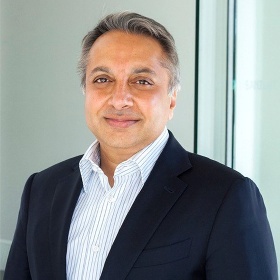
This episode might be about local providers getting disintermediated not by virtual front doors like I discussed with Jeff Hogan in EP309 but by entities providing virtual continuous care at home. Predictivae and proactive, the idea is to help reduce acute events requiring on-premises care. But if someone does wind up needing ramped-up care, they can get it hospital at home or SNF (skilled nursing facility) at home instead of them going anywhere. So, there's a baseline level of home monitoring followed by periods where care is stepped up. The point is, everything is going down at home with the care coming to the person at the care level that they need, so it ramps up or down depending on what they're going through or need at the time. I'm talking in this health care podcast with Sumit Nagpal, CEO and founder over at Cherish Health. We talk about the goings-on in the whole aging in place or, as he calls it, living in place vertical. A couple of takeaways from our conversation I think are notable: First of all, who is going to drive first change here isn't going to be, for example, hospital systems at scale suddenly deciding to work against their own perverse incentives to keep heads out of beds. Our first movers here—the ones who will push assisted living at home or SNF at home or CCRC at home or whatever you want to call it at home—is going to be consumers and their families who either can't afford to or don't want to send Grandma to an assisted living institution. So, this is how it's gonna go down: Families across the country install technology to keep Grandma safe at home. A natural ally here, if you think about it, is Big Retail, by the way. Why wouldn't Big Retail and Big Tech sell these solutions to grandmas' families like they sell televisions today? But the second that grandmas everywhere have monitoring software in their homes is the second that FFS-dependent hospitals and other providers have a problem on their hands—a business problem, that is. And assisted living facilities and SNFs working a similar model are in the same boat. Here's why. Actionable population heath data is now available, and once that data is available and looked at predictively and proactively, grandmas are not going to go to the ER like they once were for two reasons: (1) Proactive and predictive technology in the home will reduce acute events and (2) because if and when Grandma does have an acute event, she's not calling an ambulance. The technology is notifying someone. Maybe it's notifying the Medicare Advantage plan that Grandma's on, who has realized the power of all this at-home stuff. And the Medicare Advantage plan maybe just hooked up with a forward-thinking hospital that built an ER at home service or a hospital at home service. Or maybe there's some national technology player who is providing similar services. Sumit Nagpal and I talk through how this might look and also the essential factors for the health care industry to eventually adopt an at-home model. You can learn more at cherishhealth.com. Sumit Kumar Nagpal is the CEO and founder of Cherish Health, a consumer electronics company that develops advanced sensors and artificial intelligence combined with medical evidence and human touch. Cherish Health solutions improve the lives and enable the supported self-care of people aging or living with health challenges—our grandparents, parents, children, many of us. Sumit is a serial entrepreneur and has cofounded and grown five digital health companies over the past two and a half decades that have tackled progressively bolder challenges facing our health care economies. He serves on important industry boards, including HIMSS and Health eVillages. Prior to founding Cherish Health, Sumit was global lead for digital health strategy at Accenture. He is sought after for his expertise and unstoppable energy as an entrepreneur, change agent, strategist, and technology architect. 03:55 What does "health care is coming home" truly mean? 07:35 "It's not like we're cheese and we're aging in place. We're living. We're living our lives." 07:51 "Give us the ability to live where we want for as long as we want as safely as possible." 10:31 "The challenge with wearables beyond the initial cost is … you have to remember to wear them." 10:53 "The tech itself is not unreliable, but we as human beings are unreliable." 13:34 "The conversation typically begins with privacy and goes into other kinds of risks." 15:50 "Our health care economy is fundamentally misaligned." 17:57 "The incentives … today don't really enable this kind of proactive, preventive engagement." 23:30 How do we solve this cost problem at scale? 23:44 How do you align incentives for those that will care to solve these problems? 26:47 "I don't think that we're going to have mass, large-scale change in health care moving home until people are starting to adopt … these kinds of services in their homes." You can learn more at cherishhealth.com. @sumitknagpal of @WeCheri

AEE13: Have You Ever Wondered How GoodRx Makes Money? With Ge Bai, PhD, CPA
In this health care podcast, Ge Bai explains GoodRx's business model and how PBMs and pharmacies fit in to that business model. Here's the short version: GoodRx takes advantage of the dysfunction in the pharmacy supply chain. And while they help patients save money, their master plan only works because pharmacies would be charging cash pay patients too much in most circumstances. Why, you might ask? Well, one reason is the big PBMs have contracts with pharmacies that stipulate the PBM must get the best prices. So, any patient wandering in off the street without a PBM card is going to always pay more than the rate a PBM can get for its patients. So, a pharmacy's list price will always be more than the PBM price. I'll let my guest in this episode, Ge Bai, explain this better and get into a few details; but that's kind of the general level set there. Ge Bai, PhD, CPA, is an associate professor of accounting at Johns Hopkins Carey Business School and associate professor of health policy and management at Johns Hopkins Bloomberg School of Public Health. This "An Expert Explains" goes very nicely with EP306, in which Ge Bai and I talk about Amazon's pharmacy and pharmacy model. So, you might want to check out that episode if you have not listened to it yet. You can connect with Ge on LinkedIn and Twitter. You can also learn more on her Web site at Johns Hopkins University. Ge Bai, PhD, CPA, is an associate professor of accounting at the Johns Hopkins Carey Business School and associate professor of health policy and management at the Johns Hopkins Bloomberg School of Public Health. She is an expert on health care pricing, policy, and management. Dr. Bai has testified before the House Ways and Means Committee, written for the Wall Street Journal, and published her studies in leading academic journals such as the New England Journal of Medicine, JAMA, JAMA Internal Medicine, Annals of Internal Medicine, and Health Affairs. Her work has been widely featured on ABC, CBS, NBC, Fox News, CNN, and NPR and in the Los Angeles Times, New York Times, Wall Street Journal, Washington Post, and other media outlets and used in government regulations and congressional testimonies. 01:53 What's the difference between GoodRx and Amazon Pharmacy? 02:17 "GoodRx pharmacy makes money from one fact, and one fact alone." 03:43 "On the surface, it looks like the patients are paying cash without any middleman; but in reality, the patients are paying cash by using a network created by a PBM." 04:52 "GoodRx contracts with a network of PBMs." 06:06 Where does the pharmacy fit in this deal? You can connect with Ge on LinkedIn and Twitter. You can also learn more on her Web site at Johns Hopkins University. @GeBaiDC discusses how GoodRx makes money on our #anexpertexplains #healthcarepodcast. #healthcare #podcast #digitalhealth #pharma What's the difference between GoodRx and Amazon Pharmacy? @GeBaiDC discusses how GoodRx makes money on our #anexpertexplains #healthcarepodcast. #healthcare #podcast #digitalhealth #pharma "GoodRx pharmacy makes money from one fact and one fact alone." @GeBaiDC discusses how GoodRx makes money on our #anexpertexplains #healthcarepodcast. #healthcare #podcast #digitalhealth #pharma "On the surface, it looks like the patients are paying cash without any middleman; but in reality, the patients are paying cash by using a network created by a PBM." @GeBaiDC discusses how GoodRx makes money on our #anexpertexplains #healthcarepodcast. #healthcare #podcast #digitalhealth #pharma Where does the pharmacy fit in this deal? @GeBaiDC discusses how GoodRx makes money on our #anexpertexplains #healthcarepodcast. #healthcare #podcast #digitalhealth #pharma

Ep 310EP310: The 2020 Shkreli Awards for the Worst Examples of Profiteering and Dysfunction in Health Care, With Vikas Saini, MD, and Shannon Brownlee
The Shkreli Awards have been published each year, for the past five years and counting, by the Lown Institute. The Shkreli Awards are a much-anticipated top 10 list of the worst examples of profiteering and dysfunction in health care. This year's list, celebrating the most excellently egregious profiteering in 2020, are unique in the sense that everybody on this list this year—every one of them—decided, deliberately, that a pandemic might be a super opportunistic global stroke of luck to exploit fear and anguish to line their own pockets. The list is named for Martin Shkreli, the price-hiking "pharma bro" that is easy to point to as a model of pure, unadulterated health care profiteering. Here's the point: Just because you can be clever and shifty enough to make a whole lot of money in health care doesn't mean you should. Every dollar anyone earns without adding commensurate value back is just one more nail in the financially toxic coffin that patients and employers face in this country—and taxpayers. The Lown Institute is a nonpartisan think tank advocating bold ideas for a just and caring system for health. Their work is centered around four main topics: low-value or unnecessary care, accountability, health equity, and the human connection. In this health care podcast, I am looking so forward to speaking with Vikas Saini, MD, and Shannon Brownlee from the Lown Institute about this year's Shkreli Award winners. (I wish I had a soundtrack of audience clapping. I'd cue it right now.) There are 10 winners, and we talk about most of them in this episode. You can learn more by connecting with Dr. Saini (@DrVikasSaini) and Shannon (@ShannonBrownlee) on Twitter. Vikas Saini, MD, is president of the Lown Institute. He is a clinical cardiologist trained by Dr. Bernard Lown at Harvard, where he has taught and done research. He has also been an entrepreneur as scientific cofounder of Aspect Medical Systems, the pioneer in noninvasive consciousness monitoring in the operating room with the BIS device. He was in private practice in cardiology for over 15 years on Cape Cod, where he also founded a primary care physician network participating in global payment contracts. Dr. Saini is board certified in cardiovascular disease, internal medicine, and nuclear cardiology. He has served on the faculty of Harvard Medical School and the Harvard School of Public Health, where he initiated the first course focused on policy translation for cardiovascular disease prevention. Shannon Brownlee is senior vice president of the Lown Institute. She and Lown Institute President Dr. Vikas Saini are cofounders of the Right Care Alliance, a network of activist patients, clinicians, and community leaders devoted to organizing a broad-based movement for a radically better health care system. Before joining the Lown Institute, Brownlee served as acting director of the health policy program at the New America Foundation. As a senior fellow at New America, she published the groundbreaking book, Overtreated: Why Too Much Medicine Is Making Us Sicker and Poorer, which was named the best economics book of 2007 by the New York Times.

Ep 309EP309: FFS Providers Getting Locked Out of Referral Flows, Right Now, As We Speak, With Jeff Hogan
This episode is a tale of what happens when some employers decide to open up a few virtual front doors and when these virtual front doors lead only to referrals to providers who are willing to be accountable and offer financial predictability. That's what these employers want, after all. They want accountability and financial predictability. Many employers now have access to all claims databases and other data like the RAND 3.0 report. Therefore, employers can and are using this information in a big way to steer their plan member populations. Given these goings-on, some slower-moving providers could easily find themselves on the outside looking in. So, who are those providers who are or will be getting shut out of referral flows? They're definitely FFS-centric, but they could be a large health system, an urgent care center, or a hospital-owned PCP. In this health care podcast, I speak with Jeff Hogan, the northeast regional manager for Rogers Benefit Group and also president of Upside Health Advisors. We talk in this episode not about what might be theoretically possible but about what is happening right now. You can learn more at [email protected] and connect with Jeff on LinkedIn. Jeffrey Hogan is the northeast regional manager for Rogers Benefit Group, a national benefits marketing and consulting firm. Jeff has been with Rogers Benefit Group for 30 years. Additionally, Jeff operates a consulting firm, Upside Health Advisors, where he provides expert witness services on health care–related litigation, is a consultant to payers and large provider groups for product development and launch, and is a resource to employers desirous of implementing strategies to manage their health spend. Jeff is focused on health care payment reform, health policy, care coordination, value-based health care, health care quality, and precision medicine. Jeff regularly appears on national forums focused on moving to value-based health care and is actively working to promote health care–related transparency measures in the market. He serves as the group's liaison to the National Alliance of Healthcare Purchaser Coalitions. Jeff is the regional leader for The Leapfrog Group. He is also one of the coordinators of Connecticut's Moving to Value Alliance. 01:43 What are self-insured employers doing right now to impact referral flows? 03:29 Are any virtual tech companies moving in on the local provider space? 07:46 "What we're trying to do … is to help the member have the best outcome." 10:32 "It's a continuum, if you will." 10:44 "There is a fairly significant gulf between providers … and, say, a COE [Center of Excellence]." 11:13 "What is value for employers coming out of COVID? Accountability and predictability." 13:40 What are second-order effects? 14:29 "People like and want better access." 14:46 "Fee-for-service providers fear the informed health care consumer." 22:19 "Many of the brick-and-mortar providers are realizing that they have to up their game." 24:52 "Things will change." 25:07 "People not only want convenience, but they want safety, they want data." 26:11 "We are at an inflection point … After 35 years in the business, I really finally feel like we've broken through." 27:31 "This requires people to really think; it requires employers to actually know what their biggest problems are." 29:53 "We can't go back to the fragmentation of fee for service." 30:25 "Data is critical." You can learn more at [email protected] and connect with Jeff on LinkedIn. Jeff Hogan of #UpsideHealthAdvisors and #RogersBenefitGroup discusses #FFS providers in our #healthcarepodcast. #healthcare #podcast #digitalhealth What are self-insured employers doing right now to impact referral flows? Jeff Hogan of #UpsideHealthAdvisors and #RogersBenefitGroup discusses #FFS providers in our #healthcarepodcast. #healthcare #podcast #digitalhealth Are any virtual tech companies moving in on the local provider space? Jeff Hogan of #UpsideHealthAdvisors and #RogersBenefitGroup discusses #FFS providers in our #healthcarepodcast. #healthcare #podcast #digitalhealth "What we're trying to do … is to help the member have the best outcome." Jeff Hogan of #UpsideHealthAdvisors and #RogersBenefitGroup discusses #FFS providers in our #healthcarepodcast. #healthcare #podcast #digitalhealth "There is a fairly significant gulf between providers … and, say, a COE [Center of Excellence]" Jeff Hogan of #UpsideHealthAdvisors and #RogersBenefitGroup discusses #FFS providers in our #healthcarepodcast. #healthcare #podcast #digitalhealth "What is value for employers coming out of COVID? Accountability and predictability." Jeff Hogan of #UpsideHealthAdvisors and #RogersBenefitGroup discusses #FFS providers in our #healthcarepodcast. #healthcare #podcast #digitalhealth "People like and want better access." Jeff Hogan of #UpsideHealthAdvisors and #RogersBenefitGroup discusses #FFS providers in our #healthcarepodcast. #healthcare #podcast #digitalhealth "Fee-for-serv
Ep 308EP308: At Least Two Surprising Insights About Value-Based Care, With Mark Fendrick, MD
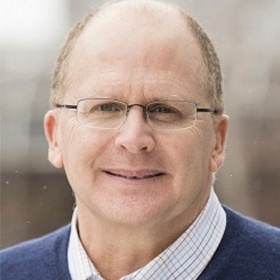
And here I thought I knew a lot about value-based care. In this health care podcast, I am speaking with Mark Fendrick, MD, who is the director over at the University of Michigan Center for Value-Based Insurance Design. This conversation is for those of you who already know pretty much about value-based care concepts. If you do not, I'd go back and listen to, say, Encore! EP206, with Ashok Subramanian, before this one. Dr. Fendrick talks in this health care podcast about what it takes for value-based care to happen in the real world. No kidding, it's about making sure that reimbursement is aligned with good things (no great surprise there). Everybody is always talking about properly aligning provider incentives. And, although often discussed, it really matters. But two light bulb moments I had in this conversation with Dr. Fendrick: Here we are at the beginning of the year. How many doctors and nurses, inspired to do the right thing, have told their patients with diabetes, say, to go get an eye exam to check for diabetic retinopathy? No one would disagree that this is definitely a good idea. Diabetic retinopathy causes blindness. But here's the reality of that conversation. Doc says, "Go get an eye exam." And patient says, "I can't. My deductible is huge, and I can't afford it." So, the patient doesn't get the follow-up care and winds up in the hospital or blind. And the doctor gets dinged on his or her quality scores. Suboptimal outcomes all around, I'd say. This also happens on the pharmacy side of the equation, but I think a lot of us are a little bit more familiar with that scenario—like type 1 diabetics who can't afford to pick up their insulin because of a Medicare Part D or commercial deductible that they haven't met yet. I just never really connected the dots back to the provider getting black marks because their patient has a benefit design that's not aligned with the quality measures. In a majority of benefit designs, consumer price sharing is based not on the value of the service but on how expensive the service just happens to be. Wow! Think about that. So, we're trying to get our plan members to be consumers and use the power of their wallets to make good health care choices. And what we're really doing is driving them toward cheap things or no care and discouraging them from indulging—and I say that sarcastically—in expensive things. But the expensive things might be the high-value care, and the relatively cheap things might be crap that's fully unnecessary or harmful and, over a whole population, adds up to a lot of zeros. Health care is not like a consumer market where the expensive things are usually a better version of the cheap things. For all you economists out there, you don't want the demand curve to be elastic when what's cheap and what's expensive has no correlation to quality or necessity. Nobody should be super flabbergasted when a $35 cure-all supplement peddled on YouTube makes some random influencer a millionaire. That's how supply and demand works. Much to ponder in this episode. You can learn more at vbidcenter.org. There's also a great newsletter you can sign up for there. A. Mark Fendrick, MD, is a professor of internal medicine in the School of Medicine and a professor of health management and policy in the School of Public Health at the University of Michigan. Dr. Fendrick received a bachelor's degree in economics and chemistry from the University of Pennsylvania and his medical degree from Harvard Medical School. He completed his residency in internal medicine at the University of Pennsylvania, where he was a fellow in the Robert Wood Johnson Foundation Clinical Scholars Program. Dr. Fendrick conceptualized and coined the term Value-Based Insurance Design (V-BID) and currently directs the V-BID Center at the University of Michigan (vbidcenter.org), the leading advocate for development, implementation, and evaluation of innovative health benefit plans. His research focuses on how clinician payment and consumer engagement initiatives impact access to care, quality of care, and health care costs. Dr. Fendrick has authored over 250 articles and book chapters and has received numerous awards for the creation and implementation of value-based insurance design. His perspective and understanding of clinical and economic issues have fostered collaborations with numerous government agencies, health plans, professional societies, and health care companies. Dr. Fendrick is an elected member of the National Academy of Medicine (formerly IOM), serves on the Medicare Coverage Advisory Committee, and has been invited to present testimony before the US Senate Committee on Health, Education, Labor and Pensions; the US House of Representatives Ways and Means Subcommittee on Health; and the US Senate Committee on Armed Services Subcommittee on Personnel. 03:53 Is back surgery high-value care? 04:46 If care is patient to patient, how is high-value care decided upon? 05:36 "Flintstones delivery
Ep 307EP307: The Surprise Billing Legislation: Its Impact on Providers, Hospitals, Self-insured Employers, and (Most of All) Patients, With Loren Adler
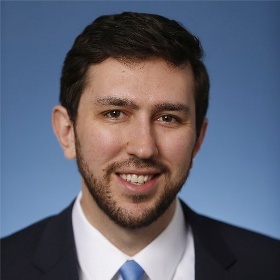
In this health care podcast, I speak with Loren Adler, who is the associate director of USC-Brookings Schaeffer Initiative for Health Policy and has a particular focus on surprise billing. I wanted to talk to Loren about the surprise billing legislation that is going into effect on 1/1/22. I will let Loren explain, but, in short, this legislation removes the patient from the mix. If a provider decides to send a surprise bill, the patient will just pay the co-pay or coinsurance they normally would have if the provider had been in network. Then, it's up to the provider who sent the bill and the insurer to duke it out on the back end. What this back end duking out consists of is the provider sending their big surprise bill to the insurer. The insurer may reply, with regrets, "Hey, we're only gonna pay you … whatever … a fraction of the big bill." The provider may at that point say, "Fine … whatever. I'll take it." Or the provider may say, "No can do. I'll see you in arbitration." This arbitration that then happens is a style called baseball arbitration, and Loren gets into the "why" there. Also, a provider cannot trigger an arbitration more than once every 90 days for the same service. So, there's a wrinkle that will slow the roll of any provider with a plan to clog up the system by arbitrating every claim. I quiz Loren mercilessly about exactly what the provisions of this legislation are and the winners and the losers. But we also talk a lot about potential ramifications. For example, making surprise bills illegal will potentially accelerate bundled payments, if you think about it, because one of the reasons why bundles have stalled is because various parties who enjoy surprise billing refuse to be a part of the bundle—and then the whole thing just flies off the track. Also, premiums will go down approximately 1%, they say, for self-insured employer plans. And Loren and I get into the "why" of that—or, more accurately, Loren gets into the "why" of that. In listening to this recording, I realized we do sort of pick on anesthesiologists a bit here. So, apologies to those anesthesiologists who have been billing fairly this whole time, which is definitely the majority. You can learn more at brookings.edu. Loren Adler is associate director of the USC-Brookings Schaeffer Initiative for Health Policy. His research focuses on a range of topics in health care economics and policy, including provider payment and consolidation, insurance markets, Medicare, the Affordable Care Act, prescription drugs, and COVID-19 testing. Previously, he served as research director for the Committee for a Responsible Federal Budget and as a senior economic policy analyst for the Bipartisan Policy Center. Adler holds a bachelor's degree in mathematical economics from Wesleyan University and a master's degree in applied economics from Johns Hopkins University. 03:04 What is this surprise billing legislation? 04:27 What happens when a patient is sent a huge bill from the provider? 06:15 What is "the going rate"? 09:44 "If you weren't leveraging surprise billing beforehand, this law has no effect on you." 11:14 Will this legislation push the industry toward one hospital bill? 12:20 What will providers have to do if they don't like what insurance wants to pay them? 15:26 What is benchmark pricing? 17:37 "Fundamentally … it's really consumer groups and patient groups plus your self-insured employers … on one side and then provider groups on the other." 18:19 Is this surprise billing legislation a compromise? 19:48 "Arbitration really isn't meant to adjudicate every single claim." 20:11 "The idea is really to kind of push the facility … to negotiate and figure this all out." 20:50 Are hospitals being impacted by this bill? 24:56 What happens to providers who decide to send surprise bills anyway? 26:09 What are the implications of this legislation for self-insured employers? 28:48 Why have ground ambulances been left out of this surprise billing legislation? 32:23 "At the end of the day, I think this is a net positive for consumers and should be considered a win." You can learn more at brookings.edu. @LorenAdler discusses #surprisebilling legislation on our #healthcarepodcast. #healthcare #podcast #digitalhealth What is this surprise billing legislation? @LorenAdler discusses #surprisebilling legislation on our #healthcarepodcast. #healthcare #podcast #digitalhealth "If you weren't leveraging surprise billing beforehand, this law has no effect on you." @LorenAdler discusses #surprisebilling legislation on our #healthcarepodcast. #healthcare #podcast #digitalhealth Will this legislation push the industry toward one hospital bill? @LorenAdler discusses #surprisebilling legislation on our #healthcarepodcast. #healthcare #podcast #digitalhealth What will providers have to do if they don't like what insurance wants to pay them? @LorenAdler discusses #surprisebilling legislation on our #healthcarepodcast. #healthcare #podcast #digitalhealth What is be

Ep 306EP306: A Deep Dive Into Amazon's Pharmacy and the Amazon Pharmacy Model Some Employers Are Running With, With Ge Bai, PhD, CPA
Here's a trigger warning: This show gets pretty deep into some of the nether regions of PBM (pharmacy benefit manager) contractual terms with pharmacies. If you are not, I'm gonna say, pretty familiar with PBM goings-on, I'd suggest you listen to EP241 with Vinay Patel first or skip the first third of this show. In this health care podcast, I am speaking with Ge Bai about Amazon's pharmacy business. Ge Bai, PhD, CPA, is an associate professor of accounting at Johns Hopkins Carey School of Business. She is also associate professor of health policy and management at Johns Hopkins Bloomberg School of Public Health. Ge trained as an accounting researcher who originally started looking into chargemasters for her dissertation. From there, she started checking out health care pricing and contracting issues. Who knew chargemasters were like a gateway drug into health care? I ask Ge questions such as, "Why the heck does Amazon need a PBM for cash pay patients?" and "What's this Amazon Pharmacy model that some self-insured employers are talking about?" And then we get into rebates and the impact that Amazon will have on rebates. Right up front, I want to just say flat out, I learned a mind-blowing detail from Ge. There's a contracting term that PBMs put in their contracts with pharmacies. Basically, a pharmacy cannot sell a drug to a cash pay patient for an amount that is less than the price a PBM pays the pharmacy for the drug or the pharmacy charges the PBM for the drug—I guess it depends how you perceive that relationship. So, the pharmacy's list price paid by cash pay patients can't be less than the contracted price that it has with any third-party payer. The PBMs will always have to get the better price than cash pay patients. There's one exception, though: unless the cash pay patient wanders in with a coupon (like a GoodRx coupon, for example). There are a whole lot of implications to this if you start to think about it. Spoiler alert: There will be an "Ask an Expert" with Ge Bai coming out after the show, where Ge and I get deeply into GoodRx's business model. So, stay tuned for that if you are interested. You might be subscribed to the show on iTunes, but I'd also encourage you to sign up for our newsletter on relentlesshealthvalue.com. Every week, you get a transcript of the introduction to the show that's coming out that week, so you can prioritize your listening accordingly. You can connect with Ge on LinkedIn and Twitter. You can also learn more on her Web site at Johns Hopkins University. Ge Bai, PhD, CPA, is an associate professor of accounting at the Johns Hopkins Carey Business School and associate professor of health policy and management at the Johns Hopkins Bloomberg School of Public Health. She is an expert on health care pricing, policy, and management. Dr. Bai has testified before the House Ways and Means Committee, written for the Wall Street Journal, and published her studies in leading academic journals such as the New England Journal of Medicine, JAMA, JAMA Internal Medicine, Annals of Internal Medicine, and Health Affairs. Her work has been widely featured on ABC, CBS, NBC, Fox News, CNN, and NPR and in the Los Angeles Times, New York Times, Wall Street Journal, Washington Post, and other media outlets and used in government regulations and congressional testimonies. 03:27 Why is Amazon in the pharmacy space a big deal? 04:03 "I view Amazon Pharmacy as a combination of GoodRx and mail-order pharmacy." 05:07 What's the difference between Amazon and other pharmacies? 06:14 Why does the third-party payer health care system keep Amazon from cutting out the PBM? 07:49 "We don't have insurance companies, we don't have PBMs." 09:21 "Who's really using prescription drugs? The majority is Medicare patients." 11:46 Is Amazon doing anything innovative in the pharmacy space? 12:37 What options do self-insured employers have now with Amazon? 14:42 Why employees and employers might choose to use Amazon Pharmacy over other mail-order pharmacies. 21:27 Will Amazon affect pharmacy rebates? 25:28 "Fundamentally, employers want to have more power in the whole process." 27:41 What should you be doing as a self-insured employer? 28:58 "If we do not put out effort to make the private market work, then the next option would be single payer." You can connect with Ge on LinkedIn and Twitter. You can also learn more on her Web site at Johns Hopkins University. @GeBaiDC discusses the Amazon Pharmacy model on our #healthcarepodcast. #healthcare #podcast #digitalhealth #pharma Why is Amazon in the pharmacy space a big deal? @GeBaiDC discusses the Amazon Pharmacy model on our #healthcarepodcast. #healthcare #podcast #digitalhealth #pharma "I view Amazon Pharmacy as a combination of GoodRx and mail-order pharmacy." @GeBaiDC discusses the Amazon Pharmacy model on our #healthcarepodcast. #healthcare #podcast #digitalhealth #pharma What's the difference between Amazon and other pharmacies? @GeBaiDC discusses the Amazon Phar

Ep 305EP305: The 1% Most Expensive Claimants Racking Up Massive FFS Bills and Still Not Getting the Help They Need From Our Health Care System, With Darrell Moon, CEO of Orriant
My guest in this health care podcast is Darrell Moon, who is the CEO over at Orriant. I was super intrigued by some of the work that Darrell and his team are doing regarding high-cost claimants. Said a different and probably better way, certain people in need of care were identified because they were costing so much. Year after year after year, these individuals—I call them hyper-users during this episode, but it's possible I made that term up myself—these hyper-users were getting all kinds of expensive health care, while at the same time, they were not getting any better. So, Darrell and his team realized that something was afoot here, and it turned out to be a combination of maybe loneliness, maybe low self-esteem and low self-efficacy. And no matter how many times you go to the cardiologist or the rheumatologist or the pulmonologist, none of those things will be cured. In fact, when someone's identity becomes their myriad of health issues, they have a sort of perverse incentive, if you think about it, not to follow any of their doctor's recommendations to take meds or make lifestyle changes. So, while their underlying condition—low self-esteem, low self-efficacy—remains untreated, their physical health tends to actually get worse, not better, despite all the medical attention. What's necessary to help this type of patient is the best that behavioral science has to offer. A nuance I found really interesting and important in the work that Darrell is doing is that it's pretty easy to identify a hyper-user from someone with a horrid chronic condition simply requiring a lot of care. The hyper-users will respond and appreciate the extra attention that a behavioral health coach/program has to offer. In contrast, those with other ailments will just merely get annoyed—usually on the quick—so they exclude themselves from the program. Sidebar: My guest Darrell Moon is organizing an Aspirational Healthcare Conference for July 14 and 15, 2021. In that virtual meeting, the intent will be to highlight Southcentral Foundation's Nuka System of Care in Alaska and other similar health care models that achieve much better health care outcomes at half the cost. So, check that out if you are so inclined. Thanks so much also to Lee Lewis from the HTA (Health Transformation Alliance) for the introduction to Darrell and Orriant. You can learn more at orriant.com. Darrell Moon founded Orriant in 1996 to change the dynamics of health care and give employers some control over the ever-increasing costs of the health care benefits they offer their employees. Darrell believed that engaging individuals in the management of their own health was a key that had to be inserted back into the economic equation of health care. Darrell received both his bachelor's degree in finance and his master's degree in healthcare administration from Brigham Young University. As the CEO, COO, or CFO, Darrell managed medical and psychiatric hospitals throughout the country for over 10 years prior to creating Orriant. He also has more than a decade of experience managing insurance and managed care products. Darrell is a Forbes leadership contributor. 03:11 What do CEOs want out of the health care system? 04:52 Is it a good strategy to focus on high-cost claimants? 07:04 Who are the people year over year that wind up in the high-cost claimant pool? 07:50 "Really, you have to get to the crux of the problem, which is … they've become a victim … to the health care system." 08:16 Who are these "hyper-users" and how do we define them? 11:35 "Getting that person to have a regular relationship with someone isn't the hard part; the hard part is then helping them to build their self-esteem." 13:20 "That's the key to building self-esteem—is helping people accomplish what's most important to them." 14:57 Why helping a patient not to view themselves as a victim helps them manage their care better. 17:45 "It's often less the training and the right personality of the person." 18:54 Do health outcomes correlate with the self-esteem of the patient? 19:28 "If you want to identify future claims, ask people two questions: 1) Tell me about your health … and 2) Tell me about your social experience." 21:21 "They're the customer/owner of their own health." 24:23 "How do you help not just the 1% but everybody [in health care]?" 27:16 "The ideal environment is to have a massively powerful primary care team." 27:47 "Having an influence on that person and what they do and how they behave is more important than getting the diagnosis right." 29:34 "It's not about just when [people] reach out … but [getting] people to reach out early." You can learn more at orriant.com. Darrell Moon of @Orriant discusses #ffs and #healthcarecosts on our #healthcarepodcast. #healthcare #podcast #digitalhealth What do CEOs want out of the health care system? Darrell Moon of @Orriant discusses #ffs and #healthcarecosts on our #healthcarepodcast. #healthcare #podcast #digitalhealth Is it a good strategy to f
AEE12: Steve Blumberg and I Discuss the 2020 Humana Value-based Care Report
I had a vision for this inbetweenisode. I wanted to highlight the wisdom of our amazing guests this year. I really wanted to find some theme that might be a key to our health care transformation. To achieve maximum suspense, here's the very short story of how I got from "Is there a common thread of wisdom throughout all the RHV episodes this year?" to "Why, yes, there is … and it's a good one!" So, let's start our journey of discovery with this. Here's a fact: If you talk to patients, they will often tell you that they receive poor care or their needs are not met—when they fall between different providers, or their payer and their provider and their PBM (pharmacy benefit manager) are singing off of different sheets of music. For more information, go to aventriahealth.com. When not hosting the show, Stacey is co-president of Aventria Health Group, a marketing agency and consultancy. Aventria specHumana recently came out with their Value-based Care Report. The subhead is Physician Progress and Patient Outcomes. It's a very fancy report with a lot of pages and graphics, and this impressive format definitely caught the attention of some of our industry. I read one blog post really keying in on one sort of depressing aspect of the report, namely, that Humana's value-based care (VBC) program saved a rounding error of 0.4% over their non-VBC program. I wanted to get an expert's take on this report and the reaction to the report and could think of no better person than Steve Blumberg, who has worked in value-based care delivery on the provider and on the payer side. Steve Blumberg, MBA, is the VP of practice transformation for GuideWell Health, a subsidiary of GuideWell. This Humana report, if you'd like to see it for yourself, can be found at digital.humana.com/VBCReport. You can learn more at guidewell.com. Steven Blumberg serves as vice president, practice transformation, for GuideWell Health. In this role, he is responsible for developing and implementing strategies for the further establishment of a high-quality, economically effective clinical system across Florida. He also provides guidance on value-based care and population health models. Prior to joining GuideWell in June 2019, Blumberg served as vice president for value-based care at Baptist Health South Florida, where he led the strategy and implementation for Baptist's population health and value-based care efforts. Prior to that, he was senior vice president and executive director of AtlantiCare Health Solutions, the New Jersey division of the Geisinger Health System, where he was responsib

Ep 304EP304: How a Provider Population Health Leader Who Went to Work for a Payer Thinks About Health Care Transformation, With Steve Blumberg, VP of Practice Transformation for GuideWell Health
In this health care podcast, I speak with Steve Blumberg, VP of practice transformation for GuideWell Health, a subsidiary of GuideWell. How's this for an interesting career trajectory? Steve spent the last decade working on population health and value-based care delivery ... on the provider side. Recently, he transferred over to the payer side, working for GuideWell Health, which is the health services arm of GuideWell, which is part of a family of companies including Florida Blue. So, a payer, in other words. I wanted to find out a bunch of things from Steve, but the main one is this: How do—if they, in fact, do—payviders improve care for patients? Or what does it take for an organizational structure to drive Triple Aim results? Going into this conversation, here is what I was thinking about: Payviders have access to longitudinal data (potentially) that siloed entities will certainly not. They also have a goal to keep care affordable in a really real way, especially if the patient/member/client is on the ACA (Affordable Care Act) marketplace and shopping for premiums. My big concern with payviders, though, is whether they're an "HMO in drag," as they say. On the other hand, payers and providers, in the most cynical sense, have wildly divergent goals. Search #medtwitter any day of the week—you will find a galaxy of tweets wherein doctors complain about payers—to just get a tiny sense of those wildly divergent goals. Do separate payers working with separate providers offer a kind of check and balance? A historical knock on this hypothesis is the inarguably crappy outcomes for chronic conditions that US patients have the privilege of paying comparatively ridiculous sums for. I couldn't tell you whether those crappy outcomes are a result of the separateness of payers and providers or some other factor, but so it is. Here's the short version of one of Steve's main points: It's not about control. It's about connection. It's about being able to connect with patients over their continuum of care. It's also about how consumers and employers are increasingly trading out choice and broad networks for an assurance of quality. You can learn more at guidewell.com. Steven Blumberg serves as vice president, practice transformation, for GuideWell Health. In this role, he is responsible for developing and implementing strategies for the further establishment of a high-quality, economically effective clinical system across Florida. He also provides guidance on value-based care and population health models. Prior to joining GuideWell in June 2019, Blumberg served as vice president for value-based care at Baptist Health South Florida, where he led the strategy and implementation for Baptist's population health and value-based care efforts. Prior to that, he was senior vice president and executive director of AtlantiCare Health Solutions, the New Jersey division of the Geisinger Health System, where he was responsible for population health, the organization's provider physician group, and home care and hospice continuum services. Earlier in his career, he was chief planning and business development officer at UHealth–The University of Miami Health System. Blumberg also held leadership roles at UF Health–Shands Healthcare and Baptist Health Jacksonville. Blumberg has been active in community and professional organizations, including serving on the boards of the Ronald McDonald House, Community Hospice, and the Northeast Florida Health Planning Council. He has also served nationally on the Premier Population Health Steering Group and on the National Institute of Standards and Technology's Baldrige Board of Examiners. Blumberg holds a bachelor's degree in business administration and marketing from the University of Florida and a Master of Business Administration from Florida State University. He is a fellow of the American College of Healthcare Executives. 03:30 How does thinking like a payer change the way you build out a primary care provider practice? 04:37 "When I was on the provider side, I definitely worried about the total cost of care … but making the products affordable was … someone else's concern." 09:12 How would you define practice transformation? 13:29 "We're curating networks." 16:56 "If they come to the market, they'll be hard to ignore." 17:38 How integrated is the physicians network? 18:35 "Control isn't the right word … it is the connection with the patient … that's where we think the most effective primary care takes place." 18:59 Where does attempting team-based care fall apart the most? 21:25 Are employers trading out for an assurance of quality? You can learn more at guidewell.com. Steve Blumberg of @_GuideWell discusses #healthcare transformation on our #podcast. #healthcarepodcast #healthcaretransformation #payer #pophealth How does thinking like a payer change the way you build out a primary care provider practice? Steve Blumberg of @_GuideWell discusses #healthcare transformation on our #podcast. #healt
Ep 216Encore! EP216: How Medicare Part D Plans Became Addicted to Drug Rebates, With Chris Sloan From Avalere Health
Alex Azar, who is the current Health and Human Services (HHS) secretary (until January 21 anyway), came out with a reboot of the proposal that effectively halts the practice of pharma manufacturers paying rebates to Part D plans. This reboot is supposed to go into effect on 1/1/2022. But this podcast is less about this may-or-may-not-actually-happen rule and is more about the actual impact of removing drug rebates within this unintuitively constructed health care system of ours. Should rebates go away, it's actually a big deal that fundamentally could upend the heretofore-not-transparent messy middle of drug pricing. I'll let Chris Sloan, associate principal over at Avalere Health, explain. Spoiler alert: The impact of killing pharma rebates to plans and PBMs (pharmacy benefit managers)? Bottom line, everybody's insurance premiums go up in the current model when rebates go away. A few episodes from now, I'm talking with Ge Bai about why this is a suboptimal and not forgone conclusion. But this is what we've got going on right now. So, look for EP306 coming up for more on that. You can learn more at avalere.com. Chris Sloan, associate principal at Avalere, advises a number of clients—including pharmaceutical manufacturers, health plans, providers, and patient groups—on key policy issues facing the health care industry. Chris's economic analyses of key policy proposals and issues, including drug pricing and the repeal and replace efforts around the Affordable Care Act, have been featured in a wide range of publications, including the Wall Street Journal, the New York Times, the Washington Post, Politico, Axios, and Vox.
Encore! EP231: Pharmaceutical Contracting, PBMs, Pharmacies, Employers, and the Latest HHS Rebate Proposal, With AJ Loiacono, CEO of Capital Rx
In November 2020, there was an Executive Order entitled "Lowering Prices for Patients by Eliminating Kickbacks to Middlemen." And we had HHS (US Department of Health and Human Services) Secretary Alex Azar and the HHS Office of Inspector General finalizing a regulation to eliminate the current system of drug rebates in Med D (Medicare Part D). And what they were trying to do is create incentives to reduce out-of-pocket spending on prescription drugs by delivering discounts directly at the pharmacy counter to patients. Those discounts delivered at the pharmacy counter? Not insignificant. In 2019, Part D rebates totaled $39.8 billion. The new rule stipulates that federal spending can't be increased as a result of this action. But in summary, it's pretty much a reboot of the same ruling from earlier last year. Here's a couple of points: The rule is only for Medicare (Med D)—Medicaid and commercial aren't included—but … there's a but, and we get into that in this episode. Also, the start date for this ruling is 1/1/22 if it continues to stand in the new administration, which is a big if. What was at stake the first time this rule was drawn up by HHS and is likely still at stake is the implementation flowchart. Who exactly is involved in adjudicating these "potential discounts for patients at the pharmacy counter"? Since any middleman who gets themselves involved in anything takes a buck, there is a massive land grab, if you think about it, that if any middleman can grab a buck, this could be a lot of money. So, the first time this HHS proposal was presented in 2019, I talked to AJ Loiacono, who's the CEO over at Capital Rx. I have to say I was a little over-cocky relative to how well I really understood the hidden machinations behind pharmacy Rxs being adjudicated, and AJ does an amazing job explaining it. This is incredibly relevant as we contemplate potentially who gets a piece of the action moving forward. But regardless of, in some respects, what happens with this HHS rule, I found it interesting and valuable to understand what exactly happens in the dark messy middle, maybe underbelly, of a pharmacy adjudication. You can learn more at cap-rx.com. Anthony J. "AJ" Loiacono is a serial entrepreneur with over 20 years of experience in pharmacy benefits and software development. As the CEO of Capital Rx, a pharmacy benefit manager (PBM) that is bringing transparency and fair pricing into an otherwise opaque industry, his mission is to change the way prescriptions are priced and administered to create enduring social change. AJ spent his career studying the pharmaceutical supply chain and producing engineering solutions that have continually redefined the pharmacy benefit industry. At its core, Capital Rx is a technology-first company that has received multiple awards for the innovations that have propelled the company to record growth (Accenture Health Technology Champion, AMCP Gold Ribbon, EHIR Innovation Award, NYC Digital 100, etc).

INBW29: The Secret to Transforming Our Health Care System Revealed—A Summary of the Wisdom of Relentless Health Value Guests in 2020
I had a vision for this inbetweenisode. I wanted to highlight the wisdom of our amazing guests this year. I really wanted to find some theme that might be a key to our health care transformation. To achieve maximum suspense, here's the very short story of how I got from "Is there a common thread of wisdom throughout all the RHV episodes this year?" to "Why, yes, there is … and it's a good one!" So, let's start our journey of discovery with this. Here's a fact: If you talk to patients, they will often tell you that they receive poor care or their needs are not met—when they fall between different providers, or their payer and their provider and their PBM (pharmacy benefit manager) are singing off of different sheets of music. For more information, go to aventriahealth.com. When not hosting the show, Stacey is co-president of Aventria Health Group, a marketing agency and consultancy. Aventria specializes in helping pharmaceutical, employer, pharmacy, and health system clients improve patient outcomes by creating and leveraging collaborations with other health care organizations. For more than 20 years, Stacey has innovated better-coordinated health solutions benefiting all stakeholders and, most of all, the patient. For more information, go to aventriahealth.com. Our host, Stacey Richter, discusses #collaboration as the common thread to transforming #healthcare in this week's #healthcarepodcast. #podcast #digitalhealth

Ep 303EP303: The Conflict Between QALYs for Drug Value and Specific Well-Funded Patient Advocacy Groups, With Anna Kaltenboeck From the Drug Pricing Lab at Memorial Sloan Kettering
You know back in the olden days when a foot of measurement was actually the measure of your own foot? So, I might measure something and it's, like, 19 feet. And then you measure the same exact thing and it's 38 feet because you have tiny feet. This is the analogy that kept running through my mind as I was talking with Anna Kaltenboeck in this health care podcast about QALYs to measure the value of drugs. In this metaphor, QALYs are the ruler so that 1 foot of drug value is the same for everybody and all drugs. It's very civilized as a concept if you think about it. QALY stands for quality-adjusted life year. The goal of a QALY is to figure out how much any given drug is worth to a society so that we, as a society, have a benchmark to evaluate the price of pharmaceutical products. QALYs are an apples to apples or a foot to foot way to compare the value of drugs for we the people. I mean, is this drug amazing and we should all pay a lot for it? Or is the drug more expensive than the current standard of treatment and it doesn't confer any added benefit to patients? It'd be good to know that as a patient and as a payer and, frankly, as a pharma company. QALYs offer a framework for levelheaded discussions. It's complicated. I'm gonna take the risk of oversimplifying, but here's how I'd explain the three parts in a QALY measurement, which combines measure pharmaceutical value. The first part is, if relevant, how much additional survival can be expected with this drug? So, if it's an oncology drug, for example, how much longer will the patient live? The second part of a QALY is, how does the drug make the patient feel? So, in an ideal world, survival is long and the patient feels super great. So, some economists and scientists get together and they do some math and they come up with the sum of these first two factors. Then the third part of a QALY calculation is the cold hard cash. How much is society willing to pay for this improvement in survival, in quality of life? This last part will depend based on the society (ie, the country) and also the condition. We're willing to pay a lot for a drug that helps blind people see. We might be not so willing to pay a whole lot for a drug that lowers blood pressure marginally, for example. My guest in this health care podcast is Anna Kaltenboeck. She is a health economist and program director for the Drug Pricing Lab at Memorial Sloan Kettering. She knows a lot about QALYs. One last thing: ICER is the Institute for Clinical and Economic Review. It is an independent and nonprofit organization who creates a lot of these QALY assessments. Whether they succeed or not is something that is sometimes questioned, but the team over at ICER prides themselves in not working for Pharma and not working for payers in an effort to be as impartial as possible. You can learn more at drugpricinglab.org. Anna Kaltenboeck is the senior health economist and program director for the Center for Health Policy and Outcomes and the Drug Pricing Lab at Memorial Sloan Kettering Cancer Center (MSKCC). She focuses on the development and application of reimbursement methods for prescription drugs that reduce distortionary incentives in the supply chain and encourage pricing of treatments based on their value. Her work centers on developing an unbiased evidence base that characterizes the effect of federal policies on coverage and reimbursement decisions for branded specialty drugs and cell and gene therapies and identifying opportunities for policy changes that encourage affordability and access while maintaining incentives for innovation. Her current research interests include global comparisons of reimbursement policy and supply chain regulation, game theory in innovation decisions, and the effect of market concentration on pricing decisions. Ms. Kaltenboeck's research and policy work is informed by her experience as a consultant for pharmaceutical clients. Prior to joining MSKCC, Ms. Kaltenboeck spent 10 years working for Analysis Group and IMS Consulting Group, where she conducted health economics and outcomes research and developed pricing and market access strategies for pharmaceutical and diagnostic products. She has published numerous articles in peer-reviewed journals and other press, including JAMA and Morning Consult, and speaks frequently on the topics of value-based pricing, economics of the supply chain, and reimbursement models. Ms. Kaltenboeck holds bachelor's and master's degrees in economics from Tufts University. 3:56 What is a QALY? 05:28 "You don't get marks; it's the treatment that gets the marks." 09:13 What is willingness to pay? 10:52 "What we pay for drugs should be reflected in societal preference." 12:29 Does Pharma fear the QALY? 15:38 "At the end of the day, the ideal here is simply to be able to quantify 'This is what we're going to pay for this additional benefit that we're going to provide for patients.'" 17:09 "When you meet that price, patients should be getting access
Ep 302EP302: The Gigantic Problem I Have With Talk About Telehealth, With Blake McKinney, MD, From CirrusMD
Sometimes when I overhear a conversation/argument about telehealth, it occurs to me that there's a lot of fighting words about some things and very, very little about other things which I'd regard as equally, or maybe even more, important. Some of the sparring tends to jump immediately to tactics and UX (user experience), absent of strategy and CX (customer experience). In my experience, you can't talk about a user interface until you talk about the overall customer experience and journey and what your goal is. So, here's what I mean: Let's take urgent care as an analog. Say a patient goes to urgent care with symptoms consistent of allergic asthma. The NP (nurse practitioner) gives the patient strict instructions to take an antihistamine and Flonase and Flovent. She tells the patient to be sure to make a follow-up with their PCP (primary care provider) to evaluate how it's going. If the patient doesn't make a follow-up visit, do we suggest it's because the live in-person visit should have been telehealth? Or if the patient is nonadherent and winds up in the hospital with a full-blown asthma attack, do we suggest that live in-person visits diminish adherence? Let me respectfully suggest that it'd be a solid no on that. This is exactly why, whenever I listen to a diatribe about how telehealth did not work out for a patient, I find it interesting to ask a couple of questions. The question that I tend to ask when someone starts talking about some telehealth fail is "How did it fail?" How did it not work out? And the answer to this question tends to be similar to the above allergic asthma example: that the patient needed lab work or imaging or a follow-up visit, and that couldn't be done via telehealth. There was no resolution to the patient concern, in other words. Okay … so, first of all, most practices don't have immediate on-premises lab work or imaging, so the patient would have had to have gone somewhere else to get it anyway. But even if they did, as far as I know, you can't have a follow-up visit at the same time that you have the first visit. Not to be cheeky, but that's why they call it a follow-up visit. Then the next logical question is, if the patient doesn't show up for a follow-up, if the patient were in person, what's the greater likelihood that they would have gone for the lab test and/or come back for the follow-up? This is when you start to realize that the setting of care (ie, virtual or in person) may be a little bit less important than the agency of the provider involved. And it may be a little less important than the structure of the organization sitting around that patient encounter. Said another way, strategically, what are we doing here? What are we trying to accomplish? What's our road map to get the patient from where they are now to wherever that goal is? A patient visit is a tactic. It's one point in time. And that's true regardless of whether it's a remote visit or an in-person one, synchronous or asynchronous. A patient visit or interaction is not a care pathway. It is rarely, if ever, a magic bullet one and done. But that doesn't stop us from thinking about patient encounters, one encounter at a time, which may be exactly why we wound up with a fragmented health care system that doesn't work very well. But I digress. So, from what I can see, some of the flaws that some people attribute to telehealth might be more properly construed as flaws to the ecosystem in which the telehealth is being deployed. For example, how much agency or data or infrastructure does the provider behind the camera have to see where the patient is in their treatment journey and make sure that they get to that next milestone? Because in cases where the doctor behind the camera or the telephone or the text message has agency and the telehealth visit is part of a defined patient journey, telehealth results are strikingly comparable to not telehealth results, if not better. If we're contemplating a patient journey or a treatment journey, writ large, the site of care at any moment in time is a secondary or tertiary factor—certainly not a primary one. Here's what I want to know about telehealth. How do you best use it, not as a point solution but as part of a larger whole? How do you optimize a telehealth encounter so it pulls its weight in helping patients get a resolution to their chief complaint or manage their chronic conditions? Christian Milaster has written about this in his Telehealth Tuesday newsletter, which is great, by the way. Christian wrote that the delivery of care, when viewed through the eyes of a systems engineer (which he is), becomes a quite simple four-step process. These are the four steps that Christian says. He says, the first step is assessment, which leads to a diagnosis, which is step two. Step three is the development of a treatment plan. And then step four is the implementation of that treatment plan. Amongst other sidebars, I talk about these four steps in this health care podcast
Encore! EP206: Turns Out, High‑Deductible Plans Do Not Drive High‑Quality, Cost‑Effective Care, With Ashok Subramanian, CEO and Founder of Centivo
There's lots going on these days with transparency. Three cost transparency rules, as a matter of fact, just came out of CMS, for example. These rules demand that hospitals and payers make available cost information so patients can shop and employers can also shop. That last part there, about employers and/or payers being able to shop … that might wind up actually being the part of these transparency rules that has the most impact. It all goes back to kind of a first-principle assumption that many made—including me, by the way—which is turning out to be arguable. It's the great hope for consumerism through high-deductible health plans. The thought originally was that by pushing the burden onto patients/employees to find high-quality care at a fair price, we assumed that health care delivery would level up. We assumed that prices would come down, driven by the weight of consumer demands. But anybody seeking to validate this hypothesis would be pretty hard pressed to claim any sort of broad-stroke success beyond cost shifting by brute force. The vast majority of patients don't have medical degrees. This is why they went to a doctor to begin with. So, it's unsurprising to learn that providers wield a lot of influence. If a doctor tells a patient to go here for an MRI or there for surgery, patients have a tendency to go, without questioning. So, logically, if we want to create a high-value health care system and high-value health care—high quality at a fair price—we need to contemplate the recommendations that providers are making. These recommendations especially matter because a patient's entry point into the health system—where they go first—can make all the difference. This is also a particularly relevant point these days with all the discussion about digital front doors. Earlier, I spoke with Ashok Subramanian, CEO and founder over at Centivo. Centivo is a novel self-funded health plan centered around robust primary care. And I thought this episode had particular relevance given what is going on in the health care industry today. You can learn more at centivo.com. Ashok Subramanian founded Centivo in 2017 after observing the inefficiency in the health care system and the pain that has resulted for employers and employees.

Ep 301EP301: What Is Up With the Hospital and Payer Transparency Rules From CMS Now and Also After January 20? With Jeff Leibach, MBA
Three transparency rules have come out of CMS in the past months. My guest in this health care podcast, Jeff Leibach, calls these three rules three steps on a ladder. They build on each other. The first rule was announced last year, and it was for hospitals to post their chargemasters. You could consider this a baseline step. It's not really all that useful in practice as many discovered. The next step on the ladder (which is coming out on 1/1/21): Providers (hospitals) for all services have to post a machine-readable file—all of their negotiated rates for all service categories. They also have to post a shoppable service file and/or some kind of patient estimator tool so patients can estimate the cost of the most shopped services. Then there's the payer rule. This is more comprehensive than the provider rule, and the payers have some extra time—actually, they have an extra year (till 1/1/22). But basically, payers have to comply at a higher level. They have to allow price shopping across all sites of care. My guest in this health care podcast, Jeff Leibach, is a director with Guidehouse in the Healthcare Practice. He focuses on how health care services are priced and paid for, working with a lot of payers and providers. Thus, he is the perfect person to discuss these transparency rules with because of his deep knowledge of payers and provider contracting and also how pricing impacts patients, employers, and stakeholders across the industry. Jeff and I get into these three transparency rules and their likely impact and also kind of their philosophical underpinnings. We also talk about what might happen with them under a Biden administration. After our conversation, I started to think about these transparency rules in the broader context of what's going on in the health care marketplace. There's kind of a constellation of market factors, and these market factors increasingly seem to be necessitating hospitals and ambulatory practices to really differentiate themselves in ways that employers and patients/consumers care about. I mean, these CMS transparency rules for payers and hospitals are but one thing that is going on. But these rules ultimately mean that it's easier for patients and employers to price shop. It also makes it easier for employers to narrow their networks and exclude providers. Consider this impact and then think about how that fits with the ONC TEFCA (Office of the National Coordinator for Health Information Technology Trusted Exchange Framework and Common Agreement) rule. So, that ONC TEFCA rule means that it's gonna be a less effective tactic to prevent network leakage by hoarding patient data. So, if patient data is portable, patients can seek out the best care provider without the friction of some kind of PHI (protected health information) transfer. Okay … so now prices are available because of the transparency rule, and patients can walk more easily because of the TEFCA rule. So, these two together could be a forceful combination. We also have the rise of consumerism. I just saw a study the other day kind of validating that consumers are voting with their feet if a provider does not meet the quality of care, the supportive patient experience that they believe could be found elsewhere. And add to that the at-risk PCPs (primary care providers) cropping up in various concentrations across the country. But then also, you've got payers buying PCPs. And what that means is that you get these PCPs who control the referral flow, and they're taking an active interest in the downstream costs and population outcomes of specialists in their referral networks. So, you've got specialists who maybe lack processes to minimize inappropriate care or who do not deliver consistently high patient experiences and outcomes. They could easily get excluded from those referral flows. So, you take all these things together—the transparency, the ONC TEFCA rule, consumerism, and the disruption of certain referral flows—and, if you ask me, I think all of this together means that providers who are more commodity and less brand may need to consider ramping up their Triple Aim endeavors. You can contact Jeff at [email protected]. You can also connect with him on LinkedIn and Twitter. Jeff Leibach, MBA, is a director with Guidehouse's Healthcare Practice. Over the last decade, Jeff's main area of expertise has been in developing and implementing managed care solutions for payers and providers. These solutions include development of several analytic solutions, alignment of clinical and financial models, and negotiation training and preparation. Jeff has significant experience building and leading teams to deliver complex analytical tools to quantify opportunities into business strategies for clients. Jeff currently leads Navigant's Strategic Pricing and Revenue Rebalancing Solutions for Navigant. Prior to his consulting career, Jeff led national nonprofit Camp Kesem, a summer camp for children affected by a par
Ep 300EP300: Getting the Right Drugs Developed and Thinking Different About How to Pay for Them, With Bruce Rector, MD
Wow! It's episode 300. That's a milestone. Because of you, we've grown to be one of the largest podcasts for health care executives—so, thank you to every one of you who has recommended the show to your friends and colleagues, which is really the highest compliment. Thanks also to all the listeners of this show who have written reviews, LinkedIn posts, and sent emails. The team over here at Relentless Health Value really appreciates your kind words. They're super motivating. The emails we love to get are the ones where one of you talks about a success story, like an example where you've taken something you heard and made it actionable—how you helped patients get better care to lower cost or how you were able to collaborate with fellow stakeholders in a meaningful way. That's really why we're here and why it's so motivating to hear stories like this, which brings me to a really important point. We're in this together. All of you health care decision maker/stakeholder types out there, you who can directly effect change, it's really you who deserve the biggest round of applause, if I do say so. We appreciate the opportunity to kick off the activity or the decision making, but it's you all who pick up the ball and run with it. And for that, we—as both professionals and patients—thank you. Moving on to today's episode 300, my guest in this health care podcast, Bruce Rector, MD, is an expert on drug affordability; and he has extensively studied how to make sure we get the right drugs developed by considering innovation incentives among other things. He's done a lot of work with Doctors for America and the Center for American Progress. He also teaches medical students, pharmaceutical policy, and has worked with drug companies on drug development promotion. So, I felt like that was a pretty rounded perspective of the issues that I wanted to get into here. Let me tell you why I started to think about this. Any one of those stories where somebody dies of an infection that was resistant to antibiotics, they're always ghastly tales that seem so unnecessary. And every time I hear one of them, I wonder why pharma companies aren't in the antibiotic business. Clearly, there's a need. Well, it turns out antibiotics are a great case study of what happens when drug companies don't have the incentive to develop drugs that are a huge need to society—which brings me to the big hairy challenge I'm talking with Bruce Rector about in this podcast. How do you ensure that pharmaceutical manufacturers are fairly incented and compensated to develop the drugs that are of the most value to society? Orphan drugs, by the way, are a great example of what happens when incentives are put in place to develop drugs. At last count, half the drugs developed in the past decades have been for rare diseases—because of the 1983 Orphan Drug Act that made it quite profitable to develop for rare diseases. So, in this health care podcast, we dig in to two—arguably three—categories of incentives that are typically offered or available to pharma companies in this country today and which are, frankly, used in that Orphan Drug Act. The first two are push incentives, and then there's pull incentives. Push incentives are when the government, generally, offers incentives to reduce industries' costs during the R&D (Research & Development) stages, like they give grants or tax credits for clinical research—things like this. Pull incentives, on the other hand, are ways to guarantee demand after the drug is developed or to help the pharma company make more money on the drug, for example, by extending patent exclusivity—like if you, Pharma, develop this drug, we'll promise to buy millions of doses right up front and/or we'll bar any generics for two extra years so you get the two extra years of revenue. (You might be thinking about what's going on with COVID right now. Just sayin'.) So, we have push incentives, we've got pull incentives, and then this last one, which is more of a market condition than really anything paid up front or deliberately engineered on the back end. It's that drugs aren't like new desk chairs or some other product that, if the price goes too high, your employer just doesn't buy it. If someone is suffering from a deadly disease and there's one drug for it with no competition, there's nothing and nobody in the US marketplace that really has the power to hinder the pharma company from basically charging whatever they want for it. Dr. Vincent Rajkumar talks about this in EP296 if you want to go back and listen to that one for more info. But wait … there's more I talk with Dr. Rector about in this health care podcast. He brings up two different ways to contemplate paying for drugs. First is the fire extinguisher model, which is really applicable to antibiotics—and we talk about a couple of things I had never thought about relative to antibiotics. And then secondly, we have the subscription model—definitely food for thought for any of you innovativ

Ep 299EP299: FFS (Fee for Service) Is a Whole Business Model—It's Not Just a Way to Get Paid, With Alan Kaplan, MD, MBA, Assistant Professor of Urology at Georgetown University and a Practicing Urologist
If you are a forward-thinking specialist right now, alarm bells may be going off, given COVID and/or the prospect of another COVID-style pandemic. Also, all of the capitated and advanced PCP (primary care provider) practices popping up. Also, virtual care models. FFS is a cushy status quo revenue model until it isn't. One underappreciated point might be that FFS is not only a revenue/payment model. It's also a business model. And as a business model, FFS very much drives how practices structure themselves to realize that FFS revenue. Consider that to earn a fee for a service, someone (a human person) has to physically do the service. So, all FFS-style businesses have an inherent incentive to add labor and not use technology in any way that actually reduces the amount of billable human hours involved in providing care to patients. But if that top-line revenue line goes down—wow!—you'll find yourself as many did with way too many employees. An FFS business model has zero flexibility when it comes to revenue that isn't consistently going up or, at a minimum, a flat line. If revenue plummets and payroll is big—big so as to power a way higher revenue number than is possible for whatever reason—you have a major financial problem on the quick. That is what I talk about in this health care podcast with Alan Kaplan, MD, MBA. Dr. Kaplan is assistant professor of urology at Georgetown University, and he is a practicing urologist. He recently cowrote a paper with Dan O'Neill in the publication NEJM Catalyst Innovations in Care Delivery. The article discusses COVID-19 and health care's "productivity shock," as they call it. Dan O'Neill, by the way, was on the show. Also, he was on EP287 and part of EP292. But in the article that Dr. Kaplan and Dan O'Neill wrote, they give some advice to specialists and hospitals who are looking to evolve with the changing marketplace. Spoiler alert: Conceptually, it's a shock to move from a place where, every year, you can count on your billings going up and up and move to a model instead that assumes that this is not the case. So, yeah, there's a little talk for sure about the joys and challenges of transitioning to value or a value-based payment model. But that's only the very first consideration. It's also about reconsidering the operating model and the strategic use of digital technologies. We talk about all of the above in this health care podcast. Quick sidebar: My interview with Dr. Steve Schutzer (EP294) might be a good follow-on for a very actionable work plan for specialists to implement some of the advice that Dr. Kaplan gives in this podcast. You can learn more by contacting Dr. Kaplan via LinkedIn. Alan L. Kaplan, MD, MBA, is a practicing surgeon, innovator, and health services researcher. After finishing his urology residency, a health care administration fellowship, and an MBA, all at UCLA, Alan helped build a multispecialty medical group in a highly underserved area of South Los Angeles. Alan is currently an assistant professor of urology at Georgetown University; an attending physician at the Washington, DC, VA Medical Center; and a physician advisor at IDEO, a human-centered design firm. Alan's work over the past 10 years has centered on value-based care redesign, aiming to transition to a more just, equitable, and sustainable health care system for all Americans. 03:51 Who are we actually discussing when we use the term specialist? 05:58 How does the PCP taking on more risk affect the specialists' path to value-based care (VBC)? 09:42 "Technology leads to … a reduction in labor burden … but in health care, that really hasn't been the case." 11:36 "Technology … in health care … has never really been about making the bottom line more efficient. It's been about expanding the top line." 13:39 What do specialists need to be considering if they want to stay relevant in the next 5 years? 14:27 EP292 with Brian Klepper, PhD. 16:53 Is there a future where specialists can transition from FFS to VBC while skipping the messy middle of a transition? 18:37 "The way we always did things is not the way that we have to always do things in the future." 25:20 "When all is said and done, the relationship between [PCPs] and the specialists that they refer … those relationships are really, really important." 26:14 EP219 with Arshad Rahim, MD, MBA, FACP. 28:13 What's going to be a big driver for providers to become more independent in the next 5 to 10 years? You can learn more by contacting Dr. Kaplan via LinkedIn. @ALKaplan_MD of @DCVAMC discusses #valuebasedcare and #feeforservice models in this week's #healthcarepodcast. #healthcare #podcast #digitalhealth #vbc #ffs Who are we actually discussing when we use the term "specialist"? @ALKaplan_MD of @DCVAMC discusses #valuebasedcare and #feeforservice models. #healthcarepodcast #healthcare #podcast #digitalhealth #vbc #ffs How does the PCP taking on more risk affect the specialists' path to value-based care? @ALKaplan_MD of @DCVAMC discusse

Ep 298EP298: The Intersection of Value-Based Payments and Behavioral Health—Also, the Rise of Telepsychiatry, With Don Fowls, MD
I was really vexed the other day when I read on Twitter—First rule of thumb: Stay away from Twitter—but I read on Twitter someone bashing telehealth because, for many older Americans, going to the doctor is the only thing on their social calendar. Ummm, OK. So, we celebrate the idea of paying a cardiologist or a nephrologist or an orthopedic surgeon or some other specialist how much in FFS (fee-for-service) payments to be a paid friend for 7 minutes? So, we're going to expect these expensive specialists to provide mental and behavioral health support when they have no particular mental health training, and, at the same time, we're going to weirdly slam telehealth for not enabling this obviously failing and expensive model to continue. And I'll tell you how I know it's failing: We have an epidemic of loneliness in this country. So maybe, instead of this serpentine logic, we should instead actually directly address the epidemic of loneliness. Maybe we should directly address mental health and behavioral health. Another oddity with this whole telehealth bash is how fast telepsychiatry services are taking off with COVID and how much, in general, people like it. Granted. Not sure about the elderly cohort who want to go see their doctor for the outing aspect of it, but if we're talking in generalities here, telehealth/telepsychiatry has been a boon for patients able to access behavioral health and mental health services. In this health care podcast, I speak with Don Fowls, MD. Dr. Fowls is president of Don Fowls and Associates, based in Scottsdale, Arizona. He's also past president of the Arizona Psychiatric Society. Dr. Fowls talks to us today about the importance of considering behavioral health when committing to value-based payment models or the management of populations. But we bookend the topic by me taking the opportunity to quiz Dr. Fowls on the impact of telehealth on behavioral and mental health. Two big points of emphasis are integrated data and the vitalness of industry stakeholder collaborations. Just to clarify some terms before we dive in here: Mental health is a subset of behavioral health. If we're talking about managing populations of patients, managing both is essential. Mental health typically, people say, has to do with substance abuse and people's thoughts and feelings. Behavioral health, meanwhile, has more to do with the specific actions people take and how they respond in various scenarios. Obviously, both are impacted by social determinants of health in a big way. And, as more and more evidence comes out, it becomes more important to integrate mental and behavioral health services within almost any site of care—or any site of care looking to improve patient outcomes and possibly succeed in a value-based world. You can learn more on Dr. Fowls's LinkedIn page. Don Fowls, MD, is a nationally known psychiatrist and health care consultant who works with organizations across the country to develop solutions for the many challenges they face today, including integration; value-based reimbursement; managing complex, special populations; and strategic partnerships. Dr. Fowls has helped several national and regional health plans and health systems integrate behavioral and physical health and develop value-based payment models to support this. Dr. Fowls previously served as chief medical officer and executive vice president of business development for ValueOptions and its parent company FHC Health Systems for 11 years. He also worked at Schaller Anderson Inc. as executive vice president, business development, and president and CEO of its behavioral health subsidiary. In Arizona, he recently served as chief medical officer for Mercy Maricopa Integrated Care as well as the behavioral health advisor to the Practice Innovation Institute in Phoenix, one of the CMS Transforming Clinical Practice Initiative grant awardees to transform the practices of health care providers. As part of this process, he co-led the Behavioral Health Affinity Group nationally. Dr. Fowls is chairman of the board of Copa Health, an Arizona-based community provider of services for behavioral health and intellectual and developmental disorders. Dr. Fowls is also past president of the Arizona Psychiatric Society and a fellow in the American Psychiatric Association. 03:27 Is telehealth here to stay? 06:16 "Now there's coverage in these medical clinics that there never was before." 07:38 "It's really trying to align the payment with the outcomes and services provided." 08:51 What does good look like? 12:06 "It's getting … plan and provider focused on achieving an outcome." 16:43 Do you really see outcomes change after implementing value-based payments? 17:40 "What are we really trying to achieve with this population? It's really four things. And these become … the pillars for outcomes." 23:29 "Right now, there's still way too much 'more is better.'" 24:16 "Well, that's great, but how did they do when they left? That's what you reall

Ep 297EP297: How the Front Desk Can Make or Break Patient Trust and, Potentially, Outcomes, With Jerry Durham From The Client Experience Company
Here's something I never really understood: how physicians and nurses more often than not get to be responsible for the entire patient journey, including, start to finish, patient satisfaction. But if you just take one look at any random poorly rated physician's reviews, they're usually littered with complaints about the front desk in the practice. Negative reviews, of course, are not limited to front desk diatribes; but there's often a lot of front desk commentary in them. It has always seemed to me to be a common and strange phenomenon in health care provider practices where the front desk is like a totally separate little fiefdom with a different mission statement and goals from the health care providers in the same exact office. Isn't that odd when you think about it? I mean, first, the front desk is literally physically separated from everybody else. No matter which direction you approach from, there's at a minimum a half-wall barrier surrounding them. Sometimes, in directions most likely to receive an attack, I suppose, there's been added a big glass barrier. Liliana Petrova pointed this out in EP236 of the Relentless Health Value podcast, and it was really the first time that I had thought about it at all and also thought about the implicit message this sends not only to patients but also to clinicians. That whole physicality of the setup, it just screams, "We over here have nothing to do with the mission or vision of anyone else in this place. We have our own thing going on over here, and to do it, we need to be protected from you all and all of your chicanery and untoward goings-on, you doctors and nurses and patients!" I was really inspired the first time I heard Jerry Durham from The Client Experience Company talking. His message, as I understood it, was that a practice really on board with helping patients achieve the best patient outcomes and, nothing for nothing, erode clinician burnout includes the front desk in their thinking. Jerry has said that there's four phases in the patient life cycle, as he calls it, which is sort of a synonym for the patient journey: Marketing The moment that a patient/person engages with the clinic or office Provider interactions The post course of care So, all of these phases—all four of them—are critical to both patient outcomes and experience but also, really, to business success. So, you kind of almost have to do well by doing good. The front desk is mostly responsible for that phase two: what happens when that person/patient engages with your office or clinic. In this health care podcast, as mentioned, I'm talking with Jerry Durham. He's a former physical therapist and practice owner who has worked with a whole lot of PT (physical therapy) practices and also other MSK (musculoskeletal) specialties among other clients. His message transcends the specialty, however. In this health care podcast, we get into a lot of aspects in terms of how a front desk can work for or against patient experience and outcomes. One of them is how a front desk can help secure a patient's relationship with a practice. Trust follows from a relationship. Lately, maybe even earlier than lately, study after study is coming out—including some that Rebecca Etz, PhD, talks about in EP295—which shows that, without a relationship and trust, patient outcomes are meh at best. (You can always count on me for scientific terminology.) But a lack of trust is a big hairy factor behind disparities in outcomes among different ethnic groups, for example, as one point to ponder. You can learn more at clientexperiencecompany.com or by emailing Jerry at [email protected]. Jerry Durham is a physical therapist with over 25 years of experience and 20+ years of business ownership. Jerry's singular passion is leveraging the entire practice team toward improved patient outcomes while boosting the practice bottom line. Jerry has spent significant time on the front line, answering patient calls and learning why patients think and act the way they do when interacting with the front desk. Jerry now leads The Client Experience Company, focused on improving both client outcomes and practice profitability through the leveraging of the patient life cycle by the front desk. 04:31 What is the patient life cycle? 05:33 What are the milestones of the patient life cycle? When does it start? 08:51 "This isn't a business solution; this is a patient-driven solution." 09:08 "What is best for the patient is best for business." 12:45 "The takeaway there is that your team members are all driving toward the same goal." 13:54 How does the front desk impact health outcomes? 16:00 What is the objective of a front desk to reduce provider burden? 20:38 "There's actually three roles at the front desk." 29:57 EP228 with Julie Rish, PhD, from the Cleveland Clinic. You can learn more at clientexperiencecompany.com or by emailing Jerry at [email protected]. @Jerry_DurhamPT discusses #patienttrust and #healthoutcomes in this week's

Ep 296EP296: Oncology FAQs About Telehealth, Standardizing Care, and Drug Prices, With Vincent Rajkumar, MD, of Mayo Clinic, Rochester
My guest in this health care podcast is Vincent Rajkumar, MD. Dr. Rajkumar is a professor of medicine at Mayo Clinic, Rochester. He's also a practicing hematologist at the Mayo Clinic with a focus on multiple myeloma. Dr. Rajkumar does research and conducts clinical trials. He's a well-known thought leader in questions about the cost of drugs in this country versus other countries. So, let me tell you what happened with this episode: I mentioned to a few people I would be speaking with Dr. Rajkumar, and every single person I mentioned it to sent me questions to ask him. So, that happened. I wound up with way too many questions; thus, I spent my Thursday evening organizing said questions into some semblance of a logical order. In this health care podcast, we talk about telehealth in oncology. We talk about standardizing treatment pathways in oncology amidst the growing complexity of said treatments and how this could potentially help community oncologists and generalists. We wrap things up with Dr. Rajkumar's insights on the high price of oncology and other drugs. You can learn more by reading Dr. Rajkumar's papers about the high cost of insulin, the high cost of prescription drugs, and cost-effective therapy of multiple myeloma. You can also watch his presentation on the high cost of prescription drugs. S. Vincent Rajkumar, MD, is the editor in chief of Blood Cancer Journal and the Edward W. and Betty Knight Scripps Professor of Medicine, Mayo Clinic, Rochester, Minnesota. His academic career was profiled by The Lancet (November 26, 2011). He is co-chair of the International Myeloma Working Group (IMWG) and chair of the Eastern Cooperative Oncology Group (ECOG) myeloma committee. He also serves as the associate editor for Mayo Clinic Proceedings, Leukemia, and European Journal of Hematology. Dr. Rajkumar has received several awards, including the Giants of Cancer Care Award (2019) from OncLive and the Robert A. Kyle Lifetime Achievement Award, an honor given by the International Myeloma Foundation (IMF). He has also received the Relentless for a Cure Award from the Leukemia and Lymphoma Society (2010), the John Ultmann Lecture and Award (2011), and the Janet Davison Rowley Patient Impact Research Award from Cures Within Reach Foundation (2015). He was named Mayo Clinic Distinguished Investigator in 2018. He serves on the board of directors for the IMF and is a member of the National Institutes of Health's Multiple Myeloma Steering Committee. Dr. Rajkumar has over 600 publications, including over 350 peer-reviewed original research papers and over 200 reviews and book chapters. 01:45 What is the perspective on telehealth and its impact on oncology? 03:50 "Cancer has become extraordinarily complex." 05:32 Is it possible to still have community oncologists in the advent of technology? 08:39 What's the viability for flat-fee reimbursement in oncology? 14:31 "The pathways should be designed and developed by people who don't have a financial stake [or] conflict." 18:34 "Part of the problem for physicians is, you want to deliver the best care." 21:23 "There are no allies in this fight for lower prescription drug costs." 23:18 "This is not like a television or a car where you can say you can live without it." 24:33 "It's absolutely not a free market." 25:35 "Each drug is a monopoly." 30:22 "When you do value-based pricing, you're not putting a price on anybody's life. You're only putting a price on what [a] drug is worth." You can learn more by reading Dr. Rajkumar's papers about the high cost of insulin, the high cost of prescription drugs, and cost-effective therapy of multiple myeloma. You can also watch his presentation on the high cost of prescription drugs. @VincentRK of @MayoMyeloma discusses #oncology #FAQs on this week's #healthcarepodcast. #healthcare #digitalhealth #healthtech What is the perspective on telehealth and its impact on oncology? @VincentRK of @MayoMyeloma discusses #oncology #FAQs on this week's #healthcarepodcast. #healthcare #digitalhealth #healthtech "Cancer has become extraordinarily complex." @VincentRK of @MayoMyeloma discusses #oncology #FAQs on this week's #healthcarepodcast. #healthcare #digitalhealth #healthtech Is it possible to still have community oncologists in the advent of technology? @VincentRK of @MayoMyeloma discusses #oncology #FAQs on this week's #healthcarepodcast. #healthcare #digitalhealth #healthtech "The pathways should be designed and developed by people who don't have a financial stake [or] conflict." @VincentRK of @MayoMyeloma discusses #oncology #FAQs on this week's #healthcarepodcast. #healthcare #digitalhealth #healthtech "Part of the problem for physicians is, you want to deliver the best care." @VincentRK of @MayoMyeloma discusses #oncology #FAQs on this week's #healthcarepodcast. #healthcare #digitalhealth #healthtech "There are no allies in this fight for lower prescription drug costs." @VincentRK of @MayoMyeloma discusses #oncology #FAQs on this week's #h

Ep 295EP295: Surprising Insights About Measuring Primary Care Performance, With Rebecca Etz, PhD
PCPs (primary care providers) are really important to population health. Primary care is the foundation of any well-functioning health system, I am sure many listening to this podcast know well. For the Triple Aim to happen, patients really need access to robust primary care. This has been affirmed by almost anyone who looks into it. And yet, in this country, our system sort of anemically supports our primary care colleagues. As a general statement, poking and prodding and procedures are compensated at a far higher rate than anything requiring cognitive services. What a PCP or a pediatrician mainly does all day is really cognitive. It's listening and thinking and counseling and coordinating. But here is maybe an underappreciated point: If we're going to measure PCP performance, then we need the right measures to measure that performance. You might be doing this measurement as a basis for incentives or maybe for continuous improvement programs. Either way, if you don't have the right measures, then maybe great primary care is under-rewarded or your continuous improvement process is counterproductive—you're incenting the wrong things, you get the wrong activity. And to add to that, PCPs (ie, practices) can spend upwards of $40,000 a year of uncompensated time trying to add and subtract and tote up the difference in all these varied and potentially inapplicable measurement standards coming at them from all manner of directions. My guest in this health care podcast is Rebecca Etz, PhD. Dr. Etz and the team over at The Larry A. Green Center have worked hard to create a set of 11 performance measures for primary care. These measures went through the wringer as far as their creation and validation. These 11 measures take into account what patients want, what primary care clinicians (including pediatricians, nurse practitioners, and others) think is most important and possible to provide, and what payers want to pay for. These 11 measures are aligned across the three stakeholders, and they are actionable. Neither of these descriptors is anything to take for granted. Rebecca Etz, PhD, is associate professor of family medicine and codirector of The Larry A. Green Center, which is in Richmond, Virginia, at the Virginia Commonwealth University. You can learn more at green-center.org. Rebecca S. Etz, PhD, is an associate professor of family medicine and population health at Virginia Commonwealth University (VCU) and codirector of The Larry A. Green Center—Advancing Primary Health Care for the Public Good. Dr. Etz has deep expertise in qualitative research methods and design, primary care measures, practice transformation, and engaging stakeholders. Her career has been dedicated to learning the heart and soul of primary care through three main lines of inquiry: (1) bridging the gap between the business of medicine and the lived experience of the human condition, (2) making visible the principles and mechanisms upon which the unique strength of primary care is based, and (3) exposing the unintended, often damaging consequences of policy and transformation efforts applied to primary care but not informed by primary care concepts. As a member of the VCU Department of Family Medicine and Population Health and previous codirector of the ACORN practice-based research network, Dr. Etz has been the principal investigator of several federal and foundation grants, contracts, and pilots, all directed toward making the pursuit of health a humane experience. Recent research activities have included studies in primary care measures, behavioral health, simulation modeling, care team models, and adaptive use of health technologies. Dr. Etz currently leads the fielding of a weekly survey regarding the response to and impact of COVID-19 on US primary care practices. She also serves on the National Academies of Medicine consensus study, "Implementing High-Quality Primary Care." 03:41 Why is primary care one of the "best-kept secrets" of better health outcomes? 08:38 "Measures are a form of communication." 08:51 "If the way that you are assessed does not actually match up with the work you do or what you find to be important, it's pretty demoralizing." 11:41 "It is the outcome of health care, but it is not the same thing as quality." 16:31 "It creates a financial incentive to hit a target by any means necessary." 18:06 "We incentivize people to have good outcomes, and what that means is that electronic medical records are no longer simply databases that tell us what the health of the population is. They are databases that tell us what is the optimal picture that a clinician is able to paint of their patients." 21:07 "Primary care is a relational field." 22:14 "How does this relate to cost and utilization?" 26:43 "I think we all know that fee for service is death." 27:11 How has the measure of PCPs in the time of COVID held up? 27:32 What measure performs worse in the time of COVID? 28:17 "Primary care is the place that everybody goes." 31:1

Ep 294EP294: Building a Center of Excellence: A Playbook for Physician Entrepreneurs, With Steve Schutzer, MD, Physician Executive for the Orthopedic Service Line at Trinity Health of New England and Medical Director of the Connecticut Joint Replacement Institu
Lately, several of the Relentless Health Value episodes have focused on digital health companies and their disruptive potential on referral flows of traditional provider organizations. We also talked about other goings-on with the potential to encroach on hospital systems and independent docs alike. For example, we've got Walmart getting, in a big way, into the health clinic business. We've got VillageMD and Walgreens teaming up. We've got mergers in the on-site clinic space. There's just a lot of action. But let's talk about what Dan O'Neill called "physician entrepreneurship" in EP287. Dan said that now is a fantastic time for entrepreneurial physicians to reinvent the practice model. This is true because many, including Dr. Matt Anderson in EP292, have said that it's not an entirely safe bet if you're a doc right now to hope that all the practice changes initiated by COVID (like telehealth, etc) go away like a bad hangover the second this pandemic gets stuffed back into Pandora's box. So, there's risk mitigation strategies at play here, but there's also a great opportunity for those who figure out how to legitimately improve patient outcomes in a way that consumers and patients love and that employers can easily contract for. Here's the bottom line: Some, not all, of these new-fangled deliverers of health care have great marketing and maybe a great Net Promoter Score; but effectiveness is less than well validated. Don't get me wrong. There's a whole lot of providers who aren't sure what kind of results they deliver and who aren't exactly delivering amazing and sticky customer experiences. So, we certainly can't forget that, as Bob Matthews has said, in the land of the blind, the one-eyed man is king. But what about a physician practice known in a local community that works together to create a Center of Excellence? Now, that's interesting in this land of the blind. You get all the history and the advantage of being the "default care provider." But you also are well poised for a post-COVID future, even in the face of all this disruptive activity. In this health care podcast, I speak with Steve Schutzer, MD. Dr. Schutzer is a physician executive for the orthopedic service line at Trinity Health of New England and medical director of Connecticut Joint Replacement. Dr. Schutzer knows a lot about setting up a COE, otherwise known as a Center of Excellence. He knows a lot about how to be a physician entrepreneur, and he knows how to compete in emerging market conditions. You can contact Dr. Schutzer at [email protected]. Steven F. Schutzer, MD, graduated with honors from Union College and the University of Virginia School of Medicine. Following a surgical internship at the University of Rochester, he served as lieutenant in the Medical Corps of the United States Navy. After his tour of duty, Dr. Schutzer did his general surgical training at the University of Rochester and then completed his orthopedic residency at the University of Connecticut. He was then a fellow in adult hip and reconstructive surgery at the Massachusetts General Hospital, after which he entered practice with Orthopedic Associates of Hartford. He is currently on the staff of Saint Francis Hospital in Hartford, Connecticut. Dr. Schutzer is a founding member and medical director of the Connecticut Joint Replacement Institute (CJRI), a Center of Excellence at Saint Francis. He is also president of the management company overseeing the Institute, the Connecticut Joint Replacement Surgeons, LLC, as well as physician executive for the orthopedic service line at Trinity Health of New England. In 2014, Dr. Schutzer and two colleagues, Ms. Steph Kelly and Ms. Maureen Geary, launched a consulting company, Novel Healthcare Solutions, whose mission is to establish effective and trusting business relationships between physicians and hospital partners—and then create orthopedic Centers of Excellence. 03:22 Why would competitive physician groups gang together? 07:32 "Even if you never … bundle, going through the implementation process … will yield incredible unrecognized value." 08:49 "It demands an end-to-end care redesign process." 10:10 "The value of a COE is really unquestionable." 10:18 "For every dollar saved [in a COE], two-thirds was in the quality side, and one-third was in the price point." 13:08 Slide deck discussing the definition of a COE and its seven building blocks.14:05 "I'm talking about business relationships between the physicians … these are the most fundamental [relationships]." 15:23 "It is all about trust." 15:48 What is the most central issue as to why a COE does well or fails? 16:25 "It's not just data. It has to be actionable data because physicians naturally don't trust data." 21:54 "Employers are definitely taking note to patient-reported outcomes." 22:37 What is the seventh element that is necessary for a COE, and what is fundamental to that element? 23:27 Where will fee-for-service doctors be in 2 to 3 years? 24:45 "T

Ep 293EP293: Game Theory Gone Wild: Co-pay Cards, Co-pay Accumulators, and Co-pay Maximizers, With Dea Belazi, PharmD, MPH, President and CEO of AscellaHealth
Let's cut to the chase here for our conversation about co-pay cards offered by pharma companies versus co-pay accumulators and co-pay maximizers deployed by health plans. This whole war of the co-pays started back in the day when PBMs (pharmacy benefit managers) began to shake down Pharma for higher discounts. The prize that PBMs offered Pharma was lower co-pays for patients. It's a well-known fact that the higher the patient out of pocket, the lower the market share of the drug—the old supply-and-demand curve at work. So, the PBMs and health plans kind of had an ace up their sleeve because they control how much the patient pays out of pocket. And so, they use that ace to pull in higher discounts from Pharma. "You'll make it up in volume," they told Pharma. "We'll make sure you get lots of patients by putting your drug on a lower formulary tier and giving patients who take your drug the lowest possible co-pays." At a certain point, pharma companies started to get mad about their dwindling net prices. And they're pretty smart. So, Pharma came up with a workaround to PBMs holding them hostage for lower net prices. Pharma decided to hand out co-pay discount cards. Then, they don't have to pay the PBM. They can finesse lower patient co-pays all by themselves. Except now, the PBM sees this and they raise. Enter co-pay accumulators and co-pay maximizers. For this part of the extravaganza of game theory at its finest, I'll let Dea Belazi, PharmD, MPH, explain. Dea is the president and CEO over at AscellaHealth. He's a pharmacist by training who has worked for Pharma, then at a health plan, then spent lots of time in the PBM space. Now he's working to create a different kind of pharmacy benefit at AscellaHealth. He has seen this tangled web from pretty much every angle. One thing to point out here before we begin: In the olden days, this whole war of who has leverage over who transpired in the context of small molecule drugs in competitive markets. So, like, Lipitor versus Crestor versus simvastatin—and they all cost, like, $100 a month. If the health plan made it untenable to get one of those drugs, they usually made another one in the same class financially attractive. So, the patient had options, and the stakes were a lot lower. Now this same war is being fought on the specialty side of the house, where drugs cost thousands or tens of thousands of dollars a month and the patient may have but one option. So, if it's made financially toxic for a patient to get that one drug, then the patient has to choose between their family's health and dipping into their 401(k). In these cases, Pharma can be, sort of authentically (and the "sort of" is an important qualifier), a hero who steps in and helps patients who are basically functionally uninsured because they can't afford the co-pays and deductibles to actually use the insurance they're paying handsome premiums to have. Pharma can step in and help via co-pay discount cards or through patient assistance programs to help those with lower incomes. But let me point out an obvious but rarely-mentioned-in-the-same-sentence connection. If the patient cost share is really high, there are at a minimum two parties responsible for that: the insurance company, who set the patient cost share and may have created functionally uninsured members in the process, and the pharma company, who may have set the price of the drug untenably high, maybe way over what the value of the product was. Neither is an innocent bystander, and the patient, sadly, is caught in the middle of this war. You can learn more at ascellahealth.com. Dea Belazi, PharmD, MPH, has more than 20 years of experience in the health care industry, mostly developing and managing pharmacy benefit management companies. He is currently the president and CEO of AscellaHealth, a national specialty pharmacy benefit manager (SPBM™) serving commercial, Medicare, and Medicaid segments. He was part of the development of PerformRx, a PBM owned by Keystone First Health Plan, as well as another, FutureScripts, an Independence Blue Cross company that was sold to Catamaran a few years ago. Dea holds a PharmD from the University of Rhode Island and completed his dissertational work at Brown University. He later completed a Master of Public Health from Johns Hopkins University and a post-doc health outcomes research fellowship at Thomas Jefferson University. He is a reviewer for multiple medical journals and sits on multiple boards. 05:03 "The concept of co-pay accumulators wasn't just a … PBM thought, but it also came from their customers, whether it was health plans or employer groups." 10:00 "[This is] literally a math problem based on, 'Do I spend it now? Do I spend it later?'" 11:31 What reason do employers and payers have for doing this? 15:26 "This is another mechanism for payers to push down additional cost to both the patient and now the pharma company." 19:57 EP241 with Vinay Patel. 20:33 "I don't think accumulators are really fo

Ep 292EP292.5: Teladoc Livongo Part 2
Welcome to Episode 292, Part 2. This is the second part of a two-part episode, but, in a way, you can listen to whichever part you want first. So, if you wound up here first, no worries. Just go back when you have a sec and listen to Part 1. There's some good stuff there you don't want to miss, including some background information that might be good to have. This episode, as well as the last one, is about Teladoc buying Livongo. I am going to call the combined organization T&L because I heart acronyms as much as you do. Here's the thing with T&L: They are not alone in their quest to disrupt the traditional health care delivery market. You also have Aetna making a plan design that advantages CVS clinics. You got Humana doing the home health thing. You got Walmart and Oak Street hooking up in Texas and risk contracting with managed Medicaid and Medicare Advantage. You have employers across the country direct contracting with Centers of Excellence and buy in perspective bundles. Also, speaking of employers, on the on-site clinic space, Premise Health just recently acquired CareHere. These two organizations will reach 11 million eligible lives at 2200 customers in 300 markets. All this being said, let me make a fairly obvious point: Increasingly, the competition is going to be about outcomes—or perceived outcomes. Competition is going to be around the value delivered (ie, quality divided by cost). This I like. To me, it's a tragedy that the health care industry can get away with charging prices no one would consider fair and delivering subpar health care let alone health. I want some of these organizations that do a really nice job coordinating care and which patients really appreciate to do well by doing good. And I love that some of the payers out there—some of the employers and even some of the Medicare Advantage and other health plans—recognize the value that these organizations can deliver. But let's consider the implications of this—notably, here's one: Few, probably even the very best, for example, endocrinology practices or maybe even cardiology practices, have a bead on how well they ultimately attenuate downstream medical costs. They might not even know, outside of what they are required to report for quality incentives, how well they are consistently creating better patient outcomes. Livongo does—or at least claims they do—and lots of employers and plans buy the results they're selling to the tune of something like $300 million in sales this year. Here's what I don't like: What is shaking out is a turf war, and the weapon of choice may or may not be authentically better patient outcomes. Some of the weaponry here is built on a marketing "chassis." The one who has the best marketing shall triumph. People judge books by their covers, and that's a cliché for a reason. You can read Al Lewis's blog post on Livongo, where he dug into their purported results. Then listen with your left ear to some of the chatter on the street about how Livongo is more of an employee retention tool than, you know, a clinical tool. I don't kn0w where these rumors started, but I keep hearing that because the Livongo NPS (Net Promoter Score) is high and employees, including executives, think it's pretty cool as a service, that maybe, given this, that it's okay if many of the Livongo charts and graphs don't have labels on their Y axes. And it kind of, you know, makes sense if you actually sit there and stare at them as I have done. All this I just said? Background noise. The games have begun, and the winners will be those who consumers/patients love. It'll be the ones who know how to market to employers or Medicare Advantage plans. It'll be the ones who can succeed in risk-based models. There you go. There are your three success factors. In this health care podcast, I speak with Matt Anderson, MD, MBA. Matt sees the ecosystem through the eyes of an innovation leader at a health system. And my finale interview of our two-part series here is Brian Klepper, PhD, principal over at Worksite Health Advisors. Brian will speak from the POV (point of view) of employers. You can learn more at bannerhealth.com and drmatthewanderson.com and connect with Dr. Anderson on Twitter at @DrAnderson19 and on LinkedIn. You can also learn more at careandcost.com, by emailing [email protected], and by visiting validationinstitute.com. Matthew Anderson, MD, MBA, has a passion for finding unique solutions to difficult problems in health care. He focuses on creating environments that allow patients and physicians to have frictionless experiences. Through insights gained in private practice, leading physician groups, and embedding himself in the health care innovation landscape, he can empower those looking to improve the health of communities and the well-being of those that dedicated their lives to providing care. He has been a business owner, medical director, and chief medical officer and now leads clinical innovation projects for Banner Health and

Ep 292EP292: Teladoc Buys Livongo: What Are the Implications for Providers, Employers, and the Market? Part 1, With Bob Matthews and Dan O'Neill, MA, MS
This is episode 1 of a two-part show about the potential impact of the Teladoc acquisition of Livongo. To get started here, in deference to the fact that we're all in the health care industry, let's agree on an acronym, shall we—because I can't keep saying Teladoc-Livongo. So, I'm going to go with T&L heretofore that will refer to the Teladoc acquisition of Livongo. What is the general merged T&L pitch? Here it is (I looked at their investor deck): T&L is going to use technology to transform the experience of living with a chronic condition and provide a differentiated consumer experience. The merger will also create a consumer-first, data-driven digital health experience that puts the consumer in charge. T&L will also translate deep consumer data to improve member outcomes and cost savings. Here's why I think that whole slide is the tip of a disruptive iceberg. First of all, we're in the middle of a land grab for patients. For my full land grab observational analysis, you can read the show notes of the Labor Day 2020 encore episode with Dr. Joe Selby or listen to it. But consider these intertwined points from the T&L investor deck: 80% of large employers believe virtual care will significantly impact the delivery of health care in the future—80%! Also, implementing more virtual care solutions is the number one priority for large employer health initiatives. That's something. In the T&L investor slide deck, slide 14 shows the TAM—otherwise known as total available market—that T&L thinks they're going to get. Spoiler alert: It's a $121 billion market, and they're coming for you. Anybody who thinks you're going to continue to care for patients with chronic conditions all by yourselves, at a minimum, enter your new frenemy. Here's another reason why I think the T&L merger is the tip of the iceberg of disruption: They talk about, again in their investor deck, how they're going to be fully scalable across multiple conditions, including CHF (chronic heart failure) and CKD (chronic kidney disease), plus integrated behavioral health; and also, they've been rumored to be courting MSK (musculoskeletal) outfits like Hinge Health. So, it's not just diabetes anymore. Here's another point: the referral flow. T&L are looking to start to disrupt the referral flow of traditional models. I mean, think about this. If they intercept the patient at the PCP level with Teladoc, then they can refer to a provider in the cloud, like Hinge Health or Livongo or one of the many behavioral health/mental health services lighting up our skies right now. Or consider this: Say I'm in Pennsylvania. I might not want my prostate specialist to be a few hours away if I have to go there on the regular. But let's just say the specialist offers telemedicine appointments and now I only have to go there, like, once a year. Here's the point I'm making: Vertical integrations like the one that Teladoc created by acquiring Livongo is a model that has all the potential of vertical integrations in the traditional sphere. Captive populations are a goal for a reason. And having a digital front door could enable all kinds of very geographically dispersed competitors that traditional health systems may not have realized are competitive. Is this my hypothesis? Nope. T&L say it flat out in their investor deck. Their goal is to increase enrollment and utilization by referring individuals across Teladoc and Livongo products. Here's some other facts to throw in the stew that I thought were interesting: You've got consolidated health systems right now who, some studies show, have raised their rates 23% higher than in markets with competition. And the outcomes of said consolidated health systems in patient satisfaction and quality—pick a measure—aren't any better as a trend line than health systems in competitive marketplaces with a whole lot lower prices. So, you've got costs going up and up, meaning that, as an equation, value is going down and down. Employers are getting pissed. Consumers are just done. You have Medicare Advantage (MA) collecting data and worrying about social determinants of health and holding providers accountable to deliver. If I'm an employer or a managed Medicaid plan, maybe an MA plan, and if I'm in an area where the only games in town are wildly expensive (like 23% more expensive) with low patient satisfaction or whatever—even average—and half my star ratings are based on patient satisfaction, you can see where I'm going with this: that these virtual options that are springing up might be attractive to people paying the bills. In this health care podcast, our lineup includes Bob Matthews, who can offer an interesting perspective because he is the president and CEO of MediSync, an entity doing some neat stuff in the cardiology space, also managing chronic conditions. He's also the VP of quality for PriMed Physicians in Ohio. So, he can kind of represent the entrepreneurial perspective but then also the PCP perspective. Then we're also going

Ep 291EP291: What Are Medicare Advantage Plans Up to Right About Now? With Betsy Seals, Cofounder of the Rebellis Group
Medicare Advantage (MA) enrollment has nearly doubled over the past decade. It grew 37% from 2016 to 2020. Right now, MA comprises nearly 40% of the Medicare population—and that number is only expected to grow. So, in case you've been out of the loop, at the beginning of 2020, CMS (Centers for Medicare & Medicaid Services) rolled out a third category of these "chronic supplemental benefits." And these chronic supplemental benefits allow plans to offer basically services to attenuate social determinants of health to offer stuff like nonemergency transportation, meals, home modifications … that whole list. This is all, really, part of a broader bipartisan effort to move Medicare from an acute care to a chronic care program. Then … corona. So, the question I'm kind of wondering about at this juncture is, Were/Are MA beneficiaries able to maintain their health status better than, say, other plan designs, especially given some of these chronic supplemental benefits, which you'd think would be super helpful in the middle of a pandemic? This should make sense, and it should really be true. At its core, MA is, as John Gorman put it when he was on the show last year, the biggest value-based payment experiment in the universe. And patient outcomes have definitely improved for MA patients over traditional FFS (fee for service), especially in the south and in other areas rife with cardiovascular and metabolic disease. So, that sounds great. Now let's talk about the cash money denominator in the value equation. Humana reported $1.8 billion in profit for the second quarter. That was nearly double its haul in Q2 2019. So far, 2020 has seen a profit that is a 94.5% increase year over year. Humana's earnings are not an outlier. MA plans across the board did very well, thank you very much, in the middle of a pandemic. Given that MA hasn't actually reduced PMPM (per member per month) costs last time I looked at it, you'd think and hope that the confluence of higher rates and less restrictions on extra benefits should definitely lead to greater scrutiny on the plans by CMS. We'll see what happens. Anyway, it occurred to me that it might be interesting to get a bead on what MA plans themselves have been contemplating and thinking about relative to the supplemental benefits et cetera. In this health care podcast, I speak with Betsy Seals, cofounder of the Rebellis Group. Betsy spent many years working with and for Medicare Advantage plans. I thought Betsy would be the perfect person to talk to to get a bead on what's happening on the MA front right now. You can learn more at rebellisgroup.com. Betsy Seals is a cofounder and chief operating officer at Rebellis Group, a consulting firm established to provide advisory and hands-on services to Medicare Advantage organizations and their subcontractors. Betsy is a nationally recognized leader in the managed care industry with over 18 years of experience. Betsy brings to the table a solid mix of leadership and business acumen, as well as regulatory and strategic knowledge within the Medicare landscape. Betsy's expertise is focused in the areas of mergers and acquisitions, compliance, sales and marketing, strategy, supplemental benefit landscape, innovative benefit design that addresses social determinants of health, and health plan operations. Betsy got her start in managed care on the health plan side, where she held roles in compliance and operations. Betsy also spent many years as a managed care compliance and operations consultant with Gorman Health Group, where she exited as chief consulting officer in the fall of 2018. 03:45 What is a Medicare Advantage plan? 04:02 The core imperatives for leaders of Medicare Advantage plans. 04:31 "How is risk adjustment functioning?" 04:34 Making disenrollment rates and member complaints top of mind for MA leaders. 05:40 "We all want to know why members are leaving. Well, they're telling you!" 05:50 Star rating measures. 07:33 "Will Medicare beneficiaries really have confidence … going into the doctor's office … next year?" 09:11 "Now, it's not just 'Is your doctor in the network?' It's 'Does your plan also offer telehealth?'" 12:13 "When you really look at Medicare beneficiaries aging into the program or … younger … beneficiaries, their shopping trends and their consumer expectations are very much the same as yours and mine." 13:58 CMS's adjustment in April that allows MA plans to make changes to their benefits midyear to provide to beneficiaries' changing needs during the pandemic. 16:01 Supplemental benefits as a decision-making factor in enrollees' Medicare Advantage plan selection. 16:28 "The decisions made during this time with how to increase benefits or how to address the issues going on with your membership will have a really great impact on [your] AEP [annual enrollment period]." 18:12 "I think that there's a real lack of understanding … around what issues are impacting their actual membership … but really understanding the demographi

Encore! EP225: Why, Right Now, It Is No Longer Optional to Suck at Patient Centricity, With Joe Selby, MD, MPH, Former Executive Director of PCORI
There is a land grab going on right now, the likes of which the health care industry hasn't seen before—at least in our generation. Spoiler alert: There's a whole episode of Relentless Health Value coming up on the impact of the Teladoc-Livongo hookup. And that is totally relevant to the point I'm about to make. But let me just start with a little bit of background: American patients—let's get real here—have no more money to spend on health care every year. Really. I mean, you look to employers. The government? Who knows? But let's just say for the purposes of this discussion that what's going on right now is a zero-sum game—that the dollars in the system every year are the dollars in the system, and if you want to increase your revenue as any given health care stakeholder, you've got to take those dollars from somebody else. Alright … now consider this: Previously, if a health system, say, were going to make a list of their competitors, they'd probably list the health system down the street, maybe the one in the next town over if there seems to be a lot of commuting. Oh, my, how we no longer live in that simple world! Enter the pandemic and patients not only accepting but kind of digging virtual care and its convenience and its accessibility. Now consider what happened to brick-and-mortar stores who didn't add online retailers to their list of competitive threats. Virtual entities doing chronic care management, diabetes, musculoskeletal, other population health endeavors … these are now or will soon enough be head-to-head competitors to in-person care settings. My local health system, they may also decide to stand up to telehealth—and many of them did. But if the playing field is now in the Cloud, how's the patient experience on their systems? Everybody accepted that, in the beginning, they were kind of buggy and calls dropped and all you could see was the doctor's ear in a weirdly dark room or something. But six months later or a year later? Not exactly sure when patients' patience will run out, especially when there are companies out there who built amazing virtual experiences from the ground up and who, by the way, are often hired by health plans, who, by the way, make it financially, let's just say, attractive for patients to use those services that the plan is providing instead of the big expensive consolidated health plan that raised their rates 30-fold over the past couple of years like one of them anecdotally did. So, you start to see why, if I were a health system or a provider executive, I'd kind of shuffle the patient centricity, design thinking, patient experience—that whole bunch—to the first tab of my spreadsheet. Patients have, at this moment, unprecedented choice; and so do their employers, nothing for nothing. As Dr. Matt Anderson told me the other day, if a health system thinks that it's going to make the difference by doing more specialty services and expensive procedures, that might be a risky bet. So, anyway, I thought it might be a good idea to replay my conversation with Dr. Joe Selby from early last year. Dr. Selby is the [now-retired] executive director of PCORI, otherwise known as the Patient-Centered Outcomes Research Institute. PCORI is an independent nonprofit organization in Washington, DC. Since December 2012, PCORI has funded hundreds of studies that compare health care options to learn which work best given patient circumstances and preference. So, it's definitely good background information. Anyone driving for the best patient experience might want to have it at their fingertips. You can learn more at PCORI.org.
Ep 290EP290: COVID-19—Shining a Light on the Crafty Gambits Used by Some (Not All) Hospital Billing Departments, With Doug Aldeen
Here's a couple of sentences ripped from the headlines recently: It is free to be tested for COVID-19 in the US, but the cost of treatment can be shocking. Even if you're insured, the deductible and co-pay can add up to several thousand dollars. And if you're uninsured, the financial toll is even uglier. That's what Boston resident Danni Askini learned when she got a $34,927 bill after receiving treatment in a local emergency room for COVID. That's from Time magazine. Episode 260 of the show was about the Shkreli Awards and the worst profiteering in health care. The judges of the Shkreli Awards bucketed the winners into a few categories. One of the categories of "winners" was called Schizophrenic Compartmentalization, and this schizophrenic behavior seemed super applicable to hospitals this past year. This schizophrenic compartmentalization happens when the person who wrote the mission statement and probably doctors and nurses are on a totally different planet than the billing department. So, I wanted to take a look at a couple of mission statements just as a reference point, including the mission statements of the hospitals that won Shkreli Awards in the Schizophrenic Compartmentalization category. Luckily, there is a Web page where hospital mission statements are all collected in one place, so I did not need to travel far to confirm that they are all very, very similar—something along the lines of treat patients with compassion, be a productive member of the community, ease suffering, and give the highest value to all concerned. That's very noble and what I would expect a hospital, honestly, to be striving toward. Here's the thing, though. This is what the whole hospital is supposed to be doing. I didn't find one mission statement that said everybody except the finance team is subject to this mission statement. Those guys over there? They have their own. In this health care podcast, I speak with Doug Aldeen. Doug is an attorney. He is generally hired by self-insured employers. He has dealt with hospital finance teams for two decades, so he is the perfect person to dig into the delta between the hospital's mission statement and the finance team's mission statement. This is what we talk about in this podcast. Doug also offers up some solutions at the micro and the macro level. One vocabulary word before we get started: RBP is otherwise known as reference-based pricing. This means when a health plan, usually a self-insured employer's health plan, says that they're going to pay for health care services based on usually the Medicare rate. So, they'll pay, like, 1.5 times or 2 times what Medicare pays, for example. Do I want to be a little bit sensitive right about now to some of the hospitals that are struggling under the weight of COVID and the shutdowns that have been transpiring across the country? Yeah, I do. At the same time, there is absolutely no excuse to take advantage of those that you claim to serve. There's a big delta between charging a fair price and wrenching dollar bills out of the sweaty hands of hard-working Americans just because you can. You can learn more by emailing Doug at [email protected] or following him on LinkedIn. Doug Aldeen is an Austin, Texas–based health care and Employee Retirement Income Security Act (ERISA) attorney who recently served as ERISA counsel on behalf of the Berkeley Research Group in New York City to the $7.7 billion May 2016 acquisition of Multiplan and its medical bill repricing product Data iSight by the private equity firm Hellman and Friedman. Since 1997, he has represented reference-based pricing organizations, a bundled payment software platform, PPO networks, medium to small self-funded plans, third-party administrators, and provider-sponsored health maintenance organizations in various capacities, including Herdrich v. Pegram, which was argued before the US Supreme Court in 2001. Moreover, he serves as a resource to national news organizations regarding issues on health care and as a consultant with the Governmental Relations Committee at the Self-Insurance Institute of America in Washington, DC, and as an adviser to RIP Medical Debt, which has abolished over $1.2 billion in medical debt. Doug received his JD from the University of Illinois. 03:59 Exploitive hospital billing practices. 04:20 The impact these exploitive billing practices have on patients. 04:45 Why would a hospital exploit the patient with their billing practices? 09:31 "You could adversely affect 3 million people." 10:53 The "scorched earth" policy. 11:33 EP242 with Marty Makary, MD.12:28 "I think the long-term plan … is preserving the network." 13:08 EP186 with David Contorno. 16:03 A third exploitive billing process: hospital-owned insurance plans, or "payviders." 20:35 MOOP: maximum out of pocket. 21:07 RBP: reference-based pricing. 21:58 Exploitive tactic #4. 26:03 The solution to changing exploitive billing strategies. 26:39 "You have to be willing to travel." 28:34 EP240 wit

Ep 289EP289: The Right Amount of Oncology Screening and Care—In a Pandemic and Not in a Pandemic, With Bishal Gyawali, MD, PhD
You may or may not know (I don't know why you would, honestly), but I speak Swedish. I mention this because there's this famous and really culturally emblematic Swedish word which is this: lagom. It means "the exact right amount." In Swedish culture, the exact right amount deserves its own word. For example, "Did you have enough watermelon?" "Why, yes, I had half a slice. It was lagom." Lagom has no direct translation in US English because, in the United States, we don't need a word for "the exact right amount." Why? Because the exact right amount already has a word: the most. More. More is always better. I think this shows up in health care in this country, and it definitely showed up in my conversation with Dr. Bishal Gyawali in this health care podcast. There's this cultural bias in this country that more is better. The point I'm making is that there's a sort of fundamental belief that aggressive therapy—the most aggressive therapy—is the best therapy and conservative therapy, or following the treatment pathway that works for the majority of patients, is kind of like a surrender. It's not about being pro or anti anything. It's about being data driven. It's about finding the "lagom" amount of care that the data suggest is the best amount of care and not immediately assuming that if something isn't done that it's been a subpar outing. In this health care podcast, I'm talking with Bishal Gyawali, MD, PhD. Dr. Gyawali is a practicing oncologist; assistant professor at Queen's University in Kingston, Canada; and he has studied and worked in Nepal, Japan, and the US, and now in Canada. He's a thought leader in studying the data impartially and finding ways to help patients and oncologists systematically make the best decisions toward high-value oncology care that is not financially toxic. You can listen to Dr. Gyawali sum this up in his own words or read his paper on the topic, but here's his top-line suggestions: Follow NCCN and ASCO guidelines. Payers: Negotiate drug prices based on clinical benefit—and this means you, too, Medicare. Hospitals: more price transparency up front but also for the doctors. Financial toxicity is a thing. It's been shown that patients who are suffering from financial toxicity die earlier. So, this is definitely data that a doctor needs to know as much as some kind of clinical decision-making factor. Hospitals: Have a financial advisory desk. Correct the misincentives at the physician/patient level (ie, all that's going on with "buy and bill"). You can read Dr. Gyawali's published paper in JAMA and connect with him on Twitter at @oncology_bg. Bishal Gyawali, MD, PhD, is a medical oncologist with work experience in various low- and high-income countries. He graduated medical school in Nepal with seven gold medals and received his PhD from Nagoya University, Japan, as a MEXT scholar. He then practiced as a medical oncologist at Civil Service Hospital, Kathmandu, Nepal. He currently works as a medical oncologist and scientist in the Division of Cancer Care and Epidemiology at the Queen's University Cancer Research Institute in Kingston, Ontario, Canada, where he is also an assistant professor of public health sciences. He was a research fellow at PORTAL (Program On Regulation, Therapeutics And Law) from 2018-2019. He also serves as a medical consultant for the not-for-profit Anticancer Fund, Belgium, and as editorial board member for the Journal of Global Oncology and ecancer. His clinical and research interests include cancer policy, global oncology, evidence-based oncology, financial toxicities of cancer treatment, clinical trial methods, and supportive care. Dr. Gyawali is an advocate of the "cancer groundshot," a term he coined to imply that research investment should be made on known high-value interventions in cancer care that are affordable and easy to implement globally. Dr. Gyawali is active in the oncology and clinical research communities on Twitter. 03:18 Oncology decisions on the individual level and oncology policy decision making. 05:10 Reverting to the mean. 06:29 "We're assuming … more care is good care, which is not necessarily true." 06:49 "What we need to focus on is above-average level of health outcomes." 07:55 "Sometimes we forget the goal, and we get so entangled in the path itself that we forget the destination."11:19 Cutting out low-value care during the pandemic. 12:09 Reevaluating cancer screens and looking at the evidence for appropriate use cases. 13:24 Distinguishing the term "survival" from "mortality." 16:34 "If a person dies, it does not matter what the person died of." 17:26 "A lot of the things that we do routinely in medical practice need to be reevaluated." 18:53 The FDA approval of oncology agents and things that make a difference. 20:37 "What exactly are we gaining from these drugs?" 20:53 EP282 with Aaron Mitchell, MD, MPH.23:15 Dr. Gyawali's advice to policy decision makers. 23:42 Policy decision-making interventions that are possible. 24:50 "

Ep 288EP288: The "Big Three" PBMs Spinning Up GPOs—What? With Mike Schneider, Principal at Avalere Health
Disclaimer before we get started here: This show is probably a 300-level class in pharmaceutical/PBM relations. If you are tuning in for the first time and you aren't pretty familiar with the role of PBMs, I would go back and listen to, say, episode 241 with Vinay Patel or episode 166 with Tim Thomas from Crystal Clear Rx. OK, now that that's out of the way, if you're still with me, this episode is like a ride on a roller coaster. In this health care podcast, I talk with Mike Schneider, who's a principal over at Avalere Health. And we get into, you know, kinda deeply, the what and the why behind the "Big Three" traditional PBMs deciding that now might be a fantastic time to set up GPOs. PBMs are pharmacy benefit managers—there's three huge ones. GPO stands for group purchasing organization. Traditionally, these GPOs have purchased drugs and supplies for hospitals and other providers at, according to their marketing materials, volume discounts. So, the unfolding story here, in a nutshell, is that ESI (Express Scripts) set up a GPO called Ascent in Switzerland. Optum has had an Ireland operation going in full swing for a while. And now we have CVS Caremark setting up a GPO called Zinc. These GPOs are not like normal GPOs working with hospitals, but instead, these GPOs are the entity which is now going to negotiate with pharma companies. In the past, it was the PBM that was negotiating with the pharma company to get rebates. Now it's this GPO entity. "But wait," you may say. "Wasn't there an executive order the other day requiring PBMs to, for example, pass through all of the rebates that they're collecting to patients?" Indeed, there was. And that rule doesn't say anything about GPOs having to do the same, especially GPOs in, let's just say, Switzerland. It's a tangled web we weave. You can learn more at avalere.com. You can also connect with Mike on LinkedIn. Mike Schneider is an experienced health care executive with over 20 years of experience in the pharmaceutical manufacturer, pharmacy benefit manager, and payer side of health care. He previously spent 9 years at CVS Caremark, where he was a director of industry relations with responsibility for trade strategy development, rebate negotiations, and contract execution for CVS Caremark's own Medicare Part D plans and that of its clients. He held a similar position at Universal American (UA) before it was acquired by CVS Health, where he also negotiated UA's commercial business. Mike has held various sales and market access roles with pharmaceutical manufacturers with increasing responsibility. Before entering health care, Mike began his career as a researcher at the Procter & Gamble Company in Cincinnati, where he worked on hair care product formulation development focusing on the key markets of China and Japan, and then moved on to work in drug development. Mike holds a BS degree from the University of Illinois and an MBA from the University of Akron. 02:30 What does a GPO add to a PBM? 05:05 Rebates vs driving more revenue. 10:20 PBMs vs safe harbors. 12:07 The net impact on the commercial side. 13:48 PBMs vs pharmaceutical manufacturers. 14:35 How the "Big Three" PBMs compete with each other, and how employers would choose between them. 15:37 What the net-net is here. 17:48 How PBMs are shifting their models. 20:23 How GPOs may be making things even less transparent. 21:11 "The PBM world as a whole is not very transparent." 24:40 "One of the biggest beneficiaries of this whole rebate [system] is the government." 25:25 "The question is, 'Who's paying those costs?'" 25:40 EP216 with Chris Sloan.26:40 A better way to move money from Pharma to employers and plan sponsors. 27:43 "Put your money where your mouth is." You can learn more at avalere.com. You can also connect with Mike on LinkedIn. Check out our newest #healthcarepodcast with Mike Schneider of @avalerehealth as he discusses #PBMs and #GPOs. #healthcare #podcast #digitalhealth #healthcarefinance #pharma What does a GPO add to a PBM? Mike Schneider of @avalerehealth discusses #PBMs and #GPOs. #healthcarepodcast #healthcare #podcast #digitalhealth #healthcarefinance #pharma Rebates vs driving more revenue. Mike Schneider of @avalerehealth discusses #PBMs and #GPOs. #healthcarepodcast #healthcare #podcast #digitalhealth #healthcarefinance #pharma PBMs vs safe harbors. Mike Schneider of @avalerehealth discusses #PBMs and #GPOs. #healthcarepodcast #healthcare #podcast #digitalhealth #healthcarefinance #pharma What is the net impact on the commercial side? Mike Schneider of @avalerehealth discusses #PBMs and #GPOs. #healthcarepodcast #healthcare #podcast #digitalhealth #healthcarefinance #pharma PBMs vs pharmaceutical manufacturers. Mike Schneider of @avalerehealth discusses #PBMs and #GPOs. #healthcarepodcast #healthcare #podcast #digitalhealth #healthcarefinance #pharma How do the "Big Three" PBMs compete with each other? Mike Schneider of @avalerehealth discusses #PBMs and #GPOs. #healthcarepodcast #h

Ep 287EP287: The Time for Entrepreneurial Physician Leaders Is Right Now, With Dan O'Neill, MA, MS
In this health care podcast, I'm speaking with Dan O'Neill, MA, MS. Dan says that, in many ways, this is a fantastic time to be an entrepreneurial physician leader. We are in a place to reinvent the practice model, meaning finding ways to increase value while losing bloated business practices in labor and capital. It's more possible than ever to make a medical practice more efficient and effective with less overhead and, at the same time, meet the needs of patients in ways that are, you know, were impossible in the business model of five years ago and earlier. It's just a new world, and I don't just mean because of COVID. I mean in all the ways that everybody—including me—has been squawking about for years: consumerism, the rise of technology and its attendant expectations, Medicare running out of money, and employers who have cried uncle on rising health care costs and/or gone out of business. The silver lining in everyone getting used to telehealth and aggregated FFS (fee-for-service) revenue tanking for a couple of months is that suddenly some of the cushy cha-ching reasons to keep the old model don't feel quite as much of a sure thing for the risk averse any longer. On the flip side, it's also a fine time for you insurers to step up. Consider what some of the plans are doing right now to help PCPs (primary care providers), for example, transition to value and help independent docs stay in practice at the same time. I could say the same for some of the self-funded employers. It's gonna suck for you all if the PCPs not connected to consolidated health systems go belly-up. Now is the time that you really can help them help you, and everybody wins from a quality and cost standpoint now and down the line. My guest on this health care podcast is Dan O'Neill, MA, MS. Dan's a consultant who spent most of 2019 working in the Senate on the professional staff of the health committee focused on issues related to health care cost mainly. Now he's doing consulting with entrepreneurial physician leaders and also start-ups. You can learn more at dponeill.com. Daniel O'Neill, MA, MS, is an executive in the digital health and health care technology industry. He has a track record of building teams, executing successful go-to-market strategies for new and established solutions, and structuring effective partnerships to scale venture stage businesses, particularly in health care/digital health. Dan works as consultant with venture-backed firms to define, develop, commercialize, and scale new health care services and software solutions. His areas of focus include bundled payments in the commercial population; virtual networks for specialist consults; tools for Medicare Advantage, Managed Medicaid, and other quality-rated and risk-adjusted plans; interoperability and clinical data exchange infrastructure; and new approaches to streamline the revenue cycle. Prior to becoming a consultant, Dan spent a year in Washington, DC, as a Robert Wood Johnson Foundation Fellow at the National Academy of Medicine, working on health policy in the US Senate. Dan has assembled and managed teams in product, sales, professional services, and account management. He also led the launch and growth of several products to facilitate care coordination and population health initiatives for primary care practitioners, accountable care organizations, hospitals, health plans, and other clinicians. In addition, he has worked on the development and commercialization of decision support tools to implement clinical pathways and avoid medical errors, and on predictive analytics using early versions of artificial intelligence. Dan completed his undergraduate study at Claremont McKenna College. He earned a Master of Arts from Johns Hopkins University and a Master of Science from the Stanford School of Engineering, where he focused on health care operations management and clinical informatics. 02:37 Why switching revenues to a different model isn't simple. 03:45 The segmentation approach we need to focus on. 04:15 The straightforward answer for PCPs. 04:27 The path forward for specialists. 05:21 Moving away from "buy and bill" economics. 05:31 EP282 with Aaron Mitchell, MD, MPH. 07:36 Are health systems buying more practices, or are more practices becoming independent? 09:22 "It starts from why are they making the investment and what is the thesis?" 11:01 Separating the venture-/growth-oriented approach from the financial engineering approach. 12:47 Opportunities for physicians with an entrepreneurial mind-set. 15:55 "What services am I currently delivering?" 21:37 The opportunity to do well by doing good. 24:00 Health insurers as a barrier to change. 24:54 "This is a good opportunity to affect real change." 25:40 "If you're just waiting around for change, it's probably not gonna walk in the door." 27:43 The attempt to reinvent care delivery. You can learn more at dponeill.com. Check out this week's #healthcarepodcast with @dp_oneill as he discusses #entrepren

Ep 286EP286: Advice for Health Systems in the Face of Consumerism and Value-based Contracts, With John Rodis, MD, MBA
John Rodis, MD, MBA, is an OB/GYN specializing in high-risk pregnancies. He's been a board examiner and a department chairman. He's been a COO and a CEO of a 600-bed Level 1 trauma center. He's also an author working on a book to help consumers make better choices. Dr. Rodis has said he feels an inflection point is coming in the transition to value. First, we have the pressure of large employers. Second, we've got doctors themselves who are being crushed by the current environment and who may also have realized that FFS (fee for service) is kinda risky in the middle of a pandemic. The third force toward the inflection point is the new breed of fee-only transparent brokers. And then fourth, we've got the government, particularly state governments who are struggling fiscally coming out of this pandemic and also realizing that the current health care system is pretty rigged to profit on the backs of taxpayers and firefighters and teachers. In the face of this transition, health systems who aren't keeping up with the times are at increasing risk. Given that Dr. Rodis has held pretty much every job in health care at this point, he's probably the perfect person to ask how to quantify that risk, number one, and then what health system leaders should be doing in the face of it. You can learn more by emailing Dr. Rodis at [email protected]. John F. Rodis, MD, MBA, is a high-risk obstetrician by training and has had a long and illustrious career as a renowned health care leader. Most recently, he was the president of Saint Francis Hospital and Medical Center in Hartford, Connecticut. Dr. Rodis had two stints at Saint Francis, starting there early in his career as a maternal-fetal medicine fellow in 1985. In between, he was head of obstetrics and gynecology at Stamford Hospital, served as its chief medical officer, was a faculty member at the UConn School of Medicine, and became chair of OB/GYN at Saint Francis in 2011. Dr. Rodis took the helm at Saint Francis as a recent state provider tax was quickly expanding into a huge fiscal burden on Connecticut's acute care hospitals. In December 2015, he was named its eighth president. Dr. Rodis was the first physician to be appointed president in Saint Francis's 118-year-history. He guided the hospital through an era of consolidation and rising state taxes. His last challenge arrived in spring 2020 as he oversaw an expansion of temporary facilities as the hospital faced the crush of the coronavirus pandemic. Also, during his tenure as president, Dr. Rodis ushered the Saint Francis team through significant change and transformation, much of which has been recognized at the national and regional level. Those transformations led them to achieve an "A" Safety Grade from Leapfrog seven of the last eight grading cycles. Saint Francis was also named Best Regional Hospital in 2019 by US News & World Report and was the only hospital in Connecticut named one of the nation's 100 Top Hospitals by IBM Watson Health. Dr. Rodis's passion is patient safety and, in particular, providing consumers (patients) with reliable data to make informed health care decisions. He departed his post as president of Saint Francis in May 2020. Dr. Rodis has now started his own consulting firm, Arista Health, and is finishing a book entitled You Put Your Life in Their Hands. 02:16 How the scales are starting to rebalance. 02:44 "There's going to be a day of reckoning." 04:18 The risk a health system is taking by not adjusting to the market. 05:20 Where are the nominal dollars coming from, and where might they come from in the future. 08:04 EP279 with Peter Hayes.08:15 EP281 with Rob Austin.08:56 The difference in today's market when it comes to cost setting. 10:02 Why the conversation is shifting from cost comparisons to value comparisons. 11:34 Value is quality over cost. 11:55 The four domains that go into value. 12:32 EP242 with Dr. Marty Makary.14:01 "The problem in this market: It's not that free." 16:48 Who is best equipped to be an arbiter of value in this new market system? 18:49 "I think that trust is starting to erode." 20:30 How payers are leading the charge on this market change. 21:37 Dr. Rodis's advice to hospital and health system executives to get ahead of this market change. 24:45 EP257 with Karl Bilimoria, MD.26:53 "I think you have to take ownership." 28:08 "There's no real Four Seasons business [model] in health care." 28:30 "Look at the entire episode of cost." 29:51 Where bundling falls into this equation. 31:45 Dr. Rodis's upcoming book. You can learn more by emailing Dr. Rodis at [email protected]. Check out our newest #healthcarepodcast with John Rodis, MD, MBA, as he discusses #healthsystems, #consumerism, and #valuebasedcontracts. #healthcare #podcast #digitalhealth #vbc #valuebasedcare How are the scales of the market starting to rebalance? John Rodis, MD, MBA, discusses #healthsystems, #consumerism, and #valuebasedcontracts on our #healthcarepodcast. #healthcare #podcast

Ep 285EP285: The Fascinating Story of Billions of Dollars Going Missing When the Back Office Pays Health Care Bills, With Dawn Cornelis, Cofounder and Director of Transparency at ClaimInformatics
I'm going to summarize some points that Dr. Marty Makary made in his manifesto for why he wrote his most recent book. The Price We Pay is its name. You can hear this manifesto in his own words—in Dr. Makary's own words—on Relentless Health Value episode 242, but here's his point: He said that the 2007 banking crisis, writ large, resulted from complexity that kept onlookers confused. So, when people questioned the banks being overleveraged and selling mortgages to, you know, those who couldn't afford them, experts responded by saying, "You know, it's very complicated. Leave it to us." But on the ground, it was clear there was a problem. And in hindsight, there obviously was a problem. Here's the point that Dr. Makary was making, which I think is super valid: Many of the entrenched stakeholders in medicine fend off criticism by claiming that these are highly complex systems that should be left to experts. They say, "You wouldn't understand. Leave it to us." And just like the experts in the banking industry got us into the calamitous Great Recession in 2007-2008, the experts that we're leaving it to in health care have driven ever-higher prices for care that I'm gonna say that most in the health care industry who actually care about patients are certainly not proud of. In this health care podcast, I'm speaking with Dawn Cornelis, cofounder and director of transparency at ClaimInformatics. We get into what sounds so simple: self-insured employers having their medical bills paid by a third party who specializes in paying medical bills. Maybe these third parties even say that they give all the bills the once-over before they pay them—except when a company like ClaimInformatics reviews the same bills, they find savings in the double digits from paying bills that are wrong at some level or just flat-out fraud. Considering that by some estimates there's like a trillion dollars lost in this country to some level of fraud, waste, and abuse, this is pretty much the opposite of poking around in the couch cushions looking for change. While there's certainly a lot of details, it's not really that complicated. You can learn more at claiminformatics.com or by emailing Dawn at [email protected]. Dawn Cornelis is cofounder of ClaimInformatics and serves as its chief transparency officer. With 25 years of experience in health care claim review and cost containment, Dawn brings a personal passion for rooting out fraud, waste, and abuse. Dawn's work includes building strong national alliance partnerships with major insurance companies and health systems such as AIG World Investigative Resources, Global Options, Mutual of Omaha, Principal Financial Group, Deloitte, PHCS/Multiplan, Jefferson Health System, and Seton Health System. Dawn has identified and recovered hundreds of millions of dollars of improper payments through pre- and post-payment cost containment programs while navigating the payment systems of all of the national health carriers. In 1993, Dawn cofounded Claim Recovery Services, the industry's first audit and recovery firm, and served for 17 years as its chief operating officer, assisting several Fortune 100 companies. She then spent 3 years as the chief operating officer of ClaimReturn. Dawn has been an expert speaker at national forums such as The Institute for HealthCare Consumerism on various health care audit topics and participates in roundtable sessions on federal and state regulations. 02:54 The story in the data. 03:32 Who's submitting these claims? 04:10 The three problems with the data. 07:19 The varying factor between carrier systems to stop fraud, waste, and abuse. 07:59 Why carriers don't push for better systems to stop inappropriate dollars. 10:07 The difference between fraud, waste, and abuse. 11:46 "When it becomes the norm, that's what's very bothering." 12:13 The barriers or hurdles in the marketplace. 15:35 What we don't know about but could do better at when looking at the data. 18:01 "It's not so much the health system and what they are charging. It's about … what the contracted rate is agreed to. That's what drives our costs." 19:02 "Data's fixed for itself." 22:09 Identifying and eliminating fraud. 22:14 Unbundling and the lack of enforcement behind preventing illegal billing. 28:59 How providers ensure they aren't inadvertently harming employers and patients through billing. You can learn more at claiminformatics.com or by emailing Dawn at [email protected]. Check out our latest #healthcarepodcast with Dawn Cornelis of @claiminformati1 as she discusses saving billions through health care billing. #healthcare #podcast #digitalhealth #healthtech #healthcarebilling The story in the #data. Dawn Cornelis of @claiminformati1 discusses. #healthcarepodcast #healthcare #podcast #digitalhealth #healthtech #healthcarebilling #healthdata Who's submitting these claims? Dawn Cornelis of @claiminformati1 discusses. #healthcarepodcast #healthcare #podcast #digitalhealth #healtht

Ep 284EP284: When Prescribers Know How Much a Drug Will Cost Patients at the Point of Prescribing, With Carm Huntress, CEO and Cofounder of RxRevu
There is a transparency zeitgeist kicking off right about now. In June was the biggie, the one where health systems now have to divulge their contracted rates with insurance carriers starting January 1, 2021. But this zeitgeist is flowing into drug prices as well. Surescripts just released their real-time prescription price transparency tool. This price transparency tool allows detailed cost and alternative drug information to be seen in real-time. Surescripts, by the way, is owned by several large PBMs (pharmacy benefit managers). Can the prescriber see how much drugs will cost the patient as they are writing the prescription? The answer is yes if that prescriber is using a tool to display the prices in their EHR (electronic health record) or e-prescribing system. That is pretty cool and could save a whole lot of rigamarole and time for both the prescriber and the patient who doesn't now have to go the whole way over to the pharmacy to figure out the drug price is unaffordable. I just want to bring up one point to be aware of: Surescripts is, as aforementioned, owned by some PBMs. PBMs are not exactly non-profits. They do a great job for their shareholders collecting middle-man dollars from pharma and pharmacies and patients alike. The copay amount a patient pays is a decision that is made, in many cases, by a PBM. So, showing the PBM-set patient price at the point of care to doctors increases PBM leverage in conversations with at least pharma. You see what I mean? Maybe that's good if the PBM actually takes the dollars it shakes out of pharma and gives it to employers or the patients, the government or pays pharmacies they don't own fairly. Maybe it's bad if the PBM uses its additional leverage to, I don't know, start its own GPO (group purchasing organization). In Switzerland. Wait, what?! Yeah, that happened. All I'm saying is, this is a tangled web we weave with implications for pharma, pharma's PBM negotiations, pharmacies and patients as patients and also patients as members of plans. Here's a really important point that I need to make. Nobody in the health care industry is conflict free. Not PBMs, not IDNs (integrated delivery networks), not you, not me. I love transparency and I love sparing doctors and clinicians administrative burden. If I were a provider organization, I would definitely use this tool. But here's what I need to say… in addition to transparency showing the copay of a drug and the best pharmacy to get it at, these systems also make transparent the underlying levers of the system itself if you look at them in a kind of pattern-wise way. So, if I'm a doctor and I find it weird that the lowest price is always at the pharmacy owned by a PBM, for example. Yeah, it's up to you to start asking questions. My hope is that everyone sticks with the spirit of the endeavor and gets to the heart and the potential of transparency and chooses the path that benefits the patient the most. To that end, I am speaking in this health care podcast with Carm Huntress, who is the CEO and cofounder of RxRevu. We talk a lot today about how showing prescribers how much drugs cost can really help patients avoid financial toxicity and/or a whole lot of running around getting prescriptions changed to drugs that are on-formulary. You can learn more at RXrevu.com. You can also connect with Carm Huntress on Twitter at @carmhuntress. Carm Huntress is CEO and cofounder of RxRevu. As CEO, Carm has successfully taken prescription decision support from a concept to a reality for physicians, payers, health systems, and patients. At the core of this work is to transform the value of health care through better prescribing decisions. At a national level, Carm has played a key role in supporting interoperability and patient access to data through the development of the Fast Healthcare Interoperability Resources (FHIR) standards and other projects with the Office of the National Coordinator (ONC). 04:25 The protracted way doctors prescribe drugs right now. 06:15 "What is the macro thing we want to have happen here?" 08:10 Where we are today. 08:38 Value-based contracts. 10:10 Who is hurt by higher-cost alternatives. 12:50 The number one thing doctors get out of drug cost transparency. 13:20 The second thing doctors get out of drug cost transparency: patient satisfaction. 13:55 The downside to drug cost transparency. 14:40 "We gotta back up and just say, 'What do we want?'" 16:30 How real-world evidence is going to affect drug pricing and rationalization. 17:43 "They're waking up to the new world." 20:20 How copays play into this. 20:45 "What's the total cost, what's the patient cost, and what are the alternatives?" 22:00 The history of formulary and benefit. 26:41 The problem with specialty drugs. 29:30 "Can we just start with first principles here?" 29:40 "We don't really think about socio-economic factors." 29:43 "What can you really pay?" 31:00 Why do IDNs care about drug pricing transparency? You can learn more at RXrevu.

Ep 283EP283: Your Telehealth Success May Be a Launchpad for Health System Innovation and Human-centered Health Care, With Sylvia Romm, MD, MPH, Chief Innovation Officer at Atlantic Health System
At the end of the day, health care should be about helping patients find their way to health while doctors, nurses, and other clinicians don't burn out in the process. It's becoming increasingly indisputable that the way to get to this North Star efficiently is through human-centered health care. Human-centered health care is a term coined by Dr. Sylvia Romm, and it's a play on the term customer-centered design. How do we innovate? How do we use technology to intensify the human experience for both provider and patient? How do we rid ourselves of friction points and create a continuum of care that is sticky and makes getting healthy as enjoyable as Instagram? In this health care podcast, I speak with Sylvia Romm. She's an MD and an MPH with a background as a researcher and a telemedicine entrepreneur prior to coming to Atlantic Health System as their chief innovation officer. We talk in this podcast about human-centered health care—what this means, what the success factors are, and how to make it happen. We also take into account the assorted challenges to overcome on the way there. This interview was recorded moments before COVID-19, and I say that as a good thing. Dr. Romm brings up telehealth as, let's just say, a first step toward actuating human-centered design in health care. Clearly in the past, that was quite a hurdle. No longer. So, those health systems or you other stakeholders in the mix who have gotten the telehealth thing nailed, listen on for ways that you can leverage your success. And for those of you who haven't, well, here's a little extra motivation. You can learn more by connecting with Dr. Romm on Twitter at @sylvia_romm. Sylvia Romm, MD, MPH, is driven by a passion for transforming health care delivery to patients and communities. She brings her background and expertise as a clinician and an entrepreneur to her role as chief innovation officer for Atlantic Health System. Firmly believing that a patient-centered focus is vital to health care innovation, Dr. Romm works with Atlantic Health System's team members and physicians to find new ways to improve access to high-quality, affordable care. She also forges relationships with local and national innovation partners and works to expand the organization's research profile. Dr. Romm is an avid author and speaker in the areas of health care, technology, and health information technology (IT) policy. She has written articles for various publications—including NEJM Catalyst, Forbes, KevinMD, and the Huffington Post—and was named one of Fierce Healthcare's 8 Influential Women Reshaping Health IT and Becker's Women in Health IT to Watch in 2020. A board-certified pediatrician, Dr. Romm has served in a variety of clinical leadership roles throughout her residency and as a hospitalist. Before joining Atlantic Health System, she was vice president of clinical transformation for American Well, the largest video-based telemedicine company in the United States. In addition, she was the founder of MilkOnTap, the nation's first telehealth company focused on the needs of nursing mothers and lactation support. Dr. Romm earned her Master of Public Health in global health from Harvard TH Chan School of Public Health. She holds a medical degree from the University of Arizona College of Medicine and completed her residency in pediatrics at Massachusetts General Hospital. 02:18 How Dr. Romm's background in research, public policy, and being a pediatric hospitalist intertwine to create great innovation strategies. 03:22 "How do we look at populations?" 03:31 "It's really about affecting the system in its entirety." 04:33 What human-centered health care means. 06:36 "You're only as effective as the rapport that you build with [this] person." 08:05 "What do people really need … but also, what do they find valuable?" 09:42 How data are folded into human-centered health care. 11:55 "The endgame is to figure out … how to have a better experience." 12:39 How this fits into the quadruple aim. 17:19 "We are going to have to earn and learn agility." 19:38 What has the most promise in deepening the connection between patients and providers. 20:32 "Is this about you, and how do we know … how people outside feel about creating a relationship?" 23:29 Is there a best practice for furthering the patient/doctor relationship from afar? 24:24 The need for a variety of approaches to patient/doctor connections. 27:30 What innovation initiatives need to be successful. 28:07 "People have to understand the 'why.'" 29:38 The classic tenets of change management. 30:02 A challenge Dr. Romm is proud of having solved. 31:56 Secret weapon: collaboration. You can learn more by connecting with Dr. Romm on Twitter at @sylvia_romm. Check out our newest #healthcarepodcast with @sylvia_romm of @SonderHealth and @AtlanticHealth as she discusses human-centered #healthcare. #podcast #digitalhealth #healthtech #healthinnovation "How do we look at populations?" @sylvia_romm of @SonderHealth and @Atl

INBW27: Two Metrics to Measure the Value of Care Delivered
This past March, I was looking forward to giving a keynote at the Arizona Technology Council. Unfortunately, that didn't happen. COVID happened. But in the process of figuring out what I was going to talk about during my keynote, I came up with an idea and I wanted to share it. It's the idea of how to measure value in health care delivery, because might as well go big or go home, right? The metrics that we use to measure value is critical, and not just because what gets measured gets managed. It's because American health care is the biggest most impressive display of game theory anyone anywhere has ever seen. I am not easily impressed, and I have to say that I am unfailingly and frequently more than impressed by the cognitive prowess and sheer determination among some parties to game the system and reach as much profit as possible at the expense of patients and taxpayers. So, coming up with the right metrics is paramount. The metrics have to be unimpeachable; they have to be immune to those who have every intention of twisting them against their spirit. For more information, go to aventriahealth.com. When not hosting the show, Stacey is co-president of Aventria Health Group, a marketing agency and consultancy. Aventria specializes in helping pharmaceutical, employer, pharmacy, and health system clients improve patient outcomes by creating and leveraging collaborations with other health care organizations. For more than 20 years, Stacey has innovated better-coordinated health solutions benefiting all stakeholders and, most of all, the patient. 01:28 Health care profiteering and the halo effect. 02:16 Dr. Robert Pearl's book, Mistreated.02:27 "If there's money on the table, it's really hard to not take it." 02:42 How Stacey came up with her first metric. 04:31 The impact of caring for the patient on patient outcomes. 06:09 The quadruple aim. 06:50 "An endgame of nouns" vs "the verbs which are going to get us there." 07:19 How are we helping patients and providers? 09:02 Making the touchstone "helping physicians help patients." 09:50 Gary Price, MD, on the Healthcare Strategies podcast from Xtelligent Media.10:36 Danielle Ofri, MD, at danielleofri.com.12:04 Eric Topol, MD, and "the gift of time." 12:36 The first metric: optimizing time for patients. 14:31 Financial toxicity in health care. 15:24 Marty Makary, MD, MPH, author of The Price We Pay.17:11 Two metrics: optimal time with patients and reduction of cost for patients. For more information, go to aventriahealth.com. Check out our latest #healthcarepodcast with our host, Stacey, as she discusses two metrics to measure the value of #caredelivered. #healthcare #podcast #digitalhealth #healthtech #valuebasedcare #caredelivery #Healthcareprofiteering and the #haloeffect. Our host, Stacey, discusses two metrics to measure the value of #caredelivered. #healthcarepodcast #healthcare #podcast #digitalhealth #healthtech #valuebasedcare #caredelivery "If there's money on the table, it's really hard to not take it." Our host, Stacey, discusses two metrics to measure the value of #caredelivered. #healthcarepodcast #healthcare #podcast #digitalhealth #healthtech #valuebasedcare #caredelivery The impact of caring for the patient on patient outcomes. Our host, Stacey, discusses two metrics to measure the value of #caredelivered. #healthcarepodcast #healthcare #podcast #digitalhealth #healthtech #valuebasedcare #caredelivery The quadruple aim. Our host, Stacey, discusses two metrics to measure the value of #caredelivered. #healthcarepodcast #healthcare #podcast #digitalhealth #healthtech #valuebasedcare #caredelivery "An endgame of nouns" vs "the verbs which are going to get us there." Our host, Stacey, discusses two metrics to measure the value of #caredelivered. #healthcarepodcast #healthcare #podcast #digitalhealth #healthtech #valuebasedcare #caredelivery How are we helping patients and providers? Our host, Stacey, discusses two metrics to measure the value of #caredelivered. #healthcarepodcast #healthcare #podcast #digitalhealth #healthtech #valuebasedcare #caredelivery The first metric: optimizing time for patients. Our host, Stacey, discusses two metrics to measure the value of #caredelivered. #healthcarepodcast #healthcare #podcast #digitalhealth #healthtech #valuebasedcare #caredelivery #Financialtoxicity in health care. Our host, Stacey, discusses two metrics to measure the value of #caredelivered. #healthcarepodcast #healthcare #podcast #digitalhealth #healthtech #valuebasedcare #caredelivery Two metrics: optimal time with patients and reduction of cost for patients. Our host, Stacey, discusses two metrics to measure the value of #caredelivered. #healthcarepodcast #healthcare #podcast #digitalhealth #healthtech #valuebasedcare #caredelivery

Ep 282EP282: Do You Know How Much Cancer Centers Get Paid to Put Patients on Drugs? With Aaron Mitchell, MD, MPH
In the April issue of Value-Based Cancer Care (that's a journal), there's an article talking about a keynote presentation and a study highlighting a big problem for patients with cancer: toxicity. It's a fact that some chemo agents are pretty toxic, but in this health care podcast I am talking about financial toxicity. The financial burden of cancer care has a seriously negative influence on patients' quality of life. This keynote speaker quoted in the Value-Based Cancer Care article implored his fellow oncologists: "Think twice before ordering costly interventions that may have little impact on the clinical course," he said. This might be difficult for a number of reasons, and one of them is that oncology centers make money, a whole lot of money, sometimes the most money, from infusing cancer medications. It's this little payment paradigm called "buy and bill." The cancer center buys the meds and then gets paid an additional fee to infuse the drug. This fee is a percentage of the drug cost. It ranges from 4.5% to about 20% of the cost of the drug. You've probably heard a lot lately about the skyrocketing costs of some of these cancer agents. Add 4.5% to 20% onto those costs and realize that if you're an oncology center, the higher the drug costs, the higher your revenue. Now consider the patient suffering under the weight of increased cost sharing and employers and taxpayers who are funding this strange payment model. In this health care podcast, I dig into this so-called "buy and bill" payment model with Aaron Mitchell, MD, MPH. Dr. Mitchell is an oncologist and health services researcher over at Memorial Sloan Kettering. He seeks to understand how changes to current reimbursement models for oncology services may be used to achieve better patient outcomes and reduce low-value care. You can learn more at drugpricinglab.org. You can also connect with Dr. Mitchell on Twitter at @TheWonkologist. Aaron Mitchell, MD, MPH, is a practicing medical oncologist and health services researcher. He is an assistant attending at Memorial Sloan Kettering Cancer Center in the department of epidemiology and biostatistics. His research focuses on understanding how the financial incentives in the health care system affect physician practice patterns and care delivery to cancer patients. He cares for patients with prostate and bladder cancer. 03:00 Following the drug and following the dollar. 03:28 The "buy and bill" system. 04:15 The perverse and problematic incentives of the system. 07:24 "It creates the incentive for us to gravitate toward the more expensive drug." 07:28 The hesitancy to address the financial toxicity of drugs for patients. 08:40 Why the only person losing in this situation is the patient. 09:40 The financial impact from the patient perspective. 13:07 Are patients realizing this impact? 13:53 Solving the problem of oncology drug choice. 16:06 Reimbursement reform. 17:49 Capitated systems and incrementalist impacts to reimbursement reform, and what these look like. 23:04 Are we at a tipping point? 23:27 "The current system … works too well for too many people." 24:47 Who isn't well served by the current system. 26:27 Who has to lead the charge for change. 29:54 Large oncology providers vs small oncology providers in the buy and bill system. You can learn more at drugpricinglab.org. You can also connect with Dr. Mitchell on Twitter at @TheWonkologist. Check out our #healthcarepodcast with @TheWonkologist of @sloan_kettering as he discusses #oncology #drugpricing and #reimbursement. #healthcare #podcast #digitalhealth Following the drug and following the dollar. @TheWonkologist of @sloan_kettering discusses #oncology #drugpricing and #reimbursement. #healthcarepodcast #healthcare #podcast #digitalhealth The "buy and bill" system. @TheWonkologist of @sloan_kettering discusses #oncology #drugpricing and #reimbursement. #healthcarepodcast #healthcare #podcast #digitalhealth The perverse and problematic incentives of the system. @TheWonkologist of @sloan_kettering discusses #oncology #drugpricing and #reimbursement. #healthcarepodcast #healthcare #podcast #digitalhealth "It creates the incentive for us to gravitate toward the more expensive drug." @TheWonkologist of @sloan_kettering discusses #oncology #drugpricing and #reimbursement. #healthcarepodcast #healthcare #podcast #digitalhealth Why is there hesitancy to address the financial toxicity of drug pricing for patients? @TheWonkologist of @sloan_kettering discusses #oncology #drugpricing and #reimbursement. #healthcarepodcast #healthcare #podcast #digitalhealth Why the patient is the only one that loses. @TheWonkologist of @sloan_kettering discusses #oncology #drugpricing and #reimbursement. #healthcarepodcast #healthcare #podcast #digitalhealth What's the financial impact from the patient perspective? @TheWonkologist of @sloan_kettering discusses #oncology #drugpricing and #reimbursement. #healthcarepodcast #healthcare #podcast #digitalhealth Are patients rea

Ep 281EP281: COVID-19—Badly Managed Health System Supply Chains Steal From Patients and the Providers Who Let This Happen, With Rob Austin From Guidehouse
You know what the second biggest cost line item is on most health systems' profit and loss report: supplies—buying things like artificial knees, stents, service contracts. It's estimated that an average hospital can save more than $12 million a year if they manage their supply chain better. And interestingly, oftentimes care actually improves as a result. For context, that wasted $12 million could pay for 165 more nurses or 50 more PCPs. It's the cost of 3100 knee replacements. (All this, by the way, is according to Navigant.) Does it bother you that so many people in this country can't afford care and nurses and PCPs aren't getting raises and some of it is because leadership at many hospitals is not adequately managing their costs of goods? Maybe I'm an idealist, but the human consequences of this inadequacy certainly bother me. In this health care podcast, I am talking with Rob Austin. Rob is director of health systems at Guidehouse. He works a ton on supply chains at hospitals, health systems, and physician practices. Quick industry news flash: Guidehouse is a new entity comprised of legacy PWC (PricewaterhouseCoopers) government business which has combined with Navigant. You can learn more at guidehouse.com. You can also connect with Rob on LinkedIn. Rob Austin is director of health systems at Guidehouse. He works closely with health systems to help reduce the cost and improve the quality of health care in the United States. As part of Guidehouse's Healthcare Performance Excellence practice, Rob assists hospitals and systems to achieve rapid financial, clinical, and operational improvement, simultaneously reducing cost and improving quality. He previously worked at Allegheny Health Network, a seven-hospital system based in Pittsburgh, serving as director of supply chain and business development. Rob helped grow Provider Supply Chain Partners, a regionally focused group purchasing organization, from 12 hospital members to 74 and $1.3 billion in spend over three years. He also held various delivery, sales, and leadership roles at SAP Ariba. Rob writes and speaks frequently on topics relating to health system operating margin improvement, particularly around optimizing the supply chain and enhancing shared services functions within systems. 02:04 Why the pandemic is actually a good time to get a handle on hospital supply chains. 03:21 "Supply costs, nonlabor costs, are the second largest costs any health system has." 04:08 The $24 billion opportunity for hospital systems. 04:35 How efficient supply chains help patients at large. 06:18 The hospitals that would benefit the most from streamlining supply chains. 07:05 The case of the haves and have nots in the supply chain. 07:36 EP279 with Peter Hayes.09:46 "The most efficient supply chains … are also more clinically effective." 11:45 Standardizing supplies vs nonstandardization. 14:15 The biggest problems with a mismanaged supply chain. 15:50 Purchase services. 15:58 Areas of opportunity with supply chains. 19:27 The structural issues that add to the supply chain problem. 20:20 "To make an impact on your nonlabor costs … it needs to be driven initially from the C-suite." 22:10 The steps to focus on to improve your supply chain. 29:32 Value-based care in the supply chain. 31:16 How smaller organizations can get a handle on their supply chains. 31:47 "Focus on people, process, and data." 32:59 Amazon's role in the health care supply chain. You can learn more at guidehouse.com. You can also connect with Rob on LinkedIn. Check out our newest #healthcarepodcast with Rob Austin, director of #healthsystems at @Guidehouse. #healthcare #podcast #digitalhealth #supplychain #hospitalsupplychain Why is the #pandemic a good time to get a handle on your #hospital supply chain? Rob Austin, director of #healthsystems at @Guidehouse, discusses. #healthcarepodcast #healthcare #podcast #digitalhealth #supplychain #hospitalsupplychain "Supply costs, nonlabor costs, are the second largest costs any health system has." Rob Austin, director of #healthsystems at @Guidehouse, discusses. #healthcarepodcast #healthcare #podcast #digitalhealth #supplychain #hospitalsupplychain The $24 billion opportunity for hospital systems. Rob Austin, director of #healthsystems at @Guidehouse, discusses. #healthcarepodcast #healthcare #podcast #digitalhealth #supplychain #hospitalsupplychain How do efficient supply chains help patients? Rob Austin, director of #healthsystems at @Guidehouse, discusses. #healthcarepodcast #healthcare #podcast #digitalhealth #supplychain #hospitalsupplychain What hospitals would benefit the most from streamlining supply chains? Rob Austin, director of #healthsystems at @Guidehouse, discusses. #healthcarepodcast #healthcare #podcast #digitalhealth #supplychain #hospitalsupplychain "The most efficient supply chains … are also more clinically effective." Rob Austin, director of #healthsystems at @Guidehouse, discusses. #healthcarepodcast #healthcare #podcast #digitalhealt

Ep 280EP280: COVID-19—Will Currently-in-Use Technology Advancements Wind Up Disrupting Traditional Models of Health Care Delivery and Reimbursement? With Yauheni Solad, MD, and Rahul Dubey
In this health care podcast, I am talking with Yauheni Solad, MD. Dr. Solad is one of the top minds in data and data exchange. He's medical director of digital health and telemedicine at Yale New Haven Health, and he has a mission to lead digital transformation toward accessible and affordable high-quality care that's enabled by technology. Dr. Solad also does a lot of work with NODE—the Network of Digital Evidence. In the conversation we're about to have, Dr. Solad represents the provider point of view. The show also features the one and only Rahul Dubey, hero to peaceable protesters. You can search for Rahul Dubey protesters to see what I mean. And also, he is the founder of Percynal Health Innovations. Rahul is the former chief innovation officer over at AHIP—that is, America's Health Insurance Plans. In this conversation, Rahul represents the payer point of view. Here's what we're talking about, and I'm gonna keep this brief: It has been postulated that technology will be a catalyst for health care transformation. By technology, I mean the leaps many systems of care have made in their technological capabilities to deal with the realities of C-19. Dr. Solad, Rahul Dubey, and I talk about whether and how greater digital capability—which often means greater ability to care for populations vis-à-vis remote monitoring and telehealth—but whether, you know, the tail can wag the dog, so to speak, because so much investment has been made in these technology capes that we're gonna want to use them. And when we use them, we transform care delivery. You can learn more by connecting with Dr. Solad on Twitter at @ysolad or on LinkedIn. You can also connect with Rahul via email or LinkedIn. Yauheni Solad, MD, MHS, is the medical director of digital health and telemedicine at Yale New Haven Health System. He is a practicing physician, clinical informaticist, and entrepreneur with a strong hands-on experience in software and data standards development with a particular focus on enabling the next wave of value-based care innovation. Yauheni received his medical degree summa cum laude from Belarusian State Medical University and a Master of Health Science from Yale School of Public Health. He is currently completing his executive MBA at Yale School of Management. Rahul Dubey is CEO of Percynal Health Innovations and the founder of America's Health Insurance Plans (AHIP) Innovation Lab. Rahul is currently responsible for collaborating with C-level executives at his health plan. Prior to joining AHIP and launching Percynal Health Innovations, Rahul held a leadership role as a founding employee of a successful digital health care start-up based in Washington, DC. Along with the company's cofounders, Rahul was instrumental in developing a multifaceted consumer tool as well as leading the company's "go-to-market strategy," resulting in successful market penetration and revenue growth for the industry's first consumer-led shared decision making and treatment selection platform. Rahul was recognized with the Smart Health's 2018 Excellence in Healthcare Transformation award, was named the American Journal of Health Promotion's 2017 Innovators and Game Changers, and is featured in Accenture Perspectives: Minds Driving the Future of Business. In 2017, Frost & Sullivan presented Rahul with one of their highest honors, their Global Visionary Innovation Leadership Award. He is a graduate of the University of Michigan–Ross School of Business and lives in Washington, DC, with his son. He invites you to contact him directly—that is, if you're willing to roll up your sleeves and drive transformation through inflective collaborative. 03:56 How COVID-19 affects interoperability. 07:06 "It's not only the data exchange; it's your ability as a health care system to innovate."—Dr. Solad 09:11 How close are we to adopting more innovative and better technologies? 11:32 "Make docs happy. That is a very foreign concept for … people that are not delivering care to think about."—Rahul 11:47 "We want to be able to enable the primary care physician to deliver care."—Rahul 12:03 Working doctors rather than "dictating upon them." 13:16 "I can't sell burnout … I can sell value of care and outcomes of less cost."—Rahul 18:44 "There might be an increase in overconsumption of care."—Rahul 19:14 The possible increase in utilization of care and the potential for lower cost sharing. 19:57 Unlimited primary care and the benefits this might offer. 22:59 Does this pose risks to health systems? 25:22 "Everything you do for the patient should have a clear value to them."—Dr. Solad 26:35 "What type of technology can provide this missing link for your particular health care system?"—Dr. Solad 28:18 Reimbursement as the new HIPAA. 29:15 "We need more evidence in data around the delivery of this technology-enabled service."—Dr. Solad 32:20 What payers and providers should be doing today. 35:16 Care management vs consumerism. You can learn more by connecting with Dr. Sol

Ep 279EP279: COVID-19—How Did Health Systems Get Addicted to the Inflated Prices They Charge Employers and Some Patients? With Peter Hayes, President and CEO of the Healthcare Purchaser Alliance of Maine
Let me explicitly state an implicit theme that's been running through a bunch of the latest Relentless Health Value podcasts talking about if and how the COVID-19 pandemic could possibly serve as a flash point in the health care industry—a flash point where egregious and self-interested financial pursuits take such a toll that politicians notice. Why do these legislators notice? Because the patients (also known as voters), the ones that we all serve, begin to break under the weight of a system that inappropriately enriches some of its purveyors. In this health care podcast, I speak with Peter Hayes, who is president and CEO at the Healthcare Purchaser Alliance of Maine and a national presence in health care strategy/innovation and frequent keynote speaker. One thing, among many, that Peter said during our conversation struck me. He said it will take a village to fix what ails the health care system in this country. There's just too many interdependencies. Take, for example, some of the biggest, most powerful health systems in this country. Most are, by almost every account, pretty darn inefficient in how they purchase supplies, how they pay their CEO millions of dollars, and how they put a waterfall in the lobby and don't pay any taxes. Look, here's my point—and it's both an uncomfortable time and a great time to make it. I want the doctors and the nurses and others who actually provide care to be heroes and fairly compensated for their hard and dangerous work. But that should not, and maybe even cannot, happen within the context of a larger system that is anything but fair to patients. So, this whole upcoming conversation that I have with Peter pertains to the business decisions that many huge health systems are making and have made. It does not pertain to the "scrubs," for the most part, who are doing the best they can and should be exalted—except to urge you guys to organize, please. But why should health systems change their often wildly inflated and secretive billing practices if employers just pay whatever the bill is no fuss, no muss? Short answer: They won't. It's not like no one in the health system noticed that the CEO is getting paid, like, 10x what the average worker makes. It's not like no one noticed what has been sacrificed in patient care or infection control or technology to spring for that kind of green. Health systems operate the way they operate because someone wants them to operate that way. Follow the money and you can figure out who. So, it's going to be up to someone else in the village to make it untenable for them to continue to do these things. It's going to be up to another party to slow that roll. You can learn more at purchaseralliance.org. You can also connect with Peter on LinkedIn. Peter Hayes is president and CEO of the Healthcare Purchaser Alliance of Maine and formerly a principal of Healthcare Solutions and director of associate health and wellness at Hannaford Supermarkets. He has been in innovative, strategic benefit design for the past 20+ years. During the past several years, Hannaford has received numerous national awards in recognition of the company's commitment to working collaboratively with health care providers and vendors in delivering health benefits that are focused on value (high-quality efficient care). Hannaford Supermarkets has been successful in this arena by focusing on innovative solutions for patient advocacy, chronic disease management, and health promotion programs. Hannaford was recognized by receiving the National Business Group on Health Platinum Award for the health promotion and wellness programs three years in a row. These programs, along with health care delivery strategies, contributed to a flat trend line over five years. Peter has also been involved in health care reform leadership roles on both the national and regional levels with organizations like the Center for Health Innovation, Care Focused Purchasing, and Leapfrog. He's also cofounder of the Maine Health Management Coalition (now Healthcare Purchaser Alliance of Maine) and has been appointed by two different Maine Governors to serve on Health Care Reform Commissions to recommend public policies to improve the access and affordability of health care for Maine citizens. 03:36 Why employers are spotting the margin from commercial pay. 05:20 Public pay vs commercial pay, and why profit for a hospital has to come from commercial payers. 05:51 Inefficient costs in health systems. 07:22 How the health care system evolved this way. 09:12 "If you're a business, a manufacturer, you actually do cost accounting. … Hospitals don't use cost accounting. They really don't know." 12:00 The amount that taxpayers are actually subsidizing hospital systems. 12:24 Cost shifting and how this is affecting employers and employees. 14:45 How a hospital could increase its employer prices by such a large magnitude. 17:19 The perverse incentives that have made health plan premiums what they are today. 22:11

Ep 278EP278: COVID-19—Will COVID-19 Result in a New Normal for Value-based Pharmaceutical Pricing? With Maura Calsyn From the Center for American Progress
In this health care podcast, I'm speaking with Maura Calsyn from the Center for American Progress—or CAP—and we're talking about value-based drug pricing and the impact that COVID-19 may have on its definition, operationalism, and broad adoption. I remember a situation (kind of years ago, actually) where a pharma company decided to lower its price on an infused product. Normal supply and demand would dictate that if you lower your price, you will get more overall business, which will result potentially in more overall revenue—the old supply-and-demand curve at work. In this case, though, that pharmaceutical brand's business plummeted. The Pharma had to raise their price again to capture the market share that they wound up losing by lowering their price. Why? Because doctors get paid a percentage of the drug cost to administer the product. So, the lower the drug price, the less a physician gets paid. Provider organizations have a big incentive to prescribe the highest-priced product—so, you know, the opposite of whatever you learned in Economics 101. On the other hand, and possibly more often, we have Pharma pricing products based on what they think the market will bear. And historically, that has meant a really high price point because the market will bear, it turns out, quite a lot. There's this perception that our national and employer pocketbooks are unlimited when it comes to health care spending. And I can see how the health care industry would get that idea, because it pretty much has always been a true statement. Despite a lot of grousing and complaining, the bill gets paid. But pain causes change. It is very possible that this pandemic will not only change how medical care is delivered, which we've been talking a lot about in the past few episodes; but also it will have an impact on how pharmaceutical drugs are priced and patented. If you think about it, and I started to think about it after this conversation with Maura, the optimal price for a pharmaceutical product would be an amount that enables everyone in a population who needs the drug to be able to get it. What a tragedy it is when there is a drug, when science has produced a drug that can help someone who is suffering but they can't get it. Maybe this is because a health care middleman is trying to game the system for as much profit as possible, or maybe it's because the manufacturer set their price high to earn as much money as they can from those who can pay, but at a sacrifice of those who cannot. Maura and I talk about the emerging "Netflix Model" or the "Australian Model" of paying for drugs in this health care podcast also, which is pretty interesting. Prior to her role at the Center for American Progress, my guest Maura Calsyn worked at HHS in the general counsel's office and was lead attorney and/or worked on a number of Medicaid initiatives, including the Medicaid rebate program. You can learn more at americanprogress.org. You can also connect with Maura on Twitter at @maura_calsyn. Maura Calsyn is the managing director of health policy at the Center for American Progress. In this capacity, she plays a leading role in American Progress's health policy development and advocacy efforts. She has authored and coauthored work published in The New England Journal of Medicine, JAMA Internal Medicine, US News & World Report, and The Hill. Her work covers a range of topics, including Medicare and Medicaid payment reform, health care transparency, and trends in employer-sponsored insurance. She has also testified before Congress. Prior to joining American Progress, Calsyn was an attorney with the US Department of Health and Human Services Office of the General Counsel. During her time there, she served as the department's lead attorney for several Medicare programs and advised the department on implementation of the Affordable Care Act. Before joining the Office of the General Counsel, Calsyn worked as a health care attorney at two international law firms and represented a wide variety of health care payers, providers, and manufacturers. Calsyn first worked in health policy as a health care legislative assistant for Rep. Anna Eshoo (D-CA) before attending law school. Calsyn graduated cum laude from Harvard Law School and received her bachelor's degree summa cum laude from Hamilton College. 03:48 The value of pharmaceutical products. 06:58 "We're dealing with what might seem like an infinite amount of resources, but it's really not." 07:03 The "Netflix" or "Australian" payment models vs value-based pricing. 09:35 "You need a transparent and really replicable process." 10:41 Considerations of equity and affordability. 11:10 "Everybody wants people to get the drugs that they need … I think the question really is just, 'Who is paying for it?'" 11:44 What value-based pricing really means in the pharma industry. 13:22 "We're confusing what is actually a value-based price with some of the tools that are used to try to get closer to that." 14:03 Why

Ep 277EP277: COVID-19—Is Now the Time When Value-based Payments Overcome a Fierce and Sticky Fee-for-Service Overlord? With Eric Weaver, Executive Director of the Accountable Care Learning Collaborative
Look, bottom line, value-based care has to be the future of health care delivery in this country. That's just inarguable at this point. Nobody disagrees except for health care industry stakeholders trying to reap as much reward as possible while the going is good. And they've been really successful with their reaping thus far. Here's the thing, though: There's speculation that health insurance premiums may go up, like, 4% to 40% next year if the status quo remains the status quo. Is this the moment when we all start to get real about value-based care? Not because it would be a nice thing to get up and running, but because we have to. Health care costs are already too high in this country. You can't just add 40% and think that somebody's gonna find that kind of change in the bottom of their pocket, which has already been turned inside out. But also because on the provider side of the equation, it's less risky. Here's what I mean by less risky: All of those health systems struggling right now because of the decrease in elective procedures—if they had all had a significant portion of their revenue derived from value-based agreements where they were contracted to take care of populations, they'd all still be getting paid their global/capitated payments right now and actually able to take care of patients who need care instead of sitting on the sidelines watching their bank accounts dwindle. In this health care podcast, I speak with Eric Weaver, who is the newly minted executive director of the Accountable Care Learning Collaborative based in Utah. We talk about how life could have been a lot different for PCPs and also specialists, by the way, and health systems had we lived in a value-based world instead of an FFS (fee-for-service) one. Considering that this pandemic might consist of waves that extend for months if not years, this might be a call to action for providers to get meetings set up with payers, like, right now to switch up payment terms into value. But it's also a call to action for purchasers of health care like employers and commercial carriers. When I was talking to Guy Culpepper, a PCP, in episode 272, he really wants value-based contracts; but he can't get them alone. Purchasers and payers have to be willing to come to the table and offer them. So come on, everybody! Let's belly up to the conference room table—or your little Zoom Brady Bunch box, as the case may be. Now's the time to really flip the switch to payment models that work for patients and enable physicians at the same time to provide the kind of care that's in alignment with their values. One acronym heads-up in this conversation that I have with Eric Weaver coming up: APM stands for advanced payment model, which is, at its simplest level, a kind of value-based payment model. You can learn more at accountablecarelc.org. You can also connect with Eric on Twitter at @Eric_S_Weaver or on LinkedIn. Eric Weaver, DHA, MHA, is nationally recognized for his work in payment and delivery transformation. He is the recently appointed executive director of the Accountable Care Learning Collaborative (ACLC), a nonprofit organization founded by former Secretary of Health and Human Services Mike Leavitt and former Administrator of the Centers for Medicare and Medicaid Services Dr. Mark McClellan. With a mission to accelerate the readiness of health care organizations transitioning to value-based payment, the ACLC has defined the standards for high-value organizations and the workforce skills and competencies needed to advance value-based care. Dr. Weaver has been recognized for his contribution to the health care industry by receiving the ACHE Robert S. Hudgens Award for Young Healthcare Executive of the Year and the Modern Healthcare "Up & Comers" Award in 2016. Prior to assuming his new leadership role with the ACLC earlier this month, Dr. Weaver was a senior vice president for Innovista Health Solutions, a population health MSO, and was the president and CEO of Austin, Texas–based Integrated ACO—one of the more successful physician-led accountable care organizations in the country. For more information on Dr. Weaver and his vision for the future of the ACLC, you may access this video. If you are a provider organization looking to succeed in value-based care, you can obtain a free membership to the ACLC at accountablecarelc.org/join-us. 03:23 Is this pandemic an inflection point for value-based care? 04:10 "If United Kingdom built their National Health System post-World War II, why can't we rebuild ours?" 04:40 "If it's ever gonna happen, it's gonna happen now. I just think we need to wake up." 05:04 Do volume decreases equal payment decreases? 06:10 Where value-based care plays into specialty care vs primary care. 06:21 "There just hasn't been a value on cognitive services as there has been on procedural volume-based care." 06:55 "I really think that independents have to be in the driver's seat here." 06:59 The possible silver lining in this pan

Ep 276EP276: COVID-19—Advice for Self-insured Employers and That Prediction of a 4% to 40% Premium Increase in the Fully Insured Market, With Brian Scott From Point6 Healthcare
In this health care podcast, I talk with Brian Scott. Brian has a background which is perfect for the question of "Will employer health care costs go up or will they go down as a result of this pandemic?" First, Brian was an underwriter at United. Then he was in a dedicated complex claims group for Lockton that managed self-funded plans. And now he's at Point6 Healthcare, where he works to put together the best-value plan for employers, including getting stop-loss. Brian works with TPAs (third-party administrators) across the country to this end. So, this conversation that I had with Brian is a two-part affair: The first episode (episode 275) was mostly about the specific additions as a result of this pandemic used in cost models and also what some self-insured employers are doing or considering doing to address the underlying risk factors that might help drive up costs in a plan. This, however, is episode 276; and it includes Brian's advice for self-insured employers, as well as a look into the fully insured market. Why there have been those estimates that costs will go up 4% to 40% when premiums are re-upped, Brian has some thoughts. You should definitely listen to both episodes (275 and 276), although you probably don't need to listen to them in order if you just happened to hit on this show first. You can learn more at point6healthcare.com and [email protected]. You can also connect with Brian on LinkedIn. Brian Scott is an assistant vice president at Point6 Healthcare. He joined the team in 2019 to implement and lead a new type of ICU related to self-funded employers focused on implementation, consulting, and underwriting strategies on behalf of self-funded benefits plan sponsors. Point6 is an authority on employer-sponsored self-funded health care financing and risk transfer strategies in the United States and maximizes the value of interactions between those providing, receiving, and financing health care. Brian has also worked as the strategic consultant for a major consulting firm specializing in employer stop-loss and cost-containment strategies, where he managed administrator and carrier relationships and opportunities, risk transfer strategies, and self-funding overall, while growing a team to ultimately handle stop-loss placements nationwide. Prior to that, Brian worked as a senior underwriting consultant for a BUCA managing stop-loss negotiation and placement, administration, and pharmacy pricing for large and complex self-funded, fully insured, and HMO cases. Brian works to maximize employer strategies for managing high-cost claimant risk, focusing on opportunities to enhance plan designs, administrator-specific gap avoidance, and cost-containment processes. Brian has assisted with the formation of medical stop-loss captives, merger and acquisition risk coverage strategies, fully insured to self-funded conversion strategies, and reference-based pricing and alternative funding concerns as well. 02:48 What health care costs and revenue look like further out—2021. 06:13 Can and will employers meaningfully impact the price of care? 07:59 "A lot of it has to do with, 'Who do I receive direction from?'" 10:54 The fully insured market vs the self-insured market. 14:15 The cost of care for COVID-19 cases and the cost of care for cases that turn out not to be COVID-19. 14:41 "Provider billing behavior is going to be impacted well beyond COVID." 16:02 Covered California in the time of COVID-19. 17:15 Does a fully insured carrier have the incentive to cut costs? 17:40 What will happen to fully insured carriers who can no longer raise premium costs to cover COVID-19 costs. 19:13 What self-insured employers shouldn't be doing right now. 20:07 Examining cost vs value of care. 23:42 "How can you create the best chance that you're not going to have really big outlier costs on your plan?" 24:35 Where the name Point6 Healthcare came from. You can learn more at point6healthcare.com and [email protected]. You can also connect with Brian on LinkedIn. Check out our newest #healthcarepodcast with Brian Scott of Point6 #Healthcare as he discusses premium increases in the fully insured market during #covid19. #digitalhealth #predatorypricing What health care costs and revenue look like further out—2021. Brian Scott of Point6 #Healthcare discusses premium increases in the fully insured market during #covid19. #digitalhealth #predatorypricing Can and will employers meaningfully impact the price of care? Brian Scott of Point6 #Healthcare discusses premium increases in the fully insured market during #covid19. #digitalhealth #predatorypricing "A lot of it has to do with, 'Who do I receive direction from?'" Brian Scott of Point6 #Healthcare discusses premium increases in the fully insured market during #covid19. #digitalhealth #predatorypricing The fully insured market vs the self-insured market. Brian Scott of Point6 #Healthcare discusses premium increases in the fully insured market during
Ep 275EP275: COVID-19—Will Self-insured Employer Costs Ultimately Go Up? The Why and How to Protect Your Company From Predatory Health Care Pricing, With Brian Scott, From Point6 Healthcare
I have the same burning question that I think many of you have: If I am a self-funded employer, as a result of this pandemic, will my health care costs go up? This question boils down to an equation that has two parts: the additions and then the subtractions. In the Additions column, how much will an employer spend on COVID-19 treatments—you know, both the ICU visits but also employees who haven't been to the doctor in 15 years, get a cough, go to the doctor, and get diagnosed with some underlying condition (maybe after a lot of lab work and a few CT scans), and potentially wind up, for example, on some expensive therapy? Back to our equation: In the Subtractions column, we have shelter in place, whether by mandate or fear based. Everyone who is forgoing or has forwent elective surgery or follow-up visits or anything else in a fee-for-service world results in less costs for an employer. Doctor visits are down 35% to 80%, depending on the specialty. And, nothing for nothing, health care industry revenue is an employer's cost. If we disregard payer mix for a sec, this could mean that employer costs are down the same percentage as any given doctor's revenue. In this health care podcast, I talk with Brian Scott. Brian has a background which is perfect for the question of "Will employer health care costs go up or down?" First, he was an underwriter at United. Then he was in a dedicated complex claims group for Lockton that managed self-funded plans. And now he's at Point6 Healthcare, where he works to put together best-value plans for employers, including getting stop-loss. Brian works with TPAs (third-party administrators) across the country to this end. So, this conversation with Brian has two parts: This first episode (episode 275) is mostly about the specific additions used in a lot of the cost models that are being floated relative to whether costs will go up or down for self-funded employers and also what some self-insured employers are doing or considering to address the underlying risk factors that might drive up costs in a plan and help reduce them. Episode 276, which is the next one after this one, includes Brian's advice for self-insured employers, as well as a look into the fully insured market. We explore why estimates in the fully insured markets show that costs could go up anywhere from 4% to 40% when premiums are re-upped. You can learn more at point6healthcare.com and [email protected]. You can also connect with Brian on LinkedIn. Brian Scott is an assistant vice president at Point6 Healthcare. He joined the team in 2019 to implement and lead a new type of ICU related to self-funded employers focused on implementation, consulting, and underwriting strategies on behalf of self-funded benefits plan sponsors. Point6 is an authority on employer-sponsored self-funded health care financing and risk transfer strategies in the United States and maximizes the value of interactions between those providing, receiving, and financing health care. Brian has also worked as the strategic consultant for a major consulting firm specializing in employer stop-loss and cost-containment strategies, where he managed administrator and carrier relationships and opportunities, risk transfer strategies, and self-funding overall, while growing a team to ultimately handle stop-loss placements nationwide. Prior to that, Brian worked as a senior underwriting consultant for a BUCA managing stop-loss negotiation and placement, administration, and pharmacy pricing for large and complex self-funded, fully insured, and HMO cases. Brian works to maximize employer strategies for managing high-cost claimant risk, focusing on opportunities to enhance plan designs, administrator-specific gap avoidance, and cost-containment processes. Brian has assisted with the formation of medical stop-loss captives, merger and acquisition risk coverage strategies, fully insured to self-funded conversion strategies, and reference-based pricing and alternative funding concerns as well. 03:27 Contemplating the additional costs an average employer might incur relative to employees and COVID-19. 04:34 "People want to interact differently with the health care system moving forward than they have in the past." 06:55 "It's not necessarily intuitive." 07:03 The biggest point of care that's probably going to be utilized post-COVID: telemedicine. 09:19 EP273 and EP274 with Jonathan Thierman, MD, PhD.09:34 The health care shifts we're likely to see moving forward. 13:00 Some of the negative consequences of COVID-19. 15:25 What a health care model without a pharmacy benefits manager (PBM) might look like moving forward. 17:22 "Their solution might be, 'Change the formulary.'" 19:39 EP264 with Ron Wince.21:02 "Finding ways to really dig into … these individual concerns … are not necessarily top of mind." 22:37 COVID creating a flash point for change. 23:04 "I don't know if it's best to call it an opportunity." 24:52 The different health model change

Ep 274EP274: COVID-19—What Telehealth Means After the Pandemic, With Jonathan Thierman, MD, PhD, From LifeBridge Health System
Everybody's talking about the surge in telehealth usage. I wanted to talk to someone who has been ramping up their telehealth capabilities for a while to get a sense of what it takes to do it well. And, as has been said by many, doing telehealth isn't just about technology. It's about training clinicians, patients, and accounts receivable and other staff. It's about rearranging workflows and processes. So, I was super pleased to have had the opportunity to speak with Jonathan Thierman, MD, PhD. Dr. Thierman is an ER doctor. He's also the chief medical information officer for LifeBridge Health systems and medical director of the LifeBridge Health Virtual Hospital. This show has two parts. This is the second part—episode 274. In this health care podcast, we'll get into some of the operational aspects of telehealth, like what EHR integration actually means and looks like. We talk about whether laws governing telehealth that were relaxed get stringent again. We talk about natural language processing and artificial intelligence and how they fold into the telehealth answer. I also ask Dr. Thierman for his advice to those potentially more new at the telehealth thing—what lessons he's learned, what critical success factors might be. One last point: In episode 273 (and you probably don't need to listen to these in order), which is the first part of this two-part series, Dr. Thierman and I discuss what telehealth can accomplish, maybe better than a face-to-face patient encounter, and what it's not so good at. One thing that dawned on me as we were talking is that technology isn't just a video system. There's apps, there's AI, there's minivans full of lab equipment … there are other innovations that expand the capacity of a remote patient visit. You can learn more at lifebridgehealth.org. You can also follow Dr. Thierman on Twitter at @techie_doc or connect with him on LinkedIn. Jonathan Thierman, MD, PhD, is physician executive in the LifeBridge Health system and president of the medical staff at Northwest Hospital. He started his career as an engineer and inventor, earning his PhD at MIT and then training in emergency medicine at Harvard Medical School and Johns Hopkins Hospital. In the past, he has worked to bring real-world clinical experience to the engineering and design of medical devices. Currently, he is the chief medical information officer for the LifeBridge Health system in Baltimore, where he leads a team of physician informaticists to interface between the 180+-person IT department and the 3000+ affiliated physicians across five hospitals and in community practices on matters of the EMR, CPOE, and other health IT systems. Dr. Thierman is passionate about applying technology to improve health and outcomes. To this end, he helped to establish the LifeBridge Health Virtual Hospital, with affiliated clinical call centers in Jerusalem and the Philippines, to provide telemedicine services across the continuum. He also created the LifeBridge Techbar to offer in-person IS assistance to LifeBridge providers. In addition, he developed a patient "Digital Front Door" to help direct patients to the right care center with the least wait time, improving patient experience and load-balancing the emergency departments and urgent care centers in the LifeBridge Health system. 03:15 The net effect of adopting telemedicine during the pandemic. 06:42 "Data is key." 09:20 "There's a lot more communication going on now between health care providers and their patients than there was before." 09:40 "Even now, we're still scratching the surface of what insights we can gain from the data." 12:42 EP251 with Dr. Kimberly Noel and training doctors in webside manner.13:00 How telehealth and EHR systems align. 14:02 The telehealth value points that are coming. 17:23 The necessity of training for clinicians embarking on this telehealth adaptation. 18:50 "Jump in, because it's … here to stay." 19:30 "It doesn't have to be as expensive as you think." You can learn more at lifebridgehealth.org. You can also follow Dr. Thierman on Twitter at @techie_doc or connect with him on LinkedIn.