
POMEPS Middle East Political Science Podcast
266 episodes — Page 4 of 6

Sinews of War and Trade: A Conversation with Laleh Khalili (S. 9, Ep. 1)
Laleh Khalili talks about her latest book, Sinews of War and Trade: Shipping and Capitalism in the Arabian Peninsula, with Marc Lynch on this week’s podcast. The book explores what the making of new ports and shipping infrastructures has meant for the Arabian Peninsula and beyond. Khalili explains, “Whenever you look at the list of the Journal of Commerce’s top 10 container ports in the world, the only port that is not either in East Asia or Southeast Asia in that top 10 list is Dubai, Jebel Ali in Dubai. And to me, that was also really interesting. Why is it that Jebel Ali, which does not have a very large hinterland, which is a city-state, why would it end up being such a significant port for container transport?” Khalili continues, “What is interesting is that there is very little actually about the role of trade and the transformation of the peninsula beyond the trade in oil once oil becomes the commodity that starts defining the political economy of these countries.” “I wanted to zoom out to a more regional Indian ocean and global trade. But I also wanted to zoom in and focus on the kind of stories that emerge in the context of these forms of global trade and to locate Arabian Peninsula not as some sort of hermetically sealed exceptional kind of object of study but rather as one node in the large vast network of global trade and developing and transforming constantly as this kind of nodes,” says Khalili. Laleh Khalili is a professor of international politics at Queen Mary University of London. She is the author of Heroes and Martyrs of Palestine: The Politics of National Commemoration (Cambridge 2007) and Time in the Shadows: Confinement in Counterinsurgencies (Stanford 2013). Music for this season's podcast was created by Feras Arrabi. You can find more of his work on his Facebook (https://www.facebook.com/ferasarrabimusic)and Instagram (https://www.instagram.com/feras.arrabi/)page.
POMEPS Conversations: Marwa Shalaby (S. 4, Ep. 16)
Marc Lynch speaks with Marwa Shalaby of Rice University about the status of women in politics in the Middle East.
Delta Democracy: A Conversation with Catherine Herrold (S. 8, Ep. 21)
Catherine Herrold talks about her latest book, Delta Democracy: Pathways to Incremental Civic Revolution in Egypt and Beyond, with Marc Lynch on this week’s podcast. The book uncovers the strategies that Egyptian NGOs have used to advance the aims of the country’s 2011 Arab Spring uprisings. “What the book argues is that, in fact, many development NGOs and local grant making foundations did promote democracy. But they did so in ways that went unrecognized by the Western democracy promotion establishment and, far more importantly, by successive ruling regimes in Egypt. And they did so, number one, by masking their democracy promotion work...And number two, instead of focusing on the procedural form of democracy, they sought to build substantive democracy through participation, free expression, and rights claiming at grassroots levels,” explains Herrold. She goes on to say, “these development NGO and foundations really focused on the grassroots and they created spaces for collective action for discussion, for debate, for problem solving…They created spaces for free expression through arts and culture and other means in which citizens could come together and express their views for the future of Egypt. And they coached grassroots communities on their basic human rights as citizens and on claiming those rights from local government officials...” Herrold argues, “There are three to four primary weaknesses of U.S. democracy assistance. Number one, it focuses almost exclusively on a procedural form of democracy. It seeks to reform national political institutions often in the shape of U.S. democratic institutions which are not necessarily the types of institutions that…might be best in the target country. Number two, it is expressly political. So it's separate from aid for socioeconomic development or humanitarian assistance. [Number three], it's also highly technical. Democracy aid produces outputs such as reports trainings et cetera that often fail to result in the desired outcome of democracy…And finally it tends to be elite…It tends to circulate in a relatively elite militia of highly trained, highly educated professionals…” Catherine Herrold is an Assistant Professor at the Indiana University Lilly Family School of Philanthropy and a Faculty Affiliate of the Indiana University Paul H. O'Neill School of Public and Environmental Affairs. She has also served as a Visiting Scholar at the American University in Cairo (Egypt) and Birzeit University (Palestine). She has conducted fieldwork in Egypt, Palestine, Jordan, Syria, and Qatar. Music for this season's podcast was created by Feras Arrabi. You can find more of his work on his Facebook (https://www.facebook.com/ferasarrabimusic)and Instagram (https://www.instagram.com/feras.arrabi/)page.
Understanding ‘Sectarianism’: A Conversation with Fanar Haddad (S. 8, Ep. 20)
Fanar Haddad talks about his latest book, Understanding ‘Sectarianism’: Sunni-Shi’a Relations in the Modern Arab World, with Marc Lynch on this week’s podcast. The book explores the sectarian identity not as a monochrome frame of identification, but as a multi-layered concept. Haddad said, “One of the problems with how sectarianism, the phrase, is approached is that it’s almost always is presented as meaning just one thing thereby condensing what is inescapably a multifaceted subject into some mono-dimensional or mono-colored aspect. And so if we are going to take sectarian identity we need to avoid making the same mistake.” “What I propose in the book is that sectarian identity operates on four dimensions simultaneously, on four interlinked dimensions. And these are the doctrinal dimension, the subnational, so that’s the dynamics within a single nation-state. Thirdly, at the level of the nation-state, so in terms of how sectarian identity interacts with nationalism and national identity, and finally on a transnational level, as well. And by dissecting it in that way, we can start better identifying what aspect of sectarian identity we’re actually concerned with or is actually relevant when people use that catchall phrase sectarianism,” Haddad said. Haddad explains, “Blindness is not necessarily neutrality because unless you remedy the underlying structural imbalances, blindness becomes a way of perpetuating and enforcing these imbalances… Were one to raise the issue of structural sectarian discrimination, one will be accused of being sectarian or being guilty of sectarianism. So whether it’s in Bahrain or Syria or in Iraq today or previously before 2003, it’s almost criminalized to lobby or raise awareness of structural sectarian discrimination that disproportionally affects one sectarian identity. And the parallel I draw is, ‘Would we ever think of calling the NAACP a racist organization for lobbying for the rights of a minority?’” Fanar Haddad is a Senior Research Fellow at the Middle East Institute, National University of Singapore and a Non-Resident Senior Fellow at the Middle East Institute, Washington D.C. He has lectured in modern Middle Eastern politics at the University of Exeter, at Queen Mary, University of London and at the National University of Singapore. Music for this season's podcast was created by Feras Arrabi. You can find more of his work on his Facebook (https://www.facebook.com/ferasarrabimusic)and Instagram (https://www.instagram.com/feras.arrabi/)page.
Compulsion in Religion: A Conversation with Samuel Helfont (S. 8, Ep 19)
Samuel Helfont talks about his latest book, Compulsion in Religion: Saddam Hussein, Islam, and the Roots of Insurgencies in Iraq, with Marc Lynch on this week’s podcast. The book investigates religion and politics in Saddam Hussein’s Iraq as well as the roots of the religious insurgencies that erupted in Iraq following the American-led invasion in 2003. Helfont said, “I found that there was proliferation of religious symbols and religious rhetoric in Iraq, especially in the 1990s, but when you sort of dug down you see that all of this was promoted and created by the regime. Not as a way to embrace Islamism but as a way to combat it.” “The assumption on the US part was that the Iraqis really didn’t have control, which I find to be just a huge mistake on behalf of people planning the war in 2003. And they go in thinking that the regime, when it crumbles, isn’t going to have much effect on Iraqi society or the religious landscape to the sense that they thought about it because they didn’t think the regime really had control. What you find is that the regime had a very strict control," said Helfont. Helfont explained, “[Saddam Hussein] thinks that religion could be an important instrument for him and his regime, but he has a problem which is that he doesn’t control the religious landscape. So you can’t get into the public and start saying to people ‘Hey be a good Muslim’… So you see Saddam and his regime, the Ba’thist regime, begin to try to shape the religious landscape, try to eliminate people they’d see as problematic, try to replace them with people that they think are more loyal to the regime or at least will follow the rules.” Samuel Helfont is an Assistant Professor of Strategy and policy in the Naval War College program at the Naval Postgraduate School in Monterey, California. He is also an Affiliate Scholar in the Abbasi Program in Islamic Studies at Stanford University and a Senior Fellow at the Foreign Policy Research Institute in Philadelphia. His research focuses on international history and politics in the Middle East, especially Iraq and the Iraq Wars. Music for this season's podcast was created by Feras Arrabi. You can find more of his work on his Facebook (https://www.facebook.com/ferasarrabimusic)and Instagram (https://www.instagram.com/feras.arrabi/)page.
Familiar Futures: A Conversation with Sara Pursley (S. 8, Ep. 18)
Sara Pursley talks about her latest book, Familiar Futures: Time, Selfhood, and Sovereignty in Iraq, with Marc Lynch on this week’s podcast. The book is about the role of gender and family reform projects in Iraq, two ideas of modernization and economic development, from the 1920s to the first Ba'ath coup in 1963. Pursley said, “For the 1950s, the discourses were really different. They were really focused on economic development as the basis for full political and economic sovereignties. We get different terms, different concepts playing a more important role and also much more of an emphasis on poor families, peasant families, and urban working-class families and how those could be reformed to produce workers and sort of loyal subjects of the regime.” She goes on to explain, “The equal inheritance clause was indeed very controversial and there’s a lot of things written about it in this period, but every other aspect of this law was not a consensus but there was widespread agreement on the rest of the law, especially among state authorities, feminists, communist, Ba'athists, Arab nationalists, Sunni religious authorities…. The exception was the Shia religious clerics who had a broader critique of the law.” "The differences in the public discourse kind of get submerged into the social reform project which all of the parties, you know, the Ba’athist, the communists, the other Arab nationalist party which was the independence Party, the National Democratic Party, those were the four main political parties that were sort of supporting the coup in the begging. They all, in spite of all their differences, [had] really strong consensus about the need for social reform, the need to create a new kind of Iraqi who would be the agent of economic development. And so really what I want to get at here is that consensus is partly what enabled the depoliticization of the Iraqi public sphere that many historians, not just me, have seen as kind of laying the groundwork for the 1963 coup,” said Pursley. Sara Pursley is an Assistant Professor of Middle Eastern and Islamic Studies at New York University. Pursley works on the cultural, social, and intellectual history of the modern Arab Middle East, mainly Iraq. She has explored questions related to economic development and modernization theory, histories of psychology and pedagogy, gender and sexuality, childhood and youth, revolution and decolonization, Islamic and secular family law, land settlement projects, and the transition from British to American empire. Music for this season's podcast was created by Feras Arrabi. You can find more of his work on his Facebook (https://www.facebook.com/ferasarrabimusic)and Instagram (https://www.instagram.com/feras.arrabi/)page.
Qatar and the Gulf Crisis: A Conversation with Kristian Coates Ulrichsen (S. 8, Ep. 17)
Kristian Coates Ulrichsen talks about his latest book, Qatar and the Gulf Crisis: A Study of Resilience, with Marc Lynch on this week’s podcast. In his book, Coates Ulrichsen offers an authoritative study on the Qatari leadership and population’s response to the 2017 economic blockade from Saudi Arabia, Bahrain, the UAE and Egypt. Coates Ulrichsen said, “I wanted to look at how Qatar had responded [to the blockade] because the initial assumption, especially in Saudi Arabia and the UAE, was that Qatar would fold; they would get their way, there would be a power play. Even though it's never clear what exactly they wanted from it. But Qataris were able to respond very quickly and to rapidly reconfigure a lot of their economic and trading arrangements and also to defeat the crisis politically.” He goes on to explain, “On the 6th of June, the day after the blockades began; President Trump tweeted in apparent support…So from an Emirati Saudi point of view, initially it seemed to be going to plan. What I think they miscalculated was the fact that the White House is not the US government and no one individual can shift an entire set of bureaucratic institutions and interests. And of course Qatar is home to the forward headquarters of Central Command, of CENTCOM, and has a very close and long U.S. economic and strategic relationship as well.” “I think it was probably a hope from the blockading states in 2017 that the blockade would get international support and this was one of the manifestations of its failure that almost no international partners signed on to it. Several other regional states in the Middle East and parts of Africa initially downgraded ties with Qatar but most of them since have resumed. But from an international point of view, there was virtually no support for the blockade at all,” said Coates Ulrichsen. Kristian Coates Ulrichsen, Ph.D., is a Baker Institute fellow at Rice University for the Middle East. Previously, he worked as senior Gulf analyst at the Gulf Center for Strategic Studies between 2006 and 2008 and as co-director of the Kuwait Program on Development, Governance and Globalization in the Gulf States at the London School of Economics (LSE) from 2008 until 2013. Coates Ulrichsen’s articles have appeared in numerous academic journals, including Global Policy and the Journal of Arabian Studies. He also writes regularly for the Economist Intelligence Unit, Open Democracy, and Foreign Policy, and authors a monthly column for Gulf Business News and Analysis. Coates Ulrichsen holds a doctorate in history from the University of Cambridge. Music for this season's podcast was created by Feras Arrabi. You can find more of his work on his Facebook (https://www.facebook.com/ferasarrabimusic)and Instagram (https://www.instagram.com/feras.arrabi/)page.
For Love of the Prophet: A Conversation with Noah Salomon (S. 8, Ep. 16)
Noah Salomon talks about his latest book, For the Love of the Prophet: An Ethnography of Sudan’s Islamic State, with Marc Lynch on this week’s podcast. The book examines the lasting effects of state Islamization on Sudanese society through a study of the individuals and organizations working in its midst. “So the book really set out to explain something that I felt hadn't been touched on in the literature on Islamic politics and that was to look at the Islamic State project from the question of its sustenance, how is it sustained particularly over a period of almost 30 years as it was in the Sudanese case. We've seen a lot of work on the sort of theoretical possibilities of the Islamic State or the impossibilities of the Islamic State but very little on how it becomes a subject of daily life…What I was puzzled by and curious by is how this political project, particularly if it was characterized as not just a failed state but a weak state, had persisted over this period for so long and despite its many failures,” said Salomon. He explains, “When I began to look elsewhere for where this kind of Islamic State building was going on, I began to see the Islamic State as both more pervasive and more elusive than I had imagined when I went into the field…there were [Islamic State] projects taking place in the public sphere to instill a certain kind of popular affiliation with something called the Islamic State. That didn't always mean attachment to the regime—attachment to the Islamic State meant many things for many different people. And you know what we saw take place over the years is in fact many different attachments to an Islamic political language...” He argues, "I think it would be a mistake for us to equate the revolution with opposition to Islam and politics writ large. Certainly the revolution was opposed to Omar al-Bashir, his regime, the political party that he represented, and their particular vision. But what I am trying to argue is that Islamic politics is much broader than that and became much broader than that.” Noah Salomon is Associate Professor of Religion at Carleton College. A recent recipient of a Mellon New Directions Fellowship, he is currently based out of Beirut working on a transregional project on Islamic unity and its discontents in the context of popular revolution and in its aftermath. His books have won the 2017 Albert Hourani Prize from the Middle East Studies Association as well as the 2017 Award for Excellence in the Study of Religion in Analytical-Descriptive Studies from the American Academy of Religion. Music for this season's podcast was created by Feras Arrabi. You can find more of his work on his Facebook (https://www.facebook.com/ferasarrabimusic)and Instagram (https://www.instagram.com/feras.arrabi/)page.
Winning Hearts and Votes: A Conversation with Steven Brooke (S. 8, Ep 15)
Steven Brooke talks about his latest book, Winning Hearts and Votes: Social Services and the Islamist Political Advantage, with Marc Lynch on this week’s podcast. Through an in-depth examination of the Egyptian Muslim Brotherhood, Brooke argues that authoritarians often seek to manage moments of economic crisis by offloading social welfare responsibilities to non-state providers. “One of the kind of key things that we often hear about Islamist movements like the Muslim Brotherhood is that one of the reasons why they're popular is that they provide all sorts of things like clinics and schools and things like that. And this kind of makes people support them in elections or mobilize for them or just think kind of positively about these organizations. And so one of the things I wanted to do with the book was basically empirical—I just wanted to kind of see if I could research these things that everyone talks about and everyone seems to think matter, “said Brooke. He explains, “One of the things that really came out of the archival evidence was that the Brotherhood really focused all of their work on paying and middle class customers…When I started the field work for this [book], I thought I was going to find these facilities staffed with members of the Muslim Brotherhood who were devoting their time to working in these medical facilities and that they were doing it for free and that the people who were using them were going to be poor and destitute. And that wasn't the case at all…These are middle class enterprises.” He goes on to say, “Initially I was expecting that that these [medical] facilities were going to be kind of underneath the radar of the state or they were going to be hidden away kind of fly by night enterprises. But really I kind of kept coming up against these points where it showed just how integrated these services were into the state. I mean they were providing dialysis services and being reimbursed by the Egyptian government for them.” Steven Brooke is an Assistant Professor in the Department of Political Science at the University of Wisconsin-Madison. His research and teaching focuses on comparative politics, religion and politics, and the politics of the Middle East. His articles have appeared in the American Political Science Review, Perspectives on Politics, Political Research Quarterly, and the British Journal of Middle East Studies. Brooke received his Ph.D. in Government in 2015 from The University of Texas at Austin. Music for this season's podcast was created by Feras Arrabi. You can find more of his work on his Facebook (https://www.facebook.com/ferasarrabimusic)and Instagram (https://www.instagram.com/feras.arrabi/)page.
The Rule of Violence: A Conversation with Salwa Ismail (S. 8, Ep. 14)
Salwa Ismail talks about her latest book, The Rule of Violence: Subjectivity, Memory and Government in Syria, with Marc Lynch on this week’s podcast. The book demonstrates how the political prison and the massacre, in particular, developed as apparatuses of government, shaping Syrians' political subjectivities and structuring their interactions with the regime and with one another. “The main question [of the book] was really to understand the centrality of violence to the Assad regime and it was also to kind of expand our perspective on violence beyond seeing violence as purely repressive and thinking that it must be functioning; it must do something. I wanted to understand what it did to Syrian society and Syrians as political subject citizens and their understanding of themselves, each other, and the relation to the regime,” said Ismail. When describing the political prison apparatus, she explains, “It was very common to make prisoners eat soiled food too. It was soiled with either urine or vermin or sewage water or even sometimes forcing them to drink soiled water and so on…So you think that this is cruel and irrational but you have to look at what it does to the political prisoner in terms of their own sense of self and their ability to kind of maintain a sense of their humanity and self-respect…The experiences and the feeling of not being able to stand up for yourself or for fellow political prisoners…that kind of gives us a sense that there is a political objective to this which is to undo the political subjectivity of these prisoners so they cannot really dissent.” She goes on to say, “There was a kind of recurrence of these campaigns to make the political prisoners not only renounce their political commitments and allegiance to particular political parties but also to actually completely reverse themselves and pronounce their allegiance, for example, now to Bashar al-Assad; so it was a complete overturning of the subject.” Salwa Ismail is a Professor of Politics, with a focus on the Middle East, at SOAS University of London. She is a member of the London Middle East Institute and the Center for Palestine Studies. She has authored multiple books, including Political Life in Cairo's New Quarters: Encountering the Everyday State (2006) and Rethinking Islamist Politics: Culture, the State and Islamism (2003). Music for this season's podcast was created by Feras Arrabi. You can find more of his work on his Facebook (https://www.facebook.com/ferasarrabimusic)and Instagram (https://www.instagram.com/feras.arrabi/)page.
Religious Politics in Turkey: A Conversation with Ceren Lord (S. 8, Ep. 13)
Ceren Lord talks about her latest book, Religious Politics in Turkey: From the Birth of the Republic to the AKP, with Marc Lynch on this week’s podcast. The book is about how Islamist mobilization in Turkey has been facilitated from within the state by institutions established during early nation-building. “I believe my book offers a corrective to some of the established common wisdoms that look at Islam as politics or religious politics more broadly in terms of seeing it as a reaction to the crisis of a secular state or a grassroots mobilization against a secular state. Instead I focus on how religious politics should be situated as the outcome of a more dynamic struggle within the state itself,” explains Lord. “I started working on the Diyanet back in the 2000s…Most of the literature saw this [the Diyanet] as an apparatus of the secular state and under the AKP the Diyanet came to be seen as the implementer of the AKP ideology. Whereas if you look at…the practices of what the Diyanet has been doing, actually it has great levels of agency and has been one of the key agents of Islamization in Turkey that's been completely missed in the literature because there is such a binary analytical framework in at the country,” Lord argues. Lord goes on to say, “It's been a massive transformation of the state [since 2016]. It has been unprecedented really in Turkish history in terms of the amount of civil servants that they have removed from office. What's happened now is that they have been replaced by various other religious organizations…there has been an emptying out all of these institutions and filling them up with pro AKP and add on top people that are not necessarily qualified to do the job.” Ceren Lord is currently British Academy Postdoctoral Research Fellow, with Middle East Studies at the Oxford School of Global and Area Studies (OSGA), where she was previously a Sasakawa Peace Foundation Postdoctoral Research Officer. She completed her PhD in May 2015 at the London School of Economics, Government Department, focusing on the role of the state and the ulema (Diyanet) in the rise of political Islam in Turkey. She is a regular contributor to the Economist Intelligence Unit, Associate Editor at the British Journal of Middle Eastern Studies and the lead editor for the British Institute at Ankara (BIAA) Contemporary Turkey series published by I.B. Tauris. Music for this season's podcast was created by Feras Arrabi. You can find more of his work on his Facebook (https://www.facebook.com/ferasarrabimusic)and Instagram (https://www.instagram.com/feras.arrabi/)page.
Ungovernable Life: A Conversation with Omar Dewachi (S. 8, Ep. 12)
Omar Dewachi talks about his latest book, Ungovernable Life: Mandatory Medicine and Statecraft in Iraq, with Marc Lynch on this week’s podcast. The book presents the history of healthcare in Iraq, the rise and fall of Iraqi medicine, and the role of healthcare in the making and unmaking of the infrastructure of the state. Dewachi explains, “For four decades the state [of Iraq] invested in training doctors and building better health care institutions. Regardless of the ideology of the ruling parties…there was constant interest in developing the health care infrastructure.” He expands, “The war platform was very important in the 1980s and actually both Iraq and Iran showed…a lot of investment and mobilization of the population to respond to the possible health fallout from the war. So in both countries actually you see cutting down of infant mortality rates, maternal mortality rates, and the mobilization of the population to actually do public health on a grassroots level.” “What you get in the 1990s [is] a very disturbing war project where you destroy the infrastructure of the country and then you put an entire population under sanctions. And that experiment soon in a very quick way begins to undermine the functioning of a relatively powerful state infrastructure…Which basically also means a kind of a dismantlement of human infrastructure of expertise and knowledge and training networks. So all of this gets completely dismantled in relationship to the lack of available supplies and deterioration in hospital sanitation and increases in in poverty and inequality,” explains Dewachi. Dewachi is an Associate Professor at Rutgers University’s Department of Anthropology. Dewachi graduated from Harvard University with a Ph.D. in Social Anthropology in 2008. His research focuses on the biomedical, environmental, and social experiences of war injury, displacement, and the rise of Anti-Microbial Resistance (AMR) across different conflict-settings and therapeutic geographies in the Middle East. His work has culminated in the inauguration of the Conflict Medicine Program at the American University of Beirut in Lebanon. Music for this season's podcast was created by Feras Arrabi. You can find more of his work on his Facebook (https://www.facebook.com/ferasarrabimusic)and Instagram (https://www.instagram.com/feras.arrabi/)page.
Exit from Hegemony: A Conversation with Daniel Nexon (S. 8, Ep. 11)
Is American global hegemony already over? On this week’s podcast, Daniel Nexon talks about his latest book, co-authored with Alexander Cooley, Exit from Hegemony: The Unraveling of the American Global Order, with Marc Lynch. The book explores pathways in which hegemonic orders come apart—short of great power war—and the kinds of processes that are playing out in shaping global politics today. “The big biggest change since the 1990s has been the development of the fact that many more powers not just China and Russia but also Saudi Arabia had the capacity to and have been engaged in efforts to ride some of the kinds of goods we associate with international order; with hedge funds, private and club goods development assistance, that sort of thing. And that these are increasingly in sort of conflict with one another; they're increasingly representing contestation over the shape of order rather than say collusion to maintain a similar kind of broad order, " Nexon argues. He explains that the United States "had to engage in huge payouts and huge concessions to allies like Saudi Arabia to try to reassure them and those types of bargaining, those kinds of bargaining processes are actually fairly fundamental the way that that ordering works, that hegemony works." "It's important when we talk about the sort of unraveling of the US's ability to engage in sort of unbridled hegemonic ordering that it's not just a story about the rise of a potential peer competitor in China or the activities of a traditional great power like Russia, it's also a story about the diffusion of power outward from states that are not global great powers but are also capable of playing this game," said Nexon. Nexon is an Associate Professor at the Edmund A. Walsh School of Foreign Service at Georgetown University. He has held fellowships at Stanford University's Center for International Security and Cooperation and at the Ohio State University's Mershon Center for International Studies and was the lead editor of International Studies Quarterly from 2014-2018. His book, The Struggle for Power in Early Modern Europe: Religious Conflict, Dynastic Empires, and International Change (2009), won the International Security Studies Section Best Book Award for 2010. Music for this season's podcast was created by Feras Arrabi. You can find more of his work on his Facebook (https://www.facebook.com/ferasarrabimusic)and Instagram (https://www.instagram.com/feras.arrabi/)page.
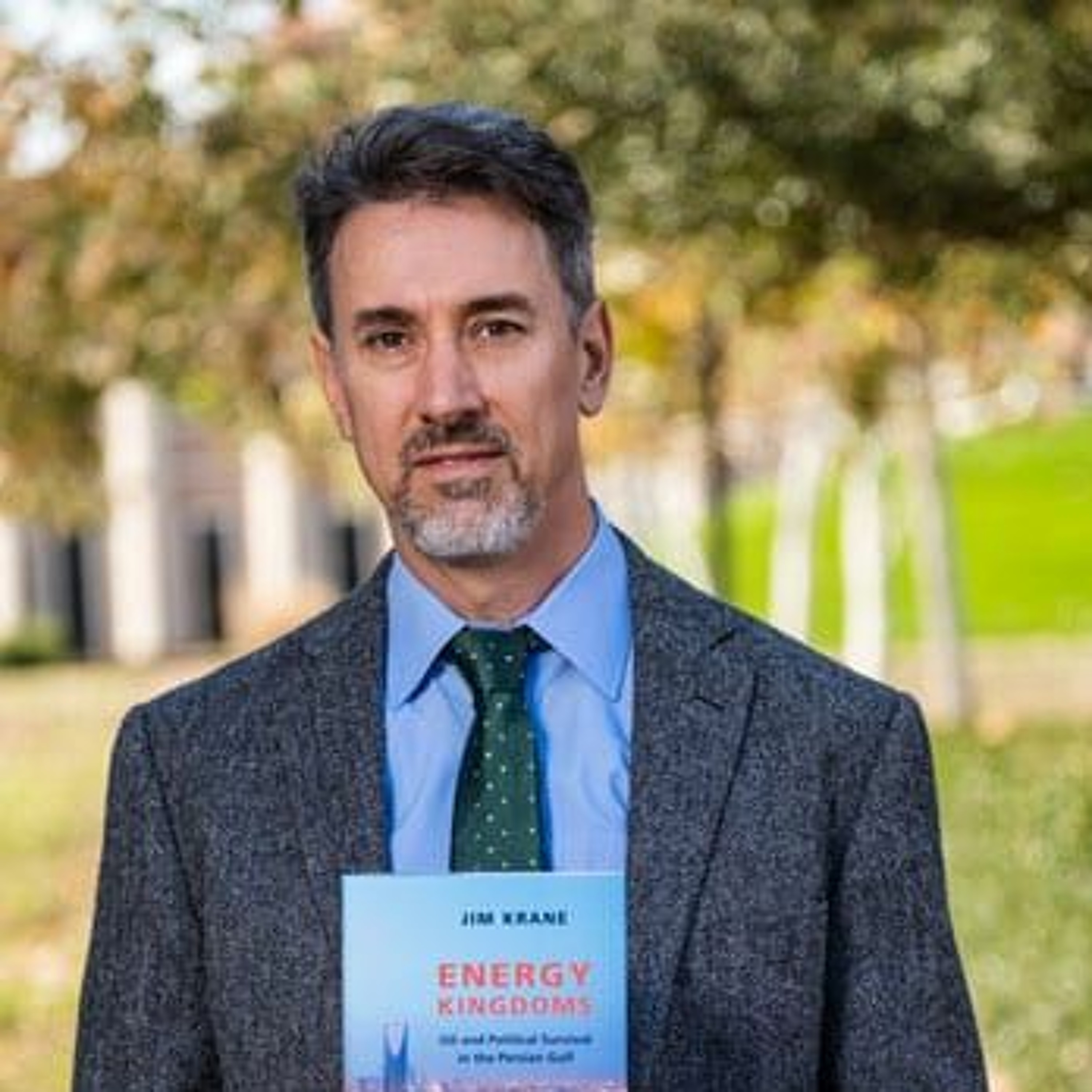
Energy Kingdoms: A Conversation with Jim Krane (S. 8, Ep. 10)
How did the Persian Gulf states' energy use and policies change with the discovery of oil? That is what Jim Krane tackles in his latest book, Energy Kingdoms: Oil and Political Survival in the Persian Gulf, which he discusses on this week's podcast with Marc Lynch. Energy Kingdom traces the history of the Gulf states’ energy use and policies, looking in particular at how energy subsidies have distorted demand. "Nobody ever lifted the hood on their own economies domestically in the Gulf— and looked at just how much energy they use domestically," said Krane. "Energy has been cheap in the Gulf since day one— I really kind of peg the the low prices back to the 1973 oil embargo... But the average household in the UAE used between four and five times as much electricity as a household in Arizona, where you also have a very hot climate and energy intensive lifestyles." "It was amazing to me that even Arizona pales in comparison with energy demand and in a place like the UAE— and the UAE isn't even the highest. Kuwait is just off the charts for the amount of amount of energy that that's used." said Krane. "And one of the reasons for that is because it's just so incredibly cheap" due to government subsidies. "Not only were rising energy demand a threat to the economy, but it's a threat to the ruling sheikhs that govern these these countries. And if they couldn't get it under control, at some point they're going to have change the way of the type of governance that they had in that region," said Krane. Krane is the Wallace S. Wilson Fellow for Energy Studies at Rice University’s Baker Institute for Public Policy. He holds a Ph.D. from Cambridge University and is the author of City of Gold: Dubai and the Dream of Capitalism (2009). A former journalist, he was a correspondent for the Associated Press and has written for publications including the Washington Post, the Wall Street Journal, and Financial Times. Music for this season's podcast was created by Feras Arrabi. You can find more of his work on his Facebook (https://www.facebook.com/ferasarrabimusic)and Instagram (https://www.instagram.com/feras.arrabi/)page.
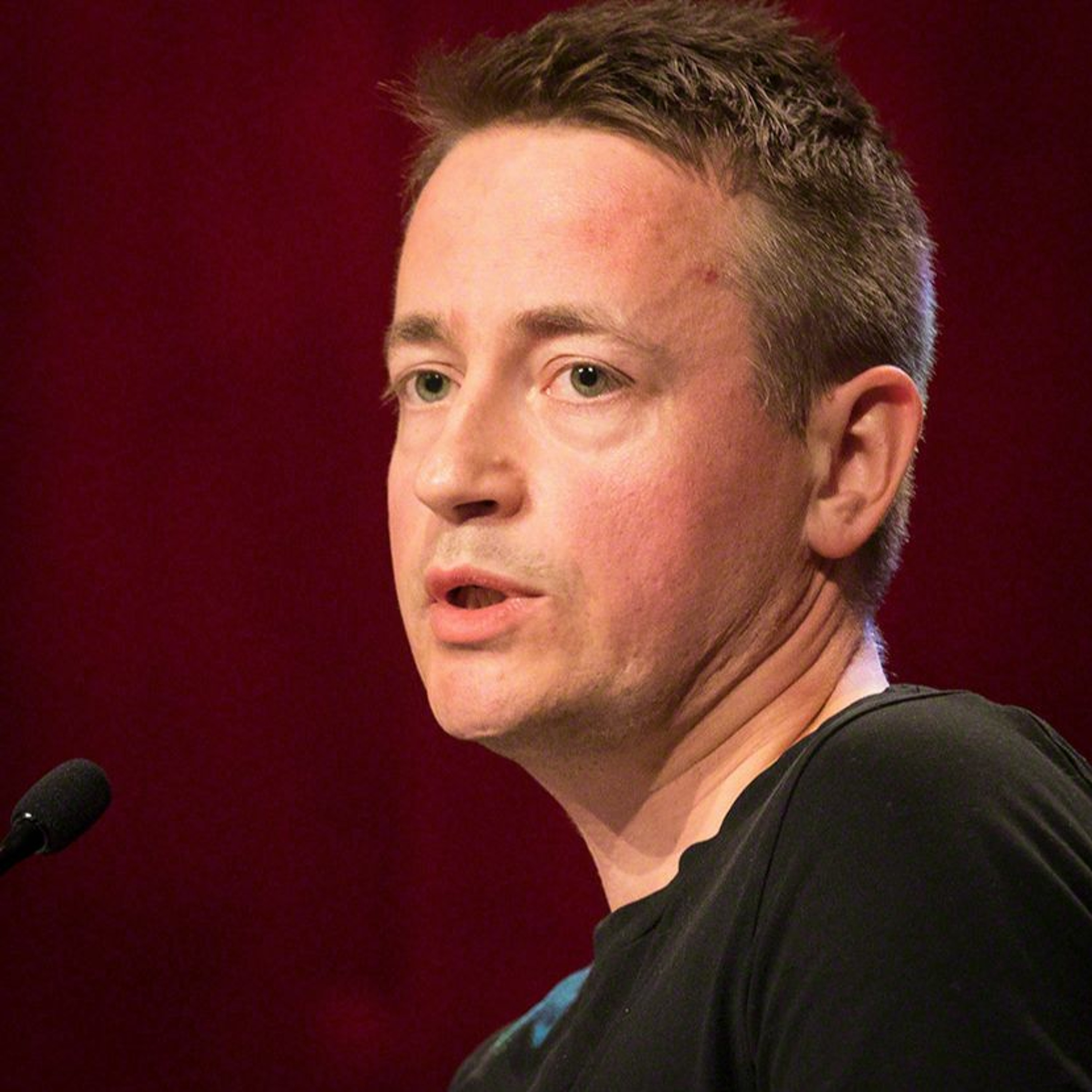
The Rise of Global Jihad: A Conversation with Thomas Hegghammer (S. 8, Ep. 9)
Thomas Hegghammer speaks about his new book, The Caravan: Abdallah Azzam and the Rise of Global Jihad, with Marc Lynch. Hegghammer explains how prominent Palestinian cleric Abdallah Azzam—who led the mobilization of Arab fighters to Afghanistan in the 1980s— came to play such an influential role and why jihadism went global at this particular time. "There were militant Islamist groups in the 50s, 60s, and 70s, but they were almost all focused on domestic politics trying to topple their respective regimes. And then— kind of all of a sudden— they turn to the international stage. They start traveling around the world as foreign fighters," said Hegghammer. "Azam is is crucial because he is the main entrepreneur behind the mobilization of the so-called Arab-Afghans in the 1980s. The Arab-Afghans were basically the foreign fighters in the War in Afghanistan in the 1980s— and Abdullah Azzam was the man who more or less brought them there." "He set up an organization called the Services Bureau to streamline the recruitment and reception of foreign fighters. And he wrote several very influential books that motivated people to go. By the late 1980s, he was without a doubt the most famous jihadi in the world." "He exercises influence today," said Hegghammer. "Even though he died in 1989, he is still widely read by jihadis today." Hegghammer is a senior research fellow at the Norwegian Defence Research Establishment in Oslo. Music for this season's podcast was created by Feras Arrabi. You can find more of his work on his Facebook (https://www.facebook.com/ferasarrabimusic)and Instagram (https://www.instagram.com/feras.arrabi/)page.

Identity and Politics in a Globalized Saudi Arabia: Mark C. Thompson (S. 8, Ep. 8)
On this week's podcast, Mark C. Thompson talks about his new book, Being Young, Male and Saudi: Identity and Politics in a Globalized Kingdom, with Marc Lynch. "The main goal of this book was to give a voice to a very wide variety of young Saudi men across the Kingdom— about how they feel about living in today's contemporary Saudi Arabia, their aspirations and concerns," said Thompson. "Outside of Saudi Arabia, people tend to look at these sort of socio-economic, socio-cultural transformations that are happening in the Kingdom— particularly in the West— through the prism of what's happening to Saudi women. And they get all the attention, whereas the young men sort of get disregarded, and yet their side of the story is as equally as important— and actually informs us about the current role of Saudi women." Thompson is a Senior Associate Fellow at the King Faisal Center for Research and Islamic Studies. He is also an Assistant Professor of Middle East Studies at the King Fahd University of Petroleum and Minerals (KFUPM). Music for this season's podcast was created by Feras Arrabi. You can find more of his work on his Facebook (https://www.facebook.com/ferasarrabimusic)and Instagram (https://www.instagram.com/feras.arrabi/)page.
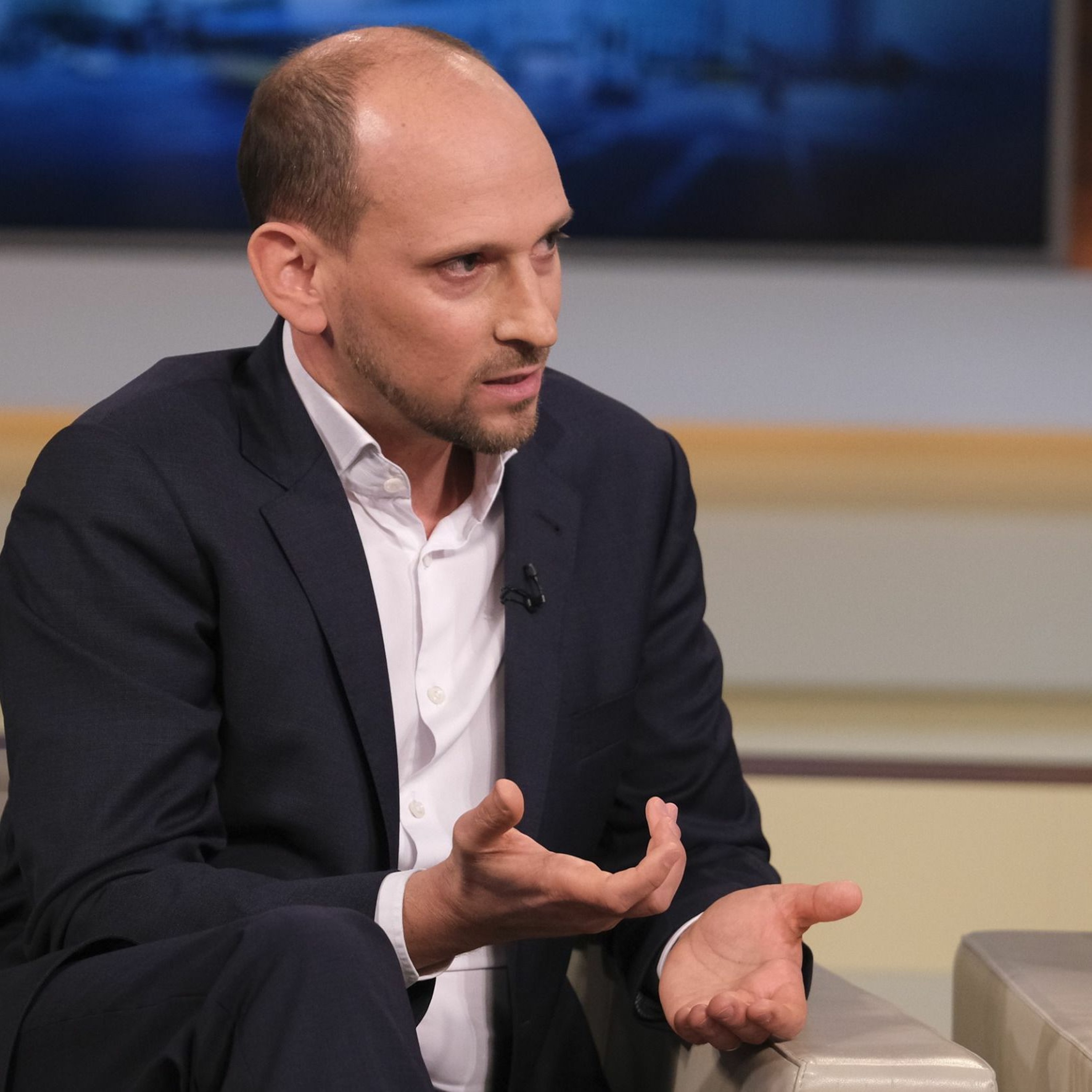
Libya’s Fragmentation: A Conversation with Wolfram Lacher (S. 8, Ep. 7)
Wolfram Lacher talks about his new book, Libya's Fragmentation: Structure and Process in Violent Conflict, with Marc Lynch on this week's podcast. "The book really started with the observation that what has marked Libya's political and military landscape since 2011 is localism," said Lacher. "What I very quickly saw when I looked at this phenomenon of local forces was that we're not really talking about city states or tribes that are united in their political position. Actually, at the local level, we have competing political factions and competing military factions within these local constituencies. So you're really talking about an extremely fragmented political scene. And that has been the main obstacle to forming stable coalitions at the central government level— both after the fall of the regime in 2011, and after the second civil war in 2014-2015." "The objective of the book really is to explain this extreme fragmentation and why nobody including Haftar has been able to overcome it...my answer in a nutshell is that it has a lot to do with the way the conflict dynamics with the way violence has transformed Libyan society," said Lacher. Wolfram Lacher is Senior Associate at the German Institute for International and Security Affairs (SWP). His research focuses on conflict dynamics in Libya and the Sahel region, and relies on frequent fieldwork. Music for this season's podcast was created by Feras Arrabi. You can find more of his work on his Facebook (https://www.facebook.com/ferasarrabimusic)and Instagram (https://www.instagram.com/feras.arrabi/)page.
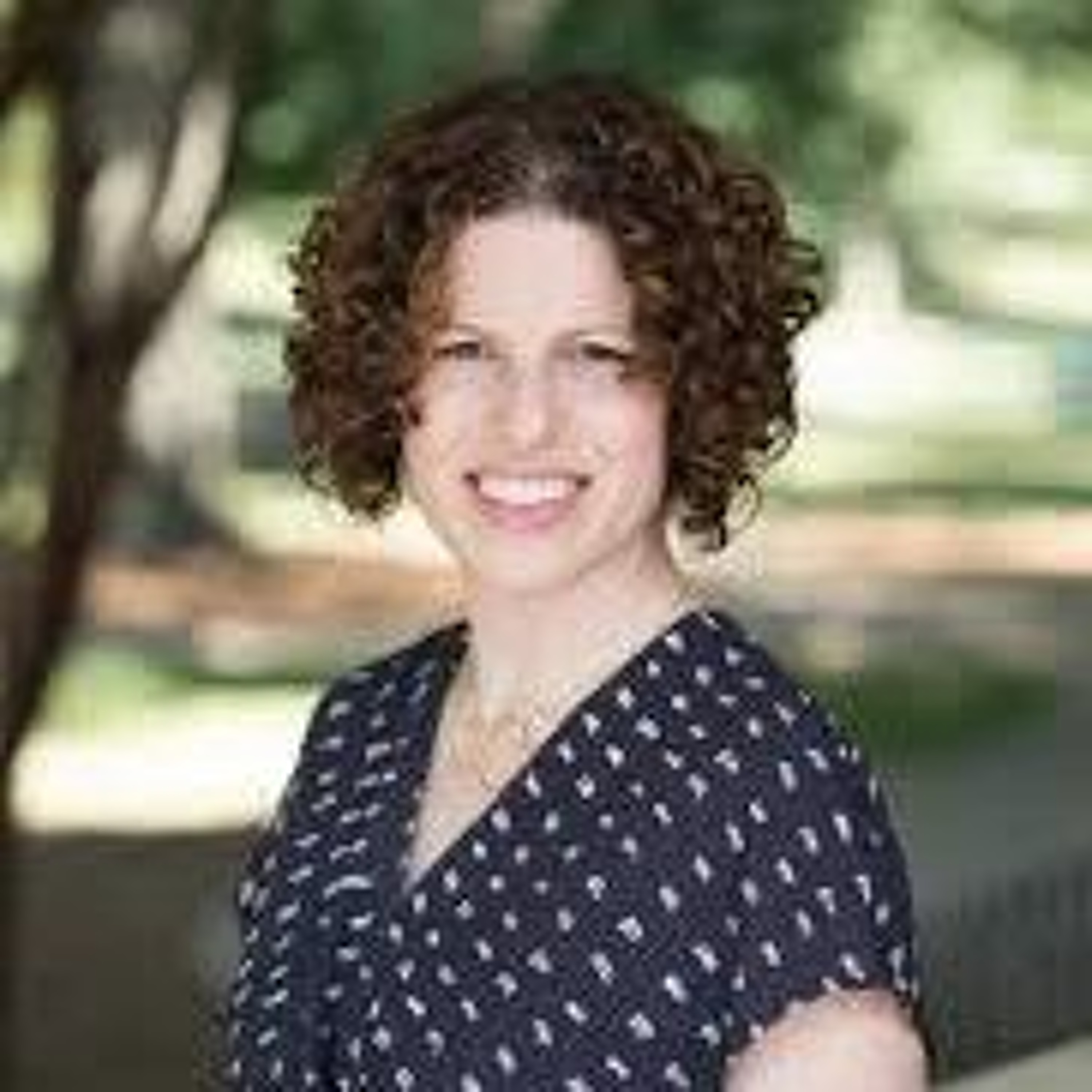
The Revolution Within: A Conversation with Yael Zeira (S. 8, Ep. 6)
Yael Zeira talks about her new book The Revolution Within State Institutions and Unarmed Resistance in Palestine with Marc Lynch. Her book examines who engages in resistance activities through an in-depth study of unarmed resistance against Israeli rule in the Palestinian Territories over more than a decade. "The main question that inspired me to write this book is: 'Why do some people participate in risky anti regime resistance while other often pretty similar people abstain?' And this is both a classic question about collective action— and at the same time, a very human question about why ordinary people do extraordinary things." Zeira is the Croft Assistant Professor of Political Science and International Studies at the University of Mississippi. Previously, she was a Postdoctoral Fellow in the Empirical Studies of Conflict Program and the Center for Democracy, Development and the Rule of Law at Stanford University. Music for this season's podcast was created by Feras Arrabi. You can find more of his work on his Facebook (https://www.facebook.com/ferasarrabimusic)and Instagram (https://www.instagram.com/feras.arrabi/)page.
China’s Relations with the Gulf Monarchies: A Conversation with Jonathan Fulton (S. 8, Ep. 5)
On this week's podcast, Jonathan Fulton talks about his book China's Relations with the Gulf Monarchies with Marc Lynch. "It's interesting because a lot of the narrative about China-Gulf relations seemed to be stuck in this oil-for-trade narrative— that China is buying a lot of oil and selling a lot of stuff— and that's kind of the extent of the relationship. And from what I've seen here in Abu Dhabi, there's just so much more going on. And it really felt like like there had to be something that looked at it from an IR perspective and gave a fuller picture of the relationships," said Fulton. Fulton explains what and how China's policy towards Gulf monarchies changed in regards to foreign and domestic policies, in the past and now. Fulton is an assistant professor of political science in the College of Humanities and Social Sciences at Zayed University, in Abu Dhabi, United Arab Emirates, where he researches China – Middle East relations, Chinese foreign policy, the global strategic implications of the Belt and Road Initiative, and international relations of the Gulf region. Music for this season's podcast was created by Feras Arrabi. You can find more of his work on his Facebook (https://www.facebook.com/ferasarrabimusic)and Instagram (https://www.instagram.com/feras.arrabi/)page.
Houses Built on Sand: A Conversation with Simon Mabon (S. 8, Ep. 4)
Simon Mabon speaks about his new book, Houses Built on Sand: Violence, Sectarianism and Revolution in the Middle East, with Marc Lynch on this week's podcast. "I was trying to understand one way the Arab uprisings played out— in particular, the ways across the region," said Mabon. "What I've done instead is to look at how the relationship between 'rulers and ruled' has evolved across the region across the 20th and 21st centuries. And those particular relationships have created conditions that sometimes allowed for the possibility of dissent and political protest, while at other times prohibited it from taking place, as a consequence of the types of structures, forces and against coercive capacities of particular regimes— which meant that people can take to the streets or not." Mabon is Senior Lecturer in International Relations and Director of the Richardson Institute at Lancaster University in the United Kingdom. Music for this season's podcast was created by Feras Arrabi. You can find more of his work on his Facebook (https://www.facebook.com/ferasarrabimusic)and Instagram (https://www.instagram.com/feras.arrabi/)page.
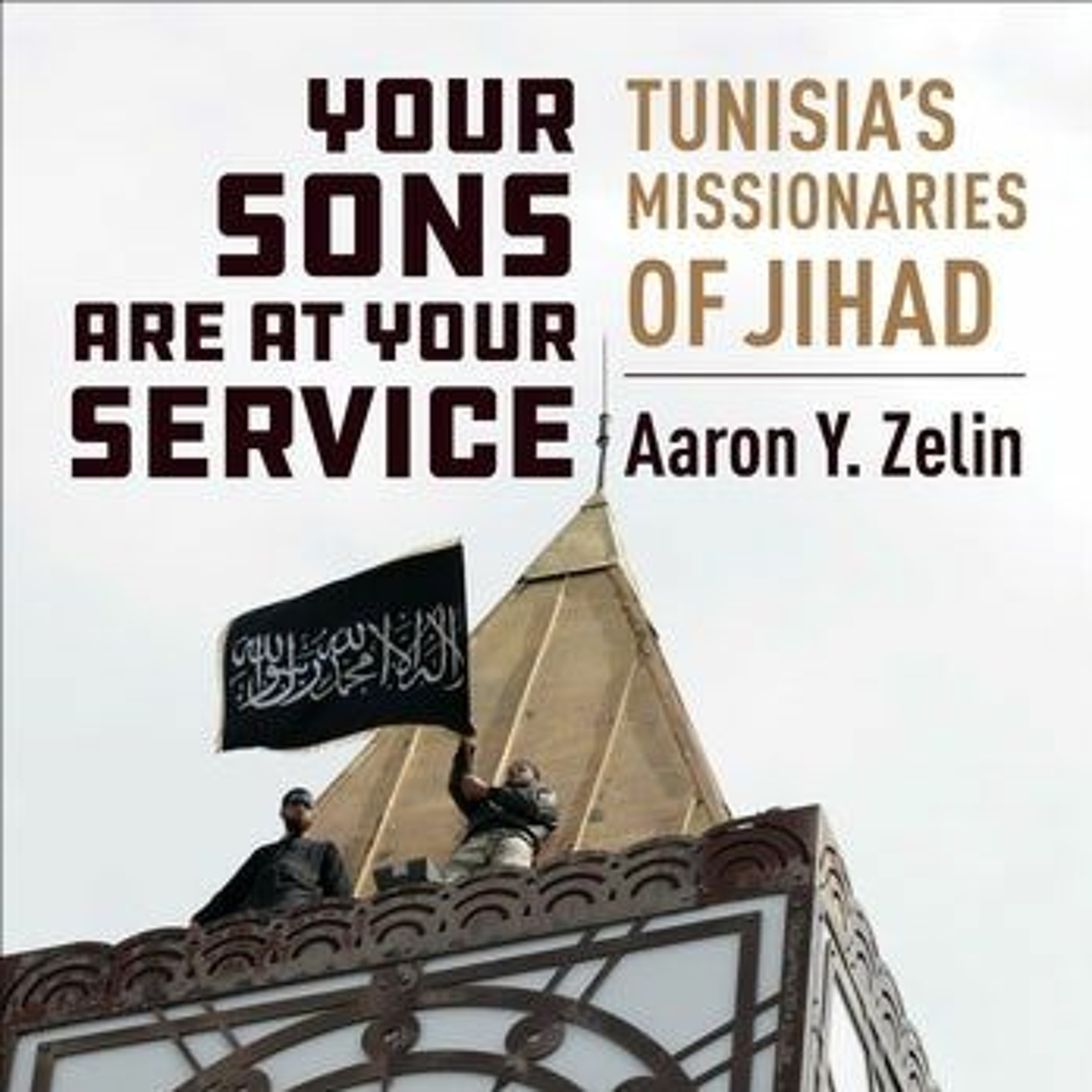
Tunisia’s Missionaries of Jihad: A Conversation with Aaron Zelin (S. 8, Ep. 3)
This week's podcast is a conversation with Aaron Y. Zelin who discusses his new book, Your Sons Are at Your Service: Tunisia's Missionaries of Jihad. In the book, Zelin explains how Tunisia became one of the largest sources of foreign fighters for the Islamic State— even though the country stands out as a democratic bright spot of the Arab uprisings and despite the fact that it had very little history of terrorist violence within its borders prior to 2011. Zelin is the Richard Borow Fellow at the Washington Institute for Near East Policy and a visiting research scholar in the Department of Politics at Brandeis University. He is the founder of the website Jihadology.net, a primary source archive of global jihadi materials. Music for this season's podcast was created by Feras Arrabi. You can find more of his work on his Facebook (https://www.facebook.com/ferasarrabimusic)and Instagram (https://www.instagram.com/feras.arrabi/)page.
Threats and Alliances in the Middle East: A Conversation with May Darwich (S. 8, Ep. 2)
On this week's POMEPS podcast, May Darwich discusses her new book, Threats and Alliances in the Middle East: Saudi and Syrian Policies in a Turbulent Region, with Marc Lynch. "The book focuses on how threat perceptions for some states led to particular alliance decisions," said Darwich. "It looks at some historical cases ,but also some more recent cases." "In particular, it's looking at how identity and power into plays in shaping threat perception." "So over time the book also gives an idea of how these processes of identity change. They are very they are very slow in that change, but over time we could see that this interaction between material and identity— it's shaping both how the identity is developing over time, but also the alliance choices made based on threats to identity also shapes how actors evolve and how their roles evolve in the region." Darwich is an assistant professor in International Relations of the Middle East in the School of Government and International Affairs (SGIA) at Durham University. Music for this season's podcast was created by Feras Arrabi. You can find more of his work on his Facebook (https://www.facebook.com/ferasarrabimusic)and Instagram (https://www.instagram.com/feras.arrabi/)page.
Iran Reframed: A Conversation with Narges Bajoghli (S. 8, Ep. 1)
Launching our new season of the POMEPS Conversations podcast, Narges Bajoghli discusses her book, Iran Reframed: Anxieties of Power in the Islamic Republic. In this book, Bajoghli provides an inside look at what it means to be pro-regime in Iran, and the debates around the future of the Islamic Republic. Dr. Narges Bajoghli is an award-winning anthropologist, filmmaker, and writer. Her work focuses on the intersections of power and media. Music for this season's podcast was created by Feras Arrabi. You can find more of his work on his Facebook (https://www.facebook.com/ferasarrabimusic)and Instagram (https://www.instagram.com/feras.arrabi/)page.
Salafi-Jihadism: A Conversation with Shiraz Maher (S. 7, Ep. 12)
Shiraz Maher speaks with Marc Lynch about his new book, Salafi-Jihadism: The History of an Idea. In the book, he explores the intellectual trajectory of Salafi-Jihadism from its origins in the mountains of the Hindu Kush to the jihadist insurgencies of the 1990s and the 9/11 wars. “I wanted to chart the intellectual migration of this movement with reference to Islamic theology and to try to bring that into the Western discourse to show people here is ISIS or al-Qaeda and here is how they are rationalizing, justifying, or explaining what they're doing,” Maher explains. “I regard all these as being constructions of Islam. And that for me I think is an interesting part of the debate to look at how they're building these ideas and ideology.” Dr. Shiraz Maher is Director of the International Centre for the Study of Radicalisation (ICSR) and a member of the War Studies Department at King’s College London. Maher is a recognized expert on jihadist movements. The BBC has described him as “one of the world’s leading experts on radicalization,” and the Washington Post has called him “a respected specialist on Islamic State.” His book, Salafi-Jihadism: The History of an Idea (Oxford University Press; and Hurst & Co.) has been widely acknowledged as a ground-breaking exploration of the political philosophy behind contemporary jihadist movements. Maher is also an adjunct lecturer at Johns Hopkins University (where he currently teaches separate courses on radicalization and political Islam), and was a visiting lecturer at Washington College during the Spring Semester of 2012 (where he taught Middle East politics). Music for this season's podcast was created by Feras Arrabi. You can find more of his work on his Facebook (https://www.facebook.com/ferasarrabimusic)and Instagram (https://www.instagram.com/feras.arrabi/)page.
Separatism and the Reshaping of the Middle East: A Conversation With Ariel I. Ahram (S. 7, Ep. 11)
Ariel I. Ahram speaks with Marc Lynch about his new book, Break all the Borders: Separatism and the Reshaping of the Middle East. In Break all the Borders, Ariel I. Ahram examines the separatist movements that aimed to remake the borders of the Arab world and create new independent states. With detailed studies of the Islamic State in Iraq and Syria, the federalists in eastern Libya, the southern resistance in Yemen, and Kurdish nationalist parties, Ahram explains how separatists captured territory and handled the tasks of rebel governance, including managing oil exports, electricity grids, and irrigation networks."I think an assumption about the way the Middle East worked— especially after 2011— everyone talked about state failure, but no one had any idea what the real forces were that were emerging from state failure," says Ahram. "The presumption about the region was that if the states were broken, they would break into a million little pieces. In fact, I found that there were only certain actors and certain countries that were really pushing to redraw borders. Most of the political contestation in the region was focused on trying to take power in the center not to break away. What I wanted to do them with the book was to focus on the actors who were really pushing to address territorial issues within the state."Ahram is Associate Professor in the Virginia Tech School of Public and International Affairs in Alexandria, Virginia, and non-resident fellow at Rice University’s Baker Institute for Public Policy. He earned a Ph.D. in government and M.A. in Arab Studies from Georgetown and B.A., summa cum laude, from Brandeis. He writes widely on security issues in the Middle East and North Africa. He was a fellow at the Woodrow Wilson International Center for Scholars in Washington D.C. and has spoken and lectured at the World Bank, Marine Corps University, and the German Institute for Global Affairs. In 2015, he testified before the U.S. House Foreign Affairs Committee on the Islamic State’s abuses of women and children. Music for this season's podcast was created by Feras Arrabi. You can find more of his work on his Facebook (https://www.facebook.com/ferasarrabimusic)and Instagram (https://www.instagram.com/feras.arrabi/)page.
Israel and Nonstate Actors: A conversation with Wendy Pearlman and Boaz Atzili (S. 7, Ep. 10)
Wendy Pearlman and Boaz Atzili talk about their new book, Triadic Coercion: Israel’s Targeting of States That Host Nonstate Actors. "The inspiration for the book goes back to the 2006 war between Israel and Lebanon— or Israel and Hezbollah," said Peralman. "Boaz and I both had postdoc fellowships at Harvard and we met in the aftermath of that... We're both quite intrigued by one aspect of that war, which was Israel's targeting of Lebanon as a state. Why would Israel target a weak host state— and demand it to stop non-state actors?" "We find is that in earlier years [of this policy], it's basically a trial and error kind of process. Israel has tried many different things— defensive measures, targeting civilians, etc.— and among them was what we call 'trial coercion.' So trying to target the forces of the state the military or police of the state and using that as a way to coerce the state to try to rein in the non-state actors. And when we get to the 1990s, that's where we see a shift where Israel basically adopt this policy more wholesale— and without considering whether it's working or not working," said Atzili. "Our argument there is that attractive coercion can only succeed against a host state that is strong. The host state needs a minimum amount of political cohesion and institutional capacity to even meet the demands of the coercer. When this type of strategy is used against a weak host state— even if it is predisposed to be cooperative with Israel, even if it shares Israel's opposition to the non-state actor—it simply doesn't have the internal cohesion or institutional capacity to actually act against a non-state actor," said Pearlman. Wendy Pearlman is an associate professor of political science at Northwestern University, where she also holds the Martin and Patricia Koldyke Outstanding Teaching Professorship and is a faculty fellow at the Buffett Institute for Global Studies. Boaz Atzili is an associate professor and the Director of Doctoral Studies at the School of International Service (SIS) in American University, Washington DC. Music for this season's podcast was created by Feras Arrabi. You can find more of his work on his Facebook (https://www.facebook.com/ferasarrabimusic)and Instagram (https://www.instagram.com/feras.arrabi/)page.
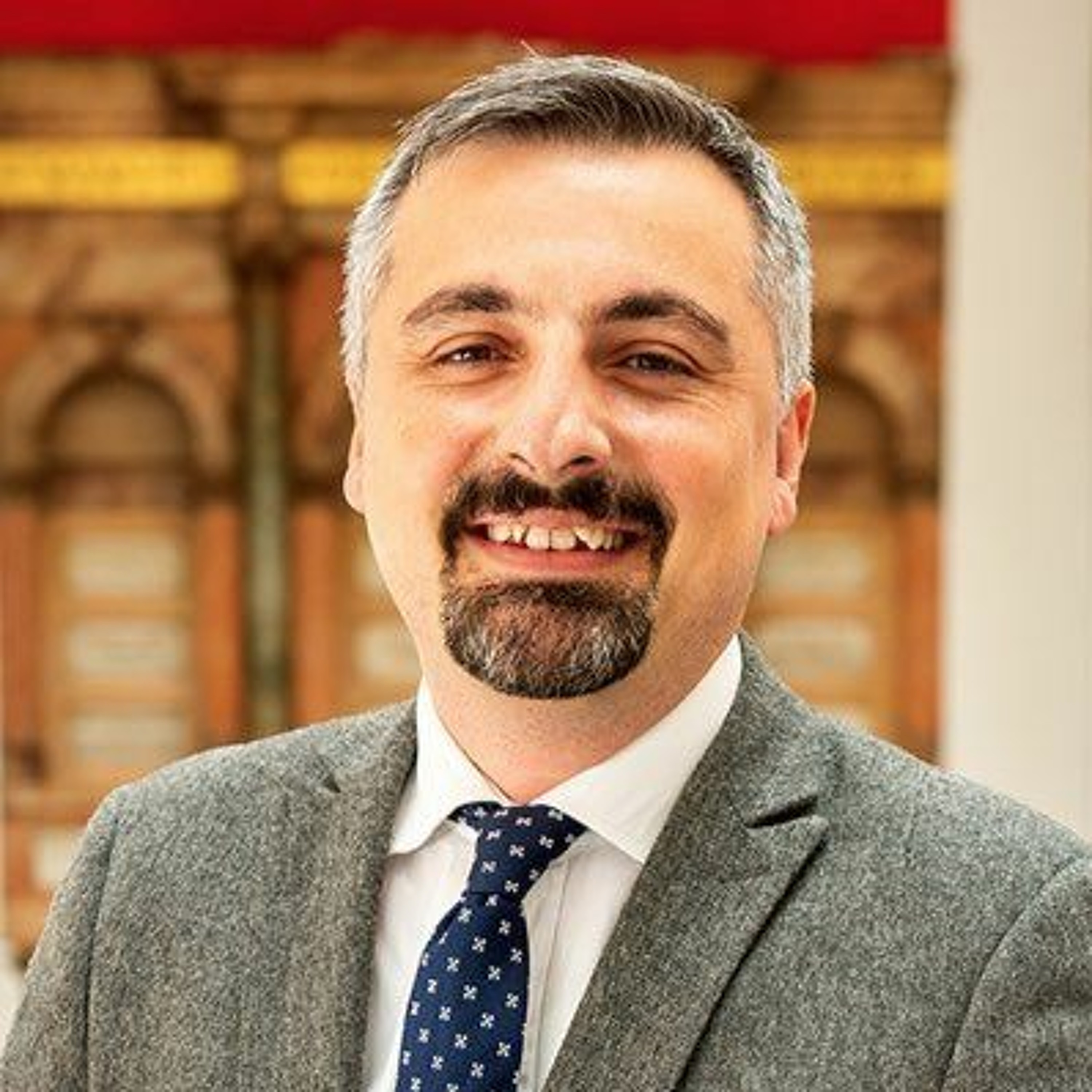
How Violence Shapes Religion: A Conversation with Ziya Meral (S. 7, Ep. 9)
Ziya Meral speaks with Marc Lynch about his latest book, How Violence Shapes Religion: Belief and Conflict in the Middle East and Africa. "I really wanted to demystify the conversation on religion and violence," said Meral. "I wanted to highlight another direction of this discussion— which is how violence leads to religion, how violence alters religions, and impacts them— and why is it that religions are so present in violent conflicts that they don't necessarily triggered themselves." Meral is a British and Turkish researcher, and is a senior resident fellow at the UK Army's Centre for Historical Analysis and Conflict Research based at the Royal Military Academy Sandhurst. He is also the Director of the Centre on Religion and Global Affairs, based in London and Beirut. Music for this season's podcast was created by Feras Arrabi. You can find more of his work on his Facebook (https://www.facebook.com/ferasarrabimusic)and Instagram (https://www.instagram.com/feras.arrabi/)page.
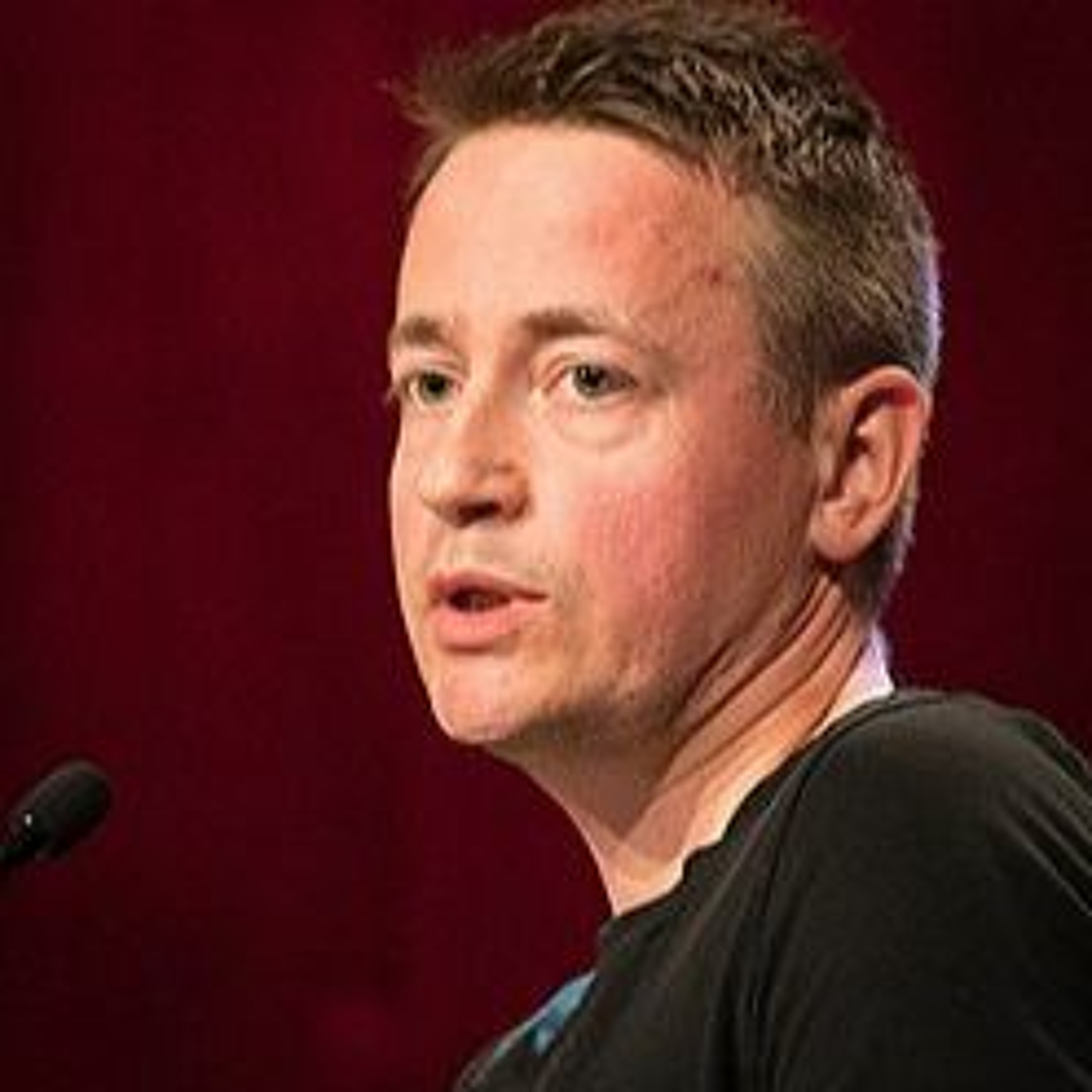
Violent Islamism: A Conversation with Thomas Hegghammer (S. 7, Ep. 8)
On this week's episode of the POMEPS Conversation Podcast, Marc Lynch speaks with Thomas Hegghammer, an expert on violent Islamism. Hegghammer talks about current status of the Islamic State (ISIS), as well as future of violent extremism. "The way I see the the the Islamic State terrorism campaign in Europe in 2015, 2016, and 2017 happened because there was a new generation of leaders in place who hadn't quite realized or internalized the repercussions of [their] strategy," Hegghammer says. "But I think that now— even in the Islamic State family— there is a growing realization that if you want to stay alive, or if you want to keep some kind of operation locally, you want to be careful about what you what you do. So I suspect that at least the medium-term effect of this will be a certain type of some kind of taming of the Islamic State animal." Hegghammer is currently a senior research fellow at the Norwegian Defence Research Establishment (FFI) and adjunct professor of political science at the University of Oslo. He is the author of numerous books, including Jihadi Culture: The Art and Social Practices of Militant Islamists and The Meccan Rebellion: The Story of Juhayman al-'Utaybi Revisited. Music for this season's podcast was created by Feras Arrabi. You can find more of his work on his Facebook (https://www.facebook.com/ferasarrabimusic)and Instagram (https://www.instagram.com/feras.arrabi/)page.

Oil and Societal Quiescence: A Conversation with Jessie Moritz (S. 7, Ep. 7)
On this week's podcast, Jessie Moritz discusses her research on the Rentier States. Moritz is a Postdoctoral Research Associate at the Institute for the Transregional Study of the Contemporary Middle East, Central Asia, and North Africa, Princeton University. She has conducted interviews with over 150 citizens of Qatar, Bahrain, Oman, and Saudi Arabia, including members of royal families, ministers, elected and appointed representatives, development experts, entrepreneurs, prominent leaders in civil society, and youth activists involved in protests since 2011. Her current research focuses on the political economy of oil in the Arabian Peninsula, with a particular focus on post-2014 economic reform programs and their impact on state-society relations. We have to understand that before we get to oil and gas and democratization, we have to understand oil and gas and lack of mobilization- whether that's through the absence of taxation or whether that's through cooptation or the funding of a repressive apparatus. Whatever cause or mechanism we think is the most important, we have to understand the oil societal quiescence link first, and then we can move on to 'will it overthrow a authoritarian regime?'. And then 'will the outcome of that regime ever be democracy?'. There's so many steps in that process. Music for this season's podcast was created by Feras Arrabi. You can find more of his work on his Facebook (https://www.facebook.com/ferasarrabimusic)and Instagram (https://www.instagram.com/feras.arrabi/)page.
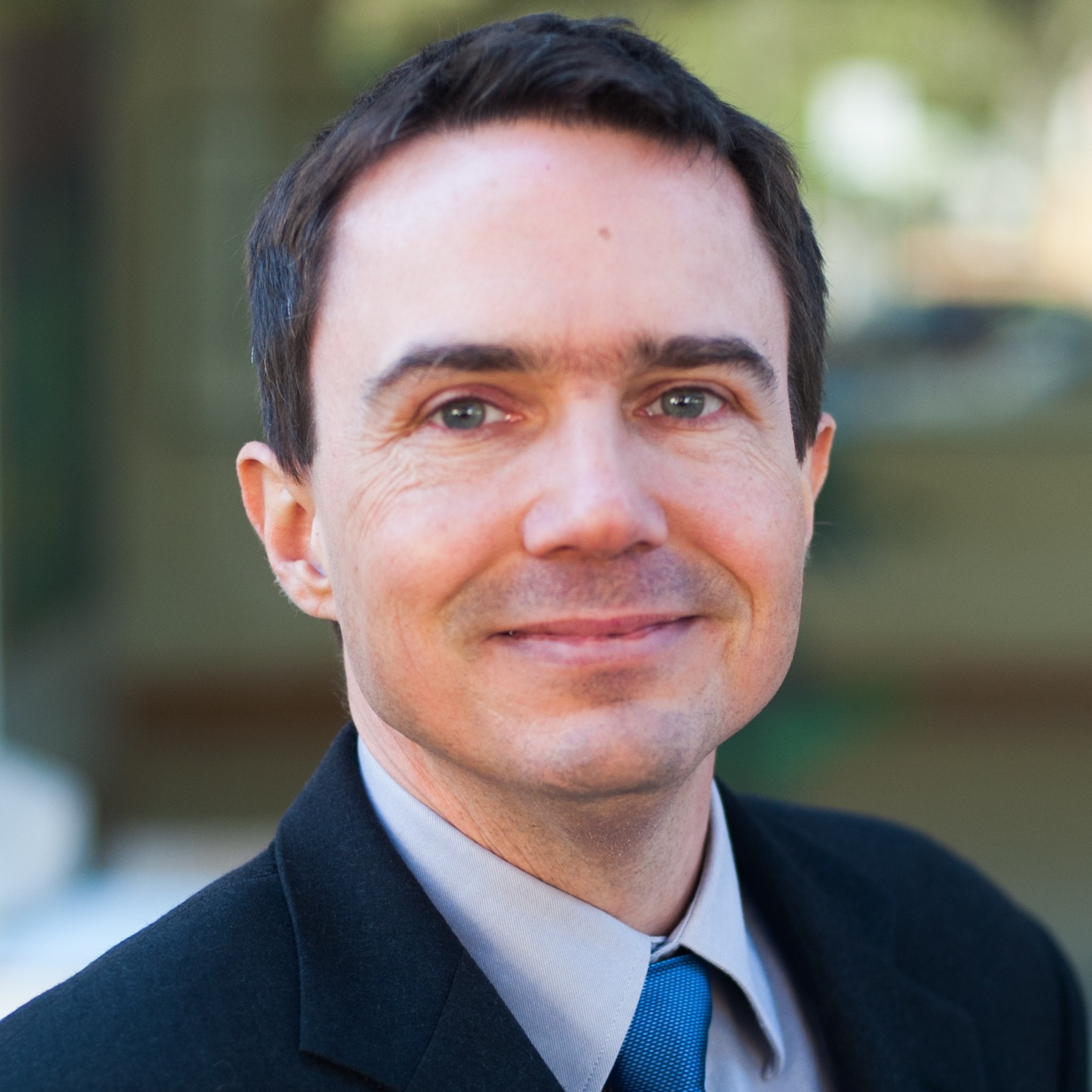
U.S. Interventionism in the Middle East: A Conversation with Jason Brownlee (S. 7, Ep. 6)
Jason Brownlee researches and teaches about authoritarianism and political emancipation. He is the author of Authoritarianism in an Age of Democratization(Cambridge University Press, 2007), Democracy Prevention: The Politics of the U.S.-Egyptian Alliance (Cambridge University Press, 2012), and (with Tarek Masoud and Andrew Reynolds) The Arab Spring: Pathways of Repression and Reform(Oxford University Press, 2012), as well as articles in American Journal of Political Science, World Politics, Comparative Political Studies, and other scholarly journals. Professor Brownlee is currently studying intersections of the U.S. political economy and Middle Eastern conflicts. "While I think that domestic movements for promoting foreign policy change are essential and can be highly influential at particular points, for example eventually bringing the United States around to join the international consensus against apartheid South Africa in the 1980s, I think for a long term behavioral change away from interventionism we would need something that is more global to provide security for the most powerful actors so that we have a time horizon in which people in which states and the people running them can see that intervention is no longer necessary." Music for this season's podcast was created by Feras Arrabi. You can find more of his work on his Facebook (https://www.facebook.com/ferasarrabimusic)and Instagram (https://www.instagram.com/feras.arrabi/)page.
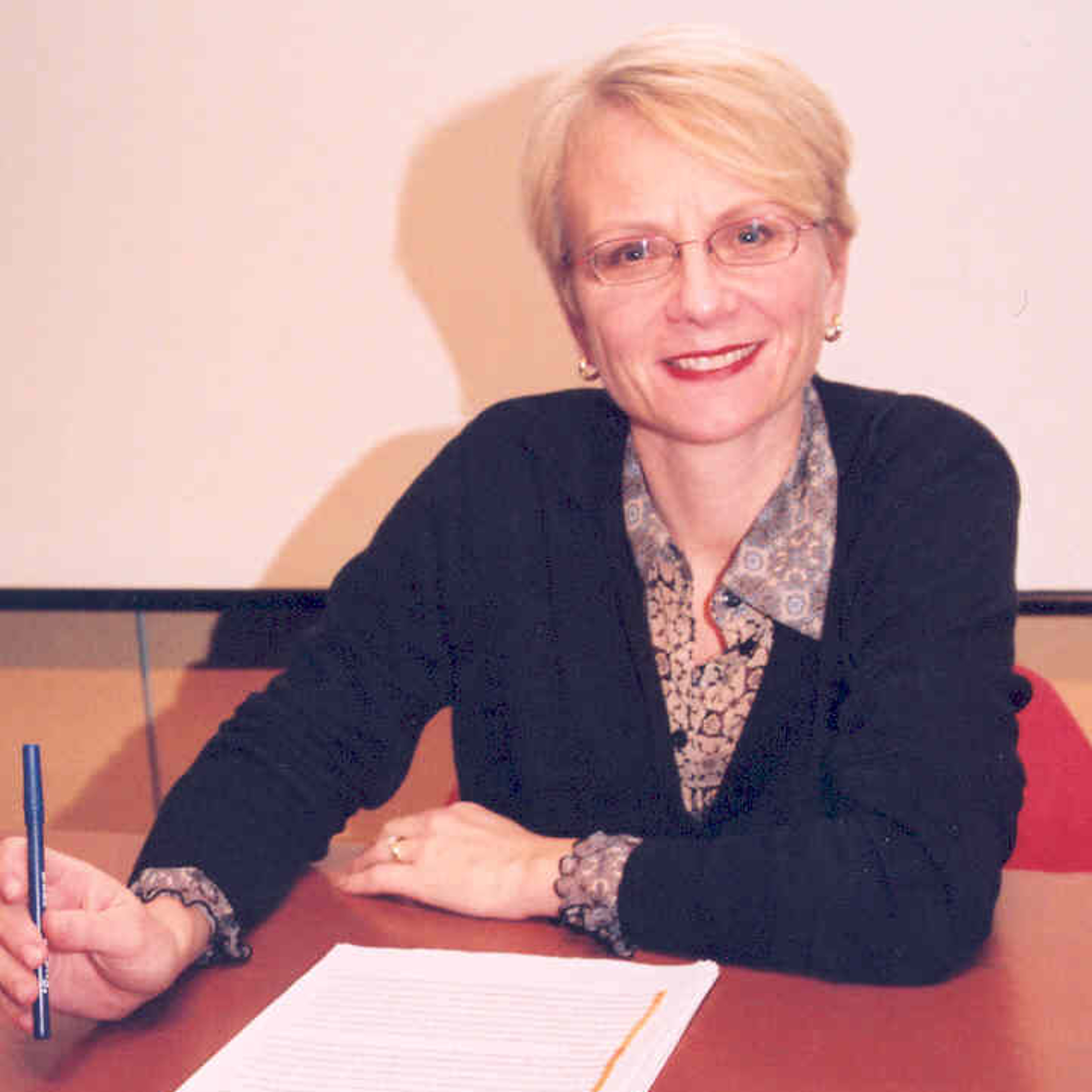
Local Politics in Jordan and Morocco: A Conversation with Janine Clark (S. 7, Ep. 5)
On this week's podcast, Janine Clark discusses her new book Local Politics in Jordan and Morocco: Strategies of Centralization and Decentralization (Columbia University Press, 2018). This book examines why Morocco decentralized while Jordan did not and evaluates the impact of their divergent paths, ultimately explaining how authoritarian regimes can use decentralization reforms to consolidate power. Jordan needs a much stronger party system so not everything's reliant on tribal alliances that sort of transfer resources down. But with the system as it is, there's no way out of it. And many of [the Jordanian] mayors actually weren't getting any perks themselves but they were at the whim of other elites who use their connections in Amman to pressure mayors to do things. Janine Clark is Associate Professor of Political Science at the University of Guelph. She is the author of Islam, Charity, and Activism: Middle-Class Networks and Social Welfare in Egypt, Jordan, and Yemen (2004) and coeditor of Economic Liberalization, Democratization, and Civil Society in the Developing World (2000). Music for this season's podcast was created by Feras Arrabi. You can find more of his work on his Facebook (https://www.facebook.com/ferasarrabimusic)and Instagram (https://www.instagram.com/feras.arrabi/)page.
The Wages of Oil: A Conversation with Michael Herb (S. 7, Ep. 4)
Michael Herb discusses his book, The Wages of Oil: Parliaments and Economic Development in Kuwait and the UAE, on this week's POMEPS Conversations. In ths book, Herb provides a robust framework for thinking about the future of the Gulf monarchies. The Gulf has seen enormous changes in recent years, and more are to come. Herb explains the nature of the changes we are likely to see in the future. "Oil matters. It isn't a question of whether or not there's an effective oil or not an effective oil. The question is what are the causal pathways through which oil affects politics and are those causal pathways similar across different countries. You still get some very different outcomes in terms of big questions like how powerful is the parliament and in what direction is the economy developing. And those are because oil, it has a profound effect. But it interacts with with variables that exist in the situation in those interactions produce results that are really quite different. " Michael Herb is Chair and Professor of the Political Science department at Georgia State University. He is the author of All in the Family: Absolutism, Revolution, and Democracy in the Middle Eastern Monarchies. Music for this season's podcast was created by Feras Arrabi. You can find more of his work on his Facebook (https://www.facebook.com/ferasarrabimusic)and Instagram (https://www.instagram.com/feras.arrabi/)page.

Jordan and the Arab Uprisings: A Conversation with Curtis Ryan (S. 7, Ep. 3)
Curtis Ryan discusses his new book, Jordan and the Arab Uprisings: Regime Survival and Politics Beyond the State, on this week's POMEPS Conversations. This book explains how Jordan weathered the turmoil of the Arab Spring. Crossing divides between state and society, government and opposition, Dr. Ryan analyzes key features of Jordanian politics, including Islamist and leftist opposition parties, youth movements, and other forms of activism, as well as struggles over elections, reform, and identity. Curtis Ryan is a professor of political science at Appalachian State University in North Carolina. He is the author of Jordan in Transition: From Hussein to Abdullah (2002) and Inter-Arab Alliances: Regime Security and Jordanian Foreign Policy (2009). Music for this season's podcast was created by Feras Arrabi. You can find more of his work on his Facebook (https://www.facebook.com/ferasarrabimusic)and Instagram (https://www.instagram.com/feras.arrabi/)page.
National Identity Contestation & Foreign Policy in Turkey: Lisel Hintz (S. 7, Ep. 2)
On this week’s POMEPS Podcast, Marc Lynch speaks with Lisel Hintz about her new book: Identity Politics Inside Out: National Identity Contestation and Foreign Policy in Turkey. In this book, Hintz writes about the complex link between identity politics and foreign policy using an in-depth study of Turkey. Rather than treating national identity as cause or consequence of a state's foreign policy, she repositions foreign policy as an arena in which contestation among competing proposals for national identity takes place. Hintz is an assistant professor at Johns Hopkins University’s School of Advanced International Studies. Music for this season's podcast was created by Feras Arrabi. You can find more of his work on his Facebook (https://www.facebook.com/ferasarrabimusic)and Instagram (https://www.instagram.com/feras.arrabi/)page.
Women and the Egyptian Revolution: A Conversation with Nermin Allam (S. 7, Ep. 1)
Dr. Nermin Allam discusses her new book, Women and the Egyptian Revolution: Engagement and Activism During the 2011 Arab Uprisings, with Marc Lynch. Allam talks about how the she views the 2011 uprisings, and her book, which offers an oral history of women's engagement and historical contours of Egypt. Nermin Allam is an Assistant Professor of Politics at Rutgers University-Newark. Allam holds a Doctorate of Philosophy in International Relations and Comparative Politics from the University of Alberta, Canada. Her areas of research interest include: Social movements; gender politics; Middle Eastern and North African studies; and political Islam. Music for this season's podcast was created by Feras Arrabi. You can find more of his work on his Facebook (https://www.facebook.com/ferasarrabimusic)and Instagram (https://www.instagram.com/feras.arrabi/)page.
Bureaucratizing Islam: A Conversation with Ann Marie Wainscott (S. 6, Ep. 21)
On this week’s podcast, Ann Wainscott talks about her new book, Bureaucratizing Islam: Morocco and the War on Terror (Cambridge University Press, 2017) on how states in the Middle East and North Africa have responded to the War on Terror by investigating Morocco’s unique approach to counter-terrorism: the bureaucratization of religion. "What's really interesting about the Moroccan case is that that it learns, and so you can see these real shifts in its policy," says Wainscott. "Original response to the Casablanca bombings of 2003, that's Morocco's first massive terrorist attack, was standard Middle Eastern authoritarian. But then within a year they have realized the need for a more sophisticated approach. So in 2004, the following year, they initiated what they called a reform to the religious field, haql dini." Ann Wainscott is an assistant professor of political science at Miami University in Ohio where she teaches Middle East politics. She is currently on leave to serve as the American Academy of Religion senior fellow at the United States Institute Institute of Peace (USIP). Prior to teaching at Miami, she taught at Saint Louis University for four years. She has conducted fieldwork in Morocco, Senegal, Ghana, and Mali. She earned a PhD from the University of Florida in 2013. "I see this movement away from a very rigid religious policy and towards an effort to absorb other ideologies that the Moroccan state sees as threatening and then to find a way to position the Moroccan monarchy as in some way superior."
Burning Shores: A Conversation with Frederic Wehrey (S. 6, Ep. 20)
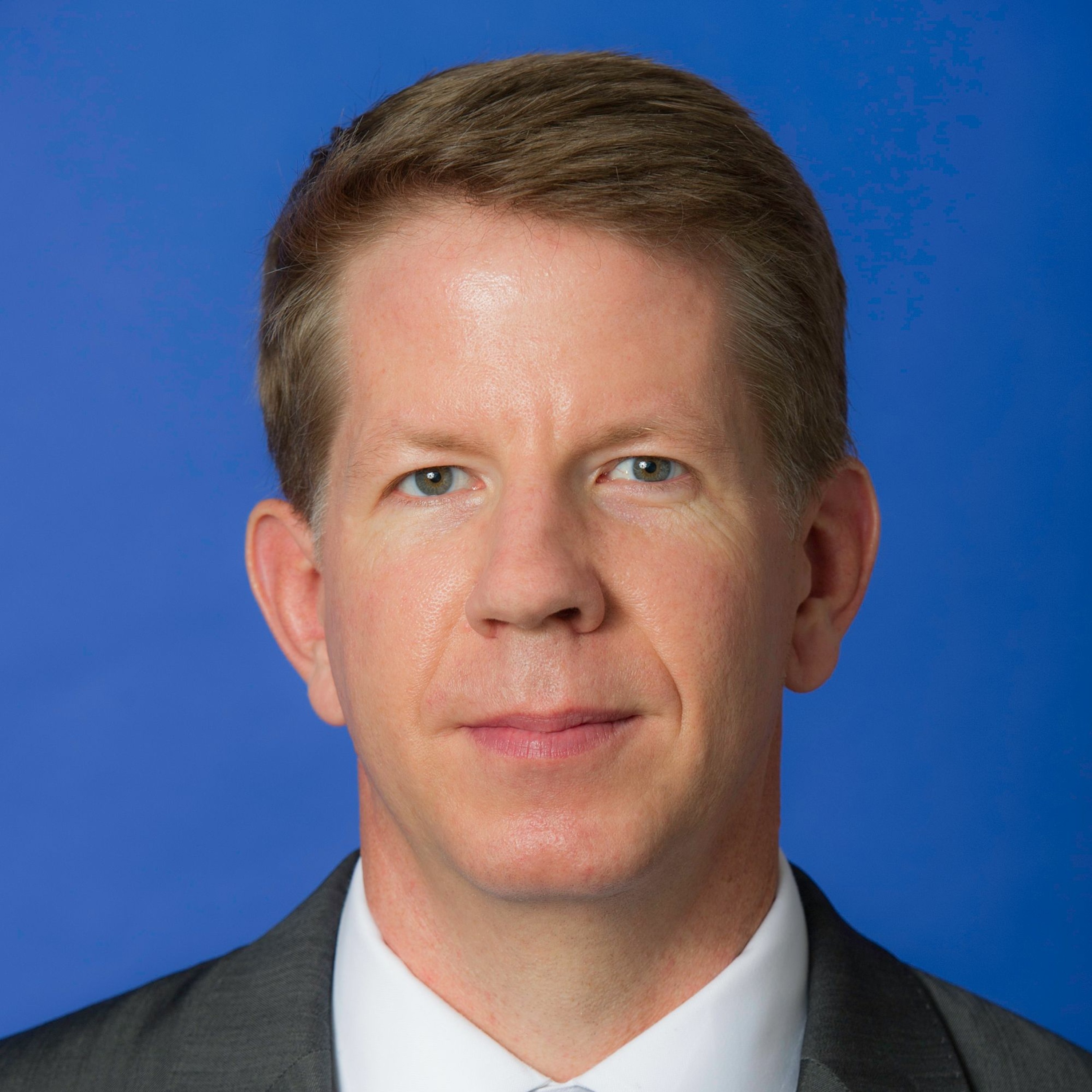
On this week’s podcast, Frederic Wehrey talks about his new book, The Burning Shores: Inside the Battle for the New Libya, (Farrar, Straus and Giroux, 2018) on the aftermath of the 2011 revolution in Libya. Wehrey interviews the key actors in Libya and paints vivid portraits of lives upended by a country in turmoil: the once-hopeful activists murdered or exiled, revolutionaries transformed into militia bosses or jihadist recruits, an aging general who promises salvation from the chaos in exchange for a return to the old authoritarianism. "Who owns the post conflict recovery? Because the mantra in U.S. was that Libyans are owning this. Well Libyans weren't equipped to own this because of Qaddafi's rule. Or perhaps less regional interference you know could have forestalled a collapse," says Wehrey. "But there again there's the question of U.S. power. How much authority do we have over these allies that are acting in contravention of our interests?" Frederic Wehrey is a senior fellow in the Middle East Program at the Carnegie Endowment for International Peace. He specializes in post-conflict transitions, armed groups, and identity politics, with a focus on Libya, North Africa, and the Gulf. "The U.N. is wrestling with the question of how do you do the post conflict reconstruction when you don't have a stabilization force on the ground [in Libya]. That was a missing component that should have been part of the mix. So it's this question where you don't want a complete Iraq type scenario- where you have this occupation and militarization and heavy handed- but then the over-learning that lesson where you've got this complete vacuum is going too far in the other direction."
Why Terrorists Quit: A Conversation with Julie Chernov Hwang (S. 6, Ep. 19)
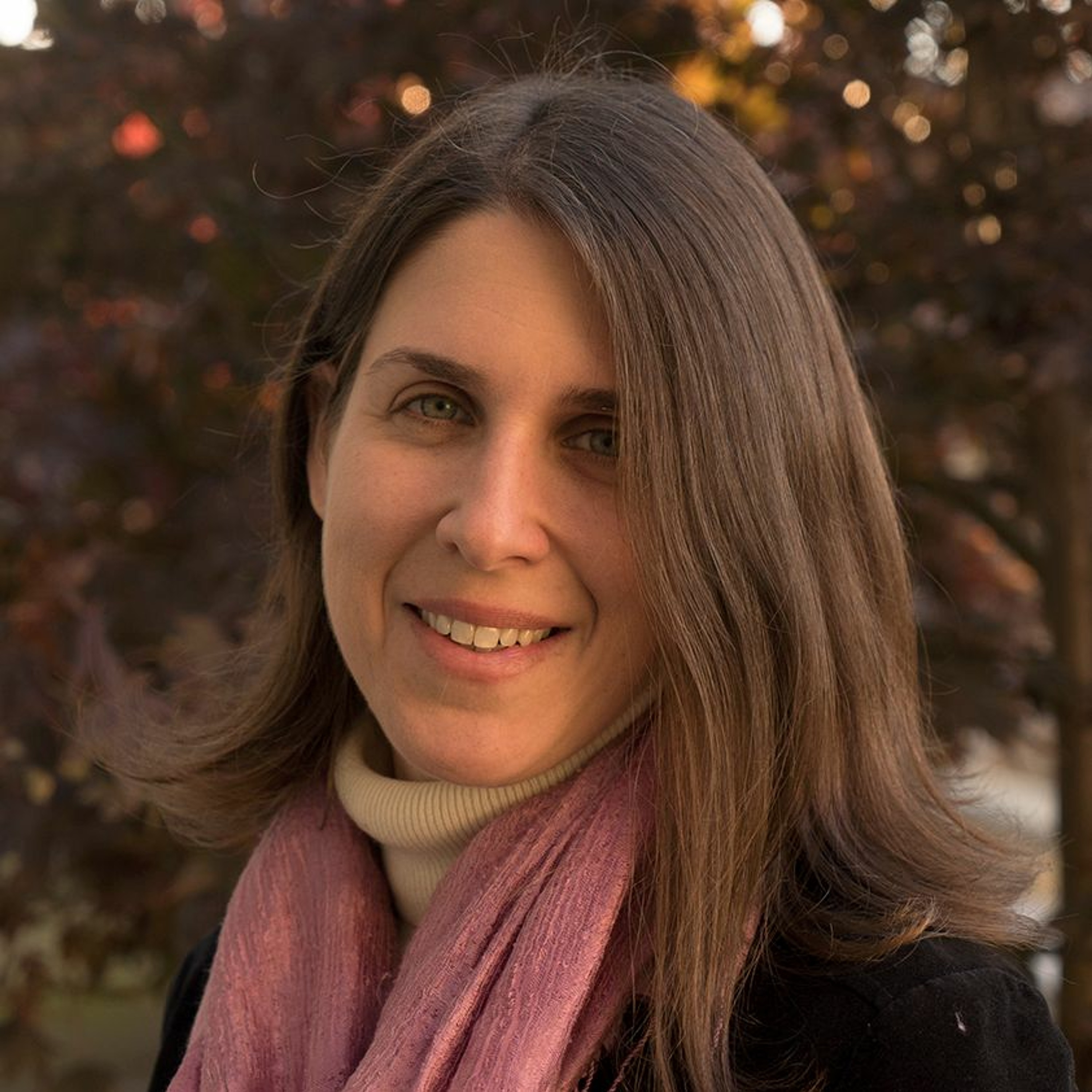
On this week's podcast, Julie Chernov Hwang talks about her new book, Why Terrorists Quit: The Disengagement of Indonesian Jihadists, (Cornell Press, 2018) on the factors that convince jihadists to move away from the extremist ideologies of groups like Jemaah Islamiyah and Mujahidin KOMPAK. Over the course of six years Chernov Hwang conducted more than one hundred interviews with current and former leaders and followers of radical Islamist groups in Indonesia to write this book. "The linchpin of successful disengagement, reintegration. is the establishment of an alternative social network of friends, mentors, and supportive family members. Then second and complementary to that are priority shifts that refocus the extremist away from movement- towards family, towards furthering one's education, towards finding gainful employment to sustain life," says Chernov Hwang. "And so these two factors taken together can help the extremists develop a post Jihad identity, possibly post group identity. And moreover they can function as a counterweight to the pull of the movement, the friends, and the incentives for reengagement too." Julie Chernov Hwang is an associate professor of political science and international relations in the Center for People, Politics and Markets at Goucher College. She was a 2012 Luce South East Asia Fellow at the East West Center and currently serves as Managing Editor of Asian Security.
Bedouins into Bourgeois: A Conversation with Calvert W. Jones (S. 6, Ep. 17)
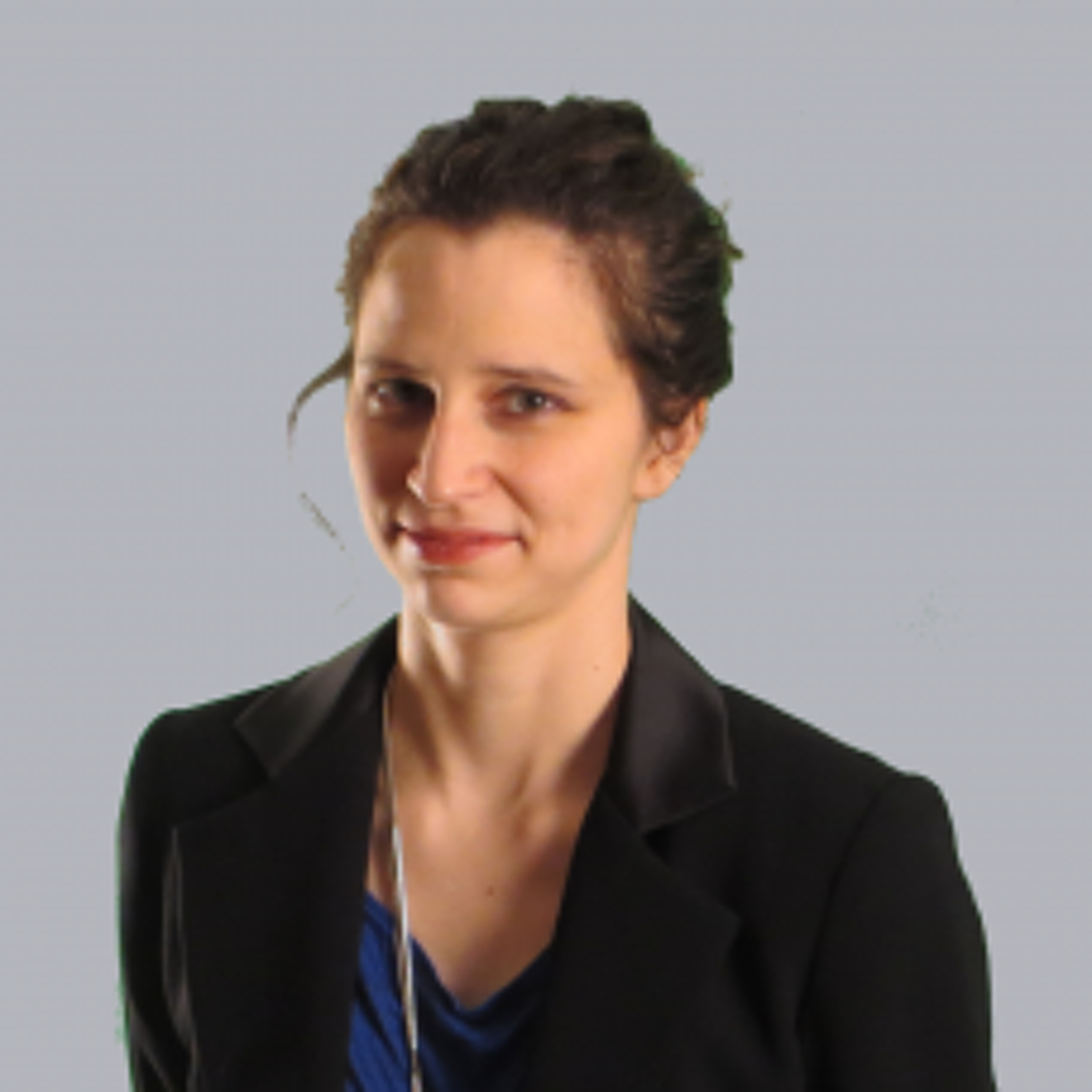
On this week's podcast, Calvert W. Jones discusses her new book, Bedouins into Bourgeois: Remaking Citizens for Globalization, (Cambridge University Press, 2017) on the state-led social engineering campaign in the United Arab Emirates. "In the UAE, the leaders clearly don't want democratic citizens. And neither do leaders in Singapore, or leaders in China, or leaders in a lot of countries today," says Jones. "They don't want citizens making these democratic demands, but they do want citizens who are going to be contributing economically, and sometimes they want liberal citizens who are more open minded, more tolerant, more socially or have a higher civic consciousness. But they just don't want those kinds of political demands. And so that is a tricky, tricky challenge that they're dealing with in the UAE." Calvert W. Jones is an Assistant Professor at the University of Maryland, College Park in the Department of Government & Politics. Her current research examines new approaches to citizen-building in the Middle East, with an emphasis on goals, mechanisms, and outcomes in state-led social engineering efforts.
Revolution Without Revolutionaries: A Conversation with Asef Bayat (S. 6, Ep. 18)
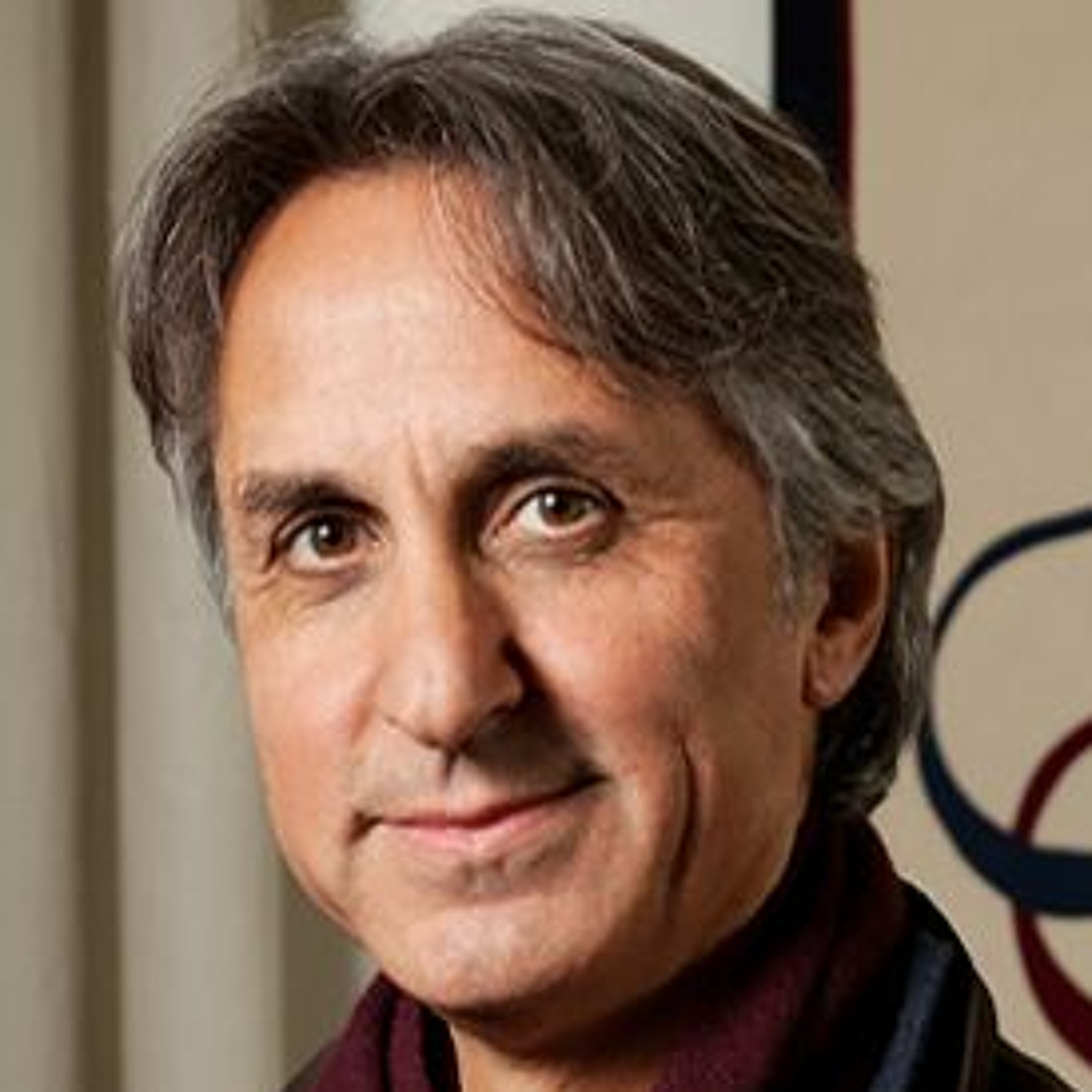
On this week's podcast, Asef Bayat talks about his new book, Revolution Without Revolutionaries: Making Sense of the Arab Spring, (Stanford University Press, 2017) a comparative analysis on the 2011 revolutions and those of the 1970s. "These [2011] revolutions happened at a time when the very idea of revolution, the very concept of revolution had dissipated," says Bayat. "The activists were not thinking in terms of revolution in the way that the activists in the 1970s or earlier during the Cold War had been thinking about revolution. They were reading about revolutions, about the experiences, having groups, and so forth." Asef Bayat is the Catherine and Bruce Bastian Professor of Global and Transnational Studies and Professor of Sociology at the University of Illinois, Urbana-Champaign. He is the author of Life as Politics: How Ordinary People Change the Middle East (Stanford, 2009, 2013) and Making Islam Democratic: Social Movements and the Post-Islamist Turn (Stanford, 2007). "In the case of say Iran, women who have been forced to wear hijab- some do who voluntarily wear hijab, but many others do not want to wear hijab- pull back their hijabs back, and back, and back. And they do it not necessarily as a movement collectively but rather they do it in their everyday life, individually while they are on the street or on a bus. And then you do it. She's doing it, he's doing it, and many others are doing it. And you're also noticing each other doing it. There is what is called a passive network among these people. It is a collective action which is somewhat encroaching into the law of this state or norms. By doing so the hope is to create alternative norms in society."
A Half Century of Occupation: A Conversation with Gershon Shafir (S. 6, Ep. 16)
On today's podcast, Marc Lynch speaks with Gershon Shafir about his latest book, A Half Century of Occupation: Israel, Palestine, and the World’s Most Intractable Conflict. Shafir is a Professor of Sociology at the University of California, San Diego. "In many ways, the occupation is all about is a military control that allows Israel to deploy various [methods] of control that no civilian government could could contemplate. This affects not only Palestinians who engage in hostile activities against Israel— or even suspect of engaging activities— but also their families, friends, and the rest of the Palestinian population." "I would say that today Israel itself is being occupied by the occupation." Shafir says, "Not only the West Bank, but the Israeli mind is being colonized."
Salafism in Jordan: A Conversation with Joas Wagemakers (S. 6, Ep. 15)
On this week's podcast, Joas Wagemakers talks about his new book, Salafism in Jordan: Political Islam in a Quietist Community, on the quietist ideology that characterizes many Salafi movements. "Salafism is obviously in the news all the time. It's in the news in Western European countries, for example, as a threat usually as connected to terrorism, but it's also important because it has to do with the relation between religion and non-religious people: what role does religion play in society?" says Wagemakers. "For that reason the study of Salafism in general in important. With regard to the Middle East, we usually hear about Salafism in Egypt, sometimes in Yemen, Saudi Arabia, but not so much Jordan." Joas Wagemakers is an Assistant Professor of Islamic Studies at Utrecht University. His research focuses on Salafism and Islamism. His publications include A Quietist Jihadi: The Ideology and Influence of Abu Muhammad al-Maqdisi (Cambridge University Press, 2012), Salafism: Utopian Ideals in a Stubborn Reality (Parthenon, 2014 (in Dutch); with Martijn de Koning and Carmen Becker) and Salafism in Jordan: Political Islam in a Quietist Community (Cambridge University Press, 2016). "I remember interviewing people in 2013 who could sit in the same room, and one person said 'I support the Islamic State'. Another said 'I support Al Qaeda' and another saying 'I support all' and they could still be friends. But the polarization and the partisanship in this issue created a situation in which that sort of thing was no longer possible. The enmity between these different groups ensured that they grew apart. And you're either a supporter of the Islamic State or al Qaeda. Never the two shall meet."
Islamist Political Mobilization: A Conversation with Quinn Mecham (S. 6, Ep. 14)
On this week's podcast, Quinn Mecham talks about his new book, Institutional Origins of Islamist Political Mobilization, on the politicization of Islam. "So often in the Arab world we think about jihadi networks; we think about sometimes Islamist movements particularly the Muslim Brotherhood that have a social component to them, but also are involved street protests in many places in the Islamic world," says Mecham. "While actually it's more common to see militias— for example, Taliban or al Shabaab in Somalia." Quinn Mecham is Associate Professor of Political Science and the Coordinator for Middle East Studies at Brigham Young University. He was an Academy Scholar at Harvard University, and was a Franklin Fellow in Policy Planning at the U.S. Department of State. His primary research focuses on Islamic movements and the strategies and behavior of Islamist political parties. "As different Islamist movements observe Islamic moves in other countries, they are influenced by— and we do see clear trends over time that there is a spread across countries over time. One of the the broader trends in the book is that the big Islamist protest movements like the Iranian revolution and the post-election Algerian protests— and then sighting these kinds of things have diminished over time. Until we get to some of the core civil wars in the last few years. But the range of countries that are experiencing Islamists either voting or using violent through things has greatly expanded."
The Arab National Media: A Conversation with Fatima El-Issawi (S. 6, Ep. 13)
On this week's podcast, Fatima El-Issawi talks about her new book, Arab National Media and Political Change on the role of traditional media and journalists in the Arab spring. "As an academic and former journalist, I was intrigued by the question of what would be the interplay between these movements and the traditional media, talking here about radio, TV, and print news online," says El-Issawi. "My major question was to try to dissect and to understand the interplay between this movement and traditional media, and how journalists could impact this process whether they would be encouraging change or encouraging and supporting the status quo." El-Iwassi is a Senior Lecturer in the Journalism Department at the University of Essex. She has covered conflicts, wars, and crises in Lebanon, Post-Saddam Iraq, and Jordan, for recognized international media such as Agence France Presse (AFP) and the BBC World Service. "Journalists in Egypt told me if you want today to do your job as journalists, you will be imprisoned because you cannot. You cannot report on the police.You cannot report on the security. You cannot report on topics that could be construed as anti-Islamic for example. So the level of restriction is very high, and most of the time, reforms were cosmetic because they were also negated by other sets of laws, but most importantly the new set of a anti-terror laws are again limiting the storytelling tools of the official narrative."
Jihadist Poetry: A Conversation with Elisabeth Kendall (S. 6, Ep. 12)
On this week's podcast, Elisabeth Kendall speaks about her research on poetry by militant jihadists, particularly in Yemen. "There was so much poetry being produced by militant jihadist movements— and nobody was looking at it," says Kendall. "I found it initially online, but I didn't know that the online magazines as I found were also being passed around in hard copy on the ground. And I could tell that Yemen was a real hot spot for this, possibly because being the birth place essentially of Arabic poetry. It still was an oral culture, particularly in a desert environment. So I thought I'd go there and find out what was what was actually happening and how much still resonated on the ground." Kendall is a senior research fellow in Arabic and Islamic studies at Pembroke College, Oxford University. She is also a nonresident senior fellow with the Middle East Peace and Security Initiative and the Atlantic Council's Brent Scowcroft Center on International Security. "I sneaked in a little question about poetry into [a survey of eastern Yemen in 2012-2013] where I simply asked, 'How important is poetry in your daily life?' And over 2000 tribesmen and tribeswomen, 74 percent said either 'important' or 'very important,' on a scale you know six different possible answers. And that was their daily lives. So that was really fascinating because I did not ask specifically about jihadists, but what that said to me was this is no surprise therefore that militant jihadist groups are using poetry to propagate their message when it clearly still resonates so strongly on the ground."
Boko Haram: A Conversation with Alexander Thurston (S. 6, Ep. 11)
On this week's podcast, Alexander Thurston speaks about Boko Haram and its origins and growth. Thurston is an Assistant Professor of Teaching for African Studies Program at Georgetown University and a Fellow at the Wilson Center. His new book is Boko Haram: The History of an African Jihadist Movement. "This is my attempt at a documentary history of Boko Haram. To try to draw on especially diverse written sources to reconstruct the trajectory of the movement from the time when the founders were growing up in Nigeria in the 1970s up to close to the present as it was possible to get," said Thurston. "These groups are just very hard to completely eradicate. A proto-state that they carve out can be destroyed. It may take several years, as in the case of ISIS or it may take a very short time, as in the case of Boko Haram. But then after that, you get this long term spate of terrorist attacks. And that's a lot harder to stamp out."

Shia Islamic Movements: A Conversation with Laurence Louër (S. 6, Ep. 10)
On this week's podcast, Laurence Louër speaks with Marc Lynch Shia Islamic movements in the Middle East. She speaks about Bahrain's situation. "It is really a case of what I call the domestication of Shia politics because Al-Wefaq was born in 2001 as a project to unify all the different strands of Shia political Islam in Bahrain. Ali Salman, who was the head of that, wanted to reconcile the Shirazi activists and the pro-Iranian activists because the two were really rivals." Louër is a research fellow at SciencePo and author of Transnational Shia Politics: Religious and Political Networks in the Gulf.
Politics in South Yemen: A Conversation with Susanne Dahlgren (S. 6, Ep. 9)
Marc Lynch speaks with Susanne Dahlgren about Yemen. Dahlgren is the author of Contesting Realities: The Public Sphere and Morality in Southern Yemen, and is a Visiting Research Associate Professor at National University of Singapore as well as a Academy Research Fellow at the University of Helsinki. Dahlgren speaks about the history of southern Yemen and its union to become present-day Yemen in 1990. "In the beginning it was a happy union, but very soon it turned out to be very ugly politics from the perspective of the Southerners. Things went really bad in 1993– or the three years after the unity— and that led to the first inter-Yemeni war. The current war, which started in 2015 is considered by southern Yemenis as the inter-Yemeni war." "They think that the the Houthi's movement—together with the former president Ali Abdullah Saleh— want to conquer South Yemen militarily. They have taken up arms in order to resist and they are working in cooperation with with the Saudi war coalition" said Dahlgren. "In Yemen, you have two very contradictory ideas about the Saudi involvement in this war. In the south, they consider that the Saudis are they allies. While in the North, it's considered an aggression."
The Creation of Property Rights in Palestinian Refugee Camps: Nadya S. Hajj (S. 6, Ep. 8)
This week's podcast explores Palestinian refugees today, with guest Nadya S. Hajj, author of Protection Amid Chaos: The Creation of Property Rights in Palestinian Refugee Camps. "I started visiting [Palestinian refugee] camps in 2004. The camps looked really different than these impermanent types of places— and people were doing much more than surviving. They were actually thriving. Physically you could see this: over time, their homes had become more permanent structures. There were businesses. There were paved roads. There was a real estate market. There was a lot of entrepreneurship going on. And institutional literature and economics literature didn't really explain why would people do that if they knew they were in a refugee camp. Why would someone invest in the world around them?" said Hajj, assistant professor of political science at Wellesley College. "I started to think that property rights were one key tool for creating order. They served more than just an economic purpose," said Hajj. "It wasn't just about protecting assets, but the way in which Palestinians constructed property rights that became a way of enshrining their communal identity. So it served more than just protecting an economic asset. It was also about protecting the communal identity in a place that was under a lot of threat by a much more powerful host states and nationalist parties that would float through." "Camps are not just randomly strewn about individuals living in this place. Most camps replicate pre-1948 villages, so people that were neighbors prior to 1948— their families continue to remain neighbors in those neighboring villages from that same region are replicated in the camps," said Hajj. "This has good things and bad things to it. On the one hand, it's a really positive thing because you have usually shared ideas of what's appropriate behavior— and you have a shared understanding of how we've done this in the past. But there's also the flip side of that that old feuds and disputes continue to persist till this day in the camps."
Sectarianism in the Gulf: A Conversation with Toby Matthiesen (S. 6, Ep. 7)
On this week's podcast, Marc Lynch speaks with Toby Matthiesen about sectarianism in the Gulf, particularly looking at Saudi Arabia and Iran. "What I'm going to try to do in my new project is to look at the impact of the Iranian revolution on Shia movements— and on the regional more broadly— but also the reaction towards Iran," said Matthiesen. "I think we are living in a new era. More spaces have opened up for confrontations, and there's a stronger I 'internationalization' of particular, local conflicts— and a connection to each other, and a correction of that to the broader kind of Saudi-Iranian or Iranian-versus-a-lot-of-others rivalry, which was there to a certain extent before, but the Syrian war has just opened up." Matthiesen is a Senior Research Fellow in the International Relations of the Middle East at the Middle East Centre, St. Antony’s College, University of Oxford. He is the author of several recent books including The Other Saudis: Shi’ism, Dissent and Sectarianism recently published by Cambridge University Press and Sectarian Gulf: Bahrain, Saudi Arabia, and the Arab Spring That Wasn't. "In the context of the Arab uprisings, and the crackdown on Shia protest movements, you have almost the whole clerical leadership of the Shia community in Saudi Arabia now backing the state line. Telling people not to protest, not to make any trouble, just stay quiet and basically work together with the ruling family. One of the only people who didn't do that was Nimr al-Nimr and he's been executed. But people from all the different movements— whether they're pro Iranian or anti-Iranian or old clerical families— more or less agree on the politics of no confrontation with the Saudi state." "What I'm trying to do is combine a kind of broad IR, and international history perspective that looks at archives around the world with interviews, and sources from the region, memoirs and publications." said Matthiesen. "History is always written from where we are right now— that's why we write history. So we can't get around that fact. But we obviously shouldn't impose narratives on the past just because we think they are relevant today."