
POMEPS Middle East Political Science Podcast
266 episodes — Page 2 of 6
The Suspended Disaster & Turkey/Syria Zoom (S. 13, Ep. 3)
On this week's episode of the podcast, Thomas Serres of the University of California, Santa Cruz joins Marc Lynch to discuss his new book, The Suspended Disaster. In his book, he examines the dynamics of the Algerian political system, offering new insights into the last years of Bouteflika’s rule and the factors that shaped the emergence of an unexpected social movement. He argues that the Algerian ruling coalition developed a mode of government based on the management of a seemingly never-ending crisis, (Starts at 0:49). Lisel Hintz of Johns Hopkins SAIS also joins Marc Lynch in a conversation about the zoom group that she formed for Syrian and Turkish academics affected by the earthquake. They also discuss Hintz's own research on Turkish pop culture and how you can learn about politics by studying the media. Music for this season’s podcast was created by Malika Zarra. You can find more of her work on Instagram and Linktree.
Afterlives of Revolution & Shia Power (S. 13, Ep. 2)
On this week's episode of the podcast, Alice Wilson of the University of Sussex joins Marc Lynch to discuss her new book, Afterlives of Revolution. Alice Wilson considers the "social afterlives" of revolutionary values and networks, looking particularly at the legacies of officially silenced revolutionaries in Oman. Marsin Al-Shammary, Sajad Jiyad and Fanar Haddad Shia, contributors on Power Comes of Age: The Transformation of Islamist Politics in Iraq, 2003–2023, also join Marc Lynch to explore Shia Power. They discuss the radical transformation of Shia Islamist politics in Iraq over the last two decades, as well as the factors that explain politics and the pursuit of power. Music for this season’s podcast was created by Malika Zarra. You can find more of her work on Instagram and Linktree.
Making Democracy Safe for Business & APSA Virtual Posters (S. 13, Ep. 1)
In this week's episode, Robert Kubinec of NYU Abu Dhabi joins Marc Lynch to discuss his book,. Kubinec argues that businesses must respond to changes in how perks and privileges are distributed after political transitions, either by forming political coalitions or creating new informal connections to emerging politicians. Employing detailed case studies and original experiments, Making Democracy Safe for Business advances our empirical understanding of the study of the durability of corruption in general and the dismal results of the Arab Uprisings in particular. (Starts at 2:35). Also this week, due to the American Political Science Association (APSA) annual meeting disruption, Marc Lynch invites four junior scholars from the APSA MENA section panels to put together "virtual posters" describing their work and its significance to our podcast audience. (Starts at 37:18). The four scholars are: Ansar Jasim (Free University of Berlin), "Unmaking Homes: Urban Violence and its Afterlives in Baghdad"; Elizabeth Parker-Magyar (Massachusetts Institute of Technology), "Workplace, Networks and Social Movements: Evidence from Jordan"; Amir Mahdavi (University of Connecticut), "Iran's 2021 Election: A Turning Point from Electoral to Hegemonic Authoritarianism"; Ameni Mehrez (Central European University), "The Political Legacy of Secular Policies: Evidence from Tunisia." Music for this season’s podcast was created by Malika Zarra. You can find more of her work on Instagram and Linktree.
Research Ethics and Israel's Annexation of the West Bank (S. 12, Ep. 30)
On this week's episode of the podcast, Rabab El Mahdi of the American University in Cairo, Janine Clark of the University of Toronto, Laryssa Chomiak of Centre d'Études Maghrébines à Tunis (CEMAT), and Rima Majed of the American University of Beirut join Marc Lynch to discuss the ethical challenges and positionally of research. (Starts at 1:41). Dahlia Scheindlin of Century International and Yael Berda of the Hebrew University of Jerusalem to discuss their new article, "Israel’s Annexation of the West Bank Has Already Begun," published in Foreign Affairs. (Starts at 36:37). Thank you for listening to Season 12 of the POMEPS Middle East Political Science Podcast! Music for this season’s podcast was created by Myyuh. You can find more of her work on SoundCloud and Instagram. You can listen to this week’s podcast on Spotify, Apple Podcasts, Amazon Music, or SoundCloud:
POMEPS 14th Annual Conference (S. 12. Ep. 29)
On this week's episode, Marc Lynch talks with members of the POMEPS Steering Committee and Advisory Board on a variety of topics at the POMEPS Annual Conference held at GWU in late May 2023. Noora Lori of Boston University, Rima Majed of American University of Beirut, Wendy Pearlman of Northwestern University discuss migration and refugee studies. (Starts at 1:01). Curtis Ryan of Appalachian State University and Andre Bank of German Institute for Global and Area Studies take a look at what's happening in Jordan. (Starts at 30:56). Nathan Brown of George Washington University and Steven Brooke of University of Wisconsin-Madison assess the state of political Islam in the region. (Starts at 50:24). Music for this season’s podcast was created by Myyuh. You can find more of her work on SoundCloud and Instagram.
Yemen in the Shadow of Transition and the End of American Primacy (S. 12, Ep. 28)
Stacey Philbrick Yadav of Hobart and William Smith Colleges joins Marc Lynch to discuss her new book, Yemen in the Shadow of Transition: Pursuing Justice Amid War. The book shows how the transitional process was ultimately overtaken by war, and explains why features of the transitional framework nevertheless remain a central reference point for civil actors engaged in peacebuilding today. (Starts at 1:09). Gregory Gause of Texas A&M University, Waleed Hazbun of the University of Alabama, and Sarah Bush of Yale University join Marc Lynch at this years POMEPS Annual Conference to discuss American primacy, multipolarity and the region's response to changes in the international system. (Starts at 31:34).
Dying Abroad and The Racial Muslim (S. 12, Ep. 27)
Dying Abroad and The Racial Muslim (S. 12, Ep. 27) by Marc Lynch
Democracy or Authoritarianism & Upcoming Turkish Elections (S. 12 Ep. 26)
In this week's episode, Marc Lynch speaks with Sebnem Gumuscu of Middlebury College about her book, Democracy or Authoritarianism: Islamist Governments in Turkey, Egypt, and Tunisia. The author draws upon extensive fieldwork in three countries to explain why some Islamist governments adhered to democratic principles and others took an authoritarian turn following electoral success. (Starts at 0:53). Today's episode also includes a roundtable discussion of the upcoming Turkish elections, with Lisel Hintz of Johns Hopkins University, Şebnem Yardımcı Geyikçi of University of Bonn, and Harun Ercan of Binghamton University. (Starts at 31:22).
Iraq Against the World and Developments in Sudan (S. 12, Ep. 25)
Samuel Helfont of the Naval Postgraduate School joins Marc Lynch to discuss his new book, Iraq Against the World: Saddam, America, and the Post-Cold War Order. In the book, Helfont offers a new narrative of Iraqi foreign policy after the 1991 Gulf War to argue that Saddam Hussein executed a political warfare campaign that facilitated this disturbance to global norms. The book explores how the move away from post-Cold War unipolarity and the rise of revisionist states like Russia and China pose a rapidly escalating and confounding threat for the liberal international order. (Starts at 0:52). Khalid Mustafa Medani of McGill University discusses the current situation in Sudan and prospects for moving forward. Medani is the author of Black Markets and Militants: Informal Networks in the Middle East and North Africa. (Starts at 33:47). Music for this season’s podcast was created by Myyuh. You can find more of her work on SoundCloud and Instagram.
COVID and Gender in the Middle East & Sudan's Civil War Crisis(S. 12, Ep. 24)
Rita Stephan of North Carolina State University and Maro Youssef of the University of Southern California join Marc Lynch to discuss their new book, COVID and Gender in the Middle East. Stephen, editor of the book, gathers an impressive group of local scholars, activists, and policy experts, to provide empirical evidence of COVID’s gendered effects. The book examines a range of national and localized responses to gender-specific issues around COVID’s health impact and the economic fallout and resulting social vulnerabilities, including the magnified marginalization of Syrian refugees; the inequitable treatment of migrant workers in Bahrain; and the inadequate implementation of gender-based violence legislation in Morocco. Mai Hassan of Massachusetts Institute of Technology also joins Marc Lynch on this week's podcast to discuss the recent developments in Sudan's civil war crisis. Music for this season’s podcast was created by Myyuh. You can find more of her work on SoundCloud and Instagram.
Security Politics & Beirut's Southern Suburbs (S. 12, Ep. 23)
David Roberts of King’s College London joins Marc Lynch to discuss his new book, Security Politics in the Gulf Monarchies: Continuity and Change. Roberts offers a definitive guide to continuity and change in the Gulf region. He explores the forces challenging and bolstering the status quo across the political, social, economic, military, and environmental dimensions of security. Jeroen Gunning of King's College London, also joins Marc Lynch on this week's podcast to discuss his new paper, Who you gonna call? Theorising everyday security practices in urban spaces with multiple security actors – The case of Beirut's Southern Suburbs . This paper explores the ways in which residents and security actors – state and nonstate – negotiate everyday (in)security in contested urban spaces with multiple security actors . Music for this season’s podcast was created by Myyuh. You can find more of her work on SoundCloud and Instagram.
Monitors and Meddlers & Underdevelopment of Southern Iraq (S. 12, Ep. 22)
Sarah Bush of Yale University and Lauren Prather of the University of California, San Diego join Marc Lynch on this week's podcast to discuss their new book, Monitors and Meddlers: How Foreign Actors Influence Local Trust in Elections. Bush and Prather explain how and why outside interventions influence local trust in elections, a critical factor for democracy and stability. Marsin Alshamary of the Harvard University Kennedy School and Hamzeh Hadad of the European Council of Foreign Relations also join Marc Lynch to discuss their article, The Collective Neglect of Southern Iraq: Missed Opportunities for Development and Good Governance. They conceptualize southern Iraq as an imagined region, whose identity has been shaped by the collective neglect it has suffered from both internal and external actors.
China's Rise in the Global South & Anti-Blackness and Identity in Tunisia (S. 12, Ep. 21)
Dawn Murphy of the US National War College joins Marc Lynch on this week's podcast to discuss her book, China's Rise in the Global South: The Middle East, Africa, and Beijing's Alternative World Order.The book examines China's behavior as a rising power in two key Global South regions, the Middle East and Sub-Saharan Africa. Murphy compares and analyzes thirty years of China's interactions with these regions across a range of functional areas: political, economic, foreign aid, and military. Houda Mzioudet of the University of Toronto also spoke on anti-blackness and racial identity in Tunisia. In the Q&A with Houda Mzioudet she spoke on the state of the anti-immigrant and anti-black sentiment in Tunisia in light of President Kais Saied’s fear-mongering statements about migrants last month.
Oil Money & The Struggle for Supremacy (S. 12, Ep. 20)
Davis Wight of the University of North Carolina joins Marc Lynch on this week's podcast to discuss his book, Oil Money: Middle East Petrodollars and the Transformation of US Empire, 1967-1988. The book is an expansive yet judicious investigation of the wide-ranging and contradictory effects of petrodollars on Middle East–US relations and the geopolitics of globalization. Although petrodollar ties often augmented the power of the United States and its Middle East allies, Wight argues they also fostered economic disruptions and state-sponsored violence that drove many Americans, Arabs, and Iranians to resist Middle East–US interdependence, most dramatically during the Iranian Revolution of 1979. (Starts at 00:50). Simon Mabon of XX discusses his new book, The Struggle for Supremacy in the Middle East: Saudi Arabia and Iran (Starts at 31:06). In this book, Mabon presents a more nuanced assessment of the rivalry [between Saudi Arabia and Iran], outlining its history and demonstrating its impact across the Middle East. Music for this season’s podcast was created by Myyuh. You can find more of her work on SoundCloud and Instagram.
Popular Politics, Ambivalent Allies, and Making Tunisia non-African (S. 12, Ep. 19)
Mohammad Ali Kadivar of Boston College joins Marc Lynch on this week's podcast to discuss his book, Popular Politics and the Path to Durable Democracy. The book challenges the prevailing wisdom in American foreign policy that democratization can be achieved through military or coercive interventions, revealing how lasting change arises from sustained, nonviolent grassroots mobilization. (Starts at 0:54). Killian Clarke of Georgetown University discusses his new article, "Ambivalent allies: How inconsistent foreign support dooms new democracies." (Starts at 32:53). Shreya Parikh discusses the recent wave of anti-African/anti-immigrant/anti-black sentiments unleashed by President Khais Said in Tunisia. You can read her recent article, "Making Tunisia non-African again – Saied’s anti-Black campaign" here. (Starts at 50:02). Music for this season’s podcast was created by Myyuh. You can find more of her work on SoundCloud and Instagram.
Media of the Masses and Turkey/Syria Earthquake Relief (S. 12 Ep. 18)
Andrew Simon joins Marc Lynch on this week's podcast to discuss his new book, Media of the Masses: Cassette Culture in Modern Egypt. The book investigates the social life of an everyday technology—the cassette tape—to offer a multisensory history of modern Egypt. Enabling an unprecedented number of people to participate in the creation of culture and circulation of content, cassette players and tapes soon informed broader cultural, political, and economic developments and defined "modern" Egyptian households. Also on this week's podcast are Hasret Dikici Bilgin of Istanbul Bilgi University, Lisel Hintz of Johns Hopkins University, Rana Khoury of the University of Illinois, at Urbana-Champagne, and Reva Dhingra of Harvard University and Brookings Institution, to discuss Turkey/Syria Earthquake relief.
The Lebanon Uprising of 2019 (S. 12, Ep. 16)
On this week's episode, Marc Lynch is joined by the editors and authors of the new book, The Lebanon Uprising of 2019: Voices from the Revolution. The book includes include stories about specific events and struggles, views of the uprising from various regions of the country, and reflections on topics such as the labor struggle, disability, the student movement, foreign interventions, the struggle for preserving environmental spaces, the role of refugees and non-Lebanese within the movement, and women and queer participation. The podcast features: Rima Majed, Jeffery G Karam, Sana Tannoury, Grace Khawam, Sara Mourad, Moné Makkawi, Roland Riachi, and Lama Karamé. Music for this season’s podcast was created by Myyuh. You can find more of her work on SoundCloud and Instagram. You can listen to this week’s podcast on Spotify, Apple Podcasts, Amazon Music, or SoundCloud:
Order Out of Chaos and Staple Security (S. 12, Ep. 15)
David Siddhartha Patel of Brandeis University joins Marc Lynch on this week's podcast to discuss his new book, Order out of Chaos: Islam, Information, and the Rise and Fall of Social Orders in Iraq. Combining rational choice approaches, ethnographic understanding, and GIS analysis, this book reveals the interconnectedness of the enduring problem of how societies create social order in a stateless environment, the origins and limits of political authority and leadership, and the social and political salience of collective identity. (Starts at 0:42) Jessica Barnes of the University of South Carolina discusses her book, Staple Security: Bread and Wheat in Egypt, which explores the process of sourcing domestic and foreign wheat for the production of bread and its consumption across urban and rural settings. (Starts at 38:15). Music for this season’s podcast was created by Myyuh. You can find more of her work on SoundCloud and Instagram. You can listen to this week’s podcast on Spotify, Apple Podcasts, Amazon Music, or SoundCloud.
The War in Court and the Egyptian Economy (S. 12, Ep. 14)
The War in Court and the Egyptian Economy (S. 12, Ep. 14) by Marc Lynch
Beyond the Lines and Emotional Sensibility (S. 12, Ep. 13)
Sarah Parkinson of Johns Hopkins University joins Marc Lynch on this week's podcast to discuss her new book, Beyond the Lines: Social Networks and Palestinian Militant Organizations in Wartime Lebanon. The book shows that most militants approach asymmetrical warfare as a series of challenges centered around information and logistics, characterized by problems such as supplying constantly mobile forces, identifying collaborators, disrupting rival belligerents' operations, and providing essential services like healthcare. (Starts at 0:48). Wendy Pearlman of Northwestern University discusses her article, "Emotional Sensibility: Exploring the Methodological and Ethical Implications of Research Participants’ Emotions," published by Cambridge University Press. (Starts at 35:58). Music for this season’s podcast was created by Myyuh. You can find more of her work on SoundCloud and Instagram. You can listen to this week’s podcast on Spotify, Apple Podcasts, Amazon Music, or SoundCloud.
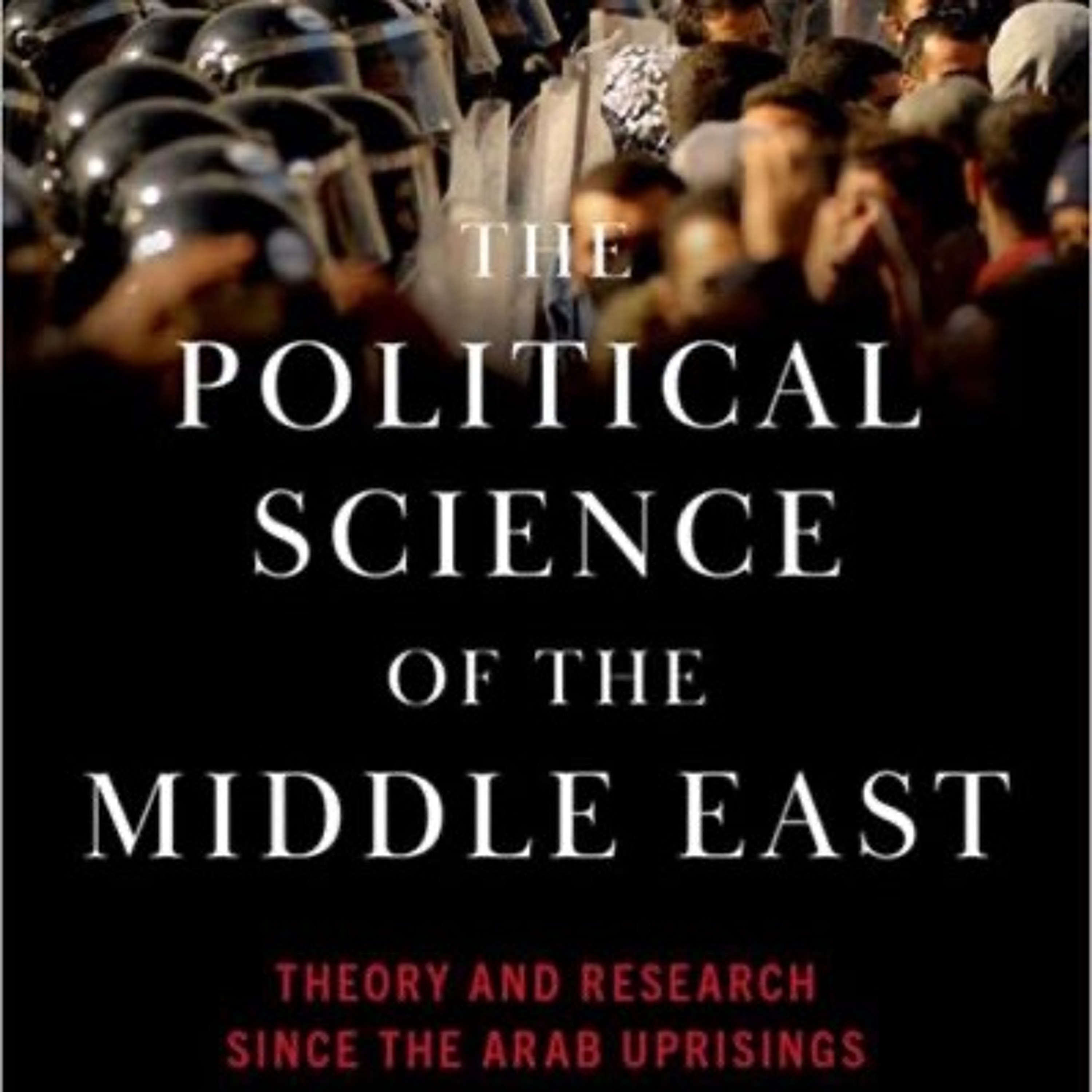
Ch12 Triumph over Adversity: Reflections on the Practice of Middle East Political Science
Ch12 Triumph over Adversity: Reflections on the Practice of Middle East Political Science by Marc Lynch
Political Power & Sustainability, The Afterlife Goes On, Political Economy (S.12, Ep. 12)
Tobias Zumbragel of University of Hamburg joins Marc Lynch on this week's podcast to discuss his new book, Political Power and Environmental Sustainability in Gulf Monarchies. The book analyzes the political dynamics behind the sustainable transformation in the oil and gas-rich Gulf and explains the political factors behind the green transformation. (Starts at 1:02). Nermin Allam of Rutgers University discusses her research on women's participation in the Egyptian uprising and the afterlives of that protest. Check out her articles: "The afterlife goes on: The biographical consequences of women's engagement in the 2011 Egyptian uprising," & "Women’s Unveiling in the 2011 Egyptian Uprising: Political Opportunities and Modesty Politics." You can also listen to one of our previous podcast posts about her book, "Women and the Egyptian Revolution: Engagement and Activism During the 2011 Arab Uprisings." (Starts at 32:09). Steffen Hertog of the London School of Economics discusses his chapter in The Political Science of the Middle East: Theory and Research Since the Arab Uprisings, which focuses on political economy and development (co-authored with Ferdinand Eibl and Shimaa Hatab). (Starts at 57:43). Music for this season’s podcast was created by Myyuh. You can find more of her work on SoundCloud and Instagram.
A Landscape of War & Burnings, Beatings, and Bombings (S. 12, Ep. 11)
Munira Khayyat of The American University in Cairo joins Marc Lynch on this week's podcast to discuss her new book, A Landscape of War: Ecologies of Resistance and Survival in South Lebanon. The book analyzes life along the southern border of Lebanon, where resistant ecologies thrive amid a terrain of perennial war. (Starts at 1:45). Neil Ketchley of the University of Oxford discusses his new article, Burnings, Beatings, and Bombings: Disaggregating Anti-Christian Violence in Egypt, 2013-2018 (co-authored with Christopher Barrie and Killian Clark). (Starts at 45:27). Also, POMEPS is thrilled to release our latest Professional Development Seminar - Hidden Curriculum: How to Publish Your First Book. In the fourth POMEPS Professional Development Seminar, Marc Lynch and Jillian Schwedler discuss how to submit a book as a first time author. This webinar gives advice to junior scholars who want to turn their dissertation into a book in an effort to demystify the process. They are joined by Caelyn Cobb of Columbia University Press, Kate Wahl of Stanford University Press, and David McBride of Oxford University Press. To watch the webinar, click here. For more on turning a dissertation into a university press book, read Abu Aardvark's recent blog post, "Hidden Curriculum: Publishing Your First Book." For information on publishing in journals, read Abu Aardvark's “Hidden Curriculum: Publishing in Academic Journals" blog post here. Music for this season’s podcast was created by Myyuh. You can find more of her work on SoundCloud and Instagram.
Competitive Authoritarianism in Algeria & Demobilization in Morocco (S. 12, Ep. 9)
Dalia Ghanem of the European Union Institute for Security Studies joins Marc Lynch on this week's podcast to discuss her new book, Understanding the Persistence of Competitive Authoritarianism in Algeria. The book analyzes the secrets behind the Algerian regime’s survival and the pillars of its longevity. (Starts at 0:42). Sammy Zeyad Badran of The American University of Sharjah, discusses his new book, Killing Contention: Demobilization in Morocco during the Arab Spring. The book deepens our understanding of modern political movements and the complicated factors that lead to their demise. (Starts at 35:41).
In the Shade of the Sunna, Migration After the Arab Uprisings, & Female Electability (S. 12, Ep. 8)
Aaron Rock-Singer of the University of Wisconsin-Madison joins Marc Lynch on this week's podcast to discuss his new book, In the Shade of the Sunna: Salafi Piety in the Twentieth-Century Middle East. The book analyzes how Salafism is a creation of the twentieth century and how its signature practices emerged primarily out of Salafis’ competition with other social movements. (Starts at 0:55). Rana Khoury of the University of Illinois at Urbana-Champaign, Lama Mourad of Carleton University, and Rawan Arar of the University of Washington discuss their chapter in The Political Science of the Middle East: Theory and Research Since the Arab Uprisings, which focuses on how the region has governed and been affected by migration after the Arab Uprisings in 2011 (co-authored with Laurie Brand, Noora Lori, and Wendy Pearlman). (Starts at 28:29). Lindsay Benstead of Portland State University and Kristin Kao of the University of Gothenburg discuss female electability in the Arab world and the benefits of intersectionality. (Starts at 45:46). Music for this season’s podcast was created by Myyuh. You can find more of her work on SoundCloud and Instagram.
Creating Consent in an Illiberal Order, Arab Protests, & Environmental Politics (S. 12, Ep. 7)
Jessica Watkins of the London School of Economics joins Marc Lynch on this week's podcast to discuss her new book, Creating Consent in an Illiberal Order: Policing Disputes in Jordan. The book focuses on the development of the Jordanian police institution to demonstrate that rather than being primarily concerned with law enforcement, the police are first and foremost concerned with order. (Starts at 1:02). Killian Clarke of Princeton University and Chantal Berman of Georgetown University discuss their chapter in The Political Science of the Middle East: Theory and Research Since the Arab Uprisings, which focuses on the eruption of Arab protests in 2011 and the recent wave of Arab uprisings in 2019 (co-authored with Jillian Schwedler and Nermin Allam). (Starts at 30:13). Jeannie Sowers of the University of New Hampshire discusses environmental politics in Egypt and the potential implications of the COP27 conference. You can find her book: Environmental Politics in Egypt: Activists, Experts and the State. (Starts at 53:17). Music for this season’s podcast was created by Myyuh. You can find more of her work on SoundCloud and Instagram.
Digital Authoritarianism in the Middle East & Authoritarian Adaptation (S. 12, Ep. 6)
Marc Owen Jones Hamad bin Khalifa University joins Marc Lynch on this week's podcast to discuss his new book, Digital Authoritarianism in the Middle East: Deception, Disinformation and Social Media. The book analyzes how social media has been weaponised by states and commercial entities in the Middle East. (Starts at 0:45). Andre Bank of the German Institute for Global and Area Studies and Sean Yom of Temple University discuss their chapter in The Political Science of the Middle East: Theory and Research Since the Arab Uprisings, which focuses on how authoritarianism has remained the predominant form of government in the MENA (co-authored with Eva Bellin, Michael Herb, Lisa Wedeen, and Saloua Zerhouni). (Starts at 35:27). Music for this season’s podcast was created by Myyuh. You can find more of her work on SoundCloud and Instagram.
Classless Politics, OPEC+ Oil Politics, & Political Violence (S. 12, Ep. 5)
Hesham Sallam of Stanford University joins Marc Lynch on this week's podcast to discuss his new book, Classless Politics: Islamist Movements, the Left, and Authoritarian Legacies in Egypt. The book offers an account of the relationship between neoliberal economics and Islamist politics in Egypt that sheds new light on the worldwide trend of “more identity, less class.” (Starts at 0:59). You can read Marc Lynch's review of the book on his blog. Jeff Colgan of Brown University discusses new OPEC+ policies and how U.S.-Saudi relations have been impacted. (Starts at 30:29). You can find his book, Partial Hegemony: Oil Politics and International Order on Amazon and other retailers. Ora Szekely of Clark University and Devorah Manekin of the Hebrew University of Jerusalem discuss their chapter in The Political Science of the Middle East: Theory and Research Since the Arab Uprisings, which focuses on organized political violence since the Arab Uprising (co-authored with Kevin Koehler and Holger Albrecht). (Starts at 44:41). Music for this season’s podcast was created by Myyuh. You can find more of her work on SoundCloud and Instagram.
Women in Place, the Study of Islam, & Attitudes Across the MENA (S. 12, Ep. 4)
Nazanin Shahrokni of the London School of Economics joins Marc Lynch on this week's podcast to discuss her new book, Women in Place: The Politics of Gender Segregation in Iran. The book offers a gripping inquiry into gender segregation policies and women’s rights in contemporary Iran. (Starts at 1:07). Tarek Masoud of Harvard University discusses his chapter in The Political Science of the Middle East: Theory and Research Since the Arab Uprisings, which focuses on Islam and the study of religion and politics in the Middle East (co-authored with Khalil al-Anani, Courtney Freer, and Quinn Mecham). (Starts at 36:46). Michael Robbins of the Arab Barometer discusses the seventh wave that captures the attitudes of citizens across the MENA since the onset of COVID. (Starts at 56:49). Music for this season’s podcast was created by Myyuh. You can find more of her work on SoundCloud and Instagram.
Imperial Mecca, Protests in Iran & Local Politics (S. 12, Ep. 3)
Michael Christopher Low of the University of Utah joins Marc Lynch on this week's podcast to discuss his new book, Imperial Mecca: Ottoman Arabia and the Indian Ocean Hajj. The book analyzes the late Ottoman hajj and Hijaz region as transimperial spaces, reshaped by the competing forces of Istanbul’s project of frontier modernization and the extraterritorial reach of British India’s steamship empire in the Indian Ocean and Red Sea. (Starts at 1:07) Mohammad Ali Kadivar of Boston College discusses the current waves of protests in Iran. (Starts at 32:23) Sarah El-Kazaz of the University of London and Lana Salman of Harvard University discuss their chapter in The Political Science of the Middle East: Theory and Research Since the Arab Uprisings, which focuses on a relational approach to local politics and the lack of subnational literature that engages with the MENA region. (co-authored with Mona Harb and Janine Clark). (Starts at 47:13) Music for this season’s podcast was created by Myyuh. You can find more of her work on SoundCloud and Instagram.
Sectarianism in Lebanon & the U.S.'s Changing Role in the Middle East (S. 12, Ep. 2)
In this week's podcast, Marc Lynch begins the episode by announcing the winners of the American Political Science Association MENA Politics Section Awards. (Starts at 0:56) Maya Mikdashi of the Rutgers University joins Marc Lynch on this week's podcast to discuss her new book, Sectarianism: Sovereignty, Secularism, and the State in Lebanon. The book analyzes how sex, sexuality, and sect shape and are shaped by law, secularism, and sovereignty in Lebanon. (Starts at 5:47). On today's episode, March Lynch speaks with Greg Gause of Texas A&M University, Curtis Ryan of Appalachian State University, and Waleed Hazbun of the University of Alabama about their chapter in The Political Science of the Middle East: Theory and Research Since the Arab Uprisings, which focuses on the U.S.'s declining geopolitical leverage in the Middle East. (Starts at 36:41). Music for this season’s podcast was created by Myyuh. You can find more of her work on SoundCloud and Instagram.
The Political Science of the Middle East, Identity & Sectarianism, Public Opinion (S. 12, Ep. 1)
On the first episode of Season 12 of the POMEPS Middle East Political Science Podcast, Marc Lynch speaks with Jillian Schwedler of City University of New York, and Sean Yom of Temple University about their co-edited volume, The Political Science of the Middle East: Theory and Research Since the Arab Uprisings. The volume is a definitive overview of what political scientists are working on within the Middle East and North Africa. Its dozen chapters cover an exhaustive array of topics, including authoritarianism and democracy, contentious politics, regional security, military institutions, conflict and violence, the political economy of development, Islamist movements, identity and sectarianism, public opinion, migration, and local politics. (Starts at 02:26). This season of the podcast will also include conversations with the authors of each chapter from the book. On today's episode, Bassel Salloukh of the Doha Institute for Graduate Studies and Alexandra Siegel of University of Colorado at Boulder talk about their chapter on identity and sectarianism (co-authored with Fanar Haddad, Lisel Hintz, Rima Majed, and Toby Matthiesen). (Starts at 32:55). Michael Robbins of Arab Barometer discusses his chapter on public opinion survey research (co-authored with Lindsay Benstead and Justin Gengler). (Starts at 51:24). Music for this season’s podcast was created by Myyuh. You can find more of her work on SoundCloud and Instagram.
States of Subsistence & the Politics of Bread in Egypt (S. 11, Ep. 33)
José Ciro Martínez of the University of Cambridge joins Marc Lynch on this week's podcast to discuss his new book, States of Subsistence: The Politics of Bread in Contemporary Jordan. The book argues that the state is best understood as the product of routine practices and actions, through which it becomes a stable truth in the lives of citizens. (Starts at 0:57). Jessica Barnes of the University of South Carolina and author of Cultivating the Nile: The Everyday Politics of Water in Egypt discusses the politics of bread in Egypt (Starts at 31:21). Music for this season's podcast was created by Bashir Saade (playing Ney) and Farah Kaddour (on Buzuq). You can find more of Bashir's work on his YouTube Channel.
Seventh Member State, Lebanese Elections, Succession of Mohamed bin Zayed (S. 11, Ep. 32)
Megan Brown of Swarthmore College joins Marc Lynch on this week's podcast to discuss her new book, The Seventh Member State: Algeria, France, and the European Community. The book combats understandings of Europe’s “natural” borders by emphasizing the extracontinental contours of the early union. The unification vision was never spatially limited, suggesting that contemporary arguments for geographic boundaries excluding Turkey and areas of Eastern Europe from the European Union must be seen as ahistorical. (Starts at 0:44). Sami Atallah of The Policy Initiative and Christiana Parreira of Princeton University discuss the results of recent elections in Lebanon (Starts at 33:27). Cinzia Bianco of the European Council on Foreign Relations discusses the succession of Mohamed bin Zayed Al Nahyan in the United Arab Emirates. (Starts at 53:31). Music for this season's podcast was created by Bashir Saade (playing Ney) and Farah Kaddour (on Buzuq). You can find more of Bashir's work on his YouTube Channel.
Transitional Justice in Process & Environmental Politics in the MENA(S. 11, Ep. 31)
On this week's episode of the podcast, Jeannie Sowers of University of New Hampshire joins Marc Lynch to discuss POMEPS's newest publication, POMEPS Studies 46:Environmental Politics in the Middle East and North Africa. (Starts at 0:36). Mariam Salehi of Freie University Berlin discusses her new book, Transitional justice in process: Plans and politics in Tunisia. The book discusses the development and design of the transitional justice mandate, and looks at the performance of transitional justice institutions in practice. It examines the role of international justice professionals in different stages of the process, as well as the alliances and frictions between different actor groups that cut across the often-assumed local-international divide. (Starts at 32:24). Music for this season's podcast was created by Bashir Saade (playing Ney) and Farah Kaddour (on Buzuq). You can find more of Bashir's work on his YouTube Channel.
Contested Legitimacies, Digital Authoritarianism, Century International (S. 11, Ep. 30)
Jannis Julien Grimm of the Freie University of Berlin joins Marc Lynch on this week's podcast to discuss his new book, Contested Legitimacies: Repression and Revolt in Post-Revolutionary Egypt. The book explores this resilience of contentious politics through a multimethod approach that is attuned to the physical and discursive interactions among key players in Egypt’s protest arena. (Starts at 0:46). Marwa Fatafta of Access Now discusses digital authoritarianism, content moderation, and the potential impact of Elon Musk's takeover of Twitter. (Starts at 33:13). Thanassis Cambanis of Century International discusses their new project on citizenship, armed groups, and comparing the United States, Europe, and the Middle East. (Starts at 48:22). Music for this season's podcast was created by Bashir Saade (playing Ney) and Farah Kaddour (on Buzuq). You can find more of Bashir's work on his YouTube Channel.
Protesting Jordan, Climate Change in the Gulf, and Social Development in Iran (S. 11, Ep. 29)
Jillian Schwedler of Hunter College joins Marc Lynch on this week's podcast to discuss her new book, Protesting Jordan: Geographies of Power and Dissent. In the book, Schwedler examines protests as they are situated in the built environment, bringing together considerations of networks, spatial imaginaries, space and place-making, and political geographies at local, national, regional, and global scales. (Starts at 0:31). Deen Sharp of the London School of Economics discusses climate change in the Gulf, and references his report, "The Quiet Emergency: Experiences and Understandings of Climate Change in Kuwait." (Starts at 31:41). Ali Kadivar of Boston College discusses his new article, "Social Development and Revolution in Iran." (Starts at 47:53).
Last Ottoman Generation, Why Women Support Conservative, ME Scholar Barometer (S. 11, Ep. 28)
Michael Provence of University of California San Diego joins Marc Lynch on this week's podcast to discuss his new book, The Last Ottoman Generation and the Making of the Modern Middle East. In the book, Provence examines the collapse of the Ottoman empire through popular political movements and the experience of colonial rule. (Starts at 0:39). Gamze Cavdar of Colorado State University discusses her article, "Why Women Support Conservative Parties: The Case of Turkey" published in Political Science Quarterly. (Starts at 32:13). Shibley Telhami of the University of Maryland discusses our joint project on the Middle East Scholar Barometer. (Starts at 46:33). Music for this season's podcast was created by Bashir Saade (playing Ney) and Farah Kaddour (on Buzuq). You can find more of Bashir's work on his YouTube Channel.
Marketing Democracy, Who Votes After a Coup, and Egyptian Prisoners (S. 11, Ep. 27)
Erin Snider of Texas A&M University joins Marc Lynch on this week's podcast to discuss her new book, Marketing Democracy: The Political Economy of Democracy Aid In the Middle East. In the book, Snider examines the construction and practice of democracy aid in Washington DC and in Egypt and Morocco and the limited impact of international aid. (Starts at 0:42). Steven Brooke of the University of Wisconsin-Madison discuss his article, co-authored by Elizabeth Nugent of Yale University, "Who votes after a coup? Theory and evidence from Egypt" published in Mediterranean Politics. (Starts at 29:15). Mai El-Sadany of The Tahrir Institute for Middle East Policy discusses the problem with Egyptian prisoners and human rights. (Starts at 43:17). Music for this season's podcast was created by Bashir Saade (playing Ney) and Farah Kaddour (on Buzuq). You can find more of Bashir's work on his YouTube Channel.
Stories from the Field, Political Budget Cycles in Autocracies, Yemen Ceasefire (S. 11, Ep. 26)
Ora Szekely of Clark University and Peter Krause of Boston College join Marc Lynch on this week's podcast to discuss their new book, Stories from the Field: A Guide to Navigating Fieldwork in Political Science. In the book, political scientists from a diverse range of biographical and academic backgrounds describe research in North and South America, Africa, Asia, Europe, and the Middle East. The contributors reflect not only on their own experiences but also on larger questions about research ethics, responsibility, and the effects of their personal and professional identities on their fieldwork. (Starts at 0:45). Ahmed Ezzeldin Mohamed of Columbia University discusses his latest article, "Political Budget Cycles in Autocracies: The Role of Religious Seasons and Political Collective Action" published in Politics and Religion by Cambridge University Press. (Starts at 34:47). Hadil al-Mowafak of the Yemen Policy Center discusses the current ceasefire in Yemen. (Starts at 47:48). Music for this season's podcast was created by Bashir Saade (playing Ney) and Farah Kaddour (on Buzuq). You can find more of Bashir's work on his YouTube Channel.
Between Dreams and Ghosts, The Making of Sects, Iraqi Government Formation (S. 11, Ep. 25)
Andrea Wright of the college of William and Mary joins Marc Lynch on this week's podcast to discuss her new book, Between Dreams and Ghosts: Indian Migration and Middle Eastern Oil. In the book, Wright analyzes how migration is deeply informed both by workers' dreams for the future and the ghosts of history, including the enduring legacies of colonial capitalism. (Starts at 0:42). Basileus Zeno of Amherst College discusses his latest article, "The making of sects: Boundary making and the sectarianisation of the Syrian uprising, 2011–2013" published in Nations and Nationalism. (Starts at 31:22). Renad Mansour of the Chatham House discusses the current issues in the Iraqi government formation process. (Starts at 50:40). Music for this season's podcast was created by Bashir Saade (playing Ney) and Farah Kaddour (on Buzuq). You can find more of Bashir's work on his YouTube Channel.
Visions of Beirut, Who Fakes Support for the Military, US-Gulf Tensions (S. 11, Ep. 24)
Hatim El-Hibri of George Mason University joins Marc Lynch on this week's podcast to discuss his new book, Visions of Beirut: The Urban Life of Media Infrastructure. In the book, El-Hibri analyzes how the creation and circulation of images have shaped the urban spaces and cultural imaginaries of Beirut. (Starts at 0:44). Kevin Koehler of Leiden University discusses his latest article, "Who fakes support for the military? Experimental evidence from Tunisia" (co-authored with Sharan Grewal and Holger Albrecht) published in Democratization. (Starts at 33:58). Kristian Coates Ulrichsen of the Baker Institute on the ongoing tensions between the United States, Saudi Arabia, and the United Arab Emirates. (Starts at 48:58). Music for this season's podcast was created by Bashir Saade (playing Ney) and Farah Kaddour (on Buzuq). You can find more of Bashir's work on his YouTube Channel.
Contesting the Iranian Revolution, A Dictator's Day in Court, & Myth of Moderation (S. 11, Ep. 23)
Pouya Alimagham of Massachusetts Institute of Technology joins Marc Lynch on this week's podcast to discuss his new book, Contesting the Iranian Revolution: The Green Uprising. In the book, Alimagham analyzes the history of Iran and the Middle East to highlight how activists contested the Islamic Republic's legitimacy. (Starts at 0:35). Valeria Resta of the Interdisciplinary Center for the Study of North Africa and the Middle East discusses her latest article, "The ‘myth of moderation’ following the Arab Uprisings: polarization in Tunisia and Egypt’s founding elections," published in the British Journal of Middle Eastern Studies. (Starts at 33:30) Nate Grubman of Stanford University discusses the Tunisian president's transition to a dictatorship. (Starts at 50:54). Music for this season's podcast was created by Bashir Saade (playing Ney) and Farah Kaddour (on Buzuq). You can find more of Bashir's work on his YouTube Channel.
Cybersecurity in the ME, Gulf States' & Turkey's Response to the Ukraine Crisis (S. 11, Ep. 22)
James Shires of Leiden University joins Marc Lynch on this week's podcast to discuss his new book, The Politics of Cybersecurity in the Middle East. In the book, Shires analyzes how the label of cybersecurity is repurposed by states, companies and other organizations to encompass a variety of concepts. Cinzia Bianco of the European Council on Foreign Relations discusses the responses of Saudi Arabia, UAE, Qatar, and the Gulf Cooperation Council to the Ukraine crisis. Howard Eissenstat of St. Lawrence University discusses Turkey and its response to the Ukraine crisis. Music for this season's podcast was created by Bashir Saade (playing Ney) and Farah Kaddour (on Buzuq). You can find more of Bashir's work on his YouTube Channel.
Decolonizing Memory, COVID-19 in MENA, Democratic Reform in Jordan (S. 11, Ep. 21)
Jill Jarvis of Yale University joins Marc Lynch on this week's podcast to discuss her new book, Decolonizing Memory: Algeria and Politics of Testimony. In the book, Jarvis analyzes the magnitude of the legal violence exercised by the French to colonize and occupy Algeria. Jonah Schulhofer-Wohl of Leiden University and Kevin Koehler of Leiden University discuss their latest article, "Governing the Covid-19 Pandemic in the Middle East and North Africa: Containment Measures as a Public Good" published in Middle East Law and Governance. Sean Yom of Temple University and Wael Al-Khatib of the Arab Political Science Network discuss the prospects for democratic reform in Jordan. You can read their report from the Project on Middle East Democracy here. Music for this season's podcast was created by Bashir Saade (playing Ney) and Farah Kaddour (on Buzuq). You can find more of Bashir's work on his YouTube Channel.
Faith in Numbers, Ethnic Identity, and U.S. Relations in the Gulf (S. 11, Ep. 20)
Michael Hoffman of the University of Notre Dame joins Marc Lynch on this week's podcast to discuss his new book, Faith in Numbers: Religion, Sectarianism, and Democracy. In the book, Hoffman discusses how religious identities and sectarian interests play a major part in determining regime preferences. (Starts at 0:44). Devorah Manekin of Hebrew University discusses her latest article, "Effective for Whom? Ethnic Identity and Nonviolent Resistance" (co-authored by Tamar Mitts), published in Cambridge University Press. (Starts at 29:25). Gregory Gause of Texas A&M University discusses U.S. relations with the Gulf states and broader Gulf politics. (Starts at 44:17). Music for this season's podcast was created by Bashir Saade (playing Ney) and Farah Kaddour (on Buzuq). You can find more of Bashir's work on his YouTube Channel.
Partial Hegemony, The Arab Spring, and Lebanon's Ongoing Political Crisis (S. 11, Ep. 19)
Jeff Colgan of Brown University joins Marc Lynch on this week's podcast to discuss his new book, Partial Hegemony: Oil Politics and International Order. In the book, Colgan offers lessons for leaders and analysts seeking to design new international governing arrangements to manage an array of pressing concerns. (Starts at 0:38). Safa Al-Saeedi of Northwestern University discusses her latest article, "The Arab spring: why did the uprisings miss the monarchies?," published in Contemporary Politics. (Starts at 29:13). Bassel Salloukh of the Doha Institute discusses Lebanon's ongoing political crisis. (Starts at 42:08). Music for this season's podcast was created by Bashir Saade (playing Ney) and Farah Kaddour (on Buzuq). You can find more of Bashir's work on his YouTube Channel.
Queer Activism in Lebanon, Refugee Aid in Jordan, and East Jerusalem (S. 11, Ep. 18)
John Nagle of Queens University Belfast and Tamirace Fakhoury of Aalborg University join Marc Lynch on this week's podcast to discuss their new book, "Resisting Sectarianism: Queer Activism in Postwar Lebanon." In the book, Nagle and Fakhoury examine feminist and LGBTQ social movements in the context of Lebanon's postwar sectarian system. Reva Dhingra of Harvard University discusses her latest article, "Coordination in practice or performance? The political economy of refugee aid coordination in Jordan," published in the Journal of Refugee Studies. Dana el-Kurd of the University of Richmond about recent Palestinian mobilization in East Jerusalem. Music for this season's podcast was created by Bashir Saade (playing Ney) and Farah Kaddour (on Buzuq). You can find more of Bashir's work on his YouTube Channel.
Reform in Iran, Syrian Identity, and Politics in Tunisia (S. 11, Ep. 17)
Eskandar Sadeghi of the University of London joins Marc Lynch on this week's podcast to discuss his new book, "Revolution and its Discontents: Political Thought and Reform in Iran." In the book, Sadeghi examines the rise and evolution of reformist political thought in Iran and analyses the complex network of publications in the 1990s. (Starts at 0:44). Adélie Chevée of the European University Institute discusses her latest article, "From Suriyya al-Asad to Souriatna," published in Nations and Nationalism. (Starts at 33:23). Mohamed Dhia-Hammami of Syracuse University discusses recent political developments in Tunisia. (Starts at 48:58). Music for this season's podcast was created by Bashir Saade (playing Ney) and Farah Kaddour (on Buzuq). You can find more of Bashir's work on his YouTube Channel.
Revolutionary Life, Unlikely Feminist Coalitions, and the Houthi Movement (S. 11, Ep. 16)
Asef Bayat of the University of Illinois at Urbana-Champaign joins Marc Lynch on this week's podcast to discuss his new book, Revolutionary Life: The Everyday of the Arab Spring. In the book, Bayat seamlessly blends field research, on-the-ground interviews, and social theory to show how the practice of everyday life in Egypt and Tunisia was fundamentally altered by revolutionary activity. (Starts at 0:39). Maro Youssef of University of Southern California discusses her latest article, "Unlikely Feminist Coalitions: Islamist and Secularist Women’s Organizing in Tunisia," published in Social Politics: International Studies in Gender, State & Society. (Starts at 33:00). Thomas Juneau of the University of Ottawa discusses the Houthi movement and recent developments in the war in Yemen (Starts at 47:56). Music for this season's podcast was created by Bashir Saade (playing Ney) and Farah Kaddour (on Buzuq). You can find more of Bashir's work on his YouTube Channel.