
POMEPS Middle East Political Science Podcast
272 episodes — Page 3 of 6
Decolonizing Memory, COVID-19 in MENA, Democratic Reform in Jordan (S. 11, Ep. 21)
Jill Jarvis of Yale University joins Marc Lynch on this week's podcast to discuss her new book, Decolonizing Memory: Algeria and Politics of Testimony. In the book, Jarvis analyzes the magnitude of the legal violence exercised by the French to colonize and occupy Algeria. Jonah Schulhofer-Wohl of Leiden University and Kevin Koehler of Leiden University discuss their latest article, "Governing the Covid-19 Pandemic in the Middle East and North Africa: Containment Measures as a Public Good" published in Middle East Law and Governance. Sean Yom of Temple University and Wael Al-Khatib of the Arab Political Science Network discuss the prospects for democratic reform in Jordan. You can read their report from the Project on Middle East Democracy here. Music for this season's podcast was created by Bashir Saade (playing Ney) and Farah Kaddour (on Buzuq). You can find more of Bashir's work on his YouTube Channel.
Faith in Numbers, Ethnic Identity, and U.S. Relations in the Gulf (S. 11, Ep. 20)
Michael Hoffman of the University of Notre Dame joins Marc Lynch on this week's podcast to discuss his new book, Faith in Numbers: Religion, Sectarianism, and Democracy. In the book, Hoffman discusses how religious identities and sectarian interests play a major part in determining regime preferences. (Starts at 0:44). Devorah Manekin of Hebrew University discusses her latest article, "Effective for Whom? Ethnic Identity and Nonviolent Resistance" (co-authored by Tamar Mitts), published in Cambridge University Press. (Starts at 29:25). Gregory Gause of Texas A&M University discusses U.S. relations with the Gulf states and broader Gulf politics. (Starts at 44:17). Music for this season's podcast was created by Bashir Saade (playing Ney) and Farah Kaddour (on Buzuq). You can find more of Bashir's work on his YouTube Channel.
Partial Hegemony, The Arab Spring, and Lebanon's Ongoing Political Crisis (S. 11, Ep. 19)
Jeff Colgan of Brown University joins Marc Lynch on this week's podcast to discuss his new book, Partial Hegemony: Oil Politics and International Order. In the book, Colgan offers lessons for leaders and analysts seeking to design new international governing arrangements to manage an array of pressing concerns. (Starts at 0:38). Safa Al-Saeedi of Northwestern University discusses her latest article, "The Arab spring: why did the uprisings miss the monarchies?," published in Contemporary Politics. (Starts at 29:13). Bassel Salloukh of the Doha Institute discusses Lebanon's ongoing political crisis. (Starts at 42:08). Music for this season's podcast was created by Bashir Saade (playing Ney) and Farah Kaddour (on Buzuq). You can find more of Bashir's work on his YouTube Channel.
Queer Activism in Lebanon, Refugee Aid in Jordan, and East Jerusalem (S. 11, Ep. 18)
John Nagle of Queens University Belfast and Tamirace Fakhoury of Aalborg University join Marc Lynch on this week's podcast to discuss their new book, "Resisting Sectarianism: Queer Activism in Postwar Lebanon." In the book, Nagle and Fakhoury examine feminist and LGBTQ social movements in the context of Lebanon's postwar sectarian system. Reva Dhingra of Harvard University discusses her latest article, "Coordination in practice or performance? The political economy of refugee aid coordination in Jordan," published in the Journal of Refugee Studies. Dana el-Kurd of the University of Richmond about recent Palestinian mobilization in East Jerusalem. Music for this season's podcast was created by Bashir Saade (playing Ney) and Farah Kaddour (on Buzuq). You can find more of Bashir's work on his YouTube Channel.
Reform in Iran, Syrian Identity, and Politics in Tunisia (S. 11, Ep. 17)
Eskandar Sadeghi of the University of London joins Marc Lynch on this week's podcast to discuss his new book, "Revolution and its Discontents: Political Thought and Reform in Iran." In the book, Sadeghi examines the rise and evolution of reformist political thought in Iran and analyses the complex network of publications in the 1990s. (Starts at 0:44). Adélie Chevée of the European University Institute discusses her latest article, "From Suriyya al-Asad to Souriatna," published in Nations and Nationalism. (Starts at 33:23). Mohamed Dhia-Hammami of Syracuse University discusses recent political developments in Tunisia. (Starts at 48:58). Music for this season's podcast was created by Bashir Saade (playing Ney) and Farah Kaddour (on Buzuq). You can find more of Bashir's work on his YouTube Channel.
Revolutionary Life, Unlikely Feminist Coalitions, and the Houthi Movement (S. 11, Ep. 16)
Asef Bayat of the University of Illinois at Urbana-Champaign joins Marc Lynch on this week's podcast to discuss his new book, Revolutionary Life: The Everyday of the Arab Spring. In the book, Bayat seamlessly blends field research, on-the-ground interviews, and social theory to show how the practice of everyday life in Egypt and Tunisia was fundamentally altered by revolutionary activity. (Starts at 0:39). Maro Youssef of University of Southern California discusses her latest article, "Unlikely Feminist Coalitions: Islamist and Secularist Women’s Organizing in Tunisia," published in Social Politics: International Studies in Gender, State & Society. (Starts at 33:00). Thomas Juneau of the University of Ottawa discusses the Houthi movement and recent developments in the war in Yemen (Starts at 47:56). Music for this season's podcast was created by Bashir Saade (playing Ney) and Farah Kaddour (on Buzuq). You can find more of Bashir's work on his YouTube Channel.

Networked Refugees, Currency Crises, and the Algerian Hirak (S. 11, Ep. 15)
Nadya Hajj from Wellesley College joins Marc Lynch on this week's podcast to discuss her new book, Networked Refugees: Palestinian Reciprocity and Remittances in the Digital Age. In the book, Hajj finds that Palestinian refugees utilize Information Communication Technology platforms to motivate reciprocity—a cooperative action marked by the mutual exchange of favors and services—and informally seek aid and connection with their transnational diaspora community. (Starts at 0:48). David Steinberg of Johns Hopkins SAIS discusses his latest article, "How Voters Respond to Currency Crises: Evidence From Turkey," published in Comparative Political Studies. (Starts at 29:03). Thomas Serres of the University of California, Santa Cruz discusses the fortunes of Algeria's Hirak movement. (Starts at 44:58). Music for this season's podcast was created by Bashir Saade (playing Ney) and Farah Kaddour (on Buzuq). You can find more of Bashir's work on his YouTube Channel.
The Invention of the Maghreb, Avatars of Eurocentrism, and the Syrian Regime (S. 11, Ep. 14)
Abdelmajid Hannoum of the University of Kansas discusses his latest book, The Invention of the Maghreb, with Marc Lynch on this week's podcast. The book examines how colonialism made extensive use of translations of Greek, Roman, and Arabic texts and harnessed high technologies of power to invent the region. (Starts at 0:41). Hannes Baumann of the University of Liverpool speaks about his new article entitled, "Avatars of Eurocentrism in international political economy textbooks: The case of the Middle East and North Africa" published in the Political Studies Association. (Starts at 36:07). Ammar Shamailah of the Doha Institute talks about recent trends in the Syrian regime and stability in Syria. (Starts at 50:00). Music for this season's podcast was created by Bashir Saade (playing Ney) and Farah Kaddour (on Buzuq). You can find more of Bashir's work on his YouTube Channel.
Black Markets and Militants, Punish or Pardon, and China's Relations with the Gulf (S. 11, Ep. 13)
Khalid Medani of McGill University discusses his latest book, Black Markets and Militants: Informal Networks in the Middle East and Africa, with Marc Lynch on this week's podcast. The book examines the political and socio-economic factors which give rise to youth recruitment into militant organizations. (Starts at 0:56). Kristen Kao of the University of Gothenburg and Mara Revkin of Georgetown University speak about their new article entitled, "To Punish or to Pardon? Reintegrating Rebel Collaborators After Conflict in Iraq," published in X. (Starts at 32:55). Jonathan Fulton of Zayed University talks about the factors that explain China's relations with the Gulf monarchies. (Starts at 55:33). Music for this season's podcast was created by Bashir Saade (playing Ney) and Farah Kaddour (on Buzuq). You can find more of Bashir's work on his YouTube Channel.
The Arab Uprisings, Islamophobic Behaviors, and Sudan's Civil Resistance (S. 11, Ep. 12)
Shamiran Mako of Boston University and Valentine Moghadam of Northeastern University discuss their latest book, After the Arab Uprisings: Progress and Stagnation in the Middle East and North Africa, with Marc Lynch on this week's podcast. The book examines the key elements in explaining the divergent outcomes of the Arab Spring uprisings. (Starts at 0:51). Salma Moussa of Yale University and William Marble of Princeton University speak about their new article entitled, "Can Exposure to Celebrities Reduce Prejudice? The Effect of Mohamed Salah on Islamophobic Behaviors and Attitudes," published at Yale University. (Starts at 32:21). Mai Hassan of the University of Michigan talks about Sudan's civil resistance. (Starts at 48:32). Music for this season's podcast was created by Bashir Saade (playing Ney) and Farah Kaddour (on Buzuq). You can find more of Bashir's work on his YouTube Channel.

Militia Intelligence, Humanitarian Threat Perception, Iranian Economy (S. 11, Ep. 11)
Nils Hagerdal of Tufts University discusses his latest book, Friend or Foe: Militia Intelligence and Ethnic Violence in the Lebanese Civil War, with Marc Lynch on this week's podcast. The book examines the Lebanese civil war to offer a new theory that highlights the interplay of ethnicity and intelligence gathering. (Starts at 0:42). Emily Scott of McGill University speaks about her new article entitled, "Compromising Aid to Protect International Staff: The Politics of Humanitarian Threat Perception after the Arab Uprisings," published in the Journal of Global Security Studies. (Starts at 32:30). Esfandyar Batmanghelidj of the European Council on Foreign Relations talks about the Iranian economy under sanctions and the possible return of the JCPOA. (Starts at 50:09). Music for this season's podcast was created by Bashir Saade (playing Ney) and Farah Kaddour (on Buzuq). You can find more of Bashir's work on his YouTube Channel.
Egypt in the Modern Era, Why History Matters, & Libya's Upcoming Elections (S. 11, Ep. 10)
Nathan Brown of The George Washington University discusses his latest book (co-authored with Shimaa Hatab and Amr Adly), Lumbering State, Restless Society: Egypt in the Modern Era, with Marc Lynch on this week's podcast. The book highlights ways in which Egypt resembles other societies around the world, drawing from and contributing to broader debates in political science. (Starts at 0:41). Daniel Neep of Brandeis University speaks about his new article entitled, "‘What have the Ottomans ever done for us?’ Why history matters for politics in the Arab Middle East," published in International Affairs. (Starts at 26:24). Wolfram Lacher of the German Institute for International and Security Affairs talks about Libya's upcoming elections. (Starts at 44:28). Music for this season's podcast was created by Bashir Saade (playing Ney) and Farah Kaddour (on Buzuq). You can find more of Bashir's work on his YouTube Channel.
Western Privilege, Subverting Peace, and After al-Bayda (S. 11, Ep. 9)
Western Privilege, Subverting Peace, and After al-Bayda (S. 11, Ep. 9) by Marc Lynch
The Arab Spring Abroad, The Syrian Uprising, and Sudan's Transitional Crisis (S. 11, Ep. 8)
Dana Moss of University of Notre Dame discusses her latest book, The Arab Spring Abroad: Diaspora Activism against Authoritarian Regimes, with Marc Lynch on this week's podcast. The book presents a new framework for understanding the transnational dynamics of contention and the social forces that either enable or suppress transnational activism, examining Libyan, Syrian, and Yemeni mobilization from the US and Great Britain before and during the revolutions. (Starts at 0:42). Wendy Pearlman of Northwestern University speaks about her new article entitled, "Mobilizing From Scratch: Large-Scale Collective Action Without Preexisting Organization in the Syrian Uprising," published in Comparative Political Studies. (Starts at 30:23). Salah Ben Hammou of University of Central Florida talks about the crisis unfolding in Sudan following the military coup. (Starts at 47:17). Music for this season's podcast was created by Bashir Saade (playing Ney) and Farah Kaddour (on Buzuq). You can find more of Bashir's work on his YouTube Channel.
The Remaking of Republican Turkey, Entrusted Norms, and the GCC Reconciliation (S. 11, Ep. 7)
Nicholas Danforth of the Hellenic Foundation for European and Foreign Policy discusses his latest book, The Remaking of Republican Turkey: Memory and Modernity since the Fall of the Ottoman Empire, with Marc Lynch on this week's podcast. The book demonstrates how transformations such as the birth of a multi-party democracy and NATO membership helped consolidate a consensus on the nature of Turkish modernity that continues to shape current political and cultural debates. (Starts at 0:47). Lucy Abbott of the University of Edinburgh and Vincent Keating of the University of Southern Denmark discuss their latest article, "Entrusted norms: security, trust, and betrayal in the Gulf Cooperation Council crisis," published in the European Journal of International Affairs. (Starts at 33:16). Kristian Ulrichsen of Rice University talks about the GCC reconciliation. (Starts at 49:00). Music for this season's podcast was created by Bashir Saade (playing Ney) and Farah Kaddour (on Buzuq). You can find more of Bashir's work on his YouTube Channel.
Jihad in the City, (Dis)courtesy Bias, and Morocco's Election (S. 11, Ep. 6)
Raphael Lefevre of University of Oxford discusses his latest book, Jihad in the City: Militant Islam and Contentious Politics in Tripoli, with Marc Lynch on this week's podcast. The book shows how militant Islamist groups are impacted by their grand ideology as much as by local contexts – with crucial lessons for understanding social movements, rebel groups and terrorist organizations elsewhere too. (Starts at 0:34). Sarah Parkinson of Johns Hopkins University speaks about her new article entitled, "(Dis)courtesy Bias: “Methodological Cognates,” Data Validity, and Ethics in Violence-Adjacent Research," published in Comparative Political Studies. (Starts at 29:07). Mohamed Daadaoui of Oklahoma City University talks about Morocco's election and the PJD. (Starts at 46:38). Music for this season's podcast was created by Bashir Saade (playing Ney) and Farah Kaddour (on Buzuq). You can find more of Bashir's work on his YouTube Channel. You can listen to this week’s podcast on Spotify, Apple Podcasts, Amazon Music, or SoundCloud:

Rethinking the Resource Curse, Ethno-Racial Identity in Iran, and Iraqi Elections (S. 11, Ep. 5)
Benjamin Smith of University of Florida & David Waldner of University of Virginia discuss their latest book, Rethinking the Resource Curse: Elements in the Politics of Development, with Marc Lynch on this week's podcast. The book includes results of the authors' own research, showing that a set of historically contingent events in the Middle East and North Africa are at the root of what has been mistaken for a global political resource curse. (Starts at 0:36). Kevan Harris of UCLA & Rasmus Elling of University of Copenhagen speak about their new article entitled, "Difference in difference: language, geography, and ethno-racial identity in contemporary Iran," published in Ethnic and Racial Studies. (Starts at 38:54). Marsin Alshamary of the Brookings Institution talks about the upcoming Iraqi election. (Starts at 58:31). Music for this season's podcast was created by Bashir Saade (playing Ney) and Farah Kaddour (on Buzuq). You can find more of Bashir's work on his YouTube Channel.
Borderlands, Re-Thinking the Tanzim, and Iraqi Elections (S. 11, Ep. 4)
Raffaella Del Sarto of Johns Hopkins SAIS Europe talks about her latest book, Borderlands: Europe and the Mediterranean Middle East, with Marc Lynch on this week's podcast. The book proposes a profound rethink of the complex relationship between Europe-defined here as the European Union and its members-and the states of the Mediterranean Middle East and North Africa (MENA), Europe's 'southern neighbours'. (Starts at 0:49). Lucia Ardovini of Swedish Institute of International Affairs speaks about her latest article, "Re-Thinking the Tanzim: Tensions between Individual Identities and Organizational Structures in the Muslim Brotherhood after 2013," published in the Middle East Law and Governance Journal. (Starts at 29:01). Toby Dodge of The London School of Economics discusses the upcoming Iraqi elections. (Starts at 44:36). Music for this season's podcast was created by Bashir Saade (playing Ney) and Farah Kaddour (on Buzuq). You can find more of Bashir's work on his YouTube Channel.
Arab Constitutionalism, Religious Peacebuilding in Iraq, & Digital Authoritarianism (S. 11, Ep. 3)
Zaid al-Ali of Princeton University talks about his latest book, Arab Constitutionalism: The Coming Revolution, with Marc Lynch on this week's podcast. He deconstructs the popular demands that were made in 2011 and translates them into a series of specific actions that would have led to freer societies and a better functioning state. (Starts at 0:43). Marsin Alshamary of the Brookings Institution speaks about her new article entitled, "Religious Peacebuilding in Iraq: Prospects and Challenges from the Hawza," published in the Journal of Intervention and Statebuilding. (Starts at 30:11). James Shires, of Leiden University, talks about his work on digital authoritarianism. (Starts at 42:43). Music for this season's podcast was created by Bashir Saade (playing Ney) and Farah Kaddour (on Buzuq). You can find more of Bashir's work on his YouTube Channel.
Revolution in Syria, The Journey Home, and Lebanon's Banking Crisis (S. 11, Ep. 2)
Kevin Mazur, a post-doctoral fellow at Princeton University, talks about his latest book, Revolution in Syria: Identity, Networks, and Repression, with Marc Lynch on this week's podcast. The book shows that the challenge to the Syrian regime did not erupt neatly along ethnic boundaries, and that lines of access to state-controlled resources played a critical structuring role; the ethnicization of conflict resulted from failed incumbent efforts to shore up network ties and the violence that the Asad regime used to crush dissent by challengers excluded from those networks. (Starts at 0:48). Faten Ghosn of the University of Arizona joins the podcast to discuss her article, "The Journey Home: Violence, Anchoring, and Refugee Decisions to Return" (co-authored by Tiffany Chu, Miranda Simon, Alex Braithwaite, Michael Frith, and Joanna Jandali), published by Cambridge University Press. (Starts at 30:32). Heiko Wimmen of the International Crisis group discusses Lebanon's banking crisis. (Starts at 45:43). Music for this season's podcast was created by Bashir Saade (playing Ney) and Farah Kaddour (on Buzuq). You can find more of Bashir's work on his YouTube Channel.
Bread and Freedom, Which Protests Count, Recent Political Developments in Tunisia (S. 11, Ep. 1)
Mona El Ghobashy of New York University talks about her latest book, Bread and Freedom: Egypt's Revolutionary Situation, with Marc Lynch on this week's podcast. The book is a multivocal account of why Egypt's defeated revolution remains a watershed in the country's political history. (Starts at 1:28). Killian Clarke of Georgetown University speaks about his new article entitled, "Which protests count? Coverage bias in Middle East event datasets," published by Mediterranean Politics. (Starts at 31:48). Laryssa Chomiak, the Director of Centre d'Etudes Maghrébines à Tunis, to talk about recent political developments in Tunisia. (Starts at 47:05). Music for this season's podcast was created by Bashir Saade playing Ney, along with Farah Kaddour on Buzuq. You can find more of Bashir's work on his YouTube Channel.
POMEPS 12th Annual Conference Part 2 (S. 10, Ep. 24)
POMEPS 12th Annual Conference Part 2 (S. 10, Ep. 24) by Marc Lynch
POMEPS 12th Annual Conference Part 1 (S. 10, Ep. 23)
This special episode features a round-table discussion from the POMEPS 12th Annual Conference, which was held on June 9-10, 2021. The panel, "Confronting Old and New Obstacles to Political Science Research," features five scholars: Nermin Allam, Assistant Professor of Politics at Rutgers University Mert Arslanalp, Assistant Professor of Political Science at Bogazici University Laryssa Chomiak, Director of the Centre d'Etudes Maghrébines à Tunis (CEMAT) Jannis Julien Grimm, Freie Universität Berlin, Member of the Executive Board and Associated Researcher at the Institute for Protest and Social Movement Studies in Berlin (ipb) Sarah Parkinson, Assistant Professor of Political Science and International Studies at Johns Hopkins University Music for this season’s podcast was created by Feras Arrabi. You can find more of his work on his Facebook and Instagram page.
Brothers Apart and Paradigm Lost (S. 10, Ep. 22)
Maha Nassar of the University of Arizona talks about her book, Brothers Apart: Palestinian Citizens of Israel and the Arab World, with Marc Lynch on this week's podcast. The book is the first book to reveal how Palestinian intellectuals forged transnational connections through written texts and engaged with contemporaneous decolonization movements throughout the Arab world, challenging both Israeli policies and their own cultural isolation. Nassar reexamines these intellectuals as the subjects, not objects, of their own history and brings to life their perspectives on a fraught political environment. (Starts at 0:40). Also, Ian Lustick of the University of Pennsylvania talks about his book, Paradigm Lost: From Two-State Solution to One-State Reality, with Marc Lynch. The book argues that negotiations for a two-state solution between the Mediterranean Sea and the Jordan River are doomed and counterproductive. Israeli Jews and Palestinian Arabs can enjoy the democracy they deserve but only after decades of struggle amid the unintended but powerful consequences of today's one-state reality. (Starts at 29:37). Music for this season’s podcast was created by Feras Arrabi. You can find more of his work on his Facebook and Instagram page.
How ISIS Fights, Informal Institutions, and Navigating Welfare Regimes (S. 10, Ep 21)
Omar Ashour of the Doha Institute for Graduate Studies talks about his latest book, How ISIS Fights: Military Tactics in Iraq, Syria, Libya and Egypt, with Marc Lynch on this week's podcast. The book analyses the military and tactical innovations of ISIS and their predecessors in Iraq, Syria, Libya and Egypt. Ashour shows how their capacity to mix conventional military tactics with innovative guerrilla warfare and urban terrorism strategies allowed ISIS to expand and endure beyond expectations. (Starts at 30:52). Max Gallien of the University of Sussex talks about his article, "Informal Institutions and the Regulation of Smuggling in North Africa." (Starts at 0:45). Aytuğ Şaşmaz of the Harvard Kennedy School Middle East Initiative talks about his article, "Navigating welfare regimes in divided societies: Diversity and the quality of service delivery in Lebanon" (co-authored by Melani Cammett). (Starts at 16:22).
POMEPS Podcast Special - Israel/Palestine: Crisis in the One-State Reality (S. 10, Ep. 20)
This is a special edition of the POMEPS Middle East Political Science Podcast. Our program typically hosts conversations with scholars about recent books and academic publications. But the ongoing war in Gaza and the broader political crisis among Israelis and Palestinians impacts so many members of our scholarly field and the people and communities we study that we felt both an intellectual and a moral obligation to put together something different: a special edition of the podcast featuring short research based conversations with a wide range of scholars from within the POMEPS network. Marc Lynch The podcast includes contributions from the following scholars. For more from these scholars, see below: Yousef Munayyer, University of Maryland and Arab Center Washington – “There Will Be a One-State Solution But What Kind of State Will It Be?” Dana el-Kurd, University of Richmond – Polarized and Demobilized: Legacies of Authoritarianism in Palestine Nadav Shelef, University of Wisconsin –Evolving Nationalism: Homeland, Identity, and Religion in Israel, 1925–2005 and Homelands: Shifting Borders and Territorial Disputes Maha Nassar, University of Arizona – Brothers Apart: Palestinian Citizens of Israel and the Arab World Nathan Brown, George Washington University – The Old Israeli-Palestinian Conflict Is Dead—Long Live the Emerging Israeli-Palestinian Conflict Tariq Baconi, International Crisis Group and University of Western Cape – “Gaza and the One-State Reality” and Hamas Contained: The Rise and Pacification of Palestinian Resistance Imad Alsoos, Max Planck Institute for Social Anthropology – “What explains the resilience of Muslim Brotherhood movements? An analysis of Hamas’ organizing strategies” and “From jihad to resistance: the evolution of Hamas’s discourse in the framework of mobilization” Abdalhadi Alijla, Orient Institute in Beirut – “Gazzawi as bare life? An auto-ethnography of borders, siege, and statelessness” and “Palestine and the Habeas Viscus: An Auto-ethnography of Travel, Visa Violence, and Borders” Diana Greenwald, City College of New York – “Military Rule in the West Bank” Yael Berda, Harvard Kennedy School Middle East Initiative – Living Emergency: Israel’s Permit Regime in the Occupied West Bank Noura Erekat, Rutgers University – Justice for Some: Law and the Question of Palestine Nadya Hajj, Wellesley College – Protection Amid Chaos: The Creation of Property Rights in Palestinian Refugee Camps and “Networked Refugees: Palestinian Reciprocity and Remittances in the Digital Age“ Marwa Fatfafta, Access Now Gershon Shafir, University of California, San Diego – A Half Century of Occupation: Israel, Palestine, and the World’s Most Intractable Conflict and Being Israeli: The Dynamics of Multiple Citizenship Michael Barnett, George Washington University – The Star and the Stripes: A History of the Foreign Policies of American Jews Shibley Telhami, University of Maryland – “Here’s how experts on the Middle East see the region’s key issues, our new survey finds” (with Marc Lynch) and “Changing American Public Attitudes On Israel/Palestine: Does It Matter For Politics?“
Embodying Geopolitics, MENA Political Science Research a Decade After Arab Uprisings (S. 10, Ep. 19)
Nicola Pratt of the University of Warwick talks about her latest book, Embodying Geopolitics: Generations of Women’s Activism in Egypt, Jordan, and Lebanon, with Marc Lynch on this week's podcast. The book demonstrates how the production and regulation of gender are integrally bound up with the exercise and organization of geopolitical power, with consequences for women’s activism and its effects. (Starts at 25:11). André Bank of the German Institute for Global and Area Studies and Jan Busse Bundeswehr University Munich talk about their special issue, "MENA political science research a decade after the Arab uprisings: Facing the facts on tremulous grounds," published in Mediterranean Politics. (Starts at 0:44). Music for this season's podcast was created by Feras Arrabi. You can find more of his work on his Facebook and Instagram page.
Political Participation in Iran, Tweeting Beyond Tahrir, & Ennahdha’s 2016 Reforms (S. 10, Ep. 18)
Paola Rivetti of Dublin City University talks about her latest book Political Participation in Iran from Khatami to the Green Movement, with Marc Lynch on this week’s podcast. The book examines the unintended consequences of top-down reforms in Iran, analyzing how the Iranian reformist governments (1997–2005) sought to utilize gradual reforms to control independent activism, and how citizens responded to such disciplinary action. (Starts at 31:48). Alexandra Siegel of the University of Colorado, Boulder talks about her article, “Tweeting Beyond Tahrir: Ideological Diversity and Political Intolerance in Egyptian Twitter Networks,” co-authored with Jonathan Nagler, Richard Bonneau, and Joshua A. Tucker, and published in World Politics. (Starts at 0:52). Konstantin Ash of the University of Central Florida talks about his latest article, “How did Tunisians react to Ennahdha’s 2016 reforms? Evidence from a survey experiment,” published in Mediterranean Politics. (Starts at 17:35). Music for this season's podcast was created by Feras Arrabi. You can find more of his work on his Facebook and Instagram page.

IR in Middle East, Resisting Authoritarian States in ME, & Protest Movements in Iraq (S. 10, Ep. 17)
Ewan Stein of University of Edinburgh talks about his latest book, International Relations in the Middle East: Hegemonic Strategies and Regional Order, with Marc Lynch on this week's podcast. The book demonstrates how the sources of regional antagonisms and solidarities are to be found not in the geopolitical chessboard, but in the hegemonic strategies of the region's pivotal powers. (Starts at 35:11). Steven Schaaf of George Washington University speaks about his new article entitled, "Contentious Politics in the Courthouse: Law as a Tool for Resisting Authoritarian States in the Middle East," published by Law and Society Review. (Starts at 0:53). Zahra Ali of Rutgers University discusses her new article, "From Recognition to Redistribution? Protest Movements in Iraq in the Age of ‘New Civil Society," published in Journal of Intervention and Statebuilding. (Starts at 19:23). Music for this season's podcast was created by Feras Arrabi. You can find more of his work on his Facebook and Instagram page.
Policing Iraq, Hard Traveling, and Consequences of Internal Displacement (S. 10, Ep. 16)
Jesse Wozniak of West Virginia University talks about his latest book, Policing Iraq: Legitimacy, Democracy, and Empire in a Developing State, with Marc Lynch on this week's podcast. The book demonstrates how police are integral to the modern state’s ability to effectively rule and how the failure to recognize this directly contributed to the destabilization of Iraq and the rise of the Islamic State. (Starts at 32:51). Alexei Abrahams of Harvard University speaks about his new article entitled, "Hard traveling: unemployment and road infrastructure in the shadow of political conflict," published by Cambridge University Press. (Starts at 0:53). Adam Lichtenheld of Yale University discusses his new article, "The consequences of internal displacement on civil war violence: Evidence from Syria," (co-authored with Justin Schon of University of Virginia) published in Political Geography. (Starts at 18:24). Music for this season's podcast was created by Feras Arrabi. You can find more of his work on his Facebook and Instagram page.
Missions Impossible, Go Local Go Global, and Trying Just Enough (S. 10 Ep. 15)
John Waterbury of Princeton University talks about his latest book, Missions Impossible: Higher Education and Policymaking in the Arab World, with Marc Lynch on this week's podcast. The book seeks to explain the process of policymaking in higher education in the Arab world, a process that is shaped by the region’s politics of autocratic rule. (Starts at 33:42). Irene Weipert-Fenner of the Peace Research Institute of Frankfurt talks about her article, "Go local, go global: Studying popular protests in the MENA post-2011," published in Mediterranean Politics. (Starts at 0:59). Mariam Salehi of Berlin Social Science Center discusses her new article, "Trying Just Enough or Promising Too Much? The Problem-Capacity-Nexus in Tunisia’s Transitional Justice Process," published in the Journal of Intervention and Statebuilding. (Starts at 20:24). Music for this season's podcast was created by Feras Arrabi. You can find more of his work on his Facebook and Instagram page.
Protest Behavior During the Arab Spring, Protest in Jordan, & Arab Uprisings (S. 10, Ep. 14)
Stephanie Dornschneider of University College Dublin talks about her latest book, Hot Contention, Cool Abstention: Positive Emotions and Protest Behavior During the Arab Spring, with Marc Lynch on this week's podcast. The book traces how decisions about participating in the Arab Spring were made, using psychology literature on reasoning and political science literature on protest. (Starts at 29:47). Matthew Lacouture of Wayne State University speaks about his new article entitled, "Privatizing the Commons: Protest and the Moral Economy of National Resources in Jordan," published by Cambridge University Press. (Starts at 0:54). Maria Josua of the German Institute of Global Affairs and Mirjam Edel of University of Tubingen discuss their new article, "The Arab uprisings and the return of repression," published in Mediterranean Politics. (Starts at 15:11). Music for this season's podcast was created by Feras Arrabi. You can find more of his work on his Facebook and Instagram page.
Violence Pendulum, Tunisia's Ennahda Movement, Strong Quotas/Weak Parties in Tunisia (S. 10, Ep. 13)
Emy Matesan of Wesleyan University talks about her latest book, The Violence Pendulum: Tactical Change in Islamist Groups in Egypt and Indonesia, with Marc Lynch on this week's podcast. In the book, she argues that Islamist groups alter their tactics in response to the perceived need for activism, shifts in the cost of violent versus nonviolent resistance, and internal or external pressures on the organization. (Starts at 31:05). Giulia Cimini of University of Bologna speaks about her new article entitled, "Learning mechanisms within an Islamist party: Tunisia’s Ennahda Movement between domestic and regional balances," published in Contemporary Politics. (Starts at 0:50). Jana Belschner of University of Bergen discusses her new article, "Electoral Engineering in New Democracies: Strong Quotas and Weak Parties in Tunisia," published in Government and Opposition, an International Journal of Comparative Politics. (Starts at 15:11). Music for this season's podcast was created by Feras Arrabi. You can find more of his work on his Facebook and Instagram page.

Decolonizing Palestine, Empire's Opposition, & Beginnings, Continuities, Revivals (S. 10, Ep. 12)
Somdeep Sen of Roskilde University talks about his latest book, Decolonizing Palestine: Hamas between the Anticolonial and the Postcolonial, with Marc Lynch on this week's podcast. The book considers the case of the Palestinian struggle for liberation from its settler colonial condition as a complex psychological and empirical mix of the colonial and the postcolonial. (Starts at 27:13). Lisel Hintz of Johns Hopkins University discusses her new article, "The empire’s opposition strikes back: popular culture as creative resistance tool under Turkey’s AKP," published in the British Journal of Middle Eastern Studies. (Starts at 0:54). Also, Michaelle Browers joins the podcast to discuss her article "Beginnings, Continuities and Revivals: An Inventory of the New Arab Left and an Ongoing Arab Left Tradition," published in Middle East Critique. (Starts at 14:50). Music for this season's podcast was created by Feras Arrabi. You can find more of his work on his Facebook and Instagram page. You can listen to this week’s podcast on Spotify, Apple Podcasts, or SoundCloud
Surviving War in Syria, Arab Spring at 10, Public Opinion Surveys in the Arab World (S. 10, Ep. 11)
Justin Schon of the University of Virginia talks about his latest book, Surviving the War in Syria: Survival Strategies in a Time of Conflict, with Marc Lynch on this week's podcast. In the book, he emphasizes that civilian behavior in conflict zones includes repertoires of survival strategies, instead of migration alone; he utilizes a microanalysis of civilian self-protection strategies during armed conflict in Syria. (Starts at 32:01). Tarek Masoud of the Harvard Kennedy School and the Director of the Middle East Initiative speaks about his new article entitled, "The Arab Spring at 10: Kings or People?," published in the Journal of Democracy. (Starts at 1:03). Justin Gengler of Qatar University discusses his new article (co-authored with Mark Tessler of University of Michigan, Russell Lucas of Michigan State University and Jonathan Forney of the George Washington University), "Why Do You Ask?’ The Nature and Impacts of Attitudes towards Public Opinion Surveys in the Arab World," published in the British Journal of Political Science. (Starts at 16:20). Music for this season's podcast was created by Feras Arrabi. You can find more of his work on his Facebook and Instagram page.
Political Repression in Bahrain, Sharing Saddles, and Old Wine in a New Bottle (S. 10, Ep. 10)
Marc Owen Jones of Hamad bin Khalifa University talks about his latest book, Political Repression in Bahrain, with Marc Lynch on this week's podcast. The book explores Bahrain's modern history through the lens of repression, and spans the twentieth and twenty-first centuries, looking at all forms of political repression from legal, statecraft, police brutality and informational controls. (Starts at 26:28). Drew Kinney of Tulane University discusses his article, "Sharing Saddles: Oligarchs and Officers on Horseback in Egypt and Tunisia," published in International Studies Quarterly. (Starts at 0:47). Chad Raymond of Salve Regina University talks about his article, "Old Wine in a New Bottle: How to Teach the Comparative Politics of the Middle East with Fiction," published in the Journal of Political Science Education. (Starts at 14:36) Music for this season's podcast was created by Feras Arrabi. You can find more of his work on his Facebook and Instagram page.
Violence & Restraint, Humanitarian Challenges, & Negotiating Identity (S. 10, Ep. 9)
Devorah Manekin of Hebrew University of Jerusalem talks about her latest book, Regular Soldiers, Irregular War: Violence and Restraint in the Second Intifada, with Marc Lynch on this week's podcast. The book presents a theoretical framework for understanding the various forms of behavior in which soldiers engage during counterinsurgency campaigns—compliance and shirking, abuse and restraint, as well as the creation of new violent practices. (Starts at 32:41). Jeannie Sowers of University of Hampshire and Erika Weinthal of Duke University speak about their new article entitled, "Humanitarian challenges and the targeting of civilian infrastructure in the Yemen war," published in International Affairs. (Starts at 0:54). Joshua Freedman of Oberlin College discusses his new article, "The Recognition Dilemma: Negotiating Identity in the Israeli-Palestinian Conflict," published in International Studies Quarterly. (Starts at 18:17). Music for this season's podcast was created by Feras Arrabi. You can find more of his work on his Facebook and Instagram page.

Muslim Brotherhood in Syria, Women in Legislative Committees, and On Their Own (S. 10, Ep. 8)
Dara Conduit of Deakin University talks about her book, The Muslim Brotherhood in Syria, with Marc Lynch on this week's podcast. The book explores the Muslim Brotherhood's history to understand why it failed to capitalize on its advantage as the most prominent opposition group in Syria as the conflict unfolded, addressing significant gaps in accounts of the group's past to assess whether its reputation for violence and dogmatism is justified. (Starts at 29:05). Marwa Shalaby of the University of Wisconsin joins to talk about her article, "Women in Legislative Committees in Arab Parliaments" (co-authored by Leila Elimam), published in Comparative Politics. (Starts at 0:47). Bozena Welborne of Smith College discusses her article, "On Their Own? Women Running as Independent Candidates in the Middle East," published in Middle East Law and Governance. (Starts at 15:35). Music for this season's podcast was created by Feras Arrabi. You can find more of his work on his Facebook and Instagram page.
Political Economies of MENA & Politics of Teaching IR in the Arab World (S. 10, Ep. 7)
Robert Springborg of the Naval Postgraduate School talks about his latest book, Political Economies of the Middle East and North Africa, with Marc Lynch on this week's podcast. In the book, he discusses the economic future of the [MENA] region by examining the national and regional political causes of its contemporary underperformance. (Starts at 37:19). May Darwich of the University of Birmingham, Waleed Hazbun of University of Alabama, Adham Saouli of University of St. Andrews, and Karim Makdisi of the American University of Beirut speak about their new collection of essays entitled, "The Politics of Teaching International Relations in the Arab World: Reading Walt in Beirut, Wendt in Doha, and Abul-Fadl in Cairo," published in International Studies Perspectives. The collection also includes pieces by Morten Valbjorn of Aarhus University, Bassel Salloukh of the Lebanese American University, Amira Abu Samra of Cairo University, Said Saddiki of University of Sidi Mohammed Ben Abdellah, and Hamad Albloshi of Kuwait University. (Starts at 0:55). Music for this season's podcast was created by Feras Arrabi. You can find more of his work on his Facebook and Instagram page.
Trust & the Islamic Advantage, Attitudes Towards Migrants, & On-Side Fighting (S. 10, Ep. 6)
Avital Livny of the University of Illinois at Urbana-Champagne talks about her latest book, Trust and the Islamic Advantage: Religious-Based Movements in Turkey and the Muslim World, with Marc Lynch on this week's podcast. The book shows that the Islamic advantage is rooted in feelings of trust among individuals with a shared, religious group-identity, and presents a new argument for conceptualizing religion as both a personal belief system and collective identity. (Starts at 27:01). Ala' Alrababa'h discusses the article, Attitudes Toward Migrants in a Highly Impacted Economy: Evidence From the Syrian Refugee Crisis in Jordan (co-authored by Andrea Dillon, Scott Williamson, Jens Hainmueller, Dominik Hangartner, Jeremy M. Weinstein) published in Comparative Political Studies. (Starts at 0:58). Jonah Schulhofer-Wohl of Leiden University talks about his article, On-Side fighting in civil war: The logic of mortal alignment in Syria, published in the Rationality and Society journal. (Starts at 12:58). Music for this season's podcast was created by Feras Arrabi. You can find more of his work on his Facebook and Instagram page.
Global Jihad, Precarious Collective Action, and Practical Ideology (S. 10, Ep. 5)
Glenn Robinson of the Naval Postgraduate School talks about his latest book, Global Jihad: A Brief History, with Marc Lynch on this week's podcast. The book tells the story of four distinct jihadi waves, each with its own program for achieving a global end: whether a Jihadi International to liberate Muslim lands from foreign occupation; al-Qa'ida's call to drive the United States out of the Muslim world; ISIS using "jihadi cool" to recruit followers; or leaderless efforts of stochastic terror to "keep the dream alive." (Starts at 24:22). Dina Bishara of Cornell University discusses her new article, "Precarious Collective Action: Unemployed Graduates Associations in the Middle East and North Africa." (Starts at 0:50). Sarah Parkinson of Johns Hopkins University talks about "Practical Ideology in Militant Organizations." (Starts at 10:17). Music for this season's podcast was created by Feras Arrabi. You can find more of his work on his Facebook and Instagram page.
Morocco Special Focus: Islamism, Language Politics, Policing the Organizational Threat(S. 10, Ep. 4)
Ahmed Khanani of Earlham College talks about his latest book, All Politics are God’s Politics: Moroccan Islamism and the Sacralization of Democracy, with Marc Lynch on this week's podcast. The book enables readers to understand and appreciate the significance of dimuqrāṭiyya [democracy] as a concept alongside new prospects for Islam and democracy in the Arab Middle East and North Africa (MENA) (Starts at 22:49). Kaoutar Ghilani of Oxford University speaks about her new article, "The legitimate’ after the uprisings: justice, equity, and language politics in Morocco," published in the British Journal of Middle Eastern Studies. (Starts at 0:56). Chantal Berman of Georgetown University discusses her new article, "Policing the Organizational Threat in Morocco: Protest and Public Violence in Liberal Autocracies," published in the American Journal of Political Science. (Starts at 11:41). Music for this season's podcast was created by Feras Arrabi. You can find more of his work on his Facebook and Instagram page.

Practicing Islam in Egypt, Consociational Power‐Sharing, Women's Segmented Empowerment(S. 10, Ep. 3)
Aaron Rock-Singer of University of Wisconsin-Madison talks about his latest book, Practicing Islam in Egypt: Print Media and Islamic Revival, with Marc Lynch on this week's podcast. The book shows how Islamic activists and institutions across the political spectrum reshaped daily practices [in Egypt] in an effort to persuade followers to adopt novel models of religiosity. (Starts at 27:42). Bassel Salloukh of Lebanese-American University speaks about his new special issue article, "Consociational Power‐Sharing in the Arab World: A Critical Stocktaking," published in the Journal of Studies of in Ethnicity and Nationalism. (Starts at 1:13). Carolyn Barnett, graduate student at Princeton University, and Steve Monroe of Yale-NUS College discuss their new piece (co-authored with Amaney Jamal of Princeton University), "Earned Income and Women’s Segmented Empowerment: Experimental Evidence from Jordan," published in the American Journal of Political Science. You can also read their piece on Remote work and women’s employment in MENA: opportunity or pitfall?" posted in the Economic Research Forum. (Starts at 11:36). Music for this season's podcast was created by Feras Arrabi. You can find more of his work on his Facebook and Instagram page. You can listen to this week’s podcast on Spotify, iTunes, Stitcher, or SoundCloud:
Jihadists of North Africa, the Arab Barometer, & Power Politics in Baghdad (S. 10, Ep. 2)
Alex Thurston of the University of Cincinnati talks about his latest book, Jihadists of North Africa and the Sahel: Local Politics and Rebel Groups with Marc Lynch on this week's podcast. The book studies cases of jihadist movements in North Africa and the Sahel, examining them from the inside, uncovering their activities and internal struggles over the past three decades. (Starts at 19:50). Michael Robbins, Director of the Arab Barometer, introduces the Arab Barometer and discusses recent polling work on themes including the normalization of Arab states with Israel, and the effects of COVID-19. (Starts at 1:14). Christiana Parreira of Stanford University discusses her recent article, "Power politics: Armed non-state actors and the capture of public electricity in post-invasion Baghdad," published in the Journal of Peace Research. (Starts at 10:10).
Reluctant Reception, COVID-19 Challenges in MENA Research, & Ending Insecurities (S. 10, Ep. 1)
Kelsey Norman of Rice University talks about her latest book, Reluctant Reception: Refugees, Migration and Governance in the Middle East and North Africa with Marc Lynch on this week's podcast. The book proposes the concept of 'strategic indifference', where states [such as Egypt, Morocco, and Turkey] proclaim to be indifferent toward migrants and refugees, thereby inviting international organizations and local NGOs to step in and provide services on the state's behalf. (Starts at 28:27). Gail Buttorff of University of Houston speaks about her new report, "COVID-19 Pandemic Compounds Challenges Facing MENA Research," (co-authored with Nermin Allam of Rutgers University and Marwa Shalaby of University of Wisconsin-Madison) published in the American Political Science Association Fall 2020 MENA Politics Newsletter. You can also read their pieces: "A Survey Reveals How the Pandemic Has Hurt MENA Research" and "Gender, COVID and Faculty Service." (Starts at 1:40). Samer Abboud of Villanova University discusses his piece, "Syria, Crisis Ecologies, and Enduring Insecurities in the MENA," published in POMEPS Studies 42: MENA's Frozen Conflicts. You can also read his latest pieces: "Reconciling fighters, settling civilians: the making of post-conflict citizenship in Syria" and "Imagining Localism in Post-Conflict Syria: Prefigurative Reconstruction Plans and the Clash Between Liberal Epistemology and Illiberal Conflict." (Starts at 14:05). Music for this season's podcast was created by Feras Arrabi.
Egypt's Occupation: A Conversation with Aaron Jakes (S. 9, Ep. 12)
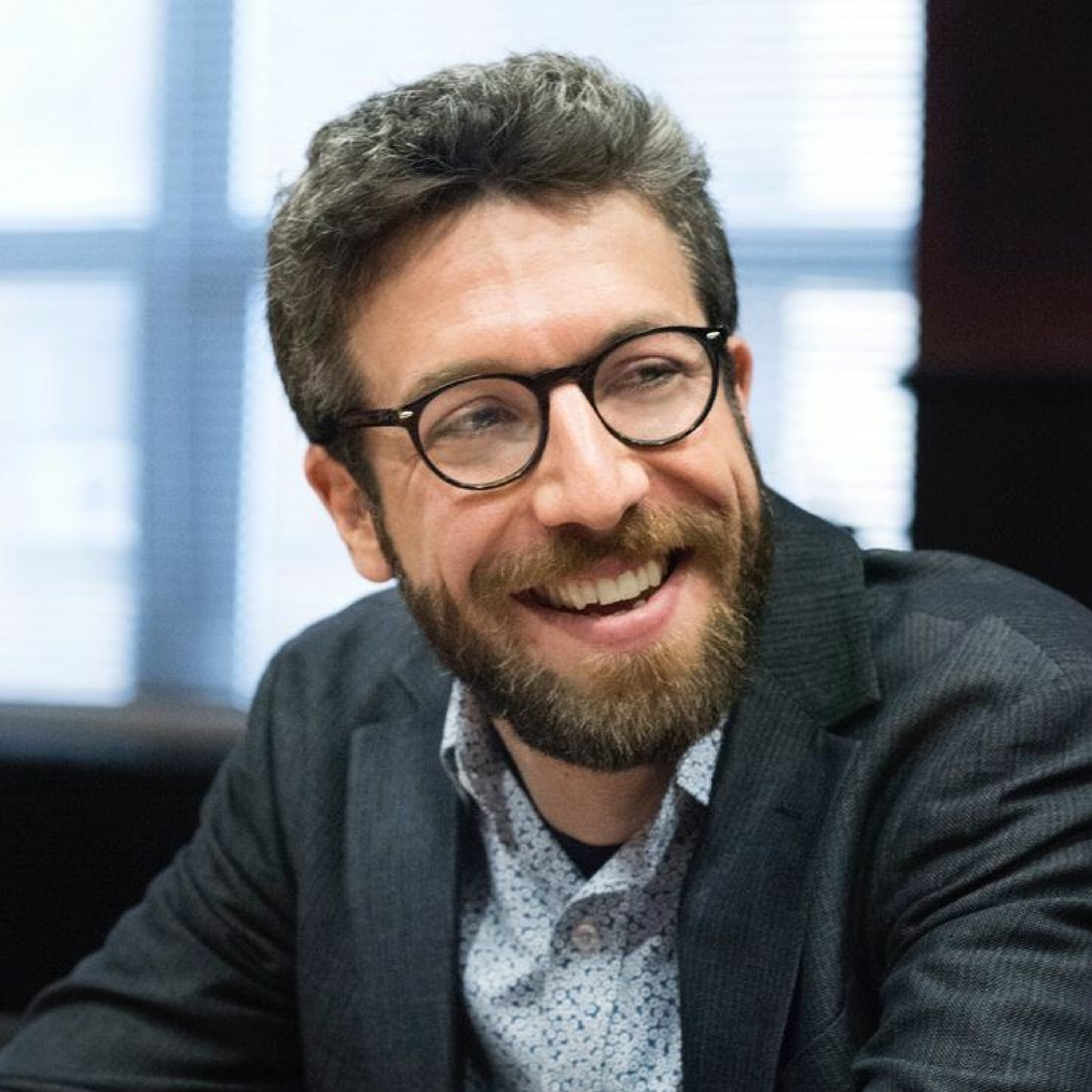
Aaron Jakes talks about his latest book, Egypt’s Occupation: Colonial Economism and the Crises of Capitalism, with Marc Lynch on this week’s podcast. The book offers a sweeping reinterpretation of both the historical geography of capitalism in Egypt and the role of political-economic thought in the struggles that raged over the occupation. Jakes explains, “In the broadest sense, the book, it is a history of the period of British rule in Egypt after the occupation of 1882. And it makes three broad arguments: first, that this particular form of colonial rule was organized around the discourse that I call colonial economist…the second major argument of the book is that under these conditions, Egypt became a crucial laboratory and target for financial investment in the worldwide financial expansion that was characteristic of global capitalism at the end of the 19th century. And finally, I'm sort of interested in the interplay between the discursive claims of the British regime and these dramatic transformations that were taking place…” He goes on to say, “You have people who, by the early 1900s, are articulating critiques of imperial finance that look logically quite similar to arguments that were more familiar with from people like Lenin...You have people who start to articulate things that look like early instances of dependency theory and those people are all at the same time trying to think through what the implications of these dramatic economic transformations were for the possibilities of different kinds of politics in the country.” “It was certainly the case that by the early 1900s, the British could, in their annual reports and other modes of publicity around what they were doing in Egypt, claim that they had delivered unprecedented prosperity to the country, and those claims, which had a power to circulate globally, that was much greater than that of most of the people that were contesting them, have a really significant resonance in other places…it's quite interesting that the government of the United States at the moment, which is beginning to think through what American forms of colonial rule in places like the Philippines might look like, looks to Egypt as a possible model for what they might do there,” said Jakes. Aaron Jakes is an Assistant Professor of History at The New School for Social Research and Eugene Lang College, where he teaches courses on the modern Middle East and South Asia, global environmental history, and the historical geography of capitalism. Music for this season's podcast was created by Feras Arrabi. You can find more of his work on his Facebook and Instagram page.
The Muslim Brotherhood in Jordan: A Conversation with Joas Wagemakers (S. 9, Ep. 11)
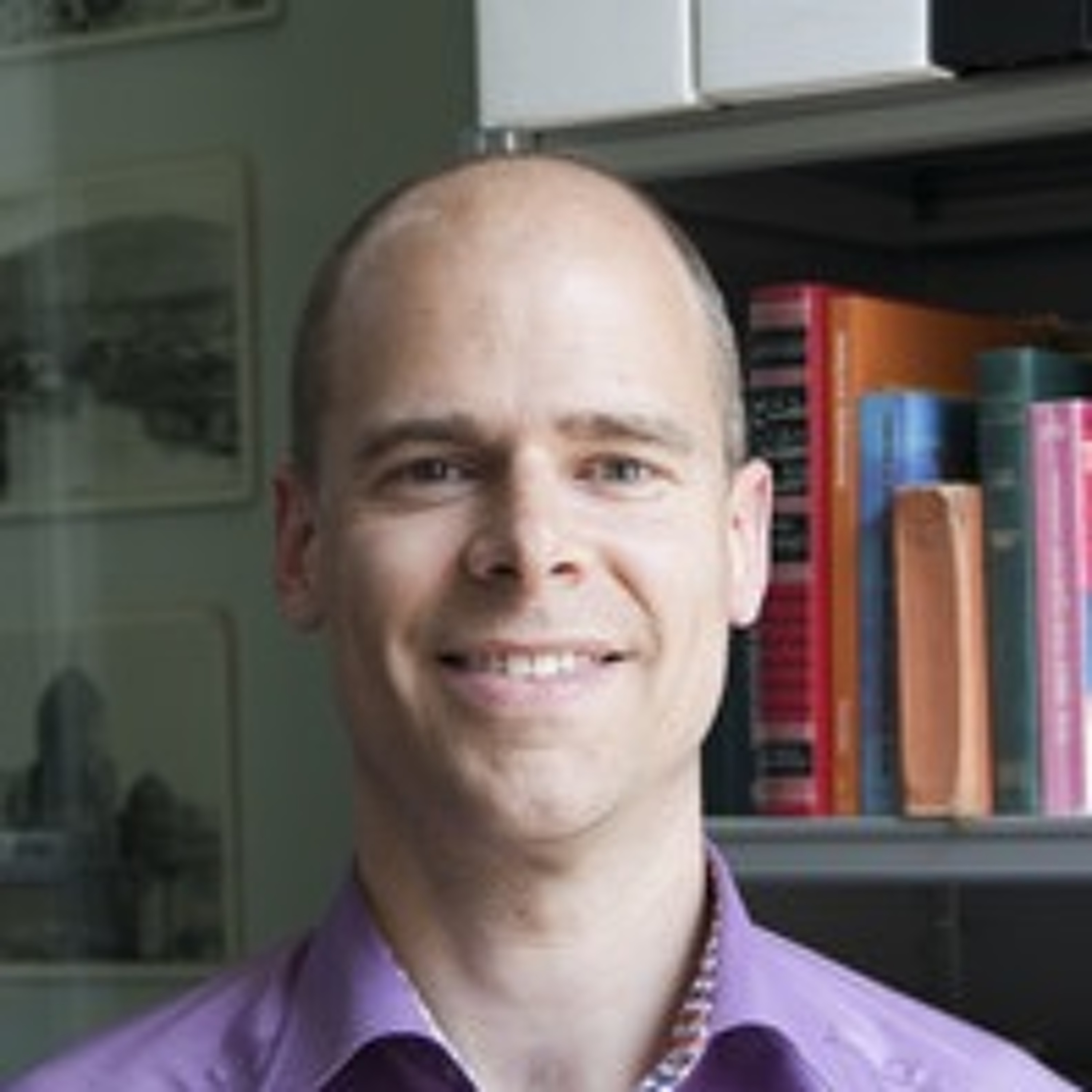
Joas Wagemakers talks about his new book, The Muslim Brotherhood in Jordan, with Marc Lynch on this week’s podcast. The book explores the Muslim Brotherhood’s long history and complex relationship with Jordan, its parliament and society. “In Jordan [the Muslim Brotherhood] basically had Royal support from the very start, and the reason for that was that the King did not really have a lot of authority within the country of Transjordan, as it was still called in the 1920s and 30s and 40s, and sought sources of authority that would help him gain the status of King or ruler in this new nation” explains Wagemakers. Wagemakers says, “After 1989, when decisions had to be made about: are we going to participate in elections, are we going to participate in the government if the government asked us to, are we going to be responsible for the decisions that we make. [The Muslim Brotherhood] really had to make political decisions. The existing divisions within the Muslim Brotherhood became clearer and clearer.” “The brotherhood did radicalize under pressure, let's say in the 1990s, but only by resorting to the means of boycotting the election. It was in the 2010s, so the past few years, when there was quite a bit of repression that the Brotherhood had moderated further simply because they saw in Saudi Arabia, in The United Arab Emirates, in Egypt and in other countries as well, that the Brotherhood was increasingly coming under the fire, was being labeled a terrorist organization… the Islamic Action Front really had only one way left to remain relevant and to remain legal, which was to engage in parliamentary elections,” notes Wagemakers. Joas Wagemakers is an Associate Professor of Islam and Arabic at the Department of Philosophy and Religious Studies at Utrecht University. He obtained his PhD in Nijmegen, received the Erasmus Research Prize in 2011 for his dissertation, was a researcher at Clingendael and a visiting research fellow at Princeton University. Music for this season's podcast was created by Feras Arrabi. You can find more of his work on his Facebook (https://www.facebook.com/ferasarrabimusic) and Instagram (https://www.instagram.com/feras.arrabi/) page.

Women of the Midan: A Conversation with Sherine Hafez (S. 9, Ep. 10)
Sherine Hafez talks about her latest book, Women of the Midan: Untold Stories of Egypt’s Revolutionaries, with Marc Lynch on this week’s podcast. In her book, she demonstrates how women were a central part of the revolutionary process of the Arab Spring; not only protesting in the streets of Cairo, but also demanding democracy, social justice, and renegotiation of a variety of sociocultural structures that repressed and disciplined them. Hafez explains, “I just wanted to make sure that the contributions of women in the Midan during the uprisings, and specifically in Egypt, were documented so that…the activism cannot be written off as just part of the revolution…And I wanted so much to make sure that this is a record that can be read by future young activists of all genders, so that they can look back and know that there is a record of their contributions to politics in the Middle East.” Hafez goes on, “When I decided to write the book, the revolution was in its hey-day…The revolutionaries felt that things can change; they had hope…and everybody was very optimistic, including myself. And it was really easy to talk to women who are in the Midan who were involved in all kinds of activism…It was just very exciting…and then gradually, as you know, the revolution took a shift and the things don't become so easy. It was very difficult to actually find women activists who would like to talk about their experience in Midan, many of them found it very painful; some were even suffering from PTSD…So I realized that this sort of development in the way that I access my interviewees reflected the political scene in Egypt.” “I was trying to find something more than memory [in my book], because when I was speaking to many of the women who were involved in the uprising, who found themselves for the very first time face-to-face with state violence…I felt that there was something there that was happening during the interview, it wasn't simply that people are sitting here reminiscing or re-telling stories of the past…I could view how their bodies actually changed, their voices changed, the expressions and their eyes changed, the whole demeanor changed as they were re-telling the stories, and some of them always pointed out, you're making us remember what it was like, and it was almost as if they were reliving these experiences, so it wasn't simply just retelling a memory, it was “rememory,” actually, physically experiencing the events that took place,” said Hafez. Sherine Hafez is Professor of Gender and Sexuality Studies at University of California Riverside. She is the Co-Editor of the Journal of Middle East Women’s Studies (JMEWS) and served as President for the Association of Middle East Anthropologists (AMEA). Hafez’s research focuses on Islamic movements and gender studies in Arab and Middle Eastern cultures. Hafez lectures on gender studies in the Middle East and Muslim majority countries, Islamic movements, and women’s Islamic activism in the uprisings in the Arab World. Music for this season's podcast was created by Feras Arrabi. You can find more of his work on his Facebook (https://www.facebook.com/ferasarrabimusic)and Instagram (https://www.instagram.com/feras.arrabi/)page.

After Repression: A Conversation with Elizabeth Nugent (S. 9, Ep. 9)
Elizabeth Nugent talks about her new book, After Repression: How Polarization Derails Democratic Transition with Marc Lynch on this week’s podcast. The book explores how polarization and repression led to different political outcomes in Tunisia and Egypt. Nugent explains, “When I started my fieldwork in Tunisia, it was clear to me again coming from Egypt with that kind of as my baseline how differently people spoke about each other and so the more I dug in the more that repression - the way in which the Ben Ali regime and the Mubarak regime repressed these different opposition groups - was very key for why these two different places ended up very differently polarized.” “It’s possible that as repression has come to touch a number of different groups in Egypt in the current moment it’s softening some of these identity politics that have been problematic in the past,” says Nugent. Nugent says, “What I find is that there are higher levels of both affective and preference polarization, here meaning negative affect in a targeted repressive environment, and lower levels of both in a widespread repressive environment. Elizabeth Nugent is an assistant professor of political science at Yale University. Her research explores the psychology of political behavior in the Middle East, with a focus on the effects of religion and repression. Music for this season's podcast was created by Feras Arrabi. You can find more of his work on his Facebook (https://www.facebook.com/ferasarrabimusic)and Instagram (https://www.instagram.com/feras.arrabi/)page.

When Blame Backfires: A Conversation with Anne Marie Baylouny (S. 9, Ep. 8)
Anne Marie Baylouny talks about her latest book, When Blame Backfires: Syrian Refugees and Citizen Grievances in Jordan and Lebanon, with Marc Lynch on this week’s podcast. The book explains how the recent influx of Syrian refugees into Jordan and Lebanon has stimulated domestic political action against these countries' governments. Baylouny explains, “So usually these governments use all kinds of groups…to blame for their faults. Oh we can't provide this. We have water shortage because of the Iraqis. This problem with the government is because of another group and they blame them for all their lack of state capacity. So here you have an overwhelming number of Syrians over a quarter of Lebanon's population and at least 10 percent of Jordan's, probably their first and second in the world for refugees per capita. And they're foreigners and a lot of them are poor and they came in in masses…So you have they have all the elements that you would expect states to be able to successfully deflect blame from themselves on to that minority or foreign group.” She goes on to say, “They [the Syrians] were welcomed very well by the Lebanese and Jordanians in the beginning. Then the honeymoon period ran out and the numbers got very large. And the Jordanians and Lebanese universally started to blame things on the Syrians…They're using too much water etc. but they didn't do the second part of scapegoating. The second part of scapegoating is when you basically dissolve responsibility from the state or government for that problem. So you blame Syrians and you go back to your couch…Instead they blamed the government said you need to provide us housing, you need to provide us better schools, you need to provide us water, electricity, you need to fix the problem. The Syrians may have caused them but you need to fix them. And they mobilized. They began mobilizing against the government.” She argues, “They [the Jordanians] needed housing…And they demanded from the government that it provide them housing. So here you have people who are clear that the fault is the Syrians…but the Syrians can't provide them housing. And later on the Syrians can't provide them water. They can't provide electricity…Because deflecting blame onto the Syrians away from the government—people can see right through that because they still need those goods to be provided. So they [the Jordanians] prioritize solutions over the psychological satisfaction of scapegoating and blaming somebody else for all your problems.” Anne Marie Baylouny is associate professor of National Security Affairs at the Naval Postgraduate School, specializing in Middle East politics, grassroots organizing, and Islam. Baylouny received her Ph.D. in Political Science from the University of California, Berkeley. Her recent work includes publications on militia governments in the Lebanese civil war, Hezbollah’s media messages, and authority in ungoverned spaces. Baylouny has been the recipient of numerous fellowships and awards—Fulbright, the Social Science Research Council, and the Mellon Foundation, among others. Music for this season's podcast was created by Feras Arrabi. You can find more of his work on his Facebook (https://www.facebook.com/ferasarrabimusic)and Instagram (https://www.instagram.com/feras.arrabi/)page.