Parallax Views w/ J.G. Michael
1,045 episodes — Page 9 of 21
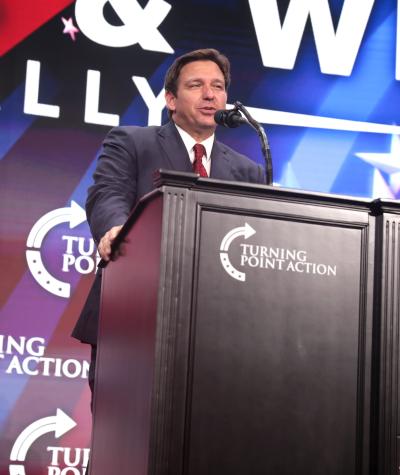
Ep 774Ron DeSantis Accused of Campaign Finance Violation; Dark Money & Foreign Influence Lobbying w/ Taylor Giorno
EOn this edition of Parallax Views, Taylor Giorno, an OpenSecrets reporters specializing in money-in-politics issues such as campaign finance, lobbying, and foreign influence operations, returns to discuss the Campaign Legal Center's allegations that Ron DeSantis, who recently made his bid for the Republican Party candidate in the 2024 Presidential Election, has engaged in a "soft money" campaign finance violation. The Campaign Legal Center has gone so far as to file a complaint with the Federal Election Committee. Taylor explains the ins-and-outs of this story, the complexities of it, and money-in-politics more generally as well as the deregulation of campaign finance oversight. Taylor and I also discuss some of her other areas of interest, specifically development in the NSO Group/Pegasus spyware story, dark money, and foreign influence lobbying. We even manage to discuss the top 10 foreign influence lobbying operations in the U.S. as documented at OpenSecrets. Other topics covered include: - DeSantis accused of transferring money from an old Florida state PAC into the pro-DeSantis Super PAC Never Back Down; the Campaign Legal Center argues this is an illegal violation of campaign finance rules; some discussion of Trump and DeSantis in relation to campaign finance; are the accusations against DeSantis unprecedented?; campaign finance violations is not a partisan affair (it happens within both parties) - The dark money group One Nation and its funneling of millions of dollars into elections - Dark Money and the Koch Brothers; how dark money has evolved past the Koch Brothers and there are new and different dark money players - Sam Banman-Fried, the collapse of FTX, the crypto-currency industry and its lobbying, and money-in-politics - The explosion of money-in-politics since 2010; the Supreme Court, Citizens United, and corporate personhood - The Israeli cyber-intelligence firm NSO Group and the Pegasus spyware scandal; NSO Group spending millions of dollars in lobbying efforts - The case of Ben Swann, a former local FOX and CBS-affiliates TV news anchor who peddled Pizzagate stories and has since become a libertarian media personality; In FARA filings it has been discovered that Swann was the recipient of millions of dollars in money from Russia - The defense contractor/defense sector money being funneled to Congress since the invasion of Ukraine by Russia; the defense industry's line on inflation; defense industry lobbying - OpenSecrets's Foreign Lobby Watch; Top ten countries involved in foreign lobbying include China, Qatar, Saudi Arabia, South Korea, Israel, Russia, and others; Drone manufacturer Barzan Holdings and arms exports to Qatar; pro-Israel lobbying - And much, much more
Ep 772Fred Olen Ray Returns to Discuss Collaborating With Ed Wood, Low-Budget Filmmaking, Wild Tales from 80s Hollywood, & More!
EOn this edition of Parallax Views, filmmaker Fred Olen Ray returns to discuss his latest work Deep Red, a novel whose origins date back to the 1970s with an unfinished collaboration between Fred and Plan 9 from Outer Space's Edward D. Wood, Jr. In 1978, shortly before his death, Wood was writing the screenplay for Fred's Beach Blanket Bloodbath, a sci-fi horror tale that would've involved a half man-half fish monster! But that's not all. Fred also some great tales from his filmmaking career including stories from 80s Hollywood and the world of low-budget filmmaking. There's also a great deal of advice here for people may want to get involved in filmmaking or the entertainment industry as Fred discusses working with actors, writing for television, and much, much more. There's also a fair bit of background provided in this conversation about the movies Zombie Death House and Bloody Movie, two obscurities produced by mob-connected film lover Nick Marino that provide a behind-the-scenes look at the world of 80s low-budget genre filmmaking during the VHS boom. Fred and I also talk about his work on Lifetime movies and how they're made, the fanzine culture of yesteryear, 70s/80s cult actress and sex icon Sybil Danning, marketing movies, Fred's Retromedia company and its release of movies, Fred's wacky comedy Bad Girls from Mars and why it's never seen an uncut release (hint: studios not abiding by their contract; we get into the ways some film studios do filmmakers dirty), the killer pumpkin-man movie Jack-O and Fred's wild audio commentary with the director, and more! All that and much more on this edition of Parallax Views!

Ep 771Heavy Radicals: The FBI’s Secret War on America’s Maoists w/ Aaron J. Leonard
EOn this edition of Parallax Views, Aaron J. Leonard joins us to discuss the new revised and updated edition of his and Conor A. Gallagher book Heavy Radicals: The FBI's Secret War on America's Maoists: The Revolutionary Union/Revolutionary Communist Part 1968-1980. We delve into the radical left-wing politics of the late 1960s into the 1970s and the influence of Mao Tse-Tung's variant on communist thought on American radicals as well as how revolutionary groups in the U.S. applied theory and praxis in their operations at the time. This leads us into discussions of figures like H. Bruce Franklin as well as the infamous Bob Avakian, Chairman of the Revolutionary Communist Party, USA (RCP). It is well-known that the post-WWII era saw the intelligence community become very concerned about radical left-wing politics, specifically the activities of communist groups, in the U.S. during the Cold War between the U.S. and the Soviet Union. Much has been made of J. Edgar Hoover, the House on Un-American Activities Committee, and COINTELPRO in this regard. But Aaron specifically focuses on the FBI's counterintelligence operations against Maoist groups. We discuss the "dirty tricks" that were used against these groups by the FBI at this time. We discuss FBI informant recruiting in the time as well as the specific players involved in activities against U.S.-based Maoist groups. Aaron names names and gives insight into FBI actions against left-wing radical groups in the United States post-Hoover. Additionally Aaron and I discuss the Black Panthers, the media vs. radical activities, the labor movement, conspiracy theories vs. systemic analysis, the evangelical couple that sought to help the FBI by infiltrating the Revolutionary Union, W. Mark Felt (the man who confessed to being "Deep Throat" in the Nixon-era Watergate saga in 2005), the FBI report that referred to the RCP as a "threat of the first magnitude" to the U.S., the concept of the deep state and why Aaron believes there is just the State rather than deep state, the JFK Records Act and how the files released from that has value beyond the questions surrounding the Kennedy assassination itself (ie: files on Fred Hampton, Bob Dylan, etc.), how do you read and evaluate FBI files?, the Fair Play for Cuba Committe, the CIA and Richard Gibson (Codename: Sugar), Donald Wright, why is Maoism neglected when looking at the history of the New Left?, COINTELPRO and the Ad Hoc Commitee, the FBI's war against radical folk musicians and Aaron's latest books Whole World in an Uproar: Music, Rebellion and Repression – 1955-1972 and The Folk Singers and the Bureau: The FBI, the Folk Artists and the Suppression of the Communist Party, USA-1939-1956, Pete Seeger and the radical nature of much 20th century folk music, Freedom of Information Act (FOIA) requests and what Aaron refers to as the "soft revocation" of FOIA, and more.
Ep 770I’ll Burn That Bridge When I Get To It! Heretical Thoughts on Identity Politics, Cancel Culture, and Academic Freedom w/ Norman Finkelstein
EOn this edition of Parallax Views, rabble-rousing, gadfly academic Norman Finkelstein joins us to discuss his new book I'll Burn That Bridge When I Get to It! Heretical Thoughts on Identity Politics, Cancel Culture, and Academic Freedom. Norman is probably most well-know for his work on Israel/Palestine, but in his latest work takes on the question of what's alternately been called "cancel culture", "woke culture", or "identity politics" while also addressing his own cancellation as an academic over his work on Israel/Palestine and asking whether or not it was justified. In this conversation Norman and I discuss a number of topics including the issues of gender and sex, the identity politics of White Fragility author Robin DiAngelo, Ibram X. Kendi and Kendi's fascination with Black Panther turned Republican Reaganite Eldridge Cleaver, the ruling class and identity politics, the cult of personality around President Barack Obama, the weaponization of identity politics on both the left and the right, bourgeois democratic values, Democracy Now's Amy Goodman, Obama's white speechwriters and the presentation of Obama to the public, the brushing aside of class issues in media, and more!

Ep 765True Blue: White Unionists in the Deep South during the Civil War and Reconstruction w/ Clayton J. Butler
EOn this edition of Parallax Views, Clayton J. Butler joins us to discuss his book True Blue: White Unionists in the Deep South During the Civil War and Reconstruction. Butler explains how certain contingent of Southerners, for a variety of reasons, chose to remain loyal to the North during the Civil War and Reconstruction period. The reasons for this, however, may surprise modern audiences. It was not necessarily that these Southerners were against slavery. In fact, some supported the North because they believed that the war would bring about the end of slavery as an institution in the South. Meanwhile, others were "True Blue" due to an understandable resentment for the plantation aristocracy which sought to exert oligarchic control in the South. In our conversation we delve into all of these issues as well as why the topic, particularly when it comes to Unionists in the Deep South, is often underdiscussed or left relatively unexamined amongst many historians. We also discuss the "Lost Cause" narrative/myth in the South as well as the importance of discussing the Reconstruction period, which saw many gains for black freed men who'd formerly been enslaved by Southern plantation owners, after the Civil War and how it ended. Clayton's book deals with the Unionists of the First Louisiana Cavalry, First Alabama Cavalry, and Thirteenth Tennessee Union Cavalry and examines why these men chose to ally themselves with the North and African Americans during the war. All that and much more on this edition of Parallax Views!
Ep 768Spyfail: Foreign Spies, Moles, Saboteurs, and the Collapse of America’s Counterintelligence w/ James Bamford
EOn this edition of Parallax Views, legendary journalist James Bamford, known for his books The Puzzle Palace and Body of Secrets that lifted the veil of secrecy around the National Security Agency (NSA) as well as his critical exploration of the Bush-era Iraq War/War on Terror A Pretext for War, joins us to discuss his latest book Spyfail: Foreign Spies, Moles, Saboteurs, and the Collapse of America's Counterintelligence. For those interested in the subject of spycraft and it's implications/consequences this is a wide-ranging and comprehensive conversation that is worth a listen. James and I delve into such subjects as the leak of U.S. cyberweapons by an entity known as The Shadow Brokers (TSB) and how it nearly had apocalyptic consequences, United Arab Emirates (UAE) and Israeli spying operations in the United States, the stealing of massive amounts of classified materials by former Booz Allen Hamilton contractor Hal Martin, Hollywood movie producer Arnon Milchan and Israeli nuclear smuggling, Russiagate and the Maria Butina affair, and, perhaps most explosively, the portions of Bamford's book dealing with alleged collusion between Israel's Netanyahu government and the Trump campaign during the 2016 election (read more about this specifically in Bamford's The Nation article "The Trump Campaign's Collusion With Israel").

Ep 769The British Marxist Historians w/ Harvey J. Kaye
EOn this edition of Parallax Views, historian and sociologist Prof. Harvey J. Kaye returns to discuss the new edition of his 1984 book The British Marxist Historians. In said book, Prof. Kaye delved into how E.P. Thompson, Maurice Dobb, Christopher Hill, Eric Hobsbawn, and Rodney Hilton offered material analyses on a variety of historical matters that challenged conventional notions held by many other historians. In doing so they also took a heterodox approach to Marxism. In this conversation we explore the contributions of the British Marxist Historians and the ways in which they offered an innovative "history from the bottom up" approach to understanding the past. Harvey and I discuss: - Eric Hobsbawn's defense of the Luddites, the radical machine breakers who jobs were lost in the industrial age - The value of the English Marxist historians today and addressing criticisms that Marxism's usefulness as a form of analysis has dried up - Kaye's thoughts on and criticism of the work of The People's History of the United States historian Howard Zinn - The role Anthony Giddens, a founder of the "Third Way" political position, in the publication of The British Marxist Historians - Neoliberalism, class struggle, the working class, the ruling class, the base/superstructures discourse, and Marxist analysis of history - And much, much more!

Ep 767Amityville: An Origin Story w/ Jack Riccobono
EOn this edition of Parallax Views, filmmaker Jack Riccobono joins us to discuss his new MGM+ documentary miniseries Amityville: An Origin Story. Given the glut of Amityville movies, books, and documentaries that have come out through the years one could be forgiven for assuming Amityville: An Origin Story would be just another retread of the same old territory. After all, the Amityville name has now inspired such direct-to-video/streaming flicks as Amityville Cop, Amityville Moon, Amityville in Space, and, believe it or not, Amityville Vibrator. In that way many have come to view anything with the Amityville moniker to be a joke. Amityville: An Origin Story, however, manages to defy expectations and offer a fresh, even thought-provoking perspective on the infamous house on 112 Ocean Avenue by exploring how The Amityville Horror, from the brutal DeFeo family murders to the alleged haunting of the Lutz family and all the books and movies that followed, became a pop culture phenomena that's seared into the collective consciousness of America. Jack and I discuss many different facets of the docuseries including: - The culture of the 70s: rise of interest in occultism, mass institutional distrust due to the Vietnam War and Watergate, the popularity of horror movies like The Exorcist, Rosemary's Baby, and The Omen; how this all created the perfect storm for The Amityville Horror to make an impact on the zeitgeist - The brutal family annihilation murder of the DeFeo Family and its perpetrator Ronald DeFeo, Jr.; family dysfunction and family disintegration in the stories of both the DeFeo and the Lutz families; the lingering questions about possible organized crime/mob ties to the DeFeo Murders; the rare archival interviews of Ronald DeFeo, Jr. contained in Amityville: An Origin Story; discussion of Amityville II: The Possession, the cult horror movie based on the DeFeo murders; Amityville: An Origin Story's interview with Diane Franklin, who played Ronald DeFeo, Jr.'s sister Dawn DeFeo in Amityville II: The Possession; Amityville: An Origin Story's exclusive interview with Tommy Maher, a personal friend of Ronnie DeFeo, Jr. - The alleged haunting of the Lutz Family; paranormal investigator and famed ghost hunter Hans Holzer's thoughts on the Amityville House; Christopher Quaratino, son of Kathy Lutz, and the secrets of his stepfather George Lutz; why the documentary goes beyond asking the old question of whether the Amityville Haunting was "real" or a "hoax"; The Amityville Horror and the birth of the "Based on a True Story" marketing; demonologists Ed and Lorraine Warren, now famous for being the basis of the hit The Conjuring movie franchise, and their investigation of the Amityville House; Amityville: An Origin Story's interview with Lutz family friend Carol Soviero - The role famed filmmaker John Carpenter, director of the suspenseful horror classic Halloween (1978), plays in Amityville: An Origin Story - The Amityville House as a character in an of itself; Amityville: An Origin Story's exploration of the idea of home, real estate, and the warping of the American dream through the funhouse mirror of the Amityville story; the difficulty of living in the Amityville house today due to tourists and the general cultural baggage the house carries; the movie's tagline "For God's Sake, Get Out!" and the infamous Eddie Murphy about The Amityville Horror - The role of greed and profiteering in the perpetuation of Amityville saga in popular culture - The Amityville Horror and the ancient Indian burial ground trope in horror as it relates to both settler-colonial guilt and bigotry against Native Americans - The Amityville Horror in relation to conversations about the concept of a "post-truth" era; parallels between the 70s and today and the continued cultural resonance that the Amityville saga carries even now - The Amityville saga as a microcosm of the idea that there's "no new stories to be told" - Amityville: An Origin Story as part true crime documentary, part paranormal documentary recounting the Lutz Family's 28 days in the 112 Ocean Avenue house, part investigative journalism, and part cultural history documentary exploring The Amityville Horror's significance to cinema - And much, much more!

Ep 766We Don’t Know Ourselves: A Personal History of Modern Ireland w/ Fintan O’Toole
On this edition of Parallax Views, Fintan O'Toole, long-time journalist of The Irish Times, joins us to discuss his acclaimed new book We Don't Know Ourselves: A Personal History of Modern Ireland. Although the book is not exactly a memoir, it is a sweeping journey through the decades of Ireland's evolution from the late 1950s through to today from the perspective of Fintan himself. As someone who lived through the turbulence of the Troubles, the bombings carried out by the Irish Republican Army (IRA), and the Good Friday Agreement, Fintan is uniquely able to tell the story of Ireland in from the mid-20th century to the present. In addition to all of this, Fintan and I will also delve into the issue of Brexit, the possibility of Irish reunification, and the rise of English nationalism and the Little England mentality. Fintan will also comment on the differences between English nationalism and Irish nationalism, give details on the Northern Ireland conflict ( aka The Troubles) and its complexity (we'll discuss not only the IRA but also North Irish Unionists like Ian Paisley), what it means to be Irish, national identity and Catholic identity in Ireland, the theme of "Unknown Knowns" and "Doubleness" in Fintan's personal history of Ireland, Catholic Church child sex abuse scandals in Ireland, conservatism and social control, Us Vs. Them mentalities, Irish economist and diplomat T.K. Whitaker and the Irish gambit, Irish composer Seán Ó Riada and traditional Irish music, the European Union and national identities, and much, much more!
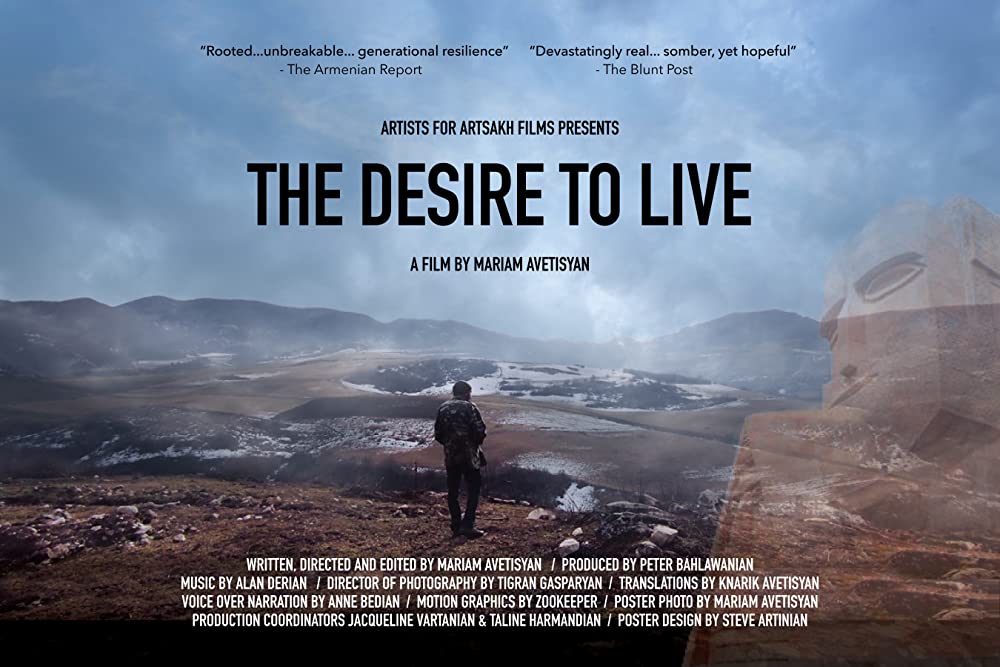
Ep 764The Ethnic Cleansing of Armenians by Turkey-Supported Azerbaijan w/ Peter Bahlawanian
EOn this edition of Parallax Views, Peter Bahlwanian, producer of Mariam Avetisyan's documentary The Desire to Live, to discuss the secret ethnic cleansing of Armenians by Azerbaijan. In this conversation we'll discuss a territorial and ethnic dispute that has become known as the Nagorno-Karabakh conflict as well as the history of Armenian persecution dating back to the Armenian genocide of 1915 (which has often been called the first genocide of the 20th century). We'll also delve into how Turkey and its President Recep Tayyip Erdoğan, plays a key role in the Azeri persecution of Armenians. In this regard we'll discuss Erdoğan's geopolitical aspirations and his consolidation of power in Turkey. Also covered is Turkey's relationship to the United Nations (UN), NATO, the United States, UNESCO, and Russia. Moreover, Peter and I delve into oligarchy, the attempted coup d'état against Erdoğan in 2016. Additionally, Peter and I will also discuss: - The Khojaly massacre of 1992 and claims of Armenian atrocities against Azeris - Parallels between Israeli treatment of Palestinians and the Azeri treatment of Armenians in the Republic of Artsakh - The Nagorno-Karabakh War of 2020 - The Turkish Lobby and the Azeri Lobby's influence in Western politics - Why did it take 100 years to recognize for the U.S. to recognize the Armenian genocide of 1915? - Is the conflict between Azeris and Azerbaijan a conflict between Muslims and Christians? - Pro-Armenian activism by celebrities like Kim Kardashian and the rock band System of a Down - Human rights and U.S. credibility/loss of credibility on a global scale; democracy vs. autocracy - Why has the U.S. often been silent on the issue of the Azeri persecution of Armenians?; assessing President Joe Biden's record on this issue - The Israel Lobby and U.S. silence on Armenian persecution - The role money plays in buying off politicians, media, and institutions from speaking about the persecution of Armenians - Azerbaijan's President Ilham Aliyev and anti-Armenian sentiments in Azerbaijan's culture - The strength and perseverance of Armenians and the people of the Republic of Artsakh; the Armenian diaspora; hope in times of war and despair; the power of the human spirit - Azeri fears that Armenians will seek revenge against them if a reconciliation is attempted; the attempted erasure of Armenian identity - And more!
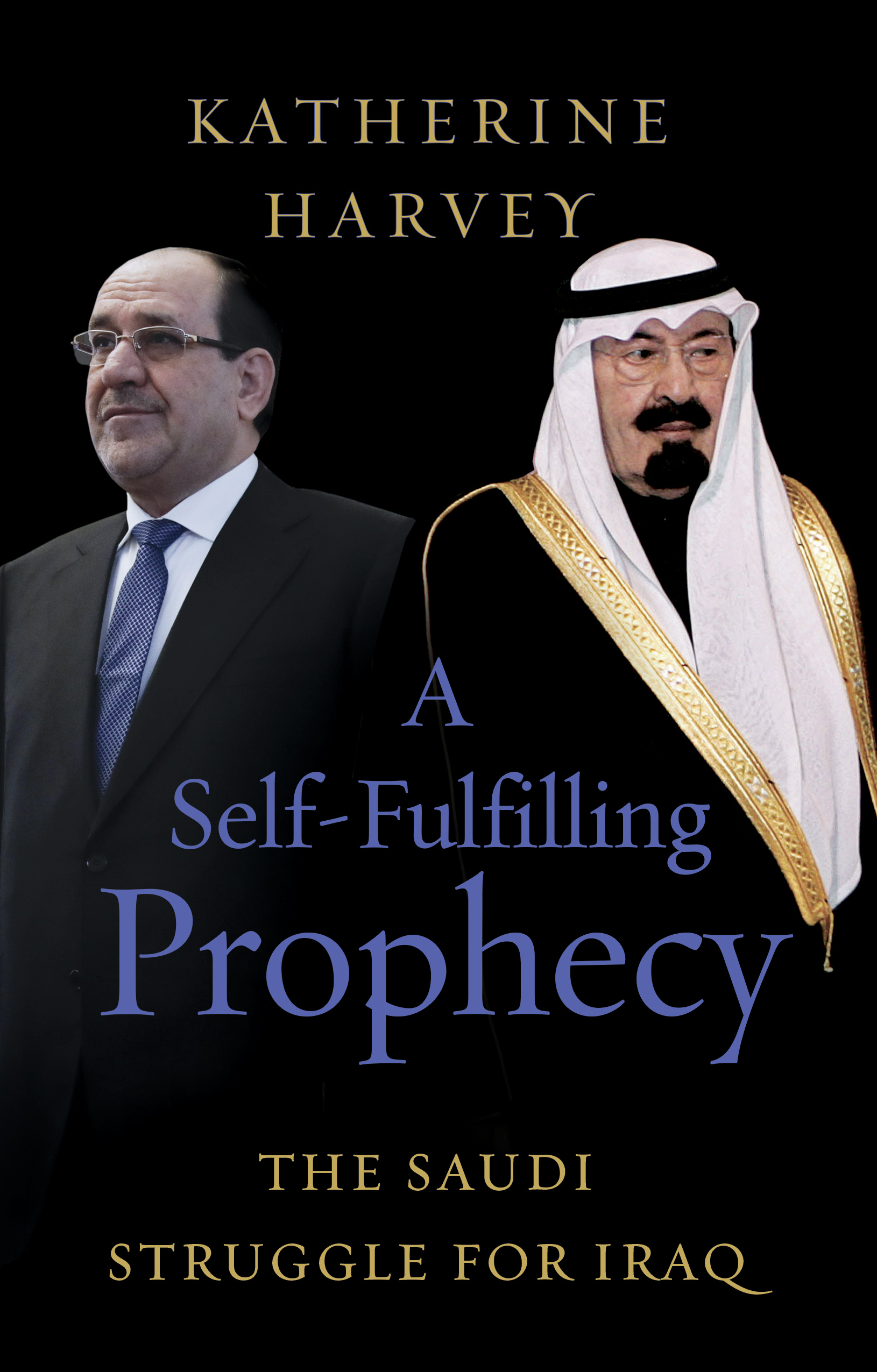
Ep 732A Self-Fulfilling Prophecy: The Saudi Struggle for Iraq w/ Katherine Harvey
On this edition of Parallax Views, Dr. Katherine "Kitty" Harvey, who is adjunct assistant professor in the Security Studies Program at Georgetown University and holds a doctorate from King’s College London, joins us to discuss her book A Self-Fulfilling Prophecy: The Saudi Struggle for Iraq. Dr. Harvey delves into the complex relationship between Saudi Arabia and Iraq, and how it has affected the region's politics and international relations. She also provides a unique perspective on the topic and discusses how the Saudi struggle for power in the region has been a self-fulfilling prophecy. The episode hopefully offers a thought-provoking analysis of the dynamics between these two countries and should be a must-listen for anyone interested in Middle Eastern politics. Among the topics discussed on during the conversation: - The story of how Kitty became interested in the Middle East, Saudi Arabia, and the Iraq War; studying the Arabic language and how that contributed to her journey leading to her examination of Saudi policy on Iraq after the U.S. invasion of said country in 2003 - Saudi Arabia's opposition the George W. Bush administration's invasion of Iraq and the overthrow of Saddam Hussein - Iraq Prime Minister Nouri al-Maliki and Saudi fears about Iraqi Shia and Iranian sympathies in Iran - The Constructivist view of International Relations and its application in Kitty's book - The Realist view of International Relations and its application in Kitty's book; The Origins of Alliances author Stephen Walt - Questions of Saudi interference in Iraqi elections after the U.S. invasion - Iraqi Shia identity vs. Iranian Shia identity - Did Saudi Arabia push Iraq closer to Iran after the invasion? - And more!

Ep 758In Search of Monsters to Destroy: The Folly of American Empire and the Paths to Peace w/ Christopher J. Coyne
On this edition of Parallax View, Christopher J. Coyne, Professor of Economics at George Mason University, joins us to discuss his book In Search of Monsters to Destroy: The Folly of American Empire and the Paths to Peace (Independent Institute; 2022). As we approach the 20th anniversary of the Iraq War, Christopher and I discuss the dangers and pitfalls of military adventurism as well as why we should not forget the lessons of the War on Terror when we discuss U.S. foreign policy and international relations today. Among the topics covered in this conversation: - American Empire and the National Security State - The concept of the "Deep State" beyond it's most sensational, conspiratorial usages - Drone warfare as "mechanized terror" or terrorism in the eyes of the countries effected by U.S. drone attacks - The connection between the War on Drugs, the failed Afghanistan War, and U.S. foreign policy - How war abroad created restrictions on liberty at domestically - Antiwar arguments for the Right and the Left - Republicans calling for war on Mexico and right-wing China hawks - Libya and the overthrow of Gaddafi - U.S. foreign policy, immigration, and Latin America; a libertarian argument for why the U.S. shouldn't overthrow socialist countries - And more!

Ep 763On the Brink: Jenin’s Rising Resistance (Armed Resistance in the Jenin Refugee Camp) w/ Yumna Patel
On this edition of Parallax Views, journalist Yumna Patel of Mondoweiss joins us to discuss her new documentary On the Brink: Jenin's Rising Resistance, an examination of the Jenin refugee camp's growing armed resistance movement against the Israeli occupation in Palestinian West Bank. On January 26th, 2023 an Israeli raid on the Jenin refugee camp left nine Palestinians dead. The tensions between within Israel/Palestine has increased, especially in light of the new government of Benjamin Netanyahu and the rise of far-right figures like Bezalel Smotrich and Itamar Ben-Gvir, and whispers of a Third Intifada, a violent Palestinian uprising, or a Second Nakba, a brutal expulsion of Palestinians from their homes and lands, are becoming more common. With events like the Nablus Massacre and the Israeli settler attack in Huwara, the Israel/Palestine situation seems to be at an exceedingly dangerous juncture right now. Yumna joins J.G. and special guest co-host Karl Barx, host of the West Bank Robbery podcast, to delve into these issues and to help us understand why many young many are joining an armed resistance in the West Bank's Jenin refugee camp. Among the topics covered in this conversation: - The uniquely deadly Israeli army raid on the Jorat al-Dhahab neighborhood of the Jenin refugee camp - The Western discourse over Palestinian armed resistance; the context from which armed resistance to an occupation is born; the use of terms like "nuance" and "complexity" when discussing the Israel/Palestine conflict in the U.S. - The disconnect in how we think about armed resistance in Palestine vs. armed resistance in Ukraine; the Western tendency to demand that Palestinians be "perfect victims" that do not engage in violent resistance - Why are Palestinian youths, particularly young men, turning to taking up arms in the Jenin refugee camp and why do they feel that the horizon for a political solution has been slammed shut at this time? - The Jenin Brigade, the Islamic Jihad Movement, the cross-factional model of the Jenin Brigade and the various political factions that have engaged in Palestinian Unity, the militant armed Palestinian resistance group known as the Lion's Den, the emergence of new political formations amongst Palestinians, the failure of the Palestinian Authority and negotiations between Israel and Palestine (especially the Oslo Accords) and Yumna's interviews with armed resistance fighters - The May 2021 uprisings of Palestinians that has been called the Unity Intifada - The argument that armed resistance plays into the hands of far-right wing Israeli politicians like Itamar Ben-Gvir and Bezalel Smotrich's desire to justify further clampdowns against and oppression of Palestinians - Did the Nakba, or the mass expulsion of Palestinians in 1948 that is otherwise known as the Catastrophe or the Cataclysm, ever really end?; Israeli settlers and the displacement of Palestinians from their homes and land - Yumna's background; her parents grew up in apartheid South Africa; the apartheid regime oppressed Yumna's Indian parents; how this ties into her work on Palestine - The Palestinian struggle and changing views on Israel/Palestine in the U.S. and the Western World; Israeli ultranationalism and the Jerusalem Day Marches that saw Israeli far-right wingers march through the Muslim corridor shouting "Death to Arabs"; the normalization of anti-Palestinian violence, hatred, and sentiments and the U.S. and international community's lack of a sufficient response to it - Hope vs. despair when discussing Israel/Palestine; the desperation of the Israeli far-right and the unraveling of Israeli society - Yumna's interview with a paramedic based in Jenin; the paramedic claimed that Israeli forces violently prevented medics from entering the camp to treat the wounded during the Jan 26th raid - And more!
Ep 762REPLAY: The Israel/Palestine Conflict and The Specter of Meir Kahane w/ Yossi Gurvitz
This classic episode is offered as a replay in memory of Yossi Gurvitz, who passed away in February. Yossi was an invaluable resource to the show and his passing is deeply felt here at Parallax Views. On this edition of Parallax Views, the first in what will be a series of programs on the Israel/Palestine conflict in light of recent events. Israeli journalist/blogger Yossi Gurvitz of Mondoweiss joins us on this addition of the program to discuss what has been happening with the conflict since the tensions heated up over the Sheikh Jarrah district of East Jerusalem, the burning of the al Aqsa Mosque, Hamas firing rockets into Israel, and Israel's launching of airstrikes on Gaza in response. Additionally, Yossi and I discuss the legacy of the radical Orthodox Jewish ultranationalist Rabbi Meier Kahane. Kahane formed the Kach Party in Israel and advocated for expulsing Palestinians from Israel as evidenced by one of his catchphrases "Arabs Get Out!". Although Kahane was assassinated in New York City in 1990 and the Kach Party was banned in Israel in 1994, followers of Kahane and Kahanism live on. Specifically Otzma Yehudit (Jewish Power Party) leader Itamar Ben-Gvir, a follower of Kahane, won a seat in the Knesset this past March and was involved in the recent tensions related to the Sheikh Jarrah district of East Jerusalem. Yossi argues that the right-wing ultranationalism of Kahanism has gone mainstream in Israel. Also discussed: the recent Human Rights Watch and B'Selem report, the experience of sheltering in a bunker during this latest round of violent conflict, and much, much more.

Ep 759Pro-Israel & Right-Wing Groups Accused of Collaborating to Stifle Academic Freedom: The Case of Dr. Lara Sheehi w/ Dr. Lara Sheehi
On this edition of Parallax Views, Dr. Lara Sheehi, Assistant Professor of Clinical Psychology at George Washington University and co-author with Dr. Stephen Sheehi of Psychoanalysis Under Occupation: Practicing Resistance in Palestine, joins us to discuss the complaint filed against George Washington University about her that she believes was lodged because she is an Arab woman involved in pro-Palestinian activism. Dr. Sheehi makes the case that the Israel affinity group StandWithUs, in collaboration with right-wing media organizations like Fox News and the Washington Free Beacon, have targeted her with spurious accusations of antisemitism due to her being an Arab woman engaged in pro-Palestinian activism. A complaint has been filed against George Washington University concerning Dr. Sheehi that Sheehi and others who supporter her believe has grave implications for academic freedom, free speech, and the silencing of Palestinian voices in society. From Fox News to Reason Magazine, Dr. Sheehi has been attacked. This is her side of the story. In this conversation we delve into: - Dr. Sheehi gives a detailed overview of the complaint and her case as well as the misrepresentations of her class syllabus and a brown-bagger event that was voluntary and held off-site - Antisemitism; Dr. Sheehi's opposition to antisemitism; the weaponization of antisemitism against critics of Israel - How accusations that pro-Palestinians activists are "Ayatollahists", "Iranian spies", "Hamas agents", and "Hezbollah operatives" mirror antisemitic tropes about Jews having "dual loyalties" or "Fifth Columnists" - Islamophobia, the concept of the "Palestine Exception" in discourses about oppression and human rights, and the burden put on Arabs and Arab-Americans to prove that they are not antisemites that is not put on other marginalized groups - The violent threats and cyber-harassment that Dr. Lara Sheehi and her husband has received, including an message that was undeniably lewd and sexist - Psychology, trauma, identity erasure, and the silencing of Palestinian and Arab voices - Why Dr. Sheehi believes that she was targeted by an organized smear campaign - What are the stakes of Dr. Sheehi's case; the potential chilling effect on free speech and academic discourse - The George Washington University trauma center and its denial of services to Palestinian students; the group UK Lawyers for Israel and the removal of children's artwork from a London hospital because it was made by Gazan children - Support for Dr. Sheehi by her colleagues and students; GWU's independent newspaper The GW Hatchet's op-ed by Karina Ochoa Berkley on her case; the cancellation of Emily Wilder, who was fired from the AP due to her being a pro-Palestinian activist in college; cancel culture and the Palestine Exception; Dr. Sheehi discusses her relationship with her students - And more!

Ep 760The Russian Far-Right and the Neo-Nazi Attack in Bryansk w/ Dr. Marlene Laurelle
On this edition of Parallax Views, George Washington University's Dr. Marelene Laurelle, author of Is Russia Fascist?: Unraveling Propaganda East and West, joins us to discuss the recent attack that happened in the Bryansk region of Russia on March 2nd, 2023. Vladimir Putin blamed the attack on Ukraine, however a far-right neo-Nazi group known as the Russian Volunteer Corps., composed of anti-Putin right-wing Russian nationalists that have sided with Ukraine, has since taken credit for the incident. Some have speculated that the attack was a Russian false flag. Other argue that is indicative of domestic strife brewing internally within Russia. What is the truth of the matters? And why would a far-right groups be against Putin, who himself is understood as a right-wing authoritarian figure? Dr. Laurelle will answer these questions as well helping us to better understand the nature of the far-right in Russia. In addition to the Bryansk attack, Dr. Laurelle and I will discuss the relationship between the Russian far-right and Mixed Martial Arts (MMA) subcultures, Russian ethno-nationalism vs. Russian imperialism, the philosopher Aleksandr Dugin, the Wagner Group and its leader Yevgeny Prigozhin, Putin's rhetoric around and motivations for the Russian invasion of Ukraine, the Russian official state vs. what Dr. Laurelle calls the Russian parallel state, how messaging of Russian state media outlets differs depending on whether the audience is domestic or non-domestic, how the Putin regime manages the different faction of the Russian elite and plays them against each other, Putin's obsession with Ukraine and his rhetoric around De-Nazification, Putin's use of both Soviet nostalgia and Czarist nostalgia in his speeches (and his negative remarks about Bolshevik leader Vladimir Lenin), the Levada Center poll indicating that there is high support for the Russian invasion of Ukraine (and contextualizing the poll), the evolution of Putin's thought and his obsession with Ukraine, Russia and "The Great Patriotic War" rhetoric around WWII, Russia and the Baltic States, whether or not Russian elites believe their own rhetoric about de-Nazifying Ukraine, Russia and the Global South, Russia and the Muslim world, academic debate around the definition of fascism, civilizational war rhetoric in the U.S./the West and Russia, and much, much more.
Ep 747Birds of Prey: Hitler’s Luftwaffe, Ordinary Soldiers, and the Holocaust in Poland w/ Philip W. Blood
On this edition of Parallax Views, independent military historian Philip W. Blood joins us to discuss his riveting micro-history of the violent Nazi occupation of Poland's Białowieźa Forest as detailed in his book Birds of Prey: Hitler's Luftwaffe, Ordinary Soldiers, and the Holocaust in Poland. In this tackling this microhistory Blood not only offers new insights into the nature of Germany security warfare, but also it relates to ideas about the mythology of the "Sacred Hunt" or "Code of the Hunt" in German culture. Moreover, Blood analyzes the Nazi activities in Białowieźa Forest in the context of the Third Reich's genocidal Holocaust to offer a fresh perspective on understand the atrocities of Hitler's German. In addition to all of this, he also reveals the shocking ways in which the German security warfare explored in Birds of Prey was utilized by the United States in the Korean and Vietnam wars. In the course of our conversation Dr. Blood and I discuss: - The way in which the Nazis essentially turned the Polish national park (Białowieźa Forest) into killing fields - Comparing and contrasting Birds of Prey with Barbara Ehrenreich's Blood Rites: Origins and History of the Passions of War; the lack of an honor code in Białowieźa Forest and the killing of Jews, Soviet Partisan, Belarusians, and Poles in the forest - How did ordinary soldier become cold-blood killers initiated into the "Code of the Hunt" - The point at which the military history of WWII meets the Holocaust - Settler-colonialism and the concept of Lebensraum - How depictions of German WWII activities and the Holocaust as depicted in books, films, TV, and culture differ from and pale in comparison to the realities uncovered in Blood's research - Blood's conversations with German WWII veterans; the harrowing nature of the violence and brutality of the German military during WWII - The myths of military history; the phenomena of military rapes and violence against women by both Allied and Axis forces in WWII; the reality of war and the politics of violence underpinning wars - Men as beast; the bestial nature of the violence that took place in the forest; Herman Goering, the Ogre of Rominten; Goering's beliefs about noble beasts - German romanticism, irrationalism, the dehumanization of Jews as animals, and the logic of National Socialist ideology - How the U.S. utilized the way German forces attacked the Soviet partisans in the Korea War and Vietnam War; U.S. protection of SS officials and U.S. studies of German records after WWII for utilization in wars; how the My Lai Massacre and the atrocities of war; figures into Blood's research; the ordinary soldier and the fight to survive - The value of taking a microhistory approach to military history - And more!

Ep 757Silicon Valley Bank and the Economy w/ Mike Swanson/Corporate Media, Big Tech, and Project Censored’s State of the Free Press 2023 w/ Mickey Huff
EOn this edition of Parallax Views, in the first segment of the show Mike Swanson of Wall Street Window returns to discuss the recent collapse of Silicon Valley Bank and the bigger picture when it comes to the state of the U.S. economy. What is the story of Silicon Valley Bank's collapse and the Federal Reserve's intervention in the aftermath? Is this another bailout like we saw with the 2008 financial crisis? Additionally, Mike and I discuss the ongoing issues with inflation (which Mike considers a bigger issue than the issue than the SVB collapse); Elon Musk, tech bro. triumphalism, ChatGPT and AI, tech startups, tech billionaires and hyping stocks, Facebook and Meta, and the potential false promises of techno-utopianism; troubles being faced by smaller regional banks and the crisis that could cause; is society producing too much capital in a way that is causing crises?; reflecting on the dotcom bubble in relation to the hype around tech today; the Fed's unprecedented response to SVB; SVB is being allowed to fail; Branko Marcetic's Jacobin article "Silicon Valley Bank’s Collapse Shows Little Has Changed for Big Banks Since 2008"; low-interest rate policies, Quantitative Easing, stock market bubbles, and SVB; SVB, financial recklessness, and poor-decision making; the odds are increasing of recession; the Fed has become a reactive entity; and much, much more! On this edition of Parallax Views, Mickey Huff, director of the media watchdog group Project Censored, returns to the program to discuss the new book Project Censored's State of the Free Press 2023. We'll be discussing the problems facing the American public with regards to media literacy as well as the problems with the billionaire-owned corporate media and the challenged faced by big tech and surveillance capitalism. During the course of our discussion we discuss news some of Project Censored's Top 25 Censored News Stories of the year including NATO's plans for "cognitive warfare", the repression of Palestinian media, and the neo-Nazi leader that now holds a DOJ Domestic Counterterrorism position. Additionally, Mickey and I discuss the hot topic issue of disinformation with a focus on the emerging term "malinformation" and the potential problems with it's sometimes loosely defined definition. We also discuss the importance of alternative media and hit ongoing issues like the Twitter Files, Wikileaks and Julian Assange, and how Russia and countries adversarial to the U.S. have a propaganda problem but that doesn't mean we shouldn't ignore the problems of corporate dominance and propaganda in the American media. We also delve into how the Nation Endowment for Democracy-funded Media Defence has pushed a definition of "malinformation" stating that it is information "based on reality but is used to inflict harm on a person, organisation or country." In this regard we ponder whether Daniel Ellsberg's Pentagon Papers would be considered "malinformation" by the U.S. even if it was done in the public interest. Mickey explains how digital suppression of the news has become a growing issue in the 21st century. He argues big tech companies can provide the means for Orwellian forms of controlling news and narratives in media the stifle discourse and debate. Other issues covered include a critique of the Steele Dossier and the British private intelligence firm that produced it (Orbis), potential problems facing alternative media going forward (such as it becoming infotainment in the way that much corporate media has become infotainment or junk food news), and much, much more.

Ep 751Israel, the Occupied Palestinian Territories, & Human Rights w/ Francesca Albanese, UN Special Rapporteur on the Situation of Human Rights in the Palestinian Territories Occupied Since 1967
On this edition of Parallax Views, an in-depth conversation with Francesca Albanese, the UN Special Rapporteur on the Situation of Human Rights in the Palestinian Territories Occupied Since 1967 on the Israeli occupation of Palestinian territories and the recent wave of settler violence against the West Bank village of Huwara. In this episode, we delve into the challenges faced by Palestinians living under occupation and examine the human rights abuses perpetrated by the Israeli government and its settler population. From illegal settlements and land confiscation to checkpoints and restrictions on movement, Albanese provides a comprehensive overview of the ongoing oppression of the Palestinian people. We also explore the recent violence in Huwara, where Israeli settlers attacked Palestinian residents and vandalized their homes and property. In this regard, she also mentions Israeli finance minister Bezalel Smotrich calling for Huwara to be "wiped out". Albanese offers her insights into the underlying causes of this violence and discusses the role of the Israeli government in perpetuating such attacks. In addition to discussing the Israeli occupation and recent violence, this episode of Parallax Views also covers a wide range of other important topics related to the conflict. Albanese sheds light on the issue of Palestinian self-determination and the obstacles faced by Palestinians in their struggle for independence. We also explore the need for a paradigm shift in the international community's discourse around the occupation. Albanese argues that the current approach to the conflict is flawed and needs to be reevaluated. The episode also delves into Israel's lack of cooperation with Francesca Albanese and previous UN Special Rapporteurs on the issue of the occupation. Despite their mandate to investigate human rights violations in the occupied territories, the Israeli government has repeatedly refused to grant them access to the region. Moreover, the conversation tackles the weaponization of antisemitism to shut down criticism of the occupation. Albanese explains how accusations of antisemitism are often used to silence those who speak out against Israeli policies. To provide context, the episode includes a brief history of the occupation, from the 1967 Six-Day War to the present day. She discusses issues such as territorial fragmentation in Palestine, the crime of apartheid and the need to go beyond just the apartheid discourse/framework, exploitation of Palestinian natural resources, and how the occupation is preventing political existence (and resistance) of Palestinians, Albanese also highlights the significance of international law and human rights in understanding the occupation.

Ep 753Israeli Finance Minister Smotrich Calls for ”Wiping Out” Palestinian Village of Huwara w/ Estee Chandler of Jewish Voice for Peace
On this edition of Parallax Views, Estee Chandler, co-host of KPFK's Middle East in Focus alongside Nagwa Ibrahim and a key organizer in the pro-Palestinian social justice organization Jewish Voice for Peace, joins us to discuss the controversial, right-wing Israeli Minister of Finance Bezalel Smotrich's comments calling for the Palestinian village of Huwara in the occupied West Bank to be "wiped out". Smotrich made the comments shortly after Israeli settlers laid waste to the village reportedly burning down houses and cars in a rampage last week. “I think that Huwara needs to be wiped out," remarked Smotrich at a March 1st, 2023 conference of the Israeli business newspaper TheMarker, "but the State of Israel needs to do it, most certainly not private citizens." In response to Smotrich's comments, the activist group Jewish Voice for Peace released an action statement calling the comments genocidal and urging the administration of President Joe Biden to respond by barring Smotrich from entry to the U.S. and ending unconditional military funding and support to Israel. Although the U.S., through the voice of State Department Spokesman Ned Price, has in no uncertain terms referred to Smotrich's comments as "repugnant", "disgusting", and "irresponsible", JVP argues that the Biden administration must take action beyond what they describe as "hollow words of condemnation". Smotrich is scheduled to be in the United State on Sunday for an Israel Bonds conference in Washington, D.C. The Biden administration was reportedly considering denying Smotrich a visa, but the State Department has since granted a diplomatic visa for the controversial political figure. Smotrich has gone on to apologize to the Israeli Defense Forces (IDF) for his remarks while simultaneously claiming the media distorted and manipulated his comments. In Israel, Prime Minister Benjamin Netanyahu called Smotrich's statements "inappropriate", before appearing to accept that Smotich had unfortunately misspoken and then going on to accuse both the Palestinian Authority and the international community of being lax on Palestinian violence and terrorism. The latter comments concerning the international community come on the heels of UN rights chief Volker Turk referring to Smotrich's so-called so-called "emotional slip of the tongue" as "an unfathomable statement of incitement to violence and hostility" at a United Nations Human Rights Council meeting in Geneva Meanwhile, Smotrich's extreme statements about Huwara have sparked something of an uproar in the American Jewish community, and not just amongst activists associated with the explicitly anti-Zionist Jewish Voice for Peace. For instance, the Israel Policy Forum, an organization oriented towards the goal of a negotiated two-state solution between Israel and Palestine, released a statement signed by a plethora of American Jewish Community leaders not only condemning Smotrich's Huwara outburst but explicitly saying that Smotrich and his views should not be welcomed by the American Jewish community. Signatories included J Street President Jeremy Ben-Ami, former Chairman of the Board of the Institute for the Study of Global Anti-Semitism and Policy Lawrence B. Benenson, former Executive Director of the American Israel Public Affairs Commitee (AIPAC), Thomas A. Dine, George W. Bush-era Under Secretary of Defense and Atlantic Council board of directors member Dov S. Zakheim, former AIPAC President Steven Grossman, former Anti-Defamation League national director Abraham H. Foxman, Square One Foundation President and Obama-appointee to the U.S. Holocaust Memorial Council Priscilla Kersten, National Council of Jewish Women CEO Sheila Katz, Jewish Democratic Council board member and former AIPAC board member Ada Horwich, 8 time Academy Award-winning film producer Lawrence Bender, and many others. Additionally, the Progressive Israel Network has released a statement signed by 77 Jewish American organizations pledging to shun Smotrich during his planned visit to the U.S. Amongst the Arab nations, Smotrich has also received pushback and condemnation, even amongst state involved with the Abraham Accords or nominally less hostile relations with Israel. The Ministry of Foreign Affair in Saudi Arabia, for example, called Smotrich's remarks "racist" and "irresponsible" as well as claiming that they "reflect the amount of violence and extremist practiced by the occupying Israeli entity towards the brotherly Palestinian people." Fellow Persian Gulf nations Qatar and the United Arab Emirate (UAE) have likewise made strongly worded condemnations. Beyond those GCC (Gulf Cooperation Council States), Egypt's Foreign Ministry said Smotrich's comments are an "unacceptable and serious incitement for violence" that "contradict laws, norms, and moral values." In this episode, Estee and I discuss not only Smotrich's disturbing response to the Israeli settler violence in Huwara and JVP's stance on how the Biden administration shoul
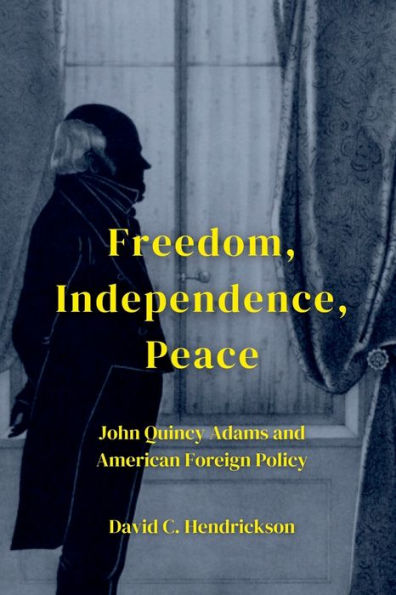
Ep 750John Quincy Adams and American Foreign Policy w/ David C. Hendrickson
On this edition of Parallax Views, David C. Hendrickson, president of the John Quincy Adams Society and professor emeritus of political science at Colorado College, joins us to discuss his book Freedom, Independence, Peace: John Quincy Adams and American Foreign Policy. This conversation explores the fascinating life and lasting impact of John Quincy Adams, the sixth President of the United States and a pivotal figure in American diplomacy. Hendrickson delves into Adams' visionary approach to foreign policy, which centered around principles of freedom, independence, and peace. He examines Adams' views on American exceptionalism, democracy, and the dangers of interventionism, and draws parallels between Adams' ideas and contemporary foreign policy challenges like the War on Terror and the Ukraine/Russia conflict. Hendrickson argues for Adams' legacy and how his ideas can inform American foreign policy today. He makes the case that by embracing Adams' vision, the United States can navigate the complexities of the global landscape more effectively and promote peace and prosperity around the world. Among the topics discussed on this edition of the show: - John Quincy Adams' 1821 Independence Day speech h to the U.S. House of Representatives on Foreign Policy warning against an adventurist foreign policy wherein America would go abroad "in search of monsters to destroy" - The appropriation of John Quincy Adams by neocons during the Iraq War; the expansionist John Quincy Adams and the anti-expansionist John Quincy Adams John Quincy Adams, the Monroe Doctrine, American exceptionalism, Empire, and imperialism - John Quincy Adams and foundational principles: Power, Law, Independence, Peace, Liberty, and Union - Thoughts on the use of the term "Isolationist" as a pejorative slung at foreign policy restraint advocates - Hendrickson's perspective on Russia/Ukraine war, NATO, and Crimea - The debate over "spheres of influence" discourse in U.S. foreign policy and international relations - The War on Terror of the Bush years and military adventurism as a detriment to civil liberties on at home - Hendrickson's early dabbling in neoconservatism; his later turn against that line of thought and skepticism towards U.S. military interventionism; his 2018 book Republic in Peril: American Empire and the Liberal Tradition - The possibility of international cooperation on issues like climate change - Addressing the thought of Samantha Power and R2P (Responsibility to Protect Doctrine); the overthrow of Gaddafi in Libya and its consequences; regime change and states of chaos/anarchy - And more!

Ep 752The Russian Antiwar Movement and the Crackdowns Against It w/ Ilya Budtraitskis
On this edition of Parallax Views, Ilya Budtraitskis, a Russian leftist historian, activist, and author of Dissident Among Dissidents: Ideology, Politics, and the Left in Post-Soviet Russia, returns to discuss Vladimir Putin's crackdown on the antiwar movement in Russia. Budraitskis provides insights into the recent arrests and harassment of activists and intellectuals who oppose Russia's military actions in Ukraine. The discussion delves into the complexities of Russian politics and society, and how Putin's government has affected dissenting voices. Budraitskis also shares his thoughts on the role of the West in Russia's political landscape. Throughout the conversation, J.G. and Budraitskis examine the broader implications of Putin's crackdown, including the impact on civil liberties, free speech, and democracy in Russia. Moreover, Budtraiskis gives his thoughts on Russian polls, including a recent one from the Levada Center (a Russian independent NGO is not affiliated with and even considered a hostile entity by the Russian state and Kremlin) indicating that most Russian support Putin's war efforts. Budtraitskis offers reasons why these polls may be inaccurate, chiefly because many Russian views any polls as a state of loyalty to Putin and the Russian state. He makes the case that culture of paranoia is currently pervading Russia. Also covered in the course of the conversation: - Budtraitskis' assessment of the Russia/Ukraine war in light of its first year anniversary. - Budtraitskis analyzes Putin and Russian media's rhetoric about the war and Putin's motivations. He argues that Russia is fighting without a clear objective and are less interested in winning the war than "not losing the war" (Budtraitskis explains what he means by this in more detail). - Assessing Western liberal and left-wing views about the war - The Russian states crackdowns on antifascist activists and the LGBTQ+ - And more! Mentioned in this episode: "Remember the Russians Who Fought Against Putin’s War" by Ilya Budtraitskis (1/22/23)

Ep 746Inequality Kills Us All: COVID-19’s Health Lessons for the World w/ Dr. Stephen Bezruchka
On this edition of Parallax Views, Dr. Stephen Bezruchka, an emergency physician turned global population doctor, joins us to discuss his book Inequality Kills Us All: COVID-19's Health Lessons for the World. Dr. Stephen Bezruchka's new book, "Inequality Kills Us All," tackles a pressing issue in the United States: poor health in the United States and it's relationship to inequality. In this episode, we discuss the book's key points, including how living in a society with entrenched hierarchies worsens the effects of diseases for everyone. Dr. Bezruchka book emphasizes the importance of addressing this problem by raising awareness and implementing policies that promote fairness, such as a fair taxation system, support for child well-being, universal healthcare, and a guaranteed income. This episode is a must-listen for anyone interested in public health and the impact of inequality on health outcomes. Tune in to learn more and discover how we can create a fairer and healthier society. Topics covered in this episode: - Dr. Bezruchka explains the concept of the "Health Olympics" and how health outcomes seem to differ by country and culture. - We discuss the ideas of "structural violence" and "social murder" and how they point towards the systemic ways in which economic structures and conditions like poverty effect health outcomes. - Dr. Bezruchka discusses how personal behaviors matter less to public health outcomes than we often assume they do and the social factors that effect our health. - The effect of stress and social atomization/isolation on people's health - America Vs. Japan: even though almost half the Japanese male population smokes cigarettes they live longer than their American male counterparts despite the fact that less men smoke cigarettes in America. Why is this and what does it tell us about health outcomes by population and social factors contributing to those outcomes? - The importance of social relationships to good health outcomes - How "an early life lasts a lifetime" in terms of health outcomes; child well-being's importance to health outcomes; studies on secure attachment to one's parents and what they tell us health outcomes and mortality rates - An analysis of the pandemic and the lessons that can be learned from it; income inequality and mortality rates of COVID; COVID and low birth rate babies - Social policies of Sweden vs. the U.S. in relation to maternity leave, child daycare, etc. and what they can tell us about approaches to public health - Taxation, redistribution of wealth, and public health; looking at the policies of FDR and the New Deal - Poorer people have poorer health, but this is not necessarily due simply to personal failings - African-American health outcomes, racism, and studies on intergenerational transmission of health from the era of slavery in the United States - How a more cooperative culture would help all of us, rich and poor, with our health outcomes; health outcomes of billionaires; the selling point of decreasing inequality; the connection between mental health and physical health - How political choices effect our health; why is Hawaii the U.S. state where citizens are reported to live the longest of anywhere in the country and how does it potentially relate to the social determinants of health? - Universal healthcare, Medicare-4-All, and single-payer healthcare; primary care, as opposed to specialist care, as the most important and effective part of healthcare; the need to spend money on policies that would benefit early-life care; what the U.S. can learn from other countries - Surveillance capitalism and the havoc it is wreaking on our health - Dr. Bezruchka addresses conservatives and libertarians who may disagree with the perspective he has on inequality and health outcomes - And more!

Ep 749Team Jorge: The Israeli Private Contractors Involved in Global Election Meddling Ops w/ Dr. Emma L. Briant
On this edition of Parallax Views, Emma L. Briant, a fellow at Bard College who specializes in research on propaganda and disinformation campaigns, joins us to discuss the developing story of Team Jorge, a group of private Israeli contractors set-up by a former Israeli special forces operator and businessman Tal Hanan (code name: "Jorge"), and it's significance to the problem of the influencer-industrial complex and mercenary private firms engaged in election meddling/hacking (specifically countries in the Global South like Kenya and Nigeria), sabotage, and disinformation campaigns. The conversation also leads us to a broader discussion of the multitude of private firms filled with ex-military and ex-intelligence officials that are engaged in acts of subterfuge that are arguably destabilizing democracies around the world for profit. Among the topics discussed in this conversation: - The Iraq War and the origins of Dr. Briant's research - Malign cyber-activities, national security, digital propaganda, technology, fake news, and social media disinformation campaigns - How the Defense industry ties into the problem of the influencer-industrial complex and mercenary private firms; private firms and the Pentagon; failure of Western government to address these problems - Why private firms like Black Cube, Team Jorge, and Psy-Group originate in Israel; the Israeli cybersecurity industry; tactics that were used against Palestinians now being used abroad by private firms; lack of oversight of private intelligence/security firms in Israel; the revolving door/escalator between the public sector and private sector - Cambridge Analytica - The hidden architecture behind the global industry peddling disinformation and propaganda - The digital influence industry and digital influence mercenaries - The need for regulation and oversight - Private firms working for dictators and authoritarian leaders - And more!

Ep 748Rampage in Huwara: Israeli Settler Violence in Palestine’s West Bank w/ Richard Silverstein
EOn this edition of Parallax Views, we discuss the latest violence in Israel/Palestine. On February 23, 2023 the Israeli conducted a fatal raid in the Palestinian city of Nablus. The raid is reported to have resulted in the 11 deaths and 102 injuries. In retaliation, a Palestinian gunmen killed two Israeli settler outside of the Palestinian village Huwara on February 26, 2023. Israeli settlers responded with vigilante violence, described as a rampage in the Washington Post and Times of Israel, in Huwara that saw the burning of houses, cars, and casualties. Tikun Olam's Richard Silverstein returns to discuss these events, with a focus on the settler violence in Huwara, as explored in his recent Middle East Eye article "Israel: Settler terrorism is now the law". Among the topics covered in this conversation: - Benjamin Netanyahu, Israel senior ministerial figures Bezalel Smotrich and Itamar Ben-Gvir, the dehumanization of Palestinians by the Israel's far-right, and the Israeli political figures who have said that Huwara must be "erased" - The case of Jonathan Pollack, a pro-Palestinian Israeli who was arrested by the Israeli government; the Israeli right's clampdown on Israeli leftists - The Israel Lobby (AIPAC or the American-Public Affairs Commitee) and the discourse in the U.S. around Israel/Palestine - How the Democratic Party in the U.S. approaches the subject of Israel/Palestine; the international communities approach to Israel with a focus on the UN (United Nations) - The violence in Huwara and "peering into the heart of darkness" -Journalist Josh Breiner of Israeli's Haaretz paper and his experience of reporting the Huwara settler violence; Breiner was shot at - The history of the Israeli settlers in the West Bank going back to 1967; settlements have been encouraged by the state of Israel - Can the rampage in Huwara be described as a "pogrom"? - And more!

Ep 745Secret Power: Wikileaks and Its Enemies w/ Stefania Maurizi
On this edition of Parallax Views, Stefania Maurizi, an investigative journalist reporting for Italy's Il Fatto Quotidiano who has dedicated a large portion of her career to covering Julian Assange and Wikileaks, joins us to discuss her book Secret Power: Wikileaks and Its Enemies. The book details how Wikileaks related to the U.S. wars in Afghanistan and Iraq as part of the War on Terror, diplomatic cables, the War on Terror, CIA cyberweapons, and more as well as the story of Julian Assange and his eventual imprisonment at Belmarsh Prison. In this conversation Stefania and I discussed: - How Wikileaks first came under Stefania's journalistic radar in 2008 - Cryptography, protected communications, and journalistic source protection in the age of mass surveillance; PGP (Pretty Good Privacy) encryption - Wikileaks publication of a manual relevant to the question of torture at the U.S.'s Guantanamo Bay Detention Camp during the War on Terror; the Pentagon vs. Wikileaks - Stefania's first contact with Julian Assange - The Wikileaks documents on Julius Baer, a Swiss bank alleged to have been involved in money laundering activities; how big financial institutions try to pressure news and media - Wikileaks and the Vault 7 documents about CIA cyberweapons; these documents detailed how the CIA was using software vulnerabilities to access smart TV, cars, phones, etc.; the CIA, Weeping Angel, and the hacking of TVs; a bit of the inside story of how Stefania covered the Vault 7 story, the fears she had covering the story, and the cautions she took while reporting on it; Mike Pompeo and the CIA's response to the Vault 7 documents; the alleged leaker of the Vault 7 documents, Joshua Schulte - Wikileaks and the public interest - Stefania discusses the Julian Assange she knows based on her years of experience with him - Stefania addresses the criticisms of Julian Assange and Wikileaks; the accusation that Wikileaks put lives in danger through its leaks; the rape allegations against Assange; accusations of Assange and Wikileaks being in bed with Russian and Donald Trump - State criminality, war crimes, and the persecution of whistleblowers - Stefania discusses her response to people that ask her if "Assange will be killed"; she argues in many ways Assange has already been "killed" in terms of the deterioration of his mental and physical well-being during his imprisonment - Wikileaks, democracy, and the freedom of the press - Assange, Chelsea Manning, the FBI informant Siggi hakkari (aka Siggi the Hacker aka Sigurdur Ingi Thordarson), and the password cracking/hacking charges against Assange - What Stefania sees as the stakes of the Julian Assange extradition case; the CIA and extraordinary rendition; Stefania's belief that Assange has no change of a fair trial in the U.S. and that his extradition would open a Pandora's box that'd have a chilling effect on freedom of the press in the U.S. and other countries as well as - Comparing and contrasting the Assange case to that of Daniel Ellsberg, who famously leaked the Vietnam War-era Pentagon Papers and was targeted by the Richard Nixon administration - The story of how Assange was targeted by the late, deep pocketed GOP megadonor Sheldon Adelson's security firm UC Global; the investigation in Spain regarding UC Global - Stefania's story of being spied on and targeted while covering Julian Assange and Wikileaks; The Crown Prosecution Service and the destruction of crucial documents on the Julian Assange case - And more!

Ep 744Private Military Contractors and The Rise & Fall of the Mozart Group w/ David Isenberg
EOn this edition of Parallax Views, David Isenberg, a long time independent researcher into the subject of PMCs (private military companies) and PMSCs (private military and security companies) and bloggers at the Isenberg Institute of Strategic Satire, joins us to discuss his article "The Rise and Fall of the Mozart Group". The Mozart Group was founded amidst the 2022 Russian invasion of Ukraine by two former U.S. Marine colonels, Andrew Milburn, at one time the Deputy Commander of Special Operations Command Central, and Andrew Bain, who since leaving the military has become a Ukraine-based businessman. Composed of Western military veterans, the Mozart Group sought to assist in efforts during the war by serving as a private military company that offered military training and evacuations. Named in part as a cheeky reference to Russia's infamous Wagner Group, the Mozart Group, in Isenberg's word, "positioned itself as the reverse, good-guy version" of said group (though, as Isenberg notes in the beginning of our conversation the Wagner Group and the Mozart Group are different in terms of the actions they take and should not be considered simple Western Vs. Russian versions of each other). Although the Mozart Group garnered a great deal of positive press in the past year as a humanitarian group helping Ukraine, it has since shuttered it's operation amidst a thorny lawsuit between co-founders Bain and Milburn. In said lawsuit, Milburn has been accused of misrepresenting the Mozart Group as a non-profit, 501(c)3 charity to journalists despite it being registered as a for-profit LLC. (limited liability company) business. The complex lawsuit also includes complaints Milburn soliciting for donations/funding that went into Milburn's personal or other accounts rather than the Mozart Group. Another issue that comes up with regards to the lawsuit is Milburn hiring a Ukrainian woman he met on a dating app to work for the Mozart Group and paying her a $90,000 annual salary that far exceeded that of other Ukrainian-based employees. On the other hand, Milburn-supporter Jeffrey Carr of the Inside Cyber Warfare Substack, recently accused Andrew Bain of having ties to Russia and the Taliban as well as war profiteering. In this conversation, Isenberg offers his thougths on both the lawsuit against Milburn as well as his thoughts on the accusations Carr made against Andrew Bain. Isenberg also discusses some juicy details that he can't discuss in-too-much detail at this time that did not make it into the article and indicate that the Mozart Group was seeking to move away from its specific work in regards in Ukraine and becoming a more broadly-focused private military company. We'll also discuss more broadly the problems/issues surrounding private military companies; lack of regulation/oversight in regards to PMCs; Star Trek and the Ferengi Rule of Acquisition No. 34: “War is good for business"; Erik Prince, Blackwater, and the Iraq War; the Mozart Group vs. the Wagner Group; war profiteering; the problem with mixing charity work and military functions together under one roof; why David doesn't use the term "mercenaries" when talking about PMCs; should Ukraine be concerned about working with PMCs?; was Bain trying to expand the Mozart Group into working in other regions where their services weren't wanted?; and more!
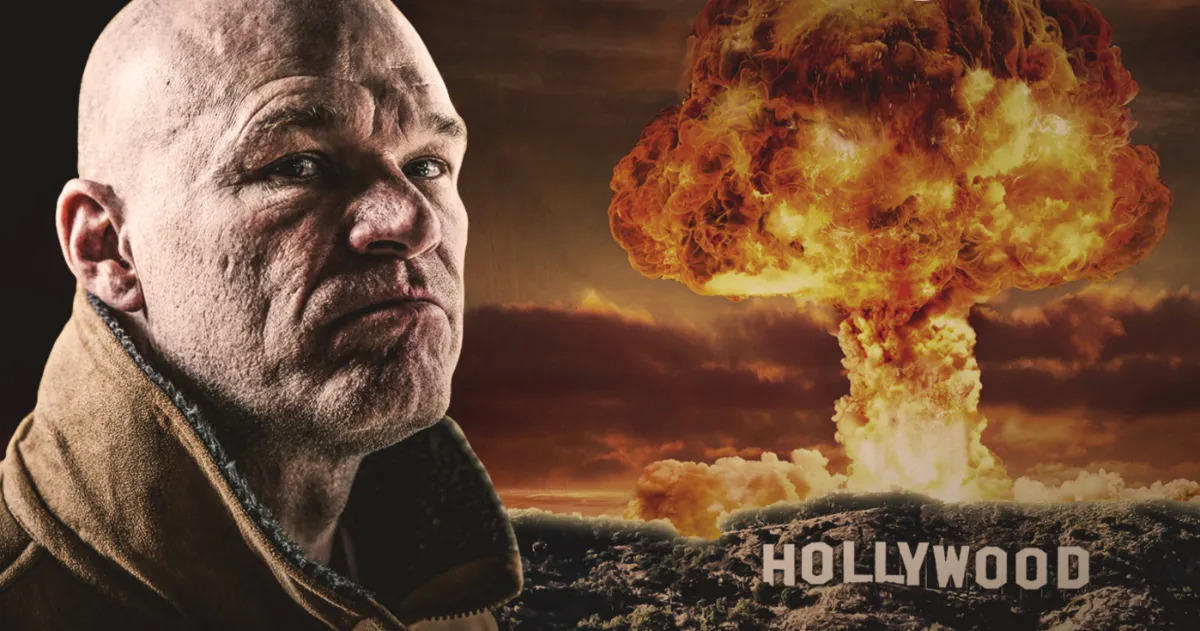
Ep 742Sympathy for the Raging Boll: Re-Evaluating Filmmaker Uwe Boll, from the German QAnon Shooter Docudrama HANAU to the Columbine-Inspired HEART OF AMERICA w/ Uwe Boll
EOn this edition of Parallax Views, controversial German-born filmmaker Uwe Boll has alternately been called "the world's worst director", potentially "the most misunderstood filmmaker in the business" and a "legitimate auteur", "a brutish bully inclined to lash out against his detractors", "the only filmmaker interested in investigating the likelihood of a violent response to political powerlessness" and "the only director taking the events the media treats as the country’s worst tragedies seriously", and an "asshole". He's taken on his critics in a boxing match. He's worked with A-list Hollywood talents like Jason Statham, Michelle Rodriguez, Ben Kingsley, Christian Slater, Elizabeth Moss, Ray Liotta, J.K. Simmons, and Burt Reynolds. He's become known for his adaptation hit video game properties like House of the Dead, Bloodrayne, Alone in the Dark, Dungeon Siege, and Postal into movies that were slammed by gamers and critics. He's been a lightning rod for controversy due to some of his movies being financed by German tax shelters. He's also made more personal films dealing with or reflecting on social issues like Wall Street corruption and the financial crisis of 2009 (Assault on Wall Street), school shootings (Heart of America), spree murders and political violence (Rampage, Rampage: Capitol Punishment, and Rampage: President Down), prison brutality (Stoic), the Holocaust (Auschwitz), the genocide in Sudan's Darfur region (Attack on Darfur), and the absurdities of war (1968 Tunnel Rats). Boll announced his retirement from directing in in 2016 with the release of Rampage: President Down, the last movie in his trilogy following the exploits of spree killer turned political terrorist Bill Williamson (played by Brendan Fletcher). During this retirement Boll kept helping produce films made by other directors, including the opioid epidemic documentary The Decline, as well as opening his own highly-lauded Vancouver-based restaurant Bauhaus. In 2022, however, Boll returned to the director's chair with Hanau (Deutschland im Winter - Part 1) or Hanau: Germany in Winter, a docudrama exploring the disturbed mind of Tobias R. and the descent into radicalization that led him to become the first recorded mass shooter inspired by the far-right wing conspiracy theory movement known as QAnon. Now, Boll is continuing his return to cinema vis-a-vis his company Event Film. His next project is First Shift, a New York City crime/cop drama set to feature Sons of Anarchy's Kristen Renton and Shades of Blue's Gino Anthony. Also in the works for the filmmaker's comeback is a biopic of Elliot Ness of The Untouchables fame dealing with the Prohibition-era law enforcement agent's attempts to solve the Mad Butcher of Kingsbury Road or Cleveland Torso Murders case. In addition to all of this the cult film distributor Unearthed Films' is soon releasing the 2013 horror anthology The Profane Exhibit containing the Boll-directed segment "The Basement" about the depraved Austrian criminal Josef Fritzl that stars noted character actor Clint Howard and The Texas Chainsaw Massacre Part II's Caroline Williams. Despite his busy schedule, Boll made time to chat with me for this edition of Parallax Views. I'll admit that I'm not completely objective in this conversation. I think Boll's gotten a raw deal in terms of how his films have been evaluated/perceived and I make that known in this extended discussion of his career. Rather than covering the video game adaptations he's notorious for or the infamous boxing match between Boll and his critics, this conversation focuses on Boll's early German film career, his transition to making films in Hollywood, his politics and explorations of social issues like men who "run amok", a great deal of discussion about his non-video game based movies, and more. Among the topics covered throughout this episode: - Uwe's early cinematic influences; Hollywood vs. the German New Wave cinema; Werner Herzog - Uwe's German films: the irreverent comedy German Fried Movie and the arthouse spree shooter movie Amoklauf - Uwe's dealing with the theme of people, particularly men, who "run amok" (going on rampages or killing sprees); fascination with what leads people to snap mentally - Assault on Wall Street as a subversion of the Death Wish and similar revenge movies (ie: the vigilante goes after white collar criminal than pretty street thugs); the slow-burn nature of Assault on Wall Street; the 2008 financial crisis, Bernie Madoff, and what inspired Assault on Wall Street - The overt, "in your face" politics of Assault on Wall Street and the Rampage movies - Boll's school shooting drama Heart of America; the dark side of suburbia; Brendan Fletcher's portrayal of the school bully in Heart of America; Heart of America vs. Gus Van Sant's Elephant; the narrow view a teenaged mind can have about the future and how this relates to Heart of America; sometimes we change our way too late as a theme in Heart of America - Boll's prison

Ep 743Your Waking Nightmare: Exploring the UFO Through the Lens of Horror and Techno-Realism w/ David Metcalfe
On this edition of Parallax Views, David Metcalfe, Santa Muerte researcher and Editor-in-Chief of Threshold: Journal of Interdisciplinary Consciousness Studies, joins us for a long, jam-packed discussion of the Morbid Anatomy online course he is teaching with Dr. Diana Pasulka entitled "Your Waking Nightmare: Exploring the UFO Through the Lens of Horror and Techno-Realism". The course will take a media studies approach that delves into understanding the phenomena of Unidentified Flying Object, or Unidentified Aerial Phenomena, by way of the themes explored in the horror genre. It will also feature guest speakers Amanda M. Radcliffe, the occult and ritual witchcraft advisor for the Nicolas Cage-starring H.P. Lovecraft movie The Color Out of Space, and Whitley Streiber, the world's most famous claimed alien abductee and a former horror author whose novels like The Hunger and Wolfen set him up to be a successor for Stephen King before he became famous in regards to the UFO/alien abduction subject. This isn't necessarily a conversation about believing in the UFO phenomena or being skeptical of it, but rather what the horror genre can say about people who claim to have "paranormal" experiences and perhaps even what these experiencers can say about themes touched upon in horror that relate to philosophical and social issues. Among the topics discussed in the course of this conversation: - Whitley Streiber and his career as a horror author; his alien abduction memoir Communion (originally set to be titled, interestingly enough, Body Horror) and it's dealing with subject like the Self vs. the Other (and bridging the gap between the two); filmmaker Phillipe Mora's movie adaptation of Communion; Whitley Streiber and psychological/physical trauma; Whitley Streiber's relationship with William S. Burroughs - UFO researcher Jacques Vallee and Steven Spielberg's Close Encounters of the Third Kind; Valle served as the basis for the Francois Truffaut character in Close Encounters of the Third Kind; creatives who don't necessarily believe in the UFO phenomena taking an interest in the subject - The Texas Chainsaw Massacre (or The Texas Chain Saw Massacre as it was released) and it's invocation of astrology ("Saturn in Retrograde) that arguably adds a cosmic horror element to the story - The horror genre and catharsis; David's college horror binge that included a diet of Lucio Fulci, Dario Argento, and movies like Wes Craven's Last House on the Left (and why David pulled back on watching those movies before returning to them for the course) - Lucio Fulci's The Beyond, Don Coscarelli's Phantasm, and hell/other dimensions depicted in film; horror movies and ritual experience; Kenneth Anger's perspective on cinema - The art of the jump scare; the visceral nature of the horror genre; the intersection between horror and comedy - The Travis Walton alien abduction case and the movie depiction of it in the police-procedural-turned-full-on-horror-in-the-third-act Fire in the Sky; the depiction of alien abductions in cinema; intentional artificiality and theatricality in Phillipe Mora's Communion starring Christopher Walken as Whitley Streiber; Communion vs. Fire in the Sky and the ways in which Communion portrays the alien abduction experience in a stranger, harder-to-grasp way - Lovecraft, the encounter with the unknown in horror, and the inability to adequately express/fully comprehend alleged anomalous experiences - Clive Barker's 1987 cult classics Hellraiser, reframing the concept of the alien/extraterrestrial, and interdimensional beings; Alien amorality in Hellraiser; Cliver Barker's Cabal (later made into the movie Nightbreed) and sympathy for the Other; exploration of the anomalous rather than belief in the anomalous; the occult-tinged industrial music project Coil, led by Jhonn Balance and Peter Christopherson, and Hellraiser; Hellraiser, the BDSM underground, and the Barker's The Hellbound Heart as a dark fairytale/dark romance exploring what loves means and is - The dark portrayal of psychology in Nightbreed, Hellbound: Hellraiser II, and A Nightmare on Elm Street 3: The Dream Warriors - The late psychiatrist Dr. John E. Mack, professor and the head of the department of psychiatry at Harvard Medical School, and his perspective on alien abductions; Mack's desire to understand the alien abduction through, among other things, Eastern spirituality; how John Mack's approach to alien abduction differs from other alien abduction believers such as Budd Hopkins or David Jacobs; how alien abductions and how they are understood in popular culture are forced in a a specific narrative to the preclusion of all else - Different cultural perspectives on UFOs: Christian evangelical and charismatic Christianity narratives about UFOs; Islam and exorcisms; Muslims who believe UFOs can be warded off by the Koran; the use of exorcism in the Santa Muerte tradition; occult rocket scientist Jack Parson, occultist Aleister Crowley, Parsons' love Ma

Ep 741Atomic Days: The Untold Story of the Most Toxic Place in America w/ Joshua Frank/U.S. Foreign Policy & Nuclear Weapons Delivery Systems w/ Yint Hmu
On this edition of Parallax Views, Joshua Frank, muckraking journalist extraordinaire and editor at Counterpunch, joins us to discuss his new book Atomic Days: The Untold Story of the Most Toxic Place in America. Joshua tells the story of the Hanford, Washington's struggles with radioactive waste (which has led it to be dubbed "the most toxic place in America" by the EPA) and how, at a cost of $677 billion, became the most expensive environmental clean-up job in the in the entire world. Waste from the Hanford Nuclear Reservation has led to contamination of the Columbia River and the land surrounding the reservation as well. Fish were found with radioactivity. The soil has been contaminated. And a single accident at Hanford could lead to explosive problems that, arguably, would amount to an American Chernobyl. How did this all happen? We delve into how capitalism, imperialism, militarism, and racism fit into this tragic story and the ways in which contractors like Bechtel have perpetrated what Joshua refers to as a "profit-driven fraud". Additionally, Joshua and I discuss the wrecking of Native American cultures and lands in relation to this story; the courageous whistleblowers who spoke about Hanford radioactive waste; the role of militarism, the Cold War, and big business in the story of Hanford; the left-wing anti-nuclear movement, criticisms of it from climate change/environmentalist activists/authors like George Monbiot, and Frank's response to those criticisms; the connection between nuclear energy, nuclear weapons, and the weapons industry; why the late actress Margot Kidder (Lois Lane in the Christopher Reeves-starring Superman movies) received a special thanks at the end of the book; the poisoning of Hanford workers like Abe Garza; Hanford whistleblower Ed Bricker and the attempt to silence him through monitoring, harassment, and intimidation (including what Bricker's lawyer Tom Carpenter referred to as an attempt to kill Bricker); Donald Alexander, a chemist (specifically) a chemist who worked at Hanford and had concern about the site's waste treatment plan; the whistleblowing of Dr. Walter Tamosaitis, former Deputy Chief Process Engineer and Research & Technology Manager for the Waste Treatment Plant (WTP) at the Hanford Nuclear Reservation; the politics of the Hanford whistleblowers (they were not left-wing radicals; some were even rather conservative); Frank Russo, one of the villains of the story, and the Department of Energy; the secrecy of Bechtel; why the issues with Bechtel were not just a result of "a few bad apples" but something more systemic and structural; the "Green Run" covert military experiment in 1949 which involved the intentional release of radioactive material into the atmosphere (and thus onto the unsuspecting public); "The Quiet Warrior" Russell Jim, the Yakama Nation, and resistance to American militarism's role in Hanford; Hanford within the context of the Cold War and the importance of that in light of the potential new Cold War between the U.S. and China; the U.S. military machine as the biggest polluter in the world; and more! In the shorter second segment of the show, Yint Hmu of Win Without War joins us to discuss his article in The Hill entitled "A new nuclear weapons delivery system is the last thing the US needs". Yint explains the potential problems with the nuclear-armed sea-launched cruise missile (SLCM-N) and its origins. Additionally, Yint discusses the mission and purpose of Win Without War, which seeks to promote a progressive vision of U.S. foreign policy, and it's importance in an age of conflicts like the Russia/Ukraine war and the possibility of nuclear weapons being used in 21st century conflicts. All that and much more with guest Yint Hmu of Win Without War.
Ep 740Lula Goes to Washington: What Lies Ahead for U.S.-Brazil Relations, Lula’s Foreign Policy, & the Recent Lula/Biden Meeting w/ Andre Pagliarini
On this edition of Parallax Views, Brazil's President, Lula da Silva, recently made a 48-hour visit to the United States and met with U.S. President Joe Biden. The-left-of-center politician from the Worker's Party recently defeated the controversial and right-wing Jair Bolsonaro, Brazil's previous President, to achieve his third term in office. What can we glean from Lula's visit to Washington D.C., what does it say about what Lula wants for Brazil's foreign policy and U.S.-Brazil relations, and what is the Biden administration's feelings about Lula as Brazil's political leader? Among the topics covered in this history: - Lula's working class background and labor organizing, the power of his personality in Brazilian politics (as well as the pros and cons that come from this), the Worker's Party in Brazil, and Lula's early career dating back to 1970s with Unions - Lula da Silva's politics; neither a revolutionary or a right-winger or a pure neoliberal; strong reformist tendencies but not revolutionary; criticisms from the right and the left of Lula; Lula's social welfare programs, economics, tackling of issues like poverty and hunger, and their effects on Brazilian society; Lula's first two terms as Brazil's President from 2003-2010; delivering material benefits to Brazilian citizens and addressing issues around inequality; wealthy and right-wing opposition to Lula's policies - The corruption charges against Lula; Operation Car Wash aka Java Lato, Lula's time in jail, debate over the charges, accusations that Judge Sergio Moro colluded with the Java Lato prosecutors to prevent Lula from running for President again, the question of whether or not Java Lato was politically motivated - Jair Bolsonaro as the greatest beneficiary of the Java Lato investigation; Jair Bolsonaro's relationship with Donald Trump and Trumpism/the MAGA movement; how Bolsonaro throwing his political lot in such a partisan manner with Trump damaged his relations with the U.S. political scene long-term - Lula and U.S.-Brazil relations during his 2003-2010 terms. Lula's relationships with Presidents George W. Bush and Barack Obama; the Lula administration's issues with the Obama White House - Lula and Brazil as a mediator for international relations and diplomacy; the argument that this foreign policy is absurd and expects too much of Brazil as smaller country with a developing economy; Bolsonaro and the tradition of thought that the best way forward for developing Brazil is aligning with the U.S. vs. Lula's approach of recognizing U.S. interest but placing Brazilian interests first and having neutral relations (or, in other words, taking a non-aligned approach); Lula aligning with the U.S. on some issues but not necessarily automatically aligning with the U.S. on all issues - Lula's stances on Vladimir Putin's Russia, the war in Ukraine, China, Venezuela, the question of sovereignty, human rights, Israel/Palestine, opposition to coups/regime change/overthrows, achieving peace when conflict breaks out on the international scene, and the importance of being able to talk to "both sides" in a conflict so as to be able to act as a mediator - The Brazilian left's suspicions of Washington D.C. and the recent history that has led to those suspicions (ie: U.S. spying on Lula's Worker's Party successor Dilma Rousseff); what does that history mean for U.S. foreign policy going forward; U.S. recognition of Lula's Presidential victory; Venezuela's Hugo Chaves vs. Lula in regards to U.S. relations and foreign policy - Arguments that Lula is not critical enough of leaders deemed authoritarian in South/Central America (ie: Nicolas Maduro in Venezuela or Daniel Ortega in Nicaragua) - The Lula/Biden meeting as an attempt to reset U.S.-Brazilian relations since Bolsonaro - Independence as a central concept to Lula's foreign policy; the importance of assertiveness in his foreign policy; Lula's foreign policy as independent and assertive but also collaborative (working with other nations) - Lula's previous terms and the Iran nuclear deal - What is the U.S. point-of-view/perspective on Lula and Brazil right now under Joe Biden's administration - Criticism from the left and far-left, specifically in Brazil, that argue Lula is too moderate and thus is not going to challenge neoliberalism; what is Lula's stance on the legacy of neoliberalism and dealing with that legacy?; U.S. leftists that view Lula as a pure socialist; Lula's lack of interest in academic debates about socialism and leftism; Lula's populism and lack of interest in political purity displays; Lula's compromises and his reformist rather than revolutionary tendencies - Lula's foreign policy ambitions and the U.S. not, so far, taking issue with those ambitions; should the U.S. be taking this approach? - Rationalism and Lula's foreign policy - Foreign policy, human rights, and political trade-offs/compromises - Lula's stance on neoliberalism and privatization; Lula, infrastructure projects, and state-

Ep 739The Chinese Spy Balloon Incident & U.S.-China Relations w/ Mel Gurtov
On this edition of Parallax Views, Mel Gurtov, Professor Emeritus of Political Science at Portland State University, Editor-in-Chief of Asian Perspective, blogger at In the Human Interest, and author of Engaging China: Rebuilding Sino-American, joins us to discuss the 2023 Chinese Spy Balloon Incident aka #Balloongate that has further inflamed tensions between the U.S. and China. The incident caused an uproar on Capitol Hill and led to Secretary of State Antony Blinken cancelling a diplomatic trip to China. Initially China claimed it was merely a weather balloon that veered off course. The U.S. has said otherwise. The reporting has been that it was indeed a surveillance balloon. The ballon was first believed to enter U.S. airspace near Alaska on January 28th before moving over Canada. On February 1st the ballon was spotted over Montana before being shot down by a U.S. fighter jet on February 4th. We discuss the importance of this story, the response by the U.S. and China, how the situation could've been handled differently/better, the growing tensions between the U.S. and China, and the future of Sino-American relations. Among the topics covered: - The Biden administration vs. the Trump administration on China - The bipartisan consensus in Washington, D.C. and it's hostility to China; tariffs, trade wars, and Trump's China policy; China as a strategic threat from the Biden administration's point-of-view - Why Blinken's diplomatic visit to China being cancelled could be seen as a missed opportunity - Republican pressure for a hawkish, hardline response to China in regards to the spy balloon incident - The Quadrilateral Security Dialogue, AUKUS, Japan, the Philippines, Guam, and security treaty partnerships - The U.S. role in Taiwan, strategic ambiguity vs. strategic clarity positions on Taiwan, China, and foreign policy - The issue of human right abuses in China; the Uyghur Muslims in China; Hong Kong - China's response to the spy balloon incident; U.S. surveillance in China; satellite technology and spying; was the balloon an immediate threat? - President of the People's Republic of China Xi Jinping, the People's Liberation Army, the nature of bureaucracy as it relates to Balloongate, China's Foreign Ministry and the U.S. State Department, and the spy balloon - The potential consequences/blowback of the Chinese Spy Balloon Incident; the hawkish element in China and its press is being fed by the U.S. response; paranoia begets paranoia; the blame game is being played by the U.S. and China and is making diplomatic engagement more difficult - International security, the U.S., and China; can the U.S. and China find common ground on pandemic response research, climate change, and nuclear weapons? - Are we in a New Cold War? - The U.S., China, and the global economy - Lessons to be learned from the Cold War between the U.S. and the Soviet Union - Comparing the Chinese spy balloon incident to other tense U.S.-China moments such as the shooting down of a Chinese jet over Hainan in 2001 - What has happened to diplomacy and use of the diplomatic toolbox in U.S. foreign policy?; the national security apparatus, the Cold War mindset, ossifying institutions, and opposition to diplomatic engagement with adversaries - Former World Bank President Robert B. Zoellick's Washington Post op-ed "Opinion Engage, don't cancel, China over the balloon" - Anti-Chinese violence and racism; the Justice Department, the China Initiative, and the McCarthyite crackdown against visiting Chinese scientists that's been called racial profiling - The pandemic, U.S. vs China's response to the pandemic, Zero COVID policy and protests against Xi, anti-China conspiracy theories about the pandemic, China's handling of the pandemic, and Donald Trump use of the term the "China" virus - Misperceptions about China; China is not a monolithic Borg entity; the limited understanding many American have of China even at a professional (even government level); looking at the world through Chinese eyes; China, cultural differences, and the pros and cons of U.S. individualism - Stereotyping and demonization of the Chinese; China as a diverse country - And more!
Ep 738The Midnight Kingdom: A History of Power, Paranoia, and the Coming Crisis w/ Jared Yates Sexton
On this edition of Parallax Views, Jared Yates Sexton, host of The Muckrake Podcast and author of American Rule: How A Nation Conquered The World But Failed Its People, joins us to discuss his latest book The Midnight Kingdom: A History of Power, Paranoia, and the Coming Crisis. In The Midnight Kingdom Jared delves into the lies, paranoia, mythologies, and pursuit of power the undergirds the far-right movements that have become a worldwide concern in recent years due incident to the Jan 6th insurrection in Washington, D.C. and the similar uprisings/riots that happened in Brazil after Lula de Silva defeated Jair Bolsonaro to once again become that country's President. Among the topics discussed in this conversation: - Conspiracies, real and imagined; the far-right wing, conspiracy theories, and the conspiratorial view of history - What does the title The Midnight Kingdom refer to and how does it relate to the apocalyptic vision of the world presented by controversial Russian thinker Aleksander Dugin? - The crisis of institutional power in America today that elements of both the right and left are recognizing; neoliberalism, the neoliberal consensus, hyper-capitalism, and inequality - Jared's examination of cycles of history in The Midnight Kingdom and how it differs from, for example, right-wing operative Steve Bannon's preferred cycles of history theory known as "The Fourth Turning" - How power protects itself in a society - Paranoia as the basis for modern American society and conspiracy theories in modern American history - Real conspiracies, journalist Sarah Kendzior's They Knew: How a Culture of Conspiracy Keeps America Complacent, and the World Economic Forum in Davos - The destabilization of the middle class, the need for explanations for that destabilization, and how the right-wing offers that explanation through Grand Conspiracy Narratives - The targeting of vulnerable communities by the right-wing's brand of conspiratorial thinking - How ancient Rome ties into Jared's analysis in The Midnight Kingdom; imperial cults, social mythologies, and the fall of civilizations - How the history of Christianity, apocalypticism, and narratives of power figures into Jared's analysis; how bastardized religion is utilized to promote war, imperialism, patriarchy, racism, wealth inequality and more; Christian nationalism and white nationalism; Jared's evangelical Christian upbringing - People's desperation for meaning; the rise of evangelical Christianity as a political force in American life; atomization in neoliberal society and the rise of the far-right - The Republican Party is not a homogenous movement; the emergence of an anti-neoliberal, reactionary right-wing; the left and the right have different criticisms of the neoliberal society and prescriptions for dealing with the problems of neoliberal society - Operation Gladio and Operation Condor and the lack of a strong left in the U.S. - The idea of homo economicus, the hollow existence neoliberalism provides, the dog-eat-dog world mentality of neoliberal society, and the reality TV series Survivor - Christian nationalism, feudalistic ideas, hierarchical power, and theocratic control - The individual, the atomized society, Ronald Reagan and Margaret Thatcher as the PR front for neoliberalism in the 1980s, the book Bowling Alone: The Collapse and Revival of American Community, and the destruction of labor unions and class solidarity - Academia, specialized knowledge, and the working class's lack of access to that knowledge - Marjorie Taylor Greene's rhetoric about "woke" corporations; the lack of understanding about what communism is, what Karl Marx wrote, and what neoliberalism is; the right's ideas about the natural right and natural order; feudalism and the concept of the "Great Chain of Being"; eugenics and social Darwinism - Argument about "wokeism" and the problem of woke-washing by major corporations - Tucker Carlson and illiberalism, neoliberalism and authoritarianism, Friedrich Hayek and neoliberalism; and how the right-wing protects the powerful - The New Cold War between U.S. and China, American protectionism, the unraveling of globalization, and the end of "The End of History" - Tackling the criticism that Jared's book is anti-religion; why he disagrees with that assessment; the weaponization and bastardization of religion by systems of power for purposes of control ;Catholic converts and the TradCath phenomena; the value of spirituality; Traditionalism and right-wing mythologies; Ancient Aliens, Erich Von Daniken's Chariots of the Gods, and racialism - Explaining the rise of QAnon - A discussion of the Brazilian uprisings and the Jan 6th riots after Donald Trump lost the 2020 election to Joe Biden; the funding of these uprisings/riots by right-wing billionaires; the Proud Boys, the Oathkeepers, and right-wing paramilitary groups; the QAnon shaman, MAGA, and the belief of the rioters that they were saving the government from a "deep state" coup; how

Ep 737The American Surviellance State: How the U.S. Spies on Dissent w/ David H. Price
On this edition of Parallax Views, anthropologist David H. Price, author of Weaponizing Anthropology and Cold War Anthropology: Social Science in the Service of the Militarized State, returns to discuss his latest book The American Surveillance State: How the U.S. Spies on Dissent. The conversation begins with David H. Price discussing his Freedom of Information Act (FOIA) requests about interactions between American anthropologist, the FBI, the CIA, and American military agencies. We delve into how David became involved in looking at how anthropologists and social science were utilized in the global War on Terror, especially through the Human Terrain System program. In other words, the use of anthropology and social science for social monitoring and control. From there we delve into the thesis of The American Surveillance State and the idea, put forth by CIA whistleblower Philip Agee, that agencies like the FBI and CIA act as "the secret police of American capitalism". In this regard we discuss how intelligence agency institutions became powerful surveillance apparatuses that often targeted the labor and radical leftist movements. This also allows us to discuss the (in)famous figure of longtime FBI director J. Edgar Hoover and some conversation about the period of WWII and the transition into the Cold War. Among other topics we also manage to discuss: - The history of phone surveillance and wiretapping - The Total Information Awareness program and mass data collection - The issue of corporate surveillance as well as government surveillance - The American Surveillance State's targeting of anthropologist Gene Weltfish, Native American activist Archie Phinney, and South African anti-apartheid activist Ruth First; the targeted surveillance of activists who sought to expose systems of racial inequality - American anthropology, racial inequality, and the American surveillance state in the era of Joseph McCarthy and the Red Scare in the 1940s and 1950s - Addressing arguments that the massive surveillance and suppression of privacy and individual rights is necessary to fighting security threats like terrorism - The deep roots of anti-communism in the U.S. Liberal anti-communism in the CIA and right-wing anti-communism in Hoover's FBI; President Harry S. Truman and the Truman loyalty oaths program (which targeted federal employees) as a precursor to McCarthyism; Truman vs. Harry Wallace and the weaponizing the surveillance state against political enemies - The FBI's targeting of liberal anti-communists; liberal anti-communist German-American anthropologist Andre Gunder Frank, the Global South, and Frank's critique of American economic hegemony; the FBI's massive file on Andre Gunder Frank - The FBI file on left-wing Academy Award-winning cinematographer and filmmaker Haskell Wexler, who directed the film Medium Cool (a movie filmed in the midst of the riots at the Chicago Democratic National Convention (DNC) in 1968; Wexler's film on the Weather Underground and FBI surveillance of Wexler - Court trials, jury selection, prosecutors, and the FBI - The FBI and Palestinian-American academic Edward Said, the founder of postcolonial studies; the monitoring of Said, who was known for his pro-Palestinian views - The FBI file on the late left-wing journalist Alexander Cockburn of Counterpunch; the American Surviellance State and Alexander Cockburn's visa - Anthropologist Melville Jacobs, who was a student of Franz Boaz, and how he was targeted for his involvement with communism; pre-McCarthy threats against anthropologists who addresses issues of inequality; academic freedom, Cold Wars paranoia/fears, and the rumored-to-be-antisemitic academic who acted as an FBI informant against Jewish professors - Spanish anthropologist Angel Palerm, the Organization of American States (OAS), and the monitoring of Palerm over his work on Latin America; informants in the OAS - Why is certain information redacted in FOIA documents?; why is some information withheld or claimed to be non-existent when it comes to FOIA requests? - FBI incompetence and FOIA - Price's thoughts on the FBI and it's handling of modern domestic terrorism threats, specifically far right-wing groups like the Proud Boys and white supremacist organizations; how surveillance of right-wing groups like the Ku Klux Klan arguably differs from surveillance of left-wing groups; intelligence agency responses to the far-right as being far too late and far less numerous than targeting of left-wing activists - Liberal sentiments that the FBI and other intelligence agencies are the heroes that will save America from Trump and the far-right; Price's response to this - How to make a FOIA request; the ins and outs of making a FOIA request - Has Price ever requested a FOIA on himself?; the CIA's review of one of Price's books - Responding to people who believe that any talk of the surveillance state is just tinfoil hat, right-wing conspiracy theory crankery territory - The CIA vs. the

Ep 736Unmask Alice: LSD, Satanic Panic, and the Imposter Behind the World’s Most Notorious Diaries w/ Rick Emerson
On this edition of Parallax Views, noted Portland, OR radio personality Rick Emerson joins us to discuss the wild story of the controversial anti-drug book Go Ask Alice as explored in his book Unmask Alice: LSD, Satanic Panic, and the Imposer Behind the World's Most Notorious Diaries. In 1971, a book purporting to be the diaries of a teenage girl who fell into drug addiction through LSD swept the nation. In an age of growing concerns over teenage drug use, especially psychedelics, the book became a sensational success and has continuously remained in-print since that time. Questions about the authenticity of the book, credited to "Anonymous", arose and the truth about the book's actual author leads one to Beatrice Sparks, a conservative Mormon youth counselor who would later go on to fan fears about Satanism through the similarly-claimed-to-be-autobiographical-account-of-teen-trouble Jay's Journal. Rick and I will discuss the story of Go Ask Alice and the question of its authorship throughout the conversation on this episode as well as delving into the political climate of the 1970s, legendary TV personality Art Linkletter and the crusade against drugs in response to the 60s counterculture, the Satanic Panic of the 1980s, the TV movie version of Go Ask Alice starring Star Trek's William Shatner, why Go Ask Alice resonated with many youths who read the book, parents offended by Go Ask Alice subject matter and depiction of drug use, book banning and Go Ask Alice, the religious background and conservative Republican politics of Beatrice Sparks, the American press/media and Go Ask Alice, literary frauds and literary imposters, Richard Nixon and the War on Drugs, teenaged sex in Go Ask Alice and how that made the book scandalous, Go Ask Alice as the birth of the YA (Young Adult) novel, the infamous "Another day, another blowjob" line in the book, parental fears about the state of the youth reflected in Go Ask Alice, Go Ask Alice as sensationalistic anti-drug propaganda in the form of a "cautionary tale" (and why it may be more than that for many of the people that read it), Go Ask Alice as a book with a cult following today due to its camp quality, how Rick became interested in Go Ask Alice and the story behind it, the diary format of the book and the mystery/allure around the book being written by "Anonymous", Grace Slick and Jefferson Airplane song "White Rabbit" with the line "Go Ask Alice", the teen suicide follow-up to Go Ask Alice entitled Jay's Journal, Go Ask Alice's protagonist as being a composite of people Beatrice Sparks treated as a counselor, the early advertising for Go Ask Alice, the early reviews of Go Ask Alice and the glowing New York Times review that treated it as an authentic diary without much skepticism, the question of whether Go Ask Alice is a good book (well-written vs. impactful to the reader), exploring Go Ask Alice in light of phenomena like fake news and right-wing conspiracy theories like QAnon and Pizzagate, how Jay's Journal helped create or accelerate the fears about Satanic cults and cult-related teen suicide, scapegoating and how books like Go Ask Alice and Jay's Journal can actually cause us to sweep the real causes of youth issues like adolescent mental health under the rug, the moral panic about Dungeons and Dragons being a tool of the devil of the 1980s, moral panics and the muzzling of child creativity, how lines from Go Ask Alice were recycled in later Beatrice Sparks books, why do literary hoaxes like Go Ask Alice and the JT Leroy books happen?, and much, much more! It's an amazing story that will lead us into discussion of politics, social mores, censorship, paranoia, moral panics, history, literary hoaxes, the War on Drugs, the tumultuous climate of the 1970s, and the struggles of being a teenager in America.

Ep 735The Anti-Oligarchy Constitution: Reconstructing the Economic Foundations of American Democracy w/ Joseph Fishkin
On this edition of Parallax Views, Joseph Fishkin, Professor of Law at UCLA School of Law, joins us to discuss his new book, co-authored with William E. Forbath, The Anti-Oligarchy Constitution: Reconstructing the Economic Foundations of American Democracy. Oligarchy is a term often used when describing power players in countries like Russia. But what of the United States? And what can a look at the Founding Father and the Constitution tells us about American concerns about oligarchic wealth and power throughout U.S. history? In this conversation we seek to answer that question and we talk about the history of progressive reforms in the U.S. and debates that have been had over the Constitution over the years. Additionally, Joseph and I discuss constitutional arguments, the problem with overconcentration of wealth into the hands of the few, and Fishkin's belief that American liberals and the left must not ceded constitutional arguments to the right-wing. Among the topics covered: - Beliefs among the Founding Fathers about the need for a broad middle class for the Republic to function and how to much wealth concentrated into the hands of landed oligarchs would be disruptive - FDR and the "Democracy of Opportunity" tradition; wealth inequality as a hinderance to freedom; how we conceptualize the idea of freedom on the right and the left of the political spectrum - How the American right-wing seized the ground of Constitutional arguments - The Supreme Court - Thomas Jefferson, Andrew Jackson, Alexander Hamilton, class, and divisions amongst the Founding Fathers on certain issues - The Civil War, Reconstruction, Abolitionists, Radical Republicans, the landed aristocracy, slavery and "Forty Acres and a Mule" - The collapse of Reconstruction, the political system in the South, the landed aristocracy and the use of wealth to influence politics - The landed aristocracy's attempts to prevent fusion politics between the poor black and poor whites; fusionist pro-labor politics as a challenge to oligarchic interest in the South - Explaining the Gilded Age of the late 19th and early 20th century; the resistance to the massive wealth concentration and monopolies of that time; the emerging American underclass in the Gilded Age; the call for better wage, redistribution of wealth, and more that informed the early 20th century labor movement - How early 20th century courts used constitutional law arguments to put down labor strikes; how populists and progressives crafted constitutional counter-arguments against the courts' arguments in response; parallels between the Gilded Age and today (are we living in The Second Gilded Age?) - Constitutional arguments as needing to be within the realm of politics rather than just arguments to be made in the courts; progressive claims on the Constitution; Franklin Delano Roosevelt's contention that the Constitution is a "laymen's document" rather than just a lawyer's document full of arcana to be argued over by elites - The history of American populism and it's importance; the hijacking of American populism; right-wing populism and how the right-wing defines elitism and elites in a way that differs from the left; "The Kingfish" Huey Long; Bernie Sanders and populism - LBJ's "The Great Society" and the phenomena Fishkin and Forbath refer to as "The Great Forgetting"; FDR and the New Deal; court-packing; social security and labor law; the left's move towards making technical expertise arguments over constitutional arguments - Campaign finance law and the need for Constitutional arguments in the U.S. today - And much, much more!

Ep 734Violence Erupts in Israel/Palestine (Jenin Massacre & E. Jerusalem Shooting) w/ Richard Silverstein/Did Thomas Friedman Run Cover for an Israeli Nuclear Smuggling Operation? w/ Grant F. Smith
On this edition of Parallax Views, Richard Silverstein of the Tikun Olam blog returns to discuss the latest eruptions of violence in Israel/Palestine starting with the massacre in the Palestinian Jenin refugee and then the deadly attack on Israelis outside a Synagogue in East Jerusalem shortly thereafter. In addition to this, we talk about the anti-government protests in Israel against Netanyahu's government and the fears within Israel over Netanyahu's judicial reforms which some are arguing would be a fascistic judicial coup by the Israeli far-right. Moreover, Richard and I discuss President Joe Biden and U.S. foreign policy with regards to Israel and specifically Secretary of State Antony Blinken visit to Israel and meeting with the deeply dysfunctional and corrupt Palestinian Authority's President Mahmoud Abbas. Additionally Richard and I will delve into Netanyahu's cozying up with America's evangelical Christian right, background on Richard's own evolution of thought in regards to Israel/Palestine, Israeli messianism and the end times, the potential for a Third Intifada to erupt, the Israeli economy and big tech start-up companies in Israel, the former Shin Bet (domestic Israeli intelligence chief) calling for a General Strike in Israel, Rabbi Meier Kahane and the Israeli far-right, Israeli ministerial position figures Bezalel Smotrich and Itamar Ben-Gvir, Itamar Ben Gvir's vision for Israel and the Temple Mount, the "toxic brew" that is effecting Israeli politics right now, religious violence and conflict escalation, cycles of violence in Israel/Palestine, secular politics and conflict resolution/compromise, the permanent banning of the anti-Zionist/non-Zionist Mondoweiss media outlet from TikTok, the IHRA (International Holocaust Remembrance Alliance) definition of antisemitism, the attacks on UN Special Rapporteur Francesca Albanese's and her work on the situation of human rights in the occupied territories, and more! In the second half of the program (about an hour into the show), Grant F. Smith of the Institute for Research: Middle East Policy returns to the program to discuss his critique of New York Times op-ed columnist Thomas Friedman's reporting on Israel/Palestine over the years. Grant recently penned a piece at irMEP on the subject entitled "Thomas L. Friedman’s Israel: The krytron and the cholent heater". In a recent conversation with Peter Beinart, Friedman expressed fear that the two-state solution is dead and has also written an op-ed imploring Joe Biden to save Israel from becoming “illiberal bastion of zealotry”. In other words, Friedman has been critical of Israel as of late. Grant, however, believes the criticism is mild and undermined by his previous writings especially in regards to Israeli spy and movie mogul Arnon Milchan, nuclear weapons and smuggling operations, and Benjamin Netanyahu in the 1980s. Among the topics covered in the course of our conversation: - Nuclear smuggling and Israel's "Project Pinto" - Saudi Arabia, the Abraham Accords, Israel's WeWork boondogle, and the private Israeli salmon farming Project Jonah that funded by large sums of taxpayer dollars/government funding - The NUMEC Affair and Israeli nuclear weapons smuggling - Critiques of Thomas Friedman's writings on globalization (see: The World is Flat and The Lexus and the Oliver Tree) and his "Golden Arches Theory of War" (ie: no two countries with a McDonald's would go to war with each other) - And more!

Ep 696Pro-Social Deep Fakes? w/ Stephanie Lepp
On this edition of Parallax Views, much has been made about the dark, harmful, deceptive, and negative ways which deepfake technology can be utilized as its usage becomes democratized in the coming years. From racists using the tech to make the black lead actress of Disney's upcoming live-action The Little Mermaid white to involuntary pornography and nudification apps, there are some noxious ways the tech has been used so far. That said, can their also be positive uses for these technologies? Artist Stephanie Lepp believes it can and has played with deepfakes in her Webby Award-winning project Deep Reckonings, which imagines controversial figures like Supreme Court Justice Brett Kavanaugh, right-wing conspiracy theorist Alex Jones, and Facebook founder Mark Zuckerberg confronting the worst aspects of themselves vis-a-vis deepfaked conversations. Stephanie joins us on this edition of the program to discuss the potential for pro-social deepfakes as seen in her Deep Reckonings series as well as: - Re-evaluating our ideas around Accountability and redemption at our current social/cultural juncture - The origins of Deep Reckonings, Stephanie's Reckoning podcast, and her imaginary conversation with the Pope (in which the Catholic Church's leader reckons with the Church's sexual abuse scandal) - A discussion about Alex Jones, how he's seemed to change over the years, his doubling down on having done nothing wrong in his handling/coverage of the Sandy Hook case, and his interviews with Joe Rogan - Charles Koch and Stephanie's idea for a reckoning he'd have regarding the issue of climate change; taking people as acting in good faith even if they're ideas our wrong - Technology and our relationship with knowledge; evolving our concept of truth; ecstatic truth and truth through fiction - Is deepfake technology good, bad, or neutral?; context and culture in relation to deepfake tech's use; technological determinism - Stephanie's early activism related to the environment and how it played a role in her later endeavors like Deep Reckonings - Social change and personal transformation - Future deep reckonings; Vladimir Putin; our relationship to truth and propaganda - The politics of synthetic media; do technologies have political qualities? And much, much more!

Ep 701Hannah Arendt, Adolf Eichmann, & the Problems With the Banality of Evil Hypothesis w/ Ramon Glazov
On this edition of Parallax Views, Ramon Glazov, whose articles have been featured in such publications as Jacobin and Overland Magazine, returns to the program to discuss the problematic elements of political philosophers Hannah Arendt's famous "Banality of Evil" hypothesis born out SS-Obersturmbannführer Adolf Eichmann's trial in Jerusalem after the Holocaust. Among the topics covered in this conversation: - Ramon's interest in the topic and the classic cinematic thriller Boys from Brazil - Virulent antisemitic politics vs. the "Banality of Evil" hypothesis as an explanation for Eichmann's actions - Heidegger's Children: Hannah Arendt, Karl Lowith, Hans Jonas, and Herbert Marcuse by Richard Wolin; Arendt's relationship with the German philosopher and Nazi party member Maritn Heidegger; Arendt's identification with high German culture; her condescending views on Eastern European Jews; how did these things potentially inform Arendt's views on the Holocaust? - The question of deviance in understanding Eichmann; the concept of thoughtlessness in Arendt's "Banality of Evil" hypothesis ; the idea of the dark side of the Enlightenment; Horkheimer, Adorno, the Frankfurt School, and the Dialectic of the Enlightenment; the Enlightenment, modernity, and the Holocaust; - The question of whether or not Adolf Eichmann was a true believer or a functionary bureaucrat "desk murderer" who was "just following orders" - Bettina Stangneth's biography Eichmann Before Jerusalem: The Unexamined Life of a Mass Murderer - The myth and reality of Adolf Eichmann; Eichmann was in charge of logistics for the Holocaust and put on trial; did Eichmann seek to craft/present a specific image of himself at the trial?; - Eichmann, Immanuel Kant, and the Kant's categorical imperative; claims that Eichmann was "just doing his job" rather than a committed antisemite and political supporter of Nazism; the psychiatric examination of Eichmann and Eichmann as a fake or simulated neurotic - Eichmann's career in the SS as a flamboyant glory-hound who quickly rose up through the ranks; Eichmann's relationship with the Jewish people (specifically in Vienna, Austria) and his spying on Jewish communities as an SS officer; evidence of Eichmann's loyalty to the Nazi cause - Eichmann's study of Hebrew, his self-presentation as an expert in Hebrew, and his self-mythology claiming that he was born in Palestine (this is before the trial; he was actually a German Austrian); Eichmann's grandiose myth-making about himself - High-ranking Nazi official Herman Göring's comment at a trial that "This Wisliceny is just a little swine, who looks like a big one because Eichmann isn't here" in reference to SS officer Dieter Wisliceny and Eichmann's role in the Holocaust - Simon Wiesenthal and the rise of the Nazi hunters; false rumors about Eichmann being in the Middle East and stirring up Arab nationalists against Israel in the post-war period when he was really hiding out in Argentina - Eichmann's own myth making as indicative of someone who wasn't banal but cunning and knowing in his actions - While in Argentina Eichmann wrote a large amount of written materials justifying himself; examining Eichmann's Argentina papers and what they tell us about Eichmann before his trial; he attacks humanism and Kant in these papers despite later claiming to have been a Kantian led astray; Eichmann treats the Holocaust as being a justified military operation in these papers rather than a genocide - Eichmann wasn't non-philosophical; he was deeply interested in Heidegger; Eichmann's Black Notebooks and his views on "calculation" and modernity; Eichmann's view of modernity being a product of Jewish culture and the Holocaust as a "self-annihilation" - Eichmann, the Frankfurt School, Arendt, Romanticism, and the Enlightenment; differences and similarities between the left and right critiques of modernity, instrumentalization of reason, etc. - The consequences of the "Banality of Evil" hypothesis; the application of the "Banality of Evil" hypothesis to Colonialism; obfuscation of the deliberate actions taken by oppressors over oppressed group - Rwanda, Modernity, the "Banality of Evil", and the paradigms of evil and genocide - How Arendt's "Banality of Evil" hypothesis has impacted both Anglo-thinkers and Continental-thinkers in psychology and psychoanalysis; Stanley Milgram and the Milgram experiment; the problems with the Milgram experiment; - Slavoj Zizek and the Eichmann-ization of concept of the pervert in psychoanalytic thought; the Marquis de Sade and Lacan's essay "Kant With Sade" that appears after Eichmann's execution; the pervert as a functionary following directions from "the Big Other"; the pervert as the perfect conformist; pre-Eichmann trial views of the concept of the pervert and how they differ from the Eichmann-ized pervert; psycho-dynamics and the pervert as inherently conservative in the post-Eichmann trial period - A slight digression into the changing views about the

Ep 731The Empty Wagon: Zionism’s Journey from Identity Crisis to Identity Theft w/ Rabbi Yaakov Shapiro
On this edition of Parallax Views, scholar, international speaker, and Orthodox Jewish Rabbi Yaakov Shapiro, host of the Committing High Reason podcast, joins us to discuss his book The Empty Wagon: Zionism's Journey from Identity Crisis to Identity. Rabbi Shapiro is an opponent of Zionism from an Orthodox Jewish perspective. From his purview, Zionism represents a hijacking of Jewish identity or, as he puts it, a theft of the that identity that is not in line with his religion. The conversation begins with Rabbi Shapiro explaining the Orthodox perspective on Judaism. In this regards he discusses the Torah, the seven Noahide Laws, fulfilling religious commandments, and what the Jewish people are definitionally from the perspective of an Orthodox Jew. He explains that from an Orthodox point of view the Jewish people are defined by their religion rather than national characteristics or other traits. Orthodox Jews, he argues, wish to be allowed to practice their faith and be left to their devices doing that. This leads us into a discussion the Orthodox Jewish opposition to Zionism, or, from Rabbi Shapiro's perspective, the Zionist opposition to Orthodox Judaism. We delve into the history of friction between Orthodox Judaism and Zionism as well as how the history of antisemitism, in both it's religiously-driven and racially-driven forms including pogroms and the Dreyfuss affair, plays into this story. In regards to all this we also discuss the idea of strength in Jewish thought, the era of nationalism and the birth of Zionism, Bolshevism and Communism, Hitler and the Holocaust, assimilationism and Zionism, Theodor Herzl, the Jewish language, Rabbi Shapiro's view that Zionism created a synthetic history of the Jewish people, and the success of Zionism in the 20th century. As the conversation goes deeper we discuss: - Israel as the Holy Land rather than a temporal, secular nation-state; the Holy Land is holy regardless of who has political control of it - The Messianic Age; the Orthodox idea that the state of Israel is not allowed to exist as a Jewish state before the coming of the Messiah; Rabbi Shapiro's argues that opposition to Zionism is not simply about the Messianic Age and that the difference between Zionists and Orthodox Jews on Israel is an obfuscation and that the difference goes beyond the question of the Messianic Age - Israel as the Jewish state or the nation-state that represents all Jews; why Rabbi Shapiro takes issue with this and the logic of it - The Jonathan Pollard spying case; the "dual loyalties" trope that has been used against Jews, Japanese-Americans in WWII, and Italian Catholics in the era of JFK; Pollard's claim that all Jews have dual loyalties whether they realize it or not; how that particular claim by Pollard bolsters antisemitism - Zionism, violence in the Israel-Palestine conflict, and antisemitism - Rabbi Shapiro's responds to the argument that the creation of the Israel was necessary to prevent future pogroms and horrors like the Holocaust; the ideology of Zionism vs. the idea that Zionism is just a safe haven for Jews from gentile violence - The traditionally anti-Zionist Haredim Jews who live in Israel; the cultural tensions between the Haredi and other Israeli citizens; Itamar Ben-Gvir, Bezalel Smotrich, and the Religious Zionism coalition; why do some Orthodox Jews support Israel or live within it if they claim to oppose it? - The argument that anti-Zionism is the new antisemitism; the idea that anti-Zionism is antisemitic as itself a form of antisemitism; the Israel-Palestine conflict as being a question for Zionists rather than Jews - And more!

Ep 730Permanent Distortion: How the Financial Markets Abandoned the Real Economy Forever w/ Nomi Prins
On this edition of Parallax Views, economist, geopolitical financial expert, and investigative journalist Nomi Prins joins us to discuss her new book Permanent Distortion: How Financial Markets Abandoned the Real Economy Forever. Nomi began her career in the world of finance and Wall Street working for Goldman Sachs, Bear Stearns, Lehman Brothers, Chase Manhattan Bank. Since then, however, she has become an investigative journalist that's been exposing wealthy inequality and the intersection between money, influence, and power that defines the divide between Wall Street and Main Street. In her latest book, Nomi details how the Federal Reserve and quantitative easing policies has led to a "permanent distortion" of the real economy and a dearth of easy, free money for the ultra-wealthy. Among the topics covered in this conversation: - Nomi's background and transition from Wall Street to investigative journalism - What does Nomi mean by "Permanent Distortion" - Explaining quantitative easing and the Fed - The 2008 financial crisis - Trump, China, and trade wars - The rise of populism in an age of disenfranchisement - Wall Street vs. Main Street - Explaining the real economy - The 4 phases of the book: chaos, addiction, overdrive, and metamorphosis - Cryptocurrency, the Robinhood app, r/WallStreetBets, and the permanent distortion era - The mega asset management company Blackrock - The average American household and the stock market; about 10-15% owns 85% of the stock market; although many American don't have a stake in the stock market they can still be impacted by it - And much more!
Ep 719Behind the Scenes of the Class Warfare, Body-Horor Cult Classic SOCIETY (+ BRIDE OF RE-ANIMATOR, SILENT NIGHT, DEADLY NIGHT 4, & GIRL NEXT) w/ Screenwriter Zeph E. Daniel
EOn this edition of Parallax Views, the 1989 horror film Society has become a cult classic for it's wild mix of body horror, dark humor, satire of high society, and class warfare politics. Joining us to discuss that movie, as well as his work on other horror movies past and present, is the film's co-write Zeph E. Daniel. In the second hour, Zeph and I discuss his return to screenwriting with the 2021 horror/thriller GIRL NEXT, a story of a young woman's fight to survive after being kidnapped by human traffickers that gets very strange when demonic entities, body-altering drugs, quantum physics, and a sinister MKULTRA-style government experiment are thrown into the plot's mix. Among the topics covered in our conversation: - How Zeph became involved in screenwriting and early sci-fi writing - Working with producer/director Brian Yuzna, known for his body-horror films including the Re-Animator franchise and Society - How Society's initial story involved a Satanic cult rather than strange, alien-like shapeshifting beings posing as rich humans in Beverly Hills - Satirizing the shallowness of the wealthy and Beverly Hills culture - Silent Night, Deadly Night 4: Initiation and it's witchcraft plot involving the demon Lilith - The length of the filming shoot for the Yuzna-made movies Zeph worked on - Zeph's thoughts on Bride of Re-Animator - The class warfare element of Society, Zeph's interview with the left-wing publication Jacobin, and the exploitation of the poor by the rich in Society's story - Actress Devin DeVasquez's "Clarissa" character in Society - The differences between Zeph's original story for Society and the movie itself - Special effects artist Screaming Mad George and the infamous "The Shunting" ritual scene in Society - Girl Next and the story of how Zeph formed Crazed House Ltd. with director Larry Wade Carell - Zeph's belief in spiritual warfare - Zeph's thoughts and feelings on his work being rejected by the Christian community despite his being a born again Christian; the story of how his evangelical Christian novel Lamb was rejected by the Christian community; the fear of creativity that exists within some Christian circles - The next Crazed House Ltd. movie and the big name horror star legend that'll have a voice role in the film - Experiences at Texas Frightmare Weekend - Problems with wanting to express one's authentic creative self and still getting funding to make a movie - Sex in cinema; the sexual scenes in Girl Next - An explanation of the body-altering drug that's central to Girl Next's plot; how quantum physics and simulation theory play into Girl Next and it's upcoming sequels - Zeph's "Special Thank You" credit in the serial killer movie Ed Gein starring Steve Railsback (The Stuntman; Helter Skelter) - How Zeph works with people who do not share his beliefs about religion or his personal story - The cult classic status of Society today and the different types of people that have come to love the film - Society as a movie that was soft banned in the U.S. but very popular in Europe - Zeph's speculations on what happened to Society's protagonist Bill Whitley (played by Billy Warlock) after the events of the story - The trials and tribulations of making Girl Next - Zeph's early experiences on the radical left - Power elites and oppression of working people - The infamous "The rich have always sucked off low-class shit like you" line in Society that crystalizes it's class conflict themes - And much, much more!

Ep 729The Emirati Lobby and Foreign Influence Operations in the U.S. w/ Ben Freeman
On this edition of Parallax Views, the Quincy Institute for Responsible Statecraft's Ben Freeman returns to discuss his report The Emirati Lobby in America and his upcoming report on Saudi lobbying in the United States. We begin the conversation by discussing the nature of the U.S./UAE relationship and the way the military, economics, and weapons sales figures into that relationship. We then delve into the activities, legal and illegal, of the Emirati Lobby in the United States and the ways it seeks to influence U.S. foreign policy. Ben's Quincy report details the political activities of 25 firms registered as working on behalf of the UAE under FARA (the Foreign Agents Registration Act). Ben and I delve into the cases of former Trump advisor Tom Barrack, Lebanese-American businessman George Nader, and the high-ranking military officials that have worked on behalf of UAE interests. Additionally, we discuss the UAE in relation to other Gulf State countries, namely the Kingdom of Saudi Arabia and Qatar. Moreover, Ben and I discuss Kristen Sinema and the F-35 deal that benefitted Saudi Arabia; the law firm Akin Gump Strauss Hauer & Feld LLP (or just Akin Gump); how the Emirati Lobby donates to influential D.C. think tanks; the Abraham Accords; the Dubai Expo 2020; the war in Yemen; the issue of dark money; why having FARA is better than not having FARA; why the UAE has such significant lobbying efforts in the U.S. compared to some other Middle Eastern countries; foreign influence operations and academia; cultural exchange vs. foreign influence ops; how the Emirati Lobby and other foreign lobbies are actually not one group but a constellation of organizations and firms; PR and perception management; PR efforts by foreign lobby's to put attention on countries other than their own; how foreign lobbies can impact not only U.S. foreign policy, but also negatively impact smaller, more economically disadvantaged countries; arms sales; and much, much more!

Ep 727Chatting w/ Casper Kelly of Adult Swim Yule Log, Too Many Cooks, & Your Pretty Face is Going to Hell Fame
EOn this edition of Parallax Views, Adult Swim, the late night programming block, followed up the Season 6 finale of the popular Rick and Morty with the Adult Swim Yule Log (aka The Fireplace). What started out as a seemingly ordinary yule log video quickly morphed into something more unexpected: a feature-length film. More precisely, a horror movie featuring a cavalcade of genre tropes including UFOs, Satanic cults, murderous rednecks in the vein of The Texas Chainsaw Massacre, and even a rather devious little imp. Melding humor with comedy, the Adult Swim Yule Log is something that has to be seen to be believed as it's unlike anything you've likely seen before. Joining us on this episode is the Adult Swim Yule Log's writer/director, Casper Kelly. Casper is perhaps best known for his [adult swim] absurdist shorts Final Deployment 4: Queen Battle Walkthrough, the infamous Too Many Cooks, and the TV series Your Pretty Face is Going to Hell starring The Last Podcast on the Left's Henry Zebrowski. Additionally, Casper created the "Cheddar Goblin" sequence for the Nicolas Cage-starring horror movie Mandy and has written for such shows as The Squidbillies and Nickelodeon's CatDog. Oh, and he created the Scooby Doo parody of The Blair Witch Project known as The Scooby Doo Project. Much of Casper's work is available on Youtube and you can check a lot of it out through his website. In this conversation we discuss: - How the feature-length Adult Swim Yule Log came to be - The thematic threads in Casper's work including depression, anxiety, media, and, in the case of the Adult Swim Yule Log, the grappling with the history of American slavery, the idea of "time privilege", and whether we are really progressing as a society or not - Influences on Casper's work; John Carpenter, Sam Raimi and The Evil Dead, David Lynch and Twin Peaks, and the satirical elements of Paul Verhoeven (Starship Troopers, Robocop, and Showgirls) are all mentioned - New media in Casper's projects (yule log videos and podcasting in the Adult Swim Yule Log and video game streamers in Final Deployment 4: Queen Battle Walkthrough) - Making Too Many Cooks, which plays with the trope of 80s/90s sitcom intros; the research that went into making the short and the way in which the sitcom intro-style is both absurdist and realistic in terms of the kind of shows intros it's satirizing/homaging - The question of whether Casper's works are comedic satire or eerie horror - Working within constraints and how those constraints can actually lead to greater forms of creativity - The difference between working on shows like The Squidbillies and CatDog compared to Casper's projects like Too Many Cooks and the Adult Swim Yule Log - Whether or not Adult Swim has been short thrifted by the way some people write it off as "stoner comedy" content - Horror and comedy as genres which are related to each other - The making of the "Cheddar Goblin" sequence in Mandy - Dealing with the issue of slavery in the plot of the Adult Swim Yule Log - And much, much more!
Ep 728The Strange Story of Nazi Satanists, the Feds, & Montenegro’s Orthodox Church w/ Boris & Rey of The Empire Never Ended Podcast
EOn this edition of Parallax Views, Rey and Boris of the antifascist The Empire Never Ended podcast join the show to discuss the strange story of David Myatt and his neo-Nazi Satanist sect The Order of Nine Angles. For many years the O9A remained relatively obscure, only really known to people on the fringes of the occult/esoteric community. But it has gained notoriety more recently, along with the Atomwaffen Division, thanks to growing concerns about neo-fascist terrorism in the U.S. and Europe. According to Rey and Boris, the O9A believe in bringing about a new type of human being, an ubermensch, by becoming ruthless predators engaged in socially deviant acts including human sacrifice, or in the O9A's terminology the "Culling" of "opfers". The story of this strange sect gets much stranger though as the figure of Joshua Caleb Sutter, co-founder of the O9A-affliated Tempel of Blood, is discussed. Turns out Sutter, who has longstanding involvement in the American white supremacist movement and has served prison time, has acted as an FBI informant. Even stranger, perhaps, is the story of controversial former Montenegrin diplomat Mirna Nikčević and a man by the name Nikola Poleksić, who has become involved in the Montenegrin Orthodox Church as a deacon. This particular thread in the O9A saga is noteworthy because of O9A's belief about "insight roles" within their initiatory process. These insight roles require initiates to go undercover with groups whom may go against their own personal beliefs as part of one's personal "spiritual" growth, developing skills in manipulation against the "Magian" order (in other words, the Western liberal society that O9A opposes), and, perhaps most importantly, infiltration. With that in mind, the stories of Nikčević and Poleksić appear to be examples of O9A infiltration of Church and State. In addition to discussing all of this we delve into David Myatt's history including his involvement with Combat 18. In regards to the history of Myatt and the early O9A we also make mention of the London Nail Bombings. We discuss the myth and reality of Myatt and the O9A as well a sect known as the Astral Bone Gnawers Lodge, the deep state, the history of the Montenegrin Orthodox Church, why talking about something as seemingly kooky as the O9A matters, O9A's Satanism as cover for its neo-Nazi fascism, and much, much more!

Ep 707Muppets in Moscow: The Unexpected Crazy True Story of Making Sesame Street in Russia w/ Natasha Lance Rogoff
On this edition of Parallax Views, author, filmmaker, and TV producer Natasha Lance Rogoff joins us to discuss her new book Muppets in Moscow: The Unexpected Crazy True Story of Making Sesame Street in Russia. Natasha was tasked with making the Russian version of Sesame Street, called Ulitsa Sezam, after the fall of the Soviet Union. The show faced many struggles as Russia was dealing with what it would become in the Soviet era. Additionally the country was dealing with incredible economic inequality, assassinations, car bombings, and communists who did not want Russia to transition to a capitalist system. Despite this, Ulitsa Sezam ended up being a hit amongst Russian children and originally ran from 1996 to 2007. That isn't, however, to say that it's road to success was an easy one. As Rogoff details, there were many cultural clashes that occurred during its making that had to be overcome. In this course of our conversation Rogoff and I discuss: - Rogoff's time in the Soviet Union prior to Ulitsa Sezam, her documentary Russia for Sale: The Rough Road to Capitalism, and her reporting on underground LGBTQ+ culture in the Soviet Union - The role of then Senator Joe Biden, Congress, and USAID (United States Agency for International Development) in the creation/making of Ulitsa Sezam; the show as a way to spread Western ideals like individualism, diversity, inclusivity, free-market capitalism, etc. - The issues that arised from wanting to show children in wheelchairs and disabilities on the show; and the way in which this led to a transformative, emotional moment for all involved in Ulitsa Sezam - The issue of music in Ulitsa Sezam; fear of change; proud of Russia's musical heritage; wanting to showcase different and eclectic forms on the show - Cultural exchange between the U.S. and Russia; U.S. pop culture demonization of Russia; overcoming cultural differences - An instance in which Ulitsa Sezam was going to play a really downbeat song that was seen as more in line with traditional Russian culture; how children reacted to a different, more upbeat song in contrast; Russian children singing WWII songs - The Ulitsa Sezam character Zeliboba (pictured below) Zeliboba from Ulitsa Sezam - The biggest obstacles in making the show; violence, culture clashes, and financial issues; overcoming the deaths of Natasha's confidants in Russia while making the show (there were assassination, car bombings, etc.) - The emotional bond between those who were involved in making the show; the show brought together Russian, Ukrainians, Armenians, and others in collaboration; hundreds of freelancers; the project was unprecendented at the time; why Natasha stuck with the project even during the toughest times - Natasha's close friend Leonid Zagalsky, an investigative journalist in Russia, and his work with Natasha - Returning to Russia during the process of writing the book and the melancholy of that experience - The recent culture wars in the U.S. over Sesame Street and potential parallels with culture clashes Natasha saw in Russia; free speech and diversity of opinion; the unregulated internet - Approaching Russian society through the lens of the Muppets; how doing so offers a different perspective than, for example, a foreign policy lens; fostering empathy and the book's attempt to give deeper emotional understanding of Russian people and culture - One of the lessons from the book: the West cannot expect other societies to mirror their own; a need for a certain openness about other societies - And much, much more!
Ep 725UNLOCKED: Absurdist Humor and Horror Collide in Butt Boy and Tiny Cinema w/ Tyler Cornack and Ryan Koch
On this edition of Parallax Views, a previously locked to Patreon subscribers episode of the show. I spoke with Ryan Koch and Tyler Cornack about their absurdist horror-comedy Butt Boy and their series (now a movie) Tiny Cinema. Butt Boy follows an unassuming man who becomes addicted to making things disappear up his butt. When children go missing a detective slowly unravels the horrific secrets of... the Butt Boy. What makes Butt Boy an interesting genre feature is that despite the ridiculous plot, the movie is played straight. It's a serial killer story with a weird sci-fi element that is never explained. How do people get abducted up a guy's butt? Not answered. But played completely straight throughout. Which, at the end of the day, is the joke. The fact that the film is also technically well made makes it all the more bizarre. It's a crime/cop thriller, serial killer horror movie with a comedic twist. SYNOPSIS FROM IMDB: Detective Fox loves work and alcohol. After going to AA, his sponsor, Chip, becomes the main suspect in his investigation of a missing kid. Fox also starts to believe that people are disappearing up Chip's butt. In order to preserve the quality of the audio there's no Producer's credits on this episode. My apologies, but due to the surviving files of this only being available in video and having to convert to audio I would have had to further compromise audio quality if I'd added in the Producer's credits. Producer's credits will be back in the next episode. Some minor audio glitches may be present.

Ep 721Horror Cult Classic Black Christmas, the It’s Me Billy Fan Film, Wes Craven’s New Nightmare Fan Sequel, and Voice Acting w/ Dave McRae
EOn this holiday edition of Parallax Views, Youtuber, voice actor, and filmmaker Dave McRae joins the show this Christmas season to discuss the holiday (or is it anti-holiday?) horror classic Black Christmas, his and Bruce Dale's Black Christmas fan film, and his upcoming appearance as Freddy Krueger in the Wes Craven's New Nightmare fan sequel Dylan's New Nightmare starring Miko Hughes (Wes Craven's New Nightmare, Pet Sematary). First though, we begin the conversation by discussing how Dave got involved in voice acting and his career in that field. From there we delve into the 1974 Canadian cult classic Black Christmas. Directed by Bob Clark, years before he directed A Christmas Story and Porky's) Black Christmas boasts stellar cast headed up by Olivia Hussey (Romeo and Juliet), Keir Dullea (2001: A Space Odyssey), John Saxon (A Nightmare on Elm Street), Margot Kidder (Superman), Art Hindle (David Cronenberg's The Brood), Andrea Martin (of the cult Canadian comedy TV series SCTV) and previous Parallax Views guest Lynne Griffin (Strange Brew, Curtains). Set in a sorority house around the holidays, this 70s chiller tells the story of a group of young women menaced by an deranged obscene phone caller, "The Moaner", who begins picking them off one by one. It's the classic urban legend of the "Caller Is in the House" a good number of years before the Carol Kane-starring thriller When a Stranger Calls terrified audiences. It's also a rather strange feature in that it mixes dark comedy and raunchy humor with horror approached through a slow-burn pacing that takes its time building suspense and an eerie atmosphere. In the course of our conversation we discuss this cult classic's creep factor, legacy, the two remakes/reimaginings that have been spawned in it's wake, the film's subversive subplot involving abortion, and more. Then we move on to discussing It's Me, Billy. Set 50 years after the original story, the movie follows Sam (Victoria Mero), the granddaughter of Black Christmas final girl Jess, and her friends (Shelby Handley, Malaika Hennie-Hamadi) as they come face-to-face with the same horror that her grandmother experienced all those decades ago. Dave and I discuss the making of the short film, the professional nature and slick look of fan films like It's Me, Billy and Vincent DiSanti's Never Hike Alone (and how these types of fan films are changing perceptions of what a fan film can be), how they recreated the iconic creepy eyeball scene from the original film, adding the mythology of Black Christmas, actress Victoria Mero's stunning resemblance to Olivia Hussey, the possible sequel to It's Me, Billy, and more. In the home stretch of this episode, Dave and I discuss Wes Craven's New Nightmare and the fact the Dave is starring in the fan sequel Dylan's New Nightmare as the dream demon Freddy Krueger. All that and more on this edition of Parallax Views.

Ep 724Gremlinology for the Holidays! w/ Robbie Martin
EOn this holiday edition of Parallax Views, Robbie Martin of Media Roots Radio and the documentary A Very Heavy Agenda returns to spread the holiday cheer of a Christmas classic... the 1984 Joe Dante/Steven Spielberg collaboration Gremlins! Yes, Gremlins is a Christmas movie, especially if Die Hard is considered a Christmas movie! It's a festive conversation about the little green monsters that terrorized our nightmares as kids and the furry little guy we all wanted as a pet that Furby ripped off! Robbie admits he used to confuse E.T.: The Extraterrestrial and Gremlins. J.G. tries to avoid getting the horny police called on him while talking about his early childhood crush Phoebe Cates. Robbie explains the use of cats in Jerry Goldsmith's score and pitches his prequel idea that'd call back to Phoebe Cates' eerie, spooky, chilling monologue about why she hates Christmas. We chat about Corey Feldman showing up dressed as a Christmas tree, the greatest movie scene to ever utilize Do You Hear What I Hear?, Gremlins' blending of horror and comedy, the holiday spirit in Gremlins, "That Guy" character actor Dick Miller as Murray Futterman, and the eternal question of whether Gremlins is racist, is Gremlins a critique of capitalism and/or consumerism, and more Then we switch gears to the completely absolutely off-the-wall, insanely zany sequel, Gremlins 2: The New Batch. Robbie and I talk about the meta/parody nature of the movie, the revenge of Dick Miller's Murray Futterman, Star Trek's Robert Picardo, John Glover as an eccentric billionaire modeled after Ted Turner and Donald Trump (who manages to be so insanely energetic and naive that the originally meant-to-be-villainous role become something else entirely), Joe Dante and his love of cartoons and animation (including the Bugs Bunny/Daffy Duck short), Zach Galligan's character Billy Peltzer getting a sexually harassed by boss vis-a-vis an under-the-table foot job attempt, the two different "breaking the fourth wall" interruptions for the theatrical and VHS releases of the movie, Hammer Studios horror legend Christopher Lee as a mad scientist, a blink-and-you'll miss it cameo from John Addams of Gomez Addams fame, the cameos from pro wrestler Hulk Hogan and movie critic Leonard Maltin, how the satire of TV was so ahead of its time that some jokes don't even hit the same anymore, the movie's lampooning of technology, Gizmo the Mogwai getting the Baby Yoda treatment, Rambo and Gremlins 2, and more! We then end discussing the films of Joe Dante, the director behind both movies. We talk Burying the Ex, Innerspace, Matinee with John Goodman, Dante's two Masters of Horror episodes, the little seen TV movie The Second Civil War with Phil Hartman as the President of the United States, Looney Tunes: Back in Action, and, of course, Small Soldiers.

Ep 722The Delay of the Yemen War Powers Resolution w/ Hassan El-Tayyab/Understanding Hanukkah and Jewish Culture w/ Deborah Dash Moore
On this edition of Parallax Views, Hassan El-Tayyab, Legislative Director for Middle East Policy at the Friends Committee on National Legislation, joins the show in the first segment to discuss the delay of the vote on the Yemen War Powers Resolution. For some years now Hassan has been at the front of the struggle to get Congress to act in ending the U.S. role in Yemen war vis-a-vis it's arms support for Saudi Arabia. In this conversation El-Tayyab discusses gives his thoughts on Sen. Bernie Sanders withdrawing from the resolution, the Biden administration's moves with regards to Saudi Arabia and the war in Yemen, common misunderstandings about the resolution (ie: the resolution would not necessarily end the war in Yemen but rather reduce U.S.), and more. In the second segment of the program, the Posen Library of Jewish Culture and Civilization's Deborah Dash Moore joins us to discuss the history and traditions of the Jewish holiday Hanukkah and to comment on the recent spike in antisemitism in the U.S. Among the topics discussed in this conversation are the origins of Hanukkah and the traditions associated with it Maccabees, children's books about Hanukkah, the experience of Hanukkah in the German ghettos in WWII era, and more. Additionally, Deborah and I discuss Jewish contributions to culture, with a focus on Jewish humor and it's impact on comedy. We also delve into the issue of antisemitism, what drives it, scapegoating, and related topics.