
Parallax Views w/ J.G. Michael
1,045 episodes — Page 10 of 21

Ep 718Israeli Politics from a Progressive Jewish-American Perspective w/ Abe Silberstein/Combating the Israeli Far-Right and Antisemitism at the Same Time w/ Stephen Zunes
On this edition of Parallax Views, we return to discussion of the rise of the far-right in Israel and the simultaneous spike in antisemitism happening in the U.S. In the first segment, journalist Abe Silberstein offers a progressive Jewish-American perspective on Israeli politics, Palestine, Netanyahu, the Religious Zionism Coalition, Yehudit Otzma and Itamar Ben-Gvir, J Street, non- and anti-Zionism, Peter Beinart and cultural Zionism, the Zionist Organization of America's (ZOA) Morton Klein and the Jewish-American fringe right-wing, gadfly Israeli journalist Gideon Levy and the Israeli left, the American Israel Public Affairs Committee (AIPAC), racist and supremacist ideologies on the Israeli right, the ideology of Rabbi Meier Kahane and post-Kahane fa-right ideology in Israel, U.S. support for Israel, human rights, and much, much more. In the second segment of the show, Dr. Stephen Zunes returns to discuss the recent spikes in antisemitism and how to combat it while also combating the rise of the Israeli far-right and human rights abuses in Israel/Palestine. Zunes, who has also written about the human rights issues related to the Moroccan occupation of Western Sahara, argues we need to take a human rights-centric approach to Israel/Palestine and that we should be wary of antisemitic tropes that blame all U.S. foreign policy on the state of Israel.
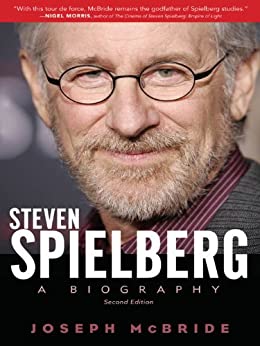
Ep 717The Life & Films of Steven Spielberg + Myth and Reality in THE FABELMANS w/ Joseph McBride
EOn this jam-packed, monster-sized edition of Parallax Views, acclaimed film historian Joseph McBride returns to the program to discuss the life and times of Hollywood filmmaking legend Steven Spielberg, his films, and his latest feature, the autobiographical coming-of-age drama The Fabelmans. McBride many books on cinema include Frank Capra: The Catastrophe of Success, Orson Welles: Actor and Director, Searching for John Ford, Billy Wilder: Dancing on the Edge, and The Whole Durn Human Comedy: Life According to the Coen Brothers, and, of special note to this conversation, the unauthorized Steve Spielberg: A Biography. Among the topics covered in this lengthy conversation: - Spielberg's early career, working in television with The Twilight Zone/Night Gallery creator/host Rod Serling, his made-for-TV thriller Duel and horror Something Evil - The success of E.T.: The Extraterrestrial and the point where Spielberg became a household name - The importance of Jaws to Spielberg's career - The resonance of Close Encounters of the Third Kind with move-going audiences; applying Carl Jung's book on flying saucers to Close Encounters of the Third Kind; the positive portrayal of aliens in Spielberg's films; Spielberg and immigrant liberalism; the role of the broken family in Close Encounters of the Third Kind and how in some ways the movie may be about his divorced mother and father - Spielberg wasn't a darling of film critics when McBride wrote his biography of Spielberg; the phenomenon of Spielberg haters; the lackluster box-office of West Side Story and The Fabelmans at the box office and mixed-reviews from critics - Steven Spielberg and Alfred Hitchcock; the idea that Spielberg is a master technical filmmaker but has little to say; Hitchock's 1976 film Family Plot starring Bruce Dern and Spielberg's attempt to meet Hitchcock - The approach Joseph took to the research and writing of Steven Spielberg: A Biography; interviewing "ordinary people" rather than just celebrities; Robert Caro's Lyndon Johnson biography; Joseph interviewed over 300 people for the book; interviewing people from all over the country because Spielberg lived in so many different cities and states, especially when he was growing up - Joseph's interview with Arnold Spielberg, Steven's father, and the said moment for him during that interview; the underrated role of Arnold Spielberg in Steven's life and amateur films; Steven's relationship with his father and the way it is portrayed in The Fabelmans; the schism between Steven and his father Arnold - The traumatic impact of Steven's parents' divorce on him in his adolescent years; family rupture, broken families, and the role of irresponsible father and mother figures in Steven's films - Picking apart the mythologized portrayal of how Steven got into Hollywood and the true facts of how he got into Hollywood - The ambitious 1964 science fiction film Firelight, which Spielberg made at the age 17 - Spielberg's dyslexia, his poor performance as a student in school - The story of a young Spielberg's experience seeing The Greatest Show on Earth and his recreating of that film's train crash - The common criticism that Spielberg's movies are too sentimental or schmaltzy; the darker elements of Spielberg's movies - Spielberg's first 35 mm short film Amblin and the role it played in kickstarting Spielberg's career - MCA/Universal Studios head honcho Sidney Sheinberg and Steven Spielberg - Spielberg as an actor's director - Spielberg's mother Leah Adler - The obstacles Joseph faced writing an unauthorized biography of Steven Spielberg - The factual accuracy of The Fabelmans, The Fabelmans as a semi-autobiographical film, and Francois Truffaut's 400 Blows (Spielberg was a Truffaut fan and even cast him in Close Encounters of the Third Kind) - The Fabelmans' tornado scene and Steven Spielberg childhood tornado experience - A teenaged Steven Spielberg's film Senior Sneak Day, Steven's penchant for casting both his friends childhood bullies in his early films, his 1962 WWII film Escape to Nowhere - A young Spielberg's experiences with antisemitism and antisemitic bullying - How a young Spielberg had trouble with his Jewish identity; wanting to assimilate with gentile in his youth; a telling moment where a young Steven was embarrassed by his ultra-Orthodox grandfather - Spielberg's use of Christian iconography in his films including in Amistad and E.T. - Alienation, Other-ness, Otherization, and persecution in Spielberg's films; Spielberg's interest in communication with "The Other" as a theme - Alice Walker, Black Americans in Steven Spielberg's films, The Color Purple, and Spielberg as a "Minority Director"; the attacks on Spielberg over The Color Purple; - The Sugarland Express, Goldie Hawn, class, and the role of outsiders in Spielberg's films - The dark side of suburbia and smalltown America in Spielberg's films - E.T. and the truth of modern life; E.T. as resonating because it was unlike some of the Disney-sty
Ep 716Lawsuit Over JFK Documents, Lee Harvey Oswald, & the CIA w/ Jefferson Morley/FBI Surveillance and the ”Black Identity Extremist” Label w/ Patrick Eddington
On this edition of Parallax Views, journalist Jefferson Morley, author of The Ghost: The Secret Life of Spymaster James Jesus Angleton, Scorpion's Dance: The President, the Spymaster, and Watergate, and Morley v. CIA: My Unfinished JFK Investigation, joins us for an urgent update on his work related to the JFK assassination and the ongoing fight to have the last of the JFK records released to the public. Morley and the Mary Ferrell Foundation, a resource on the Kennedy assassination, have filed a lawsuit against President Joe Biden and the National Archives over the withholding of 11,000 or so documents related to the assassination that have yet to be released despite the promise years ago that they would be declassified. Recorded on 12/14,/22, Morley and I discuss how Biden will have to make a decision on 12/15/22 as to whether the CIA will have to give up the last of the JFK documents. In edition to all of this, Jefferson will also explain why the CIA's argument that these documents can't be released for national security reasons and because not all of the people in the files are dead is, from his perspective, a bogus argument. Morley also goes over what he consider the "smoking gun" with regards to the assassination: the CIA's knowledge of Lee Harvey Oswald before 11/23/63 and the CIA's use of Oswald for intelligence purposes (in other words: as an intelligence asset). Jefferson is quick to point out that he is not interested in theorizing or speculating about the assassinations. Instead his interest is in what the documents say rather than any conspiracy theories. We also delve into the recent National Press Club conference by the Mary Ferrell Foundation featuring Jefferson and Judge John R. Tunheim of the Assassination Record Review Board, the across the board/political spectrum support for releasing the documents on grounds related to the need for government transparency, and the mainstream media's coverage of Jefferson Morley and the Mary Ferrell Foundation's recent work. In the second segment of the show, Patrick G. Eddington, senior fellow at the Cato Institute and former CIA analyst joins us to discuss his recent Antiwar.com article "Is the FBI’s ‘Black Identity Extremist’ Label Still in Use?". In 2016 a report was leaked to the press in which the FBI was revealed to be using the term "Black Identity Extremist" as a domestic security threat. Due to the vagueness of the term as well as the rise of Black Lives Matter and the fact that the majority of domestic terrorism has come from white nationalist terrorists the BIE report was heavily criticized. In the intervening years FBI Director Chris Wray told the Senate Judiciary Commitee that use of the term has been abandoned by the FBI. However, recent documents obtained by the Cato Institute through a FOIA request, raise questions as to whether that truly is the case. In addition to this specific story, Patrick and I also delve into the history of the FBI's COINTELPRO operation targeting black activists in the era of Martin Luther King Jr. and the Civil Rights movement, FBI overreach and lack of accountability, the long history of FBI targeting of left-wing activists, the 21st century targeting of Chinese-American, and much, much more!

Ep 715The Problems of U.S. Arms Sales Policy w/ Jordan Cohen/Student Confronts Liz Cheney Over Iraq War w/ Mitch Robson
On this edition of Parallax Views, Jordan Cohen, policy analyst in defense and foreign policy at the Cato Institute, joins the show to discuss the 2022 Cato Handbook for Policymakers: Arms Sales report. Jordan makes the case the U.S. arms sales today lack oversight leading problems like arms dispersion that leads to weapons ending up in the hands of unsavory entities such as drug cartels and terrorist organizations. Moreover, said arms sales often contribute to aiding authoritarian governments and states that commit human rights abuses. Among the topics discussed in this conversation: - Top U.S. arms consumers are often "risky" clients; defining risk countries buying U.S. arms - U.S. weapons sales from anti-aircraft missiles and fighter jets to small arms and light weapons (SALW) - The Executive Branch's unrivaled power in regards to arms sales and why Congress can't regulate arms sales effectively - Saudi Arabia and the war in Yemen - Weapons dispersion in Central America's Northern Triangle - The potential connection between weapons dispersion, refugee crises, and immigration - How U.S. arms sales undermine many of the stated foreign policy aims/objectives of President Joe Biden's administration - The Ukraine/Russia war and arms sales - Thoughts on foreign policy under the Biden administration thus far - The need to "flip the script" on how we talk about U.S. arms sales - And much, much, much more! In the second segment of the show, Mitch Robson of the conservative student paper The Chicago Thinker joins us to discuss confronting Liz Cheney on the her father Dick Cheney and the Iraq War. On November 11, 2022 Liz Cheney, who has gained newfound popularity due to her opposition to Trumpism and the January 6th insurrection, appeared at a University of Chicago Institute of Politics (IOP) event. Mitch, in response to a recent ad where Liz and Dick Cheney together opined that "a real man wouldn’t lie to his supporters" in reference to Trump, grilled Ms. Cheney about what many have argued are the lies that embroiled the United States in the George W. Bush administration initiated Iraq War. Robson's exchange with Cheney has gone viral and he joined to discuss the issues he had with Liz Cheney's response detailing the issues with claims like, for example, Saddam Hussein's government having had operational ties with al Qaeda.

Ep 714Money-Driven Politics in an Age of Global Tumult w/ Thomas Ferguson/Railroad Workers, Corporate Power, and Congress w/ Jack Rasmus
On this edition of Parallax Views, Dr. Thomas Ferguson, Professor Emeritus of Political Science at the University of Massachusetts Boston and author of Golden Rule: The Investment Theory of Party Competition and the Logic of Money-Driven Political Systems, returns to discuss the current social/economic/political situations in the U.S. and place it within the context of growing tumult across the globe. Among the issues discussed in this conversation: - Disruption and the world economy; energy crises, inflation, growing economic pressures on people; strikes in the U.K., the recent far-right coup attempt in Germany, and the downfall of Peru's President Pedro Castillo (who attempted to dissolve the Peruvian Congress) - Oil and gas prices - The Georgia runoff election that saw Democrat Raphael Warnock vs. Republican Herschel Walker - Incremental change in the balance of political power - Matt Taibbi, Elon Musk, and the Twitter Files - Is the global pandemic really over? Biden, student debt, and the pandemic - Railroad workers and sick leave pay - Nancy Pelosi, corporate Democrats, Alexandria Ocasio-Cortez the Squad, Bernie Sanders, and progressives - Biden, the National Labor Relations Board, and the broader state of American labor - Crypto, the FTX scandal, Sam Bankman-Fried, dark money, the politicians who received donations from SBF, and deregulation - How a deep recession could lead to Donald Trump's comeback; Trump's survival is dependent on the economy - Employment and unemployment - The problem Democrats face leading up to 2024; the Democratic Party as a "Headless Horseman" right now - Could the railroad strike issue come back to haunt Democrats? - The polarizations of social blocs in America - Rural areas and U.S. elections - The American upper middle classes and Jan 6th - The midterms were very close; the shift was minute - Policy errors in addressing the pandemic - Interests rates are up and U.S. debt costs are rising - The multipolar world and the dangers of escalation; U.S. vs. China and de-escalation; the Ukraine/Russia War - The Golden Rule: he makes the money makes the rules - And much, much more! In this second segment of the show, Dr. Jack Rasmus, author of The Scourge of Neoliberalism: US Economic Policy from Reagan to Trump, returns to discuss his analysis of the bipartisan shutdown by the Biden administration and Congress of a potential railroad workers strike. Among the topics covered in this conversation - Previous times that Congress has intervened to break a strike: the Railway Labor Act in 1926 and the Taft-Hartley Act of 1947; government working on behalf of corporate interests; corporate power's attack on labor in the 1920s and after WWII; the history of rail strikes leading up to the 1920s - How the labor movement has been tied down by a legal web designed to prevent strategic strikes from occurring - Government intervention, bargaining power, the freezing of negotiations - The issue of paid sick leave and the issue of scheduling; paid leave and the disciplining of labor; labor shortages and wage costs - Nancy Pelosi, the 90 day "cooling off" period, unions, the AFL-CIO, and anti-labor legislation - The corporate wing of the Democratic Party, Bernie Sanders, The Squad, and progressives; left-liberals as constantly being slapped down and outmaneuvered by the corporate wing of the Democratic Party; the Democratic Leadership Council and the takeover of the Democratic Party; thinking in class terms rather than political terms - Pelosi's legislative trick, anti-strike legislation, and the proposed sick leave legislation that had no chance of passing through the sent - The 24% wage increase over 5 years for rail workers and the effect of inflation over the last 3 years - Republicans, Democrats, and the labor movement - The media, propaganda, and the economy; oil companies, price gouging, gas prices, sanctions on Russia, and inflation; the job market, full-time jobs, and part-time jobs; the ideological apparatus of the ruling class - Neoliberalism, grassroots resistance, and the need for a workers party

Ep 713New Film FARHA Tells a Coming-of-Age Survival Story Set Amidst the Nakba w/ Darin J. Sallam/The Sordid History of Guantanamo Bay w/ Andy Worthington
On this edition of Parallax Views, Jordanian filmmaker Darin J. Sallam joins Parallax Views to discuss her feature-length debut film Farha. Written and directed by Sallam, Farha tells the coming-of-age story of a brave, curious young woman (played by Karam Taher in a tour-de-force acting debut) living in 1948 Palestine who dreams of going to the city, receiving an education, and becoming a teacher. Farha's life is irrevocably altered, however, when Israeli military invade her Palestinian village in a series of violent events that have become known in the Arab world as the Nakba or "The Catastrophe". Farha is a deeply moving story of survival that attempts to shed light on a story Palestinian Arabs have passed down through the generations and may well mark the first feature-length film that isn't a documentary to feature the Nakba as a key element of its story. In this conversation Darin and I discuss a number of topics including: - Her experiences directing the film - Working with the cast, which included such well-known actors of the Arab world as Ali Sulliman of the TV series Tom Clancy's Jack Ryan and Ashraf Barhom (The Kingdom, Paradise Now); the casting of the lead character - The meaning of the title Farha and how it refers to not only the main character but the Arabic word for "Joy" - The development of the movie, the difficulty getting funding, and depicting the events of the Nakba in a thoughtful manner - The emotions that came out during the filming of the production especially amongst the Gazan refugees who served as extras in the film - The motif of water in the movie - The accusations of antisemitism that have been made against Farha - Whether or not the story of Farha ends on a hopeful note - The approach taken to depicting the Nakba in Farha; why Darin chose not to show gory violence - Farha as a universal, humane story which can speak to many different people - The passing down of the story of the Nakba throughout the generations and putting that story to film - Does Darin see a bit of Farha in herself? - The positive reactions to the film thus far - Telling the truth - Farha as not just a story about the Nakba but a story about love, community, loss, trauma, and memory - Liberation and loss; the open wound of the Nakba - Being thrust into traumatic events without a choice; surviving the trauma and living because one must do so - Farha being submitted to the Academy Award - And much, much more! In the second segment of the show, journalsit Andy Worthington, author of The Guantanamo Files: The Stories of the 774 Detainees in America's Illegal Prison, joins us to discuss the unsettling history of military torture and detainment at Guantanamo Bay since 2002. Guantanamo Bay has been in the news, at least within the alternative media sphere again, after former Gitmo prisoner Mansoor Adayfi claimed in an interview with Mike Prysner of The Empire Files and Eyes Left Podcast that he was tortured by U.S. 2024 Presidential hopeful Governor Ron DeSantis at the infamous military prison. This conversation is a bit interesting as when it was recorded Andy was skeptical that the timelines surrounding DeSantis' time at Guantanmo Bay lined up with Mansoor's testimony (although this is not to say that he thinks Mansoor was lying, but rather that the story needed more clarification). However, about five days after our initial conversation, Andy and I spoke again. At that point Andy had spoken with Mansoor in order to clarify the issues. This clarification appears to add more weight to Mansoor's claim and means that the DeSantis/Gitmo story merits serious investigation. Among the topics discussed in this conversation: - The origins of Guantanamo Bay (alternatively known as GTMO or Gitmo) and the types of torture that went on there - A prison designed by the George W. Bush administration in the early days of the War on Terror to detainee terrorism suspects without much interference/oversight from courts with regards to what would go on there - Human rights abuses at Guantanamo Bay - How was the veil of secrecy around what went on Guantanamo Bay pierced? - The "enhanced interrogation" euphemism - Guantanamo Bay in the Obama and Trump years - Why has Guantanamo Bay not been shut down despite the controversy around it? - Obama's campaign promise to close the prison - The question of torture's effectiveness in dealing with terrorism - Former detainee Mansoor Adayfi's claims that Ron DeSantis, as a JAG officer, was involved in torture at Guantanamo Bay - The Guantanamo Bay hunger strikes of 2005 (and 2006) - Waterboarding - And much, much more
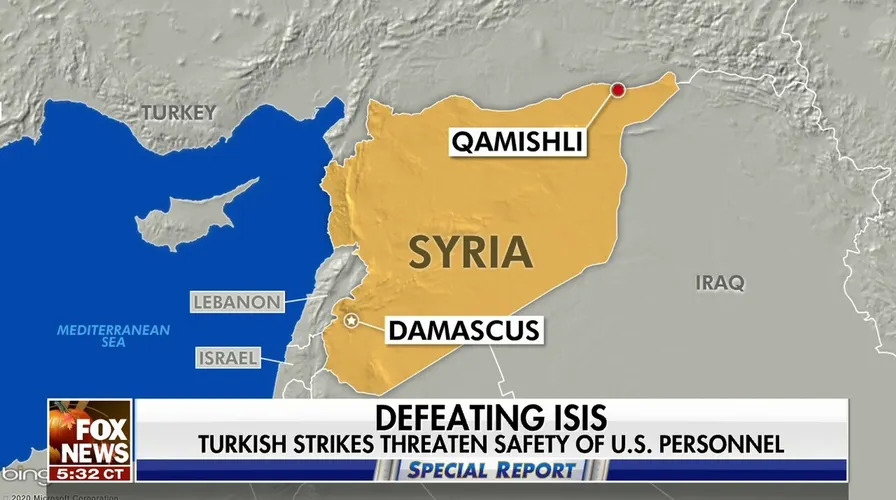
Ep 712Is Turkey Preparing for a Ground Operation in Syria? w/ Giorgio Cafiero
On this edition of Parallax Views, Giorgio Cafiero, CEO of Gulf State Analytics, returns to discuss the rumblings about a potential Turkish ground operation in northern Syria. Is Turkey invading northeast Syria about to happen? Also how will the U.S. likely respond if it does? What should be made of U.S. response to the recent Turkish strikes in Syria and the possibility of a Turkish ground offensive there? Among the topics discussed in this conversation: - The perspective from Ankara, the capital of Turkey, in relation to Syria - Overview of the tumult in Syria since the 2011 uprising against the regime of Bashar al-Assad and the Ba'athist government in Damascus; the Syrian Civil War; the rise of the Islamic State; - Why did the overthrow of Assad not happen?; how has Assad managed to hold onto power? - The Kurds, the YGP (People's Defense Units), and the PKK (Kurdistan Workers' Party); the U.S. relationship with the YGP and operations against ISIS - U.S. shifting focuses in regards to Syria over the years; U.S. military presence in Syria - Turkish foreign policy concerns and interests; the ambitious nature of Turkey's foreign policy goals in regards to the Arab world; Turkey and geopolitics, Erdogan; the upcoming Turkish elections - Russia and Iran in Syria and the effect of the Ukraine/Russia War on U.S. foreign policy concerns - The effect of ISIS and jihadist terrorism on the region; allegations of different state actors supporting ISIS - Iran and the protest movement there - Risks for Turkey if a ground offensive happens - Turkey as an ally to the U.S. and why this may keep the U.S. from taking strong action (beyond condemnatory statements from public officials) against Turkey's current posturing on Syria - Turkey views YPG as linked with PKK and as a security threat - No love lost between Erdogan and Assad; if there is a reconciliation it won't be rosy but rather pragmatic and interests-based - Sunni Islamism, the Muslim Brotherhood, Egypt, Tunisia, and shifts in Turkish foreign policy - Turkey and relationship resets in the Arab world; Turkey and the economy; Turkish business and commercial ties in the Arab world and specifically the Gulf States - U.S. says it's opposed to a Turkish invasion, but when push comes to shove Giorgio believes the U.S. won't do much against Turkey - U.S.-Turkey tensions before the Ukraine conflict, the North Atlantic Treaty Organization (NATO), and Turkey role in the Ukraine/Russia conflict - What are Washington's concerns when it comes to a Turkish military campaign in northern Syria?; fear that ISIS could be a beneficiary of a ground offensive; the view from Moscow as also being afraid of the consequences of a Turkish ground operation - Kurdish separatism and fears from Iraq, Iran, and Turkey of a Kurdish state forming - Historic tensions between Turkey and the Kurds; repression of Kurds in Turkey - Where is the Turkey/Syria situation headed from here? - And much, much more
Ep 711Railroad Workers Sound Off on Their Grievances, Biden, Sick Leave, and the Rail Carriers w/ Marilee Taylor, Jeff Kurtz, and Maximilian Alvarez
EOn this edition of Parallax Views, Maximillian Alvarez, Editor-in-Chief of the Real News Network, joins the show alongside Marilee Taylor and Jeff Kurtz of Railroad Workers United to discuss the recent struggle between railroad workers and rail carriers over paid sick leave. President Joe Biden and Congress recently struck down a rail workers strike over the issue. In this conversation we'll hear from Marilee and Jeff about the plight of the workers and their anger over what has transpired over the last few days with President Biden and Congress. Maximillian will give context to how this situation arose as a journalist that has been covering this developing issue since January 2022. Among the topics covered: - Comparing the events happening under Biden to President Ronald Reagan's shutting down of the air traffic controllers strike in 1981 - A potential mass exodus of railroad workers from their profession - Pay isn't the only issue that exists for workers; sick leave and quality-of-life are issues too - The ruling class and the alienation and isolation of rail workers - Will this lead to a depoliticization of rail workers that could Democrats? - Ted Cruz, Joshua Hawley, and Marco Rubio voting with Bernie Sanders on sick leave - The corporate media's coverage of the railroad workers vs. the rail carriers in recent days - Striking and democratic rights - The oligopoly - Biden's promise to be the most "pro-union President" - Does their need to be a workers party? The bankruptcy of the two party system and the need for a strong labor movement in the U.S. - Peter Buttigieg and the Department of Transporation - Nancy Pelosi and Chuck Schumer - Is there a possibility of wildcat strikes? - Marilee argues that this is a backstabbing betrayal against working people and that they're not going to take this lying down; Marilee decries what she calls the "total treachery of the Democratic Party" - The personalities, inner lives, hopes, and dreams of rail workers and how we are often not given that fully human portrayal of them in media - What do rail workers do next? - The rail bosses, supply chains, and damage to the economy - And much, much more

Ep 710U.S. Foreign Policy, Saudi Arabia, & the Arms Industry w/ Annelle Sheline & William Hartung/Geopolitics & U.S. Foreign Policy w/ Doug Bandow
On this edition of Parallax Views, the Quincy Institute for Responsible Statecraft's Dr. Annelle Sheline and William Hartung return to discuss their recent The Nation article "It’s Time to Cut Off Arms Sales to the Saudi Regime". Among the topics covered in this conversation: - Saudi Prince Mohammad bin Salman Al-Saud granted legal immunity by the U.S. in lawsuit concerning the murder of journalist Jamal Khashoggi - The argument for suspension of arms sales to the Kingdom of Saudi Arabia - OPEC+ cutting oil production - The U.S.-Saudi relationship, oil production, and arms sales; Saudi Arabia is the largest customer of U.S. weapons; vested interests like the military-industrial complex and the U.S.-Saudi relationship - The Yemen War; potential for Congress to pass a Yemen War Powers resolution; where the Yemen War has been since the truce struck up earlier in the year - Statistics on arms sold to Saudi Arabia under the Obama, Trump, and Biden Presidencies - Lobbying by companies like Raytheon - Addressing the argument that the arms industry provides jobs to American citizens and thus the arms sales to Saudi Arabia are necessary - The move of the world towards a multipolar order and how this effects our relationship with other countries; countries like Saudi Arabia don't feel the need to bend to U.S. demands/whims; the consequences of a multipolar world (ie: less stability); adjusting to the changing order (ie: relying more on diplomacy) - America still has the best-funded military; how then is the U.S.'s dominance in question? - The U.S. as overdeveloped in military force and underdeveloped in other areas vital to playing a role in a world where power is more diffuse - What leverage does the U.S. have against the Kingdom of Saudi Arabia? - Decoupling the arms industry from U.S. foreign policy - How the U.S. arms industry effects the broader Middle East - Saudia Arabia, the UAE, Israel, Iran, and the Abraham Accords - Weakening the power of the arms industry in the U.S.; alternatives to employment; investment in areas other than weapons; green technology and green investments vs. the arms industry - The revolving door between the arms industry and policy-making institutions - The American people's perceptions of U.S. arms sales - What are the biggest misconceptions people have about Yemen and, more broadly, the Middle East in general - And much, much more! In the second segment of the show, Doug Bandow, Senior Fellow at the Cato Institute and former special assistant to President Ronald Reagan, returns to the program to discuss current geopolitical happenings and the hubris of the foreign policy establishment aka the Blob. Among the topics in this conversation: - Why the Ukraine/Russia war is still the number foreign policy issue in the immediate term and how dangerous the situation is right now - Discussing the Reagan Presidency and the Able Archer 83 NATO/military exercise that could've triggered a nuclear war; this historical incident is often underdiscussed or forgotten today and scared Reagan (for more information on the incident please check out Nate Jones's Able Archer 83: The Secret History of the NATO Exercise That Almost Triggered Nuclear War) - Hubris and sanctimony in the Washington foreign policy establishment - The U.S., human rights, double standards, Saudi Arabia, and Iran - North Korea's latest ICBM test and the failure of the U.S.'s current policy on the DPRK; negotiating with North Korea on arms-related issues using sanctions release as leverage - The crisis in Haiti, the history of U.S. interventions in Haiti, and the calls for a new U.S. intervention in Haiti; Doug's recent American Conservative article "Stop Invading Haiti" - Rising tensions between the U.S. and China; the issue of Taiwan; the Philippines; the South China Sea; the economic front of the U.S. tensions with China, especially in terms of China's hi-tech economy; Doug's recent CATO piece ""The Wages of Washington’s Economic War on China Are Not Cheap" - The role of the Global South's relationship with the U.S. and the Global South's perspective on issues like the Ukraine/Russia war - The importance of diplomacy and talks even with our adversaries - The hangover of the U.S.'s time as the post-Cold War unipower - And more!

Ep 709Israel, Biden, and the FBI’s Shireen Abu Akleh Investigation w/ Mitchell Plitnick
On this edition of Parallax Views, ReThinking Foreign Policy's Mitchell Plitnick returns to the program to discuss the FBI's probe into the death of Palestinian-American journalist Shireen Abu Akleh as well as his thoughts on the Biden administration's policy towards Israel, AIPAC (American Israel Public Affairs Committee) launching of a super PAC and entrance into direct campaign spending, and the recent Israeli elections that have emboldened Israel's far-right. Among the topics discussed in this conversation - The death of Shireen Abu Akleh while she was covering as Israeli raid of a Jenin refugee camp in the West Bank; Abu Akleh was wearing full body armor when she was fatally shot; Israel's internal army investigation of Abu Akleh's death; Abu Akleh worked for Al Jazeera and her death reverberated throughout the Arab world - The FBI's investigation into Abu Akleh's death and the Biden White house administration's response to it; the Israeli objection to the FBI investigation - The investigation will go nowhere without Israeli cooperation - Comparing/contrasting the death of activist Rachel Corrie, ran over by an Israeli bulldozer in 2003, to the death of Shireen Abu Akleh - What approach should the U.S. foreign policy approach be when it comes to Israel? - Military aid and arms sales to Israel - The rise of the Israeli far-right; the Israeli elections; Benjamin Netanyahu and the Likud Party; the Religious Zionism coalition; Bezaleel Smotrich and Itamar Ben-Gvir; Smotrich's homophobia and anti-LGBTQ stances; how did the rise of Israel's far-right happen? - Human rights and foreign policy - Noam, the far-right Orthodox Jewish political party in Israel that is part of the Religious Zionism coalition - Smotrich and Israel's Finance Ministry; Ben-Gvir and the Ministry of National Security ; policing in Israel; the strong right-wing majority in the Knesset - Combating antisemitism while also being critical of Israeli policies as a nation-state - U.S. Christian Nationalist, the antisemitic right, and the Israeli far-right - And much, much more!

Ep 708The Iran Protests and The State of Resistance: Politics, Culture, and Identity in Modern Iran w/ Assal Rad
On this edition of Parallax Views, Dr. Assal Rad, research director for NIAC (National Iranian-American Council) returns to the program to discuss the wave of "Death to the Dictator" protests that have swept through Iran in recent months. The protest began after the death of 22 year old Mahsa Amini. Amini was arrested for wearing her hijab in a manner deemed the Guidance Patrol (or what's been called morality police) deemed improper. According to eyewitnesses Amini was beaten by the police. Protests began after Amini's death and the Islamic Republic has sought to crackdown on the dissent. Dr. Rad discusses the nature of the protests, how they started, the involvement of women and youths in the protests, and much, much more. Additionally, we delve into the themes and ideas of Dr. Rad's new book The State of Resistance: Politics, Culture, and Identity in Modern Iran. Said book investigates the history of Iranian national identity and nationalist sentiments from the Pahlavi dynasty to the Islamic Republic and the bottom-up Iranian people's resistance to having a narrowly-defined identity imposed upon them by either Iranian authorities or outside forces. Among the topics covered: - The Pahlavi dynasty's focus on pre-Islamic Persian culture as a national identity and the Islamic Republic's focus on Shi'ite Islam as a national identity - Iran, oil, and the West - The cinema and music of Iran and what it says about Iranian national identity - Nationalism, the problems with nationalism, and liberation struggles - The Iranian diaspora - Human rights abuses in Iran - The possibility of a broader, more inclusive, even cosmopolitan national identity for Iran - The concept of vatan, a love of the homeland - How those of us in the U.S. and other countries miss nuances of Iranian culture and politics that we otherwise would recognize in our own culture - The Iranian protests and BLM (Black Lives Matter) - Understanding Iran's elections, their significance, and the dual powers in Iran (the elected officials on one hand and the Supreme Leader Ali Khamenei - And much, much more!

Ep 706The FTX/SBF Crypto Scandal & Elon’s Twitter Takeover w/ Mike Swanson/A Critique of Psychedelic Capitalism w/ Daniel Pinchbeck
On this edition of Parallax Views, in the first segment Wall Street Window's Mike Swanson returns to the program to discuss the FTX/Sam Bankman-Fried crypto scam scandal as well as Elon Musk's buy out of Twitter. Among the topics covered in the course of our conversation: - Sam Bankman-Friedman, Alameda Research, Bankman-Fried's apology letter and his claim that what happened with FTX was a bank run, and whether what happened was a case of an inside job fraud or not - The high-risks involved in the crypto exchange; how these crypto exchanges aren't banks and are not regulated in a meaningful way; the damage that the FTX scandal has done to people - Relating past events like the Enron and WorldCom scandals and the the stock market's Dot-Com Bubble of the 1990s to the present day - The influential American venture capitalist firm Sequioa Capital and the FTX scandal; Sequioa Capital's failure in relation to the FTX scandal is symptomatic of a bigger problem; firms not wanting to miss out on the hot new "Thing" or fads - Reports that Sam Bankman-Fried ran FTX as his own personal fiefdom - The political Left, the political Right, and the economy - The divide in the Libertarian movement over crypto currency - Karl Marx, Peter Thiel, and the possibility that the capitalist system itself is producing too much capital in ways that drive down interest rates; the issue as being more than the Fed just making mistake (ie: a problem with how the 21st century capitalist system itself operates currently); new money influxes as slowing down the bear market - The lowering of interest rates and the creation of bubbles - Jacob Silverman and Ben McKenzie's upcoming book Easy Money: Cryptocurrency, Casino Capitalism, and the Golden Age of Fraud; elements of the libertarian world agreeing with leftist critiques of crypto currency arguing that it's just a bubble or scam - Gold and silver, the stock market, Robin Hood, and "meme stocks" - Younger people becoming wary of stock trading - Elon Musk's buying of Twitter for $44 billion; Musk wasn't able to back out of the deal; Twitter losing money - Meta, Facebook, the Metaverse, and Mark Zuckerberg losing money; the layoffs at Twitter, Facebook, and Amazon - Casino capitalism, carny tricks, and social media misleading people on issues like crypto - Social manias, the madness of crowds, financial bubbles, and not falling for hype In the second segment of the program, Daniel Pinchbeck, author of a number of books on psychedelics including most recently (w/ Sophia Rokhlin) When Plants Dream: Ayahuasca, Amazonian Shamanism and the Global Psychedelic Renaissance, joins the show to discuss his recent WhoWhatWhy article "Why Psychedelic Capitalism Sucks". Among the topics we cover in this conversation: - The rise of psychedelic corporations/psychedelic start-ups - The demonization of psychedelics in the 1960s and the cultural thaw that's led to a psychedelic renaissance through groups like MAPS and the Beckley Foundation; the reconsideration of psychedelics by society today and contemporaries studies on psychedelics related to alleviating depression, etc. - Festivals like Burning Man and how resource-rich elites and entrepreneurs became interested in psychedelics - Predatory practices and the critique of patents in regards to psychedelics and psychedelic therapy - Compass Pathways and patent laws - Downsides of psychedelics and psychedelic use - The ecological crisis, today's profound social inequality, and psychedelics as a way to inspire social and structural change - The contemporary psychedelic movement's focus on medicalization that fits psychedelics - Psychedelics, creativity, and pattern recognition - Psychedelics, temporary bliss states, and a possible 1984/Brave New World scenario - Pioneering psychedelic researchers Sasha and Ann Shulgin's approach to psychedelic research vs. the approach of psychedelic corporations - Psychedelic use and messianic delusion - The positives of psychedelics and psychedelic usage - The question of consciousness - The climate change crisis and transforming how we live our lives; the importance of storytelling - Shifting away from industrial agriculture - And much, much more!

Ep 705The Russia-Ukraine War w/ Patrick Cockburn/The Kyrie Irving Controversy and Black Hebrew Israelites w/ Jacob S. Dorman
On this edition of Parallax Views, long-time war reporter Patrick Cockburn, author of War in the Age of Trump, joins us in the first segment to discuss the latest in regards to the Putin's war in Ukraine as well as his thoughts on Netanyhu's political victory in the Israeli elections. Among the topics covered in the conversation: - Putin's war as a hubristic miscalculation and the evolution of the war; what is Russia's aim in Ukraine now? - The problem of wars that don't end and why they escalate - Ukraine's blowing up of the Kerch bridge and the Russian war against Ukrainian infrastructure such as electricity and water supplies - The way modern warfare has changed in way that some don't realize; the U.S. no longer has a monopoly on precision weapons like they did in the 1990s - Escalation and the question of nuclear weapons being used; why Patrick is skeptical that nuclear weapons will be launched - Ukrainian victories not being decisive defeats of Russia - U.S. Chief of Staff Mark Milley's call for diplomacy and the Biden administration's opposition to that; why Patrick doesn't see diplomacy as being acceptable right now to either Ukraine or Russia - Parallels between the Middle East Forever Wars and the Russia-Ukraine War - U.S. arms to Ukraine - Ferreting out war propaganda and separating that propaganda from reality - The economic war against Russia and the use of sanctions; sanctions, Iraq, the Kurds, and Saddam Hussein, the boomerang effect of sanctions - Donald Trump, the foreign policy establishment, and the forever wars mess - The natural tendency for wars to escalate and spread - Prospect for diplomacy vs. escalation - Putin and nuclear saber-rattling - The problem with journalists covering wars today; coverage of war on the ground vs. war on infrastructure - The electoral loss suffered of Bolsonaro in Brazil, Trump's civil war with the GOP, and the failed comeback of Boris Johnson in the UK - Benjamin Netanyahu's electoral victory in Israel and the normalization of Israel's far-right - The importance of remembering/thinking about the Afghanistan war, the Iraq War, the Saudi War in Yemen, and the death of Gaddafi in Libya - And much, much more! In the second segment of the show, Prof. Jacob Dorman joins us to discuss Black Israelite religions in light of the controversy over NBA basketball player Kyrie Irving tweeting about the Ronald Dalton Jr.'s documentary Hebrews 2 Negroes: Wake Up Black America. The tweet caused a backlash due to the documentary peddling not only Black Israelite beliefs in the documentary, but also antisemitic tropes and quotes from notorious antisemites like Henry Ford. Among the topics covered in this conversation: - The history of the Black Israelite movement including it's relationship to the 19th century Holiness movement, Freemasonry, the Anglo-Israelite movement, Rastafarianism, Judaism, and Black Nationalist/Black Power movements - Harlem, Rabbi Wentworth Arthur Matthew, and the Second Wave of Black Israelism; - William Sauders Crowdy and the Church of God and Saints of Christ - Black Israelite thought as a theory of history rather than a religion - The spread of Black Israelite thought or elements of it through the internet - Understanding the Black Israelite movement in the context of anti-black racism historically including Jim Crow, lynchings, and anti-racism - Dorman's take on Kyrie Irving, Kanye West as well as his take on on Hebrews to Negroes being a documentary "by and for stoned people"; Irving as being a different case from Kanye and Kanye as more truly peddling antisemitism; Irving's apology over his tweet; Kanye and mental illness; Kanye's "slavery was a choice" comments - The concept of polyculturalism (as opposed to multiculturalism) in regards to Black Israelite religions; identity and Israeli scholar Shlomo Sand's The Invention of the Jewish People; genetics and the claim to being an Israelite - Black Israelism as a powerful critique of anti-black racism - Antisemitism as not being representative of all Black Israelite religions; Dorman's experiences with Black Israelites; sensationalism in reporting on Black Israelism; One West and the amplification of the most extreme elements of Black Israelism - Black Israelites and cosmopolitanism - Similarities between Black Israelites and Black Muslims - Should Black Israelism be written off as historical revisionism? - White supremacy, white Jews, black antisemitism, and James Baldwin - A summary of Dorman's new book The Princess and the Prophet: The Secret History of Magic, Race, and Moorish Muslims in America - And much, much more!
Ep 704The ADL and the FBI w/ Grant F. Smith
On this edition of Parallax Views, Grant F. Smith of the Institute for Research: Middle East Policy returns to discuss his article "ADL files FBI 'Civil Rights Threat' conflating white nationalists with pro-Palestinian charities" as well the broader history of the ADL and its relationship with the FBI. Additionally, Grant gives his thoughts on the FBI probe into the death of Palestinian-American Al Jazeera journalist Shireen Abu Akleh and briefly summarizes his October 2022 article "Virginia Rejects Israel’s Energix CdTe Solar Farm Panels". Some of the points we touch on include: - The ADL's infiltration of the Organization of Arab Students in the late 1960s - THE FBI, the Jewish Defense League, and the assassination of Palestinian activist Alex Odeh in 1985 - The murder of Mary Phagan, the lynching of pencil factory superintendent Leo Frank, and the formation of the Anti-Defamation League by B'nai B'rith - The ADL and Hollywood; Hollywood producer Arnon Milchan and arms dealing - The ADL's relationship with the FBI in 1940s Hollywood; the FBI and the Red Scare over communist infiltration of Hollywood - The ADL, Dr. John Lechner, and the internment of West Coast Japanese Americans in WWII - Arms smuggling, pressure campaigns, and spying scandals - Israel affinity groups in America; the ADL and state/national law enforcement - The ADL's attempt to conflate the pro-Palestinian Friends of Sabeel North America and the American Muslim Alliance with the neo-nazi group Vanguard America; the FBI's dismissal of the conflation - The FBI's COINTELPRO program and J. Edgar Hoover - Israeli intelligence operative Rafael Eitan - The targeting of Jewish civil rights activist and University of Minnesota professor Matthew Stark - Freedom of Information Act (FOIA) documents obtained by IRmep - The Friends of Sabeel's pro-BDS (Boycott, Divestment, Sanctions) stance and the anti-BDS movement - And much, much more!
Ep 703FIFA Uncovered and the Qatar World Cup w/ Miles Coleman/The World Cup & Qatar’s Soft Power Foreign Policy w/ James M. Dorsey
On this edition of Parallax Views, we have a double feature edition of Parallax Views on the 2022 FIFA World Cup being held in Qatar. First up, filmmaker Miles Coleman joins us to discuss the new Netflix docu-series that's sweeping the internet, FIFA Uncovered. Miles served as a producer for this sports-meets-politics-true-crime exploration of FIFA, international governing body of football/soccer. It's a dive into a world of schemes, bribes, scandals, and corruptions that even led U.S. federal prosecutors to take on FIFA in 2015. In this conversation we'll discuss the controversies surrounding the Qatar World Cup, the Citizen Kane-esque tale of former FIFA President Joseph "Sepp" Blatter, the scandalous downfall of Qatari football administrator Mohammad bin Hamman, how the documentary came together, capitalism/money in sports and the problems it poses, how the real scandal is arguably more about FIFA than Qatar, sportswashing, the argument that cultural exchange will liberalize countries under the rule of authoritarian regimes, the Qatari perspective on the backlash against their hosting of the 2022 World Cup, the ambiguities and murkier elements of the scandalous history explored in FIFA Uncovered, smoking gun evidence of corruption vs. lack of smoking gun evidence for corruption in the world of FIFA, the cross-section between politics and sports, how the ambitious Sepp Blatter's hunger for power was arguably the cause of his undoing, Argentina and the World Cup scandal of 1978, Berlin and the scandal of the 1936 Olympics, South Africa and FIFA, and much, much more! In the second segment of the show, Prof. James M. Dorsey, author of The Turbulent World of Middle East Soccer and it's accompanying blog/podcast, joins us to discuss his take on the controversial Qatar World Cup. Prof. Dorsey argues that Qatar's interest in hosting the World Cup has to do with their soft power approach to foreign policy. Additionally we discuss covert information warfare by Gulf States like the United Arab Emirates (UAE) against Qatar, whether Qatar will follow through on reforms, the human/labor/LGBTQ+ allegations against Qatar, migrant labor and Qatar, the question of the 2022 World Cup in Qatar and bribery, Qatar's reaction to the backlash against it's hosting the World Cup, the question Western racism against Qatar, the argument for there being double standards at play in the backlash against Qatar, human rights abuses in the Gulf States more broadly, regional tensions and the World Cups (ie: Qatar, Israel,, Saudi Arabia, and Iran), understanding the Qatari perspective on the 2022 World Cup controversy, the multipolar world and the rise of China and India, and much, much more!

Ep 700The Peaceful Transfer of Power w/ David Marchick/The Hidden History of Neoliberalism w/ Thom Hartmann
On this edition of Parallax Views, we're joined in the first segment of the program by David Marchick, co-author with Alexander Tippett (and A.J. Wilson), of The Peaceful Transfer of Power: An Oral History of America's Presidential Transitions. After the chaos of the Trump-Biden transition and the ugly insurrection on the Capitol that came with it many are more interested in how Presidential transitions work and how smooth, peaceful transitions are accomplished. Additionally, many would like to ensure that future transitions are not as chaotic and uncertain as the one that followed the 2020 election. How can that kind of transition be avoided in the future? In addition to addressing these issues and questions, we will discuss what went wrong with the 2020 transition, the problems with the 2016 transition and the sacking Chris Christie from the Trump transition team, insight Marchick gained from actual participants of Presidential transitions, the smooth transition from Bush to Obama during the 2008 financial crisis, the transition from Gerald Ford to Jimmy Carter, the most turbulent Presidential transitions like the James Buchanan to Abraham Lincoln transition and the Herbert Hoover to Franklin Delano Roosevelt transition (Hoover was not a fan of the New Deal), and much, much more! In the second segment of the program, legendary progressive radio host and New York Times bestselling author Thom Hartmann returns to discuss his new book The Hidden History of Neoliberalism. Thom and I begin by discussing neoliberalism and its origins. We also discuss the free-market libertarian economists that in some way or another bear a connection, in varying degrees, to the ideology such as Milton Friedman, Ludwig Von Mises, and F.A. Hayek. Thom goes over the early neoliberal experiments in the world outside of the U.S., with a particular focus on Chile and the military dictatorship of General Pinochet that overthrew the government of Salvador Allende. Then we dive into how neoliberalism became dominant in the U.S. from the presidencies of Ronald Reagan to Bill Clinton. We also look at the impact of neoliberalism on American workers, the crushing of unions in America, the labor movement, and the middle class? And finally, we talk about neoliberalism under Joe Biden, whether the Democratic Party is turning away from neoliberalism, changing views on unions in America and addressing union corruption from decades past (ie: Jimmy Hoffa), FDR and the New Deal era, the Starbucks union organizing wave and Thom's thoughts on the 2022 midterm elections.

Ep 699Bridge to the Sun: The Secret Role of the Japanese Americans Who Fought in the Pacific in World War II w/ Bruce Henderson
On this edition of Parallax Views just in time for Veteran's day, New York Times best-selling author Bruce Henderson, author of Sons and Soldiers and co-author with Vincent Bugliosi of And the Sea Will Tell, joins us to discuss his latest book Bridge to the Sun: The Secret Role of the Japanese Americans Who Fought in the Pacific in World War II. During WWII the Japanese immigrants and Japanese-Americans languished in internment camps thanks to President Franklin Delano Roosevelt's Executive Order 9066. The belief was that they could not be trusted while the U.S. was engaged in a war where Japan was one of the enemies. It was argued they could engage in sabotage on behalf of Japan against America. And yet, the U.S. army would end up needing nisei - first-generation Americans who were born from Japanese immigrant parents - to help them in the Pacific theater of the war effort. Bridge to the Sun tells the story of the war exploits of Japanese-Americans fighting on behalf of the U.S. in Iwo Jima, Okinawa, and even, with the famous Merrill's Marauders, Burma. For years these men thought they were subject to the secrets act and kept their participation quiet and hidden. Bruce Henderson reveals their story through six of the nisei who worked on behalf of the U.S. army in the Pacific during WWII.

Ep 698The Far-Right’s Electoral Victory in Israel w/ Richard Silverstein
EOn this edition of Parallax Views, the Tikun Olam blog's Richard Silverstein, who specializes in analysis and commentary related to the Israeli national security state, returns to discuss the Israeli elections and the triumph of the Israeli far-right in said election. In this conversation we'll cover the rise of extreme right-wing politicians and their supporters in Israel with a focus on Otzma Yehudit's Itamar Ben-Gvir, the Religious Zionist Party, returning Prime Minister Benjamin Netanyahu and his contribution to empower Israel's far-right contingent, and the hardline nationalist activists of Hilltop Youth. Richard highlights why this past election matters and signals a dangerous moment in regards to Israel/Palestine. It is not, he argues, business as usual and could lead to a major conflagration in the Middle East. Additionally we delve into the issues surrounding the Temple Mount, the al-Aqsa Mosque, and the desire of far-right Israelis to rebuild the third temple. Moreover, Richard details the violent activities of the far-right and how they extend far beyond incidents of vandalism like the now well-known price tag attacks or the annual nationalist Jerusalem Day marches in which "Death to Arabs" is reported to be chanted. Richard and I also delve into the overlap between Israel's far-right and the Western far-right noting the points of agreement between the too, particularly in regards to anti-Muslim sentiments (but also anti-LGBTQ beliefs as well) and the desire for an ethno-state. Other topics discussed include: - The disintegration of liberal Zionism and the Israeli left - Will U.S. policy towards Israel change due to the rise of Israel's far-right politicians like Itamar Ben-Gvir and Bezalel Smotrich? - Why Benjamin Netanyahu needs the Israeli far-right, embodied by parties like Otzma Yehudit and the Religious Zionist Party, in order for his government coalition to succeed and how these parties effect the discourse in Israel (dragging the center farther to the right) - Hilltop Youth, Itamar Ben-Gvir, incitement of terroristic violence, and collusion between the police/military and the Israeli far-right - The issue of fascism - Addressing antisemitism while also being critical of the state of Israel (rather than the Jewish people) - An incident involving Hilltop Youth activists throwing molotov cocktails into a Palestinian home - The Church of Loaves and Fishes arson attack - Parallels between the Israeli far-right and the U.S.-based Trumpist/MAGA movement as exemplified by figures like Marjorie Taylor Greene - The Israeli far-right and religious messianism - Christian evangelism in the U.S. and the Israeli far-right - AIPAC (the American-Israel Public Affairs Committee that is often referred to as the Israel Lobby) - The extremist beliefs of the late Rabbi Meier Kahane And much, much more!

Ep 697The Israeli Election and What Netanyahu’s Victory Entails w/ Yossi Gurvitz
On this edition of Parallax Views, Israeli activist and journalist Yossi Gurvitz returns to discuss the 2022 Israeli elections. Benjamin Netanyahu, despite being embroiled in scandal, has resolutely won his bid to once again become Prime Minister. Meanwhile, Israel's most far-right politicians, such as Bezalel Smotrich and Itamar Ben-Gvir, continue to gain ground in the country's politics. What does all of this entail? That's what Yossi Gurvitz will be discussing with us in this conversation. Among the topics covered: - The failure of the Israeli left and the death of the Zionist left - Religious Zionism - The one-state solution, ethnic cleansing, and the death of the two-state solution - Rundowns of the careers and influence of Bezalel Smotrich and Itamar Ben-Gvir on Israeli political life; the differences between Smotrich and Ben-Gvir and the ways in which they are opposed to each other - The Second Intifada - Why the Israeli left's parties focusing on the dangerous nature of Smotrich failed when it came to the elections - Itamar Ben-Gvir, the Temple Mount, and how issues related to the Temple Mount could lead to a conflagration - The treatment of Palestinians in Israel, human rights, and what the right-wing coalition victory in Israel means - Claims the Itamar Ben-Gvir has distanced himself from his extremist-leaning past - How Israel's politics have caught up with it's culture - The Israeli far-right's view on LGBTQ+ issues - The ways in which the Israeli far-right and elements of the Trumpist/MAGA right in the U.S. influence each other - Itamar Ben-Gvir told Yossi that he would be the "leader of the religious revolution in Israel"; Ben-Gvir's changing tactics/methods over the years; Ben Gvir's tactics for dealing with the media and the law - What are the worst possible outcomes for Israel/Palestine in the coming years? - The question of whether Ben-Gvir will receive a ministerial position in the government; could Ben-Gvir seek to become Prime Minister at some point? - The New York Times and Washington Post's articles that express concern over the far right's gains in the Israeli election (including an op-ed by Thomas Friedman); the Axios article by Barak Ravid indicating the Biden administration won't work with Itamar Ben-Gvir in a ministerial position - How and why Netanyahu pandered to and mainstreamed the Israeli far-right; why Netanyahu can longer control those elements of Israeli political life; the Netanyahu family and issues within the family; what Netanyahu's victory may mean for his corruption trial in court And much, much more!
Ep 694Horror Cinema from the Italian Giallo to John Carpenter’s HALLOWEEN w/ Troy Howarth
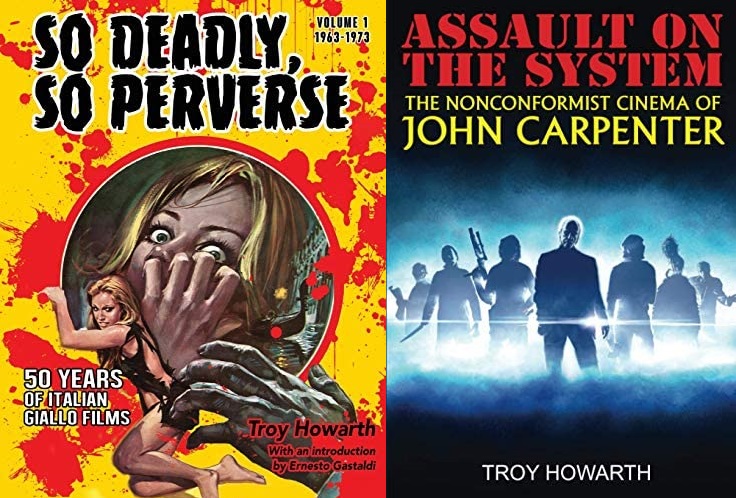
On this spooky season edition of Parallax Views, film historian Troy Howarth, author of such books as So Deadly, So Perverse: 50 Years of Italian Giallo Films, Assault on the System: The Nonconformist Cinema of John Carpenter, Splintered Visions: Lucio Fulci and His Films, Murder by Design: The Unsane Cinema of Dario Argento, The Haunted World of Mario Bava, and the new Make Them Die Slowly: The Kinetic Cinema of Umberto Lenzi, joins us for a wide-ranging conversation about horror movies. Among the topics covered: - How Troy got into horror through the Hammer Studios' horor movies of the late 1950s through to the 1970s. These films starred such actors as Christopher Lee and Peter Cushing and centered around classic monsters like The Mummy, Frankenstein's Monster, and Count Dracula - Why Troy doesn't like the "cheesy" description when it comes to older movies; especially when said movies are deliberately infused with comical elements - John Carpenter's Halloween and the dark side of suburbia; Carpenter's films in the context of the Vietnam War and Watergate; the rebellious nature of Carpenter's filmography - Similarities between horror and comedy as genres; the art of the jump scare; the label "elevated horror" and the problems with it - Explaining the term "Euro-Horor" and why Troy doesn't like the term "Euro-Trash" to describe such movies; the history of the Italian murder mystery aka giallo and it's relationship to film noir, whodunits, and the German krimis written by Edgar Wallace; psycho-sexual themes in the giallo; the pulp vibe in Italian gialli; the effect of WWII and fascism on Italian filmmakers like Dario Argento; the politics of Italian horror movies (are they left-wing or right-wing?); Dario Argento's latest movie Occhiali Neri (Dark Glasses) and it relevant social themes in the post-COVID era - Violence and women in the Italian giallo; the complex portrayal of women in the Italian gialli; Argento's collaborator Daria Nicolodi and her importance to films like Suspiria; accusations that Lucio Fulci's films are misogynistic; the decadence of the upper class or bourgeoisie in Italian horror movies -The jazz stylings of the controversial Spanish filmmaker Jess Franco and how living under the dictatorship of Gen. Francisco Franco influenced his films; sympathy and perversion in regards to women in Jess Franco's films - Analyzing the political subtext of Dario Argento's Profondo Rosso aka Deep Red starring David Hemmings and (slightly) futuristic Tenebrae - The ecological sentiment of Mario Bava's Twitch of the Death Nerve and Bay of Blood; the importance of Mario Bava's horror films and his giallo Blood and Black Lace; Mario Bava's Boris Karloff-starring Black Sabbath and the difference between the more subversive European cut (with sexual subtext) and the American International Pictures cut of the film; continental horror films of the mid-20th century were aimed at adults whereas many American horror films were aimed at youth and teenagers - Ruggero Deodato, the director of Cannibal Holocaust - Dario Argento's The Bird with the Crystal Plumage and the explosion of the giallo on the silver screen And much, much more!
Ep 691Glamour Ghoul: The Passions and Pain of the Real Vampira, Maila Nurmi w/ Sandra Niemi
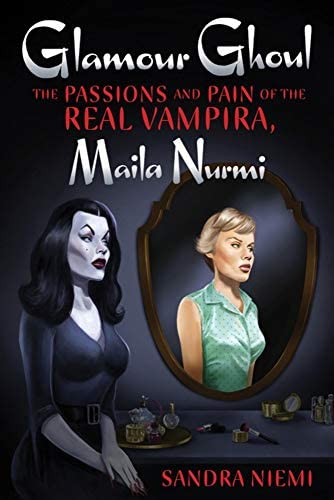
On this spooky season edition of Parallax Views, a previously unpublished and at one point thought-to-be-lost edition of Parallax Views! Sandra Niemi joins the show to discuss her book Glamour Ghoul: The Passions and Pain of the Real Vampire, Maila Nurmi. Sandra Niemi is the niece of Maila Nurmi, better known as the buxom TV horror Vampira! Maila Nurmi is perhaps most known for her iconic character Vampira, the sexy, sultry, and seductive 1950s horror movie host with an impossibly tiny waist. In addition to being a trailblazer amongst TV horror hosts, predating Elvira, Mistress of the Dark, and the hero of the Last Drive-In's Joe Bob Briggs by decades, Nurmi is also known her appearance in the Ed Wood cult classic Plan 9 from Outer Space. The woman behind the character, however, proves just as fascinating as Vampira herself. A lover of the bohemian lifestyle who rebelled against bourgeois values, Nurmi was also involved in the beatnik counterculture. And she rubbed elbows with such well-known Hollywood names as Orson Welles and Marlon Brando. Sandra will give an insight into who her aunt was and the legacy of Vampira. Among the topics covered: - How the character of Vampira came to be and the influences Nurmi drew from in creating the character - How Nurmi achieved the impossibly tiny waist that Vampira is forever known for - How Vampira became a huge hit in Los Angeles; the overt sexuality of the character; Vampira as a strong, empowered, liberated female character; how Vampira differed from the later Cassandra Peterson character Elvira, Mistress of the Dark - The sad story of Nurmi's relationship with Orson Welles - Knock-off Vampira characters that came about due to the success of The Vampira Show. - How she introduced the Vampira character to the LA-based ABC affiliate KABC-TV - The humble beginnings of Maila Nurmi and her childhood And much, much more!

Ep 695Eaters of the Dead: Myths and Realities of Cannibal Monsters w/ Kevin J. Wetmore
On this spooky season edition of Parallax Views, from Shakespeare's Titus Andronicus to Tobe Hooper's The Texas Chainsaw Massacre the idea of corpse-eating, monsters and cannibalistic killers have fascinated and terrified people for years. Throughout the world there's variations on this trope: the ghoul, the Wendigo, and the Aswang just to name a few. In this previously unpublished and recently rediscovered conversation, Kevin J. Wetmore, Jr. joins Parallax Views to discuss this macabre subject as explored in his book Eaters of the Dead: Myths and Realities of Cannibal Monsters. Among the topics covered: - The tradition of mortuary cannibalism as a way to honor the dead in some culture; Catholic transubstantiation; survival cannibalism and the Donner Party; Idi Amin and political cannibalism - Why are we fascinated by flesh-eating monsters; the popularity of Dr. Hannibal Lecter (Hannibal the Cannibal) and The Silence of the Lambs; taboos, the allure of the forbidden, and the Thanatos drive - Zombies!!!; how we got from the racist trope of the Haitian voodoo slave zombie to the flesh-eating, reanimated dead; the zombie as a metaphor - How our perception of death has changed in the past 100 years - The rural/urban divide, fear of the primitive and the regressive, and The Texas Chainsaw Massacre - The Filipino legend of the monster known as the Aswang - The First Nations monster called the Wendigo, which represents "the spirit of hunger and the heart of ice; the Wendigo as an entity that possesses its victim and drive them to madness and cannibalism; weird fiction author Algernon Blackwood' and the Wendigo in H.P. Lovecraft's Cthulhu mythos; the Wendigo and colonialism - The Ghoul, a pre-Islamic, Arabic dog-like corpse eater and how it became part of Islamic culture; how we perceive the ghoul has changed over the years; the 1980s horror anthology The Monster Club - The Scottish legend of Sawney Bean and his cannibalistic, the inspiration for The Hills Have Eyes; Sweeney Todd, the Demon Barber of Fleet Street; and the connection between cannibalism and Herman Melville's Moby Dick - Humorous portrayals of cannibalism such as in South Park and the connection between comedy and horror And much, much more!
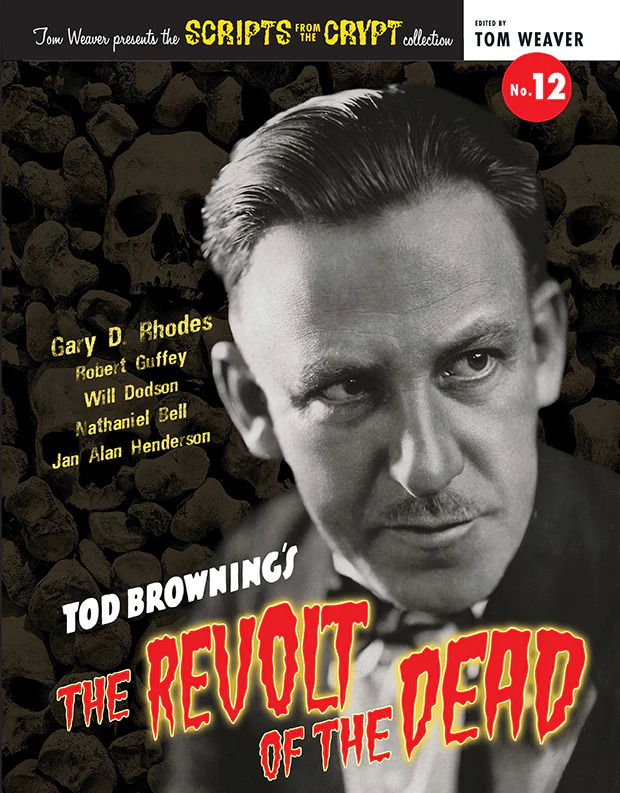
Ep 693Tod Browning and the Unmade 1930s Zombie Apocalypse Movie THE REVOLT OF THE DEAD w/ Gary D. Rhodes and Robert Guffey
On this spooky season edition of Parallax Views, film scholar Gary D. Rhodes, one of the foremost authorities on Bela Lugosi and classic horror cinema, and Robert Guffey return to the show to discuss their new edited volume Scripts from the Crypt No. 12: Tod Browning's Revolt of the Dead. Tod Browning is perhaps best known for director 1931's Dracula. Starring Bela Lugosi as the titular vampire count, a role which he'd become inextricably linked to for the rest of his career, Dracula was a massive success for Hollywood's depression era Universal Studios and launched that studios foray into making wildly popular creatures features for the next three decades. Before The Creature from the Black Lagoon, Frankenstein, The Invisible Man, and The Mummy there was Tod Browning's Dracula. Browning, however, wasn't new to either Hollywood or weaving tales of the macabre for the silver screen. Born on July 12, 1880, Browning ran was fascinated from a young age by carnivals and eventually ran away from home to join a traveling circus. From there he'd transition to acting and, finally, becoming a director. In the silent film era, Browning became known for his collaborations with Lon Chaney, Sr., who became known as "The Man of a Thousand Faces" and whose credits include such classics as The Hunchback of Notre Dame and The Phantom of the Opera. Together, Browning and Chaney told macabre tales involving themes like violence and mutilation in films like West of Zanzibar, The Unholy Three, The Unknown, and the infamously lost London After Midnight. Browning would then go on to direct Dracula before making other films such as the controversial Freaks (featuring real-life circus people) his London After Midnight talkie remake Mark of the Vampire. In this conversation Gary, Robert and I discuss: - An introduction to the Scripts from the Crypt series founded by film historian Tom Weaver - Biographical background on Tod Browning, who was often spoken of as the Edgar Allen Poe of filmmakers in his time and his influence on filmmakers and artists including Ray Bradbury, Alejandro Jodorowsky, and Woody Allen - The critical beating Browning has taken over the years and why Gary argues that it's mistaken; the Spanish Dracula vs. Browning's Dracula; Browning's transition from the silent films to talking motion pictures; Browning's collaborations with Lon Chaney Sr. and the horror elements in them - Browning's light-hearted murder mystery Miracles for Sale; Browning's early talkie The Thirteenth Chair starring Bela Lugosi (before Dracula) and its taking on the subject of spiritualist conmen/frauds; Browning's silent films such as West of Zanzibar, The Unknown, and The Unholy Three - Tod Browning's thematic obsessions: trickery, fakery, deception, mutilation, sexual frustration, and more; the different kinds of trickery dealt with in Browning's films; harmless truths vs. dangerous lies and swindling; skepticism towards medium, seances, and the supernatural; women and how they are portrayed in Browning's movies (such as Carol Borland's Luna in Mark of the Vampire); the Scooby Doo-eqsue element of Browning's murder mysteries - Tod Browning's Freaks; a movie that used real-life circus people; the film's subversive quality by way of its making viewers sympathize with the circus people and treating the "normal" people as the villains; the question of Freaks success and its effect on Browning's career; mentioning how the pop punk band The Ramones were influenced by Freaks; the role of vaudeville, circuses, and sideshow life on Browning's work - The Browning script/treatment for the unmade movie Revolt of the Dead; the movie would've predated William Friedkin's The Exorcist and Night of the Living Dead in dealing with now common horror tropes like demonic possession and the zombie apocalypse; Revolt of the Dead would've even included human crucifixions; the story would've also included the phenomena of stigmata, the inexplicable appearance of wounds on the wrists like those of Jesus Christ during the crucifixion; the unique qualities of the script - Tod Browning's Londo After Midnight, the "Holy Grail" of lost films; the rumors, legends, hoaxes around the movie ever since it was destroyed in a fire at the MGM vault; the iconic image of Lon Chaney Sr;. in scar make-up for London After Midnight; other lost films including F.W. Murnau's Der Januskopf (aka The Head Janus; starring Conrad Veidt and Bela Lugosi) and the 1959 Bela Lugosi-headlining chiller Lock Up Your Daughters - Robert' novel Bela Lugosi's Dead, which deals with a man searching for the lost test footage of Lugosi as Frankentein's monster - The Revolt of the Dead in relationship to White Zombie, William Seabrook's Magic Island novel and its success, American military involvement in Haiti, and racist/xenophobic sentiments about Haiti in the early 20th century - Appreciating early 20th century cinema; getting past the "I can't watch Black-and-White movies" mentality; the rewarding aspe
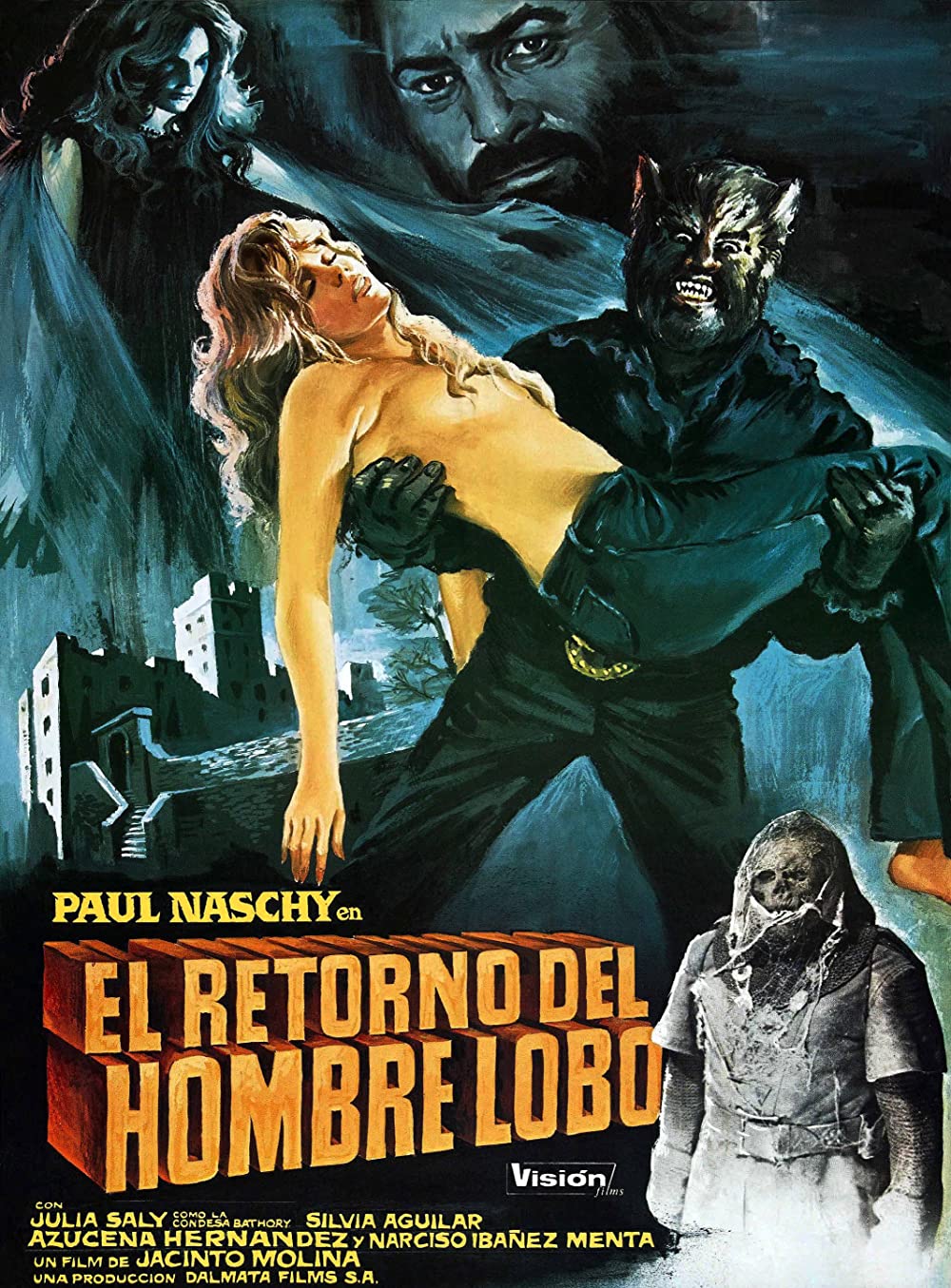
Ep 692The Wild Cinema of Spanish Horror Icon Paul Naschy w/ Rod Barnett and Troy Guinn
EOn this spooky season edition of Parallax Views, Troy Guinn and Rod Barnett of the Nashcycast joins us to discuss the overlooked cult movie career of Jacinto Molina, better known by his stage name Paul Naschy. For the uninitiated, Naschy has often been referred to as the Spanish Lon Chaney or Lon Chanery Jr. due to his playing such characters as the Mummy, Fu Manchu, Frankenstein's monster, the Hunchback of Notre Dame, and, most famously, the cursed werewolf Waldemar Daninsky. Naschy's take on horror and the gothic harkened back to the classic Universal Studios monster but with a 70s twist vis-a-vis the inclusion of sex and violence. However, when one delves deeper into these films it becomes apparent Naschy's films are more than just monster mashes, carrying with them their own distinct style and charms as well as highlighting Naschy's thematic obsessions. Among his more well-know titles are Howl of the Devil, Frankenstein's Bloody Terror, The Werewolf and the Yeti, Horror Rises from the Tomb, Dr. Jekyll and the Wolfman, The Werewolf and the Vampire Woman, The Beast and the Magic Sword, Night of the Werewolf, and many others. Over the years Naschy's cult following has grown with such directors as Joe Dante, John Landis, and Guillermo del Torro singing his praises. In this conversation we'll discuss the importance of Naschy, his bitter over the film industry in his latter years, Naschy's growing up under the dictatorship of General Francisco Franco in Spain and the influence of that on his work, censorship and Paul Naschy movies, and much, much more!
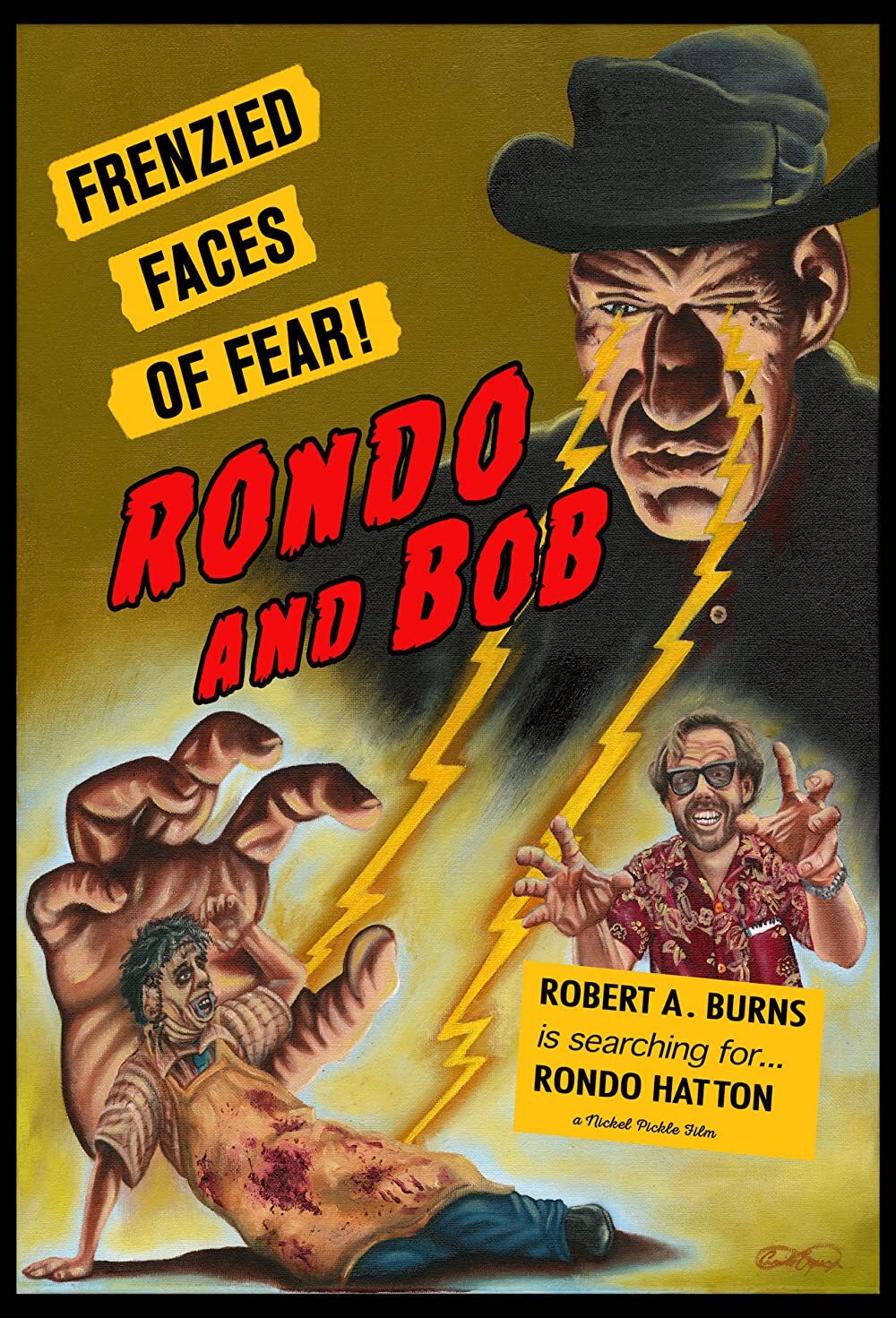
Ep 690Rondo and Bob, the Parallel Lives of THE TEXAS CHAINSAW MASSACRE’s Art Director and a 1940s Monster Movie Star w/ Joe O’Connell
On this spooky season edition of Parallax Views, documentarian Joe O'Connell joins us to discuss his latest feature, RONDO AND BOB, about the parallel lives of Robert A. Burns, the behind-the-scenes art force behind such cult classic horror movies as Tober Hooper's THE TEXAS CHAINSAW MASSACRE, Stuart Gordon's RE-ANIMATOR, Joe Dante's THE HOWLING, and Wes Craven's THE HILLS HAVE EYES, and Rondo Hatton, an acromelgaly-afflicted journalist of the early 20th century who made his way to Hollywood to become Tinsel Town's 1940s equivalent to monster movie icon Boris Karloff. Before getting into RONDO AND BOB, however, Joe and I discuss his previous documentary DANGER MAN. Said film focused on the life and times of stuntman Gary Kent, who was involved with a plethora of B-movie and independent films in the 1960s and 1970s. Kent also is one of the stuntmen upon which Brad Pitt's character in Quentin Tarantino's ONCE UPON TIME IN HOLLYWOOD was based. Specifically, the fact that Gary Kent had an encounter with Charles Manson while filming a movie on Spahn Ranch (where the Manson Family were living before the Tate/LaBianca murders) became a plot point in the aforementioned Tarantino feature. We then delve into the stories of Bob Burns and Rondo Hatton, including the similarities and differences in their lives. Burns was someone who appeared normal on the outside but was an eccentric in life and also felt unlovable. Rondo, most known for his appearances as "The Creeper" in films like the Sherlock Holmes caper PEARL OF DEATH, HOUSE OF HORRORS, and THE BRUTE MAN, appeared odd on the outside but was a normal, affable, and much loved man in his every day life. What can we learn from the lives of these two creative individuals who lived life on their on terms? That's the question in this fascinating edition of Parallax Views. Among the topics discussed: - The career of Gary Kent, who went to Hollywood with no experience but grew to become a long-running stuntman in Hollywood who often worked on the independent/grindhouse/drive-in movie circuit productions of Sam Sherman, Al Adamson, Don Jones, and Ray Dennis Steckler; his credits include movies like Schoolgirls in Chains, Bubba Ho-Tep, Psych-Out, Hell's Bloody Devils, Satan's Sadists, the Bruce Willis vehicle Color of Night, and Monte Hellman's Ride in the Whirlwind; how the documentary Danger God came together; the challenges of stunt work; Gary Kent's role in Rondo and Bob - The strange and fantastic lives of Bob Burns and Rondo Hatton; Rondo's early life, involvement with WWI, and his career in Hollywood; Bob's eccentric personality and loneliness; the continued fandom around Bob's work; Bob's acting as serial killing drifter Henry Lee Lucas in Confessions of a Serial Killer; Bob's movies Mongrel (with Hollywood star Aldo Ray) and his unreleased comedy Scream Test; Bob's home-made pinball machined based on the adult movie comedy Deep Throat with Linda Lovelace; the ways in which Rondo and Bob's lives mirror each other and the tragedies in their lives; Bob Burns, Tobe Hooper, and the University of Texas tower shooting - The influence of the George Lazenby/James Bond 007 documentary Becoming Bond on Rondo and Bob; the half-documentary/half-documentary approach of Rondo and Bob And much, much more!

Ep 689Jason Voorhess Back With a VENGEANCE in New Friday the 13th Fan Film w/ Jason Brooks/The Forgotten Nightmare on Elm Street TV Series w/ Henrique Couto and David Denoyer
On this spooky season edition of Parallax Views, we've got not one but two conversations to get you ready for Halloween! First, up Jason Brooks joins us to discuss the new Friday the fan film he's directed, wrote, and starred in called Friday the 13th Vengeance Part 2: Bloodlines. the first Friday the 13th Vengeance was a huge hit with fans of the Jason Voorhees saga and with it's professional-look, use of alumni from the Friday the 13th franchise, and feature-length running time was often spoken about as being "more than a fan film" when it came out. The sequel ups the ante further by featuring Halloween 5: The Revenge of Michael Myers's Tamara Glynn and Friday the 13th Part 6: Jason Lives's Darcy Demoss and fan favorite Thom Matthews reprising their roles as Nikki and the Jason's heroic arch-nemesis Tommy Jarvis. Also returning are Friday the 13th Part 6's C.J. Graham (who played Jason in Part 6), as Jason's father Elias Voorhees, and Tom McLoughlin, the writer and director of Part 6, as the new character Gravekeeper Walt. Both Vengeance Pt. 2 and its predecessor features a massive amount of gory carnage candy for fans of the series as well as some surprises along the way, including an appearance from The Ramones' Richie Ramone as a punk rocker! In this short but sweet conversation Jason and I discuss: - The origins of Friday the 13th Vengeance and how it started as an entirely different film called Friday the 13th: Mythos; the love and passion that went into Vengeance and how it became known as "More Than Just a Fan Film" thanks to the effort of Friday the 13th Part II's Steve Dash (who appears as the town Sheriff in the fan film; his last film role); the stars of Vengeance including the aforementioned Steve Dash, Friday the 13th Part 6's C.J. Graham, Diana Prince (aka Darcy the Mail Girl of Joe Bob Briggs' Last Drive-In fame on Shudder), and former Penthouse Pet Veronica Ricci among others - The inclusion of Jason Voorhees' father Elias Voorhees in Friday the 13th Vengeance Part 2: Bloodlines and his origins in the Tom McLoughlin's original screenplay for Friday the 13th Part 6 (Elias also appeared in a number of the comic book spin-offs of Friday the 13th) - Talking about the special and make-up effects, kills, gore for the films and involvement of Hollywood/filmmaking professionals from special FX artist Joe Castro to Friday the 13th's original composer Harry Manfredini - What Jason and Co. learned from the experience of making the first Vengeance and how that informed Vengeance Pt. 2 - The shooting schedule and principle photography for Vengeance Pt. 2 and information about its budget - Video technology and the barrier to entry to making a professional-looking fan film - Why Jason and Co. wanted to make a sequel to Friday the 13th Part 6: Jason Lives particularly - And much, much more! In the second half of the program, an old TV horror anthology has resurfaced after years of languishing in the tape trading underground of horror fanatics. Once only available in the form of poor quality bootlegs, Freddy's Nightmares is the forgotten Nightmare on Elm Street TV series that has recently experienced new life (and better quality) on the free (with ads) streaming service known as Tubi. Done in the style of Rod Serling's Twilight Zone, the show featured Freddy Krueger (played by Robert Englund of the film series) hosting bizarre and gruesome stories about his stomping grounds of Spirngwood, Ohio. Some of the episodes feature Freddy within the story while most only feature him in host segment. One particularly notorious episode, the pilot "No More Mr. Nice Guy", was directed by The Texas Chainsaw Massacre's Tobe Hooper and acted as an origin story for Freddy Krueger and prequel to Wes Craven's A Nightmare on Elm Street. With the series getting more attention thanks to it's being hosted on Tubi now, indie filmmaker Henrique Couto and David Denoyer have started a podcast in which they discuss each episode entitled Welcome to Primetime: A Freddy's Nightmares Retrospective. Henrique and David joins us to discuss not only Freddy's Nightmares but also the Freddy-mania of the 1980s, J.G.'s first experience with Freddy Krueger as a child vis-a-vis an unrewound Nightmare on Elm Street 2: Freddy's Revenge (notorious for its homosexual subtext), the before-they-were-stars appearances of actors and actresses like Brad Pitt and Tank Girl's Lori Petty in Freddy's Nightmares, the origin of Freddy's Nightmares, the subversive themes of the NOES franchise, Re-Animator's Jeffrey Combs appearance in Freddy's Nightmares, the idea of elevated horror, thoughts on David Gordon Green's divisive Halloween Ends, how technology (cameras, lighting equipment, etc.) has allowed for a lower barrier to entry for aspiring filmmakers, Henrique's new anthology series Found Footage, the importance of learning craft in filmmaking, the weird dream sequences in Freddy's Nightmares, whether we'll ever see a new Nightmare on Elm Street movie, the FR

Ep 688Scream Queens, Teenage Exorcists, & Sorority Babes in the Slimeball Bowl-O-Rama! w/ Brinke Stevens
On this edition of Parallax Views, we're joined by legendary 80s and 90s "Scream Queen" Brinke Stevens for the first in our spooky season-themed shows for Halloween! Known for her roles in such cult classics as Slumber Party Massacre, Sorority Babes in the Slimeball Bowl-O-Rama, Grandmother's House, Slave Girls from Beyond Infinity, Nightmare Sisters, Haunting Fear, Bad Girls from Mars, and Teenage Exorcist among countless others, Brinke is making going from acting to directing in the latest Full Moon Features movie Sorority Babes in the Slimeball Bowl-O-Rama 2. A long-awaited sequel to a true 80s, low-budget, cult horror-comedy classic, Brinke and I discuss that upcoming feature, due for release on streaming in November, as well as her career more generally. Among the topics we cover: - Brinke's journey from marine biology research to modeling and eventually working as an extra in movies like All the Marbles before becoming a full-fledged "Scream Queen" actress - Horror-comedies and the history of the "Scream Queen" era during the days of the VHS boom; Brinke, Linnea Quigley, and Michelle Bauer as the era's "Scream Queen" trio - Working with director's like Brian De Palma (in Body Double), Rob Reiner (in This is Spinal Tap), Fred Olen Ray, Jim Wynorski, and David DeCoteau - Stories behind films like Niko Mastorakis' underrated thriller Grandmother's House, in which Brinke had to rely solely on physical acting because her character had no dialogue, and Witchhouse 3, which Brinke describes as one of her more difficult experiences with make-up effects - The story behind Teenage Exorcist, a 90s horror comedy that Brinke Stevens both wrote and starred in alongside Fred Olen Ray regular Jay Richardson and nerdy character actor Eddie Deezen (Grease; the voice Mandark in Dexter's Lab and Know It All in Polar Express); the story of the unmade killer clown movie Tears of the Clown that Brinke wrote and would've starred Eddie Deezen - Shooting films on tight budgets and extremely short schedules - The enduring appeal of the original David DeCoteau's Sorority Babes in the Slimeball Bowl-O-Rama, which was a successful VHS rental before becoming a staple on the USA Network's Up All Night with Rhonda Shear - Working on nude scenes, sex appeal in the 80s cult classics Brinke appeared in, and Full Moon Features spotlighting female directors in the 21st century - Brinke's upcoming directorial effort in Joe Castro's Terror Toons 4 and how Brinke met Joe, who is an underrated special effects artist - What fans can expect from Sorority Babes in the Slimeball Bowl-O-Rama 2, which'll focus on another evil killer imp just like the original movie; Fast Times at Ridgemont High actress Kelli Maroney's key role in the movie as the sister of Linnea Quigley's punk character Spider from the first one; her experience directing the movie and how her acting has played a role in her directing style - How Brinke met Ronald Reagan - The longevity of Brinke's career (she has over 200 credit!)
Ep 687Harvard’s Quixotic Pursuit of a New Science: The Rise and Fall of the Department of Social Relations w/ Patrick L. Schmidt
On this edition of Parallax Views, attorney and author Patrick Schmidt joins us to discuss his fascinting new book Harvard's Quixotic Pursuit of a New Science: The Rise and Fall of the Department of Social Relations. Patrick details the ambitious academic project that attempted to bring together different disciplines like psychology, anthropology, and sociology under one umbrella and why it ultimately failed. It's a story that involves the sociologist Talcott Parsons (known for his contributions to the functionalist perspective of sociology), 1960s counterculture psychedelic gurus Timothy Leary and Ram Dass, the radical leftist Students for a Democratic Society, and even questionable experiment done to Theodore Kaczsynski years before he became infamous as the Unabomber. This conversation will lead us into multiple different directions including: - The formation of the Department of Social Relations and how it was an ambitious project that flew in the face of Harvard's conservative approach to academia - Talcott Parsons role as the ringleader of the department and what it sought to achieve in the post-WWII world - Sigmund Freud and the influence of psychoanalysis - Dr. Henry A. Murray and the story of the experiments done on Ted Kacyzinski while the future Unabomber was attending Harvard (including a little bit of discussion about the CIA and MK-ULTRA) - Timothy Leary involvement with Harvard, Leary's evolution into the bad boy of academia and a counterculture guru, the rise of LSD and the pharmaceutical company Sandoz, Timothy Leary vs. Aldous Huxley, and the ways in which Leary, Ram Dass, and other may have set research into psychedelics back a number of years through their activities - The Students for a Democratic Society's involvement in the department ultimately leading to the department's downfall - And much, much more!

Ep 684Burning Down the House: How Libertarian Philosophy Was Corrupted By Delusion And Greed w/ Andrew Koppelman
On this edition of Parallax Views, Andrew Koppelman, award-winning John Paul Stevens Professor of Law at Northwestern University, joins us to discuss his new book Burning Down the House: How Libertarian Philosophy Was Corrupted by Delusion and Greed. We discuss libertarianism from a number of different angles and the ways in which Andrew argues it does not fulfill its promises related to freedom and the functioning of society. Among the topics covered: - The origins of libertarianism, the philosophy of Fredrich Hayek, centrally-planned economies, and The Road to Serfdom - Atlas Shrugged author Ayn Rand, Robert Nozick, and the influence of Murray Rothbard and "anarcho-capitalism" on the libertarian movement - An explanation of what Liberalism means within the context of political science/philosophy - The Koch Brothers and climate change - Rich and corporate moochers - Libertarianism in relation to debates about gay marriage and healthcare - Andrew's thoughts on Jacobin and the socialist Left; his disagreements with them - Illiberal liberalism and libertarianism - COVID and libertarianism; the argument that erupted between libertarians Lew Rockwell and Walter Block over COVID - Privatization of fire departments and the story of Gene Carrick's house burning down (where the book gets its title) - Is there possible points of agreement between centrist liberals, libertarians, and socialists? - Libertarianism and drug law/The War on Drugs - And much, much more!
Ep 686God’s Cold Warrior: The Life and Faith of John Foster Dulles w/ John D. Wilsey
On this edition of Parallax Views, a previously unpublished conversation with John D. Wilsey, associate professor of church history at The Southern Baptist Theological Seminary in Louisville, Kentucky, about his book God's Cold Warrior: The Life and Faith of John Foster Dulles. In past episodes, John Foster Dulles and his brother Allen Dulles have been discussed critically for their role in 20th century U.S. foreign policy. John Foster Dulles served as a Secretary of State and his brother Allen Dulles was a Director of the Central Intelligence Agency. Both were major figures in the Cold War and were crusaders against communism. Previous Parallax Views guests such as Andrew Bacevich, Greg Poulgrain, and, most notably, Stephen Kinzer, who wrote The Brothers: John Foster Dulles, Allen Dulles, and Their Secret World War: John Foster Dulles, Allen Dulles, and Their Secret World War, have all been extremely critical of the Dulles legacy. John D. Wilsey, although sharing many of those criticisms, was interested in examining John Foster Dulles from a different angle. Namely the role of Dulles' faith in his endeavors as a diplomat and Cold Warrior. Specifically, what was the influence of Protestant Christianity on John Foster Dulles? In this conversation we delve into the theological framework that informed the ways Dulles thoughts about diplomacy and his view that Soviet communism was an existential threat to the U.S. We delve into the ways in which diplomat George Kennan found Dulles' framework and the religious influence on it to be dangerous and Manichean in nature. We also look at the way in which Dulles believed that the Church would play an important role in the fight against Soviet communism. Other issues covered include moral law and Christianity, the early life of John Foster Dulles, Christian nationalism (a subject that Wilsey has written extensively on), the view of the Cold War as a Manichean battle between good and evil, the paradoxes and contradictions of Dulles' thought and diplomacy, Protestant liberalism, the Federal Council of Churches, WWII, the Cold War and the threat of nuclear annihilation, Dulles as product of his time, U.S. covert wars during the Cold War, comparing and contrasting Martin Luther King and John Foster Dulles (Wilsey devotes a whole chapter to this in his book American Exceptionalism and Civil Religion: Reassessing the History of an Idea), and much, much more. Those looking for a conversation about whether Dulles was right or wrong in his views may be disappointed by this conversation. Wilsey's book is ultimately a religious biography of Dulles rather than a critical look at his role in foreign policy. However, I believe it nonetheless sheds light on Dulles and his thinking regardless where one stands on his whether his influence on U.S. foreign policy was positive or negative.
Ep 685Paths of Dissent: Soldiers Speak Out Against America’s Misguided Wars w/ Andrew Bacevich
EOn this edition of Parallax Views, historian, veteran, and Quincy Institute President Andrew J. Bacevich returns to Parallax Views to discuss the new volume he co-edited with Afghanistan war vetern Danny Sjursen entitled Paths of Dissent: Soldiers Speak Out Against America's Misguided Wars. What does it mean to be a veteran of war, especially those "forever wars" in the wake of 9/11 such as Iraq and Afghanistan? And what is it that we, the citizenry, sometimes fail to understand about veterans and the experiences in the ways we celebrate their service on holidays like veterans day? Moreover, what of those soldiers who have spoken against war due to their own personal experiences? Have we neglected to hear their stories? What can we learn from those stories and what they say about empire, militarism, and U.S. foreign interventions in the 21st century? According to Prof. Bacevich they may well show that General William Tecumseh Sherman's famous adage that "War is Hell" is both true and insufficient, because, as Bacevich puts it, war may well serve as a form of education. And for many soldiers that education is a painful one in which their basic assumptions about the U.S. and the world is challenged in a transformative way. We, Bacevich contends, owe it to those soldiers to hear their stories and take into consideration what their education has taught them. Among the topics covered: - Prof. Bacevich's journey from a career military man to being one of the foremost skeptics of U.S. foreign policy since the end of the Cold War - Moral injury and the cost of war - The All-Volunteer Force (AVF) and criticisms of it - The Global War on Terror and the story of United States Army officer Ian Fishback, who expressed concern with torture and abuse of prisoners - Professor Bacevich's feelings on Veteran's Day and the ways in which we sometimes celebrate veterans in a way that is arguably hollow or not understanding fully of their often difficult experiences - Elites and the foreign policy "Blob" - And much, much more! NOTE: Usual outro song got mistakenly left out of this episode. Editing error!

Ep 683Veteran Readjustment Culture and Reframing the Civilian-Military Divide w/ Mike Kim
On this edition of Parallax Views, Iraq War veteran, ex-friar monk, and psychoanalyst Mike Kim of Coming Home Well and the Veteran Et Cetera podcast joins us to discuss veteran readjustment culture along with his thoughts on the civilian-military divide and other matters.This conversation was recorded on 6/22/22. Much of the conversation centers around Mike's work on war trauma therapy counseling and therapy with a focus on veteran readjustment culture. When a warrior comes home how does he readjust to life outside the warzone? That's question that Mike's work seeks to answer. In this regard we delve into issues related to war, trauma, and colonialism as well as Mike's own personal journey. Additionally, we discuss matters like the the Cold War and Vietnam, volunteers in the Ukraine/Russia war, the movie First Blood and John Rambo, militarism, why Mike believes the civilian-military divide is fake, the myths and tropes of the soldier and warrior, "American Sniper" Chris Kyle and the use of veterans as a political bludgeon, the shaming of the civilian populace by certain military writers, the "Support the Troops" slogan, military spending vs. spending on veterans, war and economic misery, the presentation of war and readjustment in the national narrative and popular culture, "militainment" and the culture of militarism, veteran wellness, and much, much more!
Ep 682Mental Health Counselor by Day, World-Class MMA Fighter by Night w/ Jillian ”Lionheart” DeCoursey
On this edition of Parallax Views, Jilian "Lionheart" DeCoursey has been ranked as one of the top ten female atomweight division Mixed Martial Arts (MMA) athletes in the world. On May 11th, 2022 she scored an impressive knock-out (KO) punch victory against Lindsay VanZandt in just over a minute. Now with a 5-3 win/loss professional record (and an 8-1 win/loss amateur record) she's heading into an Invicta FC Atomweight championship bout against reigning champion Jéssica Delboni on September 28th, 2022 at Invicta FC 49. But Jillian isn't just a world-class MMA athlete. By day she's a mental health counselor who runs her own practice. She'll be joining us on this edition of the program to discuss MMA, mental health, how the two are connected, and her big match against Jéssica Delboni. Additionally Jillian and I will tackle such topics: - The rising prominence of female MMA thanks to the popularity of Ronda Rousey's UFC run and the growth of the female talent roster in the world of MMA - Sexism in the world of MMA and whether or not Jillian has experienced any brushes with it - How she got into MMA after life-long involvement in competitive sports like collegiate basketball and the challenges she faced, like physical injuries, getting into MMA - Misperceptions about MMA as merely violent or brutal "human cockfighting" - What Jillian has learned from her MMA career that's helped her in her mental health practice - MMA and psychology - Mindset coaching - Her knockout victory against Lindsay VanZandt at Invicta 47 and what that experience was like - Experiences with fans and performing in front of U.S. troops - Men who are intimidated by women that practice martial arts like kickboxing and jiu jitsu - Her professional MMA debut and the feelings of excitement and self-doubt that came with it - Having a positive mental attitude - Inspiring younger women to get into MMA - And much, much more!
Ep 678Woodstock ’99, Capitalism, and the Pitfalls of 60s Counterculture Nostalgia w/ Jason Myles
EOn this edition of Parallax Views, Jason Myles of the THIS IS REVOLUTION podcast and the metal band Bitter Lake joins the program to discuss his Sublation Magazine article "Remembering Woodstock ‘99". Analysis and commentary of the Woodstock '99 music festival, which famously ended in riots and sexual assaults, has resurfaced in 2022 thanks to new documentaries: Netflix's Trainwreck: Woodstock '99 and HBO Max's Woodstock 99: Peace, Love, and Rage. These documentaries make the case the the aggressive music of Generation X, particularly bands like Korn and Limp Bitzkit, and crass commercialism were in large part to blame for the Woodstock '99 fiasco and, furthermore, that all of this betrayed the hippie peace and love ethos of the original Woodstock. Jason, who has experience working music festivals, argues that this doesn't really strike the root of the issues that led to Woodstock '99. Specifically, Jason takes a materialist perspective on the matter that looks at relationship between capitalism and not only Woodstock '99 but the original Woodstock music festival of 1969 as well. In doing so h de-mythologizes the romanticized narrative around the original Woodstock festival and questions the nostalgia around the 60s counterculture. All of this and much more covered on this edition of Parallax Views!
Ep 681How Grassroots Hackers & a Cute Lil’ Robot Created Transformative Art Out of a 23 Year Old Video Game w/ Sauraen & DwangoAC
On this edition of Parallax Views, at the summer 2022 Game Done Quick, a video game speed-running marathon charity, fans of the classic Nintendo 64 title The Legend of Zelda: Ocarina of Time were treated to an experience that they'd never expected. For 23-years players imagined the possibility of obtaining the game's most legendary, mystical item: the Triforce. Throughout the latter part of the 90s and the early 2000s urban legends proliferated claiming that players could, in fact, get the Triforce in game. But it wasn't until the "Beta Showcase", later revealed to be the Triforce% run showcase, that the dream of many of these fans would materialize into a reality. Using Arbitrary Code Execution (ACE), a human speed-runner, and cute, trusty robot known as TASBot (short for tool-assisted robot) a team led by the gaming community's Sauraen and DwangoAC were able to create a wildly new, fresh experience of The Legend of Zelda: Ocarina of Time on an original, unmodified N64 cartridge. Said experience created a new story within the game that even included, believe it or not, a finale featuring a scene with graphics from the Nintendo Switch's The Legend of Zelda: Breath of the Wild and a fan-inclusive moment that tugged on the heartstrings of many gamers. And, as previously stated, this was all accomplished on an unmodified N64 cartridge. It was monumental event, in part, because it completely goes against previous conceptions of what Arbitrary Code Execution can do in video games. Ultimately, most people perceive ACE exploits as merely "breaking" a game. In other words, ACE, which involves pressing controller buttons in a quick and process way, is most commonly used glitch games in ways that allow for game completion in ways not intended by the developers. With the Triforce% run, however, ACE was used in quite a different way: to create rather than to destroy. Sauraen, the Triforce%'s director, and DwangoAC, the keeper of TASBot, join us on this edition of the show to talk about the whole project, how it came together, what the reactions to it have been, common misconceptions about Triforce% and what was done at the showcase of it at Games Done Quick, and much, much more including: - Explanations of TAS the tool-assisted robot, ACE (Arbitrary Code Execution, and SRM (Stale Reference Manipulation) and how they were used to make the Triforce% speedrun possible - The emotional elements of Triforce%'s story and ending - The Triforce% showcase as transformative art and "RAM Hacking" - How the speedrun could've gone wrong - Using ACE to create rather than to destroy; ACE being commonly understood as "breaking" the game and how the showcase shows a different side of what ACE can do - How was the ending with graphics in the style the Nintendo Switch title The Legend of Zelda: Breath of the Wild done? - Misconceptions people have about the Triforce% showcase - TASBot's ability to press buttons faser than any human and how this figured into the speedrun - Does this open up new doors of possibility for future transformative art and the use of ACE in games like The Legend of Zelda: Majora's Mask and Super Mario games? - Legal concerns and Nintendo - How the showcase was used to raise money for the Doctors Without Borders charity

Ep 680Alex Jones and the Failings of the Journalistic Ecosystem w/ Russ Baker
On this edition of Parallax Views, the conspiratorially-minded, Trump supporting Infowars host Alex Jones recently lost a major lawsuit against Sandy Hook families. WhoWhatWhy.Org's Russ Baker, author of Family of Secrets: The Bush Dynasty, America's Invisible Government, and the Hidden History of the Past Fifty Years, returns to the program to discuss his experience with Jones as well as to explore the rise and fall of the Infowars empire and the problems with the media/journalism ecosystem that may have contributed to Jones's success. Among the topics discussed: - Russ Baker's experience with mainstream media after the publication of Family of Secrets - Alex Jones and the Iraq War - The problems facing journalism today - The term "conspiracy theory" and its uses and misuses - The rise of QAnon and conspiratorial-thinking that places a shadowy, almost supernatural cabal at the center of the world's problems - And much, much more!

Ep 677Big Tech and the Orwellian Surveillance of School Students w/ Nolan Higdon & Allison Butler
On this edition of Parallax Views, Project Censored' Nolan Hidon returns to the program alongside the Media Freedom Foundation's Allison Butler to discuss their recent USA Today article "Strangers are spying on your child. And schools are paying them to do it". Since the pandemic, big tech hardware and software has become even more ubiquitous in schools across the United States. Is there a downside to this alliance between the American education system and big tech companies? Nolan Higdon and Allison Butler argue that big tech's latest ventures in the classroom violate students' right to privacy and stifle their learning environments. In fact, they go so far as to invoke George Orwell's 1984 in addressing the issues of big tech in the classroom. Among the topics we'll be discussing are: companies and software such as Turnitin, ClassDojo, Illuminate Education and G Suite for Education; the effects of big tech surveillance and the potential for student self-censorship in the classroom; data breaches in schools; big tech surveillance in the classroom's growth and its coinciding with the renewed issues around book banning; the difficult in measuring what the possible negative impacts of big tech's influence in the classroom will be going forward; and much, much more!
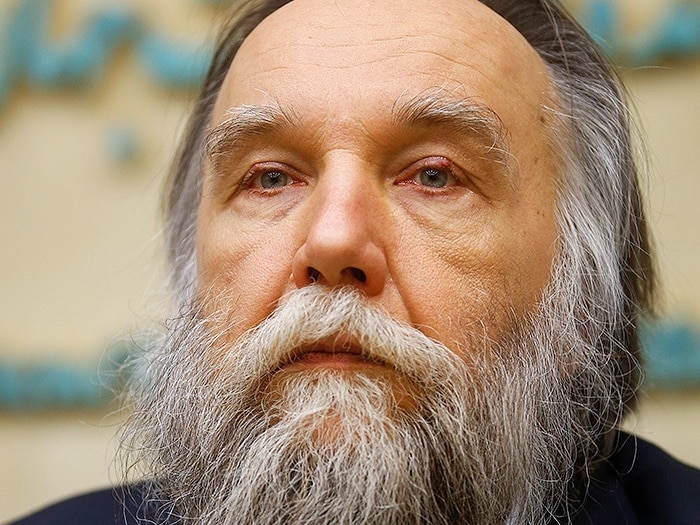
Ep 676Aleksandr Dugin and Misevaluating the Importance of Intellectuals to Regime Decision-Making w/ Ramon Glazov
On this edition of Parallax Views, Ramon Glazov, translator of Girgio De Maria's The Transgressionists and Other Disquieting Works and author of assorted pieces found in such publications as Jacobin and Overland, joins us to discuss the Russian far-right philosopher Alexander Dugin. Dugin has been in the news due to his daughter's death in a fiery car explosion. This episode will not deal so much with that current events incident, but rather the question of Dugin's significance to the regime of Vladimir Putin. In both mainstream and alternative/independent media Dugin has often been described as "Putin's Brain" or "Putin's Rasputin". Ramon believes the evidence for Dugin's significance to Putin and the Russian state has been vastly overstated in a way that has negative consequences. We'll discuss Dugin's Foundations of Geopolitics, his "Fourth Political Theory", Dugin and postmodernism, Dugin's anti-China views, Dugin's more bizarre geopolitical proposals that are unlikely to be held by Putin or the Kremlin, elitism vs. populism on the right, the Traditionalist thinker Julius Evola, the modernist poet and rabid antisemite Ezra Pound, French far-right thinker Alain de Benoist, the political uselessness of Evolian occultism, Dugin's removal from the University of Moscow for genocidal comments directed at Ukraine/Ukrainians, the paradox of Dugin's self-professed "ethno-centrism, but not racism" views, Dugin's defensive identity politics, spiritual racism, fascism, Russian punk/counterculture icon Eduard Liminov and National Bolshevism, Dugin's views on Germany, Western journalism on Dugin and cherry-picking what Dugin says, Dugin's pluralist relativism, racist ideas about Russians as inherently relativist in their thinking, Dugin and the Kremlin, isolationism and the paradox of far-right wing "anti-globalism", far-right intellectuals and political opportunism, Dugin/Pound/Evola as political hanger-ons, Steve Bannon Vs. a figure Julius Evola or Alexander Dugin, Ezra Pound's WWII propaganda broadcasts in Mussolini's Italy, Ezra Pound's mental hospital stay, Dugin's strange views on Soviet Union serial killer Andrei Chikatilo, and much, much more!
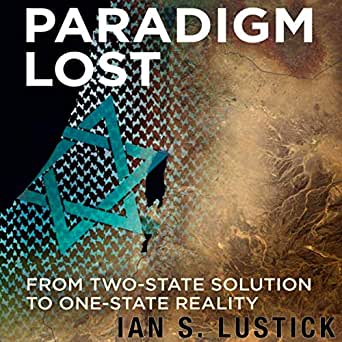
Ep 675Paradigm Lost: From Two-State Solution to One-State Reality w/ Ian S. Lustick
On this edition of Parallax Views, is the two-state solution in the Israel/Palestine conflict dead? If so what are the possible futures moving forward for Israel/Palestine? Dr. Ian S. Lustick, the Bess W. Heyman Chair in the Political Science Department of the University of Pennsylvania, joins us to discuss why he believes the two-state solution is now an impossibility as argued in his 2019 book Paradigm Lost: From Two-State Solution to One-State Reality. Recently, Dr. Lustick's book was just recently released in a Hebrew-language edition which is what helped precipitate this conversation. Among the topics discussed in this conversation: - The history of the the two-state solution including discussion of Great Britain, the Peel Commission, partition, the United Nations, Zionism, Palestinian Arabs, the 1967 Six-Day War, and the return of partition discussion in the 1970s - Dr. Lustick's support for the two-state solution and his work on that matter starting in the 1970s; how Dr. Lustick's views evolved over time and why he no longer believes the two-state solution is within the realm of possibility - The use of the term "one-state reality" rather than solution in the title of the book; the loss of the two-state solution as a paradigm of thought; the promise and hope that exists within new ways of thinking about Israel/Palestine - The question of the Israel lobby (specifically AIPAC) and U.S. foreign policy; John Mearsheimer and Stephen Walt's critique of the lobby as related to U.S. national interests and the ways in which Dr. Lustick's analysis is both in way similar to and different to Mearsheimer and Walt's analysis - The Boycott, Divestment, Sanctions (BDS) movement - Revisionist Zionism, Likud Party founder and Israel's sixth Prime Minister Menachem Begin, Zionist thinker Vladimir "Ze'ev" Jabotinsky, and the "Iron Wall" strategy - Secret negotiations, sabotaging of peace processes, and the failure of Oslo Accords - Gaza and the West Bank - President Joe Biden's comments on Israel/Palestine early on in his White House tenure and why Dr. Lustick believes they are significant - The nature of political change, the evolution of the Democratic Party from supporting Jim Crow to being the party of the first black President Barack, and the abandonment of the "Demographic" argument in regards to Israel/Palestine - What does Dr. Lustick have to say about, for example, Gazans than can't wait for decades long changes through a long protracted struggle? - The theme of unintended consequences in Paradigm Lost: From Two-State Solution to One-State Reality - Commenting on the human rights-centric approach to Israel/Palestine as advocated by Palestinian human rights attorney Zaha Hassan and others - Peter Beinart and the changing of the guard on the issue of Israel/Palestine and the two-state solution - And much, much more!

Ep 674The Mental Health Crisis in Gaza w/ Dr. Yasser Abu Jamei of Gaza Community Mental Health Programme
On this edition of Parallax Views, we return to the issue of the struggles faced by people living in the Gaza Strip. Specifically, we are honing in on the mental health crisis in Gaza, especially in regards to children. Joining us is Dr. Yasser Abu Jamei, a Palestinian clinical neuro-psychiatrist and the Director General of the Gaza Community Mental Health Programme. This is a sobering conversation in which Dr. Jamei details how trauma, fear, and poverty have coalesced in Gaza to create mental health for its inhabitants. We'll be discussing the effects of the Israeli occupation, air-strikes, difficult socio-economic conditions, and the biopsychosocial model as they relate to these matters. Additionally, Dr. Jamei will discuss the issue of education and universities in Gaza, the differences in challenges face by men and women/boys and girls in Gaza, Gaza and human rights (and framing the issues around human rights rather than religious conflict), the discourse around Gaza in Western media, and much, much more.

Ep 673The Incredible Story of the Scientist Who Shared Nuclear Secrets With the Soviet Union w/ Dave Lindorff
On this edition of Parallax Views, a previously unpublished interview with journalist Dave Lindorff of This Can't Be Happening on the fascinating story of the Theodore Alvin Hall, the American physicist who became an atomic spy by sharing nuclear secrets with the Soviet Union during the Cold War. But this is not just the story of Ted Hall. It's also the story of his brother Edward Hall, who, despite his skepticism towards the Soviet Union, protected his brother against J. Edgar Hoover's FBI. Moreover, it's a case that asks the question, "Why did Ted Hall share these secrets with the Soviet Union?" As it turns out, the answer to that question may be more noble, if we consider Hall's perspective, than one would imagine. We dive into the world of atomic bombs, Hiroshima and Nagaski, the Manhattan Project, spying, the romance between Ted Hall and his wife Joan Hall, the trial and execution of Julius and Ethel Rosenberg, the "What If" scenario of the U.S. having a monopoly on nuclear weapons after WWII, the physicist and atomic spy Klaus Fuchs, Ted Hall's motivation for becoming an atomic spy, the incredible life of Ted's brother Edward (including a connection to Operation Paperclip and working on a top secret missile program at Wright Patterson Air Force Base), the interrogation of Ted Hall, the FBI file on Edward Hall, Ted Halls' Harvard roommate (and spy) Savile Sax, and much, much more! For more information on Ted's story please read Dave's article at The Nation entitled "One Brother Gave the Soviets the A-Bomb. The Other Got a Medal".

Ep 671Forensic Anthopology and Cold, Cold Bones w/ Kathy Reichs, Writer of the Bones Novels
On this edition of Parallax Views, Kathy Reichs, author of the best-selling Bones series of murder mystery/thriller novels, joins us to discuss the 21st entry in the series, Cold, Cold Bones. The Bones books follows Temperance Brennan as she helps solve crimes with her expertise in forensic anthropology. Reichs' novels became so popular that they eventually spawned a hit TV series that lasted 12 seasons. In Cold, Cold Bones Tempe is made to revisit her old cases after she and her daughter discover a mysterious package at her place. Said package contains a human eyeball that leads her to a Benedictine Monastery and what eventually comes to pass is that a copycat killer familiar with Tempe's earlier cases is on the loose. Will Tempe solve the murders in time? In this conversation Reichs and I discuss the enduring nature of the Bones series, speculation that Tempe is on the autism spectrum, the ways in which readers relate to Tempe, thoughts on the hit TV series based on Reichs' books, working at Ground Zero after 9/11, Reichs' anthropological work in Guatamala (which inspired her novel Grave Secrets), the appearance of humor in her murder mystery stories, an overview of Cold, Cold Bones, the snowstorm setting of Cold, Cold Bones, misconceptions about forensic anthropology, DNA and the evolution of forensic anthropology, how newspaper headlines and stories influence Kathy's stories, how CRISPR tech influenced a Temperance Brennan murder mystery, how Kathy went from bio-archaeology to helping police on cases as a forensic anthropologist, and more!

Ep 670How Israel Made AIPAC w/ Grant F. Smith/CBS Pulls Documentary on Western Arms to Ukraine w/ Dave DeCamp
On this edition of Parallax Views, the Institute for Research: Middle East Policy's Grant F. Smith returns to discuss his new podcast documentary series How Israel Made AIPAC. Grant takes through the history of AIPAC, often simply referred to as the Israel lobby, from its earliest days vis-a-vis the figure of lobbyist Isaiah L. Kenen. Grant gives an overview about the origins of AIPAC and issues related to Israel in the 20th century including the Transfer Agreement and the Third Reich, Haganah arms smuggling, NUMEC and how Israel acquired nuclear weapons, the Foreign Agents Registration Act (FARA), the U.S. State Department, Ze'ev "Vladimir" Jabotinsky and the Likud Party, and more. We'll also discuss the importance of this documentary series to current events and U.S. foreign policy today as well as the ways in which previous Presidents like the Pendergast Machine-affiliated Harry Truman could be compromised by private or foreign interests. Then, in a brief bonus segment, Dave DeCamp of Antiwar.Com joins us to discuss how a recent CBS documentary on U.S./NATO arming of Ukraine was pulled after Volodymyr Zelensky's government complained about it. One of the issues raised by the documentary was the question of how many of the arms being sent to Ukraine are actually making it into the hands of the military. Ukraine's foreign defense minister has called for CBS to launch an internal investigation to see who "enabled" the documentary.
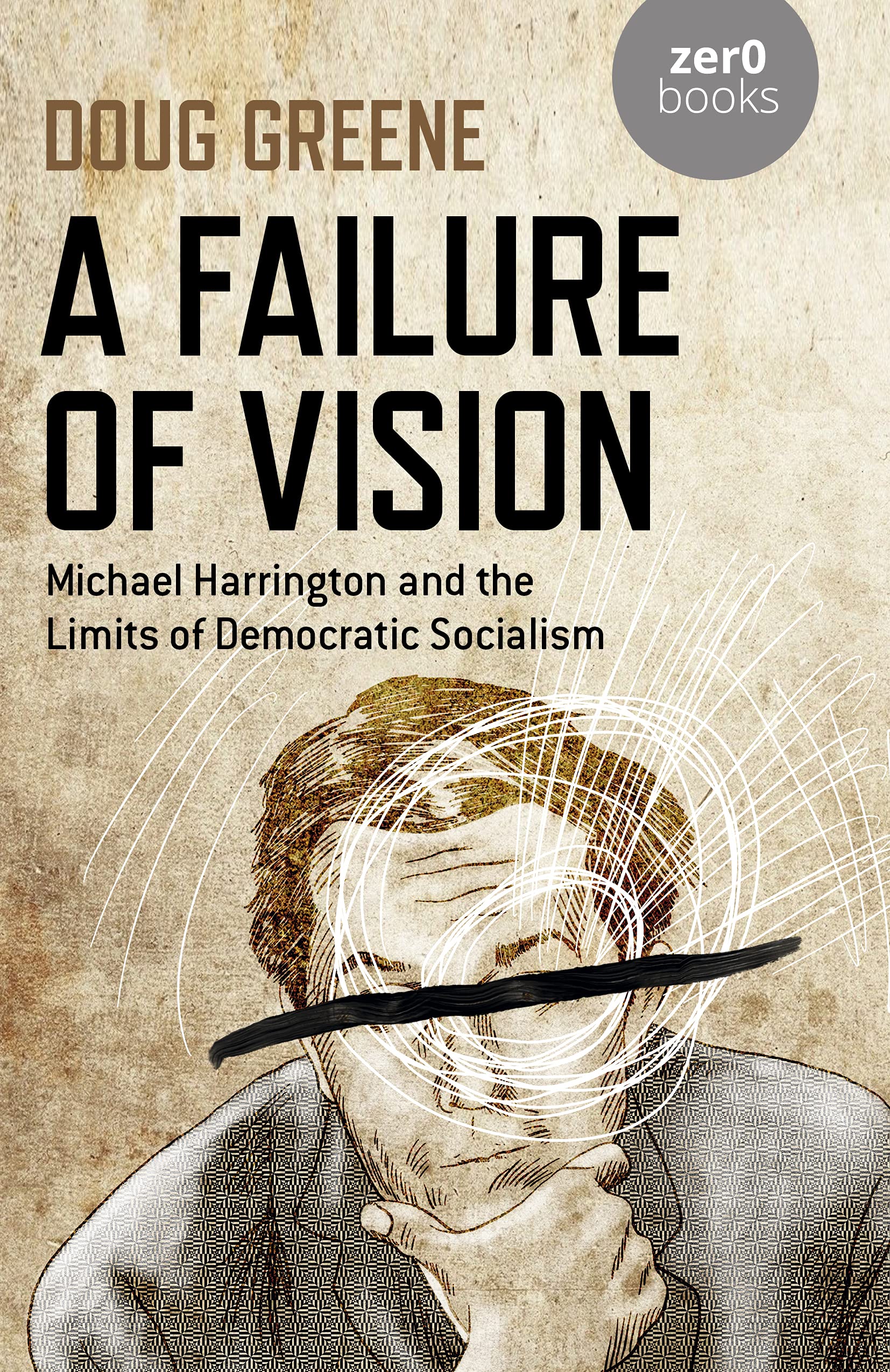
Ep 658A Failure of Vision: Michael Harrington and the Limits of Democratic Socialism w/ Doug Greene
On this edition of Parallax Views, we delve into the intellectual life and thought of Michael Harrington, a key figure of the American New Left who helped found the DSA (Democratic Socialists of America). The author of the influential The Other America: Poverty in the United States, Harrington was a proponent of what he called "the left wing of the possible" and thus believed that socialists must push for a re-alignment of the Democratic Party. Joining us to offer a critique Harrington's thought is Doug Greene, author of the zer0 books title A Failure of Vision: Michael Harrington and the Limits of Democratic Socialism. Among the topics covered in this conversation: - The early intellectual development of Michael Harrington and his interest in bohemianism - Harrington's anti-communism, his belief in a popular front sans Stalinists, and his relationship to New Left in the 60s - Harrington's "left wing of the possible" strategy and the Democratic Party - The influence of theorist Max Schachtman on Harrington's thinking; Harrington's concept of "Democratic Marxism" - Liberalism, Capitalism, Michael Harrington, and the reformist vs. revolutionary divide - Michael Harrington, the DSA, and the Israel/Palestine conflict - Michael Harrington, the Vietnam War, and imperialism - Harrington's value beyond the criticisms Greene has of him - Harrington's The Other America, FDR the New Deal coalition, and LBJ's Great Society - Harrington's debates with or critiques of right-wing figures like William F. Buckley and Milton Friedman - And much, much more!
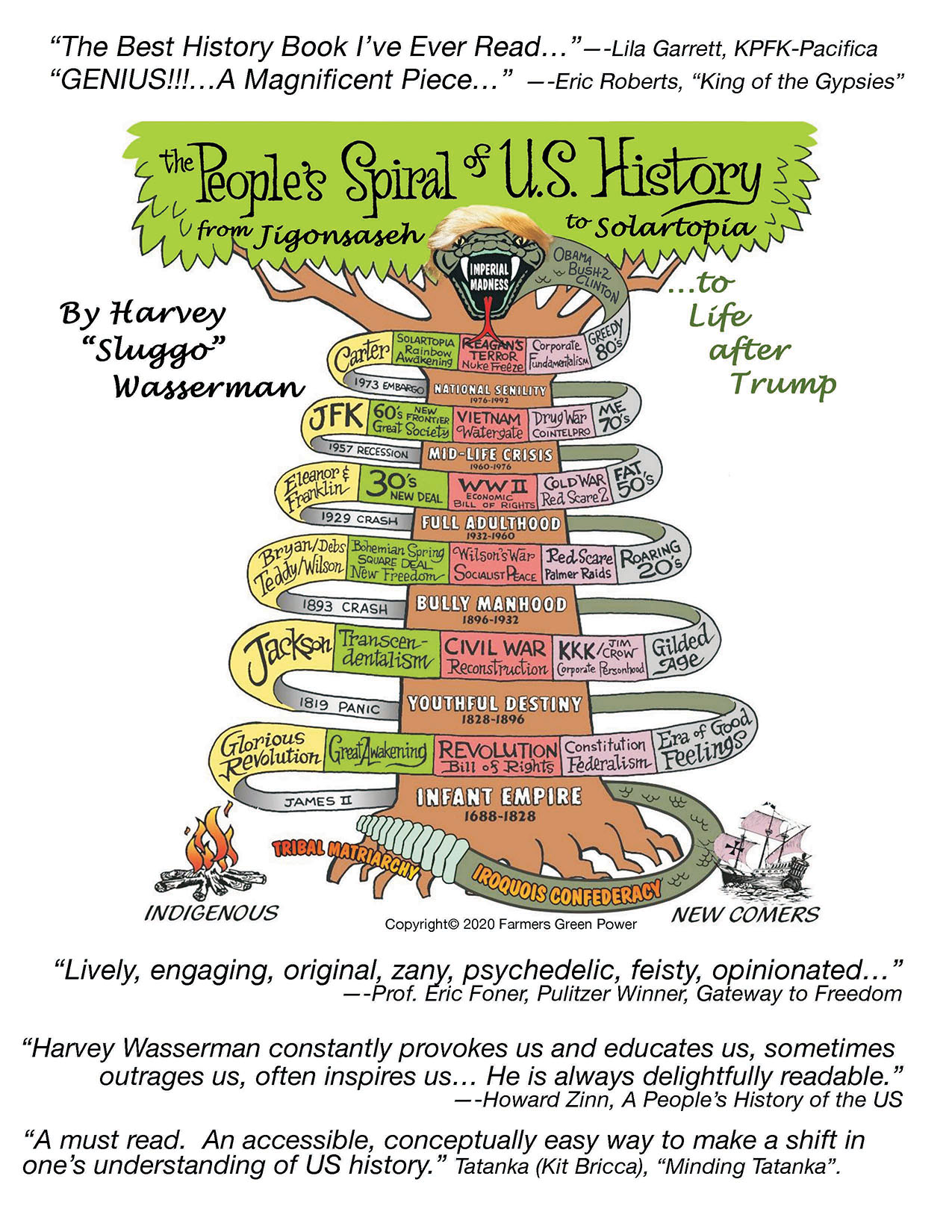
Ep 669The People’s Spiral of U.S. History, 60s Activism, Psychedelics, Stolen Elections, & More w/ Harvey Wasserman
On this edition of Parallax Views, longtime activist and populist historian Harvey "Sluggo" Wasserman joined the show to discuss his life of radical activism and his new book The People's Spiral of U.S. History: From Jigonsaseh to Solartopia. This conversation is a wild ride as Harvey gives us an overview of his long life including stories of Democratic National Convention riots in 1968, writing a pro-marijuana article in his youth that caused him to appear on multiple TV shows, dropping acid in the 1960s, living in a hippie farming community, discovering the life and times of socialist leader Eugene V. Debs, the COINTELPRO-era FBI's attempts to infiltrate and destroy a radical news service Harvey was involved with called Liberation News Service, and helping to kickstart the anti-nukes/"No Nukes" movement as well as his encounters with Howard Zinn, Martin Luther King, Jr., Timothy Leary, Abbie Hoffman, and many, many others. Additionally, Harvey and I also manage to discuss: - California Governor Gavin Newsom, Diablo Canyon nuclear reactors, and the problems with nuclear power - The People's Spiral of U.S. History as dealing with a cyclical interpretation of U.S. history influenced by William Appleman Williams that details a dialectical struggle between the indigenous and puritanical elements in America's cultural DNA that Wasserman traces back to America's earliest origins - Harvey's "Law of Unintended Consequences" in history, J. Edgar Hoover, and helping to pioneer organic farming - LSD, mushrooms, Gordon Wasson, ergot poisoning and the Salem Witch Trials, the CIA's involvement in spreading acid, whether Timothy Leary was working for the U.S. intelligence community and MKULTRA, and Terence McKenna's "Stoned Ape" theory - Organizing protests that shutdown a nuclear power plant and why that campaign succeeded - Nuclear energy, Fukushima, and Chernobyl; Putin, nuclear reactors, and the war in Ukraine; nuclear reactors built on earthquake faults - Nuclear power vs. solar and wind power - Republican Election stealing and Harvey's work with political scientist and Columbus Free Press journalist Bob Fitrakis on unusual activity in Ohio related to the 2004 Presidential election that pitted George W. Bush against John Kerry - And much, much more!

Ep 668Partial Truths: How Fractions Distort Our Thinking w/ James C. Zimring
On this edition of Parallax Views, James C. Zimring, M.D., Ph.D., Thomas W. Tillack Professor of Experimental Pathology at the University of Virginia, joins us to discuss his new book Partial Truths: How Fractions Distort Our Thinking. Zimring is also the author of What Science Is and How It Really Works. This conversation was recorded on 6/21/22. In this conversation Zimring explains what his book is about and how it deals with the ways in which fractional thinking shapes the way we think about the world. When we talk about fractions and fractional thinking in this conversation, however, we are not talking about solving math problems in an classroom or academic setting. Instead, as Zimring explains, we discussing our everyday usage of fractional thinking that we often take for granted. This fractional thinking is necessary, as we learn in this conversation, but also can distort our perception about a number of phenomena and issues. Among the topics covered in this conversation are: - Fractional thinking and the moral panic around Dungeons and Dragons in the 1980s - Fractional thinking and the blunder of the Iraq War during the Presidency of George W. Bush - Fractional thinking and the strange story of a McDonald's burger - New Age beliefs, spirituality, religion, and an on-air cold reading experiment - Heuristics, the availability heuristic, and inductive reasoning - A recent study by the Heritage Institute on Israel and China and the fault reasoning used in the study - Big data and racism - Information, p-hacking, selective reporting, and faulty academic studies - The problems of science reporting - And much, much more!
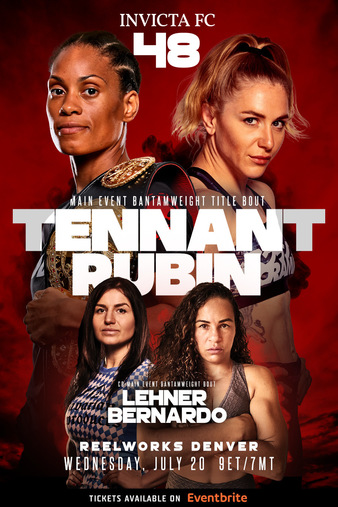
Ep 667The Rise of Female MMA & Invicta FC 48 w/ Shannon Knapp, Invicta FC CEO/President
On this short but sweet edition of Parallax Views, we delve into the world of female MMA. Thanks to fighters like Ronda Rousey and Cris Cyborg the female side of mixed martial arts has gained greater traction amongst combat sports fans and the general public in recent years. One need look no farther than the fact that Hollywood produced a major motion picture with Halle Berry, Bruised, based on subject to see how female MMA has become part of popular culture. Heading the charge for women's MMA is the promotion Invicta FC. For over 10 years now Invicta FC has provided a platform for top female athletes to compete in combat sports. Joining us ahead of Invicta FC 48, which will be available on AXS TV as well as the Invicta FC Youtube and Facebook pages, is Invicta FC's CEO/President Shannon Knapp. Among the topics discussed: - The birth of Invicta FC and the obstacles and hurdles it faced as an all-women's MMA promotion - Invicta FC's card including the Bantamweight championship bout between Taneisha Tennant (c) vs. Olga Rubin and pro boxer Melissa Odessa Parker vs. GLORY kickboxer Isis Verbeek - Invicta FC's adoption of the open scoring system for fights - Shannon as an advocate for female athletes in the combat sports world and why she calls them athletes rather than fighters - Thoughts on the old criticism that MMA is "human cockfighting" - The challenge of finding female athletes in an often male-dominated sport - Leveling the playing field for female MMA athletes and the importance of Invicta FC to the broader world of combat sports - Shannon Knapp's thoughts on the success of Ronda Rousey and what it has meant for female MMA - And much, much more!
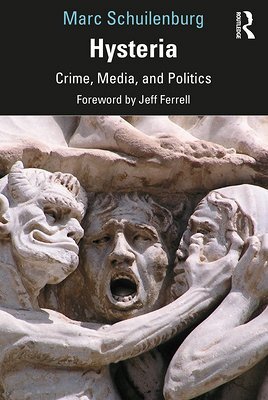
Ep 666Hysteria: Crime, Media, and Politics w/ Marc Schuilenburg
On this edition of Parallax Views, Dutch sociologist M.B. Schuilenburg joins us to discuss his books Hysteria: Crime, Media, and Politics and The Algorithmic Society: Technology, Power, and Knowledge. In this conversation we discuss the history of the idea of hysteria from it's origins in a clinical setting used, often times, against women to its usage by philosophers like Hobbes and Foucault and the concept of mass hysteria around hot topics like immigration. In addition to all of this we discuss the empirical research Schuilenburg did for the book, the Rotterdam race riots, anti-immigrant rhetoric and the Dutch politician Geert Wilders, the concept of security in Western society and its different connotations, Zygmunt Bauman's idea of "Liquid Modernity", neoliberalism and globalization, hysteria and the collective sense of a loss of control, positive security/hysteria vs. negative security/hysteria, the phenomena of moral panic, algorithms and social media as they relate to mass hysteria, big data and discrimination, and much, much more!
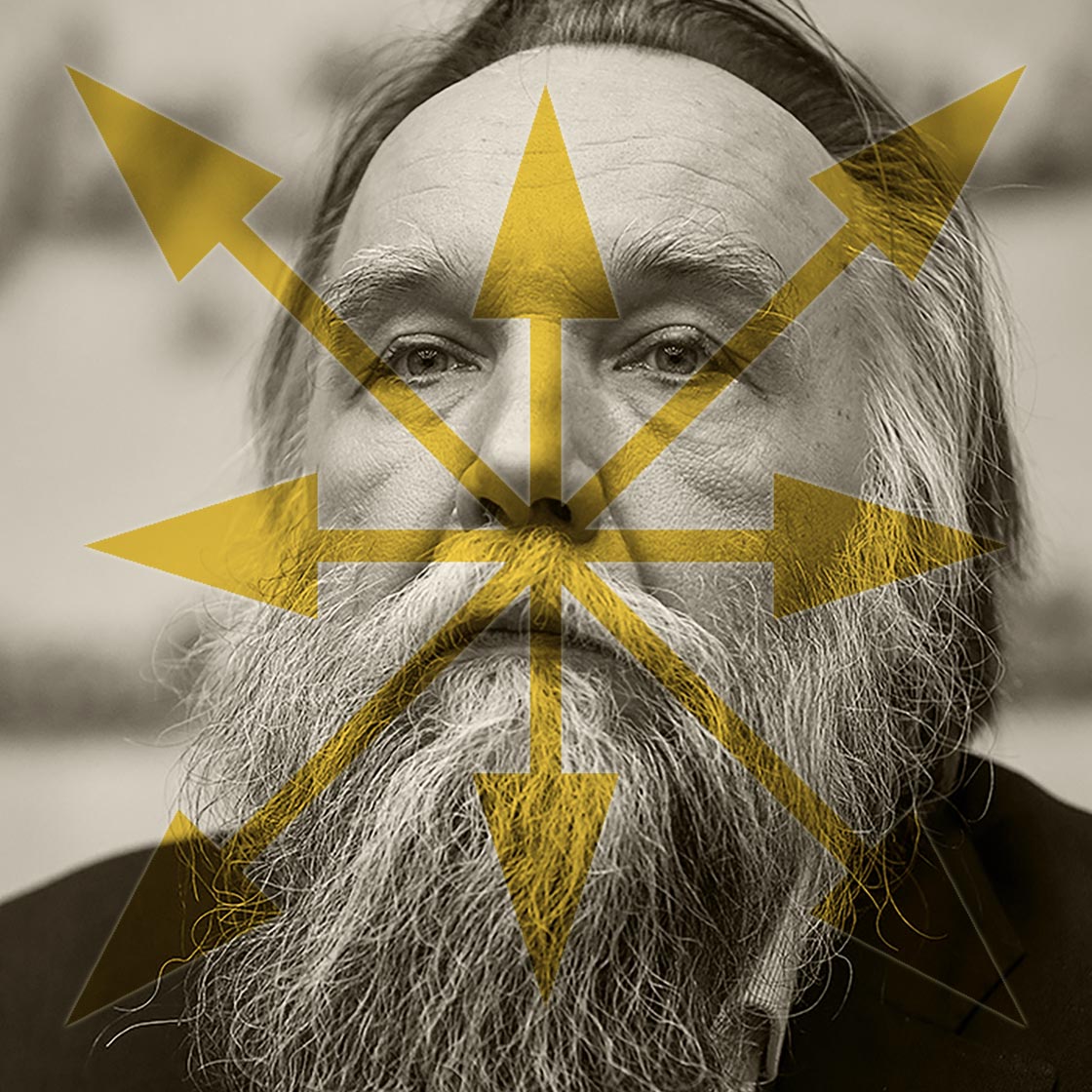
Ep 665The Eschatology of Alexander Dugin, the Serpent Snake Oil Salesman w/ Branko Malic
On this edition of Parallax Views, a previously unreleased conversation from April 2022 with Kali Tribune's Branko Malic, who specializes in writing about metaphysics from a Catholic and traditionalist bent, about the Russian philosopher that's been called "Putin's Rasputin", Alexander Dugin. Aleksandr Dugin has been a figure that's gotten media coverage ever since the election of Donald Trump. He's one of the most ardent supporters of Putin's invasion of Ukraine. But who is Alexander Dugin? What are his beliefs? Is he a Gnostic? A follower of the Traditionalist School of metaphysics in the vein of Rene Guenon or Julius Evola? An occultist who practices a chaos magick? A mere Russian imperialist who promotes his worldview through what he calls the "Fourth Political Theory" and Eurasianism? A madman? A Satanist? A Russian Orthodox Catholic? Or simply a man who wants to "immanentize the eschaton" (aka the apocalypse)? Branko and I will tackle all of this and much more in the conversation.

Ep 663Piranha Women and Indie Filmmaking Secrets! w/ Fred Olen Ray
On this edition of Parallax Views, July 4th is just around the corner. What better way to celebrate than hitting the beach! Of course, if you're not careful in that water you could get munched up by a shark like in JAWS. Or worse... PIRANHA WOMEN! Piranha Women is the latest effort of Charles Band's long-running horror/fantasy/sci-fi factory Full Moon Features. It's also a return to said genre for it's director, the legendary independent filmmaker Fred Olen Ray. For a number of years now Fred has been working on TV, including making Hallmark Christmas movies with Chevy Chase and Lifetime thrillers. For him filmmaking is not merely some hobby, but a profession. Simply put, he's a working class filmmaker. Prior too much of his television work, Fred directed a great number of horror, sci-fi, action, and fantasy pictures during the VHS boom in the 1980s and a number of erotic thrillers during that genre's popularity in the 1990s. Among some of the cult classics Fred has directed are Hollywood Chainsaw Hookers, The Tomb, Biohazard, Cyclone, Evil Toons, Inner Sanctum (one of the most successful video rentals of the 99s), Beverly Hills Vamp, Witch Academy, Alienator, Deep Space, Star Slammer, Bad Girls from Mars, Mind Twister, Attack of the 60 Foot Centerfolds, Inferno, Possessed by the Night, and countless others. Through it all he's worked with such well-known actors as Ice-T, Don "The Dragon" Wilson, David Carradine, Sybil Danning, Martin Landau, Nightmare on Elm Street's Heather Langenkamp, Eric Roberts, Gunna Hansen (Leatherface in the original 1974 Texas Chainsaw Massacre), Morgan Fairchild, comedy movie legend Eddie Deezen, Bond girl Britt Ekland, Twin Peaks' Russ Tamblyn, Sid Haig, and many, many others. A monster kid that grew up on drive-in horror movies, Piranha Women marks Fred Olen Ray's returns to the type of fun genre fare that's made him a cult figure amongst cinema buffs. And it stars such beauties as Carrie Overgaard and Keep Chambers as the deadly titular fish women. In this conversation Fred and I discuss a number of topics including: - The secrets of indie filmmaking from matching shots to filming big name actors on a schedule - Working with classic actors like John Carradine, Aldo Ray, and Cameron Mitchell - The tricks he used to film the animated monster in the ambitious low-budget live-action horror Evil Toons - Working with Full Moon and thoughts on the promotional wizardy of Charles Band - Filming nude scenes with actresses - How to make films on low-budgets and tight-schedules - The craft of filmmaking - Orson Welles' cinematographer Gary Graves and his sabotaged film Moon in Scorpio - How he began working on Hallmark and Lifetime movies; what TV networks expect out of him as a director and why he gets the job - Filmmaking as a job rather than a hobby - The killer ta-tas gag in Piranha Women - The rise and fall of the "Scream Queen" cycle of films in the 1980s directed by Fred, Jim Wyrnoski, and David DeCoteau starring actresses like Linne Quigley, Michelle Bauer, Brinke Stevens, and Kelli Maroney - Advice to young filmmakers and what Fred looks for in young filmmakers (including discussion of Fred's producer credits for Steve Latshaw's Jack-O, which was recently re-released on Blu-Ray by Fred's Retromedia company, and Henrique Couto's Bigfoot web-series Boggy Creek) - And much, much more!