
Open to Debate
483 episodes — Page 5 of 10
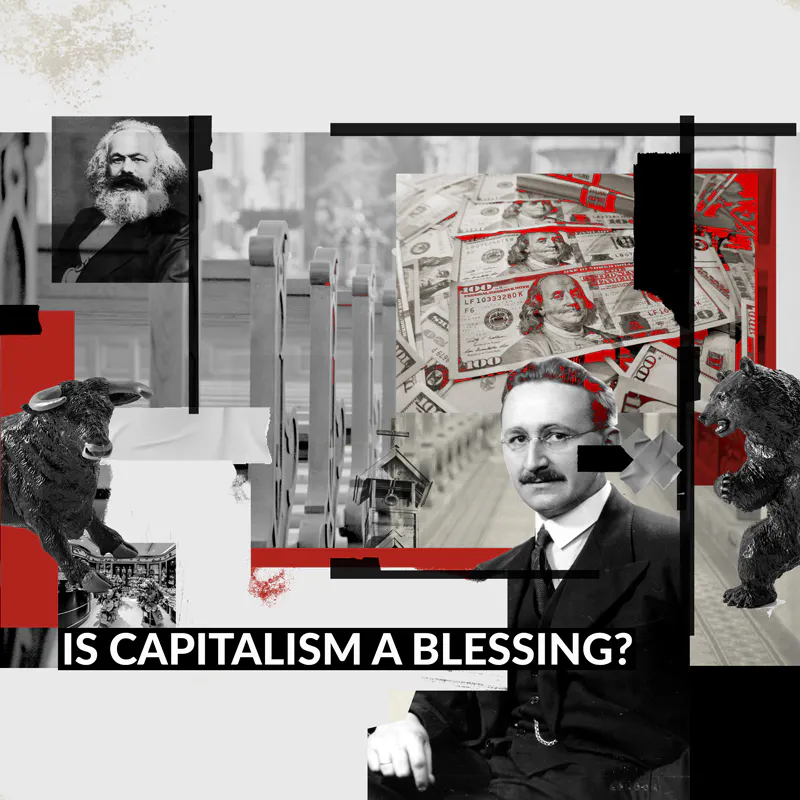
Is Capitalism A Blessing?
With the wealth gap widening, some Americans are starting to consider socialism as a viable economic and political model. Supporters of capitalism claim that no other system has been as effective in creating value, increasing prosperity, and producing the wealth that has lifted billions of people out of poverty. The free market, they argue, encourages competition and human ingenuity, values individual choice, and organizes society in a fair and just way. Critics of capitalism, however, paint a different picture. They argue that capitalism is inherently exploitative and that business owners seek profits above all else, leading to the distortion of human worth as one distilled to an individual’s labor power. Further, they claim that a capitalist system is inherently rigged to benefit the wealthy and powerful, and the byproducts of which have created unsustainable waste and decimated the world’s wildlife and natural resources. In light of this emerging divide, we ask this question: Is capitalism a blessing? With John Mackey, Bhaskar Sunkara, Katherine Mangu-Ward, and Richard D. Wolff. John Donvan is our moderater. Learn more about your ad choices. Visit podcastchoices.com/adchoices
Does America Need A Digital Dollar?
The digital currency craze started with at least one anonymous Bitcoin founder and a community of futuristic, tech-savvy investors willing to take a bet on a new form of money. But over the past decade, the world of digital currency has coined a host of new types of online cash. In fact, Central Banks in more than 80 countries have, or are in the process of gearing their monetary systems in that direction. They consider them a means of modernizing and serving as a check against the growth of crypto. In China, an estimated 140 million people have already begun using the new digital yuan, which accounts for nearly $10 billion worth of transactions. In that context, does the world's reserve currency -- the U.S. dollar -- need its own version? Those who are argue “yes” say it is a fundamental step to remain competitive; to ensure the dollar remains in its preferred global standing. A digital dollar, they argue, would also create a new ease of exchange, reduce delays in processing times, and help the underbanked Americans into the digital economy. Those who argue “no” point to the risks of failure, hackings, and privacy breaches, which includes widespread government tracking of transactions, and could allow for unprecedented federal access to personal banks accounts. Against this backdrop, we ask: Does America Need a Digital Dollar? Arguing "Yes" is Gillian Tett, Editor-at-large, Financial Times Arguing "No" is Dante Disparte, Head of Global Policy at Circle Emmy award-winning journalist John Donvan moderates Learn more about your ad choices. Visit podcastchoices.com/adchoices

Is Affirmative Action Unfair to Asian Americans?
An affirmative action battle is again playing out at the highest levels, only this time with Asian Americans at the center of the controversy. At the heart of the matter is the question of whether the Supreme Court should reconsider race in college admissions. The group, Students for Fair Admissions, has taken aim at Harvard University and the University of North Carolina at Chapel Hill, alleging that Asian Americans are less likely to be admitted than comparably qualified white, Black, or Latino applicants. In two separate cases, the group claims that 1.) Harvard’s admissions policy is regressive and discriminates against Asian Americans, and 2.) UNC – which is a public institution and therefore covered by the 14th amendment’s equal protection guarantee – violates both Title VI and the Constitution with its use of race in admissions. But opponents say race-conscious decision making is a necessary tool to address longstanding racism and discrimination. As such, in this timely debate, we ask the question of whether affirmative action is indeed unfair to Asian Americans. Arguing “yes” is Lee Cheng, co-founder of the Asian American Coalition for Education Arguing “no is John Yang, president and executive director of Asian Americans Advancing Justice Learn more about your ad choices. Visit podcastchoices.com/adchoices
Should We Eat More Processed Foods?
Processed food is bad for you, right? Well, there’s more to this story. As new technologies create foods that can’t be made in home kitchens, such as plant-based meats and dairy products made with plant proteins, the question of whether we should all be consuming more highly processed foods is up for debate. Advocates say a substantial increase in food processing is the best way to feed growing human populations while also reducing food waste. We should trust – and invest – in food technology that can make our global food supply healthier and more sustainable, including highly or ultra-processed foods. Opponents argue that these kinds of foods are often less nutritious, and are commonly linked to adverse health indices, particularly when it comes to ultra-processing. As this debate blooms, Intelligence Squared partners with the Institute of Food Technologists to debate this question: Should We Eat More Processed Foods? Arguing in favor of the motion is Amy Webb and Michael Gibney. Arguing against the motion is Kevin Hall and Marion Nestle. Emmy award-winning journalist John Donvan moderates. Learn more about your ad choices. Visit podcastchoices.com/adchoices
Is Public Radio Still Relevant?
Many Americans grew up with a transistor radio somewhere in the home. Out of it emanated the commentaries, stories, news, and analysis. Public radio was a key means of getting information. But between podcasts, satellite radio and on-demand streaming, some argue that signal is fading. Nimble upstarts and emerging technologies have created wildly successful new platforms, enabling a broad diversity of creators to broadcast their views. What does this mean for the future of public radio? Intelligence Squared host and moderator John Donvan moderates a debate between two media luminaries, who zero in on this existential question: Is Public Radio Still Relevant? Arguing "No" is Kmele Foster, political commentator and Co-Founder of Freethink. Arguing "Yes" is podcast creator and Co-Founder of Magnificent Noise, Eric Nuzum. Learn more about your ad choices. Visit podcastchoices.com/adchoices
Unresolved: Information Disorder
The age of “information disorder” is upon us. Deep fakes, false political narratives, and flawed COVID rumors are all rampant online, threatening America’s national security, as well as democracy itself. Though bad actors have always had the capacity to deceive, the ease, speed, and degree to which anyone can create misleading information has engendered a dangerous new world. And yet many solutions can also run directly against longstanding western principles, such as free speech and a lack of censorship. Prescriptions, some argue, can be as dangerous as the disorder itself. So, what can be done? In partnership with the Homeland Security Experts Group, Intelligence Squared U.S. debates how to combat this dangerous new phenomenon, termed “information disorder.” Our expert panel takes a look at what the private sector should do, what the public sector can do, and how political actors who spread false information should be handled. Learn more about your ad choices. Visit podcastchoices.com/adchoices
Is Taiwan Indefensible?
The fate of Taiwan is uncertain. As a revanchist China builds up forces near the island, the Biden administration is warning Beijing against an invasion, bolstering its defense with the sale of military hardware. Beijing sees Taiwan as lost territory, which needs to be “reunified” with the mainland. The United States is now faced with a geopolitical quandary: Can the U.S. military defend Taiwan from Beijing, and should it? Or, is Taiwan indefensible? Arguing in favor of the motion is Lyle J. Goldstein of the Naval War College, with Charlie Glaser of George Washington University. Arguing against the motion is former deputy assistant secretary of defense Elbridge Colby, with Elizabeth Larus of the University of Mary Washington. Emmy award-winning journalist John Donvan moderates. Learn more about your ad choices. Visit podcastchoices.com/adchoices
Are Primary Elections Ruining Democracy?
The U.S. Constitution has a lot to say about elections. But nowhere is there any mention of political primaries, the process by which candidates are winnowed down ahead of a general election. Though they may seem integral to the U.S. system, primaries in fact are a relatively new phenomenon, borne of the turn of the 20th century when reformers sought to wrangle power from political party bosses. Of course, quite a lot has changed since the days of Tammany Hall. Gerrymandering has greatly reduced competitive districts, while the urban-rural divide has grown exponentially. Divisions run deep, with social media capable of dramatically shifting the political landscape at unprecedented speed. Many see primary elections as a principal culprit of what they consider an undermined democracy, fueling extremism, hindering compromise, and lending too much power to partisans. Others argue that primaries are an important bulwark against political corruption and a hedge against elitism. In this context, we ask: Are Primary Elections Ruining Democracy? Learn more about your ad choices. Visit podcastchoices.com/adchoices
Is It Time to End Qualified Immunity for Cops?
How does one balance two important, though at times competing, public interests? In this case, it’s the need to hold public officials accountable versus the need to shield those officials from harassment and legal liability. In 1967, the US Supreme Court lay the foundations of an answer during a case involving two police officers, sued over civil rights violations carried out at a segregated bus stop in Jackson, Mississippi. The court effectively ruled that if unconstitutional arrests were made in good faith and with probable cause, officers then enjoyed a degree of legal immunity. That case then served as bedrock for a legal doctrine that later came to be known as “qualified immunity;” a concept that effectively provides government officials with immunity from civil suits in certain circumstances. In 1982, the court went further, codifying qualified immunity for officials and rendering subjective intent of the official immaterial. In other words, whether or not a defendant was acting in good faith was effectively considered irrelevant. Under the revised doctrine, cases could proceed to trial only when there was a clear violation of “established statutory or constitutional rights of which a reasonable person would have known.” Since then, critics have argued that this doctrine stands as a central barrier to substantive police reform, allowing officers to more easily to kill or injure with impunity. But advocates say it’s a necessary protection, shielding police officers – who are tasked with making split-second life-and-death decisions – from bankruptcy and vindictive personal lawsuits. In this context, we debate this question: Is It Time to End Qualified Immunity for Cops? Learn more about your ad choices. Visit podcastchoices.com/adchoices
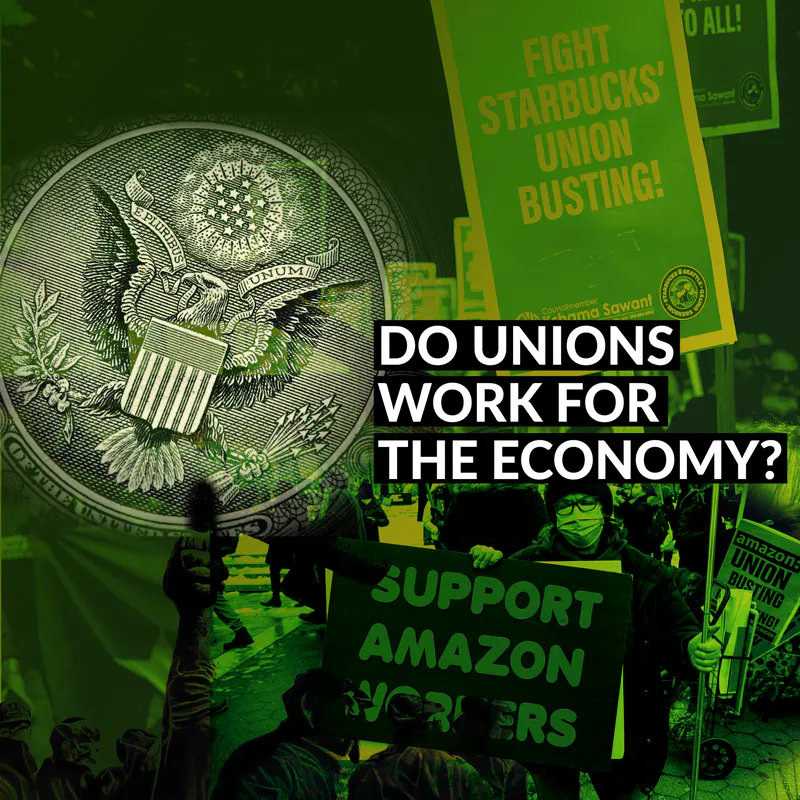
Do Unions Work For The Economy?
Unions may be on the verge of a resurgence. After decades of decline, workers are organizing at well-known companies, like Starbucks, Amazon, and Google, at a pace not seen since the 1930s. Decades of stagnant wages, recent labor shortages, and the most vocally pro-union President in recent memory have all stoked key wins for American labor, including successful strikes at John Deere and Kellogg. In fact, recent polling shows public support for labor unions has climbed to 71%, its highest level since 1965. During the old industrial days, unions had broad influence over the American economy. But their power waned. In 1983, one in 5 employees belonged to a union. Last year, that number had dwindled to one in 10, with most of the declines occurring in the private sector. Some say good riddance. They argue that unions actually hurt workers and the economy under the guise of supporting both. Union dues sap salaries, they say, and can actually increase unemployment. They also make the economy more rigid to change, raise consumer prices, and ultimately render unionized companies less competitive. Advocates, however, argue that in light of yawning income inequality, organized labor is desperately needed. Unions increase workers’ pay and benefits, they say, and can also settle disputes more equitably, improve wages, and encourage a more robust middle class. Of course, not all unions are created equal. And the difference between private and public-sector unions needs to be explored. Yet as public support for organized labor has grown as more workers push to join unions, an overarching question looms large: Do Unions Work For The Economy? Learn more about your ad choices. Visit podcastchoices.com/adchoices
Should Paying Hacker Ransoms Be Illegal?
With cyber threats and ransomware on the rise globally, the Biden administration has enlisted America’s tech titans to help blunt their effects. Amazon, Microsoft, and Google, are all in discussions with Washington over how to strengthen the nation’s critical infrastructure defenses against a growing array of both private and state-sponsored attacks. Skeptics question just how much can be achieved, given how connected U.S. society has become. But solutions are emerging, from lifting the veil of cryptocurrencies, a favored transaction among hackers, to making the paying of ransoms illegal. In this special edition of Intelligence Squared’s Agree-to-Disagree series, John Donvan sits down with David Sanger of The New York Times for a closer examination of these attacks before launching into a much more specific debate with two cyber security experts. The debate: Should paying hacker ransoms be illegal? Cyber Threat Alliance president and chief executive Michael Daniel and Rapid7 vice-president Jen Ellis square off in light of recent high-profile hackings. Learn more about your ad choices. Visit podcastchoices.com/adchoices
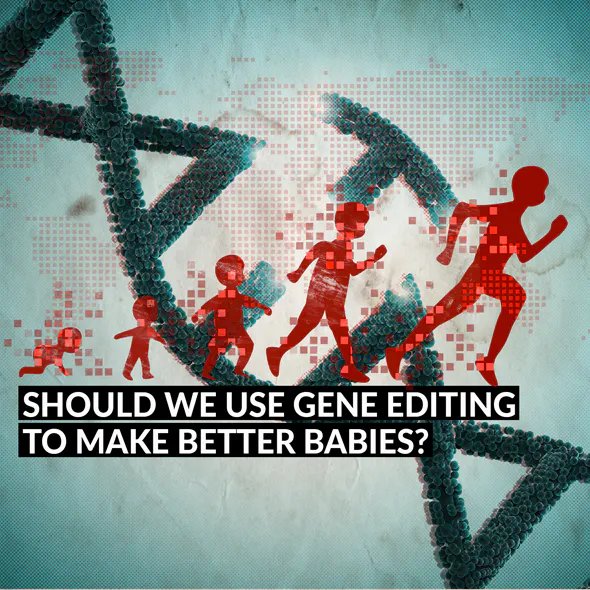
Should We Use Gene Editing to Make Better Babies?
A genetic disease runs in your family. Your doctor tells you that, should you wish to have a child, that child is likely to also carry the disease. But a new gene-editing technology could change your fate. It could ensure that your baby is -- and remains -- healthy. What do you do? It’s is not without its perils. Critics say the technology will exacerbate inequality, pressure all parents (and nations) into editing their children to stay competitive, and meddle with the most basic aspect of our humanity. So, should we use gene editing to make better babies? Arguing in favor of the motion is geneticist George Church and futurist Amy Webb. Arguing against the motion is policy advocate Marcy Darnovsky and philosopher Françoise Baylis. Emmy award-winning journalist John Donvan moderates. Learn more about your ad choices. Visit podcastchoices.com/adchoices

Should We Separate the Art From the Artist?
It turns out your favorite artist is a monster. Say they committed murder, advocated genocide, or engaged in some other act so outside the scope of a dignified, respectable society that it cannot be redeemed. What now? Must you throw the art out with the artists? It's a question at the heart of both pop culture and high art critique. For some, a work of art is an entity in itself. It should be appreciated and revered without regard to the life of its creator. If we disregard all great art for the sins of the artists, we risk losing many of the world's greatest cultural touchstones and masterpieces. But for others, the act of supporting a work of art translates directly affirming its creator's evil acts. In this timeless debate, we ask: Should we separate the art from the artist? Learn more about your ad choices. Visit podcastchoices.com/adchoices
Is Amazon Good for Small Business?
Amazon has come a long way since online book sales. In fact, when it comes to revenue, Jeff Bezos’ creation is the world’s biggest internet-based company. But what makes the "everything store" so ubiquitous? In large part, it’s the small and medium-sized businesses that use the platform to sell their goods. This year, more than 1.9 million of these businesses participated in its marketplace, which accounted for some 60 percent of Amazon's retail sales. But was it ultimately good for them? In the midst of this historic transition in shopping, that's our debate: Is Amazon good for small business? Debating in favor of the motion is Mark Jamison, economist at the American Enterprise Institute, with Kunal Chopra, tech executive and former Amazon GM. Arguing against the motion is Rana Foroohar, global business columnist at the Financial Times and author of “Don’t Be Evil”, with co-director of the Institute for Local Self-Reliance, Stacy Mitchell. Emmy award-winning journalist John Donvan moderates. Learn more about your ad choices. Visit podcastchoices.com/adchoices

Long Live The British Monarchy?
For nearly three-quarters of a century, Queen Elizabeth II sat on high as Britain’s monarch. With her death, however, new momentum is building that questions the future of the British Crown. Several former British colonies, including Canada, Australia, New Zealand, and Jamaica, have debated severing ties, while Republican campaigners in Britain now see opportunity to reassess what it means to have a monarchy, without offending a popular queen. Against that backdrop, we debate the longevity of the British monarchy. Arguing "NO" is Graham Smith, who heads the British anti-monarchy pressure group Republic. Arguing "YES," is Phillip Blond, English political philosopher and director of the ResPublica think tank. Emmy award-winning journalist John Donvan moderates. Learn more about your ad choices. Visit podcastchoices.com/adchoices

Should We Search for Extraterrestrial Life?
For decades, scientists around the world have dedicated their lives — and research dollars — to one question: Is there anyone else out there? In the early 1970s, NASA joined the hunt with its own program to search for extraterrestrial life, or SETI for short. When that was defunded by Congress, private efforts took hold. But just what have decades of SETI brought us? And how should we approach the search in those to come? For SETI’s supporters, finding other intelligent life in the cosmos is a fundamentally human endeavor. It probes our understanding of the cosmos, what it means to live and survive on Earth and beyond, and just where our species fits into the greater universe. But others warn that SETI is a distraction from other scientific endeavors that, at best, diverts critical resources and, at worst, will open a can of worms humanity isn’t ready to deal with. Just what would happen if we actually find other beings? Are we mature enough as a society to respond? In this episode, we ask the essential extraterrestrial question: to search or not to search? Learn more about your ad choices. Visit podcastchoices.com/adchoices

Will AI Do More Harm Than Good?
Is it true that artificial intelligence will do more harm than good? Proponents say it will help us solve problems like climate change and world hunger, while eliminating dangerous and mundane jobs. But critics warn that A.I.’s current trajectory is a dangerous one, which will likely concentrate power, reduce jobs, surveil consumers and voters alike, and threaten democracy. What’s more, some people say these conditions are not based on science fiction, but are already in the process of afflicting us, given the number of algorithms we engage with on a daily basis. So, could artificial intelligence be used to help solve some of the world’s most pressing challenges and level the playing field, or will it present perils that far outweigh any good it might do? Learn more about your ad choices. Visit podcastchoices.com/adchoices

Should The SAT Be Erased?
Last year, only 1.5 million high school students took the SAT, down from 2.2 million in the class of 2020. Covid-19 played a big role in the decision among many schools not to move forward with at-home testing. But the move sparked even wider discussion about the test itself. Currently, at least 75% of colleges actually don’t require the SAT or ACT. That’s an all-time high, with many schools pledging not to return to it. But is that the right move? Proponents call into question the efficacy and inequity of standardized tests, pointing to high-profile college admission scandals, as well as those leveraging access to resources to net higher scores. They argue a more expansive approach to admissions is better suited in selecting students. Those who defend the SAT, however, say the test presents opportunities for smart under resourced students to get into top schools. Removing such tests could actually make present inequities worse. Additionally, the focus should be on addressing the achievement gap, rather than merely changing the way students are evaluated. Personal essays, GPA, extra curricula, they say, are just as easy to game with financial privilege. So in this context, we ask: Should the SAT be erased? Learn more about your ad choices. Visit podcastchoices.com/adchoices
Is Cancel Culture Toxic?
You know the drill. Someone does, or says, something offensive. A public backlash -- typically on Twitter -- ensues. Then come the calls to "cancel" that person, brand, or institution. That usually means the loss of cultural cache, political clout, and often a job or career. While the term "cancelling" has roots in a misogynistic joke, it has come to be one of the most prominent tools of progressive activists. Many see "cancelling" as a modern-day means of holding people to account, calling out injustice, and breaking down ingrained systems of prejudice and exploitation, particularly for the historically marginalized. But others see it differently. They are sounding alarms about the emergence of a new cancel culture where digital mobs police our speech, invade our rights, and even put our physical safety at risk. They argue that cancel culture has created a society ruled by online censorship and eroded our public discourse. Against this backdrop, we ask: Is cancel culture toxic? Featuring Kmele Foster, Garry Kasparov, Erich Hatala Matthes and Karen Attiah. Emmy award-winning journalist John Donvan moderates. Learn more about your ad choices. Visit podcastchoices.com/adchoices
Should Trump Be Indicted?
After a series of prime-time hearings from the January 6th Committee and hundreds of charges against individuals who a participated in the events of that day, the Department of Justice faces a complex political and legal question: Should it charge Donald Trump with federal crimes? Arguing "yes" is Barbara Comstock. Arguing "no" Tom Ginsburg. Emmy award-winning journalist John Donvan moderates. Learn more about your ad choices. Visit podcastchoices.com/adchoices
Should We Eat More Processed Foods?
Processed food is bad for you, right? Well, there’s more to this story. As new technologies create foods that can’t be made in home kitchens, such as plant-based meats and dairy products made with plant proteins, the question of whether we should all be consuming more highly processed foods is up for debate. Advocates say a substantial increase in food processing is the best way to feed growing human populations while also reducing food waste. We should trust – and invest – in food technology that can make our global food supply healthier and more sustainable, including highly or ultra-processed foods. Opponents argue that these kinds of foods are often less nutritious, and are commonly linked to adverse health indices, particularly when it comes to ultra-processing. As this debate blooms, Intelligence Squared partners with the Institute of Food Technologists to debate this question: Should We Eat More Processed Foods? Arguing in favor of the motion is Amy Webb and Michael Gibney. Arguing against the motion is Kevin Hall and Marion Nestle. Emmy award-winning journalist John Donvan moderates. Learn more about your ad choices. Visit podcastchoices.com/adchoices
Should We Forgive Student Debt?
Facing growing discontent over the rising cost of higher education, many prominent Democrats – and some Republicans – are calling on Washington to cancel the approximately $1.6 trillion Americans currently owe in student loan debt. Supporters see debt forgiveness as a necessary step to safeguarding the nation’s financial future and combating inequality in the education system. But others argue that this blanket policy would balloon the federal deficit, reward irresponsible borrowers, and waste taxpayer money on those who are not actually in need. Is it time for a student loan bailout? Learn more about your ad choices. Visit podcastchoices.com/adchoices

Should We Isolate Russia?
As punishment for the war, most of Russia’s energy imports to Europe will be banned by the end of the year. But is that smart policy? Those who argue “yes” say Russia must be punished for its actions. Those who argue “no” say isolating the Kremlin to this extent is a dangerous gamble, which could undermine Europe’s economies, push Russia further toward China, and lay the groundwork for an escalation. In this context, we debate this question, "Should we isolate Russia? Learn more about your ad choices. Visit podcastchoices.com/adchoices
Agree to Disagree: Can the Fed Manage a Soft Landing?
The Fed recently announced aggressive interest rate hikes and is signaling more to come. Its goal? To stabilize the economy amid surging inflation (reaching rates not seen in some 40 years) and lingering supply chain disruptions and shortages. But can the Fed actually manage a so-called "soft landing"? Arguing "yes" is Dean Baker. Arguing "no" is Yeva Nersisyan. Emmy award-winning journalist John Donvan moderates. Learn more about your ad choices. Visit podcastchoices.com/adchoices
We Should Expand the Supreme Court
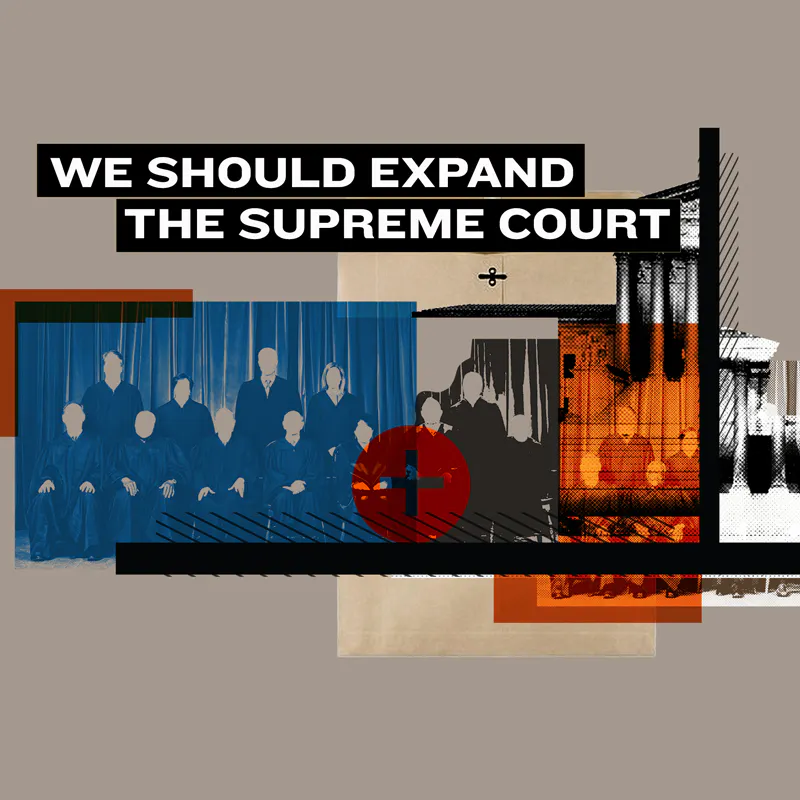
Nine justices hold tremendous power. Advocates on the left see a Supreme Court out of touch with the electorate, obstructed by partisan interests, and rendered illegitimate by years of controversial appointments. But those opposed believe dramatically changing one of the three core pillars of American government would undermine the court’s legitimacy. Intelligence Squared U.S. in partnership with The Newt and Jo Minow Debate Series at Northwestern Pritzker School of Law asks: Should we expand the Supreme Court? This debate was initially released on September 30th, 2021. Learn more about your ad choices. Visit podcastchoices.com/adchoices
Humans Can Adapt to Climate Change
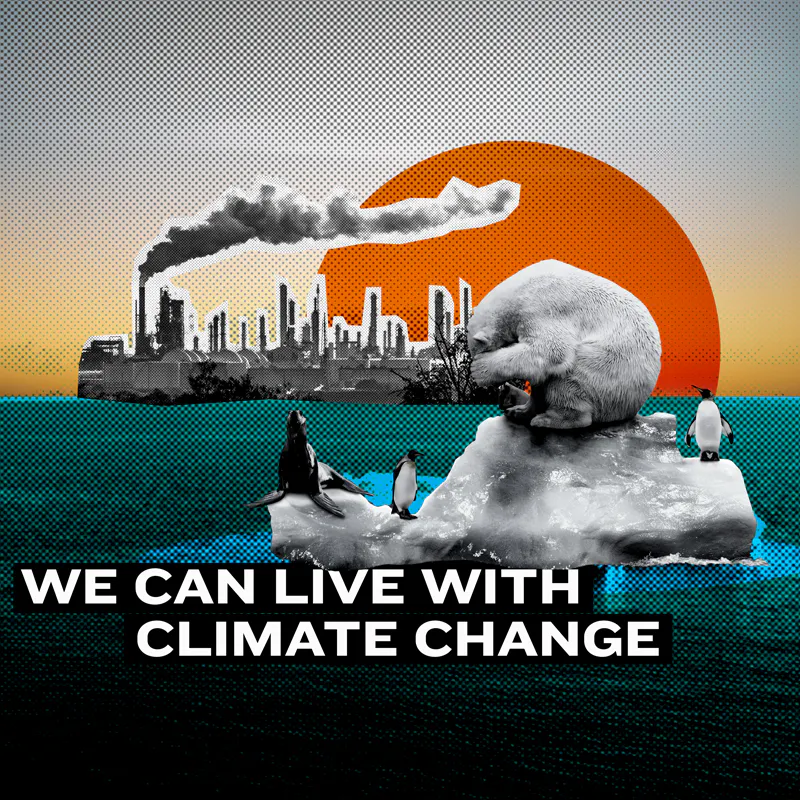
The dangers of climate change are “no longer over the horizon.” Humanity may soon pass the “point of no return.” These are the phrases U.N. Secretary-General Antonio Guterres used to describe what he called an “utterly inadequate” global response to rising temperatures. But if we were to decisively act, and restructure our global economy with the climate in mind, who would shoulder the burden? Or should our collective focus orient more toward humans’ capacity for adaptation? Podcast: Arguing in favor of the motion are Bjorn Lomberg and Michael Shellenberger. Arguing against the motion is Kaveh Madani and Michele Wucker. Emmy award-winning journalist John Donvan moderates. Learn more about your ad choices. Visit podcastchoices.com/adchoices
Debate Like a World Champion: A Conversation with Bo Seo, Harvard Debate Coach & Global Debate Champion
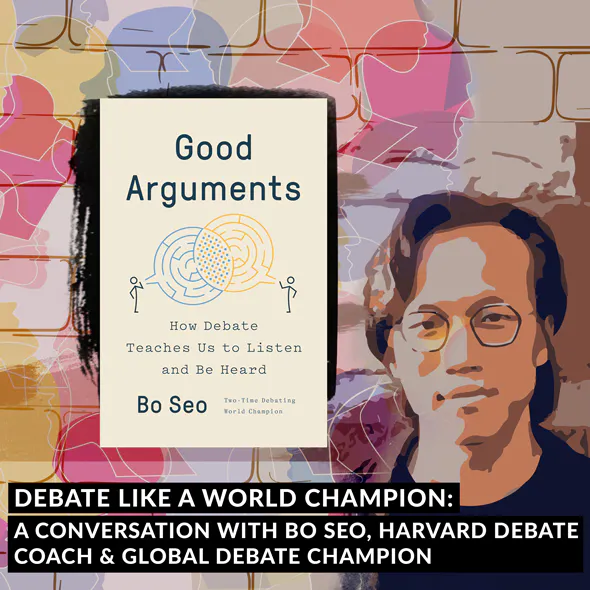
What's it take to debate like a champion? How can you engage so that people will listen? How can you listen actively, and respond in good faith? A mission critical program for listeners of Intelligence Squared, we sit down with Bo to examine debate through the lens of education, politics, and the future of democracy. Considered one of the most recognized figures in the global debate community, he has won both the World Schools Debating Championship and the World Universities Debating Championship, and has since been writing for The New York Times and The Atlantic. In this wide ranging interviews, Bo discusses his new book, “Good Arguments,” in which he argues how good-faith debate can enrich our lives and fortify our society. Learn more about your ad choices. Visit podcastchoices.com/adchoices

Should Society Legalize Psychedelics?
Psychedelics, in medical terms, is an inexact category of drugs that affect perceptions and cognition. Their proponents say 1960s-era associations have undermined exciting research in the field of neuroscience. Psychedelics should be made much more widely available, they contend, to treat a range of mental and emotional issues, as well as to ascertain a more profound sense of ourselves. People should also be empowered to make their own decisions in its use. Not so fast, say opponents. These are powerful substances. And society does not know enough about the broader consequences of greatly increasing access. Cautionary tales should be heeded. Either way, like cannabis, the movement for wider use is growing. So… here’s our debate: should society legalize psychedelics? This debate originally aired in April, 2021. Learn more about your ad choices. Visit podcastchoices.com/adchoices

Agree to Disagree: Does Your Electric Vehicle Help The Planet?
Tesla vehicle sales are, well … electric. The company posted $5.5 billion in 2021 profits, roughly six times its previous year earnings. Globally, the electric car industry is anything but static, soaring to 7 million units in 2021. EV advocates argue that while the technology and resources aren’t perfect, they are ultimately better for the environment long term as the tech improves. Opponents say the kinds of infrastructure EVs require still require huge investments that would be better suited for more ecologically-friendly mass transit systems. So, does your electric vehicle help the planet? Learn more about your ad choices. Visit podcastchoices.com/adchoices

Agree to Disagree: Can Small Investors Beat The Street?
In a modern-day battle of David and Goliath on Wall Street, thousands of amateur retail investors banded together to bid up stocks in a handful of failing companies, most notably the nostalgic video game hub known as GameStop. Within days, the renegade traders sent stocks soaring and dealt heavy blows to hedge funds and other traditional professional investors who had bet against the companies. The "meme stock" phenomenon was born. But where does "revolution" stand a year later? Did the amateurs—trading mostly on the Robinhood platform—change the world of finance? Should more "ordinary" investors get into the game? Or will that benefit Wall Street at the little guy's expense? In this "Agree to Disagree," the Wall Street Journal's Spencer Jakab and Tastytrade co-founder Tom Sosnoff take on the meme stock debate head-to-head. Learn more about your ad choices. Visit podcastchoices.com/adchoices
Agree to Disagree: Is It Right to End Roe?
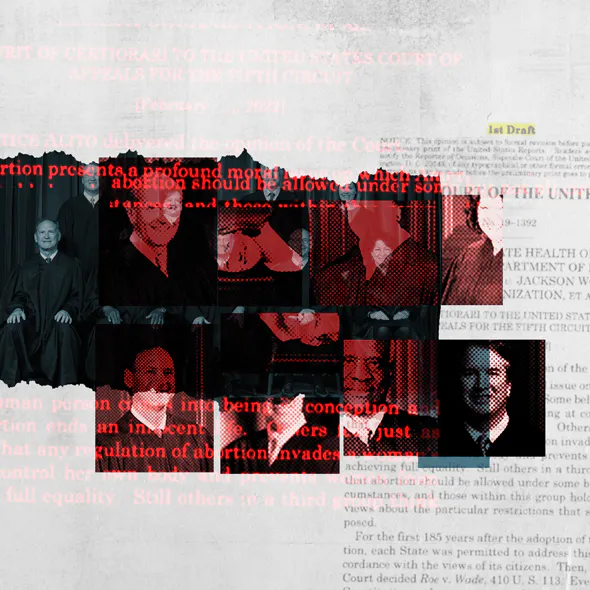
The Supreme Court is poised to make a decision so controversial that even a leaked draft majority opinion can send shockwaves across the nation. In 98-pages, Justice Alito decried Roe v. Wade as “egregiously wrong from the start," declared no right to abortion can be found in the Constitution, and sent abortion laws back to the states — about half of which have "trigger laws" that will ban abortion almost immediately upon Roe's demise. Exactly how likely is this draft opinion to become the law of the land? What would overturning such a landmark ruling mean for the Court as an institution? And are the Justices ultimately correct in holding that Roe was simply wrong? Against the backdrop of divisive media coverage and partisan sensationalism one of the nation's most polarizing topics, we're doing what we do best: In this Intelligence Squared "pop-up" debate, we bring two of the nation's most esteemed legal scholars to the table for a civil, thoughtful debate on the merits of whether it’s right to end Roe. Learn more about your ad choices. Visit podcastchoices.com/adchoices
It's Time to Expand Nuclear Power
The calls for nuclear are growing louder. The Biden administration recently announced that it was putting $6 billion toward saving distressed nuclear power plants from closure, considering them carbon-free alternative to fossil fuels. Elon Musk doubled down, not only calling for an expansion of nuclear energy, but even offering to eat food grown near reactors live on TV. But its critics argue that expanding nuclear energy is dangerous, costly, and ill-advised. So, we unearthed from the archives this highly-relevant debate: Should nuclear energy fuel our future? Arguing in favor of the motion is Kirsty Gogan and Daniel Poneman. Arguing against the motion is Gregory B. Jaczko and Arjun Makhijani. The keynote address comes from Bill Nye. And Emmy award-winning journalist John Donvan moderates. Learn more about your ad choices. Visit podcastchoices.com/adchoices
Thinking Again with Adam Grant: The Power of Debate, and Knowing What You Don’t Know
The hallmark of a productive debate is not persuasion, but insight. So says Adam Grant in this wide-ranging conversation with John Donvan and Intelligence Squared CEO Clea Conner. A good argument is not only about convincing, Grant explains, but also to learn. In his new book, Think Again, Grant explores a set of cognitive skills that might matter more than pure aptitude: The ability to rethink and unlearn. That is the focus of this conversation; the capacity to change your mind, and why it matters more than ever. Guest: Adam Grant, host of the podcast WorkLife with Adam Grant from the TED Audio Collective Learn more about your ad choices. Visit podcastchoices.com/adchoices

#200 - Are Big Cities Past Their Prime?
New York. Los Angeles. Boston. San Francisco. With mega populations, these urban hubs have long reigned as the nation's economic, social, and cultural capitals. But big cities have also been the hardest hit by the pandemic. Even more, the pandemic has brought economic and social inequality into sharp focus for the nation's lawmakers. Will megacities keep their magnetism in the wake of Covid-19? Or are their best days behind them? Arguing in favor of the motion is Joel Kotkin and Jennifer Hernandez. Arguing against the motion is Edward Glaeser and Margaret O'Mara. Emmy award-winning journalist John Donvan moderates. Learn more about your ad choices. Visit podcastchoices.com/adchoices

Agree to Disagree: Is It Time to End the Covid Emergency?
Is it time to end Covid emergency measures? With President Biden's plan to transition to a new normal, more than 70% of Americans recently polled agree that “we just need to get on with our lives.” Some advocates of the plan say it's long overdue, pointing to the long term consequences of isolation and broader effects lock downs have had on society. Critics argue that both hospitalization and Covid death rates are still high, and that the nature of this virus and its variants is far from endemic. In that context, Intelligence Squared debate a defining question of this pandemic: Is it time to end the Covid Emergency? Arguing in favor of the motion is John Tierney, a contributing editor to City Journal, the Manhattan Institute's quarterly publication and former columnist at The New York Times. Arguing against the motion is Enbal Shacham, Professor and Chair of Behavioral Science and Health Education at Saint Louis University. Emmy award-winning journalist John Donvan moderates. Learn more about your ad choices. Visit podcastchoices.com/adchoices
Agree to Disagree: Ukraine
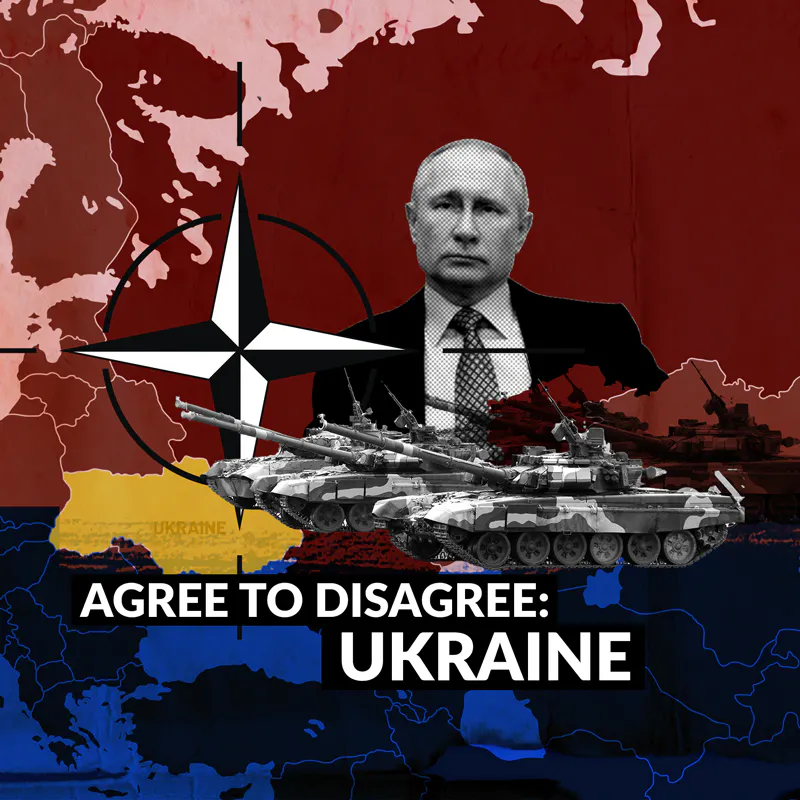
As escalation ratchets higher between Russia and the west over Ukraine, Intelligence Squared U.S. examines a core question: Is a confrontation with Russia worth it? And what effects have sanctions really wrought? Kurt Volker, a former U.S. Ambassador to NATO and former Special Representative for Ukraine, argues that defending Ukraine is very much in the west’s security interest. Emma Ashford of the Atlantic Council argues that it is not. And yet both acknowledge that for Russia, the stakes may be considerably higher. Learn more about your ad choices. Visit podcastchoices.com/adchoices
#199 - Should We Use Gene Editing to Make Better Babies?
A genetic disease runs in your family. Your doctor tells you that, should you wish to have a child, that child is likely to also carry the disease. But a new gene-editing technology could change your fate. It could ensure that your baby is -- and remains -- healthy. What do you do? It’s is not without its perils. Critics say the technology will exacerbate inequality, pressure all parents (and nations) into editing their children to stay competitive, and meddle with the most basic aspect of our humanity. So, should we use gene editing to make better babies? Arguing in favor of the motion is geneticist George Church and futurist Amy Webb. Arguing against the motion is policy advocate Marcy Darnovsky and philosopher Françoise Baylis. Emmy award-winning journalist John Donvan moderates. Learn more about your ad choices. Visit podcastchoices.com/adchoices

Agree to Disagree: Is True Love a Myth?
If you are an old-fashioned romantic, true love has a nice ring to it. Our films, novels, poems, and music are all steeped in the notion, with characteristics that include unwavering fondness and even selfless devotion. But does it actually exist, driven by our biological underpinnings? Or is it a myth that harms what could be a more realistic, and thus healthy, expectation of relationships? As American marriages teeter at historic lows, and attitudes shift, it is a growing question among both the single and the attached. Arguing “No” is Helen Fisher, biological anthropologist and author of Anatomy of Love: A Natural History of Mating, Marriage, and Why We Stray. Arguing “Yes” is Renae Franiuk, professor of Psychology at Aurora University, whose research focuses on social psychology, including romantic relationships. Emmy award-winning journalist John Donvan moderates. Following this Agree to Disagree conversation, John sits down with Daniel Jones, Editor of Modern Love at The New York Times. Learn more about your ad choices. Visit podcastchoices.com/adchoices
#198 - Is America Retreating from Global Leadership?
It’s been a year of the Biden administration. And for many around the world, the question is simple: Can America still lead like it used to? President Biden, following his predecessor's “America First” policy, promised to “restore the soul of America.” Many took that to mean Washington was looking to reassert itself as the pre-eminent global leader. But some say that ship has sailed, and question whether the tables are decidedly turning. In light of this emerging divide, we debate this question: Is America retreating from global leadership? Arguing in favor of the motion is Bill Kristol, Founder and Editor-at-Large of The Weekly Standard, and Mary Beth Long, Former U.S. Assistant Secretary of Defense for International Security Affairs Arguing against the motion is Kori Schake, Director of Foreign and Defense Policy of the American Enterprise Institute, and Vikram Singh, a Senior Advisor for the U.S. Institute of Peace and Former Deputy Assistant Secretary of Defense. Emmy award-winning journalist John Donvan moderates. Learn more about your ad choices. Visit podcastchoices.com/adchoices
IQ2 Conversation: A New University Offers "Forbidden" Courses
They say that colleges have become too censorious. That our most prestigious institutions have abandoned their mission of fostering critical minds and sparking thoughtful dissent. And that a generation of American students is missing out. So, this group of scholars and activists are founding something new: a university – they say – dedicated primarily to free speech. The University of Austin will get its start with a series of noncredit "Forbidden Courses." In this Intelligence Squared conversation, John Donovan sits down with the university's inaugural president Pano Kanelos and co-founder Niall Ferguson to discuss. Learn more about your ad choices. Visit podcastchoices.com/adchoices
The Pandemic: Year-In-Review
Two years ago in January, the Covid-19 virus made its way to American shores. And so … as we wrap up 2021, we thought we’d bring you an amalgam of our best Covid content. Our host John Donvan guide you through the depths of what to this day remain highly contentious policies and decisions that continue to affect virtually all of us. And so … from all of us at Intelligence Squared, we hope you enjoy it. Happy holidays. Learn more about your ad choices. Visit podcastchoices.com/adchoices
#197 - Is Amazon Good for Small Business?
Amazon has come a long way since online book sales. In fact, when it comes to revenue, Jeff Bezos’ creation is the world’s biggest internet-based company. But what makes the "everything store" so ubiquitous? In large part, it’s the small and medium-sized businesses that use the platform to sell their goods. This year, more than 1.9 million of these businesses participated in its marketplace, which accounted for some 60 percent of Amazon's retail sales. But was it ultimately good for them? In the midst of this historic transition in shopping, that's our debate: Is Amazon good for small business? Debating in favor of the motion is Mark Jamison, economist at the American Enterprise Institute, with Kunal Chopra, tech executive and former Amazon GM. Arguing against the motion is Rana Foroohar, global business columnist at the Financial Times and author of “Don’t Be Evil”, with co-director of the Institute for Local Self-Reliance, Stacy Mitchell. Emmy award-winning journalist John Donvan moderates. Learn more about your ad choices. Visit podcastchoices.com/adchoices
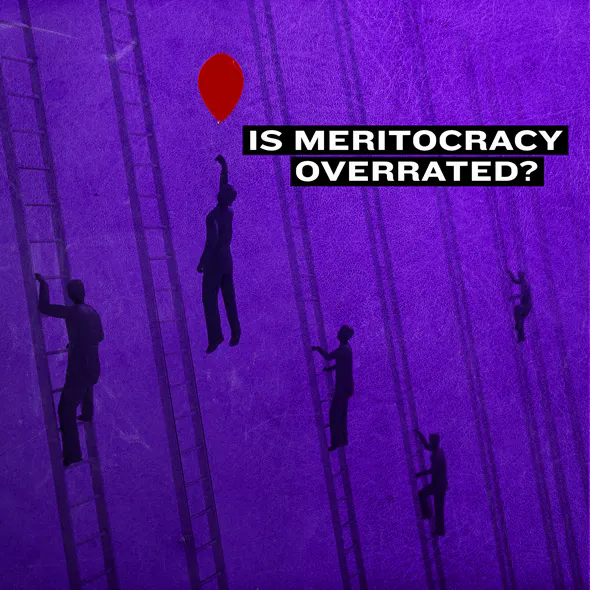
Agree to Disagree: Meritocracy
The hereditary lottery, in many democracies, has effectively been replaced by a system in which talent, grit, and ability are meant to determine success. Yet, amidst income inequality and legacy of racism, many wonder whether meritocracy works. Critics point to generational wealth and networks that lead to lucrative jobs and fancy educations. Those who defend meritocracy argue that talent ultimately wins out, and despite its flaws, meritocracy remains the most effective way of lifting disenfranchised groups. Arguing “yes” is Daniel Markovits, professor at Yale Law School and author of "The Meritocracy Trap: How America's Foundational Myth Feeds Inequality, Dismantles the Middle Class, and Devours the Elite." Arguing “no” is Adrian Wooldridge, political editor and "Bagehot" columnist for The Economist and author of "The Aristocracy of Talent: How Meritocracy Made the Modern World." Emmy award-winning journalist John Donvan moderates. Learn more about your ad choices. Visit podcastchoices.com/adchoices
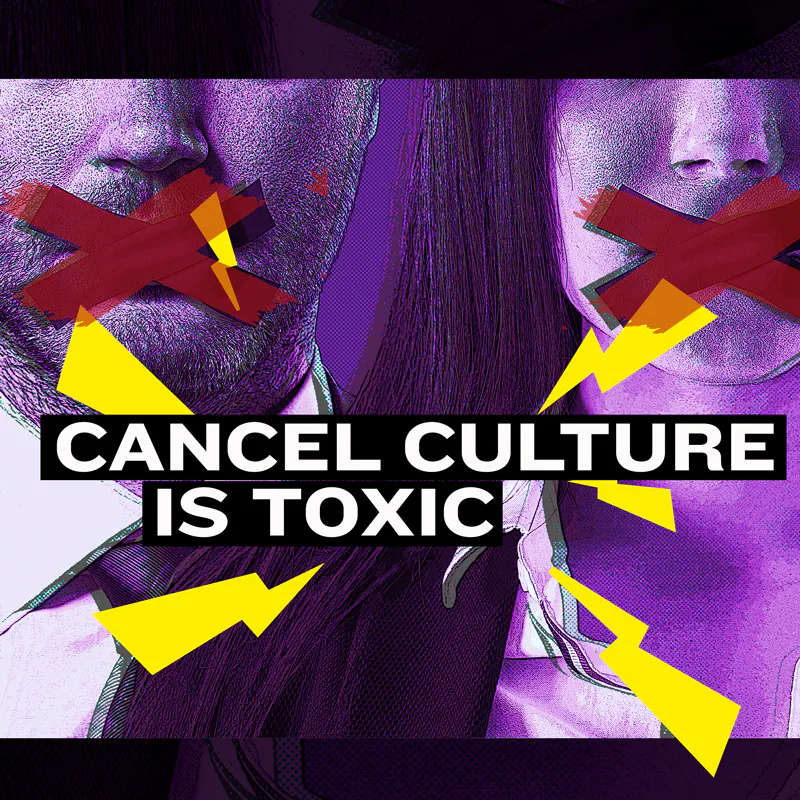
#196 - Is Cancel Culture Toxic?
You know the drill. Someone does, or says, something offensive. A public backlash -- typically on Twitter -- ensues. Then come the calls to "cancel" that person, brand, or institution. That usually means the loss of cultural cache, political clout, and often a job or career. Some see "cancelling" as a modern-day means of holding people to account, while others express concerns about digital mobs policing speech. So, we ask: Is cancel culture toxic? Arguing in favor of the motion is Kmele Foster of FreeThink with chess grandmaster and political activist Garry Kasparov. Arguing against the motion is Erich Hatala Matthes of Wellesley College with Karen Attiah of the Washington Post. Emmy award-winning journalist John Donvan moderates. Learn more about your ad choices. Visit podcastchoices.com/adchoices
Agree to Disagree: Booster Shots
The boosters are rolling out. In places likes the U.S., Britain, and Israel, authorities are providing additional Covid-19 vaccines with the goal of bolstering immune systems and shoring up their economies. Though vaccines such as Moderna and Pfizer-BioNTech have proven highly effective against the virus, efficacy wanes after six months, rendering older adults and those with weakened immune systems more vulnerable. Yet a debate about fairness, when much of the planet is unvaccinated, is growing. Learn more about your ad choices. Visit podcastchoices.com/adchoices
Agree to Disagree: Cyber War and Hacker Ransoms
With cyber threats and ransomware on the rise globally, the Biden administration has enlisted America’s tech titans to help blunt their effects. Amazon, Microsoft, and Google, are all in discussions with Washington over how to strengthen the nation’s critical infrastructure defenses against a growing array of both private and state-sponsored attacks. Skeptics question just how much can be achieved, given how connected U.S. society has become. But solutions are emerging, from lifting the veil of cryptocurrencies, a favored transaction among hackers, to making the paying of ransoms illegal. In this special edition of Intelligence Squared’s Agree-to-Disagree series, John Donvan sits down with David Sanger of The New York Times for a closer examination of these attacks before launching into a much more specific debate with two cyber security experts. The debate: Should paying hacker ransoms be made illegal? Cyber Threat Alliance president and chief executive Michael Daniel and Rapid7 vice-president Jen Ellis square off in light of recent high-profile hackings. Learn more about your ad choices. Visit podcastchoices.com/adchoices
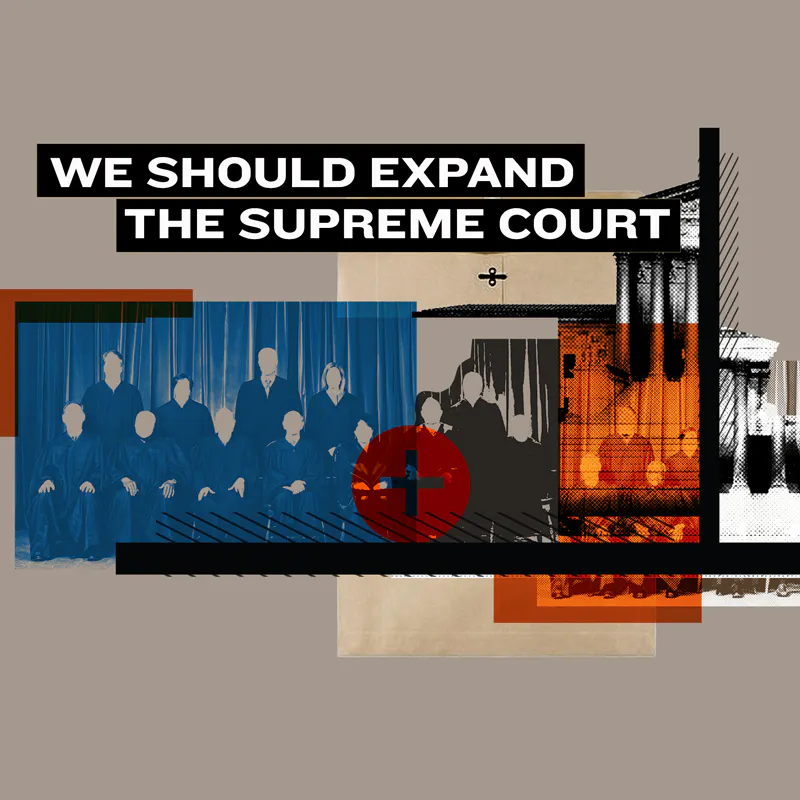
#195 - Should We Expand the Supreme Court?
Nine justices hold tremendous power. Advocates on the left see a Supreme Court out of touch with the electorate, obstructed by partisan interests, and rendered illegitimate by years of controversial appointments. But those opposed believe dramatically changing one of the three core pillars of American government would undermine the court’s legitimacy. Intelligence Squared U.S. in partnership with The Newt and Jo Minow Debate Series at Northwestern Pritzker School of Law asks: Should we expand the Supreme Court? Arguing in favor of the motion is Dhalia Lithwick, legal commentator and Slate's Amicus podcast host with Tamara Brummer of advocacy group Demand Justice. Arguing against the motion is Carter Phillips, a Supreme Court and appellate litigator with Akhil Reed Amar, a constitutional law scholar and professor at Yale University. Emmy award-winning journalist John Donvan moderates. Learn more about your ad choices. Visit podcastchoices.com/adchoices
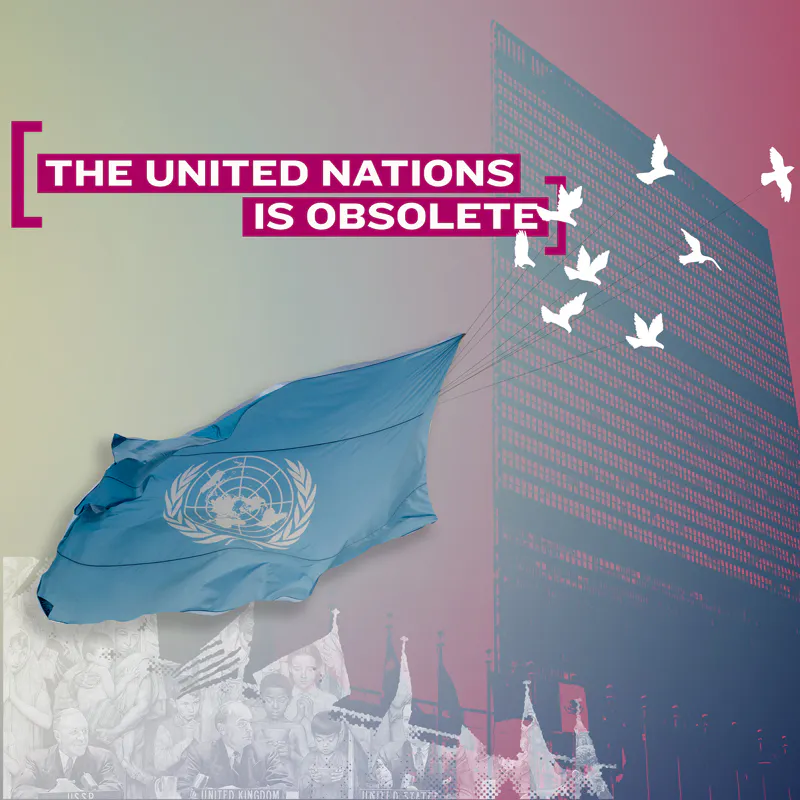
#194 - Is the United Nations Obsolete?
As world attention descends on the United Nations General Assembly, Intelligence Squared U.S. casts a critical lens on this nearly 76-year-old global organization. In light of recent controversies in places like Haiti, and its recent absence in places such as Afghanistan -- where the Taliban has regained control -- questions are mounting as to whether the United Nations itself is both ineffective and outdated. In light of these emerging questions, we ask an especially timely question: Is the United Nations is Obsolete? Learn more about your ad choices. Visit podcastchoices.com/adchoices
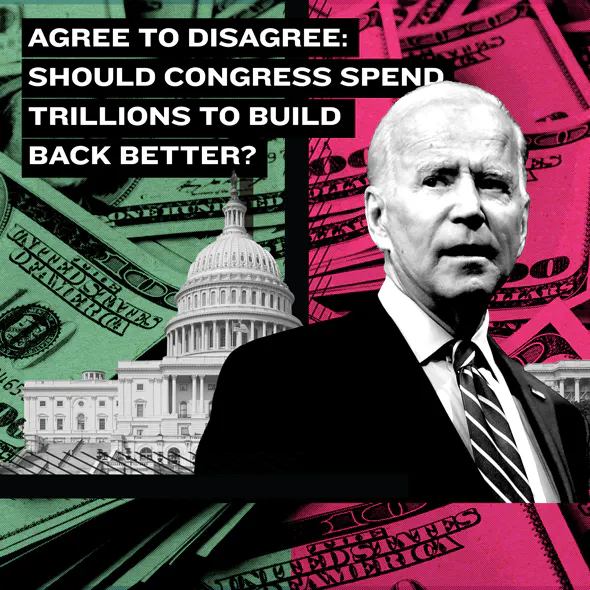
Agree to Disagree: Build Back Better
The Biden administration wants to spend big. Its $4.5 trillion "Build Back Better" plan includes hefty investments in infrastructure, unprecedented spending on the labor force, and funding for a host of Democratic policy priorities. But just what would this mean for the American economy? As Washington takes up this historic plan, we ask: Should Congress spend trillions to “Build Back Better”? Arguing in favor of the motion is Mark Zandi . Arguing against the motion is Michael Strain. Emmy award-winning journalist John Donvan moderates. Learn more about your ad choices. Visit podcastchoices.com/adchoices
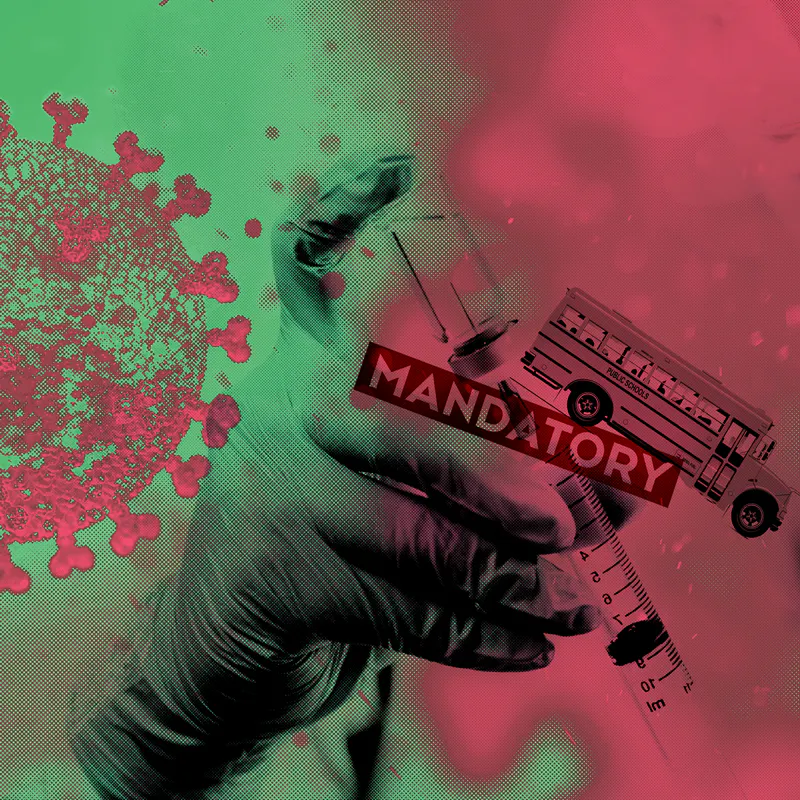
Agree to Disagree COVID Series: Vaccine Mandates (Updated)
As more and more Americans become vaccinated, schools, employers, and health care facilities are facing a tough decision: Will they require students, employees, and care givers to get the jab? Those who say “yes” cite safety concerns – particularly when dealing with vulnerable populations – and call it a necessary step to return to normal. Those who say “no” argue these sorts of mandates violate individual rights, could expose recipients to potential dangers from the vaccines themselves, and set dangerous broader precedents when it comes to government overreach in public health. It is an especially timely question that pits health concerns up against ideals of personal liberty. And it has practical implications as societies emerge from lockdown. Having it out in the public square, Intelligence Squared host John Donvan presides over a spirited debate between Michael J. Anderson, a Wisconsin attorney who has represented employees resisting vaccine mandates, and Lawrence Gostin, a professor of law at Georgetown University, which is enforcing a vaccine mandate. Originally released on July 2, 2021. Learn more about your ad choices. Visit podcastchoices.com/adchoices