Omni Talk Retail
2,062 episodes — Page 21 of 42
S7 Ep 146Fast Five Shorts | Walmart Tests Letting People Open Locked Display Cases With Their Mobile Devices
In the latest edition of Omni Talk’s Retail Fast Five, sponsored by the A&M Consumer and Retail Group, Avalara, Mirakl, Ownit AI, and Ocampo Capital Chris Walton and Anne Mezzenga discuss: Walmart Testing Letting People Open Locked Display Cases With Their Mobile DevicesFor the full episode head here:https://youtu.be/HfqxboxZ35QThis podcast uses the following third-party services for analysis: Podcorn - https://podcorn.com/privacy
S7 Ep 145Walmart’s New Mobile Locks, Instacart’s Big Week & E.l.f. Beauty’s Dollar General Plans! | Fast Five
In this week’s Omni Talk Retail Fast Five news roundup, sponsored by the A&M Consumer and Retail Group, Ownit AI, Avalara, Mirakl, and Ocampo Capital, Chris and Anne discussed:Walmart testing a new technology in its stores that would let people open security locks for products with mobile devices (Source)The E.l.f. Beauty expansion into Dollar General (Source)The flurry of announcements from Instacart this past week on everything from Caper Carts to Carrot Tags (Source)Lowe’s debuting a new home platform for its loyalty members (Source)And closed with a look at the odd media sound bytes surrounding Amazon’s eight new Amazon Fresh store openings this week (Source)There’s all that, plus the Vuori vs. Lululemon Battle Royale, falling raccoons, and what delicate aromas a sneaker sommelier would detect from Anne’s pre-owned Nikes.Music by hooksounds.com#RetailNews #Walmart #ELFBeauty #DollarGeneral #Instacart #Lowes #AmazonFresh #OmniTalk #RetailPodcast #RetailTrends #InnovationThis podcast uses the following third-party services for analysis: Podcorn - https://podcorn.com/privacy

S7 Ep 144Placer.ai's Ethan Chernofsky Reveals 2024 Retail Superlative Awards & Surprising Insights | Ask An Expert
Placer.ai's Ethan Chernofsky joins Chris and Anne to reveal the 2024 Retail Superlative Awards. Ethan highlights:(4:58) Costco’s title as “Most Likely to Succeed Forever” (8:40) Fitness as the “Segment of the Year”(14:08) "Favorite Data Point of the Year" with surprising insights from eclipse-related foot traffic and home furnishings (17:11) The "Most Important Takeaway of 2024" on cross-shopping and consumer behavior (21:40) Retail Media as the "Buzziest Topic of the Year"(27:11) Just Walk Out Tech as the "Most Overrated Innovation" Finally, he makes a bold prediction with Macy’s as the “Biggest Sneaky Upside Retailer to Watch” in 2024 (36:41), offering a surprising perspective on department stores.#retailtrends #retailinsights #retailmedia #retailtechnology Music by hooksounds.comSponsored ContentThis podcast uses the following third-party services for analysis: Podcorn - https://podcorn.com/privacy
S7 Ep 143Fast Five Shorts: A Splash Of Coconut Milk Lightning Round
In the latest edition of Omni Talk’s Retail Fast Five, sponsored by the A&M Consumer and Retail Group, Avalara, Mirakl, Ownit AI, and Ocampo Capital Chris Walton and Anne Mezzenga discuss: A Splash Of Coconut Milk Lightning RoundFor the full episode head here: https://youtu.be/uDYRYCTUsOkThis podcast uses the following third-party services for analysis: Podcorn - https://podcorn.com/privacy
S7 Ep 142Fast Five Shorts | Starbucks Unveils Its Turnaround Plan
In the latest edition of Omni Talk’s Retail Fast Five, sponsored by the A&M Consumer and Retail Group, Avalara, Mirakl, Ownit AI, and Ocampo Capital Chris Walton and Anne Mezzenga discuss: Starbucks Unveiling Its Turnaround PlanFor the full episode head here: https://www.youtube.com/watch?v=uDYRYCTUsOk&t=0sThis podcast uses the following third-party services for analysis: Podcorn - https://podcorn.com/privacy

S7 Ep 141Fast Five Shorts | The Children’s Place Debuts On Shein
In the latest edition of Omni Talk’s Retail Fast Five, sponsored by the A&M Consumer and Retail Group, Avalara, Mirakl, Ownit AI, and Ocampo Capital Chris Walton and Anne Mezzenga discuss: Their Thoughts On The Children’s Place Debuting On SheinFor the full episode head here: https://youtu.be/uDYRYCTUsOkThis podcast uses the following third-party services for analysis: Podcorn - https://podcorn.com/privacy
S7 Ep 140Fast Five Shorts | Buy Or Sell: ChatGPT Search?
In the latest edition of Omni Talk’s Retail Fast Five, sponsored by the A&M Consumer and Retail Group, Avalara, Mirakl, Ownit AI, and Ocampo Capital Chris Walton and Anne Mezzenga discuss: If they're Buying Or Selling: ChatGPT Search?For the full episode head here: https://youtu.be/uDYRYCTUsOkThis podcast uses the following third-party services for analysis: Podcorn - https://podcorn.com/privacy
S7 Ep 139Fast Five Shorts | Doordash And Lyft Up The Ante
In the latest edition of Omni Talk’s Retail Fast Five, sponsored by the A&M Consumer and Retail Group, Avalara, Mirakl, Ownit AI, and Ocampo Capital Chris Walton and Anne Mezzenga discuss: Doordash And Lyft Upping The AnteFor the full episode head here: https://youtu.be/uDYRYCTUsOkThis podcast uses the following third-party services for analysis: Podcorn - https://podcorn.com/privacy
S7 Ep 138Fast Five Shorts | Walmart+ Is 50% Off!
In the latest edition of Omni Talk’s Retail Fast Five, sponsored by the A&M Consumer and Retail Group, Avalara, Mirakl, Ownit AI, and Ocampo Capital Chris Walton and Anne Mezzenga discuss: Walmart+ Is 50% Off!For the full episode head here: https://youtu.be/uDYRYCTUsOkThis podcast uses the following third-party services for analysis: Podcorn - https://podcorn.com/privacy

S7 Ep 137Walmart+ Is 50% Off, Starbucks Sketches Its Turnaround Plan & ChatGPT Search Has Arrived | Fast Five
In this week’s Omni Talk Retail Fast Five news roundup, sponsored by the A&M Consumer and Retail Group, Ownit AI, Avalara, Mirakl, and Ocampo Capital, Chris and Anne discuss:Walmart discounting its Walmart+ membership by 50% for the holidays (Source)The jaw dropping value of DoorDash and Lyft’s new partnership (Source)OpenAI’s launch of ChatGPT Search (Source)The Children’s Place’s decision to sell products via Shein (Source)And closed with an examination of Starbucks CEO Brian Niccol’s recently unveiled plans to turnaround Starbucks (Source)There’s all that, plus Oregon Trail, Westminster Dog Show trading cards, and why Chris refuses to eat hot dogs ever again.Music by hooksounds.comThis podcast uses the following third-party services for analysis: Podcorn - https://podcorn.com/privacy
S7 Ep 136Walmart's Hilarious Black Friday Parodies: Which One Will Steal the Show?
In this Fast Five Short sponsored by the A&M Consumer and Retail Group, Avalara, Mirakl, Ownit AI, and Ocampo Capital Chris Walton and Anne Mezzenga discuss how Walmart's innovative marketing campaign features parodies of popular TV series like Yellowstone and Bridgerton, sparking excitement and humor among listeners. The hosts discuss their anticipation for these parodies and the creative angles Walmart might take. The conversation shifts to a unique offering from Walmart—a tiny house priced at $15,900—which leads to a playful exchange about what names they would give such a dwelling. As the discussion unfolds, Chris shares a humorous highlight from his high school basketball career, showcasing the lighthearted banter between the speakers. This episode blends entertainment and nostalgia while exploring the intersection of pop culture and consumerism.The podcast kicks off with a lively discussion about Walmart's innovative marketing campaign, which parodies popular television series like 'Yellowstone' and 'Bridgerton' to promote their Black Friday deals. Anne prompts Chris to share which parody they are most excited about. The anticipation builds as they dive into the details of these creative takes, with Chris particularly eager about the 'Bridgerton' parody, hinting at the potential for a humorous and engaging representation of the beloved series. As the conversation flows, they explore the implications of such marketing strategies in today's consumer landscape, considering how humor and relatability can enhance brand connection with customers. Transitioning from parodies to product offerings, the discussion shifts to Walmart's new venture into real estate with a tiny house priced at $15,900. Chris describes the compact, expandable prefab house, discussing its logistics and the necessity of a forklift for delivery. This revelation sparks a light-hearted exchange about personal space and retreat, with Anne and Chris playfully proposing names for the tiny house. Anne suggests 'Alone Time,' reflecting a desire for solitude, while Chris envisions a more glamorous title. This portion of the podcast highlights the intersection of lifestyle and consumer goods, emphasizing the growing trend of minimalism and the appeal of tiny living in modern society. The episode culminates with an engaging conversation about a new app called Film Room, developed by Dick Sporting Goods. This app utilizes AI to help coaches analyze footage from youth basketball and volleyball games. Anne prompts Chris to reminisce about their own athletic highlights, leading to a humorous recounting of a pivotal moment from their high school basketball career. Chris's modest reflection on shooting technical free throws brings an element of nostalgia and humor, showcasing the relatable ups and downs of youth sports. The dialogue wraps up with a thoughtful commentary on the role of technology in sports and its potential impact on young athletes, leaving listeners with a sense of camaraderie and inspiration. Through a blend of humor, personal anecdotes, and insightful commentary, the podcast offers a vibrant exploration of contemporary marketing, lifestyle trends, and the evolving landscape of youth sports coaching.Takeaways: Walmart is creatively using parodies of popular TV shows to promote their Black Friday deals campaign. The hosts express excitement about Walmart's Bridgerton parody and its potential humor. Walmart's tiny house offering for $15,900 is a unique and interesting product for consumers. The discussion veers into personal anecdotes, highlighting the hosts' different takes on the tiny house concept. The Film Room app launched by Dick's Sporting Goods aims to enhance youth basketball coaching with AI technology. One host humorously reflects on their own high school basketball highlight, highlighting personal achievement and camaraderie. Companies mentioned in this episode: Walmart Dick's Sporting Goods For the full episode head here: https://youtu.be/xJqW3cfOfRMThis podcast uses the following third-party services for analysis: Podcorn - https://podcorn.com/privacy
S7 Ep 135Revolutionizing Retail: Self-Checkouts Coming to Fitting Rooms
In this Fast Five Short sponsored by the A&M Consumer and Retail Group, Avalara, Mirakl, Ownit AI, and Ocampo Capital Chris Walton and Anne Mezzenga discuss how Marks and Spencer is pioneering the introduction of self checkouts in fitting rooms across its clothing stores, aiming to enhance the shopping experience by reducing the need for customers to queue multiple times. This initiative is set to roll out in about 100 stores by early 2028, with each changing room area expected to feature at least one self checkout. The strategy also addresses concerns about shoplifting by having staff oversee the changing rooms, ensuring customers don't leave without paying. The discussion delves into the potential challenges and innovations that come with this model, including the handling of security tags and the integration of RFID technology. As the retail landscape evolves, this move could inspire other apparel retailers to explore similar solutions, ultimately transforming the fitting room experience for consumers.Marks and Spencer's initiative to install self checkouts in fitting rooms represents a transformative approach to modern retailing, aiming to enhance both customer convenience and operational efficiency. This strategic move is not just about technological innovation; it reflects a deeper understanding of consumer behavior and the growing demand for streamlined shopping experiences. Anne outlines the specifics of the rollout, which includes the introduction of checkouts in 180 clothing stores, with the intent to roll out to 100 locations by 2028. This timeline, however, raises eyebrows as Chris questions whether such a long lead time indicates a lack of readiness for the challenges that lie ahead, including the complexities of handling security measures like tag removal and payment processing within fitting rooms. The conversation dives into the broader implications of this technology, particularly in relation to theft prevention and the overall shopping experience. Chris highlights the potential advantages of using RFID technology to monitor inventory movement more effectively, suggesting that controlled entry points could significantly reduce instances of shoplifting. The discussion also touches on the evolving role of store associates in this new checkout paradigm, emphasizing the importance of having staff present to facilitate transactions and ensure customer satisfaction. As Anne shares insights from their experiences with similar technologies in other retail environments, it becomes clear that while challenges remain, the potential benefits of self checkouts could ultimately lead to a more efficient and enjoyable shopping experience for consumers. As the conversation comes to a close, the hosts express excitement about the future of shopping technology and the potential for further innovations that can enhance the consumer experience. They acknowledge that while Marks and Spencer's approach is a significant step forward, the retail industry as a whole must embrace experimentation and adaptability to remain relevant in a rapidly changing landscape. This episode serves as a thought-provoking exploration of the intersection between technology and retail, providing valuable insights into the future of shopping.Takeaways: Marks and Spencer is implementing self checkouts in fitting rooms to streamline the shopping experience. The self checkout initiative is planned for around 100 stores by early 2028, indicating a slow rollout. The addition of fitting room self checkouts aims to reduce queue times and enhance customer convenience. Marks and Spencer will have staff present to monitor transactions and prevent theft during this process. Concerns remain about handling security tags and bagging with the new self checkout system. The incorporation of RFID technology could revolutionize the fitting room experience and improve theft prevention. Companies mentioned in this episode: Marks and Spencer Zara Uniqlo H&M Gray Orange For the full episode head here: https://youtu.be/xJqW3cfOfRMThis podcast uses the following third-party services for analysis: Podcorn - https://podcorn.com/privacy

S7 Ep 134Wayfair Launches Membership Program: Are Consumers Interested?
In the latest Fast Five Short, sponsored by the A&M Consumer and Retail Group, Avalara, Mirakl, Ownit AI, and Ocampo Capital, Chris Walton and Anne Mezzenga discuss how Wayfair has introduced a new paid loyalty program, costing $29 per year, which offers members 5% back in rewards on purchases, early access to sales, and free shipping on all orders. The discussion explores the value of this subscription model in the context of growing consumer subscription fatigue and the reality that many customers may not frequently exceed the free shipping threshold of $35. Anne expresses skepticism about the program's effectiveness, arguing that most items purchased from Wayfair are likely to be above that threshold anyway, making the subscription less appealing. Meanwhile, Chris defends the program, suggesting it targets customers who would benefit from the loyalty incentives. The conversation also touches on broader themes of consumer behavior and the competitive landscape of e-commerce, including comparisons to other services like Walmart+.Wayfair has introduced a new paid loyalty program that aims to enhance customer retention across its various brands, including Wayfair, All Modern, Birch Lane, Joss and Main, and Paragould. Priced at $29 per year, the program offers rewards that never expire as long as the subscription remains active, alongside perks like 5% back on purchases, early access to sales, and free shipping on orders of any size. The hosts dive into the implications of this program, with the conversation revealing contrasting opinions on its potential value to consumers. While Anne expresses skepticism, arguing that many shoppers may not benefit from the rewards enough to justify the cost, Chris believes the program is a strategic move that could resonate with customers who frequently shop at Wayfair but might not reach the free shipping threshold. As they explore the psychology behind loyalty programs, they touch on broader themes of consumer behavior, subscription fatigue, and the competitive landscape of e-commerce. The discussion reflects a nuanced understanding of retail dynamics, particularly how brands like Wayfair are adapting to changing consumer preferences in an increasingly subscription-driven market.Takeaways: Wayfair's new paid loyalty program costs $29 per year and offers a 5% rewards back on purchases. The program includes free shipping on all orders and early access to major sales events. Some consumers may find value in the loyalty program if they often miss the free shipping threshold. Wayfair's management aims to address subscription fatigue by offering a lower-cost alternative to competitors like Amazon. The podcast hosts discuss the practicality of the program, considering shopping habits and purchasing frequency. Overall, the episode highlights differing perspectives on the value of the new subscription service. Companies mentioned in this episode: Wayfair All Modern Birch Lane Joss and Main Walmart Amazon Target Paramount For the full episode head here: https://youtu.be/xJqW3cfOfRMThis podcast uses the following third-party services for analysis: Podcorn - https://podcorn.com/privacy
S7 Ep 133Retail Robotics on the Rise: Simbe's Funding and Industry Impact
In the latest Fast Five Short sponsored by the A&M Consumer and Retail Group, Avalara, Mirakl, Ownit AI, and Ocampo Capital Chris Walton and Anne Mezzenga discuss how Simbe has successfully raised $50 million in its latest Series C funding round, signaling a strong interest in robotics within the retail sector. The company plans to use this new capital to expand its technological solutions and pursue strategic growth opportunities, which could reshape the future of grocery operations. As Simbe's aisle-skating bots gain traction in various U.S. grocery chains, the discussion shifts to the broader implications of this investment trend on retail technology. Speakers detail how retailers are increasingly reliant on these robots for inventory management, pricing accuracy, and operational efficiency, making them indispensable assets in stores. With insights from industry leaders and ongoing interest from other retailers, the conversation highlights a potential shift towards more extensive robotic integration in retail by 2025.Simbe’s recent $50 million funding round has ignited discussions around the evolving landscape of retail technology, particularly as it pertains to robotics in grocery stores. The funding, part of a Series C round led by Goldman Sachs, signifies a robust confidence in tech solutions that promise tangible returns. Simbe’s aisle-skating robots, now integrated into various U.S. grocery chains, are not only enhancing operational efficiency but are also becoming integral to store teams. The episode delves into the implications of this investment, exploring the broader trend of retailers increasingly adopting robotic solutions to improve inventory management, pricing accuracy, and overall customer experience. The hosts underscore the importance of this trend, suggesting that the industry is on the cusp of a significant transformation, with 2025 potentially marking a pivotal year for robotics in retail as the technology expands beyond grocery into other sectors.The conversation also touches upon the strategic partnerships that Simbe has developed with notable retailers such as Spartan Nash and Albertsons, which are indicative of a growing acceptance and reliance on advanced technology in everyday operations. This strategic growth not only expands Simbe's market presence but also reflects a shifting mindset among retailers who are eager to innovate and enhance their operational capabilities. The hosts share insights from their discussions with industry professionals, emphasizing that once retailers implement these robotic solutions, they quickly realize their value, leading to a reluctance to let them go. The episode is rich with anecdotes and insights that paint a picture of a retail environment primed for technological disruption, where robots are not just tools but valued members of the workforce.Takeaways:Simbe has raised $50 million in its Series C funding round led by Goldman Sachs. The funding will help Simbie expand its robotics technology into new product areas and global markets. Retailers are increasingly valuing the operational benefits of robotics, indicating a trend in retail technology. The consistent demand for robots in grocery stores suggests a promising future for automation in retail. Simbe's partnerships with various grocery chains showcase the growing acceptance of robotics in the sector. Experts predict that 2025 will be a significant year for the deployment of retail robots. Companies mentioned in this episode: Simbe Goldman Sachs Spartan Nash Shoprite Northeast Grocery Albertsons Market Street United Supermarkets Albertsons Market BJ's Wholesale Club Schnuck Markets For the full episode head here: https://youtu.be/xJqW3cfOfRMThis podcast uses the following third-party services for analysis: Podcorn - https://podcorn.com/privacy
S7 Ep 132Is 7-Eleven's New Standard Store the Future of Convenience?
In this Fast Five Short sponsored by the A&M Consumer and Retail Group, Avalara, Mirakl, Ownit AI, and Ocampo Capital Chris Walton and Anne Mezzenga discuss how 7-Eleven is set to open over 600 new stores by 2027, featuring a contemporary design focused on food offerings and customer experience. These new "standard" stores will build on the learnings from their previous Evolution store concept, introducing expanded food and beverage selections, in-store seating, and electric vehicle charging stations. The discussion delves into the implications of this shift for the convenience store and quick-service restaurant (QSR) industries, highlighting the importance of adapting to changing consumer demands. The hosts reflect on their experiences at an Evolution store, noting how 7-Eleven is investing significantly in infrastructure to enhance customer convenience, including mobile checkout options. As they explore the potential impact of these developments, the conversation underscores the need for both industries to stay vigilant and responsive to evolving market trends.A seismic shift is underway in the convenience store landscape, exemplified by 7-Eleven's bold plan to open over 600 new stores in North America by 2027. This initiative introduces a new prototype known as the 'new standard stores,' which emphasizes a contemporary design and an extensive range of food and beverage offerings. The hosts of the podcast delve into the significance of this development, noting that it marks a departure from traditional convenience store models that have historically focused on quick snacks and fuel sales. Instead, 7-Eleven is positioning itself as a serious player in the food service sector, with features designed to enhance the customer experience, such as in-store seating and electric vehicle charging stations.The discussion also explores the implications of this strategy for the convenience store and QSR industries at large. By taking lessons from its previous Evolution store concept, 7-Eleven demonstrates a commitment to learning and adapting in response to consumer demands. The hosts highlight the potential for these new stores to attract repeat customers, not just for quick purchases but for a more engaging shopping experience. As convenience stores increasingly compete with QSRs for consumer attention, the podcast raises critical questions about the future of retail and the need for innovation to remain relevant in a fast-evolving market.The insights shared by the hosts emphasize the importance of investment in infrastructure and technology, particularly in relation to food offerings and customer service enhancements. With 7-Eleven's focus on kitchen build-outs and mobile checkout options, the conversation suggests that convenience stores are redefining their roles within the community. This episode encourages listeners to consider how such changes might influence their shopping habits and the competitive dynamics between convenience stores and fast-casual dining options. Ultimately, the episode paints a picture of a retail landscape that is rapidly evolving and invites its audience to pay close attention to the developments ahead.Takeaways: 7Eleven plans to open over 600 new convenience stores with a contemporary design by 2027. The new Standard C stores will focus on a larger food assortment and enhanced beverage options. Joseph DiPinto emphasized that the design leverages insights gained from previous Evolution store prototypes. Investments in kitchen infrastructure and mobile checkout capabilities are key components of the new store format. The introduction of in-store seating and electric vehicle charging stations marks a significant shift in convenience retailing. The new format reflects a strategic response to declining fuel and tobacco sales in the convenience store sector. Companies mentioned in this episode: 7Eleven Laredo Taco Del Taco Jack in the Box Gelson's Amazon Wayfair For the full episode head here: https://youtu.be/xJqW3cfOfRMThis podcast uses the following third-party services for analysis: Podcorn - https://podcorn.com/privacy
S7 Ep 131Will Amazon's New Storefront Take Down Temu and Shein?
In the latest Fast Five Short sponsored by the A&M Consumer and Retail Group, Avalara, Mirakl, Ownit AI, and Ocampo Capital Chris Walton and Anne Mezzenga discuss how Amazon is taking aggressive measures to compete with Shein and Temu by imposing strict price caps on its new low-cost storefront, with limits set at $8 for jewelry, $13 for guitars, and astonishingly low prices for larger items like sofas. This strategic move aims to reclaim market share as these competitors have been encroaching on Amazon's e-commerce dominance. The discussion delves into whether Amazon can effectively win this pricing war, given the entrenched loyalty consumers have towards Shein and Temu. Both speakers explore the implications of Amazon's strategy, particularly regarding its ability to leverage its existing relationships with manufacturers in China. The episode highlights the challenges Amazon faces in adapting to a new e-commerce model while also addressing consumer preferences and brand perceptions among younger shoppers.Amazon's strategic pivot in the e-commerce landscape has set the stage for a fierce pricing battle with emerging competitors like Shein and Temu. The company's move to impose strict price caps on products in a new low-cost storefront signifies a response to the growing market share of these rivals, particularly among younger consumers. The podcast details specific price limits that Amazon has set, such as $8 for jewelry and $20 for sofas—a move that raises eyebrows about the feasibility of such pricing for quality goods. This aggressive strategy aims not only to reclaim market dominance but also to appeal to a demographic increasingly drawn to low-cost alternatives. The discussion delves into the implications of this pricing war, questioning whether Amazon can successfully penetrate a market where competitors have already established strong consumer loyalty.The conversation shifts towards the dynamics of Amazon's fulfillment strategies, revealing plans for direct shipping from Guangdong, China, which could streamline operations but also raises questions about quality control and consumer trust. As the hosts analyze the potential outcomes of this pricing war, they emphasize the importance of user experience and brand reputation in e-commerce. While Amazon has a well-known reputation for low prices, the podcast highlights the challenges it faces in replicating the engaging shopping experiences provided by platforms like Temu, known for their unique gamification strategies. The hosts ponder whether Amazon can adapt to this new market reality or if it risks losing its longstanding status as the go-to online retailer.Takeaways: Amazon is significantly lowering price caps on products to compete with Shein and Temu. The aggressive pricing strategy includes limits such as $20 for sofas and $8 for jewelry. Amazon plans to directly ship orders to US customers from Guangdong, China to reduce costs. Experts believe Amazon is facing challenges to regain market share lost to Temu and Shein. Despite aggressive pricing, Amazon may struggle to change entrenched consumer habits favoring competitors. The user experience and seller ratings on Amazon will play crucial roles in this pricing war. Companies mentioned in this episode: Amazon Shein Temu For the full episode head here: https://youtu.be/xJqW3cfOfRMThis podcast uses the following third-party services for analysis: Podcorn - https://podcorn.com/privacy
S7 Ep 130How AI & Cloud Technology Are Shaping The Future Of Fashion Retail With Doug Tiffan Of AWS | 5IM
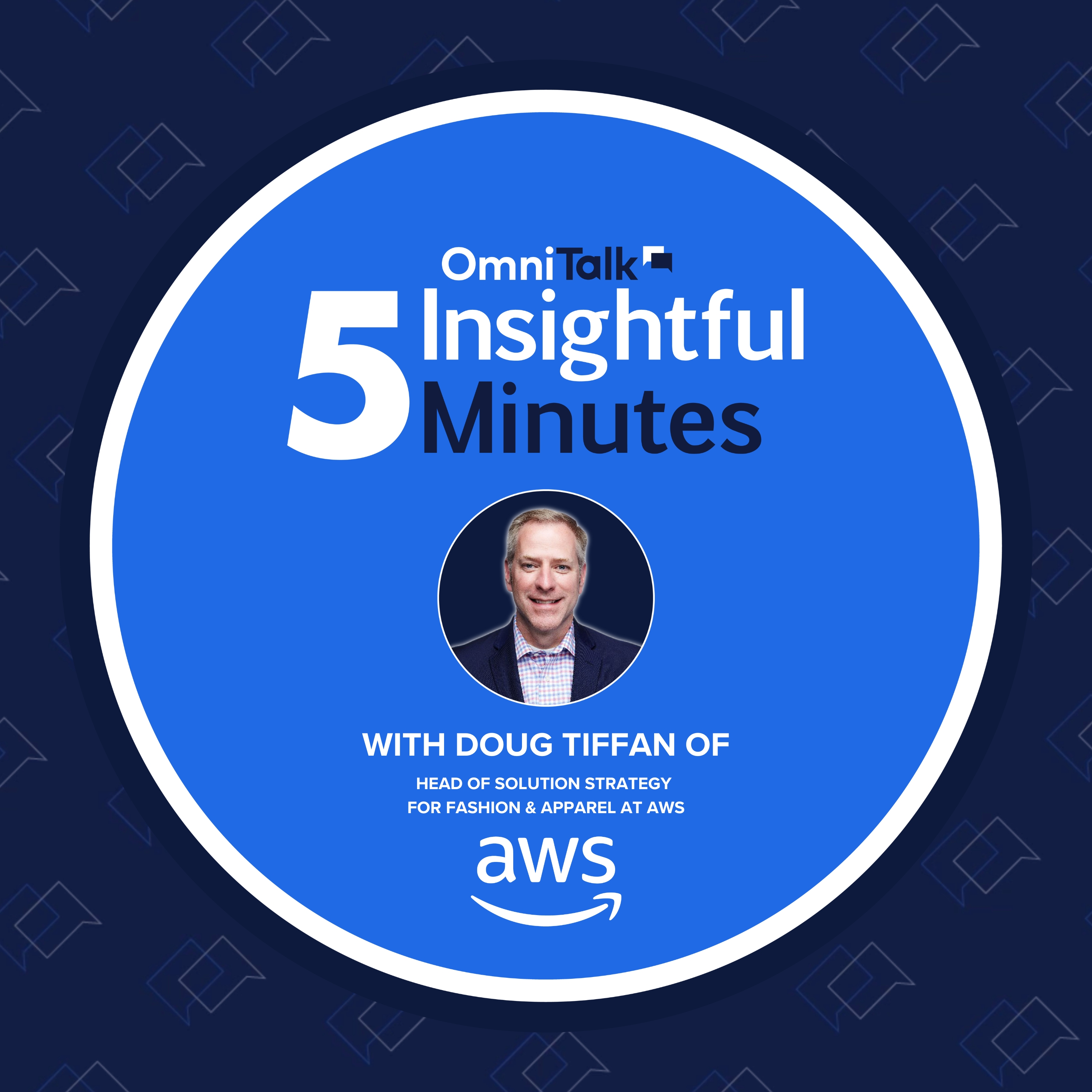
In this 5 Insightful Minutes interview from Omni Talk Retail, Doug Tiffan, Head of Solution Strategy for Fashion and Apparel at Amazon Web Services (AWS), discusses AI and cloud technology’s impact on fashion retail. He provides insights into personalization, data strategies, and the importance of long-term AI planning for retailers to stay competitive.Key moments include:0:18 – Trends in fashion retail: Changing consumer expectations and the need for seamless experiences across channels.1:25 – Leveraging AI for personalization: Tailored product recommendations and targeted marketing strategies.2:53 – AI-powered product search and discovery: Enhancing user experience with visual and natural language search capabilities.3:32 – AI in customer service: 24-hour chatbots and personal stylists for real-time assistance.4:30 – Building a future-ready data strategy: AWS’s advice for long-term AI planning and retailer success.#fashionretail #aws #retailtechnology #aiinretail #cloudcomputing #ecommerce #digitalengagement #retailtrends #customerexperience Music by hooksoundsSponsored ContentThis podcast uses the following third-party services for analysis: Podcorn - https://podcorn.com/privacy
S7 Ep 131Amazon’s Temu Rivalry, 7-Eleven & Why Goldman Sachs Thinks 2025 Is The Year Of The Robot | Fast Five
In this week’s Omni Talk Retail Fast Five news roundup, sponsored by the A&M Consumer and Retail Group, Ownit AI, Avalara, Mirakl, and Ocampo Capital, Chris and Anne discuss:Amazon setting aggressive price targets for its rival online store to Temu and Shein (Source)7-Eleven’s “New Standard” format which it plans open across 600 new stores (Source)Simbe’s $50 million Series C funding round led by Goldman Sachs Alternatives (Source)Wayfair’s new paid subscription loyalty program (Source)And closed with a discussion inspired by Marks & Spencer around the now, next, and future of self-checkout within the fitting room (Source)There’s all that, plus Doug Tiffan from AWS stops by for 5 Insightful Minutes about AI investments in the fashion & apparel space, along with pre-fab housing, waltzing, and basketball stories from when Chris was a strapping young lad.Music by hooksounds.comThis podcast uses the following third-party services for analysis: Podcorn - https://podcorn.com/privacy

S7 Ep 129How Beachwaver Became Successful Going All In On Video Commerce | Ask An Expert
In this episode of the Omni Talk Ask An Expert series, Beachwaver CEO Sarah Potempa and Firework’s VP of Strategic Accounts Kristi Vannatter reveal how Beachwaver uses live video commerce to enhance customer engagement and drive sales. They discuss Beachwaver’s journey from QVC to Target, building a dedicated fan base, and using video to bridge online and in-store experiences. Key moments:0:13 – Introduction to the Beachwaver and Firework Front Porch Series and upcoming presence at NRF 2025.1:01 – Beachwaver’s journey from social media to Target’s shelves and the role of live video in driving product sales.7:06 – Firework’s video commerce capabilities, including interactive video, live streaming, and personalized AI assistance.16:48 – Strategies for creating engaging live video content and using brand ambassadors to build community.24:40 – Sarah’s future vision: bringing video commerce into stores and using AI to support omnichannel customer experience.Perfect for retail professionals, this conversation explores the latest trends in social and video commerce, AI for customer experience, and omnichannel strategies to create a connected brand community. #beachwaver #videocommerce #retailinnovation #omnichannel #liveshopping #ecommerce #retailtechnology #beautyindustry Music by hooksounds.com*Sponsored Content*This podcast uses the following third-party services for analysis: Podcorn - https://podcorn.com/privacy

S7 Ep 128How RFID & GreyOrange’s gStore Are Transforming Retail: Interview With Troy Siwek
In this Omni Talk Retail podcast episode, Chris Walton and Anne Mezzenga talk with Troy Siwek, GM and Partner at GreyOrange, to discuss how RFID technology is transforming retail.Key topics covered include:0:08 – Opening: Discussing RFID’s impact on retail and the recent H&M store experience.0:28 – Introducing Troy Siwek, GM and Partner at GreyOrange, and his background in retail and technology.1:15 – Troy’s preparation for the podcast, background in Omnichannel and retail tech, and transition to GreyOrange.4:29 – Overview of GreyOrange: From supply chain automation to advanced in-store AI applications.5:52 – How supply chain automation and AI intersect in retail innovation.7:47 – gStore and AI in action: Real-world examples of automation in fulfillment and in-store operations.8:45 – Moving from handheld to overhead RFID and the value of real-time inventory tracking.9:42 – The benefits of RFID: Real-time inventory visibility, replenishment from the backroom, and increased conversion rates.10:50 – How overhead RFID technology enables constant cycle counts, improving inventory accuracy.12:29 – Enhanced customer experience: How RFID powers smart mirrors and interactive fitting rooms.15:06 – Introduction to gStore and how it serves as an operational platform for retailers.16:16 – RFID as an entry point for retail digital transformation, and how gStore integrates various in-store tasks.18:59 – Why some retailers are investing in RFID and digital transformation now, especially with omnichannel demands.20:58 – Use cases in merchandising: Compliance checks, inventory tracking, and heat mapping with G Store.22:19 – How RFID technology supports product location in stores and enhances in-store experience.24:03 – Scaling gStore: Considerations for store-to-store variations in RFID technology implementation.27:13 – Challenges with scaling RFID and the importance of piloting across different store formats.28:28 – Looking ahead: The future of RFID and other sensing technologies in retail, including the potential of single-platform analytics.30:52 – The evolving consumer experience: How precise item location impacts omni-channel retail.32:00 – Final thoughts: The role of real-time data and predictive insights in shaping modern retail.Music by hooksounds.com#rfidtechnology #retailautomation #inventorymanagement #retailinnovation #RetailPodcast #supplychain This podcast uses the following third-party services for analysis: Podcorn - https://podcorn.com/privacy
S7 Ep 127Small Stores, Big Ideas: The New Bed, Bath and Beyond Strategy
In the latest edition of Omni Talk’s Retail Fast Five sponsored by the A&M Consumer and Retail Group, Avalara, Mirakl, Ownit AI and Ocampo Capital Chris Walton, Anne Mezzenga, and guest hosts from the Alvarez & Marsal Consumer and Retail Group Lakshman Lakshmanan and Chris Creyts discuss: Bed, Bath and Beyond is exploring a new strategy by partnering with Kirkland's to launch smaller format stores, potentially reviving the brand after its struggles. The collaboration includes financial backing and a revenue-sharing agreement, raising questions about the effectiveness of this smaller incarnation in a competitive retail landscape. As the discussion unfolds, the speakers analyze the implications of this approach, considering whether the market truly needs a reimagined Bed, Bath and Beyond. They delve into the challenges the brand faces, including consumer preferences and the crowded retail environment, while highlighting the importance of location and operational efficiency. Ultimately, the conversation reveals a mix of skepticism and cautious optimism regarding the future of Bed, Bath and Beyond's new venture.A strategic partnership is on the horizon as Kirkland's Home and Beyond collaborates with Beyond to pilot the opening of small format Bed, Bath and Beyond stores. This initiative aims to create a more accessible shopping experience, condensing the usual time commitment for consumers into a quick visit to these charming, compact locations. The collaboration is marked by Beyond's investment of $17 million in debt financing to Kirkland's, suggesting a serious commitment to revamping the Bed, Bath and Beyond brand. Under the terms of their partnership, Beyond stands to gain a share of Kirkland's revenue, with fees tied to retail and e-commerce sales, which indicates a focus on integrating their operations effectively to maximize revenue potential.The podcast delves deeply into the implications of this partnership, discussing whether a smaller version of Bed, Bath and Beyond can successfully carve out a niche in an already crowded market. Speakers analyze the strategic rationale behind Beyond's push into the brick-and-mortar space again after previously declaring they would not open physical stores. The dialogue reveals a mix of skepticism and cautious optimism about the potential for these small locations to thrive, especially considering the changing landscape of retail, where e-commerce dominance has shifted consumer behavior significantly. The episode invites listeners to ponder the viability of such a venture and the lessons learned from Bed, Bath and Beyond’s previous struggles.Takeaways: Bed, Bath and Beyond is partnering with Kirkland's to open smaller format stores, potentially revitalizing the brand. This new strategy may focus on home improvement and decor, targeting a niche market. The partnership involves financial backing, with Beyond providing $17 million to Kirkland's for expansion. Experts express skepticism about whether a smaller Bed, Bath and Beyond will succeed in a competitive market. The new stores aim to capitalize on existing brand recognition while testing a new retail format. Concerns remain about whether customers will choose these stores over established competitors like Amazon. Companies mentioned in this episode: Bed Bath and Beyond Kirkland's Home Depot Zulily Overstock Container Store For the full episode head here: https://youtu.be/k5dEe64NBUEThis podcast uses the following third-party services for analysis: Podcorn - https://podcorn.com/privacy
S7 Ep 128Space Chips and Halloween Treats: The Lightning Round Discussion
In the latest edition of Omni Talk’s Retail Fast Five sponsored by the A&M Consumer and Retail Group, Avalara, Mirakl, Ownit AI and Ocampo Capital Chris Walton, Anne Mezzenga, and guest hosts from the Alvarez & Marsal Consumer and Retail Group Lakshman Lakshmanan and Chris Creyts discuss: This podcast episode dives into the intersection of retail and entertainment, focusing on horror movies set in retail environments, with Chris Creyts leading the discussion. Anne shares her pick, "Bad Santa," and provides an intriguing behind-the-scenes fact about Billy Bob Thornton's performance. The conversation then shifts to a lighter topic as they explore food preferences in space, with Anne advocating for Quest Protein chips and Lakshman championing Doritos. Halloween candy rankings stir up some debate, especially when Lakshman's surprising choice of Hershey's Kisses takes center stage. The episode concludes with a humorous critique of LinkedIn posts, highlighting the oddities of office-themed memes that have no place in a professional networking space, showcasing the group's shared frustrations with social media content.Takeaways: Chris Creyts and Anne discussed their favorite movies filmed in retail settings, with Anne choosing 'Bad Santa'. Anne shared an interesting fact about 'Bad Santa' that Billy Bob Thornton was actually drunk during filming. Doritos recently made headlines with their first ad filmed in space, featuring crunching sounds from astronauts. Lakshman posed the question of what food would be taken into space, leading to a discussion on chips. Anne recommended Quest Protein chips as a nutritious alternative to Doritos, claiming they taste similar. The podcast delved into Halloween candy preferences, revealing that Hershey's Kisses ranked surprisingly high for one participant. Companies mentioned in this episode: Doritos Quest For the full episode head here: https://youtu.be/k5dEe64NBUEThis podcast uses the following third-party services for analysis: Podcorn - https://podcorn.com/privacy
S7 Ep 128Chick-Fil-A Dives into Entertainment: Will Their New App Win Over Families?
In the latest edition of Omni Talk’s Retail Fast Five sponsored by the A&M Consumer and Retail Group, Avalara, Mirakl, Ownit AI and Ocampo Capital Chris Walton, Anne Mezzenga, and guest hosts from the Alvarez & Marsal Consumer and Retail Group Lakshman Lakshmanan and Chris Creyts discuss: Chick-fil-A is set to launch its own entertainment app on November 18th, featuring original animated shows, scripted podcasts, games, recipes, and cooking tutorials aimed at families. The hosts discuss the implications of this move, exploring whether Chick-fil-A can successfully engage the next generation of consumers through digital content. While some express enthusiasm for the brand's innovative approach, others raise concerns about competing in a crowded digital landscape against platforms like TikTok and YouTube. The conversation delves into the potential benefits of increased customer engagement and restaurant traffic, highlighting how this strategy might enhance the brand's connection with younger audiences. Ultimately, the hosts debate the merits of this initiative and whether it could position Chick-fil-A ahead of its competitors in a rapidly evolving retail environment.Chick-fil-A is set to launch its own family-friendly entertainment app, a significant pivot for the fast-food giant that is traditionally known for its chicken sandwiches rather than content creation. The new app, scheduled for release on November 18th, will feature original animated shows, scripted podcasts, games, recipes, and ebooks, all tailored for families. Key highlights of this initiative include the debut of the animated series "Legends of Evergreen Hills," which follows the adventures of protagonist Sam in a fantasy realm, as well as a scripted podcast titled "Hidden Island," centered around a family marooned on a deserted island. This move is seen as a strategy to adapt to changing consumer behavior, particularly as families increasingly seek entertainment options that can be accessed during dining experiences or at home. The discussion among the podcast hosts delves into the implications of this venture, questioning whether Chick-fil-A can effectively engage its audience in a highly competitive digital landscape dominated by platforms like TikTok and YouTube.A critical aspect of the conversation examines the potential impact of the app on customer engagement. The hosts speculate that by integrating entertainment into the dining experience, Chick-fil-A could enhance customer retention and increase the time families spend in their restaurants. This strategy is particularly relevant as many fast-food chains are moving away from play areas and traditional family dining experiences. The hosts draw parallels with Procter & Gamble's historical foray into branded content, pondering whether Chick-fil-A can emulate this success by connecting with younger generations through digital media. The podcast suggests that while the concept is intriguing, its success will largely depend on the execution and the ability to create compelling content that resonates with the target audience without feeling overly commercial.The episode also raises questions about the sustainability of such ventures in the long run. As the conversation unfolds, the hosts express skepticism about the effectiveness of launching a standalone app, emphasizing the challenge of attracting users who are already inundated with entertainment options. They argue that integrating content within the existing Chick-fil-A app might be a more strategic move, allowing the brand to leverage its already loyal customer base while seamlessly introducing entertainment. Overall, the podcast provides a nuanced exploration of Chick-fil-A's innovative approach to customer engagement through digital content, weighing the potential benefits against the challenges of a crowded media landscape and shifting consumer expectations.Takeaways: Chick Fil A is launching an entertainment app focused on family-friendly programming and content. The app will feature original animated shows, podcasts, games, and cooking tutorials for kids. Experts debate whether Chick Fil A can successfully compete against existing entertainment platforms like TikTok. The initiative reflects a shift in family dining experiences, moving to digital engagement. There are concerns about the heavy investment required to produce content for the new app. Some believe Chick Fil A should integrate this content into their existing app instead. Links referenced in this episode:cnbc.comCompanies mentioned in this episode: Chick Fil A Procter and Gamble McDonald's Walmart For the full episode head here: https://youtu.be/k5dEe64NBUEThis podcast uses the following third-party services for analysis: Podcorn - https://podcorn.com/privacy
S7 Ep 128Buy Buy Baby: Is the Physical Store Dead for Baby Brands?
In the latest edition of Omni Talk’s Retail Fast Five sponsored by the A&M Consumer and Retail Group, Avalara, Mirakl, Ownit AI and Ocampo Capital Chris Walton, Anne Mezzenga, and guest hosts from the Alvarez & Marsal Consumer and Retail Group Lakshman Lakshmanan and Chris Creyts discuss: Buy Buy Baby is set to close all of its physical stores less than a year after its launch, transitioning to an online-only model. This decision comes amid a challenging retail landscape for baby products, characterized by declining birth rates and fierce competition from major retailers like Amazon, Target, and Walmart. The podcast features insights from Chris Walton, Anne Mezzenga, and guests Lakshman Lakshmanan and Chris Creyts, who discuss the implications of Buy Buy Baby's shift and whether a successful baby business can thrive without a physical presence. They explore how influencers have changed consumer behaviors and the commoditization of baby products, making it harder for standalone brands to compete. Ultimately, the conversation raises concerns about the viability of the baby retail market and suggests potential strategies for adapting to these challenges.Takeaways: Buy Buy Baby is transitioning to an online-only model, closing all physical stores by year-end. The closure reflects the challenges physical retailers face in the saturated baby market. Influencers and social media are now primary sources of product information for new parents. The declining birth rates present significant challenges for businesses in the baby product sector. Retail experts suggest that partnerships with established retailers could provide strategic benefits for Buy Buy Baby. The market is dominated by major players like Amazon, Target, and Walmart, leaving little room for smaller competitors. Companies mentioned in this episode: Buy Buy Baby Dream On Me Amazon Target Walmart Kohl's Babies R Us Gymboree Carter's Once Upon a Child Container Store Kirkland's Ikea For the full episode head here: https://youtu.be/k5dEe64NBUEThis podcast uses the following third-party services for analysis: Podcorn - https://podcorn.com/privacy
S7 Ep 126Inside Amazon Grocery: A New Concept or Confusing Strategy?
In the latest edition of Omni Talk’s Retail Fast Five sponsored by the A&M Consumer and Retail Group, Avalara, Mirakl, Ownit AI and Ocampo Capital Chris Walton, Anne Mezzenga, and guest hosts from the Alvarez & Marsal Consumer and Retail Group Lakshman Lakshmanan and Chris Creyts discuss: Amazon's latest venture into the grocery sector is a new small format store called Amazon Grocery, launched in downtown Chicago. This store, featuring around 3,500 products, aims to provide convenience for customers looking to make quick grocery trips while also offering national grocery brands that Whole Foods does not carry. The hosts discuss the perplexing nature of Amazon's grocery strategy, questioning whether this new concept adds clarity or just complicates the existing landscape of Amazon's grocery offerings. They explore the potential implications of co-locating Amazon Grocery with Whole Foods and debate whether this experiment could ultimately lead to the erosion of the Whole Foods brand. The conversation reveals contrasting perspectives on the effectiveness of this approach, highlighting skepticism about its long-term viability and the challenges Amazon faces in the competitive grocery market.Amazon is venturing into a new grocery store format with its recent launch of a small-format grocery store in downtown Chicago, dubbed 'Amazon Grocery.' This store spans 3,800 square feet and is strategically located within a building that also houses a Whole Foods. The concept features around 3,500 products, focusing on quick grocery runs and essentials that complement the offerings at Whole Foods. The podcast delves into the implications of this new venture, questioning Amazon's overarching grocery strategy and how this new store fits into their existing ecosystem. The discussion highlights the challenges of co-locating a grocery store with Whole Foods, raising concerns about potential cannibalization of sales and the complexities of offering national brands alongside Whole Foods' private labels. The participants express skepticism about whether this new concept can effectively serve its target demographic—a younger, urban clientele seeking convenience and variety—without diluting the brand identity of both Amazon Grocery and Whole Foods.Takeaways: Amazon is experimenting with a new grocery store format in downtown Chicago, called Amazon Grocery. This new store concept is a small format with around 3,500 products, focusing on convenience. The strategic placement next to Whole Foods raises questions about competition and customer behavior. Experts debate whether this format will succeed or if it complicates Amazon's grocery strategy. Many see this as an experiment to integrate national brands alongside Whole Foods offerings. There's skepticism about the long-term viability of the Amazon Grocery concept in the market. Companies mentioned in this episode: Amazon Whole Foods Amazon Fresh Amazon Go 711 Sprouts Kroger Target Walmart Safeway Albertsons For the full episode head here: https://youtu.be/k5dEe64NBUEThis podcast uses the following third-party services for analysis: Podcorn - https://podcorn.com/privacy
S7 Ep 125Walmart's Game-Changer: Same-Day Prescription Delivery Is Here!
In this Fast Five Short, Anne and Chris are joined by A&M CRG's Lakshman Lakshmanan and Chris Creyts to discuss how Walmart has launched a same-day prescription delivery service, aiming to reach 49 states and cover over 86% of U.S. households by the end of January. This innovative move allows customers to combine their grocery and medication orders, creating convenience for Walmart Plus members. The podcast discusses the potential impact of this service on traditional pharmacies like CVS and Walgreens, which currently hold significant market share. As Walmart expands its pharmacy offerings, experts highlight the competitive landscape, noting that both Walmart and Amazon are vying for a larger share of the prescription market. The conversation emphasizes Walmart's strategic response to customer demand and the implications for the future of pharmacy retail.Walmart's recent announcement of a same-day prescription delivery service marks a significant shift in the retail pharmacy landscape. Starting with the ability to deliver prescriptions in as little as 30 minutes, this service is set to be available across 49 states and aims to cover more than 86% of U.S. households by the end of January. Walmart's strategy allows customers to combine their grocery and medication orders, particularly benefiting Walmart Plus members who will enjoy this service for free. This initiative not only positions Walmart as a competitive player in the pharmacy market but also highlights the growing demand for convenience in healthcare delivery. The discussion delves into the implications for traditional pharmacy giants like Walgreens and CVS, who currently dominate the market with significant shares. While Walmart holds only 5% of the prescription market, the speakers analyze how this move could potentially erode that dominance, especially considering that 90% of households live within 10 miles of a Walmart pharmacy. The conversation uncovers concerns about the future of these established pharmacies as they face increasing pressure from not only Walmart but also Amazon, which is expanding its pharmacy services. As the episode progresses, the speakers emphasize the importance of understanding customer needs. Walmart's decision to implement this service was driven by feedback from customers who expressed a desire for integrated grocery and prescription delivery. This customer-centric approach is contrasted with the reactive strategies of other retailers that often focus on what competitors are doing rather than what consumers want. The insights shared in this episode underline the evolving dynamics of retail pharmacy, highlighting the need for innovation and adaptability in an increasingly competitive market.Takeaways: Walmart's new same day prescription delivery service aims to reach 90% of US households within weeks. The move poses a competitive threat to CVS and Walgreens, who dominate the pharmacy market. Walmart's pharmacy market share is currently low, indicating significant growth potential for the company. Customers can now combine grocery and prescription deliveries, enhancing Walmart Plus membership value. Amazon is also expanding its pharmacy services, increasing competition in the prescription delivery market. Walmart's focus on customer feedback led to the launch of sought-after delivery options for prescriptions. Companies mentioned in this episode: Walmart CVS Walgreens Amazon TargetFor the full episode sponsored by the A&M Consumer and Retail Group, Avalara, Mirakl, Ownit AI, and Ocampo Capital head here: https://youtu.be/k5dEe64NBUEhttps://youtu.be/XlWTHMPWRDUThis podcast uses the following third-party services for analysis: Podcorn - https://podcorn.com/privacy
S7 Ep 124Walmart Same-Day Rx Delivery, Bed Bath’s Return & WTF Is Amazon’s Grocery Strategy | Fast Five
In this week’s Omni Talk Retail Fast Five news roundup, sponsored by the A&M Consumer and Retail Group, Ownit AI, Avalara, Mirakl, and Ocampo Capital, A&M’s Lakshman Lakshmanan and Chris Creyts, joined Chris and Anne to discuss:The wide-ranging significance of Walmart offering same-day prescription delivery and making it free for Walmart+ members (Source)Amazon’s new “Amazon Grocery” store in Chicago and how it fits into Amazon’s growing ever more confusing grocery strategy (Source)If U.S. consumers really need a new, smaller incarnation of a Bed Bath & Beyond store (Source)BuyBuy Baby shuttering all its stores and whether going it alone via online is a good long-term solution (Source)And closed with an examination of why in the world Chick-fil-A would launch a new entertainment app (Source)There’s all that, plus we rank Halloween candy, discuss which food we would most like to bring with us into space, and pay homage to the LinkedIn Lunatics subreddit!P.S. Join us at Manifest: The Future of Supply Chain & Logistics conference in February where 300+ thought leaders will share their insights in over 130 engaging sessions! View the just announced agenda & SAVE $200 on the current registration rate ($800 off the on-site rate!) by visiting ManifestVegas.com/SaveWithOmniTalk. P.P.S. Be sure to check out all our other podcasts from the past week here, too: https://omnitalk.blog/category/podcast/P.P.P.S. Also be sure to check out our podcast rankings on Apple Podcasts and on FeedspotMusic by hooksounds.comThis podcast uses the following third-party services for analysis: Podcorn - https://podcorn.com/privacy
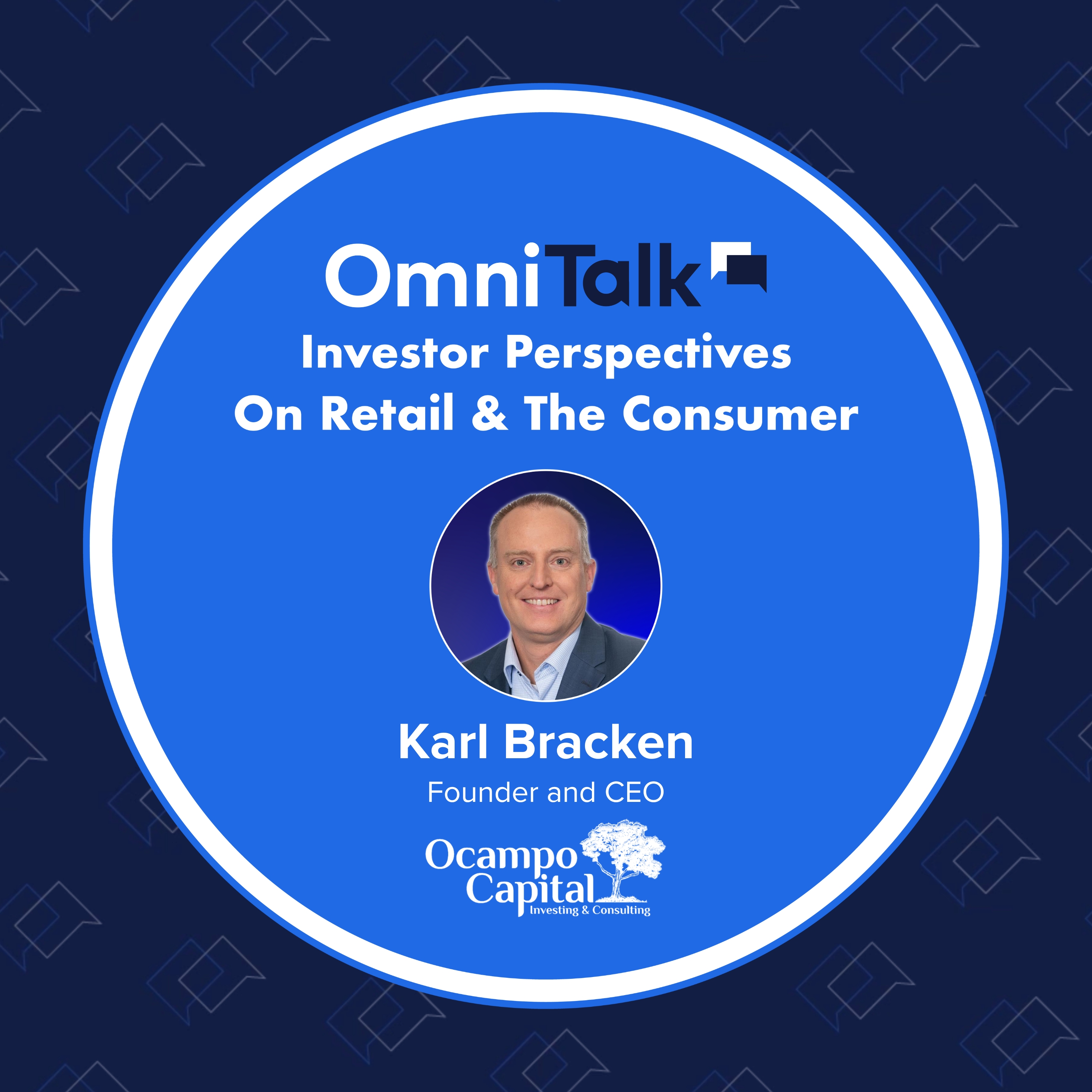
S7 Ep 123The State of Retail Venture Capital: Challenges and Opportunities with Karl Bracken
In this debut episode of Omni Talk Retail's new podcast series, highlighting investor perspectives on retail and consumer trends, Chris and Anne interview Karl Bracken, Founder and CEO of Ocampo Capital. Karl shares insights into the venture capital landscape for retail and consumer goods startups, touching on leadership, differentiated IP, and the importance of omnichannel strategies. He also highlights key challenges in today’s market, including the over-reliance on AI trends.Key moments include:2:22 Karl’s career background and shift to VC10:50 Lessons from DTC and Amazon aggregators16:32 Raising funds in today’s environment27:59 Emerging trends: AI and upcycled products35:45 Investing Words of Wisdom#venturecapital #retailinvestors #consumergoods #startupadvice #entrepreneurship Music by hooksounds.comSponsored ContentThis podcast uses the following third-party services for analysis: Podcorn - https://podcorn.com/privacy
S7 Ep 134Anne's and Chris's Childhood Aspirations: A Love for Meteorology and Mike Royko
In this Fast Five Short we discuss in our Lightning round how Walmart's recent hiring of a full-time meteorologist sparks a nostalgic conversation about childhood dreams and career aspirations. As the hosts explore their early ambitions, one reveals a love for meteorology rooted in a childhood fear of storms combined with a passion for retail. This lighthearted exchange transitions into a spirited debate about the best fried chicken restaurants, with Popeyes emerging as the clear favorite for one host, much to the surprise of the other who has never tried it. The discussion also touches on the upcoming Black Friday shopping season, highlighting Target's exclusive Taylor Swift merchandise and the discerning habits of shoppers. Finally, the hosts delve into the growing trend of meat snacks, contemplating their personal preferences and experiences with jerky and meat sticks, revealing a humorous take on the textures and flavors that appeal to them.Takeaways: Walmart's recent hiring of a full-time meteorologist highlights the intersection of retail and meteorology. Anne's childhood aspiration to be a meteorologist stemmed from a love for storms and retail. Chris reminisced about wanting to be a columnist like Mike Royko during their youth. Both speakers discuss their preferences for fried chicken, with Popeyes being the clear favorite. The conversation shifted to Black Friday deals, specifically Target's exclusive Taylor Swift merchandise. They also debated the appeal of meat sticks as a snack, revealing differing opinions on texture. Companies mentioned in this episode: Walmart KFC Popeyes Chick-fil-A Raising Cane's McDonald's Target Taylor Swift Thanks to the A&M Consumer and Retail Group, Avalara, Mirakl, Ownit AI, and Ocampo Capital for making this episode possibleFor the full episode head here: https://youtu.be/T_30gGTzlZ4This podcast uses the following third-party services for analysis: Podcorn - https://podcorn.com/privacy
S7 Ep 133Will Amazon's Robot Warehouses Save Whole Foods or Seal Its Fate?
In this Fast Five Short, we discuss how Amazon is testing a new concept by integrating micro fulfillment centers into Whole Foods, allowing shoppers to order items online while in-store and pick them up at checkout. This strategy aims to consolidate shopping trips and expand the range of products available to Whole Foods customers, including popular brands not typically found in the store. However, the discussion raises critical questions about the potential impact on customer behavior, with predictions that it may lead to fewer visits to Whole Foods by its regular shoppers. The conversation delves into the implications of this shift on Whole Foods' overall viability and its long-term future under Amazon's ownership. Ultimately, the hosts consider whether this approach will enhance the shopping experience or diminish it by forcing consumers into a more fragmented purchasing process.Amazon's innovative approach to grocery shopping is being tested with the integration of micro fulfillment centers at Whole Foods locations. This strategic move aims to enhance the shopping experience by allowing customers to order from Amazon's extensive product catalog while shopping in-store at Whole Foods. The pilot program in Plymouth Meeting, Pennsylvania, promises to combine the convenience of online shopping with the tactile experience of browsing physical grocery aisles. Shoppers can order popular items that Whole Foods does not traditionally stock, such as family favorites from Pepsi and Kellogg's. The discussion delves into the implications of this model, questioning whether it will attract non-Whole Foods shoppers to the store or simply reduce the frequency of visits from existing Whole Foods customers to other grocery retailers. As the hosts explore these dynamics, they ponder the potential impact on Whole Foods' brand and market position, including concerns about diminishing in-store experiences and the risk of alienating loyal customers who value the curated shopping atmosphere.Takeaways: Amazon is testing robot warehouses at Whole Foods to streamline shopping and pickup experiences. The new micro fulfillment center in Pennsylvania will allow shoppers to order online items while in-store. This strategy could reduce shopping trips to other grocery retailers for Whole Foods shoppers. Concerns arise about the practicality of ordering products like soda while browsing in-store. The addition of mini warehouses questions the merchandising of products in Whole Foods stores. A potential outcome of this strategy could be the decline of Whole Foods as a brand. Companies mentioned in this episode: Amazon Whole Foods Pepsi Kellogg Coca Cola Doritos Thanks to the A&M Consumer and Retail Group, Avalara, Mirakl, Ownit AI, and Ocampo Capital for making this episode possibleFor the full episode head here: https://youtu.be/T_30gGTzlZ4This podcast uses the following third-party services for analysis: Podcorn - https://podcorn.com/privacy
S7 Ep 132Resale Revolution: How JD Sports is Changing the Game with ReJD
In this Fast Five Short we discuss how JD Sports has recently launched a new pre-owned shoe shopping platform called Rejd, aiming to provide consumers with significant discounts on gently used footwear. This initiative positions JD Sports uniquely in the aftermarket space as one of the few retail-owned platforms, rather than being brand-led. While the concept has potential, concerns arise about profitability, as similar resale platforms have struggled to maintain sustainable business models. The discussion highlights the challenges of managing inventory and logistics in the resale market, questioning how JD Sports can ensure financial success in this competitive landscape. Ultimately, the hosts recognize JD Sports' innovative approaches and their growing presence in the U.S. retail market, suggesting that they are a brand to watch as they navigate this evolving space.The launch of Rejd by JD Sports signifies a transformative step toward sustainable retail, providing consumers with an opportunity to buy pre-owned shoes at attractive prices. This initiative distinguishes JD Sports from other retailers, as it is one of the few to embrace an aftermarket platform not directly tied to a specific sneaker brand. Through Rejd, JD Sports aims to offer a wide variety of footwear options, ranging from casual sandals to high-performance shoes, ensuring that they cater to diverse consumer needs. Each product undergoes a thorough inspection and cleaning process, along with a grading system that informs buyers about the shoe's condition, enhancing the shopping experience and building trust in the quality of pre-owned items.The discussion explores both the excitement and the apprehensions surrounding JD Sports' new venture. Speaker B shares insights on the potential advantages, particularly JD's access to data from original shoe purchases, which could streamline the resale process and reduce waste by reintroducing products into the market. However, the conversation also addresses the precarious nature of profitability in the resale sector, citing challenges faced by platforms like ThredUp and Depop. The speakers delve into the economics of inventory management, questioning whether JD Sports can maintain a profitable balance while holding stock and managing returns. This tension reflects broader issues within the resale industry, as companies grapple with the implications of sustainability versus financial viability.As the episode unfolds, it becomes evident that JD Sports is not just testing the waters; they are making bold moves in the retail space. The speakers acknowledge the need for JD to remain operationally vigilant as they innovate and expand their offerings. With a proactive leadership team and a commitment to exploring new retail strategies, JD Sports stands at the forefront of potential change in the footwear market. Their willingness to experiment with new concepts like Rejd could position them as leaders in a sector that demands creativity and adaptability, fostering a retail environment that embraces both sustainability and profitability.Takeaways: JD Sports launched Rejd, a platform for pre-owned shoes at discounted prices. Rejd stands out as a retailer-owned resale platform, unlike typical sneaker brand outlets. All shoes on Rejd undergo inspection and cleaning, ensuring quality for buyers. There's concern about profitability for JD Sports' Rejd amidst struggles in resale markets. The model involves managing returned products, raising questions about long-term financial viability. JD Sports is taking innovative approaches in retail, aiming to differentiate itself in the market. Companies mentioned in this episode: JD Sports Nike New Balance thredup Depop Realreal Arrive Recommerce Thanks to the A&M Consumer and Retail Group, Avalara, Mirakl, Ownit AI, and Ocampo Capital for making this episode possibleFor the full episode head here: https://youtu.be/T_30gGTzlZ4This podcast uses the following third-party services for analysis: Podcorn - https://podcorn.com/privacy
S7 Ep 131Are Bundled Deliveries the Key to Amazon's Grocery Success?
In this Fast Five Short we discuss how Amazon is taking a significant step in enhancing the grocery shopping experience for Prime members by allowing them to combine purchases from Amazon.com, Amazon Fresh, and Whole Foods into a single cart for convenient delivery. This new feature, currently being piloted in Phoenix, offers customers the ability to shop for essentials and have their orders delivered together, tapping into the same-day delivery model that many consumers have come to expect. The conversation explores the implications of this change, particularly in the context of competition with retailers like Walmart, which has already streamlined its grocery shopping experience. Both speakers express curiosity about why it took Amazon so long to implement this feature, questioning its potential benefits for customers versus Amazon's logistical advantages. As they discuss the nuances of the shopping experience, they highlight the importance of making grocery shopping more efficient and accessible for consumers, while pondering the challenges that may arise from differentiating delivery charges and services.Takeaways: Amazon is integrating grocery shopping with its regular marketplace to enhance user experience. The new feature allows Prime members to find grocery items and other products in one cart. Retailers like Walmart may be threatened by Amazon's new grocery delivery capabilities. This consolidated shopping experience could simplify the process for customers looking to save time. Amazon's strategy appears to be a response to growing competition in the grocery e-commerce space. Understanding the delivery fees for groceries versus regular items may become complex for users. Companies mentioned in this episode: Amazon Amazon Fresh Whole Foods Walmart Target Costco Thanks to the A&M Consumer and Retail Group, Avalara, Mirakl, Ownit AI, and Ocampo Capital for making this episode possibleFor the full episode head here: https://youtu.be/T_30gGTzlZ4This podcast uses the following third-party services for analysis: Podcorn - https://podcorn.com/privacy

S7 Ep 130From Search to Purchase: How Google Shopping is Transforming E-Commerce
In this Fast Five Short we discuss Google Shopping has announced significant changes aimed at enhancing the online shopping experience through the integration of AI and more personalized features. The new updates include AI-generated briefs that help consumers make informed decisions when searching for products, like winter jackets suitable for specific climates. Additionally, the platform will offer dynamic filters for better product selection and a personalized deals page that simplifies deal discovery. The discussion highlights how these changes may alter consumer behavior by improving the search process and enabling more effective product discovery compared to traditional methods. The hosts also explore the implications for retailers, emphasizing the necessity of adapting to these evolving search dynamics to maintain competitiveness in the market.The recent updates to Google Shopping reflect a significant shift in how consumers will approach online shopping. With the integration of AI technology, the platform now offers personalized shopping experiences that cater to individual needs. For instance, if a user searches for a 'men's winter jacket for Seattle,' Google's new features will provide an AI-generated brief highlighting critical considerations for purchasing based on the local climate. This contextual information enhances the shopping process, as it not only presents product options but also informs consumers about what to look for in their purchases. The episode intricately discusses how these changes will not only improve user experience but also redefine the competitive landscape of e-commerce.As the conversation unfolds, the hosts dive into the mechanics behind these new features, including organized product categories and dynamic filters. These tools empower consumers to refine their searches based on specific preferences such as size and availability, transforming the way they navigate the online shopping experience. The introduction of a dedicated deals page is another exciting addition, allowing users to browse personalized offers that can influence their buying behavior. The episode emphasizes the importance of these innovations for retailers, urging them to adapt their online strategies to meet the new expectations set by these advancements.Toward the end of the discussion, the hosts tackle the relationship between Google Shopping and Google Lens, comparing the potential impacts of both features. While Google Lens has been heralded for its visual search capabilities, it becomes clear that the enhancements to Google Shopping may have broader implications for the retail sector. The hosts argue that these updates signal a transformative period for online shopping, with the potential to redefine consumer behavior and expectations. Retailers are encouraged to embrace these changes, as failing to do so could result in losing ground to competitors who are quick to adapt to the new landscape.Takeaways: Google Shopping is introducing AI-driven features to enhance the shopping experience for users. Users will benefit from personalized deal pages that help them find relevant discounts easily. Dynamic filters will enable shoppers to narrow down product searches based on specific preferences. The integration of credible source material alongside product searches will improve the shopping process. Retailers must adapt their strategies to align with changing consumer search behaviors on Google. Google's approach to shopping emphasizes discovery, potentially reshaping how consumers engage with eCommerce. Links referenced in this episode:google.com/shoppingCompanies mentioned in this episode: Google Amazon Target Thanks to the A&M Consumer and Retail Group, Avalara, Mirakl, Ownit AI, and Ocampo Capital for making this episode possibleFor the full episode head here: https://youtu.be/T_30gGTzlZ4This podcast uses the following third-party services for analysis: Podcorn - https://podcorn.com/privacy
S7 Ep 129Grabango Shuts Down: Is This the End of Camera-Based Checkout?
Grabango has officially shut down, marking a significant moment for the future of fixed-position camera-based automated checkout systems. The podcast discusses the implications of this closure, particularly in light of the fact that Grabango's technology, which was aimed at offering a checkout-free shopping experience, struggled to gain traction despite its innovative approach. Speakers analyze how the perceived value of simply walking out of a store without checking out may not be enough for consumers to choose such technologies over more established solutions. They also emphasize a shift in retail technology investments towards more cost-effective options like in-store robotics, which could lead to a decline in interest for just walk-out systems. As the conversation unfolds, they reflect on recent trends in the industry, including Amazon's own setbacks with similar technologies, suggesting a broader reevaluation of the automated checkout landscape.Takeaways: Grabango has permanently ceased operations, highlighting challenges in automated checkout technology. The shutdown of Grabango raises questions about the viability of camera-based checkout systems. Retailers may prioritize lower-cost solutions like robotics instead of complex camera systems. The trend towards in-store robotics is expected to intensify following Grabango's exit from the market. Amazon's criticisms of its own just walk out tech suggest a broader industry reevaluation. Retailers are focusing on technologies that directly impact their core business and profitability. Companies mentioned in this episode: Grabango Aldi Amazon Instacart Sam's Club Thanks to the A&M Consumer and Retail Group, Avalara, Mirakl, Ownit AI, and Ocampo Capital for making this episode possibleFor the full episode head here: https://youtu.be/T_30gGTzlZ4This podcast uses the following third-party services for analysis: Podcorn - https://podcorn.com/privacy
S7 Ep 128The Shoptalk Fall Key Retail Takeaways Podcast
In this exclusive podcast episode from Omni Talk, Chris Walton and Anne Mezzenga join Shoptalk’s Joe Laszlo, Ben Miller and Alexa Tietjen, for a game show-style recap of all the key takeaways from Shoptalk Fall 2024 in front of the live conference audience, replete with tuxedos, buzzers, and amazing puns!Key topics covered include:The overall the state of the retail industry right nowThe rise of “Unified Commerce”How retailers are continuing to optimize their product assortmentsThe renewed emphasis on team developmentThe most pressing growth opportunities across the industryLoyalty, loyalty, and more loyaltyAI and data strategiesAnd the most interesting thing the panel learned off-stage, away from the planned conference contentSo, give it a listen, plug it into ChatGPT, and recap the conference for your team like a boss!This podcast uses the following third-party services for analysis: Podcorn - https://podcorn.com/privacy
S7 Ep 127Home Depot’s Interconnected Experiences & Holiday Highlights With VP Sarah Post
In this exclusive interview recorded live at Shoptalk Fall 2024, Chris Walton and Anne Mezzenga interview Sarah Post, VP of Interconnected Experiences at Home Depot.Key highlights include:[1:00] Sarah Post explains the role of interconnected experiences at Home Depot[2:50] How Home Depot caters to both DIYers and pros[3:50] Key advice for retailers looking to enhance their unified commerce strategy[4:30] Exciting holiday product launches, including viral Christmas trees and the iconic 12-foot skeleton[5:50] Home Depot’s approach to digital transformation in retailThanks to Narvar and Microsoft for making all of Omni Talk Retail's Shoptalk Fall coverage possible. Visit Narvar at booth L45 or at Navar.com & Checkout Microsoft at aka.ms/AIatMicrosoft#shoptalk #retailinnovation #holidayshopping #unifiedcommerce #aiinretail #retailtechnology #homedepotThis podcast uses the following third-party services for analysis: Podcorn - https://podcorn.com/privacy
S7 Ep 125Shoptalk Fall Exclusive: Narvar’s Role in Retail Innovation & Post-Purchase Intelligence
In this interview recorded live at Shoptalk Fall 2024, Chris Walton and Anne Mezzenga interview David Morin, VP of Customer Strategy at Narvar, about the importance of post-purchase intelligence in retail. Key highlights include:[2:00] How Narvar empowers over 1,500 retailers with data-driven post-purchase solutions[4:10] Discussion on delivery estimates, return policies, and enhancing customer satisfaction[8:00] The role of post-purchase in unified commerce [10:20] Preparing for holiday season logistics and return strategies.Thanks to Narvar and Microsoft for making all of Omni Talk Retail's Shoptalk Fall coverage possible. Visit Narvar at booth L45 or at Narvar.com & Checkout Microsoft at aka.ms/AIatMicrosoft#Shoptalk2024 #retailinnovation #postpurchase #customerexperience #logistics #holidayshopping #unifiedcommerce #aiinretail #retailtechnologyThis podcast uses the following third-party services for analysis: Podcorn - https://podcorn.com/privacy
S7 Ep 130American Freight’s Omnichannel Strategy & Approach With CMO Lauri Joffe
In this exclusive interview recorded live at Shoptalk Fall 2024, Chris Walton and Anne Mezzenga interview Lauri Joffe, Chief Marketing Officer at American Freight. Key moments include:[1:00] Lori introduces American Freight and her role as CMO[2:30] The importance of unified commerce for consistent customer experience across stores and online[4:10] How traffic counting and conversion metrics help unify e-commerce and stores[6:00] The role of data in understanding customer behavior[8:00] American Freight’s brand refresh and fun Q4 initiatives[9:50] What to expect for 2024 in the home furnishings industryThanks to Narvar and Microsoft for making all of Omni Talk Retail's Shoptalk Fall coverage possible. Visit Narvar at booth L45 or at Navar.com & Checkout Microsoft at aka.ms/AIatMicrosoft#shoptalk #retailinnovation #holidayshopping #unifiedcommerce #retailtechnology #americanfreight #homefurnitureThis podcast uses the following third-party services for analysis: Podcorn - https://podcorn.com/privacy
S7 Ep 128An Overview Of Macy's Private Brand Strategy With SVP Emily Erusha-Hilleque
In this exclusive interview recorded live at Shoptalk Fall, Chris Walton and Anne Mezzenga interview Emily Erusha-Hilleque, Senior Vice President of Private Brands at Macy’s.Key highlights include: [1:00] Emily discusses her role in overseeing Macy’s private brands[3:00] The seamless integration of private and national brands across digital and physical channels [4:30] Insights on new private brands On 34th, State of Day, and Mode of One[6:10] The growing influence of digital sales and how Macy’s tailors assortments online[7:20] Macy’s holiday collection highlights, including cashmere, beauty, and home decorThanks to Narvar and Microsoft for making all of Omni Talk Retail's Shoptalk Fall coverage possible. Visit Narvar at booth L45 or at Navar.com & Checkout Microsoft at aka.ms/AIAtMicrosoft#shoptalk #retailinnovation #holidayshopping #unifiedcommerce #apparel #retailtechnology #macys #privatelabelThis podcast uses the following third-party services for analysis: Podcorn - https://podcorn.com/privacy
S7 Ep 129Inside Walmart's Fashion Transformation With Walmart EVP Denise Incandela
In this exclusive interview recorded live at Shoptalk 2024, Chris Walton and Anne Mezzenga interview Denise Incandela, EVP of the Fashion Division at Walmart U.S.Key moments include:[1:00] Denise explains her role overseeing Walmart’s fashion division[3:40] Walmart’s strategy to expand national and private brands like Scoop and Free Assembly[5:50] How digital data informs Walmart’s assortment and store strategies[8:30] Walmart’s partnership with StockX and luxury brands like Chanel and Coach[10:20] The impact of store remodels on customer perception[12:00] Walmart’s focus on influencers and digital platforms like Roblox[14:00] Looking ahead to spring fashion and exciting brand relaunchesThanks to Narvar and Microsoft for making all of Omni Talk Retail's Shoptalk Fall coverage possible. Visit Narvar at booth L45 or at Navar.com & Checkout Microsoft at aka.ms/AIatMicrosoft#shoptalk #retailinnovation #holidayshopping #unifiedcommerce #retailtechnology #walmart #fashionstyleThis podcast uses the following third-party services for analysis: Podcorn - https://podcorn.com/privacy
S7 Ep 126How Microsoft is Driving Retail Innovation with AI and Azure at Shoptalk Fall 2024
In this interview recorded live from Shoptalk Fall 2024, Chris Walton and Anne Mezzenga from Omni Talk interview Margaret Synan, Azure Sales Director at Microsoft. Key moments include:[1:00] Overview of the Azure platform’s role in retail[2:40] Key retail innovations through data-driven AI[3:50] Improving customer journey and personalization with AI[5:00] Unified commerce and how Microsoft helps retailers enhance store operations[6:20] Microsoft’s upcoming Ignite event and holiday season expectations[7:30] How generative AI is transforming retail[7:50] Challenges and progress in AI adoption across retail sectorsThanks to Narvar and Microsoft for making all of Omni Talk Retail's Shoptalk Fall coverage possible. Visit Narvar at booth L45 or at Navar.com & Checkout Microsoft at aka.ms/AIatMicrosoft#Shoptalk2024 #retailinnovation #unifiedcommerce #aiinretail #retailtechnology #microsoft #azureThis podcast uses the following third-party services for analysis: Podcorn - https://podcorn.com/privacy
S7 Ep 124Google Shopping, Grabango & Why Amazon May Have Just Signed Whole Foods' Death Warrant | Fast Five
In this week’s Omni Talk Retail Fast Five news roundup, sponsored by the A&M Consumer and Retail Group, Ownit AI, Avalara, Mirakl, and Ocampo Capital, Chris and Anne took to the Windy City to discuss:Grabango calling it quits and what it means for the future of Just Walk Out-like tech (Source)Exciting new AI updates from Google Shopping (Source)Amazon’s decision to unify its e-commerce efforts across Amazon.com, Amazon Fresh, and Whole Foods (Source)JD Sports new reJD resale effort (Source)And closed with a look at why Amazon adding a microwarehouse to a Whole Foods in Pennsylvania could be a horrible idea for Whole Foods shoppers in the long-run (Source)There’s all that, plus childhood career dreams, a ranking of quick-serve fried chicken restaurants, and when was the last time Anne snapped into a Slim Jim.Music by hooksounds.comThis podcast uses the following third-party services for analysis: Podcorn - https://podcorn.com/privacy
S7 Ep 122Kroger's Game-Changer: Disney Joins the Membership Party!
In this Fast Five Short we discuss Kroger's recent partnership with Disney marks a significant shift in the retail subscription landscape, as it now offers Disney's streaming options as part of its annual membership plans. This includes complimentary subscriptions to Disney Basic with ads, Hulu with ads, or ESPN Plus for both new and existing members. The discussion explores the competitive implications of this move, particularly for major players like Amazon and Walmart, and highlights how these subscription services could lead to increased customer loyalty. The conversation also touches on the potential challenges regional grocers may face and speculates on the future of retail memberships as more companies seek to enhance their value propositions. As consumer preferences evolve, the episode emphasizes that the real winners may ultimately be the consumers, who stand to benefit from an expanding array of enticing subscription options.Kroger has made a significant move in the retail subscription landscape by incorporating Disney's streaming services into its Boost by Kroger membership. This strategic decision allows members to choose from a complimentary subscription to Disney Basic with ads, Hulu with ads, or ESPN Plus as part of their annual fee. The $99 membership plan is designed to attract both new enrollees and existing members looking for added value in their subscriptions. Additionally, a more accessible $59 plan offers a six-month subscription to the same streaming services, appealing to a broader audience. This partnership with Disney is seen as a major win for Kroger, positioning it as a formidable competitor against giants like Amazon and Walmart, which already offer similar subscription models that include access to extensive content libraries. This move signals a shift in consumer preferences towards bundled services that integrate both retail and entertainment, raising questions about how regional grocers will keep pace with these developments.The implications of such partnerships extend beyond mere consumer offerings; they hint at a future where grocery retailers leverage media content to enhance customer loyalty. As subscription models become more popular, the potential for customer retention increases, making it harder for consumers to switch to competing brands. The conversation also touches on the future of retail subscriptions, with both speakers contemplating what other services could be integrated into these models. The discussion raises interesting points about the direction of services like Walmart Plus and the ongoing evolution of consumer expectations, particularly among younger demographics like Gen Z and Gen Alpha. These groups prioritize experiences and value, suggesting a future where grocery shopping could incorporate elements of hospitality and lifestyle services, further blurring the lines between retail and entertainment.Additionally, the episode delves into the competitive landscape of retail subscriptions, highlighting how companies like Target may need to rethink their strategies to remain relevant. As Kroger enhances its offerings with Disney's vast content portfolio, the pressure mounts on other retailers to find unique partnerships or services that can differentiate them in a crowded market. The speakers express curiosity about how Target will respond and what additional streaming or media content they could potentially offer. This episode underscores the significance of innovation in the subscription space, as retailers vie for consumer attention and loyalty in an increasingly digital world.Companies mentioned in this episode: Kroger Disney Hulu ESPN Amazon Walmart Paramount Netflix Albertsons PBS This podcast uses the following third-party services for analysis: Podcorn - https://podcorn.com/privacy
S7 Ep 121Unlocking Holiday Shopping: How Google Lens is Changing the Game
In this Fast Five Short we discuss how Google has introduced exciting new shoppable visual search features in Google Lens just in time for the holiday shopping season. The update allows users to easily identify products in photos and access comprehensive information, including pricing, deals, and reviews, all from one platform. With the new "circle to search" feature, consumers can seamlessly transition from browsing social media or watching videos to shopping with just a few taps. The hosts discuss how these advancements could significantly alter the way consumers shop for gifts and everyday items, potentially shifting market dynamics away from traditional retailers like Amazon. They emphasize the importance of retailers investing in this technology to ensure that their products are easily discoverable through visual search, highlighting a transformative moment in digital commerce.Google's latest enhancements to its Lens visual search technology are set to revolutionize the way consumers shop online, particularly during the bustling holiday season. The podcast dives deep into these new features, which allow users to take photos of products and instantly receive comprehensive information about pricing and availability. The ability to search visually is becoming increasingly important, as evidenced by the significant percentage of shopping-related searches being conducted through Google Lens.Among the new functionalities, the 'circle to search' feature stands out as a game-changer. This tool enables users to easily transition from casual browsing to focused shopping without the hassle of switching apps. The hosts express their excitement about how this capability allows for a seamless shopping experience, where consumers can quickly find what they like in their everyday lives, whether it's a trendy jacket or a unique piece of furniture. They share their own experiences with visual search, illustrating not only the convenience but also the potential for discovering new products that align with personal tastes.Furthermore, the podcast addresses the competitive landscape, highlighting the rivalry between Google and Amazon in the realm of digital commerce. The hosts speculate on the long-term implications of Google's advancements, suggesting that its ability to gather and present information from a wide array of retailers may compel consumers to favor Google over Amazon for their shopping needs. As visual search technology continues to evolve, retailers will need to adapt quickly to these changes, ensuring their products are accessible and easily searchable. The ongoing dialogue about the future of online shopping sets the stage for significant transformations in how consumers engage with retail, making this a timely and relevant topic.Takeaways: Google Lens is integrating new shopping features to enhance visual search capabilities, especially for holiday shopping. With Lens, users can now search for products using images and text simultaneously for better results. The introduction of 'circle to search' allows seamless transitions from browsing to image-based shopping. Retailers are adapting rapidly to changes in consumer search behaviors driven by Google Lens innovations. The competition between Google and Amazon for e-commerce dominance is becoming increasingly intense. The success of Google Lens will depend heavily on how retailers optimize their product visibility online. Companies mentioned in this episode: Google Amazon Walmart Best Buy YouTube TikTok This podcast uses the following third-party services for analysis: Podcorn - https://podcorn.com/privacy
S7 Ep 120Why Whole Foods is Abandoning Just Walk Out Technology
In this Fast Five Short We discuss why Whole Foods has decided not to implement Amazon's Just Walk Out technology in its daily shops, signaling potential challenges for the future of this technology in grocery retail. Christina Minardi, Whole Foods' executive vice president, described the system as cumbersome and inflexible, particularly in a retail environment that requires frequent changes. This raises questions about the viability of Just Walk Out as a competitive advantage, especially when more flexible alternatives like scan-and-go systems are emerging. The discussion highlights a broader uncertainty regarding Amazon's grocery strategy and the effectiveness of its current offerings compared to traditional retailers like Walmart. As the grocery landscape evolves, the need for adaptable and cost-effective solutions becomes increasingly critical.The episode discusses the significant decision by Whole Foods to exclude Amazon's Just Walk Out technology from its daily shops, highlighting the challenges and limitations associated with its implementation in grocery retail. Christina Minardi, an executive at Whole Foods, articulated that the technology, while innovative, is not suitable for a retail space that frequently changes products and displays. The dialogue focuses on how the cumbersome nature of the technology may hinder its adoption in a grocery setting, where flexibility and adaptability are paramount. The hosts contemplate whether this decision signals a broader trend away from automated checkout systems in grocery stores and what it means for the future of retail technology overall.As the discussion unfolds, the hosts emphasize the increasing importance of flexibility in grocery shopping environments, suggesting that the high costs and complexity of Just Walk Out technology may deter other retailers from pursuing similar paths. They also explore alternative technologies such as robotics and scan-and-go systems that could offer retailers the insights needed to manage inventory more effectively without the burdensome infrastructure of camera systems. The episode provides a rich analysis of the technological landscape in grocery retail and considers how retailers must adapt to meet evolving consumer expectations.In addition to examining the implications of Whole Foods' decision, the podcast also scrutinizes Amazon's overall grocery strategy. The hosts express concerns about the lack of clarity in Amazon's approach, especially following a recent presentation that left them more confused than informed. They critique the idea that grocery shopping has become more complicated, arguing instead that the multitude of options available today simplifies the process for consumers. By questioning the logic behind opening more physical stores to simplify shopping, the episode encourages listeners to think critically about the strategies retailers are employing to capture market share in an increasingly competitive landscape.Takeaways: Whole Foods' daily shops will not utilize Amazon's Just Walk Out technology due to flexibility concerns. Christina Minardi described Just Walk Out technology as cumbersome and ill-suited for frequently changing displays. The limitations of the current Just Walk Out technology may signal its decline in grocery retail. Grocery retailers are exploring alternative technologies that offer more flexibility than Amazon's system. There's skepticism about Amazon's grocery strategy and whether it effectively meets customer needs. The debate continues about the practicality of grocery shopping evolution amidst many competing options. Companies mentioned in this episode: Whole Foods Amazon Walmart BJ's Schnucks For the full episode, sponsored by the the A&M Consumer and Retail Group, Ownit AI, Avalara, Mirakl, and Ocampo Capital, head here: https://www.youtube.com/watch?v=w0O2k1chOTM&t=501sThis podcast uses the following third-party services for analysis: Podcorn - https://podcorn.com/privacy

S7 Ep 119Interactive Shopping: How Instacart is Changing the Game with Smart Carts
In this Fast Five Short we discuss how Instacart has introduced new features for its smart shopping carts, including gamification, location-based coupons, and aisle-aware advertising. These enhancements aim to transform grocery shopping into a more engaging experience, encouraging consumers to embrace smart carts. The discussion delves into whether gamification can effectively motivate shoppers to adopt these new technologies and make their grocery trips more enjoyable. As the hosts share insights from their interview with Instacart's chief connected stores officer, they explore the challenges of achieving mass adoption and the potential benefits for both consumers and retailers. Ultimately, the conversation raises questions about the future of grocery shopping technology and how retailers can leverage these innovations to enhance customer experiences.Takeaways: Instacart has introduced gamification and personalized coupons to enhance the grocery shopping experience. The effectiveness of gamification in driving consumer adoption of smart carts remains uncertain. Retailers still face challenges in getting consumers to consistently use smart carts effectively. Instacart's features aim to transform mundane grocery trips into more engaging and enjoyable experiences. The caper cart's adoption is growing, but it still lags behind competitors like Sam's Club. Retail media strategies need upfront capital investment, which can be a barrier for grocers. Companies mentioned in this episode: Instacart Pepsi Sam's Club Grocery Dive For the full episode, sponsored by the the A&M Consumer and Retail Group, Ownit AI, Avalara, Mirakl, and Ocampo Capital, head here: https://www.youtube.com/watch?v=w0O2k1chOTM&t=501sThis podcast uses the following third-party services for analysis: Podcorn - https://podcorn.com/privacy
S7 Ep 118Sam's Club Goes Checkout-Free: A Revolutionary Shopping Experience!
In this Fast Five Short, we discuss how Sam's Club is revolutionizing the shopping experience by opening a new store in Grapevine, Texas, that eliminates traditional checkout lines. Instead, customers will utilize a smartphone app called Scan and Go to scan items as they shop, culminating in a streamlined exit through a computer vision-based archway. This innovative approach allows for the display of unique online-only products, like a twelve-foot Christmas tree and a five-carat lab-grown diamond, directly linked to the app for easy access. The store is designed to enhance e-commerce fulfillment, providing staff with significantly more space for preparing curbside pickups and home deliveries. With a membership model that enables them to enforce this new shopping method, Sam's Club is poised to learn from this experiment and adapt to the evolving preferences of tech-savvy consumers, positioning itself ahead of competitors like Costco in the retail landscape.Takeaways: Sam's Club is innovating by opening a store without checkout lines, enhancing the shopping experience. The new store in Grapevine, Texas, emphasizes a tech-savvy approach using a smartphone app. Sam's Club is expanding its e-commerce fulfillment capabilities with a larger area for online orders. The store will feature online-only items, including luxury products that members can access easily. The Scan and Go app will allow customers to shop efficiently, improving overall store operations. This new model positions Sam's Club ahead of competitors like Costco in the digital shopping space. Companies mentioned in this episode: Sam's Club CNBC Amazon Costco Instacart Mercedes For the full episode, sponsored by the the A&M Consumer and Retail Group, Ownit AI, Avalara, Mirakl, and Ocampo Capital, head here: https://www.youtube.com/watch?v=w0O2k1chOTM&t=501sThis podcast uses the following third-party services for analysis: Podcorn - https://podcorn.com/privacy
S7 Ep 117The Key Takeaways From Groceryshop 2024 Live Podcast
In this exclusive podcast episode from Omni Talk, Chris Walton and Anne Mezzenga join Groceryshop's Ben Miller and Rocquan Lucas for a rapid fire recap of all the key takeaways from Groceryshop 2024 in front of the live conference audience.Key topics covered include:The overall the state of the Grocery industry right nowWhat’s next for the evolution of the physical grocery storeThe importance of adjacent revenue streamsThe best AI use case or case study heard at the conferenceThe technology that excited the panel the mostThe "Quote of the Show"The most surprising thing from the conferenceAnd the most interesting thing the panel learned off-stage, away from the planned conference contentSo, give it a listen, plug it into ChatGPT, and recap the conference for your team like a boss!This podcast uses the following third-party services for analysis: Podcorn - https://podcorn.com/privacy
S7 Ep 116Sam’s Club’s New Store, Kroger’s Disney ‘Boost’ & Why Just Walk Out May Be A Passing Fad | Fast Five
This week’s Omni Talk Retail Fast Five news roundup, sponsored by the A&M Consumer and Retail Group, Ownit AI, Avalara, Mirakl, and Ocampo Capital, was recorded live in front of an audience at Groceryshop. This week Chris and Anne discussed:Sam’s Club’s bold new store concept (Source)Instacart adding gamification to its Caper smart cart (Source)An Amazon and Whole Foods executive reportedly calling Amazon’s Just Walk Out technology “cumbersome” (Source)Google adding new visual search shopping features in time for the holidays (Source)And closed with a look at the retail subscription landscape in light of Kroger’s new tie-up with Disney+ (Source)Music by hooksounds.comThis podcast uses the following third-party services for analysis: Podcorn - https://podcorn.com/privacy
S7 Ep 115From Instagram To The Aisles: Meta's Vision For Omnichannel Retailing
Alicia LeBeouf, the Head of retail and E-Commerce at Meta, shares insights on how the company is leveraging artificial intelligence (AI) to enhance marketing strategies for retailers and brands. During a press breakfast at Groceryshop 2024, LeBeouf discusses the significant role of generative AI in creating personalized marketing experiences and driving return on investment for businesses. She emphasizes the importance of creators in this ecosystem, noting how they connect with brands and facilitate in-store experiences that resonate with consumers. Additionally, LeBeouf also highlights the evolving landscape of retail media networks and Meta's commitment to being a key partner in helping retailers understand and measure their advertising impact. With a focus on innovation and collaboration, the conversation explores the future of retail media and the seamless integration of digital and physical shopping experiences.Takeaways: Meta has been using AI since 2006, significantly impacting product personalization and automation. Alicia LeBeouf emphasizes that creators are central to retail partnerships and enhancing customer engagement. The introduction of new AI tools by Meta focuses on enhancing video content for advertisers. Retail media networks are rapidly evolving, with Meta aiming to support their growth and scalability. AI tools can help creators focus on creativity instead of technical video production tasks. Meta's partnership with retailers allows for a better understanding of customer behavior both online and in stores. This podcast uses the following third-party services for analysis: Podcorn - https://podcorn.com/privacy