Neuroscience Meets Social and Emotional Learning
417 episodes — Page 3 of 9
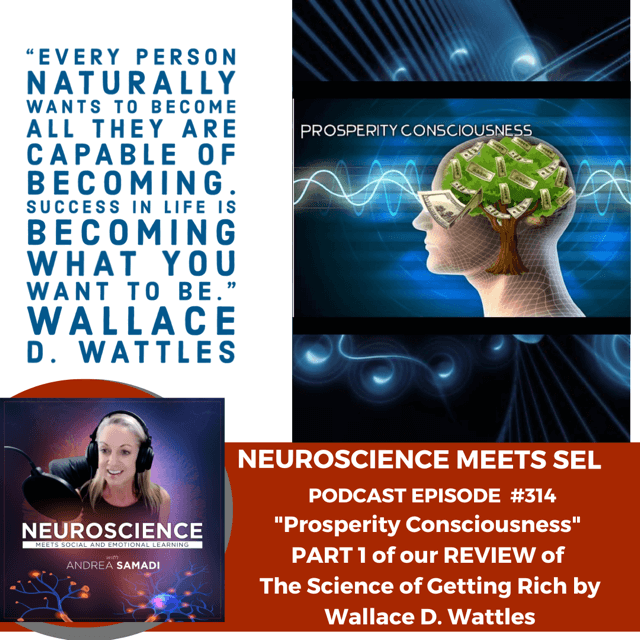
S10 Ep 314PART 1 Review of Wallace D. Wattles The Science of Getting Rich on ”Prosperity Consciousness” Introduction
“A person’s right to life means his right to have the free and unrestricted use of all the things which may be necessary to his fullest mental, spiritual and physical unfolding —in other words, his right to be rich.”Wallace D. Wattles On today's episode #314 we will cover: ✔ The hidden meaning behind Wallace D. Wattles' The Science of Getting Rich ✔ What is Prosperity Consciousness vs Poverty Consciousness, and how do YOU think? ✔ Why do Giver's Gain? ✔ How Can We Best Prepare to Learn the Timeless Principles in this book that was published in 1910? “Wait a minute, are you telling me that we are going to cover the importance of developing a prosperity mindset on this podcast?” you ask? How is this related to neuroscience? I’m going to say “yes, we are” and I’ll tie the importance of this to science with Mark Waldman and Chris Manning’s Book Neurowisdom: The New Brain Science of Money, Happiness and Success[i] that focuses on helping people create more “wealth” in their lives. This book opens up in Chapter 1 by asking us to choose if we would pick happiness or wealth, and they said that 90% of the people they surveyed over the past decade actually picked happiness over wealth (Chapter 1, Neurowisdom) but the book goes on to explain that the newest economic research disagrees with this. They found that it’s really the other way around. “Wealth predicts happiness, and the more you make, the happier you actually become.” (Chapter 1, Neurowisdom). This is not the main reason why I finally decided to cover Wallace D. Wattles’ The Science of Getting Rich on this podcast, but if the research says that “our wealth predicts our happiness” I thought that there is never a better time than now, to cover the seminar I sold in the late 1990s, that transformed my thinking from poverty consciousness, to prosperity. Now this didn’t happen overnight, or immediately. I’m going to share my journey over the past 25 years, along with all of the notes I took studying while this book, watching my own paradigms change slowly, and then watching how other people around me would use what they were learning for improved results in their life. Here’s the important part that I don’t want any of us to miss. Once we have learned to successfully use the principles we will be studying in this book ourselves, we can then take the focus off ourselves, and look for ways to give back to others. You will see that there are many messages within the pages of this book, and this one, is what I think to be THE MOST IMPORTANT. I’m hoping that studying these timeless principles in this manner will help you the listener to connect either to my way of thinking, (someone who was raised with one parent who might have instilled poverty consciousness in your mind-or said things to you like “money doesn’t grow on trees” over the years, or those people I’ll use as examples who grasped prosperity thinking with ease, so that you can take the principles and fine-tune your own way of thinking, and acting, to achieve the results I know are possible for all of us. Once we have applied them in our own life, it will be time to look outside of ourselves and give back. The Shortest Summary of The Science of Getting Rich What’s the message behind the Deep Dive we are going to take into Wallace D. Wattle’s classic book on thinking, the book that describes how each of us shapes the events around us, creating much of the positive riches in our own lives? The book that Rhonda Byrne, creator of The Secret, said she stumbled across and has "never been the same?" The book that was behind one of the seminars I sold in the late 1990s when I worked in the motivational speaking industry with Bob Proctor from EP #66[ii]. I did see an article written by John Rogers[iii] that summarized the book and he got it right. He said “Here’s the shortest summary of The Science of Getting Rich you’ll ever read: Think and act creatively to add value to others.” I would agree, but might change it
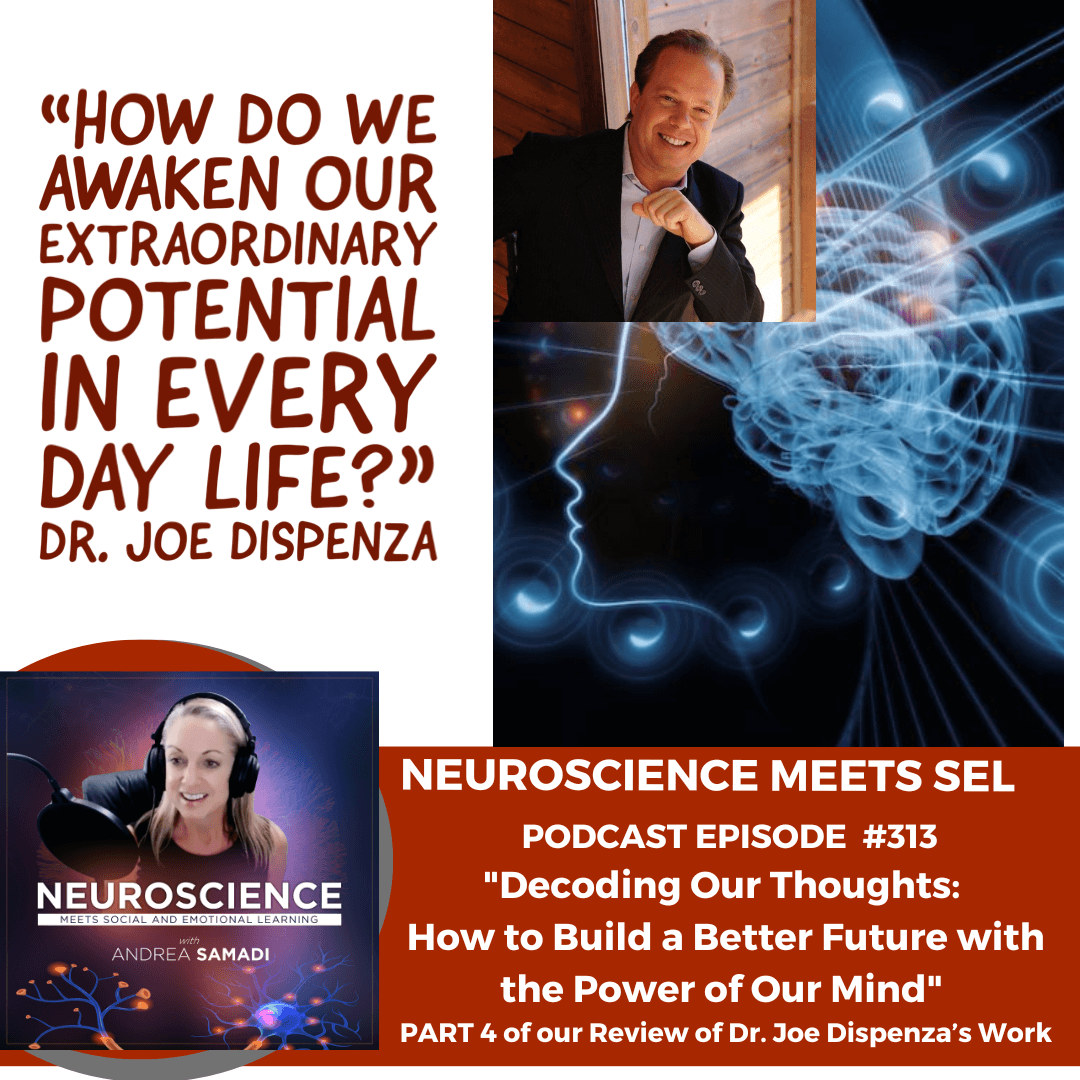
S10 Ep 313”Decoding Our Thoughts: How to Build a Better Future with the Power of Our Mind” PART 4 Review of Dr. Joe Dispenza’s Work
“As the acceptance of expanded human potential gains mainstream momentum, the question has shifted from “What is possible in our lives?” to “How do we do it? How do we awaken our extraordinary potential in everyday life?” Welcome to PART 4 of our review of Dr. Joe Dispenza’s work. Review of Chapter 4 of Dr. Joe Dispenza’s Becoming Supernatural on The Blessing of the Energy Centers that requires us to now implement everything that we’ve learned in his book. ✔ The Power of Our Energy and Understanding Frequency. ✔ Using Our Mind to Imagine Our Energy and Thoughts ✔ Using our Focus and Concentration to Create Stronger More Powerful Thoughts ✔ How Energy Flows in Our Body: A Look at the 8 Chakras in Our Body ✔ Why We Want to Move Our Energy to the Top 4 Chakras in Our Body to CREATE NEW Ideas in Our Life. ✔ 5 Steps for Putting Dr. Dispenza’s Blessing of the Energy Centers Meditation into Practice. Today we will continue our exploration of how exactly we live up to the full potential we all have within us, or like the name of Dr. Joe Dispenza’s book, Becoming Supernatural: How Common People are Doing the Uncommon. Today as we cover PART 4 of this exploration we will identify clear strategies to awaken the extraordinary potential in each of us, and these will be evidence-based strategies, that are backed by science. We will do this by looking at CH 4 of Becoming Supernatural, a book that is the first-of-its-kind manual that does precisely this: it leads us on a step-by-step journey to achieving our greatest potential in body, health, relationships, and our life purpose and allows us to make that journey at our own pace. Today we will cover Chapter 4 of this book, called “Blessing of the Energy Centers” we will learn exactly HOW to use this powerful energy that we all have, to CREATE something new in our life, or to direct this energy towards healing our body, or tap into increased creativity using our intuitive factors. Today, we bring all PARTS of our study together, and make it all applicable. We will also connect the science to this practice, and places on past podcast episodes where we can strengthen our understanding of these concepts that are difficult to apply, since we were not taught about how to manage our energy in school, nor were we taught about how to harness the power of a meditation practice for healing our body, or creating new results. But we will cover these fascinating topics on today’s episode. I did want to mention how I love hearing from people from all over the world, with their experience of studying Dr. Dispenza’s work. For many who’ve been on this journey for years, this is just a review, and reminder of different ways we can all continue to build on the knowledge we’ve learned over the years. Even Dr. Dispenza himself has mentioned the immense learning that took place for him over the years, which is a good reminder for all of us that we are all on a journey, in this thing called life, and it takes time to unlock our greatest potential. It Takes Time. Awareness. And Practice. I do hope that our review today helps us to ALL unlock more of the mysteries within the unseen world, as we learn to put these concepts into practice into our daily lives. I’m sure we will return to this series in the future, but this is where we will start our journey today. Welcome back to The Neuroscience Meets Social and Emotional Learning Podcast, where we connect the science-based evidence behind social and emotional learning (that’s finally being taught in our schools today) and emotional intelligence training (used in our modern workplaces) for improved well-being, achievement, productivity and results—using what I saw as the missing link (since we weren’t taught this when we were growing up in school), the application of practical neuroscience. I’m Andrea Samadi, an author, and an educator with a passion for learning and launched this podcast 5 years ago with the goal of bringing ALL the leading experts togethe
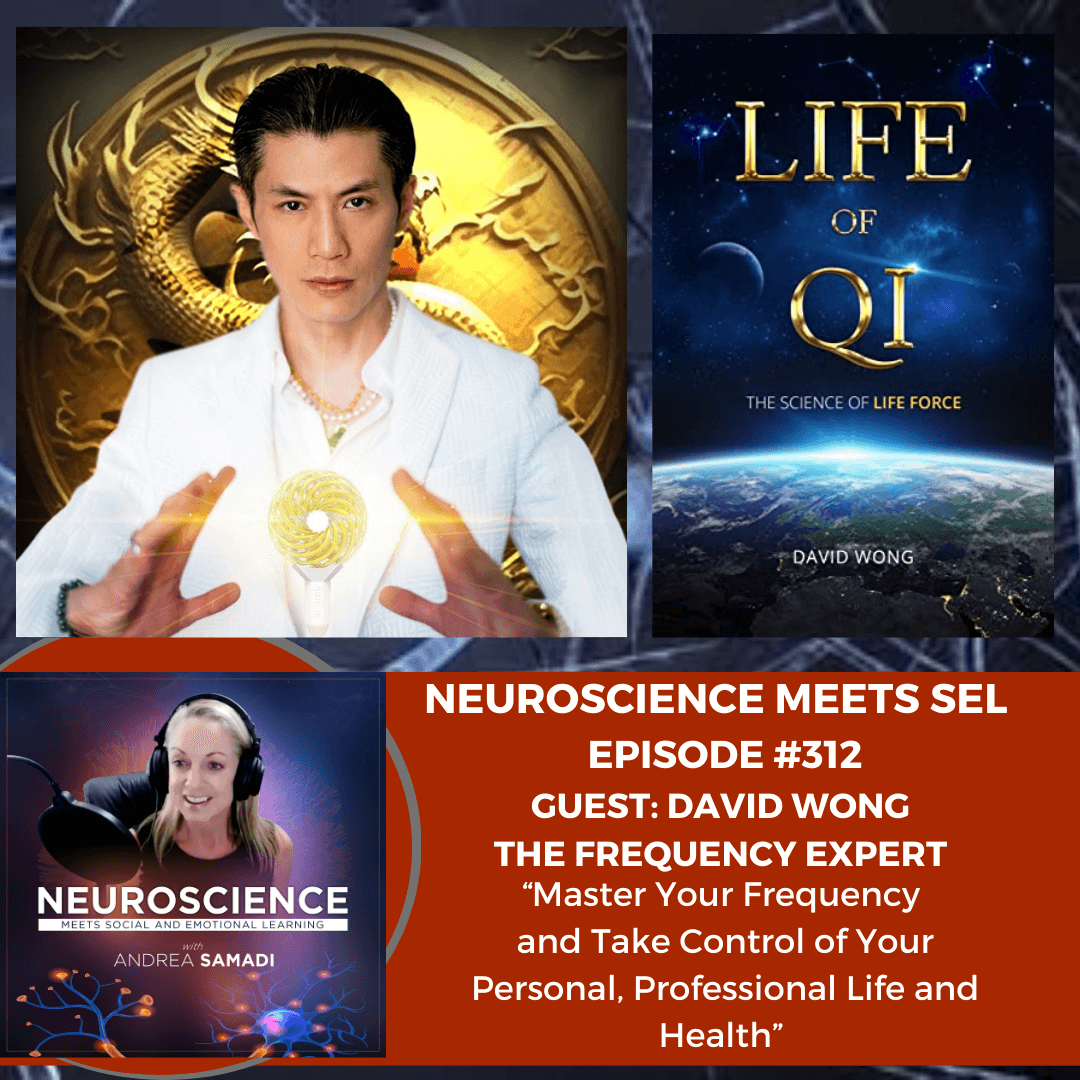
S10 Ep 312The Frequency Expert, David Wong on ”Master Your Frequency and Take Control of Your Personal, Professional Life and Health”.
"The practice of Qigong combines concentration, meditation, visualization, movement, and biofeedback to command the flow of Qi and direct it where it needs to go to enable the best form of balance and harmony. This balance can be achieved in various forms: cognitive, physical, spiritual, moral, medical, and more." David Wong, The Frequency Expert, from Life of Qi: The Science of Life Force, Qi Gong, and Frequency Healing Technology for Health, and Longevity. Watch this interview on YouTube here: https://youtu.be/bHBkVEmUiQ0 Welcome back to The Neuroscience Meets Social and Emotional Learning Podcast, where we connect the science-based evidence behind social and emotional learning (that’s finally being taught in our schools today) and emotional intelligence training (used in our modern workplaces) for improved well-being, achievement, productivity and results—using what I saw as the missing link (since we weren’t taught this when we were growing up in school), the application of practical neuroscience. I’m Andrea Samadi, an author, and an educator with a passion for learning and launched this podcast 5 years ago with the goal of bringing ALL the leading experts together (in one place) to uncover the most current research that would back up how the brain. On today's episode #312 with David Wong we will cover: ✔ The importance of keeping our energy/frequency high at all times, especially while interacting with others in our personal and professional lives. ✔ What led David Wong to create the Qi Coil Technology to help raise a person's frequency, and improve their life? ✔ What are some other ways we can raise our frequency? ✔ Is there really a frequency for health, wealth and success? How can we "tap into it?" ✔ Where to learn more about David Wong's work, and his vision to raise the frequency of the world. For today’s episode #312 we will be meeting with David Wong[i], also known as "The Qi Master" is a world-renowned Qi (Chee) Energy and Life Force expert. He is a best-selling author, visionary inventor, inspirational speaker, martial artist, qi gong practitioner and entrepreneur. He founded Qi Life, a company that develops cutting-edge technologies for personal wellness. His passion for helping others unlock their human potential through ancient wisdom and modern science was ignited after he successfully self-healed from an incurable digestive disease he had for 10 years by using frequency and energy devices. We are meeting David Wong just at the right time on our podcast. We have just taken a shallow dive into Dr. Joe Dispenza’s work, that’s focused on the importance of maintaining balance with our energy, understanding that can access a Quantum World where anything is possible (healing our body, or improving our personal and professional life). David reached out to me via social media a few months ago, and I knew he was someone I needed to interview. I hadn’t read his book yet, or spent the time researching what he has accomplished in the field to help others unlock their highest potential. I just knew. We found a date and time that seemed far off in the future, and now we are here. Just keep an open mind as we learn from David today. If you look at his website, you see testimonials of his work from doctors and healers from all over the world. He’s followed and supported by Vishen Lakhiani, the CEO of MindValley who reinvented Jose Silva’s Program, as well as Jim Kwik, the World’s #1 Brain Coach. I know there was a time that meditation in the workplace was not an accepted stress reduction strategy, and today most workplaces promotes advanced wellness strategies like this for their employees. With an open mind, we can now learn what else could possibly do to take our results to new heights. Let’s meet David Wong, and see how his work can help us to change our life (our body/mind and spirit) improve our results, our health, and even our wealth. David, it’s wonderful to meet you. I know in our correspondence you
S10 Ep 311”Decoding Our Thoughts: How to Build a Better Future with the Power of Our Mind” PART 3 Review of Dr. Joe Dispenza’s Work
“As the acceptance of expanded human potential gains mainstream momentum, the question has shifted from “What is possible in our lives?” to “How do we do it? How do we awaken our extraordinary potential in everyday life?” Welcome to PART 3 of our review of Dr. Joe Dispenza’s work. On today's EPISODE #311 on "Decoding Our Thoughts: How to Build a Better Future with the Power of Our Mind" and PART 3 of our Review of Dr. Joe Dispenza's work, we will: Review Chapter 3 of Dr. Joe Dispenza's book, Becoming Supernatural on Accessing The Quantum World for improved results in our personal, professional life, or with our health and wellness. STEP 1: DROPPING INTO THE PRESENT MOMENT: OPENING THE DOORWAY TO THE QUANTUM WORLD STEP 2: SETTING A CLEAR INTENTION OF WHAT YOU WANT TO CHANGE IN YOUR LIFE STEP 3: HOW TO CHANGE YOUR ENERGY STEP 4: UNCOVERING WHAT YOU LEARN in THE QUANTUM WORLD STEP 5: RECORDING WHAT HAPPENS AND KEEP WORKING ✔ What science has to say about the Quantum World? ✔ Strategies on how to IMPLEMENT these 5 STEPS into our daily life for improved results (personally, professionally and with our health). Today we will continue our exploration of how exactly we live up to the full potential we all have within us, or like the name of Dr. Joe Dispenza’s book, Becoming Supernatural: How Common People are Doing the Uncommon. Today as we cover PART 3 of this exploration we will identify clear strategies to awaken the extraordinary potential in each of us, and these will be evidence-based strategies, that are backed by science. We will do this by looking at CH 3 of Becoming Supernatural, a book that is the first-of-its-kind manual that does precisely this: it leads us on a step-by-step journey to achieving our greatest potential in body, health, relationships, and our life purpose and allows us to make that journey at our own pace. This book study has taken me some time to think, and consolidate what I’m learning since we released PART 1 the end of September. I needed this time to put Dr. Dispenza’s ideas and meditations into practice, and have spent the past month and a half, immersed in his teachings, filling in the gaps of understanding I’ve had since I first began studying human potential in the late 1990s. As mentioned in the first part of this study, this is a shallow dive, and it’s just the beginning. I do hope that our review today helps us to ALL unlock more of the mysteries within the unseen world, as we learn to put these concepts into practice into our daily lives. I’m sure we will return to this episode in the future, but this is where we will start our journey today. We’ll review what we learned in PART1 and PART 2, preparing us for this exciting journey of our mind, with PART 3 today, where we’ll put it all into action, with something we want to achieve in our own life. Welcome back to The Neuroscience Meets Social and Emotional Learning Podcast, where we connect the science-based evidence behind social and emotional learning (that’s finally being taught in our schools today) and emotional intelligence training (used in our modern workplaces) for improved well-being, achievement, productivity and results—using what I saw as the missing link (since we weren’t taught this when we were growing up in school), the application of practical neuroscience. I’m Andrea Samadi, an author, and an educator with a passion for learning and launched this podcast 5 years ago with the goal of bringing ALL the leading experts together (in one place) to uncover the most current research that would back up how the brain. For those tuning into this episode, and you’ve not listened to PART 1 EP 306[i] yet, or PART 2 EP 310[ii] I do encourage you to begin there. You will learn the background of where I first learned about Dr. Joe Dispenza’s work, and see how he fits into what we’ve been covering on the podcast the past 10 seasons. For today’s episode #311 “Decoding Our Thoughts: How to Build a Better Future with the Power of
S10 Ep 310”Decoding Our Thoughts: How to Build a Better Future with the Power of Our Mind” PART 2 Review of Dr. Joe Dispenza’s Work
“As the acceptance of expanded human potential gains mainstream momentum, the question has shifted from “What is possible in our lives?” to “How do we do it? How do we awaken our extraordinary potential in everyday life?” Welcome to PART 2 of our review of Dr. Joe Dispenza’s work. On today's EPISODE #310 on "Decoding Our Thoughts: How to Build a Better Future with the Power of Our Mind" and PART 2 of our Review of Dr. Joe Dispenza's work, we will cover: ✔ 3 Important Concepts in Dr. Joe Dispenza's book, Becoming Supernatural that have the ability to change YOUR life, when implemented. IMPORTANT CONCEPT 1: Accessing the Present Moment IMPORTANT CONCEPT 2: Mental Rehearsal: Priming Your Brain and Body for a New Future IMPORTANT CONCEPT 3: Elevated Emotion ✔ What science has to say about these timeless success principles? ✔ Strategies to IMPLEMENT these principles into our daily life for improved results. ✔ How to use our emotions FOR us, rather than AGAINST us. ✔ Why we must continue to learn more about WHO WE ARE for improved results ✔ How METACOGNITION (and our awareness of how we think, act and feel) creates AHA Moments of Learning in our daily life. Today we will continue our exploration of how exactly we live up to the full potential we all have within us, or like the name of Joe Dispenza’s book, Becoming Supernatural: How Common People are Doing the Uncommon. Today as we cover PART 2 of this exploration we will identify clear strategies to awaken the extraordinary potential in each of us, and these will be evidence-based strtegies, that are proven with science. Becoming Supernatural, is the first-of-its-kind manual that does precisely this: it leads us on a step-by-step journey to achieving our greatest potential in body, health, relationships, and our life purpose and allows us to make that journey at our own pace. We only cover ideas and concepts on this podcast that have the potential to change our lives, and I’m on a mission to connect the most current brain research to concepts that have been taught successfully to students for centuries, connecting the science to these age-old success principles. This book study has taken me some time to think, and consolidate what I’m learning since we released PART 1 the end of September. I needed this time to put Dr. Dispenza’s ideas and meditations into practice, and have spent the past month immersed in his teachings. As mentioned in the first part of this study, this is a shallow dive, and is just the beginning. I do hope that our review today helps us to ALL unlock more of the mysteries within the unseen world, as we learn to put these concepts into practice in our daily life. I’m sure we will return to this episode in the future, but this is where we will start our journey today. Welcome back to The Neuroscience Meets Social and Emotional Learning Podcast, where we connect the science-based evidence behind social and emotional learning (that’s finally being taught in our schools today) and emotional intelligence training (used in our modern workplaces) for improved well-being, achievement, productivity and results—using what I saw as the missing link (since we weren’t taught this when we were growing up in school), the application of practical neuroscience. I’m Andrea Samadi, an author, and an educator with a passion for learning and launched this podcast 5 years ago with the goal of bringing ALL the leading experts together (in one place) to uncover the most current research that would back up how the brain learns best, taking us ALL to new, and often unimaginable heights. For those tuning into this episode, and you’ve not listened to EP 306[i] yet, I do encourage you to begin there. You will learn the background of where I first heard of Dr. Joe Dispenza, and how I was forbidden to cover his work on this podcast, since my neuroscience certification coach, researcher Mark Waldman, would consider his work pseudoscience. We covered how even Dr. Joe Disp
S10 Ep 309Dianne Kosto ”From Trauma to Triumph: A Mom’s Mission With Neurofeedback”
“Your brain is the organ of your personality, character and intelligence and is heavily involved in making you who you are.” Dr. Daniel Amen Watch this interview on YouTube here https://youtu.be/H8miiiqugDs On today's episode #309 with Dianne Kosto we will cover: ✔ What is neurofeedback, and how it can help someone struggling with anxiety, depression, brain fog, or mental health issues. ✔ Dianne Kosto's story "From Trauma to Triumph." What's the story of her son? What did she do to help him? Where is he TODAY? ✔ How does neurofeedback change the structure and function of the brain? ✔ Dianne's journey and when she first noticed the importance of a healthy brain, for a happy life. ✔ How to reach Dianne and her team to learn more. So if we notice something is not right with our ability to think clearly (brain fog) or our decision-making ability, or our ability to focus and concentrate, it would make sense that we begin with looking at this organ that controls everything that we are, and everything that we do. Welcome back to The Neuroscience Meets Social and Emotional Learning Podcast, where we connect the science-based evidence behind social and emotional learning (that’s finally being taught in our schools today) and emotional intelligence training (used in our modern workplaces) for improved well-being, achievement, productivity and results—using what I saw as the missing link (since we weren’t taught this when we were growing up in school), the application of practical neuroscience. I’m Andrea Samadi, an author, and an educator with a passion for learning and launched this podcast 5 years ago with the goal of bringing ALL the leading experts together (in one place) to uncover the most current research that would back up how the brain learns best, taking us ALL to new, and often unimaginable heights. For today’s episode #309 we will be speaking with Dianne Kosto, the CEO and founder of Symmetry Neuro PT. Dianne is a Mom on a Mission to make neurofeedback (to help the brain learn to better regulate) accessible and easy, with a global vision for improving the lives and brains for families who have a member struggling with physical or emotional pain, that we all know disrupts everything in our day-to-day life. I wanted to cover Dianne’s work on the podcast because while I have heard about neurofeedback as a brain-based therapy to improve brain function without medication, I don’t know much about it. Let’s meet Dianne Kosto, and see what she has created with Symmetry PT to help all of us to live happier, and healthier lives, with our brain health and function in mind. Welcome Dianne, it’s wonderful to meet you. Where are we reaching you today? Q1: I want to dive right in here, as I think the company that you have founded solves a critical need in the world today. I don’t think I know anyone who has not seen the effects of high stress in our daily lives. Can you start out with why you founded Symmetry NeuroPathway Training? What’s the story of your son? What did you notice he needed support with? What gaps did you see with our current healthcare system that caused you to take action? Where did you first begin to connect the brain to our mental health? What changed did you see with your son? HOW did these changes take place? Q2: For those of us who might have heard of this type of treatment, but like me, if I’ve not used something, it’s not easy to explain it. Can you give us an overview? What is Neurofeedback? (alters the structure and function and brain). EEG biofeedback? Q3: How does neuroplasticity occur with neurofeedback? Why do think this brain-based therapy is so successful with making long-term changes in someone who might be struggling in some way? Q4: What are some of the most common issues that are improved with neurofeedback? Q5: The whole reason I do this podcast, connecting the brain to our schools, sports and workplaces, is that we were never taught about the importance of a healthy brain when we
S10 Ep 308The Story of Elite Fighter, Hazel Gale ”From Confident Champion to Burnout: Are YOU Ready to Rebuild Yourself From the Inside Out?”
Whenever elite fighter Hazel Gale entered the ring, she felt fear. Not just the rational fear of being knocked out. But something deeper as well. The fear that she didn't deserve success, and that she would let everyone - especially herself - down. Watch this interview on YouTube here https://youtu.be/1VDpu_KfZwk On today's episode #308 we will cover: ✔ The story of elite fighter, Hazel Gale, that took her from confident champion, to burnout. ✔ How she now helps others with what she discovered from her life's journey. ✔ What is the research-based BETWIXT (story-based wellness app) and how does it help take us to new heights? ✔ Where can we ALL begin in our own personal "Journey of Our Mind?" ✔ How can we identify behaviors that self-sabotage our results? ✔ What are some common "monsters" and what can we learn from them to take us to new heights (personally and professionally). ✔ Where can we begin our own transformational journey of The Mind? While others saw a confident world champion athlete, Hazel was plagued by anxiety, self-doubt and depression. It was these things - the monsters of her mind - that she felt were her most dangerous opponents, and she waged a war. It was that hard-fought internal battle that ultimately led her to burn out. Now the founder of the story-based wellness app, Betwixt[i], Hazel is pioneering a new approach to digital mental health that she calls mindful entertainment. A sought-after London therapist, Hazel has created a revolutionary system for overcoming fear, underperformance, and self-sabotage. There is never a good time to confront the monsters that hold us back, but if we truly want to be our best selves, our highest performing, it begins with a deep level of self-awareness that our next guest has discovered through her own journey of life experience, and now helps others to do the same in the most captivating and unique way, that I’ve ever seen. Welcome back to The Neuroscience Meets Social and Emotional Learning Podcast, where we connect the science-based evidence behind social and emotional learning (that’s finally being taught in our schools today) and emotional intelligence training (used in our modern workplaces) for improved well-being, achievement, productivity and results—using what I saw as the missing link (since we weren’t taught this when we were growing up in school), the application of practical neuroscience. I’m Andrea Samadi, an author, and an educator with a passion for learning and launched this podcast 5 years ago with the goal of bringing ALL the leading experts together (in one place) to uncover the most current research that would back up how the brain learns best, taking us ALL to new, and often unimaginable heights. For today’s episode #308, we will be speaking with Hazel Gale, she’s a former kickboxer and boxer with multiple World, European and National titles. Her outward success, however, had a dark side: the stress of competition and relentless self-doubt drove her into an emotional and physical burnout that led to years of chronic illness. Hazel’s eventual recovery inspired her to qualify as a therapist and coach, and for over a decade she worked with high-level athletes, business executives and others as a master practitioner of cognitive hypnotherapy – an evidence-based approach that combines elements of cognitive behavioural therapy (CBT) and traditional hypnotherapy with theories of modern neuroscience. Hazel’s 2018 book "The Mind Monster Solution" was published internationally and became an Amazon bestseller in both mental health and psychology. Currently, Hazel is the co-founder and the chief creative officer of Betwixt – an award-winning app that blends psychology with interactive storytelling to make wellness feel like an adventure instead of a chore. I downloaded this app, and was blown away with what she has created here. If you want to learn more about who you are, at the deepest levels, I highly recommend this app. I downloaded it f
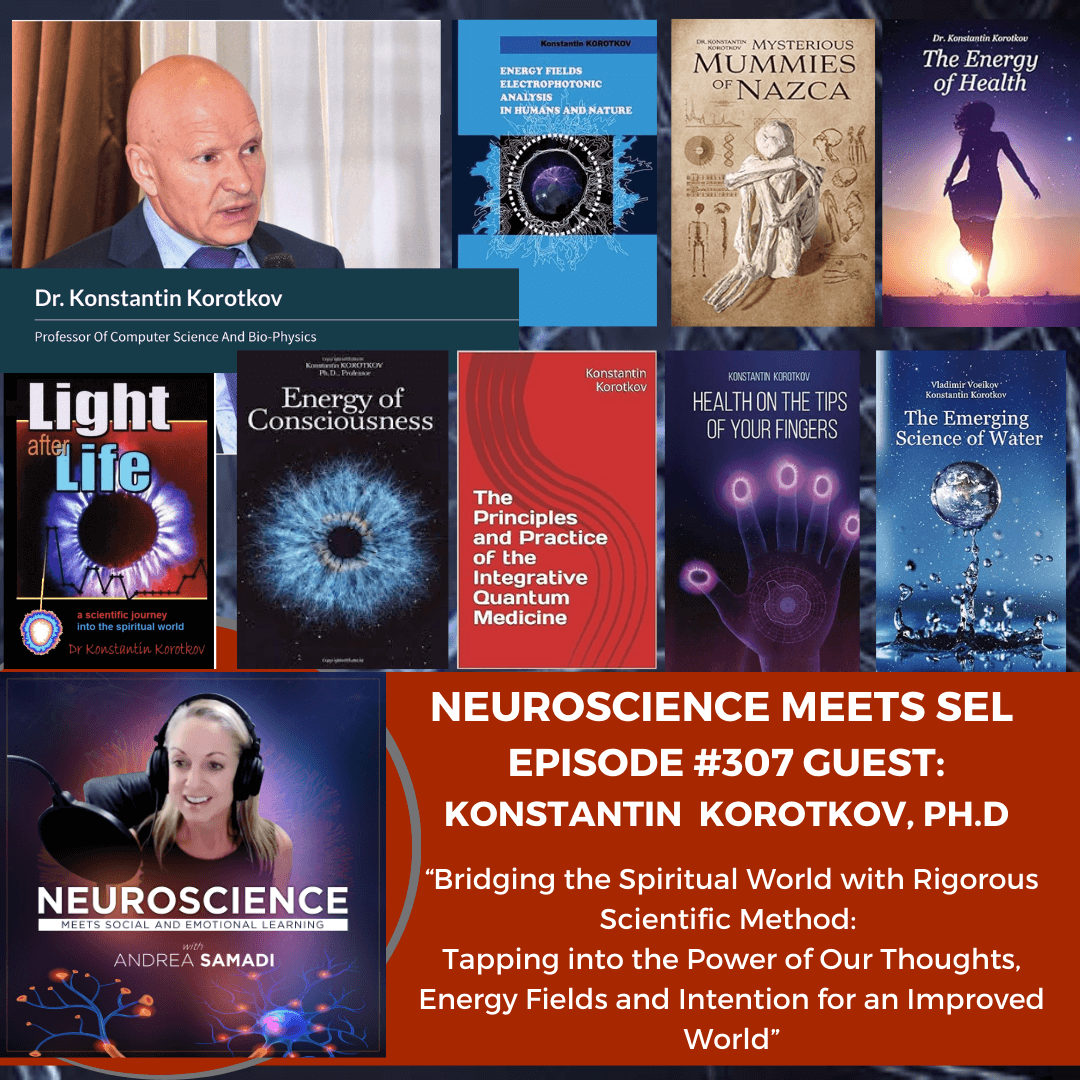
S10 Ep 307Dr. Konstantin Korotkov on ”Bridging the Spiritual World With Science: Tapping into the Power of Our Thoughts, Energy Fields and Intention.”
“All you need is just a strong desire and you will bask in the sun in the courtyard of a French café, and in front of your eyes the icy peaks will be sparkling. You can reach this with the energy of your thoughts. “In a dream or what?” –reader asks in surprise. “No, in reality, and achievement of the desired depends on you only.” Dr. Konstantin Korotkov, The Energy of Consciousness. Watch this interview on YouTube here https://youtu.be/nmvtN2uEvnE On today's episode #307 with Dr. Konstantin Korotkov, we will cover: ✔ A review of EPISODE #306 and why it's important that we understand how our thoughts CAN influence others. ✔ What is GDV (Gas Discharge Visualization) that takes the Kirlian Effect to new heights and how can this tool help us with our health, productivity and well-being? ✔ A look back at Russian Scientist Dr. Konstantin Korotkov's career, that led him to embrace the idea that we are spiritual beings, living a human experience first and foremost. ✔ An overview of the Bio-Well Congress Conference coming this November 10th-12 in Orlando, Florida. Who is attending and how is there work important in the world. ✔ How exactly does Dr. Korotkov's work bridge the unseen spiritual world, with the rigorous and rigid world of Science? ✔ How does mental telepathy work, and how can we use it? ✔ Some of the biggest mysteries of the world Dr. Korotkov has seen with his own eyes. ✔ How he suggests we can ALL raise the consciousness of the world and live happier, more productive lives. Welcome back to The Neuroscience Meets Social and Emotional Learning Podcast, where we connect the science-based evidence behind social and emotional learning (that’s finally being taught in our schools today) and emotional intelligence training (used in our modern workplaces) for improved well-being, achievement, productivity and results—using what I saw as the missing link (since we weren’t taught this when we were growing up in school), the application of practical neuroscience. I’m Andrea Samadi, an author, and an educator with a passion for learning and launched this podcast 5 years ago with the goal of bringing ALL the leading experts together (in one place) to uncover the most current research that would back up how the brain learns best, taking us ALL to new, and often unimaginable heights. For today’s episode #307, I’m beyond excited to have the opportunity to speak with Dr. Konstantin Korotkov, for many reasons that started when I found him as one of the inventors of GDV (gas discharge visualization) while researching Dr. Joe Dispenza for our last episode. I had no idea what a trip I would go on, reading his books, that took me all over the world, and into many different exciting, and mind-boggling directions. My questions for Dr. Korotkov started with the fact that we all have an energy field, we are all connected and “can influence each other.” Konstantin Korotkov calls this electrophonics and explains its origin that goes back to 1777 in Brazil and then Russia. While I had always wondered about the science behind this technology, I had no idea what else his work would open my mind to. Here's a bit more about Dr. Korotkov’s background. He’s a doctor of Sciences and a Professor, working at the University of St. Petersburg, Russia. In over 40 years of scientific activity, he’s published more than 300 scientific articles, 12 books, (translated into many European languages), and he holds 9 patents. In his youth, he was actively engaged in mountaineering at the Championship level in the Soviet Union. All his life, he’s had a passion for travel. In the last 25 years, he has been among those who have been designing devices for gas discharge visualization (GDV– development of Kirlian effect), which allows rapid analysis of the human health condition and, in many cases, identifies the hidden causes of diseases and specific systems while revealing organs that require special attention. This technology is widely used in th
S10 Ep 306”Decoding Our Thoughts: How to Build a Better Future with the Power of Our Mind” PART 1 Review of Dr. Joe Dispenza’s Work
“As the acceptance of expanded human potential gains mainstream momentum, the question has shifted from “What is possible in our lives?” to “How do we do it? How do we awaken our extraordinary potential in everyday life?” (Dr. Joe Dispenza). Today we will look at these questions and take a shallow dive, not a deep one, as there are many layers to how exactly we live up to the full potential we all have within us, or like the name of Joe Dispenza’s book, Becoming Supernatural: How Common People are Doing the Uncommon. Today we will begin this exploration and identify clear strategies to awaken the extraordinary potential in each of us.Welcome back to The Neuroscience Meets Social and Emotional Learning Podcast, where we connect the science-based evidence behind social and emotional learning (that’s finally being taught in our schools today) and emotional intelligence training (used in our modern workplaces) for improved well-being, achievement, productivity and results—using what I saw as the missing link (since we weren’t taught this when we were growing up in school), the application of practical neuroscience. I’m Andrea Samadi, an author, and an educator with a passion for learning and launched this podcast 5 years ago with the goal of bringing ALL the leading experts together (in one place) to uncover the most current research that would back up how the brain learns best, taking us ALL to new, and often unimaginable heights. For today’s episode #306, we are going to look closely at the work of someone I have been forbidden by my mentor and neuroscience certification trainer, Mark Waldman, to EVER interview. When I first launched this podcast back in 2019, there were many reasons for WHY I wanted to bridge the gaps I saw in the field of education and the workplace, with practical neuroscience. To do this, I knew I needed training and obtained an Advanced Certification in Mindfulness-based Neurocoaching, where one of the MANY requirements for this Certification was that I had to show an application of practical neuroscience in the world, or just show that I was using what I was learning to help others. I told Mark Waldman about my podcast, and had him of for one of our early EP #30[i] in December of 2019 and shared with him my vision of who I would interview, and where I wanted to take this podcast. He told me he liked this idea, but since I was going to use this for his Certification requirement, he said “You must never interview anyone who covers pseudoscience” and said I must keep true evidence-based science (proven from articles on Pubmed) at the forefront. I thought, of course, why would I want to cover fake science and spread that into the world, and then he said it. “You must never interview Joe Dispenza!” And I thought “Oh no!” I love that guy. His name was written on my wall as a potential future guest and while I agreed at the time to keep the podcast focused on science, I never did cross Dr. Dispenza off my list. I first heard about Joe Dispenza when I worked in the motivational speaking industry and while I knew about his seminars, how crazy the results were that people obtained, and some of the advanced technologies he used like epigenetics testing, brain mapping with EEGs and gas discharge visualization technology (GDV). I also knew that some people, including Mark Waldman, would consider Joe Dispenza’s work to be pseudoscience, but I always put the results first in my mind, and hoped that one day, science could help prove what he has been teaching for years. Joe Dispenza says it himself in the first few pages of his book, Becoming Supernatural. He writes: Dr. Dispenza let go of his critics and decided to move forward with wanting to share his message with the world. He believes in a world where possibility exists, and he will challenge our thinking using his own personal experience of transformation, through meditation and his ability to change his health (which really could be applied to any
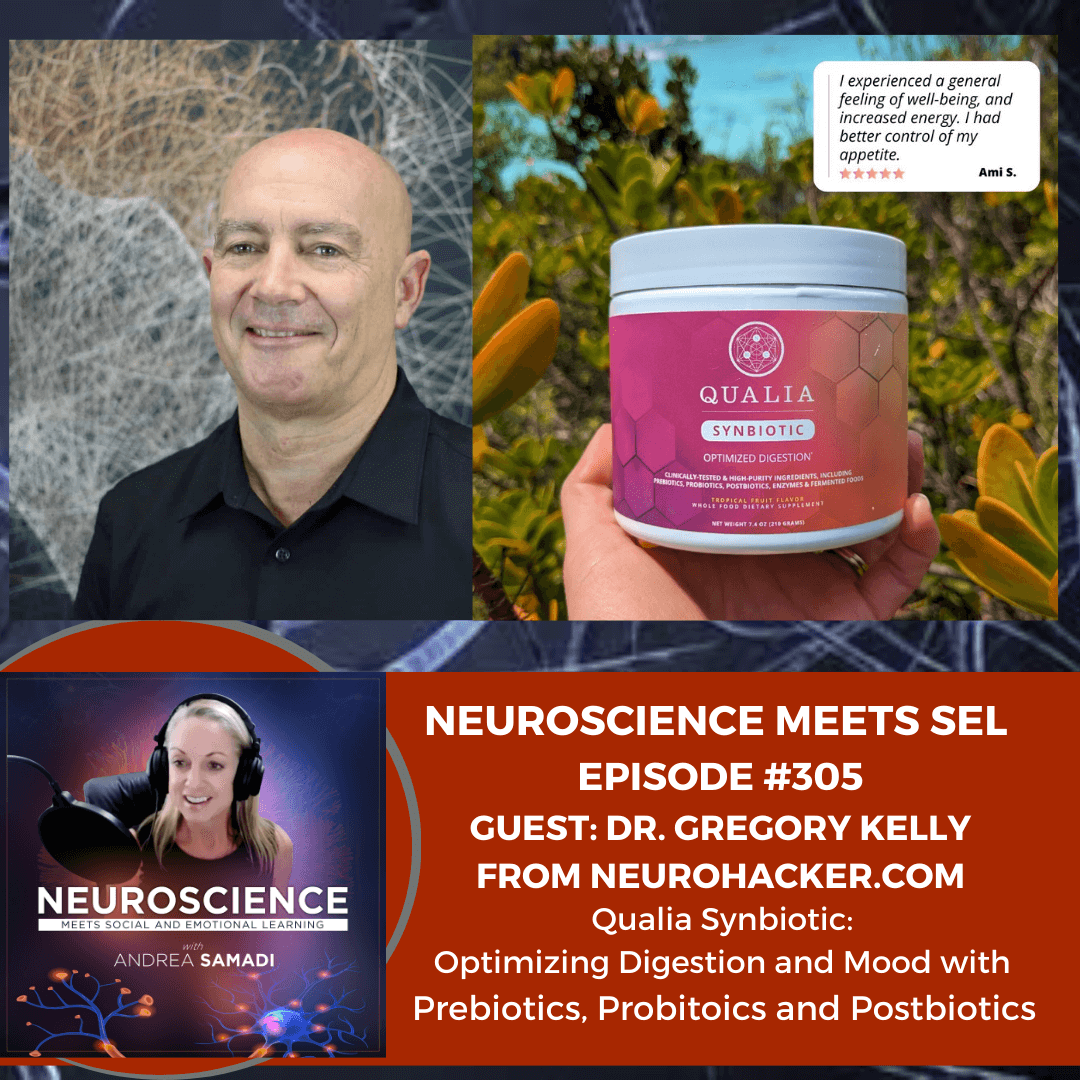
S10 Ep 305Returning Guest Dr. Gregory Kelly on ”Qualia Synbiotic: Optimizing Digestion and Mood with Prebiotics, Probiotics and Postbiotics”
“Unhealthy changes in the gut microbial ecosystem may manifest as poorer cognitive performance, impaired emotional regulation, negative moods states, and unhealthy stress response.” Watch this interview on YouTube here https://youtu.be/8SFTPIuQ9To This was posted three days ago from Neurohacker Collective saying that we are “just on the fringes of understanding the gut-brain connection and its impact on cognitive performance and emotional well-being” and I agree, that this topic is finally getting the attention it deserves. Sit back and enjoy today’s episode, and I hope you take away some tips that show you how to improve your gut-brain connection for improved mood and health, immediately! Welcome back to The Neuroscience Meets Social and Emotional Learning Podcast, where we connect the science-based evidence behind social and emotional learning (that’s finally being taught in our schools today) and emotional intelligence training (used in our modern workplaces) for improved well-being, achievement, productivity and results—using what I saw as the missing link (since we weren’t taught this when we were growing up in school), the application of practical neuroscience. I’m Andrea Samadi, an author, and an educator with a passion for learning and launched this podcast 5 years ago with the goal of bringing ALL the leading experts together (in one place) to uncover the most current research that would back up how the brain learns best, taking us ALL to new, and often unimaginable heights. On today’s EP #305 we welcome back Dr. Gregory Kelly from EP #285[i] just this past April where he introduced us to Qualia Senolytic where we covered: What is cellular senescence? What are the "Hallmarks of Aging" and why is cellular senescence an important hallmark? The difference between cellular senescence and autophagy (with a quick review of 9th grade science mitosis). Classical places where senescent cells take hold in the body. The science to support senolytics from Mayo Clinic and Scripps Institute. How do senolytics work? The correct way to dose senolytics. What makes Qualia Senolytic a groundbreaking supplement in the longevity space? This interview set the stage for what we will cover today, with a look at Qualia Synbiotic, a one-of-a-kind formula doesn't just promote healthy gut. It also helps support mood and brain performance by enhancing gut-brain connections that are also crucial for nearly every system in body. There’s never been one simple scoop of supplemental nutrition designed to support so many aspects of gut health, including the gut-brain axis* First, a bit about Dr. Gregory Kelly: On today’s episode, #305 we will cover: What are keystone species and what role do they play in shaping our gut ecosystem? Probiotics, prebiotics, postbiotics, and synbiotics - what’s the difference? Breaking up some myths about probiotics, and prebiotics How to fix gut imbalances and prevent dis-ease in our body? What we can notice with Qualia Synbiotic, this ultimate digestive health formula? Dr. Kelly’s favorite science-backed ingredients to support optimal digestion, immune function, and key aspects of the gut-brain connection. What Dr. Kelly thinks of neurogenesis/what’s exciting for him these days to think about in the field of health and wellness? Let’s welcome Dr. Gregory Kelly back to the podcast, from Neurohacker Collective! Welcome back Dr. Gregory Kelly for the second time on the podcast! I’ve got to say that when we opened up our last interview, I was a huge fan of Neurohacker Collective and what you’ve built over there bringing together all the top minds in health and wellness, but I had only tried your products for a few weeks when we met last. It’s been 5 months now we’ve been using Qualia Senoltyics in our house hold (my husband and I) and what a difference, especially when it comes to being able to focus and work longer periods of time without losing mental clarity. I contribute that 100% of this to w
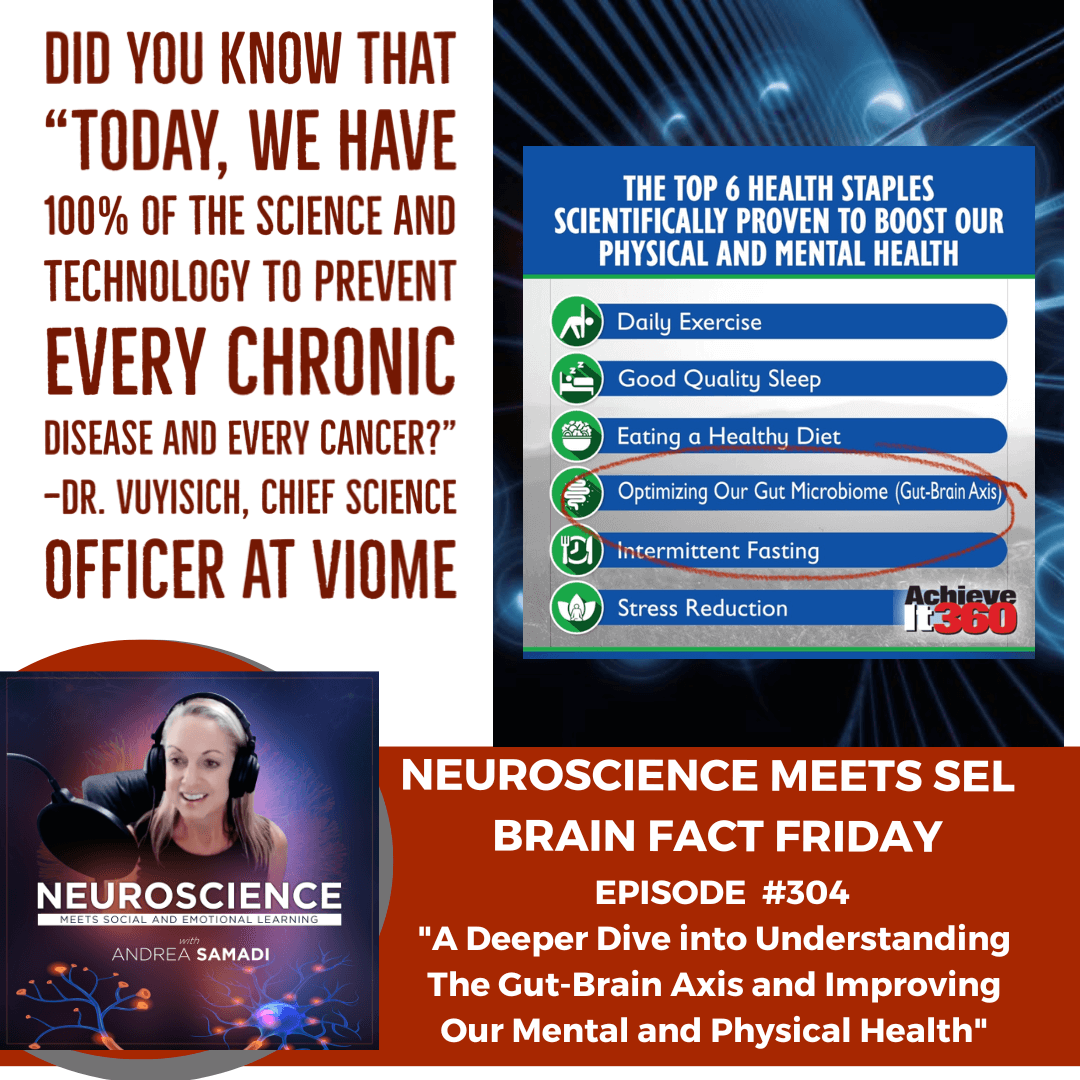
S10 Ep 304Brain Fact Friday Review on ”A Deeper Dive into Understanding the Gut-Brain Axis for Improving Our Mental and Physical Heath”
“No magic fairy or superhero is going to arrive at your door with a kit to make you healthy now and forever. We will have to be proactive in taking care of our biology and our psychology.” That’s from Dr. Andrew Huberman, promoting Inside Tracker,[i] a personal health and data-driven wellness guide, designed to help us to live healthier, and longer. While I don’t use Inside Tracker, I support Dr. Huberman’s work enough to put his link to this service below in the show notes because the time is NOW to look after our health and wellness at the highest level possible, and that means with ALL the tools that help us to take control of our own health. Guessing about our health, is a now thing of the past. Welcome back to The Neuroscience Meets Social and Emotional Learning Podcast, where we connect the science-based evidence behind social and emotional learning (that’s finally being taught in our schools today) and emotional intelligence training (used in our modern workplaces) for improved well-being, achievement, productivity and results—using what I saw as the missing link (since we weren’t taught this when we were growing up in school), the application of practical neuroscience. I’m Andrea Samadi, an author, and an educator with a passion for learning and launched this podcast 5 years ago with the goal of bringing ALL the leading experts together (in one place) to uncover the most current research that would back up how the brain learns best, taking us ALL to new, and often unimaginable heights. For today’s episode #304, and preparing for our interview next week with returning guest Dr. Gregory Kelly from NeuroHacker.com while also keeping with our Season Theme of Going Back to the Basics, we are going back to a series of episodes we did on “Boosting Our Immunity by Optimizing Our Gut Microbiome”[ii] that began with Dr. Vuyisich on EP #93[iii] back in October 2020, when our podcast took the turn towards health and wellness. This was the first time I became aware of how important it was to understand our gut microbiome for our health. Many things Dr. Vuyisich said in that interview stayed with me over the years, but one was something I couldn’t forget. He warned listeners that if they take away one thing from our interview that it be this. He said “today, we have 100% of the science and technology needed to prevent every chronic disease and every cancer.” (Momo Vuyisich). REVIEWING THE GUT-BRAIN CONNECTION Dr. Vuyishic’s episode (along with many of the other interviews we did at that time) helped me to create the vision for our Top Health Staples and Alzheimer’s Prevention Strategies[iv] that we covered on a BONUS EP 3 years ago. We started with five, and after reviewing them with the top experts in the health and wellness industry, over the years, we added a sixth. What’s interesting while revisiting this episode we recorded 3 years ago with Dr. Vuyisich, is that I told him back then that while I understood the importance of taking probotics (friendly gut bacteria that keeps my digestion running well) to balance my gut microbiome, and I knew of the importance of prebiotics (or the superfoods that help them to flourish from Dr. Amen’s[v] work) giving me more energy and focus. But while watching Dr. Vuyisich’s interview again, I realized that 3 years later, I still don’t completely understand the gut-brain axis, and I know that I’m not as focused as I could be on optimizing my own gut microbiome. This is also coming from someone who discovered during a regular colonoscopy screening that I’m high risk for colon cancer, so I go back for these checkups more often than most people. This brings me back to why I’m doing these podcast episodes in the first place. If I’m not implementing the ideas that I’m learning from each expert, there’s not much point in me preparing questions, conducting these interviews, highlighting their expert suggestions that we edit, and put out to the world. I realized how importan
S10 Ep 303Brain Fact Friday on ”Neuroplasticity vs Neurogenesis: Where’s the Controversy?”
"Neuroplasticity knows no bounds; it is a lifelong journey of growth, learning, and personal transformation." – Dr. Andrew Huberman whose quote we ended our last EPISODE on a “Deeper Diver into Neuroplasticity.” On today's episode we will review: ✔ Tips for regrowing our brain cells (neurogenesis)✔ A reminder of what prevents neurogenesis and hurts our brain and what we can do to help increase neurogenesis in our brain.✔ What's the Difference Between Neuroplasticity and Neurogenesis?✔ What's the Controversy with Neurogenesis? What’s the difference between Neuroplasticity, that we covered on EPISODE #302[i] (that knows no bounds) that’s defined as “the ability of the brain to form new connections and pathways and change how it’s circuits are wired; (as shown so well in the Sentis YouTube video that gives us a representation of these pathways visually, and what they look like in our brain when we create NEW pathways).[ii] This we KNOW we can do throughout our lifetime, (while) neurogenesis is the even more amazing ability for the brain to grow new neurons (Bergland, 2017).[iii] And on today’s episode #303, we will take a closer look at “What Exactly IS Neurogenesis and Why is it Controversial Among Neuroscientists.”[iv] Welcome back to The Neuroscience Meets Social and Emotional Learning Podcast, where we connect the science-based evidence behind social and emotional learning (that’s finally being taught in our schools today) and emotional intelligence training (used in our modern workplaces) for improved well-being, achievement, productivity and results—using what I saw as the missing link (since we weren’t taught this when we were growing up in school), the application of practical neuroscience. I’m Andrea Samadi, an author, and an educator with a passion for learning and launched this podcast 5 years ago with the goal of bringing ALL the leading experts together (in one place) to uncover the most current research that would back up how the brain learns best, taking us ALL to new, and often unimaginable heights. For today’s episode #303, and in keeping with our Season Theme of Going Back to the Basics, to take our learning to new heights, I’m going back to EPISODE #141[v] on “Neurogenesis: What Helps or Hurts our Brain Cells” because it became clear to me that while researching for our last episode that Neuroplasticity and Neurogenesis are closely connected, but the former is widely accepted, while the latter holds some controversy. In our first episode on neurogenesis, we looked at: ✔ Tips for regrowing our brain cells (neurogenesis) ✔ A reminder of what prevents neurogenesis and hurts our brain and what we can do to help increase neurogenesis in our brain. Dr. Andrew Huberman on Neurogenesis While researching Dr. Huberman’s work last week on neuroplasticity, he mentioned that there was “bad news” with “neurogenesis” and that many people think that they can exercise and add “new neurons” in the brain and “that after age 14, the human nervous system adds few new neurons.”[vi] He said that “in rodents neurogenesis could occur but in humans it was less obvious” and “that while we can’t add new neurons, we can change our nervous system”[vii] and dives deeper into the definition of neuroplasticity and why this holds no bounds. Now I’m starting to see the controversy in this topic, as I went back to my first look at Neurogenesis. Dr. David Perlmutter (a board-certified neurologist) on Neurogenesis and Dr. John Ratey, the author of Spark: The Revolutionary New Science of Exercise and the Brain To open up EP 141 from June 2021, I quoted Dr. David Perlmutter, a board-certified neurologist and six-time New York Times bestselling author who said “the best way to increase neurogenesis (regrow your brain cells) is “when your body produces more BDNF (brain-derived neurotrophic factor” (Dr. David Perlmutter) and we covered this topic deeply on EP 274[viii] “What New With BDNF: Building a Faster, Stronger and More Resilient
S10 Ep 302Brain Fact Friday and ”A Deeper Dive into Applying Neuroplasticity to Learn Something New”
“The idea that the brain CAN CHANGE its own structure and function through thought and activity is, I believe, the most important alteration in our view of the brain since we first sketched out its basic anatomy and the workings of its basic component, the neuron.” Norman Doidge, The Brain That Changes Itself. Welcome back to The Neuroscience Meets Social and Emotional Learning Podcast, where we connect the science-based evidence behind social and emotional learning (that’s finally being taught in our schools today) and emotional intelligence training (used in our modern workplaces) for improved well-being, achievement, productivity and results—using what I saw as the missing link (since we weren’t taught this when we were growing up in school), the application of practical neuroscience. I’m Andrea Samadi, an author, and an educator with a passion for learning and launched this podcast 5 years ago with the goal of bringing ALL the leading experts together (in one place) to uncover the most current research that would back up how the brain learns best, taking us ALL to new, and often unimaginable heights. INTRODUCTION: For today’s episode #302, and in keeping with our Season Theme of Going Back to the Basics, to take our learning to new heights, I’m going back to EPISODE #133[i] from May 2021 on “Applying Neuroplasticity to Your School or Workplace.” Now one look at this episode and I can see why I’m calling these past episodes Neuroscience 101 where I wanted to introduce important concepts in neuroscience and how they relate to learning, in real time, as I was learning them myself. The idea is that we are now going back and building on our understanding together, adding in anything new and relevant, that I’m now calling Neuroscience 202, and I can see with this first episode that I barely scratched the surface of what neuroplasticity is, and how we can use this fascinating concept to change our brain permanently. REVIEW of EPISODE #133 We learned: ✔An introduction to neuroplasticity, and how this concept works in the brain when learning a new skill, thinking a certain way, or feeling a certain emotion. ✔How neuroplasticity helps us to create new habits, and how we can use it to break habits we don’t want to keep. ✔The controversy behind this topic, and how two of the people we have interviewed ignored the naysayers, and built a powerful career with the early foundations of neuroplasticity. While I think this older episode is important to review, I can now see that learning how to apply practical neuroscience to our daily lives, really is cumulative. We learn one new concept that builds on another, and as we keep learning and studying together, new skills and levels of understanding are uncovered. It’s like peeling back the layers of an onion and realizing there’s more to uncover. Today, as we dive deeper in neuroplasticity, we will cover what Norman Doidge wrote about in his book, The Brain That Changes Itself, about “the idea that the brain can change its own structure and function through thought and activity” and then uncover what exactly neuroplasticity means for us today, so we can apply this fascinating concept to our life. On today’s EPISODE #302 on “A Deeper Dive into Applying Neuroplasticity To Learn Something New” will cover: ✔ What is neuroplasticity (the brain and nervous system’s ability to change itself). ✔ How to use this incredible feature of our nervous system for ANYTHING we want to learn (getting rid of an emotion we don’t want, building NEW emotions, or learning a new skill. ✔ The 2 STEPS Stanford Professor, Dr. Andrew Huberman suggests we understand in order to change our brain (the chemicals that are involved, and what parts of the brain they come from) from Huberman Lab EPISODE #6 “How to Focus to Change Your Brain”[ii] ✔ How others have changed the structure and function of their brain from Norman Doidge’s Book that features Barbara Arrowsmith-Young who we met with on EP 132[iii]) t
S10 Ep 301Brain Fact Friday: What Do Dr. Caroline Leaf and Dr. Daniel Amen Have in Common? ”Preparing Our Next Generation for Success: With Their Brain Health in Mind”
“By recommending that we balance our choices in biological (diet and exercise), psychological (stress control), social (relationships) and spiritual components in our lives, (Dr. Daniel Amen) provides a desperately needed roadmap to maximize brain health.” Joseph C Maroon, MD from Dr. Daniel Amen’s book, The End of Mental Illness that we will dive deeper into on today’s episode. On today’s episode #301 we will cover: ✔ A review of EP #128 of Dr. Daniel Amen's book, The End of Mental Illness. ✔ An overview of Season 10 with Mental and Physical Health at the Top of Our List. ✔ What do Dr. Caroline Leaf and Dr. Daniel Amen have in common this month? ✔ How Andrea first learned about Dr. Leaf's work, and where they both spoke together. ✔ What Dr. Amen is focused on TODAY. ✔ What Dr. Leaf is focused on TODAY. ✔ How we can better prepare ourselves to help our next generation with their mental and physical health. ✔ The 4 circles of Wellness. ✔ How to Manage Our Mind Using Dr. Leaf and Dr. Amen's work together. Welcome back to The Neuroscience Meets Social and Emotional Learning Podcast, where we connect the science-based evidence behind social and emotional learning (that’s finally being taught in our schools today) and emotional intelligence training (used in our modern workplaces) for improved well-being, achievement, productivity and results—using what I saw as the missing link (since we weren’t taught this when we were growing up in school), the application of practical neuroscience. I’m Andrea Samadi, an author, and an educator with a passion for learning and launched this podcast 5 years ago with the goal of bringing ALL the leading experts together (in one place) to uncover the most current research that would back up how the brain learns best, taking us ALL to new, and often unimaginable heights. INTRODUCTION: For today’s episode, #301, and in keeping with our Season Theme of Going Back to the Basics, I’m going back to EPISODE #128[i] A Review of Dr. Daniel Amen’s Book The End of Mental Illness to see if we can dive deeper here, and add more to this episode than the 6 steps we covered two years ago for improving our brain health, which we know is integral for our mental health. As I’m looking back over our past episodes, you can see a graphic in the show notes of the direction I want to take us moving forward as we go back over some of our past Brain Fact Fridays and see what we can add to them, or what’s new, to move us forward. When we first launched this podcast, I had a vision of connecting the most current brain research that I called Neuroscience 101 to our 6 social and emotional learning competencies to improve our well-being, productivity and results. PUTTING OUR MENTAL AND PHYSICAL HEALTH FIRST: Now, in Season 10 we’ve all graduated from the basics, and are building on this knowledge together, and I’m noticing what’s IMPORTANT that needs to be at the Top of our list moving forward. These important topics I’ve called Neuroscience 202 that will take us deeper than where we first began and I’ve put Mental and Physical Health at the top of our list. MEDICAL DISCLAIMER: Just a reminder that I am not a medical doctor, and if you are struggling with your mental health, please do consult with a medical doctor. I’m not offering medical advice here, but am sharing the results I’ve personally obtained from studying and applying the tips that Dr. Daniel Amen suggests in his book The End of Mental Illness and then will connect his work to Dr. Carolyn Leaf’s. My hope is that the strategies we uncover can help others, who might find themselves stuck, with some NEW ideas that I’ve used myself to access peace of mind, during times of high stress. And with the goal that once we master these strategies ourselves, that we extend them to others to help them with whatever they might be struggling with. This specifically includes our children. CONNECTING DR. AMEN TO DR. CAROLINE LEAF: When I looked back at my review of
S10 Ep 300My Mom, Hazel MacPhail with Majid Samadi on ”Leaving a Legacy: How to Live the Good Life”
“Honoring our loved ones means respecting and appreciating them, learning about them, and perpetuating their stories and life lessons after they are gone.” New York Times Best Selling Author, Brendon Burchard. Happy 80th Birthday Mom and THANK YOU to ALL past guests. Watch this interview on YouTube here https://youtu.be/dzZZSHAyKFs On Today's MILESTONE EPISODE #300 we will cover: ✔ 12 Life Lessons from my Mom, Hazel MacPhail for "How to Live the Good Life" Inspired by Brendon Burchard ✔ Life Lesson tips from Majid Samadi ✔ How Majid and Hazel both moved to a new country, and rose from the bottom of their field, to the top. ✔ Success and Mindset Strategies they both used. ✔ Honoring those who have influenced us to rise to greater heights in our life. Welcome back to The Neuroscience Meets Social and Emotional Learning Podcast, where we connect the science-based evidence behind social and emotional learning (that’s finally being taught in our schools today) and emotional intelligence training (used in our modern workplaces) for improved well-being, achievement, productivity and results—using what I saw as the missing link (since we weren’t taught this when we were growing up in school), the application of practical neuroscience. I’m Andrea Samadi, an author, and an educator with a passion for learning and launched this podcast 5 years ago with the goal of bringing ALL the leading experts together (in one place) to uncover the most current research that would back up how the brain learns best, taking us ALL to new, and often unimaginable heights. For today’s episode, #300, I wanted to do something special, something magical for this important milestone, and I knew what it would be a few months ago. Listeners who tune into this podcast might know that I bring guests on to help ALL of us to learn and apply the most current research to help us to improve our productivity and results, but there’s a lot more to it than that. I heard author and speaker Brendon Burchard explain this concept in 2014 when I first began interviewing experts, and his thoughts changed me deeply. In his YouTube video Interview Those You Love, Before They Are Gone[i] he asks “how do you honor people who are important to you?” You know, the people who have taught you something that changed you in a positive way? Some people send gifts to these people, but not Brendon. He made a pact to do something unique to honor these change-makers and when I heard what he did, I thought “I want to do exactly the same thing as Brendon Burchard.” After all, he is the author of the book High Performance Habits: How Extraordinary People Became That Way[ii]. He suggested that a special way to honor someone who has made a difference in your life is to interview them, and ask for their words of wisdom, that will be recorded for you, and others to hear, forever. That’s exactly what I have done with this podcast, starting with my husband, Majid Samadi, who influences me daily, and then if you look through the guests I’ve asked to come on the podcast, you will now know they were all intentional for me to honor the difference they made with my work, character, the direction and understanding in this thing we call life, and how to live “the good life.” Brendon suggests that instead of sending them a gift, the best way to honor these people in your life is to first of all tell them directly the difference they’ve made for you, how specifically they have helped you, and then carry their voice forward, in yours, with an interview. I know that each person I’ve interviewed has a clear picture of how they helped me specifically, and now their message helps others, all around the world. I’ve got to say that sometimes the messages you’ll receive from other to improve yourself aren’t easy to hear, but if they are delivered with love, with your growth in mind, listening to this feedback can make a profound difference in your life. I’ll never forget the interview I did with be
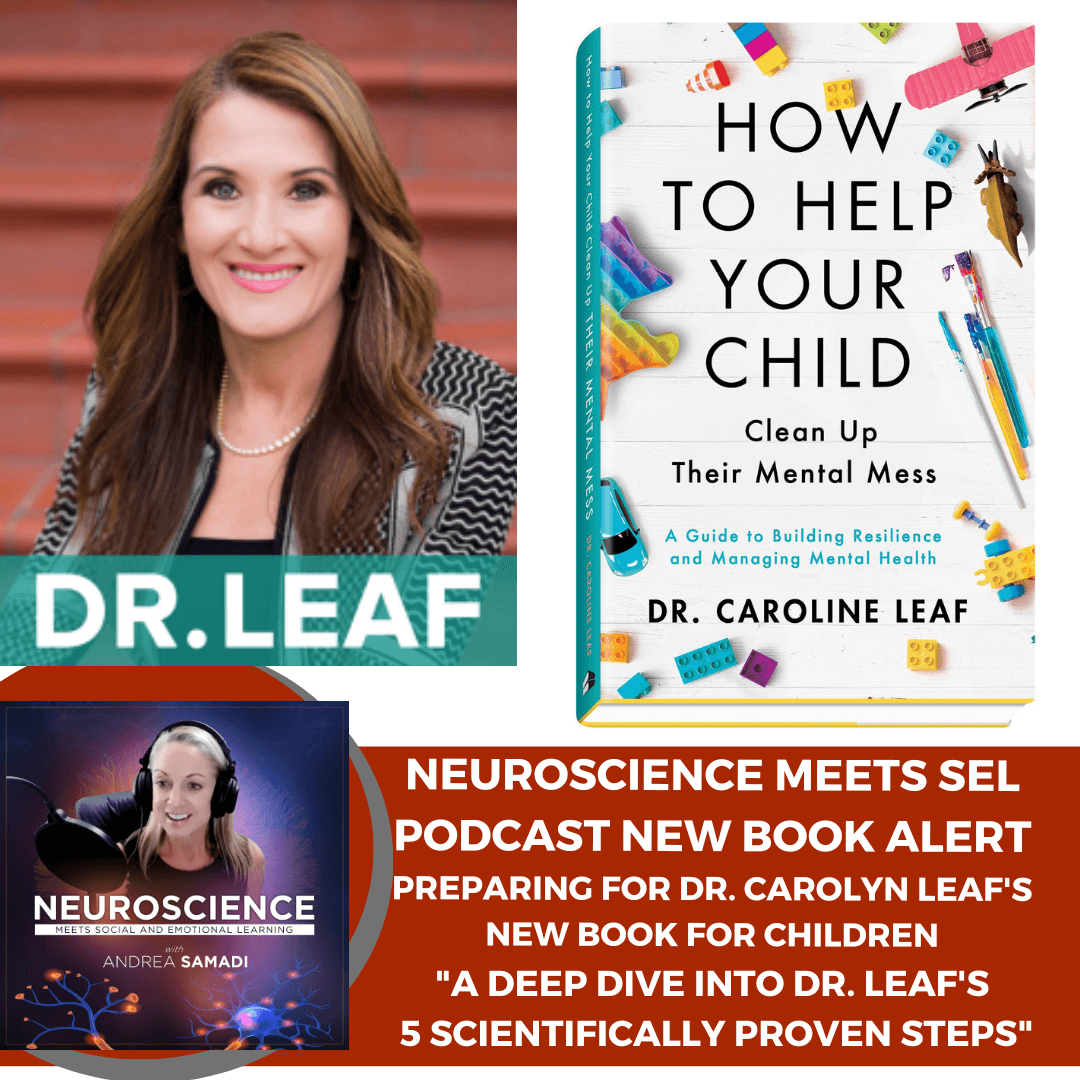
S10 Ep 299Brain Fact Friday on ”A Deep Dive into Dr. Caroline Leaf’s 5 Scientifically Proven Steps to Clean Up Our Mental Mess”
On Today's EPISODE #299 we will cover: ✔ A Deep Dive into Dr. Caroline Leaf's 5 Scientifically Proven Steps to Clean Up Our Mental Mess, So We Can Help Ourselves, Others and Our Children (Preparing for Dr. Leaf's NEW Book Coming Out August 8th). ✔ What to Expect in the 63 Day Neurocycle (from her APP) from Andrea's Experience of Breaking Down Her Own Toxic Thoughts. ✔ How This Scientifically Proven Process Breaks Down a Toxic Thought, and Reconceptualizes It into Something Healthy and Manageable. ✔ An Overview of the 5 Steps You Will Use to Manage Your Mind. ✔ What Tools and Strategies Stanford Professor Dr. Andrew Huberman suggests for improving anxiety and stress in our lives. ✔ Andrea's Thoughts on implementing these strategies for improved mental and physical health, with tools to create balance on a daily basis. Welcome back to The Neuroscience Meets Social and Emotional Learning Podcast, where we connect the science-based evidence behind social and emotional learning (that’s finally being taught in our schools today) and emotional intelligence training (used in our modern workplaces) for improved well-being, achievement, productivity and results—using what I saw as the missing link (since we weren’t taught this when we were growing up in school), the application of practical neuroscience. I’m Andrea Samadi, an author, and an educator with a passion for learning and launched this podcast 5 years ago with the goal of bringing ALL the leading experts together (in one place) to uncover the most current research that would back up how the brain learns best, taking us ALL to new, and often unimaginable heights. As we have now hit more than halfway through this year, I want to look back to where we started in January. We opened up January 2023 and SEASON 9 with an episode that focused on “prioritizing our mental and physical health, improving self-awareness and resiliency”[i] with a quote from Julie Smith, and her book Why Has Nobody Told Me This Before? She said “To me, working on maximizing our mental health is no different to working on our physical health.” Today, we are going to show just how true Julie Smith’s concept of being mindful of our physical AND mental health is, and look at some strategies that we can all use immediately, for difficult times, so that we ALL keep our mental health at the forefront, with ideas for how we can use our mind to become resilient to stress. For today’s episode #299, we are going back to the Basics, and reviewing EP #106[ii], from February 2021, where we covered a review of Dr. Caroline Leaf’s Neurocycle APP[iii] (that’s scientifically designed to help manage and reduce anxiety, depression and mental ill-health by 81%) along with her book, Cleaning Up Your Mental Mess, that we covered when we interviewed Dr. Leaf on a BONUS EPISODE[iv] back in 2021. I continue to release her episode every year, as her 5 STEP process to identifying, and breaking up toxic thoughts is unlike anything I’ve ever seen or tried myself. If anyone ever asks me “what do you recommend for getting rid of those ruminating thoughts, those worries, stresses or anxieties” that ALL of us feel at some point in our life, I always send over Dr. Leaf’s interview, and let them know about her APP that’s now called The Neurocycle APP, based on applying these 5 steps. Why Am I Revisiting Our Mental Health Now? After our last EP #298 with my friend and Neurocoach, Grace Reynolds[v], I mentioned that my girls were struggling with going back to school, and my youngest in particular, with a new school, no friends there, and an entirely new routine. I tried some of Grace’s strategies with her to help bring her brain back to calm, but I quickly realized that I needed more help for her. I thought back to Dr. Leaf’s episode, and wished she has steps for me to follow that I could walk my 12 year old through, so I went back to the Neurocycle APP on my phone, and thought that it might be a good time for me to revisit the
S10 Ep 298Grace Reynolds on ”Mindfulness Neurocoaching: The Quickest and Easiest Path to Post-Traumatic Growth”
"Self-regulation will always be a challenge, but if somebody's going to be in charge, it might as well be me." Daniel Akst Watch this interview on YouTube here https://youtu.be/xjPY1-gmuNk On Today's EPISODE #298 we will cover: ✔ What exactly is trauma and what does it look like in our brain? ✔ How do we become “traumatized”? (as an adult or child)? ✔ How can we recognize “traumatic” experiences in our life, so we can address them, (trauma-informed strategies) heal from them, and prevent them from holding us back? ✔ If our Primal Emotions are hard-wired into our brain, then how do we overcome them? (FEARS, ANGER etc)? ✔ How can we eliminate things that are worrying us? Our CRAP (conflicts, resistances, anxieties, and problems)? Welcome back to Season 10 of The Neuroscience Meets Social and Emotional Learning Podcast, where we connect the science-based evidence behind social and emotional learning (that’s finally being taught in our schools today) and emotional intelligence training (used in our modern workplaces) for improved well-being, achievement, productivity and results—using what I saw as the missing link (since we weren’t taught this when we were growing up in school), the application of practical neuroscience. I’m Andrea Samadi, an author, and an educator with a passion for learning and launched this podcast 5 years ago with the goal of bringing ALL the leading experts together (in one place) to uncover the most current research that would back up how the brain learns best, taking us ALL to new, and often unimaginable heights. For today’s episode #298, we will be speaking with someone I got to know well, as we both took and became certified with a neuroscience certification course, through Mark Waldman[i], learning the basics of neuroscience and a unique technique called neurocoaching that we can both use to help individuals, schools or organizations. Grace Reynolds, who lives in Tasmania, Australia, (near Antarctica) went on to achieve a deeper level of certification as an advanced certified trauma centered neurocoach. We’ve been friends and colleagues for years studying and learning brain-based coaching strategies, and she recently asked me “have you covered neuroscience and trauma yet?” I knew that we’ve touched on it, but hadn’t covered it thoroughly yet. We have covered trauma and the brain in pieces with Dr. Bruce Perry’s[ii] What Happened to You book, Sarah Peyton[iii] and her work on anxiety and self-regulation, or Dr. Lori Desautels’[iv] work on rewiring our perceptions of discipline in our schools, and it was even a part of our interview with Hans Appel[v], a school counselor whose book, Award Winning Culture took off in schools across the country. I remember while reading Hans’ book, it was in the first few pages that he mentioned how he had a difficult childhood, and he talked about how the sound of his back door opening after school would make his skin crawl as he remembered the trauma that would occur for him in his life after school, urging him to spend more and more time at school, away from home. I wonder how many of our students have stories like this. I remember in the first few pages of Dr. Bruce Perry’s What Happened to You book, he talked about a student who would act out in class. It turned out that the teacher’s cologne was triggering him to a bad memory of a past experience, showing us that triggers can occur and set us off when we least expect it. I wonder: How do past traumas show up and do they impact our life? What Can They Teach Us About How We Might Respond to Certain Situations? What strategies can we use to help us to maintain balance in our life? While I didn’t have an experience as painful as Hans Appel’s, or the student with the cologne, these stories made me remember something from over 20 years ago that made my skin crawl, and still does. Psychological trauma impacts our brain, and can trigger us to feel threatened even when we are not in a threatening situati
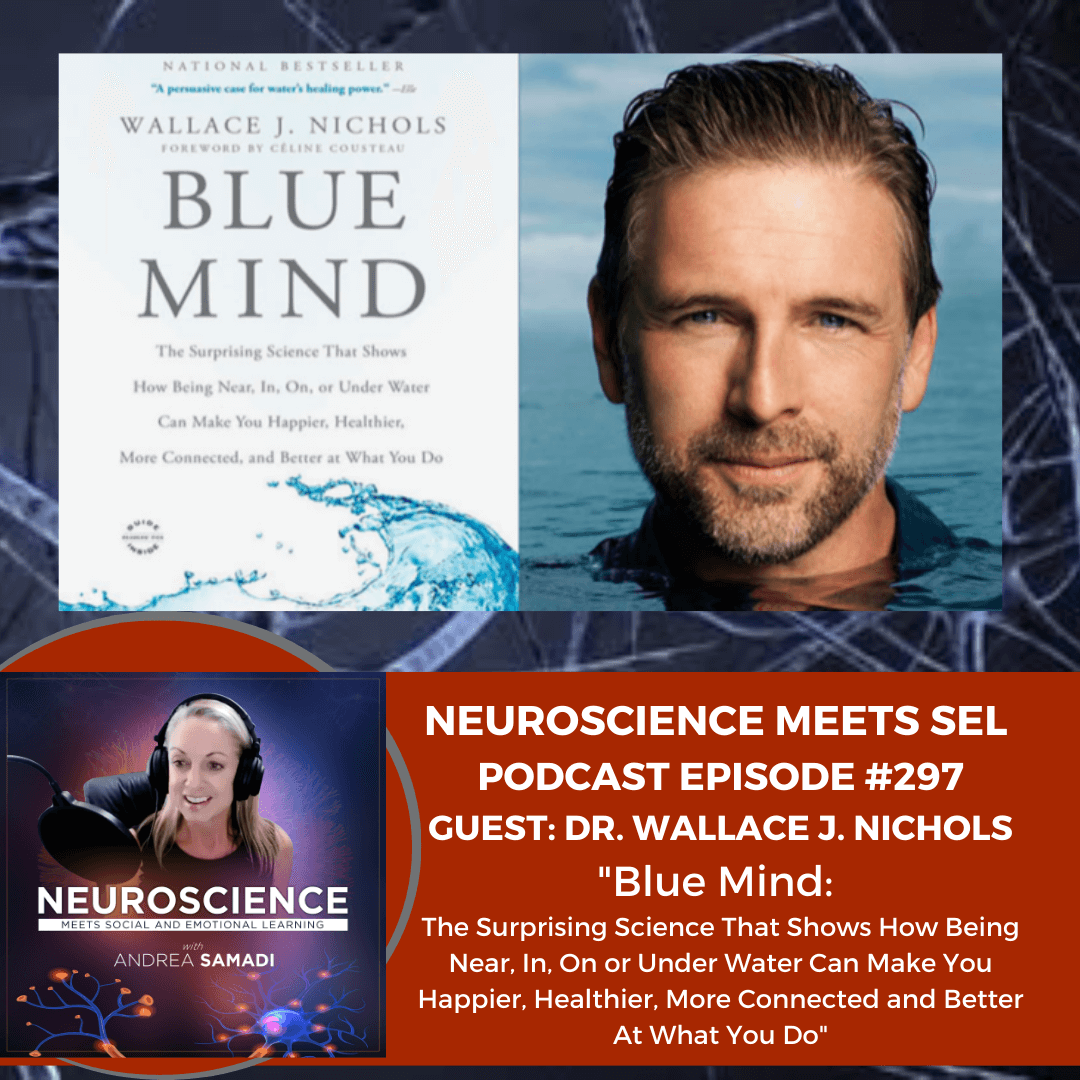
S10 Ep 297Scientist and Activist Dr. Wallace J. Nichols on ”Blue Mind: The Surprising Science That Connects Our Brain to Water”
“Now it’s time to update my grandfather’s words by explaining them, and, by doing so, changing our understanding of our place on the planet, who we are, and what goes on inside and between us. It’s about reconnecting our sense of self and soul with our waterways and oceans. It’s about finding our creativity, clarity, and confidence in our deep Blue Minds.” Celine Cousteau, who opens up Wallace J. Nichols’ Blue Mind book, with a fascinating look into the depths of the ocean, reminding us of the words that meant the most to her from her grandfather, the great, Jacques Cousteau, that “The sea, once it casts its spell, holds one in its net of wonder forever. People protect what they love.” Watch this interview on YouTube here https://youtu.be/wwx1jrHj33c On today's EPISODE #297 "Blue-Mind: The Surprising Science That Connects Our Brain to Water" we will cover: ✔ What made Dr. Wallace J. Nichols connect the mysteries of the ocean, to our brain. ✔ How he gathered research for this book, and made real world connections between neuroscience and the water, never explored before. ✔ Why we are often more connected, emotional and happier around water. ✔ What Dr. Nichols noticed when he wore a waterproof EEC cap and measured his brain while swimming in the ocean. ✔ How Blue Mind can help us to become more self-aware, and move us towards freedom, possibility, wonder and hope. ✔ Easy ways we can all access and practice Blue Mind, especially on World Blue Mind Day, this Sunday July 23rd. Welcome back to Season 10 of The Neuroscience Meets Social and Emotional Learning Podcast, where we connect the science-based evidence behind social and emotional learning (that’s finally being taught in our schools today) and emotional intelligence training (used in our modern workplaces) for improved well-being, achievement, productivity and results—using what I saw as the missing link (since we weren’t taught this when we were growing up in school), the application of practical neuroscience. I’m Andrea Samadi, an author, and an educator with a passion for learning and launched this podcast 5 years ago with the goal of bringing ALL the leading experts together (in one place) to uncover the most current research that would back up how the brain learns best, taking us ALL to new, and often unimaginable heights. For today’s episode #297, we are diving into the depths of the ocean, and learning about some concepts that Dr. Wallace J Nichols[i] has discovered that he calls “Blue Mind: The Surprising Science That Shows How Being Near, In, or Under Water, Can Make You Happier, Healthier, More Connected and Better at What You Do.” When I was first introduced to Dr. Nichols, I was on a summer vacation with the family and just packing up our trip next to the clearest, bluest water I have ever seen on Grace Bay, in Turks and Caicos. My friend and Performance Coach Luke DePron, from EP 90[ii] sent me an introduction to Dr. Nichols for our podcast, and when I saw his book, I couldn’t have been more excited. I always want to understand the “why” behind certain things, and the ocean (and water in general) is something I’ve always been fascinated with. I took one look at Dr. Nichols’ book, Blue Mind, and I was instantly captivated. He asks some of the questions I’ve always wondered: What is water, and Why are we as humans so enthralled by it? Then I looked at the cover of the book, and the tagline got me thinking more: What happens to me when I’m swimming in water? Why do I suddenly feel more creative than I do when I’m sitting at my desk? Or more connected to others? What happens to me when I dive down to the bottom of the ocean? Now I’m reading Dr. Nichols’ book, hoping to answer these questions, and also a bit surprised that I never thought of the brain/water connection. If you’ve been following this podcast for some time, you’ll know that I’ve been working on the brain/and learning connection and neuroscience is helping the field of education
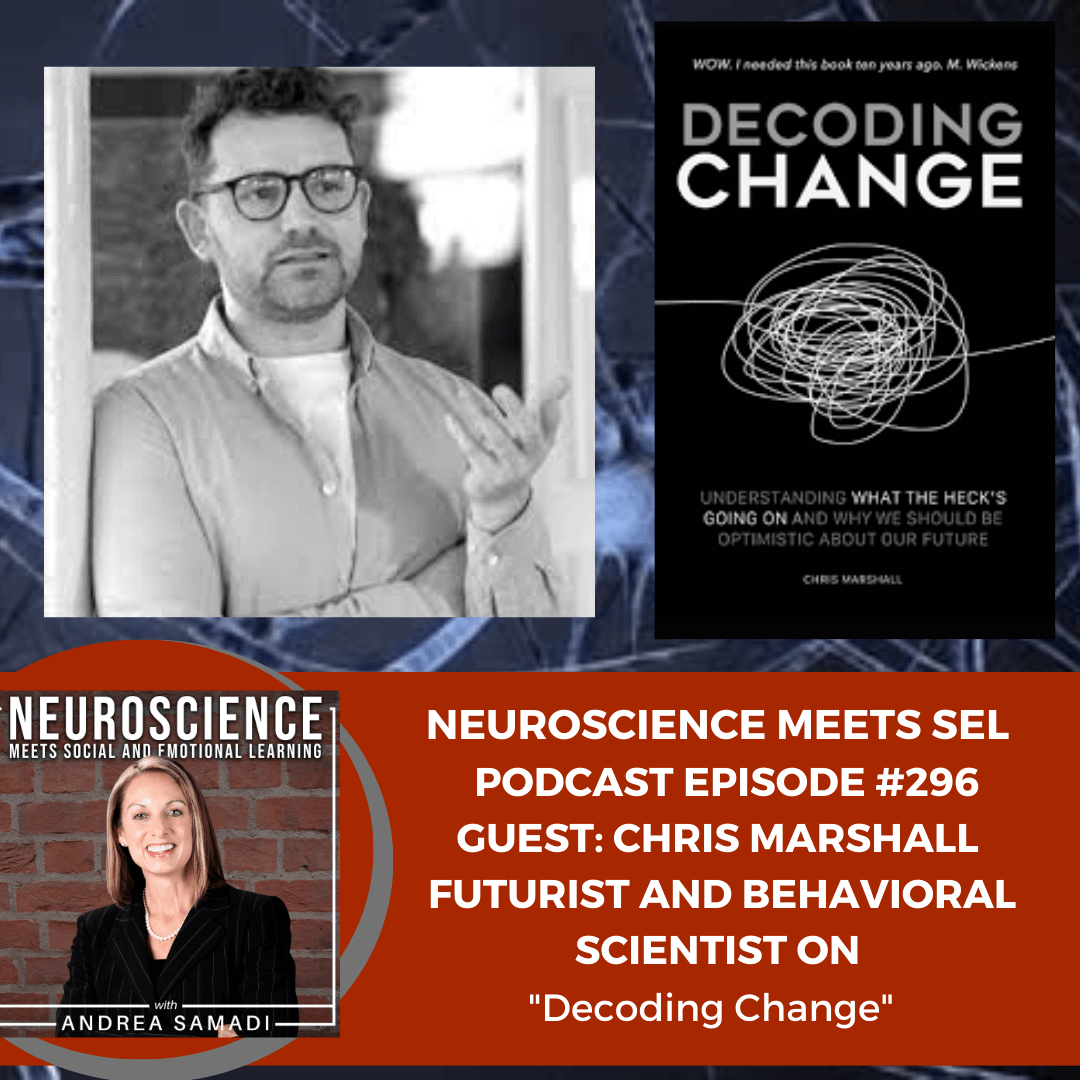
S10 Ep 296Futurist and Behavioral Scientist Chris Marshall on ”Decoding Change”
“With change comes uncertainty, fear, and anxiety, and the tendency to cling to the status quo—perhaps the last thing we want to do in a fast-changing world.” Watch this episode on YouTube here https://youtu.be/Bru26OZnlmI Chris Marshall, from his book, Decoding Change, Understanding what the heck is going on, and why we should be optimistic about our future. We will cover: ✔ Do we ALL feel intuitively that the world is going through radical change? ✔ What happens to our creative and decision-making ability during times of change? ✔ Strategies and mechanisms to help us to prepare for a better future. ✔ Current trends and mega-trends. ✔ The mindset needed to achieve quantum leaps with our results. Welcome back to Season 10 of The Neuroscience Meets Social and Emotional Learning Podcast, where we connect the science-based evidence behind social and emotional learning (that’s finally being taught in our schools today) and emotional intelligence training (used in our modern workplaces) for improved well-being, achievement, productivity and results—using what I saw as the missing link (since we weren’t taught this when we were growing up in school), the application of practical neuroscience. I’m Andrea Samadi, an author, and an educator with a passion for learning and launched this podcast 5 years ago with the goal of bringing ALL the leading experts together (in one place) to uncover the most current research that would back up how the brain learns best, taking us ALL to new, and often unimaginable heights. For today’s EPISODE #296, we meet up with Chris Marshall[i], a Professional Futurist, Behavioral Scientist, and author of "Decoding Change: Understanding what the heck is going on, and why we should be optimistic about our future.”[ii] The title of his book should give you an idea of the direction of this conversation. A bit about Chris. He’s the Head of Investment Strategy at Dragon Investment Managers where he leads global market insights across all asset classes including equities, real estate and credit markets Founder & Chief Storyteller of Snowdonia Distillery (first copper distillery in Wales) Masters in Psychology and MSc in Behavioural Economics Host of the Transitional Matters Podcast[iii] where he covers trends, mega-trends and transitions going on in the world around us and how they impact our life. Let’s get right to this conversation, where I’m looking forward to what we can learn together about the world from Chris’s point of view: the point of view of a behavioral scientist, and futurist, who looks at “how the world is changing, not just from the visible elements, but the things below the surface.”[iv] Let’s meet Chris Marshall and look at the trends and mega-trends, that he says are the drivers of change around us. INTRO: Welcome Chris!! Thank you for joining me today, all the way from Wales (is this right?) Now, you’ll understand this as a fellow podcast host, but what I enjoy the most about this medium is how far a reach we can have with our content. While we are now in 182 countries/193 I like looking to see where people are tuning into the podcast from around the world, and I noticed we’ve only had 3 downloads in Wales this month. Maybe after today’s episode we can get this number higher, especially since I was born in the UK (Worthing, Sussex). Our numbers in England are much higher. Tell me something I might not know about Wales[v] (other than what I can see on my map here—it’s a country in Southwest Great Britain known for its rugged coastline and mountainous national parks” Do you look at your podcast stats? What do you notice as you look at your work around the world? Q1: So Chris, I watched your keynote introduction on YouTube[vi], and I think your book Decoding Change[vii] should be required reading for anyone who wants to plan for the future, which is pretty much everyone on the planet. You ask your audiences all around the world one question, and I was captivated to learn mo
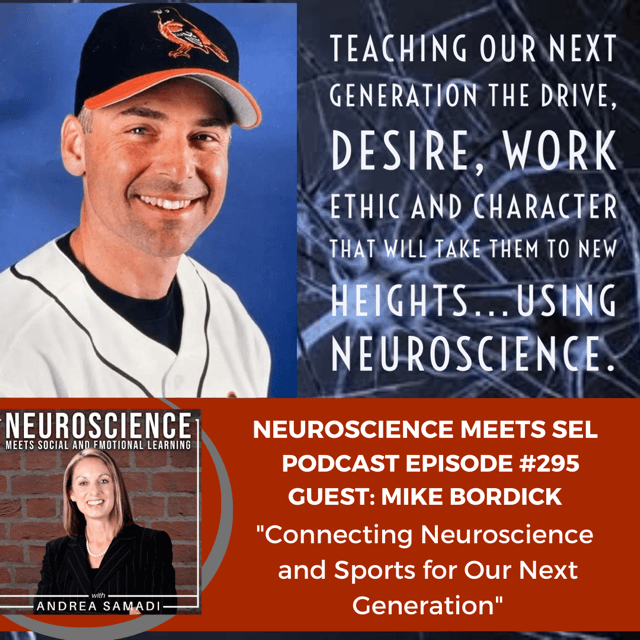
S10 Ep 295Former MLB Player and Chairman of The League of Dreams, Mike Bordick on ”Connecting Neuroscience and Sports for Our Next Generation”
“Teaching our next generation the drive, desire, work ethic and character, that will take them to new heights, using neuroscience.” Watch this interview on YouTube here https://youtu.be/oXfQPEJWwbM On this episode you will learn: ✔ How Former MLB Player is taking the mental and physical skills he learned over his 14 year MLB career, connected to neuroscience to help our next generation of youth. ✔ The leadership ingredients that Mike Bordick thinks made some players stand out over the rest with their results. ✔ Why Mike Piazza (NY Mets) was such an outstanding and unique team player. ✔ How Mike Bordick's childhood contributed to his success in MLB and beyond, and why he thinks it's important to give these skills back to our next generation. ✔ What sport Mike chose to unwind after a busy season, to enjoy the "solitude of nature." ✔ His vision for League of Dreams www.leagueofdreams.org (that's just celebrated it's 20th year). Welcome back to Season 10 of The Neuroscience Meets Social and Emotional Learning Podcast, where we connect the science-based evidence behind social and emotional learning (that’s finally being taught in our schools today) and emotional intelligence training (used in our modern workplaces) for improved well-being, achievement, productivity and results—using what I saw as the missing link (since we weren’t taught this when we were growing up in school), the application of practical neuroscience. I’m Andrea Samadi, an author, and an educator with a passion for learning and launched this podcast 5 years ago with the goal of bringing ALL the leading experts together (in one place) to uncover the most current research that would back up how the brain learns best, taking us ALL to new, and often unimaginable heights. For today’s EPISODE #295 we are going to speak with someone who I feel connected to with where he is going, but for many others, like my husband, he’s formed a huge connection to where he has come from. We will be speaking with Mike Bordick, a former MLB player, whose 14 year career included time with the A’s, Orioles, Blue Jays and Mets. I came to meet him when he contacted me, brainstorming ideas for ways he can continue to give back to youth in his retirement, with the organization he has formed www.leagueofdreams.org, that is celebrating their 20th year and is now looking at including content that links neuroscience to learning and physical education. When I saw his email to me, I wondered “what is a former baseball player emailing me about” and then when I got to what he was looking for, I thought that he definitively found the right person, as this is what the podcast Neuroscience Meets SEL is all about. I wrote back to him with ideas, and resources from the podcast, with episodes that tied back to PE and the brain, and connected him to everyone I knew that’s focused on PE and neuroscience. I can’t wait to meet with Mike and learn more about his vision for neuroscience, (that stems from his college degree in PE and kinesiology) and see what he does with this new program that he’s working on, that links brain health, physical activity and nutrition. I also knew I couldn’t ignore the path the led him to where he is today with his vision, so we will dive a bit into his past on today’s interview. If you know me well, you’ll know that I’m not really a sports fan, (while I love being physically active myself, I haven’t spent much time watching sports, since I was around twelve, and my Dad took me to hockey games in Toronto. I think I’ve been to one baseball game, but never went back because it just wasn’t my thing sitting in the stands and watching the fans spitting on the ground. So, when Mike’s email came in, I asked my husband, Majid Samadi, who is a huge baseball fan, “Have you ever heard of Mike Bordick” and the answer was a definite “Yes, and why do you ask?” Before learning more about Mike’s vision, you can go to his About Us page on his website and see where his path that l
S10 Ep 294”Beyond Our 5 Senses: Understanding and Using the Six Higher Faculties of Our Mind”
Welcome back to Season 10 of The Neuroscience Meets Social and Emotional Learning Podcast, where we connect the science-based evidence behind social and emotional learning (that’s finally being taught in our schools today) and emotional intelligence training (used in our modern workplaces) for improved well-being, achievement, productivity and results—using what I saw as the missing link (since we weren’t taught this when we were growing up in school), the application of practical neuroscience. I’m Andrea Samadi, an author, and an educator with a passion for learning and launched this podcast 5 years ago with the goal of bringing ALL the leading experts together (in one place) to uncover the most current research that would back up how the brain learns best, taking us ALL to new, and often unimaginable heights. For today’s episode #294, we are going back to the basics, with the Fundamentals of Understanding How Our Mind Works, that started for me with Bob Proctor’s Youth Mentor Program, that I was the Executive Director with, until the program dissolved with the Sept 11th, 2001 tragedy. This weekend I reviewed ALL of these cassette tapes, and when I got to the last one, the tape broke. I didn’t want to miss anything that might be important that I could share with you here, so I watched a YouTube video on “how to fix a broken cassette tape” and what do you know, it worked! Times really are different than the days we used to carry these cassette tapes around, with our Sony Walkmans, but what came through loud and clear to me, was that the messages and lessons we were teaching those teens were timeless, and it all began with an understanding of our mind, how it works, and how to use it. The program consisted of 6 SERIES: SERIES 1, The Fundamentals (you can see these tapes in the image in the show notes). SERIES 2 went into the importance of your attitude, SERIES 3, Your Self-Image, SERIES 4- How to Set and Achieve Goals, SERIES 5- The Laws of the Universe and how to use these laws for your health and relationships and SERIES 6 reviewed all lessons, with the goal that the teens would experience PRAXIS, or they integrated their beliefs with their behaviors. It was strange for me to hear some of these tapes that were recorded back in early 2001, using conference calls, but what was interesting to me, was hearing the teens explaining exactly HOW these timeless principles were helping them. Teens would call into a conference call line, from around the world, and meet with Bob Proctor monthly, to review these lessons, and how they were applying them. Nothing made him happier than to hear someone applying what he had dedicated his life teaching, and I know it surprised him that the teens seemed to pick these concepts up quickly. This makes sense to me now that we know how neuroplasticity works, as it’s much easier for a young person to learn something new, because their brains are more plastic, and they also have less habits to overcome. I listened to one call, and there was a young guy named Greg who shared how he used visualization to go from the last place on his golf team to be the 3rd highest on his team. I wondered why he picked the 3rd highest, and not first on his team, but anyway, that was his goal, and he achieved it. We asked him “what exactly did you do when you were visualizing?” and he said “he put himself at the 5th hole on the golf course, then pictured himself hitting the club, feeling the wind on his face, and imagined where the ball would land.” His vision was clear and specific, and listening to him talking was something else. He was confidently telling the others how he achieved his goal. Greg had mastered TAPE 2 of the Fundamentals thinking in pictures, TAPE 3, using his conscious mind and his senses (to set his goal, he even showed us how he felt it), he used TAPE 4 when he threw his goal into his subconscious mind, and TAPE 6, Greg was able to review exactly what he had done, inspiring others o
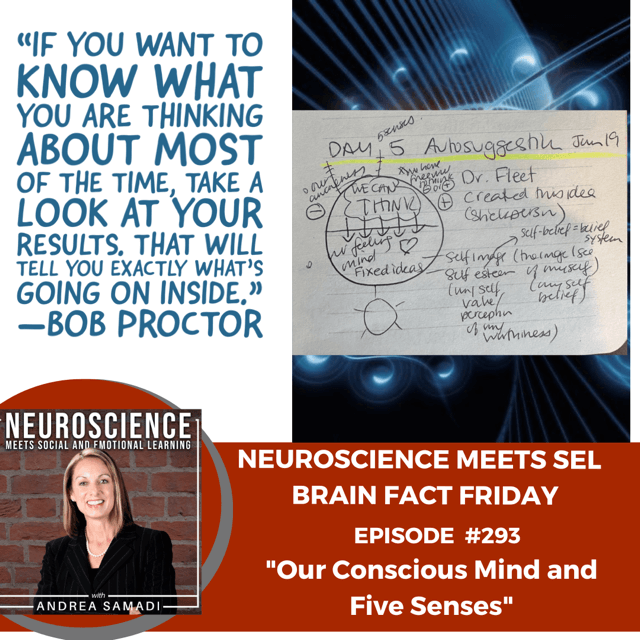
S10 Ep 293Brain Fact Friday on Our Conscious Mind and Five Senses
Welcome back to Season 10 of The Neuroscience Meets Social and Emotional Learning Podcast, where we connect the science-based evidence behind social and emotional learning (that’s finally being taught in our schools today) and emotional intelligence training (used in our modern workplaces) for improved well-being, achievement, productivity and results—using what I saw as the missing link (since we weren’t taught this when we were growing up in school), the application of practical neuroscience. I’m Andrea Samadi, an author, and an educator with a passion for learning and launched this podcast 5 years ago with the goal of bringing ALL the leading experts together (in one place) to uncover the most current research that would back up how the brain learns best, taking us ALL to new, and often unimaginable heights. Today we’re going to go back to where we left off with EPISODE #291 “Unleashing the Power of Our Subconscious Mind” where we covered: ✔ A review of where our podcast began, and where we are going. Each episode we create, it becomes clearer to me that social and emotional skills are important for understanding who we are, and are crucial for propelling us forward. Social and emotional competencies form the backbone of who we are (our identity), along with our character, and I’d like to continue to uncover how science can strengthen this understanding, (with the topics I chosen listed in the diagram in the show notes) expanding our awareness as we move towards our goals, or whatever it is we are working on. I remember professor of psychology, Maurice Elias summed it up well when he spoke about where SEL began for him in the mid 1970s. He saw a need for these SEL skills back then, (decades before they were infused into our classrooms) saying these skills “could propel someone forward” but he mentioned the importance of “character to steer our direction.” I’ve not forgotten about Character, it’s an important topic that I’ve been writing about in my spare time. We’ll cover the basic character traits in the future, showing were character fits into this equation. I know there’s a lot to the formula for success, and I don’t want to leave any stones unturned. For today’s episode #293, we are going back to the basics, with the Fundamentals that started for me with those 12 teenagers all those years ago. When I was speaking with Brian Proctor, on our last episode, #292,[i] it hit me that some concepts we had both heard over and over again (like the hour glass that Brian put on the cover of his book that represented staying in the present moment- I had forgotten that’s what it meant. I would have told a story about it representing the fact we only have a certain amount of time to live our life, and to live each moment to the fullest) reminding me of the importance of reviewing these lessons. Or some of the phrases we used to hear over and over again like “you don’t need to know HOW you are going to do something, just figure out what it is that you want, and the how will show up.” All of the concepts that we heard, that yielded results for anyone who studied and applied them, were ideas that were simple enough to understand, yet most people never followed through with them. This is what Brian Proctor wrote about in his book, and there were many lessons he learned that went much deeper than the usual topics like goal-setting, or confidence building, but there was a foundational level that everyone started with, and I’d say it was with those Fundamental lessons that we taught to the teens. We recently covered “Diving Deeper into Our Subconscious Mind”[ii] (which was the 4th tape the teens learned). Today we will cover some of the important concepts of “Using the Conscious Mind and Our Senses” and in a couple of days (when I’ve written the next episode, we’ll cover) “Going Beyond Our Senses: Using the Faculties of Our Mind.” This will provide us all with the solid background of these success principles that I s
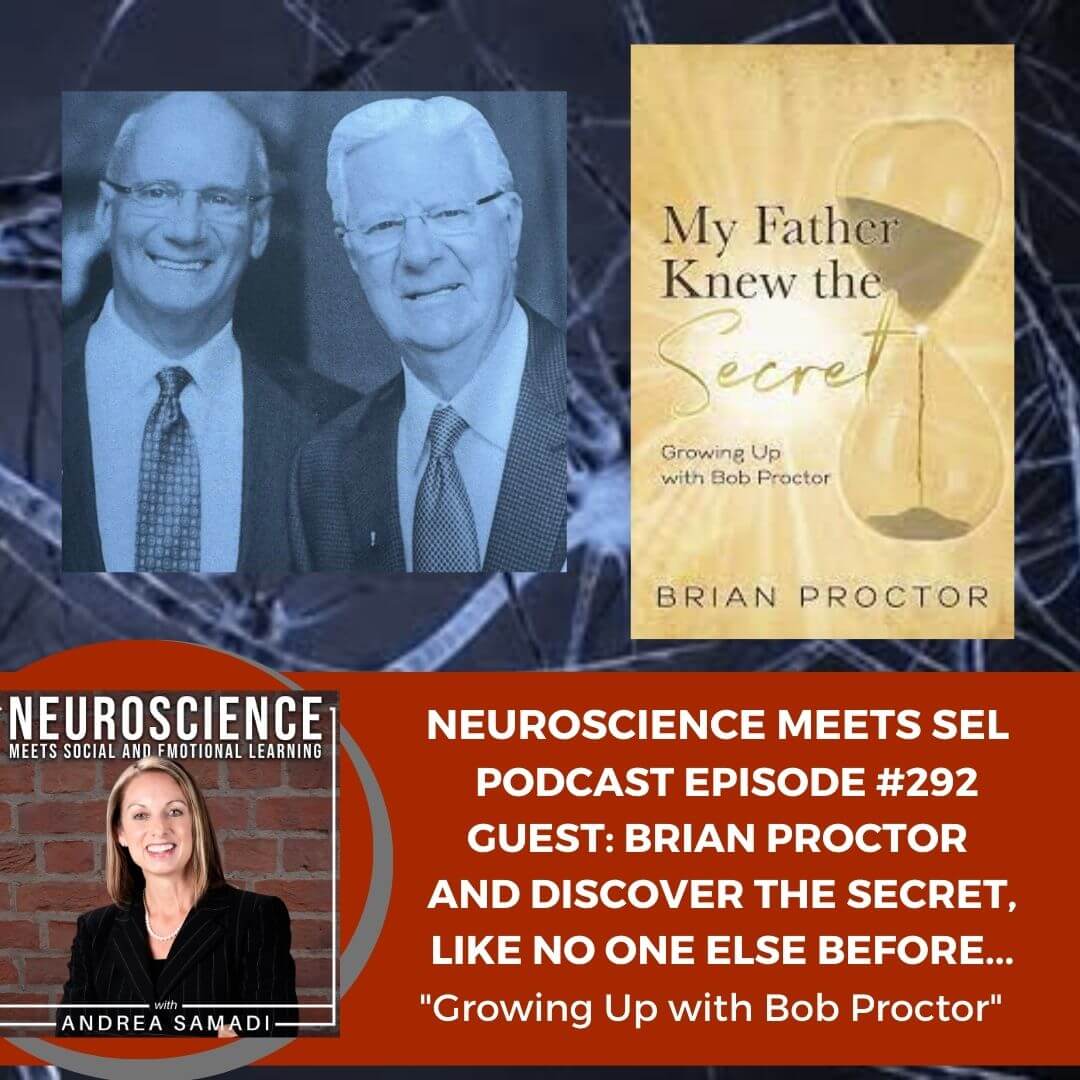
S10 Ep 292Brian Proctor on ”My Father Knew The Secret: Growing Up With Bob Proctor”
YOU are about to discover The Secret, like no else on earth before. If you’ve read Napoleon Hill’s, Think and Grow Rich book, looking for The Secret in those pages, or watched the movie The Secret, you’ll want to take out a notebook for today’s interview, and put away all distractions. The lessons you’ll take away from this next episode, I guarantee, from personal experience, that what you will learn today, has the potential to change the course of your life forever. Watch this interview on YouTube here https://youtu.be/ndhyRKFMrFQ On today’s episode #292 with Brian Proctor on ”My Father Knew The Secret: Growing Up With Bob Proctor" we will cover: ✔ The Power Behind "The Secret" found in the pages of Think and Grow Rich, or the Movie The Secret and how this "Secret" has the ability to change your life forever. ✔ Lessons Learned from Brian Proctor after 30 years of working side by side with the legendary speaker, and 60 years being taught these timeless success principles. ✔ Lesson include: How to Create Your Best Life Ever, Why It's Important to Follow your Heart, What Exactly is The Impression of Increase, How to See the Best in Everyone You Meet, How to Visualize Your Goals, How to Be at Peace with Death, How to Attract our Best Mate, How to Embrace Our Feelings and Never Be Afraid to Share Them, and Why it's Important to Be Our Best at All Times. ✔ Andrea reflects on these lessons, with her TOP 3 Take-Aways, with tips for the listener to apply each take-away to their life. Welcome back to Season 10 of The Neuroscience Meets Social and Emotional Learning Podcast, where we connect the science-based evidence behind social and emotional learning (that’s finally being taught in our schools today) and emotional intelligence training (used in our modern workplaces) for improved well-being, achievement, productivity and results—using what I saw as the missing link (since we weren’t taught this when we were growing up in school), the application of practical neuroscience. I’m Andrea Samadi, an author, and an educator with a passion for learning and launched this podcast 5 years ago with the goal of bringing ALL the leading experts together (in one place) to uncover the most current research that would back up how the brain learns best, taking us ALL to new, and often unimaginable heights. For today’s EPISODE #292, we have a surprise guest, who I didn’t know we’d have on the interview schedule until this past weekend. After receiving his new book in the mail, I sent out an interview invite, and when the answer back, was “you pick the day” I knew I had to make a decision quickly and firmly. It was our next guest’s father who taught me to never waver on a decision. We’ve all been there, though, wondering, “should I do this now—or later, leave this till tomorrow—or don’t leave it, do it—or don’t do it, say it—or don’t say it.” There’s nothing worse than being stuck with that feeling of ambivalence that comes with indecision, and if my path hadn’t of crossed with motivational speaker, Bob Proctor, in the late 1990s, I wouldn’t have learned the importance of eliminating conflict in the mind by learning to become proficient at making decisions. I picked the interview date 2 days away, and knew it was the right answer, because that’s another skill we were taught. Learn to listen to that quiet voice within, and always go with your heart. It will never lead you in the wrong direction. Today’s guest, is Bob Proctor’s son, who worked by his side for 30 years, Brian Proctor. And for 60 years, he was schooled with the experiences and wisdom learned by being the son of the legendary speaker who impacted my life, and millions of others around the world with his teachings based on the principles of success. I've known Brian Proctor since the late 1990s, when I was first creating the goals and dreams for my future on notepads, using his Father's material as my guide. Brian was right there, encouraging me along the way. I high
S10 Ep 291Brain Fact Friday on ”Unleashing the Power of Our Subconscious Mind”
“Every day we are influenced in countless ways by the world around us, and most of this flies completely under the radar of our conscious awareness” From Neuroscientist and Stanford Professor, David Eagleman’s, The Brain: The Story of You. On today’s episode #291 on “Unleashing the Power of Our Subconscious Mind” we will cover: ✔ A review of where our podcast began, and where we are going. ✔ The importance of understanding our subconscious mind as it relates to our results. ✔ A look back at the history of this understanding, that goes back to visionaries in science and the arts (Francis Bacon, Descartes, etc). ✔ The unusual results Andrea saw with 12 teenagers who studied this concept, catching her attention, in the late 1990s. ✔ 6 STEPS you can use today, to expand your awareness, and help you to tap into the power of your subconscious mind. Welcome back to Season 10 of The Neuroscience Meets Social and Emotional Learning Podcast, where we connect the science-based evidence behind social and emotional learning (that’s finally being taught in our schools today) and emotional intelligence training (used in our modern workplaces) for improved well-being, achievement, productivity and results—using what I saw as the missing link (since we weren’t taught this when we were growing up in school), the application of practical neuroscience. I’m Andrea Samadi, an author, and an educator with a passion for learning and launched this podcast 5 years ago with the goal of bringing ALL the leading experts together (in one place) to uncover the most current research that would back up how the brain learns best, taking us ALL to new, and often unimaginable heights. Welcome back! For those who tune in each week, you might have noticed this was the FIRST time we’ve taken a break with this podcast since we launched. It’s always been important for me to produce content every week, but this past month, we travelled to some places where there wasn’t always internet, so I decided it would be a good time to take a break, and think about where we began with this podcast, and where we are going, creating a clear vision moving forward, and putting our season theme of Part 2 of Going Back to the Basics into practice. If you look at the image in the show notes, you can see where the vision for this podcast began by making a connection with the six social and emotional learning competencies[i] that you’ll be familiar with if you are in the field of education, or paying attention to the research. These competencies include Growth Mindset, Responsible Decision-Making, Self-Awareness, Social-Awareness, Self-Regulation and Developing Relationships, and hundreds of research studies[ii] have confirmed positive outcomes for our next generation of students, adults and communities who implement these competencies. Instead of covering social and emotional learning topics only for this podcast, (that I saw publishers begin to cover more thoroughly than I ever could on my own, using their research to prove efficacy), I decided to connect what I saw as “the missing link” for health, well-being, productivity and achievement on this podcast—an understanding of our brain, that I call Neuroscience 101. Reflecting back on almost 300 episodes written, recorded and produced from June 2019 to today, it’s easy to notice the growth that has unfolded along the way, that I share on EPISODE #279[iii] on “Lessons Learned After Hitting the 300,000 Download Mile Marker,” or “The Top 10 ALL Time Most Listened to Episodes on Podcast.” I can’t miss out on EPISODE #233[iv] where we covered the “Top 12 YouTube Interviews” as chosen by YOU! These are all good ones to review. In addition to the growth noticed over the years from feedback that YOU, the listener would send me, I also noticed a shift with the content in our interviews over the seasons. In our early interviews, we were introduced to books, ideas and strategies that would orient us to the understanding of the
Ep 290Brain Fact Friday on ”The Neuroscience of Learning: Unlocking the Secret to Our Identity”
“Who you are depends on where you’ve been. Your brain is a relentless shape-shifter, constantly rewriting its own circuitry—and because your experiences are unique, so are the vast, detailed patterns in your neural networks. Because they continue to change your whole life, your identity is a moving target: it never reaches an endpoint. That’s From Neuroscientist and Stanford Professor, David Eagleman’s, The Brain: The Story of You. Now that REALLY made me STOP and THINK as I am about to write this next episode. I wonder: What’s my identity-or what makes me-me, especially if it’s a moving target. I’m not just Andrea, the host of the Neuroscience Meets SEL Podcast (imagining my brain, and all its neural networks that consist of ALL the years of experience that make me, who I am today) and each day, my experiences change who I am right down to the books I’m reading, what I’m studying and learning, the people around the world I interact with, making me the person I am today. Then I wonder, who are YOU listening to this podcast? What’s YOUR identity, wherever you are tuning in from around the world (and I imagine YOUR brain, and the neural networks you’ve created with YOUR own specific and unique life experiences. And if our identity (who we are at this point in time) is a moving target that never reaches an endpoint, can we then, create our own reality and future by continuing to re-wire our own circuitry with NEW information, and NEW ideas, that create NEW experiences that change who we could be in the future? Thus, changing our conditions, our circumstances, and our environment? That is the goal of this podcast, (to help all of us to re-wire our brains (with new information) that we’ll put into action (using the most current, evidence based research) taking our results to new heights. This is what keeps ME coming back time and time again to write new episodes. I’ve put an image in the show notes that came from my study with Mark Waldman on the Default Mode Network, showing exactly what our brain looks like when we are using our imagination network to take this information we are learning, and use it in a creative way. Our whole brain lights up, connecting all of our brain regions in this process. With that thought, I want to welcome you back to our final episode of Season 9 of The Neuroscience Meets Social and Emotional Learning Podcast, where we cover the science-based evidence behind social and emotional learning (for schools) and emotional intelligence training (in the workplace) with tools, ideas and strategies that we can all use for immediate results, with our brain in mind. I’m Andrea Samadi, (and while we know I’m not just) an author, or an educator with a passion for learning (I think after today’s episode, we will see that we are much more than our work and life experiences) and it’s this understanding that will encourage us all to continue re-wiring our brains, taking us to new, and often unimaginable heights. I’m recording this episode the end of May 2023, and plan to take some time away from the recording studio (my office) this summer. We’ll be back with the start of Season 10 the end of June, as we move into the 5th year of this podcast, and our second half of “Going Back the Basics” where we’ll continue through our past episodes, to see what we can add to them, with new research and ideas to take our personal and professional results to these new heights. As I started writing this episode that tied back into some of our Brain Fact Fridays on Learning, I couldn’t think of what to cover specifically, because learning is behind EVERY episode we produce. I wonder, as we move towards our 5th year, and a new season when we return, what else can we uncover when it comes to “learning” with our brain in mind. Or in other words, how can we take our “learning” to new heights, or look at learning through a new lens? I glanced through some of the episodes we covered on how we learn (procedural vs declarat
S9 Ep 289Maiysha Clairborne, M.D. on ” What Holds Us Back: Getting to the Root of Our Doubts, Fears and Beliefs”
“I think I have always been a healer first. It feels like my life’s assignment… my purpose. Each day, I endeavor to bring healing to everyone with whom I come in contact. I believe everyone has this capacity to bring healing for themselves and others. I’m here to wake them up to that capacity.” ~Dr. Maiysha Watch this interview on YouTube here https://www.youtube.com/watch?v=aMv2HK7sxos From Dr. Maiysha Clairborne’s TEDX.[i] On this episode #289 we will cover: ✔ How hypnosis and timeline therapy can help us to eliminate blocks in our subconscious mind. ✔ What's a more effective way for changing our beliefs than repeating an affirmation. ✔ A simple and easy to use strategy to resolve conflict in the workplace. ✔ The three views of "perception" for improving relationships (home and workplace). ✔ How to uncover the root of our doubts and fears to blast through to new heights in our personal and professional lives. ✔ Why challenges our beliefs is important for growth. ✔ What to think about when "resistance" comes up in our life. ✔ The importance of celebrating our wins, but keeping our eye on our end-goal. I want to welcome you back to Season 9 of The Neuroscience Meets Social and Emotional Learning Podcast, where we cover the science-based evidence behind social and emotional learning (for schools) and emotional intelligence training (in the workplace) with tools, ideas and strategies that we can all use for immediate results, with our brain in mind. I’m Andrea Samadi, an author, and an educator with a passion for learning and launched this podcast to share how the understanding of our complex brain transfers into our everyday life and results. Each concept we cover here I’m hoping will help you, wherever you might be listening to this podcast in the world, just as much as these ideas are helping me personally and professionally. For today’s episode #289, we are meeting with Dr. Maiysha Clairborne, an author, TEDx Speaker, Podcast Host of the Black Mind Garden Podcast, a Master Practitioner of NLP and Hypnosis and Time Line Therapy. I don’t think I need to explain why I wanted to speak with Dr. Clairborne when you click to the first page of her website, and she has the words EDUCATE, EMPOWER, ENRICH and ELEVATE in bold letters on the first page. She lives what she teaches, as these words come to my mind when I looked at her picture on the front of her press kit as I wondered where I would even begin with the questions I want to ask her. It was funny because she had some suggested topics included and I read through them, and thought “I want to know ALL of these topics!” So that’s where we will begin. Let’s welcome Dr. Maiysha Clairborne, and see what we will learn together to elevate and empower us to new heights and leadership. INTRO Q: Welcome Dr. Maiysha Clairborne! Thank you for making my life so much easier as a podcast host. Preparing for this interview was easy with all of the information you’ve got out in the world. I wasn’t kidding when I said in the backstory that I want to know EVERYTHING you’ve suggested as questions for me. Welcome! Can you give us a bit of your background that takes us to where you are today? What inspired you to want to educate, empower, enrich and elevate others? This says a lot about who you are. What about hypnosis and timeline therapy? I’m a full believer in hypnosis, but what is timeline therapy? Q1: It’s been a few years since I’ve used them, but I did use an affirmation in my early 20s to help me to change my identity as a young woman, in business. Is there a better way? Tell me there is, because I didn’t like saying the same thing over and over again in front of the mirror until I finally believed it. Q2: I love that you have some tips for improving our relationships in the workplace. What would you say would be some common workplace problems that you typically see, and how would you suggest solving them? Q3: Can you explain your perception activity that you expla
S9 Ep 288Brain Fact Friday on ”What Does Acting Have to Do With Self-Belief and Our Identity?”
“Reading is not for play. It is to gain knowledge” Stella Adler The Art of Acting[i] and she adds that “I, for instance, am very strict about what I eat and I’m equally strict about what I read.” In keeping with our season theme of going back to the basics, and building the strongest 2.0 version of ourselves, I’m skipping to episode #199[ii] on “The Neuroscience of Self-Belief and Our Identity”[iii] from Feb 2022. For those who are returning guests, welcome back to The Neuroscience Meets Social and Emotional Learning Podcast, where we cover the science-based evidence behind social and emotional learning (for schools) and emotional intelligence training (in the workplace) with tools, ideas and strategies that we can all use for immediate results, with our brain in mind. For those who haven’t met me yet, I’m Andrea Samadi, an author, and an educator with a passion for learning and launched this podcast to share how the understanding of our complex brain transfers into our everyday life and results. On this episode #288 we will cover: ✔ A review of The Neuroscience of Self-Belief and Our Identity ✔ How Belief in Ourselves Develops and Changes Over Time ✔ Top 5 Lessons Learned from Stella Adler’s “The Art of Acting” ✔ Why Continual Study is Important When I looked back to EP 199 on “The Neuroscience of Self-Belief and Our Identity” I noticed that we opened with a quote from the late Bob Proctor, and a meeting with my friend Patti, who worked closely with Bob’s seminars over the years. Patti and I met a few weeks after Bob moved from what he would say was the physical plane, to the spiritual, and we talked about some of the important lesson learned, and knowledge gained from those days working in the seminar industry, and how they’ve impacted our daily life since then. Concepts based on our beliefs like: “All things are possible if you believe. “Our results are all based on our beliefs” “If we don’t like what’s going on outside, we’ve got to go inside, and change our beliefs.”[ii] --Bob Proctor These ideas were at the core of every seminar Proctor conducted, and he would travel the globe presenting these ideas in a way that would captivate and change the lives of his listeners globally. Now I sold seminars for Bob from 1999 to 2002 and every time he would come up with a new seminar, people would say the same thing. What’s new with this one? I’d explain that this new seminar had a different angle but some people would challenge this new angle and say, “that’s kind of what we learned in the last seminar” (belief in ourselves) to do xyz and the answer was yes… belief is behind everything we want to do… it’s at the heart of every seminar. It’s also something that takes time to develop. I’ve heard it described in different ways. It’s like pouring a drop of red food coloring into a glass of water, and you stir it once, and the red coloring disappears. We’ve got to keep putting the red drops into the water, to notice the change in color. It’s not easy to notice at what point the color goes from clear to red, as this change takes time. Just like the belief we must have in ourselves that develops over time. It’s difficult to put belief into words, or know when we’ve got it, or not, but it can be seen easily by others. I saw it while interviewing Ryan O’Neill on EPISODE #203[iv] on “Making Your Vision a Reality” because I knew Ryan BEFORE he achieved the goals he had set for himself, and remember when they were just ideas, written down. Watching his success over the years has been nothing short of incredible, and the change shows up for Ryan on the outside. His knowledge, confidence, and success in his daily life, shows up clearly with his demeanor, as his work now is being showcased globally, on the Discovery Channel[v], and he himself agreed with me when I pointed this out to him. Over time, he could see it himself, but like the food color in the water, it is difficult to pinpoint the change as it’s occurring. How do w
S9 Ep 287Brain Fact Friday on ”Using Neuroscience to Understand Our Emotions, Feelings and Results”
“There is no separation of mind and emotions: emotions, thinking and learning are all linked.” Eric Jensen[i] But what about our feelings? What’s the difference between our emotions and feelings? Have you ever thought about this? And with that introduction, I want to welcome you back to Season 9 of The Neuroscience Meets Social and Emotional Learning Podcast, where we cover the science-based evidence behind social and emotional learning (for schools) and emotional intelligence training (in the workplace) with tools, ideas and strategies that we can all use for immediate results, with our brain in mind. I’m Andrea Samadi, an author, and an educator with a passion for learning and launched this podcast to share how the understanding of our complex brain transfers into our everyday life and results. Each concept we cover here I’m hoping will help you, wherever you might be listening to this podcast in the world, just as much as these ideas are helping me personally and professionally. In keeping with our Season theme of “Going Back to the Basics” we look back to EP #127 on “How Emotions Impact Learning, Memory and the Brain.”[ii] It was on this episode, exactly 2 years ago where we first looked at the impact of our emotions on our daily life with the work of neuroscientist Mary Helen Immordino Yang from the University of Southern California. We first met Mary Helen on our 100th EPISODE[iii] and she shared with us that “it is literally neurologically impossible to build memories, engage complex thoughts, or make meaningful decision without emotion.” She further explained that “30 years ago, we had no idea that one could study human emotions that emerge slowly over time—such as admiration and awe—and compare them psychologically and neurobiologically with emotions that emerge more quickly like surprise or fear.” (page 80. Emotions, Learning and the Brain). Before writing this episode, I had to stop, and think deeply about something I’ve often quoted. I learned this back in my days working in the speaking industry (in the late 1990s) to be careful what you think about because “it’s our thoughts that determine our feelings, that cause us to take certain actions that in turn cause our conditions, circumstances and our environment.” If we are going to look at our emotions today, we need to understand the difference between our emotions, our feelings, and the actions that we end up taking because of them. Let’s Start with How Emotions Are Different Than Feelings. I found a clear explanation of “Emotions vs Feelings”[iv] from Dr. David Matsumoto, the founder of Humintell, who explains that emotions “are quick reactions to certain events that may impact our survival. They are unconscious, immediate, involuntary, automatic reactions to things that are important to us” which is right in line with what we learned from Jaak Panksepp’s 7 primal emotions that he mapped out in our brain, and taught us they aren’t something that we can control. They are automatic responses. Dr. Matsumoto further explains that “these reactions include cognitive and physiological changes that help prime our body in a certain way and create sensations in us that we can perceive” which he calls feelings. You can see a diagram of these differences in the show notes that outlines emotions as “quick reactions to certain events that are automatic and unconscious” and feelings “are perceptions in the body that aren’t necessarily related to the emotion.”[v] IMAGE SOURCE www.humintell.com Dr. David Matsumoto Since I’m always looking to connect the most current neuroscience research to improve our best practices, I wonder what can I add to this understanding of our feelings vs our emotions, to see if we can gain a deeper self-awareness into why we feel the way we do, and what this might mean for us, individually, in pursuit of our goals. Or to put this simply, what should we all understand about our emotions, our feelings, and how they translate into our lif
Ep 286Brain Fact Friday on ”Building Resiliency, Grit and Mental Toughness”
Enthusiasm is common. Endurance is rare.” ― Angela Duckworth On today’s Episode #286 we will cover: ✔ A review of EP126 on building resilience (what we covered back in April 2021). ✔ A deeper look at what resilience is, with an evidence-based strategy we can all use TODAY if we are ready, to build up our own reservoirs of resiliency to better handle our life and work stressors. ✔ Tools for Measuring Resiliency. ✔ Checks for Resiliency. ✔ A Resiliency Challenge at the End to See if We Can All Push Ourselves to Try Something New to Build Resilience, Grit, Mental Toughness, and Our Ability to Use Our Head When We Need it the Most. I needed to write this episode this week because it was just in time for me to try something new to build up my own levels of resiliency!! I hope you enjoy these ideas. And with that introduction, I want to welcome you back to Season 9 of The Neuroscience Meets Social and Emotional Learning Podcast, where we cover the science-based evidence behind social and emotional learning (for schools) and emotional intelligence training (in the workplace) with tools, ideas and strategies that we can all use for immediate results, with our brain in mind. I’m Andrea Samadi, an author, and an educator with a passion for learning and launched this podcast to share how the understanding of our complex brain transfers into our everyday life and results. Each concept we cover here I’m hoping will help you, wherever you might be listening to this podcast in the world, just as much as these ideas are helping me personally and professionally. For today’s episode #286, we’re staying in line with our season theme of “Going Back to the Basics to Build a Stronger, More Resilient 2.0 Version of Ourselves” which was an intention I set at the very start of the year on EP268[i] where we talked about prioritizing mental health in 2023 with a focus on self-awareness and resiliency. A Review of Horacio Sanchez’s Definition of Resiliency: This topic goes back with our interview with Horacio Sanchez who I was just speaking about this week because he was presenting at a Science of Reading Event, and many of us were talking about where our understanding of the brain and learning first began, with Horacio’s work at the center. He was introduced to me in our very FIRST interview EP3[ii] with Ron Hall from Valley Day School who shared that his connection of the brain and learning first began with Horacio years ago, while attending a conference where he was conducting a training session. When we spoke with Horacio on EP74[iii] he explained resiliency as “a collection of protective risk factors that you have in your life” and that there are some factors we are born with, and others come in through childhood, family, school, life events and social experiences. Horacio reminds us that “if you have little risk, it takes less to be resilient. But—if you have a lot of risk, it takes a lot more protective factors to offset the scale.” This is why two people can possibly respond in two completely different ways after a traumatic experience. One person walks away, dusts themselves off, and recovers quickly, (they had more reservoirs of resilience to tap into) while the other has a completely different outcome, and needs more assistance to get back on track. With resiliency, we can overcome adversity or difficulty and have good outcomes in our life, but you can see why not everyone is born with exactly the same protective factors needed, so we don’t all have the same levels of resiliency. Horacio mentioned that “25% of the population are naturally resilient” and his work focuses on instilling this trait in those who are not naturally resilient due to the number of risk factors associated to them. To this day, he continues with this work, flying around the country, helping our next generation of students to become more resilient. While researching for this episode, I wondered what I could add to help us to all become more resilient in ad
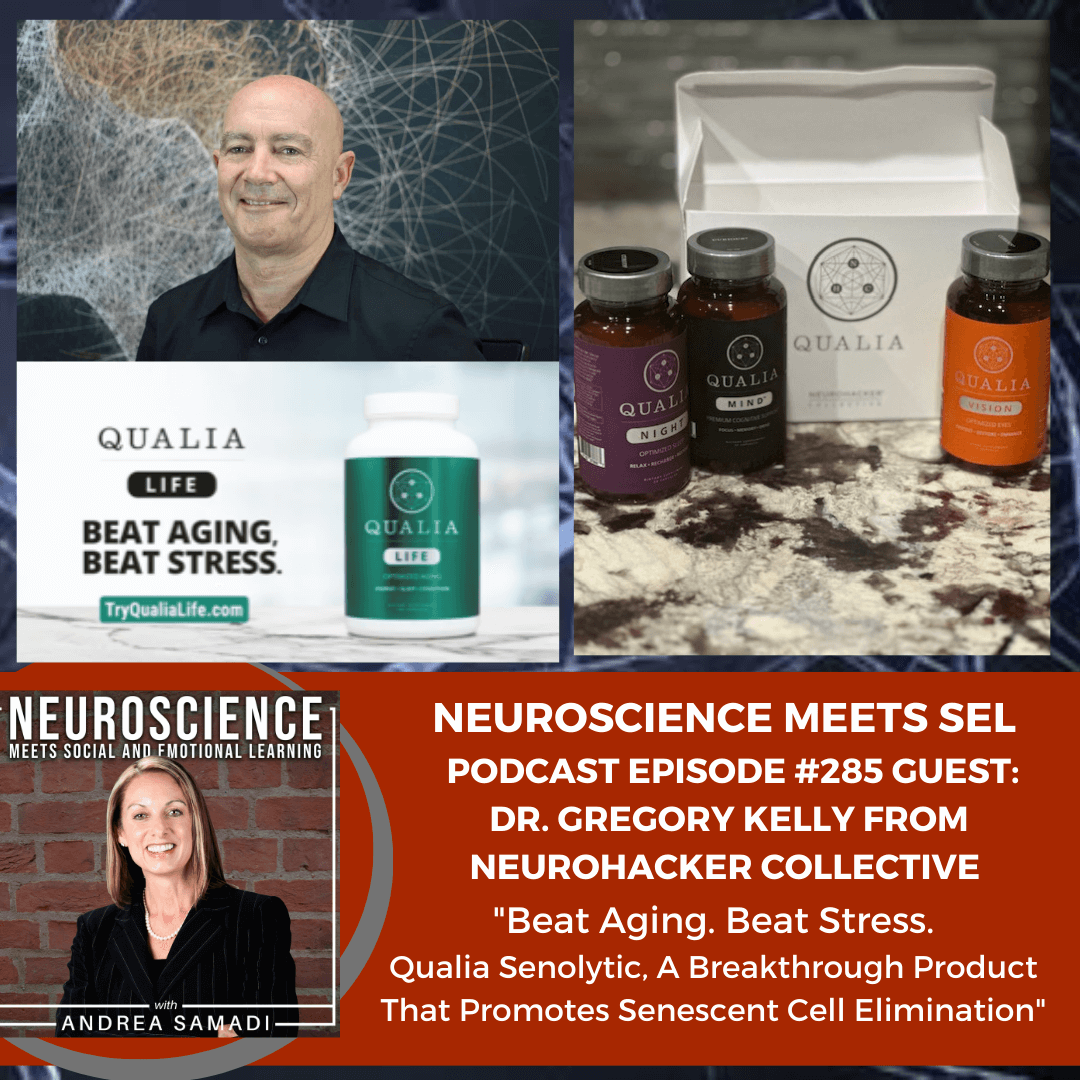
S9 Ep 285Dr. Gregory Kelly from Neurohacker Collective on ”How to Beat Aging and Stress with Qualia Senolytics”
Have you ever heard of Senolytics?[i] It’s the latest breakthrough in aging and longevity science that I honestly had not heard about until I had an email about our next guest, whose work I’m very familiar with. Watch this interview on YouTube here https://youtu.be/poThU96sslU I’m a huge fan of Neurohacker Collective (that was founded in 2015 with a mission of creating best-in-class well-being products) and I’ve been following their work for years to learn anything and everything possible about bio-hacking. We even quoted Heather Sandison (a medical advisor and podcast host with Neurohacker Collective) on our HRV EPISODE. [ii] One quick look at their ABOUT US[iii] section on their website, and I saw many of the leaders, innovators in health, longevity and wellness around the world, and quite a few who we have interviewed, like Dr. Anna Lembke from EPISODE #162[iv], Dr. Stickler from EPISODE #96[v] and Dr. Vuyisich from EPISODE #93[vi] and in their Collective Insight Section you’ll see many names we quote often, like Dr. Andrew Huberman, Deepak Chopra, Dale Bredesen, David Rabin, Bruce Lipton, Michael Gelb, Jim Kwik…I could go on and on here. These are the leaders and innovators in the field of health, wellness and bio-hacking. This is going to be a phenomenal episode! And with that, I want to welcome you back to The Neuroscience Meets Social and Emotional Learning Podcast, where we cover the science-based evidence behind social and emotional learning (for schools) and emotional intelligence training (in the workplace) with tools, ideas and strategies that we can all use for immediate results, with our brain in mind. I’m Andrea Samadi, an author, and educator with a passion for learning specifically on the topics of health, wellbeing and productivity, and launched this podcast to share how important an understanding of our brain is to our everyday life and results using the most current brain research. If there’s a tool, strategy or resource that I find, that could be helpful to improve productivity and results, whether we are a teacher in the classroom, a coach or in the modern workplace, I will share it here. On today’s episode #285, we will be speaking with Dr. Gregory Kelly, the Director of Product Development at Neurohacker Collective[vii], a naturopathic physician (N.D.), and the author of the book Shape Shift: The Shape Intelligence Solution[viii] that’s all about getting healthy while creating your ideal shape. As I was researching for this episode, I couldn’t help thinking “how on the earth did I miss this topic of senolytics?” since I’m always looking for anything new when it comes to productivity, health and wellness hacks. While preparing for this episode, the Neurohacker Collective Team was extremely helpful. Tina Gammon, their Marketing Manager, sent me the trio package of Qualia Senolytic for (Vision, Night and Mind) and I’ll be sharing the IMMEDIATE results I felt with the Night and Mind products, with a level of clarity I’ve never felt before. I haven’t tried the VISION one yet but have lots of questions to ask Dr. Kelly about today. So, hang tight, because on today’s science-packed episode, we’ll dive deep into this cutting edge topic, with the latest anti-aging research where we will cover: What is cellular senescence? What are the "Hallmarks of Aging" and why is cellular senescence an important hallmark? The difference between cellular senescence and autophagy (with a quick review of 9th grade science mitosis). Classical places where senescent cells take hold in the body. The science to support senolytics from Mayo Clinic and Scripps Institute. How do senolytics work? The correct way to dose senolytics. What makes Qualia Senolytic a groundbreaking supplement in the longevity space? A bit first about Dr. Kelly. He has extensive experience in both natural medicine and nutrition, and has been an influential figure in this field. He has served as the editor of the journal Alternative Medicin
S9 Ep 284Jim Houliston on ”The Benefits of MMD: Mirror Movement Development”
“MMD (or mirror movement development) is the missing pillar of longevity along side nutrition and exercise” Watch this interview on YouTube here https://youtu.be/g03RUDCz7kk On this episode #284 we will cover: ✔︎ What is Mirror Movement Development (MMD) ✔︎ How does MMD improve body realignment, spatial awareness, balance and peak performance? ✔︎ Famous people who have embraced dual-dominance. ✔︎ How to begin using this practice for improved resilience, body re-alignment, health and brain benefits. Today’s episode #284, we will be speaking with Jim Houliston, a Philadelphia-based, dual dominant artist, athlete, educator, and author of the world’s first biscriptal book—BIG3MMD: History’s Ambidextrous and the Benefits of Mirror Movement Development. Welcome back to The Neuroscience Meets Social and Emotional Learning Podcast, where we cover the science-based evidence behind social and emotional learning (for schools) and emotional intelligence training (in the workplace) with tools, ideas and strategies that we can all use for immediate results. I’m Andrea Samadi, an author, and educator with a passion for learning specifically on the topics of health, wellbeing and productivity. When Jim first reached out to me, he let me know about the neurological, longevity, body realignment, spatial awareness, balance, and peak performance benefits that come from practicing mirror movement development (MMD) and I stopped and wondered what is MMD and was intrigued to learn more. I don’t know anything about this topic, but after years of working out (mostly hiking and trail running) I have certain aches and pains that never go away. I also want to keep the high level of balance that I have now, into the next 20 years, so I can keep doing the activities I love, as I’m getting older. I wonder: How does what Jim has discovered improve body realignment, spatial awareness, balance and peak performance? How could I implement this idea? How soon would I notice a benefit? How exactly did he discover this idea? Let’s meet Jim Houliston, and learn about MMD and how this idea that he has discovered could take our productivity to new heights. Welcome Jim! Thanks so much for coming on the podcast. This is a FIRST for me today as I know absolutely nothing about what you will be sharing with us today, so I hope as we go through the questions that we can tie your work with our Season Theme of “Going Back to the Basics” or the Foundational Skills in order to accelerate our results. 1. For our listeners right now they very well could be hearing about MMD (Mirror Movement Development) for the first time, what is MMD? 2. What is the layman's Science behind MMD and how you discovered this? 2B: Why don’t most people practice this, and why does it feel so weird? 2C: How do you begin practicing MMD? 3. What are some of the Benefits of MMD, specifically, how does this practice impact your brain, and what specific region of your brain have you seen improvements with? 4. You list a bunch of famous MMD practitioners in your book, who are some of your favorites and why? 4B: How did you come up with this concept? 5. What criticism have your received? 6. Where do you see this going? What are your dreams with promoting MMD? 7. Final Thoughts? Thank you Jim for coming on the podcast to open my eyes to something I’ve never even thought about. CONNECT WITH JIM HOULISTON Website https://ambilife.org/ Facebook https://www.facebook.com/jim.houliston Instagram https://www.instagram.com/urban_rail_walker/ Short Video on Mirror Movement Development https://www.youtube.com/watch?v=1b0KuqI4VvY FOLLOW ANDREA SAMADI: YouTube Channel: https://www.youtube.com/c/AndreaSamadi Website https://www.achieveit360.com/ LinkedIn: https://www.linkedin.com/in/samadi/ Facebook: https://www.facebook.com/Achieveit360com Neuroscience Meets SEL Facebook Group https://www.facebook.com/groups/2975814899101697 Twitter: https://twitter.com/andreasamadi Instagram: https://www
S9 Ep 283Aaron Golub, The First Legally Blind College Football Player on ”Deciding to Succeed”
Our next guest became the first legally blind D1 athlete to play in a game when he played football at Tulane University. He was named team captain and went on to become an NFL free agent. Now he helps organizations and teams create leadership strategies that overcome adversity through speeches, workshops, and strategic partnerships. Watch this inspiring interview on YouTube here https://youtu.be/sPFQCn3VvJw On today’s Episode #283 we will cover ✔ How Aaron Golub became the first legally blind D1 athlete to play in a game when he played football at Tulane University. ✔ The key take-aways from Aaron's TEDx, on “Finding Diamonds with Your Disadvantages” that led him to uncovering his true potential. ✔ When Aaron knew he needed to step up and do a bit more than the person next to him, to reach those higher levels of success. ✔ The actions Aaron took with football, that have now transferred into his personal and business life. ✔ How you can reach Aaron to speak or work with your organization. I am honored to have this chance to speak with someone who has learned many of the concepts we talk about on the podcast, like building a vision, and carving out a happy, fulfilled life, all without the use of his eye-sight. Welcome back to The Neuroscience Meets Social and Emotional Learning Podcast, where we cover the science-based evidence behind social and emotional learning (for schools) and emotional intelligence training (in the workplace) with tools, ideas and strategies that we can all use for immediate results, with our brain in mind. I’m Andrea Samadi, an author, and educator with a passion for learning specifically on the topics of health, wellbeing and productivity, and launched this podcast to share how important an understanding of our brain is to our everyday life and results using the most current brain research. If there’s a tool, strategy or resource that I find, that could be helpful to improve productivity and results, whether we are a teacher in the classroom, a coach or in the modern workplace, I will share it here. He started his journey as a speaker in high school. Aaron was asked to go on Good Morning America when he committed to play football at Tulane, he knew immediately that he had a message that would impact millions. This experience threw him in the deep end at 17 years old. Since then he has traveled the world sharing his message. Aaron leaves organizations and teams with both strategies to create true change but also with impactful insights that will allow them to rethink their past beliefs. Aaron is never one and done, he is there by your side to help you implement and act accordingly. He works in a speaking, workshop, and consulting manor. Whether you want Aaron to come in for a keynote, breakout sessions, day-long workshop, or longer-term consulting, he has a structure for all. Aaron’s biggest accomplishment and what he is most proud of is when he was named a team captain of the Tulane Football Team and went on to become an NFL free agent. Successful organizations and companies like Pinterest, Deloitte, PlayFly Sports, Evolution Mining, and many other events and teams invest in him regularly. He has appeared on Good Morning America, as well has been in CBS, NBC, Sports Illustrated, The New York Times, Entrepreneur, NPR and many others. When I first came across Aaron’s work, I think it was by accident, as I might have been on an email list for the work that he does. It didn’t take me a minute to read what he’s accomplished in his life to write back to him that I was hoping I could have him on our podcast. Then I listened to his TEDx, on “Finding Diamonds with Your Disadvantages” and saw that this young man was LIVING many of the practices and principles that we write about on this podcast. He even quoted the quote I opened the last episode with that “we must be willing to do things that others aren't willing to do.” We set up a call to speak, so I could learn more about him, and see if he w
S9 Ep 282Gabrielle Usatynski on ”How to Use Jaak Panksepp’s 7 Core Emotions to Transform Your Relationships, Family, Career and Life”
“Each emotional system is hierarchically arranged throughout much of the brain, interacting with more evolved cognitive structures in the higher reaches, and specific physiological and motor outputs at lower levels.” Jaak Panksepp Watch our interview on YouTube here https://youtu.be/siJ1FUeUD40 On today’s Episode #282 we will cover ✔ How Gabrielle Usatynski's NEW book The Power Couple Formula, Applies Jaak Panksepp's 7 Core Emotions to Transform Your Relationships, Family, Career and Life. ✔ What We Should All Know About The Attachment Theory. ✔ A Deep Dive into Each of the 7 Core Emotions and How They Map in the Brain. Welcome back to The Neuroscience Meets Social and Emotional Learning Podcast, where we cover the science-based evidence behind social and emotional learning (for schools) and emotional intelligence training (in the workplace) with tools, ideas and strategies that we can all use for immediate results, with our brain in mind. I’m Andrea Samadi, an author, and educator with a passion for learning specifically on the topics of health, wellbeing and productivity, and launched this podcast to share how important an understanding of our brain is to our everyday life and results using the most current brain research. If there’s a tool, strategy or resource that I find, that could be helpful to improve productivity and results, whether we are a teacher in the classroom, a coach or in the modern workplace, I will share it here. On today’s episode #282, we will be speaking with an important guest, who reached out to me shortly after we released EPISODE #270 with Lucy Biven[i] who co-authored The Archeology of Mind, with Jaak Panksepp. She let me know she was a couple’s therapist, educator and an author, with a new book coming out next month and was amazed to see our episode with Lucy Biven, as she cites The Archeology of Mind on nearly every page of her new book, The Power Couple Formula: Unlock the Power of Your Instincts and Transform Your Relationship. She even mentioned that a colleague of Dr. Panksepp, Dr. Doug Watt, was currently reviewing her manuscript to offer his guidance on the subject. When this email came through, I was taking a short break from interviews, gathering my bearings with a tight schedule, but when I saw this email, I knew I had to learn more about our next guest, Gabrielle Usatynski, and her new book, the Power Couple Formula. We met briefly to chat, and I’ve got to say that we could have recorded that conversation. She spoke eloquently about her background as a therapist, and the history of our emotions. I couldn’t take notes fast enough, but saw that not only does Gabrielle understand Jaak Panksepp’s work (that many find to be difficult) but she could explain it in a way that made sense to me, with examples of how to each of the core emotions. A bit about Gabrielle: BIO: Gabrielle Usatynski, MA LPC is the founder and director of Power Couples Education. An internationally renowned therapist, speaker and educator, she is the author of the forthcoming book, The Power Couple Formula, scheduled for release this year. She is the originator of ground-breaking online programs that help couples build relationships based on safety and trust and offers professional training programs for therapists in the Power Couple Method. Her work is regularly featured in such publications as CNN, USA Today, Cosmopolitan, Parents Magazine, Counseling Today, and Women’s Health. For over a decade, Gabrielle has helped thousands of couples. Her clinical work has earned her numerous awards, including: the USA Prestige Award for Couples Counseling Service of the Year, the Best of Boulder Award for Couple and Marriage Counseling, and the Top 10 Best Marriage Counselors of Boulder, CO Award. Gabrielle is a graduate of McGill University and also specializes in the treatment of traumatized children and their families. So today, we will meet Gabrielle Usatynski, and learn how Jaak Panksepp’s work plays out in o
S9 Ep 281Psychologist Dr. Sean Sullivan, and Founder of OnePerfectShift.com on ”How to Shift to a Better State of Mind in 10 Minutes, Anytime”
A Gallup Research Poll Says: “Unhappiness spiked for a decade, costing over $2 Trillion annually” Watch this interview on YouTube here https://youtu.be/R8aAFFQeDKY On today’s episode #281 with Dr. Sullivan will cover: ✔ How to SHIFT our mindset, in 10 minutes, anytime, with Dr. Sean Sullivan's NEW App www.oneperfect.com ✔ How Dr. Sullivan noticed a need for an app to forge a pathway to health and well-being for all of us. ✔ How Dr. Sullivan took his background as a clinical psychologist, and merged it with his work with the Father of Mindfulness, Jon Kabat-Zinn. ✔ Why mental health is not only a part of overall health, it’s the most important part. ✔ How to achieve and maintain a high level of personal performance, happiness and fulfillment in our fast-paced modern world ✔ What we can each do to address the mental health challenges and opportunities we see globally, together ✔ He’ll guide us through shifting into our chosen state of mind on demand during our interview. I’m looking forward to this as prior to recording, I’ve got to say, I could use a mental shift. ✔ Discuss how ‘shifting’ can address mental health issues at scale. ✔ Share how anyone can accelerate a mental fitness revolution so we can all get back to feeling our best. Today’s guest, Dr. Sean Sullivan, a licensed clinical psychologist and founder and CEO of OnePerfect[i], a mental health and wellness platform that delivers personalized mindset ’shifting’ experiences called Shifts. I’m sure we all know of times when we could use a shift with our mental mindset, whether it’s to reclaim a day that’s gone off track, soothe some stress, boost motivation, or sleep, and shift into a productive mindset with more confidence, or purpose, or even shift our sleep. Dr. Sullivan began his formal psychology education at Harvard University and completed it with a psychology residency at the University of Texas Health Sciences Center and postdoctoral training based at the University of California, San Francisco. He has since been featured extensively in national and international publications including The New York Times, Forbes, and Huffington Post, to name a few. Today Dr. Sean Sullivan will teach us how to shift into a better state of mind, anytime, with something he has developed to solve this Global Unhappiness Problem. Welcome back to The Neuroscience Meets Social and Emotional Learning Podcast where we bridge the gap between theory and practice, with strategies, tools and ideas we can all use immediately, applied to the most current brain research to heighten productivity in our schools, sports environments and modern workplaces. For returning guests, welcome back, and for those who are new listeners, I’m Andrea Samadi and launched this podcast almost 4 years ago, to share how important an understanding of our brain is for our everyday life and results. Let’s welcome Dr. Sean Sullivan, and see what we can do to build a future where we can manage our stress, and get the SHIFT we need, when we need it. Welcome Dr. Sullivan! Thank you for coming on the podcast today. INTRO Q: Dr. Sullivan, can you give us some of your background, and share what made you think up this idea for a tool that “shifts you to a better state of mind in under 10 minutes, anytime?” Q1: We launched 2023 and our 9th season of the podcast with an episode that focuses on “Prioritizing our Mental Health in 2023”[ii] Why do you think that mental health is the most important part of our health? Q1B: If you know that mental health issues run in your family, what do you think we should know? Q1C: What did you develop and where did your vision for technology come into play? Q1D: How can we recognize our past triggers, then shift, so we can be free of these blocks? Q2: What is OnePerfect.com? Q3: Guide us through shifting into our chosen state of mind on demand during the segment/podcast. Q4: How important is self-regulation with the work you’ve been doing helping us to “shift quickly?” Q5:
S9 Ep 280Pioneering Neuroscientist Janet Zadina Reflects on Her Journey of ”Bridging Neuroscience and Education”
For today’s EPISODE #280, we will be speaking with a pioneer in the field of educational neuroscience. The book she wrote, Multiple Pathways to the Student Brain covers the years of work she spent speaking to teachers all over the world about how the brain learns and what this means in the classroom. At the time she graduated, she was the ONLY person, so far as she knew, using the term educational neuroscience. Watch this interview on YouTube here https://youtu.be/mU6eGZi6Rng On today’s Episode #280 we will cover ✔ How Andrea was referred to study Janet Zadina's work back in 2014. ✔ The Impact of Dr. Zadina's Significant Contribution in Academics and Education Over the Years. ✔Janet Zadina's Arduous Pathway Bridging Education and the Brain since the 1980s. ✔ How Dr. Zadina Saw How Neuroimaging Could Help Change the Way We Teach Our Future Generations. ✔ Janet Zadina's Thoughts on Where Educational Neuroscience Began, and Where It's Going. ✔ Tools and Resources for Educators on her website www.brainresearch.us Welcome back to The Neuroscience Meets Social and Emotional Learning Podcast, where we cover the science-based evidence behind social and emotional learning (for schools) and emotional intelligence training (in the workplace) with tools, ideas and strategies that we can all use for immediate results, with our brain in mind. I’m Andrea Samadi, an author, and educator with a passion for learning specifically on the topics of health, wellbeing and productivity, and launched this podcast to share how important an understanding of our brain is to our everyday life and results, using the most current brain research. If there’s a tool, strategy or resource that I find, that could be helpful to improve productivity and results, whether we are a teacher in the classroom, a coach or in the modern workplace, I will share it here. On today’s episode #280 we will be speaking with someone I was referred to back in 2014, from Jeff Kleck, from EP #246[i]. He was the educator who handed me a bunch of books off his book shelf and urged me to move in the direction of educational neuroscience, to make a bigger impact with my work. He didn’t give me our next guest’s book, (so I figured it must be important to him) but he told me to write down “Dr. Janet Zadina[ii]” and study her. Now, I don’t ignore anything someone tells me to do, especially if there is learning involved, so I wrote down Dr. Zadina’s name, and immediately followed her work back in 2014. I had no idea at the time that Dr. Zadina was one of THE leaders, spearheading educational neuroscience in the country, before it was even called this, and now fast forward to last September, when Jeff Kleck and I finished our interview, he asked me “Did you ever interview Dr. Janet Zadina?” I just looked at him thinking “How did I miss that?” remembering it was important. I remembered standing in his office, holding a bunch of books he asked me to read, and then we went to his computer and he pulled up all the FREE resources and most up to date research on Janet Zadina’s website[iii] that he told me to review. It was Dr. Zadina’s work that helped me to begin in this field of educational neuroscience, making the connections to the brain and learning. Today’s guest, Dr. Janet Zadina, we will soon discover, a former high school and college teacher and cognitive neuroscientist whose background, expertise, energy, and humor all took her to international acclaim. Before we meet Dr. Zadina, I want to share a bit about how she is changing lives with science and strategies. She’s been said to be "Powerful!" "Engaging!" "Innovative!" "Life Changing!" These are just a few of the words audiences use to describe concepts and presentations by Janet Zadina, Ph.D. who is known for her extraordinary ability to inform, educate, and empower audiences with the scholarly and credible brain research. She has made such an impact on the academic and education communities that Society for Neuro
S9 Ep 279Lessons Learned After Hitting the 300,000 Unique Download Milestone: Thank You
“You must do what others won’t, commit and stay the course.” ― Bob Proctor On today’s Episode #279 we will cover ✔ Top 6 Strategies Involved on Our End That Took Us to 300k Downloads of the Podcast. ✔ 6 Life-Changing Lessons I've Learned as a Byproduct of this Milestone. ✔ A Huge Thank You to ALL of You Who Listen to This Podcast! And for this special episode today, that I’m dedicating to YOU, the listener, I’ve got to add a quote that has stuck in my head for years that I heard in one of Bob Proctor’s first cassette training programs, called You Were Born Rich[i] that you can find today on Audible.com. It was from his colleague John Kanary who joined him on stage for the recording of this live seminar that was the FIRST seminar I listened to back in the late 1990s, when my life path crossed with the personal development and seminar industry. John Kanary said “Excellence is a commitment to completion” and I wrote that down, and with time, started to integrate this concept into my daily life by making a pact to always finish what I start. I started thinking about excellence a bit before writing this episode, and how I always want to put forth my best effort with these podcast episodes, making sure they reflect my best work, with the hopes that the strategies outlined are as useful to you as they have been for me. I know I’ve mentioned this a few times, referencing Brendon Burchard whose version of excellence he calls “prolific quality output.”[ii] Brendon, in his book, High Performance Habits says that “High performers have mastered the art of prolific quality output (PQO). They produce more high quality output than their peers over the long term, and that is how they become more effective, better known, more remembered. They aim their attention and consistent efforts toward PQO and minimize any distractions (including opportunities) that would steal them away from their craft” (Burchard, 2017). I could reflect on this for a whole month and see something new, useful and important with this idea. This led me next to civilian astronaut and extreme adventurer, Nik Halik who we featured on an early interview #31[iii] who said: Who doesn’t want to “personify excellence” on a daily basis? Who doesn’t want to produce more high quality work over the long-term? I’m sure we can all agree that’s why we keep studying, learning and looking to build a stronger, more resilient and improved version of ourselves who is truly capable of consistently producing high quality, excellent work. But the late John Wooden, an American College Basketball coach and player said it best. He said: With that thought, I want to welcome you back to a special episode of The Neuroscience Meets Social and Emotional Learning Podcast, where we cover the science-based evidence behind social and emotional learning (for schools) and emotional intelligence training (in the workplace) with tools, ideas and strategies that we can all use immediately, with our brain in mind. I’m Andrea Samadi, an author, and educator with a passion for learning specifically on the topics of health, wellbeing and productivity, and launched this podcast almost 4 years ago, to share how important an understanding of our brain is, for our everyday life and results. For today’s episode #279, I want to take a break from our usual Brain Fact Fridays to pause a minute, and reflect back on where we are in this process, and where we are going, after hitting a recent milestone in the podcasting world. As we are approaching our 4th year of the podcast, our 300th episode, (just 19 episodes away) and just hit the 300,000-download marker, I had to step back and take a deep breath to think about what this all means. I know it was Brendon Burchard who talks about the importance of “integrating your wins”[iv] or the important things that happen in your life, and while I remind others to do this all the time, with this milestone, I knew I wasn’t doing it myself. I was getting ready to write
S9 Ep 278Brain Fact Friday ”How to Be a Neuroscience Researcher” Using Our Creativity
“Everything is theoretically impossible, until it is done.” – Robert A. Heinlein And I want to add a quote I heard often over years, that "To believe in the things you can see and touch is no belief at all. But to believe in the unseen is both a triumph and a blessing.” On today’s Episode #278 we will cover: ✔ How to Be A Neuroscience Researcher in 4 Simple Steps ✔ Why Creativity and Innovation are Important to Move You Towards Your Goals ✔ How to Navigate Through Pubmed When Looking for Answers to Questions You Might Have. ✔ How to Use Science and Evidence-Based Studies in Your Daily Life and Work Welcome back to The Neuroscience Meets Social and Emotional Learning Podcast, where we cover the science-based evidence behind social and emotional learning (for schools) and emotional intelligence training (in the workplace) with tools, ideas and strategies that we can all use immediately, with our brain in mind. I’m Andrea Samadi, an author, and educator with a passion for learning specifically on the topics of health, wellbeing and productivity, and launched this podcast almost 4 years ago, to share how important an understanding of our brain is, for our everyday life and results. For today’s episode #278, keeping in line with our Season Theme of Going Back to the Basics to Build a Stronger, More Resilient 2.0 version of ourselves, we look back at EPISODE #124 on “How to be a Neuroscience Researcher in 4 Simple Steps”[i] I knew even before writing this one, that I had to spend some time getting creative. Science and research can be so very boring, especially if I were to just read through Pubmed.gov with some steps for all of us to navigate through the research, for our daily use. I can’t imagine getting excited about that, and that’s not what I wanted this episode to be about, so of course, I’m jolted out of sleep, in the early hours of a busy workday, to jot down some ideas that could bring the science into our daily lives, in a way that we can find evidence-based, science-backed answers to inform whatever questions might be keeping YOU up at night, or at least crossing your mind in the day, and make this episode a bit more memorable, interesting and useful for you. To do this, I went back to EPISODE #265 where we covered “Improving Creativity in Our Schools, Sports and Modern Workplaces”[ii] to revisit what makes something truly “creative” according to science, using the work of Dr. Andrew Huberman. He said “To Show Creativity—It must Reveal something new to us (entertaining, thrilling or useful) and it changes the way we access the world—acting as portals into the world and ourselves.” On this past episode that I wrote just before Christmas of last year, I gave three examples of past guests who’ve come on this podcast who have done just that, and have shown their creativity to change the world in our schools, sports environments and workplaces of the future. You can review this episode and these examples, but for today’s episode, I’m hoping that I can show you how to use this research portal, Pubmed.gov to change the way YOU access the world, and take some things that you might be wondering about, and see how science can inform how you see the world, revealing something NEW, entertaining, thrilling or useful. Now this is an episode worth waking up at 1am to write. Before we dive in here, I’ve got to go back a bit in time, because I did name this podcast Neuroscience Meets Social and Emotional Learning, knowing full well that this link to science could help all of us to improve our results not only in our schools (where most of my work has been spent the past 3 decades) but also in our corporate workplaces, and sports environments. I remember in those early days planning this podcast, I was told to keep my message simple and focus on one area (schools) as you will be confusing your end listener. I remember thinking I don’t want my end listener to only be working in our schools. I was hoping these ideas would app
S9 Ep 277Brain Fact Friday on ”Transforming the Mind Using Athletics and Neuroscience”
“What makes aerobic exercise so powerful is that it’s our evolutionary method of generating that spark. It lights on fire on every level of your brain, from stoking up the neurons’ metabolic furnaces to forgiving the very structures that transmit information from one synapse to the next.” John Ratey, author of Spark: The Revolutionary New Science of Exercise and the Brain On today’s Episode #277 we will cover ✔ A review of EP 177 on "Transforming the Mind Using Athletics and Neuroscience" to see what's new. ✔ A look at Dr. Wendy Suzuki's Brain-Changing Protocol to strengthen our hippocampus and prefrontal cortex. ✔ How to Create Your Own "Spark" to Take Your Results to New Heights. And in today’s episode, I want us to all dive a bit deeper, beyond what I’ll uncover with the research, and look at this spark in our own lives. I want us to learn how to access this spark that John Ratey talks about, how to generate energy with this spark through exercise, and then figure out what we will do with this spark, or energy, once we’ve learned to create it, to go take ourselves to higher levels of achievement, all by using exercise and science, to take us there. I want to welcome you back to The Neuroscience Meets Social and Emotional Learning Podcast, where we cover the science-based evidence behind social and emotional learning (for schools) and emotional intelligence training (in the workplace) with tools, ideas and strategies that we can all use immediately, with our brain in mind. I’m Andrea Samadi, an author, and educator with a passion for learning specifically on the topics of health, wellbeing and productivity, and launched this podcast almost 4 years ago, to share how important an understanding of our brain is, for our everyday life and results. For today’s episode #277, we are going back to another favorite episode of mine, #122 on “Transforming the Mind Using Athletics and Neuroscience”[i] that we released April 9, 2021, after we interviewed Paul Zientarksi, the former PE teacher from Naperville Central High School, who reinvented physical education using the understanding of simple neuroscience. In this previous episode, we combined what we learned from Paul Zientarski,[ii] with our interview with Dr. John Ratey[iii], and his book Spark, that cemented the idea of the profound impact that exercise has on our cognitive and mental health. For today’s episode, #277, we will go back to episode #122 on “Transforming the Mind Using Athletics and Neuroscience” and see what’s new with the research that might be able to take our understanding a bit deeper. I know that we all are clear on the fact that exercise creates that glorious protein called BDNF that we just reviewed thoroughly on EPISODE #274[iv] and even how this protein that is released when we exercise, is reduced in the brain of someone who has developed Alzheimer’s Disease, showing us that exercise is an imminent solution for the prevention of cognitive decline, or at least delaying this from happening for as long as we can. Which leads me look deeper into the research on this topic, and I went straight to the work of neuroscientist and author, Dr. Wendy Suzuki, whose TED TALK on “The Brain-Changing Effects of Exercise”[v] has over 15 million views. I remember when her TED TALK came out (in 2017) and someone in my network sent it over to me and I immediately asked Dr. Suzuki to come on the podcast. After hearing what her schedule is like over the years, and the research she is involved with as the incoming Dean of Arts and Sciences at NYU[vi], I do understand now why I never did hear back from her on this request. Her TED TALK impacted me in a way where I knew I would need to focus on what she has discovered about the powerful effects of physical activity on the brain and that “by simply moving your body, this has lasting protective, benefits to the brain.” (Dr. Suzuki). Dr. Suzuki’s TED TALK, that came out years before we had looked at this topic on the
S9 Ep 276Brain Fact Friday ”Using Neuroscience to Inform the Future of Teaching and Learning”
“The brain has a capacity for learning that is virtually limitless, which makes every human being a potential genius.” Michael J. Golb I want to welcome you back to The Neuroscience Meets Social and Emotional Learning Podcast where we bridge the gap between theory and practice, with strategies, tools and ideas we can all use immediately, applied to the most current brain research to heighten productivity in our schools, sports environments and modern workplaces. I’m Andrea Samadi and launched this podcast almost 4 years ago, to share how important an understanding of our brain is for our everyday life and results. For today’s episode #276, we will go back to one of our early episodes, #119[i] on “The Key Ingredients of Learning with the Brain in Mind” and take a look at what I picked out as the key ingredients for learning back then, to see how NEW research has informed this area today. When I went back to review this episode, there were some ingredients in this “learning” equation that we’ve talked about often on this podcast, and the new research I found was eye-opening. The new research took what we covered so beautifully on those early episodes, to a whole new level, showing me why it’s important to go back to the basics and see what strategies are effective, and why. Before we get to what’s NEW, let’s look back at where our podcast began, and what we were focused on, with learning with our brain in mind. Learning with the Brain in Mind We can go right back to our very first interview EPISODE #3[ii] with Ron Hall, from Valley Day School, who mentioned how things changed for him when he met Horacio Sanchez and began teaching with brain science in mind. This is the whole reason why we are going back to the basics this season, as we connect the new research to our past episodes, to strengthen where we all are in our process of building a stronger, more resilient 2.0 version of ourselves in 2023 and beyond. It’s always easy to look back, and connect the dots[iii] like Steve Jobs’ famous quote, and trust that these dots will connect again in the future, with new meaning that’s evolved with time, knowledge and understanding. John Hattie’s Research: As I glanced at our earlier interviews, Greg Wolcott from EPISODE #7 on “Building Relationships in Today’s Classrooms” was our next guest in this learning equation, as he was the first guest to mention that his work and book, Significant 72[iv], was inspired by New Zealand Professor John Hattie. John Hattie became known for his two books Visible Learning and Visible Learning for Educators that focused on teaching strategies that have a high probability of being effective. You can read directly from John Hattie himself, as he connects his dots looking backwards, where he says he believes he got some parts wrong with his approach to learning in the classroom. He shares he’d like to stop looking at the strategies teachers are using and look closer at the impact we have on our students and how they learn best when he reflects that “we need to switch from saying (I care about how you teach), to saying (I care about the impact of your teaching).”[v] Hattie goes on to talk about the criticism he faced with the term “visible learning” because learning isn’t visible at all. As John Hattie now prepares to release Visible Learning: The Sequel[vi] this March, 15 years after his first book that sold out in days of its release and was described as “teaching’s Holy Grail” he’s returning to his ground-breaking work, with a new angle. Like the direction we are taking with this podcast, going back to the basics, this is what Professor John Hattie is doing with his next book where he not only looks at WHAT works best with learning, as he shares the research is his new that is now informed by more than 2,100 meta-analyses (more than double that appeared in his first book, drawn from more than 130,000 studies, and has involved more than 400 million students from all around the world. He t
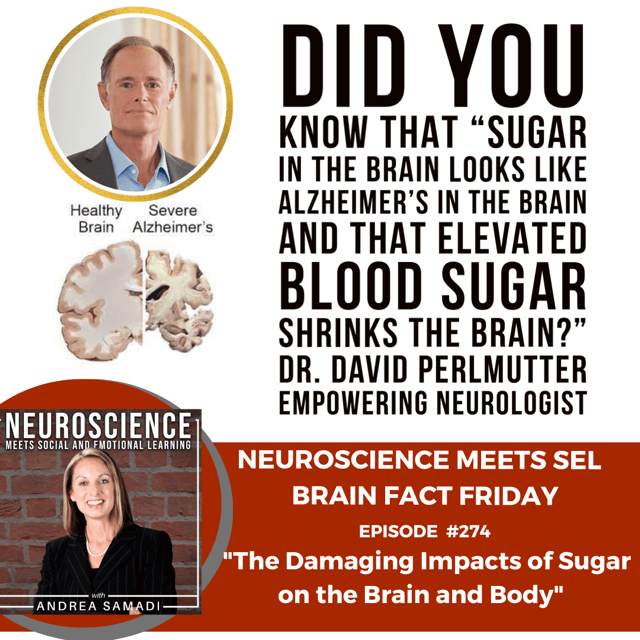
S9 Ep 275Brain Fact Friday ”The Damaging Impacts of Sugar on the Brain and Body”
“It’s well understood that this chronic disease (type 2 diabetes) is linked to lifestyle. Combine a diet high in sugar (including fruits, honey, and starch, all of which turn into varying amounts of sugar when digested) with a lack of exercise and the results will be type 2 diabetes with the miserable complications that come with it.” (An excerpt from Dr. Richard Jacoby, co-author of Sugar Crush: How to Reduce Inflammation, Reverse Nerve Damage, and Reclaim Good Health.” I want to welcome you back to The Neuroscience Meets Social and Emotional Learning Podcast where we bridge the gap between theory and practice, with strategies, tools and ideas we can all use immediately, applied to the most current brain research to heighten productivity in our schools, sports environments and modern workplaces. I’m Andrea Samadi and launched this podcast almost 4 years ago, to share how important an understanding of our brain is for our everyday life and results. For today’s episode #275, we will revisit one of my favorite episodes #117[i] on “The Damaging Impact of Sugar on the Brain and Body” to review what we covered, and see if there’s anything else important that the research has revealed. There’s a lot that’s NEW with this topic, but as I reviewed this past episode, I had completely forgotten some of the details we covered a few years ago, that are very important. Today we will cover: ✔What sugar does to the brain, cognition and well-being.✔How sugar contributes to cognitive decline and Alzheimer's Disease. ✔That we all have individual journeys on our pathway towards optimal health and well-being. ✔Where my health took a turn towards wellness in 2005 and again in 2014 with the hope that my health story will give you some thoughts with your health story. ✔We looked at 2 people’s blood glucose results to see what each person learned from using a glucose monitor. ✔3 Tips You Can Implement Immediately for Improved Health, Clarity and Well-Being. You can review this past episode by clicking on the link in the show notes but for today’s episode, we are going to dive a bit deeper with what sugar does to the brain, body, cognition and our health by tying in what has emerged since that first episode. We will look at the results of two people who’ve been tracking their blood glucose levels with the Freestyle Libre Glucose Monitor[ii] to see what patterns emerge eating certain foods. The first individual we will look at, had A1C levels that have recently gone into the danger zone, signaling type-2 diabetes, showing an A1C level of over 8.5 on a recent blood test. I’m the second chart, and am not insulin resistant, but know that sugar doesn’t work for me at all. I don’t need a blood test to know that it makes me feel horrendous. My A1C levels sit around 5.8, which is in line with someone on a lower carbohydrate, and higher fat diet.[iii] This episode is not about the best diet to choose and when I sat down to write this, I quickly saw that this topic of health, especially as it relates to nutrition is such a challenging and difficult one to cover, as not one size fits all. I do want to acknowledge that there are many different diet plans out there, and that I’m not here to say one is better than another. I recognize that it’s downright frustrating when you are doing everything the right way, (eating clean and exercising) and you are seeing zero results. This seems to be especially true in the area of weight loss, where I recently saw a post from Chris Cornell, who shares his weight loss strategies on Twitter, and asked what ended up being a highly controversial question “why are most people unable to achieve significant and sustainable weight (fat) loss through lifestyle modifications?” He added “I’m guessing some people have something amiss with their regulatory mechanism. For many, I believe it’s that they are unable to regulate the crap foods they’ve been eating.” I’ll share what I learned over the past few weeks that might sh
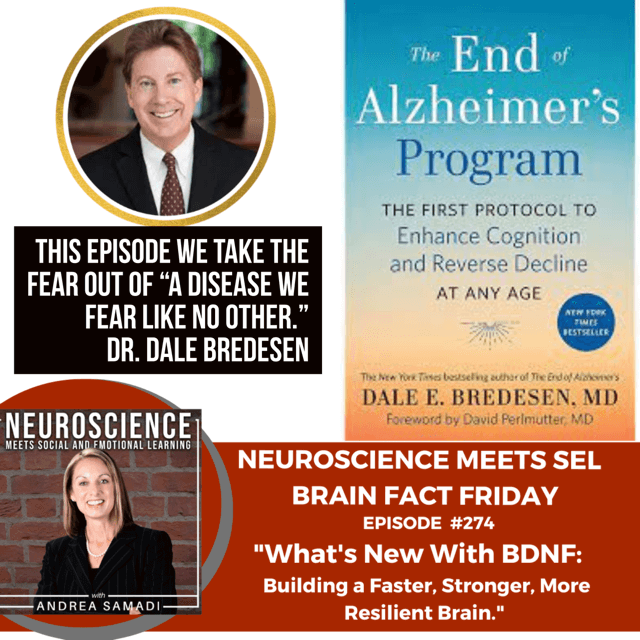
S9 Ep 274Brain Fact Friday ”What’s New With BDNF: Building a Faster, Stronger, More Resilient Brain”
“It is impossible to escape the drumbeat of grim news about Alzheimer’s Disease: this it is incurable and largely untreatable, that there is no reliable way to prevent it, and that the disease has for decades beaten the world’s best neuroscientists.” This is an excerpt from Dr. Dale Bredesen’s book, The End of Alzheimer’s: The First Program to Prevent and Reverse Cognitive Decline. On today’s Episode #274 we will cover ✔ A review of EPISODE #114 where we covered a thorough overview of BDNF (Brain-Derived Neurotrophic Factor) and what we should all understand about this protein and its benefits to the brain. ✔How BDNF is reduced in the brain of someone who has developed Alzheimer's Disease. ✔A look at an internationally recognized expert in the mechanisms of degenerative disease, Dr. Dale Bredesen and his book The End of Alzheimer's to take the "fear" out of this disease. ✔ A look back to the Top 5 Health Staples we created after watching Dr. David Perlmutter's Alzheimer's The Science of Prevention Documentary. ✔ An overview of Dr. Dale Bredesen's Protocol where he is seeing significant results with his patients who shows signs of cognitive impairment. ✔A plan for us to think about the prevention of this debilitating disease. If American Psychiatrist and brain disorder specialist, Dr. Daniel Amen says that “Alzheimer’s is a lifestyle disease”[i] and innovator in medicine, Dr. Dale Bredesen, with over 30 patents in his name, comes up with a protocol to prevent and reverse cognitive decline, you’d better believe I’m going to feature these important findings in the field of neuroscience on this podcast. If I see anything that could possibly change the course of our lives, improving it in any way, I’ll share what I’m learning with you here on The Neuroscience Meets Social and Emotional Learning Podcast. It’s here where we bridge the gap between theory and practice, with strategies, tools and ideas we can all use immediately, applied to the most current brain research with the goal of heightening productivity in our schools, sports environments and modern workplaces. For returning guests, welcome back, and for those who are new listeners, I’m Andrea Samadi and launched this podcast almost 4 years ago, to share how important an understanding of our brain is for our everyday life and results. This season (Season 9) we will be focused on Neuroscience: Going Back to the Basics as we revisit our past Brain Fact Fridays, narrowing in on how anything new from the field of neuroscience (that I’ve seen since releasing those earlier episodes) can be tied to improving our productivity, our results, or our mental and physical health. My hopes are that this review will help us to become better prepared to move forward, with a healthier, stronger version of ourselves, as we move towards our goals, or whatever it is that we are working on this year, with this strong foundation and understanding of our brain in place. This week, we will look back to our third Brain Fact Friday and episode #114 [ii] on “Building a Faster, Stronger, More Resilient Brain by Understanding Brain Derived Neurotrophic Factor or BDNF.” My goal with this episode is that if anyone asks you “what do you know about Brain Derived Neurotrophic Factor” that you would have a clear answer with what we covered on this past episode, (what it is, why it’s important for us to know about) and anything new that we will uncover today that will act as a check for us to see if we really are building a faster, stronger and more resilient brain. On our last episode we covered: ✔What BDNF (brain-derived neurotrophic factor) is and what are its benefits to the brain. ✔What we should all understand about BDNF with Alzheimer's Disease, Parkinson's Disease and how our brain learns. ✔The Connection Between Exercise, Nutrition and BDNF ✔ Why Putting the Body Under Stress is a Good Thing. ✔Sleep, Stress and the BDNF Factor. If you want to revisit this past episode, you can click on
S9 Ep 273Brain Fact Friday on ”Using Neuroscience to Self-Regulate Automatic Negative Thoughts, Emotions and Behaviors”
"Self-regulation will always be a challenge, but if somebody's going to be in charge, it might as well be me." Daniel Akst On today’s Episode #273 we will cover ✔ A review of Brain Fact Friday #112, where we introduced Self-Regulation, and why it's important for our overall mental health and wellbeing. ✔ One strategy from the work of Dr. Daniel Amen for Self-Regulating Automatic Negative Thoughts. ✔ Two strategies from the work of Dr. Andrew Huberman--One on using self-regulation to calm ourselves down in less than a minute, and the other to strengthen the NO-GO Circuits in our brain to help with impulse control. Welcome back to The Neuroscience Meets Social and Emotional Learning Podcast where we bridge the gap between theory and practice, with strategies, tools and ideas we can all use immediately, applied to the most current brain research to heighten productivity in our schools, sports environments and modern workplaces. For returning guests, welcome back, and for those who are new listeners, I’m Andrea Samadi and launched this podcast almost 4 years ago, to share how important an understanding of our brain is for our everyday life and results. This season (Season 9) we will be focused on Neuroscience: Going Back to the Basics as we revisit our past Brain Fact Fridays, narrowing in on how anything new from the field of neuroscience can be tied to improving our productivity, our results, our mental and physical health. Why are we going back to the basics? When we are building something worthwhile, something that we want to last, going back to the foundations will help us to strengthen our understanding of our brain, and our mind, to our results, providing us with the extra strength we will need to overcome the obstacles and challenges that will come our way. My hopes are that this step backwards will help us to become better prepared to move forward, towards our goals, or whatever it is that we are working on this year, with this strong foundation in place. Today’s EPISODE #273, we are going back to our second Brain Fact Friday, EPISODE #112, released in March of 2021 on “Training Your Brain to Self-Regulate Automatic Negative Thoughts and Emotions”[i] where we looked at our recent interview with my good friend Horacio Sanchez, from EPISODE #111 on “Finding Solutions to the Poverty Problem.”[ii] Horacio Sanchez said, “Did you know that when we engage in inner speech, all the mechanisms of outer speech and the auditory process activate in the brain? Therefore, what we say to ourselves is just like hearing it said by someone else to us. Inform students (and ourselves) that inner speech can build them up or destroy them.” (Horacio Sanchez)[iii] I brought up the damaging effects of Automatic Negative Thinking on one of our early episodes, #14 on Self-Regulation.[iv] This skill of managing our thoughts, emotions and behavior comes under the competency of self-regulation (one of the 6 social and emotional learning competencies that we covered in the beginning episodes of this podcast, to set the foundation for what I envisioned with the content we would be covering here. It’s these 6 pillars that I saw as the foundation for us to build upon, and improve and is the heart of The Neuroscience Meets SEL Podcast. What is Self-Regulation and Why is it So Important to Be Able to Manage Those Negative Thoughts, Our Emotions and Even Our Behavior? Self-regulation is “the ability to manage your emotions and behavior in accordance with the demands of the situation. It includes being able to resist highly emotional reactions to upsetting stimuli, to calm yourself down when you get upset, adjust to a change in expectations and (the ability) to handle frustration”[v] In other words, it’s the ability to bounce back after a setback or disappointment, and the ability to stay in congruence with your inner value system. On EPISODE #111, I gave some examples of how we could teach self-regulation to our children and students, and
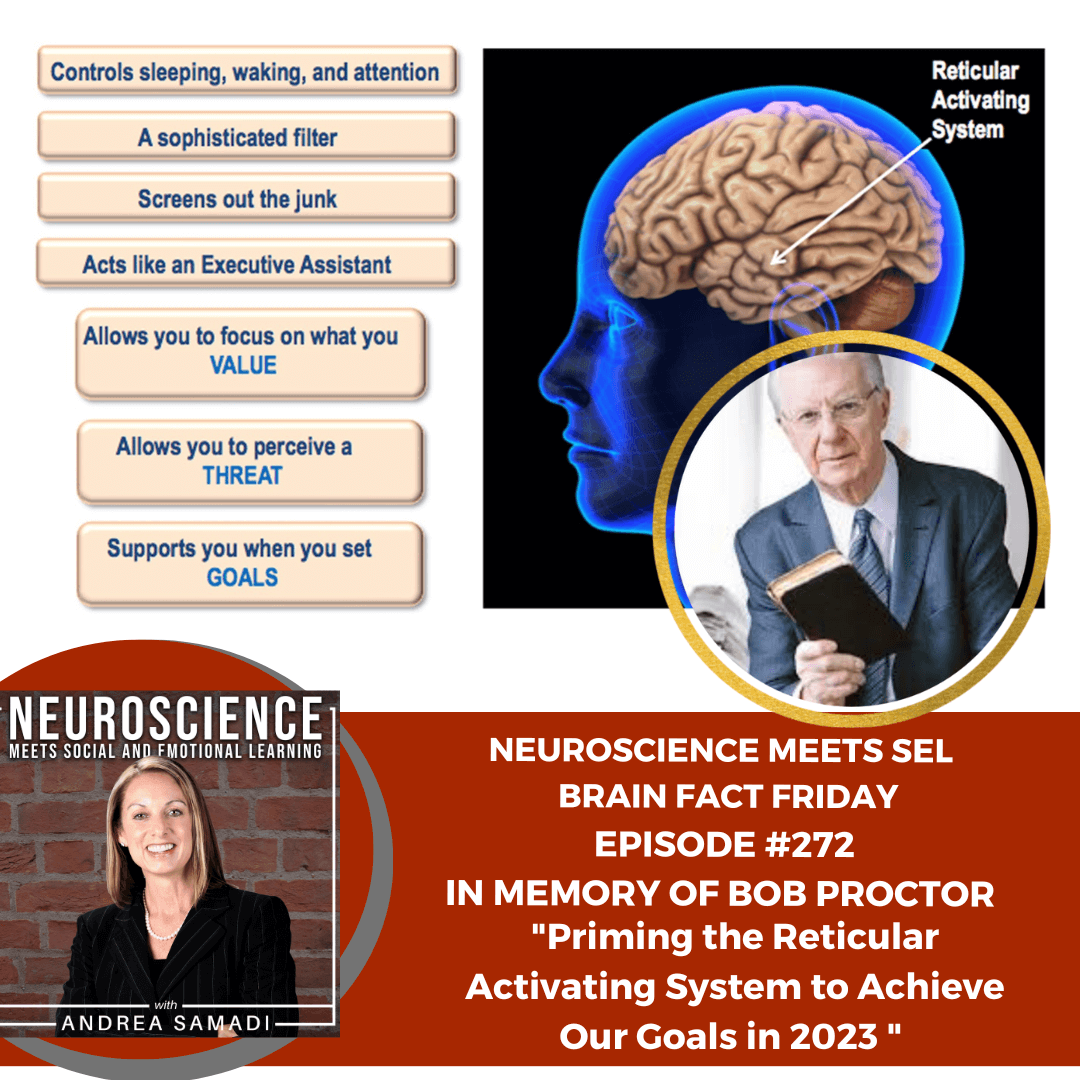
S9 Ep 272Brain Fact Friday ”Priming the Reticular Activating System to Achieve Our Goals in 2023” A Tribute to Bob Proctor
“If you have built castles in the air, your work need not be lost: this is where they should be. Now put the foundations under them.” --Henry David Thoreau from Walden Welcome back to The Neuroscience Meets Social and Emotional Learning Podcast where we bridge the gap between theory and practice, with strategies, tools and ideas we can all use immediately, applied to the most current brain research to heighten productivity in our schools, sports environments and modern workplaces. For returning guests, welcome back, and for those who are new listeners, I’m Andrea Samadi and launched this podcast almost 4 years ago, to share how important an understanding of our brain is for our everyday life and results. On today’s Episode #272 we will cover ✔ An Introduction to Season 9: Going Back to the Basics by revisiting our past Brain Fact Fridays. ✔ A reminder: What is the Reticular Activating System and How Can It Help Us to Achieve Our Goals. ✔ A Review of The Creative Process or Turning a Fantasy into a Fact. ✔ Priming Our Brain to Set Worthy Goals ✔ What the Most Current Brain Research Says to Help Us to Improve Our Goal-Setting Process ✔ Research-Based Tips to Prime Your Brain to Achieve Your Goals in 2023 This season (Season 9) we will be focused on Neuroscience: Going Back to the Basics as we revisit our past Brain Fact Fridays, narrowing in on how anything new from the field of neuroscience can be tied to improving our productivity, our results, mental and physical health. Why are we going back to the basics? When we are building something worthwhile, something that we want to last, going back to the foundations will help us to strengthen our understanding of our brain, and our mind, to our results, providing us with the extra strength we will need to overcome the obstacles and challenges that will come our way. My hopes are that this step backwards will help us to become better prepared to move forward, towards our goals, or whatever it is that we are working on this year, with this strong foundation in place. Today’s EPISODE #272, we will go back to our very first Brain Fact Friday, that we released as a BONUS EPISODE on March 5, 2021[i], called “Using the Reticular Activating System to Set Your Intent and Achieve It” and we will dive a bit deeper into how this system in the brain (our RAS) can actually help us with whatever it is that we want in 2023. But before we get to the science behind our goals, I want to take you on a trip, that goes back to my early days of working in the seminar industry, with motivational speaker Bob Proctor, who taught me how to dream. You can watch our interview on EPISODE #66[ii] where he marvels at how he watched the dream I envisioned all those years ago reveal itself over the years, as I took his work, and created a book for teens to improve their grades, their results with sports, or sharpen their skills, that eventually was made into an online course. I remember talking with Bob about this first book, The Secret for Teens Revealed[iii], (that was really just my notes that I’d gathered over the years listening to him in the seminars helping adults to achieve their goals, written so that a teenager could apply it), and I remember telling him that I thought there was something missing that was preventing kids from embracing the concepts written within the pages. We all know how learning works, and how important it is for a student to be engaged and motivated with whatever it is they are learning. He picked up on what I was getting at, and affirmed that “it is missing something very important” and went onto a lesson for me, standing in this hallway at this seminar he was speaking at, about the Creative Process. He said “you’ll want to think about how the creative process works” and then he got on the phone and called someone and put me in contact with someone who would take the words in this book, and help them to come alive, visually, with video, he suggested. I never did end
S9 Ep 271Kelly Roman, CEO of Fisher Wallace Laboratories on ”What’s New With The Next Generation of Wearable Devices”
Forbes Magazine said they are “one of four technologies innovating mental health” and Elle Magazine was quoted saying they “couldn’t stop talking about their good mood and hyper charged focus.” They’ve been proven in multiple published studies, treated over 100,000 patients and are prescribed by more than 14,000 doctors and providers. Watch this interview on YouTube here https://www.youtube.com/watch?v=ArUif2kyo9w On today’s Episode #271 we will cover ✔ A reminder of our first interview with Kelly Roman, CEO of Fisher Wallace Laboratories from 2021, that remains on our TOP 12 most watched YouTube Interviews on the podcast. ✔ My Personal Review of The Fisher Wallace Device, that remains our MOST downloaded episode of ALL-TIME! ✔ Our One Year Later Episode, where I answer the MOST ASKED QUESTION about our podcast. ✔ Kelly Roman updates us on The Next Generation of Wearable Devices: Where They are Now, and Where They are Going. ✔ We discuss Best Practices for Using Their First Generation Device, and HOW it provides a calming effect. ✔ The Importance of Staying on Top of Our Mental and Physical Health. ✔ How Fisher Wallace is Positioned to Support the Workplaces of the Future. ✔ First responder study, and ways that we can support Kelly's mission of building health, well-being and resilience in the future. You can see countless reviews on their website[i] where people all over the globe share the relief the device provides for them, and I personally understand the impact that this specific technology can have on our mental and physical health. Our first interview with today’s returning guest, Kelly Roman[ii], CEO of Fisher Wallace Laboratories[iii], on their wearable medical device that’s cleared by the FDA to treat depression, anxiety and insomnia, came in at #11 of our all-time most watched YouTube interviews[iv]. Then, EPISODE #120[v] from last April 2021, where I posted “My Personal Review of the Fisher Wallace Wearable Medical Device”[i] remains our most listened to episode of all time with over 6,000 downloads. You can watch our first interview here https://youtu.be/jCtbngfXoYg that Kelly Roman says is his all-time favorite interview. I think it’s neat to look back now, to when I had no idea that a device like this even existed, to see how it improved my sleep by much more the gold standard of 20 minutes each night. I’m sure as the CEO of this company, Kelly has heard it all. I remember having a deer in the headlights look while first learning about this device, as I didn’t even know there was something I could use at home that could help me to improve my sleep, levels of anxiety, that also supports those people suffering from depression. I’m pretty open on this podcast that depression runs in my family, and is one of the reasons I left Toronto, for AZ where I could find most days where we have sunshine, and I could exercise outside Year-round. This change of location has helped me to find the balance I needed, but not everyone can just pick up and move to a new location for a better climate. Kelly Roman himself was open with his past history with depression, and how the device has helped him as well, so after I released our interview, and then my review of the device, I was surprised at how many emails and correspondence I received from people around the world, with questions. I think most people just wanted to make sure I was a real person, and if you’ve ever emailed me, I answer EVERY email within 24 hours. Most people wanted to know “do you still use the Fisher Wallace Device?” and the answer is “yes, every morning, as a part of my daily routine.” I couldn’t imagine life without it. In fact, I’ve had this question come through so many times that I did a “Review One Year Later: My Personal Review of the Fisher Wallace Device[vi]” last summer, that I could point people to who asked me this question to. I’ve said it often on this podcast that most of us will struggle with a mental health issue in our
S9 Ep 270Lucy Biven, Co-author of The Archeology of Mind with Jaak Panksepp on ”A Short-Cut to Understanding Affective Neuroscience”
"Jaak Panksepp was the first and only neuroscientist who focused squarely on the emotional brain. There followed a lengthy and instructive series of emails between Jack and Lucy that ultimately resulted in the publication of this book" Jaak Panksepp and Lucy Biven, authors of the famous book that is often required reading for those studying an Introduction to the Field of Neuroscience, The Archeology of Mind. Watch our interview on YouTube here https://www.youtube.com/watch?v=wH3j5WDXvEk On today’s Episode #270 we will cover ✔ An introduction to Lucy Biven, who co-authored the well-known book, The Archeology of Mind, with Jaak Panksepp. ✔ How Lucy went from being the Head of Psychotherapy at the Child and Adolescent Mental Health Service in England, to writing a leading resource in the field of Neuroscience, with Jaak Panksepp. ✔ How neuroscience gave her answers to a court case she was asked to advise, that 19 experts in the field of child development couldn't solve, without an understanding of how our brain works. ✔ How an understanding of our brain can help us to be better parents, teachers, coaches and managers. ✔ Where Jaak Panksepp's work filled in the missing gaps for Lucy, opening doors with this new understanding of our brain, and emotions. ✔ 3 often discussed Theories about Emotions and Affect (Feedback Theory, Brainstem Theory and Conceptual Act Theory, or Theory of Constructed Emotion and which one Lucy believes in today. ✔ Lucy makes a case for Panksepp's Brainstem Theory, as well as Damasio's work. ✔ Lucy and Andrea discuss the hard question of consciousness and why all traditional attempts to answer this complex question, has failed. ✔ Lucy shares how she uses Panksepp's Brainstem Theory to help 2 boys knowing when to take the role of a coach, versus a traditional therapist, to help them to overcome mental blocks that were holding them back from living a successful life. I’m so grateful to have this opportunity today to speak with Lucy Biven, who co-authored The Archeology of Mind, with the one and only, Jaak Panksepp. Those who study the field of neuroscience will know his name, and if you haven’t heard of him, I hope this episode sheds some light on his work, combined with Lucy’s as pioneer researchers in the field of Affective Neuroscience. Welcome back to The Neuroscience Meets Social and Emotional Learning Podcast where we bridge the gap between theory and practice, with strategies, tools and ideas we can all use immediately, applied to the most current brain research to heighten productivity in our schools, sports environments and modern workplaces. I’m Andrea Samadi and launched this podcast almost 4 years ago, to share how important an understanding of our brain is for our everyday life and results. This season (Season 9) we will be focused on Neuroscience: Going Back to the Basics for the next few months, as we welcome some phenomenal pioneers in the field of Neuroscience, paving a pathway for all of us to navigate our lives with more understanding with our brain in mind. My goal with this next season (that will run until the end of June) is that going back to the basics will help us to strengthen our understanding of the brain, and our mind, to our results, and provide us with a springboard to propel us forward in 2023, with this solid backbone of science. With some new and exciting responsibilities on my end, we will be doing one episode a week, going back to the basics each week, that I know will be helpful for all of us. For today’s guest and EPISODE #270, we will be speaking with someone who many of you who study in the field of neuroscience will recognize. There are those who I would call “rockstar” researchers, whose work has revolutionized the field. If you take a neuroscience course, or like I did, a Neuroscience Certification Program, you are a clinician, a psychotherapist, you will have come across her first book as required reading. Metapsychology Online Review thinks this
S9 Ep 269Professor of Cognitive Neuroscience Michael S.C. Thomas on ”Educational Neuroscience: The Basics”
WHAT IS THE POTENTIAL OF EDUCATIONAL NEUROSCIENCE? British Physician, Ben Goldacre, 2013 says “I think there is a huge prize waiting to be claimed by teachers. By collecting better evidence about what works best and establishing a culture where this evidence is used as a matter of routine, we can improve outcomes for children, and increase professional independence.” Watch this interview on YouTube here https://youtu.be/Uh1BZOTGZQc On today’s Episode #269 we will cover ✔ Professor Michael S.C. Thomas' new book Educational Neuroscience: The Basics ✔ Where is educational neuroscience NOW? Where it began, and where it's going. ✔ How this book can help students improve how they learn. ✔ How this look at Educational Neuroscience can help us to become better teachers. ✔ The difference between evidence-based and neuroscience-based. ✔ Where we should ALL begin. What IS the BASICS of Neuroscience? ✔ What makes something forgettable and another thing memorable? ✔ Ways to make learning easier. Welcome back to The Neuroscience Meets Social and Emotional Learning Podcast where we bridge the gap between theory and practice, with strategies, tools and ideas we can all use immediately, applied to the most current brain research to heighten productivity in our schools, sports environments and modern workplaces. I’m Andrea Samadi and launched this podcast almost 4 years ago, to share how important an understanding of our brain is for our everyday life and results. This season (Season 9) we will be focused on Neuroscience: Going Back to the Basics for the next few months, as we welcome some phenomenal pioneers in the field of Neuroscience, paving a pathway for all of us to navigate our lives with more understanding with our brain in mind. My goal with this next season (that will run until the end of June) is that going back to the basics will help us to strengthen our understanding of the brain, and our mind, to our results, and provide us with a springboard to propel us forward in 2023, with this solid backbone of science. Today’s guest and EPISODE #269, I’ve been wanting to have on this podcast since I came across his work in the field of educational neuroscience around the time we interviewed Dr. Daniel Ansari, back in June 2021 for EPISODE #138.[i] I saw their Annual Research Review: (called) Educational Neuroscience progress from April 2019, written by Michael S.C. Thomas, Daniel Ansari and Victoria C.P. Rowland that provided a thorough overview of the origins of educational neuroscience, outlining where it began, the challenges it faces as a “translational field” and addressed it’s major criticisms. I immediately wrote down Michael S.C. Thomas’ name, along with his email address, to reach out to him to learn more of his perspective in this field. Since I was interviewing Dr. Daniel Ansari, it brought something to light for me that the people who write these research reports that we find on Pubmed.gov, are working hard somewhere, and not completely out of reach if you really want to find them, and ask them some questions about their work. When I finally emailed him, I was thrilled to hear he had a NEW book Educational Neuroscience: The Basics[ii] and am grateful to have this opportunity to speak with him about this new book. Before we meet our next guest, Michael S.C. Thomas, let me orient you to his work. Michael S. C. Thomas is a Professor of Cognitive Neuroscience at Birkbeck University of London. Since 2010, he has been Director of the Centre for Educational Neuroscience, a cross-institutional research centre which aims to further translational research between neuroscience and education, and establish new transdisciplinary accounts in the learning sciences. In 2003, Michael established the Developmental Neurocognition Laboratory within Birkbeck’s world-leading Centre for Brain and Cognitive Development. The focus of his laboratory is to use multi-disciplinary methods to understand the brain, including behavioural,
S9 Ep 268Brain Fact Friday ”Prioritizing Mental Health in 2023: Improving Self-Awareness and Resilience”
Happy New Year, and welcome back to our 9th Season, approaching our 4th year of The Neuroscience Meets Social and Emotional Learning Podcast. For those returning, welcome back and for new listeners, I’m Andrea Samadi an author and educator, who launched this podcast in June 2019, for many reasons, but the one that stands out the most today, is to amplify the best practices, tools, strategies and ideas, from authors, experts and leaders who’ve risen the top of their field, to improve productivity in our schools, sports environments and modern workplaces, by connecting an understanding of our brain to their proven strategies. On today’s Episode #268 we will cover ✔ An Introduction to Season 9 of our Podcast: Neuroscience: Going Back to the Basics ✔ Intro to “Prioritizing Our Mental Health in 2023: Building Self-Awareness and Resilience in the New Year.” ✔ 4 TIPS for Putting our Mental and Physical Health First in 2023 with our Brain in Mind. This season we will be focused on Neuroscience: Going Back to the Basics for the next few months, as we welcome some phenomenal pioneers in the field of Neuroscience, paving a pathway for all of us to navigate our lives with more understanding with our brain in mind. My goal with this next season (that will run until the end of June) is that going back to the basics will help us to strengthen our understanding of the brain, and our mind, to our results, and provide us with a springboard to propel us forward in 2023, with this solid backbone of science. Going back to the basics is something we do without thought while teaching a lesson in the classroom, or with skill-building in sports, and it’s at the root of our performance improvement plans in the workplace, so before moving forward, I wanted to take some steps back a bit, to intentionally strengthen our direction with this podcast. Before moving forward, I do want to thank our listeners who have taken the time to post a review of the podcast on Apple iTunes. This helps us a lot, so other listeners can learn about the content, and your take-aways, so thank you to Joseue Diaz from Panama for letting me know you enjoyed the episode with Adele Spraggon, about how habits are formed in the brain, and from a review from a faithful listener who let me know you’ve enjoyed our Deep Dives of Napoleon Hill’s Think and Grow Rich book, and Jose Silva’s Program. Reviews like this make my day, and are extremely motivating to me, especially as I am sitting at my desk, working on finalizing an episode. Thank you for sending the motivation back my way. For today’s episode, #268, and our FIRST episode of 2023, BEFORE we dive deeper into the Basics of Neuroscience, I want to begin our year on solid footing, going back to the basics of health by “Prioritizing Our Mental Health in 2023: Building Self-Awareness and Resilience in the New Year.” My good friend, and 2-time returning guest Assistant Superintendent for Teaching and Learning, and author of the book, Significant 72: Unleashing the Power of Relationships in Today’s Schools[i] Greg Wolcott, who was on our 7th episode, as well as our #64th[ii] sent me an email this week that got me thinking of how to launch our year. I already had written out “back to the basics” all over my office, but his email gave me some more direction. He sent me the cover of Dr. Julie Smith’s book Why Has Nobody Told Me This Before[iii] and I immediately downloaded her book, and began to connect the dots for this episode. In the beginning of her book, Dr. Julie Smith says, It was the last line that she wrote “only more recently has it become acceptable to openly and visibly work on your mental health” that got me. She’s 200% right. How many photos have I seen of people working out at the gym at the start of the year, compared to those working on their mindset or mental health? You know, what goes on inside, shows up loud and clear on the outside. We can exercise our body till our legs shake, but if we ignore o
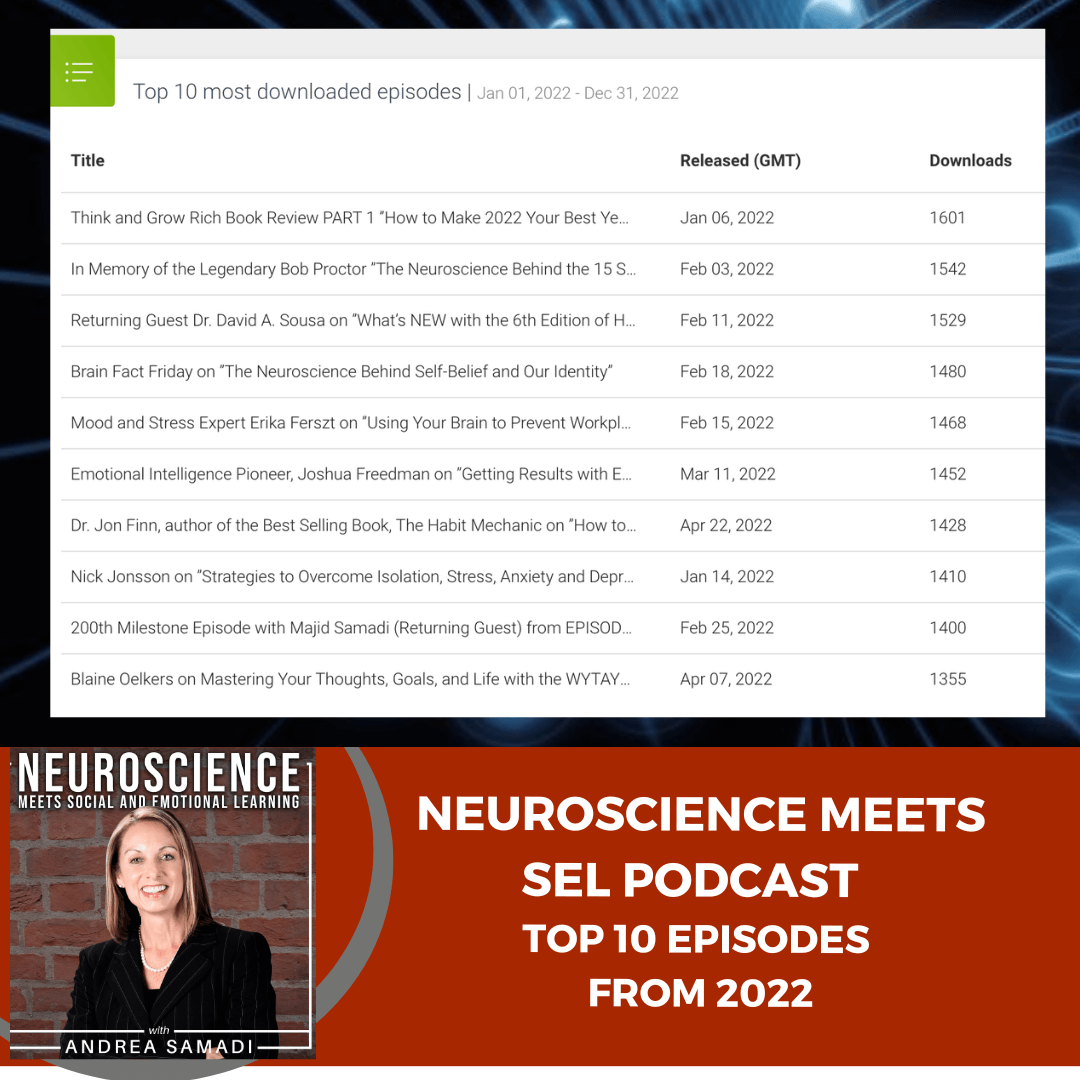
S8 Ep 267The Top 10 Most Listened to Episodes of 2022
“Before you look at your future, reflect on your past.” (Sam Ade, author of the book Wisdom Untold[i]). Welcome back to The Neuroscience Meets Social and Emotional Learning Podcast for a special EPISODE #267, where we will look back over the past year and review the TOP 10 most listened to episodes of 2022, as chosen by you, the listener. For those of you returning, welcome back, and for those new here, I’m Andrea Samadi, an author and educator who launched this podcast 3.5 years ago, to share how important an understanding of our brain (and mind) is for our everyday life and results. We’ve pulled in some of the world’s leading experts, authors, and researchers in the field of education, sports and workplace productivity, and while I knew we had hit the Top 20 Best Neuroscience Podcasts over the years, I had no idea until recently that we’ve now been included on the 35 Best Neuroscience Podcasts to Follow in 2023[ii], or that we’ve been rated in the top 1.5% of all podcasts, globally,[iii] out of 3 million. As I’m reflecting back at the end of this year, I have to say that I couldn’t have hit these accomplishments with the brilliant guests who come on the podcast, or without you, the listener, tuning in, so a huge thank you to our past guests, and listeners for making our show a success as we move into a New Year, and approach our 4th year anniversary of this podcast. To reflect on this past year, I first pulled this report in December, and 4 episodes made the TOP 10 list in the past year, that were recorded in December 2021, so I ‘ll be mentioning these important episodes that came in at the end of last year after at the end of this countdown. As we are approaching a New Year, many of us have our first few quarters (or beyond) of 2023 planned out already, but before we leap into the freshness of a New Year, if you haven’t reflected on the wins you’ve attained in the past year, this is probably the most important step of closing out an old year, and moving into a new one. I learned this year-end ritual from Jim Bunch[iv], who has been walking me through this year-end wrap up for the past 8 years at least, preparing those who tune in all over the world, for a fresh mind moving into the New Year. I put the REPLAY of his event from earlier this month, in the show notes, and did cover his process of creating energy from your 9 environments on EPISODE #103[v] that launched our year back in 2021, with “The Neuroscience of Leadership: 3 Ways to Reset, Recharge and Refuel Your Brain.” On this episode, we review the process of self-reflection, and evaluate the areas of your life (your 9 environments) to notice where energy might be leaking, that you could direct somewhere else in the New Year. This self-reflection activity is a good way to close out an old year, and move into a new one, as it allows you to put some thought into your WINS, and what worked well for you in the past year. He has a printable download that goes with this activity, and what’s interesting, is that without looking at your calendar, just by going off the top of your head, see if you can write out some of your wins. Without some deep reflection, you will notice that it’s EASY to see the things that went wrong last year (the losses) but to see the WINS, it takes serious thought, because of our built-in negativity bias, that Dr. Rick Hanson tells us to remember---“our brain is like Velcro for negative experiences (we are attracted to the negative experiences) but our positive experiences, slide off like Teflon.” We must be intentional about reflecting on the positives that we incurred, and integrate these wins into our identity, before moving into a New Year. This practice will guarantee that you are building a stronger, better, more improved version of you, each year. Now for the TOP 10 most listened to episodes of 2022-as voted by you, the listener! #1: We have our review of Napoleon Hill’s bestselling Think and Grow Rich book, “How to Make 2
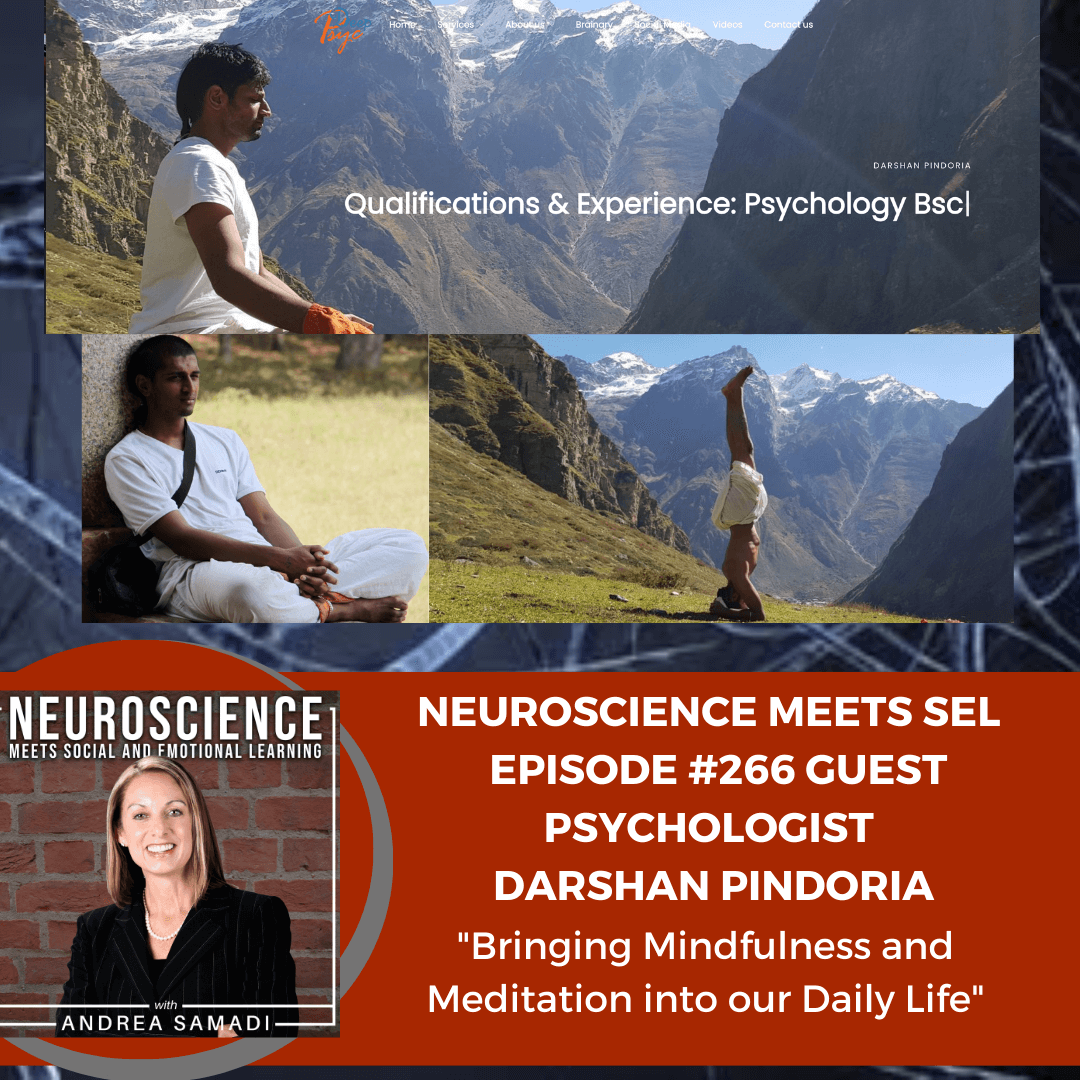
S8 Ep 266Psychologist Darshan Pindoria on ”Bringing Mindfulness and Meditation to Our Daily Lives”
"Life gives you exactly what you need to awaken." Watch this interview on YouTube here: https://youtu.be/wpxogphAQqw On today’s Episode #266 we will cover ✔ Tips from Darshan Pindoria, who spent 9 months as a monk, for those beginning their meditation practice. ✔ How open-minded meditation vs focused meditation can help us to become more creative and innovative in 2023. ✔ How to "think like a monk" and ask questions of others, to learn and grow. ✔ How to teach mindfulness, focus and meditation to our younger generations. ✔ How to use our mind to change habits, and improve our levels of anxiety, happiness and emotional stability. Welcome back to The Neuroscience Meets Social and Emotional Learning Podcast where we bridge the gap between theory and practice, with strategies, tools and ideas we can all use immediately, applied to the most current brain research to heighten productivity in our schools, ports environments and modern workplaces. I’m Andrea Samadi and launched this podcast to share how important an understanding of our brain is for our everyday life and results. For today’s episode #266, we will be speaking with Psychologist Darshan Pindoria[i], who contacted me around the time I was working on PART 4 of The Silva Method[ii] book review. While writing this final part of this review, I mentioned that I had no idea just how deep the Silva Method would take me. This final part of Jose Silva’s book review sat opened on my computer, unfinished, for more than a week, as I knew there was a lot to this book that I was still learning myself. My hopes were that this review would help all of us to improve our meditation practice, and give us more capacity, especially around how we approach stress, problem solve, or use our mind for creativity and innovation in the New Year, and in Darshan’s introduction email, he let me know that he had trained 9 months as a monk. Darshan’s email came at the perfect time, allowing me to ask him the questions I had after completing this book review. Thank you for all the feedback I received on this 4 PART review of The Silva Method, from around the world. I know this is just the beginning, and there will be another episode in the future, covering his online program. For now, I want to welcome Darshan Pindoria to our podcast, where we can dive deeper into ways that we can use our mind, in NEW ways, in the New Year, for improved health, productivity, creativity and innovation. Welcome Darshan. Thank you for reaching out to me, with perfect timing. Where have we reached you today? INTRO QUESTION: Darshan, many of our listeners resonated with this 4 PART review of a Jose Silva’s popular book The Silva Method[iii], where he says “Once we learn to use our minds to train it, it will do some astounding things. Then I watched your travel VLOG[iv] of your trip to the Himalaya Mountains, and as someone who spends every day in the mountains, I wondered how did it feel to sit in those mountains, and why do you think it would be different for you there, over sitting and thinking in any other mountain? What tips would you have for someone beginning this practice? INTRO: Can you tell me what you learned from being a monk for 9 months? Or even what you felt just sitting in the Himalayas for 2 hours? You said so much…time went really fast there, you were lost for words. What did you discover/learn from your time sitting and thinking here? Q1: We just covered a book review that was based on the work of Jose Silva, and his program that really is based on what the research today would call “open monitoring meditation” where we close our eyes, and pay attention to our thoughts without judgement. Dr. Andrew Huberman recently did a podcast episode on how this type of mediation can help us to improve our divergent thinking, to help us with creativity and innovative ideas. Why does this “open-minded” meditation help us to become more creative? Q2: I noticed that the monk in your video was sitting a cer
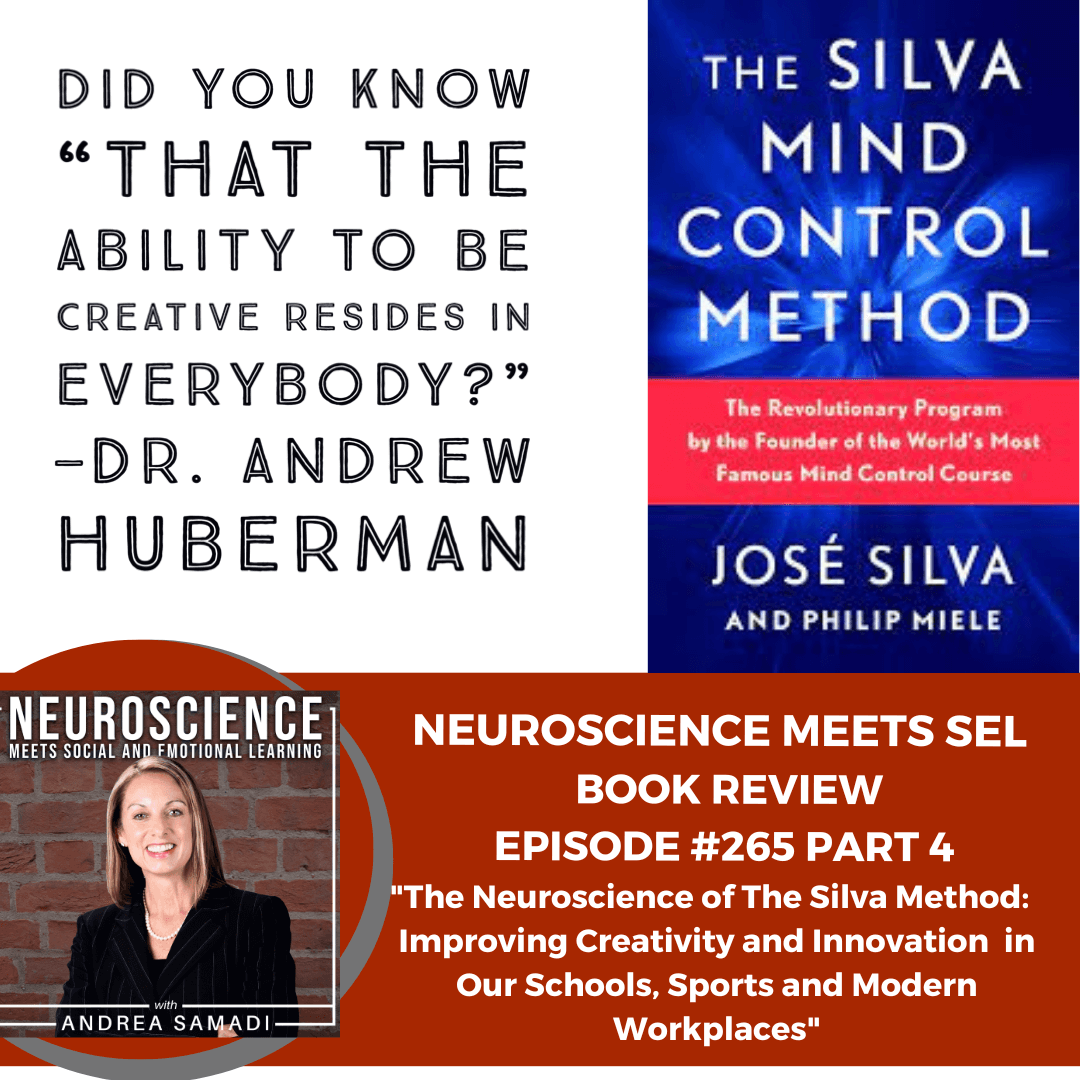
S8 Ep 265”The Neuroscience Behind the Silva Method: Improving Creativity and Innovation in Our Schools, Sports and Modern Workplaces” BOOK REVIEW PART 4
Welcome back to The Neuroscience Meets Social and Emotional Learning Podcast and PART 4, our FINAL part, of our Review of Jose Silva’s Mind Control Program. I’m Andrea Samadi an author and an educator, who like many of you listening, have been fascinated with learning and understanding the science behind ANY high-performance strategy proven to increase our results in our schools, sports, or modern workplaces. If there’s something NEW that I come across that can help us in any way, I’ll investigate it, connect it with the most current research, and then share what I learn with you here. My goal with this 4 PART review of the popular program from the 1980s and 1990s, The Silva Method[i], is to help all of us to learn something new to refine our current meditation practice whether we are working in our schools to improve learning, in our sports environments for improved results towards a specific goal, or in the corporate workplace to generate new ideas. I wouldn’t have picked this book to review if it hadn’t made such an impact on the world, like Napoleon Hills’ Think and Grow Rich book that currently sits as our most downloaded episode of 2022 after we reviewed it last January to kick off our New Year. Before starting this review, that I hoped would give us a running start to 2023, I had no idea the concepts I would learn each week, would be so powerful, deep, and life-changing requiring more thought than usual while writing each episode. I began this 4 PART book review the end of November, around Thanksgiving in the United States, and shortly after releasing the first episode, I began receiving emails from around the world from people who were interested to learn more about The Silva Method. Some were remembering it from the 80s/90s when Jose Silva ran this program globally, and others were asking me where they could find a live seminar. It was Dr. Hasan Ibne Akram, EPISODE #260[ii] who held up an old copy of The Silva Mind Control Method book, sharing how it had impacted his life, jogging my memory of Jose Silva, who I had heard of years ago, while selling seminars in the motivational speaking industry. Then my good friend Hans Ajay from the UK, urged me to sign up for the full program through MindValley[iii], where the course sits today after Vishen Lakhiani (the founder) revised and improved it in this current version. Hans wrote “It’ll be transformative” and little did I know just how transformative it would be. As I’m writing this episode now, and the final part of this review, I’m nearing the end of Vishen Lakhiani’s Silva UltraMind Course[iv] through the MindValley website. I can now see that this is a program that you never really complete, like I noticed with Napoleon Hill’s Think and Grow Rich[v] book, for Hill intended the book to be read more than one time for the concepts to be mastered in one’s lifetime. Jose Silva’s book is exactly the same way, and his online UltraMind Course, the experiential side of the program (that consists of the lessons from his book, mixed with meditations) bring the pages of The Silva Method to life in a way I never imagined just by reading the book. I’ve got to say, this course has really blown my mind, and expanded my thinking in a way I hadn’t imagined at the start of this review. REMEMBER: “When a person learns to function mentally at this deeper level, creativity is enhanced. Memory is improved and a person is better able to solve problems.” (Jose Silva). Today I plan finish the review of The Silva Method, and while I won’t be going into every chapter, I’ve picked the ones that I think are relevant to help all of us with “The Basics” of what Jose Silva intended us to learn. Then we will take these basic concepts that Jose Silva found to be transformative, (like my friend Hans Ajay noticed) and APPLY them to our daily life, connecting the science to our creativity and innovation, using Dr. Andrew Huberman’s most recent podcast episode on “The Science of Creativity: Ho