Mark Leonard's World in 30 Minutes
656 episodes — Page 7 of 14
Kyiv’s relations with Europe in the age of Nord Stream 2
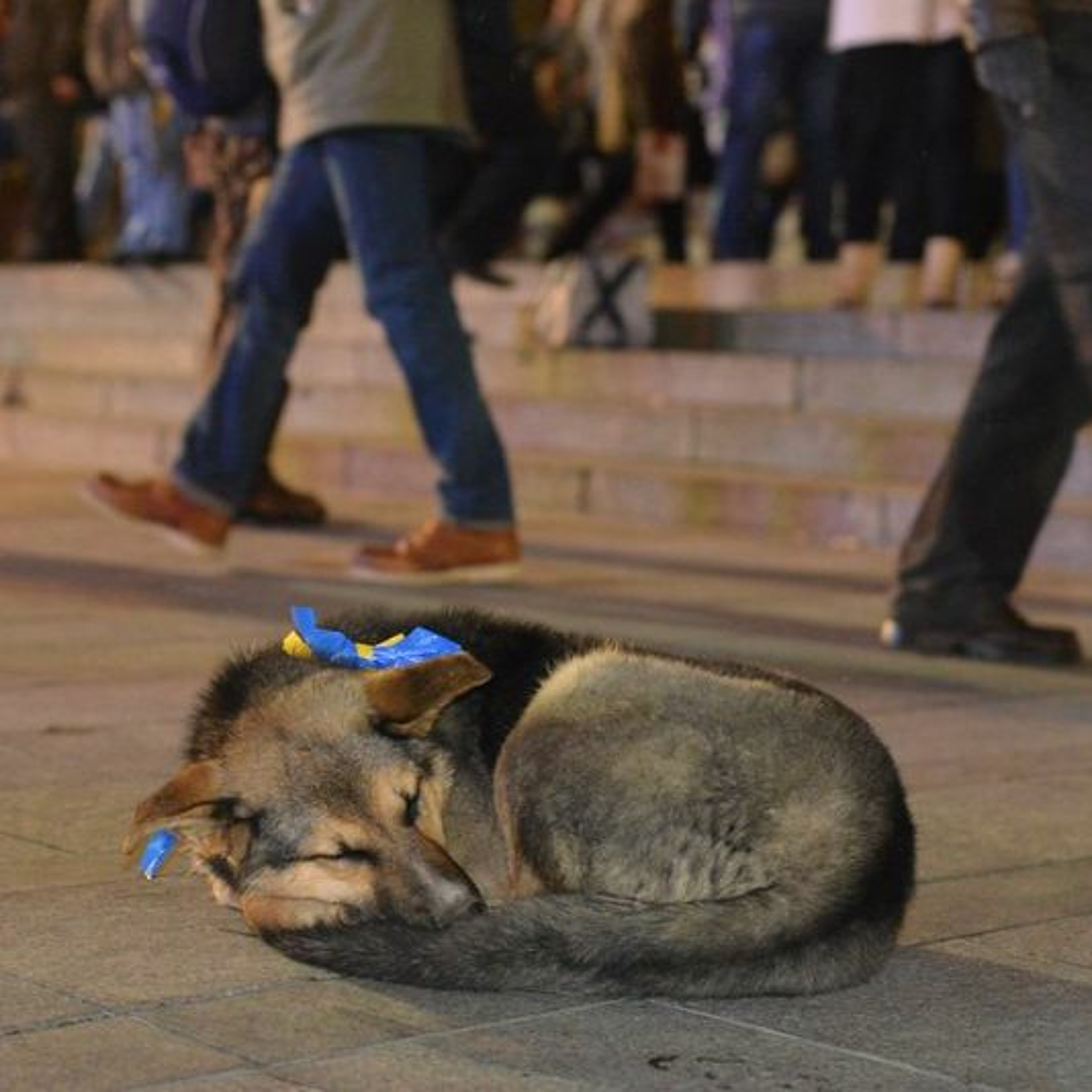
Ukraine and the EU recently opened a new chapter in their strategic relationship by signing a memorandum of understanding for closer cooperation in raw materials, green and digital technologies. Making Ukraine part of the European value chain is of strategic importance, but where does the country stand on the recent US-German deal on Nord Stream 2? In this week’s episode, guest host Joanna Hosa, deputy director of ECFR’s Wider Europe programme talks with Svitlana Zalishchuk, Deputy Prime-Minister Foreign Policy Advisor and former Member of Parliament in Ukraine and ECFR senior policy fellow Andrew Wilson about Ukraine, its domestic and international outlook and what the EU can and should do to support Ukrainian sovereignty. This podcast was recorded on 29 July 2021. Further reading: “Faltering fightback: Zelensky’s piecemeal campaign against Ukraine’s oligarchs” by Andrew Wilson https://ecfr.eu/publication/faltering-fightback-zelenskys-piecemeal-campaign-against-ukraines-oligarchs/ Bookshelf: “Civilisations” by Laurent Binet https://www.theguardian.com/books/2021/apr/29/civilisations-by-laurent-binet-review-counterfactual-hi-jinks “American Oligarchs: The Kushners, the Trumps, and the marriage of money and power” by Andrea Bernstein https://www.theguardian.com/us-news/2020/jan/12/american-oligarchs-review-donald-trump-jared-kushner-andrea-bernstein “No Room for small dreams: Courage, imagination, and the making of modern Israel” by Shimon Peres https://www.france24.com/en/20170921-peres-autobiography “Now we have your attention: The new politics of the people” by Jack Shenker https://www.redpepper.org.uk/review-now-we-have-your-attention-the-new-politics-of-the-people-by-jack-shenker/ Hosted on Acast. See acast.com/privacy for more information.
The geopolitics of technology
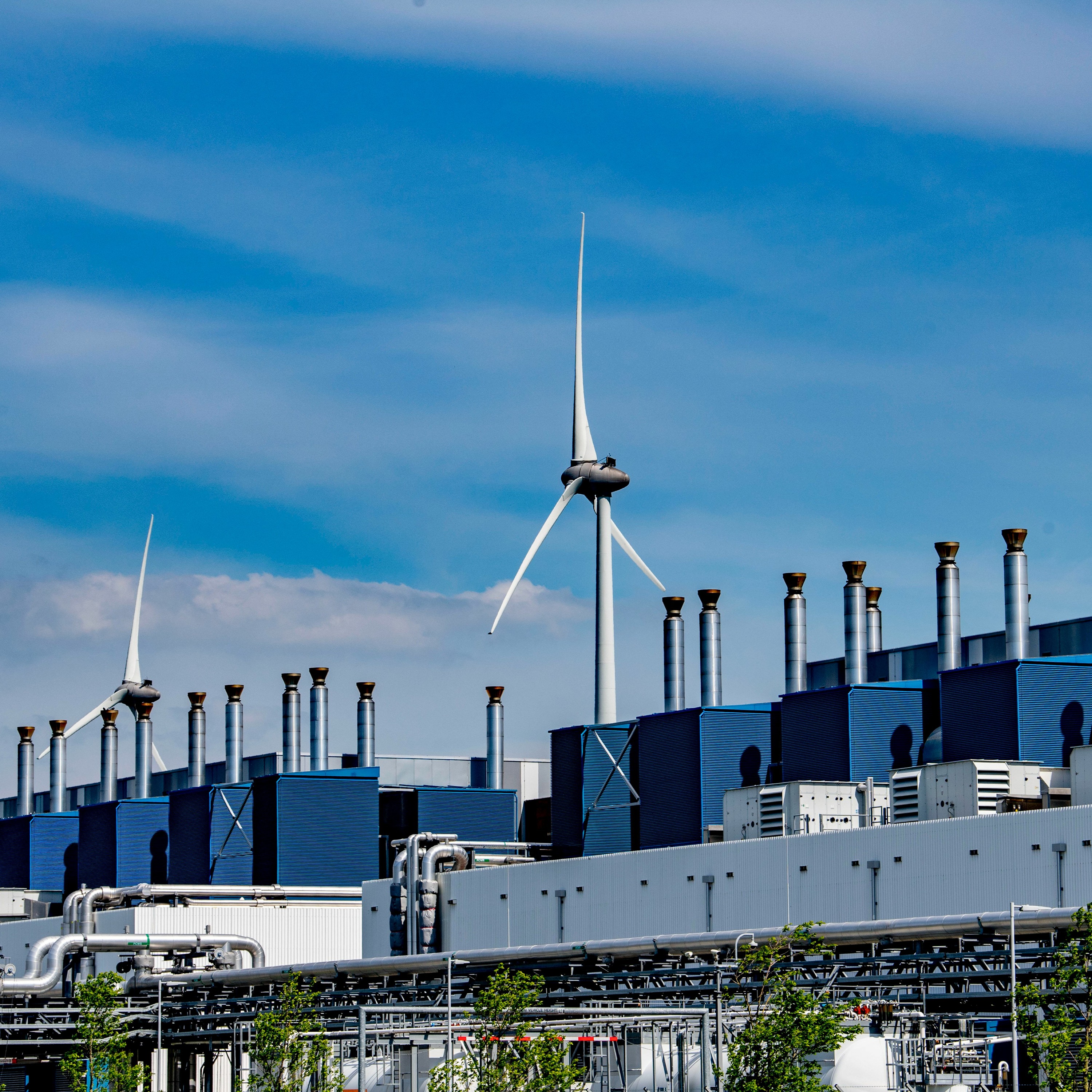
The EU is often described as a “regulatory superpower” benefitting from the so-called “Brussels effect.” But is the bloc also able to set its own rules and standards when it comes to new technologies, and let the rest of the world adapt? This week, host Mark Leonard is joined by ECFR senior policy fellows Ulrike Franke and Jose Torreblanca, as well as Marietje Schaake, international director of policy at Stanford’s Cyber Policy Center. How ready are Europeans to prevail in a world of fierce geopolitical tech competition? And what role does Europe play in the Sino American competition?This podcast was recorded on 16 July 2021.Further reading:· “Geo-tech politics: Why technology shapes European power” by Ulrike Franke & José Ignacio Torreblanca https://ecfr.eu/publication/geo-tech-politics-why-technology-shapes-european-power/· “Europe’s digital sovereignty: From rulemaker to superpower in the age of US-China rivalry” by Carla Hobbs (ed.) https://ecfr.eu/publication/europe_digital_sovereignty_rulemaker_superpower_age_us_china_rivalry/Bookshelf· “I, Warbot: The dawn of artificially intelligent conflict” by Kenneth Payne · “Walden” by Henry David Thoreau · “Mistrust: Why losing faith in institutions provides the tools to transform them” by Ethan Zuckerman Hosted on Acast. See acast.com/privacy for more information.
A social democratic vision of German foreign policy
With Angela Merkel stepping down as Chancellor, the next German federal elections scheduled for this September promise to mark a turning point for Germany. Foreign policy issues promise to be a crucial part of the election campaign. In this week’s podcast, host Mark Leonard talks to Niels Annen, Minister of State in the German Federal Foreign Office and member of the Bundestag for the SPD to find out what a social-democratic foreign policy looks like. What would SPD foreign policy look like unbound by the grand coalition with Merkel’s Christian Democrats? What are social democratic policy ideas when it comes to China, Russia or European security and defence? And how deep are the divides between the SPD’s foreign policy and that of the parties they’re running against?This podcast was recorded on 15 July 2021.Further Reading:- ECFR German Election 360: https://buff.ly/3gJNvr2- A foreign policy for a Green Germany: https://buff.ly/3vxdTcd Bookshelf:- “The Arab of the Future” by Riad Sattouf Hosted on Acast. See acast.com/privacy for more information.
The EU and France in the Sahel
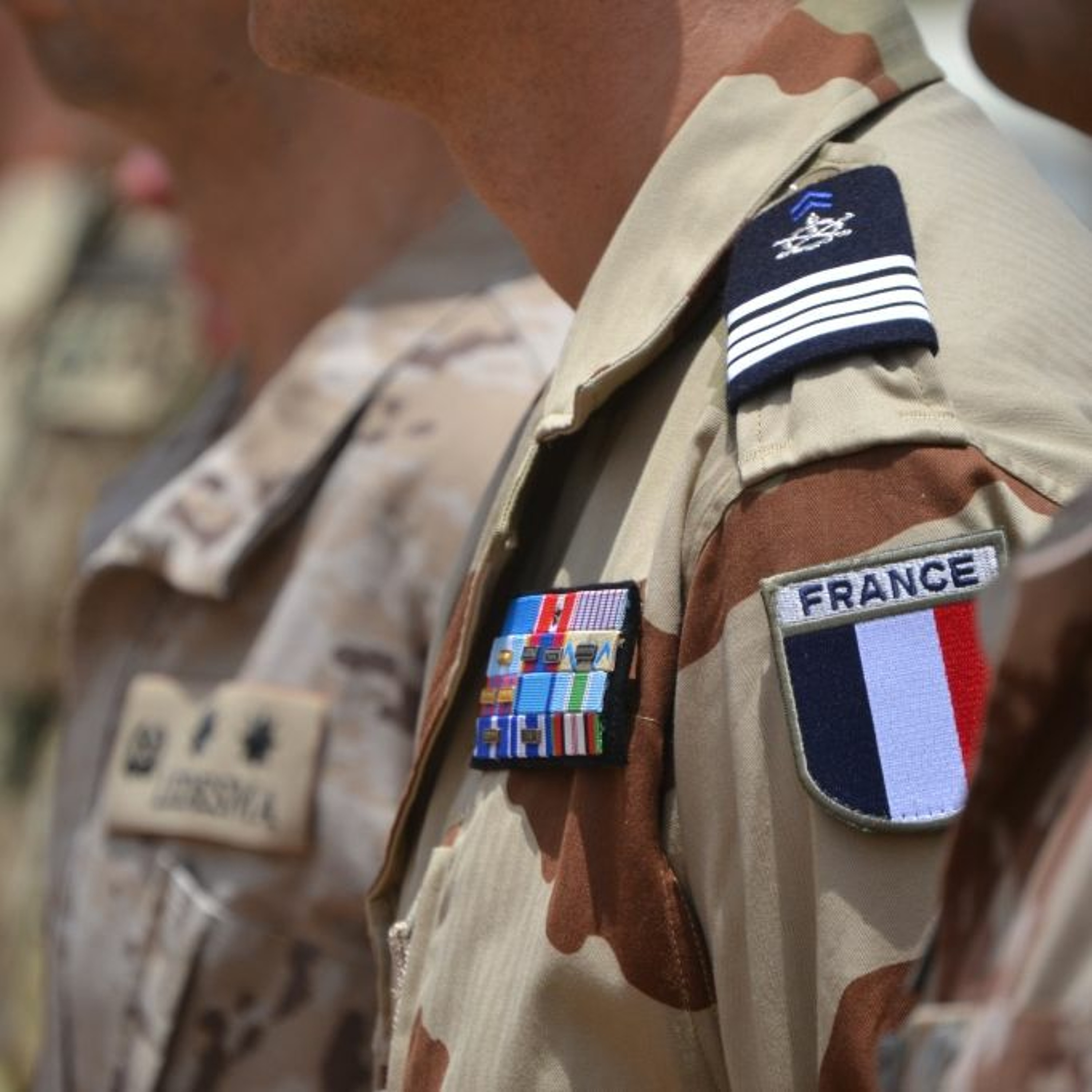
In June this year, French President Emmanuel Macron announced the end of Operation Barkhane – a military offensive launched in 2013 against Islamist militants in the Sahel. France has determined, he said, it could no longer maintain a “constant presence” in West Africa. In this week’s episode, host Mark Leonard discusses European interests in the region and what might change after France’s Africa policy shift, together with Emanuela Del Re, former Italian deputy foreign minister and the new EU special representative for the Sahel; Sylvie Kauffmann, editorial director, lead writer, and columnist for Le Monde; as well as ECFR’s Andrew Lebovich. What does the end of Operation Barkhane in its current form mean for the Sahel? What could further European and international engagement in the region look like?This podcast was recorded on 7 July 2021.Further reading:• “After Barkhane: What France’s military drawdown means for the Sahel” by Andrew Lebovich: https://t.co/xxZ11TiM24 Bookshelf• ”La Guerre de vingt ans. Djihadisme et contre-terrorisme au XXIe siècle” by Marc Hecker & Elie Tenenbaum • “Jihadists of North Africa and the Sahel” by Alexander Thurston • “Être etudiant au Mali: chroniques d'une vie d'étudiant” by Boubacar Sangaré • “Moral Letters to Lucilius“ by Seneca•“From Empires to NGOs in the West African Sahel. The Road to Nongovernmentality” by Gregory Mann • “Half of a Yellow Sun” by Chimamanda Ngozi Adichie • “L'Islâm in Europa: riflessioni di un imâm italiano “ by Yahya Sergio Yahe Pallavicini Hosted on Acast. See acast.com/privacy for more information.

The strike back against economic blackmail
Globalisation and economic interdependence are increasingly weaponised by various state actors. Europe faces ever greater threats of economic blackmail, sanctions against its lawmakers, and consumer boycotts of its companies. Later this year, the European Commission will launch the Anti-Coercion Instrument, a tool that could enable the EU to protect citizens and businesses by countering economic blackmail from China, Russia, and Turkey – and even the US. In what circumstances could such a tool be triggered? What kind of countermeasures could protect Europe, keep markets open and support a functional global trade order? And how can such a tool be both credible and effective? To find out, host Mark Leonard talks to policy fellows Jonathan Hackenbroich and Pawel Zerka, who worked with the ECFR Task Force for Protecting Europe from Economic Coercion on our latest publication: https://buff.ly/3zTgkZo This podcast was recorded on 1 July 2021. Further Reading:"Xi, Merkel phone call ‘timely to stabilise ties’" in Global Times "Defending Europe’s Economic Sovereignty: new ways to resist economic coercion" by Jonathan Hackenbroich, Janka Oertel, Philipp Sandner & Pawel Zerka: https://buff.ly/37FRvEQ Bookshelf:- An account of the life of Dick Leonard, who passed away this week, written by his son Mark Leonard: https://www.facebook.com/markhleonard/posts/10159900328587642 - "Learning Empire: Globalization and the German Quest for World Status 1875-1919" by Erik Grimmer Solem- "The passions and the interests: Political arguments for capitalism before its triumph” by Albert O. Hirschman Hosted on Acast. See acast.com/privacy for more information.
The election of President Ebrahim Raisi and the future of Iran
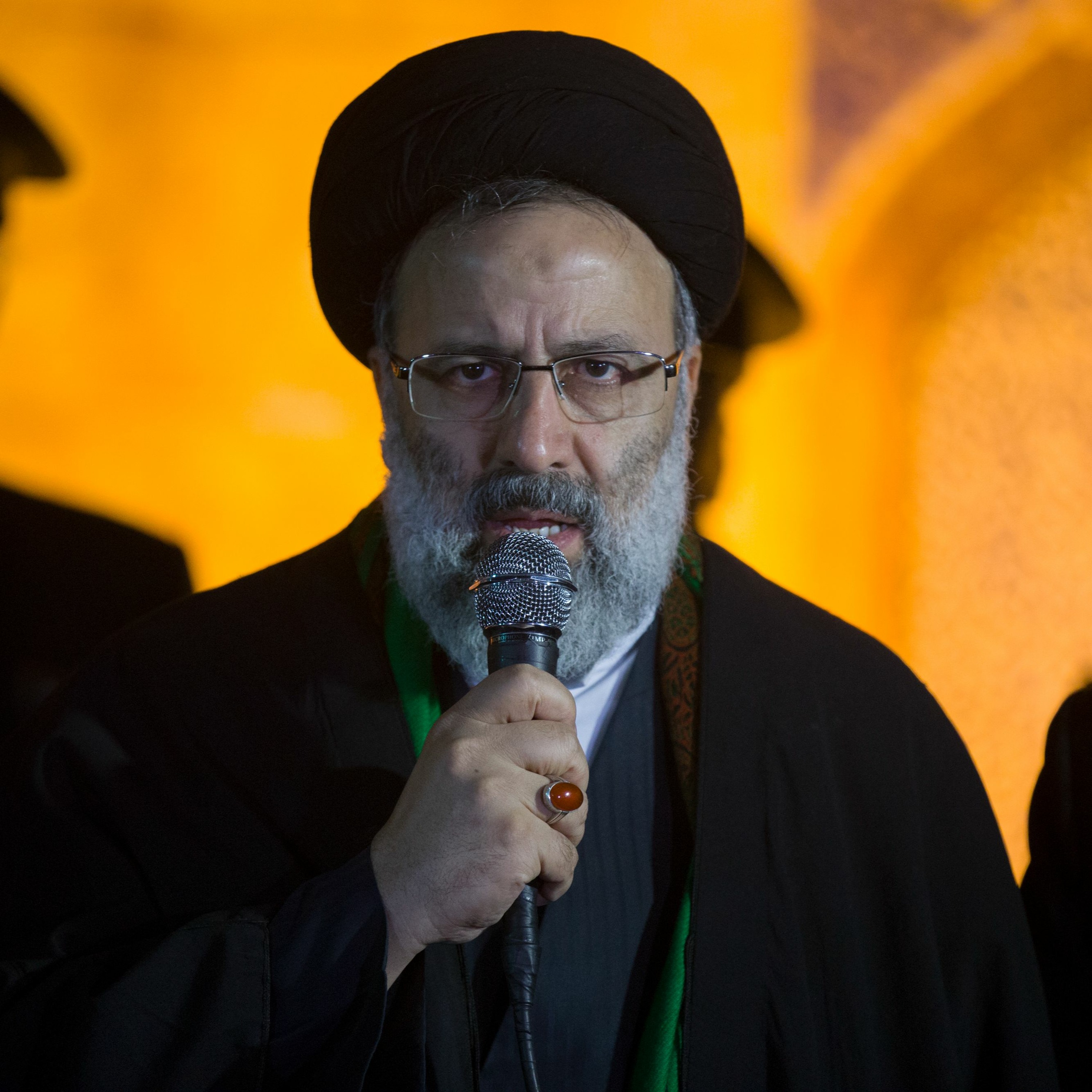
After an election which saw the lowest turnout and highest number of spoiled ballots in the history of the Islamic Republic, the ultraconservative regime veteran Ebrahim Raisi was elected as the newest president of Iran. Does the election of Raisi represent a significant change of direction following the term of President Rouhani? Could unified hardliner control of Iran paradoxically lead to a more durable nuclear deal and greater dialogue with regional adversaries such as Saudi Arabia? Will Raisi’s own human rights record prove a barrier to talks with Western powers?To find out, this week’s host Anthony Dworkin, senior research fellow and acting research director at ECFR, talks to Narges Bajoghli, assistant professor of Middle East Studies at the School of Advanced International Studies (SAIS) at Johns Hopkins University, Esfandyar Batmanghelidj, founder and CEO of the Bourse & Bazaar Foundation and visiting fellow at ECFR, and Julien Barnes-Dacey, director of ECFR´s MENA programme.This podcast was recorded on 23 June 2021.Further Reading:Council of despair: Iran’s uncompetitive presidential election https://ecfr.eu/article/council-of-despair-irans-uncompetitive-presidential-election/A familiar victory: Iran’s divides under a new president https://ecfr.eu/article/a-familiar-victory-irans-divides-under-a-new-president/Four steps to support Europe-Iran trade under a revived JCPOA https://ecfr.eu/article/four-steps-to-support-europe-iran-trade-under-a-revived-jcpoa/Bookshelf:Syria and the Neutrality Trap: The Dilemmas of Delivering Humanitarian Aid through Violent Regimes by Carsten Wieland http://www.carsten-wieland.com/books.htmlTelevision and the Afghan Culture Wars: Brought to You by Foreigners, Warlords, and Activists by Wazhmah Osman https://www.press.uillinois.edu/books/catalog/29bgf5br9780252043550.html Christ Stopped at Eboli by Carlo Levi https://www.irishtimes.com/culture/books/christ-stopped-at-eboli-1945-by-carlo-levi-a-remarkable-memoir-1.4551169 Hosted on Acast. See acast.com/privacy for more information.
New Energies: The European Green Deal and the EU-Turkey relationship
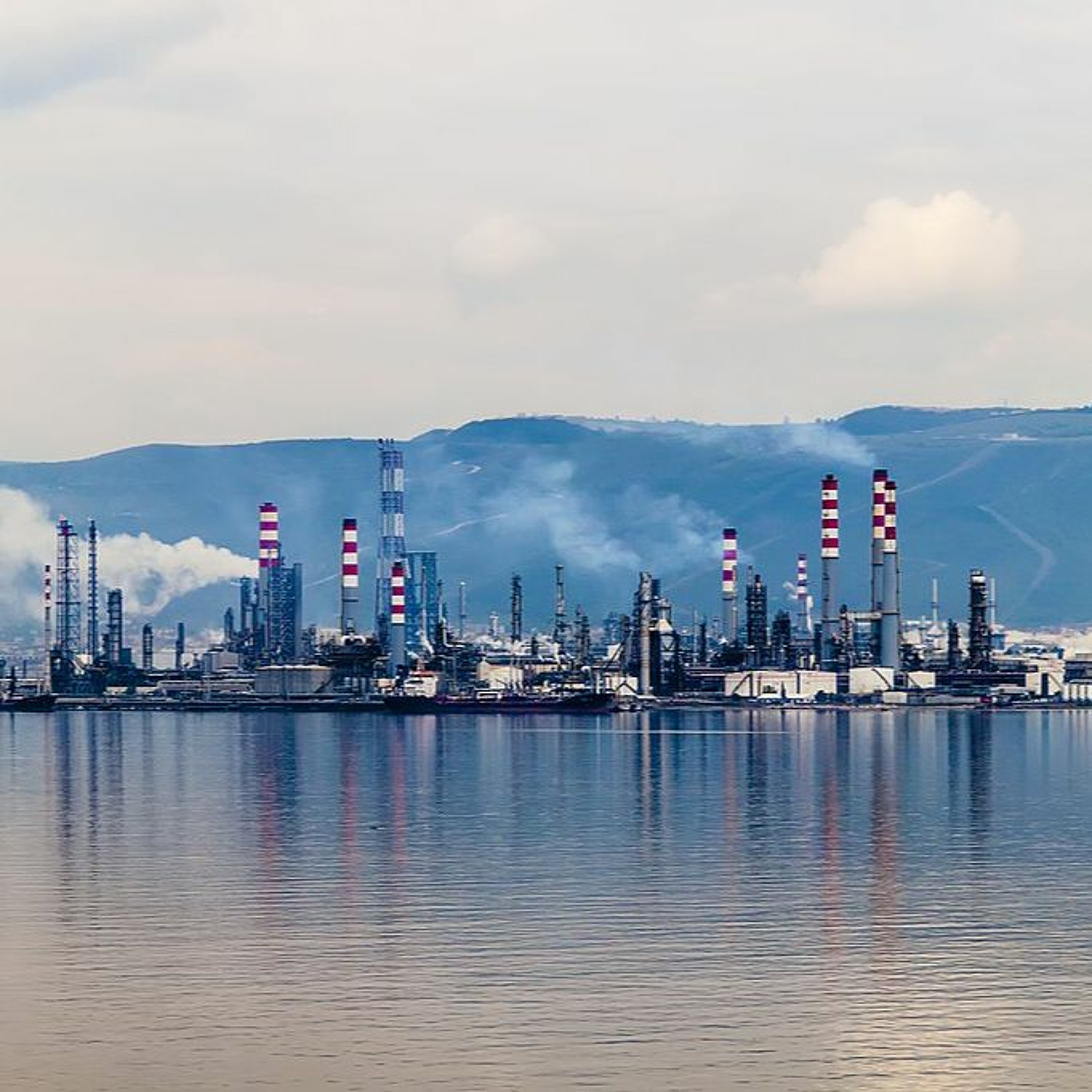
The meeting between US president Biden and the Turkish president Erdogan, as well as the upcoming European Council Summit on Turkey come at a critical moment in the EU-US-Turkey relationship. After years of heightened tensions, there appears to have been a thawing in relations since the beginning of this year. The renewed focus on climate policy by the EU, however, makes many aspects of this relationship uncertain. Are carbon border taxes a threat to Turkish trade? How can Turkey and the EU cooperate on green energy? To find out, host Susi Dennison, director of ECFR´s European Power programme, talks to Asli Aydıntaşbaş, senior policy fellow at ECFR and in-house expert on Turkey, and Simone Tagliapietra, senior fellow at Bruegel focusing on European Union climate and energy policy. They discuss the outcomes of the Biden-Erdogan summit and the prospects for the EU-Turkey relationship, particularly in relation to the EU’s climate policies.This podcast was recorded on 17 June 2021.Further Reading:- "Europe’s Green Moment: How to meet the climate challenge" by Susi Dennison, Rafael Loss and Jenny Söderström: https://buff.ly/3v48Lw4 - "The geopolitics of the European Green Deal" by Mark Leonard, Jean Pisani-Ferry, Jeremy Shapiro, Simone Tagliapietra and Guntram Wolff: https://buff.ly/3tpyKxGBookshelf:- "Catherine the Great: Portrait of a Woman" by Robert K. Massie - "The New Climate War" by Michael E. Mann Hosted on Acast. See acast.com/privacy for more information.
What future for the transatlantic alliance?
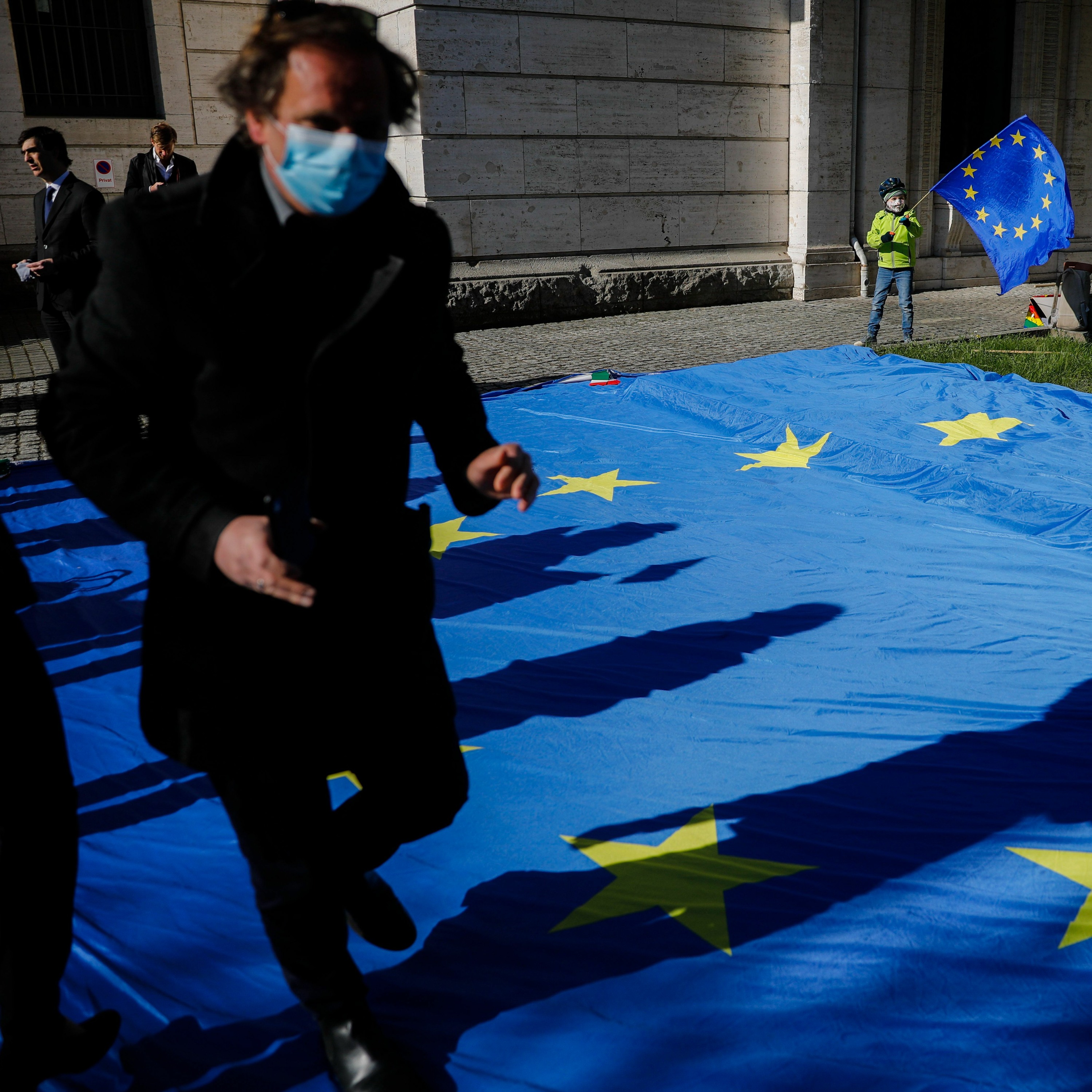
Joe Biden described his mission for his trip to Europe this week as “realizing America’s renewed commitment to (its) allies and partners.” But what does this mean in practice? How well does the transatlantic alliance still fit with the way that Europe and the United States now see their goals in foreign policy? To find out, host Anthony Dworkin, senior policy fellow at ECFR, talks to Susi Dennison, director of ECFR´s European Power Program, Jana Puglierin, head of ECFR´s Berlin office, as well as Jeremy Shapiro, ECFR´s research director. They discuss what Europe and the US want from this week’s summit meetings and look at some of the striking results of ECFR’s latest public opinion poll across 12 European countries. Once the coronavirus crisis is over, how do Europeans see the EU’s role in the world? This podcast was recorded on 9 June 2021.Further reading: - Crisis of confidence: How Europeans see their place in the world by Jana Puglierin & Susi Dennison: https://buff.ly/2RxZFt9 Bookshelf: - "How to prevent Germany from becoming Eurosceptic" by Jana Puglierin & Mark Leonard: https://buff.ly/2RzAxSO - "Ali and Nino" by Kurban Said - "The Orientalist: Solving the Mystery of a Strange and Dangerous Life" by Tom Reiss- "Why the Germans Do it Better: Notes from a Grown-Up Country" by John Kampfner- "Histoire de la laïcité en France" by Jean BaubérotPhoto: picture alliance / ASSOCIATED PRESS | Markus Schreiber © Hosted on Acast. See acast.com/privacy for more information.

Understanding the conflict in Western Sahara
The little-known but long-running conflict in Western Sahara made it into the headlines in Europe recently, when Morocco weaponised migration in Ceuta to advance its territorial claim. Listen as host Julien Barnes-Dacey, director of the MENA programme at ECFR discusses the issue with Irene Fernandez-Molina, senior lecturer in International Relations at the University of Exeter and expert on frozen conflicts, Jose Ignacio Torreblanca, senior policy fellow and head of ECFR´s Madrid office, as well as Jacob Mundy, visiting fellow at ECFR and an associate professor in Peace and Conflict Studies and Middle Eastern, and Islamic Studies programs at Colgate University in Hamilton, New York. Together they try to find out what the Western Sahara conflict is all about, and how the most recent developments between Morocco and Spain will influence this conflict.Picture: UN Photo/Martine Perret (CC BY-NC-ND) Hosted on Acast. See acast.com/privacy for more information.

How the EU should respond to Belarus
Last Sunday, Belarus intercepted and diverted a commercial flight between two EU capitals to arrest a dissident. This, alongside the stagnation of the Belarusian economy, the continuing protests and Lukashenka’s illegitimate rule, fuels popular discontent in the country and worries the European Union. Katia Glod, non-resident fellow with the Russia programme of the US-based Center for European Policy Analysis, Linas Linkevičius, Former Minister of Foreign Affairs and former Minister of Defence of Lithuania as well as ECFR Council member, and ECFR visiting fellow Pavel Slunkin who previously worked for the Foreign Ministry of Belarus and our host for this week’s episode ECFR deputy director Vessela Tcherneva recap the recent developments and explore the broader context of the crisis: What will be the impact of the EU and US measures against Belarus? What is Russia’s role in this? And what should be next steps also ahead of the EU-US summit on 15 June? This podcast was recorded on 27 May 2021. Further reading: After the Pratasevich arrest: Four key steps for the EU on Belarus by Joanna Hosa & Pavel Slunkin, https://ecfr.eu/article/after-the-pratasevich-arrest-four-key-steps-for-the-eu-on-belarus/ Bookshelf: A promised land by Barack Obama, https://www.nytimes.com/2020/11/12/books/review/barack-obama-a-promised-land.html The politics book: Big ideas simply explained by Kate Johnsen, Sam Atkinson & Rebecca Warren, https://www.frostmagazine.com/2013/03/the-politics-book-review/ Airport by Arthur Hailey, https://www.kirkusreviews.com/book-reviews/a/arthur-hailey-3/airport/Image: Andrey Kukharenko CC2.0 https://www.flickr.com/photos/192897193@N02/51199553335/ Hosted on Acast. See acast.com/privacy for more information.
The politics of catastrophe with Niall Ferguson
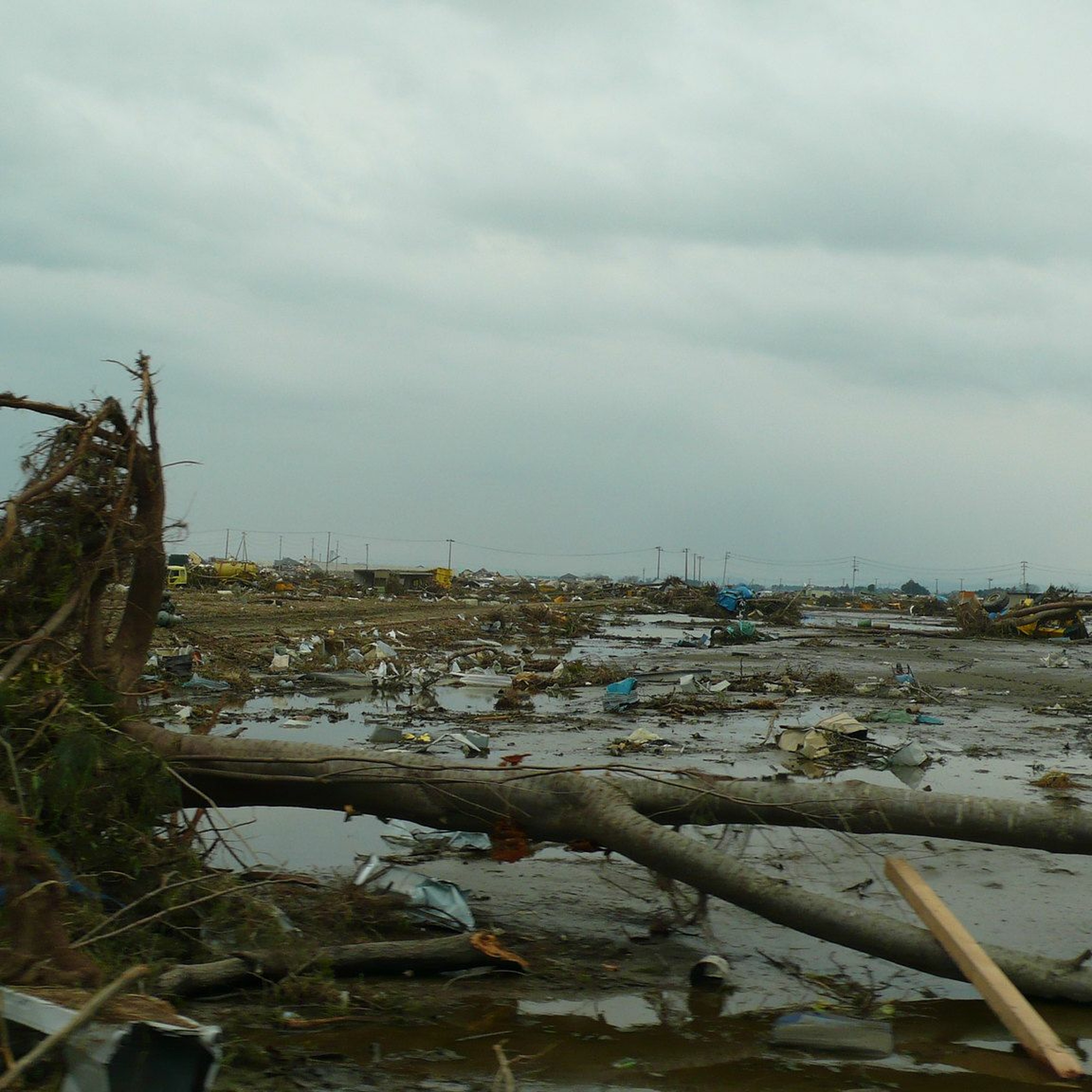
Catastrophe and disaster have been a frequent phenomenon throughout the history of mankind, coming in different forms. So how is it then that, despite being far more scientifically educated on the origins of disasters, we do not seem to be getting any better at dealing with them? To find out, host Mark Leonard talks to Niall Ferguson, author of the book “Doom: The politics of catastrophe” and senior fellow at both the Hoover Institution at Stanford University as well as the Center for European Studies at Harvard University. Together, they address why some societies and states respond to catastrophe so much better than others. And why do some fall apart, most hold together, and a few emerge stronger?This podcast was recorded on 16 May 2021.Further reading:- "Doom: The politics of catastrophe" by Niall Ferguson: https://buff.ly/3fy2DWA Bookshelf:- "America in the world: A history of U.S. diplomacy and foreign policy" by Robert B. Zoellick- "The road less traveled: The secret battle to end the Great War, 1916-1917" by Philip D. Zelikow Hosted on Acast. See acast.com/privacy for more information.
China’s strategic approach to the Western Balkans
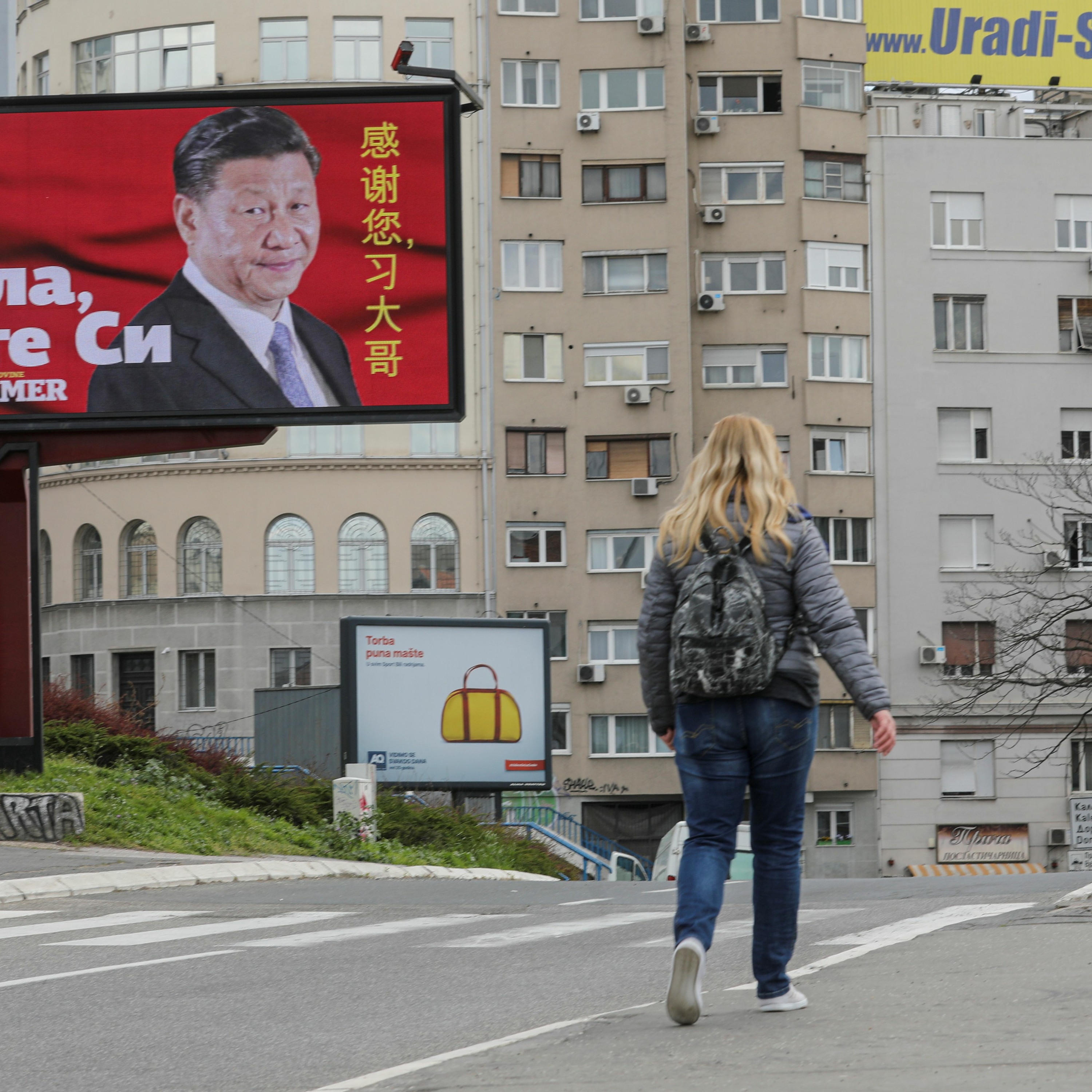
China’s formalised, seemingly nonchalant, attitude towards the Western Balkans masks a surprising nimbleness and strategic intent. In the past decade, the country has become the most prominent third actor in this part of the European Union’s neighbourhood. To find out why, host Mark Leonard talks to Majda Ruge, senior policy fellow in ECFR´s Wider Europe programme with a focus on the Western Balkans, Vladimir Shopov, visiting fellow with ECFR´s Asia programme, as well as Vessela Tcherneva, deputy director of ECFR and head of ECFR’s Sofia office. Together, they discuss why it is important to take a closer look at Chinese engagement in the region, how much influence China already has in the Western Balkans and how European policymakers should react. This podcast was recorded on 12 May 2021. Further reading: Decade of patience: How China became a power in the Western Balkans by Vladimir Shopov, https://ecfr.eu/publication/decade-of-patience-how-china-became-a-power-in-the-western-balkans/ Bookshelf: War: How Conflict Shaped Us by Margaret MacMillan, https://www.nytimes.com/2020/10/06/books/review/war-margaret-macmillan.html The New Map: Energy, Climate, and the Clash of Nations by Daniel Yergin, https://www.washingtonpost.com/outlook/a-global-energy-study-that-misses-some-climate-change-realities/2020/09/24/1addeb3e-f2b3-11ea-bc45-e5d48ab44b9f_story.html The Third Revolution: Xi Jinping and the New Chinese State by Elizabeth C. Economy, https://blogs.lse.ac.uk/lsereviewofbooks/2019/01/15/book-review-the-third-revolution-xi-jinping-and-the-new-chinese-state-by-elizabeth-economy/ Doom: The Politics of Catastrophe by Niall Ferguson, https://www.theguardian.com/books/2021/may/07/doom-by-niall-ferguson-review-how-to-make-sense-of-catastrophePhoto: REUTERS/Djordje Kojadinovic Hosted on Acast. See acast.com/privacy for more information.
The prospects for EU-India relations ahead of the Leaders Summit
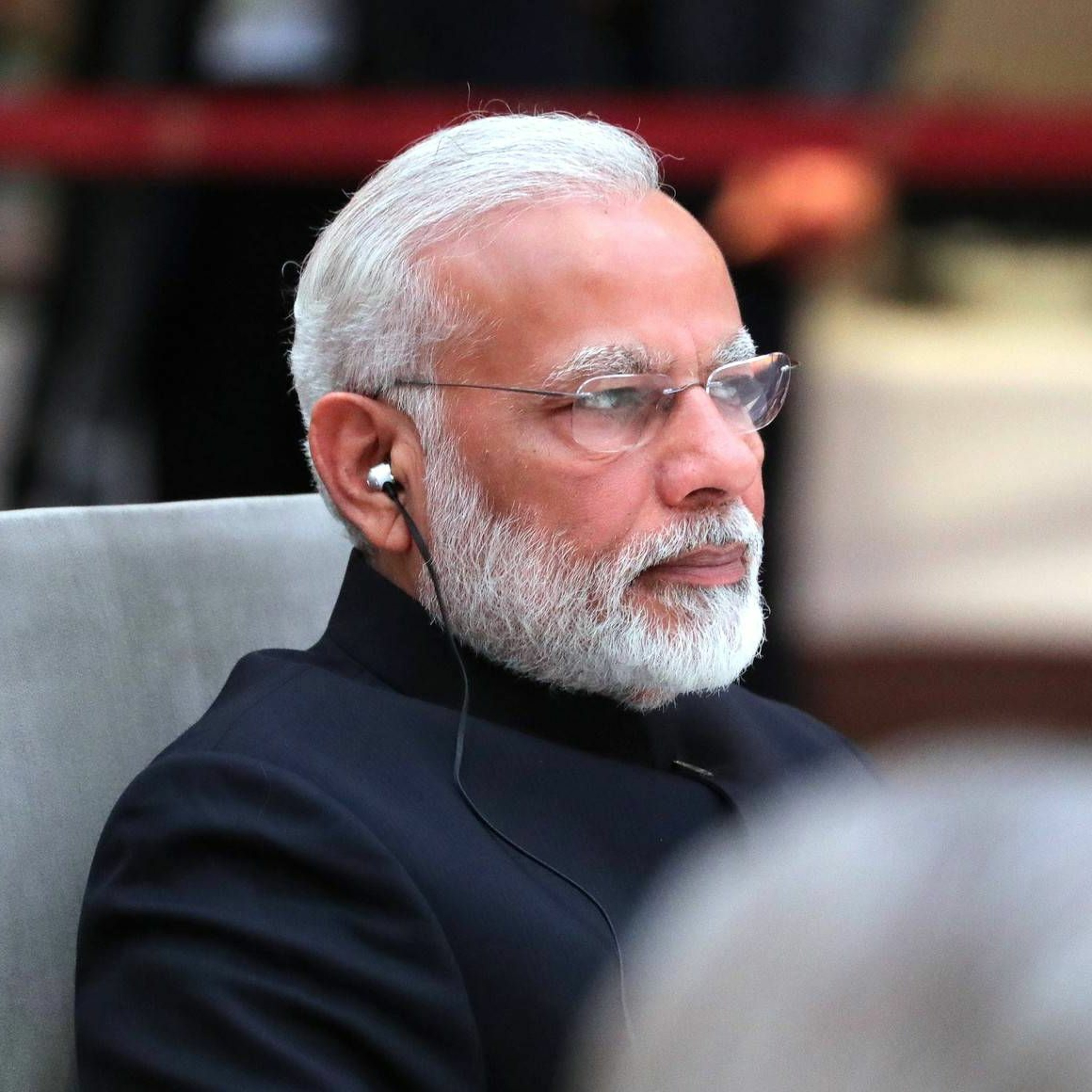
The EU is India's largest trading partner; India, in turn, is only the EU’s tenth largest trading partner. And despite the two often having expressed an interest in closer trade and political relations, there has been no visible progress made in the last years. Ahead of the EU-India Leaders Summit on 8 May 2021, host Mark Leonard talks to Fréderic Grare, senior policy fellow with ECFR’s Asia Programme, Raja Mohan, director of the Institute of South Asian Studies at the National University of Singapore and columnist of the Indian Express, as well as Manisha Reuter, ECFR´s Asia programme coordinator. How does the covid-19 pandemic impact India´s geopolitics and foreign policy? How has the rise of China influenced EU-India relations so far? And what are the prospects of a closer EU-India relationship following the upcoming Summit? This podcast was recorded on 5 May 2021. Further reading: “The EU’s Indo-Pacific strategy: A chance for a clear message to China and Europe’s allies” by Fréderic Grare: https://buff.ly/3sKTjmO “Friends in deed: How the EU and the Quad can promote security in the Indo-Pacific” by Manish Reuter https://buff.ly/33ud7Ax Bookshelf - “Globalists: the end of empire and the birth of neoliberalism” by Quinn Slobodian - “India's power elite” by Sanjaya Baru - “India's China challenge: A journey through China's rise and what it means for India” by Ananth Krishnan“The Covid Consensus: The new politics of global inequality” by Toby Green https://www.hurstpublishers.com/book/the-covid-consensus/ Hosted on Acast. See acast.com/privacy for more information.
A foreign policy for a Green Germany
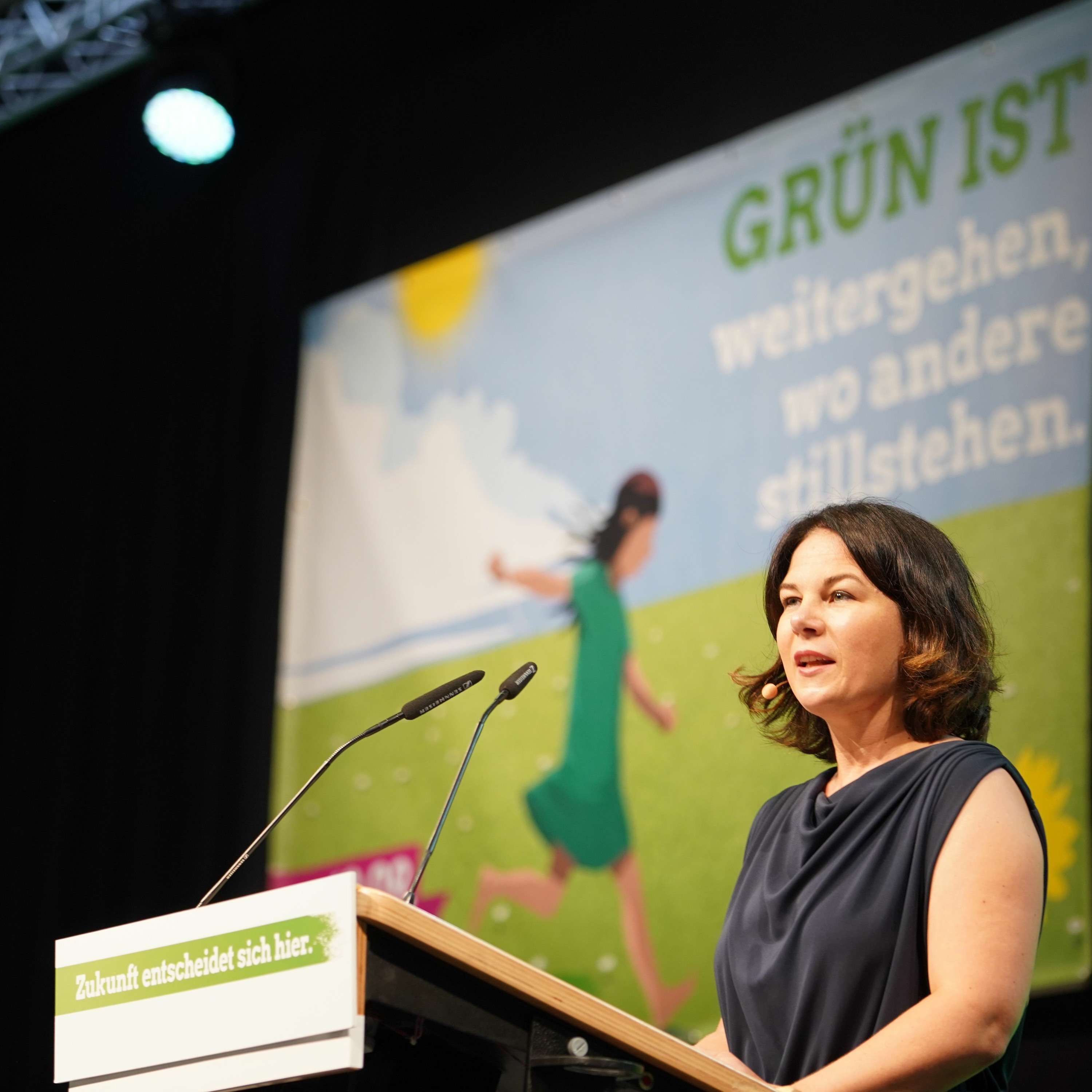
While Germany’s long-ruling centre-right parties continue to offer more of the same, the Greens have recently emerged as a serious contender in the run-up to September’s federal elections. Rather than demanding that Germans give up their lifestyles, the Greens are promising to make Germany a better version of itself. But how will this affect German foreign policy? Host Mark Leonard talks to Franziska Brantner, spokesperson for European Policy and Parliamentary Secretary of Bündnis90/Die Grünen’s parliamentary group as well as Janka Oertel, head of ECFR´s Asia programme to discuss what Germany’s future with a Green government would look like. This podcast was recorded on 29 April 2021.Further reading: •“Germany’s Green Velvet Revolution?” by Mark Leonard: https://buff.ly/2RcOTb6 Bookshelf:•“Green Recovery Tracker": https://www.greenrecoverytracker.org/ •“Heimat Europa?” by Martin Ramb & Holger Zaborowski, • “China’s FinTech: the end of the wild west” by Viviana Zhu Hosted on Acast. See acast.com/privacy for more information.

Towards stability: A new concert of powers
Our system is not fit to deal with the challenges of the 21st century. This has been laid bare not just by the covid-19 pandemic, but also by the increasing power competition between the US and China, and the blockage and weaponisation of the multilateral system and the current crisis of democracy. Could a new “concert of powers” possibly be the solution? This week, host Mark Leonard talks to Charles Kupchan, senior fellow at the Council on Foreign Relations (CFR) and professor of international affairs at Georgetown University; Leslie Vinjamuri, Director of the US and the Americas programme and Dean of the Queen Elizabeth II Academy for Leadership in International Affairs at Chatham House; as well as Nicu Popescu, senior policy fellow and director of ECFR´s Wider Europe programme. In this episode, they discuss the idea of a “global concert of powers” to promote stability in a multipolar world. How would such a format be formed and who would be involved? And how does the future of the liberal order look after two centuries of Western domination? This podcast was recorded on 20 April 2021.Further reading:• “The new concert of powers. How to prevent catastrophe and promote stability in a multipolar world” by Richard N. Haass & Charles A. Kupchan in Foreign Affairs: https://buff.ly/2OYR5Co • "The liberal order begins at home. How democratic revival can reboot the international system" by Robin Niblett and Leslie Vinjamuri in Foreign Affairs: https://buff.ly/3sMLKfrBookshelf:• “Kill switch: The rise of the modern senate and the crippling of American democracy” by Adam Jentleson• “Mountains beyond mountains: The quest of Dr. Paul Farmer, a man who would cure the world” by Tracy Kidder• “Why an internationalist foreign policy needs a stronger domestic foundation” by Charles Kupchan & Peter Trubowitz• “The heart is a lonely hunter” by Carson McCullers• “The bean trees” by Barbara Kingsolver Hosted on Acast. See acast.com/privacy for more information.
Between war and order: What has shaped Europe’s geopolitics?
Diplomacy and war have both been part of human history, but neither are stagnant concepts. Different conceptions of the global order influence policy decisions daily, while the notions of war equally shape nation-states and our lives. To get a deeper understanding of how both ideas impact geopolitics, host Mark Leonard talks to Margaret MacMillan, professor of history at the University of Toronto and author of the book “War: How Conflict Shaped Us”, Robert Cooper, distinguished British and European diplomat and author of “The Ambassadors: Thinking about Diplomacy from Machiavelli to Modern Times” and Gideon Rachman, British journalist and chief foreign affairs columnist for the Financial Times. What are different models for thinking about global order? How do ideas about war shape what statesmen and -women do?This podcast was recorded on 14 April 2021.Bookshelf:• “The ambassadors: Thinking about diplomacy from Machiavelli to modern times ” by Robert Cooper• “War: How Conflict Shaped Us” by Margaret MacMillan• “Zero-Sum World: Politics, Power and Prosperity After the Crash” by Gideon Rachman• “Britain alone” by Philip Stephens• “The Greek Revolution: A Critical Dictionary” by Paschalis M. Kitromilides & Constantinos Tsoukalas• “The Count of Monte Cristo” by Alexandre Dumas• “Empireland: How Imperialism Has Shaped Modern Britain” by Sathnam Sanghera• “Ioannis A. Kapodistrias, the European diplomat and statesman of the 19th century” by Helen E. Koukkou Hosted on Acast. See acast.com/privacy for more information.
Multilateralism after covid-19
Now that the world is entering a new phase of fighting the covid-19 pandemic, there is a renewed chance for working better together - and the European Union could do much to set these frameworks. But how can Europe adapt its strategies for multilateralism in this competitive world and what would they look like? Moreover, with other big players like China making their intentions to shape the global community unmistakably known, what reactions can Europe expect from a new-found agenda for multilateralism? This week’s host Susi Dennison tries to find answers to these questions with the help of Anthony Dworkin, ECFR research director and senior policy fellow, and Janka Oertel, ECFR’s Asia programme director and senior policy fellow. Together, they take a closer look at the potential for further global cooperation, the role Europe could play and future challenges the multilateral world will face.This podcast was recorded on 8 April 2021.Further reading:· “Built to order: How Europe can rebuild multilateralism after covid-19” by Anthony Dworkin: https://buff.ly/3fu4ehF· “Climate superpowers: How the EU and China can compete and cooperate for a green future” Janka Oertel, Jennifer Tollmann and Byford Tsang: https://buff.ly/2JHm437Bookshelf:· “The bleak house” by Charles Dickens· “Summer” by Ali Smith· “China reveals co-operation with EU on green investment standards” by Selena Yi and Robin Yu· “Economic policy for a pandemic age: How the world must prepare” by Monica de Bolle, Maurice Obstfeld and Adam S. Posen Hosted on Acast. See acast.com/privacy for more information.
How the Turkey-UAE Rivalry is remaking the Middle East
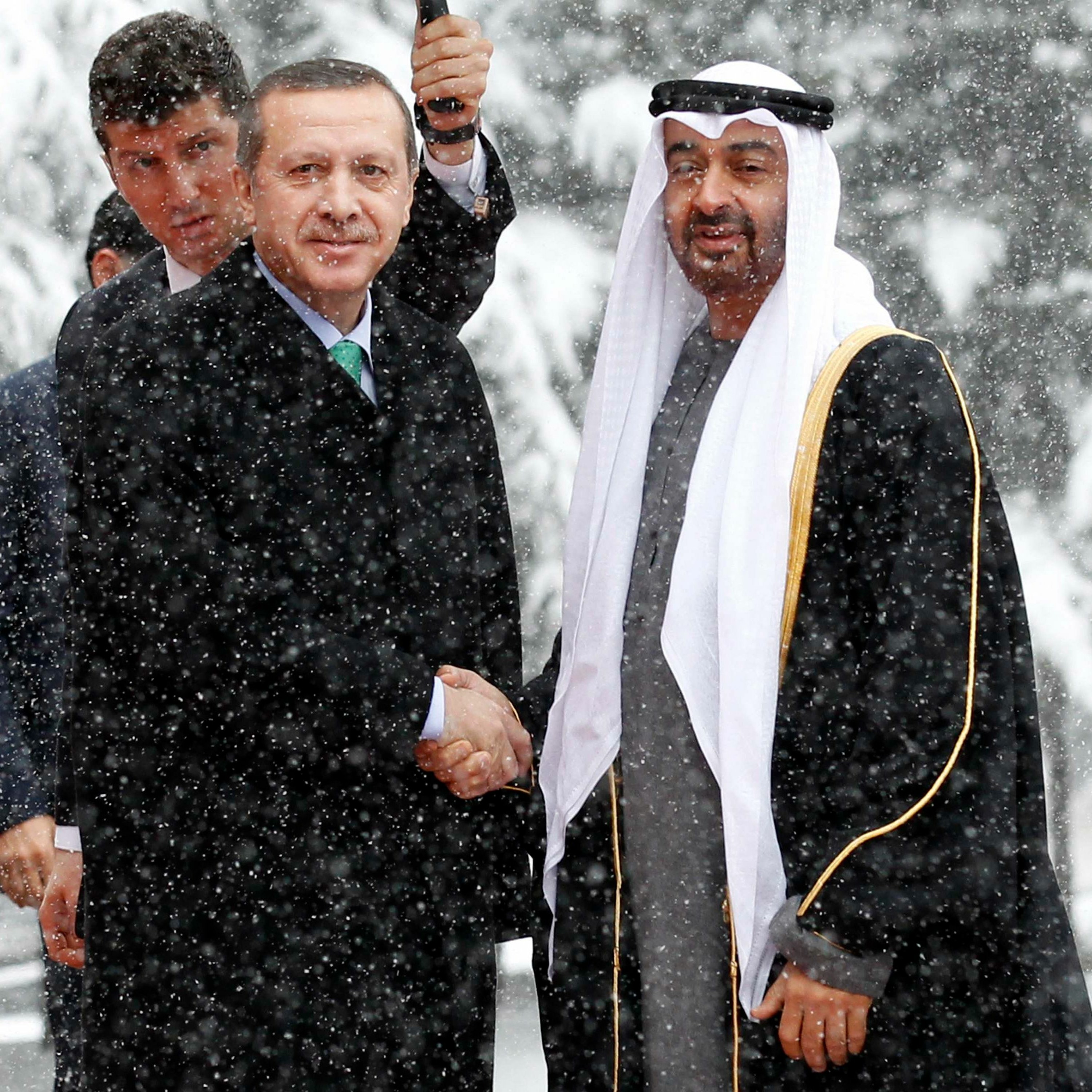
Despite the asymmetry in their size, population, and military prowess, Turkey and the United Arab Emirates (UAE) have been engaged in a decade-long rivalry. This confrontation is not only feeding regional instability but is also deepening Europe’s divisions, making it more difficult for the European Union and its member states to develop a cohesive policy on the Mediterranean. This week, host Mark Leonard talks to Asli Aydıntaşbaş, ECFR´s Turkey expert, Cinzia Bianco, visiting fellow working on the Arabian Peninsula and Gulf region, as well as Julien Barnes-Dacey, director of the Middle East and North Africa programme at ECFR. Together, they examine the origins of the rivalry, its impacts on the EU, as well as the arenas the rivalry outplays. Finally, they try to answer a most critical question: How can the EU prevent the Turkey-UAE rivalry from destabilising European security and foreign policy?This podcast was recorded on 31 March 2021. Further reading: • “Useful enemies: How the Turkey-UAE rivalry is remaking the Middle East” by Asli Aydıntaşbaş & Cinzia Bianco: https://buff.ly/3tuyQUd • “Mutual reassurance: Why Europe should support talks between Egypt and Turkey” by Matteo Colombo: https://buff.ly/35Fo43U• “Israel-UAE peace deal: Flipping the regional order of the Middle East” by Cinzia Bianco & Hugh Lovatt: https://buff.ly/3dnAQar Bookshelf: • “The Sympathizer” by Viet Thanh Nguyen, • “Desert Kingdoms to Global Powers: The Rise of the Arab Gulf” by Rory Miller• “The Orientalist: Solving the Mystery of a Strange and Dangerous Life” by Tom Reiss• “The Ambassadors thinking about Diplomacy from Machiavelli to Modern Times” by Robert CooperPicture (c) REUTERS/Umit Bektas Hosted on Acast. See acast.com/privacy for more information.

One crisis, many responses: Fighting the first wave of the pandemic
Just over a year ago, a health crisis of proportions never seen in recent history captured the attention of the world. However, faced with the same threat, nations all over the globe reacted vastly differently to the covid-19 pandemic. To find out why, host Mark Leonard talks this week to Peter Baldwin, professor of history at the University of California and author of the new book “Fighting the first wave: Why the coronavirus was tackled so differently across the globe”. Together, they discuss why the approaches to handling the coronavirus differed so much even in countries normally considered rather similar, like the Nordics. Who succeeded initially and who did not and for what reasons? Looking back, what can we learn from the fight against the first wave of corona and what will the lasting impact be? This podcast was recorded on 15 March 2021. Further reading: - “Fighting the first wave: Why the coronavirus was tackled so differently across the globe” by Peter Baldwin: https://buff.ly/3rmsS66- “Leadership in a time of contagion” by Mark Leonard: https://buff.ly/3feDDVQ“Tracking European solidarity during covid-19: Lessons from the first wave” by Rafael Loss: https://buff.ly/3nfXAfOBookshelf: - “Failures of state: The inside story of Britain's battle with coronavirus by Jonathan Calvert & George Arbuthnott- “Unearthly powers: Religious and political change in world history” by Alan Strathern Alan Strathern- “The herd” by Johan Anderberg Hosted on Acast. See acast.com/privacy for more information.
In search of Global Britain
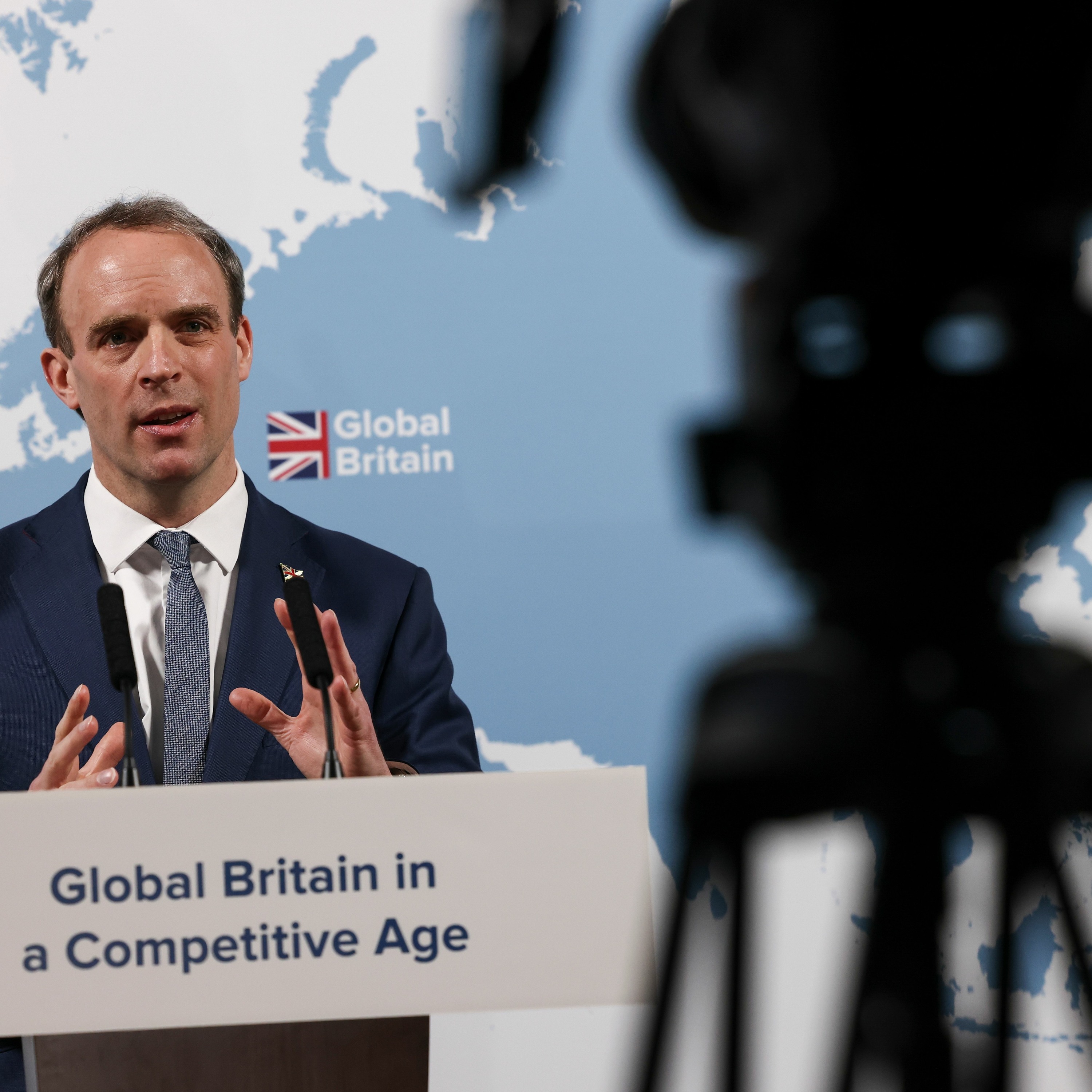
The British government has outlined an overhaul of the UK's foreign and defence policies. The Integrated Review of the UK’s Defence, Security, Development and Foreign Policy, published this week, lays out a vision for the country’s role in the world over the next decade. Host Mark Leonard talks to Jo Johnson, a former Member of the British Parliament between 2010 and 2019 who held key ministerial offices in each of the last three Conservative governments, attending Cabinet as Minister of State for Universities, Science, Research and Innovation. Together, they discuss the proposed Indo-Pacific tilt and the UK means by sovereignty in the context of the review. But most importantly, how does continental Europe fit into all of this? This podcast was recorded on 18 March 2021.Further reading:• Global Britain in a Competitive Age: the Integrated Review of Security, Defence, Development and Foreign Policy https://www.gov.uk/government/publications/global-britain-in-a-competitive-age-the-integrated-review-of-security-defence-development-and-foreign-policy • “The China question. Managing risks and maximising benefits from partnership in higher education and research” by Jo Johnson et al. https://www.kcl.ac.uk/policy-institute/assets/china-question.pdf•“Britain’s global pipe dream” by Nick Witney https://ecfr.eu/podcasts/episode/new-battlefields-the-uks-integrated-review/ •“Brexit Britain: The buccaneering begins at home” by Nick Witney https://ecfr.eu/article/brexit-britain-the-buccaneering-begins-at-home/ Bookshelf:•“China's quest for foreign technology. Beyond espionage” ed. By William C. Hannas & Didi Kirsten Tatlow Hosted on Acast. See acast.com/privacy for more information.

Dual circulation: China’s new economic strategy
In May 2020, China announced its new economic strategy which aims at cutting the country’s dependence on overseas markets and technology in the long-term. This “dual circulation strategy” was yet another result of the deepening rift with the United States. But what does this new economic policy mean for Europe? Host Mark Leonard is joined by Janka Oertel, director of the Asia programme at ECFR as well as Andrew Small, senior transatlantic fellow with the Asia programme at the German Marshall Fund of the United States as well as associate senior policy fellow at ECFR. What lies behind China’s dual circulation strategy? How will the EU approach all of this? And are European policy-makers really prepared to deal with this new challenge coming from China?This podcast was recorded on 4 March 2021.Bookshelf:· “The rise of industrial policy in China, 1978-2012” by Sebastian Heilmann and Lea Shih · Interview with Joe Kaeser in Handelsblatt [German] · “Decoupling - severed ties and patchwork globalisation” by the European Chamber of Commerce in China in partnership with MERICS Hosted on Acast. See acast.com/privacy for more information.
Belarus’s brutal politics
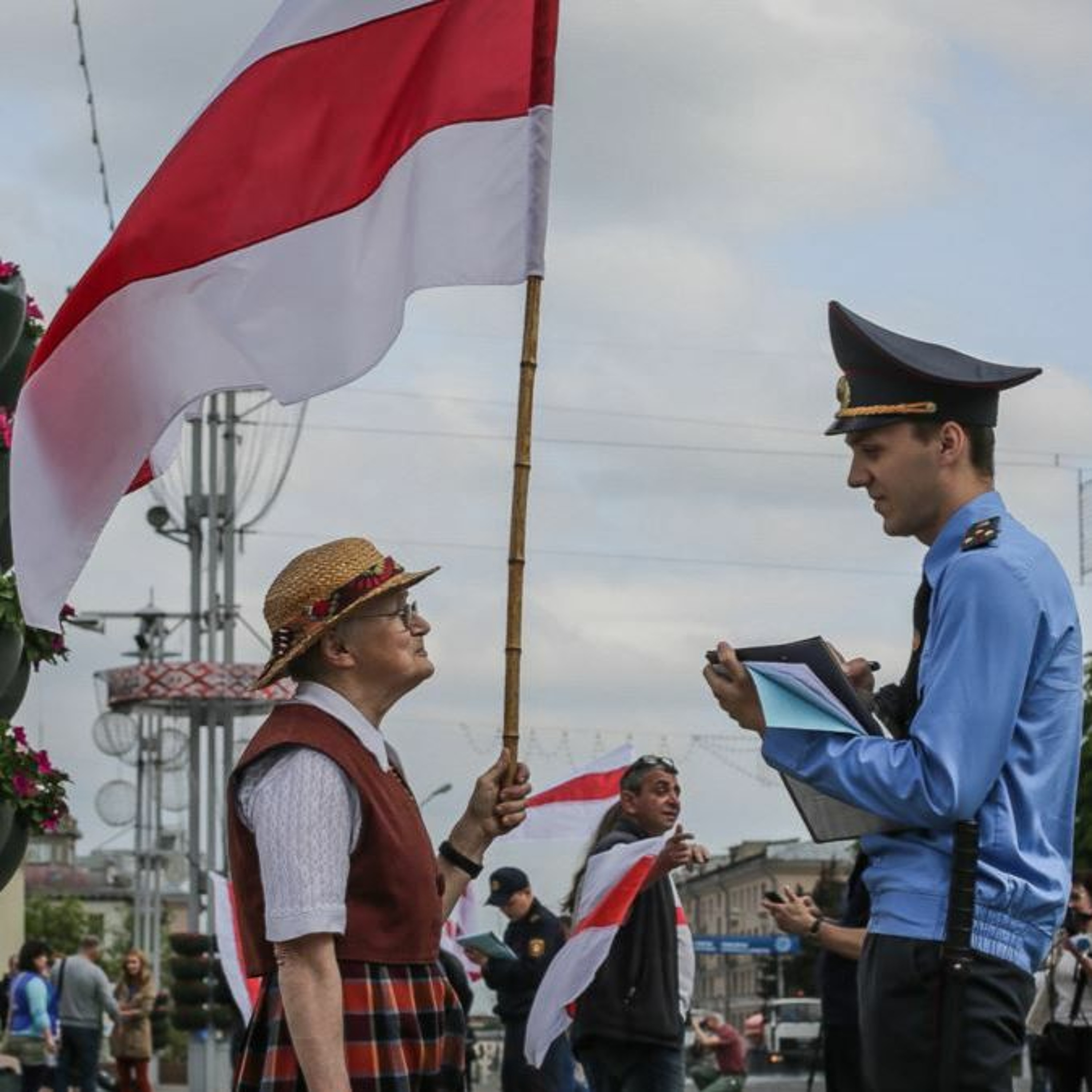
In 2020 Belarus made headlines when protests erupted in the aftermath of a fraught presidential election. Alexander Lukashenko, who has ruled Belarus for over 26 years, still clings to power today and has unleashed a crackdown on the protests and protesters with a level of brutality unseen in Europe for decades. Vessela Tcherneva, ECFR deputy director takes over the podcast this week to examine the subject of Belarus further. How did we actually get here? And what kind of implications do the developments in Belarus have for the wider neighbourhood and Europe? Andrew Wilson, ECFR senior policy fellow, Nicu Popescu, director of the ECFR Wider Europe Programme as well as Pavel Slunkin, ECFR visiting fellow from Belarus, discuss these questions.Further reading: https://ecfr.eu/topic/belarus/ This podcast was recorded on 3 March 2021.Bookshelf:•“Belarus – the last European dictatorship?” by Andrew Wilson • “American Oligarchs: The Kushners, the Trumps, and the marriage of money and power” by Andrea Bernstein •“Atlas shrugged“ by Ayn Rand • “The unwomanly face of war” by Svetlana Alexievich • “Secondhand Time: The last of the Soviets” by Svetlana Alexievich • “Pork Barrel Politics: How government spending determines elections in a polarized era” by Andrew Sidman • “Renaissance diplomacy“ by Garrett Mattingly • “The Ambassadors“ by Robert Cooper Hosted on Acast. See acast.com/privacy for more information.
A fair, green and digital recovery - brought to you by Portugal
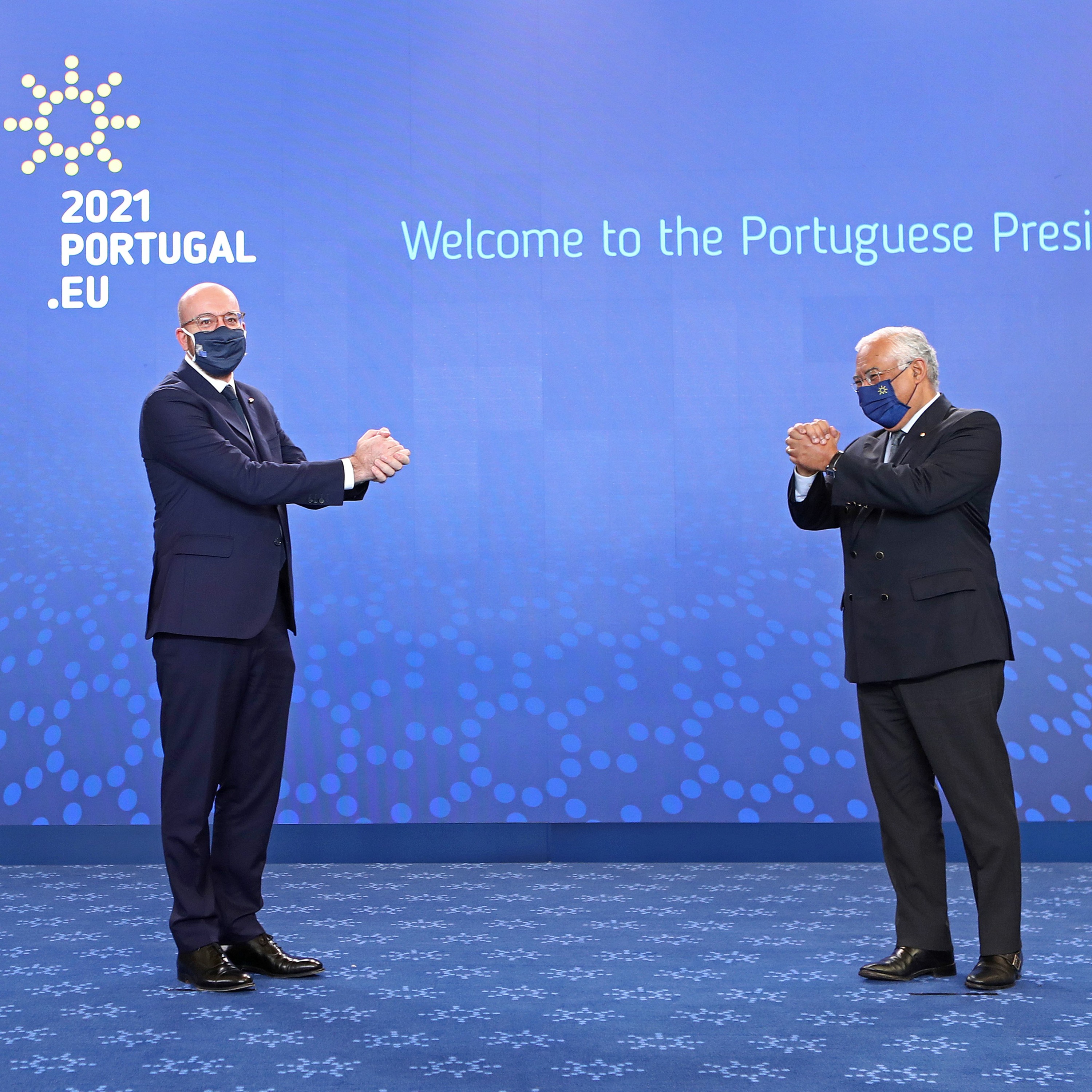
On January 1, Portugal took over from Germany at the helm of the Council of the EU’s rotating presidency and the government set out three priorities for this presidency captured in its slogan “Time to deliver: a fair, green and digital recovery”. What is needed for a fair and inclusive climate and digital transition? What will the biggest short-term challenges be? And how can the Portuguese presidency strengthen European strategic autonomy? Mark Leonard is joined by Claudia Azevedo, CEO, Sonae, Teresa Gouveia, ECFR Board Member and former Portuguese Minister of Environment and of Foreign Affairs, and finally, Carlos Moedas, former European Commissioner for Research, Science and Innovation, to discuss the prospects of the ongoing Portuguese Council presidency.This podcast was recorded on 24 February 2021. Further reading:"Crisis presidency: How Portuguese leadership can guide the EU into the post-covid era" by Susi Dennison & Lívia Franco: https://buff.ly/3mxp7cl - “Where Portugal can lead Europe in 2021” by Teresa Gouveia: https://buff.ly/2LHuuca - “Out of the south: Why Italy and Portugal should lead on climate change, health security, and multilateralism” by Teresa Coratella: https://buff.ly/2WC02BX- “Edge of the Atlantic: Portugal’s presidency of the EU Council” by Lívia Franco: https://buff.ly/3r3wY44Bookshelf:- “A Superpower, Like It or Not: Why Americans Must Accept Their Global Role” in Foreign Affairs by Robert Kagan- “How to Avoid a Climate Disaster: The Solutions We Have and the Breakthroughs We Need” by Bill Gates- “The world faces a pandemic of human rights abuses in the wake of Covid-19” by António Guterres- “Mission Economy: A Moonshot Guide to Changing Capitalism” by Mariana Mazzucato- “Think Again” by Adam Grant Hosted on Acast. See acast.com/privacy for more information.
Super Mario to the rescue
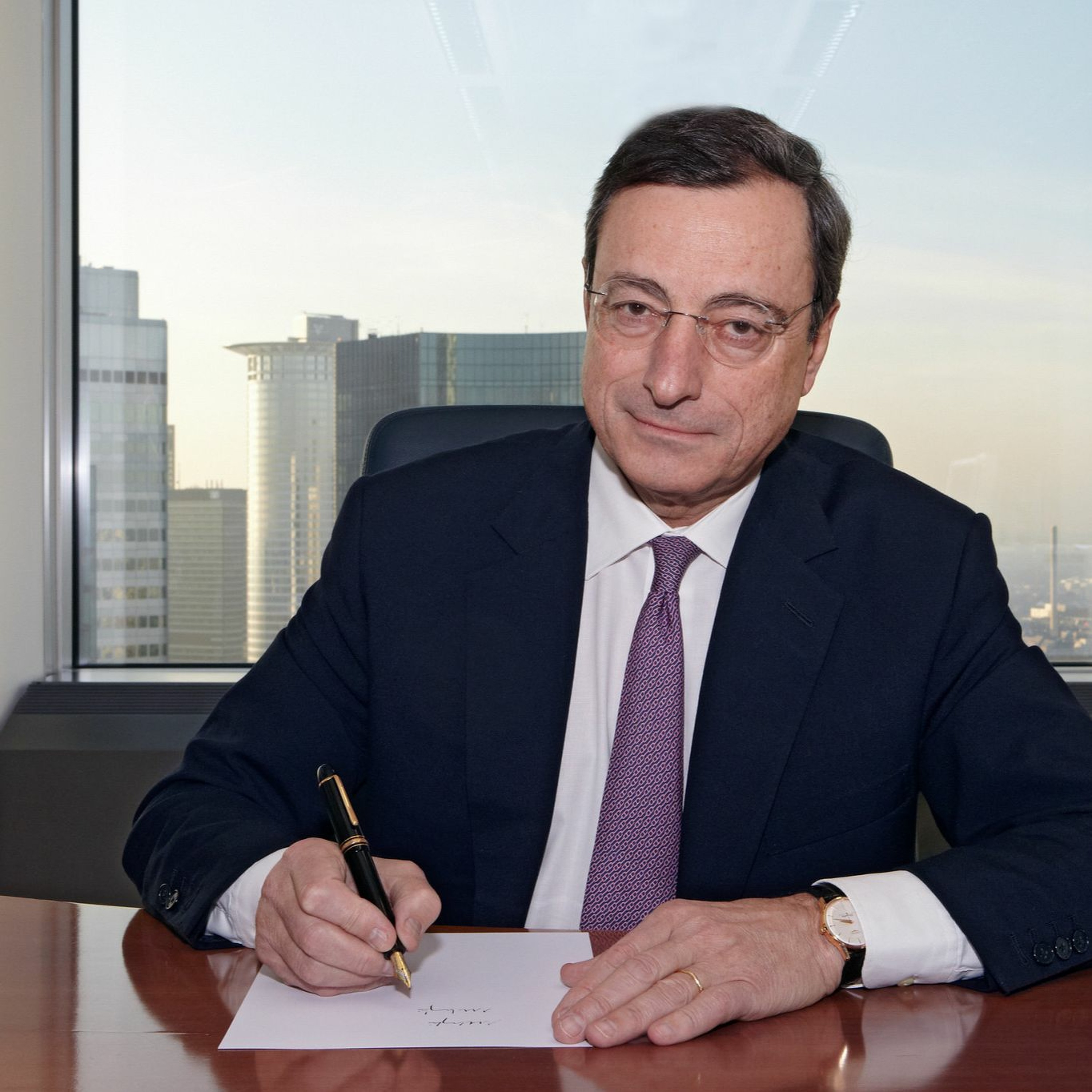
This week, former European Central Bank Chief Mario Draghi was sworn in as the country’s prime minister and the head of a unity government and put an end to weeks of political turmoil. His cabinet is the third administration that Italy sees in less than three years. But how stable will this government be? What are the first challenges Draghi will face in his country and in Brussels? Will he be able to stand on equal footing with Macron and Merkel? Host Mark Leonard talks to Lia Quartapelle, Italian parliamentarian of Partito Democratico, Alessandro Speciale, Bloomberg Italia director, and head of ECFR’s Rome office Arturo Varvelli about what the Draghi government will mean for Italy and Europe.This podcast was recorded on 17 February 2021. Bookshelf:•“Pale Rider: The Spanish Flu of 1918 and How It Changed the World” by Laura Spinney •“The Ladies of Grace Adieu and Other Stories” by Susanna Clarke •“Passé, présent et futur de Mario Draghi : la carrière politique d’un technician” by Alessandro Aresu & Andrea Garnero in Le Grand Continent •“Mario Draghi l'artefice” by Jana Randow & Alessandro Speciale Hosted on Acast. See acast.com/privacy for more information.
Stranger in Moscow: Borrell’s unwelcome visit
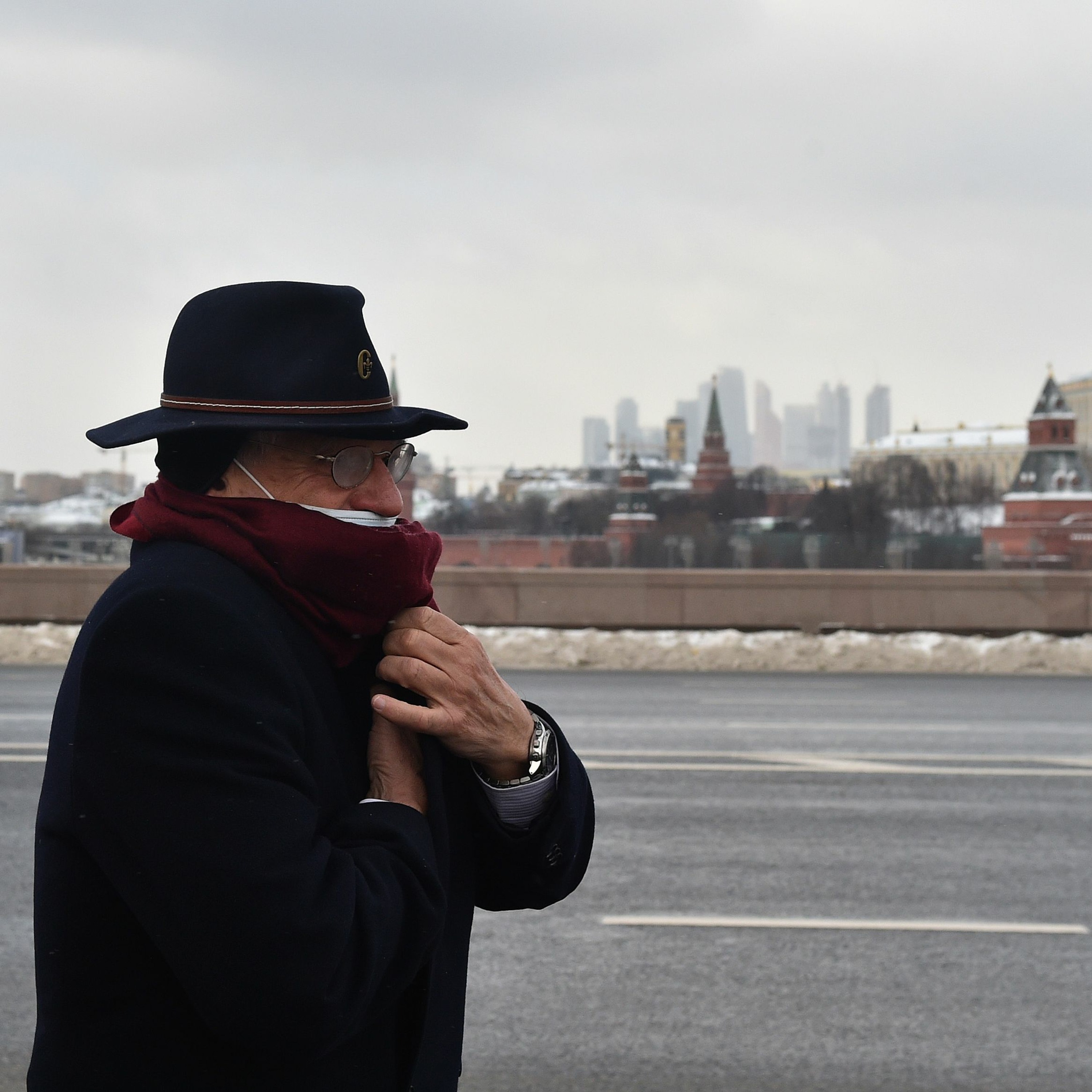
This month, High Representative Josep Borrell visited Moscow to discuss key issues of concern and test the waters for building a more “constructive dialogue” between Russia and the European Union. His visit came at a time of elevated tensions, as calls for sanctions against the Russian Federation are increasing and both sides debate over the recent poisoning and imprisonment of Alexei Navalny, as well as issues concerning the Nord Stream 2 pipeline. What lessons can be drawn from Borrell’s controversial visit? Why do attempts to reset relations with Russia fail? In this week’s episode, Mark Leonard is joined by Kadri Liik, senior policy fellow at ECFR and Russian domestic and foreign policy expert, Nicu Popescu, Director of ECFR´s Wider Europe programme, and José Ignacio Torreblanca, head of ECFR's Madrid office to discuss Europe’s strategy vis-à-vis Russia. This podcast was recorded on 10 February 2021.Further reading:- “Why attempts to reset relations with Russia fail” by Nicu Popescu: https://buff.ly/3rnwG7P - “The Putin paradox: Five things Navalny’s arrest says about Russia” by Kadri Liik: https://buff.ly/3rcfJghBookshelf:- “In Confidence: Moscow's Ambassador to Six Cold War Presidents” by Anatoly Dobrynin- “Barbarie de l'ignorance” by George Steiner and Antoine Spire- “Rakovsky, Ou, La Révolution Dans Tous Les Pays” by Pierre Broué Hosted on Acast. See acast.com/privacy for more information.
The global impact of the European Green Deal
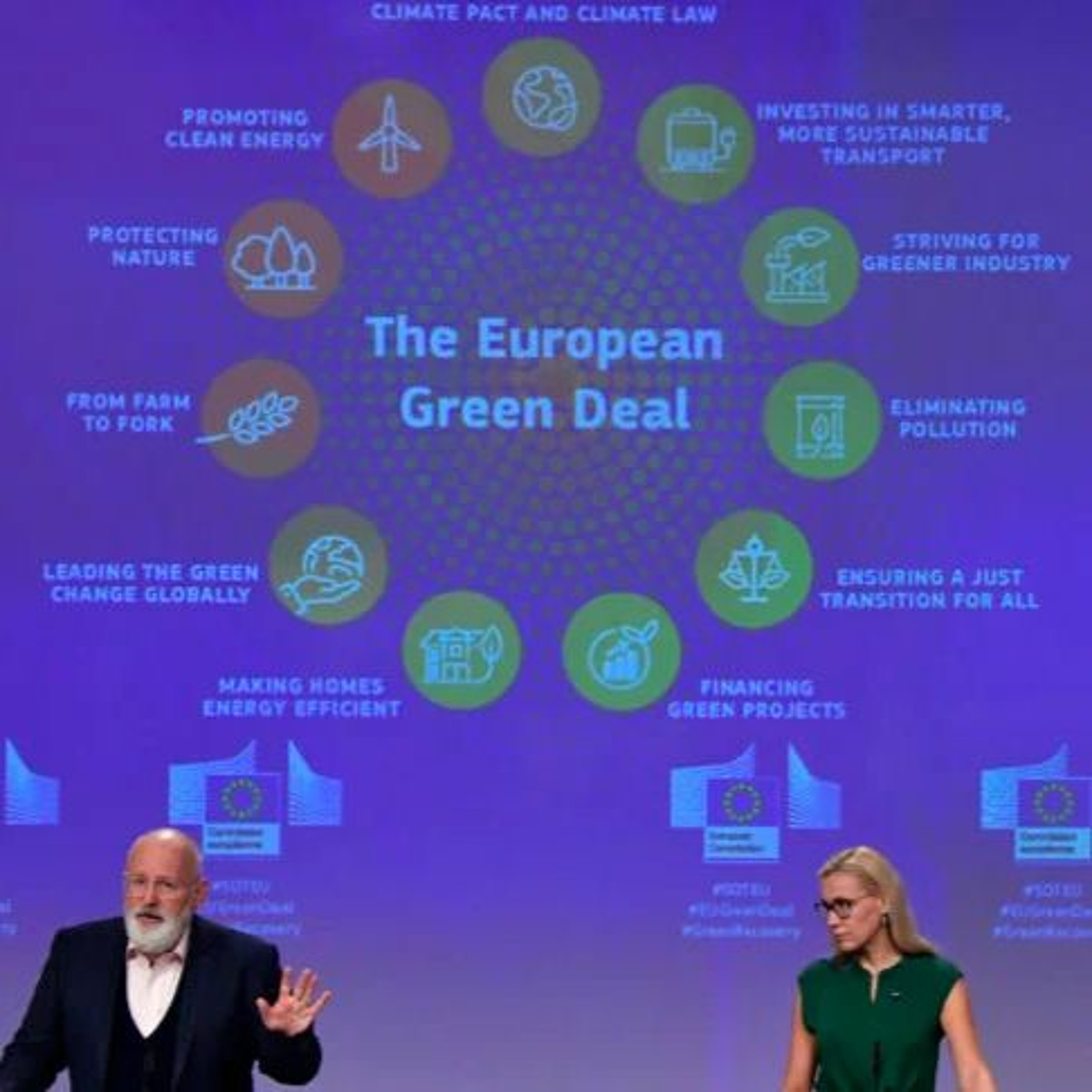
What are the key aspects of how the European Green Deal will change the world? Introduced by the new European Commission in 2019, the Green Deal’s goal is to decouple economic growth from resource use and to create an EU economy with zero net emissions of greenhouse gases by 2050. To reach that goal a fundamental overhaul of the European economy is needed. But this transformation will also have a dramatic effect on external economic relations and on foreign policy. This week host Mark Leonard invited ECFR Council Member and Member of the German Bundestag for Alliance 90/The Greens Franziska Brantner as well as Jean Pisani Ferry and Simone Tagliapietra from the Brussels-based think-tank Bruegel to discuss the geopolitical repercussions of the European Green Deal.This podcast was recorded on 4 February 2021.Further reading:“The geopolitics of the European Green Deal” by Mark Leonard, Jean Pisani-Ferry, Jeremy Shapiro, Simone Tagliapietra, and Guntram Wolff: https://buff.ly/3cJHAjWBookshelf: • “National power and the structure of foreign trade” by Albert O. Hirschman •"21st century diplomacy: foreign policy is climate policy” by the Wilson Centre & adelphi • "The new map: Energy, climate, and the clash of nations” by Daniel Yergin • “Fighting the first wave: Why the coronavirus was tackled so differently across the globe” by Peter Baldwin Hosted on Acast. See acast.com/privacy for more information.
The future of EU-China-US relations
One of the foreign policy priorities of US president Joe Biden is to work with allies on China. His administration reached out to the European Union ahead of his inauguration to make US intentions clear. However, so far, they have only been met with disappointment over the alacrity with which European leaders pushed forward the agenda of the comprehensive agreement on investment before Biden was even sworn in as president. What are the prospects for transatlantic cooperation on China now that a new US administration is in power? Has it ended before it has begun, or will we see a new Western approach to dealing with China’s rising power? This week, our host Mark Leonard is joined by Janka Oertel, head of ECFR’s Asia programme and Andrew Small, senior transatlantic fellow with the Asia programme at the German Marshall Fund of the United States and associate senior policy fellow at ECFR, to discuss the future of EU-China-US relations.This podcast was recorded on 28 January 2021.Further reading:- “Europe’s China deal: How not to work with the Biden administration” by Andrew Small: https://t.co/Po017TsXRoBookshelf- “The 1000-year-old boy” by Ross Welford- “The quest for legitimacy in Chinese politics: A new interpretation” by Lanxin Xiang Hosted on Acast. See acast.com/privacy for more information.
How Europeans see Biden’s America
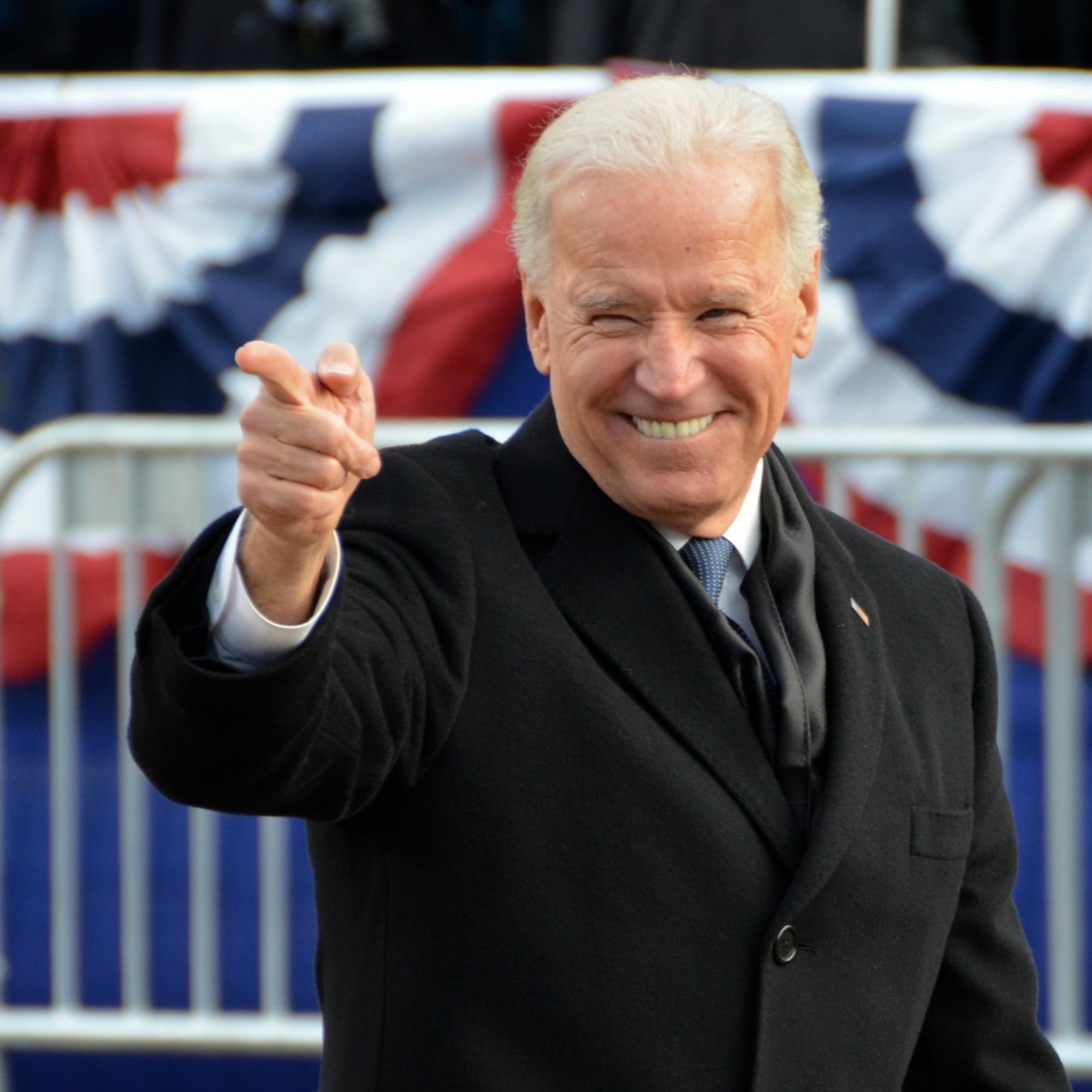
The new poll by ECFR revealed that despite the joy and relief many Europeans felt when Joe Biden won the US presidential election, they do not think he can help America make a comeback as the pre-eminent global leader. This week, Susi Dennison is taking over the podcast, joined by our usual host, Mark Leonard as well as Jeremy Shapiro, ECFR’s research director and in-house US expert. How do Europeans assess the future of transatlantic relations? Can the EU finally come to terms with its strategic sovereignty goal? And what does this mean for policy-makers in European capitals and across the Atlantic in Washington D.C.?This podcast was recorded on 21 January 2021.Further reading: "The crisis of American power: How Europeans see Biden’s America" by Ivan Krastev and Mark Leonard: https://buff.ly/3oXcLvsBookshelf:• “The upswing: How America came together a century ago and how we can do it again” by Robert D. Putnam & Shaylyn Romney • “The comedians” by Graham Greene • “Reset: Reclaiming the internet for civil society” by Ronald Deibert Hosted on Acast. See acast.com/privacy for more information.

Top ten foreign policy trends in 2021
It’s time for our annual review!It has become tradition that at the beginning of each year, World in 30 Minutes host Mark Leonard and Jeremy Shapiro, Research Director at ECFR, predict ten bright and bold policy projections for the year to come. Predictions for 2020 took a real beating from the coronavirus pandemic, but thanks to some very generous rounding, the end of year score came to 6 points out of 10. What are your foreign policy predictions for 2021? Let us know by tweeting at us @ecfr or comment here below or on Facebook.This podcast was recorded on 13 January 2021.Further reading: The long year: Top foreign policy trends for 2021: https://buff.ly/3636nLQTop ten foreign policy trends in 2020: https://buff.ly/2XE1G6qCheck out all predictions since 2016: https://buff.ly/3oJbwA8Bookshelf:- “The Mermaid from Jeju” by Sumi Hahn- “Cyber War & Cyber Peace in the Middle East" edited by Michael Sexton and Eliza Campbell Hosted on Acast. See acast.com/privacy for more information.
The coronavirus world order
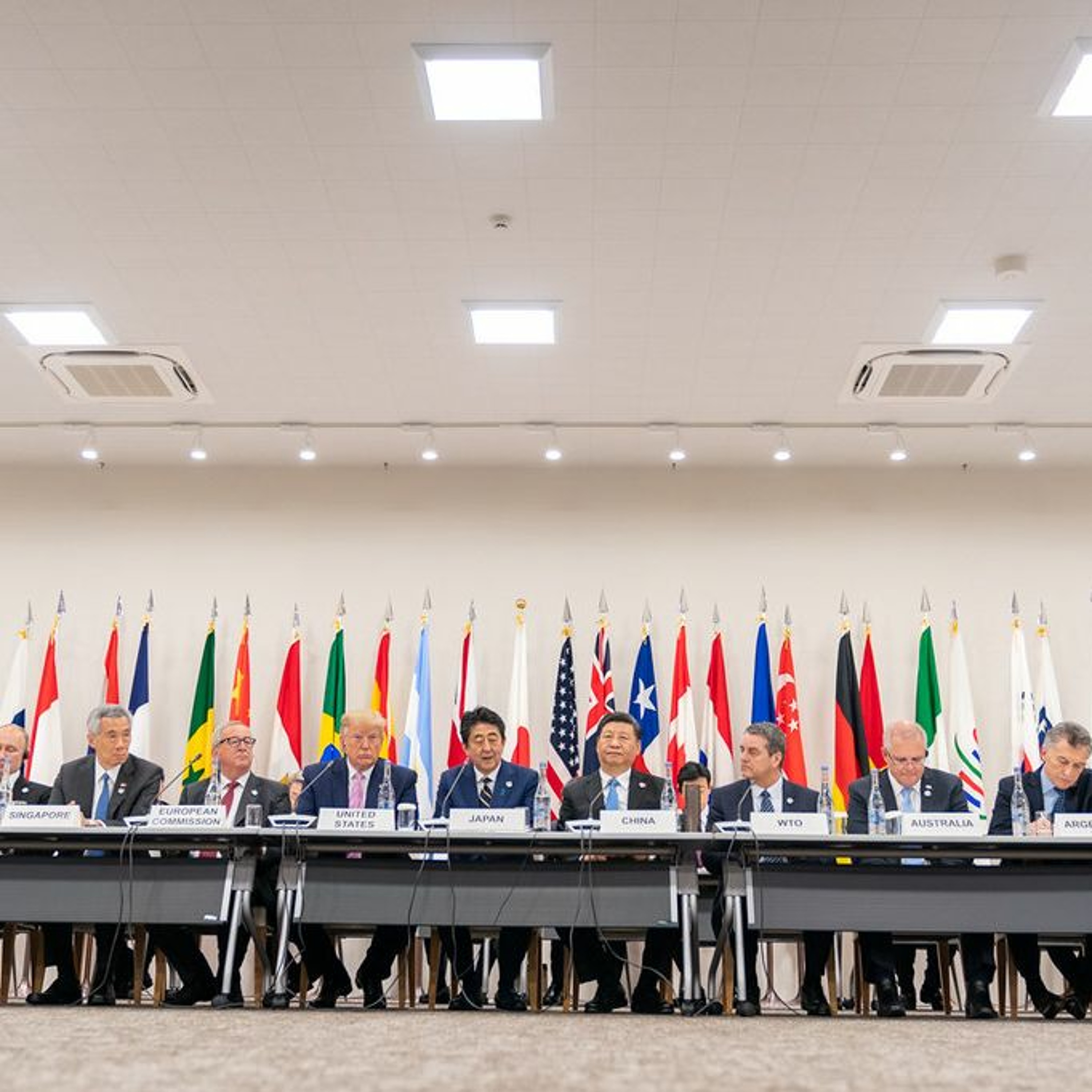
In the early days of covid-19, it became clear that none of the great powers were looking to the multilateral system to provide an answer. As the death count rose, every country acted as if it was on its own, closing borders, stockpiling medical equipment, and introducing export controls. The blame game conducted by Beijing and Washington over the WHO showed how geopolitics is increasingly undermining multilateralism. While it seems increasingly evident that the global challenges of today require global solutions, how can we explain the current crisis of the liberal international order? In this week’s podcast, Mark Leonard is joined by John Ikenberry, Albert G. Milbank Professor of International Affairs at Princeton University, to discuss the roles of the US and the EU in supporting liberal internationalism to address the problems of modernity and build a world safe for democracy.This podcast was recorded on 9 December 2020.Further reading:“The Next Liberal Order” by John Ikenberry: https://buff.ly/3j50qTC “Why Liberal Internationalism Is Still Indispensable—and Fixable” by Michael Hirsh: https://buff.ly/3gkxgilBookshelf:• “A World Safe for Democracy: Liberal Internationalism and the Crises of Global Order” by John Ikenberry• The “FDR at War” series by Nigel Hamilton• “Brideshead revisited” by Evelyn Waugh Hosted on Acast. See acast.com/privacy for more information.
The geopolitics of a covid-19 vaccine
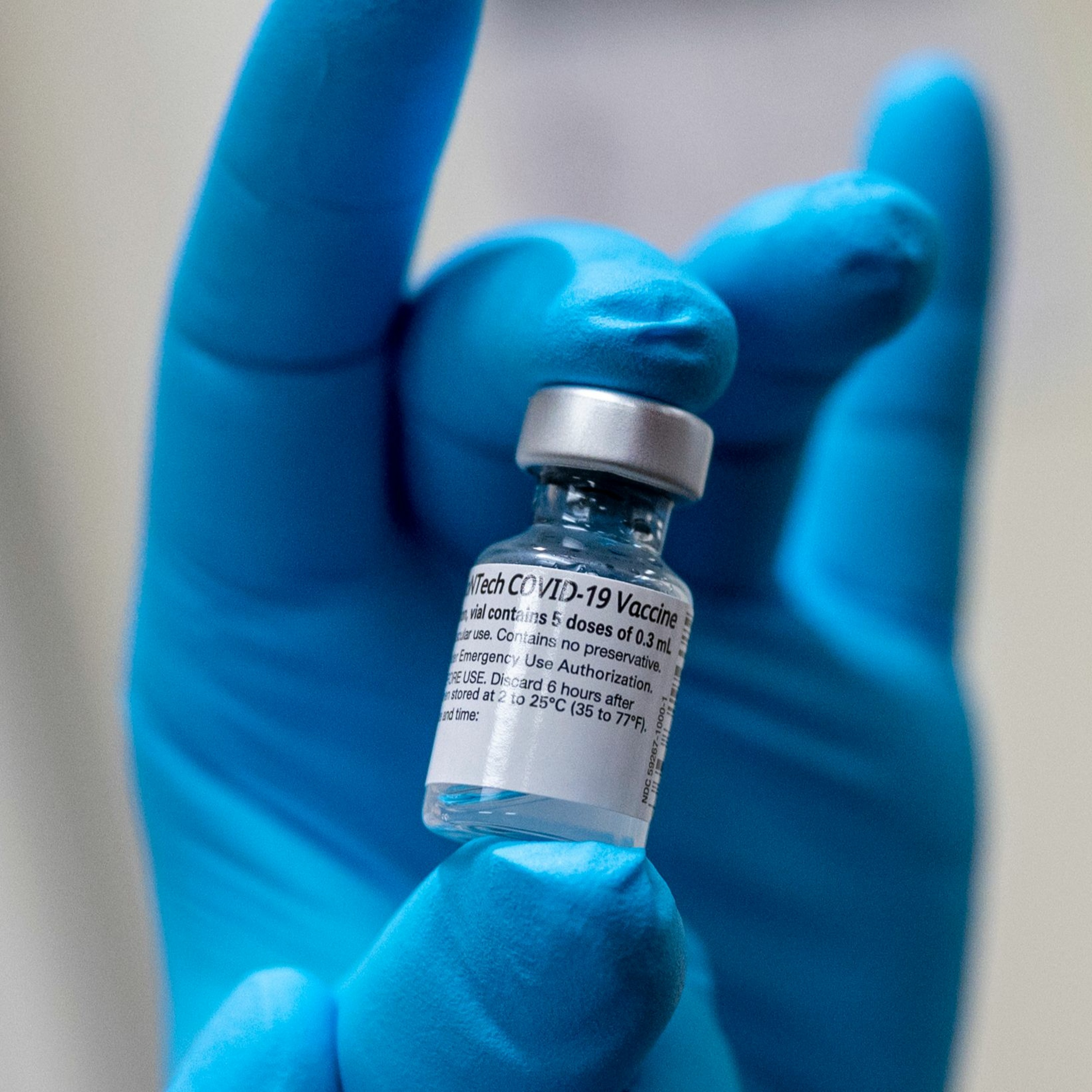
As Europe is in the middle of the second wave of the covid-19 pandemic, everyone hopes that a vaccine will put an end to it and thereby stop raising the death tolls and repeating lockdowns. In this week’s episode, Anthony Dworkin takes over the podcast to talk to Gunilla Carlsson, ECFR Council member and Vice-Chair of the Global Fund Strategy Committee, and Ilona Kickbusch, founding director and chair of the Global Health Centre at the Graduate Institute of International and Development Studies in Geneva about the global distribution of covid-19 vaccines and the geopolitics surrounding this. What are upcoming challenges for the COVAX initiative? How should we expect European countries to balance their commitment to protect their own populations vs global responsibilities?This podcast was recorded on 17 December 2020.Bookshelf:• "Risk society" by Ulrich Beck • Swedish poetry• "Why the Germans do it better" by John Kampfner Hosted on Acast. See acast.com/privacy for more information.
Europe’s battle of narratives
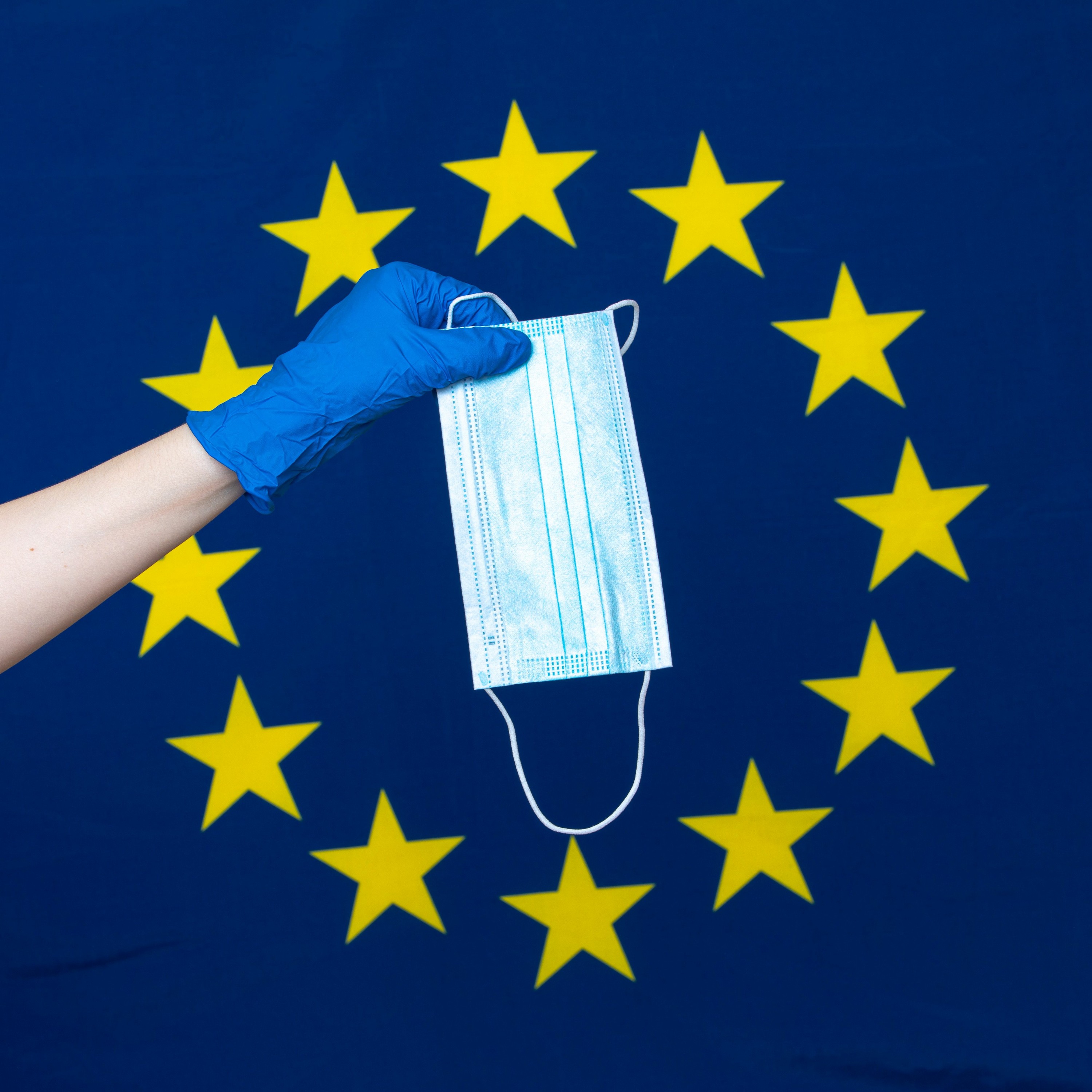
The corona outbreak has put the world’s leaders and the way they communicate to their people, to the test. Each country wants to project a positive self-image, portraying itself as a strong and capable crisis manager. In these past months, there have been attempts to discredit other countries, their political systems, and their responses to the pandemic. Also, scientific facts have been under scrutiny and challenged by “alternative facts” and disinformation. This week’s host, Susi Dennison, director of ECFR’s European Power programme is joined by ECFR Council Members Christine Ockrent and Julia De Clerck-Sachsse to talk about what HR/VP Josep Borrell called a “global battle of narratives and a struggle for geopolitical influence.”This podcast was recorded on 10 December 2020.Further reading:“La guerre des récits. Xi, Trump, Poutine: la pandémie et le choc des empires” by Christine Ockrent“From Brussels with love: How the European Union can win the battle of narratives” by Julia De Clerck-Sachsse: https://buff.ly/3kj6Uxy“Together in trauma: Europeans and the world after covid-19” by Susi Dennison & Pawel Zerka: https://buff.ly/37qdxelBookshelf:•The magic mountain by Thomas Mann•Love in the Blitz by Eileen Alexander •A country for dying by Abdellah Taïa•Ghana must go by Taiye Selasi•The world of yesterday by Stefan Zweig•Impossible by Erri De Luca Hosted on Acast. See acast.com/privacy for more information.

All eyes on Ethiopia: What the EU and the US can do
ust over a month ago, Abiy Ahmed, Prime Minister of Ethiopia and 2019 Nobel Peace Prize winner, ordered a military offensive against regional forces in Tigray. Since then, the situation has been spiralling out of control, with increasing international concern over access to the Tigray region and reports of attacks against UN personnel trying to gain access. ECFR’s Susi Dennison takes over in this week’s episode to discuss the regional implications of the conflict and the prospects for transatlantic cooperation around the issue. She is joined by Theo Murphy, Director of ECFR’s Africa programme, Payton Knopf, Senior Advisor to the Africa programme of the US Institute for Peace, and Alexander Rondos, ECFR Council Member and EU Special Representative to the Horn of Africa.This podcast was recorded on 9 December 2020. Further reading:- “Final Report and Recommendations of the Senior Study Group on Peace and Security in the Red Sea Arena”, U.S. Institute of Peace: https://buff.ly/2JS25PqBookshelf: - “Afropean: Notes from Black Europe” by Johny Pitts - “America in the World: A History of U.S. Diplomacy and Foreign Policy” by Robert Zoellick - “The Shadow King” by Maaza Mengiste - “Swimmer Among the Stars” by Kanishk Tharoor Hosted on Acast. See acast.com/privacy for more information.
How the US could return to the Iran nuclear deal
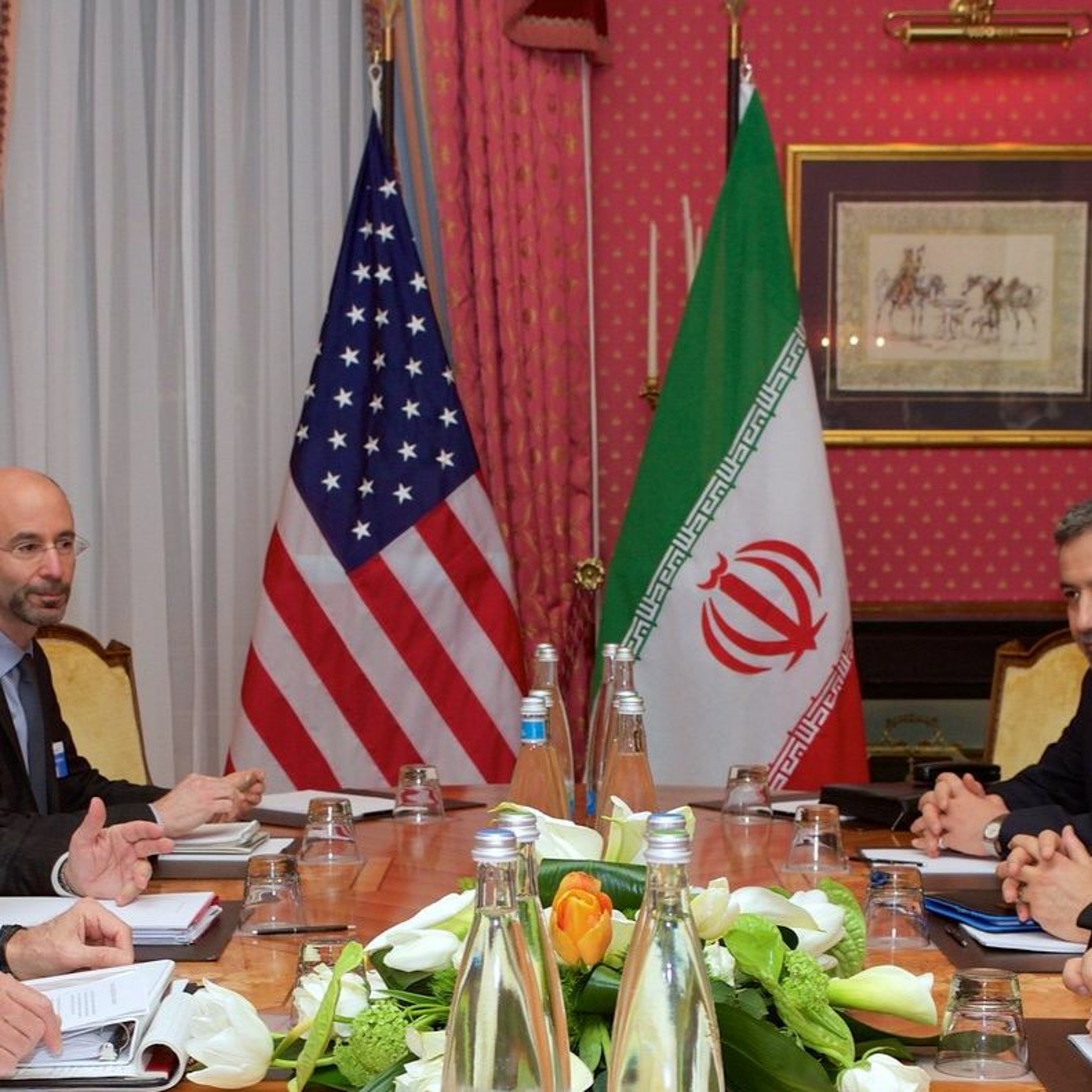
The election of Joe Biden presents an opening to strengthen transatlantic diplomacy on Iran. Biden has already outlined his intention to prevent a nuclear-armed Iran, primarily by ensuring the US re-joining the Joint Comprehensive Plan of Action (JCPOA), from which the US unilaterally withdrew under outgoing President Trump. However, to what extent can and will Iran policy be a priority of the incoming administration? What can Europeans do to bolster transatlantic diplomacy on Iran? This week Mark Leonard is joined by Nasser Hadian, professor of political science at the University of Tehran, Ilan Goldenberg, director of the Middle East Security Program at the Center for a New American Security and ECFR’s Ellie Geranmayeh, deputy head of our Middle East and North Africa programme to discuss these issues. This podcast was recorded on 2 December 2020.Further Reading:“A call for Europe to bolster transatlantic diplomacy on Iran”, a joint statement by ECFR Council Members: https://buff.ly/3qfKrFCOn Iran, the Next Administration Must Break With the Past by Elisa Catalano Ewers, Ilan Goldenberg, and Kaleigh Thomasin Foreign Affairs Bookshelf:• “Losing the Long Game: The False Promise of Regime Change in the Middle East”, by Philip H. Gordon• “A Promised Land” by Barack Obama Hosted on Acast. See acast.com/privacy for more information.
Can the Frugals transform the EU?
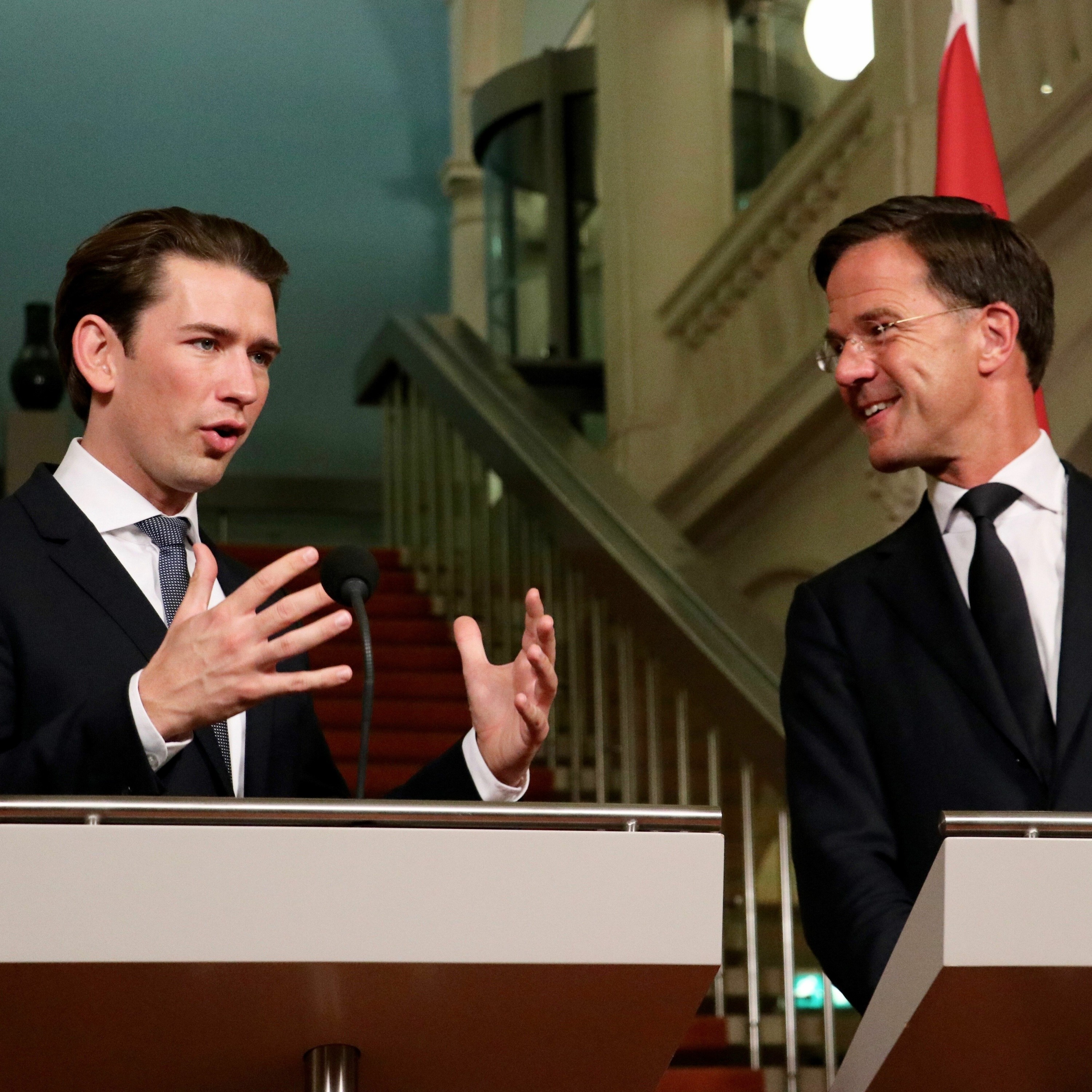
The geopolitical grouping known as the “frugal four” — Austria, Denmark, Sweden and the Netherlands — has emerged as a key power centre in this year’s negotiations over the EU’s next budget and the covid-19 recovery fund. However, flying the “frugal” banner now seems like it could become a trap — both for the countries themselves and for the rest of the EU. In this week’s episode, host Mark Leonard is joined by Catharina Sørensen, deputy director of the Danish “Think Tank Europa”, Caroline de Gruyter, ECFR Council Member and Europe correspondent and columnist for the Dutch newspaper NRC Handelsblad, Daniel Sachs, ECFR Council member and CEO of the board of Sweden-based Proventus AB, and ECFR policy fellow Pawel Zerka. Does “frugality” actually reflect the public sentiment in those countries? How do the citizens really feel about the recovery fund? And how could the leaders of the frugal states reposition their countries as transformative engines for the EU?Further reading: The transformative five: A new role for the frugal states after the EU recovery deal, by Pawel Zerka and Susi Dennisonhttps://ecfr.eu/publication/the-transformative-five-a-new-role-for-the-frugal-states-after-the-eu-recovery-deal/This podcast was recorded on 25 November 2020.Bookshelf:- The Mirror & the Light (Thomas Cromwell #3), by Hilary Mantel- Team of Rivals: The Political Genius of Abraham Lincoln, by Doris Kearns Goodwin- Leaving, by Vaclav Havel- The Magic Mountain, by Thomas Mann- The Joe Biden Experience, The Ezra Klein Showpicture (c) picture alliance / AA | Abdullah Asiran Hosted on Acast. See acast.com/privacy for more information.
Europe's pivot to Africa
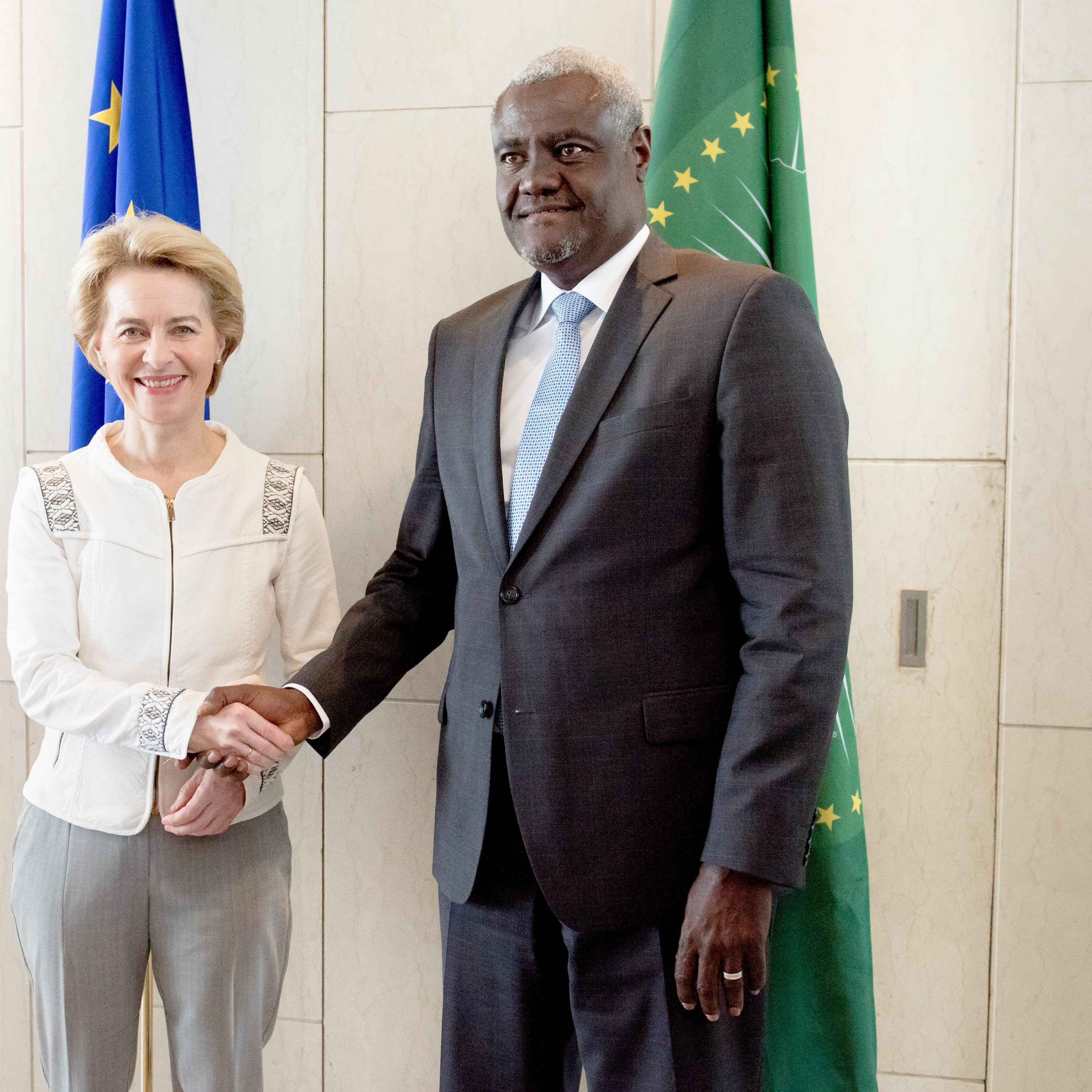
Almost a year ago, when EU Commission President Ursula von der Leyen made her first business trip outside the EU, she chose the African Union headquarters in Addis Ababa as her destination and took quite a stand . Also this year was supposed to be a “decisive year” in African-European relations: The German Minister for Economic Cooperation and Development talked at the beginning of 2020 about a “treaty of the century” which should have been sealed at the AU-EU Summit. However, with the pandemic ongoing, the Summit was postponed, and priorities shifted. Where do we stand now in building a “strategic partnership” between the European and African continent? And can we actually consider it a “strategic” one? What impact has the competition between the US and China on these relations?In this week’s episode, host Mark Leonard is joined by Faten Aggad, Senior Advisor to the AU High Representative on AU-EU negotiations, Mark Malloch Brown, former deputy secretary‐general of the UN under Kofi Annan and minister of state in the UK foreign office, and ECFR Africa’s director Theodore Murphy to discuss challenges and possible opportunities of the AU-EU relationship.This podcast was recorded on 9 November 2020.Further reading:“Trump, Biden, and Europe’s place in the Africa great power competition” by Theodore Murphy https://ecfr.eu/article/trump-biden-and-how-europes-losing-the-great-power-competition-in-africa/Bookshelf: •JFK: Volume One, by Fredrik Logevall•Shaping the Future of Power, by Lina Benabdallah•The Chronicles of Narnia, by C.S Lewis•A World Safe for Democracy, John IkenberryPodcast:•Global Translations, POLITICO Hosted on Acast. See acast.com/privacy for more information.
Europe’s new transatlantic bargain for Biden’s America
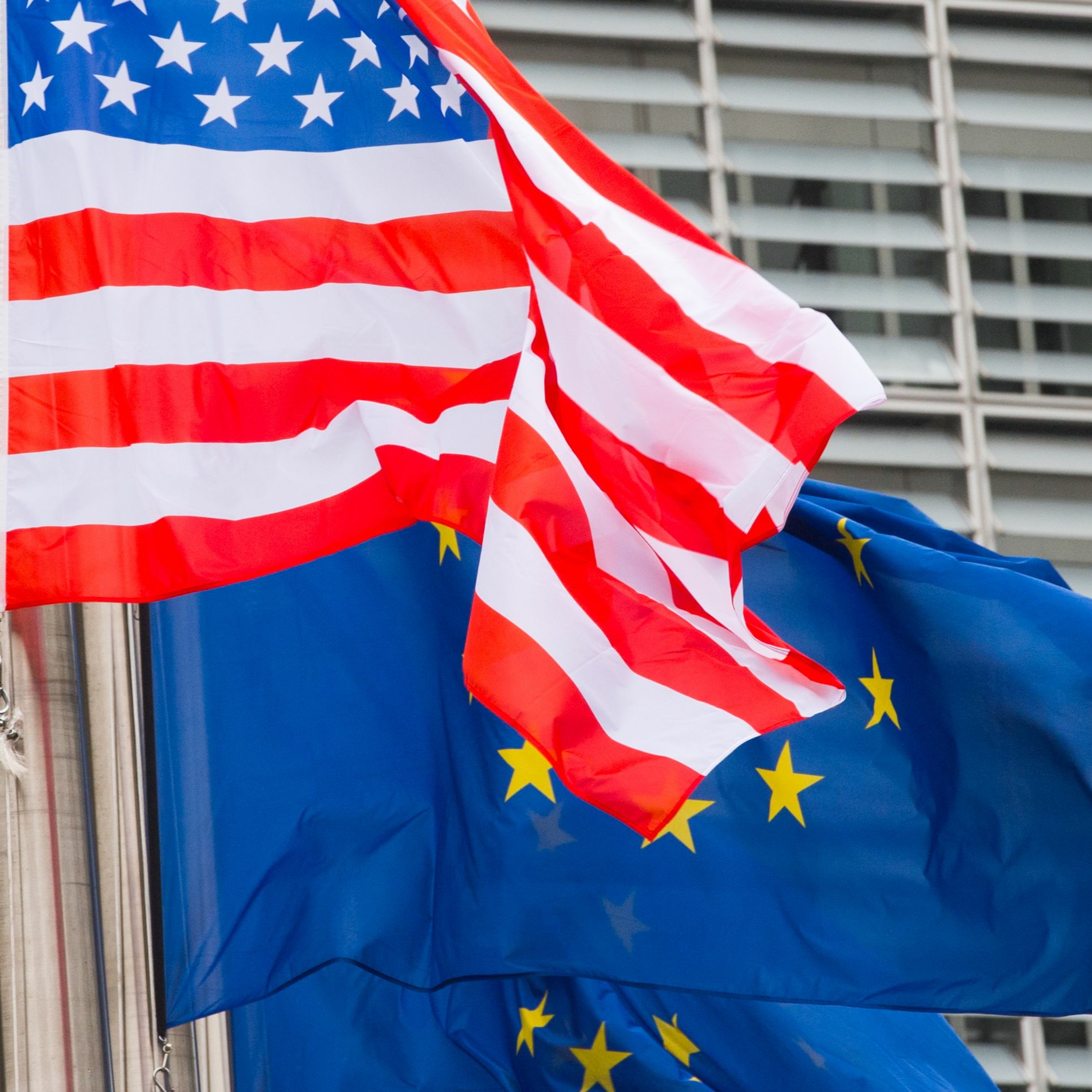
Joe Biden has won the US elections and in January 2021 will become the 46th president of the United States of America. While that is not yet official, it is clear. But what is also clear is that we cannot go back to the pre-Trump world. When Biden returns to the White House, he will look for a Europe that brings solutions rather than problems. Europeans should show they can be an equal partner and offer him a new transatlantic bargain. This week, host Mark Leonard is joined by our ECFR program directors: Susi Dennison, Janka Oertel, Julien Barnes-Dacey, Nicu Popescu, and Theodore Murphy to analyse how a “European offer” could look, with topics ranging from climate to trade, to multilateralism. Further reading: - ECFR topic page: https://ecfr.eu/topic/us-election-2020/ - “The best defence: Why the EU should forge security compacts with its eastern neighbours” by Gustav Gressel & Nicu Popescu: https://buff.ly/3jTzMMv This podcast was recorded on 12 November 2020.Bookshelf:• "Africa first" by Jakkie Cilliers • "Forget unity – now elections deliver revenge as much as representation" by William Davies in The Guardian• "This is not normal" by William Davies • "My Brother’s Road, an American's Fateful Journey to Armenia" by Markar Melkonian • "The Nine Lives of Pakistan" by Declan Walsh in The Guardian• "Sharp: The Women Who Made an Art of Having an Opinion" by Michelle Dean • "Blood and Oil: Mohammed bin Salman's Ruthless Quest for Global Power" by Bradley Hope, Justin Scheck Hosted on Acast. See acast.com/privacy for more information.
Anxious allies: European sovereignty after the US election
With Trump´s inauguration in 2017 and his claims about NATO and the transatlantic relationship, Europe began to realize that it needed to take better care of its own security. With the official election result looming, host Mark Leonard talks to ECFR’s heads of offices from Berlin, Paris, Madrid, and Warsaw – Jana Puglierin, Tara Varma, Jose Ignacio Torreblanca and Piotr Buras – as well as Jeremy Shapiro, ECFR´s research director and in-house US expert: How much impact does the future US president have on the very concept of European sovereignty? Will the idea and initiatives to build more strategic autonomy in Europe be put back to bed with Joe Biden in the White House? Or does Europe have to forge its own agenda?Further reading:• Topic page US elections and their impact on Europe and the world: https://buff.ly/3jQeFdV • “Independence play: Europe’s pursuit of strategic autonomy” by Ulrike Franke & Tara Varma: https://buff.ly/3jXaCwJ • "An American chasm" The Rachman Review with Jeremy Shapiro: https://buff.ly/2JG7QiUThis podcast was recorded on 5 November 2020.Bookshelf:• “These truths: a history of the United States” by Jill Lepore h• “We the People: a history of the United States” by Bidna, David et.al • “Yoga” by Emmanuel Carrère • “The tribalization of Europe: a defence of our liberal values” by Marlene Wind • Transcript Of John McCain's concession speech • TV show “Emily in Paris” • TV show “Patria” Hosted on Acast. See acast.com/privacy for more information.
Europe’s role in America’s election
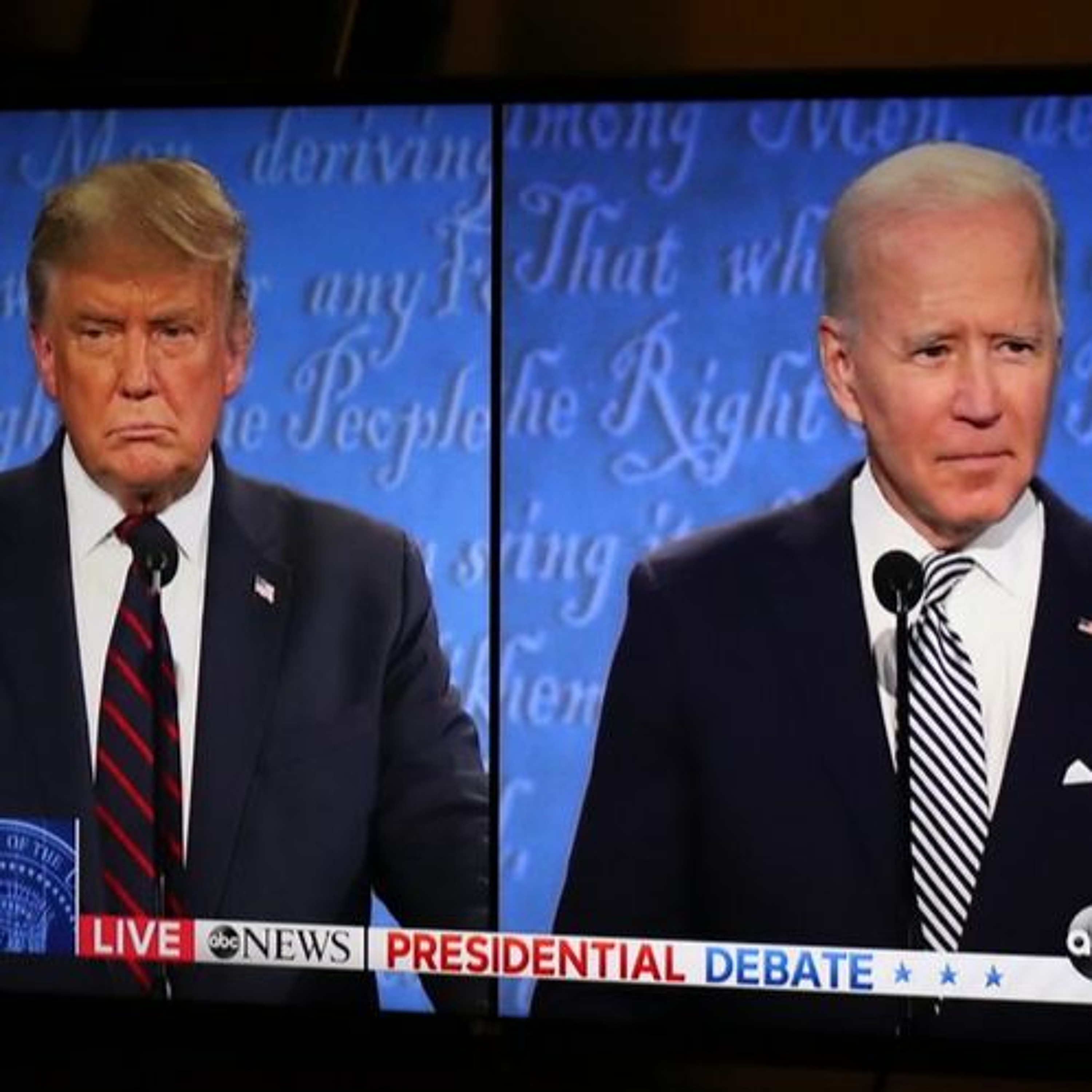
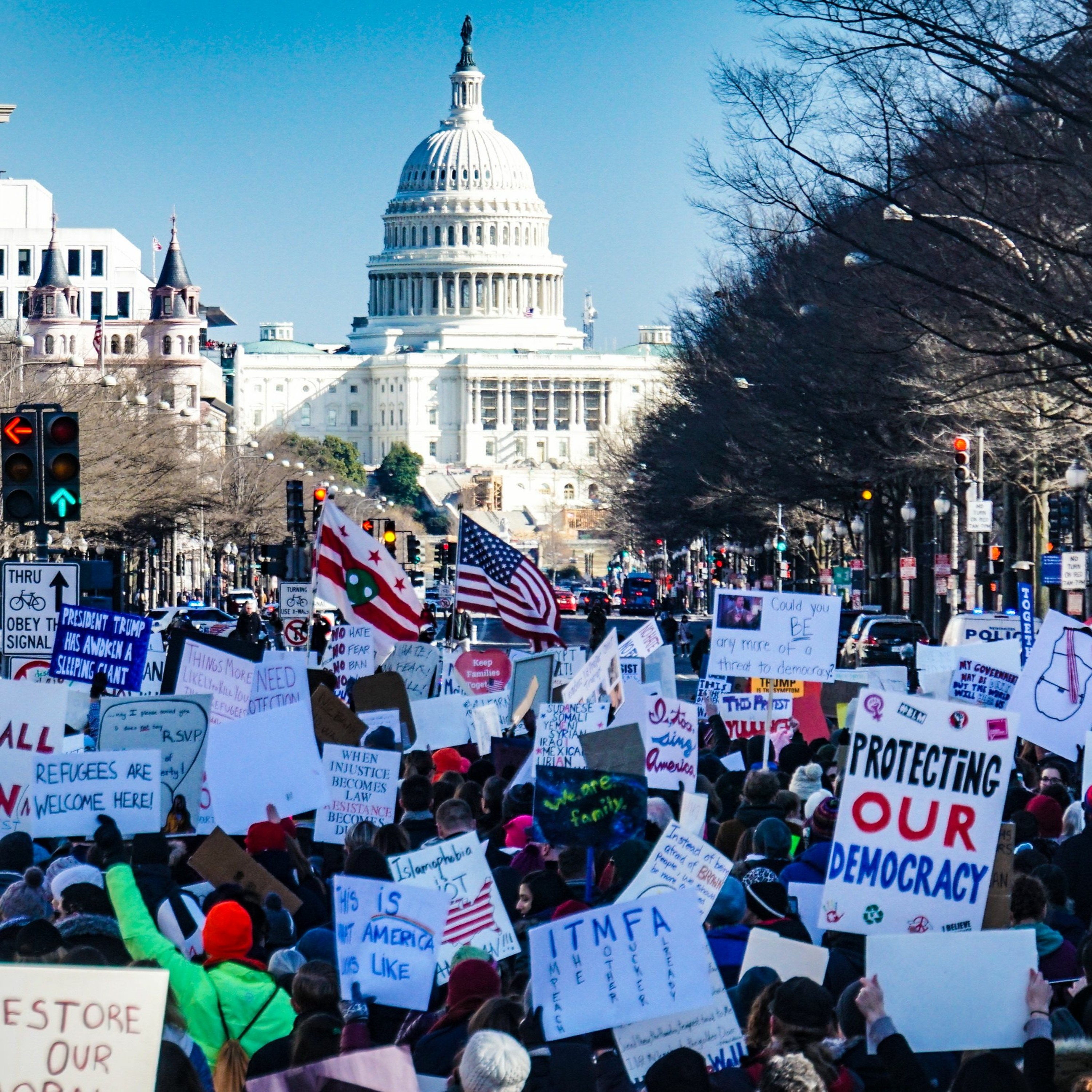
How will and can Europeans react in the event of a post-election chaos in the US? The election day is fast approaching yet the outcome still remains highly debatable and unpredictable. And, it is rather likely that also after November 3rd, no clear winner can be announced. How should Europe respond in this time of uncertainty? What impact will the prolonged power struggle have on the transatlantic relationship? ECFR’s research director Jeremy Shapiro takes over this week and is joined by ECFR´s senior director for strategic partnerships Anna Kuchenbecker, the Polish MEP Radek Sikorski, ECFR´s deputy director Vessela Tcherneva and Pierre Vimont, French ambassador to the US.Further reading: The world must prepare for a contested US election, by Timothy Garton Ash: https://buff.ly/3jKwPOe This podcast was recorded on 23 October 2020.Bookshelf:• “Cynical Theories: How activist scholarship made everything about race, gender, and identity—and why this harms everybody” by Helen Pluckrose & James Lindsay • “The Crimean war: A history” by Orlando Figes • "The United States and Central Europe: Tasks for a second century together” by Daniel Fried et. Al • “The plot against America” by Philip Roth Hosted on Acast. See acast.com/privacy for more information.

How can the EU strike back? The way towards higher economic resilience
European countries are increasingly coming under threat of economic coercion from great powers, as outlined in the latest ECFR’s policy brief. But what do we mean by economic coercion? What and who is currently threatening EU’s sovereignty, and what is likely to threaten it in the future?In this week’s episode, host Mark Leonard is joined by Elizabeth Rosenberg, Senior Fellow and Director of the Energy, Economics, and Security Program at the Center for a New American Security, Jean Pisani-Ferry, ECFR Council Member and a senior fellow at Brussels-based think-tank Bruegel and Jonathan Hackenbroich, ECFR policy fellow for economic statecraft and the head of ECFR’s Task Force for Protecting Europe from Economic Coercion to discuss how Europe could build up higher economic resilience. How can the Union best redress market distortions caused by sanctions, export controls and other forms of economic coercion? And can deterrence actually work?Further readings:• "A New Arsenal for Competition: Coercive Economic Measures in the U.S.-China Relationship" by Elizabeth Rosenberg, Peter Harrell and Ashley Feng: https://buff.ly/3mdQAiT• "Trump’s International Economic Legacy, by Jean Pisani-Ferry: https://buff.ly/31B0nrw• "Defending Europe’s Economic Sovereignty: new ways to resist economic coercion" by Jonathan Hackenbroich, with Janka Oertel, Philipp Sandner, and Pawel Zerka: https://t.co/R7G02XnyYU This podcast was recorded on 22 October 2020.Bookshelf: • "How Global Currencies Work: Past, Present, and Future" by Barry Eichengreen, Arnaud Mehl, and Livia Chitu• "De Gaulle" by Julian Jackson• "Maoism: a global history" by Julia Lowell• "National Power and the Structure of Foreign Trade" by Albert O. Hirschman• "Redefining A Philosophy for World Governance" by Tingyang Zao Hosted on Acast. See acast.com/privacy for more information.
Conquering the cyber sphere: How the EU can build digital sovereignty
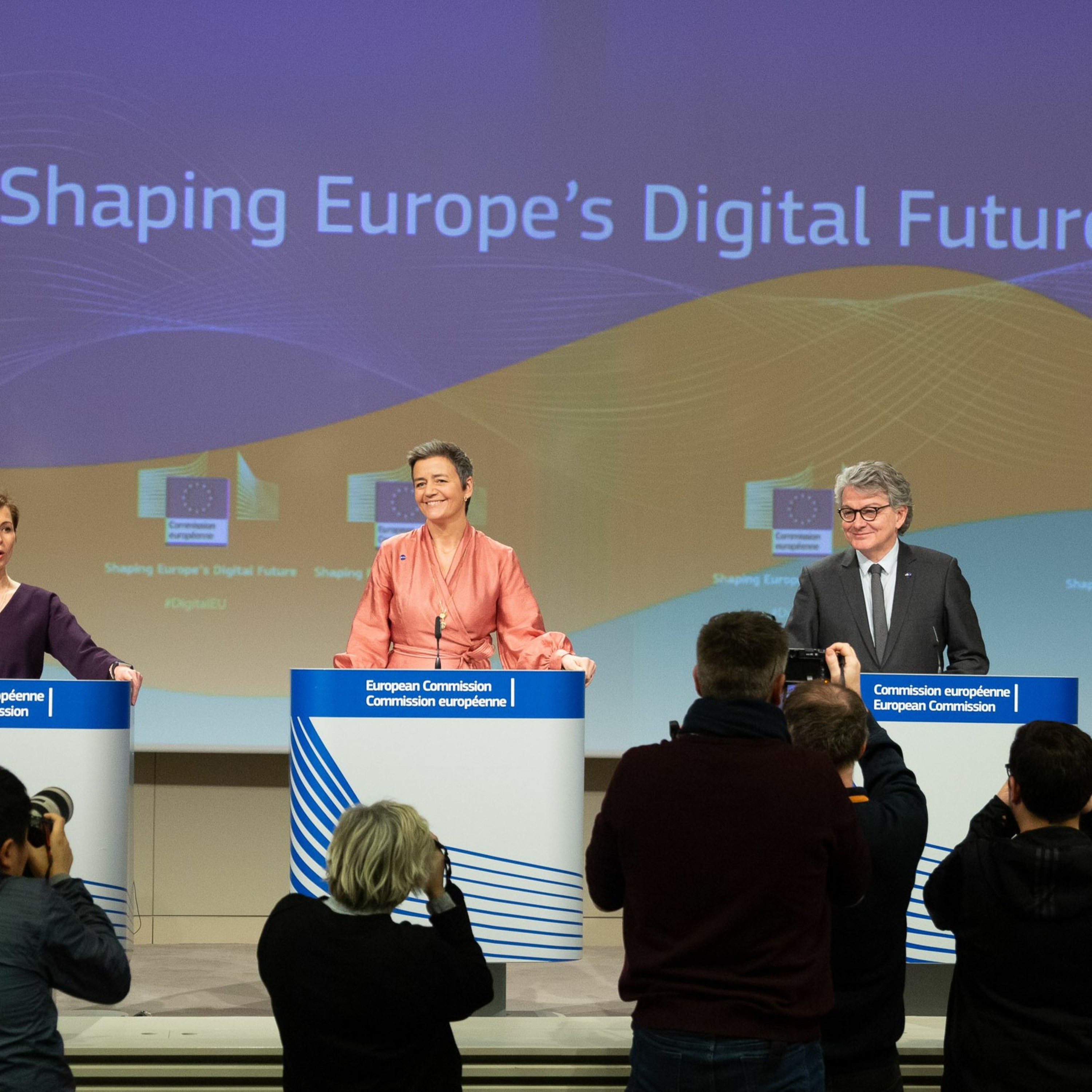
Europe’s digital transformation and sovereignty has become a question of existential importance. But what does it actually mean to be digital sovereign? Host Mark Leonard is joined by Marietje Schaake, President of the CyberPeace Institute and International Policy Director at the Cyber Policy Center at Stanford University as well as ECFR’s Jose Ignacio Torreblanca and Jeremy Shapiro. Together they analyse where we do see progress in developing digital sovereignty on EU level and where challenges still remain. What are some of the ideas for how the EU could develop digital sovereignty? And why does Europe have to even take two steps ahead and go above and beyond being a “regulatory superpower”? Further read: - “Europe’s digital sovereignty: From rulemaker to superpower in the age of US-China rivalry” by Carla Hobbs (ed.) https://buff.ly/30eSI1P - “Weakened democracy is another harm caused by Big Tech” by Marietje Schaake in Financial Times https://buff.ly/2T23y6I This podcast was recorded on 15 October 2020. Bookshelf: “Central bank digital currencies: foundational principles and core features” Report No.1 by Bank for International Settlements 2020 “Twilight of Democracy: The Seductive Lure of Authoritarianism” by Anne Applebaum José I. Torreblanca interviewing Anne Applebaum in El Mundo [in Spanish] “Which Side of History?: How Technology Is Reshaping Democracy and Our Lives Kindle Edition” by James P. Steyer (ed.) “The India Way: Strategies for an Uncertain World” by Subrahmanyam Jaishankar Hosted on Acast. See acast.com/privacy for more information.
Why Europe cannot become a giant Switzerland - geopolitical challenges in times of covid-19
The covid-19 pandemic has shaken the EU’s conception of order and exposed a gap between European aspirations and actions. Firstly, Europeans are confronted with the fact that raw power, not rules, is the main factor determining today’s global dynamics. Secondly, global politics are now centred rather in Asia than Europe; the Sino-American rivalry has shifted attention away from European issues.In this week’s podcast, Mark Leonard stars as guest – not host – to discuss with policy fellow Ulrike Franke und head of ECFR’s Berlin office Jana Puglierin these “twin shocks”. What are possible ways to deal with these new geopolitical realities shock and what does this mean for the transatlantic relationship? To what extent will the US elections be a game-changer? Should Europe reinvent its geopolitical approach? And in which ways can Germany help Europe to redefine its strategy in this deeply changed scenario?Further reading: “Geopolitical Europe in times of covid-19 ” by Mark Leonard: https://www.europesfutures.eu/vault/geopolitical-europe-in-times-of-covid-19This podcast was recorded on 7 October 2020.Bookshelf:-"Possible Minds: 25 Ways of Looking at AI” by John Brockman -"Zeitenwende", Special Edition of the Munich Security Report on German Foreign and Security Policy. Hosted on Acast. See acast.com/privacy for more information.
Nagorno-Karabakh: Armenia and Azerbaijan's thawing of the ‘frozen conflict'
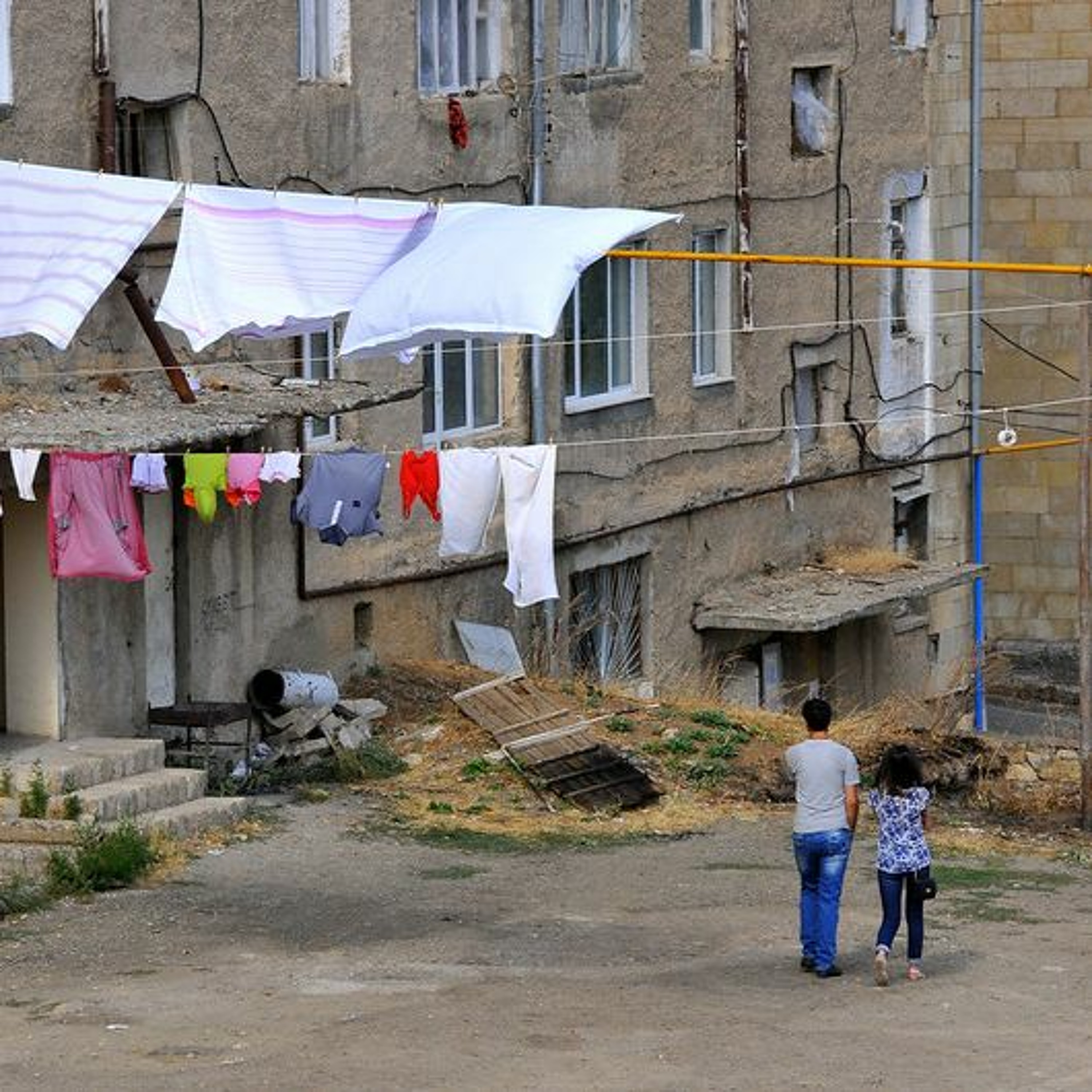
The contested Nagorno-Karabakh region is at the heart of a decades-long armed standoff between neighbours Armenia and Azerbaijan. The heavy clashes seen last week prompted fears that the dispute could spark yet again another war in the region. Host Mark Leonard is joined by Nicu Popescu, head of ECFR’s Wider Europe programme, ECFR’s Turkey expert Asli Aydıntaşbaş and Sophia Pugsley, Caucasus Regional Manager at International Alert. They explain the background to this conflict, why it flared up again and talk about the situation on the ground. What kind of roles do Turkey and Russia play in the recent fights? Should the EU interfere, and if yes, how? Further reading: "A hill here, a village there: Nagorno-Karabakh and the salami-slicing wars", by Nicu Popescu: https://buff.ly/3joH77wThis podcast was recorded on 30 September 2020.Bookshelf: “The story of a new name” by Elena Ferrante - “Envisioning peace: An analysis of grassroots views on the Nagorny Karabakh conflict” by Larisa Sotieva et al. - “Parts of a Circle: History of the Karabakh conflict“ a film by Conciliation Resources: https://vimeo.com/407942633 - “Biography of an empire. Governing Ottomans in an age of revolution” by Christine Philliou - “ Osman’s Dream: The history of the Ottoman Empire” by Caroline Finkel - “The Churchill Complex: rise and fall of the special relationship” by Ian Buruma Hosted on Acast. See acast.com/privacy for more information.

Rifts under sea and on land: The multiple crises in the Eastern Mediterranean
In the eastern Mediterranean, a scramble is under way between countries in the region for access to recently discovered gas fields, often overlapping with wider battle lines across the Middle East, historical tensions and far-back-reaching sentiments. Following up on last week’s conversation with spokesperson and close senior advisor to President Erdogan Ibrahim Kalin, this week’s episode analyses the crisis from a Greek, French, and Turkish perspective. Host Mark Leonard is joined by ECFR´s Turkey expert Asli Aydıntaşbaş, the head of ECFR’s Paris Office Tara Varma and ECFR Council Member, professor at the University of Athens and President of the Hellenic Foundation for European and Foreign Policy (ELIAMEP) Loukas Tsoukalis. Together, they discuss what led to the escalation and which different aspects are important to understand the crisis. Is Ankara adopting an assertive approach or is it playing a “stabilising role”? And what are the intentions behind President Macron´s call for a Pax Mediterranea? Can Europe’s find a common approach and voice on this conflict and in the mediation process?Read more about the Eastern Mediterranean issue here: https://buff.ly/3ciG99URe-watch the conversation with Ibrahim Kalin here: https://buff.ly/3mNNfrZThis podcast was recorded on 23 September 2020.Bookshelf:• “My Brilliant Friend” and "The lying life of adults" by Elena Ferrante • "Necropolitics” by Achille Mbembe • “How my mother and I became Chinese propaganda” by Jiayang Fan in The New Yorker• "Turkey’s labyrinthine relationship with the West: Seeking a way forward” by Marc Pierinipicture: © picture alliance / AA | Turkish National Defense Ministry - Hosted on Acast. See acast.com/privacy for more information.
From fragility to vitality – Analysing von der Leyen’s #SOTEU
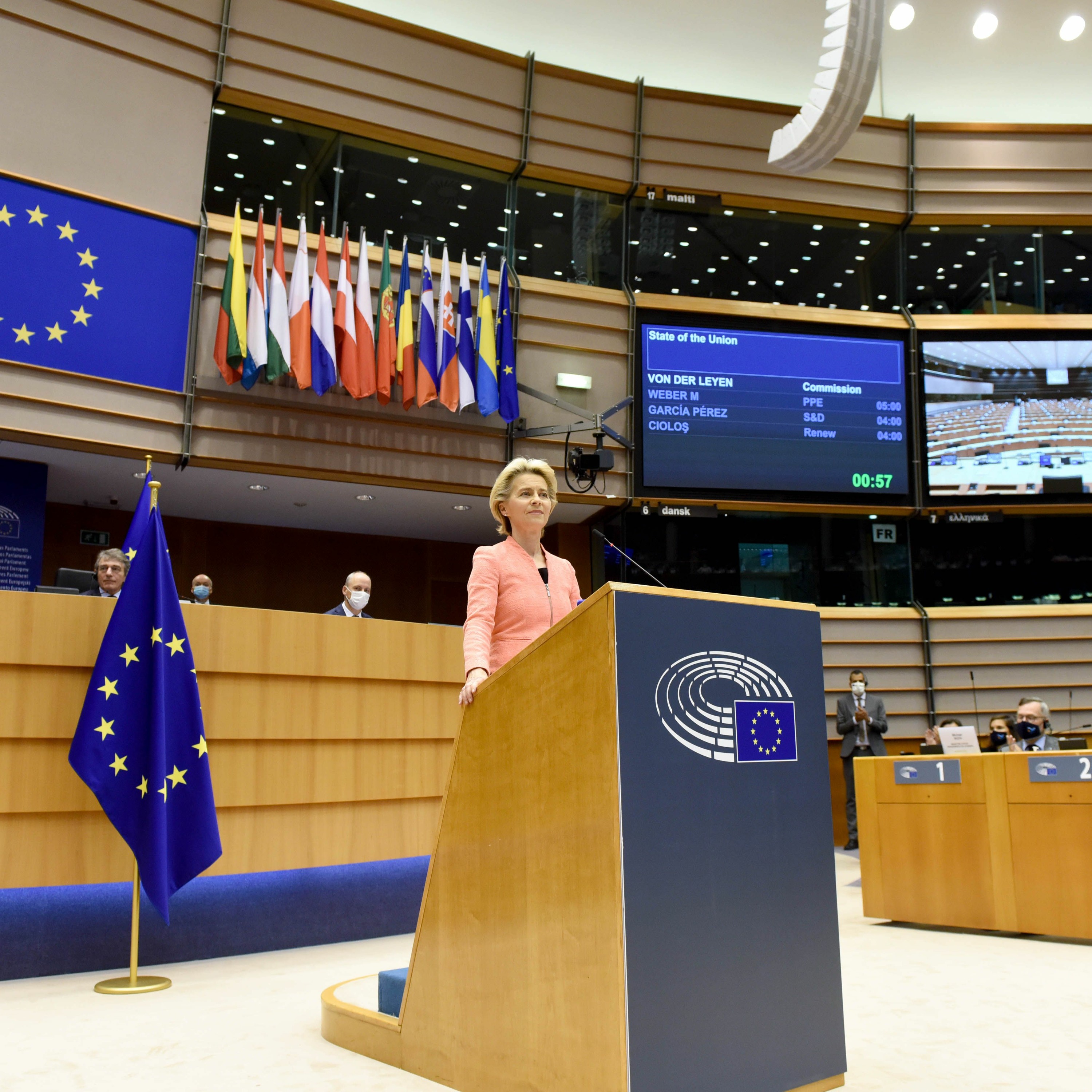
Ursula von der Leyen’s first State of the European Union speech was as long as it was broad in topics and calls for action. Host Mark Leonard is joined by Alexander Stubb, ECFR Board Member, Director of the European University Institute’s School of Transnational Governance and Former Prime Minister of Finland and Carlos Moedas Trustee at the Calouste Gulbenkian Foundation and former European Commissioner for Research, Science and Innovation. Together they break down the speech and analyse its various parts, from climate to health policy, from digital sovereignty to Europe’s place in the world. What did the Commission President promise and envision? And did she point out some black sheep?This podcast was recorded on 16 September 2020.Bookshelf:• “Governance in the new global disorder: Politics for a post-sovereign society” by Daniel Innerarity • “The virus in the age of madness" by Bernard-Henri Lévy • “Has China won? The Chinese challenge to American primacy” by Kishore Mahbubani • "Negotiating flexibility in the European Union" by Alexander Stubb • "Taming Sino-American rivalry" by Feng Zhang & Richard Ned Lebow Hosted on Acast. See acast.com/privacy for more information.
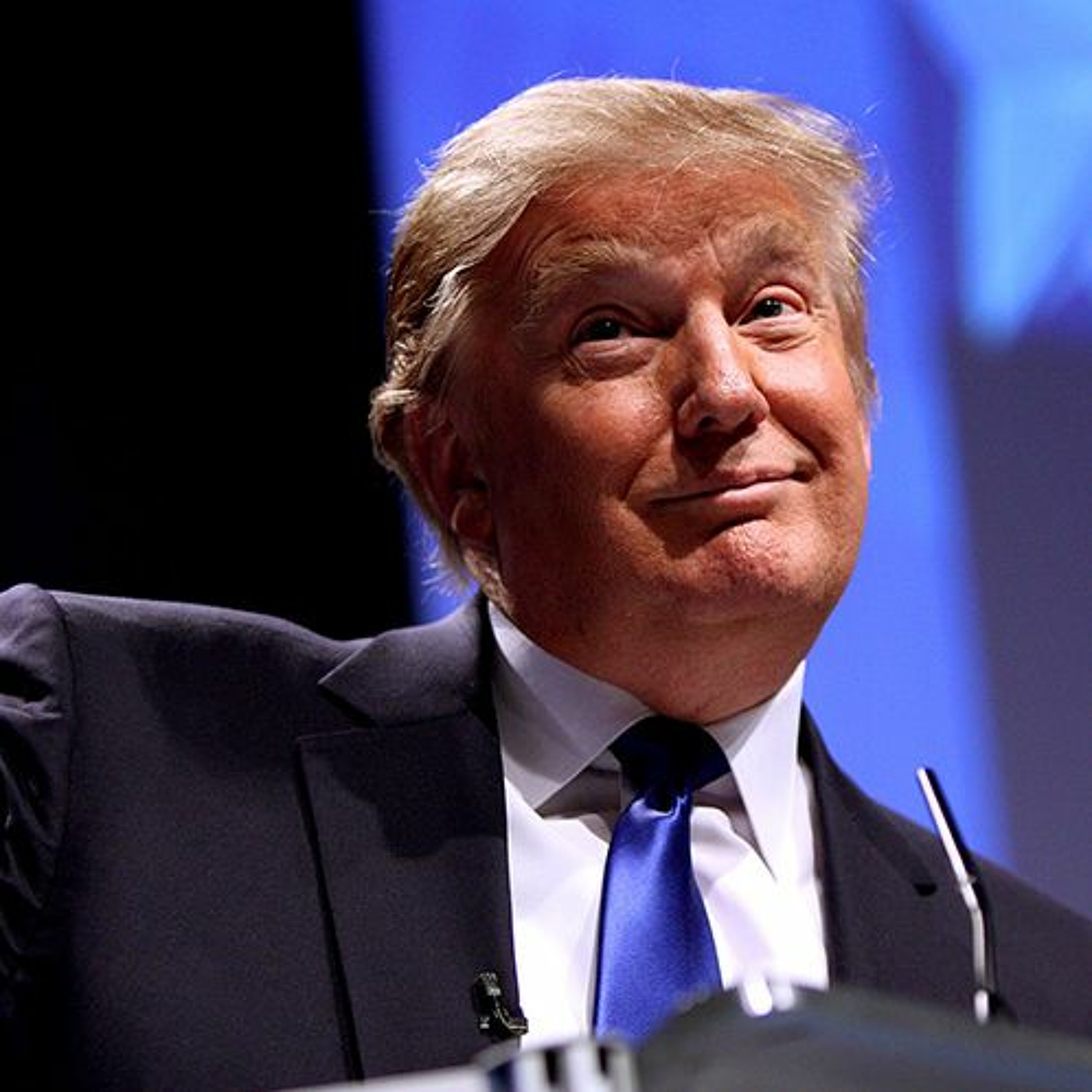
Trump’s dirty tricks
Although US President Donald Trump’s efforts to undermine the election are shameless, they are still more subtle than the outright election rigging that one finds in places like Belarus. Like other authoritarian leaders, Trump is deploying a new anti-democratic politics that has yet to be fully comprehended. Together with Asli Aydintasbas, Jeremy Shapiro and Andrew Wilson, Mark Leonard depicts seven dirty tricks that Trump seems to be borrowing from e.g. Russian President Vladimir Putin or Turkish President Recep Tayyip Erdogan.Further reading: "Trump's dirty trick" by Mark Leonard: https://buff.ly/2EYW4xG This podcast was recorded on 9 September 2020.Bookshelf:- “Circe” and “The song of Achilles” by Madeline Miller - “The eternal city: A history of Rome” by Ferdinand Addis - “Democracy for sale” by Peter GeogheganPicture (c) Gage Skidmore Hosted on Acast. See acast.com/privacy for more information.
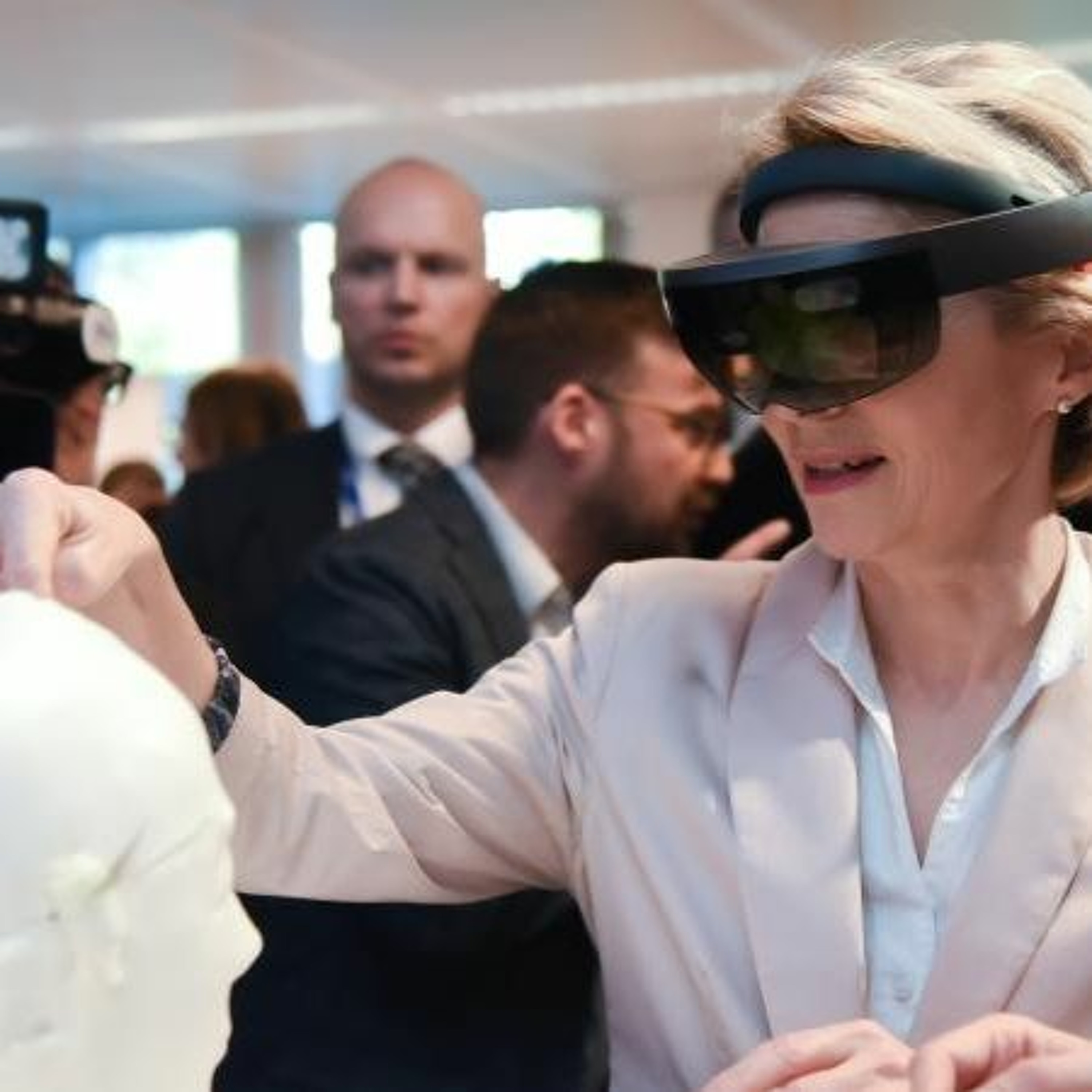
Surveillance and the inevitable AI future
In this week’s episode, we feature one of the focus sessions from our Annual Council Meeting this June. Policy Fellow Ulrike Franke moderated this online panel discussion featuring Marietje Schaake, International Director of Policy at Stanford University's Cyber Policy Centre and former Member of the European Parliament, and Carlos Moedas Trustee at the Calouste Gulbenkian Foundation and former European Commissioner for Research, Science and Innovation, European Commission. Is the European Union indeed a “regulatory superpower” for digitalisation and the tech market? Does the EU draw on its AI potential to the fullest? Where should Europe position itself in the US-China rivalry? The session was recorded on 29 June 2020.Further reading: -Europe’s digital sovereignty: From rulemaker to superpower in the age of US-China rivalry by Carla Hobbs (ed.): https://buff.ly/30eSI1P-Not smart enough: The poverty of European military thinking on artificial intelligence by Ulrike Franke: https://buff.ly/2Es0QApBookshelf:ECFR’s August Reading List:https://buff.ly/30aJOSM Hosted on Acast. See acast.com/privacy for more information.
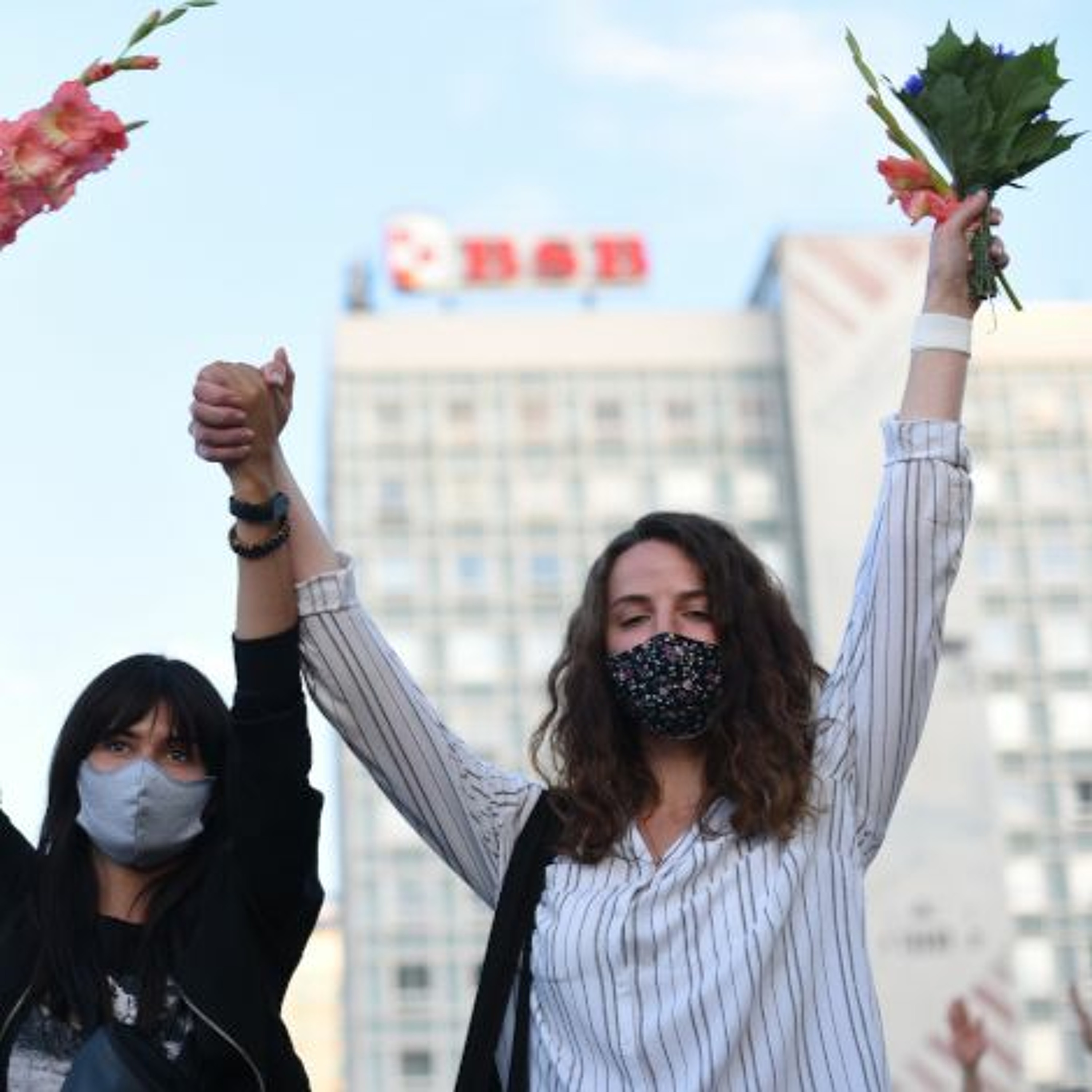
Protest movement in Belarus: Will Lukashenko survive the current state (of) crisis?
In this week’s episode, Jeremy Shapiro stepped in as host and welcomes senior policy fellows Kadri Liik and Andrew Wilson as well as political scientist and editor of “Belarus-Analysen” Olga Dryndova to the podcast. Together, they shed light on the situation on the ground in Belarus: what are the goals do of the opposition in Belarus and what kind, if any, of strategy does it have for achieving them? How does long-time president Lukashenko see the situation and what is the state’s strategy to try to remain in power? And finally, what roles should the EU and Russia play in a mediation process?Further reading: Why the EU now needs a deliberate Belarus policy, by Andrew Wilson: https://buff.ly/3gomwOl This podcast was recorded on 26 August 2020.Bookshelf:- “Berlin 1936: 16 days in August” by Oliver Hilmes - Follow Tadeusz Giczan for analyses on Belarus - “Lie Machines: How to save democracy from troll armies, deceitful robots, junk news operations, and political operatives” by Philip N. Howard- Collections of essays by Haljand Udam - “Einstein’s dream“ by Alan LightmanPicture: (c) picture alliance / AA | Marina Serebryakova Hosted on Acast. See acast.com/privacy for more information.
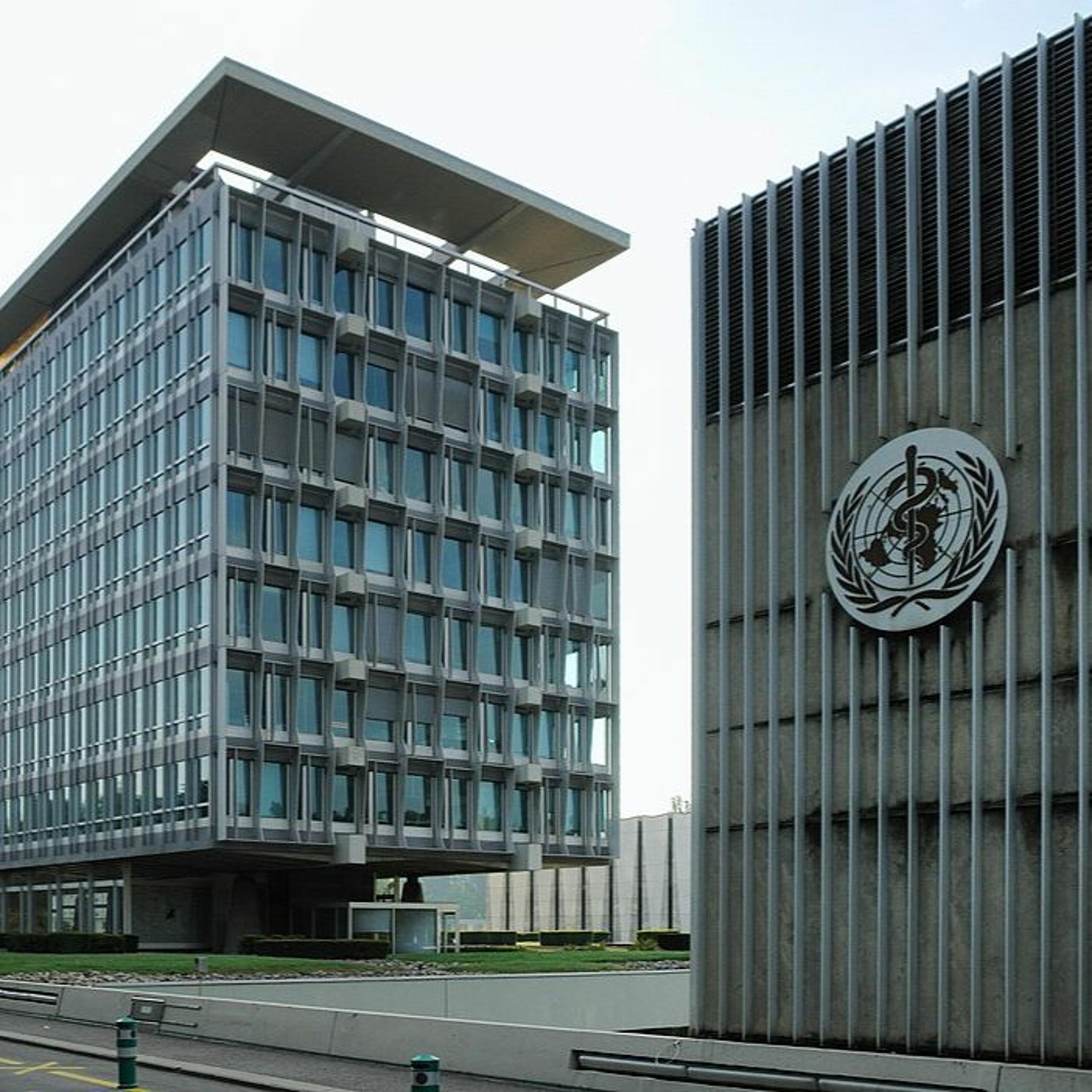
If you stay ready, you don’t have to get ready: Rethinking global health security
“Defending the WHO is necessary but not sufficient to address the weaknesses that the corvid-19 crisis has revealed. Fundamentally, those weaknesses revolve around the interplay between, first, underfunded national and local health systems and second, international coordination which relies on goodwill and is too weak in a world of great power rivalry,” write Jonas Gahr Store, Leader of the Norwegian Labour Party and former Health and Foreign Minister as well as David Miliband, CEO of the International Rescue Committee and former UK Foreign Secretary in their recent op-ed. Mark Leonard invited the two author to his podcast talking about how the global health system could be reformed: what role should Europe play? And is it likely that the US position to global health changes with a potential Biden win? And can China also to play a positive role in global health security?Further reading: “Global Health Security Needs New Thinking” by David Miliband and Jonas Gahr: https://www.newsweek.com/new-world-health-mechanisms-covid-bold-thinking-1521096“Health sovereignty: How to build a resilient European response to pandemics” by Jonathan Hackenbroich, Jeremy Shapiro, and Tara Varma: https://www.ecfr.eu/publications/summary/health_sovereignty_how_to_build_a_resilient_european_response_to_pandemicsThis podcast was recorded on 31 July 2020.Bookshelf:•“The United States Needs a New Foreign Policy” by William J Burns in The Atlantic •“Wolf Hall” by Hilary Mante•“Dinner at the Center of the Earth” by Nathan Englander • “The years” by Annie Ernaux •“The Burden of Responsibility: Blum, Camus, Aron, and the French Twentieth Century” by Tony Judt •“Thomas Jefferson: The Art of Power” by Jon MeachamPicture: © Yann Forget / Wikimedia Commons/ CC BY-SA 3.0 Hosted on Acast. See acast.com/privacy for more information.
Where there's a will, there's a way: France, Germany and EU coalition building
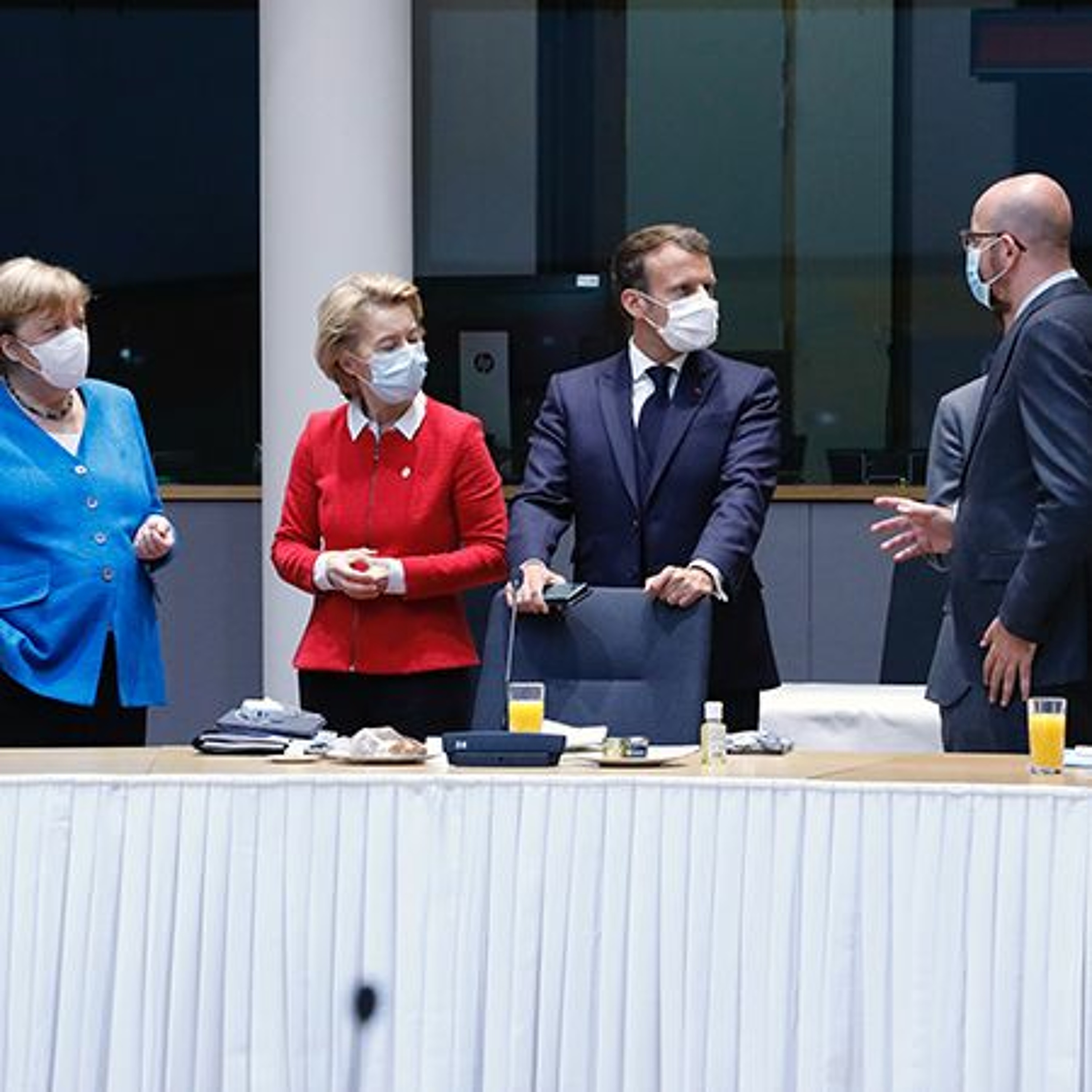
In this week’s episode, Mark Leonard presents the new and third edition of ECFR´s Coalition explorer, which also included special questions regarding the impact of the COVID-19 crisis. Together with policy fellows Ulrike Franke and Pawel Zerka, he analyses the collected data in depth, answering the question of France’s and Germany´s role within the EU: How are the two countries perceived by their European partners? How can this power tandem influence EU policy-making? And what kind of new coalition patterns did emerge during the covid-19 crisis?EU Coalition Explorer: https://www.ecfr.eu/eucoalitionexplorer The big engine that might: How France and Germany can build a geopolitical Europe by Ulrike Franke and Jana Puglierin https://www.ecfr.eu/publications/summary/the_big_engine_that_might_how_france_and_germany_can_build_a_geopolitical_e The EU Coalition Explorer was developed within ECFR’s Rethink: Europe” project supported by Stiftung Mercator.This podcast was recorded on 31 July 2020.Bookshelf:•“In the Shadow of Justice: Postwar Liberalism and the Remaking of Political Philosophy” by Katrina Forrester • “Recursion” by Blake Crouch • “Kissinger: 1923-1968: The Idealist” by Niall Ferguson • “Normal People” and “Conversation with friends” by Sally Rooney Hosted on Acast. See acast.com/privacy for more information.