
Law Enforcement Talk: True Crime and Trauma Stories
642 episodes — Page 4 of 13
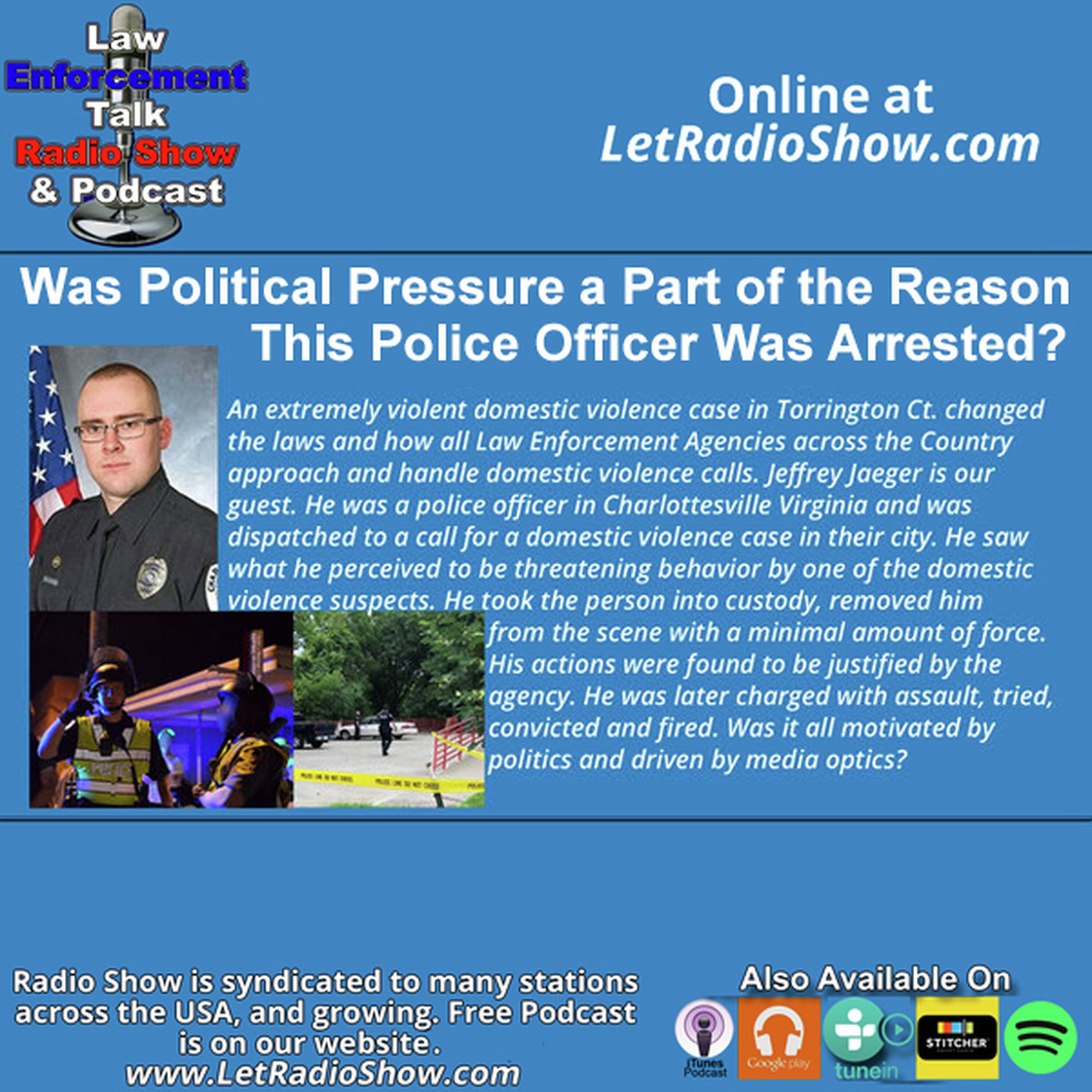
Ep 709Was Political Pressure a Part of the Reason
Was Political Pressure a Part of the Reason This Police Officer Was Arrested? Special Episode. The arrest and conviction of Charlottesville Police Officer Jeffrey Jaeger have sparked intense debate and speculation about whether political pressure played a role in his legal troubles. As the case unfolds, many are questioning whether the influence of media narratives, activist groups, and progressive legal policies contributed to his prosecution. Follow the Law Enforcement Talk Radio Show and Podcast on Facebook, Instagram, LinkedIn, Newsbreak, Medium and most all social media platforms The Incident That Led to Jaeger’s Arrest Officer Jeffrey Jaeger was responding to a domestic violence call in Charlottesville, Virginia, when he took action that would later land him in court. He perceived a suspect as a potential threat and used minimal force to take him into custody. Initially, Jaeger’s department ruled his actions justified. However, he was later charged with assault, convicted, and subsequently fired from the police force. This swift shift in judgment raises concerns about whether media scrutiny and political considerations influenced the decision to prosecute him. Jeffrey Jaeger is our guest on the Law Enforcement Talk Radio Show and Podcast. The podcast episode is available for free on our website, Apple Podcasts, Spotify and most major podcast platforms. The Court’s Ruling and Body Camera Footage, Was Political Pressure a Part of the Reason This Police Officer Was Arrested? Judge Theresa Carter found Jaeger guilty of assault and battery, citing body camera footage as a key factor in her decision. The video reportedly showed Jaeger grabbing the suspect, Andre Henderson, and running several feet before pushing his head into a fenced enclosure, resulting in minor injuries. While some see this as evidence of excessive force, others argue that it reflects standard police procedure for controlling a potentially volatile situation. Look for supporting stories about this and much more from Law Enforcement Talk Radio Show and Podcast in platforms like Medium, Newsbreak and Blogspot. Political Climate and Law Enforcement Concerns Jaeger’s case did not occur in a vacuum. It took place amid rising tensions between law enforcement and local government, fueled by broader national debates over police reform. A survey conducted by the Central Virginia Police Benevolent Association in June indicated growing discontent among officers, particularly regarding the newly formed Police Civilian Review Board, which was established to oversee police activity. The board has faced criticism for lacking clear guidelines and authority, leaving many officers feeling uncertain about their roles and responsibilities. Follow the Law Enforcement Talk Radio Show and podcast on Facebook, Instagram, LinkedIn, Newsbreak, Medium and most all social media platforms Additionally, Charlottesville Commonwealth’s Attorney Joe Platania, who prosecuted Jaeger, has been labeled by some officers as too progressive and lenient on crime. This sentiment was reinforced when Platania faced an even more progressive challenger in a Democratic primary, with a significant portion of voters supporting his opponent. Officers argue that the local political climate has led to hesitation in proactive policing, with many fearing retaliation or unwarranted disciplinary action. The Role of Media and Public Perception, Was Political Pressure a Part of the Reason? Social media platforms such as Facebook, Instagram, and X (formerly Twitter) have amplified public scrutiny of police actions. The rapid spread of viral videos and commentary can shape narratives before all facts are fully analyzed. Some believe that the coverage of Jaeger’s case fueled pressure on city officials to take decisive action, regardless of whether his actions warranted criminal charges. The interview is available as a free podcast on the Law Enforcement Talk Radio Show and podcast website, also available on platforms like Apple Podcasts, Spotify, and most major podcast outlets. Podcast discussions on platforms like Apple Podcasts and Spotify have also contributed to the conversation, with various commentators questioning whether Jaeger’s conviction was politically motivated. Critics argue that the decision to prosecute him aligns with a broader trend of prioritizing political optics over objective law enforcement assessments. Fallout and the Future of Charlottesville Policing Jaeger’s conviction has had ripple effects within the Charlottesville Police Department. Officers report low morale, fear of disciplinary actions, and reluctance to engage in proactive policing. The Virginia Police Benevolent Association’s survey revealed widespread concerns about the department’s leadership and the city’s approach to law enforcement oversight. Check out the show on Facebook, Instagram, LinkedIn, Newsbreak, Medium and most all social media platforms The city’s response to these concerns has been mixed. Offici

Ep 708Court Security During Murder Trials Safety
Court Security During Murder Trials Safety Threats. In the world of law enforcement, ensuring safety in the courtroom during murder trials is a challenge that requires constant vigilance. Security threats are a real concern, and professionals like Bailiff David Lashley have firsthand experience handling high-profile cases while keeping their "Head On A Swivel." David is our guest on the Law Enforcement Talk Radio Show and Podcast. The podcast episode is available for free on our website, Apple Podcasts, Spotify and most major podcast platforms. David Lashley, a Bailiff in Knox County, Ohio, was responsible for courtroom security and operations in what he described as a quiet part of the state. Despite its small population, the area saw more than its fair share of murder trials, placing a significant burden on law enforcement officials. Over the years, Lashley encountered numerous cases that tested the limits of security procedures, including a particularly demanding mass murder trial that took a toll on him and many others involved. Follow the Law Enforcement Talk Radio Show and Podcast on Facebook, Instagram, LinkedIn, Newsbreak, Medium and most all social media platforms The Reality of Court Security During Murder Trials Safety Threats One such case that left a lasting impact was the mass murder trial stemming from a gruesome crime in November 2010. A criminal, after camping in the woods, attempted to burglarize a home but was surprised by its occupants. In a horrifying sequence of events, he murdered three people, kidnapped a young girl, and hid the bodies in a hollow tree. The ensuing investigation, arrest, and trial were complex and emotionally taxing for all involved. Look for supporting stories about this and much more from Law Enforcement Talk Radio Show and Podcast in platforms like Medium, Newsbreak and Blogspot. Threats and Challenges in High-Profile Trials Managing security during a murder trial requires meticulous planning. Lashley detailed the intense pressure of handling such cases, from dealing with graphic testimony to ensuring the safety of everyone in the courtroom. Protecting victims' privacy, managing emotional outbursts, and mitigating potential threats from the public or even the defendants themselves made these cases particularly difficult. Surprisingly, Lashley revealed that less violent cases, such as those involving domestic disputes, often provoked stronger emotional reactions and violent outbursts compared to even the most heinous murder trials. This unpredictability underscores the need for thorough training and constant situational awareness. Follow the Law Enforcement Talk Radio Show and podcast on Facebook, Instagram, LinkedIn, Newsbreak, Medium and most all social media platforms The Role of Training and Awareness In Court Security During Murder Trials Safety Threats. Situational awareness is a cornerstone of courtroom security. Bailiffs, officers, and security professionals must be prepared for any scenario. Drawing from over two decades of experience, Lashley emphasized the importance of de-escalation techniques, assertive communication, and quick decision-making in high-stakes situations. His insights are featured in the Law Enforcement Talk Radio Show, available on Apple Podcasts, Spotify, and other major platforms. His book, Eyes Wide Open, delves deeper into the principles of situational awareness and security training, offering practical advice for professionals and civilians alike. The interview is available as a free podcast on the Law Enforcement Talk Radio Show and podcast website, also available on platforms like Apple Podcasts, Spotify, and most major podcast outlets. Social Media, News, and Spreading Awareness Courtroom security is a topic that needs greater public attention. Platforms like Facebook, Instagram, LinkedIn, and X (formerly Twitter) play a crucial role in spreading awareness about safety measures, threats, and real-life experiences from professionals like Lashley. Law enforcement agencies and legal professionals must continue to use these platforms to educate and inform the public about security protocols during trials. Court Security During Murder Trials Safety Threats. Check out the show on Facebook, Instagram, LinkedIn, Newsbreak, Medium and most all social media platforms Conclusion Ensuring security during murder trials is a complex task that requires vigilance, training, and adaptability. Professionals like David Lashley demonstrate the importance of staying prepared, maintaining situational awareness, and continuously refining safety measures. As threats evolve, so must our strategies, ensuring that justice can be served without compromising safety. For more insights, the free episode of the "Law Enforcement Talk Radio Show and Podcast", is available on their website for free in addition to Apple Podcasts and Spotify, as well as through other podcast platforms. Your golden years are supposed to be easy and worry free, at

Ep 707Flight Crash In NY From The WTC Attack
Flight Crash In NY From The WTC Attack to Other Disasters. Special Episode. When the world thinks of catastrophic events in New York City, two significant tragedies come to mind: the World Trade Center (WTC) attack on September 11, 2001, and the devastating crash of TWA Flight 800 in 1996. These disasters, marked by unimaginable loss and sorrow, remain etched in the memories of those who lived through them and those who responded to the aftermath. Stacey Goodman, a retired Suffolk County, New York, Police Officer, is our guest on the Law Enforcement Talk Radio Show and Podcast. The podcast episode is available for free on our website, Apple Podcasts, Spotify and most major podcast platforms. She witnessed both of these harrowing events firsthand. With a background as a Disaster Mortuary Operational Response Team (DMORT) specialist for the Federal Government, Goodman was no stranger to tragedy. Her first experience in disaster response was the TWA Flight 800 crash, a tragedy that took the lives of all 230 passengers aboard. Years later, her training and federal security clearance led her to Ground Zero, where she worked tirelessly on the Pile for 23 days following the WTC attack. Flight Crash In NY From The WTC Attack to Other Disasters. Follow the Law Enforcement Talk Radio Show and Podcast on Facebook, Instagram, LinkedIn, Newsbreak, Medium and most all social media platforms In an exclusive conversation, Goodman shared, “The weight of these experiences is something you carry with you forever. Working in the heart of such devastation, recovering human remains, and facing the unimaginable grief of victims' families is something that stays with you.” Look for supporting stories about this and much more from Law Enforcement Talk Radio Show and Podcast in platforms like Medium, Newsbreak and Blogspot. Her book, The Dust Never Settles, chronicles her experiences and the lasting impact of her service. Goodman describes the challenges of confronting conspiracy theories that often emerge from these events. “There will always be people who question what happened, who suggest alternative narratives. For me, I know what I saw, what I touched, and what I felt. That reality is indisputable,” she shared. Follow the Law Enforcement Talk Radio Show and podcast on Facebook, Instagram, LinkedIn, Newsbreak, Medium and most all social media platforms The TWA Flight 800 crash, a tragedy that unfolded off the coast of Long Island, was initially suspected to be a terrorist attack. After a lengthy investigation by the National Transportation Safety Board (NTSB) and the FBI, the official cause was determined to be an explosion of flammable fuel vapors due to a short circuit. Despite the findings, conspiracy theories still linger, fueled by misinformation and conspiracy theorists. Many of whom spread their message across platforms like Facebook, Instagram, and X (formerly Twitter). Flight Crash In NY From The WTC Attack to Other Disasters. The interview is available as a free podcast on the Law Enforcement Talk Radio Show and podcast website, also available on platforms like Apple Podcasts, Spotify, and most major podcast outlets. On September 11, 2001, the narrative of terrorism was tragically evident. The attacks on the Twin Towers and the Pentagon, along with the crash of United Airlines Flight 93, left an indelible scar on the nation. The collapse of the Twin Towers killed 2,753 people, while the Pentagon attack claimed 184 lives and Flight 93’s crash in Pennsylvania took the lives of 40 passengers. For Goodman, the aftermath of 9/11 was a grueling journey. “Working at Ground Zero was surreal,” she said. “We weren't just sifting through rubble—we were uncovering stories, lives, and the remnants of a tragedy that the world watched unfold in real-time.” Today, Goodman’s reflections resonate through her writing, public speaking, and podcast appearances on The Law Enforcement Talk Radio Show and Podcast, available for free on their website, in addition to Apple Podcasts, Spotify and many others. Her mission is to share the unfiltered reality of disaster response, honoring the victims and the resilience of those who endured unimaginable loss. Flight Crash In NY From The WTC Attack to Other Disasters. Check out the show on Facebook, Instagram, LinkedIn, Newsbreak, Medium and most all social media platforms Goodman's experiences serve as a reminder of the human cost of these tragedies. While platforms like LinkedIn may showcase her professional accomplishments, her story goes beyond the accolades. It is a testament to courage, sacrifice, and the resolve to face darkness while seeking light. In a world shaped by these tragedies, the voices of those like Stacey Goodman remind us of the lasting impact of loss and the strength required to carry its weight. Her story, both sobering and inspiring, echoes the need to approach these events with empathy, understanding, and respect for the truth. The free episode of the "Law Enforcement Ta

Ep 706They Settled The Lawsuit, Arrested By His
They Settled The Lawsuit, Arrested By His Agency. They settled the lawsuit after he was wrongfully arrested by the Sheriff of his own agency. The case, drew local, Statewide and Federal attention across various news outlets, highlighted issues with how the Sheriff's Office handled military leave policies. Despite being cleared legally, the impact of the arrest still follows him, posts about the incident on platforms like Facebook, Instagram, LinkedIn, and appearing in radio shows and podcasts like the Law Enforcement Talk Radio Show and Podcast, available on their website and on Apple, Spotify and most podcast platforms. He talks about the challenges he faced. While his name has been legally cleared, the stigma remains, affecting his career and reputation in both military and civilian circles. Follow the Law Enforcement Talk Radio Show and Podcast on Facebook, Instagram, LinkedIn, Newsbreak, Medium and most all social media platforms. In a case marked by controversy, legal battles, and lingering consequences, Ian Murray, a U.S. military veteran and former corrections officer for the Jacksonville Sheriff's Office (JSO), settled a lawsuit following a wrongful arrest by his own agency. But did he get cleared by them, or did they admit that he did nothing wrong? The free episode of the "Law Enforcement Talk Radio Show and Podcast", is available on their website for free in addition to Apple Podcasts and Spotify, as well as through other podcast platforms. Murray's ordeal began when he was arrested by the Jacksonville Sheriff's Office on charges of felony theft related to military leave as a reservist and member of the National Guard. The arrest and subsequent media coverage spread across platforms like Facebook, Instagram, and LinkedIn, affecting Murray's reputation and career. The news reached popular podcasts on Apple and Spotify, highlighting the complexity of the case. Look for supporting stories about this and much more from Law Enforcement Talk Radio Show and Podcast in platforms like Medium, Newsbreak and Blogspot. Military Service and Early Struggles, They Settled The Lawsuit, Arrested By His Agency. Ian Murray's military career spans two decades, including a deployment to Afghanistan in 2017 and another deployment from September 2023 to April 2024. He reached his 20-year military anniversary in December 2022, demonstrating a steadfast commitment to serving his country. Murray began his tenure at the Jacksonville Sheriff's Office in 2009. However, tension arose quickly between him and a supervising sergeant regarding his military leave obligations. According to Murray, the hostility escalated, resulting in punitive measures, including an extended probation period that coincided with his military duties. Follow the Law Enforcement Talk Radio Show and podcast on Facebook, Instagram, LinkedIn, Newsbreak, Medium and most all social media platforms Murray sought assistance from Human Resources and the Fraternal Order of Police, aiming to address the perceived unequal treatment. Despite his efforts, the situation deteriorated. By 2014, he was instructed to change a military leave day to personal leave or face disciplinary action. When he complied, his request was denied, and a formal complaint was filed against him. The Arrest, They Settled The Lawsuit, Arrested By His Agency. In June 2014, Murray received orders to attend military training at Fort Devens in Massachusetts. Before departing, he used personal leave to spend time with his family. During this time, four members of the JSO Integrity Unit, dressed in tactical gear and displaying badges, arrived at his home to arrest him. The interview is available as a free podcast on the Law Enforcement Talk Radio Show and podcast website, also available on platforms like Apple Podcasts, Spotify, and most major podcast outlets. The arrest sent shockwaves through local news, with outlets quickly publishing reports of the incident. Headlines such as "Corrections Officer Arrested for Grand Theft and Falsifying Official Documents" circulated, tarnishing Murray's reputation. The Sheriff's Office alleged that Murray had submitted falsified military leave requests, an accusation that cast a long shadow over his career. Murray later discovered that the Sheriff's Office had been monitoring his personal Facebook account, using family photos to build a case against him. These images were misrepresented as evidence of Murray misusing his military leave. The actions were not officially acknowledged or addressed by the agency. Check out the show on Facebook, Instagram, LinkedIn, Newsbreak, Medium and most all social media platforms The Aftermath and Lawsuit Settlement, They Settled The Lawsuit, Arrested By His Agency. Despite the arrest and accusations, the prosecutor's office eventually dropped the charges against Murray. He was never formally prosecuted for any criminal offense. However, the damage to his reputation remained. The allegations continued to a

Ep 705Hollywood and the Media Truth About Drug
Hollywood and the Media Truth About Drug Gangs and Police. Special Episode. The portrayal of law enforcement and criminal organizations in Hollywood has long shaped public perception. However, the media's representation of police work and the realities of drug gangs often diverge from the truth. Dr. Stephen Morreale, a retired DEA agent, college professor, and host of The Cop Doc Podcast, is dedicated to dispelling these myths. He sheds light on the overwhelming violence committed by organized drug gangs and the misconceptions surrounding law enforcement. The story on this episode of the "Law Enforcement Talk Radio Show and Podcast", is available on their website for free in addition to Apple Podcasts and Spotify, as well as through other podcast platforms. The Reality of Drug Gangs in America Hollywood often glamorizes or oversimplifies the operations of drug gangs, but the truth is far more complex and violent. The United States is home to numerous gangs deeply involved in drug trafficking and organized crime. Groups like MS-13, Nuestra Familia, Surenos, Crips, Bloods, Latin Kings, and 1% Motorcycle Clubs have an extensive presence across the country. According to the Federal Bureau of Investigation (FBI), as of 2014, there were approximately 33,000 gangs in the U.S., classified into street gangs, motorcycle gangs, and prison gangs. While some of these organizations are multi-ethnic, many operate along racial lines, restricting membership based on ethnicity. Follow the Law Enforcement Talk Radio Show and Podcast on Facebook, Instagram, LinkedIn, Newsbreak, Medium and most all social media platforms. At least 23 gangs operate at a national level, spanning multiple states and drug markets. Moreover, law enforcement has identified connections between transnational drug trafficking organizations (DTOs) and several street and prison gangs. Mexican DTOs, such as the Federation, the Gulf Cartel, the Juárez Cartel, and the Tijuana Cartel, leverage U.S. based Hispanic street gangs and prison gangs for drug smuggling, distribution, and enforcement. These DTOs avoid direct involvement in retail drug distribution, instead utilizing gang members to minimize their exposure to law enforcement. Read supporting stories about this and much more from Law Enforcement Talk Radio Show and Podcast in platforms like Medium, Newsbreak and Blogspot. The Role of the DEA and Law Enforcement, Hollywood and the Media Truth About Drug Gangs and Police. The Drug Enforcement Administration (DEA) is at the forefront of combating these criminal enterprises. Its mission is to enforce U.S. controlled substances laws, dismantle drug trafficking organizations, and reduce the availability of illicit drugs in domestic and international markets. Dr. Morreale, who served in law enforcement for 30 years, played a crucial role in these efforts, retiring as Assistant Special Agent in Charge for the U.S. Department of Health and Human Services, Office of Investigations. During his 20-year tenure with the DEA, he worked on financial investigations, asset forfeiture, and enforcement operations targeting major drug networks. Follow the Law Enforcement Talk Radio Show and podcast on Facebook, Instagram, LinkedIn, Newsbreak, Medium and most all social media platforms In addition to his work with the DEA, Dr. Morreale was instrumental in advancing community policing efforts. In 1990, he co-founded the New England Community Police Partnership, a program that trained thousands of police officers and community members to foster better relationships between law enforcement and the public. He educated future law enforcement professionals as Chair and Full Professor of Criminal Justice at Worcester State University. The interview is available as a free podcast on the Law Enforcement Talk Radio Show and podcast website, also available on platforms like Apple Podcasts, Spotify, and most major podcast outlets. Dispelling Hollywood Myths Through The Cop Doc Podcast Through his podcast, The Cop Doc Podcast, Dr. Morreale provides a platform for in-depth discussions on law enforcement, policing reforms, and the challenges officers face in the field. His expertise is especially relevant in an era where social media platforms like Facebook, Instagram, LinkedIn, and X play a significant role in shaping public opinion. Many misconceptions about law enforcement stem from sensationalized portrayals in movies and TV shows, leading to unrealistic expectations and misunderstandings about police procedures and challenges. Hollywood often focuses on dramatic shootouts, rogue cops, and quick case resolutions, but the truth is that real policing involves extensive investigations, intelligence gathering, and strategic planning. While media outlets and streaming services like Apple Podcasts and Spotify provide platforms for entertainment and also facts, it is crucial for the public to seek out factual information. This conversation is a valuable resource in this regard, offe

Ep 704US Marine and Police Officer by Accident
US Marine and Police Officer by Accident: From Baltimore, His Story. Growing up in Baltimore, Maryland, he lived across the street from a heroin shooting den, witnessing firsthand the devastating effects of drugs and violence. Despite these challenges, he defied the odds, eventually becoming a U.S. Marine and later a police officer. His journey into the Marines and Police Work was anything but planned, yet it shaped his life and career in profound ways. The story on this episode of the "Law Enforcement Talk Radio Show and Podcast", is available on their website for free in addition to Apple Podcasts and Spotify, as well as through other podcast platforms. Follow the Law Enforcement Talk Radio Show and Podcast on Facebook, Instagram, LinkedIn, Newsbreak, Medium and most all social media platforms. A Life Shaped by Baltimore Retired Prince George's County Police Lieutenant Maurice Hicks appeared as a guest on the Law Enforcement Talk Radio Show and Podcast. Read supporting stories about this and much more from Law Enforcement Talk Radio Show and Podcast in platforms like Medium, Newsbreak and Blogspot. Maurice was an introvert who dedicated his early years to avoiding the traps that ensnared many of his peers. The streets of Baltimore were filled with crime, but he remained focused on a better future. His path to the military was unplanned, he became a U.S. Marine by accident when he went with a friend to the recruiter. That twist of fate led him to discipline and structure, setting the stage for his unexpected yet impactful career in law enforcement. Follow the Law Enforcement Talk Radio Show and podcast on Facebook, Instagram, LinkedIn, Newsbreak, Medium and most all social media platforms After serving as a Marine, Maurice joined the Baltimore City Police Department. It was another accidental but life-changing decision. He went to the department with a friend and while there he took the test. He joined the department and his friend did not. He quickly realized that policing was his true calling. The training and experience he gained in the police academy solidified his commitment to law enforcement. US Marine and Police Officer by Accident: From Baltimore, His Story. Transition to Prince George’s County Police Department After a few years with the Baltimore City Police Department, Maurice accompanied a fellow officer to an interview for a lateral transfer to the Prince George’s County Police Department. His friend ultimately did not take the job, but Maurice did. It was yet another accident that set him on a remarkable path. The interview is available as a free podcast on the Law Enforcement Talk Radio Show and podcast website, also available on platforms like Apple Podcasts, Spotify, and most major podcast outlets. During his early years in Prince George’s County, he encountered a man who would later become a notorious drug kingpin. Over time, Maurice witnessed the extreme violence and destruction that followed this man, fueling his determination to bring him to justice. A Career Fighting Crime. US Marine and Police Officer by Accident: From Baltimore, His Story. Maurice's career spanned various roles, including patrol officer, sergeant, commander, detective, detective sergeant, and detective lieutenant. He worked in multiple high-risk units, including Street Narcotics, Major Narcotics, Intelligence, Robbery, and Homicide. His expertise led him to serve as the lead investigator for the FBI Safe Streets Homicide Task Force for nearly three years. Check out the show on Facebook, Instagram, LinkedIn, Newsbreak, Medium and most all social media platforms His relentless pursuit of justice earned him multiple awards and commendations, including two Chief’s Awards of Merit and a Veterans of Foreign Wars Award. Maurice's work took an emotional toll, as he constantly faced the worst of humanity while striving to protect his community. The Complexities of Law Enforcement Maurice holds a master’s degree in Management from Johns Hopkins University and a bachelor’s degree in Criminology from the University of Maryland, Global Campus. As an adjunct professor for over two decades, he has taught courses in criminal investigation and law enforcement. It is available as a free podcast on the Law Enforcement Talk Radio Show and Podcast website, on Apple Podcasts, Spotify and most major podcast platforms. In his book, Looking for Trouble, Maurice shares the gripping details of his law enforcement career. From undercover operations to leading an FBI task force, his story is filled with intense encounters with drug smugglers, murderers, and serial rapists. He chronicles his evolution from a rookie patrolman to a seasoned detective, detailing how he faced some of the most dangerous criminals in Maryland. One of his most significant investigations involved the very drug dealer he had encountered early in his career. By then, the dealer had risen to the level of a powerful kingpin, suspected of 12 murders. Maurice, now

Ep 703Why He Did What He Did: Life Trauma Led
Why He Did What He Did: Life Trauma Led to Danger. At just 12 years old, Nate was sexually abused by someone his family knew. "I didn't even know what sex was at that time," he recalls. "I hadn't had the talk with my parents, and sex education wasn't even a thing in my school yet." Like many survivors, he was manipulated into silence. "The attacker told me it was normal, and he threatened me, told me not to tell anyone. So, I didn’t." Follow the Law Enforcement Talk Radio Show and Podcast on Facebook, Instagram, LinkedIn, Newsbreak, Medium and most all social media platforms. He shares the story on this episode of the "Law Enforcement Talk Radio Show and Podcast", which is available on their website for free in addition to Apple Podcasts and Spotify, as well as through other podcast platforms. "I kept it buried for so long, but it affected everything, my choices, my safety, my entire world." These are the words of Nate Lewis, our guest on the Law Enforcement Talk Radio Show and Podcast. His story is one of survival, resilience, and a fight against the darkness that nearly consumed him. Read supporting stories about this and much more from Law Enforcement Talk Radio Show and Podcast in platforms like Medium, Newsbreak and Blogspot. The Hidden Trauma of Childhood Abuse, Why He Did What He Did: Life Trauma Led to Danger. For over two decades, Nate carried this secret, the trauma festering in silence. It wasn’t until his life started to spiral out of control that he finally told his mother. "I thought I had it under control, but in reality, it was controlling me. My relationships, my career, my choices, everything was affected." Follow the Law Enforcement Talk Radio Show and podcast on Facebook, Instagram, LinkedIn, Newsbreak, Medium and most all social media platforms The Tragic Reality of Child Sexual Abuse The statistics are staggering. More than 550,000 children are known to U.S. authorities as abuse victims. In 2022 alone, an estimated 558,899 unique cases of child abuse and neglect were reported. Child welfare agencies investigate over 7.5 million children annually, with nearly 3 million cases warranting further action. The interview is available as a free podcast on the Law Enforcement Talk Radio Show and podcast website, also available on platforms like Apple Podcasts, Spotify, and most major podcast outlets. Child victims often remain silent for years, or even lifetimes, due to fear, shame, and the manipulation of their abusers. "Most abusers aren’t strangers," Nate explains. "Over 90% of victims know their perpetrators. It’s why so many children don’t speak up, they’re afraid, confused, and often still care about the person hurting them." The Dangerous Path of a Survivor, Why He Did What He Did: Life Trauma Led to Danger. Nate’s silence led to self-destructive behaviors. "I drank excessively. I put myself in dangerous situations because I didn’t care what happened to me." One of those moments nearly cost him his life. Check out the show on Facebook, Instagram, LinkedIn, Newsbreak, Medium and most all social media platforms "I was abducted at gunpoint during a gang initiation in Los Angeles," he recounts. "At that moment, I realized I had made myself an easy target." Trauma had led him there, to the brink of death. His ability to escape that life-threatening encounter changed everything. "It woke me up. I knew I had to take control of my life, face my past, and use my experiences to help others." From Survivor to Advocate, Why He Did What He Did: Life Trauma Led to Danger. Today, Nate Lewis is the Founder of The Innocent, a nonprofit dedicated to combating child sex trafficking, exploitation, and sexual assault in the U.S. His extensive work with law enforcement and global anti-trafficking organizations has made him a powerful advocate for change. It is available as a free podcast on the Law Enforcement Talk Radio Show and Podcast website, on Apple Podcasts, Spotify and most major podcast platforms. "Survivors don’t have to be defined by their past," Nate emphasizes. "Yes, trauma changes you, but it doesn’t have to destroy you. It can shape you into someone stronger, someone who fights back." The Innocent team includes active-duty officers specializing in online investigations, surveillance, and undercover operations. "We provide law enforcement with cutting-edge training, technology, and operational support," Nate shares. "Our goal is to increase arrests, improve conviction rates, and ultimately, save lives." Breaking the Silence, Why He Did What He Did: Life Trauma Led to Danger. Nate’s story is a powerful reminder of the lasting effects of childhood trauma. "What happened to me led to years of self-destruction, but it also led me here, to fighting for justice, for prevention, for healing." By sharing his story on platforms like Appl

Ep 702Building A Life of Hope, After Trauma. Her
Building A Life of Hope, After Trauma. Her Travels and Journey. Her life story is one marked by profound trauma, resilience, and an inspiring quest to build a life of hope. From a childhood shadowed by abuse to a series of harrowing experiences in adulthood, her journey has taken her across states, from California to Colorado, Wyoming, and finally settling in Montana. Through travel, reflection, and a commitment to healing, Colleen "Co Co" Issa has faced the lingering effects of PTSD head-on, sharing her recovery process openly on platforms like the "Law Enforcement Talk Radio Show and Podcast", which is available on their website for free in addition to Apple Podcasts and Spotify, as well as through other podcast platforms. Follow the Law Enforcement Talk Radio Show and Podcast on Facebook, Instagram, LinkedIn, Newsbreak, Medium and most all social media platforms. A Childhood of Trauma Colleen stated that her early years were defined by a father who was both physically and sexually abusive, a pedophile whose actions left deep scars. She recalls reporting this to a therapist later in life, only to learn that too much time had passed for legal action. The trauma didn’t end with her; her sister, also a victim of this violence, struggled with alcoholism and fatal illnesses worsened by her pain, ultimately taking her own life on January 26, 2024. For Colleen, confirmation of her worst memories came during a conversation with her sibling, a revelation that cemented the shared horror of their past. Look for supporting stories about this and much more from Law Enforcement Talk Radio Show and Podcast in platforms like Medium, Newsbreak and Blogspot. At 15, Colleen fled this toxic environment, but the world beyond offered little reprieve. Life grew tougher as she faced further assaults: a rape by a girlfriend’s boyfriend, which she never officially reported, and another at 21, outside in the bitter winter cold. Passersby saw the latter attack but drove on, leaving her alone. The perpetrator was later arrested and charged with third-degree sexual assault, a resolution that felt inadequate for the suffering endured. Building A Life of Hope, After Trauma. Her Travels and Journey. The interview is available as a free podcast on the Law Enforcement Talk Radio Show and podcast website, also available on platforms like Apple Podcasts, Spotify, and most major podcast outlets. The Toll of Trauma and the Seeds of Hope Colleen’s experiences reflect a grim reality faced by many survivors of interpersonal violence. Studies reveal that 6% of American youth experience sexual victimization annually, with rates soaring to 16% for adolescents aged 14-17 in the past year and 28% over their lifetimes. Girls, in particular, bear a heavier burden, with lifetime prevalence rates of sexual assault reaching 17% for those aged 14-17, compared to 4% for boys. These statistics underscore the pervasive nature of such trauma, and its lasting echo in conditions like PTSD. Follow the Law Enforcement Talk Radio Show and podcast on Facebook, Instagram, LinkedIn, Newsbreak, Medium and most all social media platforms. For Colleen, the death of her sister became a turning point. Grieving and determined to reclaim her life, she embarked on a journey of travel and relocation. From California to Colorado, then Wyoming, she sought a place to heal, eventually finding solace in Montana. The physical journey mirrored an emotional one: building a life of hope after trauma is no small feat, but Colleen embraced the challenge. Understanding PTSD and Recovery Post-Traumatic Stress Disorder (PTSD) is a frequent companion for survivors of sexual assault, with prevalence rates far exceeding the national average. Symptoms, intrusive memories, avoidance, negative shifts in mood, and heightened arousal, can emerge months or even years after the event, disrupting daily life. Colleen has lived these realities: unwanted flashbacks, emotional numbness, and the struggle to feel safe. Yet, her story is also one of recovery, fueled by a desire to move beyond survival into thriving. Building A Life of Hope, After Trauma. Her Travels and Journey. Check out the show on Facebook, Instagram, LinkedIn, Newsbreak, Medium and most all social media platforms Research highlights the complexity of PTSD after sexual assault. A dysregulated Hypothalamic-Pituitary-Adrenal (HPA) axis can drive symptoms, while societal factors like victim-blaming and rape myths exacerbate the pain. Effective recovery, experts note, hinges on early social support and a holistic approach, biological, psychological, and sociological. Colleen’s openness about her journey reflects this, as she leans on community, education, and personal strength to navigate her healing. Sharing the Journey Colleen’s candidness shines in her appearance on the "Law Enforcement Talk Radio Show and Podcast". Hosted by John "Jay" Wiley, the episode, available for free on their website, Apple Po

Ep 701Sex Predator Investigation led by Texas Police
Sex Predator Investigation led by Texas Police. Strange Ending. The story of a chilling investigation that started with an eerie phone call and unraveled a web of crime involving a former priest, a millionaire, and multiple legal professionals is one that sounds almost too bizarre to be real. However, this case, which unfolded in Texas, proved to be one of the most shocking sex crime investigations in recent history. Follow the Law Enforcement Talk Radio Show and Podcast on Facebook, Instagram, LinkedIn, Newsbreak, Medium and most all social media platforms. You can listen to the interview as a free podcast on the Law Enforcement Talk Radio Show and Podcast website and platforms like Apple Podcasts, Spotify and most major podcast platforms. The Start of the Investigation Brian Baxter, our guest, is a retired officer from the Texas Department of Public Safety. He had an extensive career in law enforcement. But one of the strangest cases he encountered came when he was a District Commander and a Girl Scout leader for his daughter’s troop. It all began with disturbing phone calls to the Girl Scouts of America (GSA) office from a man with a "creepy old voice" offering "free kittens to any little Girl Scout." The calls became more explicit over time, prompting the GSA representative to contact law enforcement. He assigned the case to Detective Joel Callaway of the Texas Department of Public Safety. Sex Predator Investigation led by Texas Police. Strange Ending. Read the supporting stories about this and much more from Law Enforcement Talk Radio Show and Podcast in platforms like Medium, Newsbreak and Blogspot. By comparing audio recordings, Callaway identified the suspect as a 77-year-old predator. He was no ordinary suspect; he was a former priest, a millionaire, and a member of the Society of Saint Pius X. The subsequent investigation would reveal horrifying crimes involving child exploitation and online solicitation of minors. A Web of Deception Unraveled After months of investigation, authorities gathered enough evidence to obtain search and arrest warrants. The predator was arrested on March 26, facing charges of possession of child pornography and online solicitation of a minor. Additional charges were expected as more victims came forward. The interview is available as a free podcast on the Law Enforcement Talk Radio Show and podcast website, also available on platforms like Apple Podcasts, Spotify, and most major podcast outlets. The case took an even darker turn when investigators uncovered fraudulent Facebook pages and online messages indicating that the predator had been trying to persuade people to adopt children overseas and hand them over to him. His digital footprint spanned Facebook, Instagram, and various other online platforms, revealing a disturbing pattern of predatory behavior. The Mysterious Death and Forged Will Despite his wealth, the predator remained in jail for several days before multiple bail bondsmen worked together to secure his release. However, just two months later, on June 4, 2014, the predator was found dead in his Santa Rita home. His cause of death was initially ruled as natural, but the situation quickly grew suspicious when a handwritten will appeared just 12 days later.Sex Predator Investigation led by Texas Police. Strange Ending. Follow the Law Enforcement Talk Radio Show and podcast on Facebook, Instagram, LinkedIn, Newsbreak, Medium and most all social media platforms. This new will, which raised multiple red flags, led to another layer of criminal activity involving two bail bondsmen, two attorneys, and millions of dollars in disputed assets. Investigators soon uncovered evidence of forgery and financial fraud, expanding the case beyond child sex crimes into a multi-agency probe of corruption and theft. The Role of Brian Baxter Brian Baxter, now with Performance-Critical, played a crucial role in the case’s early stages. With decades of experience in organized crime investigations, narcotics enforcement, and tactical training, he had encountered numerous high-stakes criminal operations. His involvement in the sex predator case highlighted the ethical and emotional conflicts that law enforcement officers often face, especially when dealing with crimes against children. Check out the show on Facebook, Instagram, LinkedIn, Newsbreak, Medium and most all social media platforms Beyond this case, Baxter’s career in law enforcement is marked by significant contributions, including rewriting the Texas Department of Public Safety’s use-of-force curriculum and leading critical training programs for officers. His expertise spans police training, human trafficking investigations, and child exploitation operations. Media Coverage and Public Interest The sex predator case gained widespread attention, with news outlets, and investigative journalists covering the shocking details. Platforms like his Brian's interview on the Free Podcast version of the Law Enforce

Ep 700Freak Accident as a Teen Led to a
Freak Accident as a Teen Led to a Wheelchair: His Inspiring Journey. Special Episode. Life can change in an instant, and for Brian P. Swift, that moment came as a teenager when a freak accident left him paralyzed. His inspiring journey from tragedy to triumph is a testament to resilience, determination, and the power of a positive mindset. Today, Brian is a renowned author, speaker, podcaster, and advocate, proving that life’s biggest challenges can lead to incredible opportunities. You can listen to the interview as a free podcast on the Law Enforcement Talk Radio Show and Podcast website and platforms like Apple Podcasts, Spotify and most major podcast platforms. Follow the Law Enforcement Talk Radio Show and Podcast on Facebook, Instagram, LinkedIn, Newsbreak, Medium and most all social media platforms. The Day That Changed Everything At just 17 years old, Brian was an active and able-bodied teen with dreams and ambitions. However, a football accident just days before his 18th birthday left him a quadriplegic, forever altering the course of his life. What could have been the end of his aspirations became the beginning of an extraordinary journey. Read the supporting stories about this and much more from Law Enforcement Talk Radio Show and Podcast in platforms like Medium, Newsbreak and Blogspot. Rising Above Adversity Rather than letting his condition define him, Brian chose to live inspired. He pushed through the physical and emotional challenges that came with his paralysis, eventually earning a law degree from DePaul Law School. He has built a successful career, helping others through his talk radio show, books, and nonprofit organization, SOAR, which provides people with disabilities access to adaptive outdoor equipment. Freak Accident as a Teen Led to a Wheelchair: His Inspiring Journey. Special Episode. The interview is available as a free podcast on the Law Enforcement Talk Radio Show and podcast website, also available on platforms like Apple Podcasts, Spotify, and most major podcast outlets. A Life of Purpose and Motivation Known as "The Quadfather," Brian Swift has dedicated his life to empowering others. His appearance on the Law Enforcement Talk Radio Show is available as a free podcast. His books spread messages of hope, perseverance, and self-belief. His latest book, Rising Up, shares a powerful paradigm for developing mental, emotional, and spiritual resilience. Follow the Law Enforcement Talk Radio Show and podcast on Facebook, Instagram, LinkedIn, Newsbreak, Medium and most all social media platforms. Brian also hosts "All Things Inspirational" on WJOL 1340 Radio in Chicago, where he interviews guests and shares motivational stories that uplift listeners. His philosophy, CIA: Commitment, Integrity, and Attitude, has helped him and countless others overcome adversity. Advocacy and Community Impact Beyond his personal achievements, Brian is a family man, husband, and father of three adopted children. His nonprofit, SOAR, provides individuals with disabilities the chance to experience outdoor adventures. His work has been recognized by the Christopher and Dana Reeve Foundation, which named him one of the Top Ten Dads on Wheels in 2013. Freak Accident as a Teen Led to a Wheelchair: His Inspiring Journey. Check out the show on Facebook, Instagram, LinkedIn, Newsbreak, Medium and most all social media platforms Understanding Spinal Cord Injuries Brian’s injury is an example of how sports-related accidents can lead to spinal cord trauma. These injuries can result from car accidents, falls, diving mishaps, and high-impact sports like football, wrestling, and gymnastics. Depending on the severity, paralysis can be complete or incomplete, affecting mobility and quality of life. Medical advancements and rehabilitation therapies continue to improve the lives of those with spinal cord injuries. Awareness, support systems, and technological innovations are key to empowering individuals facing similar challenges. It is available as a free podcast on the Law Enforcement Talk Radio Show and Podcast website, on Apple Podcasts, Spotify and most major podcast platforms. Final Thoughts: Turning Setbacks into Comebacks Brian P. Swift’s story is a powerful reminder that life’s obstacles can be stepping stones to something greater. Whether through his podcast, books, radio show, or nonprofit work, he continues to inspire people of all abilities to embrace life fully. His journey proves that even in the face of adversity, strength, faith, and determination can lead to a life without limits. Freak Accident as a Teen Led to a Wheelchair: His Inspiring Journey. For more about Brian’s work, listen to the interview with him available as a free podcast on our website, also available on Apple Podcasts, Spotify and most major podcast platforms. Follow us on follow him on Facebook, Instagram, LinkedIn, and many other social media platforms. His story is one that everyone can learn from—because no matt

Ep 699Killed in the Line Of Duty Oregon Reserve
Killed in the Line Of Duty Oregon Reserve Deputy's Father. Special Episode. The loss of a loved one is always devastating, but when that loss comes in the line of duty, it leaves an enduring impact on families, colleagues, and communities. This is the story of Reserve Deputy Mark Alan Whitehead, who was killed in the line of duty while serving with the Multnomah County Sheriff's Office in Oregon. His father, Jim Whitehead, shares his journey of grief, resilience, and commitment to honoring his son’s legacy. I just received word on 02/25/2025 that Jim Whitehead passed away just a few days before this was released. Follow the Law Enforcement Talk Radio Show and Podcast on Facebook, Instagram, LinkedIn, Newsbreak, Medium and most all social media platforms. You can listen to the interview as a free podcast on the Law Enforcement Talk Radio Show and Podcast website and platforms like Apple Podcasts, Spotify and most major podcast platforms. The Tragic Night On February 26, 1993, Reserve Deputy Mark Alan Whitehead and Reserve Sergeant Scott Collins were on patrol when tragedy struck. A drunk driver, traveling at an estimated speed of 105 mph, lost control of his vehicle on I-84 just east of 181st Street. The car went airborne, crossed the center divider, and crashed into their patrol car, shearing off the roof. Both deputies, along with the intoxicated driver, who had a blood alcohol content three times the legal limit, were killed instantly. Read the supporting stories about this and much more from Law Enforcement Talk Radio Show and Podcast in platforms like Medium, Newsbreak and Blogspot. Mark had served as a Reserve Deputy for just a year and a half, while Scott had dedicated five years to the force. Their deaths marked the first time Reserve Deputies from the Multnomah County Sheriff's Office had been killed in the line of duty. Killed in the Line Of Duty Oregon Reserve Deputy's Father. Special Episode. The interview is available as a free podcast on the Law Enforcement Talk Radio Show and podcast website, also available on platforms like Apple Podcasts, Spotify, and most major podcast outlets. A Father’s Grief and Mission Jim Whitehead, Mark’s father, still vividly remembers the moment he received the heartbreaking news. The loss of his son turned his world upside down. Over time, Jim channeled his pain into purpose. Today, he dedicates his time to helping other families who have suffered similar tragedies through his volunteer work with Oregon Concerns Of Police Survivors (C.O.P.S.). Through this organization, Jim supports families of fallen officers, offering guidance, comfort, and resources to those coping with loss. He understands the deep sorrow that comes with losing a loved one in the line of duty, and he strives to ensure that no family grieves alone. Follow the Law Enforcement Talk Radio Show and podcast on Facebook, Instagram, LinkedIn, Newsbreak, Medium and most all social media platforms. Honoring Their Sacrifice In 2014, 21 years after Mark and Scott’s deaths, a roadside memorial was erected along I-84 near the Fairview Parkway exit. This tribute, made possible through the efforts of the Sheriff’s Office, the Collins and Whitehead families, and state legislators, stands as a solemn reminder of their sacrifice. Killed in the Line Of Duty Oregon Reserve Deputy's Father. Each year during National Police Week, the Multnomah County Sheriff's Office holds a memorial service to honor those killed in the line of duty. With bagpipes, gun salutes, and heartfelt speeches, officers and families gather to remember the fallen, ensuring their legacy is never forgotten. The names of 11 officers, including Mark and Scott, are permanently engraved on a plaque outside the Sheriff's Office, a lasting tribute to their service. Check out the show on Facebook, Instagram, LinkedIn, Newsbreak, Medium and most all social media platforms Sheriff Daniel Staton, who worked alongside both men, emphasized the irreplaceable loss suffered by their colleagues and loved ones. “You never move past it,” he said. “Collins and Whitehead, I worked with them; I was working the night they died, you don’t forget.” A Nationwide Issue Mark and Scott’s deaths were part of a much larger issue: drunk driving. Every year, nearly 10,000 Americans lose their lives in alcohol-related crashes. Fortunately, thanks to stricter laws, increased awareness, and law enforcement efforts, drunk driving fatalities have decreased by more than a third over the past three decades. In Oregon, DUI citations have significantly dropped since the mid-1990s, a testament to ongoing efforts to prevent similar tragedies. Killed in the Line Of Duty Oregon Reserve Deputies Father, Special Episode. It is available as a free podcast on the Law Enforcement Talk Radio Show and Podcast website, on Apple Podcasts, Spotify and most major podcast platforms. Keeping Their Memory Alive Jim Whitehead continues to share his son’s story through various platforms, including social m

Ep 6986 Police From The NYPD Were Shot
6 Police From The NYPD Were Shot The Apprehension and Pressure. In the high-stakes world of law enforcement, decisions made under pressure can define careers and change lives. One such case, which involved the shooting of six NYPD officers, put the spotlight on the internal struggles within the department and the unwavering commitment of one commander to uphold justice. You can listen to the interview as a free podcast on the Law Enforcement Talk Radio Show and Podcast website and platforms like Apple Podcasts, Spotify and most major podcast platforms. The Tragic Incident and the Hunt for a Suspect In November 1986, a dramatic confrontation unfolded in the South Bronx when NYPD officers attempted to apprehend a suspect linked to multiple homicides. The operation, which should have been a routine arrest, quickly spiraled into chaos as the suspect engaged in a shootout with the police. Six officers were shot, miraculously all survived. Follow the Law Enforcement Talk Radio Show and Podcast on Facebook, Instagram, LinkedIn, Newsbreak, Medium and most all social media platforms. Despite the severity of the situation, political pressure and poor decision-making by NYPD command staff delayed the apprehension of the suspect. Lieutenant Commander Vernon Geberth, then the head of the Homicide Division in the Bronx, found himself at a crossroads. Frustrated by bureaucratic missteps, he chose to rely on tried-and-true policing tactics, ultimately leading to the suspect's capture. He would later describe his decisions as a leader by the higher-ups as "Commandacide." 6 Police From The NYPD Were Shot The Apprehension and Pressure. Read the supporting stories about this and much more from Law Enforcement Talk Radio Show and Podcast in platforms like Medium, Newsbreak and Blogspot. The Aftermath: Career Consequences and Retirement Though his leadership was instrumental in bringing the suspect to justice, Geberth faced backlash from the NYPD’s brass. Recognizing that his defiance might lead to punitive action, he made the painful decision to retire. His departure was not a result of failure but of a system unwilling to embrace officers who prioritized effective policing over politics. The interview is available as a free podcast on the Law Enforcement Talk Radio Show and podcast website, also available on platforms like Apple Podcasts, Spotify, and most major podcast outlets. The Notorious Suspect’s Fate The suspect, a man from NYC, initially gained notoriety when he claimed self-defense in the shootout and was acquitted of charges except for illegal gun possession. However, his criminal past eventually caught up with him. In 1991, he was convicted of the murder of a Bronx drug dealer and sentenced to 25 years to life. His story ended in 2008 when he was fatally stabbed by another inmate. 6 Police From The NYPD Were Shot The Apprehension and Pressure. Follow the Law Enforcement Talk Radio Show and podcast on Facebook, Instagram, LinkedIn, Newsbreak, Medium and most all social media platforms. Vernon Geberth: A Legacy in Law Enforcement Following his NYPD retirement, Vernon Geberth continued to shape the field of criminal investigation. His expertise made him a sought-after commentator for major media outlets, including Fox News, 60 Minutes, Frontline, and A&E. He was frequently invited to discuss high-profile cases on platforms like Facebook, Instagram, LinkedIn, Apple, and Spotify podcasts. Known as the "Godfather of Homicide," Geberth's impact on law enforcement extends far beyond his time in the field. His textbook, Practical Homicide Investigation, is regarded as the definitive resource for homicide detectives worldwide. Now in its fifth edition, the book is an essential tool in police academies, including the FBI Academy in Quantico, Virginia. 6 Police From The NYPD Were Shot The Apprehension and Pressure. Check out the show on Facebook, Instagram, LinkedIn, Newsbreak, Medium and most all social media platforms The Ongoing Impact of His Teachings Through his books, training seminars, and media presence, Geberth has left an indelible mark on modern policing. His strategies and forensic techniques continue to guide investigators, ensuring that justice is served effectively and ethically. 6 Police From The NYPD Were Shot The Apprehension and Pressure. It is available as a free podcast on the Law Enforcement Talk Radio Show and Podcast website, on Apple Podcasts, Spotify and most major podcast platforms. The 1986 incident remains a stark reminder of the challenges officers face—not just from criminals but from within their own ranks. It also underscores the importance of decisive leadership, as demonstrated by Geberth, whose commitment to justice prevailed despite immense pressure. His story is not just one of police work but of resilience, integrity, and an unwavering dedication to the truth. Your golden years are supposed to be easy and worry free, at least in regards to finances. If you are over

Ep 697Police In Baltimore Super Storm's Impact
Police In Baltimore Super Storm's Impact On NYC. Beginning his career in the Baltimore Police Department, he witnessed firsthand the unpredictability and violence that can erupt in an instant. His time in Baltimore was marked by traumatic events, including responding to calls involving his fellow officers being attacked,one of whom was stabbed in the eye during a violent assault. Follow the Law Enforcement Talk Radio Show and Podcast on Facebook, Instagram, LinkedIn, Newsbreak, Medium and most all social media platforms. Seeking new opportunities, Carchidi lateraled to the Montgomery County Police Department in Maryland. However, his career was tragically cut short due to injuries sustained in a line-of-duty accident, forcing him into early retirement at just 31 years old. Even after leaving the force, his commitment to service did not wane. He later took on the role of Sergeant at the Sea Gate Police Department in New York, where he faced one of the greatest challenges of his career, Super Storm Sandy. Thomas Carchidi’s journey through law enforcement is a testament to the resilience and sacrifice that comes with wearing the badge. You can listen to the interview as a free podcast on the Law Enforcement Talk Radio Show and Podcast website and platforms like Apple Podcasts, Spotify and most major podcast platforms. The Impact of Super Storm Sandy on NYC Super Storm Sandy, which formed on October 22, 2012, wreaked havoc across the Caribbean and the U.S. East Coast. By the time it made landfall in New Jersey on October 29, it had become the largest Atlantic hurricane on record, causing an estimated $70 billion in damages. The storm devastated parts of New York City, including Brooklyn’s Sea Gate community, where Carchidi was stationed. Police In Baltimore Super Storm's Impact On NYC. Read the supporting stories about this and much more from Law Enforcement Talk Radio Show and Podcast in platforms like Medium, Newsbreak and Blogspot. The destruction was unprecedented: Floodwaters surged into homes and businesses. Power outages lasted for weeks. Entire boardwalks were washed away in places like Seaside Heights and Belmar. More than 250 people lost their lives across eight countries, with nearly 150 casualties in the U.S. alone. As the storm bore down, the Sea Gate Police Department’s command post was destroyed by a massive boulder, leaving officers to fend for themselves in the chaos. Despite the harrowing conditions, Carchidi put his life on the line to save others. The interview is available as a free podcast on the Law Enforcement Talk Radio Show and podcast website, also available on platforms like Apple Podcasts, Spotify, and most major podcast outlets. During the height of the storm, Carchidi received an urgent call, two people were trapped inside a sinking van at Mermaid Avenue and W. 37th Street. With floodwaters already reaching eight feet, he waded, then swam through the raging current to reach the vehicle. Battling freezing water and fierce winds, he managed to rescue both occupants, pulling them to safety in a remarkable display of courage. Police In Baltimore Super Storm's Impact On NYC. But his night was far from over. As the storm continued its assault on the city, Carchidi would go on to make another daring rescue, saving two more lives before the night was through. Carchidi’s experiences in Baltimore, Montgomery County, and New York illustrate the physical and emotional toll of a life in law enforcement. The trauma of witnessing violence, coupled with the challenges of career-ending injuries, took a significant toll. Like many officers, he carried the weight of these experiences long after leaving the force. The impact of such events is often compounded by social media, with platforms like Facebook, Instagram, and LinkedIn serving as constant reminders of past traumas and lost colleagues. Follow the Law Enforcement Talk Radio Show and podcast on Facebook, Instagram, LinkedIn, Newsbreak, Medium and most all social media platforms. In an effort to shed light on the realities of policing, Carchidi authored the book, A Life in Law Enforcement: A Police Memoir-The Good, The Bad, The Corrupt. Through his writing, he shares not only the struggles of the profession but also the moments of triumph and heroism that define a career in law enforcement. Police In Baltimore Super Storm's Impact On NYC. Today, Carchidi’s story continues to be shared through various media platforms, including Apple and Spotify podcasts, where he discusses the highs and lows of his police career. His insights serve as a valuable resource for aspiring officers and civilians alike, offering a raw and unfiltered look into the life of those who protect and serve. Check out the show on Facebook, Instagram, LinkedIn, Newsbreak, Medium and most all social media platforms From the streets of Baltimore to the floodwaters of New York, Thomas Carchidi’s story is one of resilience, courage, and an unwavering dedication to helping others, e

Ep 696PTSD From Police Work Life and Death.
PTSD From Police Work Life and Death. A Fight for Life domestic violence call where the suspect beat up 2 Sheriff Deputies, and his mother. The suspect was high on cocaine, meth and heroin. He grabbed his gun and tried prying it out of my holster while we fought for some time until the suspect's heart stopped from the drugs and fight. Causing his death. Plus, a Hostage shooting incident where a suspect fired at at him and other officers with a rifle which lead to deadly force. Jeremy Wood developed debilitating PTSD from these and numerous other traumas as a Police Officer. He is a guest on the Law Enforcement Talk Radio Show and Podcast. You can listen to the interview as a free podcast on the Law Enforcement Talk Radio Show and Podcast website and platforms like Apple Podcasts, Spotify and most major podcast platforms. He talks about the incidents, the effect on him, his family members and how he is recovering and living a full life. Follow the Law Enforcement Talk Radio Show and Podcast on Facebook, Instagram, LinkedIn, Newsbreak, Medium and most all social media platforms. The Reality of PTSD from Police Work Jeremy Wood retired from the Marysville, Washington Police Department after 21 years of service, half of which he spent on the SWAT team. His career was marked by numerous traumatic incidents, including a hostage situation and a life-and-death struggle with a suspect under the influence of multiple drugs. These events led to severe PTSD, altering his life in profound ways. Read the supporting stories about this and much more from Law Enforcement Talk Radio Show and Podcast in platforms like Medium, Newsbreak and Blogspot. Major Incidents Leading to PTSD One of the most harrowing moments of Wood’s career occurred during a SWAT operation in February 2007. A suspect, armed and threatening, refused to surrender. Despite negotiations, the suspect fired his weapon, forcing Wood to return fire. The suspect was killed. Shortly after returning to duty, Wood was called to another crisis: a suicidal individual holding what appeared to be a firearm. Though the weapon turned out to be an airsoft gun, the stress of the event compounded his existing trauma. PTSD From Police Work Life and Death. The interview is available as a free podcast on the Law Enforcement Talk Radio Show and podcast website, also available on platforms like Apple Podcasts, Spotify, and most major podcast outlets. Another defining moment came during a domestic violence call, where a suspect, intoxicated with cocaine, meth, and heroin, violently attacked two sheriff’s deputies and his own mother. The struggle escalated as the suspect attempted to grab Wood’s firearm. The intense altercation ended only when the suspect's heart stopped due to the combination of drugs and physical exertion. Understanding PTSD: Symptoms and Effects Post-Traumatic Stress Disorder (PTSD) is a severe mental health condition triggered by witnessing or experiencing traumatic events. Symptoms include: Intrusive memories: Flashbacks, nightmares, and severe distress when reminded of the trauma. Avoidance behaviors: Steering clear of situations, places, or conversations that trigger distressing memories. Negative changes in mood and thinking: Persistent negative emotions, memory problems, emotional numbness, and detachment from loved ones. Altered physical and emotional reactions: Heightened alertness, self-destructive behaviors, sleep disturbances, and difficulty concentrating. For Wood, these symptoms manifested in deep emotional exhaustion, hypervigilance, and an overwhelming sense of distress. The impact on his personal and professional life was profound, leading him to seek help and eventually retire. PTSD From Police Work Life and Death. Follow the Law Enforcement Talk Radio Show and podcast on Facebook, Instagram, LinkedIn, Newsbreak, Medium and most all social media platforms. The Road to Recovery: Seeking Treatment Understanding the need for support, Wood co-founded Brothers In Healing, an initiative dedicated to helping first responders and veterans manage PTSD. Alongside his partner Chris, he established a 501(c)(3) nonprofit, Bigger Than Us, to provide financial assistance for inpatient PTSD treatment at accredited facilities. Breaking the Stigma: The Role of Social Media and Podcasts Social media platforms such as The Law Enforcement Talk Radio Show's Facebook, Instagram, and LinkedIn have played a crucial role in spreading awareness about PTSD and reaching those in need. These platforms allow first responders to share their experiences, find support, and access mental health resources. Check out the show on Facebook, Instagram, LinkedIn, Newsbreak, Medium and most all social media platforms. Additionally the interview with him on the Law Enforcement Talk Radio Show is available as a free podcast on their website, it is also available on Apple Podcasts, Spotify, and most major podcast platforms. The Law Enforcement Talk Radio Show and Podcast Newsbreak page i

Ep 695Lost Kids of the Sudan The War and Her
Lost Kids of the Sudan: The War and Her Motivating Story of Escaping Trauma. Rebecca Deng’s journey from the war-torn villages of South Sudan to becoming a U.S. citizen and international advocate is nothing short of inspiring. As one of the 89 Lost Girls of Sudan, her story represents the resilience of those who have faced unimaginable horrors and still found a way to thrive. While much attention has been given to the Lost Boys of Sudan, Rebecca’s experience sheds light on the often-overlooked stories of the girls who survived similar atrocities. Follow the Law Enforcement Talk Radio Show and Podcast on Facebook, Instagram, LinkedIn, Newsbreak, Medium and most all social media platforms. The interview with Rebecca Deng is available as a free podcast on the Law Enforcement Talk Radio Show and Podcast website and platforms like Apple Podcasts, Spotify and most major podcast platforms. The Outbreak of War and the "Lost Kids of Sudan" The Second Sudanese Civil War, one of the longest civil conflicts in history, began in 1983 when the Sudanese government imposed Sharia law and revoked the autonomy of the southern region. This decision reignited tensions that had been simmering since the First Sudanese Civil War (1955–1972). The effects were catastrophic: mass displacement, famine, atrocities committed by all sides, and an estimated two million deaths. The war ultimately led to the creation of the Republic of South Sudan in 2011. Children bore the brunt of this brutal conflict. Many were victims of violence, flogging, and even placed in leg-irons. Schools were destroyed, and thousands of young boys and girls were forced to flee their homes. While the "Lost Boys of Sudan" became widely known for their perilous journey to Ethiopia and later to Kenya, the "Lost Girls of Sudan," like Rebecca Deng, faced equally harrowing experiences, compounded by gender-based violence and exploitation. Lost Kids of the Sudan: The War and Her Motivating Story of Escaping Trauma. Read the supporting stories about this and much more from Law Enforcement Talk Radio Show and Podcast in platforms like Medium, Newsbreak and Blogspot. Rebecca’s Early Life and Escape Rebecca Deng, a member of South Sudan’s Dinka tribe, was just four years old when her village was attacked. Forced to flee from gunfire, she embarked on a terrifying journey that would span years and continents. Alongside other children, she faced hunger, illness, and life-threatening predators, both human and animal. Their path to safety was fraught with dangers, from militia attacks to natural threats and disease. By the early 1990s, Rebecca and other survivors reached the Kakuma Refugee Camp in northern Kenya. Life in Kakuma was harsh; the camp was overcrowded, resources were scarce, and the trauma of war lingered. For the girls, the challenges were even greater. Many were fostered into families for protection, a practice rooted in South Sudanese culture. However, this often led to further exploitation, with some girls being sold into marriage at a young age to secure resources for their foster families. The interview is available as a free podcast on the Law Enforcement Talk Radio Show and podcast website, also available on platforms like Apple Podcasts, Spotify, and most major podcast outlets. Life in the Kakuma Refugee Camp Rebecca spent eight years in Kakuma, where she began to rebuild her life despite the overwhelming odds. Education became a beacon of hope. Though resources were limited, she seized every opportunity to learn, determined to rise above her circumstances. Her resilience and dedication eventually led to her being among the 89 Lost Girls who were resettled in the United States in 2000. Lost Kids of the Sudan: The War and Her Motivating Story of Escaping Trauma. The resettlement process was not easy. Unlike the Lost Boys, who were recognized as unaccompanied minors and prioritized for resettlement, many Lost Girls were overlooked. Their integration into foster families made their journey to the U.S. even more remarkable. Follow the Law Enforcement Talk Radio Show and podcast on Facebook, Instagram, LinkedIn, Newsbreak, Medium and most all social media platforms. A New Beginning in the United States At the age of 15, Rebecca arrived in the United States, a land vastly different from the refugee camp she had known for most of her life. The transition was challenging, she had to learn English, adapt to a new culture, and navigate the complexities of American society. But Rebecca’s determination never wavered. She embraced every educational opportunity and worked tirelessly to build a new life. Rebecca became a U.S. citizen, marking a significant milestone in her journey. Her experiences fueled a passion for advocacy, particularly for women and children affected by war. She pursued higher education and eventually authored her memoir, "What They Meant for Evil: How a Lost Girl of Sudan Found Healing, Peace, and Purpose in the Mid

Ep 694The Last Murder What You Didn't Know
The Last Murder, What You Didn't Know About Ted Bundy. Special Episode. Ted Bundy is a name that continues to send chills down the spine of America. His horrific crimes left a trail of devastation across multiple states, but it was in Lake City, Florida, where his reign of terror came to a brutal end. Bob Dekle was a guest on the Law Enforcement Talk Radio Show and Podcast, he is a retired Lawyer and lead the team that prosecuted Ted Bundy. He talks about the investigation, trial and the execution. The interview with George "Bob" Dekle is available as a free podcast on the Law Enforcement Talk Radio Show and Podcast website and platforms like Apple Podcasts, Spotify and most major podcast platforms. The Last Murder: Kimberly Dianne Leach On February 9, 1978, 12-year-old Kimberly Dianne Leach was abducted from her middle school in Lake City, Florida. It was a dreary, rainy day. Her disappearance set off a frantic search, but after seven grueling weeks, her body was discovered in a farm shed near Suwannee River State Park. Kimberly had been sexually assaulted and murdered, marking the last murder committed by Ted Bundy. Follow the Law Enforcement Talk Radio Show and Podcast on Facebook, Instagram, LinkedIn, Newsbreak, Medium and most all social media platforms. The Man Behind the Investigation In this podcast episode we feature George "Bob" Dekle, a retired prosecutor who played a pivotal role in the investigation, prosecution, and execution of Ted Bundy. Dekle’s firsthand experience offers insights into Bundy’s predatory behavior and the meticulous legal work required to bring him to justice. The Last Murder, What You Didn't Know About Ted Bundy. Read the supporting stories about this and much more from Law Enforcement Talk Radio Show and Podcast in platforms like Medium, Newsbreak and Blogspot. Dekle, an Assistant State Attorney in Florida's Third Judicial Circuit from 1975 to 2005, served as the lead prosecutor in Bundy’s 1980 Orlando murder trial. His book, The Last Murder: The Investigation, Prosecution, and Execution of Ted Bundy, published in 2011, provides an in-depth look at the case. Listen to the interview as a free podcast on the Law Enforcement Talk Radio Show and podcast website, also available on platforms like Apple Podcasts, Spotify, and most major podcast outlets. The Capture and Trial of Ted Bundy Before Kimberly’s body was found, Bundy’s crime spree had already escalated. In January 1978, Bundy attacked five Florida State University students, killing two sorority sisters and severely injuring three others. Authorities in Tallahassee were deep into this investigation when Kimberly vanished. Follow the Law Enforcement Talk Radio Show and podcast on Facebook, Instagram, LinkedIn, Newsbreak, Medium and most all social media platforms. Bundy was arrested in Pensacola for driving a stolen vehicle, but authorities soon realized they had apprehended one of America’s most notorious criminals. His trial for Kimberly Leach’s murder began on January 7, 1980. Unlike previous trials where Bundy acted as his own attorney, he was represented by two Attorneys who attempted an insanity defense. Shocking Trial Revelations The trial lasted eight weeks, during which 65 witnesses testified. Key evidence included fiber samples linking Bundy to Kimberly and the van used in her abduction. One firefighter testified seeing Bundy dragging Kimberly from her school, and a young girl from Jacksonville recounted a chilling encounter with him days before the kidnapping. The Last Murder, What You Didn't Know About Ted Bundy. Check out the show on Facebook, Instagram, LinkedIn, Newsbreak, Medium and most all social media platforms Perhaps the most bizarre moment came during the penalty phase. Bundy proposed to his girlfriend, in the courtroom while she was on the stand. With a legal loophole, Bundy’s spontaneous proposal and her acceptance made the marriage binding, a desperate, last-ditch effort to sway the jury. The Verdict and Execution The jury saw through Bundy’s manipulations, deliberating for less than 10 hours before finding him guilty. On the second anniversary of Kimberly Leach’s death, February 9, 1980, Bundy was sentenced to death. He was executed in 1989, bringing an end to one of the darkest chapters in American criminal history. It is available as a free podcast on the Law Enforcement Talk Radio Show and Podcast website, on Apple Podcasts, Spotify and most major podcast platforms. Continuing the Conversation For more on this chilling story, tune in to this podcast episode for free on the Law Enforcement Talk Radio Show website, also available on Apple and Spotify. Follow us on Facebook, Instagram, and LinkedIn for updates on true crime stories, legal insights, and exclusive interviews with people like Bob Dekle. The Last Murder, What You Didn't Know About Ted Bundy. The story of Ted Bundy is a harrowing reminder of the evil that can hide in plain sight. But it’s also a testament to the rel

Ep 693School Shooting The Trauma And After
School Shooting The Trauma And After Effects. On October 24, 2014, a tragic school shooting at Marysville Pilchuck High School in Washington state resulted in the deaths of four students and the shooter himself. This devastating event left lasting trauma on the victims' families, students, staff, and first responders. The after-effects from such violence continue to impact the mental health of those affected, highlighting the urgent need for awareness and support. Follow the Law Enforcement Talk Radio Show and Podcast on Facebook, Instagram, LinkedIn, Newsbreak, Medium and most all social media platforms. Chris Sutherland now retired from the Marysville Police Department, in Washington State is our guest on the Law Enforcement Talk Radio Show. He was working as a School Resource Officer at the Marysville-Pilchuck High School at the time. He talks about the shooting, what occurred and how he reacted to it. The interview with Chris is in a recent podcast interview on the Law Enforcement Talk Radio Show and Podcast, available on their website and platforms like Apple Podcasts, Spotify and most major podcast platforms. The Shooting and Its Immediate Aftermath A 15-year-old freshman invited several friends to lunch before opening fire in the school cafeteria. Armed with a .40-caliber handgun, he methodically shot at least eight times, targeting only those seated at his friends’ table. The victims, all shot in the head, included Zoe Galasso, 14, who died at the scene; Shaylee Chuckulnaskit, 14; Gia Soriano, 14; and Andrew Fryberg, 15, who succumbed to their injuries days later. Another student, Nate Hatch, survived despite being shot in the jaw. School Shooting The Trauma And After Effects. Read the supporting stories about this and much more from Law Enforcement Talk Radio Show and Podcast in platforms like Medium, Newsbreak and Blogspot. The shooter ultimately died from a self-inflicted gunshot wound. Eyewitness reports suggest that first-year social studies teacher Megan Silberberger attempted to intervene during the attack. His father was later convicted of illegal firearm possession, having unlawfully acquired the weapon used in the shooting. He was sentenced to two years in prison and three years of supervised release. The Trauma and Long-Term Effects The effects from the shooting extend far beyond the tragic loss of life. Survivors, families, and first responders suffer from PTSD, depression, and ongoing mental health struggles. One of the key figures impacted by this tragedy is Chris Sutherland, who was a School Resource Officer at the time of the shooting. Now retired from the Marysville Police Department, he has spoken about the trauma he experienced that day and the lingering effects it has had on his life. Listen to the interview as a free podcast on the Law Enforcement Talk Radio Show and podcast website, also available on platforms like Apple Podcasts, Spotify, and most major podcast outlets. Sutherland, like many others exposed to violent incidents, developed PTSD. The symptoms of PTSD, including flashbacks, anxiety, and emotional distress—affect countless first responders and survivors of school shootings. The mental health repercussions can be devastating, affecting relationships, daily functioning, and overall well-being. School Shooting The Trauma And After Effects. Addressing Mental Health and PTSD Recovery Understanding the long-term after-effects from school shootings is crucial for developing effective support systems. Sutherland and his partner Jeremy have taken their experiences and channeled them into helping others. Together, they founded Brothers in Healing, an initiative dedicated to assisting first responders and military veterans in seeking treatment for PTSD. Follow the Law Enforcement Talk Radio Show and podcast on Facebook, Instagram, LinkedIn, Newsbreak, Medium and most all social media platforms. Through Bigger Than Us, a 501(c)(3) nonprofit, they provide financial sponsorships to those in need of inpatient care at accredited facilities. By eliminating financial barriers, they ensure that individuals suffering from trauma and PTSD receive the life-changing treatment necessary for recovery. With more than 20 years of firsthand experience as first responders, Chris and Jeremy travel nationwide, sharing insights about mental wellness, PTSD management, and recovery strategies. Their mission is to raise awareness and provide practical solutions to those affected by trauma. Check out the show on Facebook, Instagram, LinkedIn, Newsbreak, Medium and most all social media platforms The Role of Social Media in Raising Awareness The discussion surrounding school shootings, trauma, and mental health continues to gain traction on platforms like Facebook, Instagram, and LinkedIn. Survivors and advocates use social media to share stories, provide support, and raise awareness about PTSD and its effects. Additionally, news outlets, including major networks like Apple and Spotify Podcasts, have

Ep 692Hollywood focus on the CIA Is It Correct
Hollywood focus on the CIA Is It Correct? Her Experience. Hollywood has long been fascinated with the Central Intelligence Agency (CIA). Blockbuster franchises such as Mission Impossible, The Bourne Identity, and TV series like Homeland have shaped the public perception of the CIA as a high-stakes world filled with thrilling missions, cutting-edge gadgets, and international espionage. But how much of this portrayal aligns with reality? Her powerful story is in a recent podcast interview on the Law Enforcement Talk Radio Show and Podcast, available on their website and platforms like Apple Podcasts, Spotify and most major podcast platforms. Michele Rigby Assad, a former CIA officer, is a guest on the Law Enforcement Talk Radio Show and Podcast and gives her firsthand experience that challenges the Hollywood narrative. Michele Rigby Assad defies the Hollywood stereotype of a CIA agent. Her journey from a small-town upbringing in Florida to working in counterterrorism operations worldwide presents a different, truthful story about life inside the CIA. Unlike the stereotypical male-dominated, action-packed spy films, Michele’s experience as a covert officer reveals the agency’s rigorous training, intense challenges, and the real-world implications of intelligence work. Follow the Law Enforcement Talk Radio Show and Podcast on Facebook, Instagram, LinkedIn, Newsbreak, Medium and most all social media platforms. The CIA vs. Hollywood’s Portrayal Hollywood often glamorizes intelligence work, focusing on thrilling chases, daring rescues, and sophisticated gadgets. While some elements are inspired by real operations, many aspects are greatly exaggerated. Michele Rigby Assad sheds light on the truth behind the agency’s operations. Hollywood focus on the CIA Is It Correct? Her Experience. Read the supporting stories about this and much more from Law Enforcement Talk Radio Show and Podcast in platforms like Medium, Newsbreak and Blogspot. According to the CIA’s official website, the agency is described as "the Nation’s first line of defense," operating where others cannot to ensure national security. Formed from the Office of Strategic Services (OSS) during World War II, the CIA’s purpose has always been intelligence gathering, covert operations, and counterintelligence efforts. Unlike the Federal Bureau of Investigation (FBI), which primarily focuses on domestic law enforcement, the CIA is dedicated to overseas intelligence operations, often working behind the scenes to influence global events. Wikipedia provides a more detailed historical perspective, describing the CIA as a civilian foreign intelligence service responsible for collecting and analyzing security information, mainly through human intelligence (HUMINT). The agency is headquartered at the George Bush Center for Intelligence in Langley, Virginia. While its primary function is intelligence gathering, the CIA has historically been involved in various covert actions, including political influence, supporting foreign groups, and, in some cases, planning assassinations and regime changes. Listen to the interview as a free podcast on the Law Enforcement Talk Radio Show and podcast website, also available on platforms like Apple Podcasts, Spotify, and most major podcast outlets. Michele Rigby Assad’s Experience She entered the agency with no prior military or law enforcement background. Yet, she excelled in the high-stakes world of intelligence, working alongside her husband on counterterrorism missions in war-torn regions. Hollywood focus on the CIA Is It Correct? Her Experience. Her experiences are documented in her book Breaking Cover, where she introduces the concept of "Get Off the X." This CIA survival technique teaches officers to escape deadly ambushes as quickly as possible. She applies this philosophy to life outside intelligence, urging individuals to overcome fear and obstacles to achieve success. Her book highlights not only the physical dangers of her career but also the psychological challenges of living undercover, making split-second decisions, and adapting to constantly shifting threats. Follow the Law Enforcement Talk Radio Show and podcast on Facebook, Instagram, LinkedIn, Newsbreak, Medium and most all social media platforms. Beyond her work in intelligence, Michele has transitioned into corporate risk assessment, business mediation, and government diplomacy. She offers training for organizations seeking expertise in Arab World politics and culture, helping companies navigate geopolitical complexities and security risks. The Role of Media in Shaping Perceptions The influence of Hollywood in shaping public opinion about the CIA cannot be understated. Through our platforms like Facebook, Instagram, LinkedIn, and the interview which is free is on the Law Enforcement Talk Radio Show website Apple Podcasts, Spotify, and most major podcast platforms. You'll find that the narratives presented in films and television often become

Ep 691Shot 6 Times The Movie, Police Officer
Shot 6 Times The Movie, Police Officer Barely Survived. Imagine facing death and coming back to tell the tale, not once, not twice, but three times. That’s the reality for retired police detective Mario Oliveira, whose harrowing experience of being shot six times while serving an arrest warrant is now being turned into a movie titled Gunrunner. Here’s his story, how it inspired a book and a film, and how you can help bring this incredible story to life. Follow the Law Enforcement Talk Radio Show and Podcast on Facebook, Instagram, LinkedIn, Newsbreak, Medium and most all social media platforms. A Night That Changed Everything On November 2, 2010, just after 6 p.m., Mario Oliveira, a dedicated Somerville police detective detailed to the ATF (Bureau of Alcohol, Tobacco, Firearms, and Explosives), was serving an arrest warrant on a gun-trafficking suspect in Massachusetts. What started as a routine operation quickly turned into a nightmare when Mario was shot six times, at point-blank range, in his chest, stomach, and arm. He told his amazing story in a recent podcast interview on the Law Enforcement Talk Radio Show and Podcast, available on their website and platforms like Apple Podcasts, Spotify and most major podcast platforms. Rushed to Massachusetts General Hospital, Mario underwent life-saving surgeries led by trauma surgeon Dr. David King, renowned for treating victims of the Boston Marathon bombing. Twice on the operating table, Mario’s heart stopped, but against all odds, the surgical team brought him back. Despite surviving this ordeal, his recovery journey would be long, painful, and filled with complications. Recovery and the Aftermath Mario’s injuries were severe, and his return to work five months later was short-lived. In November 2011, just a year after the shooting, he suffered a heart attack linked to the trauma. Years later, in 2015, Mario also experienced a stroke, further complicating his health. Unable to return to active duty, Mario channeled his energy into helping others. Shot 6 Times The Movie, Police Officer Barely Survived. Read the supporting stories about this and much more from Law Enforcement Talk Radio Show and Podcast in platforms like Medium, Newsbreak and Blogspot. Today, Mario works with Violently Injured Police Officers (V.I.P.O.), a nonprofit organization he co-founded to support law enforcement officers and their families after life-altering injuries. Through his advocacy, he ensures others have the resources and support he wished he had during his recovery. From Book to Movie: Gunrunner Mario’s story is one of courage, resilience, and sacrifice, qualities he captured in his 2022 book, Gunrunner: The Mario Oliveira Story, co-written with Keith Knotek. The book resonated with readers across America, offering a raw and unfiltered look at what it means to serve in law enforcement and survive unimaginable trauma. Listen to the interview as a free podcast on the Law Enforcement Talk Radio Show and podcast website, also available on platforms like Apple Podcasts, Spotify, and most major podcast outlets. Now, the story is set to reach an even larger audience as Gunrunner transitions from page to screen. The movie promises to deliver the same emotional intensity, highlighting not only Mario’s survival but also his mission to combat gun trafficking in America. Shot 6 Times The Movie, Police Officer Barely Survived. But here’s the catch: Gunrunner isn’t backed by Hollywood. Instead, Mario and his team are turning to everyday people for support. Through crowdfunding at agunrunnerfilm.com, they hope to raise the necessary funds to bring this powerful story to life. Follow the Law Enforcement Talk Radio Show and podcast on Facebook, Instagram, LinkedIn, Newsbreak, Medium and most all social media platforms. Why Crowdfunding? In today’s filmmaking landscape, securing funding is more challenging than ever. Traditional investors are cautious, and many production companies prioritize commercial projects over meaningful, independent films like Gunrunner. Crowdfunding has become a vital tool for projects like this, giving audiences the chance to support stories they believe deserve to be told. By contributing, you’re not just funding a movie, you’re helping shine a light on the sacrifices made by police officers like Mario and sparking conversations about critical issues, including gun trafficking and officer safety. Shot 6 Times The Movie, Police Officer Barely Survived. Check out the show on Facebook, Instagram, LinkedIn, Newsbreak, Medium and most all social media platforms How You Can Help Here’s how you can join the fight and help make Gunrunner a reality: Visit the Crowdfunding Page: Head to agunrunnerfilm.com to contribute. Spread the Word: Share Mario’s story and the Gunrunner campaign on your social media platforms—Facebook, Instagram, LinkedIn, Newsbreak, or even your own podcast on Spotify or Apple Podcasts. Every share helps amplify the message. Support Independent Filmmaking:

Ep 690Journey From Drug Addict To Judge
Journey From Drug Addict To Judge. Her Amazing Story. Few stories are as transformative and inspiring as Mary Beth O'Connor's remarkable journey from childhood trauma to becoming a federal Administrative Law Judge. Her memoir, "From Junkie to Judge," offers a raw, unflinching look at survival, resilience, and the extraordinary power of personal transformation. She told her amazing story in a recent podcast interview on the Law Enforcement Talk Radio Show and Podcast, available on their website and platforms like Apple Podcasts, Spotify and most major podcast platforms. The Roots of Addiction: Childhood Trauma Mary Beth's story begins with a painful childhood marked by profound abuse. Surviving sexual abuse from her stepfather, she found herself navigating a world of deep emotional pain and psychological wounds. Like many survivors of childhood trauma, she sought escape, first through alcohol at the tender age of 12, and then progressively through increasingly destructive substances. Follow the Law Enforcement Talk Radio Show and Podcast on Facebook, Instagram, LinkedIn, Newsbreak, Medium and most all social media platforms. Her descent into addiction wasn't a sudden plunge but a gradual slide. Experimenting with alcohol led to marijuana, then pills, acid, and ultimately her most devastating companion: methamphetamine. At 16, she discovered meth, and by 17, she was injecting the drug that would consume the next 15 years of her life. Understanding Methamphetamine: More Than Just a Drug Methamphetamine is not just another substance, it's a synthetic stimulant with an extremely high addiction potential. Often called "crystal meth," "Tina," or "ice," this drug delivers an intense euphoria followed by devastating consequences. Its short-term effects include increased alertness and energy, but prolonged use can lead to severe health complications: paranoia, anxiety, heart irregularities, and potentially fatal outcomes. Journey From Drug Addict To Judge. Her Amazing Story. Read the supporting stories about this and much more from Law Enforcement Talk Radio Show and Podcast in platforms like Medium, Newsbreak and Blogspot. The broader societal context of methamphetamine is equally alarming. Between 1992 and 2002, treatment admissions for meth abuse skyrocketed by over 500%, with more than 90% of admissions directly related to methamphetamine. By 2002, 13 states reported admission rates exceeding 100 per 100,000 people, a staggering statistic that underscores the drug's pervasive impact. A Path to Recovery: Unconventional and Empowered In 1994, she made the transformative decision to get clean, a commitment she has maintained for over 29 years. Her recovery wasn't just about abstaining from drugs but addressing the underlying trauma and anxiety that fueled her addiction. Listen to the interview as a free podcast on the Law Enforcement Talk Radio Show and podcast website, also available on platforms like Apple Podcasts, Spotify, and most major podcast outlets. Professional Renaissance: From Addiction to Law Perhaps most astonishingly, Mary Beth's recovery didn't just restore her life, it propelled her to extraordinary heights. Six years into her recovery, she attended Berkeley Law, worked in Silicon Valley, and later litigated class actions for the federal government. Journey From Drug Addict To Judge. Her Amazing Story. Follow the Law Enforcement Talk Radio Show and podcast on Facebook, Instagram, LinkedIn, Newsbreak, Medium and most all social media platforms. In 2014, she reached a pinnacle of professional achievement when she was appointed as a federal Administrative Law Judge, a position she held until her retirement in 2020. Her journey from "junkie to judge" is not just a personal triumph but a testament to human resilience. A Beacon of Hope: Sharing Her Story Through her award-winning memoir, Mary Beth has become a powerful voice in addiction recovery. Published by major retailers and featuring essays in prominent publications like The Wall Street Journal and Los Angeles Times, her work offers hope and practical guidance for those battling substance use disorders. Check out the show on Facebook, Instagram, LinkedIn, Newsbreak, Medium and most all social media platforms Her book goes beyond a simple narrative. It provides a roadmap for recovery, including guidelines and checklists for those seeking to overcome addiction. By sharing her unfiltered experience, she demystifies the recovery process and offers a compassionate, empowering perspective. The Broader Context: Addiction and Society Mary Beth's story is set against a complex historical backdrop of substance use. Amphetamines, first synthesized in the late 19th century, were once widely used, even distributed to soldiers during World War II to enhance performance. By 1971, the DEA classified amphetamines as controlled substances, recognizing their high potential for abuse. Journey From Drug Addict To Judge.

Ep 689Sex And Human Trafficker You Would
Sex And Human Trafficker You Would Not Suspect. Her Police Father's Death by Suicide. She was the victim of human and sex trafficking during her childhood, by one of the most unlikely suspects. Plus, her father a Police Captain and Vietnam Combat Veteran died by suicide while she was a teenager. Her life was negatively impacted by all this trauma until her adult years. Now she shares how she built her life and how to recover with others. Follow the Law Enforcement Talk Radio Show and Podcast on Facebook, Instagram, LinkedIn, Newsbreak, Medium and most all social media platforms. Trauma has a way of shaping lives, but for Tammy Toney-Butler, it became the foundation of an incredible story of healing, advocacy, and transformation. From surviving familial sex trafficking to losing her police captain father to suicide as a teenager, Tammy’s journey is a testament to resilience and the power of faith. She shared in a recent podcast interview on the Law Enforcement Talk Radio Show and Podcast, available on their website and platforms like Apple Podcasts, Spotify and most major podcast platforms. The Unseen Face of Human Trafficking Human trafficking often evokes images of strangers or shadowy figures, but Tammy’s story sheds light on a darker, less-discussed reality: familial trafficking. Victims of familial trafficking are often preyed upon by people they trust the most. According to studies by the International Organization of Migration and the Polaris Project, family members are responsible for facilitating trafficking in a significant number of cases. Sex And Human Trafficker You Would Not Suspect. Her Police Father's Death by Suicide. Look for supporting stories about this and much more from Law Enforcement Talk Radio Show and Podcast in platforms like Medium, Newsbreak and Blogspot. Tammy’s experience reflects the complexities of familial trafficking, where abuse is normalized and hidden behind closed doors. “It’s not always a stranger,” she says. “Sometimes, the trafficker is someone you’d never suspect.” Listen to the interview as a free podcast on the Law Enforcement Talk Radio Show and podcast website, also available on platforms like Apple Podcasts, Spotify, and most major podcast outlets. Trafficking survivors often grapple with long-term trauma, and Tammy was no exception. Coupled with the devastating loss of her father, a Vietnam combat veteran and police captain who died by suicide, her teenage years were marked by pain and uncertainty. Recovering from Trauma and Finding Purpose In adulthood, Tammy confronted her past, transforming her pain into purpose. As a forensic nurse examiner and advocate, she worked tirelessly to support other survivors, offering trauma-informed care and sharing her story to raise awareness. Follow the Law Enforcement Talk Radio Show and podcast on Facebook, Instagram, LinkedIn, Newsbreak, Medium and most all social media platforms. Tammy’s advocacy journey took a new turn with the creation of Reflective Spaces Ministry, a nonprofit founded with her husband in Lee County, Florida. Their ten-acre healing sanctuary provides a safe space for survivors to address the mind, body, and spirit wounds inflicted by trauma. Sex And Human Trafficker You Would Not Suspect. Her podcast, Reflective Hour with Tammy Toney-Butler, available on multiple platforms like Apple, Spotify, and YouTube, amplifies survivor voices and offers a message of hope and healing. Tammy’s faith remains at the heart of her mission. Check out the show on Facebook, Instagram, LinkedIn, Newsbreak, Medium and most all social media platforms. Raising Awareness: A Call to Action Familial trafficking is often overlooked by law enforcement, child welfare agencies, and educators. Screening tools frequently fail to identify victims, and the issue remains underreported in media and public awareness campaigns. Tammy highlights the importance of addressing these gaps. It is available as a free podcast on the Law Enforcement Talk Radio Show and Podcast website, on Apple Podcasts, Spotify and most major podcast platforms. She points out that societal attitudes toward trauma, coupled with a lack of training for law enforcement, hinder progress. Her father’s struggles as a police officer underscore the broader need for comprehensive wellness programs for public safety personnel. Studies reveal high rates of psychological distress among officers, with significant risks of suicide. “Trauma affects us all, whether directly or indirectly,” Tammy says. “We must support those on the front lines, just as we support survivors.” Keep informed by following the Law Enforcement Talk Radio Show on Facebook, Instagram, LinkedIn, MeWe, Pinterest, Newsbreak, Medium and other social media outlets. Spreading the Message Through Multiple Platforms Tammy’s story reaches audiences across various platforms, from the podcast interview on the Law Enforcement Tall Radio Show, to social media channels like Facebook and Instagram. Her books, including a

Ep 688Washington D.C. Prosecutor Talks About
Washington D.C. Prosecutor Talks About Heinous Murder Trials. A city that is known for its power and politics, resides a horrible violent crime problem. The murders and shadows of intimate partner violence often goes unnoticed. When Intimate Relationships Turn Deadly which happens far more often than most realize. For retired prosecutor Kevin Flynn, Washington, D.C., was both the setting of his most harrowing cases and the inspiration for his acclaimed books. With a career spanning decades in homicide prosecution, Flynn’s stories offer chilling insights into what happens when intimate relationships go wrong, and how often these tragedies unfold. Flynn shared in a recent podcast interview on the Law Enforcement Talk Radio Show and Podcast, available on their website and platforms like Apple Podcasts, Spotify and most major podcast platforms. Flynn recounts the painstaking process of trial preparation and eventual conviction, revealing the emotional toll such cases take on everyone involved. “Behind every trial is a family shattered by violence.” Follow the Law Enforcement Talk Radio Show and Podcast on Facebook, Instagram, LinkedIn, Newsbreak, Medium and most all social media platforms. Personal Struggles and Professional Resilience Flynn’s pursuit of justice often intersected with personal challenges. While prosecuting the mother-daughter homicide case, Flynn was also grappling with his father’s terminal illness. This dual burden is central to his memoir, "Relentless Pursuit: A True Story of Family, Murder, and the Prosecutor Who Wouldn't Quit." Washington D.C. Prosecutor Talks About Heinous Murder Trials. Look for supporting stories about this and much more from Law Enforcement Talk Radio Show and Podcast in platforms like Medium, Newsbreak and Blogspot. The book intertwines Flynn’s professional and personal journeys, offering a rare glimpse into the human side of the justice system. It’s more than a courtroom drama; it’s a story of resilience, loss, and the relentless pursuit of justice. Solving Cold Cases with DNA Flynn also played a pivotal role in solving a case initially framed as a burglary. DNA evidence eventually revealed the truth: it was a domestic homicide. The conviction underscored the importance of forensic advancements in bringing closure to victims’ families. Listen to the interview as a free podcast on the Law Enforcement Talk Radio Show and podcast website, also available on platforms like Apple Podcasts, Spotify, and most major podcast outlets. Washington, D.C.: A City of Contrasts Flynn’s novels, including "Rock Creek," are deeply rooted in Washington, D.C.’s history. Set in the 1950s, the book blends murder mystery with political intrigue, exploring the racial and socioeconomic divides of the era. Follow the Law Enforcement Talk Radio Show and podcast on Facebook, Instagram, LinkedIn, Newsbreak, Medium and most all social media platforms. D.C.’s history as the “murder capital” of the U.S. during the 1990s crack epidemic is a recurring theme in Flynn’s work. While crime rates have declined due to economic revitalization and community efforts, the city’s complexities continue to shape its justice system. Washington D.C. Prosecutor Talks About Heinous Murder Trials. The Persistent Problem of Intimate Partner Violence and Homicides In 2021, more than one-third of female murder victims in the U.S. were killed by intimate partners, a rate five times higher than for male victims. Flynn, a veteran prosecutor, was all too familiar with these sobering statistics. One of his most memorable cases involved the brutal murder of a mother and daughter, a crime that sent shockwaves through the community. Despite declining overall crime rates, intimate partner violence remains a pressing issue. National data reveals that 76% of female murder victims are killed by someone they know, compared to 56% of male victims. Flynn’s career brought him face-to-face with the devastating impact of these crimes, which often unfold behind closed doors. It is available as a free podcast on the Law Enforcement Talk Radio Show and Podcast website, on Apple Podcasts, Spotify and most major podcast platforms. “Intimate partner violence isn’t just a personal tragedy, it’s a societal issue,” Flynn said in an interview shared on Facebook and Instagram. His work, both in the courtroom and as an author, underscores the urgent need to address the root causes of such violence. From Prosecutor to Author Now retired, Flynn channels his experiences into writing and public speaking. His books, "Relentless Pursuit" and "Rock Creek," blend true crime, fiction, and history to explore the darker sides of human nature. Flynn also shares his stories through podcasts and social media platforms like LinkedIn, engaging audiences with his unique perspective on crime, justice, and resilience. Washington D.C. Prosecutor Talks About Heinous Murder Trials. Kevin Flynn’s journey from prosecutor to author highl

Ep 687What You Can Do About Sex and Human
What You Can Do About Sex and Human Traffickers, A Big Problem. Platforms like Facebook, Instagram, LinkedIn, and other social media platforms are integral parts of our lives. But did you know that these very platforms can also be exploited by human traffickers to groom and exploit victims? Human trafficking is a massive issue in America, and its intersection with digital spaces calls for urgent action. Check out and follow the Law Enforcement Talk Radio Show and Podcast on Facebook, Instagram, LinkedIn, Newsbreak, Medium and most all social media platforms. Ali Hopper is our guest on the Law Enforcement Talk Radio Show and Podcast, you can listen to it as a free podcast on our website, on Apple Podcasts, Spotify or most major podcast platforms. Understanding the Problem: The Human Trafficking Crisis Human trafficking, including sex trafficking, is a heinous crime that robs victims of their freedom, dignity, and self-worth. Unlike many crimes of opportunity, traffickers deliberately target vulnerable individuals, often manipulating them into a cycle of abuse through lies, coercion, and violence. Sex trafficking victims, in particular, are treated as commodities, often exploited multiple times a day. Tragically, traffickers view their victims not as human beings but as “products” to be controlled and sold. What You Can Do About Sex and Human Traffickers, A Big Problem. Look for supporting stories about this and much more from Law Enforcement Talk Radio Show and Podcast in platforms like Medium, Newsbreak and Blogspot. How Traffickers Operate Traffickers employ a range of manipulative tactics: Emotional Control: They often pose as romantic partners to gain trust. Physical Domination: Victims are branded with tattoos, isolated from support systems, and subjected to violence. Psychological Manipulation: Victims may be brainwashed into thinking there’s no way out, reinforcing their dependency on the trafficker. Alarmingly, traffickers use social media platforms like Facebook and Instagram to identify and groom potential victims. LinkedIn has also been exploited for professional scams, and can unknowingly spread misinformation that facilitates trafficking networks. Listen to the interview as a free podcast on the Law Enforcement Talk Radio Show and podcast website, also available on platforms like Apple Podcasts, Spotify, and most major podcast outlets. Ali Hopper: A Leading Voice in the Fight Against Trafficking Ali Hopper is a nationally recognized expert who has dedicated her life to combating human trafficking. Her groundbreaking work includes: Policy Advocacy: Ali was instrumental in passing Florida’s 2023 Anti-Grooming Bill, which protects children from exploitation and serves as a national model. Research and Investigation: Through interviews with incarcerated traffickers and investigations at the U.S.-Mexico border, Ali exposes systemic failures and calls for urgent reforms. Public Awareness: She has been featured in national news outlets and awarded the 2023 35 Under 35 Award for her leadership in the field. What You Can Do About Sex and Human Traffickers, A Big Problem. Learn the Warning Signs Human trafficking often hides in plain sight. Here are red flags to watch for: Physical injuries or signs of abuse. Avoidance of social interaction or rehearsed responses in conversations. Lack of personal possessions or official documents. Tattoos that seem like branding, especially on the neck or lower back. Working long hours under poor conditions or living at their workplace. Malnourishment, untreated health conditions, or poor hygiene. Educate Your Community Share information about trafficking through podcasts, social media posts, or community workshops. Raising awareness is crucial for prevention. Advocate for Stronger Laws Support legislation that combats grooming and exploitation. Florida’s Anti-Grooming Bill is an example of how local laws can make a big difference. Use Social Media Responsibly Report Suspicious Activity: Many platforms have reporting tools to flag potential trafficking content. Educate Others: Share this episode of the Law Enforcement Talk Radio Show and podcast and other verified resources about trafficking prevention on Facebook, Instagram, or LinkedIn. Follow Trusted Voices: Follow the Law Enforcement Talk Radio Show and podcast and their newsletters that provide accurate information. Support Victim Resources Organizations like the Sadulski Enterprises and National Human Trafficking Hotline provide vital support to victims and their families. Donations, volunteering, or simply spreading their message can make a difference. What You Can Do About Sex and Human Traffickers. Follow the Law Enforcement Talk Radio Show and podcast on Facebook, Instagram, LinkedIn, Newsbreak, Medium and most all social media platforms. Hope for Change Human trafficking is a massive problem, but awareness and action can lead to change. By staying informed, supporting advocacy, and taking proactive steps in ou

Ep 686Virginia Police and Gangs His Amazing Story
Virginia Police and Gangs His Amazing Story, Special Episode. Virginia’s fight against the notorious MS-13 gang has found a powerful voice in retired Police Sergeant Merritt Cassell, whose incredible journey from orphan in El Salvador to dedicated law enforcement officer is captivating audiences. He is our guest on the Law Enforcement Talk Radio Show and Podcast, you can listen to it as a free podcast on our website, on Apple Podcasts, Spotify or most major podcast platforms. His insights into gang investigations and his personal journey are the cornerstone of his podcast, Brownie in Blue, where stories from behind the badge come alive. Check out and follow the Law Enforcement Talk Radio Show and Podcast on Facebook, Instagram, LinkedIn, Newsbreak, Medium and most all social media platforms. A Career of Service and Sacrifice Merritt Cassell served the Fairfax County Police Department for over 20 years, rising to the rank of sergeant. His assignment to the department’s Gang Unit brought him face-to-face with the ultra-violent MS-13, a gang infamous for its brutal tactics. During his tenure, Cassell investigated numerous crimes, including murders that shocked the region and exposed the gang’s inner workings. Virginia Police and Gangs His Amazing Story. You'll find supporting stories about this and much more from Law Enforcement Talk Radio Show and Podcast in platforms like Medium, Newsbreak and Blogspot. Cassell’s dedication extended beyond police work. As a bilingual professional, he bridged cultural and linguistic gaps in sensitive investigations involving El Salvadoran gang members, often delving into the gang’s transnational ties and its impact on Virginia communities. A Personal Tale of Triumph Cassell’s story is as compelling as the cases he worked on. Born in El Salvador, he was orphaned as a child and adopted by an American couple. His journey from an immigrant child to a law enforcement officer epitomizes resilience and determination. Listen to the interview as a free podcast on the Law Enforcement Talk Radio Show and podcast website, also available on platforms like Apple Podcasts, Spotify, and most major podcast outlets. Now retired, Cassell shares his experiences through Brownie in Blue, a podcast dedicated to exploring the challenges and triumphs of diverse law enforcement officers. “I want to shed light on the truths behind the uniform,” Cassell says, highlighting the struggles and sacrifices made by those who serve. Virginia Police and Gangs His Amazing Story. Follow the Law Enforcement Talk Radio Show and podcast on Facebook, Instagram, LinkedIn, Newsbreak, Medium and most all social media platforms. MS-13: A Persistent Threat MS-13, also known as Mara Salvatrucha, originated in Los Angeles during the 1980s to protect Salvadoran immigrants. Over the decades, it evolved into a transnational criminal organization notorious for violent crimes, including murders, human trafficking, and drug distribution. In a recent trial, MS-13 member Elmer Alas Candray was convicted in Northern Virginia for a series of brutal murders committed between 2018 and 2022. The gruesome details, including stabbings and dismemberments, underscored the gang’s ruthless operations. It is available as a free podcast on the Law Enforcement Talk Radio Show and Podcast website, on Apple Podcasts, Spotify and most major podcast platforms. A Heartbreaking Loss in the Line of Duty Virginia’s battle with MS-13 has also claimed its heroes. The Virginia Department of Corrections recently mourned the loss of Rivan, a K-9 officer who died protecting staff and inmates at Sussex I State Prison. During a violent attack by MS-13 affiliated inmates, Rivan’s bravery saved lives but cost the dog his own. The attack also highlighted the gang’s continued presence in correctional facilities. All involved inmates were confirmed to be undocumented individuals from Central America, further emphasizing the complex challenges faced by law enforcement. Virginia Police and Gangs His Amazing Story. Keep informed by following the Law Enforcement Talk Radio Show on Facebook, Instagram, LinkedIn, MeWe, Pinterest, Newsbreak, Medium and other social media outlets. Spreading Awareness Through Media Cassell’s Brownie in Blue podcast is on platforms like Apple Podcasts and Spotify, offering a behind-the-scenes look at law enforcement. From stories of camaraderie to tales of personal struggle, the podcast resonates with listeners on Newsbreak and Medium, providing a humanized perspective of the badge. Virginia Police and Gangs His Amazing Story. Cassell’s journey and his insights into MS-13 investigations continue to inspire. His message of resilience and dedication not only educates the public about gang violence but also celebrates the men and women who risk their lives to keep communities safe. Platforms like the Law Enforcement Talk Radio Show and Podcast website, Apple Podcasts and Spotify make these stories more accessible. For more stories of bravery and

Ep 685Team USA Women's Judo Prepared Her
Team USA Women's Judo Prepared Her For A Federal Law Enforcement Career, But Not 9-11. Special Episode. A seasoned federal law enforcement officer and former USA Judo Team member, embodies resilience, discipline, and service. Her journey from the competitive judo mat to the harrowing aftermath of the 9/11 attacks showcases a life of unwavering dedication to justice and public safety. Dr. Jean Kanokogi is our guest and she reflects on how the principles she learned through judo prepared her for a career in federal law enforcement, but not for the tragedy she faced at Ground Zero. The interview with her is available as a free podcast on the Law Enforcement Talk Radio Show and Podcast website, on Apple Podcasts, Spotify and most major podcast platforms. As a member of the USA Judo Team, she represented the country in international competitions, earning numerous medals. The discipline, focus, and resilience she developed in judo became the foundation for her 25-year career in federal law enforcement. Check out and follow the Law Enforcement Talk Radio Show and Podcast on Facebook, Instagram, LinkedIn, Newsbreak, Medium and most all social media platforms. A Legacy of Strength and Equality in Women’s Judo Jean’s path was heavily influenced by her mother, Rusty Kanokogi, known globally as the “Mother of Women’s Judo.” Rusty’s relentless advocacy for gender equality revolutionized the sport, securing a place for women in competitive judo on the world stage. Rusty’s memoir, "Get Up & Fight" (co-written by Jean), chronicles her battles for women’s rights, from founding the first Women’s World Judo Championship in 1980 to earning a historic spot for women’s judo in the 1988 Seoul Olympics. You'll find supporting stories about this and much more from Law Enforcement Talk Radio Show and Podcast in platforms like Medium, Newsbreak and Blogspot. Rusty’s influence extended beyond the dojo. She collaborated with tennis legend Billie Jean King to champion Title IX, ensuring women’s equal access to sports and education. Her pioneering spirit left an indelible mark on women’s athletics, inspiring generations, including her daughter Jean, to break barriers. Team USA Women's Judo Prepared Her For A Federal Law Enforcement Career, But Not 9-11. Listen to the interview as a free podcast on the Law Enforcement Talk Radio Show and podcast website, also available on platforms like Apple Podcasts, Spotify, and most major podcast outlets. From the Judo Mat to Ground Zero Jean Kanokogi’s own journey and law enforcement career is remarkable. However, no amount of training could have fully prepared her for the events of September 11, 2001. Following the terrorist attacks on the World Trade Center, Jean was among the thousands of responders who worked tirelessly at Ground Zero, or "the Pile," as it was often called. She assisted in investigations and recovery efforts, witnessing firsthand the devastating human toll of the attacks. Her experience at Ground Zero left a profound impact on her, reinforcing the importance of mental health support for law enforcement professionals. Follow the Law Enforcement Talk Radio Show and podcast on Facebook, Instagram, LinkedIn, Newsbreak, Medium and most all social media platforms. Advocating for Mental Health in Law Enforcement Jean’s role as the Director of Mental Health and Peer Support Services for the Federal Law Enforcement Officers Association allows her to bridge the gap between public safety and mental wellness. She works on bipartisan initiatives to improve mental health resources for officers and provides peer support to those grappling with the challenges of their careers. Jean is also a prolific writer and speaker, authoring articles on mental health and law enforcement and consulting on television programs like Law and Order: Special Victims Unit. Her work continues to spotlight the need for compassion and resilience in a demanding profession. Team USA Women's Judo Prepared Her For A Federal Law Enforcement Career, But Not 9-11. It is available as a free podcast on the Law Enforcement Talk Radio Show and Podcast website, on Apple Podcasts, Spotify and most major podcast platforms. Honoring Rusty’s Legacy In 2022, Jean was promoted to a sixth-degree black belt in Judo, an honor that brought her full circle with her mother’s legacy. During the ceremony, Jean was presented with Rusty’s original belt, a symbol of the indomitable spirit that both women share. Today, Jean continues to teach judo as a Sensei, instilling the values of discipline and equality in a new generation of athletes. Keep informed by following the Law Enforcement Talk Radio Show on Facebook, Instagram, LinkedIn, MeWe, Pinterest, Newsbreak, Medium and other social media outlets. Reflecting on 9/11 The events of 9/11 remain etched in the nation’s memory. Nearly 3,000 people lost their lives in the coordinated terrorist attacks, which involved the hijacking of four commercial airplanes. The Twin Towers’

Ep 684California Police Officer Murdered, His
California Police Officer murdered, His Motorcycle Cop Career. Special Episode. In a tragic reminder of the perils faced by law enforcement, California Highway Patrol (CHP) Officer Kenyon Youngstrom was murdered in the line of duty on September 4, 2012. The 37-year-old officer, a seven-year veteran of the patrol, succumbed to his injuries the following evening, leaving a grieving family and community. Check out and follow the Law Enforcement Talk Radio Show and Podcast on Facebook, Instagram, LinkedIn, Newsbreak, Medium and most all social media platforms. Retired Sheriff's Deputy Jason Hoschouer was on scene and shares about it and other aspects of his police career in this episode of the Law Enforcement Talk Radio Show and Podcast, available for free on our site, Apple Podcasts, Spotify and most major podcast platforms. The Fatal Incident The events unfolded during a routine traffic stop on Interstate 680 in the Contra Costa Area. Officer Youngstrom, badge #18063, assisted his partner, Officer Tyler Carlton, with stopping a Jeep. After pulling the vehicle over, Officer Youngstrom approached the driver. The encounter took a fatal turn when the driver opened fire, striking Officer Youngstrom. Look for supporting stories about this in platforms like Medium, Newsbreak and Blogspot. California Police Officer murdered, His Motorcycle Cop Career. Officer Carlton immediately returned fire, fatally wounding the suspect. Despite efforts to save him, Officer Youngstrom died on September 5, 2012, at 6:05 p.m. Listen to the interview as a free podcast on the Law Enforcement Talk Radio Show and podcast website, also available on platforms like Apple Podcasts, Spotify, and most major podcast outlets. A Life of Service and Sacrifice Officer Youngstrom is survived by his wife, Karen, their four children and his parents and siblings. Known for his dedication and professionalism, Officer Youngstrom's loss resonates deeply within the law enforcement community and beyond. Reflections from a Fellow Officer Jason Hoschouer, retired from a 20+-year law enforcement veteran and host of the "Motorcop Chronicles" podcast, has shared his reflections on Officer Youngstrom's murder. Known as “Motorcop,” Hoschouer offers a unique perspective on the challenges and sacrifices inherent in the profession. Follow the Law Enforcement Talk Radio Show and podcast on Facebook, Instagram, LinkedIn, Newsbreak, Medium and most all social media platforms. In a recent podcast episode, Hoschouer recalled the moment Officer Youngstrom was placed on a backboard. His attention was drawn to the gold wedding band on the officer’s hand, a symbol of the family and life he left behind. California Police Officer murdered, His Motorcycle Cop Career. Hoschouer’s podcast not only honors fallen officers but also delves into the complexities of a police career. From high-speed chases to heartwarming community interactions, he provides an authentic view of the life of a “motorcop.” It is available as a free podcast on the Law Enforcement Talk Radio Show and Podcast website, on Apple Podcasts, Spotify and most major podcast platforms. A Broader Mission In addition to podcasting, Hoschouer is the author of "Badges and Budgets: Personal Finance from a Law Enforcement Perspective". The book reflects his journey of overcoming financial challenges, paying off $78,000 in debt, and becoming a financial coach. His mission is to help first responders achieve financial stability while navigating the stresses of their demanding careers. Keep informed by following the Law Enforcement Talk Radio Show on Facebook, Instagram, LinkedIn, MeWe, Pinterest, Newsbreak, Medium and other social media outlets. A Dangerous Profession The murder of Officer Youngstrom highlights the dangers faced by police officers. In 2012, 145 officers were killed in the line of duty nationwide. Between 2000 and 2023, 4,718 officers lost their lives, with the number expected to rise as injuries sustained on duty continue to claim lives. Statistics from 2019 further underscore the risks: Over 10,500 officers were assaulted in the line of duty, with nearly a third of these incidents occurring during disturbance calls. Assaults by hands, fists, or feet increased by 24% between 2010 and 2019. Nearly 28% of these assaults resulted in personal injuries. Keeping Their Stories Alive Platforms like the Law Enforcement Talk Radio Show and Podcast website and social media channels such as Facebook, Instagram, and LinkedIn provide opportunities to share the stories of fallen officers and foster public understanding of their sacrifices. Podcasts available on Apple, Spotify, and other platforms ensure these voices reach a wider audience. California Police Officer murdered, His Motorcycle Cop Career. Platforms like the Law Enforcement Talk Radio Show and Podcast website, Apple Podcasts and Spotify make these stories more accessible. Officer Kenyon Youngstrom’s life and career symbolize the bravery and c

Ep 683From Jail to Customs To College Basketball
From Jail To Customs To College Basketball Coach. Life can take unexpected turns, from a career in law enforcement to becoming a celebrated college basketball coach. His story is not just one of personal success but of resilience, adaptability, and a deep commitment to making a difference. Listen to the interview as a free podcast on the Law Enforcement Talk Radio Show and podcast website, also available on platforms like Apple Podcasts, Spotify, and most major podcast outlets. We explore how Bob Starkman transitioned from guarding inmates, to becoming a US Customs Officer in Miami during the Cocaine Cowboys era to mentoring young athletes and earning his place in the Junior College Basketball Coaches Hall of Fame. Check out and follow the Law Enforcement Talk Radio Show and Podcast on Facebook, Instagram, LinkedIn, Newsbreak, Medium and most all social media platforms. Bob Starkman began his professional journey in corrections, a challenging role where he guarded inmates and maintained order in courtrooms. Working in corrections is not for the faint-hearted, long hours, high stress, and potential danger are all part of the job. But Starkman thrived in this environment, gaining skills in discipline, communication, and crisis management. Look for supporting stories about this in platforms like Medium, Newsbreak and Blogspot. He later transitioned to a role as a U.S. Customs Officer, landing in Miami during the infamous "Cocaine Cowboys" era. This period, marked by violent turf wars and the rise of drug lords like Willy Falcon and Sal Magluta, saw Miami transform into the "Drug Capital of the World." Starkman’s law enforcement career brought him face-to-face with the high-stakes and violence filled world of narcotics trafficking, honing his instincts and teaching him the value of teamwork and strategy. From Jail To Customs To College Basketball Coach. Follow the Law Enforcement Talk Radio Show and podcast on Facebook, Instagram, LinkedIn, Newsbreak, Medium and most all social media platforms. The "Cocaine Cowboys" era was a turbulent time in Miami's history. From 1979's shootout at Dadeland Mall to the rise of drug empires importing billions of dollars' worth of cocaine, Miami became the epicenter of the U.S. drug trade. Starkman’s work during this time put him in the heart of the action, as he played a role in combating the chaos and bringing order to a city overwhelmed by crime. It is available as a free podcast on the Law Enforcement Talk Radio Show and Podcast website, on Apple Podcasts, Spotify and most major podcast platforms. While working in law enforcement, Starkman began coaching basketball, a sport he had always loved. His dual careers might seem worlds apart, but Starkman found surprising overlaps. The discipline and leadership he developed in law enforcement translated seamlessly to coaching. In 1997, he joined Broward College as the assistant women’s basketball coach. By 2001, he had taken over as the men’s basketball head coach, leading his teams to remarkable success. Under his leadership, the team won multiple conference championships and made five state tournament appearances. In 2015, Starkman’s contributions to the sport were formally recognized when he was inducted into the Florida Community College Activities Association (FCCAA) Hall of Fame. This honor celebrated not only his on-court achievements but also his ability to mentor and inspire young athletes, many of whom credit him for their personal and professional growth. From Jail To Customs To College Basketball Coach. Keep informed by following the Law Enforcement Talk Radio Show on Facebook, Instagram, LinkedIn, MeWe, Pinterest, Newsbreak, Medium and other social media outlets. Starkman has also chronicled his incredible journey in his book, "Inside Both Courts". The memoir delves into his experiences in law enforcement and coaching, highlighting the challenges and triumphs of navigating two demanding careers. The book is a testament to his belief in hard work, adaptability, and the power of mentorship. Platforms like the Law Enforcement Talk Radio Show and Podcast website, Apple Podcasts and Spotify make these stories more accessible. Today, Starkman uses platforms like Facebook, Instagram, and LinkedIn to connect with fans, former players, and aspiring athletes. His story has also been featured on popular podcasts available on Apple and Spotify, where he shares insights about his career, the lessons he’s learned, and the importance of perseverance. Bob Starkman’s life story is a powerful reminder that no matter where you start, it’s possible to reinvent yourself and make a lasting impact. From the correctional facilities to the basketball court, Starkman has shown that skills like leadership, discipline, and a commitment to excellence can transcend industries. From Jail To Customs To College Basketball Coach. Stay up to date by following the Law Enforcement Talk Radio Show on Facebook, Insta

Ep 682Las Vegas Hotel Fire: One of the Deadliest
Las Vegas Hotel Fire: One of the Deadliest Hotel Fires in America. On the fateful morning of November 21, 1980, one of the deadliest hotel fires in U.S. history erupted at the MGM Grand Hotel and Casino on the Las Vegas Strip. The blaze claimed 85 lives, injured nearly 700 people, and forever altered fire safety protocols nationwide. This harrowing event, which unfolded in the glittering heart of Las Vegas, remains a chilling reminder of the devastating consequences of safety oversights. A Las Vegas Police Officer on scene tells the story. Check out and follow the Law Enforcement Talk Radio Show and Podcast on Facebook, Instagram, LinkedIn, Newsbreak, Medium and most all social media platforms. The fire began around 7:07 a.m. in a restaurant on the casino’s first floor. A refrigerated pastry display case in The Deli malfunctioned, sparking a blaze that quickly spread through the casino. Within minutes, thick black smoke engulfed the building, rising through elevator shafts and stairwells into the 26-story hotel tower. Of the approximately 5,000 guests and staff inside the MGM Grand that morning, many were trapped in their rooms, succumbing to smoke inhalation. You can listen to the interview as a free podcast on the Law Enforcement Talk Radio Show and podcast website, also available on platforms like Apple Podcasts, Spotify, and most major podcast outlets. Mark Rusin, a former Las Vegas Metro Police officer and retired ATF agent, vividly recalls the chaos. “It was like hell on earth,” Rusin shared during the interview on the Law Enforcement Talk Radio Show and podcast. As one of the officers on the scene, Rusin and his squad were tasked with the grim duty of recovering bodies from the smoke-filled hotel. Look for supporting stories about this in platforms like Medium, Newsbreak and Blogspot. Police and fire crews responded swiftly, with the Clark County Fire Department receiving the first call at 7:17 a.m. Despite their rapid deployment, the fire’s intensity and the building’s design flaws made rescue efforts perilous. Metro Police helicopters airlifted officers to the rooftop, where they descended into the hotel to locate victims. Las Vegas Hotel Fire: One of the Deadliest Hotel Fires in America. It is available as a free podcast on the Law Enforcement Talk Radio Show and Podcast website, on Apple Podcasts, Spotify and most major podcast platforms. “The hallways were pitch black,” Rusin recounted. “We carried gurneys, flashlights, and axes, navigating through the eerie silence broken only by the sounds of distant alarms and our own footsteps.” His team found victims in stairwells and corridors, many having succumbed while desperately trying to escape. Among the 85 fatalities, most deaths were caused by smoke inhalation rather than direct burns. Survivors and responders described harrowing scenes: guests breaking windows to escape, others clinging to balconies awaiting rescue. One victim, described by Rusin, died shielding his wife from the smoke in a final act of love. Follow the Law Enforcement Talk Radio Show and podcast on Facebook, Instagram, LinkedIn, Newsbreak, Medium and most all social media platforms. The trauma of that day left an indelible mark on first responders. For Rusin, it led to years of reflection and healing, culminating in his book, Metro: Sin City Chronicles, which details his experiences as a Las Vegas officer. Las Vegas Hotel Fire: One of the Deadliest Hotel Fires in America. Platforms like the Law Enforcement Talk Radio Show and Podcast website, Apple Podcasts and Spotify make these stories more accessible. The MGM Grand fire stands as Nevada’s deadliest disaster and the third-deadliest hotel fire in U.S. history, following the Winecoff Hotel fire in Atlanta (1946) and the Dupont Plaza Hotel fire in Puerto Rico (1986). Its impact, however, extended far beyond the immediate tragedy. The incident exposed critical safety flaws, including the absence of sprinklers in the casino and the use of flammable materials in the building’s construction. Keep informed by following the Law Enforcement Talk Radio Show on Facebook, Instagram, LinkedIn, MeWe, Pinterest, Newsbreak, Medium and other social media outlets. In the aftermath, Nevada implemented sweeping reforms to fire safety codes. These included mandatory sprinkler systems in high-rise buildings, fire-resistant construction materials, and comprehensive evacuation plans. Nationwide, the tragedy became a case study for fire safety and disaster preparedness. Las Vegas Hotel Fire: One of the Deadliest Hotel Fires in America. Decades later, the MGM Grand fire’s story continues to resonate, amplified by social media platforms like Facebook, Instagram, and LinkedIn. Survivors, first responders, and historians share their accounts, ensuring the lessons learned are not forgotten. Podcasts on Apple, Spotify, and Newsbreak delve into the tragedy’s details, while platforms like Medium provide in-depth analyses of its lasting impact. Stay up to date

Ep 681Stings to Protect the Kids Sheriff shares
Stings to protect the kids Sheriff shares facts and their story. Special Episode. In a digital era where social media platforms like Facebook, Instagram, and LinkedIn dominate our daily lives, the safety of our children is a pressing concern. Law Enforcement Officers do their part to protect during sting operations, educational outreach, and other efforts. Sheriff Scott Rose of Dodge County, Minnesota, is our guest and he has taken on the challenge of protecting kids from online predators. Sheriff Rose is making waves across social media and podcast platforms like Apple and Spotify, sharing facts, stories, and actionable advice to protect the most vulnerable. You can listen to the interview with Sheriff Rose as a free podcast on the Law Enforcement Talk Radio Show and podcast website, also available on platforms like Apple Podcasts, Spotify, and most major podcast outlets. Stings to Protect Kids from Predators Online predators are exploiting the widespread use of social media to groom and target children. Sheriff Scott Rose leads his team in conducting sting operations that expose and arrest predators attempting to harm kids in the community. “These aren’t just about arrests,” Sheriff Rose shares. “Our stings are designed to protect children and prevent future harm.” His team’s operations often involve undercover officers posing as minors, gathering evidence through online interactions. The detailed records, which can include conversations and attempts to arrange in-person meetings, ensure airtight cases against offenders. It is available as a free podcast on the Law Enforcement Talk Radio Show and Podcast website, on Apple Podcasts, Spotify and most major podcast platforms. Sharing the Facts: Warning Signs for Parents Sheriff Rose isn’t only fighting predators, he’s empowering families. Using platforms like Facebook and Instagram, he shares vital information to help parents identify risks and protect their children. “Parents must remain vigilant,” Rose explains. “Pay attention to changes in your child’s behavior, secretive phone use, and interactions with unknown individuals on apps or social media.” Stings to Protect the Kids, Sheriff shares Facts and Their Story. Look for supporting stories about this in platforms like Medium, Newsbreak and Blogspot. By fostering open communication and monitoring social media platforms, parents can create a safer digital environment for their kids. Behind the Badge: The Impact of These Cases The emotional toll of fighting online predators is significant. Sheriff Rose highlights the immense stress these cases place on law enforcement officers. “Having to engage with individuals who have such dark intentions is incredibly draining,” Rose admits. Yet, knowing they are protecting children fuels their determination. The Officer Down Memorial Podcast Sheriff Rose extends his advocacy through the "Officer Down Memorial Podcast", available on their website, on Spotify and Apple. The podcast not only honors fallen officers but also offers a glimpse into the sacrifices and challenges law enforcement professionals face every day. Follow the Law Enforcement Talk Radio Show and podcast on Facebook, Instagram, LinkedIn, Newsbreak, Medium and most all social media platforms. Why Stings Are Critical in the Fight Against Predators Sting operations are essential tools in combating online predators. According to the U.S. Department of Justice, tens of thousands of investigations occur each year, resulting in thousands of arrests. Stings to Protect the Kids, Sheriff shares Facts and Their Story. With predators increasingly using social media and messaging apps to reach children, proactive measures are more critical than ever. Research shows that 1 in 5 kids online has received a sexual solicitation. Without interventions like stings, these statistics could grow even more alarming. Keep informed by following the Law Enforcement Talk Radio Show on Facebook, Instagram, LinkedIn, MeWe, Pinterest, Newsbreak, Medium and other social media outlets. Dodge County’s Legacy of Protection Established in 1855, the Dodge County Sheriff’s Office has a long-standing tradition of serving its community. Sheriff Scott Rose, elected in 2014, continues this legacy by addressing modern threats with innovative methods and unwavering dedication. The office serves over 21,000 residents across six municipalities and 12 townships. Through collaborative efforts, Sheriff Rose ensures that no child falls victim to online predators. Using Social Media to Raise Awareness Social media has become a powerful ally in Sheriff Rose’s mission. By posting updates on platforms like Facebook, Instagram, and LinkedIn, he keeps the community informed and engaged. Sharing stories of successful stings and practical tips empowers parents to take an active role in their children’s online safety. Platforms like the Law Enforcement Talk Radio Show and Podcast website, Apple Podcasts and Spotify make these stories more accessible.

Ep 680Police Murdered in Cold Blood The Hunt
Police Murdered in Cold Blood The Hunt and Arrest of the Killer. The tragic 2003 murder of Officer Matthew Pavelka in Burbank, California, stunned the nation and marked the beginning of an extraordinary manhunt that unveiled the deep connections between a local gang and the infamous Mexican Mafia Cartel. The story of Pavelka’s sacrifice, the relentless pursuit of his killer, and the chilling underworld connections revealed during the investigation continues to resonate, as retold in the "American Cartel" series on Discovery Plus. You can listen to the interview as a free podcast on the Law Enforcement Talk Radio Show and podcast website, also available on platforms like Apple Podcasts, Spotify, and most major podcast outlets. Check out and follow the Law Enforcement Talk Radio Show and Podcast on Facebook, Instagram, LinkedIn, Newsbreak, Medium and most all social media platforms. A Tragic Night in Burbank On November 15, 2003, Burbank Police Officers Gregory Campbell and Matthew Pavelka responded to suspicious activity at a Hotel parking lot near Burbank Airport. Officer Campbell had spotted an SUV without license plates in an area notorious for gang and drug activity. Pavelka arrived as backup. Police Murdered in Cold Blood The Hunt and Arrest of the Killer. It is available as a free podcast on the Law Enforcement Talk Radio Show and Podcast website, on Apple Podcasts, Spotify and most major podcast platforms. What began as a routine check quickly escalated into a deadly encounter. Two men in the vehicle, armed with multiple handguns, opened fire on the officers. The suspects fired over 30 rounds, fatally wounding Officer Pavelka and critically injuring Officer Campbell. In the exchange, one of the suspects, was killed, but the other, managed to escape. Officer Pavelka, a 26-year-old U.S. Air Force veteran, had been with the Burbank Police Department for only ten months. His death was a devastating loss for his family, his colleagues, and the community he served. Look for supporting stories about this in platforms like Medium, Newsbreak and Blogspot. The Hunt for the Killer The murder of Officer Pavelka set off one of the largest manhunts in Southern California history. Hundreds of local, state, and federal law enforcement officers joined forces to track down David Garcia, who was identified as the surviving suspect. The investigation uncovered Garcia’s ties to the Vineland Boys, a gang with alarming links to the Mexican Cartel. The gang’s operations included trafficking methamphetamines and illegal firearms, demonstrating a level of sophistication that shocked authorities. Police Murdered in Cold Blood. Two weeks after the shooting, the killer was apprehended in Tijuana, Mexico, thanks to the relentless efforts of law enforcement. His escape had been facilitated by family members and fellow gang members, several of whom were later arrested and convicted for aiding his flight. Justice Delivered In 2012, nearly nine years after the shooting, David Garcia was sentenced to life in prison without the possibility of parole. He pleaded guilty to first-degree murder, attempted murder, and multiple firearm and drug charges. Superior Court Judge Robert J. Perry also acknowledged the special circumstances of the case, including the murder of a peace officer in the line of duty and Garcia’s intent to evade lawful arrest. Follow the Law Enforcement Talk Radio Show and podcast on Facebook, Instagram, LinkedIn, Newsbreak, Medium and most all social media platforms. The Impact of Officer Pavelka’s Sacrifice Officer Pavelka’s murder left a lasting mark on his community. In his memory, the portion of State Highway 5 between West Burbank Boulevard and Hollywood Way was designated as the Burbank Police Officer Matthew Pavelka Memorial Freeway. Scholarships in his name continue to support local youth through the Burbank Little League and the Burbank Police Department. Police Murdered in Cold Blood The Hunt and Arrest of the Killer. Keep informed by following the Law Enforcement Talk Radio Show on Facebook, Instagram, LinkedIn, MeWe, Pinterest, Newsbreak, Medium and other social media outlets. "American Cartel": Unveiling the Larger Picture The murder of Officer Pavelka and the subsequent investigation became the basis for the "American Cartel" documentary, streaming on Discovery Plus. Retired LAPD Lt. Adam Bercovici, a key figure in the investigation, reflects on the challenges faced during the case. The documentary explores how the Vineland Boys gang had evolved into a powerful criminal enterprise with connections to the Sinaloa Cartel. Their cache of automatic weapons and high-grade methamphetamines painted a chilling picture of their operations. Platforms like the Law Enforcement Talk Radio Show and Podcast website, Apple Podcasts and Spotify make these stories more accessible. One of the documentary’s most shocking revelations is the gang’s breach of an unspoken criminal code: avoid targetin

Ep 679DEA Murder Fake To Save A Life
DEA Murder Fake To Save A Life. Did It Work? In the shadowy world of organized crime and the escalating fentanyl crisis, the U.S. Drug Enforcement Administration (DEA) is fighting battles that often feel like they’re ripped from the pages of a thriller novel. From staging murders to protect witnesses to seizing deadly amounts of synthetic opioids, the stakes are higher than ever. Cheri Oz, the Supervising Agent in Charge of the DEA’s Phoenix office, offers a rare behind-the-scenes glimpse into these dangerous yet critical operations. Check out and follow the Law Enforcement Talk Radio Show and Podcast on Facebook, Instagram, LinkedIn, Newsbreak, Medium and most all social media platforms. The Deadly Toll of Fentanyl Fentanyl, a synthetic opioid 50 to 100 times more potent than morphine, has become a leading cause of drug-related deaths in the United States. In 2022 alone, over 107,000 Americans lost their lives to drug overdoses, with fentanyl playing a major role in the tragedy. In Arizona, the DEA seized 12 million fentanyl pills in 2021—double the amount confiscated the year before. It is available as a free podcast on the Law Enforcement Talk Radio Show and Podcast website, on Apple Podcasts, Spotify and most major podcast platforms. The drug’s danger lies in its potency and ubiquity. Often mixed with heroin, cocaine, or pressed into counterfeit pills, fentanyl’s presence is often unknown to users, leading to fatal overdoses. The illicit market thrives on synthetic drugs due to their ease of production and transport, with precursor chemicals frequently sourced from China and synthesized in massive “super labs” controlled by cartels. DEA Murder Fake To Save A Life. Did It Work? The DEA’s High-Stakes Work Faced with this crisis, the DEA is evolving its strategies. The agency isn’t just seizing drugs—it’s saving lives, both on the streets and in courtrooms. Cheri Oz, who describes her role as “the best job in the world,” recounts the complexity of battling drug cartels while keeping witnesses safe. Look for supporting stories about this in platforms like Medium, Newsbreak and Blogspot. One of the most harrowing tactics the DEA has employed is staging fake murders. In rare cases, federal agents orchestrate elaborate ruses to convince organized crime groups that a target, often a witness slated to testify, has been eliminated. These staged murders are high-stakes gambits, requiring meticulous planning to ensure they’re convincing enough to fool some of the world’s most dangerous criminal organizations. A Witness in Danger Early in her career, Cheri Oz was tasked with saving the life of a witness who had a contract out for their death. The individual’s testimony was crucial to taking down a violent organized crime group, but their safety couldn’t be guaranteed through traditional means. The solution? Stage their murder. DEA Murder Fake To Save A Life. Follow the Law Enforcement Talk Radio Show and podcast on Facebook, Instagram, LinkedIn, Newsbreak, Medium and most all social media platforms. Did it work? Oz confirms it did, though the operation was not without its risks. The witness’s “death” was convincingly staged, complete with evidence designed to mislead the cartel. The plan not only protected the individual but also ensured their testimony could be used to secure convictions. Combating the Fentanyl Crisis While dramatic cases like staged murders highlight the extreme measures the DEA takes, the agency’s day-to-day work is equally intense. The illegal drug market has shifted from marijuana to synthetic drugs like methamphetamine and fentanyl, requiring constant adaptation. Keep informed by following the Law Enforcement Talk Radio Show on Facebook, Instagram, LinkedIn, MeWe, Pinterest, Newsbreak, Medium and other social media outlets. “Now, with these precursor chemicals coming from China and these super labs manufacturing synthetic fentanyl and methamphetamine, we are looking at an unquantifiable amount of drugs focused right here in Arizona,” says Oz. “It is more terrifying now than I’ve ever seen.” Platforms like the Law Enforcement Talk Radio Show and Podcast website, Apple Podcasts and Spotify make these stories more accessible. The DEA’s Phoenix division works tirelessly to disrupt this supply chain, seizing enough fentanyl in recent years to kill millions of people. Yet the fight is far from over. DEA Murder Fake To Save A Life. Did It Work? Spreading Awareness In addition to enforcement, the DEA is leveraging media and technology to raise awareness about the dangers of fentanyl. Platforms like Facebook, Instagram, and LinkedIn have become critical tools for reaching the public. The agency’s message is also spreading through podcasts available on Spotify, Apple, and NewsBreak, where experts like Cheri Oz share insights into their work and the broader war on drugs. Stay up to date by following the Law Enforcement Talk Radio Show on Facebook, Instagram, LinkedIn, MeWe, Pinterest, Newsbreak, Medium a

Ep 678Police Orthopedic Surgery Led to Drug
Police Orthopedic Surgery Led to Drug Addiction. His Story, Journey, And Mission. Special episode. In a profession marked by service, risk, and resilience, law enforcement officers often face challenges that extend far beyond their shifts. For Brock Bevell, a retired police officer from Mesa, Arizona, the impact of his service was life-altering, but his journey from injury and addiction to recovery and advocacy is a testament to human strength and purpose. Police Officer Attacked, Surgeries, Retirement, Addiction. His Inspiring Recovery. His Inspiring Recovery. She threw the truck into reverse and hit him, causing serious injuries. This interview is available on the Law Enforcement Talk Radio Show and Podcast website, on Apple Podcasts, Spotify and most major podcast platforms. The Day Everything Changed While serving in the Mesa Police Department, Brock's life took a devastating turn during a high-stakes encounter. Attempting to arrest a suspect involved in trafficking her daughter, the suspect reversed her vehicle, striking Brock and his partner. The collision left him with severe injuries, including a broken ankle and damaged knee, necessitating multiple orthopedic surgeries. Check out and follow the Law Enforcement Talk Radio Show and Podcast on Facebook, Instagram, LinkedIn, Newsbreak, Medium and most all social media platforms. These procedures, while critical for his recovery, introduced him to opioid painkillers—medications that, although effective for pain management, carried the risk of dependency. For Brock, the line between relief and addiction blurred, leading him down a path of profound struggle. Police Orthopedic Surgery Led to Drug Addiction. Look for supporting stories about this in platforms like Medium, Newsbreak and Blogspot. From Service to Struggle The physical injuries weren’t the only wounds Brock carried. His forced retirement left him grappling with an identity crisis. “That was my identity. That’s who I was,” he shared. Without the camaraderie and purpose of the police force, Brock turned to his prescribed medication, seeking solace. What started as pain management spiraled into addiction, unraveling his personal life. The effects of his addiction were far-reaching. Brock’s marriage ended, his wife moved away, and his relationship with his five children suffered. His life, once defined by structure and duty, became chaotic and unrecognizable. Be sure to follow the Law Enforcement Talk Radio Show and podcast on Facebook, Instagram, LinkedIn, Newsbreak, Medium and most all social media platforms. The Opioid Crisis: A National Epidemic Brock’s story is not unique. Each year, millions of Americans undergo surgery, and opioids remain a primary choice for postoperative pain management. Unfortunately, their widespread use has contributed significantly to addiction and overdose crises across the country. Studies reveal that over 80% of surgical patients receive opioids, with many prescriptions involving highly addictive drugs like oxycodone or hydrocodone. Police Orthopedic Surgery Led to Drug Addiction. Keep informed by following the Law Enforcement Talk Radio Show on Facebook, Instagram, LinkedIn, MeWe, Pinterest, Newsbreak, Medium and other social media outlets. Platforms like the Law Enforcement Talk Radio Show and Podcast website, Apple Podcasts and Spotify make these stories more accessible. For law enforcement officers, the risks are compounded by the physical demands of their jobs. Injuries are common, and the reliance on painkillers for rehabilitation can unintentionally pave the way for dependency, as it did in Brock’s case. The Turning Point Despite the darkness, Brock found his way to recovery. Determined to rebuild his life, he fought to overcome his addiction, drawing on a strength that had defined his years in law enforcement. Today, he channels that resilience into helping others. Stay up to date by following the Law Enforcement Talk Radio Show on Facebook, Instagram, LinkedIn, MeWe, Pinterest, Newsbreak, Medium and other social media platforms. Brock founded Victory Recovery, an organization dedicated to supporting individuals battling addiction. His program goes beyond treatment, offering participants tools to rebuild their lives. A typical day starts with physical workouts, fostering discipline and camaraderie, followed by counseling sessions and job placement assistance. Police Orthopedic Surgery Led to Drug Addiction. But Brock’s mission doesn’t stop there. Every day, he drives through his community, reaching out to those struggling with addiction. He distributes Narcan, a life-saving medication that reverses opioid overdoses, and has personally saved 22 lives in just one month. The interview is available as a free podcast on the Law Enforcement Talk Radio Show, which is available as a free podcast on their website on platforms like Apple, Spotify and most major podcast platforms. An Advocate for Change Brock’s story has garnered attention far and wide, inspiring othe

Ep 677Police In NYC from Gun Fights to The
Police In NYC from Gun Fights to The World Trade Center. The life of a police officer often reads like a gripping novel, filled with unexpected twists and moments of unimaginable bravery. From the rare yet intense gunfights in the streets of New York City to responding to the devastating attacks on the World Trade Center, his journey offers a raw, unfiltered look at what it means to wear the badge. Check out and follow the Law Enforcement Talk Radio Show and Podcast on Facebook, Instagram, LinkedIn, Newsbreak, Medium and most all social media platforms. Retired NYPD Detective Phil Grimaldi’s career is no exception and he is a guest on this episode. Listen to this interview with Phil on the Law Enforcement Talk Radio Show and Podcast website, on Apple Podcast, Spotify and most major podcast platforms. A Gunfight That Changed Everything Grimaldi vividly recalls a night that began as routine but quickly escalated into chaos. He and a group of off-duty officers found themselves face-to-face with armed robbers. What started as a robbery attempt turned into a full-blown gunfight. Shots were fired, lives were at stake, and the scene was one of sheer adrenaline and survival instincts. You'll find more stories about this in platforms like Medium and Newsbreak. “Fortunately, everyone survived,” Grimaldi recounts, “but it’s a moment that stays with you forever.” The suspects, one of whom was injured during the shootout, were apprehended, marking the end of a harrowing chapter but leaving an indelible mark on the officers involved. Police In NYC from Gun Fights to The World Trade Center. Be sure to follow the Law Enforcement Talk Radio Show and podcast on Facebook, Instagram, LinkedIn, Newsbreak, Medium and most all social media platforms. The Psychological Toll of Shootouts Research underscores the profound psychological impact gunfights have on officers. Sensory distortions, such as tunnel vision and auditory blunting, are common during such high-stakes encounters. Post-incident reactions can range from sleepless nights and recurrent thoughts to nausea and emotional numbness. However, studies also show that many officers recover with time. Within three months of a shooting, two-thirds report feeling no lasting psychological effects. Keep informed by following the Law Enforcement Talk Radio Show on Facebook, Instagram, LinkedIn, MeWe, Pinterest, Newsbreak, Medium and other social media outlets. Platforms like the Law Enforcement Talk Radio Show and Podcast website, Apple Podcasts and Spotify make these stories more accessible. Departments like the NYPD have implemented policies to support officers through these experiences, offering psychological services and fostering environments where officers can process their emotions and regain a sense of normalcy. Ground Zero: The 9/11 Terror Attacks While surviving gunfights was a testament to Grimaldi’s training and resilience, nothing could have prepared him for the events of September 11, 2001. That day, the world watched in horror as the Twin Towers of the World Trade Center were reduced to rubble following a coordinated terrorist attack by al-Qaeda. Police In NYC from Gun Fights to The World Trade Center. Stay up to date by following the Law Enforcement Talk Radio Show on Facebook, Instagram, LinkedIn, MeWe, Pinterest, Newsbreak, Medium and other social media platforms. Grimaldi, like many NYPD officers, responded to the scene. “It was chaos,” he says, recalling the harrowing sights and sounds of Ground Zero. The towers’ collapse claimed the lives of 2,753 people in New York, including countless first responders who rushed into danger to save others. Working at Ground Zero wasn’t just physically demanding, it was emotionally devastating. Officers faced the grim reality of recovering remains, supporting grieving families, and confronting the long-term health effects caused by the toxic environment. The interview is available as a free podcast on the Law Enforcement Talk Radio Show, which is available as a free podcast on their website on platforms like Apple, Spotify and most major podcast platforms. The Lingering Impact of 9/11 The aftermath of 9/11 extended far beyond the day itself. Thousands of first responders, including Grimaldi, suffered health complications from prolonged exposure to hazardous materials at the site. The emotional toll was equally heavy, with many experiencing PTSD, anxiety, and survivor’s guilt. Police In NYC from Gun Fights to The World Trade Center. His captivating story is available across platforms, from LinkedIn discussions to viral threads on Pinterest and Newsbreak. Despite these challenges, Grimaldi remains committed to sharing his story. Check out the interview with him on platforms like Facebook, Instagram, Apple Podcasts, Spotify, LinkedIn, NewsBreak, and Medium, he sheds light on the bravery of first responders and the resilience required to navigate life’s darkest moments. The interview is available as a free podcast on the Law Enforce

Ep 676FBI You Know Him as Donnie Brasco
FBI You Know Him as Donnie Brasco. Deep Undercover Facts. Special Episode. Few names resonate as powerfully in the world of law enforcement and organized crime as Joe Pistone, the former FBI agent who infiltrated the New York Mafia under the alias Donnie Brasco. His deep cover operation, which lasted six grueling years, not only brought down significant figures in the Bonanno crime family but also reshaped the FBI’s approach to tackling organized crime. Whether you're scrolling through Facebook, Instagram, or you can listen to this interview with Joe on the Law Enforcement Talk Radio Show and Podcast website, on Apple Podcast, Spotify and most major podcast platforms. Chances are you've come across Pistone's incredible story but not like this discussion. You can listen to the interview with Joe Pistone on the free podcast on the Law Enforcement Radio Show and Podcast website, on Apple, Spotify and most major podcast platforms. Check out and follow the Law Enforcement Talk Radio Show and Podcast on Facebook, Instagram, LinkedIn, Newsbreak, Medium and most all social media platforms. Who Was Donnie Brasco? Donnie Brasco was the alias Joe Pistone adopted to infiltrate the mafia, posing as a jewel thief from Vero Beach, Florida. His undercover work began in 1976 and lasted until 1981. During this time, Pistone gained the trust of key mafia members, including Lefty Ruggiero, a veteran enforcer in the Bonanno family, and Sonny Black, a rising leader. His operation was so convincing that he was set to become a made man before the FBI pulled him out to prevent bloodshed. FBI You Know Him as Donnie Brasco. You'll find more stories about this in platforms like Medium and Newsbreak. This covert mission resulted in over 200 indictments and 100 convictions, cementing Pistone's legacy as one of the most successful undercover agents in history. However, the operation also marked the beginning of a dangerous period for Pistone, whose identity was revealed, putting him and his family at great risk. The Hollywood Adaptation The 1997 film "Donnie Brasco", starring Johnny Depp as Pistone and Al Pacino as Lefty, brought this true story to the big screen. While critically acclaimed, Pistone has often clarified that the film took creative liberties. Speaking on his Law Enforcement Today Podcast, he revealed, “I never lost my moral compass, even while working undercover.” This quote underscores the tightrope he walked, blending into a criminal underworld while upholding the law. Be sure to follow the Law Enforcement Talk Radio Show and podcast on Facebook, Instagram, LinkedIn, Newsbreak, Medium and most all social media platforms. Deep Dive: Pistone’s Real-Life Challenges Pistone’s journey into the mafia world wasn’t just about wearing the right clothes or talking the talk. It required deep psychological preparation. Growing up in Paterson, NJ, Pistone honed street smarts that later proved invaluable. He meticulously studied the jewelry trade to convincingly play his role, even spending weeks learning industry jargon. FBI You Know Him as Donnie Brasco. Deep Undercover Facts. Keep informed by following the Law Enforcement Talk Radio Show on Facebook, Instagram, LinkedIn, MeWe, Pinterest, Newsbreak, Medium and other social media outlets. Platforms like the Law Enforcement Talk Radio Show and Podcast website, Apple Podcasts and Spotify make these stories more accessible, allowing listeners to become informed and vigilant. His undercover work demanded immense personal sacrifices. Isolated from his family for extended periods, he often celebrated holidays alone, maintaining his cover. Despite these challenges, Pistone’s moral clarity and dedication to his mission never wavered. The End of the Operation The operation culminated on July 26, 1981, when Pistone’s identity as an FBI agent was revealed. This revelation sent shockwaves through the mob, leading to internal executions and reshaping the structure of organized crime in the U.S. The fallout from the operation also highlighted the dangers of such deep cover work, with Pistone facing a $500,000 contract on his life. Stay up to date by following the Law Enforcement Talk Radio Show on Facebook, Instagram, LinkedIn, MeWe, Pinterest, Newsbreak, Medium and other social media platforms. Post-Operation Life Since retiring from the FBI in 1986, Pistone has dedicated his life to sharing his story. His book, "Donnie Brasco: My Undercover Life in the Mafia", became a bestseller and served as the foundation for the film. Today, Pistone remains a sought-after speaker and a prominent voice in law enforcement, hosting a top-rated podcast where he shares insights into his experiences and current trends in organized crime. FBI You Know Him as Donnie Brasco. The interview is available as a free podcast on the Law Enforcement Talk Radio Show, which is available as a free podcast on their website on platforms like Apple, Spotify and most major podcast platforms. The Legacy of Donnie

Ep 675The Police Undercover Dangers Life and
The Police Undercover Dangers, Life and Death Threats. Undercover police work is a mysterious and often misunderstood facet of law enforcement. While Hollywood often glamorizes it with high-stakes drama and larger-than-life heroes, the reality is far from glamorous. It’s a world of intense danger, ethical complexities, and immense personal sacrifice. For officers like Adam Wills, a former under-sheriff whose undercover assignments put his life and family at risk, the stakes were and still are life and death. Check out and follow the Law Enforcement Talk Radio Show and Podcast on Facebook, Instagram, LinkedIn, Newsbreak, Medium and most all social media platforms. Undercover Dangers: A Glimpse into the Shadows Adam Wills, once the second-in-command of a small police agency, faced unimaginable challenges during his undercover work. Tasked with infiltrating a cartel-based drug organization, his work was so sensitive that only the sheriff knew of his assignment. Even today, years after leaving the role, threats against him and his family persist. His story underscores the relentless pressures and lasting consequences of living a double life for the greater good. Listen to the interview with him on the Law Enforcement Talk Radio Show and Podcast website, Apple Podcasts and Spotify and most major podcast platforms. Undercover officers like Wills step into roles few dare to take. With small agencies often stretched thin, these officers are thrust into situations where their anonymity is crucial. In small communities, where everyone knows everyone, mounting a covert operation with regular personnel is nearly impossible. Outsiders, like Adam, are brought in, risking their lives to collect evidence and dismantle criminal networks. The Police Undercover Dangers. Look for more stories about this in platforms like Medium and Newsbreak. The Risks: Life, Death, and Everything In Between Undercover policing is inherently dangerous. Officers face threats not only from criminals but also from the psychological toll of their work. Here are some of the most pressing dangers they encounter: Physical Threats: Undercover officers often walk a tightrope of danger, interacting with individuals capable of extreme violence. A single misstep can lead to fatal consequences, putting both the officer and innocent bystanders at risk. - Psychological Strain: Living a double life takes a toll. Officers must suppress their true identities, often adopting behaviors that conflict with their core values. This dissonance can lead to depression, anxiety, and difficulties reintegrating with family and colleagues after the assignment ends. - Threats to Family: As Adam’s story illustrates, the ripple effects of undercover work extend beyond the officer. Criminal organizations have long memories, and threats to loved ones are a common tactic used to intimidate and retaliate. The Undercover Role: Not for Everyone Despite its critical importance, undercover work is rare. An estimated 99.9% of police officers never take on such assignments. It’s a highly specialized area requiring not only skill and training but also a particular temperament. Officers must convincingly immerse themselves in the criminal world, adopting new personas and behaviors without raising suspicion. The Police Undercover Dangers, Life and Death Threats. Be sure to follow the Law Enforcement Talk Radio Show and podcast on Facebook, Instagram, LinkedIn, Newsbreak, Medium and most all social media platforms. For small agencies, this challenge is magnified. Limited resources mean they often rely on temporary hires like Adam, who are unrecognizable in the community. However, these officers face unique vulnerabilities, including unstable income, lack of retirement benefits, and limited institutional support if operations go awry. Breaking Down the Myths Television and movies often paint undercover work as thrilling and action-packed, but the reality is far less glamorous. Much of the job involves painstakingly building trust, gathering intelligence, and waiting for the right moment to act. The hours are long, the work is tedious, and the results are not always guaranteed. Keep informed by following the Law Enforcement Talk Radio Show on Facebook, Instagram, LinkedIn, MeWe, Pinterest, Newsbreak, Medium and other social media outlets. Platforms like the Law Enforcement Talk Radio Show and Podcast website, Apple Podcasts and Spotify make these stories more accessible, allowing listeners to become informed and vigilant. While some undercover assignments yield groundbreaking arrests and dismantle dangerous networks, others may end with little to show for the risks taken. This disparity can be frustrating for officers and underscores the complexity of their work. Keep informed by following the Law Enforcement Talk Radio Show on Facebook, Instagram, LinkedIn, MeWe, Pinterest, Newsbreak, Medium and other social media platforms. Life After Undercover For Adam Wills, transitioning out of law enfo

Ep 674What Hollywood Says About Young People
What Hollywood Says About Young People That Were Assaulted is Often Wrong. She was sexually assaulted as a teenager while her family was deployed in Germany. Her story represents millions of survivors who refuse to be defined by their traumatic experiences. After serving 20 years in the US Air Force, she now dedicates her life to supporting veterans and sharing her story through podcasting and personal training. Listen to the interview with Cat Corchado as a free podcast on the Law Enforcement Talk Radio Show website, also available on Apple, Spotify and most major podcast platforms. Military veteran Cat Corchado's journey from trauma to triumph illuminates a critical national conversation about child sexual abuse (CSA), challenging Hollywood narratives and confronting deeply rooted societal misconceptions. Check out and follow the Law Enforcement Talk Radio Show and Podcast on Facebook, Instagram, LinkedIn, Newsbreak, Medium and most all social media platforms. STAGGERING STATISTICS REVEAL HIDDEN EPIDEMIC Recent research paints a stark picture of child sexual abuse in the United States: 1 in 5 girls and 1 in 20 boys experience sexual abuse 16% of youth ages 14-17 are sexually victimized annually 28% of U.S. youth ages 14-17 experience sexual victimization in their lifetime 3 out of 4 adolescent victims know their assailant A 2013 study by Darkness to Light suggests a more nuanced statistic: approximately 1 in 10 children will experience abuse by age 18, challenging previous estimates of 1 in 4 girls and 1 in 6 boys. What Hollywood Says About Young People That Were Assaulted is Often Wrong. Look for more stories about this in platforms like Medium and Newsbreak. DEBUNKING DANGEROUS MYTHS The document exposes critical misconceptions about sexual assault: Myth: Rapists are easily identifiable Fact: Many perpetrators appear normal, friendly, and non-threatening Myth: Victims "ask for" assault through dress or behavior Fact: Rapists target vulnerability, not appearance Myth: Sexual assault only happens with strangers Fact: Most assaults involve trusted individuals BARRIERS TO REPORTING Survivors face multiple obstacles in disclosing abuse: Shame and fear of judgment Complex psychological trauma Risk of not being believed Potential family disruption Fear of consequences Many survivors wait decades before sharing their experiences, with some only feeling safe to speak after their abuser's death. What Hollywood Says About Young People. The interview with here is available as a free podcast on the Law Enforcement Talk Radio Show, which is available as a free podcast on their website on platforms like Apple, Spotify and most major podcast platforms. Be sure to follow the Law Enforcement Talk Radio Show and podcast on Facebook, Instagram, LinkedIn, Newsbreak, Medium and most all social media platforms. HEALING AND HOPE Despite traumatic experiences, survivors can find paths to recovery: Professional counseling Peer support networks Daily self-care practices Trauma-release body work Community engagement Corchado's story exemplifies this resilience. By refusing to let trauma dictate her life's trajectory, she transformed her experience into a mission of support and empowerment. What Hollywood Says About Young People That Were Assaulted is Often Wrong. Keep informed by following the Law Enforcement Talk Radio Show on Facebook, Instagram, LinkedIn, MeWe, Pinterest, Newsbreak, Medium and other social media outlets. Platforms like the Law Enforcement Talk Radio Show and Podcast website, Apple Podcasts and Spotify make these stories more accessible, allowing listeners to become informed and vigilant. URGENT CALL FOR UNDERSTANDING The document emphasizes that child sexual abuse transcends socioeconomic, cultural, and demographic boundaries. Victim-blaming responses often stem from a misguided "just world" hypothesis that incorrectly suggests victims could have prevented their assault. Keep informed by following the Law Enforcement Talk Radio Show on Facebook, Instagram, LinkedIn, MeWe, Pinterest, Newsbreak, Medium and other social media platforms. Key takeaway: Survivors are not defined by what happened to them, but by their strength, resilience, and capacity to heal. The interview is available as a free podcast on the Law Enforcement Talk Radio Show, which is available as a free podcast on their website on platforms like Apple, Spotify and most major podcast platforms. RESOURCES AND SUPPORT Survivors seeking help are encouraged to: Seek professional counseling Connect with support groups Practice self-compassion Remember that healing is a personal journey As society continues to confront this critical issue, stories like Corchado's offer hope and demonstrate the transformative power of survivor narratives. If you or someone you know has experienced sexual assault, contact the National Sexual Assault Hotline at 1-800-656-HOPE (4673) for confidential support. Social media outlets like Facebook and Instagra

Ep 673What Happened to the News Reporting
What Happened to the News Reporting, Plus ATF Raid In Waco and More? Parole Board Bombshell, and the State of Journalism. What happened to investigative journalism? That’s a question that continues to resonate as modern newsrooms struggle under financial constraints and shifting priorities. Legendary investigative journalist Robert Riggs believes this critical form of journalism is fading fast in the U.S. His thoughts on this topic, paired with his groundbreaking coverage of the 1993 ATF raid in Waco and the corruption scandal involving the Texas Parole Board, highlight how far news reporting has evolved—and why it matters. Check out and follow the Law Enforcement Talk Radio Show and Podcast on Facebook, Instagram, LinkedIn, Newsbreak, Medium and most all social media platforms. Robert Riggs a semi-retired Investigative Journalist and host of the True Crime Reporter Podcast is our guest. Listen to the interview with Robert as a free podcast on the Law Enforcement Talk Radio Show website, also available on Apple, Spotify and most major podcast platforms. The Decline of Investigative Journalism Investigative journalism, often called "watchdog reporting," requires time, resources, and a commitment to exposing wrongdoing. Unfortunately, the financial realities of today’s media landscape have made this increasingly rare. Riggs points to the rise of legal fears and the preference for sensational opinion pieces as the death knell for many American news outlets’ investigative efforts. Traditionally spearheaded by newspapers and freelancers, investigative work is expensive and time-consuming. With the decline in advertising revenue, many outlets have cut back, leaving only nonprofit organizations like ProPublica or international collaborations (e.g., the Panama Papers) to fill the gap. This lack of funding has diminished the public's access to deeply researched, fact-based stories. What Happened to the News Reporting? Look for more stories about this in platforms like Medium and Newsbreak. Riggs on the ATF Raid in Waco: A Journalist’s Perspective Few events showcase the power of investigative journalism better than the 1993 ATF raid on the Branch Davidian compound near Waco, Texas. Robert Riggs was on the ground, covering the harrowing 51-day siege that ended in tragedy with a fiery explosion and the deaths of nearly 80 people, including 22 children. The raid began on February 28, 1993, when 70 agents from the Bureau of Alcohol, Tobacco, and Firearms (ATF) attempted to serve search and arrest warrants. They were met with gunfire from inside the compound, reportedly involving illegal machine guns. The resulting two-hour gun battle left four federal agents and six Davidians dead, with many others wounded. The interview with here is available as a free podcast on the Law Enforcement Talk Radio Show, which is available as a free podcast on their website on platforms like Apple, Spotify and most major podcast platforms. The cult's leader, David Koresh, claimed to be the spiritual heir to King David and preached apocalyptic visions based on the Book of Revelation. As Riggs reported during the siege, the buildup of weapons and Koresh's radical teachings created a volatile situation that drew national attention. Riggs' coverage stood out for its depth, earning him accolades and cementing his reputation as one of journalism's finest. What Happened to the News Reporting, Plus ATF Raid In Waco and More? Keep informed by following the Law Enforcement Talk Radio Show on Facebook, Instagram, LinkedIn, MeWe, Pinterest, Newsbreak, Medium and other social media platforms. Exposing the Parole Board Bombshell Investigative journalism’s importance is further exemplified in Riggs’ exposé of corruption within the Texas Parole Board. His reporting uncovered a shocking process where favors—including luxury cars for board members—facilitated the release of dangerous criminals like Kenneth McDuff. McDuff, a former death row inmate, was paroled under a cloud of corruption. Riggs revealed how this system jeopardized public safety, ultimately prompting reforms in Texas' parole system. Riggs' tenacity earned him the George Foster Peabody Award for investigative reporting and national recognition for his fearless pursuit of truth. The interview is available as a free podcast on the Law Enforcement Talk Radio Show, which is available as a free podcast on their website on platforms like Apple, Spotify and most major podcast platforms. Why Podcasts Are Filling the Gap In an era where traditional journalism is struggling, platforms like "True Crime Reporter Podcast" and the Law Enforcement Talk Radio Show and Podcas are stepping in to provide audiences with detailed, immersive storytelling. What Happened to the News Reporting? Social media outlets like Facebook and Instagram also amplify the story, bringing it to a new generation. The rise of podcasts as a medium reflects the public’s hunger for authentic, in-depth reporting. Reco

Ep 672Greensboro NC Police Life and Death his
Greensboro NC Police Life and Death his Friend's Cancer Story. In a city where dedication to community and public service shapes the identity of its police force, the story of Captain Dan Moore and Captain Steven K. Flowers stands as a powerful testament to the courage, camaraderie, and commitment that define the Greensboro Police Department. Their shared journey highlights both the challenges and the enduring bonds forged in law enforcement. Follow the Law Enforcement Talk Radio Show and Podcast on Facebook, Instagram, LinkedIn, Newsbreak, Medium and most all social media platforms. Police Captain Steven K. Flowers is a guest on the Law Enforcement Talk Radio Show and Podcast. You can listen to the interview with him as a free podcast on the Law Enforcement Talk Radio Show website, also available on Apple, Spotify and most major podcast platforms. A Critical Call That Changed Everything Years ago, early in their careers, Officers Steven Flowers and Dan Moore answered what initially seemed like a routine call to a boarding house involving an unruly individual. After arresting the suspect, they were surprised to learn he had been released shortly after on minimal bail. Greensboro NC Police Life and Death his Friend's Cancer Story. Look for more on the story in platforms like Medium and Newsbreak. When dispatched to the same location later that day, they didn’t hesitate to respond, even though it was near the end of their shift. However, what awaited them was anything but routine. Upon their arrival, the suspect opened fire, pinning them down behind their patrol car, which was riddled with bullets. The interview with here is available as a free podcast on the Law Enforcement Talk Radio Show, which is available as a free podcast on their website on platforms like Apple, Spotify and most major podcast platforms. For hours, Flowers and Moore endured a life-threatening standoff with a barricaded sniper until the SWAT team arrived to rescue them. This harrowing experience not only tested their resilience but also solidified an unbreakable friendship that would span decades. Lessons in Life and a Final Goodbye In June 2021, Captain Dan Moore received devastating news: he had been diagnosed with stage four pancreatic and liver cancer. Despite the terminal prognosis, Moore’s unwavering strength and character became a source of inspiration for those around him, including his longtime friend, Captain Flowers. Greensboro NC Police Life and Death his Friend's Cancer Story. Keep informed by following the Law Enforcement Talk Radio Show on Facebook, Instagram, LinkedIn, MeWe, Pinterest, Newsbreak, Medium and other social media platforms. Through the ordeal, Flowers learned profound lessons about life, perseverance, and the power of living with integrity. On December 27, 2021, Captain Dan Moore passed away at his home in Winston-Salem, NC, leaving behind a legacy of service and a lasting impact on the Greensboro Police Department. A 24-year veteran of the force, Moore retired as a division commander and was celebrated as a “student, teacher, and warrior-poet.” His peers described him as the embodiment of a first responder—dedicated, courageous, and selfless. The interview is available as a free podcast on the Law Enforcement Talk Radio Show, which is available as a free podcast on their website on platforms like Apple, Spotify and most major podcast platforms. A Distinguished Career of Service Dan Moore’s career in public service began in 1997 as a firefighter before he transitioned to policing. Over the years, he excelled in diverse roles, from fraud investigator and undercover detective to SWAT operator and firearms instructor. His leadership extended beyond Greensboro, with nationally recognized contributions as a trainer and speaker on topics such as active shooter response and tactical communication. Greensboro NC Police Life and Death. Platforms like Apple Podcasts and Spotify make these stories more accessible, allowing listeners to become informed and vigilant. Captain Flowers, like Moore, exemplifies the core values of the Greensboro Police Department: honesty, integrity, stewardship, respect, trust, and accountability. Together, their careers reflect the highest standards of public service and a shared mission to ensure safety and justice for the Greensboro community. Be sure to follow the Law Enforcement Talk Radio Show and podcast on Facebook, Instagram, LinkedIn, Newsbreak, Medium and most all social media platforms. The Greensboro Police Department: A Commitment to Excellence With a team of 787 sworn and non-sworn employees, the Greensboro Police Department is dedicated to fostering partnerships with the community to fight crime and build a safer city. Guided by principles of transparency, fairness, and accountability, the department embodies values that officers like Moore and Flowers carried in their daily work. Social media outlets like Facebook and Instagram also amplify the story, bringing it to a new gen

Ep 671Boston Massachusetts Suspicious Death
Boston Massachusetts, Suspicious Death of her Father. Was It Murder? The Boston we know today is in many ways different from the Boston of the 1970s. Organized Crime was Rampant in Boston, Massachusetts and the surrounding areas. There were prominent Italian Mob Organized Crime Gangs. Also Irish Organized Crime groups flourished and prospered. There were many accusations and subsequent arrests and convictions in local and state police during that time. There were also FBI Agents arrested and convicted for crimes while working with organized crime group informants. Ann tells the story and more as a guest on the Law Enforcement Talk Radio Show, which is available as a free podcast on their website on platforms like Apple, Spotify and most major podcast platforms. Ann Flynn Dickinson is our guest and tells the tale from her childhood all the way to her adult years of the mystery surrounding the death of her Father Owen Flynn. Check out the Law Enforcement Talk Radio Show and Podcast on Facebook, Instagram, LinkedIn, Newsbreak, Medium and most all social media platforms. Boston is a city with a storied history of resilience and rebellion and is no stranger to mysteries. From its cobblestone streets to its glittering skyline, the city holds secrets, and some stories never fade. One such enigma dates back to December 1972, when Owen Flynn, a West End bartender, vanished under suspicious circumstances. His case intertwines with the city's dark era of organized crime and has sparked renewed interest thanks to his determined daughter, Ann Flynn Dickinson. Look for more on the story in platforms like Medium and Newsbreak. A City Steeped in Organized Crime The Boston of the 1970s was a hotbed for organized crime. Italian mobsters and Irish gangs like the Winter Hill Gang ruled the streets, and corruption infiltrated law enforcement, even touching the FBI. This tumultuous backdrop framed Flynn's mysterious death, which some suspect was no accident. Boston Massachusetts, Suspicious Death of her Father. Was It Murder? The interview with here is available as a free podcast on the Law Enforcement Talk Radio Show, which is available as a free podcast on their website on platforms like Apple, Spotify and most major podcast platforms. Flynn disappeared on a frigid December evening, leaving his car abandoned on the Granite Avenue Bridge. Though initially presumed a suicide, the details raised eyebrows. The low elevation of the bridge and icy patches on the Neponset River made such a scenario improbable. The lack of evidence or a clear motive for suicide only deepened the mystery. A Daughter’s Quest for Answers Ann Flynn Dickinson was just a child when her father went missing. Now an adult, she is determined to uncover the truth. "I knew something was wrong when my mother said he didn’t come home," she recalls. Her father's death certificate listed the cause as "unknown," a frustratingly vague conclusion. Keep informed by following the Law Enforcement Talk Radio Show on Facebook, Instagram, LinkedIn, MeWe, Pinterest, Newsbreak, Medium and other social media platforms. In 1972, Flynn had just purchased a new car and a home, suggesting he had reasons to live. He was also a silent partner in a new bar, Downey and Judge, in Boston's West End. But borrowing $10,000, likely from dangerous sources, may have placed him in peril. Boston Massachusetts, Suspicious Death of her Father. Organized Crime’s Shadow The timing of Flynn’s disappearance coincided with a bloody gang war between James "Whitey" Bulger's Winter Hill Gang and the Mullen Gang. Bulger, who later became one of America’s most notorious gangsters, was known for his brutal methods. Could Flynn have been a victim of gang violence? The interview is available as a free podcast on the Law Enforcement Talk Radio Show, which is available as a free podcast on their website on platforms like Apple, Spotify and most major podcast platforms. In her pursuit of the truth, Dickinson even wrote to Bulger while he was imprisoned. Surprisingly, he replied. While Bulger denied involvement, his letter hinted at other possibilities, including betrayal by business partners or mistaken identity. His chilling tone left more questions than answers. The Granite Avenue Bridge Discovery The most haunting piece of the puzzle remains Flynn's abandoned car on the Granite Avenue Bridge. Dickinson herself identified it while being driven to her aunt's home. The car, locked with the keys on the dashboard, was never thoroughly investigated. Police dismissed it as a "casual search," neglecting to dust for fingerprints or search for evidence. Boston Massachusetts, Suspicious Death of her Father. Platforms like Apple Podcasts and Spotify make these stories more accessible, allowing listeners to become informed and vigilant. A month later, Flynn's body washed up on Carson Beach in South Boston. Officially, he was presumed drowned, but law enforcement and family members qu

Ep 670Adrenaline Addiction From Trauma and
Adrenaline Addiction From Trauma and His Police Career Led To Shock. In Wilder, Kentucky, Police Chief Chad Martin stands as a testament to resilience, transformation, and a fierce pursuit of purpose. His journey to the position wasn’t straightforward; instead, it was marked by intense challenges, personal struggles, and what he describes as a lifelong “addiction to adrenaline.” Growing up in a traumatic environment and later serving in the military, Martin developed a tendency for high-stakes scenarios, a need for action, and a constant drive to test his limits. Check out the Law Enforcement Talk Radio Show and Podcast on Facebook, Instagram, LinkedIn, Newsbreak, Medium and most all social media platforms. The Adrenaline-Fueled Path from Trauma to Triumph Chief Martin's story is one of extremes, where the thrill of adrenaline both lifted and challenged him. A self-identified “adrenaline junkie,” Martin reflects on how his background, trauma, and years on the police force contributed to this drive. But his inclination toward thrill-seeking didn’t come without consequences. After bouncing between departments early in his police career, Martin found himself on a high-speed motorcycle ride, which unknowingly sparked a police chase. The incident resulted in felony eluding charges, leading to a two-year halt in his career. The fallout wasn’t limited to his job; he faced a severe strain on his finances and personal relationships. He talks about it and more as a guest on the Law Enforcement Talk Radio Show, which is available as a free podcast on their website on platforms like Apple, Spotify and most major podcast platforms. Yet, after a stroke of luck in which the charges were dropped, Martin found a fresh start in Wilder, Kentucky. He rejoined the police force and gradually rose to the rank of Police Chief. Looking back, Martin speaks openly about his past, understanding how his experiences in childhood and the military created both trauma and a strong need for adrenaline, which fueled his addiction to high-intensity situations. Adrenaline Addiction From Trauma and His Police Career Led To Shock. Chief Chad Martin: A Leader with a Unique Perspective Since joining the Wilder Police Department in 2016, Martin has brought his distinctive background in law enforcement and military service to his role. The city appointed him as Police Chief in 2019, replacing Chief Andrew Williams, who retired after 21 years of dedicated service. Robert Arnold, the Mayor of Wilder, praised Martin's “forward-thinking” approach and his ability to connect with both the community and the officers he leads. Martin’s role is unique, marked not just by his official duties but by a strong sense of empathy and experience. We covered his story in platforms like Medium and Newsbreak. Beyond his position, Martin also engages in extensive community outreach. He has spent years volunteering to educate schools, churches, and businesses on how to respond to active shooter situations, a commitment that underscores his dedication to public safety and his understanding of the value of preparedness. Adrenaline Addiction From Trauma and His Police Career Led To Shock. The interview with him is available as a free podcast on the Law Enforcement Talk Radio Show, which is available as a free podcast on their website on platforms like Apple, Spotify and most major podcast platforms. The Psychological Impact of Adrenaline Addiction and Trauma on Law Enforcement Martin’s journey sheds light on the psychological impact of a career in law enforcement, especially for those with traumatic backgrounds. Adrenaline addiction, or the constant need for high-stakes situations, can be prevalent among officers and military personnel, driven by the body’s release of epinephrine, also known as adrenaline. This hormone, produced in high-stress situations, can create a “fight-or-flight” response, dilating air passages, enhancing muscle oxygenation, and redirecting blood flow to essential organs. Over time, however, this response can shift from a survival mechanism to an addictive cycle. Keep informed by following the Law Enforcement Talk Radio Show on Facebook, Instagram, LinkedIn, MeWe, Pinterest, Newsbreak, Medium and other social media platforms. For Martin, adrenaline provided a way to cope with his trauma and fulfill his need for excitement. However, as he learned through experience, this pattern can lead to risky behavior and unintended consequences, as it did during his high-speed motorcycle incident. Studies suggest that those who develop a dependency on adrenaline often need it to feel motivated or fulfilled, a psychological effect that may shape behavior both on and off duty. Moving Forward: Lessons Learned and New Goals Today, Martin uses his experiences to lead with empathy and insight, understanding the pressures his officers face and the personal tolls these pressures can take. His story also serves as a reminder of the importance of mental health and support s

Ep 669Kids Abused By Parents To The Extreme
Kids Abused By Parents To The Extreme, Medically. He is an Accidental Expert in Investigating Munchausen by Proxy. Detective Michael Weber's journey into MBP investigations began unintentionally. During the latter part of his career, he was assigned to child abuse cases, including those related to MBP. Over the years, Weber has investigated more than 50 medical abuse cases, leading to 13 convictions, with several more pending trial. His work has earned him national recognition and allowed him to contribute extensively to professional publications, guidelines. He talks about investigations and more as a guest on the Law Enforcement Talk Radio Show, which is available as a free podcast on their website on platforms like Apple, Spotify and most major podcast platforms. The relationship between parent and child is often thought of as one of the most fundamental bonds, built on trust, protection, and love. But in a disturbing subset of cases, this bond is manipulated and weaponized through a condition known as Munchausen by Proxy (MBP) or Factitious Disorder Imposed on Another (FDIA). MBP is a severe form of abuse where a caregiver, typically a mother, deliberately makes their child sick to gain attention or sympathy. This behavior not only threatens the child's life but also exposes the dark and twisted motives of the parent involved. Understanding Munchausen by Proxy The term "Munchausen by Proxy" might be familiar, but there remains much confusion about its causes and manifestations. Named after Baron Munchausen, an 18th-century nobleman known for exaggerating his adventures, MBP was first identified as a form of child abuse decades ago. In these cases, a parent or caregiver may fake or even induce symptoms in their child to keep them in a constant cycle of medical treatment, capturing the attention of doctors, family, and the community. Kids Abused By Parents To The Extreme, Medically. He is an Accidental Expert in Investigating Munchausen by Proxy. Check out the Law Enforcement Talk Radio Show and Podcast on Facebook, Instagram, LinkedIn, Newsbreak, Medium and most all social media platforms. These cases are often sensationalized in the media and can spread quickly on platforms like Facebook and Instagram, as news of these unthinkable acts shakes the public's trust in the seemingly sacred bond between parent and child. Detective Michael Weber, a Texas investigator, has become an accidental expert in MBP cases, having spent decades investigating crimes against children. Through his career, Weber has encountered numerous cases where parents have manipulated medical professionals and deceived entire communities. In collaboration with author Andrea Dunlop, Weber co-authored "The Mother Next Door", a book that pulls back the curtain on MBP. Through detailed storytelling, they recount three high-stakes MBP investigations, revealing the unsettling psychological and cultural complexities that underlie this form of abuse. We covered his story in platforms like Medium and Newsbreak. Jesika Jones and Hope Ybarra: Two Disturbing Cases Two of Weber's cases illustrate the extremes to which MBP can escalate. The first involves Jesika Jones, who was sentenced to 60 years in prison after poisoning her own children with over-the-counter medication. Jones’s manipulations were so convincing that even her husband, Derek, was fooled into believing their children had epilepsy. Jones was eventually caught after medical staff became suspicious, leading to a full investigation and her confession to Weber. Even while awaiting trial, Jones reportedly sought new victims by befriending men with young children. Kids Abused By Parents To The Extreme, Medically. Another notable case involved Hope Ybarra, who falsely claimed to be suffering from multiple cancers while subjecting her children to unnecessary treatments and even planning her own "death" for sympathy. The elaborate web of lies unraveled only when her mother, Susan, discovered that Ybarra had no medical records to support her supposed illnesses. The interview with him is available as a free podcast on the Law Enforcement Talk Radio Show website, Apple Podcasts, Spotify and most major podcast platforms. How MBP Deceives and Destroys Lives In cases like these, the perpetrators are often highly manipulative, successfully deceiving healthcare providers, family members, and friends. Despite understanding that they are causing harm, these parents are often driven by underlying psychological issues and a desire for attention that outweighs their moral sense of right and wrong. MBP cases are typically treated as severe abuse cases due to their high mortality rates, with studies showing that between 6% and 10% of victims die as a result. The psychological dynamics of MBP are complex, and there are still gaps in public understanding and treatment options. Parents with MBP typically deny any wrongdoing, which can make it challenging to prosecute them and prote

Ep 668The NYC Police Death Epidemic, NYPD
The NYC Police Death Epidemic, NYPD. She Tells their Story to save Lives. Special Episode. It was a beautiful September day in 2002 when MaryAnn Maginnis' life changed forever. As she returned home, she found her husband Peter's goodbye letters. Moments later, when she saw two NYPD chaplains approaching her door, she knew the devastating truth - her husband, a 37-year-old NYPD sergeant, had died by suicide. Check out the Law Enforcement Talk Radio Show and Podcast on Facebook, Instagram, LinkedIn, Newsbreak, Medium and most all social media platforms. MaryAnn Maginnis is our guest. She tells the story of her husband's death to help save the lives of others. The interview is available as a free podcast on the Law Enforcement Talk Radio Show website, Apple Podcasts, Spotify and most major podcast platforms. "As I'm reading it I'm calling him and his phone is ringing downstairs, I'm on his phone calling his friends and parents I'm on the house phone calling 911," MaryAnn recalled. "And then, when I ran outside, I saw them, I knew it was true." Peter Maginnis was the last person anyone would have expected to take his own life. A beloved figure in the NYPD, he was known for his giant heart, infectious humor, and ability to make those around him laugh. He and MaryAnn had three beautiful children, and by all accounts, he was living a fulfilling life. The NYC Police Death Epidemic, NYPD. She Tells their Story to save Lives. Special Episode. We covered her story in platforms like Medium and Newsbreak. "He was a great guy," MaryAnn said. "He was a good guy. It still happens 21 years later. He had a giant heart, funny. He was always making somebody laugh." But the realities of life as an NYPD officer had taken a devastating toll on Peter's mental health. On September 20, 2002, he took his own life. In the aftermath of this tragedy, MaryAnn has dedicated herself to honoring Peter's memory and raising awareness about the critical issue of mental health in law enforcement. She has become a driving force in the effort to support families affected by suicide and end the stigma surrounding these issues. The interview with her is available as a free podcast on the Law Enforcement Talk Radio Show website, Apple Podcasts, Spotify and most major podcast platforms. "I'm honoring them because we love them and it's how they lived, but it's not OK how they died," MaryAnn said. "Now my life is dedicated to ending the stigma surrounding suicide." MaryAnn's work has created a much-needed community for families affected by suicide, something that did not exist when Peter died. As the widow liaison for the NYPD Anchor Club, a Catholic organization of officers who are Knights of Columbus, she has been able to provide support and resources to others who have endured similar tragedies. The NYC Police Death Epidemic, NYPD. She Tells their Story to save Lives. Keep informed by following the Law Enforcement Talk Radio Show on Facebook, Instagram, LinkedIn, MeWe, Pinterest, Newsbreak, Medium and other social media platforms. "They started inviting me to things and the kids," MaryAnn said. "I got to hang out with the police officers and my kids got to see the blue uniforms and how they stick together. That's how I kept my husband alive." The Maginnis family's story is a poignant reminder of the profound impact that officer suicides can have on families and the broader law enforcement community. Peter's legacy lives on through his three children. The Maginnis family's story is tragically not unique. According to a report by the nonprofit organization First H.E.L.P. and the CNA Corporation, more than 1,200 public safety personnel, including law enforcement and corrections officers, died by suicide between 2016 and 2022. The NYC Police Death Epidemic, NYPD. The interview is available as a free podcast on the Law Enforcement Talk Radio Show website, Apple Podcasts, Spotify and most major podcast platforms. "First H.E.L.P. reduces mental health stigma for first responders through education and awareness and assists first responders in their search for healing," the organization's mission states. "We acknowledge the service and sacrifice of first responders lost to suicide and care for their families in the aftermath of a suicide loss." The data paints a sobering picture of the mental health crisis facing the law enforcement community. On average, approximately 184 law enforcement officers die by suicide each year, a staggering statistic that underscores the urgency of addressing this issue. "More than 1,200 of the nation's public safety personnel died by suicide over a seven-year period, according to a report released by a nonprofit organization that tracks law enforcement suicides," the report found. For MaryAnn Maginnis, this crisis hits close to home. She has made it her life's mission to ensure that no other family has to endure the same

Ep 667Her Los Angeles Sheriff Husband Was
Her Los Angeles Sheriff Husband Was Murdered. Retired Cop tells the story. Special Episode. The story of Sergeant Steve Owen’s tragic murder has touched countless lives. Tania Owen, his widow and a retired Los Angeles County Sheriff's Deputy herself, has taken to social media and podcasts to share her husband’s story—a story that highlights both the unimaginable loss and the resilience of those left behind. Using platforms like Facebook, Instagram, and podcast networks like Apple and Spotify, Tania shares her journey as she honors Steve’s legacy and shines a light on the complex and often dangerous lives of law enforcement officers and their families. The interview is available as a free podcast on the Law Enforcement Talk Radio Show website, Apple Podcasts, Spotify and most major podcast platforms. Her story is inspiring and breaks the commonly held stereotypes about Police. Tania Owen was an immigrant from El Salvador that became a Los Angeles County Sheriff's Department deputy. She retired after a long and successful career. Check out the Law Enforcement Talk Radio Show and Podcast on Facebook, Instagram, LinkedIn, Newsbreak, Medium and most all social media platforms. A Devastating Loss in Los Angeles In 2016, Sergeant Steve Owen, a 29-year veteran of the Los Angeles County Sheriff’s Department, was murdered in cold blood while responding to a burglary call in Lancaster, California. This was no ordinary loss; Steve was known for his dedication, his compassion, and his leadership in the community. In a tragic series of events, a career criminal ambushed and executed him, shattering not only his family but also the entire community he had spent nearly three decades serving. Her Los Angeles Sheriff Husband Was Murdered. Retired Cop tells the story. We covered her story in platforms like Medium and Newsbreak. On October 5, 2016, Steve responded to a burglary in progress, an ordinary call he had answered countless times before. But this time, he was ambushed. As Steve attempted to apprehend the suspect, the assailant shot him once in the head, then stood over his fallen body and fired four more rounds, ensuring there would be no chance of survival. Steve’s partner, who arrived shortly after, attempted to save him and apprehend the assailant, but the suspect took Steve’s patrol car, attempted a getaway, and later fled on foot, even taking two teenagers hostage before his eventual capture. Steve’s murder left his colleagues and the community in mourning and robbed his family of a beloved husband, father, and friend. The interview with Tania Owen is available as a free podcast on the Law Enforcement Talk Radio Show website, Apple Podcasts, Spotify and most major podcast platforms. Honoring His Legacy Through Advocacy Tania Owen’s life was forever changed by the brutal assassination of her husband. Having served alongside him as a Los Angeles Deputy Sheriff, she knew the risks of the job. But this loss was different—it felt deeply personal, brutal, and unfair. In the years since, she has dedicated herself to keeping Steve’s memory alive by sharing his story through speaking engagements, interviews, and podcasts. She speaks about the incident and the profound impact it has had on her family, detailing the challenges of life after losing a spouse in the line of duty. One of Tania’s most prominent messages on platforms like Facebook, Instagram, and Newsbreak is her unwavering commitment to ensuring her husband’s story serves as a reminder of the dangers law enforcement officers face daily. By sharing their family’s story, she hopes to raise awareness about the sacrifices made by officers and their families and to foster greater appreciation and support for the police community. Her Los Angeles Sheriff Husband Was Murdered. Retired Cop tells the story. Keep informed by following the Law Enforcement Talk Radio Show on Facebook, Instagram, LinkedIn, MeWe, Pinterest, Newsbreak, Medium and other social media platforms. A Community's Tribute: Sgt. Steve Owen Memorial Park Steve Owen’s dedication to the community lives on in the newly renamed Sgt. Steve Owen Memorial Park in Lancaster, California. Originally known as Lancaster City Park, the city council renamed the park to honor Steve’s memory and recognize his contributions to the Antelope Valley community. Steve’s 29 years of service included roles as a patrol deputy, gang detective, school liaison, and an esteemed sergeant. He was known not only as a dedicated officer but also as a volunteer football coach and churchgoer, deeply invested in the well being of his family and community. The park is a place of activity, family gatherings, and community events, symbolizing the vibrant life Steve embodied. It’s a fitting tribute to a man who dedicated his life to protecting and serving, a man whose life was cut short but whose legacy continues to inspire and bring people together. Her Los Angeles Sheriff Husband Was Murdered. Retired Cop tells the story. The interview is av

Ep 666Her Journey and Story, Cancer In Los
Her Journey and Story, Cancer In Los Angeles California Sheriff's Department. Special Episode. Vickie Speed’s life took a dramatic turn when her husband, Mitch Speed, a dedicated detective with the Los Angeles County Sheriff's Department, was diagnosed with stage 4 prostate cancer. Their story is one of resilience, love, and an unwavering commitment to serve even in the most challenging times. Mitch’s journey through law enforcement and his battle with cancer left an indelible mark, inspiring Vickie to carry on his legacy and support other families facing similar trials. Check out the Law Enforcement Talk Radio Show and Podcast on Facebook, Instagram, LinkedIn, Newsbreak, Medium and most all social media platforms. A Late Start with Big Dreams in Law Enforcement Mitch Speed’s path to law enforcement began later in life, after already navigating through several career paths. Driven by a desire to serve, he joined one of the largest law enforcement agencies in the country, the Los Angeles County Sheriff’s Department. Mitch’s career spanned over 15 years, and he spent most of it tackling some of the most complex criminal cases. Colleagues often described Mitch as a determined and empathetic detective who never hesitated to help those in distress. The interview with Vickie Speed is available as a free podcast on the Law Enforcement Talk Radio Show website, Apple Podcasts, Spotify and most major podcast platforms. His devotion to law enforcement extended beyond his badge. Mitch was a mentor and friend to countless individuals in the community, serving as a father figure to at-risk youth and high school athletes alike. His unique approach to policing and personal connections within the community showcased his genuine passion for making a difference. Yet, his time on the force and exposure to potentially harmful environments would eventually catch up with him in an unimaginable way. Her Journey and Story, Cancer In Los Angeles California Sheriff's Department. The Diagnosis: A New Battle In May 2016, Mitch was diagnosed with stage 4 prostate cancer, a diagnosis that shook Vickie and their family to the core. They had assumed they had more time together, but life had other plans. Despite the devastating news, Mitch committed himself to helping others, asking God to use his journey to inspire and uplift. Mitch’s cancer diagnosis was ultimately ruled a “line of duty” case, and he stepped away from active duty, diving fully into his faith, family, and his desire to continue serving others in any way he could. Keep informed by following the Law Enforcement Talk Radio Show on Facebook, Instagram, LinkedIn, MeWe, Pinterest, Newsbreak, Medium and other social media platforms. As he battled cancer, Mitch found solace in writing. His creative side had been with him since high school, but now he began to share his journey with a broader audience. Through social media platforms like Facebook, Instagram, and LinkedIn, Mitch inspired countless individuals, sharing stories of hope, faith, and resilience. His words resonated deeply, leading to a dedicated following and the publication of his book, Mitch Speed: The Man Behind the Badge, a compilation of life lessons, poems, and heartfelt reflections on the experiences that shaped him. Her Journey and Story, Cancer In Los Angeles California Sheriff's Department. Special Episode. The discussion is available as a free podcast on the Law Enforcement Talk Radio how and Podcast website, Apple Podcasts, Spotify and most major podcast platforms. Community Support and Lasting Impact Throughout Mitch’s illness, Vickie was his steadfast companion, managing the complexities of treatment, financial decisions, and household responsibilities while navigating her own professional life. Their law enforcement family stood by them, a network of deputies, friends, and church members providing continuous support. Mitch’s friends and colleagues even gathered daily at a local track, calling themselves the “Speed Walkers,” to walk in fellowship and draw strength from Mitch’s encouragement. Vickie recalls the strength Mitch showed despite his health declining, “Mitch’s healthcare team encouraged him to walk, and soon, deputies in uniform and community members joined him daily to hear his words of faith.” These gatherings became a source of comfort and connection for the couple, reminding them that they were never alone in this journey. Vickie’s New Mission and Blue Cancer Connect After Mitch passed away in July 2018, Vickie channeled her grief into a mission to help others. She co-founded "Blue Cancer Connect", an organization dedicated to supporting families of law enforcement and first responders diagnosed with cancer. Combining her professional background in project management with her intimate understanding of the emotional toll of a cancer diagnosis, Vickie has since provided invaluable support to countless families, offering guidance, encouragement, and practical advice. Her Journey and Sto

Ep 665Police Image And Public Perception Is
Police Image And Public Perception Is Not True From Race And More. Police Image and Public Perception: How Media, Myths, and Social Networks Shape Opinions on Policing. The image of police officers in the public eye is influenced by social networks like Facebook, Instagram, and LinkedIn, as well as media outlets on platforms such as Apple Podcasts, Spotify, Newsbreak, and traditional news channels. Retired Southfield, Michigan Police Officer Anthony McNeil has experienced this impact firsthand. His story, one that counters many prevailing stereotypes about American police, provides insight into the realities of policing and the myths that dominate public opinion. The interview with Anthony McNeil is available as a free podcast on the Law Enforcement Talk Radio Show website, Apple Podcasts, Spotify and most major podcast platforms. Public Perception of Police: Fact vs. Fiction In his time on the force, McNeil faced numerous misconceptions and stereotypes about police work—especially following a critical incident in which he was involved in a shooting. Often, media portrayals of such incidents reinforce preconceived narratives that paint officers as either heroes or villains, often with little regard for nuance or context. McNeil’s experience is a reminder that public perceptions about police are frequently shaped by portrayals that may not align with reality, especially those tied to race, implicit bias, and assumptions about police motives. Check out the Law Enforcement Talk Radio Show and Podcast on Facebook, Instagram, LinkedIn, Newsbreak, Medium and most all social media platforms. McNeil recalls how the media often framed police-involved shootings without exploring the complexities of each case. “They implied I had tunnel vision and ignored facts,” he explains, recounting the events in detail. He remembers every aspect of the incident, including the people he passed during the pursuit. Despite this, his actions were often misinterpreted through a lens shaped by public opinion and sensationalized news stories, highlighting the gap between public perception and actual events. Police Image And Public Perception Is Not True From Race And More. Listen to this interview as a free podcast on our website, Apple Podcasts, Spotify and most major podcast platforms. Police Stereotypes on Social Media Stereotypes surrounding police are widely shared on social media, where platforms like Facebook, Instagram, and Twitter magnify divisive content, often reaching millions. Some stereotypes cast police officers as overly aggressive or as engaging in biased policing tactics, while others paint them as disinterested or disconnected from the communities they serve. Anthony McNeil’s story challenges these views. Not only did he enter the profession with no initial desire to become an officer, but he quickly learned that most officers strive to serve their communities fairly and effectively, regardless of the media's portrayal. Keep informed by following the Law Enforcement Talk Radio Show on Facebook, Instagram, LinkedIn, MeWe, Pinterest, Newsbreak, Medium and other social media platforms. Misrepresentations Across News and Podcast Platforms On platforms such as Apple Podcasts and Spotify, where McNeil hosts his own podcast, he discusses these issues openly. He sheds light on misconceptions he faced throughout his career and how the media’s portrayal of police, often without all the facts, can lead to misunderstandings. His goal is to reshape the narrative and present a more realistic view of police work, bridging the gap between public perception and the truth. Police Image And Public Perception Is Not True From Race And More. The discussion is available as a free podcast on the Law Enforcement Talk Radio how and Podcast website, Apple Podcasts, Spotify and most major podcast platforms. In mainstream news, stories are sometimes presented in ways that reinforce these stereotypes. For instance, news coverage might selectively focus on controversial aspects of police work, perpetuating negative perceptions without addressing positive aspects, such as community engagement or crime prevention efforts. Even LinkedIn, a professional network, contributes to these dynamics by allowing conversations that can quickly turn polarized when discussing topics like police hiring or crime rates. We cover his story in platforms like Medium and Newsbreak. Police Recruitment and the Future of Policing Despite growing scrutiny, police departments nationwide are still attracting new recruits, albeit at a slower rate. According to the Police Executive Research Forum, departments around the U.S. were able to fill 93% of their budgeted positions in 2021. However, a 5% decrease in the hiring rate and significant increases in resignation and retirement rates reveal challenges within the profession. These challenges reflect growing concerns among potential recruits about how the public perceives the police and the role of the media in shaping these per

Ep 664Her Father Was Police in NYC During the
Her Father Was Police in NYC During the WTC Terror Attack: Special Episode. On that fateful morning of September 11, 2001, Susan Fiorentino, then only 10 years old, had her world forever changed. Her father, NYPD Detective Pete Fiorentino, was one of many first responders who rushed to the World Trade Center (WTC) after the terror attacks. As chaos unfolded across New York City, the impact on Susan and her community was profound, shaping her life and her mission to preserve the memories of those affected, particularly the children of first responders. Check out the Law Enforcement Talk Radio Show and Podcast on Facebook, Instagram, LinkedIn, Newsbreak, Medium and most all social media platforms. Now an author and advocate, Susan’s story has taken her from that traumatic day to becoming a voice for many. Her book, "We Will Never Forget: The Stories of the Children of 9/11 First Responders," is a compilation of over 40 stories of children whose parents responded to Ground Zero. Proceeds from the book benefit the Stephen Siller Tunnel to Towers Foundation, a cause that’s close to her heart. The interview with Susan Fiorentino is available as a free podcast on the Law Enforcement Talk Radio Show website, Apple Podcasts, Spotify and most major podcast platforms. Life During the Attacks For Susan and many others growing up in Staten Island, NY, 9/11 wasn’t just a national tragedy — it was personal. “Most of my friends had family members who were either NYPD or FDNY, and they were working that day,” Susan recalls. The attack didn’t just shake the city; it changed the dynamics of entire neighborhoods. Staten Island, home to many first responders, became a hub of grief and anxiety as the reality of the attacks set in. Many parents, like Susan’s father, spent days and weeks at Ground Zero, working tirelessly in the aftermath. Her Father Was Police in NYC During the WTC Terror Attack: Special Episode. Keep informed by following the Law Enforcement Talk Radio Show on Facebook, Instagram, LinkedIn, MeWe, Pinterest, Newsbreak, Medium and other social media platforms. She vividly remembers the uncertainty in the days following the attack — wondering whether her father would come home and watching the toll it took on her family and friends. These early experiences with fear, loss, and hope would later drive her to write her book, a project she hopes will resonate with readers and keep the memories alive for future generations. Listen to this interview as a free podcast on our website, Apple Podcasts, Spotify and most major podcast platforms. Finding Purpose in the Pain. Her Father Was Police in NYC During the WTC Terror Attack. Susan’s journey through recovery was challenging. The emotional toll of growing up in a post 9/11 world, coupled with the impact on her family, led her to seek ways to heal. Part of that healing came through community support and giving back. Susan became a dedicated volunteer with the Stephen Siller Tunnel to Towers Foundation, an organization that helps support the families of fallen first responders. “The work this foundation does is incredible,” Susan says, “and I wanted to be part of something that honored my father’s work and the work of so many others.” The discussion is available as a free podcast on the Law Enforcement Talk Radio how and Podcast website, Apple Podcasts, Spotify and most major podcast platforms. Her involvement didn’t stop there. Susan is now a member of the Foundation's Young Professionals Network, where she leads fundraising efforts and helps organize community events. All proceeds from her book will go directly to the Foundation. We cover her journey and story in platforms like Medium and Newsbreak. Amplifying the Voices of 9/11 Children Susan’s book offers a unique perspective on the attacks. “Even though we all experienced that day, we all experienced it differently,” she explains. Collecting the stories of children who lived through the same trauma but coped in different ways has been a powerful experience for Susan. She hopes that by sharing these stories, others will understand the long-lasting effects of that day on the families of first responders. Some of the children in the book were inspired to follow in their parents’ footsteps, becoming first responders themselves. Others chose careers in entirely different fields, seeking ways to give back to their communities in honor of their parents’ sacrifices. Each story is a testament to resilience, bravery, and the lasting legacy of 9/11. Her Father Was Police in NYC During the WTC Terror Attack. Stay in the know by following the Law Enforcement Talk Radio Show on Facebook, Instagram, LinkedIn, MeWe, Pinterest, Newsbreak, Medium and other social media platforms. Looking Ahead Through her work, Susan has built a strong following where she shares updates about her book and her ongoing efforts with the Tunnel to Towers Foundation. Her goal is to reach as many people as possible with her message: that the 9/11 co

Ep 663How he Survived Abducted Held Captive
How He Survived: Abducted, Held Captive, and Tortured in Syria. In today’s interconnected world, social media platforms like Facebook, Instagram, LinkedIn, and Apple Podcasts have brought global conflicts closer to our screens. Through photos, podcasts, and news stories, we gain a glimpse into the harsh realities faced by those in war zones. But behind these images and headlines are often individuals who risk their lives to bring us these stories. One such individual is Jonathan Alpeyrie, a renowned war photographer who was abducted, held captive, and tortured in Syria for 81 days. His survival story is not only a testament to his resilience but also sheds light on the perilous world of conflict reporting. The interview with Jonathan Alpeyrie is available as a free podcast on the Law Enforcement Talk Radio Show website, Apple Podcasts, Spotify and most major podcast platforms. Jonathan Alpeyrie, a war photographer, was abducted and held captive for 81 days in Syria in 2013. His story is a powerful example of survival in the face of unimaginable hardship. After being betrayed by his fixer while covering the Syrian Civil War, Alpeyrie was handed over to Syrian rebels, shifting from documenting conflict to becoming a victim of it. Check out the Law Enforcement Talk Radio Show and Podcast on Facebook, Instagram, LinkedIn, Newsbreak, Medium and most all social media platforms. Surviving Torture and Captivity. How He Survived: Abducted, Held Captive, and Tortured in Syria. During his time in captivity, Alpeyrie endured beatings, psychological torture, and mock executions. Blindfolded and handcuffed, he had no contact with the outside world. Each day was a fight for survival, and Alpeyrie used his wits to stay alive, mimicking the behavior of his captors, praying with them, and even teaching them how to swim. He recalls how his captors alternated between kindness and cruelty, a tactic designed to break his will. Listen to this interview as a free podcast on our website, Apple Podcasts, Spotify and most major podcast platforms. Despite the harrowing conditions, Alpeyrie found strength through a dormant faith, using it as a source of resilience to endure the physical and emotional torture. His ability to adapt to the unpredictable behavior of his captors ultimately helped him survive. Keep informed by following the Law Enforcement Talk Radio Show on Facebook, Instagram, LinkedIn, MeWe, Pinterest, Newsbreak, Medium and other social media platforms. Rescue and Life After Captivity After 81 days, Alpeyrie was released when a businessman with ties to the Syrian regime paid a $500,000 ransom. Although his ordeal had ended, the psychological scars remained. It took months for him to recover from post-traumatic stress disorder (PTSD) and adjust to life outside captivity. Remarkably, just a year later, Alpeyrie returned to the frontlines, covering the war in Ukraine. The discussion is available as a free podcast on the Law Enforcement Talk Radio how and Podcast website, Apple Podcasts, Spotify and most major podcast platforms. His experience in Syria forced him to reevaluate the dangers of his profession. As a photojournalist, Alpeyrie had always been driven to capture the truth of war. However, his time as a captive made him reconsider the risks involved in pursuing that mission. Sharing His Story. How He Survived: Abducted, Held Captive, and Tortured in Syria. Alpeyrie’s survival story resonates with audiences across social media platforms like Facebook, Instagram, LinkedIn, and podcast interviews on platforms such as Spotify, Apple Podcasts, and Newsbreak. His experiences are also documented in his book, The Shattered Lens: A War Photographer’s True Story of Captivity and Survival in Syria. Through his story, Alpeyrie highlights the very real dangers that journalists face while covering conflicts. We cover his journey in platforms like Medium and Newsbreak. Now, Alpeyrie continues to focus on photography. His latest project is a photography book about World War II veterans. Despite the trauma he endured, his passion for capturing history through his lens remains strong. Stay in the know by following the Law Enforcement Talk Radio Show on Facebook, Instagram, LinkedIn, MeWe, Pinterest, Newsbreak, Medium and other social media platforms. The Legacy of a Survivor. How He Survived: Abducted, Held Captive, and Tortured in Syria. Jonathan Alpeyrie’s ordeal in Syria is a reminder of the risks taken by journalists in conflict zones. Behind every photo or news story from war-torn areas is an individual who has put their life on the line. Alpeyrie’s survival is a testament to human resilience, and his work continues to shine a light on the often unseen realities of war. How He Survived: Abducted, Held Captive, and Tortured in Syria. The interview is available as a free podcast on the Law Enforcement Talk Radio Show website, Apple Podcasts, Spotify and most major podcast platforms. His story serves as a tribute to the bravery of jo

Ep 662PTSD And Trauma In England, The Effects
PTSD and Trauma in England: The Effects on Him. Special Episode. A 20 year police career in Birmingham, England, took it's toll on him. knows all too well the toll that trauma and violence can take. After a 20-year career with the West Midlands Police Force, the pressures of policing in some of the country’s most dangerous areas eventually became overwhelming. In his two decades on the force, he was exposed to violent crime on a regular basis, which had a profound effect on his mental health, ultimately leading him to walk away from his policing career. Check out the Law Enforcement Talk Radio Show and Podcast on Facebook, Instagram, LinkedIn, Newsbreak, Medium and most all social media platforms. Jim Nixon, a former police sergeant from the West Midlands Police Force is our guest. The interview with Jim Nixon is available as a free podcast on the Law Enforcement Talk Radio Show website, Apple Podcasts, Spotify and most major podcast platforms. Jim Nixon's story is not an uncommon one in the UK police force, particularly in major cities like Birmingham, where the crime rate is significantly higher than the national average. Violent and sexual offenses account for nearly half of all reported crimes in the area, with the rate standing at 57.9 per 1,000 people, more than three times the national average. This relentless exposure to violence was a significant factor in the trauma that Jim, like many officers, endured. Throughout his career, Jim witnessed countless traumatic incidents. But the breaking point came when his own department launched a criminal inquiry into the actions of his squad. Though they were cleared of any wrongdoing, the damage had been done. The combined stress of the inquiry and years of exposure to violent crime had already taken a toll on his personal life and mental well-being. Feeling the effects of post-traumatic stress disorder (PTSD), Jim left the police force. PTSD and Trauma in England: The Effects on Him. Keep informed by following the Law Enforcement Talk Radio Show on Facebook, Instagram, LinkedIn, MeWe, Pinterest, Newsbreak, Medium and other social media platforms. Despite stepping away from active policing, Jim’s desire to serve his community remains strong. He now works in the public housing sector, focusing on community safety and addressing issues like anti-social behavior, drug abuse, and knife crime. He also shares his experiences through his podcast, The Community Safety Podcast, available on platforms like Apple, Spotify, and other podcast platforms. The podcast aims to create safer communities by discussing key issues such as violence, mental health, and the need for preventative measures. The effects of PTSD on police officers in England have become a significant issue in recent years. A 2018 study by Police Care UK and the University of Cambridge found that nearly 90% of police workers had been exposed to trauma, with about 8% experiencing clinical symptoms of PTSD and 12% showing signs of complex PTSD. This is five times higher than the rate in the general UK population. The study, which gathered responses from over 16,000 police officers and staff, highlighted the severity of the mental health crisis within the force. Listen to this interview as a free podcast on our website, Apple Podcasts, Spotify and most major podcast platforms. One of the primary causes of PTSD in policing is the repeated exposure to traumatic events. Officers like Jim, who worked in high-crime areas, faced a constant stream of violent incidents that affected not only their work but their personal lives. Symptoms of PTSD, such as disturbing memories, hypervigilance, and sleep disturbances, are common among officers who have witnessed severe trauma. Yet, over two-thirds of those suffering from these symptoms remain unaware of their condition. PTSD and Trauma in England. The discussion is available as a free podcast on the Law Enforcement Talk Radio how and Podcast website, Apple Podcasts, Spotify and most major podcast platforms. Jim's decision to leave the police force and his continued focus on community safety highlight the long-term effects of trauma in policing. His work in the housing sector and his podcast provide an outlet to share important lessons about crime prevention, community building, and mental health awareness. We cover his journey in platforms like Medium and Newsbreak. In cities like Birmingham, where the crime rate remains alarmingly high, the challenges for police officers continue to grow. According to recent statistics, Birmingham’s crime rate is 57% higher than the national average, with an overall rate of 147.54 crimes per 1,000 people in 2023. Residential burglaries, robberies, and violent crimes remain prevalent, further straining the city’s police force. PTSD and Trauma in England: The Effects on Him. Special Episode. Stay in the know by following the Law Enforcement Talk Radio Show on Facebook, Instagram, LinkedIn, MeWe, Pinterest, Newsbreak, Medium and other soci

Ep 661Sex Assault In The Amish. Her Amazing
Sex Assault In The Amish. Her Amazing Story. In a shocking revelation that has sent ripples through the quiet farmlands of America, a former Amish woman has come forward with her harrowing story of sexual abuse and her subsequent quest for justice.The interview with Lizzie Hershberger is available as a free podcast on the Law Enforcement Talk Radio Show website, Apple Podcasts, Spotify and most major podcast platforms. Check out the Law Enforcement Talk Radio Show and Podcast on Facebook, Instagram, LinkedIn, Newsbreak, Medium and most all social media platforms. Lizzy Hershberger, author of "Behind Blue Curtains: A True Crime Memoir of an Amish Woman's Survival, Escape, and Pursuit of Justice," is shedding light on a dark secret hidden within the closed Amish society. A Culture of Silence The Amish, known for their traditional lifestyle and separation from modern society, number around 342,000 in North America. Spread across rural areas in states like Pennsylvania, Ohio, and Minnesota, these communities have long been viewed as bastions of simplicity and virtue. However, Hershberger's story reveals a troubling undercurrent of abuse and cover-ups. "We're told that it's not Christlike to report," explains Esther, another Amish woman who claims she was abused at age 9. This culture of silence has allowed abuse to persist, with victims often discouraged from seeking help outside their community. Sex Assault In The Amish. Her Amazing Story. The interview is available as a free podcast on the Law Enforcement Talk Radio Show website, Apple Podcasts, Spotify and most major podcast platforms. A Widespread Problem Investigations have uncovered at least 52 official cases of Amish child sexual assault across seven states in the past two decades. Experts believe this number barely scratches the surface, as many cases go unreported due to community pressure and the threat of excommunication. Keep informed by following the Law Enforcement Talk Radio Show on Facebook, Instagram, LinkedIn, MeWe, Pinterest, Newsbreak, Medium and other social media platforms. Lizzy's Story Hershberger grew up in a conservative Amish group in southern Minnesota. She endured years of sexual molestation and abuse by relatives, culminating in multiple rapes at age 14 by a man she worked for within the Amish community. It took her 30 years to find the courage to report her abuse to local authorities. Listen to this interview as a free podcast on our website, Apple Podcasts, Spotify and most major podcast platforms. Breaking the Cycle Now an advocate for abuse survivors, Hershberger has dedicated her life to supporting victims and educating others about the realities of life in closed societies. Her book and speaking engagements aim to inspire change and empower others to speak out. Sex Assault In The Amish. Her Amazing Story. Stay in the know by following the Law Enforcement Talk Radio Show on Facebook, Instagram, LinkedIn, MeWe, Pinterest, Newsbreak, Medium and other social media platforms. A Changing Landscape In recent years, some Amish communities have begun to address the issue of sexual abuse. In Lancaster County, Pennsylvania, Amish and Mennonite elders created a Conservative Crisis Intervention Committee to liaise between their communities and law enforcement. While progress is slow, officials report receiving more abuse reports than ever before. Sex Assault In The Amish. Her Amazing Story. The conversation is available as a free podcast on the Law Enforcement Talk Radio how and Podcast website, Apple Podcasts, Spotify and most major podcast platforms. The Road Ahead As more survivors like Hershberger come forward, the hope is that increased awareness will lead to better protection for vulnerable members of Amish society. Sex Assault In The Amish. Her Amazing Story. The deeply ingrained cultural norms and the closed nature of these communities continue to present significant challenges in addressing and preventing sexual abuse. Get more information and contact Lizzie Hershberger at her website. Your golden years are supposed to be easy and worry free, at least in regards to finances. If you are over 70, you can turn your life insurance policy into cash. Visit LetSavings.com, LetSavings.com or call (866) 480-4252, (866) 480-4252, again that's (866) 480 4252 to see if you qualify. Learn useful tips and strategies to increase your Facebook Success with John Jay Wiley. Both free and paid content are available on this Patreon page. Time is running out to secure the Medicare coverage you deserve! Whether you're enrolling for the first time or looking for a better plan, our experts help you compare options to get more benefits, lower costs, and keep your doctors, all for free! Visit LetHealthy.com, that's LetHealthy.com or call (866) 427-1225, (866) 427-1222 to learn more. Listen to this for free in Apple Podcasts, Spotify, our website or most major podcast platforms. Background song Hurricane is used with permission from the

Ep 660Chicago Police and Hate Groups with
Chicago Police and Hate Groups with Ties to Libya. When many people think of terror groups, they think it wasn't an issue prior to 2001. They are very wrong. And in many Cities what we now refer to as terror groups got their start as organized criminal street gangs. Check out the Law Enforcement Talk Radio Show and Podcast on Facebook, Instagram, LinkedIn, Newsbreak, Medium and most all social media platforms. The interview with Dr. James F. Pastor is available as a free podcast on the Law Enforcement Talk Radio Show website, Apple Podcasts, Spotify and most major podcast platforms. Chicago is a city with a long history of organized crime, which has faced numerous challenges related to street gangs. Few are aware of the international connections that some of these gangs forged, leading to a dramatic chapter in the city’s law enforcement history. One of the most striking cases involves the Black P. Stones gang, which evolved into the El Rukn faction and collaborated with foreign actors, including Libya, in a plot against the United States. Retired Chicago Police Officer, Dr. James F. Pastor is our guest. The Black P. Stones: From Street Gang to Terrorist Group The Black P. Stones were founded in Chicago in the late 1950s as a street gang, but by the 1980s, they had transformed into a more dangerous organization. The gang rebranded as the El Rukn faction, adopting elements of Islamic ideology and aligning with radical causes. Their leader, a powerful and feared figure in Chicago’s criminal underworld, was at the center of an infamous conspiracy that connected the gang to the Libyan government. Chicago Police and Hate Groups with Ties to Libya. The interview with Dr. James F. Pastor is available as a free podcast on the Law Enforcement Talk Radio Show website, Apple Podcasts, Spotify and most major podcast platforms. One of their leaders is currently serving a 168-year prison sentence for a range of crimes, including murder, drug trafficking, and conspiracy to commit terrorist acts on behalf of Libya. The El Rukn faction even established its headquarters at a temple on South Drexel Avenue, where members plotted and carried out their activities. Libya’s Role: A Shocking Conspiracy In the mid-1980s, the El Rukns entered into a conspiracy with the Libyan government, led at the time by Colonel Muammar al-Gaddafi. Libya, hostile toward the United States, sought to orchestrate attacks on American soil but lacked the means to do so. The El Rukns, eager to gain more power and resources, agreed to carry out attacks in exchange for $2.5 million and weapons. What began as a street gang’s quest for influence had escalated into a dangerous international terror plot. Keep informed by following the Law Enforcement Talk Radio Show on Facebook, Instagram, LinkedIn, MeWe, Pinterest, Newsbreak, Medium and other social media platforms. The FBI, working closely with the Chicago Police Department, uncovered the conspiracy through extensive surveillance and undercover operations. Although their leader was incarcerated for drug-related crimes, investigators discovered that he continued to direct the group’s activities from prison. El Rukn members met with Libyan representatives in Panama to solidify the plot, which included plans to obtain military-grade weapons and explosives. Law Enforcement's Response: A Historic Investigation The FBI’s Joint Terrorism Task Force (JTTF) and Chicago Police Department played crucial roles in dismantling the El Rukn-Libya connection. Chicago law enforcement also took decisive action to prevent the group from carrying out its plans. In 1986, a raid on the group’s headquarters resulted in the seizure of multiple weapons, including hand grenades. By 1987, a 50-count indictment was filed against five key El Rukn members, and they were convicted of conspiring to commit terrorist acts on behalf of a foreign government. Chicago Police and Hate Groups with Ties to Libya. Listen to this interview as a free podcast on our website, Apple Podcasts, Spotify and most major podcast platforms. These convictions were historic, marking the first time American citizens had been convicted of plotting terrorist acts for a foreign government. The El Rukn case revealed just how far-reaching the influence of hate groups and criminal organizations could be, even from behind bars. The Role of Chicago Police and Dr. James F. Pastor One of the key figures involved in dismantling the El Rukn conspiracy was retired Chicago Police Officer James F. Pastor. Pastor, who had been investigating gangs in the 1980s, played an instrumental role in uncovering the group's ties to Libya. His involvement highlighted the complexities of policing in a city like Chicago, where local crime and international threats can become dangerously intertwined. Pastor got his Doctorate degree, became a Lawyer and a College Professor. He went on to become an expert in public safety, writing several books on terrorism, policing, and security. His experience,