
Law Enforcement Talk: True Crime and Trauma Stories
642 episodes — Page 2 of 13
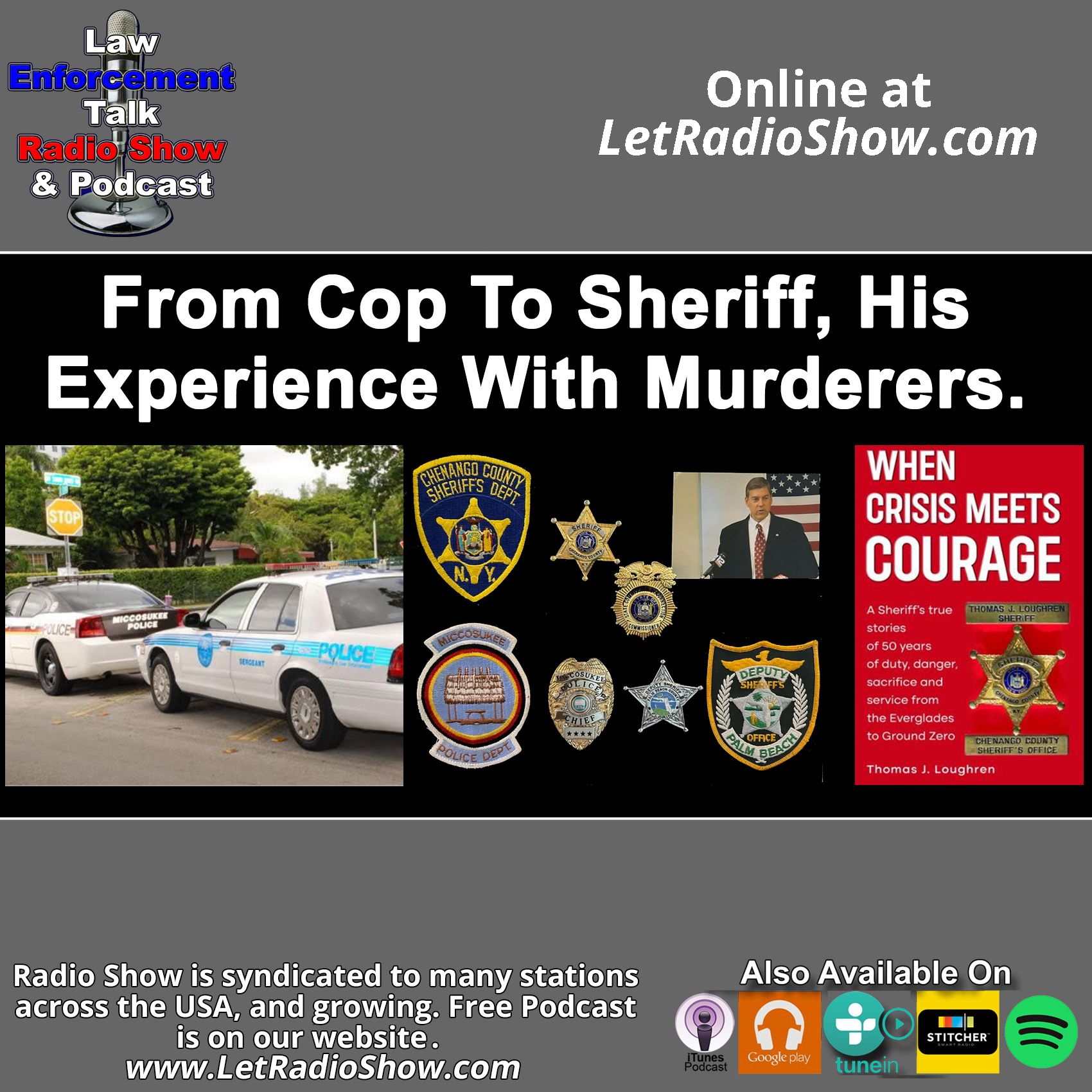
Ep 810From Cop To Sheriff, His Experience With Murderers.
From Cop To Sheriff, His Experience With Murderers. His career in law enforcement spans more than five decades, 51 years to be exact, filled with moments of courage, chaos, and the quiet heroism that often goes unseen. From becoming the youngest police officer in New York at just 20 years old to serving as the elected Sheriff of the Chenango County Sheriff’s Office in upstate New York, Loughren’s life has been defined by service, sacrifice, and an unwavering commitment to justice. The Podcast is available for free on the Law Enforcement Talk Radio Show and Podcast website, also on Apple Podcasts, Spotify, YouTube and most major podcast platforms. Thomas Loughren is our guest. The Law Enforcement Talk Radio Show and Podcast social media like their Facebook , Instagram , LinkedIn , Medium and other social media platforms. “Law enforcement is more than a career, it’s a calling,” Loughren reflects. “Every case, every suspect, every call teaches you something. You learn about humanity, about resilience, and sometimes, about your own limits.” Supporting articles about this and much more from Law Enforcement Talk Radio Show and Podcast in platforms like Medium , Blogspot and Linkedin . You can find the Law Enforcement Talk Radio Show and Podcast on Facebook, Instagram, Pinterest, X (formerly Twitter), and LinkedIn, as well as read companion articles and updates on Medium, Blogspot, YouTube, and even IMDB. A Career Spanning States and Stories Loughren’s career took him from the Florida Everglades as part of the Mikusukee Police to some of the most high-profile cases in New York. He recalls one particularly harrowing investigation: a 12-year-old girl had been brutally murdered, and the investigation. From Cop To Sheriff, His Experience With Murderers. Listen to the #Free #Podcast from the National #Radio Show. Plus he talks about arresting a hit man from a tip from the TV Show America's Most Wanted. The suspect had fled to New York State. “This individual was a hitman for a gang,” Loughren explains. “Tracking him across state lines was challenging, dangerous, and it reminded me why law enforcement can never rest.” Available for free on the Law Enforcement Talk Radio Show and Podcast website, also on Apple Podcasts, Spotify, Youtube and most major Podcast networks. It was a tip from the then-hit television show America’s Most Wanted (AMW) that proved pivotal. “AMW was more than entertainment, it was a life-saving tool,” Loughren says. “The public’s involvement often made the difference between justice being delayed or delivered.” During his tenure in law enforcement, Loughren witnessed the full spectrum of human behavior, from courage to cruelty. “You confront the worst in people, but you also see the best,” he says. “I’ve seen communities come together, strangers help strangers, and officers risk their lives for people they’ve never met.” Serving Chenango County Chenango County, located in the south-central section of New York, became a central stage for Loughren’s leadership. With a population of just over 47,000 as of the 2020 census, Chenango County is part of New York’s Southern Tier region. The county seat, Norwich, and the surrounding communities became familiar ground for Loughren as he served as Sheriff. From Cop To Sheriff, His Experience With Murderers. “Being Sheriff isn’t just about enforcing the law, it’s about guiding a community,” Loughren explains. “You learn how to balance authority with empathy, how to respond to crises, and how to build trust in the places you serve.” Look for The Law Enforcement Talk Radio Show and Podcast on social media like their Facebook , Instagram , LinkedIn , Medium and other social media platforms. The county’s geography, from the Chenango River that flows through it to its 899 square miles of land, played a part in many of Loughren’s investigations. Remote roads, rural landscapes, and small-town networks often made solving crimes both challenging and deeply personal. From Crisis to Courage: A Life in Law Enforcement Loughren’s book, When Crisis Meets Courage, captures these experiences in vivid detail. The book chronicles fifty years of duty, danger, sacrifice, and service, from the Florida Everglades to Ground Zero. “This isn’t just a book of cases or arrests,” Loughren says. “It’s a collection of lessons in leadership, loyalty, and love for the work we do.” In When Crisis Meets Courage, readers can find action-packed accounts of chases, investigations, and arrests, alongside reflections on the human side of policing. Loughren writes not only about criminals and crimes but about the relationships, decisions, and moments that define a law enforcement career. “Policing teaches you humility,” he notes. “It teaches you that every action matters, every decision can save or change a life, and that courage is sometimes quiet, showing up day after day, ready to serve.” From Cop To Sheriff, His Experience With Murderers. Available for free on their website and streaming on Apple
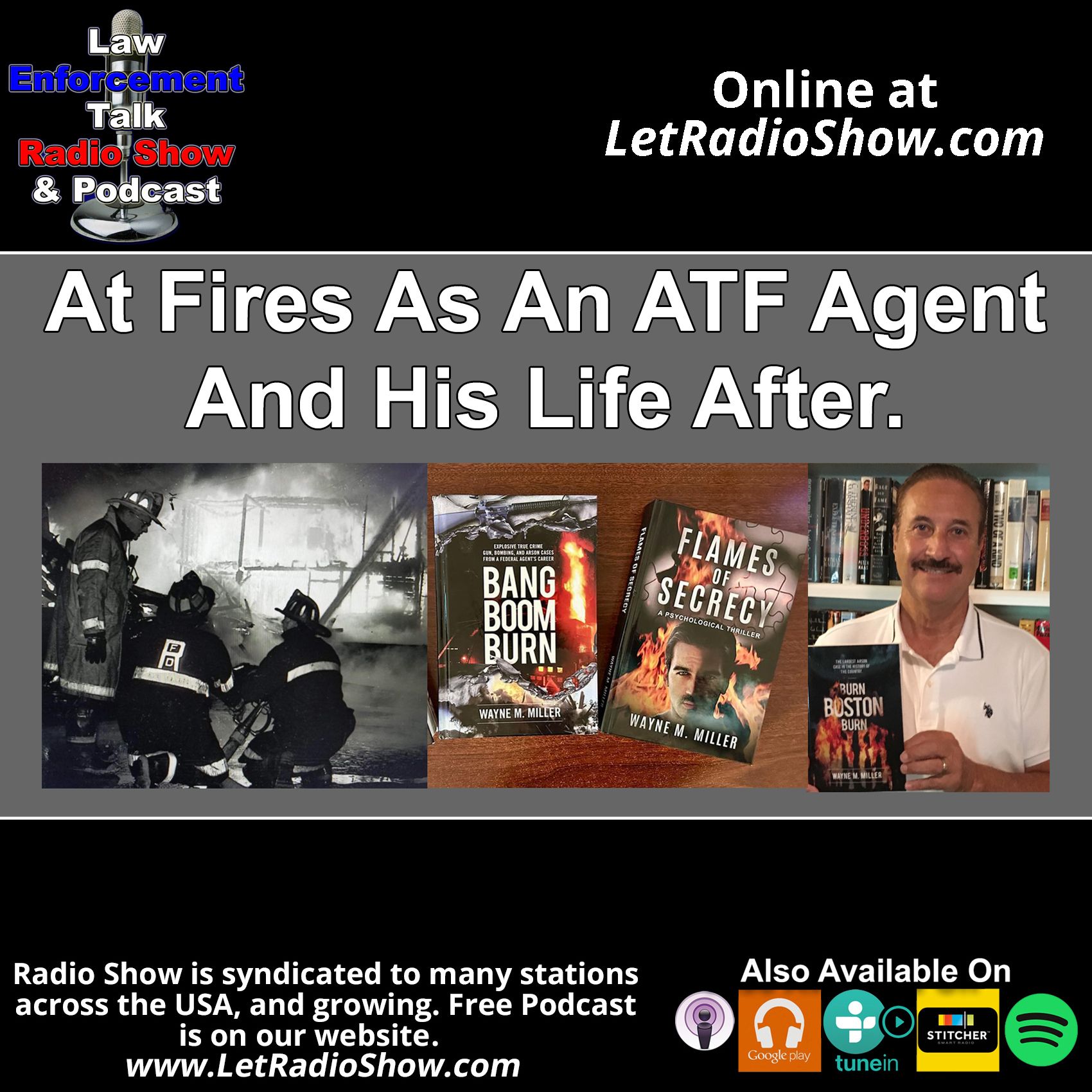
Ep 809At Fires As An ATF Agent And His Life After.
At Fires As An ATF Agent And His Life After. From Flames to Pages: The Enduring Legacy of Retired ATF Agent Wayne Miller. Wayne Miller, a retired ATF agent and seasoned fire investigator, has dedicated his life to unraveling the mysteries behind some of the most devastating fires in history. His extensive career, spanning 25 years with the Federal Bureau of Alcohol, Tobacco and Firearms in Boston, saw him at the forefront of numerous high-profile illegal firearms, bombing, and arson cases. The Law Enforcement Talk Radio Show and Podcast social media like their Facebook , Instagram , LinkedIn , Medium and other social media platforms. Listen to the #Free #Podcast from the National #Radio Show. Miller's commitment to justice and his profound understanding of fire science have left an indelible mark on the field. The Podcast is available for free on the Law Enforcement Talk Radio Show and Podcast website, also on Apple Podcasts, Spotify, YouTube and most major podcast platforms. One of the most harrowing incidents Miller investigated was the Dupont Plaza Hotel fire in Puerto Rico on New Year's Eve, 1986. Supporting articles about this and much more from Law Enforcement Talk Radio Show and Podcast in platforms like Medium , Blogspot and Linkedin . This tragic event, which claimed the lives of 96 to 98 people and injured 140 others, was intentionally set by disgruntled employees amidst a labor dispute. Miller was on the scene for eight grueling days, meticulously piecing together the events that led to the catastrophe. The fire, which started with chafing fuel in a storage room, quickly engulfed the ballroom and casino, trapping many guests. At Fires As An ATF Agent And His Life After The investigation revealed critical security lapses, including locked emergency exits, which contributed to the high death toll. "The sheer scale of the devastation and the preventable nature of the loss of life at the Dupont Plaza Hotel were truly heartbreaking," Miller has reflected. Years later, Miller's expertise was again called upon for another profound tragedy: the Worcester Fire in 1999, where six brave firefighters lost their lives in an abandoned warehouse blaze. Available for free on the Law Enforcement Talk Radio Show and Podcast website, also on Apple Podcasts, Spotify, Youtube and most major Podcast networks. This incident deeply affected Miller, highlighting the immense risks faced by first responders. His investigations into such events have not only sought to determine causes but also to prevent future occurrences. After his distinguished career with the ATF, Miller transitioned into a new chapter, continuing his work as a criminal investigator and certified fire investigator. At Fires As An ATF Agent And His Life After He has examined over 2,300 fire and explosion scenes across 43 states and provided expert testimony in numerous federal and state courts. His dedication to sharing knowledge extends to academia, where he served as an Adjunct Professor, and as a speaker at over 80 events across the United States and Canada. Look for The Law Enforcement Talk Radio Show and Podcast on social media like their Facebook , Instagram , LinkedIn , Medium and other social media platforms. Beyond his investigative work, Wayne Miller has become a prolific author, sharing his experiences and insights through compelling narratives. His literary journey includes four books: Burn Boston Burn, Bang Boom Burn, Flames of Secrecy, and The Mystery of the Missing Moon. His first book, Burn Boston Burn: The Largest Arson Case in the History of the Country, was a 2022 Global Book Gold Award winner and is currently in development for a motion picture. His second, Bang Boom Burn, Explosive True Crime Gun Bombing, and Arson Cases from a Federal Agent’s Career, also garnered a Global Book Silver Award. Miller often engages with audiences, presenting "the wild stories from his career that form the basis for his two true crime books." Available for free on their website and streaming on Apple Podcasts, Spotify, Youtube and other podcast platforms. His first novel, Flames of Secrecy, A Psychological Thriller, published in 2024, is a 2025 Global Book Gold Award winner. At Fires As An ATF Agent And His Life After Wayne Miller's journey from fighting fires as an ATF agent to chronicling his experiences in books and sharing them through various platforms like the Law Enforcement Talk Radio Show and Podcast website, their Facebook, Instagram, News outlets, Apple Podcasts, Spotify, YouTube and most major Podcast platforms, demonstrates a remarkable commitment to public safety and storytelling. His work continues to educate and captivate audiences, reminding us of the critical role of fire investigation and the human stories behind the headlines. It is discussed across News platforms and shared on Facebook, Instagram, LinkedIn, Apple, and Spotify, where audiences continue to get their content. For more information, visit his website

Ep 808From The Texas Rangers To TV Star
From The Texas Rangers To TV Star: Catching Killers. In the world of homicide investigations, few names carry the weight and respect of retired Texas Ranger Jim Holland. Known for solving some of the nation’s most chilling crimes and extracting confessions where others failed, Holland’s journey from The Texas Rangers to TV star has turned decades of real-life investigative work into compelling storytelling across television, podcasts, and digital media. The Podcast is available for free on the Law Enforcement Talk Radio Show and Podcast website, also on Apple Podcasts, Spotify, YouTube and most major podcast platforms. #Free #Podcast #Radio Today, audiences can follow his work through The Law Enforcement Talk Radio Show and Podcast Facebook, Instagram, LinkedIn, and major podcast platforms, including Apple Podcasts and Spotify, YouTube, where discussions about criminal investigations, interrogation psychology, and real-world police work are now widely available, for free via The Law Enforcement Talk Radio Show and Podcast to listeners hungry for authentic crime stories grounded in experience rather than fiction. The Law Enforcement Talk Radio Show and Podcast social media like their Facebook , Instagram , LinkedIn , Medium and other social media platforms. An Unexpected Path Into Police Work Holland never set out with a clear plan to become one of America’s most recognized investigators. Growing up outside Chicago in Polo, Illinois, he was raised in a large family whose parents renovated an orphanage to house their seven children, an upbringing that shaped his sense of responsibility and service. Supporting articles about this and much more from Law Enforcement Talk Radio Show and Podcast in platforms like Medium , Blogspot and Linkedin . After graduating from the University of Louisville in 1993, Holland entered law enforcement in 1995 as a highway patrol trooper with the Texas Department of Public Safety. From The Texas Rangers To TV Star: Catching Killers. “I didn’t map out becoming a Ranger,” Holland said in an interview. “I just wanted to do meaningful police work and help people.” That path eventually led him into the elite Texas Ranger Division, the primary investigative arm of the Texas Department of Public Safety. Founded in 1823, the Rangers are the oldest statewide law enforcement agency in the United States and specialize in major violent crimes, cold cases, public corruption, and officer-involved shootings. Available for free on the Law Enforcement Talk Radio Show and Podcast website, also on Apple Podcasts, Spotify, Youtube and most major Podcast networks. Becoming a Ranger requires years of investigative experience, advanced training, and a reputation for excellence, standards Holland met through relentless work ethic and investigative success. Life As a Texas Ranger Holland spent more than two decades working complex cases across Texas, investigating murders, serial crimes, and missing persons cases that often left families without answers. “Hard work, dedication, not sleeping, long hours, and time away from family,” Holland explained. “Being a ranger is really a life of selflessness. It’s about helping those who can’t help themselves anymore.” From The Texas Rangers To TV Star: Catching Killers. Look for The Law Enforcement Talk Radio Show and Podcast on social media like their Facebook , Instagram , LinkedIn , Medium and other social media platforms. During his career, Holland worked security for then-Texas Governor George W. Bush and later played key roles in some of the country’s most haunting criminal investigations. His reputation grew as someone departments called when cases stalled and traditional evidence ran dry. “I get brought in when there’s no DNA or forensics,” Holland said. “My expertise is getting these people to talk.” Catching Killers and Solving Cold Cases Holland has cracked hundreds of cases, including investigations involving serial offenders and long-unsolved murders. Among his most notable achievements was his work with serial killer Samuel Little, whom the FBI later identified as the most prolific serial killer in U.S. history. Through patient interviews and psychological strategy, Holland elicited 93 confessions, helping investigators connect Little to at least 60 cold cases involving murdered women across the country. Available for free on their website and streaming on Apple Podcasts, Spotify, Youtube and other podcast platforms. The Los Angeles Times famously referred to Holland as a “serial killer whisperer,” while national programs such as 60 Minutes highlighted his interrogation methods and investigative persistence. “Justice is a hard word,” Holland said. “There’s nothing fair about someone being killed. But bringing answers to families and making sure the perpetrator doesn’t have the opportunity to do it again, that’s what matters.” From The Texas Rangers To TV Star: Catching Killers. The Most Difficult Cases During interviews and podcast appearances, Hollan

Ep 807Public School Failure In Baltimore: Is It Spreading Like Cancer
Public School Failure In Baltimore: Is It Spreading Like Cancer Across America? In an era where news travels instantly across Facebook, Instagram, and every major digital platform, stories about struggling public schools often fade quickly from the national spotlight. Baltimore City Public Schools operates with enormous financial resources. In 2024 alone, the district managed a $1.7 billion budget. Yet despite the funding, only about 10% of students tested proficient in math, a statistic that shocked parents, policymakers, and educators alike. The Law Enforcement Talk Radio Show and Podcast social media like their Facebook , Instagram , LinkedIn , Medium and other social media platforms. Listen to the #Free #Podcast from the National #Radio Show. But investigative journalist Christopher Papst believes what is happening inside Baltimore’s classrooms is not just a local crisis, it may be a warning sign for the rest of the country. The Podcast is available and shared for free on the Law Enforcement Talk Radio Show and Podcast website, also on Apple Podcasts, Spotify, YouTube and most major podcast platforms. Papst, widely known for his reporting with Fox45 News Baltimore, spent nearly a decade investigating Baltimore City Public Schools. His findings ultimately became the foundation of his book Failure Factory, a deep dive into what he describes as systemic issues inside one of America’s most heavily funded yet lowest-performing school systems. Supporting articles about this and much more from Law Enforcement Talk Radio Show and Podcast in platforms like Medium , Blogspot and Linkedin . “This isn’t simply about one city,” Papst has said in interviews promoting the book. “It’s about a system that has shifted away from educating children and toward protecting bureaucracy.” Public School Failure In Baltimore: Is It Spreading Like Cancer Across America? A System Under Scrutiny Papst’s reporting followed the money trail, examining how funding decisions, administrative policies, and accountability measures impacted real classroom outcomes. His investigation uncovered patterns that he claims prioritize appearances over performance. According to Failure Factory, students were sometimes promoted despite failing grades, academic metrics were adjusted to maintain graduation rates, and disciplinary incidents were underreported to make schools appear safer. Available for free on the Law Enforcement Talk Radio Show and Podcast website, also on Apple Podcasts, Spotify, Youtube and most major Podcast networks. “Failure Factory raises the question,” wrote Barbara Dezmon, Ph.D., of the Maryland State Conference NAACP, “are children failing school or are schools failing children?” The Cost of Investigative Journalism Papst’s reporting did not come without consequences. During his investigation, he faced death threats, accusations, and multiple complaints filed against him, challenges he says often accompany attempts to hold powerful institutions accountable. Public School Failure In Baltimore: Is It Spreading Like Cancer Across America? “Educational institutions have evolved into a new bureaucracy,” Dezmon noted. “Chris Papst demonstrates the courage to challenge powerful bureaucracies by holding those at the top accountable.” For Papst, the backlash reinforced the importance of investigative journalism in modern media. As traditional television reporting merges with podcasts, streaming platforms, and digital news consumption through Apple and Spotify, long-form investigations are finding new audiences eager for deeper context beyond headlines. Look for The Law Enforcement Talk Radio Show and Podcast on social media like their Facebook , Instagram , LinkedIn , Medium and other social media platforms. Data Over Students? One of the central arguments presented in Failure Factory is that public education has undergone a significant philosophical shift. Papst argues that schools increasingly value data metrics and funding stability over individual student success. The book details claims that grades were sometimes changed to passing marks, disciplinary actions reduced on paper, and academic standards adjusted to maintain positive statistics. Critics say such practices create the illusion of progress while leaving students unprepared for college or careers. Public School Failure In Baltimore: Is It Spreading Like Cancer Across America? For many educators, teaching remains a calling rooted in service. However, Papst suggests a growing culture within some districts treats education as an administrative enterprise rather than a student-centered mission. “As enrollment declined, budgets increased,” Papst writes, pointing to rising six-figure administrative salaries even as student performance struggled. Available for free on their website and streaming on Apple Podcasts, Spotify, Youtube and other podcast platforms. A National Warning? The most controversial question raised by Papst’s work is whether Baltimore represents an isolated fail
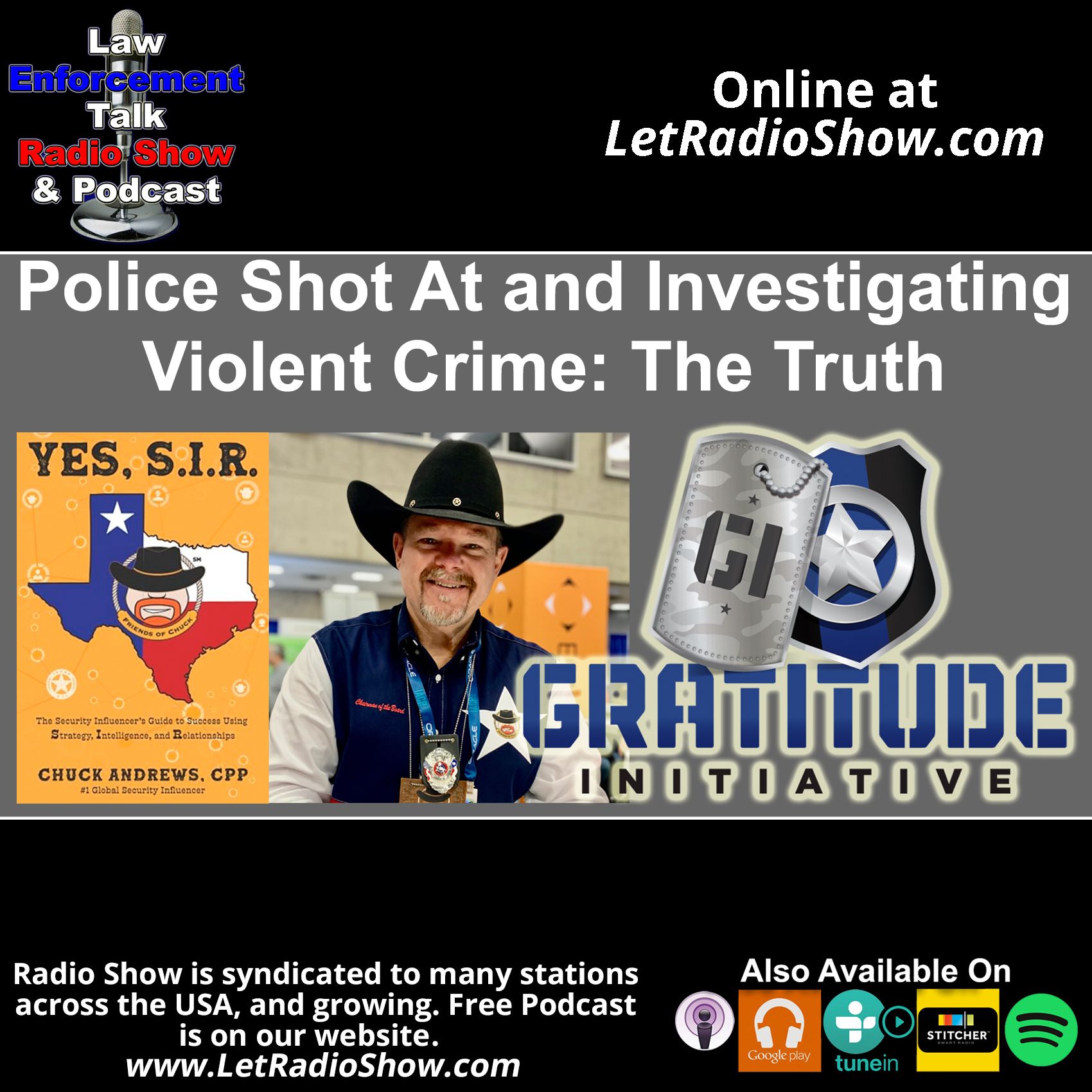
Ep 806Police Shot At and Investigating Violent Crime
Police Shot At and Investigating Violent Crime: The Truth. In today’s nonstop Social Media environment, from Facebook, Instagram, and LinkedIn to YouTube, Apple, and Spotify podcasts, conversations about policing often focus on headlines rather than reality. Viral clips and breaking News stories frequently highlight moments when officers fire their weapons or when suspects are shot. Far less discussed, however, is a critical perspective: what happens psychologically and physically when police are shot at. The Podcast is available and shared for free on the Law Enforcement Talk Radio Show and Podcast website, also on Apple Podcasts, Spotify, YouTube and most major podcast platforms. That is exactly the conversation explored in this Podcast episode featuring retired Texas law enforcement leader Charles “Chuck” Andrews, a former chief of police who spent decades handling violent incidents, including shootings where victims were struck multiple times. The Law Enforcement Talk Radio Show and Podcast social media like their Facebook , Instagram , LinkedIn , Medium and other social media platforms. “The public often sees the final seconds,” Andrews explained. “They see the moment an officer fires. What they don’t see is everything leading up to it, especially the reality of being shot at and having to make decisions in fractions of a second.” Supporting articles about this and much more from Law Enforcement Talk Radio Show and Podcast in platforms like Medium , Blogspot and Linkedin . The Reality Officers Face When Bullets Fly Discussions surrounding use of force typically center on policy, legality, and accountability. Andrews says those discussions are necessary, but incomplete. Police Shot At and Investigating Violent Crime: The Truth. “We talk a lot about when officers fire their weapons,” he said. “We also talk about when officers are shot and wounded. But rarely do people talk about what it’s actually like when rounds are coming toward you.” According to Andrews, the experience is both physiological and psychological. Officers must process threat recognition, environmental awareness, and survival instincts simultaneously while protecting others nearby. Available for free on the Law Enforcement Talk Radio Show and Podcast website, also on Apple Podcasts, Spotify, Youtube and most major Podcast networks. “When you’re being shot at, your brain is processing danger faster than conscious thought,” he said. “Training takes over because there isn’t time for debate.” The Science Behind Being Shot Understanding shootings requires understanding what a bullet actually does to the human body, a topic often misunderstood in movies and online debates. Police Shot At and Investigating Violent Crime: The Truth. A gunshot wound involves a rapid transfer of kinetic energy from a projectile into human tissue. The damage is determined largely by velocity, not simply size. Energy Transfer: Because velocity is squared in physics calculations, faster rounds deliver exponentially greater destructive potential. Permanent vs. Temporary Cavities: A bullet crushes tissue along its direct path while also creating a temporary cavity, a shockwave that stretches surrounding tissue. High-velocity rounds can cause severe internal damage far beyond the visible wound. The Momentum Myth: Contrary to Hollywood portrayals, bullets do not knock people backward. The momentum transfer is minimal compared to body mass, meaning individuals typically collapse due to physiological failure, not impact force. “People expect dramatic knockdowns,” Andrews said. “In reality, incapacitation usually comes from blood loss, nervous system disruption, or organ damage, not from being thrown backward.” Look for The Law Enforcement Talk Radio Show and Podcast on social media like their Facebook , Instagram , LinkedIn , Medium and other social media platforms. Different tissues respond differently to ballistic trauma. Elastic tissues such as muscle may stretch and recover, while organs like the liver or brain are far more vulnerable to catastrophic damage. Bone impacts frequently result in fragmentation, creating secondary projectiles inside the body. Police Shot At and Investigating Violent Crime: The Truth. Bullets may also yaw or fragment after entering tissue, increasing injury severity. Supersonic Reality: Why You May Never Hear the Shot One of the lesser-known truths Andrews discusses involves sound and perception during shootings. Most modern rifle rounds, and many handgun rounds, travel faster than the speed of sound. These supersonic projectiles create a sonic crack as they break the sound barrier. Available for free on their website and streaming on Apple Podcasts, Spotify, Youtube and other podcast platforms. “If a round is supersonic, it hits before you hear the gunshot,” Andrews explained. “That surprises people, but physics doesn’t wait for perception.” Rifle rounds commonly travel thousands of feet per second, well beyond the speed of sound. Many handg
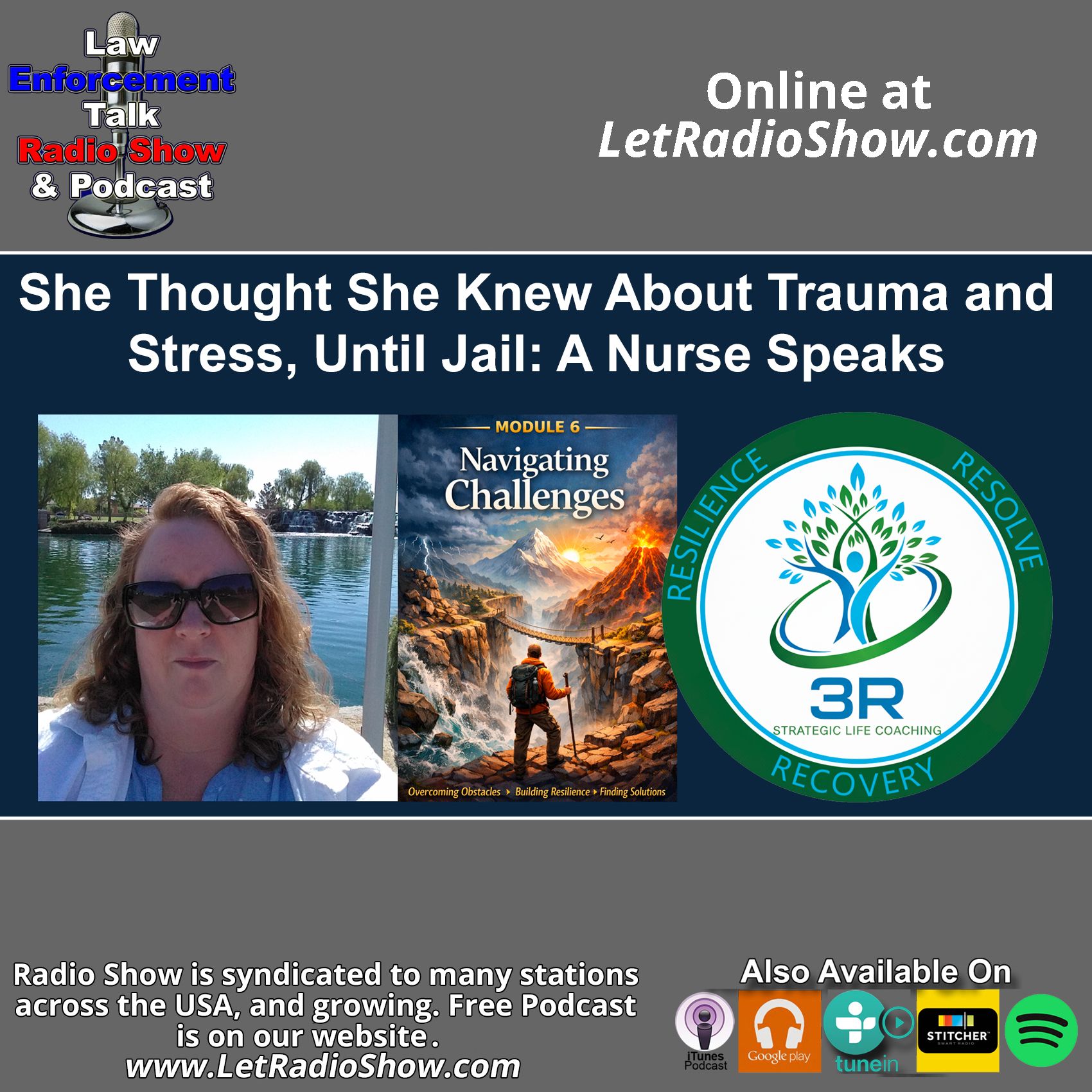
Ep 805She Thought She Knew About Trauma and Stress
She Thought She Knew About Trauma and Stress, Until Jail: A Nurse Speaks. For years, she believed she understood trauma and stress. As a registered nurse, she had already witnessed illness, injury, and emotional hardship both personally and professionally. But nothing, she says, truly prepared her for what she would experience working behind the secured doors of a correctional facility. The Law Enforcement Talk Radio Show and Podcast social media like their Facebook , Instagram , LinkedIn , Medium and other social media platforms. Now a retired RN and founder of 3R Strategic Life Coaching, LLC, Laura Bulbitz is sharing her journey publicly through the Law Enforcement Talk Radio Show and Podcast, it's social media platforms like facebook, Instagram, LinkedIn, and more. Hoping her story resonates with correctional professionals, nurses, police officers, and other first responders facing silent burnout. The Podcast is available and shared for free on the Law Enforcement Talk Radio Show and Podcast website, also on Apple Podcasts, Spotify, YouTube and most major podcast platforms. A Calling Born from Personal Trauma Long before she stepped into a jail medical unit, Bulbitz’s path toward nursing was shaped by deeply personal experiences. Trauma within her own family, including serious illness and a devastating accident involving her husband and son, became the catalyst that pushed her toward healthcare. Supporting articles about this and much more from Law Enforcement Talk Radio Show and Podcast in platforms like Medium , Blogspot and Linkedin . “I wanted to help people survive the moments that change everything,” she said. “When your world flips upside down, healthcare workers are often the first faces you see.” Nursing became more than a career, it became a mission. She worked in demanding environments and eventually transitioned into correctional healthcare, attracted by strong benefits and stable employment opportunities. At the time, it seemed like a practical decision. “It looked like a good move financially and professionally,” she recalled. “I thought I was prepared.” Inside the World of Correctional Nursing Correctional nurses, often called jail nurses, serve as registered nurses (RNs) or licensed practical nurses (LPNs) responsible for providing healthcare to incarcerated individuals in jails, prisons, and detention centers. Their role is critical but frequently misunderstood. Available for free on the Law Enforcement Talk Radio Show and Podcast website, also on Apple Podcasts, Spotify, Youtube and most major Podcast networks. Unlike traditional hospital settings, correctional healthcare combines medicine with security protocols and high-risk environments. Daily responsibilities include: Conducting intake assessments for new detainees Managing chronic illnesses such as diabetes and hypertension Administering medications and monitoring treatment plans Responding to emergencies, injuries, and mental health crises Collaborating with correctional officers and outside specialists The work requires autonomy, critical thinking, psychiatric awareness, and adaptability, often with fewer resources than hospitals provide. Look for The Law Enforcement Talk Radio Show and Podcast on social media like their Facebook , Instagram , LinkedIn , Medium and other social media platforms. “It’s fast-paced, unpredictable, and emotionally intense,” Bulbitz explained. “You’re treating patients while constantly aware of safety and security.” She quickly realized the emotional weight of the job extended far beyond clinical care. “You’re seeing trauma every single day, addiction, mental illness, violence, despair,” she said. “And you carry those stories home whether you want to or not.” When Compassion Meets Burnout Over time, the cumulative stress began to take a toll. Correctional nurses frequently operate in environments where emergencies can escalate rapidly, and emotional detachment becomes a survival mechanism. For Bulbitz, years of exposure combined with her own unresolved personal trauma created a perfect storm. Available for free on their website and streaming on Apple Podcasts, Spotify, Youtube and other podcast platforms. “I didn’t notice it happening at first,” she said. “You just keep going because that’s what nurses do.” Eventually, exhaustion turned into burnout, emotional fatigue that no amount of rest seemed to fix. “I realized I wasn’t the same person anymore,” she shared. “The compassion was still there, but I was drained. Completely drained.” After years of service, she made the difficult decision to retire from nursing altogether. “It felt like losing part of my identity,” she admitted. “But I also knew I couldn’t keep pouring from an empty cup.” A New Mission Emerges Leaving nursing did not mean leaving service behind. Instead, Bulbitz began transforming her experiences into something new. Today, she works as a life coach specializing in corrections professionals, law enforcement officers, healthcare workers
Ep 804Fire As A Weapon for Murder
Fire As A Weapon for Murder: A Retired California Cop’s Experience With Trauma Few Are Prepared For. When most people think about murder, they imagine firearms or knives. Rarely do they consider fire itself as the weapon. Yet according to retired law enforcement veteran Charles “Chuck” Sherman, fire is one of the most brutal and psychologically devastating methods of killing, not only for victims, but for every Cop forced to witness its aftermath. The Podcast is available and shared for free on the Law Enforcement Talk Radio Show and Podcast website, also on Apple Podcasts, Spotify, YouTube and most major podcast platforms. Drawing from decades of Retired California Police Experience, Sherman now shares his story publicly through a Podcast and across platforms like their Facebook, Instagram, YouTube, LinkedIn, Apple Podcasts, and Spotify, Medium and other social media platforms. He is hoping to spark conversations about officer Trauma, training gaps, and a form of violence many people, including police are unprepared to face. The Law Enforcement Talk Radio Show and Podcast social media like their Facebook , Instagram , LinkedIn , Medium and other social media platforms. “People don’t realize fire can be used as a weapon just like a gun,” Sherman said. “And when you see it firsthand, it changes you.” Supporting articles about this and much more from Law Enforcement Talk Radio Show and Podcast in platforms like Medium , Blogspot and Linkedin . Understanding Fire As A Weapon for Murder Arson is legally defined as the willful and deliberate act of setting fire to or charring property. While commonly associated with buildings, arson can also involve vehicles, boats, forests, or other property. The crime is typically charged as a felony, with harsher penalties when human life is endangered. Fire As A Weapon for Murder: A Retired California Cop’s Experience With Trauma Few Are Prepared For. Available for free on the Law Enforcement Talk Radio Show and Podcast website, also on Apple Podcasts, Spotify, Youtube and most major Podcast networks. In some cases, arson is committed for insurance fraud or to conceal crimes such as burglary or homicide. When a death occurs, prosecutors may pursue manslaughter or murder charges. But Sherman emphasizes that arson statistics only tell part of the story. “Quite often people die in building fires,” he explained. “But there are also cases where someone is intentionally set on fire. That’s homicide and it happens more than people think.” Each year in the United States, deaths involving fire include accidents, suicides involving self-immolation, and murders where fire becomes the primary weapon. A Veteran Officer Caught Off Guard At the time of the incident that would leave a lasting mark on his career, Sherman was a recently promoted Police Sergeant with years of experience behind him. He had already handled violent crimes, major investigations, and countless critical incidents. Fire As A Weapon for Murder: A Retired California Cop’s Experience With Trauma Few Are Prepared For. Look for The Law Enforcement Talk Radio Show and Podcast on social media like their Facebook , Instagram , LinkedIn , Medium and other social media platforms. Nothing prepared him for this call. While on duty, Sherman was alerted by a citizen to a violent crime unfolding nearby. Arriving on scene, he discovered a man who had been doused with a flammable liquid and intentionally set on fire. “I caught the call on view after someone flagged me down,” Sherman recalled. “Within seconds I realized this was something completely different from anything I’d handled before.” Despite decades of training, Sherman says the moment exposed a serious gap in law enforcement preparation. “We train for weapons, tactics, and survival,” he said. “But almost nobody trains you for the emotional impact of seeing someone burned alive.” A Career of Service and an Unexpected Reality Sherman’s law enforcement career spanned approximately thirty years. He began as a Detention Officer with the Kern County Sheriff’s Department, serving about a decade before joining the Bakersfield Police Department as a full-time officer. During his seventeen years with Bakersfield Police, he worked as a detective, field training officer, and academy coordinator before promoting to Sergeant. Later, he continued public service as an investigator with the Kern County District Attorney’s Office until 2022. Fire As A Weapon for Murder: A Retired California Cop’s Experience With Trauma Few Are Prepared For. Available for free on their website and streaming on Apple Podcasts, Spotify, Youtube and other podcast platforms. By every professional measure, Sherman was seasoned and experienced. Yet he says nothing in his background prepared him for what he encountered that day. “You think experience prepares you for everything,” he said. “It doesn’t.” The Hidden Trauma Police Carry Deaths involving fire are far more common than many Americans realize. Police office
Ep 803Not So Obvious Police Calls
Not So Obvious Police Calls: From Domestics to Family Disputes. Many people imagine police work as a constant stream of violent crime, flashing lights, and clear-cut arrests. But according to retired NYPD Lieutenant David Goldstein, the reality of policing is far more complicated. The Law Enforcement Talk Radio Show and Podcast social media like their Facebook , Instagram , LinkedIn , Medium and other social media platforms. “Most police calls are not obvious crimes,” Goldstein explains. “They’re messy, emotional, and often fall into gray areas, especially domestics and family disputes.” The Podcast is available and shared for free on the Law Enforcement Talk Radio Show and Podcast website, also on Apple Podcasts, Spotify, YouTube and most major podcast platforms. A Career Shaped by Urban Policing Goldstein is a retired Lieutenant from the NYPD who spent his career working busy urban precincts across New York City. Before returning home to New York, he served for two and a half years as an officer with the Los Angeles Police Department. He later retired from the NYPD at the rank of Lieutenant, went on to serve as a University Police Officer, and eventually left law enforcement entirely. Supporting articles about this and much more from Law Enforcement Talk Radio Show and Podcast in platforms like Medium , Blogspot and Linkedin . He grew up in New York, served as a U.S. Marines officer, and earned a degree in Criminology from Florida State University, a background that gave him both academic and street-level insight into Crime and policing. From Domestics to Family Disputes Throughout his career, Goldstein saw firsthand that many 911 calls are far from straightforward. Domestics and family disputes, in particular, often blur the line between criminal and civil matters. “People call the police because they’re scared, angry, or overwhelmed,” he says. “But when we arrive, we often find that no crime has actually been committed.” He recalls a disturbing attempted child abduction investigation in Bedford-Stuyvesant. Although the suspect was ultimately convicted, Goldstein says the punishment felt inadequate given the seriousness of the crime. “That case stuck with me,” he notes. “It showed how the system doesn’t always match the gravity of what officers and families experience on the ground.” He also describes a family dispute call involving a young child, the kind of situation where officers must balance enforcement, empathy, and restraint in a matter of seconds. The Reality of Not-So-Obvious Police Calls The concept of Not So Obvious Police Calls refers to the large number of incidents that do not involve active violence or serious crimes in progress. Research shows that more than 95% of police calls do not involve violence. Many calls fall under what officers refer to as “order maintenance”, noise complaints, suspicious behavior, public intoxication, or emotionally charged disputes. Dispatch information is often incomplete or subjective, making the response even more challenging. “We’re sent in with limited information,” Goldstein explains. “By the time you arrive, the situation may be completely different than what was described.” An increasing number of calls also involve mental health crises or substance use, areas where police are frequently expected to act as first responders despite limited specialized training. Civil Cases vs. Criminal Cases Goldstein emphasizes that many domestics and family disputes ultimately turn out to be civil matters rather than criminal ones. “People assume police can ‘fix’ everything,” he says. “But a lot of what we deal with are civil disputes, and no laws were broken.” Civil cases involve disagreements between private parties and are decided by a lower burden of proof, while criminal cases are prosecuted by the government and require proof beyond a reasonable doubt. Understanding this distinction is critical to understanding why officers sometimes leave scenes without making arrests. The Cost to Officers and Communities Responding to a constant stream of complex, non-clear-cut calls places a heavy burden on police departments. Goldstein notes that it strains resources, contributes to community confusion, and leads to officer burnout. “When you’re constantly dealing with chaos that isn’t criminal, it wears on you,” he says. “That stress follows officers home.” From the Streets to the Page Goldstein channels these experiences into his writing. He is the author of Another Body in Brooklyn, a gritty crime novel inspired by real police experiences in Bed-Stuy, Brooklyn. The book follows Police Sergeant Joshua Rothchild as he navigates violence, bureaucracy, and moral conflict while investigating a forgotten New Year’s Day murder. “The book is fiction,” Goldstein says, “but the emotions, the confusion, and the pressure are all real.” He is also the author of Back Alleys and Unauthorized Donut Shops, a collection of short crime fiction, and writes science fiction as well. Goldstein
Ep 802The Murder of Police, Our Careers in Baltimore
The Murder of Police, Our Careers in Baltimore, Maryland. Special Episode. Being a cop in Baltimore, Maryland has never been just a job. For generations of officers, it has been a test of resolve carried out in one of America’s most violent cities, where the murder of police officers was not an abstract fear, but a lived reality. The streets remembered everything, even when time moved on. The Law Enforcement Talk Radio Show and Podcast social media like their Facebook , Instagram , LinkedIn , Medium and other social media platforms. For John Jay Wiley, the host of the La Enforcement Talk Radio Show and Podcast, also a retired Baltimore police officer, that reality resurfaced decades later through a candid conversation with retired Baltimore Police Detective Gary McLhinney. Shared across Facebook, Instagram, YouTube, Spotify, Apple, and other Social Media and Media platforms as part of a Podcast, the discussion centered on a crime that forever shaped their careers: the murder of Baltimore Police Officer Vincent J. Adolfo. This Special Episode of the Podcast is available and shared for free on the Law Enforcement Talk Radio Show and Podcast website, also on Apple Podcasts, Spotify, YouTube and most major podcast platforms. “This was something I carried with me from 1985,” John Jay Wiley, the retired Baltimore Police Sergeant said. “It stayed buried, but it was never gone.” The Murder of Police, Our Careers in Baltimore, Maryland. Special Episode. Supporting articles about this and much more from Law Enforcement Talk Radio Show and Podcast in platforms like Medium , Blogspot and Linkedin . The Murder of Police Officer Vincent J. Adolfo On November 18, 1985, Officer Vincent J. Adolfo of the Baltimore Police Department was performing routine police work in a city already known for violence. That night, officers attempted to stop a stolen vehicle. The suspect vehicle rammed another patrol car, and all occupants fled on foot. Officer Adolfo pursued one suspect into Iron Alley. “He thought the suspect was surrendering,” the retired officer explained. “That’s what makes this so hard to accept.” As Officer Adolfo approached, the suspect suddenly produced a .357 caliber handgun and opened fire. Officer Adolfo was struck in both the chest and the back. At the time, his department-issued ballistic vest contained only a front panel, capable of stopping rounds up to .38 caliber. Available for free on the Law Enforcement Talk Radio Show and Podcast website, also on Apple Podcasts, Spotify, Youtube and most major Podcast networks. “The equipment wasn’t what it is today,” Gary McLhinney said. “He never had a chance.” Officer Adolfo died from his wounds, becoming another name etched into Baltimore’s long and painful history of officers killed in the line of duty. The Murder of Police, Our Careers in Baltimore, Maryland. Special Episode. The suspect fled the state and was later apprehended in Oklahoma. He was extradited back to Maryland, convicted, and ultimately executed in 1997 for the murder. A Crime That Followed Careers for Decades The murder of Officer Adolfo connected two men who would later reflect on their careers from retirement, men who had never worked together, yet shared the same burden. Retired Baltimore Police Detective Gary McLhinney played a critical role in helping his former colleague, radio and odcast host confront unresolved guilt and regret. Look for The Law Enforcement Talk Radio Show and Podcast on social media like their Facebook , Instagram , LinkedIn , Medium and other social media platforms. “Gary helped me finally put things to rest,” John Jay Wiley said. “He understood because he lived it too.” Both men served during an era when killing police officers in Baltimore was not rare. It was a time when violent crime surged, fueled first by heroin in the 1970s and later by crack cocaine in the 1980s and early 1990s. “You didn’t count years by calendars,” Gary McLhinney said. “You counted them by funerals.” Policing One of America’s Most Violent Cities Baltimore City, an independent city under the Maryland Constitution since 1851, has long struggled with crime rates well above the national average. With a population of more than 585,000 at the 2020 census and part of a metropolitan area exceeding 2.8 million residents, Baltimore’s challenges have been both urban and systemic. The Murder of Police, Our Careers in Baltimore, Maryland. Special Episode. Available for free on their website and streaming on Apple Podcasts, Spotify, Youtube and other podcast platforms. In 1993, the city recorded a peak of 353 homicides, during a period when the population was nearly 130,000 higher than it is today. In 2019, Baltimore recorded 348 killings, nearly matching that grim record. Though the city saw a sharp decline to 201 homicides in 2024, the scars of decades of violence remain. “These numbers don’t tell the whole story,” Gary McLhinney said. “They don’t show the officers who went home different, or didn’t go home
Ep 801Her Police Father Was Killed While On The Job
Her Police Father Was Killed While On The Job: A Daughter’s Voice, A Family’s Fight, and a Mission to Help Others. Those words are not a headline to Tiffany Yant, they are the defining moment that reshaped her life. Tiffany is the daughter of Police Officer Ross Bartlett of the Ceresco Police Department in Nebraska, a veteran law enforcement officer who was killed in the line of duty during a traffic stop. Her Podcast appearance, and content shared for free on the Law Enforcement Talk Radio Show and Podcast website, also on Apple Podcasts, Spotify, YouTube and most major podcast platforms. Tiffany is using her voice, through the Law Enforcement Talk Radio Show and Podcast, their Apple Podcasts, Spotify, Youtube, Facebook, Instagram,to tell her father’s story, expose painful truths, and help other families who suffer unimaginable loss. The Law Enforcement Talk Radio Show and Podcast social media like their Facebook , Instagram , LinkedIn , Medium and other social media platforms. She recently appeared as a guest on the Law Enforcement Talk Radio Show and Podcast, where the free episode is available on the show’s website as well as on Apple Podcasts, Spotify, YouTube, and most major podcast platforms. “This isn’t just about my dad,” Tiffany says. “It’s about what happens to families after the lights fade, the headlines stop, and the systems fail.” Her Police Father Was Killed While On The Job: A Daughter’s Voice, A Family’s Fight, and a Mission to Help Others. Supporting articles about this and much more from Law Enforcement Talk Radio Show and Podcast in platforms like Medium , Blogspot and Linkedin . A Life of Service, A Line-of-Duty Death On April 12, 2024, Officer Ross Bartlett was conducting a traffic stop on southbound Highway 77, just south of Ceresco, Nebraska. He was seated in his patrol car when a pickup truck struck his vehicle from behind, forcing it into the car he had stopped. Bystanders immediately rushed in, attempting life-saving measures. Officer Bartlett was airlifted to Bryan Health West Campus, where he later succumbed to his injuries. The driver of the stopped vehicle suffered non-life-threatening injuries. Available for free on the Law Enforcement Talk Radio Show and Podcast website, also on Apple Podcasts, Spotify, Youtube and most major Podcast networks. Investigators later determined the pickup truck driver was driving distracted. “My father was doing his job, protecting others,” Tiffany said during the podcast. “He never made it home.” Her Police Father Was Killed While On The Job: A Daughter’s Voice, A Family’s Fight, and a Mission to Help Others. The driver was charged with felony motor vehicle homicide. On Oct. 29, 2025, a Lancaster County District Court judge found him guilty after he changed his plea from not guilty to no contest. He was sentenced to more than two years in jail, and his driver’s license was revoked for two years. Look for The Law Enforcement Talk Radio Show and Podcast on social media like their Facebook , Instagram , LinkedIn , Medium and other social media platforms. Thirty Years of Service, and a Family Left Behind Officer Bartlett dedicated 30 years to law enforcement, serving seven years with the Ceresco Police Department, while also working concurrently for seven years as an investigator with the Nebraska Department of Correctional Services. His career included service with the Valentine Police Department, Boone County Sheriff’s Office, Madison Police Department, Madison County Sheriff’s Office, and Newman Grove Police Department. Beyond policing, he also served as a volunteer firefighter with the Ceresco Fire Department. “My dad lived a life of service,” Tiffany said. “He gave everything to his community.” But according to Tiffany, when her family needed support the most, it never came. “The Ceresco Police Department totally dropped the ball in assisting our family,” she said. “And they still do.” Her Police Father Was Killed While On The Job: A Daughter’s Voice, A Family’s Fight, and a Mission to Help Others. Available for free on their website and streaming on Apple Podcasts, Spotify, Youtube and other podcast platforms. From Personal Tragedy to Purpose Out of profound death and loss, Tiffany Yant turned pain into purpose. She is now the Chief Operating Officer of GIVE BLUE HOPE, a Non-Profit 501(c)(3) charitable organization with a clear and urgent mission. GIVE BLUE HOPE exists to help bridge the financial gap for the immediate families of Law Enforcement Officers, Corrections Officers, and First Responders who are feloniously assaulted and killed in the line of duty. “When an officer is killed, benefits don’t arrive overnight,” Tiffany explained. “Families still have mortgages, groceries, funerals, and bills, right now.” The organization’s charitable gifts are not meant to replace pensions or benevolent benefits, but to support families during the critical months before those benefits are awarded. “We step in when families are at their most vulnerab
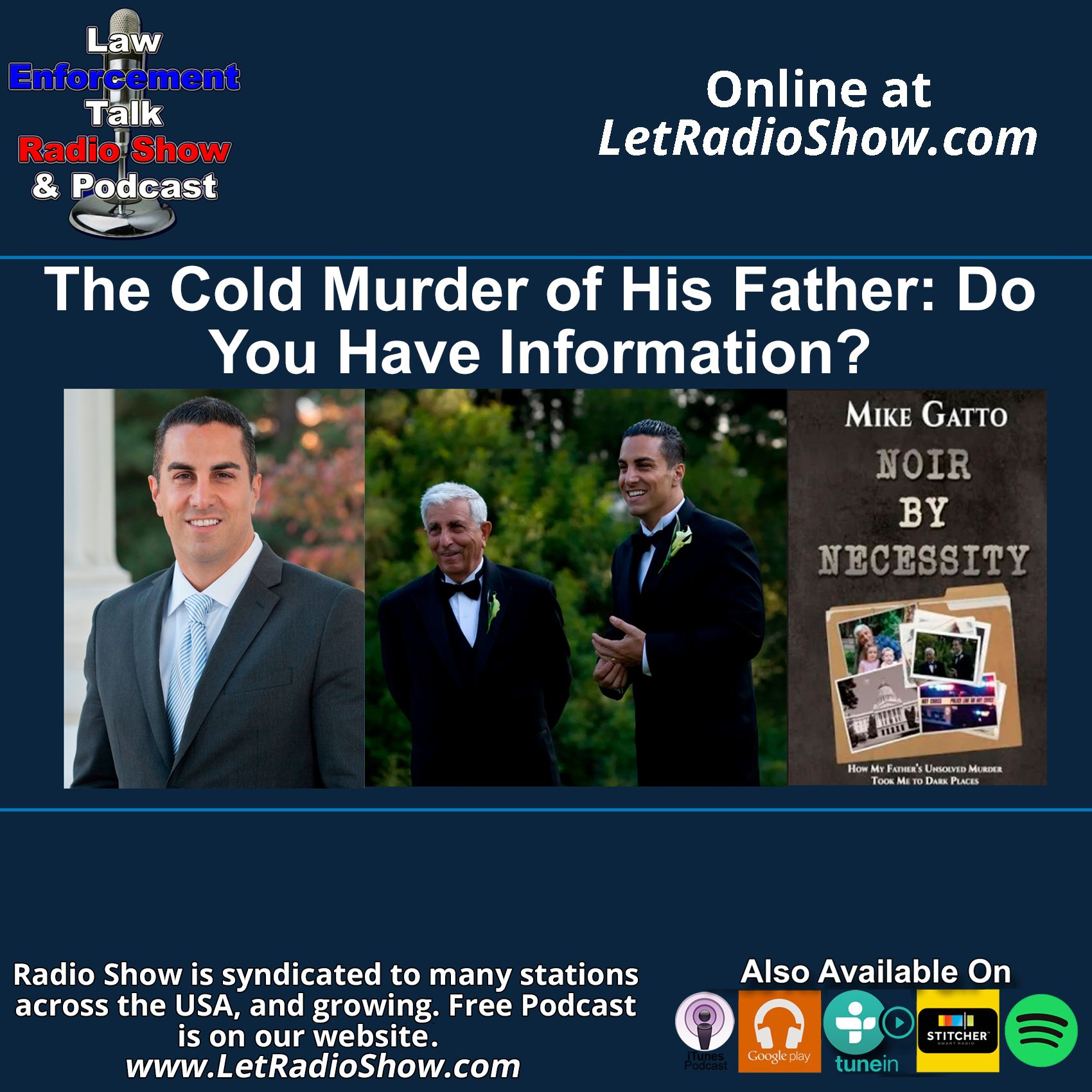
Ep 800The Cold Murder of His Father
The Cold Murder of His Father: Do You Have Information? A Case That Still Haunts Los Angeles, California. More than a decade later, the killing of Joseph Gatto remains one of Los Angeles’ most haunting unsolved crimes. The Home Invasion that took his life did not just devastate a Family, it reshaped the inner world of his son, former California lawmaker Mike Gatto, and pulled him into a dark, unresolved mystery that continues to demand answers. The Law Enforcement Talk Radio Show and Podcast social media like their Facebook , Instagram , LinkedIn , Medium and other social media platforms. Joseph Gatto was 78 years old, strong, active, and deeply woven into the fabric of his community. Friends believed he would live to be 100. Instead, he died 22 years too soon. Check out his Podcast appearance, and content shared for free on the Law Enforcement Talk Radio Show and Podcast website, also on Apple Podcasts, Spotify, YouTube and most major podcast platforms. On November 12, 2013, Joseph Gatto was shot inside his Silver Lake Home, a neighborhood often described as one of the safest and most culturally vibrant areas of Los Angeles. The following day, his daughter, arrived for their weekly dinner and made a discovery no family should ever have to endure. After calling out his name, she found her father slumped over his desk on the third floor, dead from a gunshot wound to the abdomen. Supporting articles about this and much more from Law Enforcement Talk Radio Show and Podcast in platforms like Medium , Blogspot and Linkedin . Silver Lake, once described by Forbes as the “hippest” neighborhood in Los Angeles, is known for its art culture, creativity, and sense of community. Joseph loved it there. A retired art teacher, he had spent decades giving back, teaching high school and college students, selling concessions at Dodger Stadium at night, and creating art as a jewelry maker and author. In 1985, he helped found the Los Angeles County High School for the Arts, where he led the visual arts department. The Cold Murder of His Father: Do You Have Information? A Case That Still Haunts Los Angeles, California. “He was prominent throughout the community and liked by everyone,” friends recalled. To many, the idea that he would be the victim of a violent crime was unthinkable. Yet investigators quickly determined Joseph Gatto had been killed during what appeared to be a Home Invasion robbery. There were no obvious signs of forced entry, but the house had been ransacked and a file cabinet breached. Police later said they were looking for a man seen breaking into cars in the area around the same time, suggesting the murder may have been linked to a local burglary spree. Available for free on the Law Enforcement Talk Radio Show and Podcast website, also on Apple Podcasts, Spotify, Youtube and most major Podcast networks. Despite suspect sketches, extensive media coverage, and a $50,000 reward, the case stalled. Over time, it became what investigators now acknowledge as a cold case. The Cold Murder of His Father: Do You Have Information? “The murder of Joseph Gatto captivated Los Angeles,” said Robert Kovacik, anchor and reporter for NBC Los Angeles. “Many veteran journalists still wonder how and why it happened. The details of this horrible crime and those affected by it continue to fascinate.” At the time of the murder, Mike Gatto was an up-and-coming political figure, serving as a four-term member of the California Legislature representing Los Angeles. He chaired the powerful Appropriations Committee, served as Assistant Speaker, and authored several pieces of landmark legislation. Publicly, he was immersed in the world of politics. Privately, his life had been shattered. Mike Gatto has said he believes his father’s killer is still out there. Look for The Law Enforcement Talk Radio Show and Podcast on social media like their Facebook , Instagram , LinkedIn , Medium and other social media platforms. That belief, and the frustration of unanswered questions, pulled him into what he describes as the world of noir: wild theories, unyielding detectives, missed connections, and unimaginable violence. Friends, neighbors, and family members wanted justice. Detectives repeatedly told the public the case would be solved. As the years passed, those assurances faded. The impact of the crime eventually found its way onto the page. The Cold Murder of His Father. In his book, "Noir by Necessity: How My Father’s Unsolved Murder Took Me to Dark Places", Gatto chronicles the investigation and its toll with unflinching honesty. The book reads like a thriller, but it is rooted in real grief, real clues, and a real system that, in this case, failed to deliver answers. “This is a modern murder mystery,” Gatto has said, “and a candid look at how the dark underbelly of Los Angeles collided with the political world.” The book details every lead, every theory, and every haunting detail Gatto uncovered as he tried to make sense of his fathe

Ep 799A Talk With a Convicted Registered Sex Offender
A Talk With a Convicted Registered Sex Offender and Her Transformation. This might well be the most difficult episode I have ever done. Because I have no chill when it comes to these types of offenses and crimes. Conversations about sexual offenses are often framed in headlines, court records, and statistics, but rarely through long-form, accountable dialogue that explores what happens after conviction. Check out Her Podcast appearance, and content shared for free on the Law Enforcement Talk Radio Show and Podcast website, also on Apple Podcasts, Spotify, YouTube and most major podcast platforms. In a recent episode titled “A Talk With a Convicted Registered Sex Offender and Her Transformation,” listeners are introduced to Holly Bot, a convicted and registered sex offender who served eight years incarcerated in a Minnesota prison, followed by supervised release. Her story, shared through interview and reflection, focuses not on justification, but on responsibility, consequence, and personal transformation. The Law Enforcement Talk Radio Show and Podcast social media like their Facebook , Instagram , LinkedIn , Medium and other social media platforms. The conversation is available Free on the Law Enforcement Talk Radio Show and Podcast website, and across major platforms including Apple Podcasts, Spotify, YouTube, and most major Podcast networks, and is being discussed across Facebook, Instagram, and News outlets for its difficult but uncommon perspective. The Crime and the Sentence Holly Bot, formerly known as Holly Kathleen Aho, was a Prior Lake, Minnesota woman who pleaded guilty in 2010 to felony criminal sexual conduct while in a position of authority. The charge stemmed from an ongoing sexual relationship with her son’s 15-year-old friend, who had been staying in her home during a period of financial hardship in the boy’s family. A Talk With a Convicted Registered Sex Offender and Her Transformation. Supporting articles about this and much more from Law Enforcement Talk Radio Show and Podcast in platforms like Medium , Blogspot and Linkedin . According to court records, the relationship occurred between February and March 2010. She admitted to police that the sexual contact happened multiple times, both in the family home and once during a stop in her vehicle while driving to a movie theater. She was sentenced to eight years in prison and four years of supervised release, and she is now a registered sex offender. “I don’t tell my story to erase harm,” Holly states during the interview. “I tell it because accountability doesn’t end at sentencing, it begins there.” Before, During, and After Incarceration The interview traces Holly’s life before the crime, including her marriage, family structure, and emotional state leading up to the offense. She discusses the immediate aftermath, arrest, trial, and incarceration, without deflection. A Talk With a Convicted Registered Sex Offender and Her Transformation. Available for free on the Law Enforcement Talk Radio Show and Podcast website, also on Apple Podcasts, Spotify, Youtube and most major Podcast networks. Her marriage did not survive the process. “Prison didn’t just take my freedom,” she reflects. “It stripped away every identity I thought defined me, wife, mother, normalcy.” Inside prison, Holly describes navigating shame, isolation, and survival, particularly as someone incarcerated for a sex offense, a status that often leads to heightened stigma and vulnerability within correctional settings. “You either confront who you are,” she says, “or you disappear inside yourself.” Spiritual Survival and Transformation A central theme of the conversation is spiritual transformation. Holly speaks openly about turning to faith, not as a shield, but as a framework for responsibility and change. “I had to surrender the idea that I was the victim,” she explains. “Spiritual survival meant telling the truth about myself, even when it was unbearable.” A Talk With a Convicted Registered Sex Offender and Her Transformation. Look for The Law Enforcement Talk Radio Show and Podcast on social media like their Facebook , Instagram , LinkedIn , Medium and other social media platforms. That journey ultimately led to the writing of her memoir, From Surviving to Living, a deeply personal Book that documents incarceration, mental health struggles, broken relationships, and the long process of rebuilding a life after prison. From Surviving to Living From Surviving to Living is more than a memoir. It functions as a reflective resource for: Incarcerated individuals and reentry participants Correctional facilities and treatment programs Chaplaincy services and faith-based groups Mental health and recovery communities The book addresses intake, isolation, depression, anger, shame, accountability, and healing, offering readers emotional validation without minimizing harm. A Talk With a Convicted Registered Sex Offender and Her Transformation. Available for free on their website and str
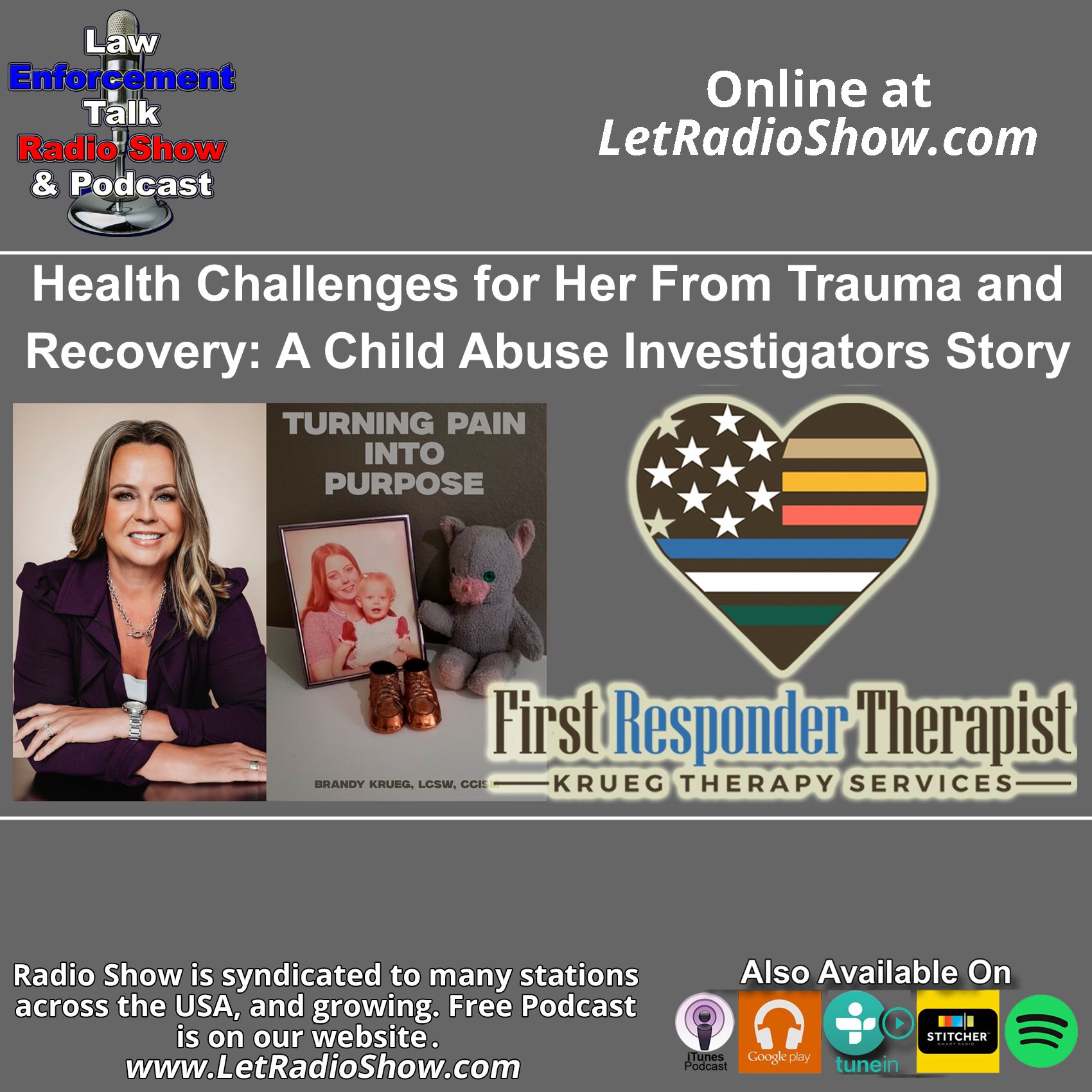
Ep 798Health Challenges for Her From Trauma and Recovery
Health Challenges for Her From Trauma and Recovery: How One Child Abuse Investigator Turned Pain Into Purpose. For more than two decades, she stood on the front lines of child protection in California, investigating some of the most disturbing cases of abuse and neglect imaginable. As a seasoned Child Abuse Investigator, she bore witness to the darkest corners of humanity, stories most people never hear, and few could carry without consequence. The Law Enforcement Talk Radio Show and Podcast social media like their Facebook , Instagram , LinkedIn , Medium and other social media platforms. Those consequences eventually arrived. Check out Her Podcast appearance, and content shared for free on the Law Enforcement Talk Radio Show and Podcast website, also on Apple Podcasts, Spotify, YouTube and most major podcast platforms. In the final year of her investigative career, Brandy Krueg was diagnosed with PTSD. The diagnosis forced her to confront a truth she had long postponed: the emotional weight of trauma does not disappear simply because the job is done. Supporting articles about this and much more from Law Enforcement Talk Radio Show and Podcast in platforms like Medium , Blogspot and Linkedin . “I was trained to protect children, not myself,” Brandy has said. “For years, I believed strength meant pushing through. I didn’t realize how much I was carrying until my body and mind finally said, ‘Enough.’” Two Cases That Changed Everything Among the many investigations Brandy handled, two child abuse cases left an indelible mark on her mental health and recovery. One of those cases escalated into a devastating homicide, a tragedy that still echoes through her work today. Health Challenges for Her From Trauma and Recovery: How One Child Abuse Investigator Turned Pain Into Purpose. Available for free on the Law Enforcement Talk Radio Show and Podcast website, also on Apple Podcasts, Spotify, Youtube and most major Podcast networks. “When a case ends in murder, it doesn’t just close,” she explains. “It lives with you. You replay every decision, every report, every moment you wonder if something, anything, could have changed the outcome.” The emotional toll of repeated exposure to violence, abuse, and loss is well-documented among frontline professionals, yet often minimized. Brandy’s experience highlights the health challenges for her from trauma and recovery, a reality shared by many investigators, first responders, and healthcare workers who silently shoulder cumulative trauma. From Investigator to Therapist Following her PTSD diagnosis, Brandy made a life-altering transition. Today, she is a Licensed Clinical Social Worker (LCSW) and practicing therapist, specializing in trauma recovery for frontline professionals and their families. Look for The Law Enforcement Talk Radio Show and Podcast on social media like their Facebook , Instagram , LinkedIn , Medium and other social media platforms. Based in California, Brandy now helps others navigate the very terrain she once crossed alone. “Healing didn’t mean leaving my past behind,” she says. “It meant understanding it, and using it to help others survive theirs.” Health Challenges for Her From Trauma and Recovery. Her work as an in-house therapist with the Stockton Police Department places her alongside officers coping with stress, addiction, critical incidents, and cumulative trauma. Certified in First Responder Counseling, Critical Incident Stress Management (CCISM), and EMDR, Brandy delivers evidence-based care tailored to high-risk professions. A Childhood Marked by Abuse, and Survival Brandy’s professional journey cannot be separated from her personal story. Raised by a teenage mother battling bipolar disorder and addiction, her childhood was marked by instability, emotional neglect, violent outbursts, and repeated abuse by trusted family friends. Available for free on their website and streaming on Apple Podcasts, Spotify, Youtube and other podcast platforms. Her experiences reflect a painful reality often hidden behind closed doors, one that shapes both victims and the professionals who later serve them. “I didn’t just investigate abuse,” Brandy writes. “I understood it.” That understanding would later become the foundation of her memoir, Turning Pain Into Purpose. Turning Pain Into Purpose: A Memoir of Trauma and Redemption In Turning Pain Into Purpose, Brandy chronicles her journey from a childhood defined by abuse, to a career immersed in trauma, and finally to a life rooted in healing and advocacy. The book is unflinching, deeply human, and profoundly hopeful. Health Challenges for Her From Trauma and Recovery. The Law Enforcement Talk Radio Show and Podcast episode is available for free on their website , Apple Podcasts , Spotify and most major podcast platforms. As she navigates unimaginable loss, the death of loved ones, and her sister’s battle with addiction, Brandy becomes the protector she never had, first for herself, then for her children, and ultim

Ep 796What Is Verbal Judo and Drug Interdiction for Police?
What Is Verbal Judo and Drug Interdiction for Police? A Maryland State Perspective. In modern policing, success is not measured solely by arrests or seizures, but by how safely and professionally officers navigate high-stress encounters. Two critical tools continue to shape effective law enforcement across the United States: verbal judo and drug interdiction for police. Both rely heavily on observation, communication, and disciplined decision-making rather than force. Check out Jerimy Tindall's Podcast appearance, and content shared for free on the Law Enforcement Talk Radio Show and Podcast website, also on Apple Podcasts, Spotify, YouTube and most major podcast platforms. The Power of Verbal Judo in Policing Verbal judo for police is a tactical communication system developed by Dr. George Thompson, widely recognized as the father of the discipline. First introduced in his groundbreaking 1983 book, verbal judo teaches officers how to use words strategically to de-escalate conflict and gain voluntary compliance. The Law Enforcement Talk Radio Show and Podcast social media like their Facebook , Instagram , LinkedIn , Medium and other social media platforms. Rather than relying on aggressive commands, verbal judo emphasizes professionalism, empathy, and redirection. Officers are trained to ask purposeful questions, actively listen, and use respectful language to manage tense encounters. Supporting articles about this and much more from Law Enforcement Talk Radio Show and Podcast in platforms like Medium , Blogspot and Linkedin . “Verbal judo isn’t about winning an argument,” Dr. Thompson often explained. “It’s about achieving a peaceful resolution while maintaining officer safety and dignity for everyone involved.” What Is Verbal Judo and Drug Interdiction for Police? A Maryland State Perspective. Although Dr. Thompson passed away in 2001 at the age of 69, his teachings remain deeply influential. In recent years, police instructors have renewed their focus on tactical communication, blending scientific analysis with realistic training scenarios to prepare officers for the psychological stress of the job. A Maryland State Police Example Jerimy Tindall, a retired Maryland State Police Sergeant, offers a powerful real-world example of verbal judo in action. Early in his career, Tindall encountered a suicidal individual, an incident that could have easily turned violent. Available for free on the Law Enforcement Talk Radio Show and Podcast website, also on Apple Podcasts, Spotify, Youtube and most major Podcast networks. “I realized very quickly that force would only make things worse,” Tindall recalled. “What worked was slowing the situation down, listening, and choosing my words carefully.” Through calm dialogue and empathy, Tindall was able to de-escalate the situation without using force, a moment he credits directly to verbal judo training. He later retired early to focus on the growing demands placed on his family, but his lessons continue to resonate with officers today. Drug Interdiction for Police: More Than Traffic Stops In addition to his experience with tactical communication, Tindall also worked drug interdiction in Frederick, Maryland, a specialized area of policing focused on preventing illicit drugs from reaching their destination. What Is Verbal Judo and Drug Interdiction for Police? A Maryland State Perspective. Look for The Law Enforcement Talk Radio Show and Podcast on social media like their Facebook , Instagram , LinkedIn , Medium and other social media platforms. Drug interdiction often takes place during traffic stops, including pretextual stops. These are lawful stops initiated for a traffic violation but used to investigate unrelated criminal activity. The U.S. Supreme Court affirmed this practice in Whren v. United States, ruling that an officer’s motivation is irrelevant as long as probable cause exists for the traffic violation. “When you stop a vehicle, you’re observing everything,” Tindall said. “Body language, tone of voice, how someone reacts when they see police lights, it all tells a story.” Officers trained in drug interdiction learn to recognize behavioral indicators of stress that may suggest criminal activity. Sudden braking, furtive movements, inconsistent answers, or visible nervousness can all contribute to developing probable cause during a lawful stop. Observation, Communication, and Strategy Drug interdiction is rooted in constant observation and communication. Every driver responds differently to stress, and officers are trained to watch and listen closely. Communication extends beyond spoken words to include posture, gestures, and tone. Available for free on their website and streaming on Apple Podcasts, Spotify, Youtube and other podcast platforms. Beyond individual stops, agencies also rely on spatial optimization to deploy interdiction resources effectively. This strategic planning determines where officers, training, and testing equipment should be placed to disr

Ep 795When Undercover Police Plans Go Bad
When Undercover Police Plans Go Bad: From Virginia State Police to the ATF. The consequences can be immediate, violent, and life-altering. Few understand this reality better than Jennifer Clark Eskew, a retired ATF agent whose career began on the front lines as an undercover Virginia State Police trooper and later evolved into some of the most dangerous covert work in federal law enforcement. The Law Enforcement Talk Radio Show and Podcast social media like their Facebook , Instagram , LinkedIn , Medium and other social media platforms. Eskew’s story is one of grit, calculated risk, and survival, one that continues to resonate across law enforcement circles and on platforms like the Law Enforcement Talk Radio Show and Podcast's Facebook, Instagram, LinkedIn, and beyond, where her experiences are discussed through interviews, her Podcast appearance, and content shared on their website, also on Apple Podcasts, Spotify, YouTube and most major podcast platforms. A Bad Day Undercover Jennifer Eskew’s undercover career started early, and it started hard. As a Virginia State Police trooper, she was selected for undercover work at a time when female officers were still rare, especially in deep-cover assignments. Supporting articles about this and much more from Law Enforcement Talk Radio Show and Podcast in platforms like Medium , Blogspot and Linkedin . One operation in particular would change everything. When Undercover Police Plans Go Bad: From Virginia State Police to the ATF. “It was just a really bad day,” Eskew has said of the moment when an undercover operation unraveled. “The gang I was dealing with started getting weird. The energy shifted.” Available for free on the Law Enforcement Talk Radio Show and Podcast website, also on Apple Podcasts, Spotify, Youtube and most major Podcast networks. Her backup was slow to respond. What Eskew didn’t yet know was that the very gang members she had been investigating had mistaken someone else for a rival. They shot and killed the wrong man, shooting him five times. “That’s when you realize how fast things can go sideways,” she later reflected. “You can plan everything perfectly, and it still falls apart.” The incident underscored a harsh truth of undercover policing: even when an officer survives, the psychological toll can be profound. Eventually, Eskew made the decision to leave the agency, not to step away from undercover work, but to continue it at a higher level. Look for The Law Enforcement Talk Radio Show and Podcast on social media like their Facebook , Instagram , LinkedIn , Medium and other social media platforms. From State Trooper to ATF Eskew transitioned to the Bureau of Alcohol, Tobacco, Firearms and Explosives (ATF), where her undercover experience made her a natural fit for high-risk federal investigations. At ATF, she went deeper than ever before, posing not just as a criminal associate, but at times as a contract killer. When Undercover Police Plans Go Bad: From Virginia State Police to the ATF. “She was essentially an undercover hitman,” one colleague noted. “Or hitwoman. She had to convince the worst people you can imagine that she was one of them.” Much like famed ATF undercover agent Jay Dobyns, Eskew infiltrated violent criminal organizations. Her role required adopting a persona capable of inspiring fear and trust at the same time, an impossible balance where a single misstep could mean death. Available for free on their website and streaming on Apple Podcasts, Spotify, Youtube and other podcast platforms. “In those moments,” Eskew has said, “you’re constantly asking yourself where the act ends and where Jennifer begins.” The Power and Risk of Female Undercover Officers Eskew’s career highlights why female undercover officers are uniquely valuable in law enforcement. Often perceived as non-threatening, women can exploit dangerous misconceptions held by criminals. “I could go into any bar, and I wouldn’t pose a threat,” Eskew explained. “I could get an enormous amount of information. They may look at me as a victim, but not as a threat, and that makes you incredibly valuable for UC work.” When Undercover Police Plans Go Bad: From Virginia State Police to the ATF. The Law Enforcement Talk Radio Show and Podcast episode is available for free on their website , Apple Podcasts , Spotify and most major podcast platforms. Female officers have proven especially effective in infiltrating drug rings, organized crime syndicates, and prostitution-related operations. As more women enter law enforcement, agencies are increasingly recognizing these tactical advantages. But the work comes with risks that male officers rarely face. “Overcoming sexual advances is a constant concern,” Eskew noted. Across the United States, there have been documented cases where female undercover officers were sexually assaulted during operations. These realities demand specialized training, preparation, and institutional support. More information and the interview with her is
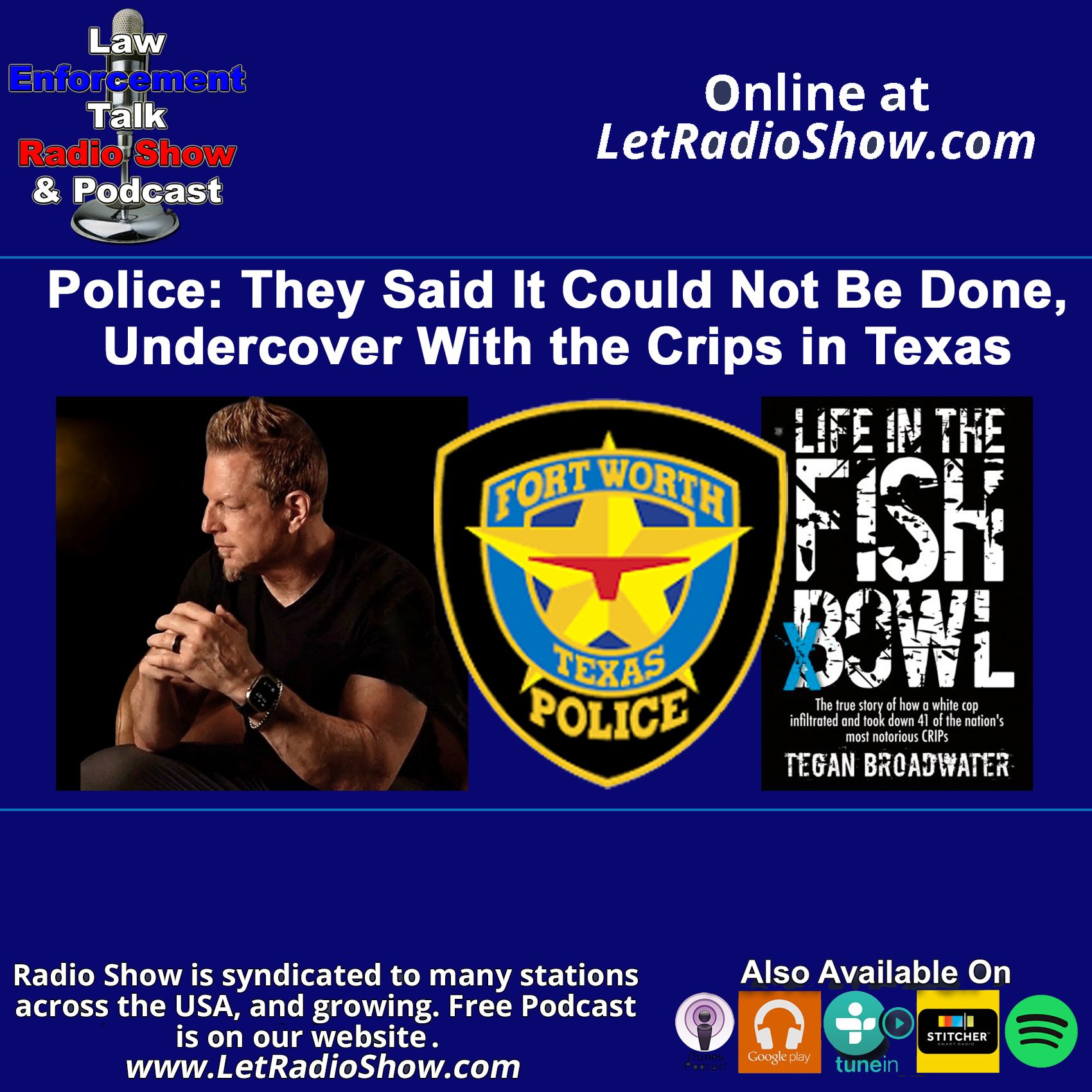
Ep 794Police, They Said It Could Not Be Done, Undercover With the Crips
Police, They Said It Could Not Be Done, Undercover With the Crips in Texas. For years, many in law enforcement believed it was impossible. Crossing racial, cultural, and gang boundaries at the deepest level of a violent criminal organization was something most said simply could not be done. But one Texas police officer proved them all wrong. Available for free on the Law Enforcement Talk Radio Show and Podcast website, also on Apple Podcasts, Spotify, Youtube and most major Podcast networks. Tegan Broadwater, a veteran of the Fort Worth Police Department, spent nearly two years embedded in one of the most dangerous Crips gangs operating in Fort Worth, Texas. What began as skepticism, and even laughter from colleagues, turned into one of the most successful undercover investigations the department had ever seen. The Law Enforcement Talk Radio Show and Podcast on social media like their Facebook , Instagram , LinkedIn , Medium and other social media platforms. “They told me flat out that it wouldn’t work,” Broadwater later said. “That I wouldn’t blend in, wouldn’t be accepted, and wouldn’t survive long enough to make a case. I took that personally.” Supporting articles about this and much more from Law Enforcement Talk Radio Show and Podcast in platforms like Medium , Blogspot and Linkedin . A Mission Few Would Attempt Undercover work, also known as a covert or clandestine operation, requires an officer to assume a false identity, gain trust, and quietly gather intelligence without ever revealing who they truly are. Unlike plainclothes policing, undercover operations demand total immersion, deception, and constant vigilance. Broadwater’s assignment went even further. “There’s undercover, and then there’s deep cover,” he explained. “Deep cover means you live a separate life. You don’t visit it, you become it.” Police, They Said It Could Not Be Done, Undercover With the Crips in Texas. Look for The Law Enforcement Talk Radio Show and Podcast on social media like their Facebook , Instagram , LinkedIn , Medium and other social media platforms. His experience existed somewhere between traditional undercover work and deep cover. Pretending to be a high-end cocaine dealer, Broadwater infiltrated a violent Crips set responsible for drug trafficking, prostitution, and brutal violence that terrorized innocent residents. The risk was absolute. “If you’re discovered, there’s no arrest,” he said. “There’s no backup. There’s just consequences.” Two Years Inside the Fishbowl What followed was a high-stakes, real-life cat-and-mouse game between Broadwater and M.D., a calculated drug lord with a street-level MBA and sharp instincts. Broadwater earned trust, navigated betrayal, and lived daily with the psychological strain of maintaining his cover. “The stress doesn’t turn off,” he said. “You’re always acting, always watching, always measuring your words. Eventually, that pressure catches up to you.” Police, They Said It Could Not Be Done, Undercover With the Crips in Texas. Available for free on their website and streaming on Apple Podcasts, Spotify, Youtube and other podcast platforms. Over the course of the operation, Broadwater helped dismantle a major Crips network, leading to the arrest of 51 gang members. But the cost was high. The emotional toll of living among violent criminals, forming complex relationships, and witnessing generational cycles of crime ultimately led him to retire early from the Fort Worth Police Department. “I didn’t leave because I was weak,” Broadwater said. “I left because the work changes you. And I knew it was time to choose my family, my health, and my future.” From the Streets to the Page Broadwater documented his experience in his book, Life in the Fishbowl – The Harrowing True Story of One Cop Who Took Down 51 of the Nation’s Most Notorious Crips. The book is both an action-packed account of undercover policing and a deeply reflective examination of America’s War on Drugs, gang culture, and more. Police, They Said It Could Not Be Done, Undercover With the Crips in Texas. The Law Enforcement Talk Radio Show and Podcast episode is available for free on their website , Apple Podcasts , Spotify and most major podcast platforms. “All book profits are donated to charities that mentor children of incarcerated parents,” Broadwater noted. “If we want real change, we have to break the cycle before it starts.” The book has drawn praise from some of the most respected voices in law enforcement and beyond. “For me there’s no more compelling reading than books written by cops who can write,” said Mike Levine, NY Times bestselling author of Deep Cover. “This is must-reading for every cop in or out of uniform.” Former Apollo XVII Commander Gene Cernan called it “a gripping story of determination and courage,” while retired FBI Hostage Rescue Team Commander Danny O. Coulson described Broadwater as “the insider’s insider.” More information about his work can be found at his website, see below, and his content
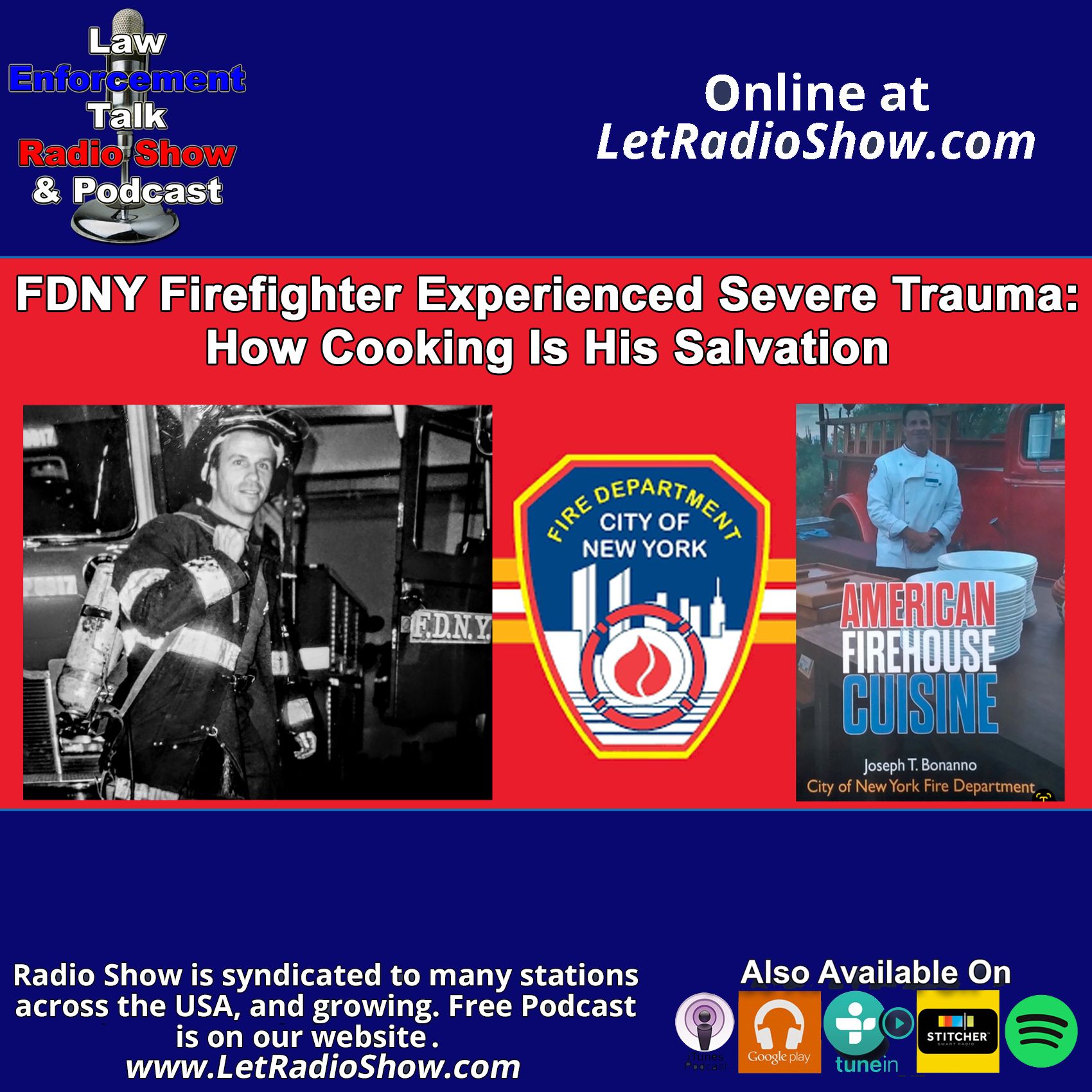
Ep 793FDNY Firefighter Experienced Severe Trauma
FDNY Firefighter Experienced Severe Trauma: How Cooking Is His Salvation. For many first responders, the uniform becomes both a source of pride and a shield, one that often hides pain, grief, and trauma the public never sees. For this veteran FDNY firefighter and U.S. Air Force veteran, a lifetime of service came with losses so profound that few could endure them without lasting scars. The Law Enforcement Talk Radio Show and Podcast on social media like their Facebook , Instagram , LinkedIn , Medium and other social media platforms. He comes from a family of firefighters, a tradition rooted in courage and sacrifice. But his career began with tragedy. Early on, he lost his mother in a devastating house fire, an event that would forever shape his understanding of loss, duty, and survival. Available for free on the Law Enforcement Talk Radio Show and Podcast website, also on Apple Podcasts, Spotify, Youtube and most major Podcast networks. “That kind of loss never leaves you,” he has said. “You don’t just mourn your mother. You replay every ‘what if’ for the rest of your life.” Years later, tragedy struck again. His brother, Michael Bonanno, a retired FDNY firefighter, died by suicide in 2012. The loss exposed the unspoken mental health crisis that continues to affect firefighters and other first responders across the country. Supporting articles about this and much more from Law Enforcement Talk Radio Show and Podcast in platforms like Medium , Blogspot and Linkedin . “We’re trained to run toward danger,” he explained, “but we’re not trained to talk about what that danger does to us afterward.” FDNY Firefighter Experienced Severe Trauma: How Cooking Is His Salvation. As if those personal losses were not enough, his career culminated at one of the darkest chapters in American history, working at Ground Zero during the 9/11 attacks in New York City. The physical danger was immediate, but the emotional toll would last decades. “You don’t leave the pile unchanged,” he said. “You carry those images, those smells, those sounds. They stay with you.” How Cooking Became His Salvation Like many firefighters, he struggled in silence. Trauma accumulated quietly, from the firehouse to family life, from loss to loss. But unexpectedly, healing began not in therapy rooms or training halls, but in the kitchen. Look for The Law Enforcement Talk Radio Show and Podcast on social media like their Facebook , Instagram , LinkedIn , Medium and other social media platforms. Cooking became his refuge. “In the kitchen, I could focus,” he said. “It grounded me. Cooking gave me something positive to build when everything else felt broken.” FDNY Firefighter Experienced Severe Trauma: How Cooking Is His Salvation. What started as a personal coping mechanism evolved into a mission. He began writing and speaking openly about the connection between food, firehouse culture, and mental health. Today, he is not only a firefighter and USAF veteran but also a podcaster, author, and advocate for recovery through creativity and connection. Available for free on their website and streaming on Apple Podcasts, Spotify, Youtube and other podcast platforms. From Firehouse to Media Platforms His work now reaches audiences through the Law Enforcement Talk Radio Show and Podcast,their facebook, Instagram, YouTube and other News and Social media outlets. His voice has resonated with firefighters, veterans, and civilians alike, especially those searching for ways to recover from trauma they’ve never been encouraged to discuss. “Food brings people together,” he explained. “Around the table, walls come down. Conversations happen that wouldn’t happen anywhere else.” FDNY Firefighter Experienced Severe Trauma: How Cooking Is His Salvation. The Law Enforcement Talk Radio Show and Podcast episode is available for free on their website , Apple Podcasts , Spotify and most major podcast platforms. He is the founder of American Firehouse Cuisine, a platform dedicated to firehouse cooking and culture. His recently published cookbook, American Firehouse Cuisine, celebrates the meals that fuel firefighters while honoring the traditions that bind them together. Previously, he authored The Healthy Firehouse Cookbook and The Firehouse Grilling Cookbook, blending nutrition with the realities of firehouse life. He also wrote a children’s storybook, Monutza the Firefighting Elephant, aimed at helping young readers understand bravery, service, and compassion. More information about his work can be found at his website, see below, and his content is available on the Law Enforcement Talk Radio Show and Podcast website also on Apple Podcasts, Spotify, Youtube and other major platforms. A Message of Recovery and Hope Today, his story stands as a powerful example of resilience. An FDNY firefighter experienced severe trauma, losing family, enduring historic catastrophe, and facing the silent burden carried by so many first responders. Yet through cooking, storytelling, and connection,

Ep 792Police Officer Arrested and Convicted, Sent to Prison, Was It Fair?
Police Officer Arrested and Convicted, Sent to Prison, Was It Fair?. The Case of Stephanie Mohr. Was a police officer unfairly prosecuted and sent to prison by the Department of Justice? That question sits at the center of a Special Episode available for free on the Law Enforcement Talk Radio Show and Podcast website, also on Apple Podcasts, Spotify, Youtube and most major Podcast networks. Former Prince George’s County, Maryland police officer and K9 handler Stephanie Mohr is telling her story, one that spans nearly three decades, from a routine call for backup outside Washington, D.C., to a federal conviction, a 10-year prison sentence, and ultimately a Presidential Pardon. The Law Enforcement Talk Radio Show and Podcast on social media like their Facebook , Instagram , LinkedIn , Medium and other social media platforms. “This was never just about one incident,” Mohr says. “It became about making an example of me.” A Routine Call That Changed Everything In 1995, Mohr was a relatively new K9 handler when she responded to a suspected burglary in Takoma Park, Maryland. At the time, the area was experiencing a series of break-ins. Two suspects were discovered on the roof of a building, and during the arrest, Mohr’s police dog bit one of the men as he attempted to flee. Police Officer Arrested and Convicted, Sent to Prison, Was It Fair? Supporting articles about this and much more from Law Enforcement Talk Radio Show and Podcast in platforms like Medium , Blogspot and Linkedin . What followed was anything but routine. Years later, Mohr was charged and ultimately convicted in 2001 of a federal civil rights violation, becoming a police officer arrested and convicted, sent to prison for actions she maintains were lawful and consistent with her training. “I did what I was trained to do,” Mohr explains. “I never imagined it would cost me my career and a decade of my life.” An Extraordinary Prosecution According to Mohr and her supporters, the D.O.J. pursued her case with unusual intensity. After an initial trial, prosecutors sought a retrial and even brought a witness, an illegal immigrant, back into the United States from another country to testify against her. Police Officer Arrested and Convicted, Sent to Prison, Was It Fair? Look for The Law Enforcement Talk Radio Show and Podcast on social media like their Facebook , Instagram , LinkedIn , Medium and other social media platforms. “Who does that?” Mohr asks. “It felt like they were determined to secure a conviction at any cost.” During the second trial, federal prosecutors introduced testimony portraying Mohr as a problematic officer with a pattern of targeting minorities, claims she has consistently denied. “That narrative was devastating,” she says. “It wasn’t true, but it stuck.” The result was a 10-year federal prison sentence, which Mohr served before being released in 2011. A 19-Year Fight for Justice Mohr’s case eventually caught the attention of the Law Enforcement Legal Defense Fund (LELDF). After reviewing the facts, the organization committed to what would become a 19-year battle to clear her name. Police Officer Arrested and Convicted, Sent to Prison, Was It Fair? Special Episode. Available for free on their website and streaming on Apple Podcasts, Spotify, Youtube and other podcast platforms. “Stephanie wasn’t guilty of anything,” the LELDF later stated. “Her case represented a dangerous precedent for law enforcement officers nationwide.” Mohr became the first police officer supported by the LELDF to ultimately receive a presidential pardon. In December 2020, President Donald J. Trump granted Mohr a full and unconditional pardon, bringing long-awaited closure to a case that had followed her for 25 years. “For me, the pardon wasn’t about politics,” Mohr says. “It was about finally being able to say: I was telling the truth.” The Law Enforcement Talk Radio Show and Podcast episode is available for free on their website , Apple Podcasts , Spotify and most major podcast platforms. Life After Prison and After the Pardon Following her release, Mohr rebuilt her life quietly. She worked as a Property Standards Inspector and later a Construction Standards Inspector for Prince George’s County before moving on to a similar role with St. Mary’s County government. Police Officer Arrested and Convicted, Sent to Prison, Was It Fair? “My dogs saved me as much as I saved them,” she says with a smile. You Be the Judge The story of Stephanie Mohr raises difficult questions about accountability, prosecutorial power, and whether justice was truly served. The special episode can be found on The Law Enforcement Talk Radio Show and Podcast website, on Apple podcasts, Spotify, Youtube and on LinkedIn, Facebook, Instagram, and across most podcast platforms where listeners will find authentic law enforcement stories. Was this a fair conviction, or did the D.O.J. go out of its way to make an example of a police officer? “That’s not for me to decide anymore,” Mohr says. “I’ve

Ep 791Did Fentanyl Almost Kill a Cop?
Did Fentanyl Almost Kill a Cop? One Deputy’s Story of Trauma, Survival, and a Mission to Help Others. Special Episode. For years, fentanyl has dominated headlines as a driving force behind America’s overdose crisis. What’s discussed far less often is how this drug impacts the first responders who encounter it in the line of duty. For Deputy Jeff Brown, a long-serving law enforcement officer, accidental fentanyl exposure didn’t just spark a frightening moment, it caused permanent injuries, ongoing trauma, and a new mission focused on helping others. The Law Enforcement Talk Radio Show and Podcast on social media like their Facebook , Instagram , LinkedIn , Medium and other social media platforms. By any measure, Jeff Brown is a law enforcement hero. But one accidental fentanyl exposure nearly ended his life, and forever changed it. This special episode is streaming for free on the Law Enforcement Talk Radio Show and Podcast website, on Apple Podcasts, Spotify, YouTube, and most every major Podcast platform This is not just a story for the news-cycle. It’s a story meant to be shared on Facebook, Instagram, YouTube, and across platforms like the Law Enforcement Talk Radio Show and Podcast website, Apple Podcasts and Spotify, because it speaks to the hidden cost of service, the reality of trauma, stress, PTSD, and the lasting injuries many heroes carry long after the call ends. Supporting articles about this and much more from Law Enforcement Talk Radio Show and Podcast in platforms like Medium , Blogspot and Linkedin . Accidental Fentanyl Exposure Almost Claimed His Life Jeff Brown had built a distinguished law enforcement career when one routine encounter with drug abusers turned into a life-threatening emergency. During the incident, Jeff and his backup deputies were accidentally exposed to fentanyl. The effects were immediate and terrifying. Had it not been for department-issued Narcan and the training the deputies received, Jeff believes he and others would not have survived. In a matter of minutes, deputies were forced to save each other’s lives. Did Fentanyl Almost Kill a Cop? One Deputy’s Story of Trauma, Survival, and a Mission to Help Others. Special Episode. Look for The Law Enforcement Talk Radio Show and Podcast on social media like their Facebook , Instagram , LinkedIn , Medium and other social media platforms. They lived, but not without consequence. For Jeff, the exposure caused permanent damage to his heart, altering his health and his future. What should have been just another shift became the defining moment of his life. The Aftermath: Injuries, Recovery, and a Broken System Surviving the incident was only the beginning. Jeff openly talks about: The physical recovery and lingering medical issues The emotional toll and ongoing stress Battles with Worker’s Compensation The lack of understanding surrounding first responder injuries The rarely discussed crime problem in a tourist-driven resort area Like many first responders, Jeff learned that surviving the job does not guarantee support afterward. The system often struggles to recognize invisible injuries, especially when fear, misinformation, and stigma surround incidents involving fentanyl. Did Fentanyl Almost Kill a Cop? One Deputy’s Story of Trauma, Survival, and a Mission to Help Others. Special Episode. Available for free on their website and streaming on Apple Podcasts, Spotify, Youtube and other podcast platforms. Fentanyl Misinformation and First Responder Trauma In 2016, the U.S. Drug Enforcement Administration (DEA) released advisories warning that simply touching or inhaling fentanyl could be fatal within minutes. Images of tiny, allegedly lethal doses circulated widely, reinforcing fear among first responders. At the time, the narrative felt plausible. Illicit fentanyl was flooding the streets, and officers had limited information. Later, medical experts, including the American College of Medical Toxicology and the American Academy of Clinical Toxicology clarified that incidental exposure leading to overdose is extremely unlikely. Other countries adjusted their guidance accordingly. Special Episode. The Law Enforcement Talk Radio Show and Podcast episode is available for free on their website , Apple Podcasts , Spotify and most major podcast platforms. But misinformation lingers, and it carries consequences. Officers who believe they’ve been exposed can experience panic attacks, hyperventilation, vertigo, and racing heart rates. These symptoms are real and distressing, yet often misinterpreted as fentanyl toxicity. In a culture where fear is seen as weakness, these events can go under-reported or misdiagnosed, potentially leading to delayed or inappropriate medical care. We stand by this critical point: Accidental fentanyl exposure can have drastic effects when combined with preexisting health conditions, particularly involving the heart. These incidents deserve serious, compassionate, and accurate medical evaluation. Did Fentanyl A
Ep 790Police in a Riot: An Officer Speaks. Special Episode.
Police in a Riot: An Officer Speaks. Special Episode. Riots are something most people only see through the lens of a television screen or a viral clip on social media. Flames in the background. Police lines in riot gear. Shouting crowds. What rarely makes it into the headlines is what it feels like to stand in the middle of that chaos, especially when you’re a young police officer with only weeks of experience on the street. This special episode is streaming for free on the Law Enforcement Talk Radio Show and Podcast website, on Apple Podcasts, Spotify, YouTube, and most every major Podcast platform In this special episode, former Charlotte, North Carolina police officer Bill Broadway takes listeners inside the harsh realities of policing during violent riots. His account is raw, detailed, and deeply unsettling, not because it’s political, but because it’s personal. Look for The Law Enforcement Talk Radio Show and Podcast on social media like their Facebook , Instagram , LinkedIn , Medium and other social media platforms. Thrown Into the Fire Bill Broadway was just weeks out of field training when he was suddenly called into action to help control violent riots in Charlotte. Like many young officers, he expected to learn policing step by step, traffic stops, calls for service, building rapport with the community. Instead, he found himself facing crowds that were no longer protesting, but actively engaging in violence. Police in a Riot: An Officer Speaks. Special Episode. Supporting articles about this and much more from Law Enforcement Talk Radio Show and Podcast in platforms like Medium , Blogspot and Linkedin . “These weren’t peaceful demonstrations,” Bill explains. “This was chaos.” From the moment he arrived, it was clear this was something different. Police vehicles were targeted and removed. Officers were surrounded. Projectiles were thrown. Every decision carried the risk of serious injury, or worse. Police in a Riot: An Officer Speaks. Special Episode. Protest vs. Riot: A Critical Distinction Much of the public conversation blurs the line between protest and riot, but legally and practically, the difference matters. Generally speaking, a protest is an organized public demonstration of disapproval, often protected under the First Amendment. A riot, by contrast, is defined as a violent disturbance of the peace involving multiple people acting together in a way that threatens public safety. Police in a Riot: An Officer Speaks. Special Episode. Available for free on their website and streaming on Apple Podcasts, Spotify, Youtube and other podcast platforms. Federal law, under the Anti-Riot Act of 1968, defines a riot as a public disturbance involving acts of violence by an assemblage of three or more people that create a clear and present danger to people or property. Many states, including North Carolina, enforce similar statutes through laws addressing arson, looting, assault, unlawful assembly, and destruction of property. As Bill describes it, the moment objects started flying and officers became targets, the situation crossed that line. “When violence starts, it’s no longer a protest,” he says. “It’s something else entirely.” Injuries, Fear, and Constant Threats Bill walks listeners through every phase of the riot, from his initial arrival, to the loss of police vehicles, to the injuries sustained by officers on the line. What stands out most is the constant psychological pressure. Police in a Riot: An Officer Speaks. Special Episode. The Law Enforcement Talk Radio Show and Podcast episode is available for free on their website , Apple Podcasts , Spotify and most major podcast platforms. “You don’t just worry about what’s in front of you,” Bill explains. “You’re watching rooftops, alleys, shadows. You’re wondering if the next hit is coming from behind.” The stress didn’t end when the shift was over. Officers went home bruised, exhausted, and emotionally drained, knowing they could be called back at any moment. For many, sleep was elusive. The adrenaline lingered. The fear stayed close. Optics vs. Officer Safety One of the most controversial topics addressed is the allegation that department leadership and city officials were more concerned with optics and public opinion than with the truth, or the safety of their officers. This is not a new accusation in American policing, and it remains a deeply divisive issue. Critics argue that police departments often prioritize public relations to manage perception, reduce backlash, and limit legal exposure. The use of Public Information Officers and carefully worded statements can sometimes feel, to officers on the ground, like a disconnect from reality. Police in a Riot: An Officer Speaks. Special Episode. The special episode can be found on The Law Enforcement Talk Radio Show and Podcast website, on Apple podcasts, Spotify, Youtube and on LinkedIn, Facebook, Instagram, and across most podcast platforms where listeners will find authentic law enforcement sto
Ep 789Police Shot By A Mass Murderer, She Survived.
Police Shot by a Mass Murderer: She Survived and the City’s Response Shocked Her. Special Episode. The phrase line of duty often feels abstract, until a single moment changes everything. For former Richmond, Virginia police officer Cheryl Ann Nici-O’Connell, that moment came in October of 1984, when a routine off-duty assignment turned into a life-altering ambush by a fugitive mass murderer. Look for The Law Enforcement Talk Radio Show and Podcast on social media like their Facebook , Instagram , LinkedIn , Medium and other social media platforms. Now, decades later, her story is being shared in a special episode of the Law Enforcement Talk Radio Show and Podcast, available across Facebook, Instagram, Apple Podcasts, Spotify, and YouTube, and most major podcast platforms. It's not just as a story of survival, but as a powerful account of resilience, recovery, and a troubling response from the very city she served. Supporting articles about this and much more from Law Enforcement Talk Radio Show and Podcast in platforms like Medium , Blogspot and Linkedin . An Ordinary Shift That Became a Nightmare At just 24 years old, Officer Cheryl Nici-O’Connell was working an off-duty uniformed job at the Richmond Marriott Hotel on a Friday night, hoping to earn some extra income. At the same time, law enforcement across the Richmond area was urgently searching for a suspect wanted in a triple murder and the attempted murder of a sheriff’s deputy. Police Shot by a Mass Murderer: She Survived and the City’s Response Shocked Her. Special Episode. Available for free on their website and streaming on Apple Podcasts, Spotify, Youtube and other podcast platforms. Unknowingly, Nici-O’Connell came face-to-face with that very fugitive. “I was ambush attacked and shot in the head from three-to-five feet away by a total stranger,” she recalled. The gunman aimed directly at her temple, firing a .357 Magnum loaded with a .38-caliber round. The bullet entered her face, tore through her mouth, and lodged just an eighth of an inch from her carotid artery. Doctors did not expect her to survive the night. “It Looked Like Red Paint Was Being Poured Over Everything” The moments after the shooting are forever etched into her memory. “The next thing I know, I heard a loud explosion,” she said. “I looked toward Broad Street, and everything was blurry. It looked like someone was pouring red paint over a picture of Broad Street.” Police Shot by a Mass Murderer: She Survived and the City’s Response Shocked Her. Special Episode. The Law Enforcement Talk Radio Show and Podcast episode is available for free on their website , Apple Podcasts , Spotify and most major podcast platforms. Against all odds, she lived. Her survival, she says, was not hers alone. “I’m here to tell you if it was not for the support of the police officers I worked with, and also the Richmond community, I would not be here today.” That support, from fellow officers and everyday citizens, stood in stark contrast to what followed. The Aftermath: Survival Was Only the Beginning While Cheryl Nici-O’Connell fought through a long and painful recovery, she also faced what she describes as shocking treatment by city government after the shooting. In the podcast interview, she speaks candidly about the challenges that came not from the gunshot wound, but from navigating a system that failed to fully support a wounded officer. Police Shot by a Mass Murderer: She Survived and the City’s Response Shocked Her. Special Episode. The special episode can be found on The Law Enforcement Talk Radio Show and Podcast website, on Apple podcasts, Spotify, Youtube and on LinkedIn, Facebook, Instagram, and across most podcast platforms where listeners will find authentic law enforcement stories. Her attacker was eventually arrested, tried, and sentenced to multiple life terms. Yet the trauma never truly ended. In 2002, and nearly every year since, Nici-O’Connell has been required to relive the attack during parole hearings. “I wish I could forget,” she said quietly. Turning Pain Into Purpose Today, Cheryl Nici-O’Connell is retired from law enforcement but far from finished serving. She is actively involved with Richmond United for Law Enforcement, an organization founded on January 2, 2015, dedicated to bringing together law enforcement and the Metro Richmond and Tri-Cities communities of Virginia. Police Shot by a Mass Murderer: She Survived and the City’s Response Shocked Her. Special Episode. The full podcast episode is streaming now on their website, on Apple Podcasts, Spotify, Youtube and across Facebook, Instagram, and LinkedIn. Her story, shared through interviews, public speaking, and now this special podcast episode, stands as a reminder of the real human cost behind the badge, and the responsibility cities have to care for those who put their lives on the line. “I still work to help others,” she says, a testament to a resilience forged in unimaginable circumstances. A Story That Still Matte

Ep 788Police Husband was Killed in a Helicopter Crash.
Police Husband was Killed in a Helicopter Crash. Special Episode. The life of a police family is built on service, sacrifice, and an unspoken understanding that every shift carries risk.For Keira Knox, that reality became devastatingly real on May 2, 2020, when her police officer husband, Jason Knox, was killed in a police helicopter crash in Texas. What followed was not just the loss of a husband, but the beginning of a journey that would redefine her life and ultimately inspire her to help countless other first responder families. This special episode is streaming for free on the Law Enforcement Talk Radio Show and Podcast website, on Apple Podcasts, Spotify, YouTube, and most every major Podcast platform Jason Knox served with the Houston Police Department as a helicopter tactical flight officer. Aviation units are often called into the most complex and dangerous situations, providing eyes in the sky during critical incidents. On that day, the helicopter unit was requested to assist in a search for two bodies believed to be located in the area. It was a mission that, like so many others, seemed routine to those trained to respond. Look for The Law Enforcement Talk Radio Show and Podcast on social media like their Facebook , Instagram , LinkedIn , Medium and other social media platforms. During the operation, the helicopter developed a mechanical issue. Despite the experience and professionalism of the crew, the aircraft went down. The crash claimed Jason Knox’s life in the line of duty, instantly altering the lives of his family, colleagues, and the entire law enforcement community. Supporting articles about this and much more from Law Enforcement Talk Radio Show and Podcast in platforms like Medium , Blogspot and Linkedin . For Keira Knox, the moments after the crash are etched into her memory. The notification, that no police spouse ever wants to experience, marked the dividing line between life before and life after. “You don’t realize how final everything becomes in that moment,” she has shared. “Nothing prepares you for being told the person you love isn’t coming home.” Police Husband was Killed in a Helicopter Crash. Special Episode In the days that followed, Keira found herself navigating shock, grief, and a flood of questions, all while trying to process the magnitude of her loss. The funeral brought its own weight, honor guards, uniforms, bagpipes, and a sea of blue that represented respect, tradition, and sacrifice. While the ceremony honored Jason’s service, it also underscored the permanence of his absence. Like many families of fallen officers, Keira quickly discovered that while departments are trained for emergencies, families are often left to navigate unfamiliar territory alone once the initial support fades. Paperwork, benefits, decisions, emotional trauma, and the expectations of “being strong” arrive all at once. “There is no handbook handed to you when your police husband is killed,” Keira has said. “You’re expected to figure it out while you’re barely able to breathe.” Available for free on their website and streaming on Apple Podcasts, Spotify, Youtube and other podcast platforms. As time passed, grief evolved. The raw pain softened into a deeper realization: the system was not designed with families in mind. Keira began to see gaps, not just emotionally, but practically, in how first responder families are supported after a line-of-duty death. That awareness became the catalyst for her next chapter. Rather than allowing loss to define her solely as a widow, Keira chose to transform her pain into purpose. Drawing directly from her own experience, she became involved in writing The Guide for first responder families and departments. The resource was created to provide clarity during chaos, offering guidance on what families may face immediately after a tragedy and in the months and years that follow. Police Husband was Killed in a Helicopter Crash. Special Episode. The Law Enforcement Talk Radio Show and Podcast episode is available for free on their website , Apple Podcasts , Spotify and most major podcast platforms. The guide addresses topics many families don’t even know to ask about: notification procedures, funeral planning, navigating benefits, managing media attention, coping with trauma, and preparing departments to better support surviving spouses and children. “If I had something like this when Jason died, it would have made an impossible situation slightly more manageable,” Keira explained. Her advocacy did not stop there. Keira also became deeply involved with the Blue Bow Foundation, an organization dedicated to supporting first responder families. The foundation’s mission aligns closely with her own, ensuring that families are not forgotten once the headlines fade and the uniforms are put away. Through her work with the Blue Bow Foundation, Keira has connected with families across Texas and beyond who share similar stories of sudden loss. Each conversation reinforces w

Ep 787Podcasts That Are Different: How The Law Enforcement Talk Podcast Reaches Millions for Free.
Podcasts That Are Different: How The Law Enforcement Talk Podcast Reaches Millions for Free. Podcasting has officially entered the mainstream. What was once a niche medium for early adopters is now a dominant force across news, entertainment, and social media, reaching audiences on Apple Podcasts, Spotify, YouTube, Facebook, Instagram, LinkedIn, and beyond. Look for The Law Enforcement Talk Radio Show and Podcast on social media like their Facebook , Instagram , LinkedIn , Medium and other social media platforms. Today, 85% of people in the United States are familiar with the term “podcast,” a figure that represents a 10% increase since 2020. Familiarity does not necessarily mean regular listening, but it does signal cultural awareness. As podcasts are referenced more frequently on radio, television, and online platforms, they continue to move out of the “podcaster bubble” and into everyday conversation. This special episode is streaming for free on the Law Enforcement Talk Radio Show and Podcast website, on Apple Podcasts, Spotify, YouTube, and most every major Podcast platform. By 2025, well over four in five Americans recognize the term podcast, a clear indicator that the medium has become part of the national media landscape. Supporting articles about this and much more from Law Enforcement Talk Radio Show and Podcast in platforms like Medium , Blogspot and Linkedin . Awareness Is One Thing, Listening Is Another Listening habits reveal just how powerful podcasting has become. In mid-2023, Edison Research reported a major shift in media consumption: on-demand audio, including podcasts and streaming music, surpassed traditional AM/FM radio in total listening time across the United States. Podcasts That Are Different: How The Law Enforcement Talk Podcast Reaches Millions for Free. Available for free on their website and streaming on Apple Podcasts, Spotify, Youtube and other podcast platforms. That trend has only accelerated. According to Infinite Dial data released in early 2025, 70% of Americans have listened to a podcast at least once, up from 55% in 2020. While listening dipped briefly in 2022 as pandemic routines normalized, both monthly and weekly consumption rebounded strongly in 2023 and has continued to grow. Podcasting, it is now clear, is no longer an experiment. It is a mainstream medium. A Podcast That Breaks the Mold Among the thousands of shows competing for attention, some podcasts stand out by doing things differently. One of those is the Law Enforcement Talk Radio Show and Podcast, a program built around police, crime, trauma, and real-life stories, delivered without cost and without filters. The Law Enforcement Talk Radio Show and Podcast episode is available for free on their website , Apple Podcasts , Spotify and most major podcast platforms. “It’s 100 percent free,” the show’s creator often emphasizes. “No subscriptions, no credit cards, and no paywalls. It never has been paid content, and it never will be.” That commitment to free access has helped the show grow into a nationally syndicated weekly talk radio program, now airing on 148 AM and FM commercial radio stations. Each week, the show is broadcast to an estimated 48 million people across the United States, in addition to its global podcast audience. Podcasts That Are Different: How The Law Enforcement Talk Podcast Reaches Millions for Free. Equally important is the show’s tone. “This isn’t a lecture, and it’s never a sales pitch,” the host explains. “It’s about personal experience. People telling their own stories, in their own words.” There are no scripted questions, no product promotions, and no partisan politics... ever, by design. The special episode can be found on The Law Enforcement Talk Radio Show and Podcast website, on Apple podcasts, Spotify, Youtube and on LinkedIn, Facebook, Instagram, and across most podcast platforms where listeners will find authentic law enforcement stories. More Than a Police Podcast Despite its title, the Law Enforcement Talk Radio Show and Podcast is not created solely for police officers. In fact, the audience is far broader. With more than 780 free episodes available, and new episodes released every Wednesday and Sunday, the show offers an expansive library of stories that resonate well beyond one profession. Each episode is a conversation, not an interview. Guests are encouraged to speak openly, allowing their experiences to unfold naturally. Podcasts That Are Different: How The Law Enforcement Talk Podcast Reaches Millions for Free. Approximately 75% of the episodes focus on trauma-related stories, often connected to crime. Guests include law enforcement officers, firefighters, paramedics, military members, victims of violent crime, survivors, and family members. These conversations explore the impact of trauma, not only on the individual, but on families, relationships, and long-term purpose. The full podcast episode is streaming now on their website, on Apple Podcasts, Spotify, Youtube
Ep 786Police Addicted to Drugs And His Amazing Recovery
Police Addicted to Drugs And His Amazing Recovery, Special Episode. Police Officer Attacked, Multiple Surgeries, Forced Retirement, Addiction, and an Inspiring Recovery. This special episode is streaming for free on the Law Enforcement Talk Radio Show and Podcast website, on Apple Podcasts, Spotify, YouTube, and most every major Podcast platform Brock Bevell never imagined that a single violent moment would change the entire trajectory of his life. A retired Mesa, Arizona police officer, Brock dedicated his career to public service, until a targeted act of violence ended his time on the job and set him on a painful, unexpected journey through addiction and recovery. Look for The Law Enforcement Talk Radio Show and Podcast on social media like their Facebook , Instagram , LinkedIn , Medium and other social media platforms. “She threw the truck into reverse and hit me,” Brock recalls. “In an instant, everything changed.” Supporting articles about this and much more from Law Enforcement Talk Radio Show and Podcast in platforms like Medium , Blogspot and Linkedin . A Career Cut Short by Violence While serving with the Mesa Police Department, Brock was seriously injured during a violent incident involving a vehicle. The attack caused devastating, career-ending injuries and required multiple surgeries. What followed was a long and grueling rehabilitation process, one familiar to many injured officers across the country. Police Addicted to Drugs And His Amazing Recovery, Special Episode. Available for free on their website and streaming on Apple Podcasts, Spotify, Youtube and other podcast platforms. To manage the intense pain, Brock was prescribed opioid pain medication. Like countless patients recovering from serious injuries, he trusted the prescriptions meant to help him heal. Instead, they quietly became the beginning of a much deeper struggle. From Recovery to Addiction During months of surgeries and physical therapy, Brock developed a severe dependence on opioid painkillers. What started as medically prescribed relief slowly evolved into addiction. “I didn’t recognize myself anymore,” Brock says. “My world became smaller and darker. I was surviving, not living.” Brock openly shares how addiction affected every part of his life, his relationships, his identity, and his sense of purpose after forced retirement from policing. His story reflects a reality many first responders face but few openly discuss. Police Addicted to Drugs And His Amazing Recovery, Special Episode. The Law Enforcement Talk Radio Show and Podcast episode is available for free on their website , Apple Podcasts , Spotify and most major podcast platforms. The Science Behind the Crisis Research underscores just how common Brock’s experience is. A major study published in JAMA Internal Medicine by researchers at the Stanford University School of Medicine found that patients undergoing 11 common surgeries faced an increased risk of becoming chronic opioid users. Lead author Eric Sun, MD, PhD, explained: “For a lot of surgeries, there is a higher chance of getting hooked on painkillers.” The study defined chronic opioid use as filling 10 or more prescriptions or receiving more than a 120-day supply within a year after surgery. Patients undergoing knee surgery faced the highest risk, nearly five times that of nonsurgical patients, followed by gallbladder surgery. Importantly, the study did not suggest avoiding surgery, but emphasized the need for careful monitoring and alternative pain management strategies. Police Addicted to Drugs And His Amazing Recovery, Special Episode. The interview can be found on The Law Enforcement Talk Radio Show and Podcast website, on Apple podcasts, Spotify, Youtube and on LinkedIn, Facebook, Instagram, and across most podcast platforms where listeners will find authentic law enforcement stories. Trauma, Policing, and Substance Use Law enforcement officers face unique occupational hazards, including repeated exposure to trauma. Studies show that substance use disorders, including alcohol and drug dependence, occur at higher rates among officers, particularly those experiencing psychological distress. In nationally representative data, more than half of men with lifetime PTSD also had a history of alcohol abuse or dependence. For police officers, these risks are compounded by work stress, injuries, and the cultural stigma surrounding mental health and asking for help. “We wear the uniform, but we’re human,” Brock says. “And sometimes the damage doesn’t show until it’s almost too late.” The full podcast episode is streaming now on their website, on Apple Podcasts, Spotify, Youtube and across Facebook, Instagram, and LinkedIn. Hitting Bottom and Choosing Recovery Brock’s turning point came when he realized addiction had taken everything it could from him. With professional help, support, and unwavering determination, he entered recovery and committed to sobriety. “Recovery didn’t give me my old life back,” he says. “It

Ep 785Working Undercover for the ATF
Working Undercover for the ATF: His Journey, Special Episode. Working undercover for the ATF is not just a job, it is a life lived in shadows, deception, and constant danger. For Lou Valoze, a retired federal agent with the Bureau of Alcohol, Tobacco, Firearms and Explosives, that life became his reality for nearly a decade as he infiltrated some of the most violent criminal organizations in the United States. Look for The Law Enforcement Talk Radio Show and Podcast on social media like their Facebook , Instagram , LinkedIn , Medium and other social media platforms. His journey through police work at the federal level reveals the true cost of confronting violent crime head-on, while quietly removing thousands of illegal guns from the streets. This special episode is streaming for free on the Law Enforcement Talk Radio Show and Podcast website, on Apple Podcasts, Spotify, YouTube, and most every major Podcast platform A Life Lived Undercover Lou Valoze’s career stands apart even within federal law enforcement circles. As a long-term undercover ATF agent, he specialized in “storefront stings”, covert operations where agents create fake businesses to attract criminals involved in gun trafficking, drugs, and organized crime. Supporting articles about this and much more from Law Enforcement Talk Radio Show and Podcast in platforms like Medium , Blogspot and Linkedin . “These criminals believed I was one of them,” Valoze explains. “That was the only way to get close enough to stop them.” By posing as a gun runner, Valoze gained the trust of violent offenders, gang members, and organized crime groups. Over time, those relationships led to the seizure of more than a thousand illegal firearms and the arrest of countless dangerous individuals. Working Undercover for the ATF: His Journey, Special Episode. Available for free on their website and streaming on Apple Podcasts, Spotify, Youtube and other podcast platforms. From Business to Federal Law Enforcement Valoze’s path to undercover work was far from typical. With a background in economics and business, he initially pursued a career in banking. Everything changed after a chance conversation with an undercover Drug Enforcement Administration agent. “That single conversation flipped my entire future,” Valoze recalls. “I realized I wanted to serve, to make a real difference.” That decision led him to the Department of Justice and eventually to a 25-year career with the ATF, where his expertise reshaped undercover operations nationwide. Storefront Stings and Violent Crime Storefront stings became Valoze’s signature. These operations allowed ATF agents to dismantle criminal networks from the inside, identifying gun traffickers who fueled violent crime by supplying weapons to prohibited persons, gangs, and drug dealers. Working Undercover for the ATF: His Journey, Special Episode. The Law Enforcement Talk Radio Show and Podcast episode is available for free on their website , Apple Podcasts , Spotify and most major podcast platforms. “Storefronts gave us something traditional policing couldn’t,” Valoze says. “Time, access, and insight into how these groups really operated.” From 2006 to 2014, Valoze’s fictitious businesses served as magnets for criminal activity, resulting in thousands of guns seized and millions of dollars’ worth of drugs removed from circulation. The Toll of a Double Life While the successes were significant, the personal toll was heavy. Living undercover meant maintaining a constant dual identity, blurring the line between law enforcement and criminal persona. The interview can be found on The Law Enforcement Talk Radio Show and Podcast website, on Apple podcasts, Spotify, Youtube and on LinkedIn, Facebook, Instagram, and across most podcast platforms where listeners will find authentic law enforcement stories. “There were moments when it became hard to tell where the undercover role ended and where I began,” Valoze admits. That psychological strain, combined with the ever-present threat of exposure, became one of the most challenging aspects of his career. These experiences are documented in his book, Storefront Sting: An ATF Agent’s Life Undercover, co-authored with Brian Whitney. Working Undercover for the ATF: His Journey, Special Episode. Telling the Story: Book, Podcast, and Documentary Published in 2022, Storefront Sting offers an insider’s look at one of the most dangerous and successful undercover operations in ATF history. The book chronicles how small-time fencing schemes evolved into deep infiltrations of major criminal organizations. “This story needed to be told,” Valoze says. “Not for me, but so people understand what it takes to take violent criminals off the streets.” His work has since expanded beyond the book. Valoze now shares his journey through speaking engagements, podcast appearances on the Law Enforcement Talk Radio Show and Podcast available for free on their website, plus Apple Podcasts, Spotify, Youtube and most major podca

Ep 784Is 19 Too Young To Be a Police Officer?
Is 19 Too Young To Be a Police Officer? A Florida, USA Perspective on Trauma Impact and PTSD. Special Episode. At just 19 years old, Michael A. Laidler was already wearing a badge and responding to some of the most intense calls a police officer can face. Sworn in as a police officer in Tallahassee, Florida, USA, his early entry into law enforcement placed him on the front lines at an age when most of his peers were still navigating college life or their first civilian jobs. The question at the heart of this Special Episode is simple, yet deeply complex: Is 19 too young to be a police officer? Look for The Law Enforcement Talk Radio Show and Podcast on social media like their Facebook , Instagram , LinkedIn , Medium and other social media platforms. Michael’s story, shared through the Podcast available for free on the Law Enforcement Talk Radio Show and Podcast website, on Apple Podcasts, Spotify, Youtube and most major podcast platforms, offers a rare firsthand look at how early exposure to trauma can shape both a career and a life. “At 19, I thought I was ready,” Michael reflects. “I passed the tests, I met the requirements, but nothing truly prepares you for repeated exposure to trauma at that age.” Supporting articles about this and much more from Law Enforcement Talk Radio Show and Podcast in platforms like Medium , Blogspot and Linkedin . Trauma at the Start of a Career Early in his career, Michael encountered extreme stress and traumatic incidents that would leave lasting impressions. He recounts two particularly disturbing events that occurred while he was still a teenager in uniform, experiences that many officers don’t face until years into the job. Is 19 Too Young To Be a Police Officer? A Florida, USA Perspective on Trauma Impact and PTSD. Special Episode. Available for free on their website and streaming on Apple Podcasts, Spotify, Youtube and other podcast platforms. “You don’t just see trauma,” he explains. “You absorb it. And when you’re that young, it hits differently.” These experiences didn’t just affect his work performance; they influenced his personal life, emotional regulation, and long-term career decisions. Like many officers of his generation, Michael says there was little discussion about mental health, PTSD, or the long-term Trauma Impact on young officers. “Back then, the mindset was to tough it out,” he says. “You handled it the best you could, often without the tools or language to understand what was happening inside.” The Science Behind Age and Trauma In the United States, the minimum age to become a police officer typically ranges from 18 to 21, depending on the state and department. Florida is unique in that it sets the minimum age for sworn law enforcement officers at 19 years old, while corrections officers may be hired at 18. However some agencies have higher minimum ages. Research suggests that while 18 and 19-year-olds possess adult-level reasoning abilities, the brain, particularly the prefrontal cortex responsible for impulse control, emotional regulation, and decision-making, continues to develop well into the early 20s. This ongoing development may make younger officers more vulnerable to the effects of repeated traumatic exposure. Is 19 Too Young To Be a Police Officer? A Florida, USA Perspective on Trauma Impact and PTSD. Special Episode. The Law Enforcement Talk Radio Show and Podcast episode is available for free on their website , Apple Podcasts , Spotify and most major podcast platforms. Studies cited by the National Institutes of Health indicate that trauma exposure can double the risk of major depressive disorder and is a key criterion for developing PTSD. Adolescents and young adults may be especially susceptible, as trauma can intersect with critical stages of identity formation and emotional development. “You’re still becoming who you are,” Michael notes. “When trauma gets layered onto that process, it can redirect your entire path.” Florida Standards and the Bigger Debate Under Florida Statute 943.13, individuals seeking certification as law enforcement officers must meet strict criteria, including U.S. citizenship, a high school diploma or GED, good moral character, and a clean criminal history. In cities like Miami, applicants must be at least 19 years old to apply. The interview can be found on The Law Enforcement Talk Radio Show and Podcast website, on Apple podcasts, Spotify, Youtube and on LinkedIn, Facebook, Instagram, and across most podcast platforms where listeners will find authentic law enforcement stories. While these standards ensure legal and ethical readiness, they don’t fully address developmental readiness or long-term mental health outcomes. Critics argue that agencies should more seriously consider age, maturity, and access to trauma-informed support systems when hiring young officers. According to broader research, trauma experienced during sensitive developmental periods may carry a higher risk for long-term psychological effects,
Ep 783The Truth Being A Baltimore Maryland Police
The Truth Being a Baltimore, Maryland Police Officer: Crime, Violence, and Survival. A Special Episode. In a media landscape dominated by headlines, hashtags, and heated debates, few stories cut through the noise with honesty. A special episode of the Law Enforcement Talk Radio Show and Podcast does exactly that, by telling the truth about what it really means to be a Police Officer, Cop in Baltimore, Maryland. This special episode is streaming for free on the Law Enforcement Talk Radio Show and Podcast website, on Apple Podcasts, Spotify, YouTube, and most every major Podcast platform. In this compelling special episode, John Jay Wiley, a Retired Baltimore Police Sergeant and the host of the Law Enforcement Talk Radio Show and Podcast, appears as a guest on the On Being A Police Officer Podcast with host Abby Ellsworth. The conversation pulls back the curtain on crime, violence, officer-involved shootings, and the often-misreported realities of police use of force. Look for The Law Enforcement Talk Radio Show and Podcast on social media like their Facebook , Instagram , LinkedIn , Medium and other social media platforms. “This episode isn’t about headlines,” Wiley explains. “It’s about what actually happens on the street, when the cameras aren’t there and lives are on the line.” The Truth Being a Baltimore, Maryland Police Officer: Crime, Violence, and Survival. A Special Episode. Supporting articles about this and much more from Law Enforcement Talk Radio Show and Podcast in platforms like Medium , Blogspot and Linkedin . Four Officer-Involved Shootings, and the Reality Behind Them During his career with the Baltimore Police Department, Wiley was involved in four officer-involved shootings, or as they were called back then shootings, a fact that often shocks listeners unfamiliar with the daily dangers faced by officers in high-crime cities. Contrary to popular narratives repeated across news, Facebook, and Instagram, Wiley reveals that in the first two incidents, he never fired his weapon. He, like most Police Officers, did not shoot back. “The idea that police are always quick to shoot is simply false,” Wiley says during the podcast. “In my first two shootings, I didn’t return fire at all.” Available for free on their website and streaming on Apple Podcasts, Spotify, Youtube and other podcast platforms. The final two incidents, however, were prolonged, life-and-death gun battles. The last shooting left Wiley with injuries severe enough to end his police career. “That last gunfight changed everything,” he reflects. “It didn’t just end my career, it reshaped my life.” The Truth Being a Baltimore, Maryland Police Officer: Crime, Violence, and Survival. A Special Episode. Shattering Myths About Police and Use of Force A central theme of the podcast special episode is the disconnect between public perception and on-the-ground reality. Wiley and Ellsworth address the myths frequently spread about policing in American cities, especially Baltimore. The Law Enforcement Talk Radio Show and Podcast episode is available for free on their website , Apple Podcasts , Spotify and most major podcast platforms. “So much of what people believe about police use of force comes from misreporting or outright misinformation,” Wiley notes. “The truth is far more complex, and far more human.” The episode offers listeners an unfiltered look at how decisions are made in seconds, under extreme stress, amid rampant crime and violence. Baltimore: A City With a Complicated History Baltimore, Maryland has long struggled with violent crime rates above the national average. In 2019, Baltimore recorded 348 homicides, second only to its 1993 peak, when the population was significantly higher. Yet the story doesn’t end there. By 2024, the city recorded 201 homicides, the lowest number since 2011, evidence that progress, while uneven, is possible. City leaders have credited focused efforts on repeat violent offenders and increased community engagement. The Truth Being a Baltimore, Maryland Police Officer: Crime, Violence, and Survival. A Special Episode. The interview can be found on The Law Enforcement Talk Radio Show and Podcast website, on Apple podcasts, Spotify, Youtube and on LinkedIn, Facebook, Instagram, and across most podcast platforms where listeners will find authentic law enforcement stories. “Baltimore isn’t just statistics,” Wiley says. “It’s people, good people, trying to survive in some very hard neighborhoods.” “It’s Baltimore, Gentlemen…” A haunting quote from The Wire: “It’s Baltimore, gentlemen. The gods will not save you.” For Wiley, that line resonates deeply. “There were moments when I needed God to save my life, during and especially after Policing in Baltimore” he says quietly. “And I believe He did.” A Podcast You Don’t Want to Miss On Being A Police Officer is known for offering a civilian-led, inside look at law enforcement through deeply personal interviews. Drawing on over 15 years of ride-alongs, filming, and c

Ep 782Are The Claims of Racism True or a Distraction?
Are the Claims of Racism True, or a Distraction? Special Episode. From Chicago to West Virginia, a Law Enforcement Perspective. Few accusations are repeated as often, or with as much certainty, as the claim that American policing and the criminal justice system are inherently racist. It’s a powerful narrative, amplified daily across social media, headlines, and political talking points. But is it true? Or has it become a dangerous distraction from facts, context, and real solutions? Look for The Law Enforcement Talk Radio Show and Podcast on social media like their Facebook , Instagram , LinkedIn , Medium and other social media platforms. That question is at the center of a special episode of the Law Enforcement Talk Radio Show and Podcast, available on their website, also on Apple Podcasts, Spotify, Youtube and many major streaming platforms, and discussed across Facebook, Instagram, and the news. The episode features Maurice “Maury” Richards, a former Police Chief in Martinsburg, West Virginia, and a retired Chicago Police Lieutenant with decades of frontline experience. Experience From Two Very Different Cities Richards’ career spans two vastly different policing environments, urban Chicago and small-city West Virginia. His perspective is not theoretical or academic; it’s built on years of responding to violent crime, managing officers, and confronting the realities that don’t always make headlines. Supporting articles about this and much more from Law Enforcement Talk Radio Show and Podcast in platforms like Medium , Blogspot and Linkedin . During the conversation, Richards challenges the popular claim that police shootings in America are driven by racial bias. Instead, he argues that crime patterns, suspect behavior, and officer encounters with violence, not race, largely explain police use-of-force outcomes. Are the Claims of Racism True, or a Distraction? Special Episode. What the Data Shows National data consistently reveals that police shootings closely track rates of violent crime and armed encounters, not racial animus. In 2019, police officers fatally shot just over 1,000 individuals nationwide. The majority were armed or posed an immediate threat. While African Americans represented roughly a quarter of those killed, that proportion has remained stable for years and is lower than what crime and suspect data would predict, given the frequency with which officers encounter armed violent offenders. That context is often missing from public debate. Available for free on their website and streaming on Apple Podcasts, Spotify, Youtube and other podcast platforms. Equally overlooked: in 2019, police fatally shot more unarmed white suspects than unarmed Black suspects, and those numbers have declined significantly since 2015. When placed alongside broader homicide data, unarmed Black suspects killed by police represent a tiny fraction of overall violent deaths involving African Americans. What Research Actually Concludes Multiple large-scale studies, spanning economics, criminology, and peer-reviewed science, have examined police use of force. Their findings repeatedly undermine the claim of systemic racial bias in police shootings. Are the Claims of Racism True, or a Distraction? Special Episode. The Law Enforcement Talk Radio Show and Podcast episode is available for free on their website , Apple Podcasts , Spotify and most major podcast platforms. Researchers have found that: The likelihood of a fatal police encounter increases with exposure to violent suspects, regardless of race. There is no statistically significant evidence of anti-Black bias in fatal police shootings when crime rates and behavior during encounters are considered. White officers, in some departments, have been found less likely than minority officers to shoot unarmed Black suspects. These conclusions don’t deny that misconduct occurs or that bad officers exist. Rather, they challenge the idea that racism is baked into the system itself. The Cost of a False Narrative Richards and the show’s hosts argue that the real danger lies in what happens when an unproven narrative is treated as fact. The portrayal of policing as systemically racist has had consequences, some deadly. In past years, false assumptions fueled targeted attacks on officers and led to pullbacks in proactive policing, especially in high-crime neighborhoods. When officers disengage, it is often law-abiding residents in minority communities who pay the price through increased violence, drug activity, and gang control. Are the Claims of Racism True, or a Distraction? Special Episode. Check out The Law Enforcement Talk Radio Show and Podcast website, on Apple podcasts, Spotify, Youtube and on LinkedIn, Facebook, Instagram, and across most podcast platforms where listeners will find authentic law enforcement stories. As Richards explains, fewer arrests and less enforcement don’t eliminate crime, they simply shift power to those who exploit the absence of law and order.
Ep 781Is the Word Cop an Insult or Offensive?
Is the Word Cop an Insult or Offensive? In Defense of a Title Earned. Few words tied to law enforcement spark online arguments as quickly, or as emotionally, as the word cop. For some, it’s an instant trigger. For others, it’s harmless shorthand. But for many who have worn the badge, worked the streets, and answered the calls, cop is neither an insult nor a slur. It’s a title of respect, earned through action, accountability, sacrifice, and service. This special episode is streaming for free on the Law Enforcement Talk Radio Show and Podcast website, on Apple Podcasts, Spotify, YouTube, and most every major Podcast platform That’s why this conversation matters, and why a special episode of the Law Enforcement Talk Radio Show and Podcast was dedicated to defending the word “Cop.” Look for The Law Enforcement Talk Radio Show and Podcast on social media like their Facebook , Instagram , LinkedIn , Medium and other social media platforms. Why One Word Creates Such Big Reactions. Ask ten people what comes to mind when they hear “cop,” and you’ll likely get ten different answers. Online, the word ignites debate at lightning speed, often led by people with little to no firsthand connection to the profession itself. The disconnect is striking. Opinions about the word rarely come from the street, the squad car, or the midnight shift. They come from the outside looking in. Is the Word Cop an Insult or Offensive? In Defense of a Title Earned. Supporting articles about this and much more from Law Enforcement Talk Radio Show and Podcast in platforms like Medium , Blogspot and Linkedin . As a retired Baltimore Police Sergeant, I use the word intentionally and unapologetically. Growing up in the job, cop was always a compliment. It was what fellow cops called you when they knew you were reliable, when they trusted you to show up, back them up, and do the work. It was never whispered as an insult or tossed around in a derogatory way. It was a term of respect shared among people who understood exactly what the job demanded. A Word Big Enough for the Whole Profession One of the greatest misconceptions about law enforcement is the idea that it’s a single job with a single title. In reality, it’s a massive profession made up of countless roles: Police Officers, Deputy Sheriffs, State Troopers, Highway Patrol, Game Wardens, Wildlife Officers, Park Rangers, Corrections Officers, Probation and Parole Officers, Federal Agents, and many more. Available for free on their website and streaming on Apple Podcasts, Spotify, Youtube and other podcast platforms. Each agency has its own mission, culture, and rank structure: Officer, Agent, Corporal, Sergeant, Lieutenant, Captain, Major, Chief. Titles and ranks matter in this profession because they’re earned. Technically, the most accurate way to address someone is by their full title. That’s exactly where the word cop fits. It’s universal. It cuts across agencies, uniforms, patches, and ranks without erasing them. Whether someone works urban streets, rural highways, a jail tier, or a federal task force, “cop” recognizes the shared commitment to a job most people wouldn’t last a week doing. It acknowledges the brotherhood and sisterhood beneath the badges. Is the Word Cop an Insult or Offensive? What “Cop” Really Means on the Inside Among those who lived the job, being called a cop meant something very specific: you actually did the work. The Law Enforcement Talk Radio Show and Podcast episode is available for free on their website , Apple Podcasts , Spotify and most major podcast platforms. The uncomfortable truth is that not everyone who wears a badge lives up to that standard. Every agency has individuals who technically show up but avoid the real work whenever possible. They dodge hot calls, arrive late to dangerous scenes by choice, and stay “clean” by doing the bare minimum. Ironically, those are often the people who climb the promotional ladder the fastest, because staying invisible protects them from scrutiny. In the Baltimore Police Department, there was a word for officers like that: humps. They mastered the art of stretching simple calls into hour-long events, lingering in the station, and letting other officers absorb the risk. That behavior didn’t just burden coworkers, it hurt the community by reducing real response and proactive policing. A cop, what our old-timers called “real police”, was different. A cop showed up. A cop backed their partners without hesitation. A cop stepped into chaos, took responsibility, and handled business when it mattered. The job wasn’t about comfort, popularity, or fast promotions. It was about service and accountability. That’s the standard behind the word. Is the Word Cop an Insult or Offensive? In Defense of a Title Earned. Check out The Law Enforcement Talk Radio Show and Podcast website, on Apple podcasts, Spotify, Youtube and on LinkedIn, Facebook, Instagram, and across most podcast platforms where listeners will find authentic law enforcem
Ep 780A Stranger Saved a Retired NYPD Officer's Life on Christmas Eve
A Stranger Saved a Retired NYPD Officer’s Life on Christmas Eve, A Special Episode Worth Hearing. This is more than a headline. It is a true story of survival, loss, depression, and an unexpected moment of human connection that changed everything. Look for The Law Enforcement Talk Radio Show and Podcast on social media like their Facebook , Instagram , LinkedIn , Medium and other social media platforms. Dean Simpson is a retired police officer from the New York City Police Department. Years before this Christmas Eve, he was shot in the line of duty during a violent, life-and-death encounter. He survived the attack, but the shooting left him permanently disabled. What followed was a slow, painful unraveling that many first responders know too well. The inpsiring episode is streaming for free on the Law Enforcement Talk Radio Show and Podcast website, on Apple Podcasts, Spotify, YouTube, and most every major Podcast platform Purpose disappeared. Pain remained. Alcohol filled the silence. By December of 2001, Dean’s life had narrowed to drinking, isolation, and attending one police funeral after another. Just three months earlier, the Twin Towers had fallen. While his fellow officers ran toward the chaos on September 11, Dean woke up late, hungover, and drowning in guilt. He still put on his uniform and reported to Ground Zero, working at “The Pile” for weeks, until he realized he wasn’t helping anymore. A Stranger Saved a Retired NYPD Officer’s Life on Christmas Eve, A Special Episode Worth Hearing. Supporting articles about this and much more from Law Enforcement Talk Radio Show and Podcast in platforms like Medium , Blogspot and Linkedin . Then came Christmas Eve. That morning, Dean put his father’s revolver in one pocket and his father’s worn Bible in the other. He boarded a train at Penn Station with a one-way ticket upstate. He had already decided that once he reached his destination, his life would end. He chose a secluded place so no one would have to clean up the mess, a thought that haunted him even then. While the train rolled north through snow-covered landscapes, a stranger sat down next to him. Her name was Erin. She was a chatty grandmother with a red scarf and a warm smile, exactly the kind of person Dean did not want to talk to. She spoke about the beauty of the city, the holidays, life, and love. Dean sat in silence, angry at her optimism, angry at everything. When she finally asked what he loved about New York City, his response was cold and sharp. Available for free on their website and streaming on Apple Podcasts, Spotify, Youtube and other podcast platforms. “I love being left alone.” Instead of snapping back or moving seats, Erin stayed. When Dean apologized, she accepted. Slowly, gently, she drew him into conversation. She shared her own story, her late husband, her children, her grandchildren. And for the first time in a long while, Dean talked about his life. About being shot. About losing his father. About feeling useless and invisible. A Stranger Saved a Retired NYPD Officer’s Life on Christmas Eve, A Special Episode When the train reached Albany, Erin handed him a small pink note. “I don’t know where you’re headed,” she told him, “but when you get there, read this.” They hugged, and she was gone. Dean continued on to Black Mountain, climbing toward Lake George with ice-capped water below. At the summit, he opened his father’s Bible. A scrap of paper fell out, marking a verse: Corinthians 10:13. To a cop, that number meant something else entirely, police code for officer needs assistance. The Law Enforcement Talk Radio Show and Podcast episode is available for free on their website , Apple Podcasts , Spotify and most major podcast platforms. Then he read Erin’s note: “Dean, life is a gift meant to be shared. Don’t ever give up hope. Merry Christmas. Erin.” In that moment, something lifted. The weight inside him eased. Dean emptied the revolver and threw it into the abyss. Then he turned around and walked back down the mountain. A Stranger Saved a Retired NYPD Officer’s Life on Christmas Eve. That was the day a stranger saved his life. In this special episode of the Law Enforcement Talk Radio Show and Podcast, Dean Simpson tells his story openly, not for attention, but to reach others who may be standing on the same edge. He speaks about trauma, addiction, purpose, and recovery. He shares how the badge shaped him, how it nearly broke him, and how one unexpected act of kindness redirected his life. His interview can be found on The Law Enforcement Talk Radio Show and Podcast website, on Apple podcasts, Spotify, Youtube and on LinkedIn, Facebook, Instagram, and across most podcast platforms where listeners will find authentic law enforcement stories. Dean is also the author of two books: The Blue Pawn: A Memoir of an NYPD Foot Soldier, a raw and unfiltered account of life in law enforcement, and Godless v. Trust: The Radical Left’s Quest to Destroy Western Civilization, reflecting the
Ep 779The Worst Mass Shooting In US History
The Worst Mass Shooting in U.S. History: A Retired Las Vegas Police Officer Shares His Story. On October 1, 2017, the world witnessed the deadliest mass shooting by a lone gunman in American history. More than 22,000 people were gathered for the Route 91 Harvest music festival on the Las Vegas Strip when gunfire erupted from the 32nd floor of the Mandalay Bay hotel. In just ten minutes, a 64-year-old attacker fired over 1,000 rounds into the crowd, killing 60 people and wounding hundreds more. The total number of injured would eventually rise to approximately 867 as panic swept through the venue. The powerful episode is streaming for free on the Law Enforcement Talk Radio Show and Podcast website, on Apple Podcasts, Spotify, YouTube, and most every major Podcast platform. For many, the details of that night came through breaking news on Facebook, Instagram, and other social media platforms. But for the officers responding to the scene, including Retired Las Vegas Metro Police Captain Josh Bitsko, the horror unfolded in real time inside the hotel. Law Enforcement Talk Radio Show and Podcast social media like their Facebook , Instagram , LinkedIn , Medium and other social media platforms. A Night That Changed Las Vegas Forever The shooter had meticulously prepared his vantage point: two adjoining suites, 24 firearms, thousands of rounds of ammunition, and high-capacity magazines. Fourteen of the rifles were .223-caliber semi-automatic weapons; others included .308-caliber rifles and a revolver. Investigators would later confirm that the gunman fired 1,058 rounds, 1,049 of them aimed toward the festival grounds from nearly 500 yards away. The Worst Mass Shooting in U.S. History: A Retired Las Vegas Police Officer Shares His Story. Look for supporting articles about this and much more from Law Enforcement Talk Radio Show and Podcast in platforms like Medium , Blogspot and Linkedin . Shortly before the attack began at 10:05 p.m., a Mandalay Bay security guard discovered a barricaded door on the 32nd floor. Moments later, he was struck by gunfire through the shooter’s door and was able to radio the hotel for help even while wounded. A maintenance worker also encountered the danger and helped relay the message: this was no routine call, someone was firing rapidly and indiscriminately. Meanwhile, concertgoers below initially mistook the gunfire for fireworks. But as bursts of 80 to 100 rounds echoed across the Las Vegas Village fairgrounds, panic set in. The crowd struggled to escape the fenced-in venue as bullets rained from above. Available for free on their website and streaming on Apple Podcasts, Spotify, Youtube and other podcast platforms. The shooter paused only briefly during reloads and while confronting the security guard. By 10:15 p.m., the gunfire had stopped. The suspect then turned his revolver on himself. Inside the 32nd Floor: Captain Josh Bitsko’s Experience Amidst early confusion, reports of shots from multiple hotels, uncertainty about the shooter’s position, police officers made their way to the Mandalay Bay. At 10:17 p.m., officers reached the 32nd floor. Guided by the wounded security guard, they began clearing rooms one by one while evacuating terrified guests. The Worst Mass Shooting in U.S. History: A Retired Las Vegas Police Officer Shares His Story. Retired Captain Josh Bitsko, then a sergeant, was one of the officers who ultimately breached the shooter’s room. Between 10:26 and 10:30 p.m. Using explosives, Bitsko and his team entered Room 32–135, where they found the shooter deceased from a self-inflicted gunshot. The Law Enforcement Talk Radio Show and Podcast episode is available for free on their website , Apple Podcasts , Spotify and most major podcast platforms. Bitsko would later supervise another officer-involved shooting just weeks afterward, a separate critical incident involving a double-homicide suspect. Both events left lasting emotional impacts and deepened his understanding of trauma within law enforcement. Beyond the Headlines: Leadership, Trauma & Resilience Today, Josh Bitsko shares his experience through his book, The Courage to Live, an exploration of leadership under pressure, surviving trauma, and finding clarity in moments of chaos. In it, he opens up about the realities of critical incidents and the therapy journey that helped him process the weight of his police career. He also founded Bitsko Consulting, where he leads high-impact tabletop training designed to prepare agencies for real-world emergencies. His programs focus on communication, decision-making under stress, leadership development, and understanding operational gaps before the next crisis hits. Grounded in decades of frontline experience, his instruction combines personal stories with practical tools, giving students immediately usable insights and a deeper sense of mission. The Worst Mass Shooting in U.S. History: A Retired Las Vegas Police Officer Shares His Story. His interview can be found on T
Ep 778Do Blue Wives Matter, What Are They?
Do Blue Wives Matter, What Are They? A Look Inside Police Support in a Special Episode of the Law Enforcement Talk Podcast now streaming on their website, also on Apple Podcasts, Spotify, YouTube, and most major podcast platforms, listeners are introduced to a perspective rarely heard in mainstream news or social media: the voice of a police spouse. The episode features retired Police Captain Rob Sweaza and his wife Kristen Sweaza, two people whose shared experiences ultimately led to the creation of their nonprofit support group, Blue Wives Matter. Law Enforcement Talk Radio Show and Podcast social media like their Facebook , Instagram , LinkedIn , Medium and other social media platforms. A Rare Two-Person Perspective “He saw the things most people never have to witness,” Kristen says during the interview. “But families see it too, just from a different angle.” Look for supporting articles about this and much more from Law Enforcement Talk Radio Show and Podcast in platforms like Medium , Blogspot and Linkedin . Rob adds, “Police spouses carry a weight that many don’t see. I couldn’t have made it through my career without Kristen.” The Sweazas appear together in this unusually intimate two-person interview to shed light on one of the most overlooked segments of the law enforcement family: the spouses who stand behind the badge. Do Blue Wives Matter, What Are They? Special Episode. Why They Founded Blue Wives Matter After enduring multiple traumatic line-of-duty deaths throughout Rob’s police career, the couple repeatedly found themselves helping grieving families in the immediate aftermath. Again and again, they saw the same emotional and practical needs, needs that weren’t consistently being met. Available for free on their website and streaming on Apple Podcasts, Spotify, Youtube and other podcast platforms. “We looked at each other one night and just said, ‘Something has to change,’” Rob recalls. That moment became the spark for Blue Wives Matter. So what is Blue Wives Matter? And what are they all about? According to Kristen, “It’s not political. It’s about people. It’s about support. It’s about making sure no spouse or family goes through this alone.” Do Blue Wives Matter, What Are They? Special Episode. The Law Enforcement Talk Radio Show and Podcast episode is available for free on their website , Apple Podcasts , Spotify and most major podcast platforms. Rob adds, “The mission is simple: stand by the families who stand by law enforcement.” Their organization focuses on emotional support, community connection, and helping spouses and families navigate the overwhelming days and months that follow a tragedy. The Reality Behind the Statistics The episode also highlightsa topic with sobering data from the National Law Enforcement Officers Memorial Fund and the FBI: 107 officers died in the line of duty in 2024. 52 officers were killed in firearms-related incidents, a 13% increase from 2023. 43 officers died in traffic-related incidents, including 29 vehicle crashes. Many deaths occurred during investigative activities, unprovoked attacks, ambushes, disturbance calls, and traffic stops. Since 1776, America has seen more than 27,000 known line-of-duty deaths. The names of over 24,000 officers are currently inscribed at the National Law Enforcement Officers Memorial in Washington, D.C. Do Blue Wives Matter, What Are They? Special Episode. The full podcast episode is streaming now on Apple Podcasts, Spotify, and across Facebook, Instagram, and LinkedIn. Honoring the Fallen and Their Families Each year, as part of National Police Week, the nation comes together to honor fallen officers and support the families left behind. Events include: The May 13 Candlelight Vigil Peace Officers Memorial Day on May 15 The C.O.P.S. National Survivors Conference The FOP National Peace Officers Memorial Service at the U.S. Capitol These events serve as a reminder that behind every badge is a story of service, sacrifice, and family, something Blue Wives Matter aims to uphold year-round. Do Blue Wives Matter, What Are They? Special Episode. You can find the show on Facebook, Instagram, Pinterest, X (formerly Twitter), and LinkedIn, as well as read companion articles and updates on Medium, Blogspot, YouTube, and even IMDB. A Story Worth Hearing The Sweazas’ story is emotional, genuine, and grounded in lived experience. Their message resonates across Facebook, Instagram, and other social media platforms, but it is the depth of their conversation in this special podcast episode that stands out. “Families serve too,” Kristen says quietly near the end of the interview. “They always have.” Rob nods. “And it’s time people recognize that.” Do Blue Wives Matter, What Are They? Special Episode. The host of the Law Enforcement Talk Radio Show strongly encourages everyone to listen to this special episode featuring Kristen and Rob Sweaza and learn more about the mission of Blue Wives Matter, a mission born from pain, strengthened by purpo
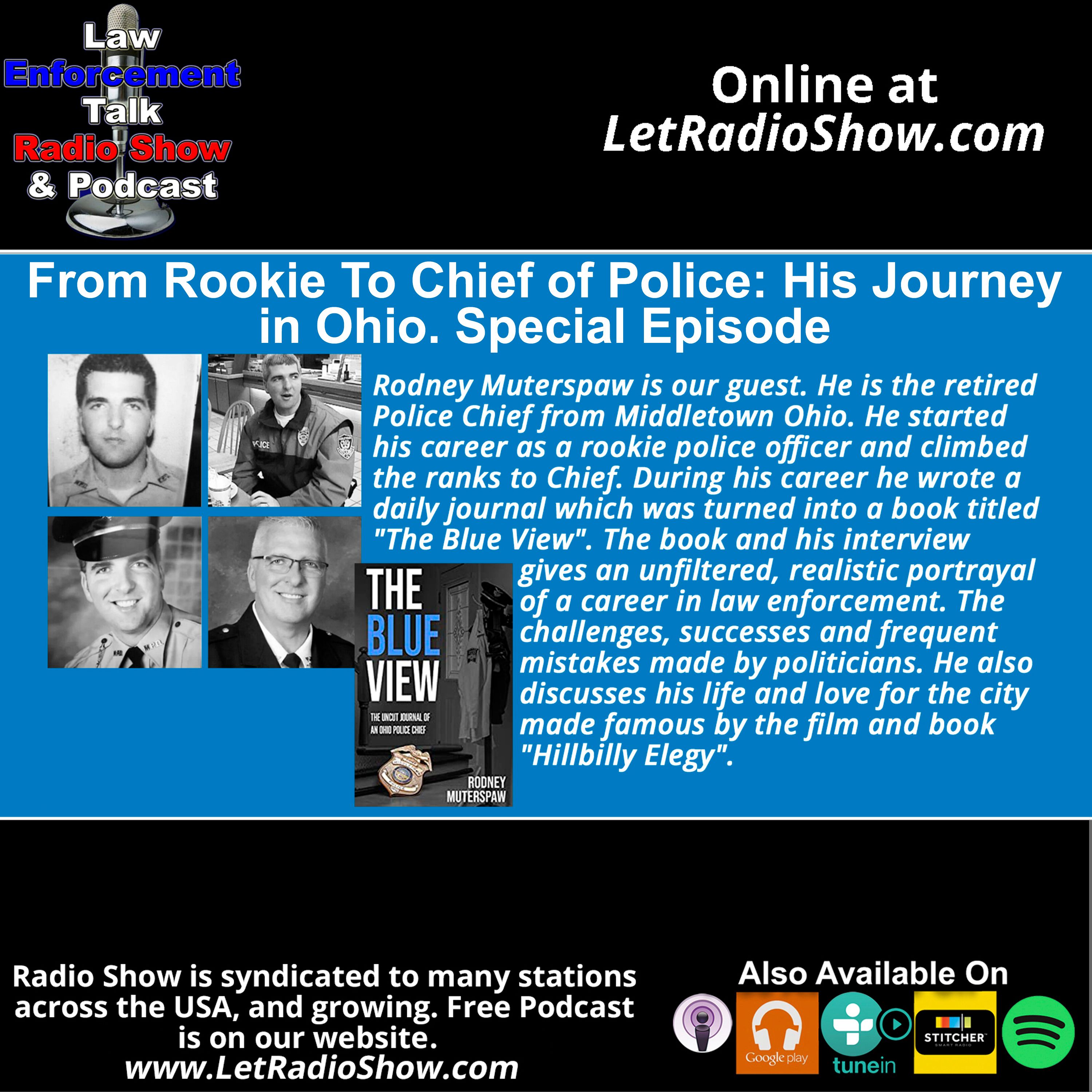
Ep 777From Rookie To Chief of Police: His Journey
From Rookie To Chief of Police: His Journey in Ohio. In a special episode available for free on the Law Enforcement Talk Radio Show website, also on Apple Podcasts, Spotify, Youtube and most major podcast platforms, listeners are taken deep inside the world of American law enforcement through the story of Rodney Muterspaw, the retired Chief of Police from Middletown, Ohio. His journey, from a young rookie officer to one of the most respected police leaders in the United States, is chronicled in his brutally honest book, The Blue View, and shared across Facebook, Instagram, and other major news platforms. A Three-Decade Rise Through the Ranks Muterspaw’s career is the embodiment of the theme “From Rookie to Chief of Police.” Born and raised in the Middletown area, he began as a patrol officer and steadily moved through the ranks: Detective, Sergeant, Lieutenant, Deputy Chief, and ultimately Chief of Police in January 2015. Law Enforcement Talk Radio Show and Podcast social media like their Facebook , Instagram , LinkedIn , Medium and other social media platforms. Colleagues often describe him as a leader who treated Community Policing not as an assignment but as a “philosophy.” Under his leadership, the department shifted toward change, community, and transparency, transforming both culture and morale. From Rookie To Chief of Police: His Journey in Ohio. Look for supporting articles about this and much more from Law Enforcement Talk Radio Show and Podcast in platforms like Medium , Blogspot and Linkedin . His assignments over the years included Patrol Officer, School Resource Officer, Narcotics Detective, Bike Patrol Officer, Community Policing Supervisor, Field Training Officer, and leadership roles in Investigations and Narcotics. It was a full spectrum career, one that exposed him to every triumph and hardship policing can offer. The Book That Was Never Meant to Be Released What makes Rodney Muterspaw’s journey stand out isn’t only his service, it’s the book that came out of it. Available for free on their website and streaming on Apple Podcasts, Spotify, Youtube and other podcast platforms. The Blue View began as a private, personal journal he kept for thirty years. As he explains in the interview: “The hardest thing about being a police officer is you have to solve everyone else’s problems when you can’t even solve your own.” From Rookie To Chief of Police: His Journey in Ohio. Originally never intended for public eyes, these raw entries follow him from his first day in the police academy to his final day as Chief. Readers experience the emotions and pressure of the job, from riding in a cruiser to sitting in the Chief’s office, up close and without filters. The book has been praised for its authenticity and for revealing the “behind-the-scenes” reality that most officers never talk about. Politicians, community leaders, and everyday citizens have all commented on its impact. Regardless of one’s views on policing, The Blue View provides an essential perspective. The Law Enforcement Talk Radio Show and Podcast episode is available for free on their website , Apple Podcasts , Spotify and most major podcast platforms. JD Vance’s Connection: Middletown, Hillbilly Elegy and National Recognition Muterspaw’s story intersects with another well-known Middletown narrative: Hillbilly Elegy, the bestselling memoir by JD Vance, now the Vice President of the United States. The book, film, and cultural conversation put Middletown, a city of nearly 51,000 residents, into national focus. Vance himself praised Muterspaw’s book and work, recommending The Blue View and recognizing the Chief’s deep commitment to the community. Middletown’s history, struggles, and resilience are woven throughout Muterspaw’s writings, giving readers an intimate look at a city that has become emblematic of America’s Rust Belt challenges. From Rookie To Chief of Police: His Journey in Ohio. The full podcast episode is streaming now on Apple Podcasts, Spotify, and across Facebook, Instagram, and LinkedIn. Awards, Leadership, and National Appearances Throughout his career, Muterspaw earned numerous awards and honors, including: The Martin Luther King Jr. Drum Major Award The History Maker Award for his impact on Middletown The NAACP Award for Leadership Multiple City Manager Pro Awards Outstanding Attainment Recognition by the Ohio Senate Selection as a guest of the United States Congress at the Presidential State of the Union He appeared frequently on television, radio, and national media outlets to advocate for stronger community-police relations. From Rookie To Chief of Police: His Journey in Ohio. You can find the show on Facebook, Instagram, Pinterest, X (formerly Twitter), and LinkedIn, as well as read companion articles and updates on Medium, Blogspot, YouTube, and even IMDB. Life After the Badge Though retired from policing, Muterspaw remains deeply active in the community through speaking engagements, volunteer work, and leadership in lo
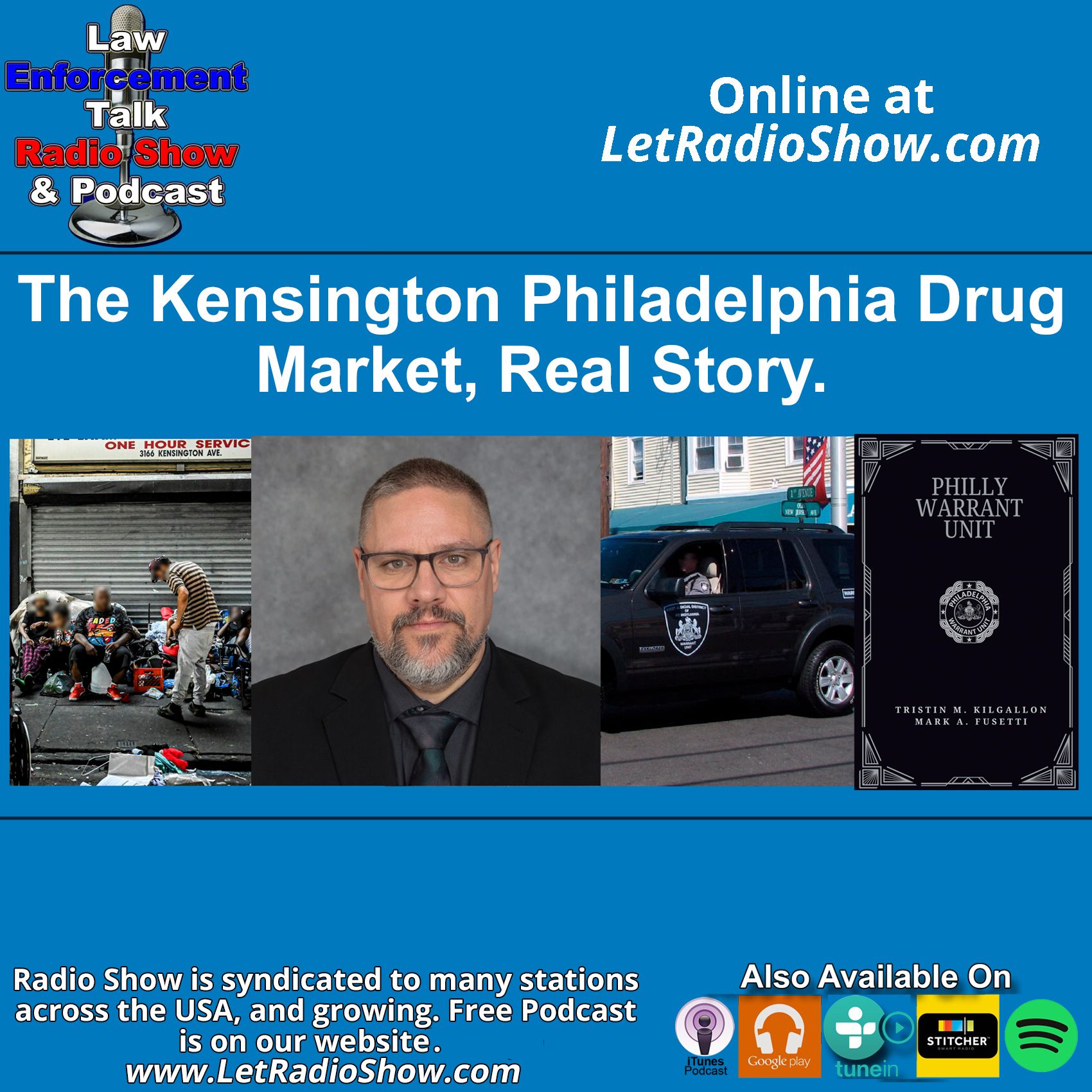
Ep 776The Kensington Philadelphia Drug Market, Real Story
The Kensington Philadelphia Drug Market, Real Story. If there is any place that captures the raw, unfiltered reality of America’s drug crisis, it is The Kensington Philadelphia Drug Market. For decades, this neighborhood has been the epicenter of open-air dealing, addiction, and human suffering, an area where people lie on sidewalks, stumble through streets, and inject or smoke drugs in plain view. Sidewalks, parks, and alleys are littered with used needles. Crowds of people slump over, “nodded out,” as if frozen in time. Law Enforcement Talk Radio Show and Podcast social media like their Facebook , Instagram , LinkedIn , Medium and other social media platforms. “It’s something you have to see to believe,” one writer observed. “Whatever you’ve seen on Twitter (X), Facebook, Instagram, or the evening news doesn’t even come close.” The intense episode now streaming on the Law Enforcement Talk Radio Show and Podcast website, on Apple Podcasts, Spotify, YouTube, and most every major Podcast platform. A Marketplace of Desperation Kensington offers something few other places in America do, product variety. Fentanyl, now responsible for most overdose deaths, saturates the scene. Meth and crack mix in for users looking to combine “uppers and downers.” Even retro drugs like PCP have made a return. One user told investigators his typical order was “three down, one hard”, fentanyl for the down, crack for the hard. The Kensington Philadelphia Drug Market, Real Story. Look for supporting articles about this and much more from Law Enforcement Talk Radio Show and Podcast in platforms like Medium , Blogspot and Linkedin . This is the reality former Philadelphia warrant investigator Tristin Kilgallon witnessed firsthand. From the Streets to the Classroom Kilgallon, who grew up near Kensington, spent years navigating these streets as part of the First Judicial District’s Warrant Unit. Once a frontline investigator tasked with tracking fugitives, he later left the unit to attend law school. He became a lawyer, then a criminal justice professor, teaching the next generation of justice professionals. “I loved the job, but the danger, the low pay, and the burnout, it wears you down,” Kilgallon explains. “Kensington changes you. You see things you can’t unsee.” The Kensington Philadelphia Drug Market, Real Story. Available for free on their website and streaming on Apple Podcasts, Spotify, Youtube and other podcast platforms. He now speaks openly about the realities he observed, not just in policing but also in higher education. “There’s a lot of myth versus reality in the classroom,” he says. “And too often, the focus is on political indoctrination, not actual education.” The Book: A Real Story of Crime, Chaos, and Brotherhood Kilgallon co-authored the book Philly Warrant Unit with lifelong friend and fellow investigator Mark Fusetti. The two grew up on the same block, reunited professionally years later, and began working side by side in one of America’s toughest fugitive-tracking units. “This book isn’t a traditional cover-to-cover read,” Kilgallon says. “It’s a collection of true stories, intense, funny, tragic, and real.” The authors share behind-the-scenes experiences: tense arrests, tragic overdoses, unpredictable street encounters, and the kind of dark humor only law enforcement veterans understand. Their stories paint an unfiltered portrait of policing Philadelphia during a period when Kensington’s drug market became a billion-dollar enterprise and a global symbol of urban decay. The Kensington Philadelphia Drug Market, Real Story. The Law Enforcement Talk Radio Show and Podcast episode is available for free on their website , Apple Podcasts , Spotify and most major podcast platforms. His interview can be found on The Law Enforcement Talk Radio Show and Podcast website, on Apple podcasts, Spotify, Youtube and on LinkedIn, Facebook, Instagram, and across most podcast platforms where listeners crave authentic law enforcement stories. Kensington: A Neighborhood Consumed Kensington was once a thriving industrial hub. When factories shut down during the 1960s and deindustrialization hollowed out the area, poverty, abandonment, and neglect took root. Vacant factories became havens for dealing and drug use. The Market-Frankford Line offered easy access. By the late 1990s, Kensington had become the place to buy heroin on the East Coast. As Kilgallon puts it: “The drug market didn’t just appear, it grew like a parasite. And it’s been feeding off the neighborhood for generations.” The full podcast episode is streaming now on Apple Podcasts, Spotify, and across Facebook, Instagram, and LinkedIn. Today, fentanyl, xylazine, meth, and crack dominate. Doctors and treatment centers struggle to help people addicted to substances that often leave them disfigured or near death. Residents face homelessness, encampments, violence, and crushing economic inequality. “Kensington has become the Las Vegas of Drugs,” Kilgallon says. “It’s shocking
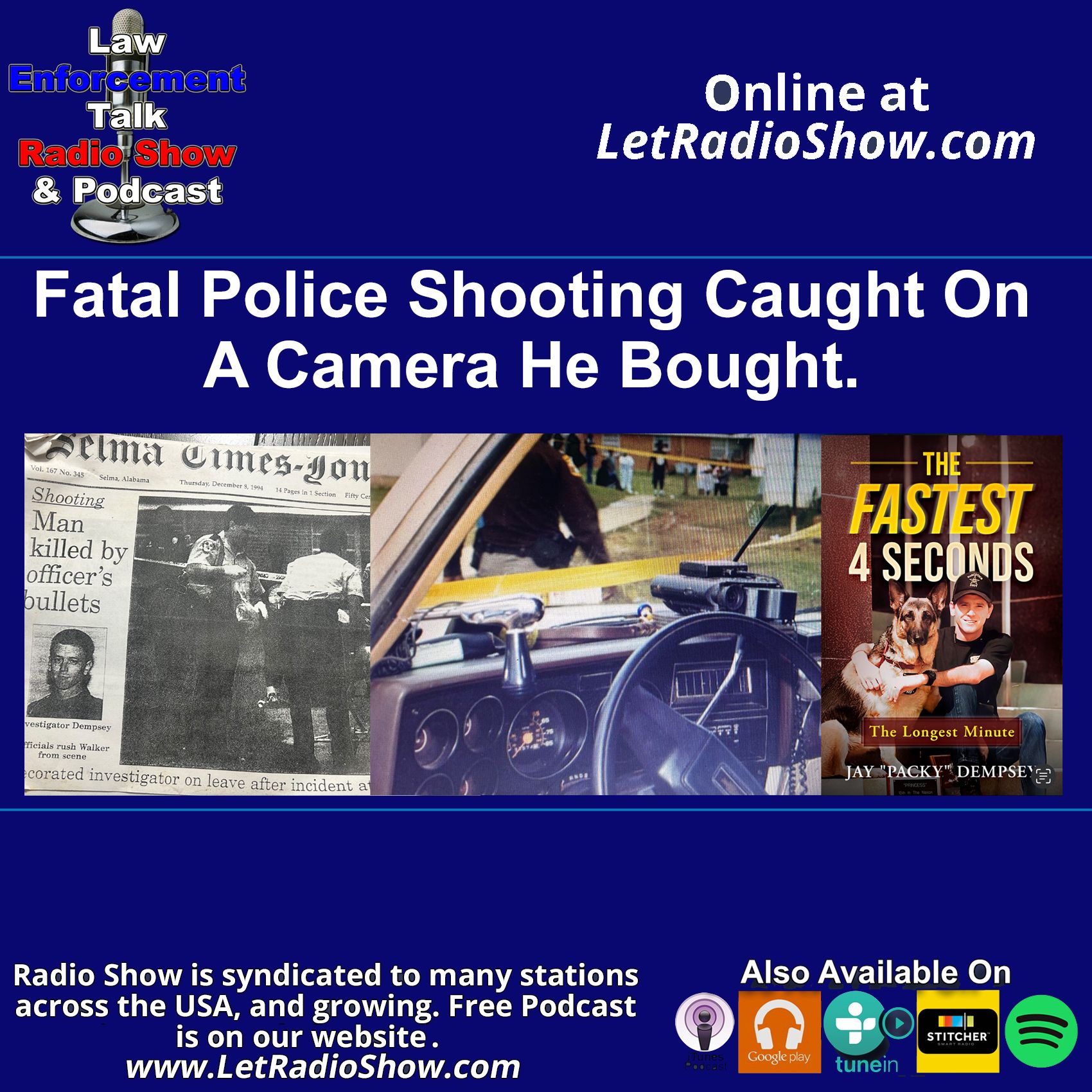
Ep 775Fatal Police Shooting Caught On A Camera He Bought
Fatal Police Shooting Caught On A Camera He Bought. He had responded to a complaint in a high crime area and got into an altercation with a suspect. During the altercation the suspect was able to take his pistol. The suspect then stood over him and pointed the pistol at him. He was able to utilize his bail out device. And his K-9 Princes then exited the unit and engaged the suspect. In a powerful episode now streaming on the Law Enforcement Talk Radio Show and Podcast website, on Apple Podcasts, Spotify, YouTube, and most every major Podcast platform. The suspect struck K-9 Princes in the head causing her to have a fractured skull. K-9 Princes never stopped the fight and was able to allow him to retrieve his back up weapon. He then fired numerous shots and neutralized the threat. Law Enforcement Talk Radio Show and Podcast social media like their Facebook , Instagram , LinkedIn , Medium and other social media platforms. The attack and incident was captured on a dashcam that the Officer had purchased from his own money. That video is what eventually cleared him of wrongdoing. Look for supporting articles about this and much more from Law Enforcement Talk Radio Show and Podcast in platforms like Medium , Blogspot and Linkedin . Retired Investigator and Sergeant Jay “Packy” Dempsey is our guest, he is a 25-year veteran of law enforcement and a 6-year Military Policeman in the Alabama Army National Guard. Over the course of his career, he served as a dual-purpose K-9 officer for more than 22 years, specializing in narcotics, criminal, and marine theft investigations. Rising through the ranks, he became a SWAT team commander and dedicated much of his life to protecting his community. Fatal Police Shooting Caught On A Camera He Bought. Dempsey’s work has taken him into some of the toughest investigations, including murders, rapes, bank robberies, and stolen vehicles. With his cadaver dogs, he helped recover multiple bodies and located more than 80 stolen vessels and marine-related equipment. His expertise also extended into instructionserving as an FBI and NRA-certified firearms instructor, as well as an ASP, Mace, Taser, and NNDDA K-9 instructor. His outstanding service earned him recognition as a five-time Officer of the Year and recipient of the National Award for Bravery in the Line of Fire. Available for free on their website and streaming on Apple Podcasts, Spotify, and other podcast platforms. But beyond the accolades, Dempsey’s story is one of survival, faith, and redemption. His book, The Fastest 4 Seconds, is a true account backed by eyewitness testimony, investigators, news articles, and even dashboard camera footage from the Dallas County Sheriff’s Office in Selma, Alabama. It covers the events leading up to and following a shooting that unfolded in just four seconds after a one-minute struggle with a suspect. The book not only documents the incident and the investigation but also shines a light on the hidden battle that followed, undiagnosed PTSD, addictions, and the near collapse of everything he held dear. Through it all, Dempsey testifies to the undeniable hand of God working miracles in his life. Today, he shares his experiences with law enforcement academies and Christian men’s groups, teaching the hard truth. Fatal Police Shooting Caught On A Camera He Bought. Jay “Packy” Dempsey always wanted to work in law enforcement. The only way to get in the door and start his law enforcement career was to volunteer. Working as a pulp mill helper at the local paper plant, Packy volunteered as a reserve deputy for the sheriff’s department on his nights off. Packy saw that the sheriff’s department did not have a K-9 unit, so after volunteering for two years, Packy bought a German shepherd puppy, named her Princess, and trained her to become a narcotics K-9. Eventually, Packy was hired by the sheriff’s department to work at the jail. Over time, he worked his way to the narcotics division. However, as his career soared, his first marriage failed. His wife at the time had not signed up for the life of a police officer’s wife. After getting his personal life back on track, Packy almost lost it all on a muggy December day when he answered a loitering complaint at former Craig Air Force Base on the outskirts of Selma. The Law Enforcement Talk Radio Show and Podcast episode is available for free on their website , Apple Podcasts , Spotify and most major podcast platforms. While trying to arrest one of the loitering teens for crack cocaine possession, the teen, overpowered Packy, taking his gun and pointing it at Packy’s head. Using a special remote, Packy released Princess from the back of his patrol vehicle, and she came to his rescue. Princess distracted Walker long enough for Packy to draw his backup weapon and apply deadly force. The reporting and aftermath that ensued pitted the community against Packy as civil rights activists labeled Packy a murderer. Fortunately, he had the entire incident on film due to a
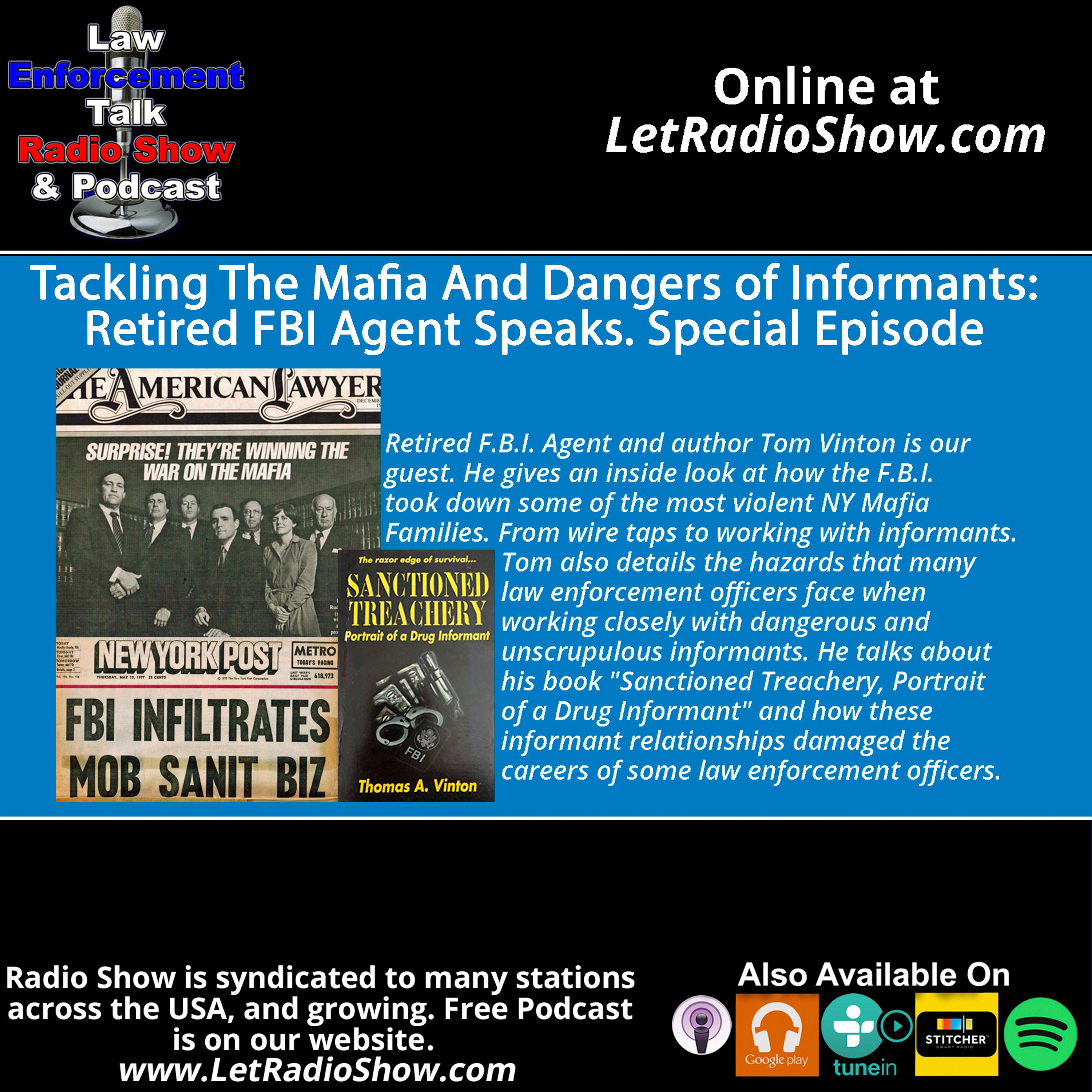
Ep 774Tackling The Mafia And Dangers of Informants
Tackling The Mafia And Dangers of Informants: Retired FBI Agent Speaks. Special Episode. “This is a part of FBI work the public almost never sees,” Vinton explains. “When you’re Tackling The Mafia And the Dangers of Informants, you’re operating in a world where loyalty is a currency, and betrayal can cost lives or careers.” Law Enforcement Talk Radio Show and Podcast social media like their Facebook , Instagram , LinkedIn , Medium and other social media platforms. In a powerful Special Episode now streaming on the Law Enforcement Talk Radio Show and Podcast website, on Apple Podcasts, Spotify, YouTube, and most every major Podcast platform, retired FBI agent and author Tom Vinton offers a rare, firsthand look into the world of organized crime, dangerous informants, and the internal risks faced by federal investigators. Promoted across Facebook, Instagram, and other News outlets, the episode takes listeners deep into the heart of New York’s most violent Mafia crime families, and into the shadows where informants and agents walk a thin line between justice and treachery. Inside the Mafia Wars of the 1980s The episode dives into the turbulent 1980s, a decade defined by upheaval within the Gambino Crime Family, from the Crime Boss's leadership to his shocking 1985 assassination and the meteoric rise of another Boss. Vinton recalls the era as one marked by international heroin trafficking, brutal territorial battles, and the historic Mafia Commission Trial, which took aim at the leadership of all five New York Mafia families. Tackling The Mafia And Dangers of Informants: Retired FBI Agent Speaks. Special Episode. Look for supporting articles about this and much more from Law Enforcement Talk Radio Show and Podcast in platforms like Medium , Blogspot and Linkedin . “The Commission Trial was a seismic shift,” Vinton says. “For the first time, the FBI could expose how the families cooperated, organized, and profited. It changed the direction of organized crime investigations forever.” The Perils of Informants: “A Necessary Evil” Vinton’s book, Sanctioned Treachery: Portrait of a Drug Informant, becomes a centerpiece of the episode. Based on his decades-long career investigating organized crime and supervising the Organized Crime Drug Enforcement Task Force, the novel brings to life the dangerous dance between agents and the informants they rely on. “Informants are both indispensable and incredibly risky,” Vinton notes. “Some agents have had their careers destroyed, or even ended up in jail, because they trusted the wrong person.” Tackling The Mafia And Dangers of Informants: Retired FBI Agent Speaks. Available for free on their website and streaming on Apple Podcasts, Spotify, and other podcast platforms. The book follows fictional FBI agent Eddie Michaels and his informant Alonzo “King” Curtis, a charismatic but ruthless operator whose moral compass is as fluid as the criminal underworld he moves through. Drawing on real-life cases, Vinton reveals how informants can both solve major crimes and simultaneously jeopardize investigations, or the agents themselves. “This could have happened,” Vinton says plainly. “Some of it did.” A Career Built on Crime-Fighting and Storytelling Tom Vinton’s own story is as compelling as the cases he describes. Born in New Rochelle and a graduate of Holy Cross, he served as a Marine Corps infantry officer before joining the FBI. His assignments took him ultimately to New York, where he supervised massive organized crime and drug investigations. The Law Enforcement Talk Radio Show and Podcast episode is available for free on their website , Apple Podcasts , Spotify and most major podcast platforms. After retiring from the Bureau, Vinton became Deputy Commissioner of the Westchester County Police and launched a consulting business. But writing remained a passion. Tackling The Mafia And Dangers of Informants. “A professor once told me that writing would serve me no matter what career I chose,” Vinton recalls. “He was right. These stories needed to be told.” Originally published in 2005, Sanctioned Treachery was lost when the publisher went bankrupt. Now updated, re-edited, and released, it’s earning renewed praise. One early review called it “a grand thriller… an exciting breath-holding adventure disguised as fiction.” How the FBI Fights Organized Crime Throughout the episode, Vinton breaks down how the FBI tackles criminal enterprises, not just individuals, using tools like: Undercover operations Court-authorized wiretaps and surveillance Asset forfeiture Informants and cooperating witnesses Inter-agency task forces RICO statutes “The goal is to dismantle the entire infrastructure of a criminal organization,” Vinton says. “Not just arrest a few people. We target the enterprise, its money, its leadership, its operations.” Tackling The Mafia And Dangers of Informants: Retired FBI Agent Speaks. Special Episode. The full podcast episode is streaming now on Apple Podcasts, Spotify, and acros

Ep 773Protecting The Lives Of American Law Enforcement Officers
Protecting The Lives Of American Law Enforcement Officers: A Special Episode on Trauma, Health, and Hope. The average life expectancy for American law enforcement officers is just 57 years, a stark contrast to the general population’s 78 to 79 years. Behind that number lies a sobering reality: a career spent protecting others often comes at the expense of one’s own health. This special episode of the Law Enforcement Talk Radio Show and Podcast is available for free on their website, also on Apple Podcasts, Spotify, Youtube and many other podcast platforms. Heart disease, chronic stress, trauma, and the relentless demands of the badge all play a role. “Many officers only live a few years into retirement,” says John Jay Wiley, host of the Law Enforcement Talk Radio Show and Podcast. “That’s not just a statistic, it’s a tragedy that reflects the immense pressure these men and women endure.” Law Enforcement Talk Radio Show and Podcast social media like their Facebook , Instagram , LinkedIn , Medium and other social media platforms. In this Special Episode, available on Facebook, Instagram, LinkedIn, YouTube, X, Apple, Spotify, and Radio, Wiley welcomes Eric Caron, a retired U.S. Special Agent and Diplomat, to discuss the unseen toll of the job, and the urgent need to protect the mental and physical well-being of those who protect us. Look for supporting articles about this and much more from Law Enforcement Talk Radio Show and Podcast in platforms like Medium , Blogspot and Linkedin . The Hidden Cost of the Badge, Protecting The Lives Of American Law Enforcement Officers: A Special Episode on Trauma, Health, and Hope. Officers face risks that go beyond the dangers of the streets. Studies show that law enforcement professionals have: A much higher rate of heart disease, with heart attacks often striking as early as age 46, compared to 65 in the general population. Elevated risks of hypertension, diabetes, and obesity, conditions tied directly to chronic stress and irregular shift work. Shorter retirements, with many officers passing away just a few years after leaving the job. “It’s not just the stress of one bad day,” Wiley explains. “It’s the accumulation of hundreds of critical incidents over a career, what we call death by a thousand cuts.” Available for free on their website and streaming on Apple Podcasts, Spotify, and other podcast platforms. The Psychological Battle Caron, who spent years investigating child pornography and sex crimes, describes the haunting reality of prolonged exposure to such cases. “When you’re staring into that darkness every day, it leaves a mark,” he says. “You see the worst of humanity, and it takes discipline and community to not let that darkness consume you.” Protecting The Lives Of American Law Enforcement Officers: A Special Episode on Trauma, Health, and Hope. According to research, trauma in law enforcement leads to alarmingly high rates of PTSD, depression, and anxiety: PTSD rates among police officers reach as high as 35%*, compared to 6.8% in the general population. Officers are far more likely to experience emotional numbing, hyperarousal, and flashbacks from traumatic events. Many suffer from compassion fatigue, a type of emotional burnout caused by repeated exposure to tragedy and human suffering. Caron explains that repeated exposure to graphic violence and child exploitation can cause what psychologists call traumatic layering. “It’s not one event, it’s hundreds,” he says. “Each one leaves a scar.” The Law Enforcement Talk Radio Show and Podcast episode is available for free on their website , Apple Podcasts , Spotify and most major podcast platforms. The Ripple Effects The consequences of trauma ripple through every aspect of an officer’s life: Emotional strain often leads to relationship issues and isolation. Negative coping mechanisms, like alcohol or substance use, are far too common. Cognitive impairment from chronic stress affects memory, judgment, and performance on duty. Physical health problems such as high blood pressure, gastrointestinal issues, and cardiovascular disease frequently follow. “Every case, every call, adds another layer,” Wiley says. “And too often, we lose great people not in the line of duty, but to the silent battles they fight afterward.” Protecting The Lives Of American Law Enforcement Officers: A Special Episode on Trauma, Health, and Hope. The full podcast episode is streaming now on Apple Podcasts, Spotify, and across Facebook, Instagram, and LinkedIn. Protecting Those Who Protect Us Throughout the conversation, Caron shares the methods he and his teams used to safeguard their mental health while investigating the most disturbing crimes imaginable. “We had to find ways to stay human,” he says. “Exercise, faith, humor, and having a strong support system, it all mattered.” Caron now dedicates his post-service career to helping others stay “Switched On”, the philosophy behind his bestselling book SWITCHED ON, The Heart and Mind of a Sp

Ep 772Prison And The State Police, Bomb Squad
Prison And The State Police, Bomb Squad In Arizona, Special Episode. When retired Arizona State Trooper Ken Emerson looks back on his career, few memories stand out more vividly than the prison hostage crisis that shook the state, and the nation. Emerson, who served on the Arizona Department of Public Safety Bomb Squad and the door-entry SWAT team, found himself on scene during the longest prison hostage crisis in U.S. history. Law Enforcement Talk Radio Show and Podcast social media like their Facebook , Instagram , LinkedIn , Medium and other social media platforms. “It was unlike anything I’d ever experienced,” Emerson recalls in a special episode of the Law Enforcement Talk Radio Show and Podcast. “We were trained for chaos, but nothing prepares you for a standoff that lasts fifteen days.” This special episode of the Law Enforcement Talk Radio Show and Podcast is available for free on their website, also on Apple Podcasts, Spotify, Youtube and many other podcast platforms. The Arizona State Prison Complex-Lewis hostage crisis unfolded in January 2004, when two inmates took control of a prison tower and held Correctional Officer Lois Fraley hostage. For fifteen harrowing days, law enforcement, negotiators, and tactical units worked tirelessly to bring the situation to a peaceful resolution. Look for supporting articles about this and much more from Law Enforcement Talk Radio Show and Podcast in platforms like Medium , Blogspot and Linkedin . From Military to Bomb Squad: A Natural Transition For Emerson, police work was a natural evolution after his military service. “Police work was the perfect transition for me after leaving the military,” he explains. “The structure, the mission, and the sense of purpose were all there. But on the Bomb Squad, you add a new layer of danger and precision.” Prison And The State Police, Bomb Squad In Arizona, Special Episode. As part of one of the busiest bomb squads in the country, Emerson and his team were on call around the clock, responding to suspicious packages, explosive devices, and hazardous materials. “We were constantly moving,” he says. “From dignitary protection details to potential IED threats, there was never a dull moment.” Inside the Life of a Bomb Squad Technician The Bomb Squad, officially known as the Explosive Ordnance Disposal (EOD) or Hazardous Devices Unit, is often portrayed in movies as high-octane and glamorous. But Emerson says Hollywood gets most of it wrong. Available for free on their website and streaming on Apple Podcasts, Spotify, and other podcast platforms. “Movies make it look like we’re cutting red and blue wires under pressure every day,” he laughs. “In reality, it’s a lot more technical. There’s a ton of planning, teamwork, and calm decision-making involved.” Bomb technicians rely on an arsenal of tools and technology, bomb suits, remote-controlled robots, portable X-ray machines, and containment vessels all designed to protect life and minimize risk. “Our mission is simple,” Emerson says. “Make sure everyone goes home alive at the end of the day.” Prison And The State Police, Bomb Squad In Arizona, Special Episode. The Arizona Prison Hostage Crisis On January 18, 2004, chaos erupted at the Arizona State Prison Complex-Lewis in Buckeye when two inmates overpowered guards and seized a watchtower. Inside, they held Correctional Officer Lois Fraley and Officer Jason Auch hostage at gunpoint. The Law Enforcement Talk Radio Show and Podcast episode is available for free on their website , Apple Podcasts , Spotify and most major podcast platforms. For fifteen days, the crisis gripped national headlines. Emerson and his team were called to the scene as part of the tactical response. “Our primary concern was the safety of everyone, the hostages, the officers, and even the inmates,” Emerson remembers. “Every move we made was calculated. We were dealing with explosives, firearms, and an unpredictable situation.” During the ordeal, Fraley endured unimaginable terror. “I said goodbye to everybody,” she told ABC News after her release. “I never thought I was going to make it out alive.” Miraculously, after two weeks of negotiations, the inmates surrendered. Fraley was safely rescued, ending what would become the longest-running prison hostage situation in U.S. history. The full podcast episode is streaming now on Apple Podcasts, Spotify, and across Facebook, Instagram, and LinkedIn. Lessons from the Crisis For Emerson, the experience reinforced the importance of preparation, patience, and teamwork in law enforcement. “When you’re on scene at something like that, you realize just how interconnected every agency is, corrections, state police, SWAT, negotiators, everyone,” he says. “It’s all about trust.” Prison And The State Police, Bomb Squad In Arizona, Special Episode. He also emphasizes the emotional toll that such events take on officers. “People don’t see the aftermath, the sleepless nights, the what-ifs,” Emerson reflects. “You carry those i
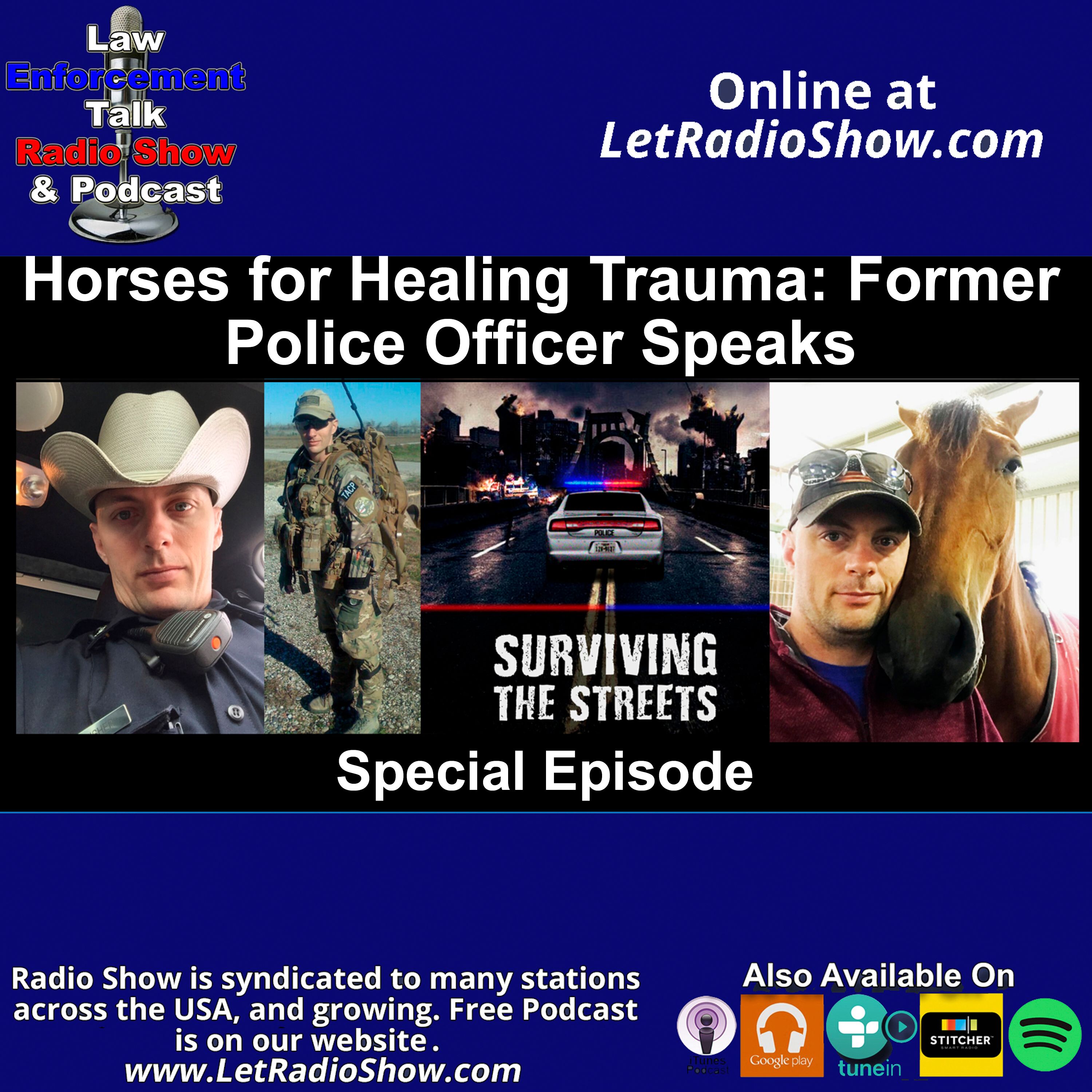
Ep 771Horses for Healing Trauma: Former Police Officer Speaks
Horses for Healing Trauma: Former Police Officer Speaks. A former police officer opens up about losing his partner, battling PTSD, and how horses helped him heal. Listen to this powerful special episode. A Powerful Journey of Recovery and Purpose in this Special Episode of the Law Enforcement Talk Radio Show and Podcast. This special episode of the Law Enforcement Talk Radio Show and Podcast is available for free on their website, also on Apple Podcasts, Spotify, Youtube and many other podcast platforms. In a special episode of the Law Enforcement Talk Radio Show and Podcast, listeners are introduced to a deeply moving story of loss, redemption, and the power of horses to heal trauma. It’s a story that forces us to ask: Did horses save his life? Law Enforcement Talk Radio Show and Podcast social media like their Facebook , Instagram , LinkedIn , Medium and other social media platforms. The episode features a Nate Fisher, a former police officer whose journey from despair to purpose shines a light on the struggles many first responders and veterans face after years of service. “When my police partner was killed, everything changed,” he recalls. “He was a rookie, and I was the one training him. Seeing his lifeless body broke something inside me.” Look for supporting articles about this and much more from Law Enforcement Talk Radio Show and Podcast in platforms like Medium , Blogspot and Linkedin . A Spiral Into Darkness, Horses for Healing Trauma: Former Police Officer Speaks. The trauma of that moment compounded years of emotional strain from both law enforcement and military service. His marriage began to crumble, and the burden of grief became unbearable. “I didn’t know how to cope,” he admitted. “I started self-medicating with alcohol and other destructive behaviors. It felt like there was no way out.” As the darkness grew, suicidal thoughts began to take hold. One day, he reached the breaking point and attempted to end his life. “The only reason I’m still here is because my handgun jammed,” he said. “That failure turned out to be the reason I got a second chance.” Available for free on their website and streaming on Apple Podcasts, Spotify, and other podcast platforms. Finding Hope Through Horses That second chance came through an unexpected source, horses. Introduced to equine care by a new girlfriend, he discovered that working with horses provided a peace he hadn’t felt in years. “At first, I didn’t understand it,” he said. “But horses don’t judge. They sense your emotions. When I was angry, they pulled away. When I was calm, they came closer. They made me face what I was running from.” Through consistent work with horses, he began to rebuild trust, patience, and emotional control. “The horses taught me to breathe again,” he said. “They helped me find purpose.” Today, he shares his message through the Law Enforcement Talk Radio Show and Podcast, helping others in law enforcement and the military confront PTSD and seek healing. Horses for Healing Trauma: Former Police Officer Speaks. The Science Behind Equine Therapy Equine therapy, also known as Equine-Assisted Therapy (EAT), has been gaining attention as a promising treatment for PTSD. This form of therapy involves working with horses in a supportive, structured environment to promote emotional recovery and personal growth. The Law Enforcement Talk Radio Show and Podcast episode is available for free on their website , Apple Podcasts , Spotify and most major podcast platforms. Research published in the "Journal of Clinical Psychiatry" and led by Drs. Yuval Neria and Prudence Fisher of Columbia University’s "Man O’ War Project" found that equine therapy can significantly reduce PTSD and depression symptoms in veterans. Dr. Neria explains, “Both PTSD patients and horses are preoccupied with ongoing concerns about trust and safety. This innovative therapy facilitates bonding, overcoming fear, and re-establishing confidence. One must build trust with a horse for it to warm to you.” A separate study cited by "Psychiatrist.com" showed remarkable results in veterans who participated in an eight-session Equine-Assisted Therapy for PTSD program. Among 63 participants, 50% showed clinically significant improvement in symptoms that continued months after treatment ended. How Horses Heal Trauma, Horses for Healing Trauma: Former Police Officer Speaks. Horses have an extraordinary ability to mirror human emotions. For trauma survivors, this connection can be life-changing. The benefits of equine therapy for PTSD include: Reduced symptoms: Studies show fewer flashbacks, nightmares, and hypervigilance. Improved emotional regulation: Horses provide a safe, non-judgmental space for emotional growth. Increased self-esteem and confidence: Caring for a horse can restore a sense of purpose and control. Enhanced social connection: Working with horses encourages communication and trust-building. Mindfulness and grounding: Being in the moment w
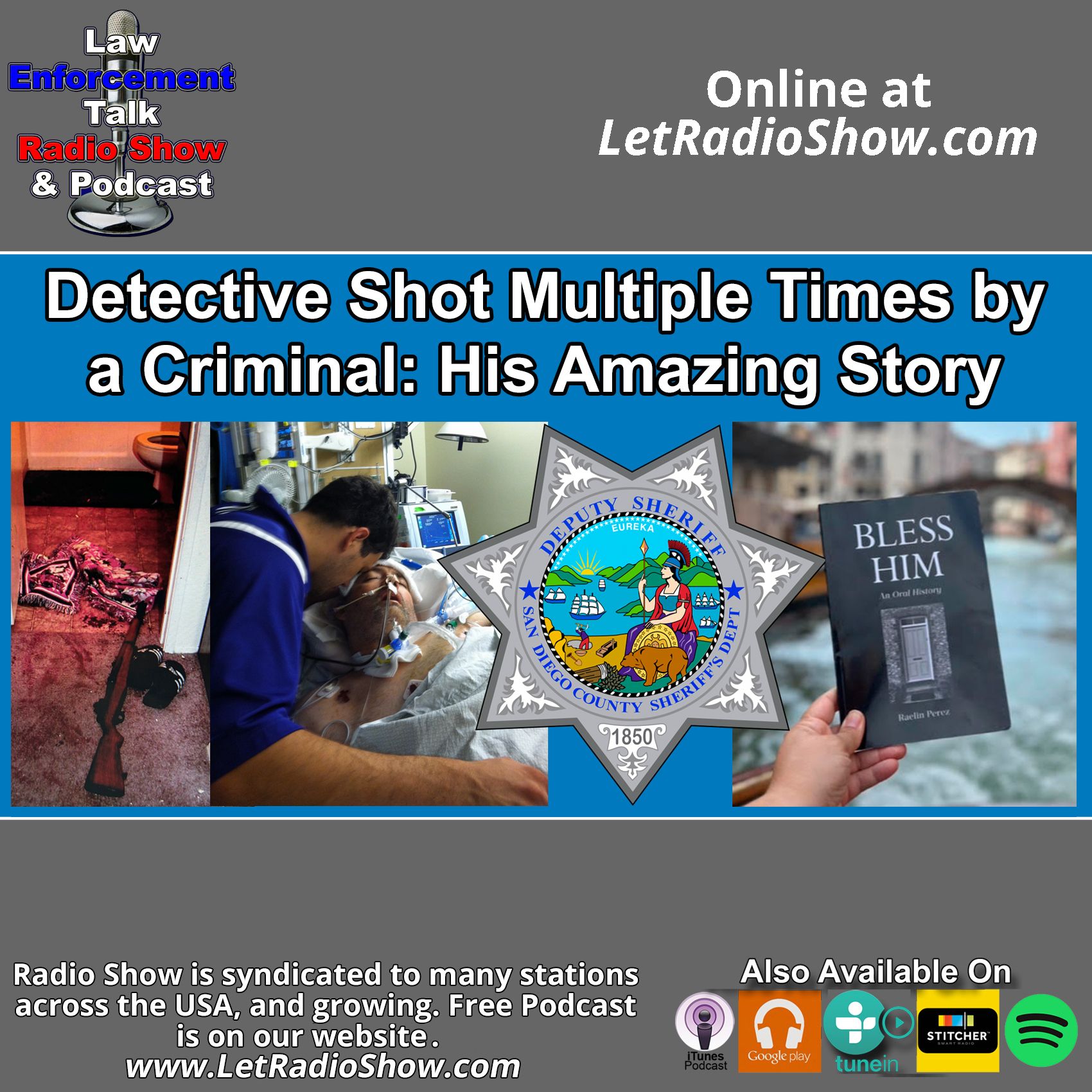
Ep 770Detective Shot Multiple Times by a Criminal: Amazing Story
Detective Shot Multiple Times by a Criminal: Amazing Story. A powerful true story from California, Detective Ali Perez was shot multiple times by a criminal during a gun battle. His amazing story of faith, forgiveness, and survival has inspired thousands across the Law Enforcement Talk Radio Show and Podcast social media like their Facebook , Instagram , LinkedIn , Medium and other social media platforms. A Deadly Encounter in Lakeside, California. The Law Enforcement Talk Radio Show and Podcast, is available for free on their website, also on Apple Podcasts, Spotify, Youtube and many other podcast platforms. It was a quiet day in Lakeside, California, when Detective Ali Perez and Sergeant Craig Johnson of the San Diego County Sheriff’s Department arrived at an apartment on Mapleview Street. Their mission was to confront a criminal suspect accused of possessing pornographic images of his girlfriend’s young daughters. Look for supporting articles about this and much more from Law Enforcement Talk Radio Show and Podcast in platforms like Medium , Blogspot and Linkedin . What began as a standard child abuse investigation quickly turned into a deadly ambush. Detective Shot Multiple Times by a Criminal: His Amazing Story. According to the San Diego Sheriff’s Department, the criminal opened fire with a .308-caliber rifle, sparking a 15-minute gun battle that left both detectives seriously wounded. Perez was hit twice, once in the stomach and once in the shoulder, while Johnson was struck in the arm and side. “Gunfire erupted almost immediately,” officials said, describing how a SWAT officer risked his life to pull the wounded detectives out of the line of fire. Available for free on their website and streaming on Apple Podcasts, Spotify, and other podcast platforms. A Near-Death Experience and a Divine Vision As Detective Perez lay bleeding on the floor, he began to accept that he might not make it out alive. That’s when something extraordinary happened. Detective Shot Multiple Times by a Criminal: His Amazing Story. “I saw my Lord and Savior, Jesus Christ,” Perez later testified. “He appeared seated in a chair between me and the shooter.” Perez said that Jesus handed him a note that read: “I want you to bless him.” Even as he fought for his life, Perez obeyed. The Law Enforcement Talk Radio Show and Podcast episode is available for free on their website , Apple Podcasts , Spotify and most major podcast platforms. “I looked at the suspect and said, ‘God bless you, brother.’” To his surprise, the suspect hesitated. At one point, he even laid beside the wounded detective and said, “Hey, let’s go out together.” When the shooter retreated into a hallway, Perez saw his chance to escape. “I knew I didn’t want to die and leave my family behind,” he said. “But looking at Jesus, I knew it was going to be all right.” Detective Shot Multiple Times by a Criminal: His Amazing Story. Covered in blood, he managed to crawl to safety. He would later undergo nine hours of surgery and more than 20 additional operations to recover. A Horrific Crime Exposed The motive behind the deadly confrontation was almost too disturbing to believe. The full podcast episode is streaming now on Apple Podcasts, Spotify, and across Facebook, Instagram, and LinkedIn. The Shooter's girlfriend testified that she had discovered pornographic images and videos of her two daughters, just 6 and 8 years old, on his cell phone. He told her that he intended to sell them to a child pornography website for $50,000. She immediately fled the apartment with her children and contacted the authorities. Moments later, Detective Perez knocked on the door, and the gunfire began. Courage Under Fire and a Lifelong Recovery. Detective Shot Multiple Times by a Criminal: His Amazing Story. Both Detective Perez and Sgt. Johnson were rushed to the hospital, where they underwent extensive surgeries. Despite life-threatening injuries, both survived. Perez, at that time was an 18-year veteran assigned to the Child Abuse Unit, was praised by his colleagues as one of the most dedicated investigators on the force. You can find the show on Facebook, Instagram, Pinterest, X (formerly Twitter), and LinkedIn, as well as read companion articles and updates on Medium, Blogspot, YouTube, and even IMDB. “He’s a good detective who does thorough investigations, the kind of man you want on your team,” said one department official. The suspect, was later convicted on multiple counts, including three counts of attempted murder of a peace officer and eight counts of sexual misconduct involving children. He was sentenced to life in prison after pleading guilty. Faith, Forgiveness, and a New Mission Following years of surgeries and rehabilitation, Perez was forced to retire due to his injuries and the emotional toll of PTSD. But he refused to let tragedy define him. “Forgiveness isn’t weakness, it’s freedom,” Perez said. “When I said ‘God bless you’ to the man who shot me, I didn’t just save my lif

Ep 769Rescue Dogs Trained To Be PTSD Service Animals For Vets
Rescue Dogs Trained To Be PTSD Service Animals For Vets: From Shelter to Service. In a powerful Special Episode Podcast of the Law Enforcement Talk Radio Show, listeners are introduced to an inspiring story of second chances, for both people and dogs. Brett Simon from Big Dog Ranch Rescue in Palm Beach County, Florida, joins host Jay Wiley to share how rescue dogs are being trained to become PTSD service animals for veterans. The Law Enforcement Talk Radio Show and Podcast, is available for free on their website, also on Apple Podcasts, Spotify, Youtube and many other podcast platforms. “Every dog deserves a chance, and every veteran deserves help,” says Simon, a former Police K9 Handler and Military Combat Contractor who spent years working with canines in high-stress combat zones. “When we connect the two, a rescue dog needing purpose and a veteran needing healing, something extraordinary happens.” The Law Enforcement Talk Radio Show and Podcast promoted across their Facebook , Instagram , LinkedIn , Medium and other social media platforms. From the Shelter to Service At Big Dog Ranch Rescue (BDRR), the largest cage-free, no-kill rescue in the United States, dogs once abandoned in shelters are given new lives through their Veteran Service Dog Training Program. The initiative not only transforms the lives of veterans struggling with post-traumatic stress disorder (PTSD) but also saves the lives of the dogs themselves. Look for supporting articles about this and much more from Law Enforcement Talk Radio Show and Podcast in platforms like Medium , Blogspot and Linkedin . The program’s mission is simple yet profound: give rescue dogs a second chance by training them to become PTSD service dogs for veterans and active-duty military personnel. “We’re giving hope twice,” Simon explains. “To the veteran who’s struggling and to the dog who was once unwanted.” Rescue Dogs Trained To Be PTSD Service Animals For Vets: From Shelter to Service. The Healing Power of the Human-Animal Bond PTSD service dogs are specially trained to perform tasks that help alleviate symptoms and improve daily functioning for individuals living with post-traumatic stress. These dogs offer comfort, protection, and companionship, often becoming an essential part of a veteran’s healing journey. Available for free on their website and streaming on Apple Podcasts, Spotify, and other podcast platforms. Some of the trained tasks include: Interrupting flashbacks or anxiety attacks: by nudging or placing their head on their handler’s lap. Providing comfort: through deep pressure therapy by leaning or lying against the veteran. Blocking and covering: positioning themselves in front or behind the veteran to create a sense of security. Waking from nightmares: recognizing distress and gently waking the veteran. Encouraging social interaction: helping veterans reconnect and feel more at ease in public spaces. “PTSD doesn’t go away overnight,” Simon says. “But when you have a loyal companion who senses your anxiety and helps ground you, it changes everything. These dogs are trained not just to obey, they’re trained to care.” Rescue Dogs Trained To Be PTSD Service Animals For Vets: From Shelter to Service. The Law Enforcement Talk Radio Show and Podcast episode is available for free on their website , Apple Podcasts , Spotify and most major podcast platforms. Backed by the Veterans Administration The Veterans Administration recognizes Big Dog Ranch Rescue’s program as a “Non-Traditional and Innovative” form of therapy. Through this recognition, BDRR works closely with the VA to ensure veterans receive comprehensive support while integrating their new service dogs into their daily lives. Training is provided entirely free of charge for veterans, although those from out of state are required to complete a 21-day on-site training session at the ranch in Florida (which may be spread over several months). Sponsorship opportunities are often available to help offset travel expenses. Each veteran-dog partnership is unique. BDRR’s professional trainers use positive reinforcement techniques, tailoring each dog’s training to match the veteran’s individual needs and lifestyle. The dogs receive full vaccinations, microchipping, and access to reduced-cost veterinary care during their first year through BDRR’s veterinary healing center. The full podcast episode is streaming now on Apple Podcasts, Spotify, and across Facebook, Instagram, and LinkedIn. Brett Simon’s Personal Journey Brett Simon’s credibility in this mission comes not only from his professional background but from his personal experience. As a Police K9 handler, Military K9 contractor, and combat veteran, Simon has lived through the trauma many of these veterans face. Rescue Dogs Trained To Be PTSD Service Animals For Vets: From Shelter to Service. “After my deployments, I struggled,” Simon admits in the podcast. “PTSD isn’t something you can see on the outside. But working with dogs again helped me reconn
Ep 768A Different Way To Treat PTSD?
A Different Way To Treat PTSD? Combat Veteran Speaks. In a powerful Special Episode of the Law Enforcement Talk Radio Show and Podcast, listeners are introduced to a man whose life mission is transforming the way people think about trauma, healing, and post-traumatic growth. Dr. Matthew Burke, a Combat Veteran, author, and Ph.D., opens up about his personal battle with PTSD, his journey toward healing, and how he’s helping others do the same. The Law Enforcement Talk Radio Show and Podcast promoted across their Facebook , Instagram , LinkedIn , Medium and other social media platforms. Burke’s approach is far from conventional, and that he says is part of the reason why they are successful, and exactly what makes it work. His story explores a Different Way To Treat PTSD, one rooted in faith, purpose, and nature. The Law Enforcement Talk Radio Show and Podcast, is available for free on their website, also on Apple Podcasts, Spotify, Youtube and many other podcast platforms. From the Battlefield to Building a Mission Dr. Matthew Burke served 13 years in the U.S. Air Force and completed four deployments before his life took a drastic turn. The toll of combat-related trauma left deep scars, not only on him but also on his family. A Different Way To Treat PTSD? Combat Veteran Speaks. Look for supporting articles about this and much more from Law Enforcement Talk Radio Show and Podcast in platforms like Medium , Blogspot and Linkedin . “I didn’t fully understand how much my experiences had affected me until I came home,” Burke shared. “The trauma doesn’t just stay on the battlefield; it follows you into every part of your life.” Determined to reclaim his health, Burke began searching for a more effective way to heal, one that didn’t rely solely on traditional talk therapy or heavy medication. His journey led him to create 10 CAN Outdoors, an organization designed to help Veterans, first responders, and families recover from trauma by reconnecting with nature and faith. Available for free on their website and streaming on Apple Podcasts, Spotify, and other podcast platforms. Education, Experience, and Purpose Burke’s educational background is as impressive as his service record. He earned a Ph.D. in Public Policy and Administration (Emergency Management), an M.A. in Youth Ministry, and a B.S. in Criminal Justice. He’s also the author of Saving Heroes and Raising Outdoorsmen, two books that reflect his mission to equip others with the tools to rebuild their lives. His programs are grounded in a balance of science, faith, and practical action. “Many assume that anything ‘Christian’ equates to religion,” Burke explained. “But that’s not the case with our organization. Translated, we foster Hope (Christian), Excitement (Adventure), and Collaboration (Network). Hope is the most powerful weapon against suicide, but it must be backed by structure and sustainable growth.” A Different Way To Treat PTSD? Combat Veteran Speaks. The Law Enforcement Talk Radio Show and Podcast episode is available for free on their website , Apple Podcasts , Spotify and most major podcast platforms. When asked if he Believes There’s a Cure for PTSD? For years, PTSD was considered one of the most complex psychological conditions to treat. The standard approach often involved medication, prolonged therapy, or even experimental treatments. But Burke and his team began asking a new question: Is there a better way to heal? “10 CAN didn’t believe there was a cure for PTSD, not until we saw people start to truly change,” Burke said. “Once we combined outdoor adventure, peer support, and spiritual readiness, the results were undeniable. Healing doesn’t have to be clinical or confined to an office. It can be experienced out in the world, through connection, challenge, and faith.” The full podcast episode is streaming now on Apple Podcasts, Spotify, and across Facebook, Instagram, and LinkedIn. About 10 CAN, Inc. Founded by Burke, 10 CAN, Inc., also known as the Christian Adventure Network, is a 501(c)(3) nonprofit dedicated to suicide prevention, adolescent development, and conservation. The organization serves military and first responder families, impoverished women, and youth through outdoor recreation, education, and rehabilitation. The name 10 CAN was “divinely inspired,” Burke said. “It represents the ten elements of life essential for balance and wholeness. Think of it like a ten-spoke wheel, if one spoke is broken, the whole thing loses balance. Life is the same way.” A Different Way To Treat PTSD? Combat Veteran Speaks. Their programs focus on restoring mind, body, and soul, combining faith-based values with inclusive, non-denominational support. The outdoors becomes both a sanctuary and a classroom, offering lessons in self-reliance, perseverance, and purpose. You can find the show on Facebook, Instagram, Pinterest, X (formerly Twitter), and LinkedIn, as well as read companion articles and updates on Medium, Blogspot, YouTube, and even IMDB. “

Ep 767Her College Son’s Death: A Much Needed and Tough Conversation
Her College Son’s Death: A Much Needed and Tough Conversation. Special Episode. In one of the most emotionally powerful and necessary conversations to date, the Law Enforcement Talk Radio Show and Podcast presents a special episode titled “Her College Son’s Death, A Much Needed and Tough Conversation.” This deeply personal discussion explores life after unimaginable loss the death of a college-aged son, and how one mother transformed her grief into a mission to help others. The Law Enforcement Talk Radio Show and Podcast, is available for free on their website, also on Apple Podcasts, Spotify, Youtube and many other podcast platforms. The guest for this special episode is Melissa Bottorf-Arey, a mother, author, certified grief companion, and the creator and host of The Leftover Pieces: Suicide Loss Conversations Podcast. Her story begins on a day that forever divided her life into “before” and “after.”. The Law Enforcement Talk Radio Show and Podcast promoted across their Facebook , Instagram , LinkedIn , Medium and other social media platforms. “On Sunday, August 7, 2016, my life was obliterated, shattered beyond recognition,” Melissa shared. “From that day forward, my life would be measured in ‘before’ and ‘after.’ My oldest son, Alex, had been home from college for five weeks… and then he was gone.” Look for supporting articles about this and much more from Law Enforcement Talk Radio Show and Podcast in platforms like Medium , Blogspot and Linkedin . Alex, a 21-year-old college junior, was described by his mother as compassionate, bright, and loved by many. Yet, like so many college students, he faced growing stress, academic pressures, and hidden mental health struggles. Her College Son’s Death: A Much Needed and Tough Conversation. Special Episode. “He had a lot on his plate,” Melissa recalled. “He was involved in his fraternity, juggling academics, relationships, and leadership roles. He saw someone at the school counseling center a time or two, but they were overloaded. He didn’t want to burden anyone, he preferred being the one helping others.” Available for free on their website and streaming on Apple Podcasts, Spotify, and other podcast platforms. On July 29, 2016, Melissa helped her son pack his car to return to school. That would be the last day they spoke. “We laughed and joked as he hugged me and said, ‘Don’t cry, Mom, I’ll be home in two weeks for a birthday.’ Eight days later, my youngest son stood in front of me, trying to say the words, ‘Alex is dead, Mom.’” Alex had died by suicide. The pain, Melissa said, was indescribable, “My heart lay in shattered pieces all around me.” The Law Enforcement Talk Radio Show and Podcast episode is available for free on their website , Apple Podcasts , Spotify and most major podcast platforms. In the aftermath, Melissa faced a darkness that few can imagine. But over time, she chose to rebuild, one piece at a time. Her College Son’s Death: A Much Needed and Tough Conversation. Special Episode. “Deciding to start the work of picking up my leftover pieces was beyond hard,” she said. “It was lonely and required many intentional choices. Yet, with support and tools, I learned to live successfully alongside my grief, most of the time, anyway.” Her healing journey inspired her to help others walking the same road. She became a Master Certified Grief Companion, trauma-informed group leader, and author of multiple books. Most notably, she founded The Leftover Pieces: Suicide Loss Conversations Podcast, a safe space for survivors of suicide loss to connect, share, and heal. “I knew I had to do something,” Melissa said. “I wanted to create a community of comfort, connection, and healing, especially for those who’ve lost someone to suicide. That’s how The Leftover Pieces began.” The full podcast episode is streaming now on Apple Podcasts, Spotify, and across Facebook, Instagram, and LinkedIn. Her podcast has since grown into an online community offering grief resources, peer support, and a Legacy Project honoring the lives of children lost to suicide. “In all of these spaces, I support grieving moms so they may find meaning and even happiness again,” Melissa shared. “I’m still a grieving mom too, there’s no sugar-coating that. But I offer love, compassion, and a safe space for your shattered heart.” Suicide Among College Students, Her College Son’s Death: A Much Needed and Tough Conversation. Special Episode. This conversation extends beyond one family’s tragedy. It sheds light on a critical and growing public health issue, suicide among college students. According to data from Governor’s State University, suicide remains one of the most common causes of death among college students in the U.S. Each year, an estimated 24,000 students attempt suicide, and approximately 1,100 die from those attempts. You can find the show on Facebook, Instagram, Pinterest, X (formerly Twitter), and LinkedIn, as well as read companion articles and updates on Medium, Blogspot, YouTube, a

Ep 766What Is a Podcast and What Is Your Show About?
What Is a Podcast and What Is Your Show About? Inside the Law Enforcement Talk Radio Show and Podcast. The Law Enforcement Talk Radio Show and Podcast is a powerful voice in the world of true stories, crime discussions, and real-life accounts from those who have faced trauma head-on. But for those who may be wondering "What is a podcast and what is your show about?” This special edition of the Law Enforcement Talk Radio Show and Podcast offers the full picture. The Law Enforcement Talk Radio Show and Podcast promoted across their Facebook , Instagram , LinkedIn , Medium and other social media platforms. A Nationally Syndicated Radio Show Reaching Millions. The Law Enforcement Talk Radio Show and Podcast, is available for free on their website, also on Apple Podcasts, Spotify, Youtube and many other podcast platforms. The Law Enforcement Talk Radio Show isn’t just "another" podcast, it’s a nationally syndicated radio show with a massive audience across the United States. Syndicated by Talk Media Network, the show currently has 146 AM-FM commercial AM-FM affiliate radio stations, with a combined U.S. population reach of 48 million people. Look for supporting articles about this and much more from Law Enforcement Talk Radio Show and Podcast in platforms like Medium , Blogspot and Linkedin . Host John Jay Wiley estimates that “our actual radio listening audience is around 4 million people per week,” which adds up to an incredible 208 million listeners per year. He added, “We hope to announce our 147th affiliate radio station very soon.” After each broadcast airs on radio, episodes are converted to podcast format, offered 100% free of charge to listeners worldwide. However, the team emphasizes that these podcasts are never released while they’re still airing on the radio network, keeping both experiences distinct. What Is a Podcast and What Is Your Show About? Inside the Law Enforcement Talk Radio Show and Podcast. The Show’s Focus: Real Stories, Not Sales So, what exactly is the Law Enforcement Talk Radio Show about? Wiley explained, “Our show is never a lecture, and it’s definitely not an infomercial or a sales pitch. It’s about people’s stories.” Available for free on their website and streaming on Apple Podcasts, Spotify, and other podcast platforms. While many guests happen to be authors, speakers, podcasters, or subject-matter experts, the show’s core is deeply personal storytelling. “The show isn’t about promoting someone’s work,” Wiley said. “It’s about what they’ve been through.” He went on to explain that many people assume podcasts are lecture-based or promotional, but the Law Enforcement Talk Radio Show and Podcast breaks that stereotype entirely. With over 750 free episodes available, listeners are sure to find topics that resonate, whether it’s overcoming trauma, surviving crime, or exploring life after a career in law enforcement. What Is a Podcast and What Is Your Show About? Inside the Law Enforcement Talk Radio Show and Podcast. The Law Enforcement Talk Radio Show and Podcast episode is available for free on their website , Apple Podcasts , Spotify and most major podcast platforms. “Doing for Radio What the ID Channel Does for Television” In describing the show’s tone, Wiley often says it’s “doing for radio what the ID Channel does for television.” While there’s no affiliation with Investigation Discovery or its parent company Warner Bros. Discovery, there’s a shared commitment to gripping, real-life storytelling. “We’ve even had guests who’ve appeared on various ID Channel shows,” Wiley noted. “We’re completely separate. Our goal is simply to bring those same kinds of powerful, human stories to the radio airwaves and podcast platforms.” Real Stories From Real People At its heart, the Law Enforcement Talk Radio Show and Podcast is a personal experience program. Roughly 80% of guests share their firsthand experiences with trauma, whether from crime, law enforcement service, military duty, or the ripple effects on their families. The full podcast episode is streaming now on Apple Podcasts, Spotify, and across Facebook, Instagram, and LinkedIn. “These are people who’ve lived through some of the hardest moments imaginable,” Wiley shared. “But they talk about how they rebuilt their lives and why that journey now motivates the work they do.” What Is a Podcast and What Is Your Show About? Inside the Law Enforcement Talk Radio Show and Podcast. Other episodes focus on investigating real crimes or exploring what life is really like behind the badge. And one thing you’ll never hear on the show? Partisan politics. Wiley explained, “Investigating crime and overcoming trauma aren’t political issues. We want everyone to feel welcome to listen.” Connect on Facebook, Instagram, and Beyond The Law Enforcement Talk Radio Show maintains a strong social media presence, making it easy for listeners to connect and stay informed. You can find the show on Facebook, Instagram, Pinterest, X (formerly Twit
Ep 765US Navy SEAL’s Alcoholism and Recovery
US Navy SEAL’s Alcoholism and Recovery: Overcoming Moral Injury and Finding Life After the Teams in Virginia. Dr. Tony Dice’s life reads like a movie script, except the hero’s greatest battle wasn’t on a battlefield, but within himself. A veteran U.S. Navy SEAL, firefighter, and paramedic, Dice once lived by the warrior’s code: strength, resilience, and mission above all. But beneath that armor, the wounds, both seen and unseen, began to surface. The Law Enforcement Talk Radio Show and Podcast, is available for free on their website, also on Apple Podcasts, Spotify, Youtube and many other podcast platforms. “I blew up my life with alcohol and drugs because I didn’t know how to deal with the trauma,” Dice admitted. “When you come home, the mission changes, but nobody teaches you how to survive that part.” The Law Enforcement Talk Radio Show and Podcast promoted across their Facebook , Instagram , LinkedIn , Medium and other social media platforms. The U.S. Navy SEALs, short for Sea, Air, and Land Teams, are the Navy’s elite special operations force. They’re handpicked and trained to perform the most dangerous missions in the world: direct action, counter-terrorism, and reconnaissance behind enemy lines. Roughly 2,700 SEALs serve across ten active teams, carrying on a legacy that began in World War II with the Amphibious Scouts and Raiders, formed in Little Creek, Virginia. Look for supporting articles about this and much more from Law Enforcement Talk Radio Show and Podcast in platforms like Medium , Blogspot and Linkedin . For Dice, becoming a SEAL was the fulfillment of a lifelong dream that he didn't how that he was looking for. But after leaving the Teams, he faced a reality he wasn’t prepared for, moral injury, addiction, and the long road to recovery. US Navy SEAL’s Alcoholism and Recovery: Overcoming Moral Injury and Finding Life After the Teams in Virginia. Moral Injury: The Wound Beneath the Surface While PTSD is often discussed in the context of combat trauma, moral injury is a quieter, deeper wound. It occurs when someone experiences or witnesses events that violate their personal moral beliefs, a sense of having crossed lines that can’t be uncrossed. Available for free on their website and streaming on Apple Podcasts, Spotify, and other podcast platforms. “You train to do the impossible,” Dice explained. “But what nobody prepares you for is the guilt, the loss, or the grief that follows. That’s what moral injury is, it’s a wound to the soul.” For years, alcohol and drugs became Dice’s way of coping. The same discipline and intensity that made him a great operator turned against him in addiction. He calls that time “a self-destruction mission I didn’t even see happening.” Rebuilding: Life After the Teams in Virginia Dr. Dice eventually sought help, and found a new purpose. Through counseling, recovery, and reflection, he discovered that his mission wasn’t over. It had simply changed. The Law Enforcement Talk Radio Show and Podcast episode is available for free on their website , Apple Podcasts , Spotify and most major podcast platforms. Based in Virginia, Dice works to help veterans, first responders, and law enforcement officers confront trauma and rebuild their lives. Alongside friend Scott Bishop, he co-founded Bishop and Dice Defense LLC, a company built on two pillars: behavioral health and defense innovation. US Navy SEAL’s Alcoholism and Recovery: Overcoming Moral Injury and Finding Life After the Teams in Virginia. “We wanted to create something that serves both the mind and the body,” Dice said. “Our operators and first responders need armor, not just for the fight, but for the recovery.” The Mission of Bishop and Dice Defense Bishop and Dice Defense provides both behavioral health services and mission-critical protective solutions for the U.S. military, federal agencies, and first responders. Their approach is culturally competent and trauma-informed, meaning every clinician understands the realities of military and law enforcement life, because they’ve lived it themselves. The full podcast episode is streaming now on Apple Podcasts, Spotify, and across Facebook, Instagram, and LinkedIn. Each team member at B&DD has a military, spec-war, or law enforcement background, bringing authenticity and credibility to every counseling session. “Our clients often distrust support systems,” Dice explained. “They’re afraid getting help will hurt their careers. That’s why we created a space where they can connect, trust, and start to heal.” US Navy SEAL’s Alcoholism and Recovery: Overcoming Moral Injury and Finding Life After the Teams in Virginia. The company’s dual focus, mental defense and physical defense, reflects a belief that healing and protection go hand in hand. Telling the Story: Podcast, Social Media, and a Book on the Way Dr. Dice has also taken his message public. Through the Law Enforcement Talk Radio Show' Facebook, Instagram, their website and podcast on Apple and Spotify, he’s cr
Ep 764The Truth About Being a Cop: Lessons From a Reserve Deputy
The Truth About Being a Cop: Lessons From a Reserve Deputy in Colorado. A Special Episode of the Law Enforcement Talk Radio Show and Podcast. Hollywood and the media often paint a glamorous, high-speed picture of police work. But as Len Herstein, a Reserve Deputy in Colorado, reveals, the truth is far more complex, and far more human. The Law Enforcement Talk Radio Show and Podcast promoted across their Facebook , Instagram , LinkedIn , Medium and other social media platforms. “It’s far more boring, far more dangerous, and far more impactful on your mental and physical health than most people realize,” Len says during a special episode of the Law Enforcement Talk Radio Show and Podcast, available on their website, also on Apple Podcasts, Spotify, Youtube and many other podcast platforms. This is The Truth About Being a Cop, a story about service, sacrifice, and the lessons policing can teach us all about vigilance, leadership, and life. Look for supporting articles about this and much more from Law Enforcement Talk Radio Show and Podcast in platforms like Medium , Blogspot and Linkedin . A Late Calling to Serve At age 45, Len Herstein traded business meetings for patrol briefings. After decades in marketing and entrepreneurship, he joined the Douglas County Sheriff’s Office as a Reserve Deputy Sheriff, a volunteer position that requires up to 850 hours of service per year. The Truth About Being a Cop: Lessons From a Reserve Deputy in Colorado. A Special Episode of the Law Enforcement Talk Radio Show and Podcast “I do police work for free,” Len explains. “People think I’m crazy when they hear that, but for me, it’s about giving back. It’s about being part of the solution.” Available for free on their website and streaming on Apple Podcasts, Spotify, and other podcast platforms. Douglas County, Colorado is located between Denver and Colorado Springs, it is one of the fastest-growing areas in the state. For Len, it’s also a classroom for learning lessons that reach far beyond the badge. “Complacency Kills” — The Lesson That Changed Everything Early in his training, Len learned one of the most important principles in law enforcement: “Complacency kills.” The Law Enforcement Talk Radio Show and Podcast episode is available for free on their website , Apple Podcasts , Spotify and most major podcast platforms. “When you stop paying attention, when you assume things are safe, that’s when the danger strikes,” he says. “That lesson hit me hard, and it applies to every part of life and business.” This revelation became the inspiration behind his book, Be Vigilant! Strategies to Stop Complacency, Improve Performance, and Safeguard Success, where Len connects lessons from policing to the world of leadership and marketing. The Truth About Being a Cop: Lessons From a Reserve Deputy in Colorado. A Special Episode of the Law Enforcement Talk Radio Show and Podcast Lessons for Business, Marketing, and Leadership Before becoming a Deputy, Len spent more than 30 years in the corporate world, building brands for Coca-Cola, Campbell Soup Company, and Nabisco. He later founded ManageCamp Inc., where he produced 19 annual Brand ManageCamp marketing conferences, attracting leaders from companies like Facebook, Apple, and Google. The full podcast episode is streaming now on Apple Podcasts, Spotify, and across Facebook, Instagram, and LinkedIn. But his time in law enforcement taught him something no boardroom ever could. “Policing forces you to be aware, to anticipate threats before they appear,” Len says. “That’s exactly what businesses need to survive in today’s world. Complacency can be fatal, whether you’re on the street or in the C-suite.” His blend of law enforcement experience and marketing expertise has made him a sought-after speaker and thought leader, teaching organizations how to build vigilance into their culture and operations. Why Complacency Is the Real Enemy “Success can be deadly,” Len explains. “When things are going well, you stop looking for threats. You stop improving.” The Truth About Being a Cop: Lessons From a Reserve Deputy in Colorado. A Special Episode of the Law Enforcement Talk Radio Show and Podcast. He warns that complacency doesn’t just affect performance, it affects people. It can lower morale, waste money, and create the kind of blind spots that competitors exploit. “The same mindset that keeps a cop alive can keep a company thriving,” Len adds. “Vigilance isn’t paranoia, it’s preparation.” These lessons resonate across industries, especially in a digital landscape where Facebook, Instagram, and social media marketing can shift overnight. “Online, one wrong move can damage your brand,” he says. “Vigilance protects both reputations and relationships.” The Human Side of the Badge Herstein’s experience as a Reserve Deputy in Colorado also sheds light on the emotional and psychological toll of the job. “You see the best and worst of humanity, sometimes in the same shift,” he shares. “It’s not just about
Ep 763Death in a Police Battle, Trauma as a Combat Veteran and Childhood
Death in a Police Battle, Trauma as a Combat Veteran and Childhood.“From surviving horrific childhood abuse to fighting wars overseas, and later facing tragedy in uniform, Joe Smarro’s life is a story of trauma, transformation, and a relentless drive to heal.” This episode of the Law Enforcement Talk Radio Show and Podcast, available for free on our website, on Apple Podcasts, Spotify, Youtube and most podcast platforms. Joe Smarro, a former San Antonio Police Officer and decorated U.S. Marine Corps combat veteran, has walked through some of life’s darkest battles, both internal and external. His story begins in a childhood marked by extreme abuse, physical, emotional, and sexual. “I experienced things no child ever should,” Joe shares. “I left home at 15 just to survive.” The Law Enforcement Talk Radio Show and Podcast promoted across their Facebook , Instagram , LinkedIn , Medium and other social media platforms. By 17, he was a father, a role that forced him to grow up even faster. With the responsibilities of parenthood and the desire to build a better future, Joe joined the United States Marine Corps. He deployed twice to Iraq, serving in both Operation Enduring Freedom and Operation Iraqi Freedom, earning recognition for his bravery and service. But like so many others, Joe came home from war carrying invisible wounds. Look for supporting stories about this and much more from Law Enforcement Talk Radio Show and Podcast in platforms like Medium , Blogspot and Linkedin . After leaving the military, Joe found a new sense of duty in law enforcement, joining the San Antonio Police Department (SAPD) in 2005. However, his time as an officer would soon test him in ways he could never have imagined. While still a probationary officer, Joe was involved in a violent confrontation that ended in a death in a police battle. “It was the moment everything changed,” he recalls. “The fight, the death, the silence afterward, it all forced me to confront the trauma I’d been burying since childhood and combat.” Death in a Police Battle, Trauma as a Combat Veteran and Childhood. That moment became a turning point. Joe began to realize that his struggles, his pain, guilt, and emotional turmoil, were not weaknesses but warning signs. Signs that he, like many others, was carrying deep trauma as a combat veteran and as a police officer. Instead of running from it, Joe made a choice, to face it head-on and help others do the same. Available for free on their website and streaming on Apple Podcasts, Spotify, and other podcast platforms. Joe became one of the founding members of the SAPD Mental Health Unit (MHU), a groundbreaking program created to improve how police respond to individuals in crisis. What began as a small initiative grew into a nationally recognized model for compassionate policing, earning national and international awards for excellence. “We wanted to change the narrative, to bring empathy back to policing,” Joe explains. For more than 11 years, Joe served in that unit, developing training and protocols that have since influenced departments across the United States. His work, both on the streets and behind the scenes, showed that when law enforcement meets mental health with compassion, lives are saved, and trust is rebuilt. Joe’s story gained national attention through the Emmy Award-winning documentary, Ernie & Joe: Crisis Cops, which follows two officers as they work to change how police respond to mental health calls in San Antonio. The film, supported by the IDA Enterprise Fund, Fork Films, and The Lovell Foundation, has been shown worldwide, sparking critical conversations about mental health, policing, and reform. Death in a Police Battle, Trauma as a Combat Veteran and Childhood. The Law Enforcement Talk Radio Show and Podcast episode is available for free on their website , Apple Podcasts , Spotify and most major podcast platforms. He also took his message to the stage, delivering a powerful TEDx San Antonio talk titled “I See You,” where he shared his belief in the power of empathy, understanding, and human connection. “We all want to be seen,” Joe said during that talk. “We all want to know we matter.” In 2017, Joe founded SolutionPoint+, a company dedicated to bridging the gap between criminal justice and behavioral health systems. As CEO, he leads a team that provides training, consulting, and speaking engagements nationwide, helping police departments, healthcare providers, and organizations create trauma-informed, emotionally intelligent workplaces. Joe’s personal mission has evolved into a powerful national movement. His “big, hairy, audacious goal” is to eradicate suicide among all first responders, starting with law enforcement officers. “No one should have to carry their trauma alone,” Joe says. “Not a child, not a combat veteran, and not a cop.” His work has been featured across major News outlets, on the Law Enforcement Talk Radio Show and Podcast Social Media platforms like Facebook,

Ep 762Life After Police Work: And Yes, Old Dogs Can Learn New Tricks
Life After Police Work: And Yes, Old Dogs Can Learn New Tricks, Special Episode of the Law Enforcement Talk Radio Show and Podcast. Where John Jay Wiley is a guest on the "Don’t Be Caged By Your Age” Podcast. For many, retirement means slowing down. But for John Jay Wiley, a retired Baltimore Police Sergeant turned nationally syndicated radio broadcaster, life after police work became an opportunity to reinvent himself and inspire others along the way. The Law Enforcement Talk Radio Show and Podcast promoted across their Facebook , Instagram , LinkedIn , Medium and other social media platforms. In a recent special episode of the Law Enforcement Talk Radio Show and Podcast, Wiley appeared as a guest on Ande Lyons’ Don’t Be Caged By Your Age podcast, a program dedicated to helping people thrive after 65. The conversation focused on resilience, reinvention, and breaking age stereotypes, proving that, yes, old dogs can learn new tricks. This is a special episode of the Law Enforcement Talk Radio Show and Podcast, available for free on our website, on Apple Podcasts, Spotify, Youtube and most podcast platforms. The episode, available for free on the Law Enforcement Talk Radio website, Apple Podcasts, Spotify, YouTube, and most podcast platforms, has been promoted across Facebook, Instagram, LinkedIn, Medium, and other social media outlets. Look for supporting stories about this and much more from Law Enforcement Talk Radio Show and Podcast in platforms like Medium , Blogspot and Linkedin . From Police Sergeant to Podcaster “I remember being in the Baltimore Police Academy in 1980 and an instructor telling us that the average maximum age for a Baltimore Police Officer at that time was 52, and that many of them died within two years of retirement,” Wiley recalled. “That hit me like a ton of bricks. Although I could never imagine myself being that old at the time.” READ THIS FREE ARTICLE: 3 Tips to Help You Stand Out from the Crowd. Wiley’s law enforcement career ended abruptly after a career-ending injury, forcing him to make a difficult decision about what came next. Instead of allowing the setback to define his future, Wiley pivoted toward broadcasting, a leap that would eventually redefine his life. Life After Police Work: And Yes, Old Dogs Can Learn New Tricks, Special Episode of the Law Enforcement Talk Radio Show and Podcast. Available for free on their website and streaming on Apple Podcasts, Spotify, and other podcast platforms. Over time, he built a successful second career as a nationally syndicated radio host and podcaster, launching the Law Enforcement Talk Radio Show to give first responders, veterans, and their families a platform to share their real, unfiltered stories. “Resilience and mental health are topics we can’t ignore,” Wiley shared. “Our show isn’t about headlines or quick soundbites, it’s about honest, authentic voices that deserve to be heard.” Embracing Technology: Old Dogs, New Tricks Beyond radio, Wiley faced another major challenge, technology. The world had gone digital, and for someone whose professional beginnings predated smartphones and social media, the learning curve was steep. The Law Enforcement Talk Radio Show and Podcast episode is available for free on their website , Apple Podcasts , Spotify and most major podcast platforms. “The question was, could this old dog learn new tricks?” Wiley joked. “Not only did I have to embrace technology, but I had to use it as a tool, to grow financially, expand my reach, and create multiple streams of revenue.” Today, Wiley connects with audiences across Facebook, Instagram, LinkedIn, YouTube, and podcast platforms like Apple Podcasts and Spotify. Through these channels, he’s built a national and international following, all while keeping the mission at the heart of his work, amplifying the voices of first responders. Life After Police Work: And Yes, Old Dogs Can Learn New Tricks, Special Episode. Challenging Age Stereotypes Ande Lyons, host of Don’t Be Caged By Your Age, praised Wiley’s energy and authenticity: “John Jay is a remarkable storyteller and advocate. He’s living proof that thriving after 65 is possible, and that old assumptions about aging no longer apply. His courage to adapt and grow is exactly what inspires my audience.” Lyons’ show celebrates pro-aging perspectives, weekly conversations with individuals who defy outdated expectations about what life “should” look like after 60. Her mission is to provide ideas, resources, and motivation for anyone seeking to flourish in later life. Wiley’s story fit perfectly into that vision. The full podcast episode is streaming now on Apple Podcasts, Spotify, and across Facebook, Instagram, and LinkedIn. READ THIS FREE ARTICLE: Unplug and Disconnect for Success: The Power of Intentional Disconnection During the interview, they also discussed ageism, which Wiley addressed candidly: “Ageism is something that I have to acknowledge exists,” he said, “but I’ve never had my age stop me f
Ep 761From the Drug Violence of Miami to Colombia
From the Drug Violence of Miami to Colombia: His DEA Journey to the Cali Cartel. His early start in Law Enforcement was as a part-time police officer on the Jersey Shore, which eventually led to his role in one of the most dangerous assignments in law enforcement history, Chris Feistl’s career is a story of grit, perseverance, and determination. His journey took him from the drug violence of Miami to Colombia, where he helped dismantle the infamous Cali Cartel, a saga now immortalized in books, podcasts, and Netflix series like Narcos. Chris Feistl is our guest on the Law Enforcement Talk Radio Show and Podcast, available for free on our website, on Apple Podcasts, Spotify, Youtube and most podcast platforms. “Miami was chaos during those years,” Feistl recalls. “The violence from the Cocaine Cowboys was unlike anything most Americans could imagine. We were in the middle of a war.” The Law Enforcement Talk Radio Show and Podcast promoted across their Facebook , Instagram , LinkedIn , Medium and other social media platforms. The Cocaine Cowboys Era After joining the DEA following his service as a Virginia Beach police officer, Feistl was assigned to Miami, Florida, ground zero for the cocaine trade in the late 1970s and 1980s. The era was defined by the so-called “Cocaine Cowboys,” traffickers who turned Miami into the epicenter of cocaine smuggling and drug-related violence. Look for supporting stories about this and much more from Law Enforcement Talk Radio Show and Podcast in platforms like Medium , Blogspot and Linkedin . LISTEN TO THIS FREE PODCAST: Could This Be the Miracle Breakthrough for PTSD? One incident still stands as a symbol of the times. On July 11, 1979, a brazen daytime shootout erupted inside a liquor store at Dadeland Mall. Armed with submachine guns, assailants gunned down rivals in what police described as a “Wild West-style” shootout. Their escape vehicle, later found abandoned, was stocked with weapons and bulletproof vests, earning the nickname “war wagon.” “Miami was the Wild West,” Feistl explains. “Every arrest could turn into a gunfight. That’s the environment we lived in daily.” From the Drug Violence of Miami to Colombia: His DEA Journey to the Cali Cartel. Available for free on their website and streaming on Apple Podcasts, Spotify, and other podcast platforms. From Miami to Colombia While in Miami, Feistl’s investigations often led back to Colombian suppliers. By the early 1990s, his path took him directly to Colombia itself. Arriving just after Pablo Escobar’s death, Feistl shifted focus to the emerging powerhouse of the drug world: the Cali Cartel. “The Cali Cartel was unlike Escobar’s Medellín Cartel,” Feistl said. “They operated with a corporate structure, independent cells reporting to managers. It made them more sophisticated and harder to infiltrate.” At the height of its reign between 1993 and 1995, the Cali Cartel controlled more than 80% of the global cocaine market, raking in billions annually. Robert Bonner, former DEA Administrator, once called them “the most powerful criminal organization in the world. No drug organization rivals them today or perhaps any time in history.” The Law Enforcement Talk Radio Show and Podcast episode is available for free on their website , Apple Podcasts , Spotify and most major podcast platforms. Taking Down the Cali Cartel Partnering with fellow DEA agent David Mitchell, Feistl joined a special task force charged with dismantling the cartel. Together, they spent years tracking the cartel’s leaders, an effort that culminated in the arrest of the Cali “Godfathers” and the collapse of one of history’s most powerful crime syndicates. READ THIS FREE ARTICLE: Unplug and Disconnect for Success: The Power of Intentional Disconnection “Our mission was clear,” Feistl says. “We had to take them down. It wasn’t easy, but the Cali Cartel was too big, and too dangerous to continue unchecked.” From the Drug Violence of Miami to Colombia. His success earned him some of the DEA’s highest honors, including the Administrator’s Award of Honor and multiple Distinguished Service medals from the Colombian government. The full podcast episode is streaming now on Apple Podcasts, Spotify, and across Facebook, Instagram, and LinkedIn. Legacy in Media and Pop Culture Chris Feistl’s extraordinary career has been documented across media platforms, ensuring his story reaches far beyond law enforcement circles. He co-authored the book After Escobar: Taking Down the Notorious Cali Godfathers and the Biggest Drug Cartel in History, offering readers a first-hand account of the operations that brought the cartel down. Netflix’s hit series Narcos dramatized his work in Season 3, introducing millions of viewers to the complexities of the Cali Cartel. Feistl has also appeared on Drug Lords: The Cali Cartel (Netflix), Narco Wars (National Geographic), Finding Escobar’s Millions (Discovery), and German Cocaine Cowboy (Prime Video). His journey and story resonates across F
Ep 760The Pressure of Police Work: From Cameras to Traps
The Pressure of Police Work: From Cameras to Traps, Stress on Officers is Mounting. Police work has always carried unique challenges, but today’s officers face pressures that go far beyond the streets. From cell phone cameras and so-called First Amendment Auditors setting traps, to command staff micromanagement and public confrontations, the stress can be overwhelming, sometimes career-ending. The Law Enforcement Talk Radio Show and Podcast promoted across their Facebook , Instagram , LinkedIn , Medium and other social media platforms. Retired Riverside, Illinois Police Chief Tom Weitzel is our guest on the Law Enforcement Talk Radio Show and Podcast, available for free on their website, on Apple Podcasts, Spotify, Youtube and most podcast platforms. “Policing has become like living in a fish tank,” said Tom Weitzel, retired Chief of the Riverside, Illinois Police Department. “You’re under observation 24/7, from the public, from the media, even from your own bosses.” Look for supporting stories about this and much more from Law Enforcement Talk Radio Show and Podcast in platforms like Medium , Blogspot and Linkedin . Weitzel, who served decades in law enforcement and now shares his experiences through the Law Enforcement Talk Radio Show and Podcast available for free on their website, in addition to Apple, Spotify, and many major podcast platforms. Also on Facebook, Instagram, LinkedIn and more, said that while he had support from elected officials, not every chief or officer has that backing. Even with it, the stress remained constant. The Pressure of Police Work: From Cameras to Traps, Stress on Officers is Mounting. LISTEN TO THIS FREE PODCAST: Did this ex police officer get a fair trial? The Rise of First Amendment Auditors One modern source of stress is the growing number of First Amendment Auditors. These individuals record in public spaces, often focusing on police, to test how well constitutional rights are respected. While some see this as citizen journalism, others intentionally provoke officers, hoping to capture a misstep on video that can later be uploaded for views and income. Available for free on their website and streaming on Apple Podcasts, Spotify, and other podcast platforms. “They set traps for police,” Weitzel explained. “If you react, you give them the content they’re looking for. My advice to officers: remain calm. Don’t take the bait.” These auditors often enter places like post offices, courthouses, or even police stations with cameras rolling. Their stated goal is to document potential constitutional violations. But for officers, the experience can feel less like accountability and more like harassment. The Pressure of Police Work: From Cameras to Traps. More Than Cameras Auditors aren’t the only stressors. Officers face constant scrutiny from suspects, citizens, and even their own command staff. “You hear it all, ‘Do you know who I am?’ or ‘I pay your salary,’” Weitzel said. “Add in the micromanaging from some bosses, shift work, the risk of violence, and the media’s misrepresentation of facts, and it’s no wonder so many officers struggle with stress.” The Law Enforcement Talk Radio Show and Podcast episode is available for free on their website , Apple Podcasts , Spotify and most major podcast platforms. This stress doesn’t stop at the badge. Weitzel shared how his own children, who also became police officers, faced the same pressures. “It’s not just the officer who feels it, it’s their families too.” The Privacy Dilemma Another issue is the erosion of privacy. Between body cameras, dash cams, and surveillance technology, many officers feel there’s little space left for private conversations, performance reviews, or even mental health support. READ THIS FREE ARTICLE: From Firefighter to Police Officer: His Journey Through Trauma “Officers need safe spaces, whether it’s during critical incident stress debriefings or when seeking help from employee assistance programs,” Weitzel said. “Without that, the stigma around mental health in policing just gets worse.”The Pressure of Police Work: From Cameras to Traps. The full podcast episode is streaming now on Apple Podcasts, Spotify, and across Facebook, Instagram, and LinkedIn. Balancing transparency for the public with privacy for officers remains one of law enforcement’s biggest challenges. A Village with a History Weitzel’s career was rooted in Riverside, Illinois, a historic suburban village of 9,298 residents just nine miles west of downtown Chicago. Known as the nation’s first planned suburb and home to architectural landmarks, Riverside also has a storied history with figures like Claude “Screwy” Maddox and Frank Nitti, allies of Al Capone. But for Weitzel, Riverside was more than history, it was the community he served. And now, in retirement, he continues to serve by speaking openly about the realities of policing. His resonates across Facebook, Instagram, LinkedIn, Apple Podcasts, Spotify, and beyond. Continuing the Conversa