
Jewish History Soundbites
507 episodes — Page 6 of 11
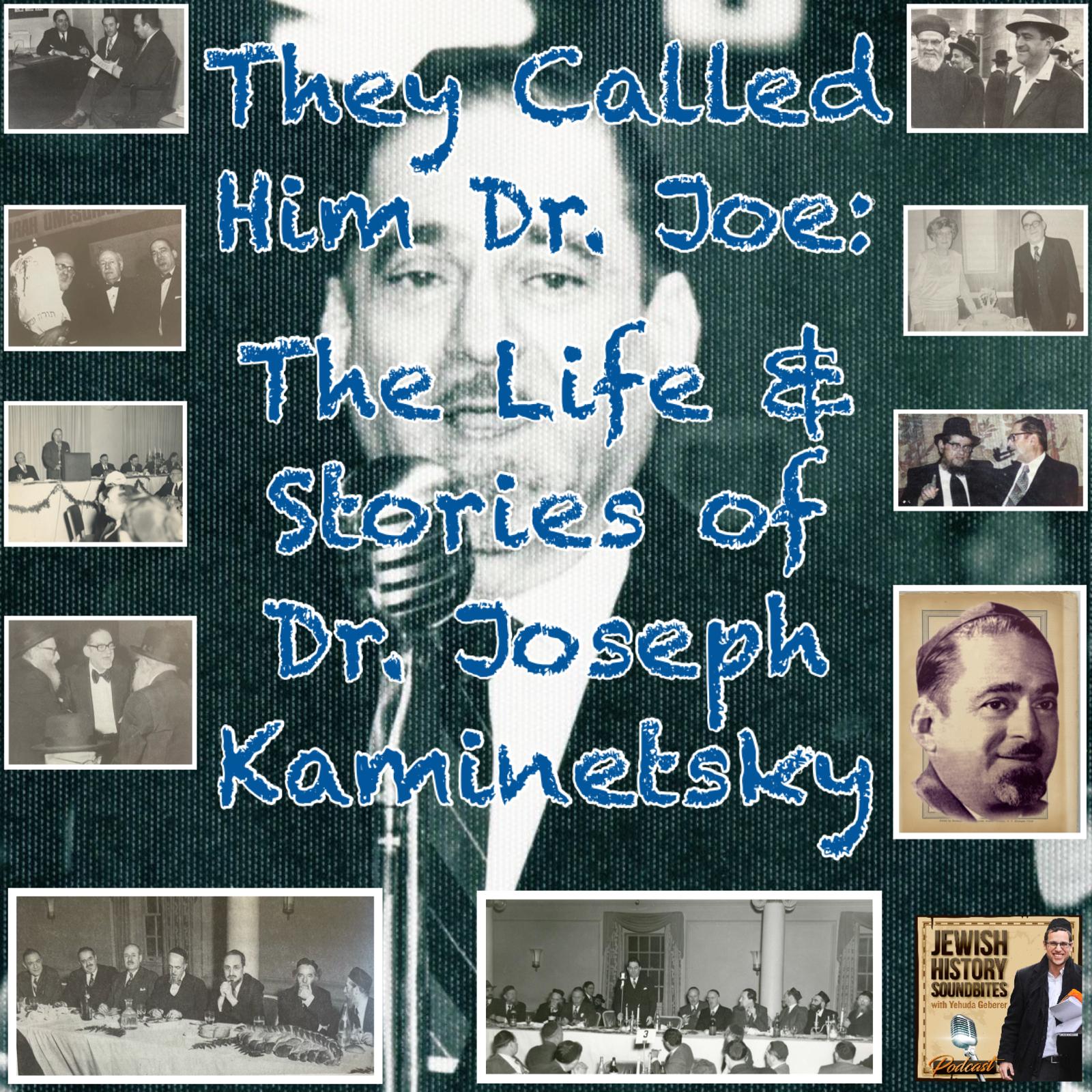
Ep 259They Called him Dr. Joe: The Life & Stories of Dr. Joseph Kaminetsky Part I
Dr. Joe Kaminetsky (1911-1999) was one of the greatest architects of Jewish education in the post war era. His role in the leadership of Torah Umesorah spearheaded the Day School Movement. Born in Brooklyn into a home where his parents sold their house to ensure a Jewish education for their children, he later attended the first class of Yeshiva College in 1928. There he had a close relationship with Rabbi Leo Jung, the visiting Slabodka Rosh Yeshiva Rav Isaac Sher, and later on with Rav Soloveitchik. Together with Rav Shraga Feivel Mendlowitz who was the founder of Torah Umesorah and the one who hired him, all of these people would have a decisive influence on Dr. Joe's life. Dr. Joe wrote a fantastic and perceptive memoir entitled: “Memorable Encounters: A Torah pioneer's glimpses of great men and years of challenge ” (1995). Artscroll has generously offered a 25% discount to our listeners and Mishpacha readers, on the paperback edition (hardcover is sold out) Use code FTR2021 at Artscroll.com: https://www.artscroll.com/Details.aspx?itemNo=9780899066189) For sponsorship opportunities about your favorite topics of Jewish history contact Yehuda at: [email protected] Subscribe To Our Podcast on: PodBean: https://jsoundbites.podbean.com/ Follow us on Twitter or Instagram at @Jsoundbites You can email Yehuda at [email protected]

Ep 258Bekeshas, Boots & Blue Shirts: Jewish Dress in Modern Times
What is distinctive Jewish dress? Is it distinctive? How is Jewish traditional fashion influenced by the surrounding society? When did chassidic dress develop? Why does Chassidic and traditional Jewish fashion still follow modes of Eastern European Jewish fashion? What makes the rabbinic frock Jewish and why is it for rabbis? Why are there different types of shtreimels? What is a 'tarbush'? Fashion and accepted clothing styles in traditional Jewish communities was and is a mode of expression of Jewish and distinctive communal identity throughout Jewish history. Through the challenges of modernity, this was brought into much sharper focus in the last century. In this episode we'll explore some of the trends of Jewish fashion in modern Jewish history. For sponsorship opportunities about your favorite topics of Jewish history contact Yehuda at: [email protected] Subscribe To Our Podcast on: PodBean: https://jsoundbites.podbean.com/ Follow us on Twitter or Instagram at @Jsoundbites You can email Yehuda at [email protected]

Ep 257Leader of His People: The Life of the Dvar Avraham
The last rabbi of pre war Kovno, Rav Avraham Dovber Kahana-Shapira (1870-1943), was known by the name of the sefer he authored, the Dvar Avraham. Born into the Lithuanian rabbinic elite, and having studied at the Volozhin Yeshiva, he was appointed rabbi of Kovno (Kaunas) in 1913. He remained at his post until his passing in the Kovno Ghetto three decades later. During this time he was recognized as one of the greatest leaders of Lithuanian Jewry, managing to navigate the various factions of the Kovno Jewish community, execute his rabbinical duties and serve as a worldwide posek fielding halachic questions. He even found the time to make a historic visit to the United States in 1924. When the war broke out he was in Switzerland, and his son in New York offered to bring him over to safety. He declined, insisting that his place was with his beloved community in Kovno. Returning to the war zone, he courageously led the Jews of the Kovno Ghetto even as his health worsened and the situation became precarious. His passing in 1943 was marked by a public funeral, which thousands attended despite the risks it entailed. For sponsorship opportunities about your favorite topics of Jewish history contact Yehuda at: [email protected] Subscribe To Our Podcast on: PodBean: https://jsoundbites.podbean.com/ Follow us on Twitter or Instagram at @Jsoundbites You can email Yehuda at [email protected]

Ep 256Myths & More: Deciphering the Haskalah
The Haskala movement, was a Jewish movement of the 18th and 19th centuries which sought to implement changes in Jewish life and society. Often discussed yet just as often misunderstood, it is intriguing as it is confusing. Was the haskala the Jewish Enlightenment? When was this movement? Where did it take place? Can it even be classified as a 'movement'? How so? Who were its primary personalities? How did they impact Jewish life? Is the rise of Jewish nationalism at the end of the 19th century related to haskala movement of the earlier decades? When did the haskala end? If there is one unifying characteristic of this very dispersed 'movement', it is the use of the written word as the primary mechanism and tool to get their message across. The rise in maskilic literature took the form of newspapers, journals, poetry, novels, short stories and satire. The haskala movement sought to bring change to Jewish life in the modern world, and it played a significant role in the Jewish history of the 19th century. Test your Jewish History trivia with the For the Record Purim quiz of Mishpacha Magazine: https://mishpacha.com/quiz-for-the-record/ For sponsorship opportunities about your favorite topics of Jewish history contact Yehuda at: [email protected] Subscribe To Our Podcast on: PodBean: https://jsoundbites.podbean.com/ Follow us on Twitter or Instagram at @Jsoundbites You can email Yehuda at [email protected]

Ep 255Talking Jewish History with Moish Francesa: Purim Episode 2021
Jewish History Soundbites is proud to present a special Purim episode, for some good Jewish History enjoyment and fun. Honored to host a special guest, one of the most influential and historic figures of contemporary Jewish entertainment -- Moish Francesa. Enjoy and a Happy Purim to all! For sponsorship opportunities about your favorite topics of Jewish history contact Yehuda at: [email protected] Subscribe To Our Podcast on: PodBean: https://jsoundbites.podbean.com/ Follow us on Twitter or Instagram at @Jsoundbites You can email Yehuda at [email protected]
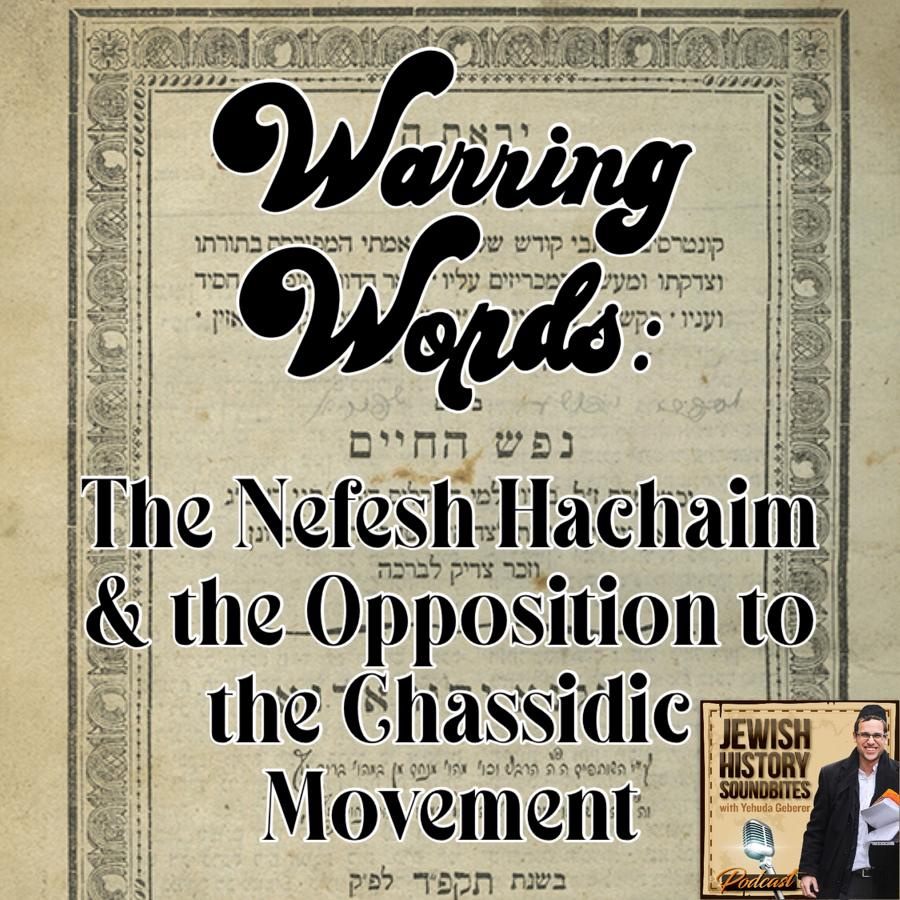
Ep 254Warring Words: The Nefesh Hachaim & the Opposition to the Chassidic Movement
The Sefer Nefesh Hachaim authored by Rav Chaim of Volozhin (1749-1821) was published posthumously by his son Rav Itzele in 1824, with an expanded version including eight additional chapters published in 1837. This was a theological work, as well as a polemical one, with Rav Chaim addressing issues he saw in the chassidic movement which he sought to oppose, correct and establish an alternative value system for his followers. This signified a shift in the opposition to the Chassidic movement. Whereas Rav Chaim's teacher the Vilna Goan sought to excommunicate the chassidim completely, his student saw them as members of the Jewish community. He rather sought to maintain an ideological dispute while presenting a complete world view of his own. Check out the story of the earlier stage of the dispute regarding the Chassidic movement here: https://jsoundbites.podbean.com/e/warring-brothers-the-opposition-to-the-chassidic-movement/ This episode has been generously sponsored by the Jewish History Uncensored Podcast, by Rabbi Arnie Wittenstein. Join in weekly at, http://bit.ly/jhu-jhs , to gain in depth knowledge of Jewish History. Join his Nach Yomi via: https://chat.whatsapp.com/BwtD6W4Hjhc1BR6nNQUwIk. Or email at [email protected] For sponsorship opportunities about your favorite topics of Jewish history contact Yehuda at: [email protected] Subscribe To Our Podcast on: PodBean: https://jsoundbites.podbean.com/ Follow us on Twitter or Instagram at @Jsoundbites You can email Yehuda at [email protected]
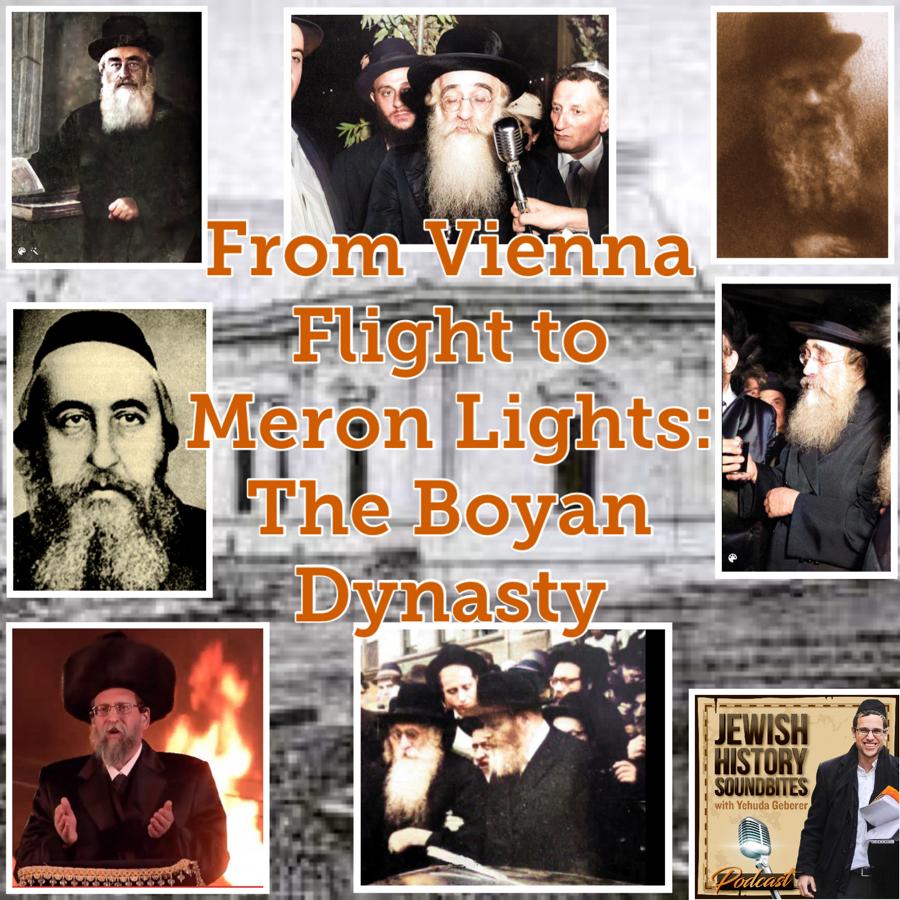
Ep 253From Vienna Flight to Meron Lights: The Boyan Dynasty
With roots in the regal courts of Ruzhin/Sadagora the Boyan dynasty continued that legacy while also forging some uniquenesses of its own. Founded by Rav Yitzchak Friedman (1849-1917), the Pachad Yitzchak, who fled to Vienna with the outbreak of World War One. He was succeeded by his four sons: Rav Menachem Nachum of Czernowitz, Rav Yisroel of Leipzig, Rav Avraham Yaakov of Lvov (Lemberg) and Rav Mordechai Shlomo of the Lower East Side (1890-1971). Another prominent Boyan Rebbe at this time was Rav Moshenyu Friedman who became one of the interwar leaders of Polish Jewry, until his martyrdom in Auschwitz in 1943. The connection of Boyan to the Land of Israel had always been strong, and the Rebbes had always utilized their rights to the annual lighting of the fire by the gravesite of the Tanna Rabi Shimon Bar Yochai in Meron on Lag Baomer. The rebuilding of the dynasty naturally took place in Israel as well, where it continues to flourish until today. For sponsorship opportunities about your favorite topics of Jewish history contact Yehuda at: [email protected] Subscribe To Our Podcast on: PodBean: https://jsoundbites.podbean.com/ Follow us on Twitter or Instagram at @Jsoundbites You can email Yehuda at [email protected]

Ep 252The Jews of Scandinavia Part I
The more recent and relatively small Jewish communities of Scandinavia serve as an interesting chapter in Jewish history. While Finland was part of the Russian Empire for a time, the other Scandinavian countries had Jewish communities as well. This episode will primarily focus on Sweden and the central Jewish story based in Stockholm in the 19th and 20th centuries. Though it was initially quite small, the Jewish community ballooned in size in the 1930's and during the war with a stream of refugees from Germany and later from Scandinavian countries under Nazi occupation. Many more survivors subsequently arrived following liberation. Legendary figures like Rabbi and Rebbetzin Binyamin Zev Jacobson along with Rav Shlomo Wolbe, were active in rescue work and then in the operation of girls school and dormitory for survivors in the Stockholm suburb of Lidingo. One of the most interesting stories of Swedish Jewish life at this time was that of Rabbi Yaakov Yisrael Zuber. A Lubavitch chassid who became the Rabbi, mohel, shochet and chazzan for the nascent Orthodox community in 1932, he'd remain the mainstay of traditional Jewish life in Sweden for 15 years. Whether it was combatting assimilation, working against the shechita ban, assisting refugees from the Holocaust or being at the forefront of the post war aguna issue, Rabbi Zuber would be the defining spirit of Jewish life in Sweden during a tumultuous time. For sponsorship opportunities about your favorite topics of Jewish history contact Yehuda at: [email protected] Subscribe To Our Podcast on: PodBean: https://jsoundbites.podbean.com/ Follow us on Twitter or Instagram at @Jsoundbites You can email Yehuda at [email protected]

Ep 251Jewish History Soundbites at 250: Reflections on Changes in Modern Jewish History
Jewish History Soundbites 250th commemorative episode. At this milestone, it is perhaps appropriate to take a step back and try to piece together an overview of the underlying theme of the episodes and stories of Jewish History Soundbites. Modern Jewish history is generally defined as 1500-present, with the late modern period being roughly from 1850-present. The uniqueness of this period is the sweeping changes which developed and ultimately enveloped the Jewish people over the last few centuries. Six of those primary changes are emancipation - the struggle for emancipation and equal rights in the 19th century; immigration - the Jewish People sought out new horizons in the modern era; challenges of modernity - in the form of Haskala, integration, secularization, assimilation, changes in governmental policies, advances in technology; spiritual and religious renewal - the Chassidic movement, Yeshiva movement, neo Orthodoxy, Hungarian Orthodoxy, Mussar movement, new forms of education; nationalism - Zionism, cultural autonomy, language, the State of Israel; Holocaust - the catastrophe it wrought and the changes which impacted the Jewish people as a result. For sponsorship opportunities about your favorite topics of Jewish history contact Yehuda at: [email protected] Subscribe To Our Podcast on: PodBean: https://jsoundbites.podbean.com/ Follow us on Twitter or Instagram at @Jsoundbites You can email Yehuda at [email protected]

Ep 250A Bridge to Brisk: The Life of Rav Dovid Soloveitchik
Rav Meshulam Dovid Soloveitchik (1921-2021) lived a long life, in which he successfully formed a bridge between the world of Brisk where he had grown up, to the young impressionable yeshiva students of the 21st century. Having been raised in his father the Brisker Rov's home, he narrowly escaped Europe with most of his family in the early stages of the war. He would later marry into the illustrious Sternbuch family. In the late 1970's he opened his own yeshiva in Jerusalem, where he educated generations of students. As a great Torah scholar, educator, unflinching leader and senior sage, he gained renown worldwide. His passing closes a chapter in Jewish history. For a related story of the Soloeveitchik family in Israel: https://jsoundbites.podbean.com/e/brisk-in-the-holy-land-part-i/ Subscribe To Our Podcast on: PodBean: https://jsoundbites.podbean.com/ Follow us on Twitter or Instagram at @Jsoundbites You can email Yehuda at [email protected]

Ep 249The Light of Sanz: Rav Shulem Eliezer of Ratzfert
Rav Shulem Eliezer Halberstam of Ratzfert (1862-1944), was one of the younger children of his illustrious father the Divrei Chaim of Sanz. Orphaned as a young child, he'd go on to become one of the great chassidic leaders of Hungarian Jewry. Known for his modesty, simplicity, care and leadership of his many followers, he would visit his chassidim in Hungary and Galicia, making an annual trip for his father's yahrtzeit in Sanz. When the war broke out, the tragedy of Polish Jewry broke him, as he attempted to do all he could to save family members and followers under Nazi occupation. With the German invasion of Hungary in March 1944, he was deported to Auschwitz where he met his end, with his dying words being to remember what had happened here. His legacy continues with the dynasties of Satmar, Bobov and others which number among his descendants. Check out the story of the Divrei Chaim here: https://jsoundbites.podbean.com/e/king-of-galicia-the-divrei-chaim-of-sanz/ Subscribe To Our Podcast on: PodBean: https://jsoundbites.podbean.com/ Follow us on Twitter or Instagram at @Jsoundbites You can email Yehuda at [email protected]
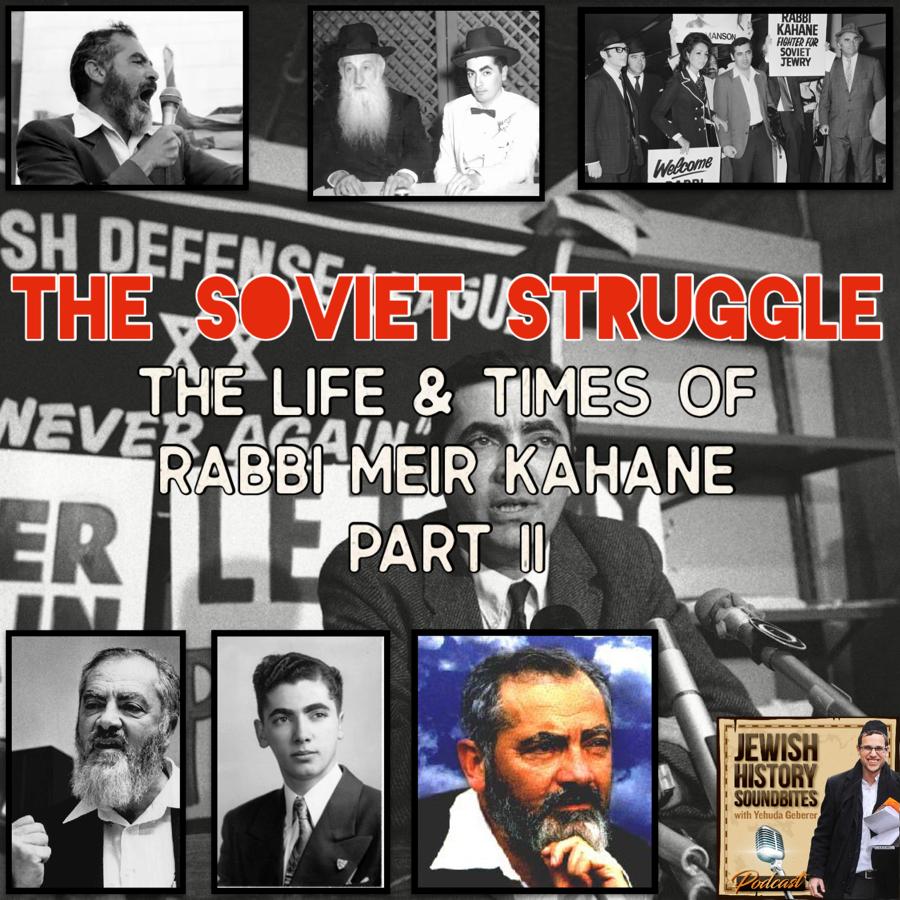
Ep 248The Soviet Struggle: The Life & Times of Rabbi Meir Kahane Part II
The campaigns on behalf of Soviet Jewry commenced in the 1960's with the Student Struggle for Soviet Jewry (SSSJ), but it was the onset of the next decade that the Meir Kahane led JDL jumped into the fray and things heated up. With Kahane's move to Israel, he attempted to bring the ideals that he developed over the years into fruition through entering Israeli politics. He finally got his political party Kach into the Knesset in 1984, with himself as its sole representative. There he unsuccessfully attempted to pass various legislative measures, until the Knesset ultimately passed legislation which effectively barred his party from running in subsequent elections. His assassination by a terrorist in 1990 while on a trip to New York brought his stormy life to a tragic end. His complicated legacy continues to cast a shadow on contemporary Jewish life till this very day. Subscribe To Our Podcast on: PodBean: https://jsoundbites.podbean.com/ Follow us on Twitter or Instagram at @Jsoundbites You can email Yehuda at [email protected]

Ep 247Never Again! The Life & Times of Rabbi Meir Kahane Part I
One of the most complex characters of post war Jewish history was undoubtedly Meir Kahane (1932-1990). Controversial yet lover of the Jewish people, provocative yet charismatic, endorsed violence yet known for his brilliance and sense of humor, yeshiva educated talmid chacham yet trained Jewish militias to patrol the streets of New York, author of endless articles on Jewish activism yet also a sportswriter and Yankees fan. So many facets and even contradictions. His problematic legacy continues to hover over Jewish society till today. Born into a rabbinic and Zionist family and educated at Mir Brooklyn, he went to a short stint in the rabbinate in Queens. He later went on to found the Jewish Defense League (JDL), a controversial organization that was outspoken about combating anti Semitism and active in other Jewish causes as well. Subscribe To Our Podcast on: PodBean: https://jsoundbites.podbean.com/ Follow us on Twitter or Instagram at @Jsoundbites You can email Yehuda at [email protected]

Ep 246Paradise Lost: The Jews of Rhodes
The Rhodes Jewish community was an ancient one, and it flourished with the arrival of Spanish exiles following the expulsion of 1492 and the Ottoman takeover in 1522. Prominent in Mediterranian commerce, the Jewish community grew, and had many rabbis from the Land of Israel serve at the community's helm. A tragic story in Rhodes's past was the Rhodes blood libel of 1840 which threatened the local Jew's safety. Following the Italian takeover in 1912, a steady stream of emigration increased with many settling in Seattle and Rhodesia (today's Zimbabwe). Rhodes Jews were to become pillars of the Rhodesia Jewish community for the bulk of the 20th century. Meanwhile the remaining Jews in Rhodes sustained the Nazi occupation of the island in 1943, and in the summer of 1944 were deported in its entirety to Auschwitz. The glorious Jewish community of Rhodes came to a tragic end. Listen to a related episode on Greek Jewry: https://jsoundbites.podbean.com/e/jerusalem-of-the-balkans-the-glory-of-jewish-salonika/ Subscribe To Our Podcast on: PodBean: https://jsoundbites.podbean.com/ Follow us on Twitter or Instagram at @Jsoundbites You can email Yehuda at [email protected]

Ep 245Unlikeliest of Exits: The Dramatic Escape of the Rayatz
In one of the most daring rescue schemes of the Holocaust era, Rav Yosef Yitzchak Schneerson, the sixth Lubavitch Rebbe, the Rayatz (1880-1950) was whisked out of Nazi occupied Poland by agents of the Abwehr, the German military intelligence. His followers in the United States, along with the activist Rabbi Mordechai Dubin in Riga, orchestrated the operation. The United States government was lobbied and the State Department eventually applied pressure on the German Foreign Office to rescue the Rayatz. Chief of the Abwehr Wilhelm Canaris tapped Major Ernest Bloch - ironically an officer with Jewish ancestry - for the rescue mission. Arriving in Warsaw shortly after the commencement of the Nazi occupation, he finally was able to locate the Rebbe and his entourage. They were then brought to Berlin, then Riga, Latvia, until finally arriving in New York in March 1940. Subscribe To Our Podcast on: PodBean: https://jsoundbites.podbean.com/ Follow us on Twitter or Instagram at @Jsoundbites You can email Yehuda at [email protected]

Ep 244From Abbey Road to Mt. Zion: The Jewish Music Revolution Part II
Aside from the Rabbi's Sons discussed in Part 1 of this miniseries, the 1960's saw the first music groups in Ohr Chadash, Pirchei and the London School of Jewish Song. From Israel came Chaim Banet and Jo Amar, the latter a pioneer of Morroccan Jewish music. No less important than the performers, the production, composition and arrangements were handled by architects of Jewish music Suki & Ding, Sheya Mendlowitz, Yisroel Lamm and later Moshe Laufer, Mona Rosenblum and Yossi Green. The 1970's saw the new sounds of Diaspora Yeshiva Band and Dudu Fisher, bringing Jewish music to ever wider audiences. Abie Rottenberg commenced his illustrious career this decade with Dveykus and the soon to be crowned king of Jewish music Mordechai Ben David burst on to the scene as well. Capitalizing on their earlier involvement with Pirchei-JEP, Rivie Schwebel and Ali Scharf collaborated once again with a series of albums of Schwebel, Scharf & Levine. Check out the story of Yerachmiel Begun and the Miami Boys Choir on this popular episode of Jewish History Soundbites: https://jsoundbites.podbean.com/e/great-american-jewish-cities-14-miami/ Subscribe To Our Podcast on: PodBean: https://jsoundbites.podbean.com/ Follow us on Twitter or Instagram at @Jsoundbites You can email Yehuda at [email protected]

Ep 243Yes, We've Got the Music! The Jewish Music Revolution Part I
Modern Jewish music developed from the chassidic music of old to the new sound of the Jewish music revolution led by Shlomo Carlebach in the 1960's. The music world of pre war Europe was brought over to the emerging post war world by Yankel Talmud, Yom Tov Ehrlich, the Chabad niggunim, David Werdyger and Bentzion Shenker of Modzhitz. They served as the bridge to bring classic chassidic music to the new generation. This was followed by Shlomo Carlebach and the revolution of Jewish music in the 1960's. Baruch Chait with the Rabbi's Sons, Yigal Calek and the London School of Jewish Song, the Pirchei-JEP albums all contributed to the early flourishing of the new style Jewish music which would continue to develop in the ensuing decade. Check out the other Jewish History Soundbites episodes on Jewish music: Shlomo Carlebach mini-series: https://jsoundbites.podbean.com/e/from-lakewood-to-lubavitch-the-early-years-of-shlomo-carlebach/ https://jsoundbites.podbean.com/e/from-all-night-learning-to-all-night-kumzitz-the-early-years-of-shlomo-carlebach-part-ii/ Chazzanus: https://jsoundbites.podbean.com/e/yossele-rosenblatt-and-the-golden-age-of-chazzanus/ Modzhitz: https://jsoundbites.podbean.com/e/chassidic-symphony-the-modzitz-dynasty/ Subscribe To Our Podcast on: PodBean: https://jsoundbites.podbean.com/ Follow us on Twitter or Instagram at @Jsoundbites You can email Yehuda at [email protected]
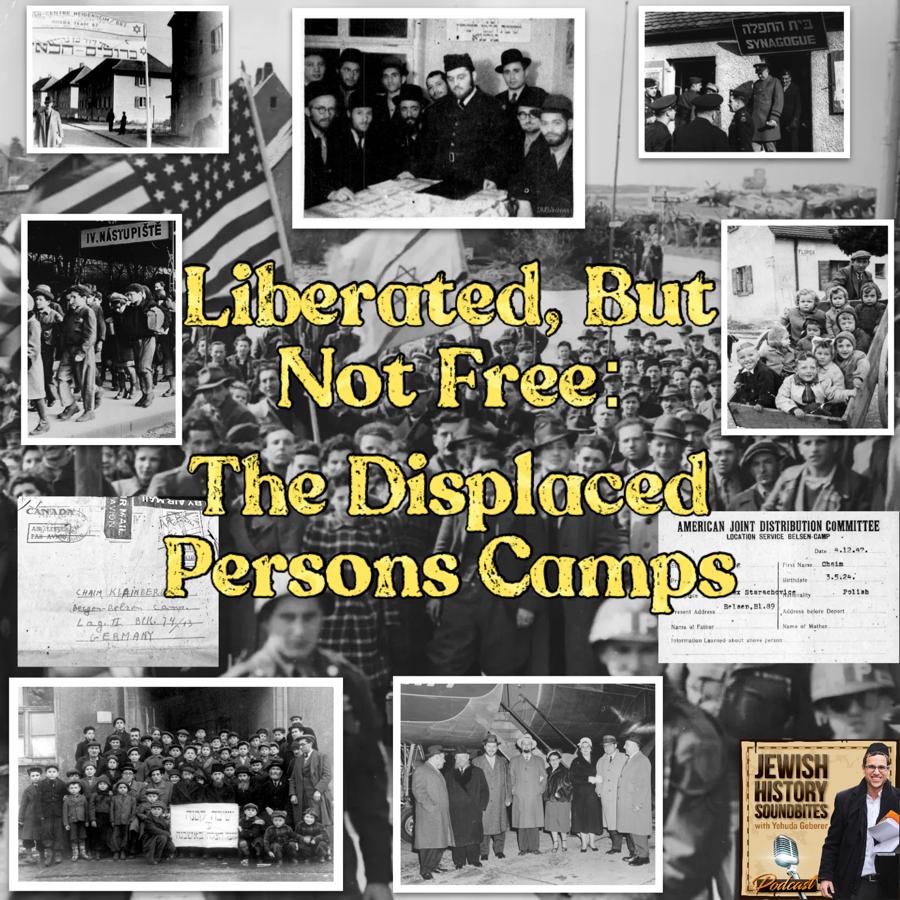
Ep 242Liberated But Not Free: The Displaced Persons Camps
With the end of the war and the defeat of Nazi Germany, the Allied armies were confronted with one of the byproducts of the Nazi regime - millions of 'displaced persons', many of whom had nowhere to go, and some of whom were Jewish survivors of the Nazi Holocaust. Eventually Displaced Persons camps were established under the auspices of the American & British militaries in their spheres of influence in Germany, Austria and Italy. Theser were in turn later overseen by the newly established agency UNRAA which was soon followed by the IRO (International Refugee Organization). The unique situation of the Jewish survivors was recognized by the Harrison Report, and a flourishing of Jewish cultural, social, educational and religious life ensued. The Sh'eris Ha-pleita was an organization founded by the survivors themselves to provide the needs of rehabilitation in the post trauma atmosphere following liberation. Various outside organizations assisted with funding and infrastructure while some also competed for the political allegiance of the survivors. Looking to the future many survivors endeavored to marry and start families, while at the same time engaged in commemoration and testimony of the recent events they had experienced. Subscribe To Our Podcast on: PodBean: https://jsoundbites.podbean.com/ Follow us on Twitter or Instagram at @Jsoundbites You can email Yehuda at [email protected]

Ep 241Litvaks Gone South: South African Jewry & Rabbi Avraham Tanzer
South African Jewish history is unique in several ways. Composed primarily of Jews of Lithuanian origin, it grew in the early decades of the 20th century with the waves of immigration from the Lithuanian area of the Russian Empire. Entering the diamond trade and politics, they integrated into South African life, often standing at the forefront protesting the racial injustices of the apartheid system. The Bais Din had prominent rabbis such as Rav Yitzchak Kossovsky, and the chief rabbinate was led by dynamic leaders as well, but it was the investment in education in the post war which transformed the South African Jewish community. The Brooklyn born Rabbi Avraham Tanzer arrived from Telz, Cleveland to Johannesburg in 1963 on a two year contract. He'd remain for 57 years. Through his leadership of Yeshiva College, the Benhazel Hebrew Congregation and the general community, he and other dedicated educators and activists, ensured that the Jewish youth of South Africa would have a proper Torah education and that the community at large would flourish. Subscribe To Our Podcast on: PodBean: https://jsoundbites.podbean.com/ Follow us on Twitter or Instagram at @Jsoundbites You can email Yehuda at [email protected]
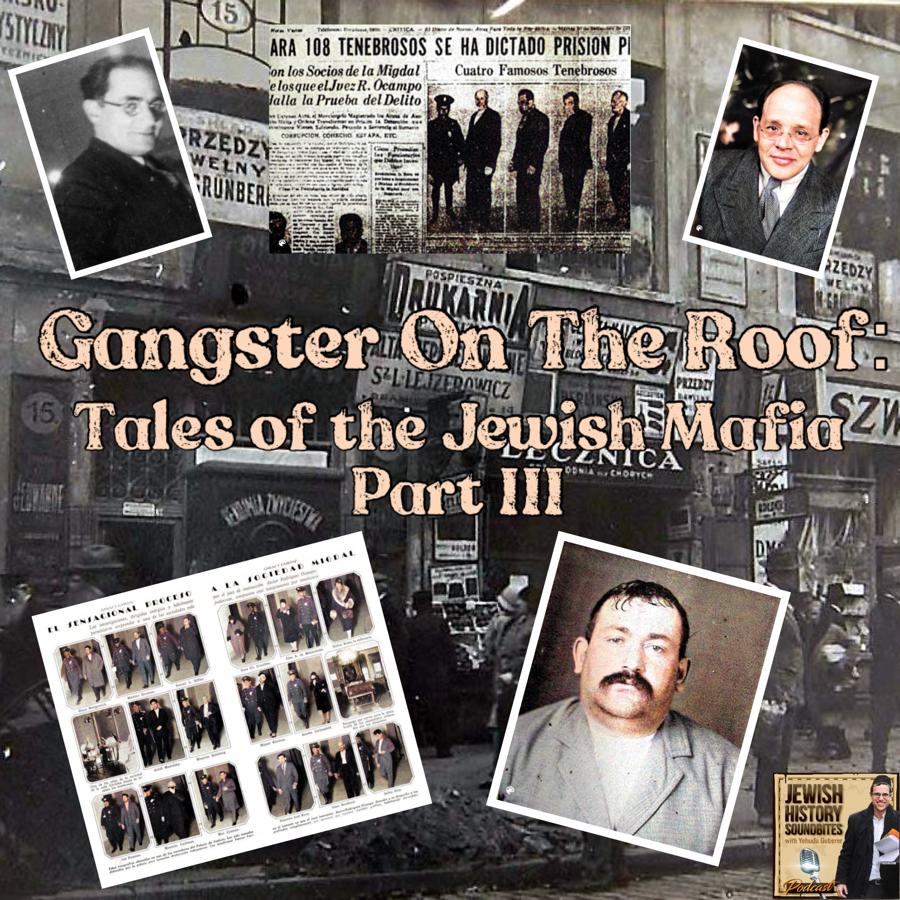
Ep 240Gangster on the Roof: Tales of the Jewish Mafia Part III
The Jewish mob wasn't strictly an American phenomenon born in the immigrant communities of the Lower East Side and Brownsville. It had antecedents across the ocean in the Jewish world of Eastern Europe. Jewish gangsters flourished in Warsaw, Odessa and other locales, to the embarrassment of the mainstream religious and political Jewish establishment. The Alfonse pogrom of 1905 brought the issue out into the open, but the Jewish underworld continued in the immigrant community of Buenos Aires, which maintained close ties to Warsaw. The most tragic chapter of Jewish criminal activity took place during the Holocaust when Avraham Gancwajch and his group of "the 13" collaborated with the Nazis in the Warsaw Ghetto. Part 1- https://jsoundbites.podbean.com/e/tales-of-the-jewish-mafia-part-i-ain-t-gonna-kill-on-saturday/ Part 2- https://jsoundbites.podbean.com/e/gangsters-racketeers-jewish-activists-tales-of-the-jewish-mafia-part-ii/ Subscribe To Our Podcast on: PodBean: https://jsoundbites.podbean.com/ Follow us on Twitter or Instagram at @Jsoundbites You can email Yehuda at [email protected]
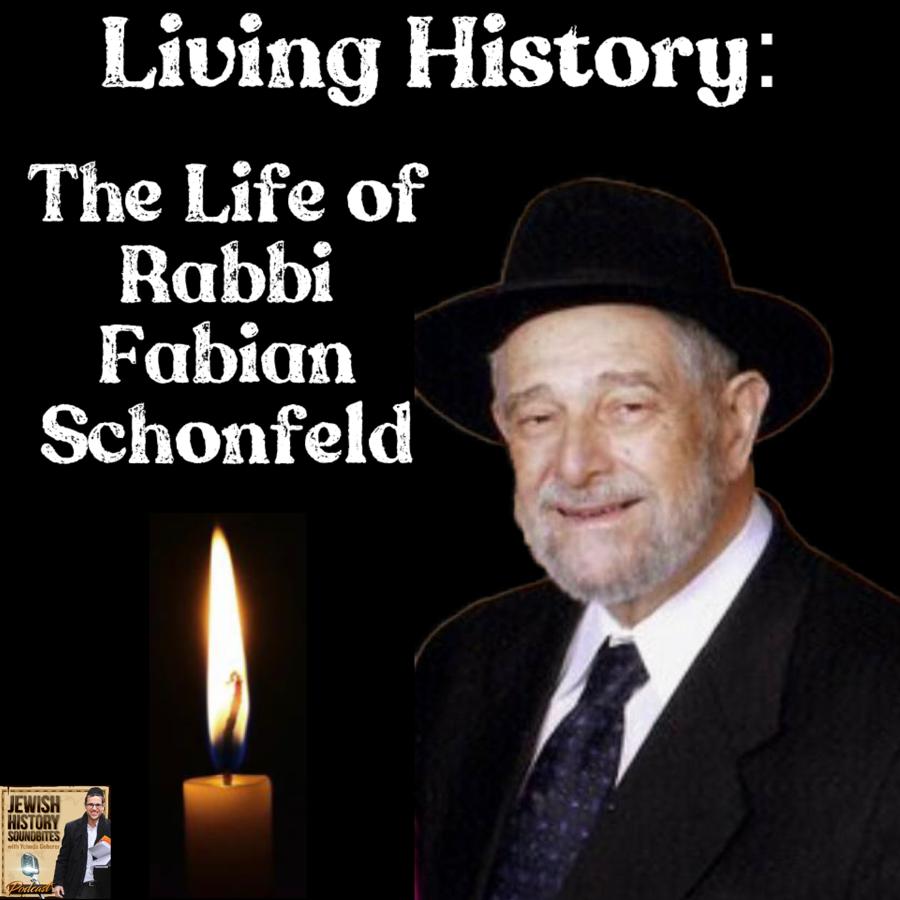
Ep 239Living History: The Life of Rabbi Fabian Schonfeld Part II
Part 2: While some people read history, there are rare people who lived history through their own lives. One such individual was Rabbi Fabian Schonfeld (1923-2020). Born in Vienna into a family of Ger chassidim from Poland, his father's position as General Secretary of the World Agudas Yisroel placed at the epicenter of traditional Jewish activism at the crucial interwar period. Eyewitness to Austria's Anschluss with Nazi Germany, he subsequently fled on a kindertransport eventually settling in London. He'd ultimately settle in the Kew Garden Hills neighborhood in Queens. Drawn to Rav Yosef Dov Soloveitchik, he'd receive semicha from RIETS and embark on a lifelong rabbinic career with the Young Israel as well as nationally with the RCA. As someone who traversed all worlds within Jewish society, he'd be affiliated with a myriad of Jewish organizations, cultivate relationships with some of the greatest Torah leaders of the 20th century, and enjoy access to the corridors of power in both Israel and the United States. Through the prism of his long and riveting journey, the story of the Jewish People in modern times is told. Subscribe To Our Podcast on: PodBean: https://jsoundbites.podbean.com/ Follow us on Twitter or Instagram at @Jsoundbites You can email Yehuda at [email protected]

Ep 238Living History: The Life of Rabbi Fabian Schonfeld Part I
While some people read history, there are rare people who lived history through their own lives. One such individual was Rabbi Fabian Schonfeld (1923-2020). Born in Vienna into a family of Ger chassidim from Poland, his father's position as General Secretary of the World Agudas Yisroel placed at the epicenter of traditional Jewish activism at the crucial interwar period. Eyewitness to Austria's Anschluss with Nazi Germany, he subsequently fled on a kindertransport eventually settling in London. He'd ultimately settle in the Kew Garden Hills neighborhood in Queens. Drawn to Rav Yosef Dov Soloveitchik, he'd receive semicha from RIETS and embark on a lifelong rabbinic career with the Young Israel as well as nationally with the RCA. As someone who traversed all worlds within Jewish society, he'd be affiliated with a myriad of Jewish organizations, cultivate relationships with some of the greatest Torah leaders of the 20th century, and enjoy access to the corridors of power in both Israel and the United States. Through the prism of his long and riveting journey, the story of the Jewish People in modern times is told. Subscribe To Our Podcast on: PodBean: https://jsoundbites.podbean.com/ Follow us on Twitter or Instagram at @Jsoundbites You can email Yehuda at [email protected]
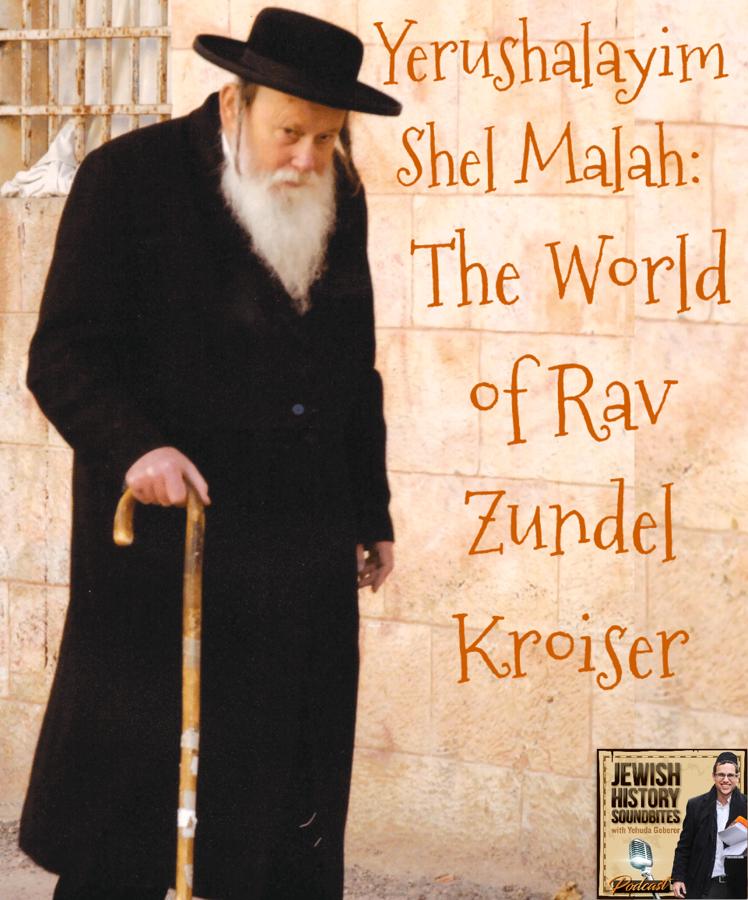
Ep 237Yerushalayim Shel Malah: The World of Rav Zundel Kroiser
Rav Zundel Kroizer (1923-2014) was one of the last of the greats of the Old Yishuv of Yerushalayim. A member of a large and important Yerushalmy family, his ancestors and family members included many rabbis and activists who influenced the life of the Holy City over the generations. Renowned for his diligence, he authored a multi volume work on the entire gamut of Torah scholarship entitled Ohr Hachama. For most of his life he served as an educator for cheder children. In his later years he served as a beacon of light for all who knew him and had the privilege to bask in his presence, a throwback to purity and holiness of the ancient Yerushalayim. Subscribe To Our Podcast on: PodBean: https://jsoundbites.podbean.com/ Follow us on Twitter or Instagram at @Jsoundbites You can email Yehuda at [email protected]

PROMOTED CONTENT: Halacha Headlines Podcast
With everything happening in the world today, it’s safe to say that as religious Jews, question arise as how to correctly deal with the situations faced in contemporary society. There's a podcast called Halacha Headlines Podcast which features a weekly topic drawn from current events. The podcast features a panel of Rabbanim & experts discuss the best way we, as a community can approach contemporary society in these topsy turvy times. It tackles controversial topics head-on, such as current events, shidduchim and dating in the era of corona, the latest Israel Peace Accords, as well as general topics such as vacations, life insurance, buying and selling stocks, police and police enforcement. What makes this podcast unique is that these issues are all explored from a Torah perspective. Halacha Headlines has provided thousands of listeners the ability to approach modern situations and its halachic implications in an educated and sophisticated way. I think this is something everyone should really listen to for themselves. Halacha Headlines podcast is available on any podcast app or you can find it online at podcast.headlinesbook.com. The podcast can also be listened to on Spotify, Google Podcasts, Podbean, or wherever you get your podcasts from.

Ep 236"Those Who Know Don't Speak" The Story of the Kotzk-Izhbitz Dispute
During the active years of the court of Rav Menachem Mendel Morgenstern- the Kotzker (1787-1859), one of his closest students was Rav Mordechai Yosef Leiner (1801-1854) of Izhbitz (Izbica). A series of events in 1839 led to a split in their diverging paths. As the Kotzker became more reclusive in his behaviour, Rav Mordechai Yosef felt that the chassidim needed more proactive leadership. The final break became an inevitable reality following Simchas Torah of that year. The Kotzker's most loyal chassid Rav Yitzchak Meir Alter (the Chiddushei Harim) stood at his side with many others, but the Izhbitzer went off to found his own dynasty. The story which led to this decisive split is shrouded in mystery until this very day. If you enjoyed this episode, you might also like: https://jsoundbites.podbean.com/e/depth-innovation-misnagdim-turned-chassidim-the-dynasty-of-izhbitz/ Subscribe To Our Podcast on: PodBean: https://jsoundbites.podbean.com/ Follow us on Twitter or Instagram at @Jsoundbites You can email Yehuda at [email protected]

Ep 235The Chernobyl Crisis: Chernobyl Part II
At the turn of the twentieth century, the various Chernobyl dynasties were flourishing though they faced financial crisis. With World War One and the subsequent Russian Revolution, they all began to face an existential crisis. Though some branches of the dynasty heroically tried to sustain life under increasingly adverse conditions within the Soviet Union, most chose emigration. Rachmastrivka to the Holy Land, Trisk to Poland, Skver to Romania, Tolna, Makarov, Chernobyl and Hornosteipel to the United States. In each of their new locales, attempts were made to rebuild Chernobyl. With the decimation of the Holocaust, it was up to places like New Square in New York to give a rebirth to the Chernobyl dynasty. Subscribe To Our Podcast on: PodBean: https://jsoundbites.podbean.com/ Follow us on Twitter or Instagram at @Jsoundbites You can email Yehuda at [email protected]
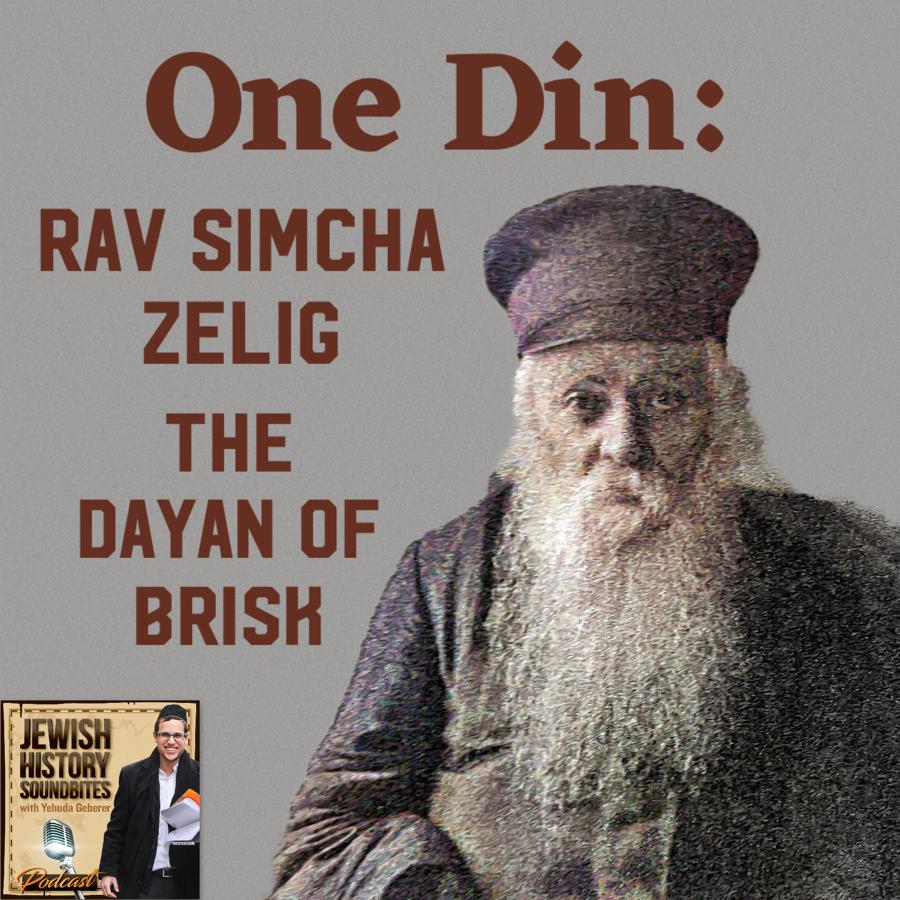
Ep 234One Din: Rav Simcha Zelig the Dayan of Brisk
One of the unique pre war Torah giants - and ultimately Holocaust victim - was the Dayan of Brisk, Rav Simcha Zelig Reguer (1864-1942). Brisk was home to a large and prestigious Jewish community, and Rav Simcha Zelig served as the beloved Dayan and posek through the tenures of both Rav Chaim Brisker and his son Rav Velvalleh the Brisker Rov. Wise and modest, he had studied in the Volozhin Yeshiva before becoming Rav Chaim's right hand man, while also overseeing the local yeshiva for many years. With the outbreak of the war, he remained in the city and was murdered along with its inhabitants by the Nazis. Subscribe To Our Podcast on: PodBean: https://jsoundbites.podbean.com/ Follow us on Twitter or Instagram at @Jsoundbites You can email Yehuda at [email protected]

Ep 233The Diffusion of Chernobyl: A Dynasty Spreads
One of the oldest dynasties in the history of the chassidic movement, Chernobyl traces its growth from Rav Nachum Twersky the Maor Eynayim (1730-1797) through his son Rav Mottel the Chernobyl Maggid (1770-1837). One of the most influential courts in all of the Russian Jewish Pale of Settlement, with the Chernobyl Maggid's passing in 1837 his empire was divided among his eight sons. Over the course of the 19th century, the various branches of the Chernobyl dynasty - Chernobyl, Tolne, Rachamastrivka, Skver, Trisk, Hornosteipel and others - would dominate chassidic life in Ukraine. Subscribe To Our Podcast on: PodBean: https://jsoundbites.podbean.com/ Follow us on Twitter or Instagram at @Jsoundbites You can email Yehuda at [email protected]

Ep 232A Humble Giant: The Early Years of Rav Aharon Leib Steinman
A greatly respected Torah leader of recent times, Rav Aharon Leib Steinman (1914-2017) spent the last 60 years of his long life in Bnei Brak. Prior to that were quite a few stops along the way, each stage shaping his development. A childhood in Brisk led to his studying in the local Toras Chesed Yeshiva of Rav Moshe Sokolovsky. Escaping the Polish army draft to Switzerland, he joined a Yeshiva there, eventually marrying and making his way to Israel. Moving to Kfar Saba, he was the head of the Chafetz Chaim Yeshiva there until moving to Bnei Brak in the 1950's. Subscribe To Our Podcast on: PodBean: https://jsoundbites.podbean.com/ Follow us on Twitter or Instagram at @Jsoundbites You can email Yehuda at [email protected]
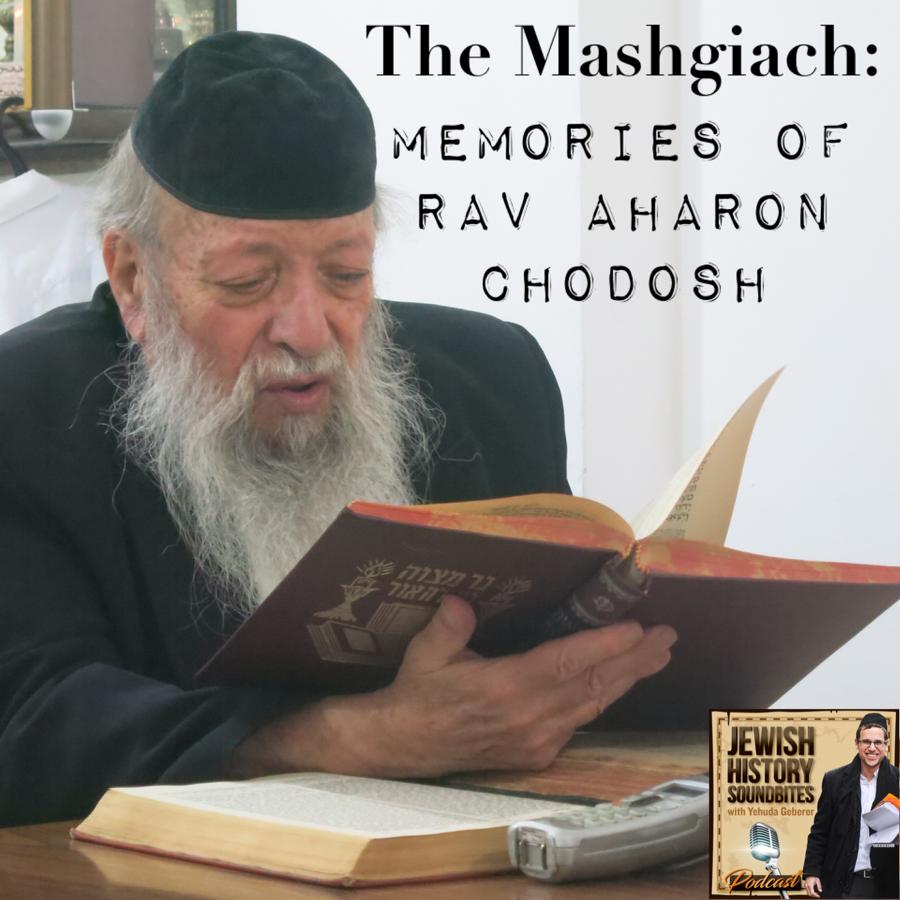
Ep 231The Mashgiach: Memories of Rav Aharon Chodosh
In this tribute episode following the passing of the Mir Mashgiach Rav Aharon Chodosh (1930-2020), personal memories of this great baal mussar, educator and fatherly figure. As an incredibly unique mashgiach, his relationship with his students enabled them to grow as individuals and achieve their potential. These recollections and anecdotes record interactions which express his care, wisdom and love, while at the same time also shed light on his sense of humor, down to earthness and unpretentiousness. From his aristocratic background in the Chevron Yeshiva to his uncanny ability to be able to relate to a diverse student body as the Mir mashgiach for over a half a century, through spending every Yom Tov with his joy and excitement, to witnessing his wisdom and influence on his students lives. The Mashgiach will be forever remembered and beloved by all who knew him. May his memory be a blessing. Subscribe To Our Podcast on: PodBean: https://jsoundbites.podbean.com/ Follow us on Twitter or Instagram at @Jsoundbites You can email Yehuda at [email protected]

Ep 230From Brooklyn to Beit Safafa: The Incredible Life of Rabbi Mordechai Elefant
One of the most energetic and at the same time eccentric characters on the Jewish scene of the post war was Rabbi Mordechai Elefant (1930-2009). Growing up in New York in the 1940's he became a student of both Rav Aharon Kotler and Rav Leib Malin. Moving to Israel in the 1950's, he forged a connection with the Rav Velvel Soloveitchik - the Brisker Rov and with other leading rabbis of the day. He immediately threw himself into a lifelong objective of building and fundraising for Torah institutions. The nucleus of what was to become his ITRI Yeshiva began in the Romema neighborhood of Jerusalem. He would later build a small neighborhood there aptly named Kiriyat Itri. The Yeshiva itself eventually settled in its permanent campus on the outskirts of the Beit Safafa neighborhood following the Six Day War. Renowned for his fundraising talent, political connections with Israeli politicians like Moshe Dayan and Teddy Kollek, United States politicians like Hubert Humphrey and Gerald Ford, his eccentricities and antics, and most of all his boundless energy and desire to build Torah. Subscribe To Our Podcast on: PodBean: https://jsoundbites.podbean.com/ Follow us on Twitter or Instagram at @Jsoundbites You can email Yehuda at [email protected]
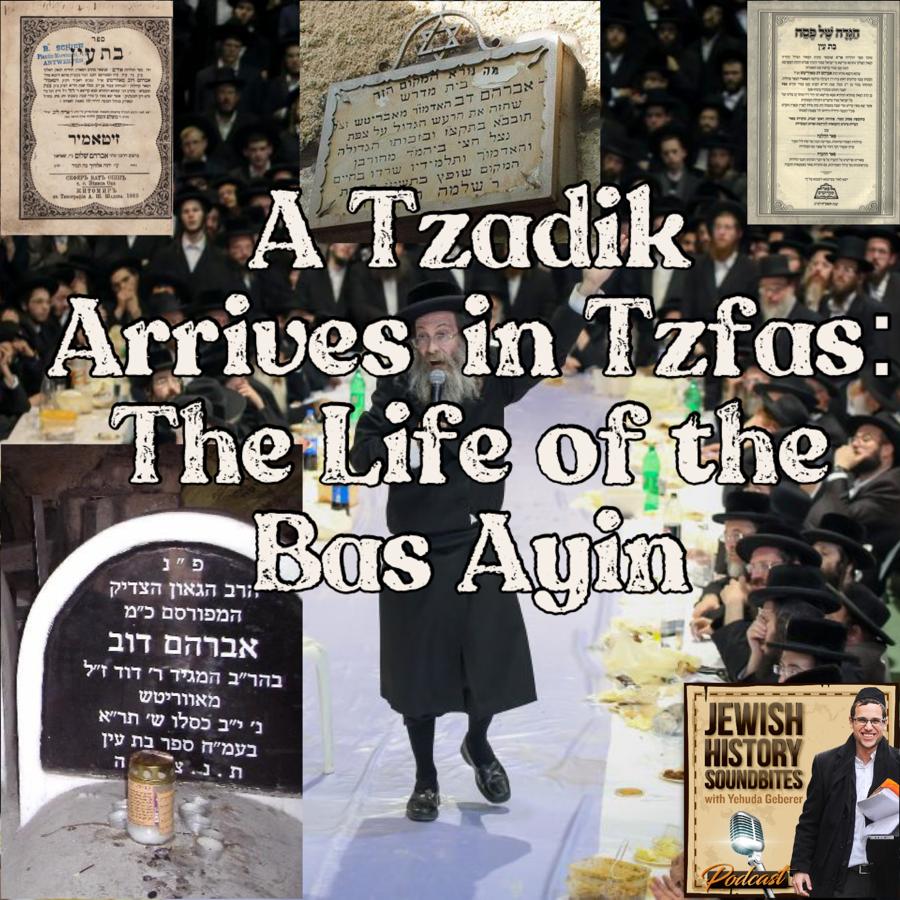
Ep 229A Tzadik Arrives in Tzfas: The Life of the Bas Ayin
Rav Avraham Dov of Ovruch (yidd. Ovrutsch) (c.1765-1840) is known for his highly acclaimed chassidic work 'Bas Ayin'. As he has become something of a more popular figure in recent years, it's an opportunity to study his life and illustrious career. He was a follower of the Chernobyl chassidic dynasty, and served as a communal rabbi and chassidic leader in Ovruch and Zhitomir, Ukraine. In his later years, he settled in the Land of Israel, where he became the leader of the chassidic community of Tzfas. During the ensuing decade of the 1830's, the community faced great upheavals with the Syrian Peasant Revolt, the great earthquake of 1837 and the Druze revolt. Through it all, the Bas Ayin was a responsible and charismatic leader, rebuilding the community through times of crisis. Though he passed away in 1840 during a cholera epidemic, and left no descendents, his legacy lives on through his accomplishments and writings. Subscribe To Our Podcast on: PodBean: https://jsoundbites.podbean.com/ Follow us on Twitter or Instagram at @Jsoundbites You can email Yehuda at [email protected]

Ep 228From the Revolution to the Rothschilds: Emancipation & French Jewry
Though taken for granted today, one of the most fundamental changes experienced by the Jewish People in modern times was receiving emancipation - equal rights, citizenship, equality before the law, etc. Commencing with the French Revolution in 1789, the struggle for Emancipation and the challenges along the way became the story of the Jews in the 19th century. Napoleon convened the Grand Sanhedrin in 1807 which asked French Jewry pointed questions about the relation of the Jew to the modern state. France produced notables like Adolphe Cremieux who would be involved in the founding of the first international Jewish organization in the form of the Alliance, as well as promulgating legislation which bestowed French citizenship on Algerian Jewry. The Rothschild banking family became 19th century Jewish folk heroes as the ultimate expression of the success of emancipation. Though they achieved great wealth, prestige and power, they also were to be used as stereotypical tropes by anti-Semites, as well as raising questions about how emancipation may lead to assimilation. Subscribe To Our Podcast on: PodBean: https://jsoundbites.podbean.com/ Follow us on Twitter or Instagram at @Jsoundbites You can email Yehuda at [email protected]

Ep 227The Life of Rav Aharon Kotler Part II: Rebuilding Anew
Sponsored by 20 Minute Daf. Check out 20minutedaf.com for a clear and concise daily daf yomi shiur. As the Yeshiva in Kletzk grew, a building was built and dedicated and Rav Aharon had to travel to the United States to fundraise. Aside from being the youngest and yet one of the most prominent Roshei Yeshiva at the time, he also rose to be among the leadership of the Polish Agudas Yisroel, participating in the third Knessia Gedolah in Marienbad in 1937. With the outbreak of the War, Kletzk fled to Vilna along with most other Yeshivas at the time. Ultimately settling in Yanova, with the Soviet takeover of the Baltic States in the summer of 1940 the Yeshiva dispersed to several Lithuanian shtetls with Rav Aharon and the largest group in Salock. By the end of 1940 the Sovietization of Lithuania made it difficult to maintain the continuation of the Yeshiva. Rav Aharon felt that he'd be able to accomplish more from the outside headed out of the Soviet Union in February 1941, arriving in Penn Station in New York City in April of that year. Though he threw himself full time into the rescue work of the Vaad Hatzalah, Rav Aharon emerged as an overall rabbinical leader on the American Orthodox scene. In 1942 Rav Nosson Wachtfogel along with a group of like minded friends, founded a kollel in White Plains, NY, eventually inviting Rav Aharon Kotler to serve as its head. With the move a year later to the resort town of Lakewood, New Jersey the American Torah world would be transformed forever. Subscribe To Our Podcast on: PodBean: https://jsoundbites.podbean.com/ Follow us on Twitter or Instagram at @Jsoundbites You can email Yehuda at [email protected]

Ep 226The Life of Rav Aharon Kotler Part I: Origins of Greatness
Though he came from an illustrious rabbinic family, Rav Aharon Kotler (1891-1962) was faced with the challenge of being orphaned from both parents as a child. After a brief stint in Krinik, he arrived in Minsk where he formed a lifelong friendship with Rav Yaakov Kamenetsky and Rav Reuven Grozovsky. With his arrival in Slabodka, he enjoyed a closeness with the Alter of Slabodka, while also attending the shiurim of Rav Baruch Ber Leibowitz in the other Slabodka Yeshiva. His marriage to Rebbetzin Chana Perl, the daughter of Rav Isser Zalman Meltzer, firmly ensconced him in a career as a teacher of Torah. After an initial commencement as a Rebbi in Slutzk, the Soviet takeover and repression forced him to cross the border and reestablish the Yeshiva in Kletzk in 1921. Sponsored by 20 Minute Daf. Check out 20minutedaf.com for a clear and concise daily daf yomi shiur. Subscribe To Our Podcast on: PodBean: https://jsoundbites.podbean.com/ Follow us on Twitter or Instagram at @Jsoundbites You can email Yehuda at [email protected]

Ep 225From Vilna to Rechavia: The Life of Rav Yisroel Zev Gustman
As the youngest dayan of the acclaimed Vilna rabbinical court, Rav Yisroel Zev Gustman (1908-1991) charted out a path to future greatness. He was both a close student of Rav Shimon Shkop during his days in Grodno, as well as a close confidante of Rav Chaim Ozer Grodzinski on the Vilna Beis Din. He experienced the worst horrors of the Holocaust in the Vilna Ghetto. Surviving both the Ghetto and later as a partisan fighter in the surrounding forests, he then arrived in the United States. Following a short but fruitful stint as the Rosh Yeshiva of Tomchei Temimim Lubavitch, Rav Gustman opened his own Yeshiva in 1950 naming it for the Remailless Yeshiva in Vilna. In 1971 he moved to Israel and transplanted his Yeshiva to the Rechavia neighborhood of Jerusalem. Subscribe To Our Podcast on: PodBean: https://jsoundbites.podbean.com/ Follow us on Twitter or Instagram at @Jsoundbites You can email Yehuda at [email protected]

Ep 224Sisters of the Revolution Part V: Rebuilding in a New World
With the destruction of Polish Jewry during the Holocaust, Jewish traditional communal infrastructure had to be rebuilt on new continents. Already prior to the war, pioneers had laid the groundwork for Girls traditional education in both Mandatory Palestine and the United States. In the Holy Land, Meir Sharansky opened the first Bais Yaakov in Tel Aviv in 1933. This was followed shortly thereafter by the Ger chassidim Hillel Lieberman and Pinchas Levine and Bais Yaakov arrived in Jerusalem. A German Jew named Yosef Avraham Wolff founded a groundbreaking Bais Yaakov in Bnei Brak in the 1950's. A confidante of the Chazon Ish, this institution was to play a decisive role in the formation of the Haredi community in Israel, then in its embryonic stages. Meanwhile across the Atlantic Rebbetzin Vichna Kaplan was struggling to establish a Bais Yaakov in Williamsburg under the auspices of the movement in Poland. Eventually a Bais Yaakov elementary school got off the ground under the leadership of Rav Avraham Newhouse, while Rebbetzin Kaplan ran a high school and eventually a Teacher's Seminary as well. Subscribe To Our Podcast on: PodBean: https://jsoundbites.podbean.com/ Follow us on Twitter or Instagram at @Jsoundbites You can email Yehuda at [email protected]
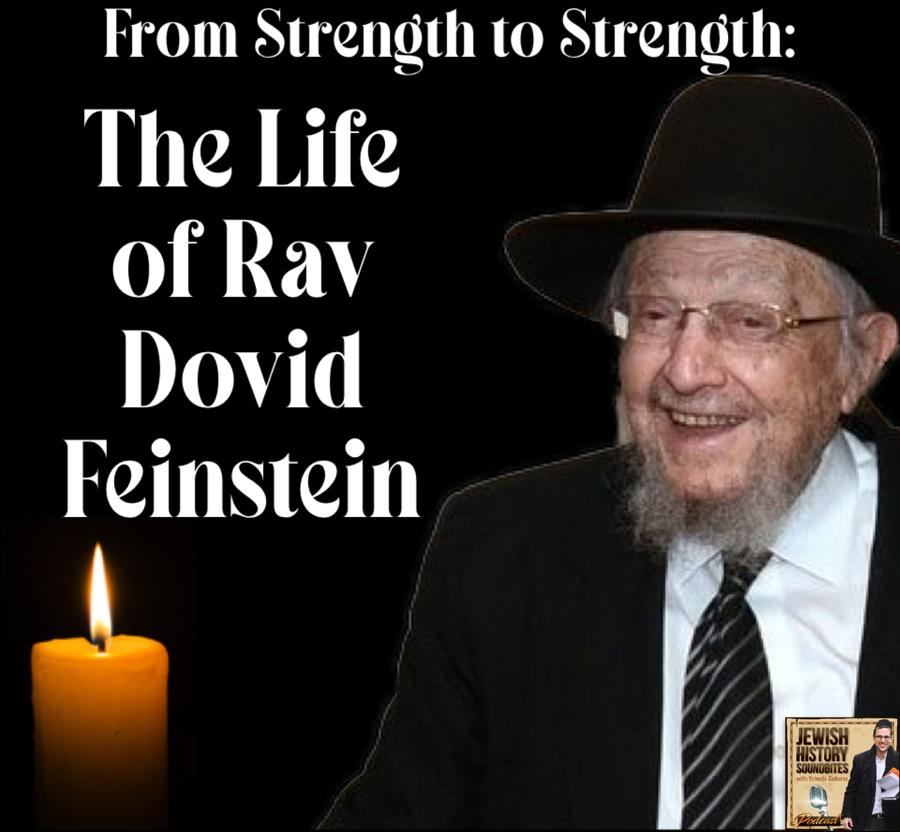
Ep 223From Strength to Strength: The Life of Rav Dovid Feinstein
The passing of Rav Dovd Feinstein (1929-2020) is a great loss to the Jewish world. With his simplicity, able leadership and as a senior posek in all halachic matters, he will not be easily replaced. Rav Dovid was born in Luban in the Soviet Union, where his father Rav Moshe was the Rabbi. Under communist rule, his parents maintained a strong Jewish home and he remained one of the last communal rabbis in all of Russia in ever trying conditions. By 1936 the future for his children's Torah education seemed quite bleak, and it was for that reason that Rav Moshe decided to leave Russia. With his eventual settlement on the Lower East Side, Rav Moshe and later Rav Dovid would ultimately become synonymous with the neighborhood, the Yeshiva MTJ and with the leadership of the American Torah community. Subscribe To Our Podcast on: PodBean: https://jsoundbites.podbean.com/ Follow us on Twitter or Instagram at @Jsoundbites You can email Yehuda at [email protected]
Ep 222Rebbe! The Life of Rav Nochum Partzovitz
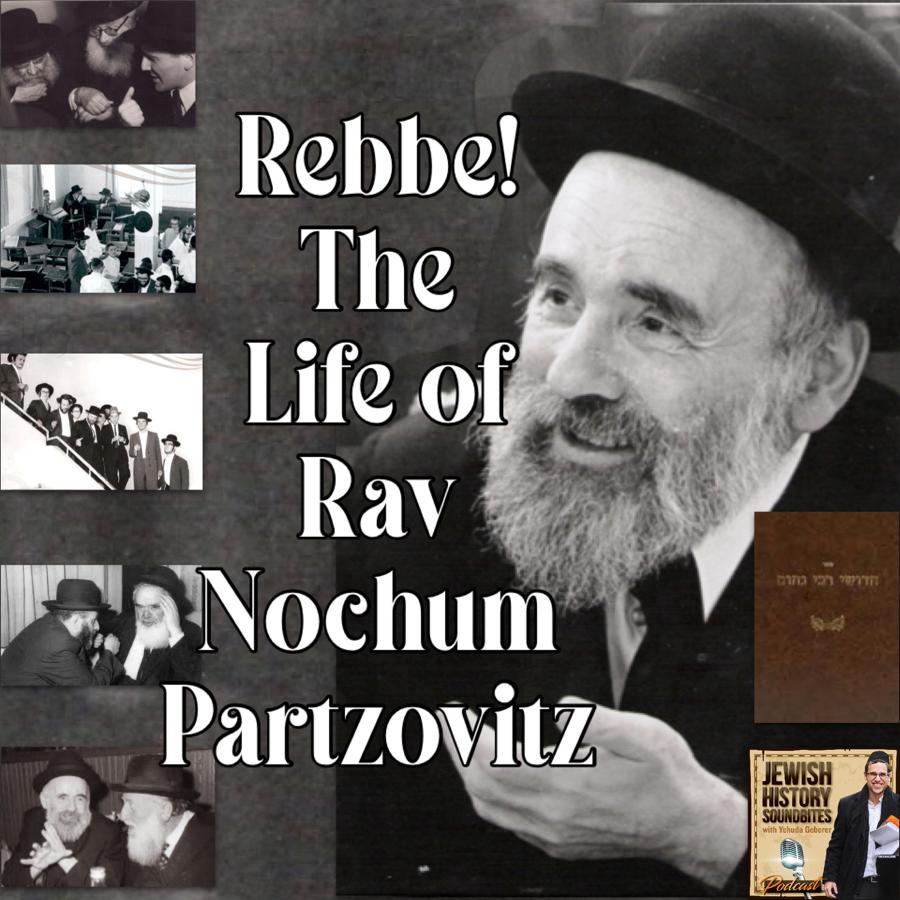
Rav Nochum Partzovitz (1923-1986), was most known for his approach to Talmudic study, which gained renown within the Yeshiva world. Having grown up in the Vilna suburb of Trakai, he proceeded to study at the great Yeshivas of Baranovitch, Kamenitz and finally Mir, from which he never left. Through the war years in Shanghai, where he studied together with Rav Leib Malin, through the post war years in New York, he established himself as the elite of the Mir Yeshiva student body. This reputation was cemented with his marriage to Rebbetzin Ettel, daughter of Rav Chaim Shmuelevitz, and Rav Nochum's subsequent appointment to the position as Rosh Yeshiva. With his simplicity, modesty and his popular shiurim, Rav Nochum was a beloved Rebbi in the Mir Yeshiva and a beloved individual to all who knew him. This yahrtzeit episode was originally recorded exclusively for Mir Yeshiva Yerushalayim. It is now being included for the benefit of Jewish History Soundbites listeners. If you enjoy this podcast and would like to donate to Mir Yeshiva Jerusalem, you can do so here: https://secure.themir.org/donate/ Thank you! Subscribe To Our Podcast on: PodBean: https://jsoundbites.podbean.com/ Follow us on Twitter or Instagram at @Jsoundbites You can email Yehuda at [email protected]

Ep 221The Civil War & American Jewry
American Jews served in the ranks of both the Union and Confederacy during the Civil War. Several major events stand out as milestones in American Jewish History during that time period. The first was the appointment of the first Jewish chaplain in the United States armed forces, through the lobbying efforts of Rev. Arnold Fischel, with Jacob Frankel receiving the first commission. Next came the infamous General Order No. 11, when General Ulysses S. Grant ordered and expulsion of "Jews as a class" from his military jurisdiction, due to their alleged involvement with illegal trade. Finally we have the story of Judah P. Benjamin. With Sephardic origins, he rose to prominence as a lawyer in New Orleans, then senator, and finally holding several cabinet positions for the Confederacy. Subscribe To Our Podcast on: PodBean: https://jsoundbites.podbean.com/ Follow us on Twitter or Instagram at @Jsoundbites You can email Yehuda at [email protected]

Ep 220A Guiding Light: The Life of the Chazon Ish Part I
Hidden from the public view by his own choice for the majority of his adult life, Rav Avraham Yeshaya Karelitz (1878-1953) - the Chazon Ish - nevertheless achieved immortality in the traditional Jewish world. As a unique Torah scholar who wrote on the entire gamut of Torah law, he left an impact as one of the greatest poskim in modern times. Born into a rabbinical family in Kosava, Belarus, he resided in several towns across Lithuania and Belarus in the ensuing years before settling in Vilna. In his later years he resided in the Land of Israel, and it was there that he gradually gained renown. With the founding of the State of Israel, the Chazon Ish played a decisive role in formulating policy and trailblazing new societal direction for religious minority attempting to rebuild after the devastation of the Holocaust. Subscribe To Our Podcast on: PodBean: https://jsoundbites.podbean.com/ Follow us on Twitter or Instagram at @Jsoundbites You can email Yehuda at [email protected]
Ep 219Poles at the Polls: Jewish Political Factions in Interwar Poland
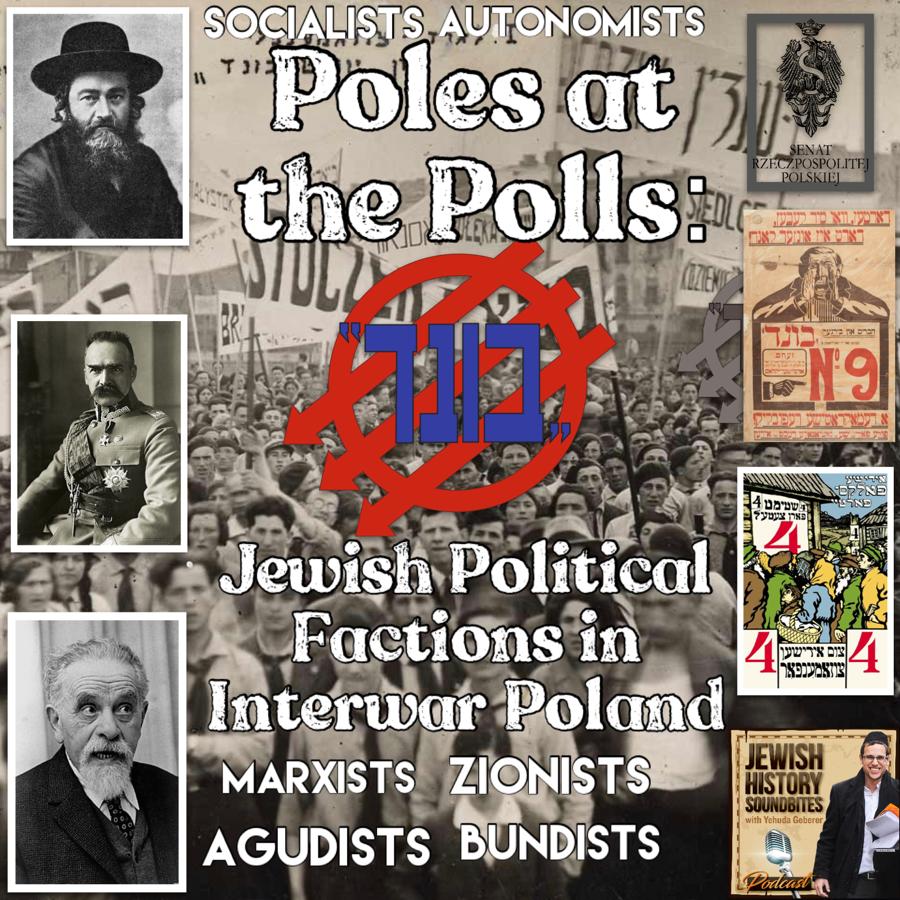
With the rise of the Second Polish Republic in the shadow of Versailles, the Jewish minority received citizenship, the right to vote and to politically organize. Jewish political parties became major forces in public life for the first time in the long exile, leaving their imprint on Jewish politics in Israel and worldwide till this very day. The Zionist parties were primarily represented by the General Zionists and Yitzchak Greenbaum. On the left were the Marxist Poalei Zion and the Yiddishist Socialist Bund combatting anti-Semitism and struggling for the rights of Jewish laborers. Another populist party the Folkspartei, promoted Jewish cultural autonomy. Of course the Agudas Yisroel was established to represent the interests of the large religious communities across the country. With local kahal and municipal elections, and national elections to the Sejm - the Polish parliament, interwar Jewish politics was fraught with tension and political struggle. Subscribe To Our Podcast on: PodBean: https://jsoundbites.podbean.com/ Follow us on Twitter or Instagram at @Jsoundbites You can email Yehuda at [email protected]

Ep 218Around the Maggid's Table: The Disciples of Rav Dov Ber of Mezeritch
With the passing of the Baal Shem Tov in 1760, several of his students continued transmitting his teachings to groups of followers. After several years, Rav Dov Ber the Maggid of Mezritch (1704-1772) emerged as the dominant chassidic leader in what seemed to be on the cusp of a mass movement. It was under his leadership that several distinctive features came to be identified with the growing movement, such as the pilgrimage to the "chatzer" the court of the tzadik. He attracted an elite group of outstanding individuals - known as the "Heilegeh Chavraya" or holy society - who went on to become leaders in their own right, spreading the light of Chassidus across Eastern Europe. These included the the brothers Rav Elimelech of Lizhensk & Rav Zusha of Annapol, Rav Mendel of Vitebsk, Rav Avraham of Kalisk, Rav Levi Yitzchak of Berditchev, the brothers Rav Shmelke of Nikolsburg & Rav Pinchas of Frankfurt, Rav Aharon of Karlin and Rav Shneur Zalman of Liadi, to name just a few. Diverse in leadership style, in their promulgating the message of chassidus as well as in geographic dispersion, they each continued the legacy of the Maggid in their own way. Subscribe To Our Podcast on: PodBean: https://jsoundbites.podbean.com/ Follow us on Twitter or Instagram at @Jsoundbites You can email Yehuda at [email protected]

Ep 217A Historic Vote: The 1935 Tel Aviv Rabbinate Elections
A seemingly local and insignificant event, the election for the Tel Aviv rabbinate in 1935 had an impact on the future of Jewish life in many ways and places. The first Ashkenazic Chief Rabbi of Tel Aviv was Rav Shlomo Ahronson. With his passing, three primary candidates arose over the summer of 1935 - Rav Moshe Avigdor Amiel, who was the ultimate winner, Rav Yitzchak Isaac Herzog and Rav Yosef Dov Soloveitchik, at that time a young Rabbi in Boston. The leaders of the Mizrachi backed Rav Amiel, though Rav Moshe Soloveitchik wrote a strong letter of support on behalf of his son. Rav Soloveitchik made his only visit to the Land of Israel that summer, and met the ailing Rav Kook. Meanwhile the nascent Tel Aviv based Poalei Agudath Israel was eager to participate in the upcoming elections. Wary of the official Agudah position of non participation with the Zionist establishment, the PAI leadership penned a letter to the Ger Rebbe the Imrei Emes asking his opinion about voting in the election. The final result ensconced Rav Moshe Avigdor Amiel as the Chief Rabbi. He would go on to have a major impact on religious life in the first Hebrew city. Subscribe To Our Podcast on: PodBean: https://jsoundbites.podbean.com/ Follow us on Twitter or Instagram at @Jsoundbites You can email Yehuda at [email protected]

Ep 216Sisters of the Revolution Part IV: The Birth of a Movement
Sarah Schenirer (1883-1935) founded the first Bais Yaakov school upon her return to Krakow during the Great War. From its modest beginnings in her living room, it blossomed into a full blown movement and essentially a revolution in traditional Jewish education for girls. The local chapter of Agudas Yisroel soon threw its support behind the nascent movement, and was soon followed by the national Agudah. Though she had received a blessing from the Belz Rebbe at the outset, actual rabbinic support arrived a decade later. By the late 1920's it had become a huge network of schools across Poland, with thousands of students, a central office in Warsaw and journal produced in Lodz. The schools got accreditation from the Polish government, while funding came from the Agudas Yisroel's Keren Hatorah, the Joint and others. With the exponential growth came a need for teachers, and the famed teachers seminary was established in Krakow with Sarah Schenirer at the helm, with additional seminaries established at other locations as well. Subscribe To Our Podcast on: PodBean: https://jsoundbites.podbean.com/ Follow us on Twitter or Instagram at @Jsoundbites You can email Yehuda at [email protected]
Ep 215The Birth of Proto-Zionism: The World of Rav Tzvi Hirsch Kalischer
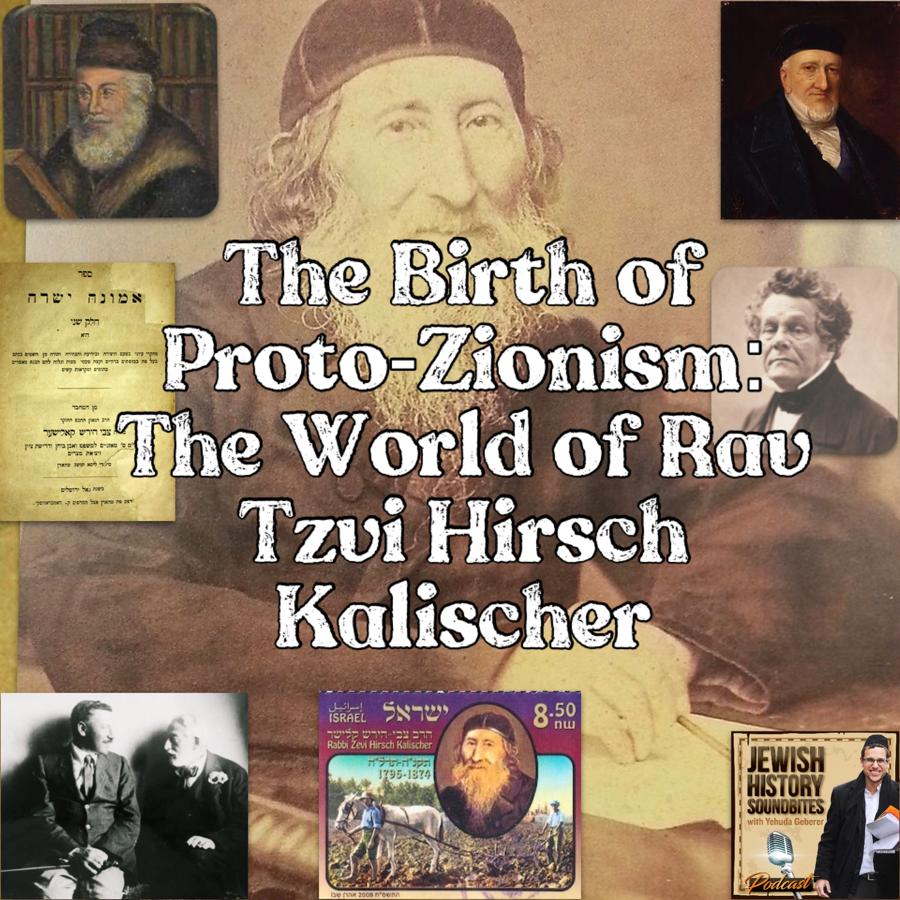
As a student of both Rav Akiva Eiger and Rav Yaakov Loberbaum (author of the Nesivos Hamishpat), Rav Tzvi Hirsch Kalischer (1795-1874) grew up in the world of the Polish rabbinate, eventually becoming the rabbi of Torun. Yet his life path would bring him to propound new ideas in regards to redemption, national settlement of the Land of Israel and even a radical idea to renew the bringing of korbanos on the Temple Mt. A man of action more than just theory, he attempted to garner support from rabbis as well as the rising new class of wealthy influential Jews in emancipated western Europe such as Adolphe Cremieux and Moses Montefiore. In 1860 founded an organization to promote the settlement of the Land of Israel, and was successful at prevailing on the Paris based Alliance organization to build an agricultural school there. Influenced by Messianism and modern nationalism, Rav Kalischer played a decisive role in the development of proto-Zionism. Subscribe To Our Podcast on: PodBean: https://jsoundbites.podbean.com/ Follow us on Twitter or Instagram at @Jsoundbites You can email Yehuda at [email protected]

Ep 214From Minsk to Monsey: The Life of Rav Reuven Grozovsky
As a sequel to the story of Rav Baruch Ber Leibowitz, it would be appropriate to profile the activities of his illustrious son in law and successor Rav Reuven Grozovsky (1886-1958). Growing up in Minsk, he convinced several of the youth to join him in the famed Slabodka Yeshiva. He'd eventually marry the daughter of Rav Baruch Ber Leibowitz, assisting him in the running of the Kamenitz Yeshiva. Escaping the war to the United States, Rav Reuven assumed a position as Rosh Yeshiva in both Torah Vodaath as well as the nascent Bais Medrash Elyon in Monsey. At the national level, he was first an activist in the wartime Vaad Hatzalah, then the chairman of the Moetzes Gedolei Hatorah of Agudas Yisroel, as well as heading the new Torah Umesorah efforts in Jewish education. As a true leader in tune with the times, he voiced his clear opinion on all issues and challenges facing the Jewish people. In 1952 he sustained a tragic car accident under mysterious circumstances. This greatly inhibited his activities and he passed away six years later. Subscribe To Our Podcast on: PodBean: https://jsoundbites.podbean.com/ Follow us on Twitter or Instagram at @Jsoundbites You can email Yehuda at [email protected]

Ep 213From Warsaw to Selma: The Complicated Life of Abraham Joshua Heschel
One of the most complex characters of the 20th century, Abraham J. Heschel's (1907-1972) life experience in many ways mirrored the Jewish search for identity in modern times. Born into an aristocratic Polish chassidic family, he shifted over to academic studies in Berlin. Escaping the Nazi regime, he settled in the United States, eventually receiving a position in the Jewish Theological Seminary. He lectured and wrote on Jewish mysticism, philosophy and chassidic thought. Leaving the ivory tower in his later years, he became an activist in the Civil Rights Movement alongside Martin Luther King Jr. In all probability, Heschel has the distinction of being the only one to have marched in both the Rabbi's march on Washington in 1943, as well as the third Selma Civil Rights march in Alabama in 1965. Subscribe To Our Podcast on: PodBean: https://jsoundbites.podbean.com/ Follow us on Twitter or Instagram at @Jsoundbites You can email Yehuda at [email protected]
Ep 212Unfathomable Greatness: The Life & Times of Rav Boruch Ber Part III
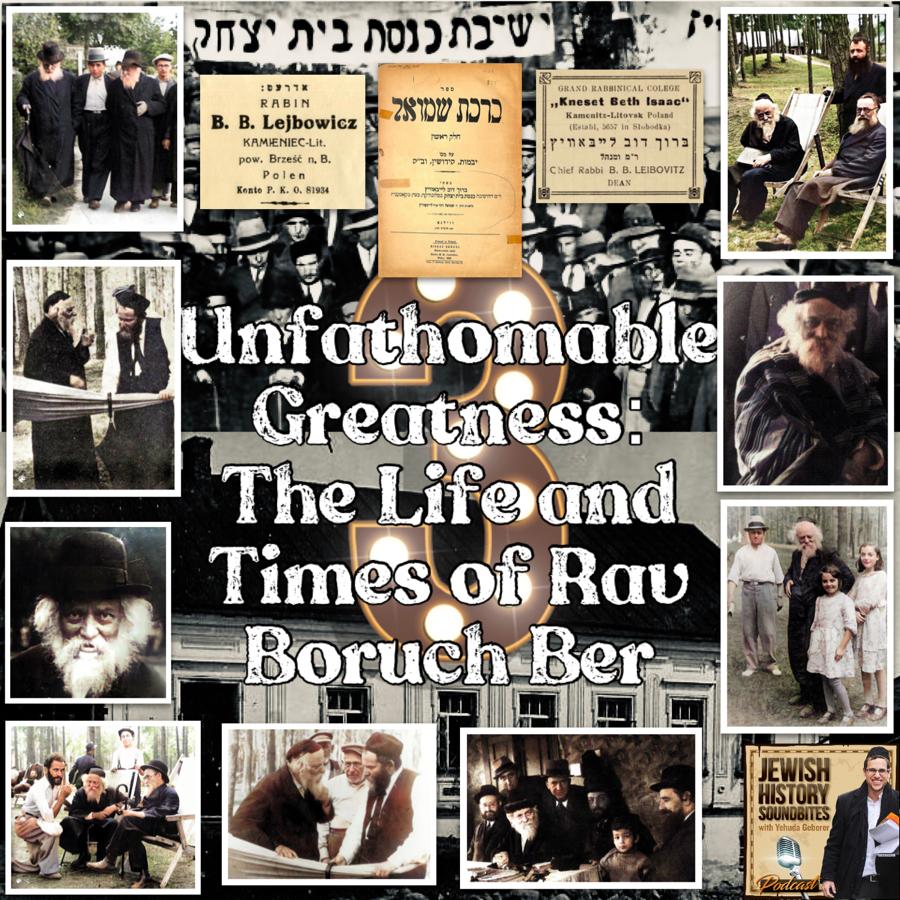
His impact on the Yeshiva world was immense. His learning approach continues to have immeasurable influence. His holiness was legendary and his greatness uncontested. Rav Baruch Ber Leibowitz (1870-1940) in many ways seemed larger than life. Yet the story of his life and the stories about his life, bring out the humanity, the world that he lived and acted in and the context of the times, to bring this great personality alive and paint a fuller picture of his achievements. From his days in Volozhin to a young Rabbi in Halusk. From Slabodka to Kremenchuk to Vilna to Kamenitz. Rav Baruch Ber had many stops and it also included a long fundraising journey to the United States. As a teacher, as a lover of his fellow Jew, as a fighter for tradition and in many other ways, Rav Baruch Ber's spirit reverberates within the Jewish world to this very day. Subscribe To Our Podcast on: PodBean: https://jsoundbites.podbean.com/ Follow us on Twitter or Instagram at @Jsoundbites You can email Yehuda at [email protected]
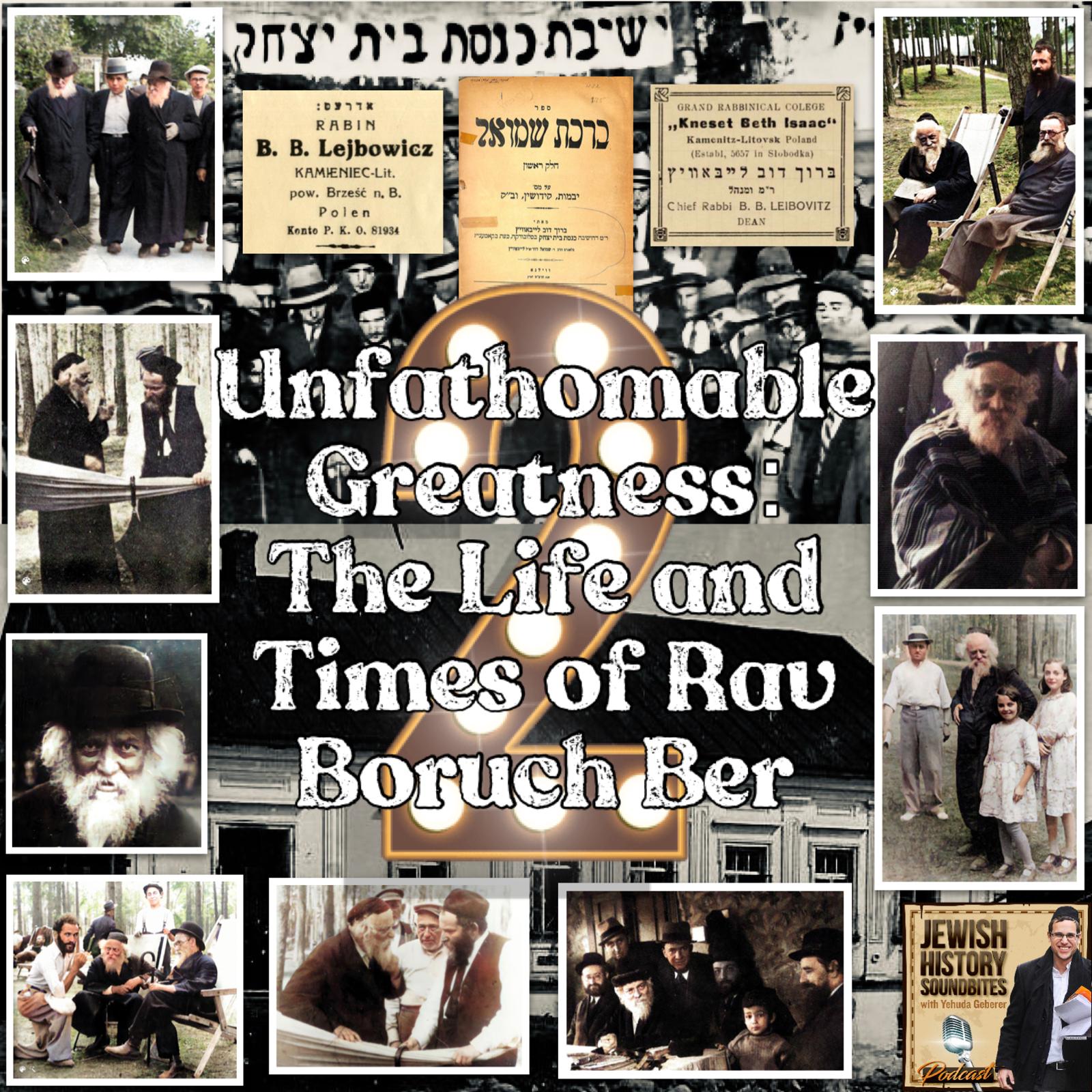
Ep 211Unfathomable Greatness: The Life & Times of Rav Boruch Ber Part II
Part II in the Rav Boruch Ber mini-series. His impact on the Yeshiva world was immense. His learning approach continues to have immeasurable influence. His holiness was legendary and his greatness uncontested. Rav Baruch Ber Leibowitz (1870-1940) in many ways seemed larger than life. Yet the story of his life and the stories about his life, bring out the humanity, the world that he lived and acted in and the context of the times, to bring this great personality alive and paint a fuller picture of his achievements. From his days in Volozhin to a young Rabbi in Halusk. From Slabodka to Kremenchuk to Vilna to Kamenitz. Rav Baruch Ber had many stops and it also included a long fundraising journey to the United States. As a teacher, as a lover of his fellow Jew, as a fighter for tradition and in many other ways, Rav Baruch Ber's spirit reverberates within the Jewish world to this very day. Subscribe To Our Podcast on: PodBean: https://jsoundbites.podbean.com/ Follow us on Twitter or Instagram at @Jsoundbites You can email Yehuda at [email protected]