
Jewish History Soundbites
507 episodes — Page 3 of 11

Ep 410A Dream to Rebuild: The Early Years of Ponovezh Yeshiva
After losing his family, community and yeshiva in Ponovezh, Lithuania during the Holocaust, Rav Yosef Shlomo Kahaneman (1886-1969), the Ponovezh Rav, endeavored to rebuild what was lost in the Land of Israel. He was a dreamer who carried out his vision with a zeal and energy which seemed superhuman. His crowning achievement was rebuilding the beloved yeshiva he lost in his hometown, by establishing the Ponovezh Yeshiva on a dusty hill on the outskirts of the small settlement of Bnei Brak. Today considered one of the key components of the flourishing postwar Torah world in Israel, the sprawling campus is a vibrant testimony to the Ponovezh Rav’s determination and perseverance. When it opened its doors at the end of 1943 with seven students, he dreamed of a building which would one day be home to hundreds of students. Rav Shmuel Rozovsky was hired as rosh yeshiva and Rav Avraham Abba Grossbard as mashgiach. The yeshiva soon expanded and Rav David Povarsky and later Rav Elazar Menachem Shach were added to the yeshiva faculty. The Ponovezh Rav felt that his energetic building campaigns were the expression of a living Holocaust memorial, as the Torah world of Lithuania would experience a rebirth in the Ponovezh Yeshiva, and its affiliate institutions. Listen to a previous episode exploring the life and accomplishments of the Ponovezh Rav: https://jsoundbites.podbean.com/e/builder-dreamer-the-unstoppable-vision-of-the-ponevezher-rav/ Cross River, a leading financial institution committed to supporting its communities, is proud to sponsor Jewish History Soundbites. As a trusted partner for individuals and businesses, Cross River understands the importance of preserving and celebrating our heritage. By sponsoring this podcast, they demonstrate their unwavering dedication to enriching the lives of the communities in which they serve. Visit Cross River at https://www.crossriver.com/ Subscribe to Jewish History Soundbites Podcast on: PodBean: https://jsoundbites.podbean.com/ or your favorite podcast platform Follow us on LinkedIn, Twitter or Instagram at @Jsoundbites For sponsorship opportunities about your favorite topics of Jewish history or feedback contact Yehuda at: [email protected]

Ep 409The Machal Fighters of 1948
A special place in Jewish history is reserved for the Machal fighters of 1948. These were primarily World War II veterans, who volunteered to fight for Israel during its War of Independence, and their participation served a key role in Israel’s victory. Comprised mostly of Jews, but included non-Jews as well, they formed the nucleus of Israel’s nascent air force, navy, and filled many specialized roles in the army. One of the most important members of this volunteer corps was Al Schwimmer, an American Jewish veteran who organized a group of pilots and experienced aviation personnel on Israel’s behalf. He also organized the purchase of planes for Israel’s Air Force, transported the planes to Czechoslovakia, and then used the planes to bring badly needed weapons and ammunition to fight for Israel’s survival. Cross River, a leading financial institution committed to supporting its communities, is proud to sponsor Jewish History Soundbites. As a trusted partner for individuals and businesses, Cross River understands the importance of preserving and celebrating our heritage. By sponsoring this podcast, they demonstrate their unwavering dedication to enriching the lives of the communities in which they serve. Visit Cross River at https://www.crossriver.com/ Subscribe to Jewish History Soundbites Podcast on: PodBean: https://jsoundbites.podbean.com/ or your favorite podcast platform Follow us on LinkedIn, Twitter or Instagram at @Jsoundbites For sponsorship opportunities about your favorite topics of Jewish history or feedback contact Yehuda at: [email protected]

Ep 408The Great Shanghai Escape Part X
In this final installment of ‘The Great Shanghai Escape’ series, we explore the story of the refugees stay in Shanghai during the war years. While integrating with the local Jewish community in Shanghai, the refugees remained there for the duration of the Japanese occupation until and even beyond the end of the war. Educational, religious and social institutions flourished, and the Mir Yeshiva settled into the Bais Aharon synagogue on Museum Road. Funding remained an issue throughout the war, and the refugees also had to sustain Japanese regulations, which included the ghettoization of Shanghai Jews towards the end of the war. Once the war was over, the next hurdle of finding a final destination took some time to overcome, as most refugees only left Shanghai a year or two later, primarily to the United States. The refugees who had escaped to Shanghai represent one of the most incredible rescue stories of World War II. Their miraculous escape from the Soviet Union to Shanghai, ultimately saved their lives, as they were spared the ravages of the Nazi Final Solution once the Nazis invaded the Soviet Union. Their journey and their story is unique in the annals of that era, and has thusly earned a special place in Jewish history. Cross River, a leading financial institution committed to supporting its communities, is proud to sponsor Jewish History Soundbites. As a trusted partner for individuals and businesses, Cross River understands the importance of preserving and celebrating our heritage. By sponsoring this podcast, they demonstrate their unwavering dedication to enriching the lives of the communities in which they serve. Visit Cross River at https://www.crossriver.com/ Subscribe to Jewish History Soundbites Podcast on: PodBean: https://jsoundbites.podbean.com/ or your favorite podcast platform Follow us on LinkedIn, Twitter or Instagram at @Jsoundbites For sponsorship opportunities about your favorite topics of Jewish history or feedback contact Yehuda at: [email protected]

Ep 407The Great Shanghai Escape Part IX
The refugees stay in Japan lasted much longer than their brief transit visas had initially allowed for, with the imperial government allowing them to remain for several months. Though some refugees made it to the United States or other countries, most had nowhere to go. With the Japanese government commencing the operational planning for Pearl Harbor, they wished to rid the country of all foreign elements, and the refugee community was unceremoniously deported to Shanghai, China, under Japanese occupation, where they’d remain throughout the war. Many refugees were assisted by Professor Setsuzo Kotsuji, who later converted to Judaism. Others were assisted by the Polish ambassador to Japan Tadeusz Romer. The Jewish rescue activist Zorach Warhaftig continued to be active on behalf of the refugee community as well. The Dutch national Nathan Gutwirth was able to rescue a ship of 74 refugees who were missing documentation, by requesting assistance from the Dutch consul in Kobe, Japan, Nicolaas de Voogd. De Voogd provided the desperate refugees with Curacao visas, enabling them to arrive in Japan. Cross River, a leading financial institution committed to supporting its communities, is proud to sponsor Jewish History Soundbites. As a trusted partner for individuals and businesses, Cross River understands the importance of preserving and celebrating our heritage. By sponsoring this podcast, they demonstrate their unwavering dedication to enriching the lives of the communities in which they serve. Visit Cross River at https://www.crossriver.com/ Subscribe to Jewish History Soundbites Podcast on: PodBean: https://jsoundbites.podbean.com/ or your favorite podcast platform Follow us on LinkedIn, Twitter or Instagram at @Jsoundbites For sponsorship opportunities about your favorite topics of Jewish history or feedback contact Yehuda at: [email protected]

Ep 406The Great Shanghai Escape Part VIII Featuring Dovi Safier
As part of our ongoing series about the Great Shanghai Escape, I had a conversation with my friend and collaborator Dovi Safier, who is a known expert on this topic, as well as having done some original research highlighting new angles of the narrative. Prior to getting to the topic at hand, our conversation covered recent history discoveries related to the family of the Slabodka Yeshiva, bearing witness to history, the recent rally in Washington, before we got to talking about the escape to Shanghai. We discussed the role of Rav Yitzchak Isaac Herzog in facilitating the escape and of Rav Avraham Kalmanowitz in funding the Mir Yeshiva and other rescue activities he spearheaded throughout his colorful career. The arrival of the refugees in Japan was another story we covered, including their reception by the local populace and the local Jewish community, despite the fact that anti-Semitic tropes were prevalent in the Japanese press. In order to create an even more authentic feel, Dovi inserted historic audio of eyewitnesses to some of the events described. Check out a previous episode of Jewish History Soundbites relating to the refugees sojourn in Japan regarding the debate surrounding the halachic International Dateline: https://jsoundbites.podbean.com/e/when-shabbos-was-sunday-the-international-dateline-controversy/ Cross River, a leading financial institution committed to supporting its communities, is proud to sponsor Jewish History Soundbites. As a trusted partner for individuals and businesses, Cross River understands the importance of preserving and celebrating our heritage. By sponsoring this podcast, they demonstrate their unwavering dedication to enriching the lives of the communities in which they serve. Visit Cross River at https://www.crossriver.com/ Subscribe to Jewish History Soundbites Podcast on: PodBean: https://jsoundbites.podbean.com/ or your favorite podcast platform Follow us on LinkedIn, Twitter or Instagram at @Jsoundbites For sponsorship opportunities about your favorite topics of Jewish history or feedback contact Yehuda at: [email protected]

Ep 405The Great Shanghai Escape Part VII
The Soviets charged the refugees exorbitant fees for the exit visas and travel expenses. The Joint and the Vaad Hatzalah provided funds for these costs, with Rav Avraham Kalmanowitz investing herculean efforts to ensure the Mir contingent were able to fund their escape. Many refugees sold their personal belongings. They then embarked on a 10-12 day train journey on the Trans-Siberian Railroad across the vast expanses of the Soviet Union, arriving in the port city of Vladivostok. From there the Sea of Japan was crossed and the refugees settled temporarily in Kobe and Yokohama. The refugees received a generally warm reception from the local Japanese as well as the small local Jewish community. When it became evident that Curacao wasn’t going to be practical as a final destination, Japanese and Jewish activists interceded with the Japanese Imperial government to extend the refugee’s visas. As a result, the refugee community was able to remain in Japan for several months. Cross River, a leading financial institution committed to supporting its communities, is proud to sponsor Jewish History Soundbites. As a trusted partner for individuals and businesses, Cross River understands the importance of preserving and celebrating our heritage. By sponsoring this podcast, they demonstrate their unwavering dedication to enriching the lives of the communities in which they serve. Visit Cross River at https://www.crossriver.com/ Subscribe to Jewish History Soundbites Podcast on: PodBean: https://jsoundbites.podbean.com/ or your favorite podcast platform Follow us on LinkedIn, Twitter or Instagram at @Jsoundbites For sponsorship opportunities about your favorite topics of Jewish history or feedback contact Yehuda at: [email protected]

Ep 404The Great Shanghai Escape Part VI
Once one was in possession of a destination visa, came the most challenging phase of the escape – applying for a Soviet exit visa. Applying for an exit visa from the ‘communist paradise’ was potentially requesting for a one way ticket to Siberia. Despite the risks involved, thousands of refugees applied, and miraculously received a visa. The entire process had to be funded, and refugees received funding from either the Joint, the Vaad Hatzalah or by selling their personal belongings. Cross River, a leading financial institution committed to supporting its communities, is proud to sponsor Jewish History Soundbites. As a trusted partner for individuals and businesses, Cross River understands the importance of preserving and celebrating our heritage. By sponsoring this podcast, they demonstrate their unwavering dedication to enriching the lives of the communities in which they serve. Visit Cross River at https://www.crossriver.com/ Subscribe to Jewish History Soundbites Podcast on: PodBean: https://jsoundbites.podbean.com/ or your favorite podcast platform Follow us on LinkedIn, Twitter or Instagram at @Jsoundbites For sponsorship opportunities about your favorite topics of Jewish history or feedback contact Yehuda at: [email protected]

Ep 403The Great Shanghai Escape Part V
As thousands of Jewish refugees scrambled for Curacao ‘visas’ and Japanese transit visas, many others were skeptic regarding the visa scheme, while others thought it a downright dangerous maneuver. Not only were the Curacao visas dubious at best, but the very idea of applying for a Soviet exit visa was understood by many to be viewed as tantamount to criminal activity by the Soviet authorities. In the world prior to the Nazi invasion and the Final Solution, the greatest fear was deportation by the Soviet to Siberian gulag. Many advocated against applying for these visas due to the inherent dangers involved. Despite the opposition within the yeshiva community, Rav Leib Malin of the Mir Yeshiva encouraged the Mir contingent to apply for the visas as a group. Along with a few activists among the yeshiva students, the majority of the Mir Yeshiva students received Curacao and Japanese transit visas and prepared to join the throngs of Polish Jewish refugees headed for the east. Cross River, a leading financial institution committed to supporting its communities, is proud to sponsor Jewish History Soundbites. As a trusted partner for individuals and businesses, Cross River understands the importance of preserving and celebrating our heritage. By sponsoring this podcast, they demonstrate their unwavering dedication to enriching the lives of the communities in which they serve. Visit Cross River at https://www.crossriver.com/ Subscribe to Jewish History Soundbites Podcast on: PodBean: https://jsoundbites.podbean.com/ or your favorite podcast platform Follow us on LinkedIn, Twitter or Instagram at @Jsoundbites For sponsorship opportunities about your favorite topics of Jewish history or feedback contact Yehuda at: [email protected]

Ep 402The Great Shanghai Escape Part IV
The summer of 1940 brought a measure of desperation in the search for visas in order to escape the clutches of the Soviet Union. Two Dutch citizens stranded in Lithuania independently contacted the Dutch consul in Riga LPJ de Decker, in order to seek his assistance in exiting the country. With Holland itself occupied by the Nazis since the previous May, it was thought to travel to the Dutch held island of Curacao. Ambassador de Decker informed Peppy Sternheim Lewin and Nathan Gutwirth that no visa was required for entry to Curacao, it was up to the discretion of the local governor to permit entry. De Decker was asked if the passport could be stamped with the words ‘no visa required for Curacao’ while leaving out the stipulation that the governor’s permission was required. De Decker authorized the honorary Dutch consul in Kovno, Jan Zwartendijk, to stamp passports in this fashion, and he even acquiesced a further request that this Curacao ‘visa’ even be issued for non-Dutch citizens. When rescue activist Zorach Warhaftig heard about the Curacao ‘visas’ he immediately spread the word among the refugee community, and thousands of Polish refugees lined up to receive the Curacao visas from Zwartendijk. With their end visa in hand, refugees proceeded to the Japanese consul in Kovno, where Chiune Sugihara issued the vital Japanese visas. Cross River, a leading financial institution committed to supporting its communities, is proud to sponsor Jewish History Soundbites. As a trusted partner for individuals and businesses, Cross River understands the importance of preserving and celebrating our heritage. By sponsoring this podcast, they demonstrate their unwavering dedication to enriching the lives of the communities in which they serve. Visit Cross River at https://www.crossriver.com/ Subscribe to Jewish History Soundbites Podcast on: PodBean: https://jsoundbites.podbean.com/ or your favorite podcast platform Follow us on LinkedIn, Twitter or Instagram at @Jsoundbites For sponsorship opportunities about your favorite topics of Jewish history or feedback contact Yehuda at: [email protected]

Ep 401The Great Shanghai Escape Part III
With the Soviet occupation of Lithuania in the summer of 1940, the search for visas to destination countries turned into a desperate endeavor for thousands of refugees who wished to escape a life under the communists. In order to execute an exit plan, one was required to be in possession of a full set of documentation attesting to every step of the intended journey. These included a passport, transit visas, end visas and perhaps most importantly, exit visas from the Soviet Union. Many debated the wisdom of obtaining visas, paying exorbitant sums for dubious visa destinations. Others were concerned that the Soviets would deport to Siberia anyone applying for an exit visa. Yet others took the risk. The great rescue activist and Zionist leader Zorach Warhaftig emerged as a central figure in pursuing any feasible visa venue. Soon the Mir Yeshiva joined the visa bandwagon and the visa miracles began to fall into place. Cross River, a leading financial institution committed to supporting its communities, is proud to sponsor Jewish History Soundbites. As a trusted partner for individuals and businesses, Cross River understands the importance of preserving and celebrating our heritage. By sponsoring this podcast, they demonstrate their unwavering dedication to enriching the lives of the communities in which they serve. Visit Cross River at https://www.crossriver.com/ Subscribe to Jewish History Soundbites Podcast on: PodBean: https://jsoundbites.podbean.com/ or your favorite podcast platform Follow us on LinkedIn, Twitter or Instagram at @Jsoundbites For sponsorship opportunities about your favorite topics of Jewish history or feedback contact Yehuda at: [email protected]

Ep 400Bonus Episode: With Dovi Safier & Seforim Chatter host Nachi Weinstein
In this special bonus episode of Jewish History Soundbites, Dovi Safier and Seforim Chatter host Nachi Weinstein join me in discussing our article in Mishpacha Magazine about Rav Yonah ‘Minsker’, the famed Alter Mirrer who was killed by the Nazis and author of the newly republished Sefer Yonas Eilem. Our free flowing conversation covers some other topics as well. Subscribe To Jewish History Soundbites Podcast on: PodBean: https://jsoundbites.podbean.com/ or your favorite podcast platform Follow us on LinkedIn, Twitter or Instagram at @Jsoundbites For sponsorship opportunities about your favorite topics of Jewish history or feedback contact Yehuda at: [email protected]

Ep 399The Great Shanghai Escape Part II
As thousands of refugees streamed into Vilna in the fall of 1939, a humanitarian crisis ensued, with neither local authorities nor the local Jewish community capable of providing for the throngs of refugees. The situation was especially acute for the many impoverished yeshivos who had found refuge in neutral Lithuania. Rav Chaim Ozer Grodzinski was the revered leader of the Torah world and in his capacity as head of the Vaad Hayeshivos, personally shouldered the responsibility for their welfare. He turned to his trusted student Rav Eliezer Silver in Cincinnati, who in turn established a rescue organization on behalf of stranded Torah scholars stuck in Lithuania, which eventually came to be known as the Vaad Hatzalah. The Mir Yeshiva had by this time settled in the Lithuanian shtetl of Keidan, and for the next seven months attempted to return a sense of normalcy within the growing mayhem surrounding them. Over the summer of 1940, the Soviets occupied Lithuania and all illusions of that country remaining a safe haven were dissipated. The subsequently dispersed among four shtetls in the Lithuanian countryside, and it was from there that they visa search continued in earnest. Cross River, a leading financial institution committed to supporting its communities, is proud to sponsor Jewish History Soundbites. As a trusted partner for individuals and businesses, Cross River understands the importance of preserving and celebrating our heritage. By sponsoring this podcast, they demonstrate their unwavering dedication to enriching the lives of the communities in which they serve. Visit Cross River at https://www.crossriver.com/ Subscribe to Jewish History Soundbites Podcast on: PodBean: https://jsoundbites.podbean.com/ or your favorite podcast platform Follow us on LinkedIn, Twitter or Instagram at @Jsoundbites For sponsorship opportunities about your favorite topics of Jewish history or feedback contact Yehuda at: [email protected]
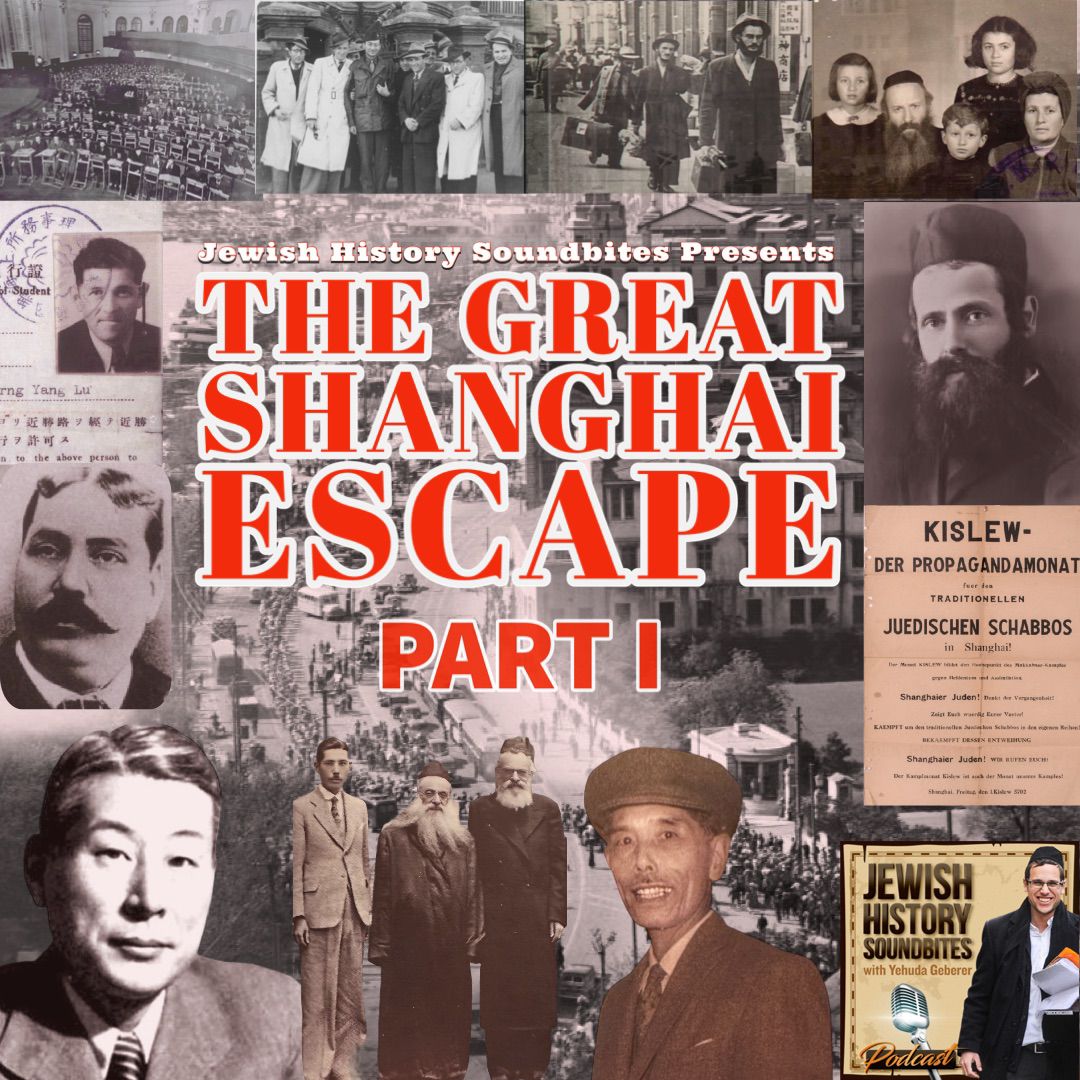
Ep 398The Great Shanghai Escape Part I
In this new series launched by Jewish History Soundbites, we’ll explore the story of the escape to Shanghai from war torn Europe during the early stages of World War II. Among the thousands of Jewish refugees who obtained visas was the Mir Yeshiva. This enabled them to traverse the Soviet Union, transit through Japan and ultimately spend the war years in Shanghai. Though this story is well known, it is often misunderstood, and this ongoing series will attempt to both clarify and organize the narrative, while dispelling some of the myths which have crept into the story over the decades. Part one of the series will open with the operational situation of Polish Jewry and specifically Mir Yeshiva on the eve of the war. The crucial geopolitical event from this time period is the signing of the Molotov-Von Ribbentrop Non-aggression pact between Nazi Germany and the Soviet Union, including a secret clause regarding the division of Poland. Following the invasion and occupation of eastern Poland, the Soviets returned the Vilna region to independent Lithuania, which appeared to many Polish refugees to be a temporary safe haven. Among the throngs of refugees headed to Vilna were many yeshivos, including the Mir. Cross River, a leading financial institution committed to supporting its communities, is proud to sponsor Jewish History Soundbites. As a trusted partner for individuals and businesses, Cross River understands the importance of preserving and celebrating our heritage. By sponsoring this podcast, they demonstrate their unwavering dedication to enriching the lives of the communities in which they serve. Visit Cross River at https://www.crossriver.com/ Subscribe to Jewish History Soundbites Podcast on PodBean: https://jsoundbites.podbean.com/ or your favorite podcast platform Follow us on LinkedIn, Twitter or Instagram at @Jsoundbites For sponsorship opportunities about your favorite topics of Jewish history or feedback contact Yehuda at: [email protected]

Ep 397Rebbe Under Communism: The Ribnitzer Rebbe
Jewish History Soundbites podcast is back after a long hiatus. Lots of great content, explorations of Jewish history and ongoing series will be posted on a consistent basis in the coming months. Stay tuned. The yahrtzeit of Rav Chaim Zanvil Abramovitz (c.1902-1995), the Ribnitzer Rebbe, is an opportunity to discuss the fascinating life and milieu of an individual who grew up in prewar Romania, survived the Nazis, defied the communists and lived out the final years of his long life in Israel and the United States. He somehow kept the flame of Judaism alive in postwar communist Romania, serving his community, and maintaining his personal ascetic practices such as utilizing the freezing Dniester River as a mikvah. His miraculous survival and leadership remains a legacy which continually grows, as his gravesite in Monsey attracts visitors and petitioners in the thousands. For sponsorship opportunities about your favorite topics of Jewish history contact Yehuda at: [email protected] Subscribe To Our Podcast on: PodBean: https://jsoundbites.podbean.com/ Follow us on Twitter or Instagram at @Jsoundbites You can email Yehuda at [email protected]

Ep 396The Jews of Sighet Part II
The Jewish history of Sighet is almost synonymous with its long line of rabbis from the Teitelbaum family. This rabbinic and chassidic dynasty dominated Orthodox life of Sighet for nearly a century prior to the community’s destruction in the Holocaust. It began with the son of the Yismach Moshe, Rav Eliezer Nisson Teitelbaum, and was later continued with his son Rav Yekusiel Yehuda, the famed Yetev Lev of Sighet who established the Sighet chassidic dynasty as well as founding and heading a prominent yeshiva in town. He in turn was succeeded by his son the Kedushas Yom Tov, and it continued with his oldest son the Rav Chaim Tzvi, the Atzei Chaim. Upon his untimely passing in 1926, his 14 year old son Zalman Leib was chosen to succeed his father, while the deceased’s brother Rav Yoelish Teitelbaum wasn’t offered a position in Sighet and would later gain renown as the Satmar Rav. Though the community was mostly wiped out during the Holocaust - poignantly described by Sighet native Elie Wiesel - there was a resurgence of the community in the postwar, and it was briefly led by the Atzei Chaim’s surviving son Rav Moshe Teitelbaum, the Beirach Moshe. For sponsorship opportunities about your favorite topics of Jewish history contact Yehuda at: [email protected] Subscribe To Our Podcast on: PodBean: https://jsoundbites.podbean.com/ Follow us on Twitter or Instagram at @Jsoundbites You can email Yehuda at [email protected]

Ep 395The Jews of Sighet Part I
Though only settled in the 18th century and flourishing in the 19th, the town of Sighet made its mark on Jewish history and its legacy accompanies Jewish life until this very day. Nestled in the Maramaros district in Transylvania, it was sometimes in Romania, other times in Hungary and for a long time in the Austro-Hungarian Empire. By the end of the 19th century, its sizable Jewish population was one of the largest in Transylvania and also one of the few which was largely Orthodox. In the century before the war, Sighet was home to some prominent historic personalities, while left an imprint on Sighet Jewish life and the wider Jewish community. One of the earliest prominent rabbinical figures to settle in the Maramaros district was Rav Yehuda Kahana-Heller (1743-1819), known by his work the Kuntres Hasfeikos. The Kahana family would dominate Sighet communal life for the next century. Sighet is almost synonymous with the Teitelbaum dynasty, with a decisive impact on both Sighet’s Jewish history as well as beyond its borders across the Jewish world. For sponsorship opportunities about your favorite topics of Jewish history contact Yehuda at: [email protected] Subscribe To Our Podcast on: PodBean: https://jsoundbites.podbean.com/ Follow us on Twitter or Instagram at @Jsoundbites You can email Yehuda at [email protected]

Ep 394The Life & Times of the Baal Shem of Michelstadt
Rav Yitzchak Aryeh (Zekl Leib) Vormser, known as the Baal Shem of Michelstadt (1768-1847) was a prominent rabbi and kabbalist, who lived in Germany in the 19th century. Having studied under Rav Nosson Adler in Frankfurt, he gained renown as a ‘Baal Shem’, someone who utilized kabbalistic formulas to heal petitioners and pray for their salvation. He also had a yeshiva in Michelstadt, and authored many Torah works, most of which were lost in a fire in 1825. In a rapidly secularizing German Jewish community, the Baal Shem of Michelstadt was the light of Kabbalah, and a leader who German Orthodoxy revered for decades to come. For sponsorship opportunities about your favorite topics of Jewish history contact Yehuda at: [email protected] Subscribe To Our Podcast on: PodBean: https://jsoundbites.podbean.com/ Follow us on Twitter or Instagram at @Jsoundbites You can email Yehuda at [email protected]

Ep 393The Mirrers Who Didn’t Make It
It’s well known that the Mir Yeshiva collectively and successfully escaped war torn Europe, being stranded first in Kobe, Japan, followed by a long exile in Shanghai, China. While mostly true, there were students who were unable for one reason or another to escape together with the yeshiva, and remained behind being martyred by the Nazis and their collaborators along with millions of their brethren. One of the prominent ones was Rav Yona Karpilov (Minsker). As a student of Rav Elchanan Wasserman and Rav Baruch Ber Leibowitz, he arrived in Mir in 1926 as a budding scholar, and soon emerged as one of the closest students of the Mir mashgiach Rav Yerucham Levovitz, as well as one of the yeshiva’s leaders guiding many of the younger students. He was also part of a contingent who studied in Brisk under Rav Yitzchak Soloveitchik, the Brisker Rav. Many theories have been presented as to why he didn’t succeed in obtaining one of the coveted Sugihara visas in the summer of 1940, but ultimately he was in Kovno the following summer and not in Shanghai with his friends. He was murdered by Lithuanian collaborators in 1941. This episode is sponsored by the OU. Make your Tish B'Av more meaningful with the OU. Renowned speakers, special programming, and live kumzits straight from the Kosel! For more information and to pre-register see below. https://go.ou.org/ejljxmkA To support the efforts to publish Yonas Eilem, the writings of Rav Yona Minsker Hy”d: https://charidy.com/yonasilem For sponsorship opportunities about your favorite topics of Jewish history contact Yehuda at: [email protected] Subscribe To Our Podcast on: PodBean: https://jsoundbites.podbean.com/ Follow us on Twitter or Instagram at @Jsoundbites You can email Yehuda at [email protected]

Ep 392Medicine & the Holocaust
The challenging and nearly impossible situations confronting Jewish victims during the Holocaust presented many varied moral dilemmas. This episode will explore some of those stories and dilemmas faced by members of the medical profession - physicians, nurses and healthcare providers. In ghettos and camps, with a dearth of medical supplies and proper hygienic conditions, many rose to the challenge and continued to provide health care and attempted to save as many lives as possible under increasingly dire straits. Dr. Adina Swajger in the Warsaw Ghetto tried to provide care for children in the Jewish children’s hospital in the ghetto. When she realized she couldn’t save them, she decided to at least spare them the horrors of Treblinka. Dr. Gisele Perl performed abortions at Auschwitz in order to save the mother’s lives, and then spent the rest of her postwar career as a fertility specialist in order to bring more life into the world. Dr. Marc Dvorzhetzki served as a physician in the Vilna Ghetto and even in a concentration camp in Estonia towards the end of the war. And there are so many more. The dilemmas they faced, the heroic and selfless acts they courageously did to save others, can serve as a legacy to Jewish heroism in the face of Nazi atrocity. For sponsorship opportunities about your favorite topics of Jewish history contact Yehuda at: [email protected] Subscribe To Our Podcast on: PodBean: https://jsoundbites.podbean.com/ Follow us on Twitter or Instagram at @Jsoundbites You can email Yehuda at [email protected]
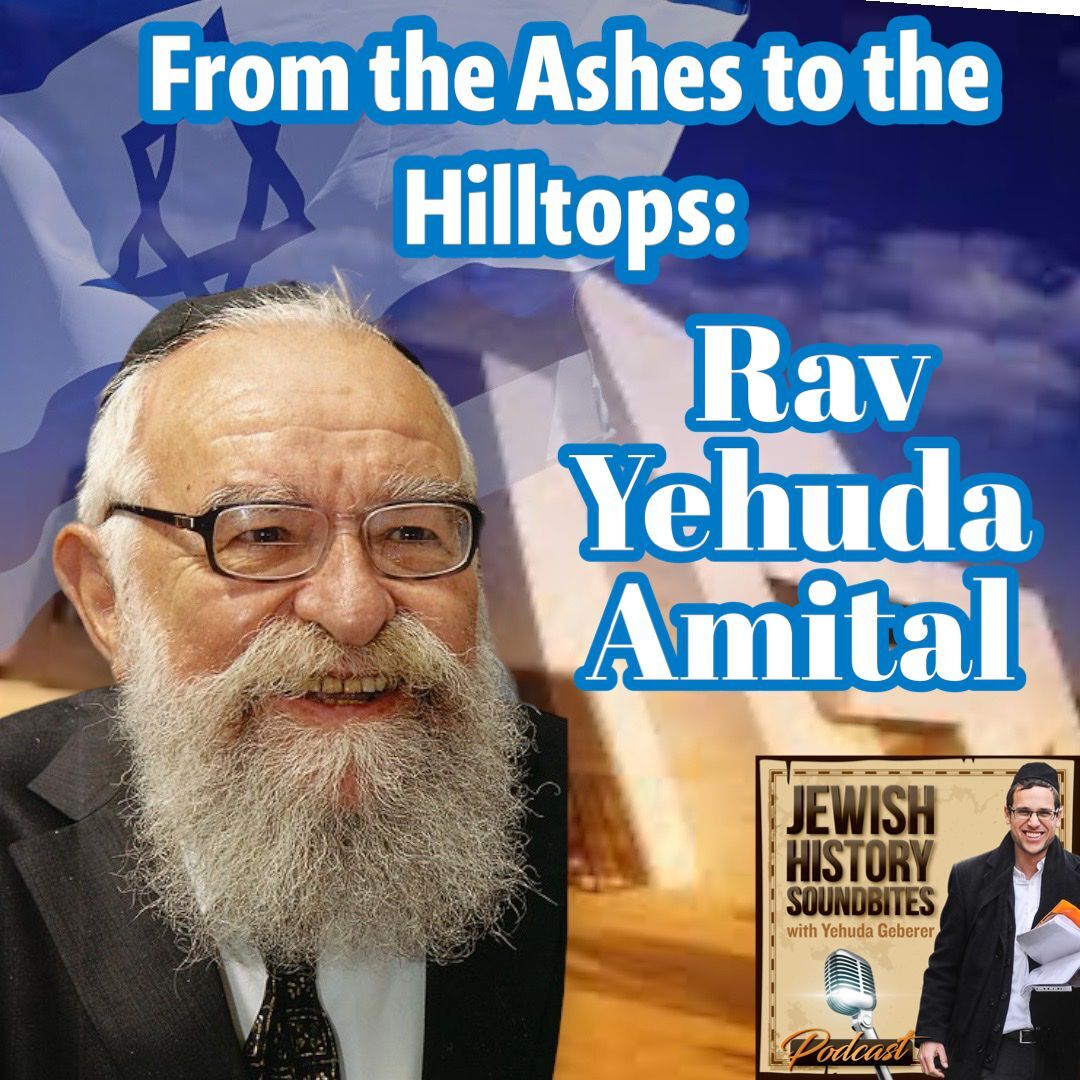
Ep 390From the Ashes to the Hilltops: Rav Yehuda Amital
Rav Yehuda Amital (1924-2010) was a unique leader and builder of Torah of the 20th century. Born in Grosswardein, he survived the Holocaust and immigrated to the Land of Israel where he studied in the Chevron Yeshiva. While teaching at his father in law Rav Tzvi Yehuda Melter’s yeshiva in Rechovot he formulated the idea of the Hesder Yeshiva, through which the yeshiva students served in the military along with their yeshiva studies. Following the Six Day War he was hired to head the new Yeshivat Har Etzion in Gush Etzion. He remained at its helm for more than four decades. During the Yom Kippur War he lost eight students, and this tragic loss made a profound impact on him, coupled with his memory and view of the great destruction of the Holocaust. Later on in life, in addition to his yeshiva responsibilities, he publicly voiced his opinion on political issues. Though iconoclastic in many of his positions, he never hesitated to articulate what he felt needed to be expressed. For sponsorship opportunities about your favorite topics of Jewish history contact Yehuda at: [email protected] Subscribe To Our Podcast on: PodBean: https://jsoundbites.podbean.com/ Follow us on Twitter or Instagram at @Jsoundbites You can email Yehuda at [email protected]

Ep 389Chasam Sofer Part V: Halacha & Leadership in a Changing World
Rav Moshe Sofer the Chasam Sofer (1762-1839) was both a leader and halachic decisor throughout his long rabbinical career. As he confronted a changing world where traditional Jewish life faced developing challenges of modernity, his vision, brilliance and sense of responsibility led him to utilize the halachic responsa he authored as a medium through which to express the traditional response through a continually evolving methodology. While still a young rabbi in Mattersdorf, the Chasam Sofer defended the local Frankfurt custom of his youth against the hegemony of a collective Ashkenaz identity. Yet a decade later as rabbi of Pressburg, he utilized the idea of collective Ashkenaz halachic identity following the rulings of the Ramah, as a mechanism for closing ranks around a strong traditional base in the wake of expansive attempts at reforming traditional halacha. During the last decade of the Chasam Sofer’s life, he expressed a pessimism regarding the future of rabbinical leadership as he witnessed many rabbis of his day leaning towards the reforming of halacha. His creative solution this time was to raise the banner of the Jewish communal collective, elevating the status of custom and rabbinic ordinance to the level of a Torah ordained obligation. The Chasam Sofer’s keen perception of the challenges facing traditional Judaism form the basis of his legacy until this very day. Check out our previous episodes on the life and leadership of the Chasam Sofer: Part 1: https://jsoundbites.podbean.com/e/hungarian-royalty-the-chasam-sofer-his-family/ Part 2: https://jsoundbites.podbean.com/e/chasam-sofer-part-ii-old-traditions-new-message/ Part 3: https://jsoundbites.podbean.com/e/chasam-sofer-part-iii-a-pressburg-situation/ Part 4: https://jsoundbites.podbean.com/e/chasam-sofer-part-iv-from-frankfurt-to-exile/ For sponsorship opportunities about your favorite topics of Jewish history contact Yehuda at: [email protected] Subscribe To Our Podcast on: PodBean: https://jsoundbites.podbean.com/ Follow us on Twitter or Instagram at @Jsoundbites You can email Yehuda at [email protected]

Ep 388Antisemitism Part III: The Road to Racial Antisemitism
One of the enduring antisemitic tropes has been the ‘Protocols of the Elders of Zion’ forgery. Fabricated in Czarist Russia in the early 20th century, it was later exported to Western Europe and the United States. Jews have responded to Antisemitism in a variety of ways, including humor, emigration and Jewish nationalism. The early 20th century saw the rise of racial Antisemitism which had evolved in the nationalistic environment of Europe of the late 19th century. The culmination of racial theory and racial Antisemitism was through the Nazi racial ideology which formed the ideological basis of the Holocaust and Final Solution. Antisemitism didn’t disappear following the war, and it manifested itself in the Soviet Union, Europe, United States and the Moslem world. This series on the history of Antisemitism has been sponsored by the Touro Graduate School of Jewish Studies, a leading academic program in Jewish Studies that equips students with the tools to search out their own unique path into the study of Jewish history and scholarship. For more information on admission to the Touro Graduate School of Jewish Studies, including scholarship opportunities, please visit https://gsjs.touro.edu/ or call 212-463-0400, ext. 55580 For sponsorship opportunities about your favorite topics of Jewish history contact Yehuda at: [email protected] Subscribe To Our Podcast on: PodBean: https://jsoundbites.podbean.com/ Follow us on Twitter or Instagram at @Jsoundbites You can email Yehuda at [email protected]

Ep 387Antisemitism Part II: Nationalism & Modern Antisemitism
The 19th century brought the rise of nationalism in European society along with the idea of emancipation and equality among the nation’s citizenry. In Western Europe the Jewish population ultimately became beneficiaries of Emancipation, but nationalism generally precluded including the Jews on an ideological level. And thus modern Antisemitism was born. Emancipation stated that Jews are now part of society, and nationalism generally rejected them from society. The term Antisemitism was born in Germany, was quite prominent in France and was brought to the full brunt of its expression in Imperial Russia of the Czars where its massive Jewish population didn’t even receive emancipation. In the closing decade of the 19th century and the opening decade of the 20th, two major antisemitic trials rocked the Jewish world. Captain Alfred Dreyfus was a Jewish officer on the French general staff, who was falsely accused of espionage. The controversy surrounding his innocence and wrongful conviction divided French society. Mendel Beilis was a superintendent of a factory in Kiev and was falsely accused of ritual murder. The virulently antisemitic trial which ensued attempted to frame the entire Jewish People and was reminiscent of medieval anti Jewish expression. This series on the history of Antisemitism has been sponsored by the Touro Graduate School of Jewish Studies, a leading academic program in Jewish Studies that equips students with the tools to search out their own unique path into the study of Jewish history and scholarship. For more information on admission to the Touro Graduate School of Jewish Studies, including scholarship opportunities, please visit https://gsjs.touro.edu/ or call 212-463-0400, ext. 55580 For sponsorship opportunities about your favorite topics of Jewish history contact Yehuda at: [email protected] Subscribe To Our Podcast on: PodBean: https://jsoundbites.podbean.com/ Follow us on Twitter or Instagram at @Jsoundbites You can email Yehuda at [email protected]

Ep 386Antisemitism Part I: Old & New; Religious & Racial
Antisemitism or anti-semitism or anti-Semitism or Jew hatred or hatred of the Jewish People has been around since antiquity. Expressing itself in various ways over time and place, it has remained a salient feature of Jewish history often with tragic consequences. While the Middle Ages is often associated with religious/Christian/Church anti Jewish discrimination, which often culminated in expulsions, pogroms, crusades, forced conversions and ritual murder charges, the 19th century is more associated with a manifestation of antisemitism in a modern form, at the nexus of nationalism and Jew hatred. This was followed by racial antisemitism with its most deadly expression in the Nazi Holocaust. Despite the seemingly orderly chronological sequence of the development of antisemitism over the millennia, it was often a confluence of factors - religious, economic, racial, nationalistic - through which anti Jewish policies were implemented throughout history. This three part series will explore some of the distinctive features of Jew hatred, with a focus on modern antisemitism of the 19th and 20th centuries. This series on the history of Antisemitism has been sponsored by the Touro Graduate School of Jewish Studies, a leading academic program in Jewish Studies that equips students with the tools to search out their own unique path into the study of Jewish history and scholarship. For more information on admission to the Touro Graduate School of Jewish Studies, including scholarship opportunities, please visit https://gsjs.touro.edu/ or call 212-463-0400, ext. 55580 For sponsorship opportunities about your favorite topics of Jewish history contact Yehuda at: [email protected] Subscribe To Our Podcast on: PodBean: https://jsoundbites.podbean.com/ Follow us on Twitter or Instagram at @Jsoundbites You can email Yehuda at [email protected]

Ep 385Chassidic Influencers: Mashpi’im & Recurring Themes of Chassidic History
The Chabad & Breslov chassidic dynasties have always had Mashpi’im - influencers or teachers - who taught chassidic thought and inspired their communities. In recent years there’s been a growing popularity of Mashpi’im around the entire chassidic world and even beyond. Where does the idea of a chassidic mashpia originate from? Does it have historical precedent in the chassidic movement? Is history repeating itself? How did the chassidic movement maintain its vitality so successfully over the centuries? This episode will attempt to provide a macro view with some recurring themes over the course of nearly three centuries of the history of the chassidic movement. In a seemingly cyclical fashion, the chassidic movement’s demographic growth and communal successes have led to institutionalization and a danger of losing the initial spiritual vitality so essential to its essence. At several junctures in its storied history, the chassidic movement has successfully rejuvenated itself in creative ways, never losing its spark or its mission despite external challenges and internal struggles. For sponsorship opportunities about your favorite topics of Jewish history contact Yehuda at: [email protected] Subscribe To Our Podcast on: PodBean: https://jsoundbites.podbean.com/ Follow us on Twitter or Instagram at @Jsoundbites You can email Yehuda at [email protected]

Ep 384Live From Prague with Dovi Safier & Nachi Weinstein of Seforim Chatter Podcast
An unscripted conversation with Dovi Safier and Seforim Chatter podcast host Nachi Weinstein summarizing an amazing trip to Central Europe with the Daf Yomi Chaburah of Reb Sruly Borenstein and Eli Slomowitz of E&S Tours. This casual discussion covers the people and places we saw - Vienna, Bratislava (Chasam Sofer), Mikulov (Nikolsburg), Holesov (the Shach) & Prague. As we review this exciting trip, we attempt to provide some historical background and analysis, while it is constantly accompanied by light banter as well. For sponsorship opportunities about your favorite topics of Jewish history contact Yehuda at: [email protected] Subscribe To Our Podcast on: PodBean: https://jsoundbites.podbean.com/ Follow us on Twitter or Instagram at @Jsoundbites You can email Yehuda at [email protected]

Ep 383Get Out! Get & Divorce in Jewish History
As long as there has been marriage, there has been divorce throughout history. The legal procedure of providing a ‘Get’ to terminate a marriage under Torah law, has often provided a window into the wider context of social and communal life throughout Jewish history. The intricate laws of Gittin have been the backdrop of rabbinical leadership, communal crisis and halachic creativity. In honor of the Daf Yomi commencement of Maseches Gittin, this episode will explore some curious angles and anecdotes in which a Get appears as the player in Jewish history. This episode is sponsored by Daf Yomi with Shaul C. Greenwald, a fast-moving energetic daf shiur, delivered with clarity and intensity. The shiur is available daily on all podcast platforms, All Daf and Torah Anytime. https://alldaf.org/series/5677/ For sponsorship opportunities about your favorite topics of Jewish history contact Yehuda at: [email protected] Subscribe To Our Podcast on: PodBean: https://jsoundbites.podbean.com/ Follow us on Twitter or Instagram at @Jsoundbites You can email Yehuda at [email protected]

Ep 382Jewish Population Growth Through the Ages
Jewish population growth has fluctuated over the millennia. Unique circumstances of Jewish history have impacted Jewish demographics in a variety of ways, often adversely affecting Jewish growth through the ages. This episode will attempt to explore some basic elements of Jewish demographics, fluctuations as well as salient features, and examine the numbers and their significance. The great Jewish demographic story of the Modern Era is the population explosion of Eastern European Jewry in the 19th century, with the tragic and sudden demographic contraction as a result of the Holocaust. For sponsorship opportunities about your favorite topics of Jewish history contact Yehuda at: [email protected] Subscribe To Our Podcast on: PodBean: https://jsoundbites.podbean.com/ Follow us on Twitter or Instagram at @Jsoundbites You can email Yehuda at [email protected]

Ep 38180th Anniversary of the Warsaw Ghetto Uprising
On April 19, 1943 the SS attempted the final liquidation of the Warsaw Ghetto, with the goal of deporting the last Jews of the Ghetto to the gas chambers at Treblinka. Most entered their bunkers and the fighters began firing on the SS who had entered the Ghetto in order to commence the deportation. The SS retreated and their commander Jurgen Stroop resorted to burning down the entire ghetto which eventually crushed the uprising and the survivors were deported to Treblinka and Majdanek. This episode will attempt to clarify some of these events and explore some of the questions that hindsight affords the luxury of speculating. Was the armed resistance an exercise in futility? Would perhaps more have survived had they not resisted the attempt to deport the last ones to Treblinka? For sponsorship opportunities about your favorite topics of Jewish history contact Yehuda at: [email protected] Subscribe To Our Podcast on: PodBean: https://jsoundbites.podbean.com/ Follow us on Twitter or Instagram at @Jsoundbites You can email Yehuda at [email protected]

Ep 380Soviet Chassid: The Story of Rav Mendel Futerfas
Rav Mendel Futerfas (1907-1995) was a Lubavitch chassid who emerged as a leader under the most challenging circumstances in the Soviet Union. He was active in one of the greatest exit attempts for Jews from the Soviet Union under the cover of the repatriation agreement signed between the Soviet Union and Poland in the immediate aftermath of World War II. Under the terms of the agreement Polish citizens were permitted to return to Poland, and some Soviet Jews utilized the opportunity to forge Polish documents and finally exit the Soviet Union. Rav Mendel was arrested in the operations aftermath and sentenced to eight years of hard labor in Siberia. Upon his release, he embarked on a heroic attempt at igniting the fire of Yiddishkeit and Chassidic life in the post Stalinist Soviet Union until he finally was able to reunite with his family in England in 1964. The last decades of his life were spent as the central mashpia at Kfar Chabad in Israel until his passing during a visit to London in 1995. For sponsorship opportunities about your favorite topics of Jewish history contact Yehuda at: [email protected] Subscribe To Our Podcast on: PodBean: https://jsoundbites.podbean.com/ Follow us on Twitter or Instagram at @Jsoundbites You can email Yehuda at [email protected]

Ep 379I’ve Got a Lovely Jewish Name: First Names in Jewish History
What are some of the sources and trends in Jewish first names over the centuries? Where do double names come from? How do names differ from community to community? How are Biblical names used? What about naming for ancestors? What was the status of non-Jewish names in Jewish life? What is the source of some common Yiddish names? First names have been a fascinating cultural and sociological phenomenon throughout history. In this episode of Jewish History Soundbites, we’ll explore some of the trends in Jewish first names as well as tracing some of the origins of some names and naming customs. For sponsorship opportunities about your favorite topics of Jewish history contact Yehuda at: [email protected] Subscribe To Our Podcast on: PodBean: https://jsoundbites.podbean.com/ Follow us on Twitter or Instagram at @Jsoundbites You can email Yehuda at [email protected]

Ep 378The Vurke Chassidic Dynasty & Jewish Political Leadership
The Vurke chassidic dynasty took a leading role in Polish Jewish life of the 19th century, and spawned several prominent offshoots such as Amshinov, Aleksander and Strikov among others. Established by Rav Yitzchak Kalish as a faction of Pshischa, it flourished among his descendants and students in central Poland. Rav Yitzchak of Vurke (1779-1848) was a great chassidic leader, and earned renown as a pioneering ‘shtadlan’ or lobbyist, effectively ushering in a new era of Orthodox Jewish politics. In this capacity he represented the entire Jewish community of Poland, as his activities weren’t limited to Vurke or chassidim in general. Rav Yitzchak was succeeded by both students and sons, with his younger son Rav Menachem Mendel remaining in Vurke, and known as the ‘Silent Tzadik’. He in turn was succeeded by his son Rav Simcha Bunim who eventually moved to the Land of Israel. Most of the Vurke community and leadership was decimated in the Holocaust. For sponsorship opportunities about your favorite topics of Jewish history contact Yehuda at: [email protected] Subscribe To Our Podcast on: PodBean: https://jsoundbites.podbean.com/ Follow us on Twitter or Instagram at @Jsoundbites You can email Yehuda at [email protected]

Ep 377Chasam Sofer Part IV: From Frankfurt to Exile
Born into a prestigious Frankfurt family in 1762, Rav Moshe Sofer, the Chasam Sofer, would carry the Frankfurt legacy for the rest of his life. His teachers included the local rabbi Rav Pinchas Horowitz, the Haflaah, as well as a stint in Mainz with Rav David Tevli Shayer. But his primary teacher was Rav Nosson Adler. The Chasam Sofer joined his circle of mystics when he was 10-11 years old and remained devoted to him for the rest of his life. When the Frankfurt community opposed Rav Nosson Adler’s Kabbalistic separatist customs and he was excommunicated, the Chasam Sofer accompanied him into exile. Leaving Frankfurt with Rav Nosson Adler in 1782, the Chasam Sofer was never to return to his hometown. Listen to our previous three episodes about the Chasam Sofer: Part 1: https://jsoundbites.podbean.com/e/hungarian-royalty-the-chasam-sofer-his-family/ Part 2: https://jsoundbites.podbean.com/e/chasam-sofer-part-ii-old-traditions-new-message/ Part 3: https://jsoundbites.podbean.com/e/chasam-sofer-part-iii-a-pressburg-situation/ For sponsorship opportunities about your favorite topics of Jewish history contact Yehuda at: [email protected] Subscribe To Our Podcast on: PodBean: https://jsoundbites.podbean.com/ Follow us on Twitter or Instagram at @Jsoundbites You can email Yehuda at [email protected]
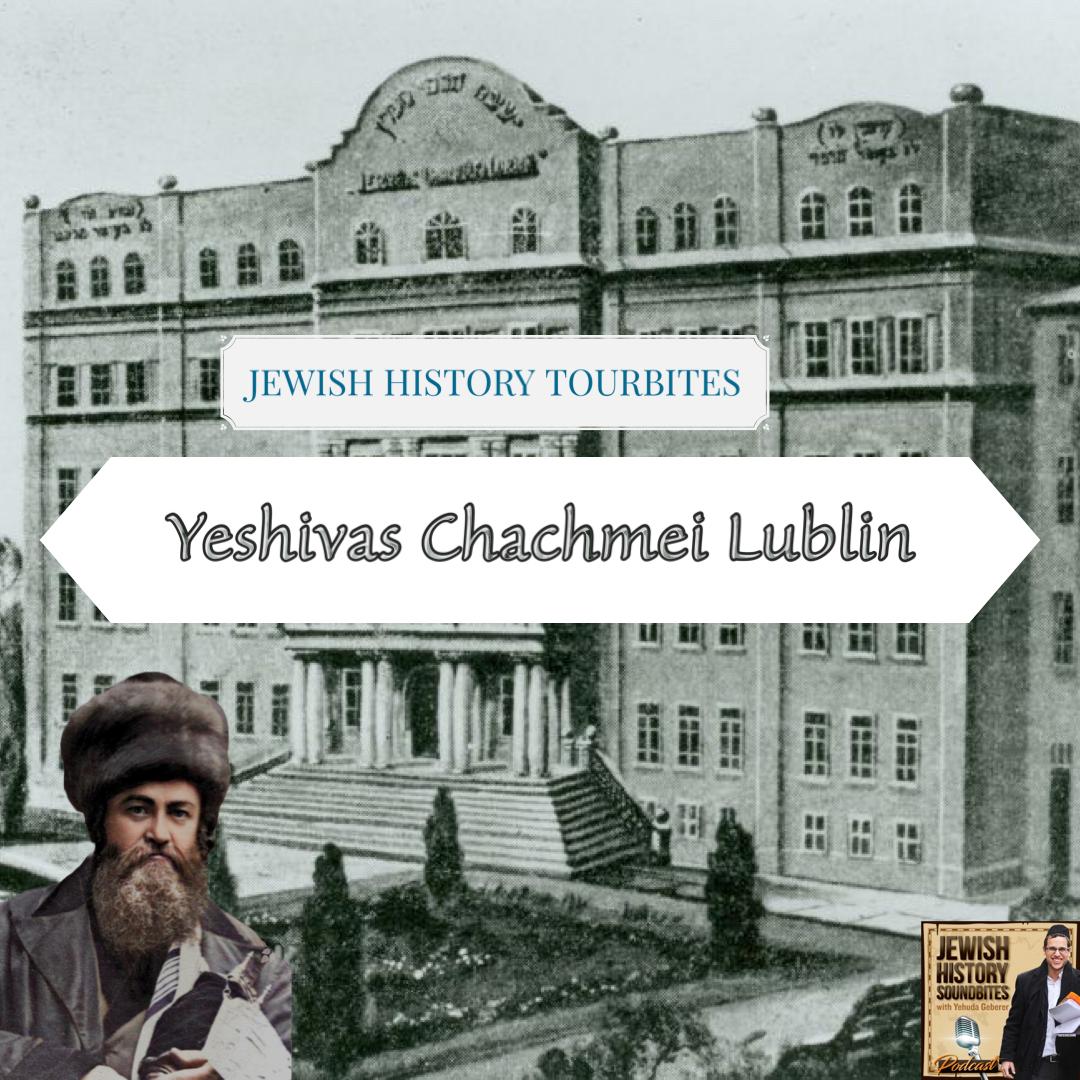
Ep 376Tourbites: Yeshivas Chachmei Lublin
Yeshivas Chachmei Lublin was the grand vision of its founder Rav Meir Shapiro. Following a long fundraising campaign, it opened in a grand ceremony in 1930. Rav Meir Shapiro set the goal of the yeshiva with its very name Chachmei Lublin. This was to restore the crown of glory to the city of Lublin, which had been a Torah center for centuries. The Torah legacy would be continued by creating a grandiose edifice which would be an honor for Torah and those who study it, and would contain a Bais Medrash, dormitory facilities, kitchen, dining room, an impressive library, a mikvah and even a model of the Bais Hamikdash. Though Rav Meir Shapiro tragically passed away at the age of 46 in 1933, Chachmei Lublin continued to flourish under the able leadership of Rav Aryeh Tzvi Frommer, the Kozhligover Rav. Though most of the yeshiva students and faculty ultimately were killed during the Holocaust, the legacy of Yeshivas Chachmei Lublin remains until this very day. Sponsored by Backyard Kingdom: Swing Sets, sheds, pergolas, gazebos, dog parks & all site amenities. +1 (888) 950‑0033 or [email protected] And also by Kollel Tzilo Shel Heichal of Rav Avigdor Nebenzahl in the heart of the Old City of Jerusalem. Over 550 students of all backgrounds, learning with intensity just steps away from where the Beis Hamikdash once stood. kollelkotel.com For sponsorship opportunities about your favorite topics of Jewish history contact Yehuda at: [email protected] Subscribe To Our Podcast on: PodBean: https://jsoundbites.podbean.com/ Follow us on Twitter or Instagram at @Jsoundbites You can email Yehuda at [email protected]

Ep 375Marriage Age in Jewish Eastern Europe of the 19th Century
Matchmaking and marriage has always been a part of the Jewish story. What was the age of marriage at different times in Jewish history? How did one’s socioeconomic background impact the age of marriage? Did rich and scholarly family marry their children off at different ages than working class Jewish families? Why did the age of marriage suddenly rise among the financial and scholarly elite in the late 19th century in Eastern Europe? Could marriage plans be made in the depths of Auschwitz? These topics will all be explored in this Jewish History Soundbites Episode on marriage in Jewish history. Sponsored by the Shidduch Institute, encouraging everyone to fill out an easy and quick survey about shidduchim and matchmaking in order to gain a better understanding of machinations of shidduchim among the North American Orthodox Jewish community and the challenges within that system. Take a few minutes to fill out the survey and share with your family, friends and contacts to fill out as well. Shidduchinstitute.com/survey The only way a solution can be found is by obtaining real data which will facilitate a better understanding of the issues at hand. https://shidduchinstitute.qualtrics.com/jfe/form/SV_eA8VDIbB3bWyHVY For sponsorship opportunities about your favorite topics of Jewish history contact Yehuda at: [email protected] Subscribe To Our Podcast on: PodBean: https://jsoundbites.podbean.com/ Follow us on Twitter or Instagram at @Jsoundbites You can email Yehuda at [email protected]

Ep 374The Last Nazarite: The Life of Rav Dovid Cohen, ’Rav Hanazir’
In honor the Daf Yomi cycle commencing the study of Maseches Nazir, Jewish History Soundbites is proud to present in conjunction with the All Torah platform https://alltorah.org/ the story of the ‘Rav Hanazir’ Rav David Cohen (1887-1972). Having grown up in a rabbinic family in Lithuania, he studied in the yeshivos of Volozhin, Radin & Slabodka, before pursuing a general education in St. Petersburg, Freiburg, Germany & Basel, Switzerland. It was while in Switzerland during World War I that the most formative event of his life took place, upon meeting his lifelong rebbi Rav Avraham Yitzchak Kook. He immigrated to the Land of Israel in 1922, and was appointed to the faculty of Merkaz Harav. It was here that he assumed the status of a modern day Nazir, and abstained from haircuts and wine consumption for the remainder of his life. Along with other ascetic practices such as veganism, long silences and wanderings in the Judean desert, he wished to attain prophecy and prepare himself for the final anticipated redemption. This multifaceted individual edited the works of Rav Kook, engaged in mysticism, a synthesis of general science & philosophy with Torah knowledge, while maintaining his position as a teacher of Torah in Merkaz Harav. Dedicated in honor of All Torah platform as we begin Maseches Nazir this Wednesday Jan 25. Visit https://alltorah.org/ for download links or our link tree with download links and links to all our social media and WhatsApp statuses to follow for latest information. https://linktr.ee/alltorah%20%7C Thousands of people from around the globe access these highly curated platforms to learn Daf Yomi, all kinds of weekly Parsha shiurim and daily Mishna from renowned speakers and various formats. Join the All Torah revolution today! For sponsorship opportunities about your favorite topics of Jewish history contact Yehuda at: [email protected] Subscribe To Our Podcast on: PodBean: https://jsoundbites.podbean.com/ Follow us on Twitter or Instagram at @Jsoundbites You can email Yehuda at [email protected]

Ep 373Tourbites: The Chozeh of Lublin
As the oldest Jewish cemetery in Eastern Europe, the old cemetery in Lublin contains some historical treasures and great personalities. One of the prominent ones we visit on trips is Rav Yaakov Yitzchak Horowitz, the Chozeh of Lublin (1745-1815). One of the primary students of Rav Elimelech of Lizhensk, the Chozeh became a teacher of the masses, and facilitated the spread of the Chassidic movement in central Poland. Though he faced opposition, the Chozeh’s modesty and leadership preserved and his impact was seen through both the masses who sought his counsel and blessing, as well as through his many students who emerged as the next generations leaders of the chassidic movement across Galicia, Poland and Hungary. For sponsorship opportunities about your favorite topics of Jewish history contact Yehuda at: [email protected] Subscribe To Our Podcast on: PodBean: https://jsoundbites.podbean.com/ Follow us on Twitter or Instagram at @Jsoundbites You can email Yehuda at [email protected]
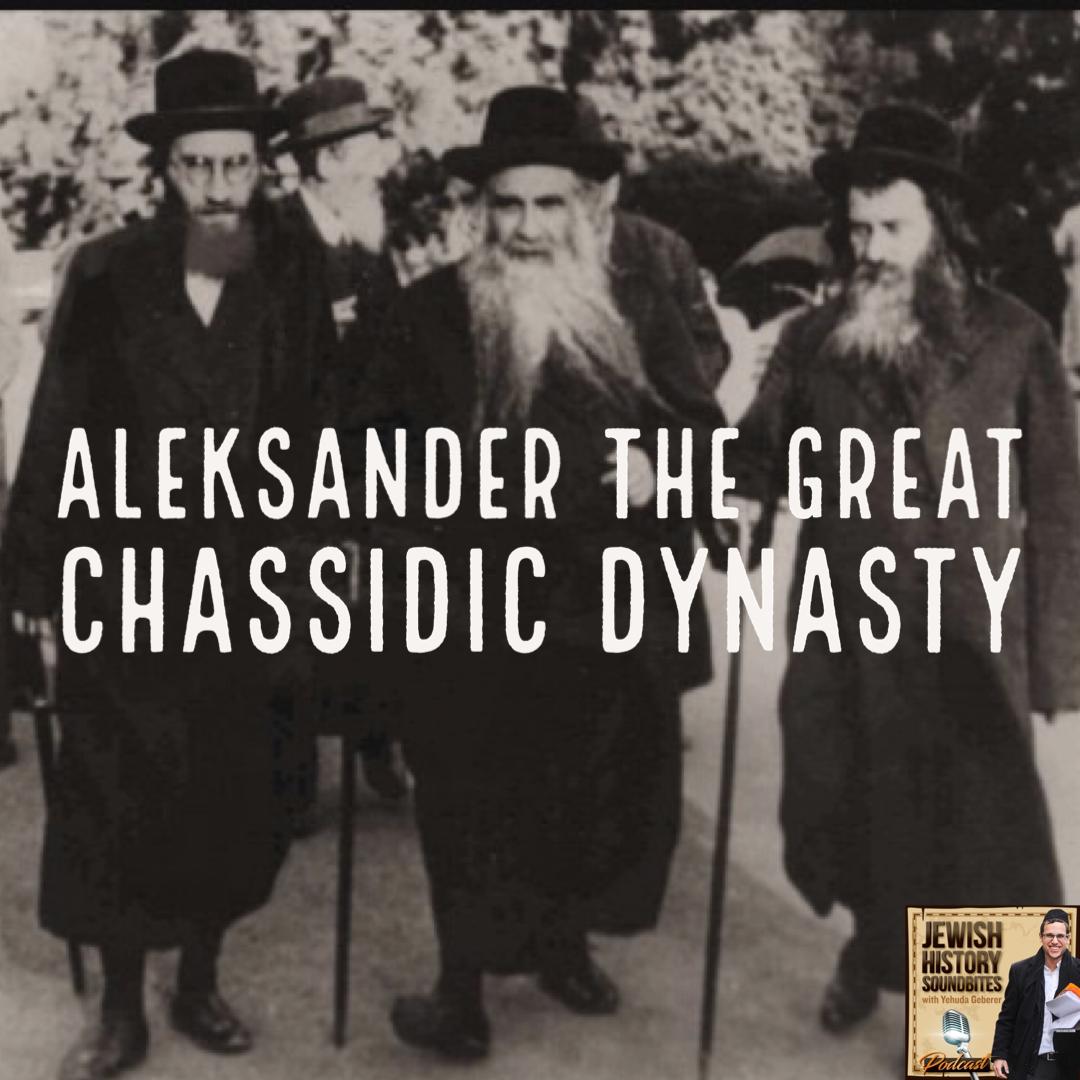
Ep 372Aleksander the Great Chassidic Dynasty
Based in the Lodz suburb of Aleksandrow, the Aleksander chassidic dynasty was one of the largest and most prominent in prewar Poland. Established as a branch of Vorka-Peshischa in the mid 19th century, it grew under the dynamic leadership of successive generations of the Danziger family at its helm. The Bais Yisrael Yeshiva network contributed to its growth in the early 20th century. Aleksander gained further renown during its 30 year dispute with its arch rival - the Ger chassidic community based near Warsaw. Although Aleksander attempted to remain apolitical, they did nominally join Agudas Yisrael towards the end of the 1930’s. Although given an opportunity to escape, the last great prewar leader of Aleksander Rav Yitzchak Menachem Mendel Danziger - the Akeidas Yitzchak, chose to remain with his followers. Having escaped from Lodz to the Warsaw Ghetto, he was deported along with his family and followers and martyred in Treblinka in the summer of 1942. A group of Aleksander survivors prevailed upon the only remaining member of the Rebbe’s family, Rav Yehuda Moshe Tyberg to lead and rebuild Aleksander. He did so and established an Aleksander court in Bnei Brak, even changing his family name to Danziger. Sponsored by https://torahpapers.com/ an English translation of the popular shiurim of Rav Baruch Rosenblum. For captivating, engaging Parshah shiurim, with a breadth of sources across the Torah spectrum, get your ready to print shiur weekly to your inbox. For sponsorship opportunities about your favorite topics of Jewish history contact Yehuda at: [email protected] Subscribe To Our Podcast on: PodBean: https://jsoundbites.podbean.com/ Follow us on Twitter or Instagram at @Jsoundbites You can email Yehuda at [email protected]

Ep 371Holy Crown in Brownsville: The Life & Times of Rav Moshe Rosen
Rav Moshe Rosen - the Nezer Hakodesh (c.1870-1957) was an early leader of American orthodoxy. Having served as a communal rabbi in Lithuania for three decades, he was the one who discovered the Chazon Ish as a young man in the town of Chveidan. In the late 1920’s he immigrated to the United States and settled in Brownsville. He served as the first rosh yeshiva of Torah Vodaath, and later served as a rabbi in Brownsville, whilst continuing to author his multi volume Nezer Hakodesh and other works. He served at the helm of the Agudath Harabbonim and was involved in many early initiatives of Jewish education during his thirty years in a leadership position of American Orthodoxy. For sponsorship opportunities about your favorite topics of Jewish history contact Yehuda at: [email protected] Subscribe To Our Podcast on: PodBean: https://jsoundbites.podbean.com/ Follow us on Twitter or Instagram at @Jsoundbites You can email Yehuda at [email protected]

Ep 370Early Secularization in Jewish Europe
The expulsion of the Jews from the Iberian Peninsula at the end of the 15th century was a period of great upheaval, as a Spanish-Portuguese diaspora formed in Western Europe and the Mediterranean basin. At the same time, many conversos remained in their home country, while many others emigrated and attempted to rejoin the Jewish community. As a result, there arose in communities such as Amsterdam, London, northern Italy and other places the beginnings of Jewish Enlightenment and early secularization, as the confrontation with the ideas of the Enlightenment and the modern world brought the challenge of Jewish identity to the fore. Jewish secularization did not commence in Mendelssohn’s Berlin of the 18th century, nor in Eastern Europe of the late 19th century. Secularization has been a slow but steady process through the 15th-18th centuries. Heretics and tragic figures from Converso families in Amsterdam such Uriel De Costa and Baruch Spinoza pioneered Jewish secularism, while an Italian rabbi in London named Rabbi David Nieto attempted to combat it. The addition of Sabbateanism and the rise of the court Jews in Germany in the 17th century, only led to an increasing trend towards secularization, long before Berlin and Mendelssohn. For sponsorship opportunities about your favorite topics of Jewish history contact Yehuda at: [email protected] Subscribe To Our Podcast on: PodBean: https://jsoundbites.podbean.com/ Follow us on Twitter or Instagram at @Jsoundbites You can email Yehuda at [email protected]

Ep 369Jerusalem Odyssey: Rav Yaakov Moshe Charlap
Rav Yaakov Moshe Charlap (1882-1951) was an important rabbinical leader in Yerushalayim during the first half of the 20th century. A product of the Old Yishuv, he was a student of Rav Yehoshua Leib Diskin, Rav Hirsh Mechel Shapiro and several others before becoming a lifelong close student of Rav Avraham Yitzchak Kook. He served as the founding rabbi of the Shaarei Chesed and Rechavia neighborhoods, as well as rosh yeshiva of Merkaz Harav and his own yeshiva Bais Zevul in Shaarei Chesed. For sponsorship opportunities about your favorite topics of Jewish history contact Yehuda at: [email protected] Subscribe To Our Podcast on: PodBean: https://jsoundbites.podbean.com/ Follow us on Twitter or Instagram at @Jsoundbites You can email Yehuda at [email protected]

Ep 368The US & The Holocaust: A Review
The story of the confrontation of the US and the Holocaust is done well in the recently produced Ken Burns documentary ‘The US & the Holocaust’. It purports to cover the entirety of the Holocaust from an American perspective, and is by no means limited to the story of potential rescue. From the immigration quotas, to American anti-Semitism and the isolationist movement, to the war itself. There’s the story of how individual Jews confronted the reality of the developing Holocaust knowing that their relatives were facing impending doom. The questions of what role was played by the American people, the Roosevelt administration, Congress and the State Department - in particular senior officials such as Breckinridge Long - are duly analyzed. The response of the American Jewish community as a collective as well as individuals is explored as well. In addition, noble endeavors of the US government such as the Treasury Department’s role in the forming of the War Refugee Board is recorded as well. For sponsorship opportunities about your favorite topics of Jewish history contact Yehuda at: [email protected] Subscribe To Our Podcast on: PodBean: https://jsoundbites.podbean.com/ Follow us on Twitter or Instagram at @Jsoundbites You can email Yehuda at [email protected]

Ep 367Founder of a Dynasty: The Bais Halevi
Rav Yosef Dov Soloveitchik - the Bais Halevi (1820-1892) was the founder of the Soloveitchik/Brisk dynasty. Following his studies in Volozhin and a short stint as a rosh yeshiva in Minsk, he was appointed assistant rosh yeshiva in Volozhin alongside the Netziv. In 1864 he departed to assume the rabbinate in Slutzk, where he remained until 1875 when he retired to Warsaw. In 1879 he moved once again this time to Brisk, where he served as rabbi until his passing. For sponsorship opportunities about your favorite topics of Jewish history contact Yehuda at: [email protected] Subscribe To Our Podcast on: PodBean: https://jsoundbites.podbean.com/ Follow us on Twitter or Instagram at @Jsoundbites You can email Yehuda at [email protected]

Ep 366Jews, Sports & Identity
Jews and sports is an exploration of Jewish identity and integration in the modern world. This was expressed as Jews became fans of sports teams, with the most famous baseball fan in history being an eccentric Jewish woman named Hilda Chester. Jews were always prominent in the labor movement, and it was a Jewish labor organizer named Marvin Miller who, as president of the Player’s Union, successfully rid Baseball of the reserve clause and emancipated the players from the owner’s grip. During the 1920’s and 30’s Jews were especially prominent in boxing. Benny Leonard and Barney Ross were famous boxing champions, but there were many others as well. Jewish participation in boxing is perhaps the most typical expression of both the struggles of the immigrant generation, along with the process of Americanization. Several victims of the Holocaust were famous Jewish athletes. Eddy Hamel of the Dutch National Football (soccer) team, Victor Perez the boxer, gymnasts, fencers and others as well. Though they may have been celebrities known for their physical prowess, Nazi racial theory considered them Jews and they suffered the same fate as European Jewry. Sponsored by the OU’s Teach Coalition, whose network of thousands of activists just like you, are urging you to go out and vote in the upcoming elections on November 8, 2022. For help contact the voter hotline at 646-459-5162 or https://teachcoalition.org/vote/ For sponsorship opportunities about your favorite topics of Jewish history contact Yehuda at: [email protected] Subscribe To Our Podcast on: PodBean: https://jsoundbites.podbean.com/ Follow us on Twitter or Instagram at @Jsoundbites You can email Yehuda at [email protected]

Ep 365Organizing Orthodoxy: The Story of the Agudath Harabonim Part I
The Agudath Harabonim of the US & Canada was founded in 1902 with the goals of strengthening traditional Jewish observance in the country. Its membership was primarily composed of Eastern European immigrant rabbis, and they focused on the areas of Shabbos observance, kashrus, Jewish education, strengthening the office of the rabbinate and assisting their brethren back in the old country. The Agudath Harabonim supported RIETS, founded the Central Relief Committee and Ezras Torah during World War I and the Vaad Hatzalah during World War II. Its leadership was composed by some of the greatest rabbinical leaders of the era, including Rabbi Moshe Zevulun Margolis (Ramaz), Rabbi Dov Bernard Levinthal, Rabbi Yisrael Rosenberg, Rabbi Moshe Rosen, Rabbi Yaakov Kontrovitz, Rabbi Eliezer Silver and many others. Sponsored by the OU’s Teach Coalition, whose network of thousands of activists just like you, are urging you to go out and vote in the upcoming elections on November 8, 2022. For help contact the voter hotline at 646-459-5162 or https://teachcoalition.org/vote/ For sponsorship opportunities about your favorite topics of Jewish history contact Yehuda at: [email protected] Subscribe To Our Podcast on: PodBean: https://jsoundbites.podbean.com/ Follow us on Twitter or Instagram at @Jsoundbites You can email Yehuda at [email protected]

Ep 364Our Grandfathers Came to this Land
The Great Immigration was the population movement of millions of Jews primarily from Eastern Europe to the United States and other countries over the course of a half century between 1875-1924. Although the process, scope, catalysts, challenges of the immigration and immigrants are fascinating aspects of the story, perhaps the most unique angle is the fact that the entire endeavor was a ‘silent revolution’. Throughout the 19th century the Jewish community in Russia and elsewhere debated, discussed and pondered solutions to the many challenges facing the Jewish community and Jewish identity in the modern era. No solutions were incredibly successful. Yet one was. Immigration. It completely transformed the Jewish landscape. And it was this solution which was really a silent revolution, for it had no leadership, no political platform, no organization. It was a grassroots movement from rank and file anonymous individuals making subjective life choices regarding migration. It was this silent revolution which made a decisive and quite astounding impact on the future of the Jewish People. Sponsored by the OU’s Teach Coalition, whose network of thousands of activists just like you, are urging you to go out and vote in the upcoming elections on November 8, 2022. For help contact the voter hotline at 646-459-5162 or https://teachcoalition.org/vote/ For sponsorship opportunities about your favorite topics of Jewish history contact Yehuda at: [email protected] Subscribe To Our Podcast on: PodBean: https://jsoundbites.podbean.com/ Follow us on Twitter or Instagram at @Jsoundbites You can email Yehuda at [email protected]

Ep 363Feivels Going West: Jews in the Wild West
The German Jewish immigration of the mid 19th century caused a demographic explosion of the American Jewish community from a mere 5,000 in 1830 to approximately 250,000 in 1880. Economic opportunity, the California Gold Rush and a general American migration to the frontiers of the west, led thousands of these immigrants to try their luck as peddlers and merchants in San Francisco and other mining towns in the Wild West. When Levi Strauss arrived from Bavaria with his family in 1847 he initially settled in NY. The Gold Rush enticed him to open a branch of the family’s dry goods business in San Francisco in 1854 where he serviced the mining community. Two decades later he began marketing Levi’s pants, which were the world’s first blue jeans with rivets to secure the pockets in the rough environment the miners operated in. Josephine Marcus was the daughter of German Jewish immigrants in NYC who migrated to California and later to Tombstone, Arizona where she married the legendary Wild West figure Wyatt Earp. Sponsored by the OU’s Teach Coalition, whose network of thousands of activists just like you, are urging you to go out and vote in the upcoming elections on November 8, 2022. For help contact the voter hotline at 646-459-5162 or https://teachcoalition.org/vote/ For sponsorship opportunities about your favorite topics of Jewish history contact Yehuda at: [email protected] Subscribe To Our Podcast on: PodBean: https://jsoundbites.podbean.com/ Follow us on Twitter or Instagram at @Jsoundbites You can email Yehuda at [email protected]

Ep 362Chasam Sofer Part III: A Pressburg Situation
Rav Moshe Sofer (1762-1839) - the Chasam Sofer - led the Pressburg Jewish community for 33 years. From the time of his initial appointment he faced struggles and challenges from progressive elements within the community. Even as the Chasam Sofer gained renown across the Habsburg Empire, he still was confronted with an unsuccessful attempt by community leaders in Pressburg to forcefully close his large and prestigious yeshiva and remove him from his rabbinical position. His tactful and ultimately successful approach to navigate these local challenges influenced his general outlook and leadership within the context of the broad reaches of Central Europe. For sponsorship opportunities about your favorite topics of Jewish history contact Yehuda at: [email protected] Subscribe To Our Podcast on: PodBean: https://jsoundbites.podbean.com/ Follow us on Twitter or Instagram at @Jsoundbites You can email Yehuda at [email protected]
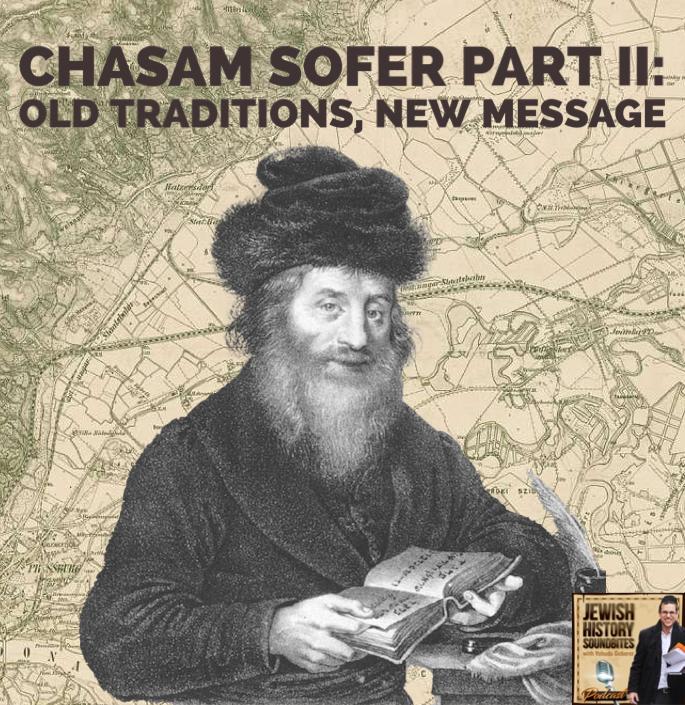
Ep 361Chasam Sofer Part II: Old Traditions, New Message
“Chadash Asur Min Hatorah” - Anything new is forbidden, has become a slogan in defense of Jewish tradition confronting the challenges of modernity. Formulated by Rav Moshe Sofer (1762-1839) the Chasam Sofer and longtime rabbi of Pressburg (Bratislava), he has become a symbol of the combatant and fearless leadership in defense of tradition against the onslaught of changes to that hallowed tradition. How did he do it? What were his methods? What was the context of the challenges he was facing? What complexities existed at the time which led the Chasam Sofer to exalt custom, restore the honor of the rabbinate and to be posthumously recognized as the father of Orthodoxy? Check out Part I about the Chasam Sofer and his family: https://jsoundbites.podbean.com/e/hungarian-royalty-the-chasam-sofer-his-family/ For sponsorship opportunities about your favorite topics of Jewish history contact Yehuda at: [email protected] Subscribe To Our Podcast on: PodBean: https://jsoundbites.podbean.com/ Follow us on Twitter or Instagram at @Jsoundbites You can email Yehuda at [email protected]

Ep 360United We Split: The Leadership of Rav Yosef Tzvi Dushinsky
Rav Yosef Tzvi Dushinsky (1867-1948) was the rabbi of the Eidah Chareidis community in Yerushalayim & headed the branch of Agudas Yisrael in that country for 15 crucial and tumultuous years. Having grown up in Hungary, he had previously served as rabbi of Galanta and Chust (Slovakia) for four decades. In Yerushalayim he oversaw the sweeping changes which were taking place in the Yishuv with immigration, the Great Arab Revolt, the policies of the British Mandatory government, World War II, the Holocaust, the UN Partition Resolution and the founding of the State of Israel. As a responsible and outspoken leader, Rav Dushinsky courageously led his community through this unique era, and aside from his rabbinical duties - along with his position as rosh yeshiva in the yeshiva which he founded - he took an active political role as well. Ultimately the changing demographics due to the immigration of more moderate Agudists from Poland in Germany led to a split between the Eidah Chareidis and Agudas Yisrael, which was overseen by Rav Dushinsky and remains to this very day. Following his passing in 1948 he was succeeded by his only son Rav Yisroel Moshe Dushinsky (1921-2003), who built the Dushinsky community around the yeshiva and transformed it from an Ashkenaz Oberland community into a full Chassidic court. For sponsorship opportunities about your favorite topics of Jewish history contact Yehuda at: [email protected] Subscribe To Our Podcast on: PodBean: https://jsoundbites.podbean.com/ Follow us on Twitter or Instagram at @Jsoundbites You can email Yehuda at [email protected]