
Jewish History Soundbites
508 episodes — Page 9 of 11
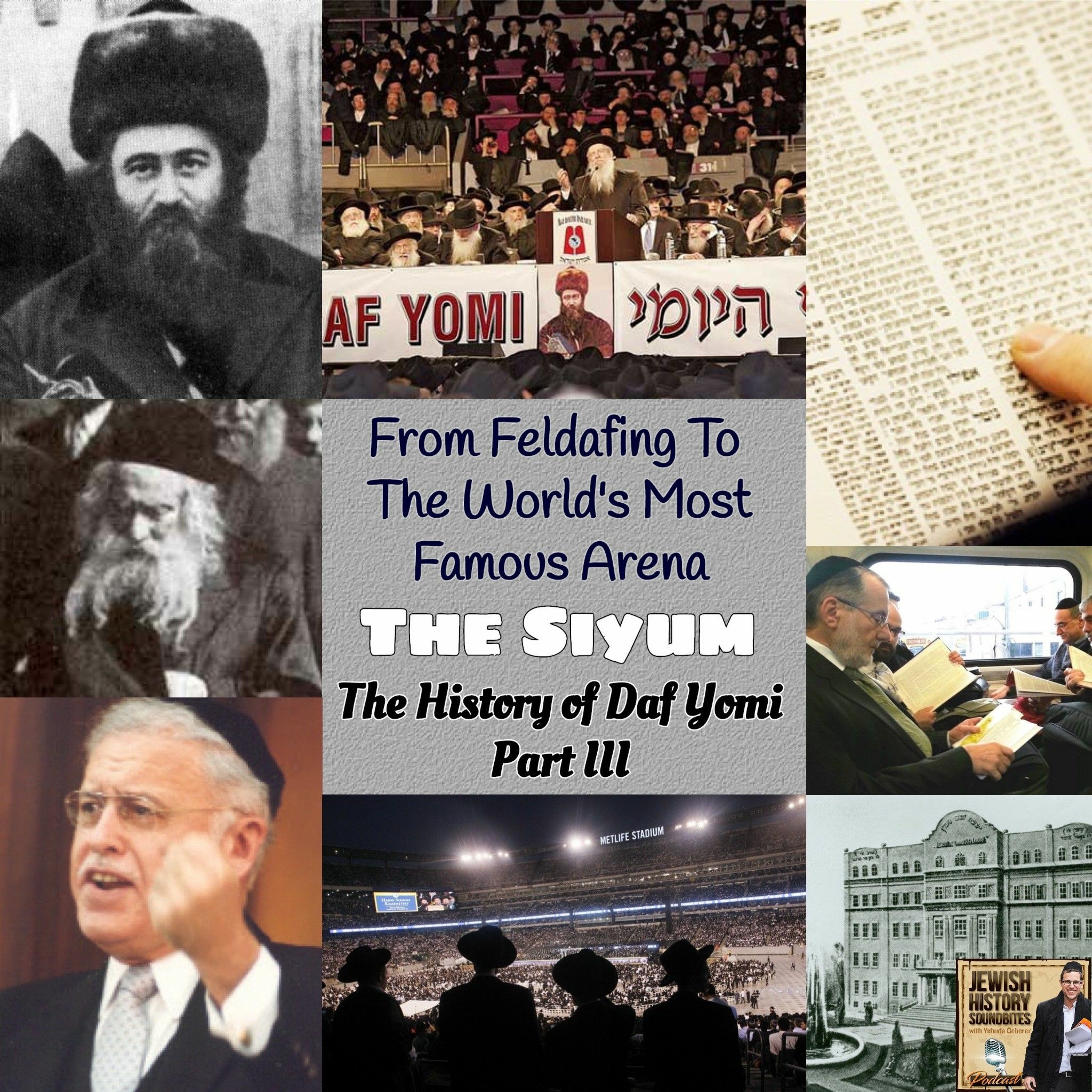
Ep 109The Siyum! From Feldafing To The World’s Most Famous Arena: The History of Daf Yomi Part III
The movement spread around Europe and even across the world. Upon each completion of a cycle, the custom began of celebrating the occasion with a communal Siyum Hashas. The association of the Daf Yomi as well as the personality of Rav Meir Shapiro with the Agudas Yisroel led to limited opposition in some circles. Rav Meir Shapiro envisioned however, that the Daf Yomi would rise above politics and be a unifier among the factions of the Jewish community. Each successive Siyum Hashas brought more innovation, ever larger numbers of participants and new venues. Tracing the development of the various Siyum Hashas's over the 20th century is a window into the growth of the Torah community over the century. From the early and modest Siyum Hashas celebrations, following the destruction of the majority of the participants in the Holocaust, to the massive gatherings in the last quarter of the 20th Century and early part of the 21st, the story of the Siyum Hashas is a chapter in the story of the Eternal People. Subscribe To Our Podcast on: PodBean: https://jsoundbites.podbean.com/ Follow us on Twitter or Instagram at @Jsoundbites You can email Yehuda at [email protected]

Ep 108A Visionary and a Dreamer: The History of Daf Yomi Part II
Commencing with his dramatic announcement in Vienna in the summer of 1923, Rav Meir Shapiro (1887-1933) dedicated vast energies to spreading the idea of the Daf Yomi program. He was a man of many talents, an innovator with boundless energy, charismatic, a fine and entertaining public speaker, an accomplished Talmudic scholar, a visionary, and most of all a relentless doer. Incredibly, his vision and action on behalf of the Daf Yomi was just one of a myriad of projects he initiated and carried out in his short life. Perhaps it was his most long lasting contribution though, and in the collective memory of the Jewish People, this is arguably his most enduring legacy. Subscribe To Our Podcast on: PodBean: https://jsoundbites.podbean.com/ Follow us on Twitter or Instagram at @Jsoundbites You can email Yehuda at [email protected]
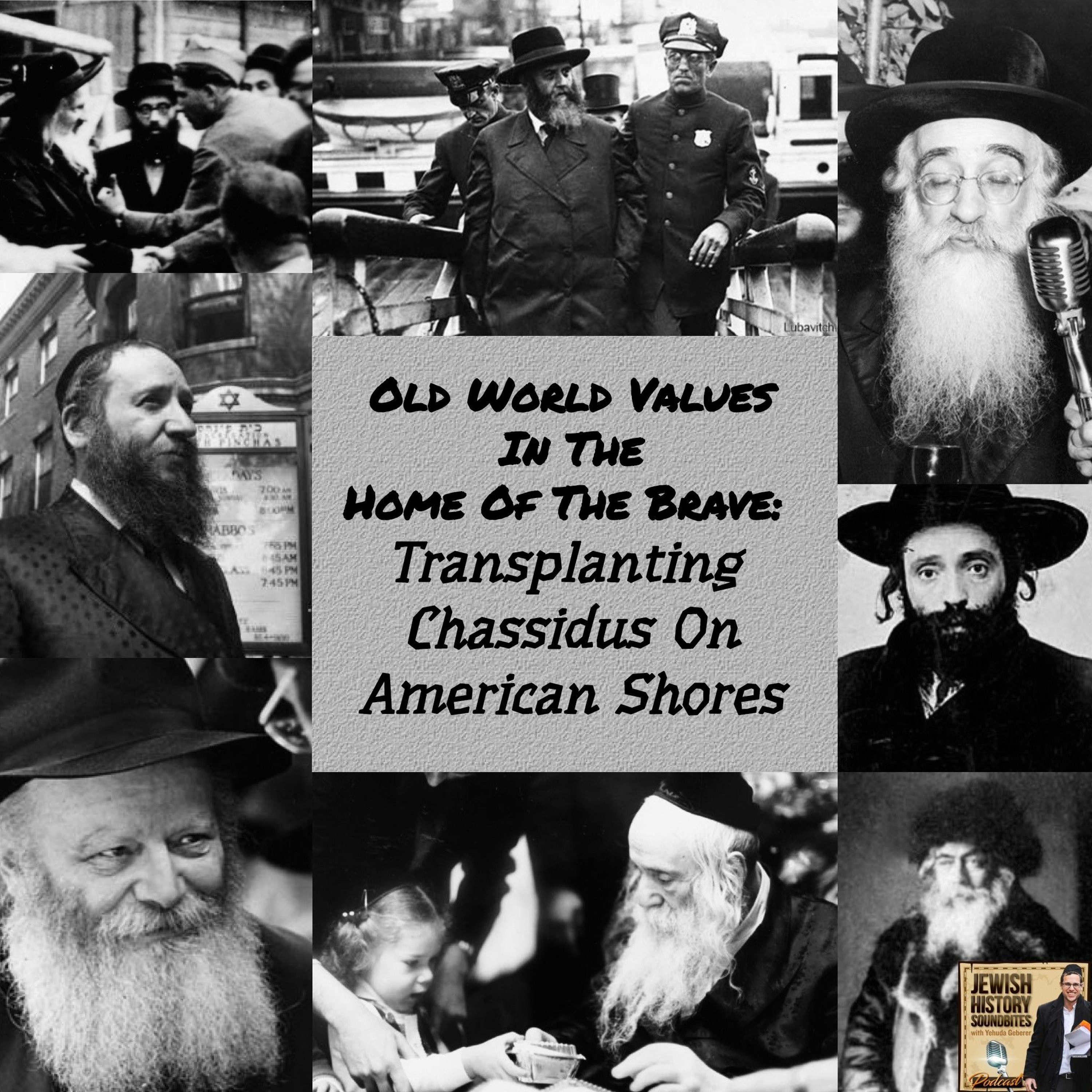
Ep 107Old World Values in the Home of the Brave: Transplanting Chassidus on American Shores
Recorded LIVE at the historic Ridinker Shteibel on the Upper West Side of Manhattan on the 2nd Night of Chanukah, Jewish Historian Yehuda Geberer delves into the incredible rebirth of the Chassidic movement in North America. Learn about the great leaders and holy tzadikim who helped revive Chassidic life in a new world. Subscribe To Our Podcast on: PodBean: https://jsoundbites.podbean.com/ Follow us on Twitter or Instagram at @Jsoundbites You can email Yehuda at [email protected]

Ep 106Whose Idea Was It Anyways? The History of Daf Yomi Part I
The worldwide study of the Daf Yomi, culminating in the Siyum Hashas celebration, is synonymous with the name of the founder of the movement - Rav Meir Shapiro. After conceiving the idea as a young communal Rabbi, he presented it to the assembled delegates at the first Knessia of Agudas Yisroel in Vienna, in the summer of 1923. Was he the first - and only - one to have the idea? Was there precedent of such a study format in Jewish History? Were there others who promoted the study of the daily daf? If yes, what makes Rav Meir Shapiro's program unique? And why is he truly the originator of the Daf Yomi? Subscribe To Our Podcast on: PodBean: https://jsoundbites.podbean.com/ Follow us on Twitter or Instagram at @Jsoundbites You can email Yehuda at [email protected]

Ep 105A Rebbishe Rosh Yeshiva: The Story of Rav Yitzchok Hutner Part II
Commencing at Yeshivas Chaim Berlin while it was still in the Brownsville neighborhood of Brooklyn, Rav Hutner embarked on an illustrious career in Torah education. As the demographics of the neighborhood changed, the Yeshiva had brief stint in Far Rockaway before settling down in Flatbush, back in Brooklyn. Over the first couple of decades at the Yeshiva's helm, Rav Hutner solidified control over the Yeshiva, while imbuing it with his own unique flavor. Active in the public sphere as well, Rav Hutner took a leading role on many of the hot issues of the day. In his later years, he fulfilled his dream of returning to Israel and founding a Yeshiva there as well. Subscribe To Our Podcast on: PodBean: https://jsoundbites.podbean.com/ Follow us on Twitter or Instagram at @Jsoundbites You can email Yehuda at [email protected]

Ep 104WWI & The Jews Part III: Yeshivas on the Run & Turning the Tide of the War
As the Yeshivas headed into exile deep into the Russian interior, they attempted to assume their pre war functions as citadels of Torah study. With greatly shrunken student bodies and a lack of funding, these Yeshivas found themselves in an increasingly precarious situation. The year 1917 brought with it three major developments in the War, each of which had a major and direct impact on the Jewish People. The two revolutions in Russia - in February and November - toppled the Czar and ultimately brought the Bolsheviks to power. In April, the US Congress declared war on Germany, thus paving the way for the entry of American troops to turn the tide on the battlefield. Finally, in November, Great Britain issued the Balfour Declaration promising a National Home for the Jewish People in Palestine. Subscribe To Our Podcast on: PodBean: https://jsoundbites.podbean.com/ Follow us on Twitter or Instagram at @Jsoundbites You can email Yehuda at [email protected]

Ep 103More Than Just A Gadol: The Story of Rav Yitzchok Hutner Part I
One of the most multifaceted individuals in Torah leadership of the last century was R' Yitzchak Hutner. Arriving from Warsaw to Slabodka in the wake of World War I, he eventually followed the Yeshiva on it's sojourn in Chevron. During this time he enjoyed a close relationship with Rav Kook. Following a stint in University in Germany, he eventually made it across the Atlantic, where he obtained a position in Yeshivas Chaim Berlin in Brownsville. As a charismatic leader and scholar with penetrating depth, the diversity of his thought and teachings is almost unmatched in contemporary Rabbinic writing. Subscribe To Our Podcast on: PodBean: https://jsoundbites.podbean.com/ Follow us on Twitter or Instagram at @Jsoundbites You can email Yehuda at [email protected]
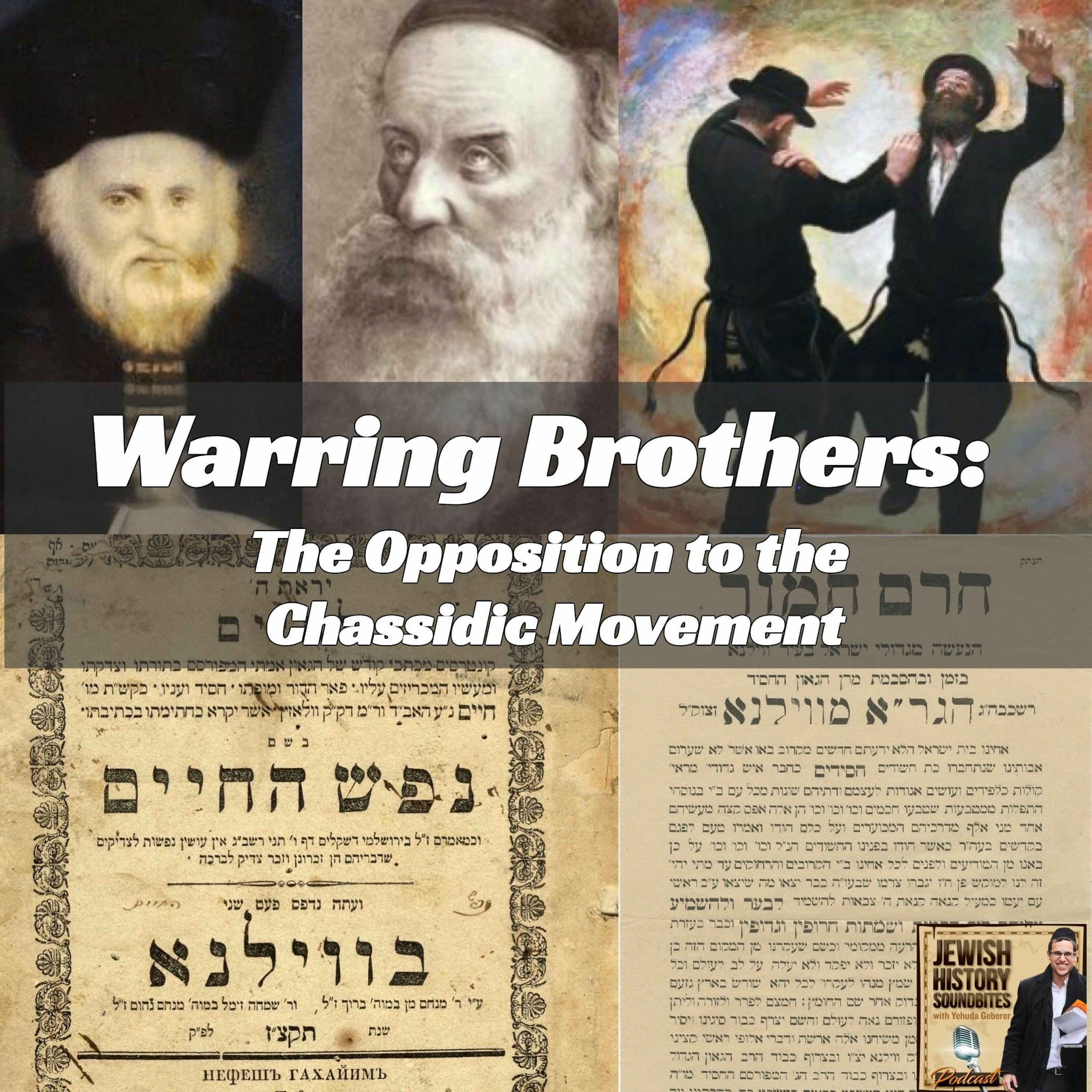
Ep 102Warring Brothers: The Opposition to the Chassidic Movement
With the upcoming holiday of Yud Tes Kislev coming up, it's worth examining the early opposition that the Chassidic movement faced at the early stages of the movement. One of the ironies of the organized opposition, was it's role in enhancing the divergent groups of Chassidim into a movement with common identity. With sporadic opposition rising in the early years, the opposition was raised a notch in 1772 with the first official proclamations of excommunication. This commenced a period of more than three decades of very active and occasionally violent opposition of the misnaggdim. The misnaggdim were led by the Vilna Goan who spearheaded the opposition. In the first decade of the 19th century, the active stage had passed and the misnaggdim changed gears to a more passive ideological phase. The Chassidic movement emerged from the opposition stronger, larger and with a more cohesive sense of identity and mission. Subscribe To Our Podcast on: PodBean: https://jsoundbites.podbean.com/ Follow us on Twitter or Instagram at @Jsoundbites You can email Yehuda at [email protected]

Ep 101Holy Beggars: The Chaluka System in the Old Yishuv
From the first arrival of the Chassidic group to Tverya in 1777, through the Aliya of the students of the Vilna Gaon in the early years of the 19th century, and right up until modern times, the Chaluka system was the lifeline of support for the Old Yishuv. How were the funds collected and distributed? What constituted the "Old Yishuv"? Under which criteria was one eligible for this financial support, and were those conditions met? How long did it last? What were some of the long term societal effects on the community of recipients, as well as on the community of donors back in Europe? Exploring the context of these questions and others will give a clearer understanding of a financial support system whose echoes remain till this very day. Subscribe To Our Podcast on: PodBean: https://jsoundbites.podbean.com/ Follow us on Twitter or Instagram at @Jsoundbites You can email Yehuda at [email protected]
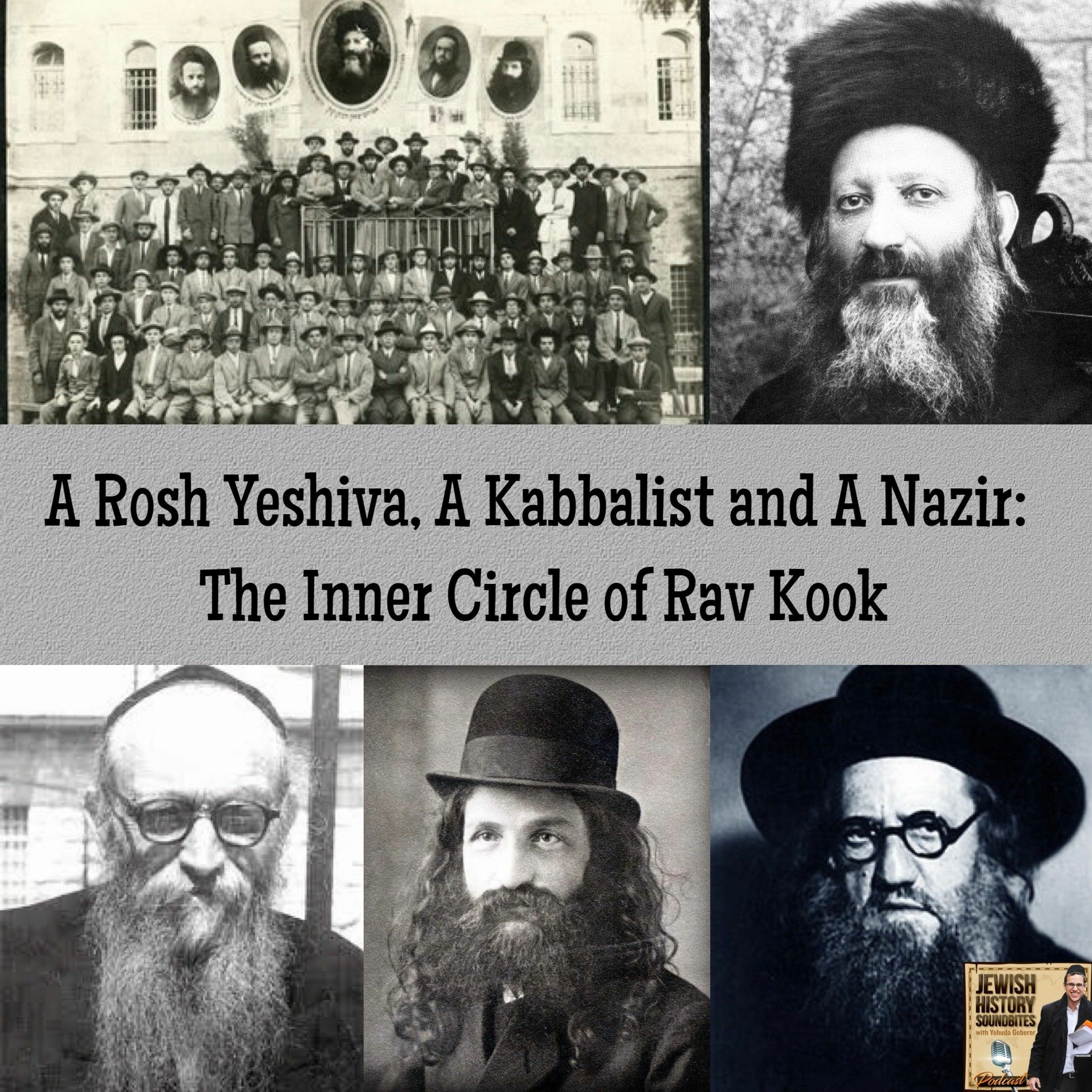
Ep 100A Rosh Yeshiva, A Kabbalist and A Nazir: The Inner Circle of Rav Kook
The Founding of the Merkaz Harav in the second decade of the twentieth century, brought together a group of some very talented individuals to the forefront of Torah education. Among others, we'll examine the life of the Rav Dovid Cohen, the Rav Hanazir (1887-1972), who's origins lay in the Rabbinic Lithuanian aristocracy and later became a modern day Nazir. Rav Yitzchok Arielli (1896-1974) was home grown talent in the Old City of Yerushalayim. Following his exposure to Rav Kook, he became a close student and subsequently one of the heads of Merkaz Harav, while also achieving distinction as one of the leading poskim in Yerushalayim. Rav Yaakov Moshe Charlap (1882-1951) a mystic, thinker, Talmudist, community Rabbi, leader and Rosh Yeshiva, was one of the most diverse of this talented circle. Subscribe To Our Podcast on: PodBean: https://jsoundbites.podbean.com/ Follow us on Twitter or Instagram at @Jsoundbites You can email Yehuda at [email protected]
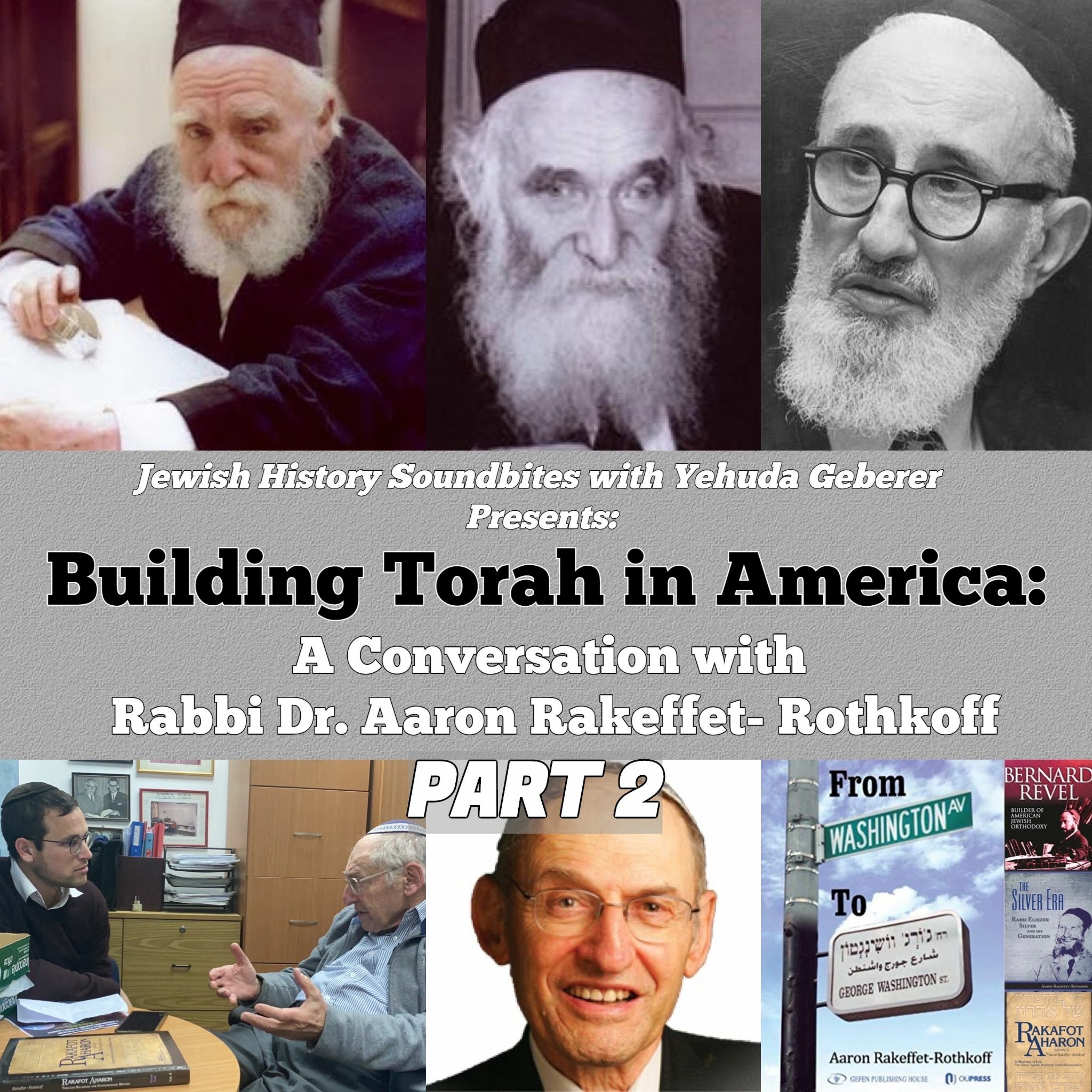
Ep 99Building Torah in America Part II: A Conversation with Rabbi Dr. Aaron Rakeffet Rothkoff
Get ready for Part 2 of our interview with the legendary Rabbi Dr. Aaron Rakeffet-Rothkoff. Rav Rakeffett is a world class Jewish Historian who has lived a storied life, from learning in Lakewood and Yeshiva University to sharing close relationships with luminaries such as Rabbi Joseph Ber Soloveitchik, Rav Aaron Kotler,Rav Moshe Feinstein as well as other Gedolim. He has authored numerous bestselling Sefarim and Books such as "The Silver Era" and the multi volume "Rakaffot Aaron" series. He has thousands of Talmidim around the world, many of whom listen to his Shiurim regularly in person at Gruss Kollel in Yerushalayim and online at YUTorah.org . In addition to his storied teaching and writing careers, Rav Rakeffet has spent time working for the IDF and Mossad on a variety of important missions including clandestine trips to Soviet Russia and a close involvement with the Zachary Baumel HY'D case. Subscribe To Our Podcast on: PodBean: https://jsoundbites.podbean.com/ Follow us on Twitter or Instagram at @Jsoundbites You can email Yehuda at [email protected]

Ep 98Building Torah in America: A Conversation with Rabbi Dr. Aaron Rakeffet-Rothkoff Part I
Our momentous 100th Episode is Part 1 of our interview with the legendary Rabbi Dr. Aaron Rakeffet-Rothkoff. Rav Rakeffett is a world class Jewish Historian who has lived a storied life, from learning in Lakewood and Yeshiva University to sharing close relationships with luminaries such as Rabbi Joseph Ber Soloveitchik, Rav Aaron Kotler,Rav Moshe Feinstein as well as other Gedolim. He has authored numerous bestselling Sefarim and Books such as "The Silver Era" and the multi volume "Rakaffot Aaron" series. He has thousands of Talmidim around the world, many of whom listen to his Shiurim regularly in person at Gruss Kollel in Yerushalayim and online at YUTorah.org . In addition to his storied teaching and writing careers, Rav Rakeffet has spent time working for the IDF and Mossad on a variety of important missions including clandestine trips to Soviet Russia and a close involvement with the Zachary Baumel HY'D case. Subscribe To Our Podcast on: PodBean: https://jsoundbites.podbean.com/ Follow us on Twitter or Instagram at @Jsoundbites You can email Yehuda at [email protected]

Ep 97WWI & The Jews Part II: Jew vs Jew and the Eastern European Exile
As loyal citizens of their respective countries, Jews served loyally in every army and on every front. Very often one encountered the tragic scenario of Jew fighting Jew. Jewish chaplains serviced Jewish soldiers in the German army, and connected with local Jewish communities in areas under German occupation. This enhanced the connection between East and West. Jewish soldiers faced numerous challenges while serving and it became part of the struggle of Jewish identity in modern times. Jewish communities were exiled across Eastern Europe. With Galicia Jews streaming west towards Vienna, the pace of urbanization quickened. This brought Chassidus and great Rebbes for the first time to the West and to the great urban centers. Meanwhile in Russia, some communities were exiled as a result of the their homes being turned into a battlefield, while others were expelled by the Czar to the Russian interior. This massive exile caused a great upheaval in communal life, and in some instances a complete disintegration thereof. Among the exiled were many of the great Lithuanian Yeshivas. They attempted to relocate and continue their studies under ever worsening conditions. Subscribe To Our Podcast on: PodBean: https://jsoundbites.podbean.com/ Follow us on Twitter or Instagram at @Jsoundbites You can email Yehuda at [email protected]

Ep 96From Slabodka to The Seminary: The Story of Professor Saul Lieberman
Of the many figures who traversed two worlds in the past century, perhaps none epitomized that duality more than Rabbi Dr. Saul Lieberman. Scion of a Rabbinical family and student of Slabodka, he was to become one of the greatest scholars ever in the field of early Rabbinic writings. As one of the chief professors at the Jewish Theological Seminary for over four decades, he struggled with the challenges of Jewish identity in the Conservative and Orthodox communities. A brilliant and enigmatic personality, his winding career is a prism of the vicissitudes of Jewish life in the 20th century. Subscribe To Our Podcast on: PodBean: https://jsoundbites.podbean.com/ Follow us on Twitter or Instagram at @Jsoundbites You can email Yehuda at [email protected]

Ep 95To Save A World: Rav Aharon Kotler's Endless Activism
Kletzker Rosh Yeshiva, Agudist, member of Agudas Harrabonim, head of Vaad Hatzala, Rosh Yeshiva of Lakewood/BMG, founder and head of Chinuch Atzmai, Torah Umesorah & more. Rav Aharon Kotler (1891-1962) wore many hats in the diverse array of initiatives that he undertook to build the future of the Jewish people worldwide. With his boundless energy and devoted lieutenants, he partnered with people from all types and backgrounds to further the projects that he spearheaded. With his bold vision, he set out to invest in Jewish education in both the United States and Israel. In 1956, he led a campaign launch a Torah School network in Israel in the form of Chinuch Atzmai. The guest of honor at the inaugural dinner was Rav Yoshe Ber Soloveitchik, and was a historic event in the annals of the American Jewish community. Subscribe To Our Podcast on: PodBean: https://jsoundbites.podbean.com/ Follow us on Twitter or Instagram at @Jsoundbites You can email Yehuda at [email protected]
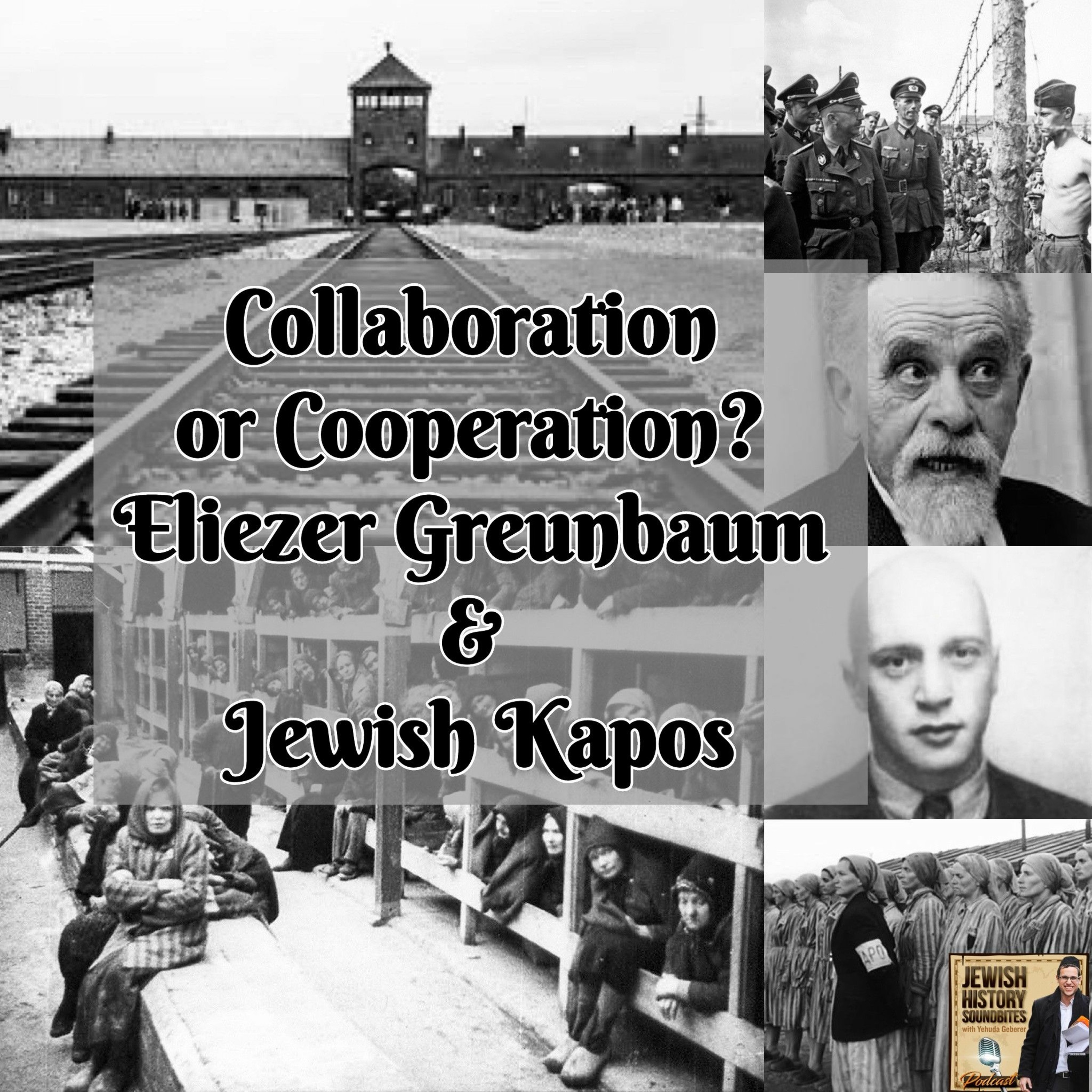
Ep 94Collaboration or Cooperation? Eliezer Greunbaum & Jewish Kapos
One of the most difficult stories to confront in an objective fashion, is the issue of Jewish collaboration during the Holocaust. From the Judenrat and the Jewish Police in the Ghettos to Kapos in the Concentration Camps, the questions raised by the moral decisions made by Jews working ostensibly for the Nazis resonates till this very day. One of the more famous stories was of Eliezer Greunbaum, the communist son of the great Zionist leader Yitzchak Greunbaum. As a Kapo in Auschwitz he was accused after the war of being a collaborator. But was he? Decades later, can we view the situation with more nuance, objectivity and balance and recognize the dilemmas they faced under trying circumstances? Subscribe To Our Podcast on: PodBean: https://jsoundbites.podbean.com/ Follow us on Twitter or Instagram at @Jsoundbites You can email Yehuda at [email protected]
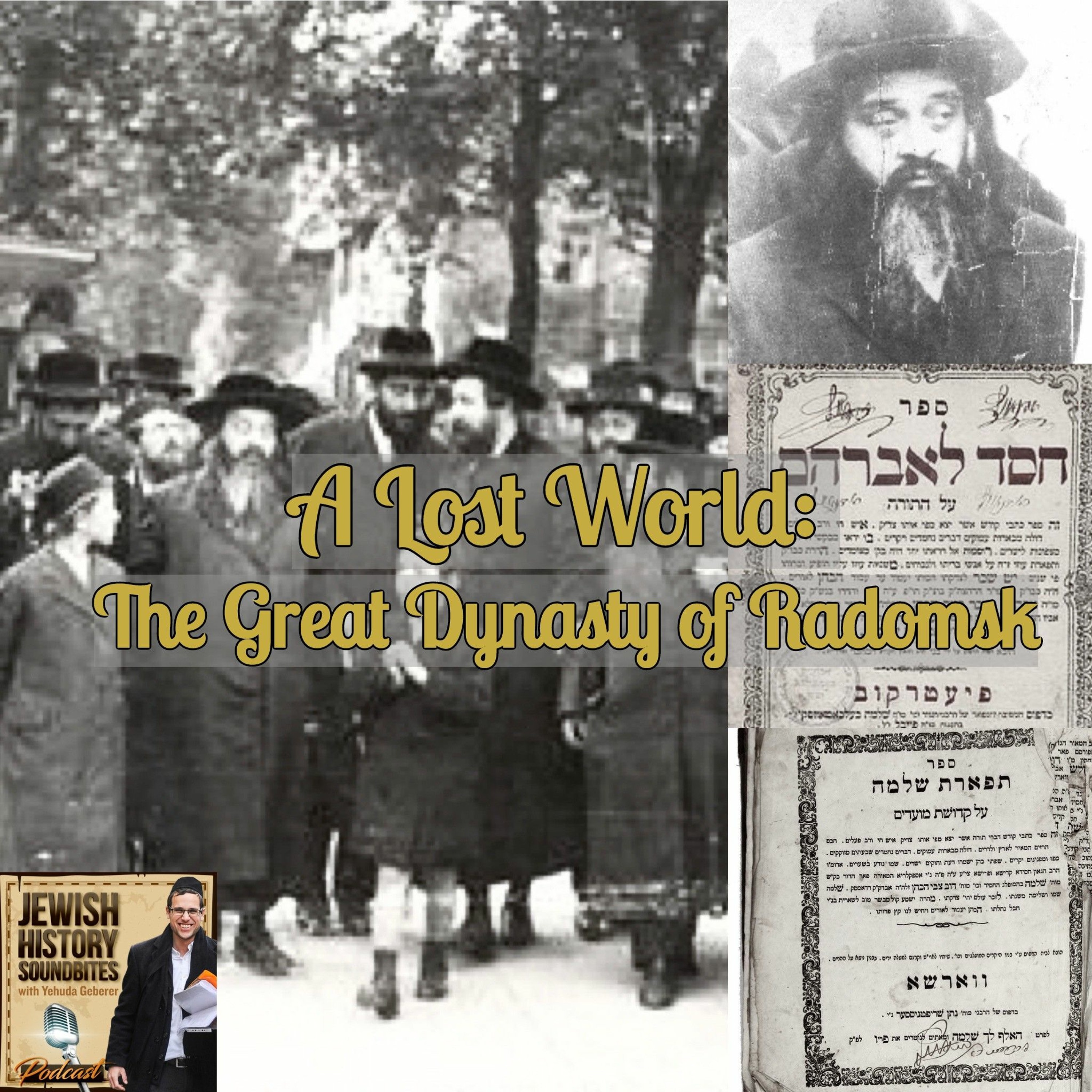
Ep 93A Lost World: The Great Dynasty of Radomsk
One of the largest Chassidic groups before the war, Radomsk evoked the majesty of Polish Chassidus in its full glory. Completely decimated during the Holocaust, it remains mostly unknown today. The story begins with the Tiferes Shlomo of Radomsk who was one of the most beloved Rebbes of his day. As Jews from all over Poland flocked to the warmth of Radomsk, this court came to be known for its warmth, acceptance and it's beautiful songs. The last Rebbe of Radomsk moved with his followers into the modern era by investing his energies in building a vast network of Yeshivas called Keser Torah across Poland. Staying with his chassidim till the very end, he was martyred in the Warsaw Ghetto snuffing out the torch of this great dynasty. Subscribe To Our Podcast on: PodBean: https://jsoundbites.podbean.com/ Follow us on Twitter or Instagram at @Jsoundbites You can email Yehuda at [email protected]
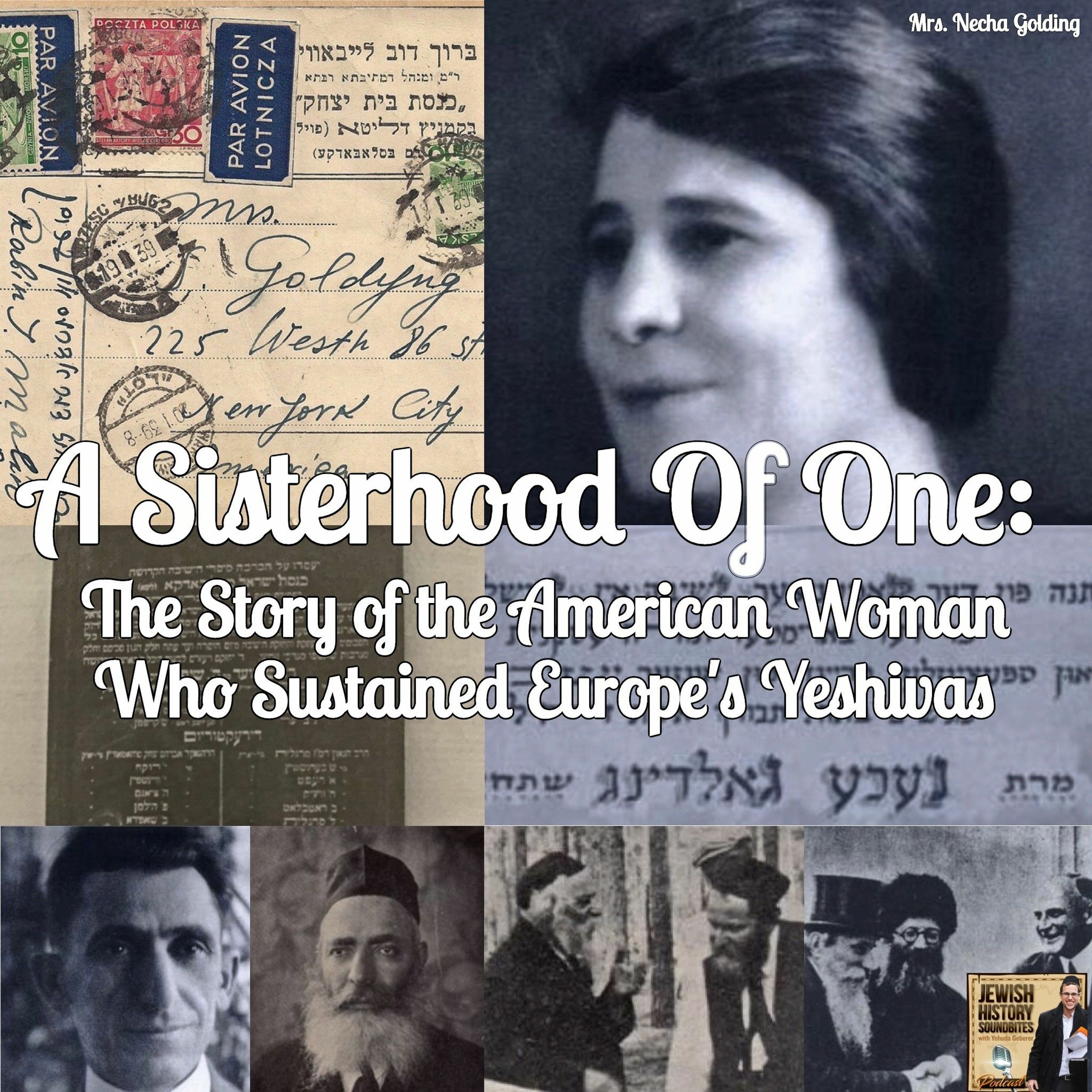
Ep 92A Sisterhood Of One: The Story of the Woman Who Sustained Europe's Yeshivas
During the interwar period, against all odds, an American women took a leading role in the funding of the great Yeshivas of Eastern Europe. Her name was Mrs. Necha Golding. As an organizer of women's auxiliary groups for various Yeshivas or as a hostess to the Roshei Yeshivas themselves when they came on fundraising trips, she was always at the forefront of activities on behalf of building Torah. She and her family forged ties to greats like the Chofetz Chaim, Rav Boruch Ber, Rav Elchonon Wasserman and Rav Aaron Kotler. She didn't just host them, she helped sustain them and they never ever forgot. Subscribe To Our Podcast on: PodBean: https://jsoundbites.podbean.com/ Follow us on Twitter or Instagram at @Jsoundbites You can email Yehuda at [email protected]

Ep 91The Forgotten War: WWI & The Jews Part I (JHS Winter Series)
Brand New Full-Length Series for Winter 2019-20! World War I had far reaching changes in Jewish life and society whose reverberations are still felt today. As the subsequent tragic events of the Holocaust overshadowed World War I, this chapter of Jewish History has been relegated to a footnote in Jewish History. In order for us to understand the various angles of Jewish society within the context of the war, it's imperative to gain an understanding of the world of Empires that Europe was at this time. Imperialism, alliances and other factors joined to create one of the greatest conflicts in world history. This would in turn devastate Jewish life in both the physical/material sense, as well as the social/religious frameworks of Jewish communal life. As the towns of Eastern Europe turned into battlefields, the dramatic changes were immediately felt. Other more subtle changes were just beginning, and the long term effects on Jewish society would be felt for many years to come. Subscribe To Our Podcast on: PodBean: https://jsoundbites.podbean.com/ Follow us on Twitter or Instagram at @Jsoundbites You can email Yehuda at [email protected]

Ep 90A Citadel of Torah: The Presidents, Personalities & Roshei Yeshiva of RIETS Part I
Although the story of RIETS/YU is huge and would take some time to cover, we can perhaps get a bit of a taste by examining the lives of some of the great people who graced the Yeshiva with their presence over the years. In this episode we'll meet the first Rosh Yeshiva of what was to become RIETS, R' Shlomo Nosson Kotler (1865-1945). Described by some as the greatest Talmid chacham ever to live in the United States, his varied career brought to America twice before he eventually settled in Israel. This is followed by the architect of the concept of Yeshiva College, Rabbi Dr. Bernard Revel (1885-1940), who did more than anyone else to create the Yeshiva that we know today. Finally, we'll meet R' Moshe Shatzkes (1881-1958), the great Lomza Rov who spent his later years at the helm of RIETS. One of the greatest Rabbinical leaders of interwar Poland, he headed the Vaad Hayeshivas there before escaping to America via Kobe, Japan. Subscribe To Our Podcast on: PodBean: https://jsoundbites.podbean.com/ Follow us on Twitter or Instagram at @Jsoundbites You can email Yehuda at [email protected]

Ep 89Window To A Lost World: The Early Years of Rav Shach
One of the most famous and dynamic Torah leaders of recent times was undoubtedly R' Elazar Menachem Shach (1899-2001). Although he lived a very long life, his famous actions in the public sphere cover less than a third of a very fruitful career of teaching Torah. His early years saw him studying under some of the greatest Lithuanian luminaries of his day. He then spent a colorful 30 year career teaching at various pre war and post war Torah institutions. Perhaps the varied experience he gained in these diverse positions prepared him for his central position of leadership he was to later assume. Subscribe To Our Podcast on: PodBean: https://jsoundbites.podbean.com/ Follow us on Twitter or Instagram at @Jsoundbites You can email Yehuda at [email protected]

Ep 88Vote for Maran! Rav Ovadia Yosef Part II: The Founding of Shas
From the moment Rav Ovadia Yosef accepted the mantle of leadership of the nascent Shas political party in the early '80's, his name came to be synonymous with the revolution that Shas had become. The founding of the Shas Party led to the forming of the Moetzet Chachmei Hatorah, the Rabbinical council which advises the Party till today. R' Ovadia was appointed to head the council. He proceeded to take a very active role in decision making, and displayed an astute perception of the jungle which characterizes Israeli politics. At the same time, he saw himself as the Rabbinical leader of the Sephardic community worldwide and not limited to the political sphere. In his mind, he remained first and foremost, a teacher of Torah, an exponent of psak halacha, a speaker with a message to his people, as well as a political leader when he deemed it necessary. Subscribe To Our Podcast on: PodBean: https://jsoundbites.podbean.com/ Follow us on Twitter or Instagram at @Jsoundbites You can email Yehuda at [email protected]

Ep 87To Live A Life of Torah: The Life of Rav Nosson Tzvi Finkel Part II
Rav Nosson Tzvi's arrival in Mir Yeshiva Jerusalem as a young adolescent became a turning point in his life, and ultimately set the stage as a turning point in the history of the Mir as well. After going back and forth a couple of times, he eventually settled down, married into the family, and subsequently spent the next several years in a tireless effort towards greatness. In the winter of 1990, Rav Nosson Tzvi succeeded his father in law Rav Beinish Finkel as Rosh Yeshiva of the Mir. For the next 22 years until his passing, he oversaw a meteoric growth of the student body as well as building the buildings to hold them all. Through this entire career, he never lost the personal warmth and care that he had for any student of the Yeshiva - as well as many strangers from without. This ability to maintain a personal connection and relationship, made him the beloved figure to so many who knew him. Subscribe To Our Podcast on: PodBean: https://jsoundbites.podbean.com/ Follow us on Twitter or Instagram at @Jsoundbites You can email Yehuda at [email protected]

Ep 86The Kid From Chicago: The Life of Rav Nosson Tzvi Finkel Part I
One of the most beloved teachers and builders of Torah in times was the legendary Mir Rosh Yeshiva, Rabbi Nosson Tzvi Finkel (1943-2011) This Chicago native went on to build a veritable empire of Torah learning in Yerushalayim, while remaining a warm and personable role model to his many students. In this episode, we'll examine the world he grew up in, his family background, parents and his early years, in order to gain a better understanding of who he was and his myriad accomplishments. Musical tribute: "Avi Avi" by the Shira Chadash Boys Choir. Subscribe To Our Podcast on: PodBean: https://jsoundbites.podbean.com/ Follow us on Twitter or Instagram at @Jsoundbites You can email Yehuda at [email protected]
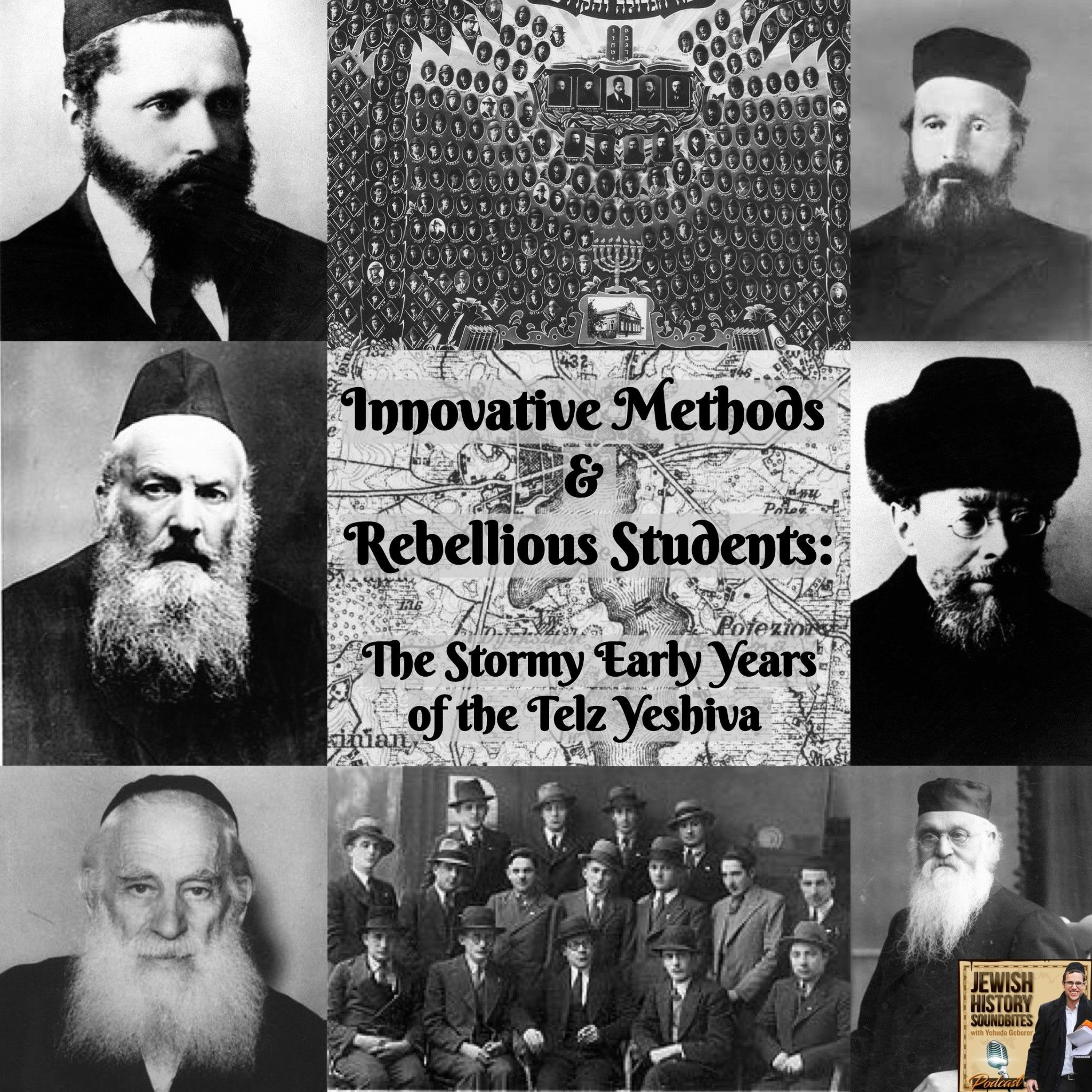
Ep 85Innovative Methods & Rebellious Students: Early Years of Telz Yeshiva Part I
With the growth of the Lithuanian Yeshiva movement in the 19th century, the great Yeshiva of Telz was to take a prominent place as one of the premier Yeshivas of the age. From modest beginnings, it grew in both numbers and stature under the watch of legendary Rav Leizer Gordon. Telz boasted of an innovative organizational structure which included an acceptance policy, a rigid class structure and regular tests on the material studied. The attempt to bring the Mussar movement within the walls of the Yeshiva, along with specific Rabbinical appointments, led to a series of clashes - sometimes violent - between the independent minded Telzer students and the Yeshiva administration. Ultimately the revolts and the winds of rebellion were quelled, and peace and prosperity allowed Telz to continue its destiny to greatness. Subscribe To Our Podcast on: PodBean: https://jsoundbites.podbean.com/ Follow us on Twitter or Instagram at @Jsoundbites You can email Yehuda at [email protected]

Ep 84The Eternal Flame: The Everlasting Legacy of the "Aish Kodesh"
R' Kalonymus Kalman Shapira (1889-1943), better known as the Piaseczno Rebbe, is a figure who's influence seems to just grow as time goes on. Heroic in life and a martyr in death, he's earned his place in the pantheon of Jewish leadership of the 20th century. Known for his writings, teachings, insights into Jewish education and of course his talks to his chassidim in the darkest times of the Warsaw Ghetto. In this episode, we will examine his life and times, giving the context which shaped his personality and leadership role. Playing an important role in interwar Warsaw Yeshiva education, he also served as a chassidic Rebbe and communal Rabbi at the same time. Despite his personal losses at the onset of the war, he maintained his position within the Ghetto in a valiant attempt to inspire his followers in the ever worsening conditions. Following his murder in Aktion Enternfest in the Trawniki concentration camp, the story of Piaseczno was not yet over. After the war, his writings were discovered in the second cache of the Ringelblum Archive and ultimately published as the "Aish Kodesh". Subscribe To Our Podcast on: PodBean: https://jsoundbites.podbean.com/ Follow us on Twitter or Instagram at @Jsoundbites You can email Yehuda at [email protected]

Ep 83Restoring The Glory To The Crown: Rav Ovadia Yosef & Sephardic Jewry Part I
From the expulsion from Spain in 1492, down to modern times, Sephardic Jewry has never experienced the rejuvenation experienced under the leadership of Rav Ovadia Yosef (1920-2013). Stemming from humble origins in Iraq, he rose to fame in Rabbinical positions in Egypt, Yerushalayim, Petach Tikva, Tel Aviv and finally the Chief Rabbinate of the State of Israel. A prolific writer and world renowned posek, he became one of the greatest Halachic decisors of modern times. In his later years he would become famous as the spiritual leader and titular head of the Shas political party. Subscribe To Our Podcast on: PodBean: https://jsoundbites.podbean.com/ Follow us on Twitter or Instagram at @Jsoundbites You can email Yehuda at [email protected]

Ep 82Who Art Thou Moses? Untangling the Life & Legacy of Moses Mendelssohn
Heralded as the father of Reform Judaism by some, derided as a destroyer of traditional Jewish life by others and forgotten by most, Moses Mendelssohn's legacy continues to intrigue Jewish minds across the spectrum. He entered the gates of Berlin as a young 14 year old, and ultimately embraced the ideals of the enlightenment and German Philosophy. Through his teaching and prodigious literary output, an attempt was made to synthesize traditional Jewish observance while incorporating elements of the surrounding culture. The question remains as to what is his "true" legacy, but his influence remains in the Jewish world till today. Subscribe To Our Podcast on: PodBean: https://jsoundbites.podbean.com/ Follow us on Twitter or Instagram at @Jsoundbites You can email Yehuda at [email protected]

Ep 81America's Glorious Pastime: Baseball & The Jews
With the World Series currently taking place, it's high time that Jewish History Soundbites takes leave of Eastern Europe and examine the Jewish People's connection to professional baseball. From the famous stories of Hank Greenberg and Sandy Koufax, to the less well known ones of the '69 Mets Jewish connection, America's favorite pastime has deep connections to the Jewish story in the United States. On the 50th anniversary of the 1969 NY Mets World Series victory, we'll delve into the story of why they won. Aside from Jewish players, managers, owners and broadcasters, Jewish fans of baseball have been a barometer of integration into American life and culture. So, as we bask in the pride of various different Jewish players not playing on Yom Kippur, enjoy your kosher hot dog in the stands at "the ole Ball Game"! Subscribe To Our Podcast on: PodBean: https://jsoundbites.podbean.com/ Follow us on Twitter or Instagram at @Jsoundbites You can email Yehuda at [email protected]
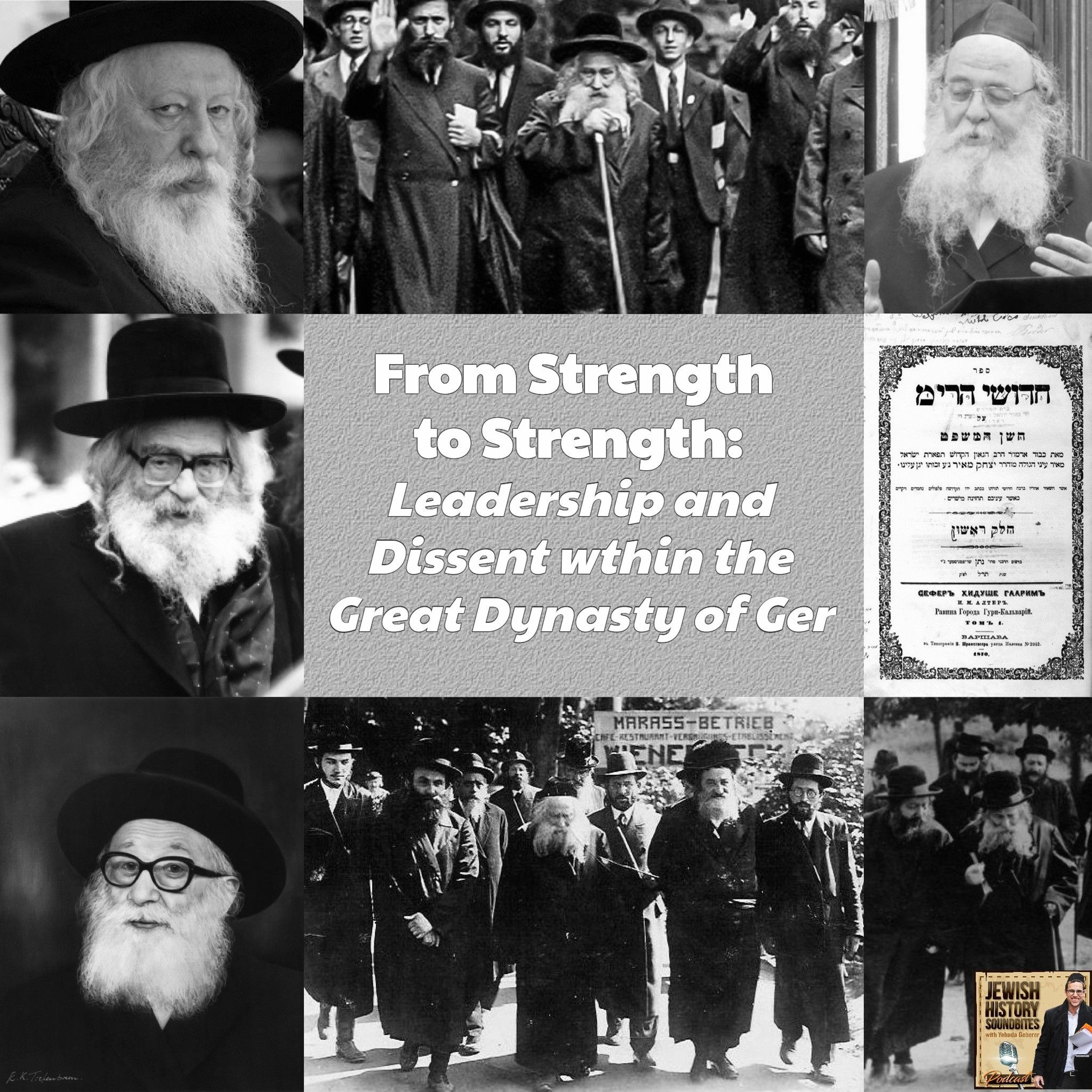
Ep 80From Strength to Strength: Leadership & Dissent within the Great Dynasty of Ger
With the current talk about an unheard of split in the storied Chassidic court of Ger, it's worth examining the historical context about why such a move is so unusual. From it's roots in Pshischa and Kotzk, Polish Chassidus experience quite a few upheavals and splits before the Ger dynasty stabilized in the late 19th century. Under the able leadership of the Sfas Emes and even more so of his son Rav Avraham Mordechai Alter, the Imrei Emes, Ger became the largest, most dominant and leading chassidic group in pre war Poland. The Gerrer Rebbe led this veritable empire for 43 years, with the full support of all of his family members, and was dubbed by the Polish press as "the king of the Jews". Following the decimation of Polish Jewry, Ger began to rebuild, this time under the watch of the Bais Yisroel. It was only following the death of the last of the Polish generation that a rebuilt, confident and strong Ger could possibly think of dissent or a split within the community. Subscribe To Our Podcast on: PodBean: https://jsoundbites.podbean.com/ Follow us on Twitter or Instagram at @Jsoundbites You can email Yehuda at [email protected]

Ep 79Tales of Sukkos: The Great Daled Minim Hunt & Simchas Torah In Shanghai
In honor of the happy Sukkos holiday, here's a potpourri of anecdotes - some interesting, others entertaining - of Sukkos throughout recent Jewish history. What was it like to shop for a lulav and esrog when all esrogim had to be imported? How about during wartime? What was the atmosphere in the pre war Yeshivas by the Simchas Bais hashoeva and Simchas Torah? What happened to the Chozeh of Lublin on the last Simchas Torah of his life? Subscribe To Our Podcast on: PodBean: https://jsoundbites.podbean.com/ Follow us on Twitter or Instagram at @Jsoundbites You can email Yehuda at [email protected]
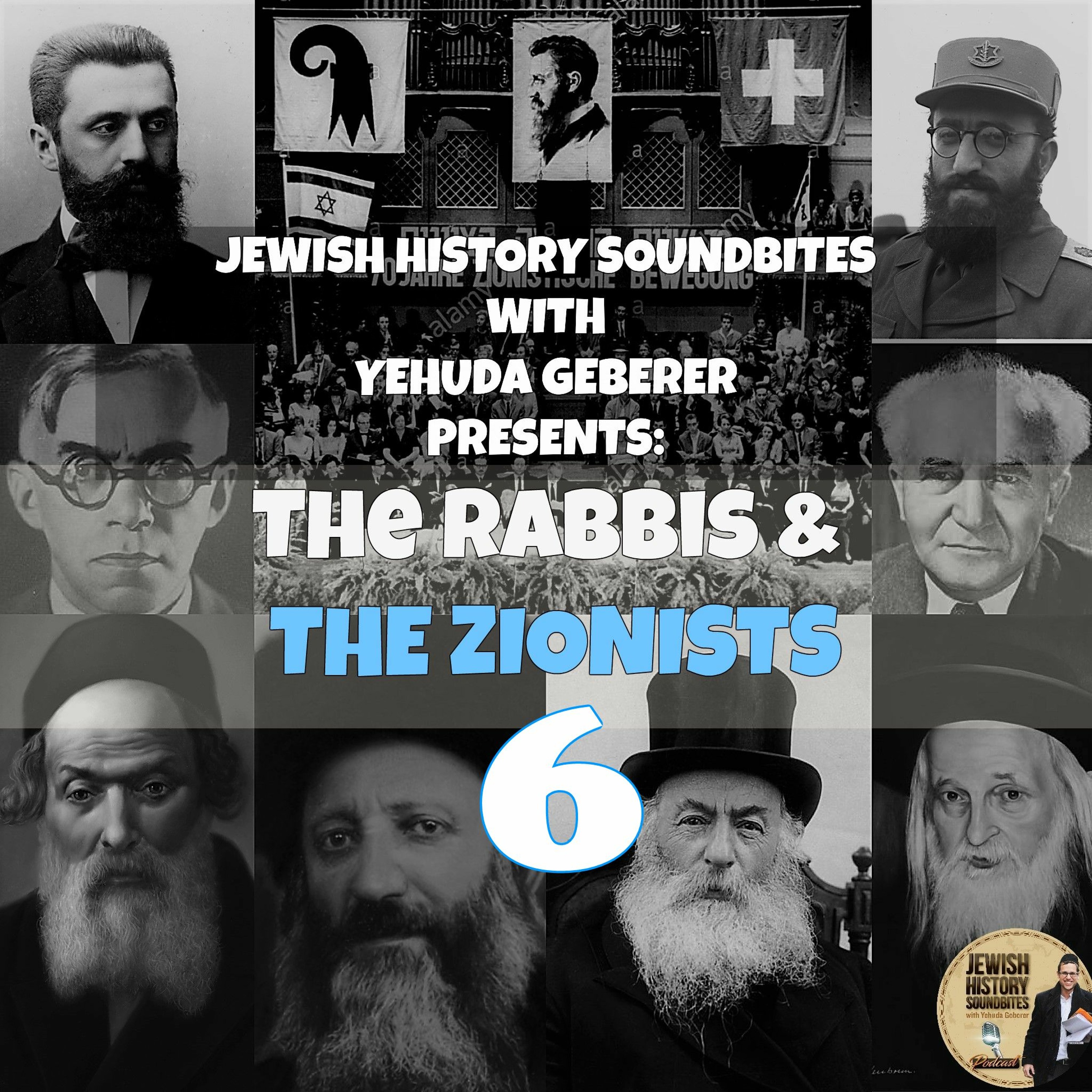
Ep 78The Rabbis & The Zionists Part VI: Lofty Ideals & Harsh Realities
With the passage of time, Rabbinical espoused ideals are processed along the path of the realities and practical considerations of day to day life. It is this execution of policy that forms the basis of our final examination of the Rabbinical positions on Zionism. Specific Rabbinical figures arose in the 1960's-'70's who formulated positions, which form the basis of modern Rabbinical opinion right up to our current times. These range from the Messianic views of Rav Tzvi Yehuda Kook, to the practical considerations of the Gerrer Rebbe, through the active conservatism of Rav Shach and all the way to extreme opposition of the Satmar Rov. A summary of the diverse opinions of these and other great personalities, will enhance our understanding of Rabbinical opinion on Zionism in the modern era, as well as wrap up the series on "The Rabbis & The Zionists". Subscribe To Our Podcast on: PodBean: https://jsoundbites.podbean.com/ Follow us on Twitter or Instagram at @Jsoundbites You can email Yehuda at [email protected]
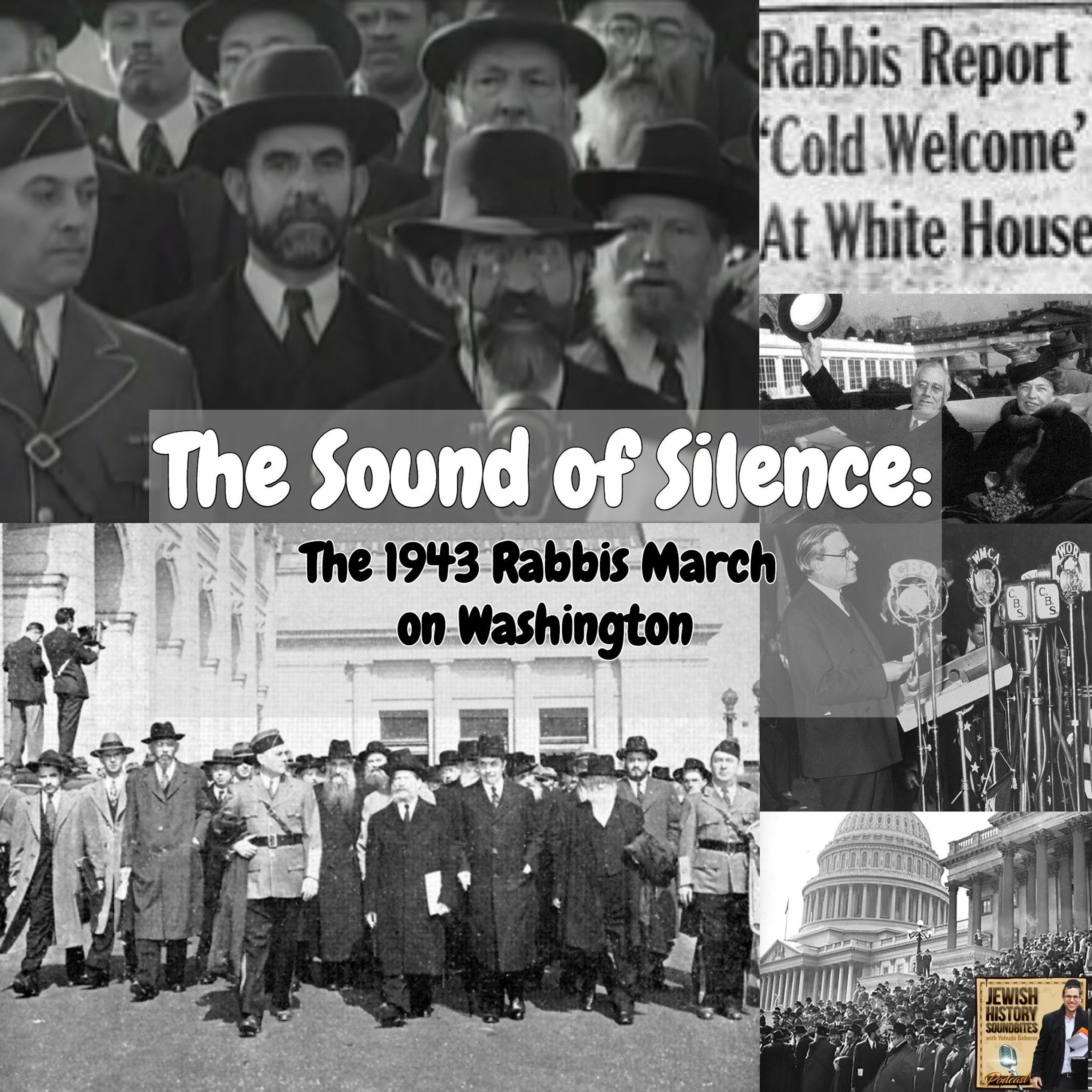
Ep 77The Sound of Silence: The 1943 Rabbis March on Washington
News of the Final Solution reached the west in 1942. As the horrifying reality became apparent, reactions varied both among the general public as well as within the Jewish community. While the American Government refused to relax its rigid immigration quotas, US Jewry debated as to the proper course of action. Would it be a passive acceptance of US policy, a diplomatic attempt to reach the corridors of power, or possibly an outright public protest at how little was being done for the plight of European Jewry. Prominent rescue activist Peter Bergson arranged together with the Vaad Hatzalah, an unprecedented public gathering, so unique in the annals of American Jewish History, that it would garner the publicity needed to effect change in the Governments public policy. A group of over 400 recognizably Orthodox Rabbis would march on Washington, petitioning Congress and the President to do more for Jewish refugees. On October 6, 1943, three days before Yom Kippur, the Rabbis marched. Subscribe To Our Podcast on: PodBean: https://jsoundbites.podbean.com/ Follow us on Twitter or Instagram at @Jsoundbites You can email Yehuda at [email protected]

Ep 76The Sfas Emes: Reverence of The Man & Relevance of His Teachings
With the seemingly timeless and growing influence of the Sfas Emes's teachings, it may be worthwhile to examine the world which shaped him and his personality. As a scion of chassidic royalty through his grandfather the Chiddushei Harim of Ger, R' Yehuda Aryeh Leib Alter (1847-1905) was expected to rise to greatness. His exposure at a young age to the great R' Menachem Mendel- the "Kotzker" only added to the atmosphere of an already intensely powerful upbringing. The Sfas Emes rose to the occasion and became one of the greatest leaders of Chassidic Poland, building up Ger into one of the largest courts of its day. Subscribe To Our Podcast on: PodBean: https://jsoundbites.podbean.com/ Follow us on Twitter or Instagram at @Jsoundbites You can email Yehuda at [email protected]
Ep 75The Rabbi & The Zionists Part V: To Vote or Not to Vote
With the founding of the State of Israel, ideological positions slowly gave way for practical considerations. The reality of day to day life in the State required a modification of the various Rabbinical positions across the spectrum. Some Rabbis, such as the Satmar Rov and the Eidah Hachareidis, persisted in the extreme position and refused to recognize the legitimacy of the State and it's functions. For their followers who were physically living in Israel, this became an increasingly untenable position. At the other extreme, the Rabbinical leadership of the Mizrachi welcomed the founding of the State as the commencement of the Messianic era. It therefore behooved active participation at both the national and individual level. In the middle were the Rabbis who were either officially or loosely affiliated with the Agudas Yisroel. Some recommended a moderate position, while others took a more extreme line. Still others preferred to be deliberately ambiguous. The question of voting became a contentious issue and evolved into the symbol of practical participation. Subscribe To Our Podcast on: PodBean: https://jsoundbites.podbean.com/ Follow us on Twitter or Instagram at @Jsoundbites You can email Yehuda at [email protected]

Ep 74Simplicity, Complexity & Enormity: The Family of the Chofetz Chaim
The primary focus on the Chofetz Chaim's (1839-1933) legacy to the Jewish People is understandably his seforim and various public policy initiatives. He bequeathed a more personal legacy as well- his family. His descendants form quite a diverse group. Some of his progeny played pivotal roles in both the writing, editing and selling of his seforim, while others assisted with the administration of the Radin Yeshiva. Still others accompanied him through his communal activist work. And yet others forged their own path. With an overview of the Chofetz Chaim's family, and how he related to them as a husband, father & grandfather, we can get a glimpse of a more personal side of the influence and impact of arguable the greatest Jewish leader in recent history. Subscribe To Our Podcast on: PodBean: https://jsoundbites.podbean.com/ Follow us on Twitter or Instagram at @Jsoundbites You can email Yehuda at [email protected]

Ep 73Uman Uman Rosh Hashana! The History of the Great Rosh Hashana Pilgrimage
With the current atmosphere being that one has to excuse oneself to justify not travelling to Rabbeinu for Rosh Hashana, it's worthwhile examining the historical roots of this phenomenon. What was the historical context in which R' Nosson of Nemirov made the Rosh Hashana pilgrimage the core of Breslov chassidus? How did the Uman visit look like throughout the years? In the interwar period, Breslov chassidim encountered a challenge that threatened the future of the movement. The Iron Curtain prevented the Chassidim in Poland from reaching Uman. How would they adapt to the new situation? Finally, in the post war era, with the resurgence of Breslov, the Rosh Hashana gathering adapts itself to new worlds and new situations till this very day. Music for this episode: “Rabeinu” by Beri Weber https://youtu.be/gJuStPunxIs Subscribe To Our Podcast on: PodBean: https://jsoundbites.podbean.com/ Follow us on Twitter or Instagram at @Jsoundbites You can email Yehuda at [email protected]

Ep 72Builder & Dreamer: The Unstoppable Vision of the Ponevezher Rav
Few leaders in modern times can match the sheer energy and willpower that the Ponovezher Rov- Rabbi Yosef Shlomo Kahaneman (1886-1969) possessed. From his early days in Telz to his Rabbinate in pre-war Ponevezh, to his rebuilding after the trauma of the Holocaust, he never once stopped his active building the future of the Jewish People. Blessed with natural organizational skills, combined with a talent in dealing with people, he managed to inspire others to jump onto the bandwagon of his various projects. A master fundraiser, he would become a renowned globe trotter, where he would inflame Jewish communities worldwide with his oratory skills and magnetic personality. Subscribe To Our Podcast on: PodBean: https://jsoundbites.podbean.com/ Follow us on Twitter or Instagram at @Jsoundbites You can email Yehuda at [email protected]

Ep 71Take Me Out To The Rebbe: The Great Yom Tov Pilgrimages of Yesteryear
From almost the beginning of the Chassidic movement, a major component of the experience has been the pilgrimage to bask in the Rebbe's presence at his court. More often than not, this took place around the Yomim Tovim. Why was it important to visit the Rebbe for the Holidays? What was the visit like? What went on there? In the inter-war period, perhaps the most famous of the Chassidic courts was in Ger (Gora Kalwaria). With tens of thousands of chassidim converging on this small town for Rosh Hashanah, the atmosphere was electric and truly festive. A fascinating feature of the pilgrimage to Ger was the means of transport. A train line ran from Warsaw to Ger that took it's place in chassidic lore. The Kulaykeh, as it was known, wasn't just a means to an end, but rather became a major component of the visit. Throngs of chassidim would crowd the train, and the Kulaykeh experience essentially transformed into part of the greater Yom Tov visit to Ger. Subscribe To Our Podcast on: PodBean: https://jsoundbites.podbean.com/ Follow us on Twitter or Instagram at @Jsoundbites You can email Yehuda at [email protected]

Ep 70The Founding of a Dynasty: The Alter Rebbe's Rise to Leadership
Rav Shneur Zalman of Liady (1745?-1812), known as the Alter Rebbe or the Baal Hatanya, was the founder of the Chabad Chassidus and one of most influential leaders in the history of the movement. How did he start out? Was it an easy road to leadership? He was one of the youngest among the students of the Maggid of Mezritch. Following Rav Mendele of Vitebsk to White Russia, he assisted in spreading Chassidus in that vicinity. But it was only following R' Mendele's aliyah in 1777, that R' Shneur Zalman would begin his rise to a leadership position of Chassidim. Slowly he fashioned his court, his own unique brand of Chassidic thought and began to manage the hordes of Chassidim who began arriving at his door. They came to hear his guidance in serving Hashem, his Divrei Torah and to experience the atmosphere of the court of the Alter Rebbe. Subscribe To Our Podcast on: PodBean: https://jsoundbites.podbean.com/ Follow us on Twitter or Instagram at @Jsoundbites You can email Yehuda at [email protected]

Ep 69The History of Torah Vodaath Part III: Building Up & Reaching Out
R' Shraga Feivel Mendlowitz (1886-1948) wasn't just a talented educator, a capable school principal, an accomplished organizer and a doer. Above all else, he was a visionary. He saw America as a land of opportunity in a spiritual sense, at a time when most could perceive only materialistic opportunity and a threat to the spiritual. He therefore structured the Yeshiva to reflect his unique philosophy and built a curriculum that had been seldom seen in the annals of the Yeshiva world. At the same time, he reached out and engaged a cadre of dedicated laymen who would form the financial backbone of the Yeshiva activities as well as managing it as the Board of Directors. These amazing people threw all their energies into realizing the vision of building Torah in the United States. Chief among this group was regional director for the IRS named Harry Herskowitz. Harry literally dedicated his life for the success of Torah Vodaath, and helped it sustain and flourish in those early years. His legacy remained in his family and with the other laymen that he influenced with the vision of Yeshiva Torah Vodaath. Subscribe To Our Podcast on: PodBean: https://jsoundbites.podbean.com/ Follow us on Twitter or Instagram at @Jsoundbites You can email Yehuda at [email protected]
Ep 68The Rabbis & the Zionists Part IV: From Deep Abyss to Glimmer of Hope
The great political & ideological discussions that marked the interwar period were at their peak, when the greatest calamity to hit the Jewish People instantly transformed the entire dialogue. Rabbinical opinion once again diverged in light of the national catastrophe. Some Rabbis continued with the pre-war pragmatic approach of waiting things out and seeing how the outside factors develop. Others reinforced their pre-war opinions of either support or opposition of the entire Zionist enterprise. The novelty of the post Holocaust world however, saw the emergence of a new stream of Rabbinical opinion, which stated that the calamity that had befallen European Jewry changed the rules of the game. Some mitigated their opposition of Zionism as a result, while others went still further and became full fledged supporters of the creation of a Jewish State. In May 1948, the Rabbinical world responded to yet another development of Zionism, by far the one with the most far reaching consequences- the founding of the State of Israel. Zionism was no longer an ideal or a vision. It was an established fact and a reality that had to be reckoned with. The great Rabbinical leadership from across the ideological spectrum, met the challenge and formulated their opinions accordingly. Subscribe To Our Podcast on: PodBean: https://jsoundbites.podbean.com/ Follow us on Twitter or Instagram at @Jsoundbites You can email Yehuda at [email protected]
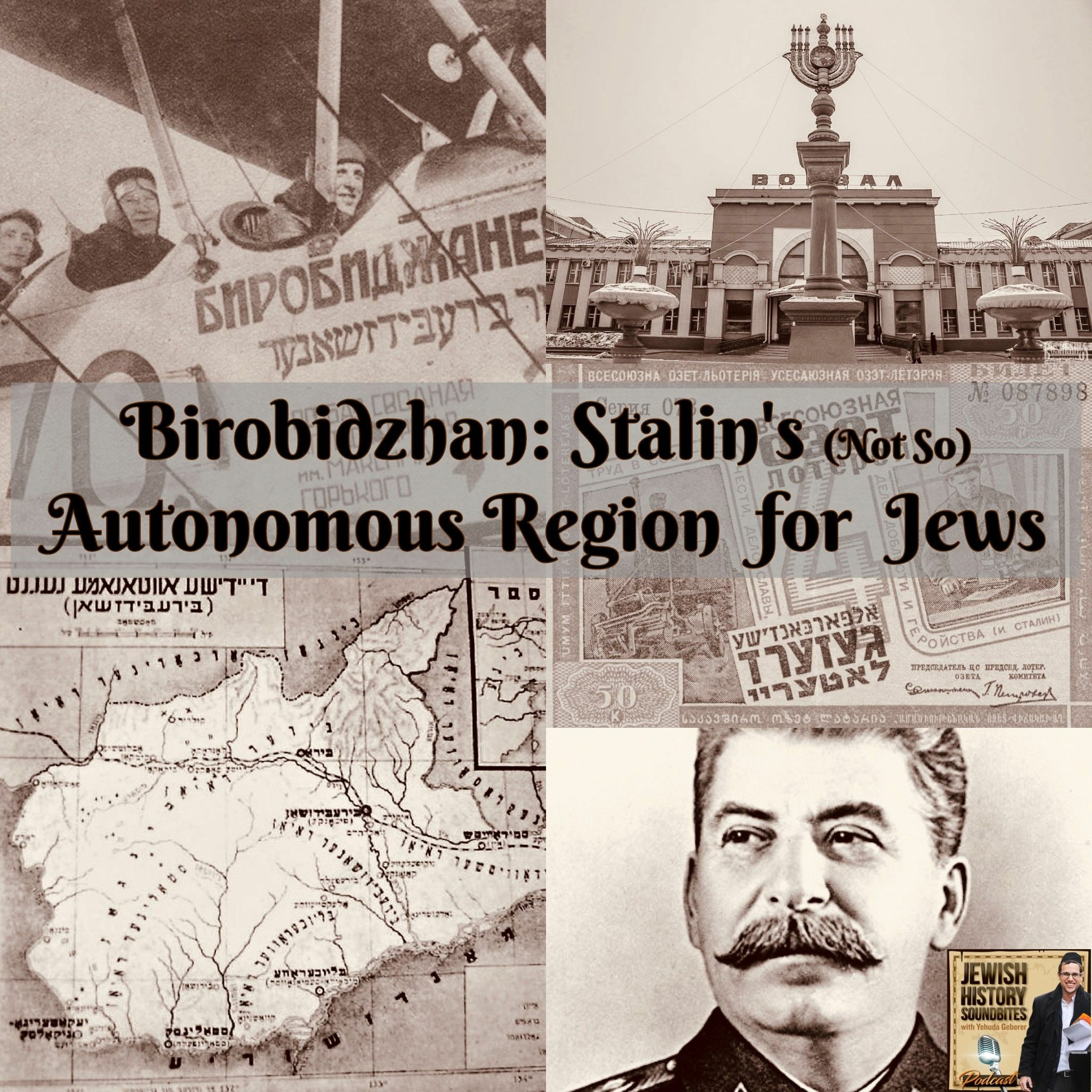
Ep 67Birobidzhan: Stalin's Autonomous Jewish Region
One of the odder stories of the Jewish People under Soviet rule is the forming of the Jewish Autonomous Region of Birobidzhan. Founded by Stalin in 1928 as a territorial solution for the Jewish People, it never quite took off as planned. Harsh living conditions and eventually Stalin's purges prevented any major Jewish growth in the region. However, when Birobidzhan was conceptualized as a realistic option, it caused quite a stir in the Jewish world. Does the Jewish People need a territory to solve it's national woes? That's what the Zionist movement was proposing with the new Jewish Nationalism. Perhaps any territory would suffice, as long as the Jewish Nation had some form of territorial center- even in faraway Birobidzhan. That's how many Jewish socialists and Jewish communists reacted to it's initial founding. The Birobidzhan plan flopped, but the questions of Jewish identity and nationalism continued on as before. Subscribe To Our Podcast on: PodBean: https://jsoundbites.podbean.com/ Follow us on Twitter or Instagram at @Jsoundbites You can email Yehuda at [email protected]

Ep 66Scholar & Statesman: Rav Meir Simcha and the 1910 Conference in St. Petersburg
A gifted leader, with a brilliant mind and a unique approach, Rav Meir Simcha of Dvinsk (1843–1926) author of the acclaimed Ohr Somayach stands out among the personalities of his day. The 1910 Rabbinical conference in St. Petersburg, was a testing ground for how modern Jewish leadership would grapple with the hot button issues facing the Jews of the Russian Empire. Rav Meir Simcha was one of the respected participants, and he weighed in on the challenges of the time. With panoply of voices and opinions, it wouldn't be a simple matter for his view to hold sway. His Rabbinical leadership in the waning days of the rule of the Czars, gives a glimpse into the challenges of traditional Jewish life at the turn of the century. Subscribe To Our Podcast on: PodBean: https://jsoundbites.podbean.com/ Follow us on Twitter or Instagram at @Jsoundbites You can email Yehuda at [email protected]

Ep 65Rav Kook Part II: New Times, New Needs & New Movements
With his appointment as Chief Rabbi of Jerusalem, and subsequently of all of British controlled Palestine, Rav Avraham Yitzchok Hakohen Kook (1875-1935) transitioned into his most active period in the public sphere. While garnering much support and staving off the opposition, he managed to build and accomplish in many areas of Jewish life. Along with other Rabbis, he became a primary architect of the Rabbanut to regulate religious life in the "Yishuv", he invested much in Yeshivas and Jewish education, developed working -albeit often times strained- relationships with officials in the British Government, and managed to build bridges with the secular Zionist leadership as well. Subscribe To Our Podcast on: PodBean: https://jsoundbites.podbean.com/ Follow us on Twitter or Instagram at @Jsoundbites You can email Yehuda at [email protected]
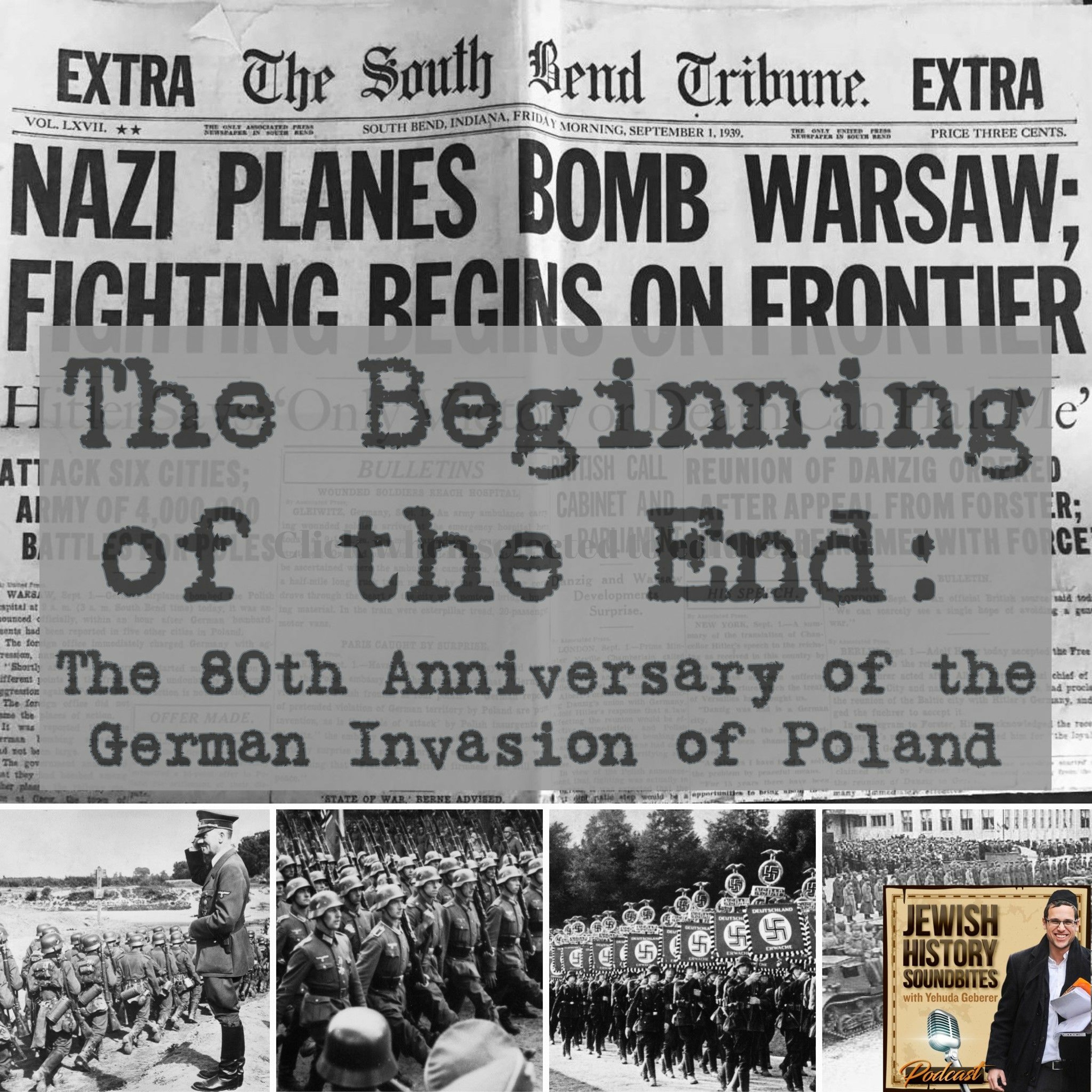
Ep 64Beginning of the End: The 80th Anniversary of the German Invasion of Poland
Understanding the context of how the Second World War began can facilitate a clearer understanding of what happened to the Jewish People as a result. With the invasion of Poland, the most destructive war in the history of mankind commenced. How did the war begin? How was Poland conquered so easily? What was the immediate reaction of the Jews who were now in a war zone? What was the Soviet Union's involvement? And what was going on in the Far East at this time? A broader picture of all these issues will enhance our perception of war whose reverberations are felt to this very day. Subscribe To Our Podcast on: PodBean: https://jsoundbites.podbean.com/ Follow us on Twitter or Instagram at @Jsoundbites You can email Yehuda at [email protected]

Ep 63The Rabbis & The Zionists Part III: From Mizrachi to the Agudah and Back Again
With the rise of political Zionism at the end of the 19th century, Rabbinical leaders began to formally organize around their positions visa vis the nascent movement. The founding of the Mizrachi was a major milestone in clarifying at least qualified support for the Zionist program. This begat a more organized and systematic opposition, which was formalized with the founding of the Agudas Yisroel some years later. The Agudah didn't speak with one voice and there was quite a range of rabbinical opinion within it's ranks as to the extent of ideological opposition to Zionism, as well as the practical measures to be taken as a result. In addition, there were quite a number of major Rabbinical leaders who never joined the Agudah altogether for a variety of reasons- some joined the Mizrachi, some were too Zionistic for the Agudah, others felt that the Agudah wasn't extreme enough. During the tumultuous interwar period, Rabbis across the spectrum formulated their respective positions in opposition, support or neutrality on the question of the new Jewish Nationalism- Zionism. Subscribe To Our Podcast on: PodBean: https://jsoundbites.podbean.com/ Follow us on Twitter or Instagram at @Jsoundbites You can email Yehuda at [email protected]
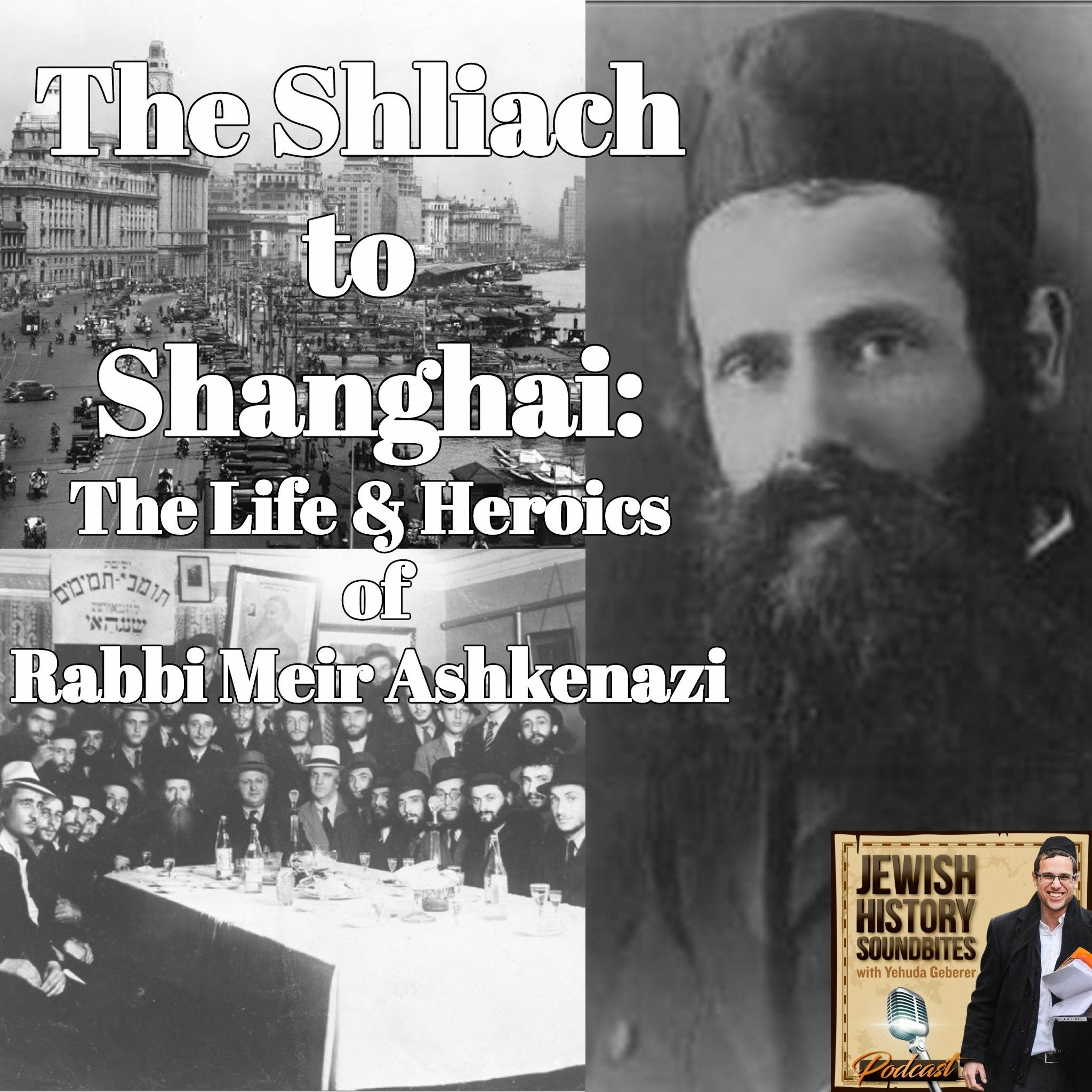
Ep 62Shliach to Shanghai: The Life & Heroics of Rabbi Meir Ashkenazi
As the Jewish community in far off Shanghai developed at the beginning of the 20th century, a Rabbi and Lubavitcher Chassid named R' Meir Ashkenazi was called on to serve as the communal Rabbi in 1926. Originally serving in the ultimate "out of town" community in a far flung corner of the world, he eventually found himself the leader of a diverse and large group of refugees who began arriving in the 1930's and '40's. Being the right man in the right place at the right time, he rose to the occasion. Addressing both the material and spiritual needs of the refugee community, he was able to sustain the Shanghai Jewry during those challenging times. Subscribe To Our Podcast on: PodBean: https://jsoundbites.podbean.com/ Follow us on Twitter or Instagram at @Jsoundbites You can email Yehuda at [email protected]
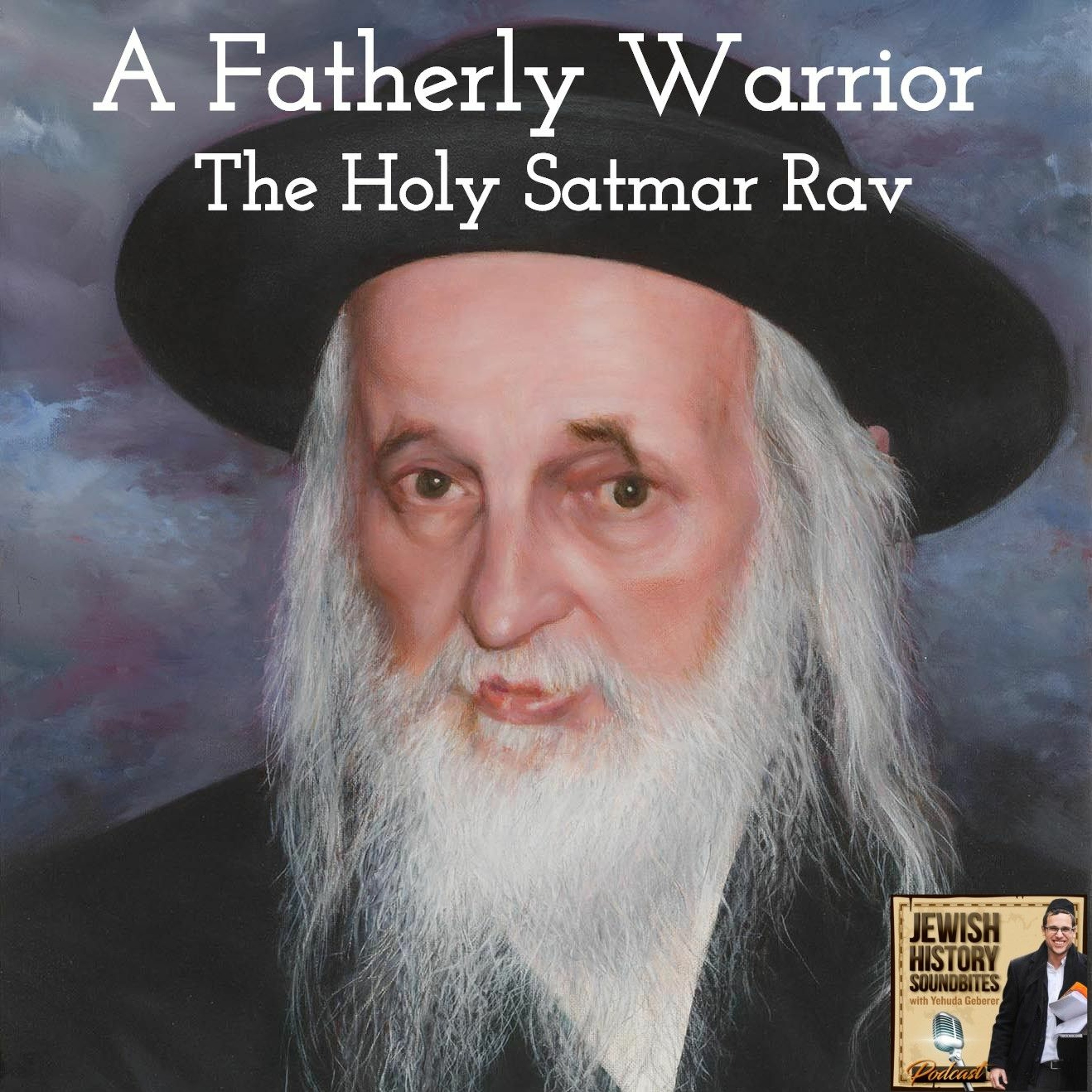
Ep 61A Fatherly Warrior: The Holy Satmar Rav Part I
The Satmar Rav, Rav Yoel Teitelbaum will long be remembered as a great Torah Sage, builder, dedicated leader and zealot who held steadfast to strong positions, no matter the opposition. In his efforts to rebuild the destroyed world after the war, he was a visionary who thought of big and creative solutions. As a fatherly figure, he built individuals, breathing a new life and purpose for countless survivors. He also built a large and powerful following, well known for its relentless chesed and strong opposition to the State of Israel. Subscribe To Our Podcast on: PodBean: https://jsoundbites.podbean.com/ Follow us on Twitter or Instagram at @Jsoundbites You can email Yehuda at [email protected]
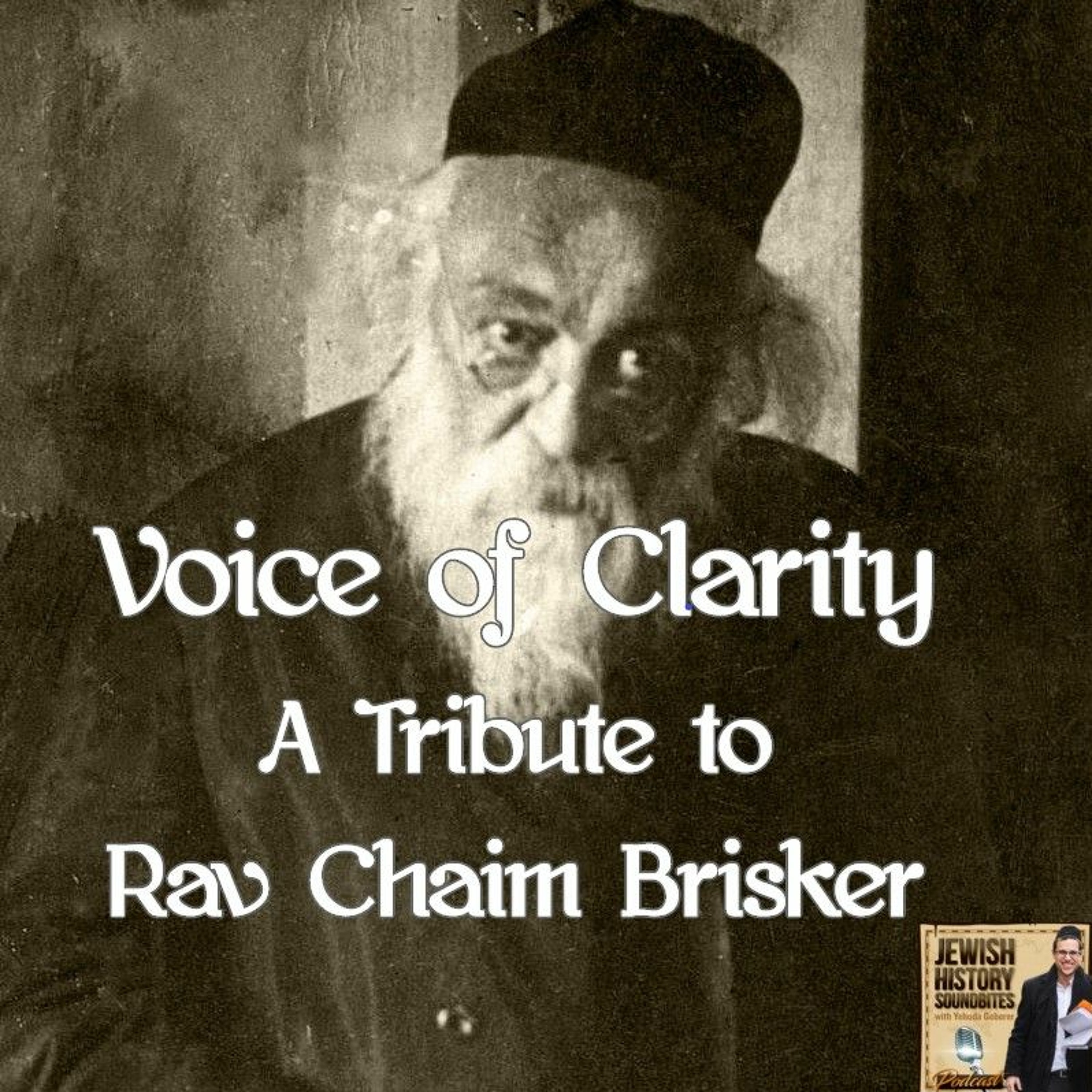
Ep 60Voice of Clarity: A Tribute to Rav Chaim Brisker
Famous for trailblazing a new analytical style of Talmudic Study at the Volozhin Yeshiva, RavChaim Soloveitchik's name is hallowed throughout the Torah world. As Rabbi of Brisk, he became known far and wide for his compassion for the downtrodden. In the public sphere, Reb Chaim became a spokesman of his people and took a stance on many issues facing the Jewish world of his day. In honor of his 101st Yahrtzeit, we'll take a glance Rav Chaim's leadership role in society. Subscribe To Our Podcast on: PodBean: https://jsoundbites.podbean.com/ Follow us on Twitter or Instagram at @Jsoundbites You can email Yehuda at [email protected]