Interplace
171 episodes — Page 1 of 4
Regreening Ruses and Radiant Ruin
Burning Both Ends
Burning Through 250 Years
Living Through Tulsa's Time
The Transit of Two Titans
Becoming Not Beginning
What the World Points To
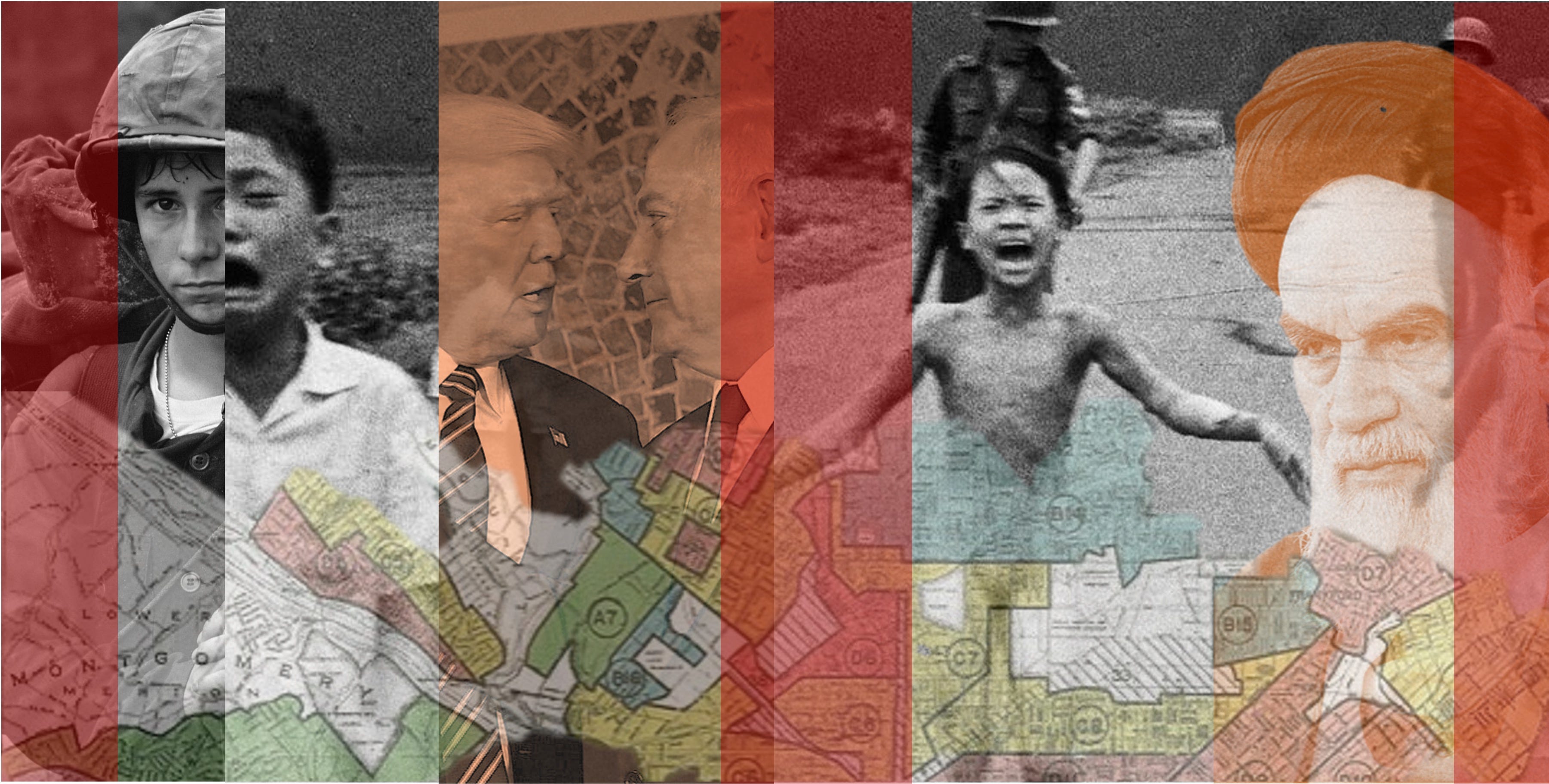
The Map that Murders and the Mind that Masks
Hello Interactors,This one attempts to balance the privilege of cold analytical escapism with the gruesome rehumanization of past, present, and future atrocities. I end up trying to make sense of the political psychology that leads to such jubilant violence. While it can be understood, its the very intelligibility that makes it so intolerable. PRESSURE, POWER, IMPUNITYIn 1965, as my umbilical cord was being severed in Iowa, U.S. soldiers in Vietnam were cutting the ears off innocent dead Vietnamese children. And their parents. The shriveling cartilage served as “proof” they were killed. They’d string them into necklaces or hoard them in “ear bags” as trophies. Their commanders demanded a tally. This morbid ritual, born from the military’s obsession with numeric “success” metrics amid “search and destroy” orders, exposed not just individual moral depravity but a systemic disregard for human life.Such barbarity serves as just another example of America’s enduring pattern of defying Geneva Conventions on civilian protections, proportionality, and prohibited weapons. These atrocities are wrapped in bureaucratic euphemisms like “collateral damage”; all to evade accountability and perpetuate unchecked imperial violence.When barbarity returned like a boomerang to hit the Twin Towers on 9/11, the term “collateral damage” was absent. But “search and destroy” came back. The 2001 Authorization for Use of Military Force authorizes the president “to use all necessary and appropriate force against those nations, organizations, or persons he determines planned, authorized, committed, or aided the terrorist attacks that occurred on September 11, 2001, or harbored such organizations or persons.” These expanded interpretations of and the idea of a “continuing, imminent threat” led to doctrines that allowed drones and bombs to be used as sanctioned forms of force across borders. Targeted killings are domestic justifications that override attempts at global legal constraints.As my own kids were being born in 2004, U.S. drones were flying across the skies over Afghanistan, Yemen, and beyond, vaporizing wedding parties, schools, and outdoor markets, shredding innocent men, women, and children into mangled flesh mixed with bone fragments. These ‘Hellfire missiles’ were sold to the public as possessing surgical precision. These “precision” killings, justified as “targeted” under the euphemism of “signature strikes,” leave behind charred craters, orphaned survivors screaming amid the rubble, and “double taps” that slaughter first responders rushing to the scene. And here again the body-count calculus of modern warfare dehumanizes the dead as mere “collateral” in an endless cycle of remote-control atrocity.However, unlike in Vietnam, groups controlling casualty numbers and combatant definitions created incentives to undercount civilian deaths to bolster the claims of legal precision. Because such reasoning was long classified, external scrutiny relied on leaks and sporadic court‑ordered disclosures.Obama deployed 10 times more drones than Bush. They all occurred in legal grey zones. They were justified through broad claims of self‑defense against “imminent threats” from non‑state actors operating in countries not formally at war with the United States. Legal assessments have found that many attacks did not meet the threshold of an “armed conflict” — meaning strikes there should have been constrained by international human‑rights law — thus violating requirements of necessity, last resort, and proportionality.Recent incidents, like the Iranian Khamenei killing, further expose gaps between law and practice. In the case of the 2020 killing of Iranian General Soleimani, scholars argue that the official rationale failed to meet the UN Charter’s Article 51 requirement of an actual armed attack. Since then, the U.S. and its allies have instead advanced an even more squishy view of “imminence” to justify anticipatory defense against imagined potential threats. Critics say these interpretations transform what was intended to be a narrow exception into a license for routine, preemptive killing.The U.S. government is seemingly unequaled in its interpretive flexibility of law. Rather than submitting to adjudication, they practice “norm‑shaping” noncompliance. This involves acting first, then using rhetoric and diplomatic influence to normalize or justify those actions. Research on the UN Security Council demonstrates how veto rights, opaque bargaining, and diluted resolutions enable permanent members to escape condemnation while weaker states are disciplined. In effect, international law becomes a language powerful states can manage, not a rulebook to obey.U.S. operations in Iran, Afghanistan, Yemen, Somalia, Iraq, and elsewhere are often positioned as short-term “strikes” meant to sustain “rules-based order.” But the U.S. doesn’t have to behave orderly. Moreover, these actions show a longstanding system where the law on force sustains hegemony
From Microsoft to the Surveillance State
Hello Interactors,Watching all the transnational love at the Olympics has been inspiring. We’re all forced to think about nationalities, borders, ethnicities, and all the flavors of behavioral geography it entails. After all, these athletes are all there representing their so-called “homeland.” And in the case of Alysa Liu, her father’s escape from his. Between the 1989 Tiananmen Square massacre and the fall of the Berlin wall, “homeland” took on new meaning for many immigrants. This all took me back to that time and the start of my own journey at Microsoft at the dawn of a new global reality.HOMELAND HATCHED HEREWith all the focus on Olympics and immigration recently, I’ve found myself reflecting on my days at Microsoft in the 90s. As the company was growing (really fast), teams were filling up with people recruited from around the world. There were new accents in meetings, new holidays to celebrate, and yummy new foods and funny new words being introduced. This thickening of transnational ties made Redmond feel as connected the rest of the world as the globalized software we were building. By 2000 users around the world could switch between over 60 languages in Windows and Office. In behavioral geography terms, working on the product and using the product made “here” feel more connected to “elsewhere.”This influx of new talent was all enabled by the Immigration Act of 1990. Signed by George H. W. Bush, it increased and stabilized legal pathways for highly skilled immigrants. This continued with Clinton era decisions to expand H-1B visa allocations that fed the tech hiring boom. I took full advantage of this allotment recruiting and hiring interaction designers and user researchers from around the world. In the same decade the federal government expanded access to the United States, it also tightened security. Terrorism threats, especially after the 1993 World Trade Center bombing, spooked everyone. Despite this threat, there was more domestic initiated terrorism than outside foreign attacks. The decade saw deadly incidents like the Oklahoma City bombing in 1995 by radicalized by white supremacist anti-government terrorists, which killed 168 and injured hundreds, making it the deadliest terrorist attack in U.S. history before 9/11.A year later, the Atlanta Olympic bombing and related bombings by anti-government Christian extremists caused multiple deaths and injuries. Clinic bombings and shootings by anti-abortion extremists began in 1994 with the Brookline clinic shootings and continued through the 1998 Birmingham clinic bombing. These inspired more arsons, bombings, and shootings tied to white supremacist, anti-abortion, and other extreme ideologies.Still, haven been shocked by Islamist extremists in 1993 (and growing Islamic jihadist plots outside the U.S.) the federal government adopted new security language centered on protecting the “homeland” from outside incursions. In 1998, Clinton signed Presidential Decision Directive 62, titled “Protection Against Unconventional Threats to the Homeland and Americans Overseas,” a serious counterterrorism document whose title quietly normalized the term homeland inside executive governance.But there was at least one critical voice. Steven Simon, Clinton’s senior director for counterterrorism on the National Security Council, didn’t think “Defense of the Homeland” belonged in a presidential directive.Simon’s retrospective argument is that “homeland” did more than name a policy, it brought a territorial logic of legitimacy that the American constitution had historically resisted. He recalls the phrase “Defense of the Homeland” felt “faintly illiberal, even un-American.” The United States historically grounded constitutional legitimacy in civic and legal abstractions (people, union, republic, human rights) rather than blood rights or rights to soil. Membership was to be mediated by institutions, employment, and law rather than ancestry.“Homeland” serves as a powerful cue that suggests a mental model of ‘home’ and expands it to encompass a nation. This model is accompanied by a set of spatial inferences that evoke familiarity, appeal, and even an intuitive sense. However, it also creates a sense of a confined interior that can be breached by someone from outside.This is rooted in place attachment that can be defined as an affective bond between people and places — an emotional tie that can anchor identity and responsibility. But attachment is not the same thing as ownership. Research on collective psychological ownership shows how groups can come to experience a territory as “ours.” This creates a sense of ownership that can be linked to a perceived determination right. Here, the ingroup is entitled to decide what happens in that place while sometimes feeding a desire to exclude outsiders. When the word “homeland” was placed at the center of statecraft it primed public reasoning from attachment of place through care, stewardship, and shared fate toward property owner
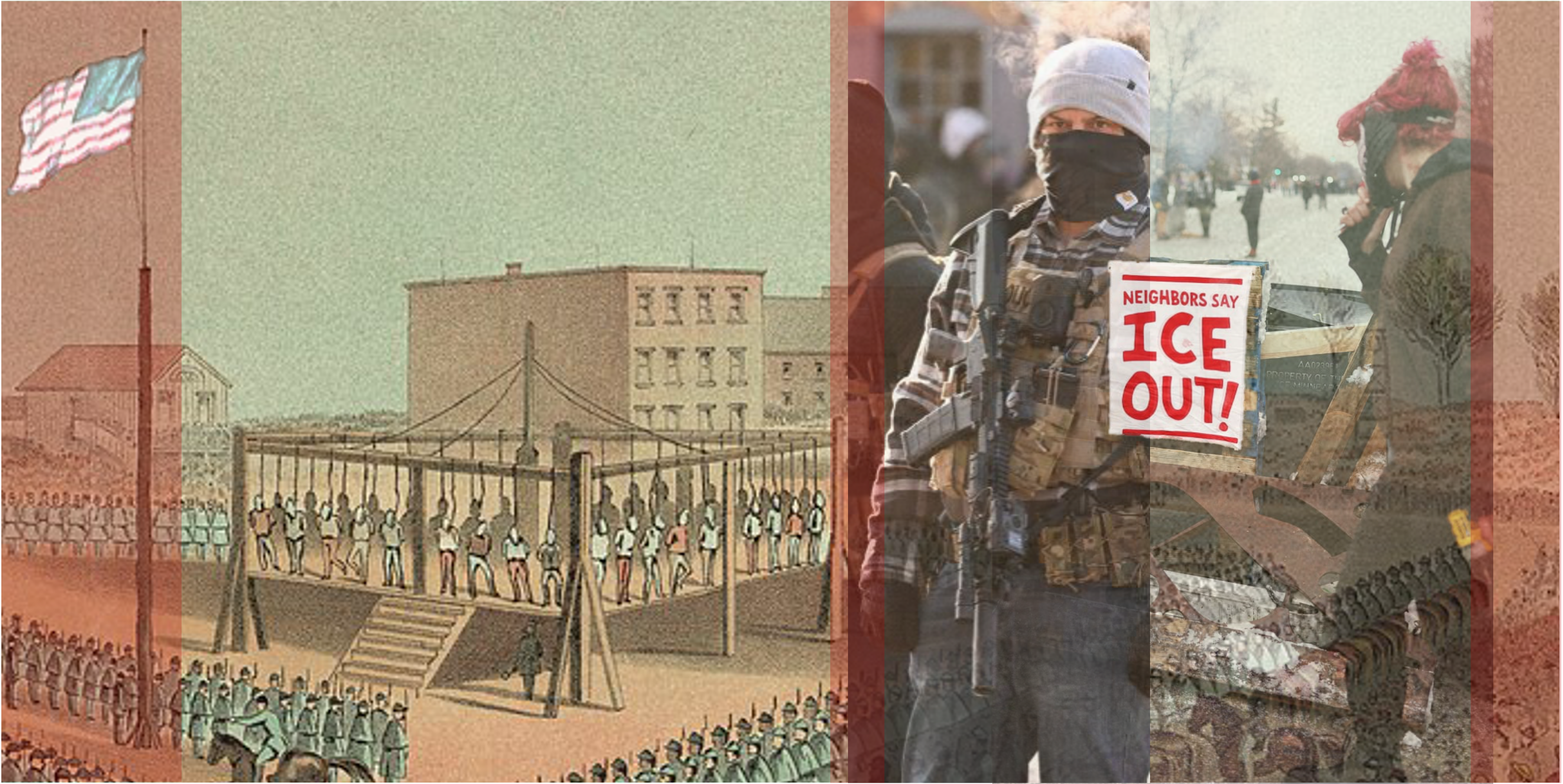
Street Snatches, Stolen Soil, and the Power of Care
Hello Interactors,Minnesota has seen federal incursion and overreach before. And not just in 2020. These removal tests we’re witnessing are rooted in the premise of US ‘manifest destiny’ and how quickly the notion of ‘home’ can be made fungible by a violent state. But likeminded bodies always resist being bullied.SCAFFOLD, SOVEREIGNTY, AND SEIZUREOn December 26, 1862, during the Civil War, President Abraham Lincoln authorized the hanging of 38 Dakota men in Mankato, Minnesota. The execution, staged as public theater, was not a solemn judicial act. A special scaffold was built, martial law was declared, and an estimated 4,000 spectators witnessed the largest mass execution in U.S. history. The spectacle mattered because it carried meaning beyond Mankato. The hanging marked the end of the six-week U.S.–Dakota War of 1862. This brutal conflict devastated the Minnesota River Valley and left deep trauma in Dakota communities. It also conveyed that the state could swiftly and effectively attempt control of contested land by violent force.Mankato was the visible climax, but Fort Snelling was the quieter cruelty that continued. After the war, Dakota families — women, children, elders — were confined in harsh conditions near the fort during the winter of 1862–63. Disease and exposure killed between 130 and 300 Dakota people. Execution and exile worked together. One provided public power, the other attempted to ensure territorial outcomes.Here’s what Dakota Chief Wabasha’s son-in-law, Hdainyanka, wrote to him shortly before his execution:“You have deceived me. You told me that if we followed the advice of General Sibley, and gave ourselves up to the whites, all would be well; no innocent man would be injured. I have not killed, wounded or injured a white man, or any white persons. I have not participated in the plunder of their property; and yet to-day I am set apart for execution, and must die in a few days, while men who are guilty will remain in prison. My wife is your daughter, my children are your grandchildren. I leave them all in your care and under your protection. Do not let them suffer; and when my children are grown up, let them know that their father died because he followed the advice of his chief, and without having the blood of a white man to answer for to the Great Spirit.”This moral failing was part of a larger burgeoning political economy. In 1862, the Twin Cities were still emerging, with mills, river commerce, and infrastructure. Yet the region’s future as an urban, financial, and political center depended on converting Dakota and Ojibwe homelands into transferable property. The spring prior to the massacre, in May 1862, Lincoln signed the Homestead Act, handing out 160-acre chunks of stolen land labeled now as “public.” Colonizers and immigrants could occupy this land, and be defended by the US government, if they showed they could “improve” it through five years of occupation.This act negated all Dakota treaties, seized 24 million acres of Minnesota lands, and mandated removal of what were now called Dakota “outlaws.” This converted communal Indigenous homelands into surveyed “public domain” eligible for homesteading, auctions, and rail grants, directly feeding wheat production for Minneapolis mills. Speculators and railroads exploited the act via proxy filings, reselling “cleared” parcels at profit to European immigrants.By 1870, non-Native population surged from 172,000 to over 439,000. The “clearing” of land was not metaphorical. It was the prerequisite for surveying, fencing, settlement, rail corridors, and the wider commodity circuits that would bind the Upper Midwest to national and global markets.That is what Harvard historian Sven Beckert calls war capitalism. He argues that global capitalism’s ascent was not a clean evolution toward free exchange. It relied on coercion, conquest, and violence. As his book on the history of Capitalism lays out, state funded war capitalism fundamentally relied on slavery, the dispossession of Indigenous peoples, imperial expansion, armed commerce, and the imposition of sovereignty over both people and territory. In this framing, the Dakota and Ojibwe were obstacles to industrialization and commodification. The frontier needed to be safe for settlement and investment of Germans, Irish, and Scandinavians, as well as railroads and industry. This included these two flour mills, the world’s largest by 1880: General Mills and Pillsbury.The gallows in Mankato were the blunt instrument that made the state-capital alliance credible. The point was not only to punish alleged crimes, but to demonstrate a capacity and will to kill. The American state needed to show it could override Indigenous sovereignty and reorder space. The subsequent removals and confinement at Fort Snelling completed the transformation. “Home” was recoded from relationship into asset. This land was no longer lived geography but extractable territory, from stewarding real soil to the selling of r
The Mind Can't Act Alone and AI Can't Either
Hello Interactors,It’s winter. So, as the sun tilts toward the sun (up north) my writing tilts toward the brain. It’s when I put on my behavioral geography glasses and try to see the world as a set of loops between bodies and places, perception and movement, constraint and choice. It’s hard to do that right now without running into AI. And one thing that keeps nagging at me is how AI is usually described as this super-brain perched in the cloud, or in a machine nearby, thinking on our behalf.That framing inherits an old habit of mind. Since Descartes, we’ve been tempted by the idea that the “real” mind sits apart from the messy body, steering it from some inner control room. Computer metaphors reinforced the same split by calling the CPU the “brain” of the machine. And now we’re extending the metaphor again with AI as the brain of the internet, hovering overhead, crunching data, issuing guidance. An intelligence box directing action at a distance is a tidy picture but it risks making us miss what’s actually doing the work. Let’s dig into how the brain leverages the loops of people, places, and interfaces we all move through to extend it’s richness and reach.GRADIENTS GUIDE WHILE BODIES BALANCEHave you ever hiked or skied in snow or fog and seen the middle distance just in front of you disappear? It takes the world you thought you knew, like ridge lines, tree lines, and the comforting predictable geometry of “just ahead” and reduces it to panic stricken near-field fragments. I’ve sensed once familiar ski runs become suddenly unfamiliar not because it changed, but because it was no longer accessible to my brain.In these moments, we’re all forced to reckon, recalibrate, and (usually) slow down as our senses sharpen. We take note of the slope under our feet and the way the ground shifts. We listen for clues our eyes can’t see and notice which direction the wind is blowing, how the light is changing, and how our own heartbeat and breath changes with each calculated risk. We know where we are, but the picture is fuzzy. Our memory only gets us so far. Everything around us becomes this multi-faceted relationship between our body making sense of it all while our brain updates its status moment by moment. The last thing a brain wants is to have its co-dependent limbs fail and risk falling.That experience demonstrates how the world is coupled with us. In world-involving coupling a living system survives through ongoing coordination with the affordances and constraints of its surroundings. In behavioral geography this frames spatial behavior as dynamic, reciprocal coordination between individuals and their environments, rather than just isolated internal cognition.Places actively shape decisions through the physics of the world and all its constraints. Actions, in turn, then reshape those surroundings in ongoing loops. This approach to cognition shifts focus from isolated mental maps to lived, constitutive engagements. It treats the world as a partner in our own competence.Before brains, gradients existed. Living systems navigated heat, cold, salt, sugar, thirst, dark, and light to persist. The first cognitive problems were biophysical. Surviving in a world that constantly disrupted viability relied on basic mechanisms like membrane flows, chemical reactions, and feedback. These primordial loops coupled an organism to a given environment directly. There were not yet any neural intermediaries. These were protozoa drifting toward nutrients or recoiling from toxins. It is in this raw attunement that world-involving coupling emerges.In 1932, physiologist Walter Cannon coined the term “homeostasis” to describe the body’s active pursuit of stability amidst environmental pressures. Living systems, whether single-celled or more complex, maintain survival variables within narrow bands. Cells detect changes in these variables, which affect molecular states. Temperature, acidity, pressure, osmosis, and metabolic concentrations all influence reaction rates. Feedback loops alter cell-environment interactions through heat transfer, ion flux, water movement, and gas exchange, ultimately restoring the system to a viable band. Organisms are not passive vessels but actively engage with these detection loops, triggering adjustments like a wilting plant drawing water. Sensing and action are fused operations for persistence.About 600 million years ago, cells in an ancient sea sensed electrical fields or chemical plumes on microbial mats. These pioneering cells formed diffuse nerve nets, evolving into jellyfish and anemones. Simple meshes firing to contract thin membranes in bell-shaped forms, they lacked a brain but coordinated propulsive pulses to keep the organism in bounds or sting prey. Within 10s of millions of years, bilateral animals evolved. Flatworms like planaria emerged with nerve cords laddered along their undersides, thickening toward their tips. These proto-brains sped signal spread across their elongated forms.As vertebrates
Trains, Planes, and Paved-Over Promises
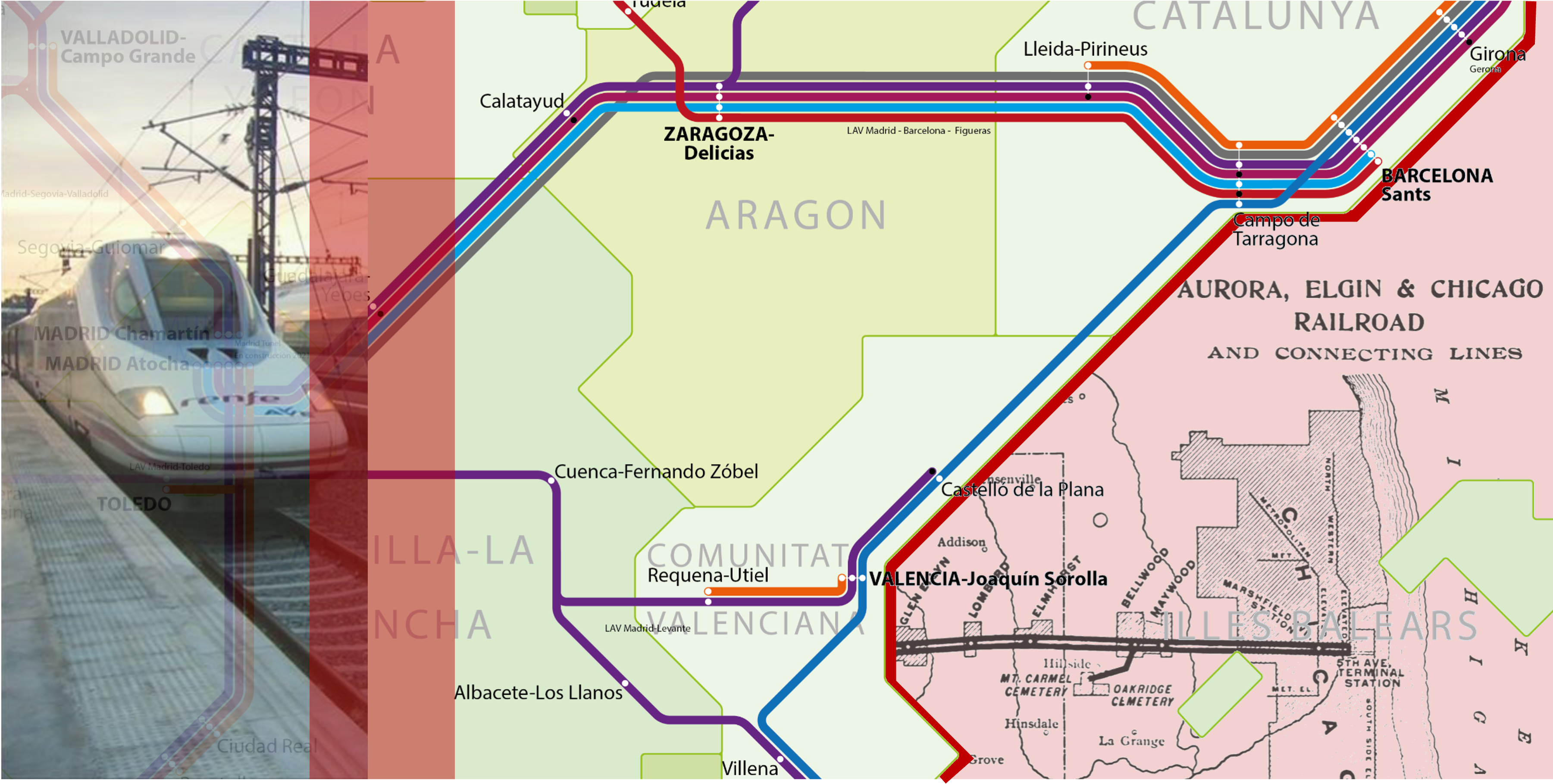
Hello Interactors,Spain’s high-speed trains feels like a totally different trajectory of modernity. America prides itself on being the tech innovator, but nowhere can we blast 180 MPH between city centers with seamless transfers to metros and buses…and no TSA drudgery. But look closer and the familiar comes into view — rising car ownership, rush-hour congestion (except in Valencia!), and growth patterns that echo America. I wanted to follow these parallel tracks back to the nineteenth-century U.S. rail boom and forward to Spain’s high-spe ed era. Turns out it’s not just about who gets faster rail or faster freeways, but what kind of growth they lock in once they arrive.TRAINS, CITIES, AND CONTRADICTIONSMy wife and I took high-speed rail (HSR) on our recent trip to Spain. My first thought was, “Why can’t we have nice things?”They’re everywhere.Madrid to Barcelona in two and a half hours. Barcelona to Valencia, Valencia back to Madrid. Later, Porto to Lisbon. Even Portugal is in on it. We glided out of city-center stations, slipped past housing blocks and industrial belts, then settled into the familiar grain of Mediterranean countryside at 300 kilometers an hour. The Wi-Fi (mostly) worked. The seats were comfortable. No annoying TSA.Where HSR did not exist or didn’t quite fit our schedule, we filled gaps with EasyJet flights. We did rent a car to seek the 100-foot waves at Nazaré, Portugal, only to be punished by the crawl of Porto’s rush-hour traffic in a downpour. Within cities, we took metros, commuter trains, trams, buses, bike share, and walked…a lot.From the perspective of a sustainable transportation advocate, we were treated to the complete “nice things” package: fast trains between cities, frequent rail and bus service inside them, and streets catering to human bodies more than SUVs. What surprised me, though, was the way these nice things coexist with growth patterns that look — in structural terms — uncomfortably familiar.In this video 👆 from our high-speed rail into Madrid, you see familiar freeway traffic but also a local rail running alongside. This site may be more common in NYC, DC, Boston, and even Chicago but less so in the Western US. Spain now operates one of the world’s largest high-speed networks. Spaniards reside inside a country roughly the size of Texas and enjoy about 4,000 kilometers of dedicated lines. This is Europe’s largest HSR system and one of only a handful of “comprehensive national networks” worldwide (Campos & de Rus, 2009; Perl & Goetz, 2015; UIC, 2024). Yet, like most of Europe, it has also seen a steady rise in car ownership. Across the EU, the average number of passenger cars per capita increased from 0.53 to 0.57 between 2011 and 2021, with Spain tracking that upward trend (Eurostat, 2023). Inland passenger-kilometers remain dominated by private cars, with rail — high-speed and conventional combined — taking a modest minority share (European Commission, 2021).Spain, in other words, has both extensive HSR and rising car ownership. The tension between the pleasant micro-geographies of rail stations, sidewalks, and metro lines and the macro-geography of an ever-familiar car-dependent growth regime makes it interesting from an economic geography standpoint. HSR in Spain is not so much an alternative to growth but a particular way of organizing it.America was once organized around rail. But our own car-dependent growth regime pushed it away. In the late nineteenth century, the United States was the HSR superpower of its time.From the 1830s through the early twentieth century, a dense mesh of rail lines shortened distances across the continent. By 1916, the U.S. rail network peaked at roughly 254,000 route miles — enough track to circle the globe multiple times. It then went into steep decline under competition from cars and trucks (Stover, 1997; The RAND Corporation, 2008). Rail was not merely a mode of transport. It was the primary infrastructure for integrating an entire continent’s economy.Chicago was the canonical beneficiary. William Cronon’s Nature’s Metropolis makes the case that rail-driven “time–space compression” did as much as natural endowments to elevate Chicago from muddy frontier town to the pivot of a continental system of grain, lumber, and meat (Cronon, 1991). Rail lines did not simply connect places that already mattered; they reorganized what mattered by funneling resources, capital, and people through specific nodes. Economic geography here is not just about location, but about which locations are made central by network design.This “time–space compression” traces back to Karl Marx’s 1857–58 Grundrisse, where he described the “annihilation of space by time” as capitalism’s drive to overcome spatial barriers through faster transport like railroads to enable quicker turnover of capital. Geographer David Harvey formalized the term “time–space compression” in his 1989 The Condition of Postmodernity, building on Marx to analyze how nineteenth-century rail
An Economic Geography of Complicity and Control
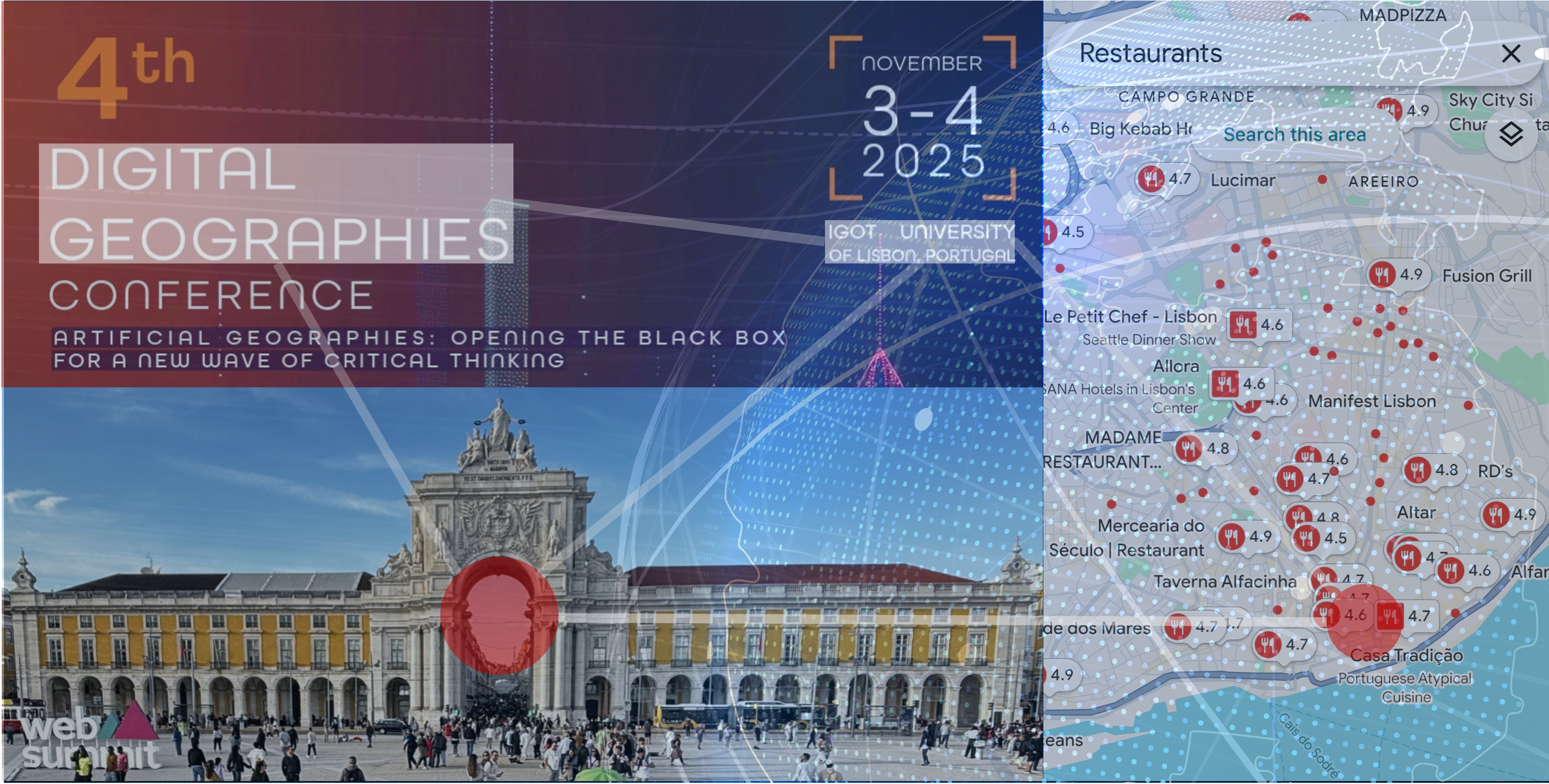
Hello Interactors,I’m back! After a bit of a hiatus traveling Southern Europe, where my wife had meetings in Northern Italy and I gave a talk in Lisbon. We visited a couple spots in Spain in between. Now it’s time to dive back into our exploration of economic geography. My time navigating those historic cities — while grappling with the apps on my phone — turned out to be the perfect, if slightly frustrating, introduction to the subject of the conference, Digital Geography.The presentation I prepared for the Lisbon conference, and which I hint at here, traces how the technical optimism of early desktop software evolved into the all-encompassing power of Platform Capital. We explore how digital systems like Airbnb and Google Maps have become more than just convenient tools. They are the primary architects of urban value. They don’t just reflect economic patterns. They mandate them. They reorganize rent extraction by dictating interactions with commerce and concentrating control. This is the new financialized city, and the uncomfortable question we must face is this: Are we leveraging these tools toward a new beneficial height, or are the tools exploiting us in ways that transcends oversight?CARTOGRAPHY’S COMPUTATIONAL CONVERGENCEI was sweating five minutes in when I realized we were headed to the wrong place. We picked up the pace, up steep grades, glissading down narrow sidewalks avoiding trolley cars and private cars inching pinched hairpins with seven point turns. I was looking at my phone with one eye and the cobbled streets with the other.Apple Maps had led us astray. But there we were, my wife and I, having emerged from the metro stop at Lisbon’s shoreline with a massive cruise ship looming over us like a misplaced high-rise. We needed to be somewhere up those notorious steep streets behind us in 10 minutes. So up we went, winding through narrow streets and passages. Lisbon is hilly. We past the clusters of tourists rolling luggage, around locals lugging groceries.I had come to present at the 4th Digital Geographies Conference, and the organizers had scheduled a walking tour of Lisbon. Yet here I was, performing the very platform-mediated tourism that the attendees came to interrogate. My own phone was likely using the same mapping API I used to book my AirBnB. These platforms were actively reshaping the Lisbon around us. The irony wasn’t lost on me. We had gathered to critically examine digital geography while simultaneously embodying its contradictions.That became even more apparent as we gathered for our walking tour. We met in a square these platform algorithms don’t push. It’s not “liked”, “starred”, nor “Instagrammed.” But it was populated nonetheless…with locals not tourists. Mostly immigrants. The virtual was met with reality.What exactly were we examining as we stood there, phones in hand, embodying the very contradictions we’d gathered to critique?Three decades ago, as an undergraduate at UC Santa Barbara, I would have understood this moment differently. The UCSB geography department was riding the crest of the GIS revolution then. Apple and Google Maps didn’t exist, and we spent our days digitizing boundaries from paper maps, overlaying data layers, building spatial databases that would make geographic information searchable, analyzable, computable. We were told we were democratizing cartography, making it a technical craft anyone could master with the right tools.But the questions that haunt me now — who decides what gets mapped? whose reality does the map represent? what work does the map do in the world? — remained largely unasked in those heady days of digital optimism.Digital geography, or ‘computer cartography’ as we understood it then, was about bringing computational precision to spatial problems. We were building tools that would move maps from the drafting tables of trained cartographers to the screens of any researcher with data to visualize. Marveling at what technology might do for us has a way of stunting the urge to question what it might be doing to us.The field of digital geography has since undergone a transformation. It’s one that mirrors my own trajectory from building tools and platforms at Microsoft to interrogating their societal effects. Today’s digital geography emerges from the collision of two geography traditions: the quantitative, GIS-focused approach I learned at UCSB, and critical human geography’s interrogation of power, representation, and spatial justice. This convergence became necessary as digital technologies escaped the desktop and embedded themselves in everyday urban life. We no longer simply make digital maps of cities and countrysides. Digital platforms are actively remaking cities themselves…and those who live in them.Contemporary digital geography, as examined at this conference, looks at how computational systems reorganize spatial relations, urban governance, and the production of place itself. When Airbnb’s algorithm determines neighborhood prop
Spirals of Enclosure
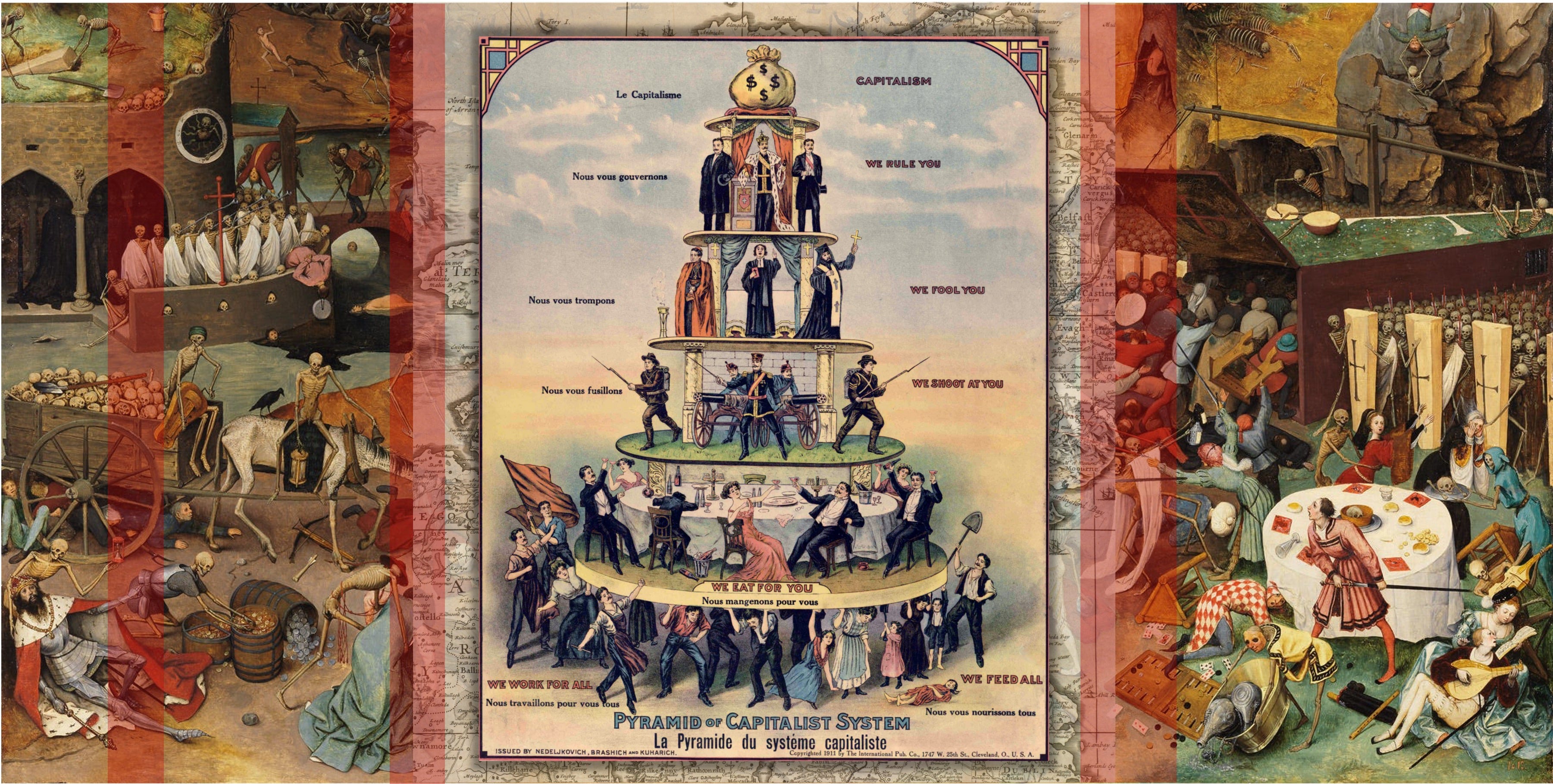
Hello Interactors,Fall is in full swing here in the northern hemisphere, which means it’s time to turn our attention to economics and economic geography. Triggered by a recent podcast on the origins of capitalism, I thought I’d kick off by exploring this from a geography perspective.I trace how violence, dispossession, and racial hierarchy aren’t simple externalities or accidents. They emerge out of a system that organized itself and then spread. Capitalism grew out of dispossession of land and human autonomy and became a dominant social and economic structure. It’s rooted in violence that became virtuous and centuries later is locked-in. Or is it?EMERGING ENGLISH ENCLOSURESThe dominant and particular brand of capitalism in force today originates in England. Before English landlords and the state violently seized common lands back in the 1300s, economic life was embedded in what historian E.P. Thompson called “moral economies”.(1) These were systems of survival where collective responsibility was managed through custom, obligation, and shared access to resources. Similar systems existed elsewhere. Long before Europeans arrived at the shores of what is now called North America, Haudenosaunee longhouse economies were sophisticatedly organized around economies of reciprocity. Further south, Andean ayllu communities negotiated labor obligations and access to land was shared. West African systems featured land that belonged to communities and ancestors, not individuals.Back in medieval English villages, commons weren’t charity, they were infrastructure. Anyone could graze animals or gather firewood. When harvests failed, there were fallbacks like hunting and gathering rights, seasonal labor sharing, and kin networks. As anthropologist Stephen Gudeman shows, these practices reflected cultures of mutual insurance aimed at collective resilience, not individual accumulation.(2)Then landlords, backed by state violence, destroyed this system to enrich themselves.From 1348-1349, the bubonic plague killed perhaps half of England’s population. This created a labor shortage that gave surviving so-called peasants leverage. For the first time they could demand higher wages, refuse exploitative landlords, or move to find better conditions.The elite mobilized state violence to reverse this. In 1351 the state passed The Statute of Labourers — an attempt to freeze wages and restrict worker movement. This serves as an early signal that reverberates today. When property and people come in conflict, the state sides with property. Over the next two centuries, landlords steadily enclosed common lands, claiming shared space as private property. Peasants who resisted were evicted, sometimes killed.Initial conditions mattered enormously. England had a relatively weak monarchy that couldn’t check landlord aggression like stronger European states did. It also had growing urban markets creating demand for food and wool and post-plague labor dynamics that made controlling land more profitable than extracting rents from secure peasants.As historian J.M. Neeson details, enclosure — fencing in private land — destroyed social infrastructure.(3) When access to common resources disappeared, so did the safety nets that enabled survival outside of market and labor competition. People simply lost the ability to graze a cow, gather fuel, glean grain, or even rely on neighbors’ obligation to help.This created a feedback loop:Each turn made the pattern stronger. Understanding how this happens requires grasping how these complex systems shaped the very people who reproduced them.The landlords driving enclosure weren’t simply greedy villains. Their sense of self, their understanding of what was right and proper, was constituted through relationships to other people like them, to their own opportunities, and to authorities who validated their actions. A landlord enclosing commons likely experienced this as “improvement”. They believed they were making the land productive while exercising newly issued property rights. Other landlords were doing it, parliament legalized it, and the economics of the time justified it. The very capacity to see alternatives was constrained by relational personal and social positions within an emerging capitalistic society.This doesn’t excuse the violence or diminish responsibility. But it does reveal how systems reproduce themselves. This happens not primarily through individual evil but through relationships and feedback loops that constitute people’s identities and sense of what’s possible. The moral judgment remains stark. These were choices that enriched someone by destroying someone else’s means of survival. But the choices were made by people whose very selfhood was being constructed by the system they were creating.Similarly, displaced peasants resisted in ways their social positions made possible. They rioted, appealed to historical customary rights, attempted to maintain the commons they relied on for centuries. Each
Masters of Mess Making and Meaning
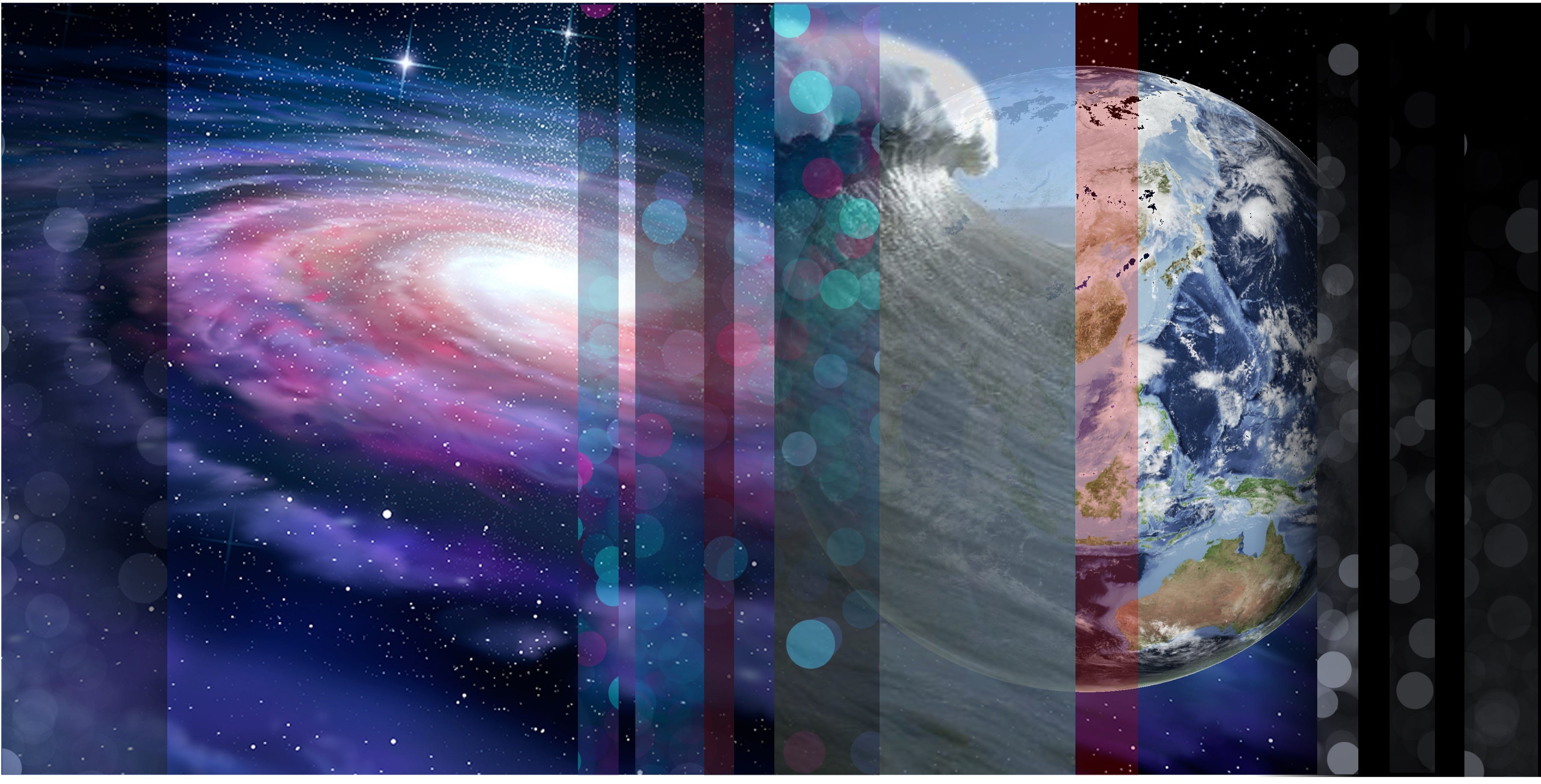
Hello Interactors,My wife and I recently started watching the mini-series 100 Foot Wave, which follows extreme surfer Garrett McNamara’s quest to ride the mythical 100-foot breaker. The show has put Nazaré, Portugal on the map — not just as a place, but as a symbol of human daring against forces far larger than ourselves.At the same time, I’ve been listening to physicist-philosopher Sean Carroll’s recent “solo” podcast on the emergence of complexity, tracing how the universe began in simplicity and blossomed into stars, life, and consciousness. These two threads — towering waves and cosmic arcs — collided in my mind, stirring something that has been swelling in me for years: how to reconcile wonder at life’s improbable flourishing with despair at its accelerated unraveling on Earth.Should despair be the only response? Or is it possible, like the surfers at Nazaré, to recognize the peril without surrendering to it — to ride, however briefly, the wave that could also destroy us?THE COSMIC WAVEBeneath the lighthouse bluff at Nazaré, Portugal opens a canyon 140 miles long and three miles deep — three times deeper than the Grand Canyon. Born of tectonic fractures and sculpted over millions of years, it is less a static feature than a force in its own right: a conduit that gathers the ocean’s momentum and hurls it shoreward. Swells that elsewhere would pass unnoticed are here magnified into walls of water, indifferent to whether they become playground or grave. Geography conspires — wind, current, and rock — but the canyon itself is an accomplice, a reminder that Earth is never merely stage but actor. For today’s surfers, this is possibility. For centuries of fishermen, it was peril. The waves have not changed, but the stance we take toward them has — and that, too, becomes part of the story the canyon tells.So it is with complexity. Every wave begins simple, a long low swell born of distant winds, that crescendos into chaos at the shoreline. It swirls and curls into turbulent foam piqued in curious but dangerous beauty, only to dissolve back into undertow, bubbles, and silence. Our own cosmos follows the same rhythm, driven by the logic of entropy — the tendency of energy to spread, of order to give way to disorder. In the beginning, we know the universe was astonishingly simple and ordered: a hot, uniform plasma, almost featureless in its smoothness.Imagine the origin of life sitting at origin of a graph. It exists orderly in low entropy and low complexity. But entropy is restless. As it advanced diagonally up and to the right disorder increases in a straight line. This opens space for complexity to emerge. Early on in the cosmos tiny quantum fluctuations stretched into patterns, atoms gathered into stars, stars fused new elements as galaxies spun, coalesced, and collided. Imagine this as the complexity line on our graph. It also grows with time but takes the shape of a parabolic wave climbing upward to a smooth crest as it increases in complexity. Meanwhile, entropy ticks steadily up and to the right as a straight arrow of time forever growing in disorder as our universe continues to increase in complexity.We are now somewhere on this complexity curve. And this is the paradox of our middle epoch. Entropy never reverses course — disorder always increases — yet along that trajectory the complexity within we live crests, like a wave gathering its final height. For a sliver of cosmic time, the universe has been rich, complex, and with structure. On at least one world in the cosmos, life emerges and even creates complex organisms like us. But if entropy pushes inexorably forward, complexity will not hold indefinitely. Stars will exhaust their fuel, galaxies will drift into darkness, and matter itself may decay. This diagram reminds us that complexity rises only to fall again, tracing an arc back toward simplicity even as entropy continues its steady climb.In this framing, the universe is not a march from order to chaos but a cycle of simple-to-complex-to-simple played out against entropy’s one-way slope. We live in a fleeting middle where complexity momentarily flourishes. Like the wave at Nazaré, born as a long low swell, steepening into a towering wall of water, then dissolving again into foam, undertow, and silence, our cosmos crests only once. The question is not whether entropy wins — it does — but how we dwell, and what we make of meaning, within the brief surge of complexity it permits.It took a lot to get us to this point. This complex space that entropy has carved within cosmic time leaves room for novelty. Complexity flourishes locally even as disorder deepens globally. Out of this novel initial imbalance, life emerged — fragile metabolisms harvesting energy from their surroundings, weaving temporary order against the grain of entropy. From single-celled organisms to multicellular bodies, from photosynthesis to predation, biology layered new strategies of survival atop older ones. Evolution diversified li
Native or Not? How Science, Politics, and Physics Decide Who Belongs
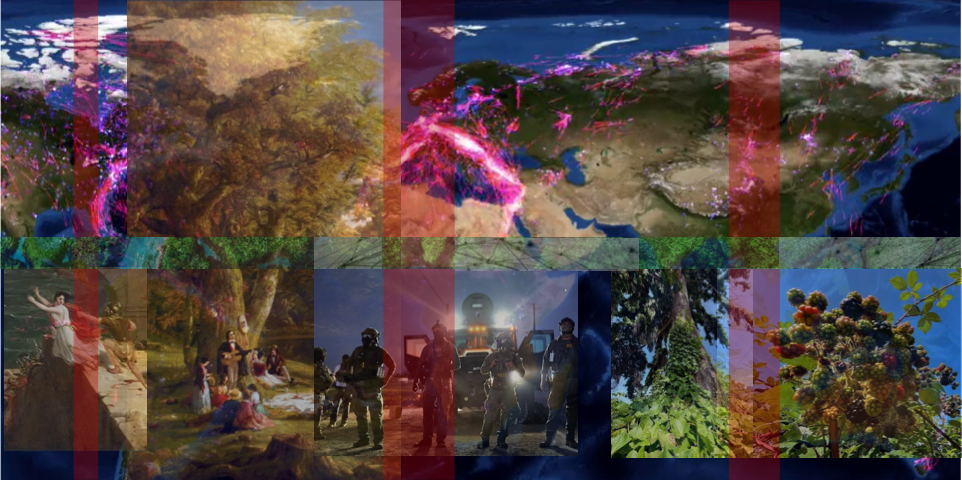
Hello Interactors,It’s been awhile as I’ve been enjoying summer — including getting in my kayak to paddle over to a park to water plants. Time on the water also gets me thinking. Lately, it’s been about what belongs here, what doesn’t, and who decides? This week’s essay follows my trail of thought from ivy-covered fences to international borders. I trace how science, politics, and even physics shape our ideas of what’s “native” and what’s “invasive.”INVASION, IVY, AND ICEAs I was contemplating this essay in my car at a stop light, a fireweed seedling floated through the sunroof. Fireweed is considered “native” by the U.S. Government, but when researching this opportunistic plant — which thrives in disturbed areas (hence it’s name) — I learned it can be found across the entire Northern Hemisphere. It’s “native” to Japan, China, Korea, Siberia, Mongolia, Russia, and all of Northern Europe. Because its primary dispersal is through the wind, it’s impossible to know where exactly it originated and when. And unlike humans, it doesn’t have to worry about borders.So long as a species arrives on its own accord through wind, wings, currents, or chance — without a human hand guiding it — it’s often granted the status of “native.” Never mind whether the journey took decades or millennia, or if the ecosystem has since changed. What matters is that it got there on its own, as if nature somehow stamped its passport.As long time Interactors may recall, I spend the summer helping water “native” baby plants into maturity in a local public green space. A bordering homeowner had planted an “invasive species”, English Ivy, years ago and it climbed the fence engulfing the Sword Ferns, Vine Maples, and towering Douglas Fir trees common in Pacific Northwest woodlands. A nearby concerned environmentalist volunteered to remove the “alien” ivy and plant “native” species through a city program called Green Kirkland. Some of the first Firs he planted are now taller than he is! Meanwhile, on the ground you see remnants of English Ivy still trying to muster a comeback. The stuff is tenacious.This is also the time of year in the Seattle area when Himalayan Black Berries are ripening. These sprawls of arching spikey vines are as pernicious as they are delicious. Nativist defenders try squelching these invaders too. But unlike English Ivy, these “aliens” come with a sugary prize. You’ll see people walking along the side of roads with buckets and step stools trying their darnedest to pluck a plump prize — taking care not to get poked or pierced by their prickly spurs.This framing of “invasive” versus “native” has given me pause like never before, especially as I witness armed, masked raids on homes and businesses carried out by U.S. Immigration and Customs Enforcement (ICE) agents. These government officials, who are also concerned and deeply committed citizens, see themselves as removing what they label “invasive aliens” — individuals they fear might overwhelm the so-called “native” population. As part of the Department of Homeland Security, they work to secure the “Homeland” from what is perceived as an invasion by unwanted human movement. In reflecting on this, I ask myself: how different am I from an ICE agent when I labor to eradicate plants I have been taught to call “invasive” while nurturing so-called “native” species back to health? Both of us are acting within a worldview that categorizes beings as either threats or treasures. At what cost, and with what consequences?According to a couple other U.S. agencies (like the National Park Service and the U.S. Department of Agriculture) species are considered native if they were present before European colonization (i.e., pre-1492). The idea that a species is “native” if it was present before 1492 obviously reflects less a scientific ecological reality than a political opinion of convenience. Framing nativity through the lens of settler history rather than ecological process ignores not only millennia of Indigenous land stewardship, but prehistoric human introductions and natural migrations shaped by climate and geology. Trying pin down what is “native” is like picking up a squirming earthworm.These little critters, which have profoundly altered soil ecosystems in postglacial North America, are often labeled “naturalized” rather than “native” because their arrival followed European colonization. Yet this classification ignores the fact that northern North America had no earthworms at all for thousands of years after the glaciers retreated. There were scraped away with the topsoil. What native species may exist in North America are confined to the unglaciated South.What’s disturbing isn’t just the worms’ historical presence but the simplistic persistent narrative that ecosystems were somehow stable until 1492. How is it possible that so many people still insist it was colonial contact that supposedly flipped some ecological switch? In truth, landscapes have always been in motion. They’ve be
When the Sky Swells, the Land Breaks
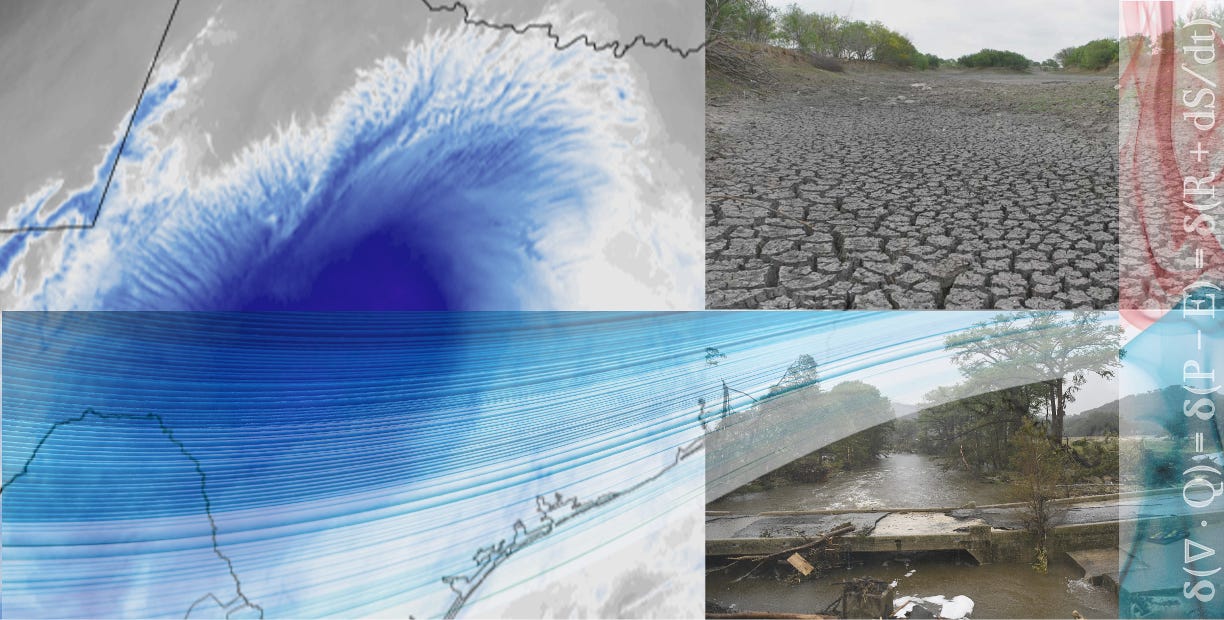
Hello Interactors,It’s hard to ignore the situation in Texas, especially as I turn my attention to physical geography. 'Flash Flood Alley', as it’s called by hydrologists, had already been pounded by days of relentless rain, soaking the soil and swelling the rivers. It left the region teetering on the edge of catastrophe. Then came the deluge. A torrent so sudden and intense it dumped a month’s worth of rain in under an hour. Roads turned to rivers. Homes were lost. Lives were too. As the floodwaters recede, what remains isn’t just devastation — it’s a lesson. One about a changing water cycle, a shifting climate, and a stubborn way of thinking that still dominates how we plan for both.DROUGHT AND DELUGEIs Texas drowning due to climate change? Just three years ago, we were told it’s drying up. That’s when a record drought emptied reservoirs and threw aquifers into steep decline. From 2011 to 2015, 90% of the state was in extreme drought. This seesaw between soaked and scorched is the kind of muddled messaging that lets climate deniers laugh all the way to the comment section.The truth is Texas is drying up AND drowning. This paradox isn’t just Texas-sized — it’s systemic. Our habit of translating global climate shifts into local weather soundbites is failing us.According to hydrologist Benjamin Zaitchik and colleagues, writing in Nature Water in 2023, two dominant narratives frame how these events are explained. Public and policy reporting on patterns like those in Texas usually falls into two camps:* The "Wet-Get-Wetter, Dry-Get-Drier" (WWDD) hypothesis — climate change intensifies existing hydrological patterns, bringing more rain to wet regions and more drought to dry ones.* The "Global Aridification" (GA) hypothesis — warming increases the atmosphere's "thirst," drying out land even where rainfall remains steady.Both frameworks can explain real conditions, but the recent Texas floods expose their limits. If a region long seen as drying can also produce one of the most intense floods in U.S. history, are these ideas flawed — or just too rigidly applied?WWDD and GA aren’t competing truths. They’re partial heuristics for a nonlinear, complex water system. Yet our brains favor recent events, confirm existing beliefs, and crave simple answers. So we latch onto one model or the other. But these simplified labels often ignore scale, context, and the right metrics. Is a region drying or wetting based on annual rainfall? Soil moisture? Streamflow? Urbanization? Atmospheric demand?Texas — with its sprawling cities, irrigated farms, and dramatic east–west gradient in rainfall and vegetation — resists binary climate narratives. One year it exemplifies GA, with depleted aquifers and parched soil. The next, like now, it fits WWDD, as Tropical Storm Barry — arriving after days of relentless rainfall — stalled over saturated land, unleashing a torrent so fierce it overwhelmed the landscape.Zaitchik and his team call for a clarification approach. Instead of umbrella labels, we should specify which variables and timeframes are shifting. A place can be parched, pummeled, and primed to flood — sometimes all in the same season. And those shifting moods in the water set the stage for something deeper — a mathematical reckoning.MATH MEETS MAYHEMThis debate boils down to three basic equations — one for the land, one for the sky, and one for how the system changes over time. But that means prying open the black box of math symbols still treated like sacred script by academics and STEM pros.Let’s be clear, these equations aren’t spells. They’re just shorthand — like a recipe or a flowchart. The symbols may look like hieroglyphs, but they describe familiar things. Precipitation falls (P). Water evaporates or gets sucked up by plants — evapotranspiration (E). Some runs off (R). Some sinks in (S). Time (t) tells us when it’s happening. The 'd' in dS and dt just means "change in" — how much storage (S) increases or decreases over time (t). The Greek letters — ∇ (nabla) and δ (delta) — simply mean change, across space and time. If you can track a bank account, you can follow these equations. And if you’ve ever watched a lawn flood after a storm, you’ve seen them in action.You don’t need a PhD to understand water, just a willingness to see through the symbols.* LAND: The Water Balance EquationP − E = R + dS/dtPrecipitation (P) minus evapotranspiration (E) equals runoff (R) plus the change in stored water (dS/dt).* SKY: The Vapor Flux EquationP − E = ∇ ∙ QThis links land and atmosphere. ∇ (nabla) tracks change across space, and Q is vapor flux — the amount of moisture moving through the atmosphere from one place to another, carried by winds and shaped by pressure systems. The dot product (∙) measures how much of that vapor is moving into or out of an area. So ∇ ∙ Q shows whether moist air is converging (piling up to cause rain) or diverging (pulling apart and drying).* SYSTEM: The Change Equationδ(∇ ∙ Q) = δ(P − E) = δ(R + dS/dt)This sh
Red, White, and Choo Choo
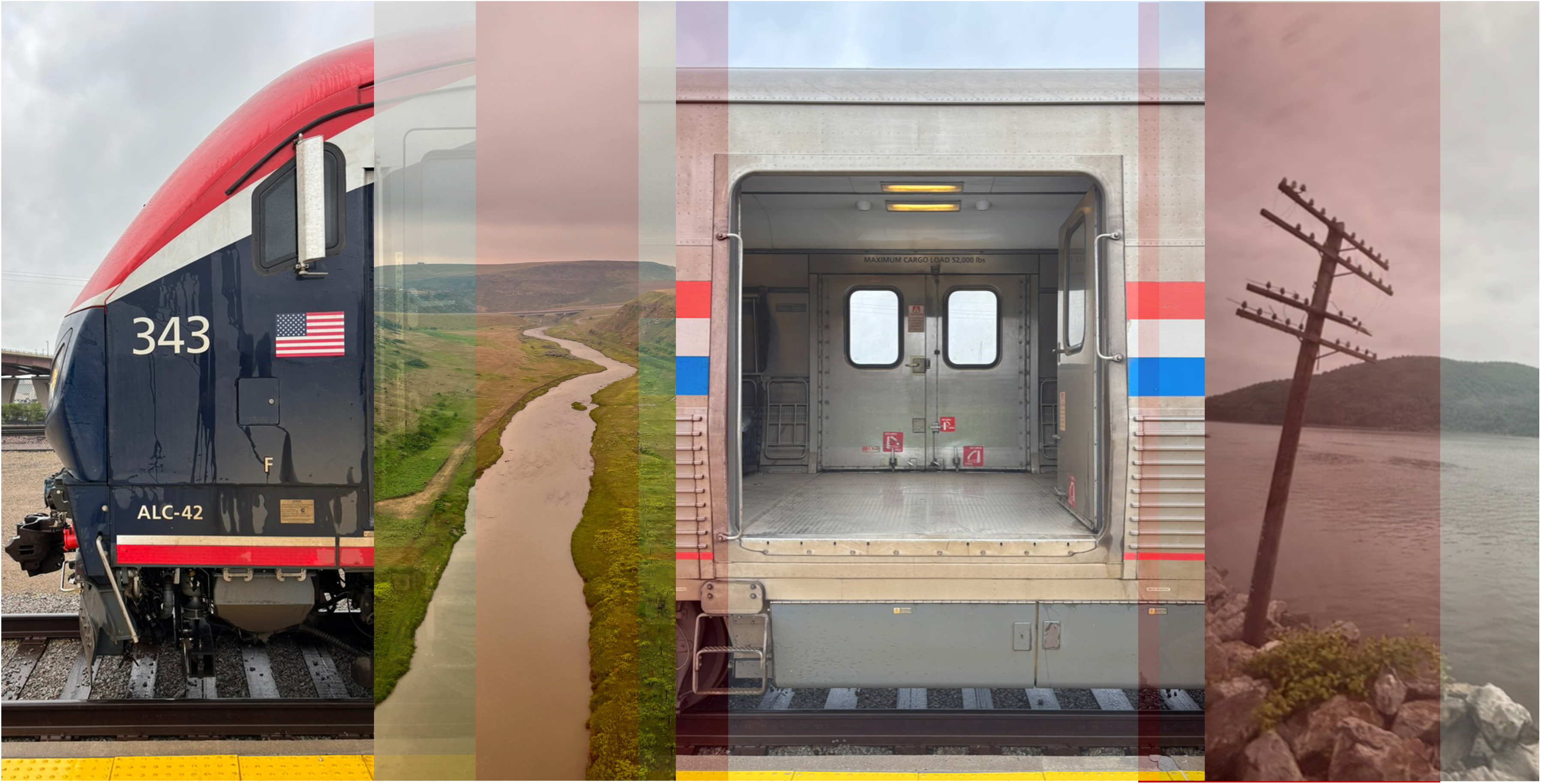
Hello Interactors,Happy Fourth of July and welcome to a brand new season of Interplace! We’re kicking things off with a video of my cross-country rail trip that took about four days to ride…and nearly twice as long to edit and produce. This first ever Interplace video launches our summer focus on physical geography and the environment. I hope you enjoy a slow journey through space, place, and the unexpected beauty between the coasts. This is a public episode. If you would like to discuss this with other subscribers or get access to bonus episodes, visit interplace.io

How Cities Loop Us In
Hello Interactors,My daughter in Manhattan’s East Village sent me an article about the curated lives of the “West Village girls.” A few days later, I came across a provocative student op-ed from the University of Washington: "Why the hell do we still go to Starbucks?" The parallels stood out.In Manhattan’s West Village, a spring weekend unfolds with young women jogging past a pastry shop in matching leggings, iced matcha lattes in hand. Some film it just long enough for TikTok. Across the country, students cycle through Starbucks in Seattle’s U-District like clockwork. The drinks are overpriced and underwhelming, but that’s not the point. It’s familiar. It's part of a habitual loop.Different cities, similar rhythms. One loop is visual, the other habitual. But both show how space and emotion sync. Like an ambient synth track, they layer, drift, and return. If you live in or near a city, you exist in your own looping layers of emotional geography.FLASH FEEDSMy daughter has been deep into modular synthesis lately — both making and listening. It’s not just the music that intrigues her, but the way it builds: loops that don’t simply repeat, but evolve, bend, and respond. She’ll spend hours patching sounds together, adjusting timing and tone until something new emerges. She likens it to painting with sound. Watching her work, it struck me how much her synth music mirrors city life — not in harmony, but in layers. She’s helped me hear urban rhythms differently.Like a pop synth hook, the Flash loop is built for attention. It's bright, polished, and impossible to ignore. Synth pop thrives on these quick pulses — hooks that grab you within seconds, loops that deliver dopamine with precision. Urban spaces under this loop do the same. They set a beat others fall in line with, often flattening nuance in exchange for momentum.This isn’t just about moving to a beat. It’s about becoming part of the beat. When these fast loops dominate, people start adapting to the spaces that reflect them. And those spaces, in turn, evolve based on those very behaviors. It’s a feedback loop: movement shaping meaning, and meaning shaping movement. The people become both the input and the output.In this context, the West Village girl isn’t just a person — she’s a spatial feedback loop. A mashup of Carrie Bradshaw nostalgia, Instagram polish, and soft-lit storefronts optimized for selfies. But she didn’t arrive from nowhere. She emerged through a kind of spatial modeling: small choices, like where to brunch, where to pose, where to post are repeated so often they remade a neighborhood.Social psychologist Erving Goffman, writing in the 1950s, called this kind of self-presentation "impression management." He argued that much of everyday life is performance. Not in the theatrical sense, but in how we act in response to what we expect others see. Urban spaces, especially commercial ones, are often the stage. But today, that performance isn’t just for others in the room. It’s for followers, algorithms, and endless feeds. The “audience” is ambient, but its expectations are precise.As places like the West Village get filtered through lifestyle accounts and recommendation algorithms, their role changes. They no longer just host people, but mirror back a version of identity their occupants expect to see. Sidewalks become catwalks. Coffee shops become backdrops. Apartment windows become curated messes of string lights and tasteful clutter. And increasingly, the distinction between what’s lived and what’s posted collapses.This fast loop — what we might call spatial virality — doesn’t just show us how to act in a place. It scripts the place itself. Stores open where the foot traffic is photogenic. Benches are placed for backdrops, not rest. Even the offerings shift: Aperol spritzes, charm bars, negroni specials sold not for taste but for tagability.These are the high-tempo loops. They grab attention and crowd the mix. But every modular synth set, like a painting, needs contrast.So some people opt out, or imagine doing so. Not necessarily with loud protest, but quiet rejection. They look for something slower. Something that isn’t already trending...unless the trend of routine sucks you in.PULSING PATTERNSIf Flash is the pop hook, Pulse is the counter-melody. It could be a bassline or harmony that brings emotional weight and keeps things grounded. In music, you may not always notice it, but you'd miss it if it were gone. In cities, this loop shows up in slow friendships, mutual aid, and cafés that begin to feel like second homes. These are places where regulars greet one another by name. Where where hours melt through conversations. It satisfies a need to be seen, but without needing to perform. It’s what holds meaning when spectacle fades.If the fast loop turns space into spectacle, the counter loop tries to slow it down. It lures the space to feel lived in, not just liked. It’s not always radical. Sometimes it’s just choosing a different coffee shop.Back
Beaks, Brakes, and Brainwaves
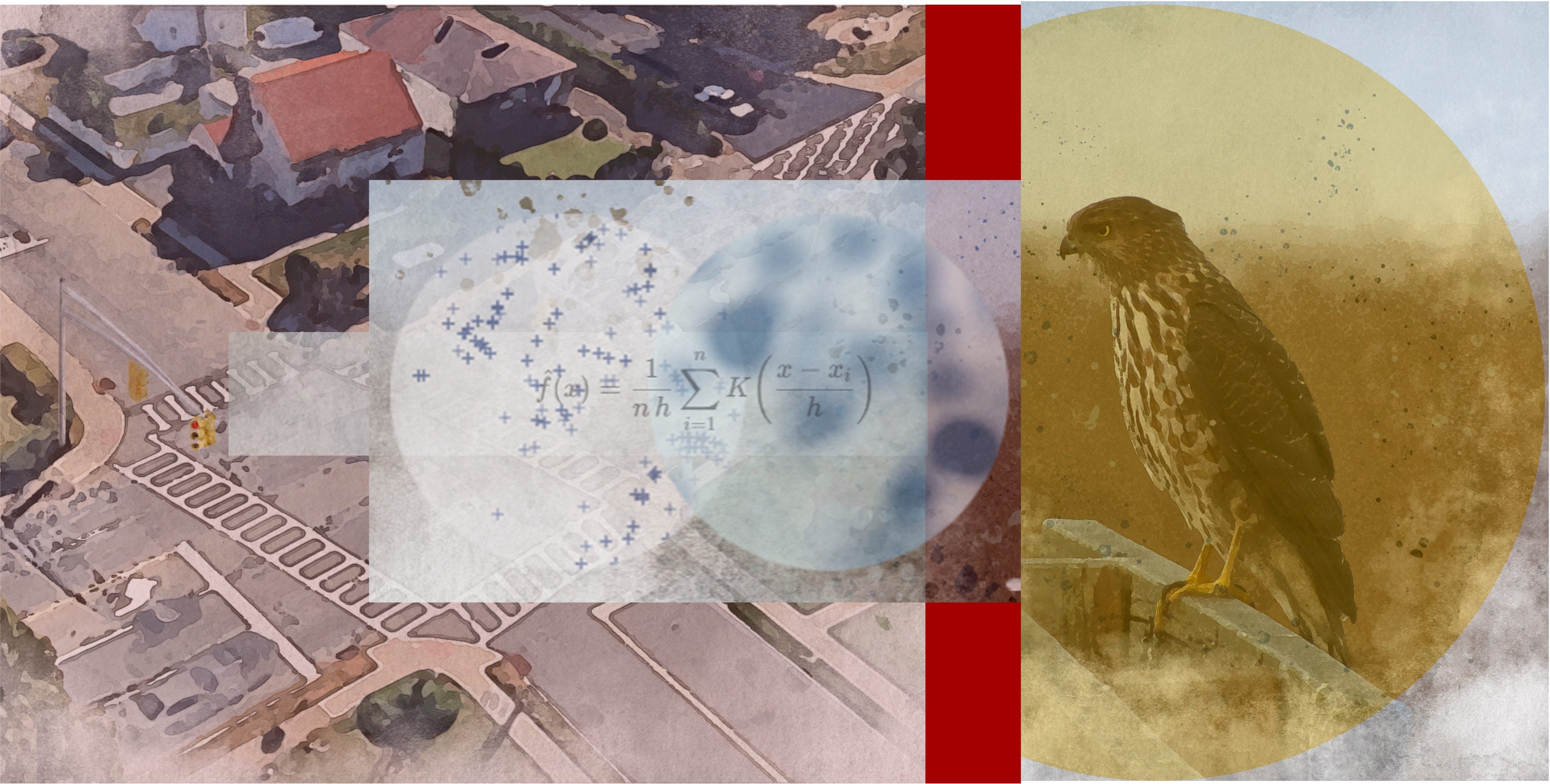
Hello Interactors, This week, four strange bird encounters landed in my lap — three in real life, one on my screen. First, a crow tore through the bushes in our yard chasing a frantic nuthatch. Moments later, I spotted two more crows feasting on roadkill just outside our house. Then, while walking with my wife, we watched four ducks in hot pursuit of another, flapping furiously down the street — some kind of aerial turf war. And finally, scrolling through my feed, I stumbled on a paper describing a Cooper’s Hawk hacking the city’s traffic system to hunt smarter. After all that, I tried seeing cities as a bird might. So I wrote as one.HISS, HUM, HUNTI first sense the city as vibration. Before sun rays even breech the branches, a hiss of car tires emerge; street lamps click off; somewhere a garage door rumbles open. Each resonance strikes the hollow chambers of my bones like sonar. It’s a sketch of distance, density, and direction. This all makes perfect sense to me even though I am just a kid. A juvenile Cooper’s Hawk — Accipiter cooperii — yet the human-made maze below me is as legible to me as the nest I left barely two winters ago. What follows, in human words, is a recount of one day’s hunt. I hope to demonstrate what humans regard as intelligence, innovation, and enterprise exists in a single act of predation.DANCING WITH DATA AT DAWNPerched on a gray mast of the Main and Prospect traffic light, I begin to render the scene. My basemap is no pixel grid glowing on some screen across town; it is a topological organ in my scull. Topology matters when a lamppost sits one maneuver away from the porch roof, which is one glide away from the dumpster rim. My so-called ‘bird brain’ calculates dynamic flows of probability. One flip of a traffic light, a garbage truck rolls by, and that gust of wind changes direction. My internal map pulses between “larger” when prey likelihood rises and “smaller” when likelihood falls.As I gaze out above the east-west avenue, a slipstream peels off the 7AM wave of commuters. I spot a sparrow in a vortex that spirals from the garbage truck’s wake at 07∶13. That acoustic shadow beneath that florist’s van is one place I could pass unseen. But is a sparrow worth it?What I am doing — unknown even to myself — is what spatial scientists call real‑time kernel‑density estimation. At any point on a simple 2D path I can plop a small mathematical bump — a kernel. I can then reason about the density mapped below me by stacking up every bump’s contribution at a particular spot. That once scatter of points on a map morphs into a smooth curve that shows where meaningful observations truly cluster. I continuously weight a landscape of pigeons, cyclists, and idling SUVs by situational context rather than simple Euclidean distance.Complexity geographer David O’Sullivan calls this kind of adaptive map a narrative model — a story the system tells itself so it can keep acting. My mental basemap obeys what is adjacent to what on this map. After all, a three‑meter hedge is more impenetrable than thirty meters of empty air; therefore straight‑line distances can lie and deceive. When humans try to simplify distances by saying, ‘as the crow flies’, they have no idea what they’re leaving out.BRAKES BUILD BARRICADESAt 07∶26 a stainless‑steel button is pressed; I hear the relay’s metallic click 3.2 seconds before the little white pedestrian blinks alive. I am perched here because I anticipated this poke by pedestrians on their morning commute. Vehicles will now queue as these bi-peds spill into the cross walk. The stacked metal boxes of steel, rubber, and plastic will form a barricade forty meters long…potentially.Brake‑lights align into a pulsing crimson corridor whose half‑life I have calculated and averaged across nineteen previous dawns. Humans call the coming congestion a nuisance, but I call it camouflage. For twenty‑two seconds the asphalt canyon’s turbulence drops below an acceptable range. I can now hover as if among cedars.A scientist has been watching from the opposite curb. They will soon begin recording this trick in their field book as so: a hawk anticipates the signal pattern and times its dives to the red‑phase distribution of brake lights.Because most queues are short, but occasionally very long, I have to be careful to time this properly. If I dive for prey based on the overall mean of the lineup, I will arrive while half the cars were still rolling to a stop — dangerous. So instead, I consider just the top-10% longest lines. Scientists marvel that I learned this algorithm in a single winter. I marvel that they need calculators to compute it.ZEBRA STRIPE SLALOM STRIKEI drop. The scent of hot rubber folds swirls with the cedar‑resin on my breast feathers as the warm air fills my plumage. The slowing bumper of a school bus becomes a landing spot — a moving parapet. Fresh into the dive, the thermoplastic zebra stripes flash white‑white‑white like a stroboscopic speedometer. None of this was made
Launchpads, Land Grabs, and Loopholes
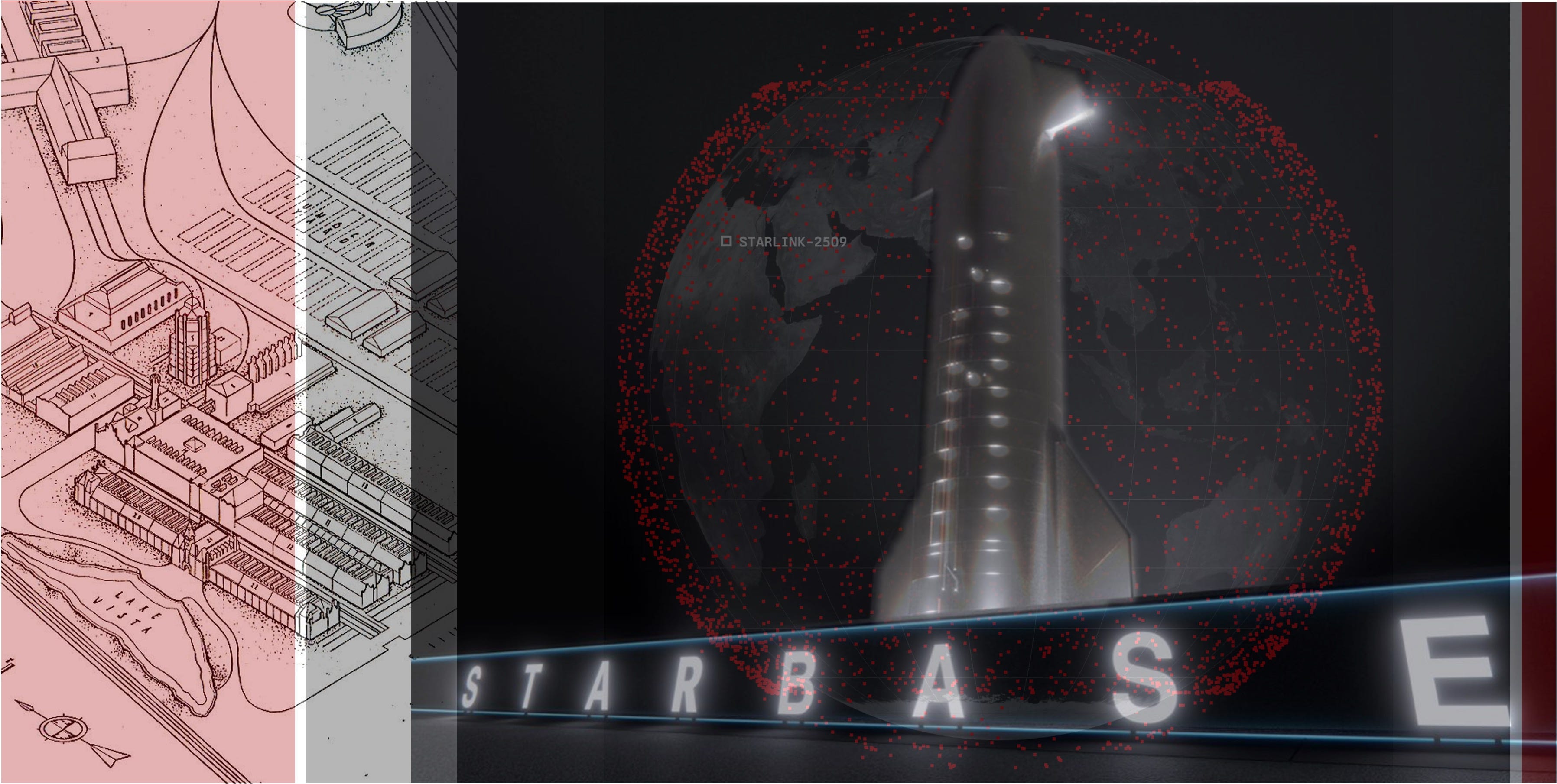
Hello Interactors,I was in Santa Barbara recently having dinner on a friend’s deck when a rocket’s contrail streaked the sky. “Another one from Vandenberg,” he said. “Wait a couple minutes — you’ll hear it.” And we did. “They’ve gotten really annoying,” he added. He’s not wrong. In early 2024, SpaceX launched seven times more tonnage into space than the rest of the world combined, much of it from Vandenberg Space Force Base (renamed from Air Force Base in 2021). They’ve already been approved to fly 12,000 Starlink satellites, with filings for 30,000 more.This isn’t just future space junk — it’s infrastructure. And it’s not just in orbit. What Musk is doing in the sky is tied to what he’s building on the ground. Not in Vandenberg, where regulation still exists, but in Starbase, Texas, where the law doesn’t resist — it assists. There, Musk is testing how much sovereignty one man can claim under the banner of “innovation” — and how little we’ll do to stop him.TOWNS TO THRUST AND THRONEMusk isn’t just defying gravity — he’s defying law. In South Texas, a place called Starbase has taken shape along the Gulf Coast, hugging the edge of SpaceX’s rocket launch site. What looks like a town is really something else: a launchpad not just for spacecraft, but for a new form of privatized sovereignty.VIDEO: Time compresses at the edge of Starbase: a slow-built frontier where launch infrastructure rises faster than oversight. Source: Google EarthThis isn’t unprecedented. The United States has a long lineage of company towns — places where corporations controlled land, housing, labor, and local government. Pullman, Illinois is the most famous. But while labor historians and economic geographers have documented their economic and social impact, few have examined them as legal structures of power.That’s the gap legal scholar Brian Highsmith identifies in Governing the Company Town. That omission matters — because these places aren’t just undemocratic. They often function as quasi-sovereign legal shells, designed to serve capital, not people.Incorporation is the trick. In Texas, any area with at least 201 residents can petition to become a general-law municipality. That’s exactly what Musk has done. In a recent vote (212 to 6) residents approved the creation of an official town — Starbase. Most of those residents are SpaceX employees living on company-owned land…with a Tesla in the driveway. The result is a legally recognized town, politically constructed. SpaceX controls the housing, the workforce, and now, the electorate. Even the mayor is a SpaceX affiliate. With zoning powers and taxing authority, Musk now holds tools usually reserved for public governments — and he’s using them to build for rockets, not residents…unless they’re employees.VIDEO: Starbase expands frame by frame, not just as a company town, but as a legal experiment — where land, labor, and law are reassembled to serve orbit over ordinance. Source: Google EarthQuinn Slobodian, a historian of neoliberalism and global capitalism, shows how powerful companies and individuals increasingly use legal tools to redesign borders and jurisdictions to their advantage. In his book, Cracked Up Capitalism, he shows how jurisdiction becomes the secret weapon of the capitalist state around the world. I wrote about a techno-optimist fantasy state on the island of Roatán, part of the Bay Islands in Honduras a couple years ago. It isn’t new. Disney used the same playbook in 1967 with Florida’s Reedy Creek District — deeding slivers of land to employees to meet incorporation rules, then governing without real opposition. Highsmith draws a straight line to Musk: both use municipal law not to serve the public, but to avoid it. In Texas, beach access is often blocked near Starbase — even when rockets aren’t launching. A proposed bill would make ignoring an evacuation order a Class B misdemeanor, punishable by jail.Even if Starbase never fully resembles a traditional town, that’s beside the point. What Musk is really revealing isn’t some urban design oasis but how municipal frameworks can still be weaponized for private control. Through zoning laws, incorporation statutes, and infrastructure deals, corporations can shape legal entities that resemble cities but function more like logistical regimes.And yet, this tactic draws little sustained scrutiny. As Highsmith reminds us, legal scholarship has largely ignored how municipal tools are deployed to consolidate corporate power. That silence matters — because what looks like a sleepy launch site in Texas may be something much larger: a new form of rule disguised as infrastructure.ABOVE THE LAW, BELOW THE LANDElon Musk isn’t just shaping towns — he’s engineering systems. His tunnels, satellites, and rockets stretch across and beyond traditional borders. These aren’t just feats of engineering. They’re tools of control designed to bypass civic oversight and relocate governance into private hands. He doesn’t need to overthrow the state to
Cities in Chaos, Connection in Crisis
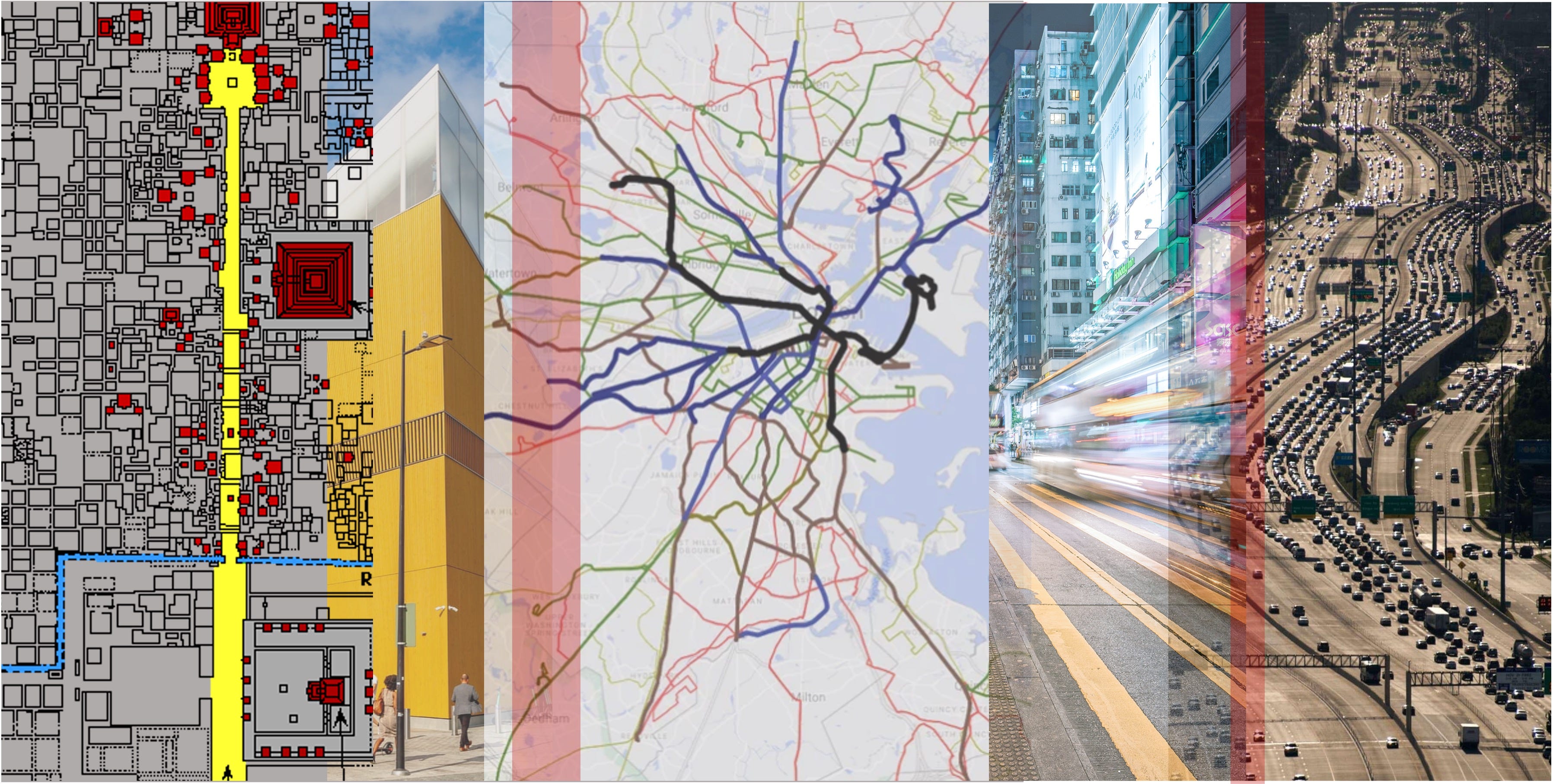
Hello Interactors,This week, I’ve been reflecting on the themes of my last few essays — along with a pile of research that’s been oddly in sync. Transit planning. Neuroscience. Happiness studies. Complexity theory. Strange mix, but it keeps pointing to the same thing: cities aren’t just struggling with transportation or housing. They’re struggling with connection. With meaning. With the simple question: what kind of happiness should a city make possible? And why don’t we ask that more often?STRANGERS SHUNNED, SYSTEMS SIMULATEDThe urban century was supposed to bring us together. Denser cities, faster mobility, more connected lives — these were the promises of global urbanization. Yet in the shadow of those promises, a different kind of city has emerged in America with growing undertones elsewhere: one that increasingly seeks to eliminate the stranger, bypass friction, and privatize interaction.Whether through algorithmically optimized ride-sharing, private tunnels built to evade street life, or digital maps simulating place without presence for autonomous vehicles, a growing set of design logics work to render other people — especially unknown others — invisible, irrelevant, or avoidable.I admit, I too can get seduced by this comfort, technology, and efficiency. But cities aren’t just systems of movement — they’re systems of meaning. Space is never neutral; it’s shaped by power and shapes behavior in return. This isn’t new. Ancient cities like Teotihuacan (tay-oh-tee-wah-KAHN) in central Mexico, once one of the largest cities in the world, aligned their streets and pyramids with the stars. Chang’an (chahng-AHN), the capital of Tang Dynasty China, used strict cardinal grids and walled compounds to reflect Confucian ideals of order and hierarchy. And Uruk (OO-rook), in ancient Mesopotamia, organized civic life around temple complexes that stood at the spiritual and administrative heart of the city.These weren’t just settlements — they were spatial arguments about how people should live together, and who should lead. Even Middle Eastern souks and hammams were more than markets or baths; they were civic infrastructure. Whether through temples or bus stops, the question is the same: What kind of social behavior is this space asking of us?Neuroscience points to answers. As Shane O’Mara argues, walking is not just transport — it’s neurocognitive infrastructure. The hippocampus, which governs memory, orientation, and mood, activates when we move through physical space. Walking among others, perceiving spontaneous interactions, and attending to environmental cues strengthens our cognitive maps and emotional regulation.This makes city oriented around ‘stranger danger’ not just unjust — but indeed dangerous. Because to eliminate friction is to undermine emergence — not only in the social sense, but in the economic and cultural ones too. Cities thrive on weak ties, on happenstance, on proximity without intention. Mark Granovetter’s landmark paper, The Strength of Weak Ties, showed that it's those looser, peripheral relationships — not our inner circles — that drive opportunity, creativity, and mobility. Karl Polanyi called it embeddedness: the idea that markets don’t float in space, they’re grounded in the social fabric around them.You see it too in scale theory — in the work of Geoffrey West and Luís Bettencourt — where the productive and innovative energy of cities scales with density, interaction, and diversity. When you flatten all that into private tunnels and algorithmic efficiency, you don’t just lose the texture — you lose the conditions for invention.As David Roberts, a climate and policy journalist known for his systems thinking and sharp urban critiques, puts it: this is “the anti-social dream of elite urbanism” — a vision where you never have to share space with anyone not like you. In conversation with him, Jarrett Walker, a transit planner and theorist who’s spent decades helping cities design equitable bus networks, also pushes back against this logic. He warns that when cities build transit around avoidance — individualized rides, privatized tunnels, algorithmic sorting — they aren’t just solving inefficiencies. They’re hollowing out the very thing that makes transit (and cities) valuable and also public: the shared experience of strangers moving together.The question isn’t just whether cities are efficient — but what kind of social beings they help us become. If we build cities to avoid each other, we shouldn’t be surprised when they crumble as we all forget how to live together.COVERAGE, CARE, AND CIVIC CALMIf you follow urban and transit planning debates long enough, you’ll hear the same argument come up again and again: Should we focus on ridership or coverage? High-frequency routes where lots of people travel, or wide access for people who live farther out — even if fewer use the service? For transit nerds, it’s a policy question. For everyone else, it’s about dignity.As Walker puts it, coverage isn
You Are Here. But Nowhere Means Anything
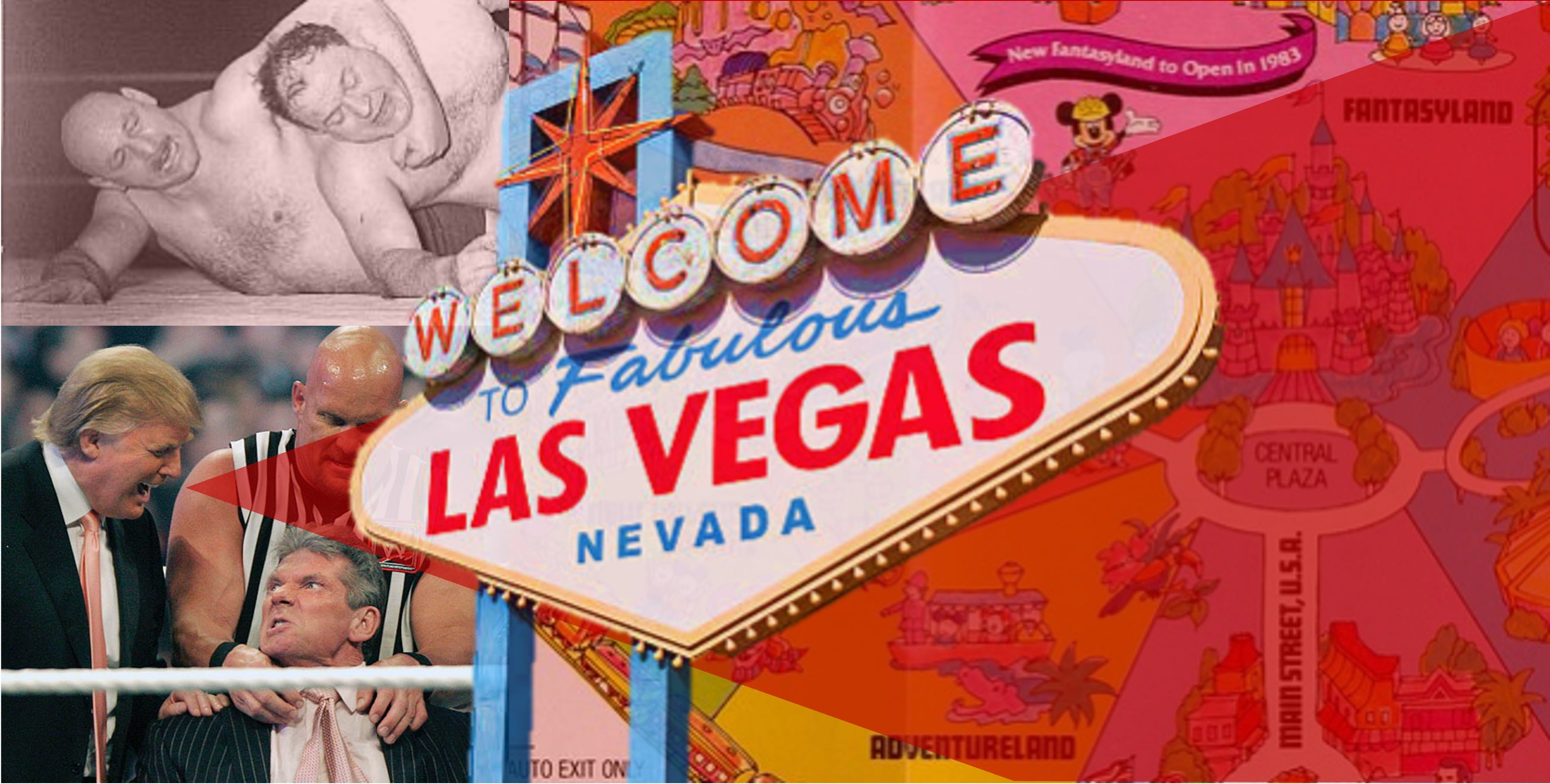
Hello Interactors,This week, the European Space Agency launched a satellite to "weigh" Earth's 1.5 trillion trees. It will give scientists deeper insight into forests and their role in the climate — far beyond surface readings. Pretty cool. And it's coming from Europe.Meanwhile, I learned that the U.S. Secretary of Defense — under Trump — had a makeup room installed in the Pentagon to look better on TV. Also pretty cool, I guess. And very American.The contrast was hard to miss. Even with better data, the U.S. shows little appetite for using geographic insight to actually address climate change. Information is growing. Willpower, not so much.So it was oddly clarifying to read a passage Christopher Hobson posted on Imperfect Notes from a book titled America by a French author — a travelogue of softs. Last week I offered new lenses through which to see the world, I figured I’d try this French pair on — to see America, and the world it effects, as he did.PAPER, POWER, AND PROJECTIONI still have a folded paper map of Seattle in the door of my car. It’s a remnant of a time when physical maps reflected the reality before us. You unfolded a map and it innocently offered the physical world on a page. The rest was left to you — including knowing how to fold it up again.But even then, not all maps were neutral or necessarily innocent. Sure, they crowned capitals and trimmed borders, but they could also leave things out or would make certain claims. From empire to colony, from mission to market, maps often arrived not to reflect place, but to declare control of it. Still, we trusted it…even if was an illusion.I learned how to interrogate maps in my undergraduate history of cartography class — taught by the legendary cartographer Waldo Tobler. But even with that knowledge, when I was then taught how to make maps, that interrogation was more absent. I confidently believed I was mediating truth. The lines and symbols I used pointed to substance; they signaled a thing. I traced rivers from existing base maps with a pen on vellum and trusted they existed in the world as sure as the ink on the page. I cut out shading for a choropleth map and believed it told a stable story about population, vegetation, or economics. That trust was embodied in representation — the idea that a sign meant something enduring. That we could believe what maps told us.This is the world of semiotics — the study of how signs create meaning. American philosopher Charles Sanders Peirce offered a sturdy model: a sign (like a map line) refers to an object (the river), and its meaning emerges in interpretation. Meaning, in this view, is relational — but grounded. A stop sign, a national anthem, a border — they meant something because they pointed beyond themselves, to a world we shared.But there are cracks in this seemingly sturdy model.These cracks pose this question: why do we trust signs in the first place? That trust — in maps, in categories, in data — didn’t emerge from neutrality. It was built atop agendas.Take the first U.S. census in 1790. It didn’t just count — it defined. Categories like “free white persons,” “all other free persons,” and “slaves” weren’t neutral. They were political tools, shaping who mattered and by how much. People became variables. Representation became abstraction.Or Carl Linnaeus, the 18th-century Swedish botanist who built the taxonomies we still use: genus, species, kingdom. His system claimed objectivity but was shaped by distance and empire. Linnaeus never left Sweden. He named what he hadn’t seen, classified people he’d never met — sorting humans into racial types based on colonial stereotypes. These weren’t observations. They were projections based on stereotypes gathered from travelers, missionaries, and imperial officials.Naming replaced knowing. Life was turned into labels. Biology became filing. And once abstracted, it all became governable, measurable, comparable, and, ultimately, manageable.Maps followed suit.What once lived as a symbolic invitation — a drawing of place — became a system of location. I was studying geography at a time (and place) when Geographic Information Systems (GIS) and GIScience was transforming cartography. Maps weren’t just about visual representations; they were spatial databases. Rows, columns, attributes, and calculations took the place of lines and shapes on map. Drawing what we saw turned to abstracting what could then be computed so that it could then be visualized, yes, but also managed.Chris Perkins, writing on the philosophy of mapping, argued that digital cartographies didn’t just depict the world — they constituted it. The map was no longer a surface to interpret, but a script to execute. As critical geographers Sam Hind and Alex Gekker argue, the modern “mapping impulse” isn’t about understanding space — it’s about optimizing behavior through it; in a world of GPS and vehicle automation, the map no longer describes the territory, it becomes it. Laura Roberts, writing on film
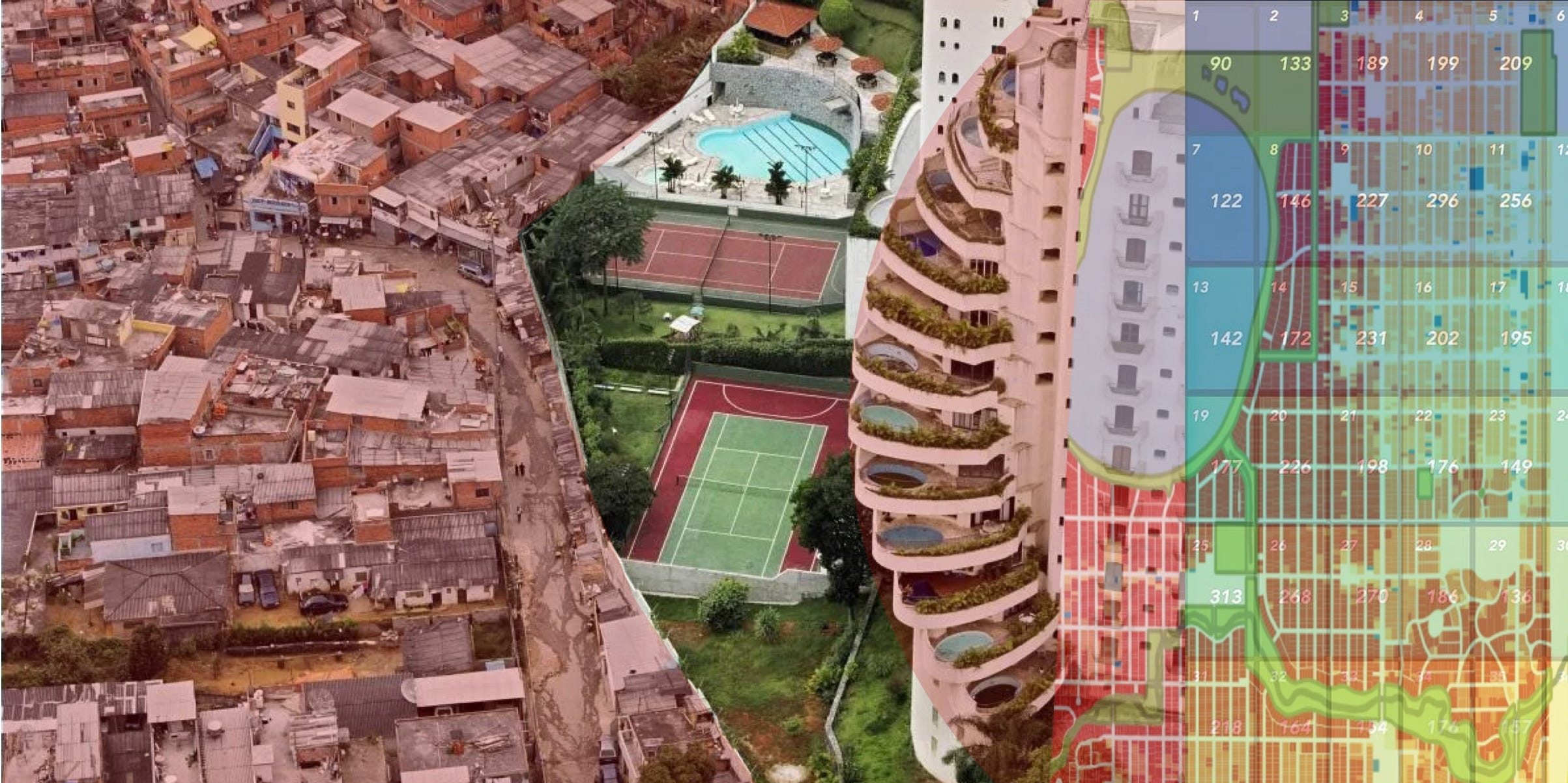
Cities on the Brink, Faster Than You Think
Hello Interactors,Every week it seems to get harder to ignore the feeling that we're living through some major turning point — politically, economically, environmentally, and even in how our cities are taking shape around us. Has society seen this movie before? Spoiler: we have, and it has many sequels. History doesn't repeat exactly, but it sure rhymes, especially when competition for power increases, climates collapse, and the urban fabric unravels and rewinds. Today, we'll sift through history’s clues, peek through some fresh conceptual lenses, and consider why the way we frame these shifts matters — maybe more now than ever.PRESSURE POINTS AT URBAN JOINTSLet’s ground where we all might be historically speaking. Clues from long-term historical patterns suggests social systems go through periodic cycles of integration, expansion, and crisis. Historical quantitative data reveals recurring waves of structural-demographic pressure — moments when inequality, elite overproduction, and resource strain converge to produce instability.By quantitative historian Peter Turchin’s account, we are currently drifting through some kind of inflection point. His 2010 essay in Nature anticipated the early 2020s as a period of peak instability that started around 1970. That’s when people earning advanced degrees, entering law, finance, media, and politics skyrocketed from the 1970s onward. Meanwhile, the number of elite positions (like Senate seats, Supreme Court clerkships, high level corporate positions) remained fixed or even shrank. This created decades of increased income inequality, elite competition, and declining public trust that created conditions for events like the rise of Trump, polarization, and institutional gridlock.The symptoms are familiar to us now, and they are markers that echo previous systemic ruptures in U.S. history.In the 1770s, colonial grievances and elite competition led to a historic revolutionary realignment. It also coincided with poor harvests and food insecurity that amplified unrest. The 1860s brought civil war driven by slavery and sectional conflict. It too occurred during a period of climate volatility and crop failures. The early 20th century saw the Gilded Age unravel into labor unrest and the Great Depression, following years of drought and economic collapse in the Dust Bowl. The 1960s through 1980s unleashed social protest, stagflation, and the shift toward neoliberal governance amid fears of resource scarcity and rising pollution. In each case, ecological shocks layered onto political and economic pressures — making transformation not only likely, but necessary.Spatial patterns shifted alongside these political ruptures — from rail hubs and company towns to low flung suburban rings and high-rise financialized skylines. Cities can be both staging grounds creating these shifts and mirrors reflecting them. As material and symbolic anchors of society, they reflect where systems are strained — and where new forms may soon take root.Urban transformation today is neither orderly nor speculative — it is reactive. These socio-political, economic, and ecological shifts have fragmented not just the city, but the very frameworks we use to understand it. And with urban scale theory as a measure, change is accelerating exponentially. This means our conceptual tools to understand these shifts best respond just as quickly.Let’s dip into the academic world of contemporary urban studies to gauge how scholars are considering these shifts. Here are three lenses that seem well-suited to consider our current landscape…or perhaps those my own biases are attracted to.Urban Political Ecology. This sees the city as a socio-natural process — shaped by uneven flows of energy, capital, and extraction. This approach, developed by critical geographers like Erik Swyngedouw and Maria Kaika, highlights how environmental degradation is often tied to social inequality and political neglect. Matthew Gandy, an urban geographer who blends political theory and environmental history, adds to this view. He shows how infrastructure — from water systems to waste networks — shapes urban nature and power.The Jackson, Mississippi water crisis, for example, revealed how ecological stress and decades of disinvestment resulted in a disheartening breakdown. In 2022, flooding overwhelmed Jackson's aging water system, leaving tens of thousands without safe drinking water — but the failure had been decades in the making. Years of underfunding, political neglect, and systemic racism had hollowed out the city’s infrastructure.Or take Musk's AI data center called Colossus in Memphis, Tennessee. It’s adjacent to historically Black neighborhoods and uses 35 methane gas-powered turbines that emit harmful nitrogen oxides (NOx) and other pollutants. It’s reported to be operating without proper permits and contributes to air quality issues these communities already have long experienced. These crises are vivid cases of what urban political ecol
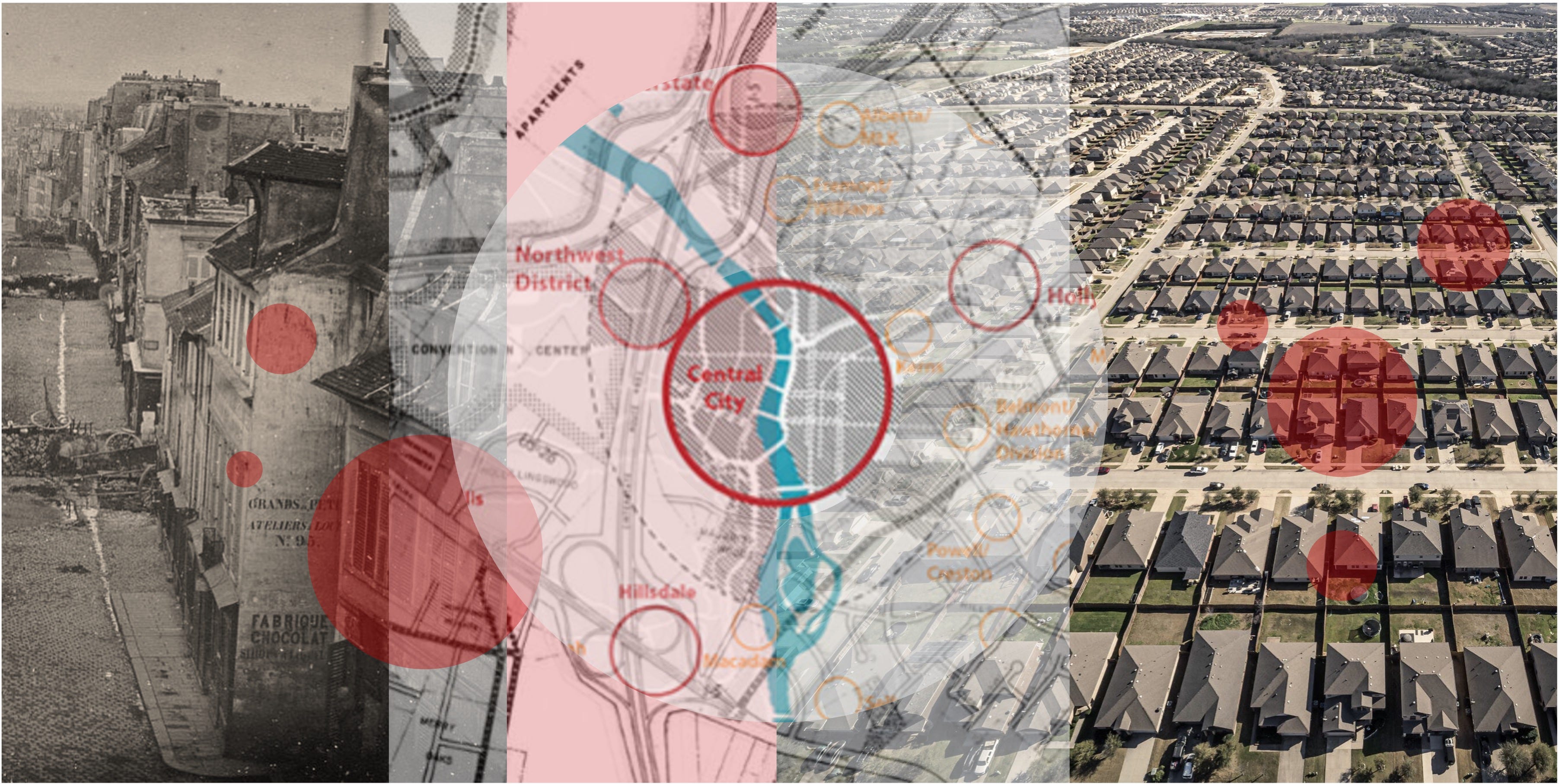
Between Urban Order and Emerging Meanings
Hello Interactors,Cities are layered by past priorities. I was just in Overland Park, Kansas, where over the last 25 years I’ve seen malls rise, fall, and shift outward as stores leave older spaces behind.When urban systems shift — due to climate, capital, codes, or crisis — cities drift. These changes ripple across scales and resemble fractal patterns, repeating yet evolving uniquely.This essay traces these patterns: past regimes, present signals, and competing questions over what's next.URBAN SCRIPTS AND SHIFTING SCALESAs cities grow, they remember.Look at a city’s form — the way its streets stretch, how its blocks bend, where its walls break. These are not neutral choices. They are residues of regimes. Spatial decisions shaped by power, fear, belief, or capital.In ancient Rome, cities were laid out in strict grids. Streets ran along two axes: the cardo and decumanus. It made the city legible to the empire — easy to control, supply, and expand. Urban form followed the logic of conquest.As cartography historian, O. A. W. Dilke writes,“One of the main advantages of a detailed map of Rome was to improve the efficiency of the city's administration. Augustus had divided Rome into fourteen districts, each subdivided into vici. These districts were administered by annually elected magistrates, with officials and public slaves under them.”In medieval Europe, cities got messy. Sovereignty was fragmented. Trade replaced tribute. Guilds ran markets as streets tangled around church and square. The result was organic — but not random. It reflected a new mode of life: small-scale, interdependent, locally governed.In 19th-century Paris, the streets changed again. Narrow alleys became wide boulevards. Not just for beauty — for visibility and force. Haussmann’s renovations made room for troops, light, and clean air. It was urban form as counter-revolution.Then came modernism. Superblocks, towers, highways. A form that made sense for mass production, cheap land, and the car. Planning became machine logic — form as efficiency.Each of these shifts marked the arrival of a new spatial calculus — ways of organizing the built environment in response to systemic pressures. Over time, these approaches came to be described by urbanists as morphological regimes: durable patterns of urban form shaped not just by architecture, but by ideology, infrastructure, and power. The term “morphology” itself was borrowed from biology, where it described the structure of organisms. In urban studies, it originally referred to the physical anatomy of the city — blocks, plots, grids, and streets. But today the field has broadened. It’s evolved into more of a conceptual lens: not just a way of classifying form, but of understanding how ideas sediment into space. Today, morphology tracks how cities are shaped — not only physically, but discursively and increasingly so, computationally. Urban planning scholar Geoff Boeing calls urban form a “spatial script.” It encodes decisions made long ago — about who belongs where, what gets prioritized, and what can be seen or accessed. Other scholars treated cities like palimpsests — a term borrowed from manuscript studies, where old texts were scraped away and overwritten, yet traces remained. In urban form, each layer carries the imprint of a former spatial logic, never fully erased. Michael Robert Günter (M. R. G.) Conzen, a British geographer, pioneered the idea of town plan analysis in the 1960s. He examined how street patterns, plot divisions, and building forms reveal historical shifts. Urban geographer and architect, Anne Vernez Moudon brought these methods into contemporary urbanism. She argued that morphological analysis could serve as a bridge between disciplines, from planning to architecture to geography. Archaeologist Michael E. Smith goes further. Specializing in ancient cities, Smith argues that urban form doesn’t just reflect culture — it produces it. In early settlements, the spatial organization of plazas, roads, and monuments actively shaped how people understood power, social hierarchy, and civic identity. Ritual plazas weren’t just for ceremony — they structured the cognitive and social experience of space. Urban form, in this sense, is conceptual. It’s how a society makes its world visible. And when that society changes — politically, economically, technologically — so does its form. Not immediately. Not neatly. But eventually. Almost always in response to pressure from the outside.INTERVAL AND INFLECTIONUrban morphology used to evolve slowly. But today, it changes faster — and with increasing volatility. Physicist Geoffrey West, and other urban scientists, describes how complex systems like cities exhibit superlinear scaling: as they grow, they generate more innovation, infrastructure, and socio-economic activity at an accelerating pace. But this growth comes with a catch: the system becomes dependent on continuous bursts of innovation to avoid collapse. West compares it to jumping from o
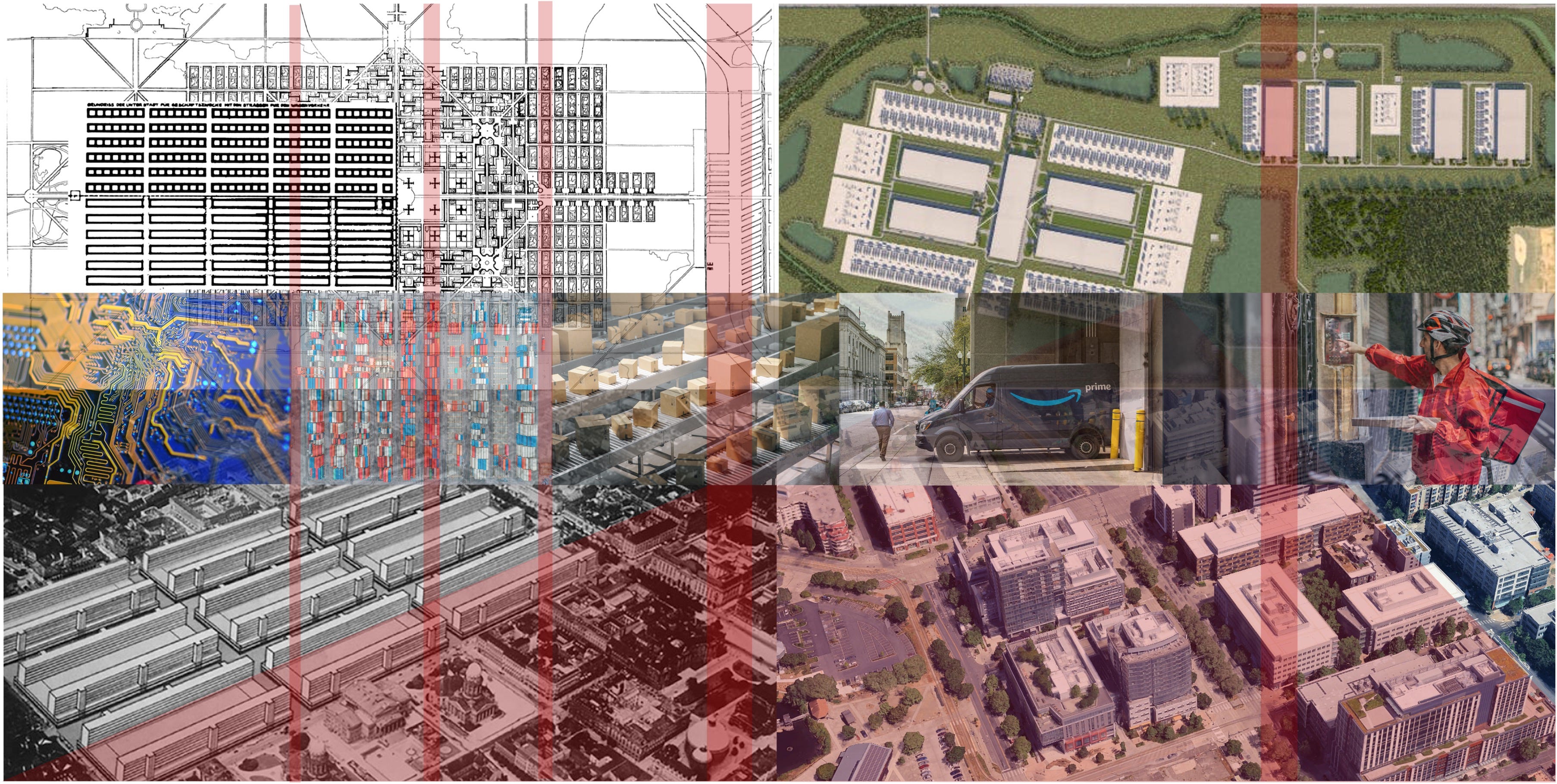
The Hollow City
Hello Interactors,Spring at Interplace brings a shift to mapping, GIS, and urban design. While talk of industrial revival stirs nostalgia — steel mills, union jobs, bustling Main Streets — the reality on the ground is different: warehouses, data centers, vertical suburbs, and last-mile depots. Less Rosy the Riveter, more Ada Lovelace. Our cities are being shaped accordingly — optimized not for community, but for logistics.FROM STOREFRONTS TO STEEL DOORSLet’s start with these two charts recently shared by the historian of global finance and power Adam Tooze at Chartbook. One shows Amazon passing Walmart in quarterly sales for the first time. The other shows a steadily declining drop in plans for small business capital expenditure. Confidence shot up upon the election of Trump, but dropped suddenly when tariff talks trumped tax tempering. Together, these charts paint a picture: control over how people buy, build, and shape space is shifting — fast. It all starts quietly. A parking lot gets fenced off. Trucks show up. Maybe the old strip mall disappears overnight. A few months later, there’s a low, gray building with no windows. No grand opening. Just a stream of delivery vans pulling in and out.This isn’t just a new kind of facility — it’s a new kind of urban and suburban logic.Platform logistics has rewritten the rules of space. Where cities were once shaped by factories and storefronts, now they’re shaped by fulfillment timelines, routing algorithms, and the need to move goods faster than planning commissions can meet.In the past, small businesses were physical anchors. They invested in place. They influenced how neighborhoods looked, felt, and functioned. But when capital expenditures from local firms drop — as that second chart shows — their power to shape the block goes with it.What fills the vacuum is logistics. And it doesn’t negotiate like the actors it replaces.This isn’t just a retail story. It’s a story about agency — who gets to decide what a place is for. When small businesses cut back on investment, it’s not just the storefront that disappears. So does the capacity to influence a block, a street, a community. Local business owners don’t just sell goods — they co-create neighborhoods. They choose where to open, how to hire, how to design, and what kind of social space their business offers. All of that is a form of micro-planning — planning from below. France, as one example, subsidizes these co-created neighborhoods in Paris to insure they uphold the romantic image of a Parisian boulevard.But without subsidies, these actors are disappearing. And in the vacuum, big brands and logistics move in. Not softly, either. Amazon alone added hundreds of logistics facilities to U.S. land in the past five years. Data centers compete for this land. Meta recently announced a four million square foot facility in Richland Parish, Louisiana. It will be their largest data center in the world.These buildings are a new kind of mall. They’re massive, quiet, windowless buildings that optimize for speed, not presence. This is what researchers call logistics urbanization — a land use logic where space is valued not for what people can do in it, but for how efficiently packages and data can pass through it.The shift is structural. It remakes how land is zoned, how roads are used, and how people move — and it does so at a scale that outpaces most municipal planning timelines. That’s not just a market change. It’s a change in governance. Because planners? Mayors? Even state reps? They're not steering anymore. They're reacting.City managers once had tools to shape growth — zoning, permitting, community input. But logistics and tech giants don’t negotiate like developers. They come with pre-designed footprints and expectations. If a city doesn’t offer fast approval, industrial zoning, and tax breaks, they’ll skip to the next one. And often, they won’t even say why. Economists studying these state and local business tax incentives say these serve as the “primary place-based policy in the United States.”It forces a kind of economic speed dating. I see it in my own area as local governments vie for the attention (and revenue) of would-be high-tech suitors. But it can be quiet, as one report suggests: “This first stage of logistical urbanization goes largely unnoticed insofar as the construction of a warehouse in an existing industrial zone rarely raises significant political issues.”(2)This isn’t just in major cities. Across the U.S., cities are bending their long-term plans to chase short-term fulfillment deals. Even rural local governments routinely waive design standards and sidestep public input to accommodate warehouse and tech siting — because saying no can feel like missing out on tax revenue, jobs, or political wins.(2)What was once a dynamic choreography of land use and local voices becomes something flatter: a data pipeline.It isn’t all bad. Fulfillment hubs closer to homes mean fewer trucks, shorter trips, and lower
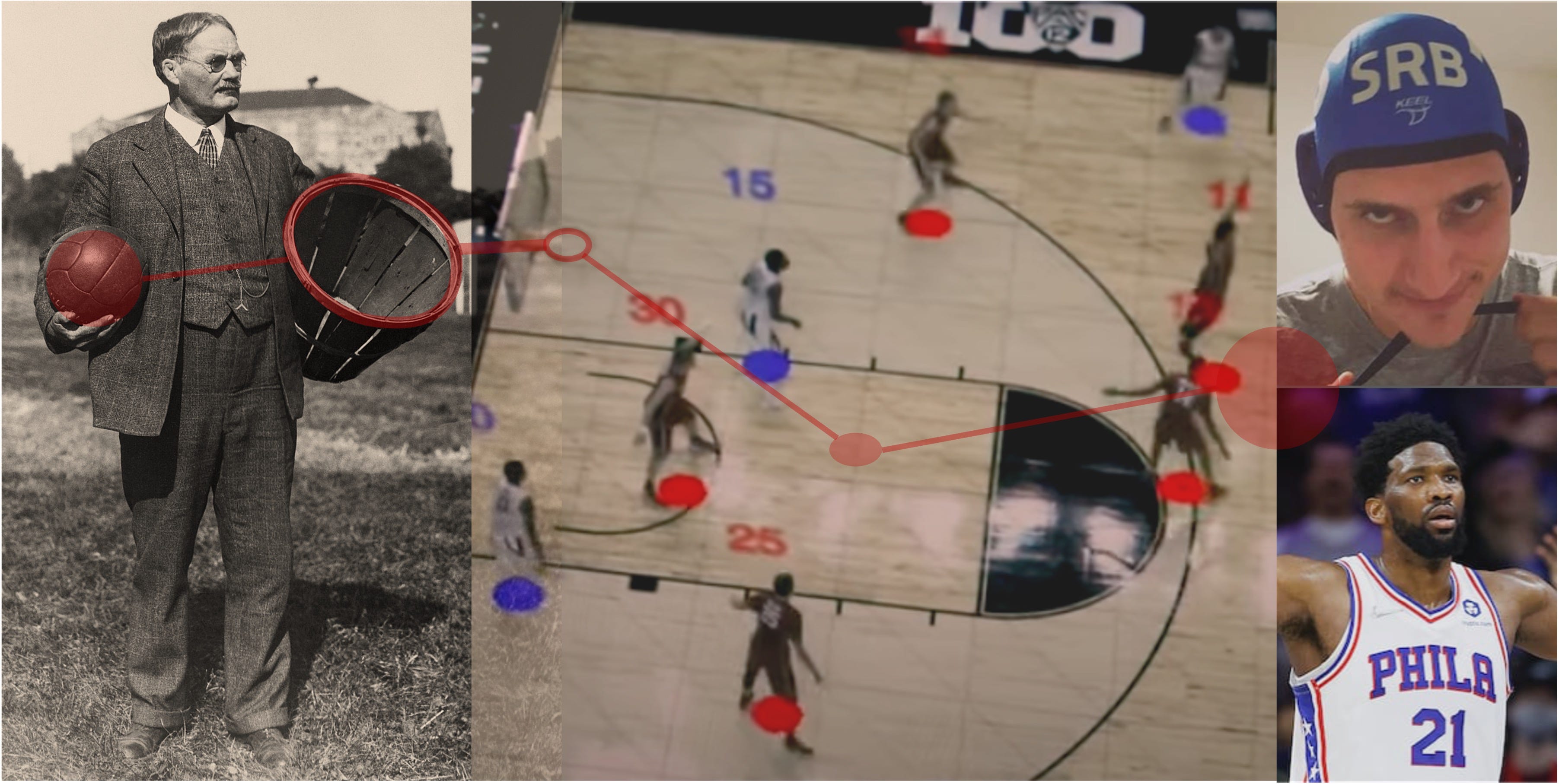
Peach Baskets and Passing Lanes to Global Stars and Spatial Games
Hello Interactors,It’s March Madness time in the states — baskets and brackets. I admit I'd grown a bit skeptical of how basketball evolved since my playing days. As it happens, I played against Caitlin Clark’s dad, from nearby Indianola, Iowa! Unlike the more dynamic Brent Clark, I was a small-town six-foot center, taught never to face the basket and dribble. After all, it was Kareem Abdul-Jabbar’s era of back-to-the-hoop skyhooks. By college, however, I was playing pickup games in California, expected to handle the ball, shoot, dish, or drive. Just like Caitlin! The players around me were from East LA, not Indianola. Jordan was king, and basketball wasn't just evolving — it was about to explode. It’s geographic expansion and spatial dynamism has influenced how the game is played and I now know why I can’t get enough of it.BOARDS, BOUNDARIES, AND BREAKING FREEThere was one gym in my hometown, Norwalk, Iowa, where I could dunk a basketball. The court was so cramped, there was a wall right behind the backboard. It was padded to ease post layup collisions! But when I timed it right, I could run and jump off the wall launching myself into the air and just high enough to dunk. This old gym, a WPA project, was built in 1936 and was considered large at the time relative to population. It felt tiny by the time I played there during PE as a kid and on weekend pickup games as a teen — though it was still bigger than anything my parents experienced in rural Southern Iowa.Basketball began as a sport of spatial limitation. James Naismith invented the game in 1891 — 45 years prior to my dunk gym’s grand opening. The game was invented to be played in a YMCA gym in Springfield, Massachusetts. This building dictated the court's dimensions, movement, and strategy. Naismith’s original 13 rules emphasized order—no dribbling or running, only passing to move the ball. Early basketball wasn’t about individual drives but about constant movement within a network of passing lanes, with players anticipating and reacting in real time.The original peach baskets were hung ten feet high on a balcony railing, with no backboards to guide shots. Misses bounced unpredictably, adding a vertical challenge and forcing players to think strategically about rebounding. Since the baskets had bottoms, play stopped after every score, giving teams time to reset and rethink.Soon the bottom of the basket was removed, and a backboard was introduced — originally intended to prevent interference from spectators batting opponents shots from the balcony. The backboard fundamentally altered the physics of play. Now a player could more predictably bank shots of the backboard and invent new rebounding strategies.When running while dribbling was introduced in the late 1890s, basketball’s rigid spatial structure loosened. No longer confined to static passing formations, the game became a fluid system of movement. These innovations transformed the court into an interactive spatial environment, where angles, trajectories, and rebounds became key tactical elements. According to one theory of spatial reformulation through human behavior, structured spaces like basketball courts evolved not solely through top-down design, but through emergent patterns of use, where movement, interaction, and adaptation shape the space over time.By the 1920s, the court itself expanded—not so much in physical size but in meaning. The game had spread beyond enclosed gymnasiums to urban playgrounds, colleges, and professional teams. Each expansion further evolved basketball’s spatial logic. Courts in New York’s streetball culture fostered a tight and improvisational style. Players developed elite dribbling skills and isolation plays to navigate crowded urban courts. Meanwhile, Midwestern colleges, like Kansas where Naismith later coached, prioritized structured passing and zone defenses, reflecting the systemic, collective ethos of the game’s inventor. This period reflects microcosms of larger social and spatial behaviors. Basketball, shaped by its environment and the players who occupied it, mirrored the broader urbanization process. This set the stage for basketball’s transformation and expansion from national leagues to a truly global game.The evolution of basketball, like the natural, constructed, and cultural landscapes surrounding it, was not static. Basketball was manifested through and embedded in cultural geography, where places evolve over time, accumulating layers of meaning and adaptation. The basketball court was no exception. The game burst forth, breaking boundaries. It branched into local leagues, between bustling cities, across regions, and globetrotted around the world.TACTICS, TALENT, AND TRANSNATIONAL TIESThe year my ego-dunk gym was built, basketball debuted in the 1936 Olympics. That introduced the sport to the world. International play revealed contrasting styles, but it wasn’t until the 1990s and 2000s that basketball became a truly global game — shaped as much by
Misinformation Nation
Hello Interactors,From election lies to climate denial, misinformation isn’t just about deception — it’s about making truth feel unknowable. Fact-checking can’t keep up, and trust in institutions is fading. If reality is up for debate, where does that leave us?I wanted to explore this idea of “post-truth” and ways to move beyond it — not by enforcing truth from the top down, but by engaging in inquiry and open dialogue. I examine how truth doesn’t have to be imposed but continually rediscovered — shaped through questioning, testing, and refining what we know. If nothing feels certain, how do we rebuild trust in the process of knowing something is true?THE SLOW SLIDE OF FACTUAL FOUNDATIONSThe term "post-truth" was first popularized in the 1990s but took off in 2016. That’s when Oxford Dictionaries named it their Word of the Year. Defined as “circumstances in which objective facts are less influential in shaping public opinion than appeals to emotion and personal belief”, the term reflects a shift in how truth functions in public discourse.Though the concept of truth manipulation is not new, post-truth represents a systemic weakening of shared standards for knowledge-making. Sadly, truth in the eyes of most of the public is no longer determined by factual verification but by ideological alignment and emotional resonance.The erosion of truth infrastructure — once upheld by journalism, education, and government — has destabilized knowledge credibility. Mid-20th-century institutions like The New York Times and the National Science Foundation ensured rigorous verification. But with rising political polarization, digital misinformation, and distrust in authority, these institutions have lost their stabilizing role, leaving truth increasingly contested rather than collectively affirmed.The mid-20th century exposed truth’s fragility as propaganda reshaped public perception. Nazi ideology co-opted esoteric myths like the Vril Society, a fictitious occult group inspired by the 1871 novel The Coming Race, which depicted a subterranean master race wielding a powerful life force called "Vril." This myth fed into Nazi racial ideology and SS occult research, prioritizing myth over fact. Later, as German aviation advanced, the Vril myth evolved into UFO conspiracies, claiming secret Nazi technologies stemmed from extraterrestrial contact and Vril energy, fueling rumors of hidden Antarctic bases and breakaway civilizations.Distorted truths have long justified extreme political action, demonstrating how knowledge control sustains authoritarianism. Theodor Adorno and Hannah Arendt, Jewish-German intellectuals who fled the Nazis, later warned that even democracies are vulnerable to propaganda. Adorno (1951) analyzed how mass media manufactures consent, while Arendt (1972) showed how totalitarian regimes rewrite reality to maintain control.Postwar skepticism, civil rights movements, and decolonization fueled academic critiques of traditional, biased historical narratives. By the late 20th century, universities embraced theories questioning the stability of truth, labeled postmodernist, critical, and constructivist.Once considered a pillar of civilization, truth was reframed by French postmodernist philosophers Michel Foucault and Jean Baudrillard as a construct of power. Foucault argued institutions define truth to reinforce authority, while Baudrillard claimed modern society had replaced reality with media-driven illusions. While these ideas exposed existing power dynamics in academic institutions, they also fueled skepticism about objective truth — paving the way for today’s post-truth crisis. Australian philosophy professor, Catherine (Cathy) Legg highlights how intellectual and cultural shifts led universities to question their neutrality, reinforcing postmodern critiques that foreground subjectivity, discourse, and power in shaping truth. Over time, this skepticism extended beyond academia, challenging whether any authority could claim objectivity without reinforcing existing power structures.These efforts to deconstruct dominant narratives unintentionally legitimized radical relativism — the idea that all truths hold equal weight, regardless of evidence or logic. This opened the door for "alternative facts", now weaponized by propaganda. What began as a challenge to authoritarian knowledge structures within academia escaped its origins, eroding shared standards of truth. In the post-truth era, misinformation, ideological mythmaking, and conspiracy theories thrive by rejecting objective verification altogether.Historian Naomi Oreskes describes "merchants of doubt" as corporate and political actors who manufacture uncertainty to obstruct policy and sustain truth relativism. By falsely equating expertise with opinion, they create the illusion of debate, delaying action on climate change, public health, and social inequities while eroding trust in science. In this landscape, any opinion can masquerade as fact, undermining thos

Manufactured Mayhem Muzzles the Masses
Hello Interactors,Since his return to office, Trump hasn’t just taken power — he’s trying to reshape the landscape. From border crackdowns and sick real estate fantasies to federal purges by strongman stooges, his policies don’t just enforce control — they seek to redraw the lines of democracy itself.Strongmen don’t wait for crises — they create them. They attempt to manipulate institutions, geographies, and public trust until there’s so much confusion it makes anything they do to ease it acceptable. I dug into how authoritarianism thrives on instability and contemplate some ways to alter it.DEMAND DOMINATION THROUGH DOUBT AND DISORDER I was once a strongman, or at least I could summon one when needed. I could override the part of my brain that protects me from injury and tap into something primal — something that made me feel invincible. A surge of adrenaline convinced my brain I could not only hurl myself into another person but through them, painlessly.I played rugby. What I experienced is known as Berserker State, or berserkergang—a shift in brain activity and hormone surges that cause extreme arousal and altered perception. Rugby is a sport where people spend over an hour pretending they’re not hurt. That’s in contrast to soccer, where people spend over an hour pretending they are. 😬 But while rugby is violent, it’s not played with violent intent. Players may be tough, but they don’t seek to hurt each other — at least, not permanently.That’s in stark contrast to figures like Trump or the new FBI deputy director, Dan Bongino — men who cultivate a different kind of "strongman" identity. They like to wield aggression not as a tool for sport, but as a weapon against others. Bongino is a tough guy on steroids — literally, or at least he acts like it. His wide-eyed rage on his online show suggests a performance of strength, a constant need to assert dominance. But people like Trump and Bongino weren’t born this way; they were molded by insecurity, myths, and a long history of toxic masculinity.Psychologist Brian Lowery challenges the idea that identity is something stable and fixed. Instead, in his 2023 book, Selfless, he argues that identity is socially constructed—shaped by interactions, cultural narratives, and institutions. In times of stability, people feel secure in who they are. But when faced with economic instability, cultural shifts, or political crises, identity becomes fragile and unstable. Some people lash out. Some, like myself on the rugby field, may go berserk. Others — like Trump and Bongino — build their entire personas around control. In the end, it’s just bluster, bravado, because they behave like a jerk.Sociologist Zygmunt Bauman takes this argument further, showing how growing inequality and precarity drive people toward authoritarianism and fundamentalism. When the world feels chaotic, strongman leaders and rigid ideologies provide the comforting illusion of order and control — even if they fail to address the root problems. Bauman warns that these leaders scapegoat the vulnerable, suppress truth, and mystify the real causes of inequality — all while presenting themselves as the only force capable of restoring stability.But authoritarianism isn’t just about psychology — it’s also shaped by real-world conditions. Geographer Ruth Wilson Gilmore argues that authoritarian rule isn’t just about individual strongmen — it’s embedded in systems that use violence and spatial control to uphold racial and class hierarchies. Identity insecurity isn’t just a feeling; it’s a reaction to real structural forces like economic displacement, aggressive policing, and militarized borders. Strongman leaders don’t just exploit insecurity — they thrive where instability is built into everyday life.In 2020 Journalist Shane Burley examined how white nationalist groups tap into these anxieties, embedding themselves in mainstream politics by offering disaffected individuals a sense of belonging through authoritarian ideologies. The Alt-Right doesn’t just recruit based on political beliefs — it recruits based on a fear of displacement and loss. Authoritarianism isn’t just ideological; it emerges from instability, reinforced by systems of control like aggressive policing and restrictive immigration policies.Strongmen don’t just seize on fear — they stoke, sculpt, and steer it, spinning crises into control. Through media manipulation and crisis narratives, they mold public perception and then mandate obedience.SPINNING STRIFE INTO SUPREMACYOnce fear is felt — it can be harnessed. Political elites capitalize on uncertainty, framing crises in ways that make authoritarian measures seem necessary. Feldman & Stenner, political psychologists specializing in the study of authoritarianism and ideological behavior, argue that authoritarian attitudes intensify when people perceive instability, whether real or exaggerated. Their research highlights how threat perception — not just personal ideology — activates authoritarian t
Where You Stand Shapes Where You Stand
Hello Interactors,The land on which we stand can demand where we politically stand. But what happens when that land shifts, shakes, burns or blows away? Recent Southern U.S. floods displaced thousands. Disasters don’t just destroy — they can redraw political lines. With second round of Trumpster fires deepening divides, geography and ideology matter more than ever. As climate crises, economic upheaval, and political struggles intensify, the question isn’t just where people live — but what they’ll fight for. History shows that when the ground shifts, so does power.SHIFTING LANDS AND LOYALTIESFrom fertile fields to frenzied financial hubs, geography molds the mindset of the masses. Where people live shapes what they fear, fight for, and find familiar. Farmers in the Great Plains worry about wheat yields and water rights, while coastal city dwellers debate rent control and rising tides.But political geography isn’t just about climate and crops — it’s about power, privilege, and the collective making of place. No space is neutral; as evidenced by the abrupt renaming of an entire gulf. History and the present are filled with examples of territories being carved and controlled, gerrymandered, and gentrified.The recent floods in the South serve as a stark reminder of how geography has historically upended political identity. Especially during Black History Month. The Mississippi River Flood of 1927 was a devastating deluge that displaced thousands of Black sharecroppers, washing away not only homes but also old political loyalties. The Republican-controlled federal government, led by President Calvin Coolidge, took a hands-off approach, refusing to allocate federal aid and instead relying on Secretary of Commerce Herbert Hoover to coordinate relief efforts through the Red Cross.However, aid distribution was dominated by white Southern landowners, who withheld resources from Black communities. They forced many into quasi-forced labor camps under the guise of relief. Hoover, later touting his role in disaster response to win the 1928 presidency, was ultimately seen by many Black voters as complicit in their mistreatment. This failure accelerated Black voters’ gradual shift away from the Republican Party, a realignment that would deepen under FDR’s New Deal in the 1930s. The flood was not just a natural disaster — it was a political reckoning. Who received help and who was abandoned shaped party loyalties for generations to come.Yet, history proves that political realignments are rarely one-sided or uniform. While Black voters were shifting toward the Democratic Party, another Southern political identity crisis was brewing. Southern white conservatives — longtime Democrats due to the party’s historical ties to segregation — began their own political migration in the mid-to-late 20th century.The Civil Rights Movement and desegregation led many white Southerners to feel alienated from the Democratic Party, pushing them toward what was once unthinkable — the Republican Party. This shift cemented a racialized realignment, with Black voters backing Democrats and Southern white conservatives reshaping the GOP into today’s right-wing stronghold.Both political shifts were responses to crisis — one to environmental disaster and racial exclusion, the other to social change and perceived status loss. The fact that geography remained constant but political identities flipped highlights a crucial truth: where people live matters, but how they respond to change depends on identity, history, and power.The political path of any place isn’t just shaped by its space — it’s who claims the land, who crafts the law, and who casts a crisis as chaos or cause.SORTED, SEPARATED, AND STUCKGeography shapes political identity but doesn’t dictate it. Human agency, economics, and psychology influence where people live and how they vote. Over time, self-sorting creates ideological enclaves, deepening polarization instead of fostering realignment.Psychologists Henri Tajfel and John Turner’s Social Identity Theory explains why people align with in-groups and see out-groups as threats, as identity shapes self-esteem and belonging. This leads to in-group favoritism, out-group bias, and polarization, especially when power or resources feel like a zero-sum game.But Optimal Distinctiveness Theory (ODT) adds another layer to this understanding. Developed by Marilynn Brewer, building on Social Identity Theory, ODT proposes that people need to feel a sense of belonging to a group while also maintaining individuality within it. This balancing act between assimilation and uniqueness explains why political identities are not just about partisanship — they encompass culture, lifestyle, and even geography. Individuals self-sort both by community and distinction within their chosen political and social environments.Modern political sorting has made partisanship an all-encompassing identity. It aligns with race, religion, and even consumer habits. This process has
Trust in Flux, Power in Play
Hello Interactors,In 2002, when I was at Microsoft, Bill Gates launched an initiative called Trustworthy Computing (TwC). The internet was fresh, ripe for malicious attacks, and Microsoft was a big target. Memos were issued, posters were printed, teams were formed, and code was fortified. And in the case of hidden Easter Eggs in Windows and Office — removed. Internal hacks weren’t a good look.Trust is everywhere these days — politicians vow to restore it, social scientists try to measure it, and brands continue to demand it. U.S. money says to trust God, and it seems we’re now asked to trust Musk. Clearly trust isn't universal; it's shaped by our views of and interactions with power, place, and institutions.Lately, trust feels harder to hold onto. It's not just social media, politics, or government failures — the spaces where trust once thrived are disappearing. Town squares, shops, and local newspapers are vanishing, replaced by fragmented digital alternatives. Trust may be declining; but it's mostly shifting, and not always for the better.Trust won't simply "return" with a memo from Bill. Nor from Trump, Zuck, Musk, or Jeff. Even if they did, they’d likely soon be tossed in the Trumpster Fire. These figures make us question who is gaining trust, who is losing it, and what these new patterns mean for democracy and social cohesion?SELF-TRUST LOST TO CIVIC COSTTrust begins with confidence in what we know and perceive. We rely on self-trust to navigate the world — to make decisions, assess risks, and interpret so-called reality. Self-trust relies on the brain’s ability to process uncertainty and predict outcomes. The prefrontal cortex (the brain’s decision-making hub) assesses risks based on past experiences, while the anterior cingulate cortex (a small but crucial center between hemispheres) detects conflicting information, signaling when to doubt or adjust beliefs. When these systems function well, self-trust remains stable. But in an era of conflicting information, the brain is flooded with competing signals, making it harder to form confident judgments. Chronic exposure to uncertainty and misinformation can overstimulate these networks, leading to decision paralysis or over-reliance on external authorities.Yet self-trust isn’t just a cognitive process — it is also shaped by social and epistemic (knowledge-related) factors. Prominent NYU philosopher Miranda Fricker, known for her work on epistemic injustice, argues that trust in one’s own knowledge isn’t formed in isolation but depends on social reinforcement and being recognized by others as a credible source of knowledge. When individuals experience repeated epistemic injustice — being dismissed, ignored, or denied access to authoritative knowledge — they internalize doubt, weakening their own cognitive autonomy. Without reliable social validation or consistent feedback from their surroundings, self-trust erodes. This is not just a psychological state, but a consequence of power structures that shape who gets to "trust" their own judgment and whose knowledge is devalued.In the past, people validated their understanding through direct experience and social reinforcement. I remember watching TV anchor Walter Cronkite as a kid with my family in Iowa. He was the source of authoritative knowledge for us all. We also learned from trusted local voices and community newspapers. The Des Moines Register was won of the most influential and trusted regional papers in the country. It won 16 Pulitzer Prices from 1924 to 2010 — the first being for the work of syndicated editorial cartoonist “Ding” Darling. Now, those anchors have weakened. These knowledge sources have been replaced by curated digital landscapes, where information is sorted not by credibility, but by engagement metrics and algorithmic amplification. One case study shows that this shift can lead to a growing public reliance on self-reinforcing information bubbles, where trust in knowledge is shaped more by network effects than by institutional credibility. This creates a paradox: people have more access to knowledge than ever before yet feel less certain in what they know and trust.This crisis of self-trust extends beyond information. It is not just about struggling to determine what is true, but also about uncertainty over how to act in response to a changing political and social landscape. Despite declining trust in political leaders, there is evidence public support for democracy remains strong. We may doubt the players, and even the game, but our faith in democracy mostly stays the same.This gap — between distrust in leadership and belief in the system — creates the sense of civic uncertainty we all feel. It’s not hard to find those who once trusted their ability to participate meaningfully in democracy but now feel disengaged, disoriented, or discombobulated. They’re unsure whether their actions can have any real impact. Voting, town halls, and community groups used to feel like meaningful ways to e
Train the Bot, Rot the Brain?
Hello Interactors,Artificial intelligence divides us. To some, it’s a miracle waiting to solve humanity’s greatest problems. To others, it’s a creeping force, stealing our skills, jobs, and even autonomy. The truth, as always, is more complicated.From sharpened sticks to smartphones, humans have always loved their tools — but at what cost? Plato feared writing would weaken memory; now we worry GPS dulls our sense of direction, calculators erode our math skills, and AI chips away at our ability to think creatively and critically. Are we creating marvels that strengthen us, or are we outsourcing so much that we’re making ourselves vulnerable?What if the answer isn’t rejection or blind adoption, but finding a smarter balance? Let’s dive into what we gain, what we lose, and how interdependence with technology might just be our greatest strength.DEPENDENCY WEAKENS COGNITIVE AGENCYLet’s start with Plato. He famously criticized writing for weakening human memory. His complaint, though seemingly dramatic today, nonetheless echoes across centuries. Modern tools like calculators, spellcheckers, and GPS extend our cognitive reach — a concept known as extended cognition, where tools function as external parts of our thought processes.These tools are marvels of convenience, but they come at a cost. As geographer Paul Torrens highlights in his work on behavioral geography, tools like GPS don’t just help us — they sideline us. By reducing direct interaction with our environment, they bypass processes like navigating landmarks or forming mental maps. Over time, the skills we’ve refined for millennia quietly wither under the glow of our devices.But there’s more to the story than atrophy. Torrens points out another subtle trap: the loss of what “small geographies” offer when we overly rely on tools like GPS and vehicles, both forms of extended cognition. “Small geographies” — our immediate, lived, day-to-day interactions with space — are rich in sensory details that inform navigation and spatial awareness. Walking through a neighborhood engages embodied perception, helping us notice landmarks, smells, textures, and even microclimates that shape our understanding of place.Yet, when we succumb to technologies that abstract these experiences into rationalized systems of larger geographies — like cities planned for efficiency rather than experience — we sacrifice this richness. GPS reduces navigation to turn-by-turn instructions, while vehicles reduce us to a brain in a box shielded from tactile, sensory feedback. This abstraction reshapes not only how we move through space but also how we sense and value it, distorting our relationship with our surroundings.History has plenty of warnings about over-reliance on rigid, top-down systems. During the Little Ice Age (c. 1300–1850), societies that had shifted to monoculture farming or depended on specific trade routes faced catastrophe when the weather turned erratic. Crops failed, rivers froze, and with them, the mills that powered daily life ground to a halt. Communities that had abandoned adaptive skills like crop diversification or local food storage found themselves particularly vulnerable, left scrambling to cope with nature’s prolonged unpredictability.Catastrophes are brutal. Especially when our capacities are brittle. It’s the same trap we risk falling into today, as natural disasters increase in intensity and sometimes duration. We are more dependent than ever on our systems, certainly more than the Little Ice Age. We depend on power, electrodes, and grids of digital nodes embedded in a global network of interdependent modes.Unlike in the 19th century, most of us don’t have a clue about growing food, let alone storing it. We’ve increasingly prioritized the efficiencies and abstractions of our institutionally driven lives over a more fundamental biological existence. Are we at risk of losing the cognitive and sensory richness that smaller, localized environments, or “small geographies”, uniquely offer? Would we survive an arid hell scape or another ice age?STRENGTH IN INTERDEPENDENCEDependency is not a weakness — it’s indistinguishable from life. Humans exist because we rely on mutually dependent organisms — our gut microbes help us digest food and produce vital nutrients, our skin microbiome protects us from harmful pathogens, and even the mitochondria powering our cells were once independent organisms that became integral to our survival. Together, these partnerships form the foundation of our health and life itself. Our very bodies are home to incredible systems that operate as internal biological technologies, silently and effortlessly aiding our survival and navigation.Take grid cells in the brain, for example. These specialized neurons, part of the brain’s spatial navigation system, act like an internal GPS. Grid cells encode distances and directions, enabling us to navigate our environment and construct mental maps of space without conscious effort.Recent studies demon
The Emotional Maps of Mandated Smiles
Hello Interactors,The weight of winter up north can have its cozy comforts, but cold, damp, and dark can take a toll. We also continue to face a convergence of daunting global challenges — climate change, inequality, political instability, and health crises — each amplifying the other straining our ability to find meaningful and sustainable solutions. So much for ‘Happy Holidays’.A recent article on avoiding despair turned to the concept of “tragic optimism.” This can sometimes be offered as a way to avoid our human tendency to seek “doom and gloom” while also not succumbing to “toxic positivity.” These topics struck me as a decent lens to kick off this winter’s focus: human behavior. Let’s unpack the emotional geographies that shape us. How do spaces and norms influence how we feel, process, and express emotions? SPACES, SMILES, AND SOCIAL SCRIPTSWhen I was in seventh grade, I was the lead in our middle school musical, Bye Bye Birdy. It featured the song, Put on a Happy Face that employed this cheery, but pushy, line: “Spread sunshine, all over the place…just put on a happy face.”Dick van Dyke played the starring role on Broadway from 1960-61 earning him an Tony award. He then appeared in the movie in 1963, launching him to stardom. In that role, many other roles, and in real life, he is a man who appears perpetually happy. Even now at age 98!But under that smile, lurks a darker side. Soon after his early success, Van Dyke became an alcoholic. The alcohol may have helped him put on a happy face society expected, but it came at a price. This insistence on relentless optimism regardless of circumstances is called “toxic positivity” — and it’s more than a personal behavior. It reflects societal norms that prioritize surface-level harmony over emotional complexity. These norms shape how we navigate feelings and influence our individual well-being. But shared spaces, like our workplaces or homes also influence these emotional dynamics. Have you ever walked into a place knowing how you were expected to act? At work, you might slap on a smile and say “I’m fine” even when you’re not. At home, you might feel the pressure to play the part of the cheerful parent, partner, or roommate. These emotional scripts don’t come out of nowhere — they’re baked into our cultural expectations about what different spaces are “for”.Geographer Yi-Fu Tuan explains that spaces acquire “moral properties” through societal norms, values, and cultural narratives. Workplaces, seen as sites of productivity, often suppress emotions like frustration, while homes, idealized as places of comfort, pressure individuals to adopt roles like nurturing parent or cheerful partner. These norms shape how people are expected to behave and feel within these spaces.America itself, as a cultural and geographic entity, carries its own "moral properties." These are reinforced by media narratives that frame the nation as a land of optimism, resilience, and emotional stability, projecting these expectations onto its citizens and then exported to the world to consume.Take one of the most-watched television programs in America from 1962 to 1992, Johnny Carson’s The Tonight Show. His late-night TV persona was examined in a recent New York Times piece by Jason Zinoman. He described Carson as America’s calm, neutral host, soothing the nation with his polite humor. He wasn’t just a TV personality; he was part of a larger cultural push for emotional stability, especially during times of uncertainty. His show became a space where people could escape the messiness of real emotions.But these expectations aren’t just about comfort — they’re about control. By promoting harmony and cheer, society nudges us toward emotional conformity, discouraging anything that might feel too “messy” or unpredictable.This pressure doesn’t fall on everyone equally. Women often bear the brunt of emotional labor, expected to keep things “pleasant” for others. Cultural geographer Linda McDowell highlights how professional women are frequently required to maintain an upbeat attitude at work, regardless of personal circumstances. This expectation extends beyond the workplace, shaping how women are perceived and allowed to express themselves.On The Tonight Show, Joan Rivers, a trailblazing comedian, faced this constraint. Despite her sharp, satirical wit, Rivers was often limited to lighthearted banter and self-deprecating humor to align with Johnny Carson’s carefully neutral persona. Similarly, Carol Wayne, as the flirtatious “Matinee Lady,” reinforced the idea that women on the show were there to amuse or adorn, not disrupt. These portrayals reflected societal norms that confined women to roles as caretakers or decorative figures, both publicly and privately.SUPPRESSING SORROW WITH A SMILE SUCKSPutting on a happy face might seem harmless, but it can take a toll. When we suppress feelings like sadness, frustration, or anger, they don’t just disappear — they build up, creating stress. They can eve
Shape-Shifting Systems of Survival
Hello Interactors,As the year ends, I reflect on 2024’s top five essays and a shared theme emerges: the systems that define our lives. These systems intertwine nature and nurture, machines and morality, and markets and minds.From evolution’s harmony to the moral balance of economic power, the co-opting of language to the divides between prosperity and precarity, our journey has revealed deep connections between people, place, and power.Let’s rewind and reweave these connections into a broader narrative that sets us on our way to another trip around the sun.NATURE, NURTURE, AND NODAL NETWORKSIn “DEVO, Darwin, and the Evo-Devo Dance,” we explored how evolution reflects the eternal interplay between biology and environment, progress and adaptation. The evolution of synthesizers — as my daughter’s playful experiments with sound reminded me — offers a metaphor for humanity’s relationship with technology.This relationship echoes the broader theme of systems and evolution. Iterative changes and interactions between tools and users offer the potential to create new possibilities. As noted in the essay,"DEVO’s fusion of human and machine echoes these evolutionary dynamics, where both biological and technological systems evolve through reconfiguration and integration, creating emergent complexity that Darwin could not have imagined."Just as synthesizers blend natural sound waves with human creativity, humanity’s interaction with technology evolves in cycles of adaptation and transformation, shaping both the tools we use and the societies we build. We shape our tools, and they shape us in return.The blend of nature’s design and our technological imprint creates an ecosystem of mutual influence, much like the Evo-Devo theories of biology, where small tweaks in developmental genes lead to dramatic evolutionary outcomes.This interplay of creation and transformation mirrors the cycles of human progress. Just as Hox genes orchestrate body plans, societal changes—spurred by technology or ideology—reshape our collective body. Whether it’s the mechanistic choreography of DEVO’s performances or the emergence of Evo-Devo in biology, the boundaries between human and machine blur.Are we programming nature, or is nature programming us? Perhaps the answer lies not in drawing distinctions but in understanding common patterns. These questions highlight the complexities of how we, and other organisms and systems, grow, adapt, and evolve in a world increasingly interwoven with introduced technology.From the mechanized rhythms of industrialization to the organic flow of natural systems, human -- and nonhuman -- there exists a tension and balance between stability and change. The teleonomic goal-directed behavior of living systems together with society’s driving pulse of technology has fused into an unrecognizable but somehow familiar new existence. Even as we invent tools to navigate this existence, we become part of the systems we create—both shapers and shaped.The orchestration of evolution — like the many-layered songs of a many-player band — shows a world of many, connected, but not always planned.MARKETS, MACHINES, AND MORALITYThe Industrial Revolution brought unparalleled progress but also profound moral dilemmas. In “Markets, Machines, and Morality,” we reflected on Adam Smith’s dual identity as both an economist and a moral philosopher. For Smith, markets were not just mechanisms of exchange but reflections of human nature. His “Theory of Moral Sentiments” reminds us that sympathy, justice, and prudence are vital governors of economic power — like James Watt’s centrifugal governor, which balanced the speed of steam engines.But history shows us that unchecked systems, whether economic or mechanical, often prioritize efficiency over empathy. From Bentham’s utilitarian calculus to the exploitative practices of modern capitalism, we’ve seen how the quest for profit can erode the moral underpinnings of society. Today’s tech-driven economies, much like the Industrial Age’s steam engines, require careful regulation to prevent runaway consequences. Smith’s ideals of community benevolence and fair markets resonate more than ever.The unchecked growth of industrial power also highlights the tensions between human ingenuity and ethical responsibility. The centrifugal governor’s simple elegance stands as a metaphor for our need to impose limits on excess, whether in economic policies, technological innovation, or social systems. Without these balancing mechanisms, we risk spiraling into inequity, instability, and dehumanization — a lesson as relevant today as it was in Smith’s time.Moreover, the moral fabric underpinning economic actions — sympathy, justice, prudence — often fades in the shadow of profit-driven systems. Yet, these values remain the quiet governors ensuring that society’s engines run not just efficiently but equitably.Smith’s vision was never limited to wealth accumulation; it was about creating a society where individual pur
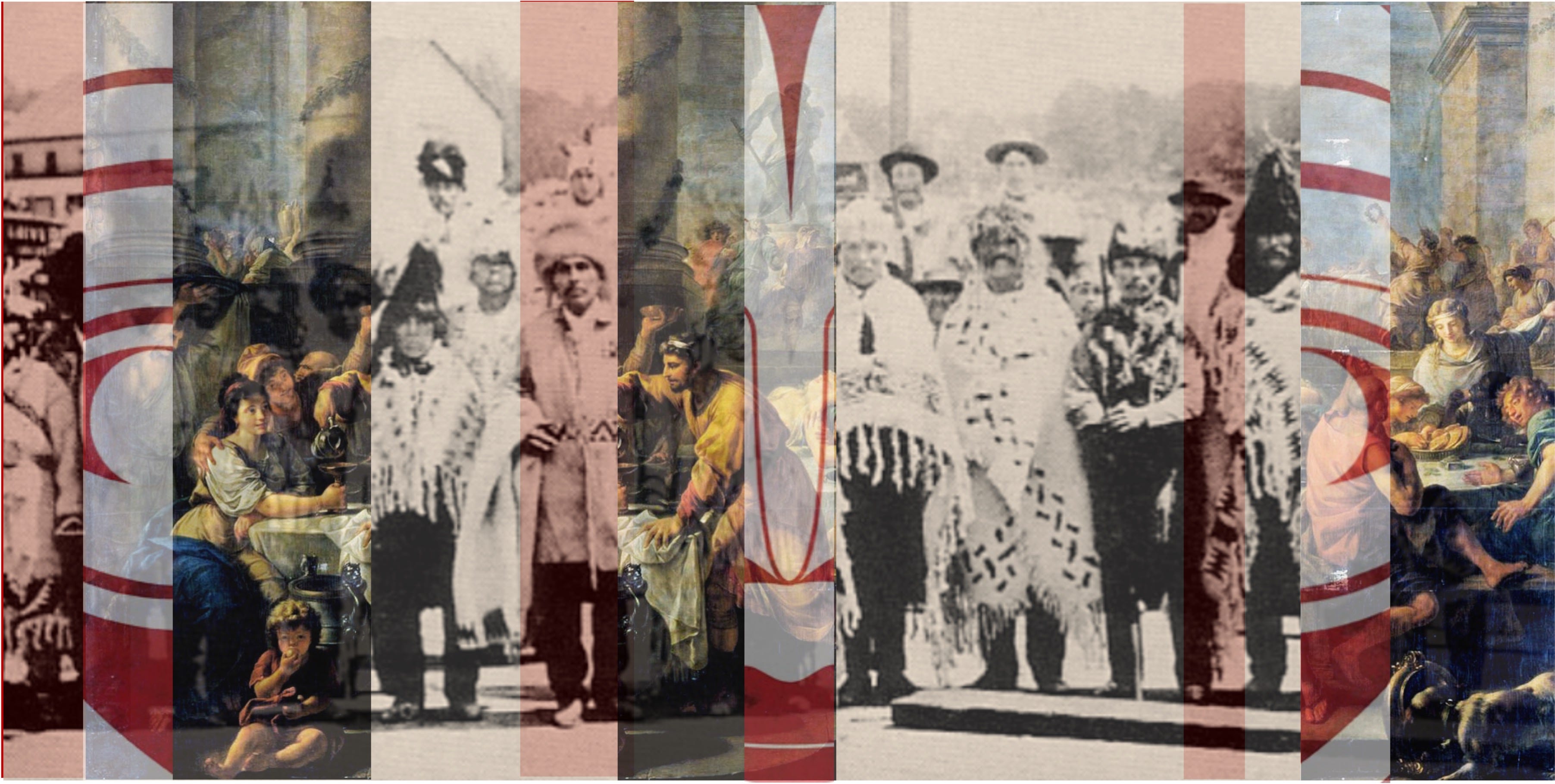
Light, Land, and Lessons of Equity
Hello Interactors,Happy winter solstice!Today, the northern hemisphere experiences its shortest day and longest night, a celestial event rooted in the planet's axial tilt. This seemingly simple astronomical fact has profound implications for economic geography. It influences everything from agricultural productivity to social traditions of sharing and reciprocity.SOLSTICE AND SHARINGI recently visited the Squamish Lil’wat Cultural Centre at Whistler. These two tribes are part of the Squamish River watershed that flows into Howe Sound, a fjord located just around the corner from Vancouver, British Columbia. This watershed is central to their traditional territories and plays a vital role in their culture and economy.From an economic geography perspective, the tilt of the earth underpins the seasons and, by extension, patterns of production and scarcity that shape human economies. In regions where winter brought agricultural dormancy, societies had to develop systems to store, preserve, and share resources to survive until the next growing season.The winter solstice symbolizes the end of this scarcity. It promises returning light, a pivotal moment in the annual cycle for societies historically reliant on natural rhythms. For the Squamish and Lil’wat peoples, this period was a time of reflection, gratitude, and redistribution. Ceremonial gatherings and potlatches reinforced community bonds by ensuring that the resources harvested in times of plenty were shared equitably during the lean winter months.I saw evidence of these community bonds at the cultural center. The five visitors from West Virginia and myself, were the only white folks in the place. I was happy to see and hear a group of teen Squamish or Lil’wat boys gathered, talking, and giggling. There was a table of older Indigenous women sharing tea and treats. I asked one of our guides if she was doing anything special for the upcoming holiday. She said, “Well, I have presents for my mom’s side, but not my dad’s. And I have presents for half my siblings, but not the other half! So, it looks like that’s what I’ll be doing!”Practices of reinforced social cohesion and mitigating disparities can be seen in both Indigenous and early European traditions. These lessons of reciprocity and redistribution remain vital amidst the gulf between extreme wealth and pervasive poverty. That too became apparent during my visit.As I was browsing the gift shop, I overheard an Indigenous employee ask a friend, “How has work been?” Her friend responded, “It’s ok. This time of year comes with a lot of Christmas clean ups, people getting their Whistler places ready…it’s hard work, but good money.”As we mark the winter solstice and conclude this fall series on economic geography, it is worth considering how the natural cycles dictated by the earth’s tilt continue to influence modern economies. Even in an age of surplus for some, the rhythms of scarcity and abundance persist, challenging us to find equitable ways to share resources.The traditions of the Squamish, Lil’wat, and countless other cultures remind us that sustainability and justice are not just matters of economic policy but also of values deeply connected to the natural world. This solstice invites us to honor those lessons, seeking balance and light amid the darkest days.The widespread, worldwide post-harvest behavior — like the Squamish and Lil’wat spiritual renewal through prayer and ceremonies; the community bonding with feasts, potlaches, and storytelling; the observance or celestial cycles and gratitude for earth’s gifts; and the artistic creations for ceremonial dances and rituals — has been happening for millennia.SATURN AND THE GREEK SAINTI thought I’d reshare a relevant excerpt from a post I did a few years ago that explores the roots of Christmas. It started with a communal approach to abundance with celestial-triggered ancient traditions like Saturnalia in Rome. Saturn, the god of agriculture, inspired events where feasts, gift-giving, and the symbolic inversion of roles served to address the inherent inequalities of agrarian economies.“It was so baked into the fabric of society that even the church began painting it with Christian imagery and metaphor. Because the celebrations occurred on or around the end of November and into December there were many elements of Christianity to which they could attach the events.During Roman times, December 17th marked the day of the Saturnalia – a festival honoring the god of agriculture, Saturn. All work halted for a week as people decorated their homes with wreaths. They shed their togas to dawn festive clothes, and they drank, gambled, sang, played music, socialized and exchanged gifts. It was a celebration of their agrarian bounty and the return of light at Winter solstice. It was also a time to invite their slaves to dinner where their masters would serve them food.One Christian Saint affiliated with early December – and the one most honored today in the form of a p
Woke and Wealth
Hello Interactors,Language shapes power, but it can also obscure and manipulate. Words like woke and decolonize, rooted in justice, are now tools for distortion by figures like Trump and Modi. In this essay, we’ll explore how these terms connect to economic and political geography, tracing their co-opting, parallels to colonialism, and the need to reclaim their transformative potential. Let’s dig in — and stay woke.STAY WOKE, START TALKINGAre you woke? It’s a provocative question these days. Especially since this term was co-opted by the right as a pejorative since the Black Lives Matter uprising of 2020. Even last June Trump said regarding so-called woke military generals, “I would fire them. You can’t have woke military.”And then there’s Elon Musk. He’s been increasingly waging a war on what he calls the ‘woke mind virus’. It seems he started abusing the term in 2021, along with other political rhetoric he’s been ramping up in recently. The Economist reports a “leap in 2023 and 2024 in talk of immigration, border control, the integrity of elections and the ‘woke mind virus’.”Folks more on the left are also starting to distance themselves from the term or use it as a pejorative. Including some of my friends. Even self-described leftist and socialist, Susan Neiman criticized "wokeness," in her 2023 book Left Is Not Woke. She argues, as do many, that it has become antithetical to traditional leftist values — especially as it becomes a weapon by the right.According to the definition in the Cambridge dictionary, I am decidedly woke. That means I’m “aware, especially of social problems such as racism and inequality.” It worries me that people are eagerly running from this word. I’d rather they interrogate it. Understand it. Find it’s meanings and question the intent behind its use. We should be discussing these nuances, not shushing them.Using the word in a sentence (in an approving manner), Cambridge offers hints at one of the original meanings: “She urged young black people to stay woke.” In 1938 the great blues legend Lead Belly also urged “everybody, be a little careful when they go along through there (Scottsboro, Alabama) – best stay woke, keep their eyes open." Those are spoken words in his song "Scottsboro Boys", about nine young Black men falsely accused of raping two white women in Alabama seven years earlier in 1931.Not a decade before, the Jamaican philosopher and social activist Marcus Garvey wrote in 1923, "Wake up Ethiopia! Wake up Africa!" Fifty years later that inspired playwright and novelist Barry Beckham to write “Garvey Lives!”, a 1972 play that included this line, “I been sleeping all my life. And now that Mr. Garvey done woke me up, I’m gon stay woke.” #StayWoke was trending on Twitter the summer of 2020.In 1962, ten years before Beckham’s play, novelist William Melvin Kelley wrote this headline for a piece in the New York Times Magazine: “If You're Woke You Dig It; No mickey mouse can be expected to follow today's Negro idiom without a hip assist. If You're Woke You Dig It.” The article, which is an uneasy glimpse of how mainstream media regarded Black people in 1962, is about how white people co-opt terms from the Black community. His target was white woke Beatniks of the 1960s.Awakening others to injustice in the United States may have originated with white folks inspired by Abraham Lincoln. In the lead up to the his 1860 election, the, then woke, Republican Party helped organize a paramilitary youth movement in the Northern states called the ‘Wide Awakes’. These activists, which included some Black people, were inspired by Lincoln’s fight to abolish slavery and promote workers’ rights.They took up arms to defend Republican politicians who brazenly awakened others to injustices in America in their campaign speeches. This armed aggression — especially armed Black men — in part is what woke the South to the dawning wokeness across the North. Frightened as they were, they organize their own paramilitary and soon a civil war broke out.RECLAIM, RESIST, REVIVEWords can have unusual lifecycles. The term "queer" evolved from a pejorative label for homosexuals to a term of empowerment. Particularly after the activism of the 1960s and 1970s, including the Stonewall Riots. Its reclamation was reinforced by academic queer theory, which critiques societal norms around sexuality and gender. Today, "queer" is widely embraced as a self-identifier that reflects pride and resistance against stigma.Christopher Hobson, of the Substack Imperfect Notes, suggested in a post about the word polycrisis, this progression of terminology:Proposed — A new word or meaning is introduced through individuals, cultural interactions, academia, or mass media.Adopted — A word or meaning is embraced by a community, shaped by social relevance and media influence.Spread — Diffusion occurs through social networks and media exposure, leading to wider acceptance.Critiqued — As words gain popularity, they face scrutiny from lingu
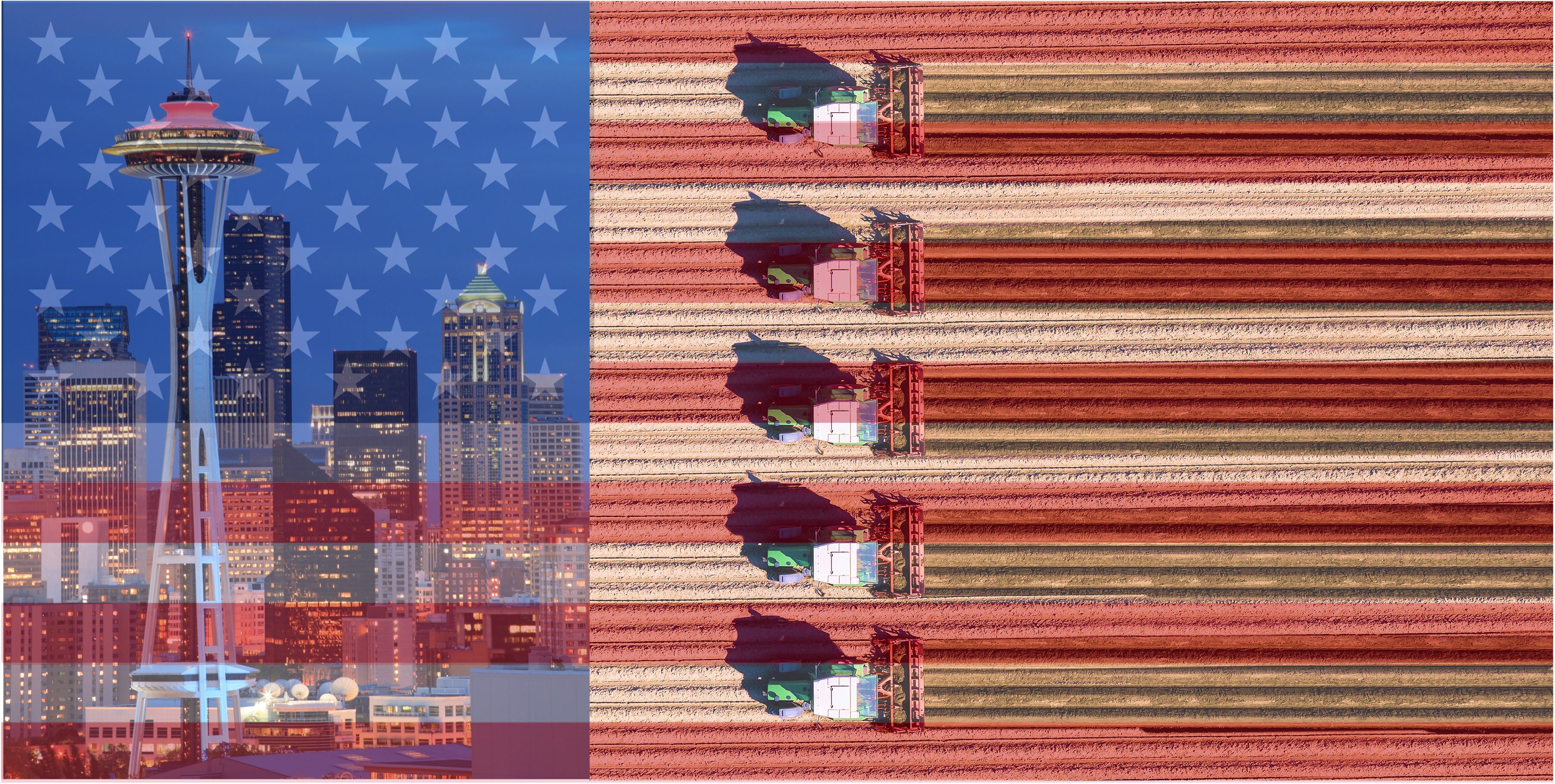
Main Street to Metropolis: The Split Defining State of the United States
Hello Interactors,Beneath the surface of election fatigue and endless punditry lies a deeper story — one rooted in the economic geography of this nation. It’s a tale of two Americas: the urban hubs thriving on growth and globalization, and the rural heartland struggling to hold on. One of those hubs allowed my career and family to grow and the other allowed me to grow.The outcome of this election is well timed with Interplace’s fall theme of economic geography. Let’s step back from the noise to explore how decades of policy, technology, and shifting demographics have redrawn the map of opportunity. This isn’t just about red versus blue — it’s about who we are, how we got here, and where we go next.DIVIDED VOTES, DIVIDED LIVESThe 2024 presidential election highlighted many things, but one that really resonates with me is the growing urban-rural divide in American politics. Trump dominated rural voters and Harris dominated urban centers. This contrast is reminiscent of 2016, but has been building through decades of economic divergence: urban areas thrive on knowledge economies and globalization, while rural regions face stagnation and demographic decline. This enduring divide underscores the differing opportunities and values of urban and rural voters that renders as blue and red election maps.The U.S. operates on division. It’s driven by a political and economic duopoly. Two major parties dominate, limiting ideological diversity and reducing complex issues to binary debates. This unfairly ignores the nuanced solutions needed to bridge these yawning economic and human geography gaps. Economically, we can see corporate power’s concentrated influence, with dominant industries in technology, finance, and healthcare shaping policy, market dynamics, and communities. Smaller players, including local businesses and alternative voices, are often overshadowed, ignored, or silenced.The effects are visible in places like King County, Washington where I live. Tech giants like Microsoft and Amazon attract and fuel thriving, diverse, and mostly progressive communities. Meanwhile, in rural Adair County, Iowa, where my parents grew up and where I still have relatives, residents rely heavily on government transfers. They’re struggling to support growing aging populations and reeling from closures of vital services, including retirement homes. My own uncle faced this fate, forced into a failing trailer home to die after his Baptist church-financed retirement home was sold in 2022 to a private equity firm who promptly and callously shut it down.These rural areas have become Republican strongholds, drawn to promises of reversing globalization, reshaping economic policies, and making their communities great again. With a 75.68% turnout of 5,423 eligible voters in Adair County, Iowa, 71.47% of them went to Trump in 2024. Sadly, their vulnerabilities are exploited by false narratives framing urban elites as adversaries to rural traditions and values. Though, these narratives aren’t entirely false. Both parties of our duopoly largely ignore, disregard, or patronize the realities of rural successes, strivings, and struggles — as do most urbanites. ROOTS OF THE RURAL RIFTGrowing up in Warren County, Iowa, in the 1970s and 1980s provided a firsthand view of some of these rural and urban transformations. Suburban to Polk County and Des Moines, Warren County was close to economic growth from finance, insurance, and some manufacturing. My father worked as a financial analyst at Massey Ferguson, while my uncle held a blue-collar factory job, representing the industrial stability of the area at the time.My parents grew up in a far more rural Orient, Iowa, in Adair County where Massey Ferguson tractors had already been hard at work for decades. They shared stories of their little town being a vibrant agricultural hub with a bustling grain elevator next to a train track and a lively Main Street. I saw remnants of this economy as a boy, but by the time I reached high school in the 1980s, it was already in decline. That decline was punctuated on June 10, 2024, when the Orient school board voted to dissolve the school where my parents went and grandmother taught due to ongoing enrollment and financial issues.Orient is not alone; the 1980s marked widespread economic decline across rural America. The so-called "Green Revolution," which introduced advanced agricultural technologies, prioritized efficiency through mechanization and consolidation. While it modernized farming and boosted crop yields, it also drove smaller farms out of business and accelerated rural depopulation as large agribusinesses dominated.Adair County exemplified these changes, losing its economic backbone as family farms were replaced by larger operations, leaving Main Streets struggling. In contrast, Warren County benefited from its proximity to Des Moines' expanding economy and has become one of Iowa's fastest-growing counties in recent years. The disparity between suburban a
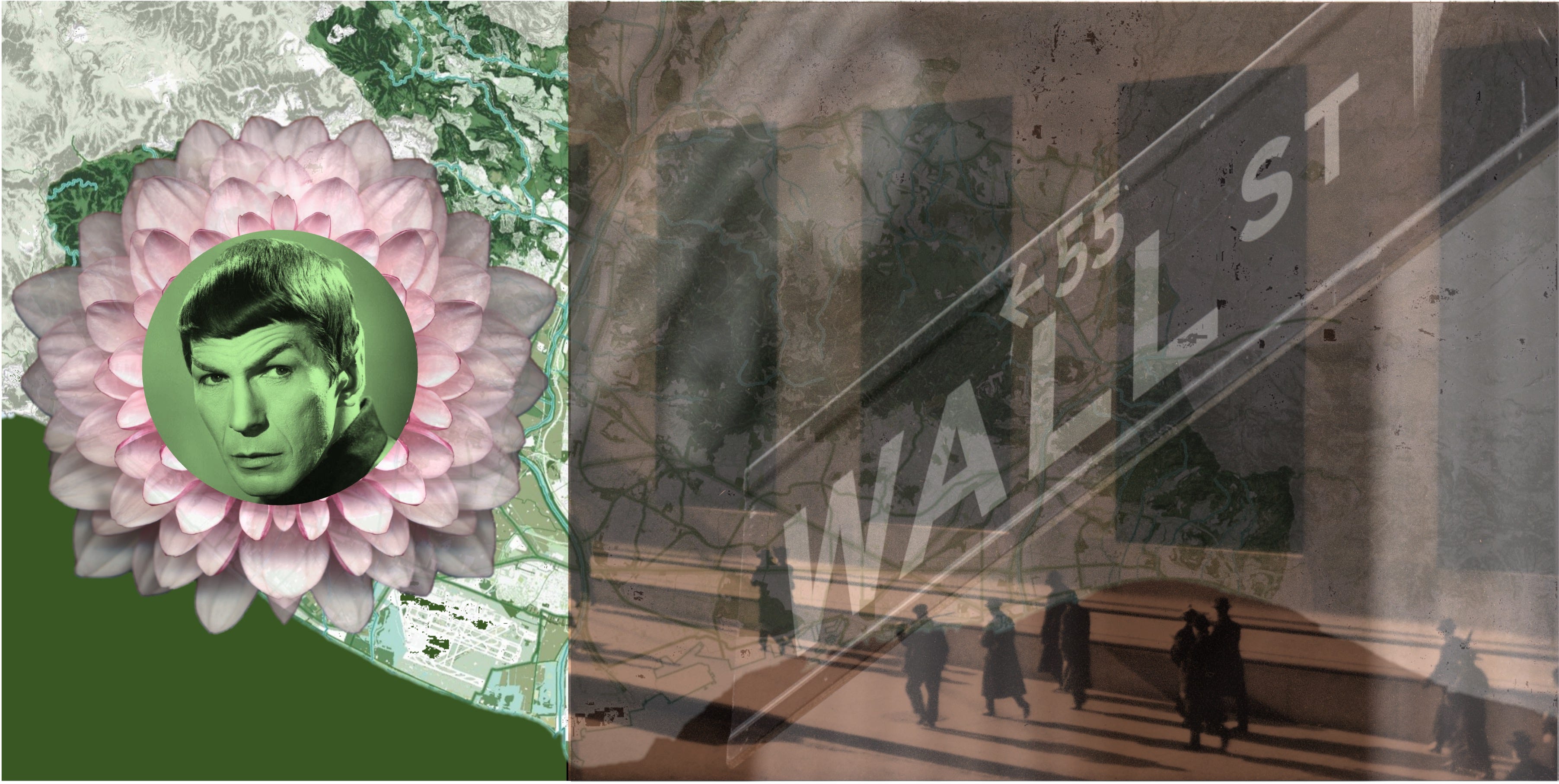
Molding Minds Through the Markets of Material Worlds
Hello Interactors,We often think of the economy as a fixed, objective force, separate from who we are. But what if it actually shapes our identities? Like a DJ mixing a set, economics amplifies certain behaviors and silences others. I saw this firsthand last summer when Calvin Harris performed live in Scotland, dynamically controlling thousands of people with a turn of a dial or push of a button…on tracks he’d already mixed in the studio!Brett Scott, in his recent Substack Remastering Capitalism, uses this music mixing metaphor to show how human nature is molded — elevated or suppressed — by economic systems. His insights remind me of social constructionism, which reveals that what we see as “natural” is often constructed by institutions, including the economy. Our many identities aren’t just reacting to the system — they are being shaped by it.But what if Homo Economicus, the rational, self-interested individual, isn’t who we truly or solely are? What if these systems are muting our most moral and communal parts? With my last three posts on economics in mind, let’s explore how economics and geography construct — and limit — who we become.MARKETS MOLDING MINDSAt the heart of social constructionism is the idea that reality isn’t something we passively experience — it’s something actively constructed through our social interactions, power dynamics, and the institutions that shape our lives. One of the most powerful institutions in modern society is the economy, which shapes not just markets but the very way we see ourselves and our place in the world. And, as with all social constructs, it is influenced by those who hold power.In Econ 101, we’re introduced to Homo Economicus, the rational, self-interested individual who makes perfectly reasoned decisions geared toward maximizing utility without emotional interference. Think Spock from Star Trek. This figure is more than a character or abstract concept; it reflects the values that the market rewards and those in power promote. In environments dominated by capitalist systems — corporate boardrooms, stock exchanges, financial districts — the behavior of Homo Economicus is not just encouraged, it’s essential for success. These spaces reinforce particular versions of selves, constructed by the systems that surround them.Critical geographer David Harvey emphasizes how geography and power intersect, asking us to“Imagine, for example, the absolute space of an affluent gated community on the New Jersey shore. Some of the inhabitants move in relative space on a daily basis into and out of the financial district of Manhattan where they set in motion movements of credit and investment moneys that affect social life across the globe...”These elites embody Homo Economicus and reinforce the power dynamics of capitalism, constructing an economic landscape where rational self-interest reigns supreme.But Homo Economicus is not an innate human identity. Like the concept of the “divinely appointed king” in medieval Europe, it is constructed by the economic and social systems around us. Modern capitalism creates and rewards this notion of the self. But this doesn’t mean we’re trapped in this role — other tracks of human nature are waiting to be heard. The question is, can we turn up the volume on those other selves?MAPPING MONEY’S MIGHTThe dominance of Homo Economicus is not just theoretical — it plays out in real, physical spaces. Economic geography shows us how capitalism manifests in cities, financial hubs, and industrial centers, creating environments that reward certain behaviors while suppressing others. As Doreen Massey, a feminist geographer, notes, social relations are constructed across all spatial scales — from global finance to local communities — and these spaces, in turn, construct us. She writes,“’The spatial’ then…can be seen as constructed out of the multiplicity of social relations across all spatial scales, from the global reach of finance and telecommunications, through the geography of the tentacles of national political power, to the social relations within the town, the settlement, the household and the workplace.”Having recently returned from New York and London last summer, I was surrounded by buildings and infrastructure designed to facilitate rapid decision-making and profit maximization. These financial districts are the birthplace of Homo Economicus, where competition, efficiency, and rationality are not only celebrated but engrained in the fabric of the city. But these aren’t just neutral places where economic transactions happen — they were actively shaped by human identities to shape other human identities, constructing versions of selves.Yet, capitalism’s steady beat doesn’t stop at the thumping urban centers. It ripples outward, reshaping rural areas, natural landscapes, and global trade routes. In these spaces, a different identity might have flourished. For example, where I grew up in Iowa, rural areas are shaped by industrial agriculture where
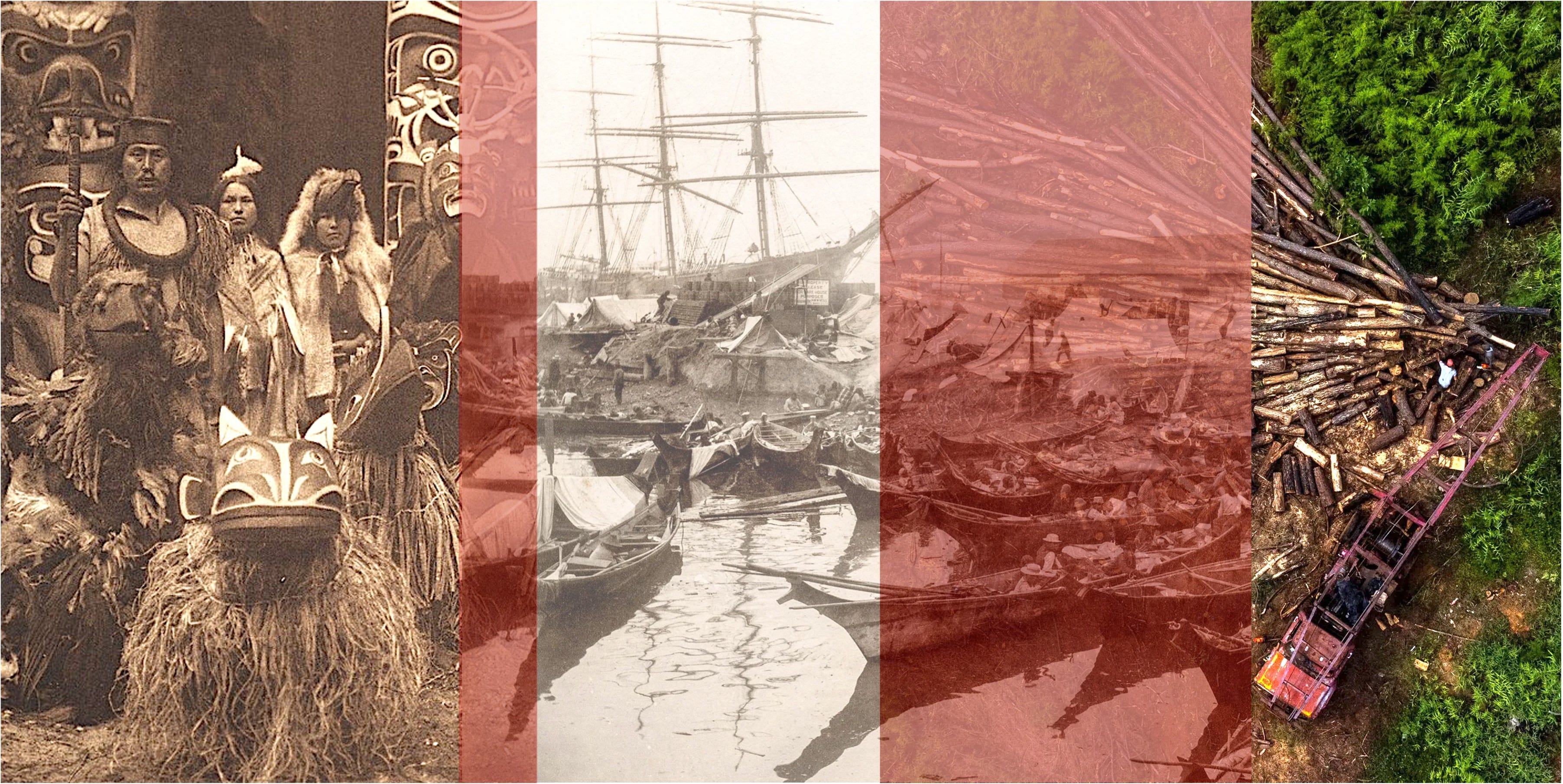
NAFTA, Nations, and Native Networks
Hello Interactors,On October 12th, the United States observed Indigenous Peoples' Day, a recognition first proposed in 1977 during a UN conference in Geneva. Indigenous delegates called“to observe October 12, the day of so-called ‘discovery’ of America, as an international day of solidarity with the indigenous peoples of the Americas”drawing attention to the broken treaties between Indigenous nations and the U.S. government. Thirty years later, the UN Declaration on the Rights of Indigenous Peoples affirmed that these treaties are of international concern, though the United States and a few other countries initially refused to endorse the declaration, and the resolution remains non-binding.On Indigenous People’s Day, the satirical news outlet, The Onion, used the occasion to post a story with this headline: “Nation’s Indigenous People Confirm They Don’t Need Special Holiday, Just Large Swaths Of Land Returned Immediately”Today, there are 574 recognized Indigenous nations within the U.S., many of which still struggle for recognition and rights. As trade agreements like NAFTA dominate discussions on labor, immigration, and environmental impact, little attention is paid to the intricate trade systems Indigenous nations developed long before European contact. Here in the Pacific Northwest, societies like the Coast Salish had sophisticated economies driven by geographic access to key resources, especially salmon. Their control over rich fishing sites shaped trade, reinforced social hierarchies, and created territorial dynamics that predated modern trade systems.Yet, colonization disrupted these Indigenous networks, imposing disorienting and often exploitative systems of land ownership and resource extraction. This week, I hope to explore how the adaptive strategies of Indigenous nations—despite the hardships imposed by colonization—can inspire decentralized solutions to today’s environmental and socio-economic challenges, just as these nations did for millennia.COASTAL CONTROL AND CULTURAL COMPLEXITYThe Pacific Northwest is one of the most ecologically diverse regions in North America. It was this natural abundance that enabled the Coast Salish peoples to establish rich, complex societies. Unlike the simplistic and often nomadic image of hunter-gatherers, the Coast Salish exhibited a diversity of approaches to resource management that reflect an intimate knowledge of their environment.According to Colin Grier, an anthropologist and archaeologist known for his research on Indigenous societies of the Pacific Northwest, there are expanded and diverse notions of hunter-gatherer strategies. His research demonstrates how the Coast Salish were able to create surplus production, social hierarchies, and sophisticated trade networks due to their advanced understanding of the ecological systems they lived within.At the heart of Coast Salish society was the salmon fishery, a resource so abundant and predictable that it allowed for the development of semi-sedentary communities. Grier emphasizes that their use of ecological niche construction — such as the creation of clam gardens and fish weirs — enabled the Coast Salish to actively shape their environment to increase resource availability.These inventions and engineered environmental modifications were essential for producing the surpluses that underpinned the region’s complex social and economic systems. Unlike the traditional view of hunter-gatherers as passive foragers, the Coast Salish were active managers of their environment, designing and building a system that could support a large population through environmental and economically sustainable practices.The abundance of salmon, clams, and other marine resources also enabled the Coast Salish to develop highly stratified societies. Social hierarchies were reinforced by cultural practices such as the potlatch, where surplus wealth was redistributed by elites in ceremonial gatherings that solidified their social status. As Grier points out, the ability to control key resource sites — such as salmon fishing locations — allowed some families to accumulate wealth and power. This led to a clear division between elites, commoners, and slaves.The behavioral ecology of the Coast Salish extended far beyond simple resource extraction, encompassing complex social and economic strategies that allowed them to thrive in a resource-rich environment. Through kinship-based alliances and trade networks, coastal tribes maintained social cohesion and managed environmental variability, including managing large swaths of inland crops. These resources gave coastal tribes a significant advantage over inland freshwater groups, leading to unequal trade exchanges and the subjugation of inland tribes.This dynamic of resource exploitation created internal socio-economic imbalances, as coastal elites reinforced their power and prestige through their dominance over resource-poor inland tribes. While this form of resource-based exploitation was charac
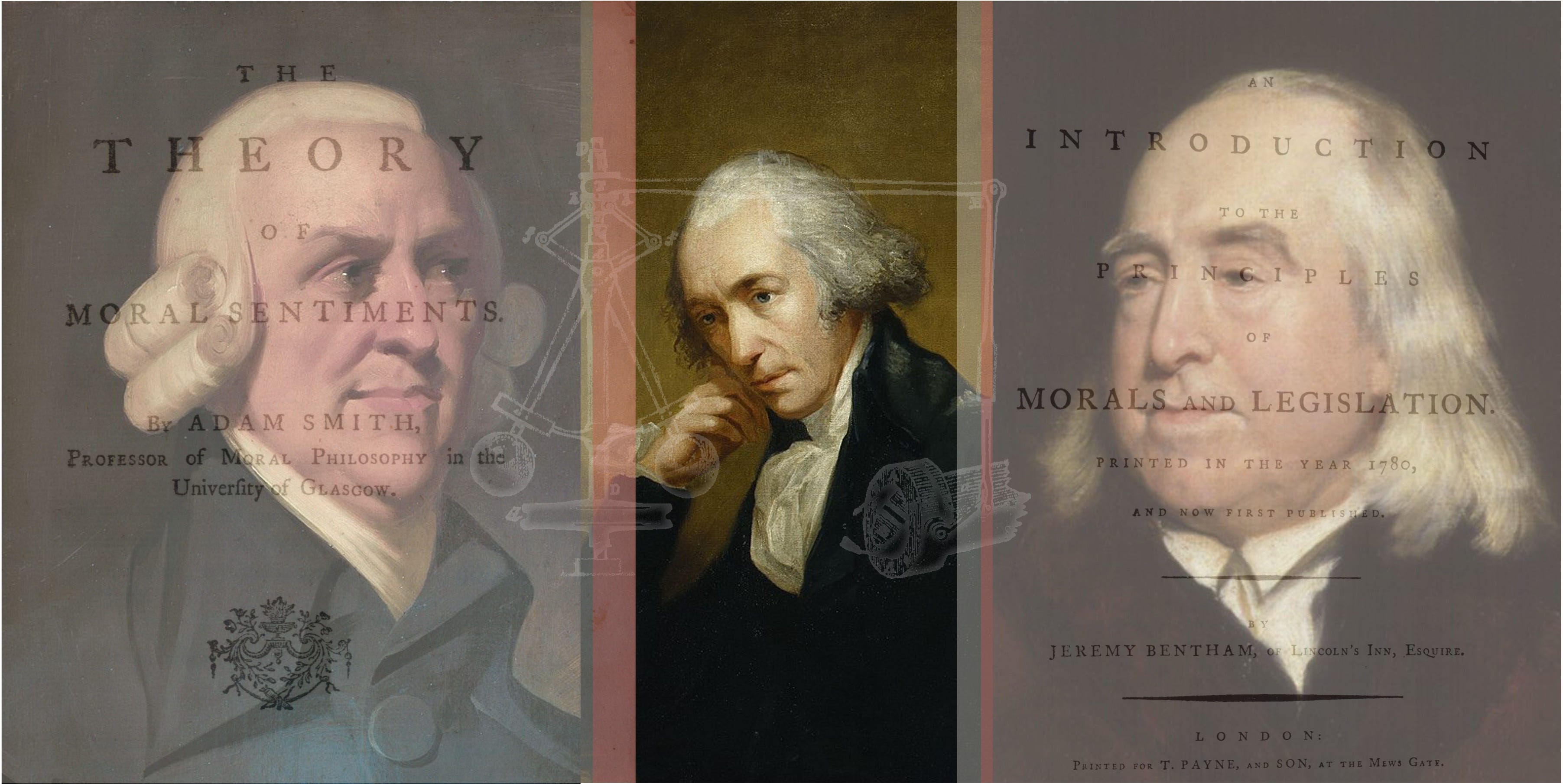
Markets, Machines, and Morality
Hello Interactors,We’ve entered fall here in the northern hemisphere, and you know what that means — pumpkin spice everything, cozy sweaters, and … economics! That’s right, as the leaves change color (at least for those above 40°N latitude), it’s the perfect time to explore how the changing seasons mirror shifts in human interaction, from the flow of resources to the balance of power and progress. This week, it’s time to cozy up with Adam Smith, Jeremy Bentham, and James Watt —three names you probably didn’t expect to find together, but trust me, they make quite the trio. So grab your favorite fall beverage and join me on a journey through the Industrial Revolution, steam engines, and the forgotten role of moral feedback loops in economics. Let's find out why balancing wealth and well-being is harder than finding a public restroom in an old university. PURGING THE URGE FOR SYMPATHYI needed to pee. More specifically, the stretch receptors in the walls of my bladder, which monitor the volume of urine inside, became activated. That sent sensory signals to the spinal cord and brain through my pelvic nerves. The pons in the brainstem (which includes a dedicated urination control center) processed this information in coordination with my prefrontal cortex, which allowed for conscious control over my decision to urinate.It was a Sunday, and the campus was dead. Lucky for me a door was open, so I ducked in and began my search for a potty. The hallway was musty and narrow. The walls were old, but not as old as the 250-year-old structure surrounding it. There was no immediately visible sign for a restroom, but there were numerous potential doors and directions for me to attempt. As I approached one of them, the industrial grade door magically opened before I could even touch it. I cautiously inched forward half wondering if it would lock behind me.Now inside another chamber further in the interior, I was met with another set of mysterious doors. I stepped inside another narrower hallway that twisted suddenly to a sign above another door that read WC. Whatever Potter-esque ghosts had guided me here clearly had sympathy. And so did my parasympathetic nervous system. It simultaneously signaled the detrusor muscle of my bladder wall to contract and my urethral sphincter to relax. I stood there in relief wondering if I could find my way out.I was visiting the University of Glasgow, hoping to learn more about its famous figures, especially Adam Smith, whom I see as an important moral philosopher rather than just the “father of economics.” A few days later in Edinburgh, I tortured my family by leading them on a search for his gravestone. I was pleased to find it acknowledged his The Theory of Moral Sentiments, where sympathy balances self-interest, as well as his more popular The Wealth of Nations. Unsurprisingly, the nearby tourist plaque focused only on Wealth of Nations, reflecting the emphasis on economics over his broader moral philosophy.Adam Smith's moral philosophy was central to his life's work, with The Theory of Moral Sentiments being his enduring focus, while The Wealth of Nations but a brief but significant interlude. For Smith, economics was not just about market mechanics, but deeply intertwined with human nature, ethics, and the broader pursuit of communal well-being. He was more concerned with the motivations behind human actions than with the technical details of market forces, which came to dominate modern economics. Smith believed that the drive for self-betterment was not solely about personal wealth but was intrinsically linked to the well-being of communities, where self-interest was balanced by sympathy for others.In Smith’s view, economic actions should be guided by moral virtues, such as prudence and justice, ensuring that individual efforts to improve one’s own life would ultimately contribute to the greater good of society. His exploration of economics was always part of a larger moral framework, where community engagement and ethical behavior were essential for both individual and societal progress. Today, this broader moral context is often overlooked, but for Smith, economics was inseparable from philosophical inquiry into human behavior. He emphasized how the improvement of human life goes far beyond just the accumulation of material wealth.MORALS MEET MARKET MANIPULATIONMany conservatives today may brush this interpretation as being too ‘woke’. Well, some eventually did back then too. As the British economy was expanding in Smith’s later years, he spoke in favor of capping interest rates with usury law. Usury is defined as the practice of making unethical or immoral loans that unfairly enrich the lender, often involving excessive or abusive interest rates. He believed exorbitant rates could lead to preying on the disadvantaged during a time of need resulting in growing disadvantages to the larger community.Historically, many societies including ancient Christian, Jewish, Islamic, and Buddhis

DEVO, Darwin, and the Evo-Devo Dance
Hello Interactors,My daughter has developed a keen interest in synthesizers. She has even created illustrated characters named Morg and Snorf, inspired by keyboard brands like Korg and Nord. Recently, she borrowed an old Korg synthesizer and has begun composing her own music during what she calls, “Korg time”. The evolution of electronic music has been remarkable since its inception, with even classical composers now embracing technology in their work. Notably, Ada Lovelace, one of the earliest computer programmers, foresaw in 1842 that computers would eventually be used for music composition — a prediction that has come to fruition.The blending of acoustic music and computer-generated sounds prompts me to reflect on how we shape our environment, which in turn shapes us. This interplay mirrors the story of evolution: nature nurturing nature ad infinitum. However, I wonder if technology as we know it today will ever truly integrate into the fabric of nature. Will we see human-like robots or robot-like humans? What if technology is already embedded within nature, and we are on the brink of learning to program it just as we would a computer?Let’s find out…MAN OR MACHINE?“Are we not men?” This was a question presumably posed to and by members of the band DEVO who masquerade as part human and part machine. The answer by the humorous humanoids was “We are Devo!”. This question and answer became the title of their first album in August of 1978. It served as both a declaration of their band name, DEVO, but also as a rhetorical question that questioned humanity during the early rise of digital technology and its perceived, and actualized, dehumanization.DEVO is an abbreviation of the term de-evolution. The band’s founding member, lead singer, and keyboardist, Mark Mothersbaugh had come across a 1924 pamphlet produced by Rev. B.H. Shadduck titled “Jocko-Homo Heavenbound” which critiqued, often humorously, Darwinian evolutionary theory.“Jocko-Homo” translates to Ape-Man which refers to human’s evolution from apes. The critique is born out of teleology — the belief organisms are the design of a Christian god…and may be subject to evolutionary decay. Some claimed that by not adhering to the moral precepts of strict forms of Christianity, like dancing or drinking alcohol, that you could pass along devolving genes to your children. As a society, it could lead to a backwards slide of humanity, a devolution.As art students at Kent State, Mothersbaugh and co-founding member and friend Gerry Casale were mostly drawn to the satire and comedic illustrations in ‘Jocko-Homo’. But the book’s premise came to the fore when they witnessed the killing of student war protesters in 1973. It made them wonder if perhaps humans really were devolving. After all, the Ohio National Guard had acted more like killing machines, not thinking or feeling humans. They seemingly failed to ask themselves, “Are we not men?”Mothersbaugh and Casale had already begun experimenting with guitar laden punk rock when Mothersbaugh saw Brian Eno perform a synthesizer solo with the band Roxy Music. He’d heard plenty of synth solos from other bands of the 1960s and 70s, but no one played it like Eno — bending and twisting electronic knobs and dials like guitarists and singers bend strings and larynx muscles. Eno sounded and dressed like he’d been transported from the future or another planet.Just a few years later, Brian Eno became the producer for DEVO’s first album, “Q: Are we not men? A: We are Devo!”. The album included the song “Jock-Homo” which featured short bursts of monkey sounds Eno synchronized with the machine-like beat of the song. Much like acts of the time, like Roxy Music and David Bowie, DEVO leveraged stage theatrics to convey their message. Their performances featured matching futuristic outfits, often with their red signature energy dome hats. Their choreographed robotic movements reinforced a cyborg-like identity serving as a visual critique of modern society's mechanization.As AI and robots of today have captured the attention of a global society seemingly in decay, it may sound cliché to say, but they, and their contemporaries, were ahead of their time. While I don’t believe we are devolving, I do think DEVO accurately portrays, both theoretically and practically, a blending of man and machine that may just be part of developmental evolution — though perhaps not exactly as Darwin had envisioned. Interestingly, DEVO could not have known their band name would become part of a branch of evolutionary biology, called Evo-Devo, or evolutionary developmental biology. That abbreviated term emerged in the early 1980s, perhaps inspired by DEVO.GEOGRAPHY GUIDES GROWTHEvo-Devo, which evolved from 19th-century embryology, explores how the development of an organism grows and matures from a single cell into a fully formed adult. It considers how cell division, their differentiated specialization for specific functions, the development of the resultant or
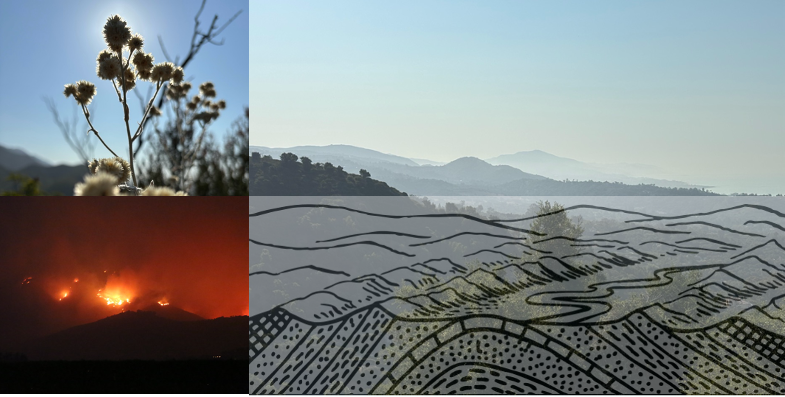
Fires, Foothills, and Flourishing
Hello Interactors,It’s been awhile. I’ve been off getting our kids settled at college…including a transfer to Los Angeles. And I may have also been seduced by the lazy days of summer. After dropping our son in LA, my wife and I took some time to return to Santa Barbara where we first met. I was reminded of how uniquely beautiful that place is. It’s also host to a unique collection of physical geography. And while it mostly enjoys a cool, calm environment, it can also endure bouts of destruction and renewal. A bit like all of us.Let’s reflect, shall we…MIGRATIONS, MOUNTAINS, AND MEMORIESTraversing the globe dropping offspring is as old as humanity. As far as we know, early hominins like Homo erectus first stepped out of Africa two million years ago. The oldest human skeletal remains outside of Africa to date were found in Eurasia (now the country of Georgia) and are 1.8 million years old. These waves of migrations were likely driven by changes in climate, resources, societies, and technologies — the same factors driving migration today.Our oldest kin dispersed widely across Eurasia, reaching as far as Southeast Asia. Some may have even used primitive boats to navigate to and between islands. This all set the stage for later migrations of other hominins, including Homo sapiens, as they spread across globe over the next million years.I was reflecting on this on a hike my wife and I recently took in the foothills of Santa Barbara (where we had our first date 34 years ago!). The Santa Ynez Mountains were uplifted during the late Miocene (23.03 million years ago) to early Pliocene (2.58 million years ago) due to the tectonic interactions between the Pacific and North American plates. This exposed a complex layering of ancient marine and terrestrial sediments that were deposited over millions of years in a marine basin stretching from current day central valley of California to Northern Mexico.These sandstones, shale, and conglomerates are revealed along the trails, cliffs, ridges, and valleys we traversed, all formed by folding, faulting, and fanning of eroded debris. The mountains continue to be pushed upward at a rate of 1 to 4 millimeters per year due to the ongoing compression between the tectonic plates along the dynamic San Andreas Fault — the same fault that originally formed them millions of years ago.The Miocene epoch, with its warmer and more humid climate, supported dense forests of subtropical and temperate species in the Santa Ynez Mountains. As tectonic activity uplifted the region, new habitats emerged, setting the stage for diverse vegetation to develop. This period laid the groundwork for the ecosystems that would later evolve as the landscape continued to change.By the Pliocene, global cooling led to drier conditions, favoring the transition from these lush forests to the more arid-adapted plant communities found today. The chaparral, oak woodlands, and coastal sage scrub we hiked through are products of this shift. These plants adapted to the region's famous Mediterranean climate, characterized by hot, dry summers and mild, wet winters, and further shaped by the ongoing geological forces at work in the area.The resultant Santa Ynez Mountains significantly influence the weather patterns in Santa Barbara by acting as a barrier to the Pacific Ocean's marine air. Unlike much of the California coast, the Santa Barbara area faces south. During the summer, these south facing mountains trap the marine layer — a cool, moist air mass that forms over the ocean—leading to fog and low clouds along the coast. This marine layer helps keep temperatures in Santa Barbara cooler than in areas further inland, providing a mild and comfortable summer climate. Additionally, in winter, the mountains enhance orographic lift, causing moist air blown from the south to rise, cool, and condense, resulting in increased rainfall on the windward side of the range and benefiting the coastal regions. I recall one brisk winter morning in Santa Barbara in 1990 when frost appeared in the shadows on the roads and snow dusted the peaks of the Santa Ynez mountains.However, these mountains also create a rain shadow effect on their leeward side, where descending air becomes warmer and drier, leading to less precipitation. This topographical influence also contributes to the occurrence of sundowner winds—warm, dry winds that descend from the mountains into Santa Barbara. These winds can cause rapid temperature increases and lower humidity levels, sometimes creating critical fire weather conditions. My wife, then girlfriend, and I ran a 5k in 1991 that was overcome with smoke from fire stoked by these sundowner winds.BLAZE, BURST, AND BLOOMSimilar winds, Santa Ana winds, stoked a more and recent severe fire, the Thomas Fire, in 2017. These winds form east of the Sierra Nevada mountains over inland deserts and west towards the coast. Hot and dry winds channel through mountain passes and canyons, gaining speed as they descend across Southe
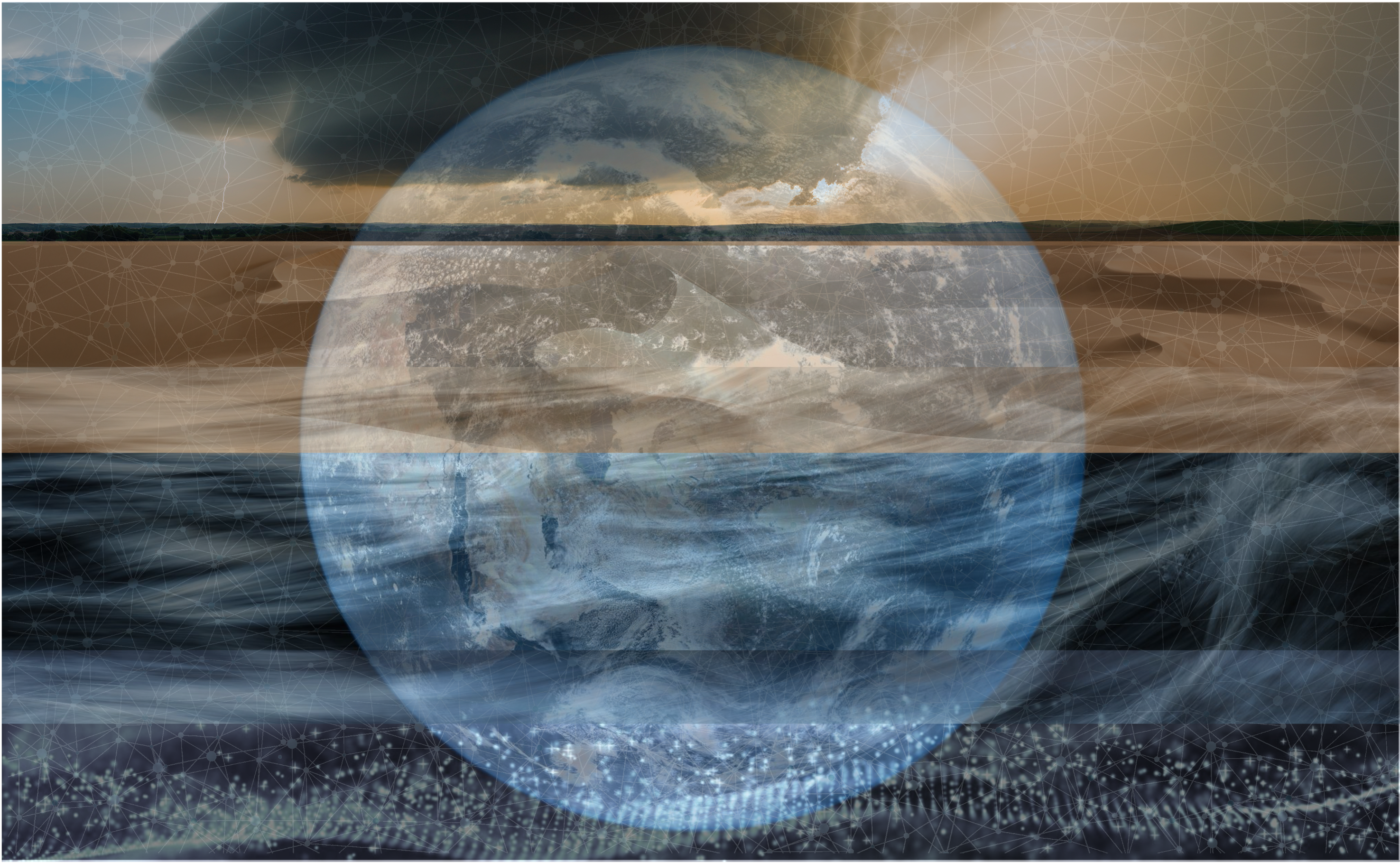
Record-Breaking Temperatures and the Uncertainty of Climate Predictions
Hello Interactors,Flying provides a great opportunity to catch up on books and podcasts, but it also brings feelings of guilt. My recent trip likely contributed about 136 hot air balloons' worth of CO2 to the atmosphere. Should I feel guilty, or should the responsibility lie with airlines, manufacturers, and oil companies? We all contribute to global warming, but at least our destination was experiencing an unusually cool July. However, globally, the situation is very different and worsening faster than expected. What’s to be done? Let’s dig in.CLIMATE CONUNDRUMS CONFOUND CALCULATIONSThere are two spots on the planet that are not affected by climate change, and I recently flew over one of them. It’s a patch in the ocean just off the coast of Greenland that our plane happened to fly over on a family vacation to Scotland. The other is a small band around the Southern Ocean near Antarctica. I likely won’t be visiting that one.I learned this on the plane listening to a podcast interview by the physicist Sean Carroll with climate scientist and Director of NASA's Goddard Institute for Space Studies, Gavin Schmidt. Gavin has been at the forefront of climate science, spearheading efforts to quantify Earth's climatic fluctuations, develop sophisticated models for projecting future climate scenarios, and effectively communicate these findings to the public and policymakers.In this discussion, they talked about the methods currently employed in climate research, while also offering insights into the anticipated climatic shifts and their potential impacts in the coming decades. Gavin is known for bridging gaps between complex science and accessible information. I’m writing this piece to bridge some of my own gaps.For example, there’s often mention that climate change has created more extreme swings in temperature — that the weather is increasingly varying from extreme heat to extreme cold. In statistics, this is called variance. Some argue this variance may be hard for us to detect because temperatures have been shifting — a phenomenon known as shifting baseline syndrome.Gavin says there’s more to this question than people realize. He notes that it is relatively straightforward to detect changes in the mean temperature because of the law of large numbers. Temperature varies across three dimensions - latitude, longitude, and altitude. We can calculate an average temperature for any two-dimensional slice of this 3D space, resulting in a single representative value for that area.This video is a conceptual simulation showing a 3D volume of temperature readings (warmer toward the ground and cool toward the sky). The 2D plane ‘slices’ the cube averaging the values as it encounters them and colors itself accordingly. Source: Author using P5.js with much help from OpenAI.With enough data, it's clear that there has been a significant warming trend almost everywhere on Earth since the 1970s. Approximately 98% of the planet has experienced detectable warming, with a couple exceptions like the ones I mentioned.But determining changes in the variance or spread of temperatures is more complex. Calculating variance requires a comprehensive understanding of the entire distribution of data, which requires a larger dataset to achieve statistical confidence. Schmidt points out that while we have enough data to confirm that the distribution of temperatures has shifted (indicating a change in the mean), we do not yet have sufficient data to conclusively state that the variance has increased.Recent temperature spikes tell this story well. For the last decade or more, many climate scientists have been confident in predicting increased global mean temperatures by looking at past temperatures. The global mean has been predictably increasing within known variances. But in 2023 their confidence was shaken. He said,“Perhaps we get a little bit complacent. Perhaps we then say, ’Okay, well, you know, we know everything.’ And for the last 10 years or so, [that’s been] on the back of both those long-term trends, which we understand…”He goes on to explain that they’ve been able to adjust temperature predictions based on past trends and the cyclical variances of El Nino and La Nina. Scientists have boldly claimed,“’Okay, well, it's gonna be a little bit cooler. It's gonna be a little warmer, but the trends are gonna be up. You know, here's the chance of a new record temperature.’ And for 10 years that worked out nicely until last year. Last year, it was a total bust, total bust like way outside any of the uncertainties that you would add into such a prediction.”How far outside of known uncertainties? He said,“…we were way off. And we still don’t know why. And that's a little disquieting.” He added, “…we ended up with records at the end of last year, August, September, October, November, that were, like they were off the charts, but then they were off the charts in how much they were off the charts. So, they were breaking the records where they were bre
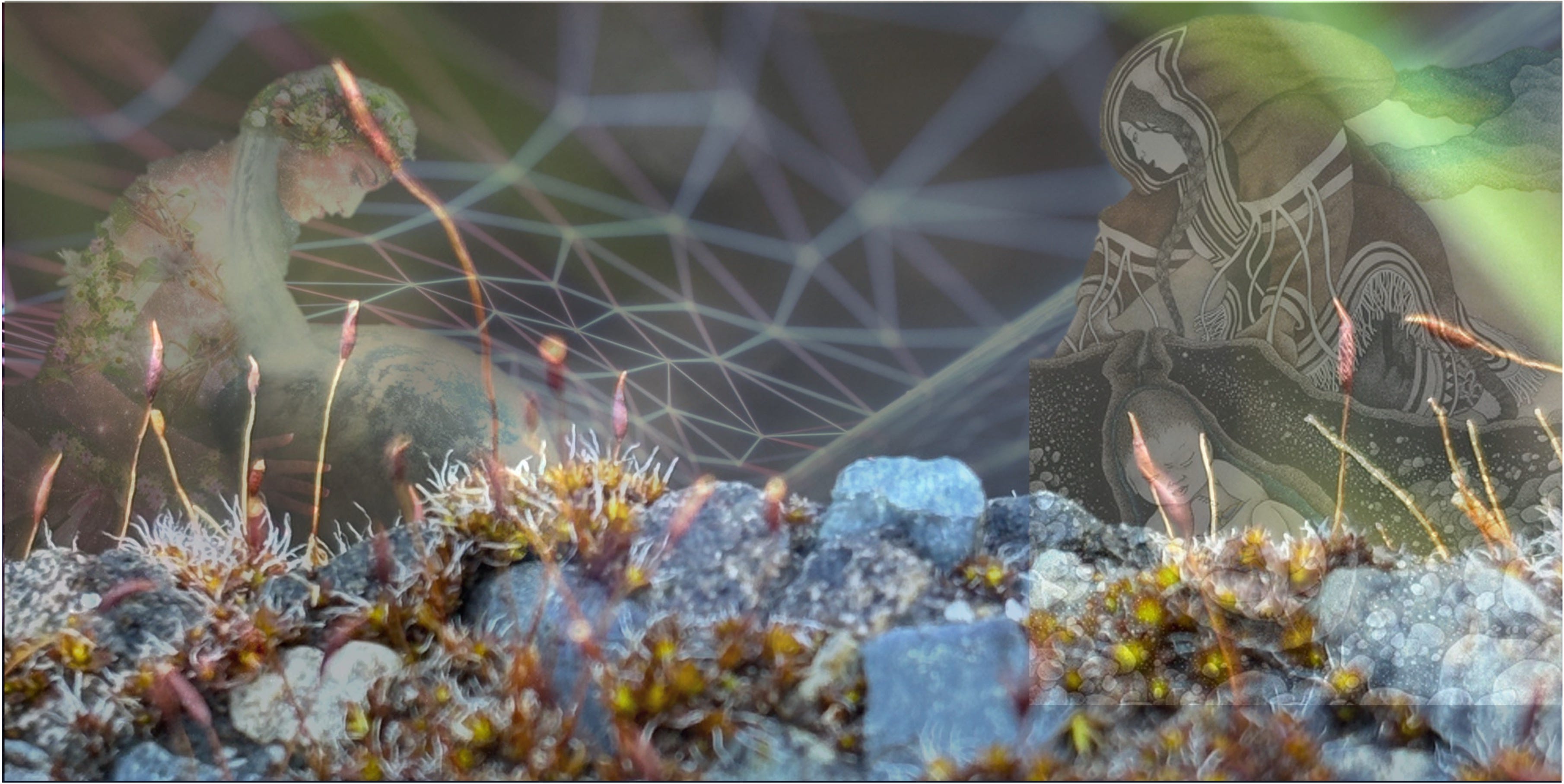
Weathering Wonders: From Microbes to Mother Earth's Mirth
Hello Interactors,I recently read an intriguing article about unexpected forms of life thriving deep within the Earth's crust. These discoveries are revitalizing environmental theories and processes that mainstream science has long tried to dismiss—yet I've been exploring them over the past few summers. While working outside, I realized that some of these processes are unfolding right under my nose...and possibly even inside it!On that note, this might sound a bit awkward, but...Let’s dig in!WORLDWIDE WEATHERING WHISPERSI’m behind on my pressure washing. This can have detrimental effects here in the predominantly damp Northwest as moss spores, tiny lightweight travelers, are lifted and lofted by the wind’s wings until they land on damp concrete. A new home for moss to roam.Upon contact, the spores absorb moisture and germinate, developing into a protonema — fine lines of sprawling verdant vines. As the structure crawls through the creviced concrete an anchored lace unfolds. Atop it grows a carpet of green and gold, down below tentacles grab hold.The rhizoid roots anchor mounding moss, absorbing food and water nature has tossed. As the concrete crumbles into nutrient stores, the soft moss blossoms with chromophores. Over time, atop the luscious mountains and rocky moistened pours, the wind releases more lofting spores.It turns out the contrasting boundary between soft squishy plants and hard concrete is as pronounced as the divisions between the disciplines of biology and geology. But advances in Earth System Science are starting blur these boundaries, as integrative science tends to do. Like moss softening concrete.My expansive moss colonies, part of the plant kingdom, house communities of tiny microorganisms like bacteria, fungi, and microscopic animals like rotifers and tardigrades. Many of these communities have symbiotic relationships with moss. For example, some bacteria promote moss growth through the production of the plant growth hormone auxin using specific enzymes in plant tissues.As the moss and its associated microbes grow and expand, they can penetrate small cracks or pores in the concrete, potentially widening them and exposing more surface area to weathering processes. This can be accelerated by certain bacteria and fungi that produce organic acids as metabolic byproducts. These acids can slowly dissolve or weaken calcium carbonate and other minerals found in concrete.The biogeochemistry contributing to rock weathering and sediment formation reveals the intricate connections between biological processes and geological phenomena. At massive space and time scales they can not only affect the meteorological conditions above ground, but also the layers of sediment below ground.In a recent New York Times piece, Ferris Jabr, author of “Becoming Earth: How Our Planet Came to Life” reveals how“Within the forest floor [of the Amazon rainforest], vast symbiotic networks of plant roots and filamentous fungi pull water from the soil into trunks, stems and leaves. As the nearly 400 billion trees in the Amazon drink their fill, they release excess moisture, saturating the air with 20 billion tons of water vapor each day. At the same time, plants of all kinds secrete salts and emit bouquets of pungent gaseous compounds. Mushrooms, dainty as paper parasols or squat as door knobs, exhale plumes of spores. The wind sweeps bacteria, pollen grains and bits of leaves and bark into the atmosphere. The wet breath of the forest — peppered with microscopic life and organic residues — creates conditions that are highly conducive to rain. With so much water vapor in the air and so many minute particles on which the water can condense, clouds quickly form. In a typical year, the Amazon generates around half of its own rainfall.”Below ground, he describes work by Earth scientist Robert Hazen and colleagues.“When Earth was young, microbes inhabiting the ocean crust were likely dissolving the basalt with acids and enzymes in order to obtain energy and nutrients, producing wet clay minerals. By lubricating the crust with those wet byproducts, the microbes may have accelerated the dissolution of both mantle and crust and their eventual transfiguration into new land. The geophysicists Dennis Höning and Tilman Spohn have published similar ideas.They point out that water trapped in subducting sediments escapes first, whereas water in the crust is typically expelled at greater depths. The thicker the sedimentary layer covering the crust, the more water makes it into the deep mantle, which ultimately enhances the production of granite.In Earth’s earliest eons, micro-organisms and, later, fungi and plants dissolved and degraded rock at a rate much greater than what geological processes could accomplish on their own.In doing so, they would have increased the amount of sediment deposited in deep ocean trenches, thereby cloaking subducting plates of ocean crust in thicker protective layers, flushing more water into the mantle and ul

Regulatory Shifts and Environmental Drifts: Legal and Natural Boundaries
Hello Interactors,We’re fully into Summer in the Northern Hemisphere, and as the earth tilts toward the sun, Interplace tilts toward the environment. And what a crucial moment to do so. Just last week, the Supreme Court made sweeping decisions that could unravel over fifty years of environmental legislation, threatening to plunge us into chaos. This upheaval comes precisely when our world’s natural boundaries desperately need regulatory stability and security to make any meaningful progress in combating global warming.Let’s dig in…POLLEN, POLLUTING, AND POLITICSI recently returned from the Midwest visiting family. I like looking out of the airplane window at the various crop patterns from state to state. Trying to discern which state I was over; I was reminded of a corny Midwest joke.Why do Iowa corn stalks lean to the east? Because Illinois sucks and Nebraska blows. Folks in Illinois tell the same joke, but it’s Ohio that sucks and Iowa that blows. You get the idea.The truth is the wind does commonly blow from west to east oblivious to state borders. It sends whatever it wants across the border — clouds, dust, seeds, pollen…pollution. And if there’s money to be made, borders become porous or disappear altogether.Those rivalrous corn jokes mirror an economic reality. Bordering states all compete for federal subsidies and access to markets — mostly across international borders. Access to these markets can be impacted by corn pollen drifting from one state to another.With the widespread adoption of genetically modified (GMO) corn varieties, there’s potential for contamination of non-GMO corn fields by pollen from GMO corn fields on state lines. One study suggest cross-pollination could be detected up to 600 feet away from the source, although counts dropped off rapidly beyond 150 feet.But the more pressing concern isn’t pollen drift, but pollution drift. As part of the Clean Air Act, the Environmental Protection Agency (EPA) has a “Good Neighbor” rule designed to reduce air pollution that crosses state lines. It requires "upwind" states to reduce emissions that affect air quality in "downwind" states which can cause significant health problems.Last week, on June 27, 2024, the Supreme Court's ruling in Ohio v. EPA temporarily blocked this rule.Fossil fuel companies and industry associations celebrated the decision as a win, viewing it as a check on the EPA's regulatory power. Meanwhile humans with a heart and lungs worry the decision leaves upwind states free to contribute to their neighbors' ozone problems for years.It's worth noting that this is a temporary stay, not a final ruling on the merits of the case. The legal challenge will continue in lower courts, with the possibility of oral arguments as soon as this fall. But this ruling can also be seen as part of a pattern of the Supreme Court's conservative majority expressing skepticism towards federal regulatory authority, especially in environmental matters.Take, for example, the ruling that came the very next day on June 28, 2024. The Supreme Court, in a 6-3 decision, curtailed EPA, and other executive agencies', power by overturning the Chevron v. Natural Resources Defense Council precedent. This shift endangers numerous regulations and transfers authority from the executive branch to Congress and the courts. Chevron has been a cornerstone in American law, cited in 70 Supreme Court and 17,000 lower court decisions.The case began with fishermen challenging two similar rulings, Loper Bright Enterprises v. Raimondo and Relentless v. Department of Commerce. These involved a 1976 law requiring herring boats to carry federal observers to prevent overfishing. A 2020 regulation mandated boat owners to pay $700 daily for the observers. Fishermen from New Jersey and Rhode Island, supported by conservative groups opposing the "administrative state," sued, arguing the law didn't authorize the National Marine Fisheries Service to impose the fee.Adam Liptak of the New York Times reported the fisherman case was brought “by Cause of Action Institute, which says its mission is ‘to limit the power of the administrative state,’ and the New Civil Liberties Alliance, which says it aims ‘to protect constitutional freedoms from violations from the administrative state.’” Liptak also reports these institutions are funded by Charles Koch, the climate change denying billionaire who has long supported conservative and libertarian causes.It's curious how the Environmental Protection Agency came from a conservative libertarian and the first most dishonest president in my lifetime, Richard Nixon. The EPA will likely be obliterated should the least trusted former president get reelected — Felonious Trump.GORSUCH'S GRIM GREEN GUTTINGI wrote about the formation of the EPA in July of 2021. 👇“There was growing concern entrusting those very institutions responsible for the destruction of the environment with devising schemes to save it. The country’s air, water, and land were being smothe
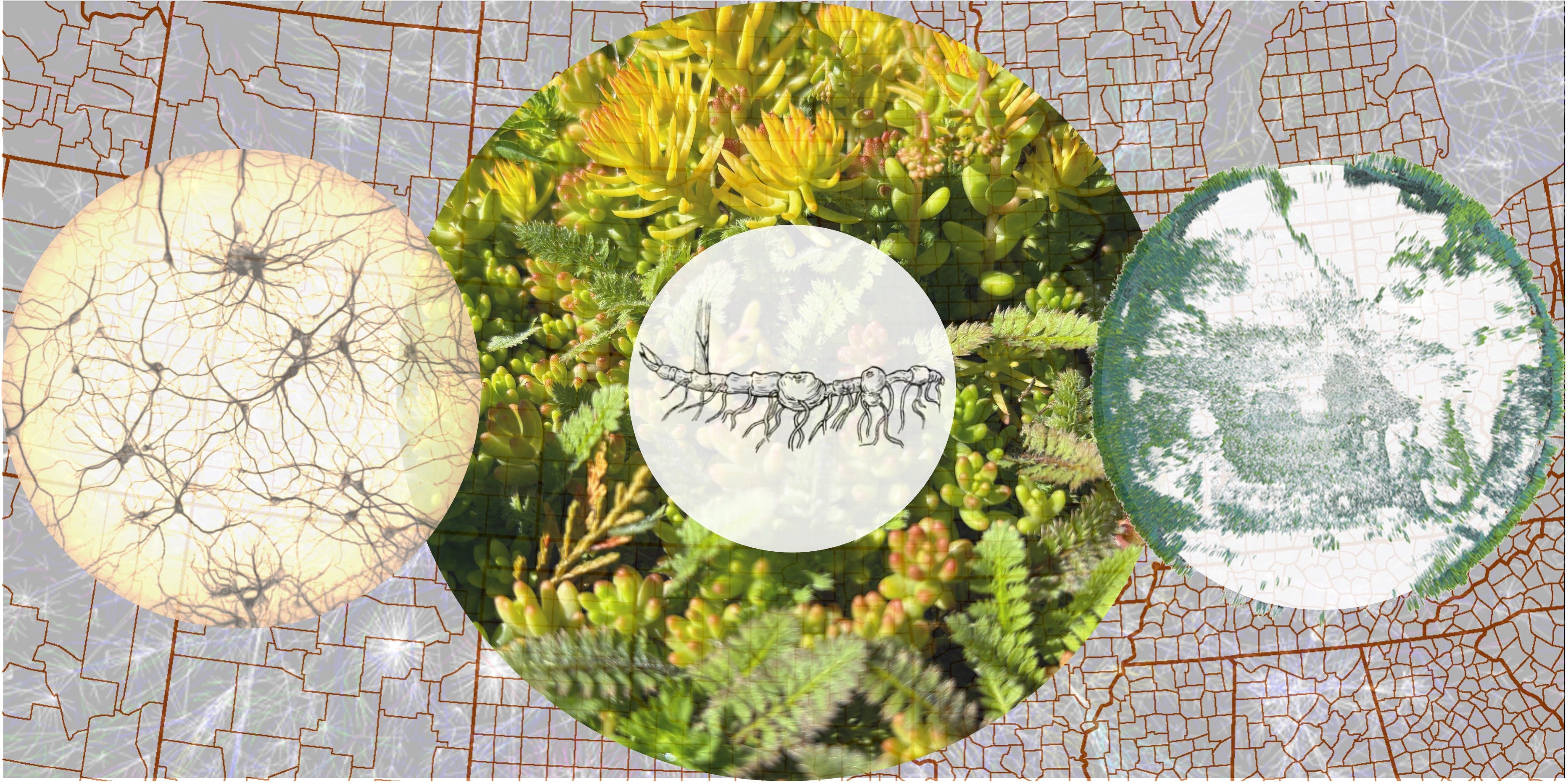
Garden Invaders and Global Rhizomes
Hello Interactors, The lengthening northern days have unleashed verdant chaos in my yard and it’s challenging my desire for order. Some unruly growth demands surrendering control, embracing life's rhizomatic entanglements — an invitation to honor multiplicity over singularity, relation over individuality, and emergence over stasis.Let’s dig in…FERN FRENZY IN FULL FORCEThose skinny unattractive immigrants are invading. They’re nudging their way through every nook and cranny stealing resources and opportunity from those already here. Before long, they’ll be taking over the place. I’m talking about Leptinella squalida (Derived from the Greek "leptos" meaning slender and the Latin “squalid” meaning unattractive). That is the scientific name for a New Zealand native ground cover commonly referred to as ‘Brass buttons’ and it’s taking over my garden.Leptinella squalida is rhizomatous. It sends rootlike horizontal shallow subterranean stems — a rhizome — in a multitude of unpredictable directions. At various intervals in its journey, it progressively produces small nodules that send whisker roots below while sprouting shoots vertically to the surface to form miniature fern-like fronds — sometimes green and other times ‘brass’ colored. Once a year it produces a yellow ‘button’ blossom that can send seeds aloft leapfrogging the host to colonize another territory.I planted it in a shady moist area of my small backyard after ripping out a grass lawn. Liptinella squalida makes an even carpet that can withstand a fair bit of foot traffic, making it an attractive alternative to grass. Unfortunately, other plants can’t withstand is aggressive propagation, starving them of light and nutrients. That’s exactly what this exponentially expanding rhizome is doing to the slower growing, less aggressively sprawling Sedum rupestre 'Angelina' — a variety I also helped colonize from Western Europe.I suspect strict immigration laws should be applied to my little rambunctious rhizomatous island ferns. Last week I eradicated an entire section at the border with a shovel and then carefully extracted the spindly rhizomes from the starved roots and foliage of the ‘Angelina.’ I’m contemplating building a subterranean Trump-like wall to resist the invaders. I may even perform widespread extirpation and dig it all up — especially given the primary section of Brass buttons have also been colonized. They are slowly being overtaken by another aggressive invasive species — clover.I didn’t plan for this, but I did create the conditions for it to occur. In place of a grass lawn — which offers nothing to ecology in any shape or form — I planted a variety of low growing ground covers, sedums, and clumping ornamental grasses. Many of these ground covers have now intermingled. Some are more dominant in areas than others forming a diverse kaleidoscope of height, color, and texture. There’s little strict cartesian geometric control I can apply to this tufted tapestry without hard physical barriers. And even then, their airborne spores can gleefully fly where the wind may carry them — oblivious to any tyrannical terrestrial territorial triangulations I may map in my head.Rhizomes are their own kind of experimental map. They randomly route with their roots. Their genes map the way as MicroRNAs modulate their sway. Meanwhile, subterranean phytohormones signal route initiation and elongation in a coordinated but random multi-directional, non-linear physical cartographic network.Rhizomic networks have no real beginning or end. They make connections in a non-hierarchical, decentralized way without a single origin or terminus. It is in a continual emergent state of being in the middle of having been made and becoming something new. There is no dualistic hierarchical parent/child branching that dominates Western mental images of hierarchical networks — like a family tree or even a real tree where a trunk sprouts limbs with branches that terminate with leaves. Rhizomatous networks defy rational Cartesian logic.I’ve been reflecting on the tension I’m experiencing as I wrestle and reason with my garden. On the one hand, I’m drawn to the top-down control of crafting a particular order and aesthetic as an amateur landscape architect. The same desire explains my affinity for urban and transportation planning and design…and I suppose my three decades of user interface design. I like attempts at bringing clarity to complexity.Modern urban planning tries to achieve the same thing. Urban planning has historically relied on hierarchical models characterized by centralized control and top-down implementation. These traditional approaches often use structural or generative frameworks to shape and represent urban spaces. Emphasizing coherence and order, urban planning typically adheres to mapped zoning regulations and legally controlled growth patterns. The focus is usually on achieving defined end-states or visions, imposing order through marginated space with bordered zone
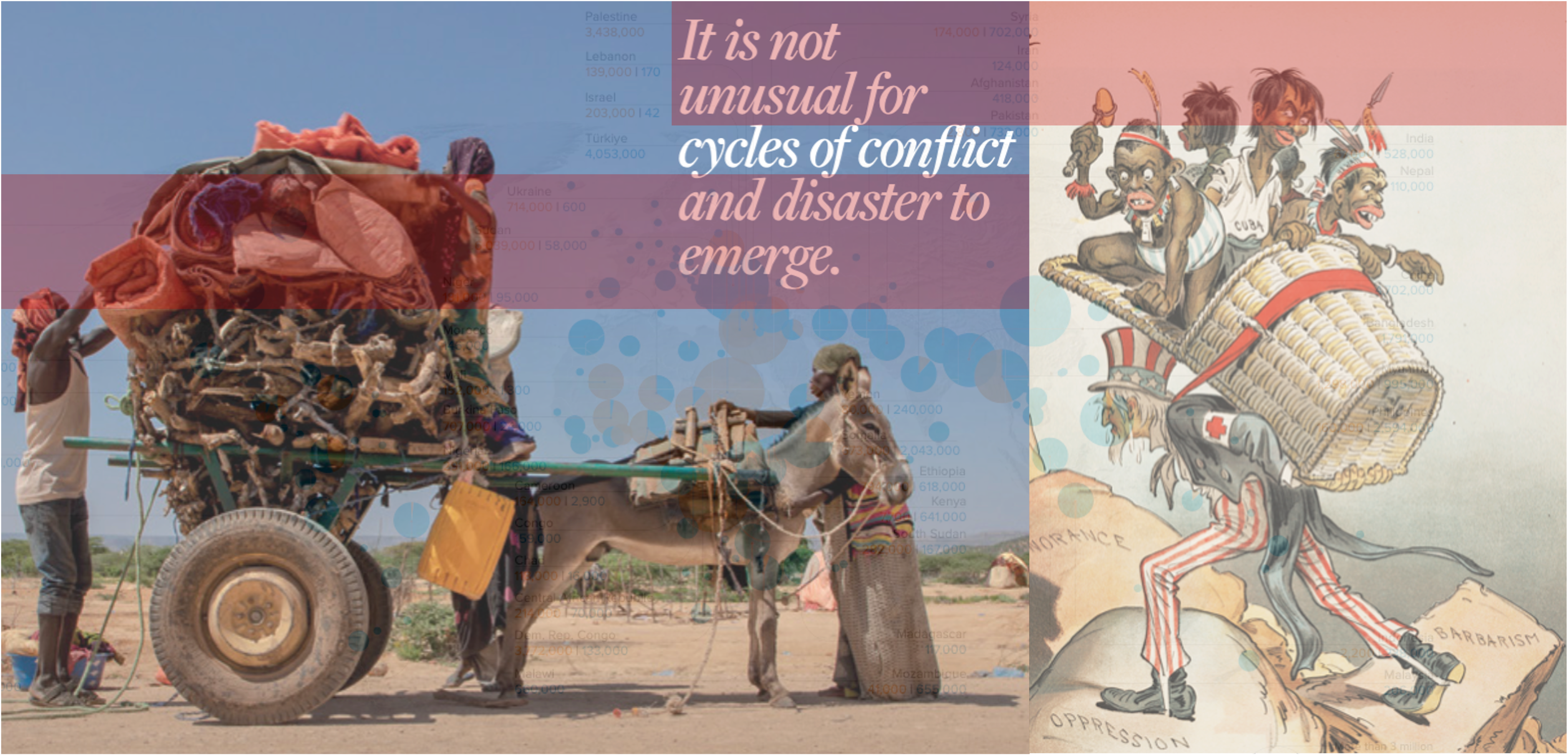
From Paternalism to Partnership: Rethinking Western Response to Global Displacement
Hello Interactors,In an era where Western leaders craft policies that oscillate between harsh border controls and selective humanitarian aid, our understanding risks being clouded by data-centric approaches. Through the lens of critical cartography, we see how enhanced data collection can reduce displaced individuals to mere numbers, obscuring their complex human stories behind cold statistics. Insights into the disorienting effects of domineering multinational capitalism further illuminate how these data practices, though aimed at clarity, often mask the real experiences and struggles of those displaced. I explore some contradictions in these policies—how they promise to protect yet perpetuate power imbalances, offering a guise of support while fundamentally failing to address the root causes of displacement.Let’s go…DISORIENTED BY DOMINANCEThe Dutch government recently took a giant political step to the right. Some say this is as far right as a democratically elected Dutch government has ever been. It’s probably the most intolerant since Hitler installed a Nazi occupation regime from 1940-1945 implementing racist policies which persecuted not just Jews but other minorities as well.The Dutch government leaned right as recent as 2010-2012, when the right-wing politician Geert Wilders was Prime Minister. Wilders is now back in office, though not as Prime Minister, and has formed a coalition government seeking to implement racist immigration policies that echo an ugly past.In one of his campaign speeches he said he desires a strict and harsh Netherlands where "people in Africa and the Middle East will start thinking they might be better off elsewhere".Wilders joins the ranks of intolerant European populists like Le Pen of France, Meloni of Italy, and Hungary’s Orban, using anti-immigrant and racist rhetoric as rallying cries. Meanwhile, here in the Americas, Biden and Mexico’s López Obrador have deported tens of thousands of migrants to Mexico despite known risks of kidnapping, extortion, and assault. Biden has been silent on the matter while López Obrador erodes democratic institutions by undermining judicial independence, demonizing critics, and shielding the military from accountability for abuses.The EU practices its own repressive transactional diplomacy to evade human rights duties to asylum seekers and migrants — especially from Africa and the Middle East. While numbers fluctuated, there has been a significant overall increase in asylum seeker rates into EU countries since 2010 when Wilders first came to power. That surge was driven by conflicts like the Syrian war, which Western governments were complicit in intensifying, and broader regional instability — including detrimental environmental effects due to climate change.The Syrian conflict triggered a surge in asylum applications to EU countries, peaking at over 1.2 million annually in 2015 and 2016. Following a dip between 2017 and 2020, applications rebounded to 962,160 in 2022, a 20% increase from 2021, with Germany receiving the most (243,800), followed by France, Spain, Austria, and Italy. From 2010 to 2022, EU asylum applications rose from approximately 259,000 to over 962,000, a near fourfold increase. The primary asylum seekers in 2022 were from Syria, Afghanistan, Turkey, Venezuela, and Colombia.It’s curious how fear of immigration coincides with declining EU fertility rates. The average number of children per woman in the EU was 1.46 live births in 2022, well below the rate of 2.1 needed to maintain population levels without migration.It could be these politicians, and the populist rhetoric they spew, are suffering from a kind of globalist vertigo. As political theorist and Director of the Institute for Critical Theory at Duke University, Frederic Jameson puts it, “a profound sense of disorientation and inability to cognitively map their position within the larger global system of economic and social relations.”As a Marxist, he pins this dilemma on “the immense complexity and abstraction of multinational capitalism.” A primary historical feature of global capitalism is indeed to offload deleterious effects of human labor exploitation and natural resource extraction to regions far from those privileged enough to enjoy the prosperity capitalism can yield. Pushing unwanted labor and development elsewhere is a kind of global “Not-In-My-Back-Yard.” Out of sight, out of mind.This geographical and cultural distance mirrors the historical migration of freed slaves to the industrial North after the U.S. Civil War. Much like today, these migrants and their descendants faced (and continue to face) a starkly different world of affluence and encountering significant social and economic challenges. History illustrates how geographical and cultural distances can hinder societal understanding and integration, especially when newcomers seek better lives in regions of prosperity.When those ‘distant others’ appear at the regional doorstep of relative opulence
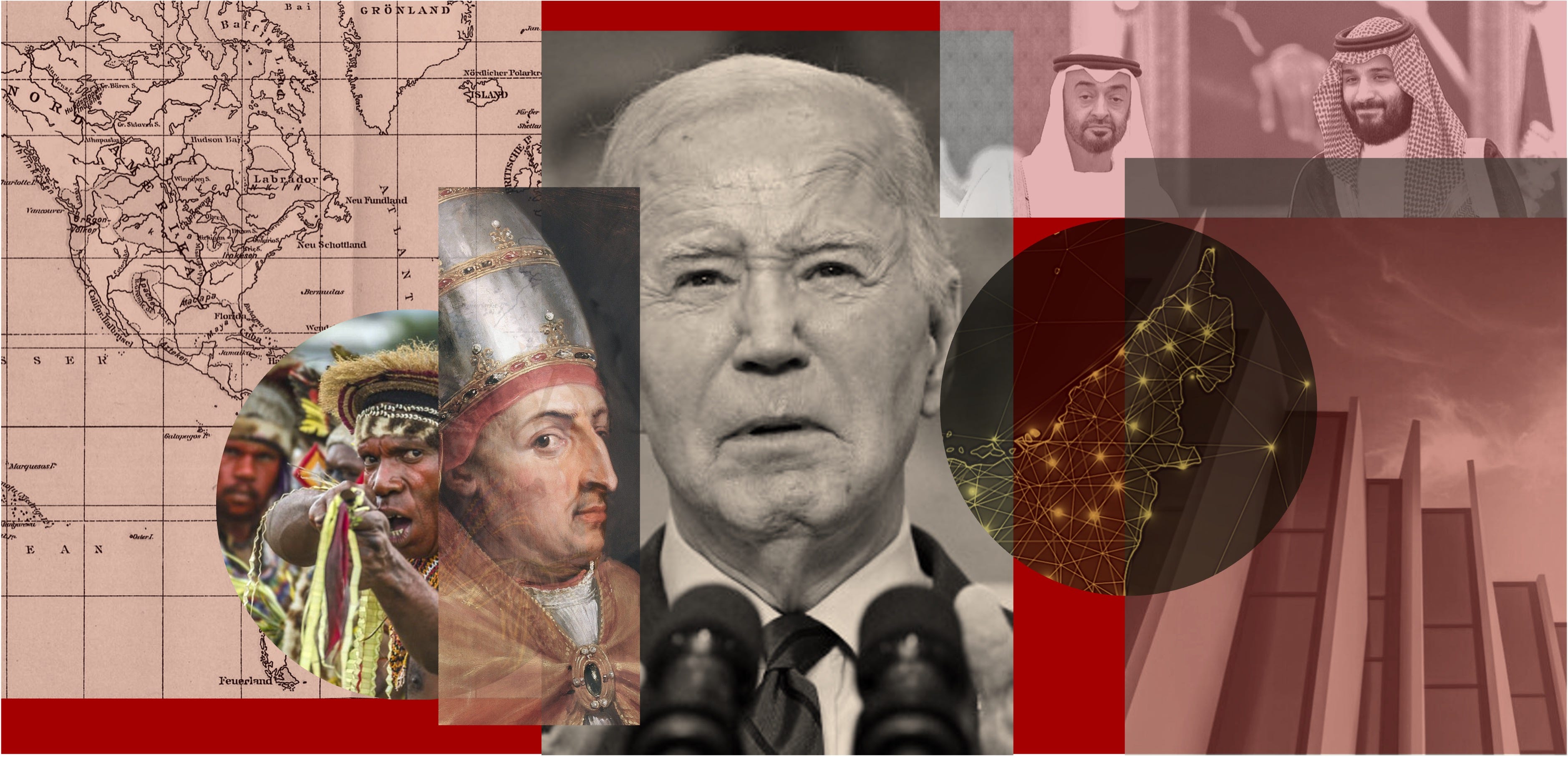
Does Biden's "Cannibal" Gaffe Reveal A Deeper Colonial Mindset?
Hello Interactors,Biden’s recent reflective quip got me thinking about how European colonial doctrines like the "Doctrine of Discovery" and the "civilizing mission," continue to justify the dominance over Indigenous peoples, including those in Papua New Guinea. These lingering narratives not only influence contemporary struggles for self-determination, they also impact global politics and economic globalism. Join me as I unpack the complex interplay of decolonization, sovereignty, and the roles international actors, and their maps, play(ed) in shaping these dynamics.Let’s go…MAPS MARK MYTHSBiden recently suggested his uncle was eaten by "cannibals". Reflecting on World War II war veterans, he said, "He got shot down in New Guinea, and they never found the body because there used to be — there were a lot of cannibals, for real, in that part of New Guinea."Military records show that his uncle’s plane crashed off the coast of New Guinea for reasons unknown and his remains were never recovered.Papua New Guinea's (PNG) Prime Minister James Marape didn’t take kindly to Biden's remarks, stating that "President Biden's remarks may have been a slip of the tongue; however, my country does not deserve to be labeled as such." Marape reminded Biden that Papua New Guinea was an unwilling participant in World War II. He urged the U.S. to help locate and recover the remains of American servicemen still scattered across the country.President Biden is a victim of depictions of "cannibals" in Papua New Guinea that are part of a deeply problematic colonial and post-colonial narrative still debated among anthropologists. These often exaggerated or fabricated historical portrayals of Indigenous peoples as "savage" or "primitive" were used to justify colonial domination and the imposition of Western control under the guise of bringing "civilization" to these societies.During the age of exploration and colonial expansion, European explorers and colonists frequently labeled various Indigenous groups around the world as “cannibals.” These claims proliferated in PNG by early explorers, missionaries, and colonial administrators to shock audiences and underscore the perceived necessity of the "civilizing mission" — a form of expansionist propaganda.European colonial maps like these served as vital weapons. They defined and controlled space to legitimize territorial claims and the governance of their occupants. In the late 19th century, German commercial interests led by the German New Guinea Company, expanded into the Pacific, annexing northeastern New Guinea and nearby islands as Kaiser-Wilhelmsland. In response, Britain established control over southern New Guinea, later transferring it to Australia. After World War I, Australia captured the remaining German territories, which the League of Nations mandated it to govern as the Territory of New Guinea. Following World War II, the two territories, under UN trusteeship, moved towards unification as the Independent State of Papua New Guinea in 1975.Today, Papua New Guinea is central to Pacific geopolitics, especially with China's growing influence through efforts like the Belt and Road initiative. This is impacting regional dynamics and power relationships involving major nations like Australia, the US, and China resulting in challenges related to debt, environmental concerns, and shifts in power balances. The Porgera gold mine, now managed by a joint venture with majority PNG stakeholders, had been halted in 2020 due to human rights and environmental violations but is resuming under new management. While the extractive industries are largely foreign-owned, the government is trying to shift the revenue balance toward local ownership and lure investors away from exploitative practices. Meanwhile, Indigenous tribes remain critical of the government's complicity in the social, environmental, and economic disruption caused by centuries of capitalism and foreign intrusion.SUPREMACY SUBVERTS SOVEREIGNTYEarly Western explorers used a Christian religious rationale, rooted in the "Doctrine of Discovery" and the "civilizing mission" concept, to justify the subjugation and "taming" of Indigenous peoples in lands like Papua New Guinea. This doctrine deemed non-Christian peoples as lacking rights to their land and sovereignty, positioning European powers as having a divine mandate to take control.The "civilizing mission" substantiated a European moral and religious obligation to convert Indigenous populations to Christianity, underpinned by a profound sense of racial and cultural superiority. Terms like "savages," "beasts," and "cannibals" were used to dehumanize Indigenous peoples and justify their harsh treatment, with the belief that this would elevate them from their perceived primitive state and save their souls, legitimizing the colonization process and stripping them of autonomy.Indigenous peoples around the world continue to fight for their autonomy and right to self-determination. Papua New
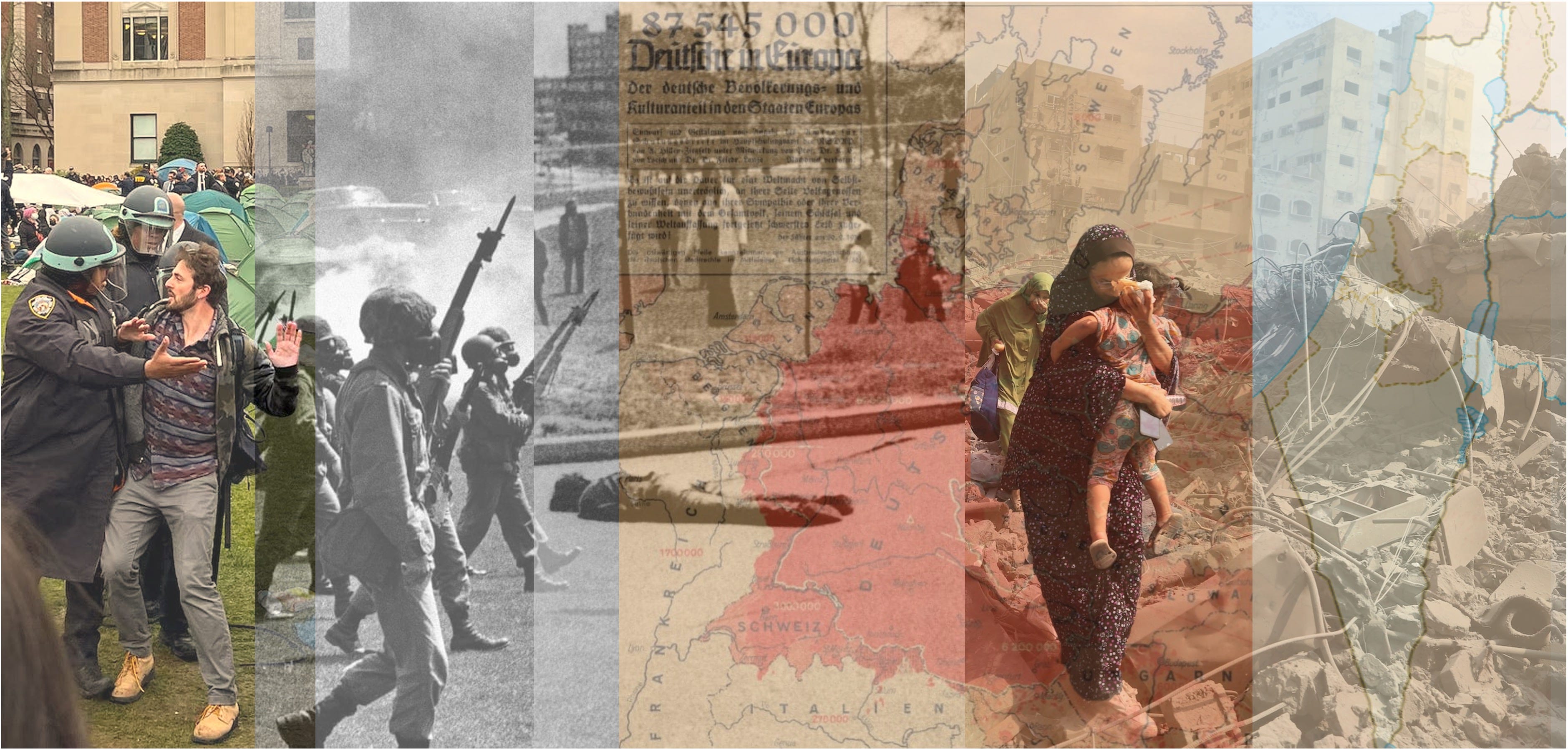
Contours of Control Creep Onto Campus
Hello Interactors,The horrific acts of violence in Palestine have prompted acts of violence on university campuses around the world. This post is about one thing they have in common — maps. Maps legally define territory, the rights of those who occupy it, and the rights of those in power to silence them, displace them, or ‘invisible’ them. A pattern we also see with America’s unhoused.Let me try to map this out…CAMPUS CONFRONTATIONS ECHOCiting "clear and present danger," Columbia University recently called for the New York Police to intervene. On April 18th, students had set up tents on a small patch of grass on campus — a form of protest calling for the university to divest from Israel due to the violence in Palestine. Despite the peaceful nature of the protest, the President of the school claimed their presence was menacing and that they were trespassing. Evidently, parts of campus are closed to students during certain hours. The incident resulted in the arrest of 108 students. But many returned and were joined by more upon their release.Nearly a week passed before House Speaker Mike Johnson called on the school’s President to resign if she can’t suppress the war protests at her school. He went on to threaten federal funding for colleges that he sees are creating unsafe environments for Jewish students. Many equate opposition to the state of Israel as opposition of Jewish people.Meanwhile, the Jewish Voice for Peace is claiming the university is making it unsafe for both Jewish and non-Jewish students in their actions. Of the 85 students suspended for protesting the actions of the Israeli state, 15 are Jewish. The Jewish Voice for Peace writes,“Yesterday’s statement by the White House, like the administrators of Columbia University, dangerously and inaccurately presumes that all Jewish students support the Israeli government’s genocide of Palestinians. This assumption is actively harming Palestinian and Jewish students.”Restrictions on student rights have also led to Jewish students being obstructed from observing their religious events and blocking access to their Jewish community.Columbia University, named after Christopher Columbus and echoing his legacy of exploration and exploitation, has experienced similar conflicts before. In 1968, protests erupted over the university's plan to build a segregated gym, viewed as oppressive by Harlem residents. There was also significant discontent with Columbia's involvement with the Institute for Defense Analyses (IDA), a center providing support to the U.S. Department of Defense during the Vietnam War.Columbia’s recent protests spawned more across the country. The National Guard have been called to many campuses to sweep protesters away echoing the deadly protests at Kent State 54 years ago. Or Yale in 1986 when police extracted a student who had erected a replica structure found in South Africa’s shantytowns protesting apartheid. One student protester said at the time, “We find the Administrations actions highly ironic in light of the continuing efforts of the South African Government to remove the squatter committees with which our shanties expressed solidarity.” In defense of the school, a spokesman said of the protesters, “No group is permitted to have a monopoly on the space.”No group except, perhaps, the administration.These university confrontations are part of a larger pattern of forceful takeovers and displacement evident in various forms, including the routine 'sweeps' of homeless encampments in cities across America. These sweeps often involve the removal of homeless individuals from public or private spaces, displacing them without providing long-term solutions to homelessness. Critics argue that such actions not only fail to address the underlying issues of poverty and housing insecurity but also perpetuate a cycle of displacement and marginalization.Similar critiques are leveled against these universities who in many cases have been pressured by powerful donors and alumni to silence voices speaking out against the ongoing violence in Palestine. A pattern consistent with conservative efforts to squelch diversity, equity, and inclusion programs and the teaching of alternative views of history and race. Such actions also serve to perpetuate, and propagate, cycles of protest against oppression.This practice highlights how power dynamics continue to affect those with less power. From students choosing to sleep outside in solidarity to the most vulnerable populations sleeping outside in poverty. It’s a self-enforcing system where those without property and/or rights are subjected to repeated eviction from their makeshift homes. In the case of those unhoused, it only serves to further entrench the disparities and social stigmas associated with homelessness. In this broader context, both the struggle over property at a university or an urban park reflect the ongoing contention over who has the right to occupy and claim space within our communities.MAPPING A
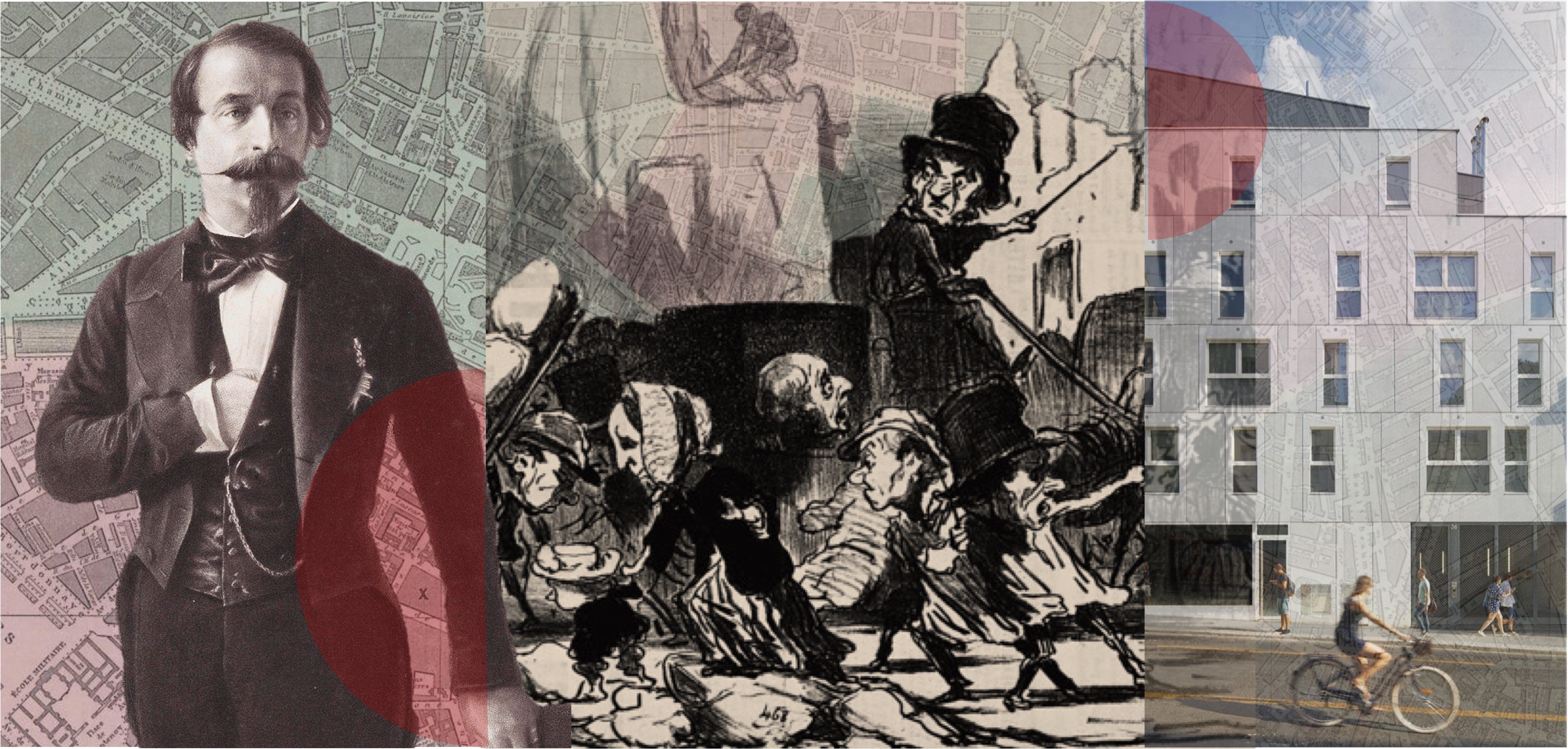
Beyond the Façade: Tracing the Ideological and City Blueprint of Paris
Hello Interactors,Behind every map is intent. When it comes to making plans for a city, streets are more than mere passageways; they are the cartography of power, exacting politics and ideology for the unfolding of urbanity. Paris is the blueprint of social order and control portrayed as a symbol of beauty and progress. I wanted to unravel the threads of intent, from communal aspirations to the heavy hand of authoritarianism — a kind of narrative map of a city renowned as much for its revolutions as for its romance.Let’s go.COMMON ROOTS, CONTRASTING COMMUNITIESI’ll offer a word and you examine your emotional reaction to it. Communism. If you’re like me, you’ve been trained to have negative thoughts. Maybe even stop reading. Communism has been associated with authoritarian, repressive regimes that denied basic freedoms and human rights. Ask anyone who lived under these conditions and you can see why it’s been ideologically blackballed in America.Now I’ll offer another word. Community. Ah, yes, good vibes. Who could possibly be against community? It’s strange how two words with common origins can differ so much by changing two letters.The word Communism comes from Karl Marx and Friedrich Engel’s Kommunismus as early as 1847 and is derived from the French word communisme which first appeared three years earlier in 1843. This word comes from the Old French word comun meaning "common, general, free, open, public."A group of people in common, “the common people” who are not rulers of property, clergy, or monarchy, is from the 14th century French word comunité meaning "commonness, everybody" or community.I had the experience of checking my own reaction to the word communist while reading about how communist ideals helped a politician in Paris help his community.The French Communist senator, Ian Brossat, lead housing policy in Paris for a decade. He said his “guiding philosophy is that those who produce the riches of the city must have the right to live in it.” He and the local government under Mayor Hildago are doing their best to live up to this. Over the past decade, the French Communist Party has emphasized social justice and economic equality, advocating for stronger public services, wealth redistribution, and workers' rights. They've also focused on environmental sustainability, aligning with broader movements to address climate change and social disparities.People from all over the world are drawn to Paris for its diverse array of small shops, cafes, expansive boulevards, monuments, and museums. It exudes old-world charm complete with cobblers, tailors, jewelers, and luthiers tucked in and among various neighborhoods — some more manicured than others. It’s a dappled array of diverse color and verdant softscapes that when viewed from afar offers an impression of a picture-perfect pointillist painting. Paris exists as a seemingly organic and emergent unfolding of placemaking complete with public spaces and parks for the taking — by all walks of life. For many, it’s a composite of ideals that harken back to romantic images of a fashionable and stylistic ‘pick your favorite’ century in Europe making it a perennial favorite destination for tourists.But surrounding the parks where healthy blossoms glow are stealthy property plots where wealthy funds grow. Amidst the green where healthy plants are planted longtime residents squirm as their neighbors are supplanted. Despite the city building or renovating “more than 82,000 apartments over the past three decades for families with children”, 2.4 million people are on the waiting list for affordable housing.(1)This isn’t the first time economically disadvantaged people have been displaced from Paris. In 1853, one year after Napoleon Bonaparte’s nephew Napoleon III declared himself emperor in a successful coup d'état, he wasted no time embarking on what many believe to be the biggest ‘urban renewal’ project in history. It was famously led by a former prefect administrator, Georges-Eugène Haussmann. His swift and heavy hand pushed powerless Parisians to the periphery to build the Paris so many adore, only to have them return. A pattern that exists today.Napoleon III, exiled in England, was reluctant to return to a France in decline, marred by unemployment and poverty. By 1848, a massive influx of laborers had swollen Paris's population to over a million. Despite its picturesque image today, 19th-century Paris was a labyrinth of dilapidated buildings and narrow streets, lacking modern infrastructure, and grappling with increasing crime and deadly outbreaks, including a cholera epidemic that claimed 20,000 lives in 1832.The French author Honoré de Balzac wrote of Paris at the time, “’Look around you’ as you ‘make your way through that huge stucco cage, that human beehive with black runnels marking its sections, and follow the ramifications of the idea which moves, stirs and ferments inside it.’”By 1848, France was besieged by societal strife as the monarchy's resurgence fu