
Interplace
171 episodes — Page 3 of 4

Super Sonic Hydroponic Famine Tonic
Hello Interactors,There have been huge advances in how food is grown over the last decade. A new revolution in agriculture. It just may be coming at the right time. The world’s population is skyrocketing, and more and more people are pouring into cities. We’ll need more food and more ways to make it accessible and new techniques look promising. But at what cost?As interactors, you’re special individuals self-selected to be a part of an evolutionary journey. You’re also members of an attentive community so I welcome your participation.Please leave your comments below or email me directly.Now let’s go…A BERRY BIG PROBLEMThe red dot caught my attention; hidden in the soil of a bed once forgotten. Rain drops wiggled on the fervent green leaves as I lifted the cold pale yellow-green vine with ease. It was hugging its red friend in the shadows of the sun. My fingers surrounded the plump little ball as I tugged it loose of its clutches. On to my tongue enveloped in warmth as my teeth clamped down in the darkness. A cool and wet sugary burst lit my mouth with summer’s first gift. No sooner did the strawberry’s sweet secretion burst were my eyes darting for another with thirst.In Robin Wall Kimmerer’s book, Braiding Sweetgrass, she reminds us that strawberries are like “gifts simply scattered at your feet. A gift comes to you through no action of your own, free, having moved toward you without your beckoning. It is not a reward; you cannot earn it, or call it to you, or even deserve it. And yet it appears. Your only role is to be open-eyed and present.”Like the naturally occurring strawberries of her childhood, my strawberries just appeared one year. Probably a gift from a bird. Or, more likely, a rabbit. Most years the rabbits beat me to their splendor, but not this time.I get nostalgic around gardens. I’m not sure why. I never much liked being hunched over in the sweltering humidity pulling weeds and picking beans as a kid. Bugs buzzed erratically – irritably itchy inching near my ears. Heat seeking mosquitos swarmed my sweaty shins poking their needle through my white knee-high tube socks searching for red blood. But there’s pride in growing your own food and there’s no denying it’s better for you and better tasting.We always had a large garden in our backyard. Sometimes we’d have a plot in a field in the country next to a small farm. Most of those small farms are being sold off to large commercial farmers these days. The small-town rural agriculture of my Iowa childhood in the 70s and 80s gave way to large-scale rural agriculture. The Green Revolution was just gaining speed.Between 1960 and 2000 the world’s population doubled while the output of cereal grains like wheat, rice, and corn tripled. And it did it by only increasing croplands by 30%. Improvements in genetics, fertilizers, pesticides, and mechanization were fueled by increased private capital and tax-funded public subsidies. Globalization and the Green Revolution enabled unprecedented growth in rural agriculture. Crops could easily be shipped to markets and cities far from where they were grown. For the first time, wheat produced in Mexico found its way into bread sold in Tokyo.These advances lowered the price of food and provided much needed relief to a growing world population. But it came with a cost to the environment and biodiversity. Unchecked, it will only get worse. The world’s population is expected to grow exponentially until 2050 and over 70% will live in urban areas. To feed all these people will require 56% more food than what was produced in 2010. That means an additional 593 hectares of cropland – an area the size of India. But if we were to reverse the Green Revolution and rely on smaller organic farming practices, even more land would be needed as yields are mostly smaller. It’s believed two to three times as much land would be needed to produce as much wheat, corn, and potatoes as the conventional agriculture of today. If the world switched to organic farming using current areas of croplands only one half of the world’s population could be fed.Meanwhile, the world also needs to reduce greenhouse gas emissions. Ten percent of which comes from agriculture – including soils and rice production, 27% percent transportation – including the transport of food and grain around the world, and 24% from Industry – including the petrochemicals needed for Green Revolution farming. We also need to use less water. The UN says agriculture accounts for 70% of the world’s freshwater. In dryer areas (like Arizona) that number increases to 90%, due to water extracted from rivers (like the dwindling Colorado River), and aquifers (like the declining Ogallala).In 2007, these worries increasingly came into focus. Within four months the price of wheat inexplicably doubled, rice prices tripled, and corn shot up 50%. Food riots broke out for the first time since the 1970s. Egypt put their army to work baking bread. Rice hoarders in the Philippines were threatene
Great Grains! U.S. Aid to Russia?
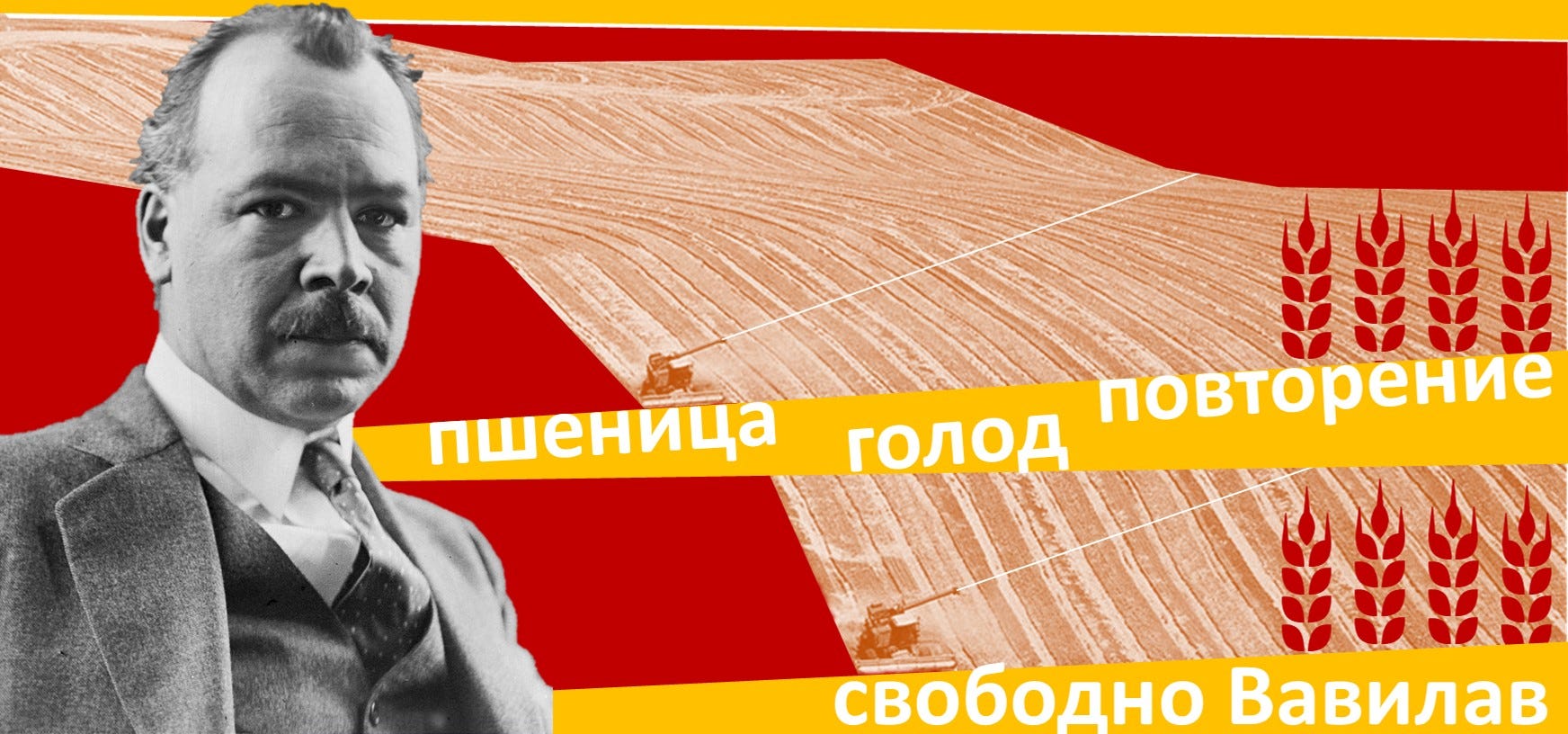
Hello Interactors,We’re staying in Russia this week because the United States sticks with Russia. At least they used to. And boy did they need it. The famines that have swept through that region over the years have taken the lives of tens of millions of people. Even though Russia was home to the world’s leading seed expert. But the U.S. was always there to bail them out. If the U.S. fell into a food crisis, would Russia return the favor?As interactors, you’re special individuals self-selected to be a part of an evolutionary journey. You’re also members of an attentive community so I welcome your participation.Please leave your comments below or email me directly.Now let’s go…SEEDS OF CHANGE YIELDS DEEDS OF THE DERANGEDJoseph Stalin liked Trofim Lysenko. He grew up poor far away from Moscow just like him. Stalin was from Georgia and Lysenko Ukraine. Both identified as proletariats. They despised the bourgeoisie imperialistic West. Including highly educated and trained scientists. Lysenko was a horticulturist, studied agricultural, and then worked in the department of physiology at the Ukrainian Genetics Laboratory. But he wasn’t like other scientists. He devised his own homegrown, unproven experiments. He invented theories with pseudo-scientific names like “jarovization” or “vernalization” from Latin’s ‘vernum’ or spring. His claims became known as “Lysenkoism.” Other Russian scientists looked the other way. Russia’s most respected biologist, geneticist, and geographer, Nikolai Vavilov, thought Stalin’s new friend was a crackpot. It wouldn’t end well.Lysenko got lucky with ‘vernalization’. He tricked wheat seeds into blooming early by treating them with moisture in cold temperatures as a way to produce yields in the spring. The trick had already been performed by American John Hancock Klippart in 1857, but Lysenko gave it a name. He also believed the deceived seeds from these plants would magically inherit the ability to do the same on their own. His theory ran counter to empirical evidence and to the knowledge and experience of Vavilov. Vavilov worried Lysenko’s tricks, unproven theories, and over promises to Stalin and the Soviet government could lead to catastrophic errors and the worsening of the routine famines Russia was trying to escape.But Stalin embraced Lysenko’s folksy and unorthodox ways. He believed in his salt-of-the-earth intuition and grew suspicious of the world-renowned and respected science of Nikolai Vavilov. Vavilov was the winner of the Lenin Prize, one of the most prestigious awards in science, and was respected worldwide. He traveled the globe successfully identifying the geographic genetic origins of cultivated plants. He guest-lectured and rubbed elbows with those Western imperialists Stalin despised. Vavilov also spoke poorly of the former Ukrainian peasant come pseudo-scientist Stalin had grown fond of.In 1936 Stalin replaced Vavilov with Lysenko as the head of the Soviet Academy of Agriculture. Six years later, in 1941, Stalin sentenced Vavilov to execution on claims he was trying sabotage Stalin’s agricultural plans. His sentence was then reduced to a prison term. Vavilov, who grew up fearful of starvation in a village prone to crop failures and food rationing – a scientist who dedicated his life to eradicating famine – died in prison in 1943 of starvation. Famines had been ravishing Russia for a century already. The large-scale farm practices of today started in the nineteenth and twentieth centuries. But missteps led to widespread famine, displacement, and environmental damage. Technological advancements allowed expansive grasslands to be converted to cropland around the world, including Russia, Australia, Argentina, South Africa, Canada, and the United States. An explosion of European immigrants to the United States in the mid 1800s, together with The Homestead Act of 1862, pushed immigrants into prairies to the West and North. Some ventured into Canada. The Civil War ended in 1865 and four years later the Transcontinental Railroad was completed. Both increased the number of agrarian colonizers to the Great Plains.But the climatic patterns in these areas played a role in the evolution of these plains. The grasslands are arid with periods of intense rainfall followed by drought. Settlers could be deceived into believing these rainfalls were routine only to witness periods of extreme drought. Farmers in the 1870s and 1880s witnessed regular rainfall only to see it disappear in the 1890s. Instead of consulting with Indigenous farmers on how they farmed the land for millennia, the colonists instead expanded area croplands and intensity to make up for short yields. Some used the land to graze cattle leading to even more elimination of the natural grasses needed to nourish and sustain the soil. The U.S. government accelerated farm expansion by altering the Homestead Act to include larger plots of land. The rain returned in the 1920s which attracted another wave of farmers. Farmland
Freedom Fries and the Big Mac Attack
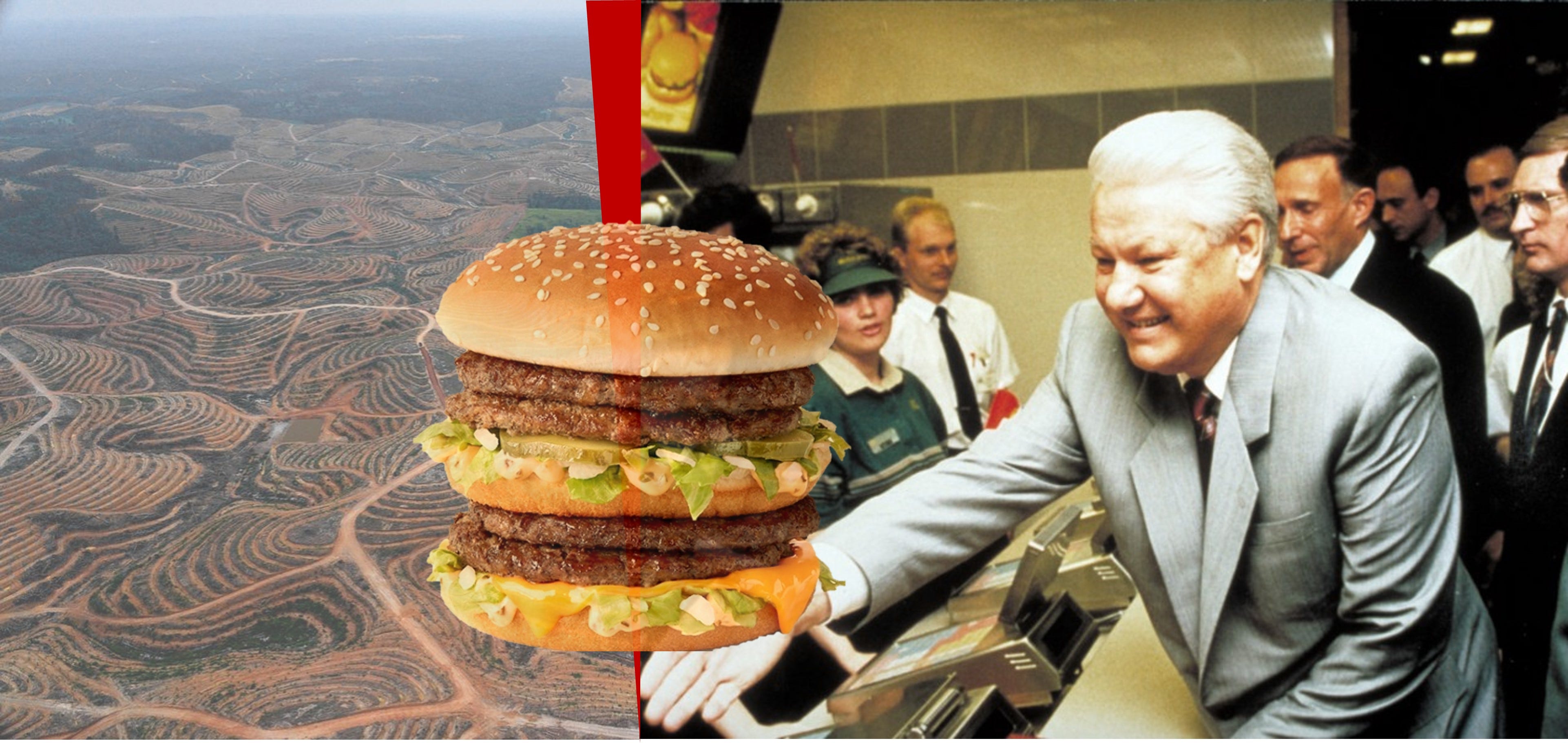
Hello Interactors,This episode kicks off the summer season on the environment and our interactions with it and through it. I’m starting with food. Food is a big topic that impacts us all, albeit in uneven ways. It got me wondering about the global food system and how it’s controlled. Who are the winners and who are the losers? And why is there competition for nourishment in first place?As interactors, you’re special individuals self-selected to be a part of an evolutionary journey. You’re also members of an attentive community so I welcome your participation.Please leave your comments below or email me directly.Now let’s go…АТАКА БОЛЬШОГО МАКА (ATAKA BOL'SHOGO MAKA)Верните Биг Мак! Срочно верните Биг Мак. Мы требуем этого прямо сейчас. Прямо сейчас. Прямо здесь. Биг Мак!(Vernite Big Mak! Srochno vernite Big Mak. Moy trebuyem etogo pryamo seychas. Pryamo seychas. Pryamo zdes'. Big Mak!)“Bring back the Big Mac! Bring back the Big Mac. We demand it right now. Right now. Right here. Big Mac!” Holding a handwritten sign that read “Bring back the Big Mac” a protestor in Moscow took advantage of a press conference a couple weeks ago at the reopening of McDonalds under a new name. Albeit a bit tongue in cheek, he was demanding the return of one popular product not on the menu. The Big Mac name and special sauce are both copyright protected. But the new owner of the new McDonald’s, Alexander Govor – who was a Siberian McDonald’s franchise owner before buying the entire Russian chain – promised he’d find a suitable replacement for the Big Mac. As for a new name, I vote for Большая говядина (Bol'shaya Govyadina), Big Beef. Or given the new owners last name how about just Bol’shaya Gov – Big Gov.Govor claims he paid below market price for the world’s most recognized fast-food chain and he’s already slashed prices. McDonald’s priced the double cheeseburger at 160 rubles ($2.95) but it’s now 129 rubles ($2.38). The fish burger was 190 rubles ($3.50) and is now 169 rubles ($3.11). The composition of the burgers stays the same as does the equipment, but they did add pancakes, omelets, and scrambled eggs to the morning menu. However, the golden arches are gone, and the name has changed to Vkusno & tochka's (Delicious and that’s it or Delicious, full stop).After 32 years, that’s it for McDonald’s in Russia but it’s promised to remain delicious. Back in 1990 the American based company had to import all the ingredients to fulfill the promise of a true McDonald’s. It made for an expensive introduction of the American icon. French fries were a problem. The Russian potatoes were too small, so McDonalds had to import seeds to grow larger russet potatoes locally. Apples for the McDonald’s ‘apple pie’ had to come from Bulgaria. After three decades McDonald’s managed to source just about everything locally and ultimately employed 62,000 Russians throughout their operations. But those McDonald’s branded red, yellow, and blue uniforms have been replaced with just red ones. Judging from the lines and enthusiasm at the grand opening, I suspect the new MickeyD’s will continue to be popular…and delicious, full stop.McDonald’s was popular in Russia from the day it opened in 1990. The Berlin wall had come down, perestroika was nearing its peak, glasnost embraced a blend of socialism and traditional liberal economics that allowed more U.S. companies to enter the former Soviet Union. It was the age of exceedingly fast globalization. A year after McDonald’s showed up Microsoft offered a Russian version of DOS. Just as I was starting at Microsoft in 1992, localized versions of software were flying on floppy disks around the world. By 1996 localized versions of Windows and Office 95 were on a computer on every desk a new McDonald’s was being built every three days. 1996 was the first year McDonald’s made more revenue from outside the United States than within.And McDonald’s wasn’t just pushing their McMunchies on unsuspecting countries. Many were clamoring for their own MickyD’s. James Cantalupo, president of McDonald's International at time, said, “'I feel these countries want McDonald's as a symbol of something -- an economic maturity and that they are open to foreign investments. I don't think there is a country out there we haven't gotten inquiries from. I have a parade of ambassadors and trade representatives in here regularly to tell us about their country and why McDonald's would be good for the country.'”There were some who believed the proliferation of McDonald’s symbolized the spread of freedom and democracy. Thomas Friedman of the New York Times offered in 1996 a “Golden Arches Theory of Conflict Prevention -- which stipulates that when a country reaches a certain level of economic development, when it has a middle class big enough to support a McDonald's, it becomes a McDonald's country, and people in McDonald's countries don't like to fight wars; they like to wait in line for burgers.” There goes that theory. Though, Russians are sti

Another Great Transformation
Hello Interactors,Where, how, and when people work continues to shift. Meanwhile, scores of people are moving to urban regions in search of opportunities. Some of which are more accessible than others. It’s putting stresses on how cities plan, how we move, and what kinds of freedoms are afforded and to whom. But hidden in the complexities of societies are patterns of hope. As interactors, you’re special individuals self-selected to be a part of an evolutionary journey. You’re also members of an attentive community so I welcome your participation.Please leave your comments below or email me directly.Now let’s go…REMOTE CONTROLThe workplace will never be the same again. What it becomes won’t either. But don’t tell Elon Musk. He threw a temper tantrum last week accusing employees at Tesla of slacking off working from home. In a company-wide email he became the over-controlling parent and grounded everyone. He wrote, “Everyone at Tesla is required to spend a minimum of 40 hours in the office per week” and that they “must be where your actual colleagues are located, not some remote pseudo office.” He claimed had he not been on the factory floor “working alongside” his employees that Tesla would have “long ago gone bankrupt.” I’m sure every factory floor worker he has replaced by a robot might have something to say about that.Some work does require a physical presence. Teeth cleaning comes to mind. But there is something to coming together physically that is hard to replicate online. There are also many kinds of service jobs that require a physical presence, though some of those are getting replaced by robots. Last year, a Dallas restaurant turned to a Robot called Bella when they had trouble filling waiter jobs. The owner said, “They don’t complain and they’re happy to do it!” It even happily sings Happy Birthday.But even white-collar jobs require some together time. I heard one academic say he worked two years during COVID on a joint research project over Zoom. When the team finally came together physically, they accomplished more in a single day than they did in those two years. Every company from Tesla to Target are feeling the reverberations of pandemic induced workplace alterations. Even Microsoft, a company that has long envisioned the promise of hybrid-work, is struggling through a new rhythm and workplace model. Mandatory in-office strategies like Musk tried aren’t practical. Even senior leaders are choosing to move to remote locations. Meanwhile, some high-tech teams were already distributed around the world. Despite these trends, companies continue to build new office space. Cranes loom on the horizon all around Seattle. While some of these high-rises will be housing, much of it is office space. What will they do with all this space?I met a new friend last week who is trying to figure that out. She works as a product designer for a company headquartered in Rotterdam called MapIQ. They build software and services that allow companies to optimize the space they have. She’s been busy conducting research. She talks to employees, facility managers, IT departments, human resources, and corporate realtors who are struggling with a new workplace reality. She told me one of the most acute issues for facility managers is space utilization. These companies pay a lot of money to have attractive and effective workplaces. Seeing them empty is troubling financially but also psychologically. She said, “Employees are struggling to know when it is best to come to the office. They don't want to be the only one at home in a hybrid meeting and they don't want to be in an empty office either.”Facility managers are scrambling to find ways to make the most of what they have. She said one popular outcome is subletting workspace. But even subletters will only use it occasionally and sporadically. They use software and sensors to better manage who is using it, when, and for how long. This was not how these buildings were designed and not how these companies were envisioned to be run. MapIQ has identified five trends emerging in the workplace:* The office as standard. Most all employees work four or five days a week in the office.* Local hybrid. Most people work two or three days a week in the office.* Remote friendly. Most employees are in the office only once or twice a week.* Remote first. Working in the office is completely optional with no geographic requirement.* Fully distributed. There is no office at all and everyone works wherever they want.The nature of work in the foreseeable future is decidedly different than the past. It will take some time for optimizations to emerge. Meanwhile, how will this affect our built environment and how cities plan? Our roads, rails, wires, and spires, boulevards, buildings, drains and ditches were all planned and produced with a certain permanency and predictability that surrounds our economies, societies, and psychologies. These features of the physical and social landscape were assumed
Freedom To Choose or Rights Refused?
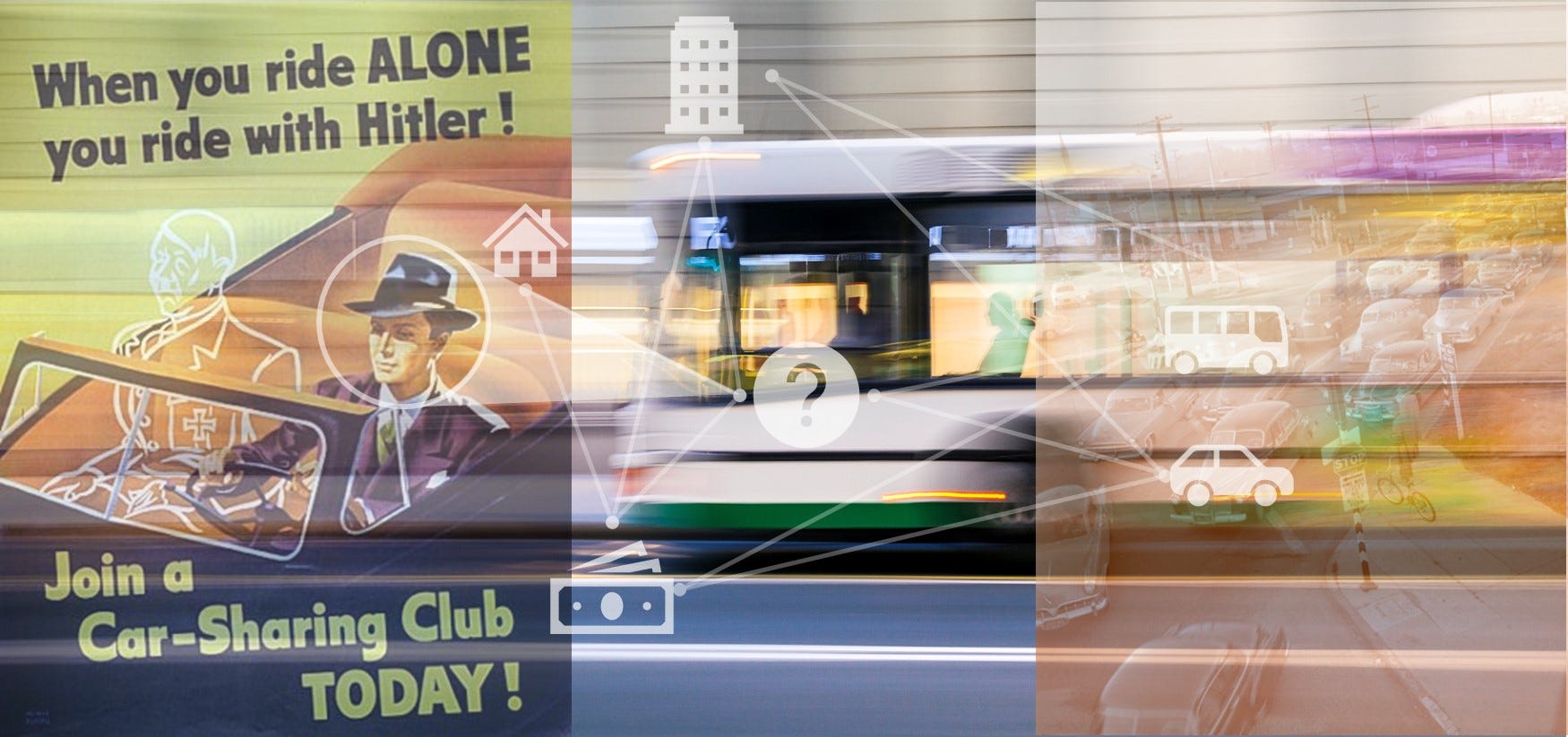
Hello Interactors,I ended up walking almost six miles in two days last week that included two trips by bus and light rail. I’m always surprised by the rich experience that comes with choosing to walk, bike, or bus. But it’s not always pleasant. A car is comfortable, quiet, and convenient but can be experientially anemic. I’m fortunate to have these choices. Not everyone does. And what choice they do have can be unfair and even dangerous. Is that the American way? As interactors, you’re special individuals self-selected to be a part of an evolutionary journey. You’re also members of an attentive community so I welcome your participation.Please leave your comments below or email me directly.Now let’s go…DO THESE ROADS MAKE ME LOOK FAT?She slammed on the brakes and my bag slid to the floor. My knees slammed against the seat leaning inches from my kneecaps. Just as I grabbed my bag, she floored it. Careening around the curved onramp I felt the gravitational pull suck my head tight against the window as I struggled to right myself. As she merged with flowing traffic on the freeway I saw her glance in the rearview mirror. She wore dark, reflective wrap-around sunglasses and a grimace. Teeth clinched, she pressed the accelerator to the floor. She was on a mission. And I was along for the ride.I generally cut bus drivers some slack. They don’t have it easy. These herky-jerky driving patterns are often due to the strict schedule they’re incented to keep. Frequency and ease of access to bus stops are two of the more effective ways to get people to use transit. For those who can’t afford a car, or are unable to drive, walking, biking, or bussing is the only real affordable alternative to getting around. There are some, like me, who own a car but sometimes choose to walk, bike, or bus. After all, America is the ‘land of the free’ where we freedom of choice.But those choices are not equitable. American cities and our countryside were planned by men who favored a single mode of transportation: cars. It seemed like a good idea at the time, but it quickly turned out to be good for some, bad for most, and worst for the environment and our health. Charlie Chaplan once said one of the ironies of life is doing the wrong thing at the right moment. America’s transportation history is riddled with irony.Cars and roads are not categorically bad. But too much of a good thing often is. Besides, not everyone can, should, or wants to own a car and yet the ‘Made in America’ landscape and economic structure dictates you must. If not, then you must suffer the inconveniences, inequalities, and risks that come with a lack of equitable choices. If you’ve ever visited or lived in a city or country with equitable, convenient, and comfortable transportation choices (I’m looking at you Switzerland) you can see the possibilities. It’s a choice. And America, the land of the free and home of the brave, is, ironically, afraid to choose freedom of choice when it comes to transportation.Which exposes another irony of American transportation. Those who most covet and defend their independence from society and the government – and thus choose to isolate themselves away from dense urban areas and in private vehicles – are thus dependent on the whole of society and the government to finance, design, build, and maintain their roads and vehicles. Both of which rely on government subsidies that make such choices economical in the first place. And in a final twist of the irony knife, most of the natural resources, parts, materials, and manufacturing come from socialistic governments they despise. And they’re made by ethnicities many of them fear, but are also granted more transportation choices than they are.America’s insistence on car ownership is in a sense, pardon the pun, autocratic. And given the amount of government subsidies flowing to the auto and fossil fuel industry, especially when they need bailing out, can make America look pretty socialistic. I just wish we could all get a return on those investments the government made to private companies using our public tax dollars.The truth is, we are all dependent on forms of socialism (i.e. economy, military, utilities, transportation, and communication) and capitalism (i.e. free markets, freedom to enlist, freedom to go off-grid, freedom to choose transportation, and freedom to choose a mobile carrier). They can, and do, coexist to varying degrees. But restricting the ability to viably and equitably move within and between our communities to a single choice feels like an impingement on freedom. And yet the number one symbol of American freedom, prosperity, and democracy around the world is the automobile. Car symbolism may be one of the biggest determining factors for America’s addiction to the autocracy of automobility.No sooner were the post World II freeways built were they filled with American made automobiles. Bucolic car-dependent suburbs filled with carbon consuming contraptions purchased by affl
Iowa's Gray Blob Eats Corn on the Cob
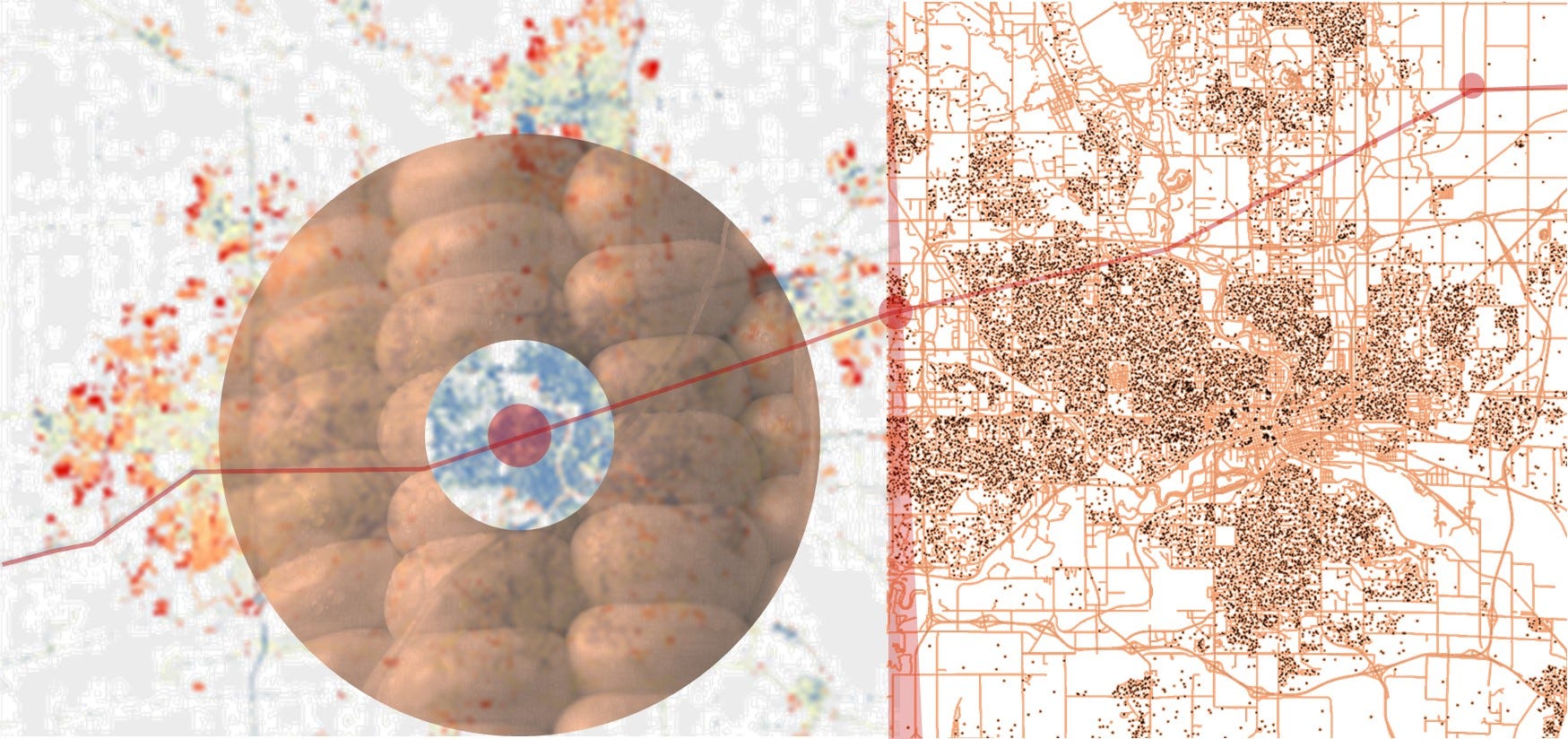
Hello Interactors, There’s but a short window of time When the dirt is in its prime Not too cold or wet Or the seeds will not set Last week the fields were lakes This week the soil bakes Gone is the mud and grime So into the tractors they all climbIt’s time to get those seeds in the ground! If you have the space. The state of Iowa, where I grew up, has this as their slogan: ‘A Place to Grow’. But those places are being displaced by homes at a record pace.As interactors, you’re special individuals self-selected to be a part of an evolutionary journey. You’re also members of an attentive community so I welcome your participation.Please leave your comments below or email me directly.Now let’s go…GROW BABY GROWWe bought our first corn on the cob this week. It’s from California. Growing up in Iowa we didn’t see corn until late summer. To get corn stalks to be ‘knee high by the fourth of July’ meant getting the seeds in the ground by the end of May. That’s now. Iowa farmers have been stressed out these last couple weeks. The planting window was closing fast and the state was getting unseasonable rain and cold temperatures. Ten days ago one farmer in northeast Iowa said he could ride his boat across his fields.Such is the life of a farmer. But the weather turned in their favor this week. They’ve been busy. On May 23rd the USDA reported 86% of Iowa’s corn crop had been planted and 47% of seeds planted earlier are already sprouting. But corn, soybeans, and oats are all behind schedule. Let’s hope the wacky weather patterns don’t wreak havoc on these weathered wonder-workers. I like my corn tortillas, tofu, and oat milk. Though, most Iowa grains and soybeans are fed to livestock, not people.And we know people like their burgers and bacon. Increased commodity prices are the number one reason some farmers give for why farmland value in Iowa is through the roof. Last year a farmer in Eastern Iowa’s Johnson County made headlines when he sold 40 acres of two 80-acre tracts for $26,000 per acre. That’s over $2,000,000 for 40 acres (the equivalent of 20 soccer fields).But that pricey southern most 40 acres is comprised of Klinger soil – a claylike sandy substrate formed by glacier tills. This soil is perfect for the native prairie grass but crops struggle. So this opportunistic farmer decided to plant a more profitable crop that has no agricultural value at all. Houses. He sold the worst soil for the most money to a developer who is expanding the sprawl of a nearby small town city called Swisher; population 914. It’s a 15 minute drive south of Iowa’s second largest city, Cedar Rapids.The conversion of farmland into housing developments is a common sight across Iowa. The U.S. Department of Agriculture (USDA) does an agricultural census every five years and the last one was done in 2017. The 2022 version is due later this year. From 2012 to 2017 Iowa lost 2,533 farms. That leaves 86,104 farms remaining. There were over 10,000 more farms in 1997 and nearly 20,000 more when I left Iowa in 1984. The amount of land dedicated to farming shrank by 59,000 acres.Much of this reduction is from consolidation. The number of large farms (>2000 acres) grew 15% to 1,892 over five years. By comparison, there were barely 300 large farms in 1987. From 2012 to 2017 large farms had gobbled 10% of up mid-sized farms (500-999 acres). Small farms (fewer than 9 acres) grew 36% to 9,120. That’s a big jump in five years, but only 1000 more than 30 years ago.These figures from the USDA tell the story of farmland consolidation across Iowa since the 1980s. But to get a picture of how farmland sold to developers contributes to the sprawl of urban areas, more and more researchers are turning to satellite imagery. In 2018 two researchers from Iowa State University were lead authors on a paper demonstrating novel image processing techniques for mapping the dynamics of urban growth. They took a series of satellite images from 1985 to 2015 of a region encompassing the Des Moines Metropolitan Area. They then trained software to differentiate between the natural and built environment by looking at the color of the pixels in the images. Pixels turning from looking ‘natural’ to looking ‘urban’ over time revealed a growing gray blob of concrete known as urban sprawl.They found, with 90% accuracy, that the Des Moines Metropolitan Area urban boundary more than doubled between 1985 and 2015. Over those thirty years the area grew linearly from 58 square miles in 1985 to just over 135 square miles in 2015. Most of which, of course, was farmland. At this growth rate, it will continue to double again every 30 years.Area growth like this is usually the result of an increasing population. The Des Moines Metropolitan Area is no exception. From 2010 to 2020, the population in this area grew 17% from 606,465 to 709,466. You might imagine the city of Des Moines being at the heart of this growth given it’s the center of the metropolitan area, but you’d be wrong. Of the top ten
Bike Everywhere...If You Dare
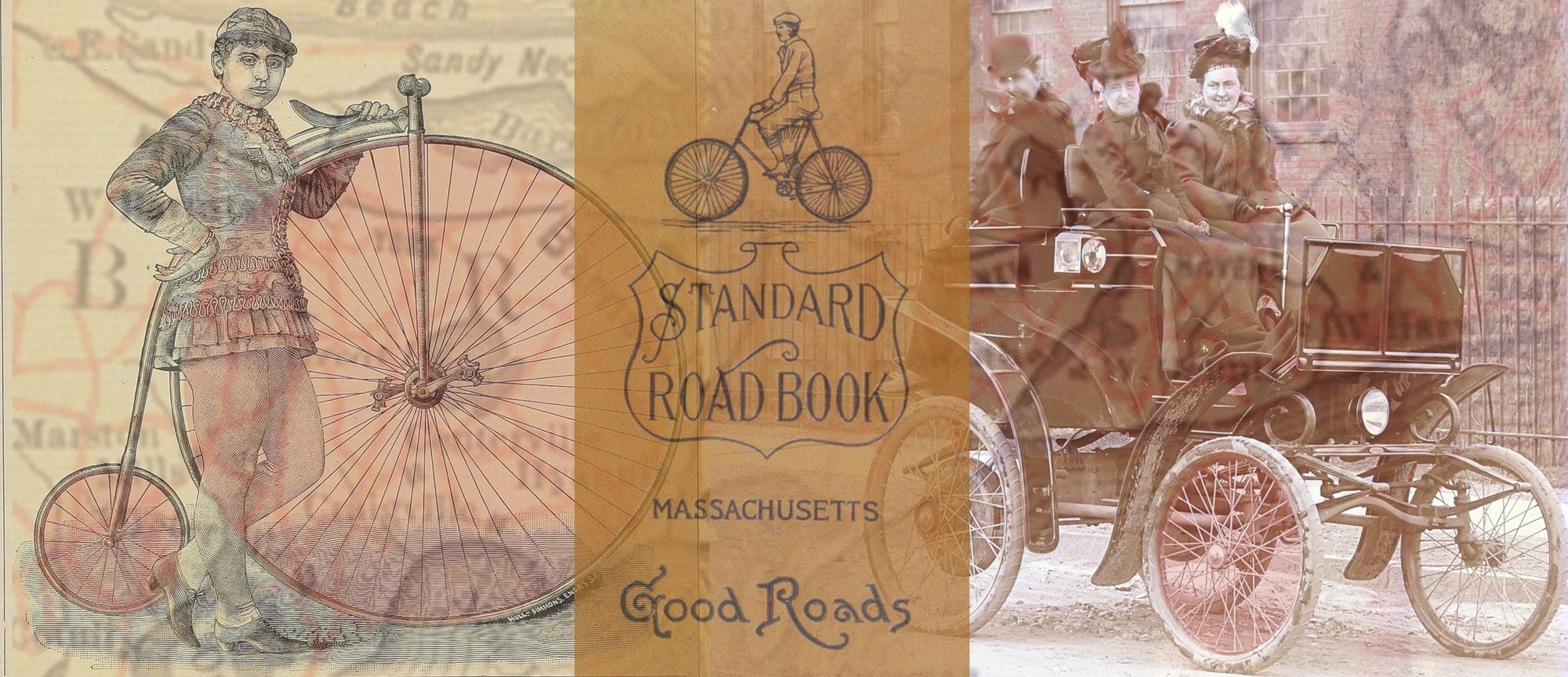
Hello Interactors,Most people think roads were planned, designed, and built for cars, but that’s not true. They’re public spaces intended to bring social and economic benefit by increasing mobility. Economically they’re successful, but socially they not only are failing us…they’re killing us.As interactors, you’re special individuals self-selected to be a part of an evolutionary journey. You’re also members of an attentive community so I welcome your participation.Please leave your comments below or email me directly.Now let’s go…WALKING AND BIKING TO DEATHToday is “Bike Everywhere Day” in the Seattle area. Once known as “Bike to Work Day”, it would typically inspire an estimated 20,000 people to grease the chain, pump up the tires, strap on the helmet, and tepidly merge into the smooth, rolling polluted river of concrete nestling up alongside menacing machines of masculinity hastily rushing to work. Commuting patterns have been disrupted by Covid the last couple years. But with the League of American Bicyclists declaring May as “Bike Everywhere Month” commuting to and from work isn’t the only reason to slide onto the saddle. If you dare to do so.According to the CDC, “bicycle trips make up only 1% of all trips in the United States. However, bicyclists account for over 2% of people who die in a crash involving a motor vehicle on our nation’s roads.” It’s important to note the CDC use the human-centered word ‘bicyclist’ to describe the victim but an object-oriented word ‘motor vehicle’ to describe the killer. It’s not the motor vehicle’s fault these people died, it’s the fault of motorists. As gun enthusiasts like to remind us, ‘guns don’t kill people, people do.’ The same is true for cars and both machines can be violent killers. The CDC report “Nearly 1,000 bicyclists dying and over 130,000 injured in crashes that occur on roads in the United States every year.” But that’s only those reported. Most cyclists, especially in disadvantaged communities, don’t bother reporting crashes. And not all police nor hospitals report or rate car-related bike and pedestrian injuries consistently…if at all. And different sources report different numbers.The Consumer Product Safety Commission reports “425,910 emergency department-treated injuries associated with bicycles and bicycle accessories in 2020.” The National Highway Traffic Safety Administrations reports “932 bicyclists were killed in motor-vehicle traffic crashes in 2020, an 8.9% increase from 856 in 2019.” The U.S. Department of Transportation announced this week that 43,000 people died on roadways in 2021 – the highest since tracking began in 1975.That’s a 10% percent increase over 2020. Pedestrian fatalities were up 13% and bicycle fatalities were up 5%. They note that during Covid speeding offenses climbed causing a 17% increase in speed-related fatalities between 2019 and 2020 and a 5% increase prior to 2019. It’s unclear how speed factors in the increase in pedestrian and bicyclist deaths during this time, but there is no denying that speed kills.The Transport Research Laboratory out of the UK compared multiple datasets of ‘pedestrians killed’ by the ‘front of a car’ (again comparing people to an object) to better understand the relationship between speed and risk of fatal injury to pedestrians. They concluded “The risk increases slowly until impact speeds of around 30 mph. Above this speed, risk increases rapidly – the increase is between 3.5 and 5.5 times from 30 mph to 40 mph.” This applies to cyclists as well. Choosing to bike on roads in America comes with a risk of dying that is nearly five times greater than choosing to drive a car. And the odds of dying in a car accident are already relatively high – 1 in 101 – the eighth largest risk just behind suicide and opioids in 2020.The ugly truth is the ongoing and rising deaths and injuries to cyclists and pedestrians at the hands of motorists is a seemingly necessary cost to uphold the freedom, comfort, and convenience of automobility that many enjoy. Our political and public administrative services care about saving lives, but evidently not if it means changing road designs, land-use policies, travel patterns, restricting access to some roads, or – heaven forbid – creating viable ways to ditch the car should you choose.But this country did once care about saving lives on the road. As the post-WWII boom in cars and roads continued to balloon so did car-related deaths. Federal, state, and local governments rallied to make cars and roads safe for motorists. The same is true for new bikes purchased for baby boomers. When kids were getting injured and killed on their bikes in the 60s and 70s due to poor design and construction, consumer protection agencies cracked down on manufacturers and the federal government almost made it illegal to bike on the street.It was a bike enthusiast out of Davis, California, John Forester, who fought for a cyclist’s right to use public roads. But as a confident cyclist, and self
City Maps and Scaling Math
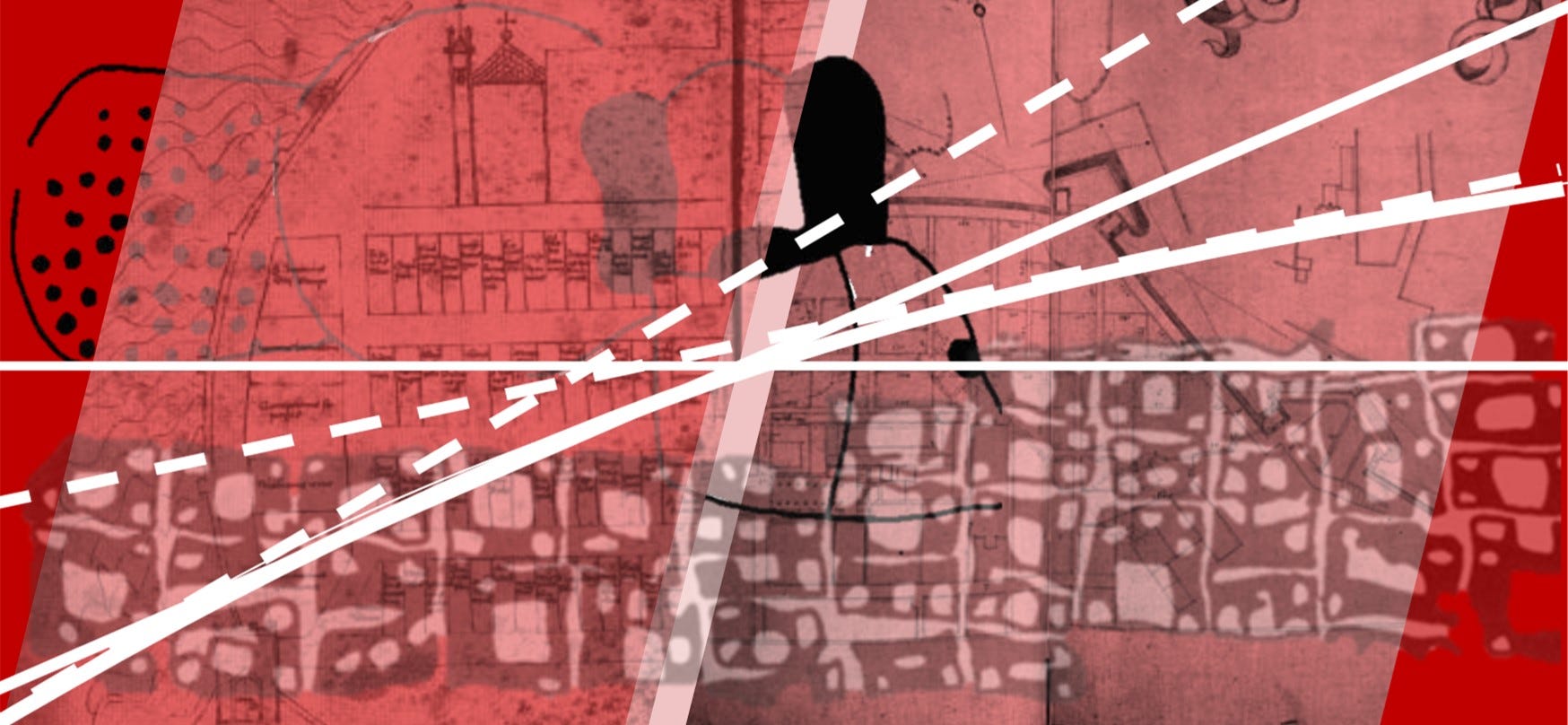
Hello Interactors,Cities are sprawling, the climate crisis is appalling, left and right are brawling, and politicians are stalling — leaving many in a corner bawling. It’s enough to lead some star-gazing billionaires to want to colonize space. But we planned for this with cunningly precise maps. Have we always been this dim? The evidence suggests yes and no, opinions vary on why, but scaling laws offer clues on calculating a plan. As interactors, you’re special individuals self-selected to be a part of an evolutionary journey. You’re also members of an attentive community so I welcome your participation.Please leave your comments below or email me directly.Now let’s go…GET ME OUT OF HEREI am not a happy camper. I’m only really a happy camper when I’m far away from other campers – whether they are happy or not. It’s been awhile since I’ve camped, but I prefer solitude when seeking solitude. But as regional populations grow and more people are also seeking solitude, it’s harder and harder to ‘get away from it all.’Car-camping definitely doesn’t do it for me. Especially now that most everyone has a phone blasting music through a Bluetooth speaker. I’ve seen some campers with solar panels, a satellite dish, and a TV blasting the news or sports. As night falls, and the alcohol comes out, I imagine I’d be laying there wondering where the nearest hotel is. And as the sun rises the kids start crying, hangry parents begin yelling, and cars fire up as people start heading out…presumably to get some rest.I admit it’s more fun when you’re with a bigger crowd of family or friends. The revelry is more tolerable when it’s coming from within your circle. Sure that one uncle may be a bit obscene, but he’s family. These kids running around may seem obnoxious, but weren’t we all? I can imagine indignantly brushing off our loudness with, “at least we’re laughing.”I remember as a kid growing up in Iowa camping with a friend and his family in their spacious camper-trailer. They had been doing it years and had made friends with other camper-trailer families. They’d roam together from campsite to campsite over the camping season. On the first night, around dinner time, I remember being handed a wooden spoon and sauce pan. My friend’s dad looked at me holding a skillet in one hand and a hefty metal BBQ spatula in the other, and said, “Just follow me.”He stepped out of the trailer and started banging the spatula against the skillet. I followed along with the rest of the family playfully pounding my pot. It was then I realized we were being subsumed by a cacophonous cavalcade of culinary clanging campers. As we descended upon the campsite of an unsuspecting family, I realized I was participating in some kind of tribal ritual. It turned out this was their first night camping in their shiny new trailer; another member of the tribe, initiated. After everyone retreated back to their campers for a proper use of utensils, we regathered again; but this time around a common fire. We shared and prepared ingredients for another North American tribal ritual – S’mores.The desire to come together around a campfire in the great outdoors is as old as Homo sapians. The welcoming ritual I participated in signaled cooperation; it acknowledged a trust between people who were not blood related. It’s an interaction of people and place that consecrates a common bond that is strong enough to incent people to repeat this ritual of cohabitating, and sometimes confabulating, around a fire.These people share common ideals, backgrounds, desires, and sometimes even food. But for our prehistoric hunter-gather ancestors, the gathering and sharing of food was the top priority. The concentration of other families and tribes in a common space evolved to be a worthwhile endeavor. Close proximity with cooperative individuals resulted in sharing knowledge. Locals could offer advice on growing or gathering edibles and how best to hunt animals. (or assemble S’mores)Labor could be divided, exchanges could be made, and rich – though often simple and informal – socio-economic systems could flourish amidst the interaction of people and place. Soon bonds are formed, breeding between families occurs, and the circle grows. Evolution rewarded this agglomeration of people and commiserate growth of a concentric area of shared space. It formed the basis of permanent human settlements, so long as balances were struck.Over-crowded campsites, like contemporary cities, can be annoying. People are loud, some are rude, violent or selfish, and others steal – and anyone can spread illness and disease. Conflict is inevitable. Eventually, individuals and small groups decide to break away from it all. They set out to make temporary camps far away from concentrated populations of people. They may roam and hunt and gather for themselves making temporary settlements along the way. Sometimes they’d form their own settlements, while other times remain mobile. Evidence of this exists around the glob
Creepy Creeps Down Suburban Streets
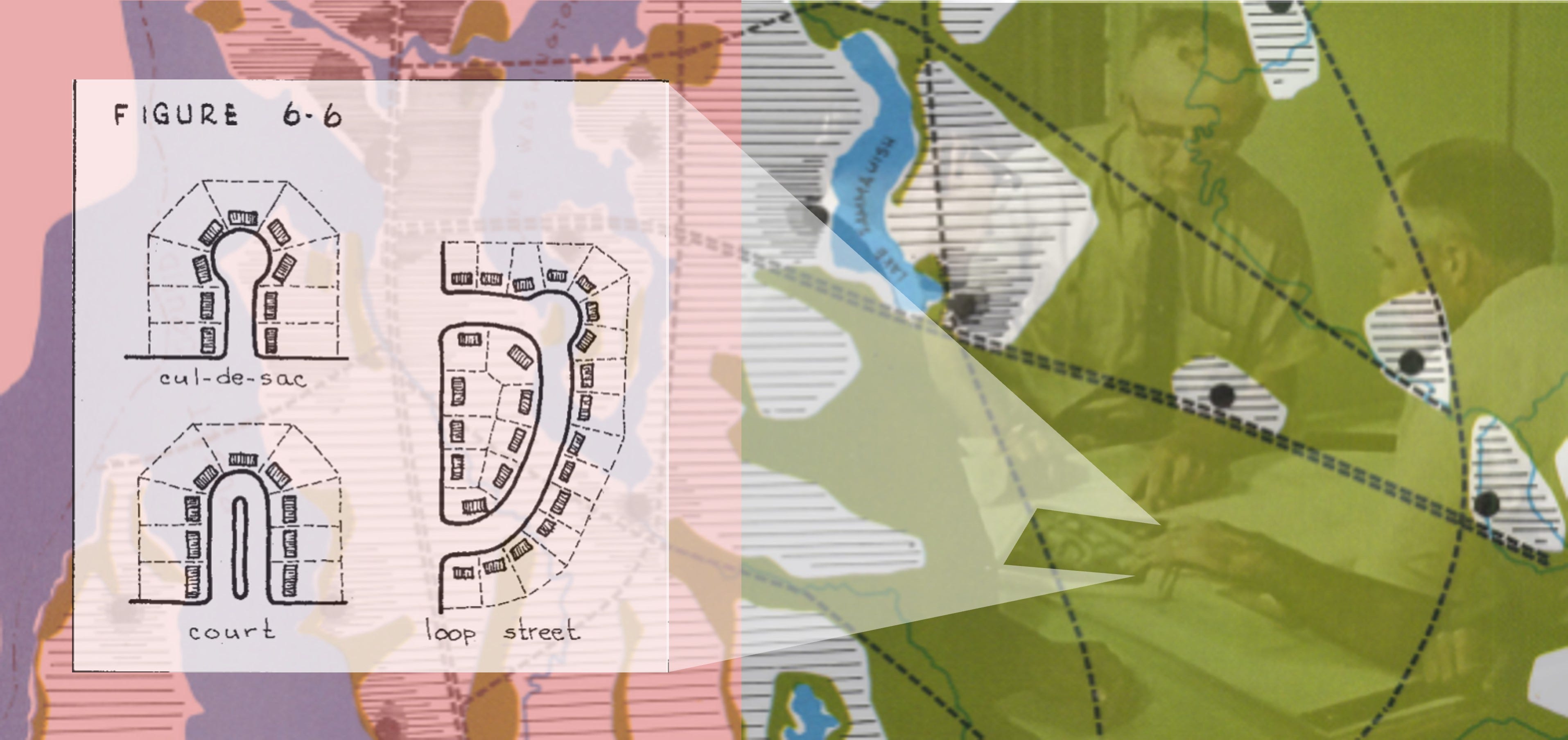
Hello Interactors,Do you ever walk through a neighborhood and wonder where all the people are? It happened to me last weekend. What’s worse, it was a 1960s planned development that reminded me of the suburb where I grew up. I don’t remember the streets being this quiet, but maybe these planned communities were meant to be this way. Or maybe we’ve changed. Or both.As interactors, you’re special individuals self-selected to be a part of an evolutionary journey. You’re also members of an attentive community so I welcome your participation.Please leave your comments below or email me directly.Now let’s go…A DASH TOWARD THE PASTThere it sat in the driveway, a brawny black pickup truck with an NRA sticker in the rear window and TRUMP plastered on the bumper. The protruding chrome tailpipe was gaping wide. Black exhaust dust clung to its edges. Three late-model cars were parked askew in the front lawn. Two doors down and across the street I saw a pride flag hanging next to a Black Lives Matters sign that read, “WHITE SILENCE IS WHITE VIOLENCE.” I passed more houses and heard a barking dog approaching angrily. It ran alongside a taco truck parked in a driveway with the name of a Mexican restaurant painted on the side. Two other cars were in the driveway and one in the lawn behind a chain-link fence that restrain the dog. I had walked nearly an hour in this suburban neighborhood and had yet to see a single human being.I was at my son’s track meet last Saturday in a town near Tacoma called Federal Way. I had some time to kill so I decided to take a walk. I picked a green patch on Google Maps that appeared to go down to the water and headed off to explore. The sidewalk from the High School ended 50 feet from the parking lot and I never saw another. The streets were quiet in this 1960’s neighborhood scattered with single story ranch-style homes intermixed with two-story split-level boxes.Melancholy reflected off of these beige, white, and brown painted homes. They all featured a yard, a driveway, assorted overgrown shrubs and a tree or two. These homes are identical to the homes I would run in and out of as a kid in small town suburban Iowa. They were all built as part of the post-war building boom during America’s economic heyday when ordinary, mostly White, middle class folks could buy into the American Dream.This housing development was built to accommodate a booming population drawn to jobs at the Tacoma Port, nearby Boeing factories, lumber yards, and paper mills. As the 1964 King County Comprehensive Plan states,“…certain areas in King County, such as Federal Way, will have a population boom partially due to the employment opportunities that exist or are contemplated in the Tacoma area.”Development was happening so fast that in 1958 the State of Washington purchased a 300-acre swath of land at nearby Dash Point for $185,000 to make it a state park. That’s $1.7 million in 2022 dollars and about what you’d pay for a single home near Dash Point today. Indigenous people lived on these shores before being displaced to a nearby reservation as part of the 1854 Treaty of Medicine Creek. The Puyallup people are still fighting for access to surrounding private land to fish; their lawful right as written in the treaty. Most, if not all, treaties fail to honor Indigenous notions of shared use of land and resources that fly in the face of more self-centered and guarded Western ideals and philosophies of individual property ownership and rights.The state’s 1958 purchase of the Dash Point property was from a company aptly named the “Modern Home Builders.” That same year natural gas pipelines were laid and fire hydrants were getting installed every 600 feet. In 1959 a sewer plan was revised to keep up with the rapid development.In 1960 a 600-acre “Residential Park” began showing their 650 homes to buyers – many of whom were likely war veterans who were enjoying cheap government subsidized mortgages. Churches were being erected, bowling alleys were being laid, and ‘American Concrete’ had their grand opening featuring “Free Washed Sand for the Kiddies.”This Federal Way neighborhood I was walking in wasn’t the only one going through this transformation in the 1950s and 60s. It was happening across the country. I grew up in one and benefited from it. It was easy for me to imagine these homes as brand new. I could close my eyes and smell fresh white American concrete, I could see kids riding their bikes, new cars pulling into the driveways, and smoke rising from the backyard barbeques. Life was good.By 1966, when most of this neighborhood I was walking through was built, the U.S. stock market had peaked. Nobody would have believed it then, but this marked the beginning of a long slow economic decline. The stagflation of the 1970s and the area’s shift toward software in the 1980s and 90s froze much of Federal Way in the past. Beginning in 1990 with the Washington Growth Management Act suburban sprawl was curbed, then much of Boeing le
The Synaptic Map of the Cartesian Trap
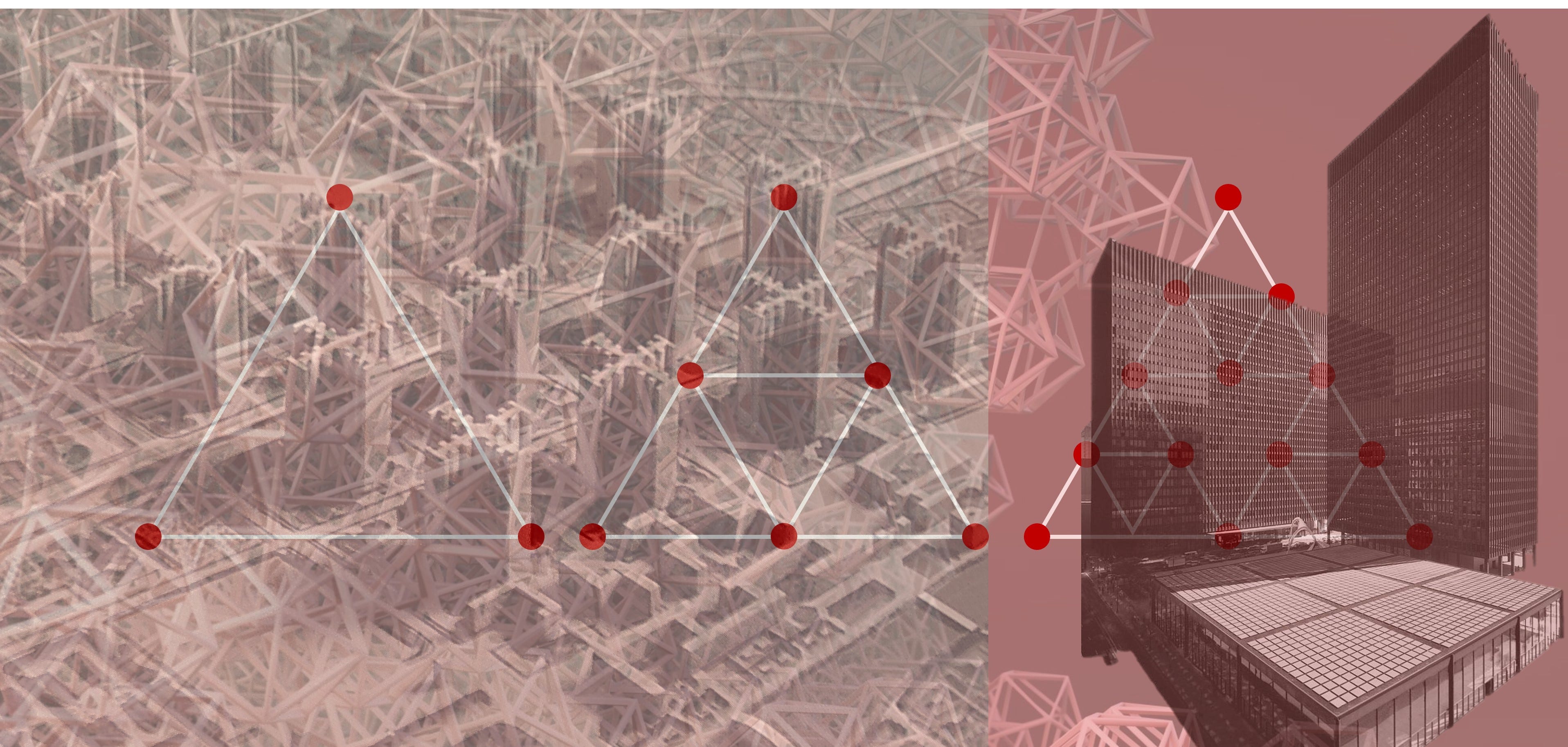
Hello Interactors,Beauty may be in eye of the beholder, but it’s also in the brain. We all seem to be drawn to balance, order, and predictable patterns which rulers, T-squares, protractors, and compasses have readily provided. It’s the stuff maps are made of. They’ve brought progress and good fortune to many over the centuries, but have they also lead to our decay?As interactors, you’re special individuals self-selected to be a part of an evolutionary journey. You’re also members of an attentive community so I welcome your participation.Please leave your comments below or email me directly.Now let’s go…HIGH FASHIONI can’t deny it. I’m a sucker for grids. I’m drawn to music, art, and designs that are balanced, orderly, and intelligible. Give me a ruler, a protractor, a compass, and a pencil and I’d happily make art and designs all day. Growing up I’d handcraft lettering on cards using my Dad’s plastic flowchart stencils. What can I say, I’m a product of modernity. A neat and tidy aesthete.But that attraction was called into question last week as I was watching The Hobbit. The movie’s protagonist, Bilbo Baggins, lives in an organically shaped earthen home carved into the side of hill. There’s not a Cartesian grid or plane anywhere to be found. Every wall is curved as if bored into the hillside by a giant gopher. I was so smitten that I murmured out loud to my family, “I could definitely live in that house.” Has my planar proclivity passed me by, or has the curving complexity of nature caught my eye?Neuroscience has uncovered evidence that we humans, perhaps other animals as well, tend ‘like’ and/or ‘want’ aesthetic order and balance. Evidence of elements in oddities ordered by humans abounds in centuries of found paintings, carvings, jewelry, and even cities.But firm empirical conclusions of this gray-matter matter remain elusive. Although, neuroscientists do agree on one thing: there is no single ‘beauty center’ in our brain. When hooked up to brain imaging machines, scientists observe “activity in the frontal pole, left dorsolateral cortex, anterior cingulate cortex, temporal pole, motor cortex, parietal cortex, ventral stratum, and occipital cortex, among others.” And there is ongoing work trying to tease out the order in which these activities unfold betwixt the vast network of synapsis in a brain containing as many neurons as stars in the Milky Way. A task seemingly more complex than the identification of the regions themselves.If aesthetically pleasing ordered intelligibility is indeed a universal mammalian trait, getting to that cognitive state is complex – understanding it even more so. Some scientists believe another reason concrete evidence is elusive is because the visual stimuli used across studies varies considerably.Designing and administering cognitive research requires rationalizing inputs across studies to achieve more predictable outcomes. This ‘streamlining’ of the scientific method is not only applied to studies, but to the design and manufacturing of products, and the planning, mapping, and administration of our neighborhoods, cities, regions, and states.Political scientist and legal anthropologist James C. Scott once alluded to the similarities between designing observational studies and the design of our modern urban environments writing,“The builders of the modern nation-state do not merely describe, observe, and map; they strive to shape a people and landscape that will fit their techniques of observation.”Scott’s 1998 book, Seeing Like a State, is critical of what he calls High Modernism which is an over-reliance on Cartesian principles, the scientific method, and unfaltering faith in technology. While he admits these advances improved – and continue to improve – the human condition, he believes blind adherence to these aesthetic, bureaucratic, and technocratic principles may have also put us on a path toward what we now see as potential human extinction.The list of ‘High Modernists’ in art, science, design, and politics is long, but Scott created a “Hall of Fame” of geo-political modernists like former U.S. Secretary of Defense and Cold War strategist Robert McNamara known for his ‘scientific management’ style, New York commissioner-cum-urban planner and power broker Robert Moses, founding head of Soviet Russia and dictator of the proletariat Vladimir Lenin, the Shah-of-Iran who sought to modernize and nationalize his entire country and industry, and the influential architect and urban designer Le Corbusier who advocated for standardized inhumane design and erasure of historical and cultural tradition – especially in the aftermath of war.Scott’s full list includes people of not any one political persuasion. He reveals how both conservatives and progressives are capable of “sweeping, rational engineering of all aspects of social life in order to improve the human condition.” He notes they all use “unrestrained use of the power of the modern state as an instrument for achieving these
Dynamic Cartography
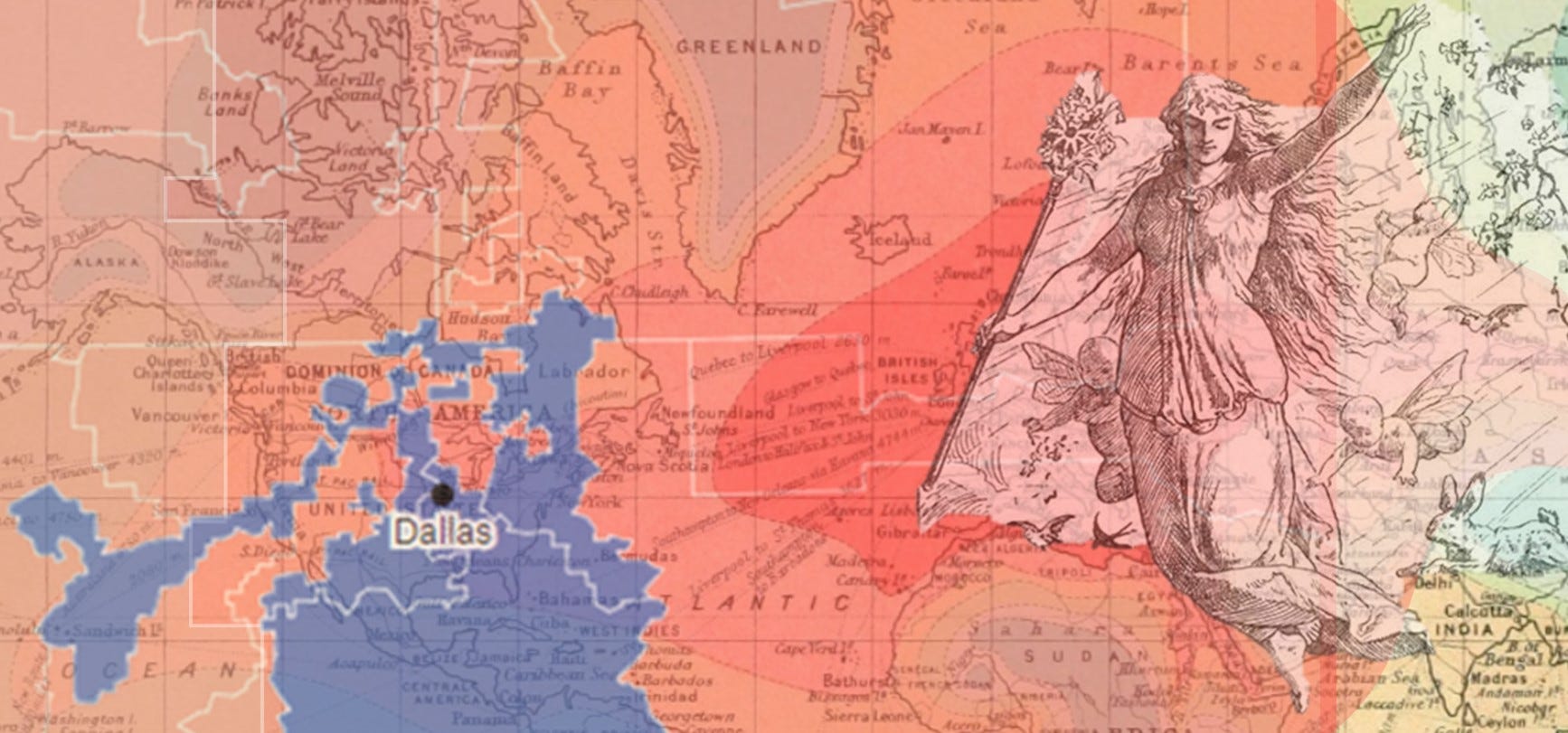
Hello Interactors,Last Sunday I ‘rabbit-holed’ on the origins of Easter. That led me to Passover, and then Ramadan. The origin stories all involve the movement of people, or their ephemeral equivalents, through space over time. And they all share a ‘common interest’ in one of the most ancient cities on the map — Jerusalem. Is there a map for that?As interactors, you’re special individuals self-selected to be a part of an evolutionary journey. You’re also members of an attentive community so I welcome your participation.Please leave your comments below or email me directly.Now let’s go…MAPPED OUTSpring has sprung, Easter Pass(ed)over, and Ramadan lingers on. Last week Christians celebrated the rising of their messiah from a tomb, Jewish people celebrated the exodus of their people from slavery, and Muslims continued to gather, contemplate, and fast. It’s rare these three holidays occur at once. The Islamic calendar of 354 lunar days cycles with the moon through the 365 solar days of the Christian calendar allowing the these three religious holidays to coexist every three decades.The histories of these religious traditions are all rooted in the interactions of people and place. Ramadan celebrates the night the Quran was passed down from above, Easter stems from the Germanic goddess Ēostre who rises to coax the sun to return, and Passover is from the Hebrew word pasha meaning “he passed over” commemorating the angel of death passing over them.People pass over terrain every day around the world. As Ēostre rises the sun warms the earth and people begin agitating, moving, traversing, and colliding like molecules being heated by the sun’s radiation. As the earth rotates waves of interactions between people and place rise and fall with the sun, rolling across the earth’s surface in perpetual motion.And yet our maps sit still. They are static moments of effervescent daily life frozen in time. Google Street View offers snapshots of people living their lives; unforgiving they strive, pixels blurring their eyes. But our world is anything but static. And yet our lives depend on fixed representations of us and all that surrounds. Take electoral district maps as an example. Every ten years, when the U.S. census is taken, the federal and state governments are required to reapportion the number of seats in the U.S. House of Representatives and State Legislatures to match the current population. Accordingly, they’re also required to map numerically equal districts in the spirit of neutrality in a process called redistricting. Here’s an interactive redistricting map from FiveThirtyEight.It is seemingly impossible to be impartial in the remapping of these districts. Various subgroups of the general population are advantaged while others lose out. The system tends to bias regions with economic vitality because they typically attract the most people. Those people most advantaged economically are also those who are most mobile. Those less mobile tend to be more economically disadvantaged and are usually low-income, minorities, less educated, and skilled laborers in declining industries and geographies.The rich get richer, the poorer get poorer. Those who are mobile, move; and those stuck, are out of luck. One piece of research from 2019 by two political geographers reveals that “that districts with the fastest rate of growth have a higher level of affluence.” This means the ‘winners’ will gain house seats while the ‘losers’ lose seats. Their research looks at the 89 U.S. House seats that have shifted due to redistricting since 1960. Their results shows that,“Rewarding population growth means rewarding certain interests that produced it, the converse is true for punishing population loss. This is an underappreciated point among the many who think that a population basis for apportionment is problem-free and self-evidently superior to any other scheme.”WIGGLE ROOMThere are many rules applied to generating electoral district maps by the states, but according to the Loyola Law School the most common is Contiguity. There are 45 states that stipulate districts must be contiguous. In other words, a district can’t have an island floating inside another district. Borders must be adjacent. The next most common rule is adherence to Political Boundaries “to the extent practicable”. Thirty-four of the states have this as part of their state constitution or statute. This means a district map has to attempt to align its boundaries to county, city, or town lines.Compactness is another rule or guideline. They say, “scholars have proposed more than 30 measures of compactness” and that, “32 states require their legislative districts to be reasonably compact; 17 states require congressional districts to be compact.” Idaho appears to have the most specific definition of ‘compactness’ stating officials, “should avoid drawing districts that are oddly shaped.” I honestly have yet to see an electoral district map that is not oddly shaped. It turns out ‘c
Cartography Gets Radical
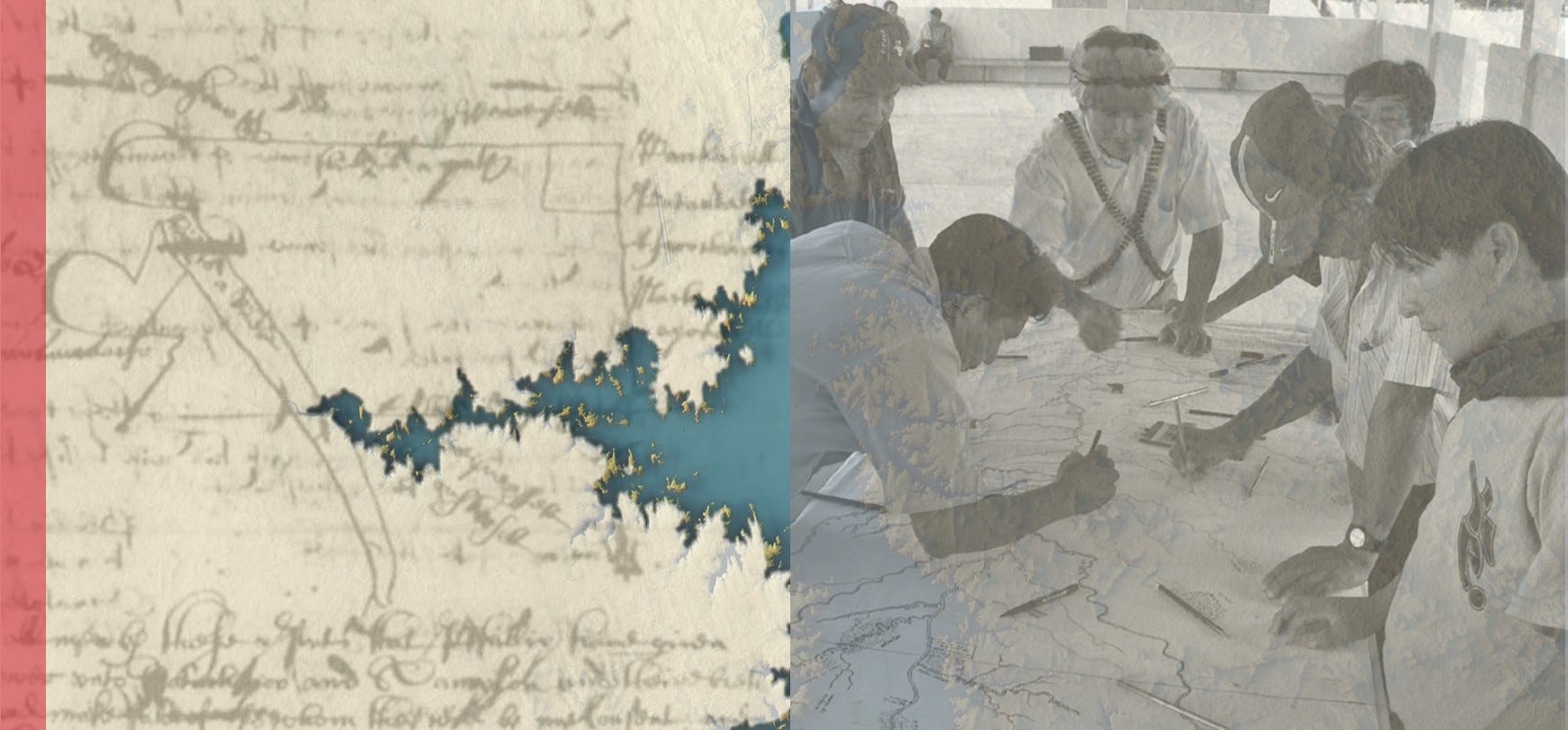
Hello Interactors,I ran into a friend last week who shared a bit of neighborly news. A border dispute is brewing in our neighborhood and you can bet maps are soon to be weaponized. It’s nothing new in border disputes around the world, but do maps really lead to a shared understanding of people and their interaction with place? It may be time cartography gets radical. As interactors, you’re special individuals self-selected to be a part of an evolutionary journey. You’re also members of an attentive community so I welcome your participation.Please leave your comments below or email me directly.Now let’s go…COMMUNITIES DEMANDING IMPUNITIESI step quietly as I near the end of the private lane. Ahead there’s a beige colored fence, barely six feet high, blocking the pathway. It’s attached adjacently to a fence bordering the owner’s yard. As I gently approach the fence I see a dingy string innocently dangling from a small hole in the upper right corner near the fence post. A slight tug on the string and I hear a metal latch release on the other side. It’s not a fence after all, but a secret gate.I push it open and slither through sheepishly looking around to see if I’d been caught. I’m careful to lift the cold black metal latch to silence it as I gently close the gate behind me. I scurry past the driveway glancing at the house. My pace quickens down the remainder of the private lane before me. I self-consciously scurry by neighboring homes and scamper up a steep hill before triumphantly stepping onto the territory of public domain: a city street.This secret passage along a private drive is known to longtime locals in the neighborhood like me. The gate sits on private property connecting two private lanes that connect two public parks at each end. Adventurous out-of-towners looking to walk or bike from one park to the other usually see the gate masquerading as a fence and turn around. But for as long as these roads have existed, locals have hastily snuck through the graciously placed gate.But the fate of this gate is a question as of late. Do they have the right to block a pedestrian route that connects public parks even though it’s on private land? Or do they have the duty to honor the traditions of a community that has relied on this path for decades if not centuries? To answer these questions, governments, corporations, and individuals turn to legally binding property maps. Instead of arming themselves with their own maps in a race to the court, perhaps they should join arms around one map seeking mutual support.The word map is a shortened version of the 14th century middle English word, mapemounde. That’s a compound word combining latin’s mappa, “napkin or cloth”, and mundi “of the world” and was used to describe a map of the world that was most likely drawn on an ancient cloth or papyrus.This etymology resembles cartography from latin’s carta "leaf of paper or a writing tablet" and graphia "to scrape or scratch" (on clay tablets with a stylus)”.Given modern cartography’s reliance on coordinates, the word cartography easily could have emerged from the word cartesian. That word is derived from the latin word cartesius which is the Latin spelling of descartes – the last name of the French mathematician, René Descartes. Descartes merged the fields of geometry and algebra to form coordinate geometry. It was a discovery that, as Joel L. Morrison writes in the History of Cartography, formed the”foundation of analytic geometry and provided geometric interpretations for many other branches of mathematics, such as linear algebra, complex analysis, differential geometry, multivariate calculus, and group theory, and, of course, for cartography.”This two dimensional rectangular coordinate system made it easy for 17th century land barons and imperial governments to more easily and accurately calculate distance and area on a curved earth and communicate them on a flat piece of paper. The increased expediency, accuracy, durability, and portability of paper allowed Cartesian maps to accelerate territorial expansionism and colonization around the world.But rectangular mapping of property, Cadastral Mapping, dates back to the Romans in the first century A.D. Cartography historian, O. A. W. Dilke writes,“One of the main advantages of a detailed map of Rome was to improve the efficiency of the city's administration...”Even as Descartes was inventing analytical geometry in the 1600s, European colonizers in the Americas were using rectilinear maps in attempts to negotiate land rights with Indigenous people. For example, between 1666 and 1668 a land deed clerk filed a copy of a map detailing a coastal area in what is now as Massachusetts near Buzzards Bay. The original map was drawn by a Harvard educated Indigenous man named John Sassamon who was also a member of the Massachusett tribe.Sassamon was respected by colonizers because he represented the ideal of an assimilated native but he was also held in high regard by local tribes…inc
Maps Made to Persuade: Part 3
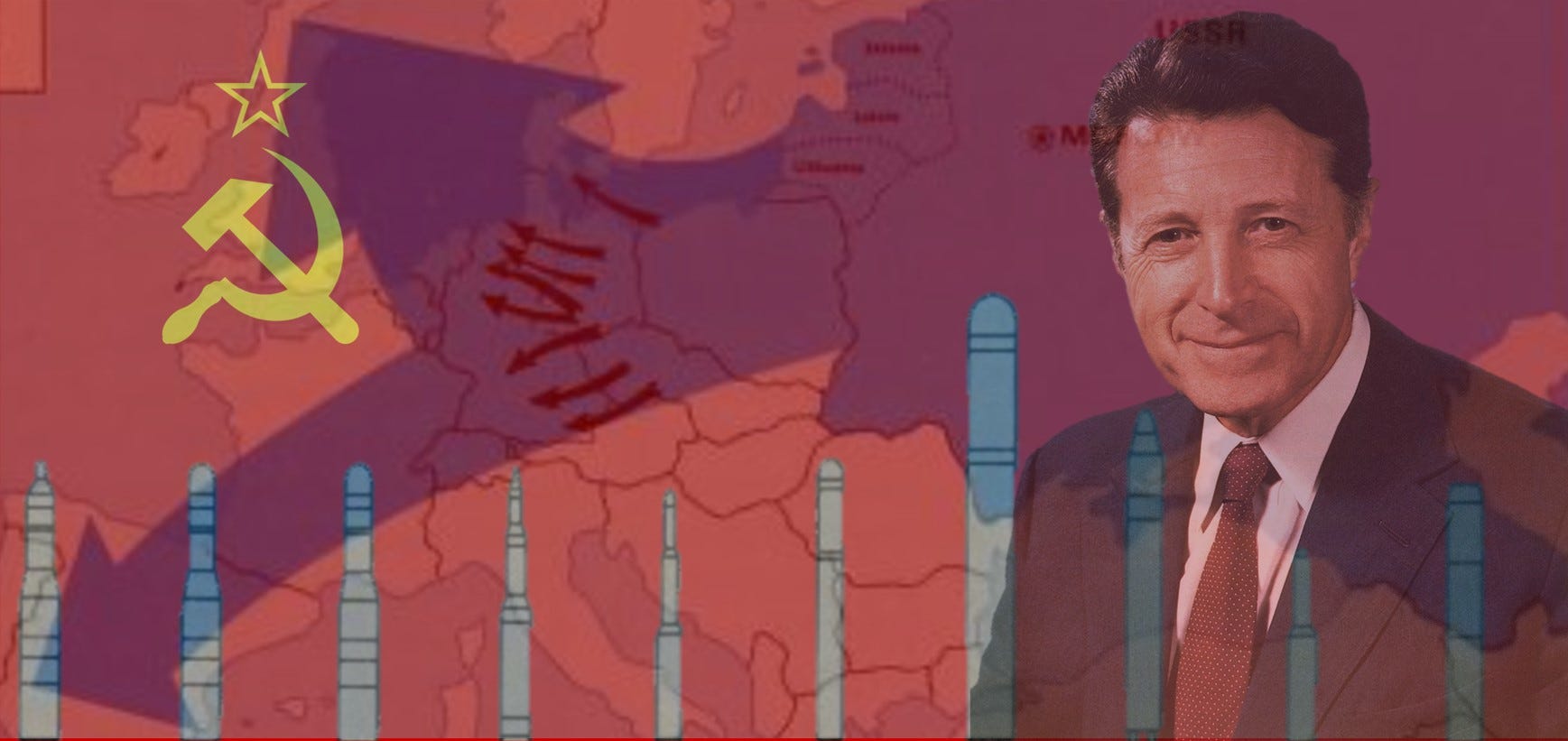
Hello Interactors,This post is part three of my three week experiment. I’ve divided my topic into three parts each taking a bit less time for you to read or listen to. They each can stand on their own, but hopefully come together to form a bigger picture. Please let me know what you think.Maps are such a big part of our daily lives that it’s easy to let them wash over us. But they’re also very powerful forms of communication that require our attention and scrutiny. If we don’t, we run the risk of being hypnotized and even deluded.As interactors, you’re special individuals self-selected to be a part of an evolutionary journey. You’re also members of an attentive community so I welcome your participation.Please leave your comments below or email me directly.Now let’s go…THE GIPPER AND CAP MAKE A MAPOn the top of the geography building at the University of California Santa Barbara (UCSB) was a high security floor the CIA helped to fund…or so I heard. I never set foot in there, but I know both the CIA and the FBI routinely recruited geography students when I was there in the late 80s. They still do. The geography department was, and still is, buzzing with research in cartography, satellite imaging, and Geographic Information Science (GIS). I remember learning how to detect a hidden nuclear missile silo camouflaged in the Russian landscape using stereoscopic glasses pointed at two LANDSAT images produced from orbiting satellites. Special imaging software was also being developed at the university to better filter and detect these patterns, and more, in remote sensing imagery.But the kind of mapping I was most interested in was thematic mapping. I was mostly interested in computer graphics and animation, but I could also see the allure of bending cartography to serve creative means. For my senior project I converted a digital USGS topographic map of Santa Barbara into a 3D model so I could fly a camera over the terrain as a logo rose from behind the foothills. It was used as an intro animation for videos made for the newly formed National Center for Geographic Information and Analysis (NCGIA). This was, after all, the real focus of the geography department – and the U.S. government.The influential chief geographer for the U.S. State Department from the 1920s through the 1940s, Samuel Whittemore Boggs, had settled on this cartographic dichotomy I was experiencing as a student. He surmised maps could be either rhetorical tools of delusion and propaganda (like fancy 3D animated video bumpers) or scientific instruments of knowledge and understanding (like Geographical Information Science). These two sides of a single coin were present 40-odd years later as I was studying geography at UCSB.By the time I was studying cartography as an undergrad the Cold War was well embedded into the culture of all Americans, including institutions and universities. Some of my youngest memories as a kid were nuclear fallout drills at school. They weren’t all that different from tornado drills common to Iowa kids, but the films they showed us of the effects of nuclear blasts made me wish tornados were our only worry.I also have memories of propaganda making its way into our school work as well. I remember math problems that compared missile lengthy between the U.S. and the U.S.S.R. – a nod to male anatomical one-upmanship. Our culture was infused with geopolitical agendas and competitions pitting Americans against Soviets. I recall the ‘Miracle on Ice’ when the U.S. hockey team unexpectedly beat the U.S.S.R. in the 1980 Olympics. That was when the U-S-A chant was popularized. I was 15 and remember having a basketball game that day. The gym was electric with pride.We all lived under constant fear and threat that the Soviet government could launch an intercontinental ballistic missile at any minute, so anything that felt like a victory was celebrated. The fear was all well communicated and orchestrated using cartohypnotic techniques Boggs had warned of. This fear mongering wasn’t unique to the United States. University of Richmond professor Timothy Barney writes, “An ominous arrow-filled 1970 map forecasts the logistics of a Greece and Turkey invasion, while another encircles Denmark and Northern Europe. The secret Warsaw Pact exercise ‘Seven Days Over the River Rhine’ from 1979 used cartography extensively to chart, complete with red mushroom clouds strewn about the continent, an all-too probable nuclear clash between Cold War powers.”The United States has a long history and practice of thematic political cartography dating back to the Paris Peace Conference in 1919. This inspired the formation of a thematic mapping division in the State Department. After World War II, in concert with the Department of Defense, Cold War propaganda elevated to a new level — including in cartography. It was cartohypnosis through government sponsored osmosis that created widespread prognosis of Soviet-American neurosis.When Ronald Reagan became president in
Maps Made to Persuade: Part 2
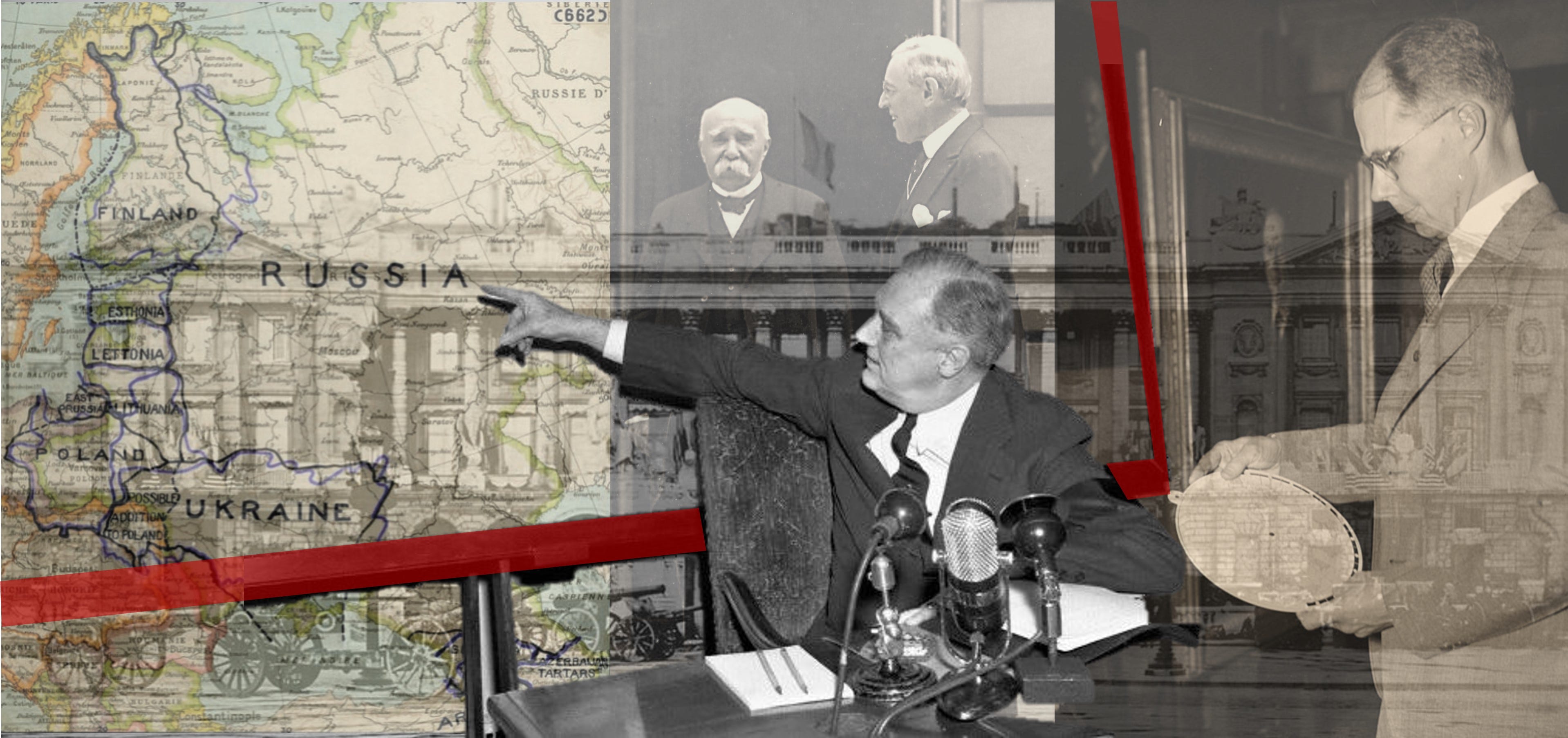
Hello Interactors,This post is part two of a three week experiment. I’ve divided my topic into three parts each taking a bit less time for you to read or listen to. They each can stand on their own, but hopefully come together to form a bigger picture. Please let me know what you think.Maps are such a big part of our daily lives that it’s easy to let them wash over us. But they’re also very powerful forms of communication that require our attention and scrutiny. If we don’t, we run the risk of being hypnotized and even deluded.As interactors, you’re special individuals self-selected to be a part of an evolutionary journey. You’re also members of an attentive community so I welcome your participation.Please leave your comments below or email me directly.Now let’s go…Both World Wars exemplified the hauntingly prescient title of that 1904 paper by England’s eminent geographer and burgeoning politician, Sir Malford MacKinder – The Geographical Pivot of History. And his most famous simplified world map depicting the Natural Seats of Power inspired derivatives all around the world. That was especially true at the conclusion of World War I and the 1919 Paris Peace Conference.Peace preparations by the United States began the same month they declared War on Germany in April of 1917. By November a team of researchers, writers, lawyers, and cartographers moved from the New York City Public Library to the third floor of the American Geographical Society. Surrounded by a collection of maps and books the team set work on what was called the Inquiry.One of the primary geographers assigned to this effort was Mark Sylvester William Jefferson. He was a professor at the Michigan State Normal School at Ypsilanti and specialized in the thematic mapping of population distribution. He even invented a term for it – anthropography. The distinguished professor emeritus of geography at Southern Connecticut State University, Geoffrey L. Martin says, “His maps were accurate, attractive, and invariably ingenious in design.”These maps for the Paris conference were to convey reams of physiographic and demographic information regarding Europe and surrounding regions. Martin notes, “Jefferson had the remarkable ability to simplify complexity, to inspire ingenuity of cartographic expression, and to display such manual dexterity with economy of line that his leadership, long hours, and indefatigable fascination with the enterprise insured success for the mapping effort.”Jefferson, and his team of cartographers, joined a select group, including President Woodrow Wilson, on board the USS George Washington headed to France in December of 1918. By the middle of December the Inquiry team assembled in a hotel in Paris, including Jefferson and his twenty-five draftsmen. The team grew in size requiring them to knock down a wall at the Hôtel de Crillon, one of Paris’ finest hotels on the Champs-Élysées.Martin, pulling from Jefferson’s diary writes, “By February of 1919 Jefferson’s team of cartographers spanned five rooms, an engraving apparatus was provided, and armed guards were posted at the door.”During the proceedings, Jefferson sat on the geographers’ commission. Other geographers and attendees were impressed and overwhelmed by the cartographic prowess of the American delegation. Chatter in the halls, parks, and hotels centered on the role maps played during the convention. They were not only the common denominator amongst a diverse delegation, but also the premiere communicator and persuader.Martin concludes, “The value of maps had been recognized prior to the Paris Peace Conference of 1919, yet at Paris the map suddenly became everything.”The momentum from this event followed those involved in the Inquiry back the United States. The State Department experienced firsthand the influential power of cartography and established their own geographic division and the Office of Geographer. The division’s maps and collections started with those made during the Paris Peace Conference. They were organized by Colonel Lawrence Martin who served under Woodrow Wilson and became the first head of the department in 1921.Martin retired in 1924 and selected Samuel Whittemore Boggs to replace him. Boggs came to New York in 1914 and worked compiling and editing maps. In 1921 he began a Master’s program at Columbia studying under two professors who were also cartographers at the Paris Peace Conference. These men, like many of those involved in preparing for the conference, left idealistic that maps could lead to a fair and just conclusion of international territorial disputes.Boggs embodied that spirit coming out of college and combined it with imaginative approaches and highly academic, technical cartography skills. It made him well positioned for the role political geography and cartography was about to play as territorial pieces continued to shift around the earth’s spherical chess board.That proverbial board was also shrinking as the airplane became an increasin
Maps Made to Persuade: Part 1
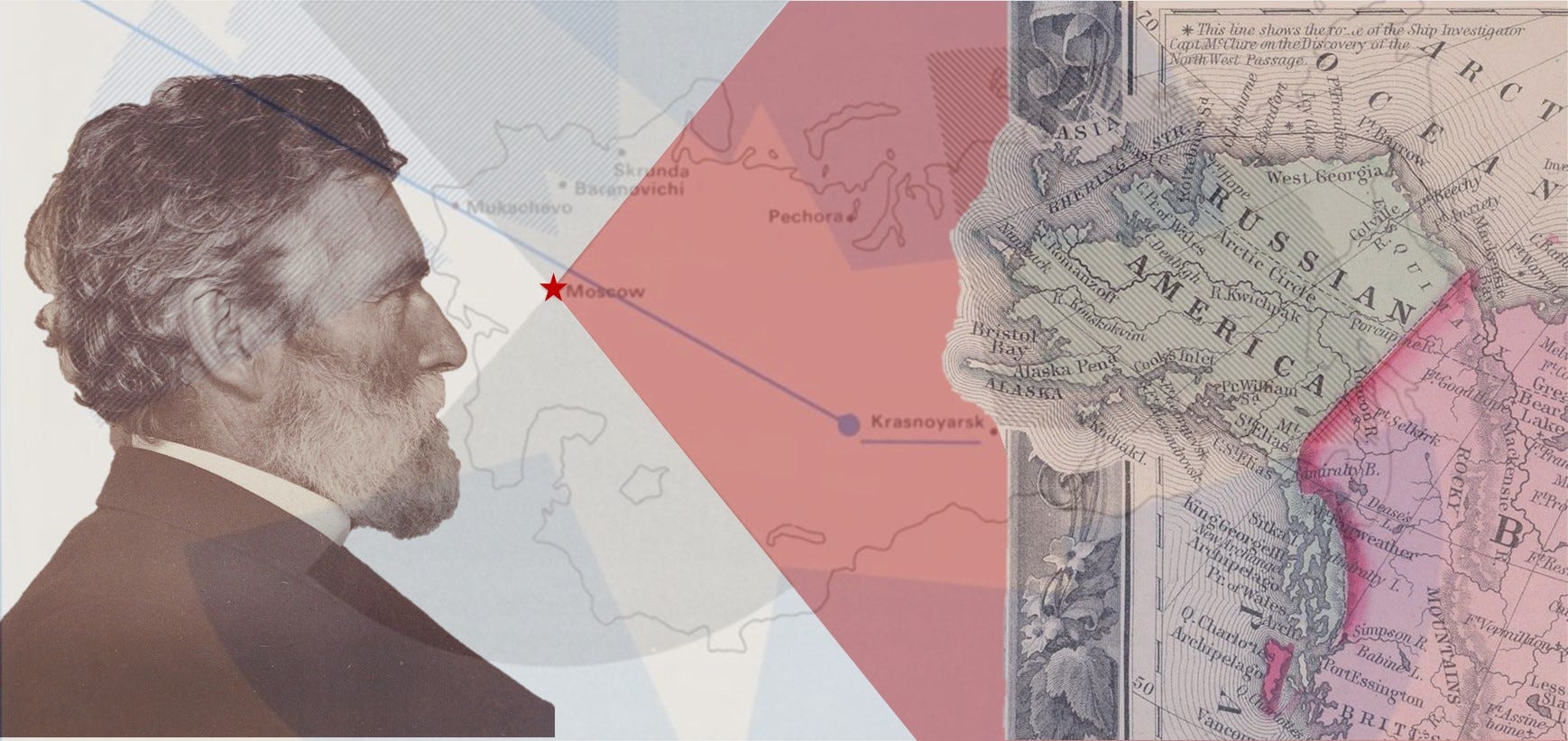
Hello Interactors,This post is part of a three week experiment. I’ve divided my topic into three parts each taking a bit less time for you to read or listen. They each can stand on their own (maybe), but hopefully come together to form a bigger picture. Please let me know what you think.Maps are such a big part of our daily lives that it’s easy to let them wash over us. But they’re also very powerful forms of communication that require our attention and scrutiny. If we don’t, we run the risk of being hypnotized and even deluded.As interactors, you’re special individuals self-selected to be a part of an evolutionary journey. You’re also members of an attentive community so I welcome your participation.Please leave your comments below or email me directly.Now let’s go…Someone posted a map on Facebook recently showing just how close Russia is to Alaska. The post read, “This should make you 😳 America. My kids were not taught as much geography and history as I was growing up. This probably needs to be shared to remind us all. For those who think Russia is all the way on the other side of the world [it is] only 53 miles at the Bering Strait’s narrowest point. Like us driving from Cedar Rapids to Waterloo.”The comments to the post echoed this worry with words like, “Too many don’t realize this.”; “There are small islands 25 miles apart.”; “OOOOOOOOO scary.”; and “I’ll admit that I didn’t realize this.” They probably didn’t realize this either: the United States and Russia not only share the largest maritime border in the world – a line stretching 1600 nautical miles dividing the Chukchi Sea to the north and the Bering Sea to the south – but it cuts straight through two islands called the Diomedes. On one side is Russia’s Big Diomede – actually part of Chukotka Autonomous Okrug a federal subject of Russia – and just two miles west is Little Diomede which is part of Alaska. Both have small fishing villages, one settled by Russians and the other Americans.If folks are scared by the geographic proximity of 53 miles, two miles must really freak them out? And they’d best be sitting down for this little tidbit…there is no ratified treaty in place between the United States and Russia that enforces this boundary.The last attempts made to negotiate a deal with Russia was in 1991. The person who chaired the U.S. Senate Committee on Foreign Relations was none other than Senator Joe Biden from Delaware.Biden addressed the committee with these words,“…today the subcommittee meets to consider a measure that constitutes one small step down that path of cooperation. This measure, the U.S.-Soviet Maritime Boundary Treaty, represents the attempt of the two sides to resolve an important dispute through negotiation, compromise, and mutual pledge to abide by the solemn obligations of a bilateral treaty and international law.”The dispute this treaty would lay to rest concerns the sovereign rights and jurisdiction of the United States and the Soviet Union in the seas between Alaska and Siberia. The treaty would govern each country’s right to manage fisheries and to conduct oil and gas exploration and development in a vast maritime area.”In 1990, then Soviet Union leader, Mikhail Gorbachev sought to resolve the ordeal. But the Russian parliament believed he was acting in haste. The Soviet Union was beginning to crumble and they believed Gorbachev was giving away too much fishing, sea passage, and oil and mineral rights to the United States in exchange for other provisions. The USSR collapsed in December of 1991. This left Biden’s sixth month old efforts under the George H. W. Bush administration unanswered. No administration since has attempted to ratify the treaty and I doubt Putin is in the mood for Biden to resume talks.The area maps referred to as Russian America, a piece of land nearly the size of Texas, is what we now call Alaska. It had already been colonized by Siberian fur trappers in the 1700s and the Russian Orthodox Church was already busy trying to convert Indigenous people to Christianity. By 1800 the Russian-American Company was established – organized by Emperor Paul I of Russia. By 1850, 300,000 sea otters were hunted to extinction. Seventeen years later, in 1867, amidst a fur market slump from over hunting, the end of the U.S. Civil War, a Russia battered by the Crimea war ceded Russian America to the United States as part of the Alaska Purchase. It didn’t become a U.S. state until 1959.Russia sold Alaska to the United States for $7.2 million or $134 million in 2022 dollars. Russia feared they couldn’t defend the territory from the British who were busy trying to colonize Canada and had just defeated the Russians in the Crimea war with the help of the French. So, they expressed interest in selling it to the then U.S. Secretary of State William Seward who had already offered to buy it just a few years prior and was happy to negotiate the purchase.Biden gave reference to the purchase in his Foreign Relations subcommittee
Migration: A 'My Nation' Fixation
Hello Interactors,This is the last week of winter. Next week I’ll start writing about cartography. Today’s post just may whet your appetite. All of the dislocation maps resulting from the war in Ukraine got me thinking about a pervasive human behavior; the ultimate interaction of people and place – migration.As interactors, you’re special individuals self-selected to be a part of an evolutionary journey. You’re also members of an attentive community so I welcome your participation.Please leave your comments below or email me directly.Now let’s go…BOWLING FOR BALLERSI was on a walk last weekend and as I approached an Indian restaurant I noticed two families gathered a car in the parking lot. The parents were saying their goodbyes as the kids tussled about impatiently. Just then a perfectly spherical white ball of wadded up paper came rolling down the parking lot entrance and on to the sidewalk in front of me. Chasing behind was boy, maybe thirteen years old, with his shirt untucked, coat half on, and out of breath. He glanced at me, swopped up the ball, swiveled around, and threw it back toward his family like a skilled cricket bowler.A generation ago this would have been a rare sight. More likely it would have been a boy, probably White, winding up and pitching like his favorite pitcher on a baseball mound. I did a bit of pitching when I was that kid’s age. I was taller than most at that age and could throw pretty hard. So they put me on the mound. I threw hard alright, but batters trembled with fear. I had a control issues.Give me a glove today and I’ll spare you the fast ball, but I still throw a mean knuckle ball. I kept a couple gloves at Microsoft and would occasionally go out and play catch with anybody willing. It was fun introducing that sport to team members from other parts of the world. At some point we decided to introduce each other to our respective national sports. First up was India and cricket.Guess who volunteered to be the bowler – or pitcher in baseball terms. Me. The guy who pitched as a kid, but also hit a fair number of them too. We played on a patch of artificial turf on the Microsoft soccer field. That field has since been torn up to make way for more buildings and an on-campus cricket pitch. Cricket balls are quite hard and travel at great speeds so we decided a tennis ball would be best. I took to it pretty fast, according to my Indian teammate Deepak. The bowling motion is very different than a pitching motion, but he was a good coach. The arm is kept straight and is rotated around the shoulder joint. Much like Pete Townsend of The Who strumming his guitar.I loved it. Until the next day...and the next. Ok, for a full week my arm, shoulder, and back were wondering what the hell I was thinking. That was the last of cricket. The next international sport came from a Dutch teammate, Martijn. It’s called Fierljeppen (or far-leaping). It’s basically pole vaulting over a canal. We had a nearby canal designated, but a proper pole never materialized. Probably for the best. I was pushing it on the liability front. Somebody was sure to end up in the water.The would-be canal to be leapt was in Redmond, in the county’s biggest and oldest park, Marymoor Park. While Feirljeppen is unlikely to ever occur there, cricket soon will. Microsoft isn’t the only one building a cricket pitch in Redmond. Just a couple weeks ago the county approved a 20-acre Marymoor Cricket Community Park. Here’s what the King County Council Chair, Claudia Balducci, had to say,“As our region grows, we see more interest in cricket, which is one of the most popular sports in the world. I can’t think of a better place for a world-class cricket pitch than East King County and especially Marymoor Park.”When she says ‘world-class’ she means it. The city of Redmond and the county are partnering with Major League Cricket (MLC) to build the facility. Construction is expected to start in 2023 and may one day host professional cricket, the U.S. National Team, and maybe even the World Cup. If you didn’t know, the Cricket World Cup is the most watched sporting event in the world. An estimated 2.2 billion people tuned in during the 2019 cup.The first international cricket match was actually between the U.S. and Canada in 1844 and was played in New York City. It was contested at the St. George’s Club Bloomingdale Park in front of 20,000 people. That site is now the NYU Medical Center. A decade later baseball began displacing cricket as one of America’s favorite sports.American football was hitting the scene then too. It eventually displaced rugby in popularity in the U.S. after the American’s won the first gold medals in Rugby in 1920 and 1924. But like cricket, that sport is also hugely popular outside of the U.S. But rugby is again gaining popularity in the United States. One survey claims participation grew 350% between 2004 and 2011. In 2018, over 100,000 fans showed up in San Francisco for the World Cup Sevens tournament. The United
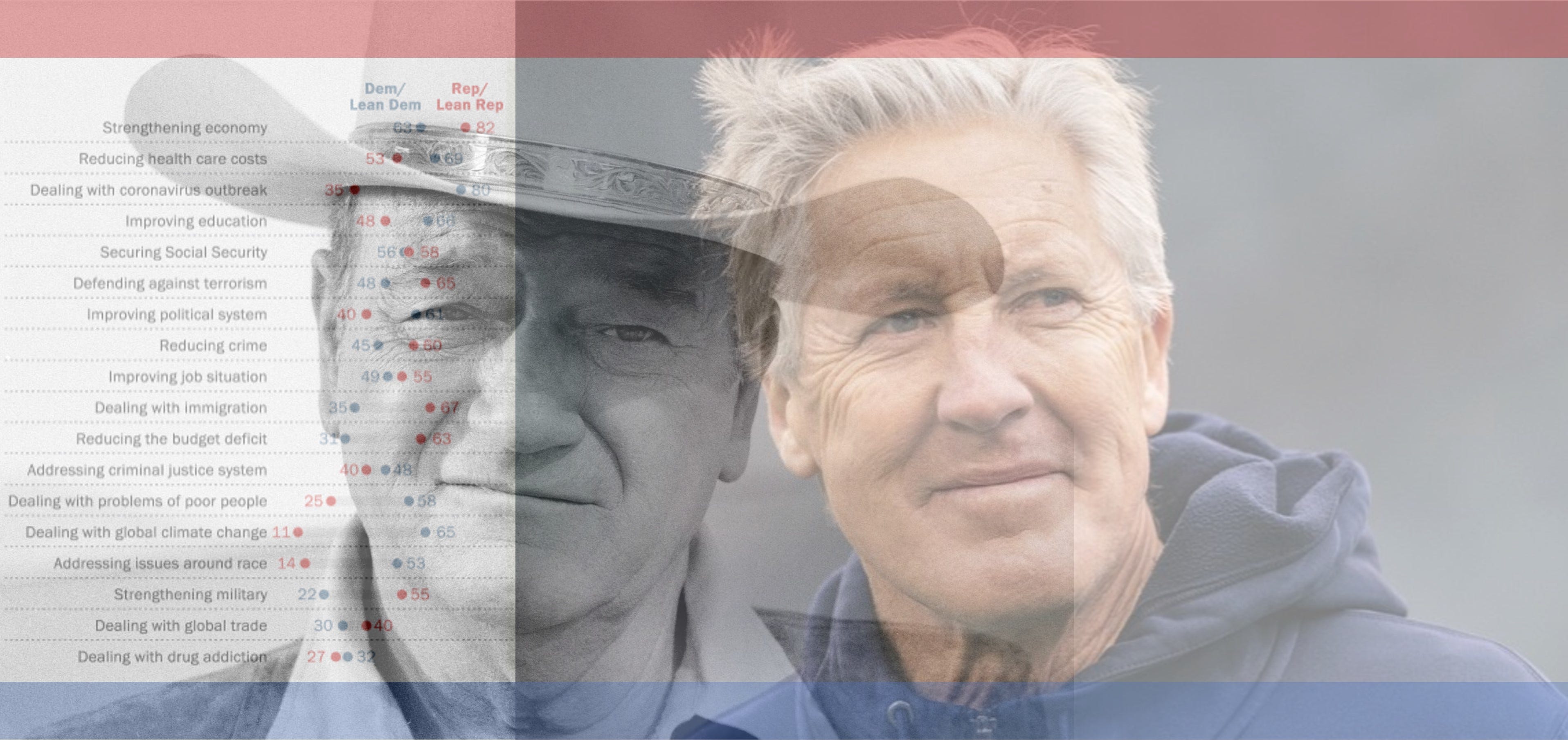
Leave Polarization Behind, By Simply Being Kind
Hello Interactors,Wars, gas prices, eventual food and mineral shortages, inflation, a nagging pandemic, homelessness, immigration, migration, social and economic inequities, rising health prices, home prices, climate change, and natural disasters. What am I missing? Global society needs a hug but we’re all afraid to offer one. We need fixed, I believe, but we are fixed in what we believe.As interactors, you’re special individuals self-selected to be a part of an evolutionary journey. You’re also members of an attentive community so I welcome your participation.Please leave your comments below or email me directly.Now let’s go…TWISTED UP AND HOG TIEDAs bombs dropped across Kyiv and surrounding areas last Saturday causing destruction in their path, large missiles were also descending on portions of the state Iowa. These were trees and debris launched by a series of tornados moving at a groundspeed of 45 miles an hour generating winds upwards of 170 miles per hour. They swept across a swath of land 117 miles wide. The storm was rated at a level 4 on a five point scale. Level 4 tornados create devastating damage. Well-constructed houses are leveled; structures with weak foundations are blown some distance away; cars are thrown; large missiles are generated.This storm swept through the town where I grew up, Norwalk. None of my friends or family were impacted, but seven people died just south of Norwalk in neighboring Lucas County. Another nearby county, Madison – made famous by the book and movie The Bridges of Madison County – was also hit. The National Weather Service said, “This is second longest tornado in Iowa since 1980.”March is a little early for tornados in Iowa and July is a little late. But last July twelve swept through the state with top wind speeds of 145 miles an hour. And on July 18th of 2018 they had 21 twisters hitting 144 miles per hour.In 2020 the state was hit with a derecho – a long-lasting wide-spread blast of tornado-level winds that destroyed tens of millions of bushels of corn. Together with the stresses of the pandemic, this event pushed many farmers over the edge. It was enough to prompt Iowa State University to create a program called, “I Worry All the Time: Resources for Life in a Pandemic.” It offers steps to help people answer the question posed by the university’s outreach director, David Brown: “How do we maintain our resilience in the face of these challenges?”These natural events and human adaptation programs signal what the latest Intergovernmental Panel on Climate Change (IPCC) confirms worldwide, “Globally, climate change is increasingly causing injuries, illness, malnutrition, threats to physical and mental health and well-being, and even deaths.” The panel of climate experts warn, “The extent and magnitude of climate change impacts are larger than estimated in previous assessments. They are causing severe and widespread disruption in nature and in society; reducing our ability to grow nutritious food or provide enough clean drinking water, thus affecting people's health and well-being and damaging livelihoods. In summary, the impacts of climate change are affecting billions of people in many different ways.”You would think existential threat would be a top concern. Especially among citizens of the United States given our outsized per capita-consumption of energy, goods, and resources. Nope. After President Biden’s recent State of the Union Address, Pew Research reported on a poll taken in January examining American’s views on major national issues.Seventy-one percent of those surveyed said ‘strengthening the economy’ should be the top priority for the president and Congress to address this year. Second was ‘reducing healthcare costs’ at 61 percent. ‘Dealing with climate change’ came in 14th out of 18 topics with 41 percent believing it is something government should address.Survey participants who lean both politically Left and Right believe the economy is most important. Though, Republicans believe it more than Democrats. But not my much – 82% versus 62%. A 20 point difference. But on climate change the differential is the largest of all 18 issues surveyed. Only 11% of Republicans surveyed believe the government should prioritize reducing effects of climate change versus 65% of Democrats. That’s a 54 point difference in opinion. This suggests that of all the things Americans are divided on, the one that poses the biggest threat is the one with which we differ the most.This survey targets adults age 18 living in the United States. I’ve been thinking about those youngest and oldest surveyed. I try to imagine what effects climate change will have on them in 20 years. The IPCC paints a grim picture. They created three periods of time that reflect what life will be like on planet earth given where we are today.The three periods are near-term (up to 2040), mid-term (2041-2060), and long-term (2061-2100). By 2040, the near term, a good chunk of the upper end of baby-boomers (wh

The Empire; Fight Back
Hello Interactors,The 80s band Tears for Fears released a new album recently. Their biggest hit, Everybody Wants to Rule the World has new meaning this week. What is it about empire building sociopaths in the West and the East that makes everybody want them to stop trying to rule the world?As interactors, you’re special individuals self-selected to be a part of an evolutionary journey. You’re also members of an attentive community so I welcome your participation.Please leave your comments below or email me directly.Now let’s go…CHRONICLING THE TRUTH OF THE RUSRurik, a Norse Viking prince, made his way south from present day Denmark, to establish a ruling government in Novgorod in what is now Russia. He was invited by Slavik and Finn-Ugrik people to apply his governing skills to their feuding tribes.Rurik then extended his presence further south to a city called Kiev in 850. It took another 1000 years for Kiev to be pronounced Kyiv in Ukrainian. In Russian it’s still pronounced Kiev. This outpost became the center of what became the Kievan Rus; a loose collection of Slavic, Baltic, and Finnic peoples of Eastern and Northern Europe. The city was well positioned on a visible bank on a northern edge of the Dnieper River. Its convenient and defensible position allowed Rurik to reign over what became the Rurik Dynasty.The people of modern-day Russia, Ukraine, and Belarus all stake claim to this origin story.Rurik was replaced in 882 by his kinsman Oleg. It was Oleg that declared Kiev to be the capital of the Kievan Rus. Given the nexus of trading activity in Kiev it became a contested region. Oleg led many wars against semi-nomadic tribes from the south and the east.One hundred years later one of those leaders from the east, the Byzantine ruler Basil II, came asking for money. Then leader Vladimir of Kiev agreed so long as he could marry his sister. Basil II gave his sister over on the condition Vladimir, a pagan, convert to Orthodox Christianity. He not only agreed, but insisted everyone in the region convert as well. He baptized the people of Rus in 988 and just like that Christianity was spread throughout the region.This Rus-Byzantine religio-political arrangement was no doubt influenced by the Roman Catholic Church who sought influence over this important Eurasian borderland. By 1054 there came an East-West schism in the church. Eastern Orthodox churches in Constantinople and those in Rome each viewed the other as drifting from the ‘true church’. They split between Orthodox Catholics of the East and Roman Catholics of the West. Though they both continued to largely share the same beliefs and practices.There is no central Orthodox Church in Ukraine any longer. It has since splintered into a variety of denominations along with a myriad of other religions. It’s estimated 75% of Ukrainians believe in a Christian God. But another East-West schism has emerged this week as Putin and Russian Orthodox Patriarch Kirill seek to pull Ukraine back from the allure of the West. They both seek a centralized Russian Orthodox Church under Kirill and a central government under Putin. A forced religio-political unification of the people of Russia, Belarus, and Ukraine under a single language, religion, and government. Echoes of Oleg and Rurik and historic east-west tensions – Vladimir of Kiev meets Vladimir Putin.In 1113 a document called The Primary Chronicle was written from which this history is documented. The first sentence reads, “These are the narratives of bygone years regarding the origin of the land of Rus’, the first princes of Kiev, and from what source the land of Rus’ had its beginning.” Seventy-four years later came another source of regional history, the Hypatian Chronicles, and with it the first printed occurrence of the word Oukraina – Ukraine.The etymology of this word is debated to this day. The most popular interpretation comes from a Slavic word for ‘borderland’ or ‘frontier region’ but others argue it’s more possessive as in ‘territory’. Perspectives are as variable as their lineages.A Dutch map from 1645 shows the word Okraina in the middle of wilderness. Wild indeed. By this time in history this region was known to be wild with wars fought over its land, riches, and strategic position between Europe and Asia. From the days of Rurik to today territories in western Ukraine, Belarus, and Moldova have cyclically been claimed by Germany, Astro-Hungary, Poland, Russia, and Ukraine. These boundaries have been contested, drawn, and redrawn since the invention of maps.Maps played a significant role in attempts to ‘permanently’ define the boundaries of territories, and so did the proliferation of books that defined their historic narratives. The Gutenberg press, invented in the late 1400s, offered those with power and money to write and disseminate narratives coincident with territorial boundary maps that fit their view of the world and of history. This was the world’s first use of mass-media to control a particul

Sleepless and Homeless in Seattle
Hello Interactors,There’s talk of turning a nearby hotel into transitional housing for the homeless. Everyone agrees the county needs to address the homeless crisis, but they never imagined the solution would impact them. What is it about people that makes them reluctant to share their space with those who have been displaced and disgraced?As interactors, you’re special individuals self-selected to be a part of an evolutionary journey. You’re also members of an attentive community so I welcome your participation.Please leave your comments below or email me directly.Now let’s go…GET OFF MY LAWNI joke that Bellevue – once a sleepy Seattle suburb – will one day become the Manhattan to Seattle’s Brooklyn. If real estate prices are an indicator, it’s already happened. The median price of a Bellevue home is now $1.56 million compared to Manhattan’s $1.25. It’s even greater than San Francisco’s median price of $1.33 million. But San Fran’s own wealthy suburb, Sunnyvale, has a median price of $1.69 million which some believe will be eclipsed by Bellevue by the end of this summer.The population in western Washington’s Puget Sound region has grown exponentially in the last 60 years – from 1.5 million people in 1960 to 4.3 million in 2020. King County, which includes, among others, Seattle, Bellevue, and Kirkland, is just one of five counties in the country to add more than 300,000 people in the last ten years.These two factors, record high home values and exponential population growth, has created a housing and homelessness crisis. King County estimates “about 40,800 people in 2020 and 45,300 people in 2019 experienced homelessness at some point in the year.” It prompted the creation of the King County Regional Homelessness Authority. Their “mission is to significantly decrease the incidence of homelessness throughout King County, using equity and social justice principles.” The organization is led by Marc Dones.Dones recently spoke at a U.S. Congressional hearing on “Addressing Challenges in Serving People Experiencing Homelessness.” Dones talked about how prior investments “have been over focused on service systems” and not on actually housing the homeless. They said, “it simply doesn’t matter how many social workers attend to a person’s needs…if we don’t have anywhere for them to go.”They continued, “homelessness disproportionately impacts people of color as a direct result of this country’s history of racialized exclusion from housing. While Black people represent only 12% of the general population, we routinely make up 30 – 40% (or more) of the homelessness population. Native people, who make up only 1% of the general population, often make up 3 – 6% of the population experiencing homelessness.”“Homelessness is an economic issue. It’s about not having the money to pay the rent.”, Dones said. It’s long been a problem, but Dones is calling for the county to respond as if it is a crisis. They recommend acquiring and repurposing hotels and motels. Dones says, “it’s critical to double down on supporting communities to engage in this work now, to rapidly online housing and shelter options that can bring people inside.”One such acquisition the county is considering is a La Quinta Inn that sits right on the border of Kirkland and Bellevue. It’s conveniently located near a major highway onramp to Seattle, close to a transit hub, and has easy access to bike paths. But it’s also next to a handful of daycares, private schools, and affluent, predominantly White, neighborhoods.It’s rumored one of the La Quinta employees leaked the news the county was considering the purchase. The Kirkland City Manager was forced to issue a public statement ahead of the typical public review process. As you might imagine, it exploded. Parents of children who’s kids attend nearby schools became terrified of the thought of homeless people being housed next to their kids. Area residents fumed over what this might do to their neighborhoods and home values. Over 3,000 people signed a petition opposing the purchase. Others expressed gratitude that the county was finally acting on the crisis and applauded Kirkland’s willingness to work with the county on making this location a success.Most of the public comment I witnessed dwelled on drug use, gun violence, and sex offenders. These are legitimate concerns grounded in real fear that are not to be diminished. Alcoholism, domestic violence, and sex abuse can all increase the risk of becoming homeless, but they can also be introduced and perpetuated because of homelessness. People can also turn to alcohol and drugs in the lead up to loosing a job or a home. Substance abuse can become a means of numbing the pains of living on the street. The bodily discomfort of sleeping on the ground, the mental anguish that comes with being ignored or shamed by society, and the physical and cognitive stress that comes with increased vulnerability to crime and violence would make anyone seek comfort from drugs or alcohol

Remote Work: a Cushy Perk or Just More Work
Hello Interactors,Hints of loosening COVID restrictions are wafting through the air like a contagious air-born disease. Does this mean people will be heading back to work? Some can’t wait, some would rather not, and others would love to have such a luxury to consider. Is remote work here to stay? And if so, are we sure it’s healthy? As interactors, you’re special individuals self-selected to be a part of an evolutionary journey. You’re also members of an attentive community so I welcome your participation.Please leave your comments below or email me directly.Now let’s go…COMFORTABLE BUSINESSHe had just returned to the office for the first time in two years. I asked him what it was like. I wondered how many people were there with him. He responded, “Let me put it this way, when I pulled into the parking garage I counted maybe six cars.”I was having lunch with a couple Microsoft friends recently. Our conversation started there and then turned to the current hiring climate in the tech industry. Amazon, Google, Facebook, Microsoft, and a dizzying array of startups are all vying for talent. They’re offering insane starting salaries, stock grants, and signing bonuses. But there seems to be one non-negotiable with tech workers – flexible working arrangements.Before we knew it, the three of us were talking about what cities would be best to live in knowing employers don’t really care where you live. But even among well-paid tech workers, cost of living became the most salient factor in choosing an ideal city. Rising real estate prices pose the biggest challenge, but optimal internet speeds were up there too.One friend, who had recently left Microsoft for a startup, mentioned the downsides of remote work. She said it’s really hard getting to know a team you’ve never met in person and even harder for them to get to know you. She senses judging and fields odd questions that aren’t about her, but about her role and what she’s being asked to do. And broad communication from their CEO seems to always fall flat. She said he comes across as disingenuous, less human, and overly focused on short term deadlines and quarterly results. Reflecting on our time working together she’s said she really valued the ‘non work’ interactions that happened on our team. We did feel more like a ‘family’ than a ‘squad.’Two years of disrupted work practice has led to a combination of ‘the great shuffle’ – people swapping companies in search of higher pay and benefits, ‘the great displacement’ – rising cost of living involuntarily pushing lower paid workers from their homes, or ‘the great resignation’ – cost cutting companies incenting early retirements or aging workers opting to retire early. It’s left companies wondering if this is a phase or if people have habituated to increased flexibility. The CEO for Stitch Fix, an personal apparel shopping service, said they’re seeing customers looking to replace a third of their wardrobe with what they call “Business Comfortable” clothes. She says their customers want to stay working in sweats, but want them to look more ‘professional’ when on Zoom calls.Cities and local businesses are impacted too. Can they count on workers coming back in droves to commercial districts buying breakfast, lunch, coffee, and drinks? Or even haircuts. Nikita Shimunov owns a barbershop in Manhattan where he once saw 50 to 60 men pass through his shop in a day. It’s trickled to 10 to 15 customers daily and he’s been forced to reduce staff by half. His financial future hinges on the empathy of his landlord.Many cities rely on these tax revenues to fill their coffers. But if masses of people stop going in to work, it has huge implications on urban planning. Microsoft is wrapping up the final touches on a massive new corporate campus in Redmond at a time when many, maybe even most, may remain working remotely. It’s next to a brand new light rail stop planned and designed to serve thousands that now may never come.Not all flexible work arrangements are the same or even desirable. Flexibility can introduce or amplify home and work conflicts for individuals, teams, companies, cities, and regions. Technology, especially mobile technology, has been blurring work and home boundaries for decades. What does it mean to achieve a work/life balance when the boundary disappears? And for those with young children, the burden of parenting, home schooling, and working can become overwhelming. And given our social norms, that burden largely, and unfairly, falls on women.Women are also unfairly expected to conform to certain traditional workplace ideals that focus on physical appearance and presence. For example, wrestling with a screaming toddler on a Zoom call with un-brushed hair, no makeup, and no sleep can make some people judge her as ‘not being professional’. And come review time, how might some managers reflect on these interactions when it comes time to hand out pay increases or offer new opportunities for growth? Meanwhile men get to
What to Do with Eileen Gu
Hello Interactors,The Olympics are in full swing. I admit I’m staying up later than I probably should be, but I’m a sucker for the Olympics. Yes it’s strange seeing a white strip of snow down a brown windy hill or watching big air competitions against a dystopian industrial waste site, but hey, that’s Beijing! But maybe I’m being too judgmental. Surely there’s more than meets the eye.As interactors, you’re special individuals self-selected to be a part of an evolutionary journey. You’re also members of an attentive community so I welcome your participation.Please leave your comments below or email me directly.Now let’s go…THE GU GLUEJubilant in her successful landing, the Chinese skier put on the brakes spraying snow over the blue padded barriers as the camera centered her in the frame. She had just landed her first jump in the Olympics’ big air competition. She pulled off her goggles and beamed a big, immaculate toothy smile into the camera. My first thought was, “This girl is not Chinese.” I had never heard of Eileen Gu, but that was about to change.She had just landed a right double 1440. That’s four full gravity defying rotations in the air after descending a hill 20 stories high and then launching off a curved ramp pointed to the sky. She was the first woman to land a similar double cork 1440 just two months prior. That prompted the French skier, Tess Ledeux, to counter in January by being the first woman to land a 1620 – four and a half rotations.Ledeux managed to land that same jump in her opening run at the Olympics in Beijing earlier this week and held the top spot until Gu’s third and final jump. While Gu was at the top waiting her turn, her mom called from the stands at the bottom of the hill. Yan Gu introduced Eileen to skiing in Lake Tahoe where she sometimes worked as a ski instructor. She told her daughter to play it safe and stick to the 1440. Eileen responded, “Mom, executive call here, vetoed. I am going to make the 16, and you are going to deal with it.”After visualizing the trick when her eyes closed, arms swaying, shoulders jerking, like a dog running in their sleep, she aimed her skis down the slope. High in the sky, confident in her 1620 launch, Gu grabbed the bottom of her ski – a safety grab – a trick she had never attempted before this run. She landed triumphantly and the judges launched her into first place. As she threw her fist in the air in celebration it was rewarded with a loud cheer from the Chinese fans sprinkled throughout the stadium. Her mom, of course, being one of them.Yan Gu was born in Shanghai and grew up in Beijing. The Olympics are in her home town. Her mom, Eileen’s grandmother, still lives there. When Yan was in her twenties, she did what many other Chinese students did, and continue to do. She sought an education in America. After receiving a degree in chemistry from Peking University in Beijing, she enrolled in a master’s program in biochemistry and molecular biology at Auburn University in the late 80s. She went on to be a research associate at Rockefeller University before going on to earn an MBA at Stanford in 1994. She now works at an investment firm in San Francisco where she specializes in Chinese investments.The director of an extreme outdoor sports high school in Mt. Hood Oregon, Mike Hanley, said “Yan is very pleasant but one of the most intense human beings I have ever met in my life. She smiles and tells you how great you are. But then you find out, after the fact, what the requests are. She loves her daughter and wants her daughter to get priority.”Getting priority attention from coaches and trainers in America means paying more money. Extorsion? Maybe. But money talks. Yan, a single parent, was willing to pay whatever it took to secure the right training to match her daughter’s ability and her own drive to insure her child’s success. Not many parents of talented kids can afford to do this without striking deals with big name extreme sports brands, like Red Bull or Burton, on behalf of their kids. Child labor? Maybe. But it pays the bills.But Yan has been off the hook for paying much at all since her daughter started striking her own lucrative modelling and endorsement contracts. She’s was a millionaire before hitting 18. She not only landed Red Bull, but Cadillac, Apple’s Beats by Dre headphones, Tiffany’s, Louis Vuitton and Victoria’s Secret. Those are some big names. But in China she’s also paid to represent the Bank of China, China Mobile, a milk company, and Starbucks of China. She is estimated to command $2.5 million per deal. With over 20 modelling, spokesperson, and endorsement deals she must be worth over $50 million dollars at age 18. And that was before she won the gold medal.In addition to being beautiful, talented, and rich, she is also smart. She scored 1580 on the SAT out of a perfect score of 1600, was the first to graduate early at her private high school in the Bay area, and will attend Stanford next fall. Oh, and did I mention sh
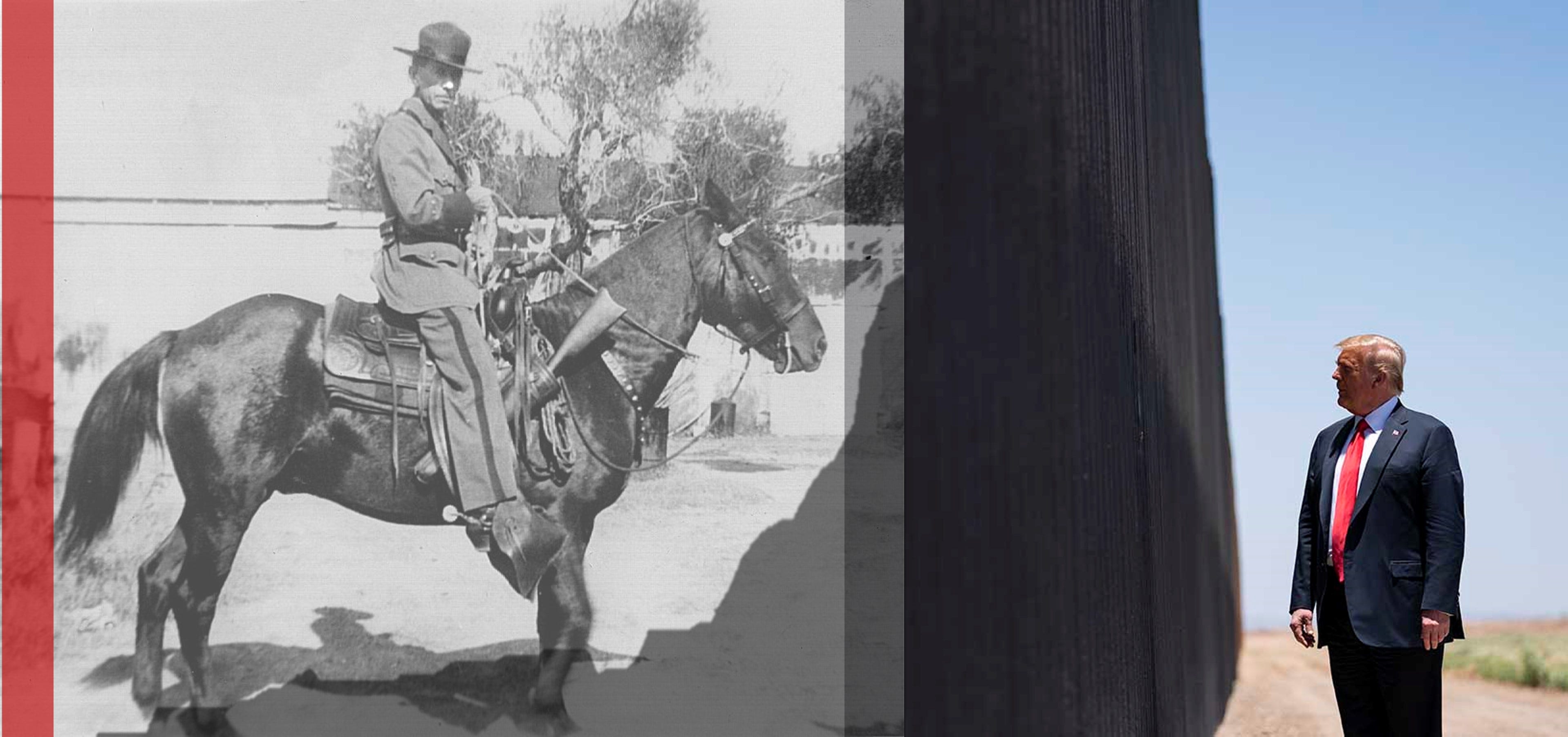
Telling Stories of Territories
Hello Interactors,While the media dwells on border disputes like Russia and Ukraine or Trump’s wall, COVID, climate change, and the global economy thumb their nose at territorial boundaries. Are these borders we obsess over even real or are they products of our imagination? As interactors, you’re special individuals self-selected to be a part of an evolutionary journey. You’re also members of an attentive community so I welcome your participation.Please leave your comments below or email me directly.Now let’s go…A CASTLE WITHOUT HASSLEOn Sunday I pulled the beast from the closet. It had been awhile. Probably too long. It pulls with a heaviness that always takes me by surprise. Its long neck, standing tall above its body, awkwardly slumped over my shoulder as I drug its head from the darkness. I walk down the hall with its neck strung out behind me tugging on its short, stout resistant body that pressed heavy with resistance.I don’t know why we keep it. Nobody in the family likes it. It’s not that it eats incessantly; that’s why we got it. It’s more that it’s so damn heavy and awkward. No wonder we keep it in the closet longer than we should. But there’s only so much dust and dirt one can tolerate in a house. It was time to vacuum.We tolerate a fair amount of dust in our house. Lazy? Maybe. Is it so bad that we let a little dust accumulate? As the comedian George Carlin once said,“Dusting is a good example of the futility of trying to put things right. As soon as you dust, the fact of your next dusting has already been established.”I grew up, like many people I suppose, learning to have anxiety around dust accumulation. But I was raised Methodist and it was John Wesley, Mr. Methodism himself, who most likely coined the phrase, “cleanliness is next to godliness.” He had a thing about remaining clean. But this idea dates back to the Old Testament. Cleanliness for the Hebrew people wasn’t about the home, it was about the body. That’s how we got baptism, foot washing, hand washing, and, yes, circumcision. Either way, to be clean was to be pure.By dragging this weighty, electrified, menace with its dust breathing head across floors, window sills, and furniture I am not only sucking up undesirables into a bag, I am purifying the home. And just to make sure these impurities don’t escape the menace of this machine it features a HEPA filter on its exhaust. Why do people feel the urge to purge these dusty hombres from our home?There are practical reasons, I am sure, just as with washing our bodies. But it’s different with our homes. These unwanted microscopic interlopers have made their way inside our home and we want them outside our home. As they invade we become territorial. We sweep dust into a bin, under the rug, or out the door. There is a spatial differentiation to ‘cleansing’ the home of ‘undesirables’. Get out and stay out!As a child, were you not allowed to take food into certain rooms? Do you take your shoes off at the door? How about, “No pets upstairs!” Growing up I had friends where entire living rooms were off limits to kids. Parents are known to issue all kinds of spatial regulations to their families. “Go to your room!” “Get out of the kitchen!” “Take it outside!”But rooms can also house fond thoughts. Some of my best memories were in my basement. I played pool, the piano, and with trains. I watched home movies, made art, or pulled an Encyclopedia from the shelf and was transported to another world. I told this story to someone on a Zoom call last week and they leaned into the camera looking not at me but around me and asked, “And where are you now?” “In my basement”, I replied.But not everyone has fond memories of their homes. If they had one. For victims of spousal and/or child abuse, or even slavery, recalling memories of home – or certain rooms in a home – brings on discomfort, anxiety, and pain. Response to that anguish varies by person.The influential feminist author, professor, and social activist bell hooks (a pen name borrowed from her grandmother’s name Bell Blair Hooks and reduced to lower case out of deference) writes in her book Yearning: Race, Gender, and Cultural Politics that black women, during her childhood in the south,“constructed their homes as places of care, nurturing and retreat from a harshly racist society in which most of them also worked outside their own homes, in domestic service at the homes of white people.Making their own home, hooks believed, however modest or temporary had ”radical potential” to regain “their ‘subjectivity’ (their personal human identities) in a society which tended to categorize them oppressively by gender and ethnicity as ‘women’ and ‘black’.”This interpretation of and relationship to ‘home’ can be complex. For some “a man’s home is his castle” so long as ‘he’ is the ‘master’. This phrase first read as “An Englishman’s home is his castle.” Which is to say “An English person’s home is a place where they may do as they please and from which they may
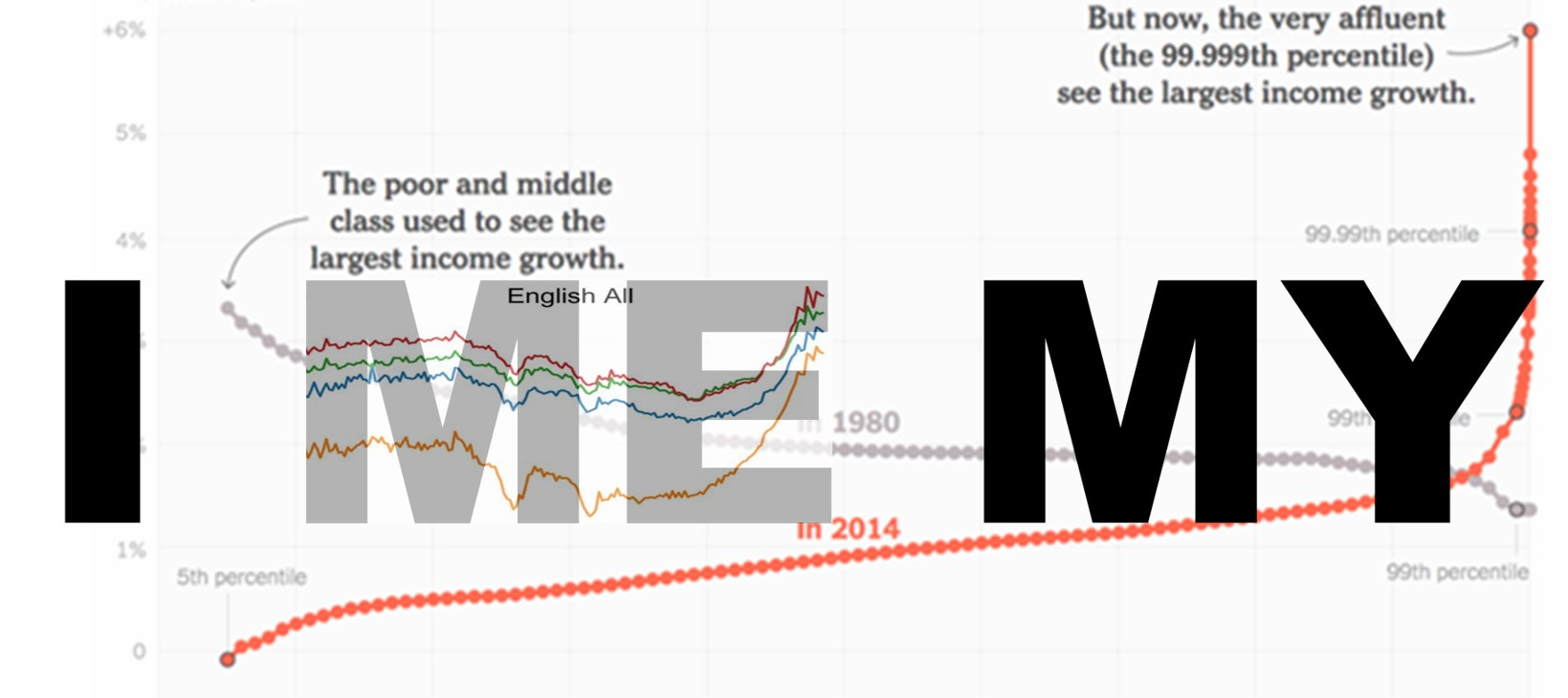
Me, Myself, and I
Hello Interactors,We all intuitively feel the world is falling into selfishness, defensiveness, and pettishness. Me, my, and eye for an eye. If the words we see in the books we read are any indication, it’s not just intuition but fact. And the shift started right around 1980.As interactors, you’re special individuals self-selected to be a part of an evolutionary journey. You’re also members of an attentive community so I welcome your participation.Please leave your comments below or email me directly.Now let’s go…WE PRAY FOR NOT FOR US, BUT MEDo you use words like believe, hope, fear, sense, feel, pray, soul, or mystery? Or are you more likely to use words like science, technology, model, method, fact, data, analysis, transmission, or system? If you’ve read even one Interplace essay, then I believe that my preference is no mystery! And I hope and pray you’ll read more than one. After all, I search for facts and data and then perform some analysis of the science of systems.What if I asked whether you use the words I and me more than we and us? One look at social media and it would be apparent. All the social strife, climate fright, or COVID concern has many people screaming into the digital void or retreating to the nearest corner curled up mumbling to themselves and their rectangular shiny black mirror of a screen. This is a very personal and individual reaction that commonly begins with the word “I” followed by “hope” or “pray.”What if I told you the world has both been increasingly using feeling words, like sense and soul and individual words, like I and me since 1980? What’s more intriguing is these two uses are correlated. The band R.E.M. was sending us clues back in 1987 when they released their song, “It’s the end of the world as we know it – [and I feel fine]. In it they sing,“Save yourself, serve yourselfWorld serves its own needs, listen to your heart bleed”A paper came out just last month that provides evidence of this dialectical drift. The researchers, led by Martin Sheffer, of Wageningen University in The Netherlands, assembled a massive corpus of text from millions of books found on Google Books dating from 1850 to 2019. Reading and analyzing the text of this many books is humanly impossible, so they put machines to work. They used text analysis tools to search, count, find correlations, and detect sentiment.A simple example of this can be done by anybody with access to the internet. There are websites that will count the occurrences of a given word in a body of text and then arrange them into a word ‘cloud’. The largest word in the cloud represents the most frequently used word and the smallest the most infrequent. Here's a word cloud of the over 130,000 words I wrote on Interplace in 2021.But these simple clouds don’t say anything about what kind of words they are or what associations they may have with other words or ideas. And they don’t lend insight into what words are likely to occur together. But there are statistical methods and software tools that, if given enough clean data, can cluster words of similar meaning and correlate them to the occurrence of other words.What these researchers discovered is that “words associated with rationality, such as “determine” and “conclusion,” rose systematically after 1850, while words related to human experience such as “feel” and “believe” declined.” Words to do with senses, spirituality, emotions, and personal relationships are “sentiment” laden words that reflect a “personal world view.” Over time, they were displaced by “fact based” words used in argumentation of “societal systems”. They also found this pattern correlates with the rise of we and us and the decline of I and me after 1850.And then, starting around 1980, this trend peaked and then flip-flopped and the trend accelerated in 2007. That is when, the authors write, “across languages, the frequency of fact-related words dropped while emotion-laden language surged, a trend paralleled by a shift from collectivistic to individualistic language.”Of course, explaining why this happened is much harder than finding the evidence, which is also no small feat. The researchers speculate that 1850 was a time when the Industrial Revolution was hitting its stride. Science and technology were credited with economic prosperity and the promise of logic and rationalistic determinism seeped into culture and then books. Out with the mystical and in with the technical. It’s what the sociologist Max Weber called a process of “disenchantment”.But sociologist and political theorist, Steven Lukes, researched and wrote a book on the origins of “individualism.” He reveals the word ‘individualism’ has multiple ‘semantic histories’ and meanings. It entered the scene in the nineteenth century along with two other big ‘isms’ – ‘socialism’ and ‘communism.’The first use came in 1820 in France in response to the French Revolution. Because conservative elites, especially religious leaders, viewed the revolt against the es

A Not So Happy Anniversary
Hello Interactors,Two years ago yesterday, the first case of COVID-19 in the U.S. was reported just north of Seattle in Everett, Washington. By the end of the month, my town, Kirkland, became famous for more than just the brand of Costco toilet paper. It was the site of the first serious outbreak of COVID in the United States. How many more years will this last? It all depends on if we’re honest with each other and behave ourselves.As interactors, you’re special individuals self-selected to be a part of an evolutionary journey. You’re also members of an attentive community so I welcome your participation.Please leave your comments below or email me directly.Now let’s go…I WANT YOUIt wears many crowns: multae coronae; this virus, this disease. CO-VI-D. COVID. We watched as its thorny tips gripped the tender tissue deep in the lungs of unsuspecting Chinese victims in Wuhan. Replicating, mutating, devastating. Like many crowns before, it sought expansion; new territories to explore, humans to exploit, and lives to destroy. But not the impenetrable America, we thought. Not immutable Americans. Epidemics are for poor countries. Others. What collective stupidity.Viruses know no borders. America’s first serious outbreak of the Novel Coronavirus occurred in a health center just over a mile from my home in Kirkland, Washington. Like any invader, it scared people into their homes. First reactions were to stay clear of the facility from whence it was spreading…and anyone who may work there. Doctors and nurses at the home were early spreader suspects. Would they spread it to hospitals, other patients, or their families? Not yet knowing how it spread or how to avoid it, early advice was to simply wash your hands. Wash everything – your clothes, your groceries, and even your Amazon packages. Masks were regarded as ineffective by many U.S. medical pundits and practitioners. Wash your hands, they said.The United States has a history of denial when it comes to epidemics. When the Spanish Flu was first reported in 1918 in a U.S. Army camp in Kansas, the U.S. had just entered World War I the year prior. Citizens of warring countries in Europe, including Great Britain, were experiencing outbreaks of the flu but were loathed to report it. They feared their enemies would know their troops were vulnerable and weakened. They also didn’t want the public, especially draftees, to fear both the war and an epidemic. And they wanted the media to focus attention on the war, not public health.Spain, who’s King had contracted the flu, was neutral during War World I so freely reported the outbreak that was soon to be ravaging Europe. The Spanish flu did not originate in Spain, just the honest reporting of it.The U.S. government, and its high ranking military, were equally hush on the outbreak. It didn’t help that two months after the first reported case, Congress passed the 1918 Sedition Act. This made it a crime to use "disloyal, profane, scurrilous, or abusive language about the form of government of the United States." Newspaper editors may have had their own reasons for not reporting on the epidemic, but fear of legal action by the federal government may have topped the list.By the end of summer, the flu had spread enough that doctors became increasingly worried. For example, in September of 1918, doctors in Philadelphia asked the press to advise the public against attending an upcoming “Liberty Loan” parade. Local papers refused to run the articles. Doctors pleaded with Philadelphia’s public health director to cancel the parade, but their pleas were dismissed. The parade became a super-spreader event. Over the course of the next month, over 12,000 people in the Philadelphia area died from the Spanish Flu.President Woodrow Wilson didn’t help. Wilson, borrowing a page from the Europeans, chose a combination of censorship and propaganda. This was America’s first real governmental threat to the freedom of the press. He demanded “loyalty” from all Americans in the lead up to World War I and his administrations pursuit to “make the world safe for democracy.” Days after Congress declared war in April of 1917, Wilson issued an executive order creating an agency called the Committee on Public Information. It was led by the journalist, George Creel, and was intended to persuade Americans to support the war and recruit soldiers.One of the departments was called the Division of Pictorial Publicity and included volunteer artists and illustrators. One of those illustrators was James Montgomery Flagg. Perhaps drawn to patriotism with a name like Flagg, he made one of the most enduring illustrations in American history. It’s the ubiquitous poster of Uncle Sam sternly pointing his finger at the viewer with the face of an angry father, with words in all-caps, “I WANT YOU…FOR THE U.S. ARMY.”Wilson’s PR man, Creel, was not unlike the over controlling press secretary’s that Trump appointed. Creel demanded the White House only publish good news, flattering
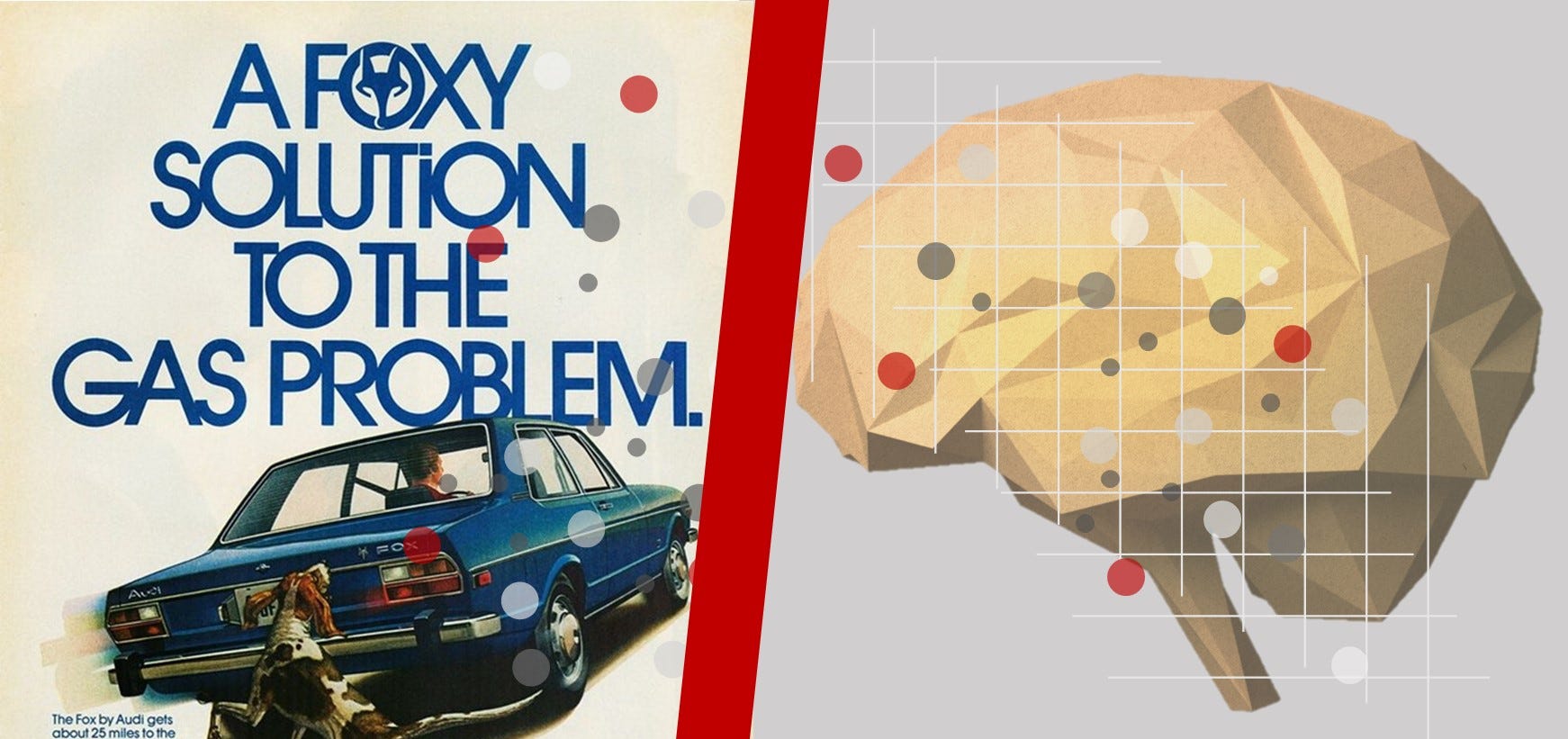
You Are What You Drive...If You Survive
Hello Interactors,Our family hit a snag in the transportation department last week. Our routine was disrupted making us scramble for remedies — including possibly needing a new car. It all came at a time when the state of Washington released its 2021 figures on automobile related deaths. It made me wonder and reflect on car dependency, the Covid funk, and the psychology of cars. As interactors, you’re special individuals self-selected to be a part of an evolutionary journey. You’re also members of an attentive community so I welcome your participation.Please leave your comments below or email me directly.Now let’s go…CHITTY CHITTY BANG BANG“It’s making a strange noise, shifts awkwardly, and smells funny,” my son and daughter exclaimed. There had been similar reports previously, but things had worsened. “It seems ok on the straights, but sounds and feels worse going down hill,” they added. Then, as my daughter got in the car to go to swim practice, she soon came back inside and said, “I’m taking the other car. Uno is making an awful noise and smells even worse than before.”Our kids call our 2006 Audi A3, Uno. The Washington State Licensing authority named it when it was born. They even sent us two rectangular plates with its name stamped into it, along with a few appended random numbers. We mounted one on its nose and the other on its rear-end. Our kids use Uno to commute to school 12 miles away as well as other errands, appointments, and events. They both have a bit of an emotional attachment to this aging little black hatchback. Uno even becomes Dracula during Halloween when they affix dangling white fangs on each side of the license plate frame.I’ve had an emotional attachment to Audi’s since I was a kid. I saw my first Audi in the mid-70s. It was Audi’s first car sold in the United States – The Audi Fox. A guy down the street owned one. His name was Delbert Woody. I was drawn to Delbert. He was a World War II veteran who personified the post-war male mystique. He rode a dirt bike in the open field behind his house, was an avid hunter and fisherman, drove construction trucks for a living, was a life long Teamster Union member, and loved pecan pie and Pepsi. He, like so many other war veterans, got married after the war and settled in the suburbs. They were the first to move into one of Norwalk, Iowa’s first subdivisions in 1960. Their single story ranch house, nestled neatly in a line of others just like it, sat on a hill below the water tower at the edge of town on a street aptly named: Edgemont.Also in keeping with post-war tradition, he had a fascination with cars. I remember him owning more than one and this was during the 1970s gas crisis and recession. Audi entered the U.S. market selling the Fox as a ‘solution to the gas problem.’ The Fox was marketed as a sports sedan with a sporty suspicion, front-wheel drive, and an engine that could get 25 miles to the gallon. All for $3400. That’s roughly $20,000 today. I can see how a masculine blue collar gearhead like Delbert was attracted to this car, despite it being German.I’m not sure what I liked about it. Maybe it was the novelty of a foreign car in small Iowa town, the European styling, or maybe it was the cool fox emblem on the back. Probably all the above. The truth is, Delbert and I, and all auto-dependent motorists, share something in common. We all have brains that contain two separate modules that combine to form relationships with automobiles.One of these cranial circuits uses cool calculating rational thought that views a car as a utility – an appliance. It’s sensitive to numbers: miles per gallon, range, price, 0-60, reliance ratings, and a myriad of other self-justifying statistics. The other side of the brain tugs on our heart strings. Emotional affections warm our heart in the comfort of a climate controlled cocoon. It makes our heart go pitter patter with the status cars provide, or cause our pulse to quicken at the sudden and effortless acceleration through space.Both of these neuro-negotiators conspire to construct our comforting and sometimes conniving relationships with cars. And automakers have learned how to manipulate both of these brainy battles through design and marketing.Uno got its name from a random license plate generator, but automakers are less random. For Delbert Woody’s Audi Fox, Audi wanted to associate that car with a fox. A fox is agile, strong, fast…and cunning. Many animals are. Which is why it’s not hard to find cars named after animals. Here are just a few: Plymouth Barracuda, Mercury Sable, Buick Skylark, Corvette Stingray, Pontiac Sunbird, Ford Thunderbird, Dodge Viper, AMC Eagle, Chevrolet Impala, and who can forget the Ford Pinto.As you can see all of these are American made cars. U.S. automakers also like aggressive macho sounding names. Especially Dodge, with names like Challenger, Ram, and Avenger. Europe and Japan have a few examples like the Fiat Spider or Suzuki Samurai, but nothing like the U.S. You ma
Fear and Nostalgia; Altruism and Defiance
Hello Interactors,Welcome to 2022. Or, as my son likes to say, twenty-twenty also. Today we begin our winter journey through human behavior as it relates to the interaction of people and place. As we further divide, we seem to also be drifting apart. So I turned to one of our leading philanthropic philosophizing musicians, Bono, for the answer.As interactors, you’re special individuals self-selected to be a part of an evolutionary journey. You’re also members of an attentive community so I welcome your participation.Please leave your comments below or email me directly.Now let’s go…BONO SCRATCHESThe holidays have a way of making you reminisce. I was thinking back 14 years ago when I met Bono at Microsoft just before the 2007-2008 holiday break. He was promoting his RED giving initiative and a small group of us in Windows were meeting with him and his team on ways to incorporate RED into Windows as a cross promotional scheme. Bono thought it especially relevant given we were in REDmond, Washington.I was an early U2 fan. I bought their third album, War, on vinyl in 1983 when it first came out. So I brought it along to the meeting to see how Bono would react. As we filed into the Microsoft board room being greeted by members of the RED team and Bono, I was watching his eyes through his yellow tinted glasses. He immediately latched on to the album in my hand, walked over to me and said, “You just don’t see many of these.” And he took it from me as I followed him to the conference table. He asked me my name, pulled out his red pen and wrote on the back of the album cover, “It took 24 years but we finally hooked Brad. See you…” He then drew his signature profile of his long nose, glasses, and a straight smile and signed it, “Bono.”He was shorter than I imagined. But genuine and endearing. He shared the space and time in that meeting with everyone. But, at the end, he couldn’t resist taking jabs at the Windows logo. “Look,”, he said. “I’m not a business person, I’m an artist.” He then stood up and approached the white board. He talked about how awful the Windows logo was. “Why is the Windows logo a flag?”, he asked. “It bothers me.” He then grabbed a pen and drew a simple four pane window and said. “See, a window. How hard can that be?”, he demanded. And sat down.He had a point. And within a couple years, he got his wish. Pentagram, a design firm in New York, designed a new Windows logo. And with it came a new Microsoft logo that looks more like the sketch Bono made. But it turns out, as is often the case, even that idea was not new. Pentagram had proposed that same logo years before, but it was rejected.But I admit, I was a bit distracted during his loquacious logo lecture. It was hard taking him seriously in his skin tight gold pants. He was distracted too. While Bono was pacing along the whiteboard with pen in hand, his other hand was routinely futzing with his crotch. He looked like a baseball player stepping out of the batters box to adjust his cup or scratch an itch. It’s not the image of a rock star you want lingering in your head.I prefer to remember Bono as a 20 year old kid on MTV bellowing protest songs from the album he signed.U2’s album, War, is noted for its harsh departure from their previous two albums, both musically and lyrically. They set out to tackle themes of war as Ireland had seen its fair share in his lifetime. Their biggest hit from that album, “Sunday Bloody Sunday”, leads in with drums resembling a military march and features the blending of physical and emotional impacts of war. It includes lines like, “The trench is dug within our hearts.” It goes on to address the apathy around war and how our defiance against it is lessened by the numbing of the everyday violence mixed with fictionalized versions on TV.And it's true, we are immuneWhen fact is fiction and TV realityAnd today, the millions cry We eat and drink while tomorrow, they dieThe song, “Sunday Bloody Sunday” refers to a particularly bloody conflict in 1972 called Bloody Sunday. On Sunday, January 30th, 26 British soldiers opened fire on unarmed protestors in Northern Ireland killing 13 on the spot. One other died later from wounds. Many of these 14 people were either fleeing or helping other injured civilians.These lyrics are about the effects of Northern Ireland conflicts that had been occurring for more than two decades by the time U2 released this album. The conflicts occurred mostly in Northern Ireland over political and nationalistic opinions between two warring factions. On one side were Unionists and loyalists, who wanted Northern Ireland to remain in the United Kingdom, and on the other Irish Nationalists and republicans, who sought to abandon the United Kingdom to create a United Ireland. Those seeking to stick with the United Kingdom were mostly Ulster Protestants, and those seeking independence were mostly Irish Catholics which added further religious and historic dimensions to what the Irish called The Troubles.GRO
Interplace 2021
Hello Interactors,The first year of Interplace is nearly complete. I want to thank everyone who supported me through 2021 by subscribing, reading, listening, commenting, and sharing. I also want to thank the London Writers’ Salon and all faithful writers who showed up on Zoom with me every morning at 8:00 Pacific time. It brought companionship, accountability, and miles of smiles.Evolutionary biologists call interactors the individual traits that are so uniquely beneficial that they lead to natural selection. You are my interactors – special individuals self-selected to be a part of an evolutionary journey. Thanks to you, that journey will continue through 2022. I’m keeping to the same structure, but may summon the courage to do occasional interviews as well.A year ago I kicked off Interplace. In the winter I wrote about human behavior, then moved to cartography in the spring, physical geography and the environment in the summer, and economic geography this fall. This is post number 50 and the last of 2021. Should Interplace 2021 be a book, it would be comprised of four sections, 50 chapters, nearly 740 pages, and over 130,000 words. To celebrate, I thought I’d share excepts from the most read posts from each of the four seasons. I also included titles and links to all 50 pieces at the end.But before I start, I thought I’d share a quote from the legendary leader the city of Seattle was named after, Chief Si'ahl (siʔaɫ). These words appeared in my first newsletter and continue to serve as an inspiration for Interplace today. They’re worth sharing again as we reflect and contemplate the constellation of interactions with people and place we all had throughout 2021 and imagine what’s ahead in 2022.“Humankind has not woven the web of life.We are but one thread within it.Whatever we do to the web, we do to ourselves.All things are bound together.All things connect.”And now, excerpts from the top four most read Interplace posts of 2021.WINTER: BEHAVIORTake Your Head for a WalkYour brain makes maps on your behalf. But if you want a good one, take a hike. Your brain will love you for it, and your future self will too.It turns out walking and cognitive mapping are mutually dependent systems that are only optimized when done together. Driving or riding as a passenger are poor substitutes for enhancing our interactions with place. In the words of neuroscientist, Shane O’Mara,“The brain’s navigational and mapping and memory systems are so intertwined as to be almost one and the same. Walking to somewhere depends on the brain’s navigational system, and in turn walking provides a vast amount of ongoing information to the brain’s mapping and navigation systems. These are mutually enriching and reinforcing systems.”Our cities don’t make it easy to walk. A century of car culture has kept people from interacting with place. We can deduce from the research I’ve cited, that this is a bad thing. Not only do we have a biased and hazy image built in our minds of the environment in which we live, sitting in a car or a chair does not facilitate happy thoughts.We all succumb to what these two Iowa State researchers referred to as the ‘dread effect’. The thought of expending more energy than necessary can make one dread walking. It’s all too easy to tap a destination on Google maps, hit the ‘walking distance’ tab, shutter at the time and effort it would take to walk, and then grab the keys and drive there. But since Covid hit, I instead grab my headphones, take a step, and feel the cells in my brain come alive. I am interacting with place, with a smile on my face, as a cranial cellular symphony traces a map of the space.SPRING: CARTOGRAPHYYou Are What You MapHow triangles, topology, quadrangles, and cartography yield maps that can skew both messages and timeThe Renaissance accelerated the field of cartography. This was an era of discovering new knowledge, instrumentation, and the measuring and quantification of the natural world. Mercator’s projection stemmed from the invention of perspective; a word derived from the Latin word perspicere – “to see through.” European colonial maps were drawn mostly to navigate, control, and dominate land – and its human occupants. We have all been controlled by these maps in one way or other and we still are. Our knowledge of the world largely stems from the same perspective Mercator was offering up centuries ago. The entire world sees the world through the eyes of Western explorers, conquerors, and cartographers. That includes elements of maps as simple as place names.Take place names in Africa, as an example. The country occupied by France until 1960, Niger, comes from the Latin word for “shining black”. Its derogatory adaptation by the British added another ‘g’ making a word we now call the n-word. But niger was not the most popular Latin word used to describe people of Africa, it was an ancient Greek derivative; Aethiops – which means “burn face”. If you replace the ‘s’ at the end with the ‘a’ f
Oh Christmas Tree, Oh Christmas Tree, Your Story Has Many Branches
Hello Interactors,For all you Christmas celebrators out there, happy Christmas Eve. Since many will be gathering ‘round a Christmas tree, I thought I’d tell the story of its origin. And like so much of America history, it has ties to immigrants and slavery; but in this case — anti-slavery.As interactors, you’re special individuals self-selected to be a part of an evolutionary journey. You’re also members of an attentive community so I welcome your participation.Please leave your comments below or email me directly.Now let’s go…A TREE SO YEE MAY BE FREE“If the morning drives are extended beyond the city, there is much to delight the eye. The trees are eased in ice; and when the sun shines out suddenly, the whole scene looks like one diffused rainbow,—dressed in a brilliancy which can hardly be conceived of in England. On days less bright, the blue harbour spreads in strong contrast with the sheeted snow which extends to its very brink.”These are the words of Harriet Martineau. She was a English writer, journalist, and social theorist who pioneered observational methods that came to influence the field of sociology. One of her more popular books came at the end of her travels through the United States in the 1830s titled, Retrospect of Western Travel. The passage above describes what she saw as she left the Boston city limits in the snow the winter of 1835.You may have images of her bundled up in a one horse open sleigh, over the hills she went, dashing all the way. But according to Martineau, you can let go of any such romantic inclinations. Here’s her take on sleighing.“As for the sleighing, I heard much more than I experienced of its charms. No doubt early association has something to do with the American fondness for this mode of locomotion; and much of the affection which is borne to music, dancing, supping, and all kinds of frolic, is transferred to the vehicle in which the frolicking parties are transported. It must be so, I think, or no one would be found to prefer a carriage on runners to a carriage on wheels,—except on an untrodden expanse of snow. On a perfectly level and crisp surface I can fancy the smooth rapid motion to be exceedingly pleasant; but such surfaces are rare in the neighbourhood of populous cities. The uncertain, rough motion in streets hillocky with snow, or on roads consisting for the season of a ridge of snow with holes in it, is disagreeable, and provocative of headache. I am no rule for others as to liking the bells; but to me their incessant jangle was a great annoyance.”And if that’s not enough to convince you, she offers up a quote from unknown source that puts a finer touch on the realities of sleighing.“Do you want to know what sleighing is like? You can soon try. Set your chair on a spring board out in the porch on Christmas-day: put your feet in a pail full of powdered ice: have somebody to jingle a bell in one ear, and somebody else to blow into the other with the bellows,—and you will have an exact idea of sleighing.”Martineau was on her way to a Christmas evening celebration at the home of a former Harvard German language professor, Charles Follen. Although, due to scheduling conflicts the event was actually on New Years Eve and not Christmas Eve. The cozy holiday scene that Martineau proceeds to unfold came to be the most, though not the first, read articulation of what came to be the center piece of American Christmas celebration – the Christmas tree.Follen was a German immigrant so perhaps it’s not that surprising that a Christmas tree would feature prominently in her story. It’s been a long held belief that German immigrants brought their time-honored Christmas tree tradition with them. Though, as we’ll soon see, the evolution of the Christmas tree tradition in America paralleled that of Germany.Martineau’s account of that evening, while factual, leaves out important historical details as to why she was celebrating Christmas with Follen and his family that night. These were two radical Unitarian abolitionists who bonded over their insistence that slavery be eradicated totally and immediately. Northerner’s, and New England Unitarians, were split on the matter of abolition. Follen’s convictions are what got him fired from Harvard a year prior.As for Martineau, she was a well known and respected journalist but not yet a public activist. But after attending a women’s abolitionist meeting that November, she was convinced she needed to act. She was asked at that meeting to write publicly avowing her beliefs. Being one of the only women writers of her time to sustain herself through writing and still requiring access to America’s mainstream elite for her book, she faced an ethical dilemma.Later she wrote, “I foresaw that almost every house in Boston, except those of the abolitionists, would be shut against me; that my relation to the country would be completely changed, as I should suddenly be transformed from being a guest and an observer to being considered a missiona
Cryptocurrency, Euro-insurgency, and Economic Urgency
Hello Interactors,This is the last full week of fall and so the last episode on economic geography. Happy early winter solstice everyone. Soon we in the North start tilting toward the sun. I’ve learned a ton this season and hope you have too. Today I conclude with a summarization of the history and effects of capitalism as we know it today and offer a glimpse at alternatives. We like easy answers to hard problems, but I’m here to tell you it’s messy and complex. And that’s just the good stuff.As interactors, you’re special individuals self-selected to be a part of an evolutionary journey. You’re also members of an attentive community so I welcome your participation.Please leave your comments below or email me directly.Now let’s go…THE URGENCY OF CRYPTOCURRENCYCryptocurrency was trending as a topic again this fall. It spiked in October. I still see residual evidence of this in my social media feeds where debates rage on over whether it’s a legitimate form of currency or just a speculator’s delight.Cryptocurrency was invented to circumvent the juggernaut that banks, governments, and credit card companies hold on the currency market. But the more it gets legitimized as an alternative currency, the more interested these traditional institutions become. For example, one form of cryptocurrency rising in popularity are stablecoins. It’s a digital currency that can be converted into ‘real’ money and is issued by the very institutions the inventors were hoping to circumvent. It seems there is no escaping Western economic dominance.Money in the U.S. is commonly believed to come from the government, but most greenbacks issued today come from banks. They order currency from the Federal Reserve based on public demand which is then put into general circulation – which is growing worldwide. In fact, there are more U.S. dollars circulating outside of the U.S. than in it. Much of which is used by people struggling financially around the globe.Meanwhile, those not struggling are using cash less and less. Recently, some New York retailers even attempted to go cashless. It prompted the city to pass a law requiring food establishments to accept cash or face a $1,000 fine.Still, increasingly we see people paying for items with their phone. In this digital, post-cash society it’s easy to imagine an alternative virtual currency sneaking in. If our democracy can be challenged, why not our currency? A recent New York Times article by Peter Coy on the slipping grip of cash notes that “Some economists believe there is a risk that we’ll someday find ourselves with nothing that is universally accepted as a medium of exchange.” He goes on to remind us that is was Socrates who “originated the concept of a noble lie, which is a myth that elites propagate for what they view as the good of the public.” He then quotes Michael Dorf of the Cornell Law School who believes “the solidity of money is one such lie.”The truth is, alternative currencies and economies exist all around us and have for centuries. For example, in a district of central London call Brixton, where David Bowie once lived, shops no longer accept the British Pound. Instead they take an alternative currency called the Brixton Pound that features a picture of Bowie on a paper bill that is as nicely designed and proportioned as Bowie himself.It’s been in circulation since 2009 and 250 area shops accept it. Workers in Brixton also get paid with it and you can even settle your utility bills with it. It’s a hyper-local monetary scheme that incentivizes local residents to shop local, buy local, and live local. The Brixton Pound has inspired cities across the UK to do the same and now Bristol, Cardiff, Hull, Liverpool, and Plymouth all have their own alternative local currencies.Many schemes like this exist outside of the Western world too – and they’re often not tied to the dominant currency system. For example, there’s a settlement on the outskirts of Nairobi, Kenya called Bangladesh. Not to be confused with the country of Bangladesh. It was named after an early settler who unexpectedly packed up and moved to Bangladesh never to return. The area was hence called Bangladesh. It’s a poor informal settlement made of self-made homes and little to no infrastructure, yet is home to over 20,000 people. They work at nearby industries at the fringe of Nairobi doing odd jobs regularly paid workers refuse to do.Many are well educated, but work is intermittent and there are more qualified workers than there are jobs. It leads to extreme poverty, apathy, and strife. One local teacher in the Peace Corps, Will Ruddick, became frustrated that he was graduating kids with no where to go. He said many of whom were more skilled academically than many he’d witnessed at Stanford. Ruddick happens to also have a PhD in econophysics – a branch of economics that draws inspiration from the field of physics. He began wondering how he could devise a way for residents in areas like Bangladesh to earn consistent w
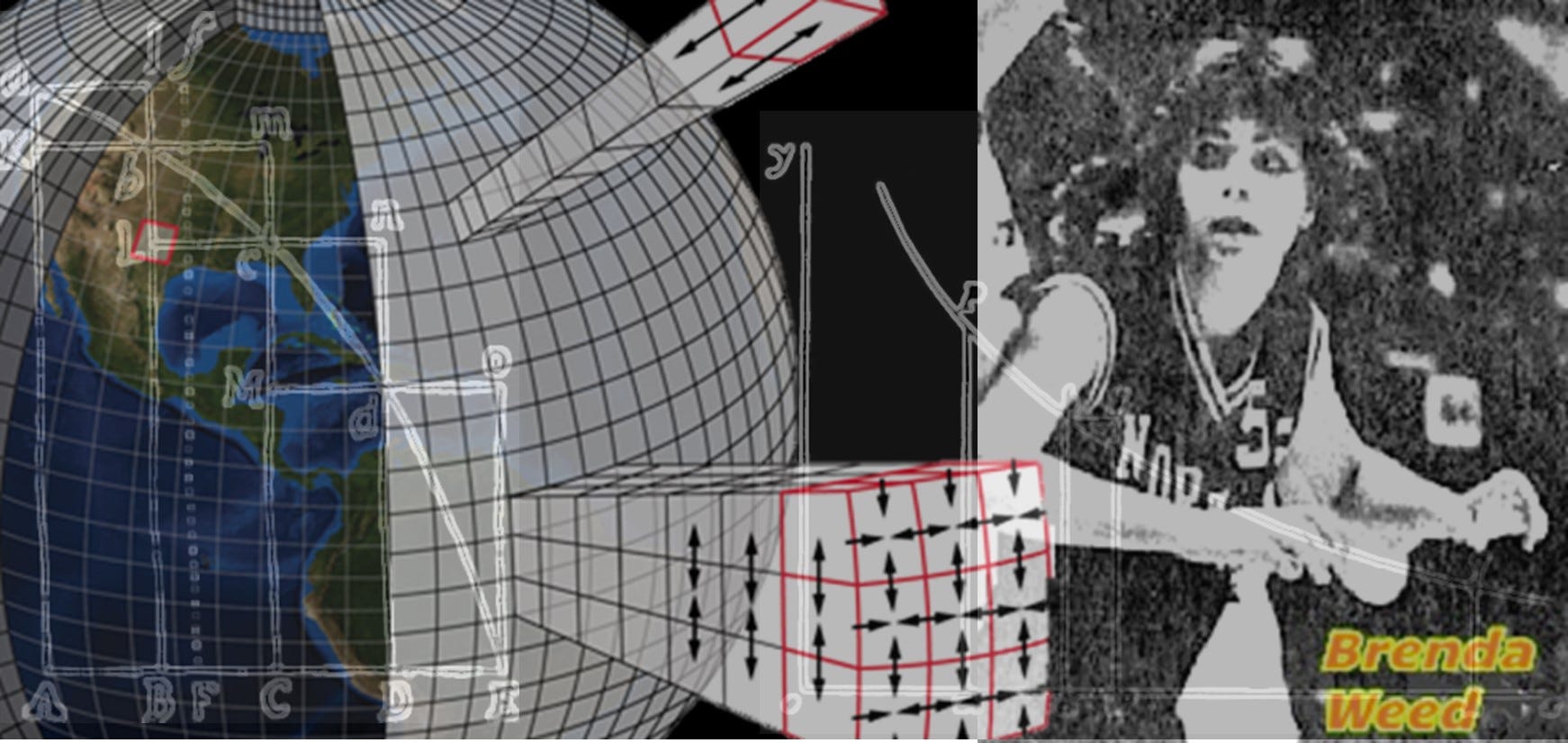
Hoops, Groups, and Feedback Loops
Hello Interactors,The field of economics is stuck in the past. They need to move on, and they need to do it fast. Stop standing around, get in on the bustle. MOVE, MOVE, MOVE! HUSTLE, HUSTLE, HUSTLE!As interactors, you’re special individuals self-selected to be a part of an evolutionary journey. You’re also members of an attentive community so I welcome your participation.Please leave your comments below or email me directly.Now let’s go…BE ON THE VERGE TO SURGEI recently attended my first full length high school basketball game. The last time I saw a high school game I was playing in one. Not much has changed in thirty-seven years. But I did notice more standing around than when I was playing. Watch any NBA game these days and you see a lot of standing around. Maybe these stagnate high school players are just trying to be cool.When you stand in one place on the court, there’s little interaction with your teammates, the player guarding you, the ball, or the floor. It easy to predict what’s going to happen. Not much. My coaches always told me to move without the ball. Later in life, when I played in adult leagues, I found myself yelling to my teammates, “MOVE WITHOUT THE BALL, MOVE WITHOUT THE BALL.” I didn’t like games where guys just ran to the corner and stood there waiting for the ball or for someone to shoot. Bor-ing.Moving around the court without the ball brings dynamism to the game. It increases the chances of interacting with your teammates, your competition, and the ball – across various parts of the court. Coaches design plays expressly to move players around the floor in coordinated orchestration just to get players open. Only then can they interact with the ball and hopefully score.But plays quickly break down and improvisation ensues. It’s what I love about playing and watching basketball. When players are dynamic, new situations and interactions continually emerge and they’re constantly different. But then when a player gets the ball, the attention, interaction, and players converge on that one person. And as soon as they pass the ball or shoot it, everything diverges again. These split-second cycles of emergence, convergence, and divergence are continually in motion and each intentional or random action from any player, the ball, or even the referee or crowd, can send the cycle spinning in another trajectory.Participating in this continual transformation of conditions yields a constant flow of new sensory inputs. They serve as raw material for the brain to invent new and novel interactions. The creative capacity of any player to introduce novelty based on their knowledge of the rules, the split-second state of players interactions, the location of the ball, the time on the clock, and hundreds of other sights, sounds, touches, and smells is what makes basketball work. It’s a continual flow of interactions with people and place that is constantly evolving based on adaptations to ever-changing novel situations.Here are three examples of different layers of interaction happening in a game of basketball. While elements within a layer interact with each other, elements between layers do too.One is happening between the players and the structure of the game. Any one player has the potential to have influence in the game, but they also have the choice to do so. And they can’t do just anything, there are rules to the game and certain social constructs that influence their behavior.Another is happening at a locational level; in the painted rectangle under the basket, inside and outside the three-point line, half-court, and full-court – even out of bounds or at the circles for jump balls. There’s also home court versus away within a conference, advancing post-season to play teams in a district, or even, if you’re lucky, to play distance teams in a state tournament. My sister was lucky enough to do that. She sunk a last second jumper from the sideline to win the Iowa girl’s state tournament in 1981.A third layer are the social and interpersonal interactions and transactions that occur between competitors, coaches and their players, and between referees, coaches and bench officials. These interactions also have a spatial component. Casual banter between a player and a referee under the basket during a free-throw takes on a different timbre than a referee angerly signaling a technical foul in the face of an out of control coach on the sidelines.And then there are the physics of the game. In high school a math nerd friend of mine and I would try to determine the equation for the parabola of our jump shots. “You need to adjust your slope to be more like -.07 if you’re going to shoot 14 feet from the hoop.”, we’d joke. Through years of practice, professional shooters like Steph Curry can dial in each variable of a jump shot, including velocity and spin, to achieve the perfect 48-degree angle needed for a swoosh.Dribbling a basketball up and down is predictable because physics is predictable. Hold a basketball
The ‘One Click Buy’ Empire Needs an Umpire
Hello Interactors,As the holiday season calls on us to shop online, it’s worth considering the cost. I’m not talking about the price of the item your mouse is hovering over, but the hidden cost of getting it delivered to your doorstep.As interactors, you’re special individuals self-selected to be a part of an evolutionary journey. You’re also members of an attentive community so I welcome your participation.Please leave your comments below or email me directly.Now let’s go…GETTING HIP TO A TIMELY TIP ON A CALIFORNIA TRIP“I think you’re transporting drugs”, my cousin said casually. “Why else would they send a 20 year old kid to New Jersey from L.A. just to drive an old station wagon across the country?” “You’re the perfect foil…a 20 year old blond kid from Iowa just doing his job…no cop would ever think to search for drugs.”It was on my mind the whole trip. Especially when I was pulled over in Nebraska for speeding. A portly County Mounty waddled his way to the car as I deftly stashed the radar detector under my seat. I watched him in my side mirror as he put on his hat while approaching the car. Cold winter wind rushed in as I rolled the window down and greeted him with the best rural “howdy” I could muster. I then asked him how fast I was going. He pulled his glasses down over his nose, looked me straight in the eye and said, “I don’t know, son, but it took me 10 minutes to catch up to you.”He was indeed curious about the New Jersey plates and why I was headed to California, but he let me go with a warning. “Take it slow, son, I’m sure those folks out West want to see you make it ok.”By the time I got to the California border, I was ready to be done. I decided to take the southern route into L.A. – the famed Route 66. I had hit a lot of snow in Colorado and was eager for sunny, dry roads. But that would have to wait. A massive ice storm met me in the high desert town of Victorville, California. I was barely able to find a place to stay for the night as the freeway was lined with cars in the ditch.The next morning the roads were bare and wet as I headed west through the pass dividing the San Gabriel and San Bernardino mountains and into the vast San Bernardino valley. It was named by Spanish colonizers who took the same route in the late 1700s, then more Europeans a century later, and fellow Iowans soon after that. This valley was once home to sprawling citrus groves that attracted winter weary farmers from the Midwest. It was still agricultural when I was inching my way toward L.A. in 1985 in a blue Oldsmobile station wagon – a suspected innocent drug smuggler.And then just last week there I was, over 30 years later, plodding my way toward L.A. down the same Interstate 10. My family and I took a trip to Southern California to visit schools for my son. A lot has changed. They paved paradise and put up parking lots, warehouses, and sprawling housing developments too. The freeways were crammed with semi-trucks as commuters blinkered their way through the lanes. They were competing for space in their hour-plus long trek to jobs in the L.A. basin.It’s a long commute to and from what is known as the Inland Empire, but the average selling price of a home is $482,000. That’s nearly half of what you’d pay in Los Angeles ($841,000), further south in Orange county ($983,000), or San Diego ($802,000).While four hundred grand is relatively low for Southern California, prices are climbing. The average price is already above what it was before the financial collapse of 2008. That’s when average single family home prices in the Inland Empire plummeted to under $200,000. The region was home to some of the worst foreclosure stories in the country. At one point, one in five homes in the area were in foreclosure. People were literally walking away from their homes. Even though housing is booming again, inventory is actually lower than it was before the collapse.Wall Street backed firms like the Blackstone Group, the Lewis Group, and Oak Tree Capital Management swooped in and bought large swaths of foreclosed homes. They’ve been renting them to those who can’t afford to buy until the price of the home reaches a level they feel they can best profit by selling. Buy low, sell high and wish the struggling family good bye. (Incidentally, the founder of Blackstone, Stephen Schwarzman, who is worth around $21 billion, was one of a handful of billionaires who continued to support Trump financially after the raid he incited on the capital. And when the Obama administration suggested Wall Street fund managers like Schwarzman pay at least as much in taxes on earned interest as ordinary wage earners, Schwarzman said Obama was waging war on the wealthy and added, “It’s like when Hitler invaded Poland in 1939.” What an odd and insensitive comparison for a Jewish man to make. But, Trump has a way of attracting odd and insensitive people.)As billionaire backed firms competed for foreclosed housing stocks, there was no chance a single individu
Black Friday and the Christmas Creep: Part 2
Hello Interactors,Today is Black Friday. It’s one of the most anticipated shopping days of the year. In Part 1 of this two part series, I talked about how the Christmas holiday season is rooted in consumption and classism. Its origins had little to nothing to do with Christianity, but everything to do with establishing social order. Black Friday is no different.As interactors, you’re special individuals self-selected to be a part of an evolutionary journey. You’re also members of an attentive community so I welcome your participation.Please leave your comments below or email me directly.Now let’s go…VISIONS OF SUGAR-PLUMS DANCED IN THEIR HEADSAmerican colonial settlers debated Christmas celebrations well in the 1700s. Bouts of drunken caroling, groveling, and fallacious philia raged from harvest season’s end through December. While the practice was as old as the Roman Saturnalia, Puritan settlers hoped to sever the European connection.One Puritan, Reverend Increase Mather, “accurately observed in 1687 that the early Christians who first observed the Nativity on December 25 did not do so ‘thinking that Christ was born in that Month, but because the Heathens Saturnalia was at that time kept in Rome, and they were willing to have those Pagan Holidays metamorphosed into Christian [ones].’”The harvest parties only increased until the colonists overthrew England’s Dominion of New England in 1689. One Connecticut almanac producer, John Tully, wrote in 1688,“The Nights are still cold and long, which may cause great Conjunction betwixt the Male and Female Planets of our sublunary Orb, the effects whereof may be seen about nine months after…”Tully also bravely printed Christmas Day on the 25th alongside his weather predictions.There was not another mention of Christmas until 1711 when Increase Mather’s son, Reverend Cotton Mather (who applauded Indigenous massacres because they “brought Indian souls to hell”) wrote in his December 30th diary,“I hear of a number of young people of both sexes, belonging, many of them, to my flock, who have had on the Christmas-night, this last week, a Frolick, a revelling feast, and Ball [i.e., dance].…”The following year, around Christmas time, he preached from the Bible criticisms of faux Christians who used religion to veil ungodly sexual acts, “‘giving themselves over to fornication’—'ungodly men, turning the grace of our God into lasciviousness.’”Despite Mather’s routine attempts to curb young people’s desire to turn religious events into parties, such at weddings or Sunday night revelry, it only increased. Population data from this time period shows a marked increase in unwed pregnancies. Records show seven month old marriages that featured an addition to the family a couple months later. Also, there’s a notable swelling of births roughly nine months after Christmas. That’s when I was born.By the early 1700s, Cotton Mather gave up. He reluctantly accepted that Christians could be both Christmas revelers and Christian reckoners; a weakening of Puritanism and a concession his father surely would have admonished. But it set the stage for moderation as evidenced in Benjamin Franklin’s older brother, James Franklin’s, 1733 couplet: “Now drink good Liquor, but not so, / That thou canst neither stand nor go.”James was the one who trained young Ben to become a printer. Benjamin Franklin is also remembered as the nation’s model of self-restraint, but perhaps less so as a philanderer. He fathered an illegitimate child before entering a common-law marriage with his housekeeper’s daughter. Perhaps his rustles in the sheets started with a little wassail in streets.In December of 1734, Franklin wrote this in his second edition of his famed Poor Richard’s Almanac:“If you wou’d have Guests merry with your Cheer, / Be so yourself, or so at least appear.”Then again five years later:“O blessed Season! lov’d by Saints and Sinners, / For long Devotions, or for longer Dinners.”What Benjamin Franklin, and prolific almanac producer Nathanial Ames, aimed to do throughout the 1700s was to cast Christmas, through printed word, as a time to be merry – but in moderation. Slowly, by the late 1700s, Christmas carols began sneaking into America’s first printed hymnals. The Christmas celebration had finally made piece with Christianity. The Universalists were the first to hold a December 25th service in 1789.CLOTHES WERE ALL TARNISHED WITH ASHES AND SOOTBut the dawn of a new century, and the industrial age, brought a shift in attitudes around Christmas. The elite, again, distanced themselves from the occasion. As urban cities grew and jobs shifted from the farm to the factory, winter brought new dynamics to the onset of the season. Some factories closed in the cold months as did shipyards along frozen waters.This brought unemployment and idle time to laborers. Whereas historically wealthy farm owners were willing to amuse the working class in a societal roll reversal – through transient and theatrical wassailing
Black Friday and the Christmas Creep: Part 1
Hello Interactors,This is part one of a two part series on the role of economics in the holiday season. We’re a week away from Thanksgiving, but Christmas has already started to enter our lives. If it feels like it keeps creeping closer to Halloween, that’s because it is. Little did I know, it actually started out that way. As interactors, you’re special individuals self-selected to be a part of an evolutionary journey. You’re also members of an attentive community so I welcome your participation.Please leave your comments below or email me directly.Now let’s go…HOUSE INVASIONIt was 9:00 on Christmas night when four men forcibly entered the house. John Rowden, his wife, their adopted son, and a live-in helper, Daniel Poole, were all home. The four men made their way to the living room, sat on the couch in front of the fire, and starting singing Christmas carols. Clearly drunk, at some point one of the men turned to Rowden and said sarcastically, “How do you like this, father?” They demanded alcohol as payment for their ‘entertainment’. Rowden didn’t like it at all and asked them to leave.They had heard Rowden had fine wine in his collection. They said they’d happily pay him for the alcohol later, but demanded the wine now. Rowden’s wife stepped in reminding them that their house was not a bar and they should leave. Much to their surprise, the men did; only to return minutes later claiming they had the cash to pay for the wine.Fearing the scoundrels would break in if they didn’t take the money, the Rowden’s decided to sell them a bottle of their prized wine. But first they demanded proof that the men had the money. Rowden cracked open the door and one of the men shoved fake money in his wife’s face as the others tried to enter the house.The Rowden’s, with the help of Daniel Poole, managed to push them back and secure the door. The four men appeared to have given up. But moments later they heard them yelling sardonically from outside, “hello.” Poole tried to reason with them. He reminded them that it was Christmas night and they should be home. They saw this as a provocation and challenged Poole to come out and make them go home.Poole refused, of course, so they began throwing rocks at the house. They pried away siding, destroyed rockery, fences, and tore down poles. After an hour and a half of persistent vandalism, it finally subsided and the family was safe and sound. The house? Not so much. Merry Christmas.This true story is from 1649 and took place in Salam, Massachusetts. Two of those four men were later implicated in the Salem witch hunts. These intrusions were a common occurrence in the colonies during the holiday season, but more so in England. These four men were wassailing. Today we might call it caroling, but at the time it was really more a combination of Thanksgiving, Mardi Gras, trick-or-treating, and caroling. We don’t run into many drunk carolers these days, but we would have in 17th century England and their colonies.The Puritan settlers outlawed wassailing after colonizing. In fact, they banned any celebration of Christmas. Because the bible makes no mention of the birth of Jesus on any particular date, there was no cause for celebration. Of course, there was little cause for celebration among the Puritans at all; especially excesses of revelry, alcohol, and sex.The Puritans tried banning Christmas in London too. It prompted a book to be written in 1686 called The Tryal of Old Father Christmas. It featured a Puritan jury made up of “Mr. Cold-kitchen”, “Mr. Give-little”, and “Mr. Hate-good.” Perhaps these characters inspired Charles Dicken’s character, Ebenezer Scrooge, 150 years later.TRICK OR TREAT, SMELL MY FEET, GIVE ME SOMETHING GOOD TO EATThe Rowden’s were a relatively affluent family who owned a pear orchard from which they made pear wine or cider, known as “perry”. Those four young men were of a lower class, possibly even laborers for his orchard, and they came to Rowden’s house to be merry with his perry.It was common practice throughout Europe and England for wealthy land and farm owners to treat their lower class workers to a meal and/or gifts in late November and early December. After what must have been an intense and laborious season of harvesting, canning, slaughtering, and preparing for the coming winter months, December marked an end to a fruitful season worth celebrating. December 6th was the customary end of the harvest season in Western Europe, just a week and a half after America’s modern-day traditional harvest celebration – Thanksgiving.To recognize and honor their hard work, it became customary for workers to exchange gifts with their masters or employers. Some exchanges were initiated from the lower class workers and other times by the upper class employers. But every wealthy land owner knew that if they didn’t so something to commemorate their worker’s labor, they risk workers taking it upon themselves to come knocking. Just as those four men did to old man Rowden, s
Bond, Bezos, Gates, and Musk
Hello Interactors,Most of you probably heard about Bill Gates’ recent over the top 66th birthday celebration. The images conjured up visions of a Bond film. It got me thinking about Bezos and Musk and how they could easily be cast as villains in a Bond film. Maybe real-life really is stranger than fiction. Or maybe they’re one in the same. As interactors, you’re special individuals self-selected to be a part of an evolutionary journey. You’re also members of an attentive community so I welcome your participation.Please leave your comments below or email me directly.Now let’s go…BOND MEETS ELONThe scene opens in Monaco with the bay crowded with boats. James Bond has just climbed aboard a private mega yacht and is snooping around. With a single hand he pulls open a glass sliding door on the upper deck and steps inside an opulent room filled with fine furniture.He glances out a window to reveal a long gray military frigate docked at shore with a helicopter perched on top. Speeding toward it is a motor boat that mysteriously vanishes under water 10 meters shy of the hard chined towering frigate.Bond squints with suspicion. He then notices a reflection in the shiny brass compass housing just in front of the window. Somebody is approaching him from behind. He quickly grabs a towel and somehow manages to kill his assailant with piece of white cotton terry cloth fabric that he then uses to dab the sweat from his brow.The scene cuts to a celebration on the French frigate. The military’s top brass and dignitaries arrive in chauffeured Mercedes Benz sedans as a Navy brass band plays in the background. We cut briefly to see a closeup of two identification cards being swapped by black leather gloved hands. Back to Bond on the boat and he’s just stumbled across a dead man that stiffly falls from a closet stripped of all his clothes – presumably the previous holder of one of those ID cards we just saw.We cut back to shore and are introduced to an attractive woman who just arrived for the ceremonies. And now back to Bond who puts two and two together and jumps from the super yacht onto a high speed tender. The camera zooms in on the throttle as we’re treated to the throaty roars of a muscular V12 engine. Bond shoves the throttle forward and jets towards the celebration.We cut to a speech by a French bureaucrat standing on the frigate. He’s spouting off the technological features of a new helicopter that is about to be demonstrated. He calls it “Europe’s answer to the electronic battlefield.” The Tiger helicopter, he says, uses “stealth technology.” It’s “hardened against all forms of electronic interference, radio jamming, and electromagnetic radiation.”We then cut to two pilots making their way toward the helicopters below deck on the frigate. But, they’re interrupted by the beautiful woman we were just introduced to. After some flirty back and forth dialog, she raises her gun and kills them both.Next we see her wearing one of their helmets and uniform as she’s joined by her companion Bond saw dip below the surface in the motorboat moments earlier. They make their way out onto the helicopter pad where the Tiger awaits. The announcer says, “Please welcome the pilots!” They climb in and start the propellers whirling as we cut to Bond making his way up the steps of the dock and through the crowd. He runs toward the frigate to stop them, but is halted and thrown up against the wall of the ship by two French navy officers. A gun is held to his sun soaked face as he watches the Tiger helicopter whir away.I couldn’t help but recall this scene from the 1995 Bond film, GoldenEye when I read reports and saw pictures of Bill Gates’ rented yacht docked in a remote bay somewhere in Turkey shuttling guests by helicopter to his beachside 66th birthday bash.There’s no question Bill lives the life similar to those mega rich and powerful international men of mystery that Bond films cast as antagonists. He lives in a sprawling high tech compound on Lake Washington with a Bond-like subterranean garage. When he’s not around to commute by car to his nearby office, he has a barge tugged into a secluded cove where his helicopter can land. A small boat shuttles him to shore. He escapes up a mysterious private elevator in a midrise office building overlooking the lake and the Seattle skyline.For his Turkish birthday bash, Bill paid upwards of $2 million dollars a week to rent one of the world’s largest yachts, “Lana”. One of his guests, Jeff Bezos, also rented a yacht. Some speculate he actually owns it, but the “Flying Fox” rents for over $3 million a week. It too had helicopters shuttling people to the beach party.The world’s richest man, Elon Musk, wasn’t there but we can imagine he would not have been out done. Perhaps there was a shortage of yachts to rent. Or maybe he was in the Space X control room rattling off all the technological wonders of his new rocket perched on the platform outside. I can imagine the scene cutting to 007 careening d

Supply Chain Pains as China Gains
Hello Interactors,It’s hard to miss news about global supply chain woes these days. Between Covid, natural disasters, and strained trade relations with China it seems unlikely we’ll see anything that looks like normal for some time. But companies aren’t waiting to find out. They’re taking matters into their own hands. Or so they think. As interactors, you’re special individuals self-selected to be a part of an evolutionary journey. You’re also members of an attentive community so I welcome your participation.Please leave your comments below or email me directly.Now let’s go…MARIA CANTWELL AND THE CHAIN GANG“There are some people who are saying, ‘Look, what I need is short term because this is never going to happen again,’ ” she said. “Then there are other people who are saying, ‘This is going to happen more often than we think.’ The world is a very different place, and it’s not just the pandemic. It’s natural disasters. It’s the floods down in the South. It’s tornadoes, it’s hurricanes.”These are the words of Ellen Kullman. She’s the CEO of Carbon Inc., a 3-D printing company. She’s also the former CEO of DuPont, sits on the board of directors for Goldman Sachs and Dell, is a member of the National Academy of Engineering, a recognized leader in global science and engineering, and once chaired the US-China Business Council.She knows a thing or two about global supply chains; which have had their fair share of attention recently. As global corporations have pushed their employees to work Harder, Better, Faster, and Stronger. They must appease shareholders demanding perpetual growth, even at the cost to people and the environment. To do so, they rely on other parts of the globe for raw materials and labor – a spatial fix.Covid has taken a 200-year capitalism strategy believed to be immune to disruption and has created a supply chain pandemic. Just as the disease is testing our body’s immune system, it’s also testing the resiliency of networked global supply chains.The onset of the pandemic showed early signs of vulnerability when global corporations were hit by governmental restrictions. Without notice borders around the world were closed, lockdowns prevented employees from working, and no sooner were facemasks recommended did we run out of supply. Dr. Gary Gereffi from Duke’s Global Value Chains Center said,“China accounted for about 60% of U.S. face mask imports prior to the pandemic, but China suspended its exports of face masks worldwide as it dealt with its own outbreak of COVID-19 cases in early 2020.”It wasn’t until late August that the supply gap was filled by U.S. producers.Gereffi was testifying on July 15, 2021, in a hearing chaired by Democratic U.S. Senator Maria Cantwell on “Implementing Supply Chain Resiliency.” The meeting was in reaction to one of Biden’s first executive orders. It launched a 100-day review identifying vulnerabilities in the nation’s supply chains and how to address them.The witnesses in the hearing included Gereffi from academia and five others from government agencies and the business sector. Their testimonies paint an accurate state of the country’s complicated over reliance on the global supply chain. They also had asks of the government that you might expect; more government funding, private-public partnerships, subsidies, or for the government to get out of the way. Or, in the case of Lex Taylor, a confusing mix of all the above.William A. (Lex) Taylor III runs The Taylor Group of Companies, Inc. It was founded in 1927 as Taylor Machine Works in Louisville, Mississippi. Did I mention the ranking member and co-chair seated alongside Cantwell was U.S. Senator Roger Wicker, a Republican from Mississippi?The Taylor Group is now a privately held holding company for Taylor Machine Works (heavy industrial forklifts), Taylor Power Systems (power generators), and Taylor Defense (remanufactured military material).Taylor complained about the lack of resiliency in the global supply chain. He said the Association of Equipment Manufacturers (AEM) had quickly come up with a plan for how to circumvent the Covid caused supply chain conundrums called operation “Floorplan”. It was modelled after what he deemed a “successful Payroll Protection Program the Congress instituted at the Small Business Administration.” A clear nod to a government success story by a devote capitalist.But he claimed operation “Floorplan“ failed “because of the political wrangling and failure of the government to understand the big-picture consequences of letting supply chains falter.” Yet the association seemed ok asking the government to bankroll his “Floorplan” program.He went on about how every private company involved in his vast and deep supply chain began raising their prices to control their limited and dwindling supplies – a tried and true trick of the free-market system. Compounding inflation among suppliers forced him to ultimately raise his prices too; all the while trying to stay afloat. He said, “we ha
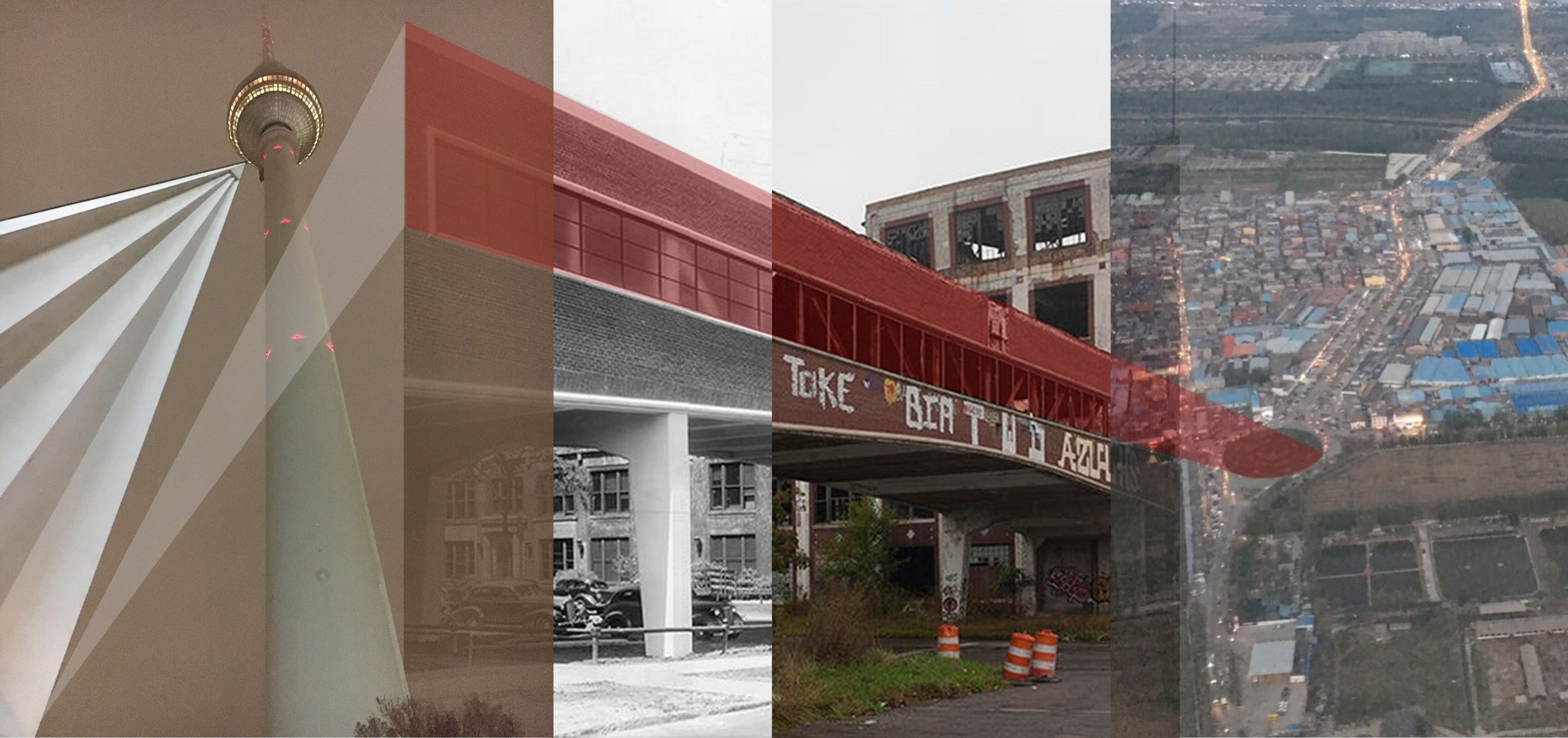
Hitler and the Capitalist's Fix
Hello Interactors,I was reminded that three years ago this week I was on a trip visiting remote Microsoft development centers overseas. Those trips afforded me the luxury of observing and understanding diverse geographies, societies, and economies. But it also drove home both the pleasure and pain imposing political and economic structures can bring. As interactors, you’re special individuals self-selected to be a part of an evolutionary journey. You’re also members of an attentive community so I welcome your participation.Please leave your comments below or email me directly.Now let’s go…FLY OVER AND DIVE INIt was the model concentration camp. Shaped in an equilateral triangle made of 10 foot high stone walls painted white, it featured machine guns mounted high at the corners; fixed on the lowly prisoners. The sidewalk leading to the entry is pleasant and tree-lined; an attractive and seemingly innocent approach to a place that is anything but. It stirs a morbid twist of emotions. The perversity is punctuated by the words forged in iron bars on the entry gate: Arbeit Macht Frei – work makes you free.To get to the Sachsenhausen concentration camp you disembark the train in a small nearby village and walk one mile to the entrance. The same path the prisoners would have taken. You pass by houses where whole families would come out to hurl rocks and spit on fellow humans; some were Jews, some homosexual, others with a mere limp, and occasionally even a relative.That place reminded me of how easily a government can invent a structure motivated by domination and impose it on a region and it’s citizens. It demonstrates how a small group of people can create the necessary conditions for the production of labor, death, and destitution through extreme exploitation; a top-down political and economic structure masterfully and morbidly executed by masterminds who firmly believed there actions were for the good of humankind.These camps bring us closer to the worst human suffering imaginable. But they also draw attention the to seemingly innocent complicit behavior lurking in the shadows. Hitler had regional aspirations for the structures he imposed that elicited reactions on a global scale. His actions also influenced individual behavior and shaped the culture of citizens and cities at a local level.This site is short train ride north of Berlin. I was in town on business, so two of my colleagues and I decided to visit before flying home. My job took me around the globe visiting remote Microsoft development centers. In a single trip, I once flew from Seattle to Ireland, on to Israel, then China, and back home to Seattle.From Haifa to Hyderabad or Bangalore to Berlin, I’ve observed structural societal patterns from high in the sky that are shaped by a global economy, and I’ve also experienced emergent forms of adapted human and cultural behavior on the ground. A single short trip around the world can bring into focus how environments have been shaped by people over millennia – both natural and manufactured – and how in turn those environments have shaped the people.Glancing out the window as I descended into these major cities I could spot the warm autumnal colored patchwork blocks of agricultural land stretching into the distance. They gave way to increasingly dense dendritic spars of cold concrete roads slicing through clusters of steel buildings dotted with piercing lights as ant-like traffic pulsed its way though the tangled bustle.I imagine these monstrous metropolis’s rising out of ancient embryonic farming, fishing, or mining settlements reminiscent of the neighboring landscape; a form of economic development termed, environmental determinism. Indeed that is true for many cities and towns, big and small, around the world, but in the last two hundred years a new ‘ism’ has been determining the development environment more than natural resources – capitalism. It’s led to uneven and inequitable development and settlement.For example, while Indonesia’s 17,000 islands is home to some of the world’s richest resources, their per capita income is under $4,000 per year. Meanwhile, the tiny island city-state of Singapore, a place with few natural resources at all, has a per capita income of over $100,000 per year.Many are quick to assume Singapore advanced it’s economy because it modeled itself after the West. Some regions did do this voluntarily, but it was also a common justification in the 1950s and 1960s for Western powers to swoop in to ‘improve’ so-called “Third World” countries. Powerful rich Western nations would introduce, often forcefully, Western democracy and then hand over economic development of resources and industry to private firms.Indonesia was one such experiment. It’s now not only one of the poorest countries in Southeast Asia and Oceana, but their dense forests continue to be converted to agricultural fields by outside firms making it the sixth largest emitter of greenhouse gases in the world. And just la
Harder, Better, Faster, Stronger
Hello Interactors,As the rain returns to the northwest it’s time to summon even more motivation to get outside for exercise. I established a bit of a fitness pattern this summer and I’m motivated to keep it up. But the rain isn’t the only thing holding me back, so is my body and my mind.As interactors, you’re special individuals self-selected to be a part of an evolutionary journey. You’re also members of an attentive community so I welcome your participation.Please leave your comments below or email me directly.Now let’s go…THE DEVIL MADE ME DO ITAs part of my Monday fitness routine, I begrudgingly slog jog up a steep hill in my Market neighborhood, zig-zag my way through gravel alleys, down calm side streets, and through occasional narrow easements that snake between homes guarded by fences and barking dogs. Some called this route the ‘Market wiggle’.It drops me onto an arterial road that skirts along a wooded wetlands. I suffer as I shuffle on a rolling narrow strip of painted bike lane for about a half a mile where I’m presented with a decision. Do I keep running up a gradual hill to achieve more distance or do I face the challenge of ascending a wall of over 100 steps that climb up a steep grade to my destination. It’s a short cut, but also a glute burn.My destination is an outdoor gym plopped on a patch of asphalt nestled in the corner of an expansive park made of grassy ball fields and scattered pines. I have my routine: a series of upper body exercises on machines that leverage my body weight. I do pull-ups (kind of), seated bench press, and sit-ups. I usually have the place to myself. Though I was once surprised by an eager and excitable white toy poodle. As I was doing sit-ups he ran up behind me and licked the salty sweat off my face.Upper body fitness has never been my favorite. It’s a necessary evil that seems to be getting harder all the time. But I have my repetition goals and I’m determined to improve. Pullups are the hardest. After a summer of just holding my chin above the bar, I’m finally getting to a point where I can actually pull myself up. (kind of)My forearms don’t much like supporting my weight. I finish my routine and head back home. Just across from the park is a the middle school track. It’s a cinder track; a relic in the rainy northwest where most tracks have turned artificial. On the weekends I do a timed mile. I can’t help but be disappointed in my time and progress. I just can’t run as fast as I used to.I also beat myself up over my lack of progress. I should be getting faster by now. I should be able to do more pullups. A battle in my brain ensues.DEVIL: If you lose weight, maybe you can run faster and do more pullups.ANGEL: Yeah, but you’re not really overweight – in fact, you’re maintaining a healthy weight because you’re running.DEVIL: Unless, of course, the extra weight is coming from the added muscle mass from all those stair climbs, and upper body work.ANGEL: But you can’t stop doing upper body work. You know you’ve been losing muscle mass since the day you turned 30.DEVIL: C’mon, dudes older than you can run faster than this. You can’t run faster until you start running faster. And you just have to keep doing more pullups if you want to do more pullups!”Then an independent interloping inquisitor interrupts; “Why are you trying to run faster? Why is the number of pullups important? What is your goal? Is it to increase the number of pullups and decrease your running speed, or is it to maintain your health?”It’s hard to rally behind asymptotic performance plateaus. Just ask any aging professional athlete. And it’s depressing to consider that as long as that plateau may be, its end is punctuated by a certain mortal decline. I am fully aware of my body’s limitations in this race with mortality, but my mind is trained to expect, and even crave harder, better, faster, stronger.WHAT GOES UP, MUST COME DOWNWe are all trained by a culture infused with metaphors that lead to a desire to increase growth and optimize time. In 1980, two cognitive linguists, scientists, and philosophers, George Lakoff and Mark Johnson wrote a seminal book called Metaphors We Live By. They give examples of how orientation concepts and words like up and down shape how we think and act.You can see evidence of it in the words I’ve already written. I was beating myself up and feeling down because the number of pullups wasn’t going up. I get depressed when my running times fall off. My athletic abilities are declining as I near the height of my physical abilities. Have I reached a peak? I am now longer in top shape. As my age slowly climbs up, my abilities will be sinking fast. What if I come down with an illness? My health will decline. And one day, I will drop dead.They suggest other metaphorical orientation concepts by category:HAPPY IS UP AND SAD IS DOWN.I’m feeling up. I fell into a depression.FORESEEABLE FUTURE EVENTS ARE UP (and AHEAD)What’s up on the agenda? I’m afraid of what’s ahead of us.HIGH S
From a Shoe Lust Hit, to 'Just Do It'.
Hello Interactors,My wife and I took our daughter on a trip down Interstate 5 earlier this week so she could tour the University of Oregon. It’s a beautiful lush campus in a funky college town that is speckled with fancy new structures financed largely by Nike founder and alum, Phil Knight. Upon the completion of the new track stadium last year, his total contributions to the school is nearing one billion dollars. Where did it all come from? As interactors, you’re special individuals self-selected to be a part of an evolutionary journey. You’re also members of an attentive community so I welcome your participation.Please leave your comments below or email me directly.Now let’s go…TIGER TRACK TREADSHe dominated his races. He’d jump far in the lead at the sound of the gun challenging his competitors to keep up as his fans chanted “GO PRE, GO PRE, GO PRE”. They’d often be wearing the pervasive shirts that said the same. At the end of one race he grabbed a shirt from sarcastic fan and stretched over his sweaty chest for his victory lap; it read, “STOP PRE!”Running for the University of Oregon between 1970-1973, Steve Prefontaine never lost a collegiate race in the 3 mile, 5,000 meter, 6 mile, or 10,000 meter events. But internationally he wasn’t so fortunate. He came in a disappointing fourth at the 1972 Munich Olympics in the 5K. Afterwards he said, “I felt exhausted. They didn't allow me to run the race the way I had planned to, I was chasing them all the way."He lost three times in his senior year in the one mile event. This same year he challenged the Amateur Athletics Union (AAU) that ruled athletes representing the United States at the Olympics must not receive payment or be endorsed. Prefontaine, a charismatic athlete on and off the track, grew huge crowds wherever he ran. He knew companies would benefit from his abilities, so why shouldn’t he? He also knew he was receiving free shoes and clothes from another Eugene legend – Nike.By the mid-70s Nike was a decade old and was just getting rolling. Prefontaine’s coach, Bill Bowerman, was the co-founder and a legend in his own right. Preferring to be called teacher instead of coach, Bowerman taught 33 Olympians, 38 conference champions, and 64 all-Americans in his 24 years as head coach. He retired at the end of Prefontaine’s senior year. One of his runners was Nike founder, Phil Knight.Knight was a middle distance runner at the university until graduating in 1959. While he ran a respectable personal best of 4 minutes 13 seconds, he was not the best runner on the team. Which made him a good candidate for testing the shoes his coach was experimenting with.Bowerman was obsessed with athletic performance and was frustrated by the poor quality of American running shoes. So, he made his own and asked his athletes to be subjects in his experimental pursuit of the perfect shoe. Sometimes they’d make their feet run faster and sometimes they’d make them bleed. Bowerman didn’t want to risk injuring his top runners, so Knight was often a subject.The shoe fetish must have rubbed off on the young Phil Knight. After graduating from the University of Oregon he went on to get his MBA at Stanford. There he learned how Japanese companies were overtaking the camera market from Europeans and wrote a paper about how they were about to do the same for the shoe market.After earning his MBA in 1962, he worked as an accountant while tinkering on the weekend with the idea of being a shoe distributor. He hopped on a plane to Japan to visit shoemaker, Onitsuka after seeing their Tiger brand at the Olympics. He presented his Stanford paper and they were impressed. They wanted to break into the U.S. market and saw this as their chance. When asked what the name of his company was, Knight invented the name on the spot recalling the ribbons he had won competing as a kid – Blue Ribbon Sports.In 1964 the first shoes arrived and Knight sent a couple of pairs to his shoe sorcerer and former coach, Bill Bowerman. The two shook on a deal to become business partners; Phil would run the business and Bill would design a shoe with just the right stiffness. By 1970 Knight was selling Tiger shoes across the country. As the Japanese Tiger shoe started to dominate the U.S. market, Knight cut ties with Onitsuka, renamed his company Nike, asked a Portland State University graphic designer to design the now ubiquitous ‘swoosh’, and grabbed Bowerman’s first attempt at a Nike shoe, the Nike Cortez.The shoe was released at the height of the 1972 Olympics after the world witnessed the USA Track and Field team wearing the shoe. Knight and Bowerman made $800,000 selling the Cortez, a 100% increase over selling the Onitsuka Tiger. In 1980, the year they went public, Nike already had 50% of the U.S. market. Today the company is valued at $32 billion and is the largest supplier of athletic equipment in the world.PHIL AND BILL SPLIT THE BILLPhil Knight and Bowerman’s success are now enshrined in what I claim is the m

Only a Nobody Walks in L.A.
Hello Interactors,I was stuck needing a car this week to meet a friend for coffee, but didn’t have access to one. So, I grabbed a bus and was there nearly as fast as a car would have taken me. That isn’t always the case, of course. The incident brought back some challenging memories of a time when I was suddenly carless in a region known for cars — Southern California. As interactors, you’re special individuals self-selected to be a part of an evolutionary journey. You’re also members of an attentive community so I welcome your participation.Please leave your comments below or email me directly.Now let’s go…PACIFIC COAST MY WAYI couldn’t have been in a better mood. It was my 22nd birthday, the sun was shining, and I had just passed a spectacular view. Fields of strawberries stretching out to the Pacific Ocean. And just beyond was an orange and pink gradient sky as the sun dipped behind the dark silhouetted Channel Islands.I was heading to L.A. from Santa Barbara where I was going to school. I was driving my silver 1983 Dodge Colt with an all maroon interior and vinyl seats. I had splurged on a sheepskin driver’s seat cover to keep my bum and back cool in the relentless southern California sun. My cousin had planned a birthday dinner at her home in Los Angeles, complete with a chocolate cake. I was trying to make good time.As I climbed out of the flat agricultural valley on Highway 101, up the pass through the Santa Monica Mountains, and into the San Fernando Valley, I heard a loud clunk come from my engine. With my foot all the way to the floor, the car slowed to about 45 miles an hour. It didn’t sound right either. I pulled over and popped the hood, but didn’t know what to look for.I got back in the car and inched my way to the nearest exit with my hazards flashing, pulled into a gas station, chatted with a mechanic and called my cousin to inform her and her husband to go ahead and celebrate without me. My engine had blown one of it’s four cylinders and I was going to be awhile. I puttered my way 50 miles west on side roads from the valley to the coast. Happy birthday to me.I ended up selling my car to a scrap yard.It was a life lesson that was just getting started. Stranded in L.A. without a car, all I could think of was that song, Nobody Walks in L.A., by the 80s band, Missing Persons.“Walkin’ in L.A. Only a nobody walks in L.A.”It was still in rotation on L.A.’s famed radio station, KROQ, at the time. But, without a car radio I was stuck humming it to myself as I walked in L.A – a nobody.American roads are designed to make you feel like a nobody unless you’re in a car. It’s baked into the laws and rights of our roadways. Transportation engineer manuals guide street design to marginalize pedestrians. It’s no accident that nobody walks in L.A., it’s by design. They’re made to humiliate you and scare you into buying a car. Only then will you be somebody.My first choice to get down to L.A. from Santa Barbara was the train. It took me from a beachside station in Santa Barbara to a gorgeous central station downtown L.A. where my girlfriend would pick me up. It was mostly commuters or vacationers so I felt like I was somebody. But it rarely got up to 50 miles per hour and would stop every 10 or 15 minutes to let another train pass or pick up more passengers. It was the slowest option. Luckily the coastal scenery made it tolerable.Then I discovered I could take the airport shuttle from Santa Barbara to LAX and she could pick me up there. That was more expensive, but it was fast and went along the scenic Pacific Coast Highway. And it was also filled mostly with business travelers so I felt like I was somebody.The worst option was the Greyhound bus. The L.A. station was in a rough neighborhood and was filled with some aggressive panhandlers and dealers. My girlfriend was always scared to drive away from that place alone. The ride itself to Santa Barbara was comfortable enough, but was often late at night. I was usually the only White person. There were a lot of Hispanic folks headed to stops near where the strawberry fields were.One time the driver, also Hispanic, pulled off the freeway, turned onto a gravel road and stopped in what looked like the middle of a strawberry field. It was dark and desolate. He opened the door and on hopped a friend or family member he clearly knew. He got back on the freeway and we were off. At first I was annoyed, but then I realized the driver made that person feel like he was somebody. It made me feel that way too. But I felt like a different somebody than when I was with mostly White affluent business travelers on their way home from LAX. Was I valuing airline travelers more than bus travelers?Living without a car in a car-centric world shifts your perspective. You encounter life differently and are exposed to more personal interactions. They need not be direct interactions; sometimes just watching a blind person navigate a public space or seeing someone suffering with a mental c
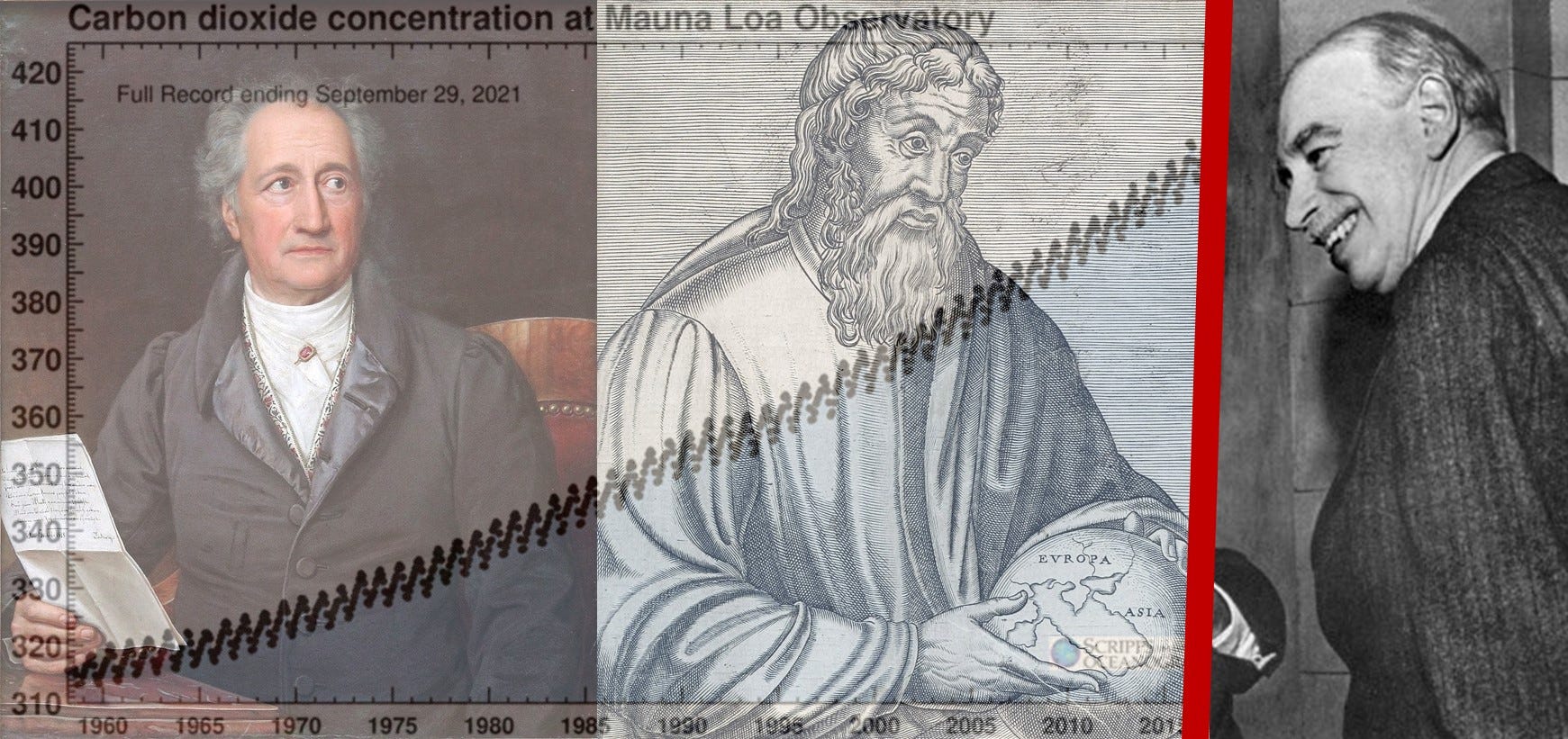
Space Cadets and the Earthy Crunchies
Hello Interactors,Most people’s awareness of the economy starts with three letters: GDP. It seems every news report about the health of any nation starts with their GDP. And there is only one direction it can go for anyone to be satisfied and that is up. Even though we all know that as those numbers go up the health of our environment goes down. How did we get here? As interactors, you’re special individuals self-selected to be a part of an evolutionary journey. You’re also members of an attentive community so I welcome your participation.Please leave your comments below or email me directly.Now let’s go…BEN AND ARIESIn 1817, German poet, playwright, and scientist, Johann Wolfgang von Goethe wrote, “Every school of thought is like a man who has talked to himself for a hundred years and is delighted with his own mind, however stupid it may be.” Goethe himself fell victim to this, but it’s unlikely he considered his ideas stupid. No member of any school of dogma does. He considered himself a cut above the rest; a genius in fact. At least as defined by his more famous German peer, philosopher Immanuel Kant. Goethe was a naturalist and believed his genius was his ability to translate his knowledge of the natural world into manmade civic matters – like economics. He was equally adept at using words like “budget, balance, economy, law and order” in describing the workings of the German government as he was describing his gardens. Or mines. Goethe was put in charge of managing area parks, mines, and forests which gave him ample opportunities to marry elements of botany and geology with economics. He was following in the footsteps of the French economic school of thought from the mid-1700s, The Physiocrats. They too believed in the order of natural law. They thought “the only choice humans had was either to structure their polity, economy and society in conformity with the ordre naturel or to go against it.” Talk about being dogmatic. There were some big names in this school of thought; including Benjamin Franklin. He sided with the Physiocrats arguing the only real productive contributions to a nation’s economy was naturally – through land ownership and farming. It’s a school of thought that propelled Thomas Jefferson, also a land loving naturalist, to push for land grabs across the country for the purpose of farming and land taxation. It’s also what separated the industrial mercantilists of the America’s North and the agrarian agriculturalists of the South which eventually led to a civil war. Colonialization, at its heart, was about land acquisition for agriculture, industry, transportation, international trade, and real estate. It was also about ethnic, racial, and gendered economies, and eventually the development of urban form. It set out to dominate the interaction of people and place. It was also the emergence of the field of economic geography. But long before the Enlightenment and colonization, in 4th century BC, the State of Qin in western China developed timber maps that included locations and distance measures to the sites. These are some of the oldest economic maps in the world. And then along came the Greek philosopher Strabo. He published a book called Geographica just before his death in 24 AD. It was found and reprinted in Latin in 1469 and describes the interactions of people and places from around the various parts of the world Strabo visited, including their economies. This reprinted work proved more influential to the burgeoning Enlightenment thinkers of 15th century, than Strabo’s first century contemporaries. Either way, economic geography took hold in Europe throughout the Enlightenment and into the 19th century as Goethe was writing erotic plays, listening to Beethoven live, and dabbling in economics between trips to the garden. NEW-MATH MEETS HU-MANStrabo’s work would have been picked up by another German, Alfred Weber – the brother to one of the founders of modern-day sociology, Max Weber, who believed capitalism came to exist through the protestant work ethic. Max ended up winning the ‘who will be most famous’ yearbook prize, but Alfred likely would have been more popular at the time. He made a name for himself as an economist developing some of the first theories on industrial location in 1929. He wanted to know why and how industries, cities, and farms determine where to locate. So, he developed analytical and interpretive methods to do so. Citing agglomerations, a collection of contiguous cities, industries, and labor pools, Weber was likely influenced by one of the most prominent British economists of the time, Alfred Marshall. He authored the 1890 book, Principles in Economics, and was the founder of yet another economic school of thought – The Cambridge school of neoclassical economics. We’ll learn more about Alfred later. Weber and Marshall were also influential outside of Europe. Weber’s work made its way to North America by way of a young mathematician named Walter Isard in the
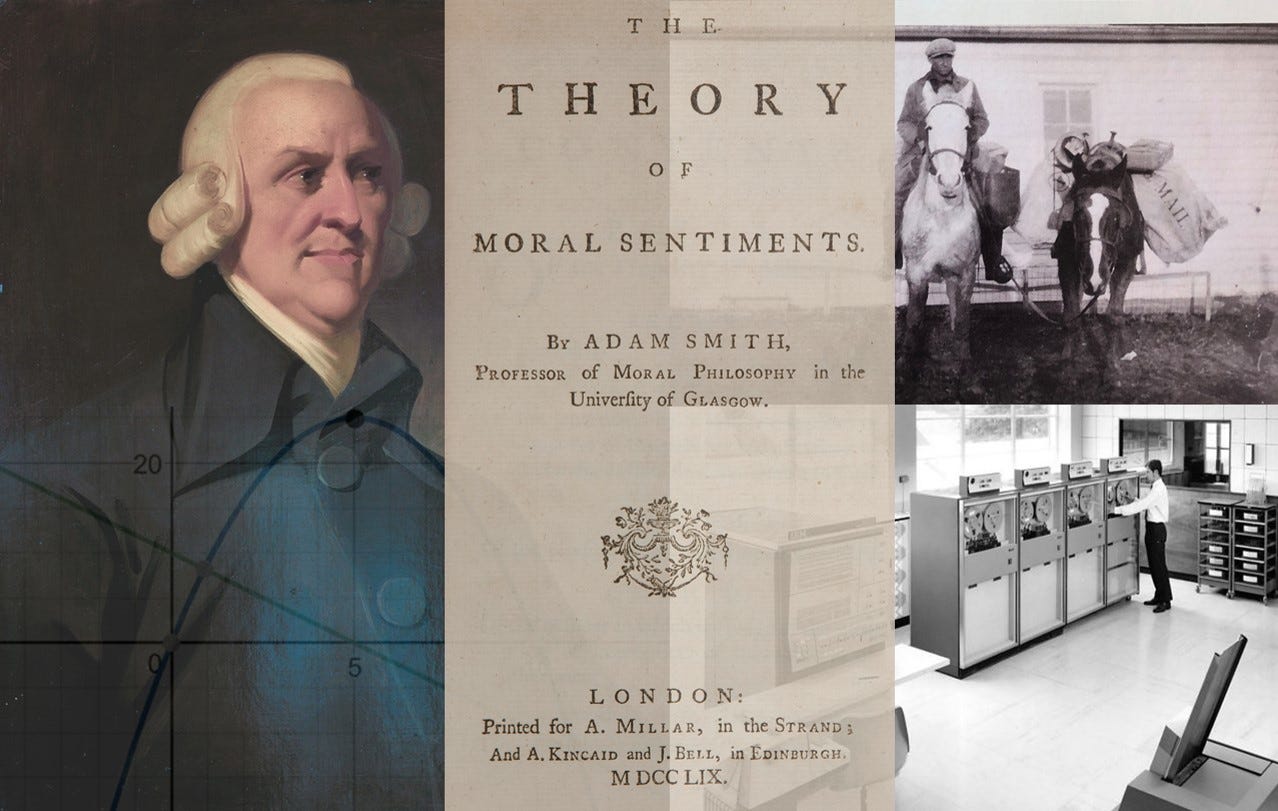
The Wealth of Generations
Hello Interactors,This week kicks off the fall series on economic geography. My introduction to economics started with a room full of giggling girls. Its founding began by exploring a common moral sympathy, but it has become anything but. This evolution has been relatively fast; occurring throughout the lives of a rural postman pioneer and his pioneering punch card punching son.As interactors, you’re special individuals self-selected to be a part of an evolutionary journey. You’re also members of an attentive community so I welcome your participation.Please leave your comments below or email me directly.Now let’s go…STUFF ITAs I walked in the door, the girls awkwardly spun around and grinned with a tinge of embarrassment. And then back to their friends as giggles percolated across the room. I tried to play it cool as the teacher welcomed me and led me to a special desk against the wall. She sat down next to me, maybe a little too eager, and helped me to get started.It was 1984 and Claus Oldenburg had recently finished a civic sculpture, Crusoe Umbrella, for what was then called Nollan plaza in downtown Des Moines, Iowa. My friend’s dad, Charles “Chick” Herbert, designed the concrete plaza featuring a shallow pool across from his angular stark white Civic Center. The sculpture is an homage to the umbrella Robinson Crusoe built from sticks and plants. Oldenburg thought the plaza looked like an oasis amidst the high-rise buildings in a state that felt like an island in the middle of a continent that most people only see while flying over on their way to New York or Los Angeles.The neon red animating Travelers Insurance logo atop one of the buildings also served as an inspiration – an umbrella. The curved handle of the base also reminded Oldenburg of a backhoe sometimes seen on the ubiquitous tractors grooming the fields of Iowa. And the long skinny shaft that connected the umbrella to the handle reminded him of the road through downtown Des Moines where he saw High School kids cruise on Saturday nights as they ‘scooped the loop’. I was one of them.Come Monday it was back to school. For the senior art project we got to choose our own medium for our entries into the spring art show. I had Claus on the brain. In addition to large public sculptures, Claus was also known for his oversized stuffed everyday objects. The Des Moines Art Center collection had one; a massive three-way plug made out of blue vinyl that lazily drooped from the ceiling partially stuffed with filler. I decided I was going to do a giant soft sculpture of my own for the spring show. I choose to make a wall mounted hand-cranked pencil sharpener – a staple of every classroom in those days and a farewell homage to my final year in the Norwalk School District.Des Moines was home to more than just insurance companies. It’s still a major center for insurance and financial services. And publishing. If you’ve ever flipped through a magazine in America, it was most likely printed by the Meredith Corporation. Growing up it was also home to the farm equipment manufacturer, Massey Ferguson. Through the 1970s their factory made mostly lawn tractors and snowmobiles, but it was also a center for the company’s legal, financial, and marketing departments. My Dad worked there for twenty five years.You can’t really make a soft sculpture in most art rooms. Their set up for drawing, painting, printing, and ceramics. So during art period, I’d grab my cheap beige muslin fabric from my art locker and walk down the hall by shop class where guys would point at me and laugh as they tinkered with an old clunker locals would donate to the school. I’d proceed through the black double doors, hang a left down a long empty hallway, pause at the door, peek through the relight, and slowly open the door. I’d walk through a class full of giggling girls, sit down to the sewing machine against the wall, and start sewing. The only dude in my four years to ever to set foot in a high school home economics class.THE ORIENT EXPRESSThe word economics in English-speaking worlds was born out of home economics. There are still hangers-on, like ‘economy sized’ goods at big-box stores or ‘economy-sized’ rental cars. Economizing in this context means to be miserly or frugal. That was certainly what I grew up learning. Both of my parents came from humble beginnings.My Mom’s mother is the daughter of German immigrants and her father the son of Irish immigrants. Both farming families had to scrape to get by. My Grandmother survived the Spanish Flu; even after caring for parents who both had it.My Dad was born into the depression in his mother’s bed in 1933. He was the second youngest of twelve. His dad served in both World Wars and was the town postman; he started out delivering mail by horse.They both lived in a small town in southern Iowa called, Orient. They were born into an era and area dominated by a small scale farming economy. There wasn’t a lot of need to think beyond the economics of the
Lay Dung; Feng Shui
Hello Interactors,This is the last post on the subject of physical geography. Starting next week and through the fall I’ll be digging into economic geography and how the interaction of people and place relates to inequality, instability, and sustainability of local and global economies.This final post of the season ushers in a windy wet fall by focusing on the forces of wind and water; and our sometimes intimate relationships with nature.As interactors, you’re special individuals self-selected to be a part of an evolutionary journey. You’re also members of an attentive community so I welcome your participation.Please leave your comments below or email me directly.Now let’s go…PUZZLING PILES IN THE PARKI paddled my kayak two miles across a calm Lake Washington this week to a park where I water baby native plants. I realized I move through fluid water at about the same pace as I walk on solid ground. Kayaking is a lot like swimming that way. But dryer. You’re in the water extending one arm forward, grabbing water with the paddle, pulling it behind you while pushing your other arm forward so it can do the same. I lean sideways slightly on each extension rotating the boat, extending its length, rocking back and forth with each stroke. Just like swimming. But dryer.I’m not much of a misty spiritual type, but there is a oneness with water that I experience when swimming or kayaking that is hard to explain. I feel it when I sail too. So does the boat. Sailboats hum with vibration when the force of wind on the sail is balanced by the forces acting on the keel underwater. These invisible forces propel the boat forward, but can also slow it down.Polynesians were some of the best, if not the best, sailors and navigators in the world. To sense the subtle cues of shifts in the current on the vast Pacific waters, the men would put the tiller between their legs and let the most sensitive nerves in their body sense the changes. Their scrotum. Now that’s being one with your boat – and the water.Most people have lost touch with this kind of intimacy with nature. The closer we get to embracing urban life, the more distant nature recedes. I’m reminded of this every time I beach my kayak at the waterfront park I’m helping to restore. I pull the boat ashore, strap on my work gloves, slip on my branded Green Kirkland hat, and set out to water baby native plants under a canopy of firs and old growth cotton woods. But invariably, in my periphery, I’m distracted by a bleach-white pile of toilet paper clumped just beyond the trail.People pooping in public parks is as much pernicious as it is puzzling. One day I became curious how widespread in the park this was. Perhaps this stand of trees is just a particularly pleasant place to poop. So I walked the park. Crossing over a footbridge, I spotted two juice boxes tossed to the side of the creek. I walked down the bank and under the bridge to see more wads of white waste.I collected the juice boxes and tissue and heard a mom on the bridge say to her kids, “Oh look, that nice man is picking up litter!” I had a moment of pride bolt through me, but it was displaced by rage that almost made me want to holler back, “Yeah, so why don’t you and your kids get your butts down here and help!” I didn’t, of course. But I wanted to yell at somebody.As I walked further up the creek, I could see the bank leading up to the restrooms was spotted with white. The closer I got to the building, the more clumps of toilet paper I found. What compels people to walk into a restroom stall, pull more toilet paper from the roll than a single human needs to wipe their fanny, stride outside and into the woods, and poop. Or pee. I found more evidence of pee-pee than poo-poo. Which tells me it’s those with the internal hardware doing most of the doo-dooing in the dirt.I suppose you could cry, COVID! And it’s true. I could see where some would be concerned with being in a public restroom for too long. And let’s face it, it’s nicer in the woods than in a public facility. I’d rather be looking at a tree than a stall door with graffiti etched into it; breathing air that surrounds with a nasty stench to it. But park staffers tell me it was happening long before Covid and it’s been getting worse. While doggy doo-doo is their number one park problem, a close second is public plops from people.The BBC wrote a piece about these dastardly deeds of the terrible turds. They interviewed a forensic psychologist who gets called onto scenes of crimes where someone has dropped some dung. The first thing he asks the police officer is this, “Is it soft or hard?” They think this psychologist is in need of psychiatry. It’s the number one indicator of intent. If it’s soft, the person was anxious, stressed, and realized they either drop trough or poo their pants. So they landed a pile in the middle of the living room and then made off with the TV. If it’s hard, then this person is most likely angry and bitter about the world and this is thei
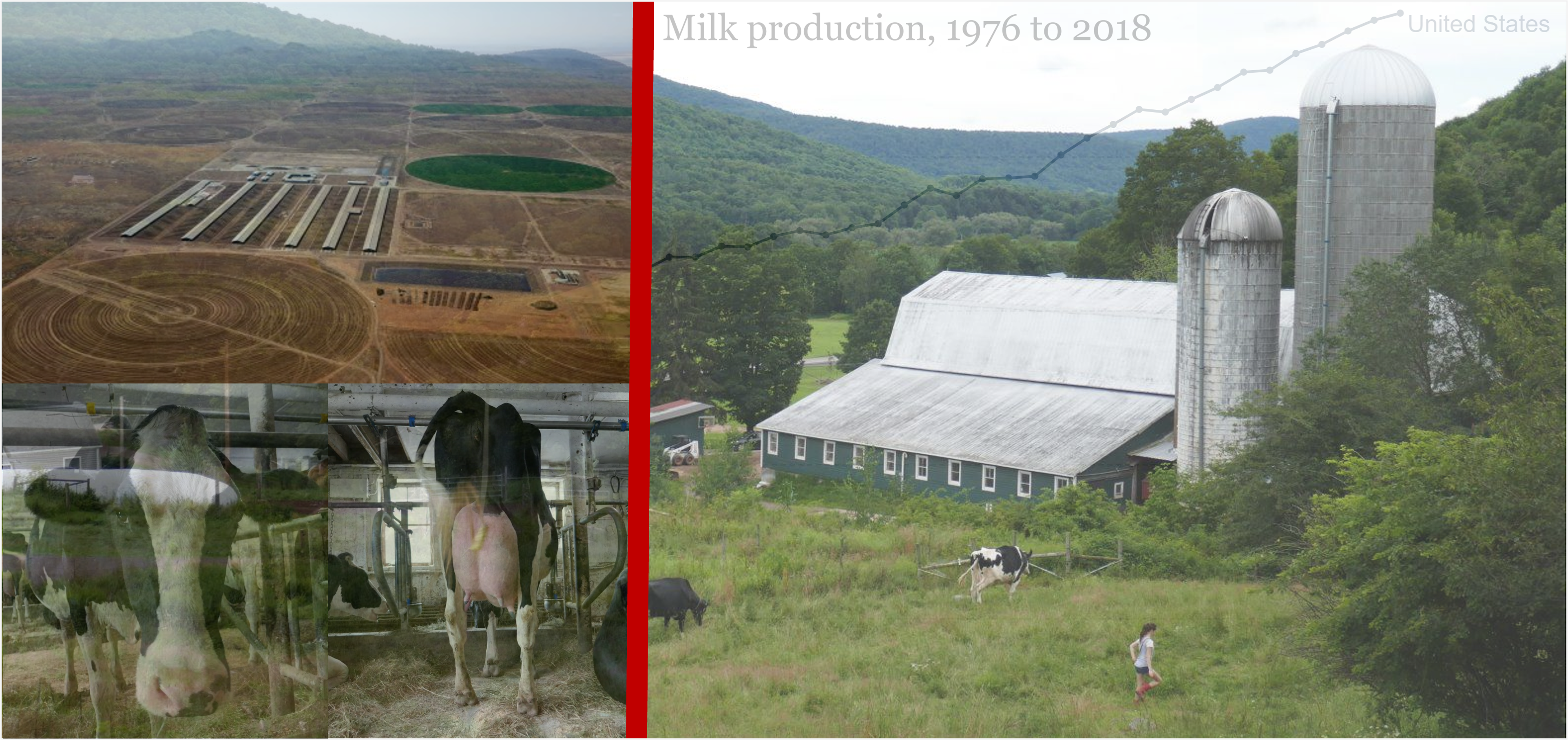
Ditches, Wells, and Dams. Riches, Cartels, and Scams.
Hello Interactors,I’ve started to making my own milk again. It’s not really milk. It’s creamy colored water made from pulverized remains of nuts or grains that I sweeten with a little maple syrup. Invariably I get lazy and real dairy creeps back in. But every time I look at that carton, I know what’s inside didn’t come from that cute cow or that stylized farm on the label. And however it got here, I know it came at a cost greater than what I paid.As interactors, you’re special individuals self-selected to be a part of an evolutionary journey. You’re also members of an attentive community so I welcome your participation.Please leave your comments below or email me directly.Now let’s go…MILK MANRick has a phone to his ear with one hand while he clicks his mouse in the other. He’s searching websites for a hay baler part while calling neighboring farmers to borrow theirs until his part arrives. He clicks a browser tab that is already open to the weather forecast. Rain is coming. Tension mounts as friends and relatives kick into gear. The hay has to be cut before that rain comes. Have you ever had milk straight from the cow? It truly tastes like milk you’ve never had. It was so good, I was warned to not drink too much or too fast. Gluttonous dairy consumption can lead to an upset tummy. But I was assured that if I ever wanted more, there was always a fresh container waiting in the refrigerator. Chances are if you grew up with milk, your refrigerator has milk in it. It’s probably not straight from the cow, and it may just look like milk (oat milk is all the rage – especially once Oprah and Jay-Z got in on the action), but the West likes their milk and milk products. But consumer demand is worldwide. The more Taco Bells and Pizza Hut’s pop up on streets around the globe demanding cheese, the more milk supply is needed. Starbucks sells more milk than they do coffee. People like their milk and coffee. I was in Mexico City once eating breakfast at a local eatery with a friend. The waitress sauntered around with a carafe of coffee in one hand and a pitcher of milk in the other. She’d walk up, make eye contact, and start pouring coffee until you said stop. She’d fill the rest with milk. I miss Mexican coffee. It was hard for me to imagine a dairy farm in a mostly arid Mexico. Growing up in Iowa, I have images of vast grassy fields dotted with milk cows; a winding grove of water thirsty trees clinging to a creek or river bordering the farm. A&E Dairy was the only brand of milk I ever knew. They’ve been bringing milk to Iowans since 1930. We had an actual milkman as a small child. A gray sheet metal box with a blue A&E logo on the front sat nestled in the corner of our doorstep. He’d raise the hinged lid and gently place a glass container of milk inside.By fourth grade, in 1976, that all had changed. We took a field trip to the A&E bottling plant in Des Moines, Iowa. I remember watching an industrial sized see-through bin full of white plastic pellets the size of ball bearings funneling into a heated form. After a couple seconds, a plastic one-gallon milk container emerged. The glass jar delivered by the milk man had been replaced by crates of one-gallon milk jugs. They’d load them into a semi-truck and off they went; onto a freeway that was as old as me.A&E, like all American dairy producers, were just beginning to scale up their farms. President Richard Nixon’s Secretary of Agriculture Earl Butz sent this message to American farmers, “get big or get out.” It was the beginning of the end for small and medium sized farms across the country as milk production steadily climbed from around 54 million tons in 1976 to nearly 100 million tons in 2018. It doesn’t show signs of stopping. MILK: THE MANRick, his wife Terri, and a team of extended family members were able to get the hay in the barn before the rain started to fall. But there was no time to rest. A semi-truck had backed its long shiny silver milk tanker up to the barn and was waiting patiently, though a little stressed, for some help. It was time to mix their milk with that of other producers in the Delaware River Valley just north of the Catskill Mountains in upstate New York. Both milk and water flow from this watershed south to an increasingly thirsty New York metropolitan area where urbanites peek up from their steaming molten chocolate cake at trendy restaurants to ask their waiter, “Got Milk?” With milk production continuing to ramp up over my lifetime, these New Yorkers must not be the only ones craving milk. The entire country must be hankering for more. Not true. Despite American momma cows producing more and more milk every day, the average American milk consumption per capita in 2018 is equal what it was when I was born in 1965 – 256 kilograms per person per year. That’s around 65 gallons a year or just over five gallons per month. That includes cheese, but not butter.If a growing American population doesn’t account for the growth of dairy production in Am
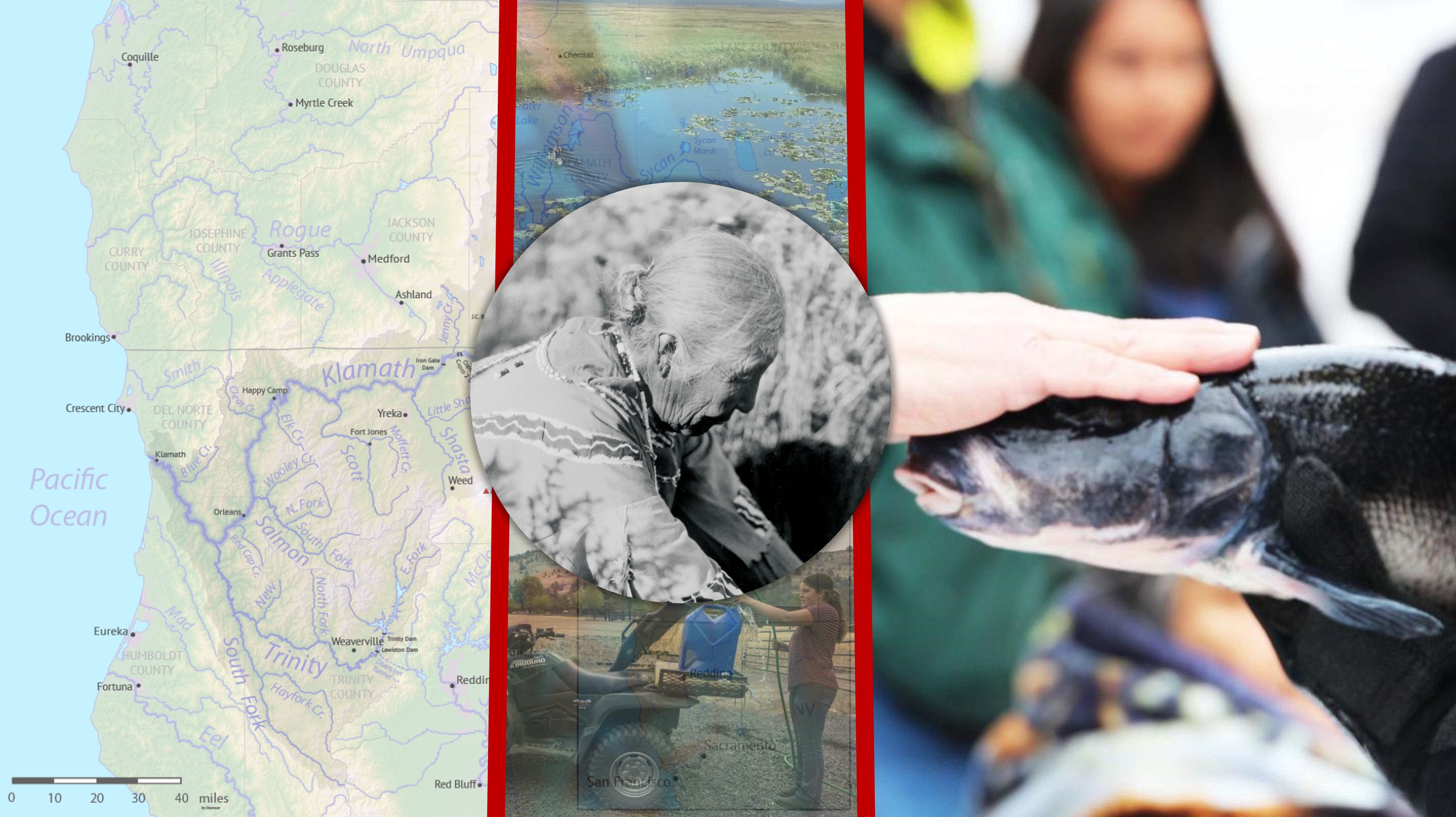
Calamity in Klamath
Hello Interactors,What a wild water filled week. From too much water coming too fast to not enough coming too slow, the United States is bearing witness to the schizophrenic behavior of an angry imbalanced ecosystem. Our mother earth isn’t the only one with schizophrenia. The United States, and other eco-wrecking countries, can’t decide if Indigenous people — the historical stewards of this planet — should be silenced and contained or begrudgingly ordained as the knowledge keepers and leaders of how best please our angry mother earth.As interactors, you’re special individuals self-selected to be a part of an evolutionary journey. You’re also members of an attentive community so I welcome your participation.Please leave your comments below or email me directly.Now let’s go…IN COMING It was eight o’clock on a sunny morning when Kelly Minty Morris received a notification on her phone that read “extreme alert”. A missile was headed straight for her. This must be some mistake, she thought to herself. This was something that she didn’t think of having to deal with in her country. She and her husband were in Hawaii where he was about to compete in a 100 mile trail running endurance race called the HURT100. Missiles can bring a whole new level of hurt; but, as she looked around, to her surprise, nobody was scrambling or panicking. Not even herself. They all believed it must be some kind of blunder.There is no mistaking that this summer has had its fair share of climate scares. The Northeast have had nothing but rain all summer. Just this week New York’s Central Park was dowsed with six inches of rain in as many hours. A once in a 500 year event. The Northeast continues to be battered by wind and rain killing over a dozen people in its path. It’s the fallout of hurricane Ida, the fifth most severe hurricane on record, that slammed Louisiana’s coast earlier in the week but was barely phased by its landfall. Now a new hurricane is brewing as climatologists predict a 60% chance that more extreme hurricanes will follow this year. Meanwhile, water in the west is wanting. California’s fires have claimed two million acres. Ten percent of the sequoia population was taken by a single fire; trees that have been on this planet for thousands of years – gone. It’s so dry in southern Oregon’s Klamath valley that wells are drying up. Homeowners are having to drive for their water. The county has ordered cisterns from as far away as Oklahoma, but are running up against shortages of rain barrels due to choked supply chains and increased demand.Kelly Minty Morris sat for a half an hour, there in Hawaii, fretting. But she was more concerned with the lackadaisical response to an incoming ballistic missile than the actual damage it may inflict. “It really did feel surreal,” she said. “I wasn’t panicking, I wasn’t anxious, I wasn’t upset, my brain kept telling me, ‘This can’t be real, this can’t be real.’” And then it happened. Another text buzzed her phone. The alert was a mistake. A state employee had pushed the wrong button. I suspect that’s a former state employee.Kelly left that incident reflecting on the collective apathy she witnessed. She began to wonder what it would take to get people to actually act in the face of an emergency. Upon her return home to Oregon, she vowed as a Klamath County Commissioner to put steps in place that encourage people in her area to respond appropriately to an emergency. She said, “You don’t want to be waiting for an actual emergency to then figure out what you should have done.” KILL THE INDIAN, SAVE THE MANThe Klamath valley has seen its fair share of emergencies, but every generation seems surprised. And sometimes apathetic. The first occupants of this area were the Klamath Tribes: the Klamath, the Modoc and the Yahooskin-Paiute people. They were sometimes referred to as mukluks or numu – the people. People, while differentiated by name, are still animals. And like our multi-legged, finned, scaled, and winged companions, we are an integral part of the environment. This was, and remains, a pan-Indigenous concept that deserves reminding. The Klamath Tribes embraced this belief in a shared communal slogan, “naanok ?ans naat sat’waYa naat ciiwapk diceew’a “We help each other; We will live good”These people did live well. For thousands of years area bands and tribes — bound by loyalty and family — fished, hunted, farmed, and ranched the land in a perpetual act of reciprocity that respected and honored the land and its occupants. From the marshy banks of Oregon’s Klamath Lake and up the Sprague Valley, south along the rivers feeding California’s Lower Klamath Lake, across the lava beds and all the way down to Shasta Mountain, the Klamath tribes prided themselves on their industriousness.But by the 1800s, the word industrious took on a different tenor. The industrialist fueled American imperialism swaggered on to the scene with their own slogan: No thanks, we’ll help ourselves; so that we will live good.
Charlie Watts and the Strange Attractor
Hello Interactors,I spent this week listening to my favorite Rolling Stones songs and fretting over whether democratic infighting in Washington would end our best, and perhaps only, hope of climate change legislation. I can’t get no satisfaction and my sympathy for the devil is wearing thin. I hate to be the beast of burden, but can somebody gimme shelter?As interactors, you’re special individuals self-selected to be a part of an evolutionary journey. You’re also members of an attentive community so I welcome your participation.Please leave your comments below or email me directly.Now let’s go…MAINTAINING ORDERThe drummer for the Rolling Stones, Charlie Watts, passed away this week at 80 years old. The Stones have been around longer than I have and Charlie was their only drummer. He was never the flamboyant type, seeking drum solos or surrounding himself with racks of drums to satisfy some insatiable percussive proclivity. He just sat there in his suit doing his job – keeping rhythm for a singer who dances like he has ants in his pants.Drummers never get the credit they deserve. They live in the shadows of vanity seeking vocalists and guitarists grasping for glamour. They’re always the brunt of sinister jokes about lacking the intelligence or talent to play a ‘real instrument’; so they’re stuck beating sticks on thin bouncy membranes stretched over cylindrical cannisters.But having played in bands with no drummer, I can tell you it’s no fun. It’s hard to find drummers, and even harder to keep them. I wonder if Mick and the boys knew how good they had it? Keeping a beat is no easy feat. A good bass player helps, and while we’re all drawn to a pleasantly sounding harmony, it’s the lowly drummer who sets tone. Without a steady beat, music quickly unravels into a chaotic cacophonic calamity. The world could use a drummer right about now. Nature, humans, society, and the climate have lost the beat. After decades of operating in regular 4/4 time, with occasional key changes or transitions to alternating rhythms, the universe has devolved into a seemingly extended random free-form improvisation. Pure chaos. How does this happen?Learning new songs with a band hints at how it unravels. Humming along and feeling good about yourself, out of no where some band member misses a chord or drifts off beat. Everyone starts glancing around at each other in search of the culprit as you sense it getting worse. As the piano player and band leader, I’d sometimes start to pound my keys a little harder — emphasizing the beat in the process. Kind of like speaking louder and with a DIS-TINCT CA-DENCE TO SOME-ONE WHO DOES NOT SPEAK YOUR LANG-UAGE in hopes they’ll suddenly clue in. But invariably another band mate would follow my lead and start playing louder to match my increasing volume. The next thing you know the drummer does too. It’s hard to play drums loud and slow, so the pace of the song quickens. Each change from one single individual results in corresponding feedback from other individuals in the group; that, in turn, induces more reactions from individuals – a dynamical system in a self-perpetuating feedback loop. Soon things evolve into a loud frenetic chaos. That’s when you understand how punk music was born. Eventually everyone realizes that while playing fast, loose, and loud is fun for awhile it’s also exhausting and futile. Especially when learning songs like the sanguine but melancholy jazz standard, My Funny Valentine. We managed to learn enough songs to be hired for a wedding once, but we’d joke that music critics probably would have slotted us somewhere between jazz, R&B, and comedy.Many classic jazz standards start out steadily predictable, but then cascade into chaotic frenzied solos that pass from one instrument to the other. I suspect even the subdued Charlie Watts took his turn soloing in his early days as a jazz drummer. Another standard of jazz standards is to collectively return to the steady state of the song’s uniform pattern played in unison — restoring order after the disturbance. Many jazz conventions are rooted in the 12-bar Blues. Blues is recognized as blues, and jazz as jazz, because there are strict underlying rules governing the controlled creative chaos of soundwaves emanating from instruments and vocal chords. The Rolling Stones knew as much. That’s why Mick Jagger described their work on the 1972 album, Exile on Main St., as "runaway outlaws using the blues as its weapon against the world.” That album took the world by storm and is the highest ranking Stones album on Rolling Stone magazine’s list of the 500 Greatest Albums of All Time. That’s one storm nobody could have predicted.THE STRANGE ATTRACTORThat same year, 1972, MIT mathematician and meteorologist, Edward Lorenz, published a paper on the challenges of predicting storms titled, Predictability: Does the Flap of a Butterfly's Wings in Brazil Set Off a Tornado in Texas? His paper was the first to describe chaos theory. And the premise o
Solar Powered Imperialist Addictions
Hello Interactors,It’s been a troubling week in international news as we all watched Afghanistan unravel. That country has been through a lot over the last two decades and centuries; most of which is due to Western invasion and intervention. To make matters worse, the effects of climate change are compounding their problems. I hope we can learn how to better help, they’re going to need it.As interactors, you’re special individuals self-selected to be a part of an evolutionary journey. You’re also members of an attentive community so I welcome your participation.Please leave your comments below or email me directly.Now let’s go…GOING SOLAR Soon after absorbing the tragic scenes in Afghanistan this week, I was reminded of an article I read around this time last year. It was about successful deployments of solar technology by poor Afghan farmers to pump water from desert wells to grow crops. Afghanistan ranks among the lowest on the Global Adaptation Index making them one of the most vulnerable countries in the world to climate change. As if they needed more problems. Solar energy can be transformational, even when deployed at small scales. We’re not talking about massive solar farms plastering the desert paid for by corporations, governments, or non-governmental organizations (NGO) through some kind of ‘Go-Green’ initiative. These are installations by rural farmers struggling to survive. The first remote solar array was notice back in 2013, but soon local towns were piled high with solar panels. The panels are not cheap. Seed money usually comes from a dowry – money given from a bride’s family to the groom at the time of marriage – which is roughly $7,000. A single solar panel costs $5,000, so it’s a big chunk of money. But the panel pays for itself in just two years. They simply set it up, plug it into the provided pump, kick aside the old, expensive, and troublesome diesel motor and watch the water come streaming out of their well. The number of solar panels has doubled every year since 2012 tapping wells far into the desert. By 2019 there were over 67,000 installations dotting a single narrow region in southern Afghanistan. And for every diesel conversion to solar comes an increase in productivity. The blue areas of these maps show less productive cultivation and light green as more productive. In addition to the increase in the number of farms, you can also see an increase in yield. Their success attracts even more people to the desert. Between 2012 and 2019, 48,000 new homes were built. Increased competition for a water supply that climate change has already diminished, the introduction of solar pumps has started a countdown clock as to when they’ll all run out of water.Which, in one way, may be a good thing. While one of the crops farmers choose to grow in the desert are sun hungry plants like tomatoes, their main, and most profitable crop, is opium. The majority of opium is refined to make heroin. Afghanistan is the world’s leader in opium production making it the leading source of heroin, one of the most illicit addictive drugs there is. And this region of Afghanistan, Helmand, produces 80% of the Afghan supply to the world. Most of it to Europe, the Middle East, and Asia.Before solar entered the fray in 2013, Afghanistan was producing 3,700 tons of opium a year. By 2017, a record year, their production nearly tripled to 9,000 tons. It created a glut in the market and prices fell, reducing production among farmers still on the more expensive diesel pumps. Meanwhile, solar farmers continued to produce and profit at 2017 levels.MISSION ACCOMPLISHED : MISSION ADMONISHEDThe opium market has been growing in Afghanistan since the 1990s, with the exception of one outlying year – 2001. That was the last time the Taliban took control and one of their many bans was on growing opium. When the United States infamously invaded Afghanistan in 2002, opium production quickly bounced back to pre-Taliban levels, and has been growing since. England joined in the invasion, in part to curb the supply of heroin to the UK and other parts of Europe. They’ve found that as production of opium increases, the demand for heroin also increases; and with it crime as addicts resort to breaking and entering and aggravated assault to fund their habit. England’s biggest war casualties occurred in the region of Helmand, the world’s hotbed of opium and the country’s highest concentration of solar panels.What a bitter twist of wartime irony this is. Britain was the first country from the West to invade Afghanistan in the mid-1800s; in part to increase the production and trade of opium to the Chinese through the East India Company as part of the Opium Wars between Great Britain and China. Opium in China was first used for medicinal purposes, but by 1840 millions of Chinese were addicted. The United States saw this as an opportunity and a few decades later were dropping cigarettes from airplanes in China in an effort to supplant the Chinese
An Ancestor's Garden
Hello Interactors,This has been an eventful week, but also a week of more extreme heat and smoke. Just when climatologists warned of the certainty of more extreme weather patterns. I’m ready for fall and we’re barely halfway through summer. My plants are struggling too. Does anybody out there know how we’re going to adapt?As interactors, you’re special individuals self-selected to be a part of an evolutionary journey. You’re also members of an attentive community so I welcome your participation.Please leave your comments below or email me directly.Now let’s go…THE RIGHT TURNS LEFT FOR RIGHTSMonday of this week, August 9th, was International Day of the World’s Indigenous Peoples. Did you know that? What about Tuesday, August 10th. That was the anniversary of the Pueblo Revolt in what we now call New Mexico. In 1680, the Pueblo people forced 2000 Spanish colonial settlers off their land. Given this was the first example of American people rejecting European rule, some consider this to be America’s first Revolutionary War – nearly 100 years before the more popular version. Oh, and on Wednesday, August 11th my wife and I celebrated our 25th wedding anniversary. But even fewer people know about that historical date.The International Day of the World’s Indigenous Peoples was created by the United Nations in 1994. The date honors August 9th, 1982; the first day of meetings for the UN Working Group on Indigenous Populations. This group’s mandate was to: * Promote and protect the human rights and fundamental freedoms of Indigenous peoples;* Give attention to the evolution of international standards concerning Indigenous rights.August 9th celebrates the achievements and contributions Indigenous people have made, and continue to make, to governance, stewardship of the environment, and knowledge systems aimed at improving many of the challenges our world’s environment’s face today.Indigenous people make up 5% of the world’s population and use one quarter of its habitable surface. But, they protect in reciprocity 80% of the world’s biodiversity. The UN defines Indigenous People as: “Inheritors and practitioners of unique cultures and ways of relating to people and the environment.”The United Nations’ recognition of the sovereign rights of Indigenous people stems from the International Indian Treaty Council which grew out of the American Indian Movement in the 1960s and 70s. The United Nations recognized the rights of Indigenous people before the United States did. In fact, when the United Nations put the Declaration on the Rights of Indigenous Peoples to vote in 2007, the United States, Canada, New Zealand, and Australia voted against the declaration. They have since reversed this vote, but the American Indian Movement had long recognized the United States was in violation of treaties signed over the last 300 years. So acting as sovereign nations – that happen to reside within a larger, dominant, and controlling nation – they turned to the United Nations for recognition. Much of the legally binding language used in the Declaration on the Rights of Indigenous Peoples comes from the legal language written into the original treaties by the United States. Which is why the conservative originalist from the West, Supreme Court Judge Neil Gorsuch, sided with liberals last year in a landmark ruling over McGirt v. Oklahoma. The Supreme Court determined that much of that state was legally ceded to Indigenous people by the United States Federal government two centuries ago and it was high time the country obeyed their own laws. The year prior, Gorsuch did the same in the state of Wyoming. Oddly, the recently deceased Justice, Ruth Bader Ginsberg, a darling of the left, has a mixed record voting in favor of Indigenous people. A 2021 article from Cornell University states,“During Justice Ginsburg’s first 15 years on the court, 38 Indian law cases were argued. The rights of Indigenous nations prevailed in only seven of those cases. Indigenous nations lost in eight of nine Indian law cases for which she wrote the court’s decision.” After the Oklahoma ruling, John Echohawk from the Native American Rights Fund – an organization that has spent 50 years fighting for Indigenous rights – was quoted as saying, “This [case] brings these issues into public consciousness a little bit more…That’s one of the biggest problems we have, is that most people don’t know very much about us.” It seems Ruth Bader Ginsberg was one of those people. John Echohawk is following in the footsteps of those who kicked off the American Indian Movement back in 1968, drawing attention to Indigenous rights. Their focus was on the systematic poverty and police brutality toward Urban Indian’s who had been forced off of their land and into cities for generations. This Indigenous grassroots movement rose out of the city that was recently put the international map for its display of obvious police brutality – Minneapolis, Minnesota.GRANDMA KILLS A CHICKENI was not yet thre
An Olympic Sized Metabolism
Hello Interactors,I’ve spent many a night this week watching the Olympics. I’m also trying to get back into running shape; which to me feels like training for the Olympics. It demands a lot of energy and patience, but also reaps a lot of rewards — like ice cream. But I’ve also been thinking back to the energy my family consumed flying across the country and then driving all over New England. We rarely give it a second thought, but we humans expend a lot of energy. And we’ve been doing more and more of it for some time.As interactors, you’re special individuals self-selected to be a part of an evolutionary journey. You’re also members of an attentive community so I welcome your participation.Please leave your comments below or email me directly.Now let’s go…WINNING GOLD ON THE COUCHI love watching athletes compete at the Olympics. The power and grace exhibited by the world’s best athletes is a wonder. I imagine burgeoning, and aging, every-day athletes around the world running, jumping, gunning, pumping, throwing, and rowing just a little harder over these few weeks – inspired by super-human performance. It takes an amazing amount of skill and energy to run 23 miles an hour over 100 meters; as the world’s fastest human, Usain Bolt, did in 2012.To go fast requires generating force that is transferred from the body into the ground. Athletes competing for gold in the 100 meter dash create five times the force of their body weight to hit that those speeds. This week I watched Athing Mu win the first U.S. Olympic medal since 1968 in the Women’s 800 meter. I marveled at her ability to generate the required force to hit the speed necessary to both lead the race and win while conserving just enough to endure the full 800 meters (two laps around the track). This event is eight times longer than the 100 meter race, but Mu was still creating upwards of 3.5 times her body weight in force.Sprinters spend more time in the air then they do on the ground. Generating 5 times their body weight in force requires them to lift their knees high enough to transfer energy through their feet and into the ground. Marathoners, in contrast, spend more time on the ground than they do in the air. They have to spread the necessary force to win running over 42 kilometers or 26 miles in two hours. To do this, they lengthen their stride to conserve energy thus minimizing the time their feet spend in the air. This excellent interactive piece by the New York Times breaks it all down with videos and graphs.Having evolved from hunter gatherers, our bodies are tuned to conserve energy. We take well advantage of the first law of thermodynamics: in a closed system (like our bodies) energy isn’t created or destroyed, but is instead transferred. Metabolism is a good example. It takes energy from the food we consume and transfers it to energy the body needs to function. Our ability to sweat, while sometimes annoying and uncomfortable, is another example of the first law of thermodynamics. It gave us a sizable advantage over other species by cooling our body while tracking prey on the wide open savannah; or chasing down a competitor for an Olympic gold medal.I too was expending energy sitting on the couch with my bowl of ice cream watching 19 year old Athing Mu dominate her competition. I was creating around 100 watts of energy just sitting on my butt, whereas Athing Mu would have been generating 20 times that at 2000 watts. Active humans moving about the earth expend an average of 120 watts of energy a day – enough to power a very bright old fashioned light bulb. But I was actually expending way more energy than Athing Mu. There was electricity powering my TV, my satellite receiver, and the amplifier powering my speakers. That says nothing of the triangulated satellites circling the earth, the equipment in Tokyo broadcasting the signal, and all the cameras, microphones, and computers needed to entertain me. And what about the energy that went into my ice cream. The oil extraction for the fertilizer for the grain that fed the cows, the gas in the tractors that grew the grain, the trucks and trains that delivered the grain, the lights in the barn, the machinery for milking, the truck that picked up and delivered the milk, the cascading energy flowing through the steely factory that made the ice cream, the many trucks (and their refrigerators) that delivered the product, the energy to run the freezer and lights in the store, the energy in our car that drove to the store and back, and our own refrigerator keeping it cold. All so I could satisfy a craving for sugar while pressing buttons on my remote control. Sugar: a product that requires delivery on container ship from an island half in the middle of the Pacific half way from my home to Japan where the race was unfolding. THE MEASURE OF PLEASURESimply sitting there I generated way more watts than an Olympian. Gold medal for me! In addition to our body’s naturally occurring metabolism, we’re all part of w
Nature, Nurture, Math, Art and Virtue
Hello Interactors,My family and I are safely back home in Kirkland, Washington. It feels good to be home and dry and mosquito free. Reflecting on our visit to assorted colleges and the words uttered by students giving campus tours and admission counselor pitches, I imagined my kids embarking on their collegiate journeys. It’s a grand opportunity to pattern-match what you know and what you love with what a school can offer. The trick is finding a pattern that is close and then adapting to the environment or finding an environment that can adapt to your pattern. Is there such a school?As interactors, you’re special individuals self-selected to be a part of an evolutionary journey. You’re also members of an attentive community so I welcome your participation.Please leave your comments below or email me directly.Now let’s go…RELIGHTING THE ENLIGHTENMENTWe’ve all experienced movies and TV shows where the camera slowly pans across a vast landscape, often with mountains and steep valleys. And then, just as your eye registers wilderness, our visual sense is rewarded by the sound of a screeching, soaring bird echoing through the valley. It’s a Hollywood convention that blends suggestive artistry with the absoluteness of nature. Sometimes the sound of the screech is accompanied by the image of an eagle. That’s when my daughter and I look each other and roll our eyes and think to ourselves, “That’s not an eagle.”We got to witness the true marrying of the bird with that sound while sitting on the deck at my sister-in-law’s house in Connecticut. And right on cue, my daughter and I looked at each other with jaws agape only to return our squinting gaze back to the sky as a hawk soared above us unleashing that familiar sound. Our senses, primed by the repetitive artificiality of film, were substantiated by the naturally occurring biology of a bird. The blending of art and science.Arts and humanities have been separated from math and science through decades of academic and societal tribalism. But don’t tell our brains that. It really can’t tell the difference. Our family can’t either. My wife and I found this overlap to be our grounding attraction. Separately growing up finding fascination and success in blending the arts with mathematics; we continue to insist the braiding of these individual strands yields a stronger rope. Nature and nurture has seemingly put our kids on similar paths. Our daughter is equally adept at communicating with the environment as she is drawing it. She recently went to the Seattle Zoo to draw some animals. When she approached the tiger cage, alone, the tiger rose, stretched, and chuffed – an audible non-threatening breathy snort through the nose typically reserved for another feline friend or zookeeper. The big cat then proceeded to pose for her. She has a way with animals. She also immerses herself in the mystical ancient worlds of Chinese fiction and then exquisitely draws the scenes from memory. As she focuses her college search, she’s attracted to programs that will teach her mind to invent and her hands to make interpretations of both natural and imaginary worlds. Our son is more interested finance and economics. As a self-proclaimed car nut, perhaps he’s driven by the immediate desire to amass enough money to own his own exotic car collection. Or maybe as a budding car photographer he too is attracted to programs that celebrate the blending of arts and sciences. After all, despite attempts in recent decades to attach economics to rational mathematical certainty, it is still a branch of the social sciences. And it’s confounded by the interwoven and interdependent uncertainties of human behavior who’s desire to attain worldly possessions is bounded by the limits of our natural resources.In the words of esteemed biologist, E. O. Wilson, from his book Consilience – The Unity of Knowledge:“But the theorists cannot answer definitively most of the key macroeconomic questions that concern society, including the … strength of ”externalities” such as the deteriorating global environment. The world economy is a ship speeding through uncharted waters strewn with dangerous shoals. There is no general agreement on how it works. The esteem that economists enjoy arises not so much from their record of successes as from the fact that business and government have no where else to turn.” Wilson goes on to argue that of all the fields in social science, economics, as it was intended to be studied and practiced, is furthest along the path of integrating the arts and sciences. Economics has embraced the lucidity of calculus and analytical geometry that advanced fields like physics, chemistry, and biology. But it was the behavior of the physical environment that inspired Newton to invent the language of calculus to describe it. It was through the manipulation of environmental conditions that he arrived at the mass and distance laws of gravity and three laws of motion – all in the span of just three years. For the
Muggy Conditions, Buggy Coalitions, and Collegiate Ambitions
Hello Interactors,This week’s post is coming to you from Avon, Connecticut as we’re about to head north to Maine. We’ve experienced some unseasonably humid days (and nights), a waiter serving bug spray in Cape Cod, and a hot and sticky college campus visit in Rhode Island. I can hear the locals now, “Welcome to New England.”As interactors, you’re special individuals self-selected to be a part of an evolutionary journey. You’re also members of an attentive community so I welcome your participation.Please leave your comments below or email me directly.Now let’s go…WHATA WET SUMMAI’ve become a weather wimp. Or, maybe I always have been. Summers in my native Iowa were hot and humid. I remember nights when the temperature would actually increase as I lay in bed, spread eagle, staring at the ceiling waiting for just a single puff of air to waft through my window. I’m not sure I was ever dry during those Iowa summer months.Humidity makes me sweat more than most. I’m sweating just thinking about it. Perspiring makes me perspire. So you can imagine what I was thinking this week as I, with my family, were descending a long hill downtown Providence, Rhode Island, with air so thick and a sun so hot that it felt like I was walking on a treadmill in a steam bath with a heat lamp over my head. As we approached the banks of the Providence River, we read a sign on one of the buildings that that visitors of the Rhode Island School of Design should check-in at the admissions building. You guessed it, it was at the top of the hill we had just descended. Just two steps up the hill and I had sweat gushing from my head. Part way we encounter a fountain. I soaked the cooling towel I tucked in my backpack and draped if over my skull and was rewarded with a cool tingling sensation down my neck. The bliss was short lived as we trudged up the final steps of the admissions building featuring a sweeping view of Providence and a sign on the door that read, “Closed”.The Northeastern region of the United States is known for its humidity, but July has been unseasonably wet. This is good news for the one thing that everyone agrees is more dreaded during summer than humidity. Mosquitoes. Cape Cod has been hit hard, especially the small town of Wellfleet. The fleet of white vans marked with the name “Mosquito Squad” parked in a lot on the way in to town should be the first clue this area is prone to these ‘Swamp Angels’. The word mosquito is Spanish for ‘little gnat’. I prefer ‘mini-beast’. Bart Morris of the Cape Cod Mosquito Control Project said, while spraying larvicide amidst clouds of mosquitoes, “This is about as bad as I've seen it…biblical in size.” Gabrielle Sakolsky has been with this organization since 1993 and she’s never seen a population boom like this. Dry air usually controls mosquito populations, but not this summer. It’s been a wild July in the Northeast. And it’s not over.Cornell University’s Northeast Regional Climate Center reports all but two days of the first half of July included a flashflood somewhere in the region. July kicked off with a tornado in Delaware and a week later New York subways were flooded. Then came two days of Tropical Storm Elsa with severe thunderstorms and torrents of rain. Connecticut, where we are now, and Maine, where we’re headed next, were hit with five inches of rain and flash flooding. The coasts were slammed with 67 mile per hour winds while New Jersey whipped up another two tornados as winds howled over 100 miles per hour. Then, on July 12th, 10 inches of rain dowsed southeastern Pennsylvania and parts of New Jersey causing major flash flooding. That’s a lot of extreme weather in less than two weeks. And a lot of moisture.In the first 15 days of July, portions of the Northeast have seen rainfall that is 300% above normal. The Cornell climate center tracks 35 weather sites that stretch from West Virginia to the south to northern tip of Maine in Caribou, which actually was only at 57% of their normal rainfall. Boston was another story. They were 574% above normal. You can see why the mosquitoes were doing a happy dance in Cape Cod. “Eight major climate sites experienced their wettest first half of July on record and another 17 of the sites ranked this July 1-15 period among their 20 wettest on record. In fact, for 12 of the major climate sites, it is already one of the 20 wettest Julys on record.” ABNORMAL MEMORIES OF NORMALIt’s hard to know what normal is anymore. But the climate change explainers at the National Oceanic Atmospheric Administration (NOAA) remind us their analysis includes previous normal weather patterns. They adjust for the effects of climate change periodically and the last time they adjusted was 2011. That’s when the baseline for normal had shifted from the period starting in 1971 and ended in 2000. They created a handy map that demonstrates what plants and animals already knew – the planting zones across the United States had shifted north in latitude and up in elevation